
Call Us : 207-994-5109
Mon – Fri: 8 am to 9 pm & Sat – Sun: 10 am to 8 pm
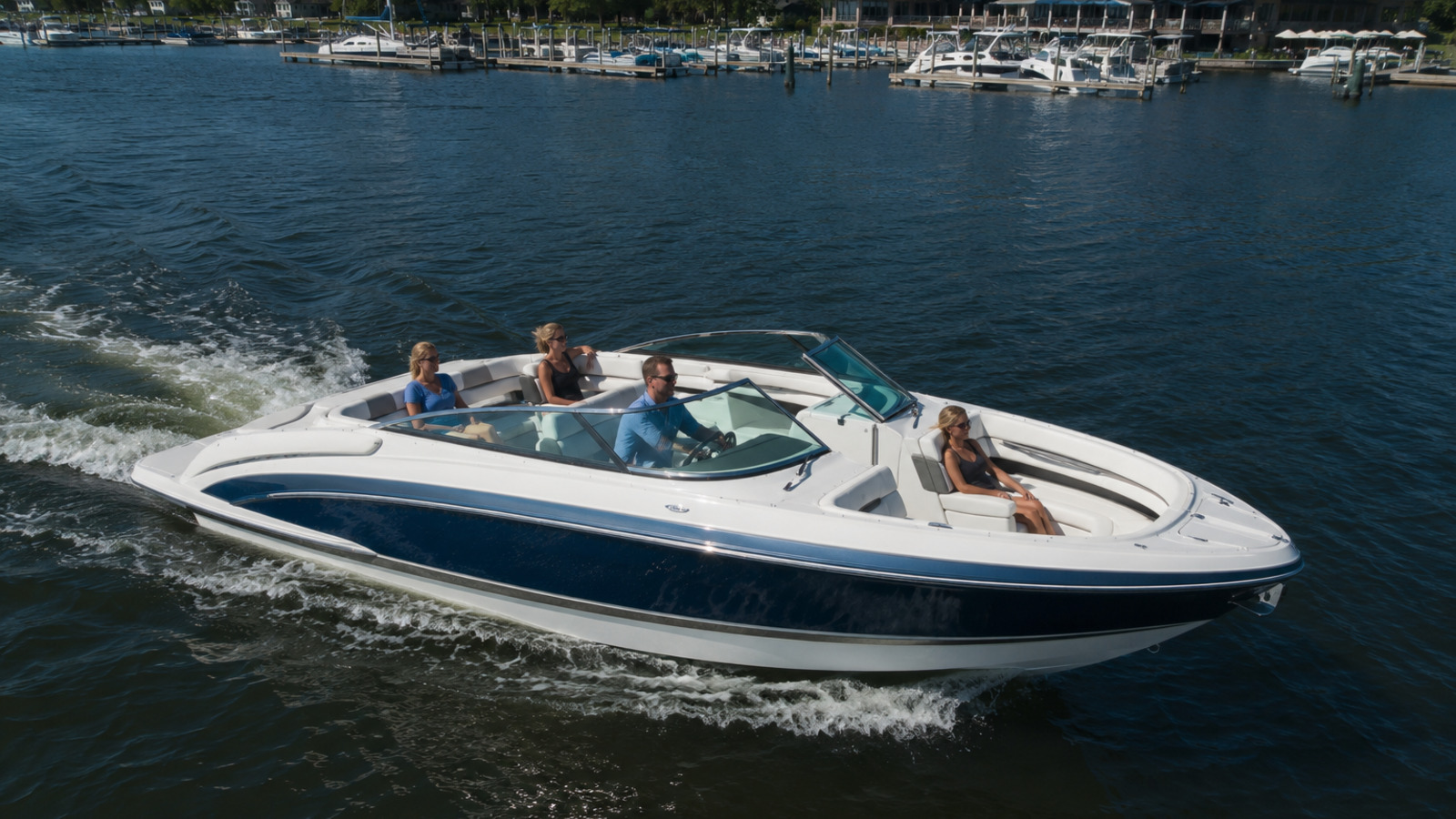
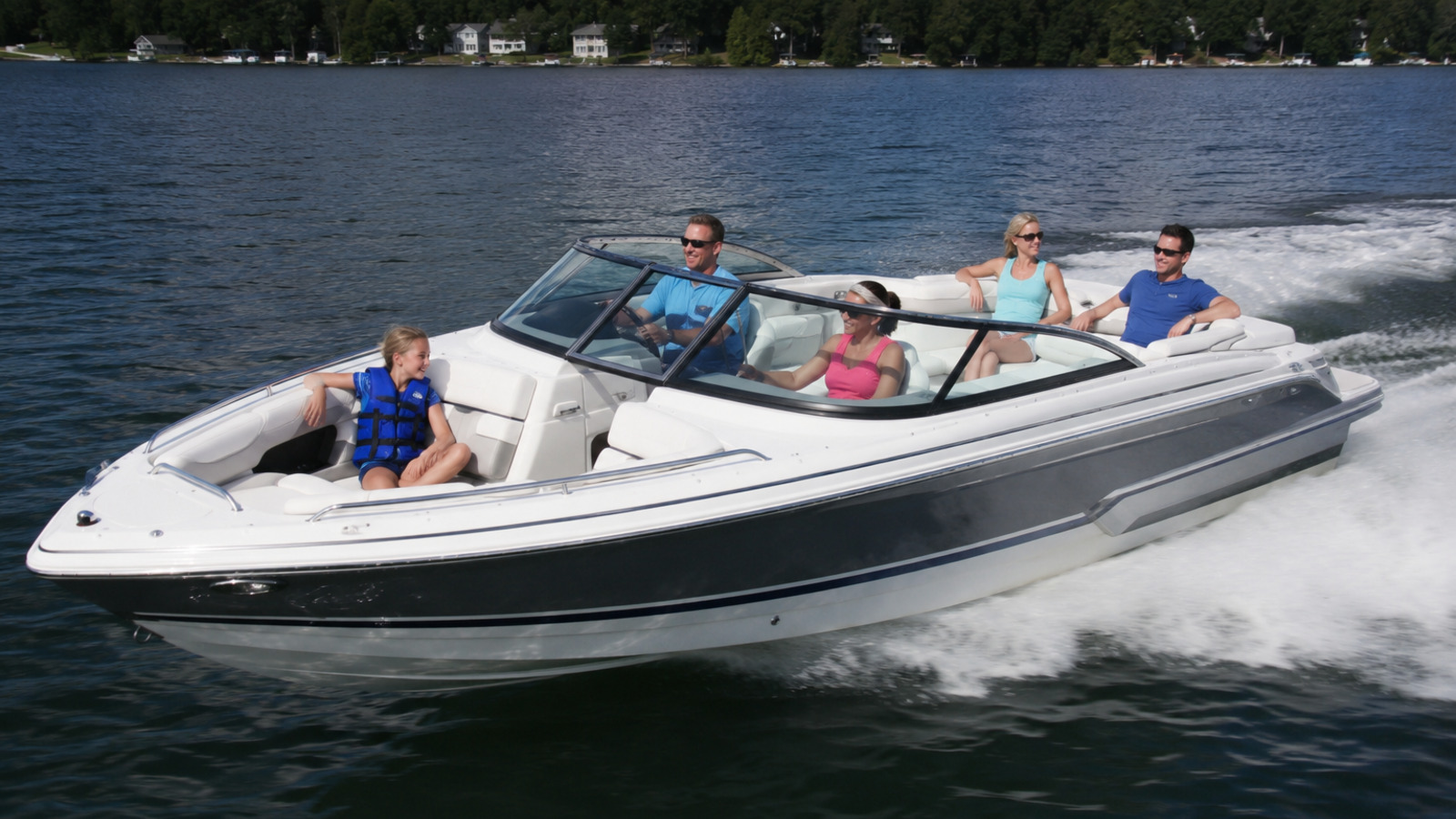
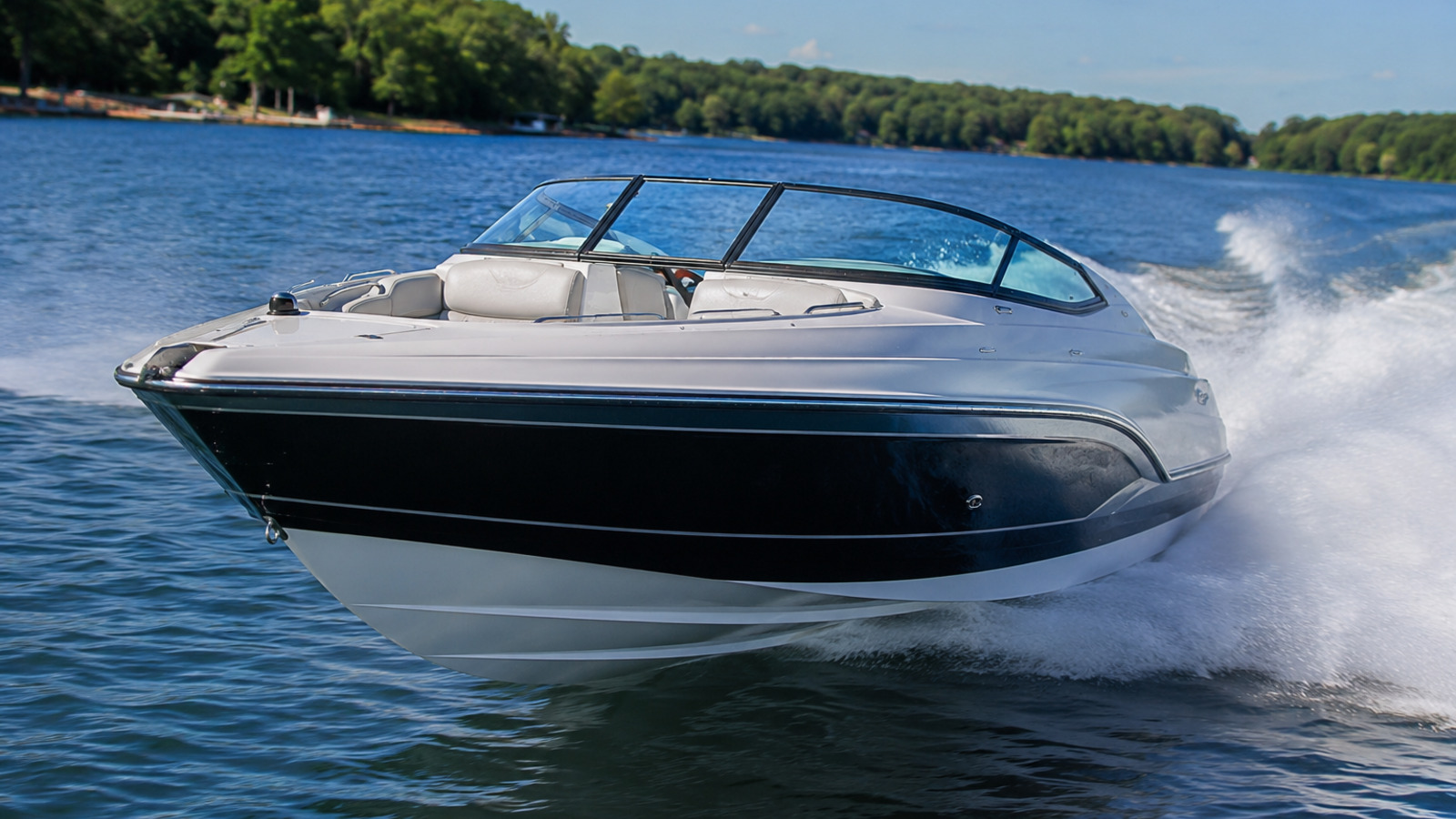
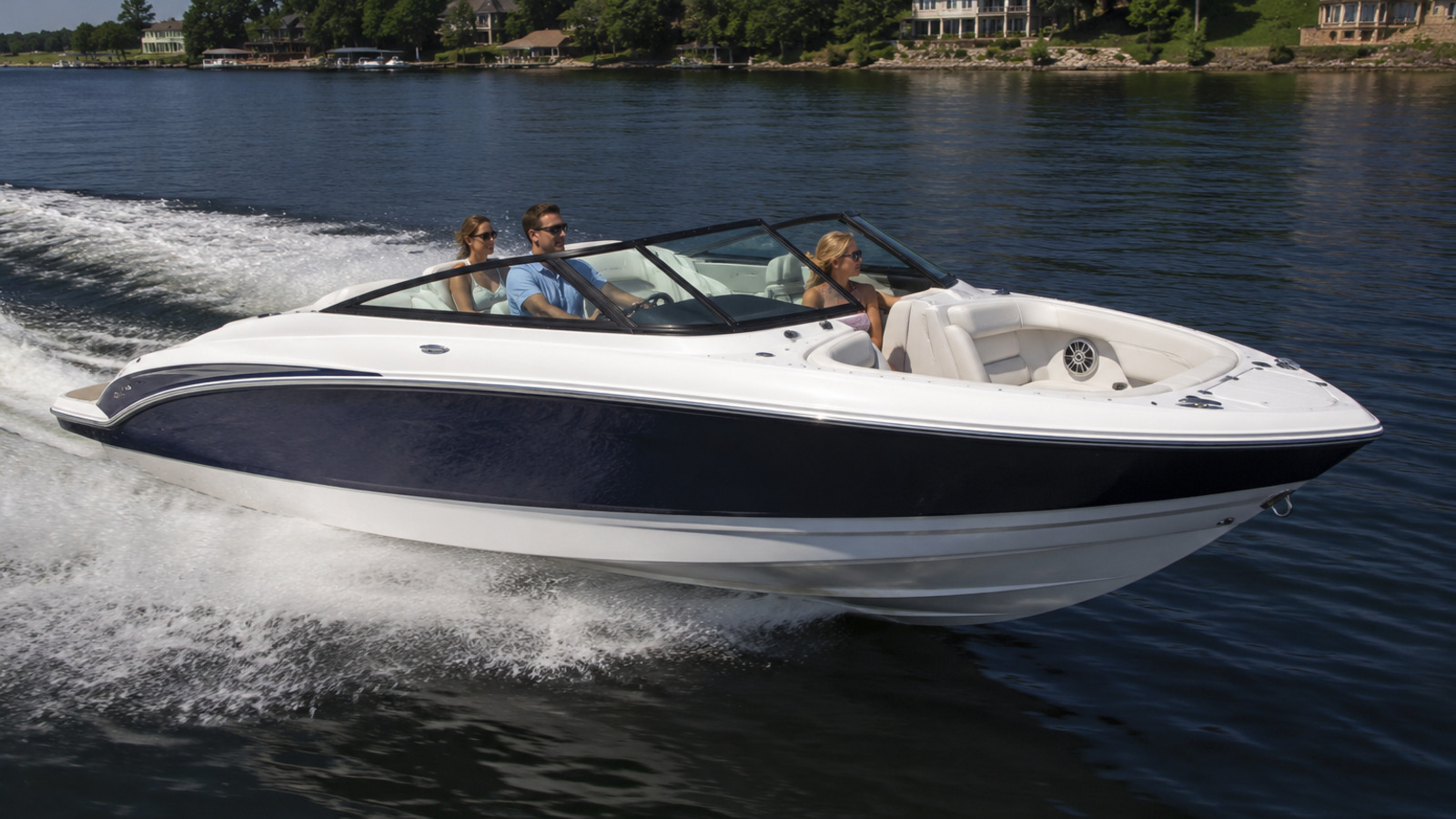
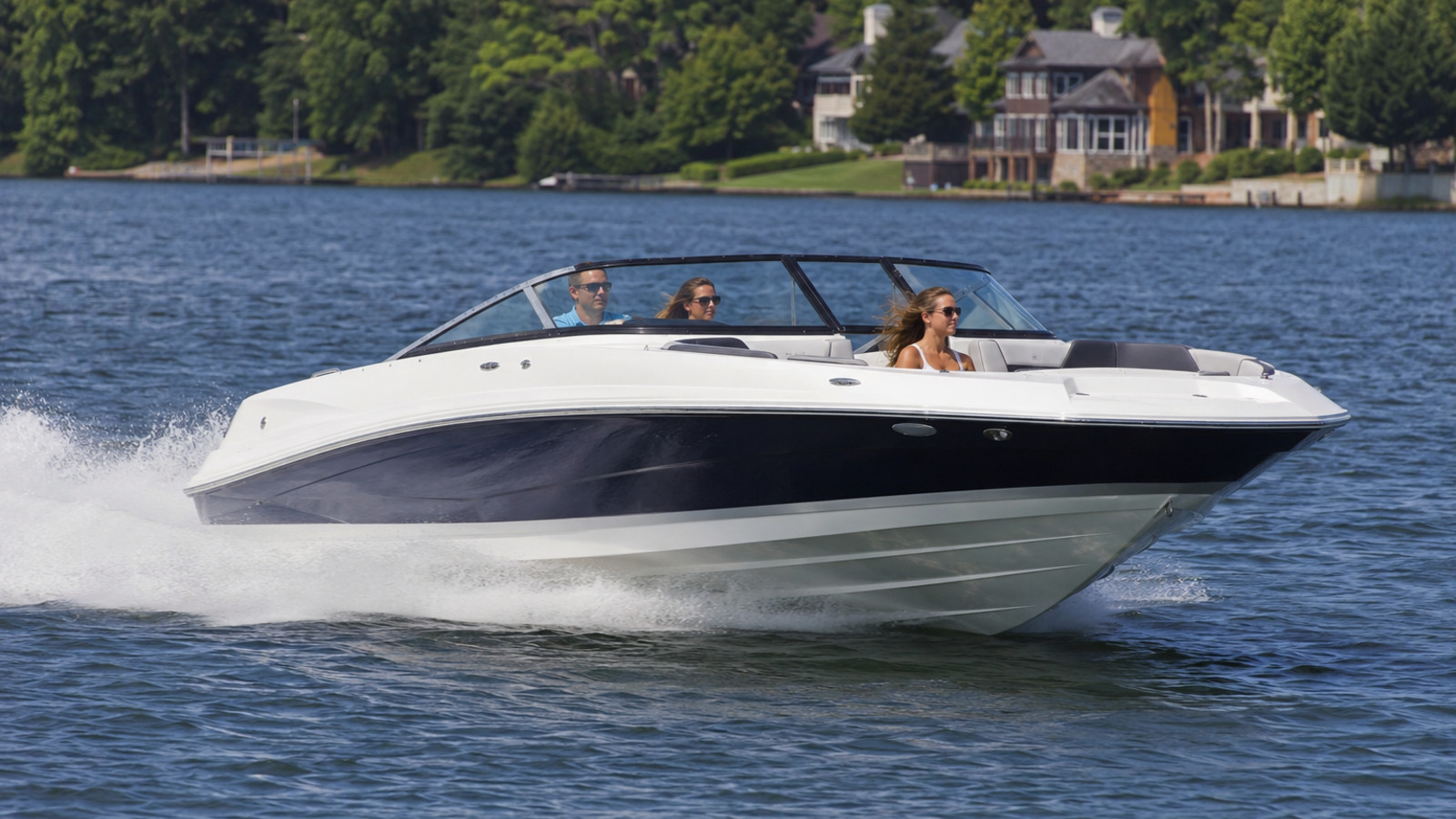
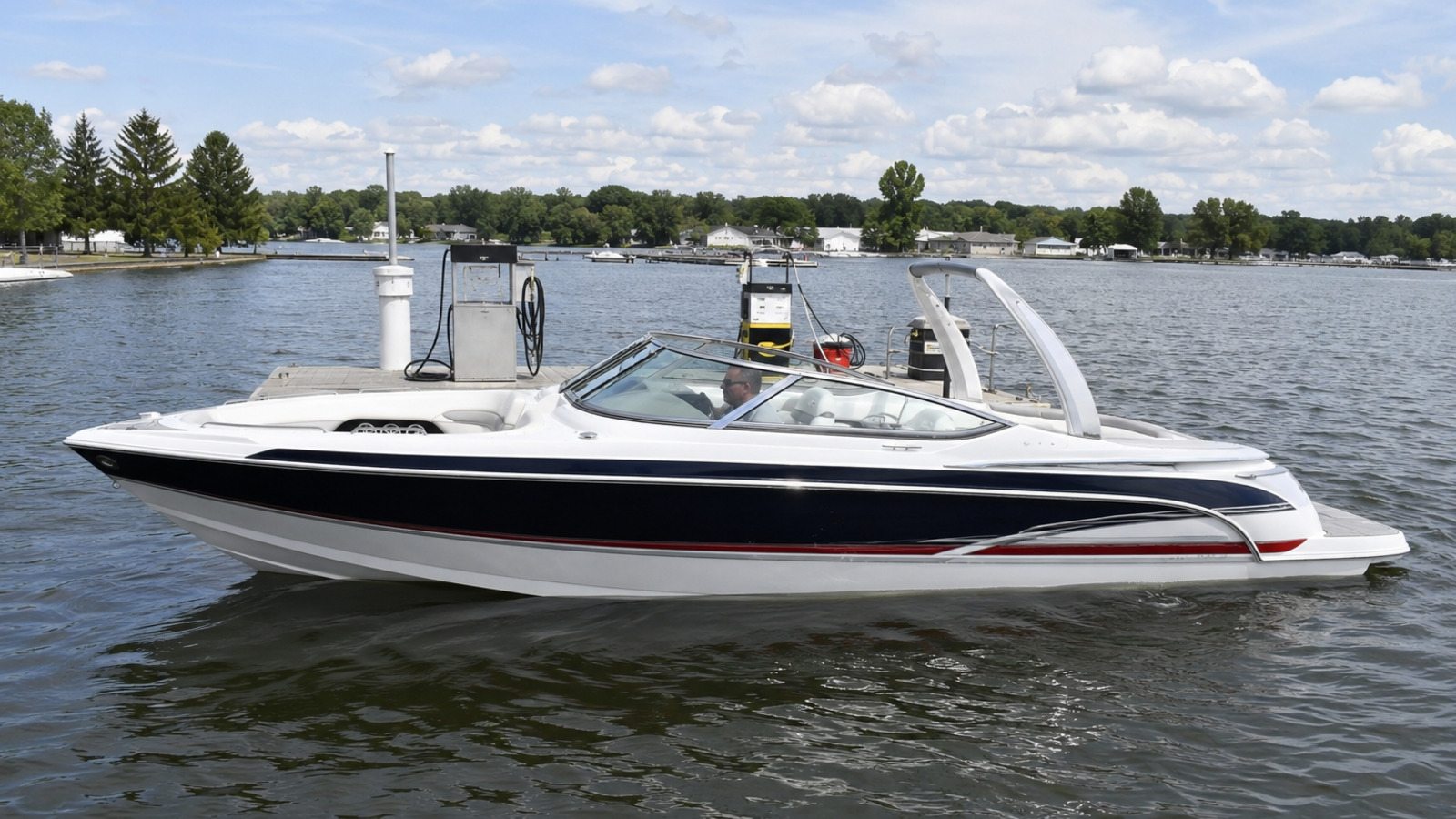
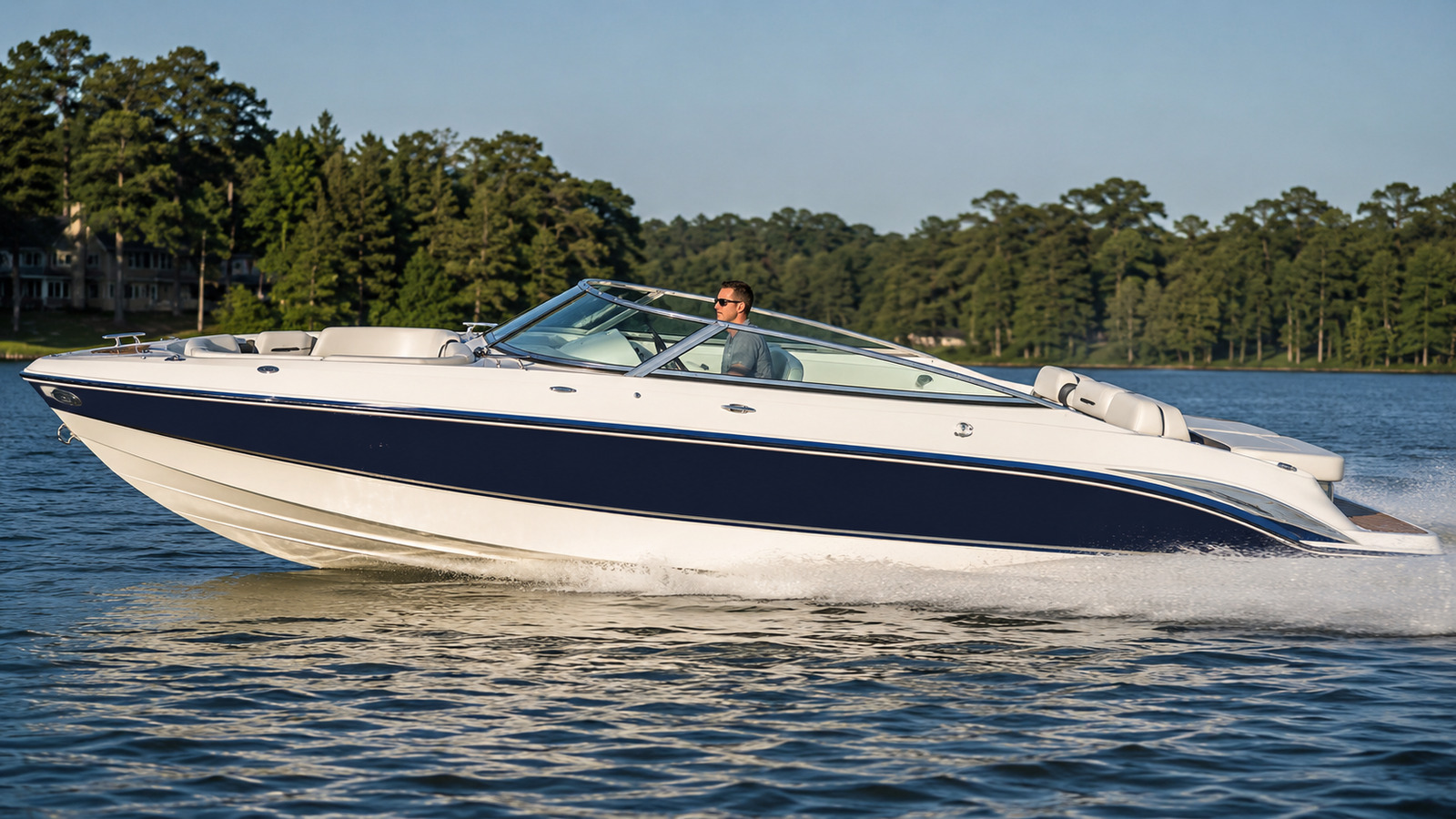
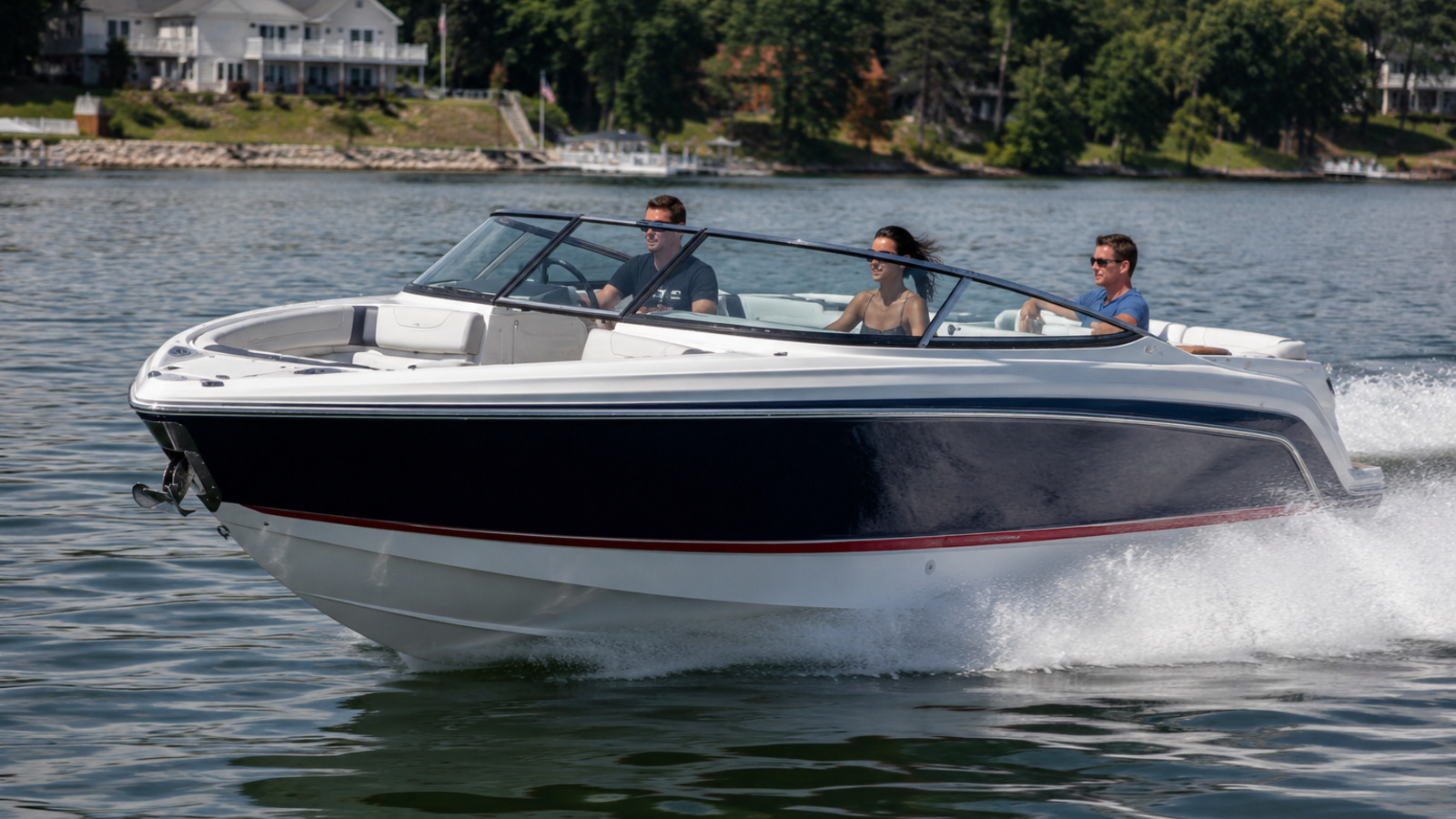
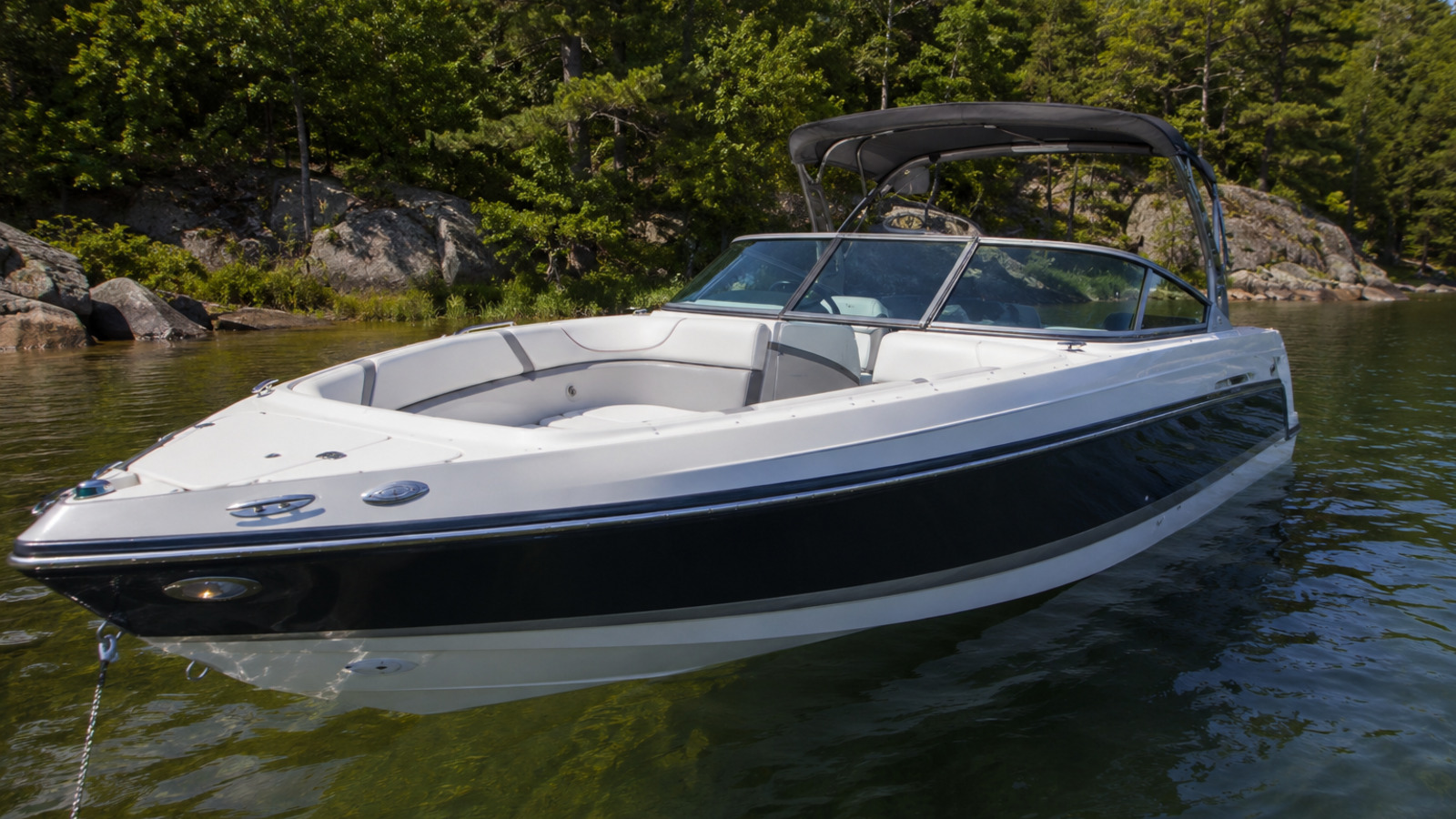
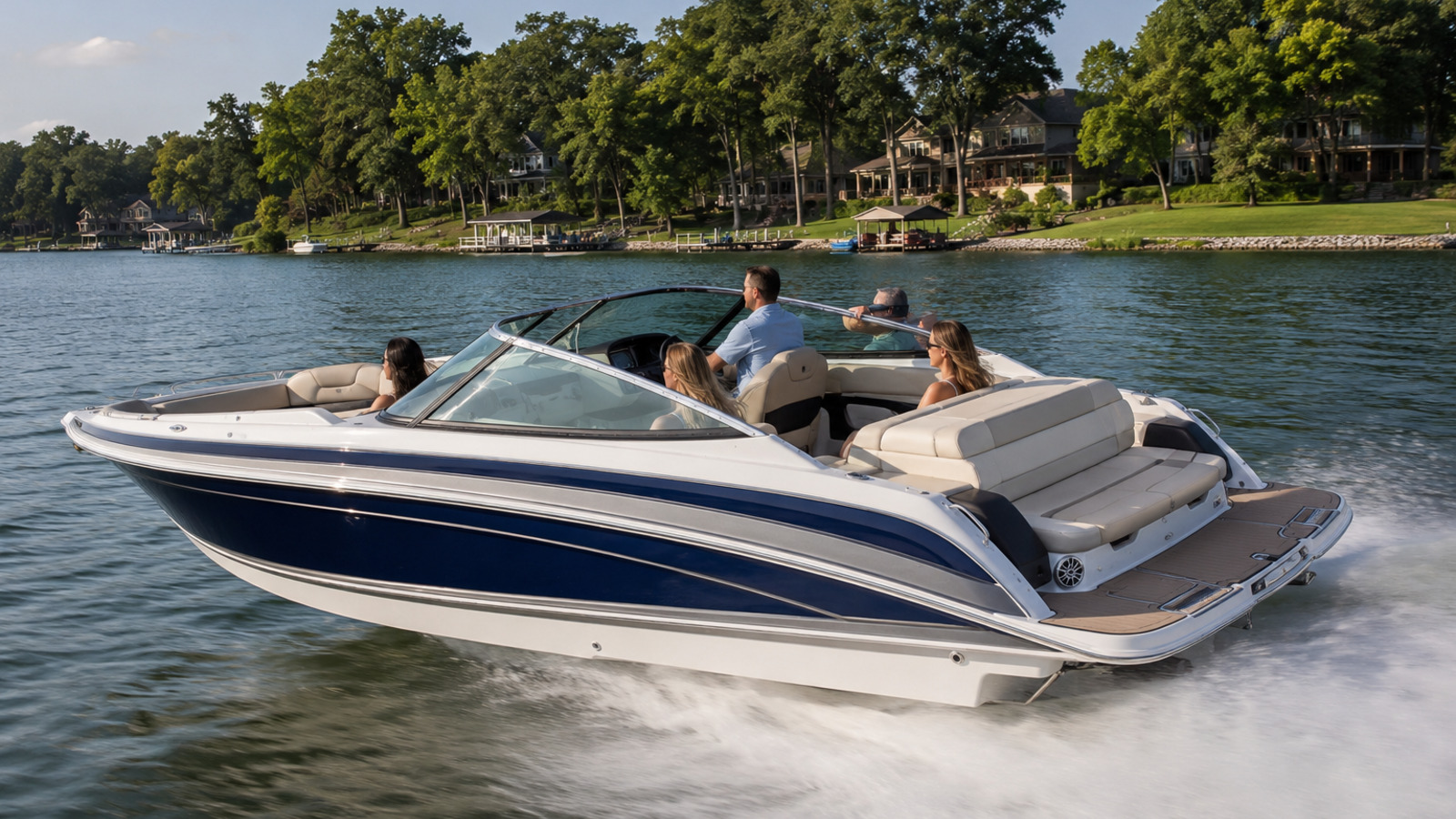
Formula’s 270 Bowrider is the range-and-room step in the core line, keeping an 8-foot-6-inch beam while adding a 22-degree hull, 101 gallons of fuel, and 27 feet of single-engine Bowrider space.
The 270 Bowrider sits in a valuable middle position. It remains conventional in beam and single-engine ownership, yet it gains enough hull, fuel, and cockpit volume to feel like a genuinely larger day boat rather than a minor step above the 240.
Formula publishes 27 feet of hull length, 28 feet 5 inches with the extended platform, and an 8-foot-6-inch beam. That beam is important because the 290 grows to 9 feet and changes the road-transport conversation.
The 270’s 6,525-pound approximate weight and 101-gallon fuel capacity are the numbers that prevent buyers from treating it like a simple tow-behind runabout. A full tank alone can add roughly 600 pounds before trailer, passengers, and gear.
Its 22-degree transom deadrise is also a meaningful upgrade from the 240’s 20 degrees. The 270 should feel more settled in open-water chop while remaining smaller and simpler than the wide-beam 290.
Formula’s current model page describes single MerCruiser or Volvo packages from 300 to 430 horsepower. Formula’s linked 2024 S&O also showed Ilmor options, including a 480-horsepower package, so used buyers need to match power claims to the actual model year.
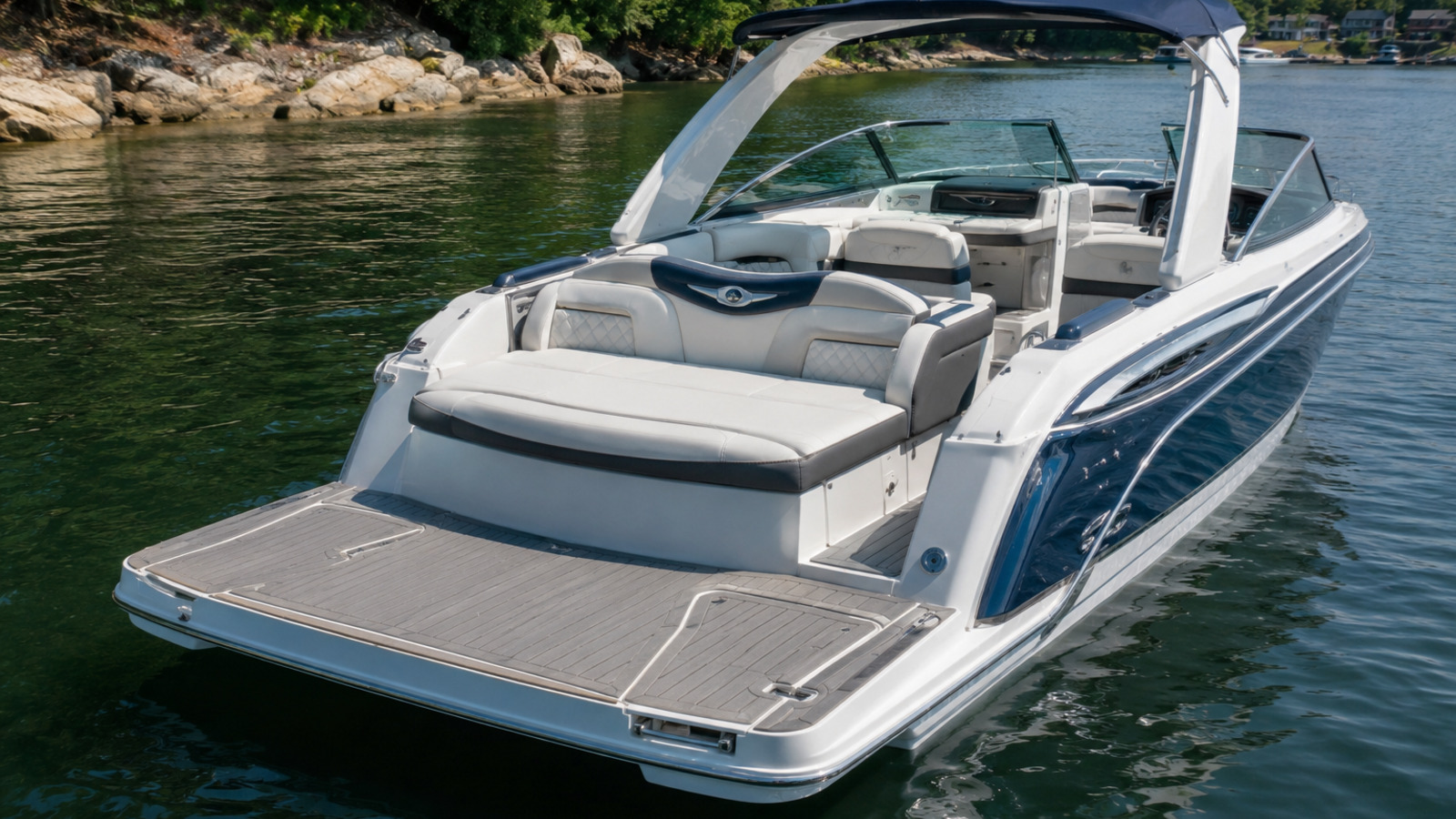
The deck is built around convertibility. A double-wide helm seat, portside convertible lounge, modular bow, aft sun lounge, extensive storage, and head compartment let the 270 host adults without turning the cockpit into a collection of fixed seats.
The 270 is the right Formula for buyers who want more range and a deeper hull but still prefer one engine and a road-width-friendly beam. A buyer who wants joystick twins and a noticeably wider social cockpit should move to the 290.

Published factory figures. Confirm every dimension against the individual boat before you commit.
Certification: NMMA Yacht/CE certification shown in Formula factory specifications
The 270 preserves an 8-foot-6-inch beam while adding three feet of hull over the 240. That combination is the model’s core packaging trick: more space and rough-water hull without crossing into a nine-foot permit problem.
The 22-degree deadrise gives the 270 a deeper transom angle than the 240. It should ride with more authority through boat wakes and open-water chop, although the deeper hull also needs careful trim and enough engine to carry a heavy passenger load.
At 6,525 pounds before fuel and trailer, the 270 is a heavy single-engine bowrider. Buyers should not assume conventional beam means a midsize tow vehicle will be comfortable with the complete rig.
The 101-gallon tank can add roughly 600 pounds when full. Add optional freshwater, batteries, tower or Sport Top hardware, covers, anchors, and a tandem trailer and the real road weight becomes a serious calculation.
Formula factory specifications describes a structural hull matrix, foam-filled cavities, bonded and thru-bolted deck joint, stainless rails, and an integrated swim platform. On a used 270, inspect those systems where they carry load rather than relying on the brand reputation.
The windshield and center walk-through should fit tightly without excessive movement. On a boat that spends time in rough water, loose frames and squeaks can reveal years of pounding or neglected fasteners.
Check the extended platform and transom around the sterndrive cutout. The 270 has enough weight and horsepower that a past drive strike can transmit substantial load into the transom.
A lift should support the hull around the running surface and leave the drive and trim tabs clear. The boat’s conventional width makes many lifts possible, but capacity needs to match the fully fueled 270 rather than a dry catalog number.
The 270 is the last Bowrider in this group where Formula’s basic ownership story still centers on one engine. That simplicity is a major reason to choose it over the 290.
Current Formula copy describes MerCruiser and Volvo Penta single-engine offerings from 300 to 430 horsepower. Buyers looking at older boats may encounter Ilmor packages because Formula’s linked 2024 material included them as well.
A used listing that claims 480 horsepower is not automatically wrong. The linked 2024 S&O listed an Ilmor 480 package, while Formula’s current web copy describes a 430-horsepower ceiling. Verify the hull year, engine serial, and factory build rather than forcing one number onto every 270.
The sterndrive keeps the engine beneath the aft deck and leaves the swim platform clear. In return, the owner maintains the bilge blower, engine compartment, transom drive, trim system, bellows or sealing components, gimbal area, and raw-water cooling system.
Formula’s linked equipment sheet shows a motorized hatch lift, fume detector, automatic fire extinguisher, starting and auxiliary batteries, a 20-amp charger, galvanic protection, and Bennett hydraulic trim tabs. Those are useful inspection points on a used boat.
Operate the hatch repeatedly before the engine starts. A weak battery or failing lift can make routine mechanical access frustrating, and it is easier to discover that at the seller’s dock than after the first service visit.
During the sea trial, use enough throttle to see whether the single engine can carry the 270’s real load. The boat should not need extreme trim or passenger movement to plane with several adults and a full cooler aboard.
If the owner wants twin-engine redundancy or joystick behavior at this size, the 270 is the wrong architecture. The 290 is where Formula begins offering a fundamentally different propulsion choice.
The 101-gallon fuel tank is one of the most important differences between the 270 and 240. The hull grows by three feet, but fuel capacity grows by 46 gallons.
That extra fuel gives the 270 a much larger practical cruising envelope for long lake runs, coastal day trips, and full afternoons of watersports. It also adds significant weight and cost every time the boat is filled from empty.
A buyer should not assume the 270 needs to be kept full. Owners who trailer frequently may prefer to carry less fuel when moving over the road, then add what the weekend requires after launching.
Engine choice matters to range. A 300-horsepower 270 running at a moderate cruise can have a different burn profile from a 430-horsepower or model-year-specific high-output package.
Formula factory specifications includes a published range table for one 350-horsepower configuration, but that test should not be copied onto every 270. Bottom condition, propeller, passenger load, altitude, water state, and optional gear all change real results.
The optional 14-gallon freshwater and 13-gallon holding systems should be treated as separate value items on used boats. Check whether the head is portable, manual porcelain, or VacuFlush-style because service needs and resale differ.
Wet-bar-equipped 270s can add more plumbing than a basic boat. Run the sink, demand-water pump, transom shower, and head long enough to expose a slow leak or a pump that never reaches pressure.
A 270 owner who runs long days should track actual gallons used between fills. That simple log is more useful for budgeting than a top-speed fuel figure pulled from a different engine package.
The 270 should feel more planted than the 240 without becoming slow or cumbersome. Its 22-degree bottom, additional length, and 6,525-pound published weight give the hull more inertia through wake fields.
Loaded acceleration is the critical single-engine test. Put adults in normal seats and accelerate with the drive tucked in. A properly powered 270 should climb onto plane without the bow blocking the horizon for an uncomfortable period.
Once settled at cruise, trim the sterndrive outward in small steps. The boat should pick up speed and steering lightness without falling into a porpoise cycle.
Use the Bennett tabs to correct a deliberate passenger imbalance. The boat should respond cleanly to small tab inputs, and both indicators should track the actual movement of the planes.
Run the 270 through moderate chop at a realistic family speed. The 22-degree transom should give the driver more freedom than the 240 to maintain speed without pounding, although no bowrider is immune to poor throttle judgment.
At the dock, the 270 still behaves like a single-engine sterndrive. There is no second propeller or joystick twin to rescue a rushed approach, so practice reverse and slow turns in wind before deciding the boat feels easy.
Formula’s linked 2024 S&O offered a forward-facing-drive Wake Surf Package on certain engines. A used 270 with that equipment should be tested as its own configuration because drive geometry, surf tabs, controls, and tower hardware change the boat’s mission.
The 270 is successful when it delivers big-dayboat ride quality while remaining predictable enough for one-driver family use. If the owner needs twin-engine maneuvering, the answer is a 290 rather than trying to over-option the 270.
The 270’s interior is built to make 8 feet 6 inches feel larger than the number suggests. Formula uses reversible seating and storage instead of simply spreading the cockpit outward.
The double-wide helm seat can face forward for driving or aft for social use. The portside lounge also converts, letting the cockpit change shape when the boat moves from running to anchoring.
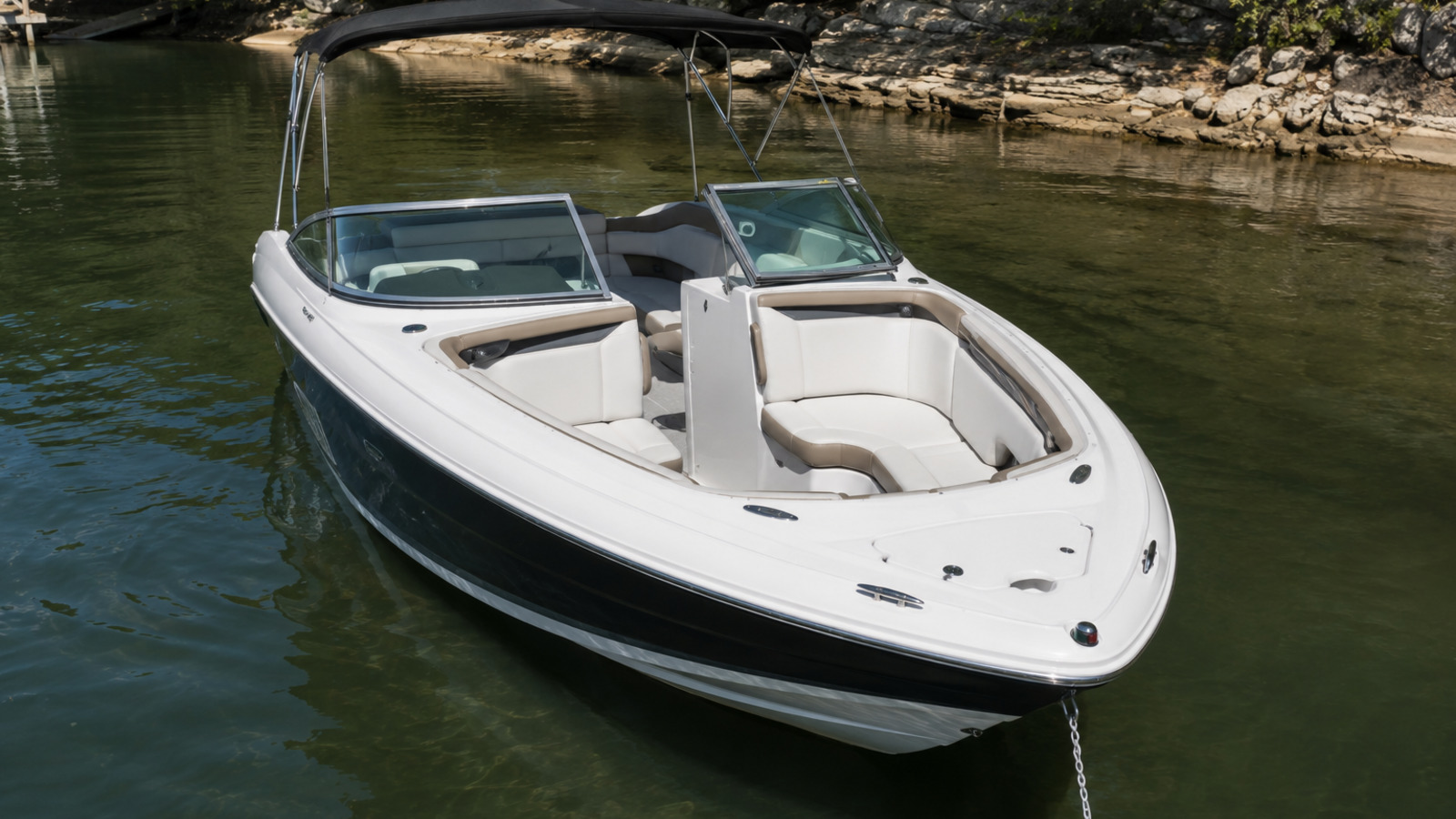
Modular bow seating uses removable bottoms and available filler cushions to shift between individual seats and a larger lounge. Adults should sit in the bow during the sea trial to make sure the driver’s sightline remains comfortable.
Full-width storage under the sunpad is a major practical advantage. Add the in-floor ski and wakeboard locker, starboard gear locker, under-seat compartments, molded cooler, and trash container and the 270 can keep a busy family cockpit surprisingly clean.
The aft-facing sun lounge puts passengers near the water without moving them onto the platform itself. Check the dual-position backrest and make sure trunk access still works with the lounge configured for use.
The head compartment sits behind a concealed one-piece door. Formula’s linked material shows a portable head as the baseline with more elaborate porcelain and water-system options available.
An optional wet bar can turn the port side into a more serious entertaining station. Buyers should decide whether the refrigerator or cooler, sink, and countertop are worth the storage they replace.
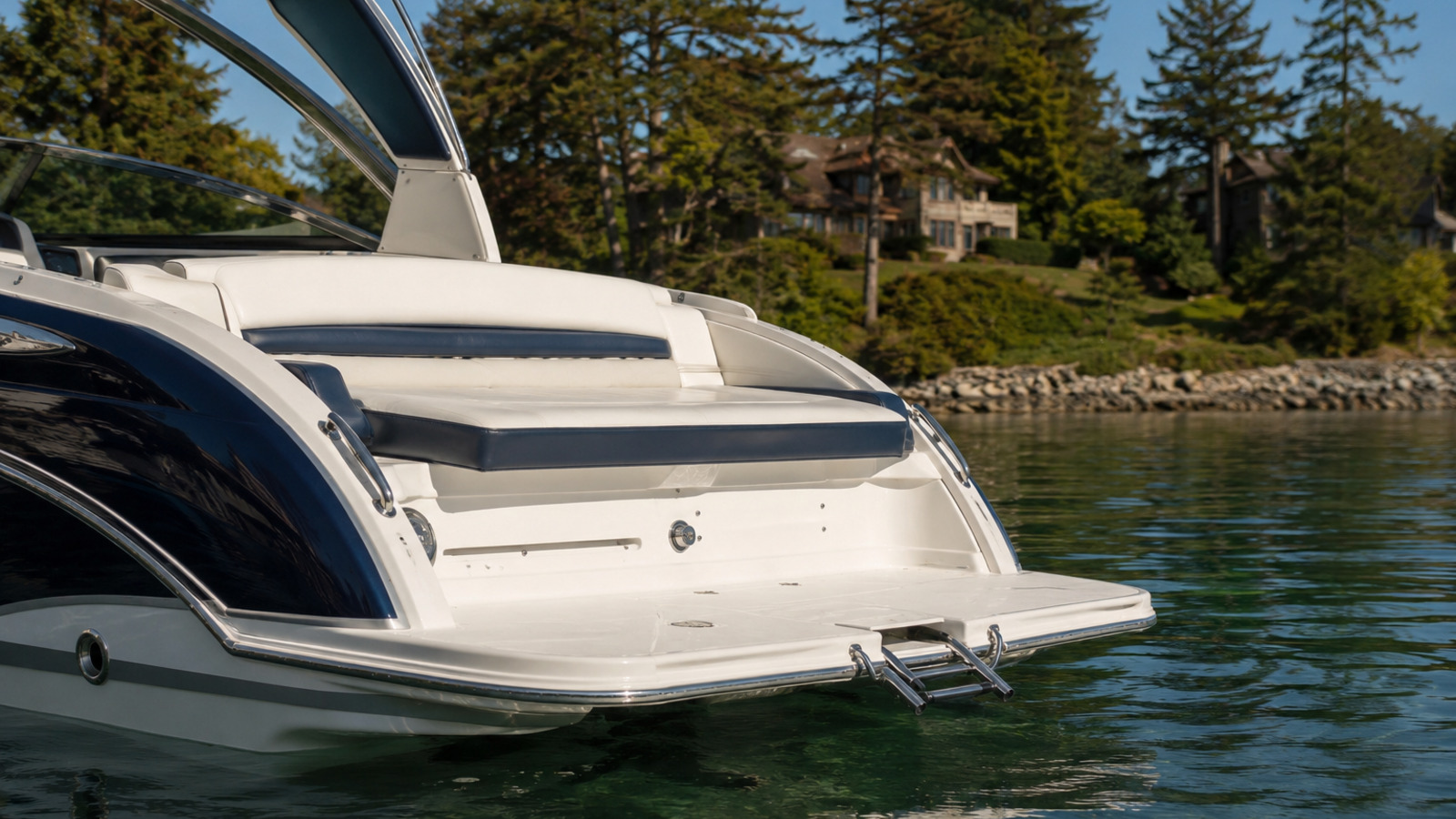
The integrated swim platform remains the payoff for single sterndrive power. Swimmers get a clean center platform instead of working around an exposed outboard or twin-engine arrangement.
The 270 helm seat uses an articulating bottom and reversible backrest so it can serve both driving and anchor-day conversation.
The companion-side seat changes orientation and helps create the L-shaped social area Formula emphasizes in the 270 cockpit.
Armrests, removable seat bottoms, and available fillers let the bow switch between riding and lounging roles.
Large gear storage under the aft sunpad gives the 270 room for fenders, covers, and bulky family equipment.
Long boards can be stored below the sole rather than across the main seating areas.
A concealed stainless ladder and broad sterndrive platform support swimming and rider pickup without an engine cowling in the center.
The compartment starts with a portable head in linked equipment material and can appear with vanity, porcelain, holding-tank, or VacuFlush upgrades on optioned boats.
Sport Arch, Sport Top, Bimini, and Samson wakeboard tower configurations can change shade, tow utility, stored height, and used-market value.
The 270 remains a one-engine boat, but its electrical and comfort equipment deserves a more thorough check than a basic runabout.
Formula factory specifications lists start and auxiliary batteries, a battery charger, fume detector, automatic fire extinguisher, automatic bilge pump, blower, hydraulic trim tabs, and electronic engine controls matched to the installed power.
Inspect battery age and charger output with the engine off. The stereo, USB outlets, courtesy lighting, hatch lift, freshwater pump, and electronics can expose weak reserve capacity quickly.
The motorized engine hatch is critical because it controls mechanical access. Learn how the hatch can be opened if the main battery is weak or disconnected.
The helm may carry Raymarine, VesselView, or model-year-specific factory electronics. Verify GPS, depth, engine communication, and any remote keypad rather than judging the screen by brightness alone.
On a wake-surf-equipped used boat, test the forward-facing drive package, surf tabs, speed-control equipment where fitted, tower, racks, lights, and displays as a single system.
Wet-bar and head upgrades add pumps and plumbing. Let the demand-water system build pressure, then listen for cycling with every faucet closed.
Reopen the bilge after the sea trial. A 270 with dry compartments before launch but new water, coolant, fuel odor, or drive fluid after running needs investigation.
Bridge Clearance: 5 ft 0 in basic; 7 ft 9 in with Sport Arch; 8 ft 7 in with Samson tower; 7 ft 5 in with Sport Top
The 270’s beam keeps transport legally simpler than the 290, but the weight changes everything. A full 101-gallon tank, batteries, gear, and tandem trailer can move the complete rig into heavy-duty tow-vehicle territory.
Do not size the tow vehicle from the 6,525-pound boat number alone. Trailer weight, tongue load, passengers, luggage, and hitch hardware all affect what the vehicle can safely carry and stop.
Storage length also grows quickly. The hull is 27 feet and the platform extends to 28 feet 5 inches before the trailer tongue is included.
Overhead equipment can be the garage limiter. A Sport Top, arch, or wakeboard tower changes clearance by several feet, and speakers or board racks can add more height than a catalog number suggests.
Trailer brakes should be tested under load, not just inspected visually. A heavy 270 can expose weak surge or electric-over-hydraulic components immediately.
A lift should have enough reserve for fuel and options. The hull needs support clear of the drive, trim tabs, and through-hull equipment.
For frequent users, a marina slip may make more sense even though the 270 is road-width legal. Compare the convenience of dock storage with the real effort of moving a near-30-foot rig every weekend.
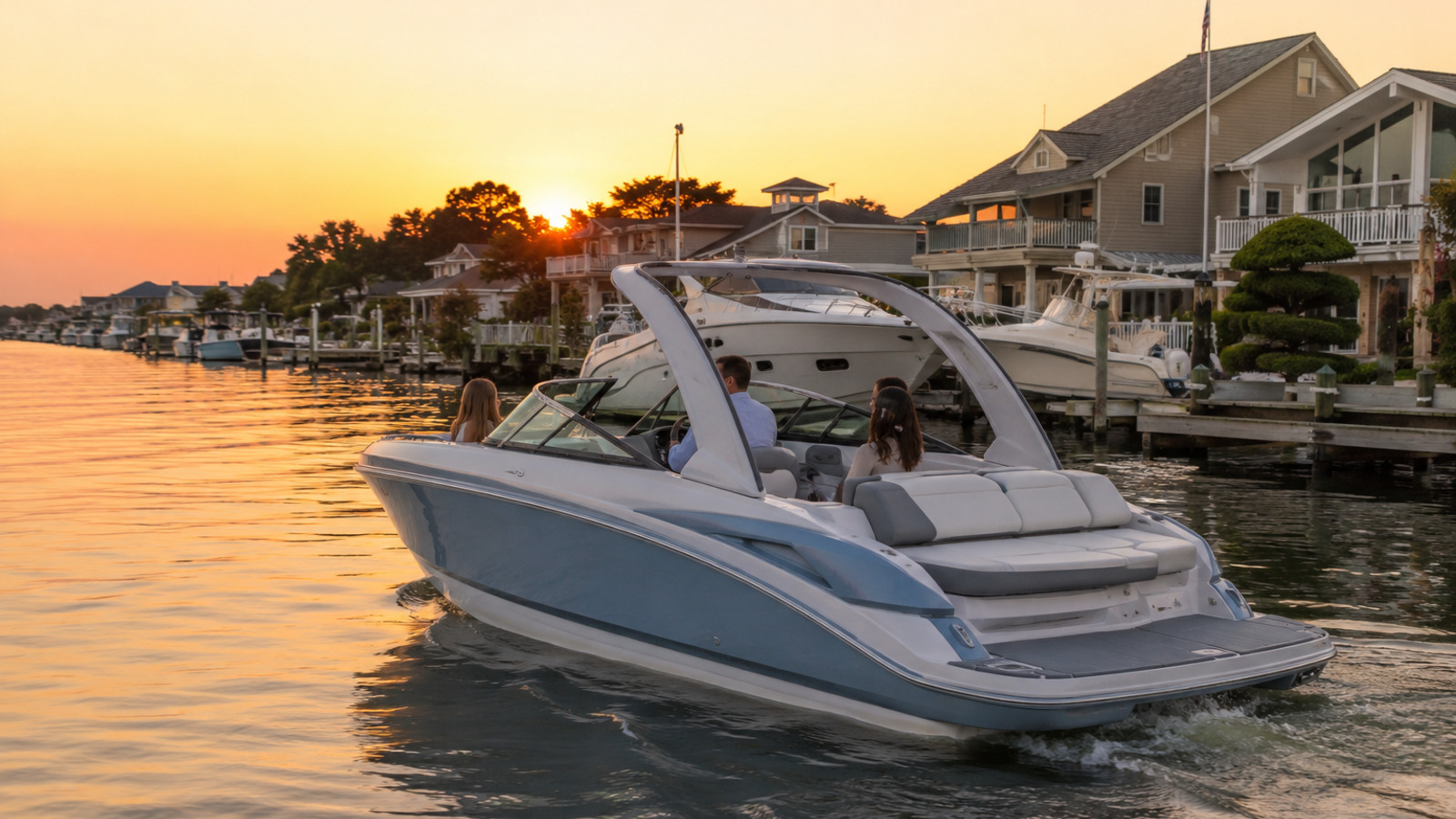
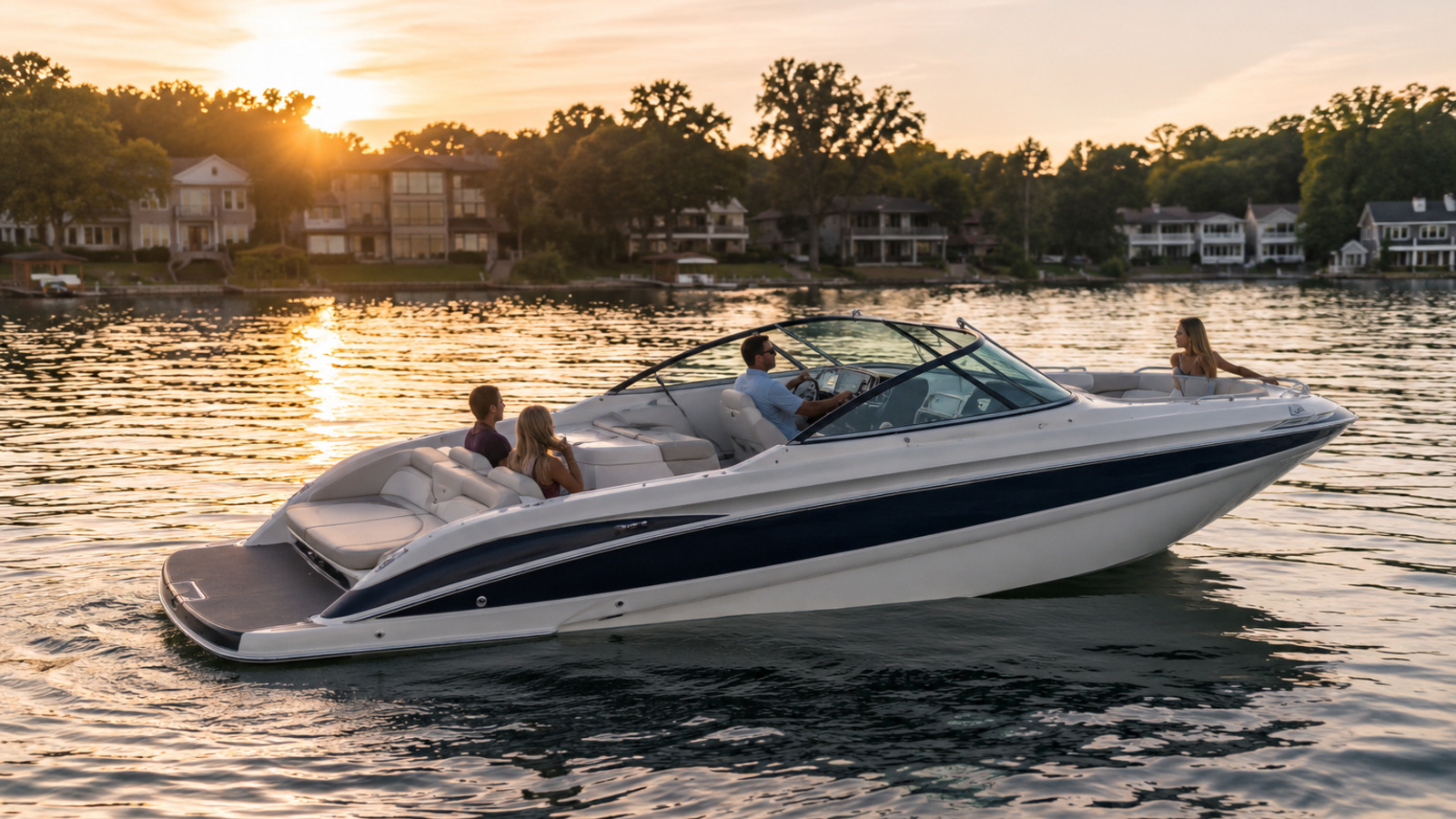
The first pricing question is model year because engine menus have changed. A current 430-horsepower ceiling and an older factory specifications showing higher Ilmor output can both be legitimate in the right year.
Next identify the engine family and hours. MerCruiser, Volvo, and Ilmor boats have different service networks and resale audiences even when horsepower is similar.
Wake-surf equipment can create a separate used-market niche. A forward-facing drive, surf tabs, tower, racks, and speed-control hardware should all work before the package earns a premium.
Sport Arch, Sport Top, wet bar, upgraded head, Raymarine electronics, premium audio, covers, and FormulaFlex cosmetics all influence desirability.
Trailer condition matters because many 270 buyers still expect to tow. A heavy Formula sitting on old tires, marginal brakes, or corroded hardware should be discounted accordingly.
The 101-gallon fuel system and larger wet systems also make maintenance records more important. Clean tanks, working pumps, dry compartments, and a maintained sterndrive support a stronger price.
A good 270 comparable should match engine, major options, trailer, and service history before model year is used as the deciding variable.
Illustration only and not an offer of credit.
Budget beside the payment for a 101-gallon fuel system, sterndrive service, heavy-trailer maintenance or marina storage, insurance, and any head, wet-bar, or wake-surf systems on the boat.
Illustration only and not an offer of credit. Your actual rate and term depend on credit profile, vessel age, loan amount and ownership structure.
Against the 240, the 270 buys more adult space, a 22-degree hull, and 101 gallons of fuel while preserving an 8-foot-6-inch beam. The cost is roughly 1,375 pounds of additional published weight before the extra fuel is counted.
Against the 290, the 270 keeps one engine and conventional road width. That makes it easier to understand mechanically and easier to move without oversize permits.
The 290 answers with a nine-foot beam, larger private head, 112 gallons of fuel, nearly 9,000 pounds of published weight, and twin-sterndrive options with joystick control in factory specifications.
A buyer who can fit the family into a 270 comfortably should value the simplicity. One engine, normal road width, and a smaller lift or trailer can make ownership much easier than the 290.
A buyer who already wants more beam or twin engines should skip the compromise and shop the 290 directly. The 270 should not be forced into a big-boat role it was designed to avoid.
Start by confirming the hull year and engine serial. The 270 has been offered with different propulsion choices, and current Formula web copy does not exactly mirror every package listed in Formula’s older factory specifications.
Write down the actual horsepower and drive before comparing price. A 300-horsepower MerCruiser, a 430-horsepower Volvo, and an older Ilmor package are not interchangeable transactions.
Inspect the drive and transom assembly closely. Bellows, gimbal hardware, trim cylinders, propellers, corrosion protection, and cooling-system service deserve more weight than cosmetic upgrades.
Check the 20-amp charger, start and auxiliary batteries, motorized hatch, fume detector, blower, bilge pump, and automatic fire extinguisher equipment shown in linked Formula material.
If the boat has a wet bar or upgraded head, fill and run the water system. Pumps that cycle endlessly or damp lockers can signal leaks behind cabinetry.
On a wake-surf example, verify the forward-facing drive and surf hardware belongs to the actual factory package rather than a collection of later modifications.
Sea-trial the 270 with realistic load. Test cold start, idle, shifting, time to plane, midrange cruise, trim, tabs, and steering in both directions.
Inspect all convertible seating and storage. The 270’s value depends on the way the cockpit changes between running and lounging, so missing cushions or broken hinges matter.
Put the trailer on the same checklist as the boat. A fully fueled 270 creates enough road weight that brakes, tires, bearings, frame, coupler, and bunks need to be excellent.
Measure the home storage space with the exact top or tower folded. The 270 can remain within normal road width and still be too tall or too long for the planned building.
Compare one 290 before closing. If the family needs twin-engine docking or a wider cockpit every weekend, the step up is more honest than buying a 270 and wishing it were the next model.
Start your application with the exact 270 details with year, engine and drive, hours where available, major option packages, trailer status, seller type, and asking price.
Yes. Formula currently lists the 270 in its core Bowrider family.
Formula publishes 27 feet LOA, 28 feet 5 inches with the extended platform, and an 8-foot-6-inch beam.
The 270 publishes 101 gallons of fuel capacity, a major jump from the 240’s 55 gallons.
Formula’s current model page describes single MerCruiser or Volvo packages from 300 to 430 horsepower. Formula’s linked 2024 S&O also showed Ilmor choices, including a higher-output package, so used boats need year-specific verification.
Its beam remains 8 feet 6 inches, but the 6,525-pound published boat weight and 101-gallon tank make the loaded trailer a serious heavy-tow setup.
Yes. Linked Formula equipment material shows a concealed compartment with portable head and optional upgraded porcelain, holding-tank, vanity, and VacuFlush configurations.
Choose the 270 for single-engine simplicity and conventional road width. Choose the 290 when nine-foot beam, larger head systems, and twin-engine options solve real needs.
Potentially. Year, value, condition, seller type, purchase amount, and borrower qualifications can affect the transaction. Start your application with the details for a boat-specific discussion.
Tell us a little bit about yourself and the boat you are looking to finance.

Automated page speed optimizations for fast site performance