
Call Us : 207-994-5109
Mon – Fri: 8 am to 9 pm & Sat – Sun: 10 am to 8 pm
The Azimut Atlantis range blends open sport-cruiser handling with real overnight accommodations for buyers who want performance and outdoor living without stepping into a flybridge yacht.
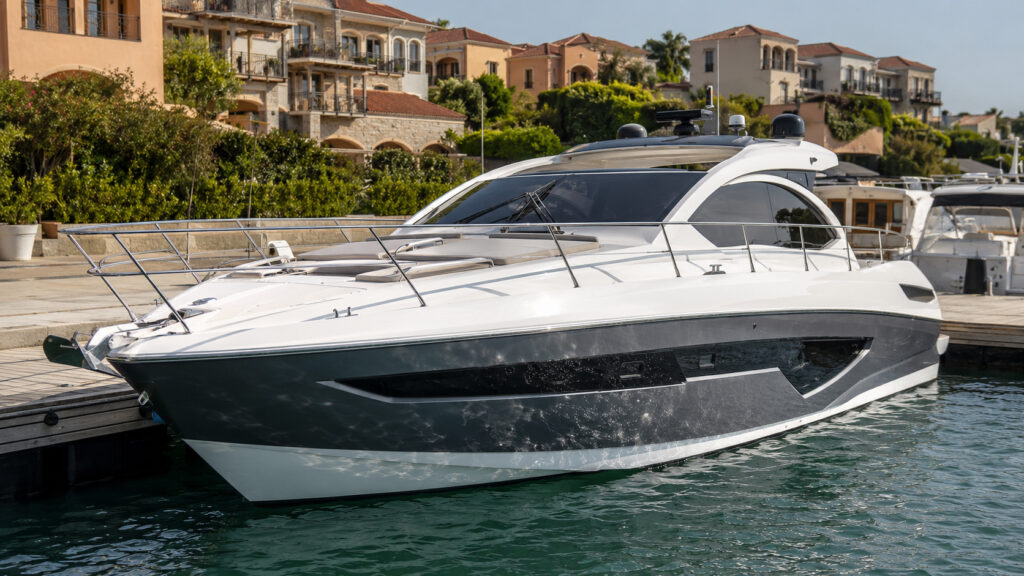
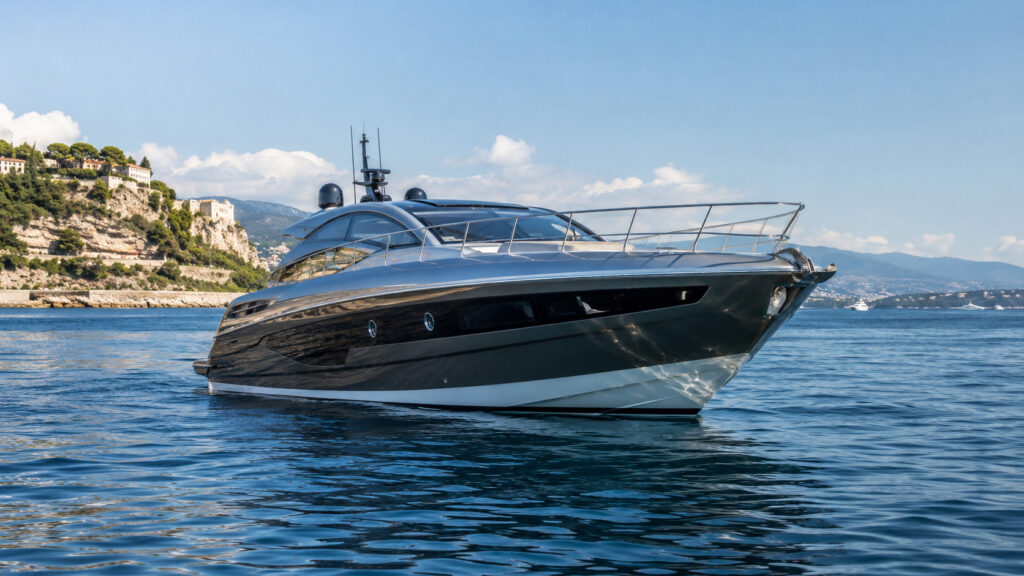
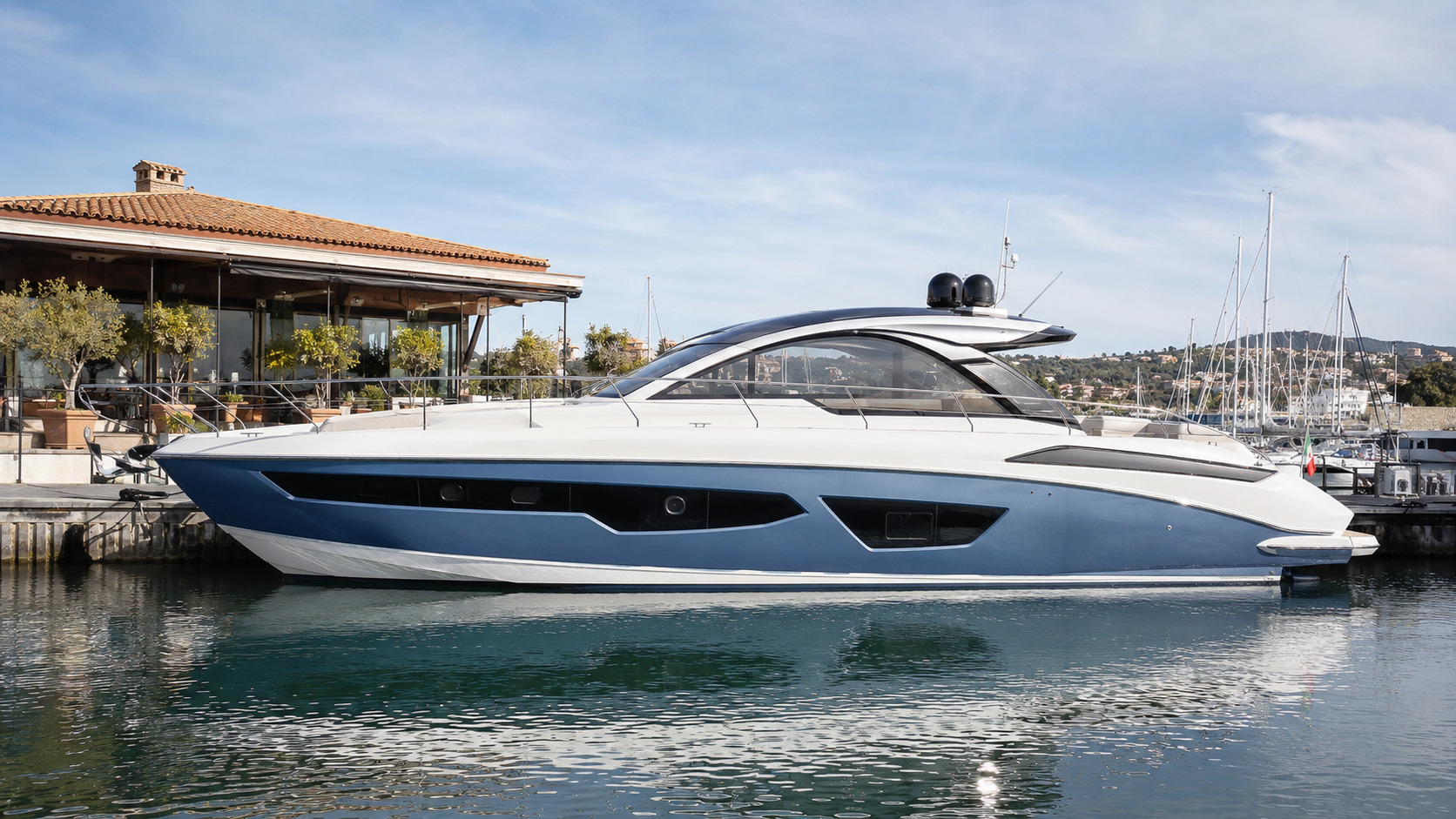
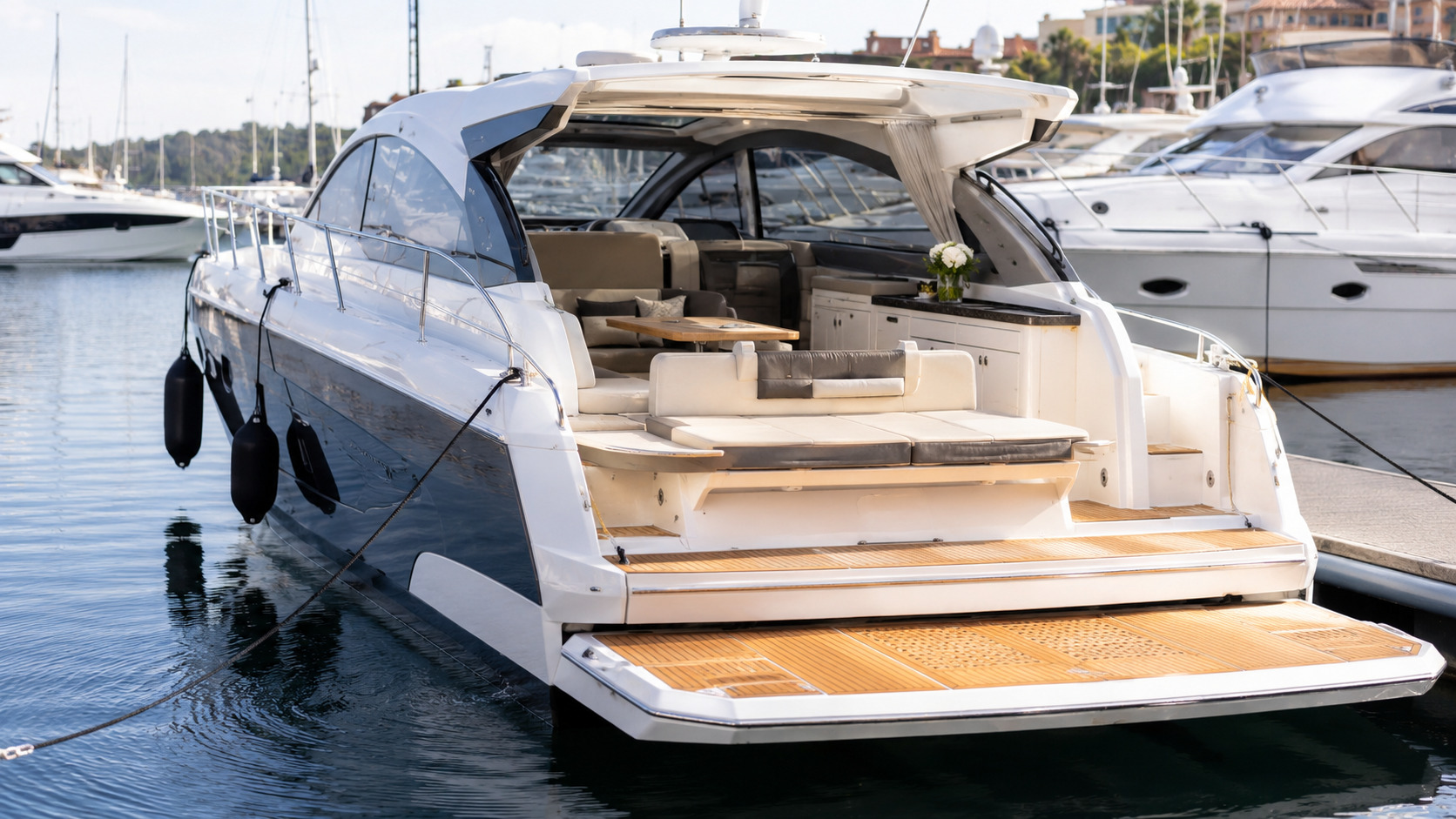
Azimut Atlantis is built around a simple idea: keep the primary boating experience on one level and close to the water, but retain enough below-deck volume for genuine overnight cruising. Instead of adding a flybridge, Atlantis concentrates the helm, cockpit, dining area, sunpad, and access to the swim platform around the main deck. The result is a sport cruiser that feels more direct and driver-focused than a traditional multi-level motor yacht.
That choice creates a real tradeoff. Atlantis owners gain a lower profile, fewer levels to manage, and an outdoor layout that works well for swimming, entertaining, and owner-operated coastal cruising. What they give up is the elevated helm, second major exterior lounge, and additional protected space that come with a flybridge yacht. Buyers who spend most of their time outside may prefer the Atlantis approach. Buyers who want maximum all-weather volume may not.
The current range makes that decision at two different scales. The Atlantis 45 is a two-cabin cruiser aimed squarely at couples and experienced owner-operators. The Atlantis 51 moves into a different ownership proposition by adding a third cabin, more beam, considerably more displacement, and enough interior volume to make longer family trips easier. The question is not simply whether five more feet sounds better. It is whether the extra accommodation will be used enough to justify carrying more yacht every time you leave the dock.
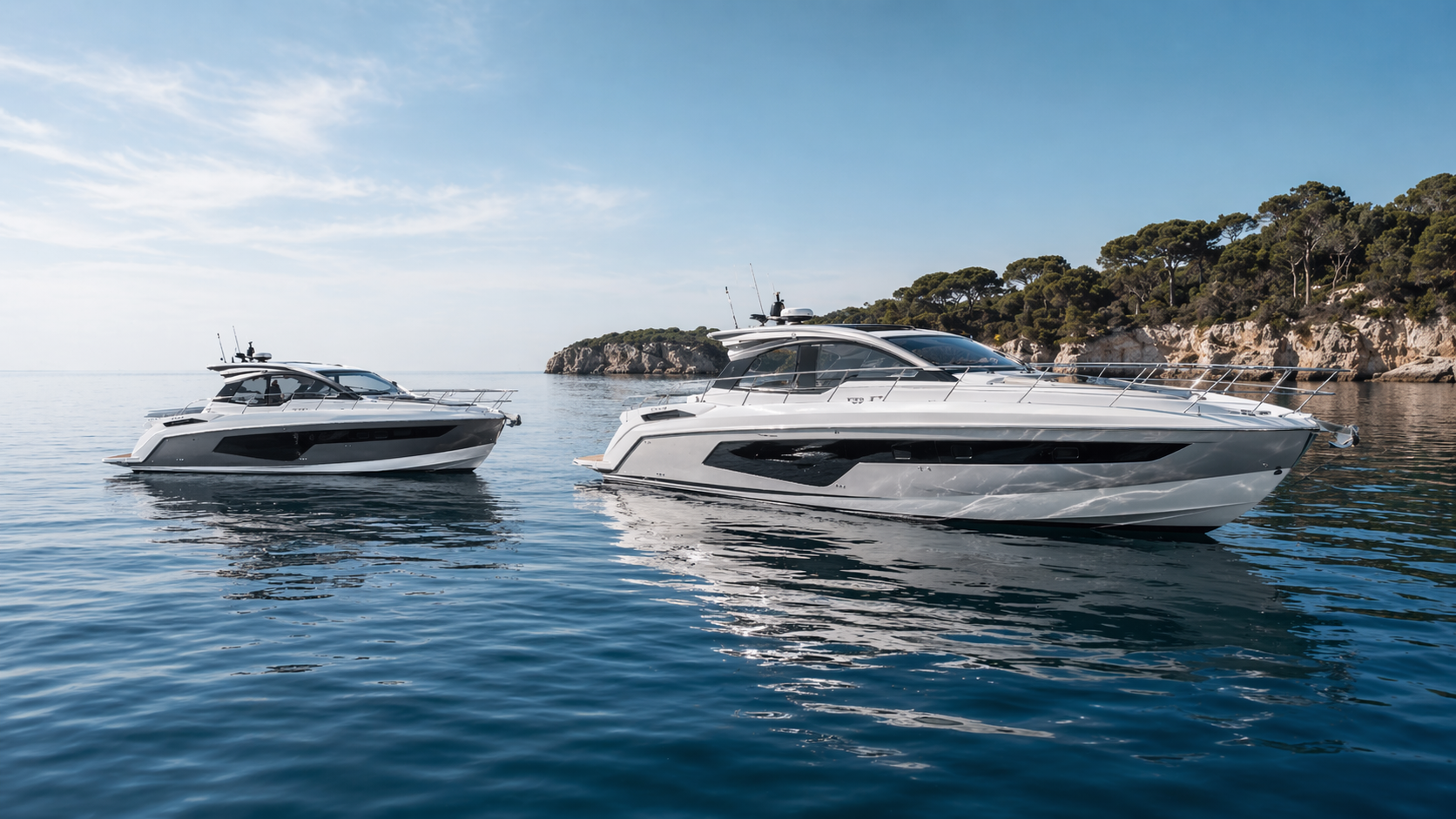
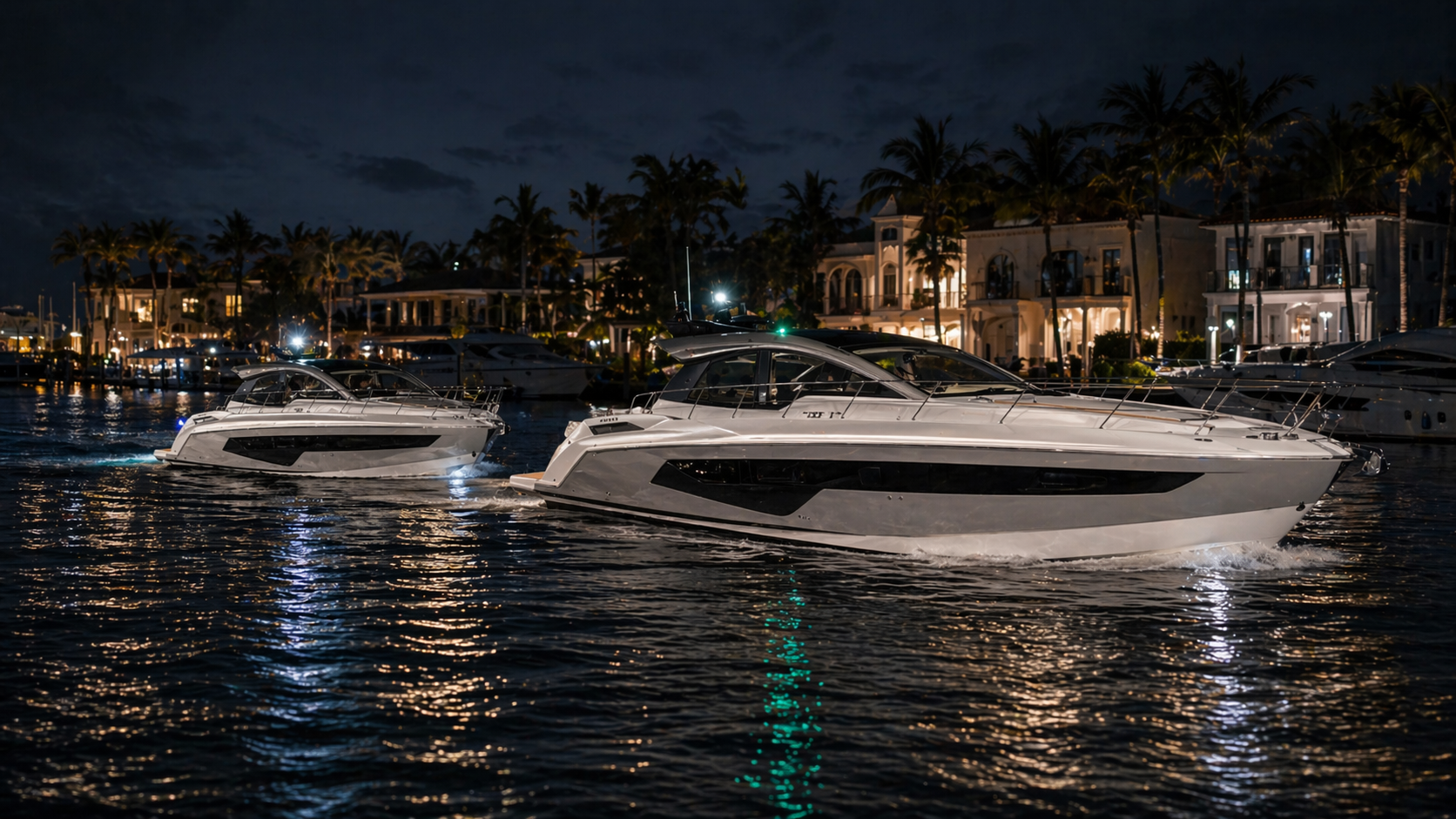
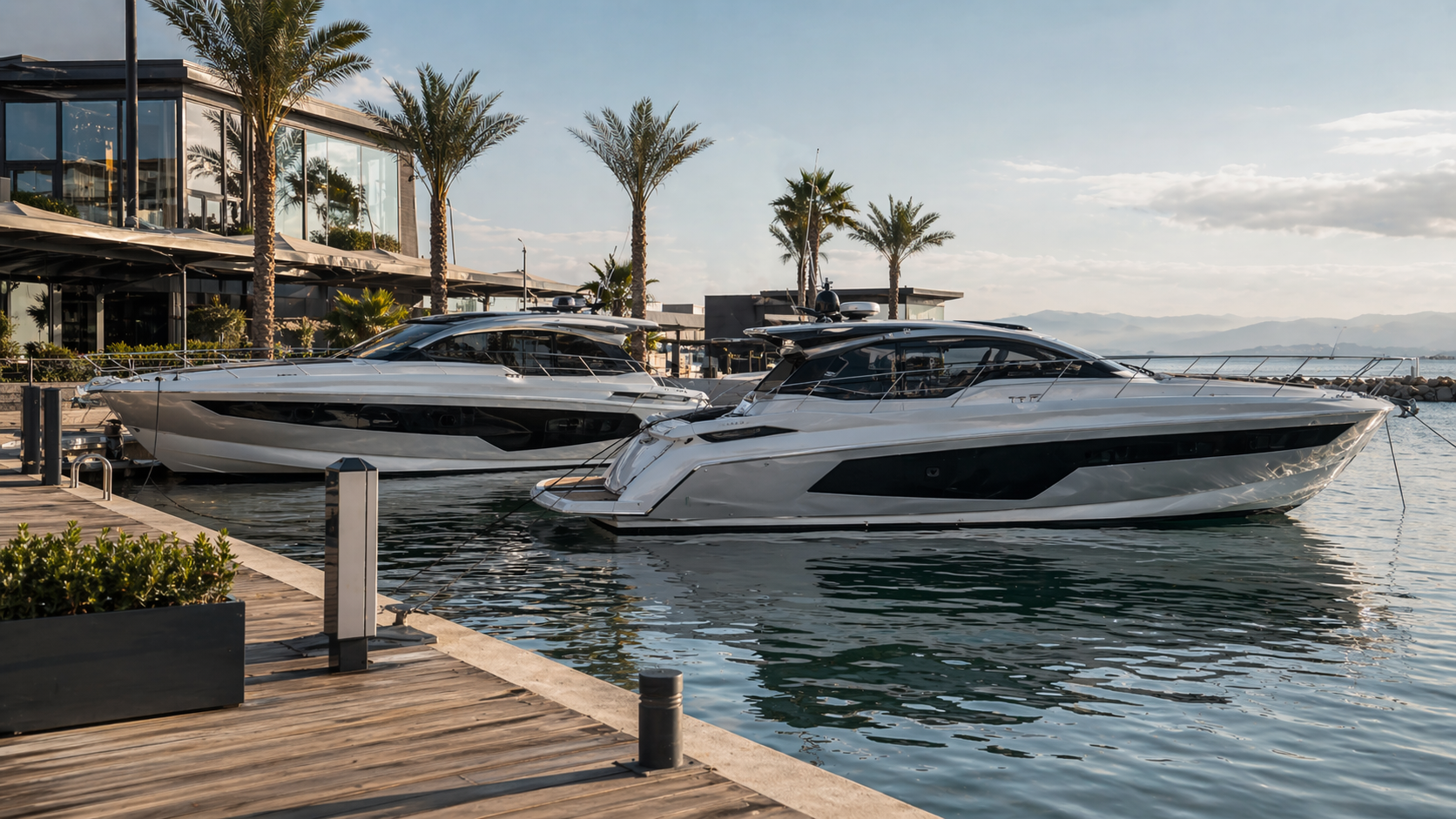
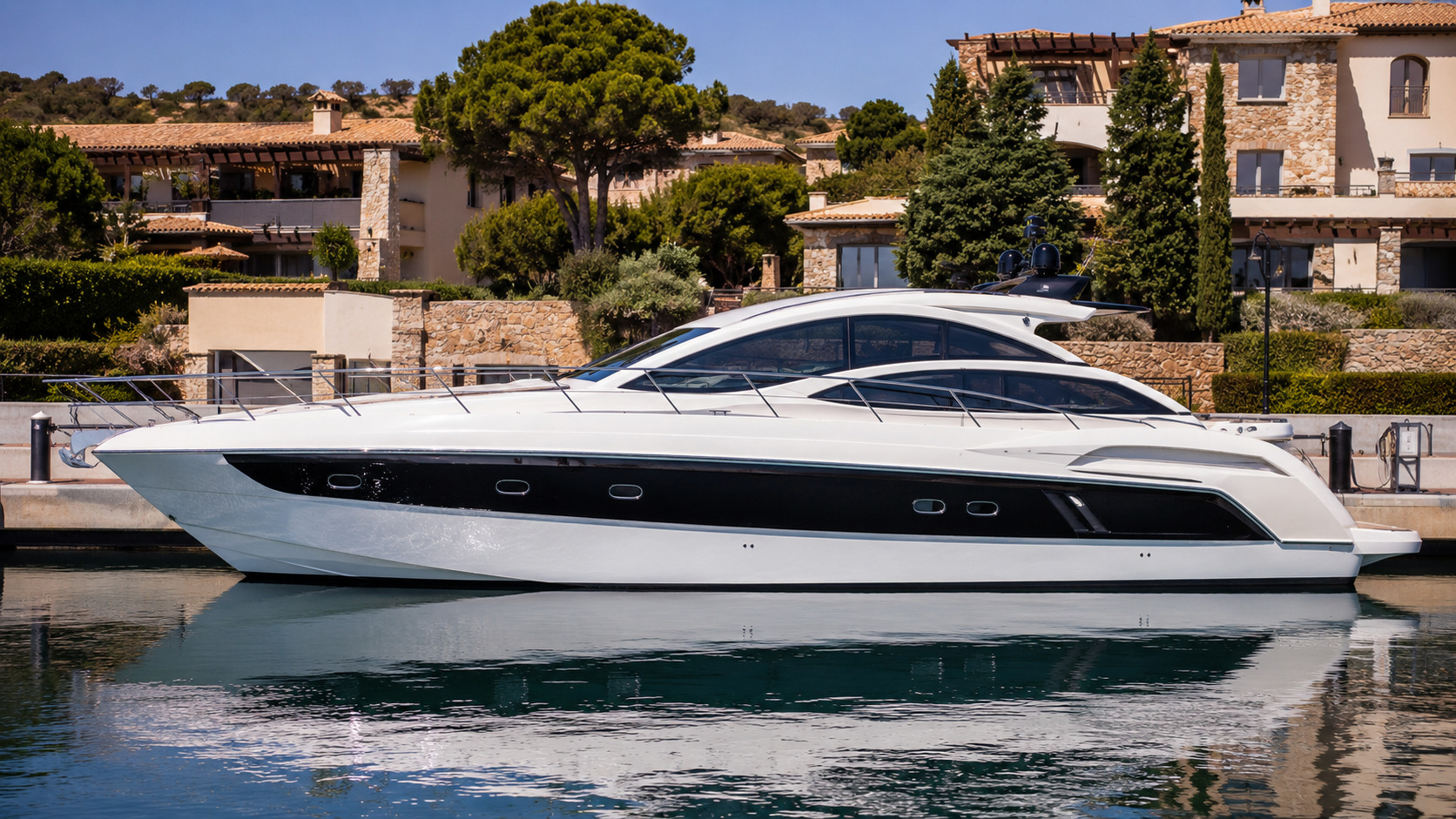
The current Atlantis models share the same basic engineering philosophy: fiberglass construction, planing or semi-planing hull forms, and Volvo Penta IPS propulsion. Azimut uses moderate aft deadrise rather than an extreme deep-V, which helps balance fast cruising, interior volume, and efficiency. The Atlantis 45 carries 15 degrees of aft deadrise, while the 51 is slightly flatter at 14.2 degrees. Neither boat is designed as an offshore performance hull that sacrifices everything else for rough-water speed.
IPS propulsion is equally central to the series. The engines remain inside the hull while steerable pod drives direct thrust below it. That packaging creates more flexibility around the accommodations and gives the operator low-speed maneuvering behavior that is especially useful around marinas. For many buyers, the practical value appears every time they dock rather than when they are running at cruise.
What changes through the range is the amount of boat those systems have to move. The 45 is 47 feet 11 inches overall and carries two cabins. The 51 reaches 53 feet 1 inch, adds a third cabin, grows to almost 15 feet of beam, and weighs roughly one-third more at published full load. That is why stepping up in Atlantis does not simply buy more horsepower or another few feet of deck. It buys significantly more accommodation, tankage, structure, and operating footprint.
Atlantis is the right lane when open-air use and owner-operated sport cruising matter more than adding another deck. If that is not your priority, Azimut has several ranges built around different ownership goals.
Adds a flybridge and another full outdoor living level.
Moves toward larger sport-yacht performance and greater enclosed volume.
Pushes harder toward open-air performance and dayboating.
Prioritizes longer-distance cruising and passage-oriented comfort.
Emphasizes efficient contemporary cruising and electrification.
Moves into large-yacht scale, systems, and crew considerations.
The most important variable in the Atlantis range is accommodation, not length. The 45 gives a couple two proper cabins without pushing into a much larger operating footprint. The 51 adds a third cabin, greater beam, more tankage, and substantially more displacement for owners who regularly cruise with family or guests.
Once you know which Atlantis fits your boating, Float Finance can help you evaluate the purchase around the actual yacht, transaction, and financing structure instead of an abstract monthly payment.
Start with the people who will actually sleep aboard. If most trips involve a couple and occasional guests, the Atlantis 45 already provides meaningful overnight capability without moving into a larger three-cabin platform. If children, another couple, or several overnight guests are regularly part of the plan, the 51’s third cabin becomes much easier to justify.
Then look at how the boat will be operated and where it will live. Both models use IPS propulsion, but the larger 51 carries more beam, windage, and displacement. Marina availability can also change as you approach a 15-foot beam. Finally, think about range and seasonal use. More fuel capacity is useful, but greater displacement and larger engines also change the operating budget.
Answer these in order. They narrow the Atlantis decision faster than any spec comparison will.
The 45 provides two cabins and four published berths. The 51 adds a third cabin and raises published sleeping capacity to six.
The 45 is the more natural owner-operator choice. The 51 remains manageable, but there is simply more yacht to control in tight quarters.
Confirm slip width, fairway room, shore power, yard capacity, and bridge restrictions before assuming both models fit the same marina.
Choose the extra volume of the 51 when it supports how you actually travel, not simply because a larger boat looks more appealing.
The loan payment is only one part of an Atlantis budget. Marina fees, insurance, diesel and IPS service, haul-outs, bottom work, detailing, batteries, electronics, climate systems, fuel, and unexpected repairs all belong in the ownership calculation. A boat that fits the monthly payment but leaves no room for service or dockage is not truly affordable.
The jump from the Atlantis 45 to the 51 is also not linear. The 51 is only a little over five feet longer, yet published full-load displacement rises from roughly 36,600 pounds to more than 49,000 pounds. Fuel capacity, engine output, beam, and system count increase as well. Those changes can affect slip pricing, travel-lift requirements, service labor, fuel use, and insurance.
Underwriting can also become more vessel-specific in this size band. Purchase price, age, condition, survey findings, borrower profile, transaction type, and documentation may all influence the financing structure. On a used Atlantis, service records deserve close attention. A boat with older cosmetics and strong mechanical history can be a better purchase than a polished example carrying deferred IPS, generator, or electrical work.
Send Float Finance the listing. Dealer, brokerage, and private-party transactions can require different paperwork, so starting with the actual yacht puts the financing conversation in the right context.
Before making an offer, understand how the purchase price, monthly payment, and ongoing cost of ownership fit together.
Put the asking price in context with insurance, dockage, fuel, maintenance, and other recurring ownership costs.
Test different purchase prices, down payments, rates, and terms before deciding what payment range works for you.

Understand how financing and closing work when an Atlantis is being sold directly by its owner.
Atlantis is the lower-profile, more open sport-cruiser choice. The helm and primary entertaining areas remain on the main deck rather than adding a flybridge above them. That creates a more direct connection between the driver, cockpit, and water. Azimut Fly models add an elevated helm and another major outdoor living area, which can make more sense for buyers who want extra deck space, elevated visibility, and a more traditional multi-level motor-yacht layout.
Atlantis is the better fit when overnight accommodation matters as much as performance. Its current models combine IPS diesel propulsion with two or three cabins, proper heads, and below-deck living areas. Verve pushes further toward open-air performance and day-focused use. Buyers planning frequent weekends aboard will usually find Atlantis easier to justify, while buyers prioritizing speed, exterior deck use, and a more dayboat-oriented experience may prefer Verve.
The Atlantis 45 provides four published berths in two cabins, while the Atlantis 51 provides six berths in three cabins. Both have two head compartments. The third cabin is one of the most meaningful reasons to step into the 51 because it gives another pair of guests or children their own sleeping space instead of forcing part of the main living area to double as a bedroom.
There is no single annual figure that applies to every Atlantis. Costs depend on the model, marina, insurance profile, annual engine hours, location, maintenance history, and how the yacht is used. A realistic budget should include dockage or storage, insurance, engine and IPS maintenance, haul-outs, bottom service, detailing, fuel, winterization where necessary, and an allowance for unscheduled repairs. The 51 should generally cost more to operate because it carries more weight, larger engines, and more systems.
A professional survey is a sensible part of buying a used Atlantis and may also be required by a lender or insurer. The survey should look beyond cosmetic condition and examine the hull, moisture, machinery, IPS drives, electrical systems, generator where fitted, climate equipment, underwater gear, and evidence of previous repairs. Service documentation matters as well. A clean-looking yacht can still hide expensive deferred mechanical work that changes the economics of the purchase.
Start with the 45 unless the 51 solves a problem you will encounter regularly. The 45 already gives you two cabins, two heads, twin IPS propulsion, and a substantial outdoor living area. Move to the 51 when the third cabin, wider beam, and additional volume materially improve how your family or guests will use the yacht. If those spaces will sit empty most weekends, the smaller Atlantis can be easier and less expensive to own.
Once you know whether the 45 or 51 suits your boating, Float Finance can help you evaluate financing around the actual yacht and transaction.
Tell us a little bit about yourself and the boat you are looking to finance.