Call Us : 207-994-5109
Mon – Fri: 8 am to 9 pm & Sat – Sun: 10 am to 8 pm
The Azimut Atlantis 45 packages two real cabins, twin IPS diesel power, and weekend cruising ability into a size that still suits an experienced owner-operator.
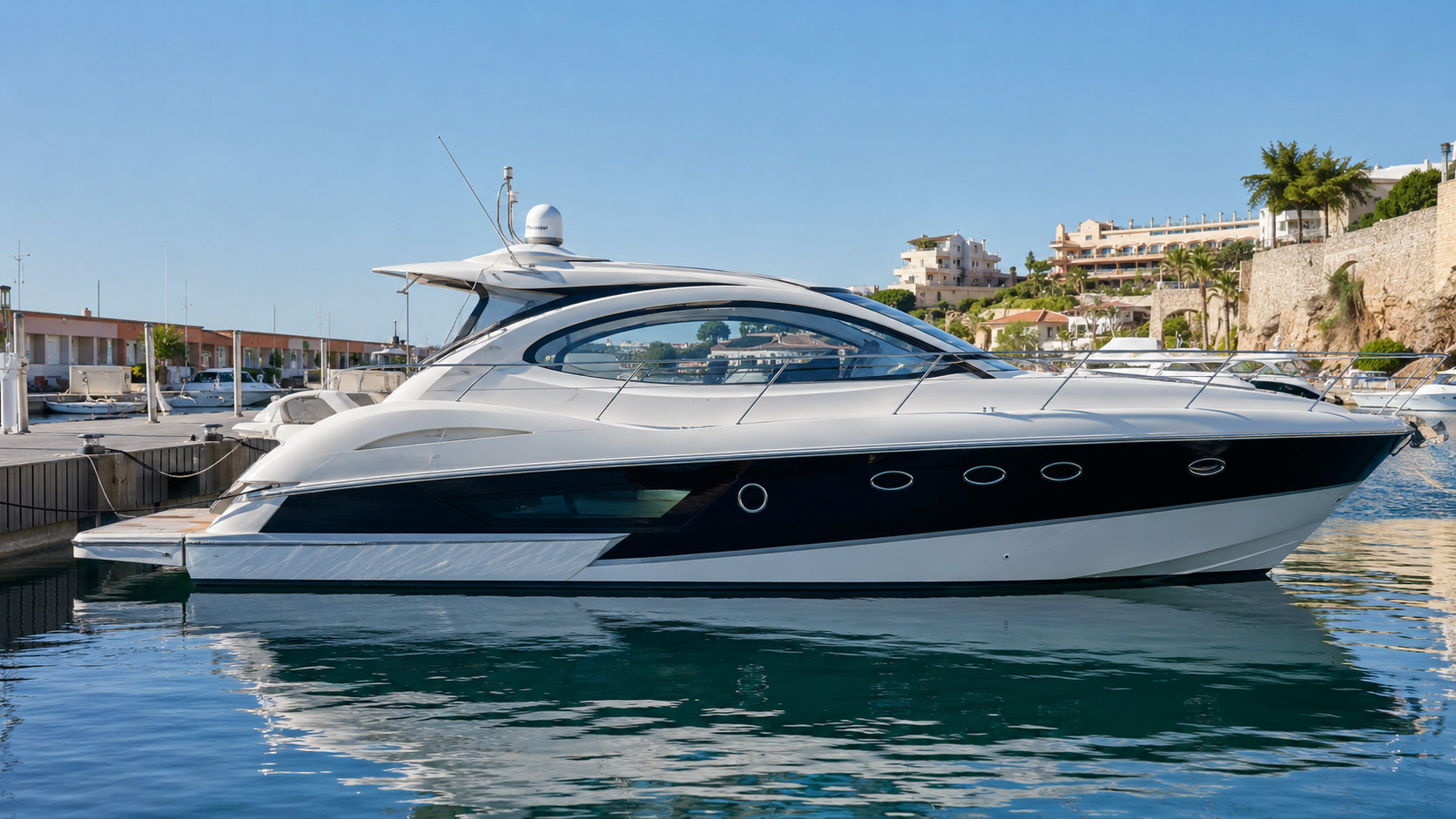
The Azimut Atlantis 45 sits near the upper end of the range where a capable owner can still reasonably think of the yacht as something they operate themselves every weekend. At 47 feet 11 inches overall, it is not a small boat, but Azimut resists the temptation to divide the hull into too many rooms. Two cabins, two heads, and an open main deck give the 45 a clearer purpose than a design that tries to imitate a larger three-cabin yacht.
Twin Volvo Penta IPS 650 packages provide 480 horsepower per side. The pod-drive layout matters because the 45 is expected to move quickly offshore and still behave sensibly when it returns to a crowded marina. The system directs thrust through steerable drives beneath the hull, improving low-speed maneuverability and helping the engine installation coexist with the accommodations below.
Sleeping capacity is straightforward: four published berths across two cabins. That works particularly well for a couple who occasionally brings another couple, children, or overnight guests. It is not designed for three groups that all expect private sleeping rooms. Trying to make the 45 solve that problem misses the point of the boat.
The compromise is therefore easy to name. The Atlantis 45 gives you less private accommodation and less interior volume than the 51. In return, you carry less beam, considerably less displacement, smaller engines, and a more manageable overall footprint. If a third cabin will be occupied frequently, buy the larger boat. If it will usually sit empty, the 45 makes a strong case for itself.
Published factory figures. Confirm every dimension against the individual yacht and its survey before you rely on it.
The Atlantis 45 uses a semi-planing fiberglass hull with 15 degrees of aft deadrise. That is a moderate figure rather than an aggressive deep-V. The choice supports the boat’s broader mission: carry useful accommodations, reach a 30-knot published cruise, and remain efficient enough for ordinary coastal use. More deadrise could soften some impacts in a head sea but would generally demand more power and sacrifice something in efficiency or interior geometry. A flatter running surface could improve efficiency in calm water while becoming less forgiving as chop builds.
Azimut publicly identifies the building material as GRP and credits the Azimut-Benetti R&D Department with the hull design. The current factory material does not provide enough detail to make responsible claims about an exact laminate schedule, coring arrangement, or stringer specification. A surveyor should therefore evaluate the individual boat instead of relying on generic assumptions about production fiberglass construction. Moisture around deck penetrations, evidence of grounding or impact, previous repairs, stress cracking, and underwater running gear all deserve attention.
The dimensions explain why the 45 occupies a useful owner-operated niche. Beam is 13 feet 9 inches, draft is 3 feet 7 inches including the props at full load, and published full-load displacement is 36,596 pounds. That is substantial enough to require proper marina and yard planning, yet meaningfully less boat than the Atlantis 51. Air draft should be taken from the verified registry or exact vessel because bridge clearance can change with antennas and installed equipment.
The current Atlantis 45 uses twin Volvo Penta IPS 650 packages rated at 480 horsepower each, for 960 horsepower combined. Rather than driving fixed shafts, each diesel feeds a steerable pod beneath the hull. That affects more than the specification sheet. It gives Azimut more flexibility around the lower-deck arrangement and allows the propulsion system to vector thrust in ways conventional shaft installations cannot.
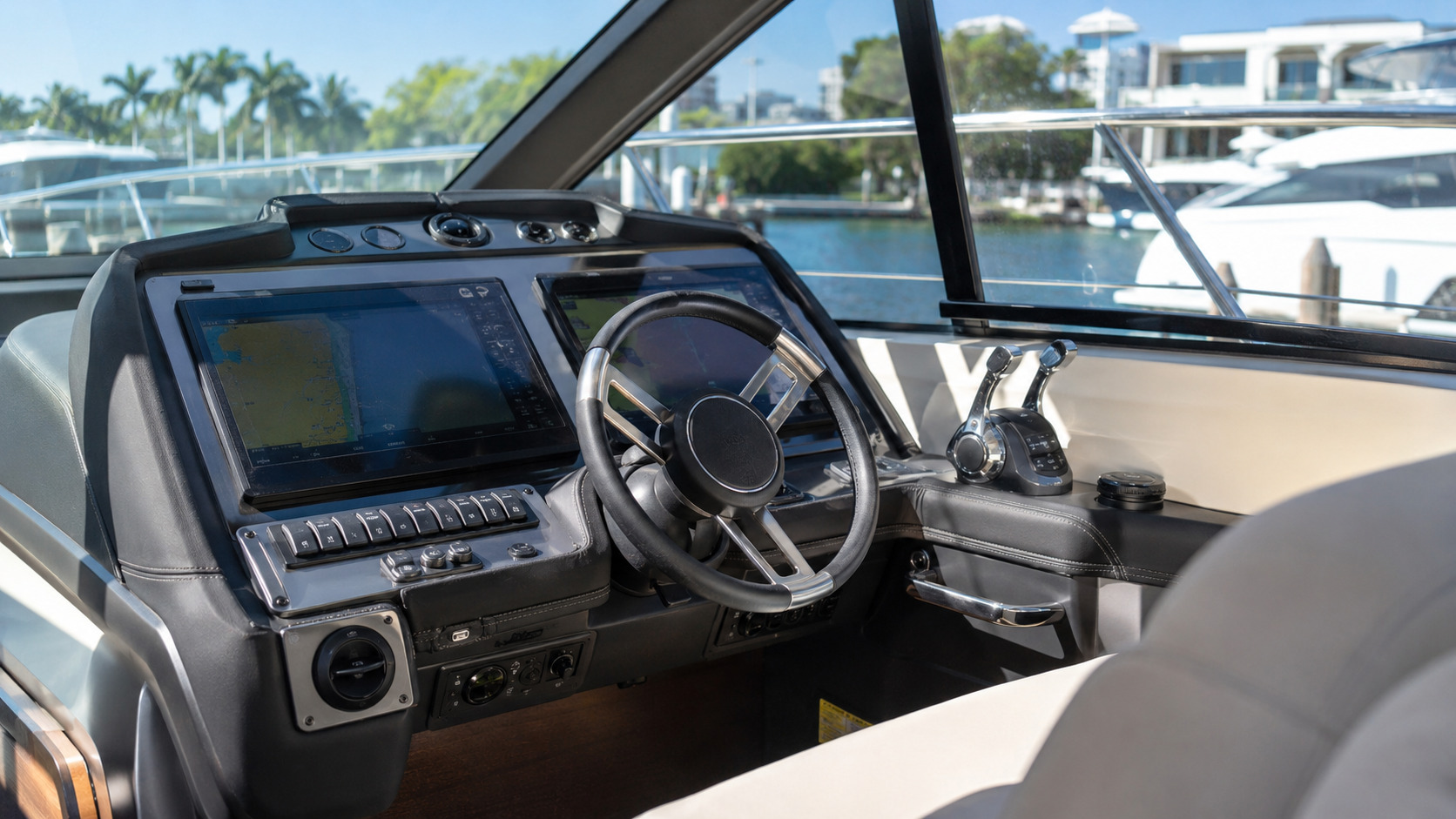
The difference is most obvious around the dock. With the appropriate joystick system, the operator can combine the pods to move the yacht laterally, rotate it within its own length, or correct position without constantly shifting between throttles, wheel, and thrusters. That makes the 45 approachable for an experienced owner stepping up from a smaller cruiser. It does not remove the effects of wind, current, momentum, or poor technique. Thirty-six thousand pounds still needs to be handled deliberately.
Maintenance is the part of IPS ownership that deserves the same attention as maneuverability. Service records should cover the engines and the drives, including oils, seals, corrosion protection, steering components, propellers, and any history of underwater impact. Exact service intervals and annual cost bands should come from the verified registry and service history for the relevant model year. During a survey, pod condition deserves concentrated attention because deferred drive work can quickly outweigh the value of cosmetic upgrades or newer electronics.
The Atlantis 45 carries 264 gallons of fuel and Azimut publishes a 30-knot cruising speed, but current factory material does not publish a standardized gallons-per-hour figure. Cruise burn, wide-open-throttle burn, nautical miles per gallon, and usable range should therefore come from the verified performance registry rather than being inferred from unrelated tests. Use a reserve in any range calculation rather than assuming the full tank is available for passage planning.
The useful efficiency question is not simply how slowly the boat can run. It is where the specific hull and engine package settle into a comfortable planing cruise without carrying unnecessary rpm. That setting can change with loading, bottom condition, trim, sea state, propeller condition, and equipment aboard. Engine-monitor data from the actual yacht is more useful than a generic online number.
Seasonal fuel cost should then be calculated from how you intend to use the boat. A buyer making short weekend runs from one marina will have a very different budget from an owner regularly covering long coastal legs. Apply the verified cruise burn to your expected hours and an explicit diesel-price assumption. That turns fuel consumption into an ownership number rather than a specification people quote without context.
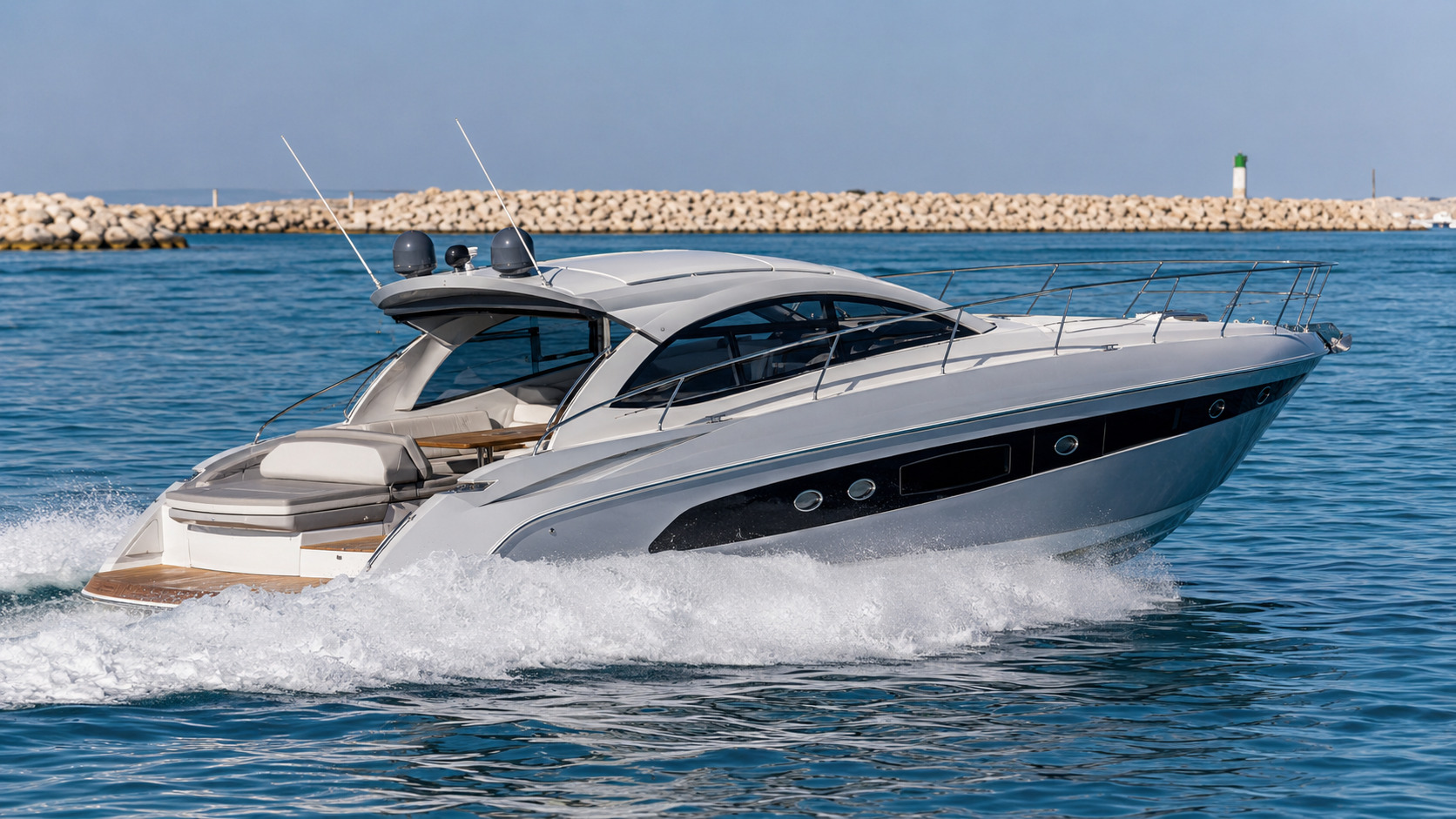
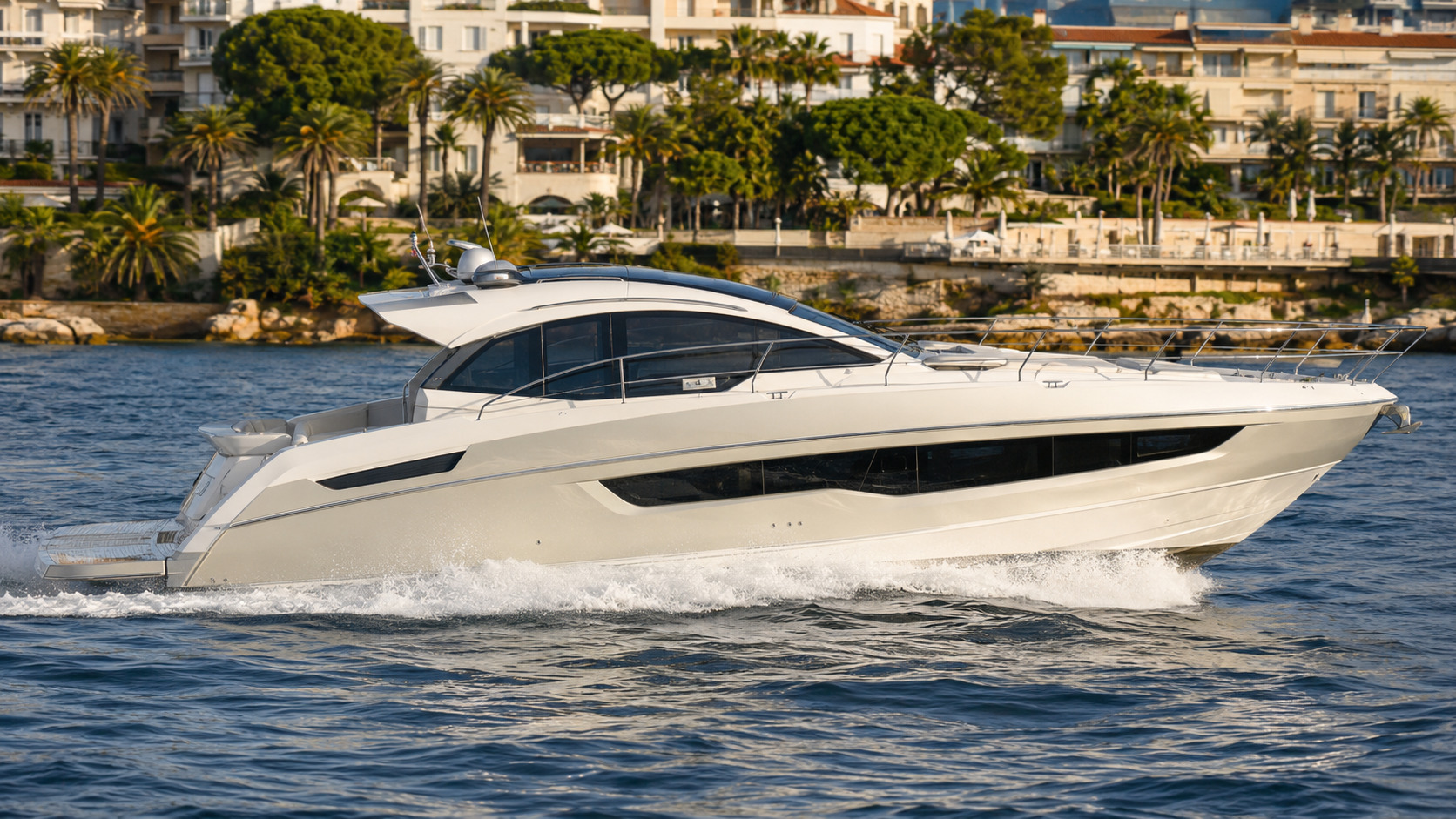
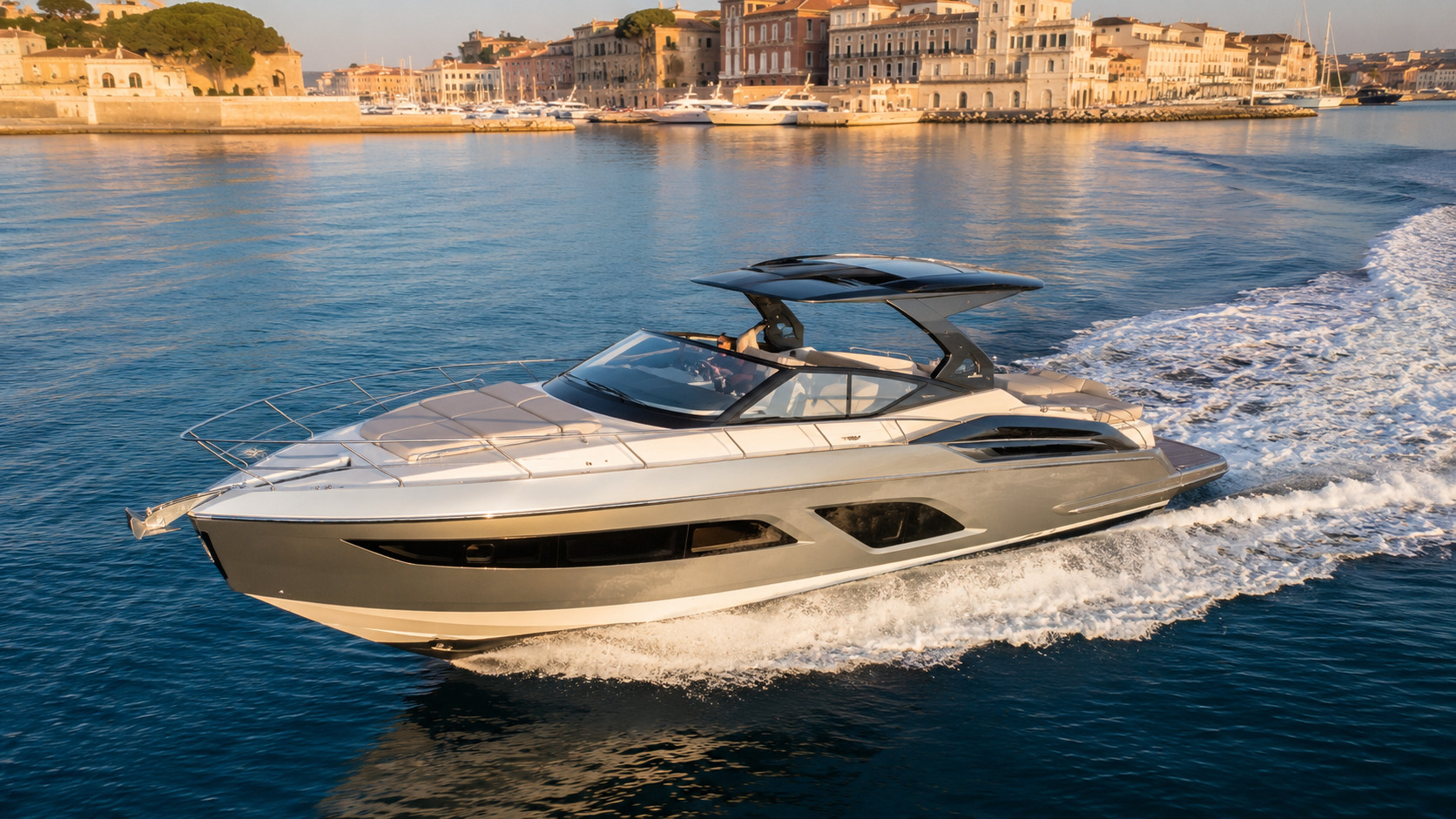
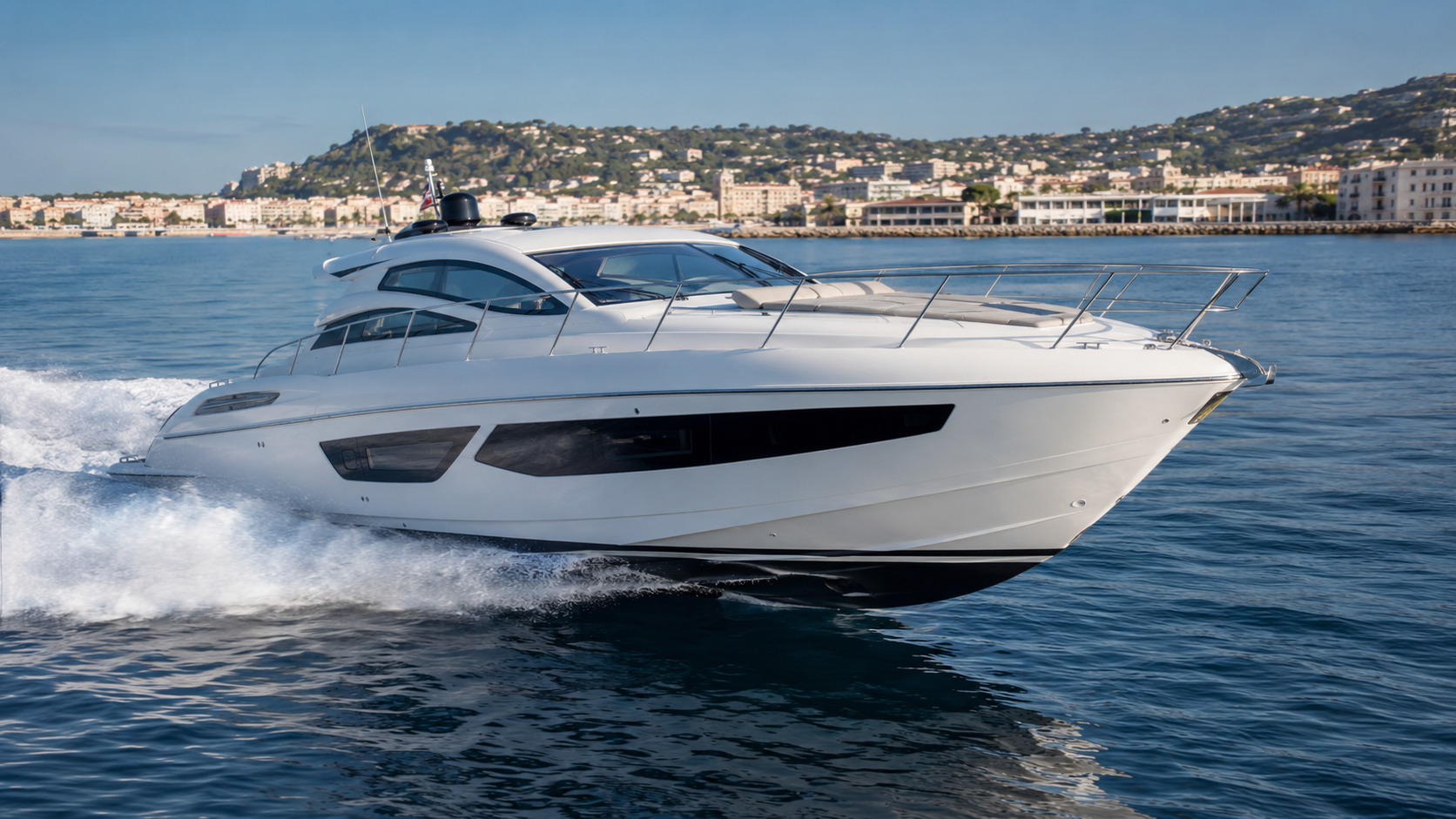
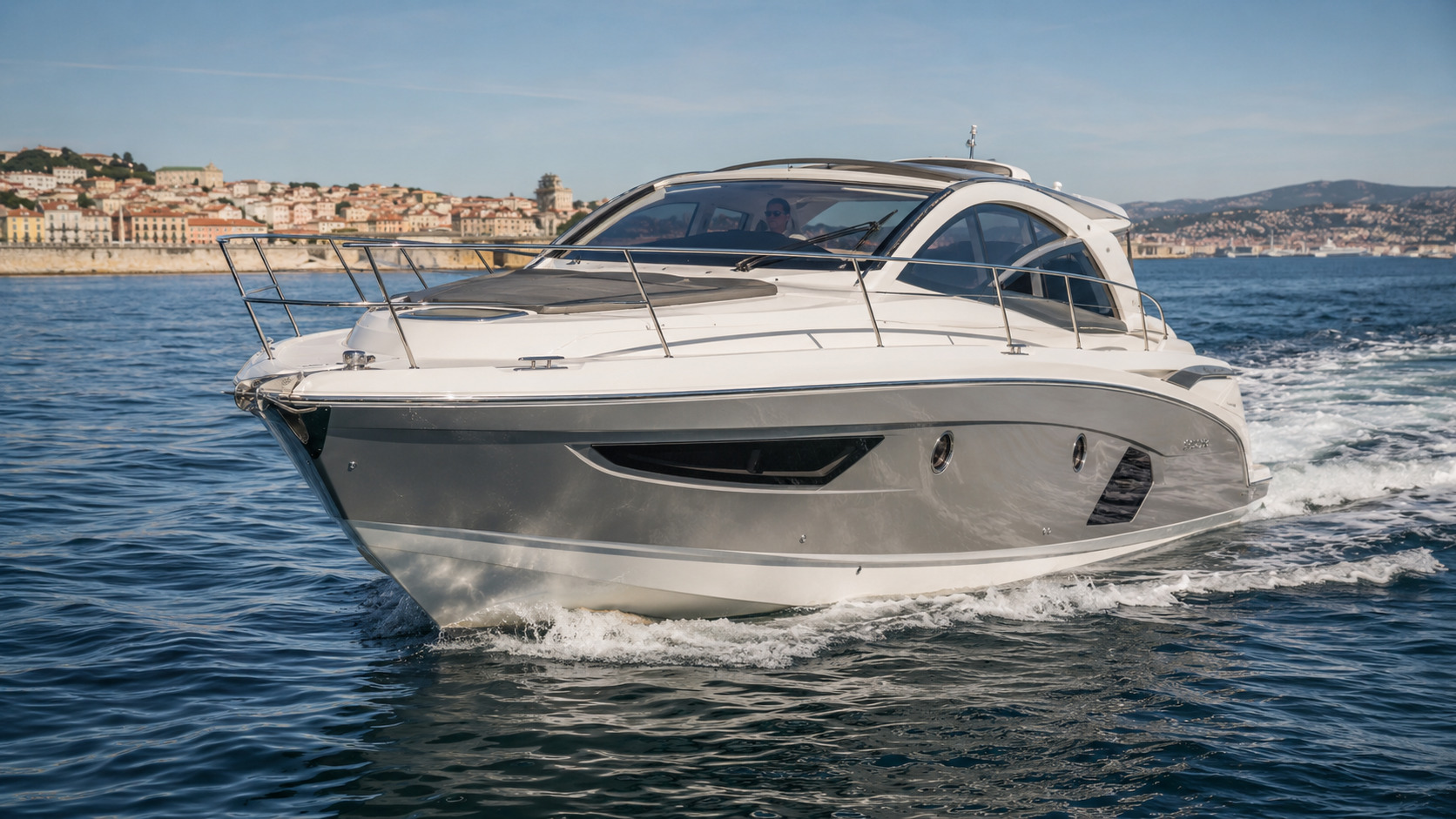
Azimut publishes a maximum speed of up to 35 knots for the Atlantis 45 and a 30-knot cruising speed at its stated performance-test mass. Those figures put the boat firmly in the fast-cruiser category, but the useful performance story is broader than maximum speed. A yacht like this earns its keep by getting onto plane without drama, holding a useful cruise through ordinary coastal conditions, and remaining predictable when the driver changes trim or direction.
The 15-degree aft deadrise also means throttle management matters when the water becomes short and steep. The 45 has enough power to maintain speed, but maintaining speed is not always the right answer. A competent operator will adjust trim, reduce throttle, or change the angle of approach when conditions demand it. At anchor, the lower profile compared with a flybridge yacht can also reduce some windage, although beam, loading, and local conditions still influence movement.
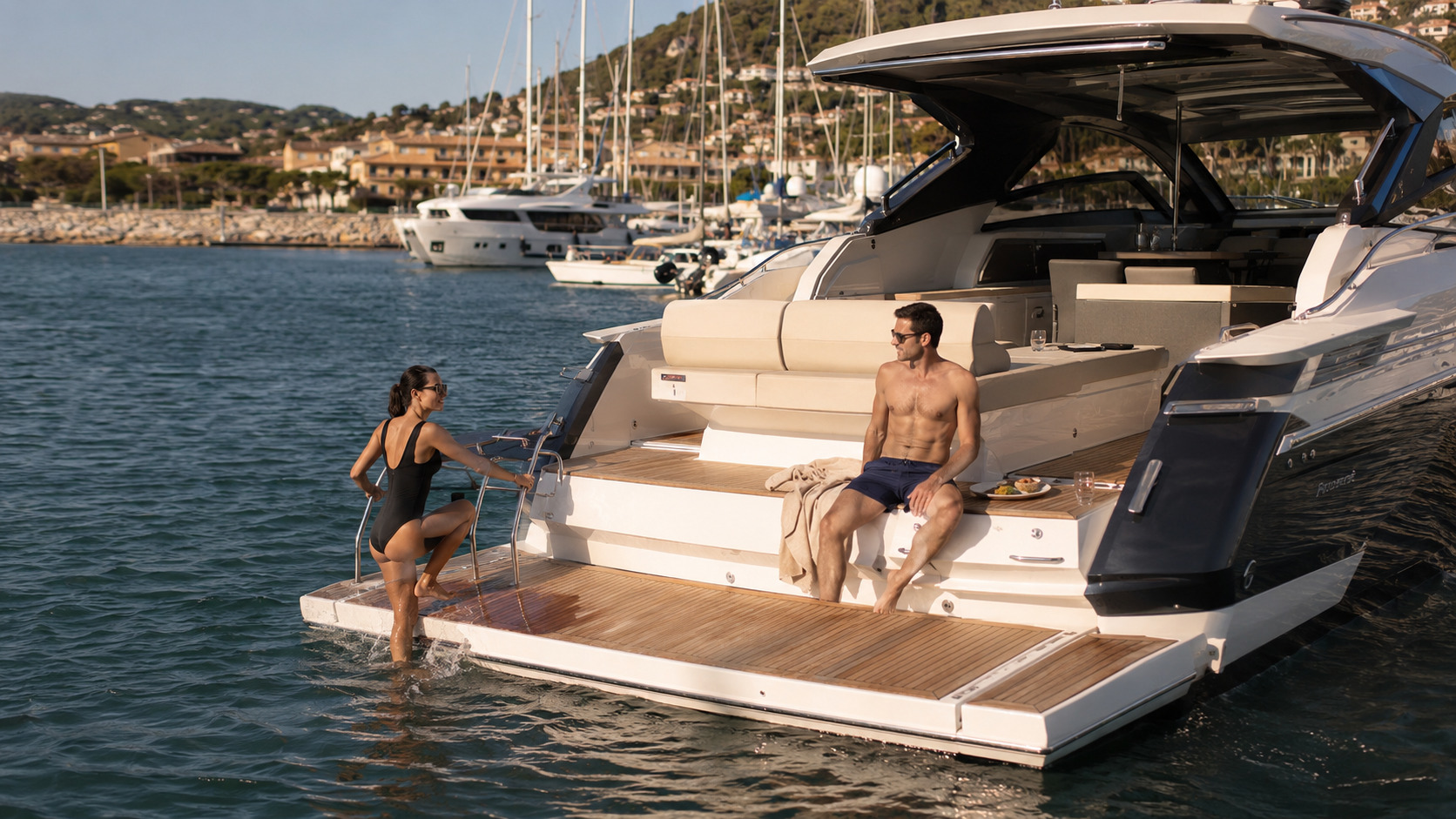
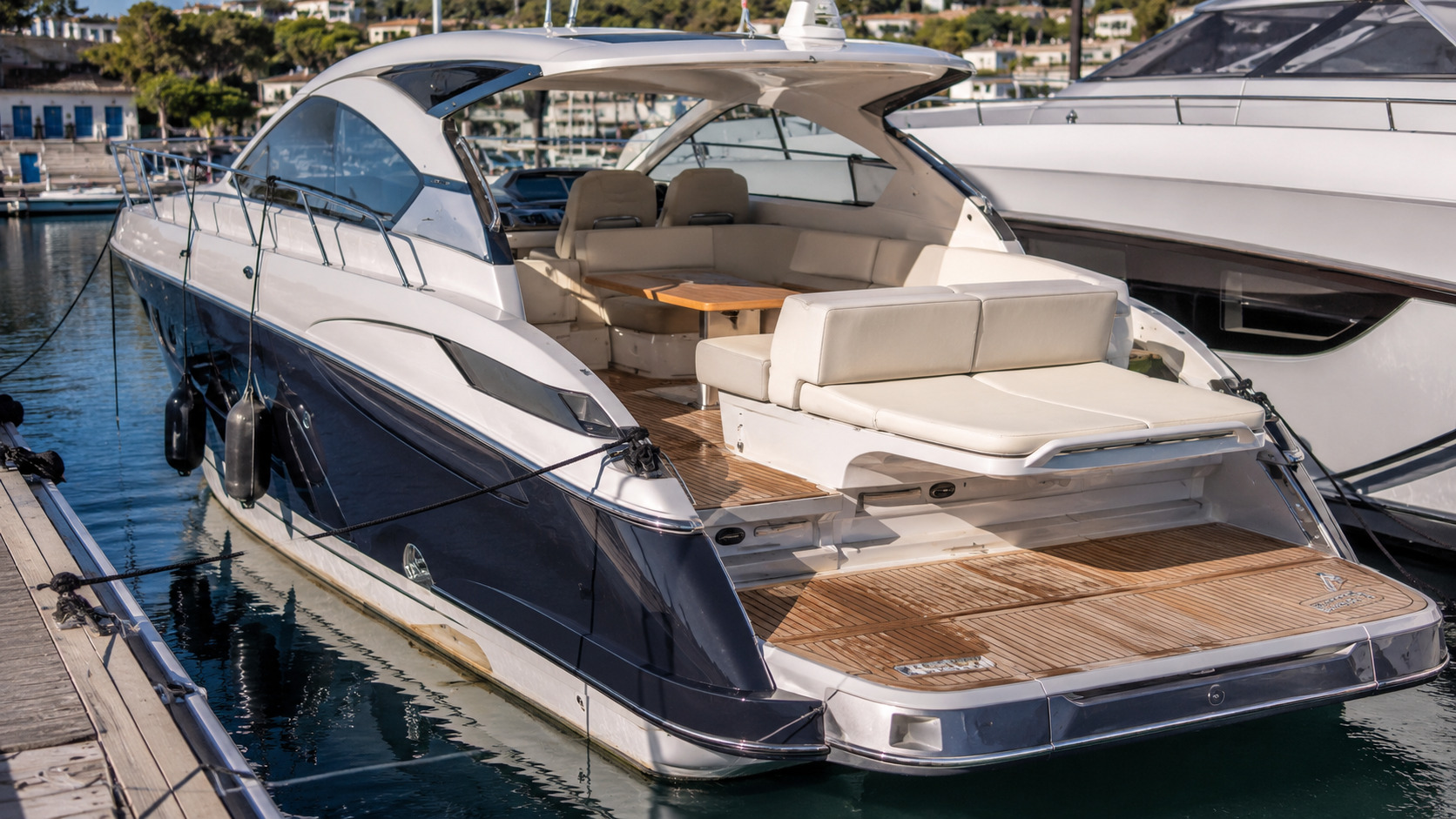
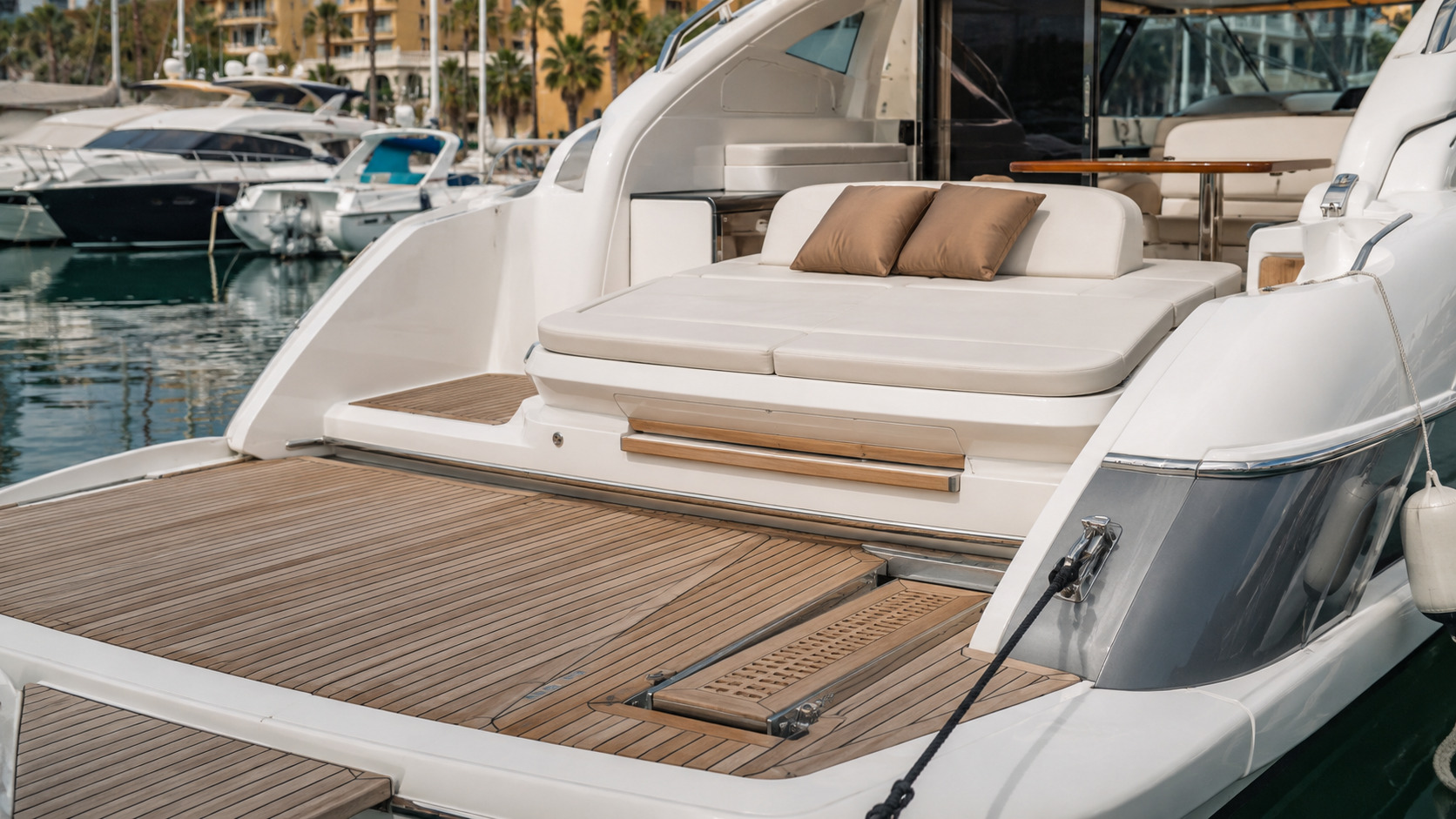
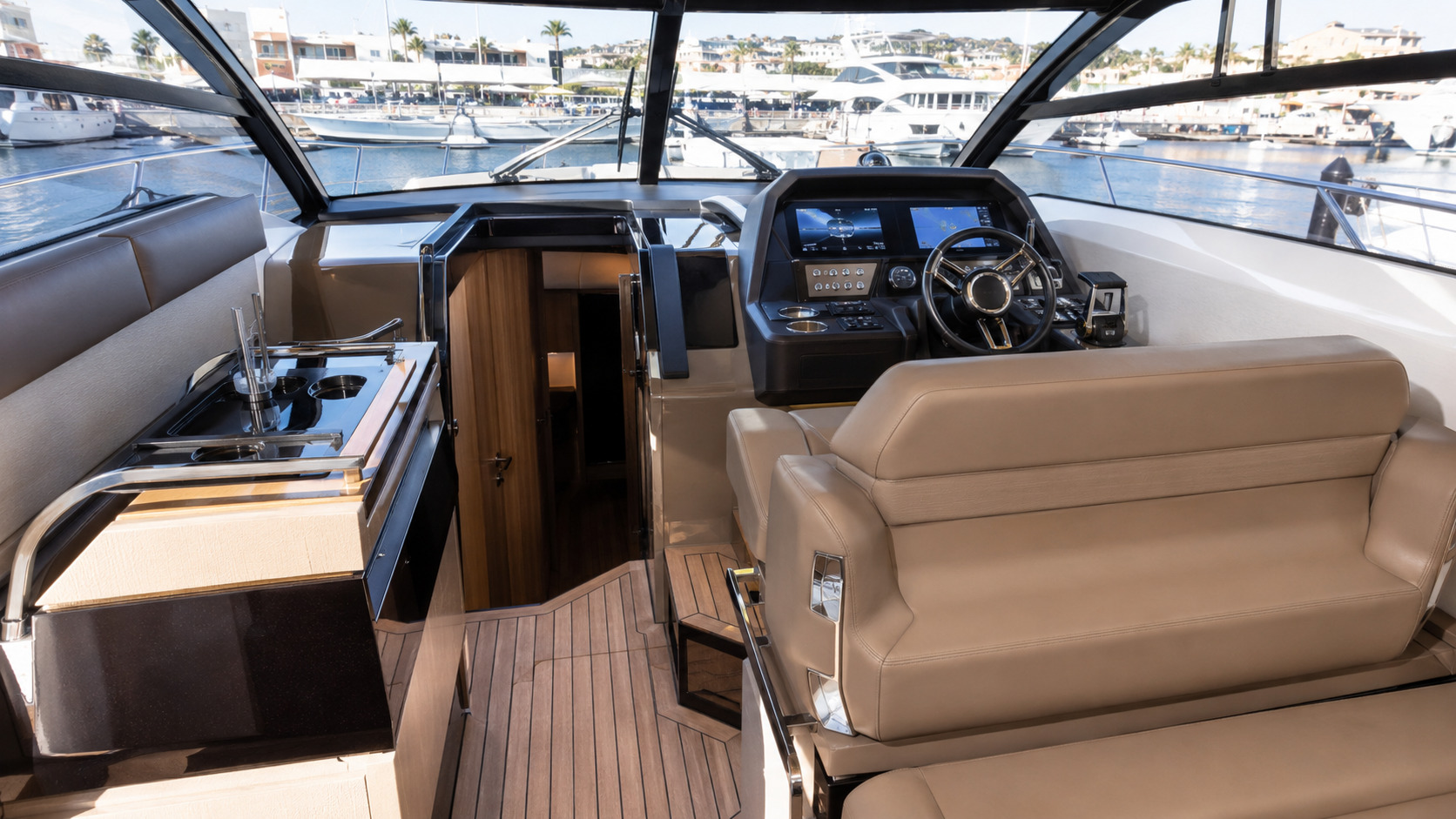
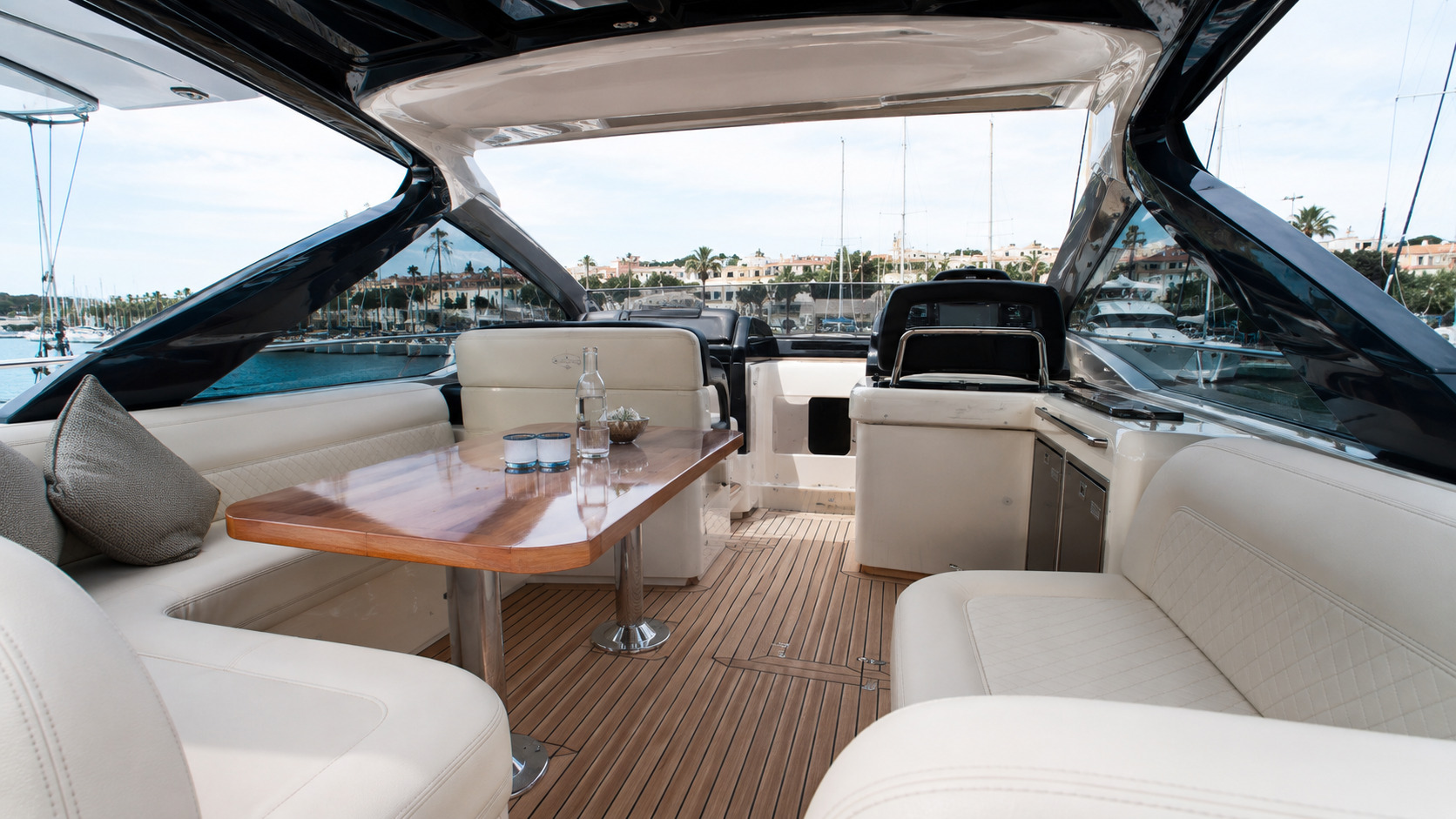
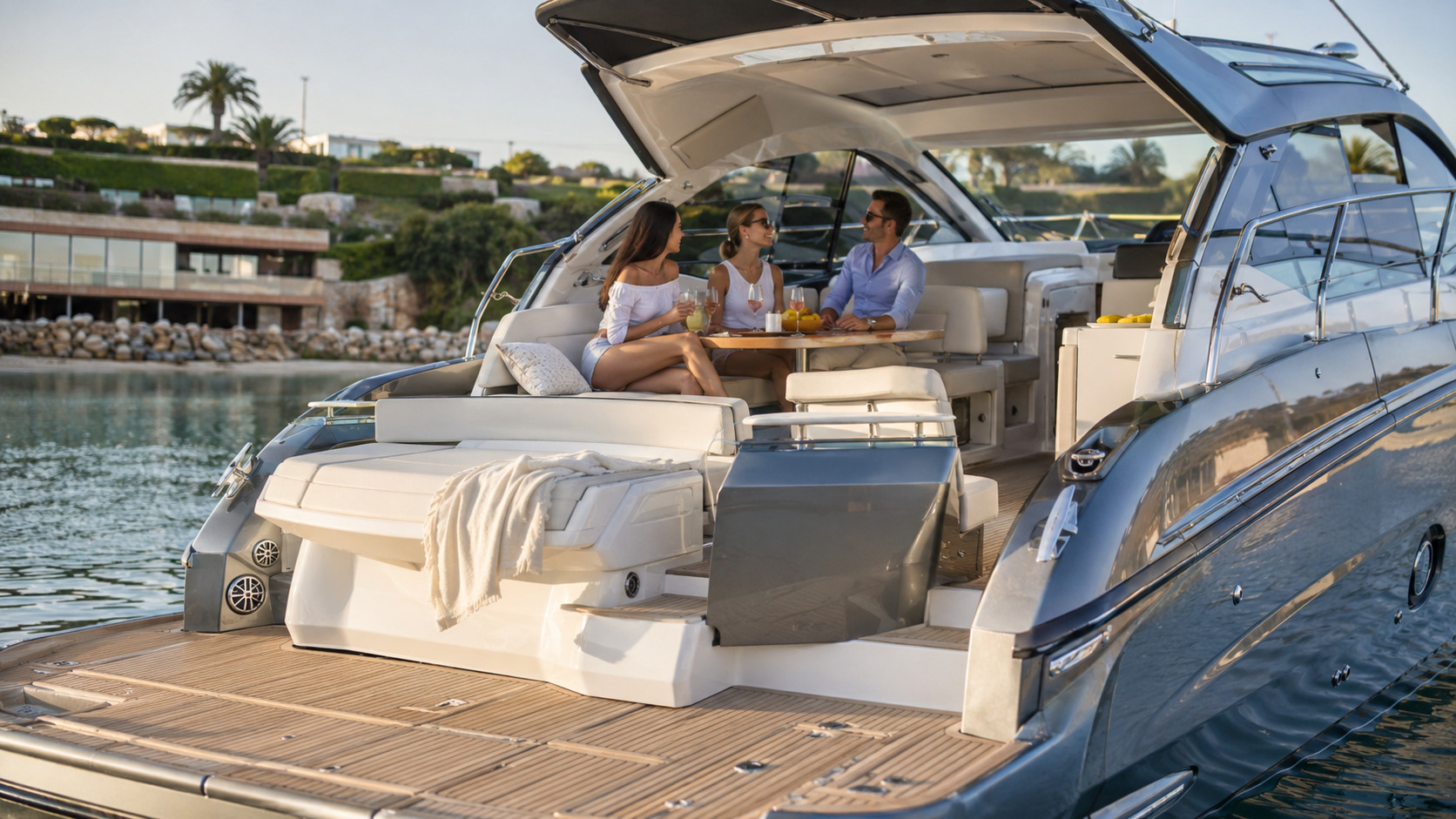
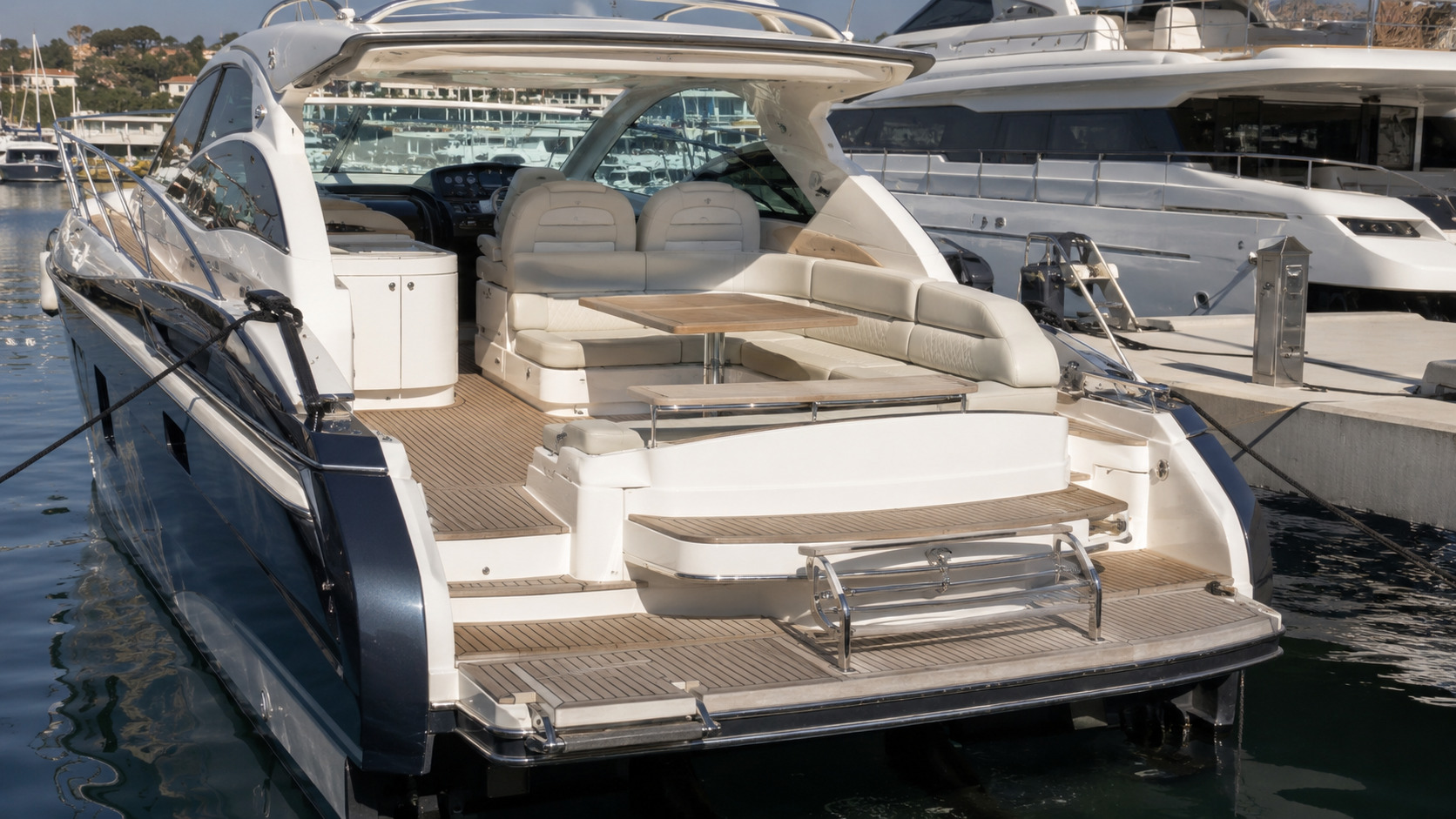
The cockpit is the center of the Atlantis 45’s daytime use. Seating, the aft sunpad, and the swim-platform connection keep guests oriented toward the water rather than an enclosed interior. The arrangement works especially well at anchor, where swimming, eating outside, and moving between the stern and helm often matter more than having another enclosed room. The tradeoff is circulation: on a boat this size, several people moving through the cockpit at once can make the same space feel tighter than it does when everyone is seated.
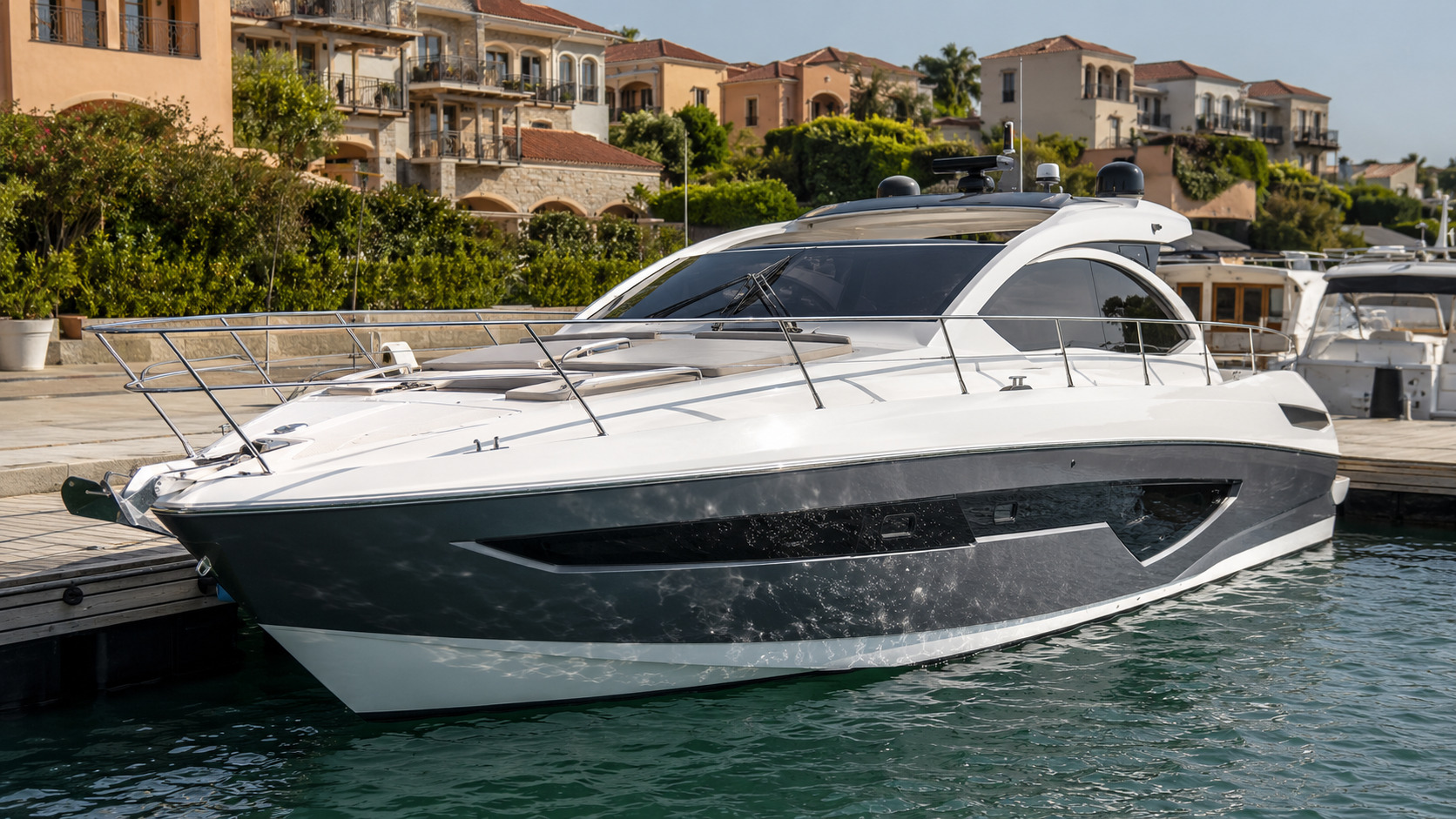
Movement forward remains part of the design rather than an afterthought. The foredeck provides another exterior area, while the side-deck route gives owners access for lines and anchoring. This is worth checking in person because usable walkway width and handholds matter more during docking than they do in photographs.
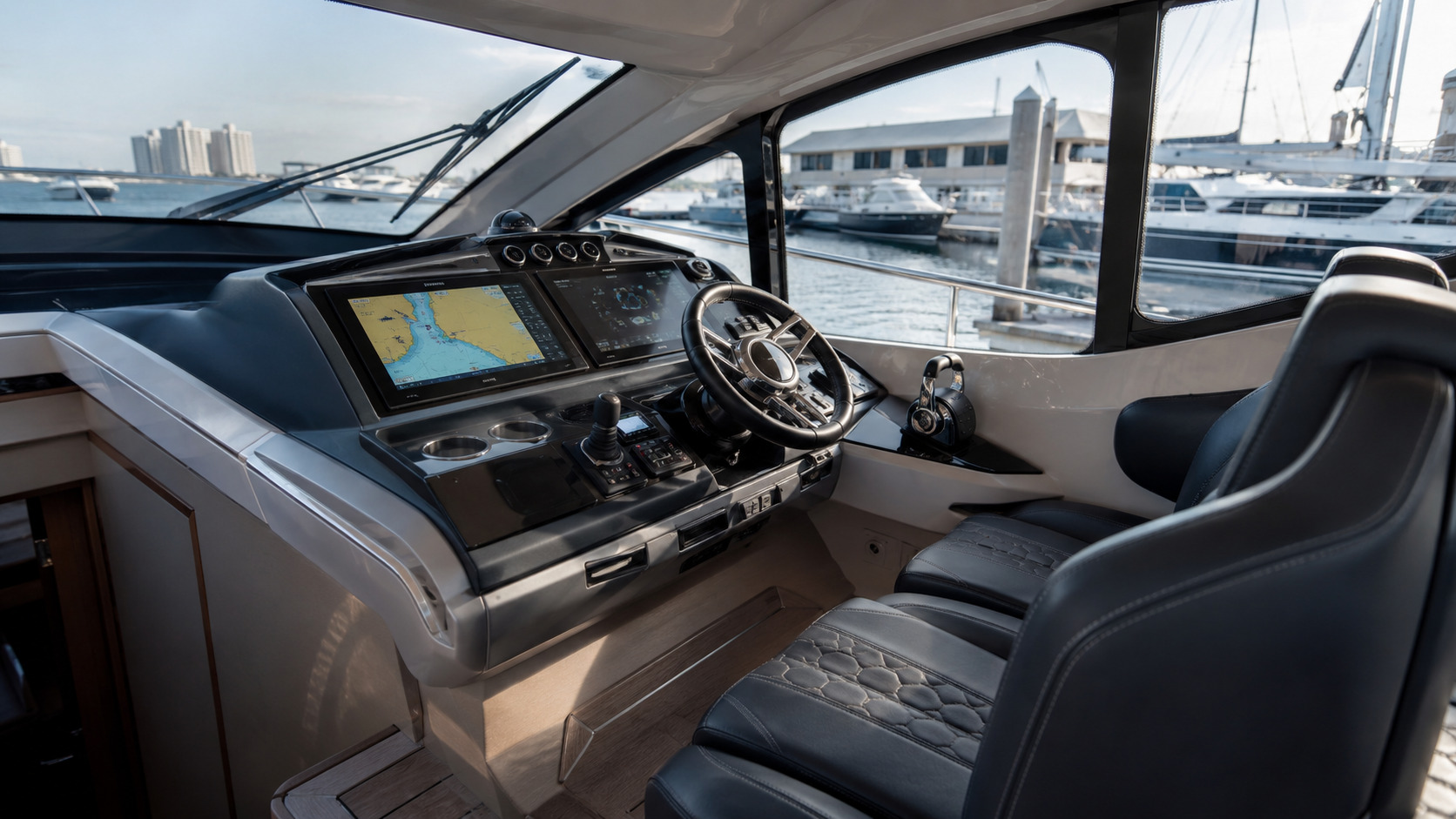
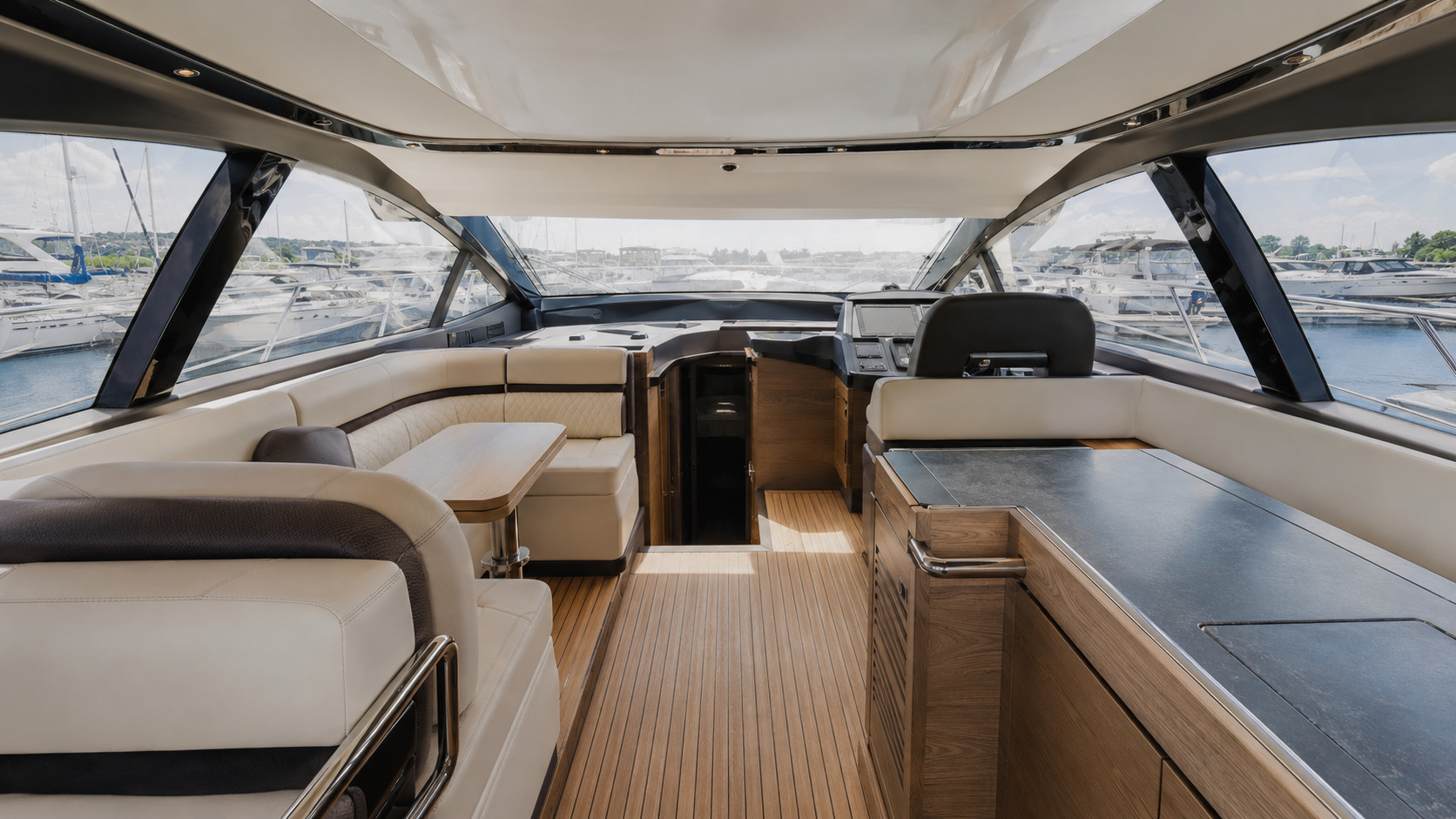
At the helm, a broad curved windshield and limited pillar intrusion improve forward visibility. A companion chaise sits beside the driving position, which keeps the operator involved with the people aboard instead of isolating the helm. The opening hardtop allows the area to function as an open cruiser in good weather while retaining useful shelter when conditions change.
Equipment can vary by model year and option package, so every used Atlantis 45 should be checked against its actual build sheet. The core layout, however, gives the boat several features that directly affect how owners use it.
IPS propulsion can support joystick maneuvering, giving the operator more control over lateral movement and rotation in close quarters.
The opening roof lets the helm and forward cockpit switch between a more sheltered environment and a genuinely open-air experience.
Four published berths are split between two proper cabins rather than several smaller sleeping spaces with compromised privacy.
Separate head compartments make weekends with another couple far easier than a single-head arrangement would at this size.
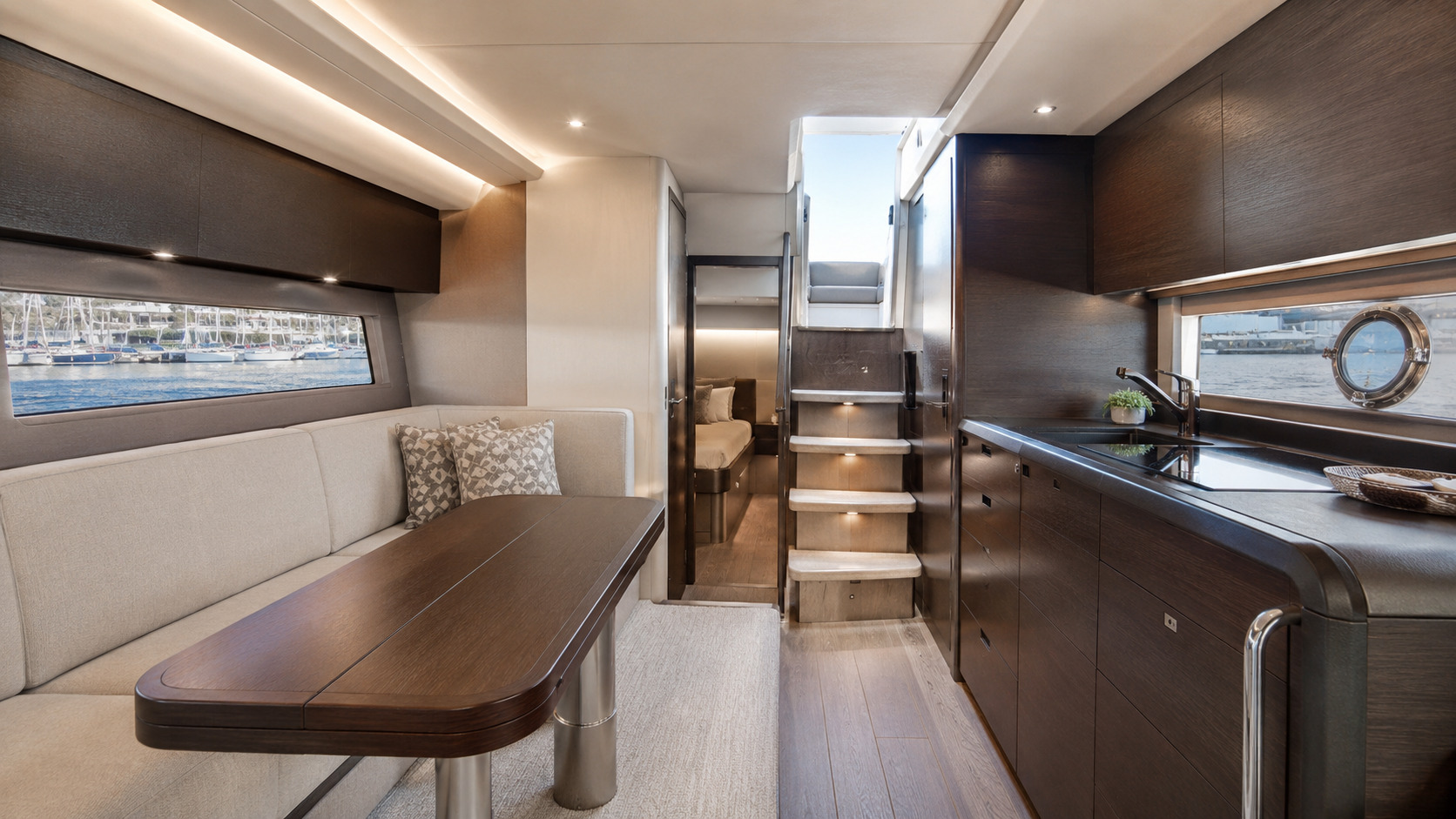
Keeping the galley below preserves more of the main deck for cockpit seating, movement, and outdoor entertaining.
The amidships accommodation can adapt its berth arrangement, giving owners more flexibility when the guest mix changes.
The stern platform supports swimming, boarding, and tender use and keeps much of the activity close to the water.
A garage beneath the aft area can keep a small tender or water toy from permanently occupying deck space.
Do not stop the pre-purchase inspection at the engines. Generator operation where fitted, shore power, batteries, chargers, climate control, freshwater pumps, sanitation equipment, windlass, navigation electronics, and powered deck components all need functional testing.
Any hydraulic or electrically actuated system should be cycled through its full operating range. That includes the hardtop and tender-handling or swim-platform equipment where fitted. Electronics deserve the same treatment. Newer displays are easy to notice in a listing, but reliable wiring, correct network communication, working sensors, autopilot integration, and documented installations matter more than screen age alone.
The Atlantis 45 belongs in a proper marina or yacht-storage program. At 47 feet 11 inches overall, 13 feet 9 inches of beam, and more than 36,000 pounds at published full load, it is well beyond normal recreational trailering.
Confirm usable slip dimensions rather than relying on the marina’s nominal length. Fenders, pilings, boarding position, shore-power access, fairway width, and local overhang rules all matter. Beam can become the limiting dimension before length does. Buyers dealing with fixed bridges should use a verified air-draft value for the exact vessel, including antennas. For haul-out and winter storage, verify that the yard can handle the weight and routinely services IPS running gear.
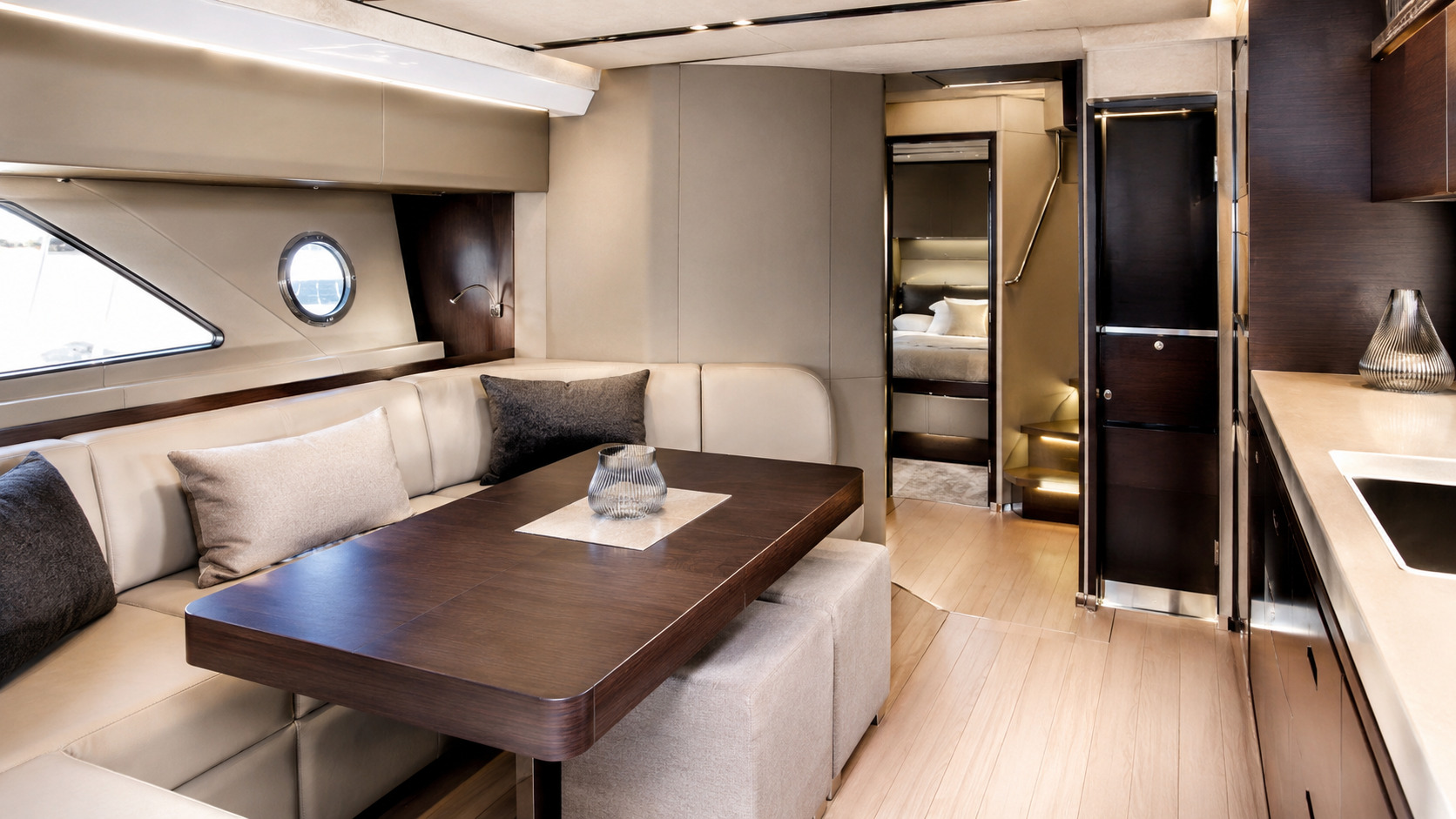
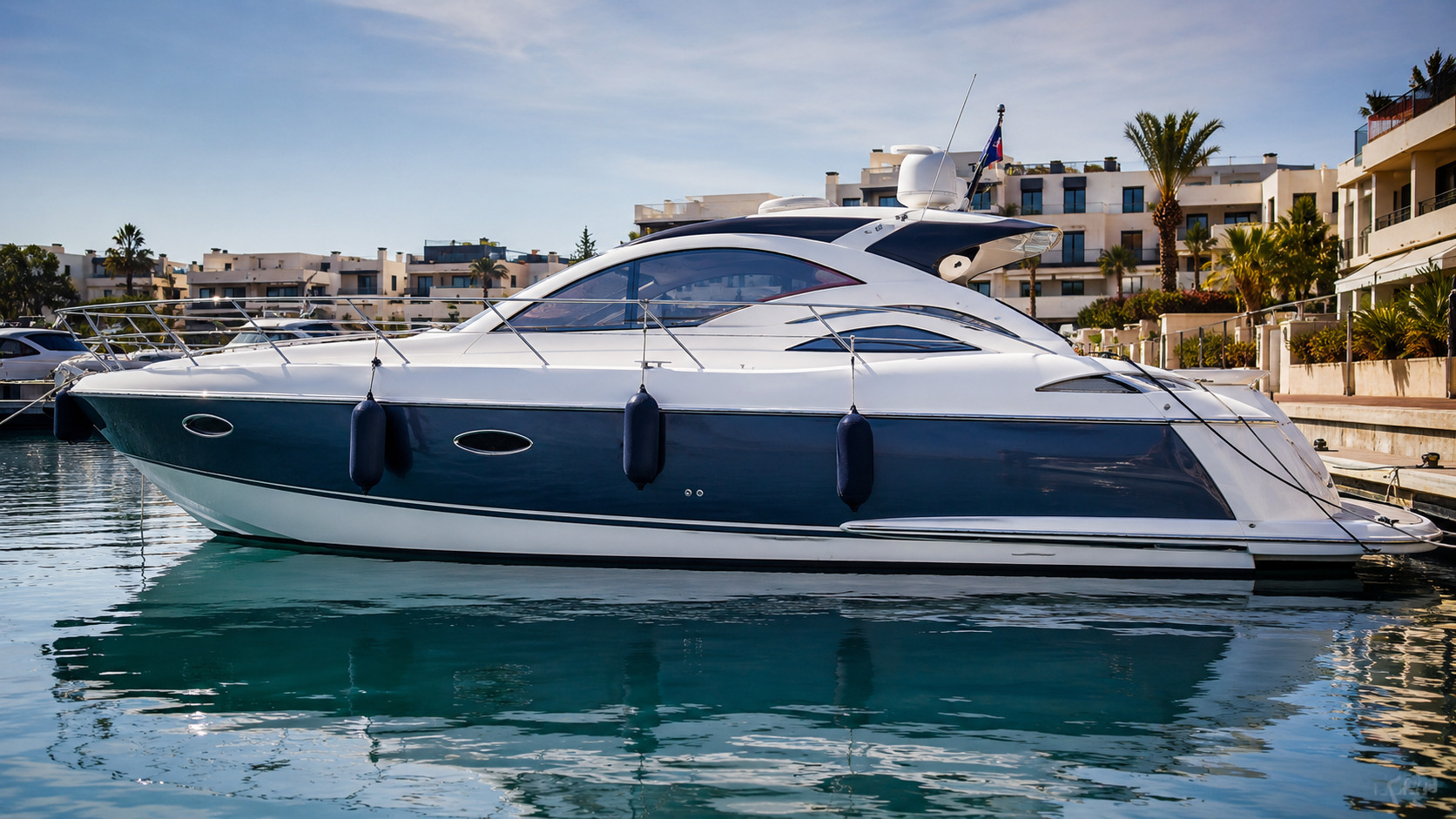
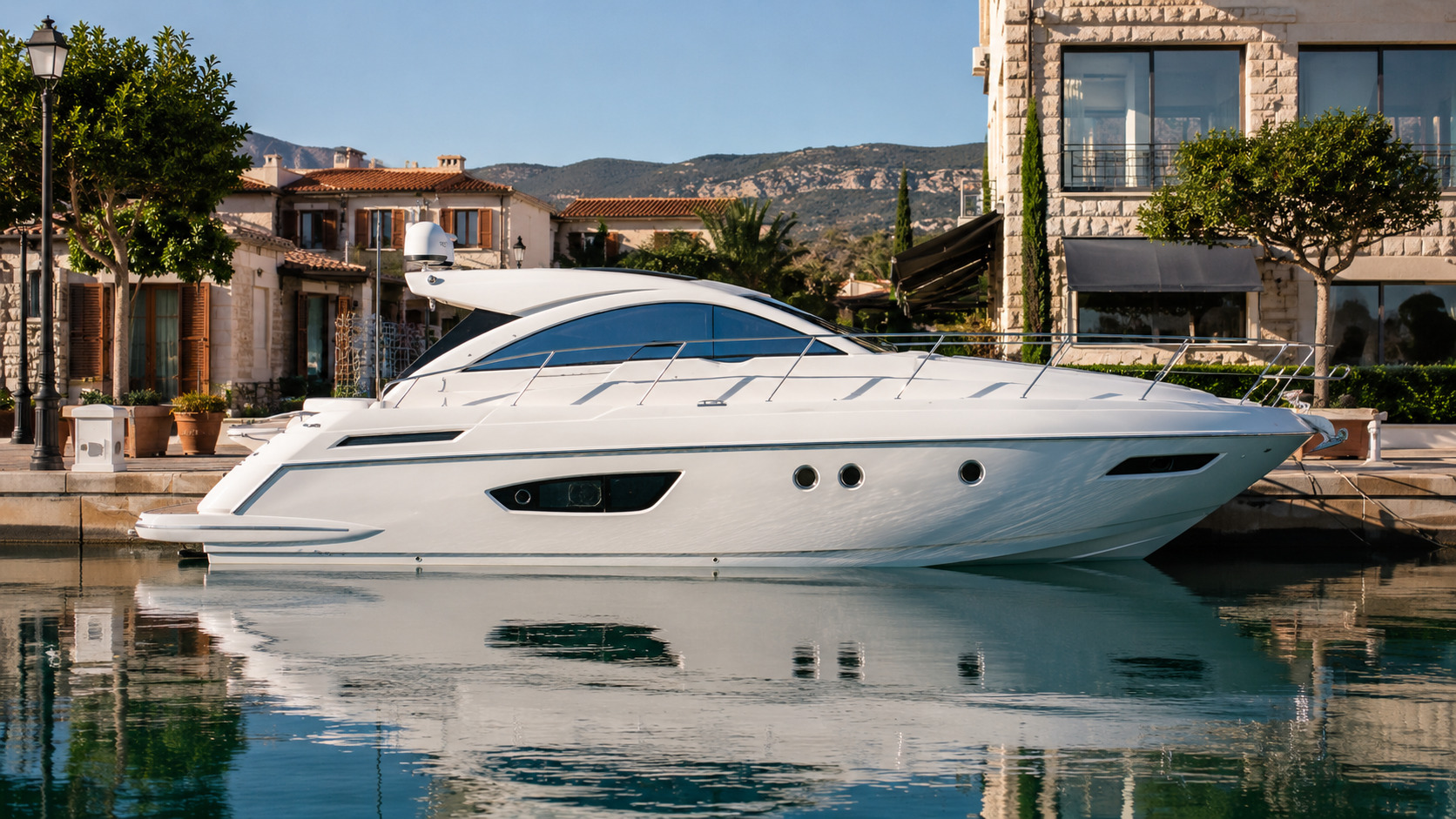
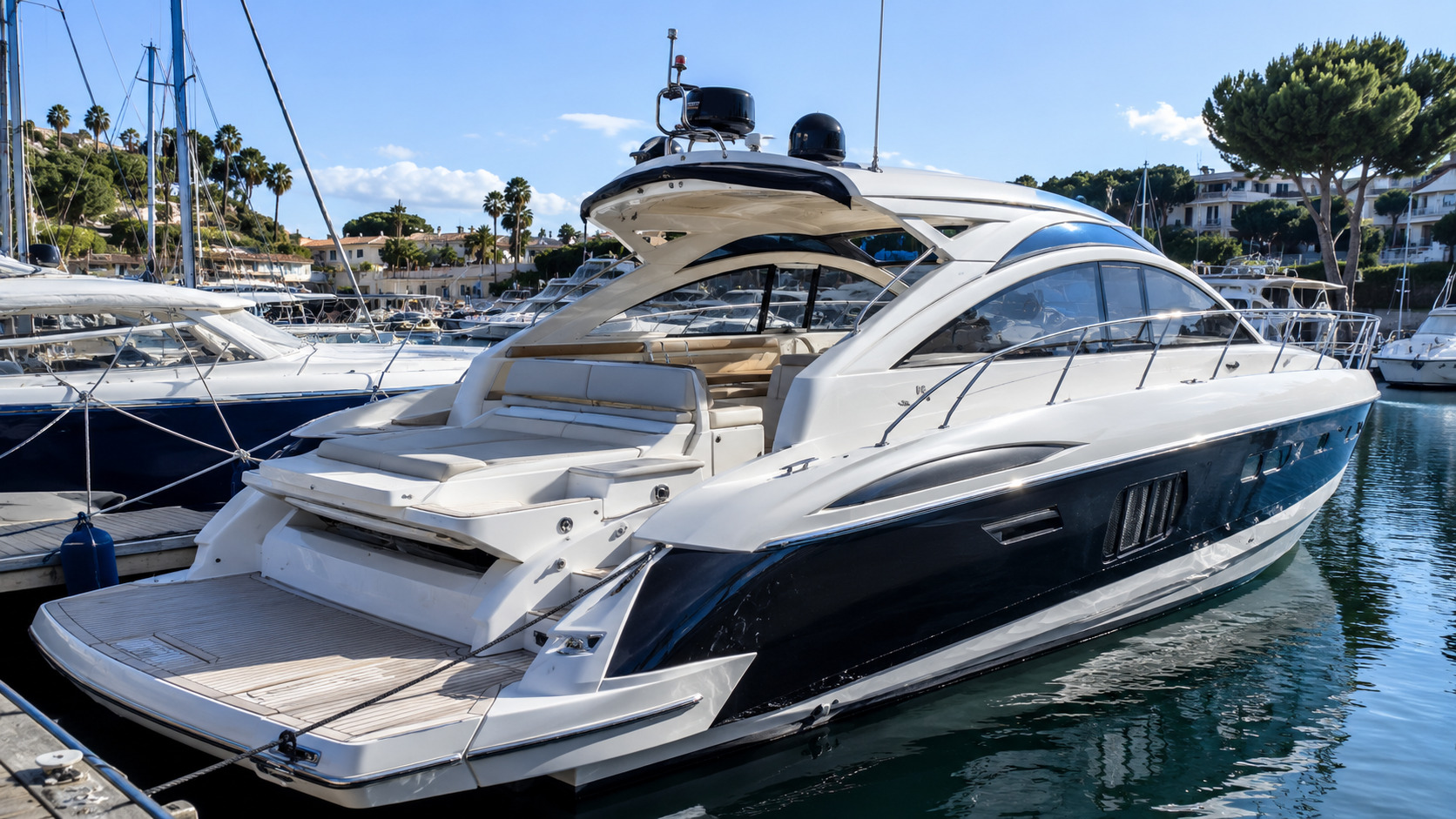
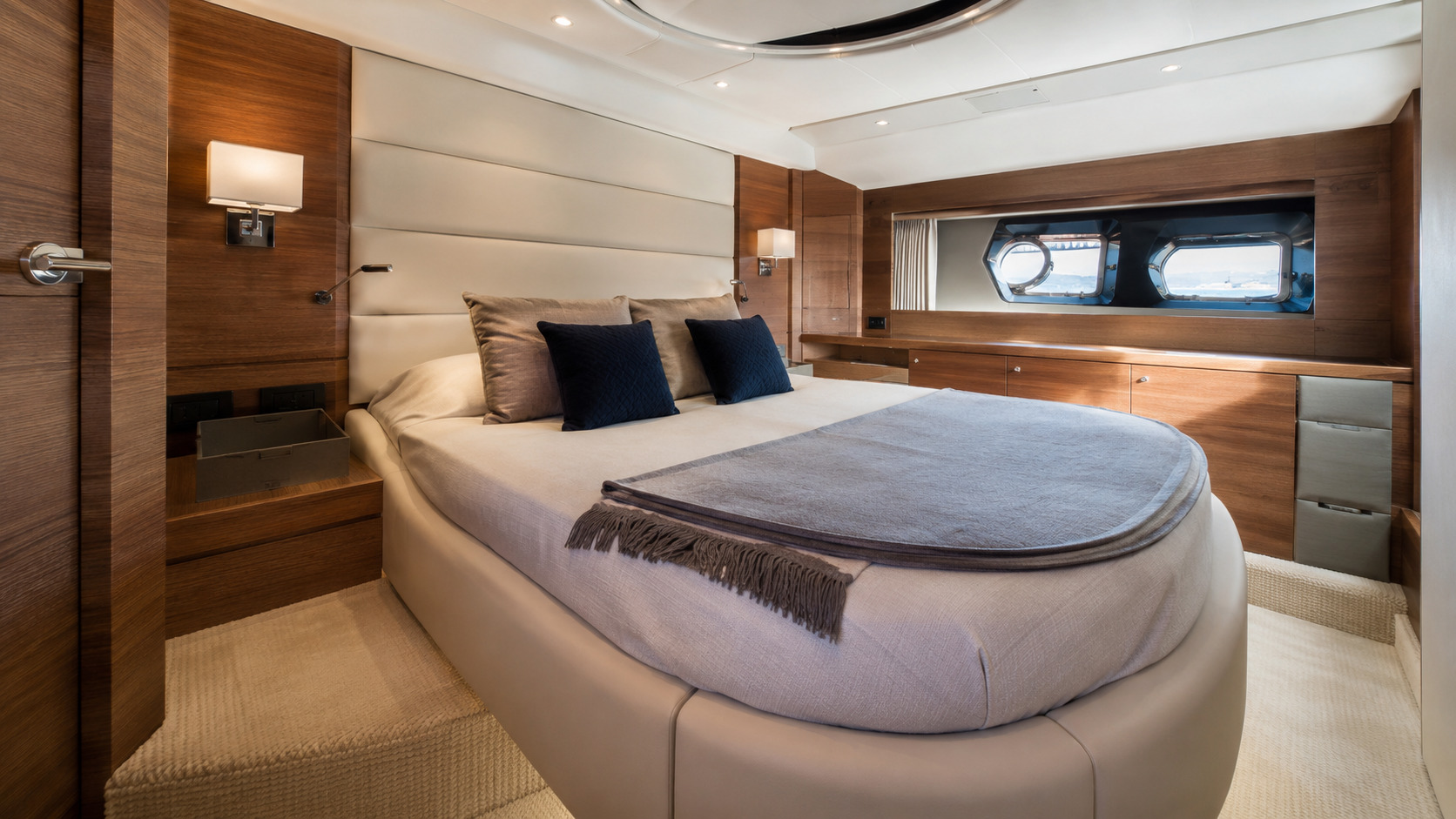
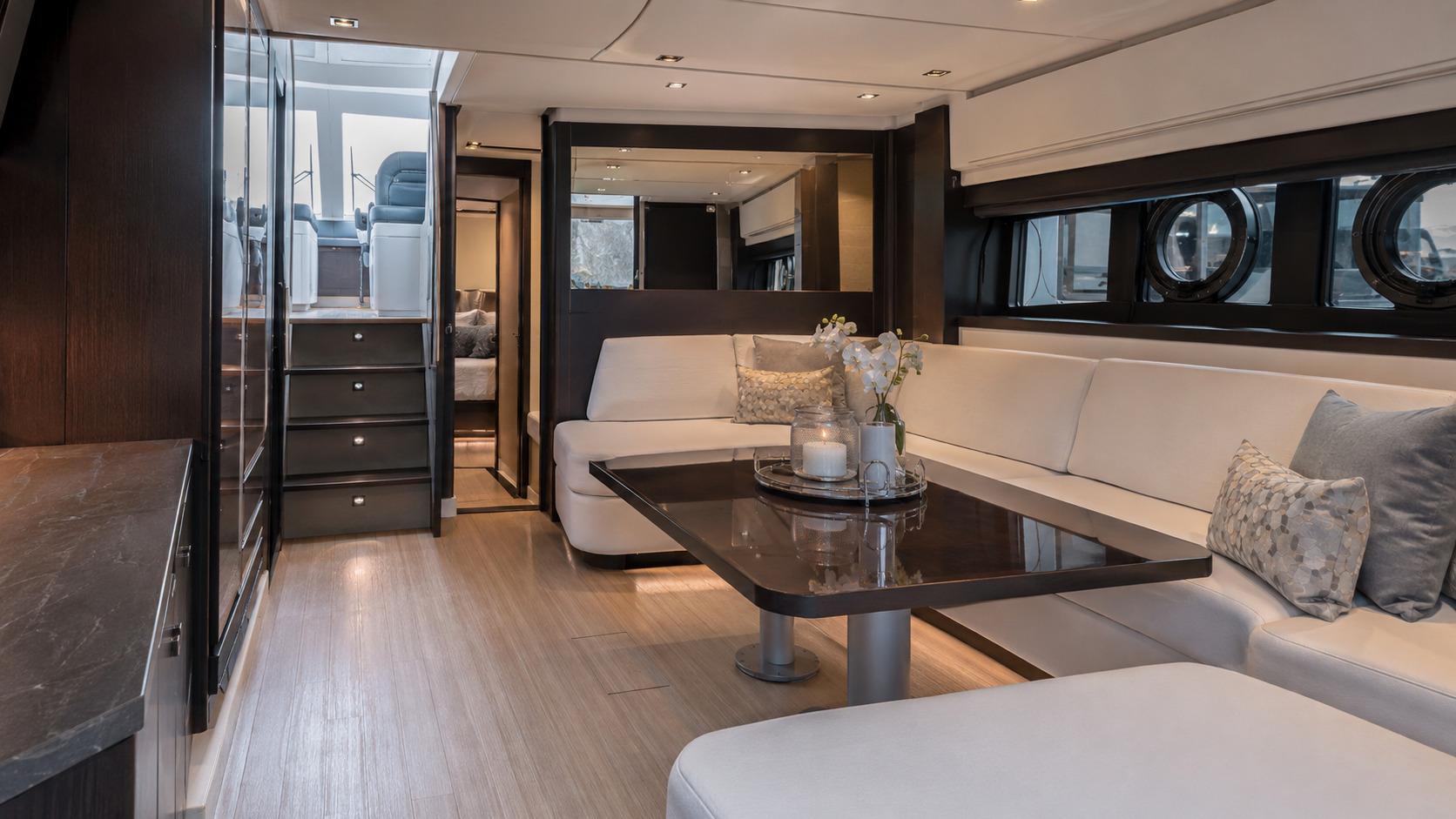
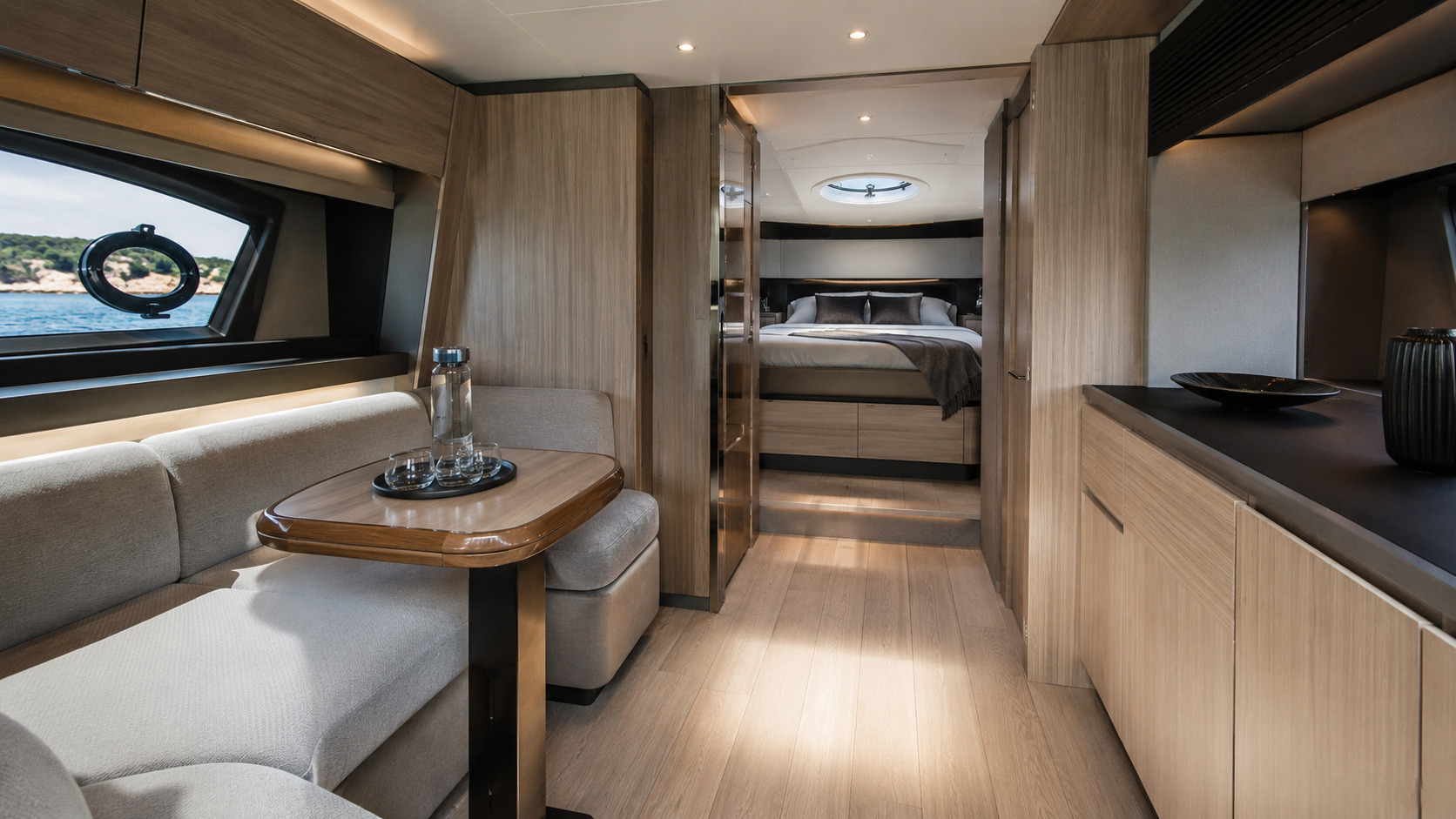
Use the gallery to understand how the 45 allocates its space. Exterior views should make the running profile, cockpit, foredeck, helm, and swim platform clear. Below deck, compare the saloon, galley, forward cabin, and amidships guest accommodation. Those areas reveal more about whether the boat fits your use than finish colors alone.
Atlantis 45 pricing can move substantially with model year, engine hours, geography, equipment, electronics, service history, cosmetic condition, and survey findings. A lower asking price is not automatically better value if the boat is approaching major IPS, diesel, canvas, electronic, or climate-system work. Evaluate the asking price together with the maintenance likely to be required during the first few seasons.
Annual ownership should be modeled separately from the purchase payment. Include marina or storage, insurance, scheduled engine and pod service, haul-outs, bottom maintenance, detailing, fuel, winterization where applicable, and a repair reserve. The 45 is the smaller current Atlantis, but it remains a nearly 48-foot twin-diesel yacht with the service requirements that come with that.
Ownership and payment figures are planning illustrations only and are not offers of credit, insurance quotes, or guarantees of future operating cost.
Use the real asking or negotiated price whenever possible. Test different down payments, terms, and rate assumptions to see how the financing structure changes both the monthly obligation and total amount borrowed. Leave enough room in the ownership budget for survey findings, marina costs, insurance, and initial service.
Illustration only and not an offer of credit. Your actual rate and term depend on credit profile, vessel age, loan amount and ownership structure.
Calculator results are estimates only. Actual approval, rate, down payment, term, and payment depend on borrower, vessel, and lender underwriting.
The most important comparison is the Atlantis 51. It adds a third cabin and significantly more volume, but also more beam, weight, fuel capacity, and operating footprint. Buyers should also compare similar open sport cruisers based on weather protection, sleeping layout, propulsion, marina requirements, and service access rather than styling alone.
A dealer purchase can simplify trade-in, paperwork, and delivery, but it should not replace an independent survey. Brokerage transactions open up much of the used-yacht market and typically follow a formal offer, sea-trial, survey, and closing process. Private-party purchases can provide direct access to boats outside dealer inventory, while placing more importance on title, lien payoff, documentation, and secure closing.
Imported yachts add another diligence layer. Verify tax and customs history, documentation, electrical standards, installed equipment, and whether the boat was configured for the market where you plan to use it. Whatever the purchase route, the survey and service history should influence the decision, not simply satisfy a lender.
Each route changes the paperwork, not the diligence. The survey and the service history decide the purchase either way.
Convenient paperwork and delivery support, but the boat still deserves an independent inspection.
Broader used inventory with a structured negotiation, survey, sea-trial, and closing process.
Potentially direct pricing, with greater attention required for ownership, lien, and closing documentation.
Confirm customs, taxes, electrical configuration, documentation, and market-specific equipment before closing.
Float Finance is not the boat dealer. If you have already found an Atlantis 45, send the listing and transaction details so we can evaluate the yacht and shop the financing panel around the actual purchase. If you are still looking, financing context can help narrow the search before you negotiate. The goal is to return a clearer picture of available structure and payment options without turning the process into another boat-sales pitch.
Prequalification may involve a soft credit inquiry where applicable. Your information is not sold as a lead list.
Atlantis 45 pricing depends on model year, engine hours, service history, location, equipment, and overall condition. Two boats from the same year can justify very different prices if one has documented propulsion service and the other is approaching expensive maintenance. Use the verified market band as a starting point, then adjust your view of value after reviewing the survey, machinery history, electronics, canvas, and near-term service requirements.
The Atlantis 45 provides four published berths in two cabins. That arrangement works particularly well for a couple who occasionally cruises with another couple, children, or guests. Two head compartments also make overnight use more practical. Buyers who routinely need three independent sleeping rooms should look at the Atlantis 51 rather than expecting convertible furniture or occasional sleeping areas to replace a genuine third cabin.
Fuel consumption depends on speed, load, hull condition, trim, weather, sea state, and mechanical condition. Azimut publishes a 264-gallon fuel capacity and 30-knot cruise, but current factory material does not provide one standardized gallons-per-hour figure. Use the verified registry value or engine-monitor data from the specific yacht. During a sea trial, check burn at the cruise speeds you realistically expect to use rather than focusing only on maximum speed.
The current Atlantis 45 uses twin Volvo Penta IPS 650 packages rated at 480 horsepower each. The installation combines inboard diesel engines with steerable pod drives beneath the hull. That affects both machinery packaging and close-quarters maneuvering. On a used 45, confirm the exact engine and drive package by model year and serial number, then review service records for both the diesels and IPS units rather than treating engine hours as the only condition indicator.
Annual ownership cost varies with marina location, insurance, operating hours, maintenance history, and climate. A realistic budget includes dockage or storage, insurance, diesel and IPS service, haul-outs, bottom work, detailing, fuel, winterization where required, and an allowance for repairs. The useful number is not a generic percentage of purchase price. It is a budget built around your actual marina, expected hours, and the condition of the specific yacht you intend to buy.

Azimut publishes a 3-foot-7-inch draft including the props at full load. Air draft should come from the verified vessel registry or exact boat because antennas and installed equipment can change practical bridge clearance. Buyers operating around fixed bridges should never estimate this dimension from photographs. Marina depth also deserves attention, particularly where tidal range or shallow approaches make the difference between published draft and usable clearance important.
A used Atlantis 45 may be financeable depending on the borrower, yacht, purchase price, model year, survey condition, documentation, and transaction. Dealer, brokerage, and eligible private-party purchases can each follow somewhat different closing processes. If you already have a specific 45 in mind, send Float Finance the listing. Evaluating the actual vessel is more useful than discussing an abstract loan amount without knowing the year, value, or condition.
Not in the ordinary recreational sense. The Atlantis 45 measures 47 feet 11 inches overall, carries a beam of 13 feet 9 inches, and weighs more than 36,000 pounds at published full load. Any road movement is specialized yacht transport involving professional equipment, permits, and route planning. Normal ownership assumes a marina berth or yacht-storage facility, so buyers should secure a suitable slip and local service access before completing the purchase.
Send Float Finance the yacht, asking price, and transaction details. We can help you move from researching the 45 to evaluating financing around the actual purchase.
Tell us a little bit about yourself and the boat you are looking to finance.