
Call Us : 207-994-5109
Mon – Fri: 8 am to 9 pm & Sat – Sun: 10 am to 8 pm
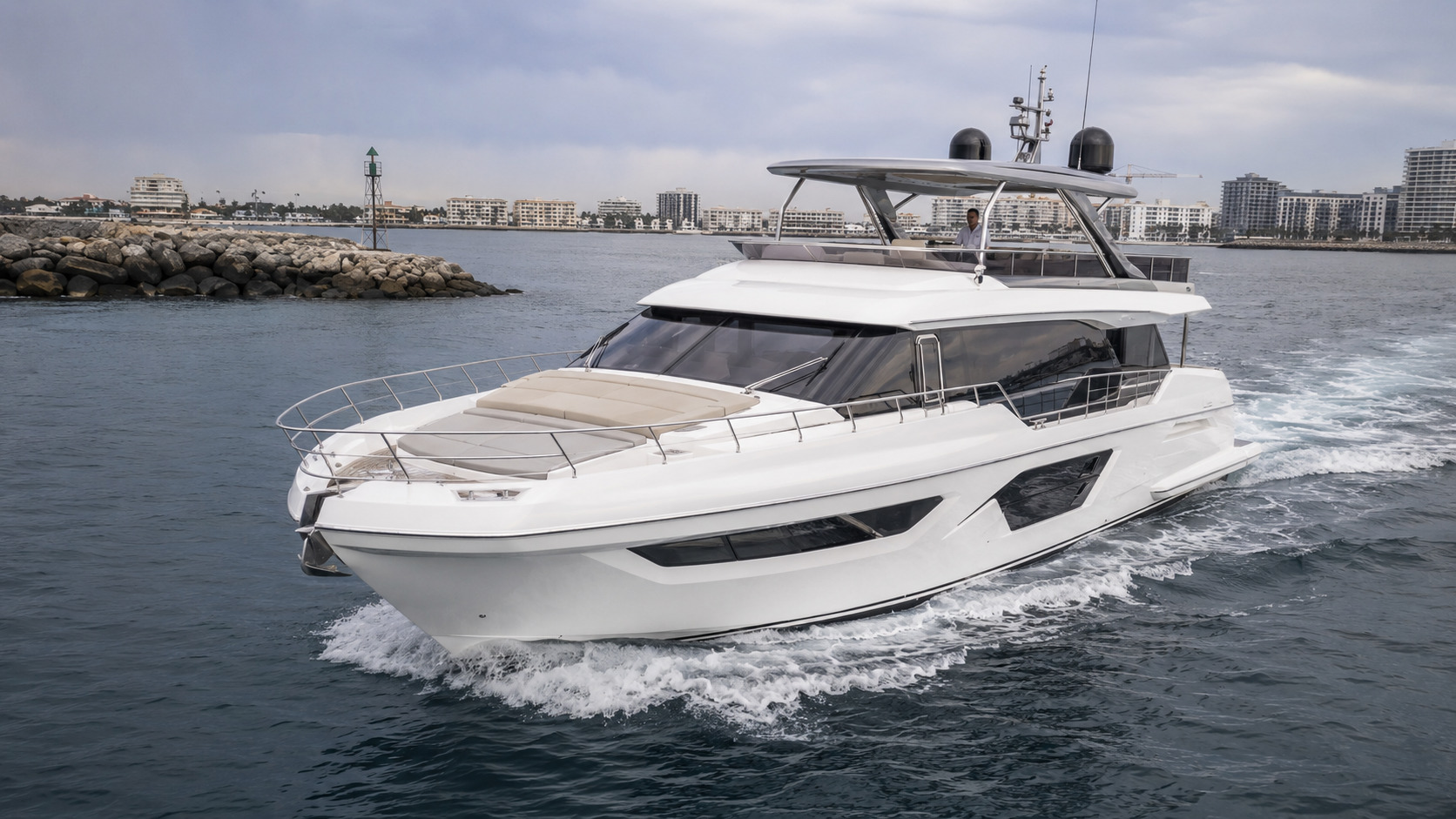
A 63-foot flybridge yacht that pairs three-cabin cruising with IPS handling and Azimut’s Beach Cockpit, turning the stern into a genuine waterside living area.
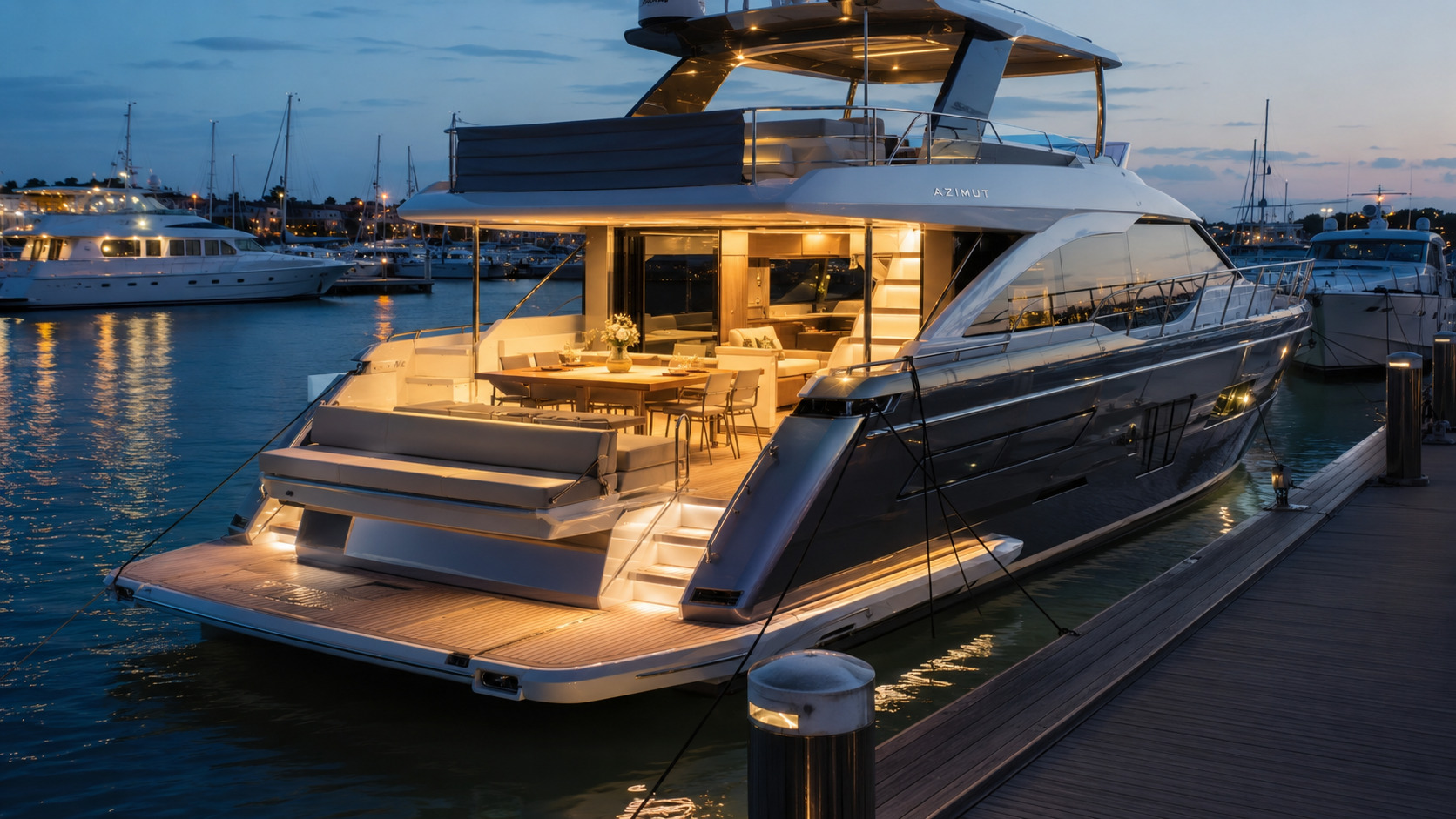
The Azimut Fly 62 is not a stretched Fly 60. It is a newer design built around a different idea of how a flybridge yacht should connect to the water. At 63′ 1″ overall with a 16′ 8″ beam, it still carries the familiar three-cabin plus crew arrangement, but the defining feature is aft: Azimut’s Beach Cockpit transforms the transom and stern seating into a low, open sunbathing and waterside zone. The result changes how the last several feet of the yacht are used at anchor. Instead of ending the main deck with a conventional cockpit above a separate swim platform, the 62 is designed to make the stern part of the social space.
Propulsion is another meaningful break from the Fly 60. Standard power is twin Volvo Penta IPS 1200 units rated at 900 hp each, with optional IPS 1350s at 1,000 hp each. The pod layout supports joystick maneuvering and frees the design team from some of the packaging constraints of conventional shafts. For a buyer who expects to run the boat personally, that matters every time the yacht enters a marina. The boat remains a 39-ton, 63-foot flybridge, but close-quarters control is one of the areas where modern propulsion can reduce workload rather than merely add performance.
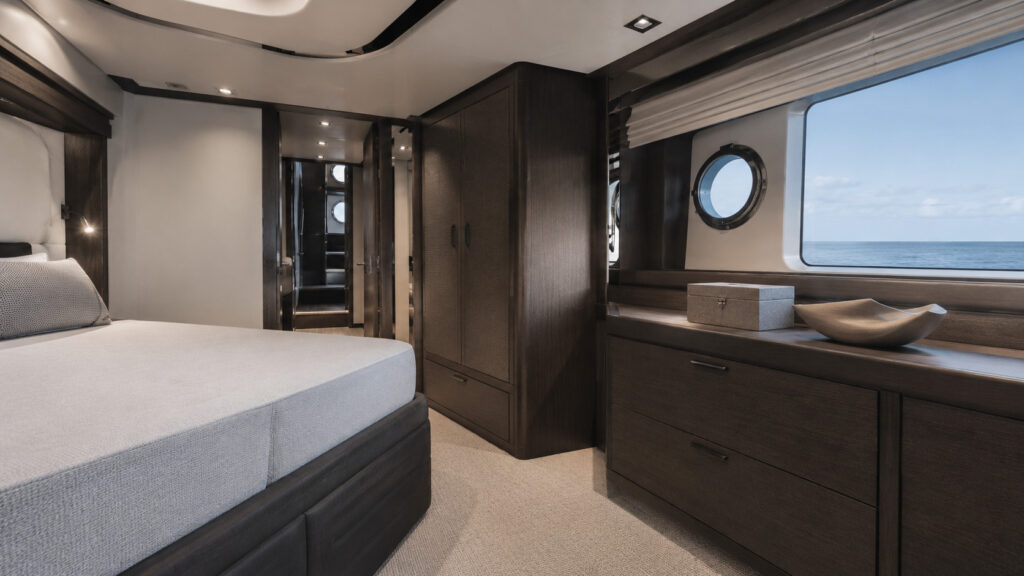
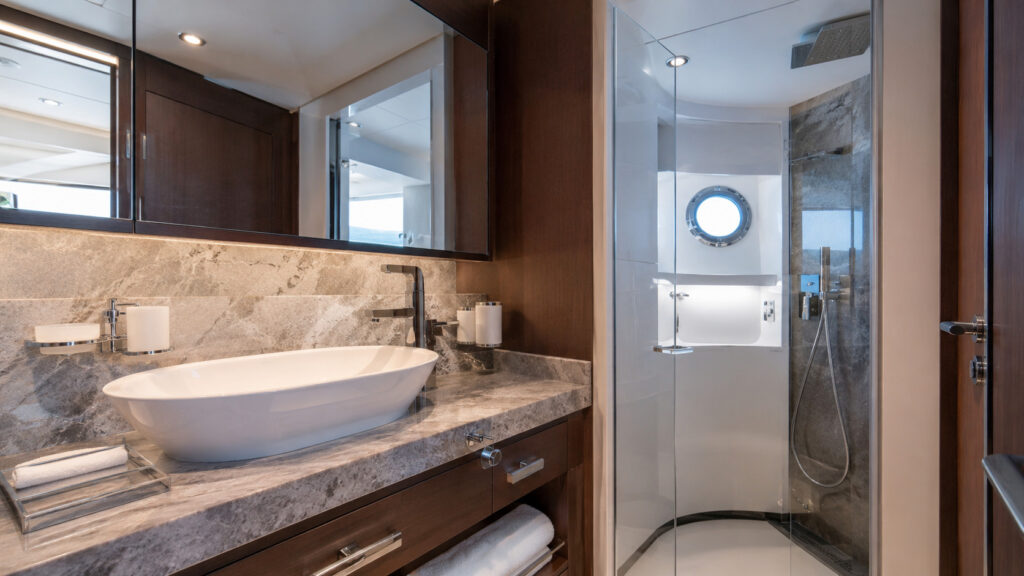
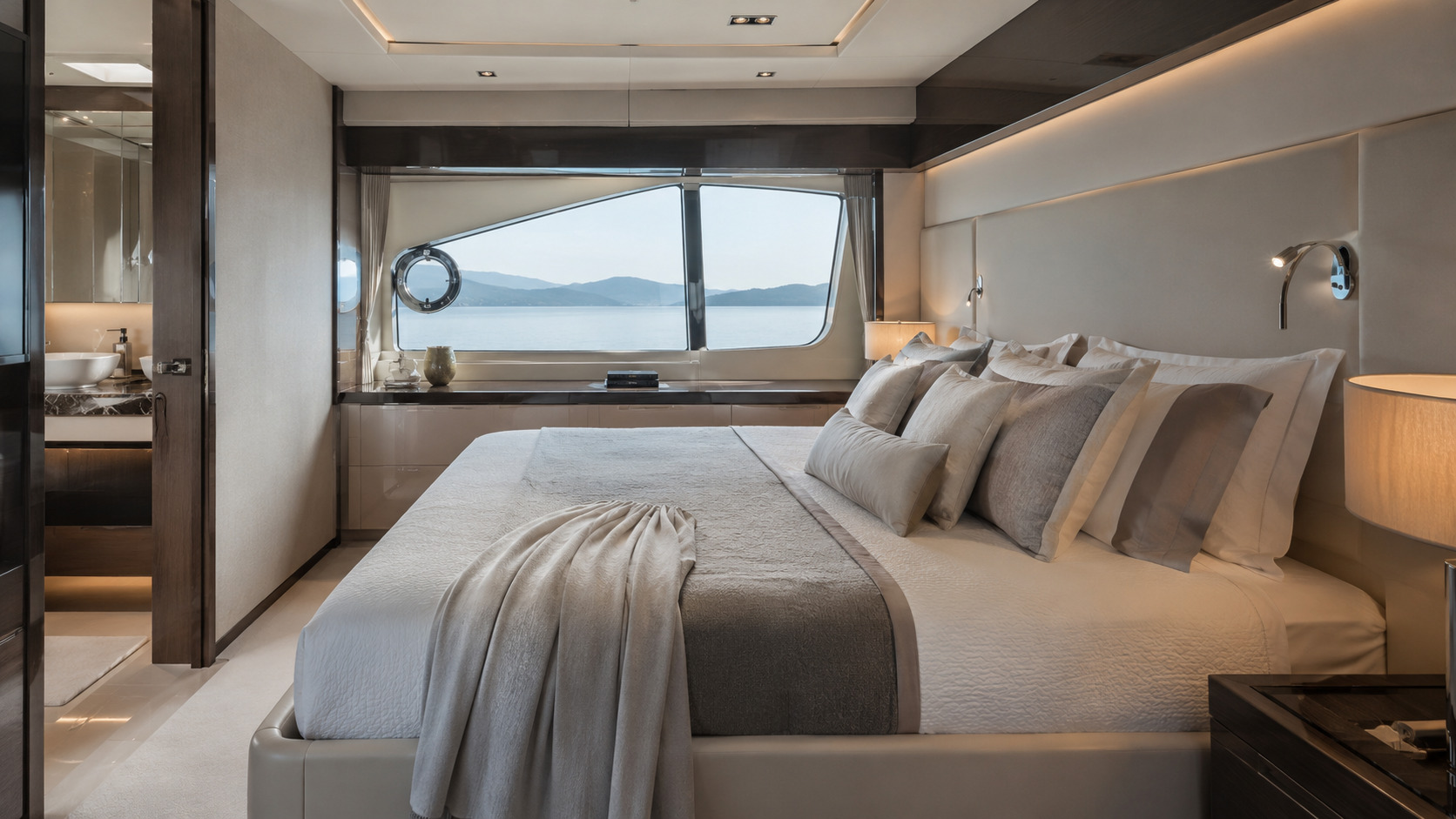
Below deck, the Fly 62 sleeps six guests in three cabins plus two crew berths. The full-beam master sits amidships, with a forward VIP and a twin guest cabin. Each guest cabin has its own head with a separate shower, so the layout avoids the shared-bath compromise that appears on smaller yachts. That makes the 62 especially relevant to buyers cruising with another couple, older children or regular guests who value privacy over simply maximizing berth count.
The compromise is that the Fly 62 remains a three-cabin yacht even though its operating footprint has crossed firmly into the 60-foot-plus class. Buyers who need four true guest cabins should look hard at the Fly 68 rather than assuming the 62 can be configured into the same role. The Beach Cockpit also introduces moving electro-hydraulic hardware at the stern, which creates a useful feature but also another system that deserves inspection and maintenance. The Fly 62 earns its page because it changes the experience at the waterline and at the helm, not because it is two feet longer than the Fly 60.
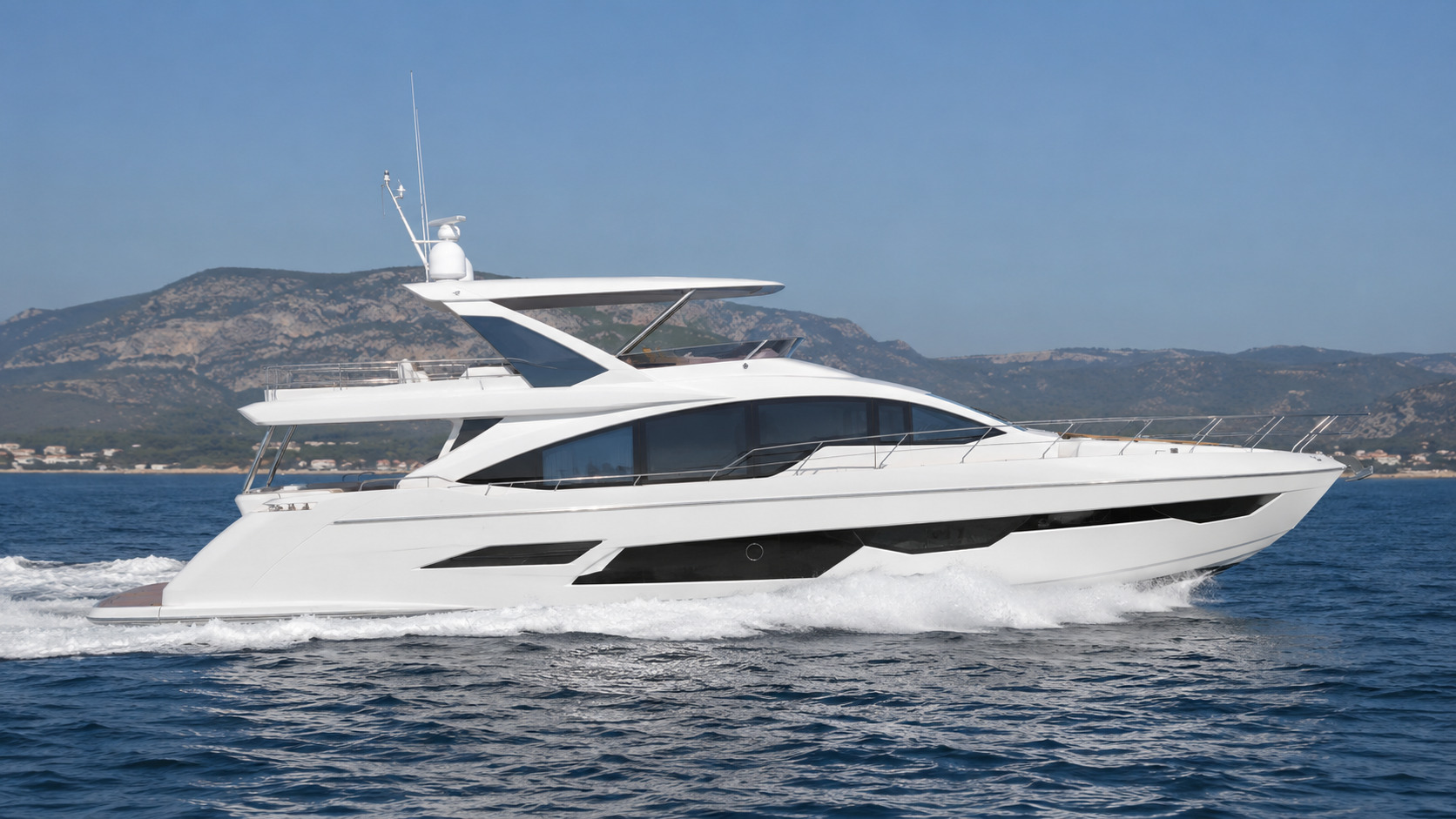
Azimut lists the Fly 62 as a GRP planing yacht developed by the Azimut R&D Department with MICAD. The published hull geometry is 17.2 degrees of deadrise at the stern and 22 degrees amidships. That is a useful clue to the design brief: enough V through the center of the hull to soften impact in chop, with a flatter aft section that supports planing efficiency, stability and the weight of a multi-level flybridge yacht. The 62 is intended to maintain comfortable speed in ordinary coastal conditions rather than behave like a narrow offshore deep-V performance boat.
The current official specification gives a full-load displacement of 39 metric tons, a 16′ 8″ beam and a 5′ 4″ draft including the IPS units. Those numbers have practical consequences. The beam is only an inch greater than the Fly 60, so much of the additional usability comes from layout rather than a dramatically wider hull. Draft is deep enough that shallow-water itinerary planning still matters, while the overall displacement puts the yacht well beyond casual haul-and-store logistics. The yard or marina needs equipment sized for a serious 60-foot motor yacht.
A pre-purchase survey should look beyond the laminate itself. On a used Fly 62, inspect the hull and structural grid for prior impact or grounding repairs, moisture where accessible, through-hulls, underwater gear, IPS mounting areas, the hydraulic swim platform and the Beach Cockpit mechanism. The electro-hydraulic stern is one of the yacht’s signature advantages, but it also deserves operation under load during survey. A feature that works beautifully in a showroom but hesitates, leaks or binds under real use can become an expensive ownership issue.
Standard power for the Fly 62 is a pair of Volvo Penta IPS 1200 packages, each using a D13 diesel rated at 900 hp. Azimut also offers twin IPS 1350s at 1,000 hp each. The standard package is published at up to 30 knots maximum and 25 knots cruise, while the optional package increases those figures to up to 32 knots and 26 knots. This is not a model where the larger engines transform the yacht into a different category of performer; the extra 200 total horsepower mainly adds margin at the upper end.
The ownership difference is more important at low speed. IPS joystick control combines steering and thrust from the pod drives so the yacht can move laterally, rotate and make small corrections without relying on the same coordination required by conventional shafts and separate thrusters. Azimut also specifies Advanced Joystick Driving and Active Trim Control, which automates interceptor adjustment to manage running attitude and compensate for changing speed, wind or uneven loading. Those systems make the 62 easier to handle, but they do not make it maintenance-free.
For a used purchase, service history should cover both the D13 engines and the IPS equipment. Verify engine hours, coolant and oil service, raw-water maintenance, pod-oil history, seals, propeller condition, corrosion protection and any software or campaign work. The IPS units are central to how this boat handles and how its machinery is packaged. A general hull survey is not a substitute for an engine and propulsion inspection when the purchase value supports bringing in a Volvo-qualified technician.
The Fly 62 carries 740 US gallons of diesel. Azimut’s current public model page does not publish the same factory fuel-consumption table available for some other Fly models, so the production page should not invent an official range figure. Independent testing by Barche Magazine provides a useful real-world reference: with the standard twin 900-hp D13 IPS 1200 package, the test boat reportedly used about 180 liters per hour total at 20 knots and about 250 liters per hour at 25 knots.
Converted to US gallons, those observations are roughly 47.6 gallons per hour at 20 knots and 66 gallons per hour at 25 knots. That does not mean every Fly 62 will reproduce those numbers. Bottom condition, stabilizer use, generator load, passenger and water load, wind, current and sea state all change consumption. The value of the test is that it gives a buyer a realistic planning baseline without pretending the brochure’s tank capacity is the same thing as usable cruising range.
Azimut publishes up to 30 knots with the standard IPS 1200s and up to 32 knots with optional IPS 1350s. An independent Barche Magazine sea trial with the standard 900-hp engines reached 31.3 knots, which is consistent with the builder’s stated performance band rather than an outlier that needs to be treated as a separate promise.
The more useful part of that test happened in roughly 1.5-meter waves. The reviewer reported that the hull remained easy to manage at 20 knots and above, with the V-shaped forward sections cutting into the chop and the boat only requiring more careful throttle work as speed approached 30 knots. That is the right way to read the Fly 62’s performance: not as a yacht that should be driven at maximum speed regardless of conditions, but as a 39-ton flybridge that can maintain useful coastal speeds while giving the operator modern joystick and trim assistance when the environment gets tighter.
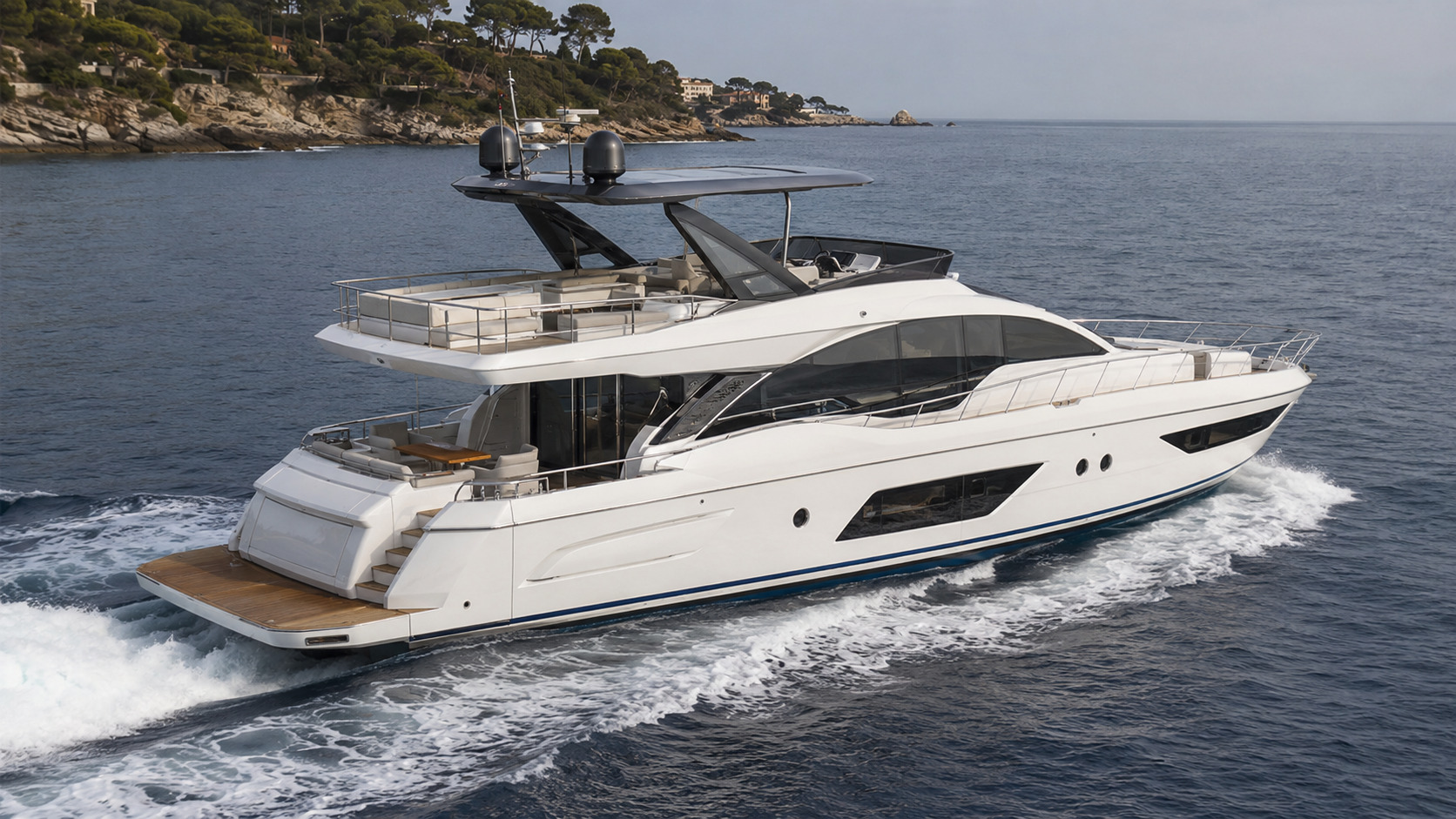
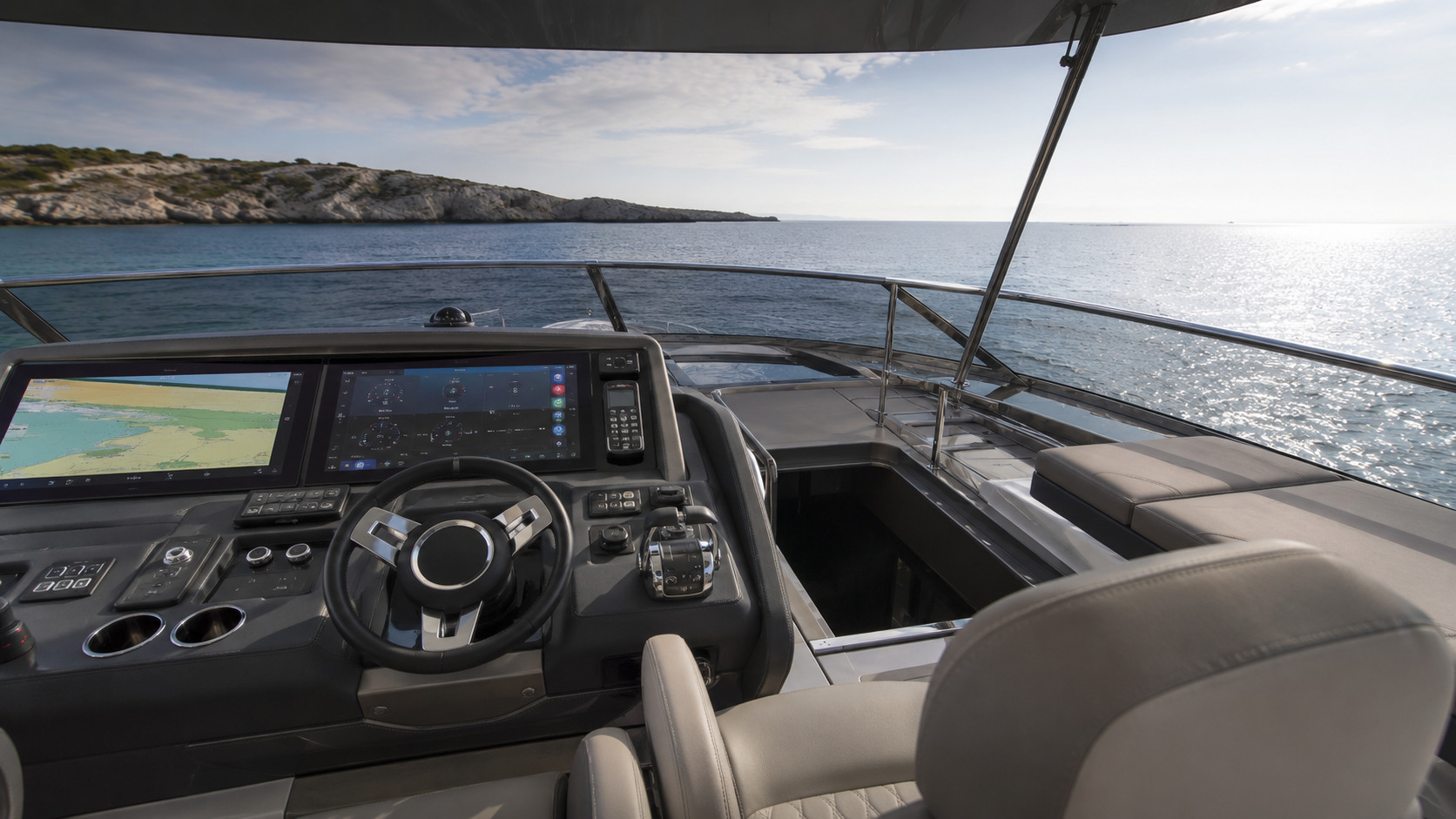
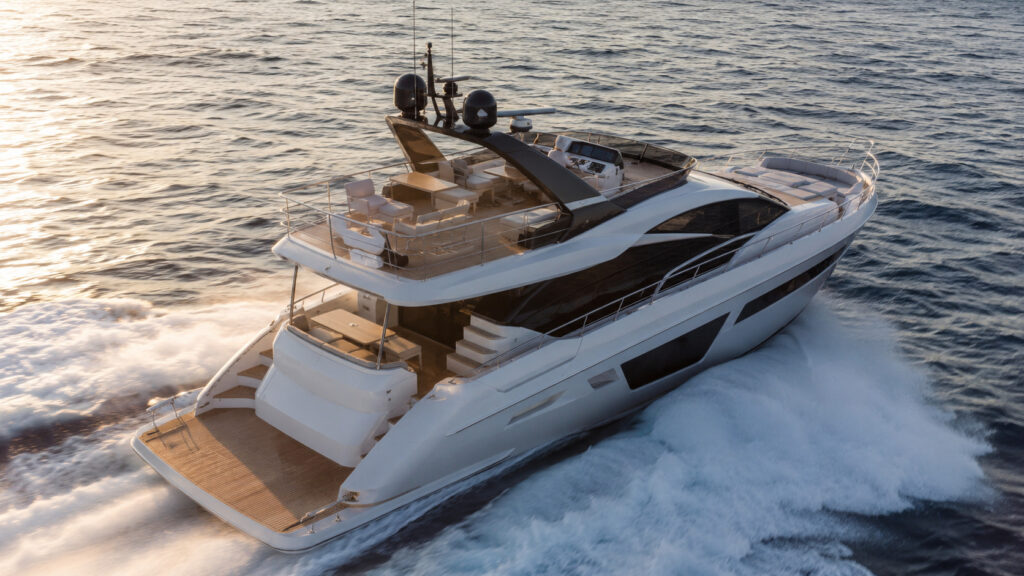
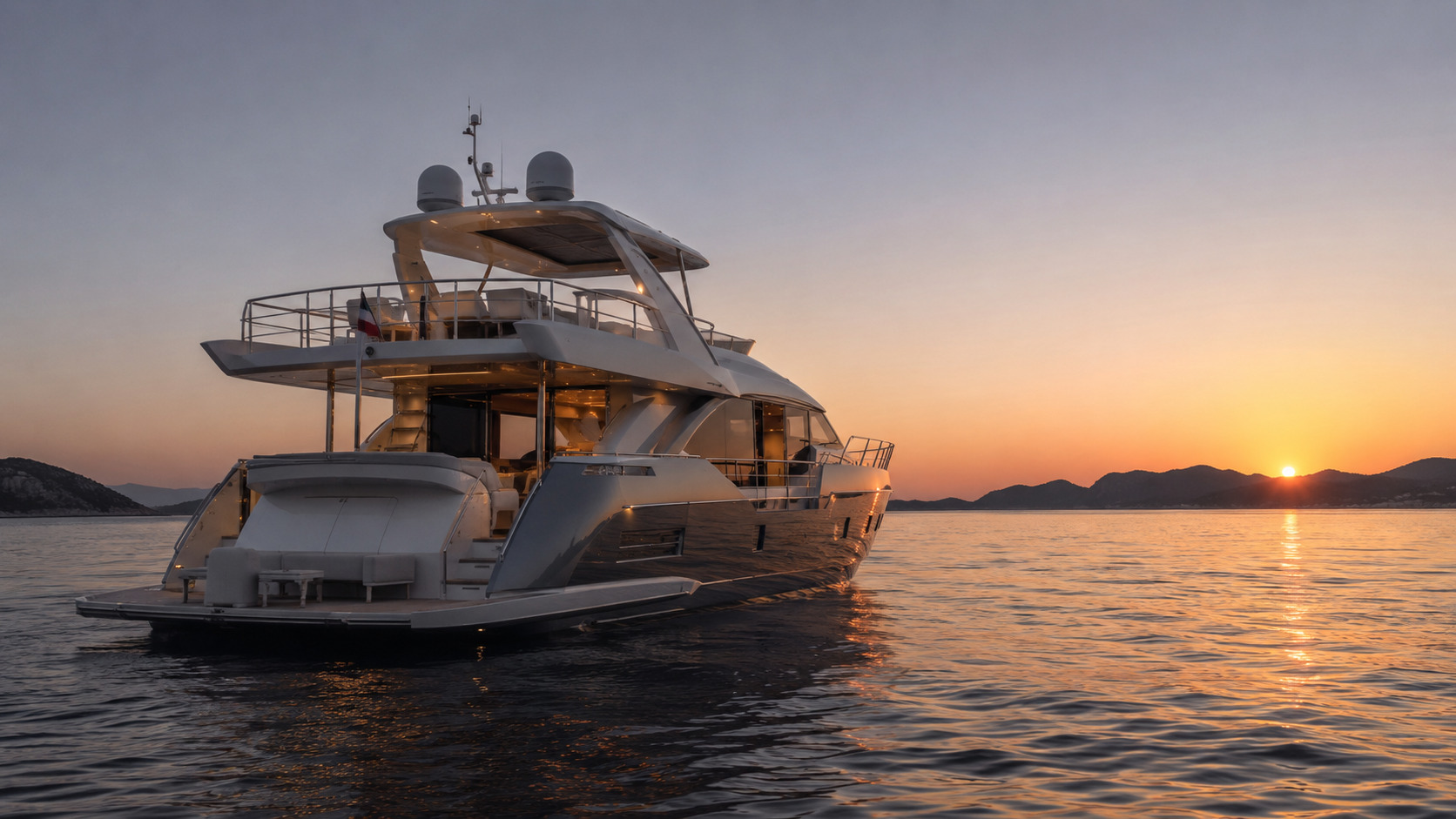
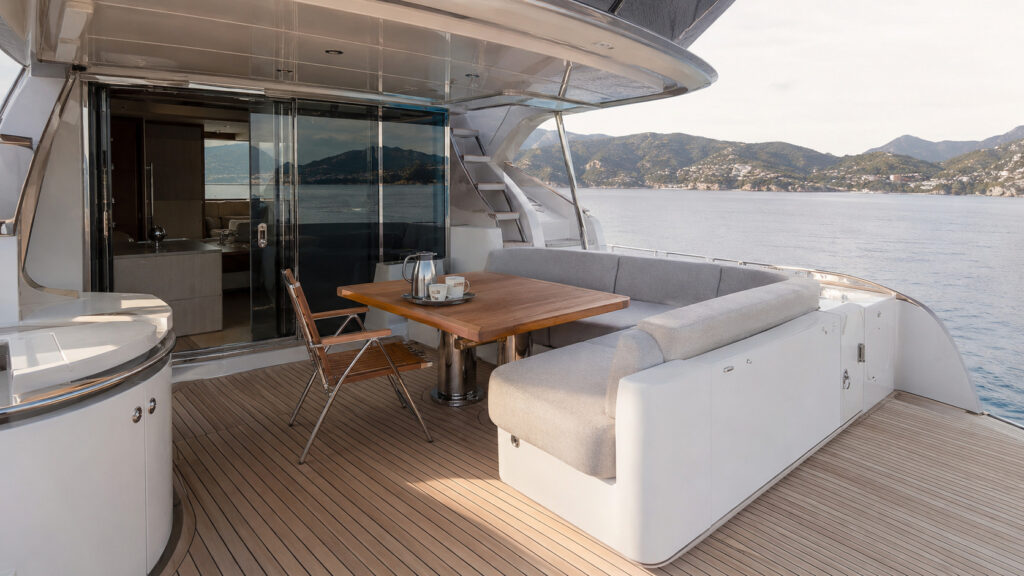
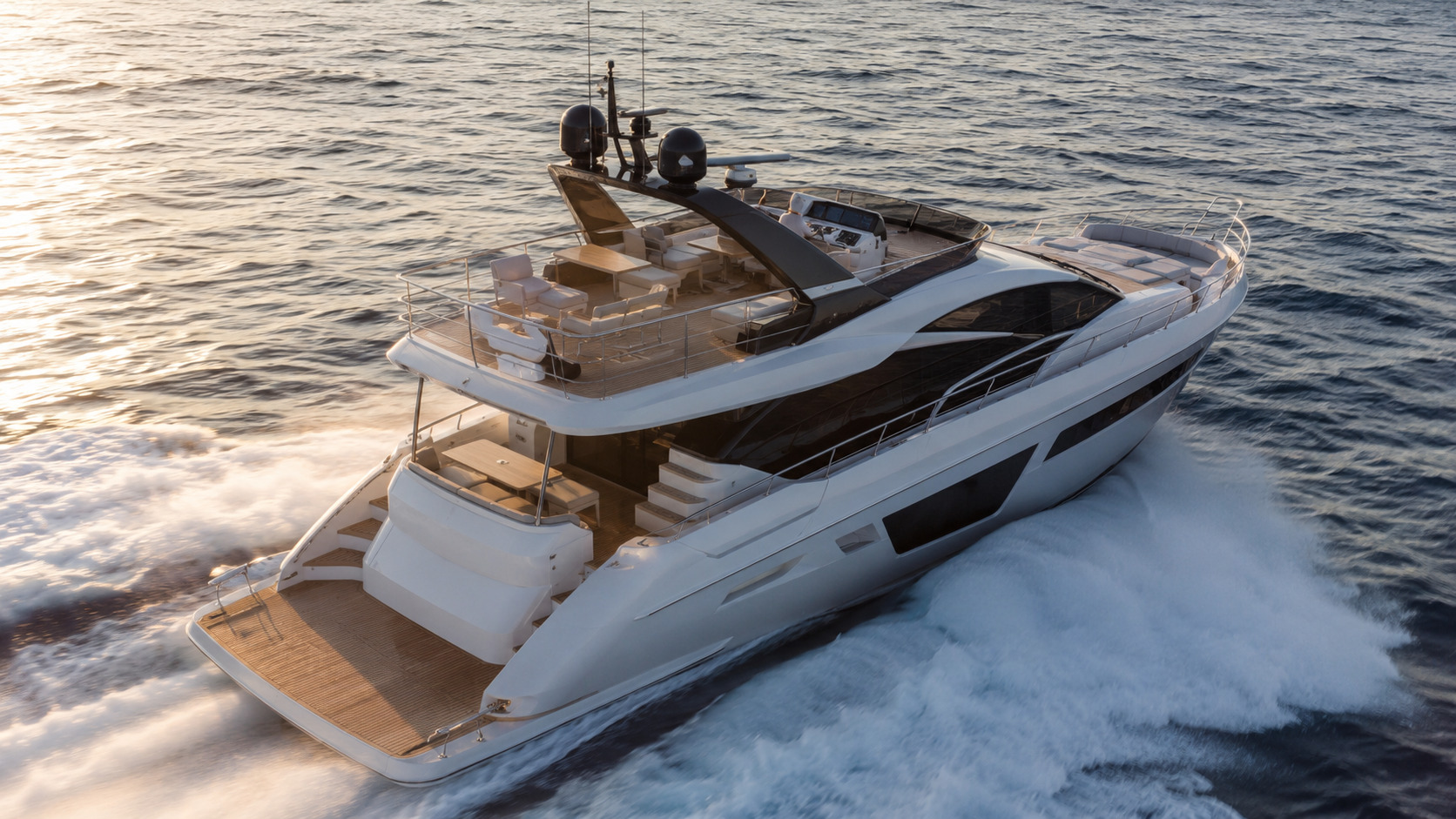
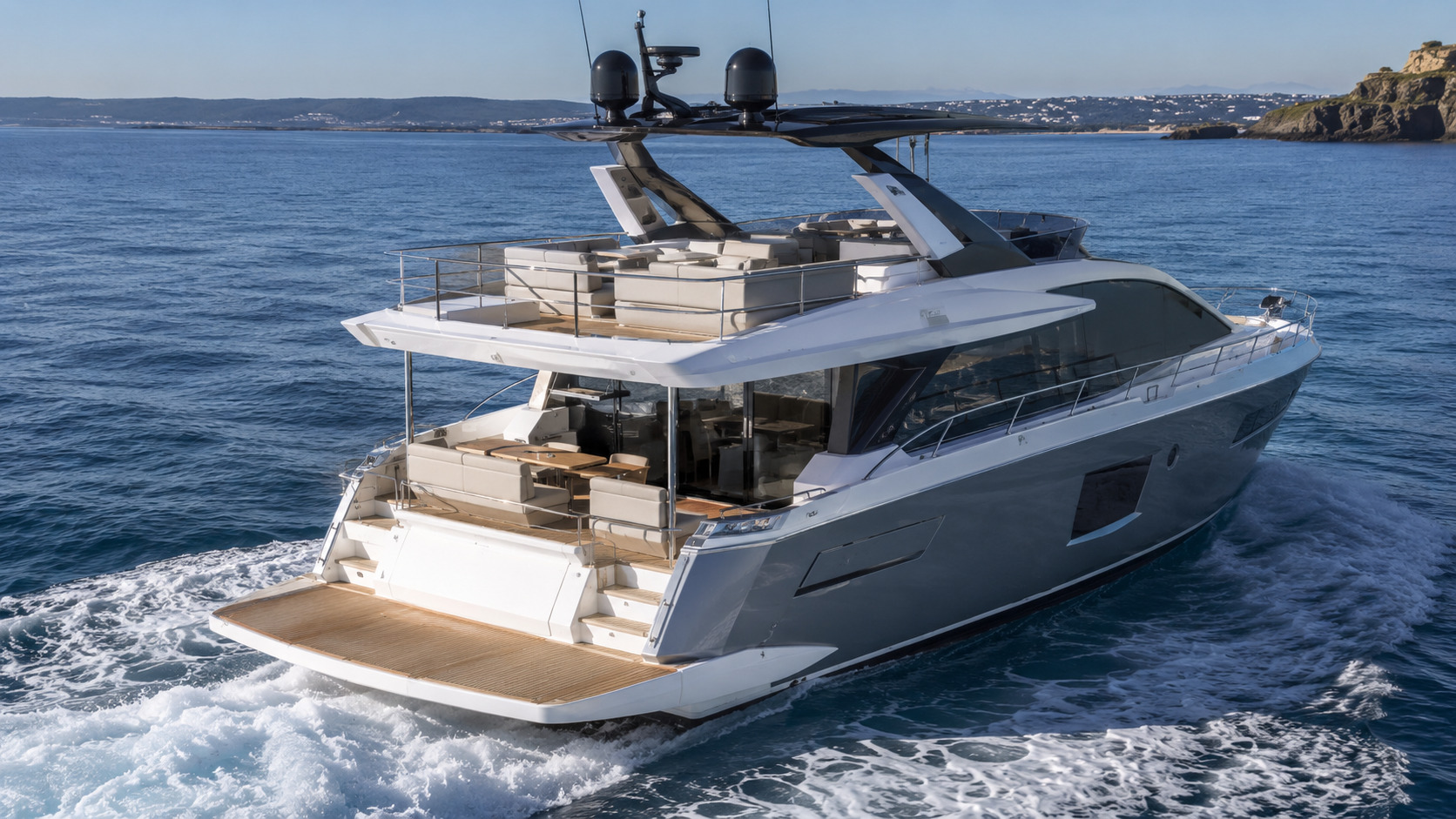
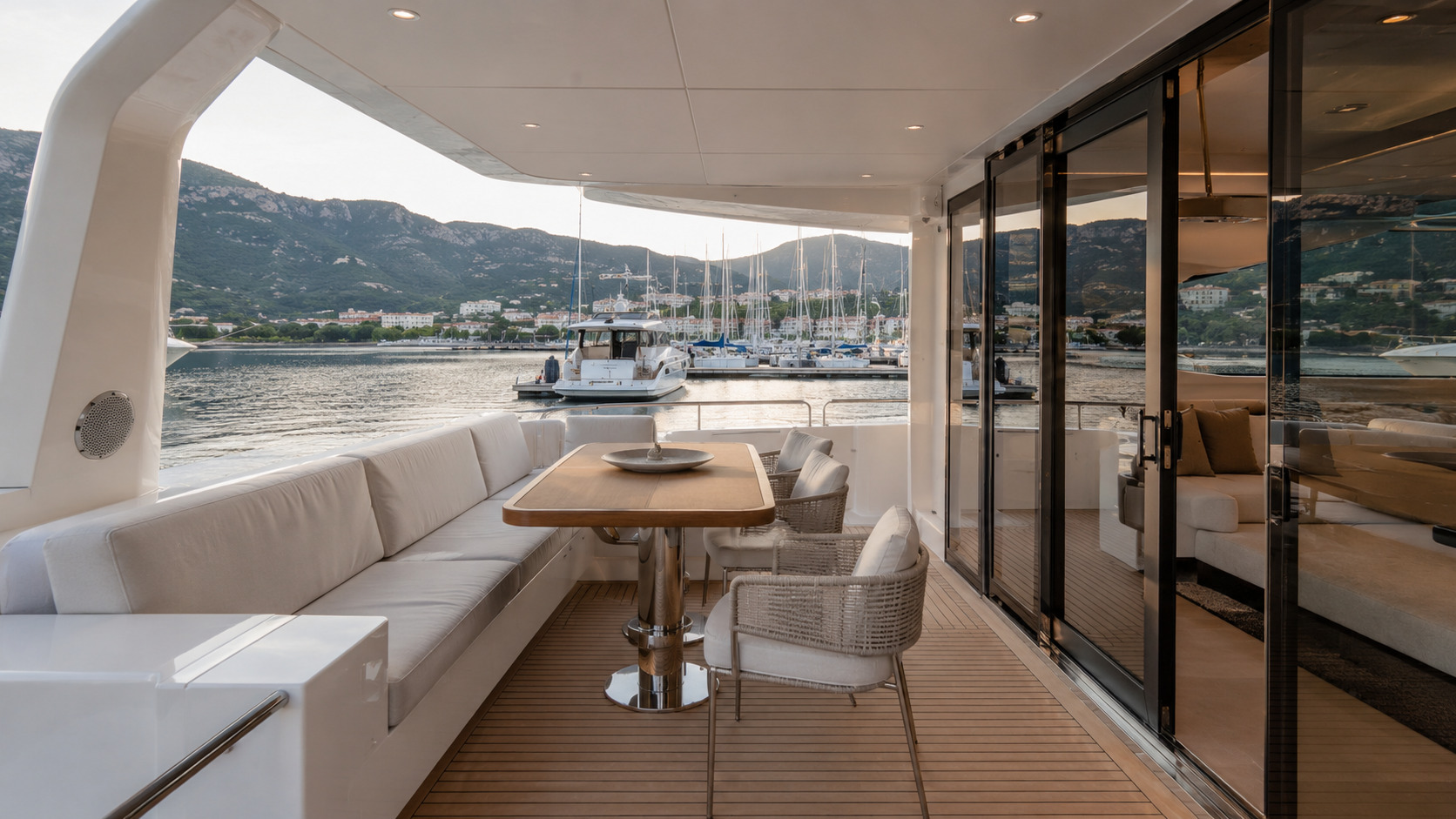
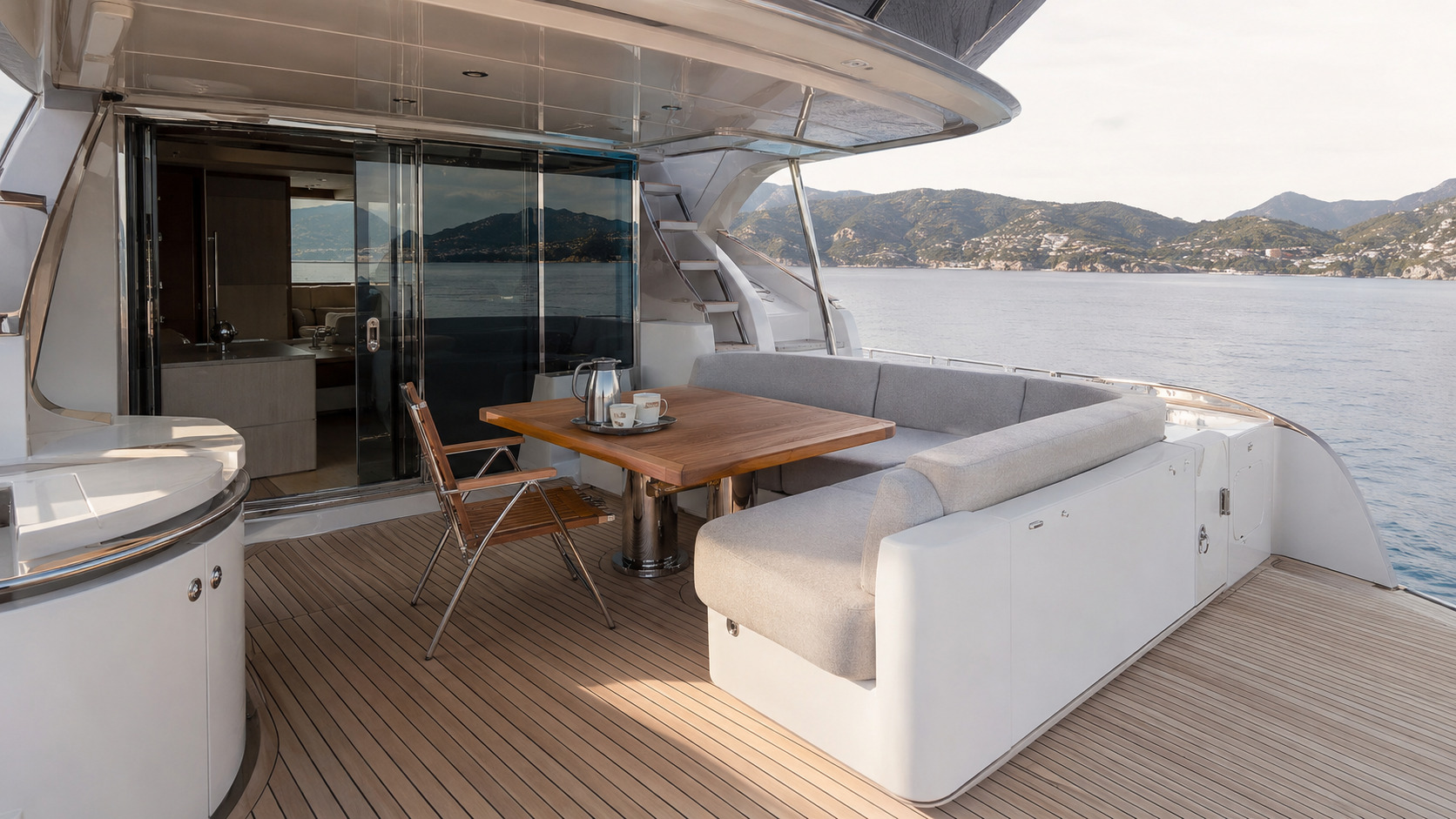
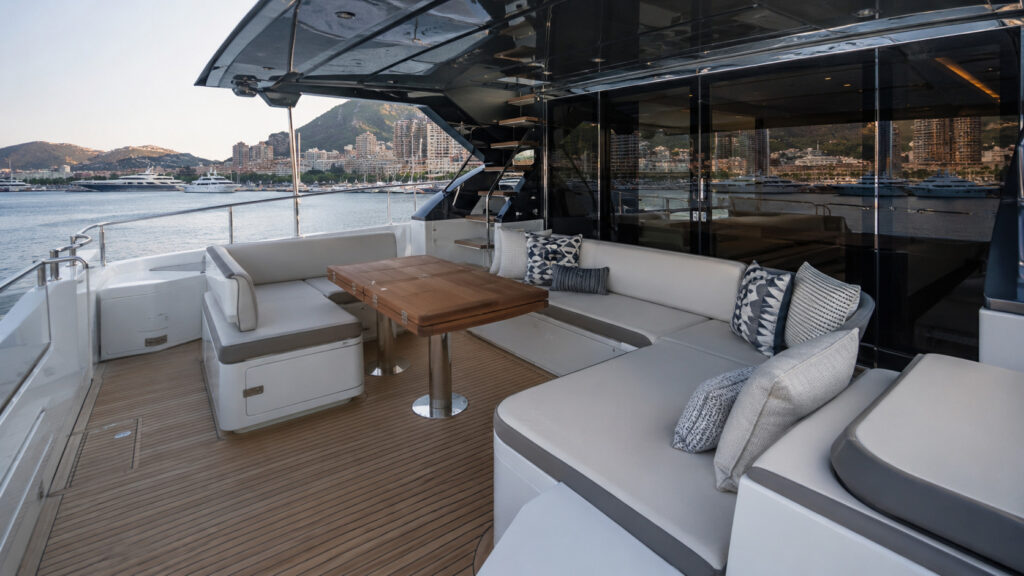
The stern is the Fly 62’s defining deck feature. Azimut’s Beach Cockpit uses an electro-hydraulic movement in which the transom opens outward while the aft sofa lowers, creating a larger sunbathing area close to the water. When the feature is closed, the cockpit can function as a more conventional dining and social area. That flexibility is more important than the visual trick: owners can use the same square footage differently while swimming, eating or running the boat.
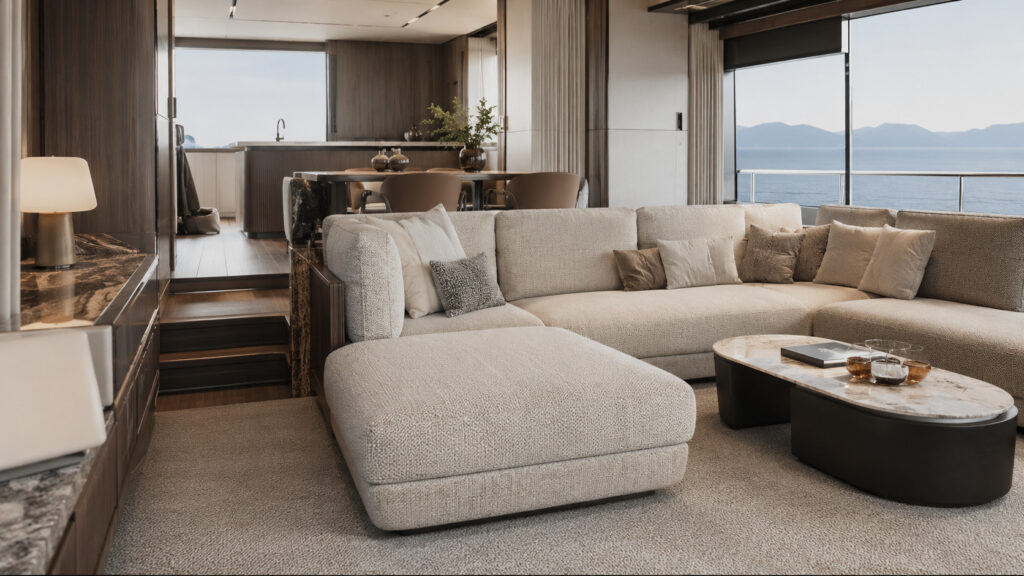
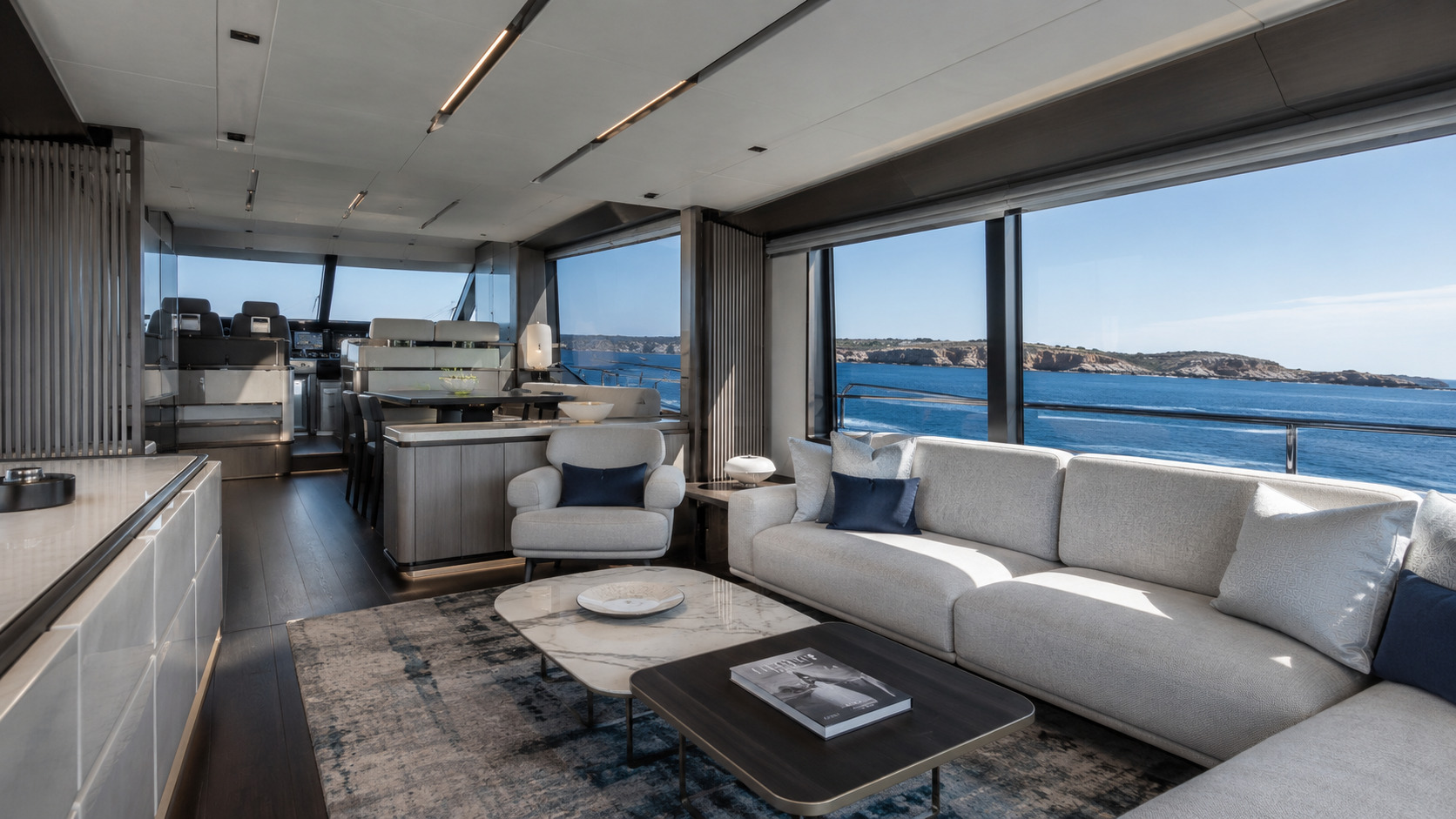
Forward of the cockpit, the main-deck arrangement keeps the galley and dining functions close to the aft social space, while the salon benefits from large windows and relatively open sightlines. The foredeck serves as another guest zone with forward-facing seating and a sunpad, giving the yacht several genuinely separate exterior areas instead of asking every guest to occupy the flybridge whenever weather is good.
Up top, the flybridge combines the second helm with sunning, dining and a wet-bar or grill zone depending on specification. The helm benefits from the IPS joystick and the visibility that comes from the upper station. The 62 is large enough that sightlines and communication matter when docking, but its control system is clearly aimed at keeping owner-operation realistic for an experienced captain. Buyers should still consider whether regular crew help makes sense for cleaning, lines, provisioning and longer trips even if they personally drive the boat.
Equipment varies by market, build and options. Verify the actual specification of the yacht being purchased rather than treating every listing as identical.
Electro-hydraulic stern hardware lowers the aft sofa and opens the transom to create a broad waterside sunbathing and lounging zone.
Volvo Penta IPS joystick control simplifies lateral movement and rotation when maneuvering a 63-foot yacht in close quarters.
The amidships owner's suite uses the full beam and is paired with a private head and separate shower.
The master, forward VIP and twin guest cabin each have their own head, improving privacy for six overnight guests.
Separate crew accommodation provides two berths, making occasional professional help or longer trips more practical than on smaller owner-operated yachts.
The upper deck combines helm, sunpad, dining and service space so the flybridge works as a full living area rather than a secondary steering station.
Forward seating and sunbathing space creates another outdoor zone away from the stern and flybridge.
Automated interceptors continuously adjust running attitude to support efficiency and balance as speed and loading change.
The Fly 62’s systems load reflects its size and the number of transforming or electrically assisted features aboard. IPS joystick control and Active Trim Control are core operating systems, while the Beach Cockpit adds electro-hydraulic hardware at the stern. Depending on specification, the yacht may also carry gyro stabilization, hydraulic swim-platform equipment, flybridge hardtop systems, electric awnings, upgraded navigation electronics, generator capacity sized for multiple climate zones and substantial domestic loads.
During survey, operate the yacht as a system rather than checking isolated switches. Run the generator under load, cycle the Beach Cockpit and swim platform, test HVAC in every cabin, inspect charging and shore-power systems, operate pumps and heads, confirm electronics integration, and test joystick and trim functions at sea. On a yacht this complex, deferred maintenance is often revealed by small systems that do not work together correctly rather than by one catastrophic defect.
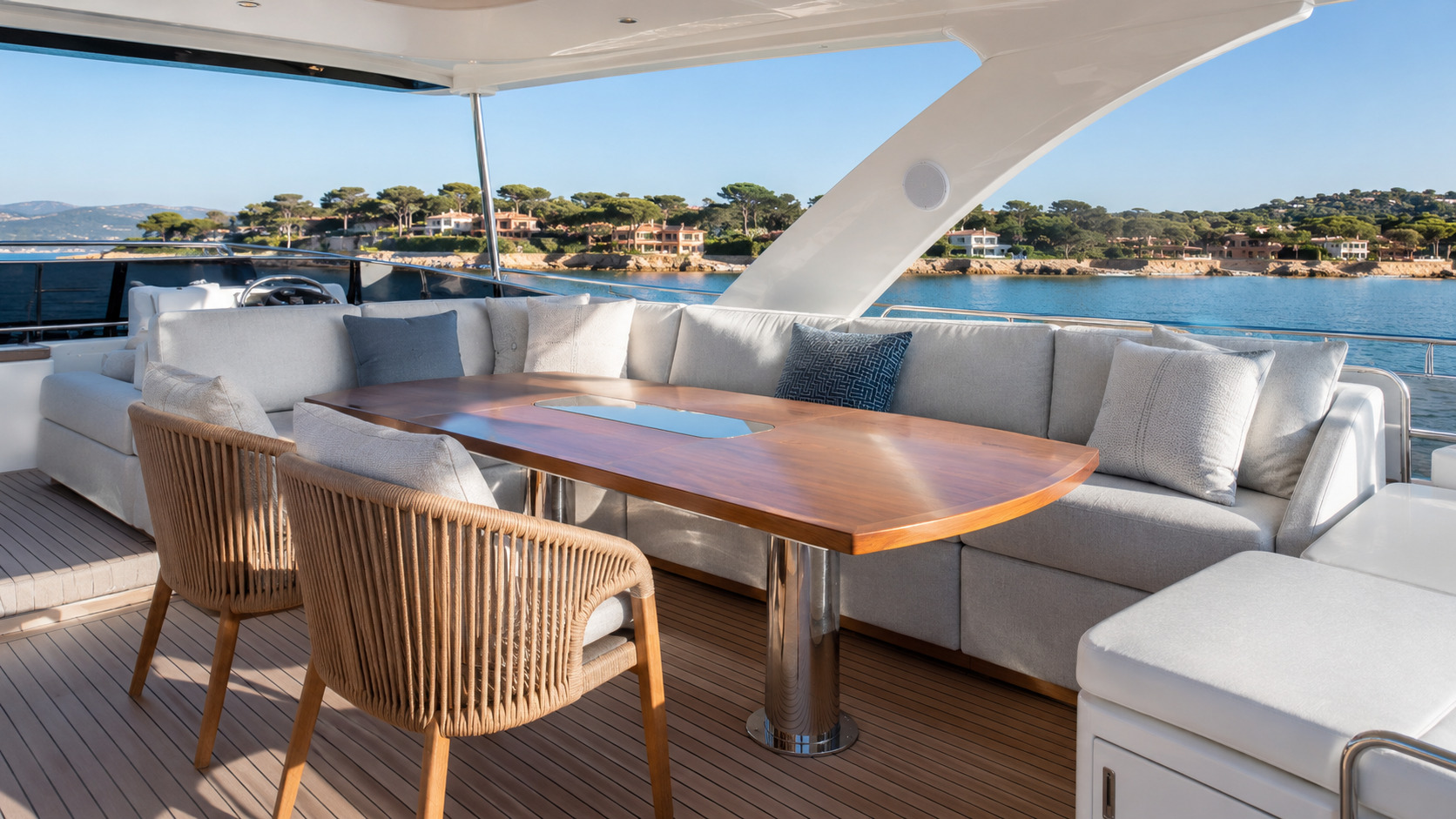
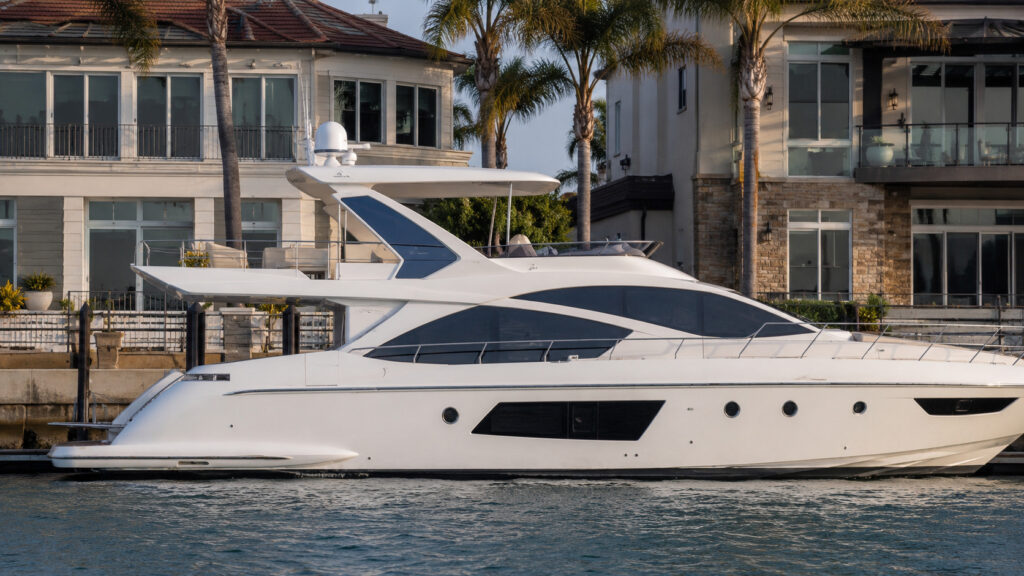
At 63′ 1″ overall, 16′ 8″ of beam and 85,979 pounds at full load, the Fly 62 needs dockage planned before purchase. Confirm the marina’s actual slip dimensions, piling width, shore-power service, water depth and turning room. Some marinas bill from measured LOA and others from the assigned slip category, so the cost jump from a 60-foot to a 65- or 70-foot slip can be larger than the three-foot difference from the Fly 60 suggests.
The official draft is 5′ 4″ including props at full load. That number matters if the yacht will cruise behind fixed bridges, and it should include the hardtop, radar, antennas and later-installed equipment. Seasonal storage also requires a yard capable of safely hauling and blocking a 39-ton yacht with IPS running gear.
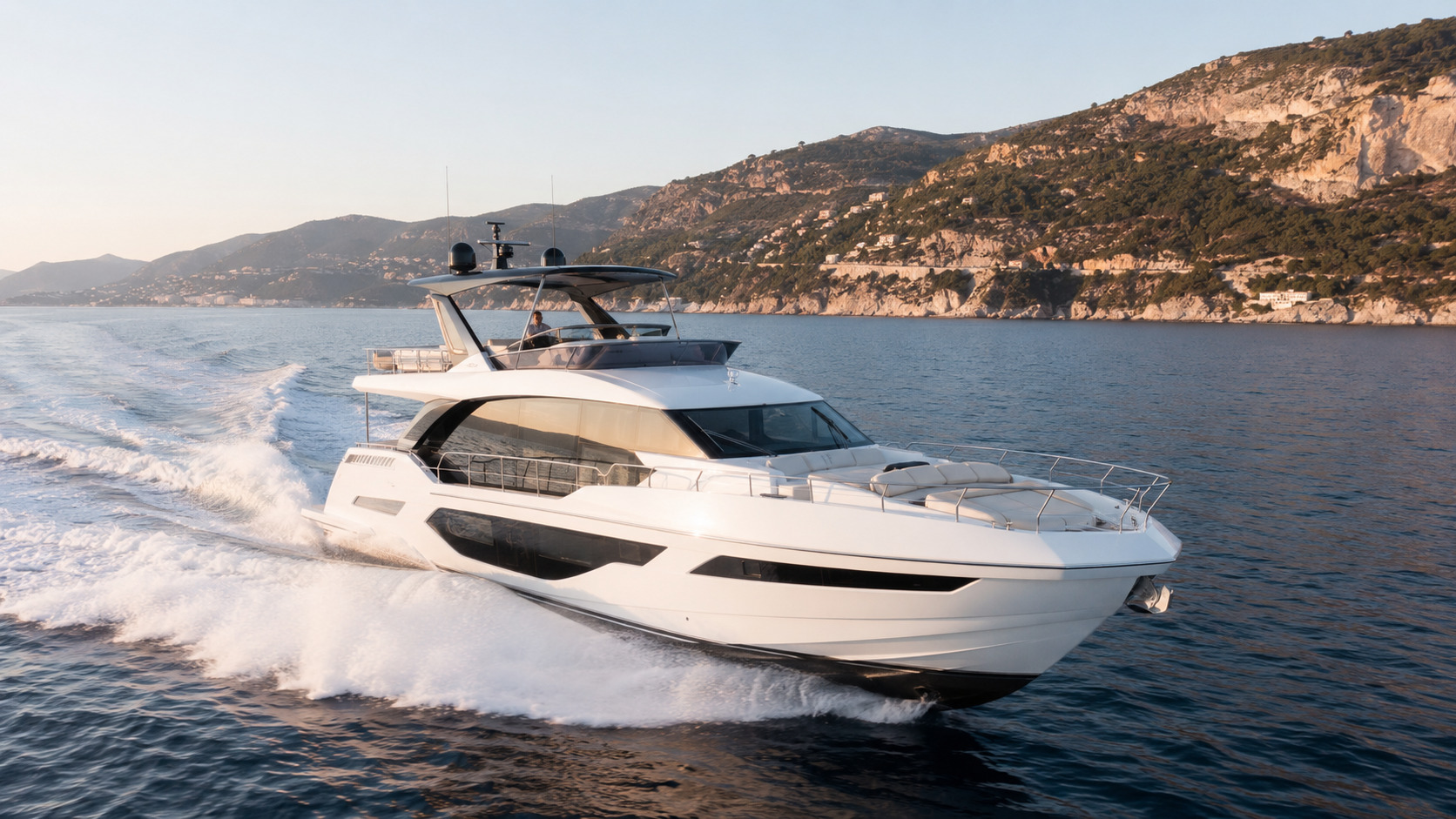
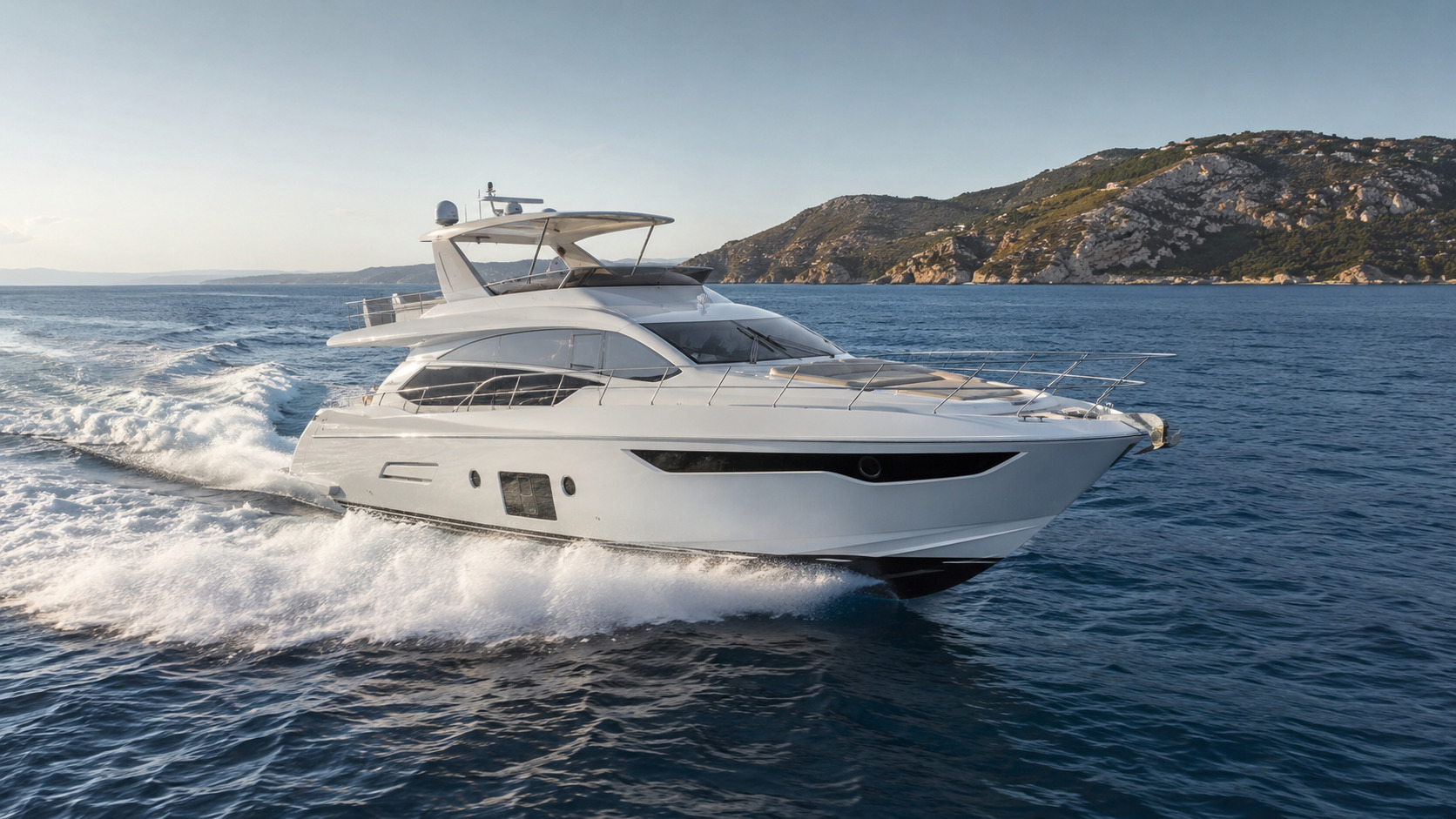
Use the gallery to judge the features that actually separate the 62 from neighboring Fly models: the Beach Cockpit in both open and closed positions, swim-platform access, flybridge scale, upper helm, aft cockpit dining, foredeck lounge, main-deck sightlines, full-beam master, forward VIP, twin guest cabin and engine room. Look at circulation and privacy, not just finishes.
The Fly 62 is a current-generation model introduced in 2024, so the market is still weighted toward newer, highly optioned yachts rather than a deep pool of older depreciation comparables. Pricing can move substantially with the IPS 1200 versus IPS 1350 package, stabilizer, electronics, hardtop equipment, interior selections, tender setup, warranty status and delivery location.
A useful historical reference is a May 2025 Barche Magazine test that reported a base price of €2.4 million at that time. That figure is not a current U.S. MSRP and should not be used as the page’s price range without validation, but it does reinforce the important point for buyers: the Fly 62 sits firmly in a transaction band where options, survey findings, tax, transport, insurance and financing structure can move the total acquisition cost by meaningful six-figure amounts.
Annual ownership cost should be built from the actual yacht and where it will live. Start with dockage, insurance, scheduled D13 and IPS service, generator and HVAC maintenance, haul-out and bottom work, storage where applicable, detailing, electronics and hydraulic-system service, then add fuel based on expected engine hours. The Beach Cockpit and IPS system are valuable, but they are also systems that belong in the maintenance budget rather than being treated as permanent no-cost features.
Pricing, ownership costs and payment examples are estimates for research purposes only and are not offers or commitments to extend credit.
Figures come from this page’s Boat Details fields. Illustration only and not an offer of credit.
Use the yacht-loan calculator to compare purchase price, cash down, interest rate and term before making an offer. Run more than one scenario. The monthly payment on a Fly 62 can change materially with down payment and term, while actual lender eligibility also depends on credit, vessel age, survey condition, purchase structure and the lender’s yacht guidelines.
Illustration only and not an offer of credit. Your actual rate and term depend on credit profile, vessel age, loan amount and ownership structure.
The Fly 62 makes the most sense when the Beach Cockpit, IPS control and newer three-cabin layout solve a real need. The Fly 60 offers a slightly smaller, more conventional shaft-drive ownership proposition. The Fly 68 is the meaningful accommodation step because it moves to four guest cabins. If you do not need the 62’s stern concept or IPS handling, the 60 deserves a serious look; if three guest cabins are already a compromise, skip directly to the 68 comparison.
Because the Fly 62 is a relatively new model, many examples on the market are recent dealer stock, demonstrators or lightly used brokerage yachts. That reduces the age spread but does not eliminate due diligence. New inventory still needs a final specification review, warranty understanding and delivery-cost check. Brokerage boats need service history, engine hours, option verification and survey. Private-party opportunities require clean documentation and a closing process that protects both sides. Imported yachts may create additional tax, documentation and compliance questions.
New from dealer — verify engine package, options, warranty start date, commissioning, delivery charges and what the contract price actually includes.
Brokerage yacht — review D13/IPS service records, Beach Cockpit operation, stabilizer history, generator hours, warranty transfers and survey findings.
Private party — establish ownership, liens, deposit terms, survey rights, insurance and lender documentation before funds become non-refundable.
Imported yacht — confirm documentation, taxes, certification, duty and U.S. registration requirements before assuming a normal domestic closing.
If you have found a specific Fly 62, send Float Finance the listing. Whether the yacht is dealer inventory, represented by a broker or being sold directly by its owner, financing should be evaluated around the actual vessel, borrower profile and transaction structure. The goal is to know what the purchase can look like before you negotiate around an assumed payment or commit non-refundable money to the wrong deal.
The model debuted in 2024, so current inventory is still concentrated in newer yachts where engine package, stabilizer, electronics, interior selections, warranty status and delivery location can move the price significantly. A May 2025 Barche Magazine test cited a €2.4 million base price at that time, but that is not a current U.S. MSRP and should be treated only as historical context.
The current Fly 62 sleeps six guests in three cabins plus two crew berths. The guest arrangement is a full-beam master amidships, a forward VIP and a twin guest cabin. Each guest cabin has its own head with a separate shower. The crew cabin is separate and configured for two berths. That makes the 62 a strong three-cabin yacht, but buyers who require four guest cabins should compare the Fly 68 instead of trying to make the 62 perform a different mission.
Azimut does not currently publish a factory consumption table for the Fly 62 on its public model page. In a Barche Magazine sea trial with the standard twin IPS 1200 package, total consumption was reported at about 180 liters per hour at 20 knots and about 250 liters per hour at 25 knots. That converts to roughly 47.6 and 66 US gallons per hour. Treat those as independent test observations, not guaranteed results for every yacht and load condition.
Standard power is twin Volvo Penta IPS 1200 packages with 900 hp per engine. Azimut also offers twin IPS 1350s rated at 1,000 hp each. The builder publishes up to 30 knots maximum and 25 knots cruise with the standard package, increasing to up to 32 knots maximum and 26 knots cruise with the optional engines. Both packages use IPS pod drives and support the yacht’s joystick-oriented handling approach.
There is no useful universal percentage. Annual cost depends on marina, insurance, engine hours, fuel price, scheduled D13 and IPS service, generator and HVAC maintenance, haul-out, bottom work, detailing, storage and how much professional help the owner uses. The Beach Cockpit and hydraulic platform also add systems that should be maintained. Build the budget from [SLIP_COST], [INSURANCE_BAND], [ENGINE_SERVICE_BAND] and expected fuel hours instead of multiplying the purchase price by a generic yacht-cost percentage.
Azimut publishes a 5′ 4″ draft including props at full load. Air draft is not stated on the official model page reviewed, so the production page should retain
Potentially, yes, subject to borrower, vessel and lender eligibility. A lender may consider model year, purchase price, down payment, credit profile, survey condition, insurance and whether the transaction is through a dealer, broker or private seller. Float Finance can work with dealer, brokerage and qualified private-party boat purchases. Establishing the financing path before committing to the yacht can make the negotiation and closing process much cleaner.
The Fly 62 is not a recreational trailer boat. At 63′ 1″ overall, 16′ 8″ of beam and roughly 85,979 pounds at full load, it normally lives in a suitable wet slip, at a private dock engineered for the yacht, or in professional yacht storage. Overland movement is specialized commercial transport requiring professional equipment, route planning and permits. Dockage and haul-out capability should be confirmed before purchase, not after closing.
Tell us a little bit about yourself and the boat you are looking to finance.