
Call Us : 207-994-5109
Mon – Fri: 8 am to 9 pm & Sat – Sun: 10 am to 8 pm
A 68-foot flybridge yacht that crosses into four-cabin, two-crew territory while keeping IPS maneuverability and a 32-knot performance envelope.
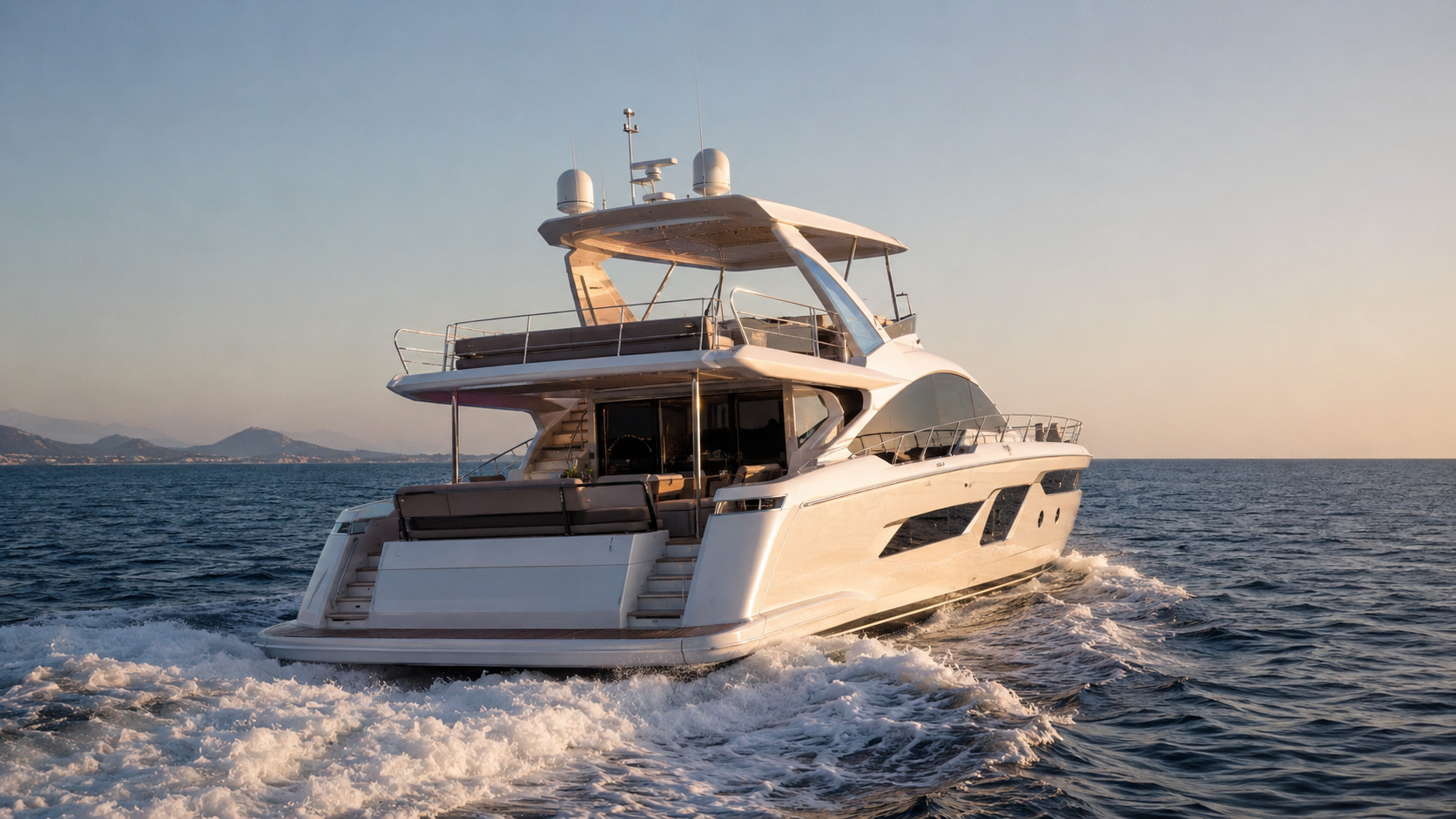
The Azimut Fly 68 is where the current Fly range makes a meaningful jump from a three-cabin owner-operated cruiser into a yacht with four true guest cabins, two crew berths and an operating footprint that deserves to be planned like a yacht rather than a large weekend boat. At 68′ 10″ overall and 17′ 2″ of beam, it is still compact enough that an experienced owner can remain directly involved at the helm, but the accommodations and systems now support eight overnight guests plus two crew. That changes the buying decision more than the additional length alone.
Twin Volvo Penta IPS 1350 packages provide 1,000 hp per side and combine joystick maneuvering with a published 32-knot maximum speed. Azimut pairs the pod drives with carbon fiber high in the superstructure and a hull optimized around pod propulsion. The result is not simply more speed. The drivetrain and weight strategy are meant to preserve interior volume, control the center of gravity and keep a nearly 97,000-pound full-load yacht manageable from either helm.
Accommodation is the first reason many buyers step up from the Fly 62. The Fly 68 carries four guest cabins with eight berths, plus a separate two-berth crew cabin. That extra guest cabin matters on longer trips because it reduces the need to convert shared spaces or choose between family and friends. The main deck is equally configurable: Azimut offers an enclosed midship galley, an open midship galley and an aft-galley arrangement. Those layouts change privacy, service flow and the relationship between cockpit and salon enough that buyers should treat the galley decision as part of the yacht’s mission, not a cosmetic option.
The compromise is complexity. The Fly 68 adds another guest cabin, more climate-control load, more domestic systems, a larger flybridge, higher fuel capacity and a crew setup that starts to make professional help practical rather than theoretical. It can still be owner-driven, and independent reviewers specifically note that it remains approachable at the helm, but running the yacht yourself is not the same as maintaining, cleaning and provisioning it yourself. Buyers who want a simpler three-cabin boat should compare the Fly 62. Buyers who already expect full-time crew and want still more separation should also look at the Fly 72.
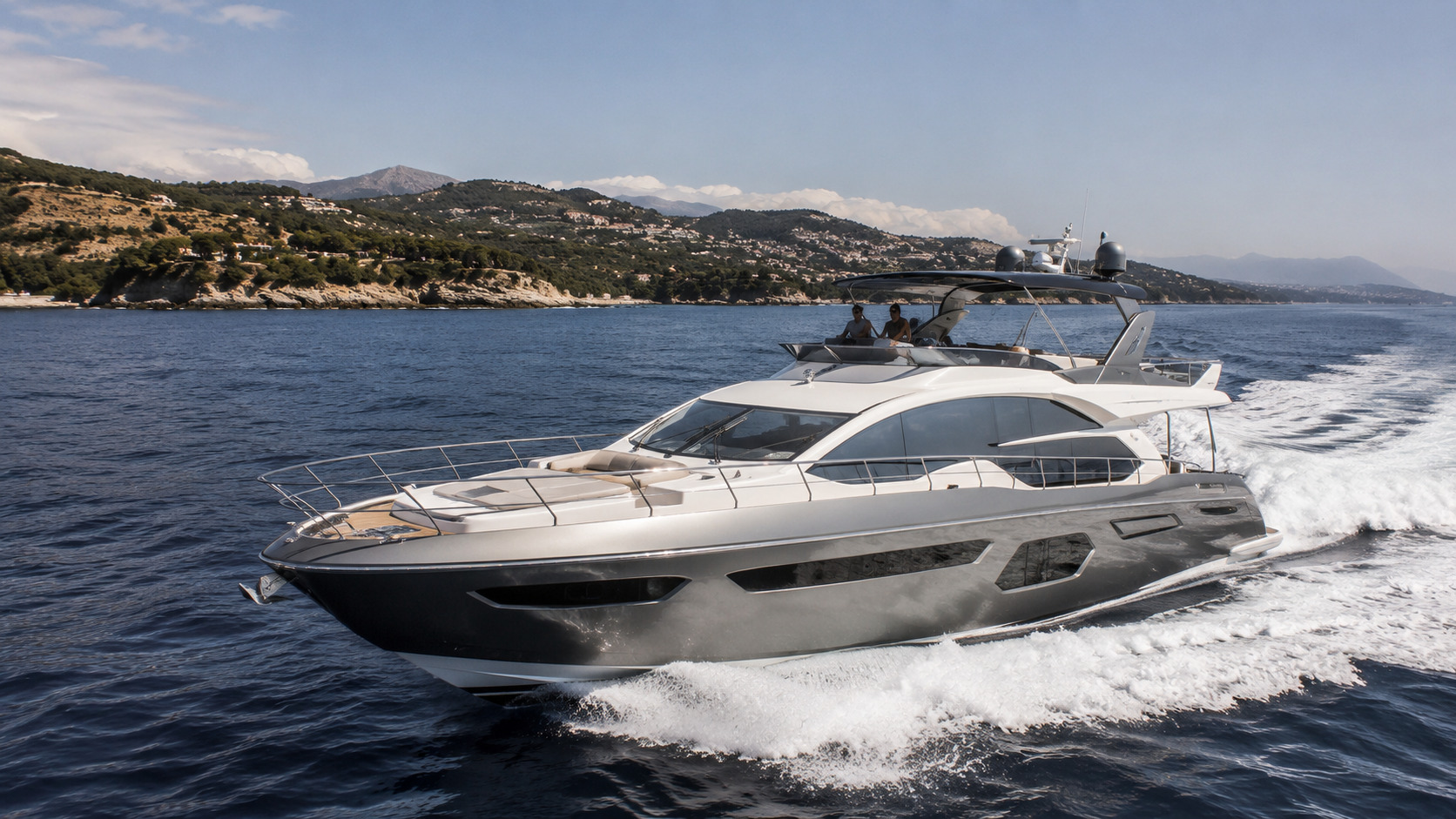
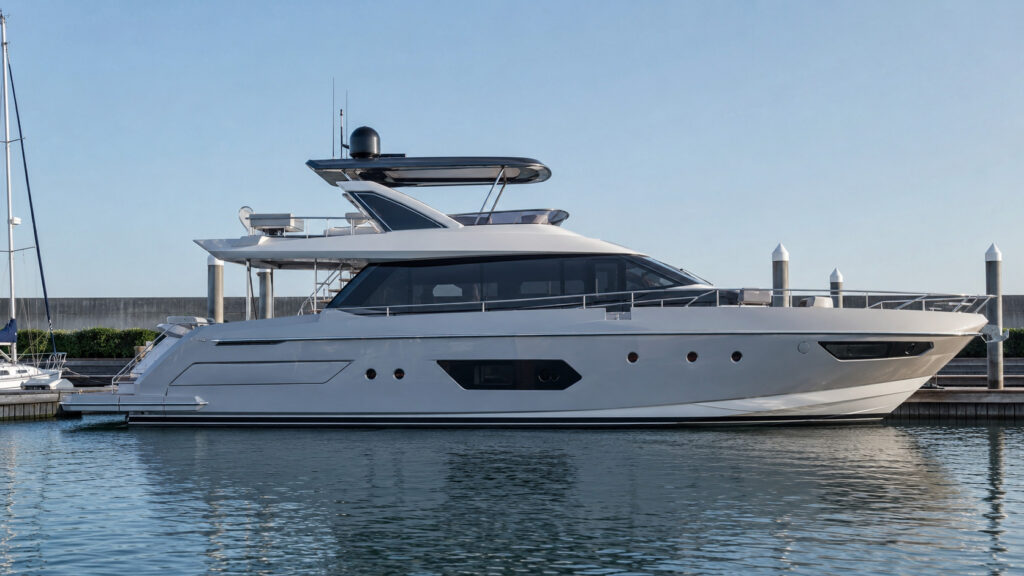
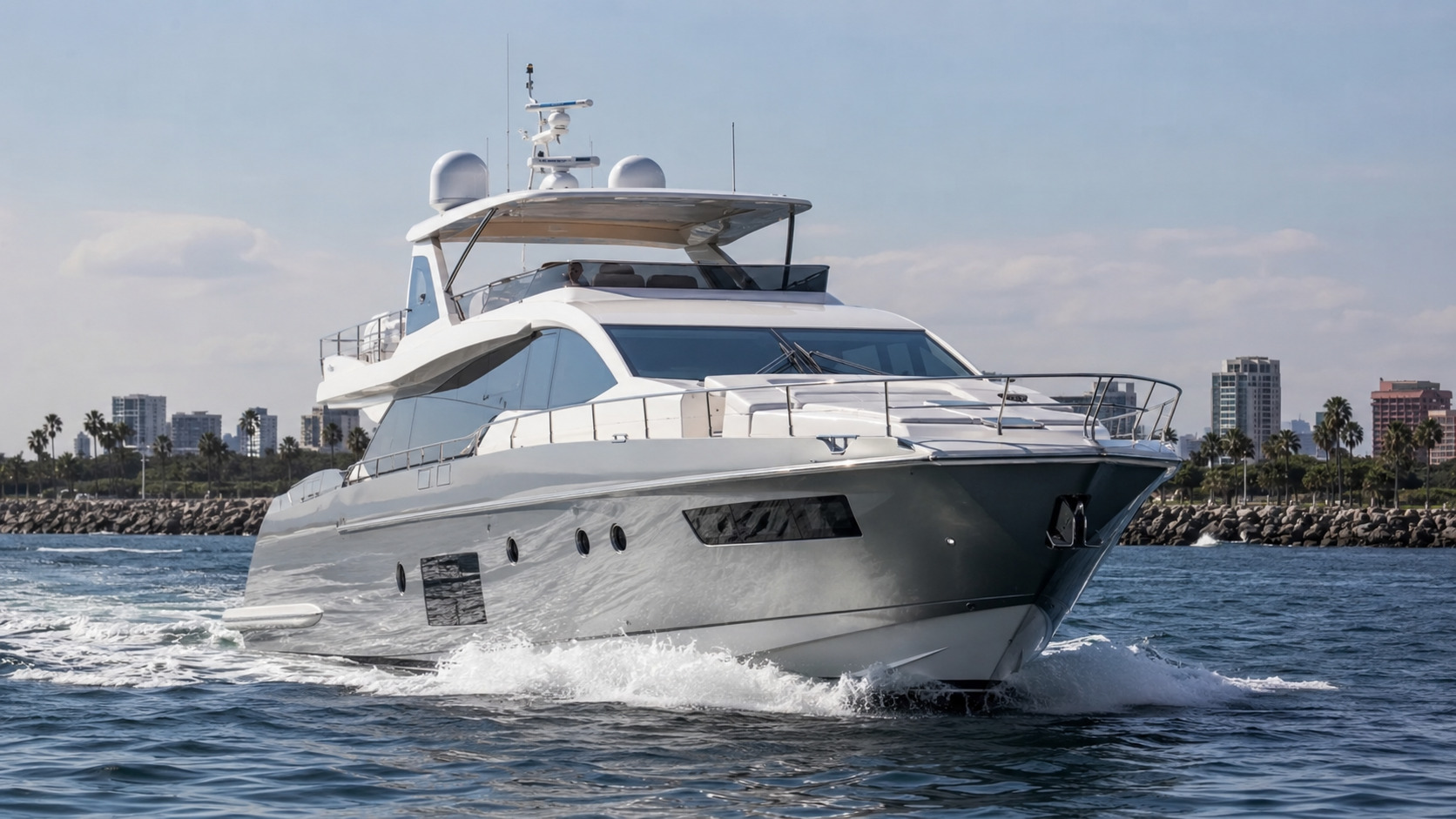
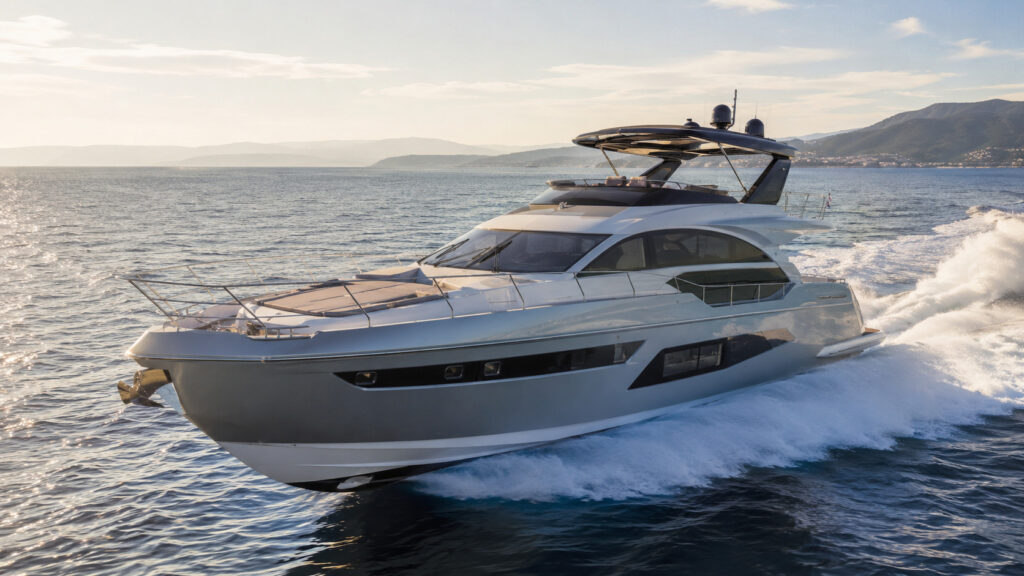
The Fly 68 uses a GRP planing hull with carbon fiber concentrated in the upper structure. Azimut publishes 18 degrees of deadrise aft and 21 degrees amidships. Those numbers show the design compromise clearly: enough V through the center of the hull to soften the ride and maintain control in chop, with a flatter aft section that supports planing efficiency, stability and the weight carried by a four-cabin flybridge yacht. It is designed for fast coastal cruising rather than displacement-speed passagemaking.
Carbon fiber matters more here than as a materials talking point. Azimut says its Carbon Tech approach can lighten laminated upper components by as much as 30% and reduce natural roll momentum by up to 15%. On a flybridge yacht, weight removed high above the waterline helps the designer preserve interior volume and upper-deck size without allowing the center of gravity to rise unchecked. A surveyor still needs to evaluate the individual yacht, including any prior repairs, moisture concerns, impact history and hardware installations, but the structural concept is directly tied to the Fly 68’s volume and stability strategy.
The published beam is 17′ 2″, draft is 5′ 3″ including props at full load, and full-load displacement is 96,407 pounds. Those dimensions have immediate ownership consequences. The beam narrows the pool of available slips. Draft affects shallow-water routing and haul-out planning. Displacement moves the boat firmly into commercial-yard territory for lifting and blocking. Air draft is not published on the official model page reviewed, so bridge-clearance planning should remain [AIR_DRAFT] until the exact hardtop, radar and antenna configuration is verified on the individual yacht.
The Fly 68 uses two Volvo Penta IPS 1350 packages rated at 1,000 hp each, for 2,000 hp total. Azimut publishes up to 32 knots at maximum speed and a 27-knot cruise point. Unlike the Fly 60’s conventional shaft-drive package, the Fly 68 is designed around pods, which influences machinery placement, handling and the amount of usable accommodation that can be fitted into the hull.
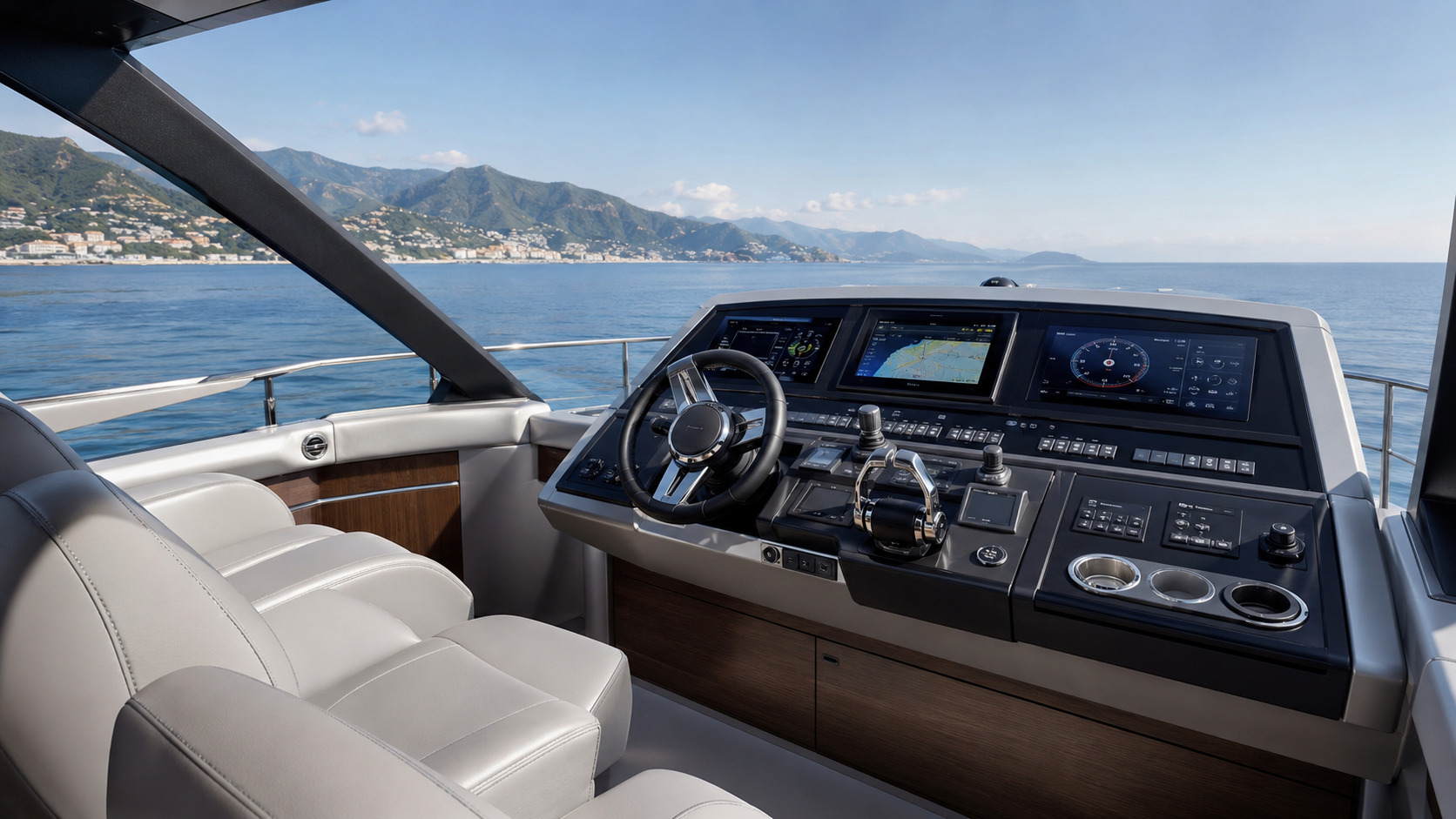
For an owner who intends to drive the yacht, joystick control is one of the most practical benefits. The system can command forward, reverse, lateral and rotational movement at low speed, while joystick driving integrates with autopilot for course corrections underway. That does not erase the Fly 68’s 17-foot beam, windage or mass. It does reduce the number of separate throttle, gear and thruster inputs required during close-quarters maneuvering. Independent reviewers have described the 68 as sitting on the edge of crew operation while still giving an owner confidence to run it personally.
The maintenance conversation must include the entire IPS package, not just the D13 diesels. On a used Fly 68, ask for records covering engine fluids and filters, cooling-system service, pod lubricant, seals, corrosion protection, propellers, steering, joystick calibration and any Volvo Penta campaigns or software updates. A dedicated engine and drivetrain inspection can be worthwhile alongside the general marine survey because propulsion condition can materially affect both the purchase decision and the lender’s comfort with the vessel.
Azimut publishes a 977-US-gallon fuel capacity and provides standardized consumption data at two useful cruise points. At 15.2 knots, the Fly 68 is listed at 7.9 liters per nautical mile with a 424-nautical-mile range. At the 27-knot fast-cruise point, consumption rises to 9.9 liters per nautical mile with a stated 336-nautical-mile range. Those figures are much more useful than tank capacity alone because they show the cost of choosing speed on this hull.
Converted to hourly consumption, the published data works out to roughly 31.7 US gallons per hour at 15.2 knots and about 70.6 US gallons per hour at 27 knots, before generator and hotel loads. The interesting ownership decision is therefore not just ‘how much fuel does it hold?’ The slower cruise point extends published range by almost 90 nautical miles while using less than half the hourly fuel of the fast-cruise setting. Owners making longer coastal moves have a meaningful choice between time and fuel rather than one fixed efficient speed.
For budgeting, a four-hour run at the published 27-knot consumption can use roughly 282 gallons of diesel before generator consumption.
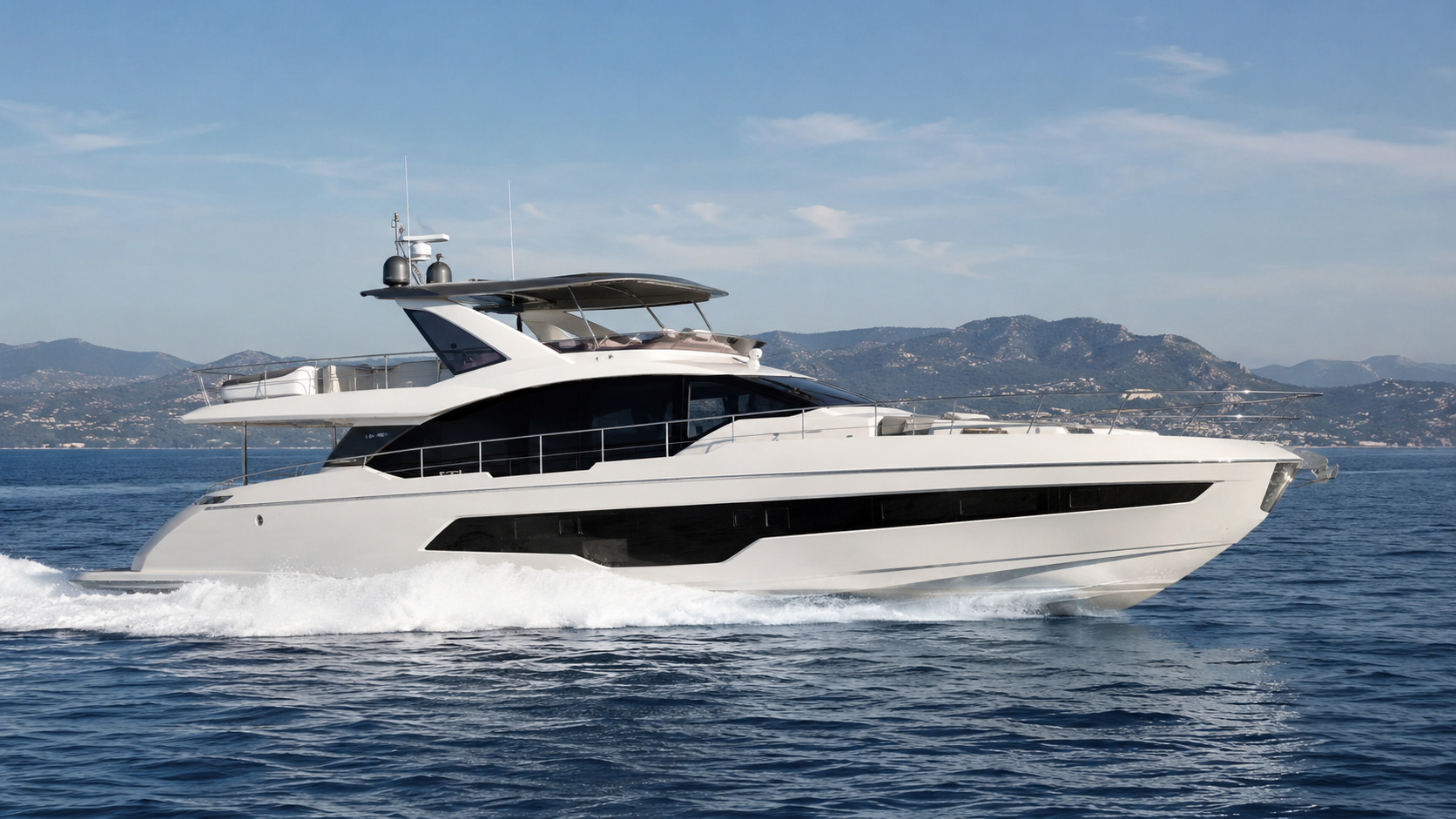
The Fly 68 is designed to run like a modern planing yacht despite carrying four guest cabins, a large flybridge and almost 97,000 pounds at full load. Azimut publishes a 32-knot maximum and 27-knot cruise speed. The important part is not the headline number by itself; it is that the hull, IPS propulsion and carbon-fiber weight strategy allow the yacht to maintain useful fast-cruise performance without becoming a narrow performance boat or sacrificing interior volume.
Independent review work on the current-generation Fly 68 emphasizes how approachable the yacht feels despite its size. YachtBuyer describes the model as being on the verge of crew operation but still confidence-inspiring for an owner at the helm. That is the realistic takeaway for buyers. The boat can be owner-driven, especially with joystick assistance and modern control integration, but conditions, wind, traffic and crew coordination still matter. A 68-foot yacht should be slowed and managed for the sea state rather than driven to the published maximum simply because the engines can deliver it.
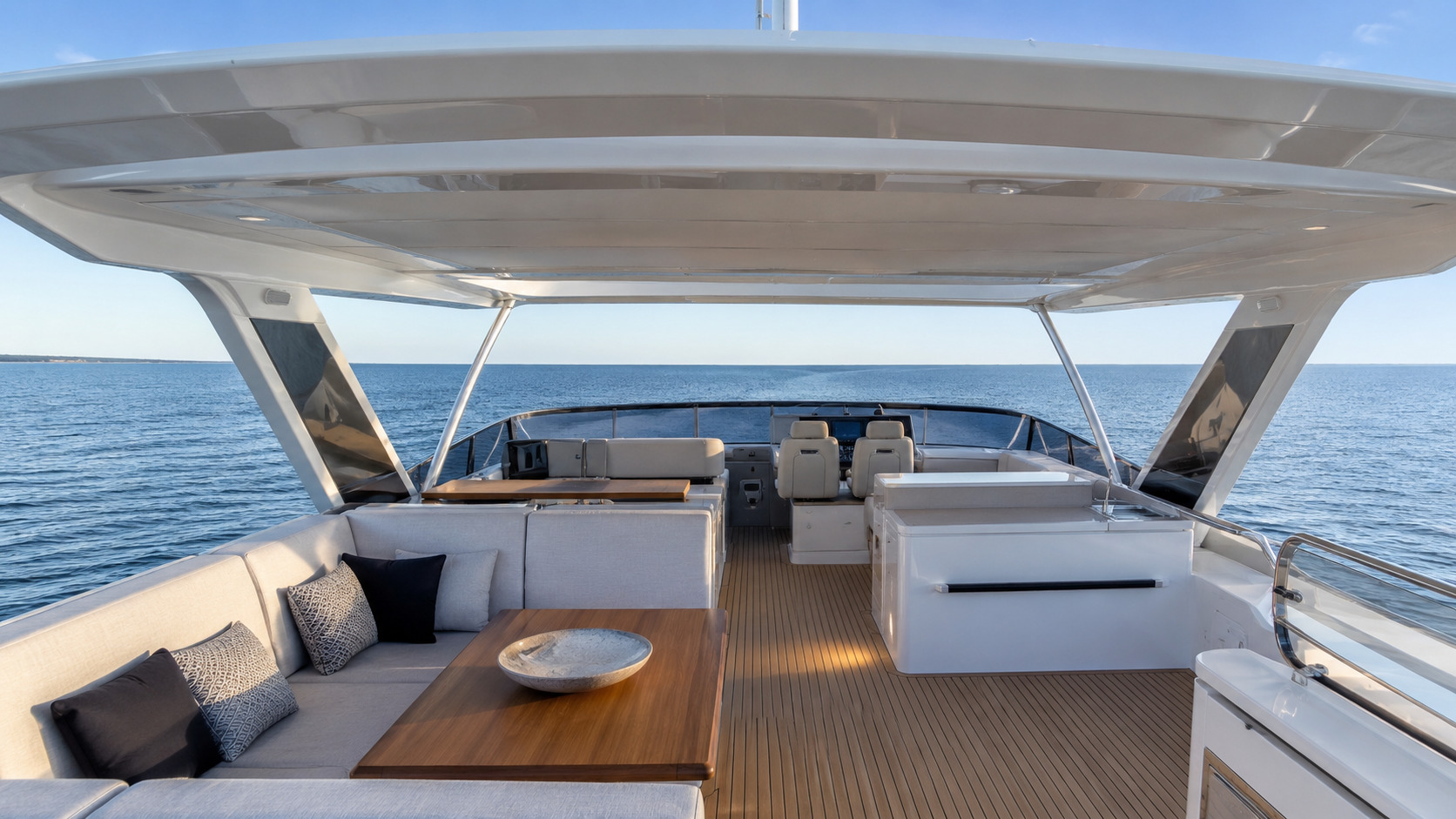
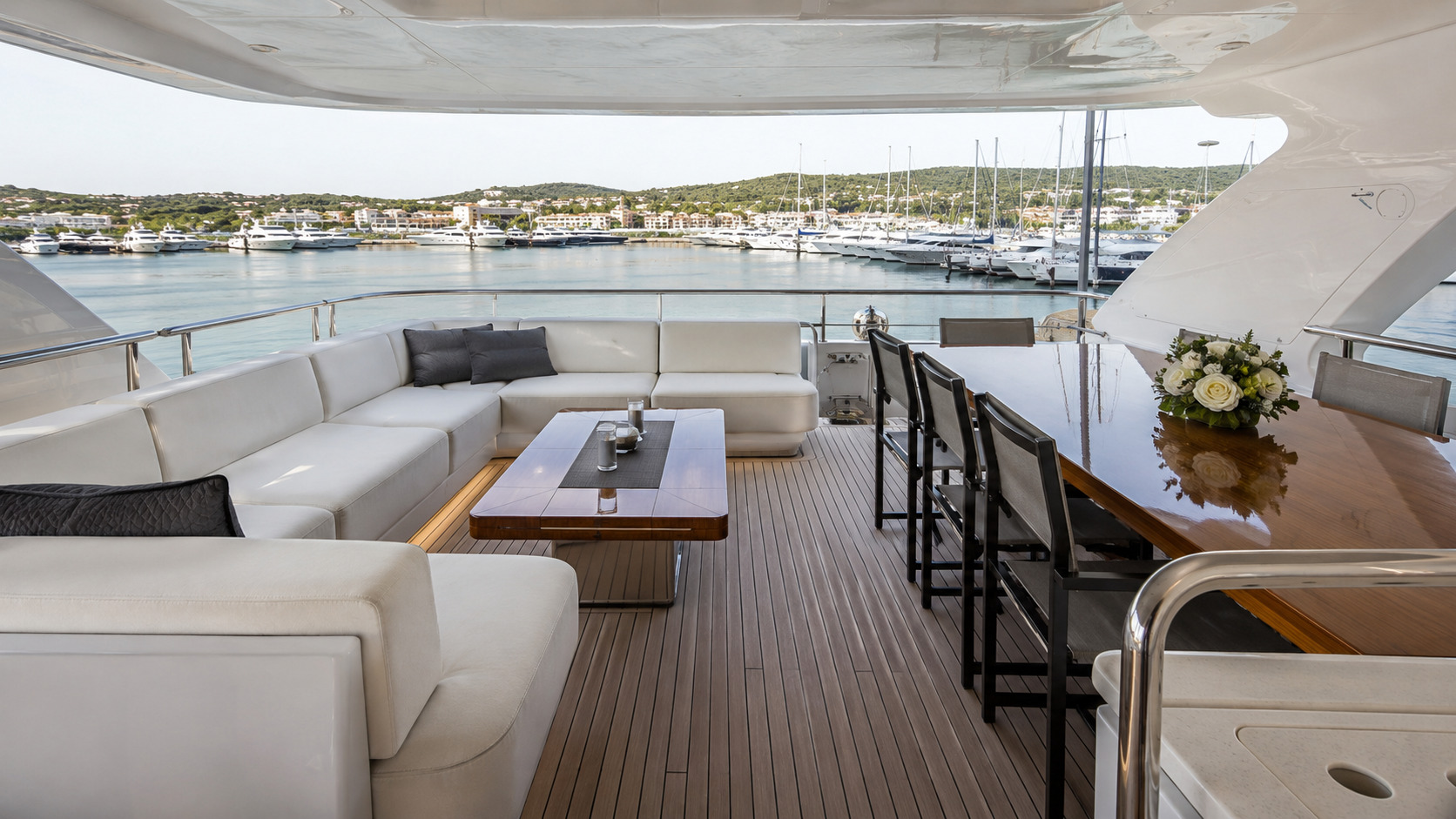
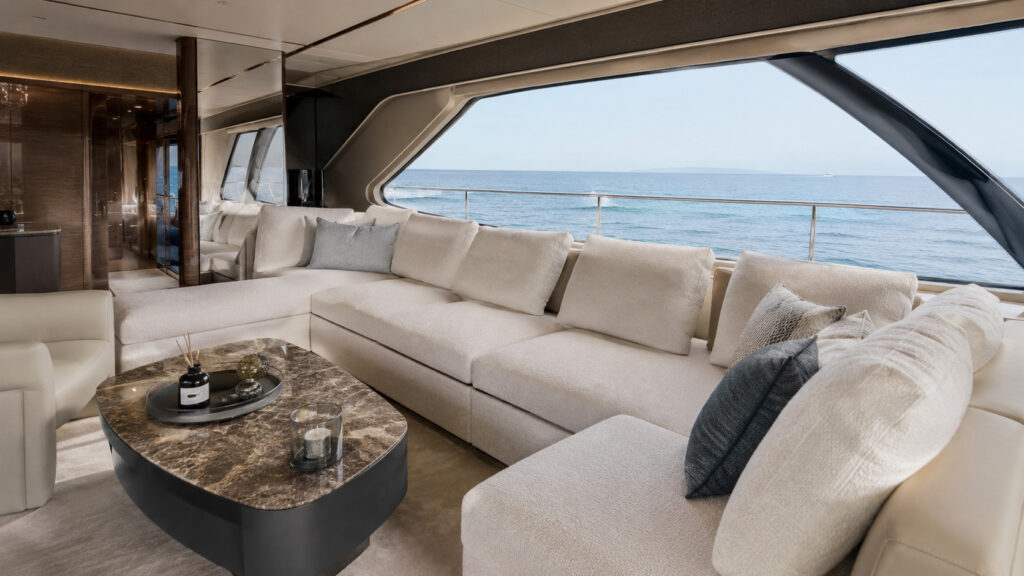
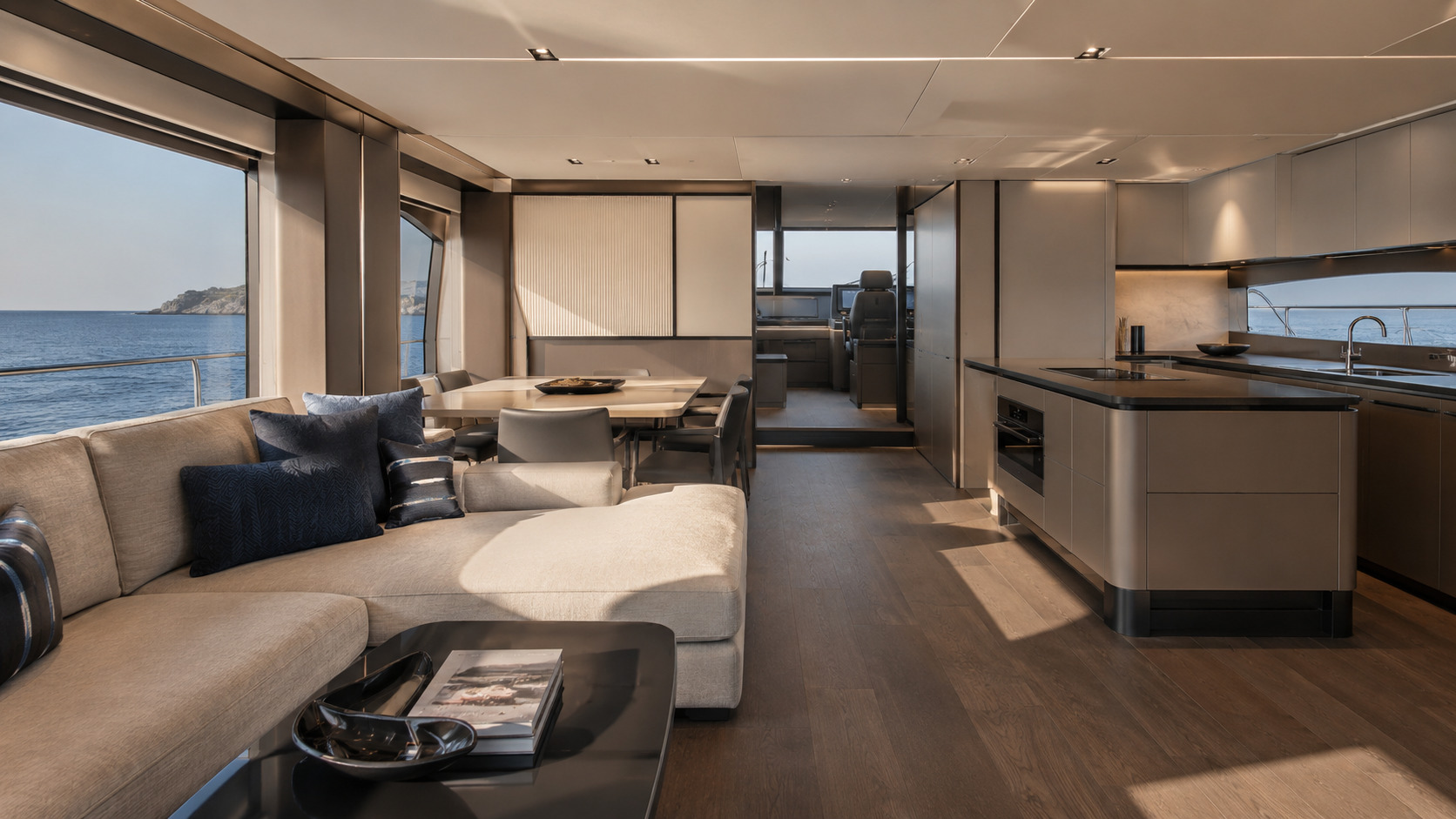
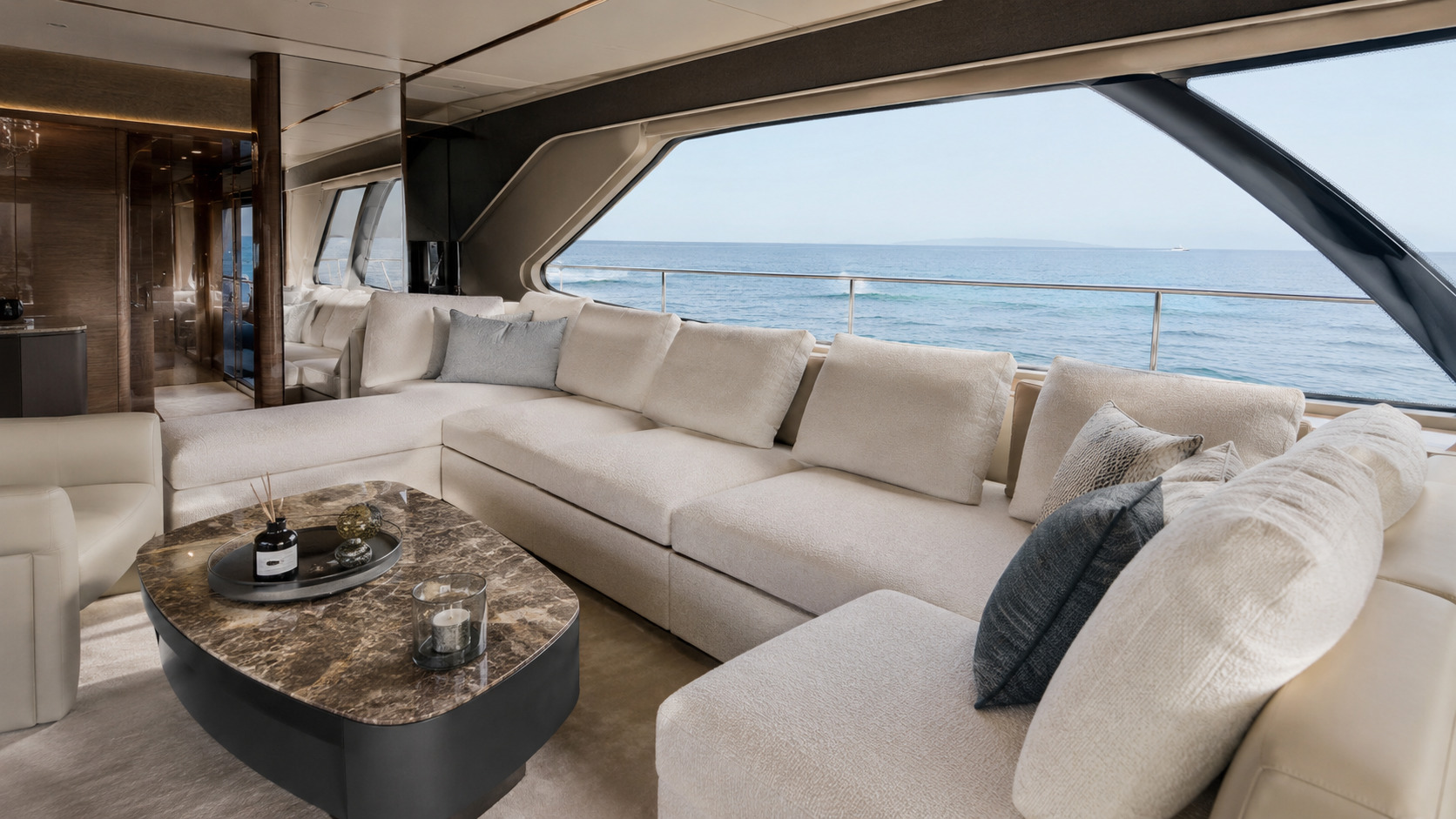
The Fly 68 gives buyers three distinct main-deck arrangements. The enclosed ‘Lanterna’ galley places the cooking space midship behind light-filtering battens and glazing, preserving separation while still allowing light through. The open-galley version keeps the galley in the same general part of the yacht but removes the enclosure to create a more social connection with dining. The aft-galley layout moves service closer to the cockpit and leaves the forward main deck as a dedicated lounge. This is not a trim-package decision. It changes how owners, guests and crew move through the yacht.
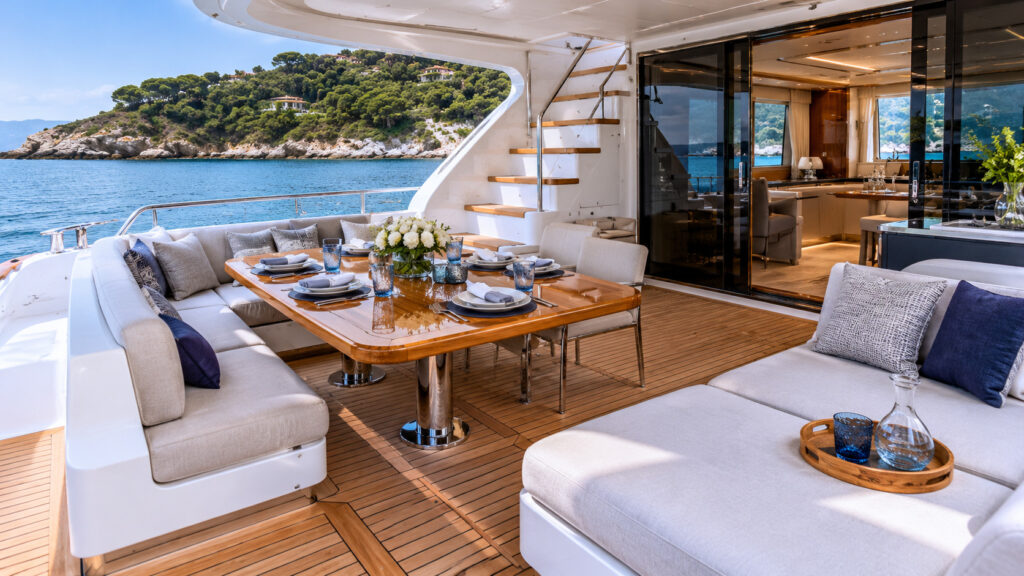
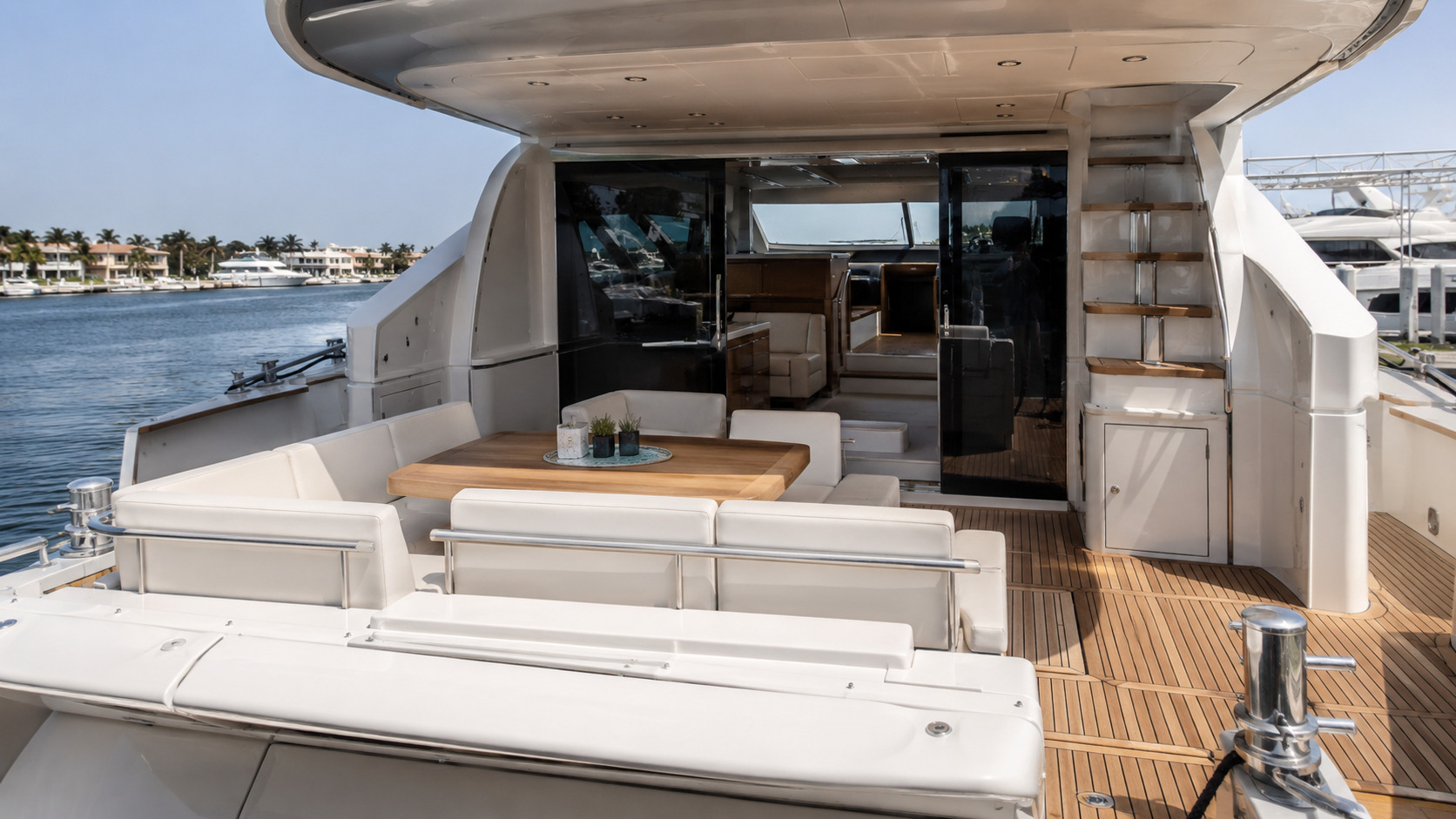
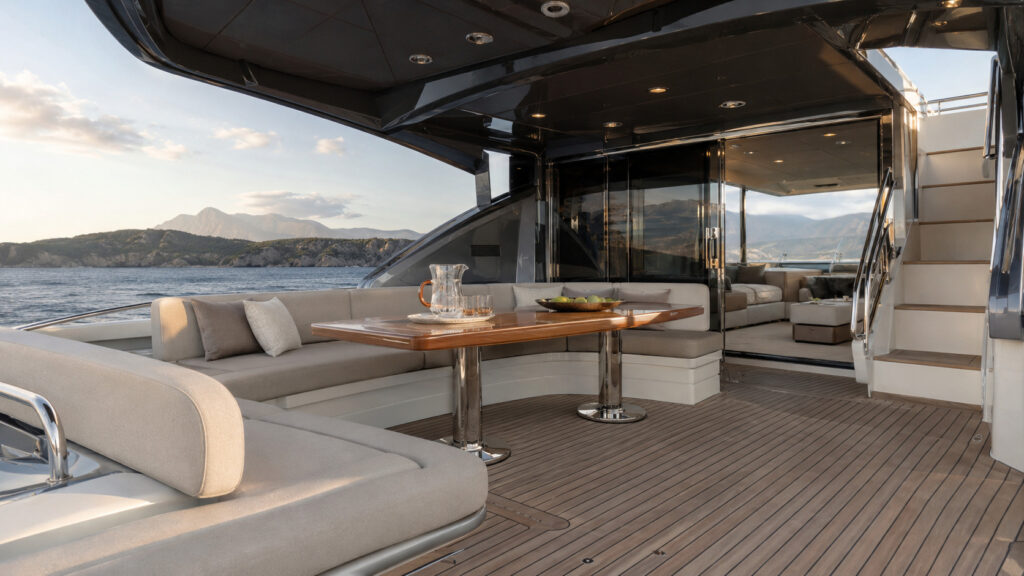
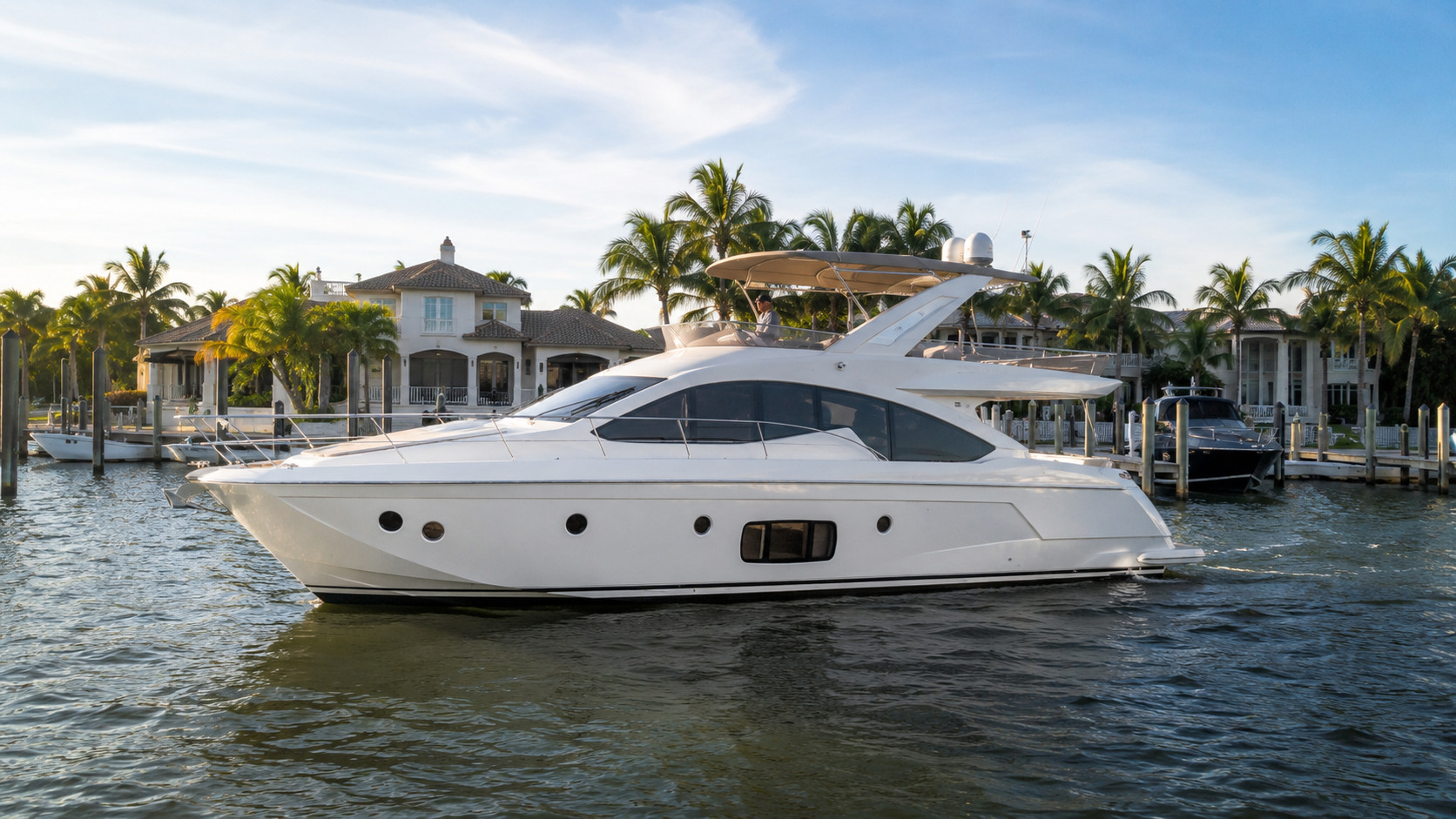
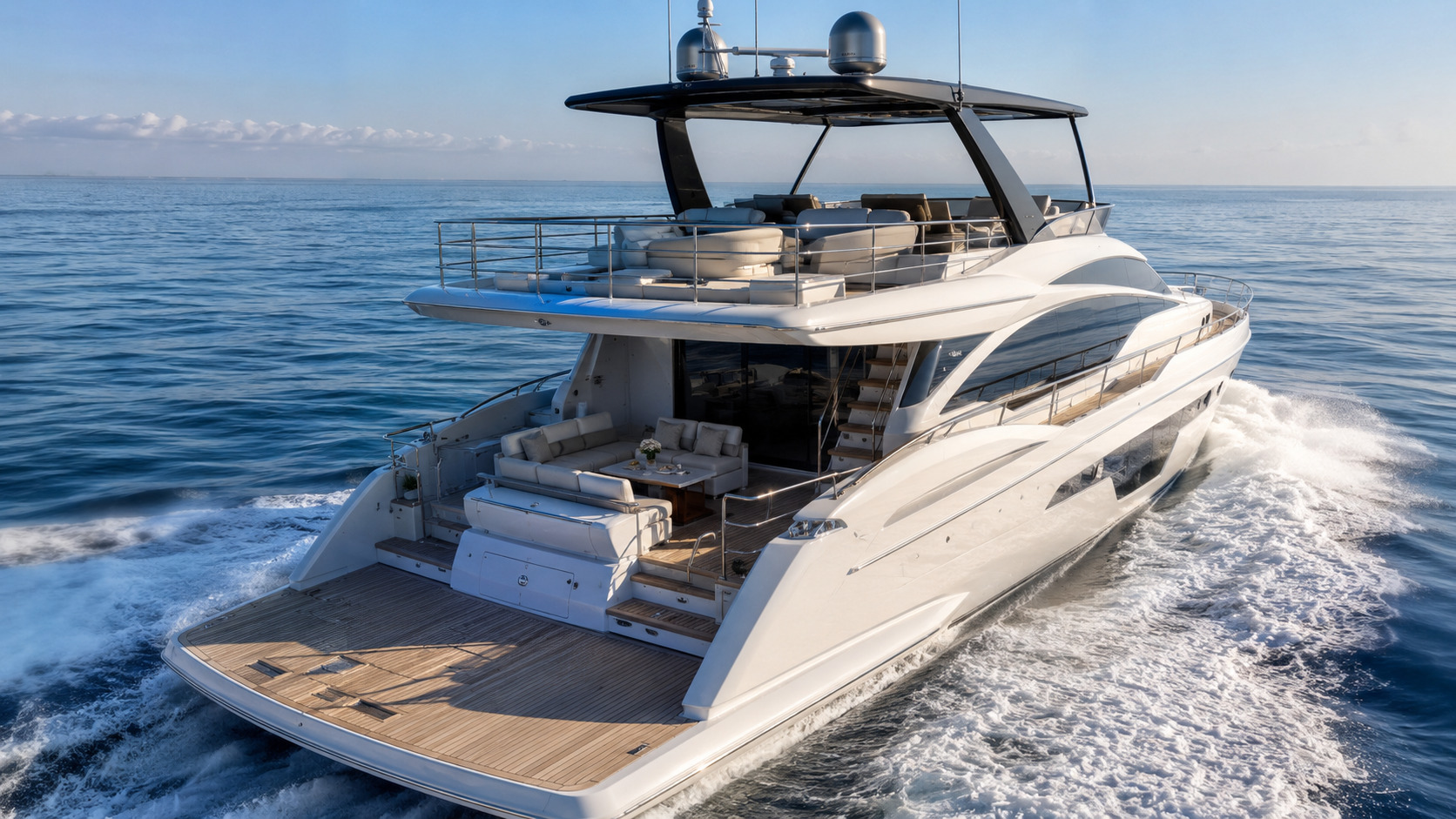
Outside, the bow uses convertible sofas and sunpads rather than a token foredeck cushion. The cockpit provides dining and bar functions at the stern, while the flybridge is divided into three functional zones: forward driving and sunning, a central dining or bar area, and an aft social or sunpad zone. That separation is one of the reasons the 68 feels materially different from the Fly 62. There is enough upper-deck length to let different groups use the flybridge at the same time without every activity collapsing into one seating area.
The lower helm provides weather protection, while the upper helm gives the captain visibility and immediate access to the flybridge social area. Which main-deck layout works best depends on how the yacht will be staffed. Owner-operators who cook and serve their own guests may prefer the aft-galley or open arrangement. Owners using crew more often may value an enclosed galley that separates service from the social areas. Buyers should decide that before ordering or before dismissing a brokerage yacht on finish choices alone.
Specification varies by hull and options, but these are the features that materially shape how the current Fly 68 is used. Verify the actual build sheet and equipment list on any yacht you are considering.
Eight guests sleep in four dedicated cabins, giving the 68 a true accommodation advantage over the three-cabin Fly 62.
Separate crew quarters support two people, making regular captain or crew help realistic for longer trips or higher-use ownership.
Enclosed midship, open midship and aft-galley configurations let buyers choose between privacy, open social flow and cockpit service.
The upper deck separates helm and sunning, dining or bar service, and an aft lounge so several activities can happen at once.
Twin IPS 1350s integrate with joystick control for lateral movement, rotation and simplified low-speed maneuvering.
Garmin-based integration can monitor engines, alarms, pumps, tanks, ventilation, audio and climate functions from onboard displays and compatible remote devices.
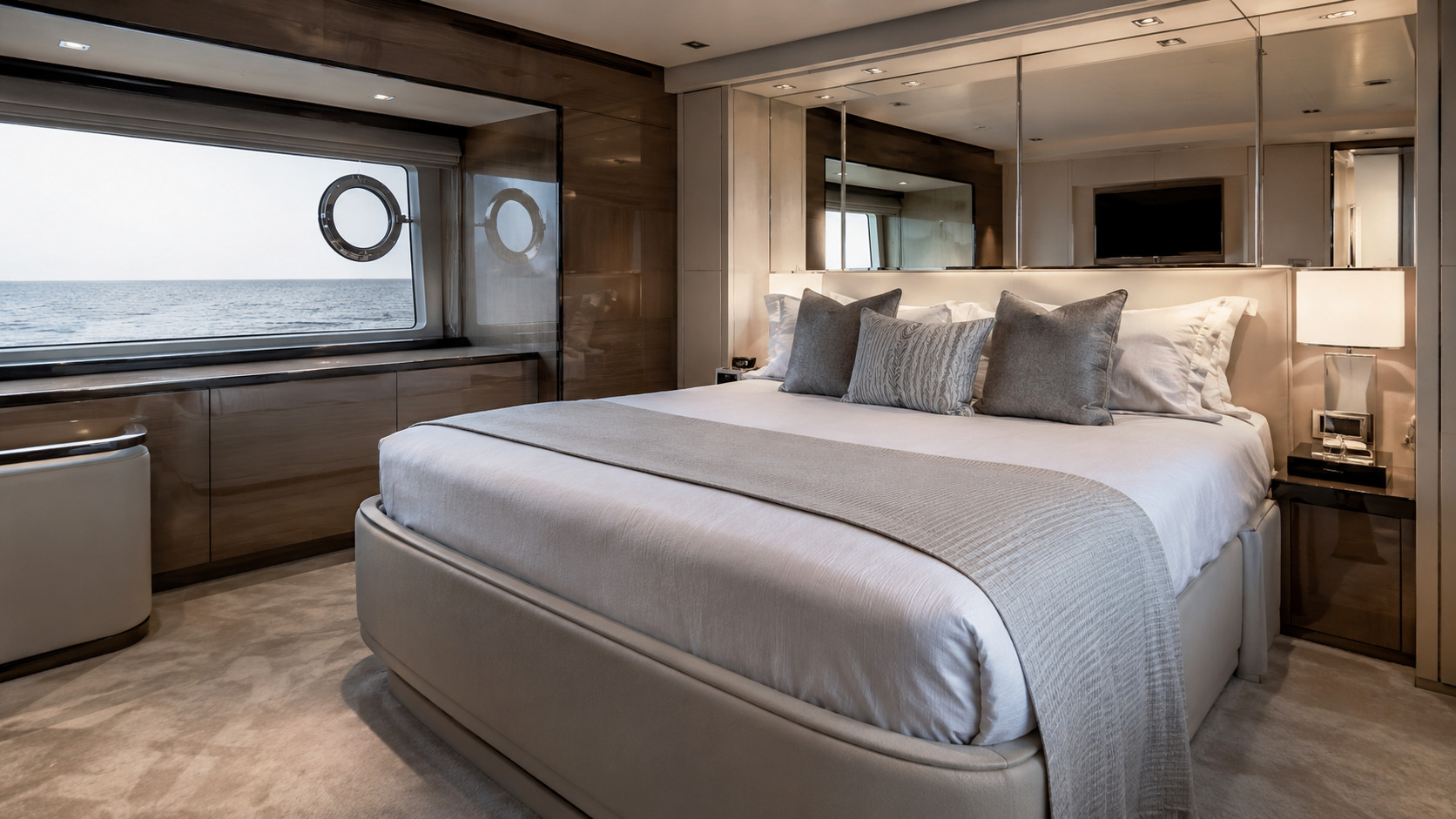
The amidships owner suite uses the yacht’s 17-foot beam for a private cabin and ensuite arrangement separated from the guest areas.
Azimut’s Aircare Energy Saving system is designed to exchange filtered outside air while recovering temperature and humidity energy from the outgoing flow.
The Fly 68 carries the system load expected of a four-cabin yacht rather than a simple express cruiser. IPS propulsion, integrated Garmin monitoring, automated trim control, multiple climate zones, generator loads, pumps, tank monitoring, ventilation and domestic systems all have to work together. Depending on specification, stabilization, upgraded electronics, hydraulic equipment, tender handling and additional entertainment systems can add another layer of maintenance.
A pre-purchase survey should therefore include operational testing, not just visual inspection. Run the generator under meaningful load, test air conditioning in every zone, cycle pumps and heads, verify shore-power and charging equipment, test navigation and monitoring displays, operate joystick and trim systems, inspect bilges and machinery spaces, and confirm that alarms and sensors report correctly. On a yacht this size, a collection of small deferred items can represent a significant first-year refit bill even when the hull and engines are fundamentally sound.
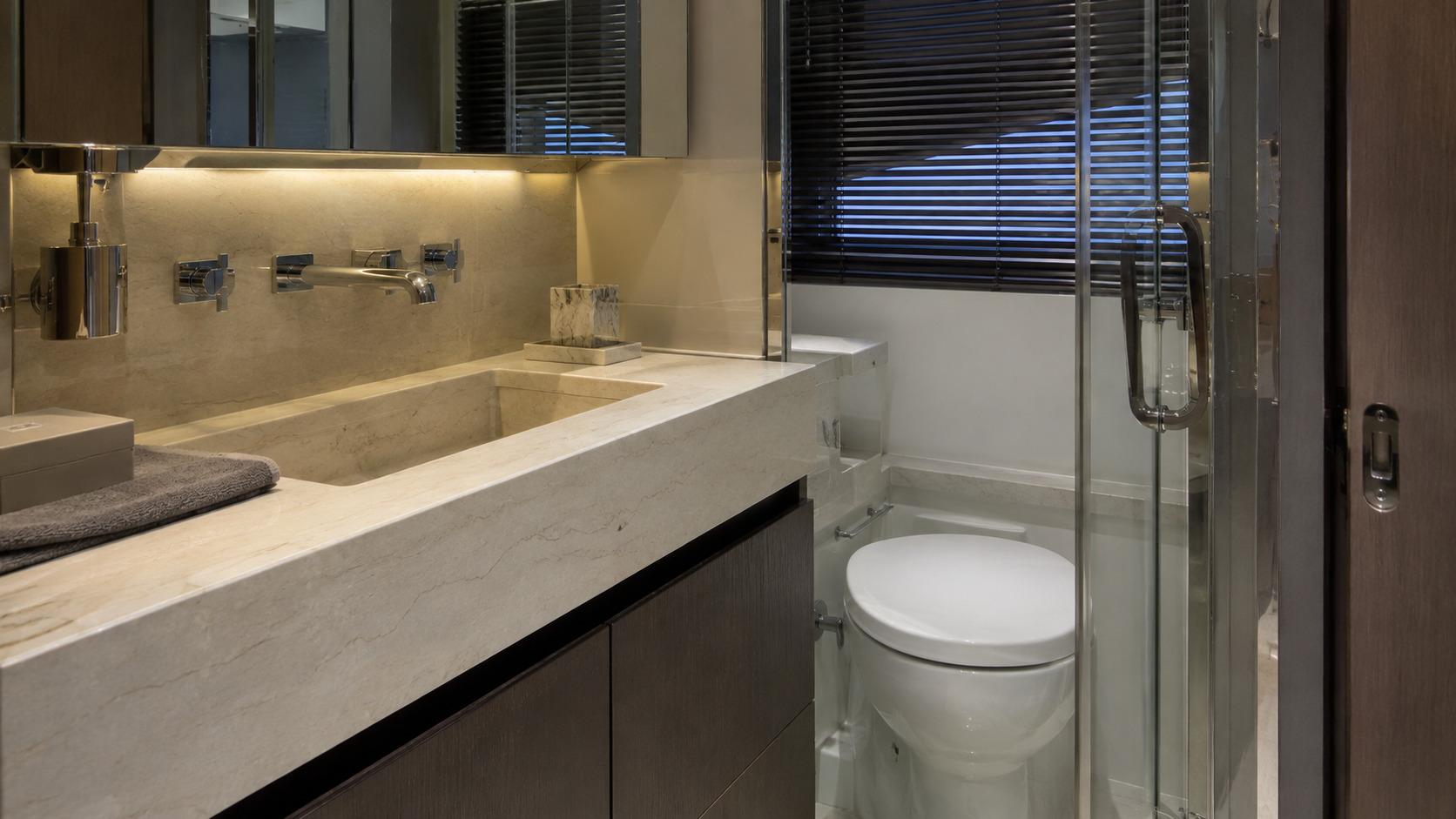
At 68′ 10″ overall and 17′ 2″ of beam, the Fly 68 belongs in a marina or private dock planned around yacht dimensions. Confirm the slip’s usable length, piling width, water depth, shore-power capacity and turning room rather than relying on the marina’s nominal slip number. The difference between a 65-foot and 70-foot berth can materially affect annual dockage, and some facilities charge on actual LOA including platforms and pulpits.
Azimut publishes a 5′ 3″ draft including props at full load. Air draft is not listed on the official public page reviewed, so keep [AIR_DRAFT] until the exact hardtop, radar, antenna and satellite-equipment configuration is documented. Full-load displacement of 96,407 pounds also means haul-outs require a yard with appropriate travel-lift capacity and blocking experience. Storage, bottom work and storm planning should be solved before closing, not after the yacht is delivered.
Use the gallery to judge what makes the Fly 68 worth stepping up to: four-cabin separation, the scale of the flybridge, the three possible galley relationships, cockpit-to-salon flow, bow seating, the full-beam owner suite, crew access and the machinery spaces. A useful gallery should show circulation and working areas, not just staged cushions and sunset exteriors.
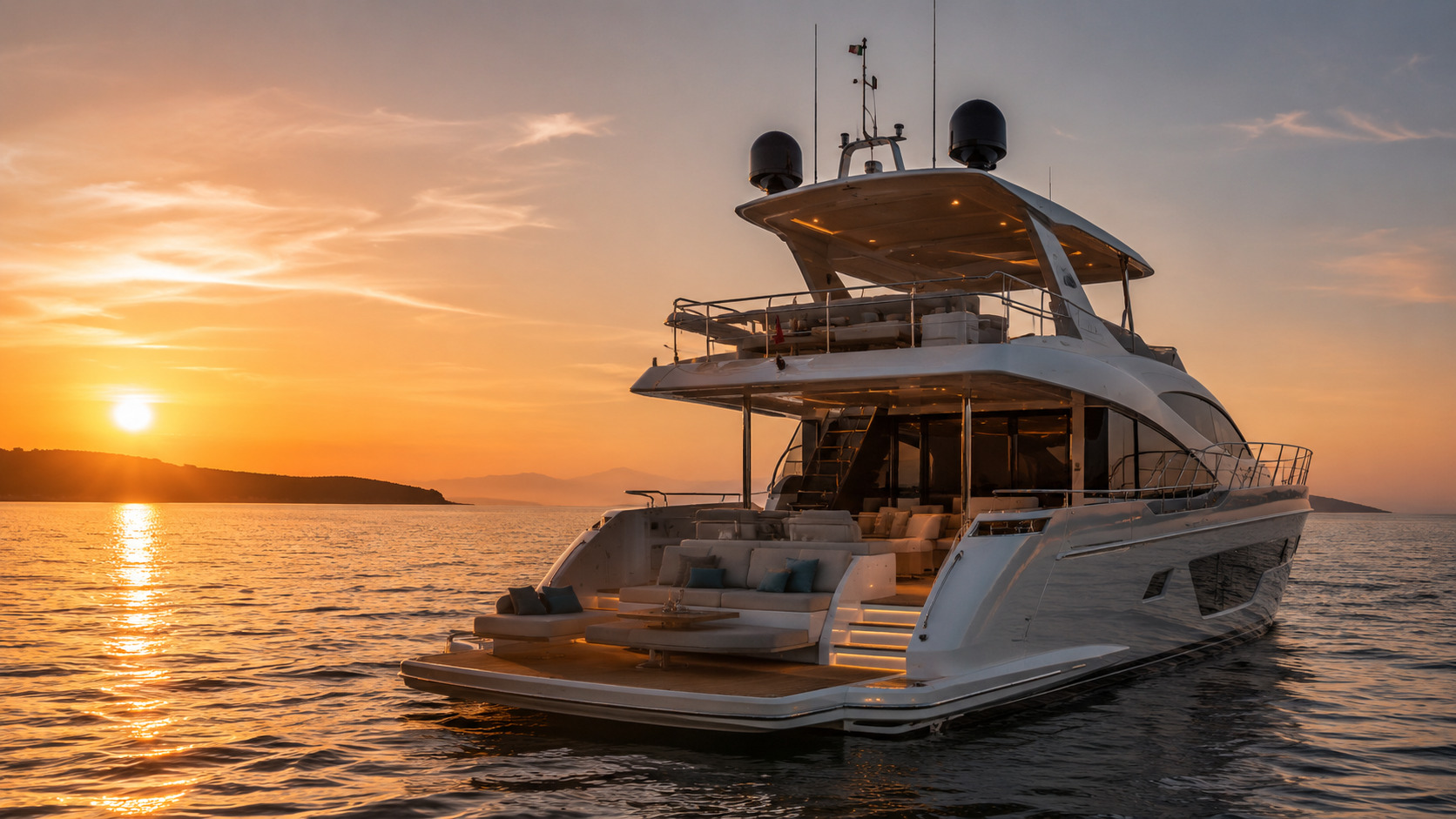
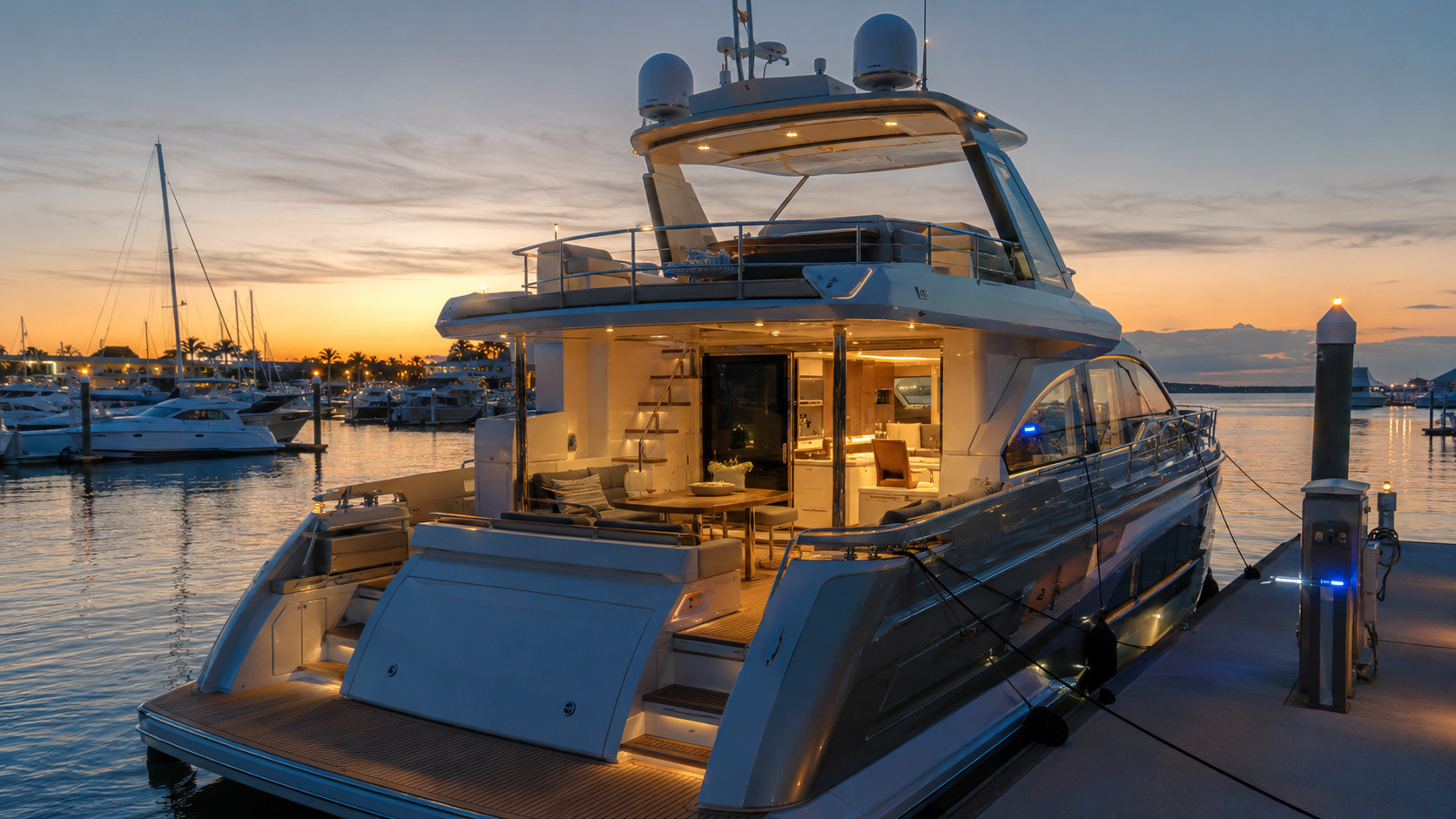
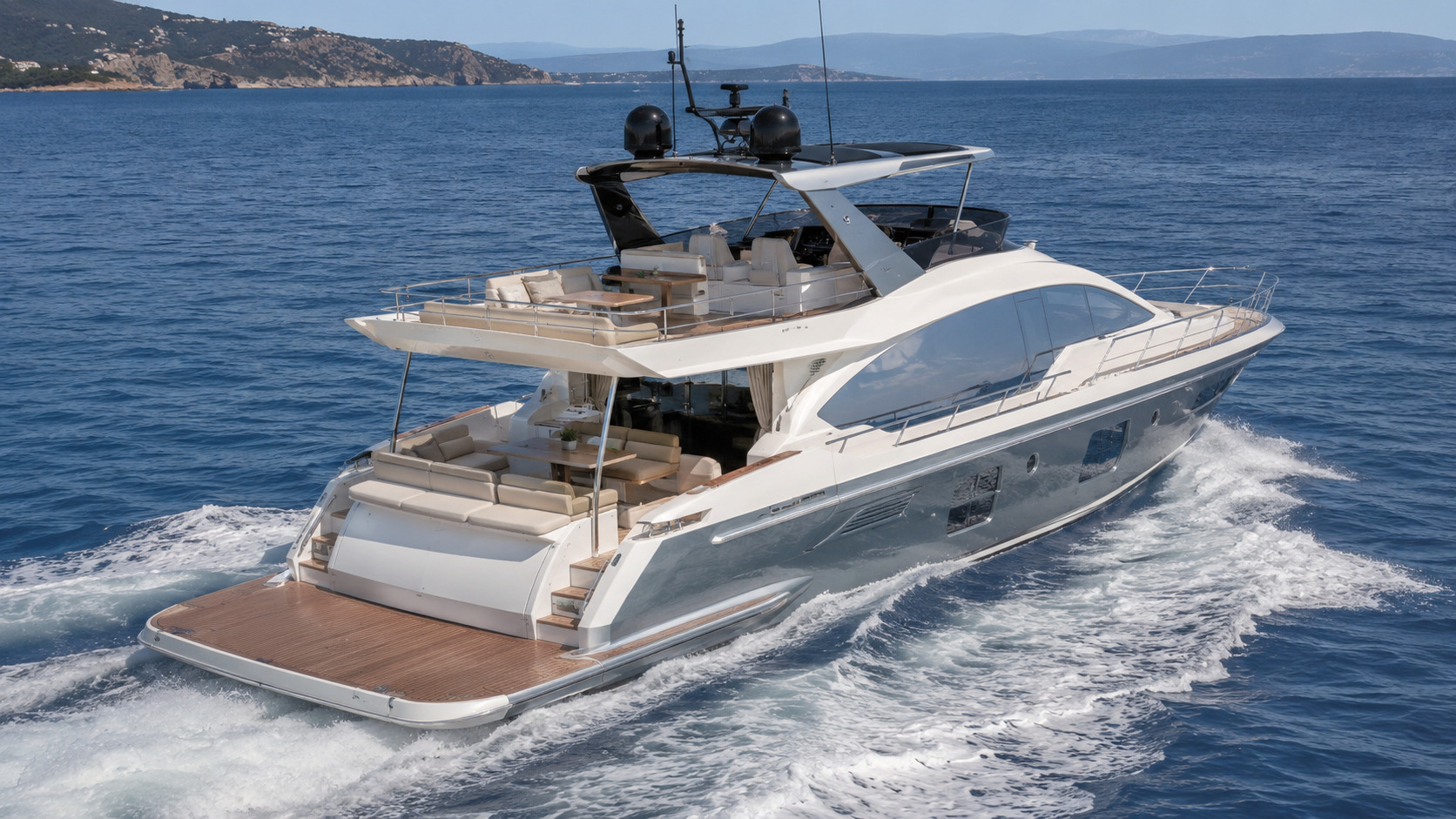
Current-generation Fly 68 pricing varies with model year, engine hours, layout choice, stabilizer, electronics, hardtop equipment, interior selections, tender setup, warranty status and geography. There are also older Azimut 68 Fly generations on the brokerage market, so the model name alone is not enough to establish a comparable. The current Alberto Mancini design has been in production since 2021. Use [MSRP_LOW]–[MSRP_HIGH] from the approved project registry for this generation rather than blending older 68 Fly asking prices into the range.
At this transaction level, the spread between two otherwise similar yachts can be driven by six-figure equipment and condition differences. A recent hull with active warranty, current IPS service, stabilization, upgraded electronics and a desirable galley arrangement may justify a very different valuation from a yacht with deferred maintenance or a specification that does not suit the buyer’s use. Survey, engine inspection and a line-by-line equipment review should therefore sit beside price comparison, not after it.
Annual ownership cost should be built from the actual yacht and location. Dockage, insurance, scheduled D13 and IPS service, generator and HVAC maintenance, haul-out and bottom work, detailing, storage, stabilization service where fitted, crew or yacht-management help and fuel can all become material budget lines. The step from a Fly 62 to a Fly 68 is not linear because the 68 adds guest capacity, crew capability, tankage and systems at the same time that the marina and insurance category can change.
Pricing, ownership costs and payment examples are estimates for research purposes only and are not offers or commitments to extend credit.
Figures come from this page’s Boat Details fields. Illustration only and not an offer of credit.
Use the yacht-loan calculator to test purchase price, down payment, rate and term before making an offer. On a Fly 68, changing the cash down or loan term can move the monthly number dramatically, but the calculator is only a planning tool. Actual lender options also depend on borrower credit, vessel age, survey condition, insurance, documentation and whether the transaction is dealer, brokerage or private party.
Illustration only and not an offer of credit. Your actual rate and term depend on credit profile, vessel age, loan amount and ownership structure.
The Fly 68 earns the step up when four guest cabins and a more substantial flybridge solve real needs. The Fly 62 is the simpler choice for buyers satisfied with three cabins and a smaller 63-foot footprint. The Fly 72 adds more length, beam and interior separation, but it also changes propulsion philosophy to twin MAN V12 shaft drives. Compare the operating model you want, not just the largest yacht the budget allows.
A Fly 68 can be purchased as new dealer inventory, a brokerage yacht, a private-party vessel or an imported yacht, and each path changes the diligence required. New boats demand a careful final specification and warranty review. Brokerage boats should be compared on maintenance, hours, layout and options rather than asking price alone. Private-party transactions require clean title or documentation, lien payoff coordination and a closing process that protects both buyer and seller. Imported boats can introduce tax, duty, compliance and registration questions before financing is even considered.
New from dealer — verify galley layout, options, commissioning, warranty start date, delivery charges and exactly what the contracted price includes.
Brokerage yacht — review D13/IPS records, generator hours, stabilizer service, electronics, climate systems, crew areas and survey findings.
Private party — establish ownership, liens, deposit terms, survey rights, insurance and lender documentation before money becomes non-refundable.
Imported yacht — confirm taxes, duty, documentation, certification and U.S. registration requirements before assuming a standard domestic closing.
If you have found a specific Fly 68, send Float Finance the listing. A yacht in this range should be financed around the actual hull, model year, purchase structure and borrower profile rather than a generic online payment. Dealer inventory, brokerage yachts and qualified private-party purchases can each require different documentation, survey and closing steps. Establishing the financing path before the deposit becomes hard can keep the yacht decision tied to real numbers.
Use [MSRP_LOW]–[MSRP_HIGH] from the approved project pricing registry for the current-generation Fly 68. Do not mix asking prices from older Azimut 68 Fly generations into the range. The current design has been in production since 2021, and price can move significantly with model year, hours, stabilizer, electronics, hardtop equipment, galley layout, warranty status and maintenance. Compare the actual equipment and survey condition before deciding whether a listing is inexpensive or expensive.
The current Fly 68 sleeps eight guests in four cabins plus two crew members in separate crew accommodation. That is one of the clearest reasons to move up from the Fly 62, which remains a three-cabin yacht. The 68 also has three guest head compartments plus a separate crew head. For buyers who routinely cruise with several couples, older children or extended family, the fourth dedicated guest cabin can matter more than the extra length itself.
Azimut publishes 7.9 liters per nautical mile at 15.2 knots, with a stated 424-nautical-mile range. At 27 knots, the builder publishes 9.9 liters per nautical mile and a 336-nautical-mile range. Those figures convert to roughly 31.7 and 70.6 US gallons per hour respectively. They are standardized manufacturer figures, so actual use will vary with load, bottom condition, weather, generator demand, stabilizer use and how the yacht is operated.
The current Fly 68 uses two Volvo Penta IPS 1350 packages rated at 1,000 hp each, for 2,000 hp total. Azimut publishes a maximum speed of up to 32 knots and a 27-knot cruise speed. The IPS system also supports joystick maneuvering and integrated control functions, which is important to buyers who plan to remain directly involved in driving the yacht instead of handing every marina maneuver to professional crew.
There is no responsible universal percentage. Annual cost depends on marina, insurance, engine hours, fuel, scheduled D13 and IPS service, generator and HVAC maintenance, haul-out, bottom work, storage, stabilizer service where fitted, detailing and whether the owner uses paid crew or yacht management.
Azimut publishes a 5′ 3″ draft including props at full load. Air draft is not listed on the official public model page reviewed, so keep [AIR_DRAFT] until the exact yacht is verified. For bridge clearance, measure or document the installed hardtop, radar, antennas, satellite domes and any later equipment. On a yacht this tall, vertical clearance can limit routes just as quickly as draft can limit shallow-water access.
Potentially, yes, subject to borrower, yacht and lender eligibility. On a transaction of this size, the lender may consider model year, purchase price, down payment, credit profile, survey condition, insurance and documentation. Float Finance supports dealer, brokerage and qualified private-party boat purchases. Getting the financing path established before a large non-refundable deposit is due can make the purchase contract and closing process easier to manage.
The Fly 68 is not a recreational trailer boat. At 68′ 10″ overall, 17′ 2″ of beam and 96,407 pounds at full load, normal ownership means a suitable marina slip, a private dock engineered for the yacht, or professional yacht storage. Overland transport is specialized commercial work requiring permits, route planning and heavy equipment. Confirm dockage, haul-out capacity and storm-storage options before purchase rather than treating them as post-closing details.
Tell us a little bit about yourself and the boat you are looking to finance.