
Call Us : 207-994-5109
Mon – Fri: 8 am to 9 pm & Sat – Sun: 10 am to 8 pm
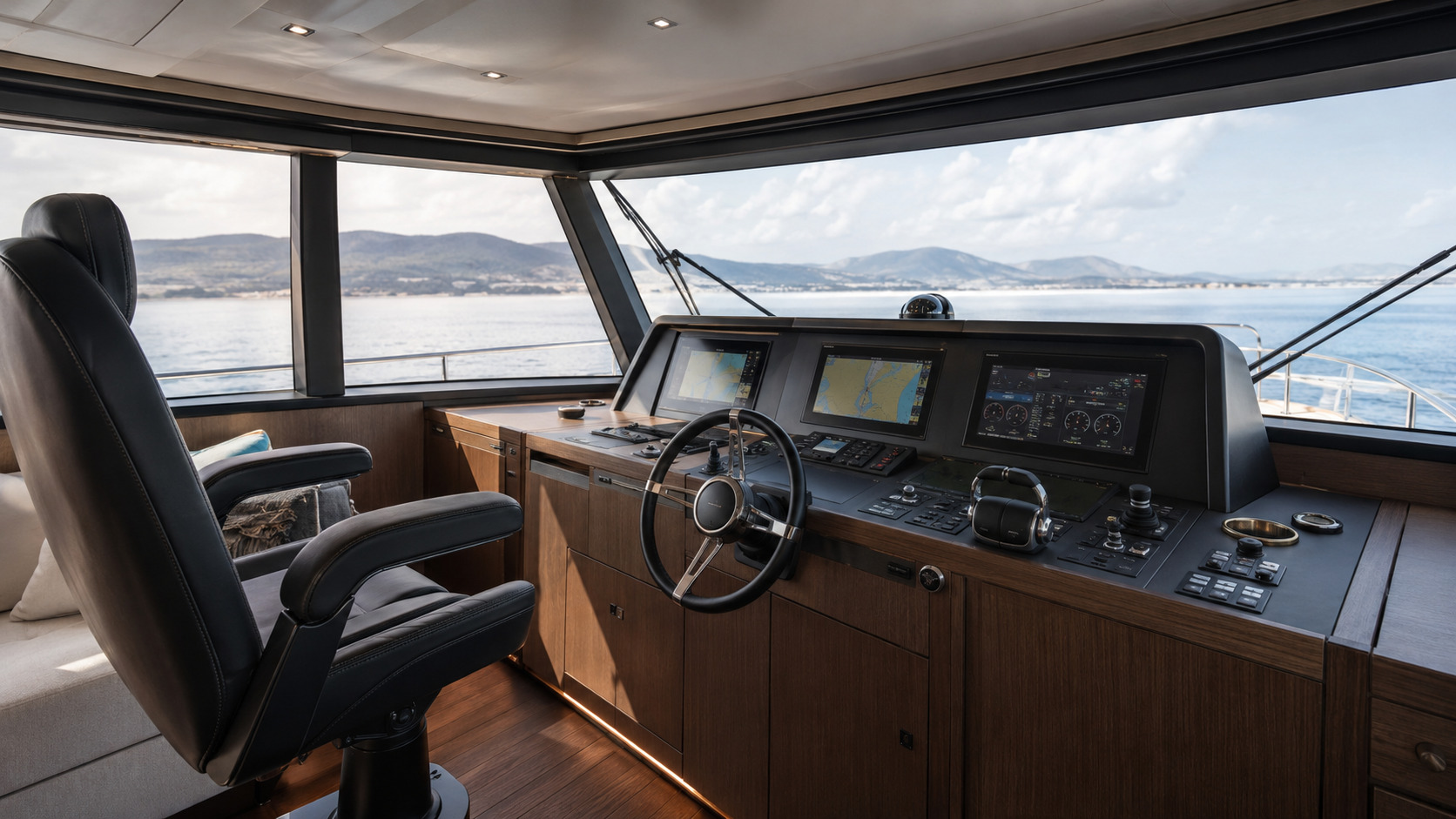
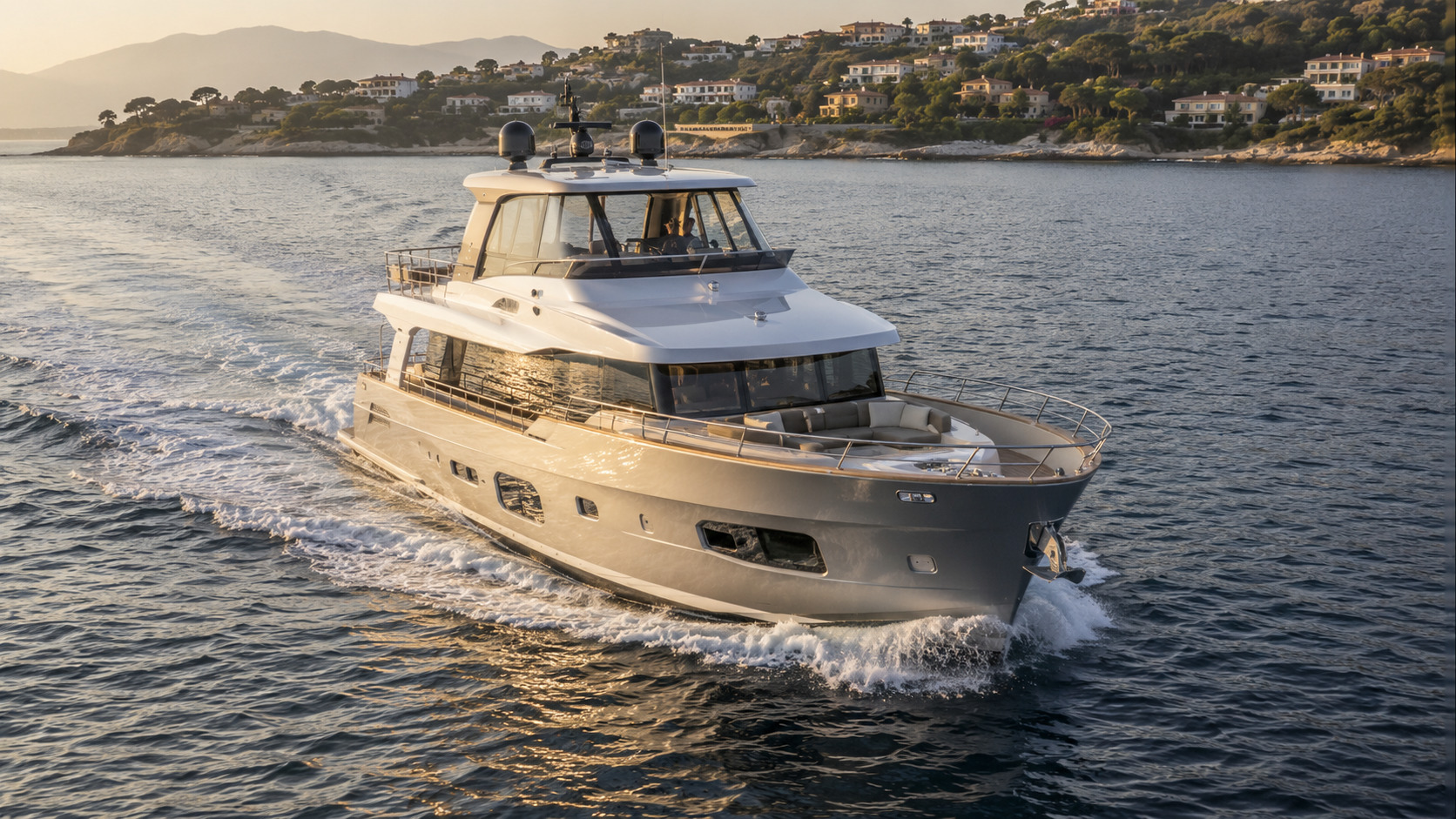
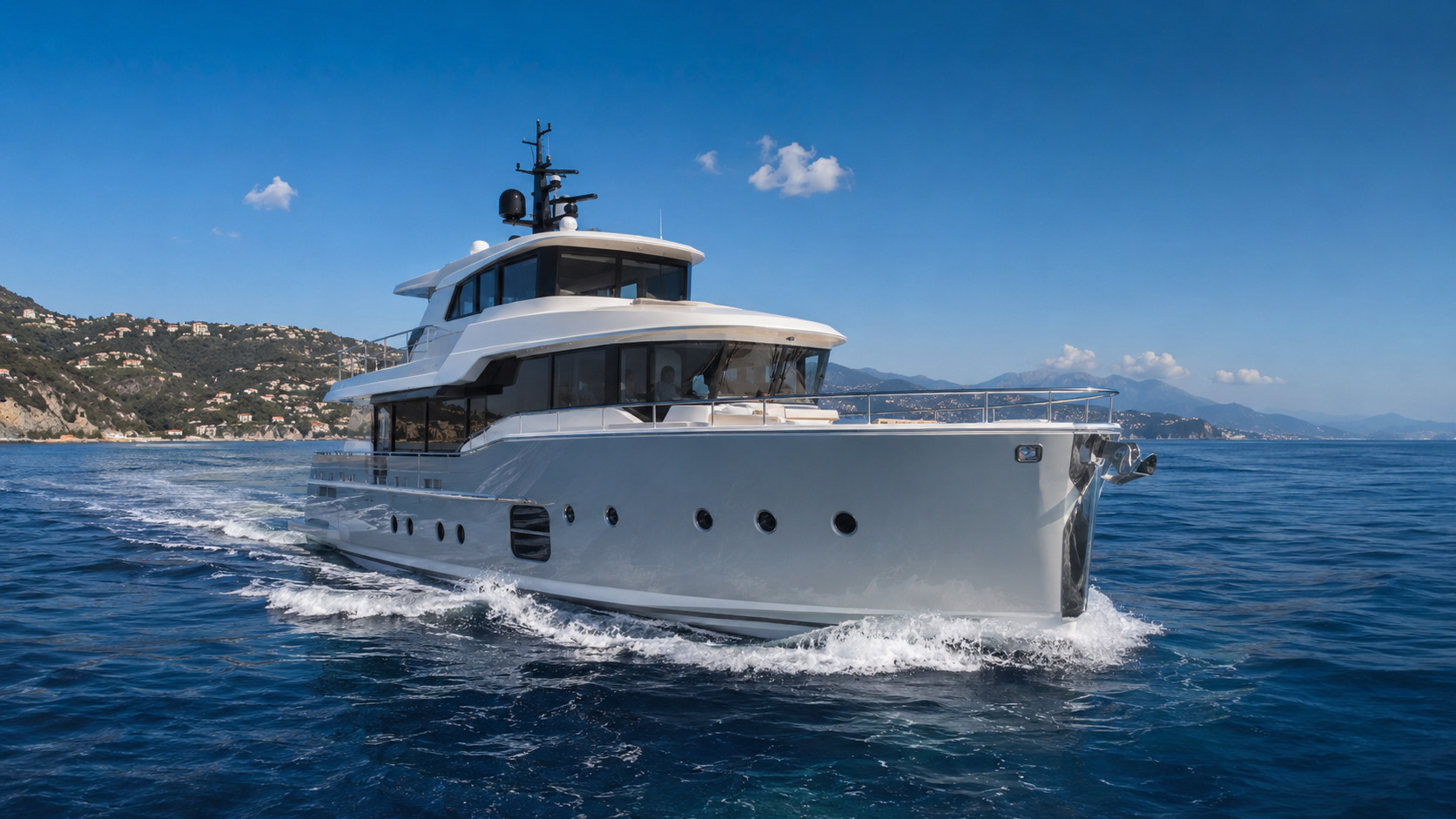
The Azimut Magellano Series is for buyers who want to spend more time underway, not simply more time at the dock. Its defining idea is the Dual Mode semi-planing hull: a hull form designed to operate efficiently across a broad speed band rather than forcing the owner to choose between a slow displacement cruiser and a conventional planing yacht. That makes the Magellano range particularly relevant to owners who expect a mix of longer passages, lower-speed coastal cruising and faster repositioning.
That flexibility comes with a trade. A Magellano is not the lightest, fastest or most aggressively styled Azimut family. The fuller hull forms, protective bulwarks, larger tankage and long-stay storage are there because the boat is designed around travel rather than pure speed. In exchange, the owner gets a calmer operating brief: protected side decks, useful range at reduced speed, interiors planned for longer stays and machinery choices that favor sustained cruising over headline acceleration.
The current range spans five distinct ownership levels. The Magellano 60 and 66 remain plausible owner-operated or lightly crewed cruising yachts. The 25M moves decisively into crewed-yacht territory with four guest cabins and dedicated crew accommodation. The 27M and 30M are full superyacht propositions with five guest cabins, expanded crew areas and operating requirements that look very different from the 60-foot end of the family. Choosing correctly is therefore less about “how big can I go?” and more about how much crew, berth, fuel, dockage and systems complexity you actually want to own.
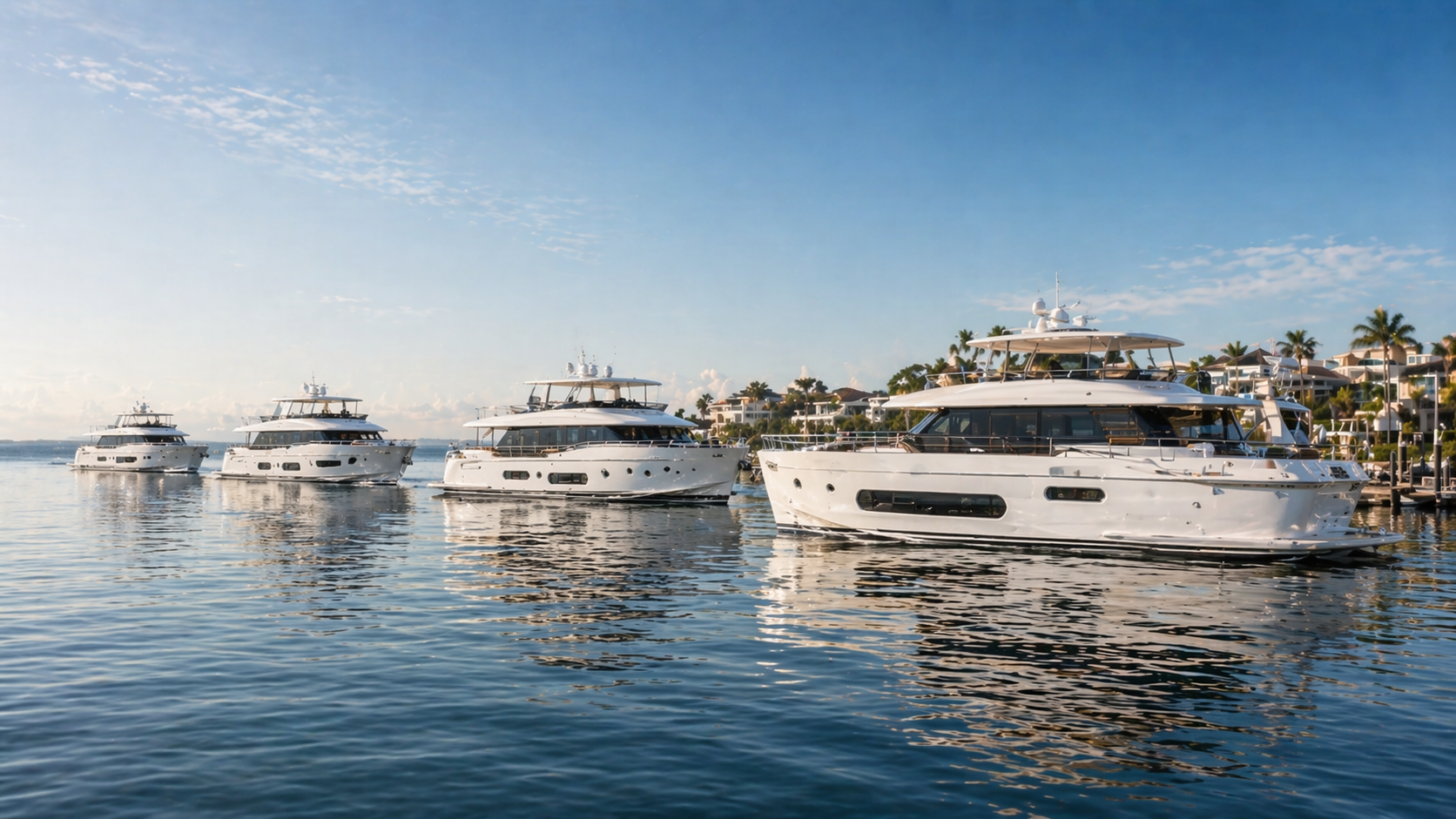
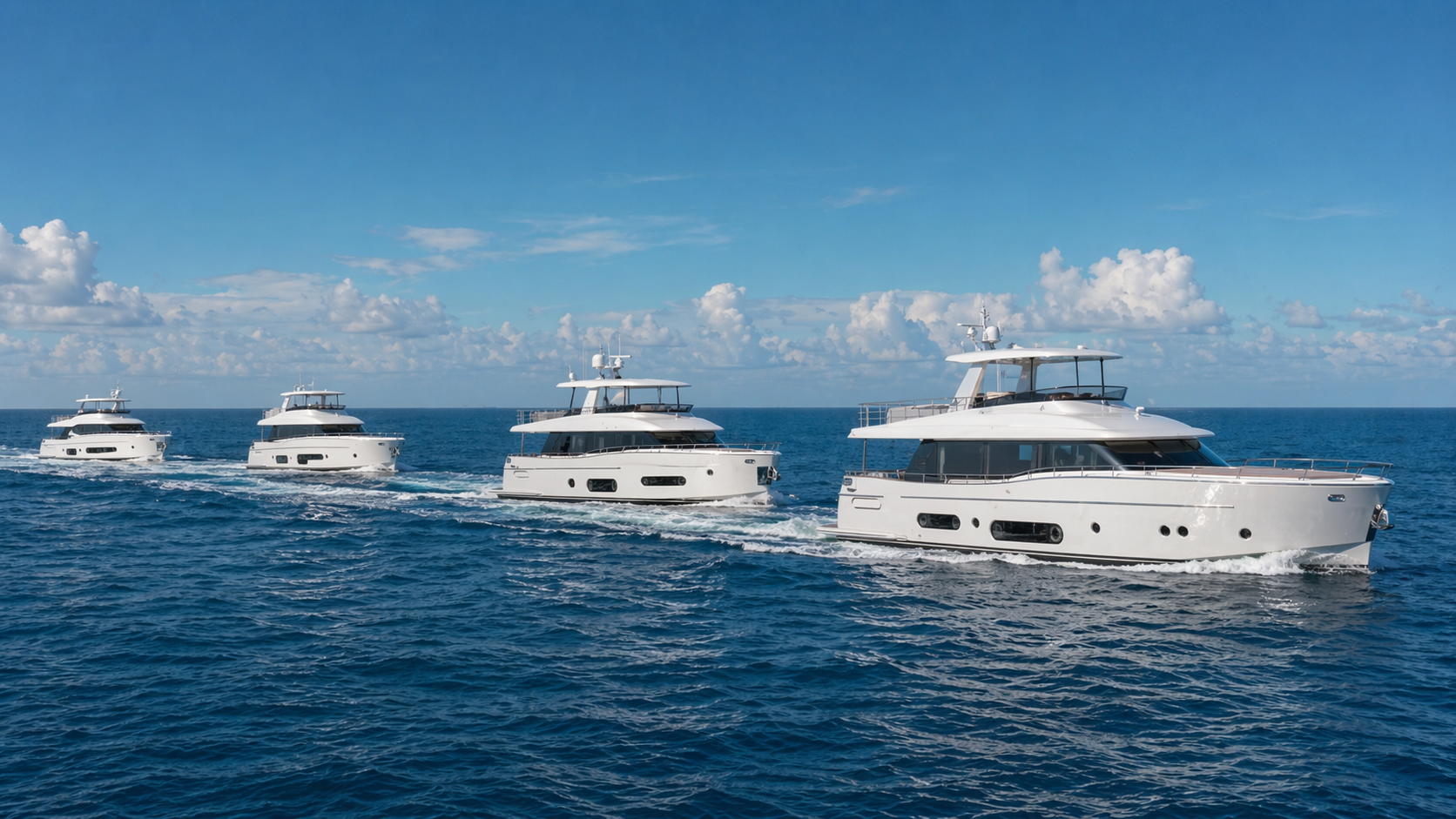
Across the series, the unifying engineering idea is Azimut’s Dual Mode hull. The hull is semi-planing, with a vertical or near-vertical bow and geometry intended to reduce resistance and impact at low and medium speeds while still allowing substantially higher speeds than a traditional displacement yacht. Azimut states that the approach can reduce fuel consumption and CO2 emissions by up to 20% at medium speeds when compared with vessels of similar weight and size using a traditional hard-chine hull.
The propulsion family changes with size, but the logic does not. The Magellano 60 and 66 use twin MAN inline-six diesels on shaft lines. The 25M steps to MAN V12 power, while the 27M and 30M continue with larger MAN packages as displacement and hotel load rise. Carbon fiber appears selectively higher in the structure on models such as the 66 and 25M, helping Azimut control weight and roll moment without giving up interior volume.
What changes most dramatically as the range grows is not top speed. It is autonomy. Fuel capacity rises from 965 gallons on the Magellano 60 to more than 3,800 gallons on the 30M. Guest cabins move from three to five. Crew accommodation grows from one berth to multiple cabins for professional crew. Those changes matter more to ownership than another knot or two of maximum speed.
If long-range efficiency and all-weather cruising are not the priorities, another Azimut family may fit better.
conventional flybridge yachts with a stronger emphasis on planing performance and social volume.
lower-profile sport cruisers for buyers who want less yacht to manage and more direct day-to-weekend use.
faster sport yachts where performance and styling matter more than long-range efficiency.
efficiency-led family yachts with a more open connection to the water and contemporary eco-oriented systems.
larger superyachts focused on volume, customization and crewed ownership rather than crossover cruising.
The key comparison is not just LOA. Start with crew requirements, cabin count and how far you expect to travel between fuel stops. The jump from 66 to 25M is far more significant than the nominal length difference suggests because it changes the operating model from large cruising yacht to professionally managed yacht.
Once the right model is clear, Float Finance can help you evaluate the purchase structure, expected cash down and monthly payment around the actual yacht rather than an abstract price range.
The Magellano range makes the most sense when you begin with the trip, not the boat. Ask how far you cruise, who sleeps aboard, where the yacht will live and whether you intend to operate it yourself.
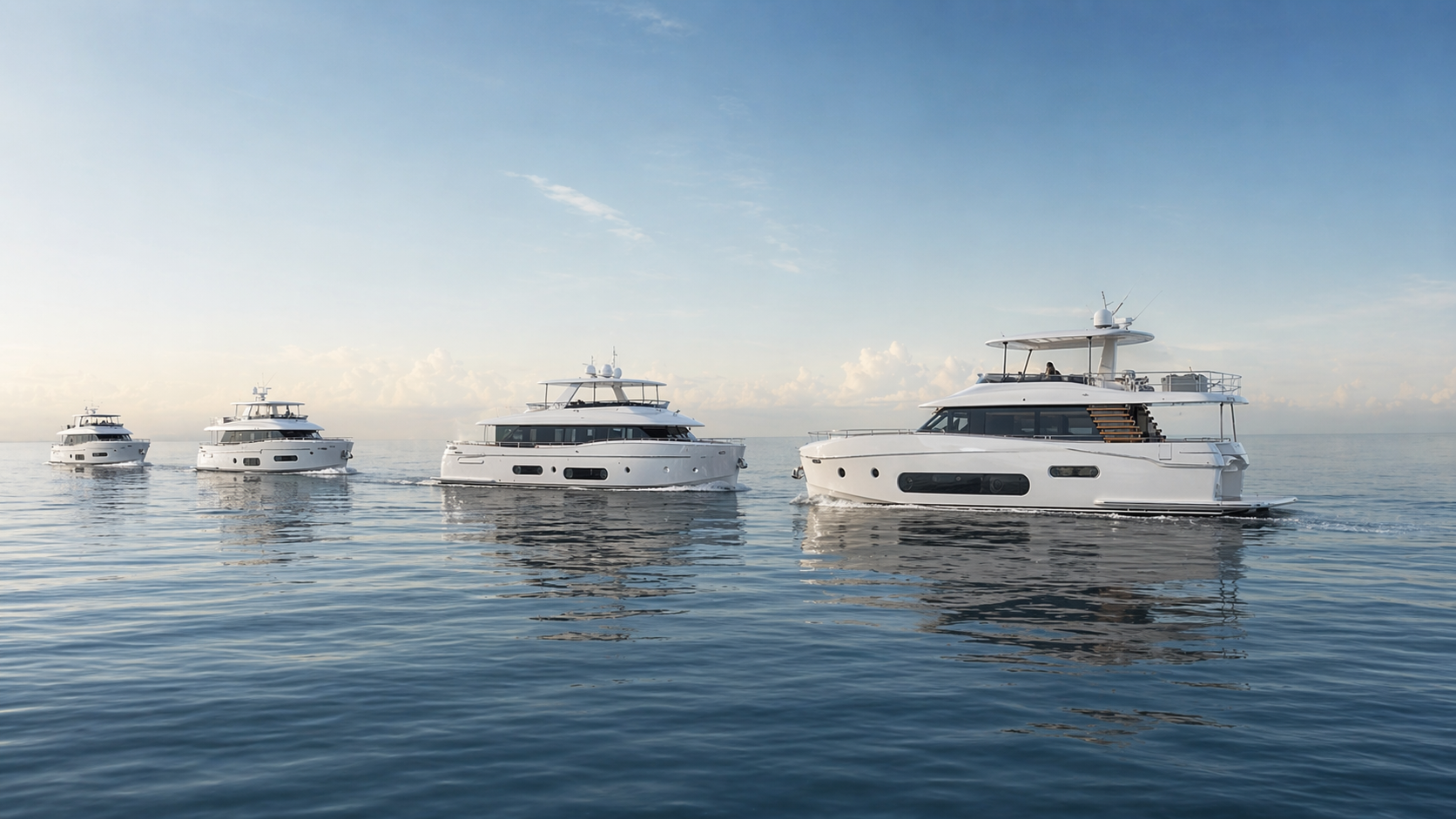
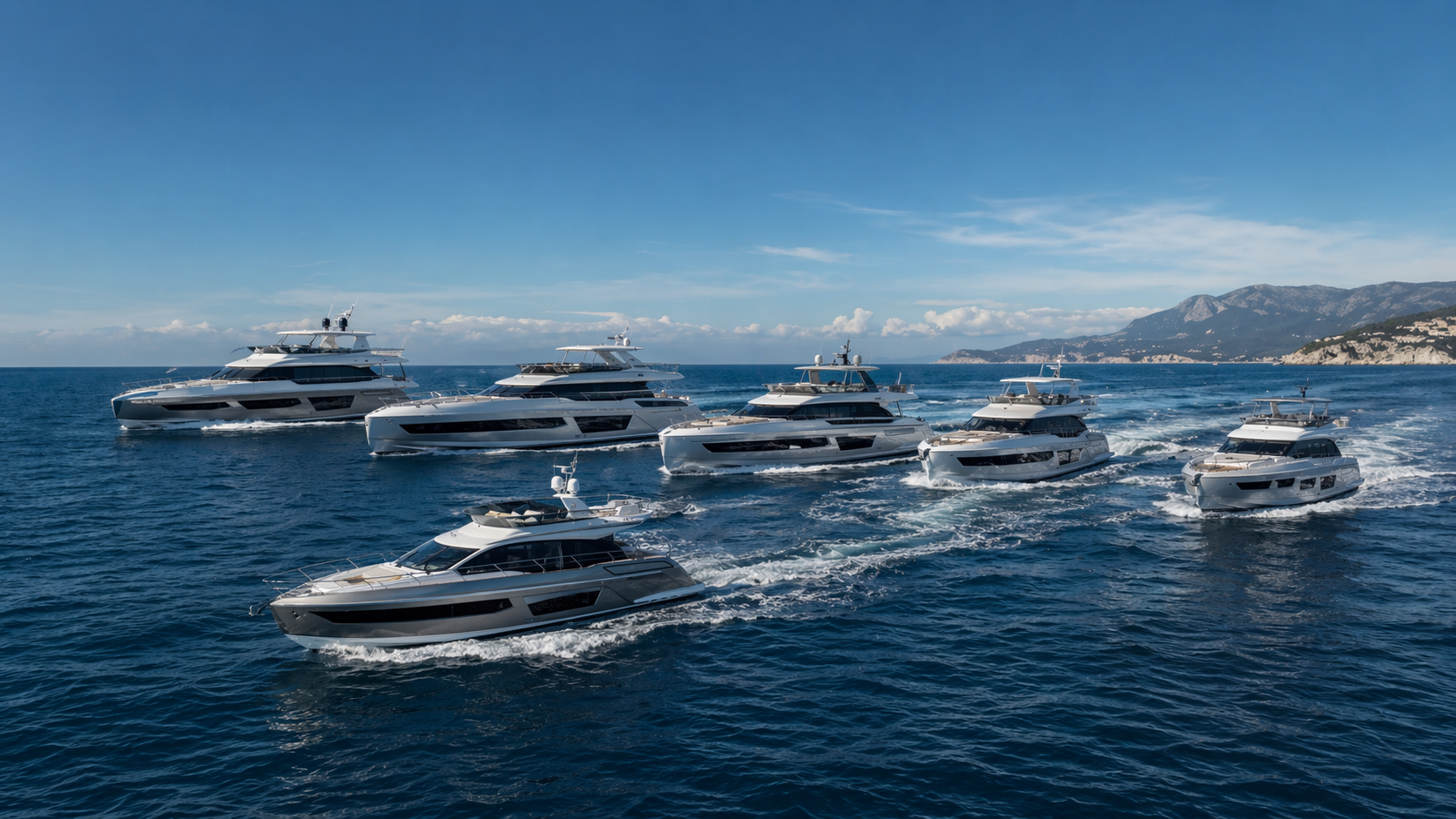
Annual cost does not rise in a straight line. The Magellano 60 can still fit within the operating pattern of a large owner-operated yacht: one slip, twin diesel service, generator and hotel systems, insurance, fuel and seasonal maintenance. The 66 adds more displacement and systems but can still be configured around owner operation.
At 25 meters and above, the economics change. Crew salaries or management, larger commercial-style berths, higher insurance values, class or survey expectations, more complex hotel systems and larger haul-out requirements become normal planning items. The 30M carries 136 metric tons at full load and more than 3,800 gallons of fuel; that scale alone changes service logistics and trip planning.
For financing, lenders may care about vessel age, purchase price, survey condition, borrower liquidity, intended use, ownership entity, flag/documentation and whether the transaction is dealer, brokerage or private party. Float Finance can help buyers model the financing before a deposit turns a shortlist into an obligation.
Send Float Finance the listing. Dealer, broker or qualified private-party purchase, we can help you evaluate the financing path around the actual yacht.
understand the extra closing steps when there is no dealer handling the transaction.
Magellano is built around crossover cruising and a semi-planing Dual Mode hull, while the Fly Series is a more conventional planing-flybridge family. A Fly buyer is usually prioritizing speed, social volume and familiar flybridge behavior. A Magellano buyer is more likely to value efficient low- and medium-speed cruising, protected decks, storage and the ability to remain aboard for longer trips.
Magellano is the more explicit long-cruise family. Grande yachts are larger and more customizable, but their design brief centers on superyacht volume and luxury rather than the crossover efficiency concept that defines Magellano. Buyers who want a 60- to 100-foot yacht built around varied cruising speeds should start with Magellano.
The 60 is the clearest owner-operator candidate and the 66 can also be configured around owner operation, especially with joystick/thruster assistance and the three-cabin layout. The 25M, 27M and 30M should be approached as crewed yachts because of their scale, systems and dedicated crew accommodation.
Range varies heavily by model and speed. Azimut publishes 464 nautical miles at 11.2 knots for the Magellano 60, while independent testing of the 66 indicates roughly 1,000 nautical miles at about 10 knots. Larger models carry far more fuel and are intended for extended cruising, but buyers should use model-specific sea-trial data rather than applying one range number across the series.
Potentially, yes. Model year, value, survey condition, borrower profile and transaction type all matter. On larger 25M–30M yachts, the lender may also evaluate ownership structure, documentation and insurance more closely. Pre-approval before making a large deposit is especially important in this segment.
Start with the smallest model that handles your real itinerary and guest count. The 60 is a three-cabin owner-operated cruiser. The 66 adds layout flexibility and range. The 25M is the first major step into professionally crewed ownership. The 27M and 30M are five-cabin superyachts and should be compared on crew, volume, deck use and operating complexity rather than length alone.
Bring Float Finance the yacht you are considering and explore the financing structure around the real purchase price, down payment and transaction.
Tell us a little bit about yourself and the boat you are looking to finance.