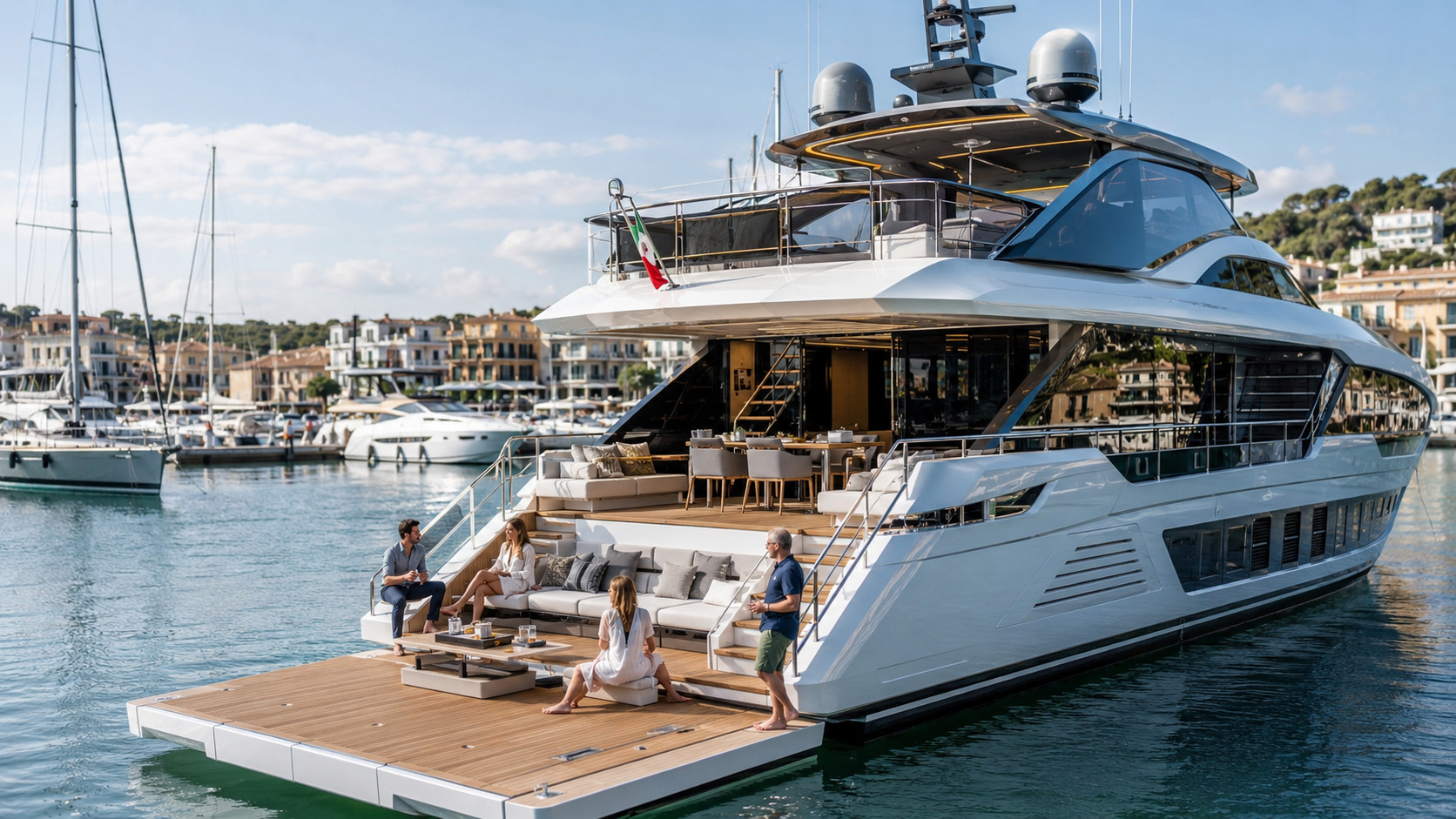
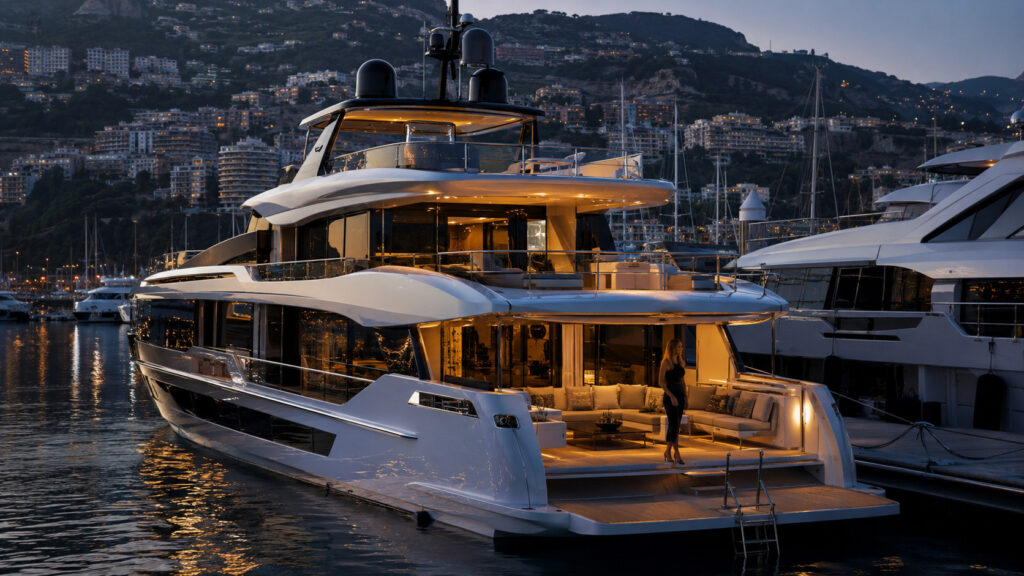
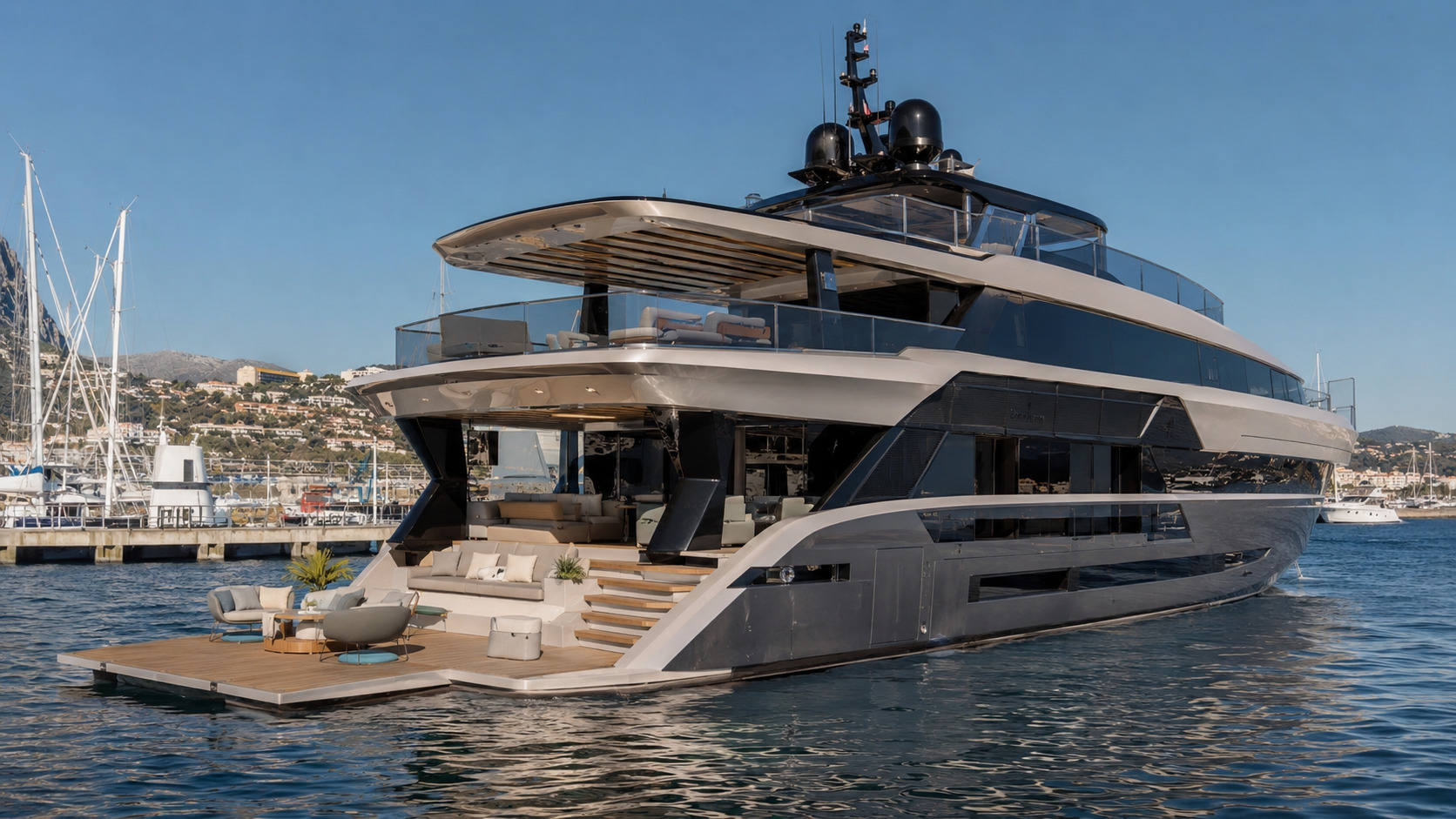
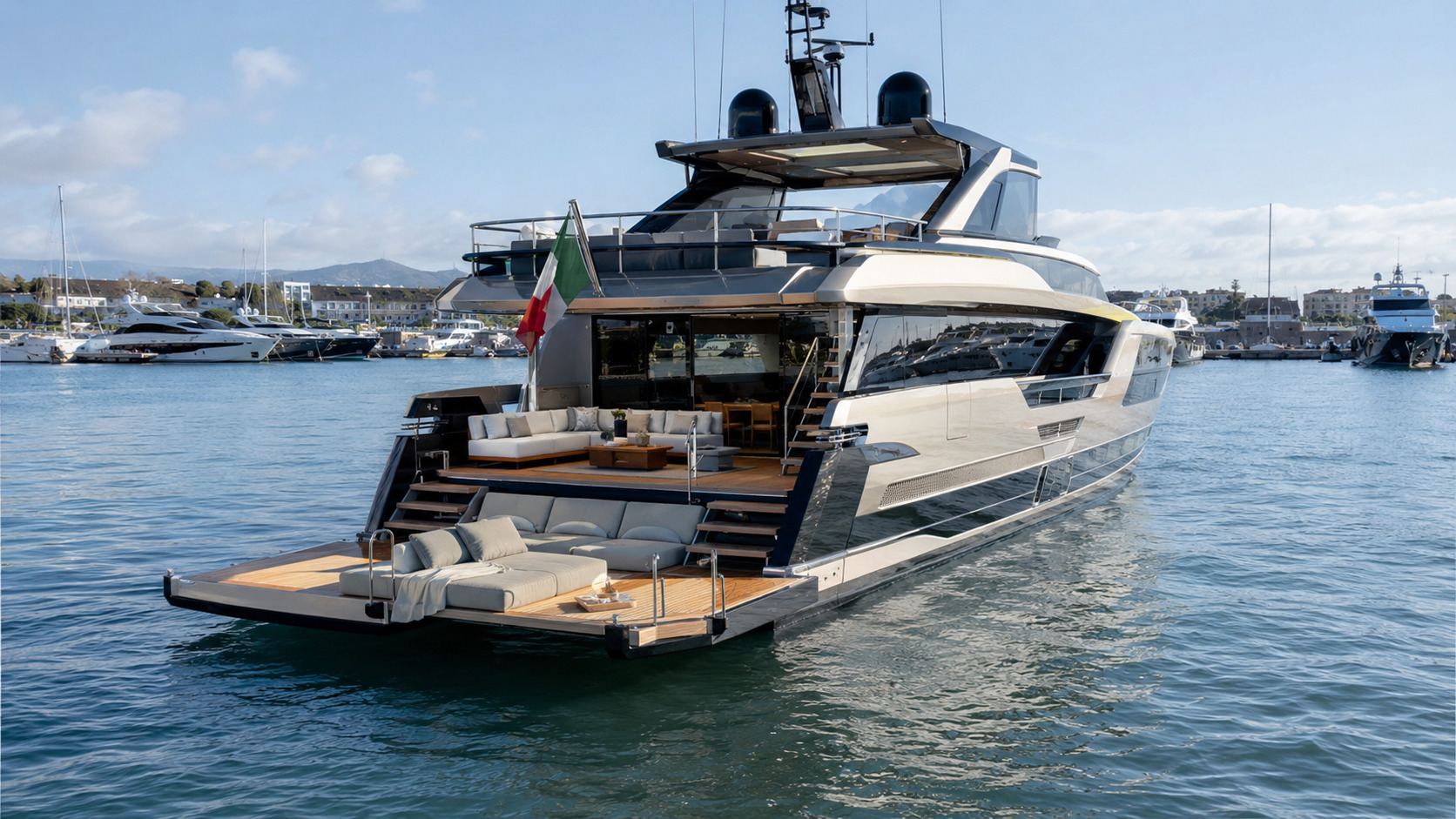
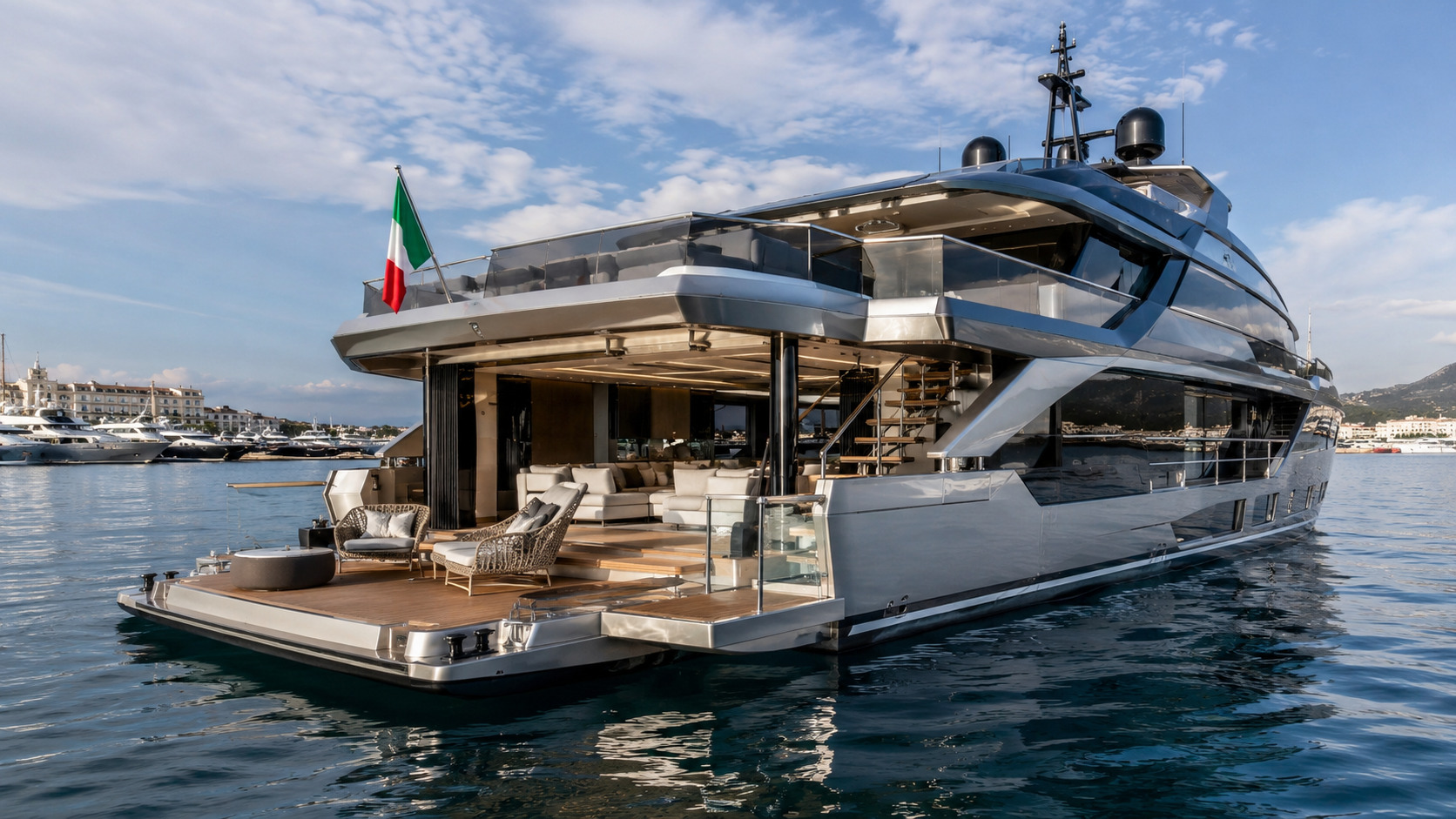
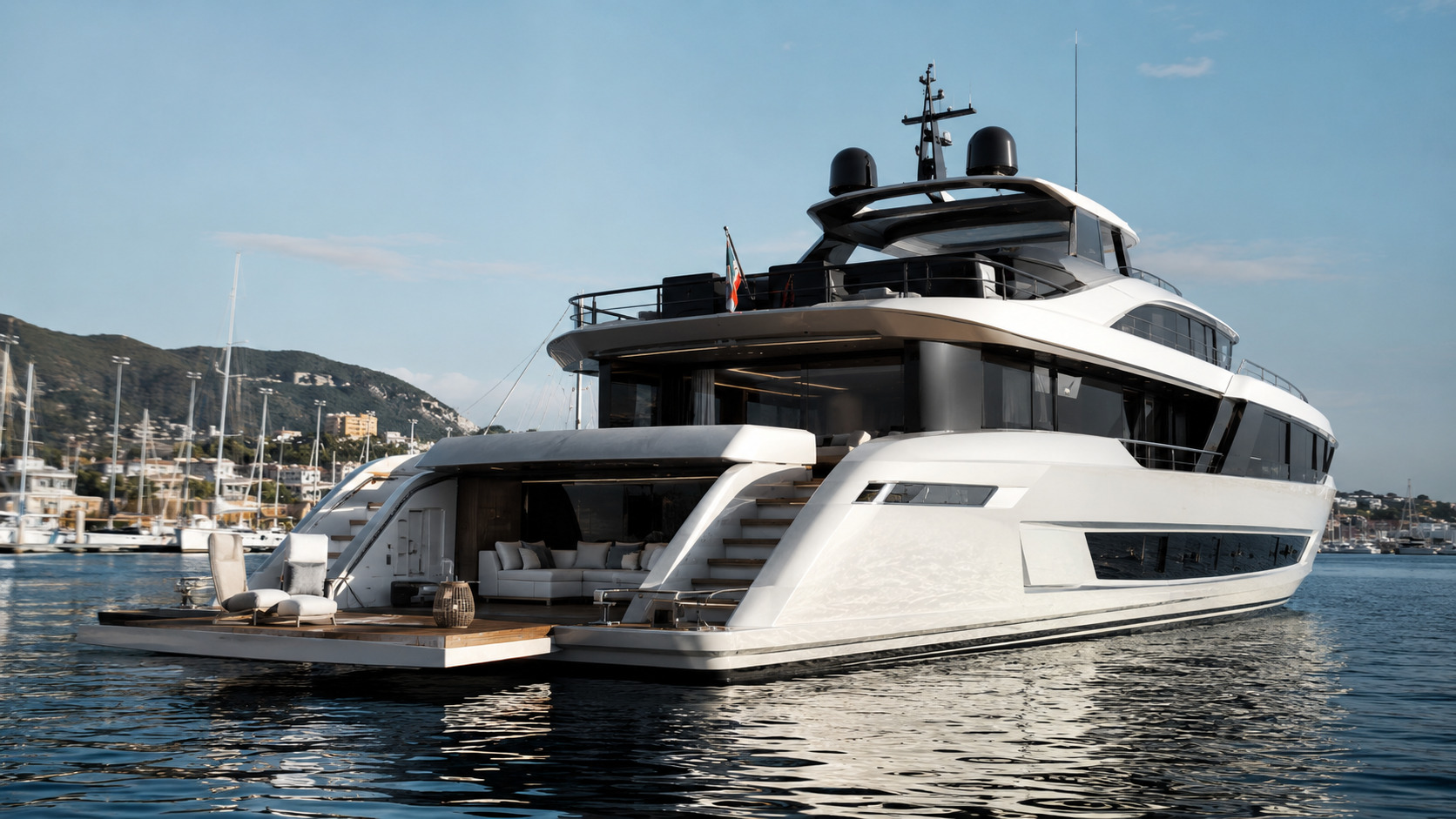
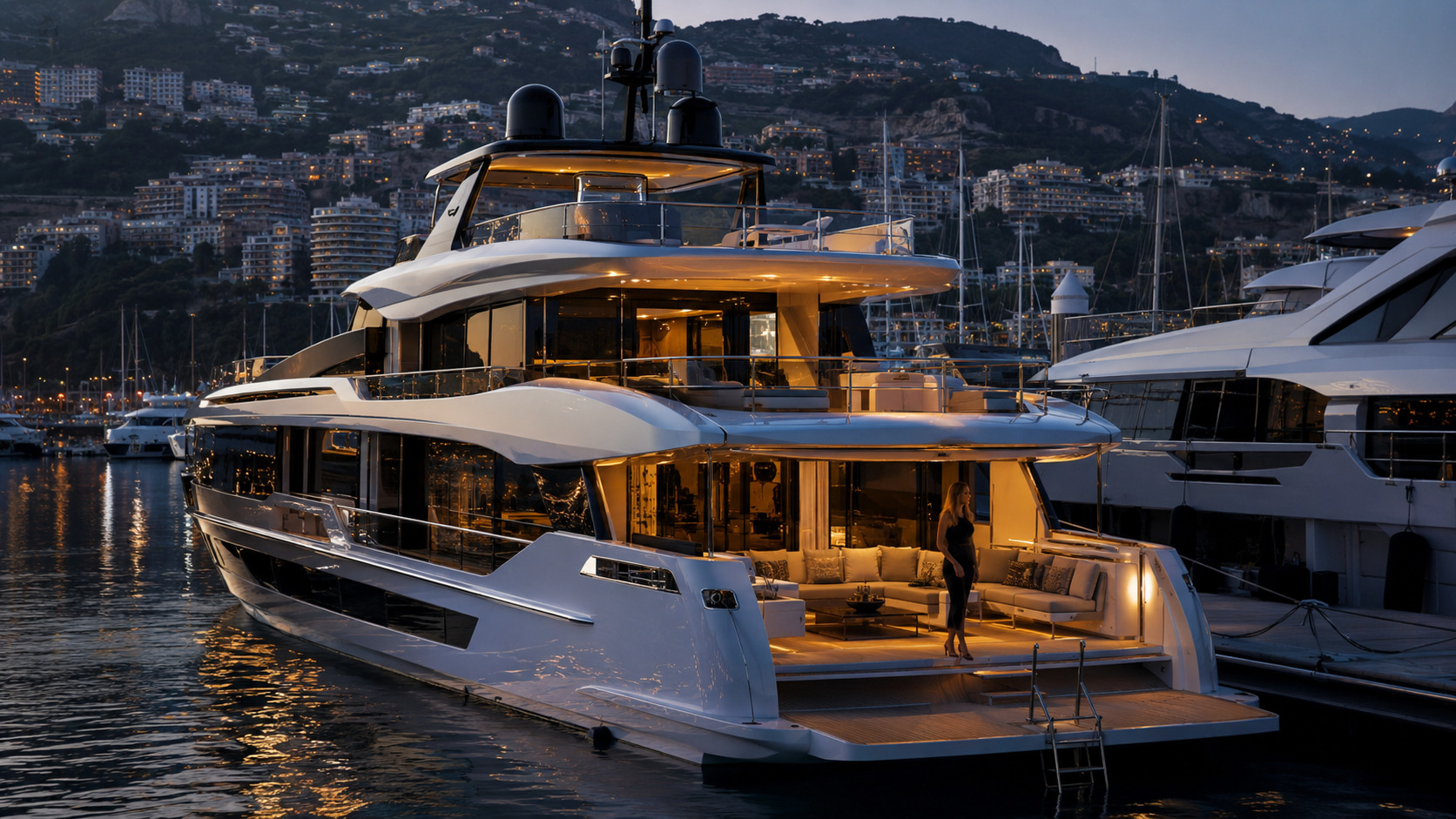
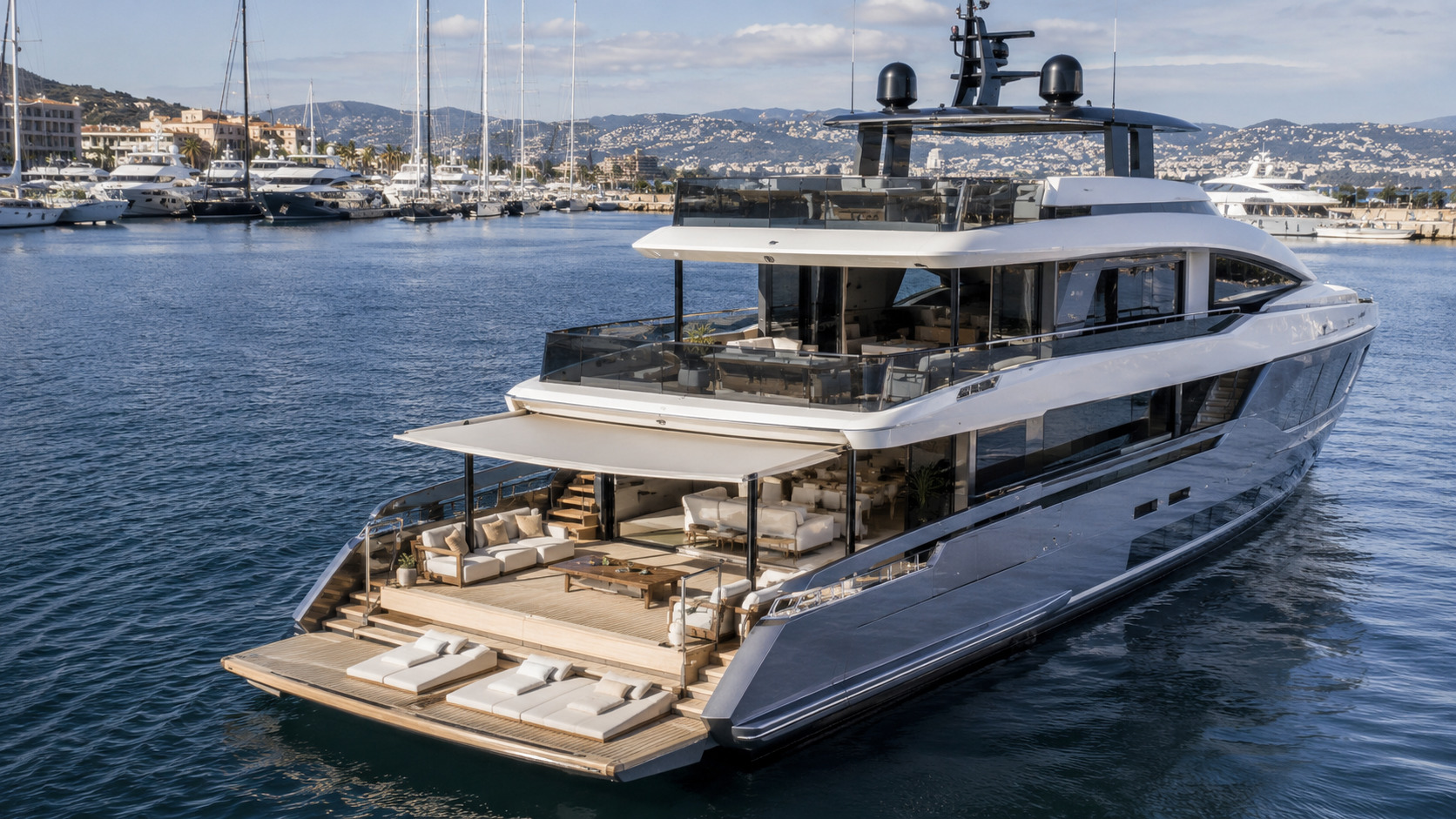
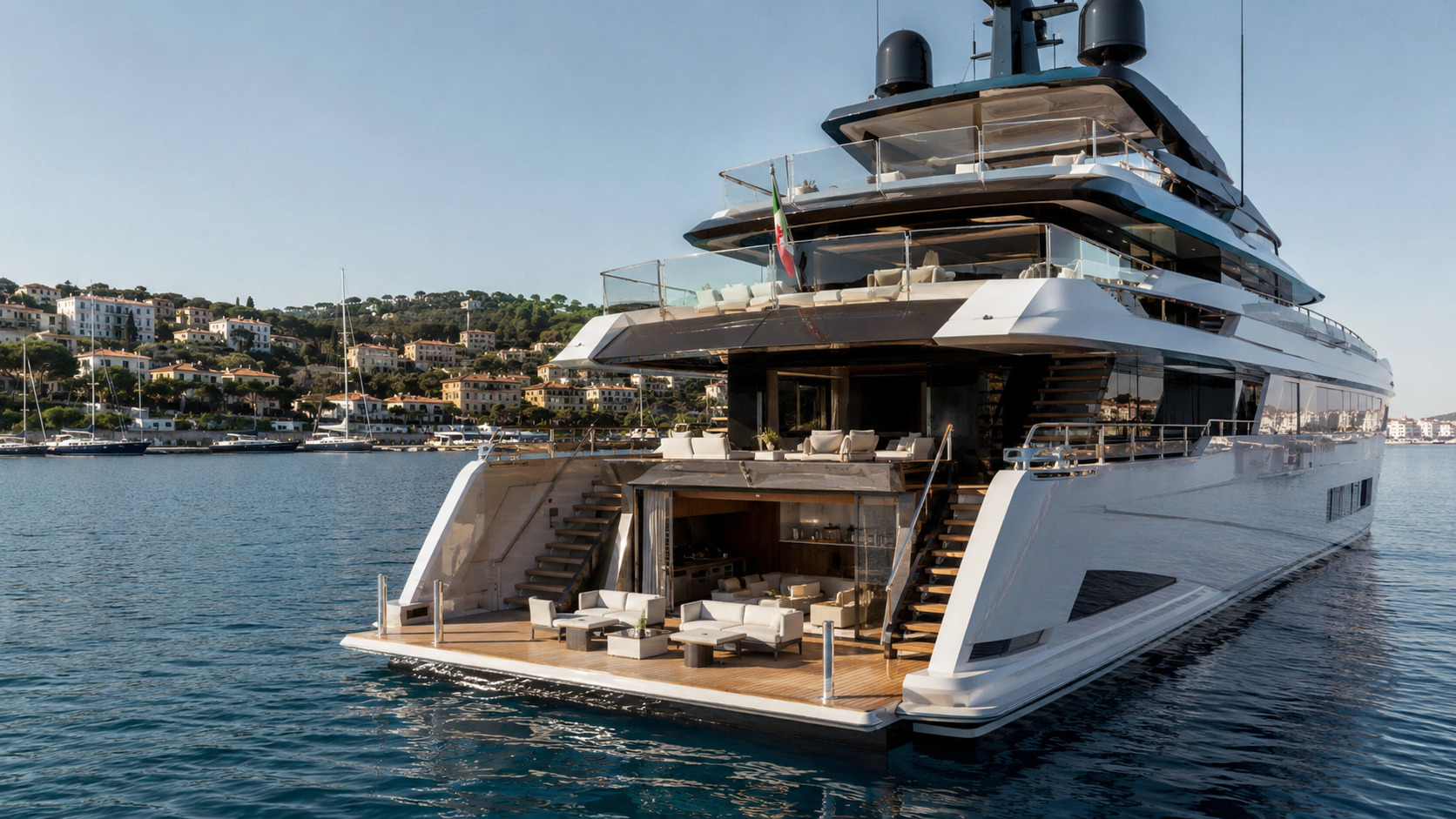
The Azimut Grande 26M is the most compact current entry into the Grande family, but its layout is already unmistakably superyacht-oriented. At 86′ 6″ overall, it carries five guest cabins, ten guest berths and separate crew quarters for three. The defining decision is to use the available length for privacy and transformable outdoor space rather than treating the boat as a stretched flybridge yacht.
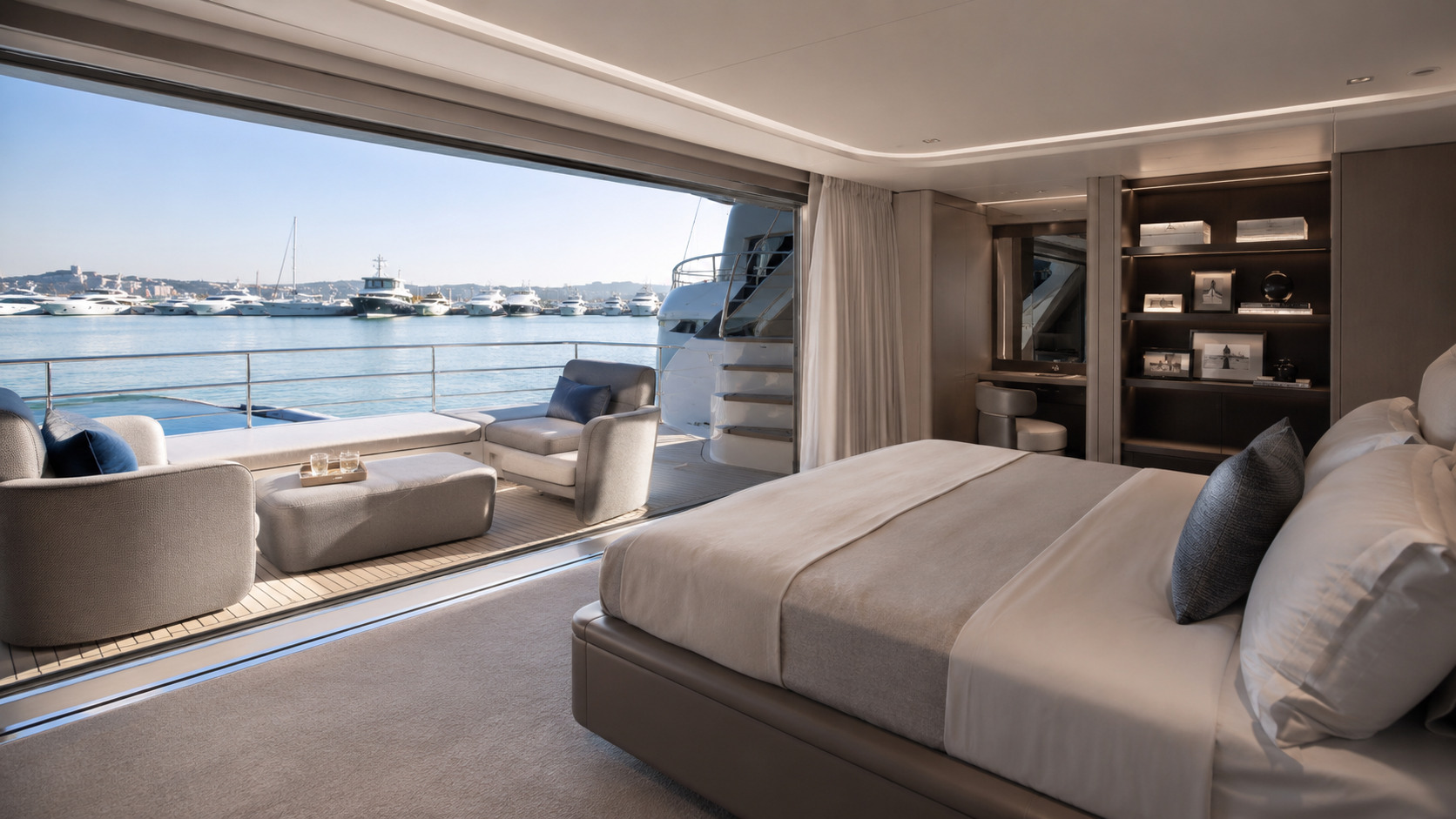
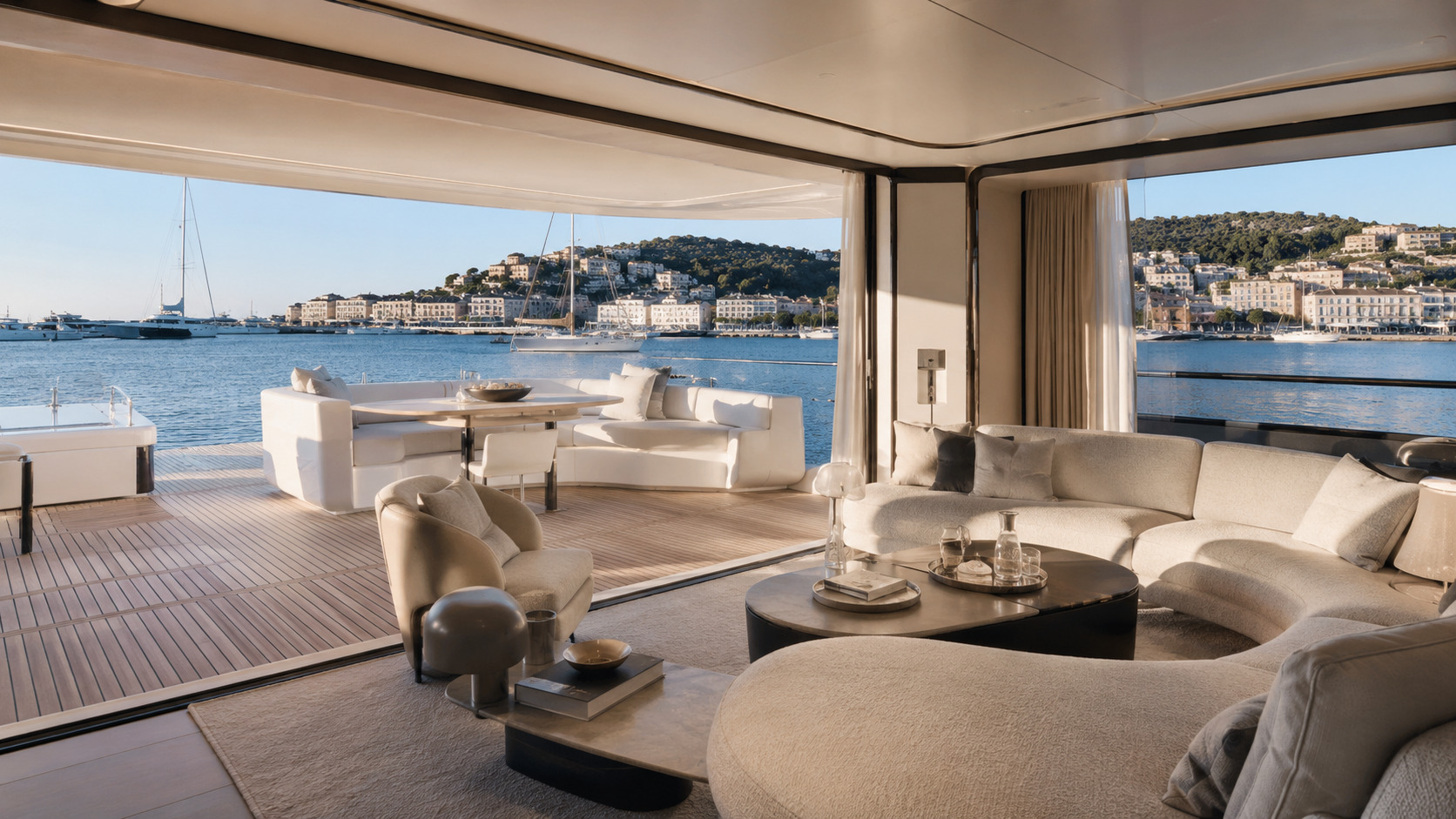
The owner suite sits forward on the main deck, leaving four guest cabins below. That puts the owner on the same level as the salon and exterior living areas while preserving separation from the guest accommodations. Azimut also offers two distinct interior design approaches, which is important to buyers comparing individual builds because a Yachtique-finished 26M and an Achille Salvagni interior can feel materially different even when the technical platform is the same.
The compromise is complexity. Pod propulsion, Deck2Deck machinery, extensive glazing, carbon-fiber structure, generators, stabilization, HVAC and crew systems all require professional maintenance. The 26M is compact by superyacht standards, not simple. Buyers who want a yacht they can casually run with minimal support should stay much farther down the Azimut range.
Best For — owners who want full superyacht accommodation and crew separation in the smallest current Grande package.
Not For — buyers who want owner-operated simplicity, minimal crew overhead or the longest-range displacement-style cruising rhythm.
Twin MAN V12 1650 hp + POD or twin MTU V10 1622 hp + POD
Drive Type
Pod propulsion
Fuel and range
Fuel Capacity
2,245 US gal
Published Range
613 nm at 13.2 knots / 376 nm at 24 knots
Cruising Speed
Up to 23 knots
Cruise Fuel Burn
12.5 L/nm slow cruise / 20.3 L/nm fast cruise
Hull and Construction
Azimut builds the Grande 26M in GRP with carbon fiber concentrated in the upper structure. The official hull geometry is a planing form with 13.8 degrees of transom deadrise and 20.4 degrees amidships. That combination supports the yacht’s unusual brief: carry the volume of a five-cabin crewed yacht while still reaching the mid-20-knot range.
The 20′ 8″ beam is substantial relative to the 86-foot LOA and explains much of the interior volume. Full-load displacement is approximately 84.4 tonnes. A survey should pay particular attention to pod installations, hull penetrations, stabilizer equipment, carbon/GRP interfaces where accessible, prior impact repair and the condition of the opening transom/Deck2Deck structure.
At 6′ 9″ of draft, the 26M needs serious berth planning but remains relatively shallow for its size. Air draft should be confirmed from the individual yacht because mast, radar and antenna packages can vary.
The current Grande 26M is unusual in offering two pod-propulsion packages tied to interior specification: twin MAN V12 1650-hp engines with the Achille Salvagni interior or twin MTU V10 1622-hp engines with the Yachtique interior. Both packages are designed around pod drives rather than conventional straight shafts.
For an owner, the pod system is most valuable in close-quarters maneuvering and packaging efficiency. It also concentrates a meaningful amount of maintenance below the waterline. On a used or delivery yacht, the engine survey should include pod condition, seals, steering, cooling, oil analysis, propellers, corrosion protection and complete service history rather than focusing only on engine hours.
Azimut publishes up to 27 knots maximum and 23 knots at cruise. Those figures are strong for an 84-tonne yacht carrying five guest cabins, but the real buying advantage is the ability to choose between economical low-speed cruising and faster repositioning.
The Grande 26M is one of the few models in this size band for which Azimut publishes detailed slow- and fast-cruise consumption. At 13.2 knots, the manufacturer reports 12.5 liters per nautical mile and approximately 613 nautical miles of range. At 24 knots, consumption rises to 20.3 liters per nautical mile with approximately 376 nautical miles of range.
That spread shows the ownership trade clearly. Running slower extends range by more than 200 nautical miles, but the 26M still gives the owner the option to cruise in the low-20-knot range when arrival time matters. The 2,245-gallon fuel capacity also means bunker planning is a real operating cost rather than a casual marina expense.
For a seasonal budget, calculate from actual itinerary, engine hours and the percentage of time spent at slow versus fast cruise. Include generator consumption and maintain a realistic reserve rather than treating the entire tank as usable passage range.
Azimut publishes a maximum speed of up to 27 knots and cruising speed of up to 23 knots. The 26M therefore behaves more like a fast compact superyacht than a traditional displacement yacht. The hull and pod package let an owner cover coastal distances quickly without giving up the ability to slow down substantially for range.
The practical handling question is not acceleration; it is how the yacht behaves loaded with guests, tender, water, fuel and cruising gear. Sea trial the actual boat at representative loading and verify vibration, steering behavior, pod synchronization and stabilizer performance before relying on brochure numbers.
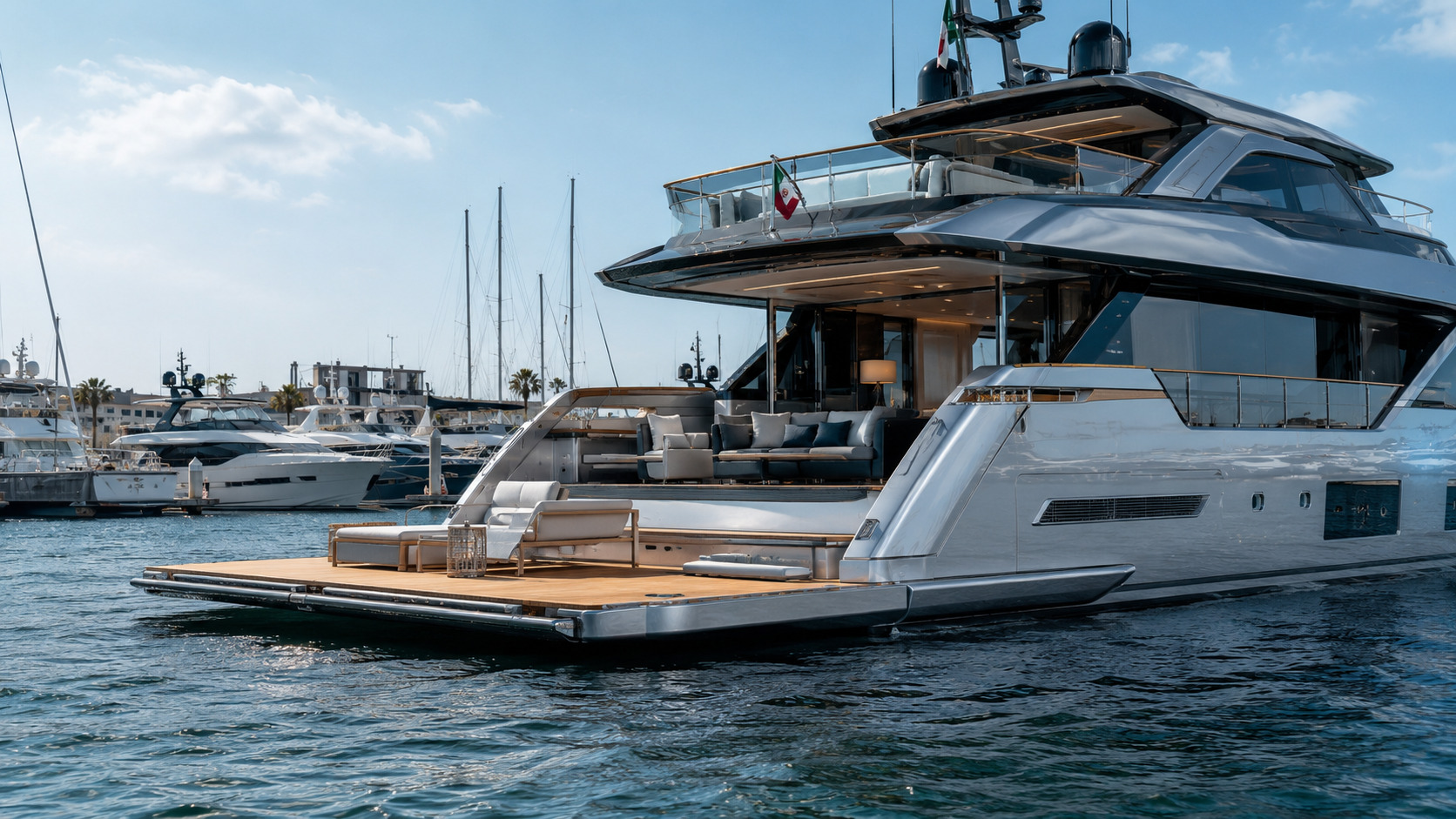
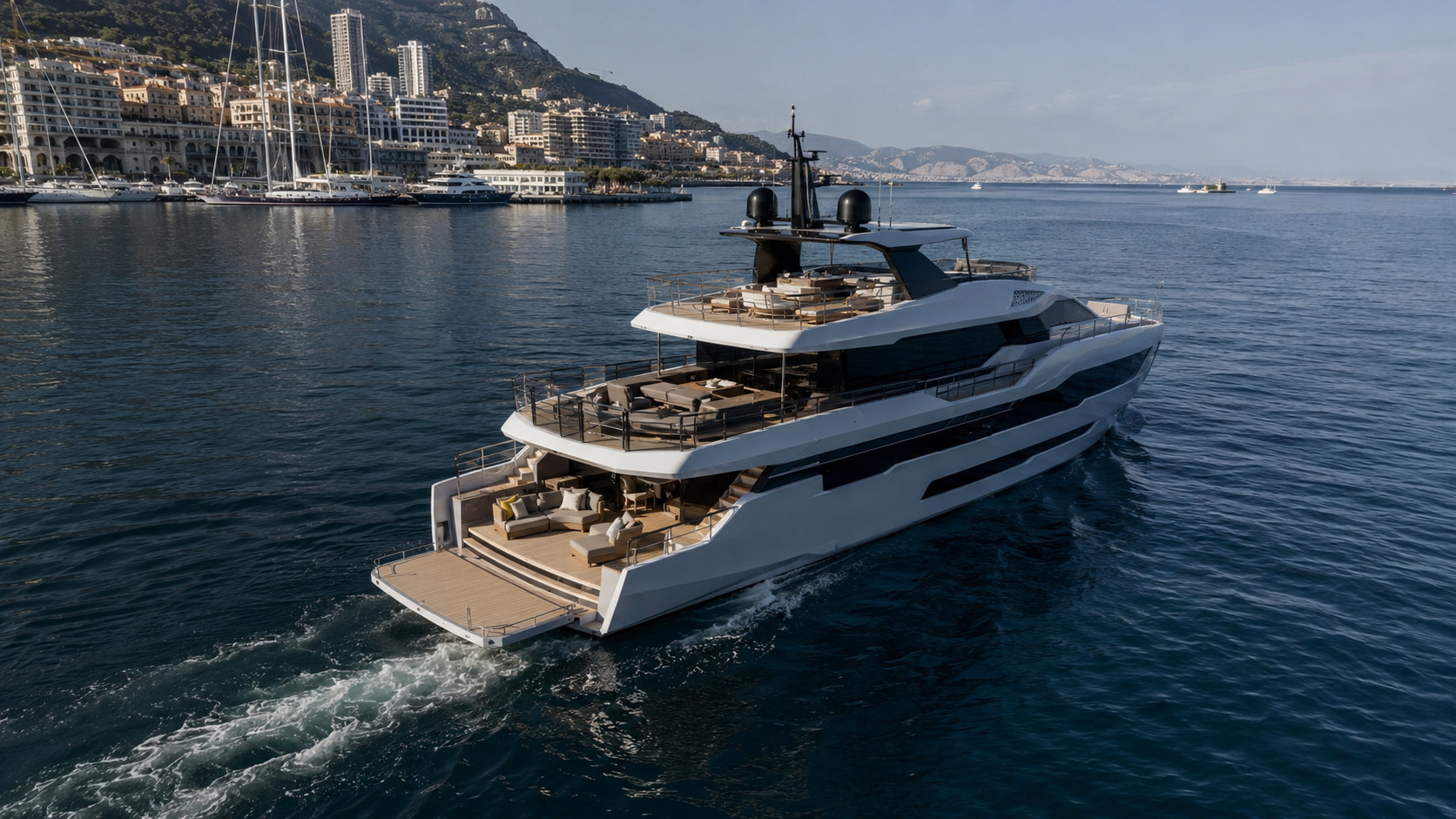
The signature exterior feature is the Deck2Deck terrace. The transom can rise flush with the aft edge of the main deck, expanding the cockpit into a larger terrace over the water. It is a meaningful layout feature because it changes how the stern functions at anchor rather than simply adding another sunpad.
Forward, the main-deck owner suite benefits from extensive glass, while guest circulation and crew service remain separated. The upper deck provides another social zone without requiring guests to occupy the pilothouse or working areas.
When inspecting a used 26M, test the moving transom system repeatedly and look at seals, hydraulics, drainage and emergency operation. A transformative deck feature is only valuable when it works reliably.
The 26M carries superyacht-grade hotel systems even though it is the smallest Grande. Survey the generators, shore-power conversion, HVAC, stabilizers, watermakers where fitted, battery systems, pumps, waste systems, electronics and Deck2Deck hydraulic equipment under load.
Because pod propulsion and the transforming stern are central to the yacht’s value, maintenance records for those systems should affect purchase decisions more than cosmetic upgrades.
At 86′ 6″ by 20′ 8″, the 26M needs a berth selected around beam, shore-power service, draft, fueling access and maneuvering room. Do not assume every 90-foot slip can accept the yacht.
Confirm bridge clearance with all antennas, radar arrays and mast equipment in their normal operating positions.
Use the gallery to show why the 26M is not simply a large flybridge yacht: the main-deck owner suite, Deck2Deck terrace, upper-level social areas, crew separation, guest cabins and pod-powered machinery spaces should all be visible.
Grande 26M pricing depends heavily on whether the yacht is a new build, dealer inventory or an early brokerage example, plus the chosen interior package, options, tax status and delivery location.
Stabilization, tender package, electronics, interior specification, crew fit-out and refit history can move value materially even among yachts of the same model year.
Build the annual ownership estimate from the actual yacht and home port.
Pricing, payment and ownership-cost figures are illustrations only and are not offers or commitments to extend credit.
Market price band
$6,120,000 – $7,655,000
Estimated monthly
From $41,875/mo
Figures come from this page’s Boat Details fields. Illustration only and not an offer of credit.
Estimate Your Grande 26M Payment
Use the yacht-loan calculator to test purchase price, cash down, rate and term before negotiating. On a superyacht-scale purchase, treat the calculator as a planning tool rather than a substitute for underwriting because vessel age, ownership entity, liquidity and transaction structure can materially affect the available terms.
Illustration only and not an offer of credit. Your actual rate and term depend on credit profile, vessel age, loan amount and ownership structure.
Compare the Grande 26M Before You Buy
The 26M and 27M are close in length but not in philosophy. The 26M is the newer pod-powered design with five fixed guest cabins and Deck2Deck transformation. The 27M is broader, shaft-driven and built around a raised pilothouse with four- or five-cabin flexibility.
A new 26M purchase requires attention to interior specification, option list, delivery timing, commissioning and post-delivery warranty support. Brokerage examples should be compared by technical condition, not simply by model year.
On an international transaction, resolve VAT/tax status, flag, ownership entity, insurance and documentation before wiring a significant deposit.
Send Float Finance the specific 26M build proposal or listing before a large deposit is at risk. The financing review should happen alongside insurance, survey, ownership entity and closing-jurisdiction planning.
Azimut lists twin MAN V12 1650-hp engines with pod propulsion for the Achille Salvagni interior and twin MTU V10 1622-hp engines with pod propulsion for the Yachtique interior.
Azimut publishes 12.5 liters per nautical mile at 13.2 knots and 20.3 liters per nautical mile at 24 knots, with stated ranges of 613 and 376 nautical miles respectively.
Potentially, subject to vessel, borrower and lender eligibility. Expect survey, insurance, ownership structure and transaction documentation to be important at this value.
Azimut provides dedicated accommodation for three crew members. For most owners, professional crew or active yacht management should be part of the operating plan.