Call Us : 207-994-5109
Mon – Fri: 8 am to 9 pm & Sat – Sun: 10 am to 8 pm
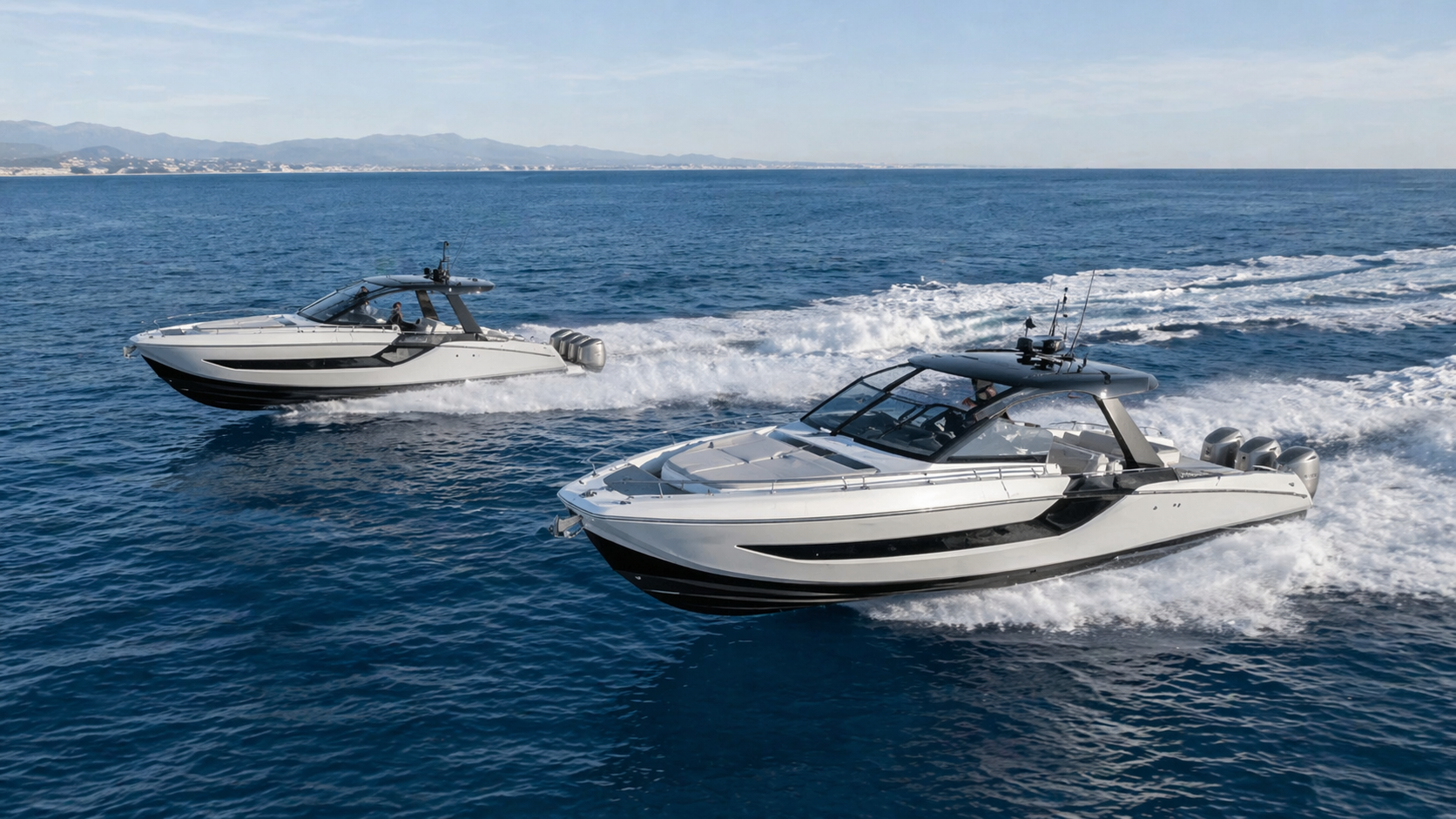
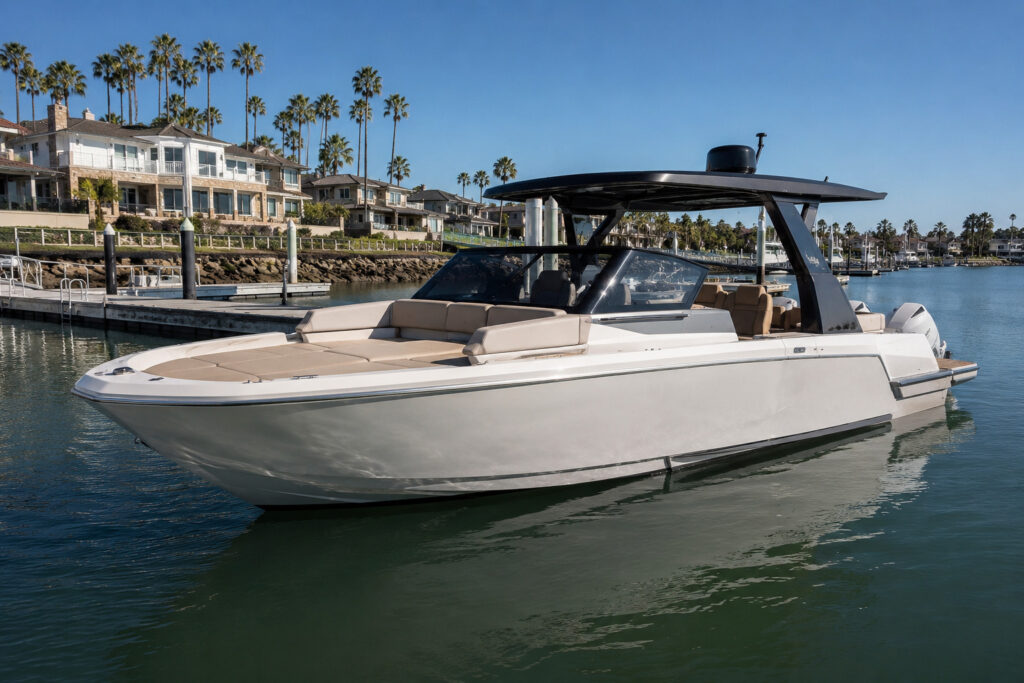
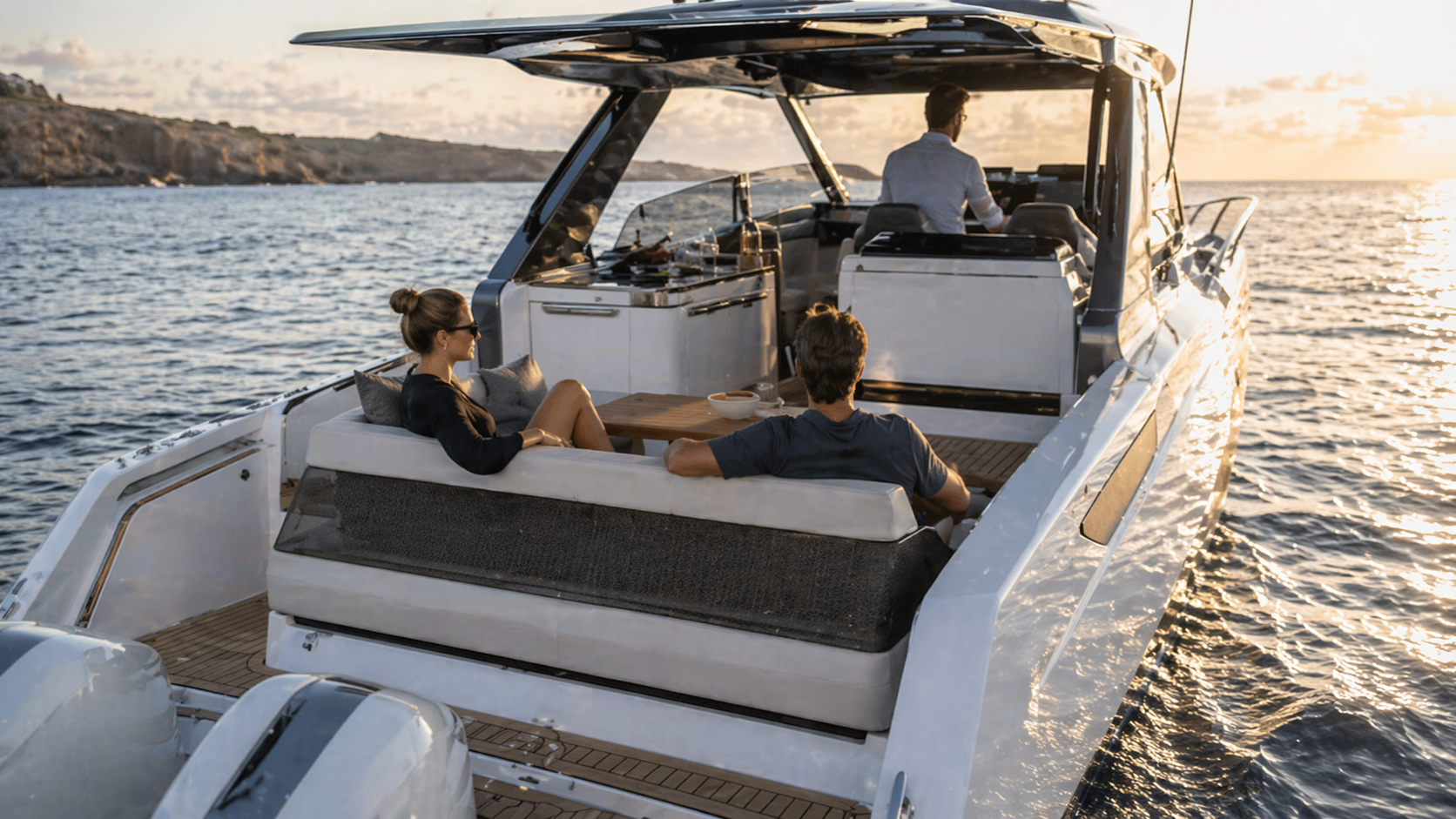
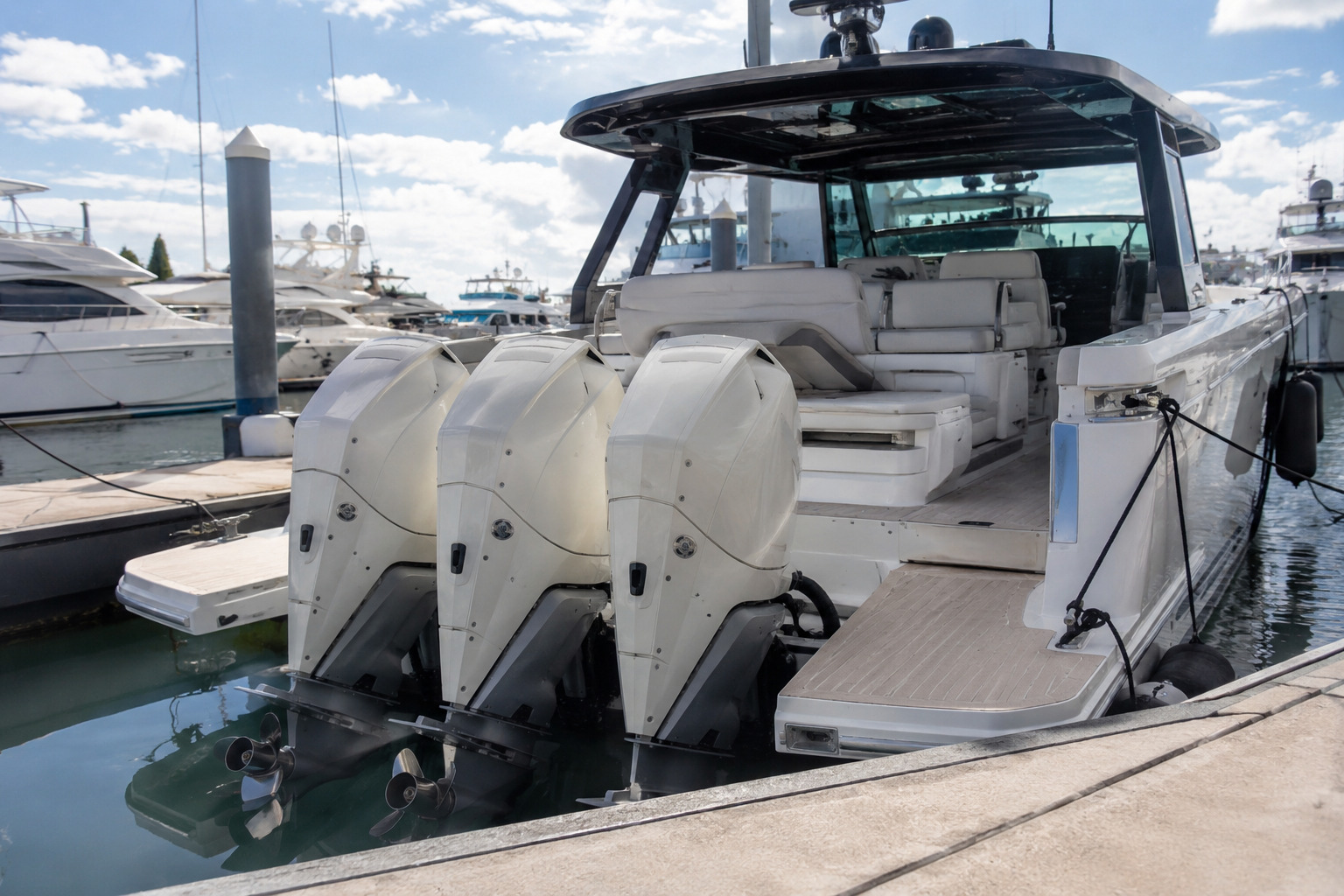
The Azimut Verve Series is built around a simple but unusual brief: take the speed, access and uncomplicated propulsion of a high-end American outboard boat and combine it with the overnight comfort, finish and design language buyers expect from Azimut. The result is not a center console with prettier upholstery and it is not a conventional express cruiser with outboards bolted on. Azimut positions Verve as a performance weekender—a boat meant to cover coastal distance quickly, open itself to the water at anchor and still give the owner a legitimate place to sleep when the day turns into a weekend.
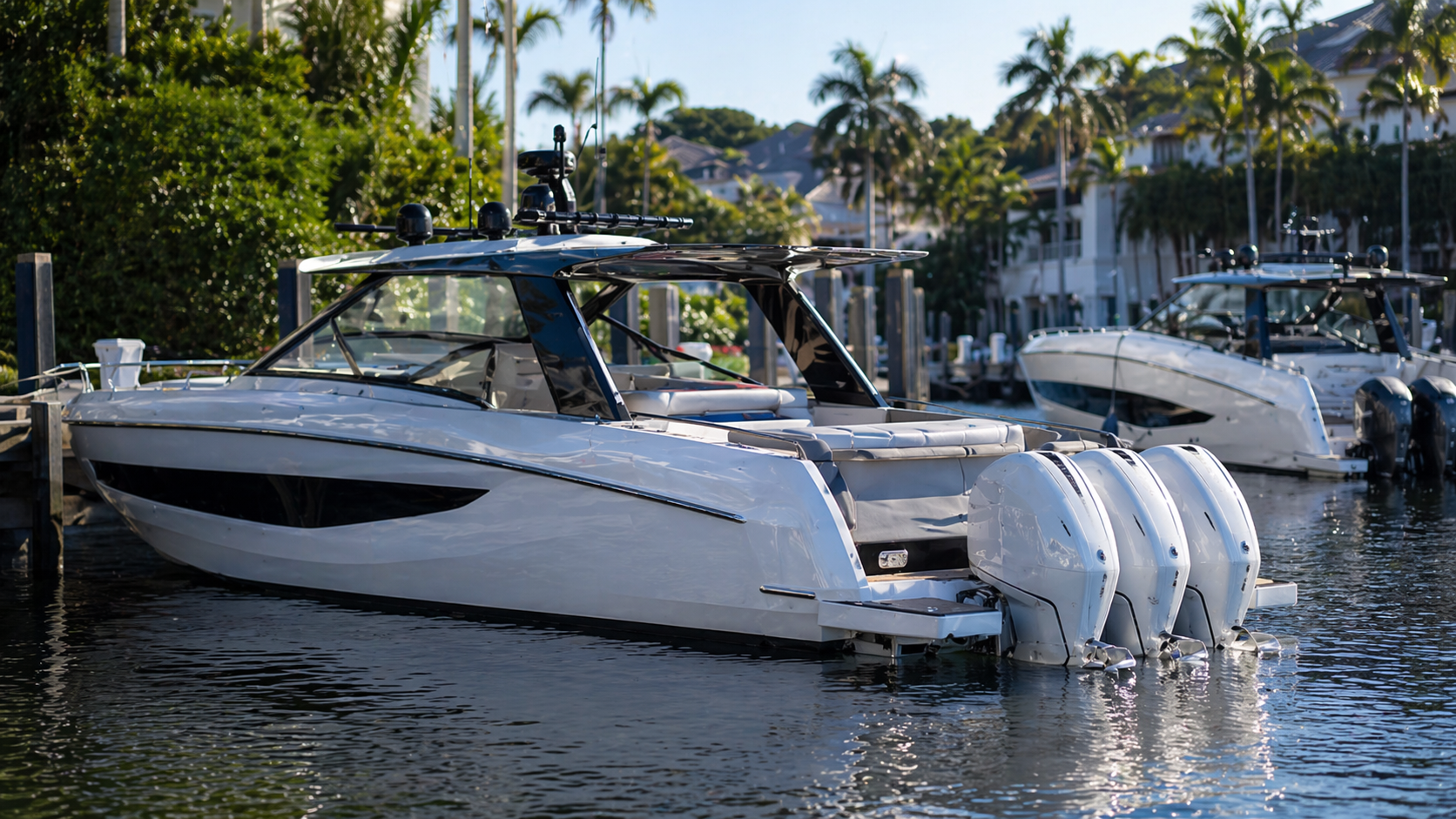
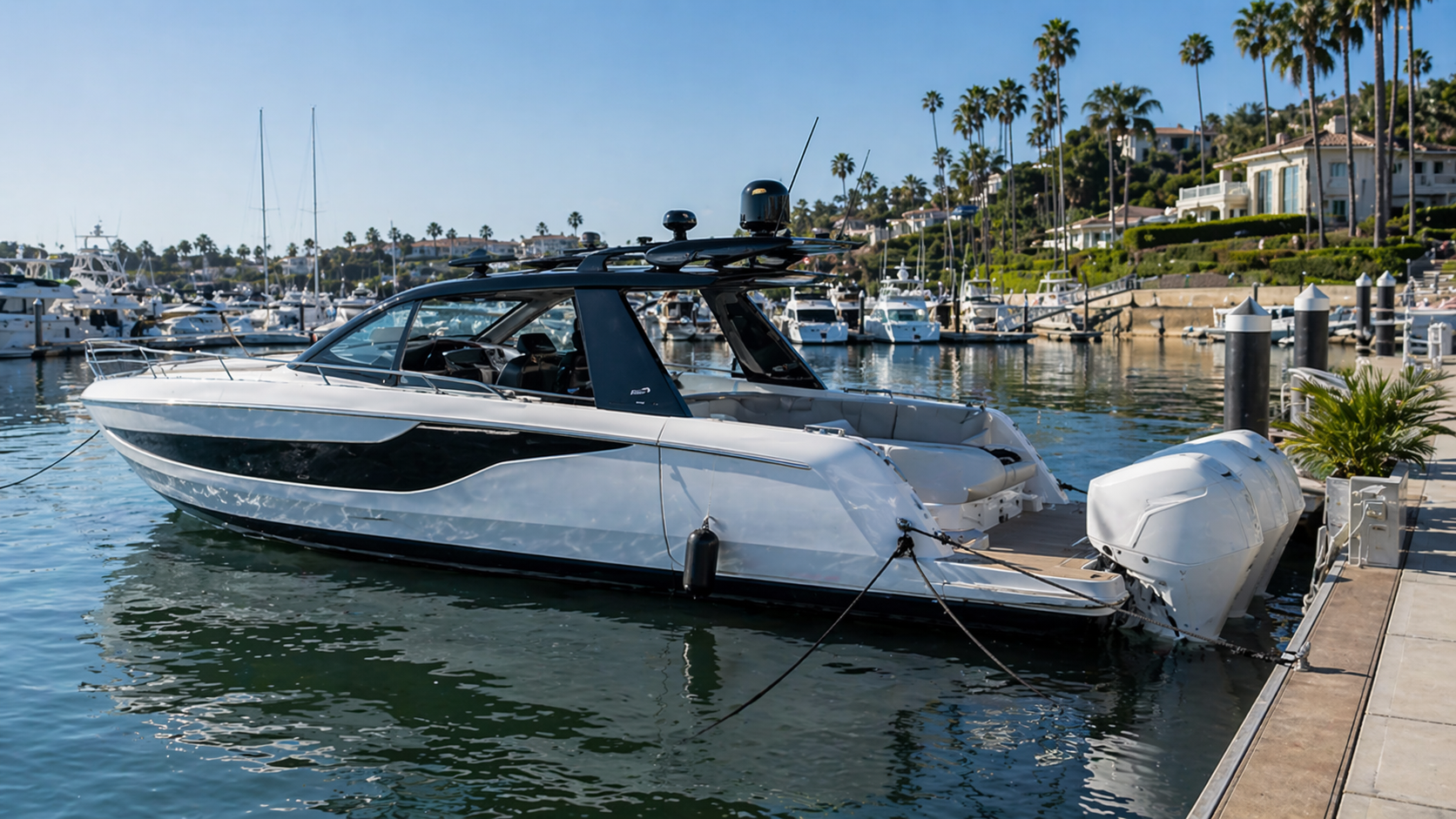
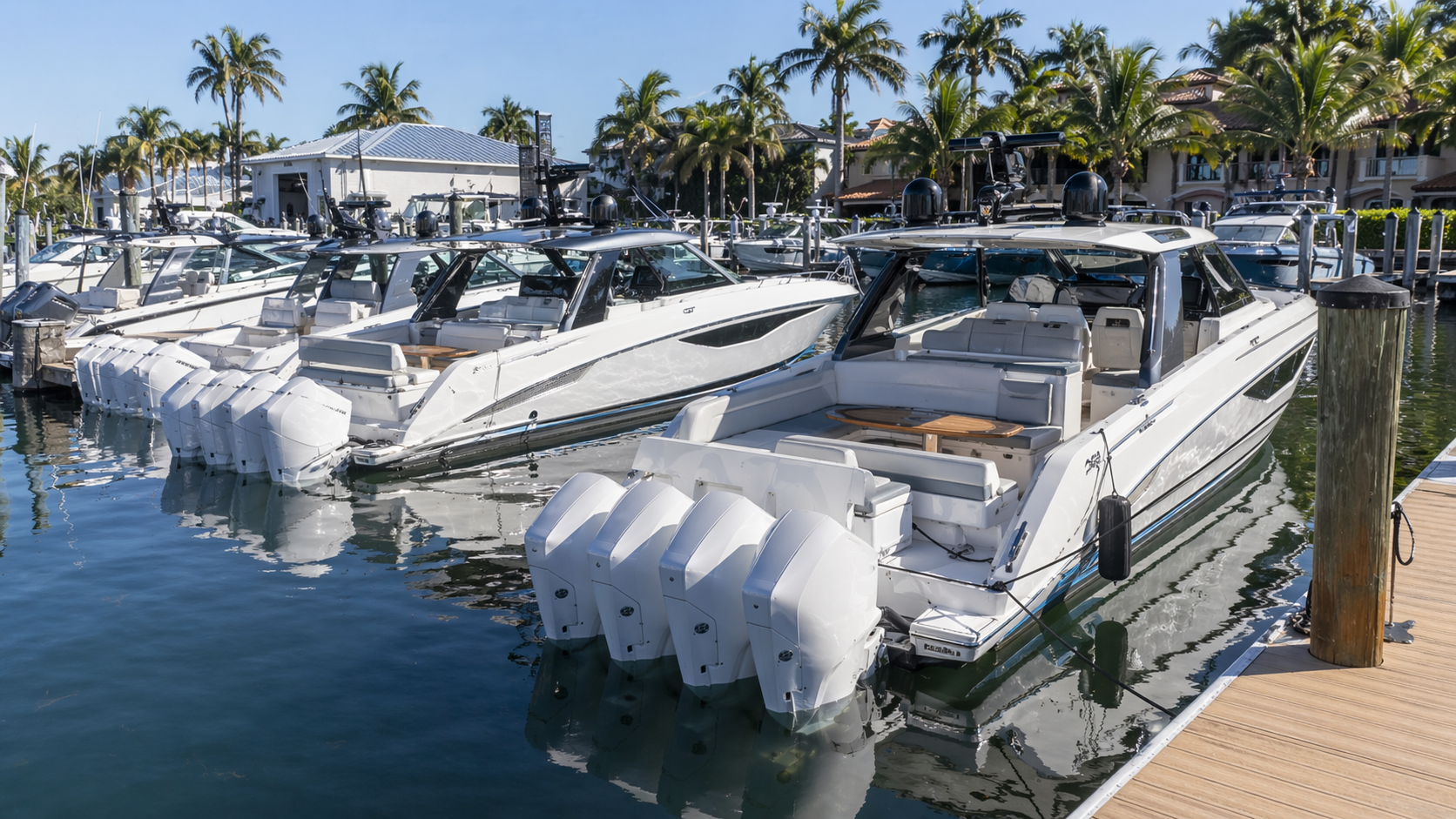
The defining trade is obvious. Outboards put a great deal of horsepower on the transom and keep major propulsion machinery out of the interior, which frees useful volume and simplifies routine access. They also dominate the stern visually, consume meaningful fuel at speed and do not offer the same enclosed machinery-room experience as an inboard yacht. Verve buyers are accepting that trade because speed and spontaneity are part of the ownership brief, not an occasional novelty.
The current range has only two models, but they are not interchangeable. The Verve 42 is the compact, one-cabin choice with triple 400-hp Mercury outboards and a 43-knot published top speed. The Verve 48 moves to triple 600-hp V12 Verados, two cabins, more deck space and up to 50 knots. The choice is less about six extra feet than about whether you want a fast owner-run weekender or a larger, more substantial coastal yacht that can host more people overnight.
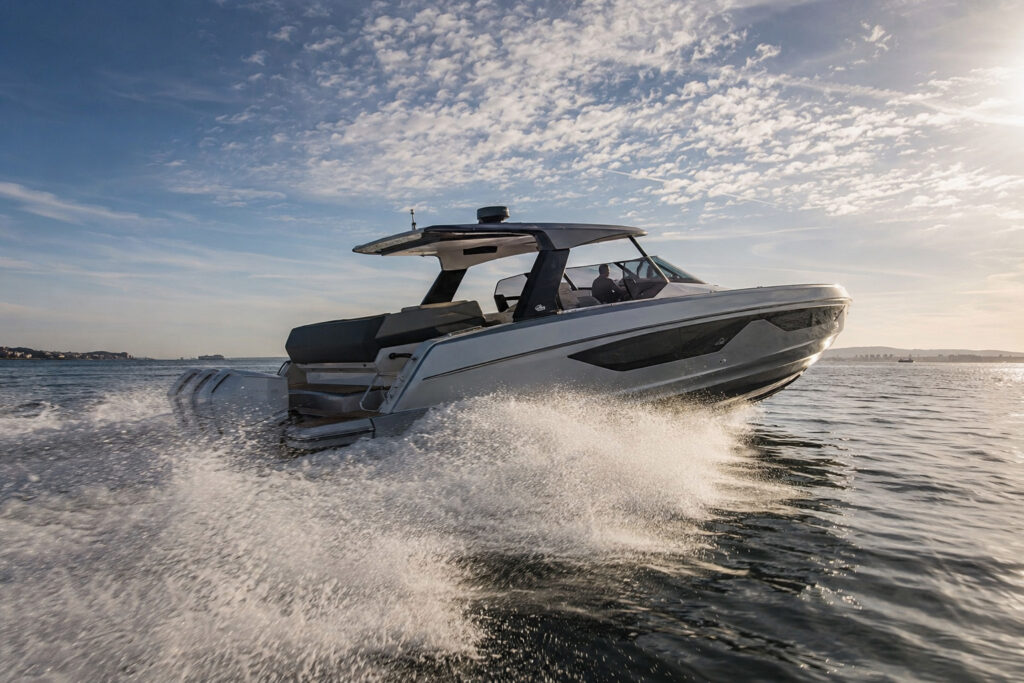
Both current Verve models use Michael Peters’ Stepped V Ventilated Tunnel hull concept. The design combines a deep-V hull with transverse steps and a shallow central tunnel aft to reduce drag while preserving directional stability at high speed. That engineering matters because a 40- to 50-knot weekender needs to do more than post a top-speed number. It needs predictable tracking in turns, controlled re-entry after crossing wakes and a running attitude that does not make the driver fight the boat.
Azimut also uses carbon fiber in upper structures to reduce weight high in the boat. On the Verve 42, Azimut lists GRP plus carbon-fiber construction and a 22.5-degree aft deadrise. The Verve 48 is likewise GRP plus carbon fiber, with triple 600-hp Mercury Verados and a published 50-knot maximum. The propulsion philosophy is consistent across the Series even though power increases dramatically as the boats grow.
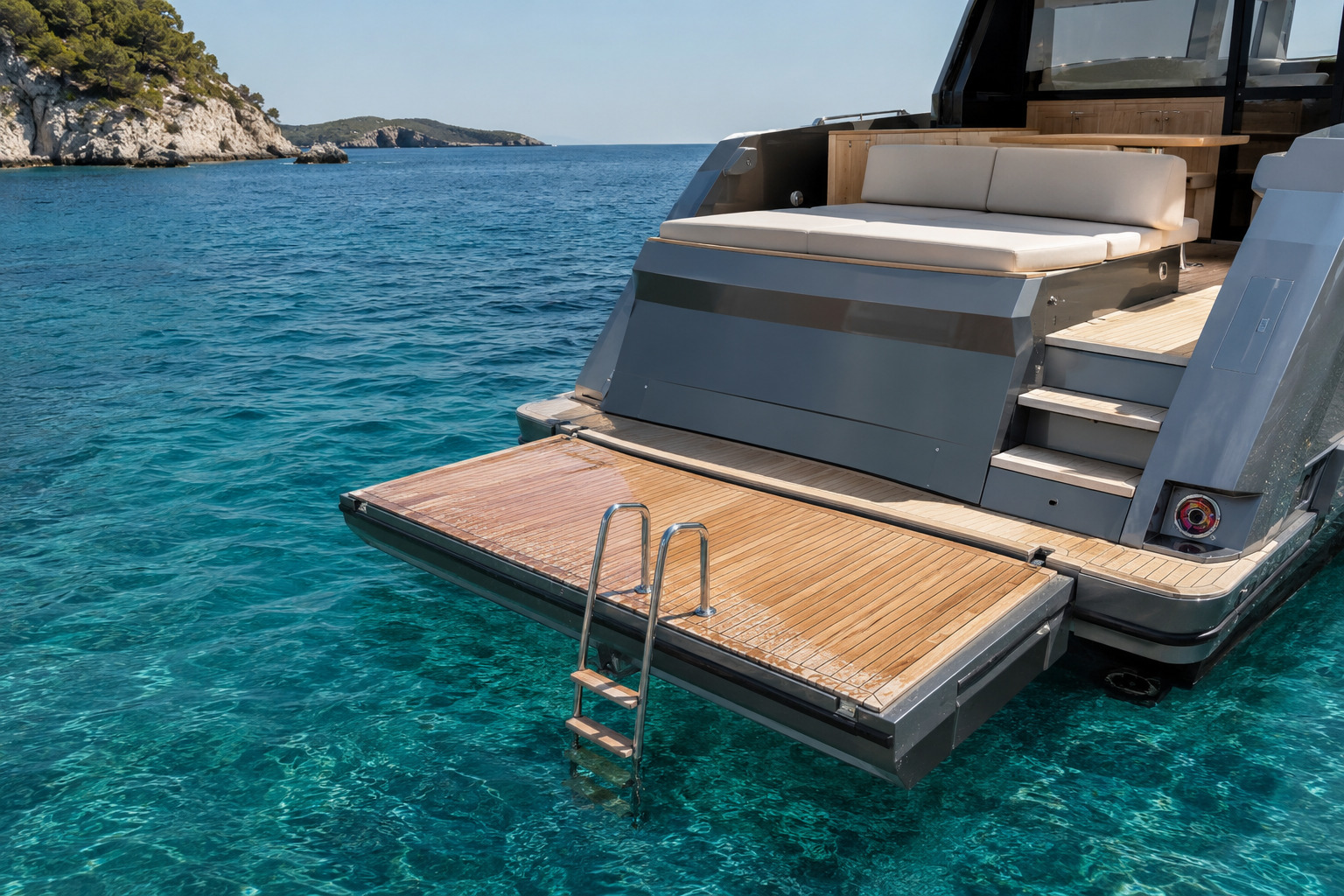
What stays constant is the weekender mission: an open cockpit, easy water access, a serious helm, fast cruise and enough interior accommodation to stay aboard. What changes is how far toward a conventional yacht the package moves. The 42 keeps the experience compact and direct; the 48 adds a second cabin, a larger social deck and a much more substantial transom platform around the triple V12s.
Verve makes sense when speed, outboard ownership and open-air use are central. If those are secondary priorities, another Azimut family may give up less in the areas you care about.
lower-profile sport cruisers with inboard propulsion and a more enclosed cruising layout.
sport yachts for buyers who want high performance with larger yacht accommodations and inboard machinery.
choose it when a flybridge, multi-level living and longer stays aboard matter more than 40- to 50-knot speed.
choose it when water-level living and lower-emission efficiency are the main design priorities.
Start with how many people need to sleep aboard and how much speed you actually plan to use. The Verve 42 is the more compact owner-run package. The Verve 48 adds a second cabin, far more horsepower and a larger cockpit/swim-platform arrangement that changes how the boat feels at anchor as much as it changes the numbers underway.
Once you know whether the 42 or 48 matches your boating, Float Finance can help you evaluate the real purchase and payment instead of choosing around a guessed monthly number.
These are both fast outboard weekender yachts, but the ownership proposition changes quickly between them. Ask the questions that affect every trip rather than focusing only on top speed.
Verve ownership is driven by different cost centers than a shaft-drive diesel yacht. The biggest routine variables are three high-output outboards, fuel, marina or dockage cost, insurance, bottom care, generator and air-conditioning service, electronics, detailing and the moving hardware used for fold-out terraces and cockpit furniture. Outboard service is accessible, but three engines mean three sets of scheduled maintenance and three powerheads to evaluate on a used boat.
Fuel deserves a realistic budget. The Series is designed around high-speed travel, and neither model should be bought on the assumption that 40-knot running will be inexpensive. The Verve 48’s 618-gallon tank is a reminder of the scale. A buyer who cruises primarily at displacement speed is paying for a lot of performance they may rarely use.
Financing will depend on model year, purchase price, borrower profile, down payment, vessel condition and transaction type. A survey, engine inspection and insurance documentation may be part of underwriting on higher-value used examples. Float Finance can work with dealer, brokerage and qualified private-party purchases.
Send Float Finance the listing. We can help evaluate financing around the actual Verve, seller and transaction instead of working from a generic price assumption.
Use Float Finance resources to understand the loan and transaction before negotiating on a Verve.
prepare for title, lien and closing details when buying directly from an owner.
The Verve Series is Azimut’s outboard-powered performance weekender family. It combines deep-V stepped hulls, high-output Mercury outboards, open social decks and overnight accommodations. The current lineup consists of the Verve 42 and Verve 48.
Verve is the more open, outboard-powered and speed-focused family. Atlantis uses inboard propulsion and a more traditional sport-cruiser arrangement. Choose Verve when fast coastal runs, easy water access and outboard ownership matter more; choose Atlantis when enclosed cruising and inboard machinery are a better fit.
Azimut publishes a 43-knot maximum for the current Verve 42 and up to 50 knots for the Verve 48. Real-world speed changes with load, sea state, bottom condition and options.
The Verve 42 lists 2+2 berths with one private cabin and a convertible dinette. The Verve 48 has two cabins and four berths. Confirm the exact arrangement on the boat you are buying.
Their shallow draft, outboard propulsion, high speed and weekender layouts fit many Florida-to-Bahamas use cases, but range, weather, fuel availability and sea conditions still determine whether a trip is sensible. The boat does not remove normal offshore planning requirements.

Potentially, yes, subject to borrower, vessel and lender eligibility. Used examples should have clear title or documentation, engine records, insurance availability and a satisfactory survey where required.
Dealer, brokerage or qualified private-party listing—bring Float Finance the boat you are considering and explore financing around the real purchase.
Tell us a little bit about yourself and the boat you are looking to finance.