
Call Us : 207-994-5109
Mon – Fri: 8 am to 9 pm & Sat – Sun: 10 am to 8 pm
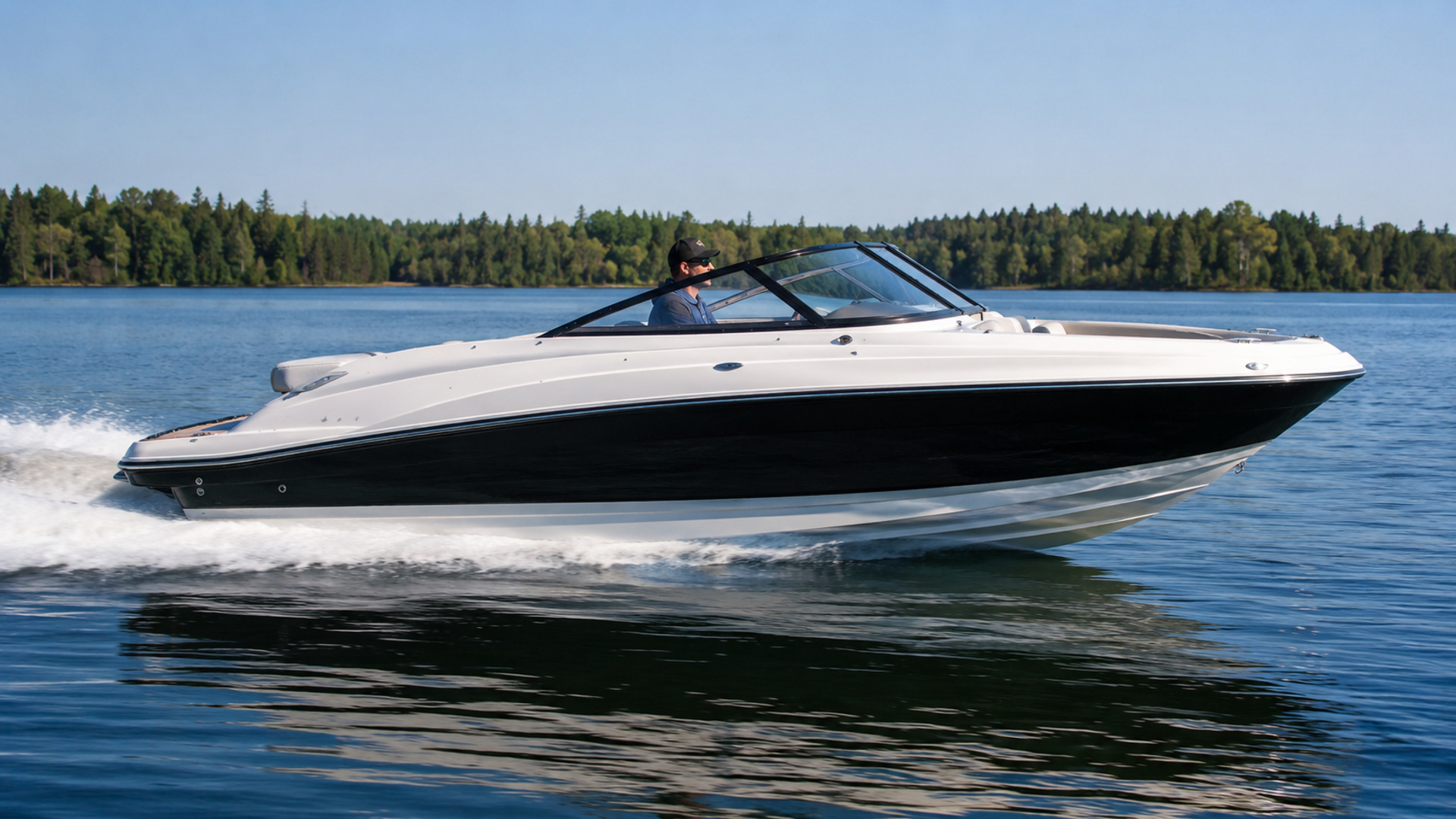
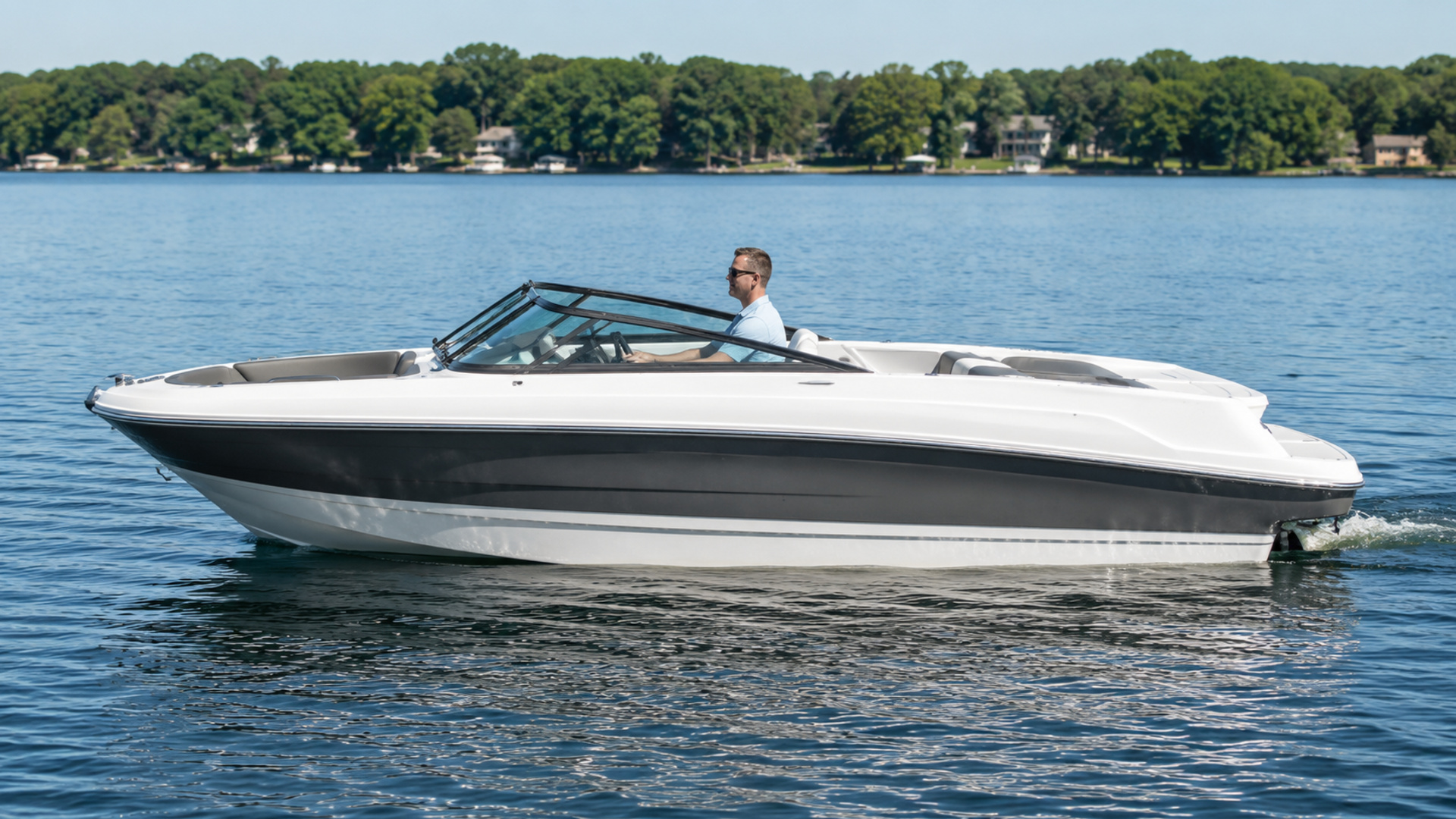
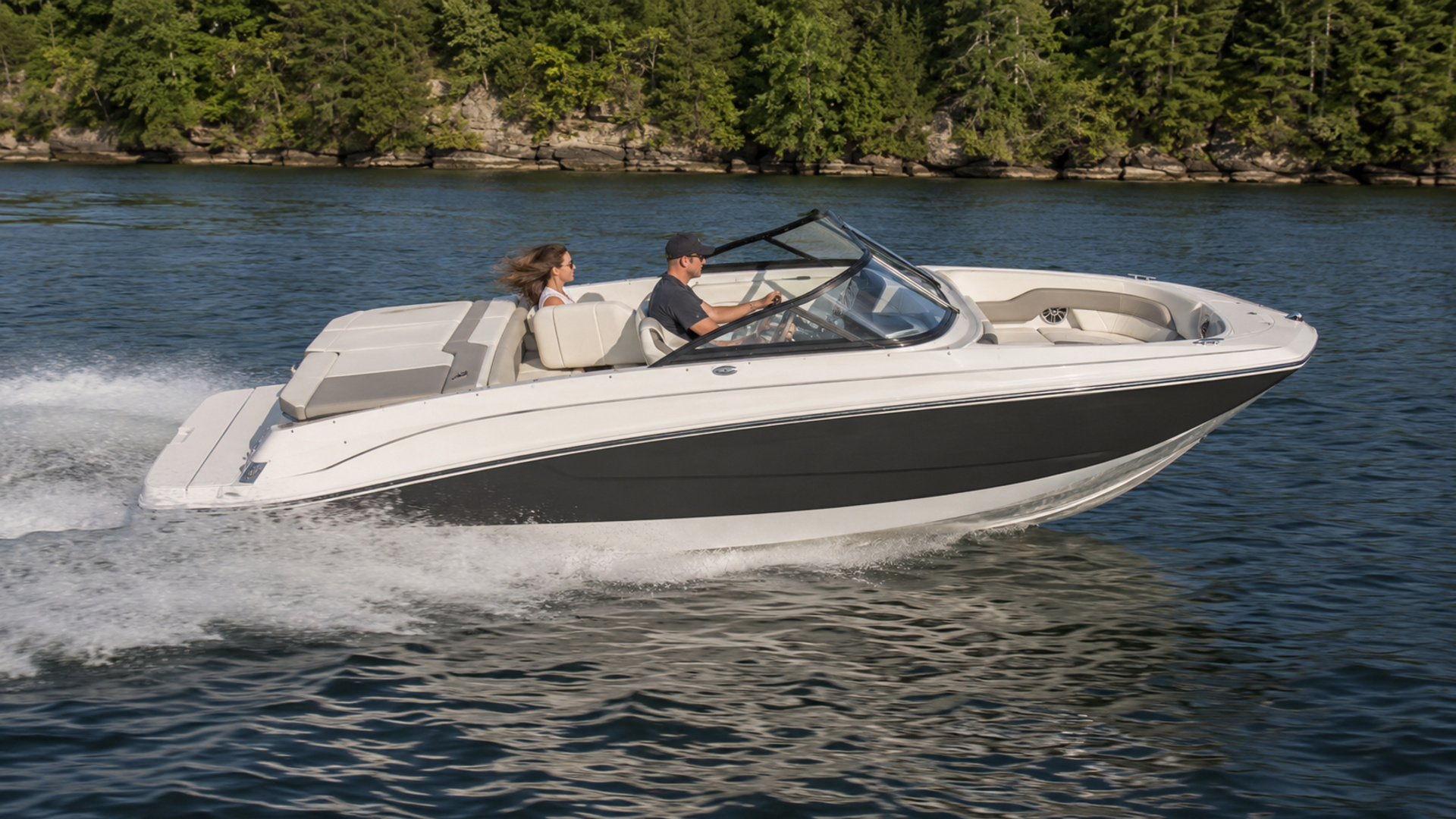
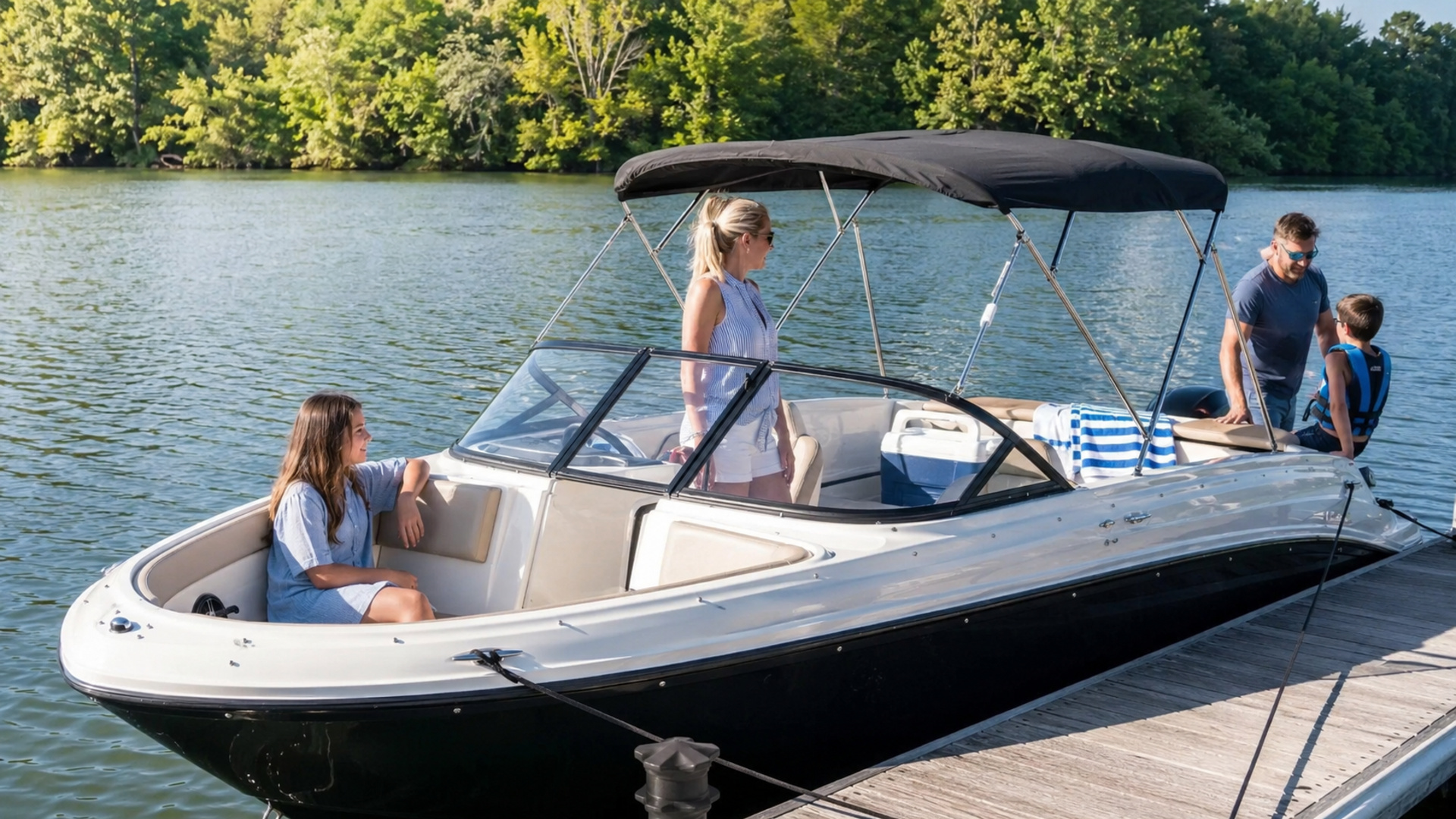
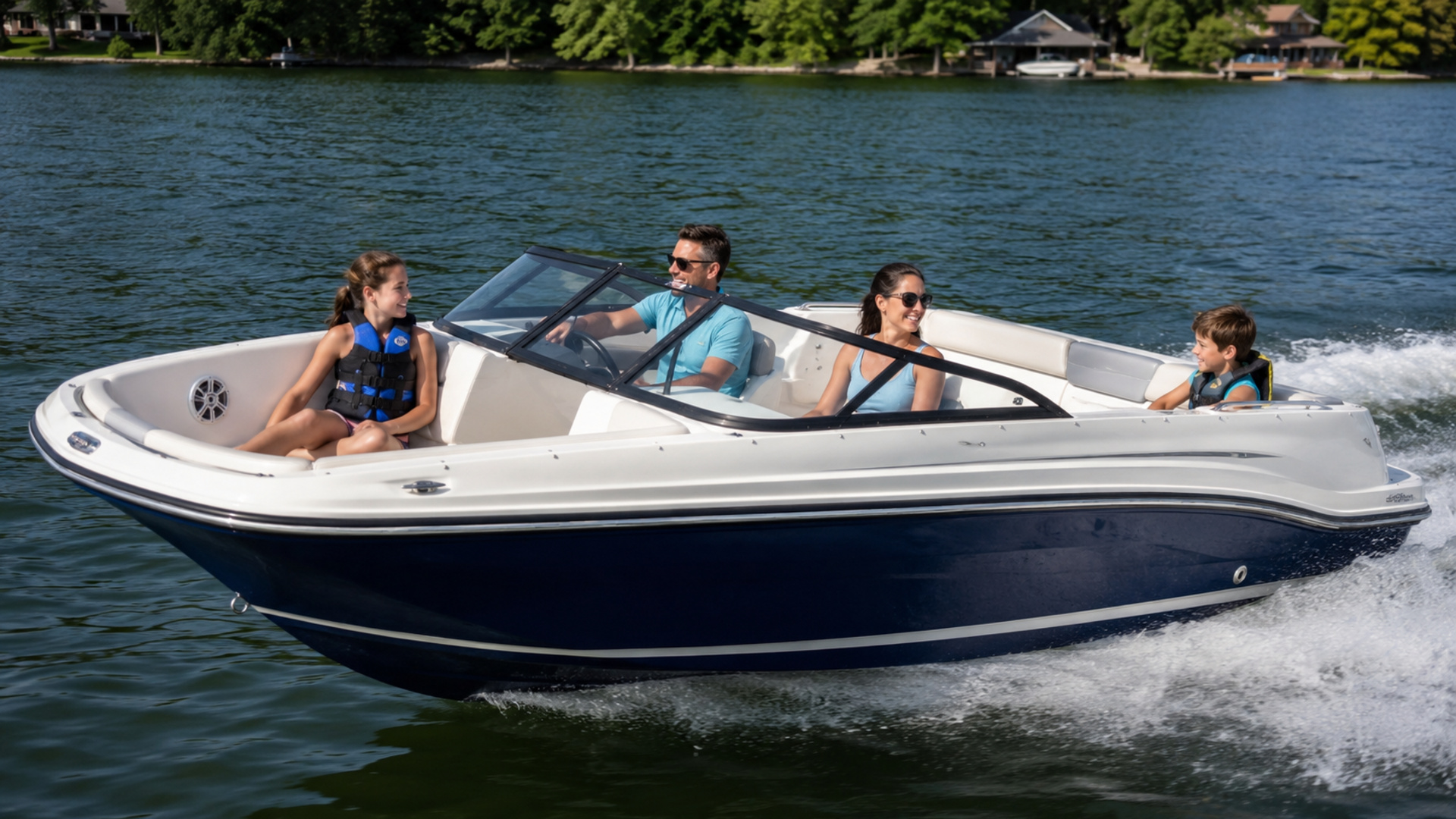
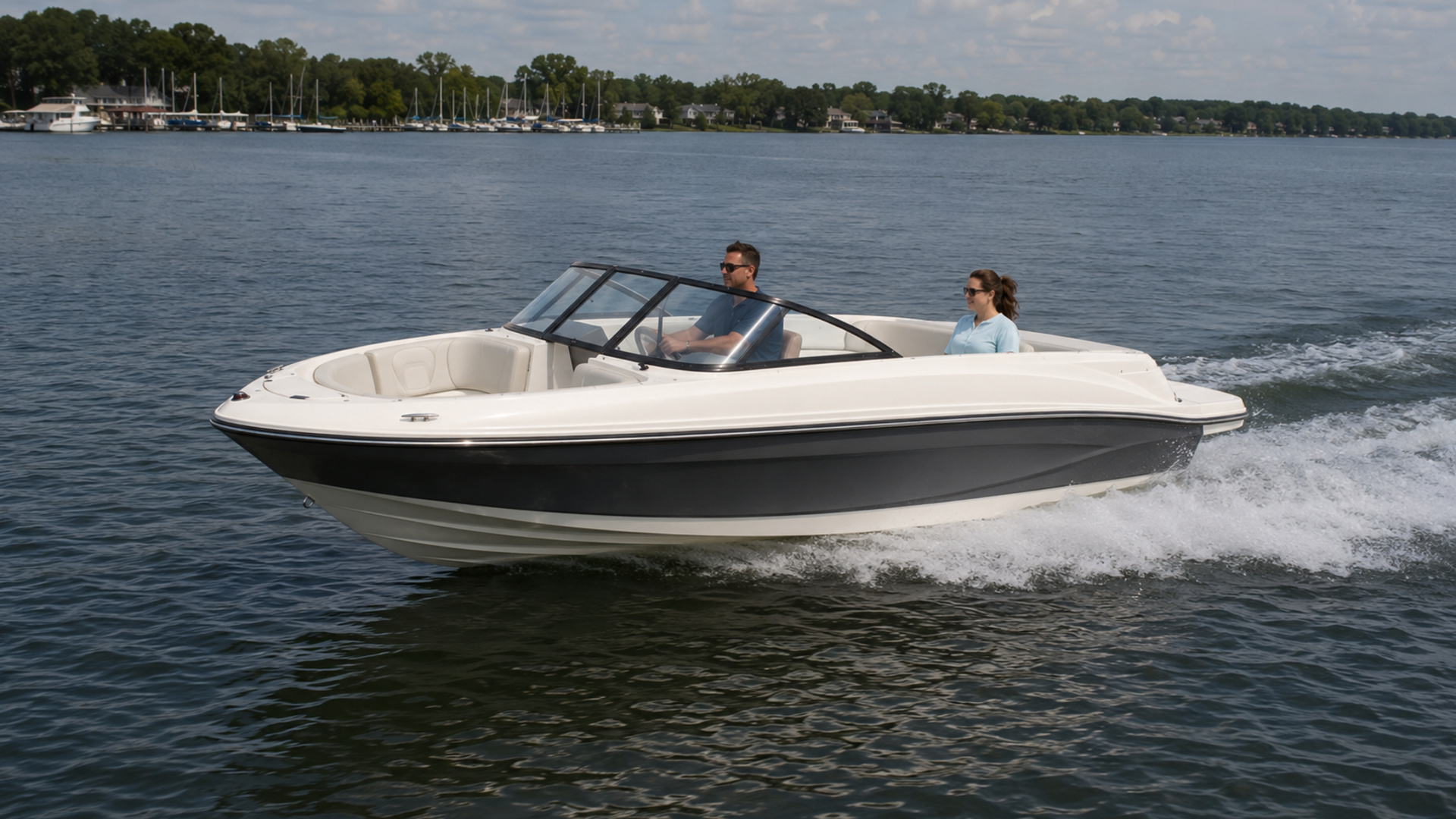
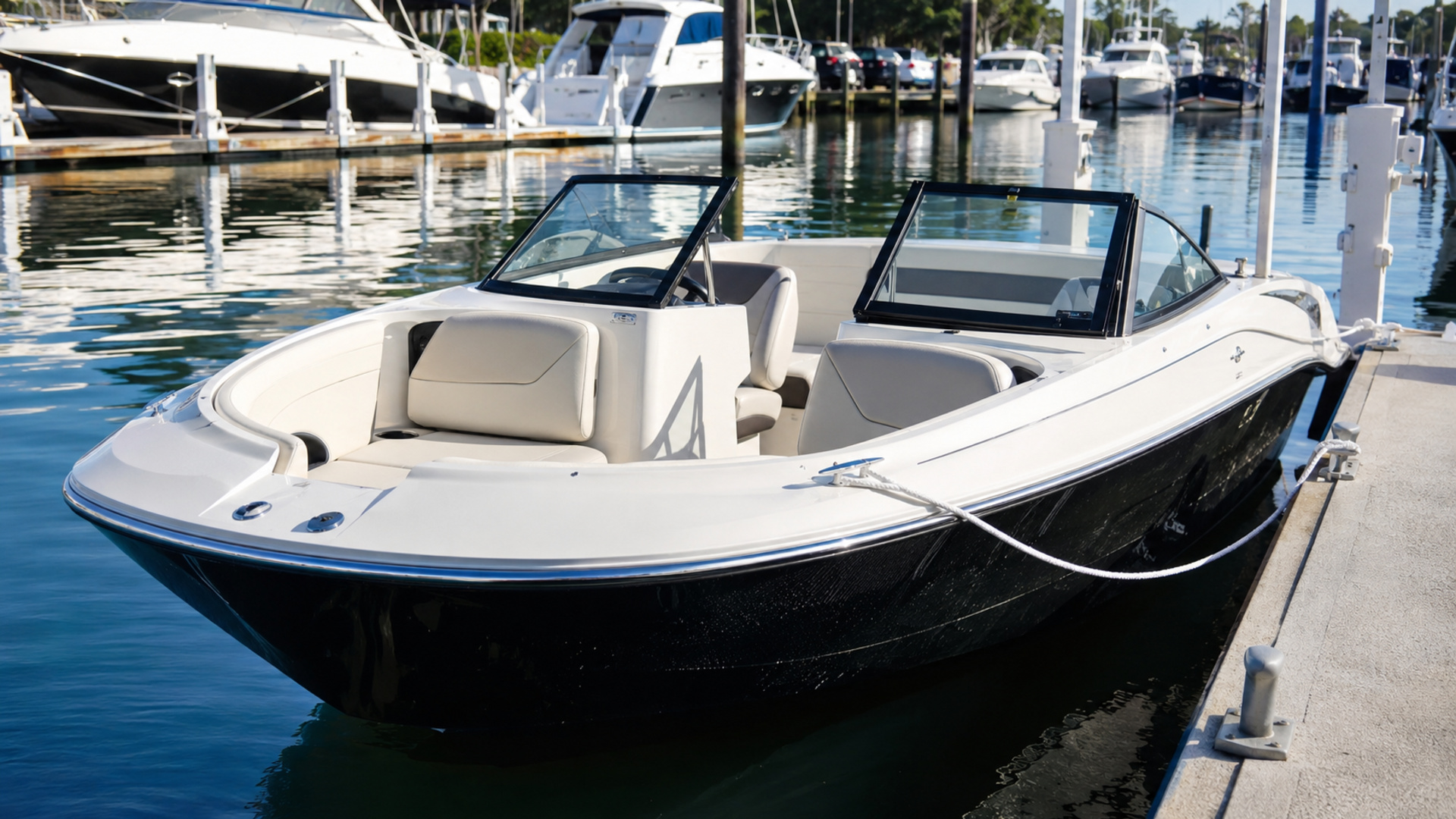
The Bayliner VR4 Bowrider is the compact sterndrive VR4 for buyers who want a clean swim platform, 200 horsepower, and an 18-foot boat that stays easy to tow.
The VR4 Bowrider is a specific kind of compact boat. Bayliner takes its smallest VR hull, puts a 200-horsepower MerCruiser below the aft deck, and leaves the center of the stern open in a way the Outboard version cannot match.
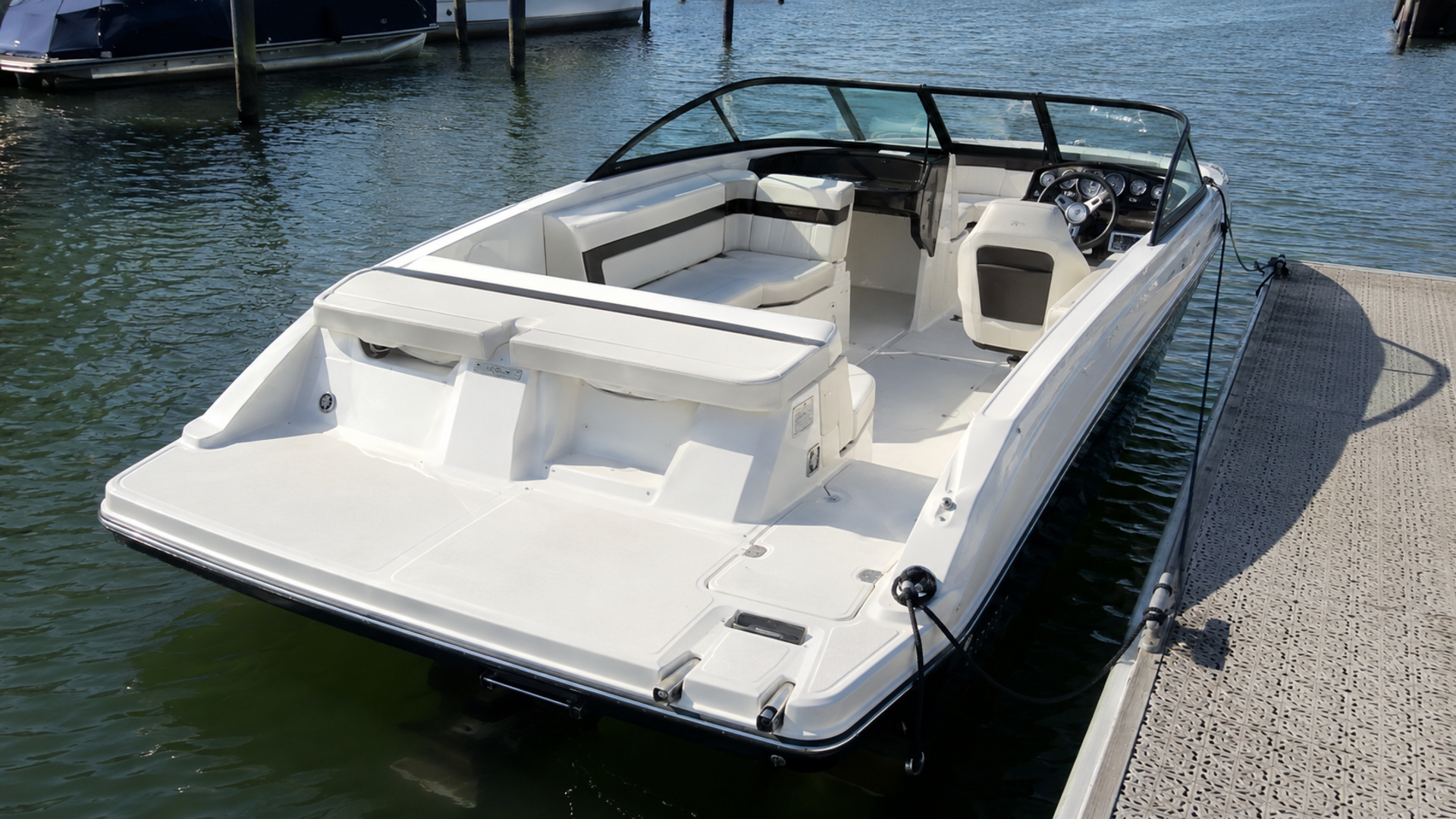
That matters because the boat is only 18 feet 9 inches long. On a hull this compact, every foot of social space has to work hard. Hiding the engine below the rear seating lets Bayliner make the swim platform and aft lounge part of the experience rather than space built around an exposed powerhead.
The VR4 Bowrider carries seven people. It uses a 7-foot-6-inch beam, 19 degrees of deadrise, a 33-gallon tank, and the BeamForward and AftAdvantage concepts that define the VR family.
Those hull ideas maximize passenger room before propulsion changes the stern. BeamForward carries useful width farther into the bow. AftAdvantage moves cockpit seating toward the aft end of the running surface and adds the platform behind it.
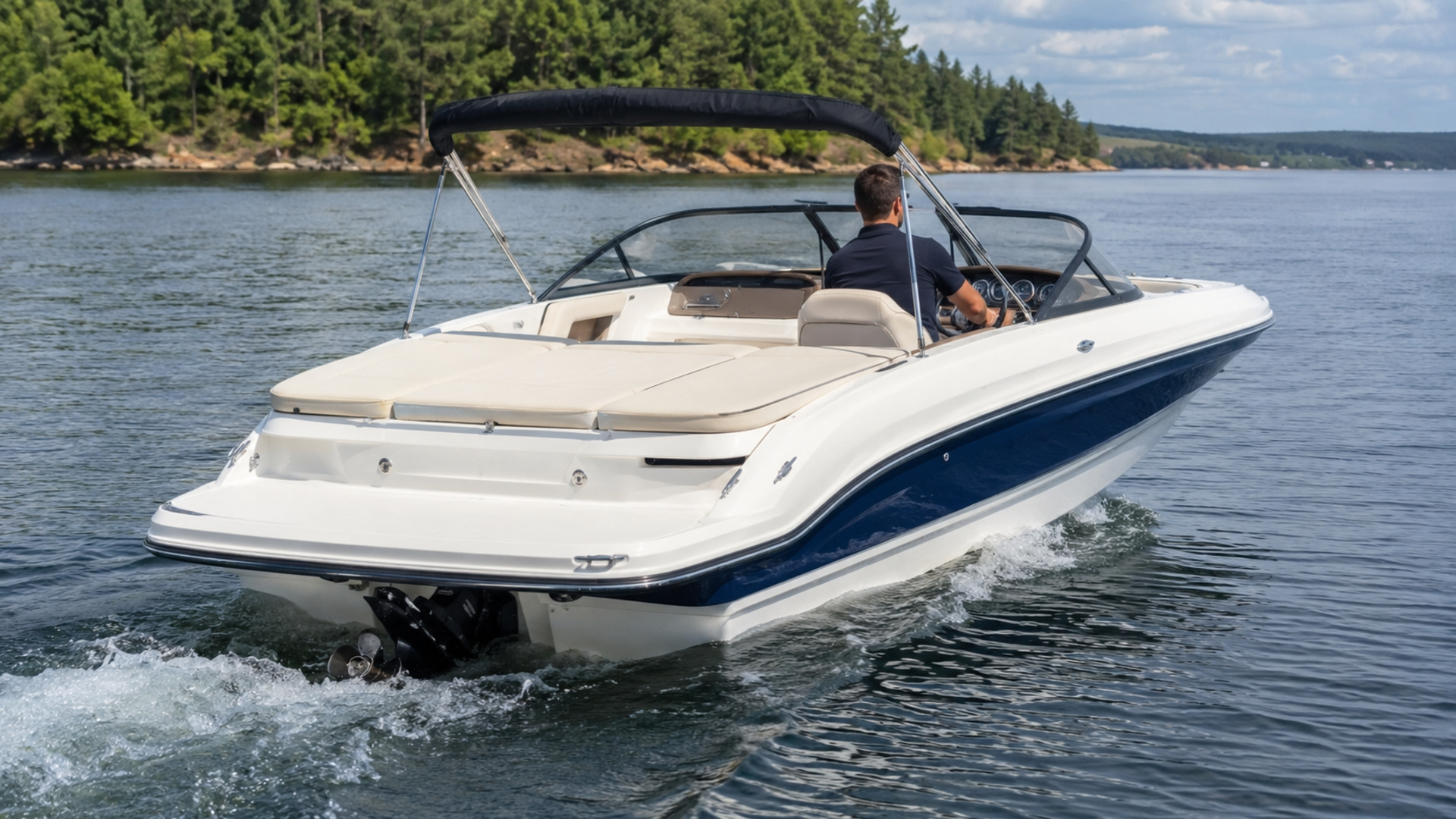
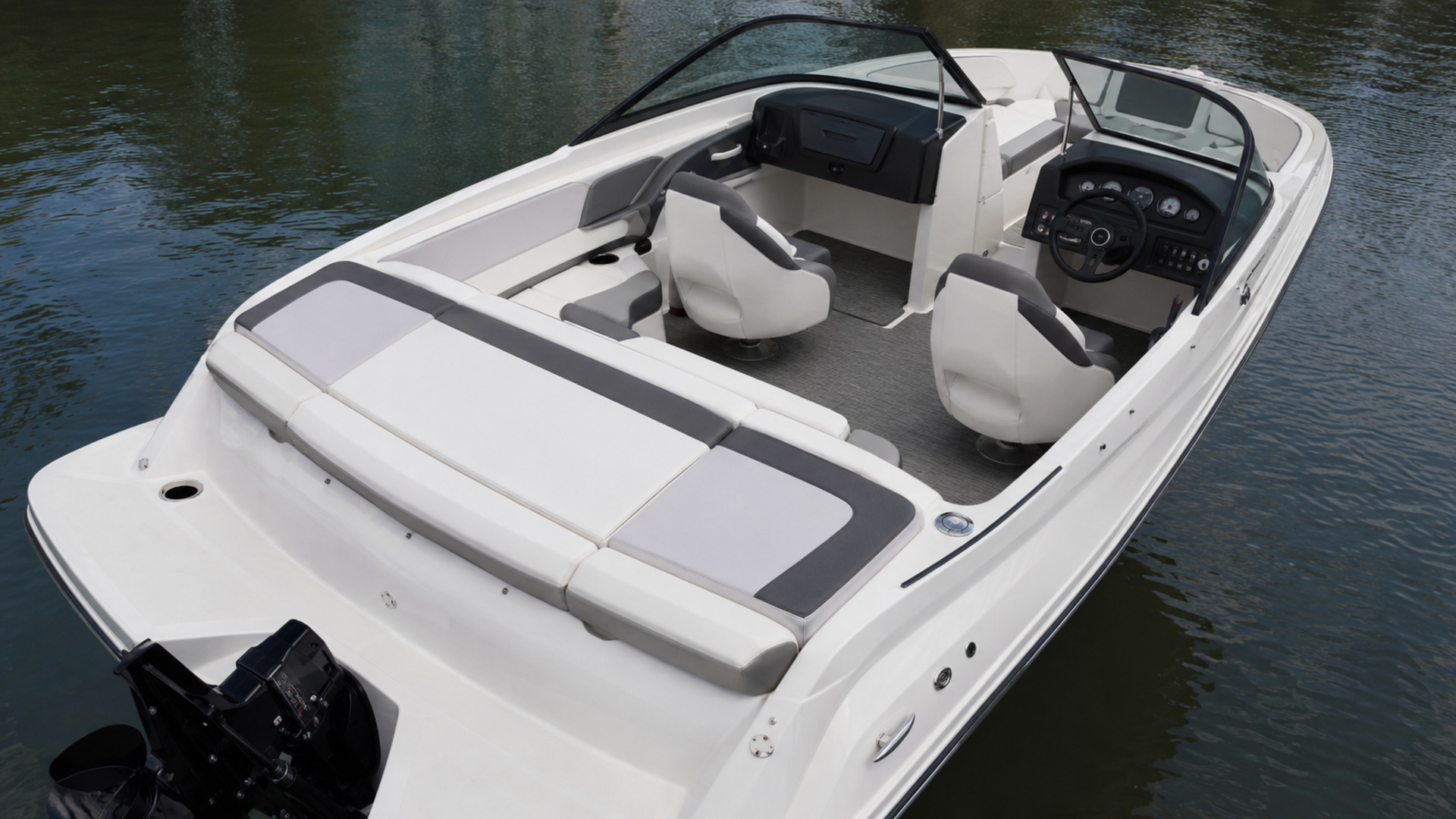
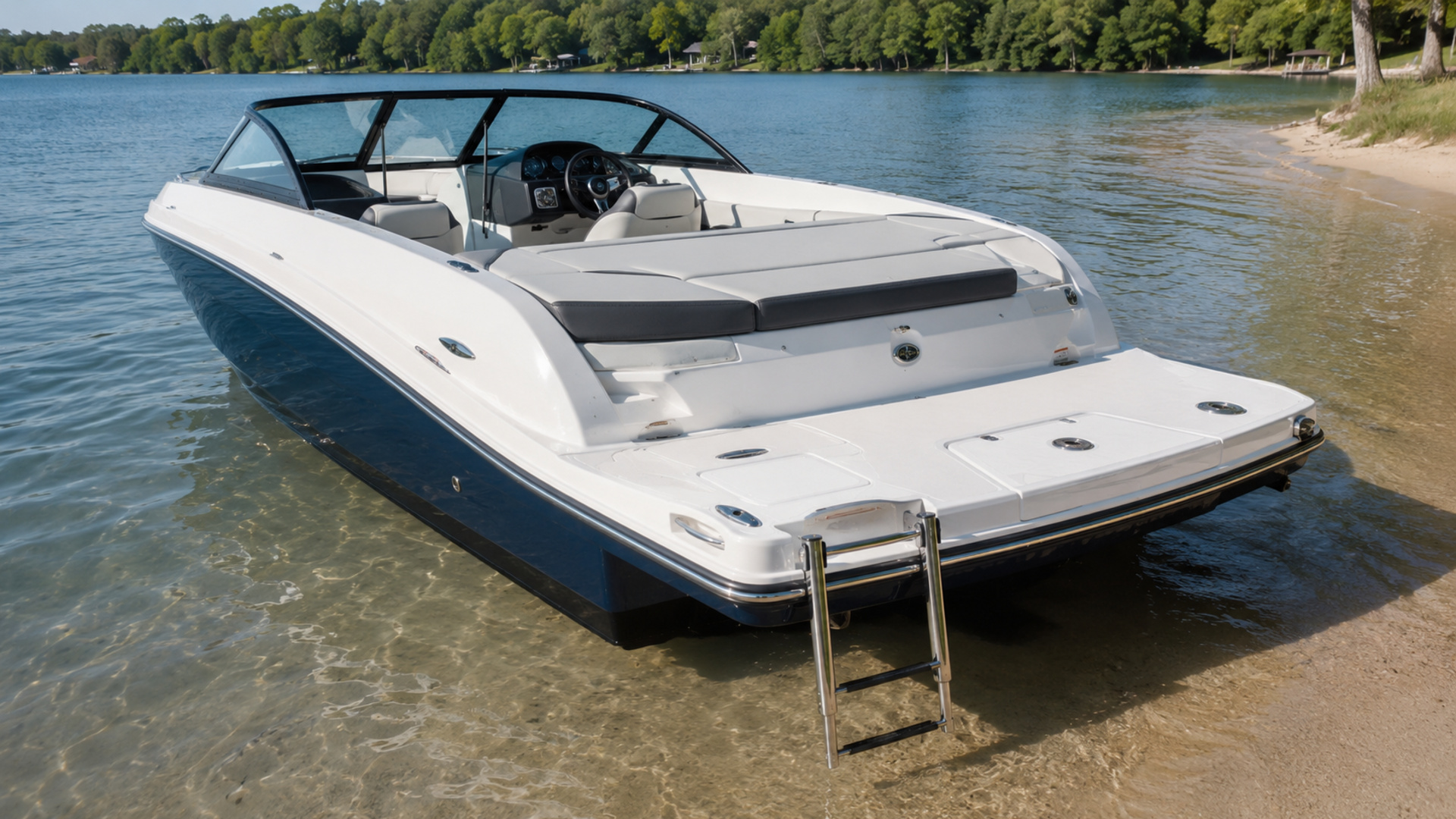
The sterndrive version turns that layout into a traditional bowrider stern. The MerCruiser stays below deck, and the Alpha One drive remains under the waterline behind the transom.
The result is attractive for families that swim every trip. Someone can climb the ladder, sit at the platform, and move into the cockpit without walking around a large outboard powerhead.
The buying trade is mechanical. The VR4 Bowrider adds an engine compartment, a blower, bellows, gimbal hardware, drive lubricant, and winterization considerations that the VR4 Outboard does not have.
The current used market is also thin. Only eight current VR4 Bowrider listings appear nationwide in this market view, spanning 2018 through 2023. A shopper committed to this exact propulsion may need to search beyond the nearest dealer or wait for a cleaner boat.
That scarcity is not permission to lower standards. A rare 2019 with weak service records is still a weak 2019.
The 200-horsepower MerCruiser is also the maximum published power for the model. Unlike the VR5 and VR6 Bowriders, there is no 250-horsepower factory step to chase.
The VR4 Outboard has a much deeper market and keeps its Mercury completely visible. It is the simpler long-term ownership choice.
The Bowrider wins when the stern is not a cosmetic preference but part of how your family spends the day. If you already know you dislike stepping around an outboard while swimming, that benefit can be worth the extra maintenance.
If easy flushing, broader inventory, lower mechanical complexity, and straightforward future repowering matter more, stop shopping this page and buy the VR4 Outboard.
Published factory figures. Confirm every dimension against the individual boat before you commit.
The VR4 Bowrider is 18 feet 9 inches long with a 7-foot-6-inch beam and 19 degrees of deadrise. Bayliner publishes an estimated draft of 2 feet 10 inches in the referenced U.S. model material, but it does not separately publish a maximum draft for this variant.
The referenced Bayliner specification also lists approximately 2,822 pounds with standard engine. That manufacturer figure should be used as a starting point, not as the final travel weight.
A trailer, 33 gallons of gasoline, battery, tower equipment, covers, safety equipment, and family gear all add to what the tow vehicle actually sees.
The 7-foot-6-inch beam is intentionally compact. The advantage appears at home and on the road, while the compromise appears inside the cockpit.
BeamForward is Bayliner’s way of recovering some of that interior room. Carrying more width toward the bow gives adults a more usable forward seat and creates additional under-seat storage.
Nineteen degrees of deadrise keeps the hull in conventional recreational territory. The boat can meet ordinary lake chop without using the aggressive angle and extra power associated with larger offshore designs.
Length still matters. An 18-foot-9-inch hull will react to short, stacked wakes more quickly than a VR5 or VR6.
Two hundred horsepower does not change that geometry. A buyer should slow down when the water becomes rough rather than expecting the engine to overpower hull length.
AftAdvantage is particularly relevant on the sterndrive model because the cockpit can extend to the end of the running surface while the swim platform lives beyond it.
The clean center platform is therefore not added by making the cockpit shorter. Bayliner is trying to protect interior space while also giving the owner a genuine stern recreation area.
Storage length is 21 feet 7 inches in the referenced specifications. Height on trailer is listed at 6 feet 11 inches.
Those numbers make the VR4 Bowrider interesting for buyers who want a sterndrive without taking on VR5 or VR6 storage dimensions.
The hull is best when a regular crew fits comfortably within seven-person capacity. If the cockpit already feels tight during a showroom visit, moving to the VR5 is a better fix than hoping the family will somehow use less gear after purchase.
The VR4 Bowrider uses a 200-horsepower MerCruiser 4.5L MPI connected to an Alpha One sterndrive. Bayliner lists 200 horsepower as the maximum for this configuration.
That makes the engine choice simpler than on the larger Bowriders. A VR5 or VR6 shopper can debate 200 versus 250. The VR4 Bowrider buyer is deciding whether the 200-horsepower I/O architecture is right at all.
Two hundred horsepower is substantial in an 18-foot-9-inch family boat. The advantage shows up most clearly with passengers aboard or a rider behind the boat.
The engine sits below the aft seating instead of on the transom. That is why the stern looks clean, and it is also why access begins by opening an engine hatch.
A used VR4 Bowrider can be several years old. The market reaches back to 2018, which is enough time for bellows, seals, hoses, belts, and trailer hardware to become maintenance items rather than future concerns.
Ask specifically when the bellows were inspected or replaced. Inspect the gimbal area and drive lubricant history.
Run the blower before starting. A working blower is part of normal sterndrive procedure, not an optional accessory.
Look into the bilge before the sea trial and again after. Fresh water, oil residue, or unexplained moisture can provide useful clues about leaks or maintenance.
At the Alpha One drive, inspect the propeller and skeg for bottom strikes. Look around trim hardware and the gearcase for corrosion.
Operate the trim through its full range. Steering should remain smooth, and shifting should engage without unusual hesitation.
In freezing climates, winterization records deserve real weight. A seller who has owned the boat for years should be able to explain how it was prepared each season.
Saltwater history requires a separate conversation. Ask how the drive was flushed or cleaned, how anodes were managed, and whether the boat lived in the water or on a trailer.
The VR4 Outboard makes nearly every propulsion inspection easier because the Mercury sits outside the hull.
If reading this maintenance list makes the Outboard sound more attractive than the clean platform, that is the answer. The Bowrider is for the buyer who knowingly accepts I/O service because the stern and 200-horsepower package are worth it.
The VR4 Bowrider carries 33 gallons of fuel. That is generous for an 18-foot-9-inch day boat and gives the owner enough tankage to spend long recreational days on the water without building every outing around a fuel stop.
Exact burn depends on the 200-horsepower MerCruiser, propeller, passenger load, trim, bottom condition, and throttle use.
Bayliner does not publish one universal current gallons-per-hour figure for every VR4 Bowrider. A buyer should use verified test data for the exact engine and configuration rather than forcing a generic number onto an older used boat.
Watersports can change the day dramatically. Repeated acceleration with several people aboard is a very different fuel pattern from cruising fifteen minutes to a sandbar and remaining anchored.
The used-market age range adds another variable. A well-maintained 2018 engine can run efficiently, while a neglected engine or damaged propeller can make a clean brochure estimate meaningless.
Thirty-three gallons also contributes to loaded tow weight. The compact hull is easy to think of as a light boat, but a full tank adds roughly two hundred pounds before gear.
The VR4 Outboard uses the same published tank size, so fuel capacity is not a reason to choose one drive type over the other.
A buyer planning longer river or coastal routes should use the actual boat’s verified consumption and keep reserve rather than treating all 33 gallons as available range.
For most owners, the better ownership question is cost per normal family day. The VR4 Bowrider can be relatively manageable when much of the day is spent stopped.
If fuel economy is a top priority, compare real-world numbers for a 115-horsepower VR4 Outboard. The smaller engine may fit the mission more efficiently.
The Bowrider is not supposed to win every operating-cost comparison. It is supposed to justify its fuel and service profile through the way it performs and the way the stern works.
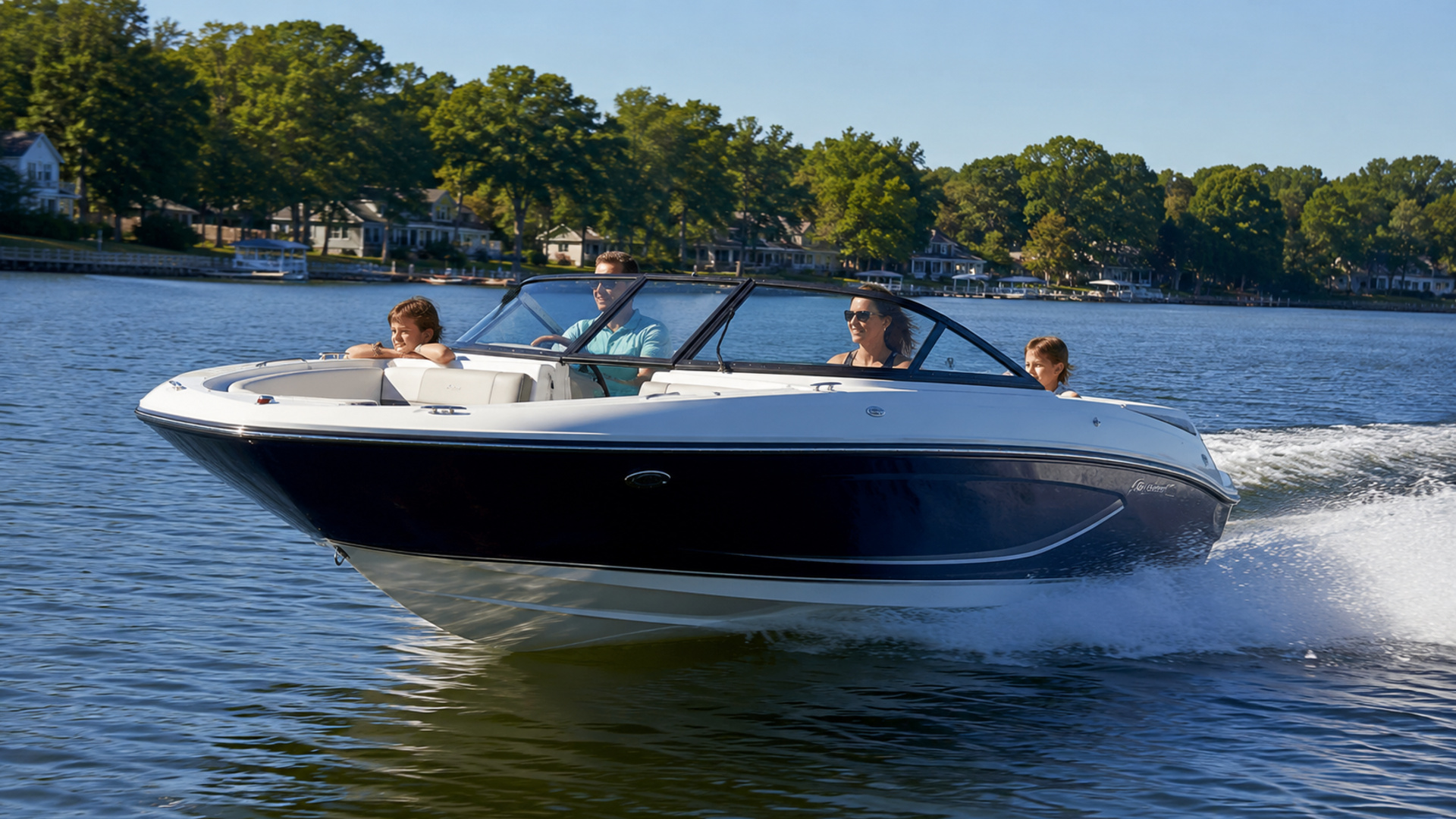
The VR4 Bowrider has a favorable amount of power for its length. Two hundred horsepower can give an 18-foot-9-inch hull strong acceleration without requiring the buyer to move into the heavier VR5.
That is useful for a small family that wants watersports capability without a larger tow package.
The sea trial should still focus on real load. Ask whether the boat gets onto plane comfortably with the number of passengers you expect to carry.
Move some weight into the BeamForward bow. The short hull will respond more noticeably to passenger placement than a VR6.
Watch the driver’s sightline during acceleration. Bow rise should not create a period where the operator is uncomfortable with forward visibility.
The 19-degree deadrise supports ordinary recreational water. Cross typical wakes at several speeds instead of limiting the trial to smooth water.
Listen for driveline vibration as rpm changes. A damaged propeller or drive problem can be easier to hear under load.
Check trim response. The boat should react predictably when the drive is trimmed without requiring constant correction.
At low speed, practice reverse and turns. Sterndrive thrust comes from below the transom and feels different from steering a visible outboard.
Do several idle-to-plane transitions. The result tells you more about family use than one wide-open run.
If the 200-horsepower performance is attractive but the engine compartment is not, compare the VR4 Outboard with 150 horsepower before deciding the extra power is worth the maintenance.
The Bowrider should win because the whole package feels right, not because the speedometer briefly shows a larger number.
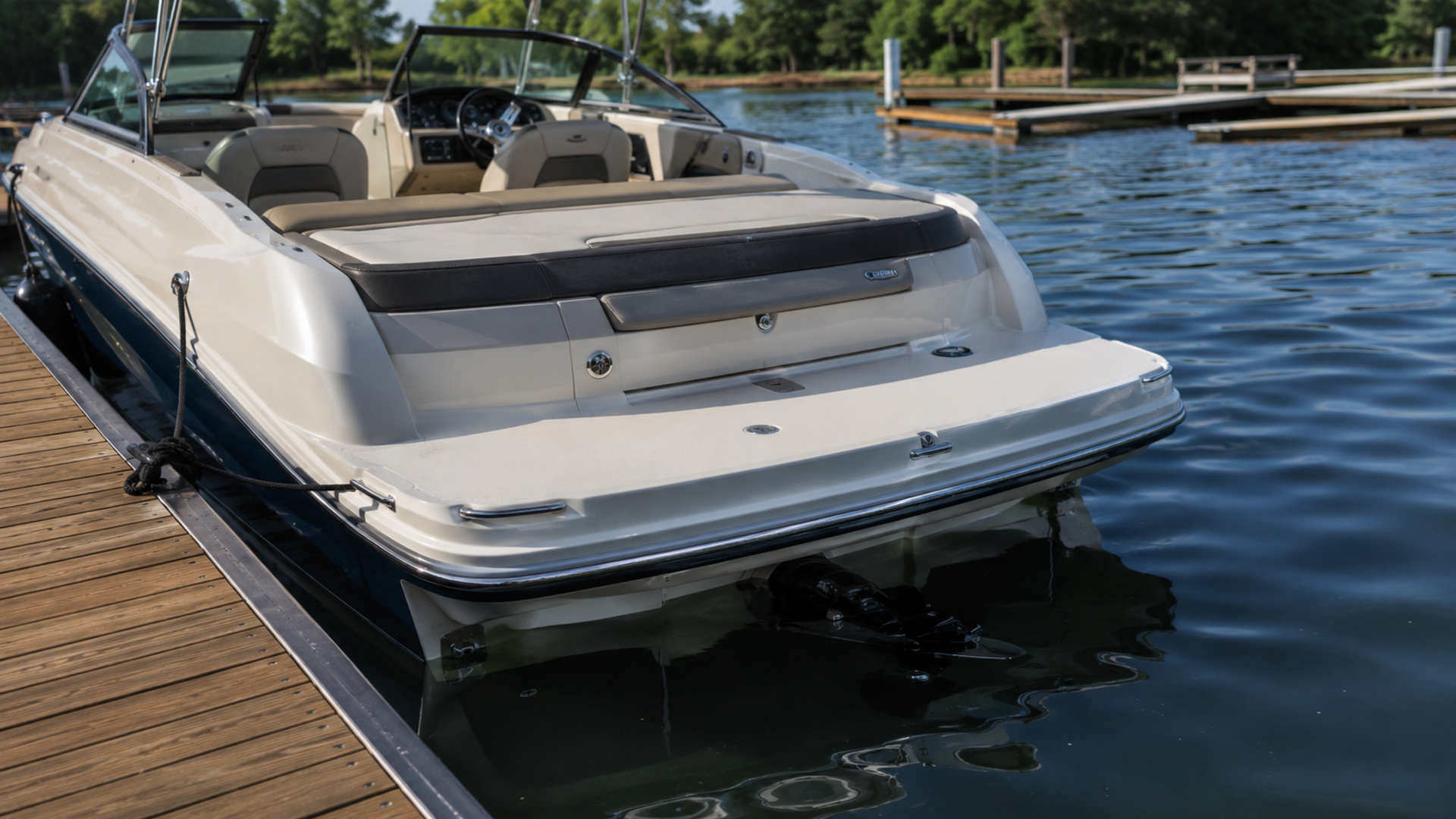
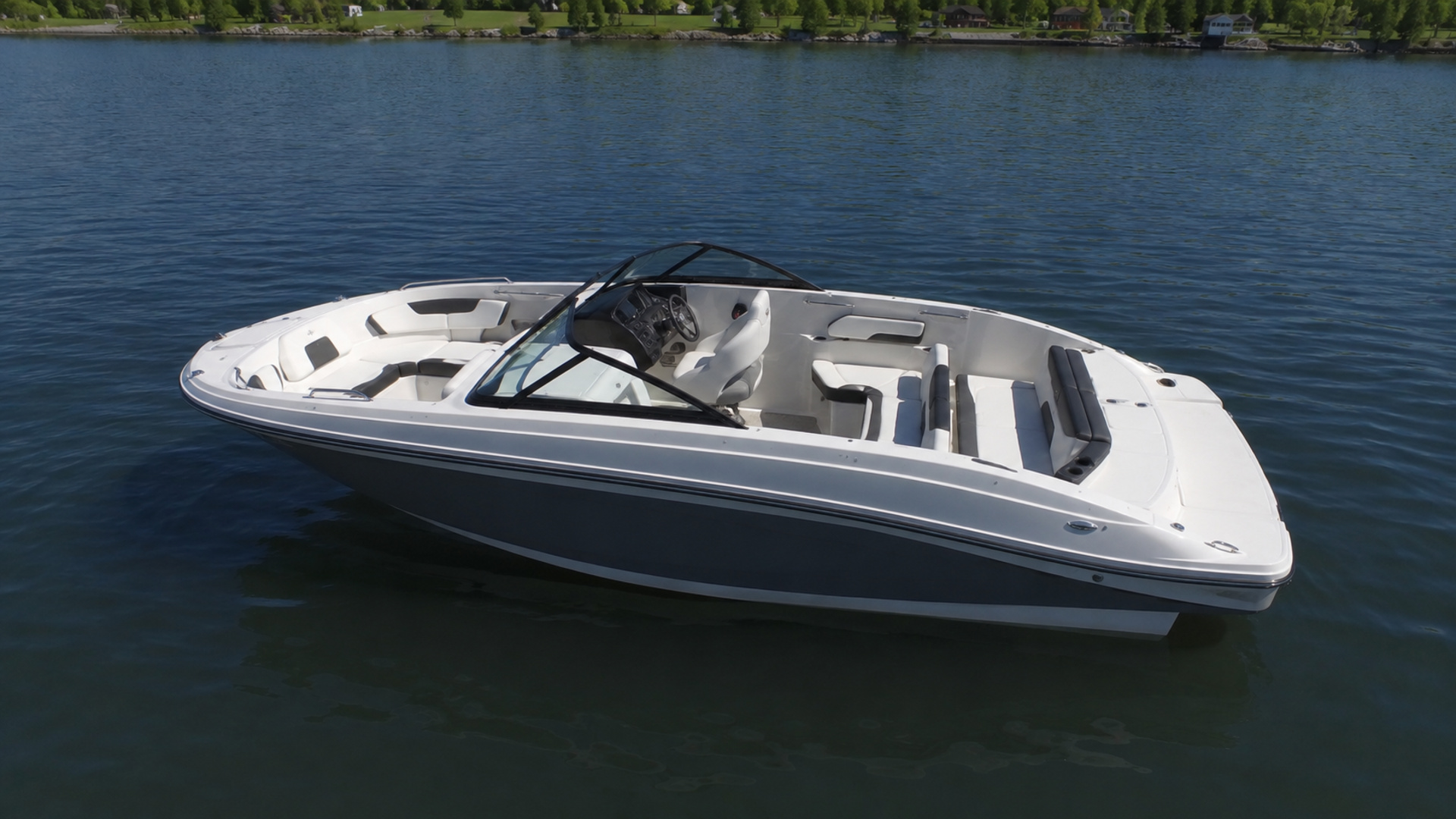
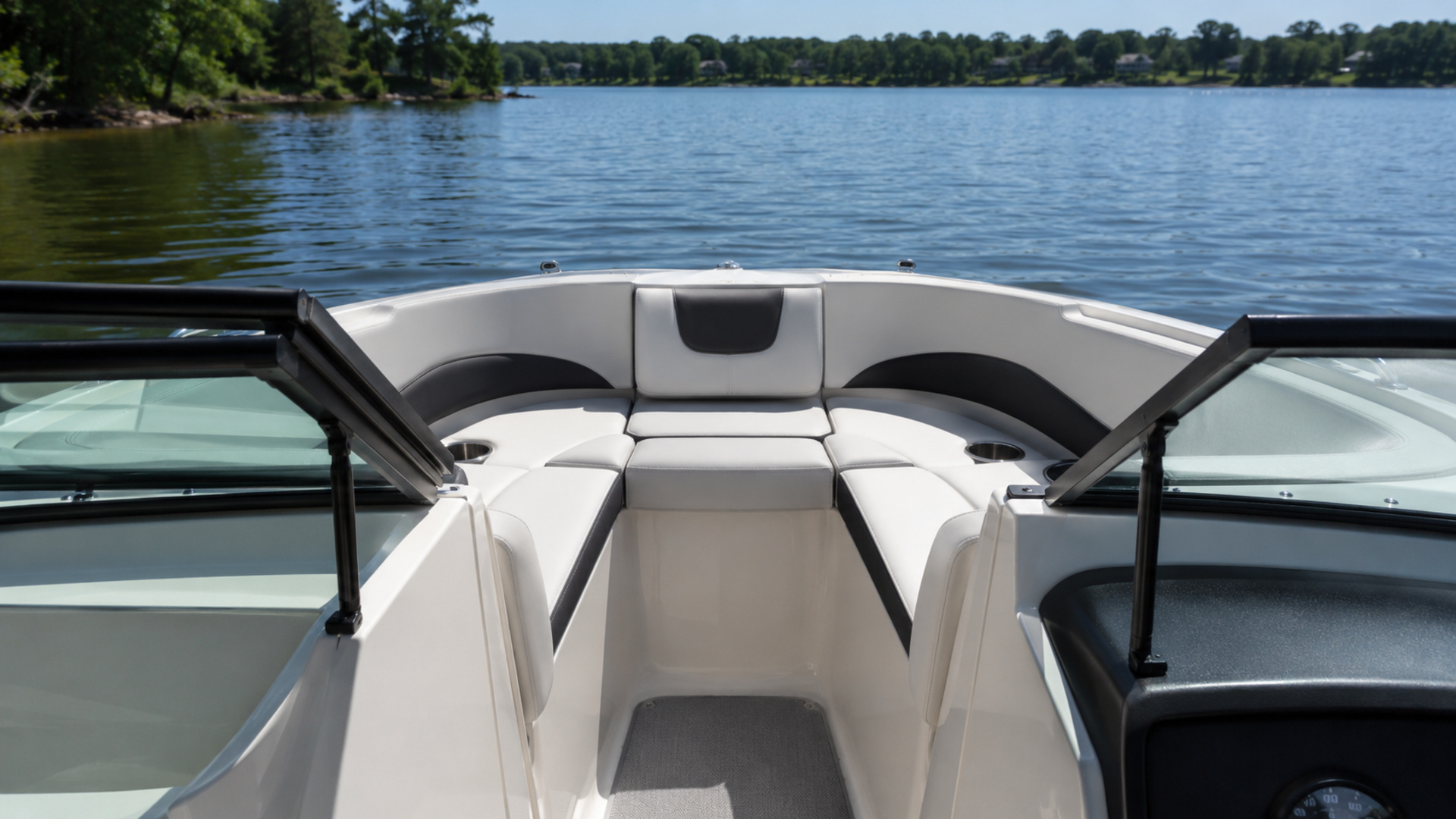
BeamForward gives the VR4 Bowrider a surprisingly useful bow for a compact hull. Bayliner carries more of the 7-foot-6-inch beam forward instead of letting the seating taper quickly toward the stem.
That creates more adult-capable room and more storage under the forward cushions.
High gunnels add a contained feeling that can matter to families with children. The extra depth is especially noticeable when passengers are sitting forward while the boat is moving.
AftAdvantage does the opposite job at the stern. The cockpit extends toward the aft end of the running surface before the swim platform is added beyond it.
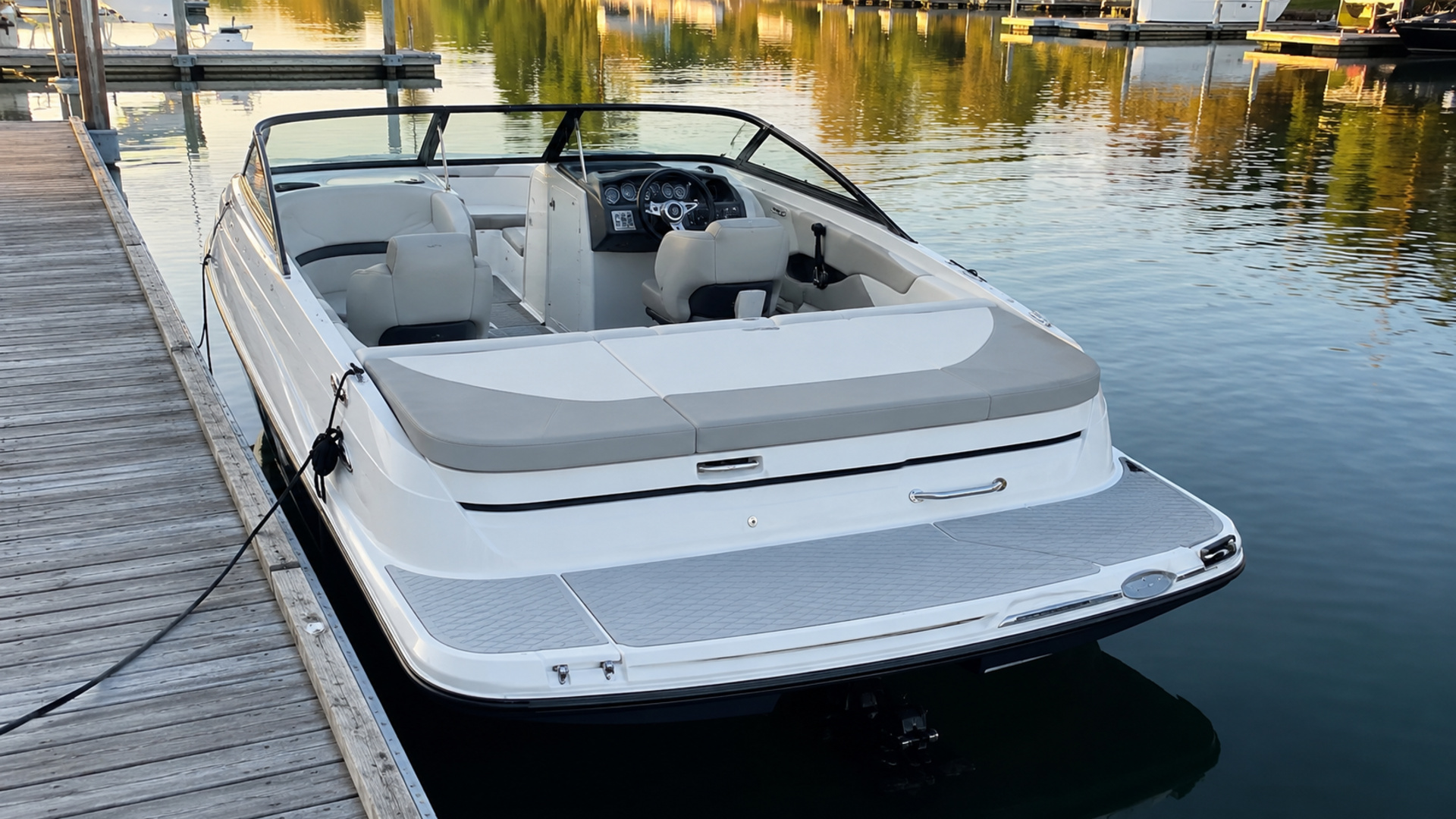
Because the engine is below deck, the center of the platform remains open. That is the defining deck-level difference from the VR4 Outboard.
A person climbing the telescoping ladder can step toward the cockpit without moving around an outboard cowling.
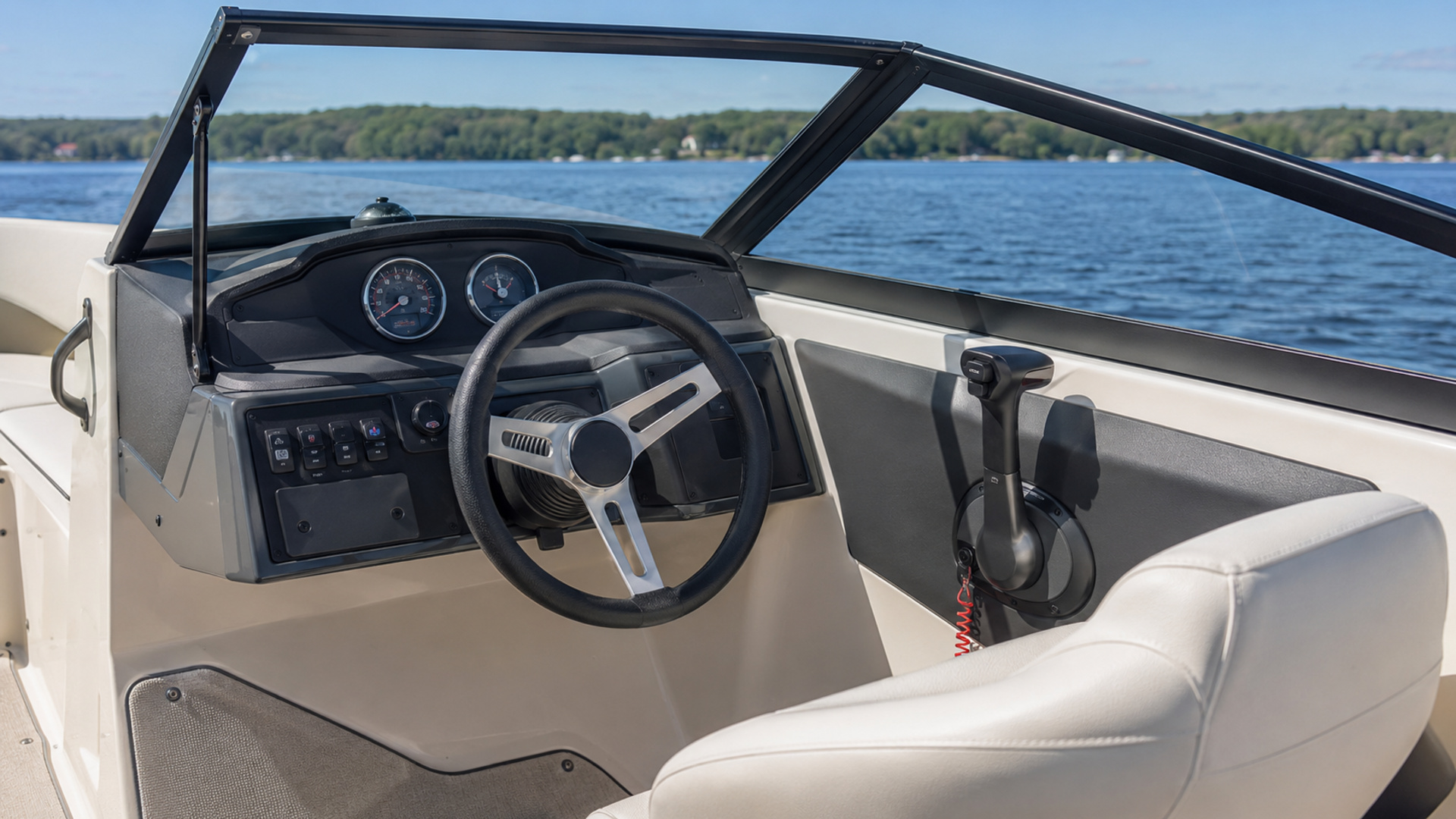
The helm seat swivels 180 degrees, allowing the driver’s seat to become part of the social cockpit at anchor.
In-floor ski and wakeboard storage gets long equipment out of the passenger area. On a seven-person boat, that is essential space management.
Bayliner also offers a bow filler cushion that changes the forward seating into a larger lounge.
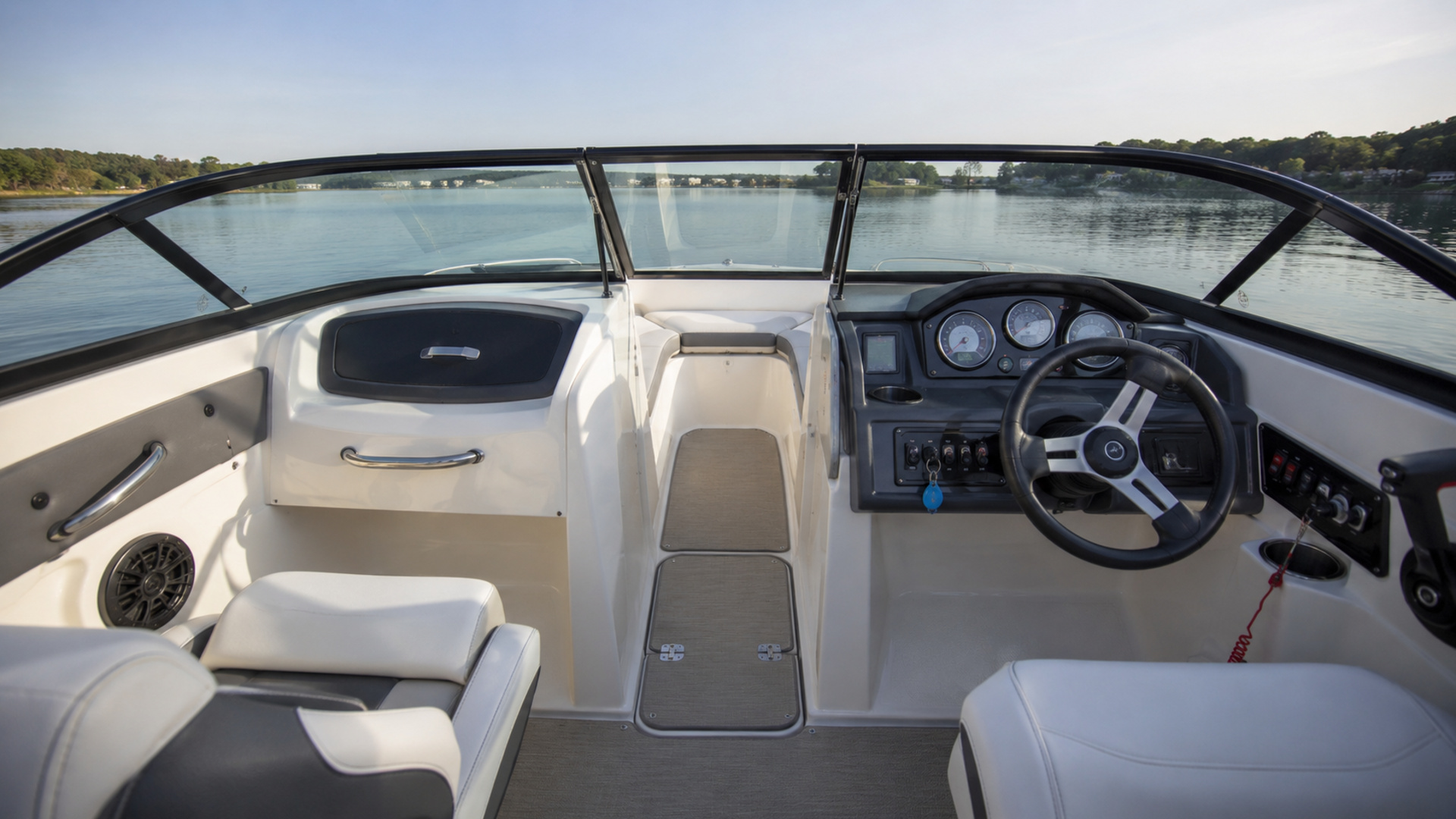
The opening-center sport windshield lets passengers move between cockpit and bow while preserving useful wind protection.
Flooring and seagrass choices can make the interior feel more finished, while appearance packages change the visual character without altering the core layout.
The platform is what buyers should test physically. Stand where a swimmer would board. Sit where someone would lounge. Open the engine hatch.
Then do the same on the Outboard.
If the clean center platform immediately feels more natural for your family, the sterndrive has a real purpose.
If nobody cares about stepping around the Mercury on the other boat, the Outboard’s simpler ownership should probably win.
200 HP MerCruiser With Alpha One – The compact sterndrive VR4 gets the full published 200 horsepower instead of the 115 to 150 HP range used by the Outboard.
The MerCruiser remains below the aft deck, leaving the center of the platform open for swimmers rather than occupied by an outboard powerhead.
The driver's chair rotates into the social cockpit after the boat stops, which matters on an interior this compact.
Long tow gear sits below deck rather than taking over a seven-person cockpit.
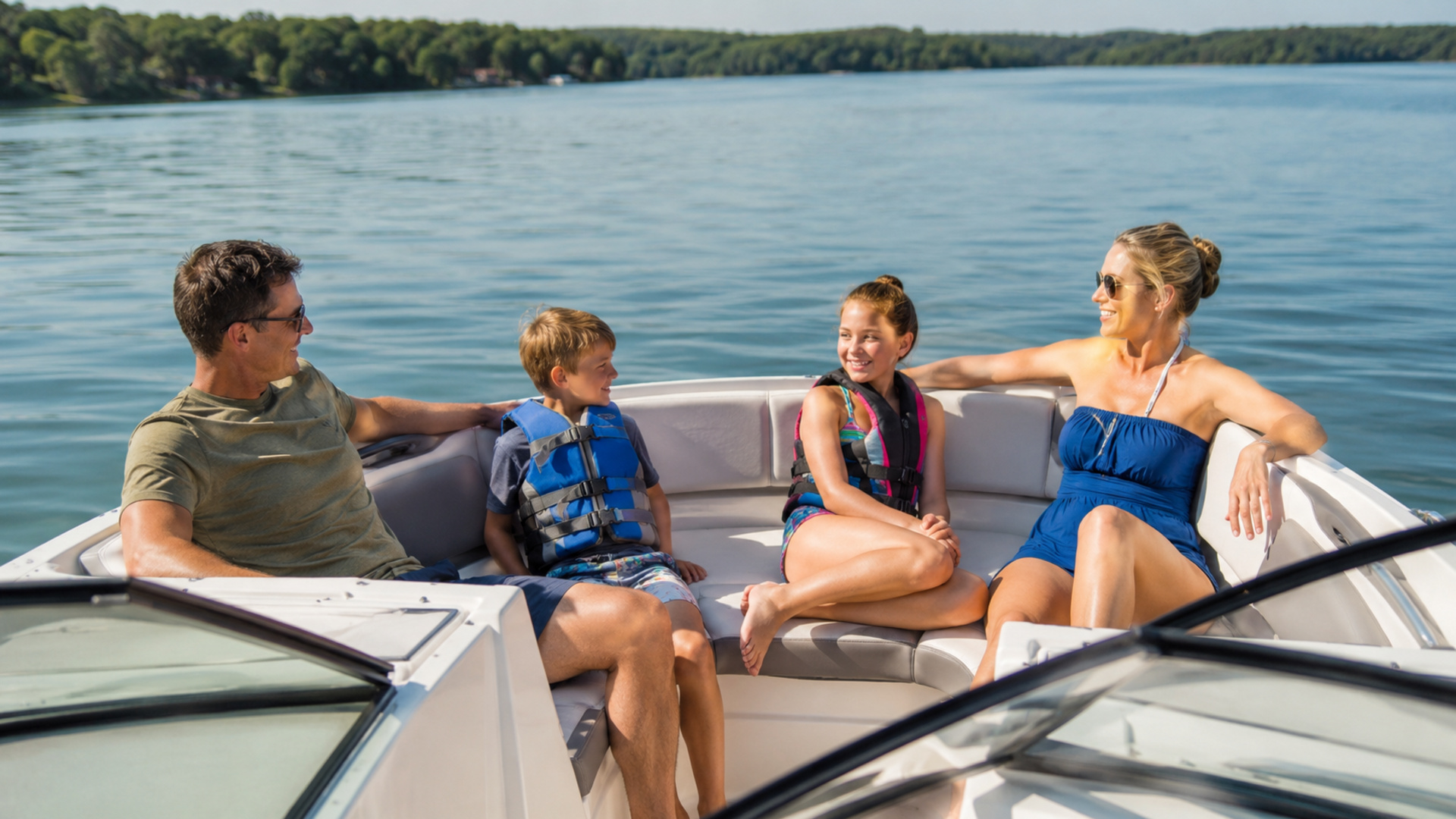
The BeamForward seating can become a broad forward lounge for anchored afternoons.
The windshield protects the helm area while keeping bow access direct.
A used VR4 Bowrider should be inspected like an aging sterndrive package, not like a new boat with old upholstery.
The available market reaches back to 2018, so some examples have already completed many winterization cycles and hundreds of ramp launches.
Start beneath the aft deck. Look for water staining, corrosion, oil residue, deteriorated hoses, damaged sound insulation, and improvised wiring.
Run the blower. Verify the automatic bilge pump.
Inspect the Alpha One drive from every angle. Look at bellows, propeller, skeg, trim hardware, and paint condition.
Ask when the drive lubricant was serviced. Ask when bellows and gimbal components were inspected.
Check cold start and idle quality. Listen closely during forward and reverse engagement.
Inspect the fuel fill and venting for signs of leakage or deterioration on older examples.
Test the four-speaker stereo, multifunction gauges, horn, navigation lights, and 12-volt outlet.
Open in-floor storage and look for persistent moisture or mildew. Weak covers often reveal themselves in hidden compartments first.
Inspect the windshield center opening for alignment. Repeated foot traffic can loosen hardware over years.
If a tower is fitted, inspect attachment points for gelcoat cracking or movement.
Then inspect the trailer. Tires, bearings, brakes where fitted, bunks, winch, lights, coupler, and corrosion can produce immediate costs.
Scarcity should never make a mechanically weak Bowrider acceptable. Travel for the cleaner boat if that is what the thin market requires.
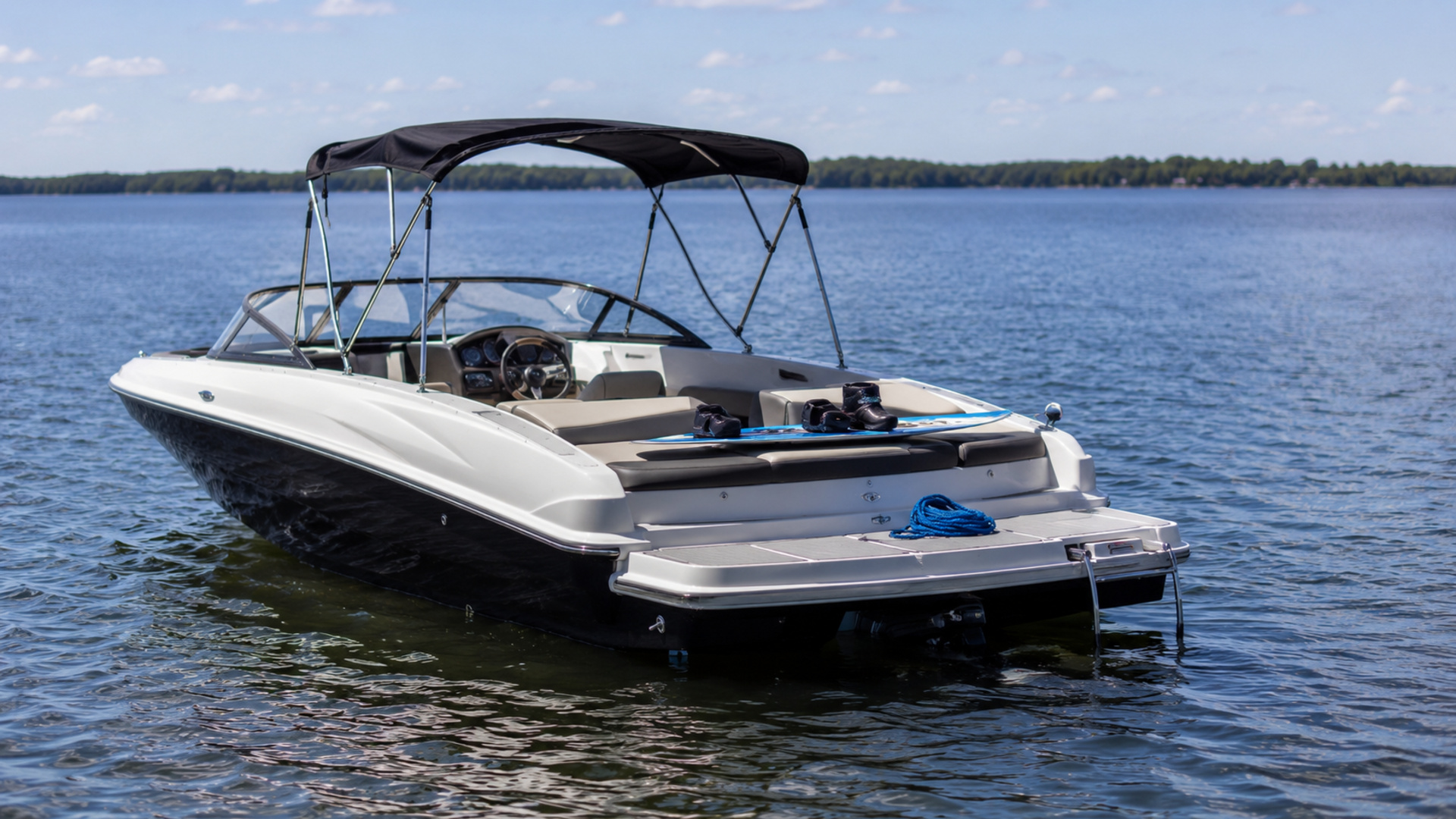
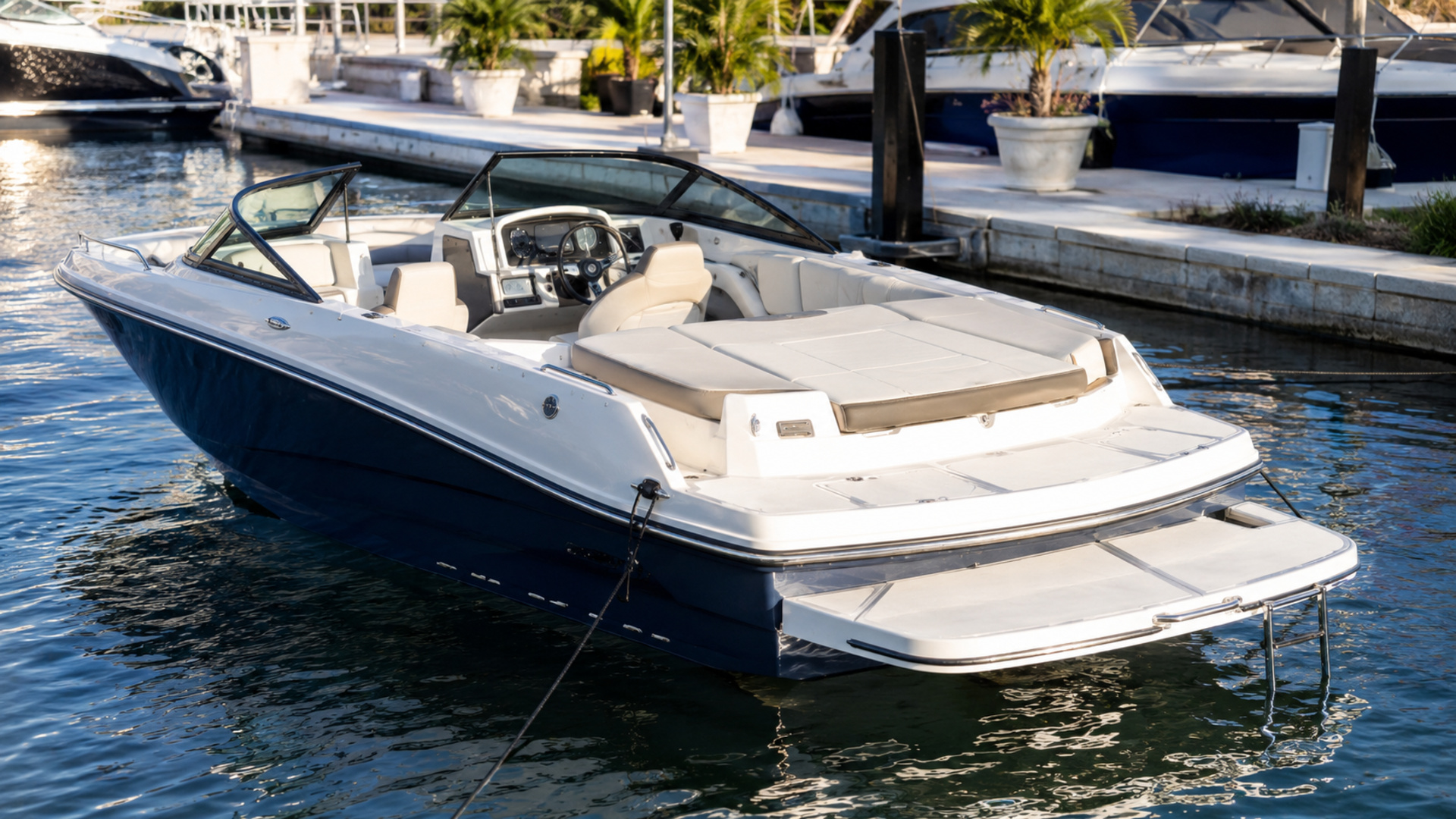
Bayliner publishes 21 feet 7 inches of storage length and 6 feet 11 inches of height on trailer for the referenced VR4 platform.
The trailer beam is listed at 8 feet 6 inches, which should be used when measuring a gate or garage opening.
The referenced specification lists approximately 3,520 pounds with trailer. Confirm the actual trailer and model year before treating that figure as exact for a used boat.
A full 33-gallon tank, battery, covers, tower, cooler, and watersports equipment increase real road weight.
The compact dimensions are one of the strongest reasons to stay with the VR4 Bowrider rather than moving to the VR5.
A single-axle trailer is easier to position in a driveway than a large tandem rig, but it still needs tire and bearing maintenance.
Older trailer tire date codes deserve attention even when tread looks new. Boats often sit more than they travel.
A seasonal slip can increase convenience, but leaving an Alpha One in the water adds corrosion, anode, and growth considerations.
Trailer storage makes drive inspection and winterization easier. It also lets the owner move between lakes without paying for permanent dockage.
The VR4 Bowrider delivers a traditional I/O experience in a genuinely portable package. That portability is part of the model’s value and should not be lost through poor tow-vehicle or storage planning.
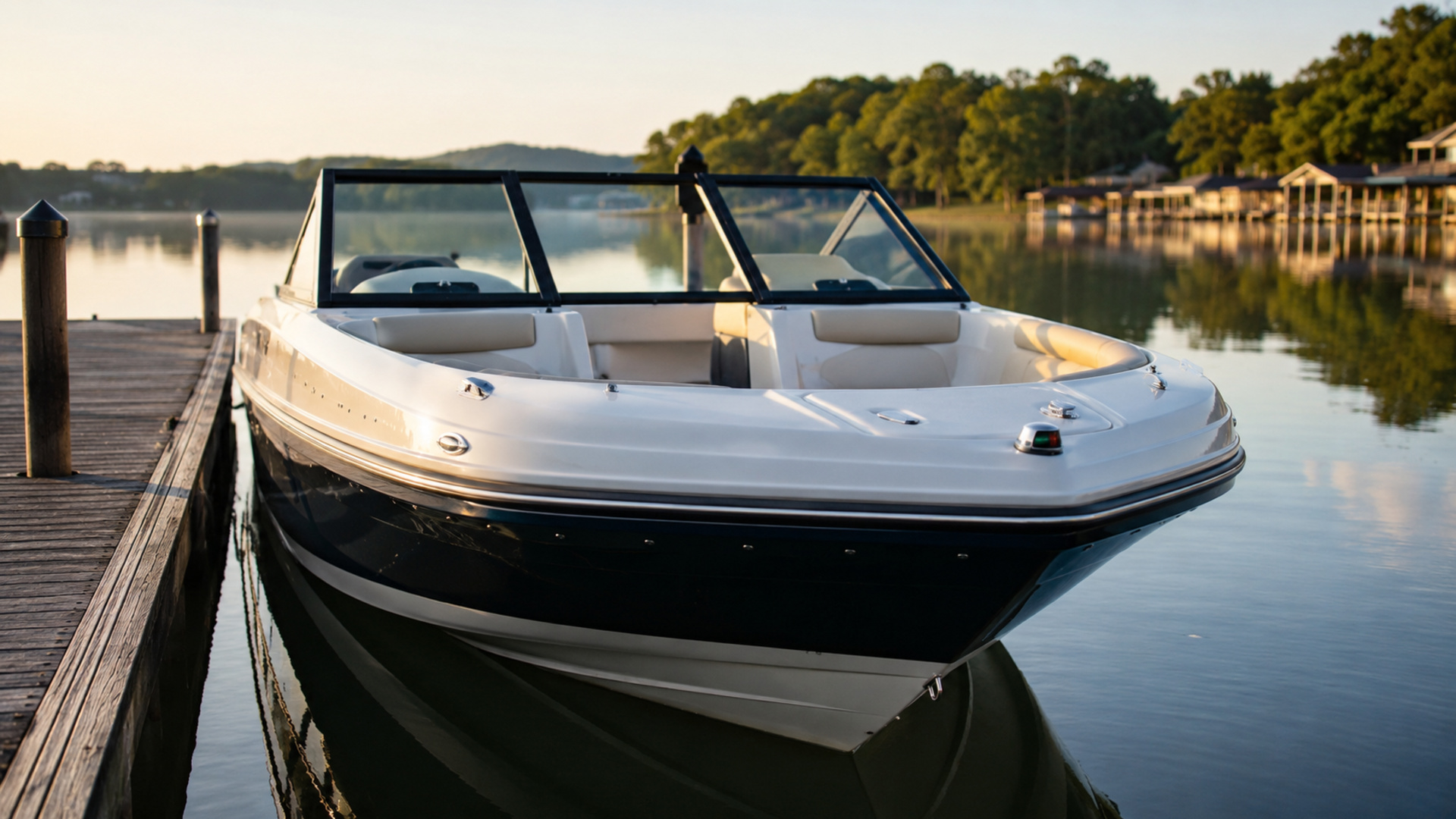
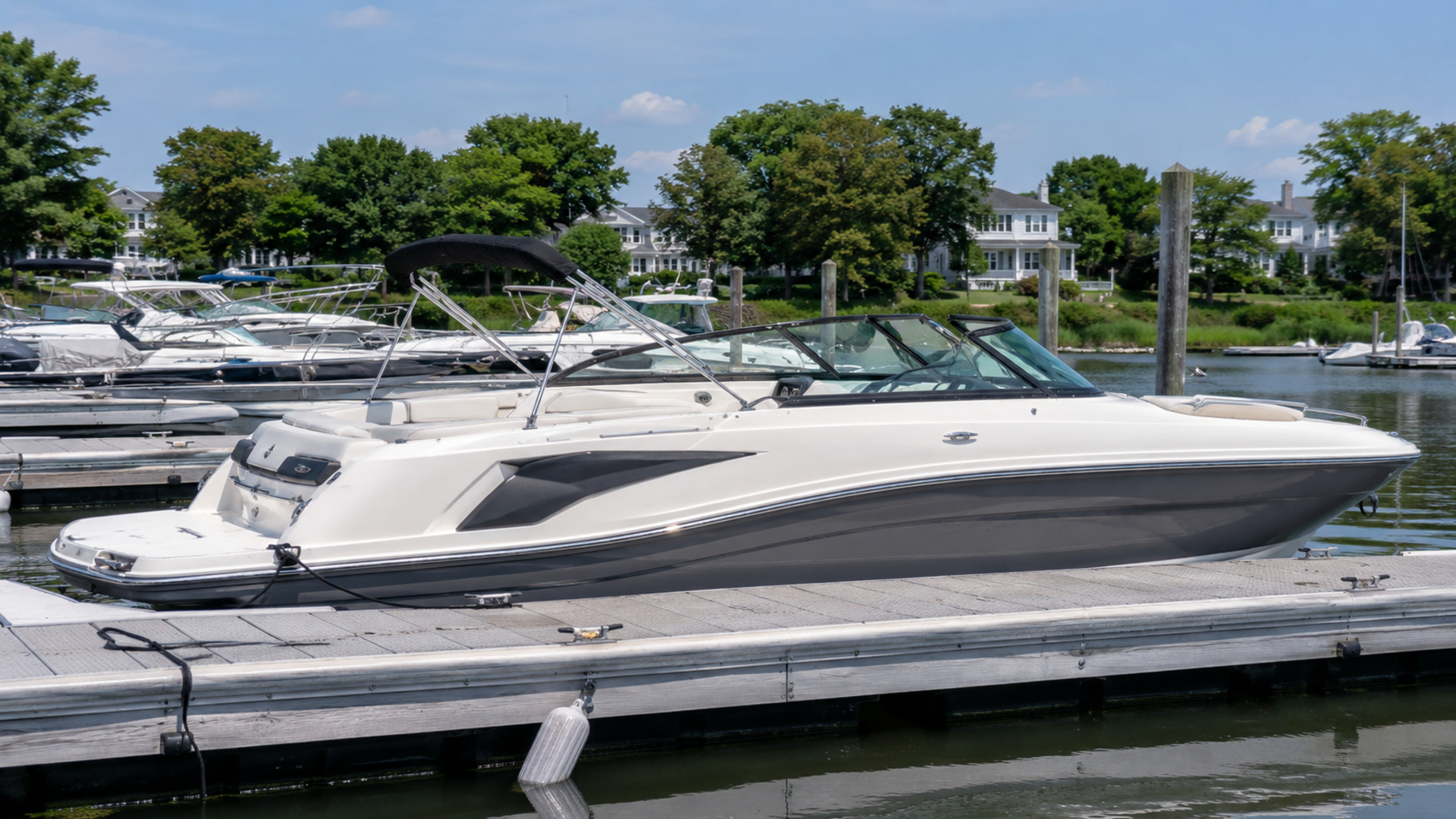
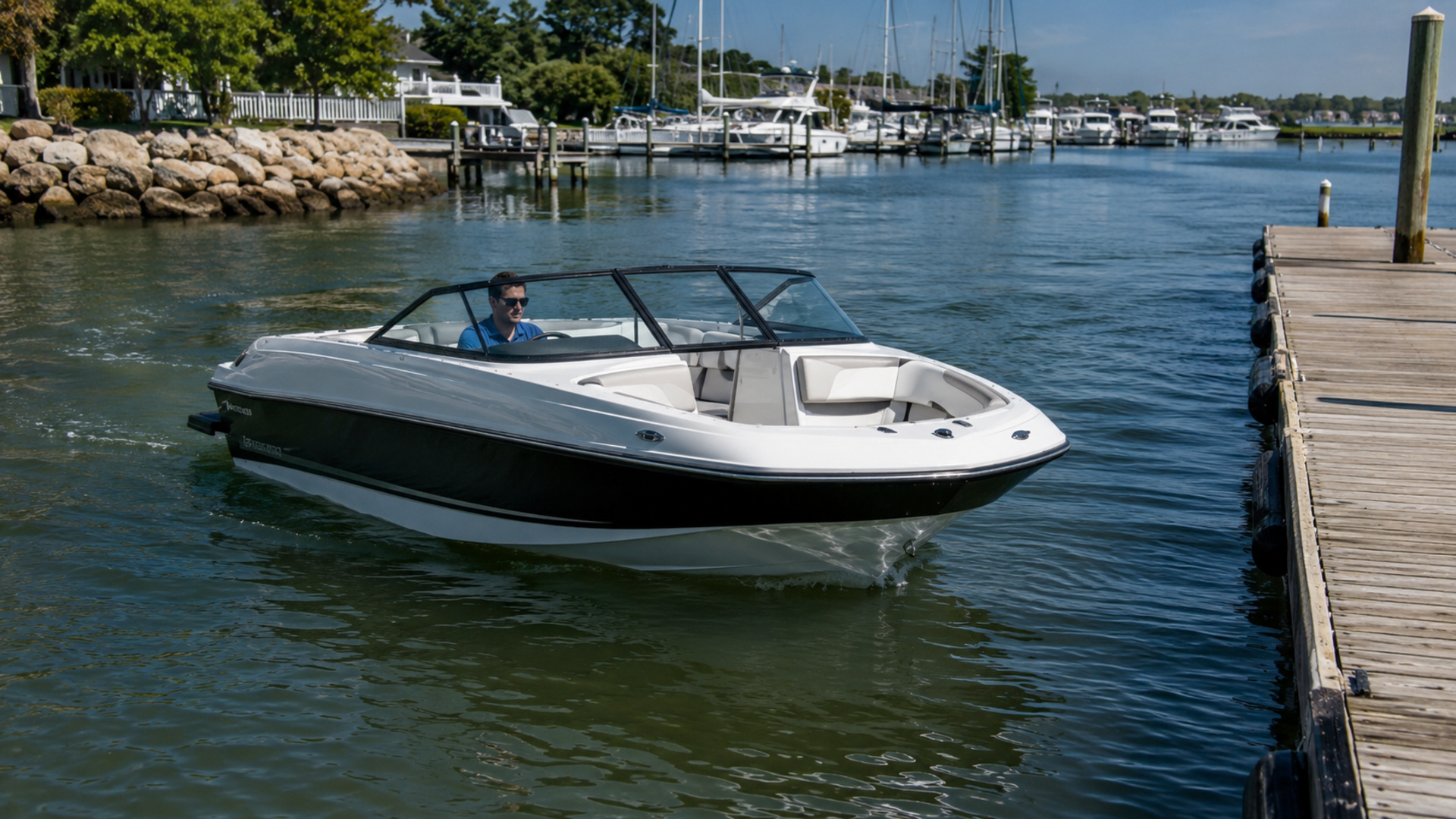
The VR4 Bowrider has the thinnest current market of these VR variants.
Buyers do not have a huge nationwide pool of nearly identical sterndrive boats.
A desired color or low-hour example may require travel. A clean boat with documented drive work may justify attention even when it is not the closest listing.
Condition should still outrank convenience. A 2021 with weak service is not a good purchase simply because another Bowrider is six hours away.
Current asking-price averages on this hull are lower for the Bowrider than the Outboard, unlike the VR5 and VR6 where the sterndrive average is higher.
Do not turn that into a rule that the VR4 Bowrider is worth less. Eight listings are too few to make propulsion alone explain the market.
Age mix matters. Current Bowrider listings stop at 2023, while Outboard listings extend through 2027.
Sterndrive condition should make the largest value adjustment. Bellows, gimbal hardware, drive lubricant, cooling-system care, and winterization can create expenses large enough to erase a small purchase discount.
Trailer health is next. An older single-axle trailer can need tires, bearings, brakes, bunks, or wiring immediately.
Appearance packages, flooring, tower equipment, and bow cushions can add utility but should not distract from mechanical quality.
The buyer who insists on this clean stern should be prepared to wait for the right boat rather than force a bad local listing to work.
Pricing varies. Model year, engine package, options, trailer, condition and dealer all move the number, and listings change weekly. Send us the boat you are looking at and we will price that exact one.
Illustration only and not an offer of credit.
Use the actual purchase price of the used Bowrider you found rather than comparing it with a hypothetical inventory boat.
Illustration only and not an offer of credit. Your actual rate and term depend on credit profile, vessel age, loan amount and ownership structure.
The two VR4s share 18 feet 9 inches of hull length, a 7-foot-6-inch beam, seven-person capacity, a 33-gallon tank, and the same basic BeamForward/AftAdvantage philosophy.
The Bowrider uses a 200-horsepower MerCruiser with Alpha One drive.
The Outboard starts with 115 horsepower and reaches 150 with Mercury FourStroke power.
The Bowrider gives the family a clear central swim platform and hides the powerhead below deck.
The Outboard puts the engine in view but makes inspection, flushing, lower-unit service, propeller changes, and future repowering easier.
Inventory strongly favors the Outboard. Current listings contain more than four times as many Outboards.
That supply difference matters if you want a particular year, color, engine, or location.
Buy the Bowrider when the integrated stern is worth maintaining and worth waiting for.
Buy the Outboard when easy propulsion ownership and broader selection matter more than hiding the engine.
Buying a VR4 Bowrider is partly an exercise in refusing to let scarcity rush you.
Start by identifying the actual model year and engine hours. Current listings span 2018 through 2023, enough age for maintenance history to matter.
Ask for MerCruiser service invoices before traveling. Find out who performed winterization.
Determine whether bellows or related Alpha One service has been completed at appropriate intervals.
Inspect saltwater history carefully. A freshwater 2018 with documentation may be more attractive than a younger boat with visible drive corrosion.
Do not ignore the trailer because the boat is hard to find. A long-distance purchase may ask that trailer to travel hundreds of miles immediately.
Check tire date codes, bearings, lights, coupler, brakes where fitted, bunks, and winch.
Inspect upholstery seams and the engine hatch because the aft area receives heavy sun and foot traffic.
Open every storage compartment. Persistent moisture can reveal poor cover use.
Check the windshield and any tower hardware for looseness.
Sit at the stern before buying. If the clean platform does not immediately matter to your family, the Outboard should be the next comparison.
Look at Outboard listings in the same price range. The deeper inventory may offer newer boats or better service records.
If the Bowrider still wins, buy mechanical quality first and model year second.
The right sterndrive VR4 is worth waiting for because the entire purpose of choosing it is to enjoy the layout, not to inherit deferred drive work.
The thin market makes the exact listing important. Send Float Finance the year, asking price, seller type, location, and engine-hour information when available.
The VR4 Bowrider is 18 feet 9 inches long with a 7-foot-6-inch beam and 19 degrees of deadrise. Bayliner publishes an estimated draft of 2 feet 10 inches, but a separate maximum draft is not published in the referenced model specification. Storage length is 21 feet 7 inches.
Bayliner lists capacity for seven people and a maximum people-weight figure of 1,155 pounds in the referenced U.S. data. A full seven-person crew will use the compact cockpit quickly, so buyers who regularly carry that many adults should also sit in a VR5.
The sterndrive VR4 uses a 200-horsepower MerCruiser 4.5L MPI with Alpha One drive. Bayliner lists 200 horsepower as the maximum for this variant, so there is no 250-horsepower factory step like buyers find on the VR5 and VR6 Bowriders.
Choose the Bowrider when the clean integrated swim platform and hidden engine meaningfully improve the way your family uses the stern. The I/O also gives you 200 horsepower. The trade is more complex maintenance and a much thinner used market.
It requires sterndrive-specific attention. The engine compartment, blower, bellows, gimbal hardware, drive lubricant, cooling system, and winterization all belong in the routine. The VR4 Outboard keeps its engine external and is mechanically easier to inspect.
Current inventory contains only eight Bowrider listings from 2018 through 2023, compared with 35 VR4 Outboards. Buyers set on the sterndrive version may need to search farther from home or wait for a cleaner example.
Yes. Bayliner lists 21 feet 7 inches of storage length, 6 feet 11 inches of height on trailer, and a referenced boat-and-trailer figure around 3,520 pounds. Confirm the exact trailer and loaded weight on the boat you buy.
Stay with the VR4 if seven-person capacity and the compact 18-foot-9-inch hull fit your normal crew. Move to the VR5 when additional beam, cockpit room, and the option of 250 horsepower solve needs you already have rather than hypothetical future use.
Tell us a little bit about yourself and the boat you are looking to finance.