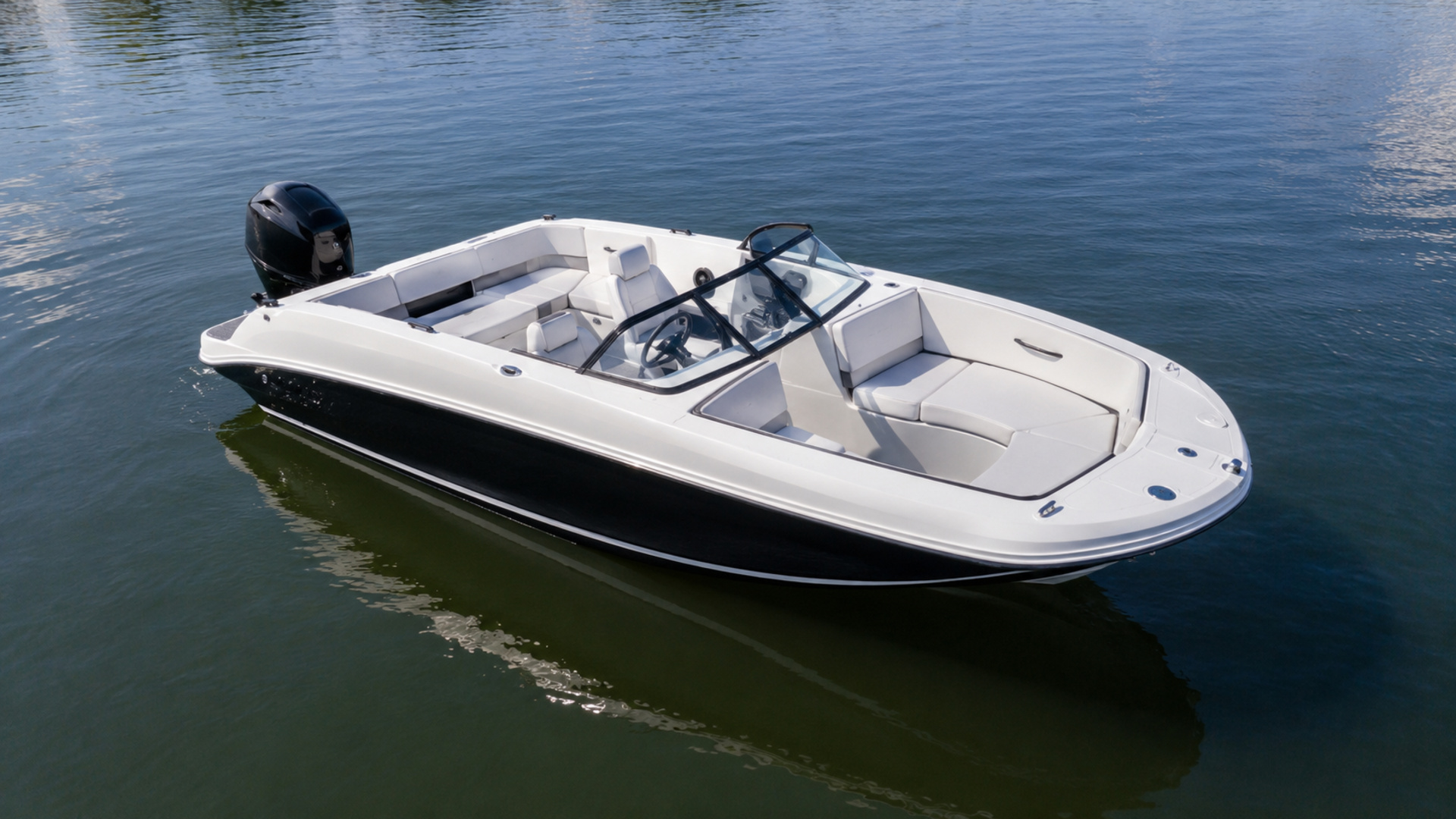
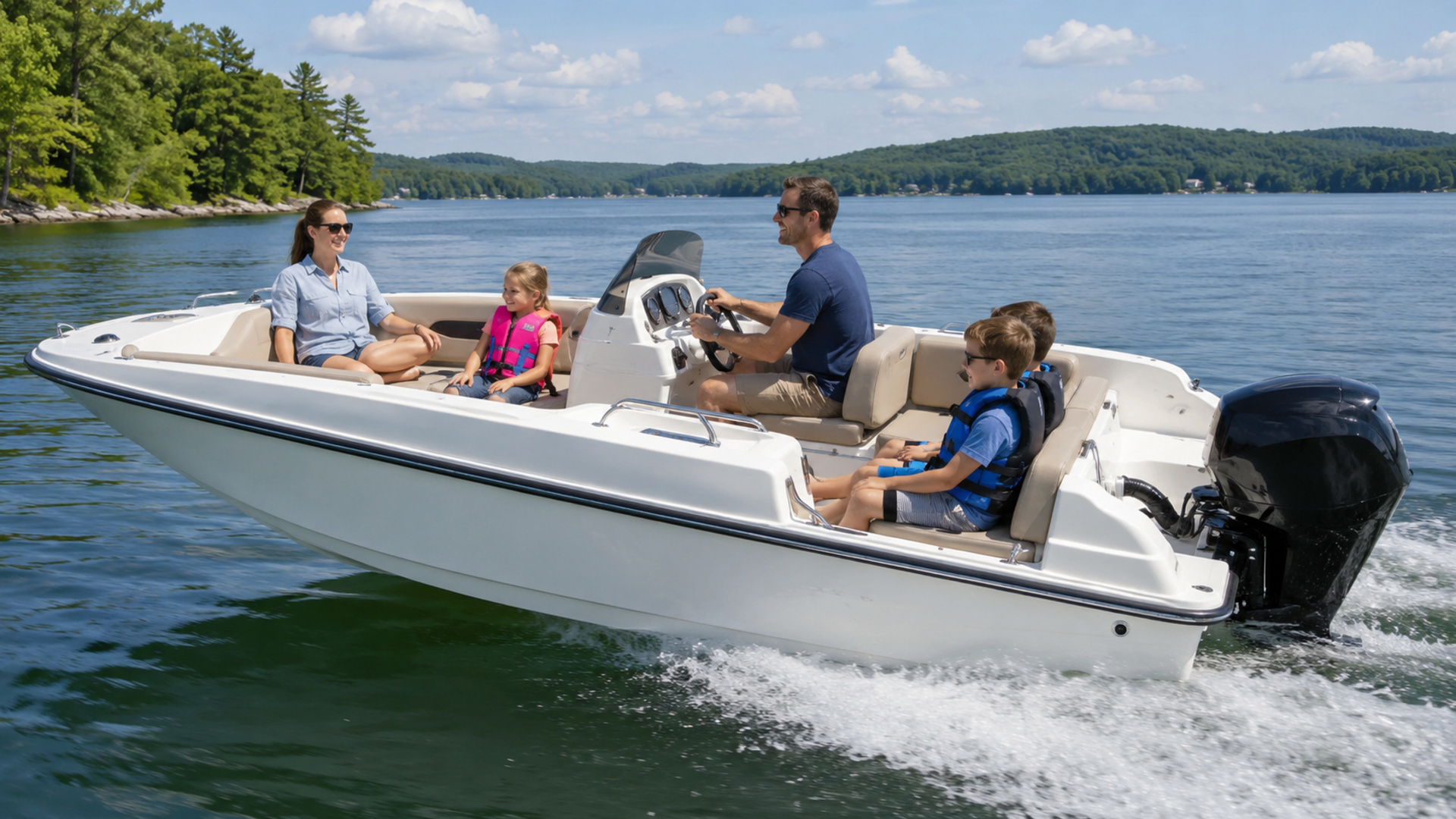
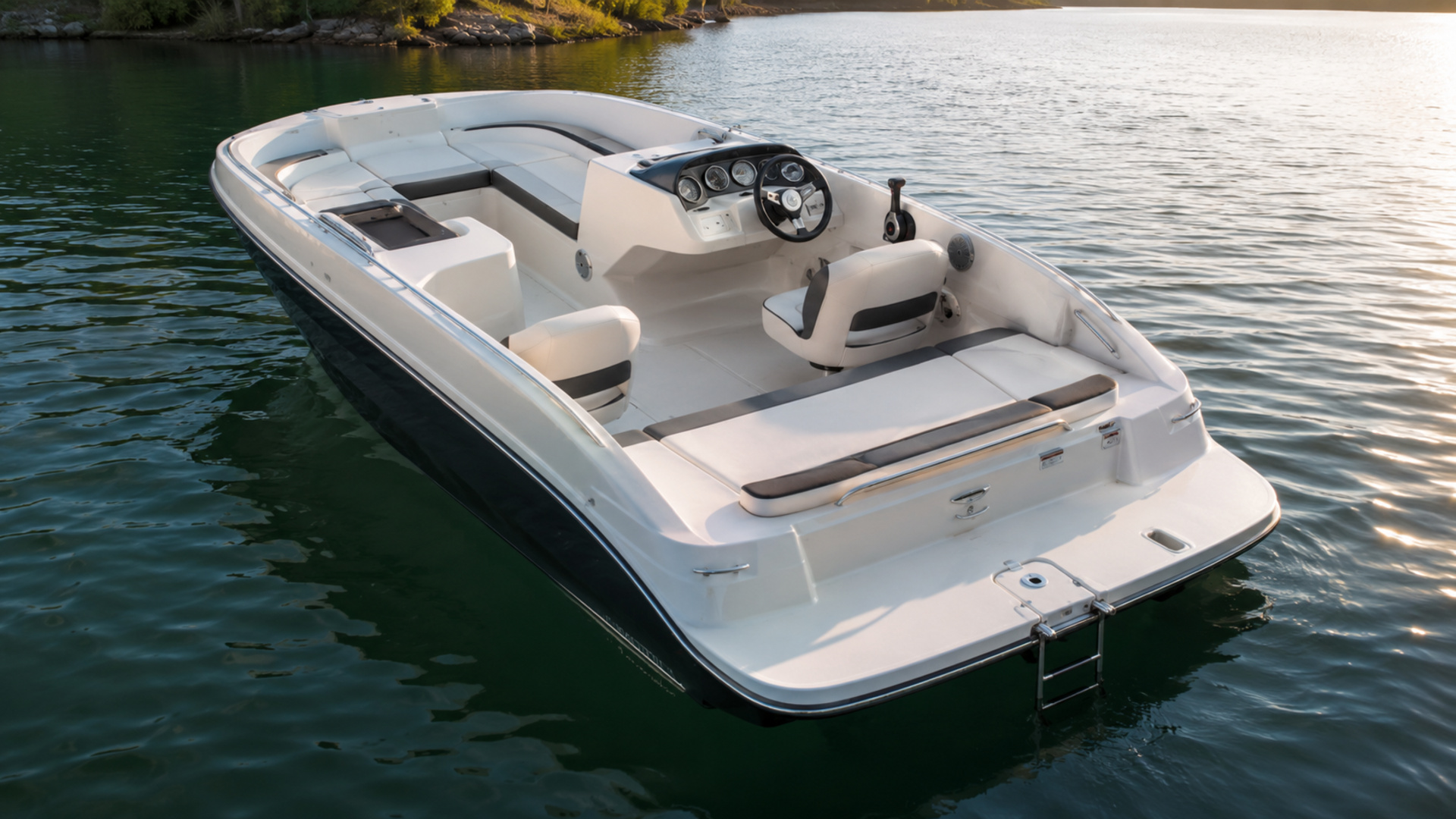
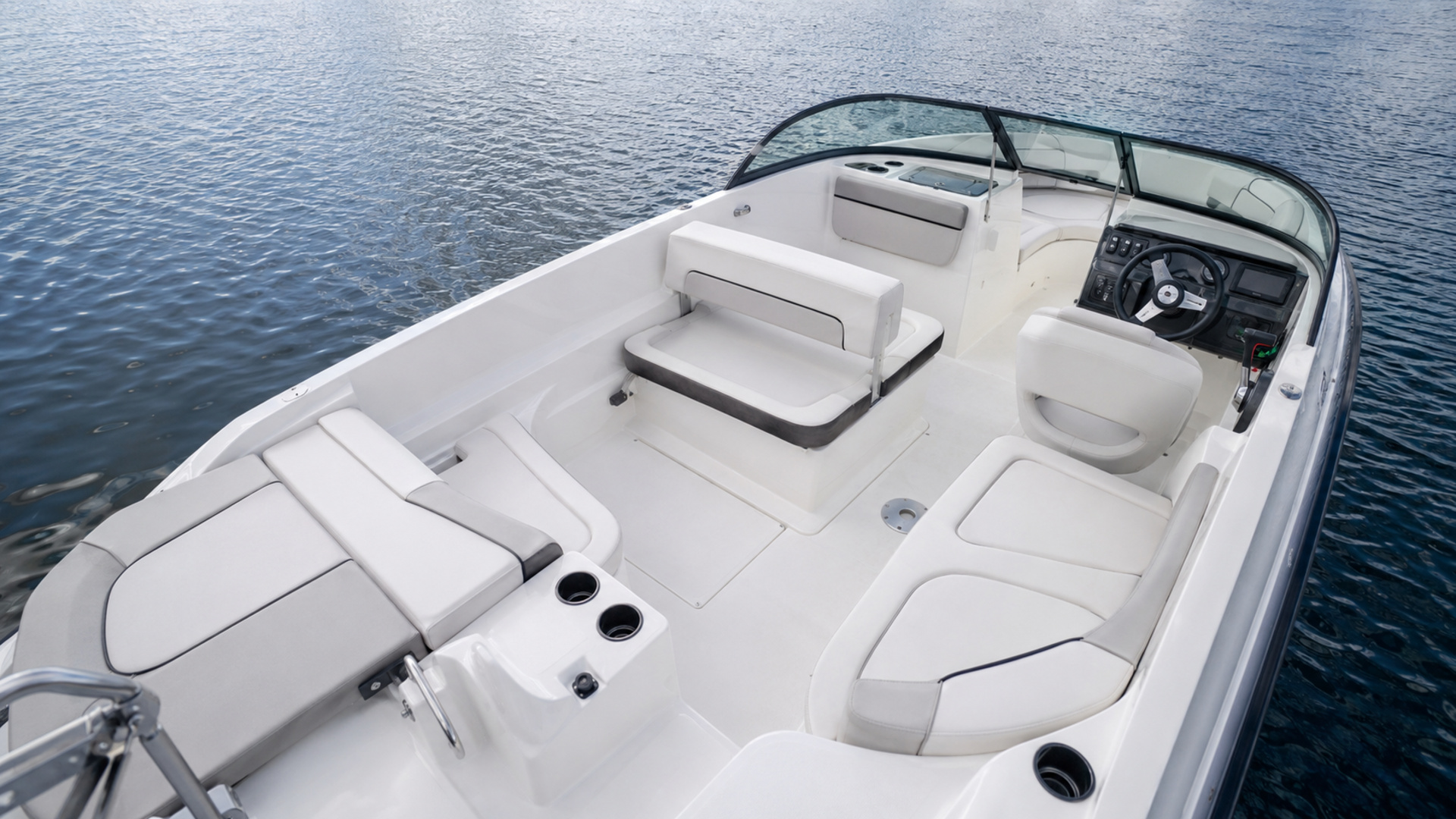
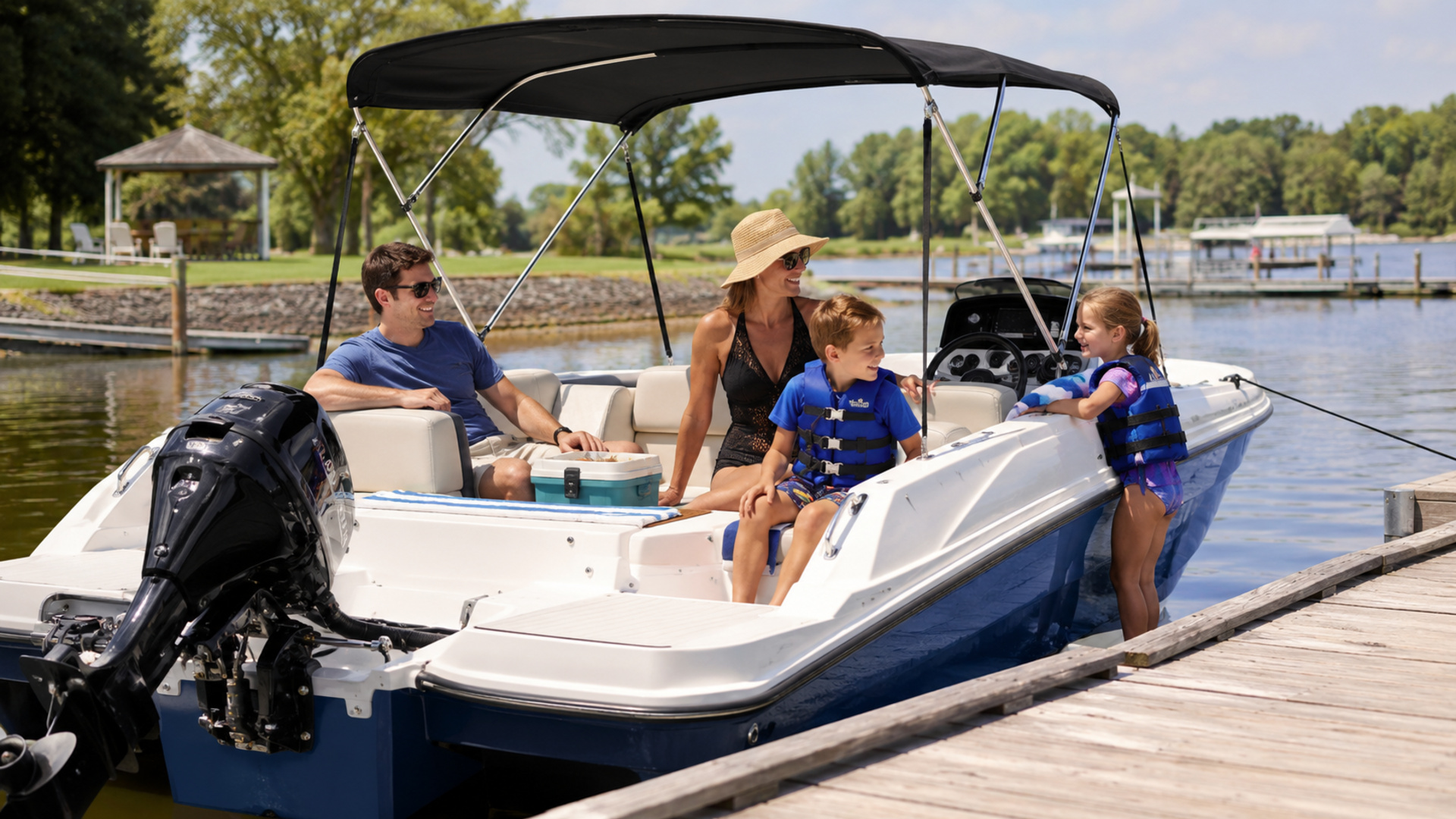
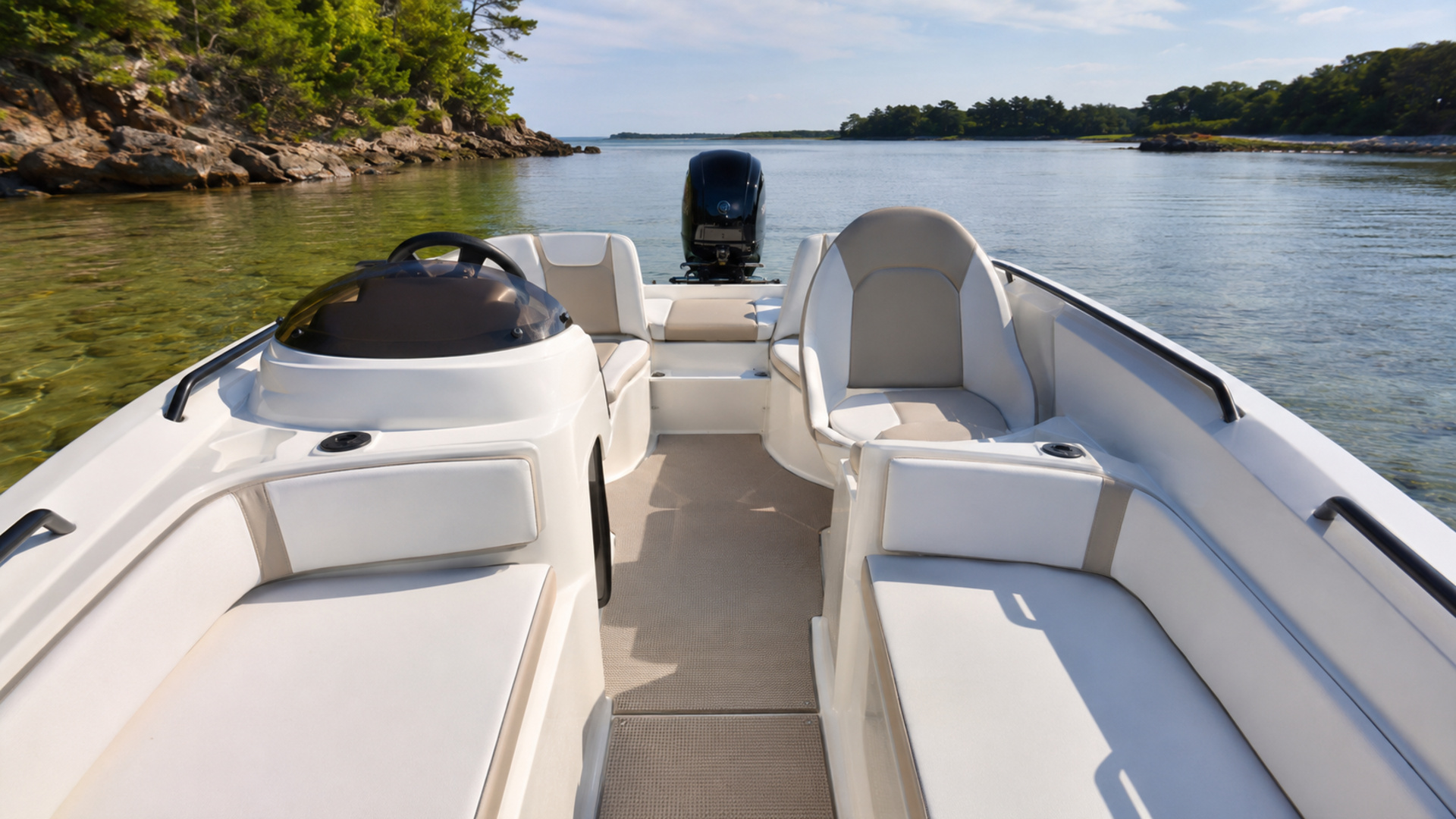
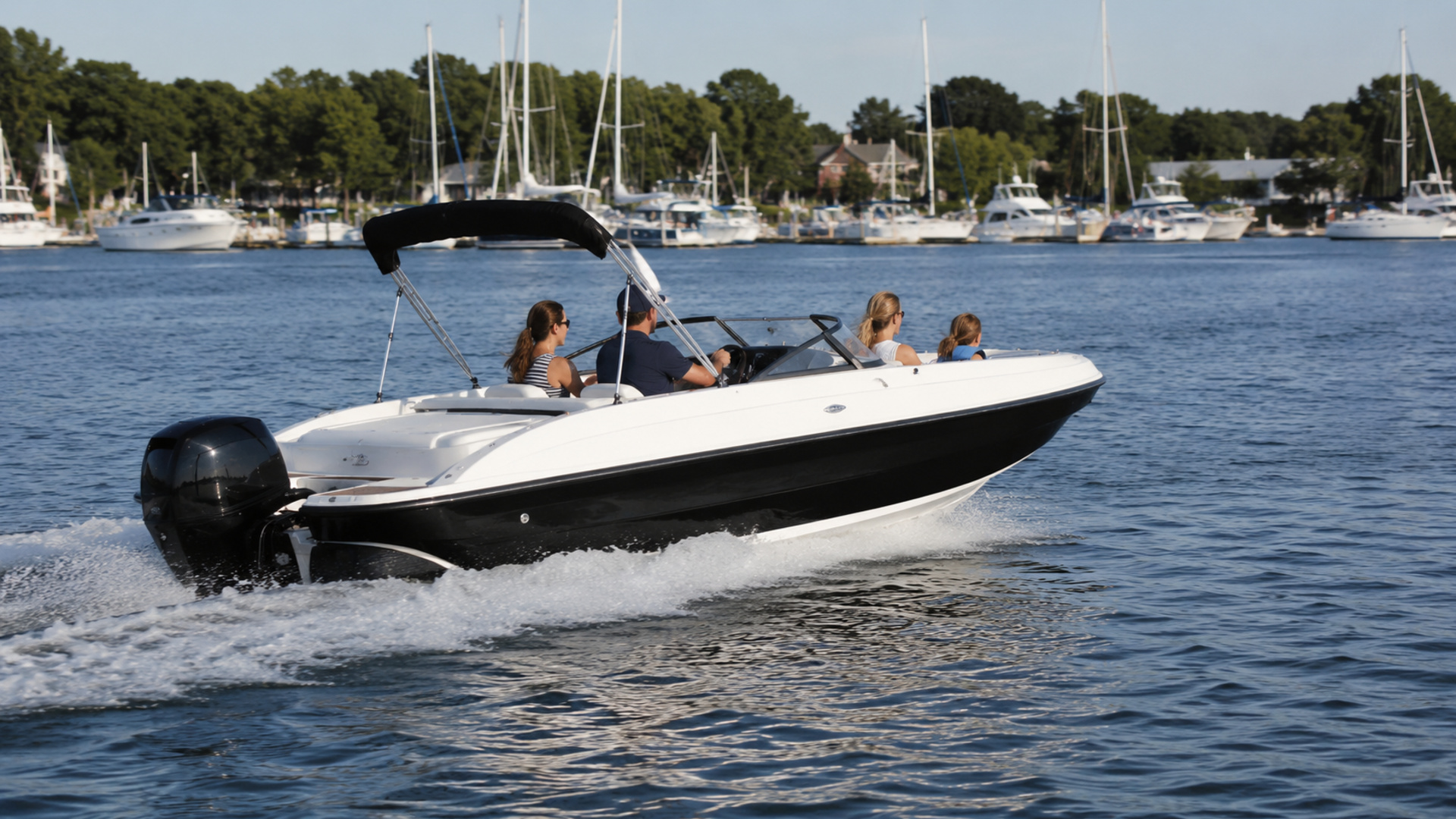
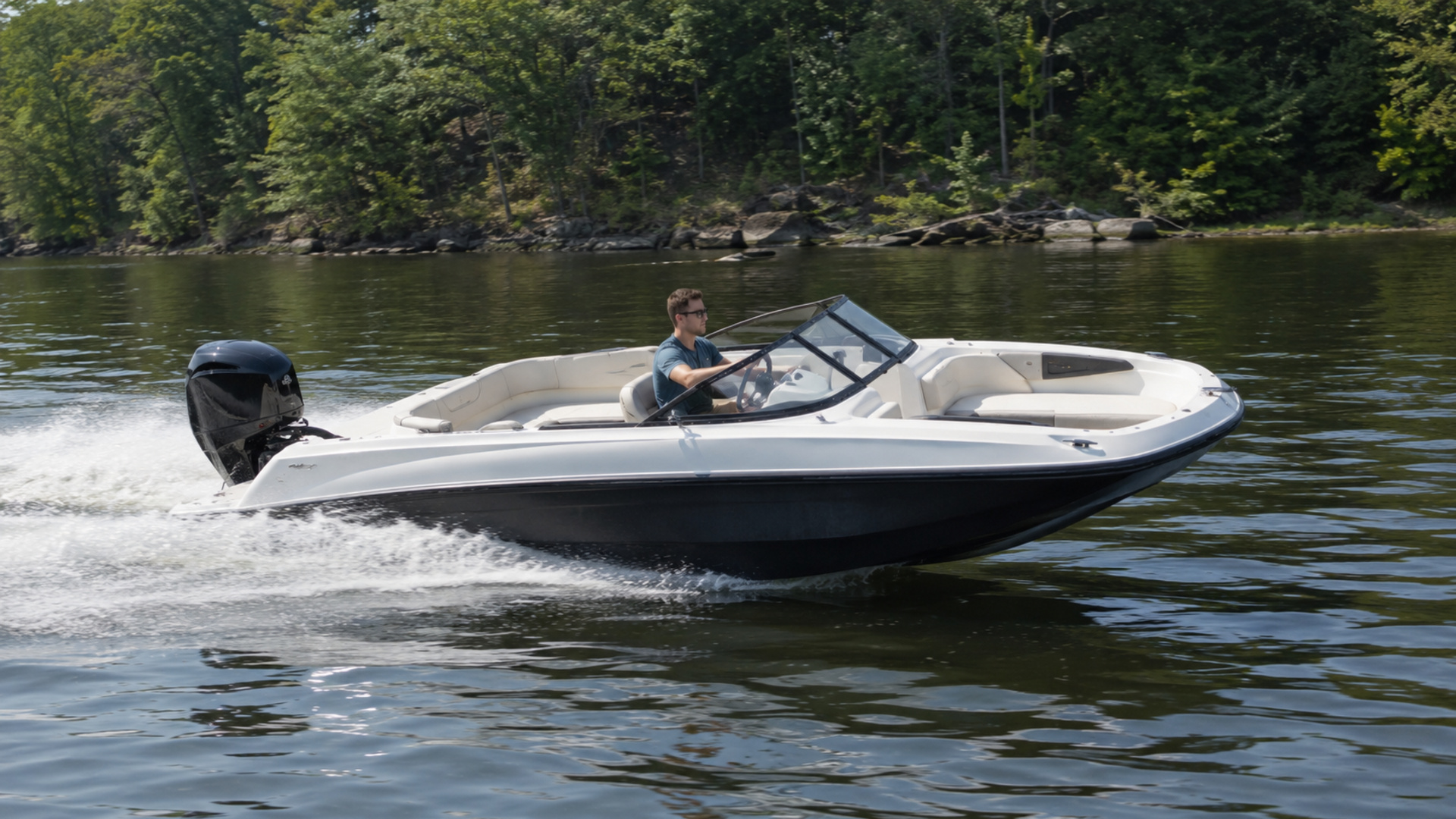
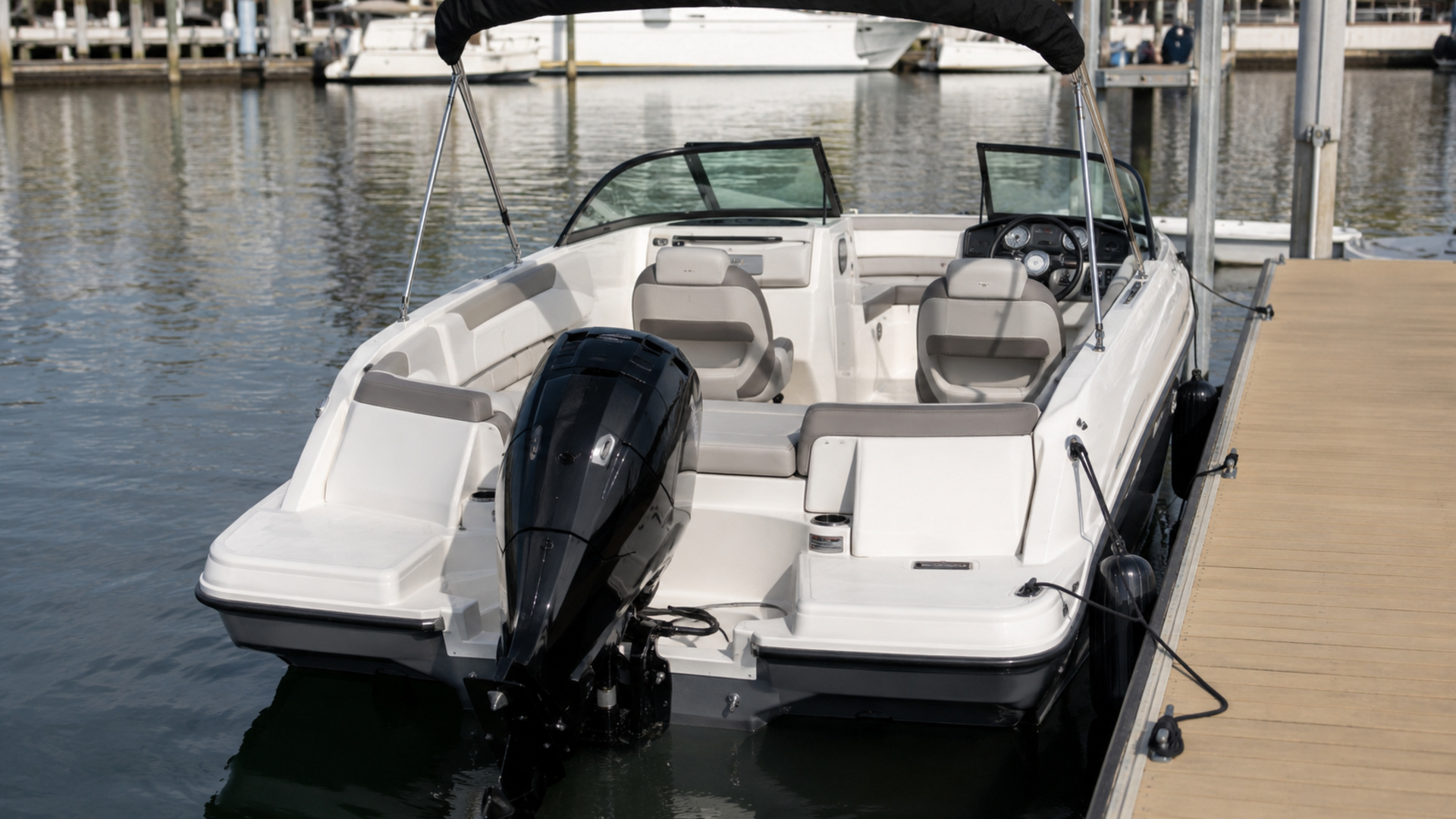
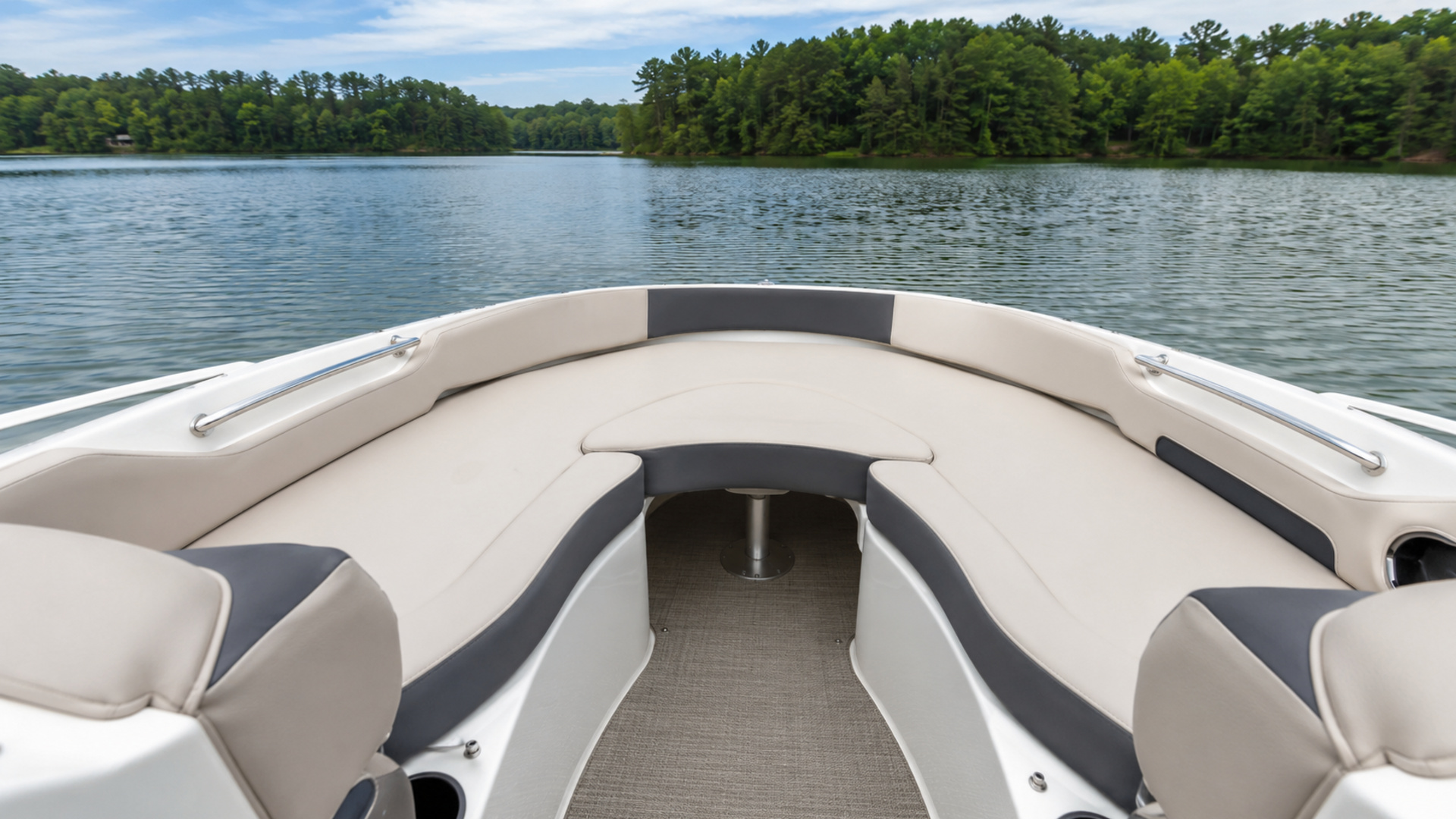
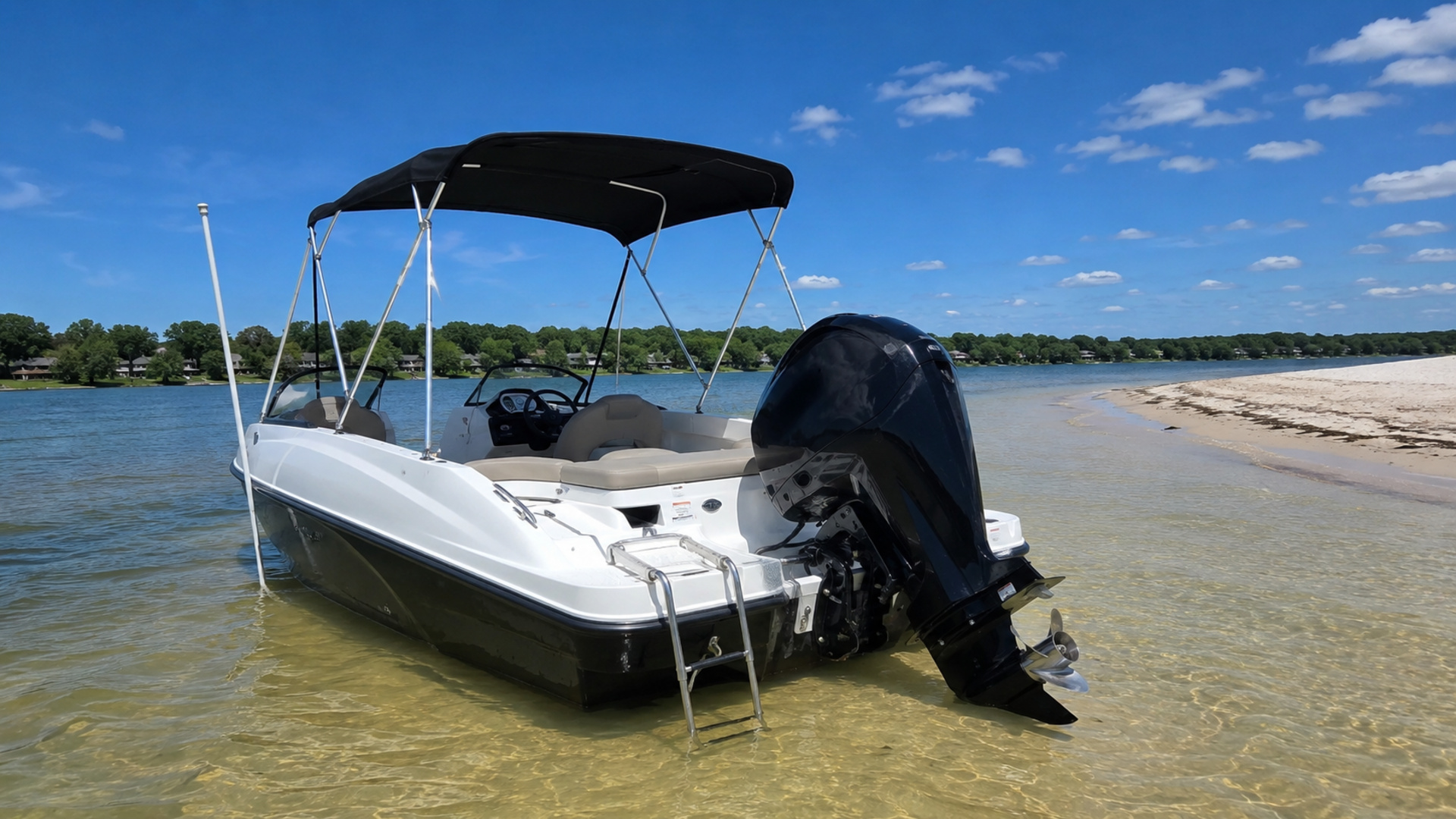
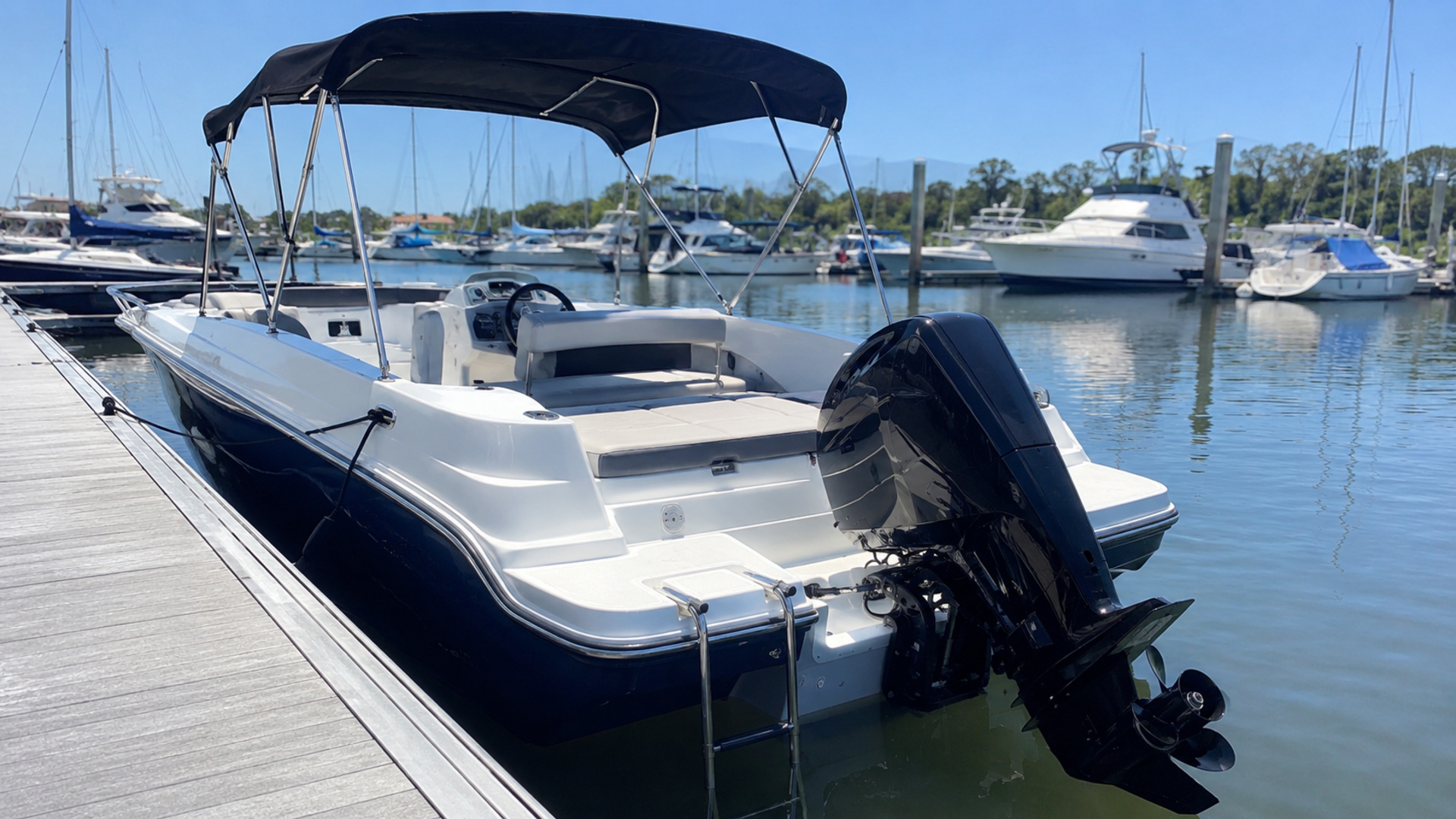
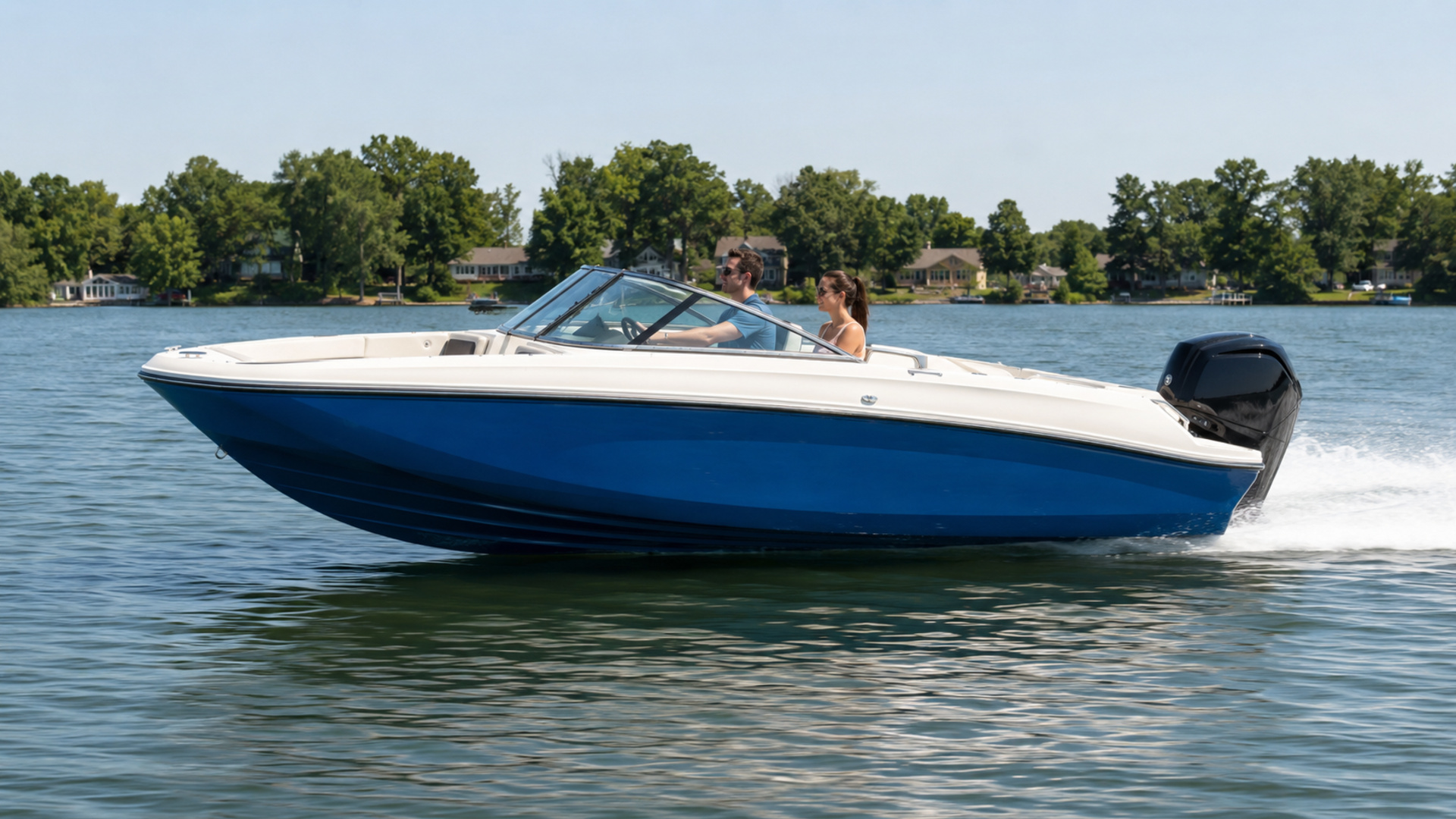
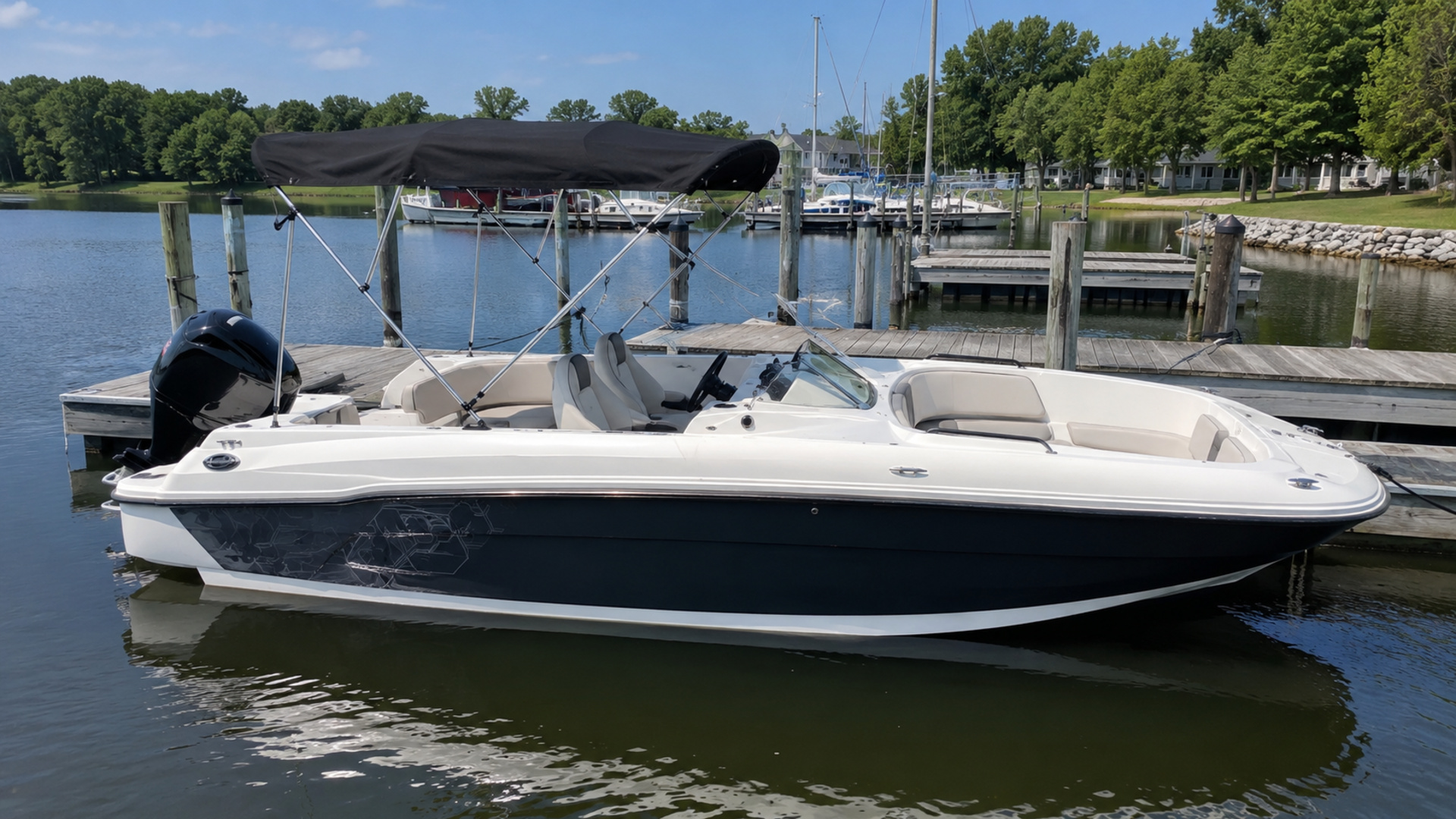
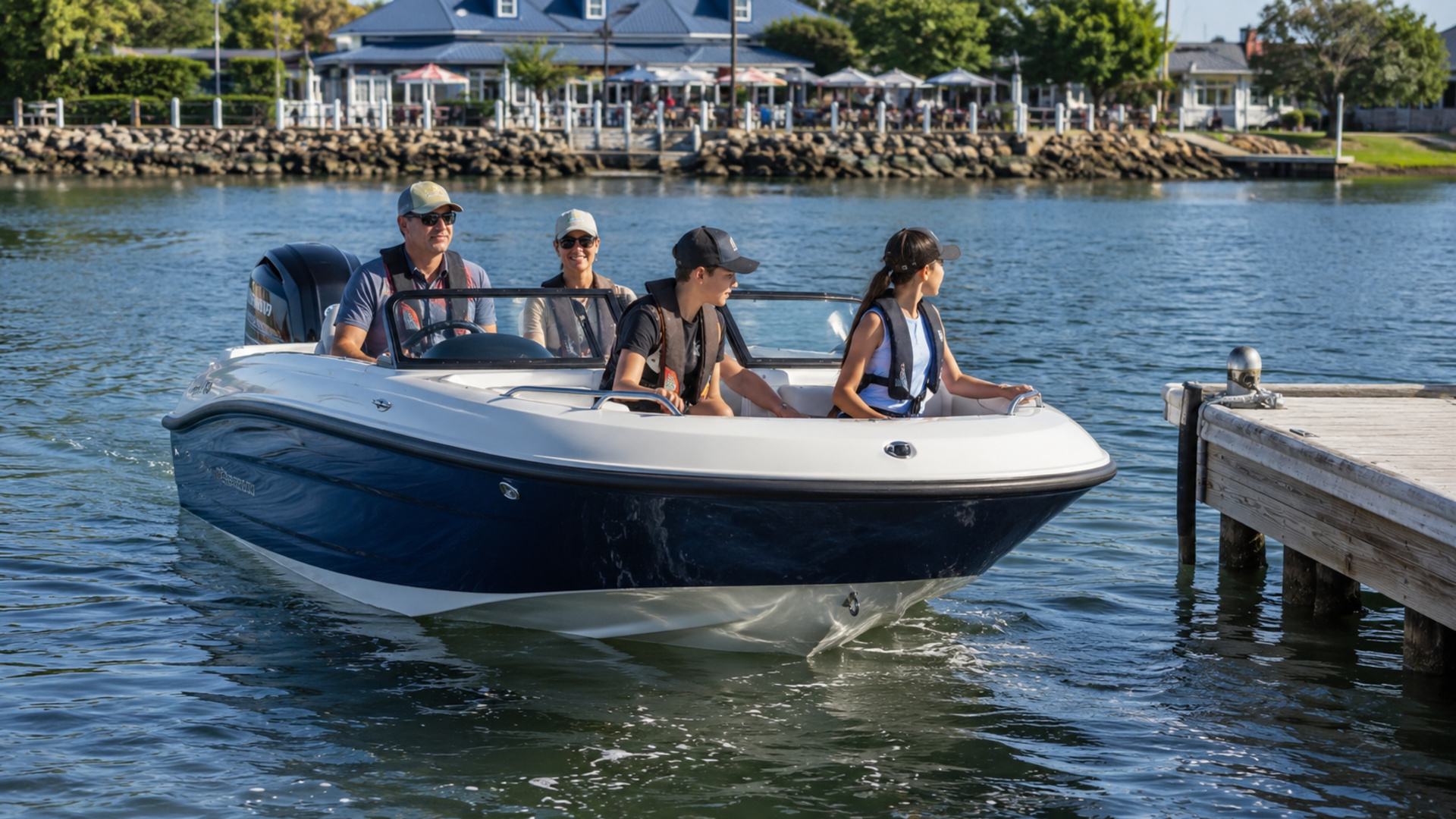
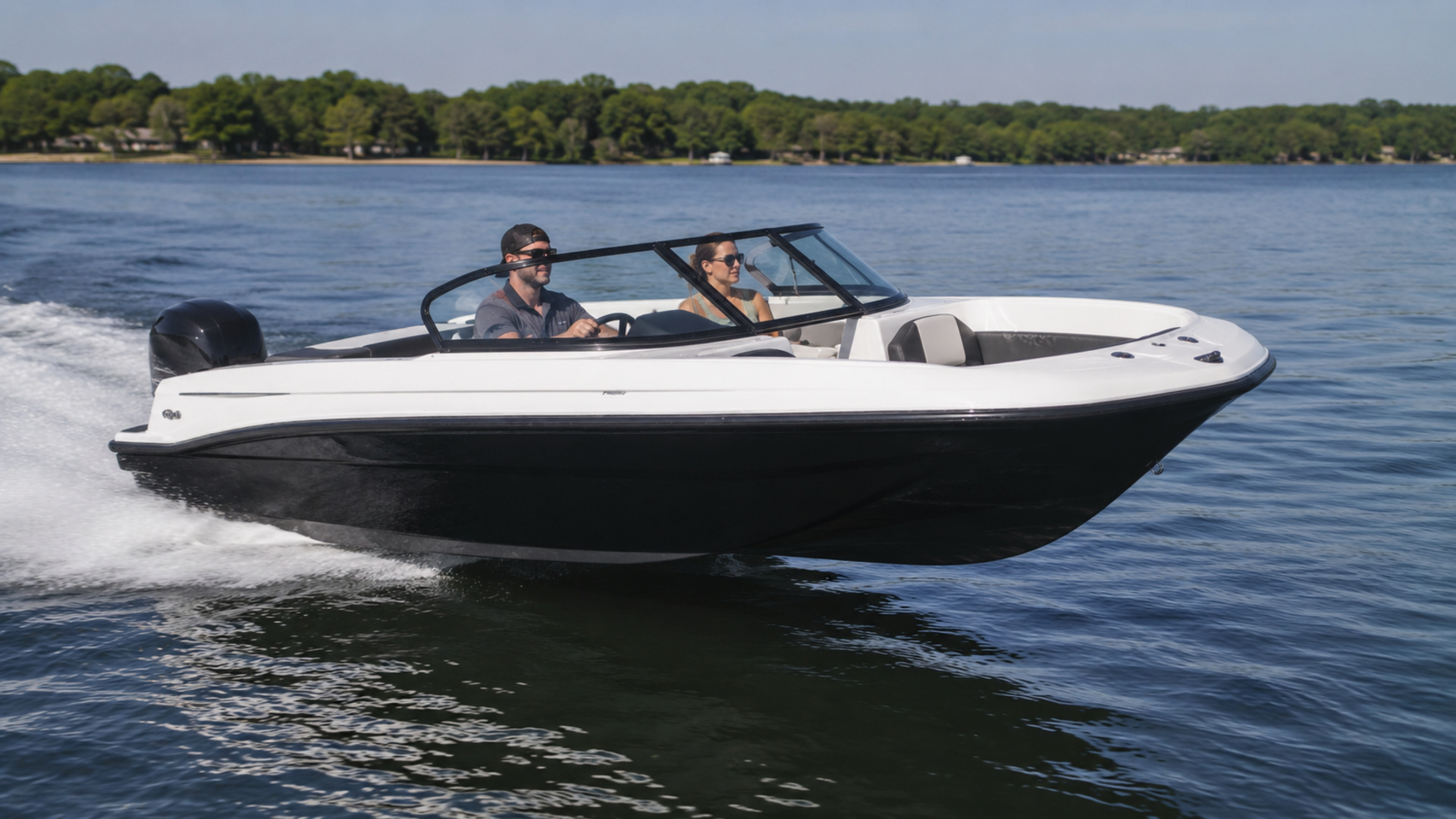
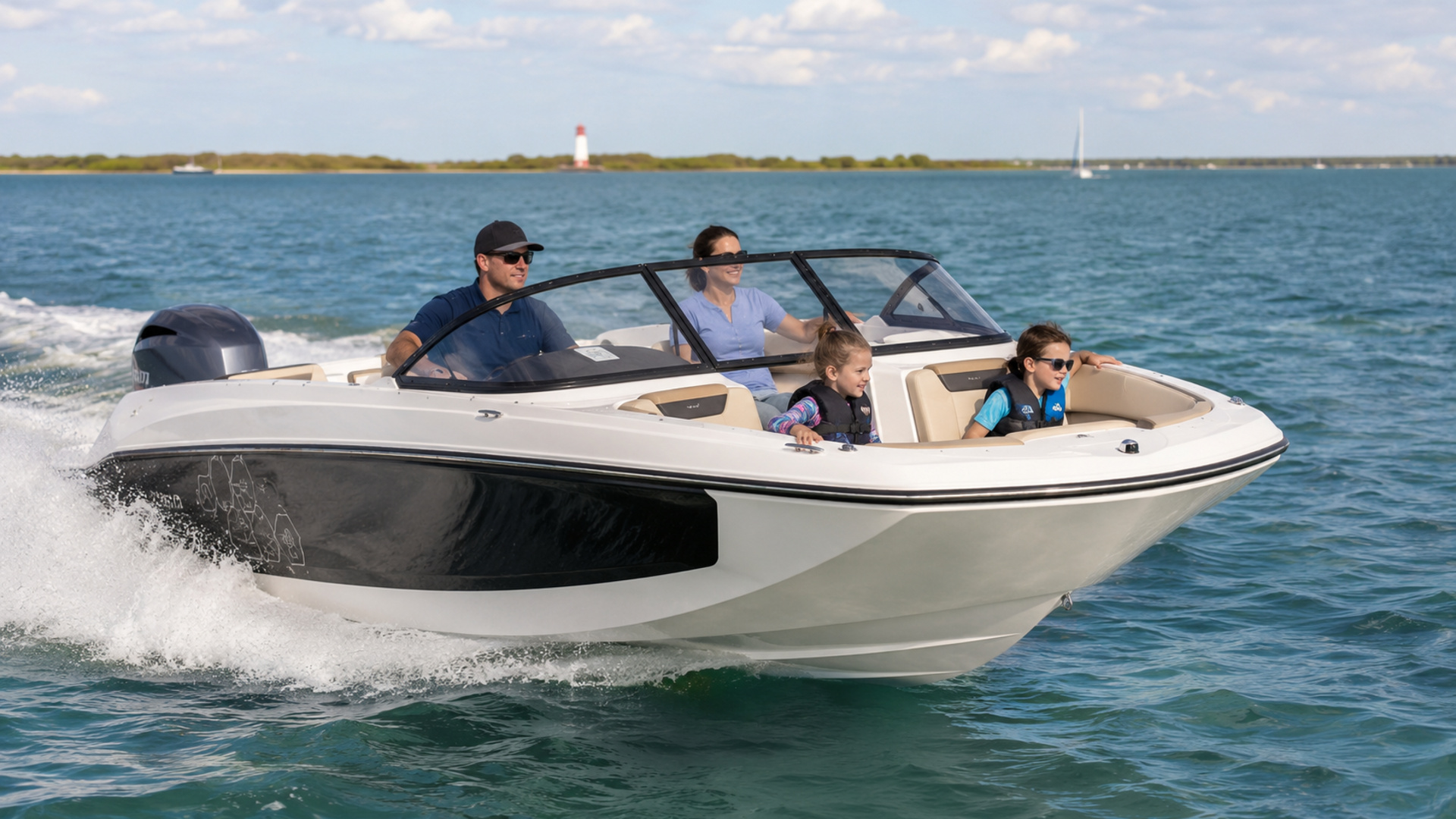
The Bayliner Element E18 keeps the Element formula simple but jumps to 18’2″, nine-person capacity, and a standard 115 HP Mercury for families that have already outgrown the E16.
The Element E18 is easy to misunderstand if you compare it with the E16 only by length. Two additional feet turn a six-person, 75-horsepower starter boat into a nine-person, 115-horsepower family platform. Bayliner keeps the simplified sales idea (current boats come pre-configured with the 115-horsepower engine and Convenience Package), but the E18 can support a much broader household.
That makes it one of the strongest value questions in Bayliner’s deck-boat range. A buyer can get nine-person certification without paying for the D20’s larger 8-foot-1-inch beam, 33-gallon fuel system, multiple layout bundles, or higher equipment count. If the family’s priority is simply more people on a stable boat, the E18 may be enough.
There are limits. The current fuel tank remains 12 gallons, the same as the E16. Beam is 7 feet 5 inches. The model does not offer the D20’s layout flexibility or the D22’s entertaining hardware. Nine people may fit by certification while still making the boat feel busy once gear comes aboard.
The E18’s used market is deep. The September 2026 sample includes 48 listings from 2017 through 2027. That gives buyers a decade-wide range of depreciation and condition. Shopping used can make the E18 exceptionally accessible, but a 2017 trailer, cover, stereo, wiring system, and outboard need to be judged as older equipment.
The right E18 buyer wants a simple boat with surprisingly high passenger capacity and does not need the infrastructure of a D Series. It is not a cheap D20; it is a different ownership choice.
Draft, maximum: Bayliner currently lists 12 in estimated draft; no separate current maximum
The E18 is only one inch narrower than the E16, yet the extra two feet of length give Bayliner more room to distribute passengers and storage. That matters because capacity rises from six to nine people without making the boat substantially wider.
Current published deadrise is 18 degrees, slightly more V than the E16’s 17 degrees. The longer hull and additional deadrise can help the boat feel more composed through ordinary wakes, though it remains a light family platform rather than an offshore boat.
Approximate weight with standard engine is 2,000 pounds and Bayliner lists about 2,750 pounds with trailer. That is materially heavier than the E16 but still far below the D20’s 3,396-pound boat-only figure.
Storage length is 21 feet 10 inches and height on trailer is 5 feet 6 inches. Those dimensions keep the E18 realistic for residential storage even though passenger capacity approaches the D20’s ten-person rating.
For a buyer, the E18 hull is a clever compromise: enough length to carry a growing family, but still light enough that ownership does not automatically require the tow vehicle and storage setup of a D Series.
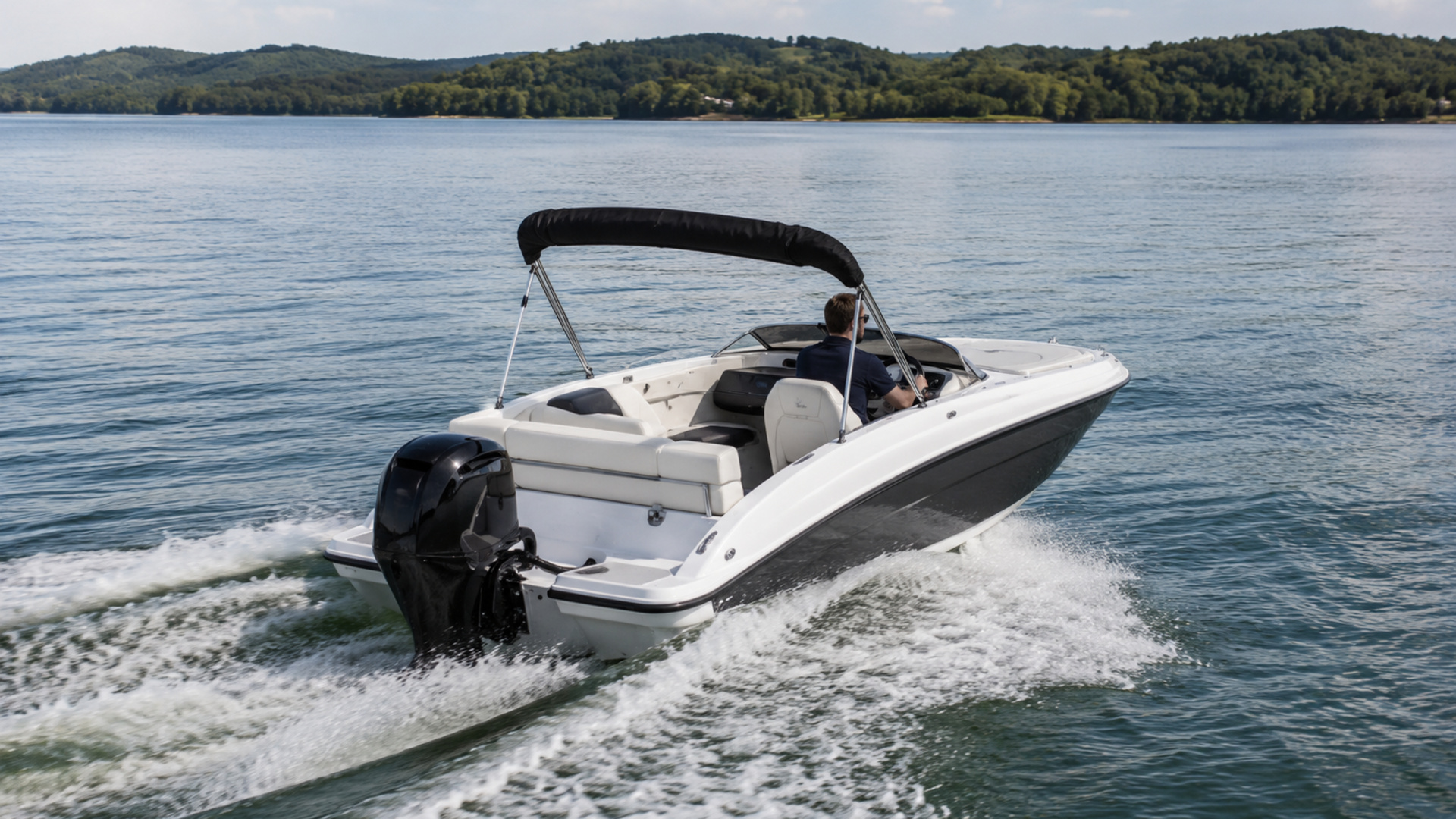
The current E18 comes pre-configured with a 115-horsepower Mercury FourStroke, and 115 is also the published maximum. Choosing the larger Element automatically gives the stronger engine.
That pairing matters because nine-person capacity creates a wide range of possible load. With four people aboard, the E18 should have comfortable reserve for normal cruising. With eight or nine plus gear, the same engine has much more work to do. Buyers expecting frequent maximum-capacity use should test the boat loaded and compare the D20’s 150-horsepower ceiling.
The decade of used inventory means engine configuration deserves model-year verification. Do not assume every older E18 left the factory with the exact same standard power or has never been repowered. Match serial number, horsepower, and service history to the boat in front of you.
On an older Mercury, inspect cooling flow, trim, steering, propeller, skeg, lower-unit oil, anodes, corrosion, and cold-start behavior. Ask how often the boat sat unused with old fuel.
The E18’s outboard remains easy to see and access, which is especially helpful to first-time used buyers. More of the expensive mechanical system is visible without removing interior panels or entering an engine compartment.
The E18’s 12-gallon fuel capacity is one of its most important limitations to understand. The boat is two feet longer than the E16, carries three more people, and uses 115 horsepower instead of 75, yet the current fuel capacity remains the same.
For local day boating, that may be completely adequate. A family can cruise, anchor, swim, and return without treating the boat like a long-range platform. For extended river runs, repeated tow sports, or full-throttle use, fuel management deserves more attention.
Bayliner does not publish a universal current GPH figure, so buyers should use verified data for the exact Mercury and model year. A used E18 with a different historical engine package may not match a current 115-horsepower boat.
The small tank has an ownership upside: the boat stays light, fuel bills per fill remain modest, and owners cycle fuel through more quickly. It also means the E18 is not pretending to be a distance cruiser.
Compare this directly with the D20’s 33-gallon tank. If your boating area makes 12 gallons feel restrictive before you even buy, the more expensive D Series may solve a real operational problem rather than merely adding luxury.
The E18’s 115-horsepower Mercury gives it much more performance headroom than the E16. The real advantage is flexibility under moderate load. Families that regularly carry five or six people should feel less like they are using the entire capability of the boat every time they accelerate.
With nine people aboard, performance needs to be evaluated honestly. Certification does not guarantee quick acceleration at maximum occupancy. A sea trial with representative weight can tell you whether the 115-horsepower package fits your expectations.
The current 18-degree deadrise and 18-foot-2-inch hull give the E18 more ability to span ordinary chop than the shorter E16, but it is still a relatively light 2,000-pound boat. Passenger placement, trim, and speed make a noticeable difference.
If the E18 feels underpowered for the crew you plan to carry, there is no larger current engine option. That is the moment to compare the D20 rather than trying to modify the E18 into a different boat.
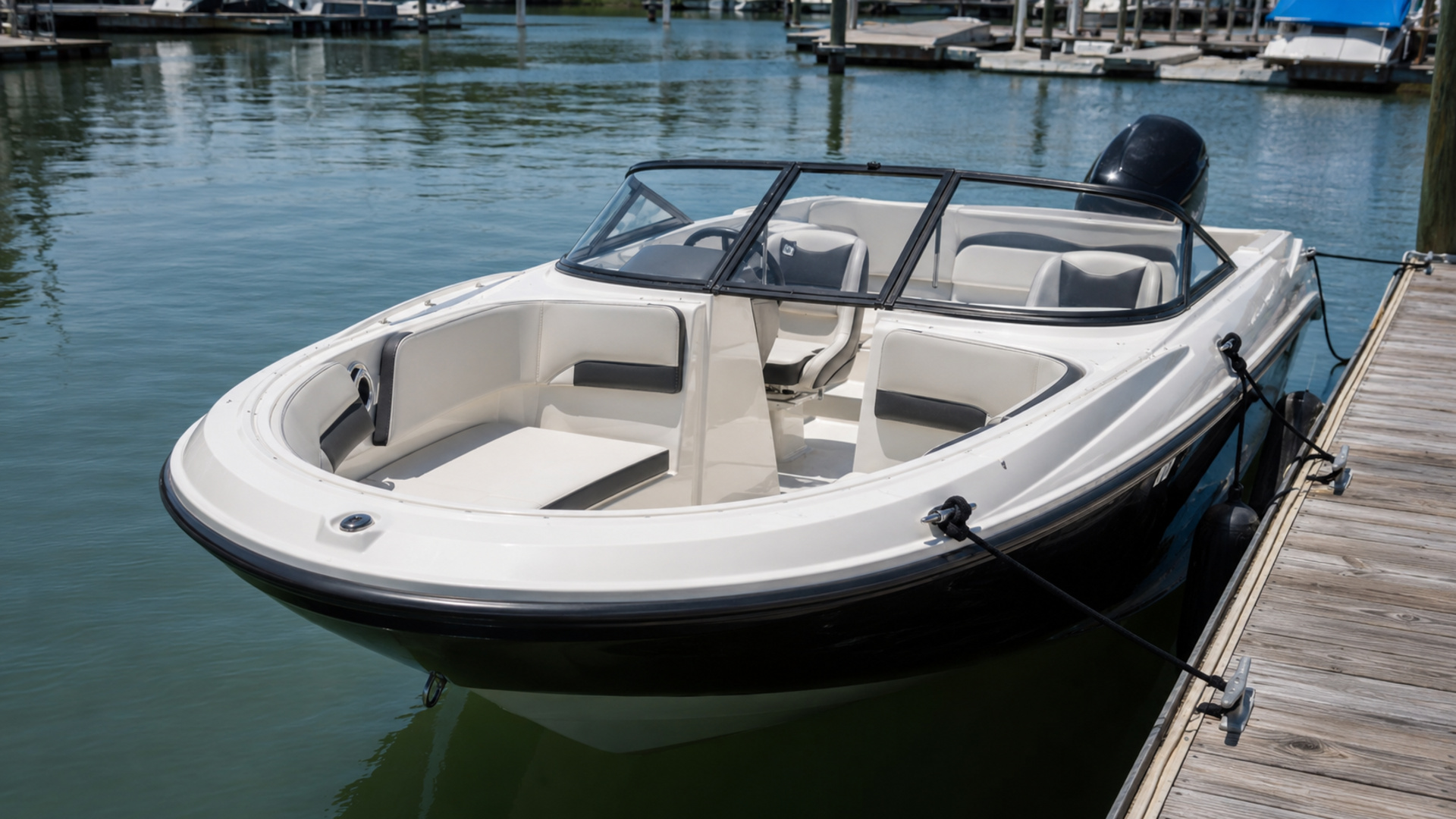
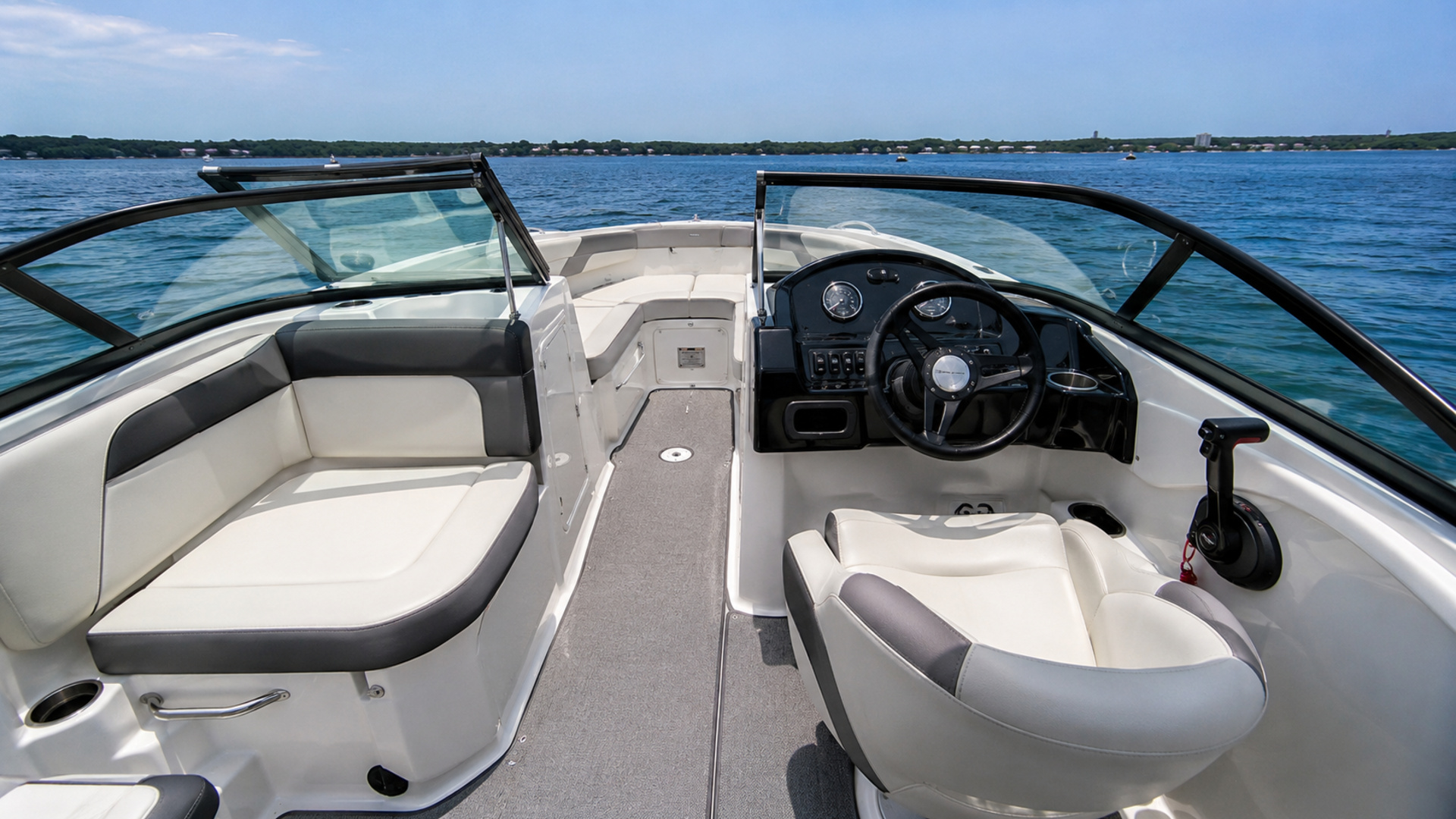
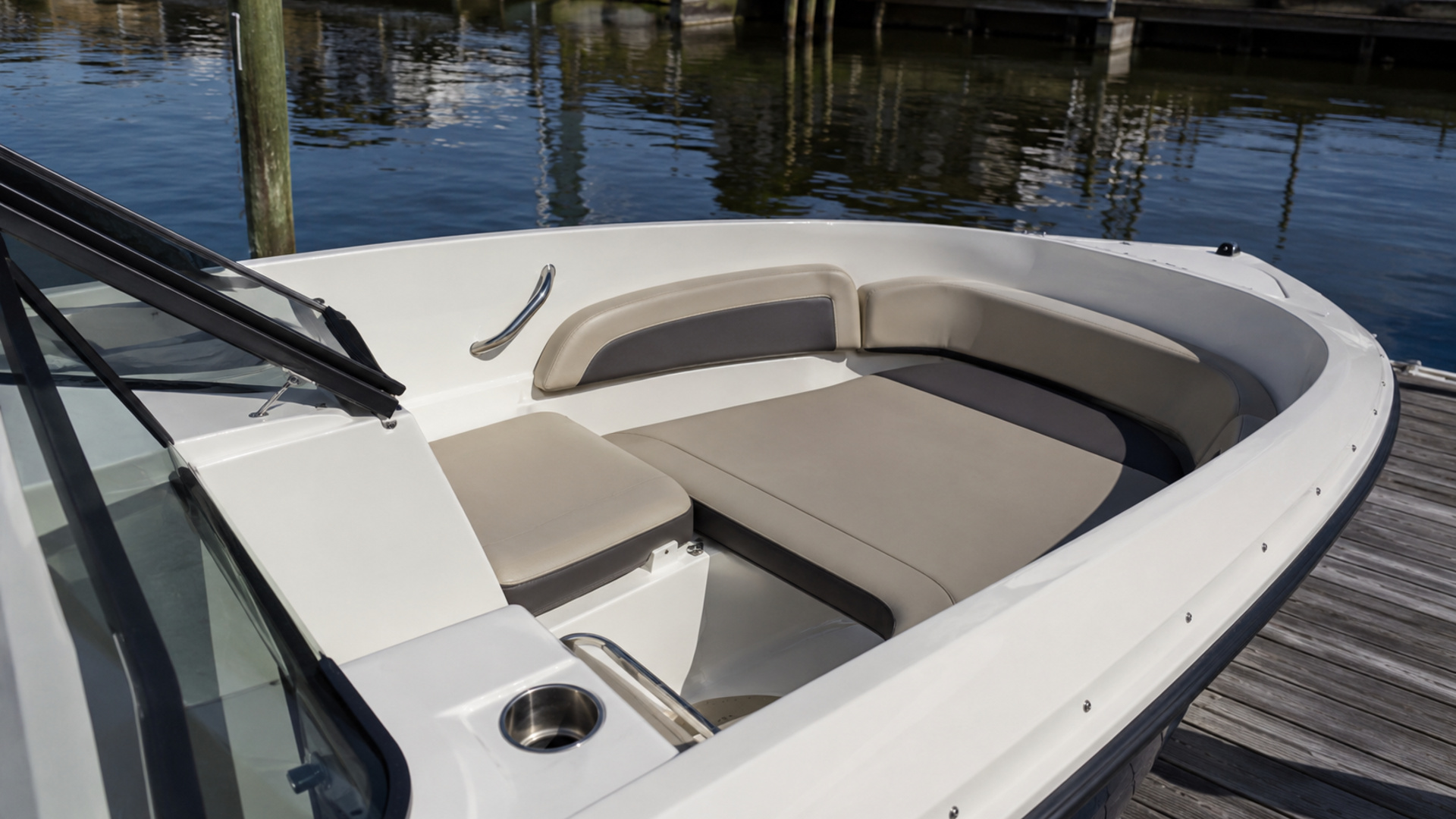
The E18 follows the Element philosophy of open, uncomplicated seating instead of elaborate convertible furniture. The additional two feet create more breathing room while retaining a fiberglass floor liner that is easy to clean after swimming or a sandy beach stop.
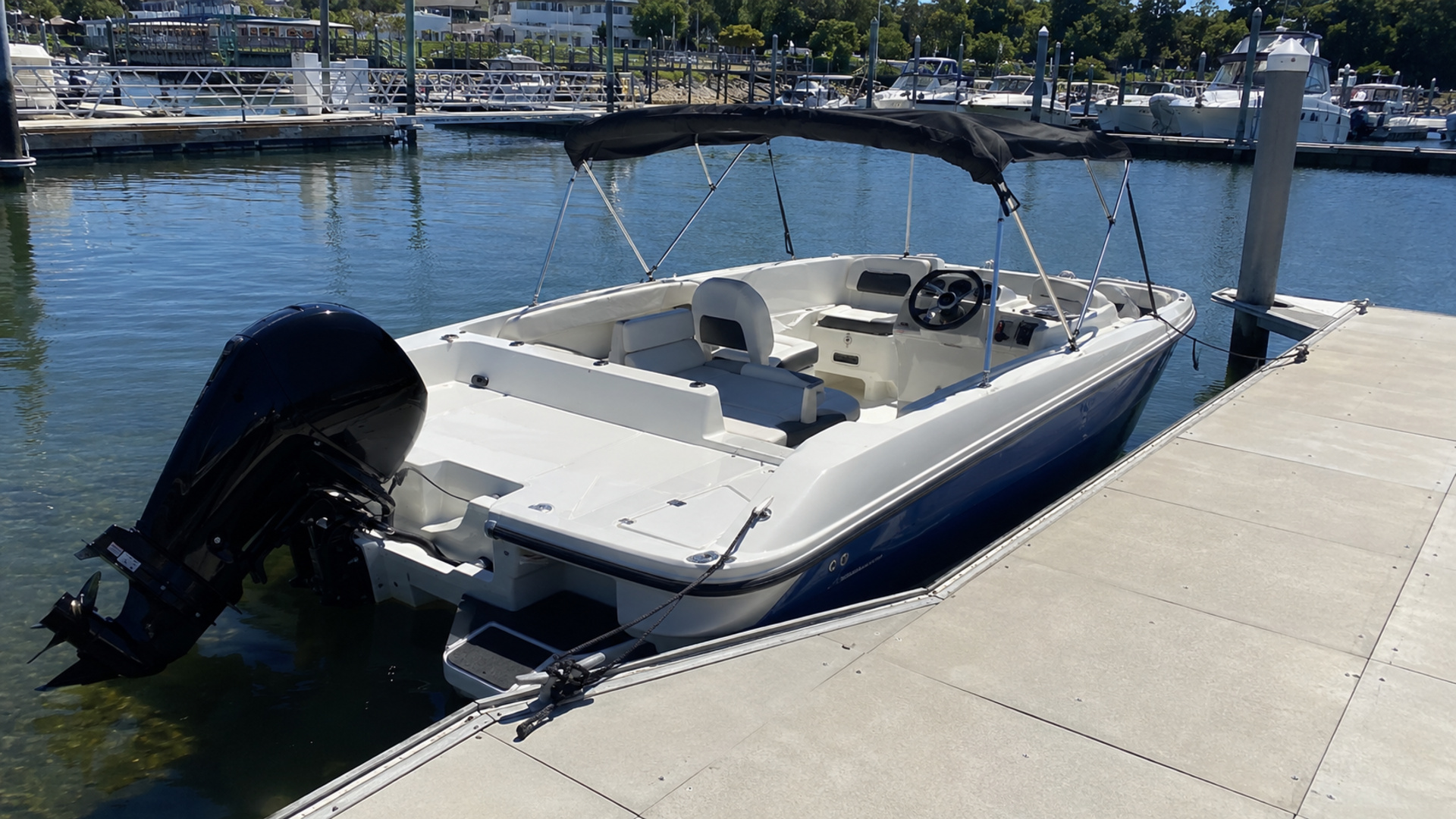
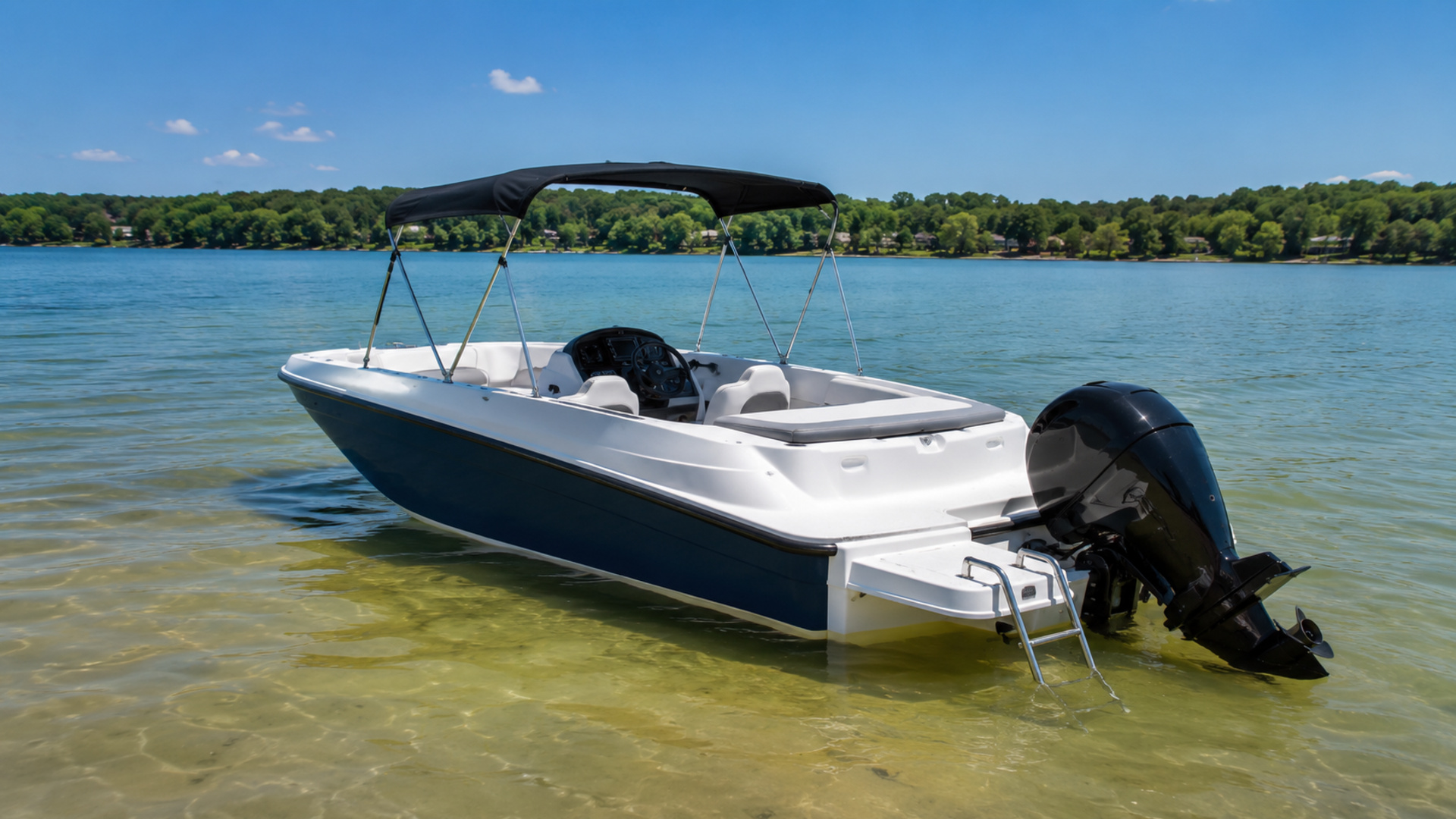
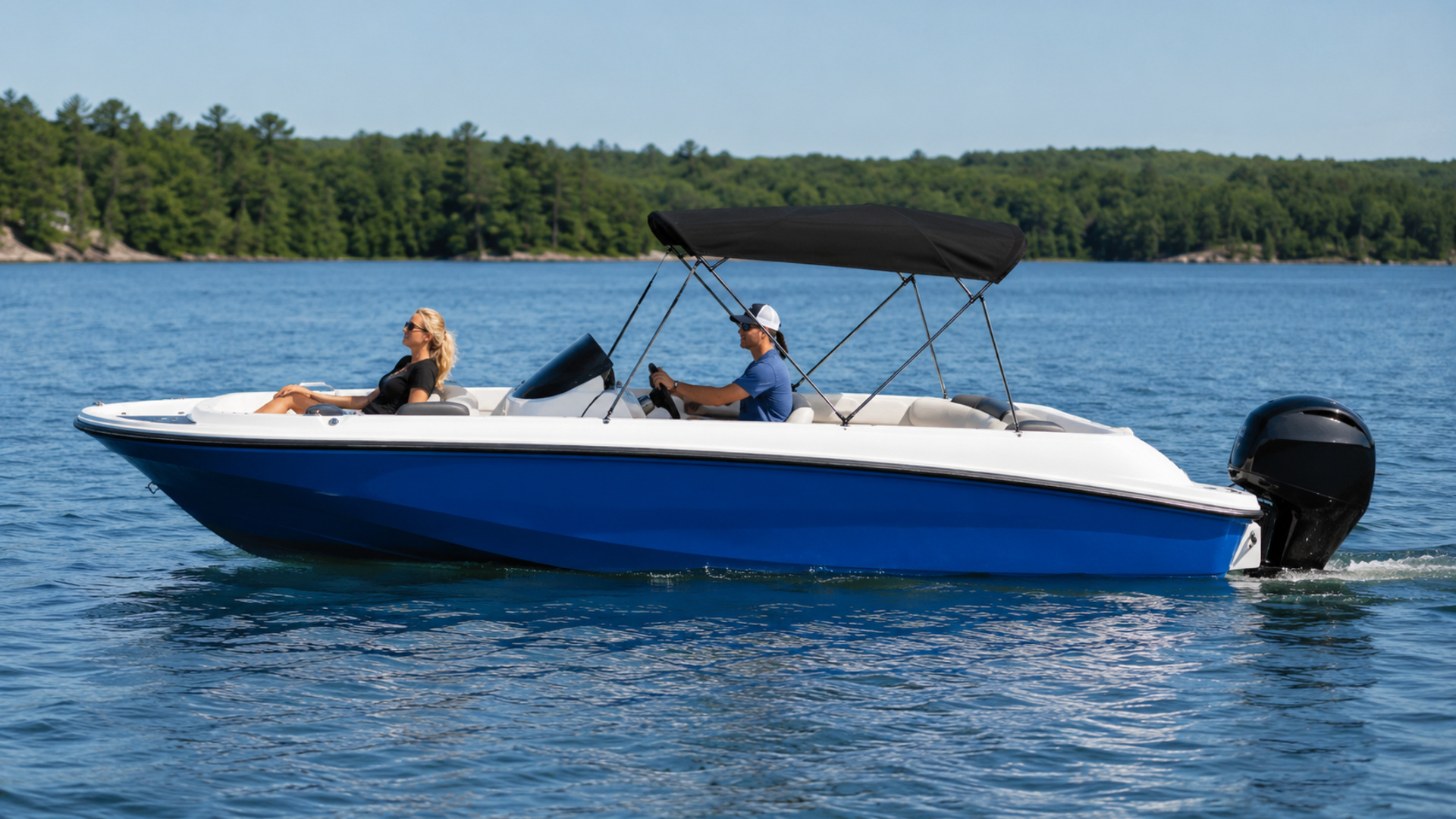
The current Convenience Package includes a six-foot Bimini with boot, snap-on bow-well cover, cockpit cover, and waterproof 120-watt stereo. Those features matter because E18 ownership often happens at home rather than in a covered marina. Shade protects passengers; covers protect the boat.
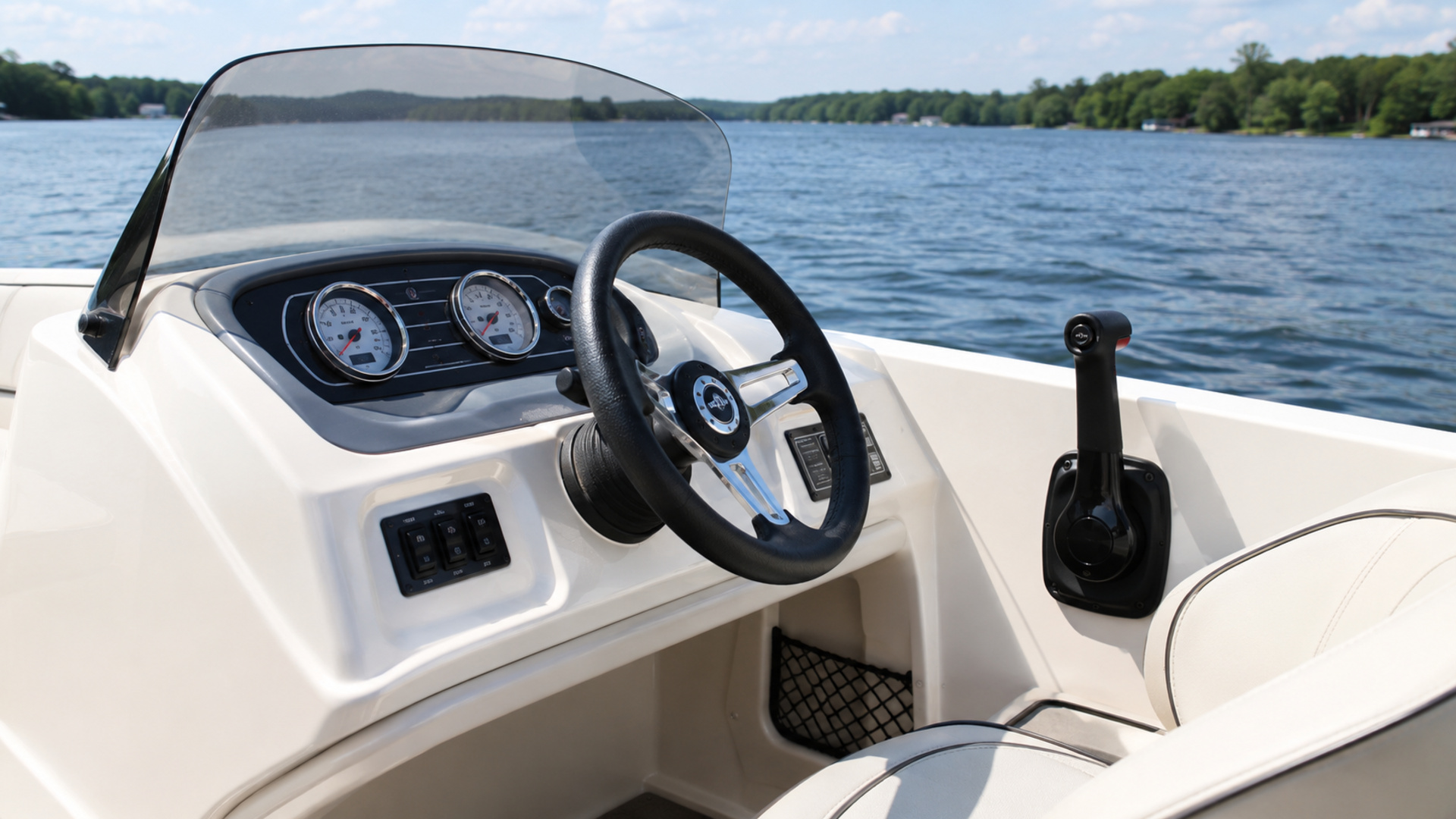
The helm remains simple: dual-purpose gauge, 12-volt outlet, horn, side-mounted engine controls, and custom sport steering wheel. There is no complex digital network to learn before a first family outing.
A telescoping swim ladder and platform make water access straightforward. Cup holders, grab handles, and mooring cleats cover the basic day-boat functions without excessive hardware.
Compared with the D20, the E18 lacks multiple layout bundles, the 33-gallon tank, aerated livewell, and broader option menu. That is not automatically a disadvantage. For a buyer who wants to tow to the lake, launch, swim, cruise, and put the boat away, the lack of complexity is part of the reason to choose it.
Eight E18 Features That Matter When You Are Buying
115 HP Mercury FourStroke – Current E18s arrive with the full published horsepower rather than making the buyer choose between multiple engines.
Nine-Person Capacity
Three more certified passengers than the E16 and the biggest reason for a growing family to move up.
Six-Foot Bimini With Boot
Standard convenience equipment that provides necessary shade for full-day family use.
Snap-On Bow-Well Cover
Helps protect the forward interior when the boat is stored between outings.
Snap-On Cockpit Cover
Supports driveway or side-yard ownership by protecting the main seating area.
Waterproof 120-Watt Stereo
Standard entertainment without aftermarket wiring complexity.
Single-Axle Swing-Tongue Trailer
Keeps the E18 more residential-storage-friendly than the larger D Series.
Fiberglass Floor Liner
Practical for wet children, sandy feet, fishing mess, and quick cleanup after a family day.
What Changes When You Shop a 2017–2027 E18 Market
A late-model E18 mainly needs a clean delivery and service check. A 2017 example needs a full look at everything exposed to UV, water, and trailer use for nearly a decade.
Start with the 115-horsepower Mercury or whatever engine is installed. Verify hours, serial number, cold start, cooling, trim, steering, lower unit, propeller, skeg, and corrosion.
Test the bilge pump, stereo, gauges, horn, 12-volt outlet, navigation lights, and battery. Inspect the Bimini frame and fabric, snap covers, upholstery seams, grab handles, and cleats. Older covers can leak or shrink; replacements belong in the budget.
Look under seats and into storage for mildew, staining, or standing-water evidence. Entry boats are often stored outside, and poor cover discipline can age the interior faster than engine hours suggest.
On the trailer, check tire dates, bearings, lights, winch, swing tongue, coupler, safety chains, bunks, and galvanizing or paint condition.
At approximately 2,000 pounds with standard engine and about 2,750 pounds with trailer, the E18 remains an approachable tow boat for many properly equipped vehicles.
Bayliner lists 21 feet 10 inches of storage length, 5 feet 6 inches of height on trailer, and 8 feet 6 inches of beam on trailer. The swing tongue can help reduce storage length, but buyers should measure the real space.
The 12-gallon tank adds less loaded weight than the D Series tanks, which further supports the E18 as a home-storage and trailer-use boat.
If the E18 will live in a slip, the cost structure changes. You lose some of the financial advantage created by easy home storage, though you gain convenience. That can still be worthwhile if the family uses the boat more because launching is no longer part of every outing.
Why the E18 Has a Much Broader Buying Window Than the D Series
The range reflects a decade of age and condition, not merely dealer discounting.
A new E18 gives the buyer the current 115-horsepower package, convenience equipment, new trailer, and minimal uncertainty. A five-year-old example may offer a meaningful discount while still feeling modern. An older 2017–2019 boat can be strong value if the Mercury, trailer, upholstery, covers, and wiring have been cared for.
Depreciation is therefore part of the E18 decision in a way it is not yet part of the D22 decision. Buyers can choose where they want to sit on the age-versus-price curve.
Do not pay a premium simply because an older E18 has aftermarket audio or electronics. Mechanical condition, storage history, and trailer health are more important to first-year cost.
Market price band
$14,000 – $38,640
Estimated monthly
$95/mo – $265/mo
Figures come from this page’s Boat Details fields. Illustration only and not an offer of credit.
Estimate the Real E18 Payment
Use the actual purchase price and model year. Leave enough room for insurance, trailer maintenance, outboard service, storage, and the repairs that become more likely as used inventory gets older.
Illustration only and not an offer of credit. Your actual rate and term depend on credit profile, vessel age, loan amount and ownership structure.
E18 vs. E16 vs. M17 vs. D20
The E18 adds two feet, three people, and 40 horsepower over the E16 while keeping the same current 12-gallon fuel capacity. If the family already exceeds the E16’s comfortable crew size, the E18 is worth the step.
Against the M17, the E18 carries nine instead of seven and uses 115 horsepower instead of 60–90. The M17 has a larger 18-gallon tank, is shorter, and uses Bayliner’s M-Hull.
Against the D20, the decision is price and complexity. The D20 is 16 inches longer, six inches wider, holds 33 gallons, and reaches 150 horsepower. It also offers more layout and package choices. The E18 remains lighter and simpler.
The E18’s decade-wide market rewards disciplined shopping. Filter first by engine and trailer condition, then by year. A clean 2019 can easily be a better boat than a tired 2022.
Ask for service history on the Mercury, including water-pump and lower-unit maintenance. Inspect the propeller and skeg for ramp strikes. Check whether the boat was stored covered and whether the Bimini and snap covers are original or replacement.
Look closely at upholstery and stitching because sun damage can be expensive to correct across an entire interior. Examine the fiberglass floor, storage areas, and transom hardware for evidence of water sitting in the boat.
Trailer inspection is mandatory. An E18 may have been towed hundreds of short trips even with low engine hours. Bearings, tires, lights, winch, bunks, and swing-tongue hardware can tell a different story from the hour meter.
On late-model dealer inventory, compare the new E18 against a D20. On older used boats, the E18’s value can be hard to beat when condition is strong.
Your next step
Finance the E18 That Fits the Family and the Budget
Send Float Finance the actual E18 listing. A 2017 private-party boat and a 2027 dealer boat are very different financing conversations even though the model name is the same.
Prequalification may involve a soft credit inquiry where applicable. Your information is not sold as a lead list.
The current E18 is 18’2″ overall with a 7’5″ beam and 18 degrees of deadrise. Bayliner lists 12 inches of estimated draft, 21’10” of storage length, 5’6″ of height on trailer, about 2,000 pounds with standard engine, and about 2,750 pounds with trailer.
Bayliner rates the E18 for nine people with a maximum weight capacity of 1,277 pounds. Nine-person certification is a major step from the E16’s six-person rating.
Bayliner’s current specification lists 12 gallons, the same as the E16. The boat is aimed at local day use rather than long-distance cruising. Buyers planning long runs should verify consumption and fuel availability.
It can be because the market spans roughly a decade and offers many price points. Condition is critical. Inspect the outboard, trailer, upholstery, covers, wiring, bilge, steering, and signs of outdoor storage.
Choose the E18 when simple ownership, lower weight, and lower acquisition cost matter. Choose the D20 when a wider interior, 33-gallon tank, 150-horsepower ceiling, and more configuration choices justify the extra cost.
Potentially, depending on model year, value, loan amount, condition, and borrower qualifications. Send Float Finance the actual listing because a 2017 and 2027 E18 are very different lending propositions.
Need More Than an E16? Put the Right E18 in Reach.