Call Us : 207-994-5109
Mon – Fri: 8 am to 9 pm & Sat – Sun: 10 am to 8 pm
Bayliner deck boats are built for buyers who want family space first: wide seating, easy water access, useful storage, and a trailerable boat that can cruise, swim, tow, and entertain without stepping into a cabin boat.
A Bayliner deck boat is for the buyer who cares more about what happens once everyone climbs aboard than about owning the narrowest or sportiest hull in the marina. The category trades some of the sleek proportions of a bowrider for broader social space, deeper seating, easier movement, and layouts that can handle a family day without turning every cooler, tube, bag, and life jacket into a storage problem.
Bayliner currently approaches that job through three very different product ideas. The D Series is the most substantial. The D20, D20I, D22, and D22I are current-generation boats with deeper interiors, multiple layout choices, larger fuel capacity on the 22-foot models, and a clear split between Mercury outboard and MerCruiser sterndrive power. The Element E16 and E18 are deliberately simpler. They emphasize stability, low ownership burden, and approachable pricing rather than equipment count. The M17 sits between those philosophies with Bayliner’s M-Hull, seven-person capacity, an 18-gallon tank, and a compact 17-foot footprint.
For a buyer, that means there is no reason to shop the whole group as if length were the only variable. A family that wants the easiest possible first season may be happier with an E16 than a D20. A nine-person crew can fit on an E18 on paper, but a buyer who also brings tubes, coolers, and a day’s worth of gear may prefer the broader D20. Someone who wants a clean swim platform may accept the additional service burden of a D20I or D22I. An owner who values easy engine access may deliberately choose the outboard version even if the sterndrive offers more horsepower.
The right Bayliner deck boat is the one whose compromises match your use. Start with crew size, then propulsion, tow vehicle, storage, and the amount of equipment you expect to carry. The biggest boat is not automatically the best buy, and the cheapest boat is not automatically the lowest-cost boat to own.
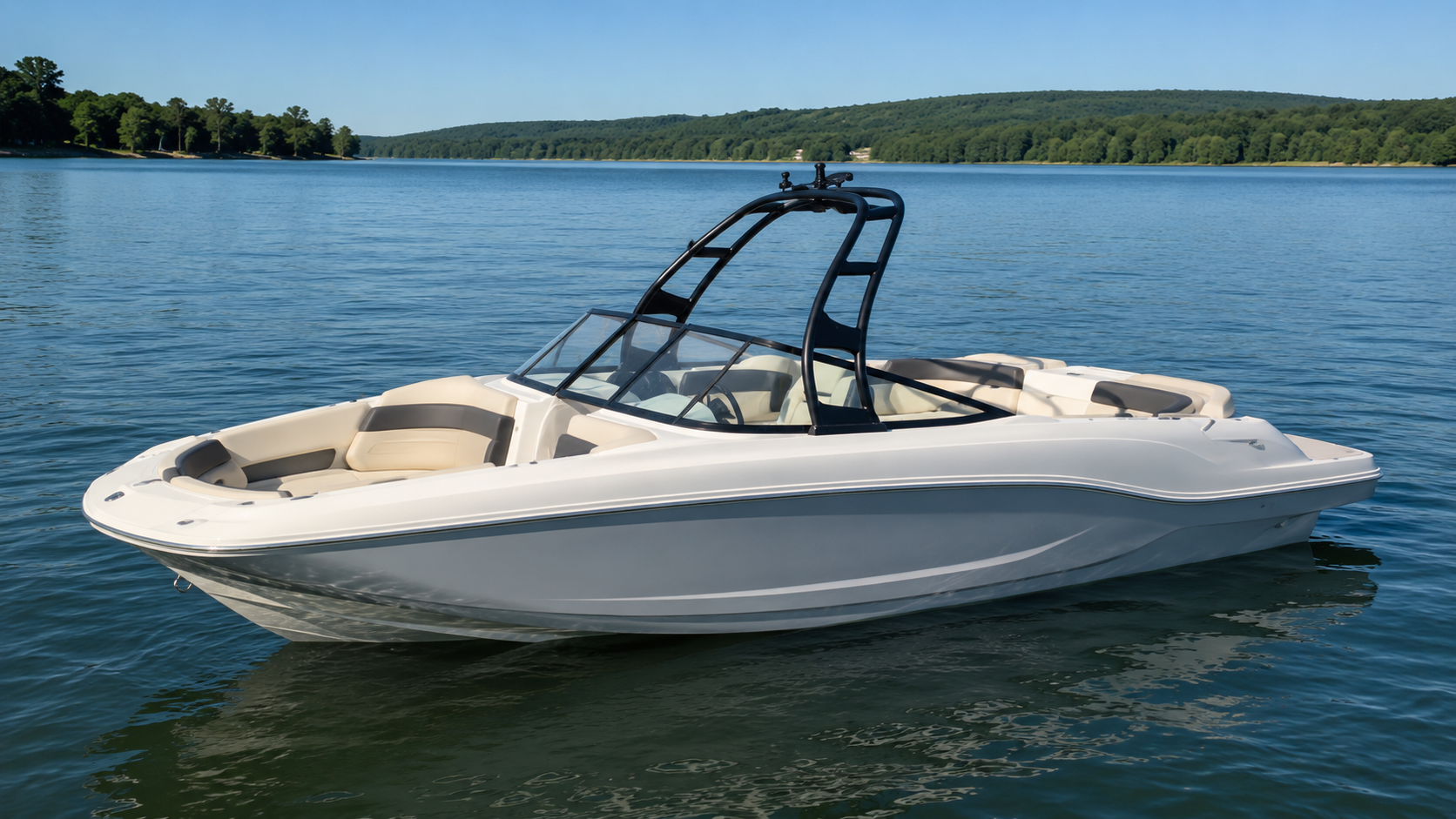
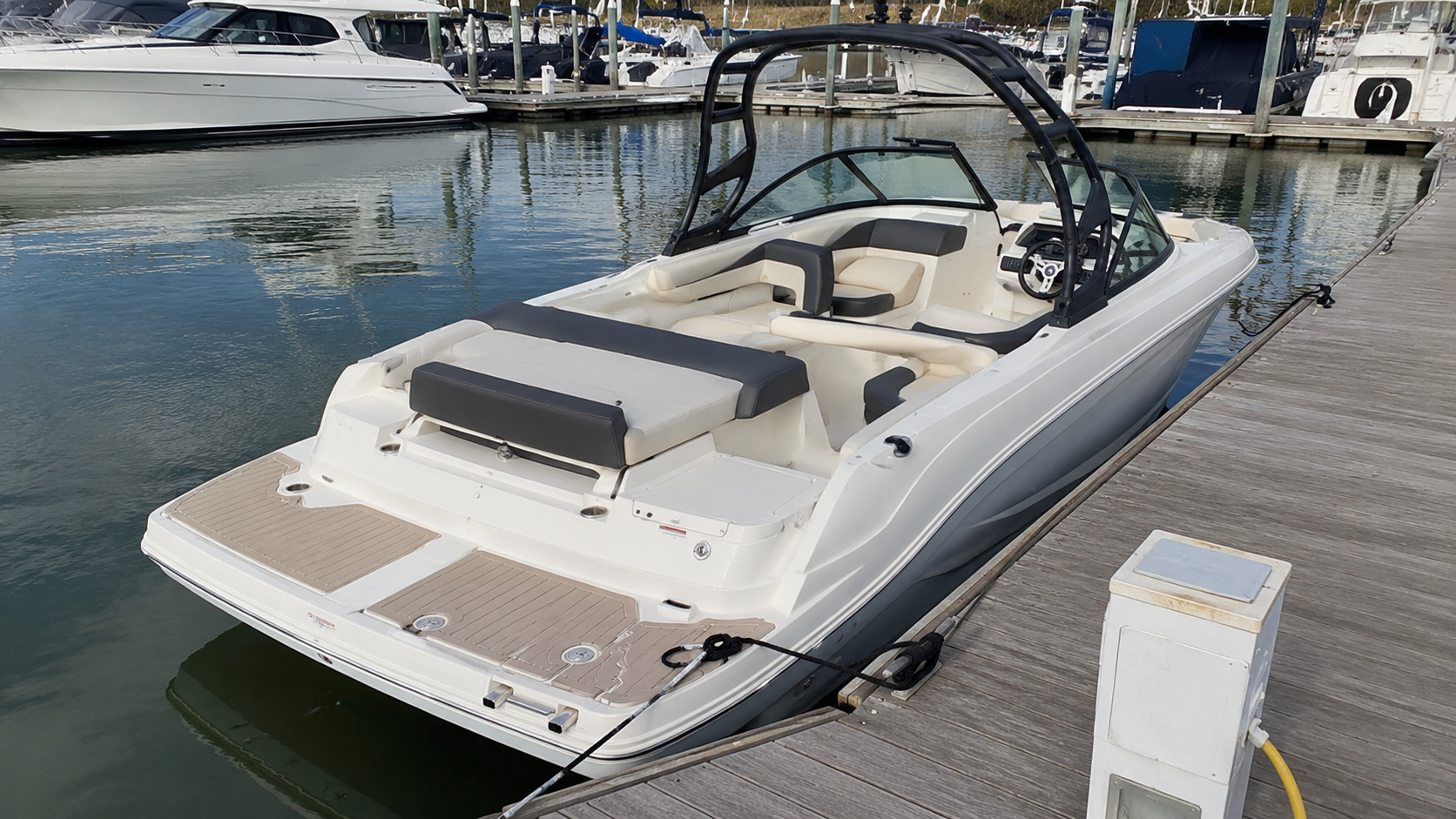
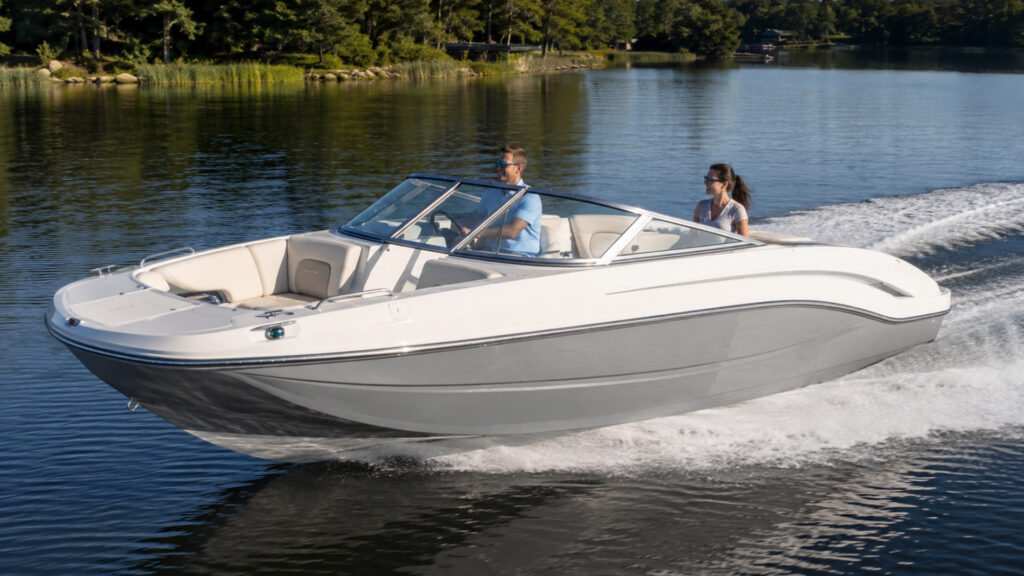
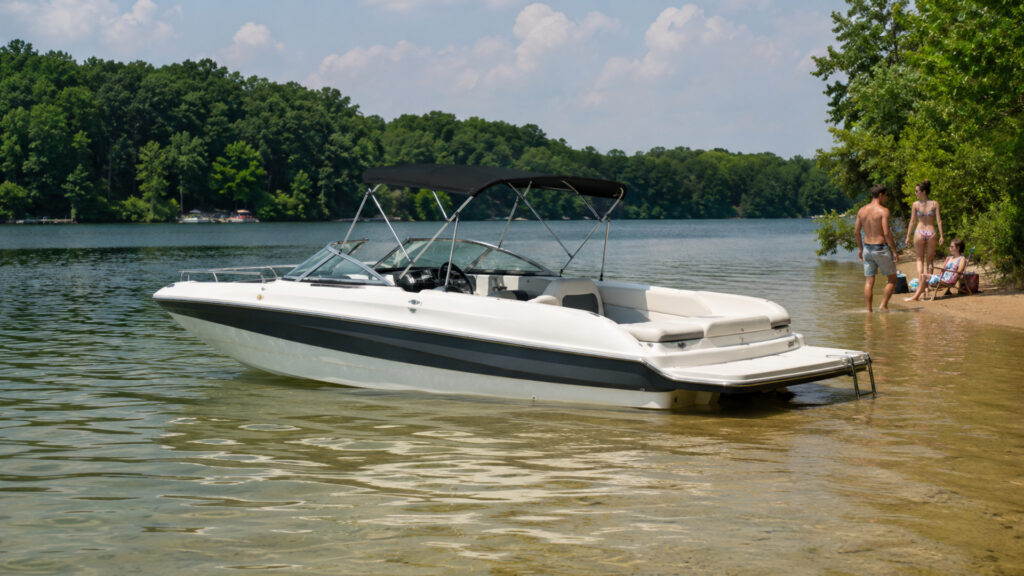
The D Series is Bayliner’s answer for buyers who want a more complete family platform. The D20 and D20I measure 19 feet 6 inches, while the D22 and D22I grow to 21 feet 6 inches. The outboard D20 is rated for ten people and up to 150 horsepower; the D20I carries nine and reaches 250 horsepower with MerCruiser sterndrive power. The D22 increases capacity to twelve with up to 200 outboard horsepower, while the D22I carries eleven and reaches 250 horsepower. The 22-foot boats also move from a 33-gallon fuel tank to 55 gallons, which matters when a large crew turns a short outing into an all-day trip.
The D models are also current-market boats. The September 2026 listing set supplied for this project shows the D20, D20I, D22, and D22I clustered in 2025 through 2027 inventory rather than spread across a decade of used production. That changes the purchase conversation. Condition still matters, but buyers are more likely to compare dealer inventory, engine upgrades, layout bundles, current options, trailer packages, financing structure, and whether the larger model earns its premium.
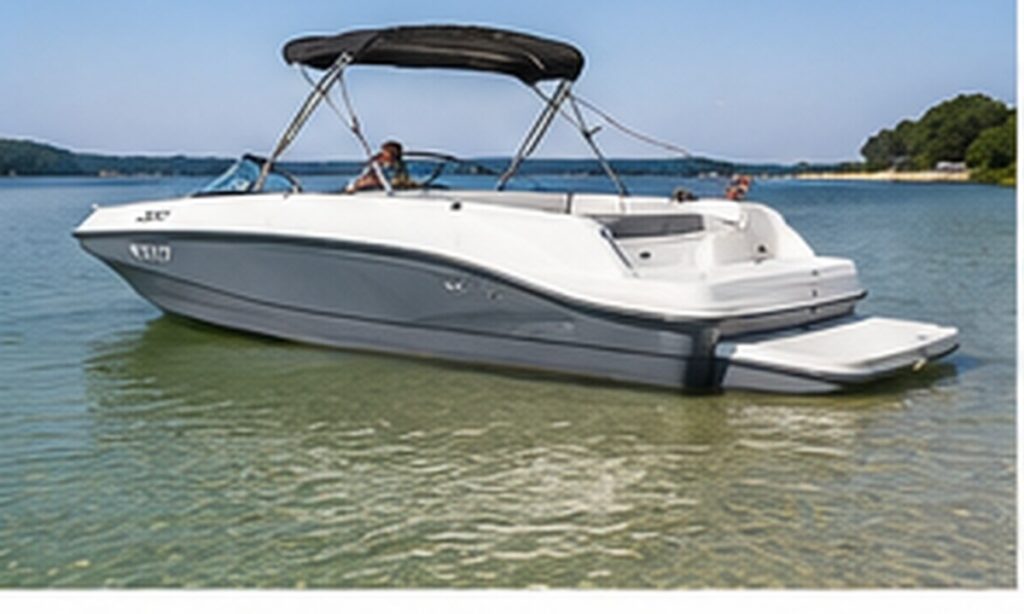
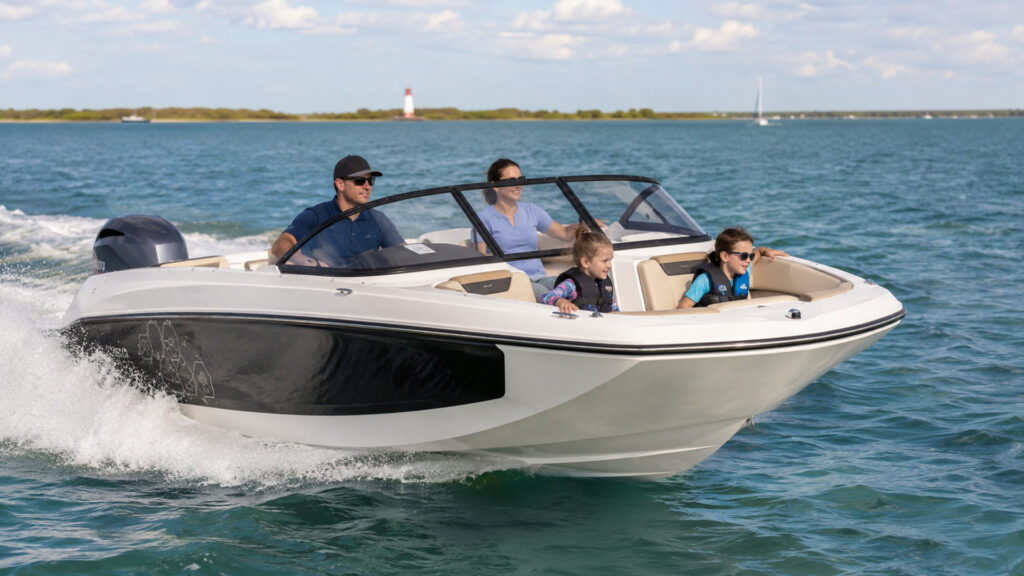
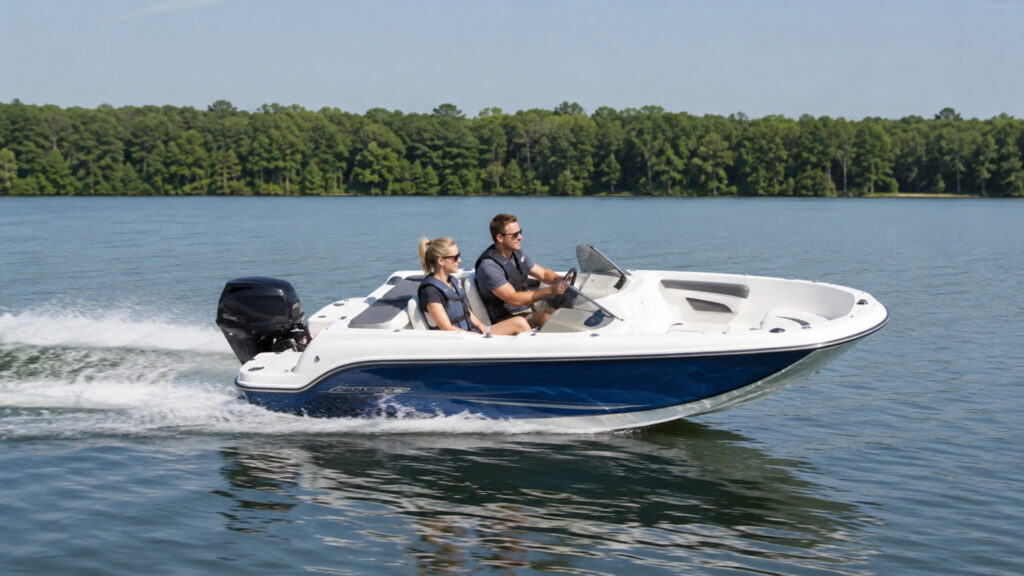
The E Series has a different job. The Element E16 is 16 feet 2 inches, weighs about 1,570 pounds with its standard 75-horsepower Mercury, carries six people, and holds 12 gallons of fuel. The E18 stretches to 18 feet 2 inches, carries nine, uses a 115-horsepower Mercury, and weighs about 2,000 pounds with standard engine. Both are compact enough to keep towing and storage approachable. Their appeal is not that they imitate a D Series for less money. It is that they leave out complexity many first-time buyers do not need.
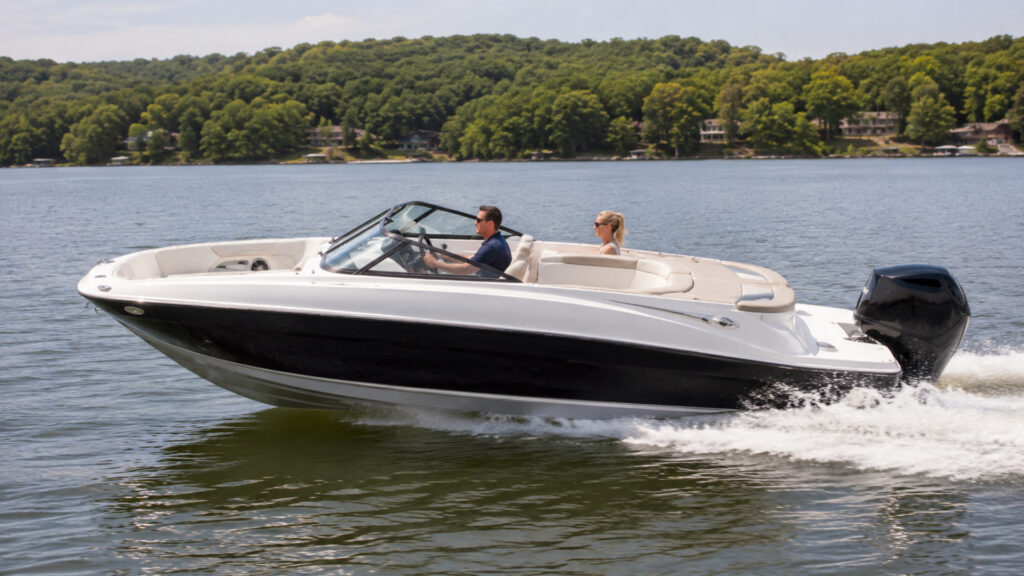
The M17 is another distinct lane. It is 17 feet long, 7 feet 6 inches wide, has 16 degrees of deadrise, carries seven people, and uses Bayliner’s M-Hull design. Standard power is 60 horsepower with 90 available. Its 18-gallon internal tank gives it more fuel capacity than either Element boat, while its published weight with trailer is 2,457 pounds. It is a useful candidate for someone who wants more capability than an E16 but still wants the boat to feel genuinely easy to own.
The useful comparison is not category versus category in the abstract. It is whether your next boat needs more seats, more fishing access, more shelter, or a place to sleep. Deck boats win when the answer is still “we want a great day boat for a lot of different family activities.”
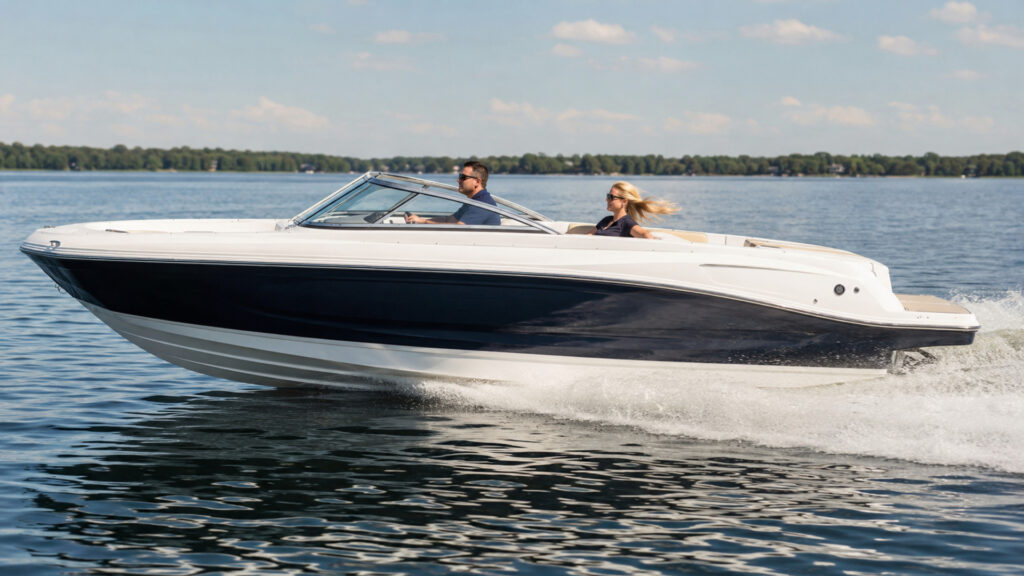
Choose a Bayliner bowrider when a sportier open-bow layout matters more than the broad deck-boat approach. V and VR models can be the better fit for buyers who care more about traditional bowrider seating, watersports presentation, and a sleeker cockpit.
Move toward the Trophy center consoles when fishing changes from “something we might do” to a primary reason for owning the boat. The T18 through T24CC give you console access, fish-focused storage and deck circulation that a family deck boat cannot duplicate.
A side-console Bayliner can make sense for buyers who want a more fishing-forward layout while preserving open deck utility. It is a more specialized solution than the D, E, or M Series.
If the family is already asking where everyone sleeps, a deck boat is no longer solving the whole problem. Bayliner’s larger enclosed and overnight-capable models trade trailer simplicity and open seating for weather protection and extended-use capability.
Once the model makes sense, the next decision is the deal. Float Finance can help you evaluate the actual boat, purchase price, seller, down payment, and financing structure instead of forcing you to shop from a generic monthly-payment guess.
Start with the crew you carry most often. A legal capacity plate answers what the boat is rated to carry; it does not tell you how enjoyable the boat feels once ten people bring bags, shoes, towels, food, a cooler, and watersports gear. The E16’s six-person rating is plenty for a couple with two children and occasional guests. The E18’s nine-person number looks dramatically larger, but the hull is still only 18 feet 2 inches. The D20’s broader 8-foot-1-inch beam and D-Series interior can be more comfortable for a family that uses the boat heavily even though its overall length is only sixteen inches greater than the E18.
Next decide whether propulsion is part of the lifestyle. Outboards on the D20 and D22 are visible at the stern, but they are easy to inspect, flush, service, and eventually replace. The D20I and D22I put the engine under the aft structure. You gain a more integrated transom, higher available horsepower, and in the D22I the option of an extended swim platform. You also take on sterndrive-specific maintenance and additional weight.
Towing should eliminate bad choices early. The E16, E18, and M17 are the easiest packages in the group. The D Series asks for more vehicle, more braking capacity, and more driveway or storage room. Bayliner publishes 26 feet 9 inches of storage length for the D20, which is a good example of why the number printed on the hull is not the number that determines whether the rig fits beside the house.
Finally, decide how much future growth you should pay for. Buying one size larger can be smart if your current family is already at the smaller boat’s comfort limit. Buying two sizes larger because “we might bring everyone someday” creates recurring costs for hypothetical passengers. The right deck boat should feel generous most weekends, not empty.
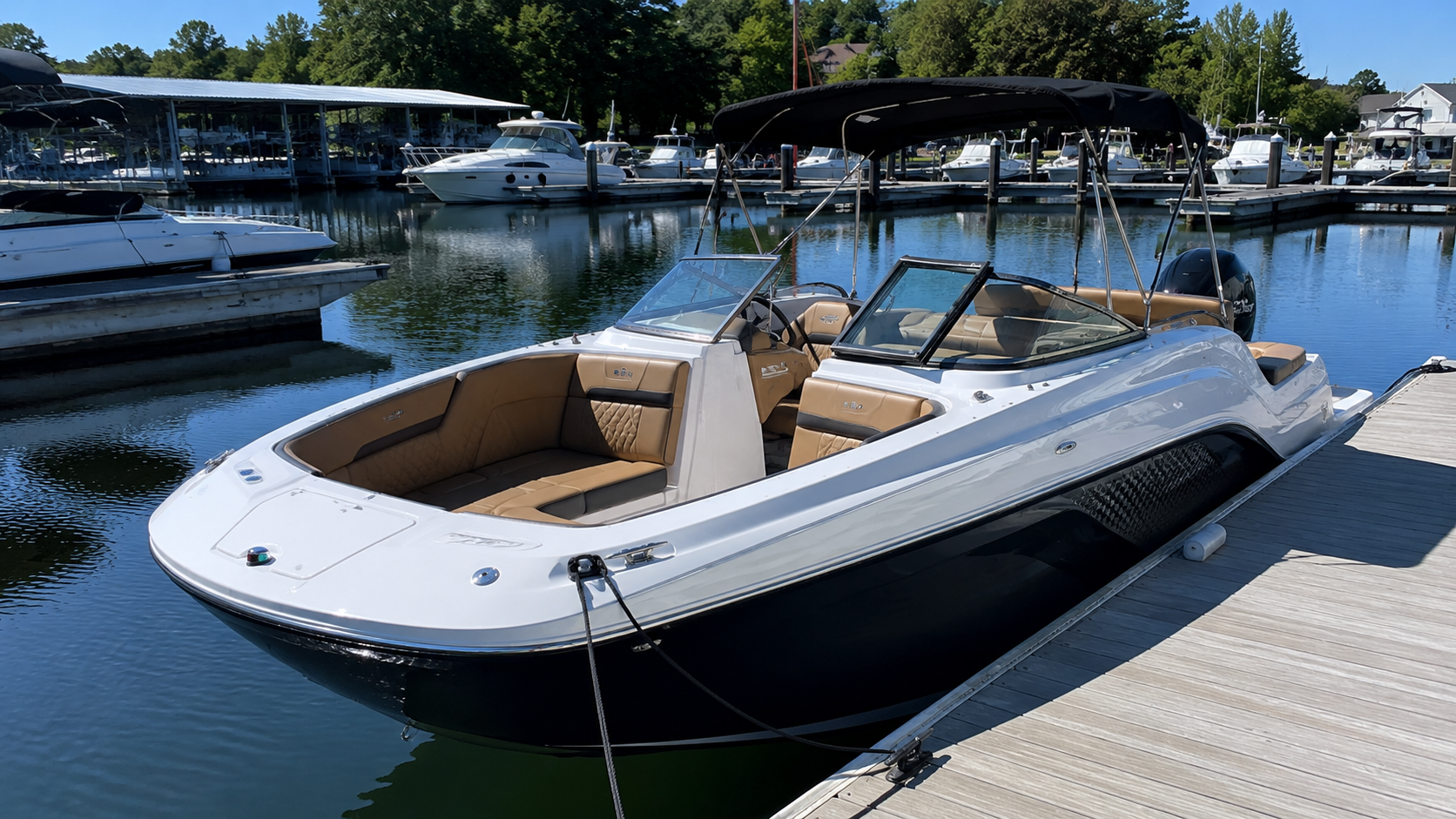
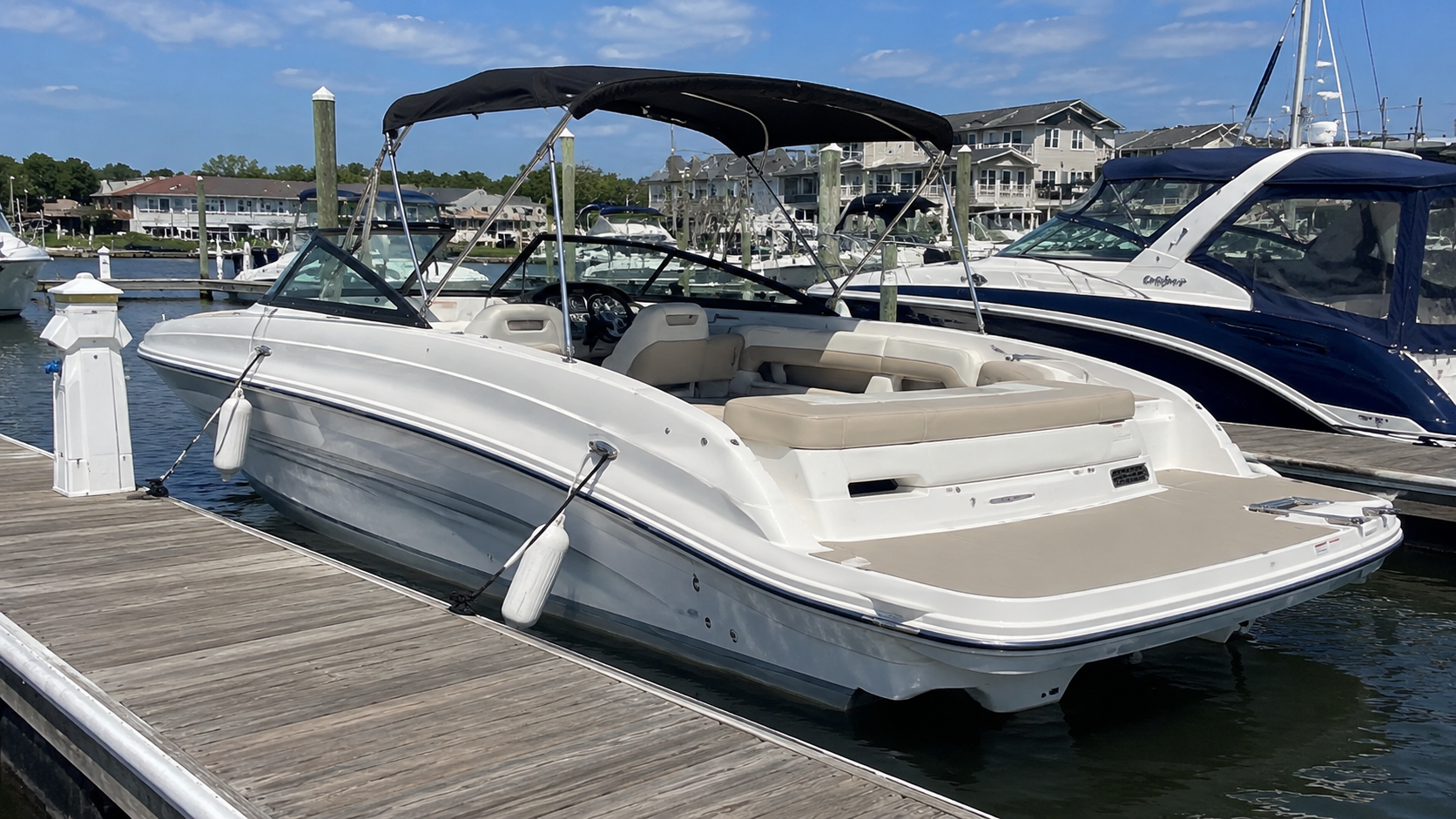
The E16 and E18 are inexpensive to understand because there is not much machinery hiding from you. Both use a single Mercury outboard, simple helm equipment, compact single-axle trailers, and relatively small fuel tanks. A first-time owner can visually inspect most of the important systems before leaving the driveway. The E16’s approximate 2,145-pound boat-and-trailer figure and the E18’s roughly 2,750-pound figure keep them within reach of many appropriately rated tow vehicles.
The M17 remains simple but adds useful ownership headroom. Its 18-gallon internal tank is six gallons larger than the Element boats, and the 90-horsepower option gives families a way to buy more loaded performance without jumping to a D Series. Its M-Hull, seven-person capacity, and roughly 20-foot storage length make it a practical home-storage boat.
The D models require more planning. Their deeper interiors, larger dimensions, option packages, and heavier powertrains produce a more substantial boat. The D20 and D20I use 33-gallon tanks. The D22 and D22I increase to 55 gallons. Bigger tanks are convenient on the water, but 55 gallons of gasoline is also several hundred pounds when full. That affects loaded towing and performance before anyone boards.
Sterndrive ownership deserves a separate line in the budget. MerCruiser-powered D20I and D22I buyers should plan for engine service plus drive oil, bellows, gimbal components, cooling-system inspection, corrosion control, and careful winterization where freezing weather applies. The outboard D20 and D22 make mechanical access easier, but lower-unit damage, propeller strikes, trim systems, corrosion, and water-pump service still matter.
Trailer condition can change the first-year budget on any of them. Tires age while boats sit. Brake components corrode. Hubs need attention. A boat that looks pristine above the rub rail can still arrive with a neglected trailer that needs immediate work.
Send Float Finance the listing instead of trying to reverse-engineer the payment from a dealer ad. The model year, engine, purchase price, seller type, and condition all help determine what financing structure is realistic.
The E16 and M17 deserve the first look. The E16 is lighter and simpler, with six-person capacity, 75 horsepower, and a 12-gallon tank. The M17 is one foot longer, carries seven, holds 18 gallons, and can be ordered with 90 horsepower. The E18 is also approachable but makes more sense when nine-person capacity is a real need. First-time buyers should resist the assumption that the D20 is automatically “more future-proof.” More hull can also mean more towing, storage, fuel, and launch-day work.
It can be when interior space and D-Series layout flexibility are the reasons you are shopping. The D20 is 19’6″ versus the E18’s 18’2″, but the bigger distinction is beam: 8’1″ versus 7’5″. The D20 also carries 33 gallons of fuel instead of 12 and can take up to 150 horsepower instead of 115. The E18 counters with lower weight, a lower purchase commitment, and a decade of used-market availability.
Choose outboard if engine access, easy visual inspection, flushing, and future repowering matter most. Choose the D20I or D22I if the clean transom, sterndrive feel, and higher available horsepower are worth additional maintenance. The D22I also offers an extended swim-platform option that can materially improve water access.
Bayliner’s current U.S. specifications list the D22 for twelve people and the D22I for eleven. The two boats share 21’6″ overall length and an 8’6″ beam, but the propulsion installation and weight package differ. The outboard D22 is approximately 3,994 pounds with standard engine; the D22I is roughly 4,620 pounds.
They can be excellent value because the E16 and E18 have substantial used inventory extending back roughly a decade in the September 2026 market sample. That creates a very different opportunity from the new D Series. Buyers can shop across more price points, but age makes condition more important. Inspect the outboard, trailer, upholstery, covers, wiring, bilge, steering, hull bottom, transom hardware, and signs of outdoor storage.
Potentially. Eligibility depends on the borrower, model year, value, condition, purchase amount, and lender requirements. Private-party transactions also require clean handling of title, lien payoff where applicable, trailer documentation, and funds. If you already found the boat, send Float Finance the listing and seller information so the financing discussion begins with the actual transaction.
Choose the hull you will enjoy towing, launching, loading, and paying for, not simply the biggest model you can qualify to buy. Once you find it, Float Finance can help you evaluate the financing around the real deal.
Tell us a little bit about yourself and the boat you are looking to finance.