Call Us : 207-994-5109
Mon – Fri: 8 am to 9 pm & Sat – Sun: 10 am to 8 pm
Bayliner Trophy center consoles are built for buyers who want real fishing utility without giving up the seating, storage, and easy ownership that make a boat useful to the whole family.
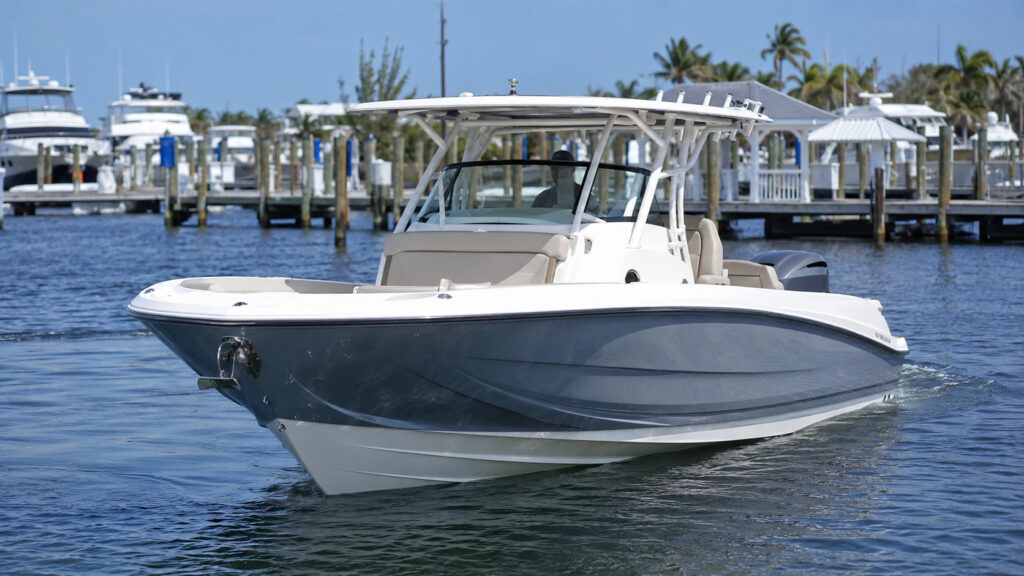
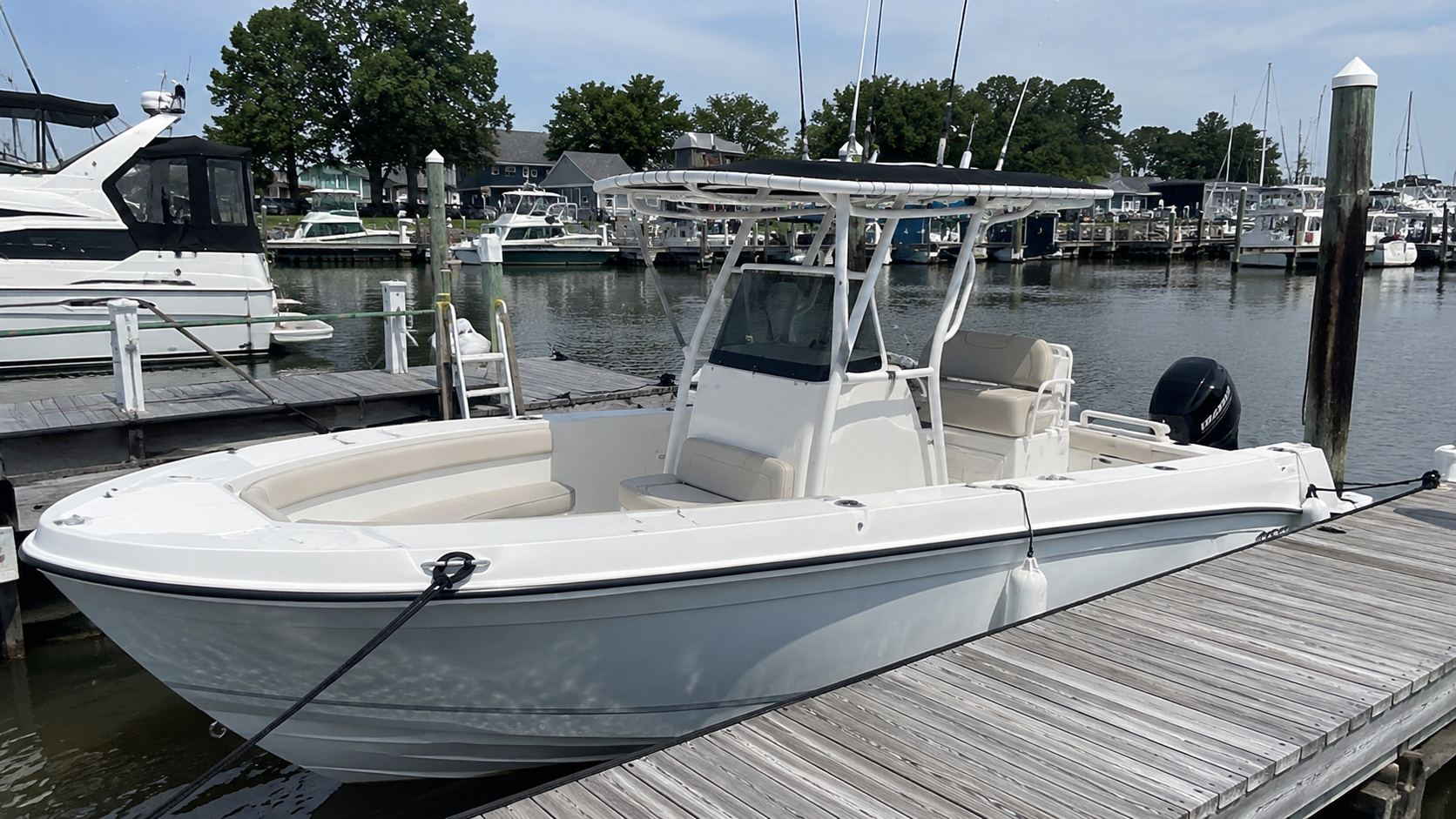
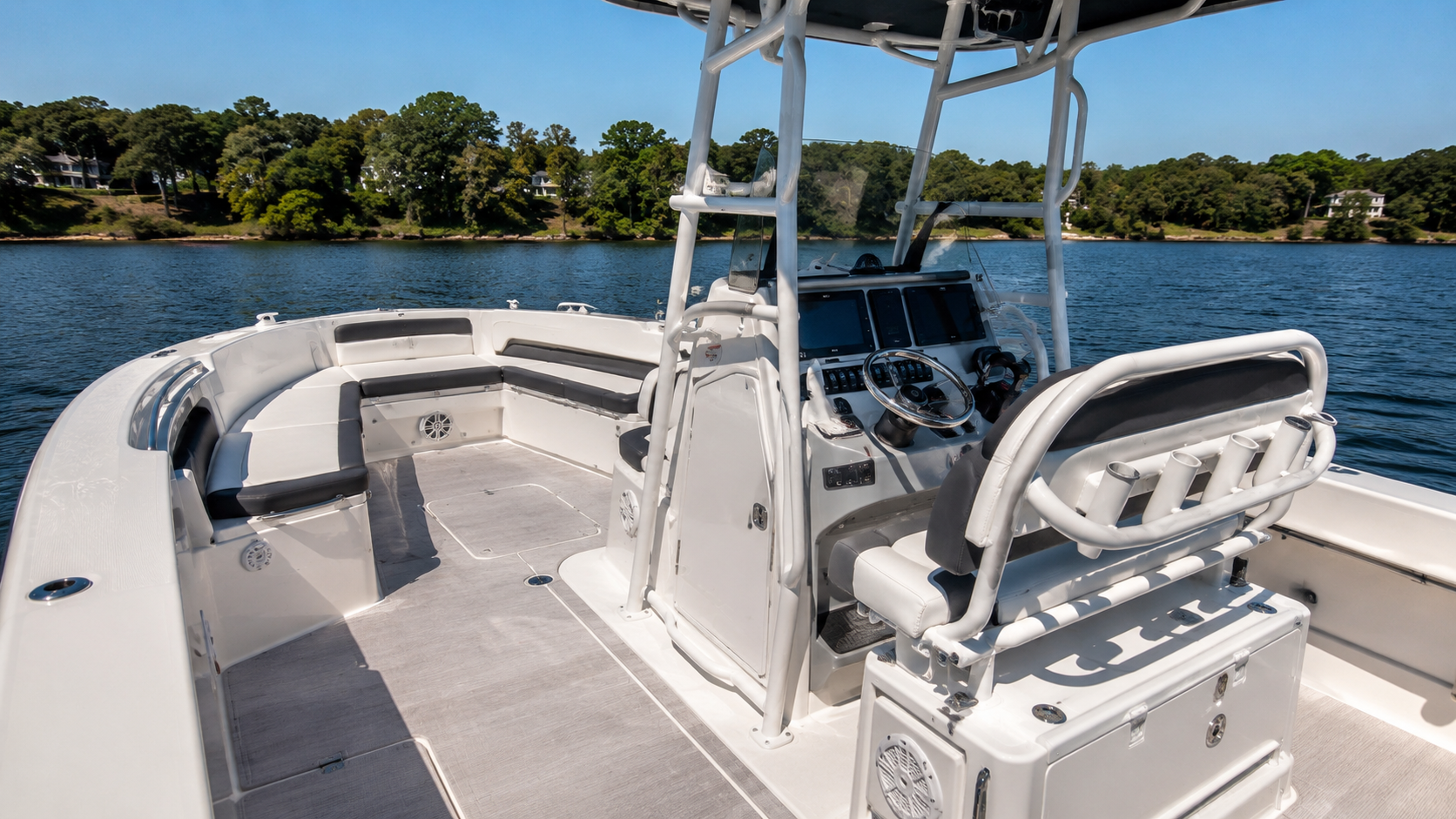
The Bayliner Trophy center-console range makes sense for buyers who want fishing to be the priority but do not want a boat that becomes uncomfortable the moment the rods go away. The layout keeps the helm in the middle, preserves walkaround access, and leaves the bow and cockpit open enough for casting, bait work, and landing fish. At the same time, removable cushions, fold-away seating, swim access, and family-friendly layouts keep these boats useful for cruising, sandbar days, and watersports.
That balance is the real buying argument. A dedicated angler may want a more specialized offshore platform with twin engines, larger fish boxes, and a higher equipment ceiling. A pure recreational buyer may prefer a bowrider or deck boat with more upholstered seating. Trophy center consoles sit between those extremes and are strongest when one owner needs a boat that can fish seriously on Saturday morning and still carry the family comfortably that afternoon.
The lineup also scales logically. The T18 is the easiest entry point, with six-person capacity and 115 horsepower. The T20CC gives buyers a wider eight-foot beam, eight-person capacity, and up to 175 horsepower. The T22CC moves into a substantially more capable platform with 300 horsepower available, ten-person capacity, and a larger 65-gallon fuel tank. The T24CC is the biggest step, with a 24-foot hull, 22-degree deadrise, 100 gallons of fuel, and room for up to twelve people.
The right model is not automatically the largest one. Buy the smallest Trophy that comfortably carries your normal crew, fishing load, range needs, and water conditions. Every step up adds capability, but it also adds weight, tow-vehicle demand, storage length, fuel use, and purchase price.
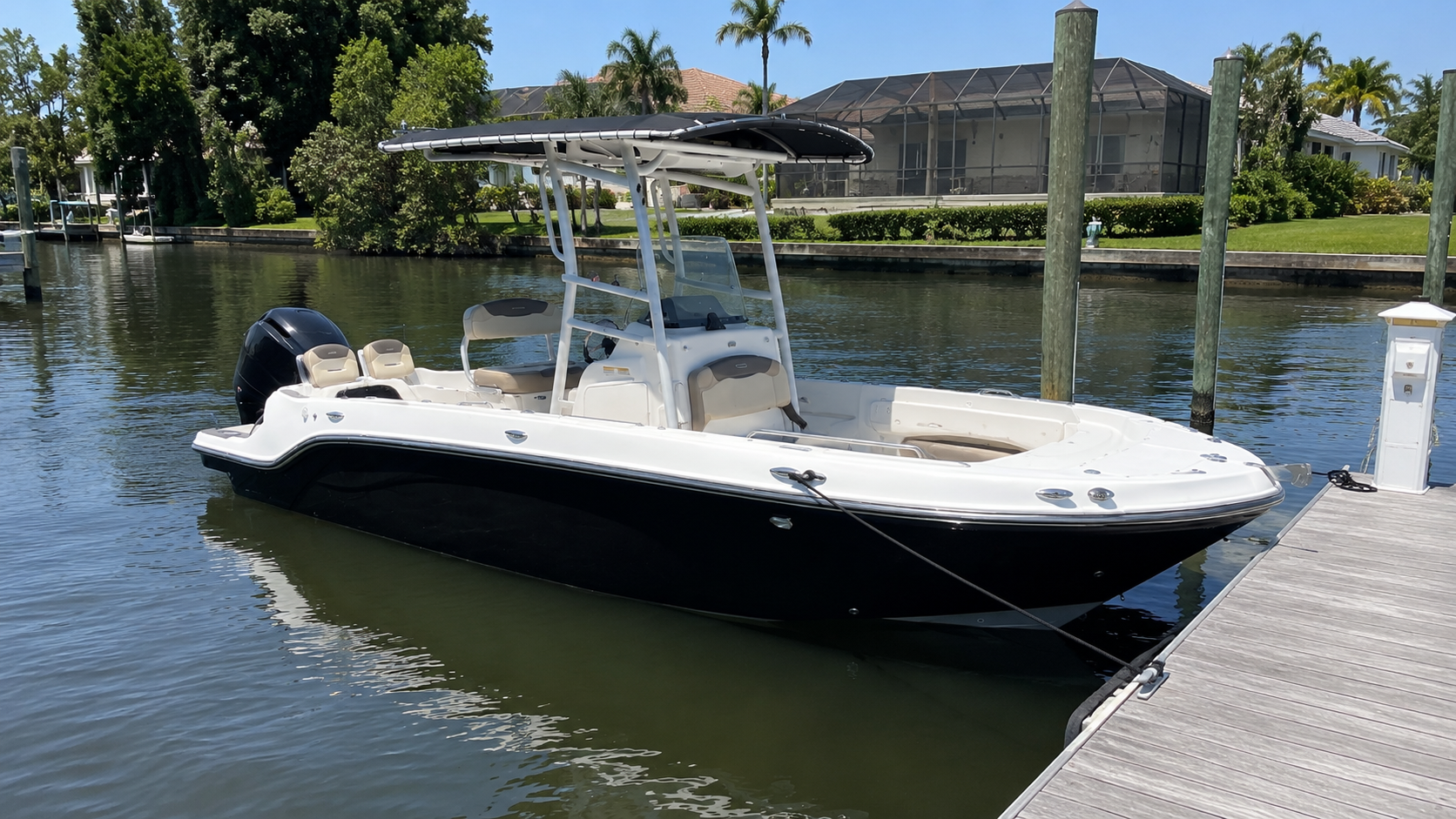
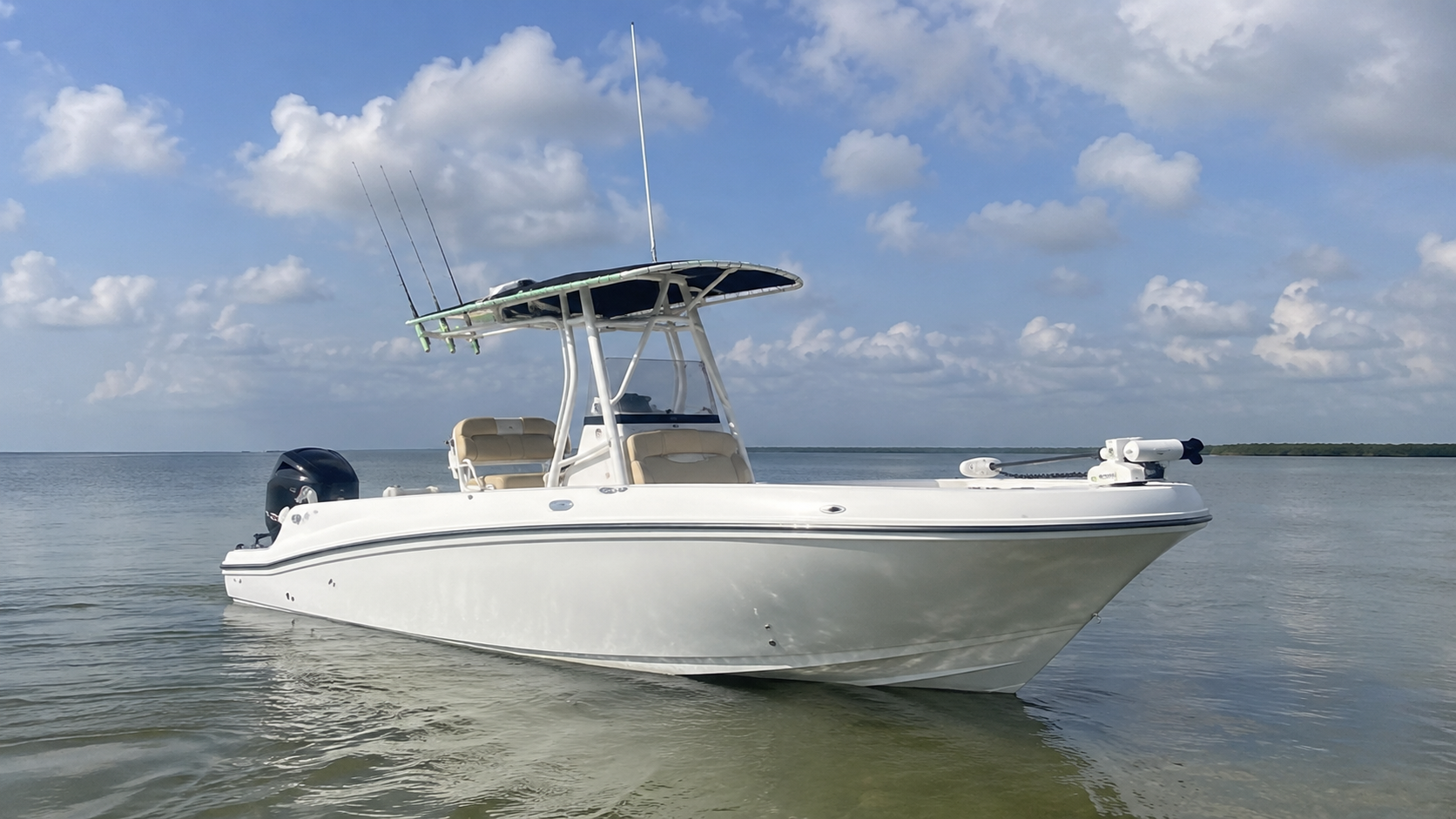
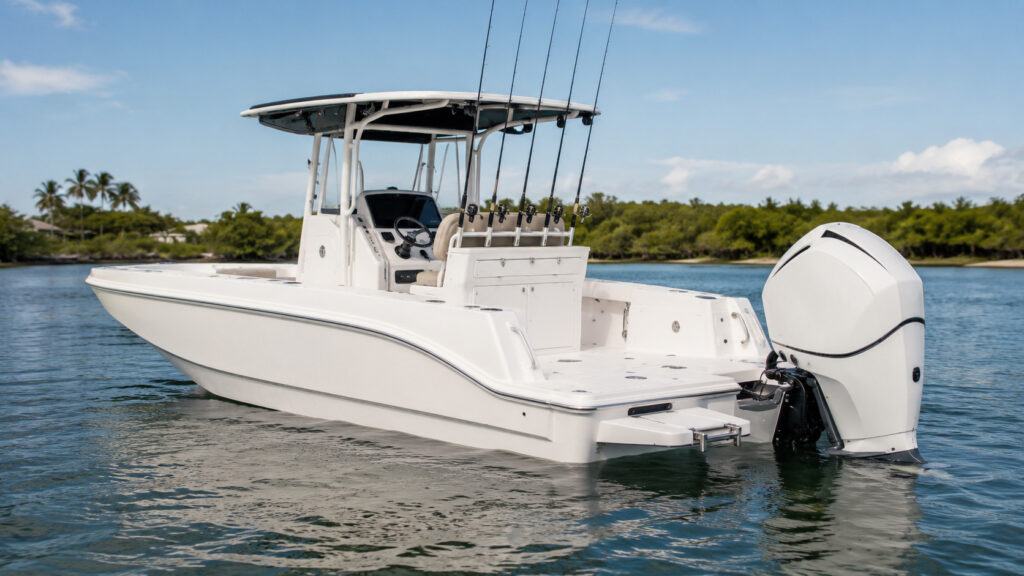
The Trophy center-console layout is designed around movement. With the helm centered in the boat, anglers can work around the console instead of being trapped on one side of the cockpit. Rod holders, livewell or baitwell systems, self-bailing cockpit designs on the larger models, fish-box storage, and washdown equipment become progressively more serious as you move up the range.
The hulls also change with size. The T18 and T20CC use 18-degree deadrise, which supports predictable recreational handling and relatively modest power needs. The T22CC retains an 18-degree aft angle but adds considerably more hull, beam, weight, and horsepower. The T24CC moves to a 22-degree deep-V hull, making the largest Trophy the model most clearly aimed at buyers who expect more coastal exposure and want a sharper running surface beneath them.
Outboard power is another part of the buying case. Mercury outboards keep routine service accessible, simplify repowering later in the boat’s life, and free the interior from an enclosed engine compartment. That matters to buyers who trailer regularly, keep the boat in salt water, or simply want to see and reach the propulsion system without opening an engine hatch.
A center console is the right Bayliner when fishing access comes first. If your use is more general, another Bayliner category may be the better buy.
The better buy when open seating, swimming and watersports matter more than fishing access.
Worth considering when passenger room and a broad, stable deck plan matter more than classic proportions.
Useful for buyers who want flexible fishing and recreation in a smaller, less conventional layout.
Make more sense when weather protection, enclosed accommodation and weekend coastal cruising are part of the plan.
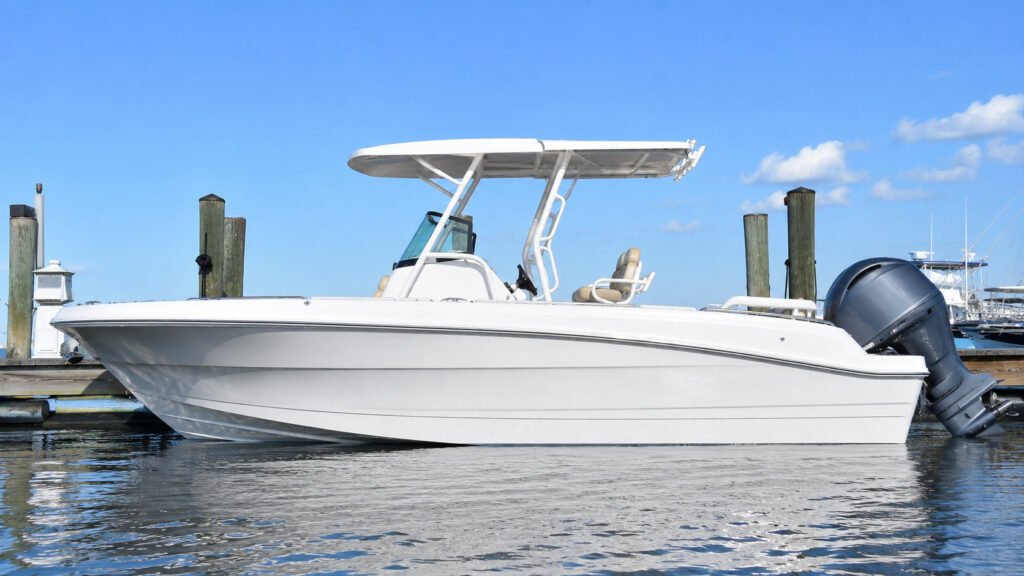
The T18 is the low-complexity choice. It is light enough to stay easy to tow, carries six people, and gives buyers a legitimate center-console fishing layout without taking on the footprint of a larger coastal boat.
Once you know which hull and power level make sense, Float Finance can help you evaluate the actual boat, purchase price, and financing structure before you commit.
Start with where you fish. If most trips are on protected lakes, rivers, and nearshore water, the T18 or T20CC may give you everything you need without saddling the tow vehicle with unnecessary weight. If your normal day includes longer runs, larger bays, coastal chop, or a heavier fishing load, the T22CC begins to make more sense. The T24CC earns its cost when additional fuel, deeper-V running geometry, livewell capacity, fish storage, and deck space are needs rather than wish-list items.
Crew size matters next. Capacity numbers tell you the legal maximum, not how comfortable a boat will feel after rods, tackle, coolers, safety gear, and bait come aboard. A six-person T18 can be excellent with two or three anglers and feel busy with six adults. A 12-person T24CC gives a much larger group more room, but carrying and towing that hull every weekend has a cost.
Then decide whether fishing will remain the main mission. Trophy boats do a good job of blending family use with angling, but a center console still prioritizes open deck movement over plush bowrider-style seating. If most outings are cruising and swimming with only occasional fishing, another Bayliner category may fit better. If fishing happens almost every trip, the Trophy layout becomes easier to justify.
Finally, match power to load. Maximum horsepower is not automatically the best engine, but an underpowered center console becomes frustrating once fuel, passengers, bait, and gear add real weight. Think about how quickly you want the boat to plane with a normal load and how far you routinely run.
The monthly payment is only one line in the budget. Add insurance, gasoline, annual outboard service, trailer maintenance, storage or marina fees, batteries, electronics, detailing, bottom care if the boat stays in the water, and repairs to the equipment used hardest by anglers.
Fishing boats can accumulate more wear than lightly used cruising boats. Livewell pumps, washdown systems, rod holders, tackle-storage hardware, T-top fittings, electronics, and trailer components all deserve attention on a used Trophy. Saltwater history is not automatically a problem, but maintenance discipline matters. Flush history, corrosion protection, trailer condition, and electrical work can separate a good used buy from a cheap boat that immediately starts consuming money.
The jump between models is also not linear. Moving from the T20CC to the T22CC adds hull length, beam, nearly 800 pounds of published boat weight, 10 gallons of fuel capacity, more passenger capacity, and a much higher horsepower ceiling. The T24CC adds another step again, with 100 gallons of fuel and more than 4,400 pounds of published weight with standard engine. Those differences affect the tow vehicle, trailer brakes, storage, fuel bill, and how casually the boat can be launched.
Send Float Finance the listing. Dealer and private-party purchases can follow different paperwork paths, so starting with the actual boat gives the financing discussion the right context.
They are strongest for buyers who want genuine fishing utility without owning a highly specialized offshore machine. The center-console layout preserves walkaround access, while livewell, rod-storage, washdown, fish-box, and T-top equipment becomes more substantial as the models get larger. The T24CC is the most fishing-focused platform in the current group. The smaller T18 and T20CC make more sense for buyers who value easy towing and lower ownership cost as much as offshore capability.
Buy the T18 if easy towing, simple ownership, and smaller crews are the priority. The T20CC is the better middle ground when you want more beam, passenger room, and fuel without moving to a larger 22-foot hull. The T22CC is the performance and capability step, with ten-person capacity and up to 300 horsepower. The T24CC is the buy when 100 gallons of fuel, 22-degree deadrise, larger fish storage, and 12-person capacity solve real needs.
It can be if you use what the additional money buys. The T24CC adds hull length, a sharper 22-degree bottom, 35 more gallons of fuel, more passenger capacity, larger fishing systems, and more weight. Those are meaningful upgrades for longer coastal days and heavier crews. If your normal fishing stays closer to home and the T22CC already carries everyone comfortably, the smaller boat may be easier to tow, store, fuel, and pay for.
Yes, but the definition changes as the boats get larger. The T18 is the easiest package, while the T22CC and T24CC require much more attention to loaded trailer weight, tow-vehicle payload, braking, and storage. Never select a tow vehicle from published boat weight alone. Trailer, fuel, batteries, T-top equipment, coolers, tackle, and everything stored aboard all count toward the actual road weight.
Yes. That dual-purpose role is part of the range’s appeal. Removable cushions, folding rear seating, swim boards, ladders, audio systems, and available watersports equipment keep the boats useful when nobody is fishing. The tradeoff is that a center console prioritizes open deck movement and fishing hardware over the deeper upholstered lounges found in a bowrider. If fishing happens regularly, the compromise is easy to justify.
A used Trophy may be financeable depending on the boat, model year, purchase price, condition, borrower qualifications, and transaction. Dealer and eligible private-party purchases can follow different documentation requirements. If you already found a T18, T20CC, T22CC, or T24CC, send Float Finance the listing and asking price so the financing discussion can start with the actual boat.
Choose the hull around your water, crew, range, and tow setup. Then let Float Finance help you structure financing around the Bayliner you actually want to bring home.
Tell us a little bit about yourself and the boat you are looking to finance.