
Call Us : 207-994-5109
Mon – Fri: 8 am to 9 pm & Sat – Sun: 10 am to 8 pm
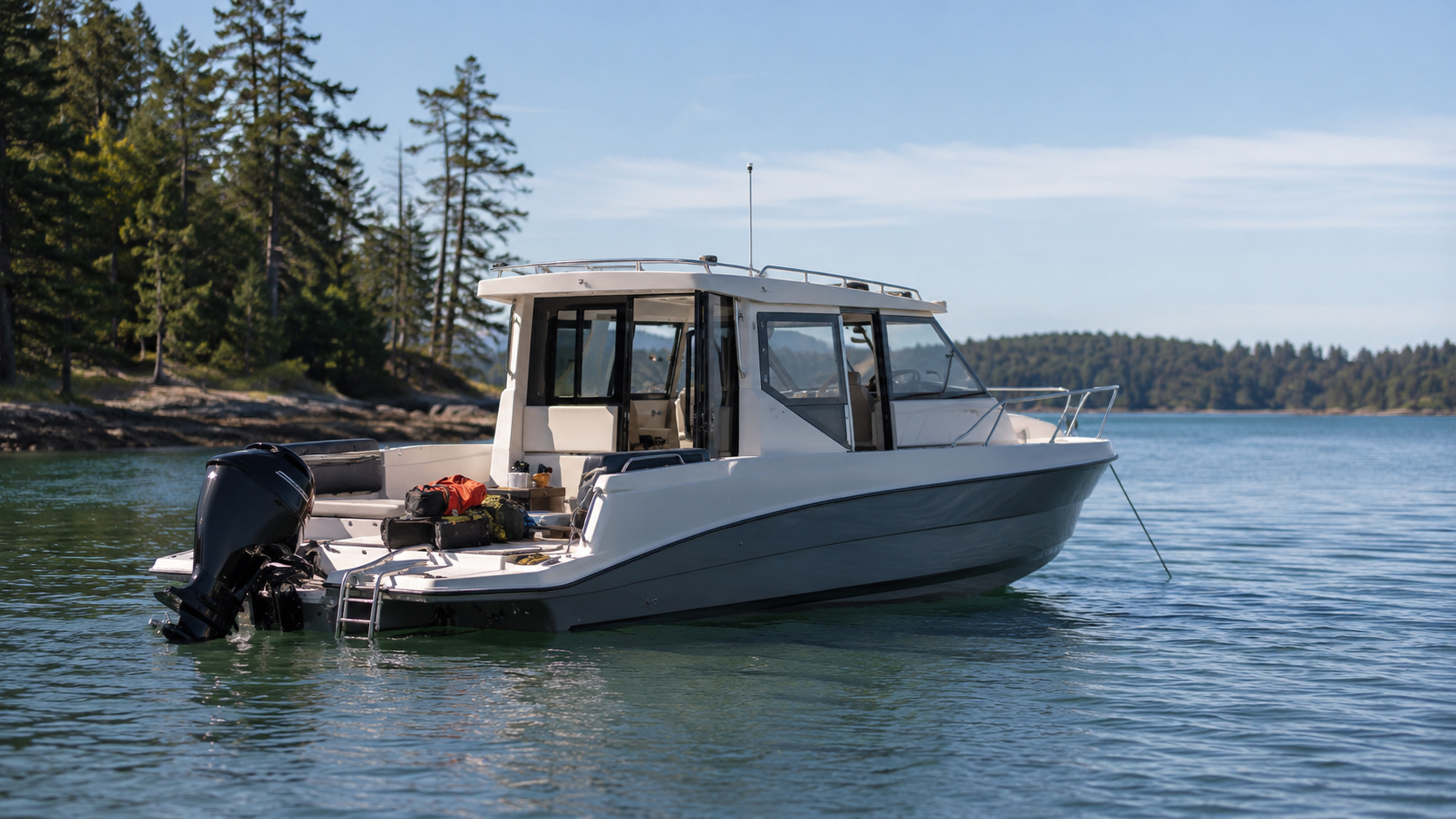
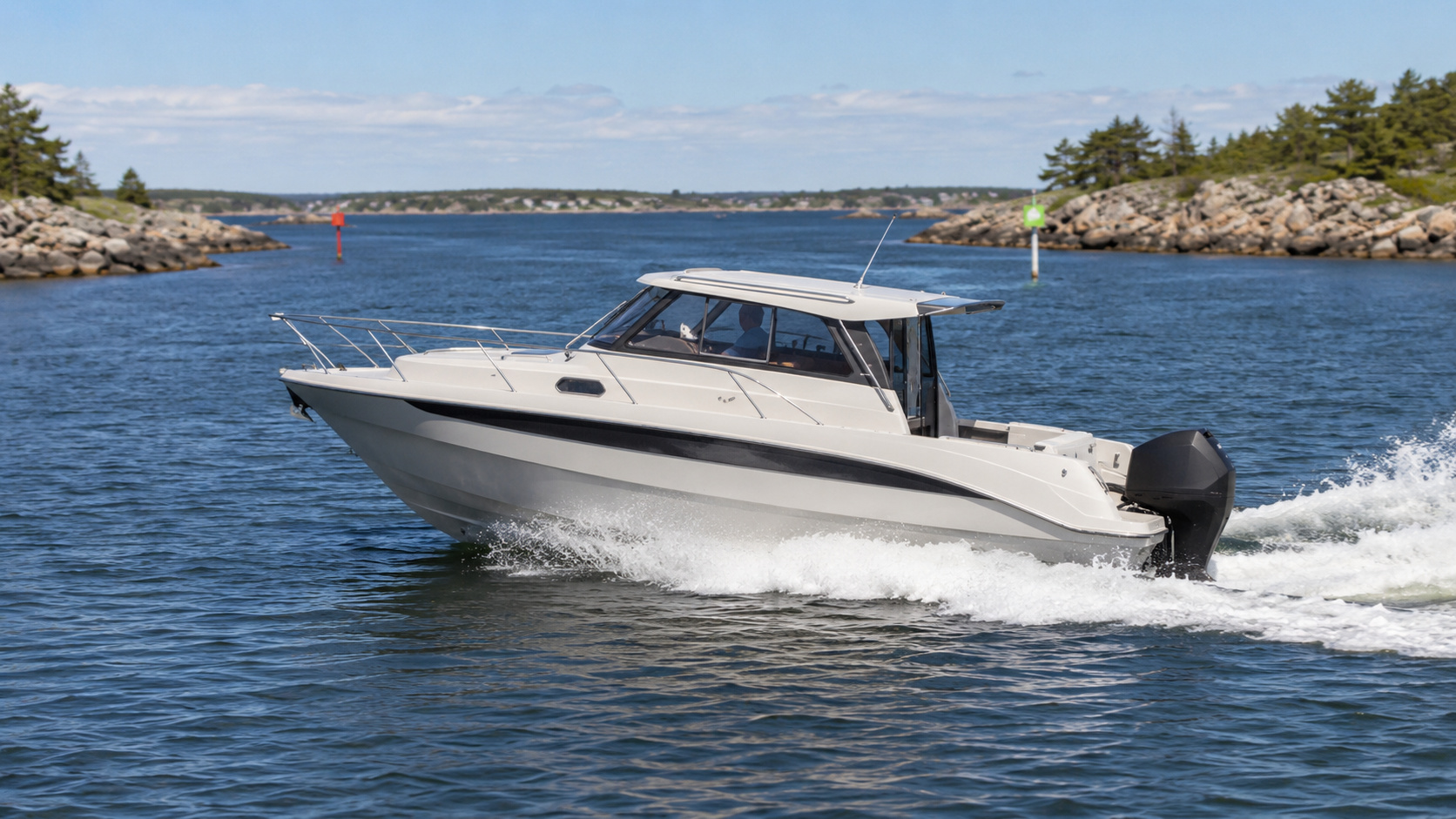
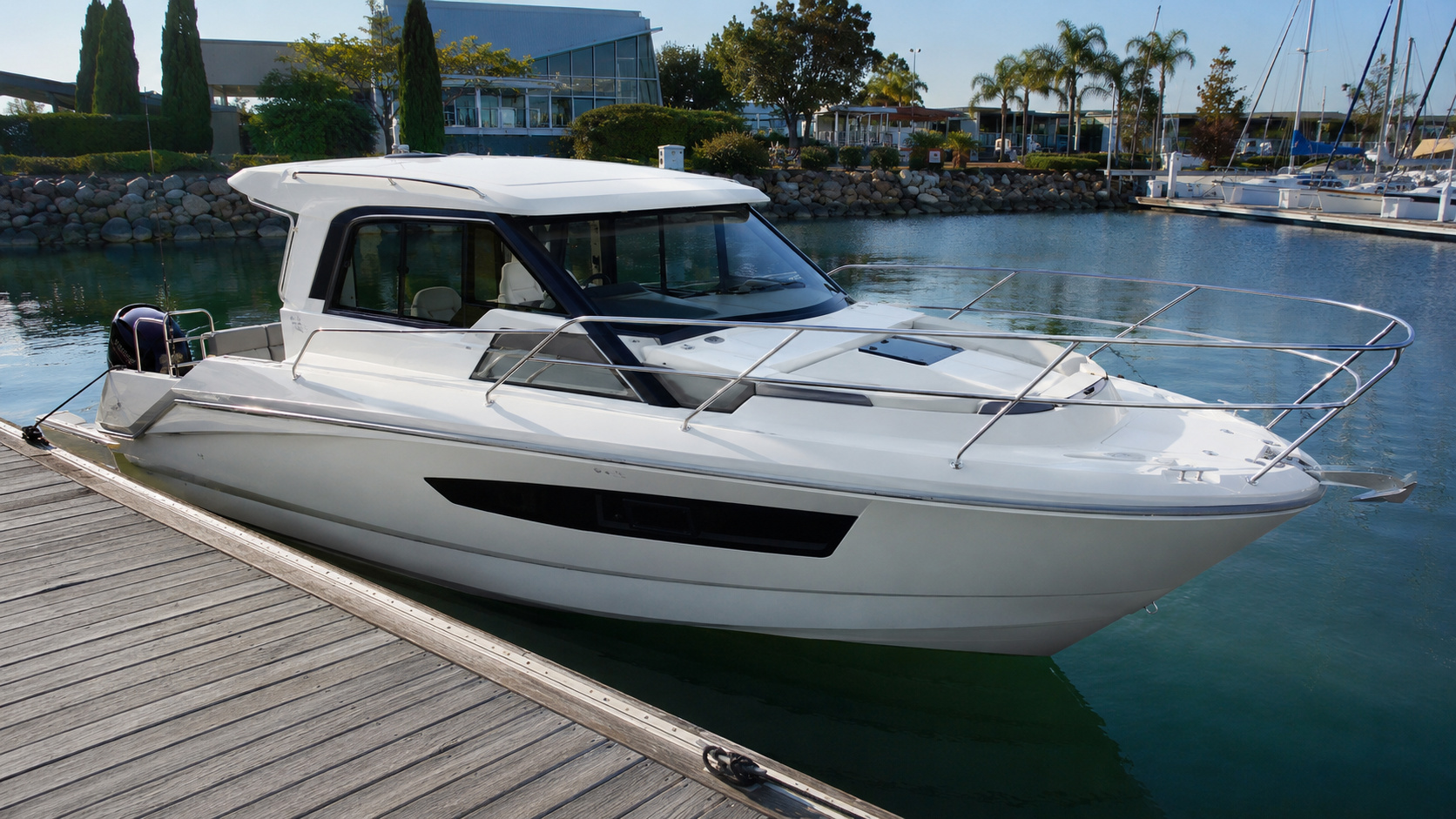
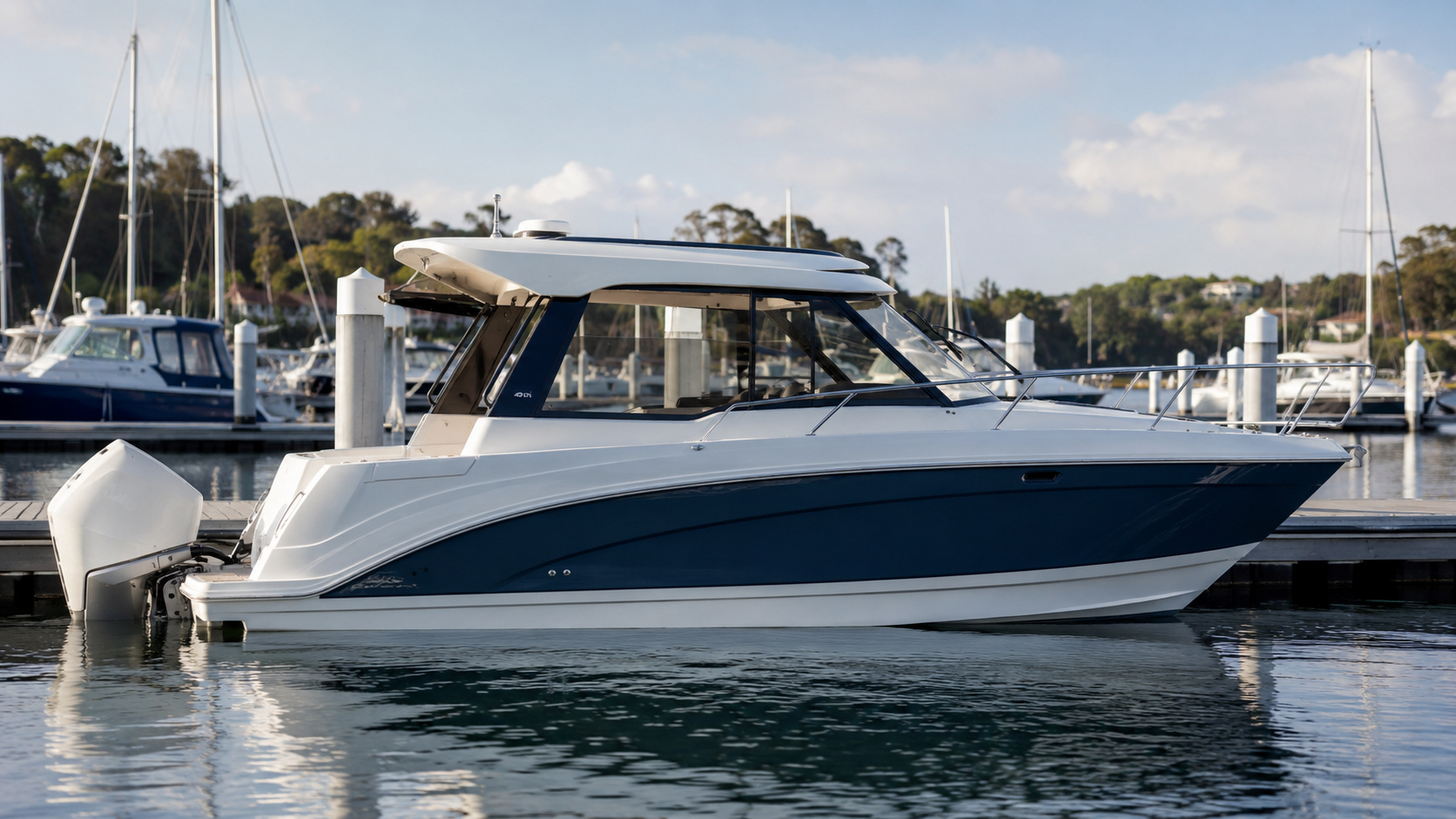
The Bayliner T25 Explorer is the family-first overnight Trophy for buyers who want 11-person capacity, four berths, an enclosed head, 300-horsepower capability, and a cabin that earns its keep beyond fishing trips.
The T25 Explorer is where Bayliner’s Explorer idea becomes a genuinely versatile family cruiser rather than a compact cabin experiment. It is 25 feet 6 inches long, 9 feet 4 inches wide, carries eleven people, publishes four berths, and allows up to 300 horsepower from a single Mercury outboard.
That combination puts the T25 Explorer in an interesting position. It is still small enough to remain a single-engine boat with a manageable overall length, yet wide enough and heavy enough that the cabin, enclosed head, social cockpit, shore power, and climate options begin to feel like real cruising equipment rather than occasional extras.
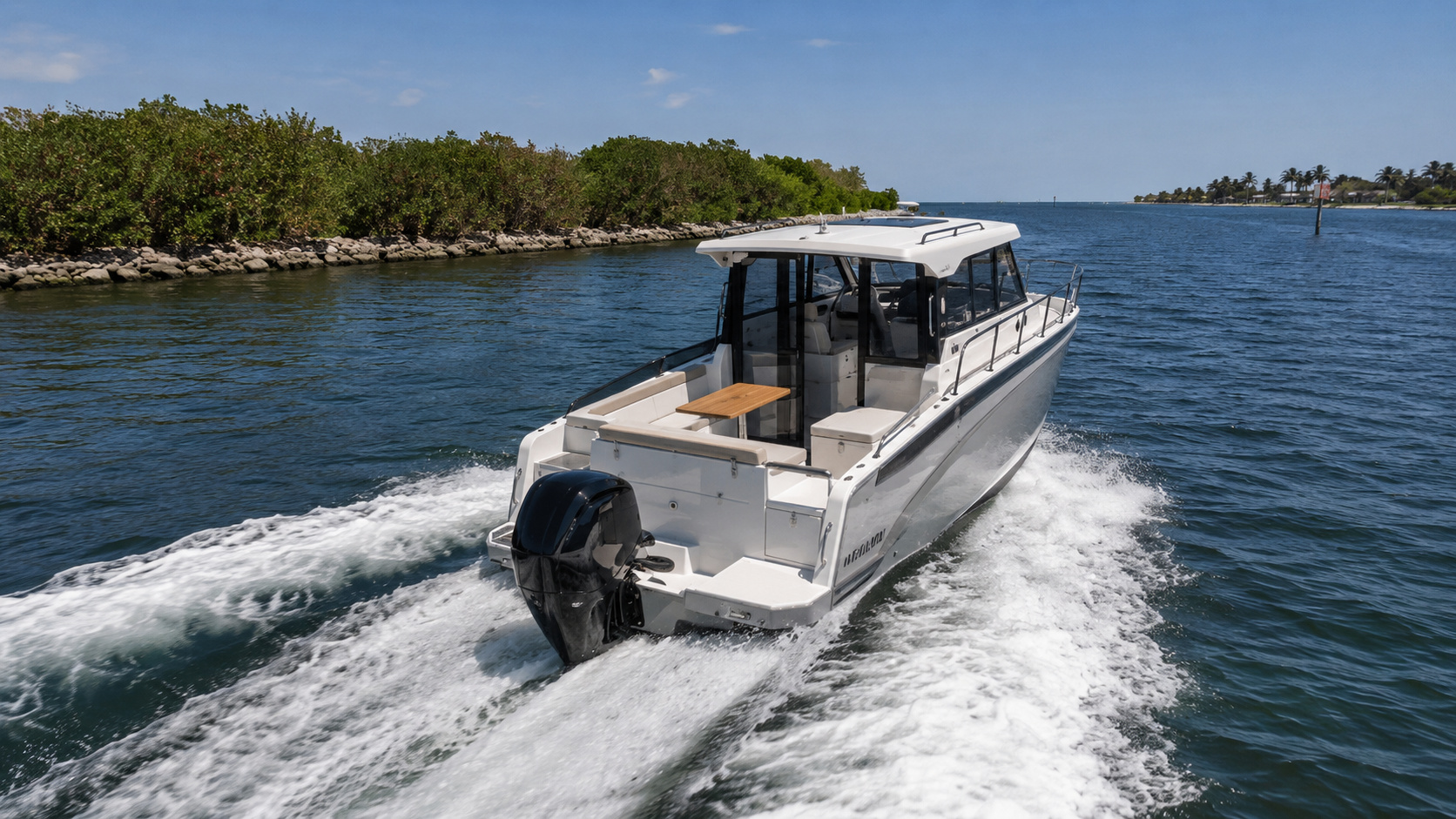
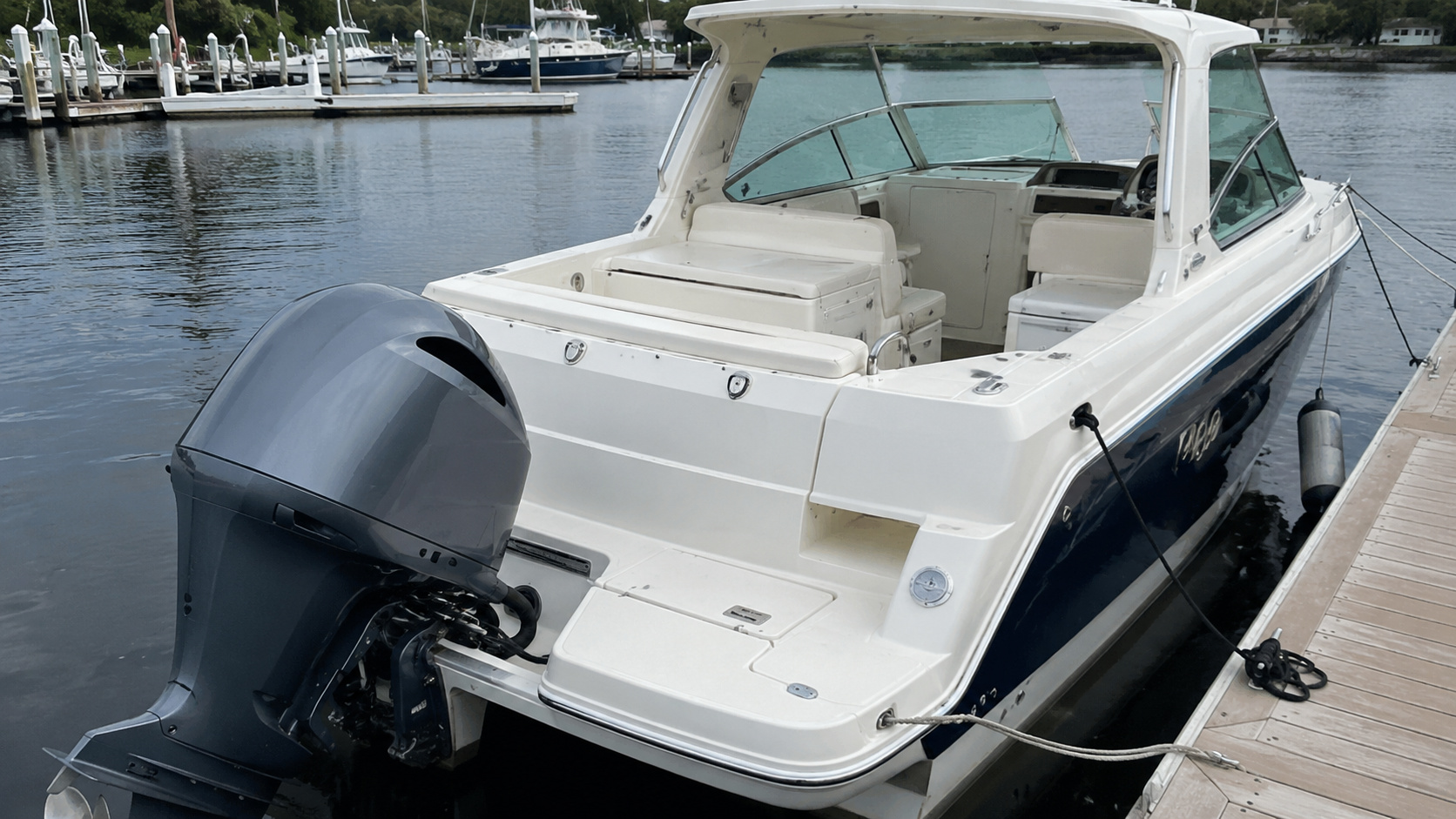
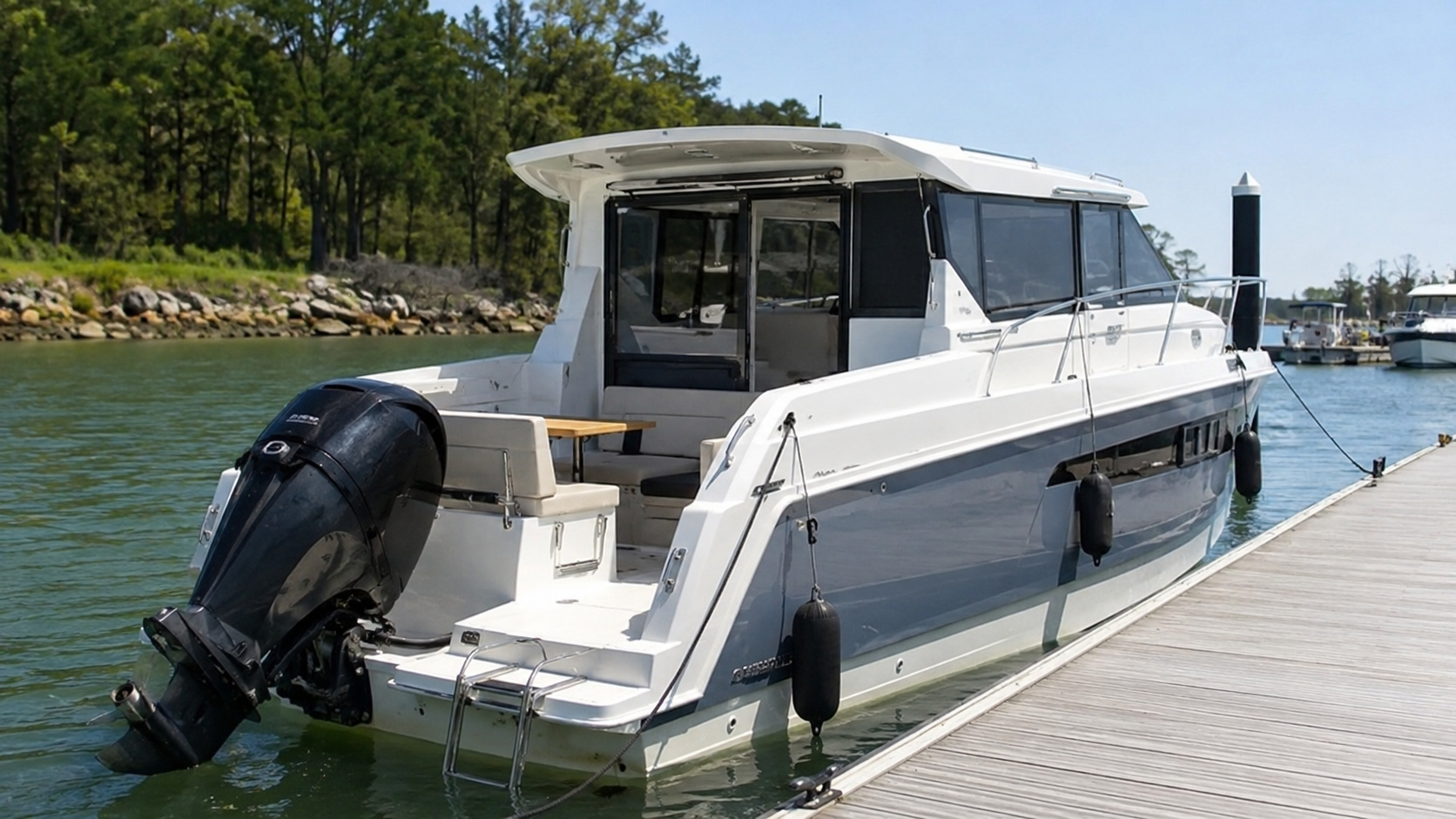
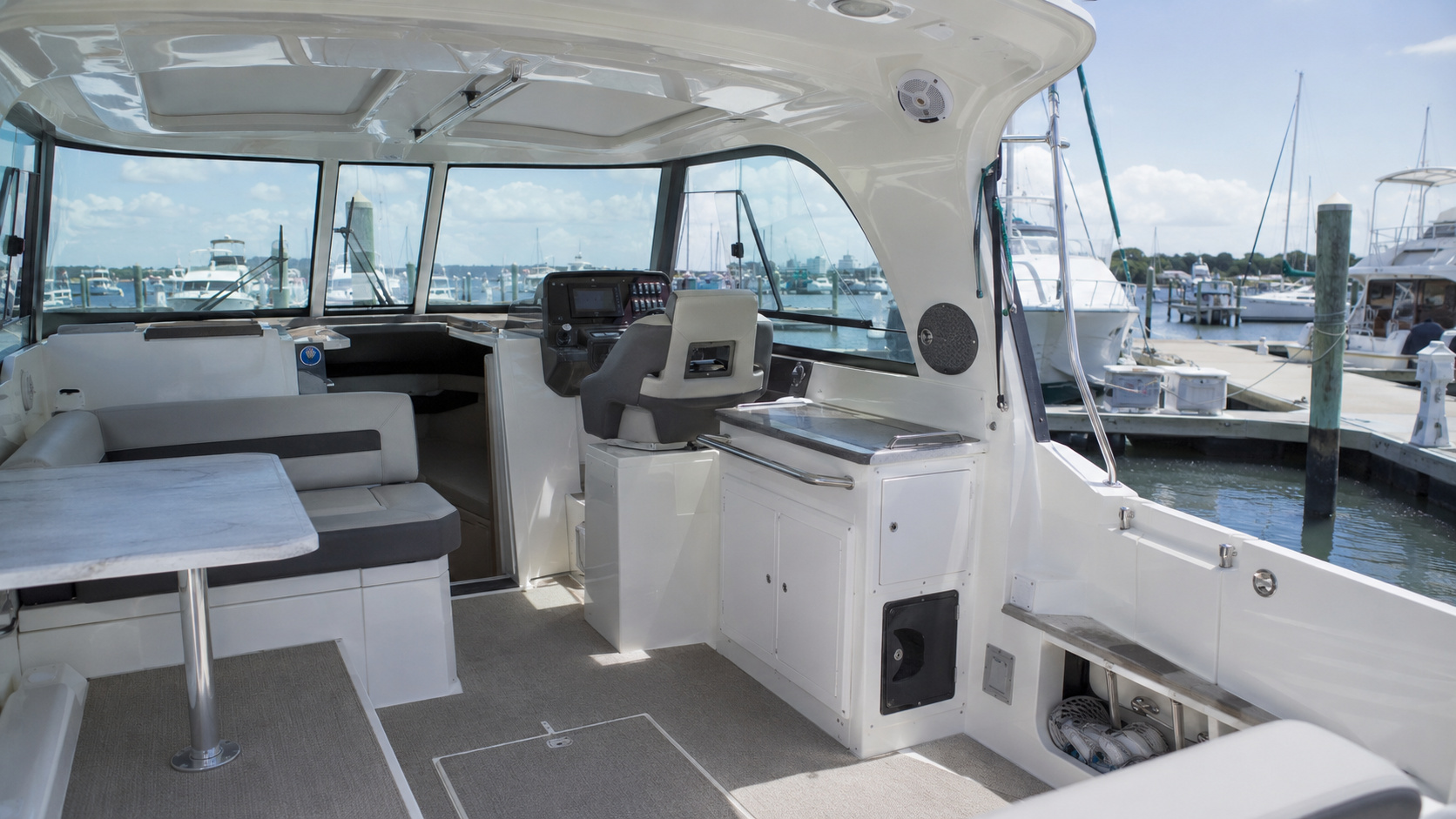
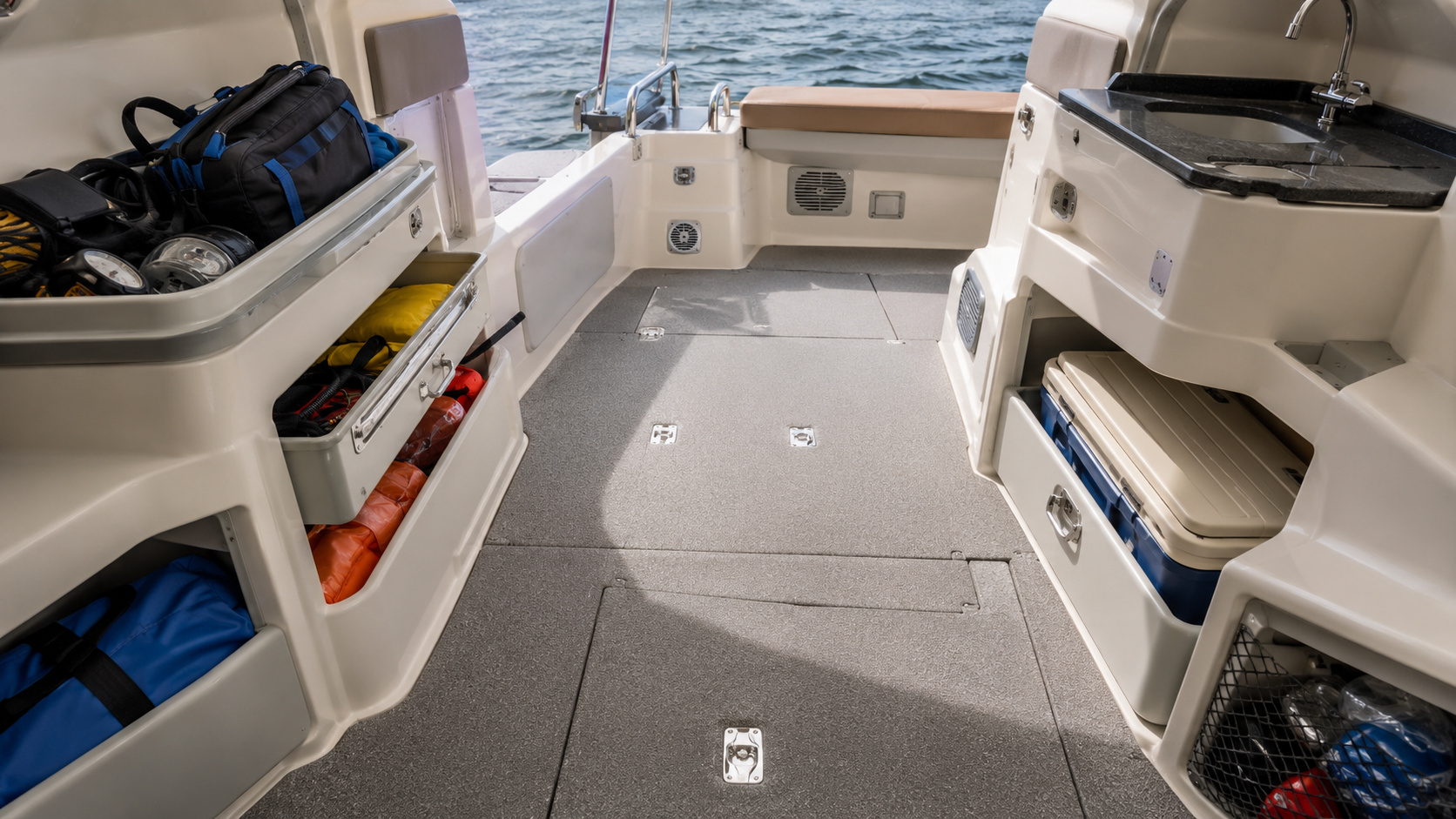
The cockpit is deliberately social. Bayliner lists an aft bench with storage, cockpit shower, transom door, cockpit table, cockpit sun lounge, and L-lounge. Those features make it easy for non-anglers to use the rear deck when fishing stops or never starts.
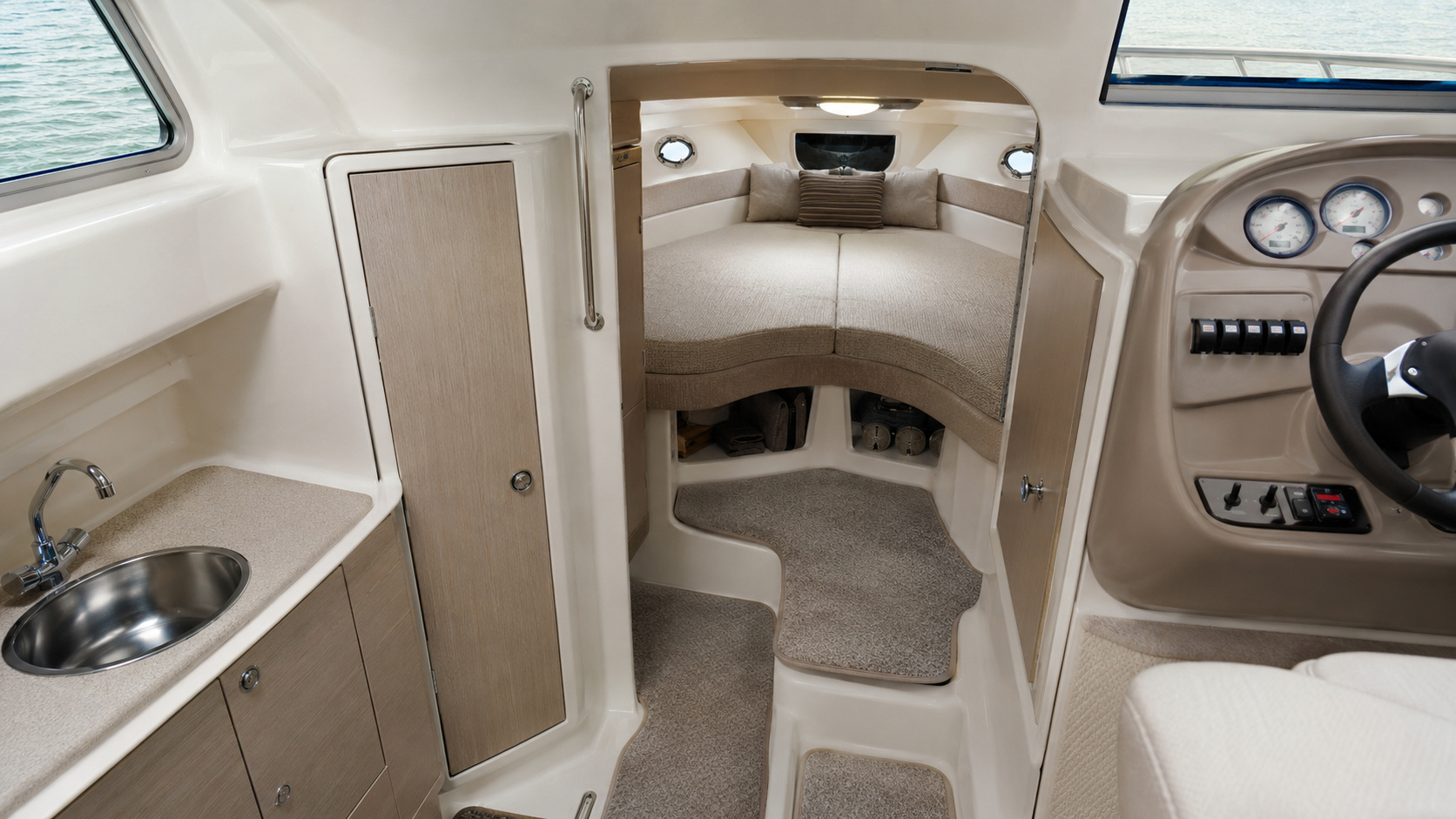
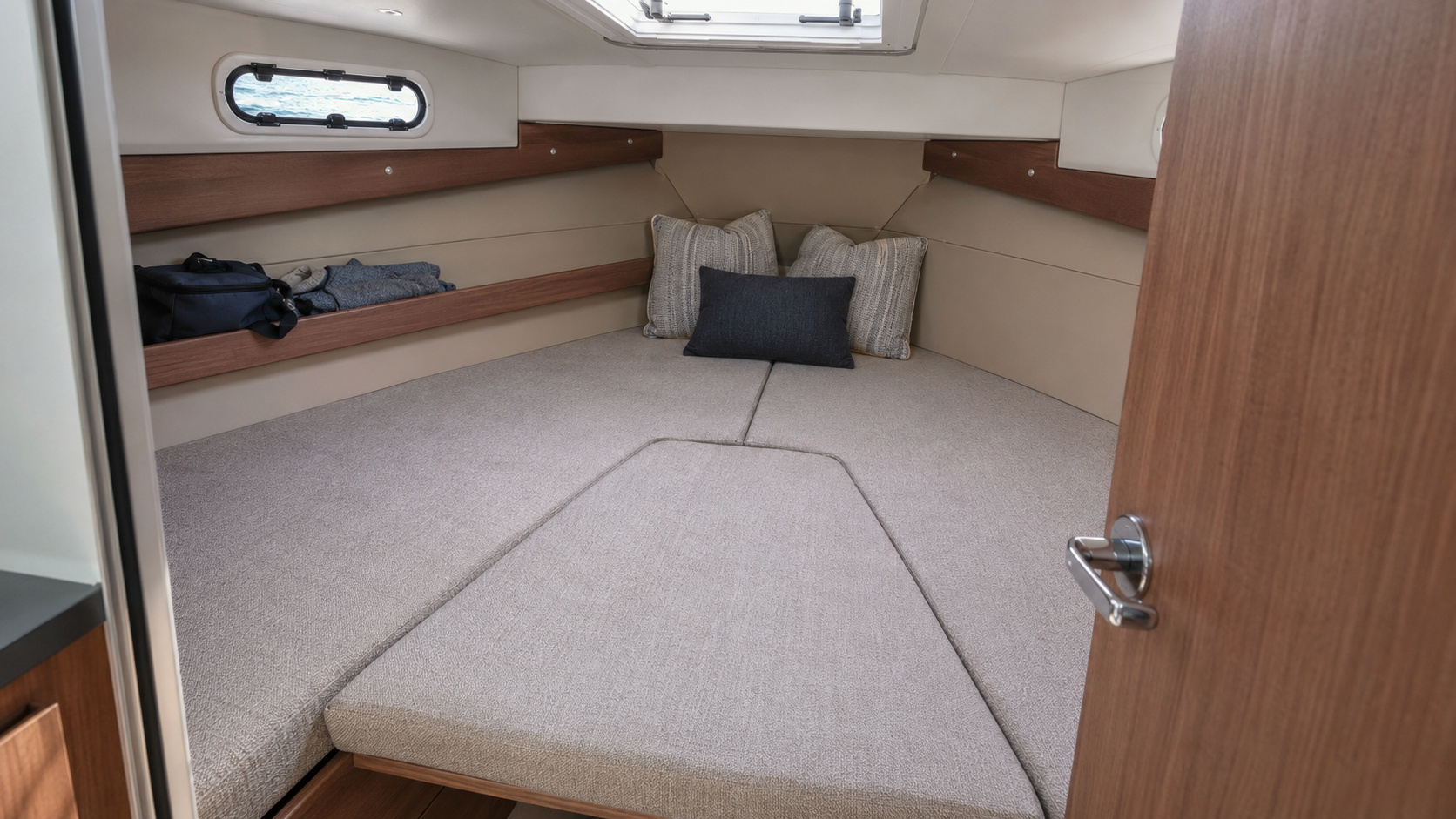
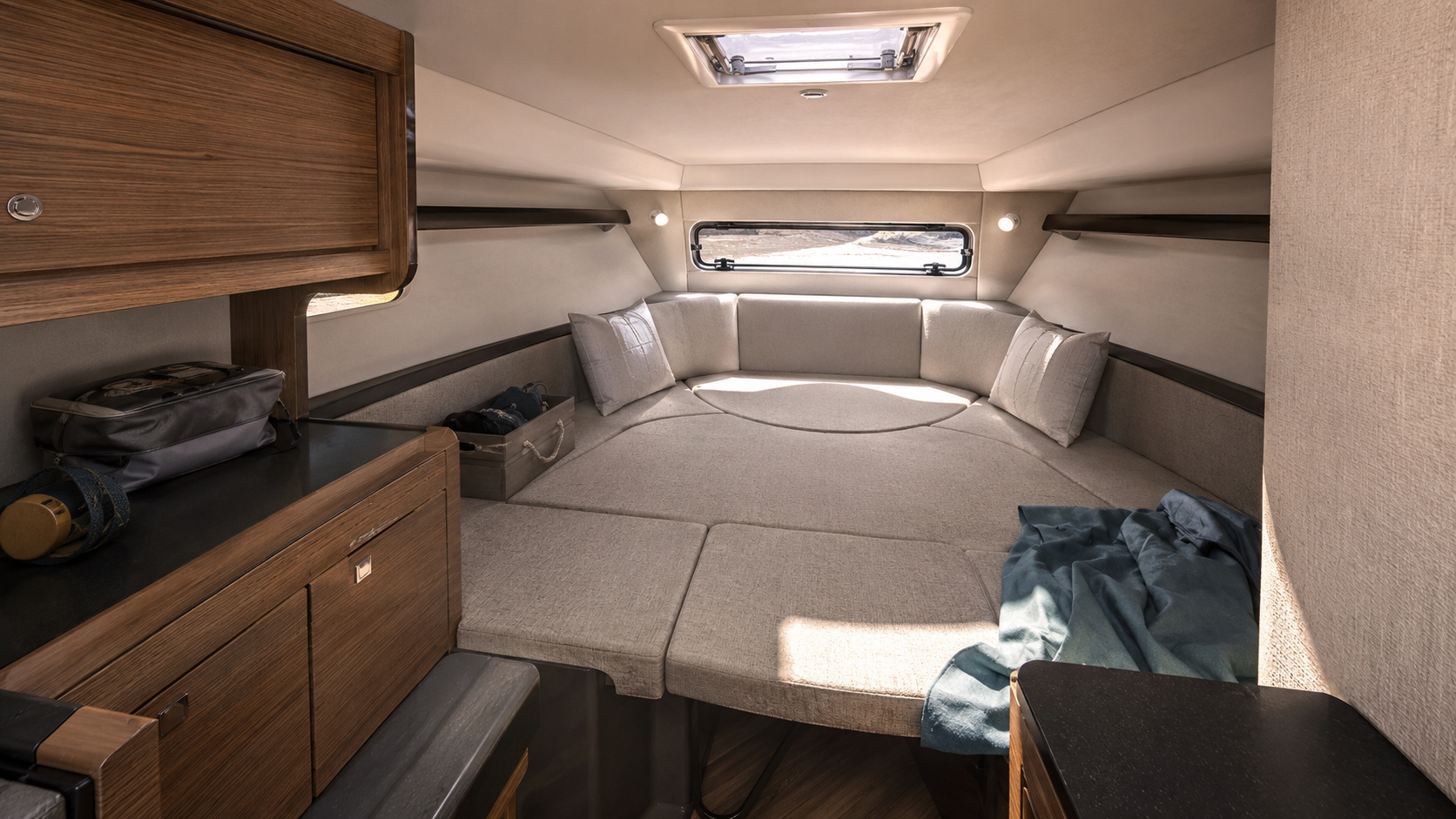
Inside, the boat adds a dinette, cabin table, storage below the berth, hull-side windows, opening portlights, cabin lighting, sink with tap, and four berths. An enclosed head is standard in current Bayliner material, which is one of the biggest practical upgrades over the T23 Explorer when the boat is going to spend full days or nights away from shore facilities.
The T25 also carries systems that change how the boat can be used. Shore power, trim tabs, bow thruster, port and starboard wipers with washers, and a complete enclosed canvas are standard or listed in current equipment. Air conditioning, diesel heat, a Wallas stove, VHF, electric windlass, and additional cabin curtains can push the boat toward more serious shoulder-season and overnight use.
The buyer needs to decide whether those systems are useful or merely attractive. A couple who sleeps aboard twice a year may not need to maintain every comfort option. A family planning regular weekend trips may value them constantly.
Current national listings are concentrated in 2025 and 2026, so the T25 Explorer market is still young. Buyers are primarily comparing new dealer stock with nearly new inventory, not shopping a decade of depreciation.
That makes configuration important. A lightly used 300-horsepower boat with air conditioning, windlass, Simrad, and foredeck cushions can be more compelling than a cheaper base boat if those are the features you would have added anyway.
The T25 Pilothouse is the alternative when fishing dominates. It is two inches shorter but two inches wider, carries one fewer person, holds 86 gallons instead of 74, and puts far more emphasis on fish lockers, livewell equipment, raw-water washdown, and rod storage.
Buy the T25 Explorer when the boat has to satisfy the people who want to cruise, eat, swim, sleep, and stay comfortable as much as the people who want to fish. If fishing workflow is the primary requirement, the Pilothouse is the better tool.
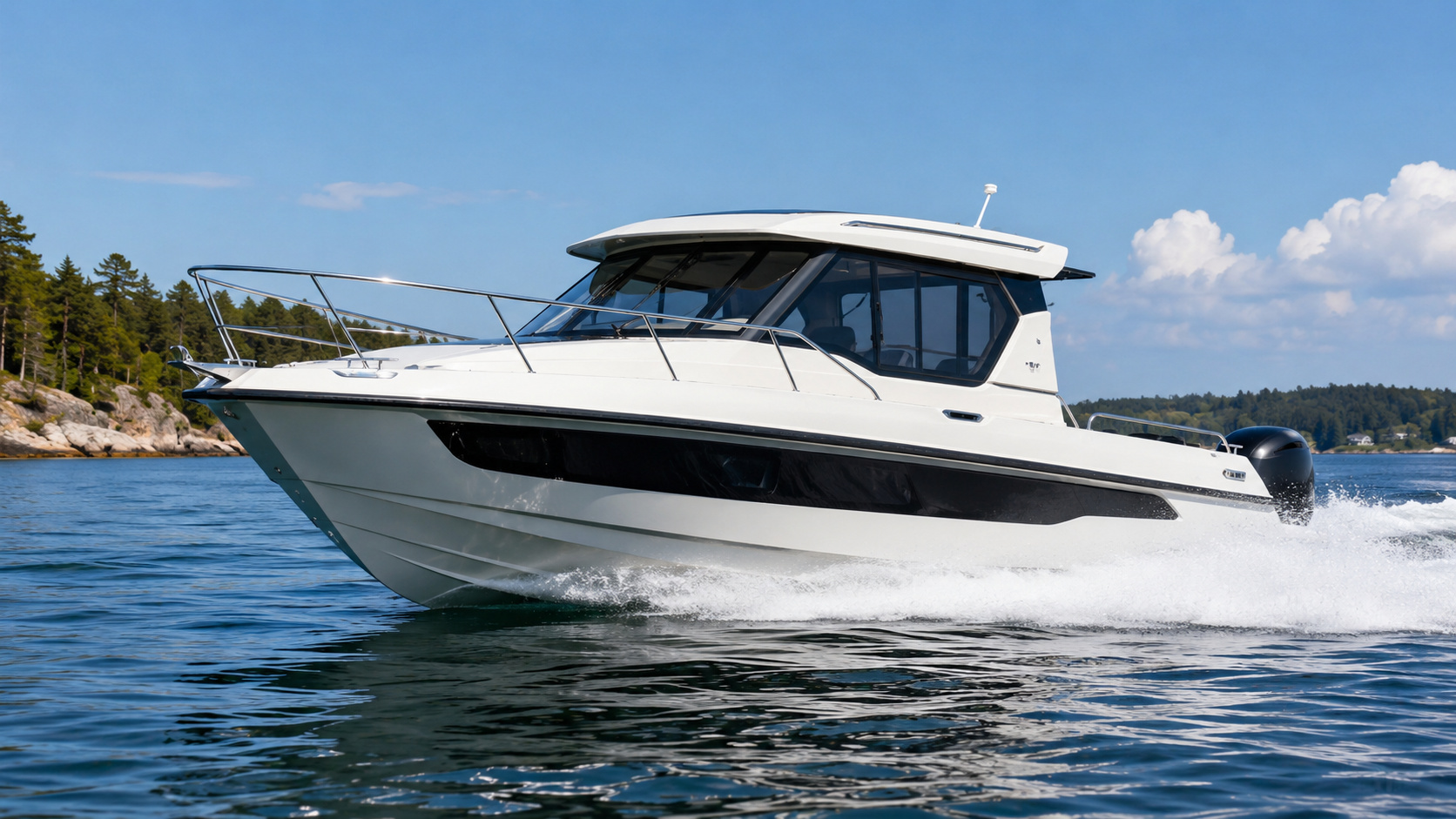
Published factory figures. Confirm every dimension against the individual boat before you commit.
The T25 Explorer measures 25 feet 6 inches overall with a 9-foot-4-inch beam and 17 degrees of deadrise. Bayliner publishes 1 foot 8 inches of minimum draft and 3 feet 1 inch of maximum draft. Approximate weight with standard engine is 5,189 pounds.
The beam is the first ownership number that changes the conversation. At 9 feet 4 inches, the T25 Explorer is wider than the common 8-foot-6-inch legal trailer width used in many U.S. jurisdictions. Buyers who plan to tow regularly need to understand local permit and route requirements rather than assuming every 25-foot boat is as simple to trailer as a T23.
That extra width pays for itself inside. The dinette, enclosed head, four-berth arrangement, cabin passage, and broad social cockpit all need volume. A 9-foot-4-inch beam creates that volume without forcing the hull toward 30 feet.
Seventeen degrees of deadrise is a moderate angle for a boat intended to handle rivers, lakes, and open coastal water. It gives enough V for a more confident ride than flatter family designs while preserving at-rest stability for people moving between cabin and cockpit.
Published maximum capacity is eleven people with a maximum weight capacity of 2,650 pounds. That is the highest person count in the current Bayliner overnight lineup. It makes the T25 Explorer attractive for family groups, but sleeping capacity remains four, which is the more relevant number for true overnight use.
The hull uses port and starboard extended swim platforms, a transom door, bow roller, forward anchor locker, and self-bailing cockpit. Those details make the boat easier to board, anchor, wash down, and use around the water.
At 5,189 pounds before trailer, fuel, batteries, gear, and options, the T25 Explorer is already a substantial towing package. A full 74-gallon tank adds hundreds of pounds. Air conditioning, heater, extra batteries, and other cruising equipment add more.
For the buyer, the hull is a clear step beyond the T23 Explorer. It buys more people, more cabin, more privacy, and more systems. It also gives up some of the T23’s straightforward trailering freedom. If you need the space, the trade is worthwhile. If you do not, the T23 may be the more rational overnight boat.
The T25 Explorer uses a single Mercury outboard with current choices at 225 and 300 horsepower. Bayliner lists 300 horsepower as the maximum.
The 225 V6 is a sensible configuration for buyers whose normal crew is well below the eleven-person maximum and whose use emphasizes cruising, anchoring, and overnight comfort over aggressive performance.
The 300-horsepower V8 Verado becomes more persuasive when the boat is loaded. Eleven people, 74 gallons of fuel, cabin gear, coolers, and overnight equipment can create a substantial operating weight. Additional power can reduce the amount of throttle required to reach plane and maintain cruise.
The engine remains external, which is a major simplicity advantage on a boat that already contains many cabin systems. Owners can inspect the outboard, lower unit, propeller, steering, trim, and corrosion without entering a machinery compartment.
A single engine also keeps annual service simpler than the twin-powered T29. One lower unit, one propeller, one set of engine fluids, and one primary propulsion system reduce both routine maintenance and the cost of future repowering.
The trade is redundancy. A twin-engine boat can retain some propulsion after one engine problem. The T25 Explorer’s single-engine owner should be more disciplined about preventive maintenance, communication equipment, weather planning, and fuel management when traveling farther from help.
Current Bayliner options pair the 300-horsepower engine with modern Mercury steering and control systems. Buyers should confirm the exact rigging on the boat rather than assuming every 300-horsepower listing includes the same controls.
During a sea trial, test the boat with realistic weight. The 225 and 300 should be judged on time to plane, throttle required at normal cruise, steering feel, noise, and confidence in current or wind.
If the 225 feels comfortable with your real crew, there is no obligation to buy more horsepower. If the boat feels burdened before overnight gear is even aboard, the 300 is the better purchase.
The engine choice should support the T25 Explorer’s reason for existing: making a heavier, more capable family overnight boat feel easy enough that people actually use the cabin and travel farther.
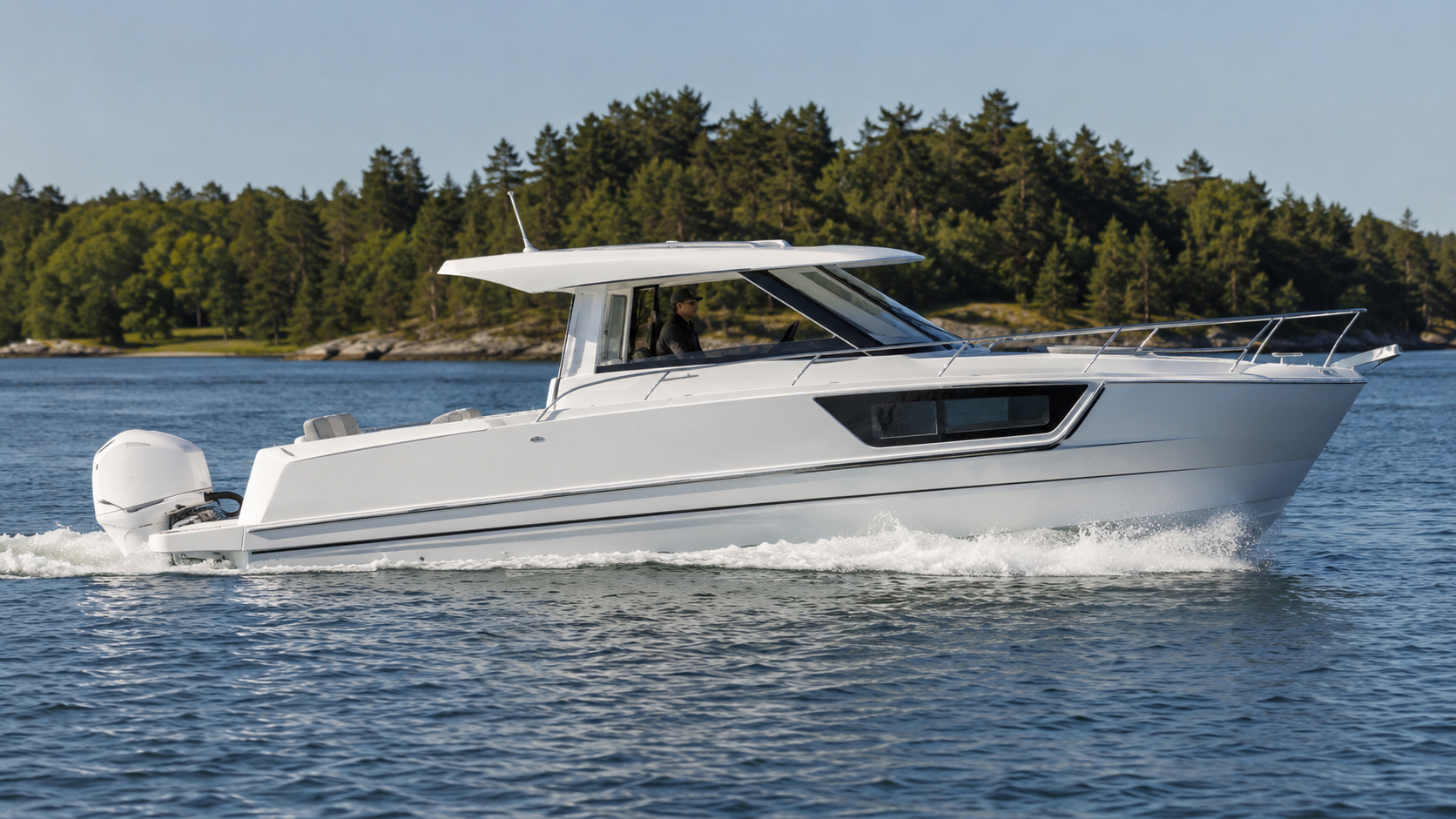
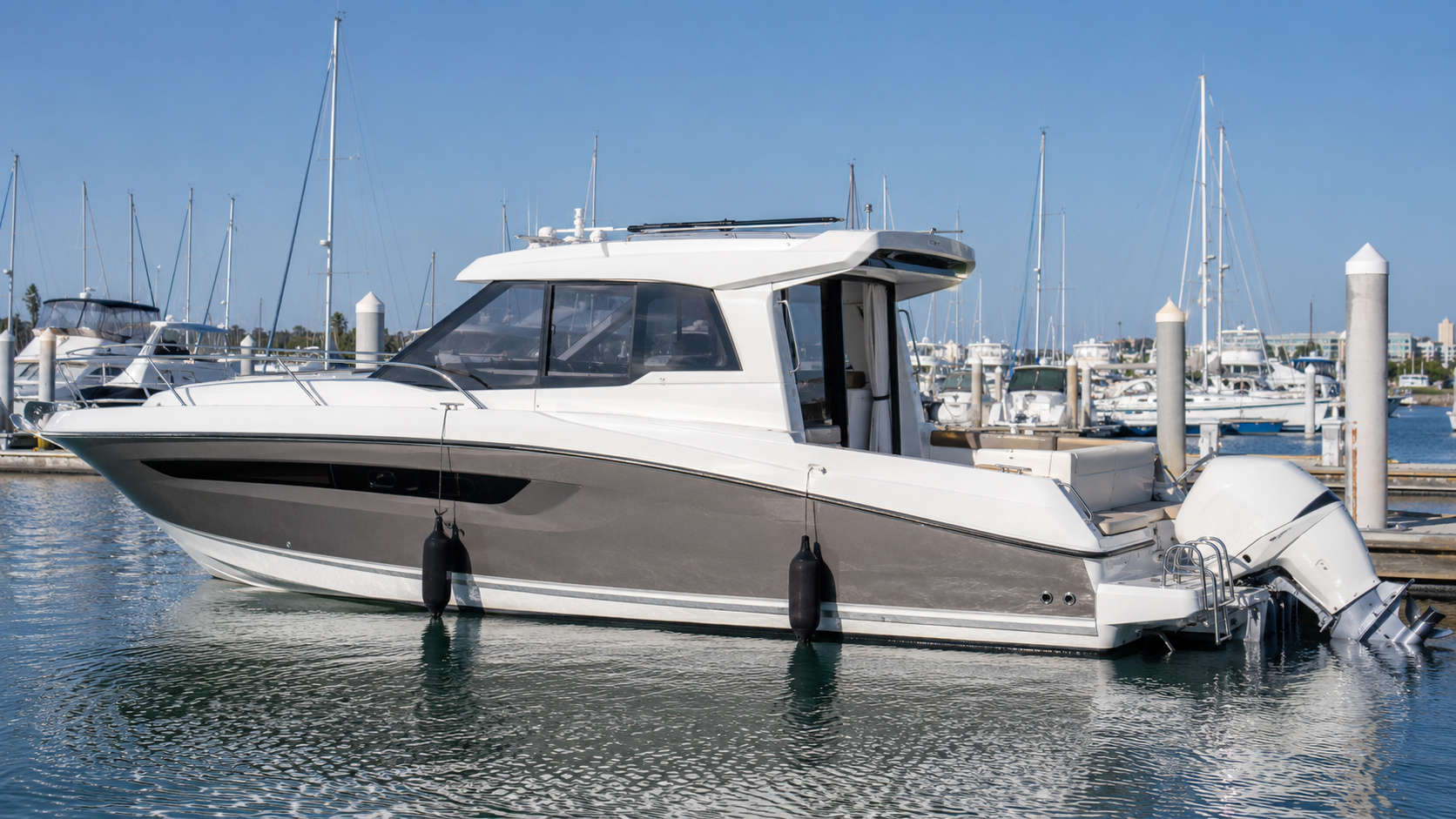
Fuel capacity is 74 gallons, a major step from the T23 Explorer’s 53 gallons and still 12 gallons below the T25 Pilothouse.
That number supports the T25 Explorer’s mixed cruising mission. A family can cover more distance, spend a night aboard, and return without planning every trip around the nearest fuel dock.
The tank does not create a guaranteed range. Consumption changes with 225 versus 300 horsepower, passenger load, sea state, trim, bottom condition, and operating speed.
Bayliner does not publish one universal GPH value for every T25 Explorer configuration. Buyers should use verified engine-specific performance information and maintain a sensible reserve.
The 74-gallon tank also affects trailering. Gasoline weighs roughly six pounds per gallon, so a full tank adds well over four hundred pounds before freshwater, food, bedding, and personal equipment are considered.
That weight is one reason the T25 Explorer should not be treated as a large trailer boat simply because it uses a single outboard. Beam and loaded mass both create more transportation planning than a T23.
Owners who sleep aboard may also run electrical or heating systems while the engine is off. That makes battery planning and shore-power habits part of the trip even when propulsion fuel is sufficient.
For a family that mostly uses the boat locally, 74 gallons can reduce how often fueling interrupts the weekend. For a buyer planning longer coastal runs, calculate the route with the actual engine and expected load rather than relying on a brochure tank number.
The T25 Pilothouse’s 86-gallon tank may look attractive, but the additional fuel is there to support a fishing-first boat that may spend longer hours moving between grounds. Choose the Explorer for the cabin and social balance, not because it wins a fuel-capacity contest.
The T25 Explorer’s performance should be evaluated as a wide, cabin-equipped family boat. Its 9-foot-4-inch beam and 5,189-pound standard-engine weight make it more substantial than the T23 before passengers or gear are added.
The 225-horsepower boat can be entirely appropriate for a smaller crew. The sea trial should show whether it reaches plane cleanly and maintains the family’s preferred cruise without excessive throttle.
The 300 adds reserve for a full boat. That can matter when the cockpit carries several adults and the cabin is loaded with overnight gear.
Trim tabs are part of the current equipment list and are particularly useful on a wide boat where passenger placement can create side-to-side imbalance. Test them and make sure the driver understands how quickly they change running attitude.
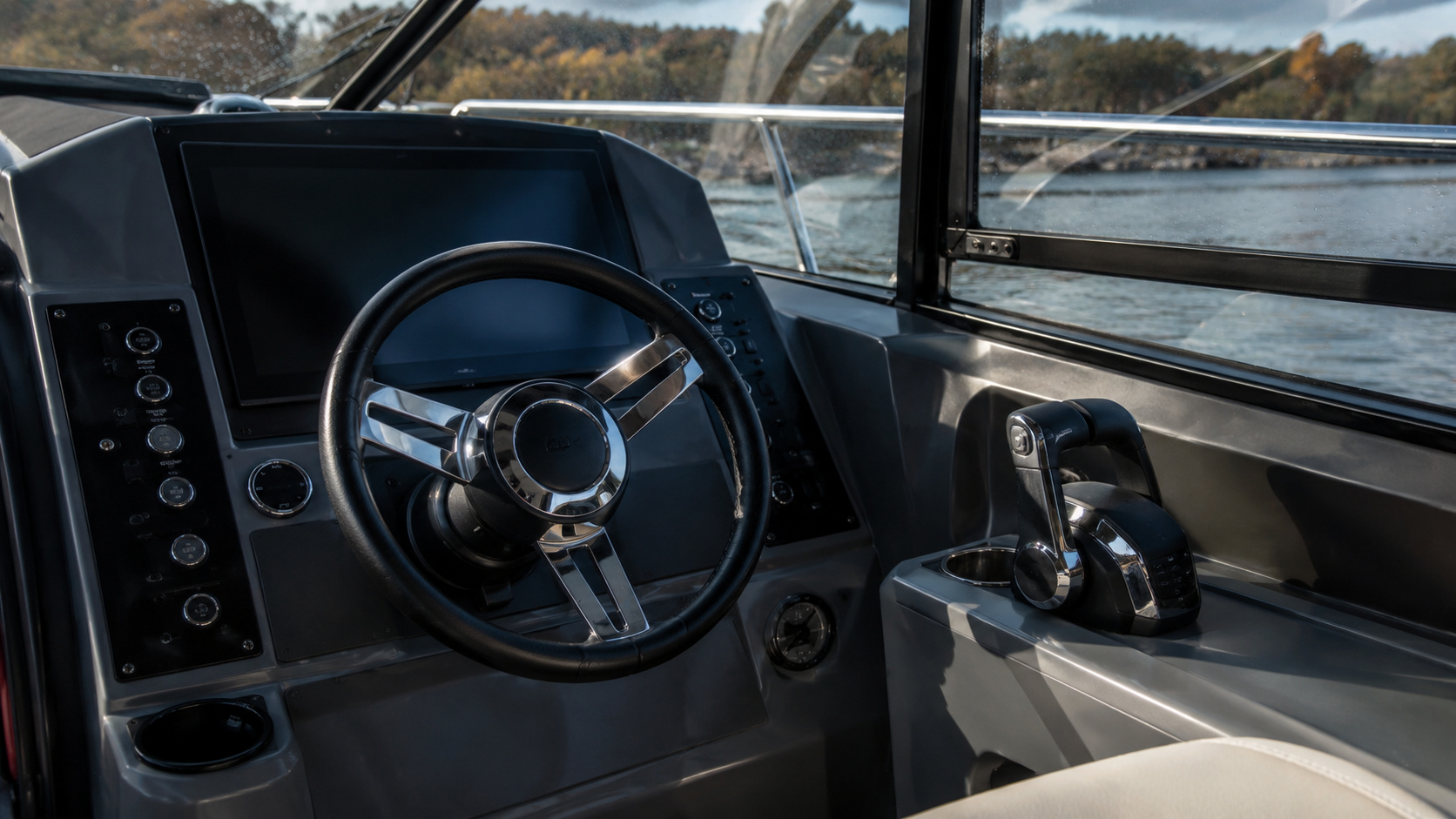
The bow thruster is another meaningful control system. A wide cabin and hardtop create windage, and the thruster can reduce stress when entering a slip in crosswind.
Port and starboard windshield wipers with washers should be tested underway because protected visibility is one of the reasons to own an Explorer. A wet windshield with a failed wiper is not a small inconvenience.
Run the boat through ordinary chop at several speeds. Seventeen degrees of deadrise offers a useful compromise, but the hull remains designed for mixed recreation rather than high-speed offshore work.
Listen inside the cabin for rattles from the table, berth fillers, galley hardware, or doors. An overnight boat can be mechanically smooth and still become unpleasant if every cabinet announces each wake.
At low speed, practice using outboard thrust and the bow thruster together. The goal is not to rely on the thruster for every correction but to know how it can help when wind catches the pilothouse.
The T25 Explorer performs well when it makes a large social boat feel manageable. Buyers should value control, loaded planing, visibility, and comfort more than a top-speed number.
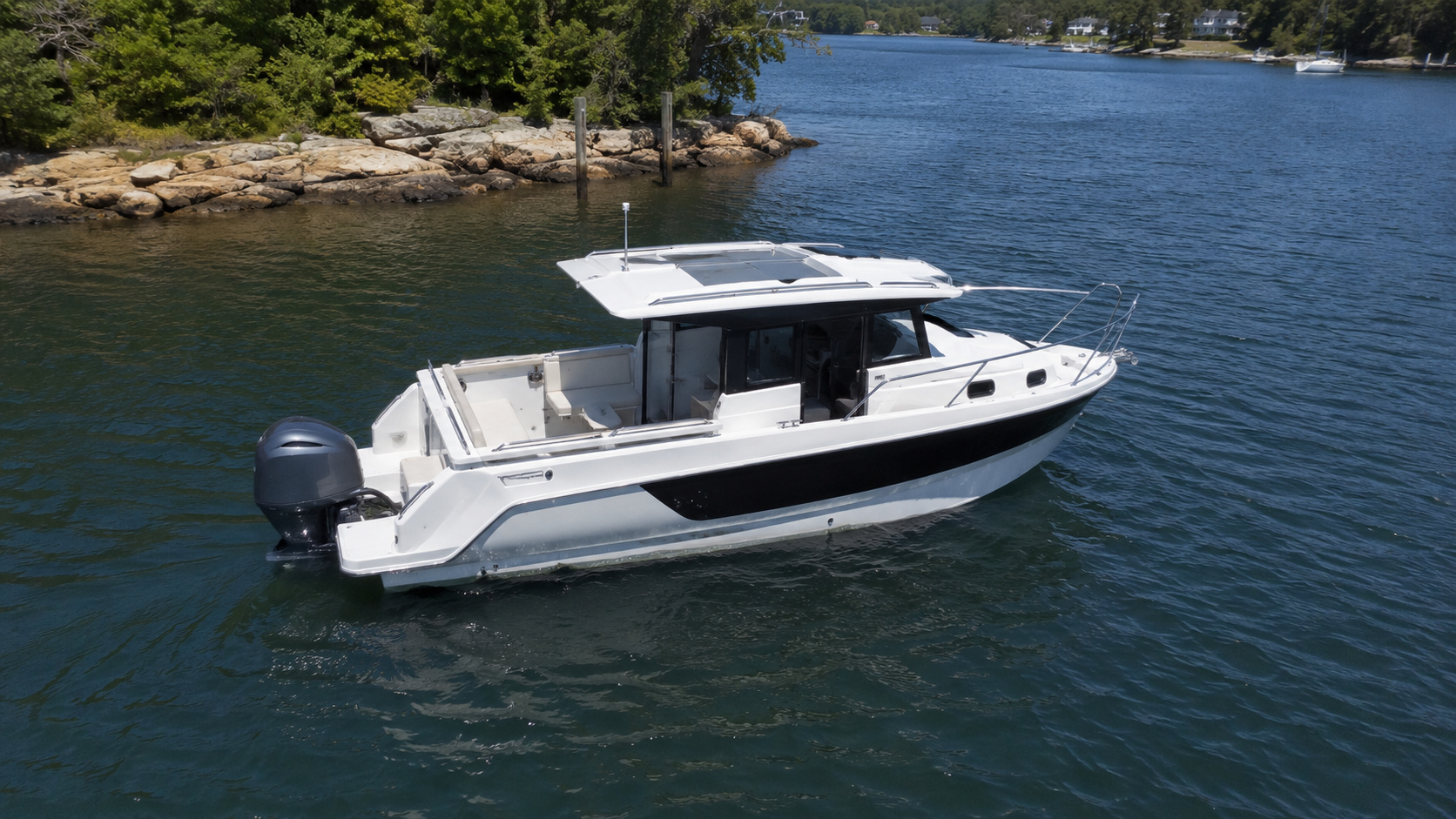
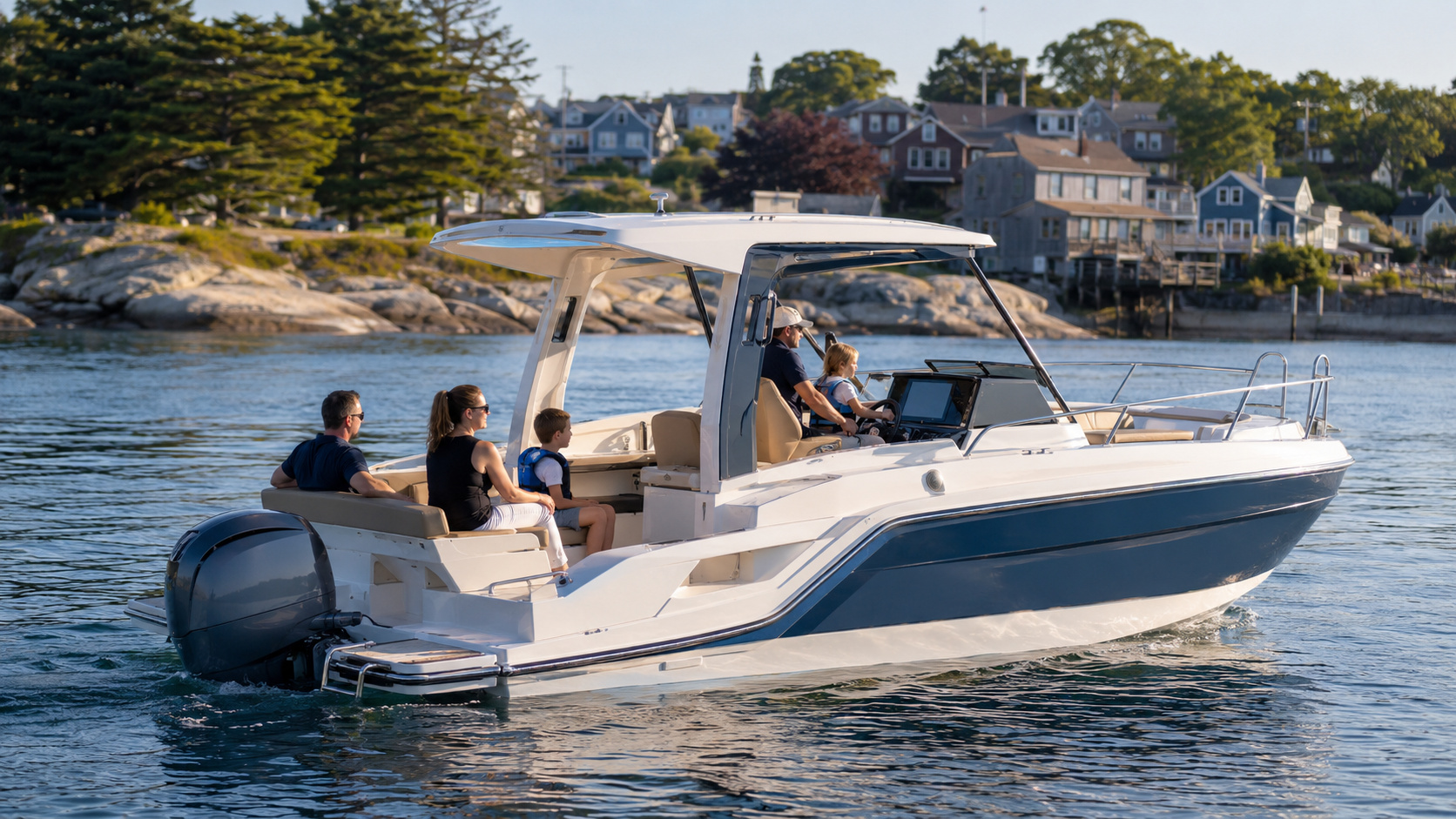
The T25 Explorer’s cockpit is designed to keep eleven-person day capacity from turning into eleven people standing in one open box. An aft bench with storage, L-lounge, cockpit sun lounge, table, and swiveling pilot seats create distinct places to sit and move.
The transom door opens to port and starboard extended swim platforms. Those platforms are useful for swimmers, boarding, and managing dock lines around the single outboard.
A cockpit shower adds another level of day-boat utility. After swimming or a sandy beach stop, passengers can rinse before entering the enclosed cabin.
The complete enclosed canvas gives the cockpit a weather plan. That matters because the cabin will not comfortably hold all eleven daytime passengers at once.
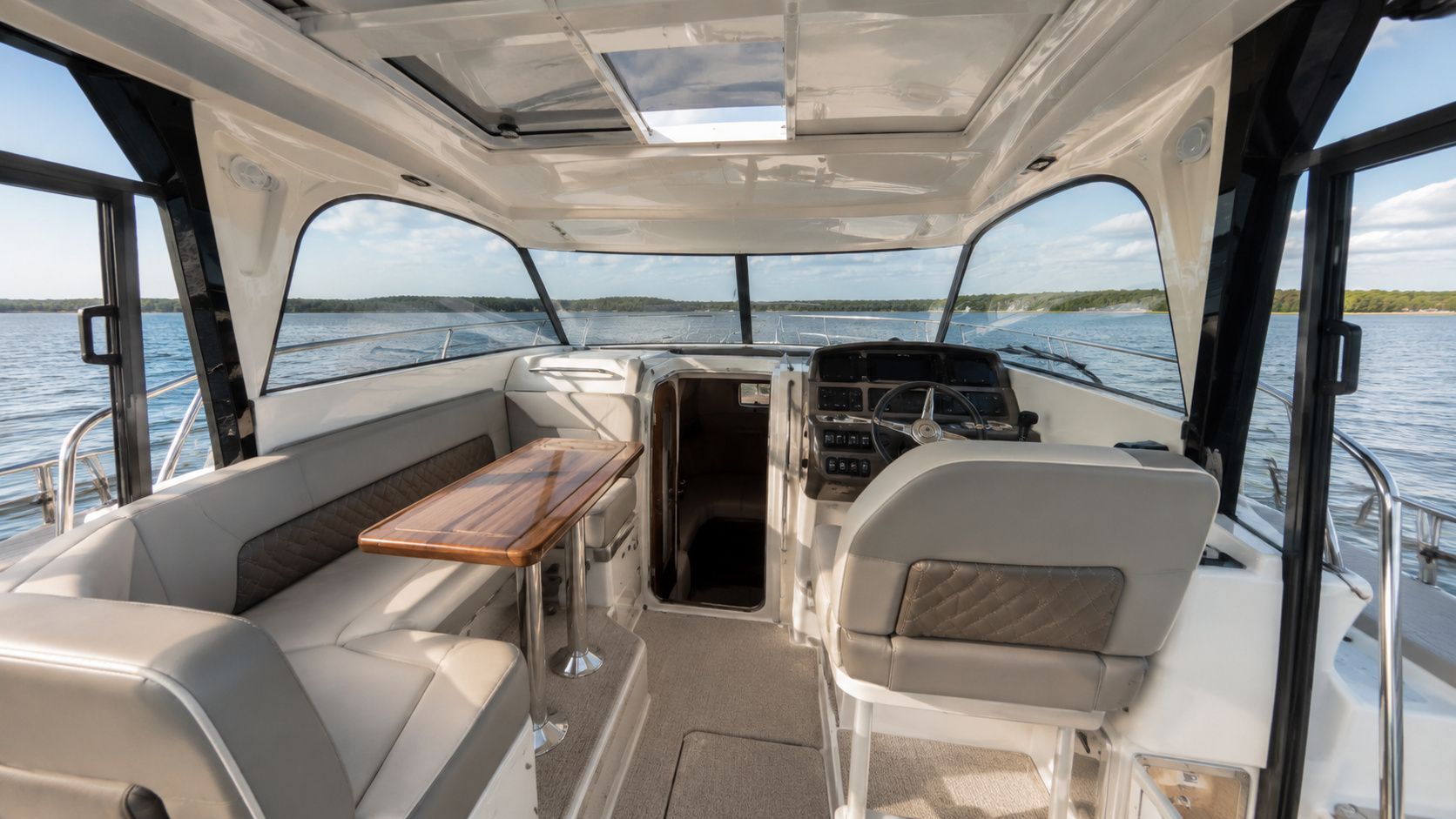
Inside, the dinette creates a separate social space protected from wind and rain. The cabin table, storage below berth, filler cushion, and four published berths allow the interior to shift between daytime seating and sleeping.
An enclosed head is one of the model’s most important standard features. Privacy changes how long a family can realistically stay aboard, especially with children or guests.
Shore power supports the cabin when docked. Hull-side windows and opening portlights add light and ventilation, while the hardtop and wipers keep the helm usable in weather.
Available air conditioning turns the cabin into a far more comfortable summer overnight space in hot climates. Diesel heat addresses the opposite season. A Wallas stove adds cooking capability beyond a simple sink and countertop.
Foredeck cushions can create another relaxation area. Flexiteek flooring changes the cockpit feel and can make cleanup more straightforward.
Fishing remains possible through rod holders and open cockpit space, but the T25 Explorer is not pretending to be a T25 Pilothouse. If fish boxes, livewell workflow, raw-water washdown, and interior rod racks are central to the purchase, the Pilothouse deserves priority.
The Explorer deck is strongest when everyone aboard does not share the same hobby. It gives anglers enough utility while giving the rest of the crew several reasons to enjoy the boat after the rods are put away.
Simrad 9-Inch NSS EVO3S With VesselView Option – Gives the helm integrated GPS, navigation, and Mercury engine information appropriate to longer cruising.
Gives the T25 Explorer enough sleeping capacity for a small family rather than limiting overnight use to a couple.
Adds privacy and sanitation without requiring an option package, one of the biggest practical steps above the T23 Explorer.
Creates a social rear deck that can support conversation and relaxation instead of remaining a fishing-only work area.
Lets owners support cabin systems at the dock without depending entirely on onboard batteries.
Helps manage the 9-foot-4-inch beam and pilothouse windage when docking in tight spaces.
Makes warm-weather sleeping more realistic for buyers who expect the cabin to be used regularly overnight.
Extends the useful season and adds onboard meal capability for cooler-weather trips.
A T25 Explorer inspection needs to treat the cabin as a collection of systems rather than one feature. Start with water intrusion. Check hull-side windows, opening portlights, hardtop seals, canvas, and windshield areas for staining or dampness.
Inspect the enclosed head. Run the sanitation system, check seals and fittings, and look for odor that may indicate poor maintenance or a plumbing problem.
Test the galley sink and cockpit shower. Confirm pumps cycle correctly and inspect accessible plumbing for leaks.
Connect shore power where possible and verify that the system supports the intended cabin circuits. Inspect the cord and inlet for overheating or damage.
Run the bow thruster under load. Test trim tabs and watch for consistent movement. Operate both windshield wipers and washers.
If air conditioning or diesel heat is installed, run the system long enough to confirm actual cooling or heating rather than simply checking that a display illuminates.
Test the Wallas stove if fitted. Check the Fusion six-speaker stereo, cabin lights, courtesy lights, navigation lights, Simrad display, VesselView data, and VHF.
Inspect the automatic bilge system and battery setup. Overnight boats rely on electrical systems while occupants sleep, so CO and smoke safety equipment should be verified and replaced according to manufacturer guidance when required.
At the Mercury, verify hours, service, trim, steering, lower-unit condition, propeller, and corrosion. A boat with perfect upholstery and weak mechanical records is not the better overnight purchase.
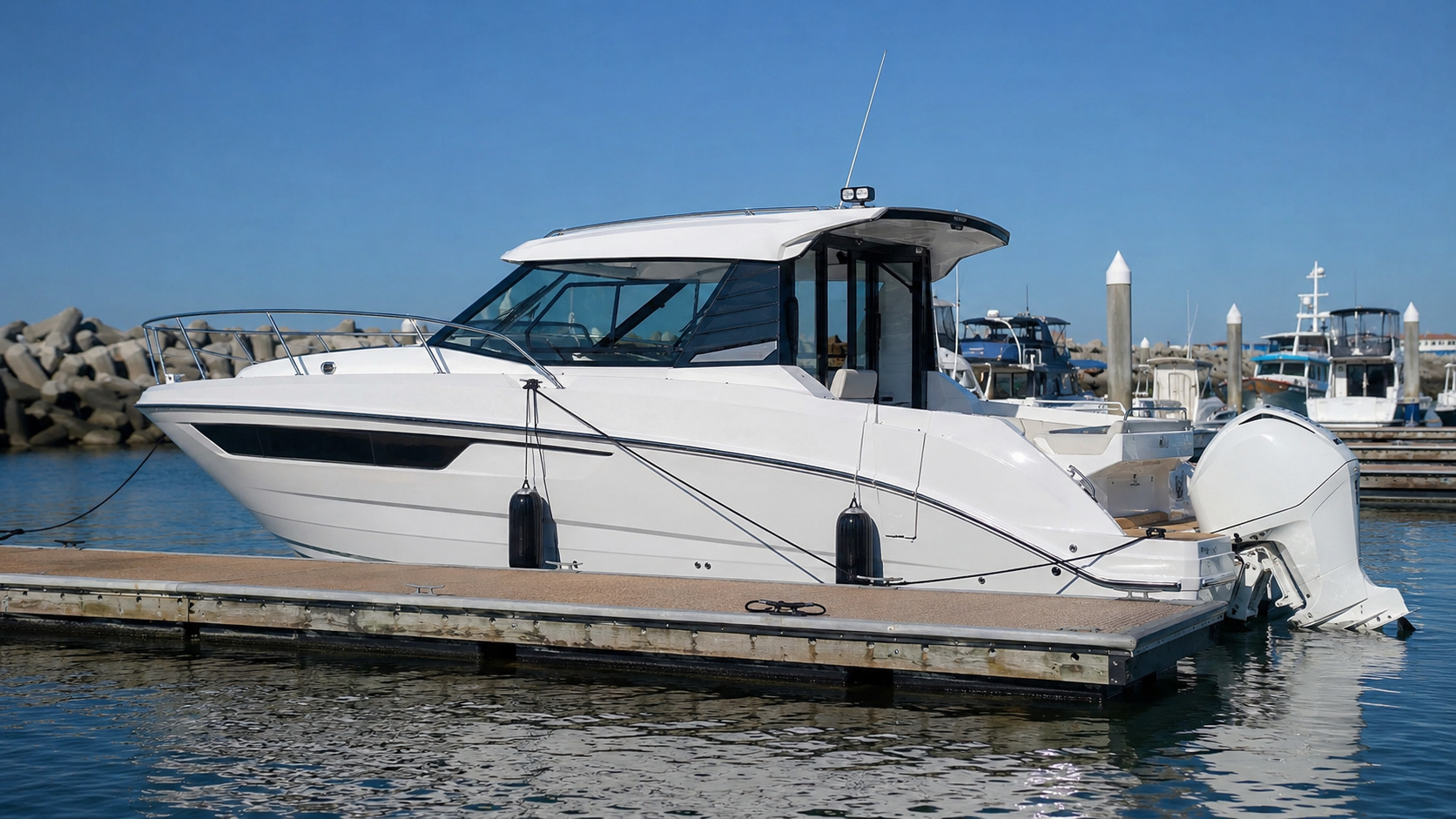
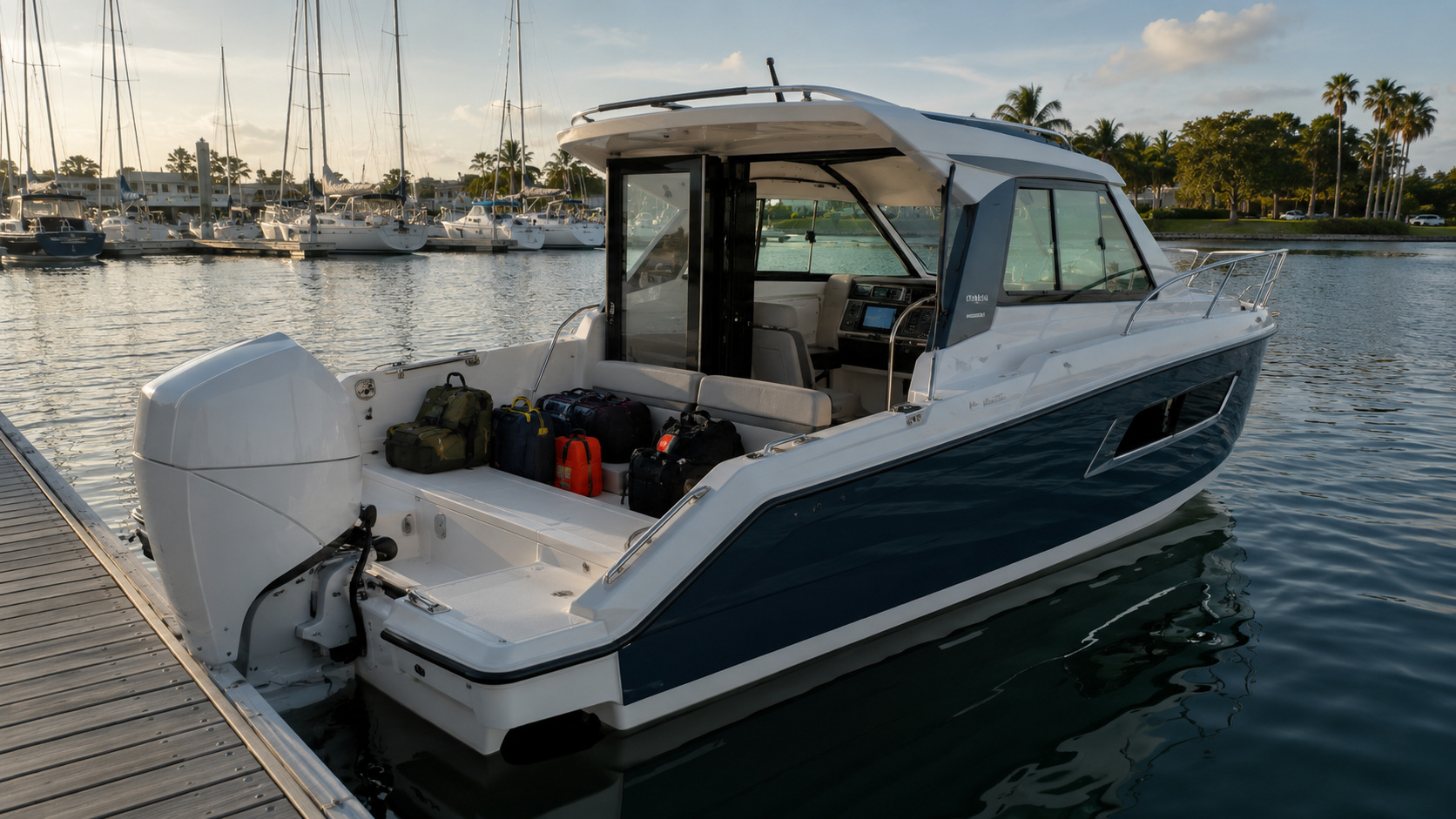
The T25 Explorer’s 9-foot-4-inch beam changes trailering from casual to planned. In many U.S. jurisdictions, it exceeds the common 8-foot-6-inch legal width for unrestricted towing, so permit and route requirements may apply.
Approximate boat weight is 5,189 pounds with standard engine before trailer, fuel, batteries, water, equipment, and personal gear.
Seventy-four gallons of fuel alone add more than four hundred pounds when full. Overnight supplies, head equipment, canvas, air conditioning, heater, shore-power cord, bedding, and food can push real travel weight much higher.
The single outboard keeps propulsion weight simpler than twins, but the overall package is still substantial enough that tow vehicle ratings deserve a full calculation.
For many owners, a seasonal slip or marina rack will be more practical than frequent long-distance trailering. The boat’s cabin becomes more useful when the family can arrive, load provisions, and leave without launching every time.
Wet storage increases the importance of shore-power discipline, ventilation, bottom condition, anodes, and keeping the cabin dry between visits.
Dry storage can simplify maintenance but must accommodate the 9-foot-4-inch beam, hardtop height, and actual loaded weight.
The T25 Explorer is still transportable, but mobility is no longer its strongest argument. Buyers choosing it should be comfortable with a marina-centered ownership plan if wide-beam towing becomes inconvenient.
If unrestricted trailering between destinations is central to the lifestyle, the 8-foot-4-inch T23 Explorer deserves serious consideration before the larger cabin wins the purchase.
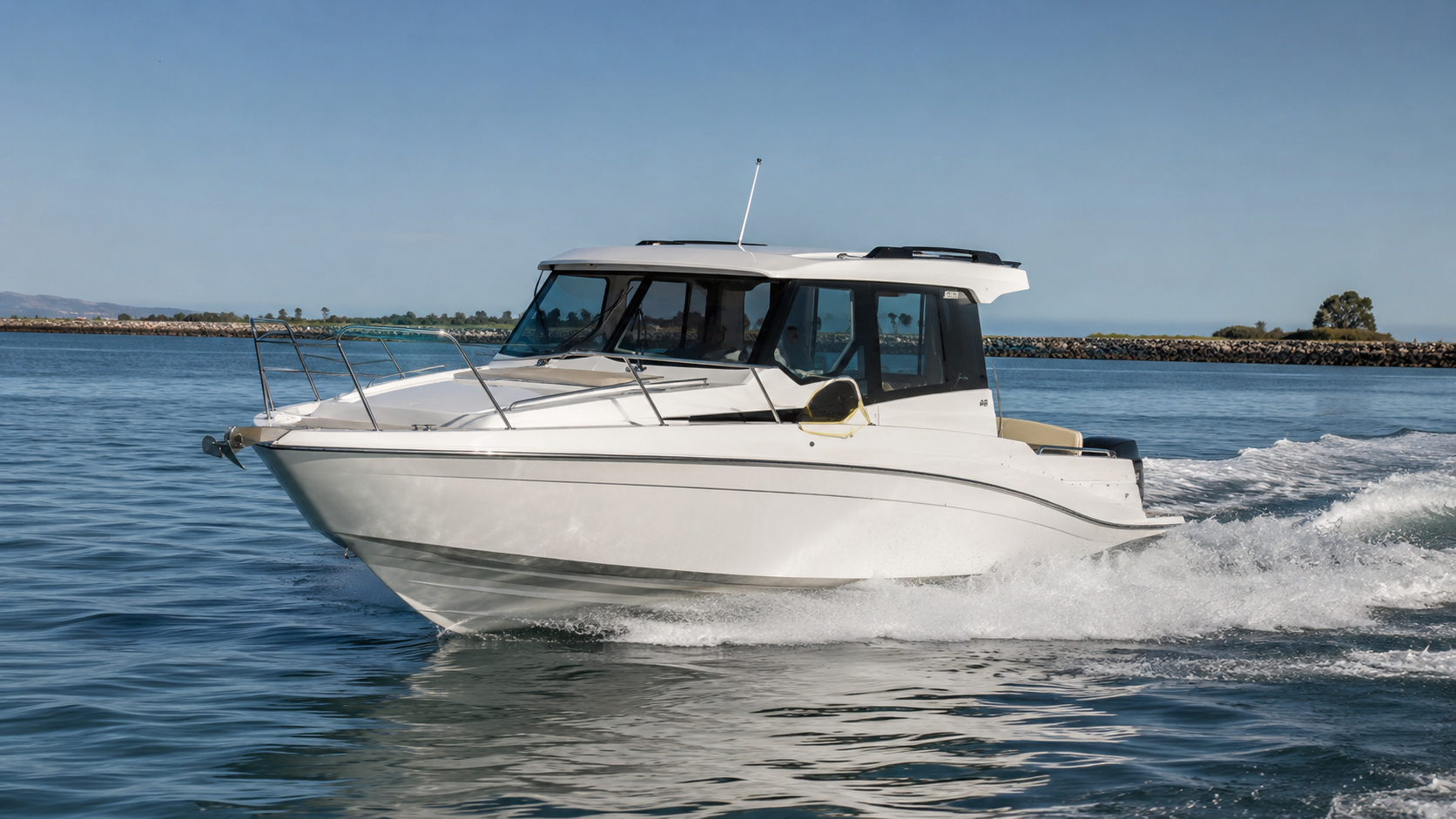
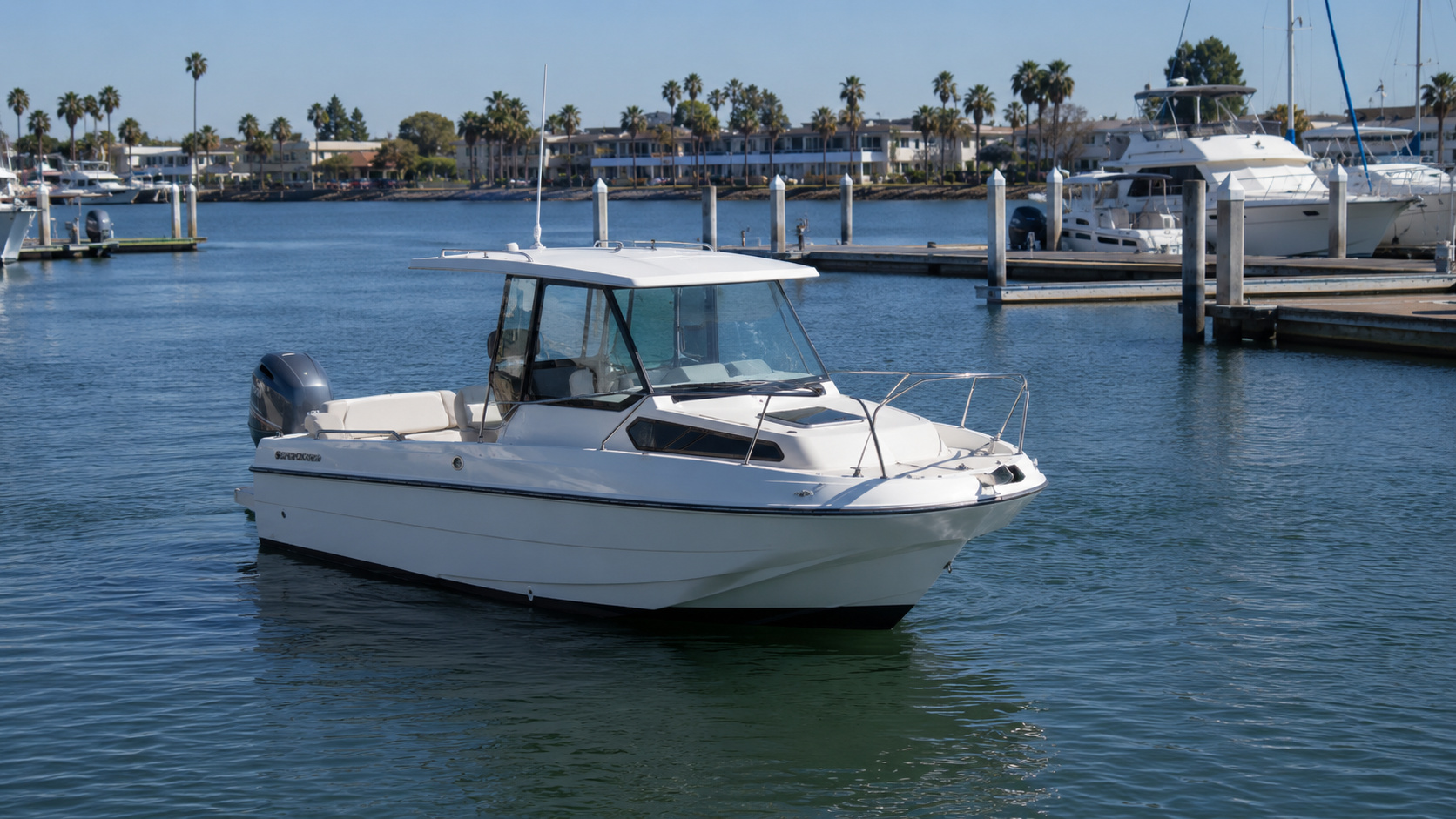
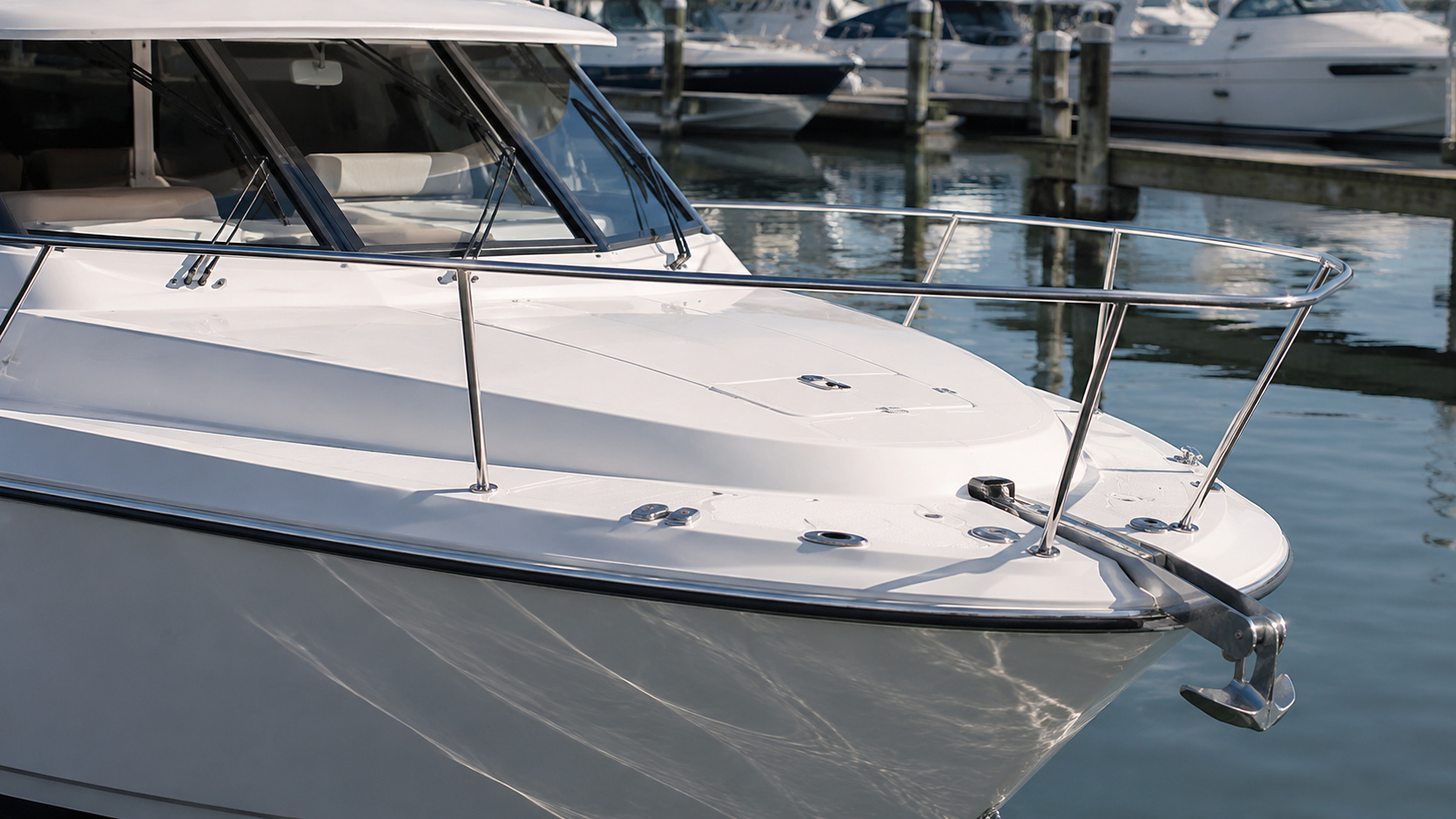
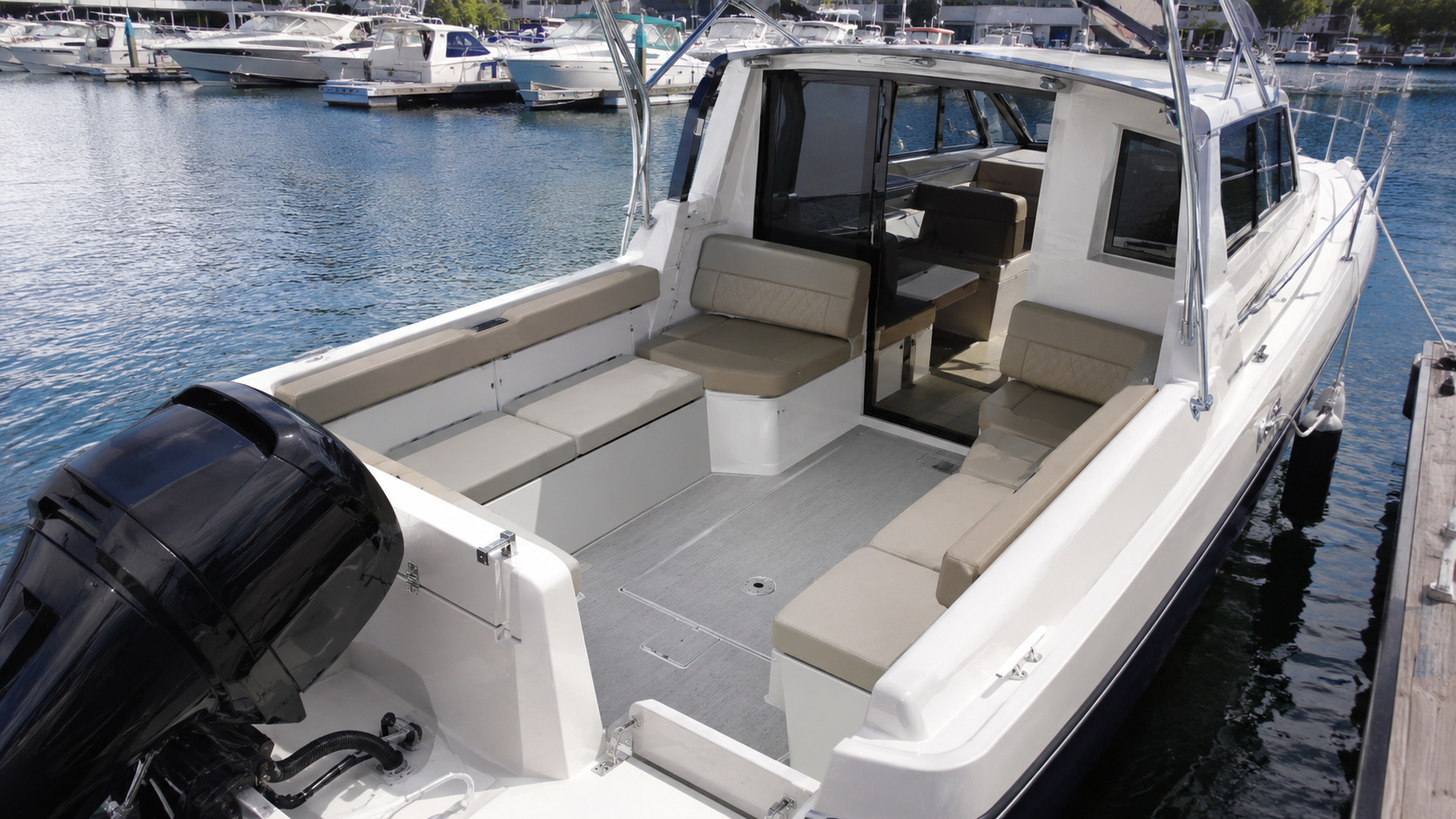
Market Character: Current national inventory is concentrated in 2025-2026 boats.
Engine choice is one of the biggest value differences. A 300-horsepower V8 Verado configuration should be compared with other 300-horsepower boats, not with 225s that happen to share the same hull.
Comfort equipment matters more here than on a simple day boat. Air conditioning, diesel heat, Wallas stove, windlass, Simrad display, foredeck cushions, cabin curtains, and Flexiteek can materially change how much overnight capability the buyer receives.
The enclosed head, bow thruster, shore power, and four berths are already major parts of the platform. A buyer should not pay a premium for a boat whose optional equipment does not match the climate or trips being planned.
Because the market is mostly new and nearly new, compare used inventory against complete dealer quotes rather than against base advertised pricing. Freight, preparation, engine upgrades, electronics, and options can close or widen the apparent gap.
A nearly new boat becomes compelling when the previous owner already paid for expensive equipment you want and the discount is meaningful.
A used boat priced close to new inventory is harder to justify if the engine, interior, or option set requires compromise.
Use the live market fields so the page can age gracefully. The buyer-facing copy should explain configuration and condition, not freeze a September price that becomes wrong next season.
Pricing varies. Model year, engine package, options, trailer, condition and dealer all move the number, and listings change weekly. Send us the boat you are looking at and we will price that exact one.
Illustration only and not an offer of credit.
Leave room in the ownership budget for insurance, propulsion service, storage or dockage, cabin systems, pumps, electronics, and the first round of repairs or maintenance that can accompany any used overnight boat.
Illustration only and not an offer of credit. Your actual rate and term depend on credit profile, vessel age, loan amount and ownership structure.
The T25 Explorer and T25 Pilothouse are close in length but radically different in mission.
Explorer is 25 feet 6 inches long and 9 feet 4 inches wide. It carries eleven people, 74 gallons of fuel, four berths, an enclosed head, social cockpit seating, shore power, and cruising-oriented comfort options.
Pilothouse is 25 feet 4 inches long and 9 feet 6 inches wide. It carries ten people, 86 gallons, and devotes more cockpit and systems attention to live bait, fish lockers, rod storage, washdown, and protected fishing workflow.
Both reach 300 horsepower from a single Mercury outboard.
Choose Explorer when the boat has to make cruising partners and family members happy after the fishing stops.
Choose Pilothouse when the boat exists primarily to extend the fishing season and fishing day.
T23 Explorer is the alternative if unrestricted trailer width, lower weight, and simpler cabin systems matter more than eleven-person capacity and a full enclosed head.
T29 Explorer is the alternative when four berths, single-engine power, and 74 gallons are no longer enough for the trips being planned.
Buying a T25 Explorer starts with deciding what “overnight” means for your family. If it means one hotel-free night each summer, expensive climate and cooking options may not justify themselves.
If it means regular weekends aboard, inspect and price the cabin like a small RV. Air conditioning, heat, stove, head, shore power, windows, curtains, pumps, and batteries become daily-use equipment.
Choose between 225 and 300 horsepower based on real crew size. An eleven-person boat can carry a lot of weight before luggage and food are counted.
Check the enclosed head carefully. Sanitation repairs are not the kind of surprise most buyers want in the first weekend of ownership.
Test shore power and every high-draw electrical system. Look at battery age and capacity.
Run the bow thruster, trim tabs, both windshield wipers, and washers. Those control and visibility systems directly support the reason for buying a protected cabin boat.
Inspect canvas panel by panel. Complete enclosures are valuable only when zippers, windows, fasteners, and seams remain usable.
Check the outboard and trailer or transport arrangement with the same diligence. Wide beam means many boats may spend more time in slips, which can change corrosion and bottom condition.
Compare the T25 Pilothouse in person. If you keep wishing the cockpit had more fishing systems, buy the fishing-first boat instead of trying to retrofit an Explorer.
Compare the T23 Explorer if transport freedom matters. The extra cabin space is only valuable when it is worth the ownership logistics that come with 9 feet 4 inches of beam.
If you already found a Bayliner T25 Explorer, send Float Finance the exact listing, asking price, model year, engine configuration, seller type, and major installed equipment. An overnight boat’s financing should be built around the real transaction, not a stripped base price that ignores the systems you plan to use.
The T25 Explorer is 25 feet 6 inches long with a 9-foot-4-inch beam and 17 degrees of deadrise. Bayliner publishes 1 foot 8 inches of minimum draft, 3 feet 1 inch of maximum draft, and approximately 5,189 pounds with standard engine.
Bayliner lists capacity for eleven people with a maximum weight capacity of 2,650 pounds. That is the highest published person count in the current Bayliner overnight lineup.
Bayliner publishes four berths. The cabin also includes a dinette, table, storage below the berth, opening portlights, and an enclosed head.
Current engine choices include 225-horsepower Mercury V6 power and a 300-horsepower V8 Verado option. The right choice depends on crew size, gear load, cruising speed, and how often the boat operates near its passenger capacity.
Bayliner lists 12-volt air conditioning as an available option. Diesel heat is also offered. Verify the actual boat because optional climate equipment can vary significantly between listings.
Explorer is the stronger mixed family cruiser with eleven-person capacity, four berths, social cockpit, enclosed head, and comfort options. Pilothouse is the stronger fishing tool with a wider beam, 86-gallon tank, fish lockers, livewell station, washdown, and rod-storage systems.
Its 9-foot-4-inch beam exceeds the common 8-foot-6-inch unrestricted trailer-width threshold in many U.S. jurisdictions. It can be transported, but regular towing may require permits or route planning depending on location. The boat also weighs about 5,189 pounds before trailer, fuel, and gear.
Potentially. Current national listings are concentrated in 2025 and 2026, so many buyers are comparing new dealer inventory with lightly used boats. Financing depends on the specific boat, seller, value, and borrower profile.
Tell us a little bit about yourself and the boat you are looking to finance.