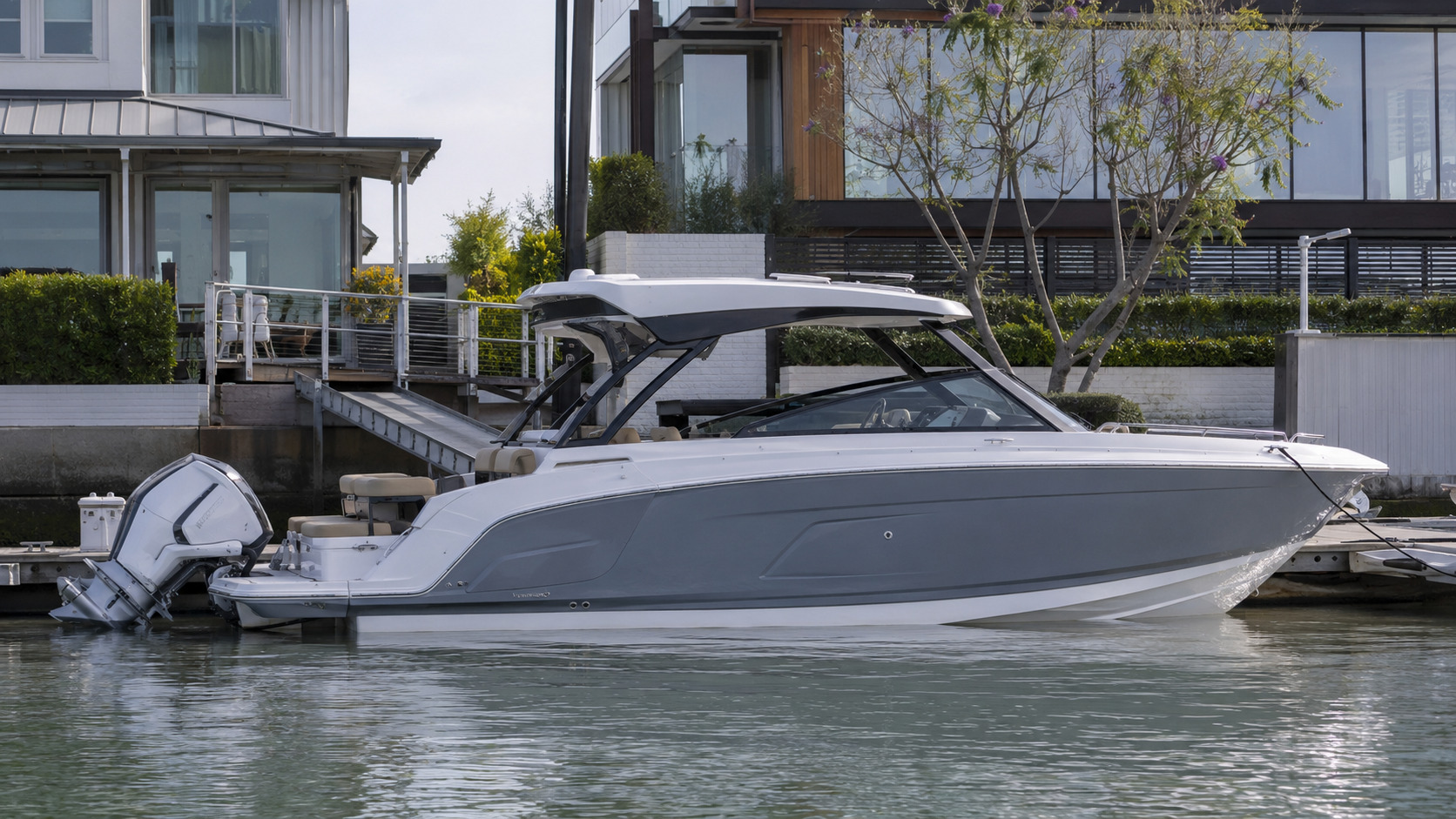
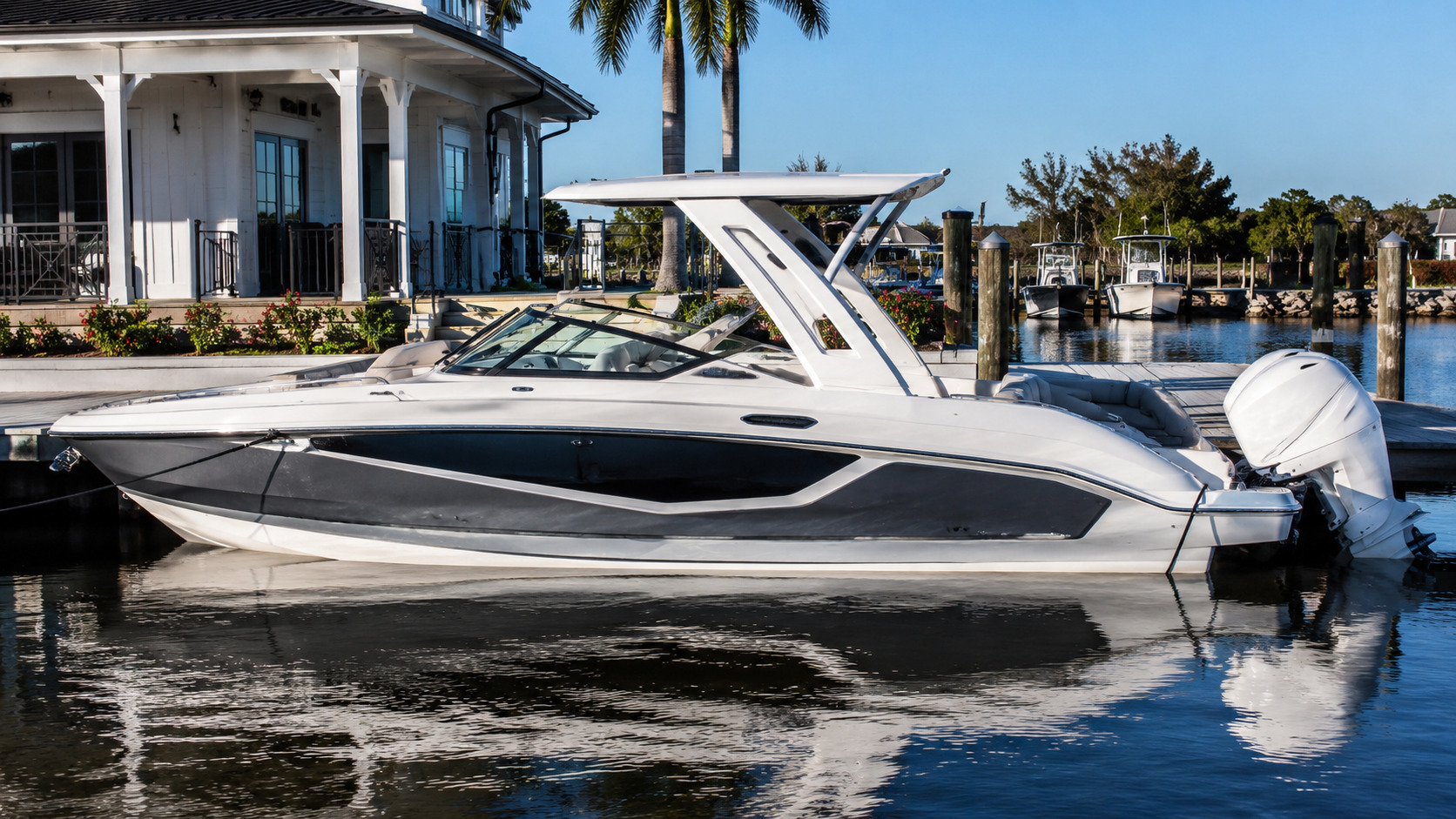
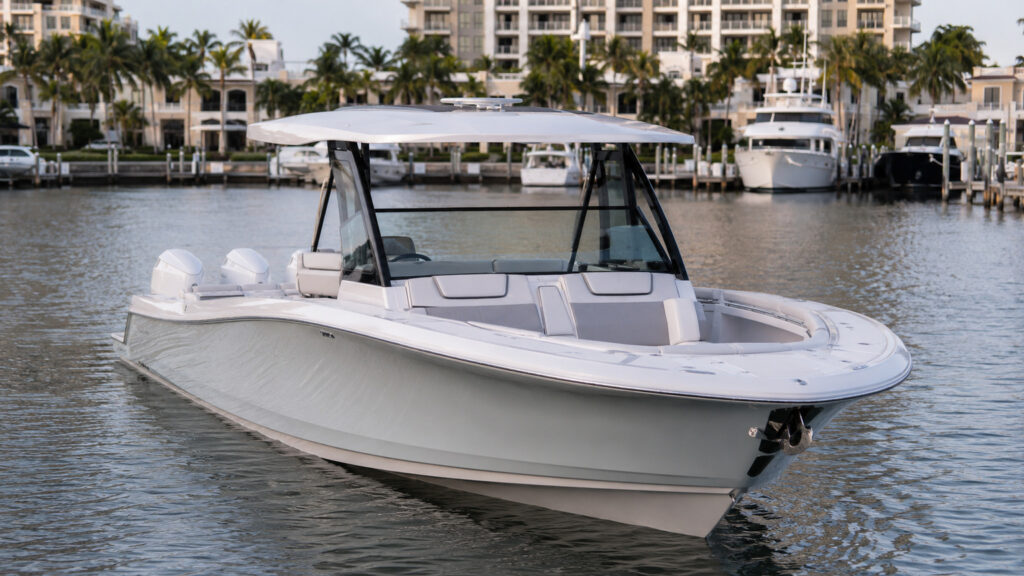
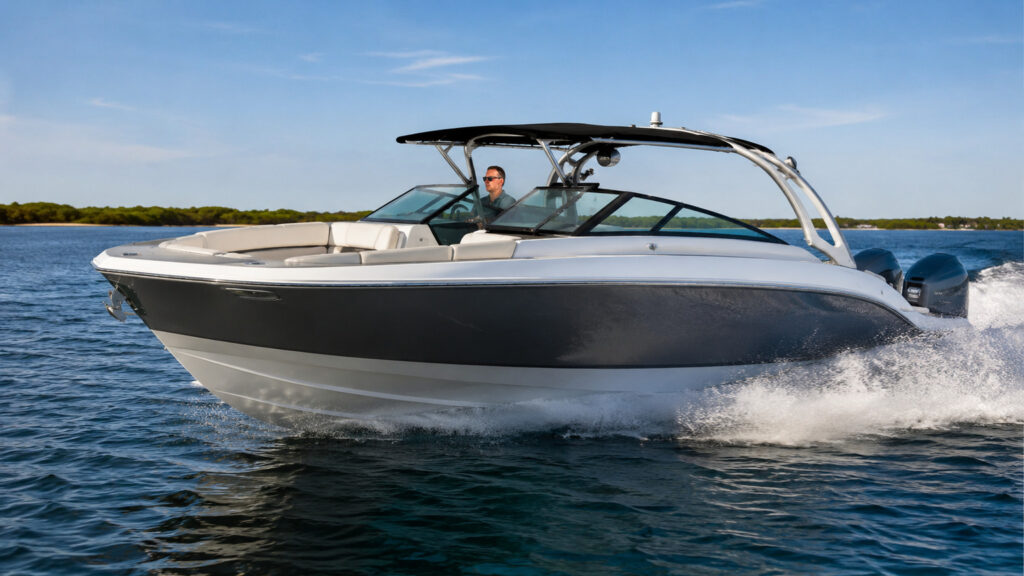
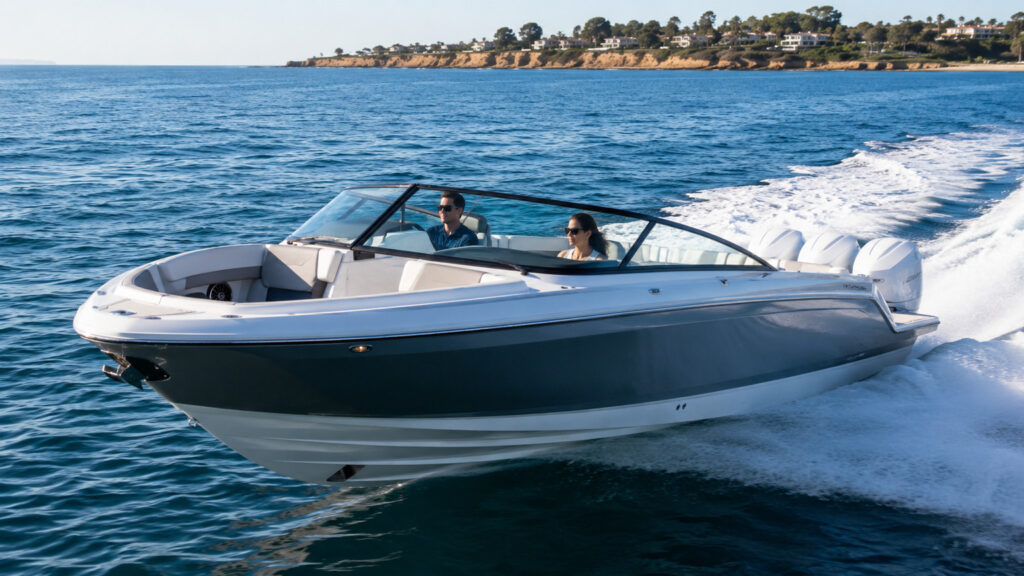
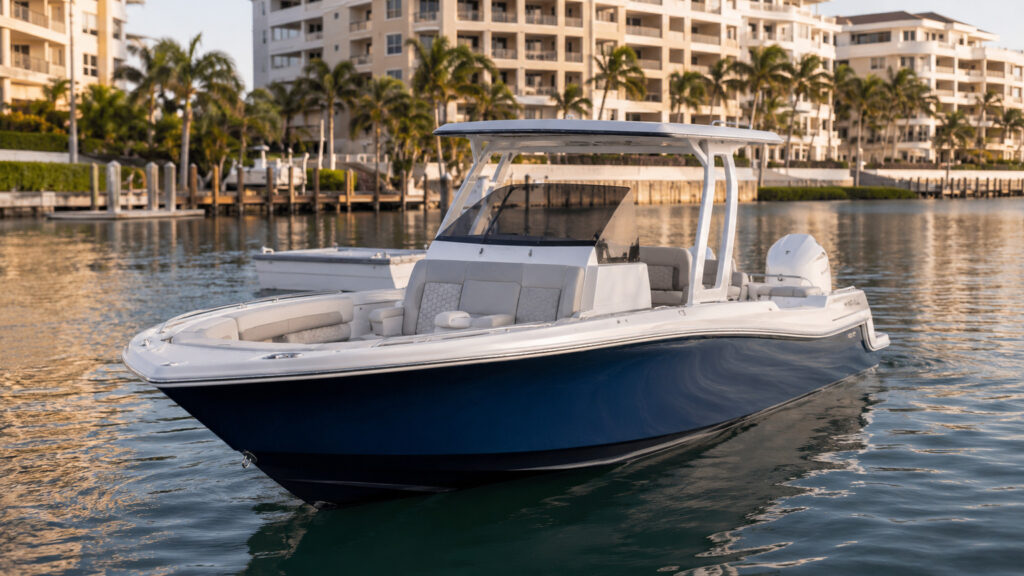
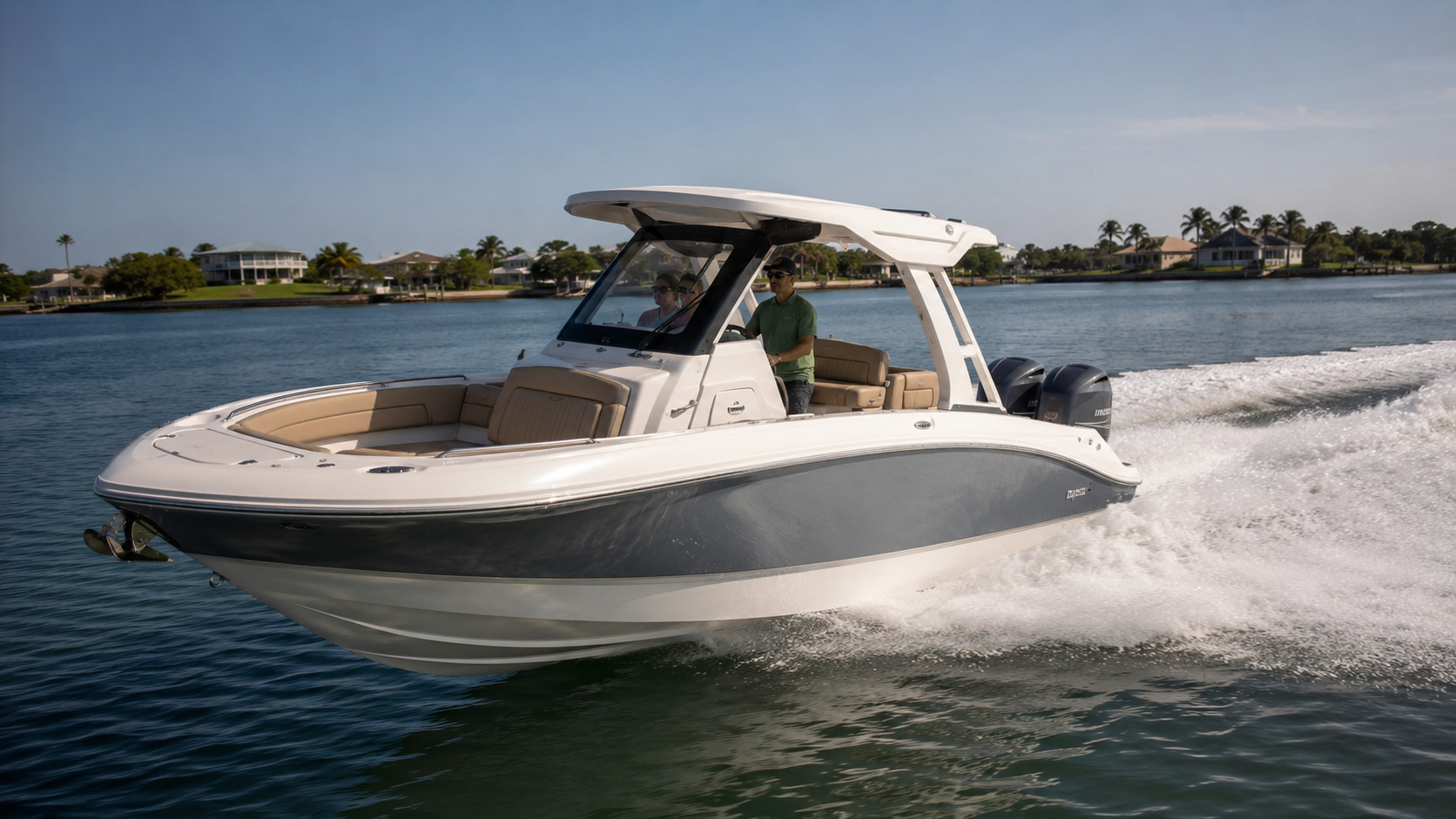
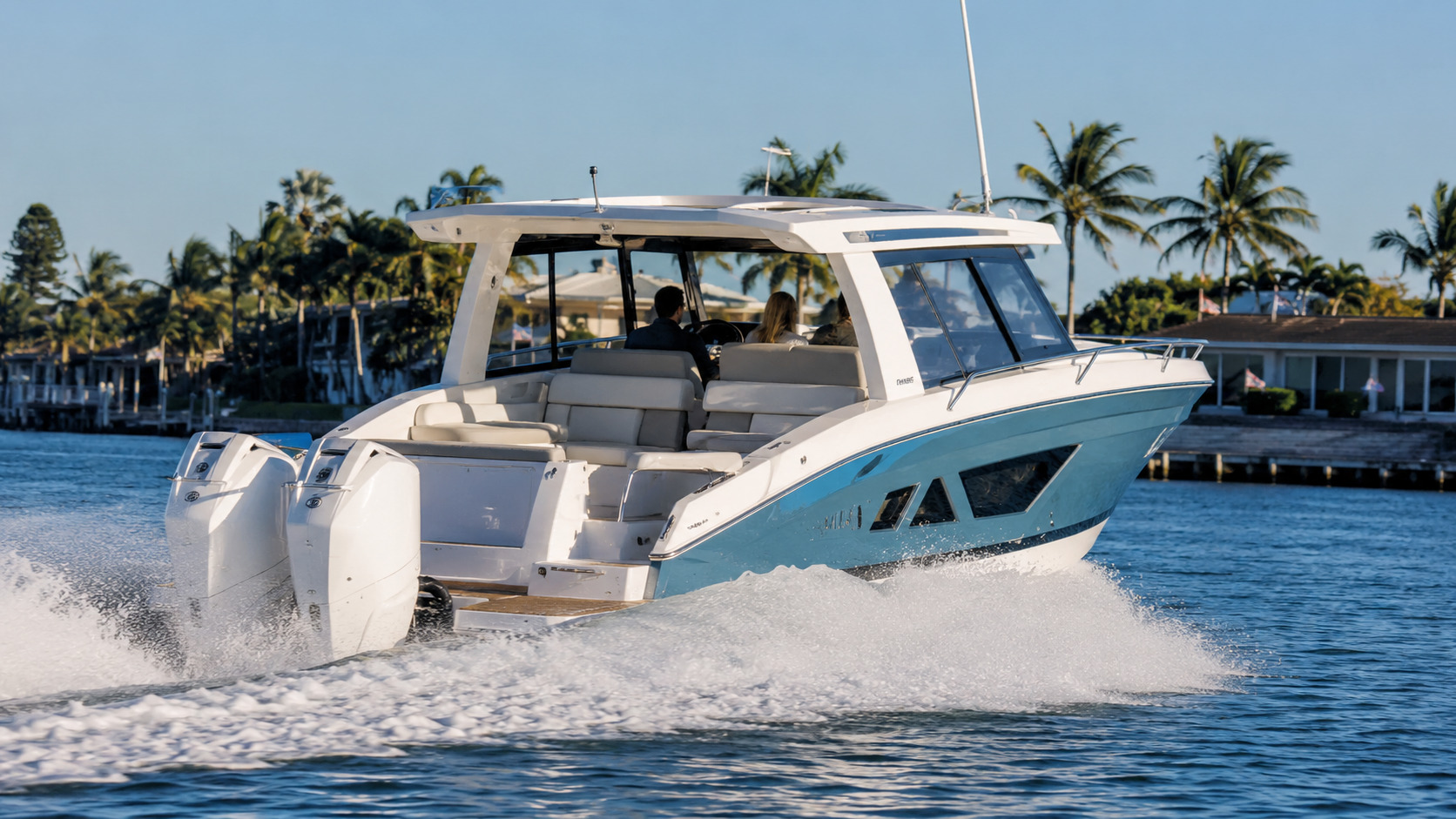
Compare the 250 OSX, 270 OSX, 280 OSX, and 310 OSX as Chaparral moves from a single-outboard luxury bowrider to a twin-engine day yacht with cabin and shore-power capability.
Choosing the Right Outboard Bowrider for Your Boating Style
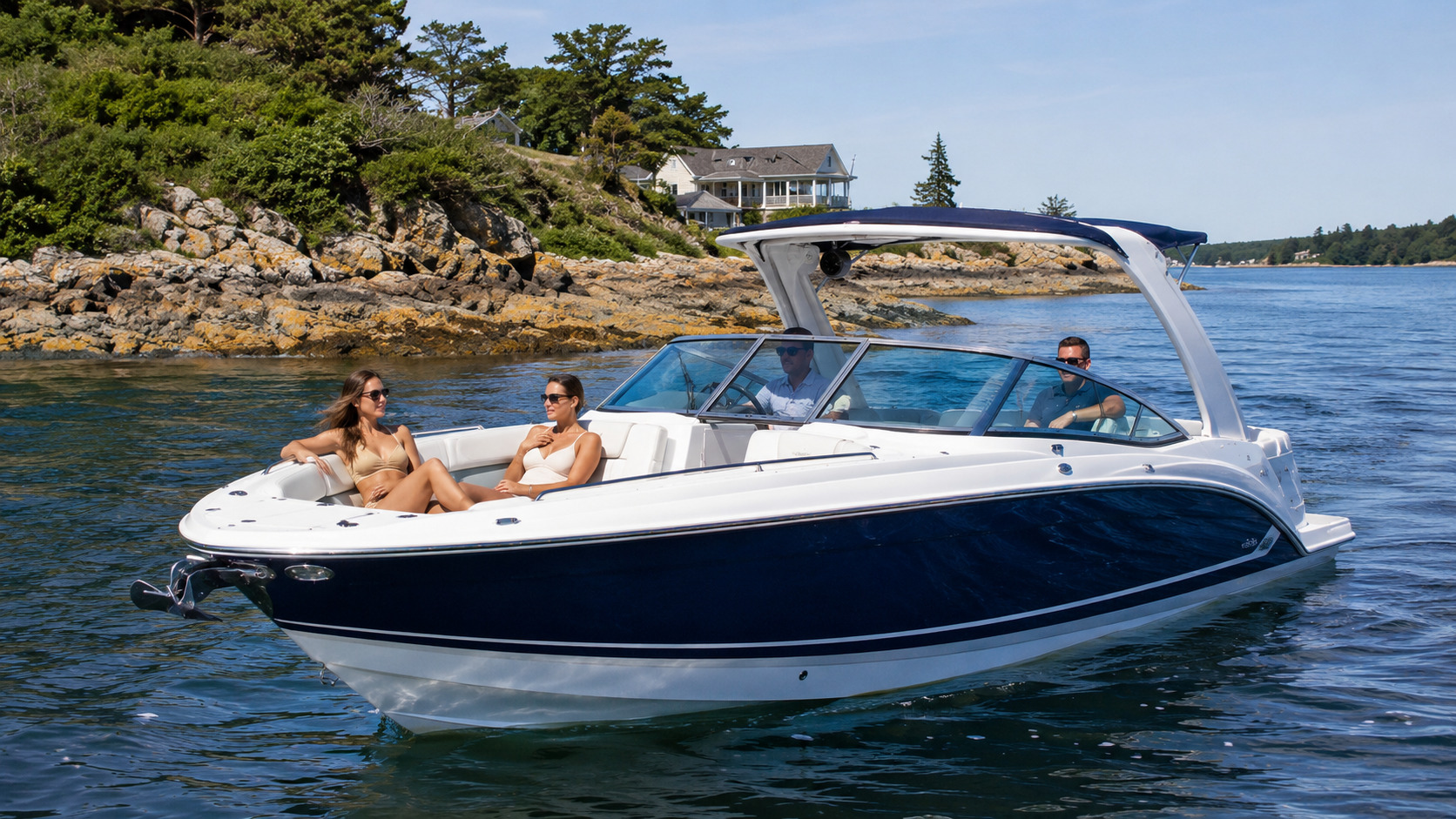
OSX is Chaparral’s answer for buyers who want premium bowrider space without putting the engine under the aft deck. Every model in this package uses outboard propulsion, and that single choice changes service access, repower planning, stern layout, storage, and the way the family approaches coastal day boating.
The family starts with the 250 OSX and 270 OSX, both of which keep an 8-foot-6-inch beam and a single-outboard layout. Those two boats still make sense for owners who expect to trailer regularly or use an existing conventional-width lift.
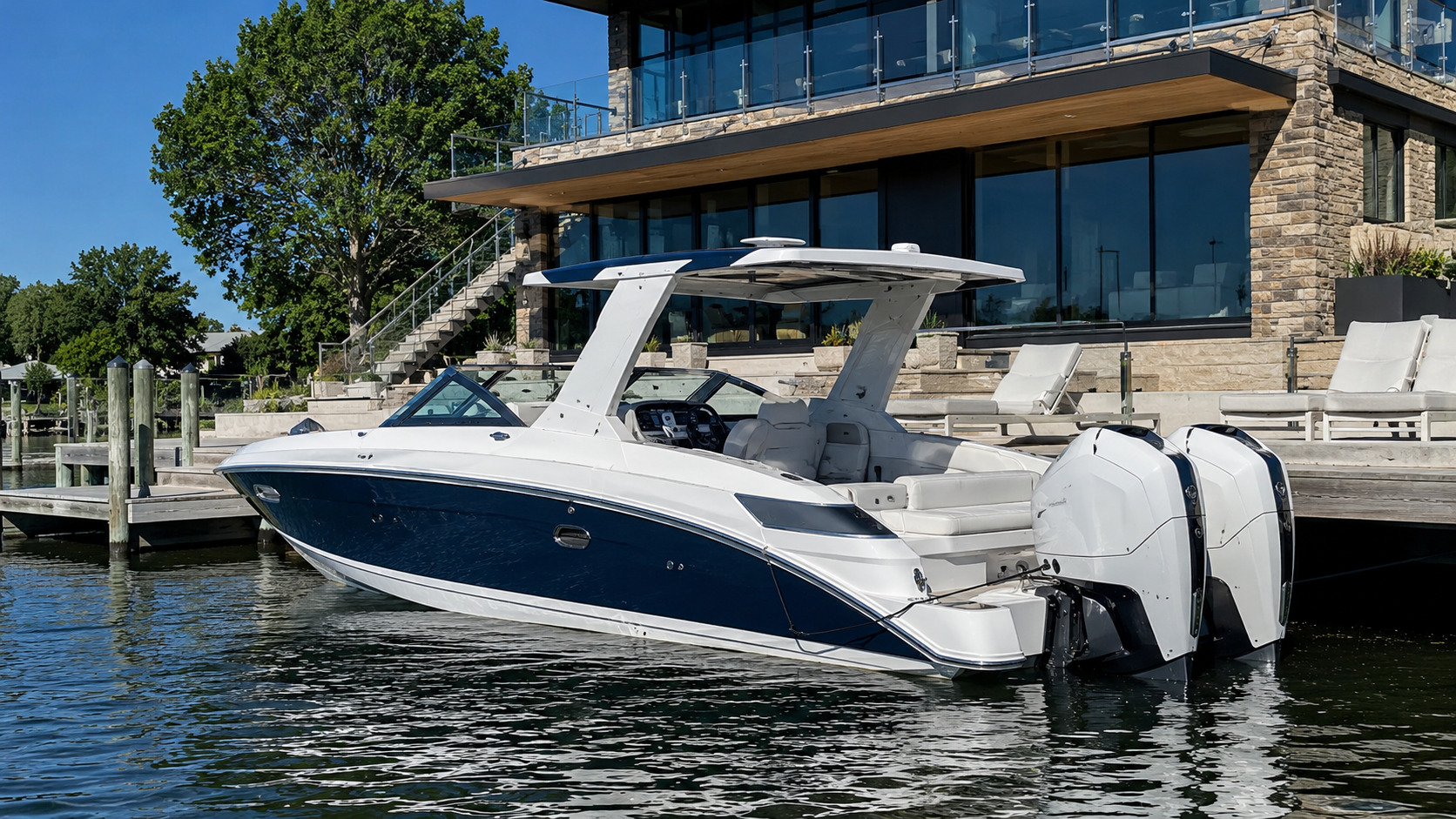
The 280 OSX is the break point. It moves to twin outboards, a 9-foot beam, 123 gallons of fuel, yacht certification, a hardtop, side-entry boarding, and a more serious wetbar and head package. The 280 no longer behaves like a bigger 270 from an ownership perspective.
The 310 OSX takes another step. Twin 300-horsepower outboards, a 9-foot-6-inch beam, 182 gallons of fuel, 25 gallons of freshwater, shore power, and a forward berth move the boat into light overnight-cruiser territory.
That progression is why an OSX buyer should not shop by length alone. The meaningful questions are whether the family wants one engine or two, whether road width still matters, and whether head, hardtop, cabin, and shore-power systems will be used enough to justify their cost.
OSX is strongest for a buyer who wants outboard access and premium passenger comfort in the same boat. It is a weaker fit for someone whose priority is maximum simplicity, a completely clear center swim platform, or the lowest possible systems count.
Outboard propulsion is the mechanical spine of the series. The engine stays outside the hull, so the owner can inspect the lower unit, propeller, trim, steering, and rigging without opening an engine hatch.
That architecture also changes repower planning. A future OSX engine still has to match transom rating, shaft length, steering, controls, and electrical capacity, but the work is generally more direct than replacing an engine buried beneath an aft deck.
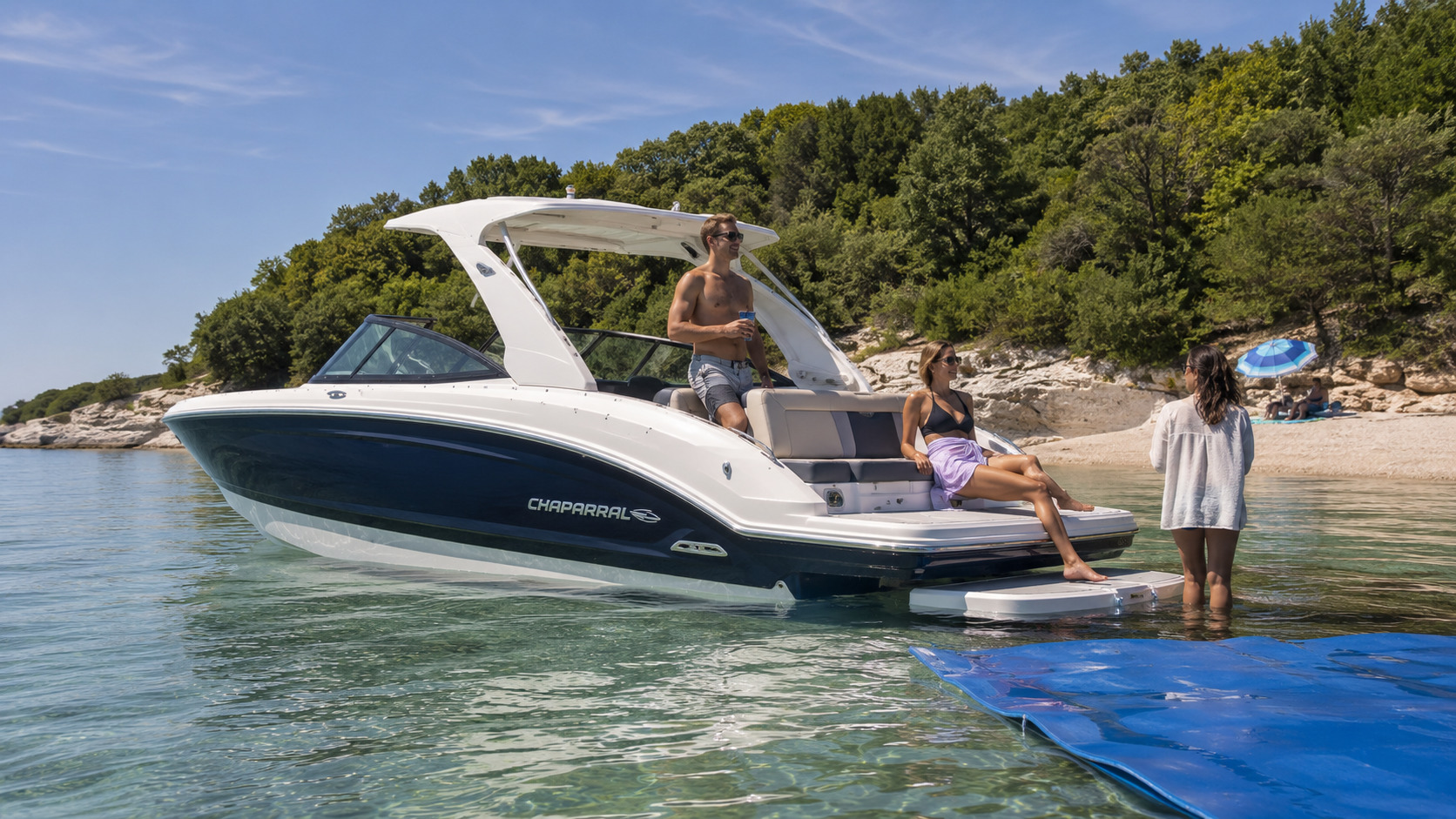
OSX also uses the stern as social space. The 250 and 270 emphasize Vista-View-style aft lounging, while the larger boats add more substantial boarding, wetbar, head, and hardtop systems.
Beam separates the family almost as clearly as length. The 250 and 270 remain at 8 feet 6 inches. The 280 grows to 9 feet. The 310 reaches 9 feet 6 inches and should be treated as a marina-first boat by most owners.
Fuel grows from 60 gallons on the 250 to 65 on the 270, 123 on the 280, and 182 on the 310. The jump at 280 mirrors the change from single to twin outboards.
Electronics scale too. The smaller boats use compact Simrad helm packages, while the 280 and 310 move into larger twin-screen environments more appropriate to twin-engine coastal operation.
The top of the line adds overnight capability. The 310’s berth and shore power are not cosmetic upgrades. They change how the boat can be used and how it must be maintained.
Start with engine count. A single-outboard 250 or 270 means one lower unit, one propeller, one engine service history, and a simpler battery and steering system.
Move to 280 or 310 only when twin-engine redundancy, docking authority, and higher-output coastal use matter enough to justify double propulsion service.
Then decide whether conventional road width is still important. The 250 and 270 stay at 8 feet 6 inches. The 280 and 310 cross into wider transport territory.
Next ask how much onboard hospitality the family wants. The 250 and 270 give the day boat a head and premium lounge treatment. The 280 expands hardtop, wetbar, side-entry, and twin-screen capability.
The 310 deserves a separate question: will anyone actually sleep aboard? If the berth and shore-power system will rarely be used, the 280 can deliver most of the twin-engine day-yacht experience with less size and systems burden.
Finally, compare the exact builds rather than the model badges. Engine brand, joystick equipment, hardtop options, electronics, audio, head configuration, and trailer or marina setup can create a large price spread.
Outboard maintenance is visible, but it is not maintenance-free. The owner still needs gearcase service, propeller inspection, water-pump and cooling care, trim-system checks, steering service, anode replacement, and clean fuel delivery.
Twin-engine OSX ownership multiplies those items. The 280 and 310 should have both engine histories reviewed independently because matched cowlings do not guarantee matched service.
Fuel becomes a major budget line as the family moves upward. A 182-gallon 310 can carry more than a thousand pounds of gasoline when full, changing both operating cost and loaded displacement.
Freshwater, head, refrigeration, hardtop, and wetbar systems also add maintenance. Pumps, drains, hoses, chargers, and appliances can create first-season expenses on a used boat that looked excellent during a short sea trial.
The 310 adds shore power and cabin equipment, so electrical inspection becomes closer to a small cruiser than a normal bowrider.
Storage cost follows beam. The 250 and 270 can still fit many conventional trailer and lift plans. The 280 and 310 are more likely to require specialized transport, wider slips, and heavier lifts.
Insurance should be quoted using the exact engine package and navigation area. Twin-engine coastal use can be treated differently from a single-engine inland day boat.
The sustainable OSX purchase is the one whose loan payment leaves room for all of those systems.
The 250 OSX is the easiest starting point because it keeps an 8-foot-6-inch beam, single-outboard power, and the smallest platform in this requested family.
Choose the 270 when the family wants more hull length, a 22-degree running surface, and up to 350 horsepower while preserving conventional road width and single-engine ownership.
The 280 introduces twin engines, a 9-foot beam, a standard hardtop, yacht certification, side-entry boarding, and 123 gallons of fuel. It is a different ownership class.
A factory trailer may exist, but the 9-foot-6-inch beam and 8,500-pound published boat weight make the 310 a specialized transport project rather than a casual weekend tow for most owners.
Focus on outboard service history, steering, lower units, Simrad systems, head and freshwater equipment, hardtop hardware, batteries, wetbar systems, and the transom or side-entry structure.
Potentially. Model year, value, condition, seller type, transaction size, and borrower qualifications matter. Send the exact listing so financing reflects the actual OSX.
Choose the OSX That Matches the Way You Store and Use It
Pick engine count and beam first. Then decide how much head, hardtop, cabin, and electronics capability the family will actually use.