
Call Us : 207-994-5109
Mon – Fri: 8 am to 9 pm & Sat – Sun: 10 am to 8 pm
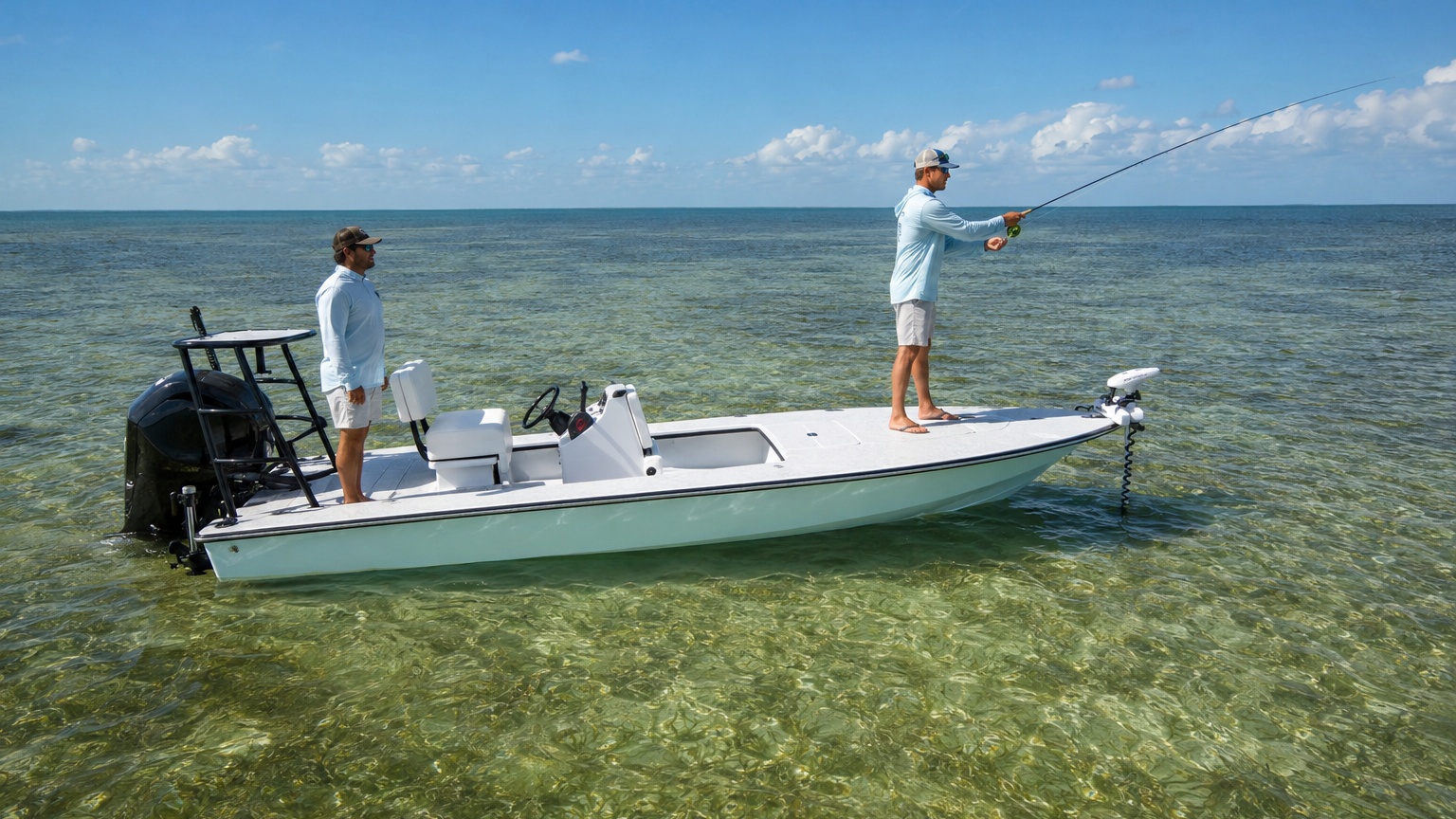
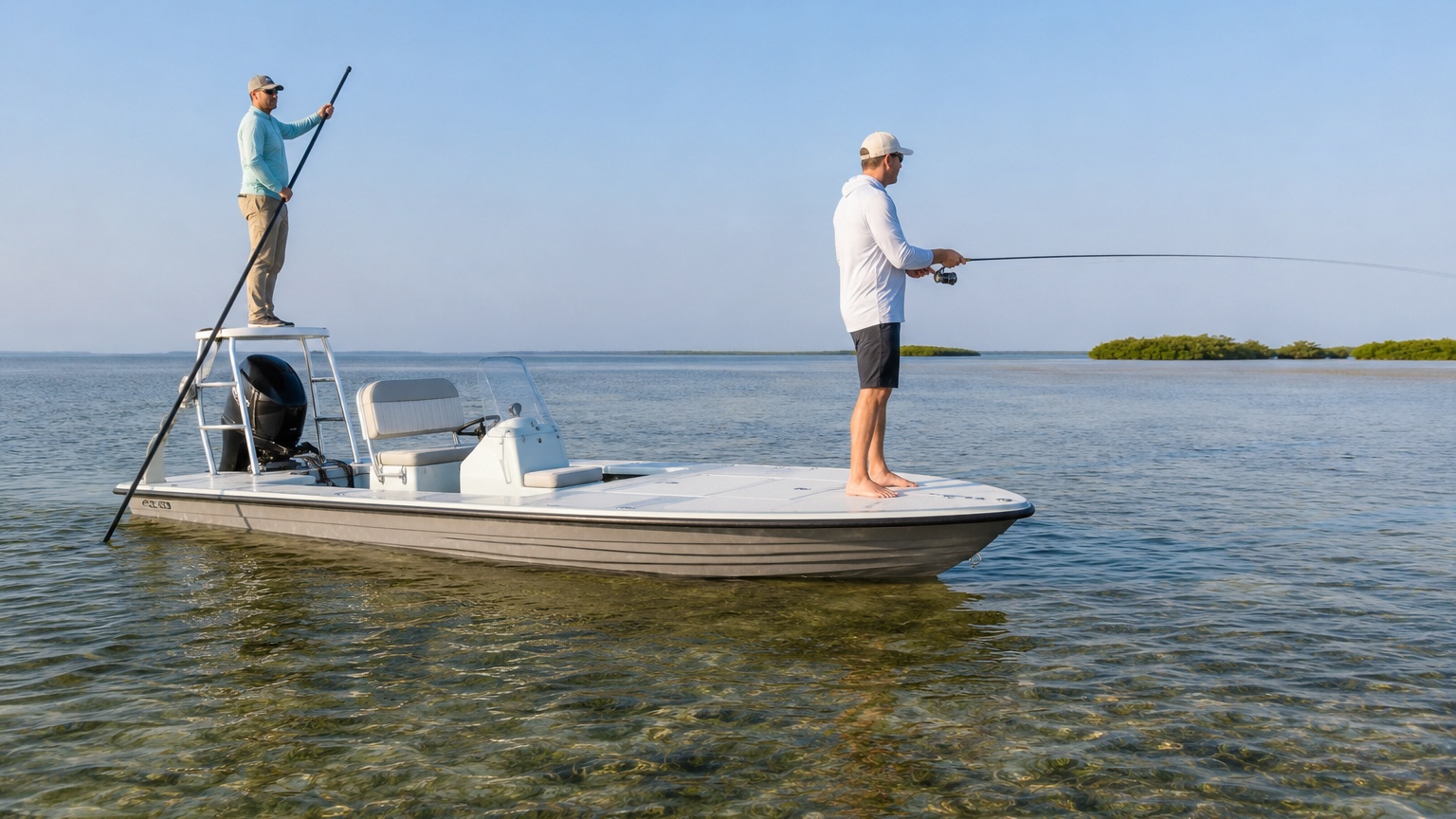
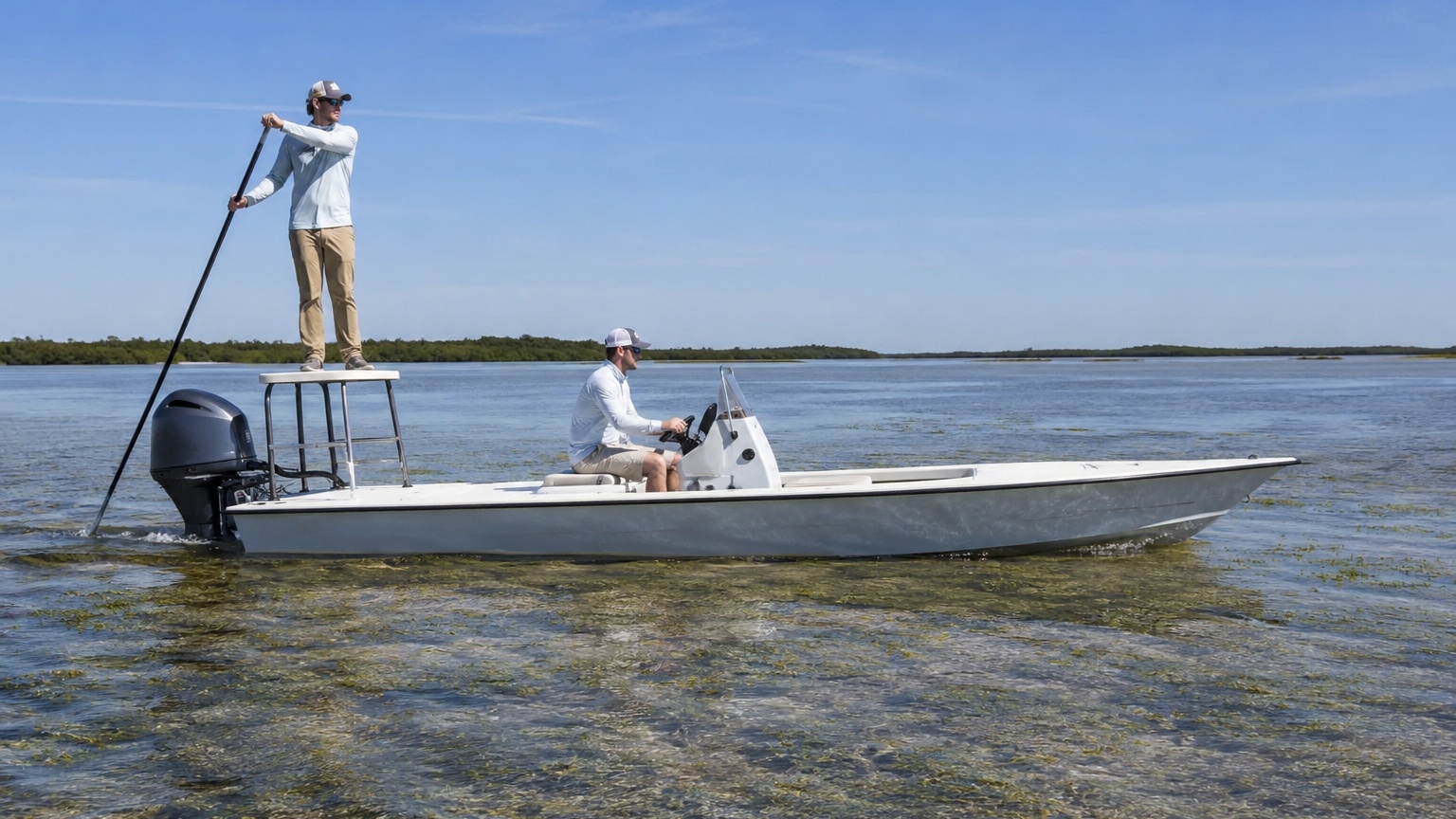
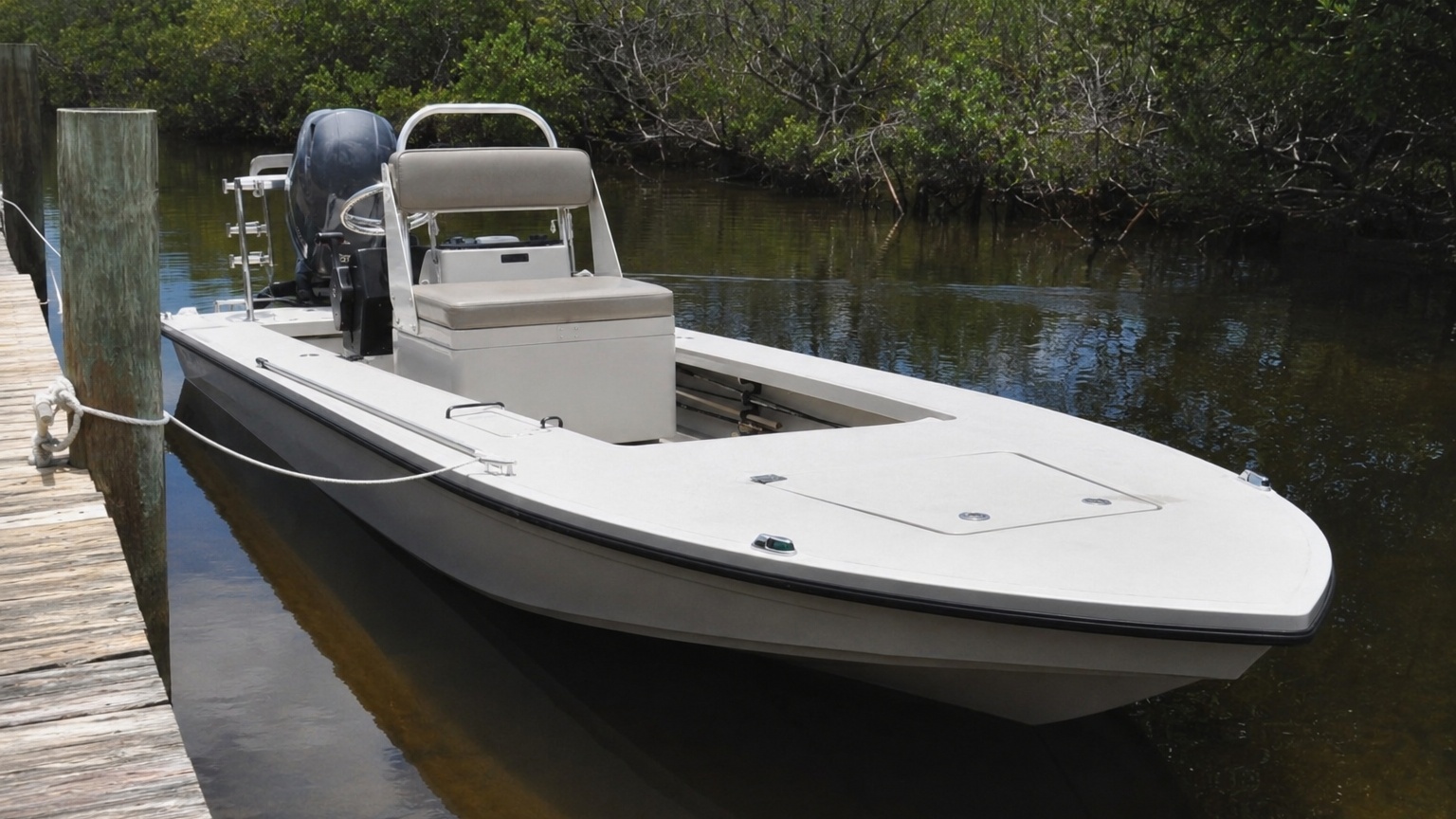
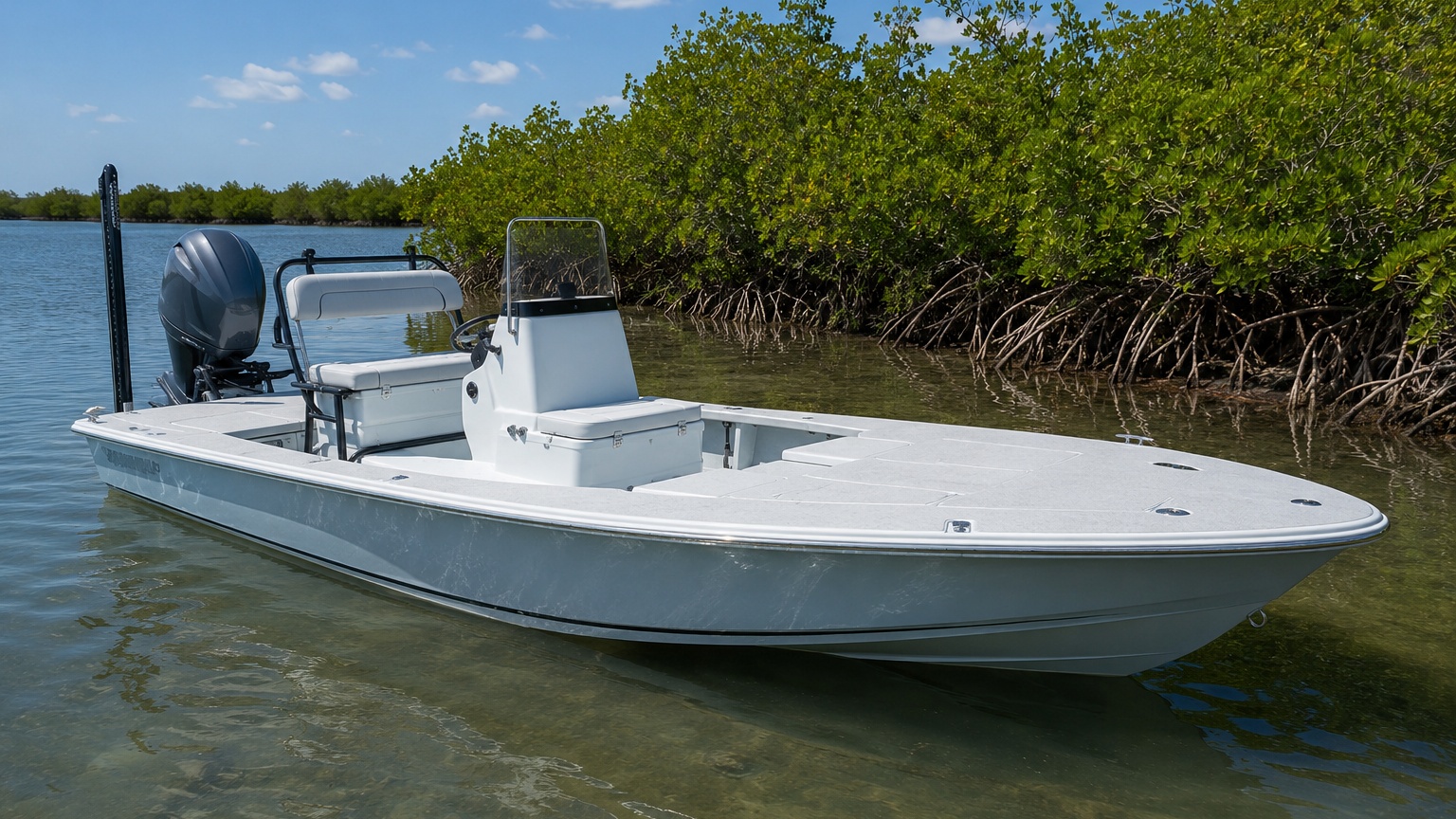
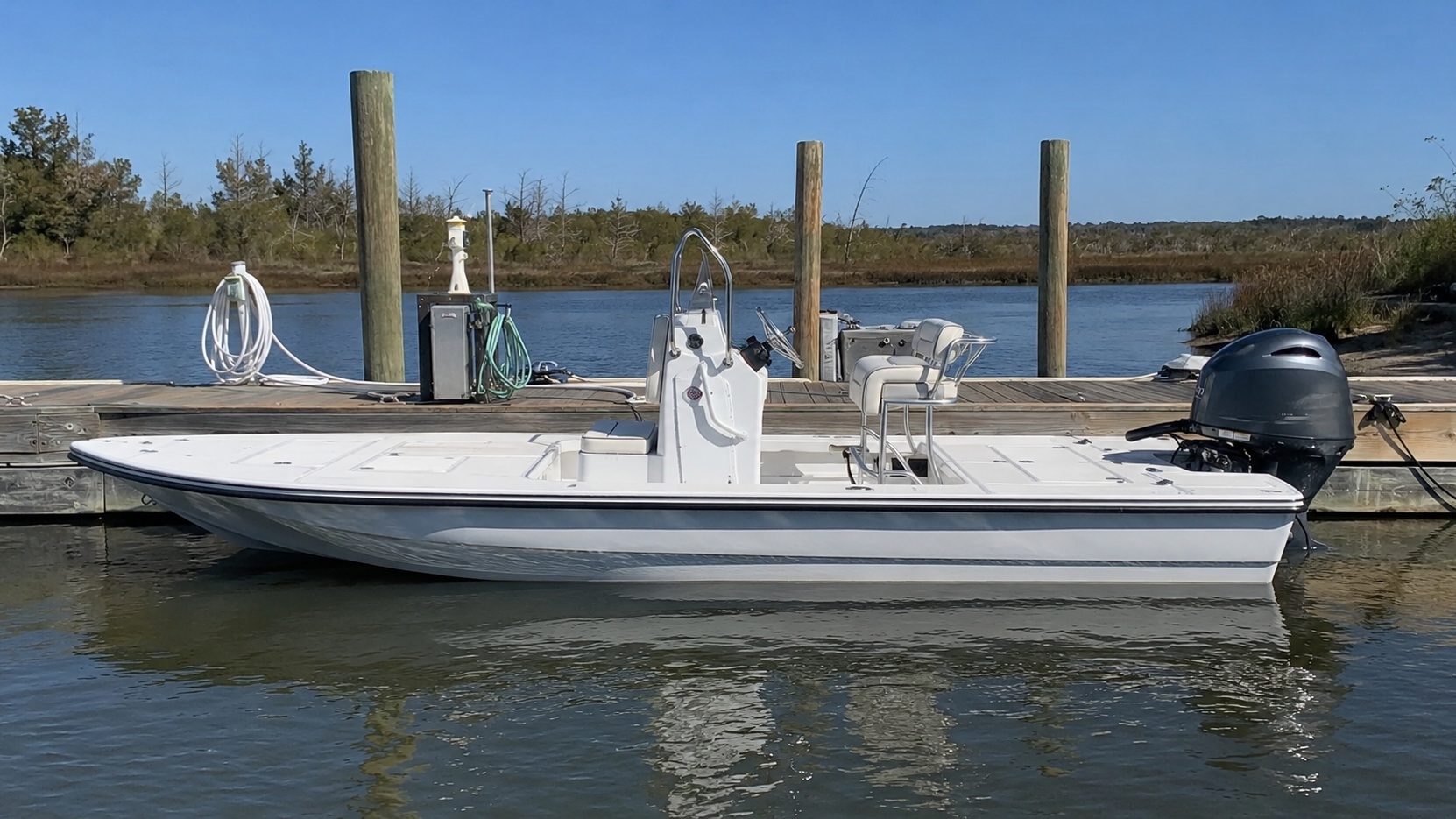
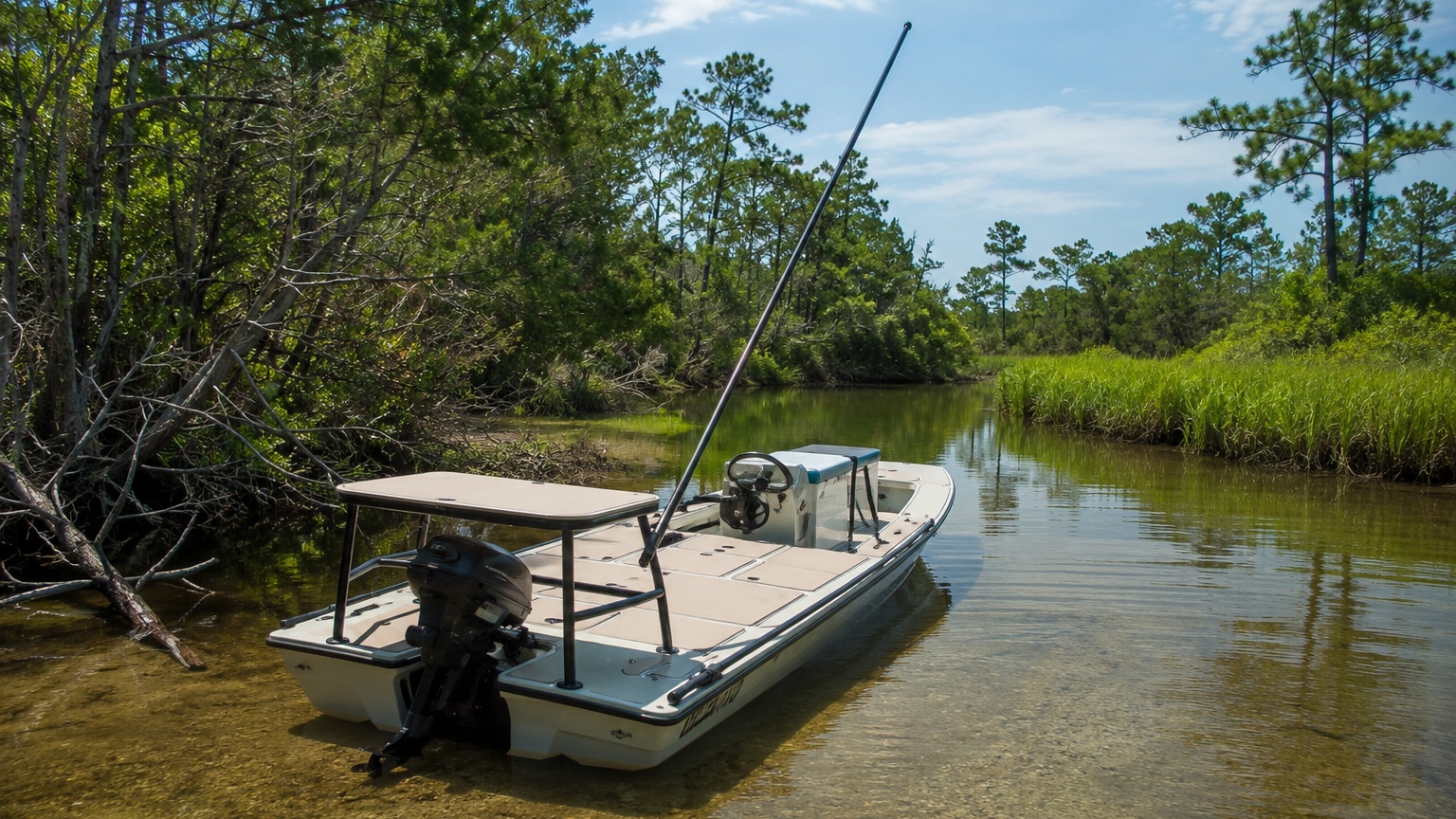
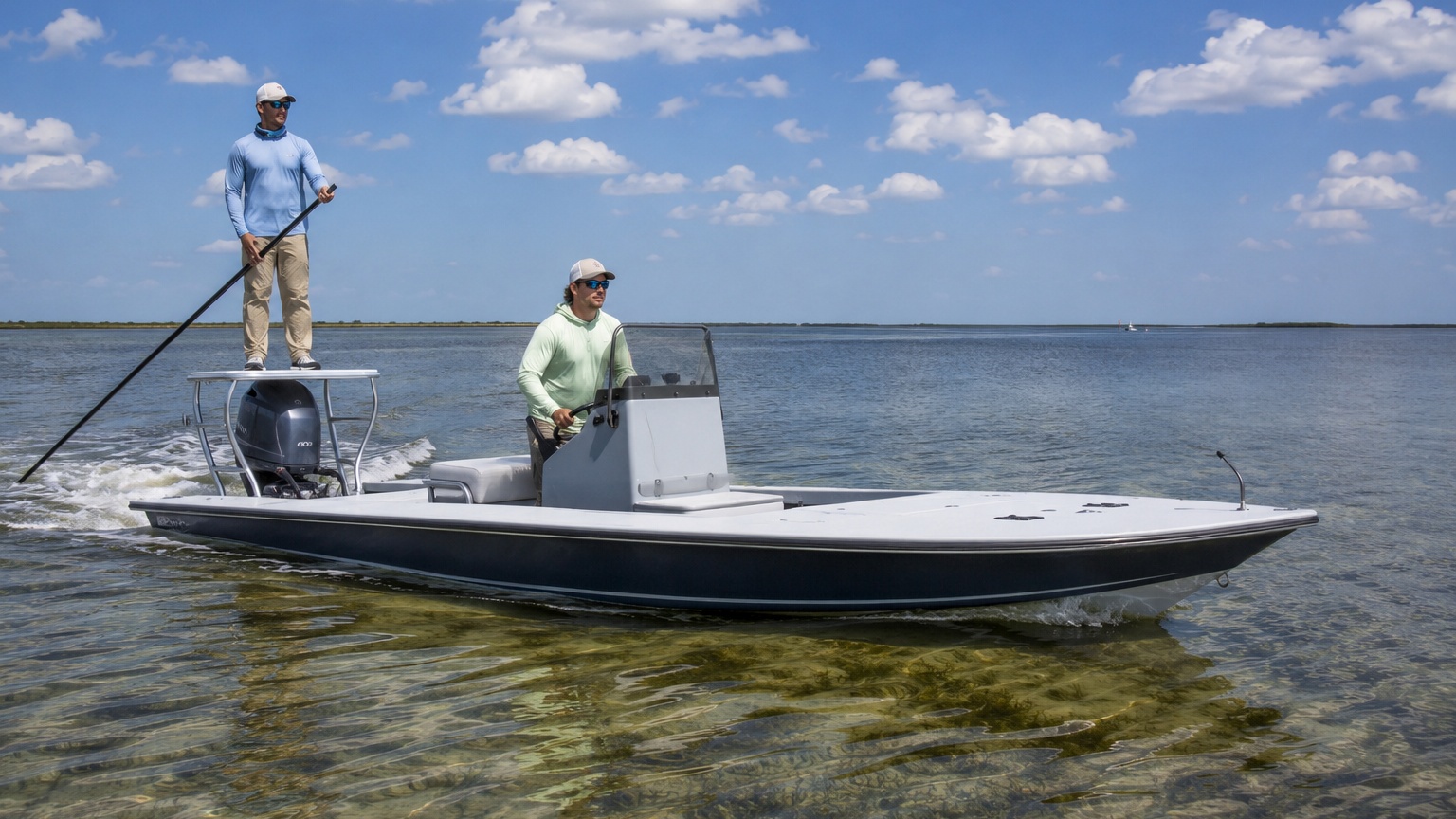
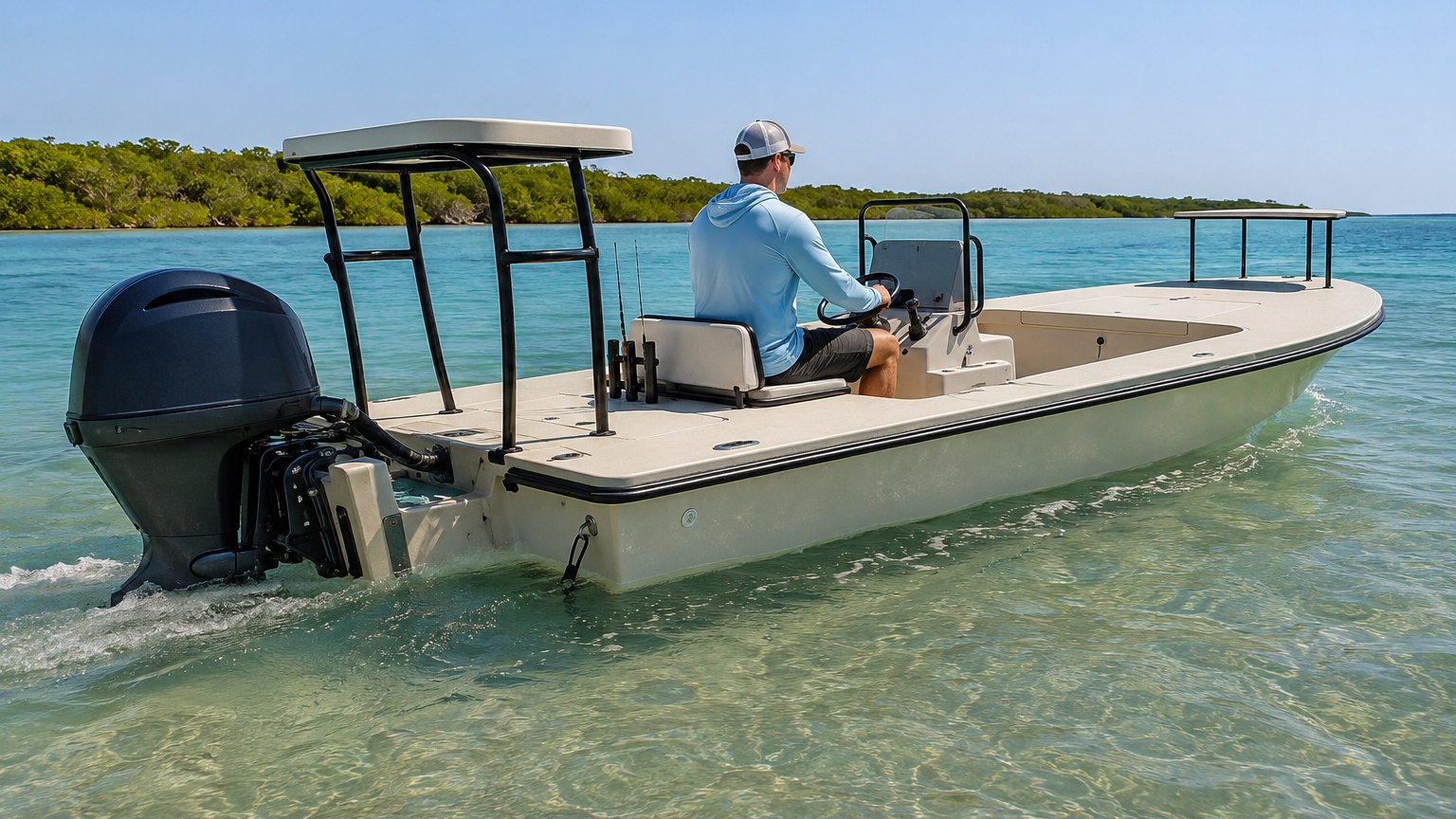
The Hewes Redfisher 18 is the all-around Redfisher sweet spot for anglers who pole shallow water, make longer backcountry runs, and want more deck and console room without moving into the much heavier 21.
The Redfisher 18 earns its reputation by covering the widest range of shallow-water jobs without forcing the owner into the size, horsepower, and tow demands of the 21. Hewes calls it a true backcountry 18, and the specifications explain why: 18 feet 10 inches overall, a 7-foot-11-inch beam, a 10-inch published draft, 31 gallons of fuel, and a 150-horsepower ceiling.
The 18 occupies an unusual middle ground. It is larger and more comfortable than the 16, yet it still publishes the shallowest draft in the current Redfisher lineup. That makes the boat appealing to anglers who refuse to choose between poling water and longer runs.
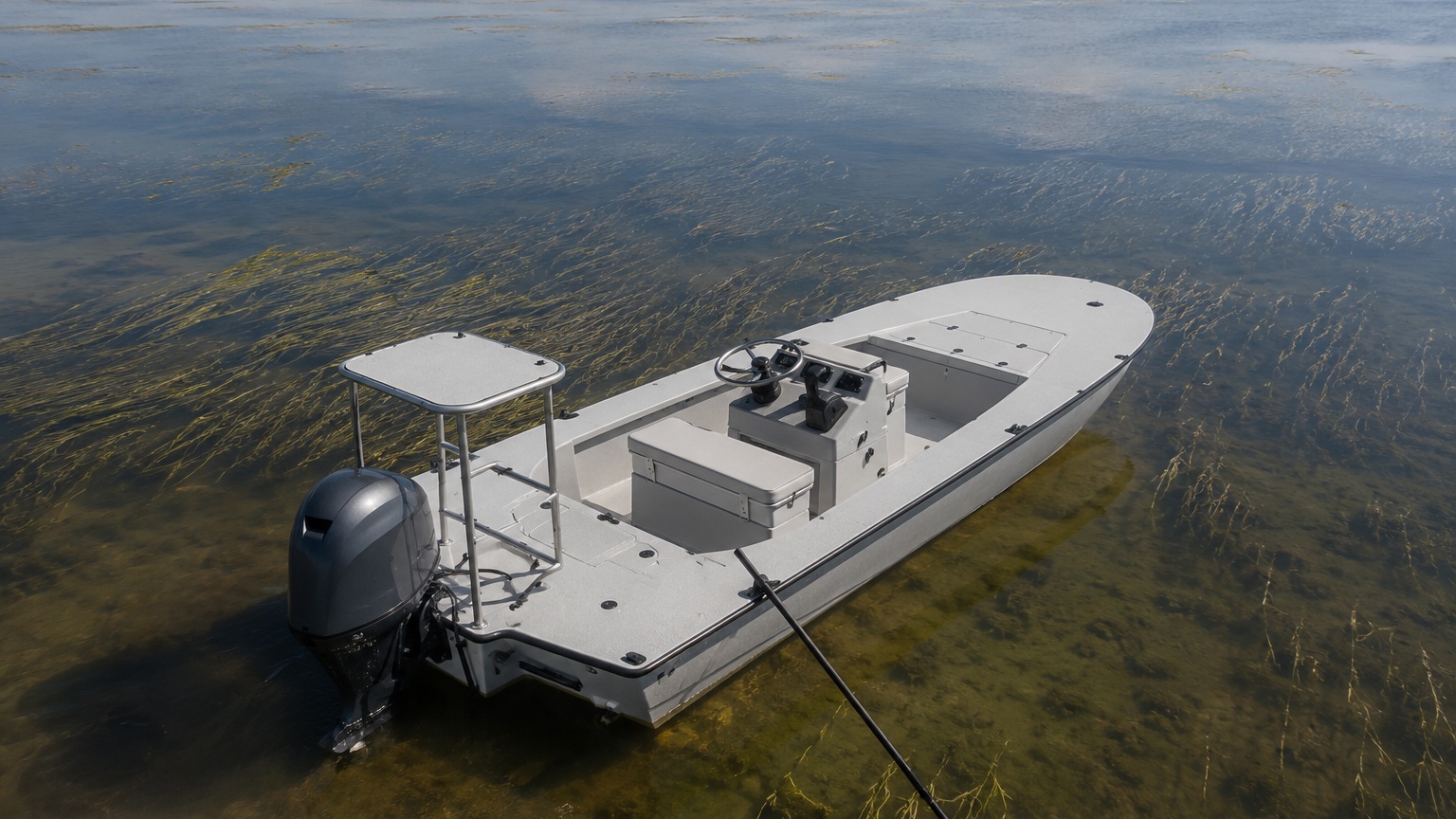
The current redesign adds a dedicated anchor locker, console space for electronics up to 12 inches, improved cushion arrangements, and VARIS vacuum-infusion construction. Those updates matter because the 18 is often used as both a hard-fishing skiff and a day boat.
Power choice is another part of its identity. A 115-horsepower setup emphasizes economy, low weight, and long backcountry range. A 150-horsepower setup gives the boat more reserve for full fuel, bait, gear, and rougher open-water travel.
The main sibling decision is whether to stay at 16 or jump to 21. The 18 is the answer when the owner wants more boat than the 16 but does not need 350 horsepower, a 44-gallon livewell, or the towing burden of the 21.
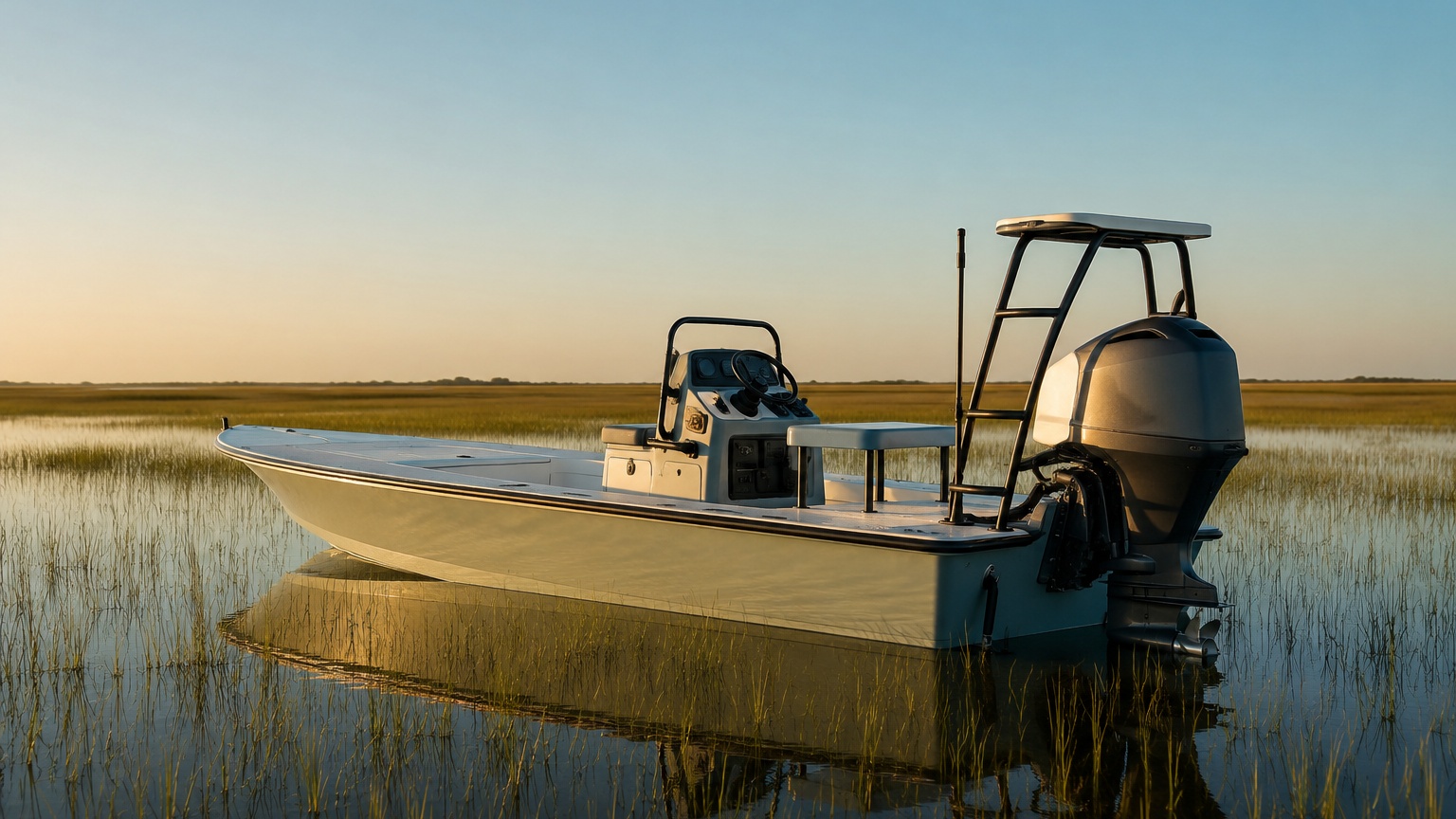
Published factory figures. Confirm every dimension against the individual boat before you commit.
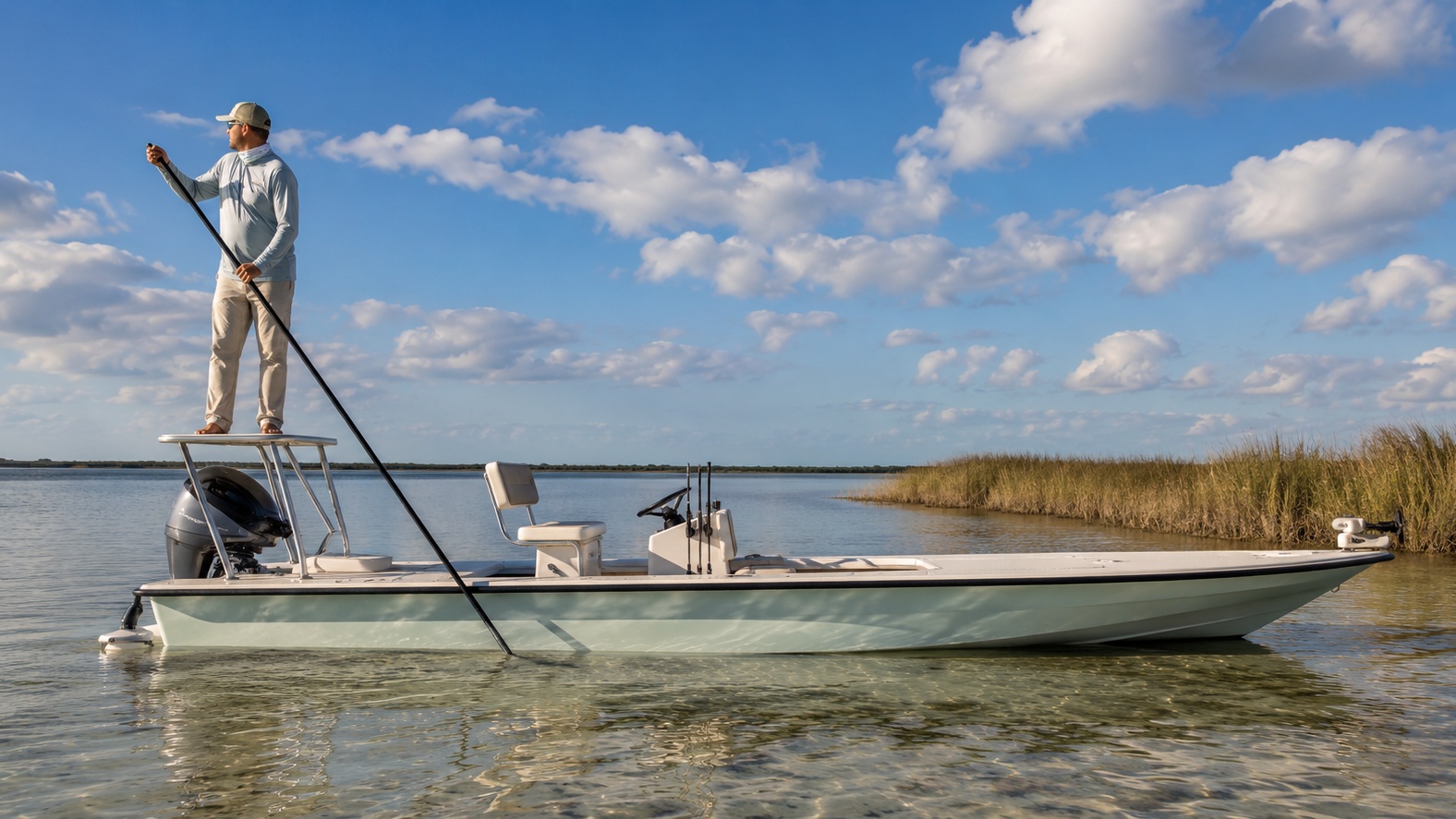
The Redfisher 18 publishes a 10-inch draft, the shallowest number in the current family. At the same time, its nearly eight-foot beam gives anglers a noticeably broader stance than the Redfisher 16.
The 13-degree transom deadrise is flatter than the 16 and 21. That helps the boat balance shallow-water efficiency and stability, while the extra hull length gives it enough running surface to handle longer bay crossings with more confidence than a compact technical skiff.
VARIS vacuum infusion keeps weight to approximately 1,900 pounds with an F115. A buyer should still calculate the boat with 31 gallons of fuel, trolling-motor batteries, Power-Poles, live bait, poling platform, tackle, and trailer.
Inspect the bottom carefully because an 18 used as intended may have crossed oyster edges, shallow bars, and rough ramps for years. Gelcoat repair is not automatically a problem, but structural damage, poor fairing, or unexplained transom work deserves professional review.
The 7-foot-11-inch beam remains comfortably below conventional road width. That makes routine towing straightforward while still giving the boat much more fish-around space than narrow poling skiffs.
Lift and trailer supports should follow the hull correctly. A boat that has sat on misaligned bunks can show pressure marks and gelcoat wear even when the rest of the hull looks excellent.
The Redfisher 18 gives the owner a real propulsion decision instead of one obvious answer. The Yamaha 115 SHO suits anglers who prioritize efficiency, lower purchase cost, lighter feel, and long-distance backcountry running. The 150 makes more sense when the boat is often loaded heavily or asked to run exposed water.
The buyer should not choose by top speed alone. Hole shot with a full livewell, two or three anglers, trolling batteries, cooler, and shallow-water anchors is more informative than an empty demonstration run.
Jackplates are optional, with different tower and platform dimensions tied to engine and jackplate setup. On a used boat, confirm that the engine height, steering, propeller, and platform configuration actually work together instead of assuming every factory-style accessory combination is correct.
Inspect the outboard’s lower unit, propeller, skeg, trim, mounts, steering, fuel delivery, and service history. A flats boat can accumulate many engine hours at low and mid speeds even when the hull still looks fresh.
At cruise, the 18 should feel relaxed rather than overworked. Compare rpm, speed, trim position, and fuel burn if digital data is available. A badly propped 150 can be less satisfying than a well-sorted 115.
Future repower should preserve the balance that makes the 18 special. More engine weight is not automatically an upgrade if it hurts draft, poling balance, or stern attitude.
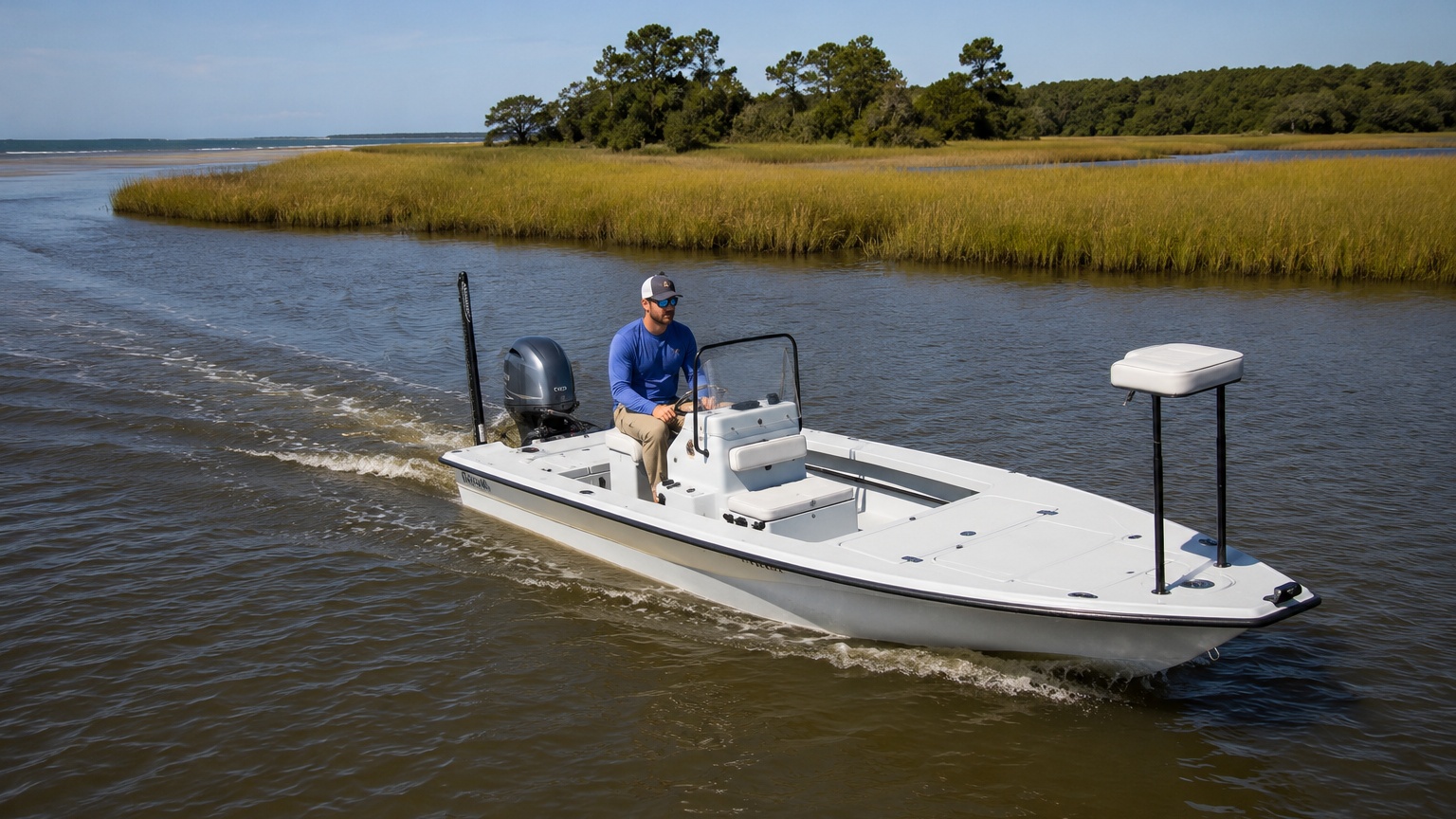
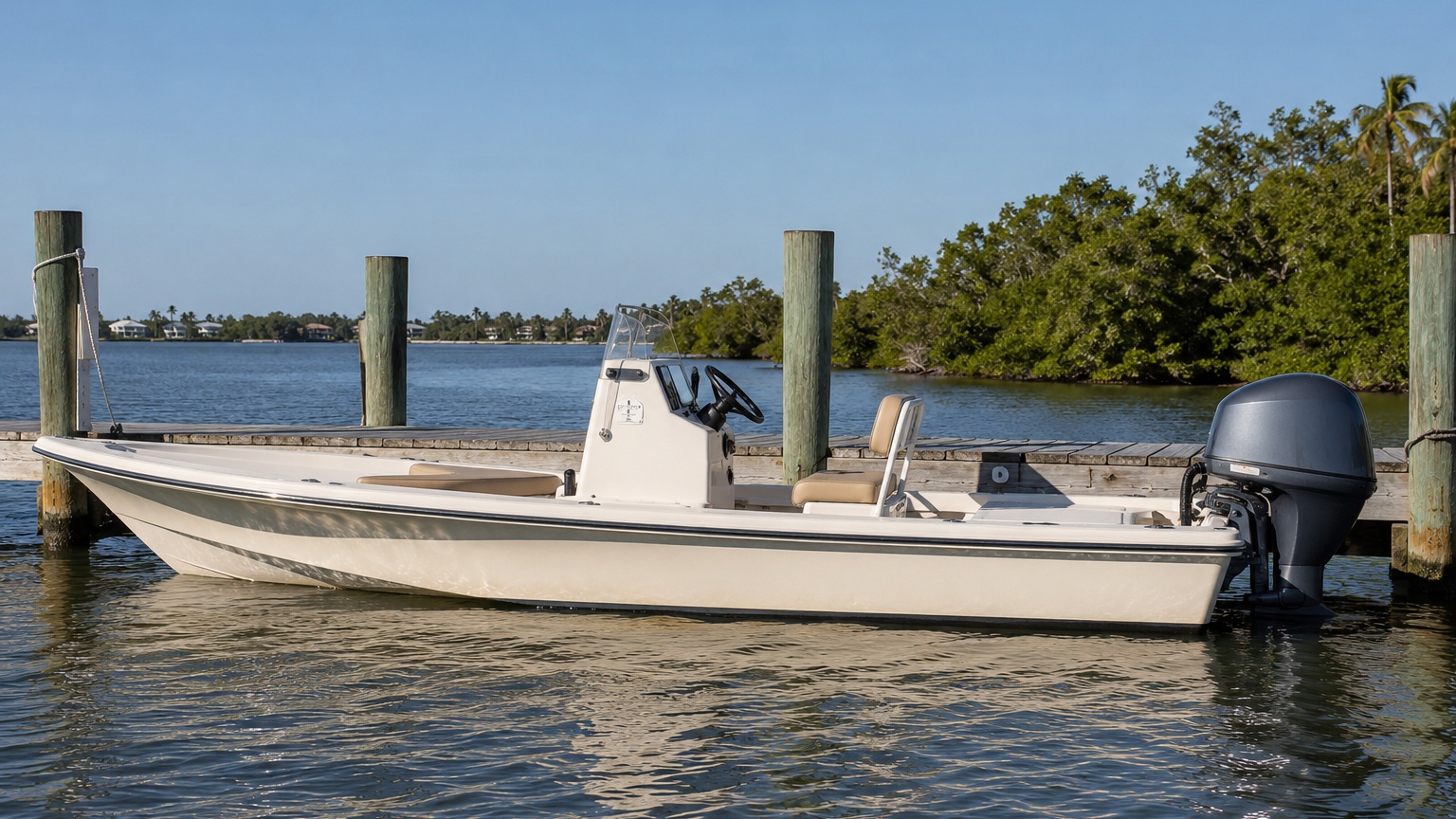
The Redfisher 18 carries 31 gallons of fuel, one gallon less than the 16 despite being the larger boat. That reinforces the model’s efficiency-first backcountry mission rather than turning it into a fuel-heavy nearshore platform.
With a 115, the 31-gallon tank can support long days when the boat is run at an efficient cruise and the operator preserves a reserve. The 150 raises available performance but should be budgeted around the owner’s actual throttle habits and load.
The 23.5-gallon aft-center livewell is a meaningful step above the 16’s 20-gallon system without reaching the 44-gallon bait capacity of the 21. That scale fits the 18’s middle position well.
Fill the livewell during inspection and watch how the boat sits. A full aft livewell, batteries, Power-Poles, and a poling platform can shift stern attitude on a shallow-water hull.
A 24V trolling-motor setup adds battery weight forward or amidships depending on installation. Battery placement should look intentional and secure, with clean cable routing and enough charger capacity for the owner’s fishing routine.
Range planning should include wind. An 18 that runs efficiently with a quartering breeze can use much more fuel when returning across open water into a hard head sea.
The 18’s strongest performance trait is not one speed number. It is the ability to move from poling speed to open-bay cruise without feeling like the hull was optimized for only one of those jobs.
The 10-inch published draft supports truly shallow access. Once on plane, the additional length over the 16 gives the boat more running surface to bridge short chop.
With the 13-degree transom, the 18 should feel stable at rest and predictable in turns. The buyer should run into, across, and with the chop to understand how the boat lands and sheds spray at realistic fishing speeds.
A 115-powered boat should be evaluated for smooth planing and efficient cruise. A 150-powered boat should be evaluated for whether the extra acceleration and load reserve actually improve the owner’s normal day enough to justify the added cost and fuel.
At low speed, check steering effort, trim-tab response, and how the stern behaves when the jackplate is raised. Shallow-water equipment is useful only when the operator can control it intuitively.
On the pole, the 18 should track without constant correction and remain stable when an angler moves across the bow. Platform height, engine position, batteries, and livewell load all influence that feel.
This is the Redfisher to sea-trial carefully if the buyer is torn between sizes. The 18 often feels much larger than its ownership burden suggests.
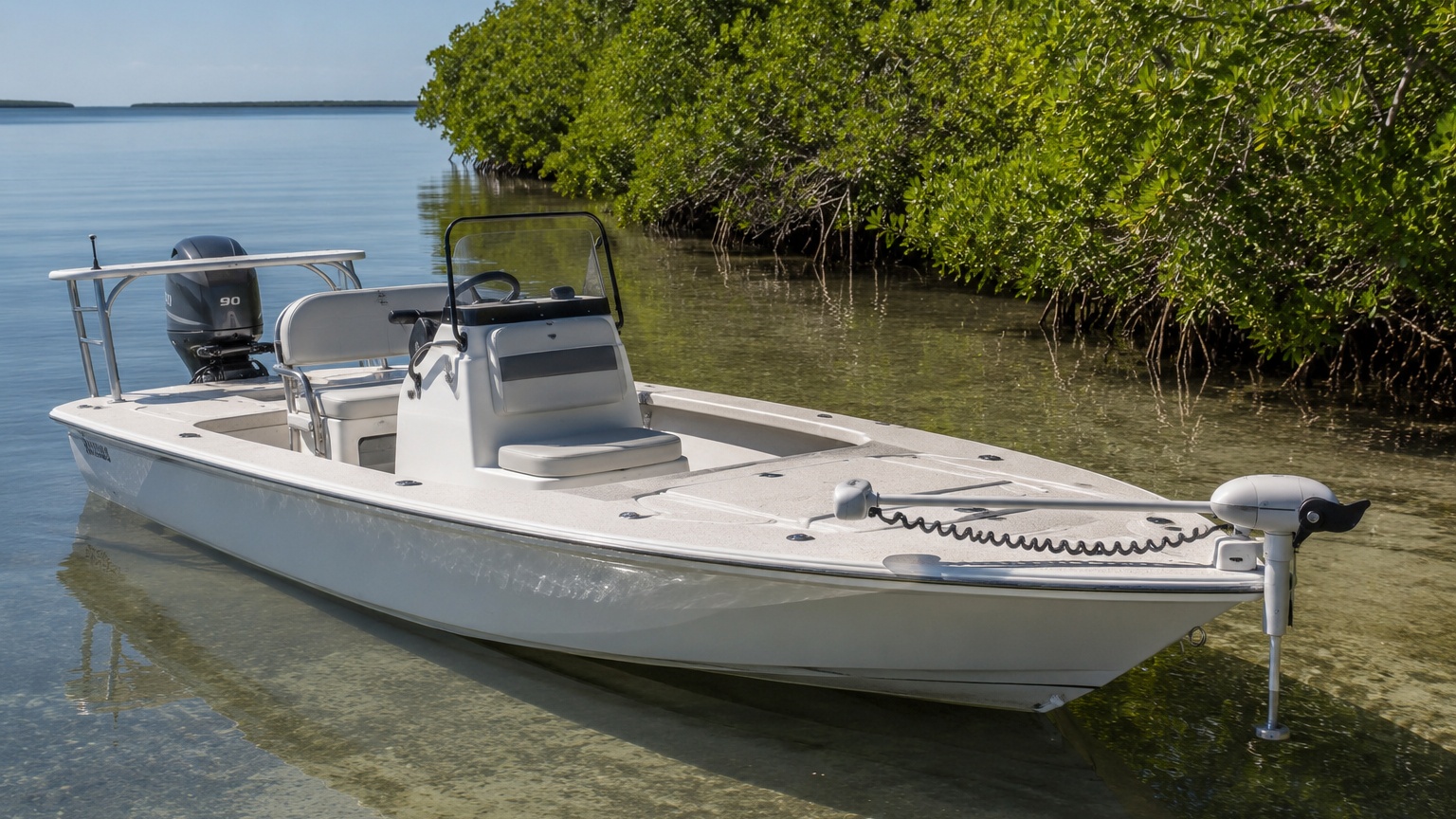
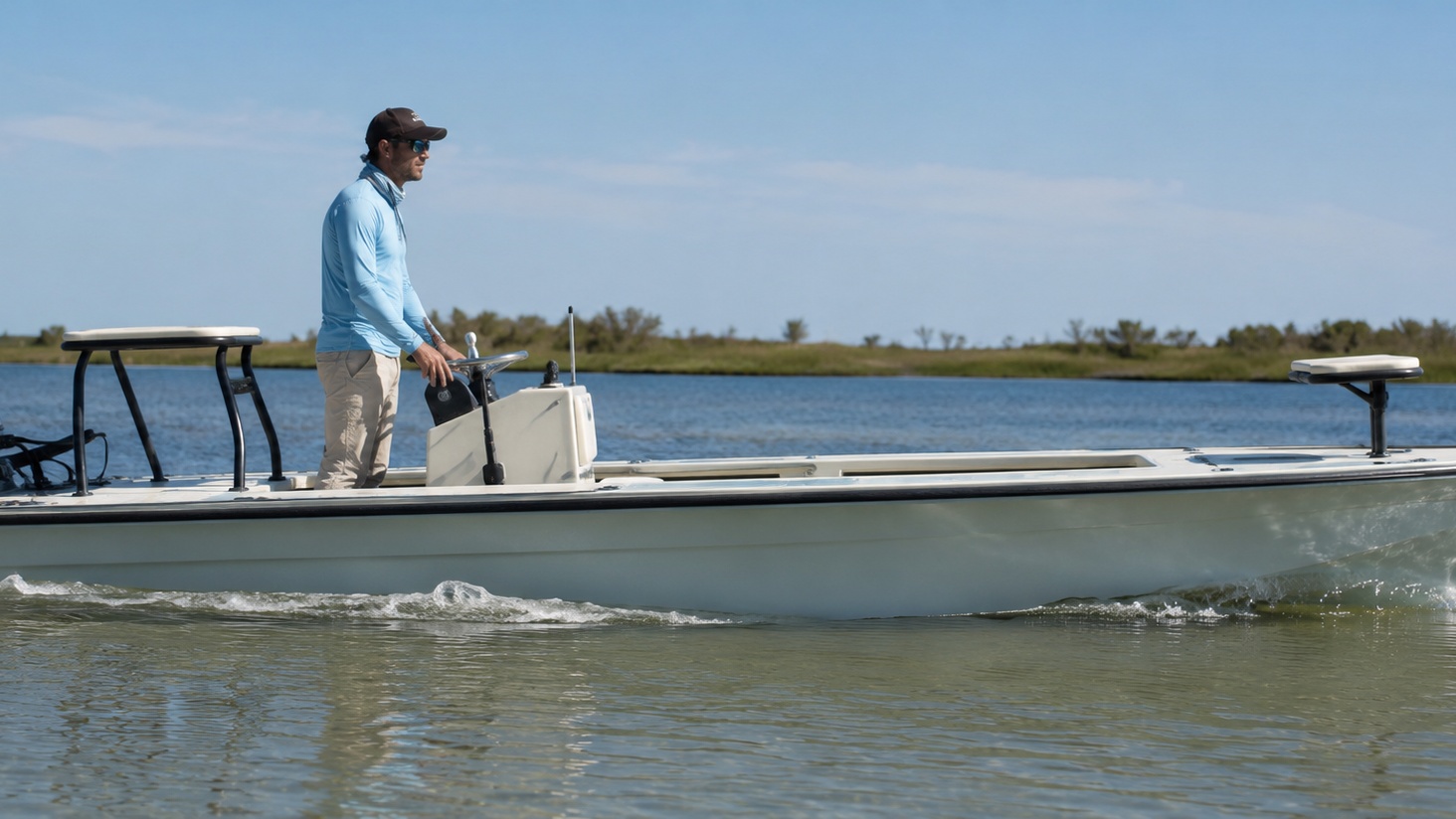
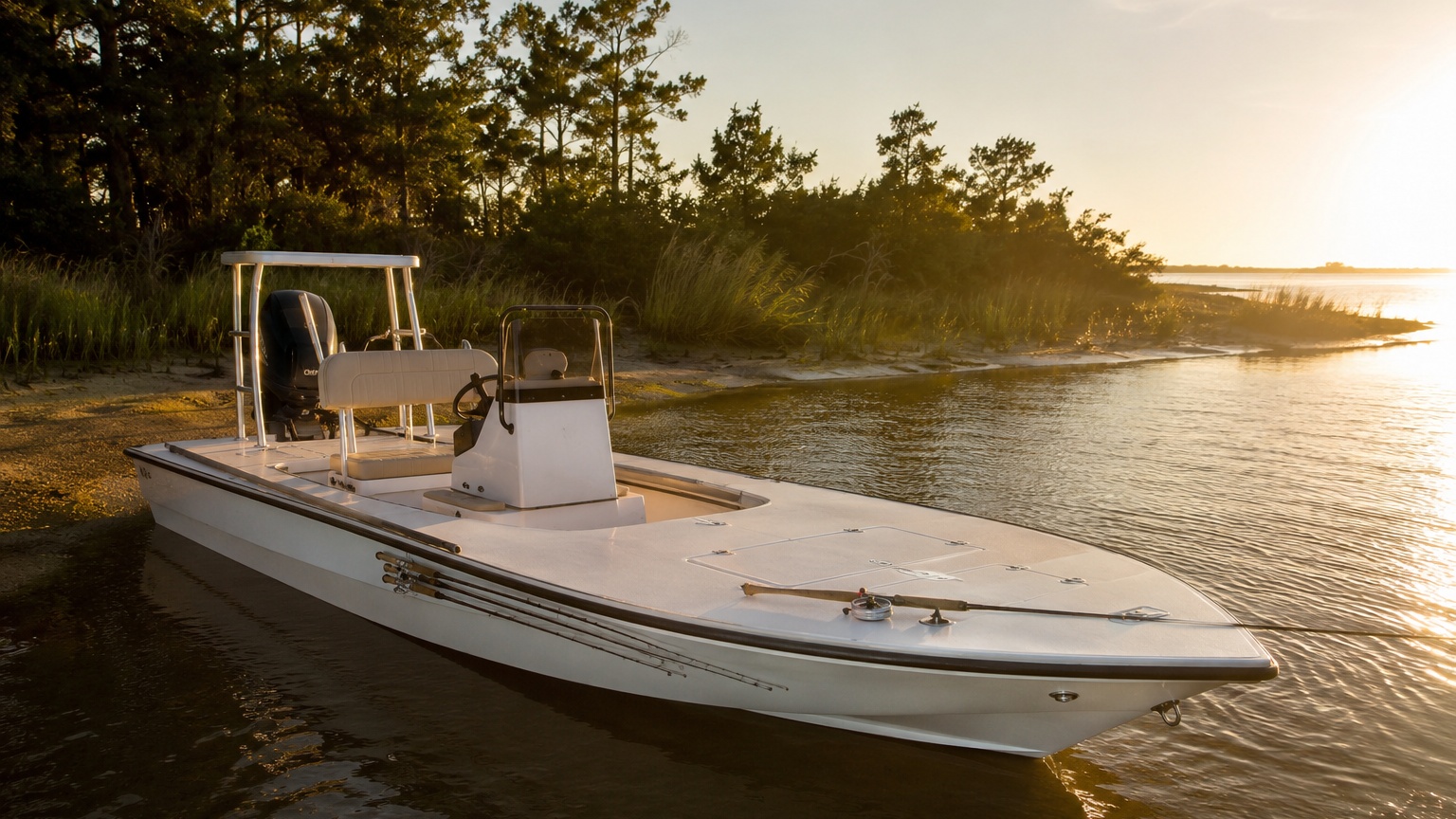
The redesigned Redfisher 18 adds a dedicated anchor locker, one of those small changes that matters every trip because the anchor and rode no longer compete with general dry storage.
The console can accept electronics up to 12 inches, which is useful for anglers who navigate long mangrove routes or need high-detail sonar without moving into the larger 21.
Undergunnel rod tubes, console rod racks, large guttered dry compartments, and wide casting decks keep fishing gear organized while preserving clear movement around the boat.
The 23.5-gallon livewell sits aft center. Test it while people stand on the rear deck and make sure access remains practical with the poling platform installed.
The optional poling tower is especially important on this model. Hewes offers backrest and step combinations specifically aimed at making long early-light runs safer and more comfortable for the person using the tower later in the day.
A bow casting platform and bass-seat plate can change the forward deck. Inspect how those options interact with the trolling motor, anchor locker, and normal fly or spin-casting stance.
The 18 should feel comfortable with two anglers moving aggressively around the boat and still workable with three or four people on a family day. That dual-purpose ability is the core reason to choose it.
10-inch published draft – The 18 actually publishes one inch less draft than the 16, reinforcing its reputation as a serious poling and backcountry hull despite the extra length.
The redesigned 18 gives ground tackle a defined place instead of forcing anchors and rode into general storage.
The 18 remains a realistic owner-towed Florida flats boat instead of requiring the tow and storage infrastructure of the 21.
The 18 is still a relatively simple flats boat, which makes poor wiring easier to spot. The factory switch panel, battery switch, cockpit lighting, bilge, livewell, navigation lights, and accessory outlet should all operate cleanly.
A 24V trolling motor needs a healthy battery bank and charger. Check resting voltage, charging behavior, breaker protection, connector condition, and whether the batteries are mounted securely for rough-water travel.
Jackplate-equipped boats should raise and lower smoothly under engine load. Inspect the blinker switch, hydraulic lines or actuator, fasteners, and any signs that the outboard has been run at an inappropriate height.
Power-Pole shallow-water anchors should deploy evenly without leaks, excessive play, or inconsistent remotes. Dual units add weight and complexity but can materially improve how the boat fishes wind and current.
If a Garmin 1243XSV package is installed, test charting, sonar, transducer input, GPS lock, and power stability while pumps and engine systems are operating.
Run the livewell and any recirculation or releasewell options independently. A pump that sounds healthy but does not exchange water correctly can still fail the bait on a long day.
Inspect the poling-platform mounting and any faux-teak surfaces. Cosmetic upgrades should not hide loose hardware, trapped moisture, or corrosion around fasteners.
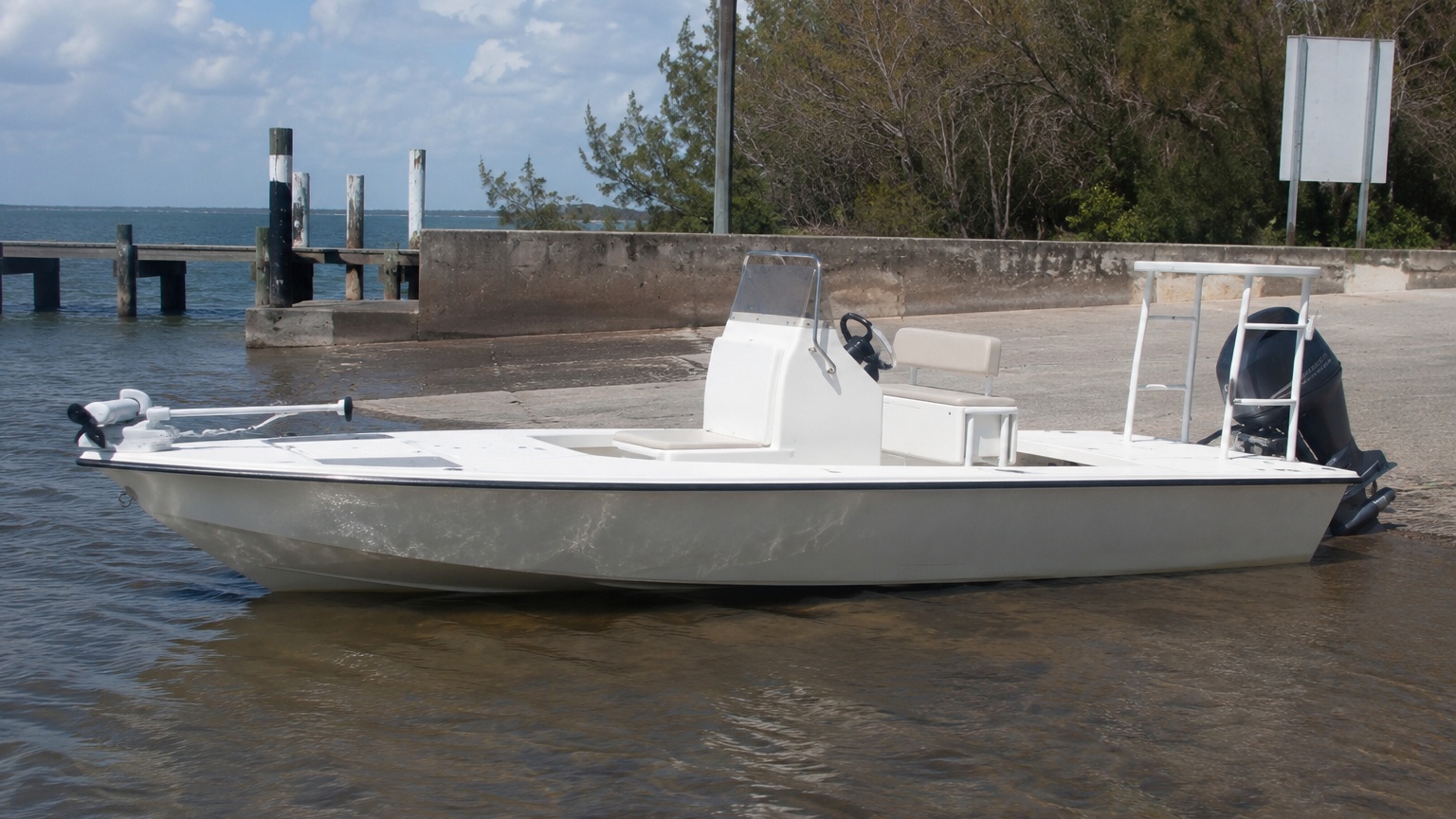
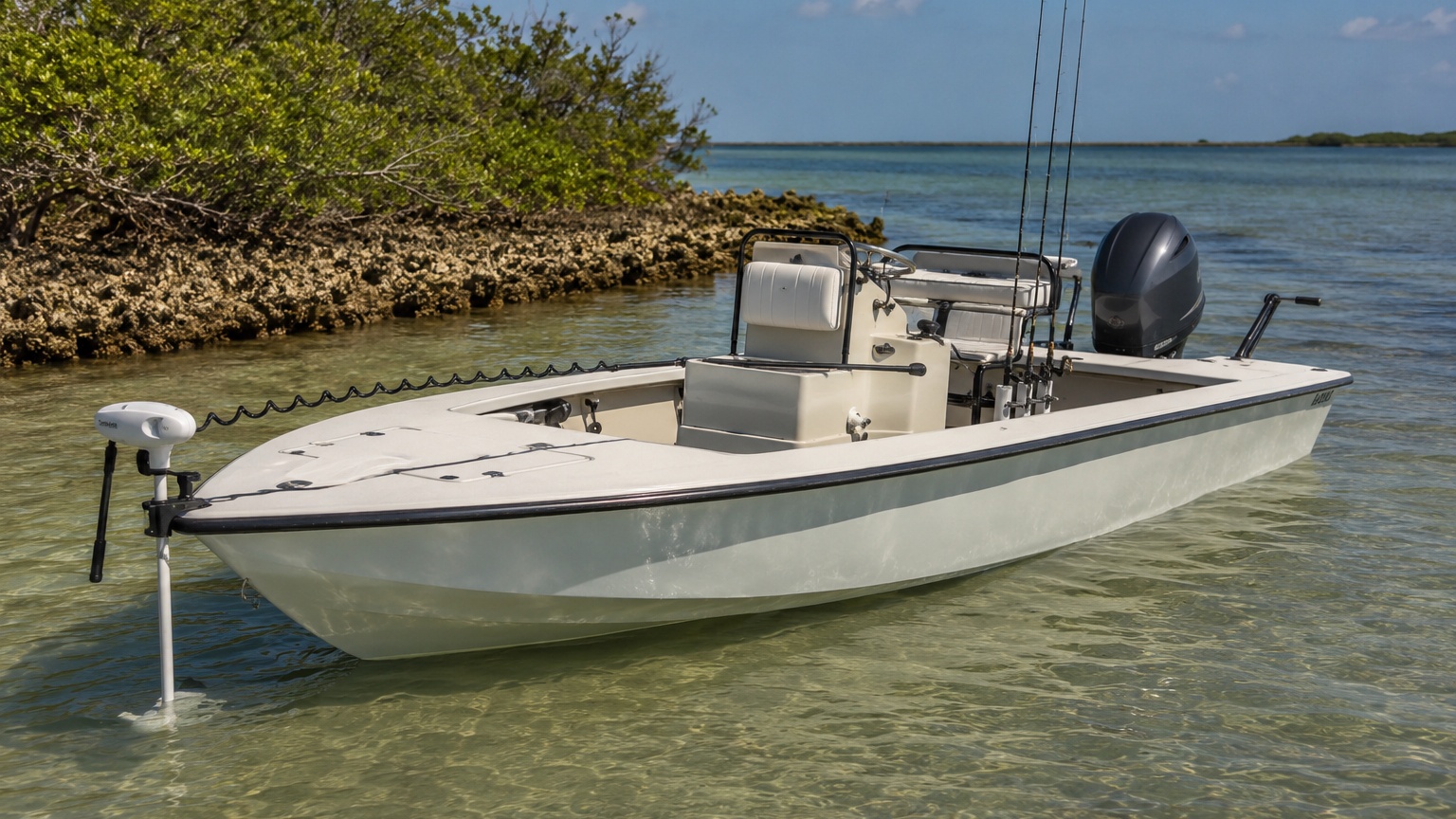
At 18 feet 10 inches and 7 feet 11 inches wide, the Redfisher 18 remains an owner-friendly trailer boat. It fits the lifestyle of anglers who travel around Florida or the Gulf Coast chasing seasonal bites rather than keeping one boat in one marina.
The Hewes HF trailer should be inspected as carefully as the hull. Bearings, hubs, tires, bunks, winch, coupler, lights, guide posts, corrosion, and the swing tongue all affect whether the boat is truly ready to travel.
The complete stored length includes engine, trailer tongue, Power-Poles, and any poling platform overhang. Measure the actual rig before assuming the 18 fits an existing garage just because the 16 did.
Lift owners should calculate the boat with fuel, batteries, livewell water, shallow-water anchors, gear, and outboard. The 1,900-pound factory reference does not describe a fully rigged fishing boat.
The 18’s sub-8-foot beam is helpful on narrow side yards and older docks. That practical width is one of the reasons it can offer more fishing room than the 16 without feeling like a fundamentally different ownership class.
Saltwater owners should plan for easy engine flushing and trailer rinsing after every trip. The value of a portable backcountry boat depends on keeping the entire rig ready for the next launch.
Engine choice, model year, trailer, jackplate, poling tower, electronics, trolling motor, Power-Poles, and condition can move value substantially.
A 115-powered 18 should be compared with similar efficiency-oriented builds. A 150-powered boat deserves comparison with other 150s because the engine itself can represent a meaningful part of the transaction.
The redesigned console and modern electronics capacity can make newer boats more desirable to anglers who run a large multifunction display. Older electronics should be valued for usefulness rather than original cost.
A good poling platform with backrest and step can add real utility, while a cracked, corroded, or poorly repaired tower can become a liability.
Livewell, jackplate, trolling-motor, and shallow-water-anchor condition matters because those systems are central to how an 18 is actually fished.
The trailer should be priced as part of the boat, not as a free extra. A road-ready HF trailer can justify a premium over a cheaper boat that immediately needs tires, hubs, wiring, and bunks.
Illustration only and not an offer of credit.
Leave room for outboard service, trailer maintenance, insurance, fuel, trolling-motor batteries, livewell pumps, shallow-water anchors, and the electronics that make this fishing platform useful.
Illustration only and not an offer of credit. Your actual rate and term depend on credit profile, vessel age, loan amount and ownership structure.
Against the Redfisher 16, the 18 gives the owner more hull length, 8 additional inches of beam, a larger livewell, and up to 150 horsepower. It remains easy to trailer and actually publishes one inch less draft.
Against the Redfisher 21, the 18 is dramatically lighter, narrower, less powerful, and easier to own. It gives up 19 gallons of fuel, 200 horsepower of maximum rating, two people of capacity, and much larger bait and deck space.
The 18 is therefore not a compromise in the negative sense. It is the intentional choice for anglers who need more capability than a compact 16 but do not need the 21’s nearshore and tournament-scale hardware.
Choose the 16 for minimum footprint. Choose the 21 for maximum range and crew. Choose the 18 when the same boat needs to do the largest number of backcountry jobs reasonably well.
Verify the hull identification, exact model year, 18-foot-10-inch length, 7-foot-11-inch beam, 31-gallon tank, 150-horsepower ceiling, and capacity plate.
Determine whether the boat is powered by 115 or 150 horsepower and decide whether that engine fits your normal load. Do not pay for 150 horsepower if the owner values fuel economy more, and do not accept an underwhelming 115 setup if heavy loads are routine.
Inspect the hull bottom and transom for shallow-water impact, trailer pressure, repairs, and stress around jackplate or Power-Pole hardware.
Review outboard service records and engine hours. Confirm cooling-system, gearcase, oil, fuel, and spark-plug maintenance rather than relying on appearance.
Operate the jackplate if fitted. Then sea-trial the boat at several engine heights to make sure steering, water pressure, acceleration, and propeller grip remain predictable.
Run the livewell, recirculation, releasewell, trolling motor, charger, Power-Poles, trim tabs, and all helm electronics.
Open the dedicated anchor locker and every dry-storage hatch. Check latches, gaskets, guttering, and drainage.
Climb the poling tower. A buyer who plans to pole should know whether the step, backrest, tower height, and rod holders are comfortable before closing.
Test the boat with the actual number of people normally carried. The 18’s value is versatility, so the sea trial should prove it remains balanced both lightly loaded and on a full fishing day.
Inspect the HF trailer and measure the whole rig at home. A well-sorted 18 should be easy to travel with; a neglected trailer defeats that advantage.
Start your application with the actual Hewes Redfisher 18 details with model year, engine, engine hours where available, trailer, electronics, trolling motor, Power-Pole equipment, poling platform, and asking price.
Hewes publishes a 10-inch draft, the shallowest number in the current Redfisher lineup.
Choose 115 for economy and lighter backcountry use. Choose 150 when heavier loads, faster acceleration, and longer open-water runs matter more.
The current Redfisher 18 carries 31 gallons of fuel.
Hewes lists a 23.5-gallon aft-center livewell.
Yes. Hewes specifically redesigned the console to support flush-mounted electronics up to 12 inches.
It is designed as a true backcountry 18 with a 10-inch published draft, optional poling tower, push-pole hardware, and a hull intended to remain manageable in shallow water.
Choose the 18 for easier towing, shallower published draft, and broad backcountry versatility. Choose the 21 for 350-horsepower capability, more crew, much more bait capacity, and nearshore reach.
Potentially. Model year, value, condition, seller type, transaction amount, and borrower qualifications matter. Start your application with the exact details.
Tell us a little bit about yourself and the boat you are looking to finance.