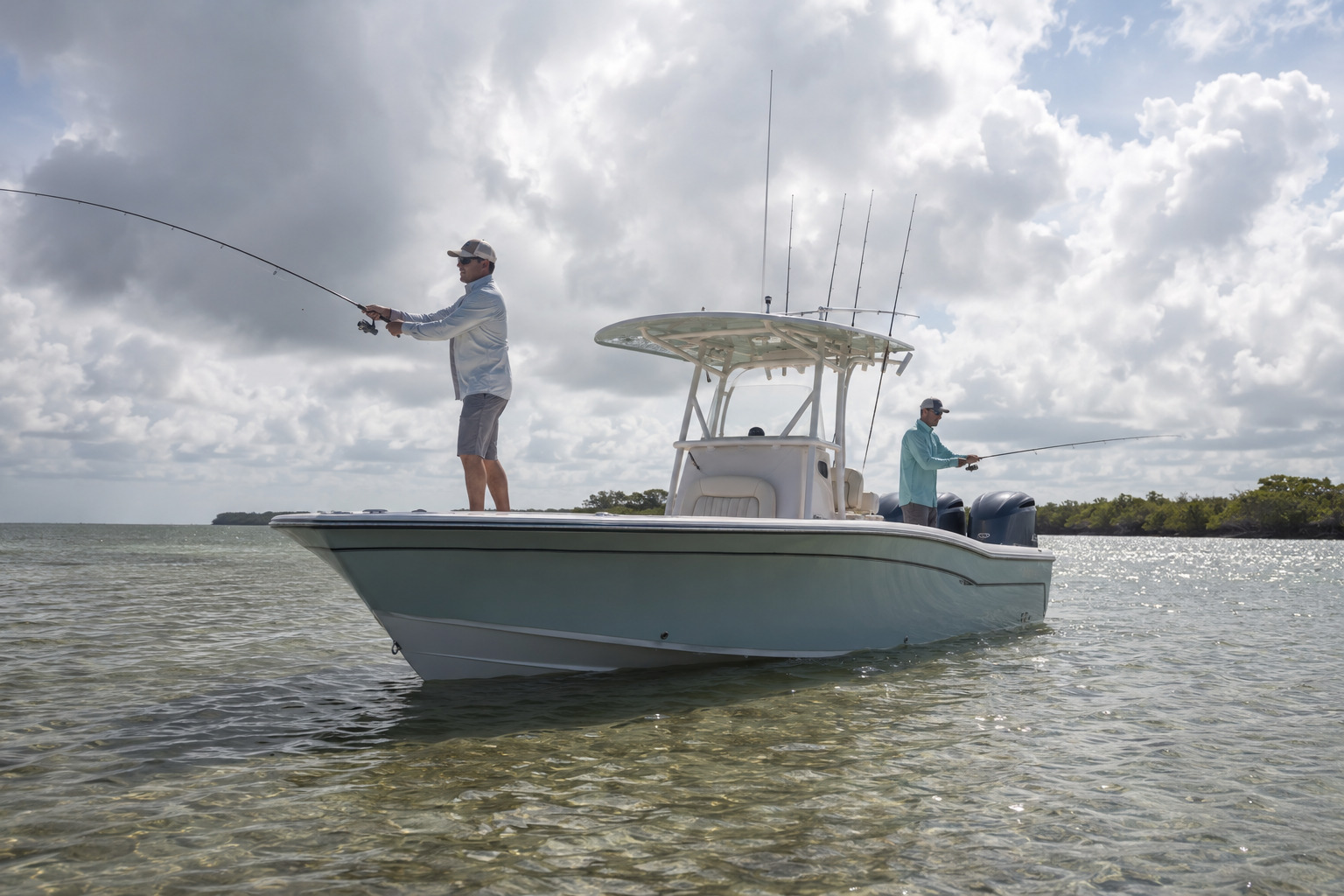
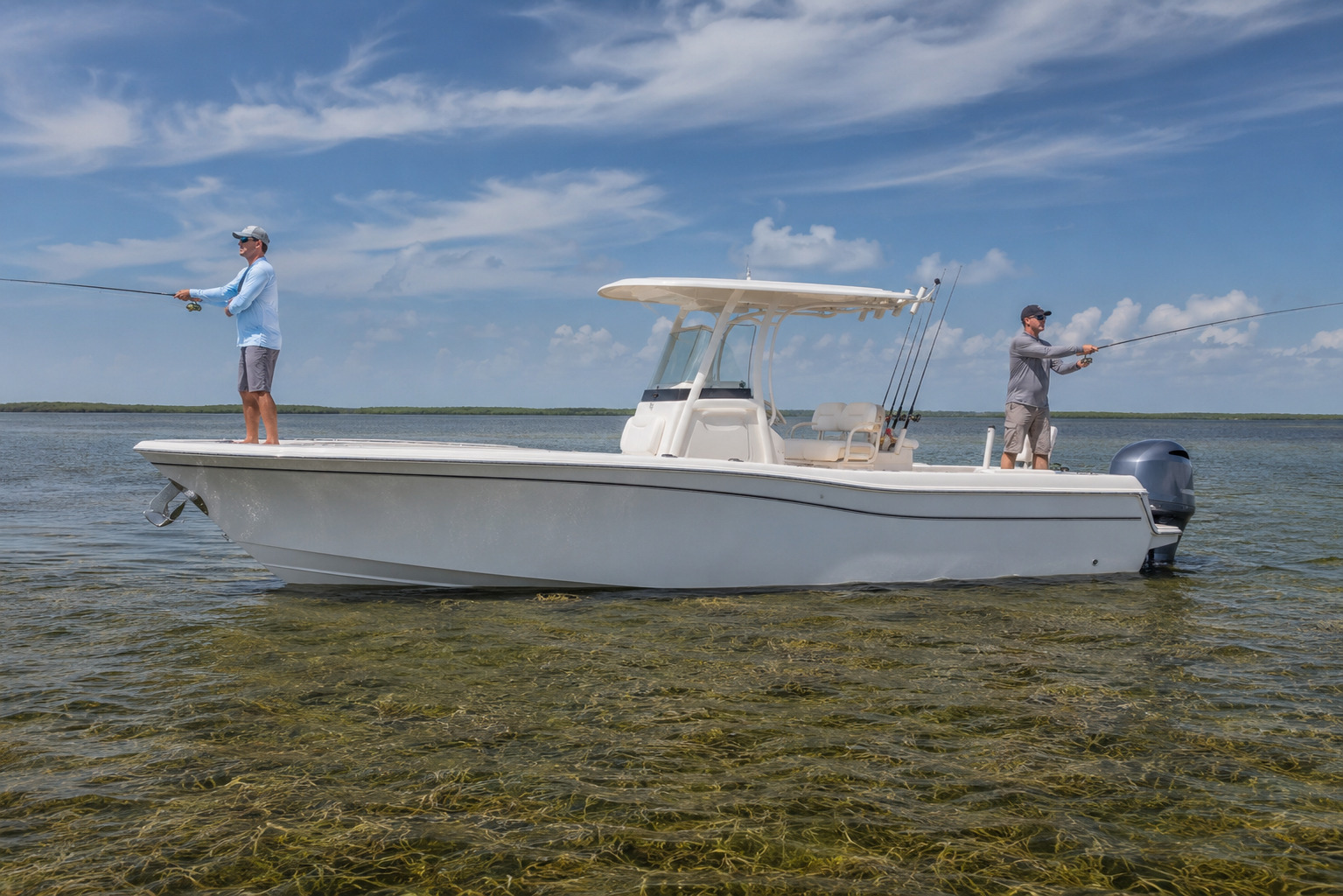
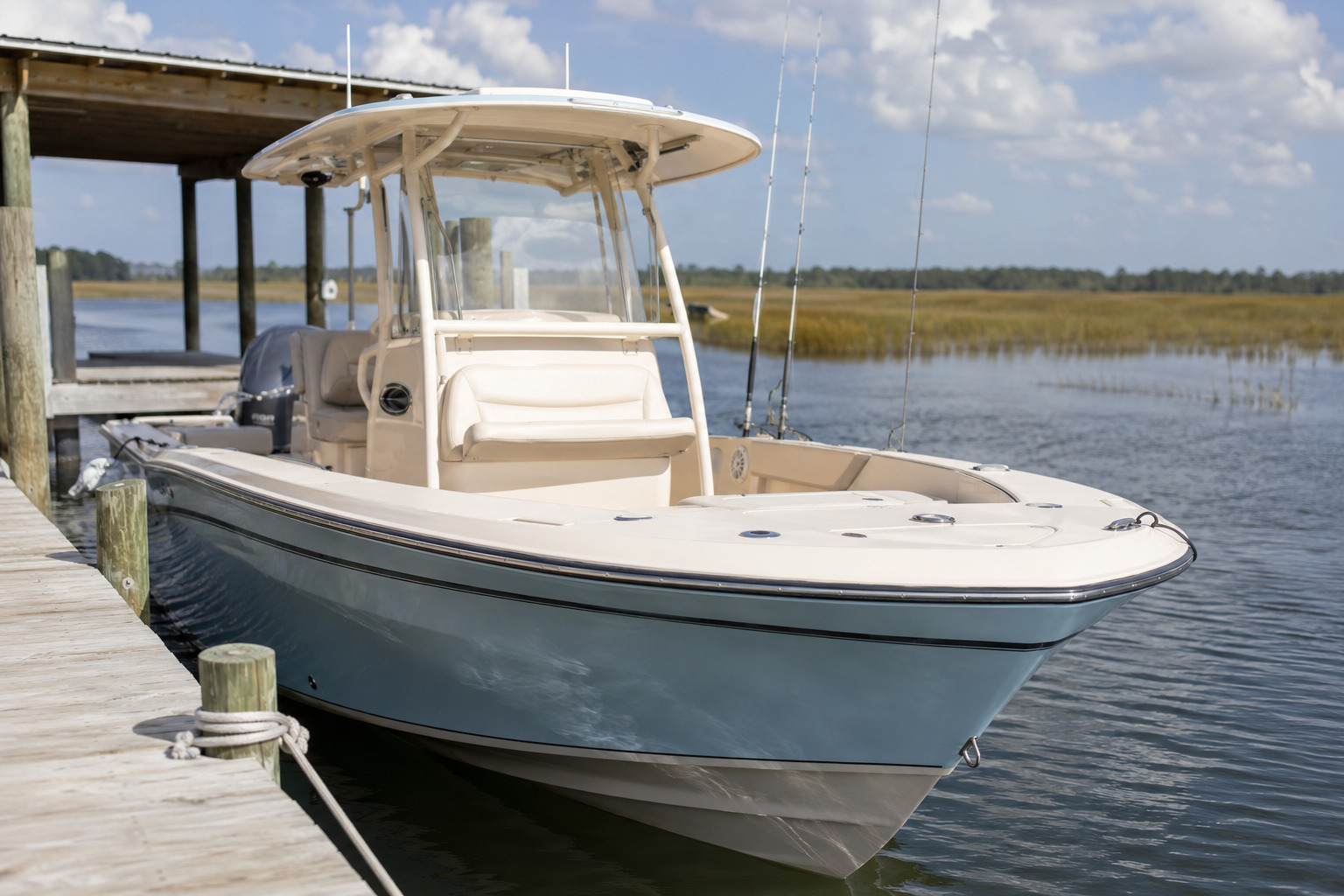
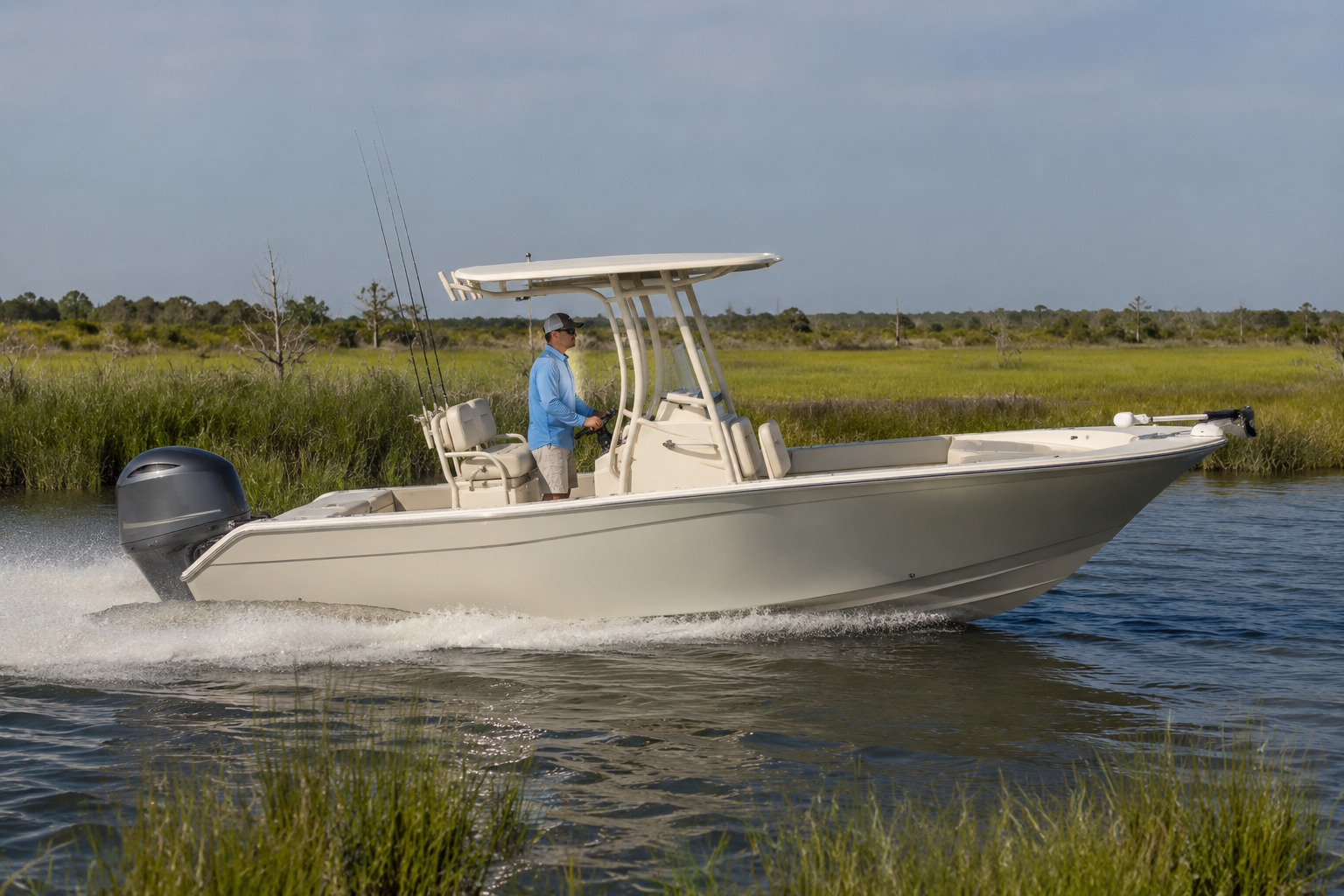
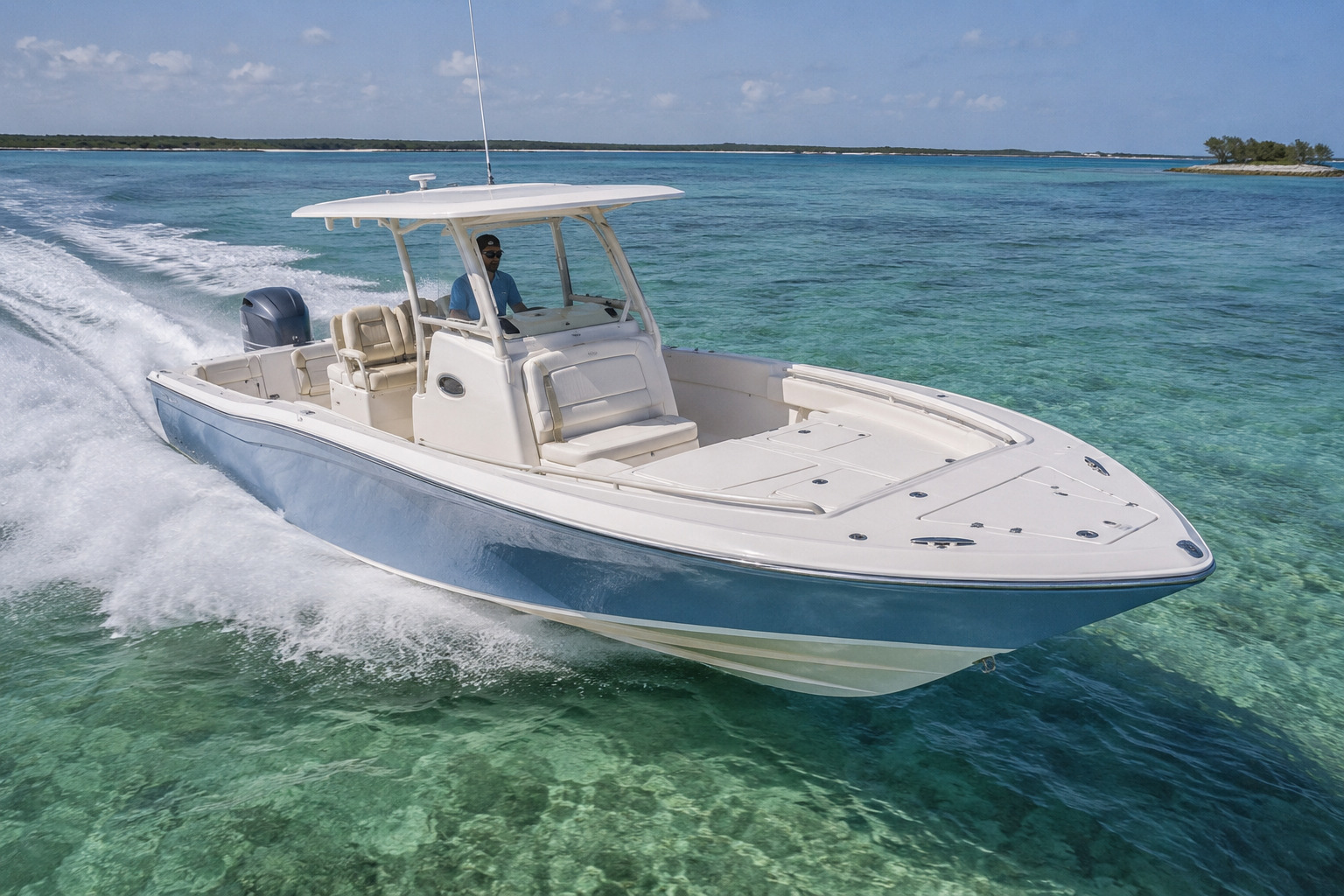
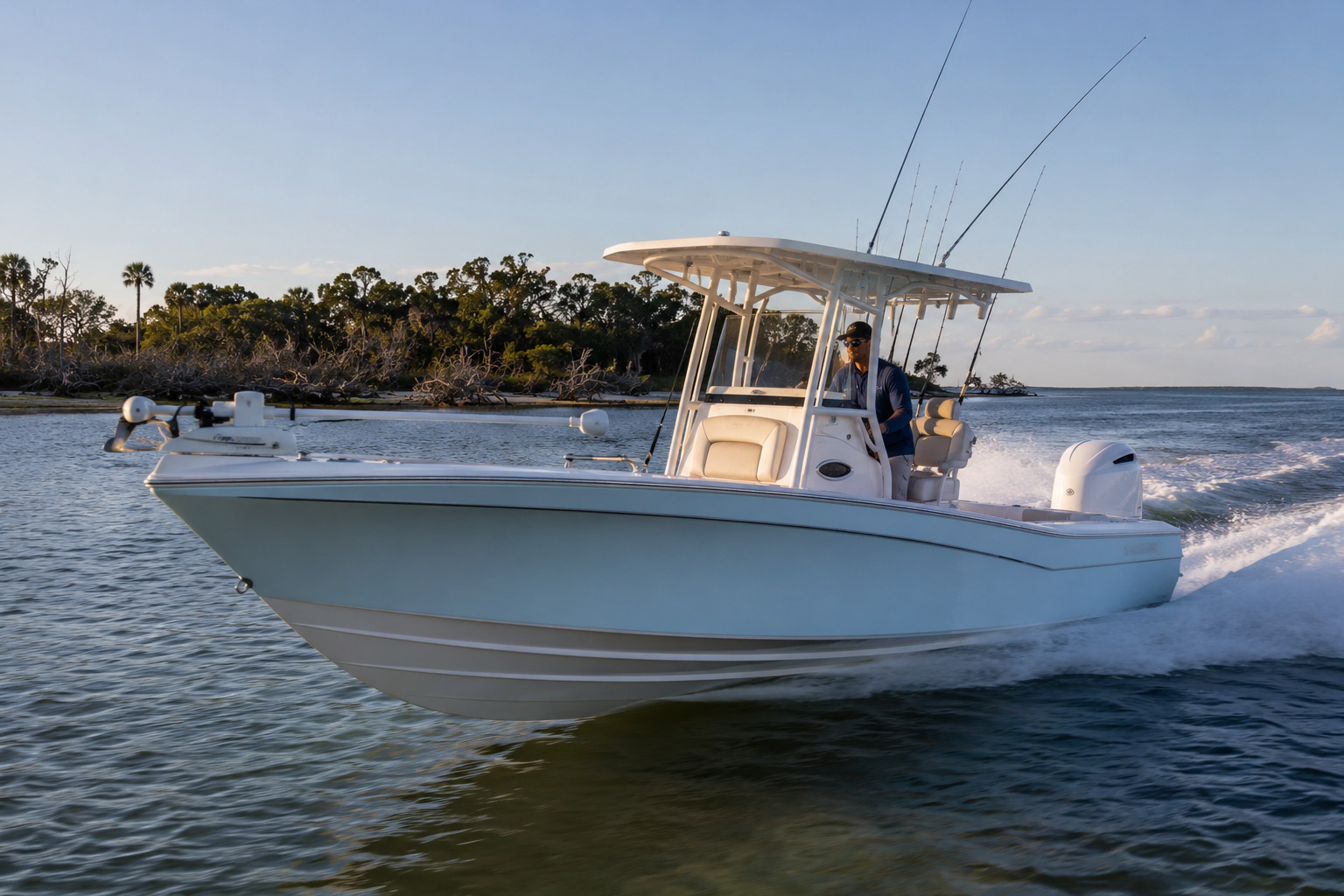
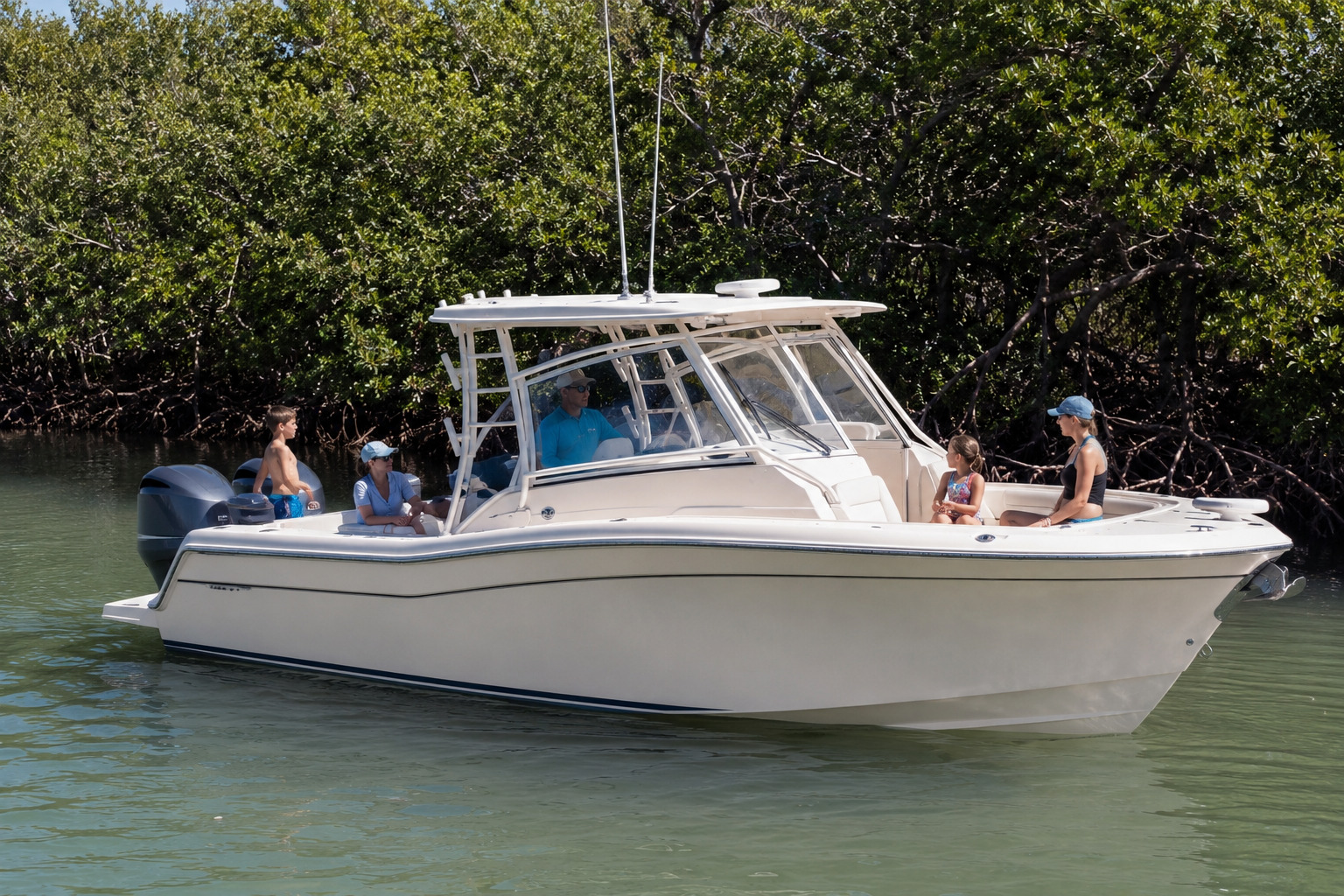
Coastal Explorer is the Grady-White branch for buyers who refuse to choose between shallow-water fishing and open-water capability. The boats use a 16-degree transom progression, shallower drafts, casting-friendly bows, and family seating while retaining SeaV² construction and Yamaha power.
The 231 CE and 251 CE are conventional-width boats with 16-inch hull drafts. They make sense for owners who trailer, fish flats or bays, and still want enough freeboard and ride quality to venture beyond protected water on the right day.
The 281 CE is the first major change in scale. It grows to a 9-foot-4-inch beam, twin-engine power, 160 gallons of fuel, and an electromechanical port sport deck that changes swimming and sandbar use.
The 321 CE is the flagship. Dual electric sport decks, 10-foot-6-inch beam, 220 gallons of fuel, stabilization availability, and 700 horsepower turn the CE concept into a large social and fishing platform.
A Coastal Explorer buyer should choose around draft and deck use before offshore range. If the normal day starts in skinny water, includes casting, and ends at a sandbar, CE makes more sense than a deep offshore Canyon.
The 16-degree SeaV² progression at the transom is the defining hull distinction. It supports shallower draft and inshore agility while the forward hull retains Grady-White’s variable-deadrise approach.
Casting space matters. These boats are designed to let the bow work as a fishing platform while still converting into family seating.
Trolling-motor capability is more relevant here than on many other Grady-White families. Buyers should inspect battery placement, charger capacity, mounting, and bow access if electric positioning is central to the fishing style.
Sport decks separate the larger boats. The 281 CE adds an electric port platform, while the 321 CE expands the social concept further with dual electric sport decks.
The CE line is therefore not a smaller Canyon. Its value comes from draft, convertibility, and inshore-to-offshore flexibility.
Start with the shallowest water the owner actually fishes. A 16-inch draft can matter more than another hundred horsepower when the normal route includes flats, back bays, and low-tide ramps.
Then choose casting and trolling-motor requirements. The bow should work as a fishing platform without making family seating feel like an afterthought.
Move to 281 or 321 only when the crew will use the wider beam, twin engines, larger fuel system, and sport-deck features enough to justify storage and marina changes.
The flagship CE is not automatically the best inshore boat. Size can become a disadvantage when narrow creeks, small ramps, or home lifts define the day.
CE ownership mixes shallow-water hardware with normal Grady-White offshore systems. Trolling-motor batteries, chargers, livewell pumps, raw-water washdowns, Yamaha steering, T-top electronics, and sport-deck actuators all deserve scheduled attention.
The smaller 231 and 251 remain reasonable trailer boats for many owners. The 281 and 321 bring wider beams and heavier loaded weights that make lift and marina planning more important.
Shallow-water use can be hard on propellers and lower units. Skeg condition, trim range, and engine tilt history matter on used boats.
Sport decks and adjustable seating introduce moving mechanisms around saltwater. They should be cycled regularly and kept clean rather than ignored until resale.
Yes, conditions permitting. The series is designed as an inshore-offshore crossover, but range, crew experience, weather, and safety equipment still govern the trip.
Inspect hull and lower units, trolling-motor systems, livewells, fish boxes, Yamaha steering, T-top wiring, sport-deck mechanisms, and trailer or lift history.
Choose 281 when one sport deck and a 9-foot-4-inch beam are enough. Choose 321 when the crew needs dual sport decks, more fuel, wider social space, and stabilization options.