Call Us : 207-994-5109
Mon – Fri: 8 am to 9 pm & Sat – Sun: 10 am to 8 pm
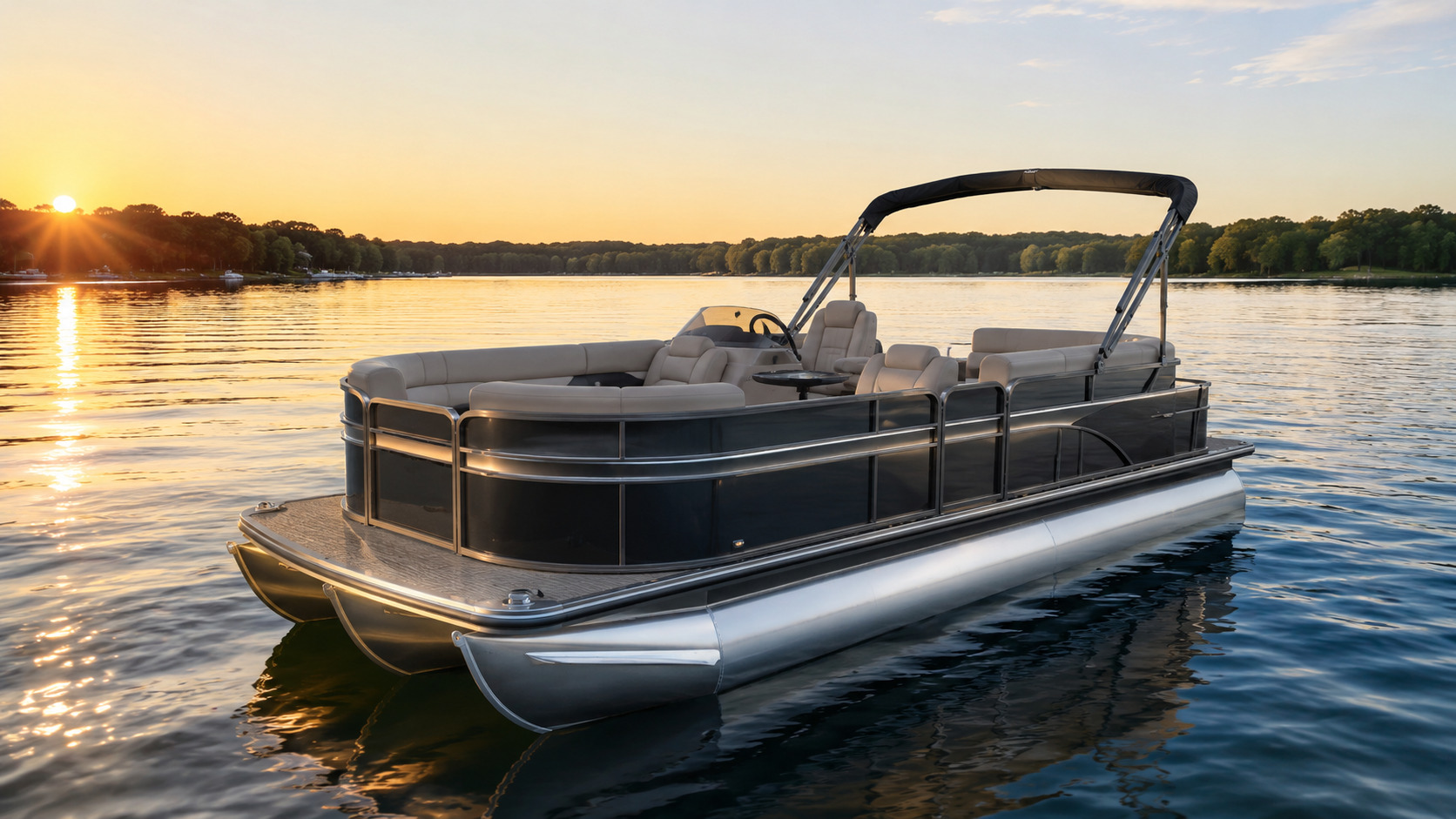
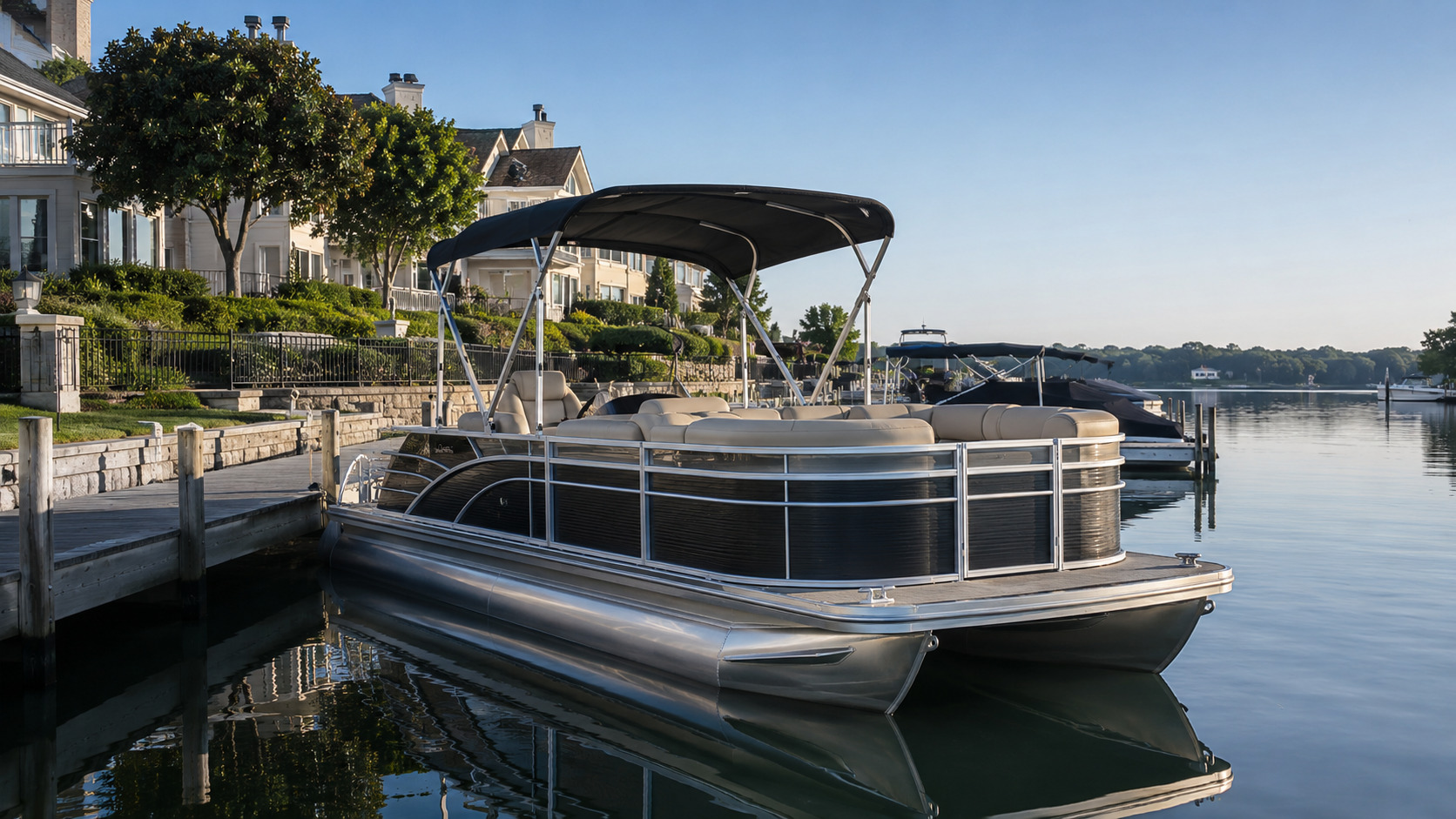
The Bennington 23 MSB is the middle M-Series size for buyers who want more separation between bow and aft seating without committing to the long 26-foot family in Swingback form.
For families considering the Swingback, the 23 M adds a useful step in lounge length and publishes 25’3″ overall. For a 23 MSB buyer, it is long enough that bow and stern passengers can feel like separate groups, yet it avoids the 28-foot-plus footprint of the 26. In MSB form, the stern can change from forward-facing passenger seating to an aft-facing lounge without replacing the entire furniture plan.
For a 23 MSB buyer, the M Line sits above Bennington’s S and L families as a premium-luxury choice built around personalization, upgraded technology, storage, and a more sculpted exterior. Bennington currently offers Standard, Sport, and Luxe trim paths, so even two 23 MSB boats can look and feel different at the helm and in the furniture.
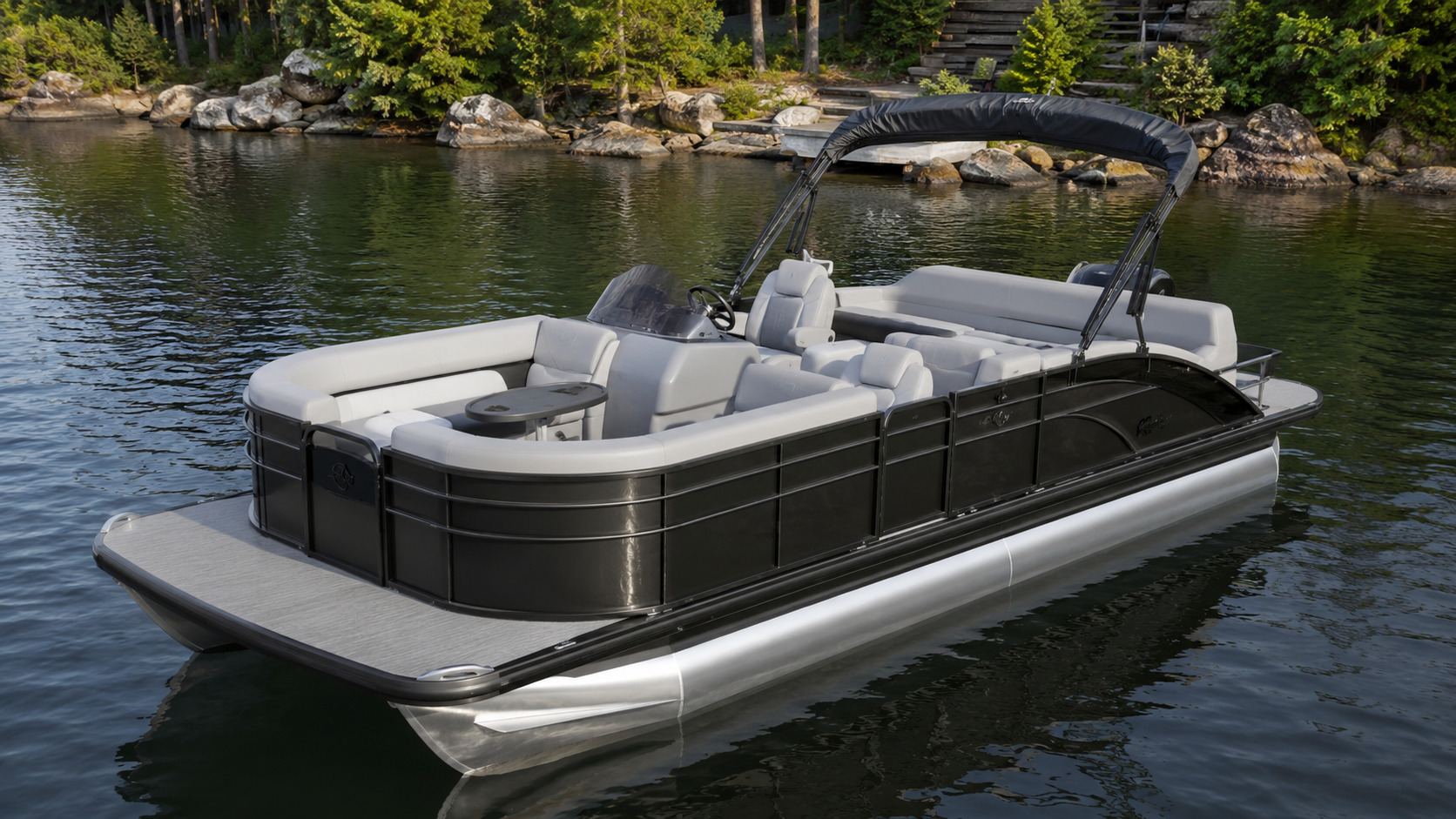
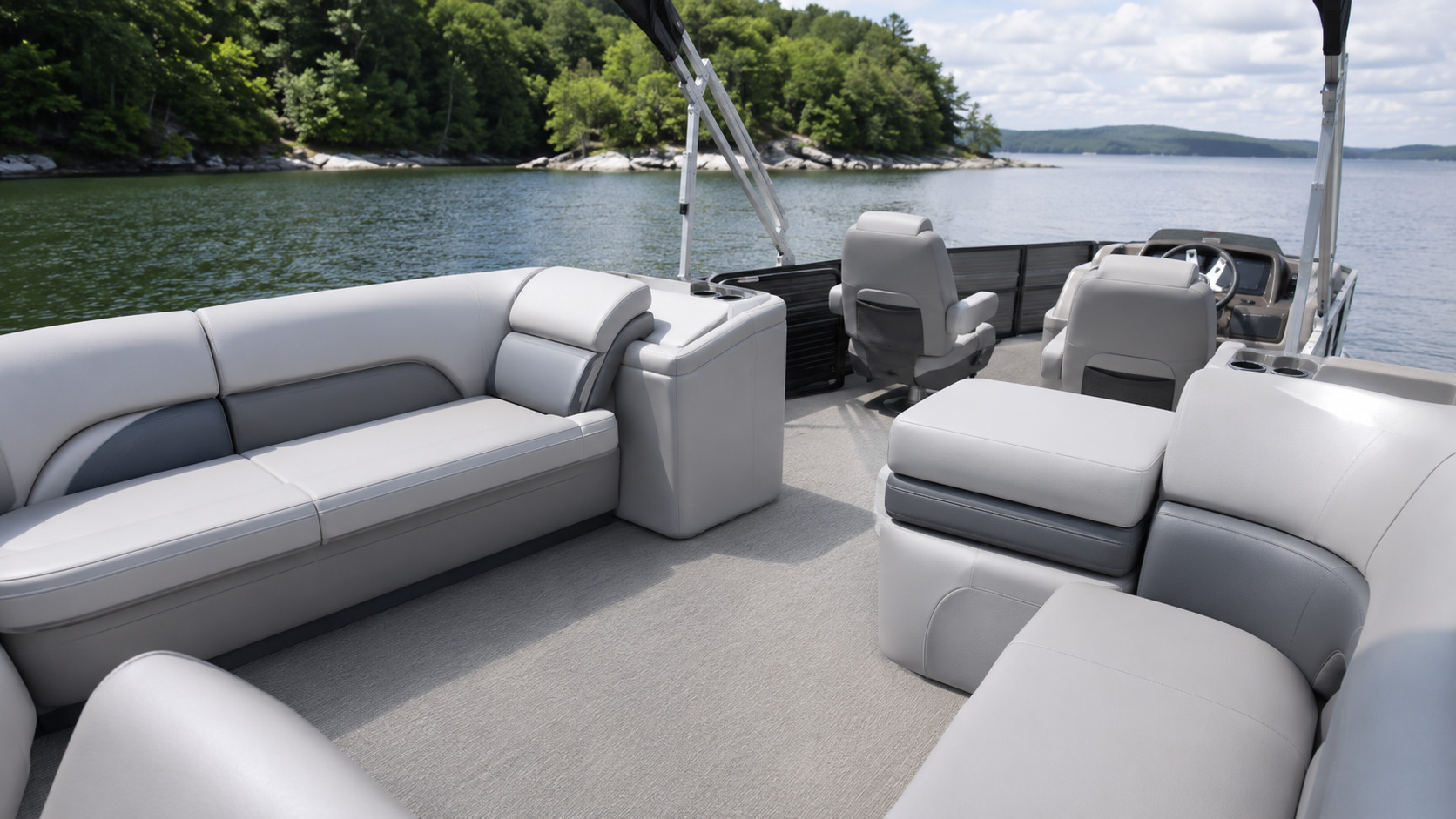
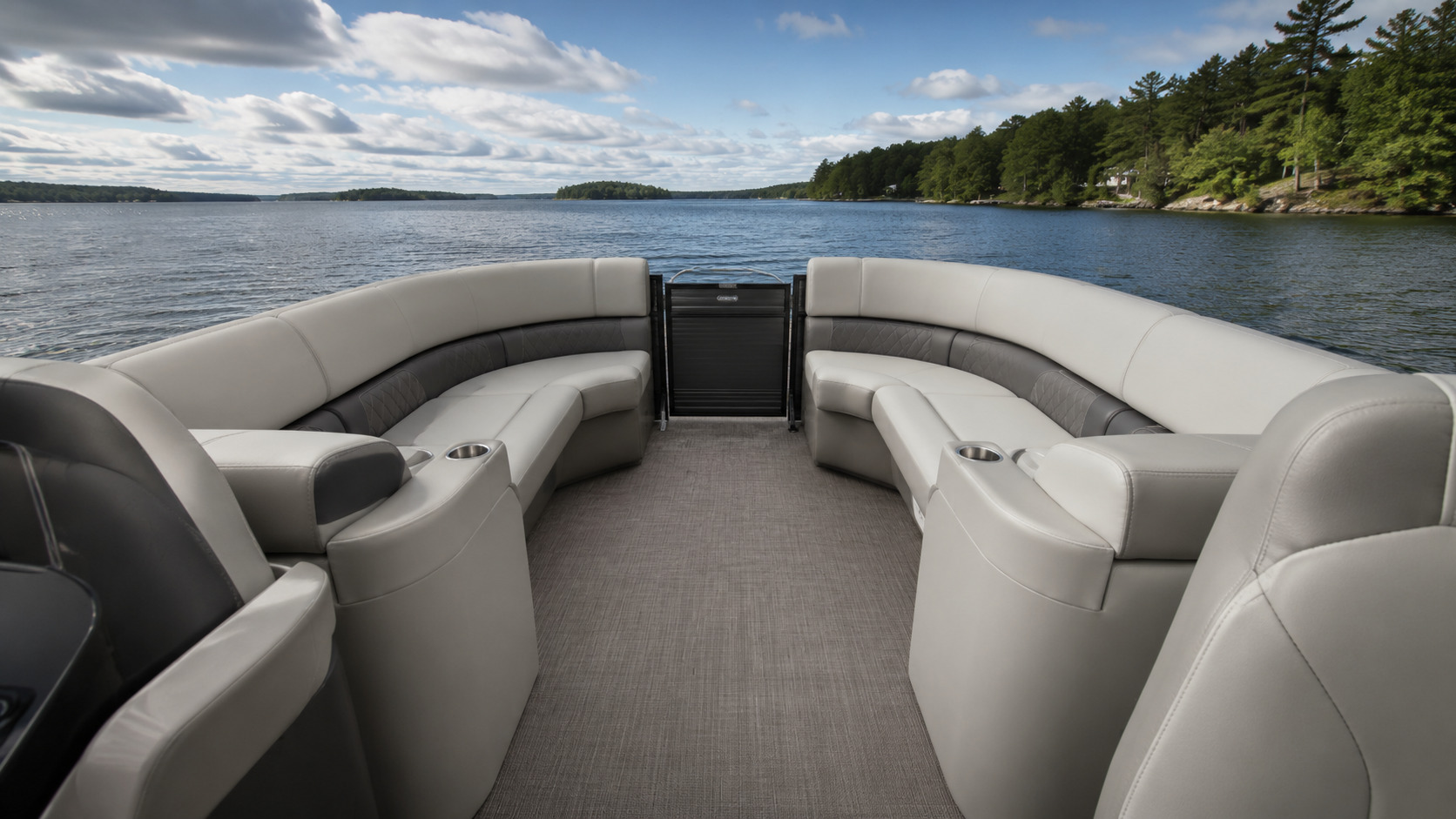
For a 23 MSB buyer, the floorplan is the clearest reason to select this page. The 23 MSB is a lounge-first floorplan built around two bow chaise lounges and an aft sun pad with a reversible Swingback backrest. For families considering the Swingback, for the right family, the stern can change from forward-facing passenger seating to an aft-facing lounge without replacing the entire furniture plan.
The 23 adds useful lounge length, but its 25-foot-3-inch published LOA can push the 23 MSB into a different slip, lift, and trailer conversation than the 22.
Published factory figures. Confirm every dimension against the individual boat before you commit.
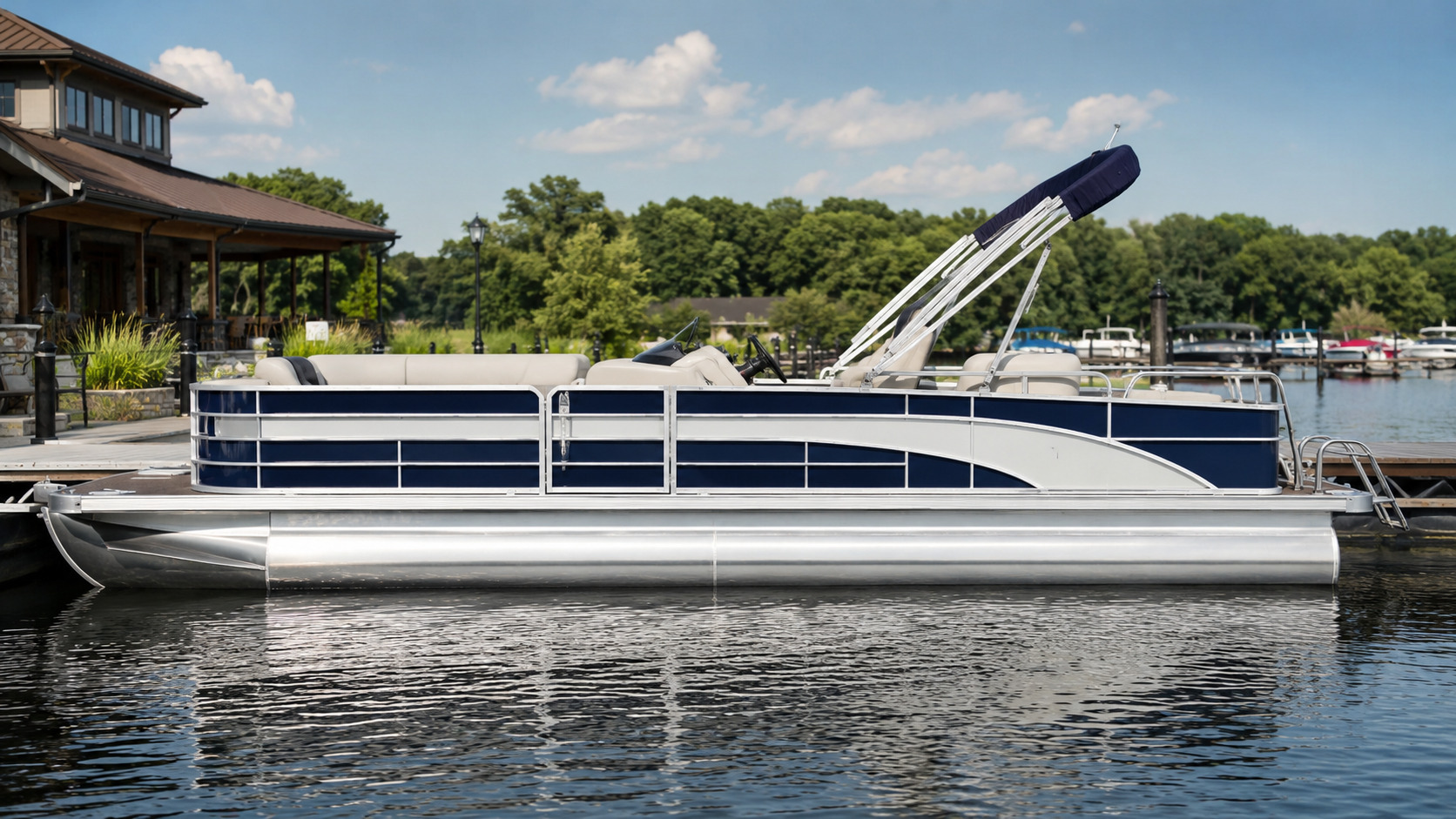
The published LOA for the current 23 MSB is 25’3″. That is the number a 23 MSB buyer should use when planning dock space, because Bennington’s nominal model size is shorter than the actual boat once the M-Line deck and stern architecture are included.
On this mid-size Swingback chassis, published LOA is 25 feet 3 inches, so this is where the M family stops feeling like a modest twenty-something-foot pontoon in storage terms. For dock and lift planning on the 23 MSB, a standard residential garage is rarely the answer once the trailer and outboard are included.
Beneath this Swingback deck, a conventional deadrise number does not belong here. The 23 MSB rides on aluminum pontoon or tritoon tubes, and the underwater package can be materially different depending on how the boat was ordered.
For dock and lift planning on the 23 MSB, because tube choice affects buoyancy and engine rating, one generic weight or passenger number would be misleading. The capacity plate on the actual 23 MSB should be photographed during the purchase process and used to verify allowable people and power.
On this mid-size Swingback chassis, the M-Line extended aft deck also deserves a structural look. For dock and lift planning on the 23 MSB, it carries swimmers and frequently becomes a high-traffic staging area, so hardware, ladder mounts, and stern structure should feel solid.
Maximum Horsepower: Configuration-specific; M Line supports up to 500 HP on compatible models
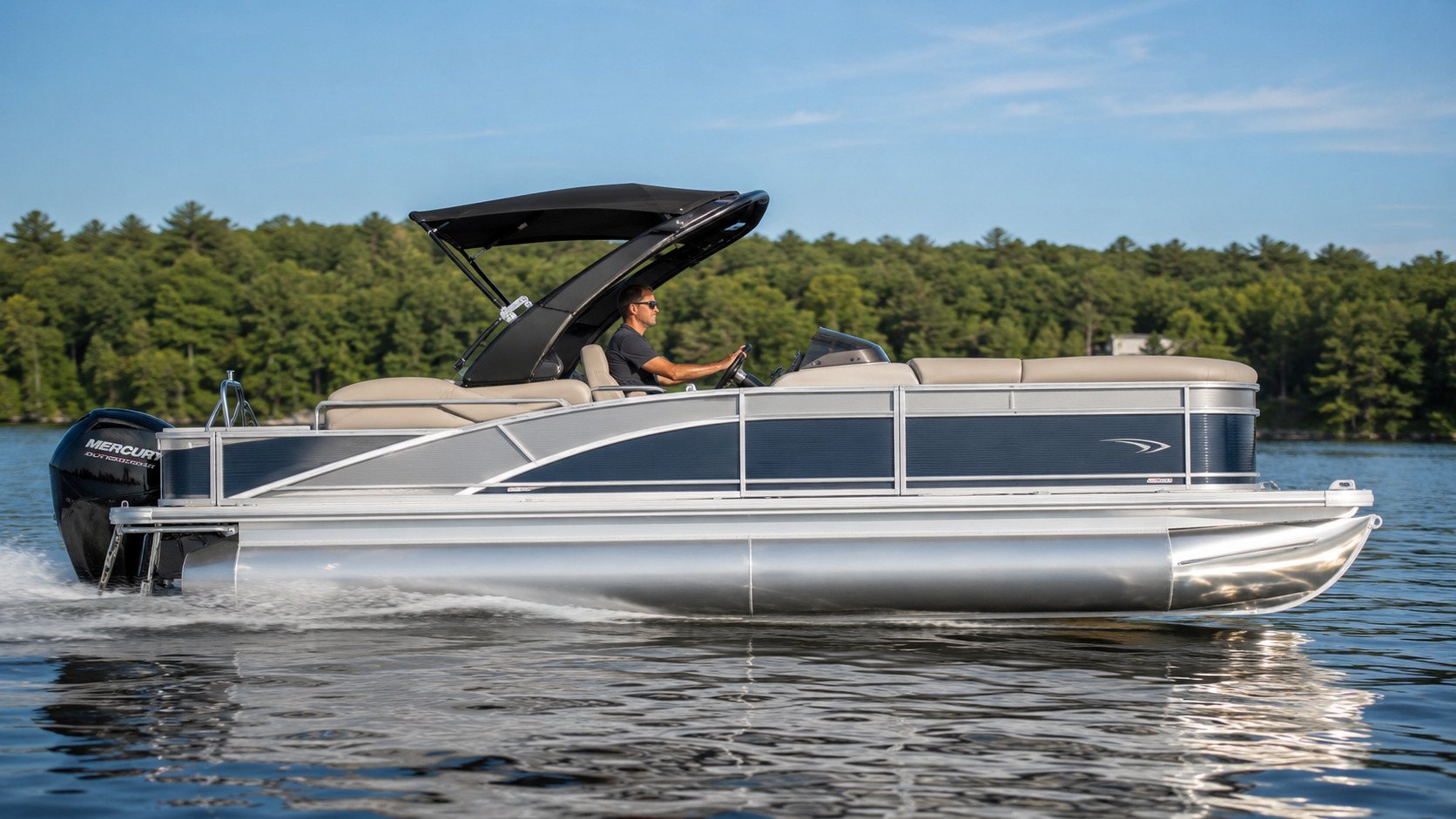
The 23 MSB uses single-outboard power, but Bennington does not force one universal engine onto the floorplan. When powering a 23 MSB, the tube package and capacity plate determine what belongs on the transom.
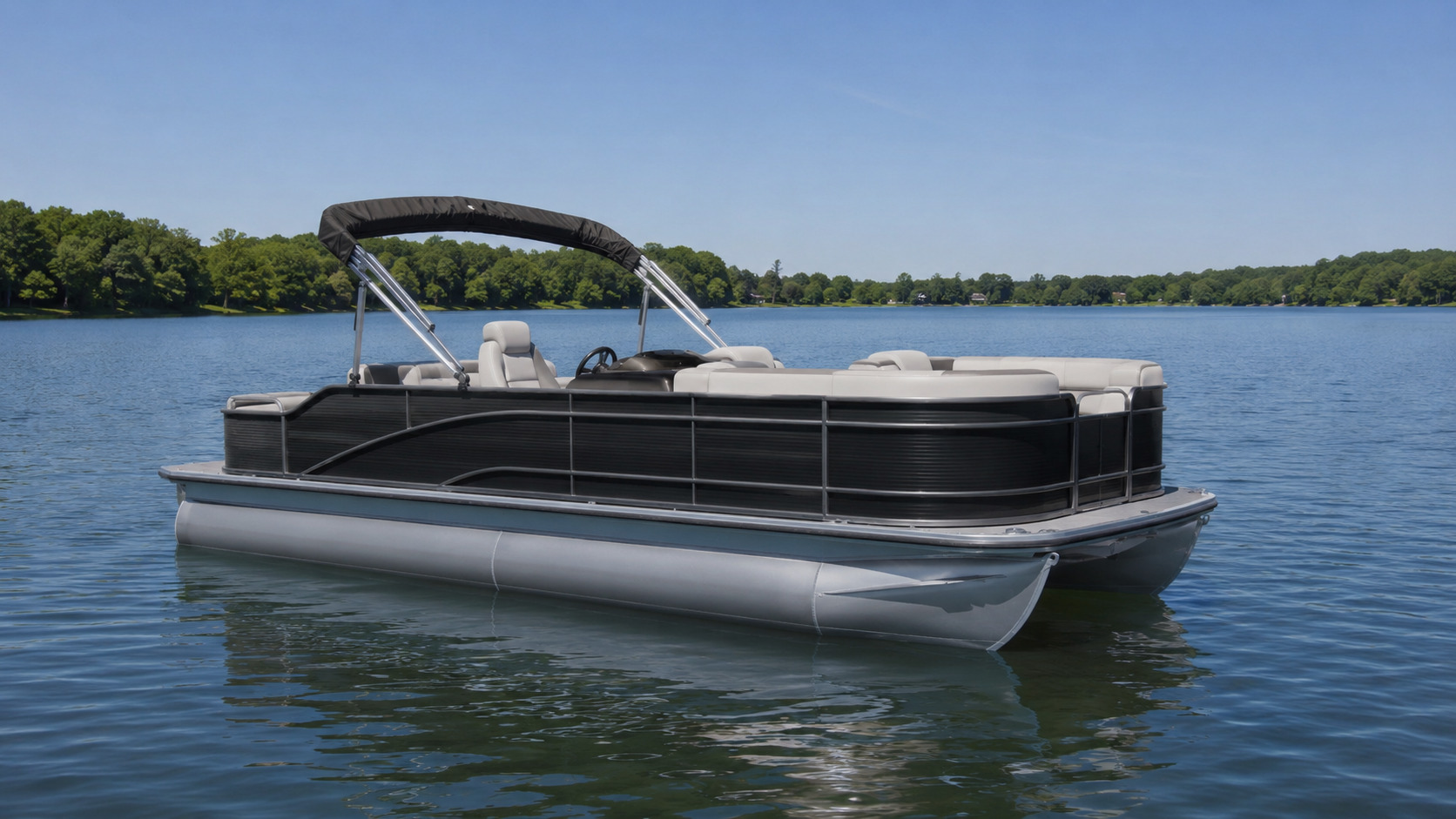
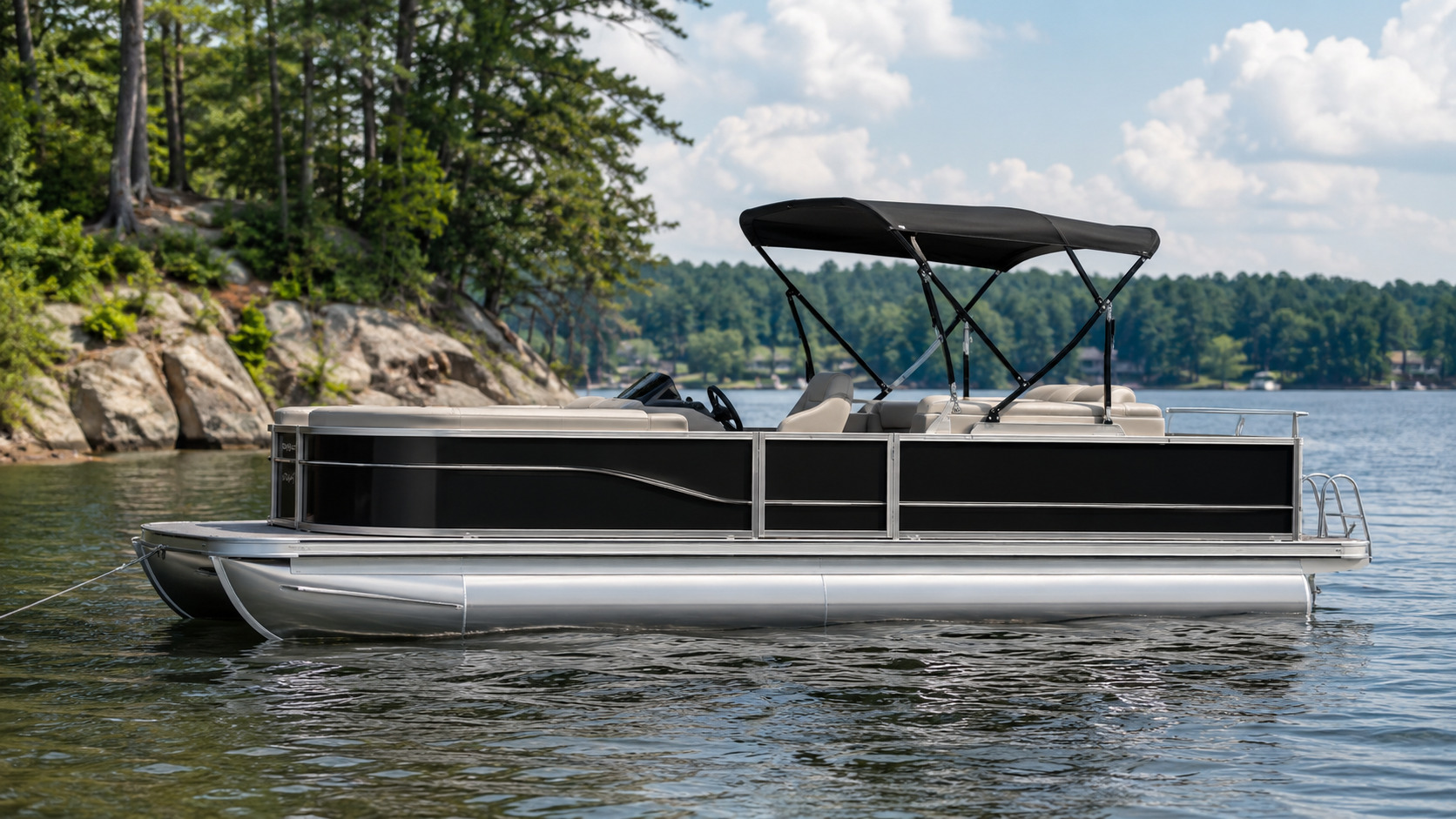
The 23 MSB can be built as a conventional pontoon or a stronger tritoon configuration, and that choice changes the entire performance discussion. For this Swingback configuration, Bennington’s current performance lineup includes Express for lighter power, SPS for three-tube performance around four-cylinder engines, SPS Plus for stronger single-engine builds, and ESP for higher-output applications.
Service access remains straightforward because the propulsion is outside the 23 MSB. Check engine serial number, hours, lower-unit oil, trim, propeller, skeg, steering, anodes, and cooling history on any used or demonstrator 23 MSB.
If the 23 MSB carries SPS, hydraulic steering is part of the performance story. For this Swingback configuration, steering should feel smooth with no visible hydraulic leaks or excess play.
On a 23 MSB build, ESP and other higher-output builds deserve close attention to engine mounting, transom reinforcement, power steering where fitted, and whether the actual propeller allows the engine to reach its intended operating range.
The 23 MSB does not have one honest fuel-capacity figure for every configuration. For 23 MSB fuel planning, Bennington’s tube packages can use different tank arrangements, and the performance catalog specifically notes a 32-gallon transom tank on select SPS models.
For 23 MSB fuel planning, higher-output packages may use different center or transom fuel systems, so the tank on the actual boat should be confirmed from its build information instead of borrowed from another listing.
With a 23 MSB under normal family load, for shopping purposes, ask for engine-specific performance data and note the cruise speed your family actually prefers. For 23 MSB fuel planning, that is more useful than a single full-throttle number.
On this 25’3″ M, a day spent idling through coves and anchoring for lunch can be surprisingly light on fuel. On this 25’3″ M, a day of repeated watersports acceleration with twelve people aboard can use the same tank very differently.
The 23 gives adults more room to occupy both ends of the boat. That makes it a strong candidate for a higher-output chassis when the 23 MSB routinely carries a full social crew or spends afternoons towing riders. With realistic load on the 23 MSB, the Swingback invites passengers to gather aft when anchored, but during a running test the crew should use normal forward-facing positions so acceleration and visibility are judged realistically.
The 23 MSB should also be driven slowly. During a 23 MSB sea trial, large pontoons spend plenty of time approaching docks, fuel piers, lifts, and crowded ramps. Confirm steering response in reverse and learn how wind moves the broad side of the 23 MSB.
For this mid-size Swingback, run through ordinary boat wakes at several angles. At 25’3″ overall, listen for underdeck noise and watch how the bow settles. For this mid-size Swingback, a tritoon package should feel more composed than a basic pontoon when speed and load increase.
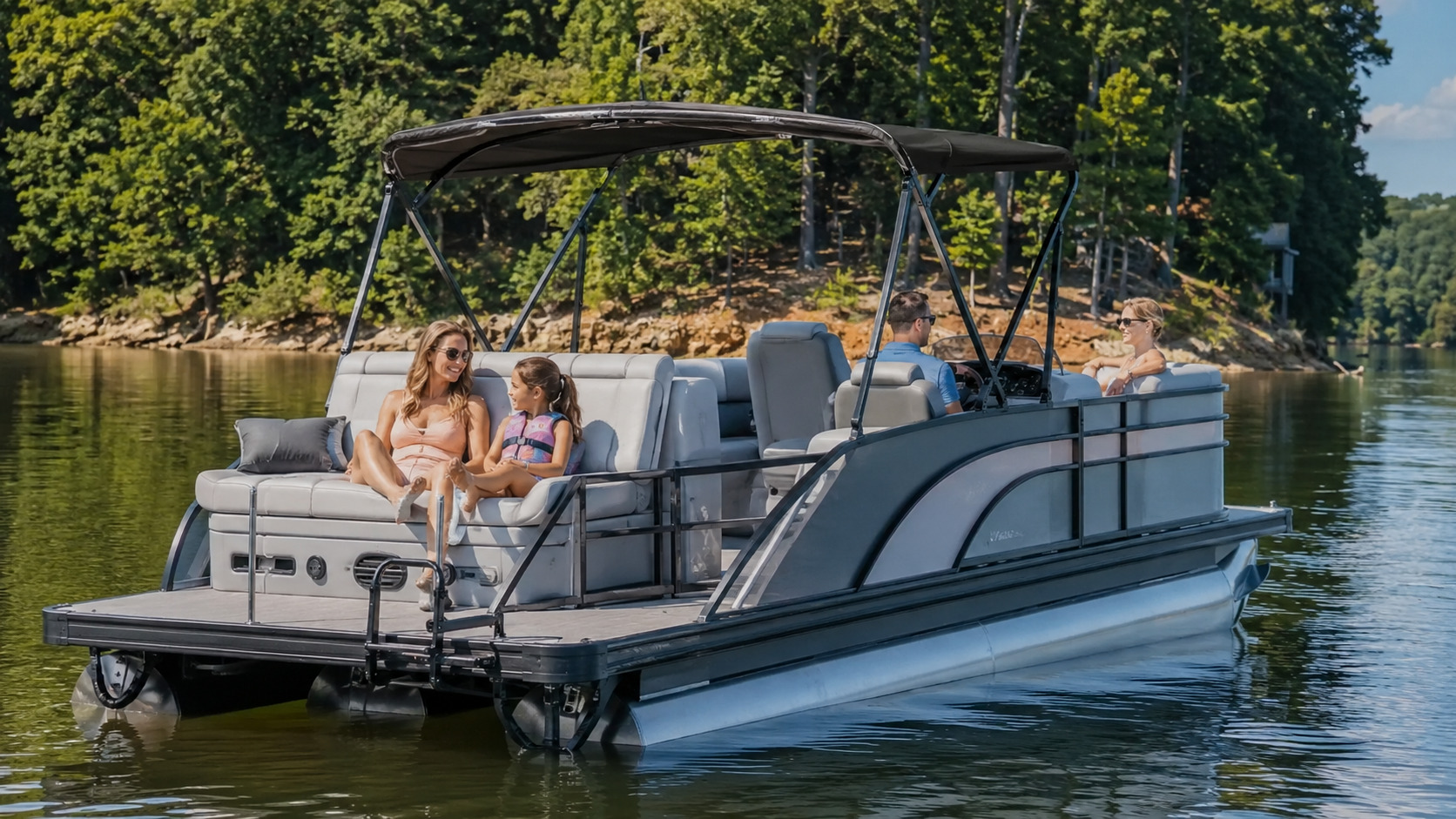
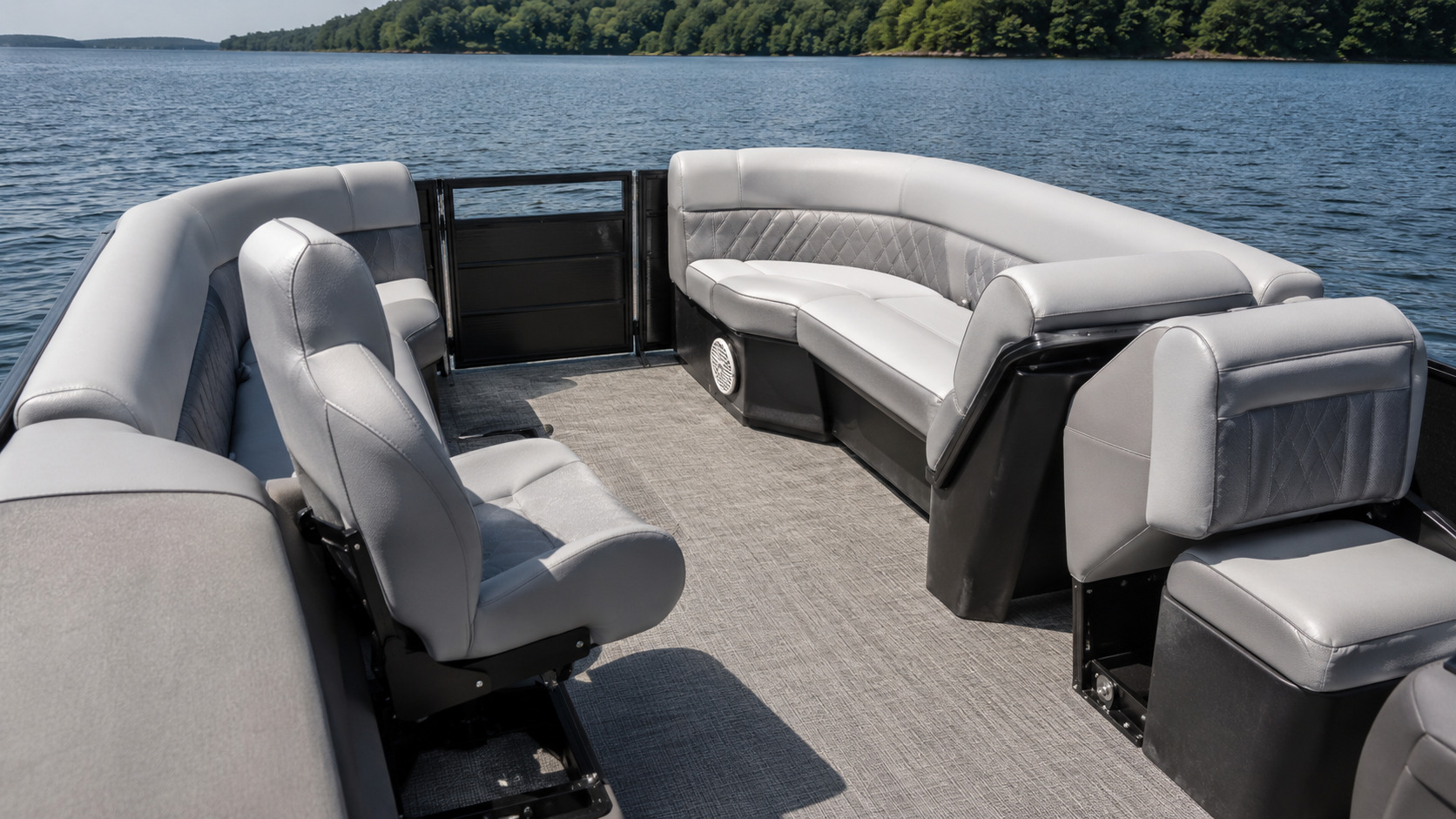
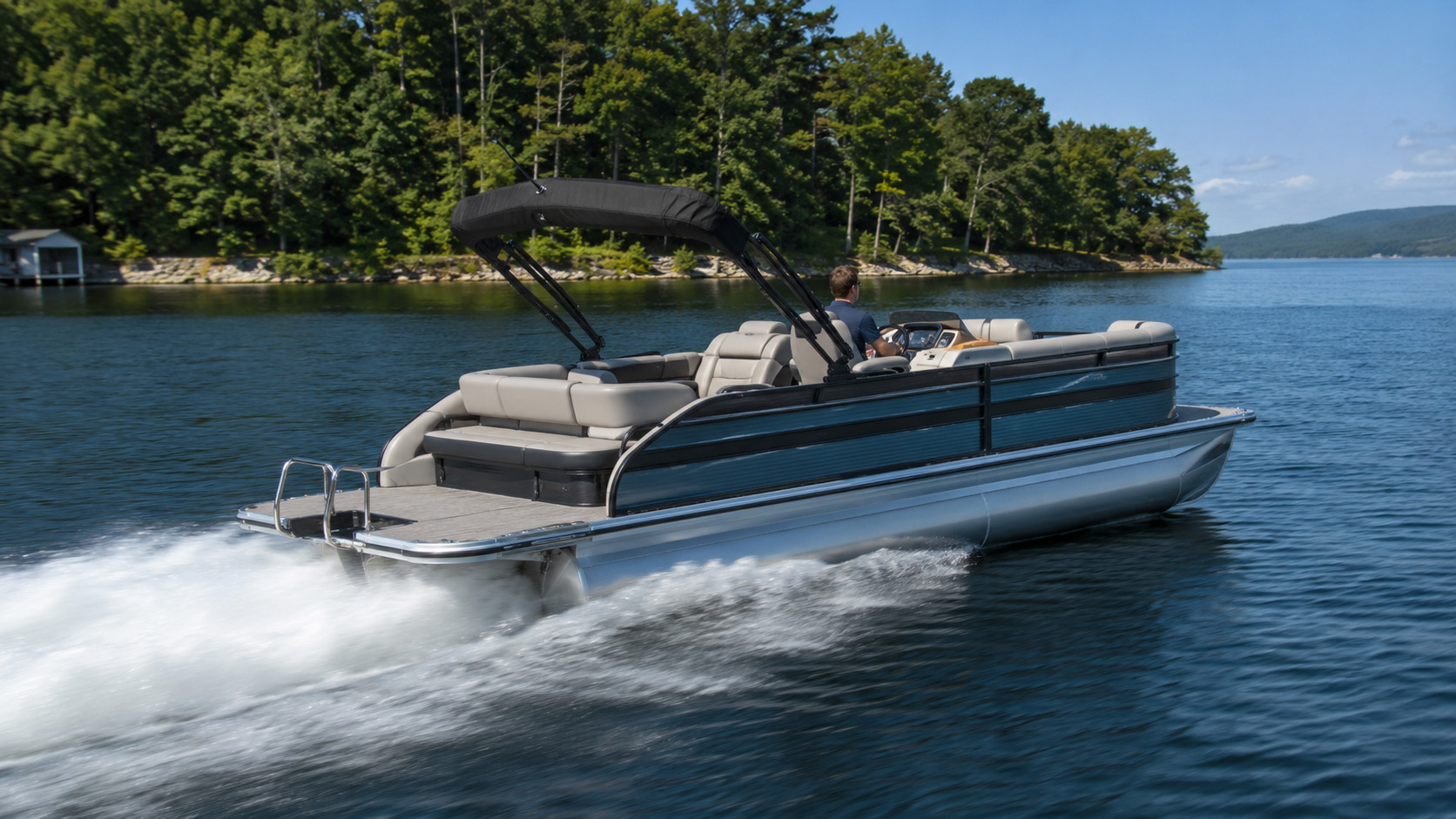
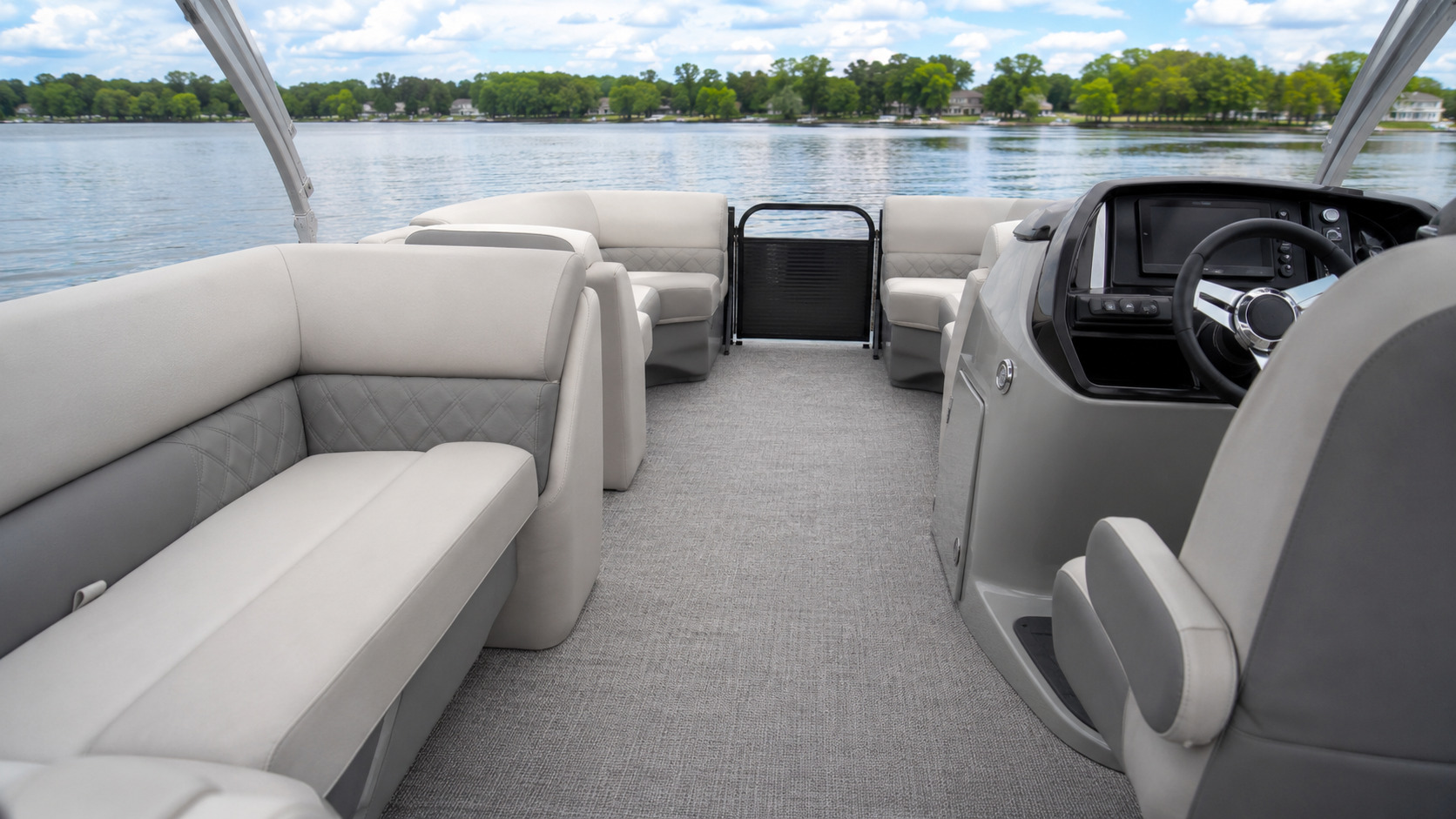
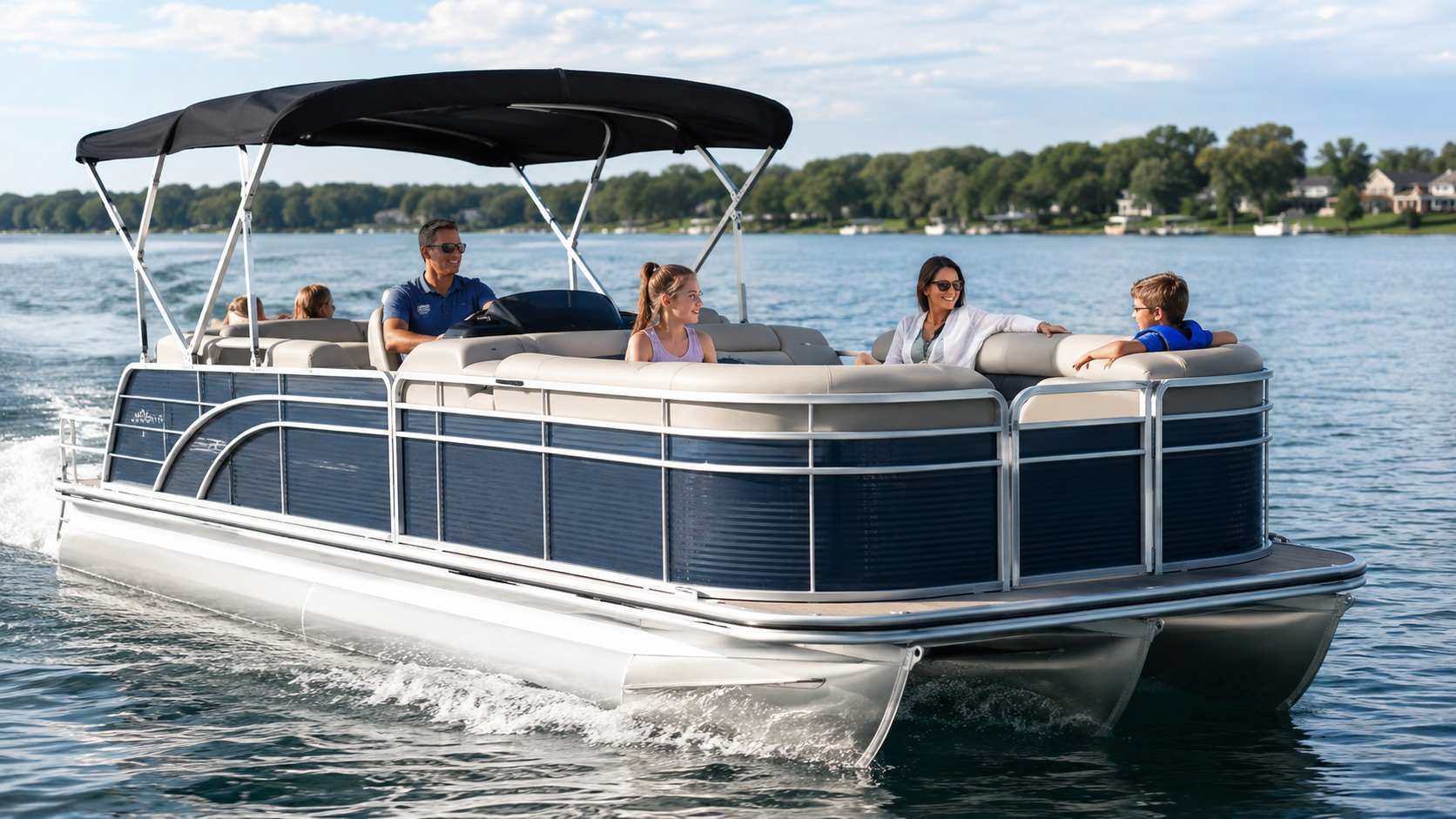
The 23 MSB is built around Bennington’s Swingback idea. Around this mid-size Swingback social deck, two bow chaise lounges handle conventional forward seating, while the aft sun pad uses a reversible backrest that changes which direction the stern faces.
Around this mid-size Swingback social deck, underway, the backrest supports forward-facing passenger use. At anchor, the same piece of furniture can turn the aft section toward swimmers, the sunset, or activity behind the 23 MSB. For day-to-day 23 MSB use, that flexibility is the reason to choose MSB instead of treating it as a styling package.
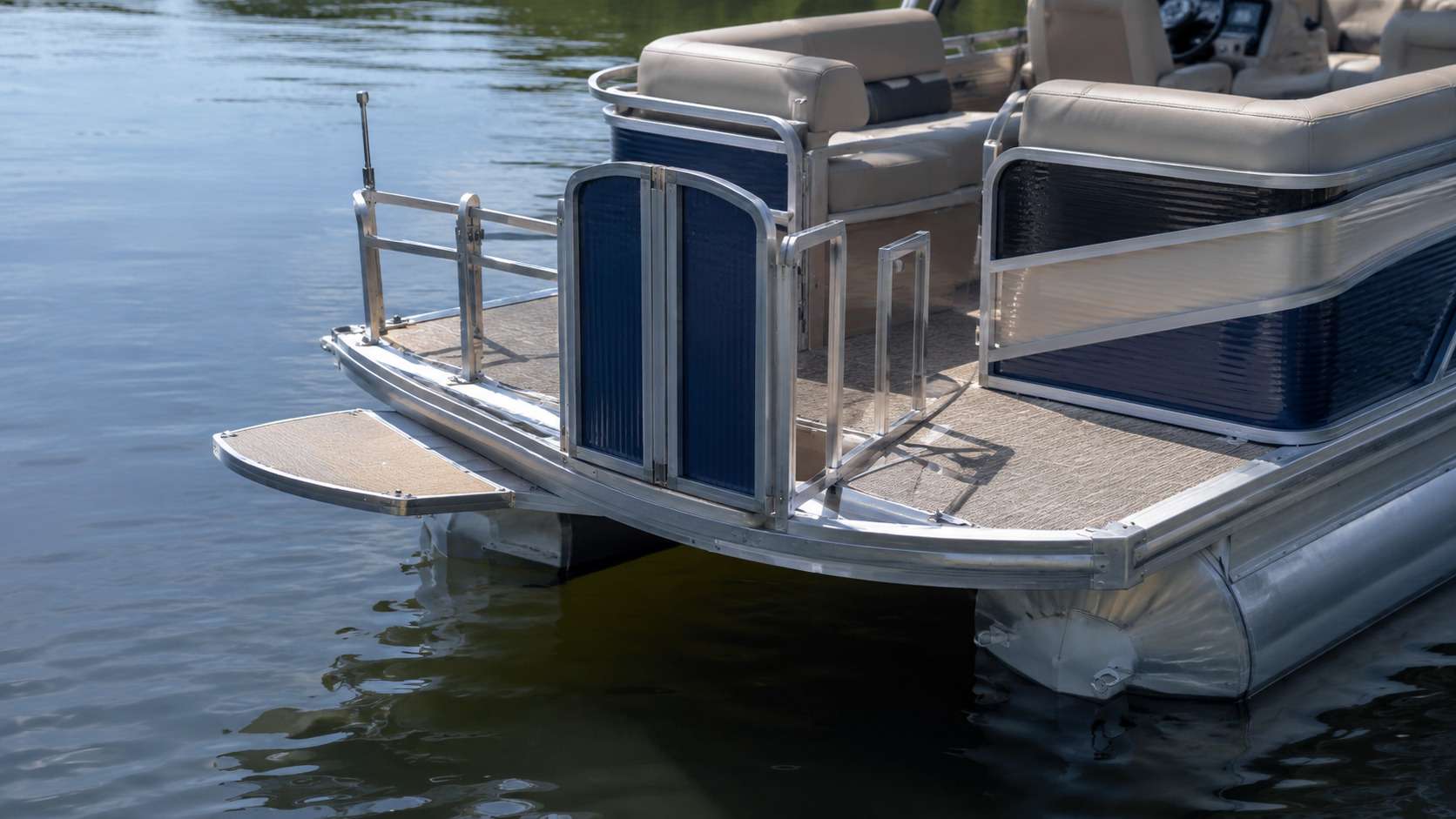
For day-to-day 23 MSB use, the extended aft deck makes the reversed position more useful because passengers face an actual waterside platform rather than a narrow mechanical ledge. For day-to-day 23 MSB use, the LilliPad ladder reinforces the same swimming and lounging mission.
The 23 MSB buyer should operate the Swingback before purchase. In the Swingback floorplan, check the latch, movement, upholstery clearance, and how the mechanism interacts with the normal path to the stern. Around this mid-size Swingback social deck, a flexible seat is only valuable when it is easy enough to use every weekend.
The 23 MSB deck should be tested with the real crew. Around this mid-size Swingback social deck, sit in every lounge, open storage, walk through the gates, and decide whether the stern works when several people want the water at once.
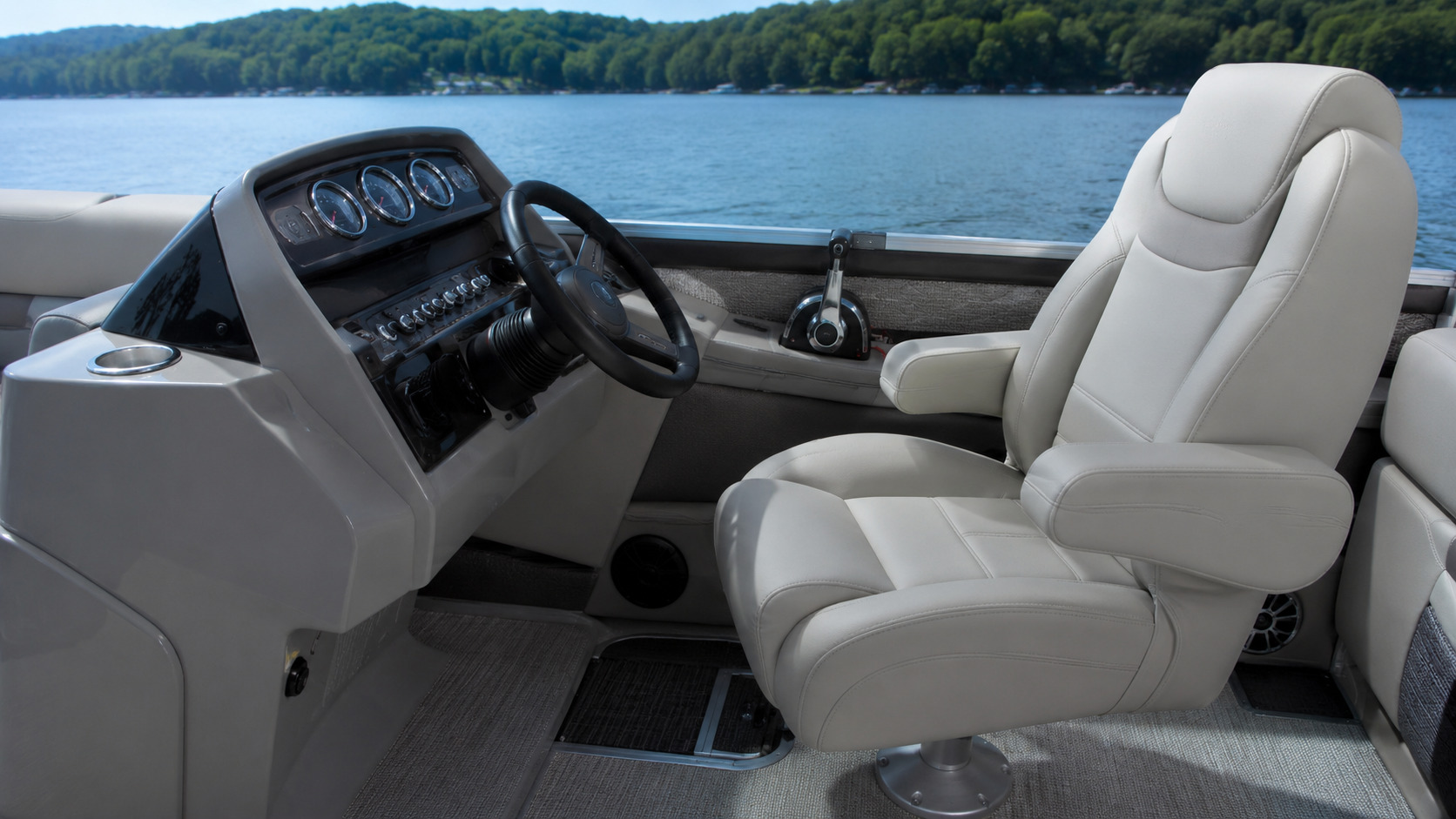
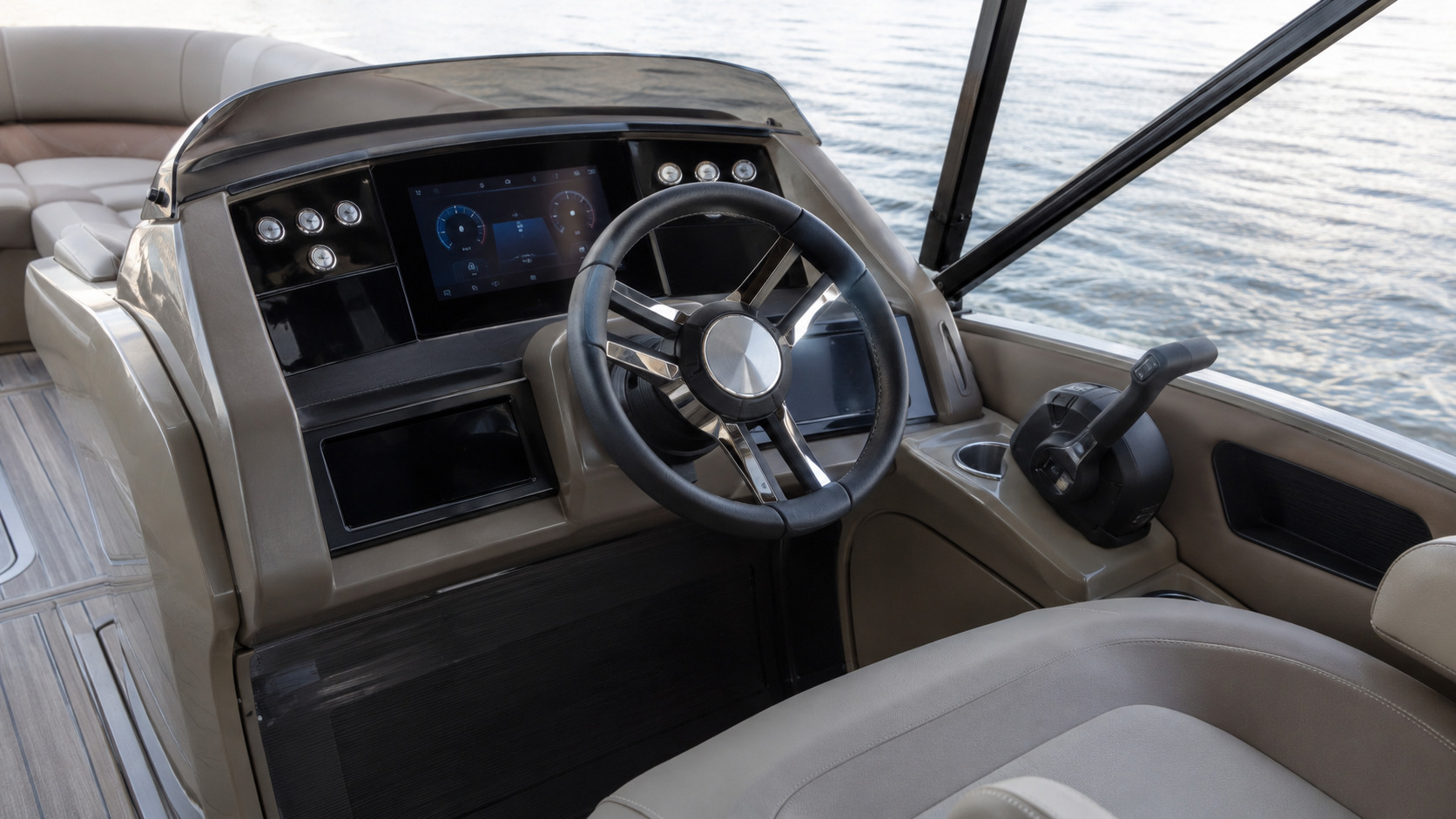
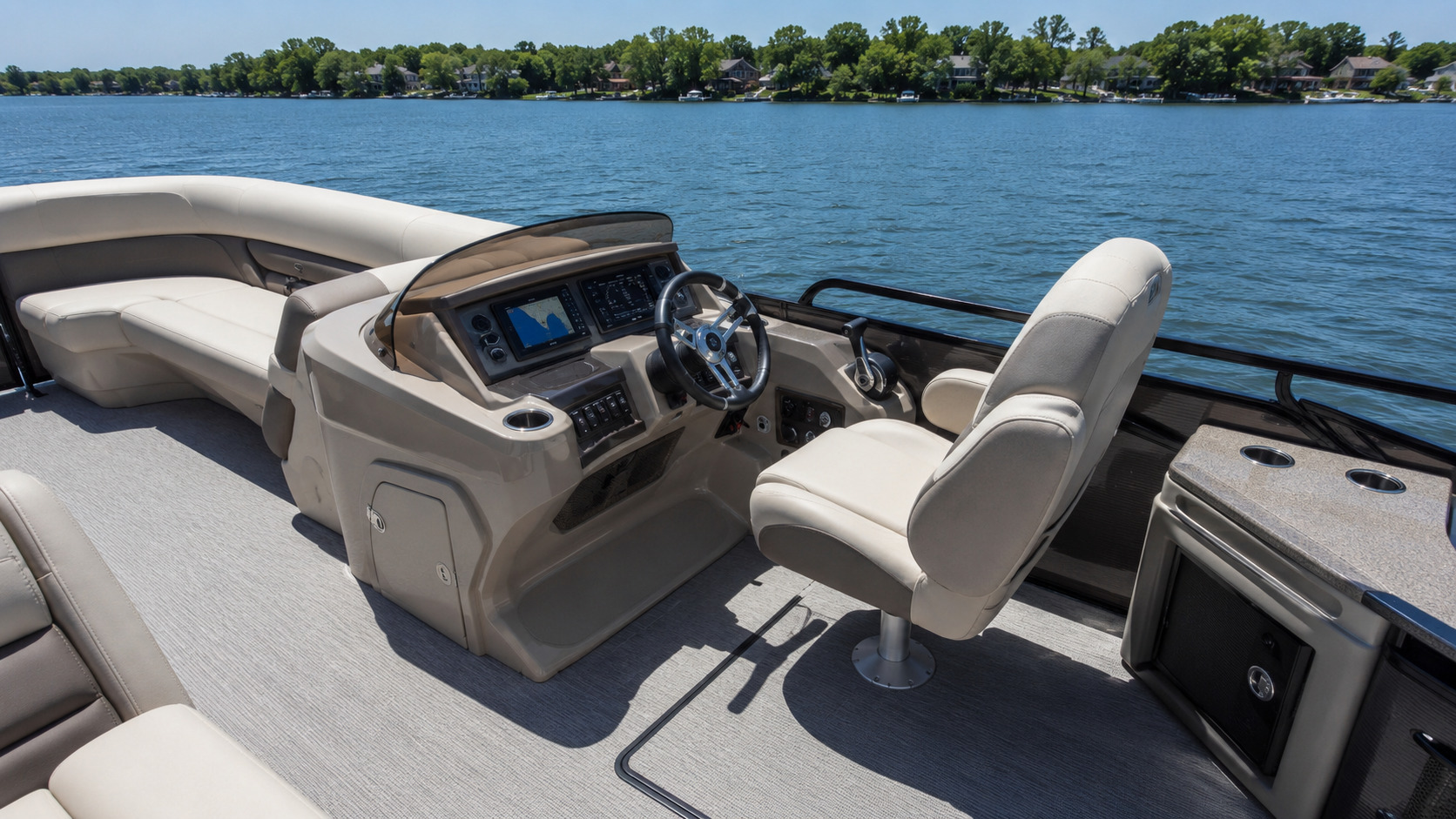
7-Inch Vivid UX Main Display – Bennington positions Vivid UX as a core M-Series helm system, providing vessel information and integrated control in a modern interface.
Bennington pairs the main display with a dedicated vessel-control interface for lighting, audio, and frequently used boat functions.
M models use an extended aft deck to create more usable room behind the furniture for boarding, swimming, and watersports setup.
The extended stern is paired with Bennington's LilliPad boarding ladder, giving swimmers a purpose-built way back onto the boat.
Bennington equips current M models with a premium six-speaker Rockford Fosgate system, supporting the line's entertaining focus.
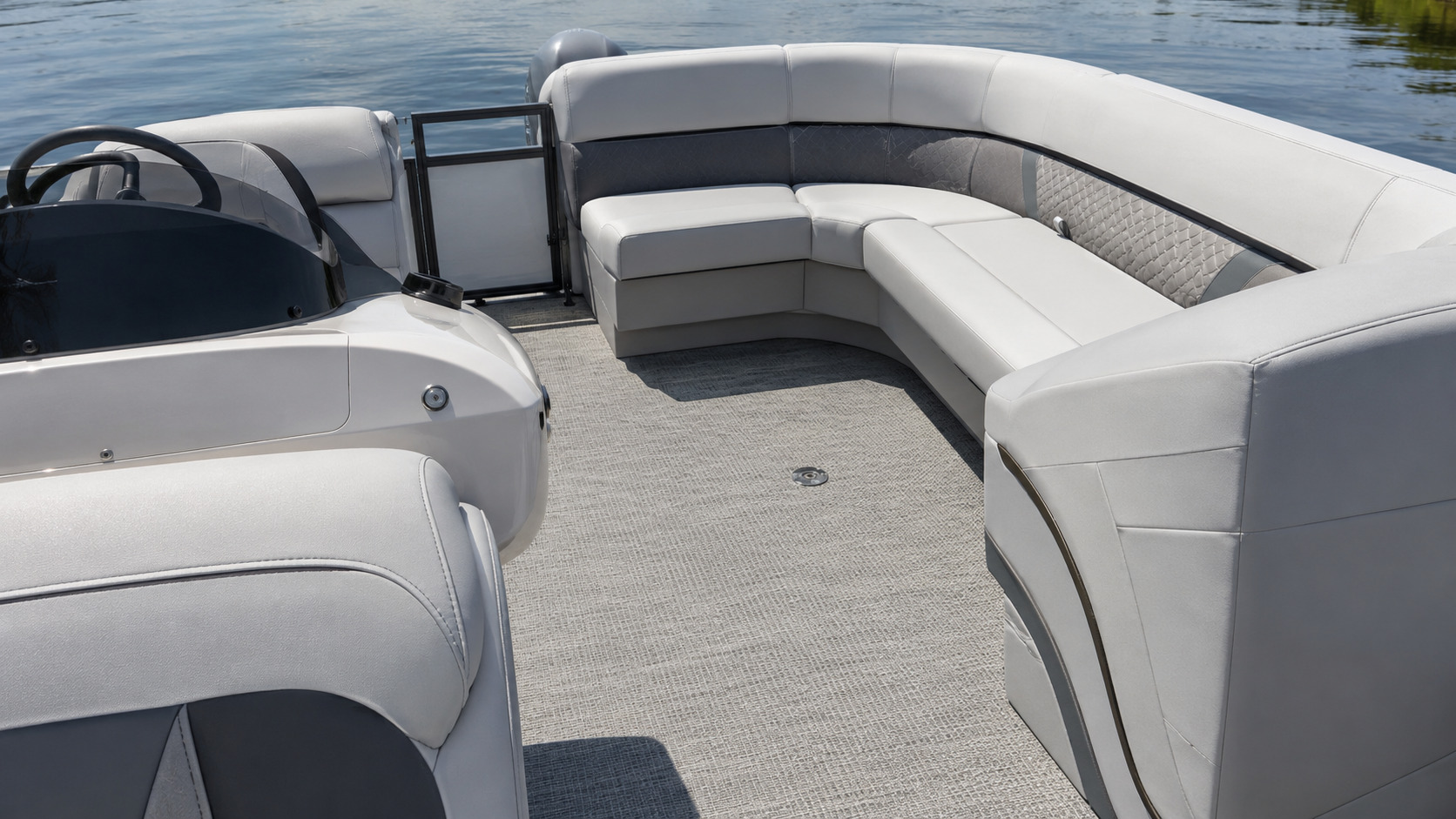
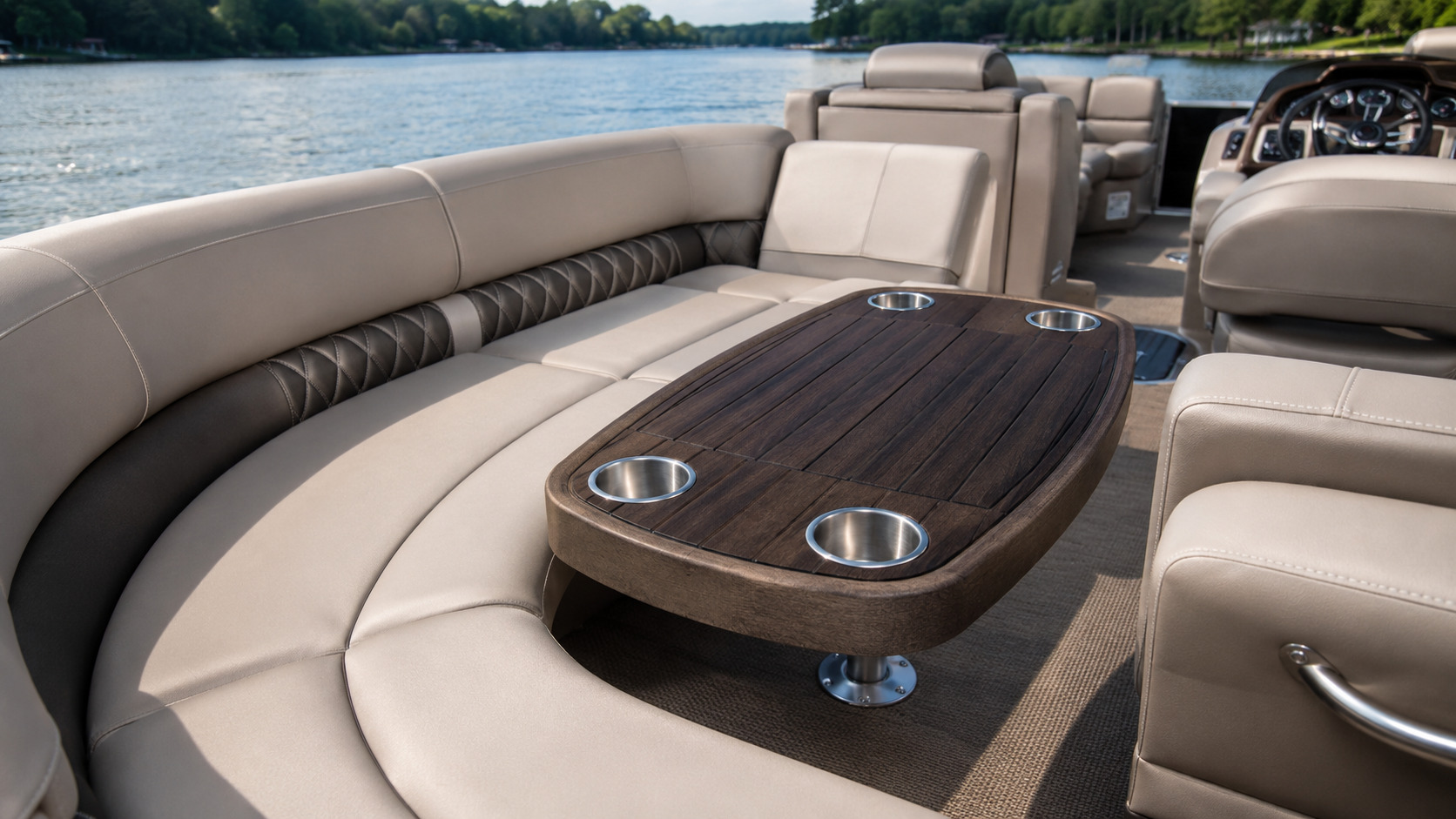
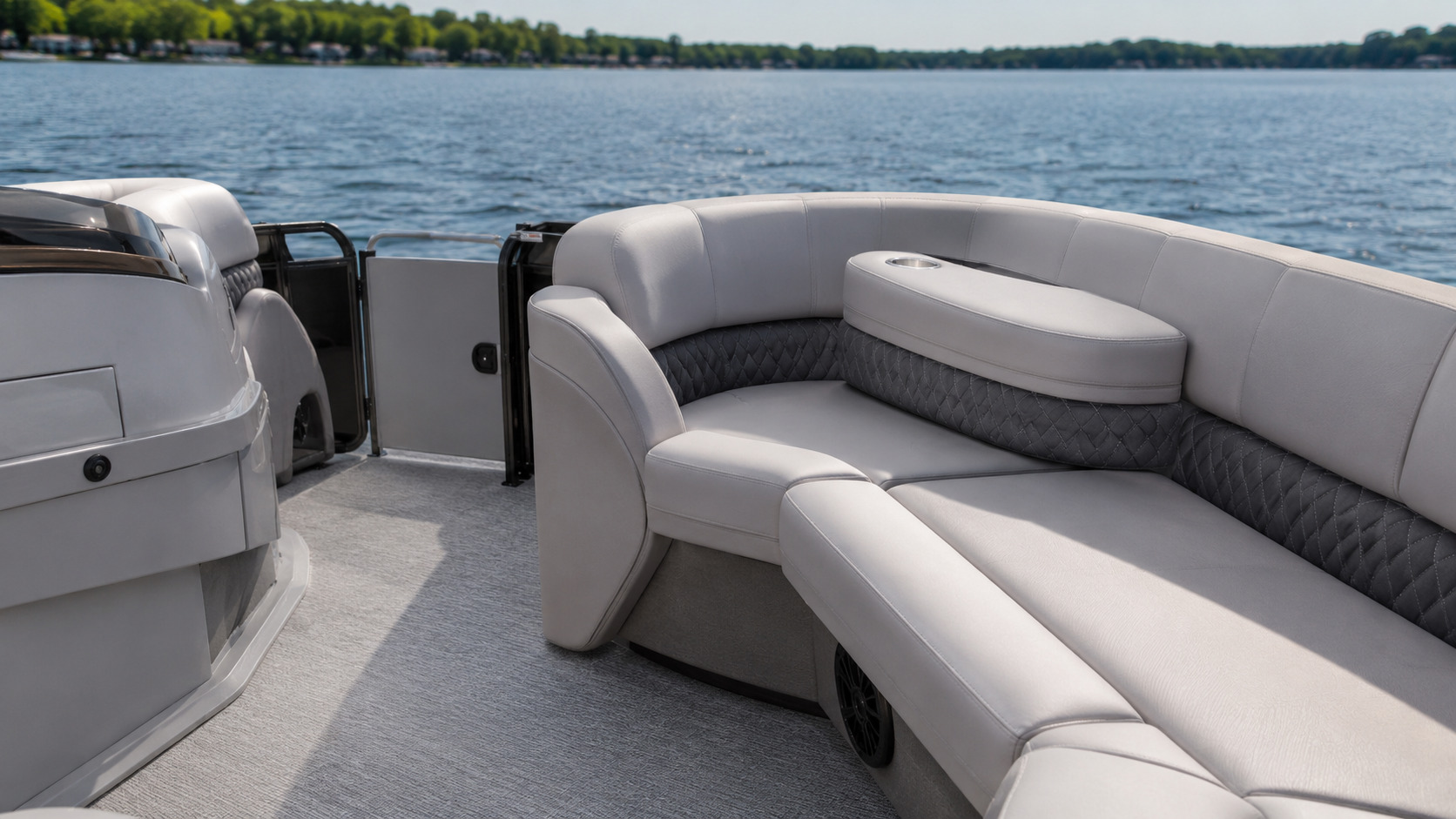
Veneto upholstery gives the M Line its premium seating feel and distinguishes the interior from Bennington's lower price tiers.
The 23 MSB centers the stern around an aft sun pad whose backrest can change the direction passengers face.
The Swingback lets the stern serve cruising and anchored-waterfront use without requiring a separate fixed aft chaise pair.
On a used or demo 23 MSB, run the six-speaker Rockford Fosgate system at normal and higher volume. For this Swingback boat, listen for a weak channel, rattling speaker, or amplifier behavior that suggests voltage or wiring problems.
When inspecting a 23 MSB, deploy the Bimini or arch equipment fitted to the specific boat. For this Swingback boat, check mounts, canvas, hinges, gas-assist hardware, and clearance around the furniture.
Behind the premium finish of this mid-size Swingback, inspect the extended aft deck, LilliPad ladder, gates, hinges, and seat bases for movement. For this Swingback boat, these areas see constant traffic on a family pontoon.
When inspecting a 23 MSB, finally, inspect the trailer or lift. When inspecting a 23 MSB, a premium interior does not compensate for old tires, weak bearings, brake problems, or a lift that supports the tubes incorrectly.
The 23 MSB publishes 25’3″ overall, and that is only the starting point for storage planning.
For a lift or trailer serving the 23 MSB, published LOA is 25 feet 3 inches, so this is where the M family stops feeling like a modest twenty-something-foot pontoon in storage terms. With 25’3″ of published LOA, a standard residential garage is rarely the answer once the trailer and outboard are included.
For a lift or trailer serving the 23 MSB, lift capacity must include boat, engine, fuel, batteries, and stored equipment. For storing the 23 MSB, bunk or cradle placement should match the actual pontoon or tritoon configuration and avoid interfering with strakes or center-tube hardware.
The 23 adds useful lounge length, but its 25-foot-3-inch published LOA can push the 23 MSB into a different slip, lift, and trailer conversation than the 22. That consequence should be solved before financing makes the 23 MSB feel easier to own than it really is.
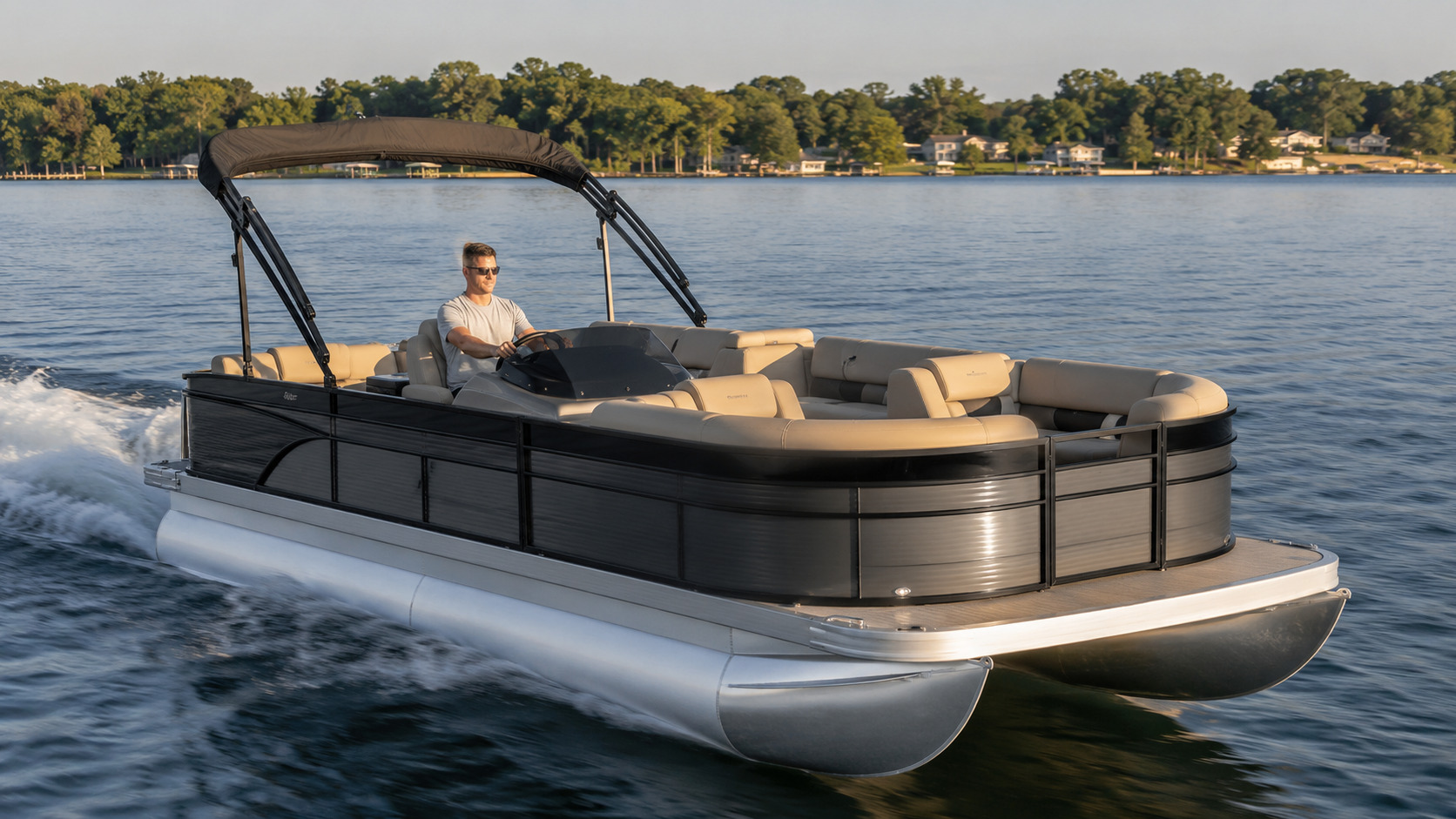
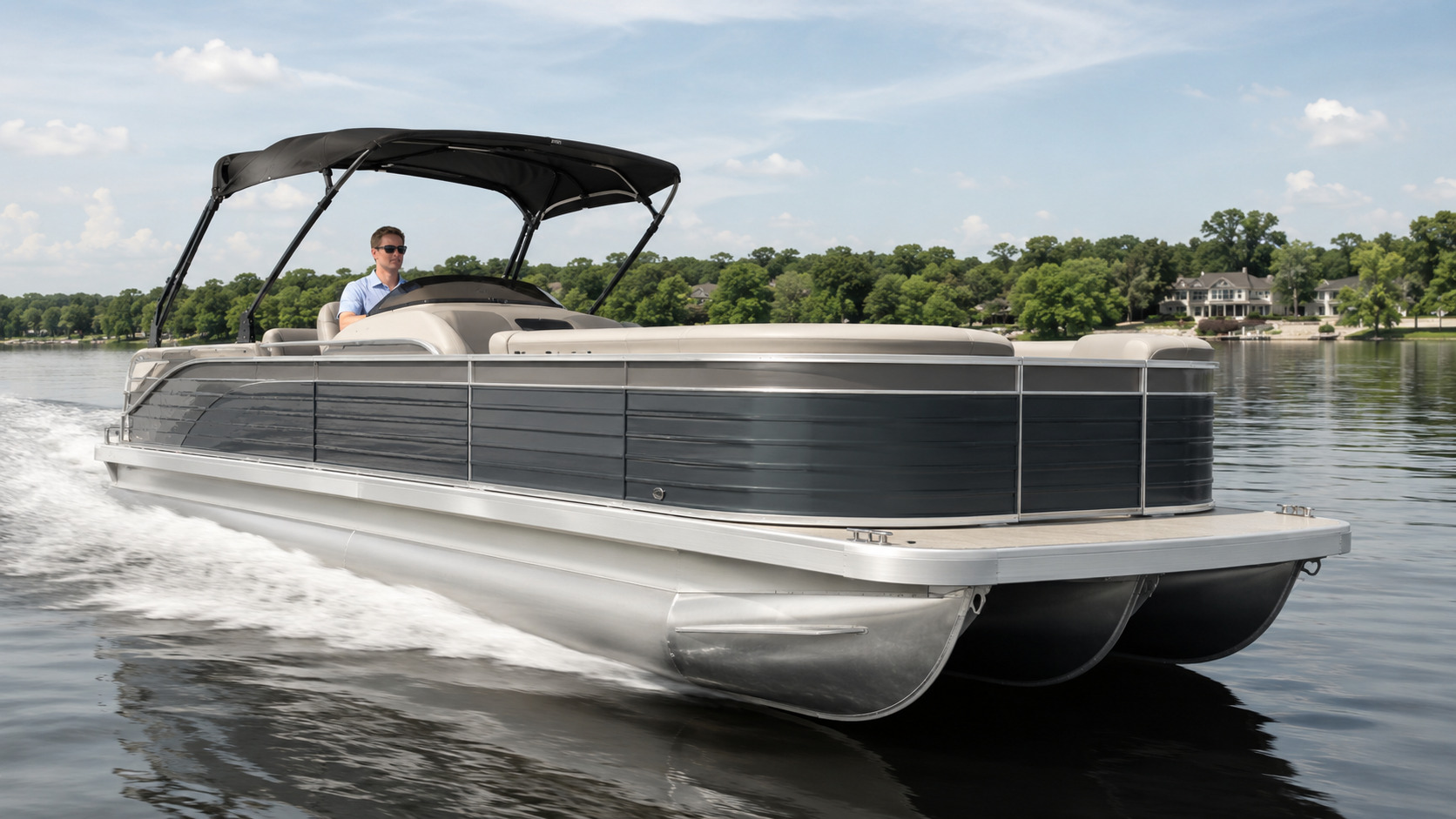
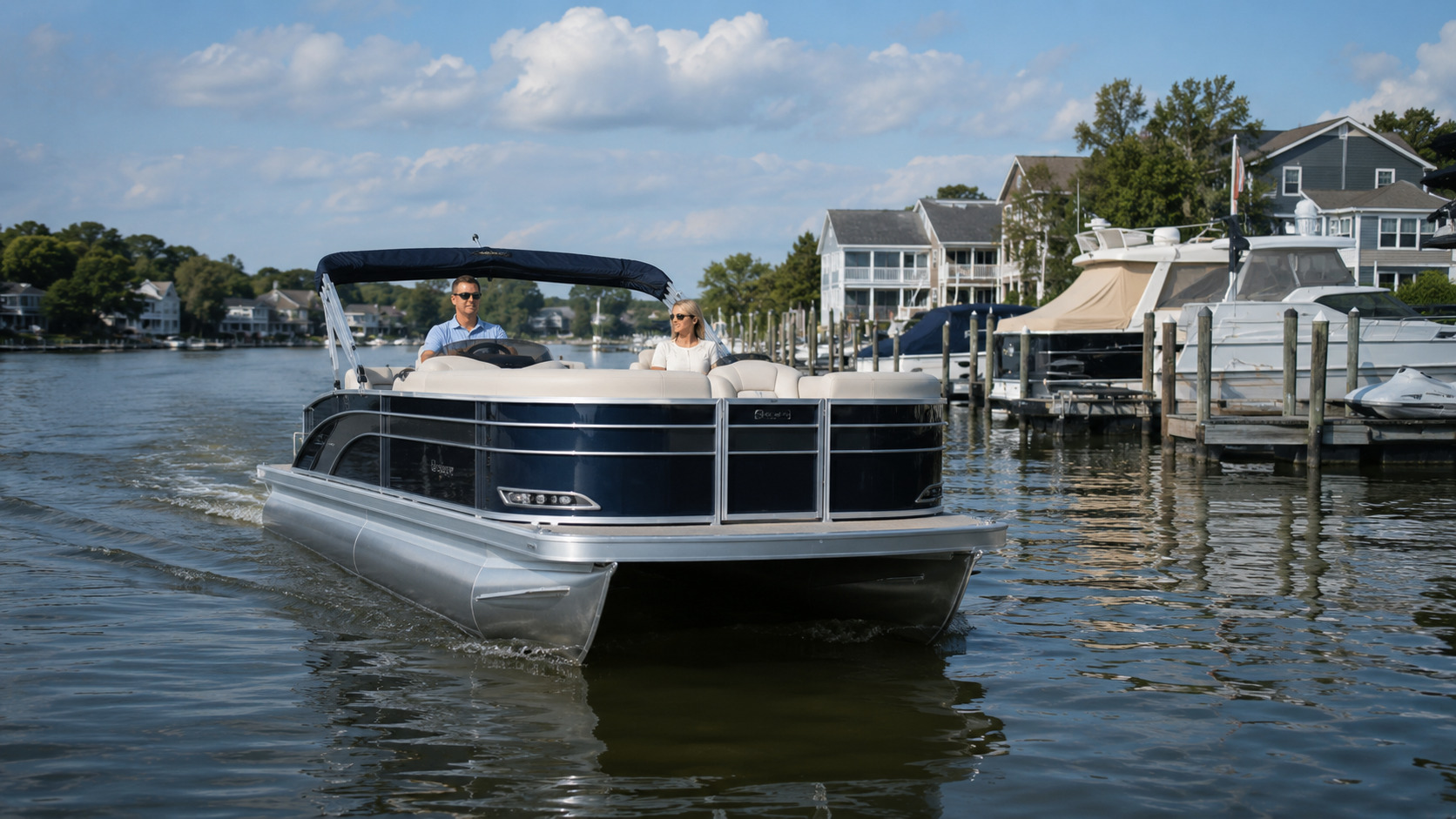
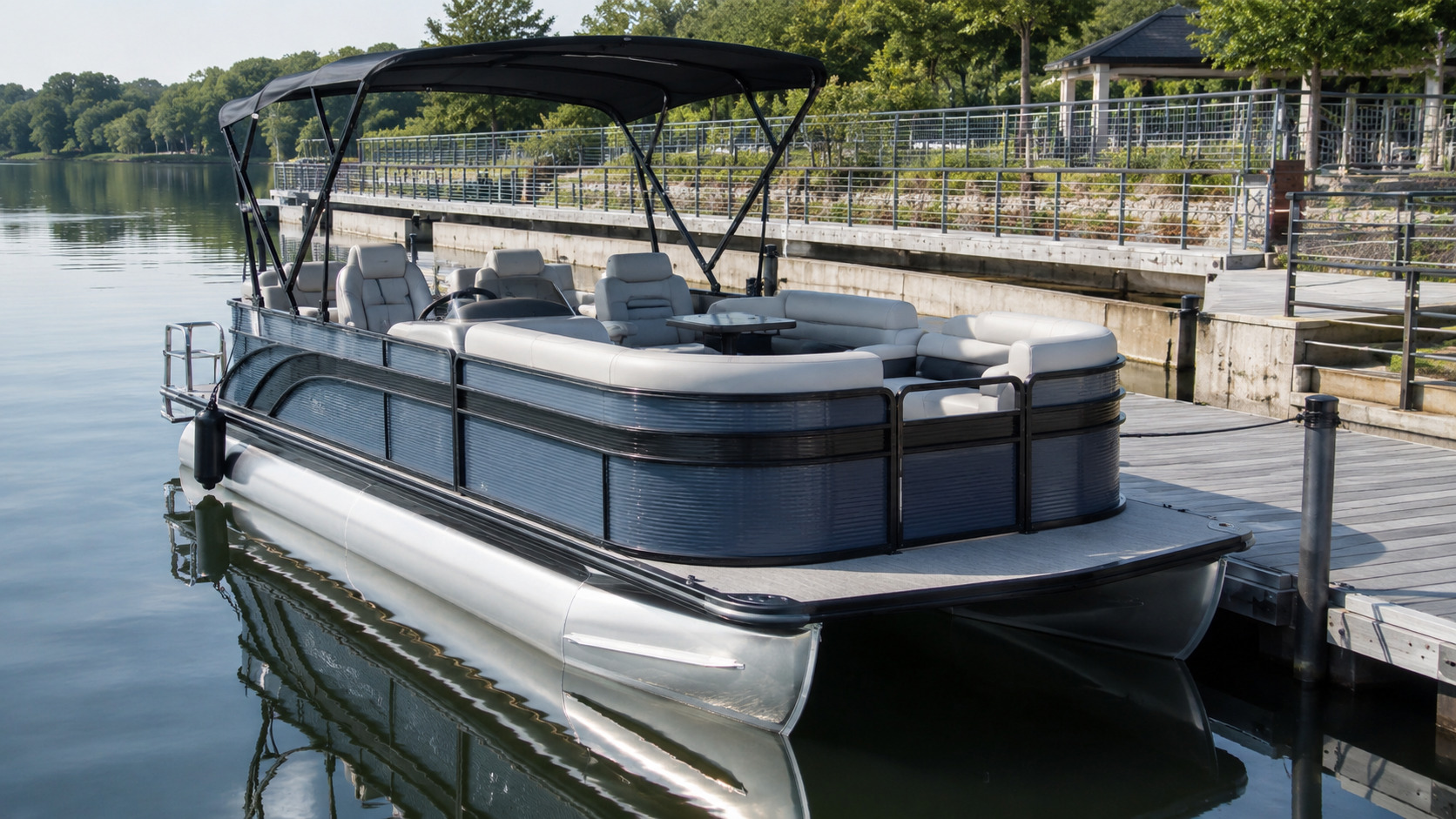
The gallery should make it impossible to confuse this 23 MSB with its sibling floorplan. To verify a 23 MSB listing, show the Swingback backrest in both forward and aft-facing positions, the actual tube package, the installed outboard, and the helm configuration instead of relying only on generic M-Series beauty shots.
The 23 MSB is easier to find under descriptive ’23 M Swingback’ searches than under the exact code alone. Current examples are almost entirely 2026 and 2027 boats, which makes this a new-market configuration comparison rather than an old-boat depreciation hunt.
On this mid-size Swingback floorplan, the redesigned M family is young enough that many listings are still new or nearly new.
The first adjustment is floorplan. The 23 MSB is a lounge-first floorplan built around two bow chaise lounges and an aft sun pad with a reversible Swingback backrest. A 23 MSB buyer who wants that exact stern should not value the sibling layout as an interchangeable substitute.
Trim matters as well. Standard, Sport, and Luxe paths can change furniture styling, helm treatment, display equipment, lighting, and finish without changing the 23 MSB badge.
For current 23 MSB inventory, engine output can create another large step. In the 23 MSB market, current dealer inventory shows M boats with everything from moderate family power to high-output configurations. When pricing a 23 MSB, compare engine and chassis together rather than pricing horsepower in isolation.
On a used or demonstrator 23 MSB, condition can erase an apparent bargain. For current 23 MSB inventory, tube damage, poor trailer maintenance, upholstery wear, or uncertain outboard service can cost more than the discount.
The strongest value is the 23 MSB whose floorplan and chassis already match the household. On this mid-size Swingback floorplan, paying less for the wrong stern arrangement usually creates a more expensive ownership mistake.
Illustration only and not an offer of credit.
For the 23 MSB payment calculation, a base pontoon and a heavily optioned tritoon can share the same model code while sitting tens of thousands of dollars apart. For the 23 MSB payment calculation, run the calculator on the negotiated purchase, not the starting MSRP or a dealer’s promotional payment.
Illustration only and not an offer of credit. Your actual rate and term depend on credit profile, vessel age, loan amount and ownership structure.
The first comparison for the 23 MSB is the 23 MFB. When cross-shopping the 23 MSB, both share the same published 25’3″ LOA and the same M-Series technology and trim environment, but the stern works differently.
When cross-shopping the 23 MSB, the 23 MFB uses Fastback quad-bench seating. At this 25’3″ size, it is the better choice when four fixed chaise zones, familiar passenger seating, and predictable under-seat storage matter most.
At this 25’3″ size, the 23 MSB uses an aft sun pad with a reversible Swingback backrest. It is stronger when the family spends significant time anchored or facing activity behind the 23 MSB.
After the 23 MSB floorplan comparison, look at the 22 or 24 M size. The 23 adds useful lounge length, but its 25-foot-3-inch published LOA can push the 23 MSB into a different slip, lift, and trailer conversation than the 22.
When cross-shopping the 23 MSB, do not choose from price alone. At this 25’3″ size, a cheaper sibling with the wrong stern layout or the wrong physical size can remain annoying for years after the purchase.
Buying a 23 MSB starts with the full build, not the badge.
On a 23 MSB purchase inspection, confirm that the listing is actually the MSB floorplan. For a serious 23 MSB shopper, dealer titles can use phrases such as M Quad Bench, Fastback, or M Swingback instead of the exact code, and online listings do not always group them consistently.
When buying a 23 MSB, verify the published LOA of 25’3″ on the build information. Before committing to the Swingback, that protects the slip, lift, and storage decision before money changes hands.
On a 23 MSB purchase inspection, finally, compare the sibling floorplan and adjacent size. On a 23 MSB purchase inspection, the Swingback mechanism adds flexibility but gives up the simple four-chaise symmetry and some of the conventional aft bench storage found on the MFB. The 23 adds useful lounge length, but its 25-foot-3-inch published LOA can push the 23 MSB into a different slip, lift, and trailer conversation than the 22. For a serious 23 MSB shopper, if either issue sounds more important than the feature you are buying, change models before financing.
The 23 MSB sits in a useful middle position because the 25-foot-3-inch platform gives the Swingback room to work without pushing the boat into the 28-foot-plus class. For many families, that is enough stern space to justify the reversible lounge while keeping storage and dock planning reasonable.
Search strategy matters on this model. Dealers often advertise it as a 23 M Swingback rather than leading with the MSB code, so exact-code searches can make supply look thinner than it is. Compare photographs and build sheets before assuming two listings are different models.
The 23’s value is strongest when several adults use both ends of the boat. Test the Swingback with people sitting forward and aft, then walk to the ladder with the backrest reversed. The deck should feel intentionally organized in both modes, not merely larger than the 22. CTA:
Finance This 23 MSB
If you have already found a 23 MSB, start your application with the actual details and purchase price.
A 23 MSB can vary substantially by performance package, outboard horsepower, Standard versus Sport or Luxe trim, electronics, arch equipment, trailer, and dealer-installed options. On this Swingback version, the floorplan should be normalized before two prices are compared.
Bennington’s current specifications list the 23 MSB at 25’3″ overall. That is longer than the nominal size in the 23 MSB name. With this 25’3″ M, use the published LOA plus the completed trailer and outboard position when choosing a slip, lift, storage building, or tow setup.
With this 25’3″ M, the exact passenger rating varies by configuration. Bennington markets the M Line across a 10-to-15-person range, but the capacity plate on the specific 23 MSB is the correct legal figure because tube package, weight, and engine configuration can change the rating.
Horsepower is configuration-specific. On this Swingback version, Bennington currently markets the M Line up to 500 horsepower on compatible models, while lighter Express and SPS packages are designed around lower engine ranges. For a 23 MSB shopper, use the exact capacity plate and performance package before selecting or valuing the outboard.
With this 25’3″ M, the MFB is the Fastback Quad Bench layout with four chaise zones. For a 23 MSB shopper, the MSB replaces the fixed aft pair with a sun pad and reversible Swingback backrest. With this 25’3″ M, choose MFB for straightforward fixed social seating and MSB when aft-facing lounge use matters enough to justify the moving stern furniture.
On this Swingback version, it can be if loaded performance, watersports, stronger turns, or rougher-water composure are recurring needs. For a 23 MSB shopper, SPS uses three full-length 25-inch tubes with performance hardware and hydraulic steering. For the 23 MSB, ESP adds an elliptical center tube for higher-output applications. With this 25’3″ M, relaxed cruisers may not need the additional cost.
On this Swingback version, inspect the aluminum tubes, welds, strakes, underdeck hardware, outboard, steering, Vivid UX system, audio, seat mechanisms, extended aft deck, LilliPad ladder, canvas or arch equipment, and trailer. On the MSB, pay special attention to the Swingback backrest in both forward and aft-facing positions because that floorplan hardware is central to the 23 MSB’s value.

Potentially. Financing depends on the 23 MSB’s model year, value, condition, purchase amount, seller type, and borrower qualifications. With this 25’3″ M, start your application with the actual details so the loan conversation reflects the engine, performance package, trim, and floorplan being purchased.
Tell us a little bit about yourself and the boat you are looking to finance.