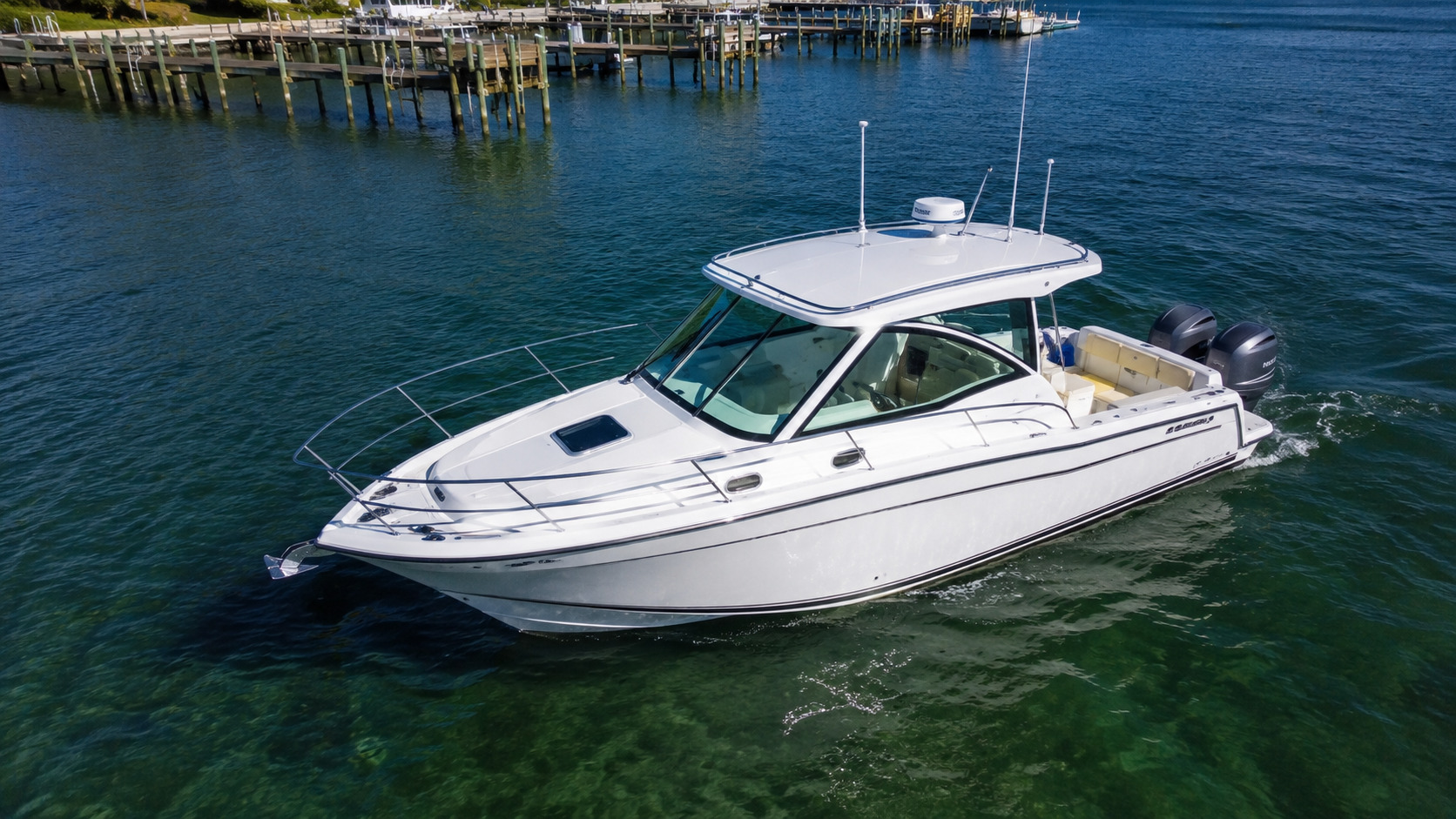
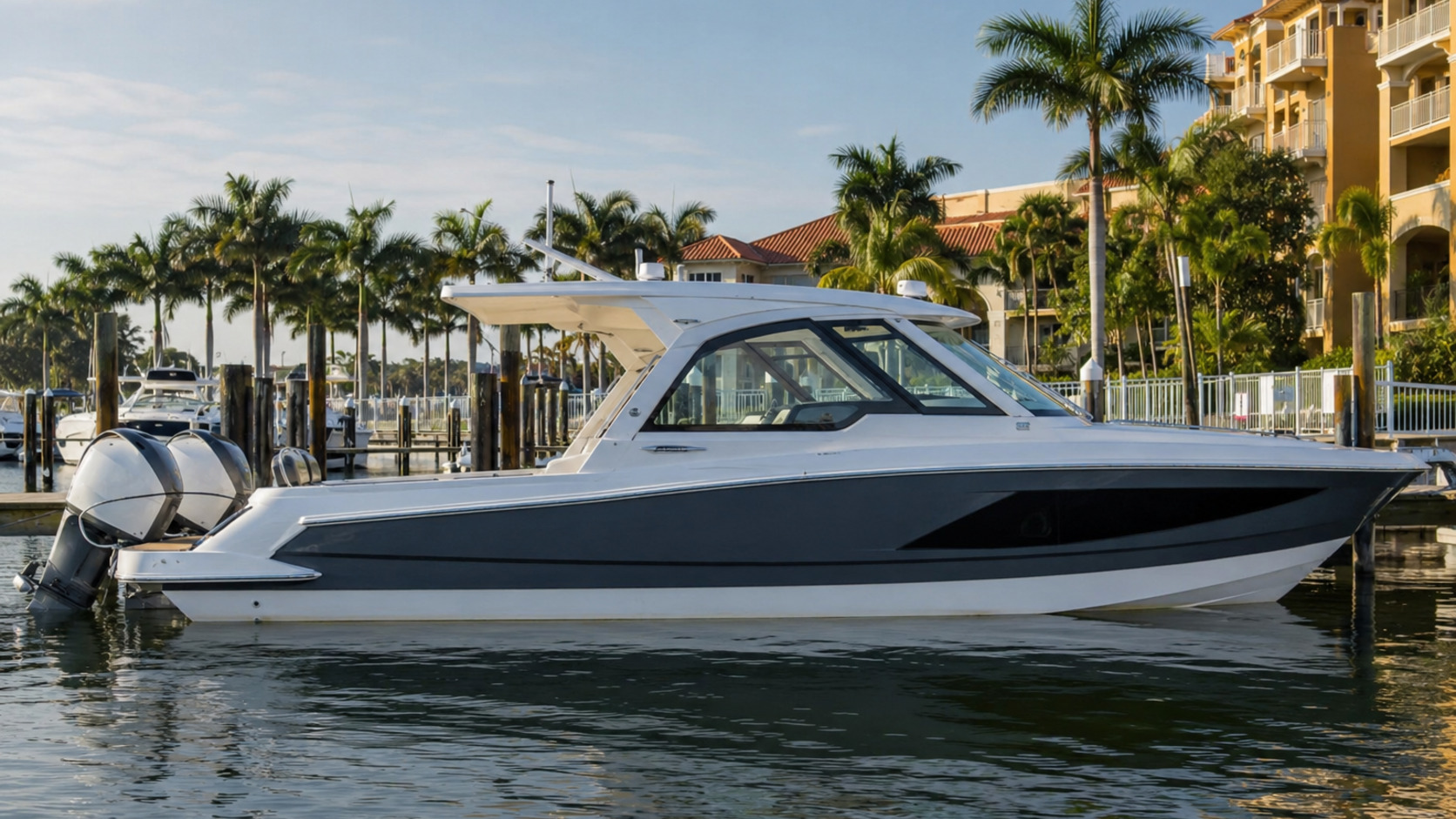
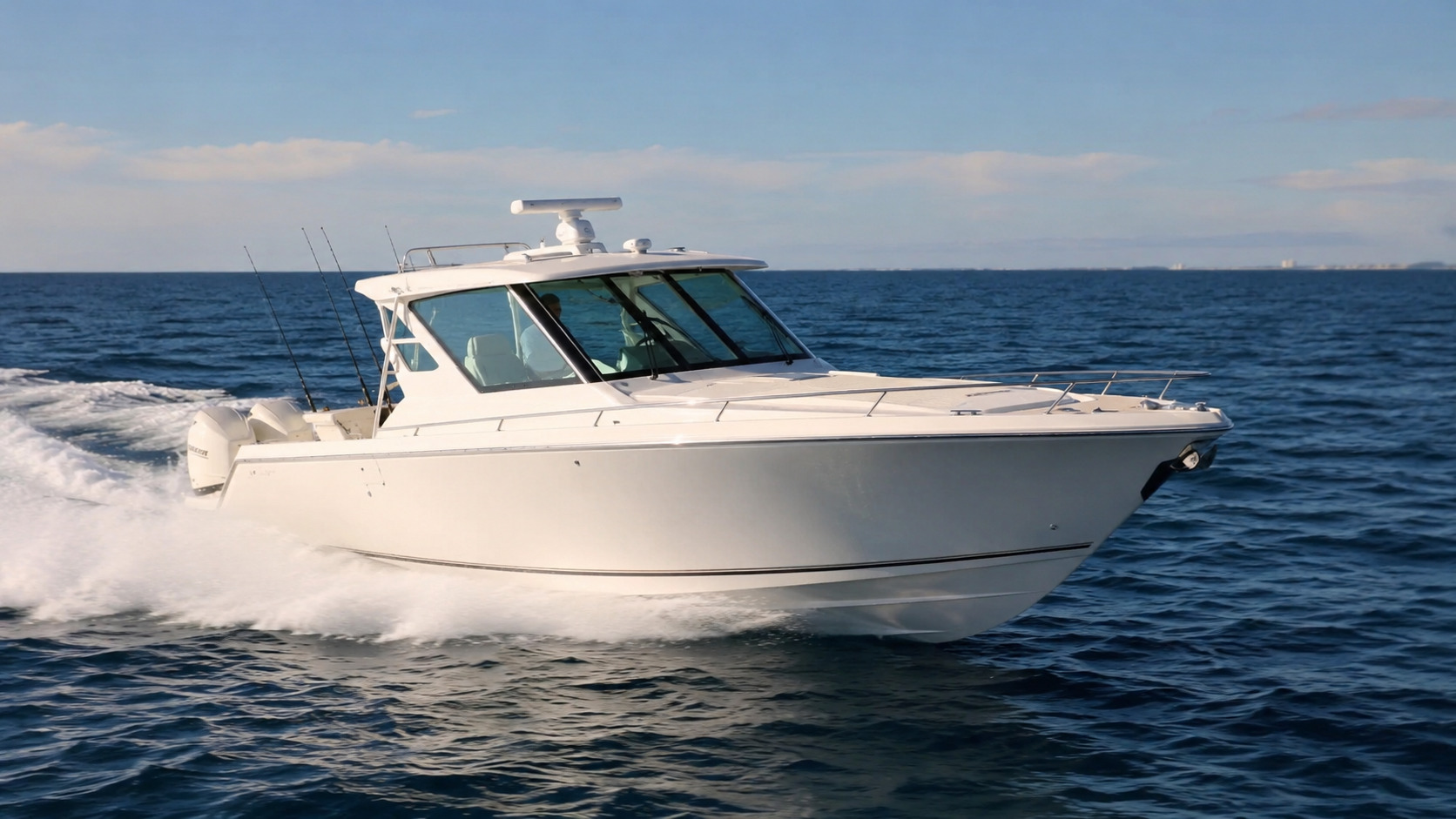
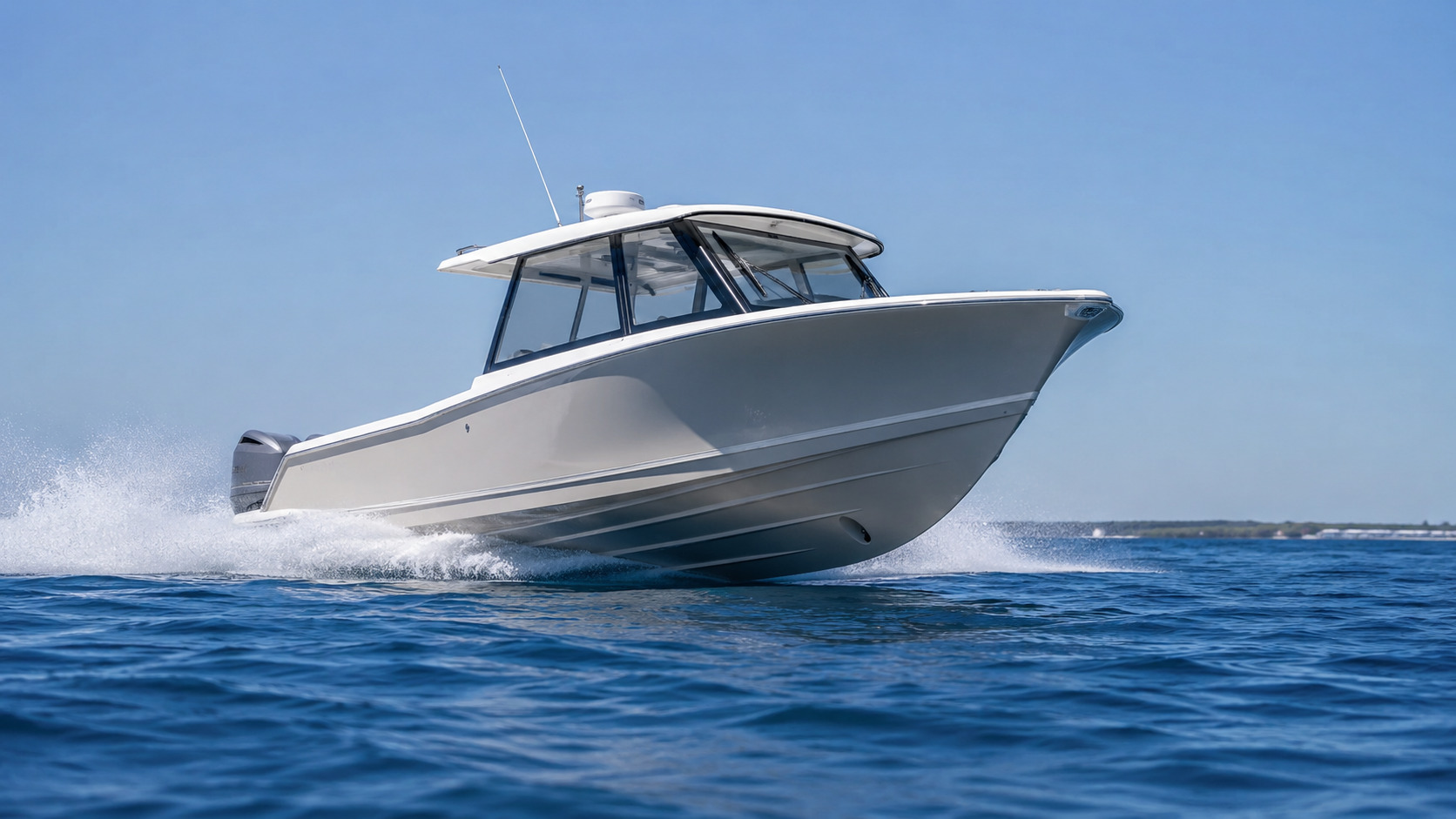
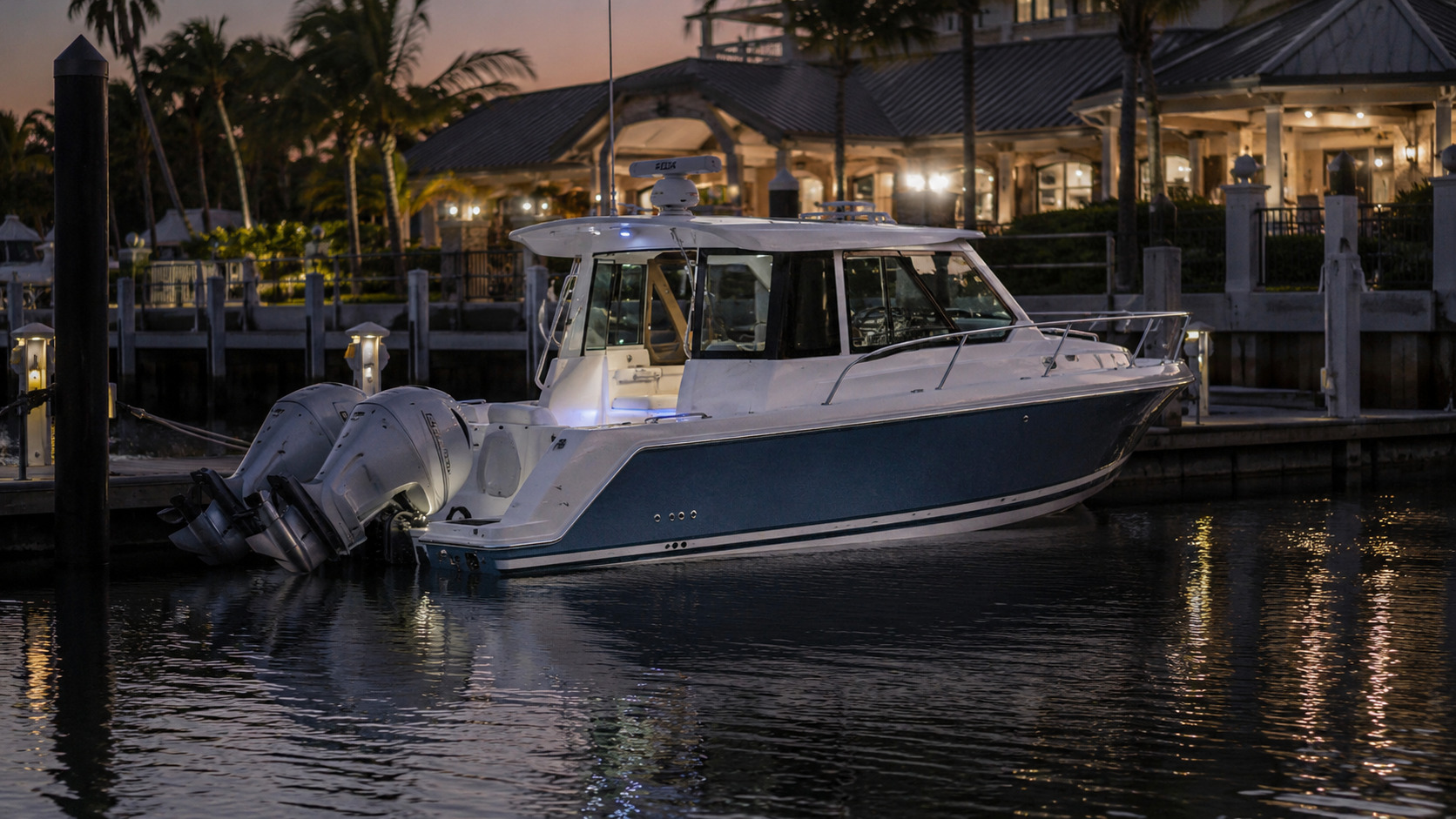
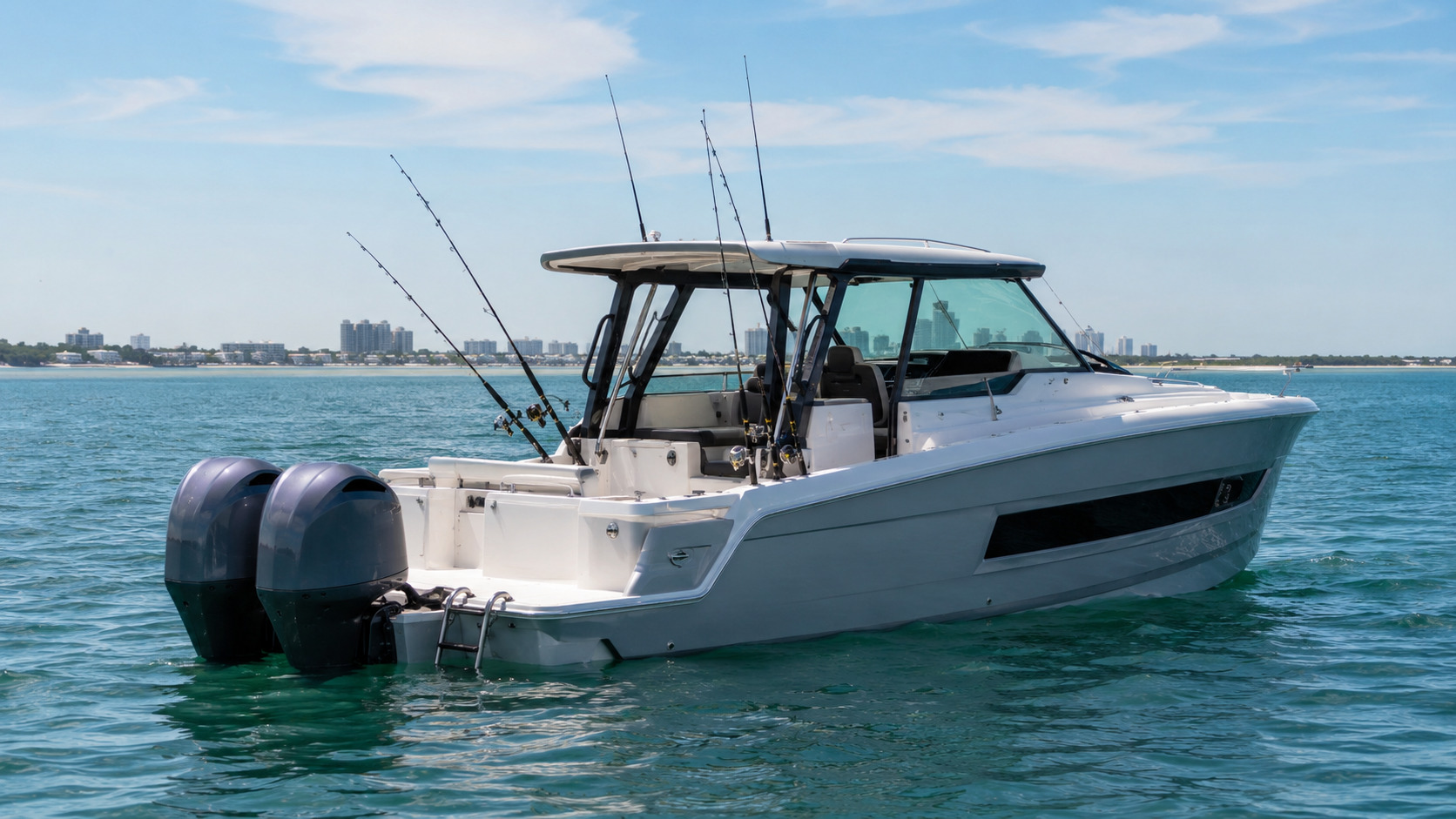
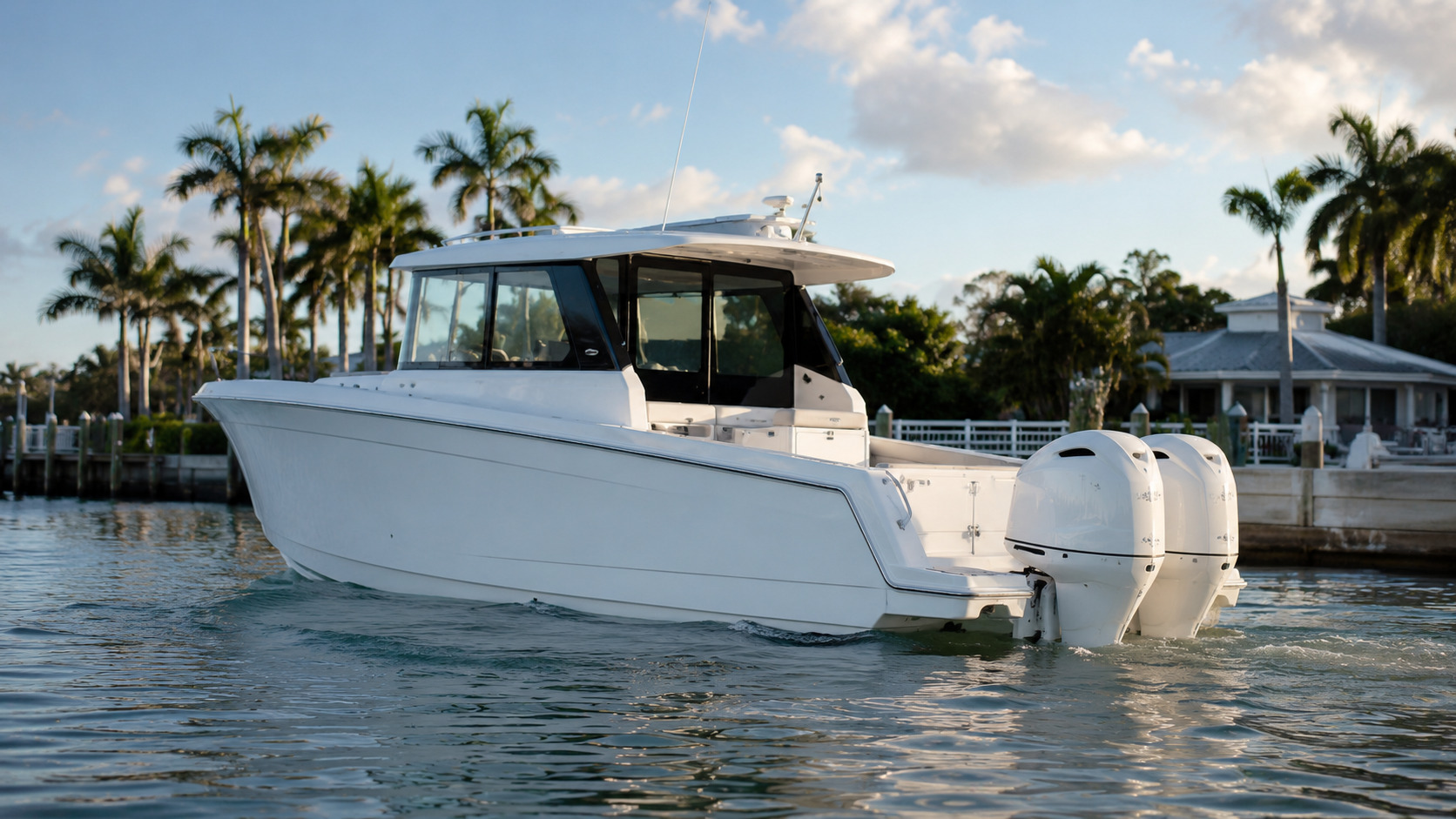
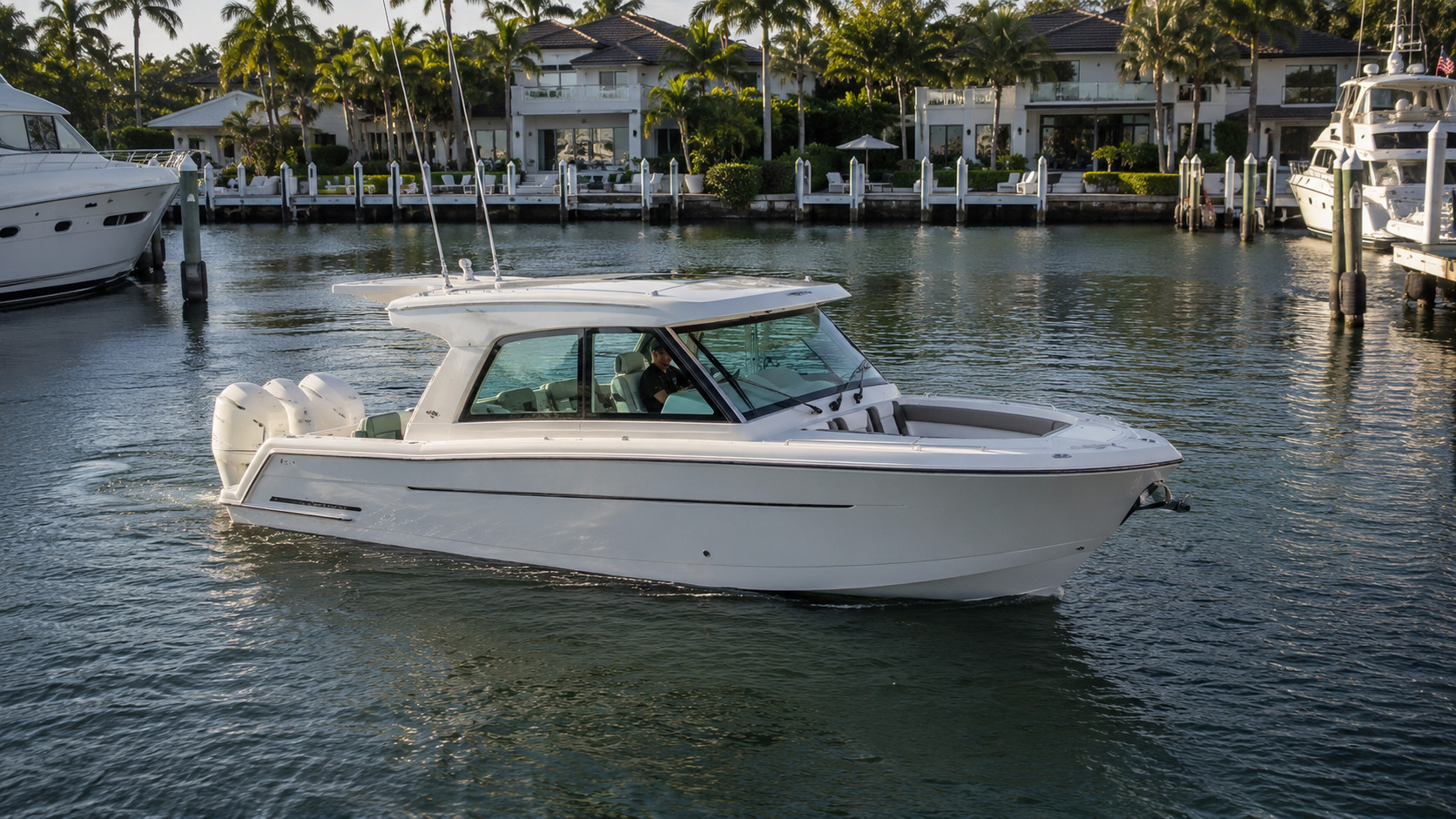
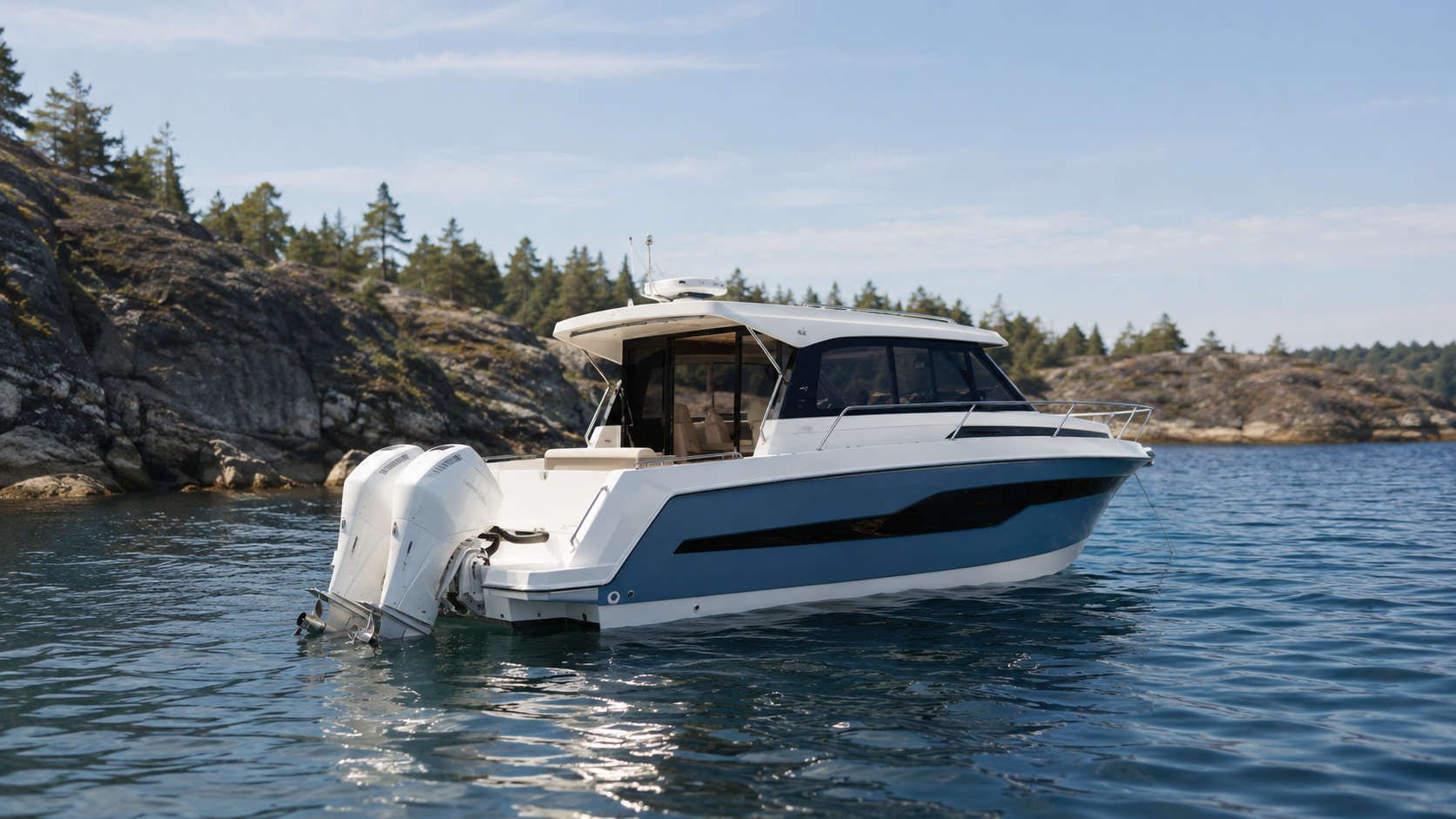
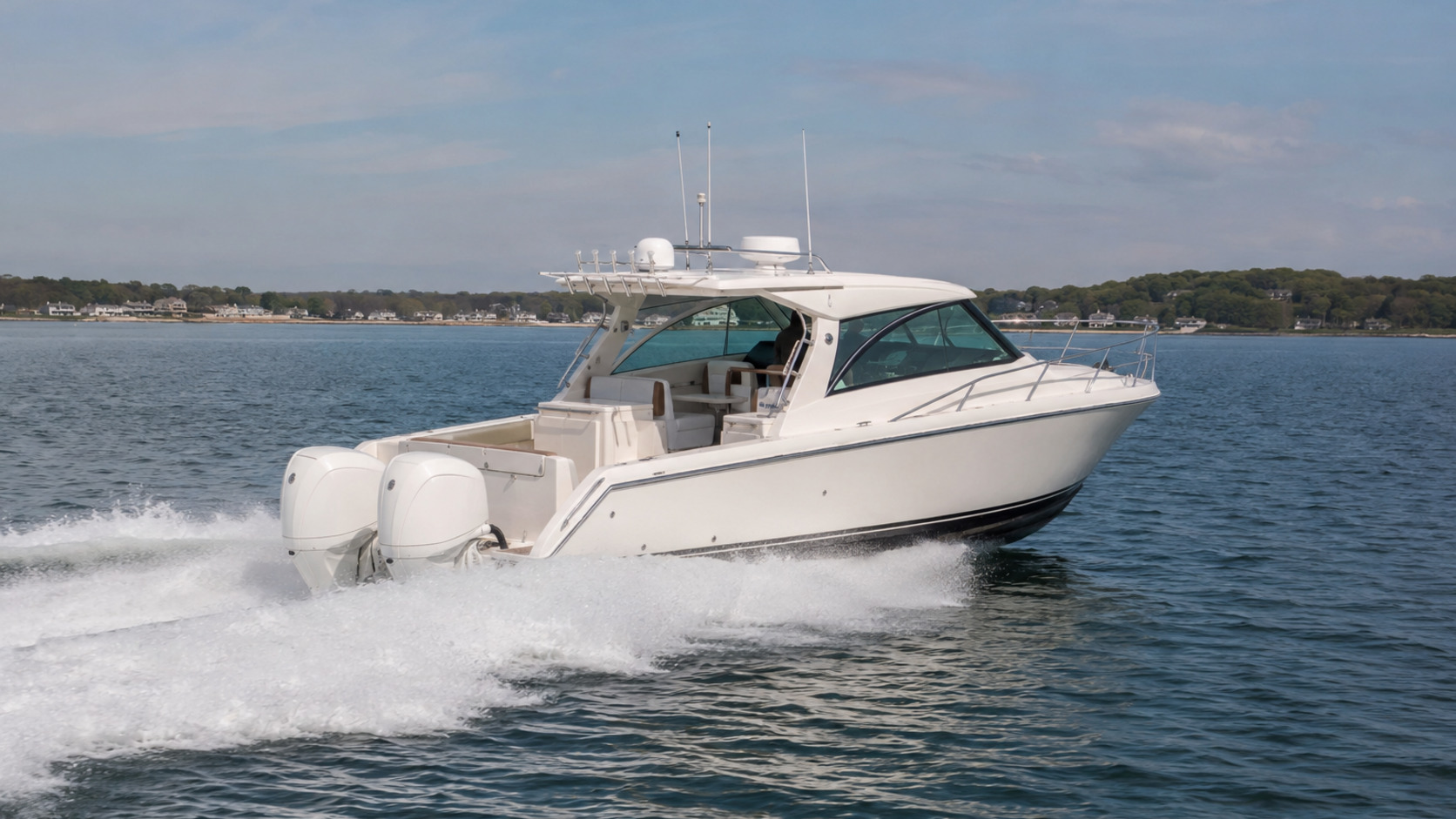
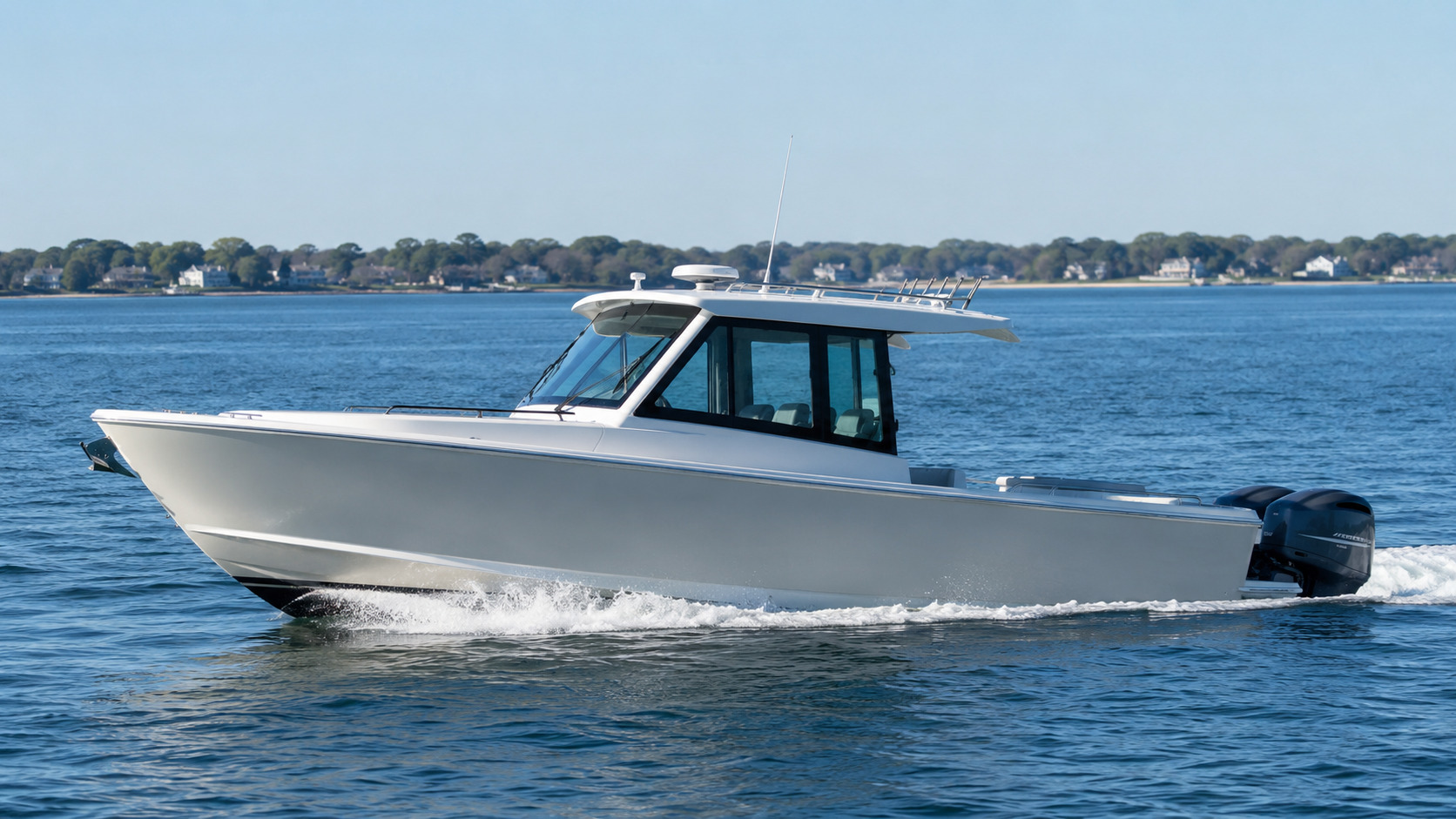
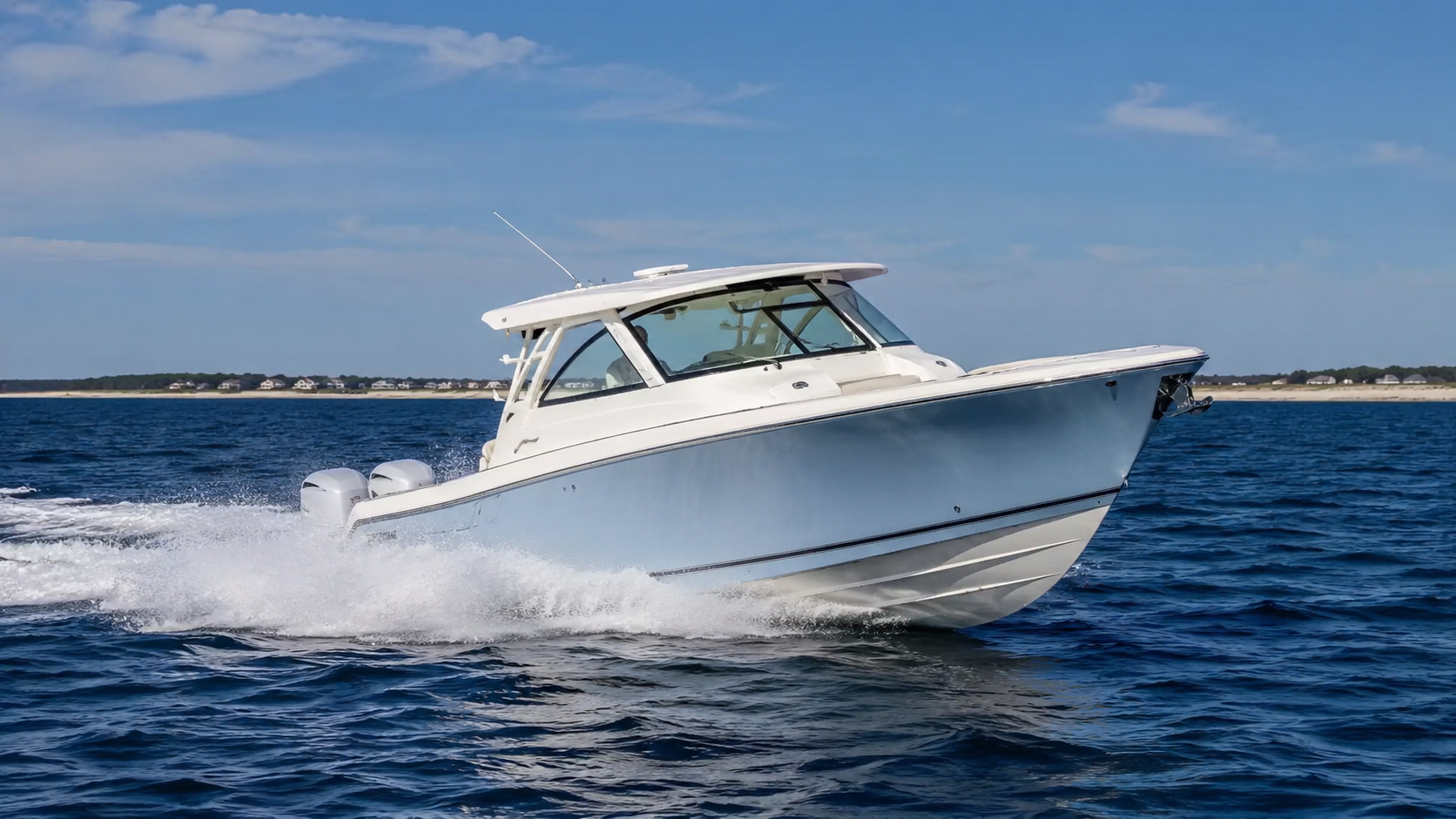
The Pursuit OS 325 is the entry point into Pursuit’s current Offshore cabin range, pairing twin-engine running costs with a genuine four-person overnight layout.
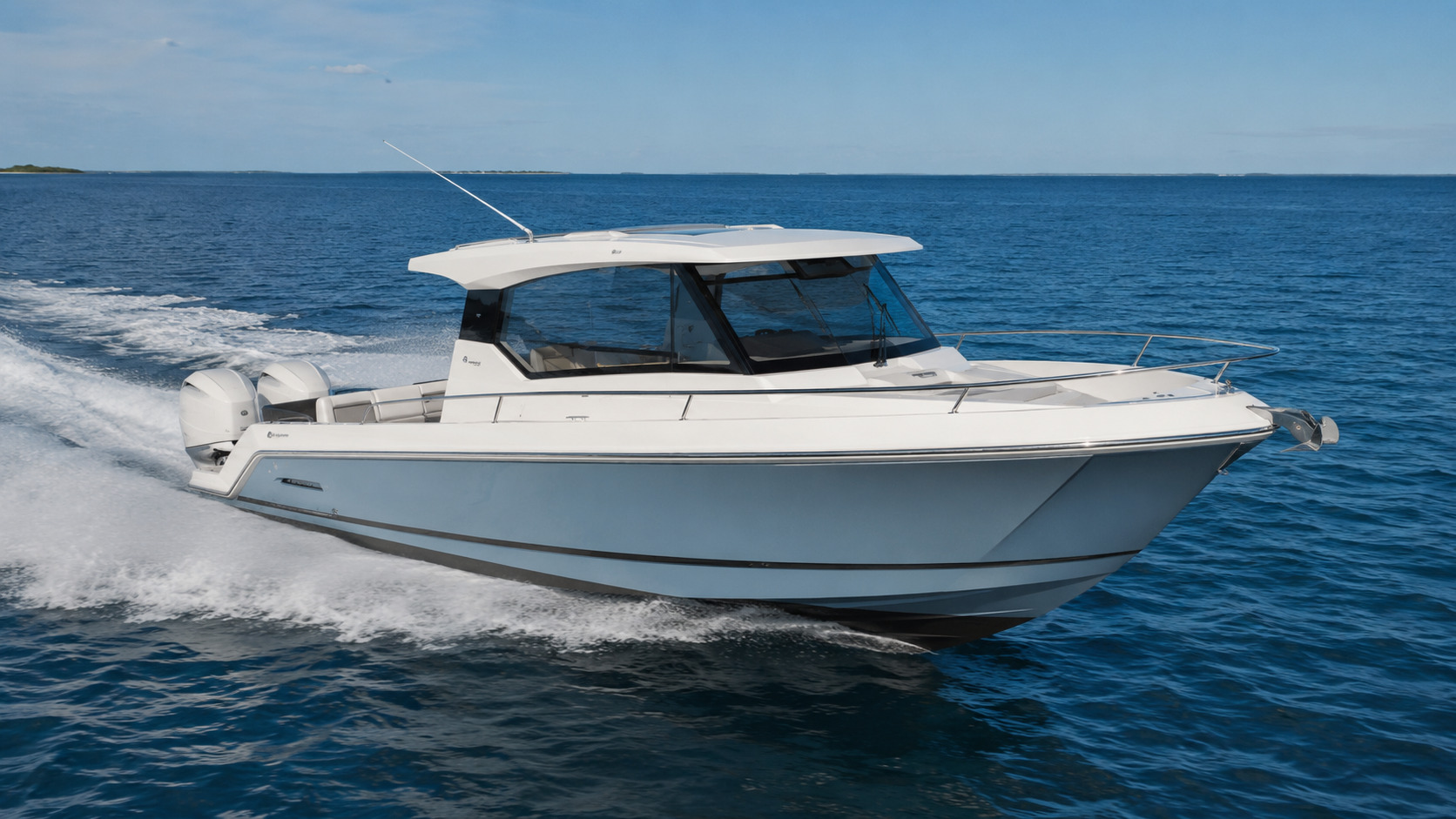
A Pursuit OS 325 buyer is not simply choosing a 34′ 6″ Pursuit. This model is the entry point into Pursuit’s current Offshore cabin range, pairing twin-engine running costs with a genuine four-person overnight layout, which is why it tends to fit cruising anglers who want a real cabin, enclosed head and galley but do not need triple engines or the beam of the OS 355. Its physical scale is straightforward: 10′ 10″ of beam, approximately 13,740 lb dry weight, 300 gal of fuel and up to 700 hp. It packages a private head, convertible cabin, mid-berth, grill, refrigerator and fishing cockpit into a 34-foot-6-inch hull without forcing the buyer into triple-outboard ownership. The OS 325 is easier to handle and fuel than the larger Offshore models, but its narrower beam and smaller bridge deck give up some entertaining room, tankage and big-water mass. For a cross-shop, start with the OS 355 if the buyer wants more beam, triple power, larger tanks and a more substantial cabin. Move to the DC 326 if the buyer wants more open family day-boating space with less overnight emphasis. The S 328 is worth a look when the buyer wants center-console circulation and lighter overnight expectations.
The OS 325 is the Offshore model for buyers who want a real cruising cabin without immediately accepting triple-engine ownership. Twin outboards, a four-person sleeping plan and a fishable cockpit make it unusually balanced. It is still a complex boat compared with a day model, but the complexity is focused on equipment a weekend cruiser can actually use: galley, head, refrigeration, climate control and berths.
The OS 325 uses a 20° transom and a 10′ 10″ beam, drawing about 2′ 2″ with the engines raised and 2′ 9″ with them lowered. Dry weight of roughly 13,740 lb is only the starting point. A full 300 gal fuel load is significant, and cruising gear or fishing equipment adds more. Condition matters more than shine. Then compare that feel with the OS 355, particularly if the buyer is attracted to more beam, triple power, larger tanks and a more substantial cabin.
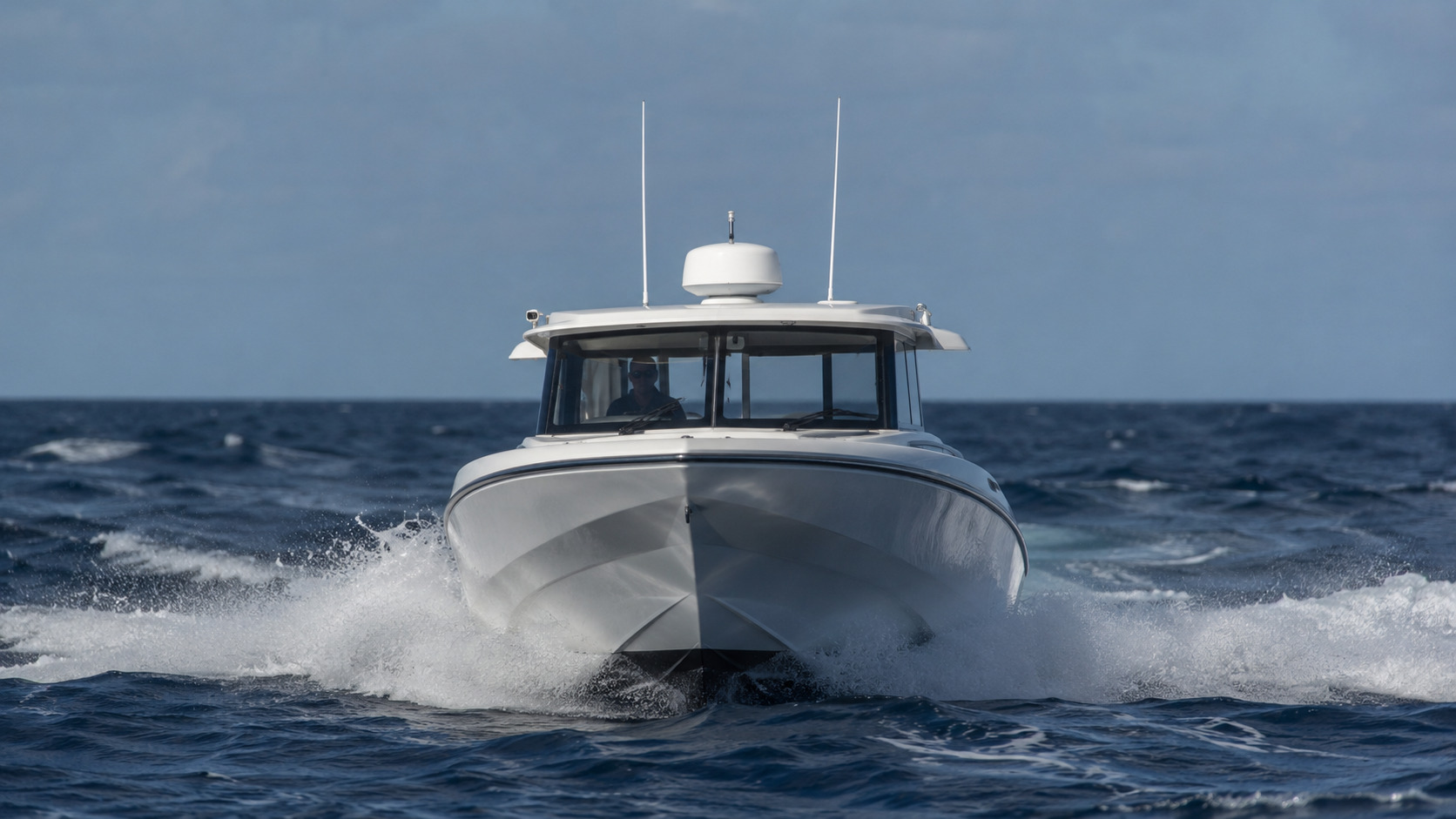
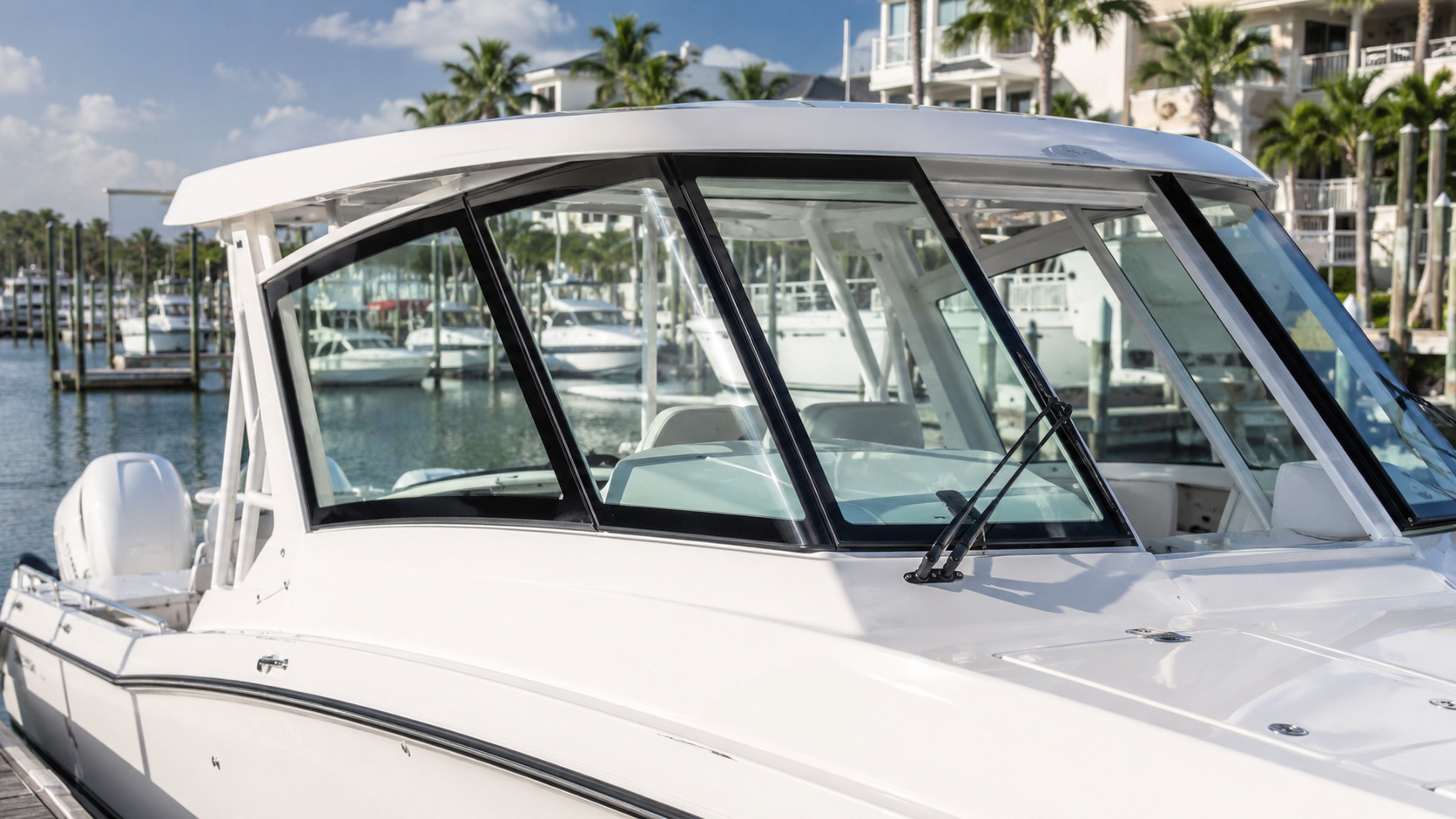
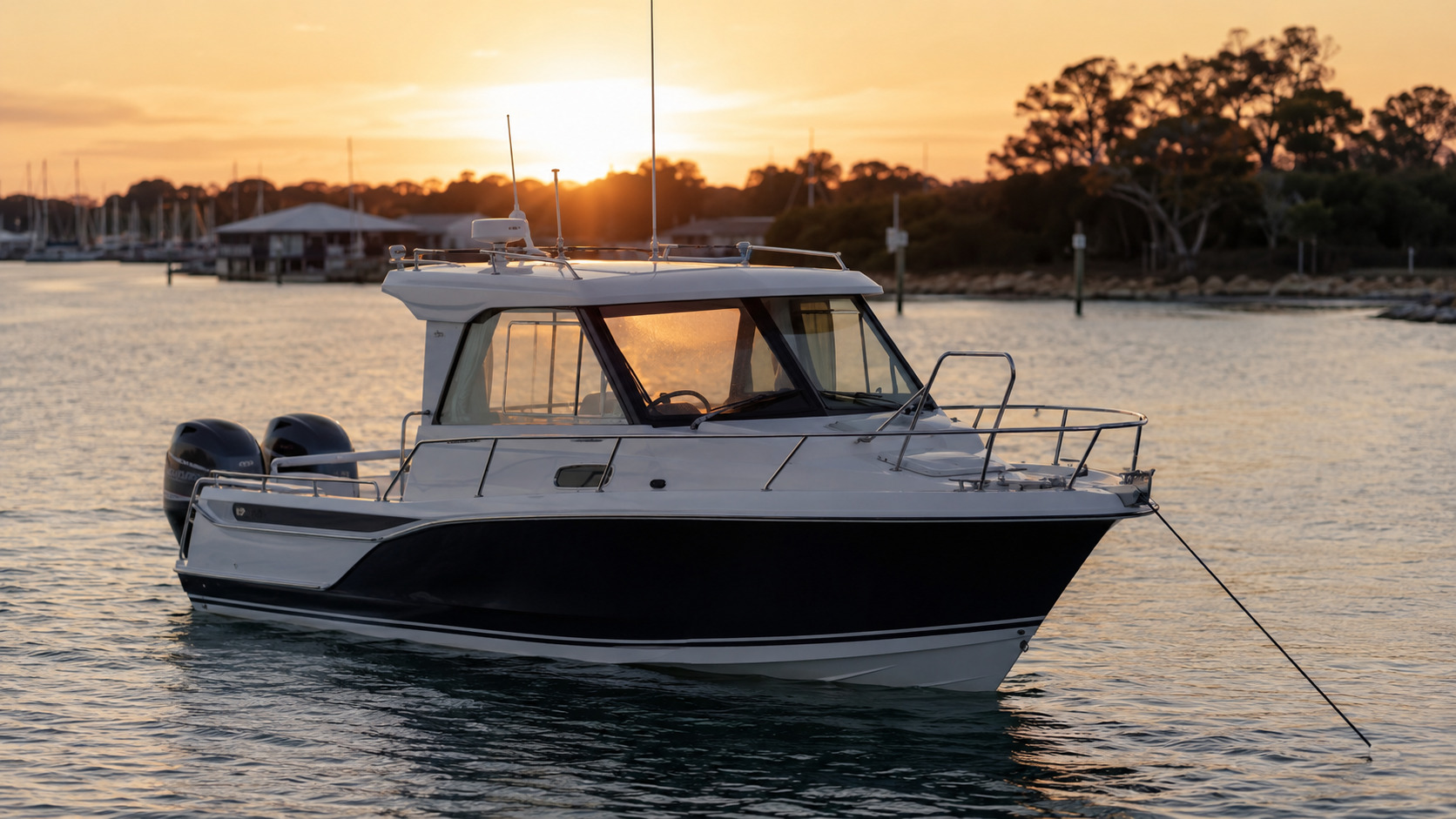
At 34 feet 6 inches and 10 feet 10 inches of beam, the OS 325 has enough hull to support a substantial cabin without feeling like the larger 355. The 20-degree transom should be tested with the bridge occupied and a realistic fuel load. Pay attention to visibility through the single-piece windshield and to the way the boat settles when passengers move from the bridge lounge to the cockpit.
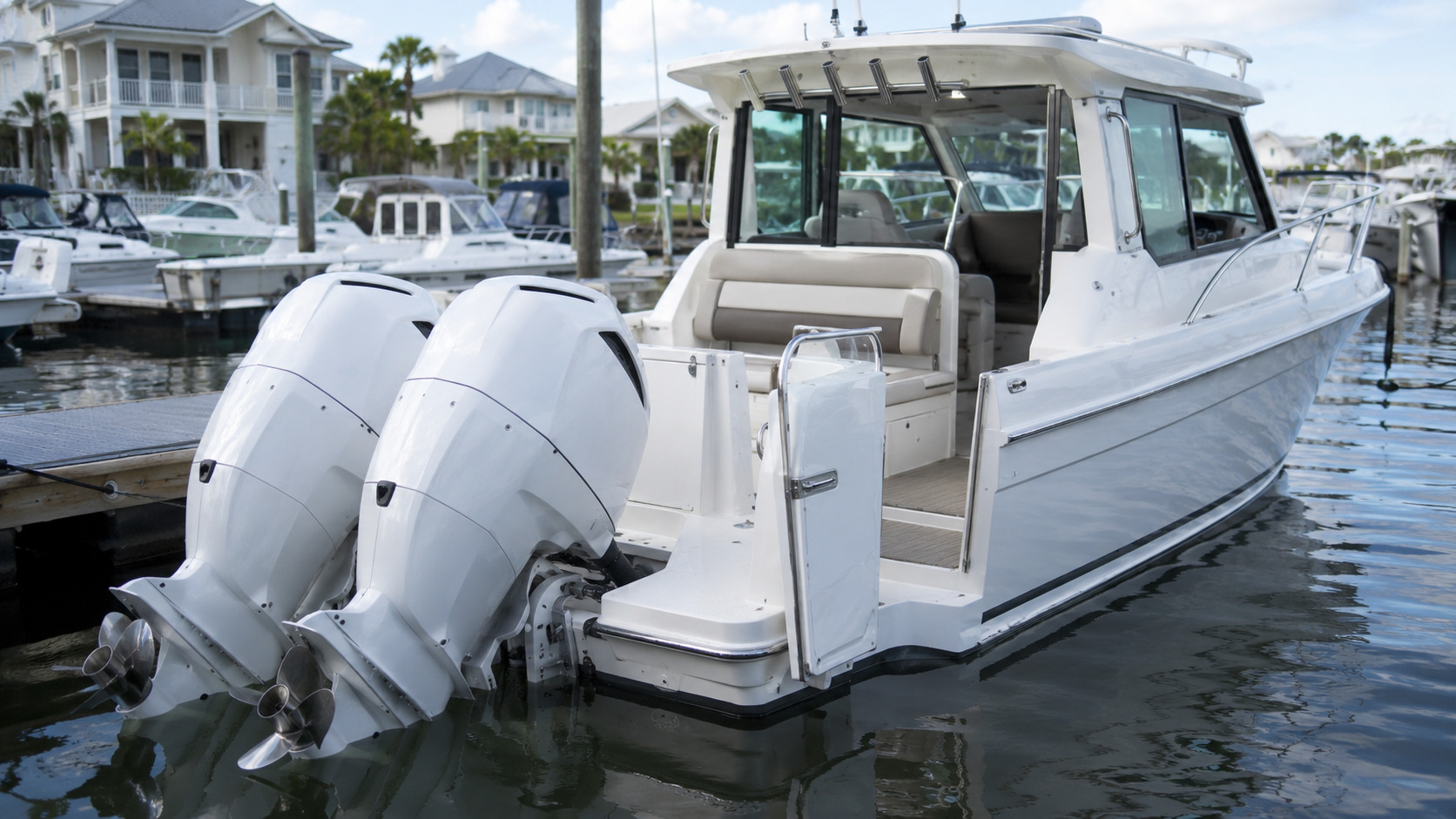
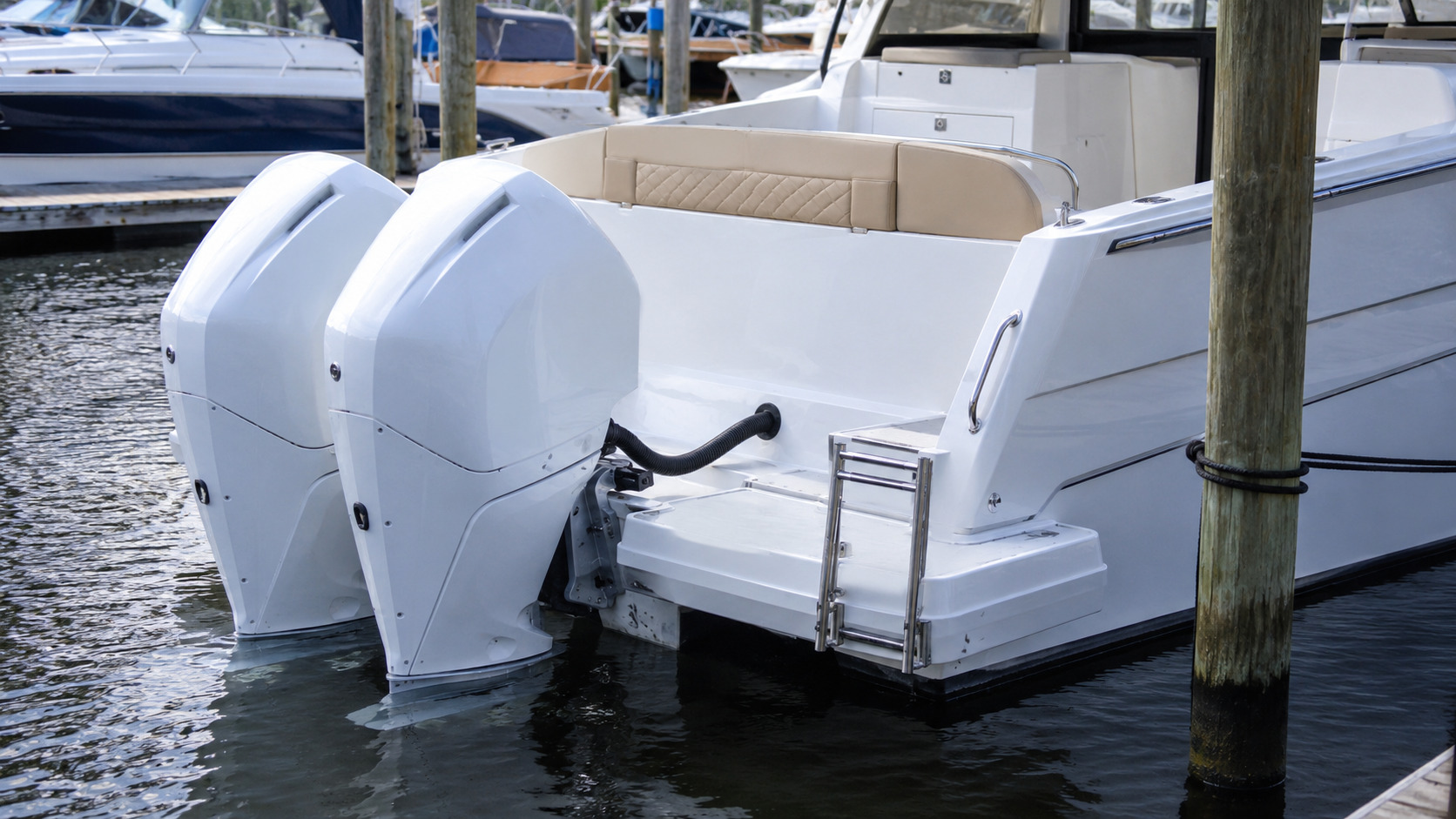
Pursuit pairs the OS 325 with twin Yamaha F300 or F350 in the reference configuration. Maximum published output is 700 hp. The OS 325 also needs a low-speed test.
Twin F300 or F350 power gives the 325 a simpler service structure than every larger Offshore model in this set. That is a meaningful long-term advantage for a buyer who cruises regularly but does not need triple thrust. The sea trial should confirm that the selected engine package handles the boat comfortably with fuel, water and passengers aboard.
On a used boat, verify that both engines have been serviced together.
Fuel capacity, cruise planning and operating range
With 300 gal of fuel capacity, the OS 325 can support substantial time away from the dock. Tankage also affects displacement.
Ownership math changes once the OS 325 is loaded. The dry figure is about 13,740 lb, and a full 300 gal fuel load adds substantial mass before freshwater, people and gear. That wet condition is the one a lift, haul-out yard or transport plan needs to support. Buyers moving up from a smaller boat should confirm those limits before assuming their current infrastructure will carry the OS 325.
A useful OS 325 fuel plan also includes the hotel load. With 300 gal in the main tank and cruising systems running, generator time can be part of a multi-day trip even when the outboards are off. Record engine consumption at cruise, then keep generator use and reserve fuel separate so the owner knows what portion of the tank is genuinely available for the return leg. On a OS 325 trip measured in offshore hours rather than local miles, a best-case range estimate is less useful than a conservative return reserve.
The useful sea trial for an OS 325 is not a top-speed demonstration. With 20° at the transom and roughly 13,740 lb of dry weight, the boat has its own rhythm offshore. The OS 355 is the comparison to make if the buyer wants more beam, triple power, larger tanks and a more substantial cabin.
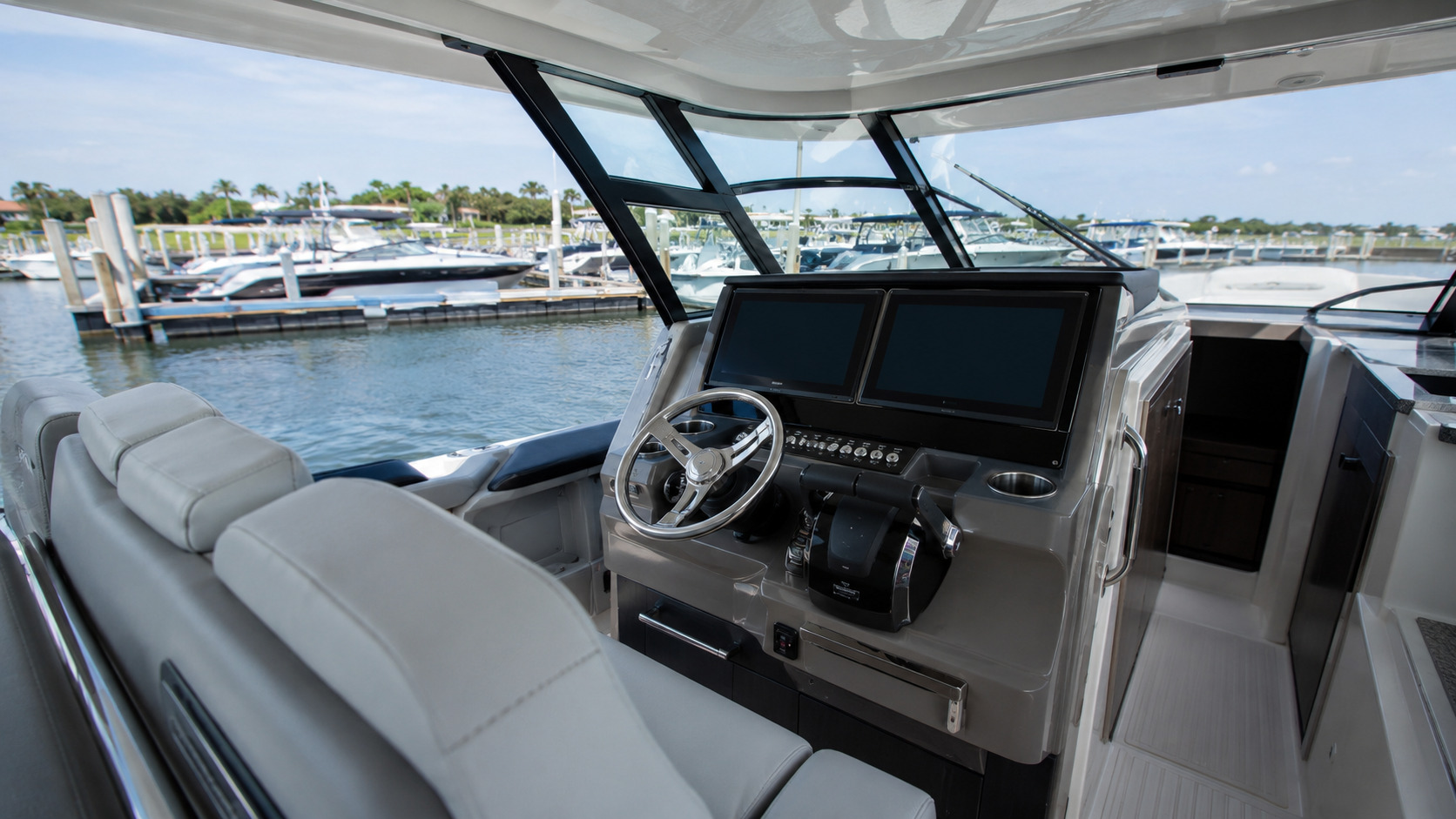
The OS 325 should be tested as a cruising boat carrying real offshore weight. Run with enough fuel and people to represent a trip, let the cabin systems operate, and settle the 20° hull at a comfortable long-range cruise rather than chasing maximum speed. Note bridge noise, windshield visibility and how easily the driver holds course in quartering chop. The OS 355 is the useful check if the OS 325’s added cruising capability does not change the trip enough to justify its ownership scale.
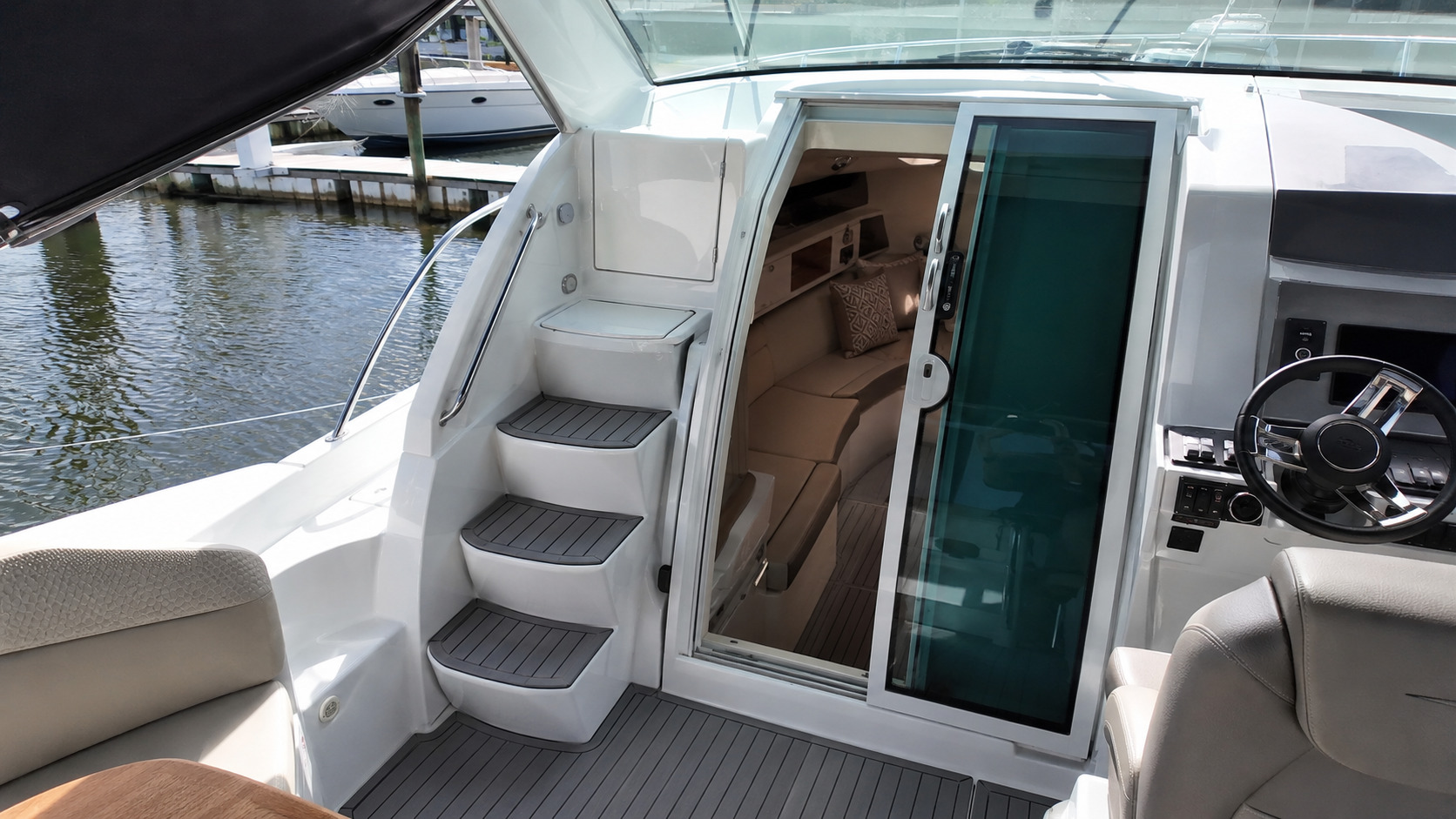
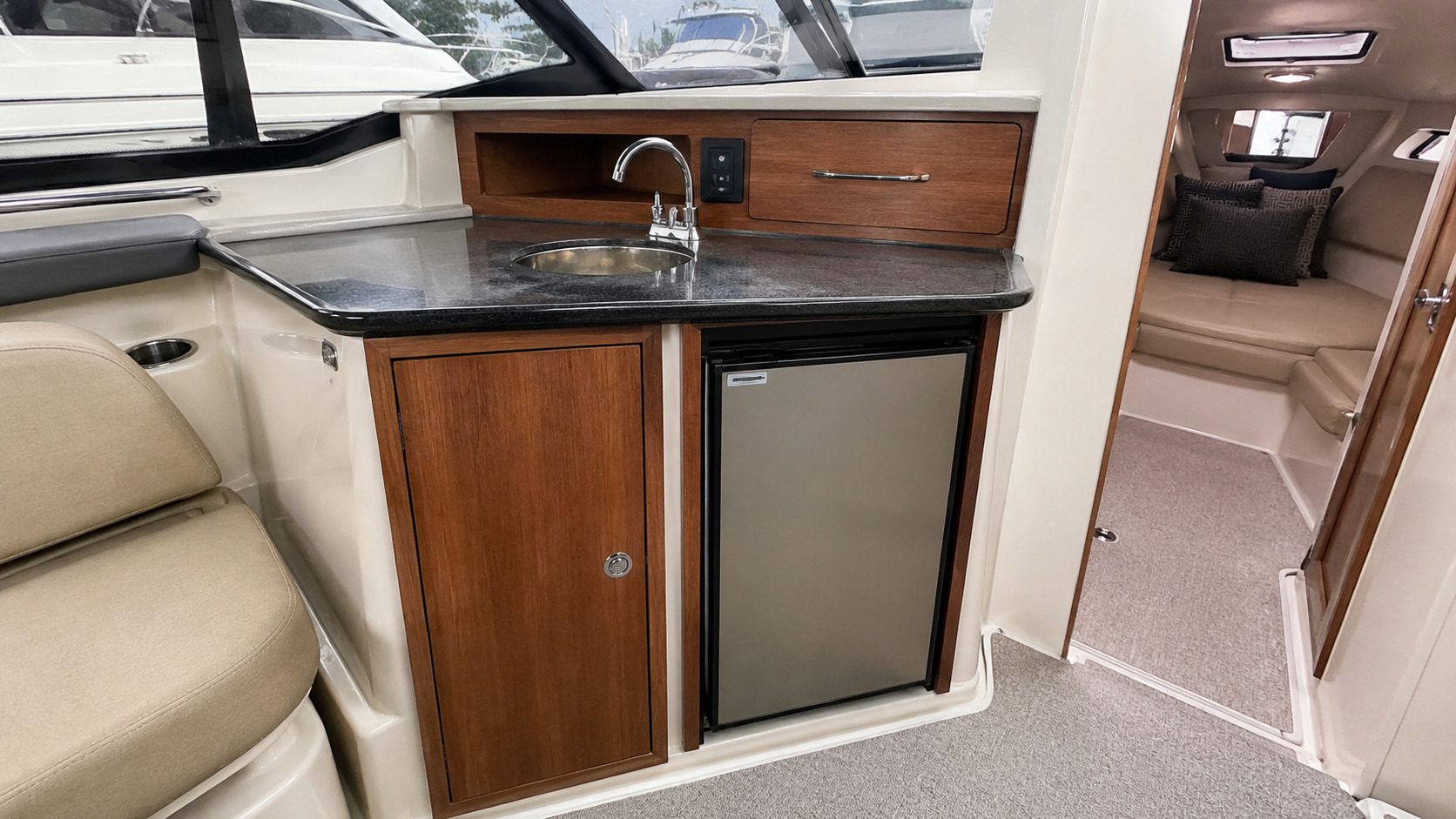
Walk the OS 325 from bow to stern before opening a single locker. Then work through Four-person sleeping layout, Port hull-side dive door and Bridge-deck entertainment center.
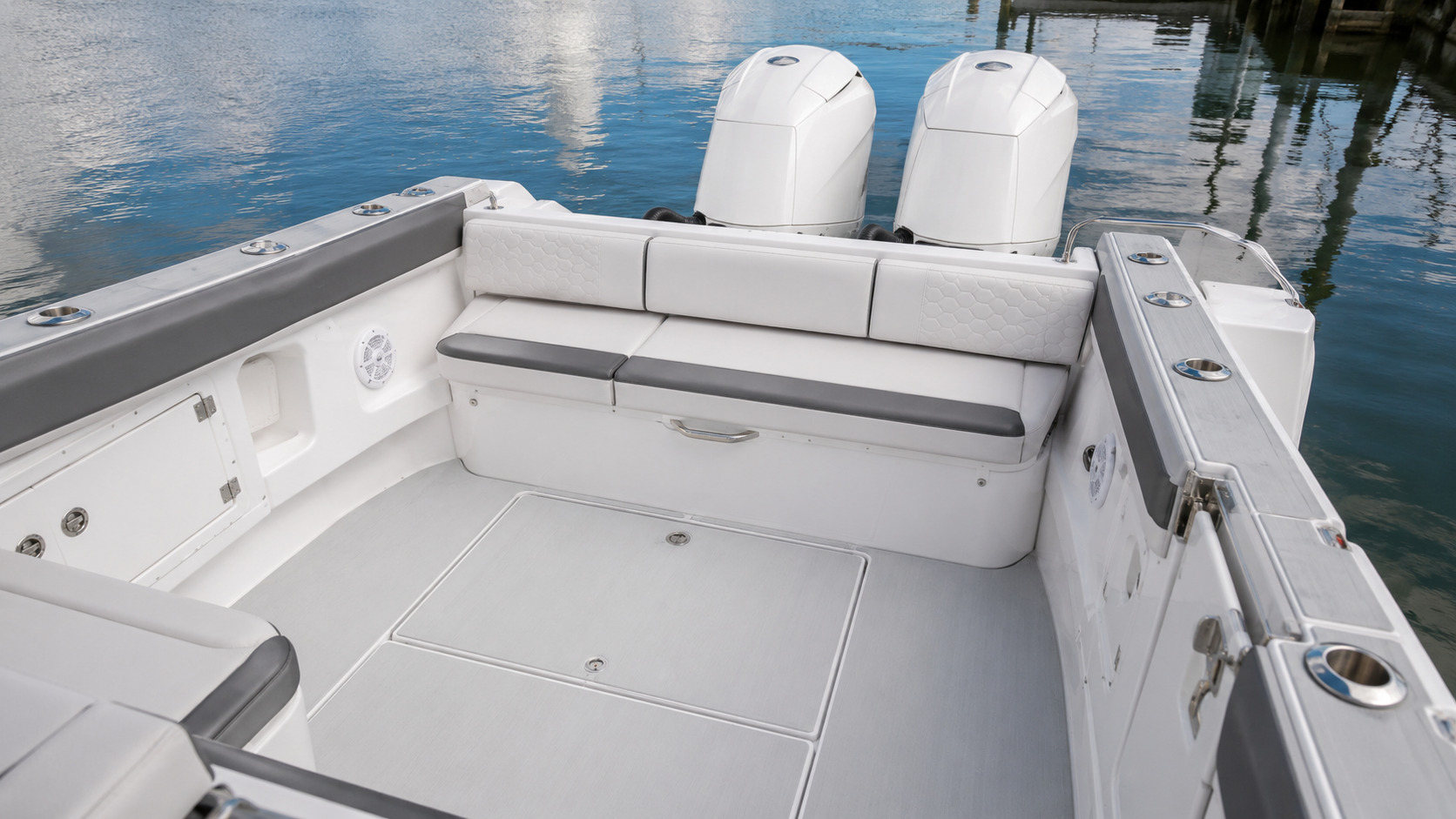
The port dive door and large transom walkway make the 325 easier to use for swimming, diving and dockside loading than its cabin profile might suggest. At the same time, the 32-gallon livewell and fish boxes keep the aft cockpit legitimate for fishing. Test the bridge grill and refrigerator with people moving through the cockpit; the social features should not make the working area feel pinched.
32-gallon livewell – The fishing system is sized for serious day use rather than occasional bait storage.
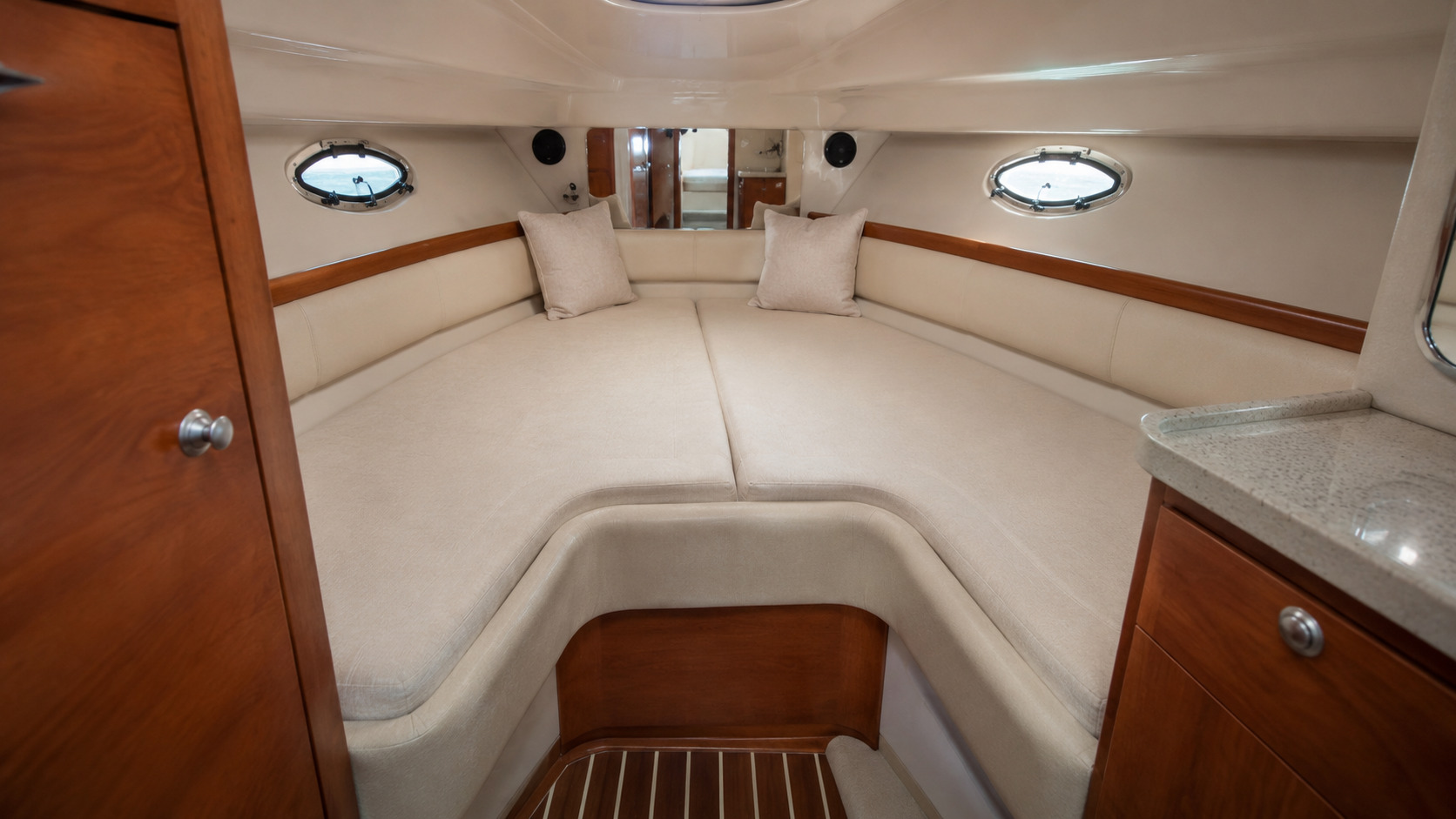
Four-person sleeping layout
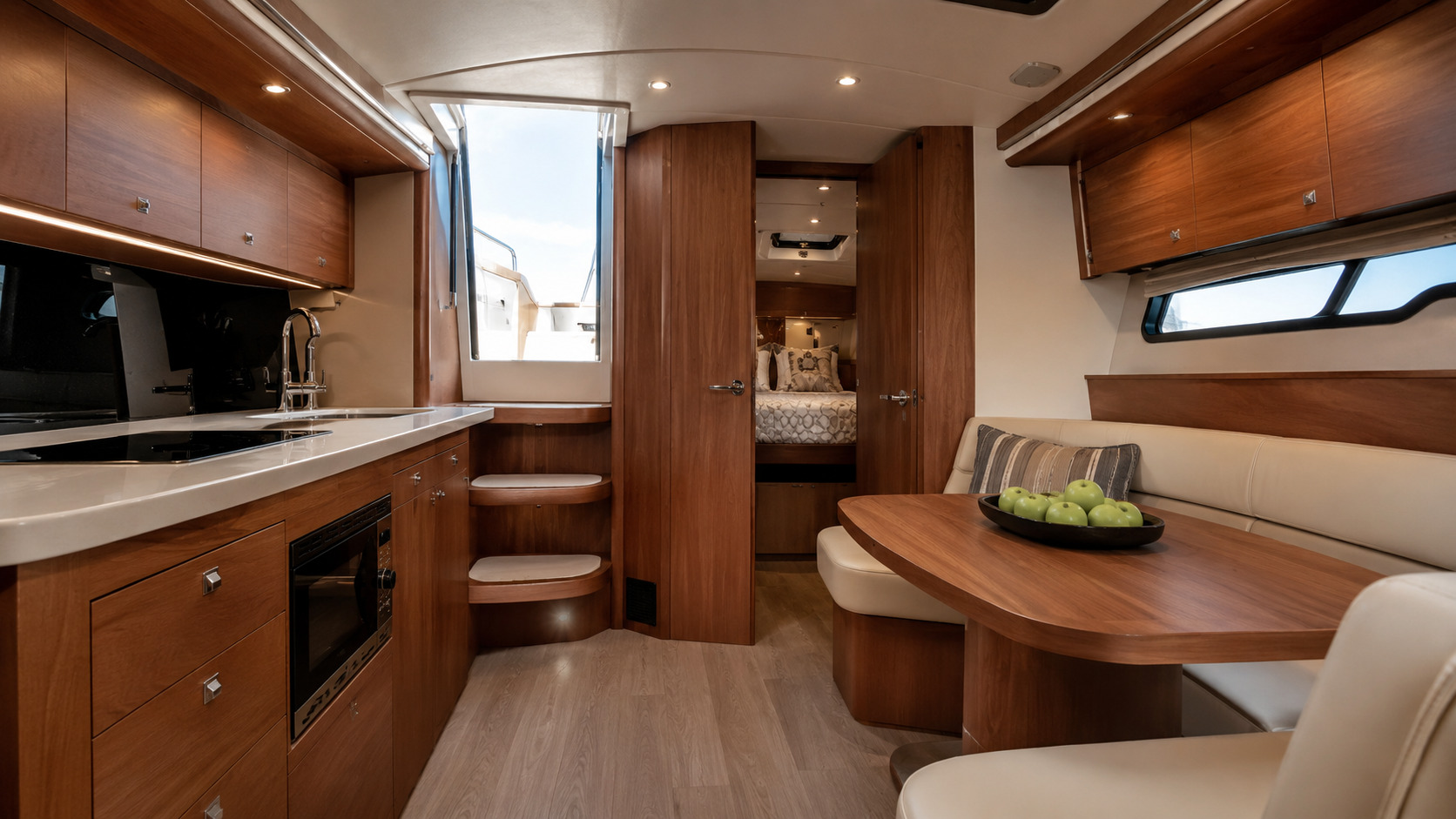
A convertible forward berth and separate mid-berth make real weekend trips possible.
Port hull-side dive door
Side access helps with diving, swimming, dock boarding and bringing a large fish aboard.
Bridge-deck entertainment center
A grill, sink and prep area keep meal preparation close to the cockpit.
Dual refrigeration locations
Cold storage exists both topside and below, useful on overnight trips.
Forward-facing bridge lounge
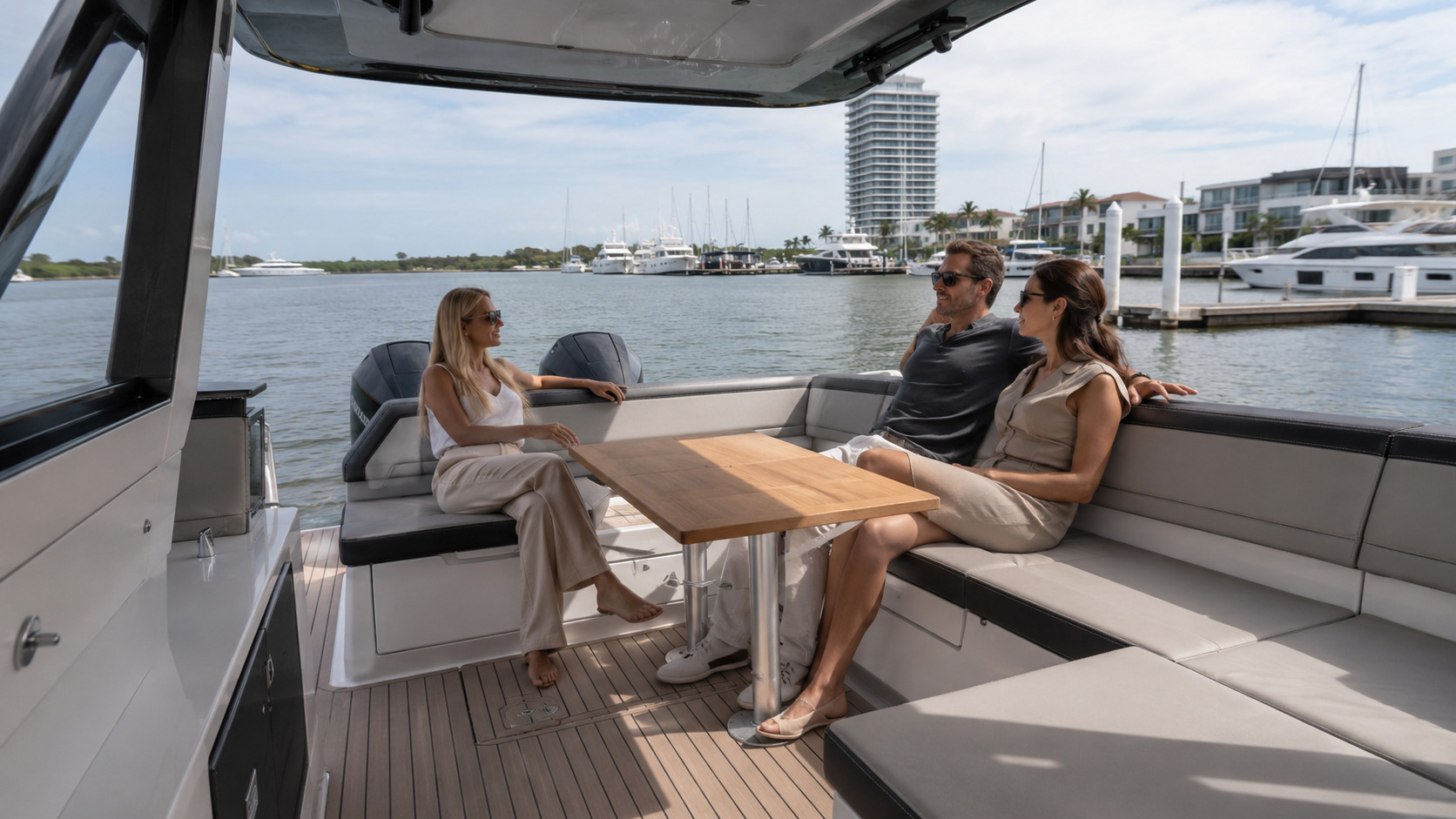
Passengers can ride under the hardtop with better sightlines than a traditional aft-facing companion bench.
Twin fish boxes with pump-out
Separate insulated boxes support offshore fishing without filling the cabin or cockpit with loose coolers.
Bow thruster
The thruster is useful when docking a 10-foot-10-inch-beam cabin boat in crosswind or current.
Electronics, pumps and onboard systems
On the OS 325, systems worth more attention than a quick switch test include Four-person sleeping layout, Bridge-deck entertainment center, 32-gallon livewell and Bow thruster.
The 325’s systems inspection should include both boat and cabin. Generator or shore-power equipment, air conditioning, refrigerators, cooktop, head, freshwater pump and electronics all need time under load. Run the climate system long enough for condensate drains and pumps to show themselves. A boat that looks pristine below deck can still have neglected hotel systems if it spent most of its life day-tripping.
Overnight capability on the OS 325 is described as sleeping capacity for four with convertible forward berth and mid-berth. Freshwater capacity is 30 gal, with 18 gal for waste.
Four-person sleeping capacity does not mean four adults will automatically be comfortable for several nights. Convert the forward berth, climb into the mid-berth and decide how privacy and storage work for the actual party. For a couple with children, the layout may be ideal. Two adult couples may have a different standard for separation. That distinction is worth learning before choosing the 325 over a larger cabin boat.
pursuit boats offshore os 325 galley cabin utility 10
pursuit boats offshore os 325 hardtop glass detail 18
pursuit boats offshore os 325 helm detail 06
pursuit boats offshore os 325 hero underway 01
pursuit boats offshore os 325 low waterline running 15
pursuit boats offshore os 325 marina evening profile 23
pursuit boats offshore os 325 offshore fishing ready 24
pursuit boats offshore os 325 premium exterior hero 25
pursuit boats offshore os 325 premium marina arrival 13
pursuit boats offshore os 325 quiet cove anchored 21
pursuit boats offshore os 325 rear quarter running 03
pursuit boats offshore os 325 side profile underway 12
pursuit boats offshore os 325 stern boarding angle 11
pursuit boats offshore os 325 sunset flagship angle 14
pursuit boats offshore os 325 transom outboards detail 20
pursuit boats offshore os 325 aft cockpit social 17
pursuit boats offshore os 325 berth sleeping angle 09
pursuit boats offshore os 325 bluewater cruising profile 22
pursuit boats offshore os 325 bow on offshore 16
pursuit boats offshore os 325 cabin door companionway 19
pursuit boats offshore os 325 cabin interior 08
pursuit boats offshore os 325 cockpit seating fishing angle 07
pursuit boats offshore os 325 dockside luxury profile 04
pursuit boats offshore os 325 elevated wide exterior 05
pursuit boats offshore os 325 front quarter offshore running 02
Typical Pursuit OS 325 pricing
The propulsion package is twin Yamaha F300 or F350, so engine condition is central to value. Budget beyond closing.
The OS 325’s twin-engine configuration can make it attractive in the pre-owned market because it avoids a third outboard while retaining a full cruising interior. Value should follow the condition of both sides of that equation.
Healthy twins are not enough if the generator, air conditioning and galley are overdue, and a perfect cabin does not compensate for weak engine records.
Market price band
Pricing on request
Estimated monthly
Ask us for a payment
Illustration only and not an offer of credit.
Estimate a Pursuit OS 325 payment
Final rate, term, down payment and eligibility depend on the borrower, the OS 325 being purchased and the transaction structure.
Illustration only and not an offer of credit. Your actual rate and term depend on credit profile, vessel age, loan amount and ownership structure.
Compare the OS 325 with nearby Pursuit models
The OS 355 is the first comparison when the buyer wants more beam, triple power, larger tanks and a more substantial cabin. Against the OS 325, those differences change more than performance; they change crew space, service burden and where the boat fits physically. Look at the DC 326 when the buyer wants more open family day-boating space with less overnight emphasis. The S 328 belongs on the list when the buyer wants center-console circulation and lighter overnight expectations. The OS 325 should remain the choice only when its own case stays clear after those comparisons: It packages a private head, convertible cabin, mid-berth, grill, refrigerator and fishing cockpit into a 34-foot-6-inch hull without forcing the buyer into triple-outboard ownership.
The size comparison with the OS 355 is worth putting on paper. The OS 325 is 34′ 6″ long with 10′ 10″ of beam, while the OS 355 is 37′ 11″ with a 12′ 0″ beam. Fuel capacity is 300 gal versus 388 gal. Those differences can affect dockage and operating cost just as much as they affect cockpit space.
Start an OS 325 purchase by confirming what the boat actually is. The OS 325 is affordable when the buyer can purchase it and still maintain the systems that made it desirable.
A good OS 325 purchase starts with a buyer who actually intends to use the cabin. If the berth, galley and head are going to turn day trips into weekends, the additional systems have a purpose. If the family rarely sleeps aboard, a DC 326 may offer more open social space with less interior maintenance. The 325 should be chosen because cruising is part of the plan, not because the cabin looks impressive at the dock.
The specifications on this guide describe the current or reference OS 325 configuration used for comparison. Pursuit equipment can change by model year, and engines or options may differ on an individual boat. Before closing, verify the hull identification, the installed twin Yamaha F300 or F350 package and every high-value option that influenced the price.