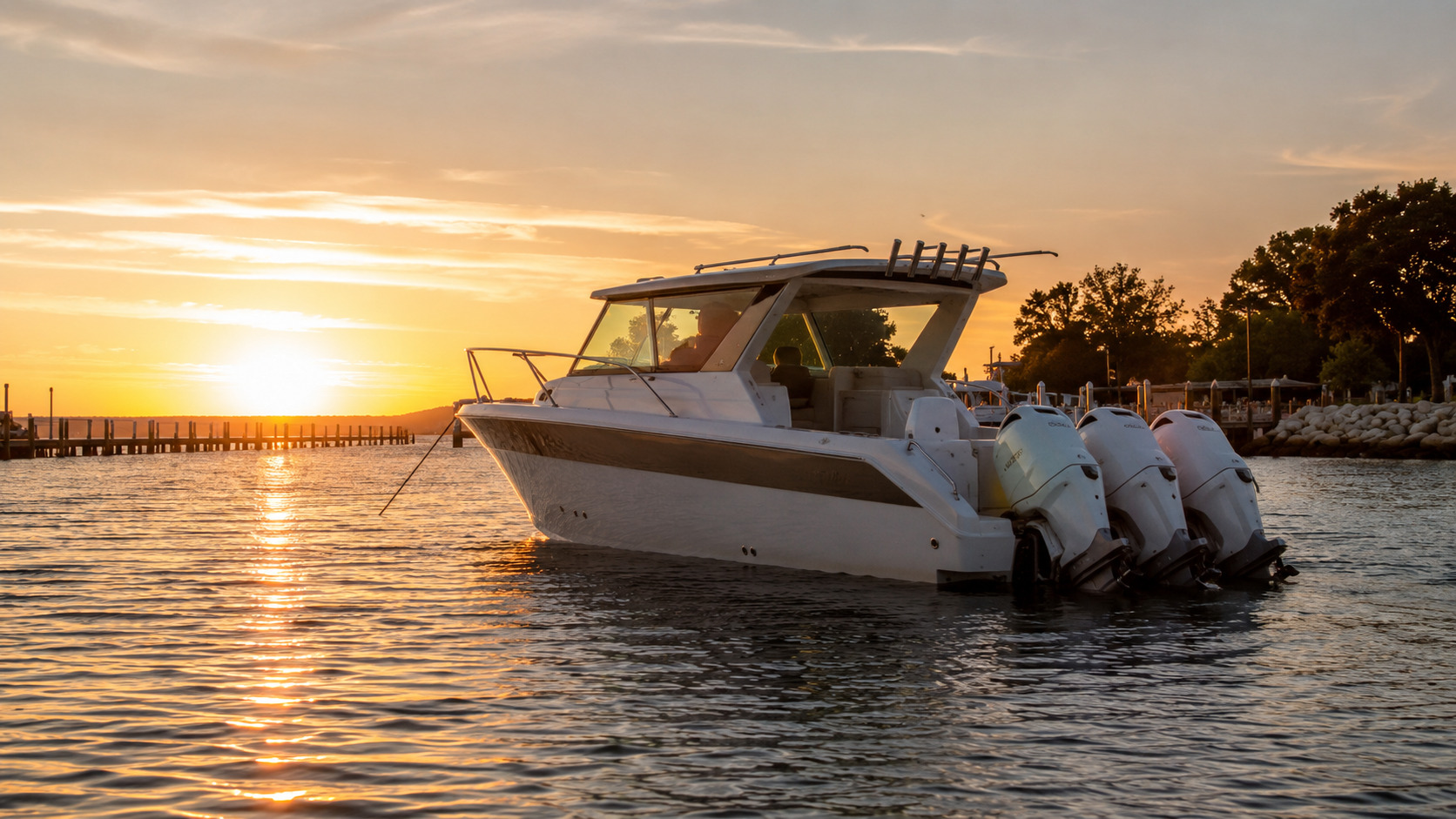
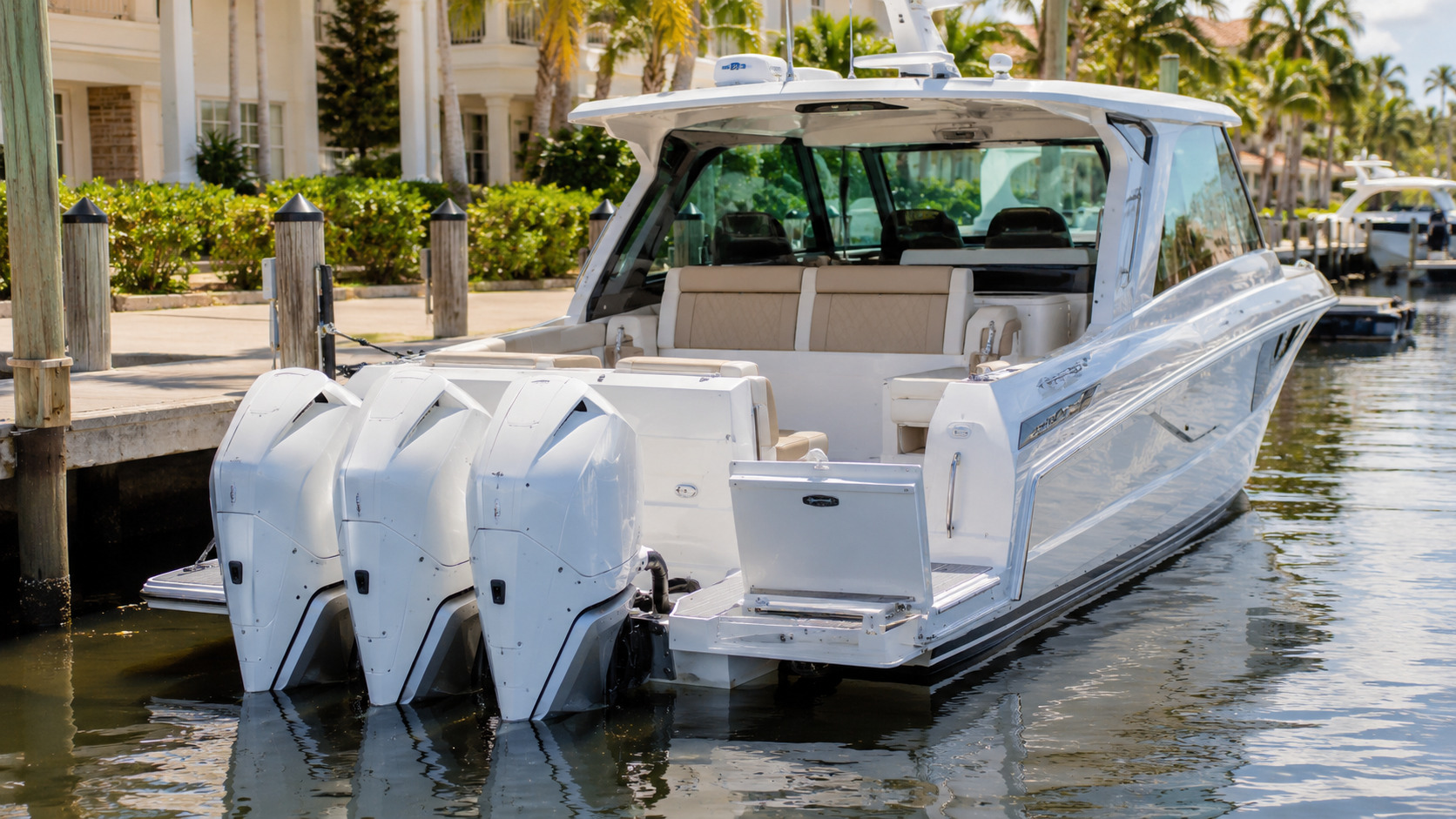
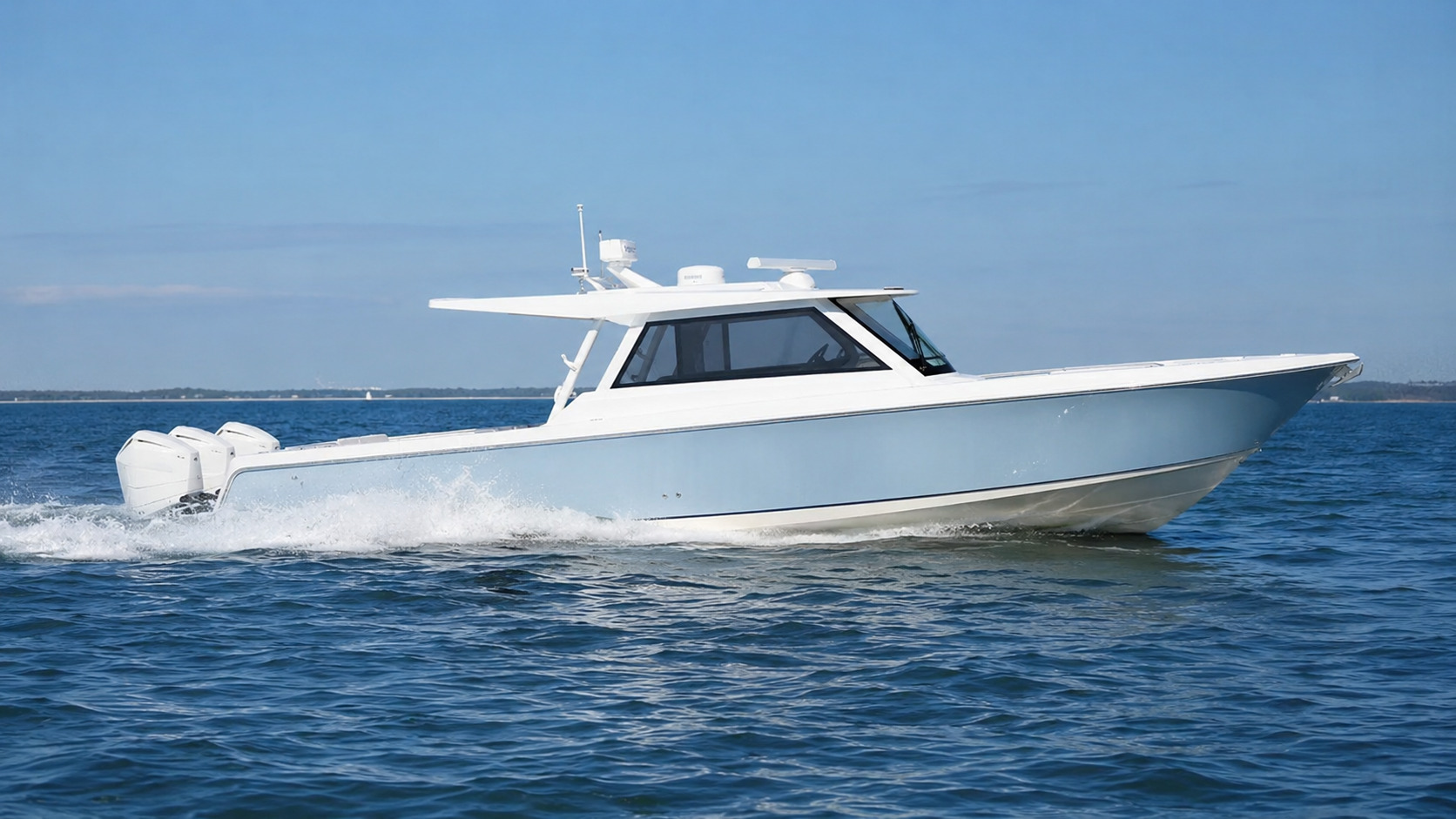
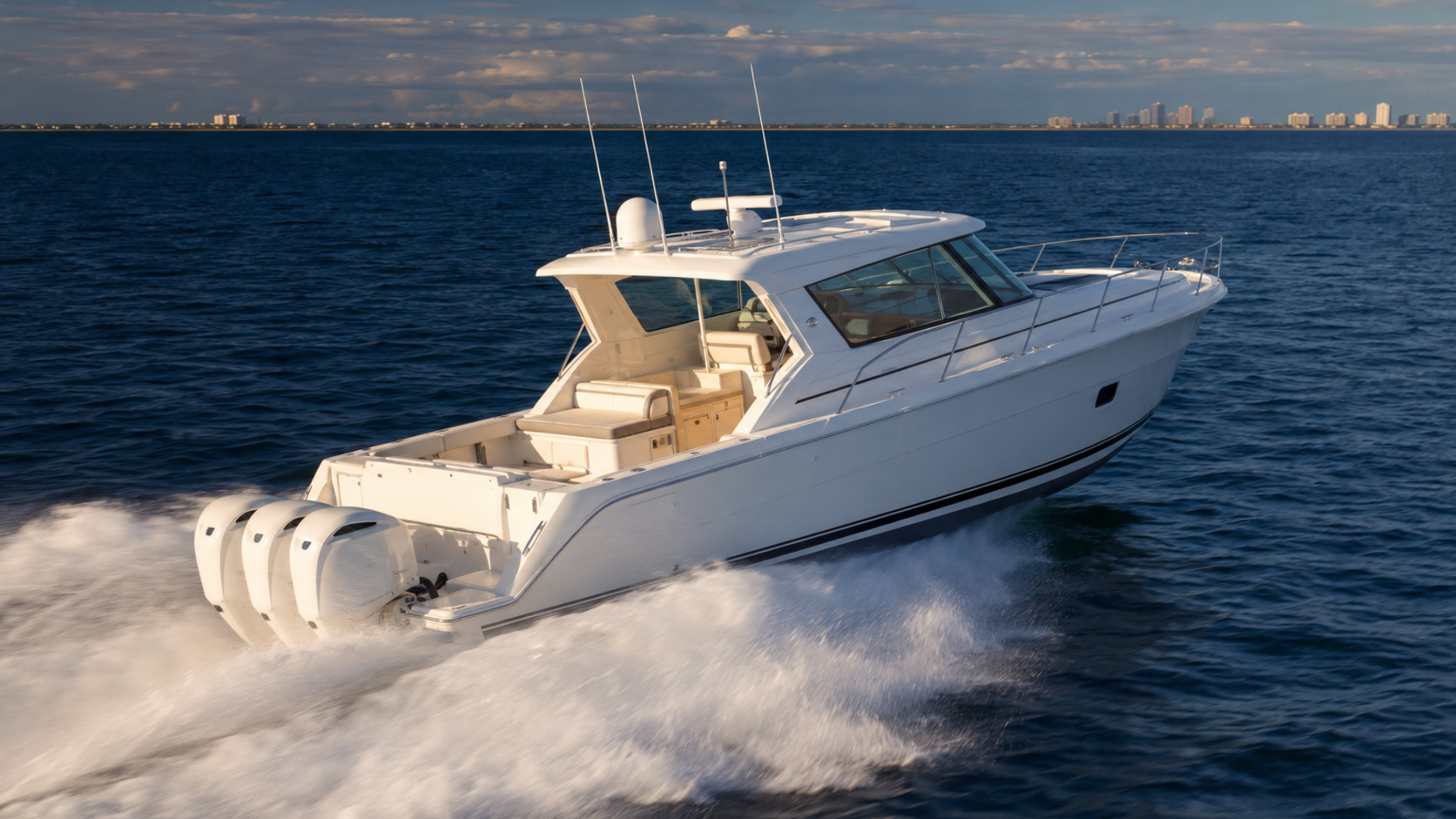
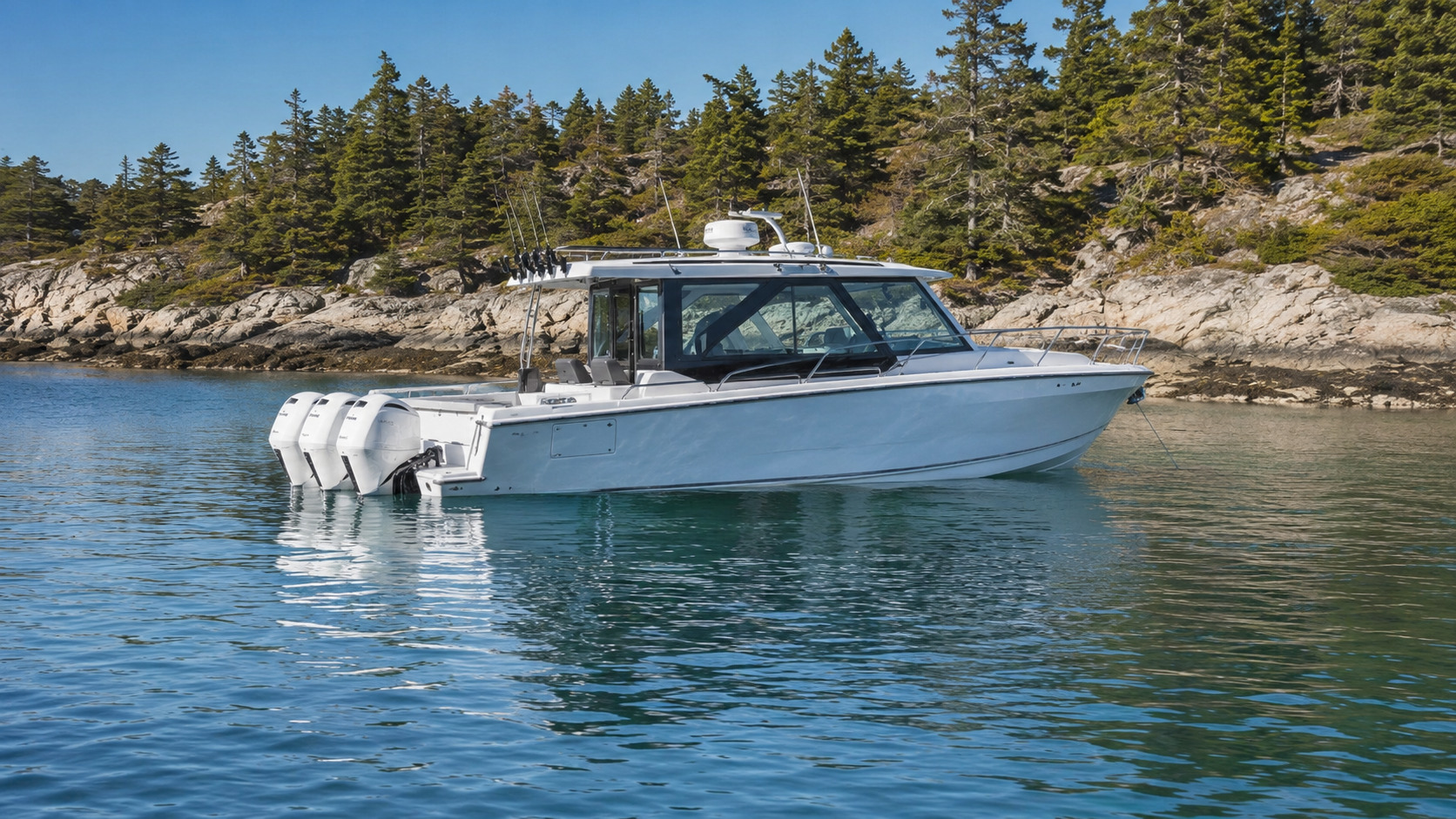
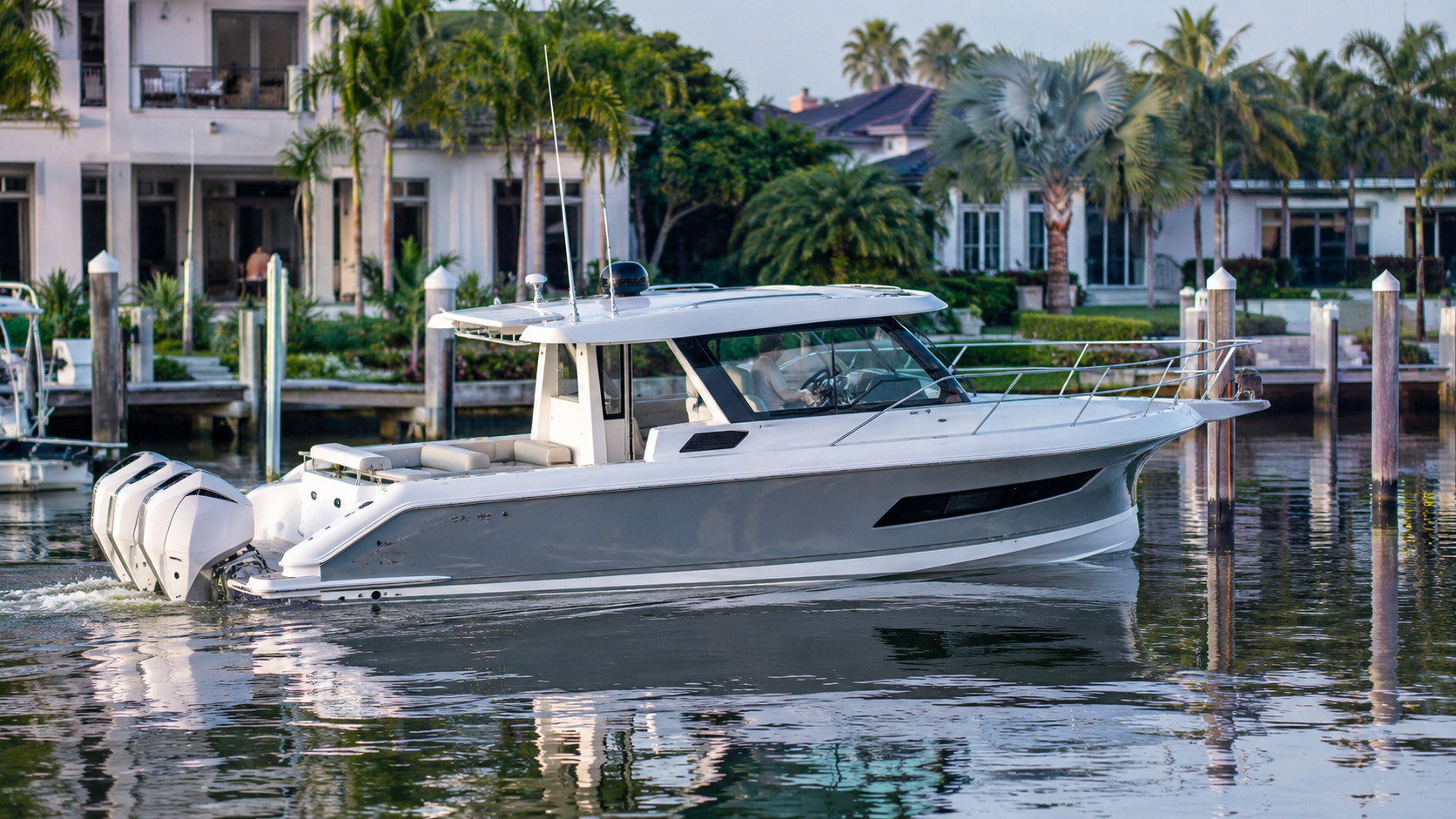
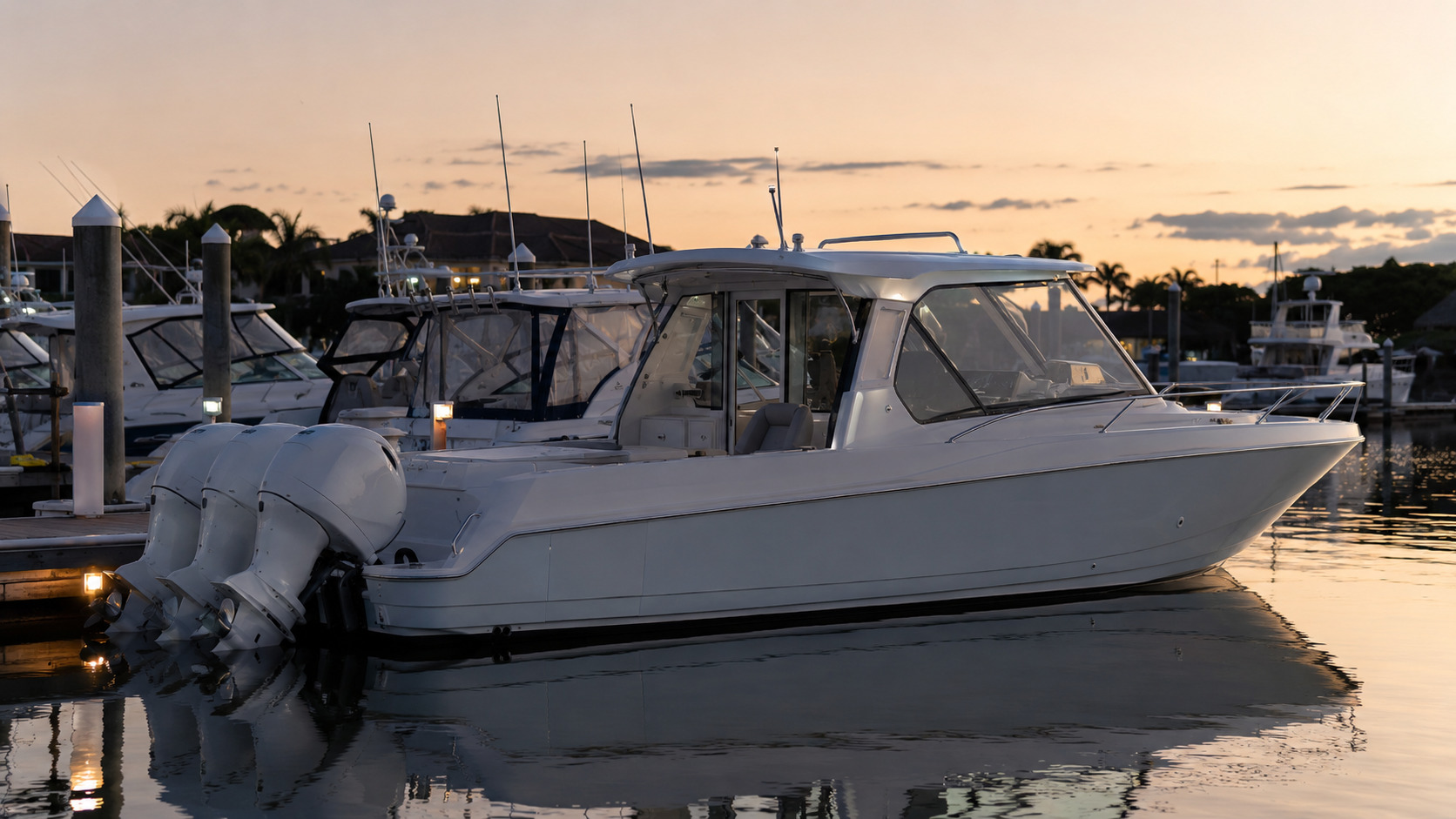
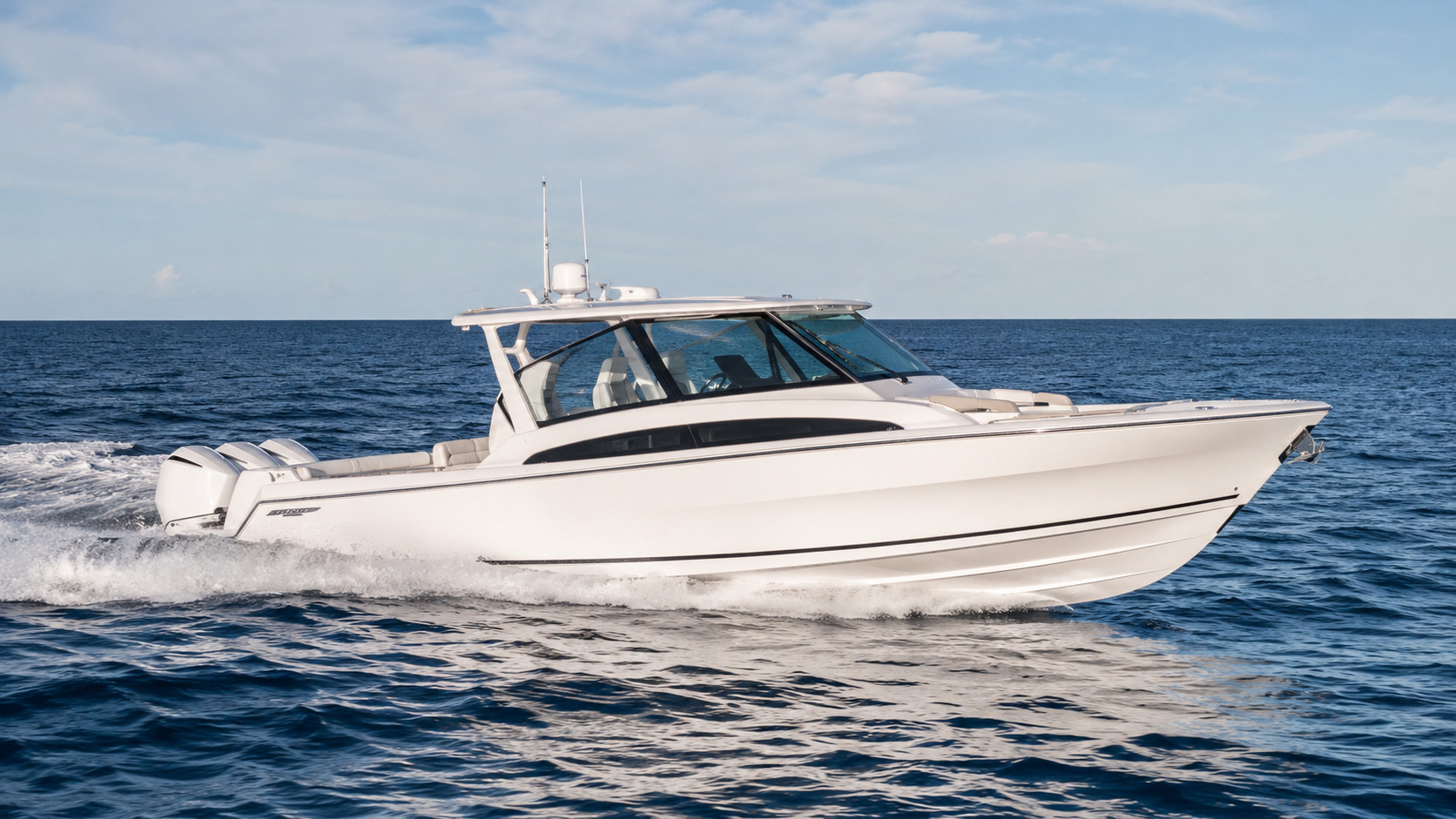
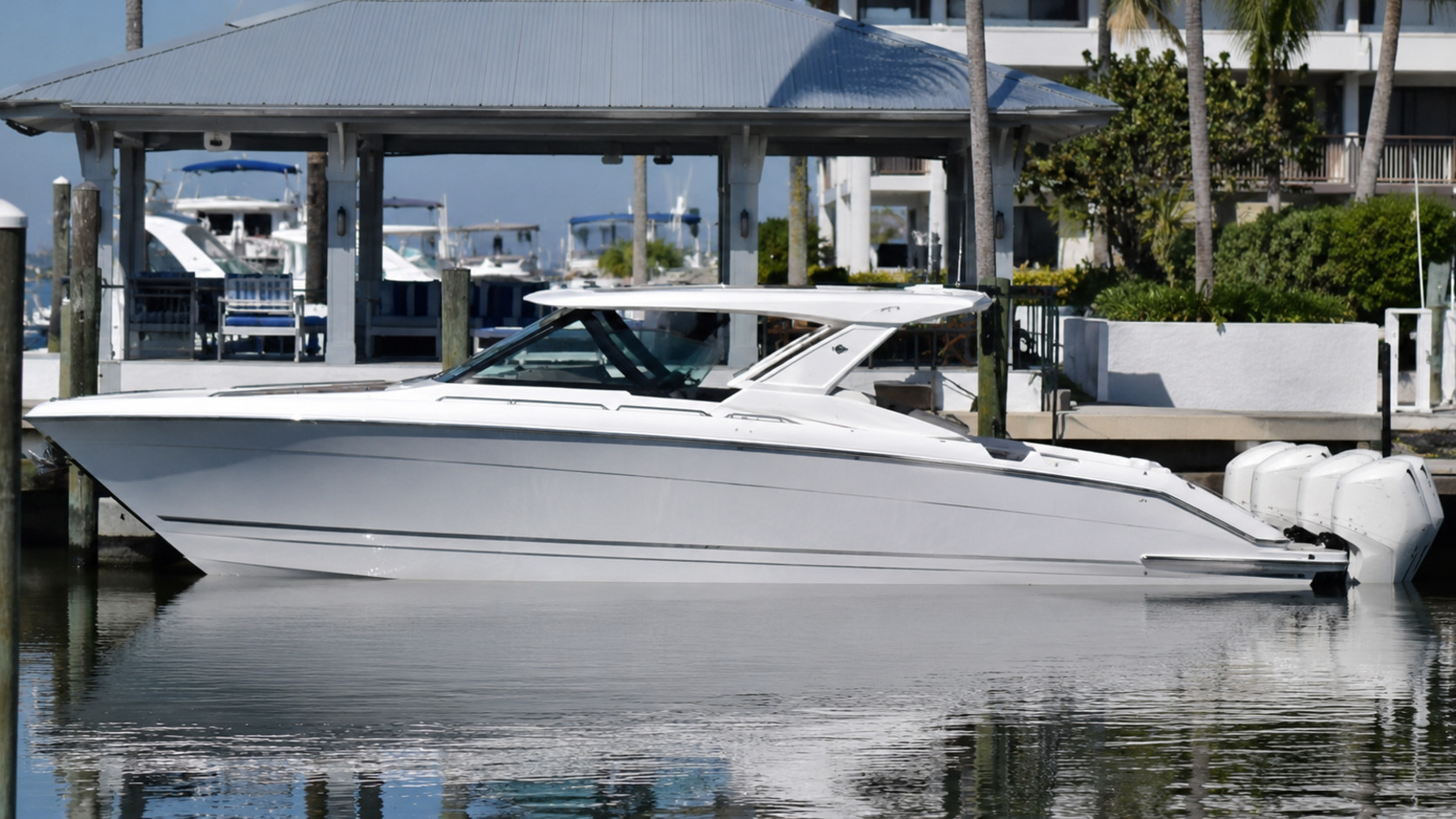
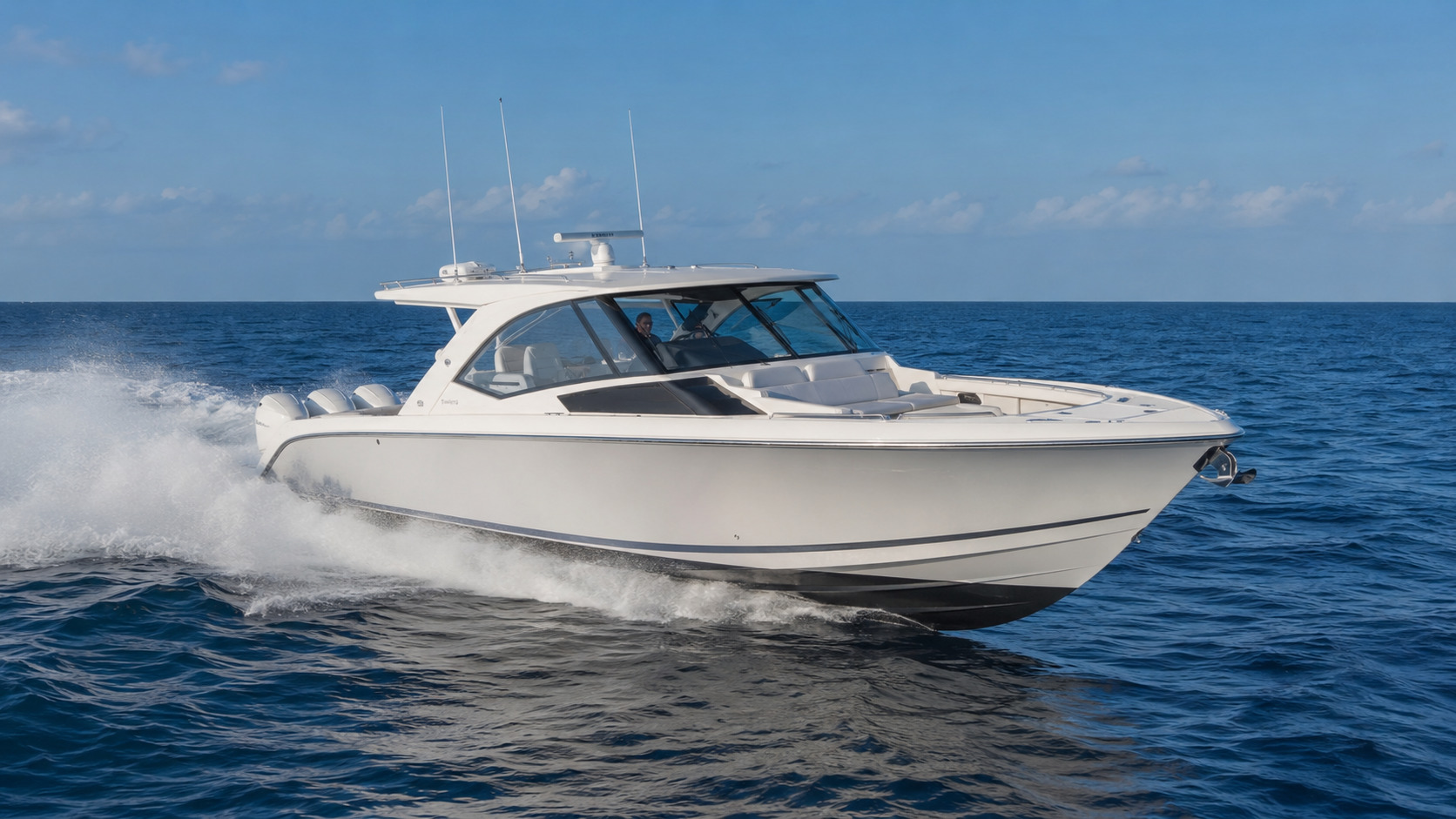
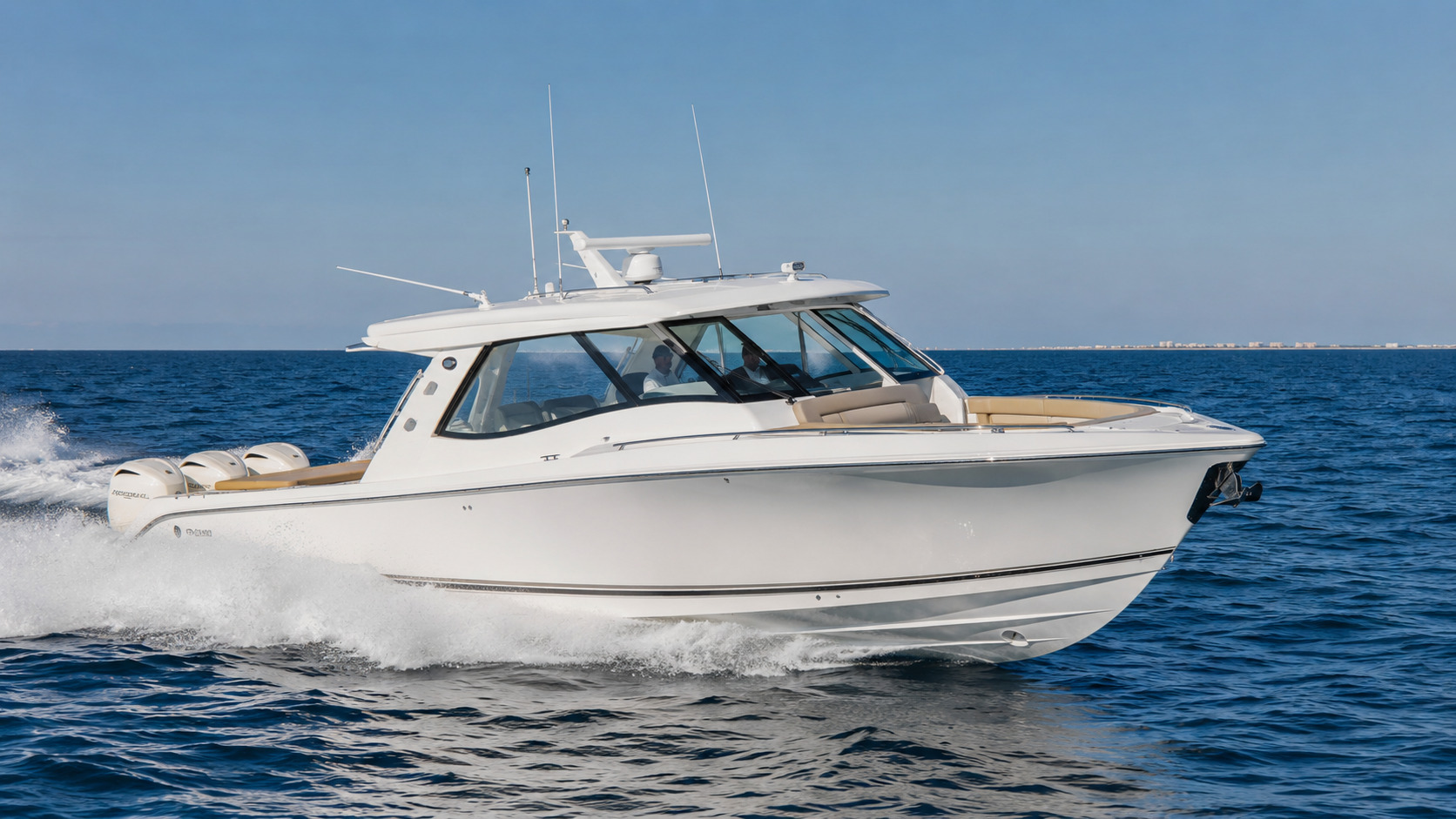
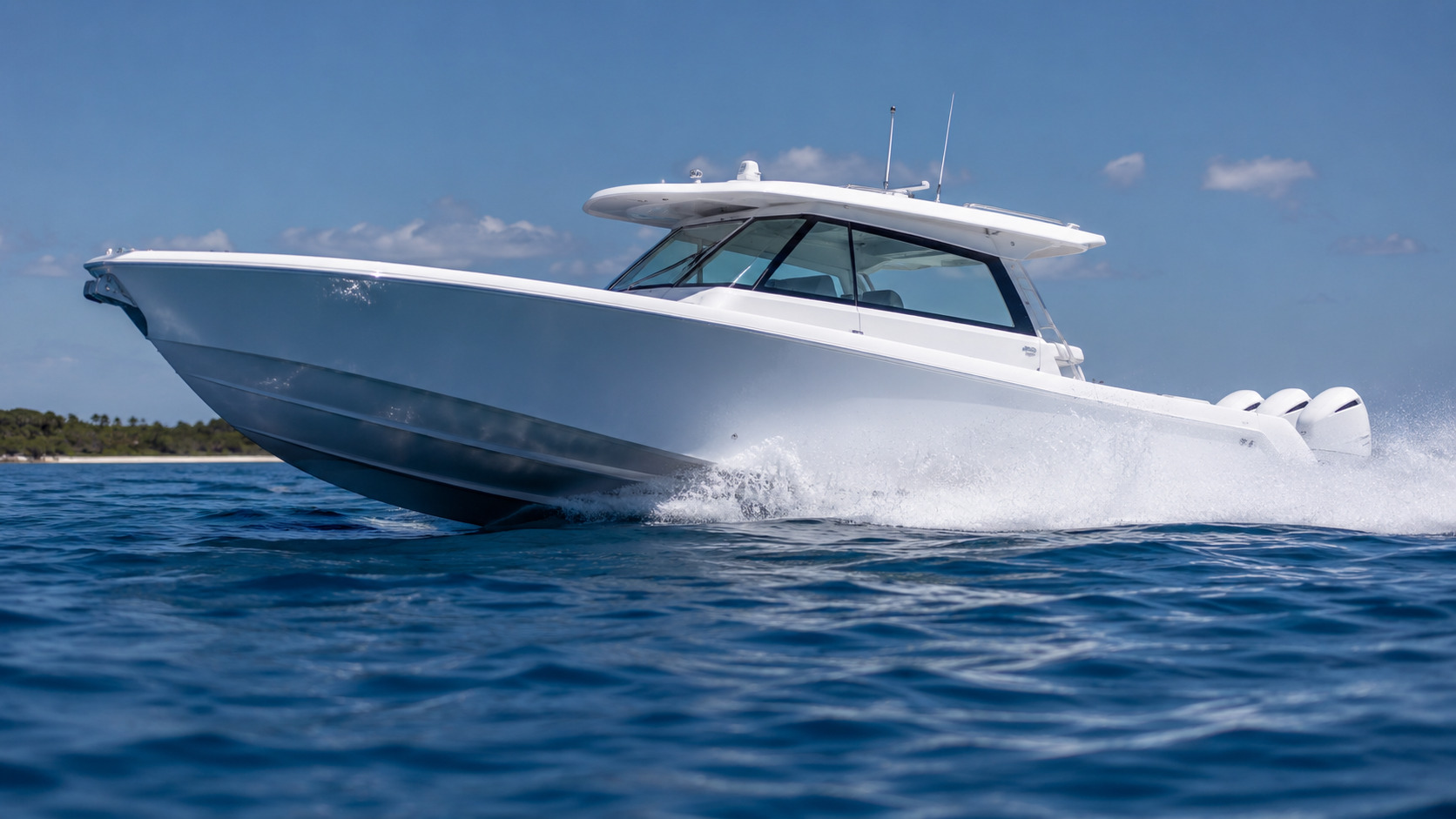
The Pursuit OS 405 is a 43-foot offshore express where the experience shifts from large cabin boat to small yacht, with triple 450s, standard gyro stabilization and a much more substantial interior.
Buyers tend to notice the finish and layout first on a Pursuit OS 405, but the better place to begin is mission. This boat is a 43-foot offshore express where the experience shifts from large cabin boat to small yacht, with triple 450s, standard gyro stabilization and a much more substantial interior. It works best for owners who want long-range offshore capability, real guest accommodations and yacht-like systems but still prefer outboards and an angler-friendly cockpit. At 43′ 0″ overall and 13′ 0″ of beam, with about 25,292 lb of dry weight, the OS 405 has enough physical presence to demand a realistic storage and service plan. It carries 482 gal of fuel and accepts up to 1,350 hp. More important than the raw numbers is the reason they are packaged this way: Its standard Seakeeper 6, large bridge deck, island berth, mid-cabin and 482-gallon fuel tank make it a different ownership proposition from the OS 355 rather than a simple size upgrade. The OS 405 brings comfort and capability that smaller Pursuits cannot match, but acquisition cost, fuel, dockage, generator service and system complexity rise sharply at this size. Use the OS 355 as the first check when the buyer wants easier marina handling and lower triple-engine operating scale. The OS 445 belongs in the conversation when the buyer wants more beam, larger tanks, dual staterooms and a galley-up layout. Consider the S 428 when the buyer wants a more open center-console flagship with less emphasis on overnight cruising.
The OS 405 is the point where Pursuit ownership begins to resemble small-yacht ownership. Triple F450s, standard Seakeeper 6 stabilization, an island forward berth and separate mid-cabin are not incremental changes from the OS 355.
They alter the length of trips the boat can support and the number of systems the owner must understand. The buyer should want that cruising capability, not merely the presence of a 43-foot flagship-style platform.
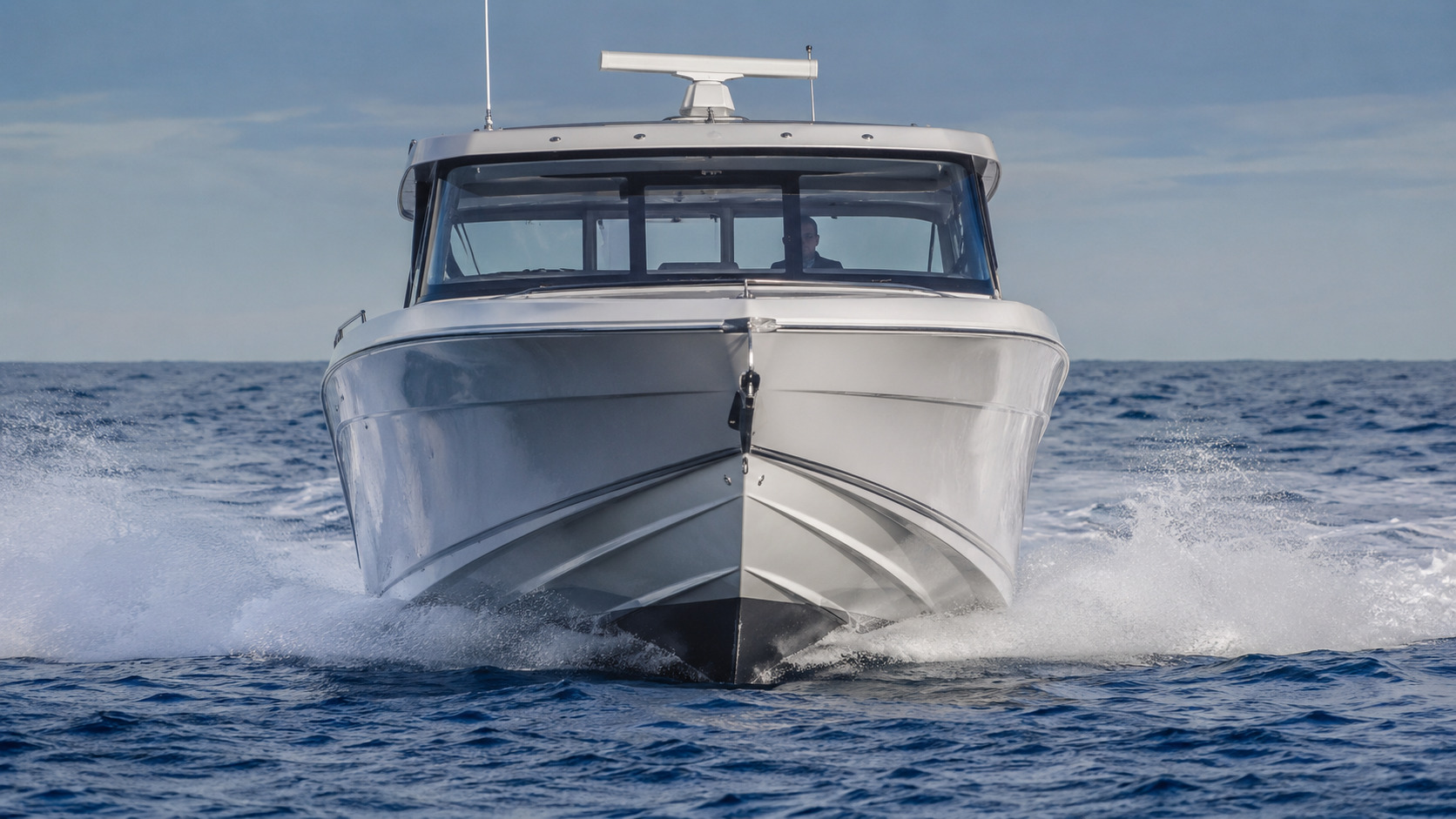
The running surface on the OS 405 finishes at 20° of transom deadrise. Beam is 13′ 0″, while published draft ranges from 2′ 7″ engines-up to 3′ 7″ engines-down. At about 25,292 lb dry, this hull should not be evaluated as though that figure represents the boat in the water. The 482 gal fuel tank, freshwater, passengers and equipment all add load. The nearest comparison is the OS 355. Put the two boats in the same conditions if possible, because easier marina handling and lower triple-engine operating scale may matter more than a small difference in asking price.
At 25,292 pounds dry and 13 feet of beam, the OS 405 has enough mass to carry offshore momentum in a way the smaller Offshores cannot. The trade is low-speed inertia. During the test, run the boat in open water and then immediately work it around a dock with wind on the beam. Zipwake, joystick and bow-thruster behavior are part of the hull experience because they influence how manageable the package feels.
Fuel capacity, cruise planning and operating range
Published fuel capacity on the OS 405 is 482 gal. Ownership math changes once the OS 405 is loaded. The dry figure is about 25,292 lb, and a full 482 gal fuel load adds substantial mass before freshwater, people and gear. That wet condition is the one a lift, haul-out yard or transport plan needs to support. Buyers moving up from a smaller boat should confirm those limits before assuming their current infrastructure will carry the OS 405.
A useful OS 405 fuel plan also includes the hotel load. With 482 gal in the main tank and cruising systems running, generator time can be part of a multi-day trip even when the outboards are off. Record engine consumption at cruise, then keep generator use and reserve fuel separate so the owner knows what portion of the tank is genuinely available for the return leg. On a OS 405 trip measured in offshore hours rather than local miles, a best-case range estimate is less useful than a conservative return reserve.
The OS 405 needs to prove two things underway: that the hull is comfortable in the owner’s water and that the driver can manage it without unnecessary effort. Test both. If the buyer is also considering the OS 355 for easier marina handling and lower triple-engine operating scale, compare visibility, noise and low-speed control as carefully as speed.
The OS 405 should be tested as a cruising boat carrying real offshore weight. Run with enough fuel and people to represent a trip, let the cabin systems operate, and settle the 20° hull at a comfortable long-range cruise rather than chasing maximum speed. Note bridge noise, windshield visibility and how easily the driver holds course in quartering chop. The OS 355 is the useful check if the OS 405’s added cruising capability does not change the trip enough to justify its ownership scale.
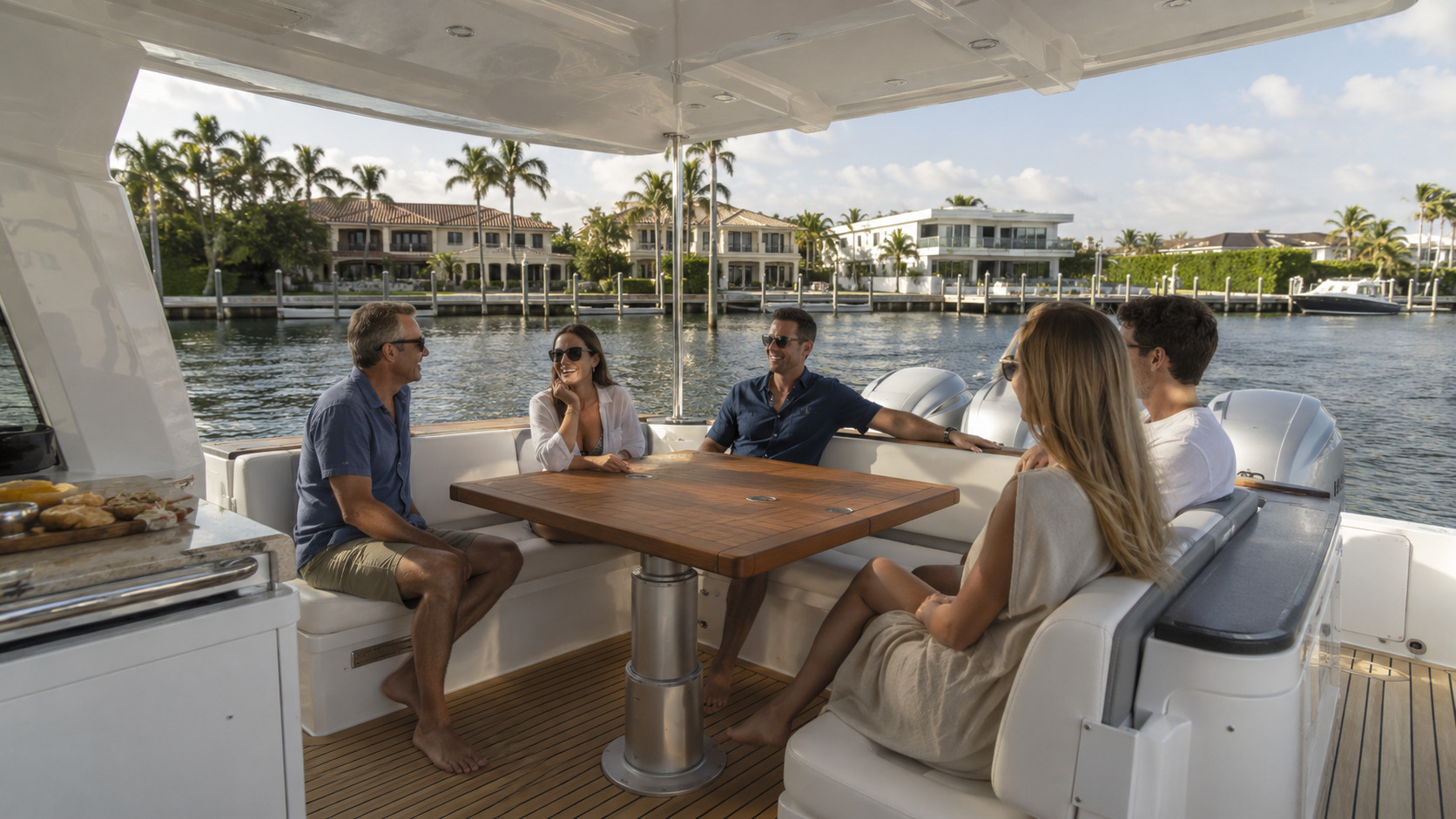
Use the OS 405 deck the way the owner will use it on Saturday, not the way it is staged for photography. The details that distinguish this model include Standard Seakeeper 6, Triple F450 XTO outboards and Island-style forward berth. Each should feel deliberate.
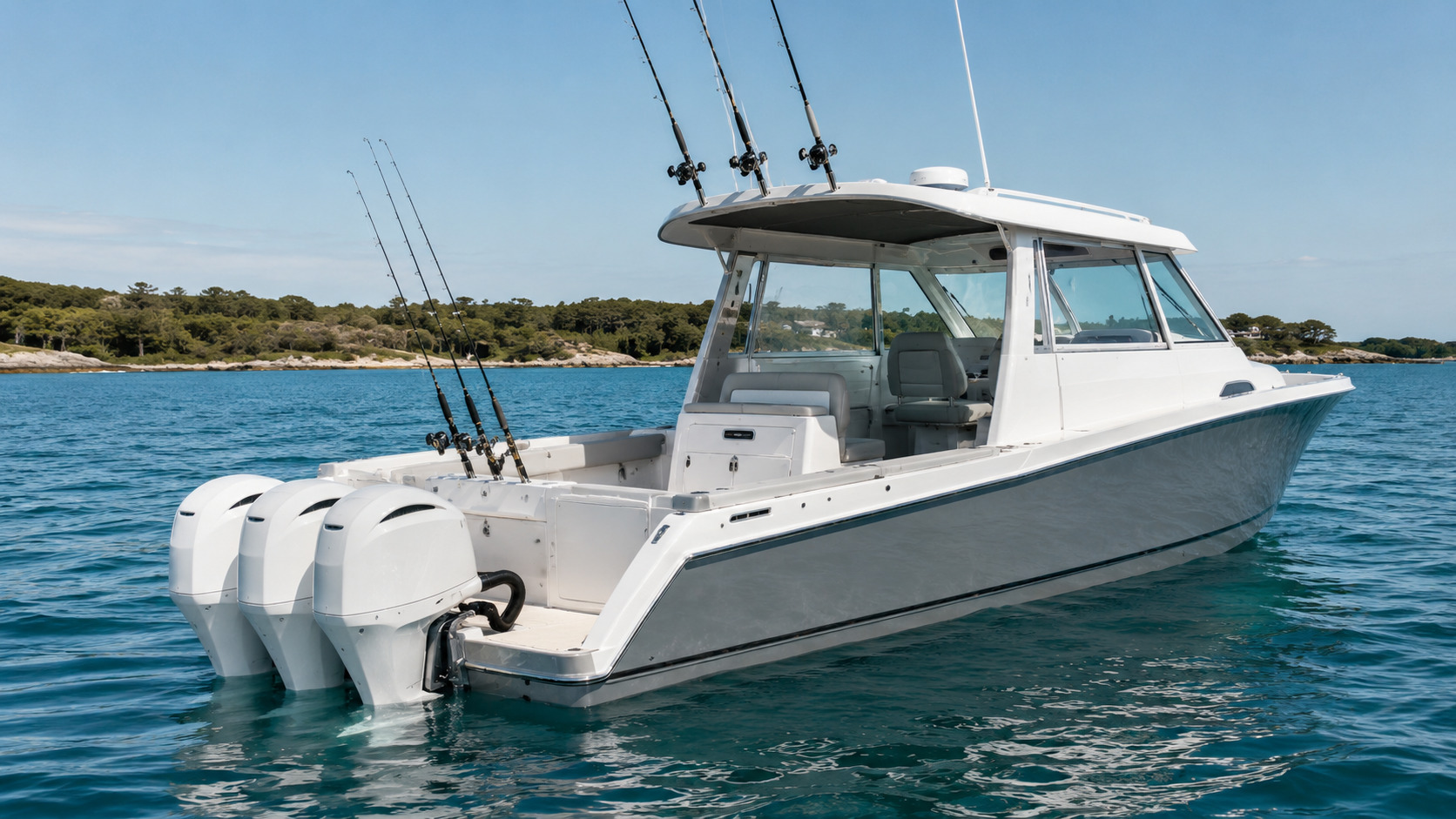
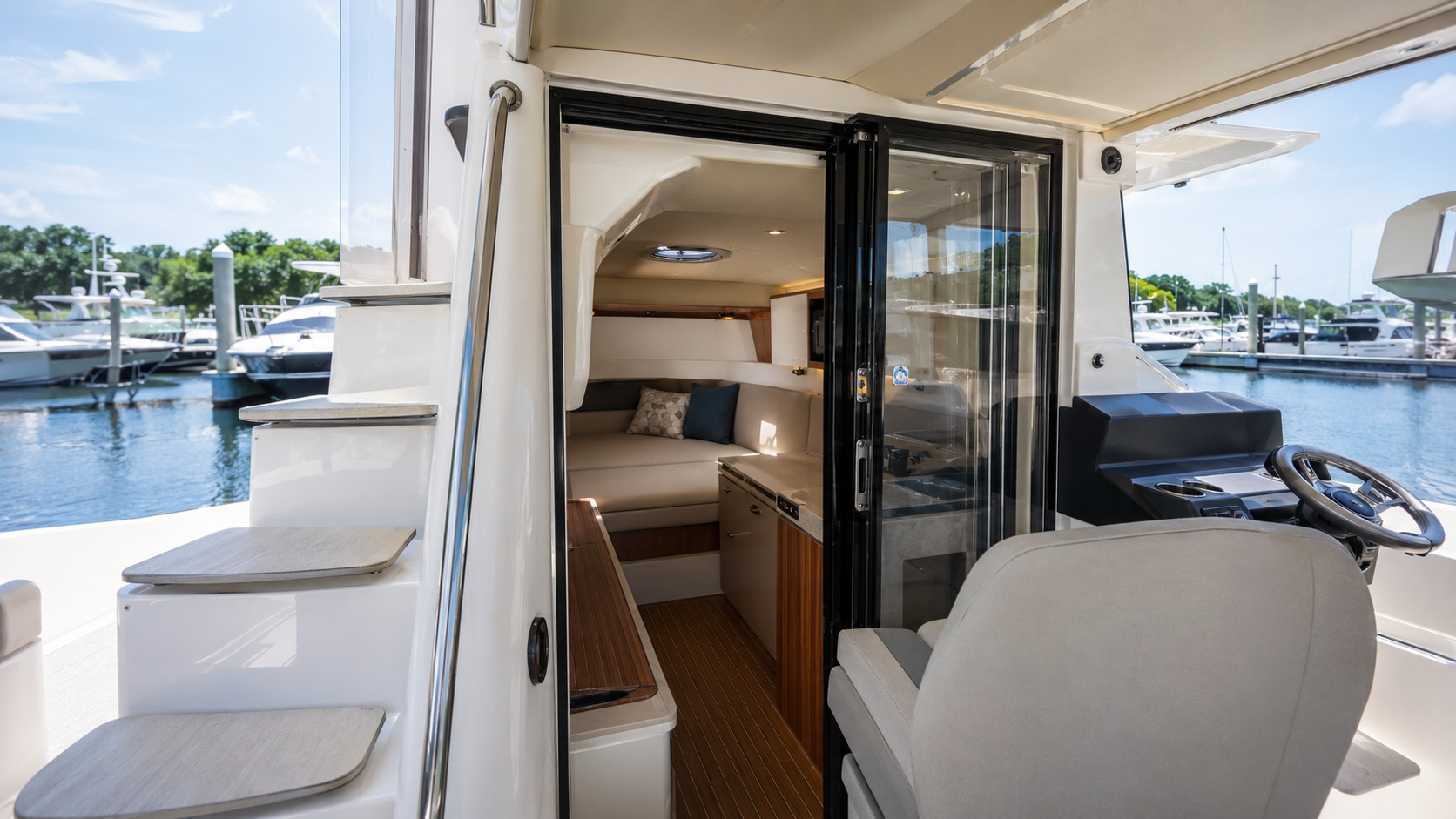
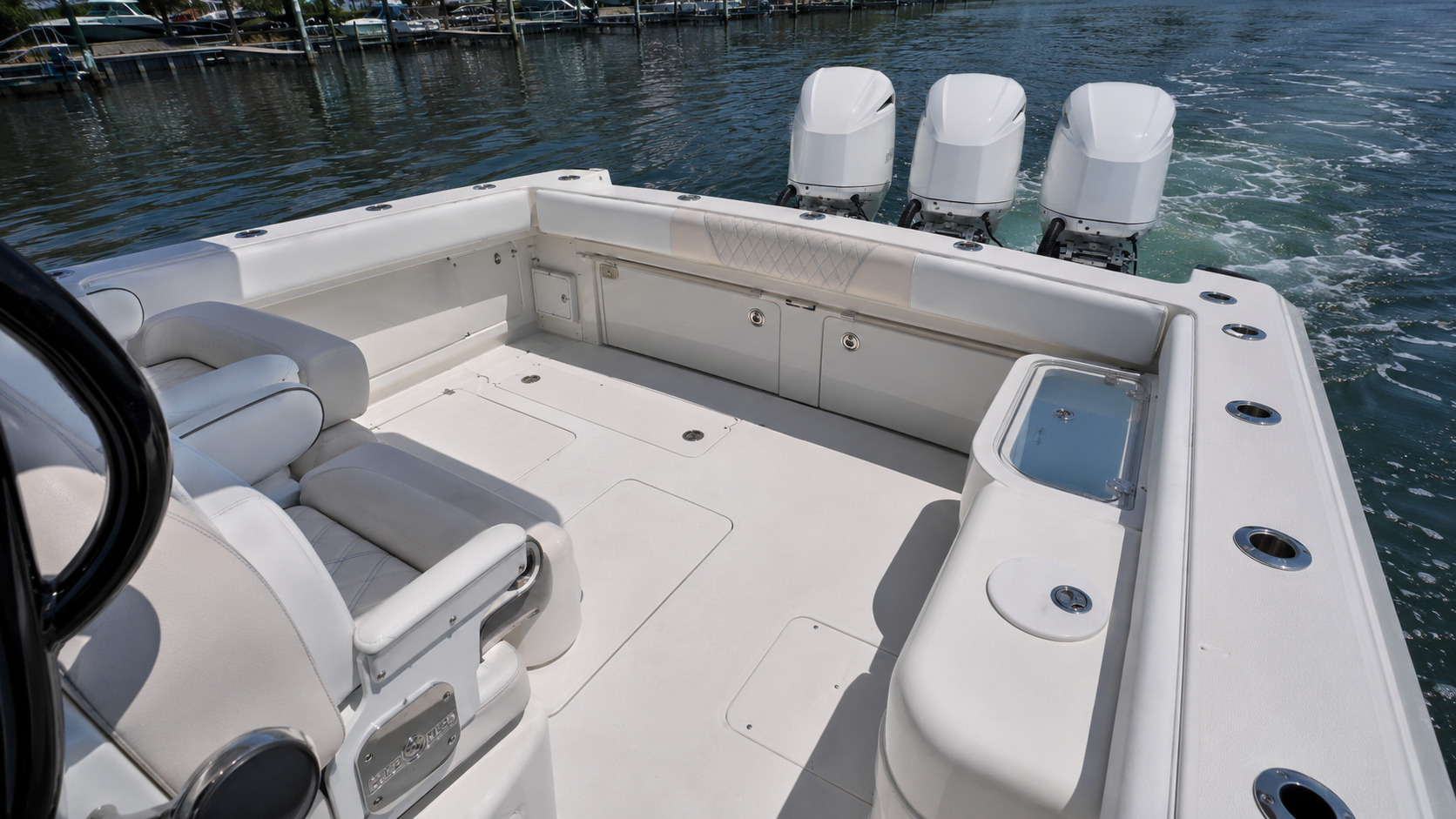
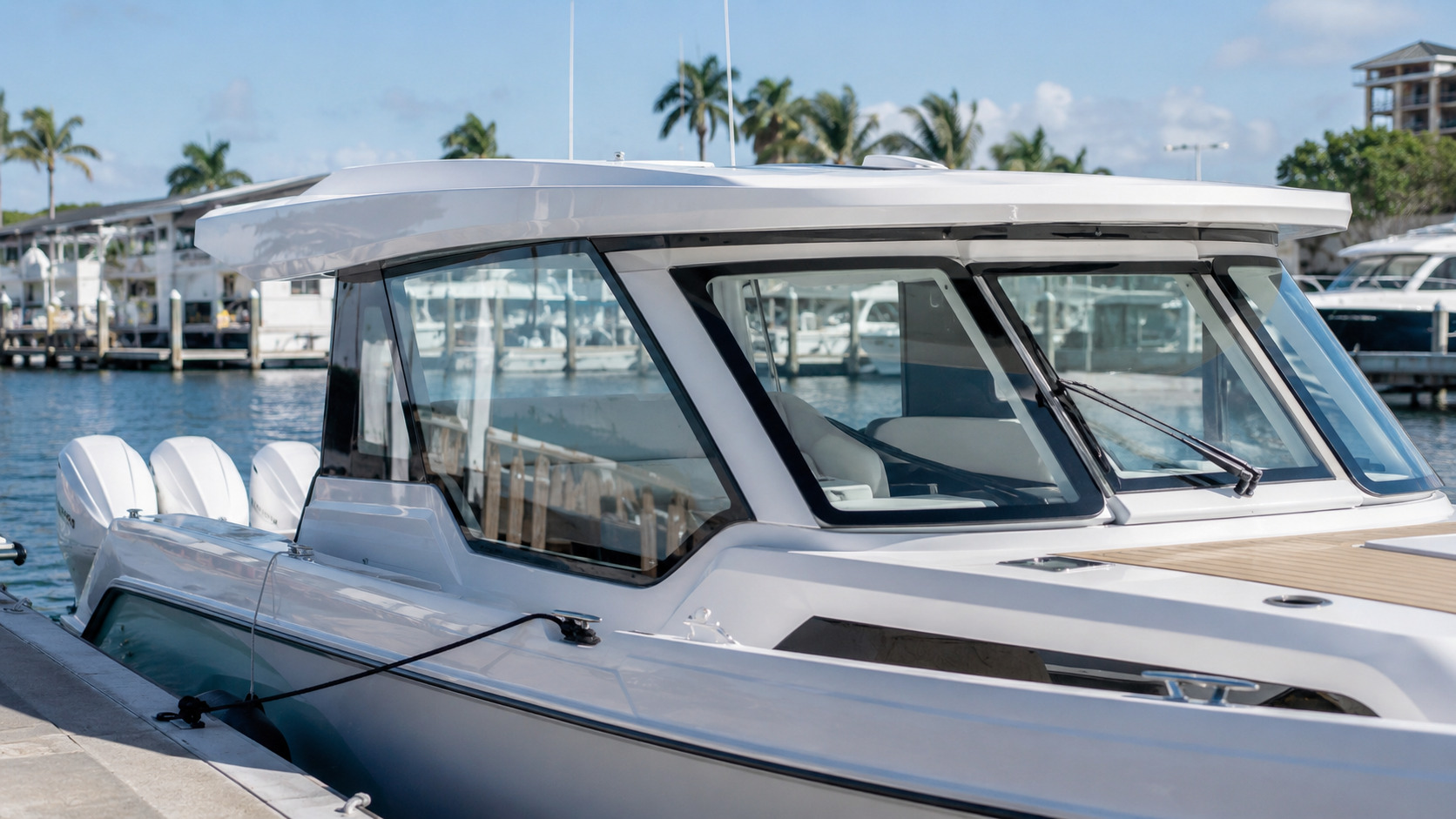
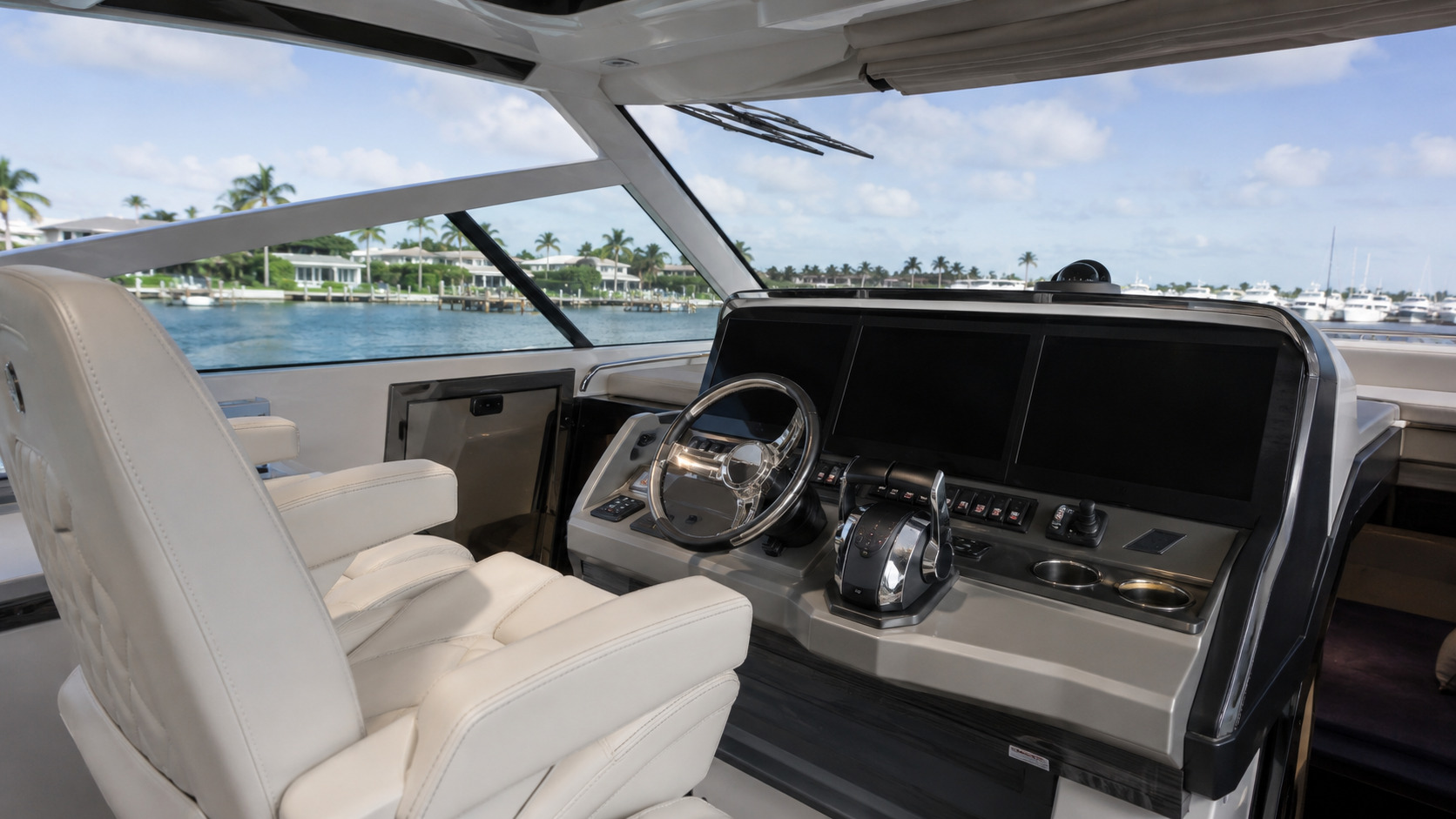
Stidd bridge seating and dual 22-inch displays signal what the 405 is built for: long runs where the helm needs to remain comfortable and information-dense. Sit in every primary bridge seat underway and evaluate visibility through the glass. In the cockpit, use the refrigerated transom box and fishing systems without clearing social gear first.
The 405 should support a day of fishing without the cruising equipment taking over the working deck.
75-gallon refrigerated transom box – The transom storage can serve as refrigerated catch or food storage rather than a passive box.
Standard Seakeeper 6
Gyro stabilization is integrated into the boat's design and can materially change comfort at anchor or while drifting.
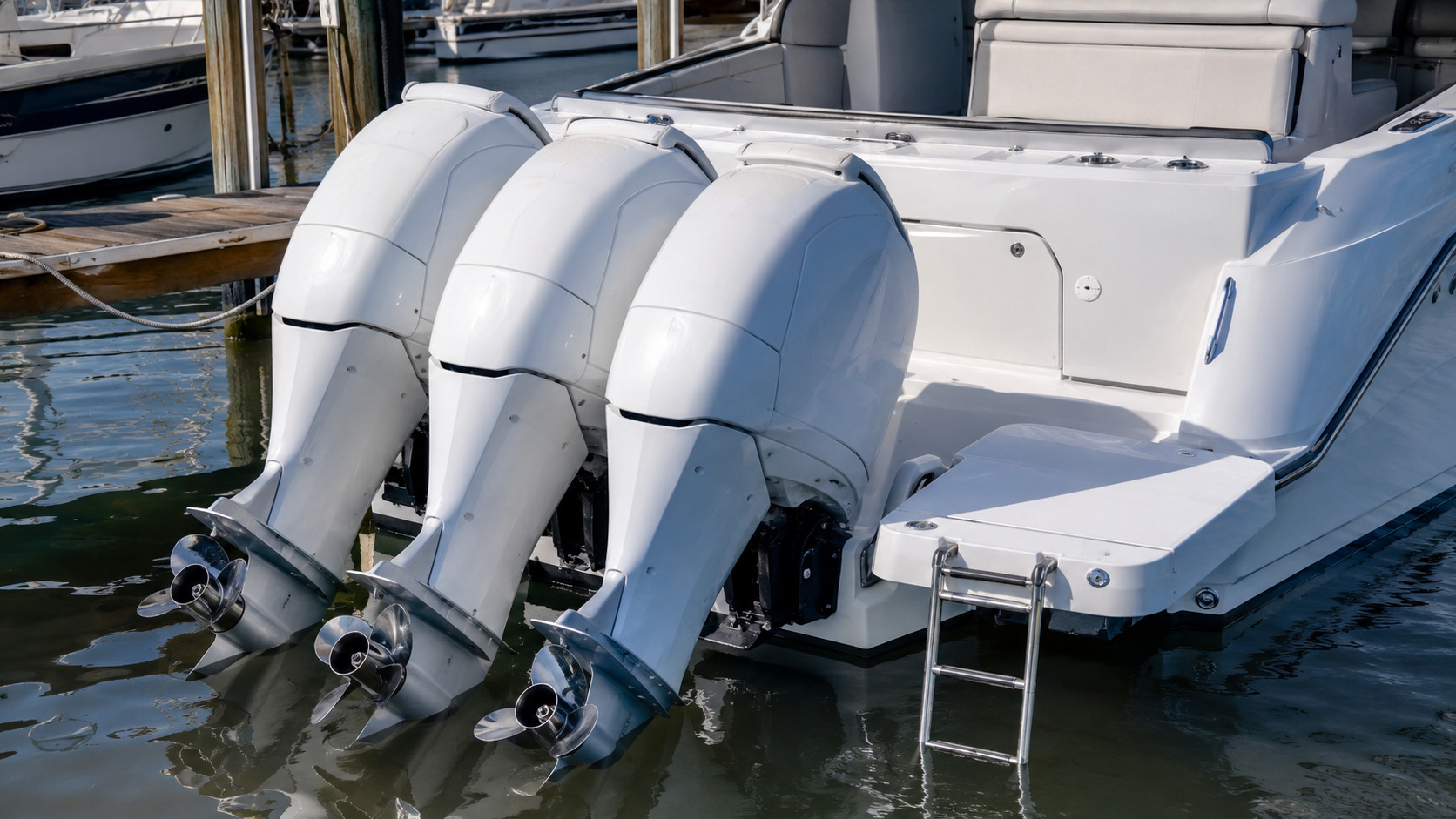
Triple F450 XTO outboards
The propulsion package is built for a 25,000-pound platform and should be budgeted like a yacht powertrain.
Island-style forward berth
The forward sleeping area feels more like a stateroom than a converted dinette.
Separate mid-cabin
Guests can sleep away from the primary berth, improving weekend privacy.
Stidd bridge seating
Purpose-built helm and companion seats support long offshore runs.
Dual 22-inch Garmin displays
The helm is designed around large-format navigation and systems information.
Zipwake automatic trim system
Automatic pitch-and-roll control complements the hull and gyro systems while underway.
Electronics, pumps and onboard systems
Electronics are only one part of the OS 405 systems story. The buyer should also operate Triple F450 XTO outboards, Stidd bridge seating, 75-gallon refrigerated transom box and any climate, generator or stabilization equipment installed on the exact boat.
Standard Seakeeper 6 changes the inspection. The gyro needs service history, run time and a proper demonstration, not a dockside green light. Run it while the generator, air conditioning, refrigerators and electronics are also operating. Check Zipwake response underway and verify the large Garmin network remains stable. On a 405, systems integration is part of value; one neglected major component can change the purchase economics significantly.
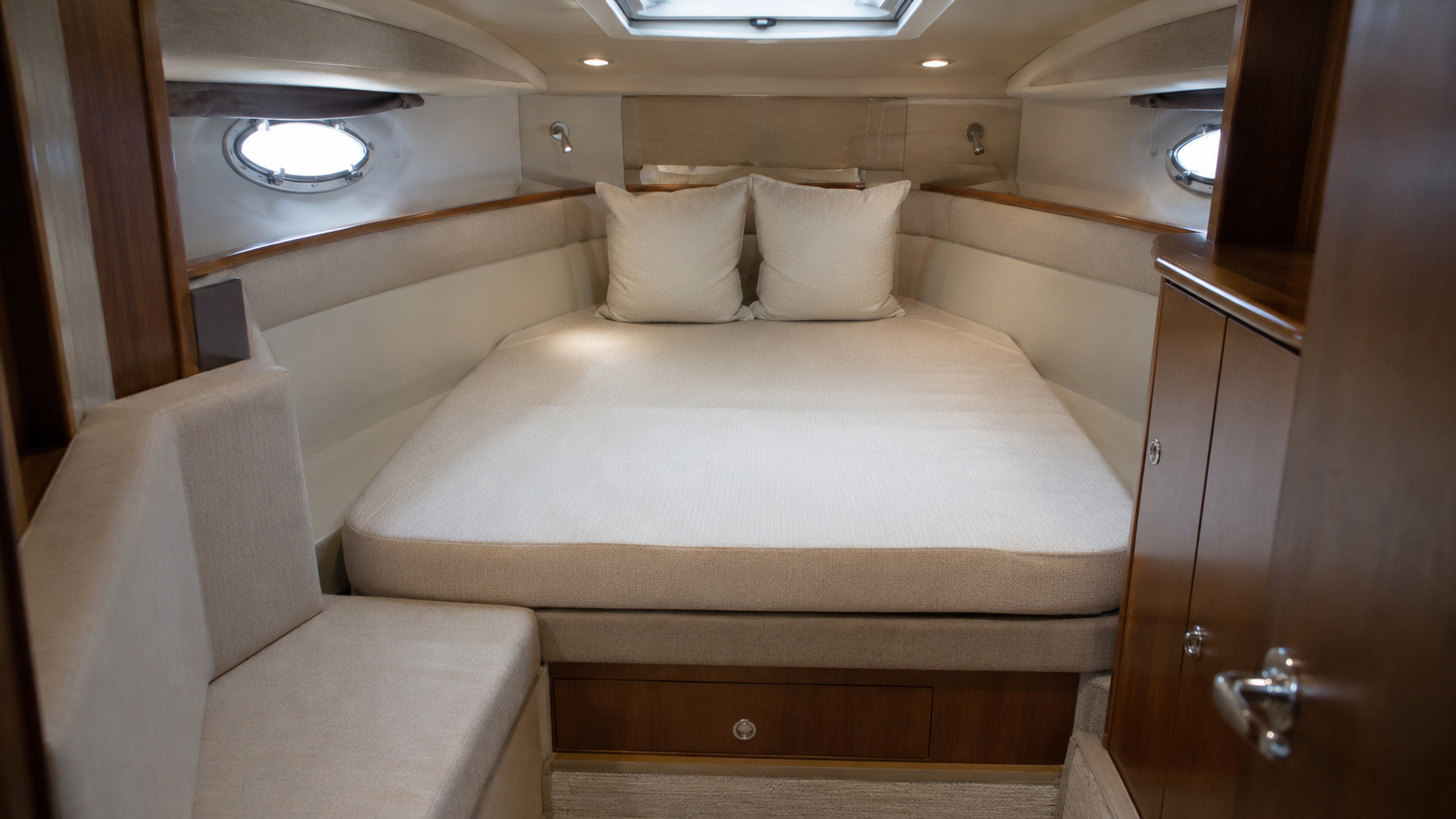
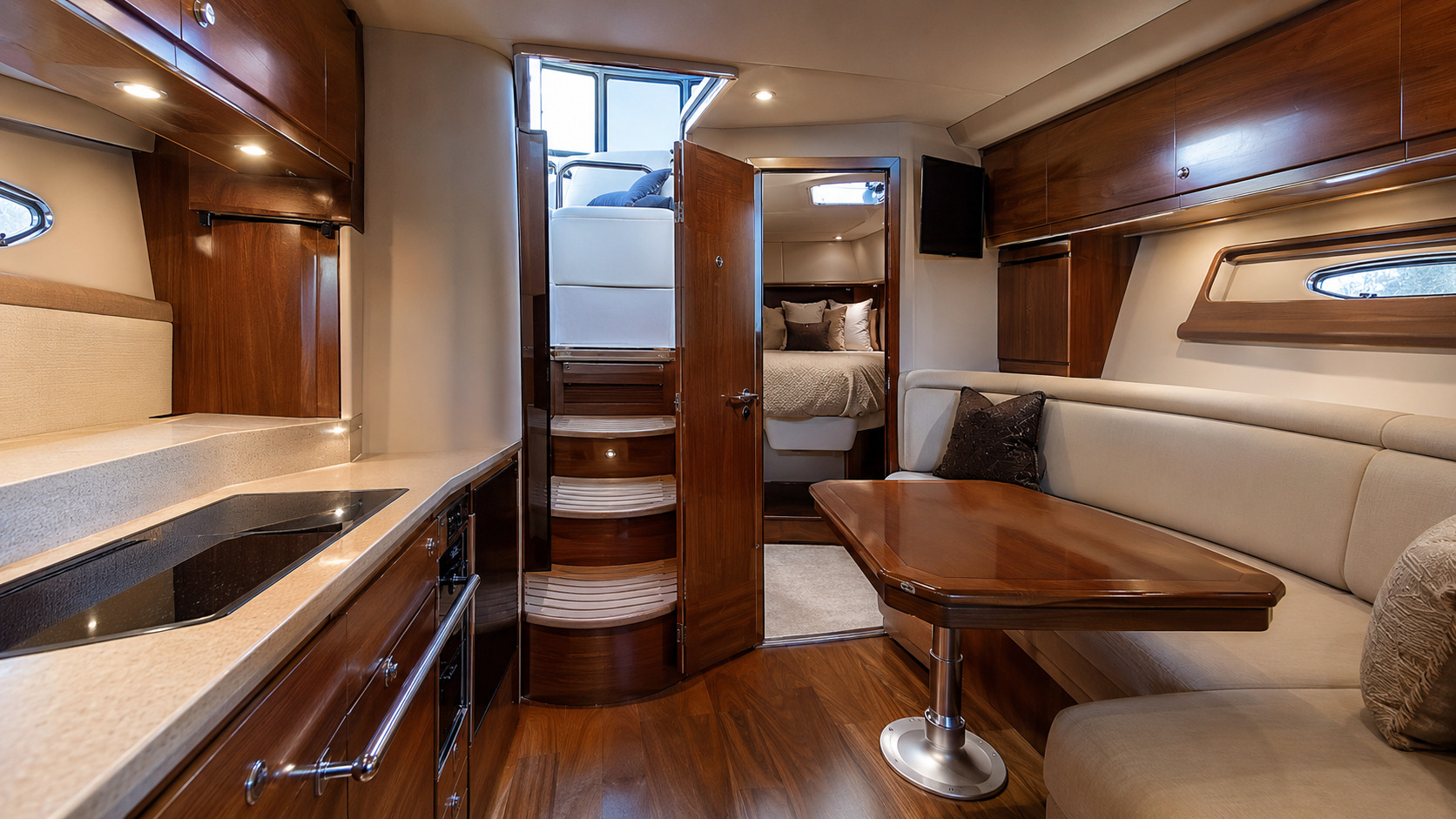
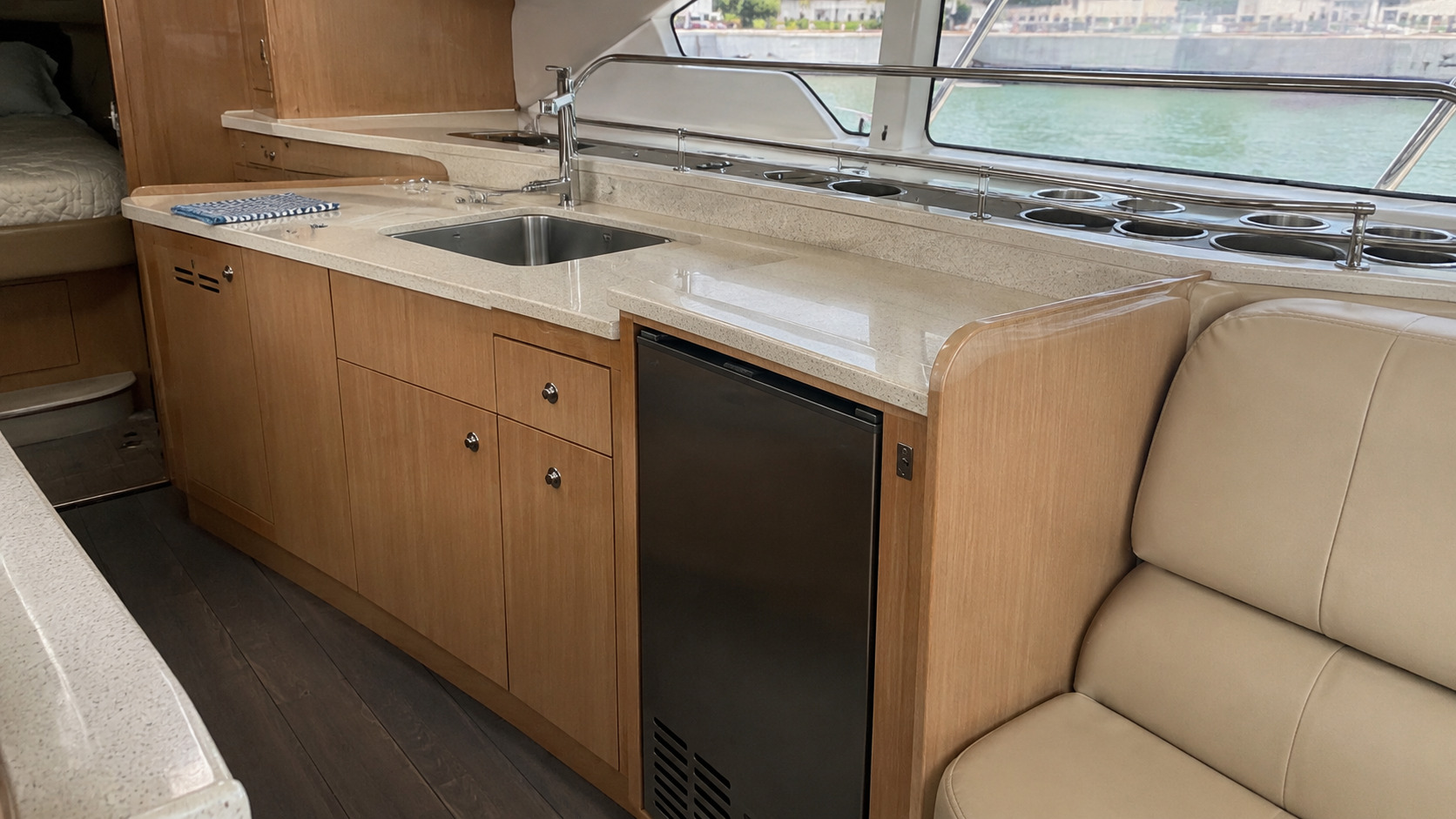
Overnight capability on the OS 405 is described as island-style forward berth plus separate mid-cabin guest accommodations. Freshwater capacity is 80 gal, with 26 gal for waste.
The island berth and separate mid-cabin provide a more residential overnight plan than the convertible layouts below the 405. Test whether two adults can access the forward berth without climbing over one another and whether guests in the mid-cabin have acceptable ventilation. Eighty gallons of freshwater also supports longer stays, but only if pumps, water heater and sanitation systems are healthy.
pursuit boats offshore os 405 aft cockpit social 17
pursuit boats offshore os 405 berth sleeping angle 09
pursuit boats offshore os 405 bluewater cruising profile 22
pursuit boats offshore os 405 bow on offshore 16
pursuit boats offshore os 405 cabin door companionway 19
pursuit boats offshore os 405 cabin interior 08
pursuit boats offshore os 405 cockpit seating fishing angle 07
pursuit boats offshore os 405 dockside luxury profile 04
pursuit boats offshore os 405 front quarter offshore running 02
pursuit boats offshore os 405 galley cabin utility 10
pursuit boats offshore os 405 hardtop glass detail 18
pursuit boats offshore os 405 helm detail 06
pursuit boats offshore os 405 hero underway 01
pursuit boats offshore os 405 low waterline running 15
pursuit boats offshore os 405 marina evening profile 23
pursuit boats offshore os 405 offshore fishing ready 24
pursuit boats offshore os 405 premium marina arrival 13
pursuit boats offshore os 405 quiet cove anchored 21
pursuit boats offshore os 405 rear quarter running 03
pursuit boats offshore os 405 side profile underway 12
pursuit boats offshore os 405 stern boarding angle 11
pursuit boats offshore os 405 sunset flagship angle 14
pursuit boats offshore os 405 transom outboards detail 20
Typical Pursuit OS 405 pricing
The Pursuit OS 405 market should be read as a range rather than a single number. Compare hours, service dates and fault history across the entire triple Yamaha F450 XTO package.
OS 405 pricing should be read through the condition of expensive systems. Triple F450s, Seakeeper, generator, air conditioning, large electronics and refrigeration each carry meaningful replacement or service cost. A boat priced below the market can still be expensive if two of those systems need immediate work. The most compelling example is often the one with organized records across propulsion and house equipment.
Market price band
Pricing on request
Estimated monthly
Ask us for a payment
Illustration only and not an offer of credit.
Estimate a Pursuit OS 405 payment
Final rate, term, down payment and eligibility depend on the borrower, the OS 405 being purchased and the transaction structure.
Illustration only and not an offer of credit. Your actual rate and term depend on credit profile, vessel age, loan amount and ownership structure.
Compare the OS 405 with nearby Pursuit models
The OS 355 is the first comparison when the buyer wants easier marina handling and lower triple-engine operating scale. Against the OS 405, those differences change more than performance; they change crew space, service burden and where the boat fits physically. Look at the OS 445 when the buyer wants more beam, larger tanks, dual staterooms and a galley-up layout. The S 428 belongs on the list when the buyer wants a more open center-console flagship with less emphasis on overnight cruising. The OS 405 should remain the choice only when its own case stays clear after those comparisons: Its standard Seakeeper 6, large bridge deck, island berth, mid-cabin and 482-gallon fuel tank make it a different ownership proposition from the OS 355 rather than a simple size upgrade.
The size comparison with the OS 355 is worth putting on paper. The OS 405 is 43′ 0″ long with 13′ 0″ of beam, while the OS 355 is 37′ 11″ with a 12′ 0″ beam. Fuel capacity is 482 gal versus 388 gal. Those differences can affect dockage and operating cost just as much as they affect cockpit space.
Start an OS 405 purchase by confirming what the boat actually is. The OS 405 is affordable when the buyer can purchase it and still maintain the systems that made it desirable.
A buyer should step into an OS 405 only after deciding that the 355 no longer supports the intended trips. If the island berth, stabilization, bigger bridge and 482-gallon fuel capacity will be used, the ownership jump can make sense. If the boat will mostly run short day trips, the 405’s systems may spend more time being maintained than appreciated. The mission should be large enough to justify the platform.
The specifications on this guide describe the current or reference OS 405 configuration used for comparison. Pursuit equipment can change by model year, and engines or options may differ on an individual boat. Before closing, verify the hull identification, the installed triple Yamaha F450 XTO package and every high-value option that influenced the price.