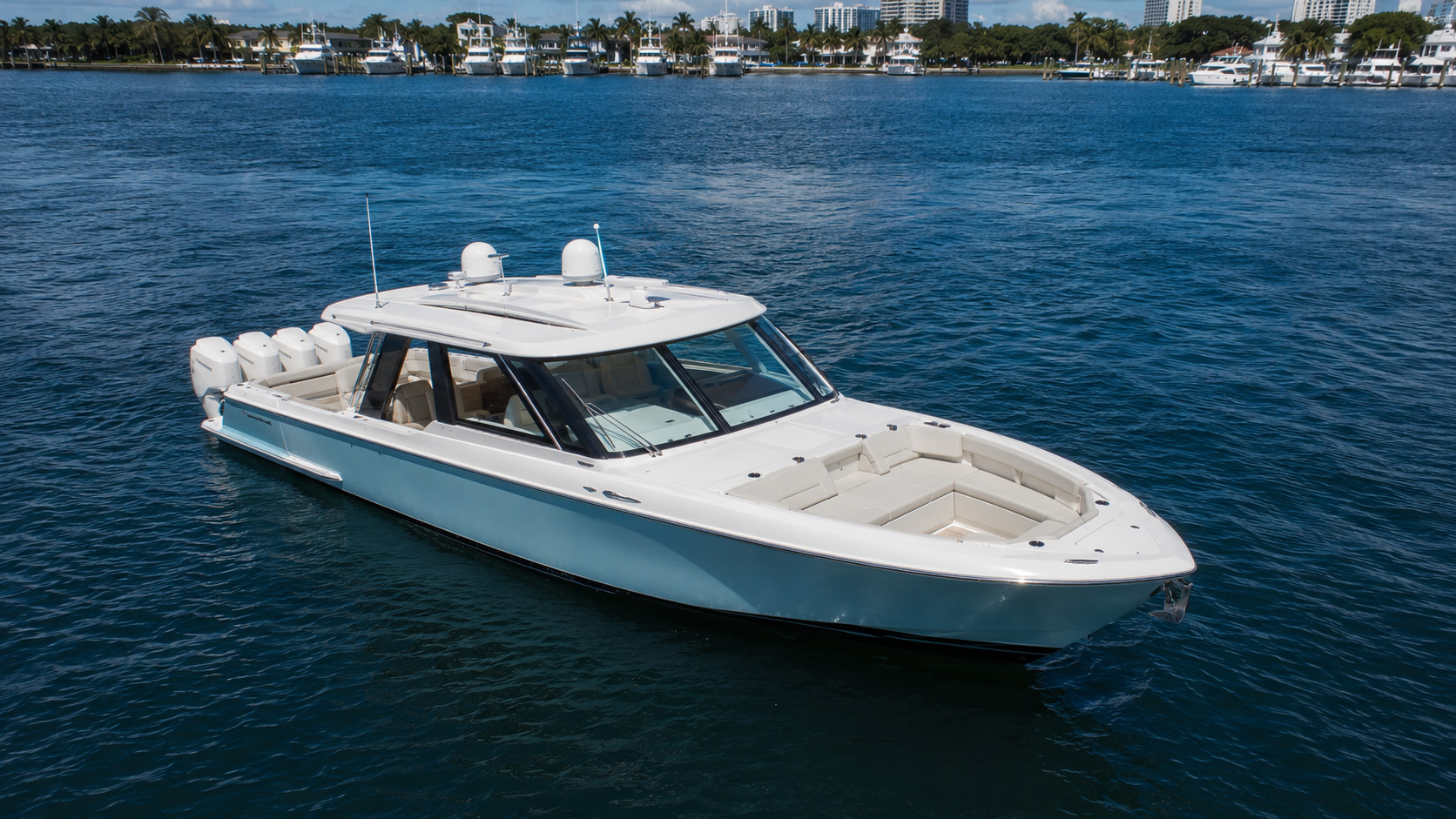
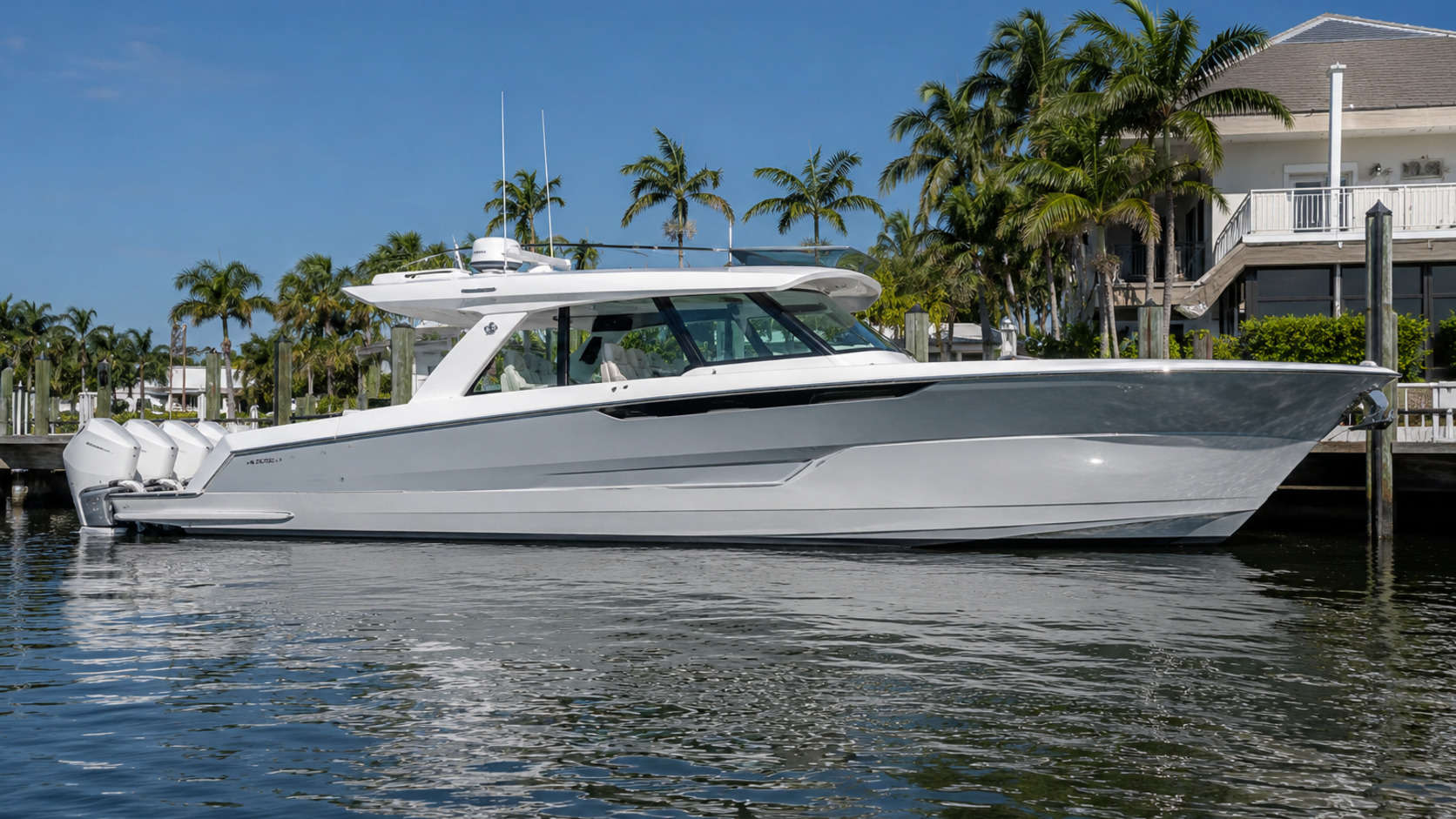
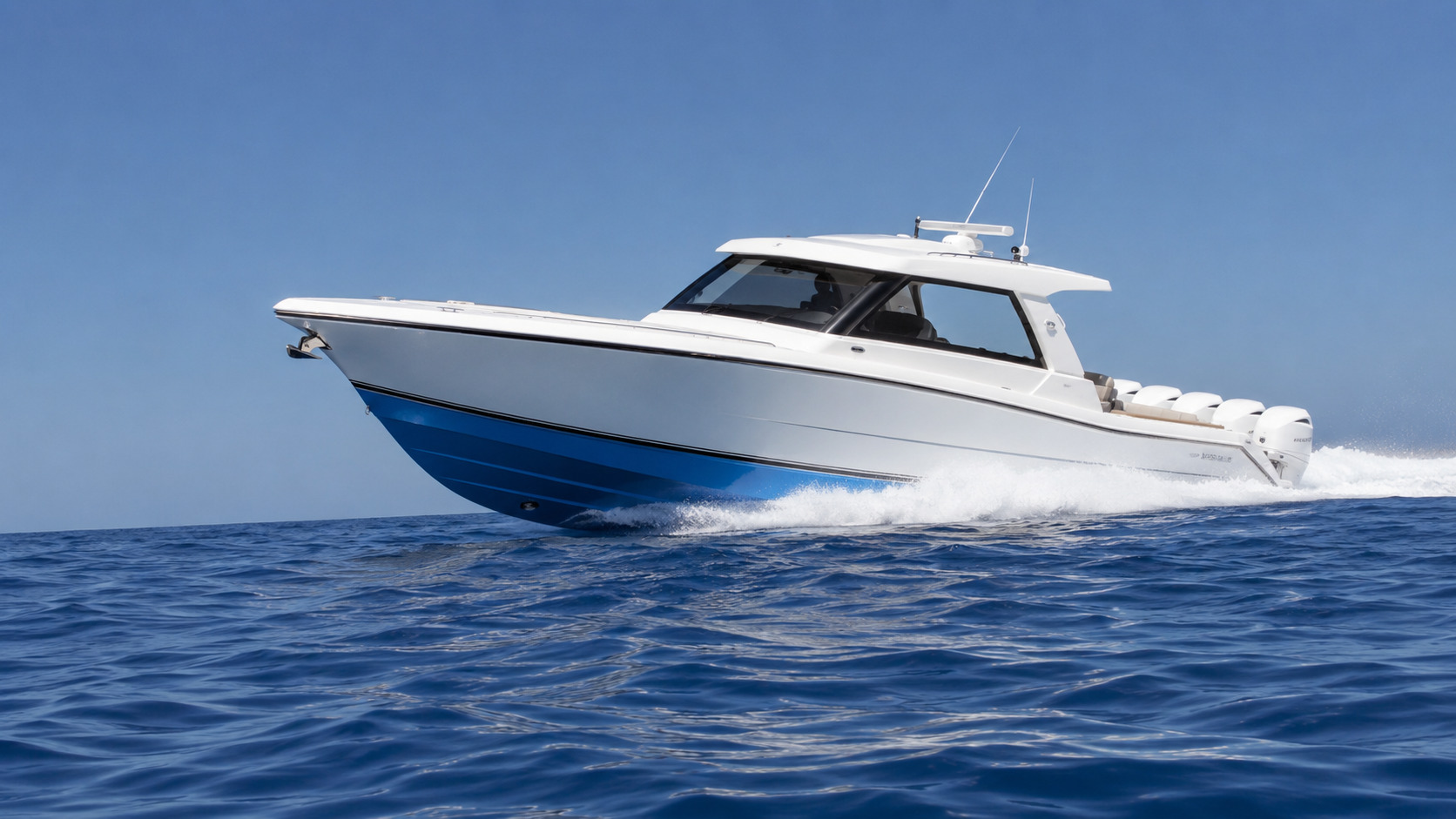
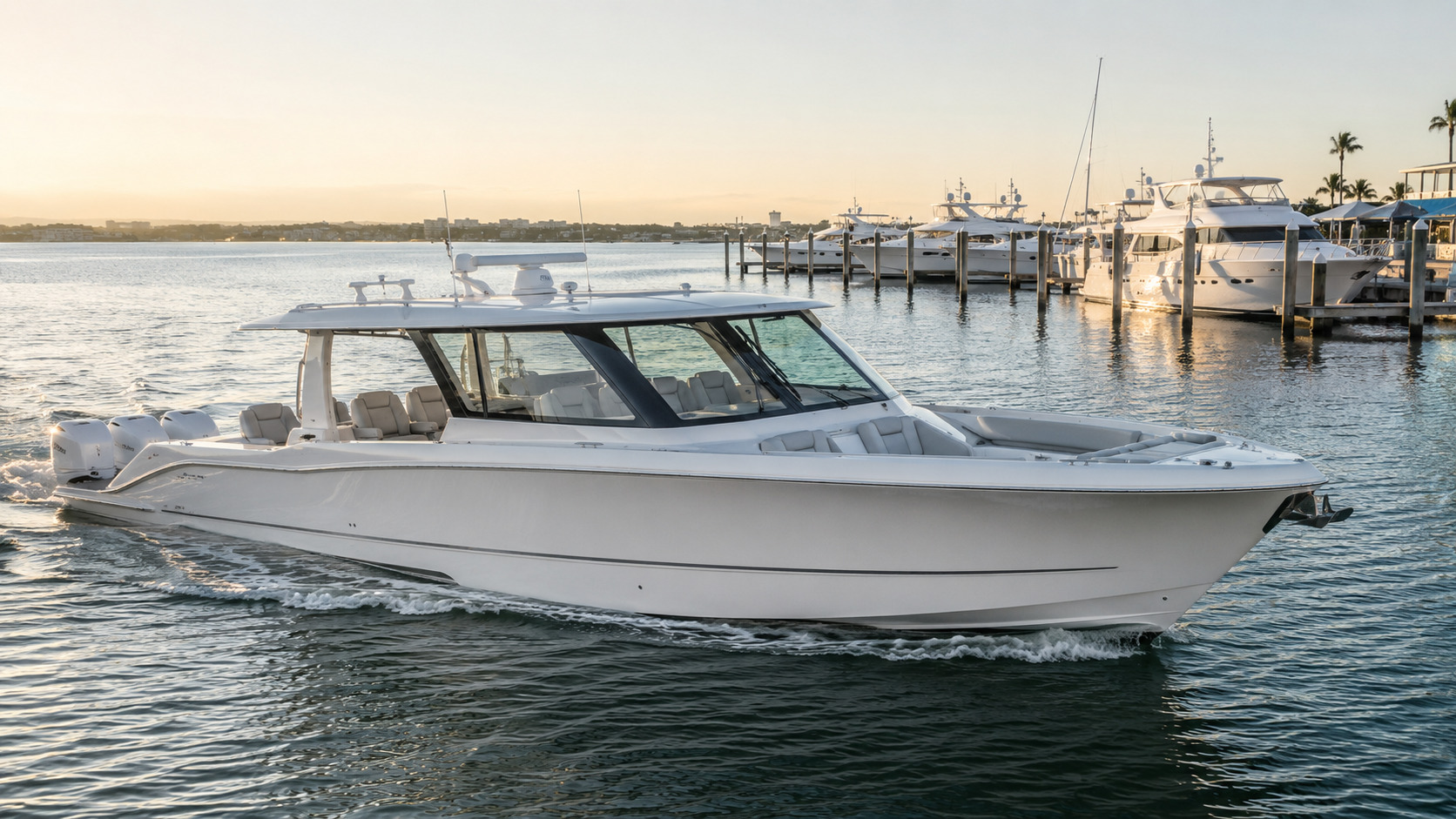
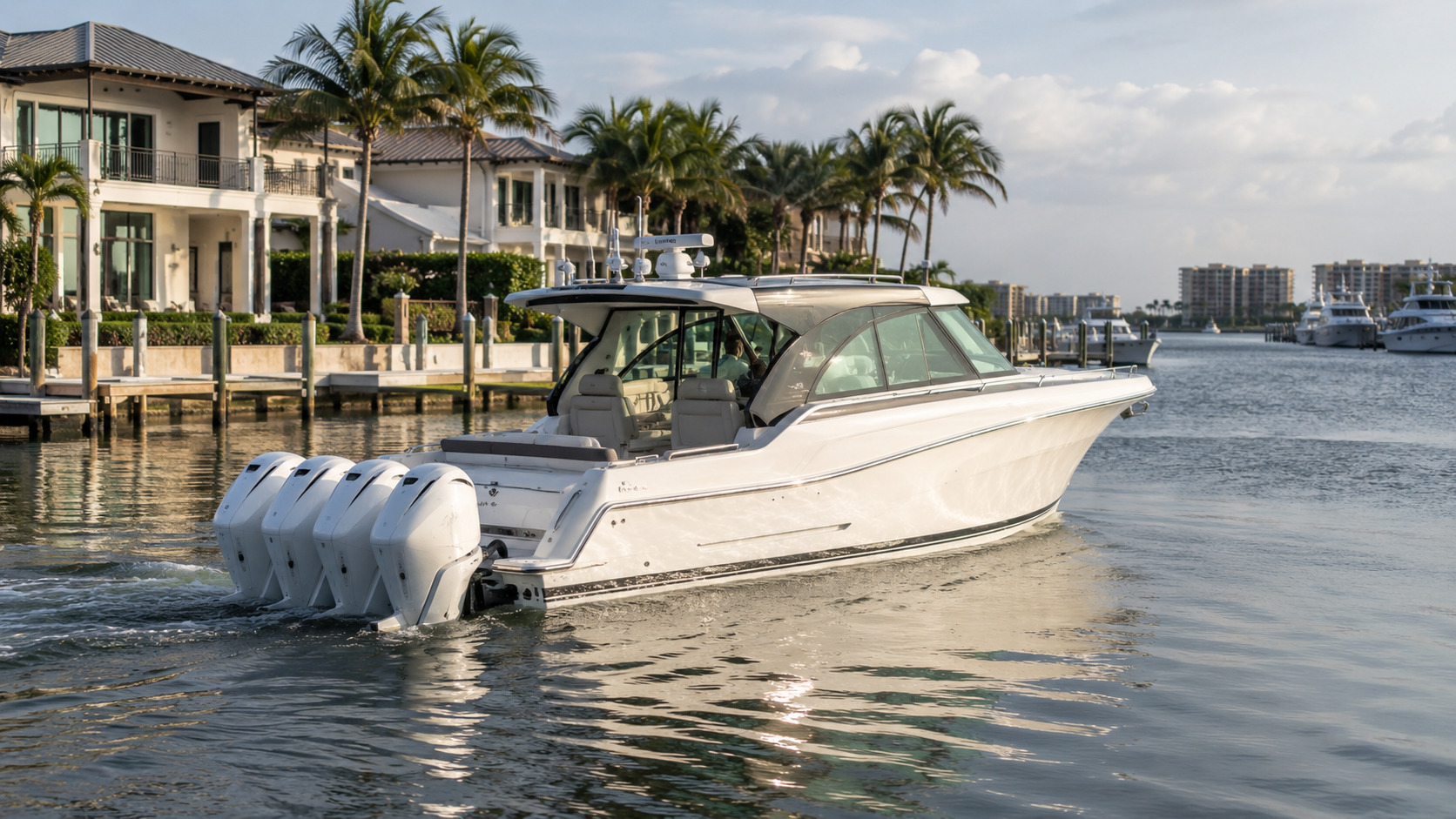
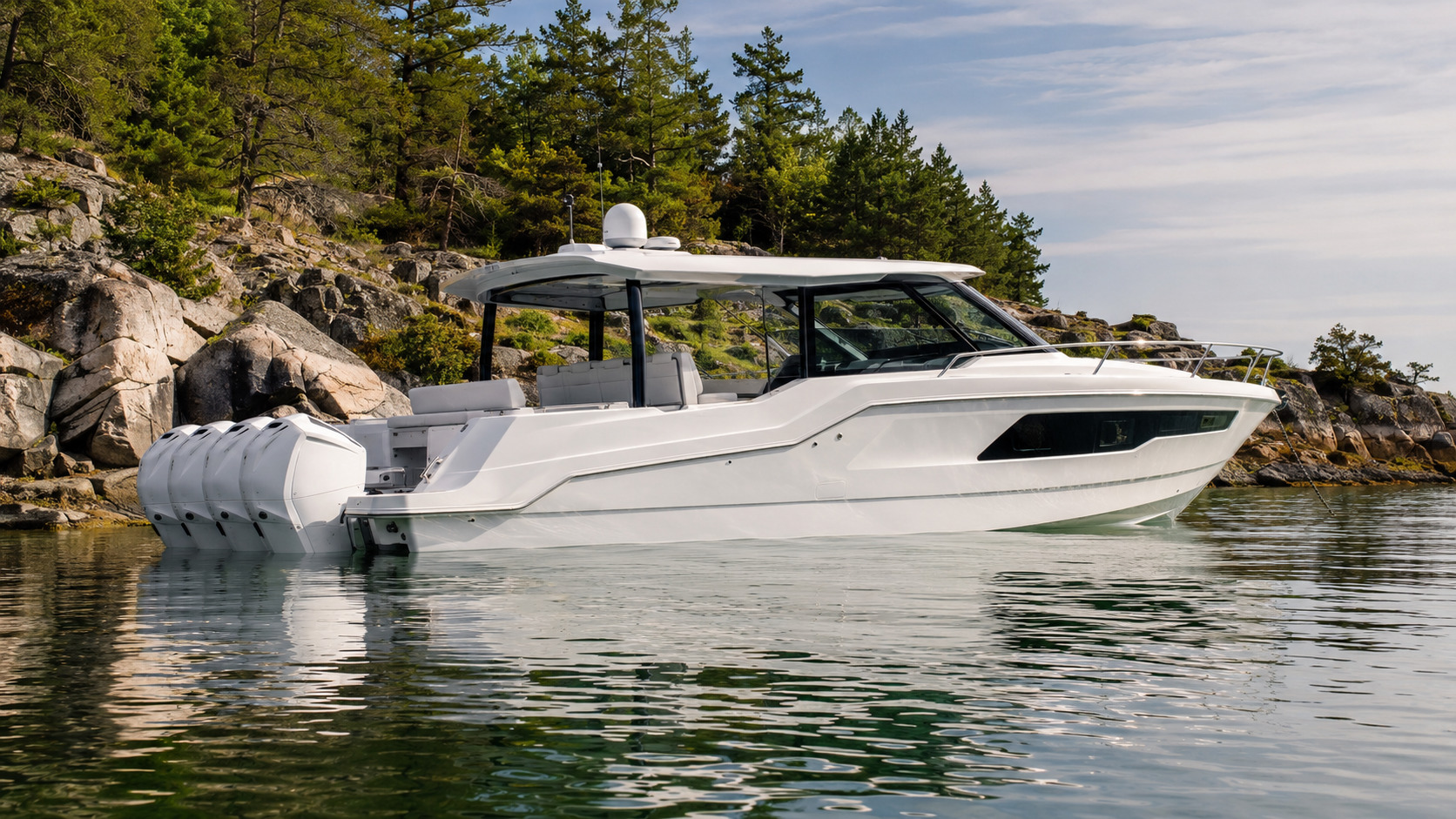
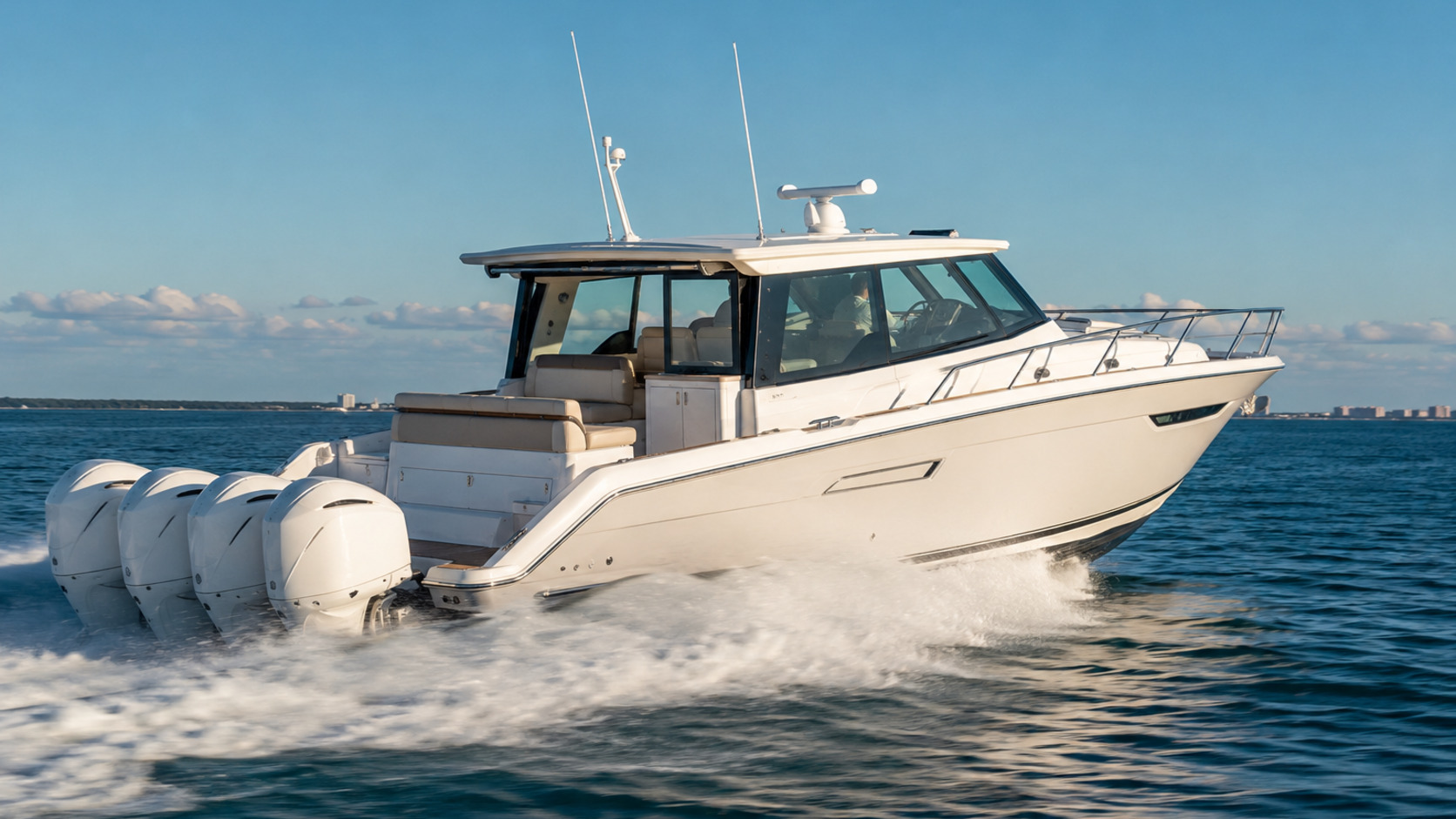
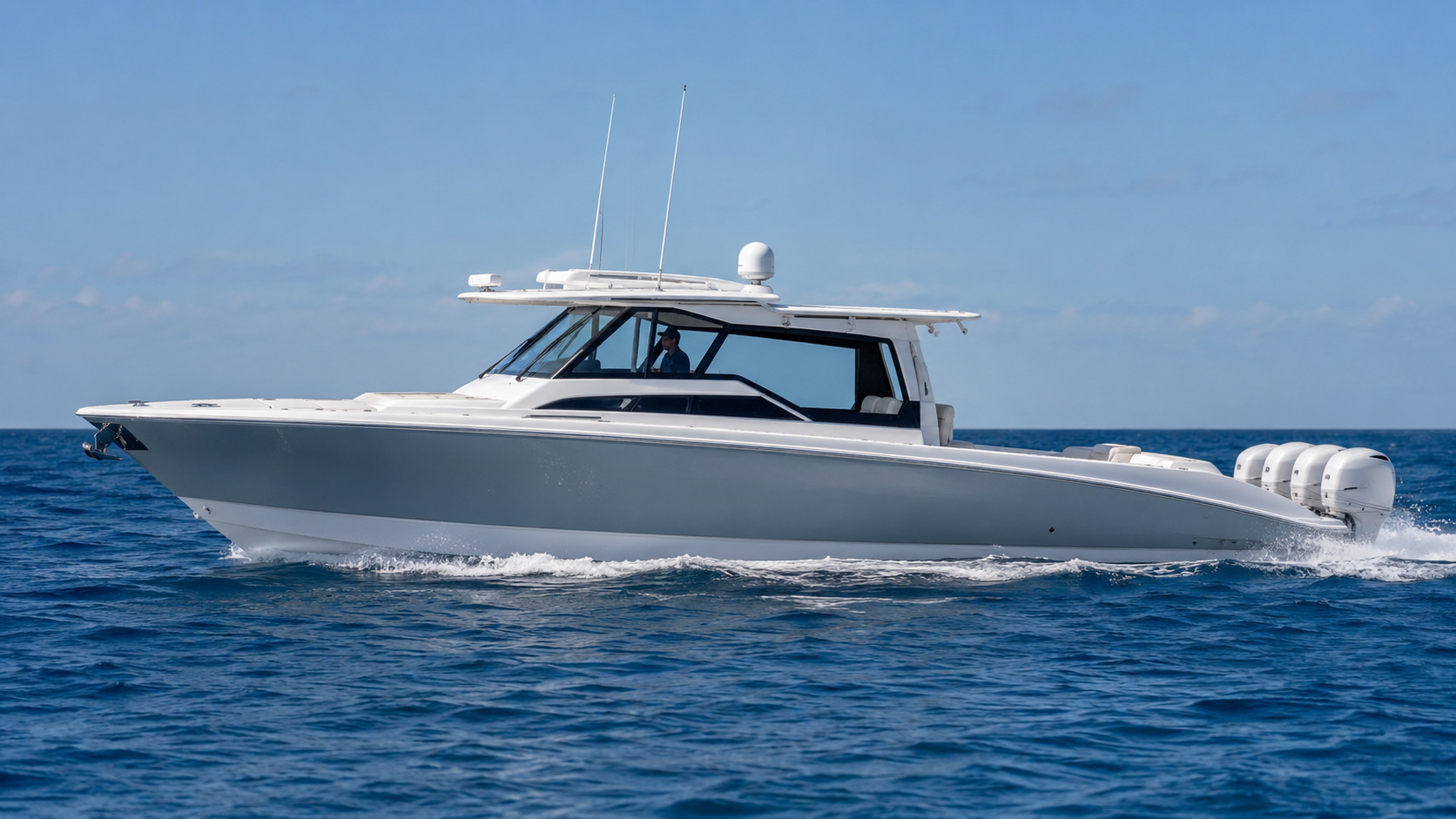
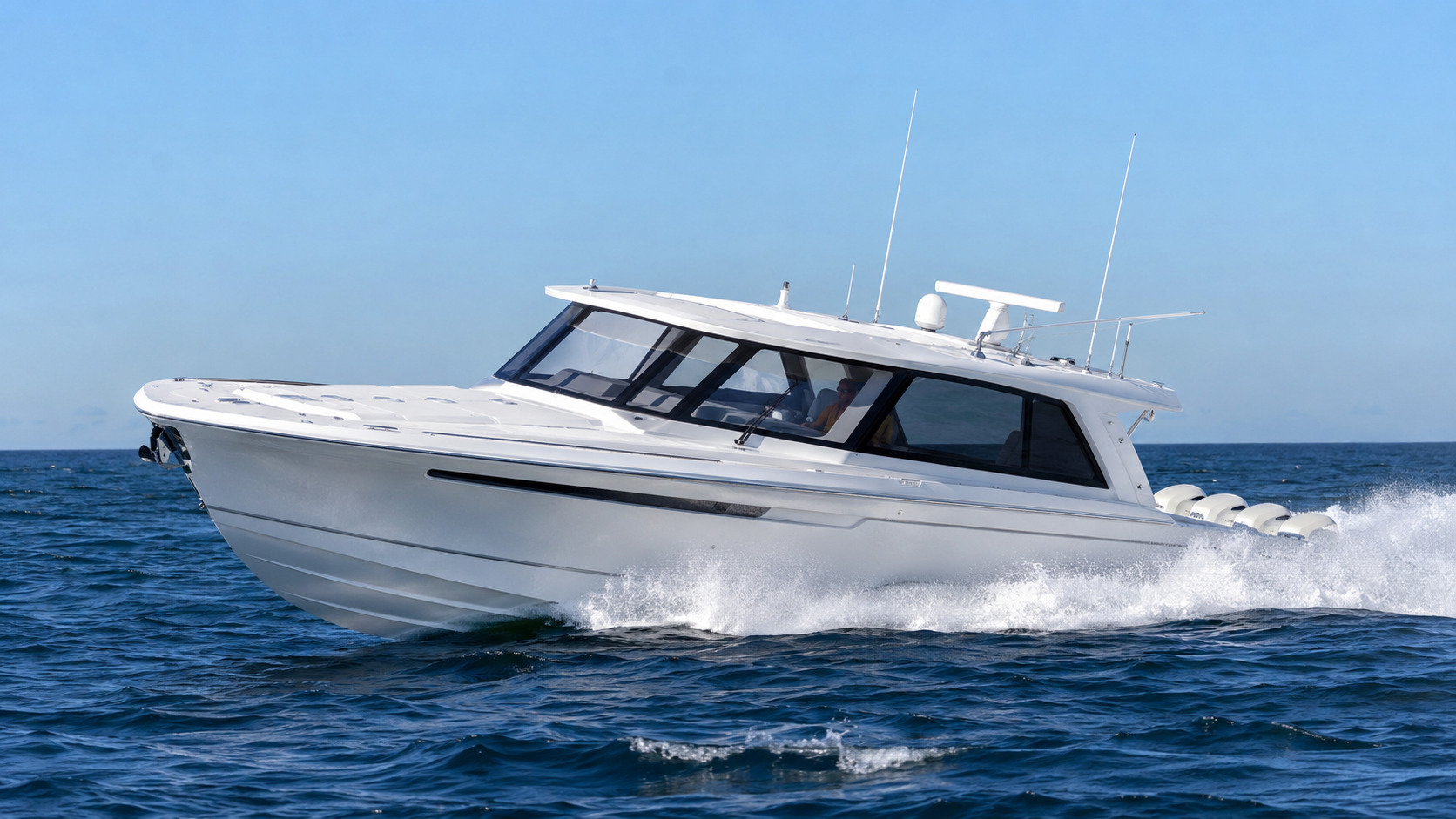
The Pursuit OS 445 is a Pursuit’s largest Offshore in this set, designed around extended cruising, a galley-up bridge deck and two real staterooms without abandoning the fishing cockpit.
The Pursuit OS 445 makes the most sense when the buyer starts with the day on the water rather than the model number. It is a Pursuit’s largest Offshore in this set, designed around extended cruising, a galley-up bridge deck and two real staterooms without abandoning the fishing cockpit, and its clearest audience is owners who want a true outboard-powered cruising yacht that can still fish, rather than a fishing boat that merely happens to have bunks. On paper, the OS 445 measures 46′ 6″ with platform / 43′ 10″ hull overall with a 13′ 10″ beam, weighs about 30,718 lb dry and carries 600 gal of fuel. The more important point is that The galley-up bridge layout, queen primary stateroom, separate guest stateroom and 600-gallon fuel capacity move the 445 into a different use class from every smaller Pursuit here. There is a real compromise. The OS 445 delivers the most living space, tankage and separation in the range, but its 30,718-pound dry weight and nearly 14-foot beam demand serious dockage, service access and operating budget. The closest alternative is the OS 405 when the buyer wants less beam and weight with a simpler two-cabin arrangement. The S 428 deserves attention when the buyer wants more open-deck fishing and entertaining with less cruiser-style separation. The DC 365 becomes relevant when the buyer wants a much smaller dual console for buyers who only occasionally overnight.
The OS 445 is not simply the top Offshore model; it is Pursuit’s answer for an owner who wants an outboard-powered cruising yacht. The galley moves up to the bridge, freeing the lower deck for a queen primary stateroom and separate guest cabin. That layout matters more than the extra feet. It changes privacy, traffic and how four people live aboard for several nights.
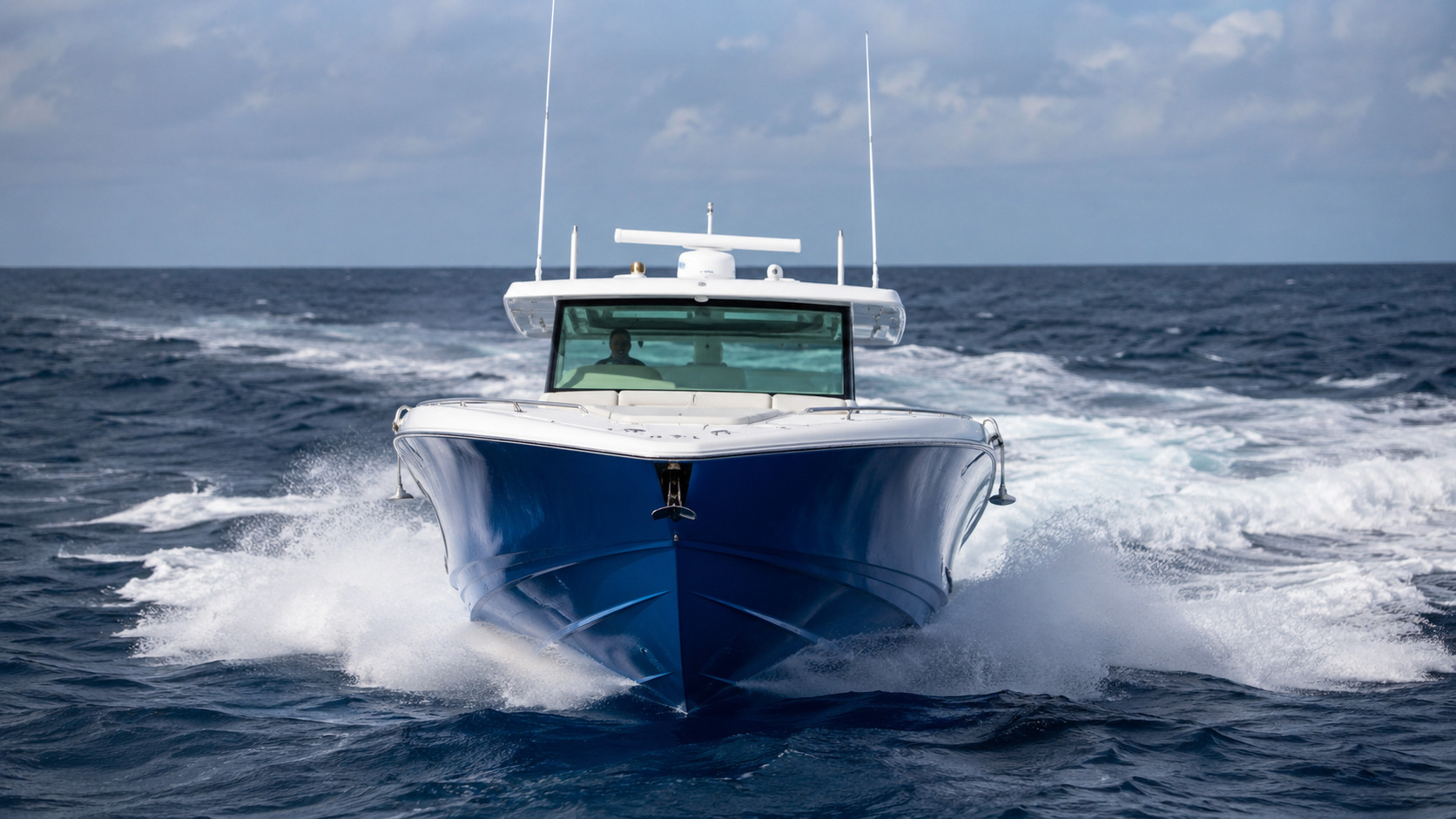
Pursuit lists the OS 445 at 20° of transom deadrise, with a 13′ 10″ beam and draft of 2′ 6″ with the engines up and 3′ 5″ with them down. The published dry weight is about 30,718 lb. Add 600 gal of fuel when full, freshwater where equipped, batteries, safety gear, fishing equipment, food and options. On this OS 445, look down the chines and strakes for repairs, inspect the keel and transom for impact marks, and pay attention to side-door openings and through-hulls. The OS 405 is the useful hull comparison because it offers less beam and weight with a simpler two-cabin arrangement.
The 445 is nearly 14 feet wide and weighs more than 30,000 pounds dry. Add 600 gallons of fuel, 100 gallons of freshwater and cruising gear and the operating displacement becomes substantial. That mass should produce confidence offshore, but it also dictates marina infrastructure. The survey should confirm lift and haul-out access, and the sea trial should include enough low-speed work to make sure the owner is comfortable handling the beam.
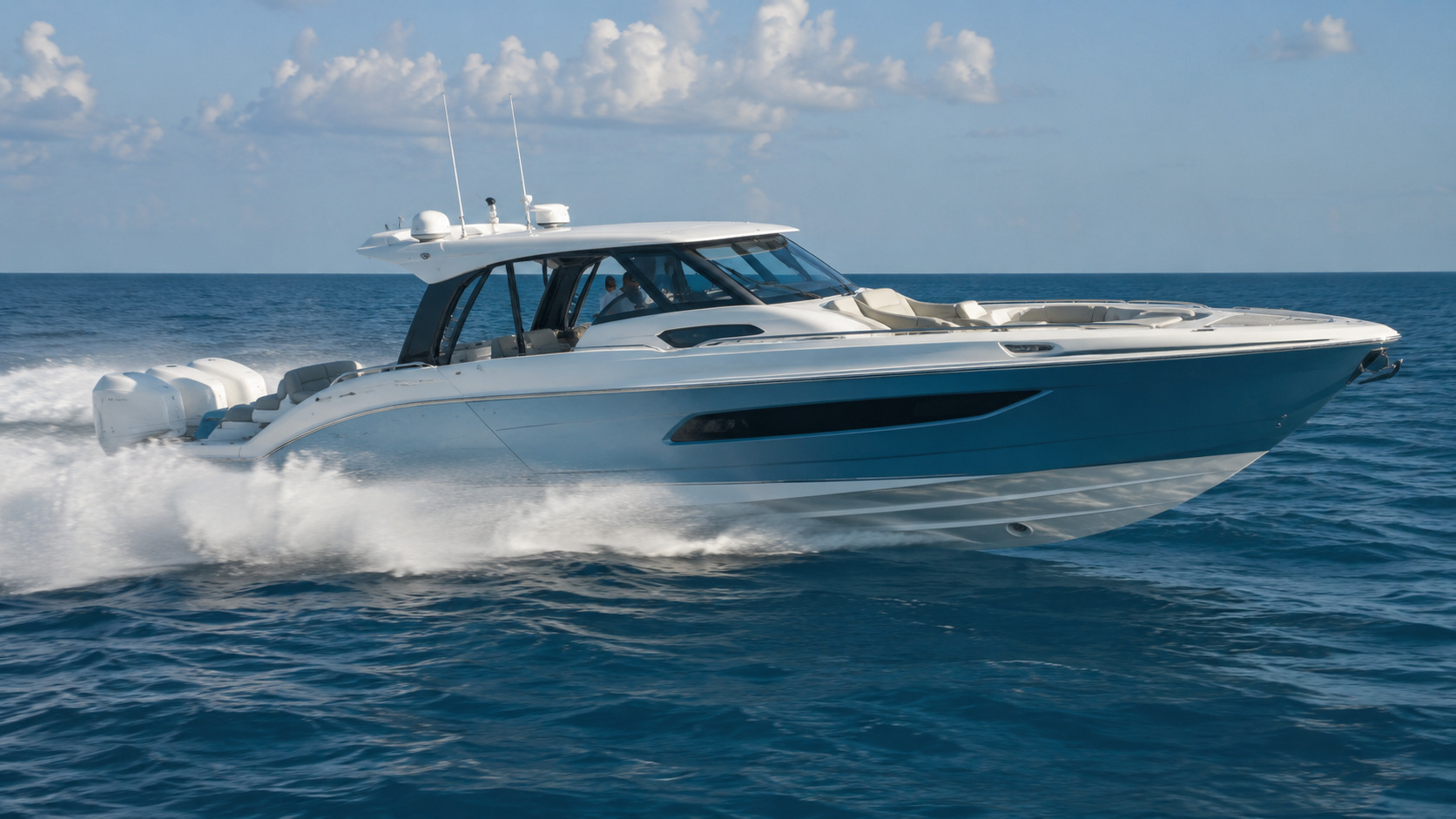
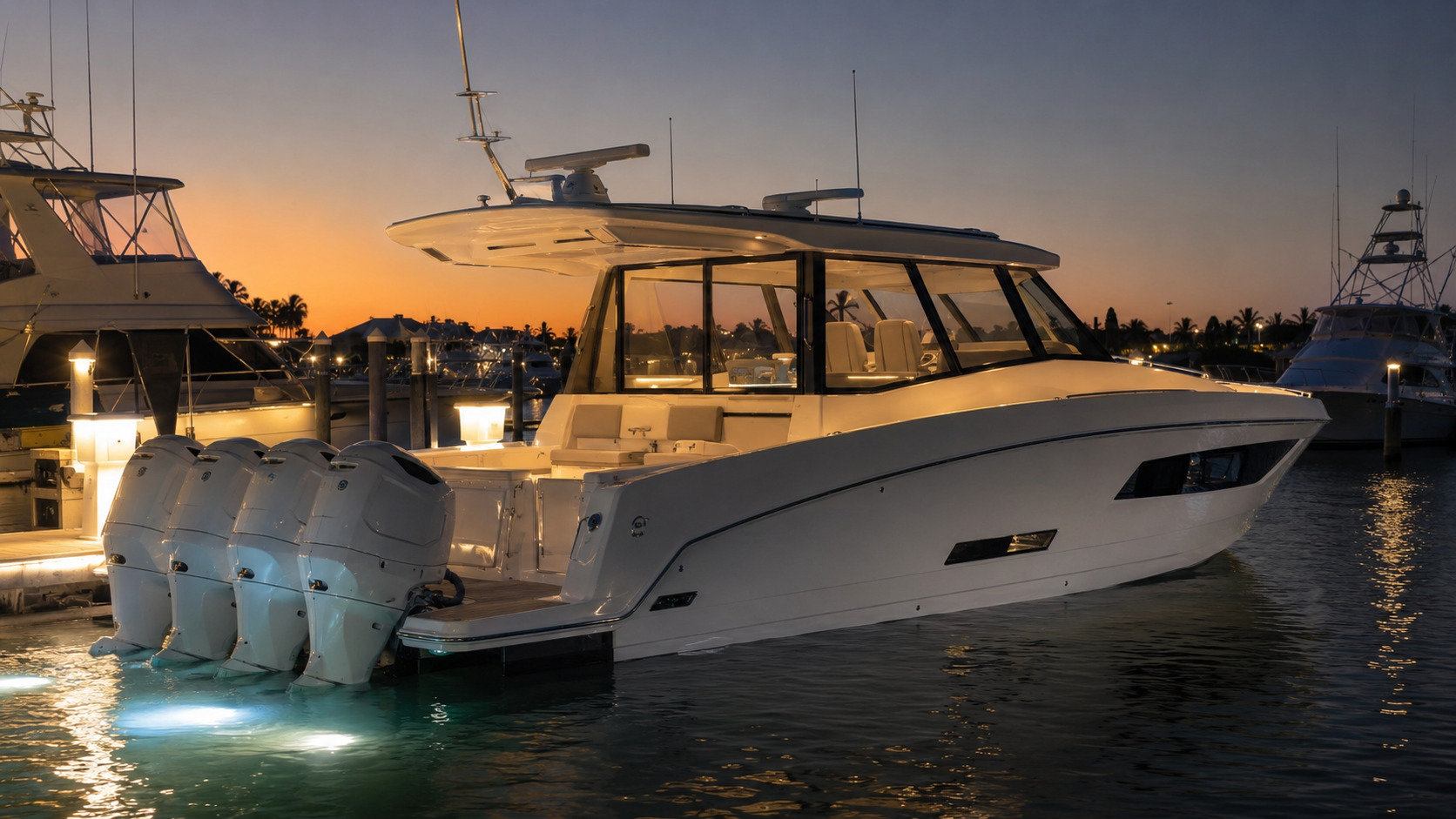
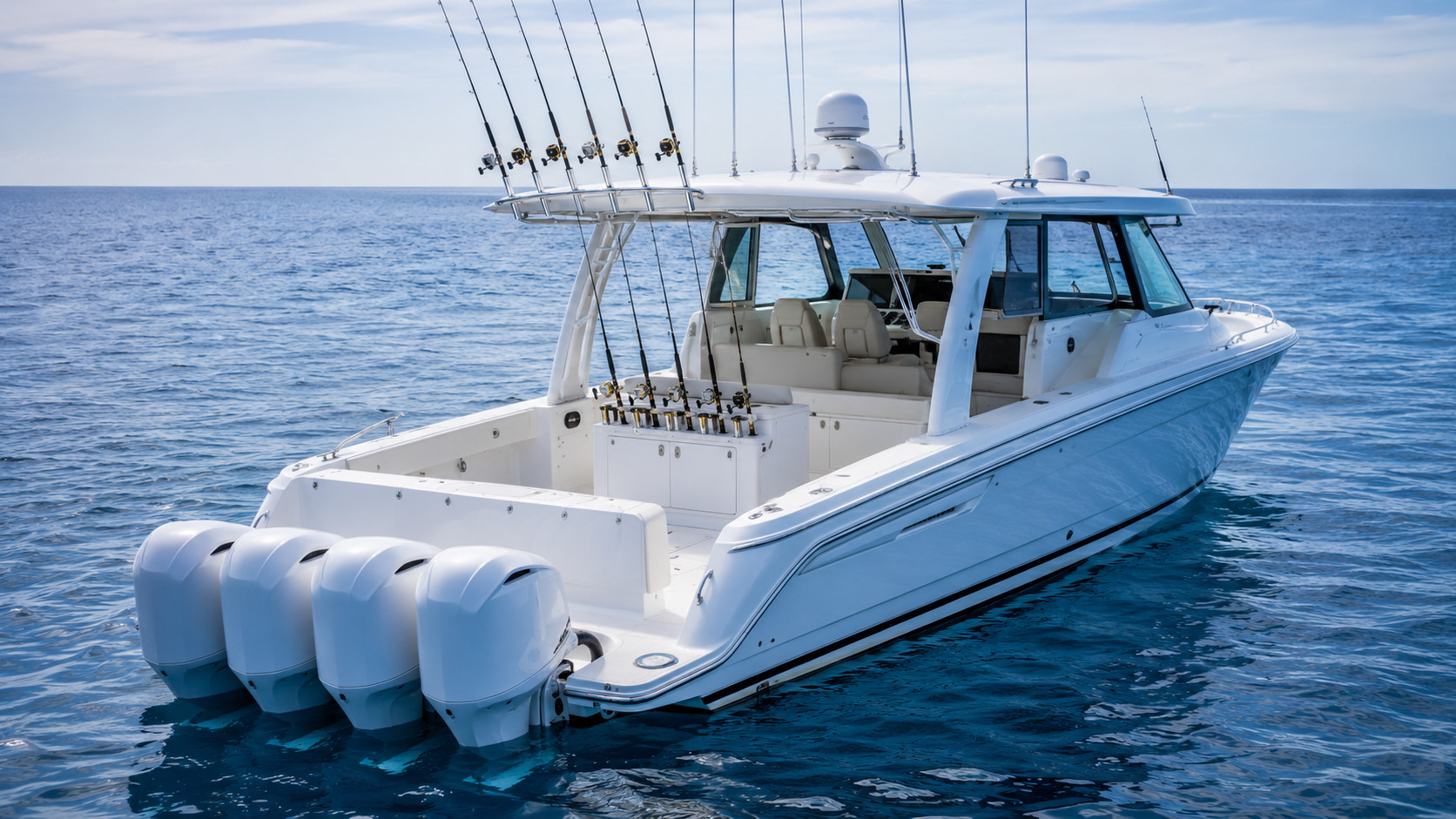
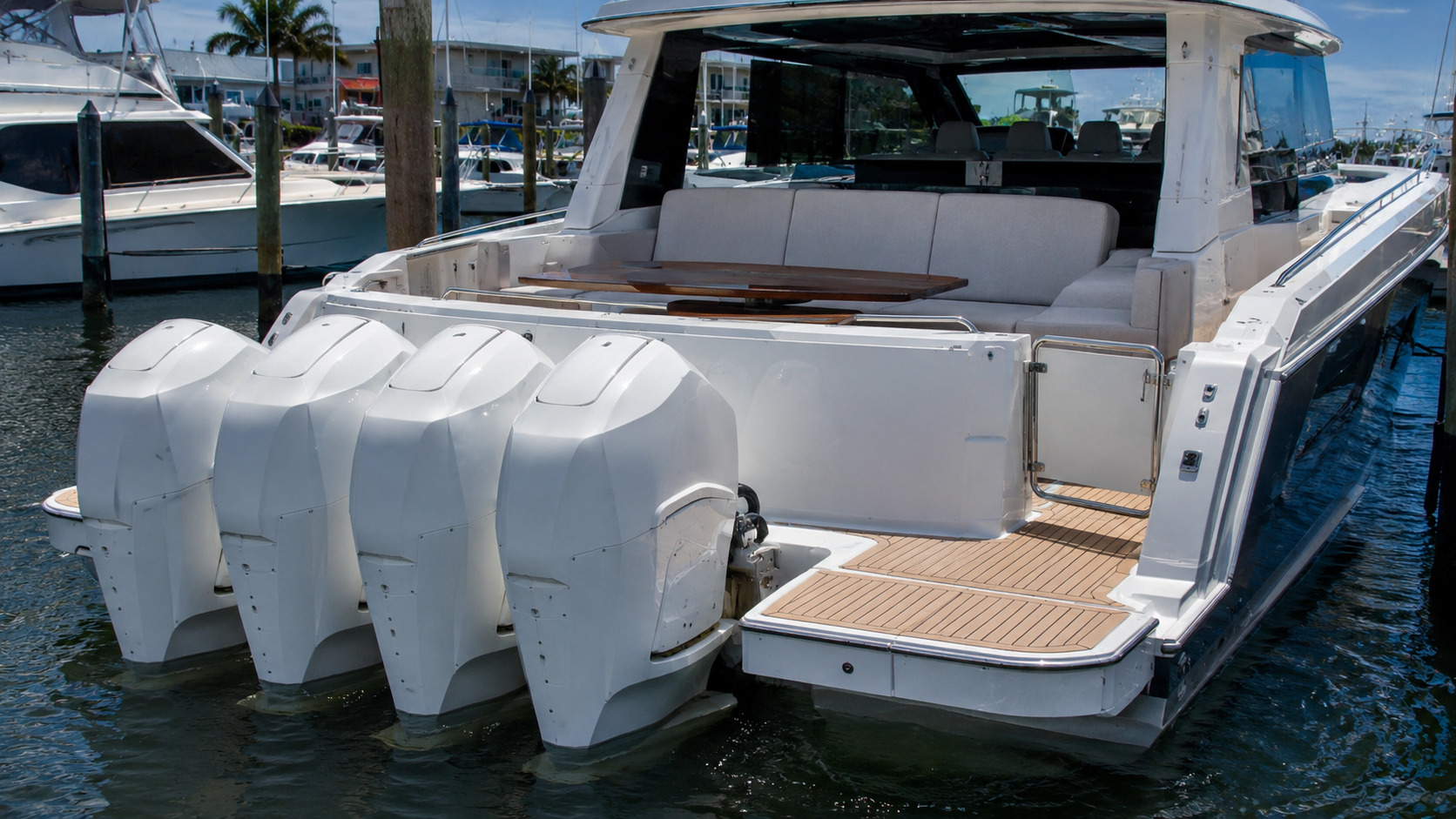
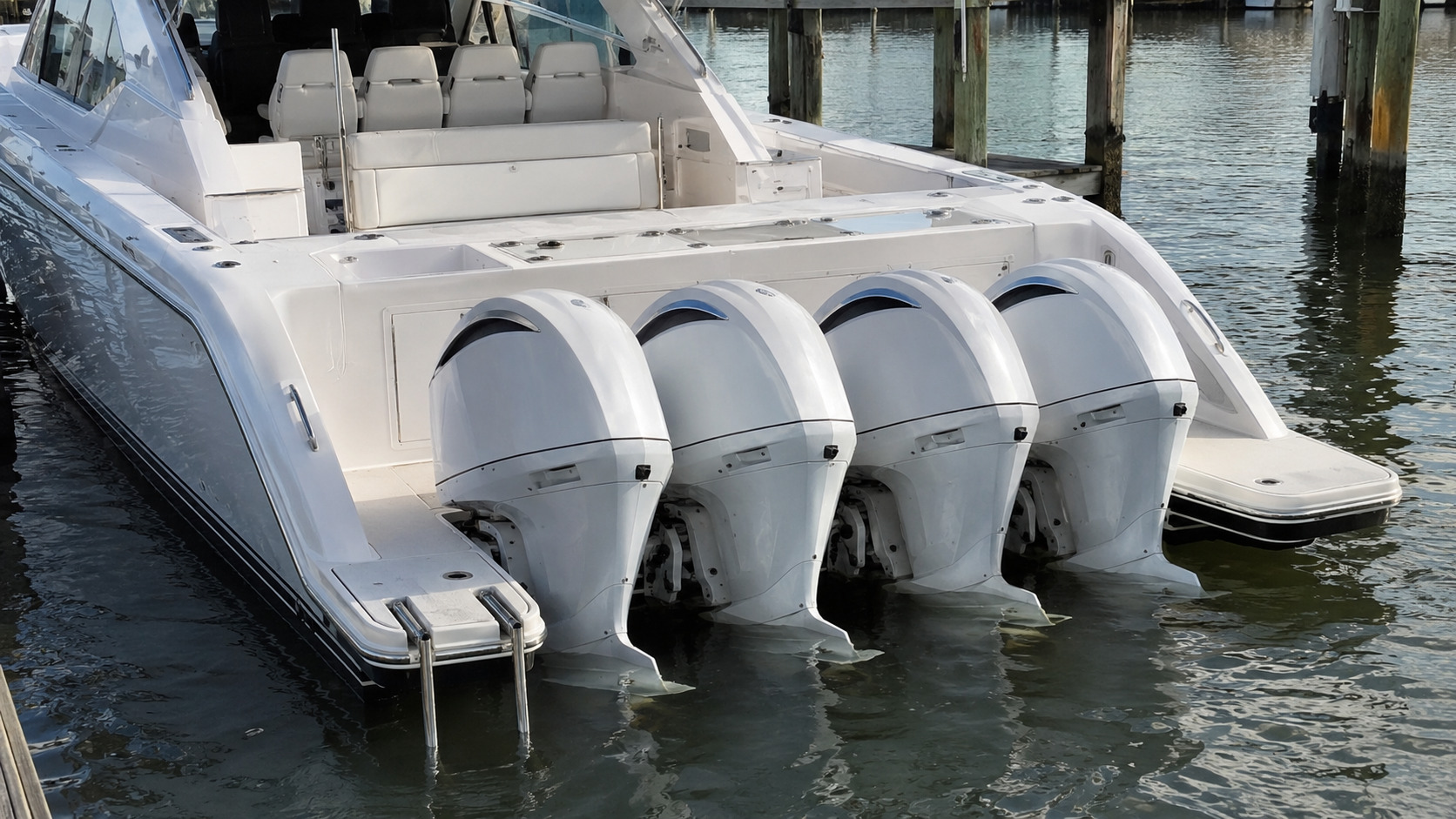
The reference power package for the OS 445 is triple Yamaha F450 XTO, with up to 1,350 hp.
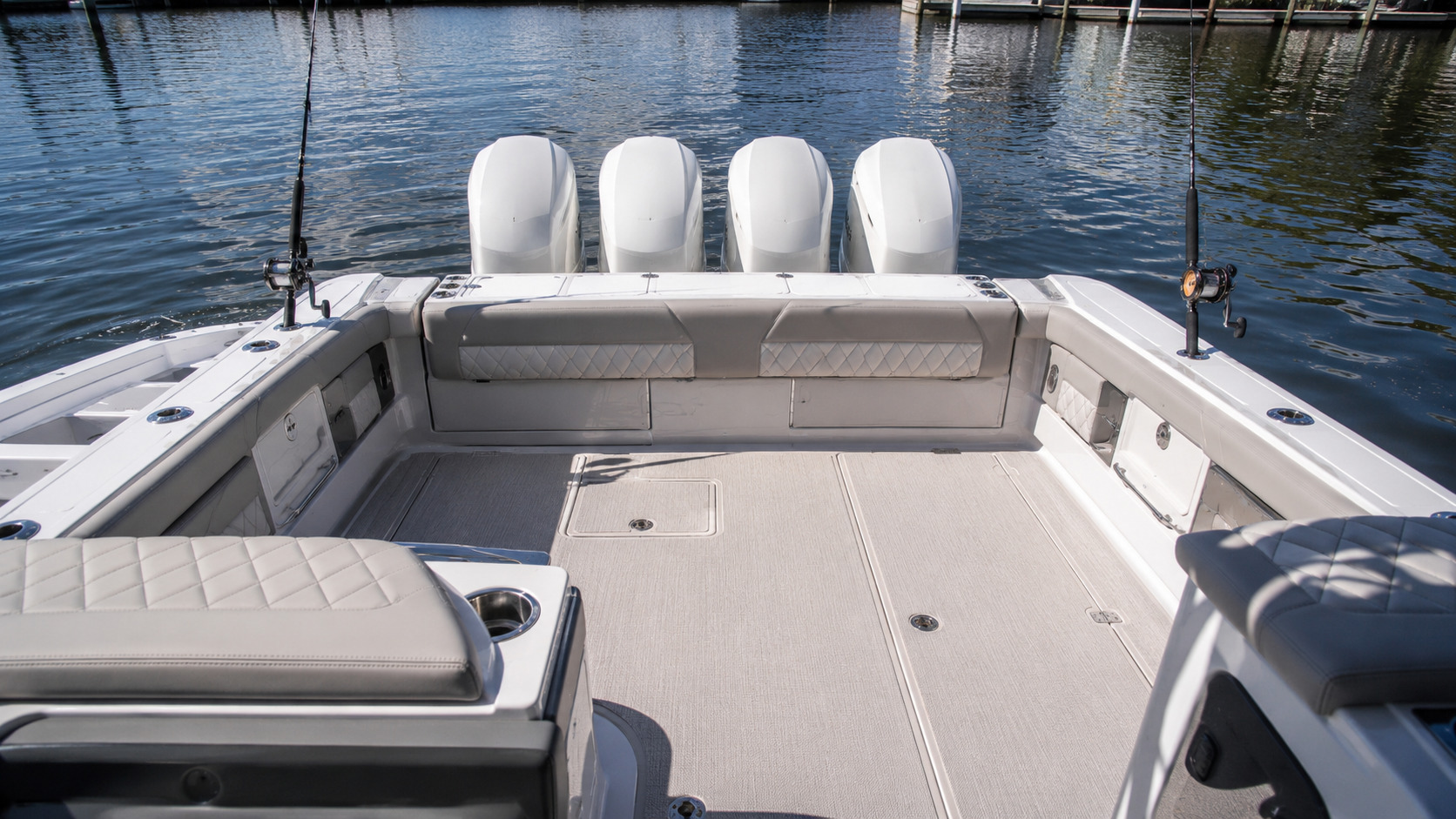
Triple F450 XTO power is appropriate for the weight, but the propulsion package should be budgeted like yacht equipment. Review all three engines as a matched system and verify steering, joystick and charging operation after a long run. A boat that carries 600 gallons of fuel can spend many hours away from service, so deferred maintenance has more consequence than it does on a small day boat that never leaves sight of the inlet.
Fuel capacity, cruise planning and operating range
With 600 gal of fuel capacity, the OS 445 can support substantial time away from the dock. Tankage also affects displacement.
Ownership math changes once the OS 445 is loaded. The dry figure is about 30,718 lb, and a full 600 gal fuel load adds substantial mass before freshwater, people and gear. That wet condition is the one a lift, haul-out yard or transport plan needs to support. Buyers moving up from a smaller boat should confirm those limits before assuming their current infrastructure will carry the OS 445.
A useful OS 445 fuel plan also includes the hotel load. With 600 gal in the main tank and cruising systems running, generator time can be part of a multi-day trip even when the outboards are off. Record engine consumption at cruise, then keep generator use and reserve fuel separate so the owner knows what portion of the tank is genuinely available for the return leg. On a OS 445 trip measured in offshore hours rather than local miles, a best-case range estimate is less useful than a conservative return reserve.
Performance on the OS 445 is best measured by comfort and control at the speeds the owner will actually use. If the OS 405 is also on the list because less beam and weight with a simpler two-cabin arrangement, run it in similar conditions.
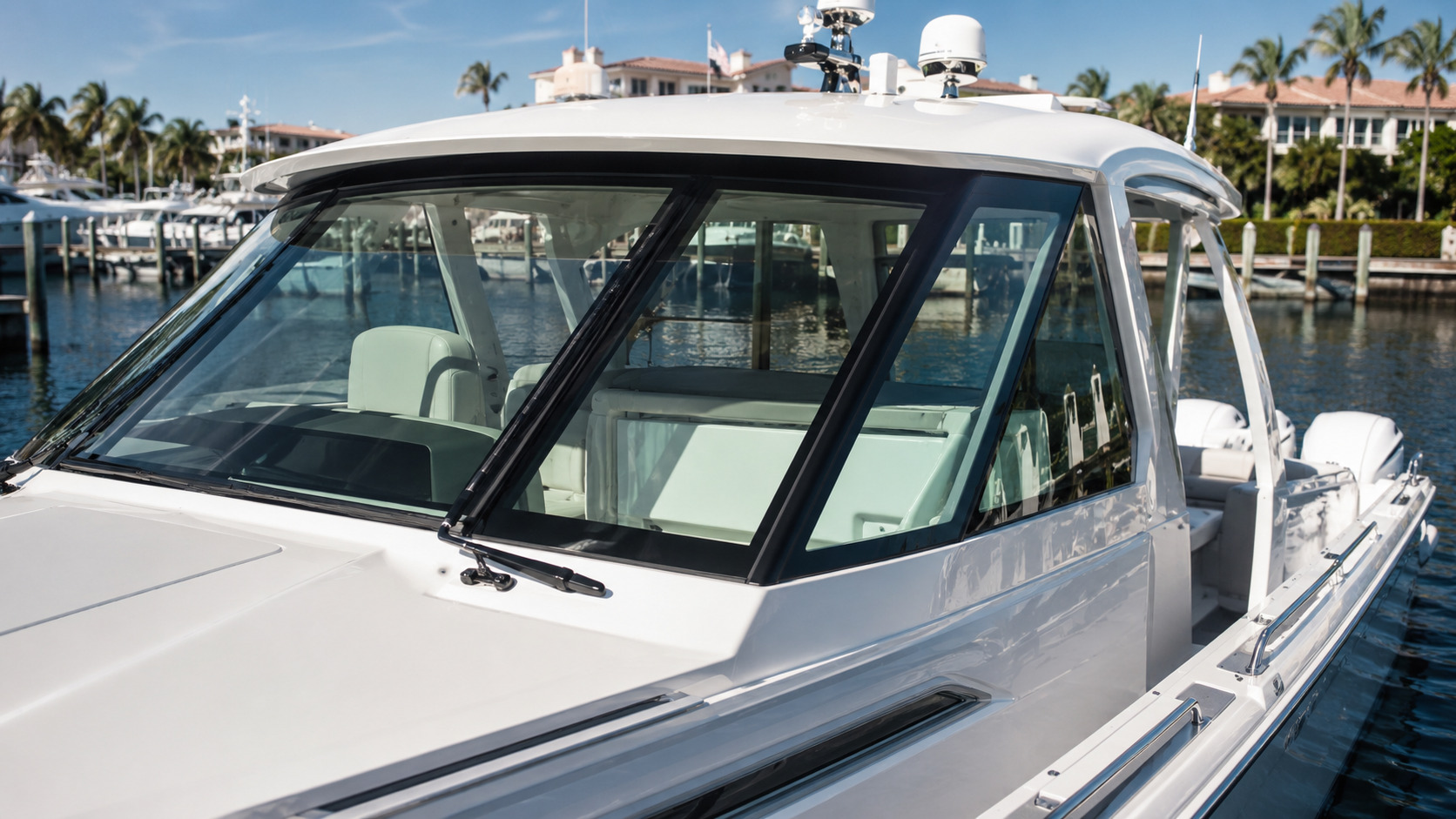
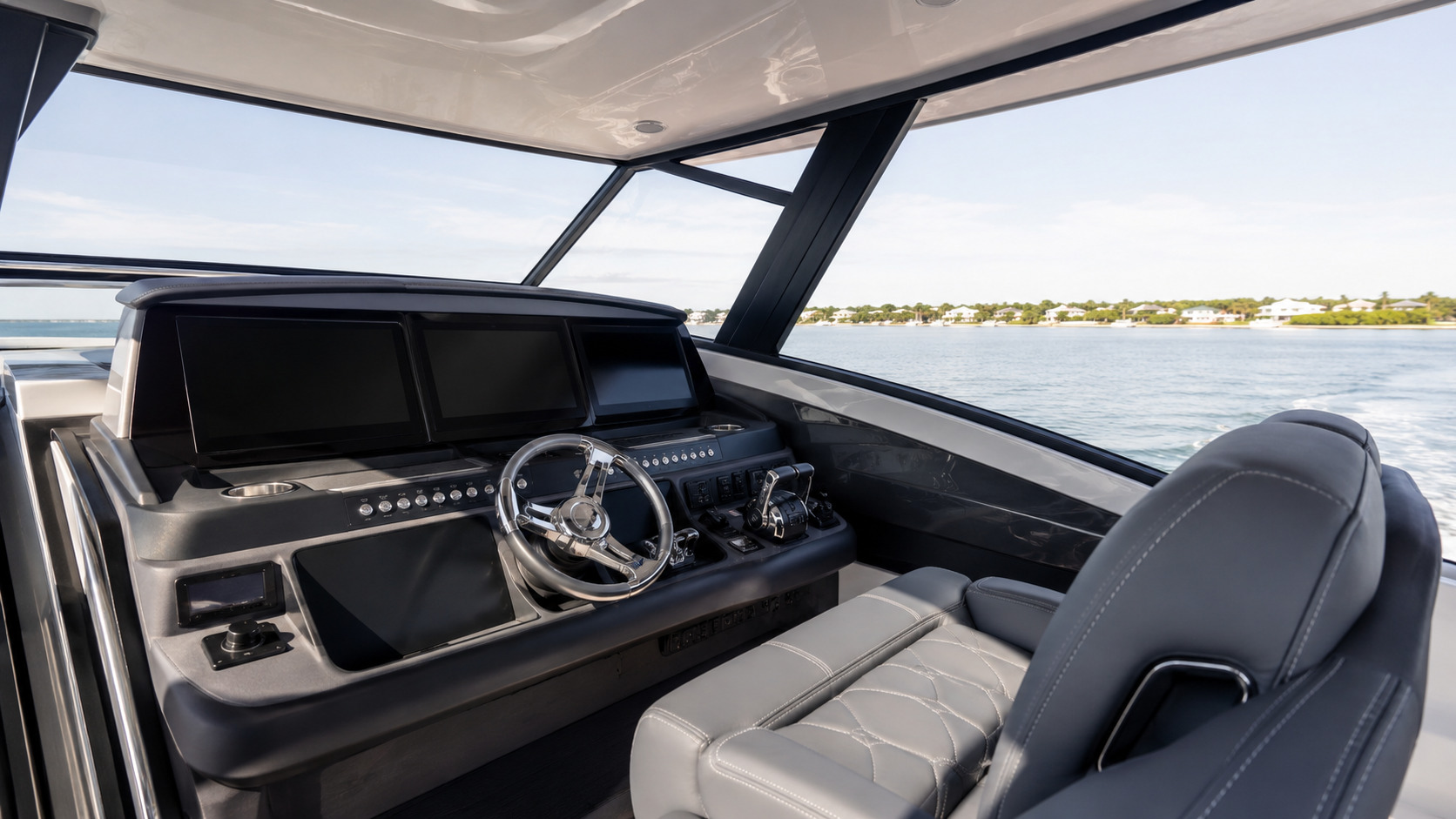
The OS 445 should be tested as a cruising boat carrying real offshore weight. Run with enough fuel and people to represent a trip, let the cabin systems operate, and settle the 20° hull at a comfortable long-range cruise rather than chasing maximum speed. Note bridge noise, windshield visibility and how easily the driver holds course in quartering chop. The OS 405 is the useful check if the OS 445’s added cruising capability does not change the trip enough to justify its ownership scale.
The OS 445 deck should be tested with real gear aboard. Three features reveal the model’s priorities: Galley-up bridge deck, Queen primary stateroom and Separate guest stateroom.
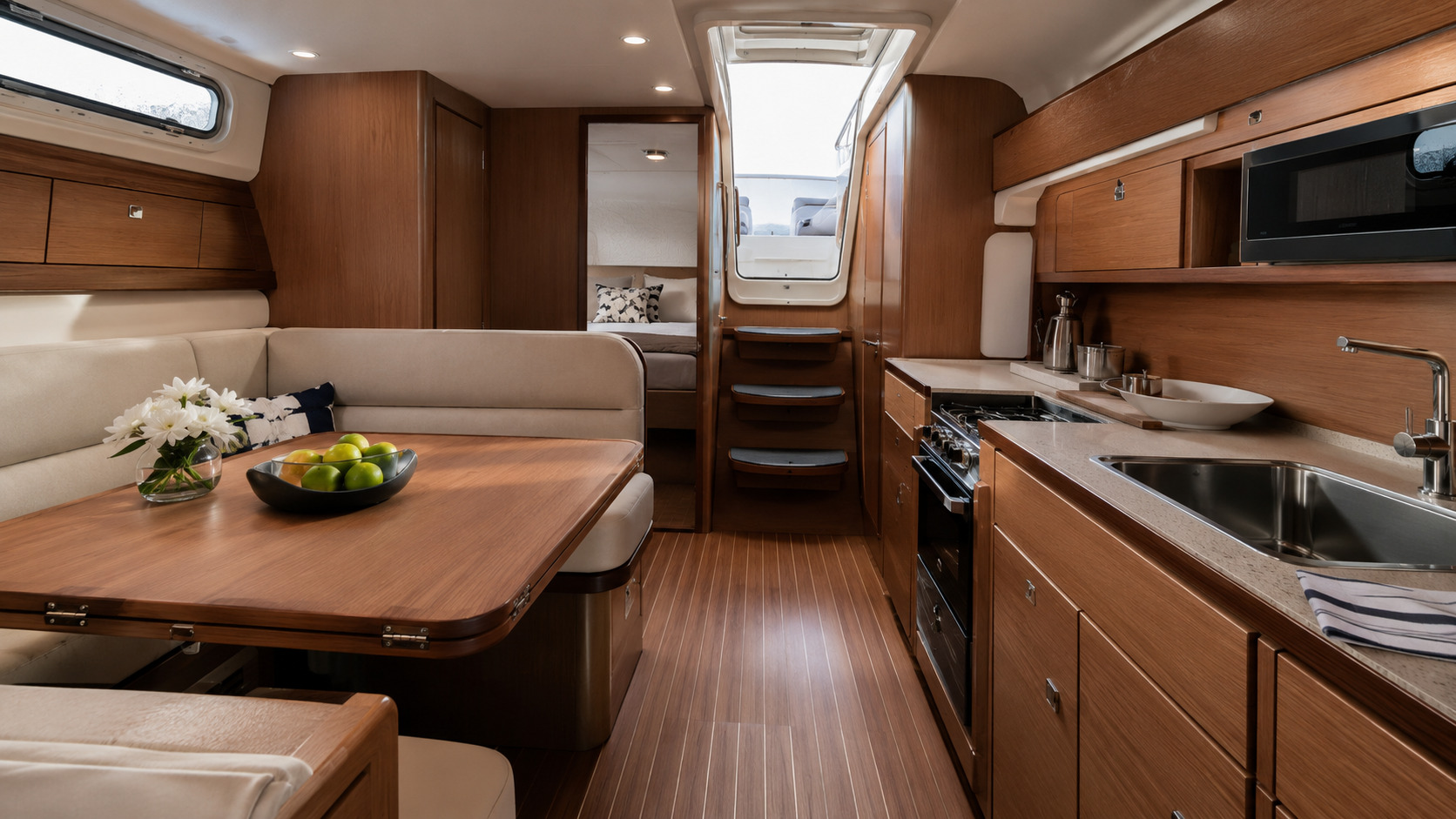
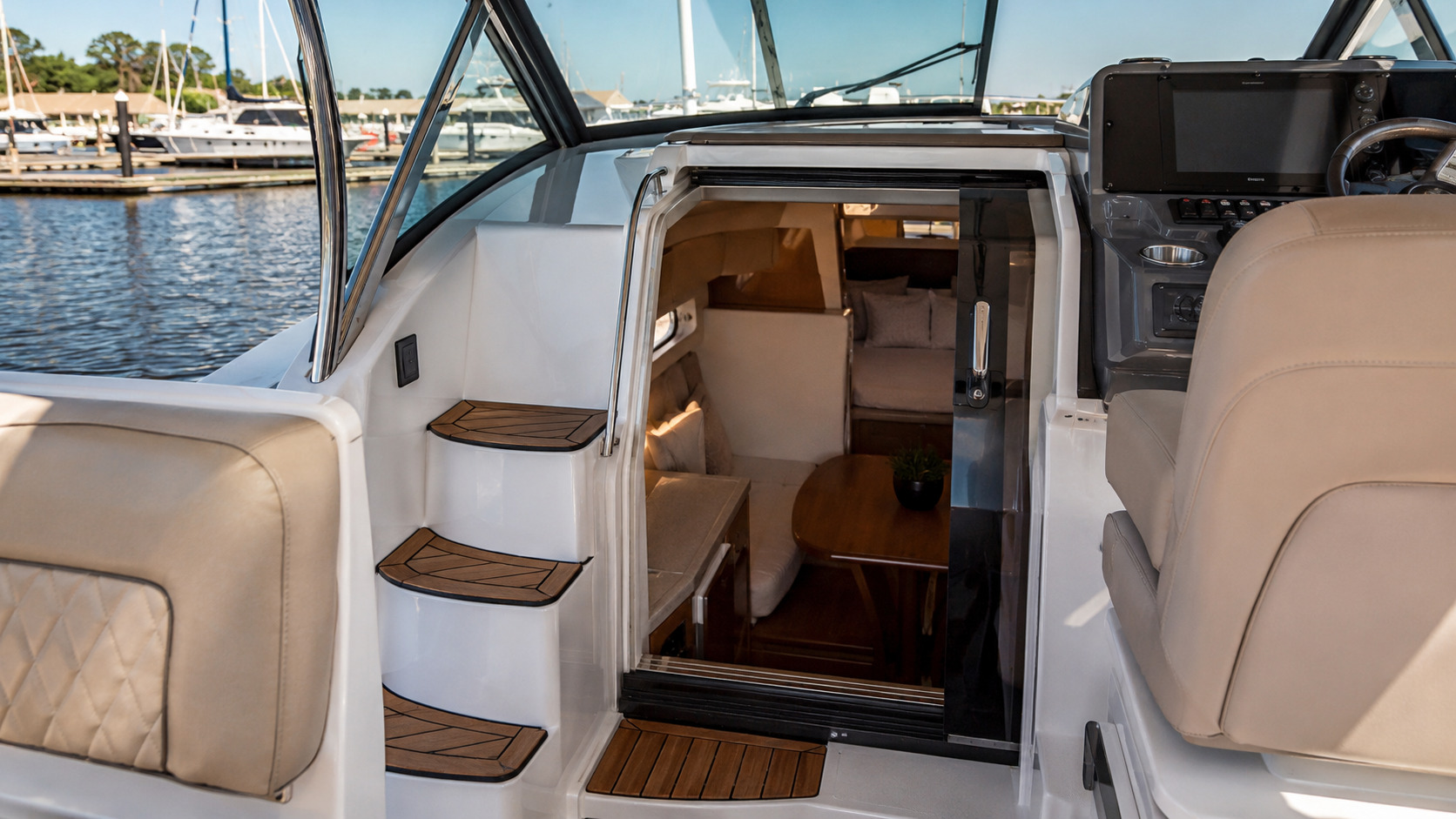
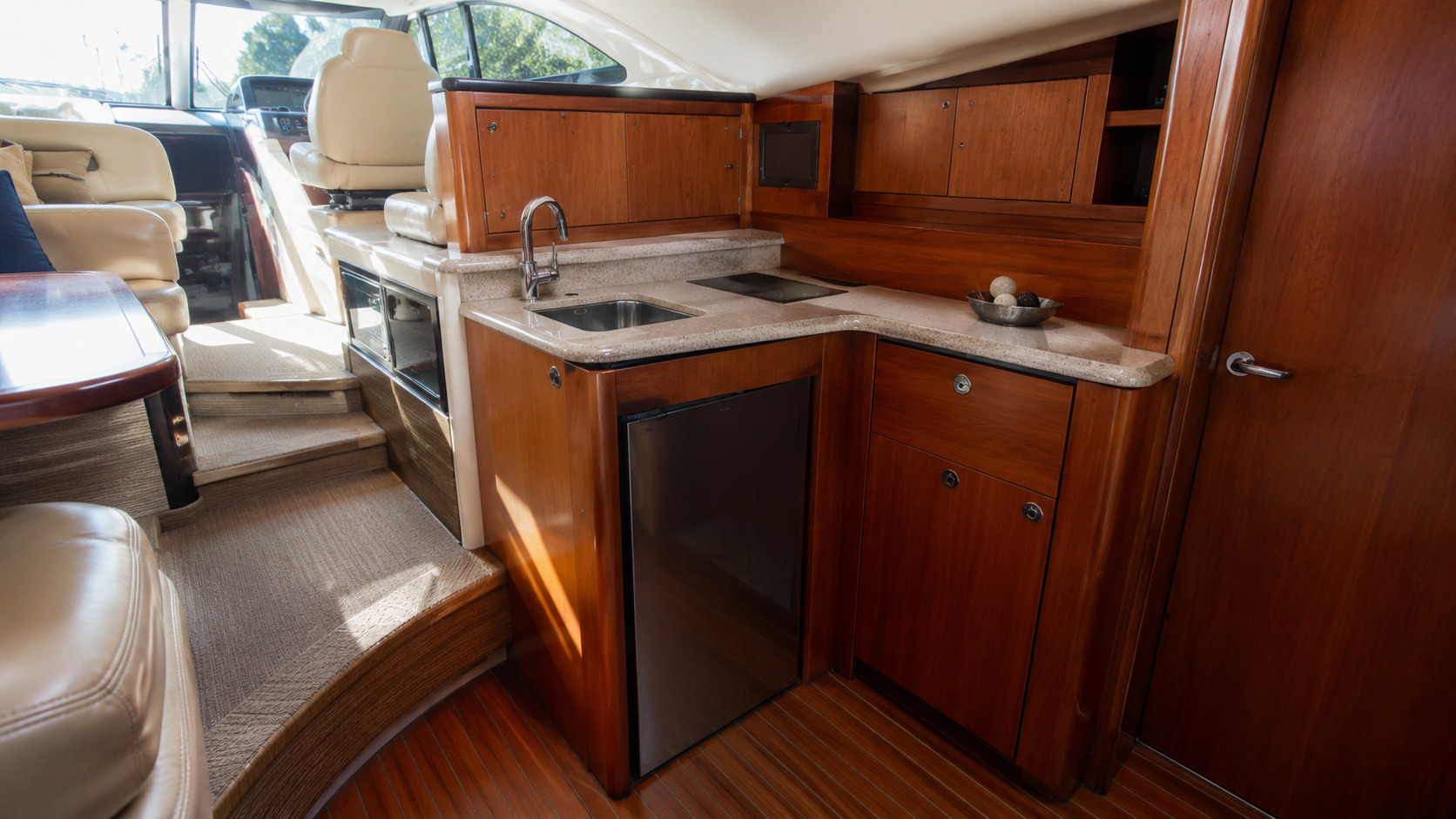
The galley-up bridge is the 445’s defining living-space decision. Cook at the same level as the helm and cockpit, then walk below to see how much quieter and more private the staterooms feel without a galley occupying the salon. On deck, check side-deck width and foredeck access with lines and fenders in hand. The yacht-like circulation should make docking and anchoring easier, not only look impressive in photos.
600-gallon fuel capacity – The tankage supports long offshore legs, while also creating substantial wet weight.
Galley-up bridge deck
Cooking stays in the social area, so the cabin below can devote more volume to sleeping and storage.
Queen primary stateroom
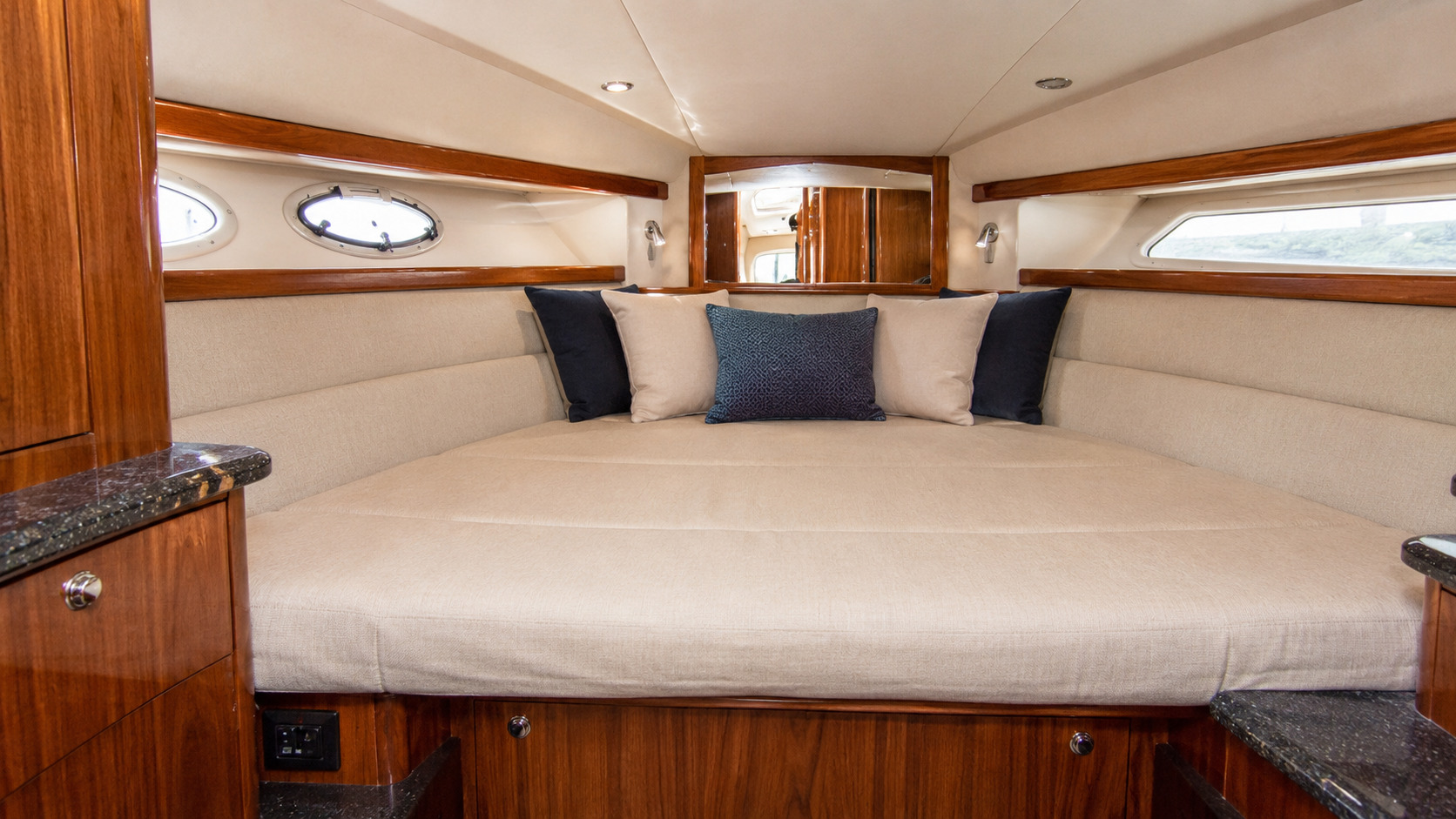
A fixed island-style queen and dedicated storage support multi-night use.
Separate guest stateroom
Guests have their own cabin rather than a convertible settee in the main salon.
Triple F450 XTO outboards
Three high-output engines deliver the power expected for a 30,000-pound platform.
Electronics, pumps and onboard systems
On the OS 445, systems worth more attention than a quick switch test include Galley-up bridge deck, Separate guest stateroom, Triple F450 XTO outboards and Two-drawer refrigerator/freezer and induction cooktop.
A 445 inspection should be scheduled like a yacht survey. Generator, climate control, dual refrigeration, induction cooking, pumps, shore power, electronics and engine systems need enough time to operate together. Check load-sharing and charging behavior while the galley and air conditioning are on. If stabilization is fitted, include it in the same test. Complex boats reveal weaknesses when several systems are asked to work simultaneously.
Overnight capability on the OS 445 is described as two-stateroom overnight layout with a private primary berth and separate guest cabin. Freshwater capacity is 100 gal, with 22 gal for waste.
Two dedicated staterooms are the strongest reason to move from a 405 to a 445. The guest cabin is not merely a converted mid-berth, and that separation can make a major difference on multi-night trips. Spend time below deck with doors closed and climate control running. Check mattress access, locker space, sound levels and head use. A boat designed for weekends should be evaluated after the cockpit tour is over.
pursuit boats offshore os 445 galley cabin utility 10
pursuit boats offshore os 445 hardtop glass detail 18
pursuit boats offshore os 445 helm detail 06
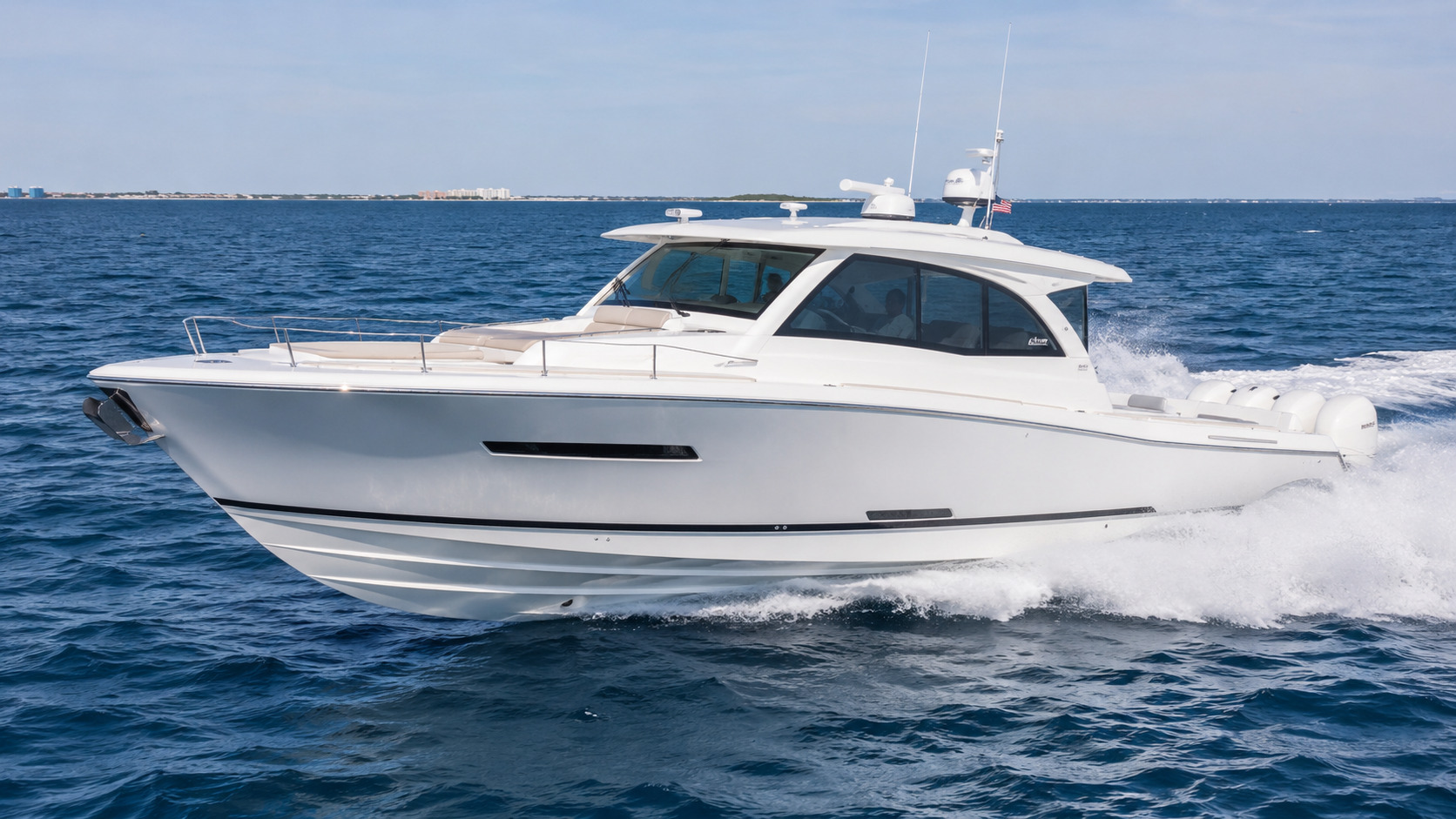
pursuit boats offshore os 445 hero underway 01
pursuit boats offshore os 445 low waterline running 15
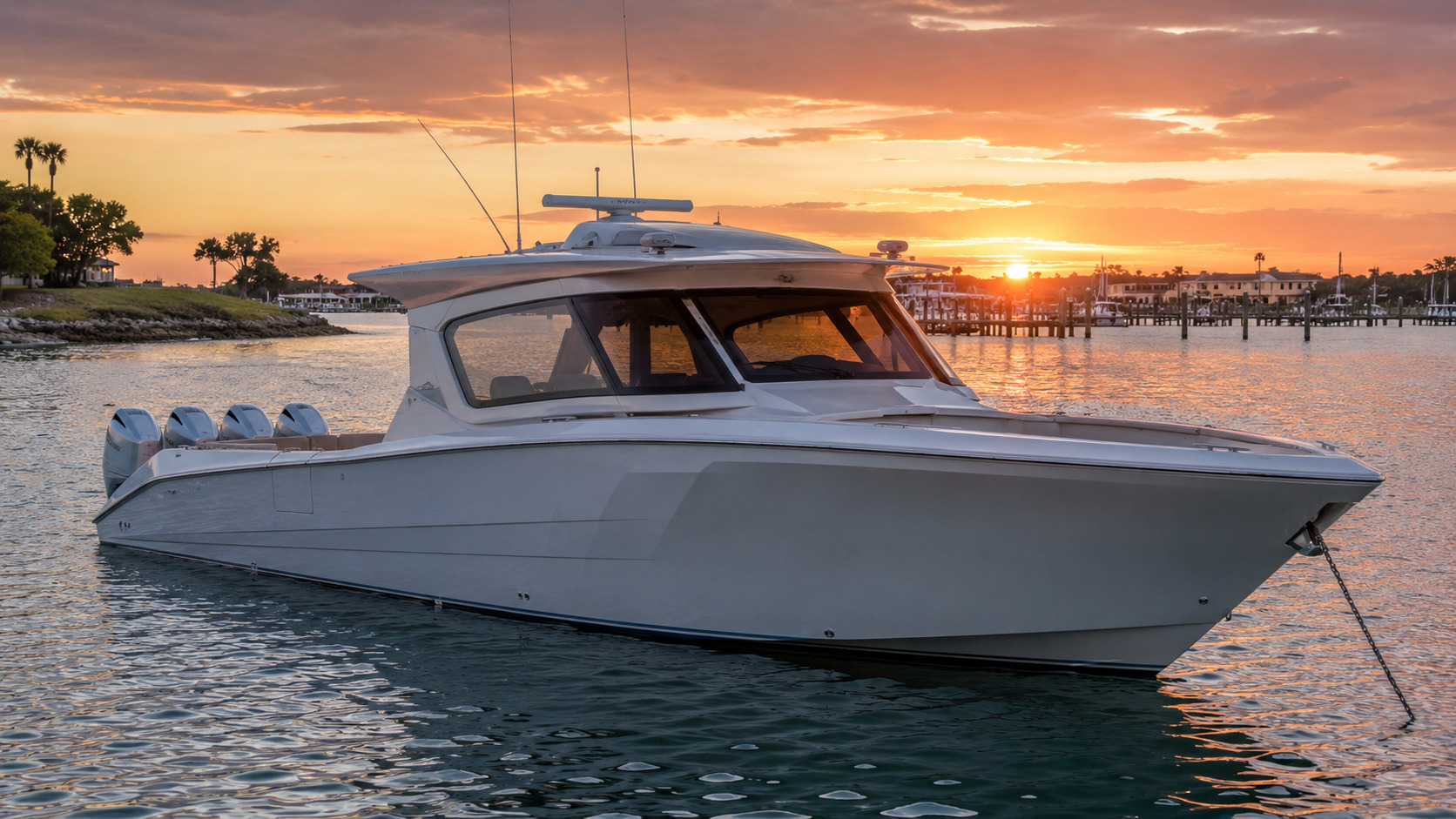
pursuit boats offshore os 445 marina evening profile 23
pursuit boats offshore os 445 offshore fishing ready 24
pursuit boats offshore os 445 premium exterior hero 25
pursuit boats offshore os 445 premium marina arrival 13
pursuit boats offshore os 445 quiet cove anchored 21
pursuit boats offshore os 445 rear quarter running 03
pursuit boats offshore os 445 side profile underway 12
pursuit boats offshore os 445 stern boarding angle 11
pursuit boats offshore os 445 sunset flagship angle 14
pursuit boats offshore os 445 transom outboards detail 20
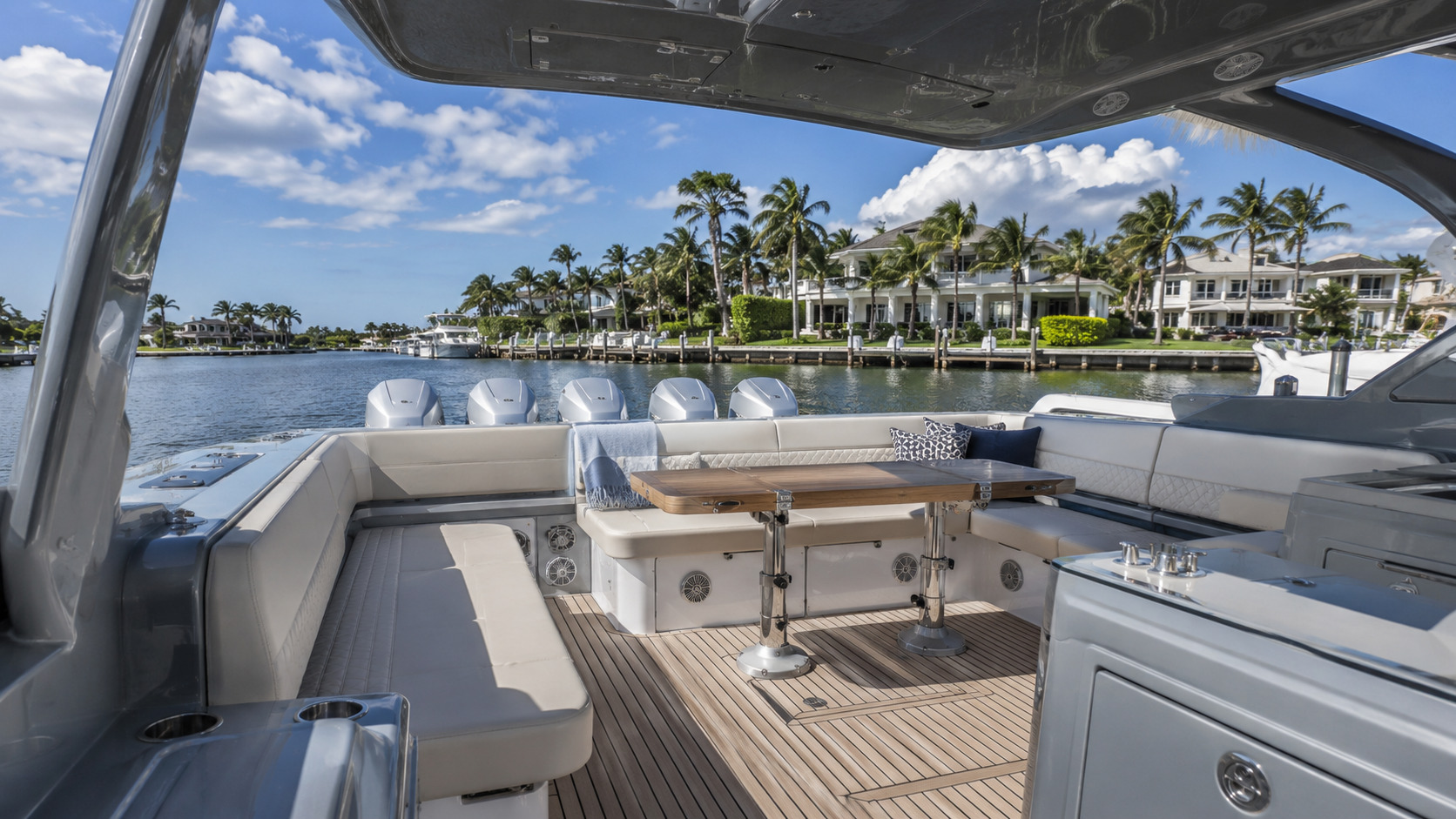
pursuit boats offshore os 445 aft cockpit social 17
pursuit boats offshore os 445 berth sleeping angle 09
pursuit boats offshore os 445 bluewater cruising profile 22
pursuit boats offshore os 445 bow on offshore 16
pursuit boats offshore os 445 cabin door companionway 19
pursuit boats offshore os 445 cabin interior 08
pursuit boats offshore os 445 cockpit seating fishing angle 07
pursuit boats offshore os 445 dockside luxury profile 04
pursuit boats offshore os 445 elevated wide exterior 05
pursuit boats offshore os 445 front quarter offshore running 02
Typical Pursuit OS 445 pricing
The propulsion package is triple Yamaha F450 XTO, so engine condition is central to value. Budget beyond closing.
At this level, a purchase price without a maintenance history is incomplete information. Triple 450s, generator, galley equipment, air conditioning and major electronics all have service cycles. The buyer should ask for invoices, not summaries. A well-kept 445 may command a premium, but that premium can be easier to justify than inheriting deferred work across multiple yacht-scale systems.
Market price band
Pricing on request
Estimated monthly
Ask us for a payment
Illustration only and not an offer of credit.
Estimate a Pursuit OS 445 payment
Final rate, term, down payment and eligibility depend on the borrower, the OS 445 being purchased and the transaction structure.
Illustration only and not an offer of credit. Your actual rate and term depend on credit profile, vessel age, loan amount and ownership structure.
Compare the OS 445 with nearby Pursuit models
The OS 405 is the first comparison when the buyer wants less beam and weight with a simpler two-cabin arrangement. It measures 43′ 0″ overall, carries 482 gal of fuel and is rated to 1,350 hp. Against the OS 445, those differences change more than performance; they change crew space, service burden and where the boat fits physically. Look at the S 428 when the buyer wants more open-deck fishing and entertaining with less cruiser-style separation. The DC 365 belongs on the list when the buyer wants a much smaller dual console for buyers who only occasionally overnight. The OS 445 should remain the choice only when its own case stays clear after those comparisons: The galley-up bridge layout, queen primary stateroom, separate guest stateroom and 600-gallon fuel capacity move the 445 into a different use class from every smaller Pursuit here.
The size comparison with the OS 405 is worth putting on paper. The OS 445 is 46′ 6″ with platform / 43′ 10″ hull long with 13′ 10″ of beam, while the OS 405 is 43′ 0″ with a 13′ 0″ beam. Fuel capacity is 600 gal versus 482 gal. Those differences can affect dockage and operating cost just as much as they affect cockpit space.
Start an OS 445 purchase by confirming what the boat actually is. The OS 445 is affordable when the buyer can purchase it and still maintain the systems that made it desirable.
The OS 445 is right when the owner wants the private sleeping arrangement and galley-up cruising plan enough to support a 46-foot-6-inch package. Buyers who only need a large comfortable express may find the OS 405 easier to dock and maintain. The 445 should win because its extra stateroom, tankage and separation change the trip, not because it is the largest Pursuit on the page.
The specifications on this guide describe the current or reference OS 445 configuration used for comparison. Pursuit equipment can change by model year, and engines or options may differ on an individual boat. Before closing, verify the hull identification, the installed triple Yamaha F450 XTO package and every high-value option that influenced the price.
The OS 445 reference dimensions are 46′ 6″ with platform / 43′ 10″ hull overall, 13′ 10″ of beam, 2′ 6″ draft engines-up and 3′ 5″ engines-down. Pursuit lists about 30,718 lb dry weight, 600 gal of fuel, 20° transom deadrise and a