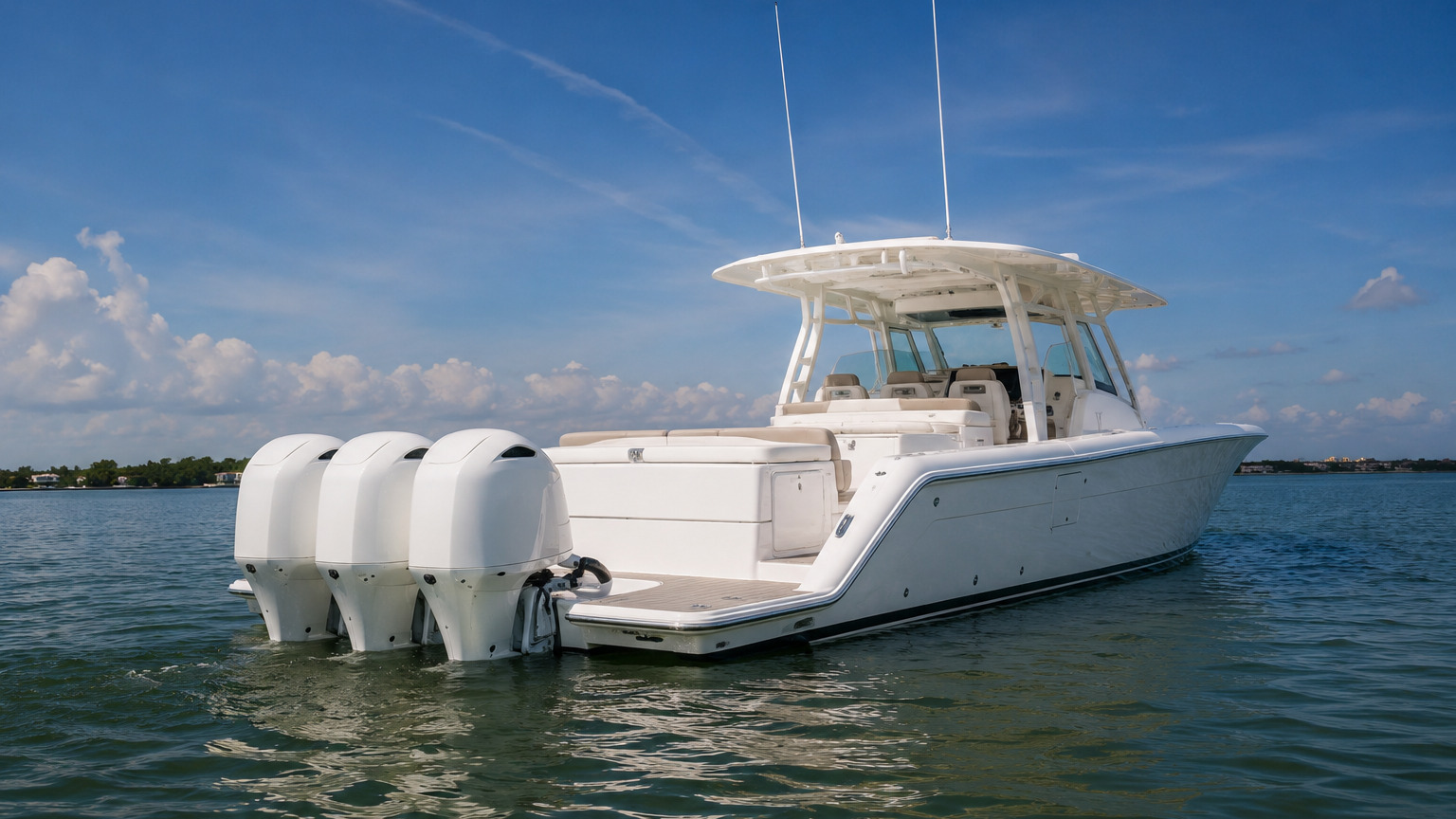
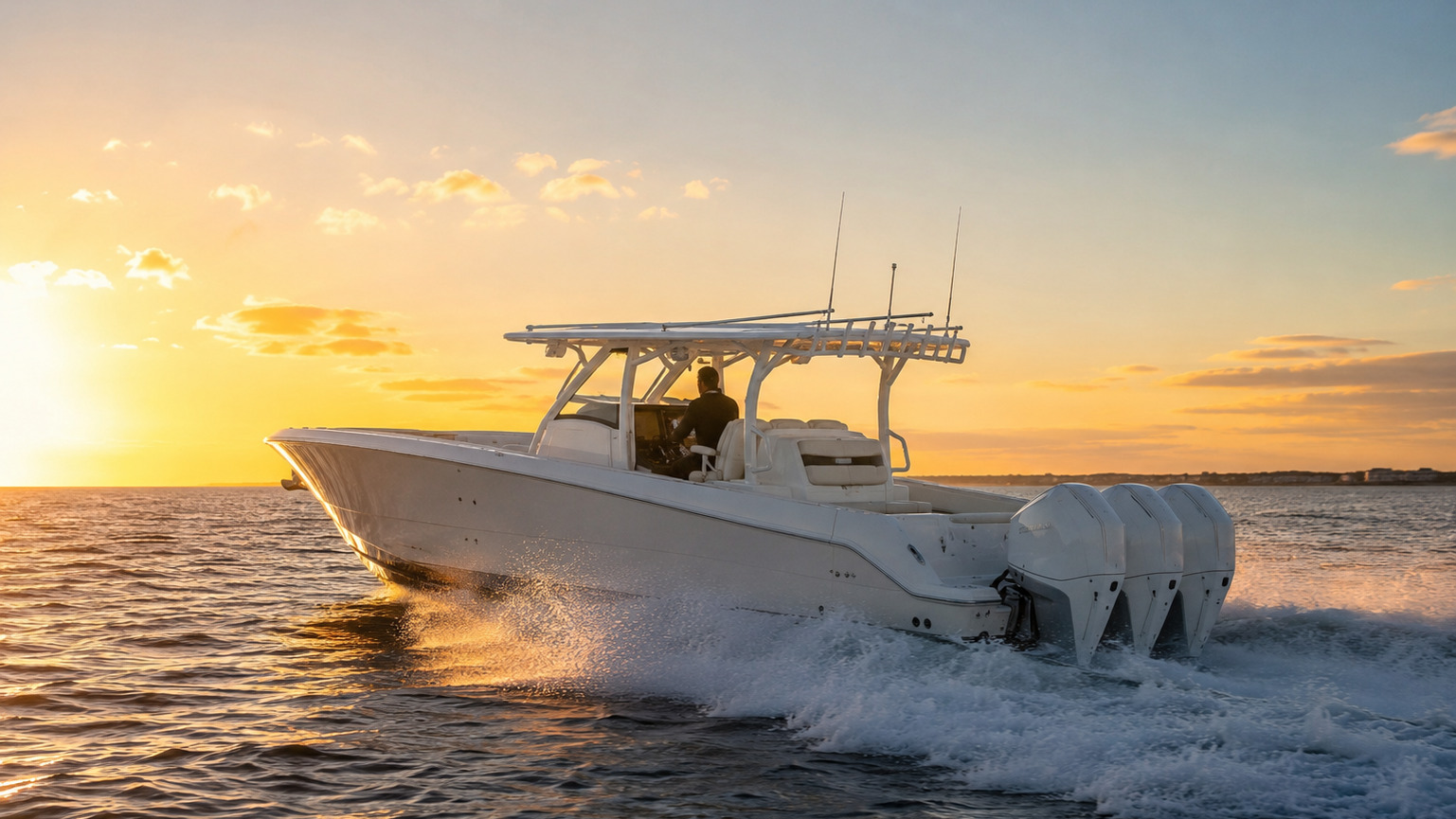
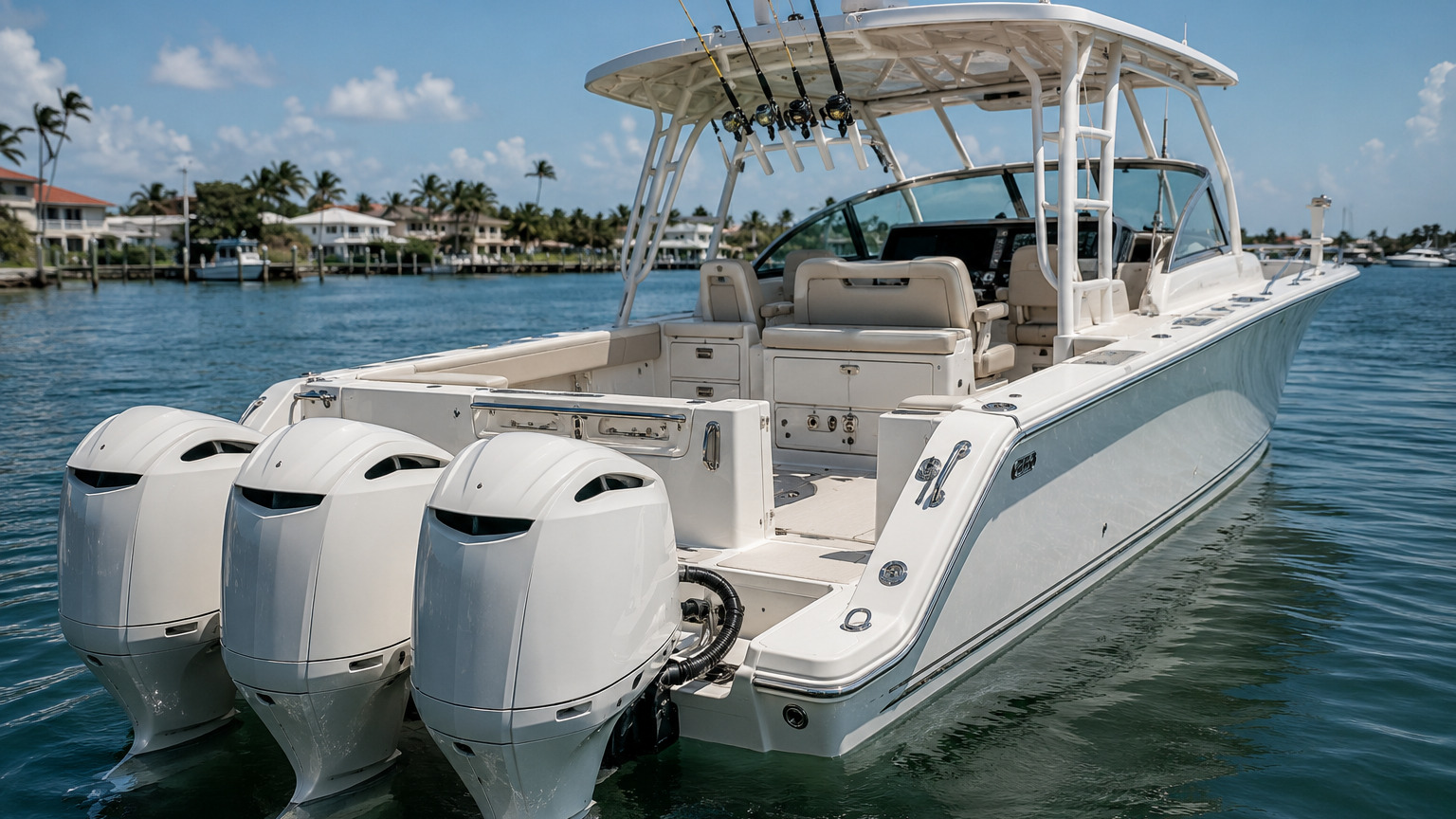
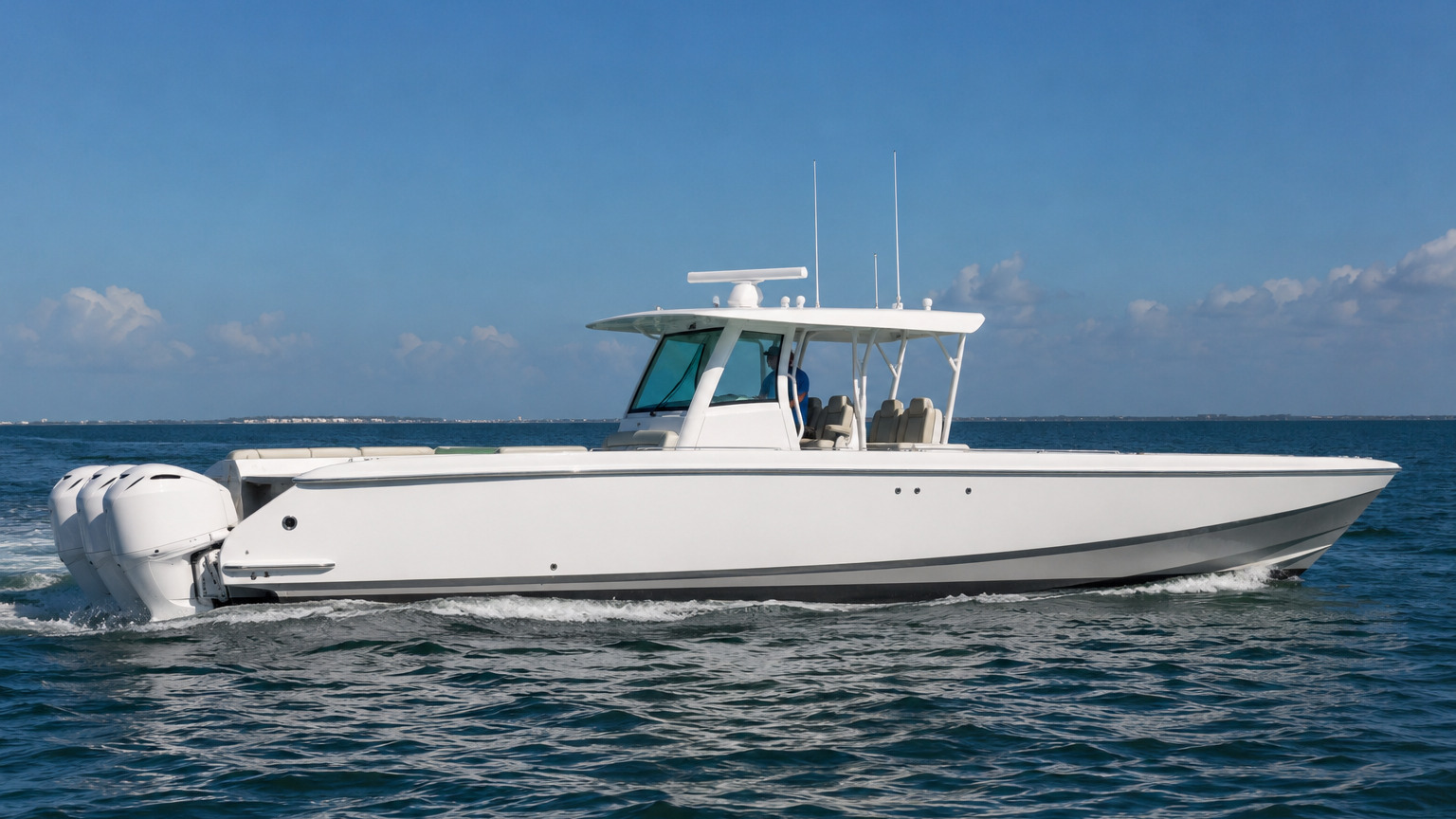
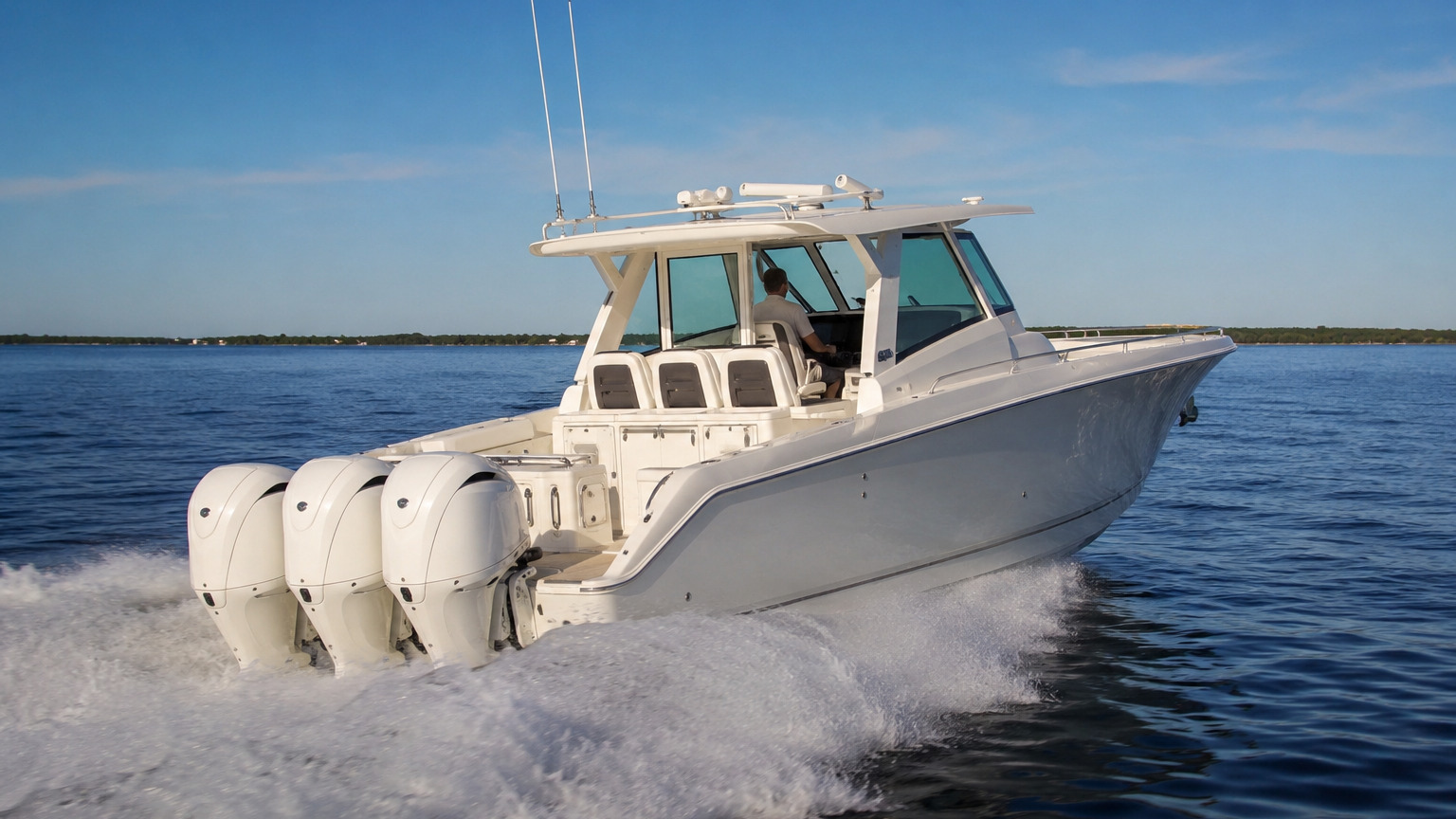
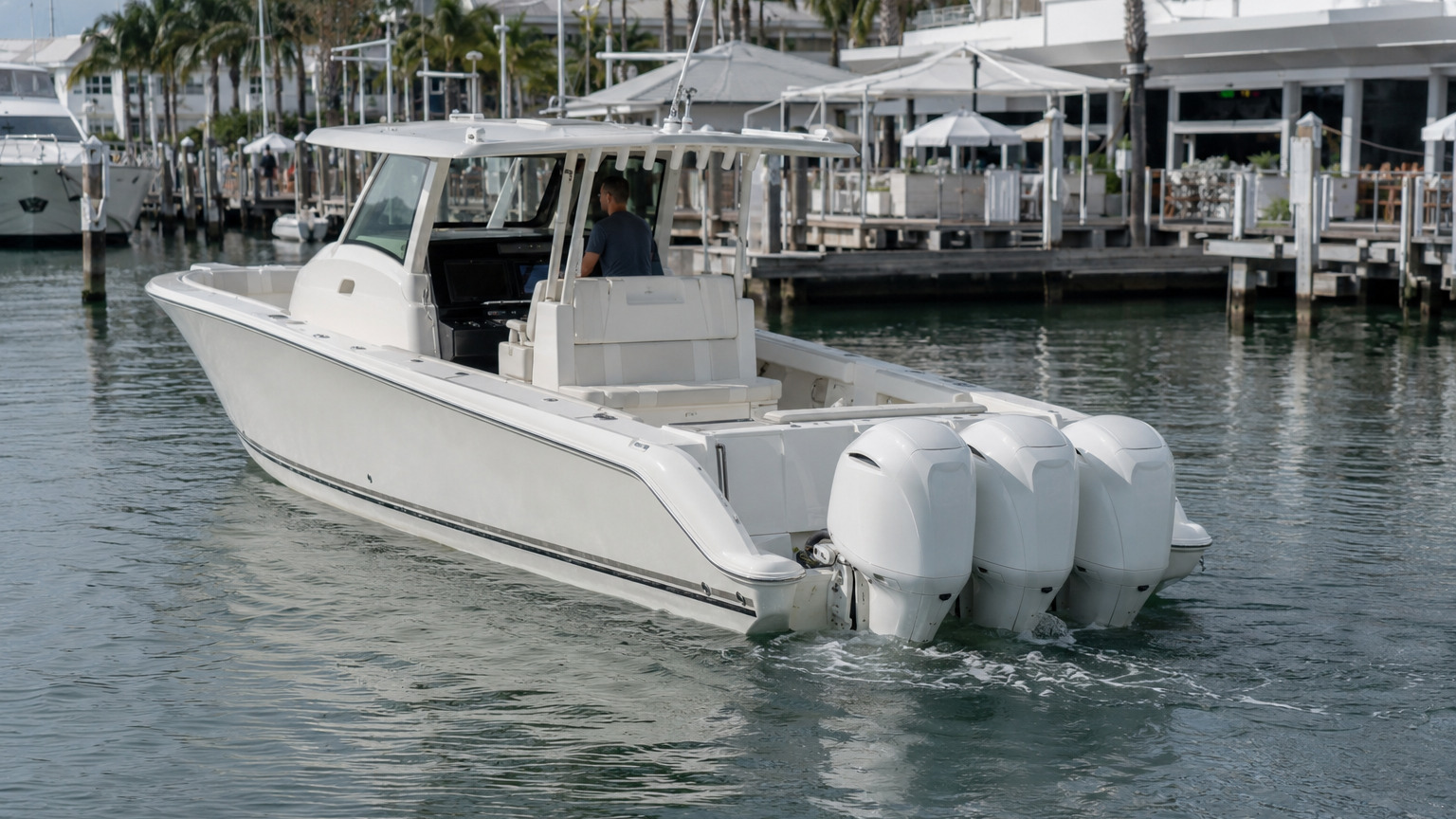
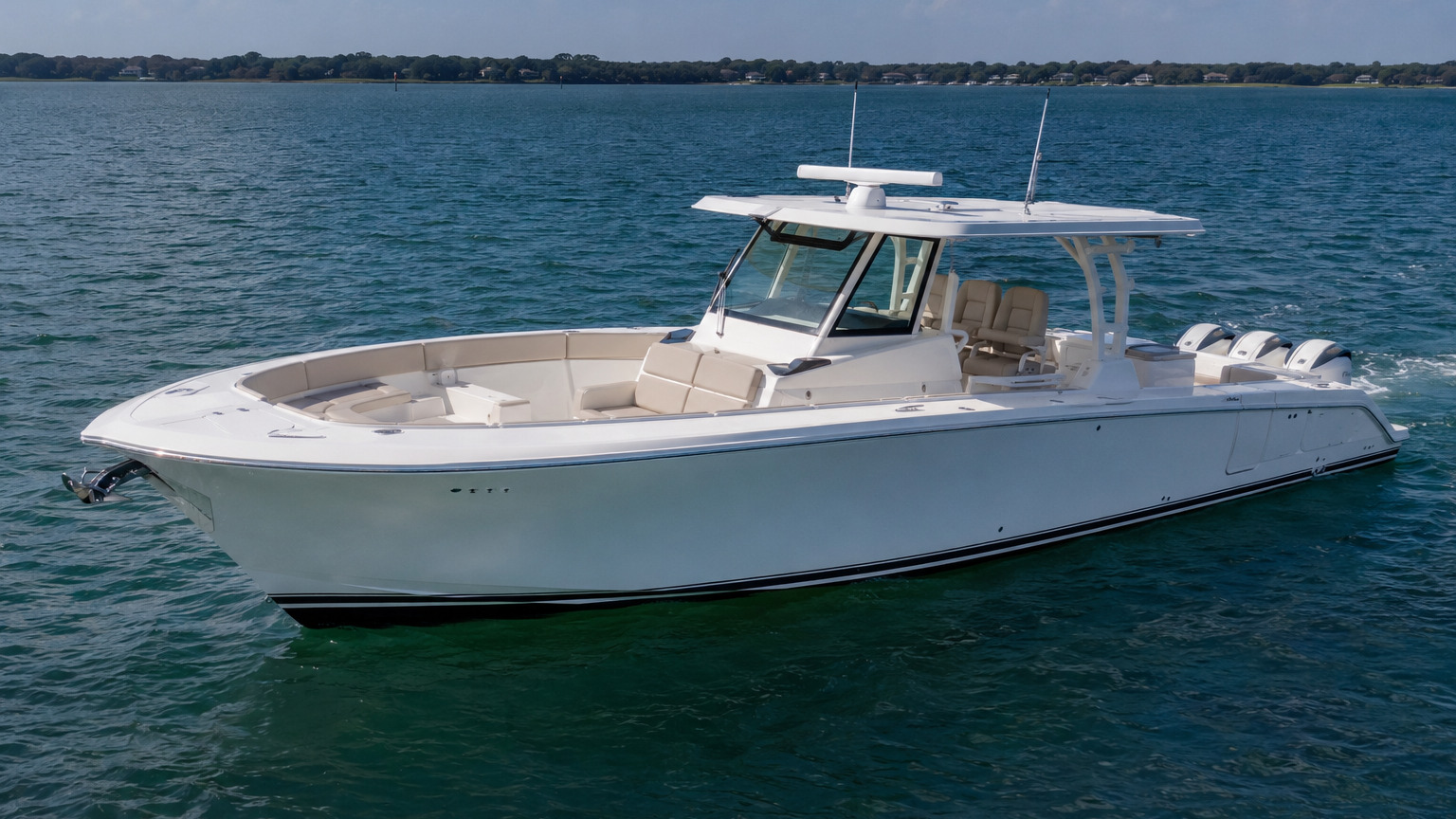
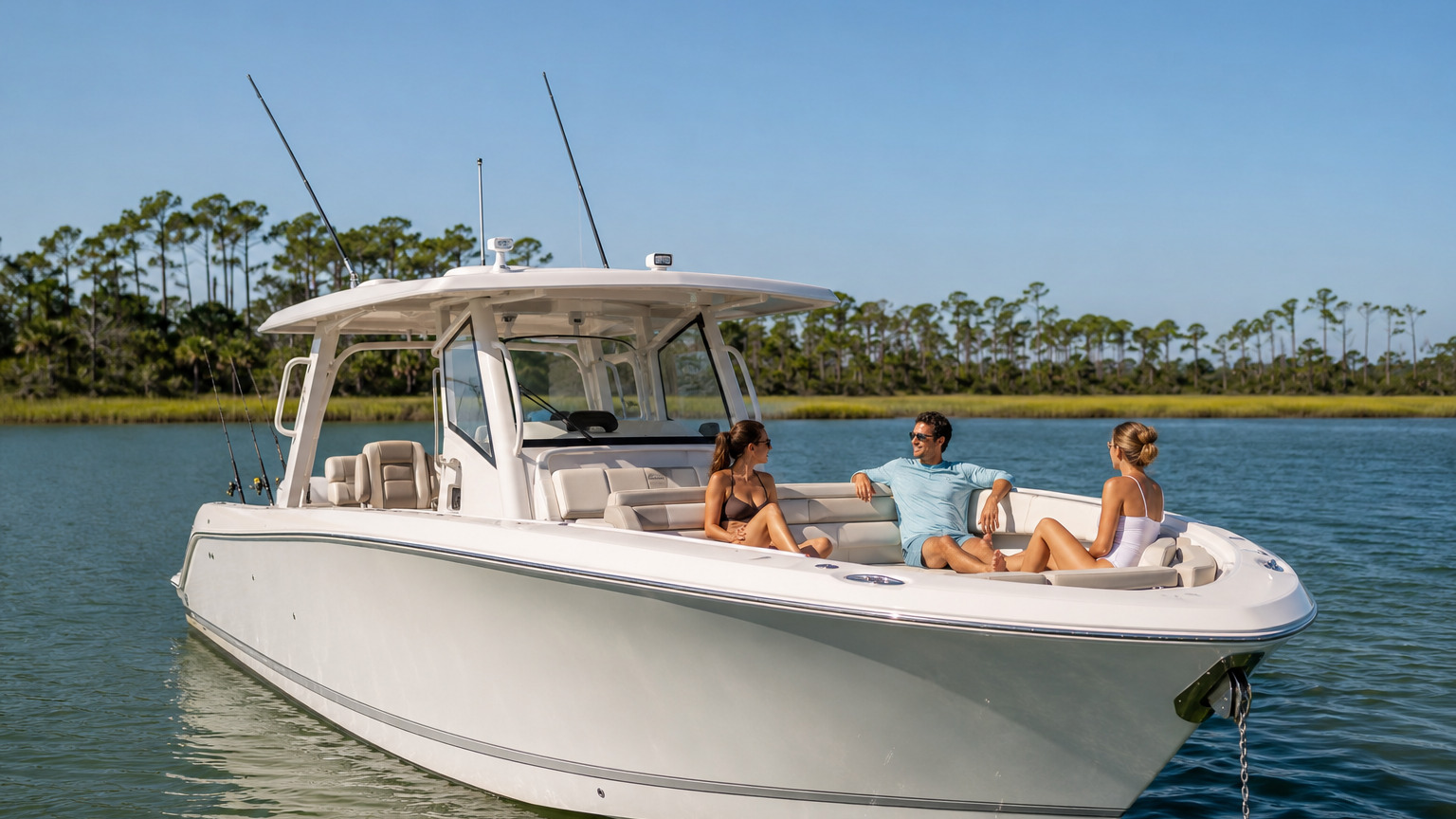
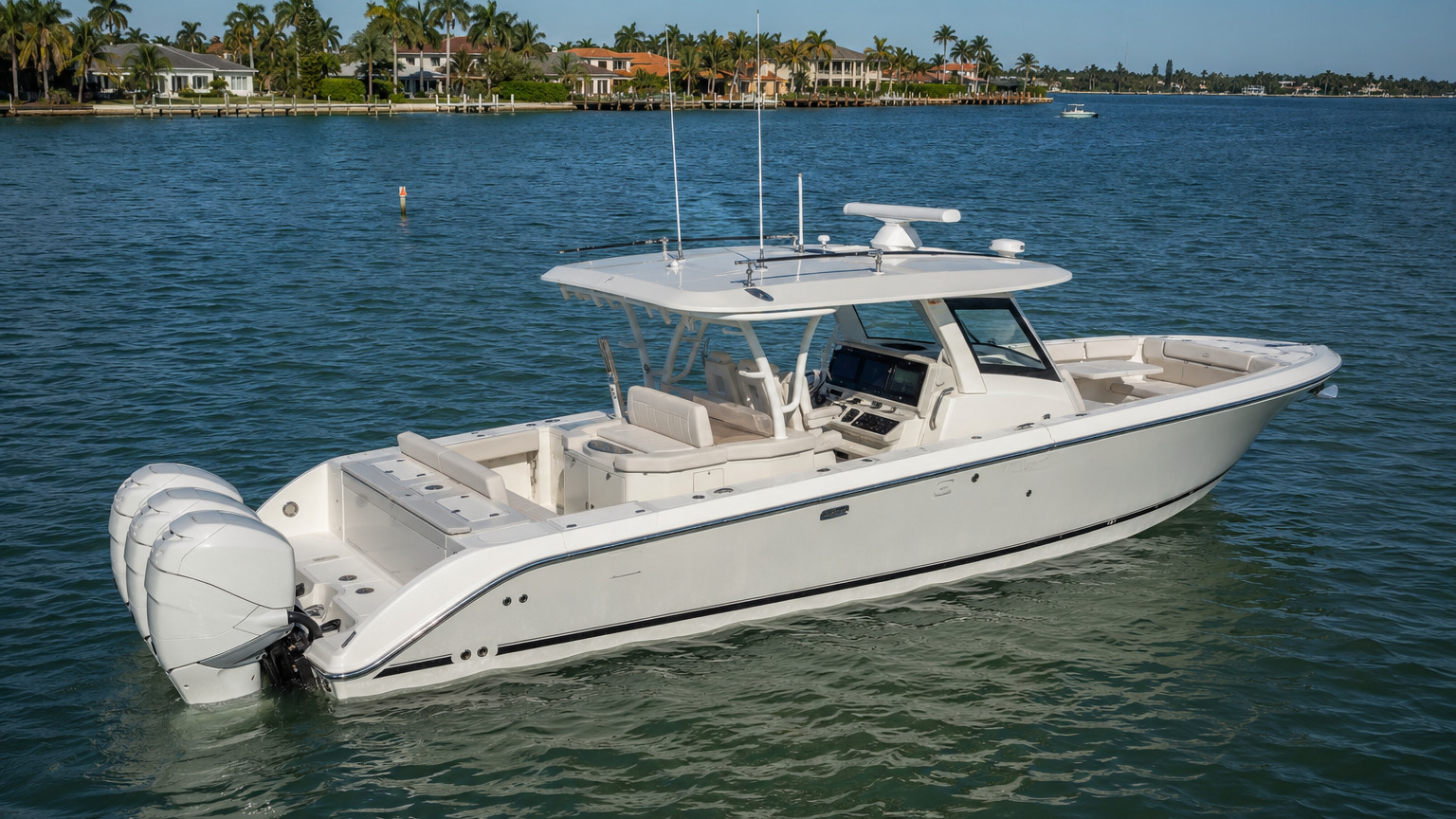
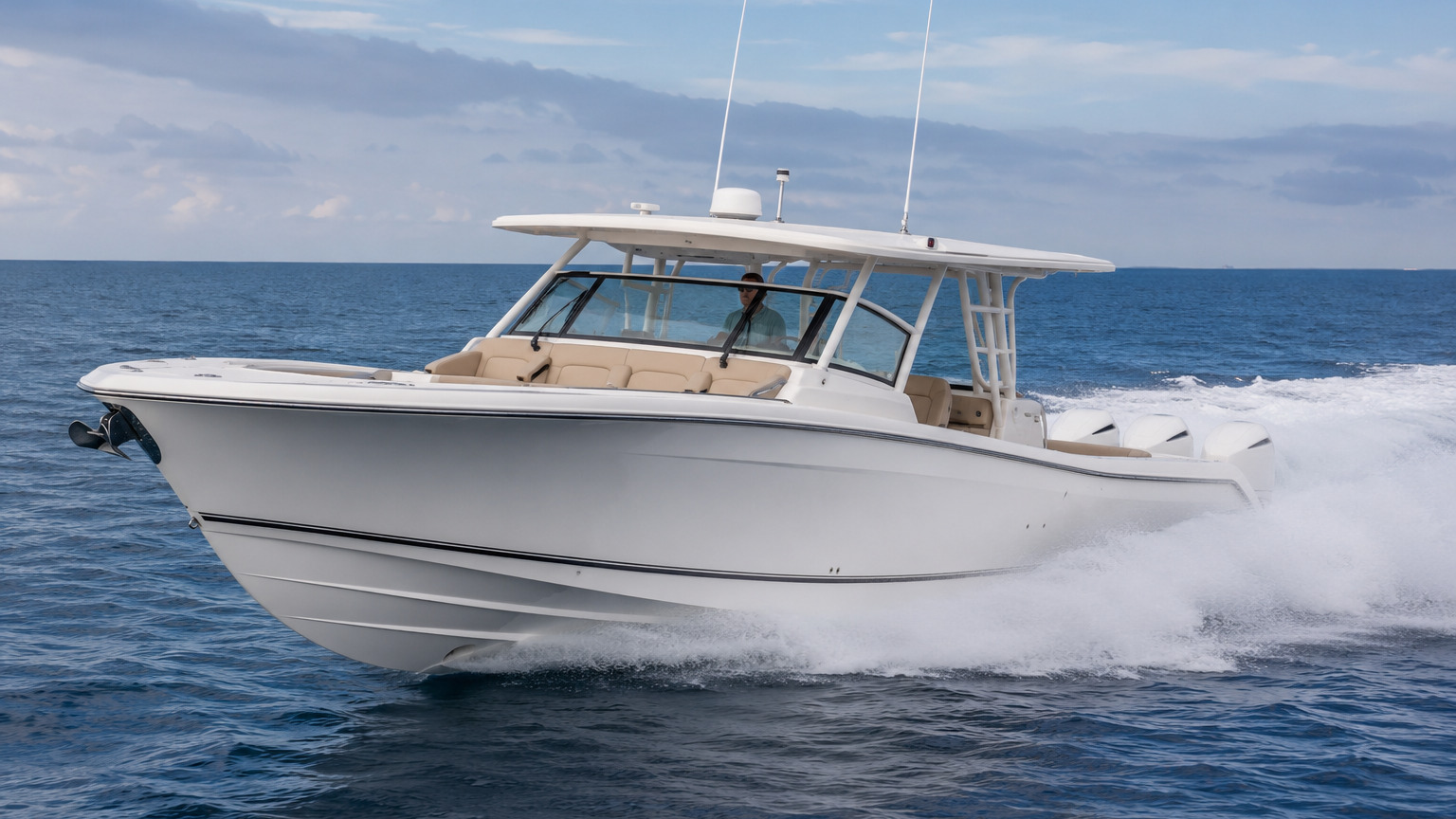
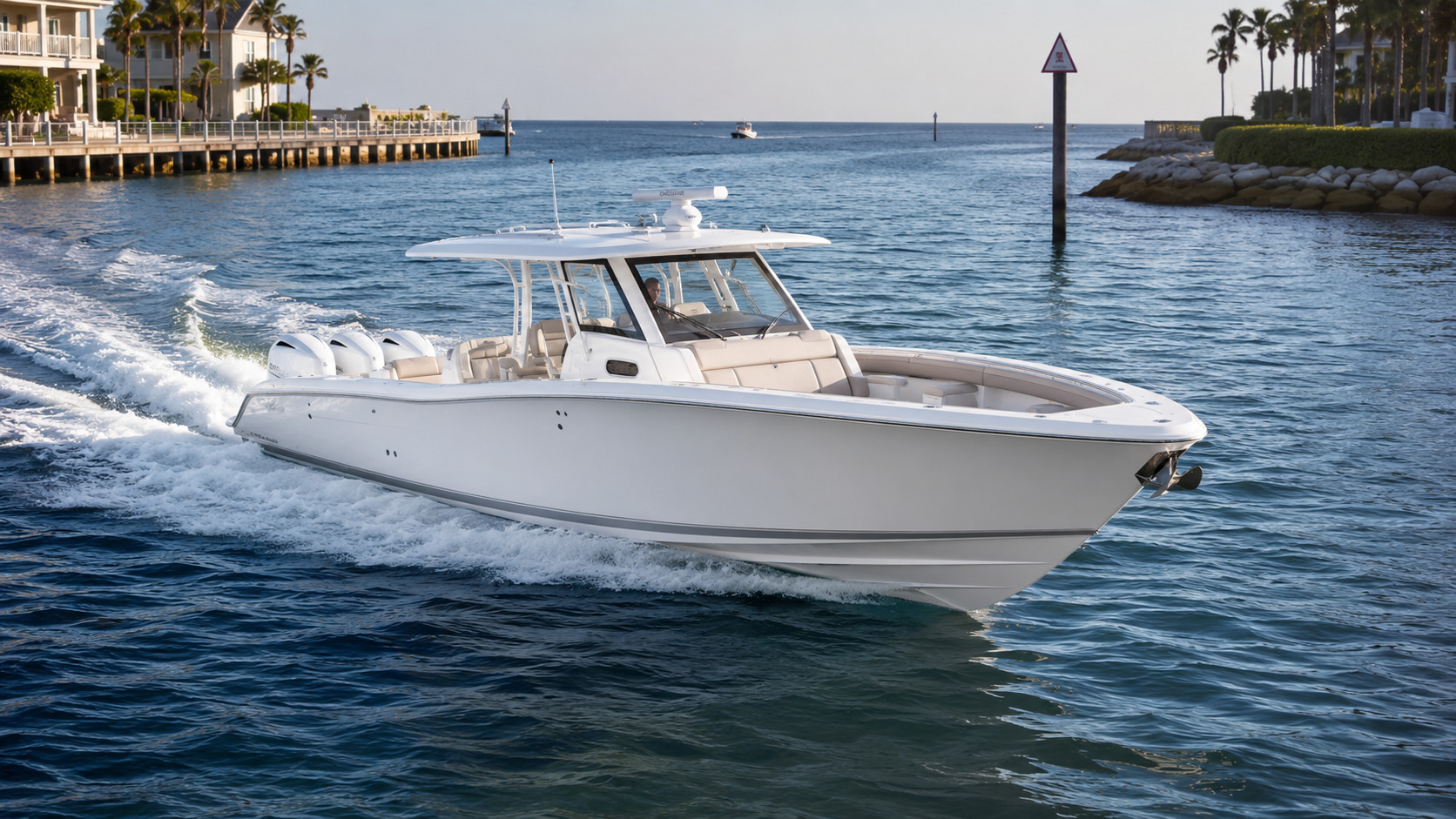
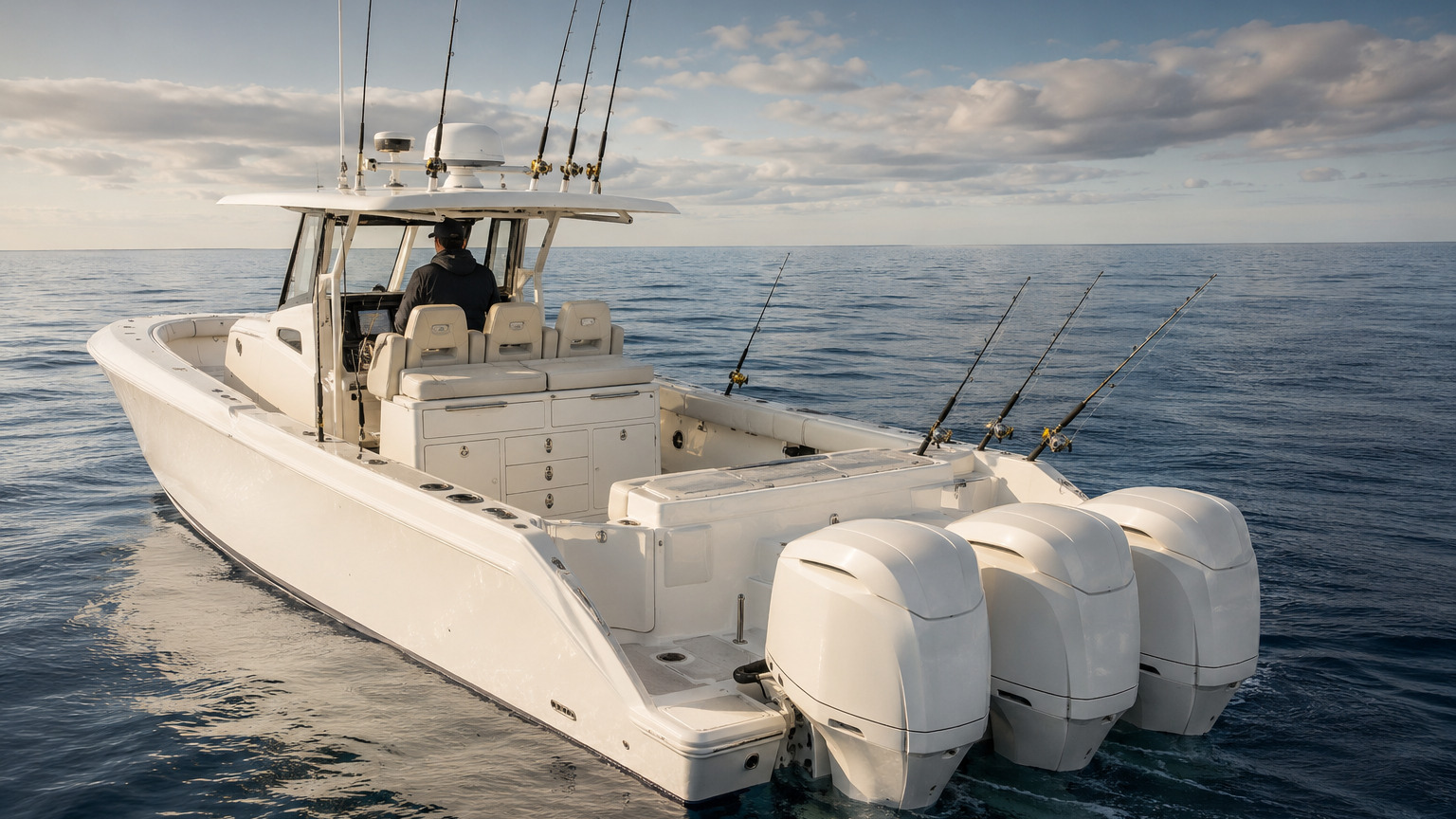
The Pursuit S 378 is the late-model predecessor to the S 388, known for a 12-foot beam, triple-outboard power and a patented sliding entertainment-center concept.
The easiest way to understand the Pursuit S 378 is to ask what it does better than a nearby Pursuit. Here, the answer is concrete: With 427 gallons of fuel, a 22-degree hull, triple 450 capability and a large cabin, the 378 still occupies a serious big-center-console tier even though Pursuit has moved the current lineup to the S 388. That makes it a strong match for buyers shopping the late-model pre-owned market who want a large Pursuit Sport without paying for a new S 388 or S 428, not for every buyer who happens to like the brand. The boat is 40′ 5″ long, 12′ 0″ wide and roughly 19,870 lb before fuel, water and gear. Its tank holds 427 gal, and the published power ceiling is 1,350 hp. The S 378 remains a capable 40-foot center console, but the newer S 388 adds updated storage, a revised mezzanine and a more modern cabin layout; buyers should value the 378 on condition and equipment rather than age alone. The S 388 changes the equation by offering the newer replacement with updated layout and storage. The S 358 makes more sense when the buyer wants less weight and twin-engine simplicity. The S 428 is the more relevant alternative when the buyer wants the larger quad-engine flagship with more social and fishing space.
The S 378 should be researched as a late-model pre-owned Pursuit, not as a current new-build peer to the S 388. That makes condition and option content especially important. A well-kept 378 with triple 450s, stabilization and current electronics can still be an impressive 40-foot platform. The buyer simply needs to compare it with the newer 388 on real equipment and price rather than assuming the newer badge makes every older boat obsolete.
A 22° transom deadrise, 12′ 0″ beam and 3′ 2″ engines-down draft define the basic running geometry of the S 378. Pursuit’s approximate dry figure is 19,870 lb. Once the boat is carrying 427 gal of fuel, people, water and equipment, the real displacement can be much higher. If the newer replacement with updated layout and storage is consistently more important than what the S 378 delivers, the S 388 is the more honest next step.
The 12-foot beam and roughly 19,870-pound dry weight put the S 378 firmly in big-center-console territory. Its 22-degree transom is oriented toward offshore running, but age and loading matter as much as design now that most examples are pre-owned. Check bottom condition, tabs, side-door hardware and any evidence of repeated lift use before deciding what the hull should be worth.
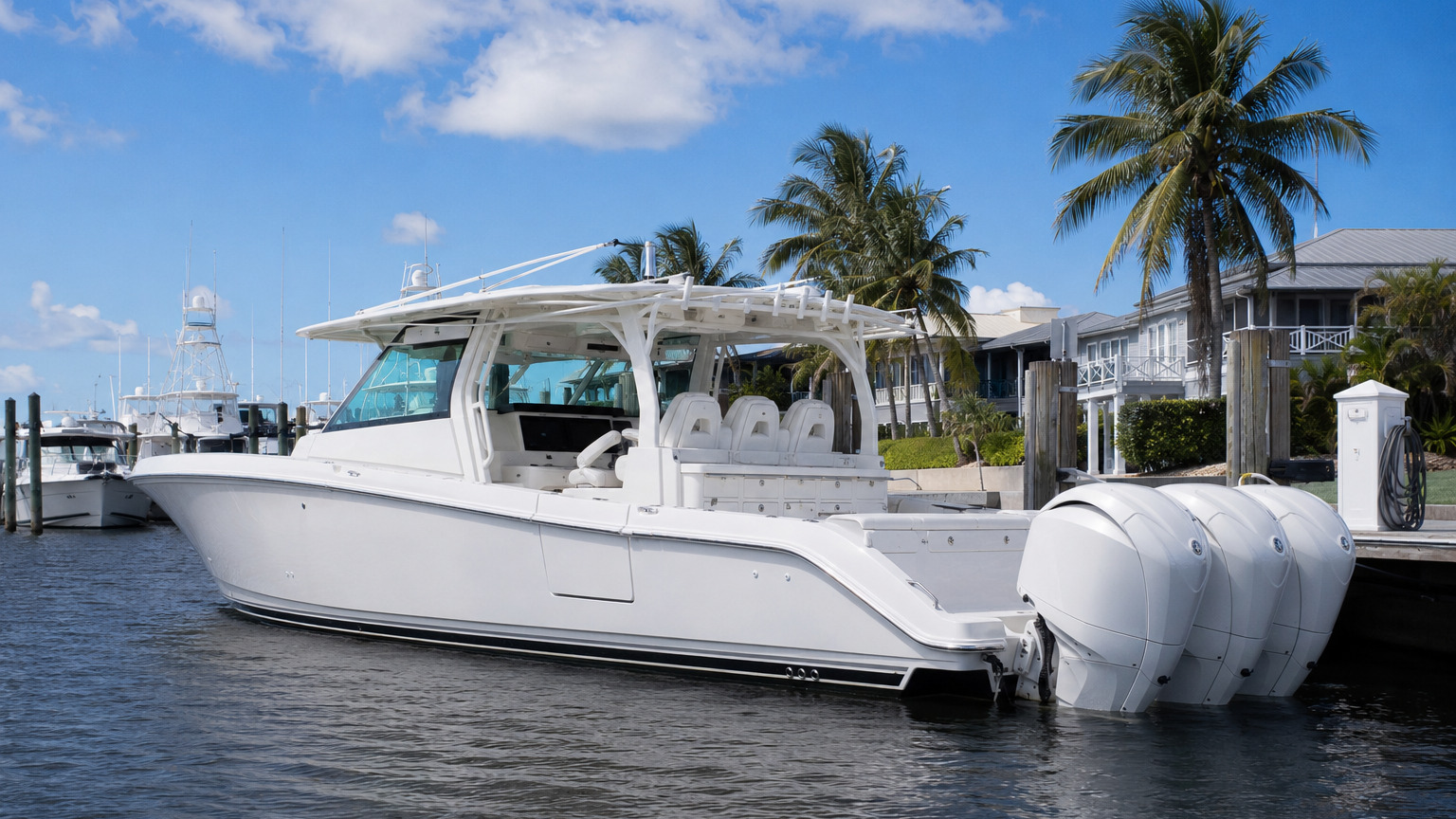
The S 378 is rated to 1,350 hp and is represented here with triple Yamaha 450 XTO on late-model boats. Power selection should be judged against dry weight of about 19,870 lb, a possible 427 gal fuel load and the crew or fishing gear the owner normally carries.
Late-model 378s with triple 450 XTOs carry 1,350 total horsepower. Service history is the first filter. All three engines should have a coherent maintenance record, and hours should make sense together. A 40-foot center console can absorb engine wear without feeling obviously weak on a short test, so review data, temperatures and fuel flow instead of relying on acceleration alone.
Fuel capacity, cruise planning and operating range
With 427 gal of fuel capacity, the S 378 can support substantial time away from the dock. Tankage also affects displacement.
Ownership math changes once the S 378 is loaded. The dry figure is about 19,870 lb, and a full 427 gal fuel load adds substantial mass before freshwater, people and gear. That wet condition is the one a lift, haul-out yard or transport plan needs to support. Buyers moving up from a smaller boat should confirm those limits before assuming their current infrastructure will carry the S 378.
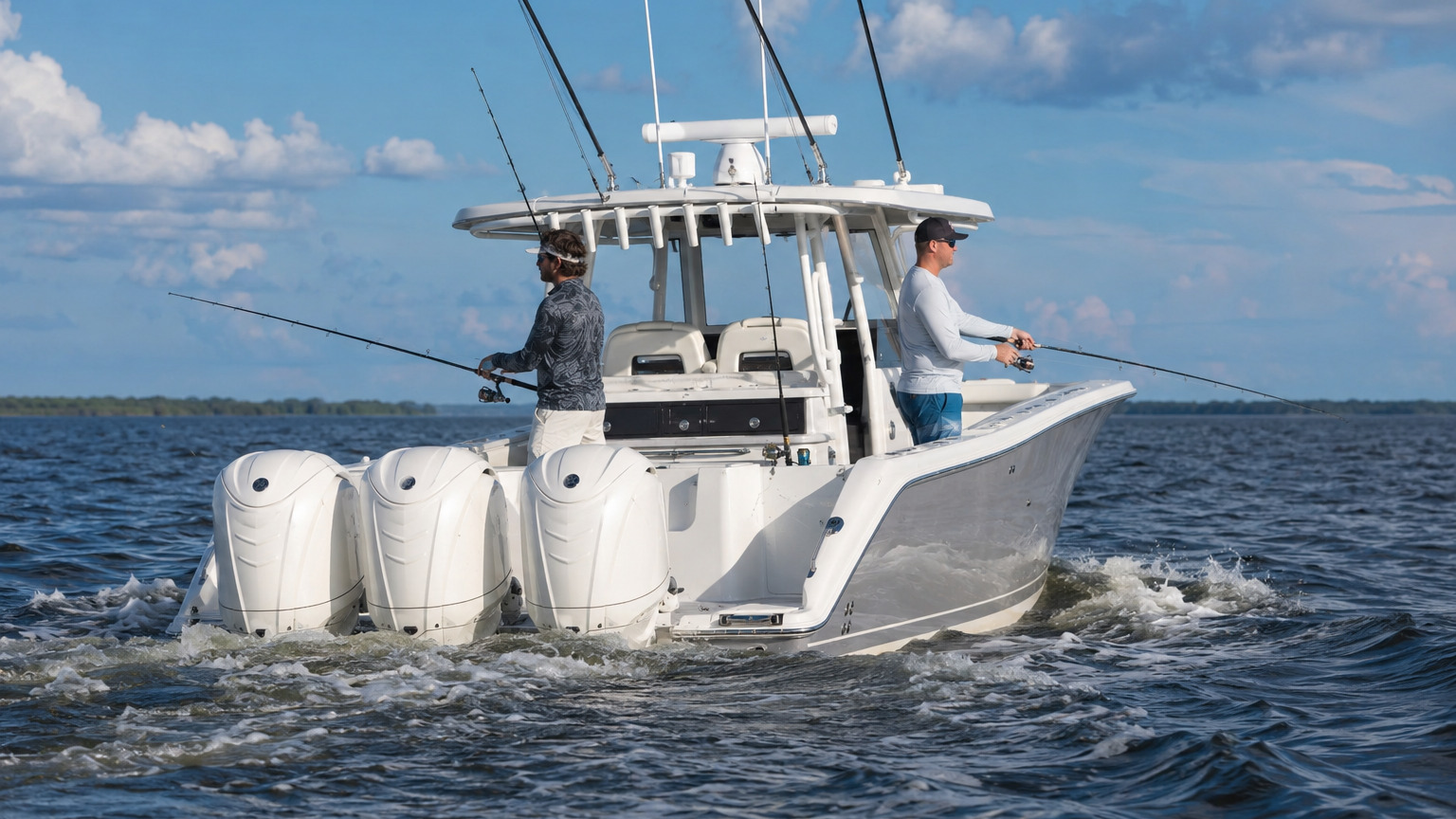
Fishing use can make the S 378’s 427 gal tank behave differently from a cruising-only boat. A day may combine a fast run offshore, hours of trolling or repositioning, and a run home in rougher afternoon water. Track those modes separately during ownership planning. The result is a more realistic fuel budget and a safer reserve than assuming the entire day happens at the most efficient cruise rpm.
An S 378 should feel predictable before it feels fast. The 22° deadrise figure helps explain the running surface, but it is only one piece. Use the S 388 as a reality check if the newer replacement with updated layout and storage sounds closer to the owner’s priorities.
For the S 378, performance has to include the fishing day as well as the run offshore. Test the 22° hull with people and gear aboard, then slow down and see how the boat behaves while trolling, drifting or positioning near a spot. The helm should remain predictable as weight moves around the cockpit. Because With 427 gallons of fuel, a 22-degree hull, triple 450 capability and a large cabin, the 378 still occupies a serious big-center-console tier even though Pursuit has moved the current lineup to the S 388, the benefit should be visible in normal use rather than only in a short high-speed run. If the S 388 better matches the owner’s priorities, compare it in the same water.
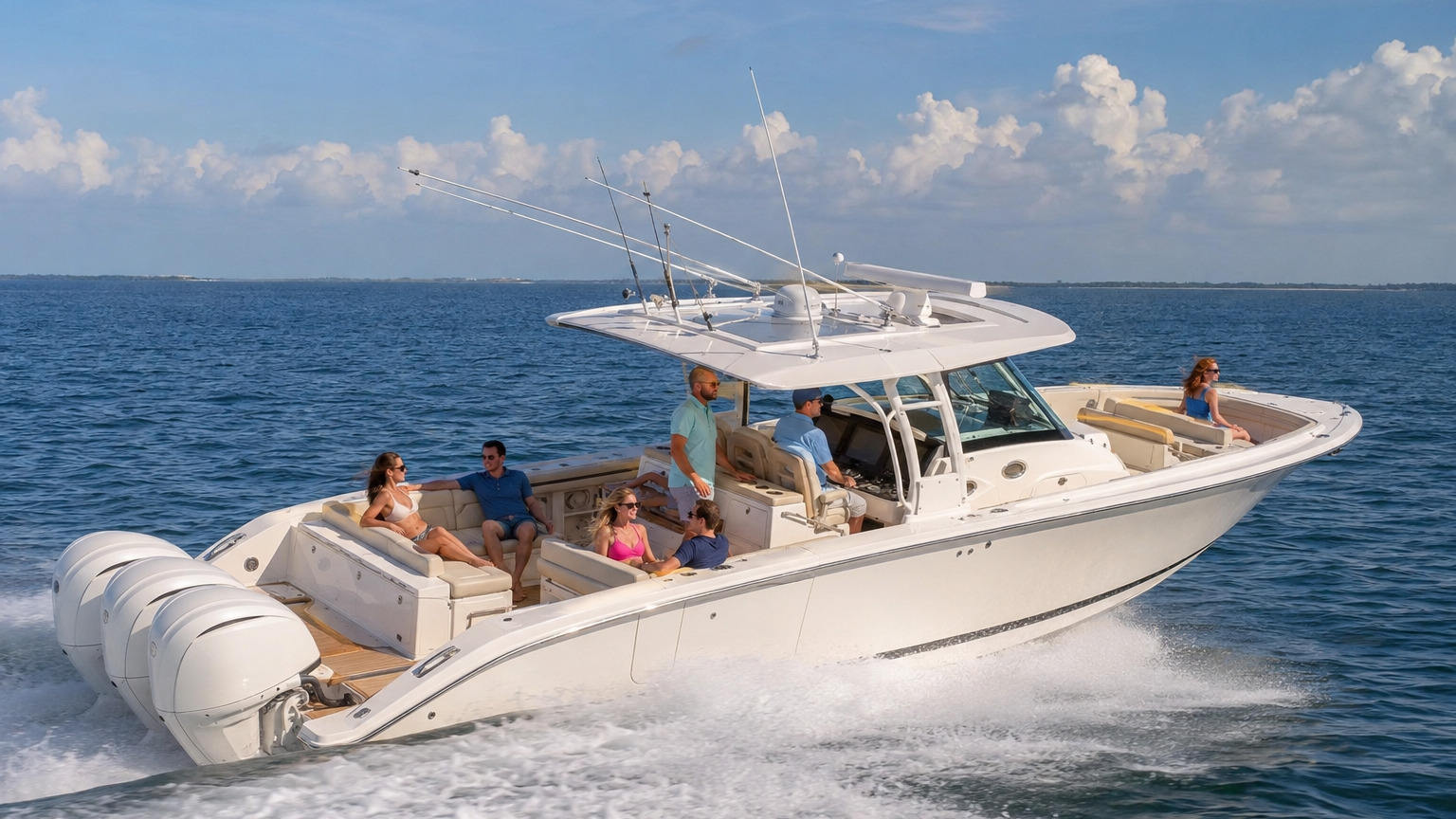
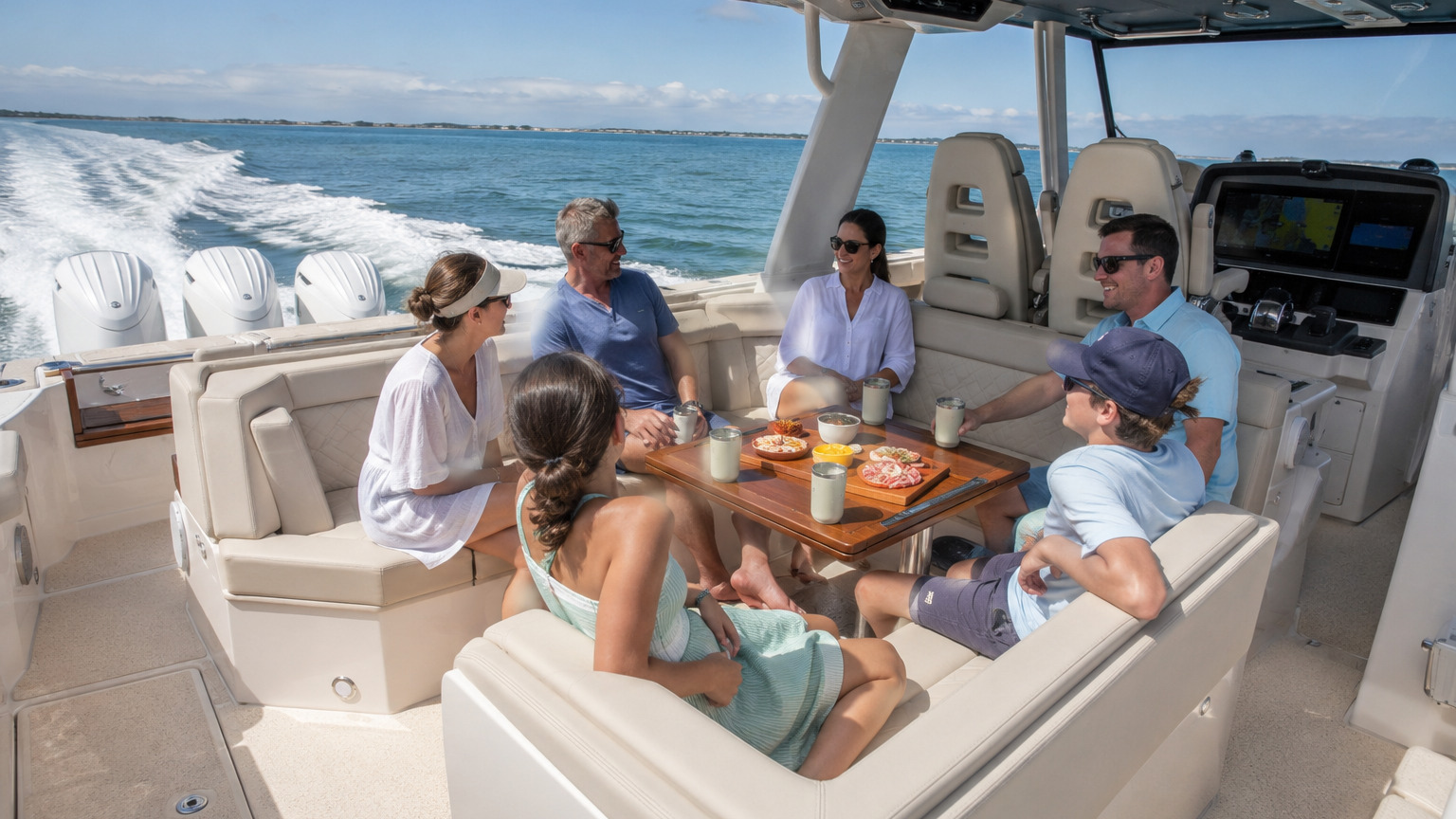
The cockpit on an S 378 has to perform two jobs without feeling compromised: it must be comfortable socially and remain useful when the fishing gear comes out. Start with Patented sliding entertainment center, then use Triple 450 XTO power on late-model boats and 427-gallon fuel capacity.
The patented sliding entertainment center is one of the 378’s signature ideas. Move it through its full travel and see what happens to cockpit space on both sides. The system should create a useful social zone without making the fishing layout awkward. On a pre-owned boat, inspect tracks, actuators and seals closely because a clever powered feature is only valuable when it moves smoothly and latches correctly.
427-gallon fuel capacity – The large tank supports long offshore days but also creates a significant wet-weight swing.
Patented sliding entertainment center
The cockpit module can move into social position when needed, preserving fishing space when it is not.
Triple 450 XTO power on late-model boats
Late examples deliver 1,350 total horsepower and joystick-capable maneuvering.
Convertible console cabin
The boat can support overnight use rather than being limited to a head compartment.
Hull-side boarding door
Side access is useful for diving, dock boarding and bringing fish aboard.
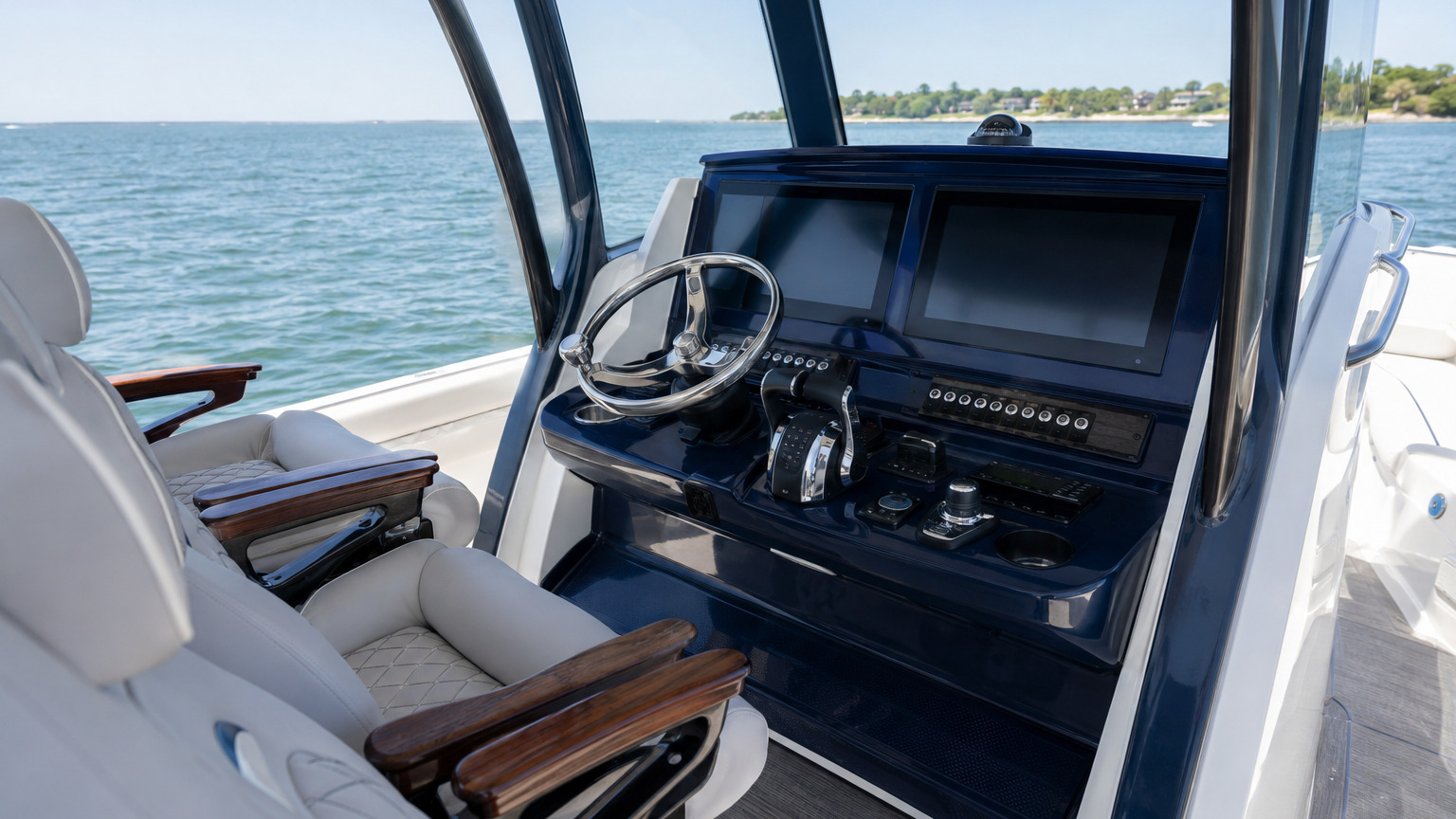
Electronics, pumps and onboard systems
On the S 378, systems worth more attention than a quick switch test include Patented sliding entertainment center, 427-gallon fuel capacity, 22-degree deadrise and Generator and optional stabilization on many late examples.
Many late 378s were equipped with generator, climate control and Seakeeper 3 in addition to a large electronics package. Verify exactly what the boat has and ask for service records on the expensive systems. Run the gyro long enough to stabilize, load the generator and inspect the cabin while air conditioning is working. Pre-owned flagship equipment should be judged by current condition, not by what the original option sheet cost.
Overnight capability on the S 378 is described as console cabin with convertible berth and full head for weekend use.
The 378’s console cabin gives a couple meaningful shelter and overnight flexibility, but it is still a center-console interior rather than a full Offshore cabin. Compare the sleeping space with the S 388 and OS 405 before deciding what the owner expects from the boat. The 378 can be excellent for occasional nights, yet a buyer focused on multi-day cruising may want more separation below deck.
pursuit boats s 378 front quarter offshore running 02
pursuit boats s 378 helm detail 09
pursuit boats s 378 hero exterior underway 01
pursuit boats s 378 offshore fishing lifestyle 14
pursuit boats s 378 open water lifestyle 12
pursuit boats s 378 premium marina arrival 11
pursuit boats s 378 rear quarter running 03
pursuit boats s 378 side profile underway 10
pursuit boats s 378 stern cockpit angle 07
pursuit boats s 378 sunset running hero 17
pursuit boats s 378 transom engine angle 08
pursuit boats s 378 trolling setup 15
Typical Pursuit S 378 pricing
The propulsion package is triple Yamaha 450 XTO on late-model boats, so engine condition is central to value. Budget beyond closing. S 378 pricing needs a model-year lens because the boat has been superseded by the S 388. That can create opportunity.
A late, well-equipped 378 may offer substantial value when its triple engines, gyro, generator and electronics are healthy. It can also become an expensive project if those same systems are all nearing service or replacement. Condition should drive the discount, not age alone.
Market price band
Pricing on request
Estimated monthly
Ask us for a payment
Illustration only and not an offer of credit.
Estimate a Pursuit S 378 payment
Final rate, term, down payment and eligibility depend on the borrower, the S 378 being purchased and the transaction structure.
Illustration only and not an offer of credit. Your actual rate and term depend on credit profile, vessel age, loan amount and ownership structure.
Compare the S 378 with nearby Pursuit models
The S 388 is the first comparison when the buyer wants the newer replacement with updated layout and storage. Against the S 378, those differences change more than performance; they change crew space, service burden and where the boat fits physically. Look at the S 358 when the buyer wants less weight and twin-engine simplicity. The S 428 belongs on the list when the buyer wants the larger quad-engine flagship with more social and fishing space. The S 378 should remain the choice only when its own case stays clear after those comparisons: With 427 gallons of fuel, a 22-degree hull, triple 450 capability and a large cabin, the 378 still occupies a serious big-center-console tier even though Pursuit has moved the current lineup to the S 388.
The size comparison with the S 388 is worth putting on paper. The S 378 is 40′ 5″ long with 12′ 0″ of beam, while the S 388 is 41′ 1″ with a 12′ 0″ beam. Fuel capacity is 427 gal versus 500 gal. Those differences can affect dockage and operating cost just as much as they affect cockpit space.
Start an S 378 purchase by confirming what the boat actually is. The S 378 is affordable when the buyer can purchase it and still maintain the systems that made it desirable.
The smart S 378 purchase is one where the buyer has compared it directly with an S 388 and still prefers the value equation. If the older boat has the right equipment, strong records and a clean survey, the money saved can be meaningful. If the buyer wants the updated mezzanine, storage and cabin arrangement of the 388, no amount of discount will change the 378’s layout.
Because the S 378 is now mainly a late-model pre-owned purchase, the exact model year deserves extra attention. Engine package, electronics, stabilization and cabin equipment can vary from boat to boat, and the newer S 388 should not be used as a substitute specification sheet. Verify the hull identification number and installed equipment before assigning value.
The S 378 carries 427 gal of fuel. Range on this boat still depends on the installed triple Yamaha 450 XTO on late-model boats package, cruise rpm, sea state, load and generator use where applicable, so the buyer should record actual