
Call Us : 207-994-5109
Mon – Fri: 8 am to 9 pm & Sat – Sun: 10 am to 8 pm
A mid-size Yellowfin offshore that adds triple-engine capability, a redesigned console and more in-deck storage without jumping to the footprint of the 36 or 42.
The 34 Offshore should be judged as a configuration step, not just a length increase. Twin-versus-triple power and
the larger storage plan matter more than the extra feet by themselves.
At 34’8″ with a 10-foot beam, 380 gallons of fuel and an approximate published weight of 11,478 lb, the 34 grows in
capability without becoming dramatically wider than the 32. The more important change is power flexibility:
Yellowfin allows twins or triples up to 1,350 hp, so engine count becomes part of the ownership decision.
The 34 is the first model in the Offshore models covered in this guide that opens the door to triple power. That makes it less of a simple size increase and more of a configuration decision. Buyers should think about engine count, crew size and storage before focusing on two extra feet.
The compromise is direct: The 34 Offshore adds capability quickly, but a buyer who wants a standard dive door, forward lounger and more fuel for repeated long runs should also test the 36 Offshore. The buyer should answer this before looking at payment: Will the owner use the 34’s twin-or-triple flexibility and larger storage, or is the 32 sufficient for the same trips?
Published factory figures. Confirm every dimension against the individual boat before you commit.
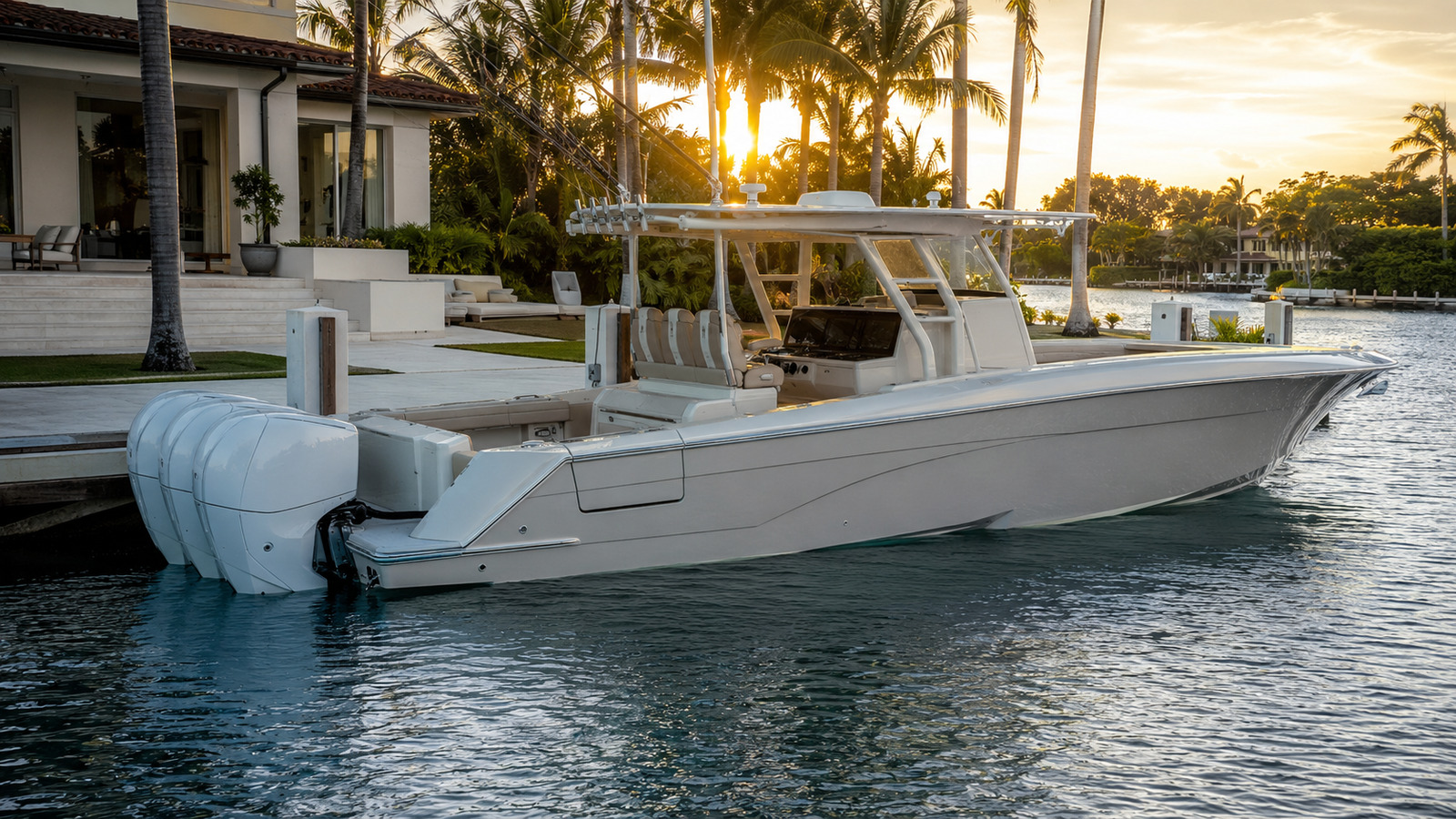
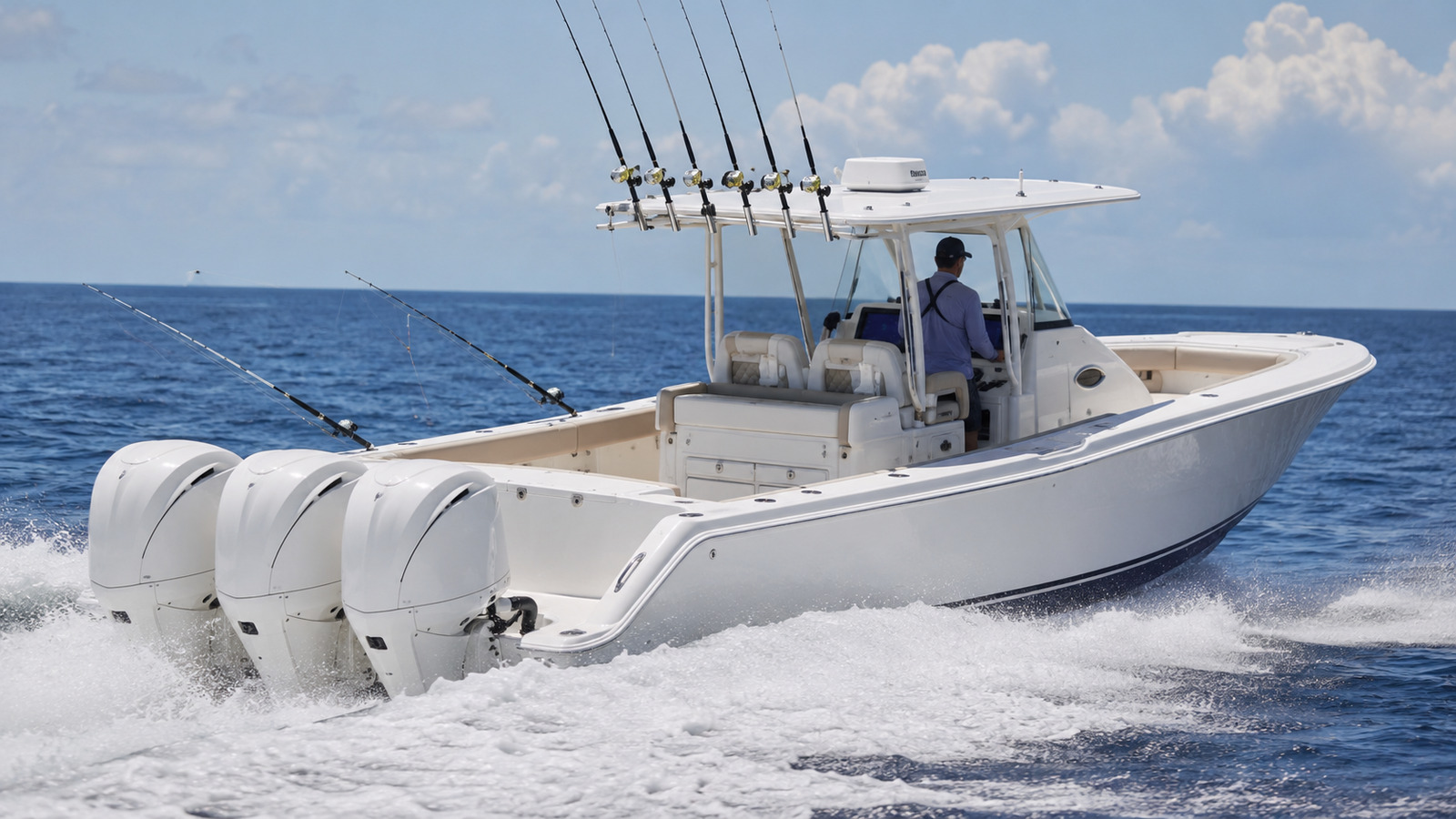
The 34 Offshore changes the power and deck equation without becoming a dramatically wider boat. Beam remains 10 feet, but fuel grows to 380 gallons and the hull can carry twins or triples up to 1,350 hp. Yellowfin also redesigned the console and increased useful in-deck storage. The buyer should notice whether those changes make fishing with a larger crew easier, or whether they simply create more boat to fuel and rig.
The current 34 model page does not publish draft. That matters because twin and triple builds can carry different
transom weight. A survey should therefore document the exact engine package, running-surface condition and any
repairs rather than assuming one draft or loaded attitude applies to every 34.
Inspect the running surface, strakes and hull steps where applicable from bow to transom, especially with an updated-console fishing build. On this 1,350-hp-capable stepped-hull platform, offshore speed makes clean bottom geometry important, while shallow-water use makes impact and abrasion history especially relevant on the 24 and 26. For this twin-or-triple offshore platform, any repaired area should have enough documentation for a surveyor to understand what was changed and why.
Yellowfin states approximate weight with power, light fuel, and empty livewells/freshwater tanks; that matters more on this 10-foot-beam 34-foot center console.
The 34 Offshore can run twins or triples, with a 1,350-hp maximum. That means engine count is part of the model choice, not a detail to decide after the hull. Triple power can change acceleration, redundancy, transom weight, service cost and how much room remains around the engines when boarding or working a fish. Buyers should compare actual boats with their actual engine package rather than valuing every 34 from hull length alone.
Because the buyer is evaluating an updated-console fishing build, engine configuration changes more than acceleration. It changes service count, propeller cost, transom access, redundancy and fuel demand, especially with a 1,350-hp-capable stepped-hull platform. On this twin-or-triple offshore platform, on the 34 Offshore, compare the exact installed package with Yellowfin’s published limit rather than valuing the hull as though every engine combination creates the same boat.
For this 10-foot-beam 34-foot center console, during a sea trial, start every engine cold if possible, then verify charging, steering, trim, throttle synchronization and hot restart behavior. Check lower units and propellers for impact history; that matters more on this updated-console fishing build. Because the buyer is evaluating a 1,350-hp-capable stepped-hull platform, a high-performance center console can hide a surprising amount of lost efficiency in damaged wheels or mismatched setup.
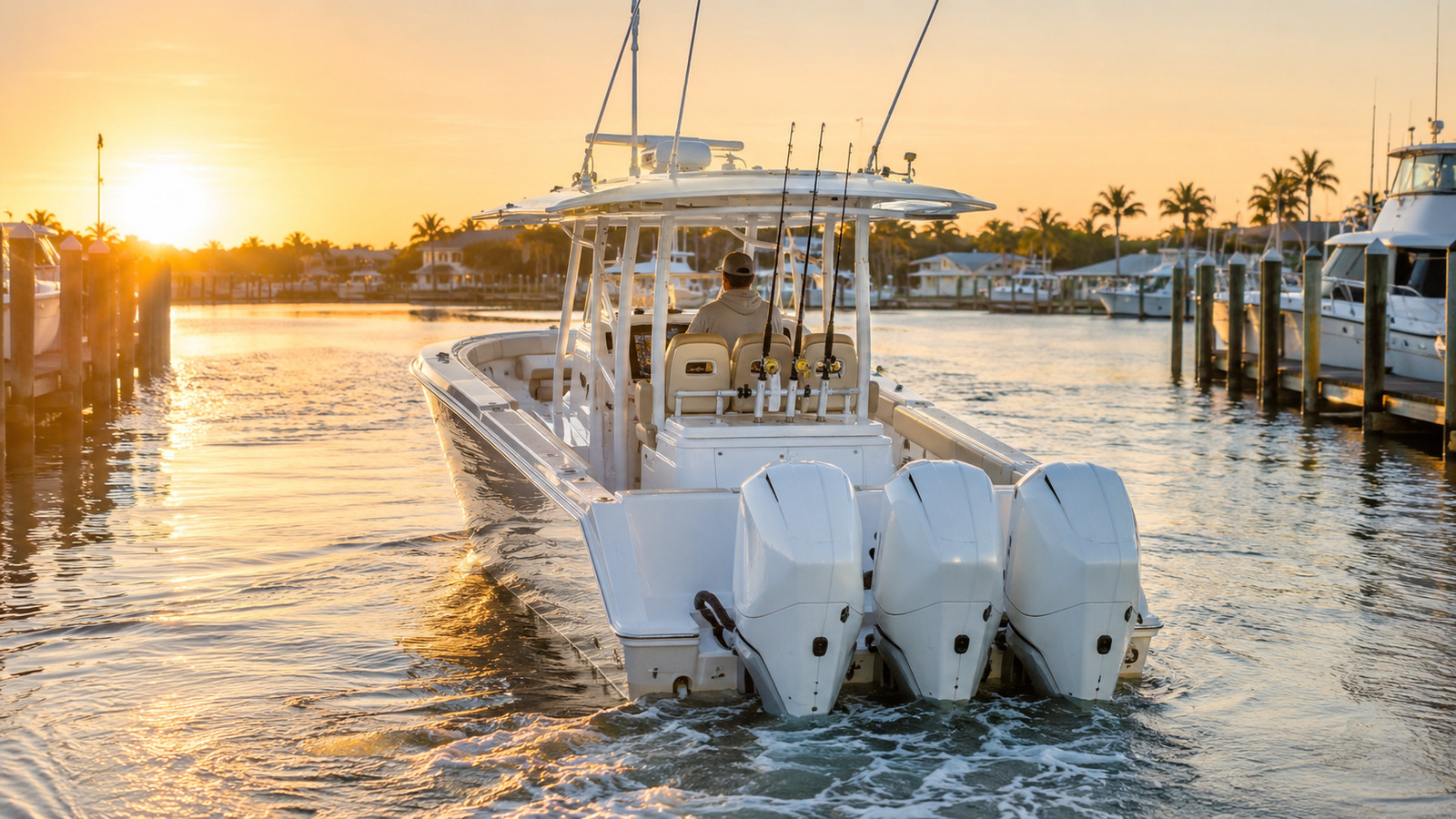
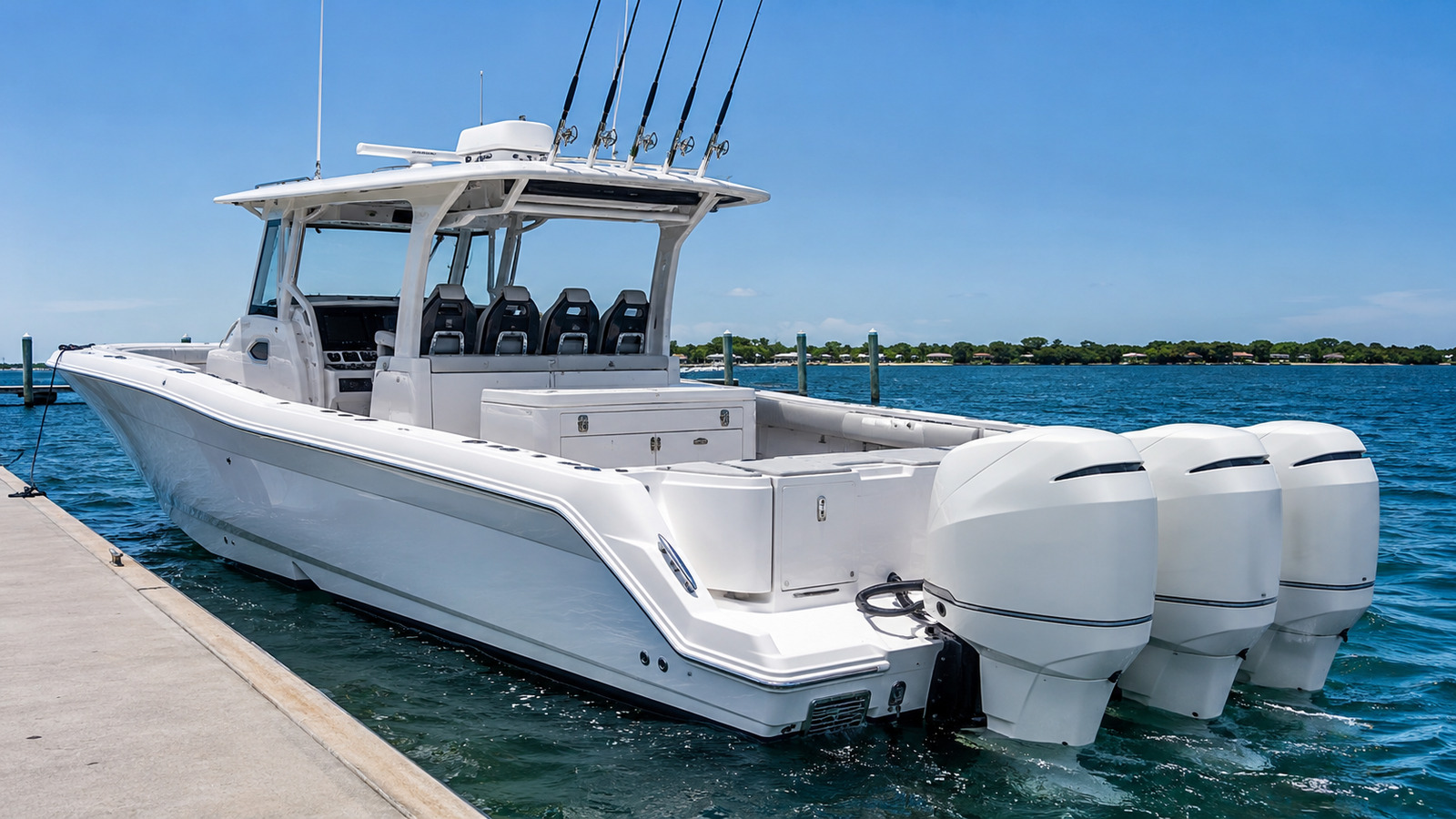
The Yellowfin 34 Offshore carries 380 gal of fuel according to the current official material used for this guide. That number should be treated as capacity, not as a promised range, especially with a twin-or-triple offshore platform. On this 10-foot-beam 34-foot center console, engine count, propeller setup, sea state, crew, tower equipment and speed can move fuel burn substantially.
The 34’s 380-gallon tank supports longer trips, but twin and triple configurations can produce very different burn rates. An owner should avoid using someone else’s triple-engine range estimate for a twin boat or vice versa. For this updated-console fishing build, keep enough reserve for weather, current, detours and a return leg that may happen in rougher water than the outbound run. Range should be calculated from actual fuel flow on the exact engine package, not from an owner’s best-case number on a different build; that matters more on this 1,350-hp-capable stepped-hull platform.
Fuel load also changes displacement. Because the buyer is evaluating a twin-or-triple offshore platform, a full 380 gal tank represents substantial weight before livewell water, ice, freshwater, tackle and passengers. That matters for trailer planning on the smaller boats and for ride, draft and marina handling on the larger Offshore models, especially with a 10-foot-beam 34-foot center console.
On this updated-console fishing build, before a long trip, build a real reserve policy for the 34 Offshore. For this 1,350-hp-capable stepped-hull platform, offshore anglers should plan for an unexpected run around weather, livewell use, generator or hotel loads where fitted and the reality that the most efficient cruise on flat water may not be available on the ride home.
The 34 Offshore should be tested in the exact engine configuration being purchased because twins and triples change the boat’s personality. Triple power adds transom mass and thrust; twins can keep the layout cleaner and service count lower. The stepped hull should still feel responsive, but the buyer should also evaluate how the added fuel and deck volume affect ride when the boat is loaded for a long day. The 34 works when it feels meaningfully more capable than the 32 without becoming harder to use every weekend.
Do not judge the 34 Offshore from one wide-open pass; that matters more on this twin-or-triple offshore platform. Because the buyer is evaluating a 10-foot-beam 34-foot center console, run at several cruise settings, record rpm and fuel flow, make turns at realistic speed and see how the hull lands after crossing wake. A boat that feels exciting for five minutes can still become tiring after a two-hour run, especially with an updated-console fishing build.
On this 1,350-hp-capable stepped-hull platform, trim behavior deserves attention because stepped-hull boats can respond quickly to engine trim and load distribution. For this twin-or-triple offshore platform, the driver should be able to find a repeatable cruise attitude without constant corrections. If the boat is heavily customized, seating, tower weight and extra systems can change that balance; that matters more on this 10-foot-beam 34-foot center console.
Because the buyer is evaluating an updated-console fishing build, slow-speed handling belongs in the same test. Bring the 34 Offshore alongside a dock, back into a slip if that reflects normal use and see how wind catches the console, hardtop or cabin, especially with a 1,350-hp-capable stepped-hull platform. On this twin-or-triple offshore platform, larger Yellowfins add more windage even when joystick or steering technology makes the controls easier.
For this 10-foot-beam 34-foot center console, use the same normal crew and load on comparison rides whenever possible. That makes the difference between the 34 Offshore and the 32 Offshore easier to understand without confusing hull behavior with a lighter fuel load or different propeller setup; that matters more on this updated-console fishing build.
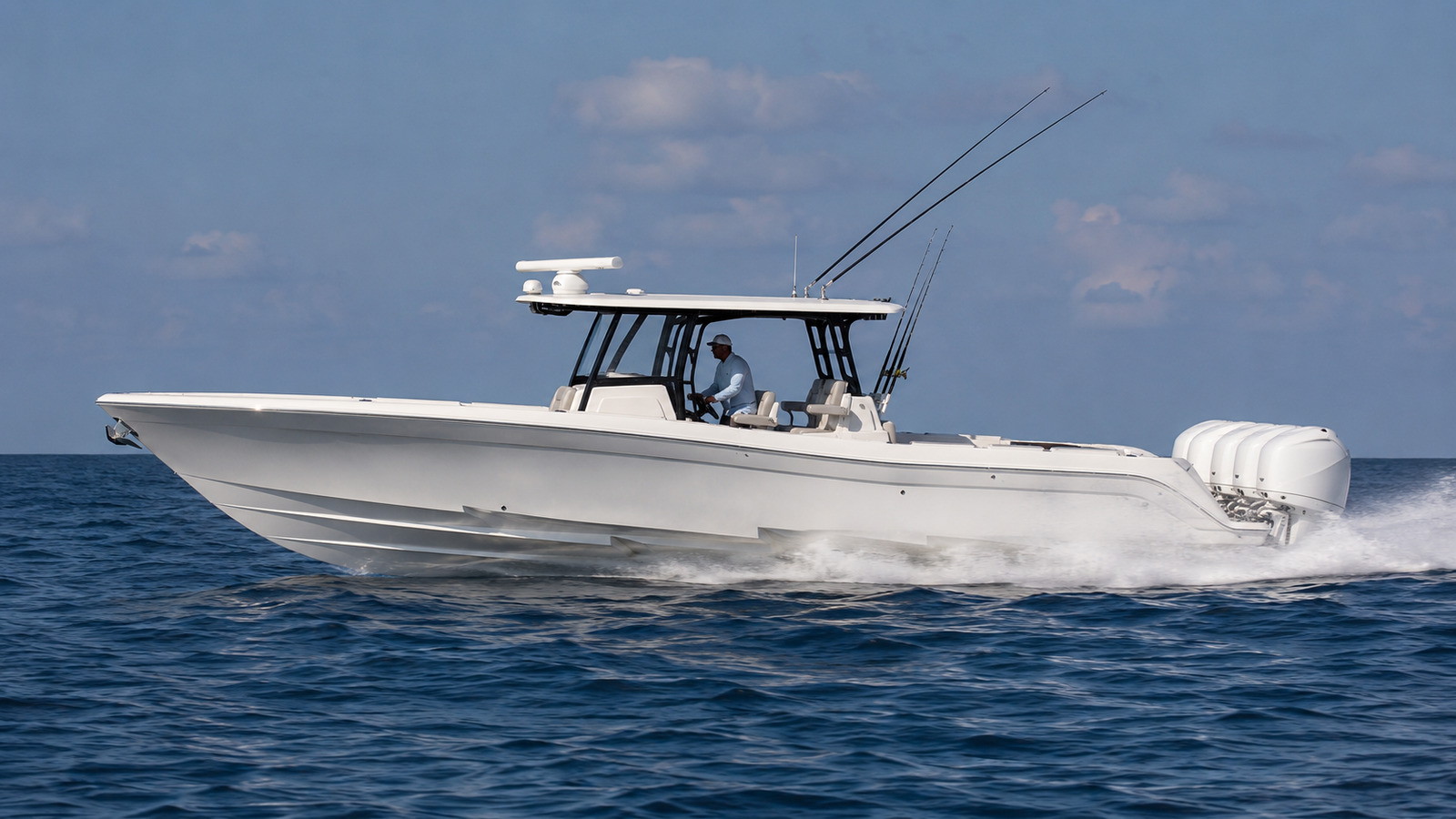
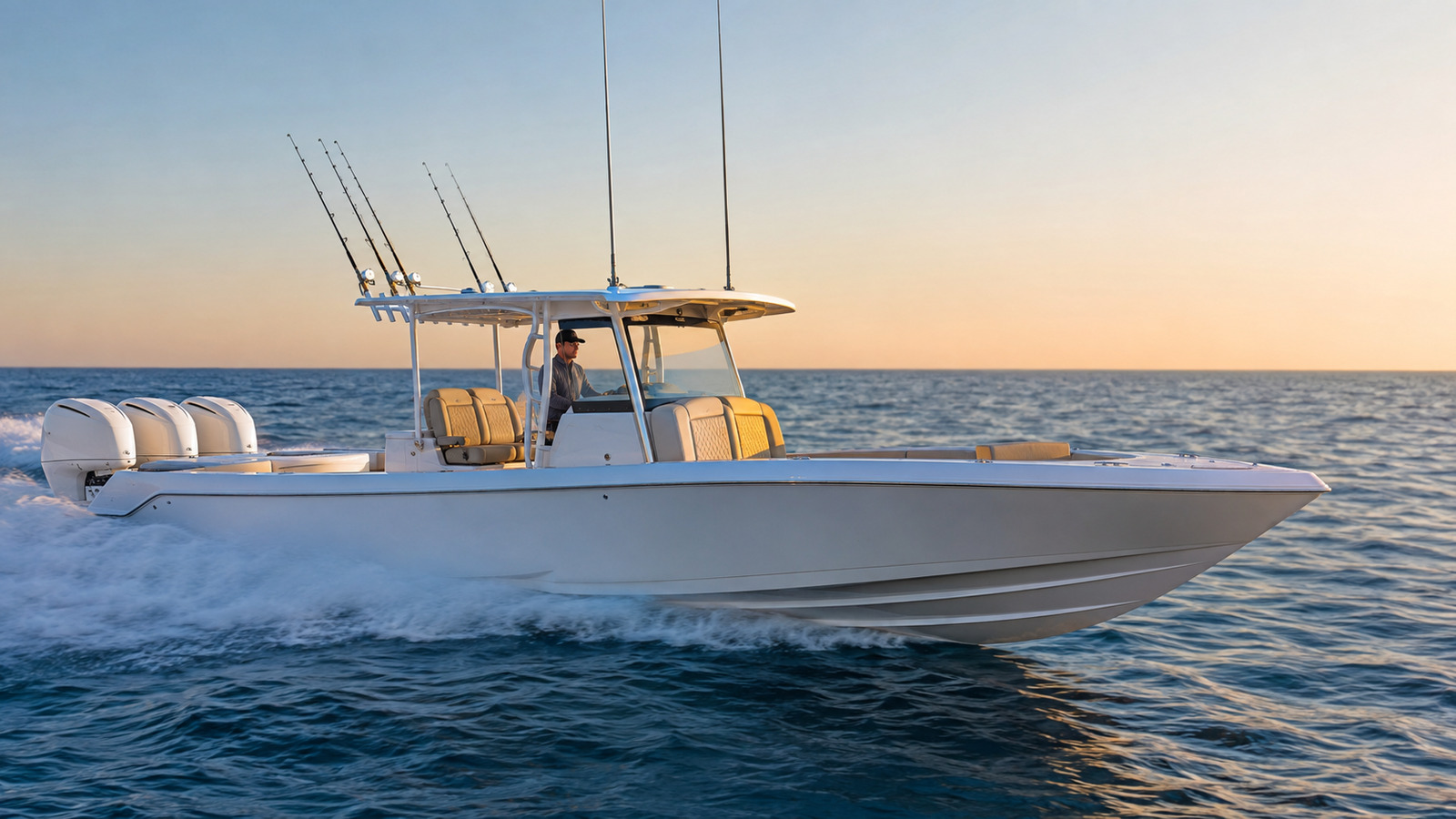
The 34 adds large in-deck storage and a redesigned console without growing beyond a 10-foot beam. That makes traffic flow a central question. A crew should be able to move from bow to cockpit, work the livewells and open deck boxes without everyone having to relocate.
Because the buyer is evaluating a 1,350-hp-capable stepped-hull platform, fishing layout should be tested with rods in holders, livewells running, coolers loaded and seating in the position normally used. A wide-open deck at a boat show can become a different space once tackle, bags and a full crew come aboard, especially with a twin-or-triple offshore platform.
On this 10-foot-beam 34-foot center console, pay particular attention to drainage and access. For this updated-console fishing build, fish boxes, livewells, bilge areas, deck hatches and console doors should open fully without forcing crew to move every time. Hardware that works cleanly at rest should also stay secure after repeated offshore impact; that matters more on this 1,350-hp-capable stepped-hull platform.
Because the buyer is evaluating a twin-or-triple offshore platform, seating choices should be judged honestly. Forward seating, loungers, second rows and cabin access can improve comfort, but every added cushion or module occupies space that anglers may want while fighting fish or clearing lines, especially with a 10-foot-beam 34-foot center console. On this updated-console fishing build, the best 34 Offshore layout reflects how often the boat fishes hard versus how often it entertains.
the exact boat and make sure the controls, actuators and service history are documented.
Seakeeper Ride 600 is standard stabilization hardware intended to reduce pitch and roll underway. Test the system on
C-Zone digital switching centralizes switching and electrical control. Cycle major loads, review any fault messages
The electrical and plumbing systems deserve the same attention as the engines. For this 1,350-hp-capable stepped-hull platform, c-Zone switching is standard on several Yellowfin models in this set, and livewell pumps, washdowns, bilge systems, electronics and lighting all depend on clean installation and healthy batteries. Cycle high-load equipment rather than testing one switch at a time; that matters more on this twin-or-triple offshore platform.
Because the buyer is evaluating a 10-foot-beam 34-foot center console, if the boat carries stabilization, generator, HVAC, sonar or extensive MFD networks, verify those systems after the boat has been underway long enough to build heat. Intermittent faults often appear after vibration and load, not during a five-minute dockside walk-through, especially with an updated-console fishing build.
On this 1,350-hp-capable stepped-hull platform, livewell and washdown plumbing should be tested with the pumps running at the same time. For this twin-or-triple offshore platform, open every access panel the owner is likely to need offshore. The easier it is to reach pumps, batteries, filters and breakers on the 34 Offshore, the more realistic it is to troubleshoot a small problem before it ends a trip; that matters more on this 10-foot-beam 34-foot center console.
Because the buyer is evaluating an updated-console fishing build, electronics value depends on integration, not just screen count. Verify network communication between MFDs, engines, radar, sonar, autopilot and digital switching where fitted, especially with a 1,350-hp-capable stepped-hull platform. On this twin-or-triple offshore platform, a large dash filled with aging or poorly networked electronics can cost more to modernize than a simpler clean installation.
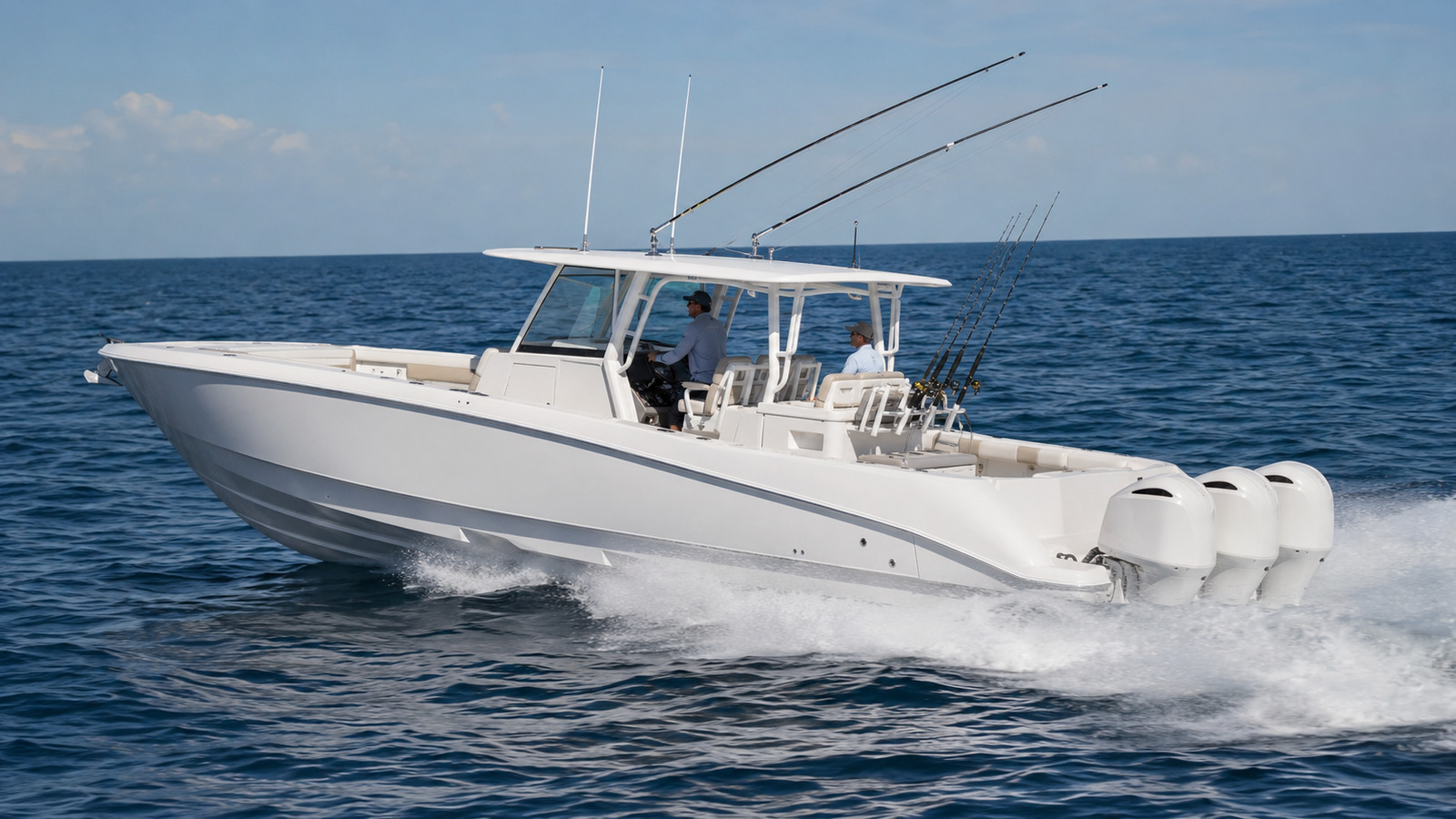
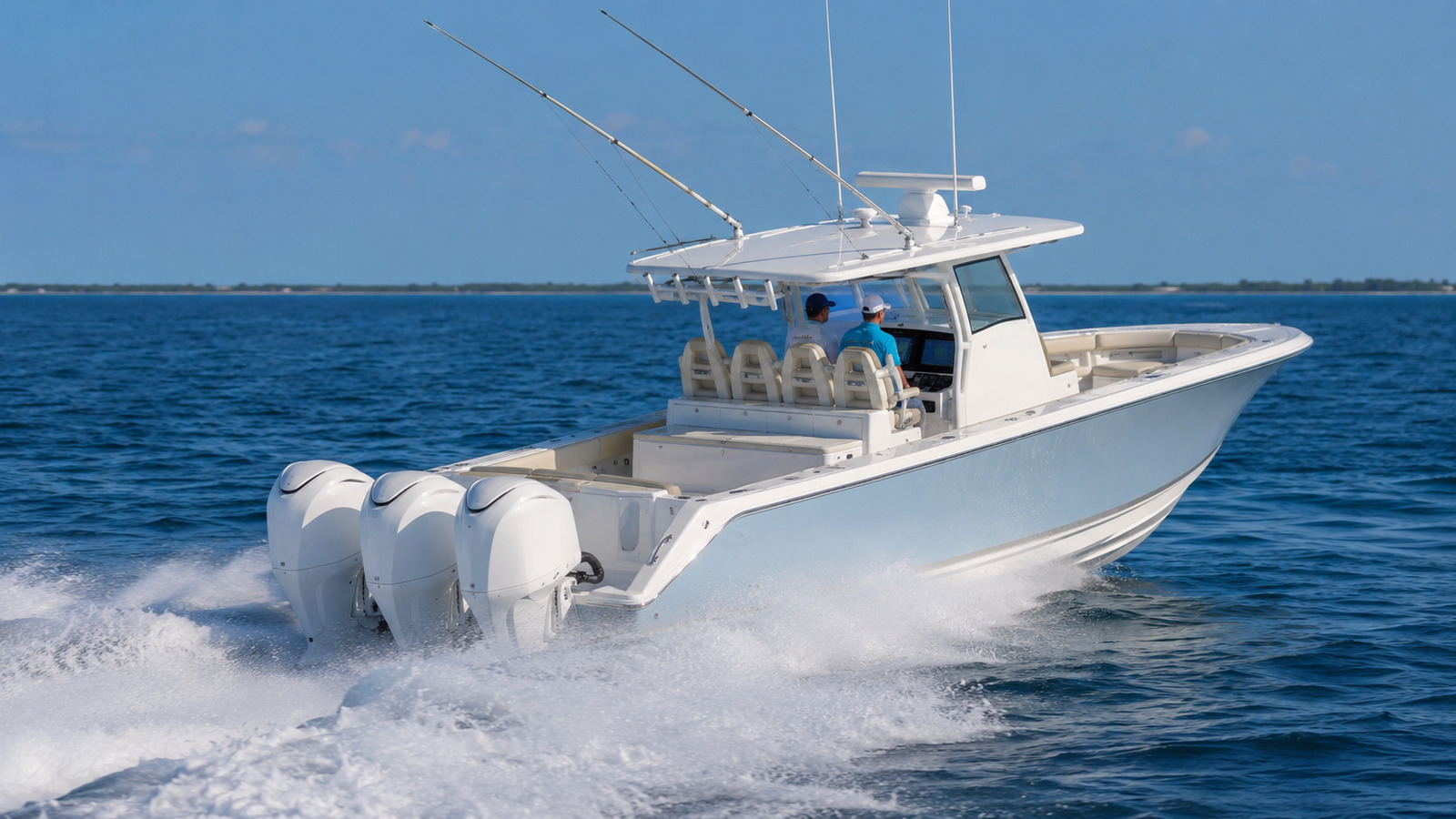
The 34 also comes with an AmeraTrail trailer, but width, engine count and loaded mass can create permit and tow-vehicle considerations depending on route and jurisdiction. Owners should price transport before assuming every fishing trip begins from the driveway.
For this 10-foot-beam 34-foot center console, Yellowfin also includes an AmeraTrail trailer in the 34’s standard equipment, but this is not a casual light-duty rig. Triple engines, 380 gallons of fuel and offshore gear can move the real transported weight far beyond the published approximate boat weight. Buyers should calculate the exact tow package and local width/permit requirements.
Fuel, water and gear should be considered when calculating storage or lift requirements. Published boat weight is not the complete operating weight. For the 34 Offshore, engines, batteries, fuel, freshwater, livewell water, ice, tackle and accessories can add thousands of pounds beyond a brochure figure.
Storm planning also changes with size. Smaller Yellowfins may be practical to evacuate on a trailer; larger boats may depend on marina procedures, haul-out reservations or a protected slip. Set that plan before hurricane season rather than discovering the limitations of the storage arrangement during a forecast.
Use the gallery to show the details buyers need before a sea trial: hull stance, engine configuration, cockpit
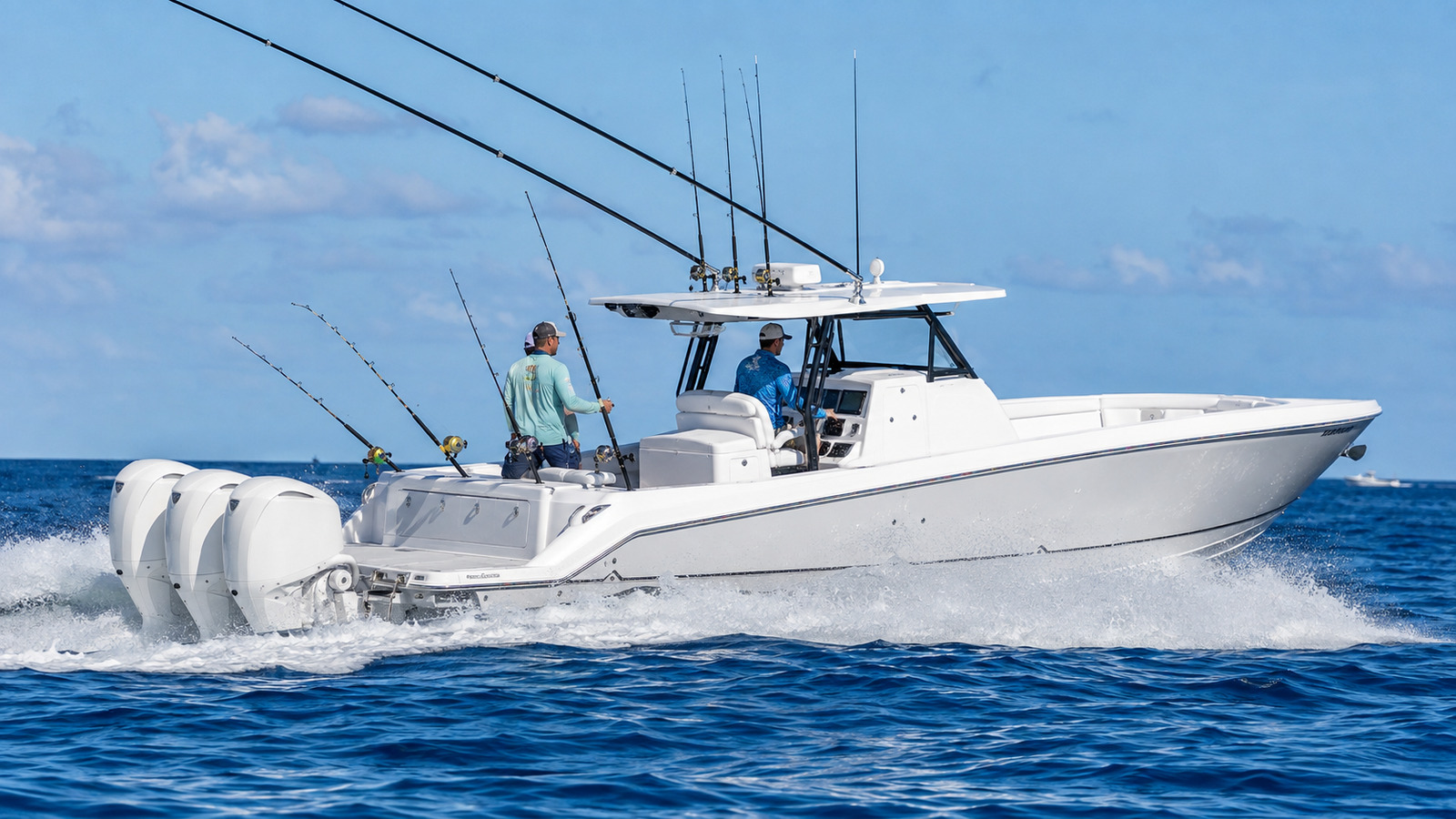
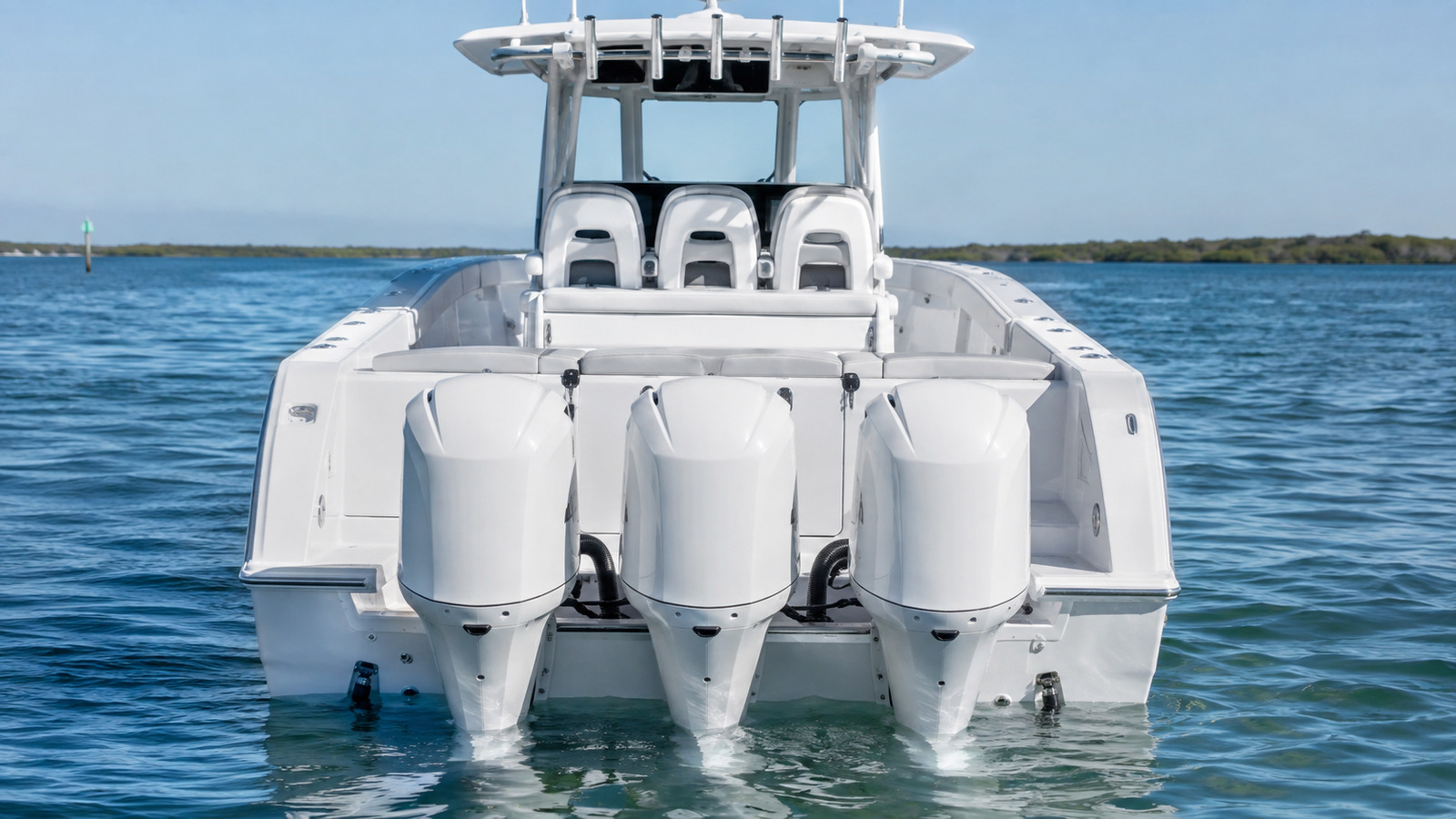
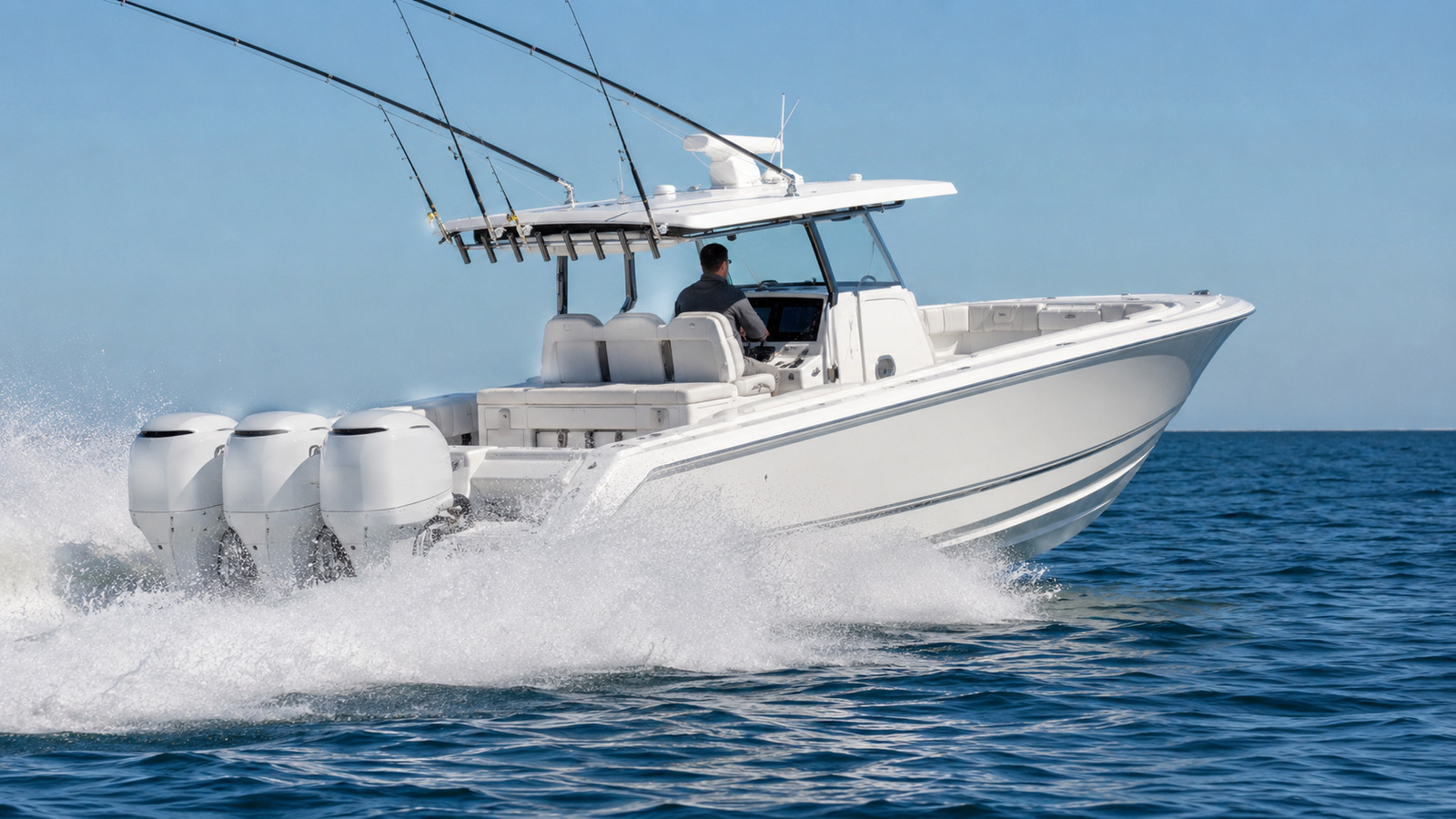
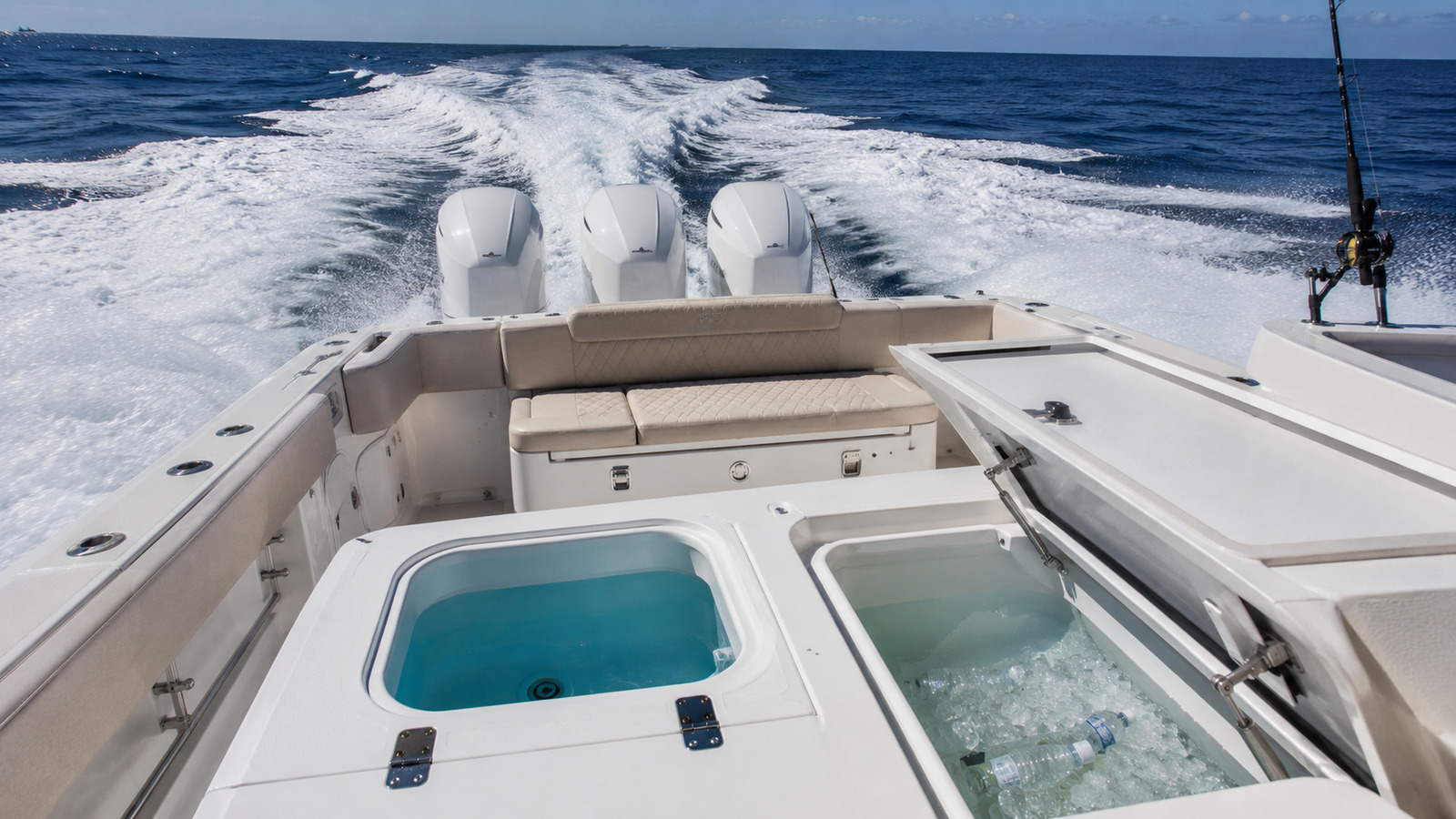
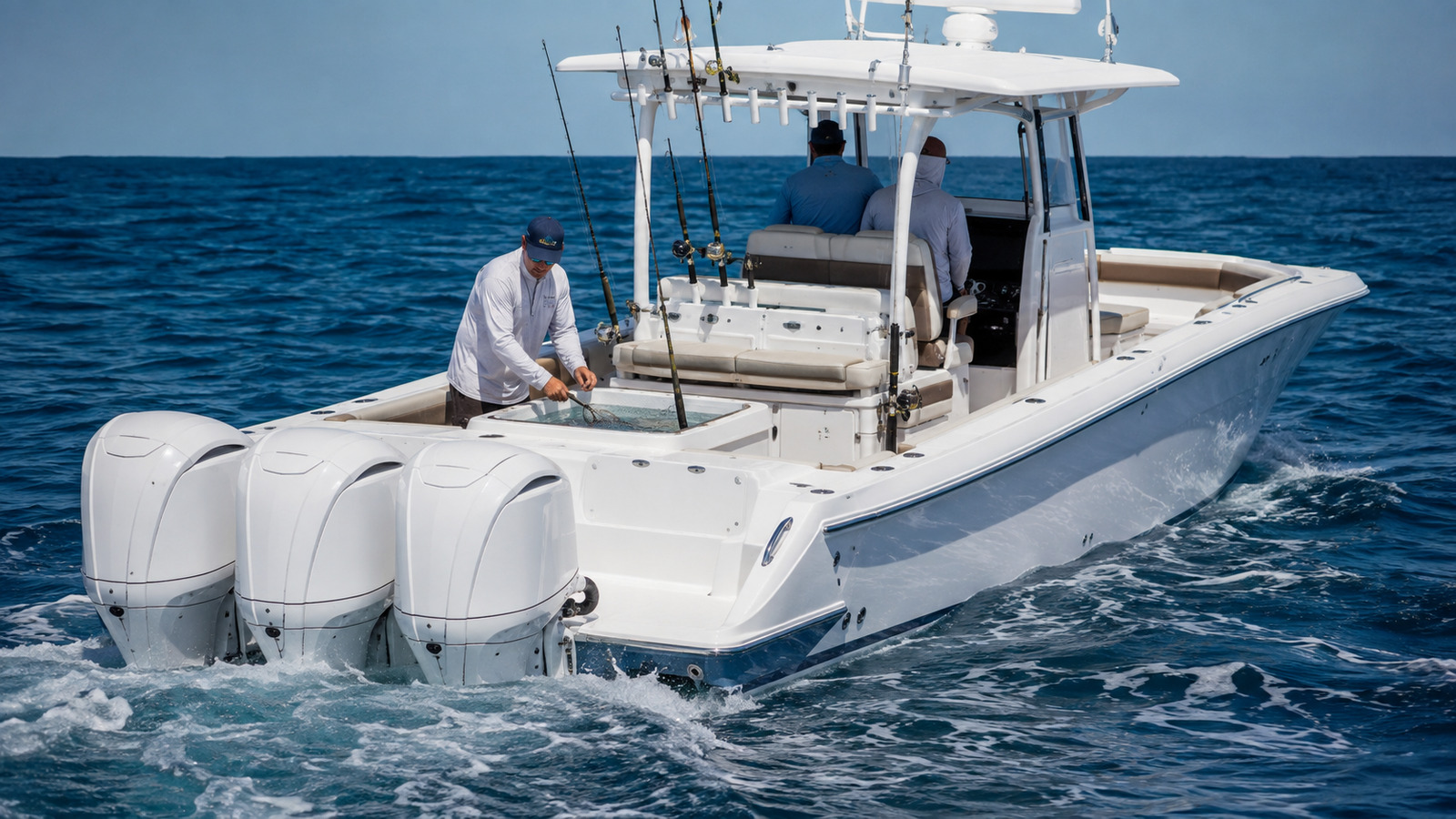
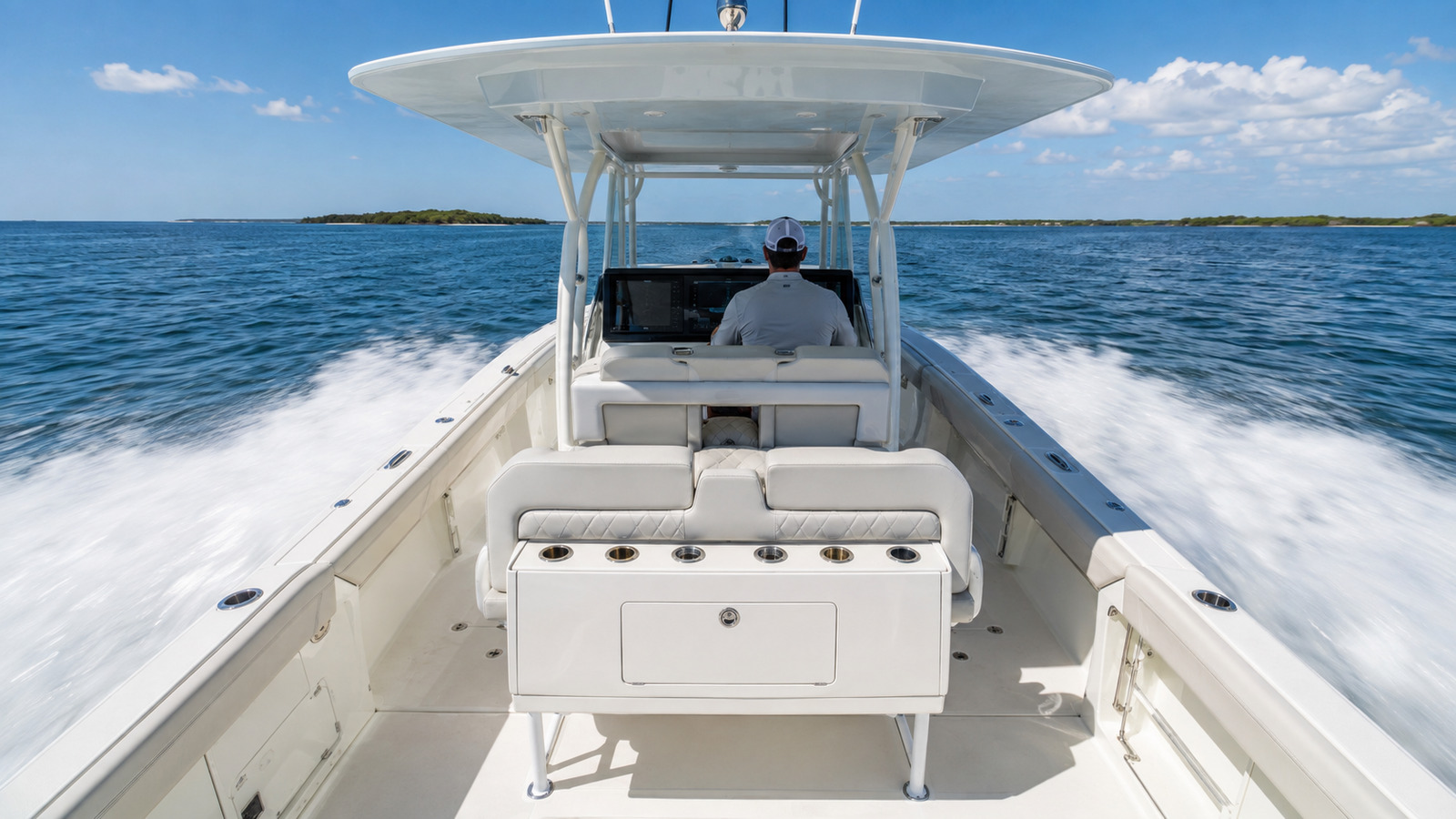
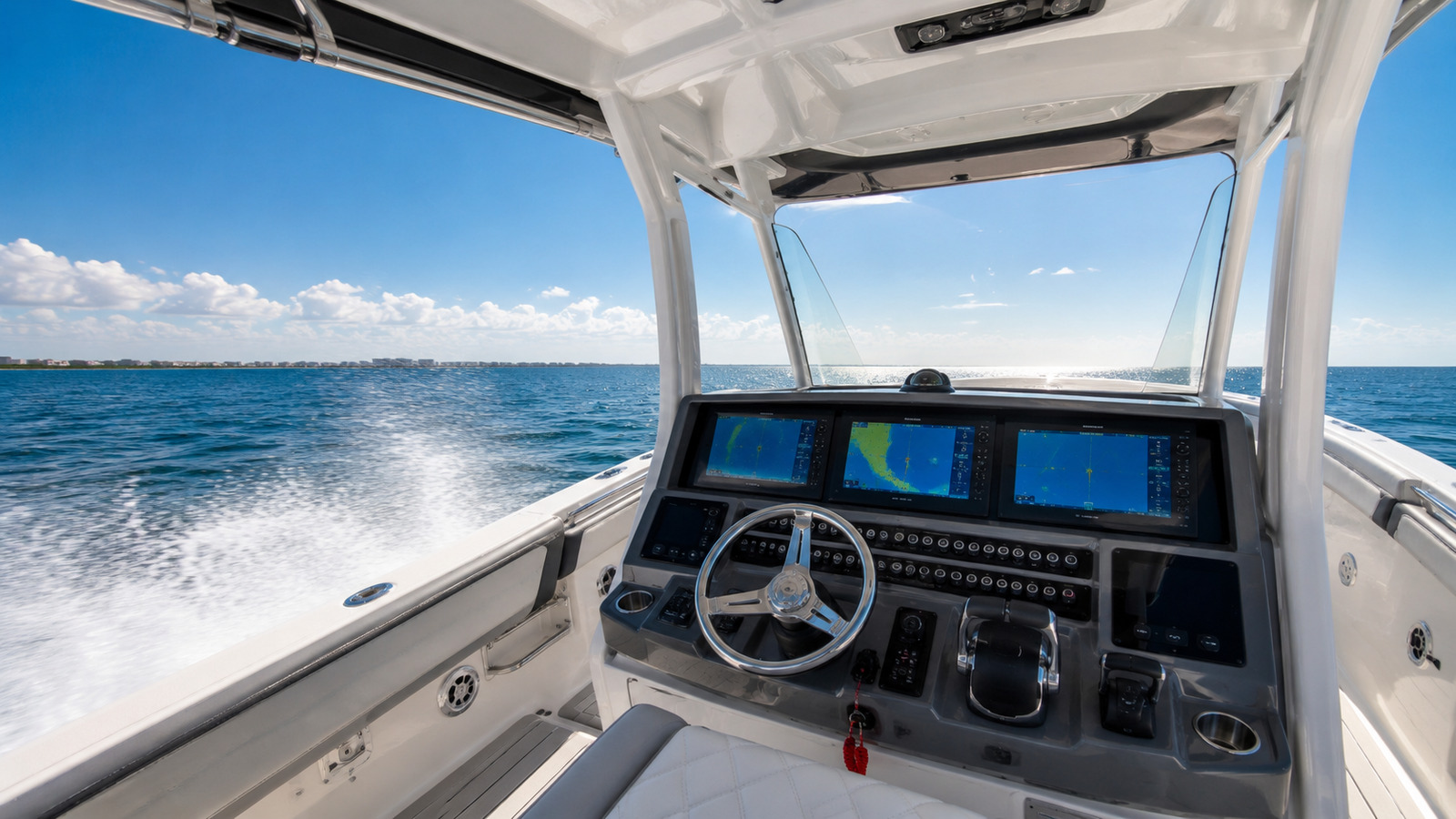
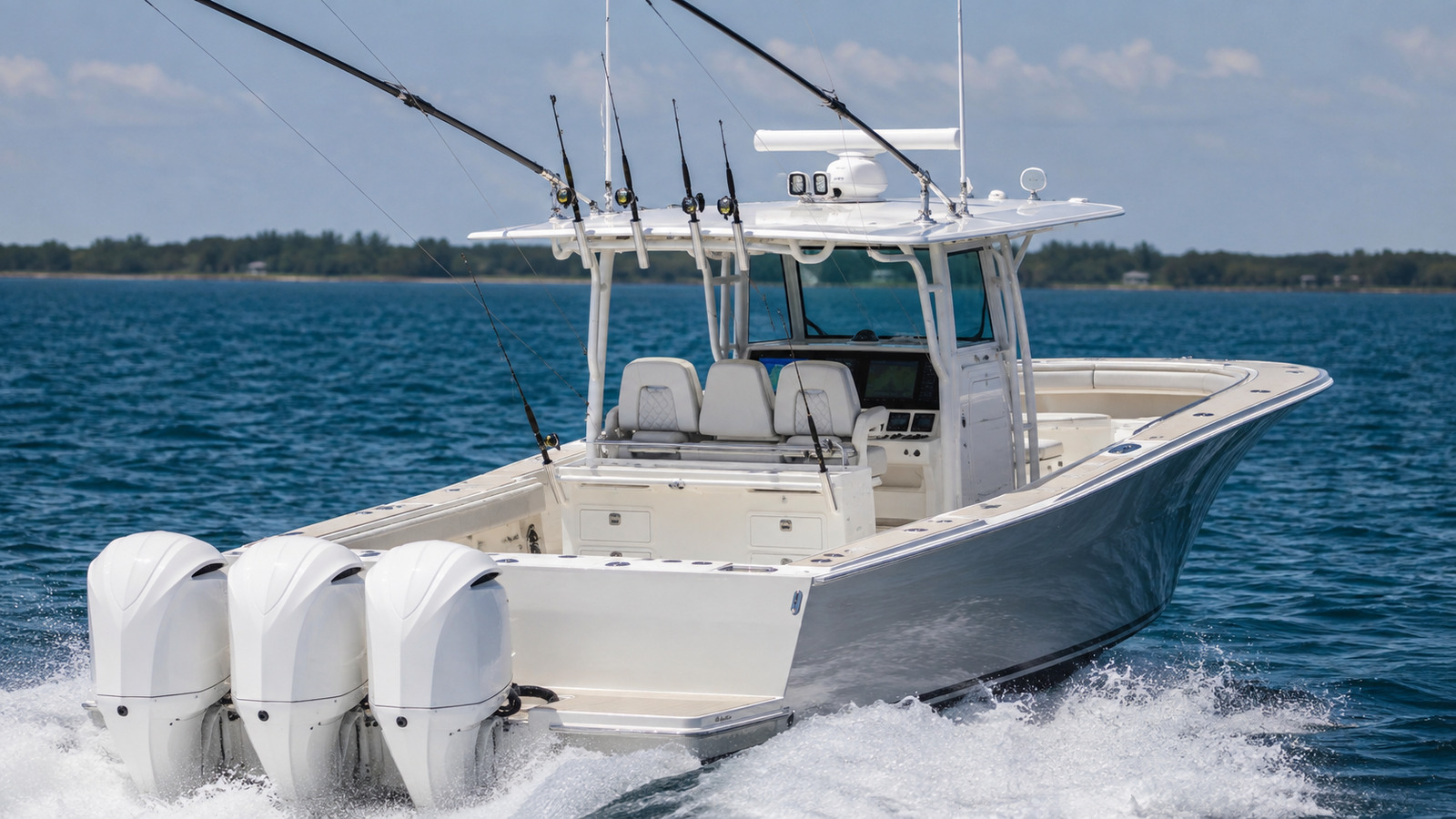
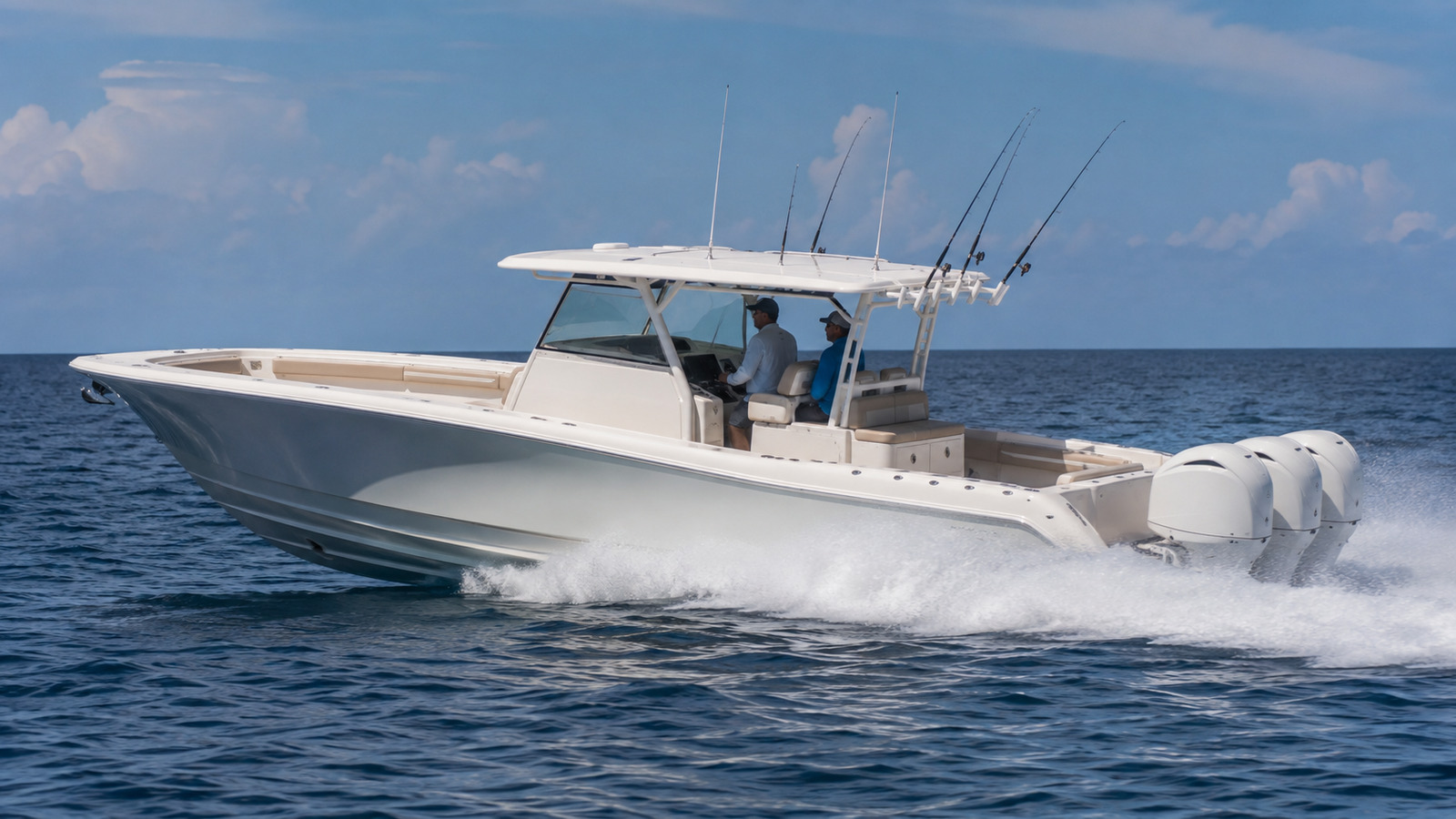
Engine package, model year, tower, electronics, stabilization, trailer or cabin equipment and condition can create large price differences between two boats with the same hull name.
Do not compare asking price before normalizing engine count and engine age. On the 34 Offshore, power is Twin or triple outboards, 1,350 hp max. A lower-priced hull with older engines can require a repower or major service far sooner than a more expensive example with documented maintenance.
First-season correction cost matters as much as purchase price. Batteries, pumps, digital switching, upholstery, trailer work, electronics and neglected service can consume the apparent savings on a discounted boat. Separate repairs required for reliability from upgrades the buyer simply wants.
For new or highly customized Yellowfins, build-sheet content can affect value more than generic model-year averages. Keep the final equipment list with the boat so future buyers can distinguish factory-installed systems from later modifications.
Illustration only and not an offer of credit.
Include the trailer, engines and financed equipment only when they are actually part of the transaction.
Illustration only and not an offer of credit. Your actual rate and term depend on credit profile, vessel age, loan amount and ownership structure.
Compare the Yellowfin 34 Offshore with the 32 Offshore around beam, fuel capacity, engine count, fishing space and accommodation level. The 34 Offshore is 34’8″ long with a 10′ beam, 380 gal of fuel and twin or triple outboards, 1,350 hp max. The 32 Offshore is 32’6″ long with a 9’9″ beam and 332 gal of fuel. The useful question is which differences change the trips the owner can realistically run, not which boat simply has the larger number.
Compare the Yellowfin 34 Offshore with the 36 Offshore around beam, fuel capacity, engine count, fishing space and accommodation level. The 34 Offshore is 34’8″ long with a 10′ beam, 380 gal of fuel and twin or triple outboards, 1,350 hp max. The 36 Offshore is 36’8″ long with a 10′ beam and 477 gal of fuel. The useful question is which differences change the trips the owner can realistically run, not which boat simply has the larger number.
The 34 Offshore belongs on the short list when the answer to this remains clear: Will the owner use the 34’s twin- or-triple flexibility and larger storage, or is the 32 sufficient for the same trips? A larger model should solve a repeated problem, and a smaller model should not be rejected simply because the owner can finance more boat.
Start with the HIN, exact model year, engine serial numbers, engine hours and build sheet. Confirm the installed engine package against Yellowfin’s published model limits. Then identify every major option, electronics package and structural modification before price negotiation.
A used 34 should be evaluated around its exact engine count. Triple-powered examples carry different service cost and transom hardware than twins. Check the newer console liner, deck-box drainage, livewell plumbing and Seakeeper Ride hardware in addition to ordinary hull and engine inspection.
A marine survey is appropriate whenever the size, value or complexity of the 34 Offshore makes hidden problems expensive. Surveyors can evaluate hull structure, moisture or repair history, electrical installation, steering, fuel systems and sea-trial behavior independently from the seller’s presentation.
Engine inspection should include service records, diagnostic history where available, lower-unit oil, cooling-system condition, propellers, steering and a loaded sea trial. Multiple-outboard boats need all engines evaluated individually; one weak motor can be hidden by the thrust of the others.
Test livewells, fish-box pumps, washdowns, bilge pumps, C-Zone switching where fitted, lighting, electronics and any stabilization. On cabin-equipped Yellowfins, add generator, HVAC, freshwater, head, galley and shore-power systems to the checklist.
Verify title, lien status, registration or documentation, trailer paperwork where applicable and the serial numbers for engines and major equipment before funds move. Mechanical condition and clean ownership records are separate requirements.
Once the Yellowfin 34 Offshore has passed the model-fit, condition, survey and sea-trial checks, evaluate financing for the actual boat. Float Finance can help consumers pursue marine financing for eligible Yellowfin purchases, subject to borrower, collateral and transaction requirements.
It is best for offshore anglers who want a measurable step beyond the 32 in power and deck scale while keeping the boat manageable for frequent fishing trips. The purchase should come back to one question: Will the owner use the 34’s twin-or-triple flexibility and larger storage, or is the 32 sufficient for the same trips?
Yellowfin publishes 34’8″ length overall, 10′ beam, 11,478 lb approximate weight and 380 gal of fuel capacity for the reference model. Power is listed as Twin or triple outboards, 1,350 hp max.
Yellowfin does not publish a draft figure on the current official model material used for this guide. Do not substitute a dealer estimate for a factory number when clearance matters.
The published fuel capacity is 380 gal. Range still depends on engine package, load, sea state and speed, so owners should build a reserve from real fuel-burn data on the exact boat.
Yellowfin states Twin or triple outboards, 1,350 hp max. The actual engine package changes acceleration, service cost, transom weight and cruise efficiency, so compare boats by configuration rather than hull name alone.
Inspect the hull bottom and steps where applicable, transom, steering, livewell plumbing, electrical switching, pumps, electronics, fuel system and every outboard. Then verify service records and trailer or marina-related equipment. Yellowfin also includes an AmeraTrail trailer in the 34’s standard equipment, but this is not a casual light-duty rig. Triple engines, 380 gallons of fuel and offshore gear can move the real transported weight far beyond the published approximate boat weight. Buyers should calculate the exact tow package and local width/permit requirements.
The 32 Offshore is a useful adjacent comparison because it changes scale without leaving the Yellowfin family. Compare the two around offshore fishing with the option for twin or triple power, more storage and more crew space than the 32, then decide whether the larger or smaller platform solves a repeated need.
Float Finance can help consumers pursue marine financing for eligible Yellowfin purchases, subject to borrower, collateral and transaction requirements.
Tell us a little bit about yourself and the boat you are looking to finance.