
Call Us : 207-994-5109
Mon – Fri: 8 am to 9 pm & Sat – Sun: 10 am to 8 pm
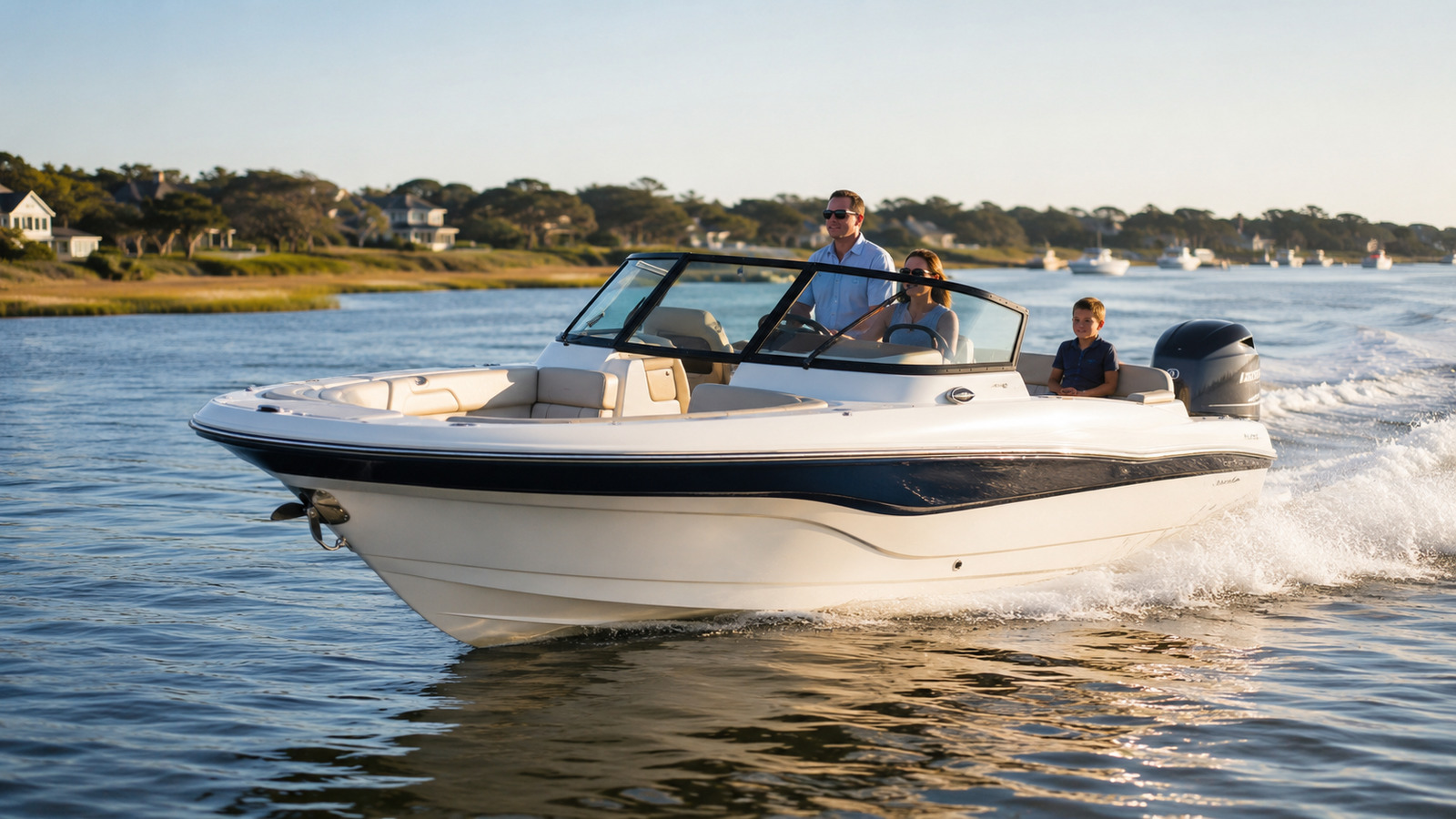
The Scout 220 Dorado is a 22-foot NuV3 dual console with folding transom seating, swim platforms, an aerated baitwell and configurable passenger storage.
The Scout 220 Dorado is a 22-foot NuV3 dual console with folding transom seating, swim platforms, an aerated baitwell and configurable passenger storage. It is best suited to families who want more power and cockpit versatility than the 215 while staying within an 8-foot-6-inch beam. That mission should stay at the center of the purchase because a premium boat can still be the wrong boat when its main advantages do not match the 220 Dorado owner’s normal day.
Reference dimensions are 22′ 4″ overall with 8′ 6″ of beam, 84 gal of fuel and a maximum horsepower rating of 250 HP. Approximate draft is 20″. For the Scout 220 Dorado, those numbers affect launch access, slip size, wet weight and how much boat the driver has to manage at low speed.
The 220 remains a compact coastal boat; buyers wanting a private head, entertainment station and 100-gallon fuel load should look at the 240.
The 220 Dorado should be tested as a family boat and a fishing boat on the same day. In the 220 Dorado ownership decision, put passengers in the bow, open the walk-through, deploy the aft seating and use the livewell or rod storage. When comparing the 220 Dorado, the dual-console idea works only when one activity does not make the other frustrating.
Published factory figures. Confirm every dimension against the individual boat before you commit.
The 220 Dorado combines 20° of transom deadrise with 8′ 6″ of beam. That geometry should be judged in the 220 Dorado owner’s actual water. On the 220 Dorado hull, run across wakes, quarter into chop and make a low-speed turn with passengers aboard rather than accepting a single straight-line pass as proof of ride quality.
Published or reference dry weight is about 2,879 lb dry before engines or operating load. During a 220 Dorado hull inspection, add fuel, batteries, water where fitted, engines when the dry figure excludes them, safety gear and the normal crew before using the number for a trailer, lift or haul-out decision.
Inspect the 220 Dorado before launch. For the 220 Dorado’s running profile, sight along the keel, chines and running surface for impact or repair work, then check through-hulls, transom hardware, trim or ride-control equipment and the support points used by a trailer or lift. On the 220 Dorado hull, cosmetic polish should not hide structural or rigging questions.
During the sea trial, run the 220 Dorado at the cruise speed the owner expects to use most often. Watch how the bow settles, how much trim correction the driver needs and whether the 220 Dorado remains predictable as passengers move. During a 220 Dorado hull inspection, ride quality is a loaded-boat question, not a catalog number.
The Scout 220 Dorado is an outboard-powered platform. On the 220 Dorado propulsion package, that keeps major propulsion components outside the hull and makes engine access straightforward, but engine count, gearcases, steering, propellers and digital controls can still represent a large share of the annual maintenance budget.
Ask to see the 220 Dorado start cold. Compare idle quality, charging voltage, temperature and steering response before the 220 Dorado leaves the dock. For a used 220 Dorado, on multi-engine examples, engines should carry load evenly and respond consistently to throttle and steering commands.
Run the 220 Dorado through idle, normal cruise, acceleration and a hot restart. During the 220 Dorado engine test, a short top-speed burst does not replace the operating conditions that reveal weak batteries, cooling issues, steering faults or propeller vibration.
On the 220 Dorado propulsion package, after the sea trial, inspect lower units, skegs, propellers, steering hardware, engine mounts and accessible rigging. Match engine serial numbers and service records to the exact 220 Dorado being purchased. For a used 220 Dorado, confirm current factory availability and exact model-year equipment before purchase.
The 220 Dorado carries 84 gal of fuel. Use the exact engine display to record fuel flow at a comfortable cruise, then build range from the route the 220 Dorado owner actually runs with a reserve. For the 220 Dorado’s fuel plan, tank capacity by itself is not a mileage promise.
A full 84 gal fuel load adds meaningful weight to the 220 Dorado. On a loaded 220 Dorado, add that fuel to engines, batteries, freshwater where fitted, people, tackle and day gear before deciding whether a lift, trailer or rack-storage plan has enough capacity.
When budgeting a 220 Dorado, fuel-system inspection should include fills, vents, filters, accessible lines and any persistent odor. On a 220 Dorado that has spent long periods inactive, stale fuel can create drivability problems that look like engine faults.
For the 220 Dorado’s fuel plan, for ownership budgeting, separate local fishing days from long offshore or cruising runs. The 220 Dorado does not burn the same amount of fuel in every mission, so annual cost should be built from the owner’s expected hours and routes rather than one performance-test number.
Sea-trial the 220 Dorado the way it will be owned: family cruising, fishing, swimming and watersports. During a 220 Dorado sea trial, start at idle, establish a normal cruise, cross wakes from several angles and finish with a real docking or ramp exercise.
On the 220 Dorado underway, visibility and driver workload matter as much as speed. When testing the 220 Dorado, the helm should let the operator see forward through acceleration, hold a comfortable cruise without constant trim correction and reach steering, throttle and electronics without awkward movement.
During a 220 Dorado sea trial, passenger comfort should be checked from more than the helm. Put people in the bow, aft seating and any companion lounge while the 220 Dorado crosses realistic chop. On the 220 Dorado underway, a premium layout should protect the whole crew, not just the driver.
Use the 215 Dorado as the first control for the 220 Dorado. If the 215 Dorado handles the same crew and water with less beam, fuel or system complexity, the 220 Dorado should have a clear reason to stay on the short list. When testing the 220 Dorado, that reason might be fishing space, weather protection, cabin comfort or propulsion capacity, but it should be used repeatedly.
Load the 220 Dorado for a realistic day before judging the deck. Stow rods, a cooler, tow gear, dock lines,
family bags and the swimming equipment that usually comes aboard. Then walk the 220 Dorado from bow to stern
with the normal crew aboard. The layout should preserve safe movement, access to the water and the working space
central to this model’s mission after the boat is fully occupied.
Three 220 Dorado details deserve focused inspection: dual-console windshield, rod storage and marine audio and charging. Review those details with the cockpit occupied and the normal gear aboard. A useful premium feature should reduce work for the 220 Dorado crew rather than create a new sequence of seats, hatches or switches every time the activity changes.
On the 220 Dorado deck, at the helm, sit and stand. With the 220 Dorado loaded for the day, check sightlines around the windshield or console, throttle reach, seat support and the passenger handholds nearest the driver. On the 220 Dorado, ergonomics matter because fishing and family days often mean hours underway rather than one short run.
When using the 220 Dorado cockpit, finish the deck test at the stern. On the 220 Dorado deck, outboards, boarding access, livewell hardware and aft seating all compete for the same area. The 220 Dorado is well integrated only when swimmers, anglers and the engine-service plan can coexist without constant reconfiguration.
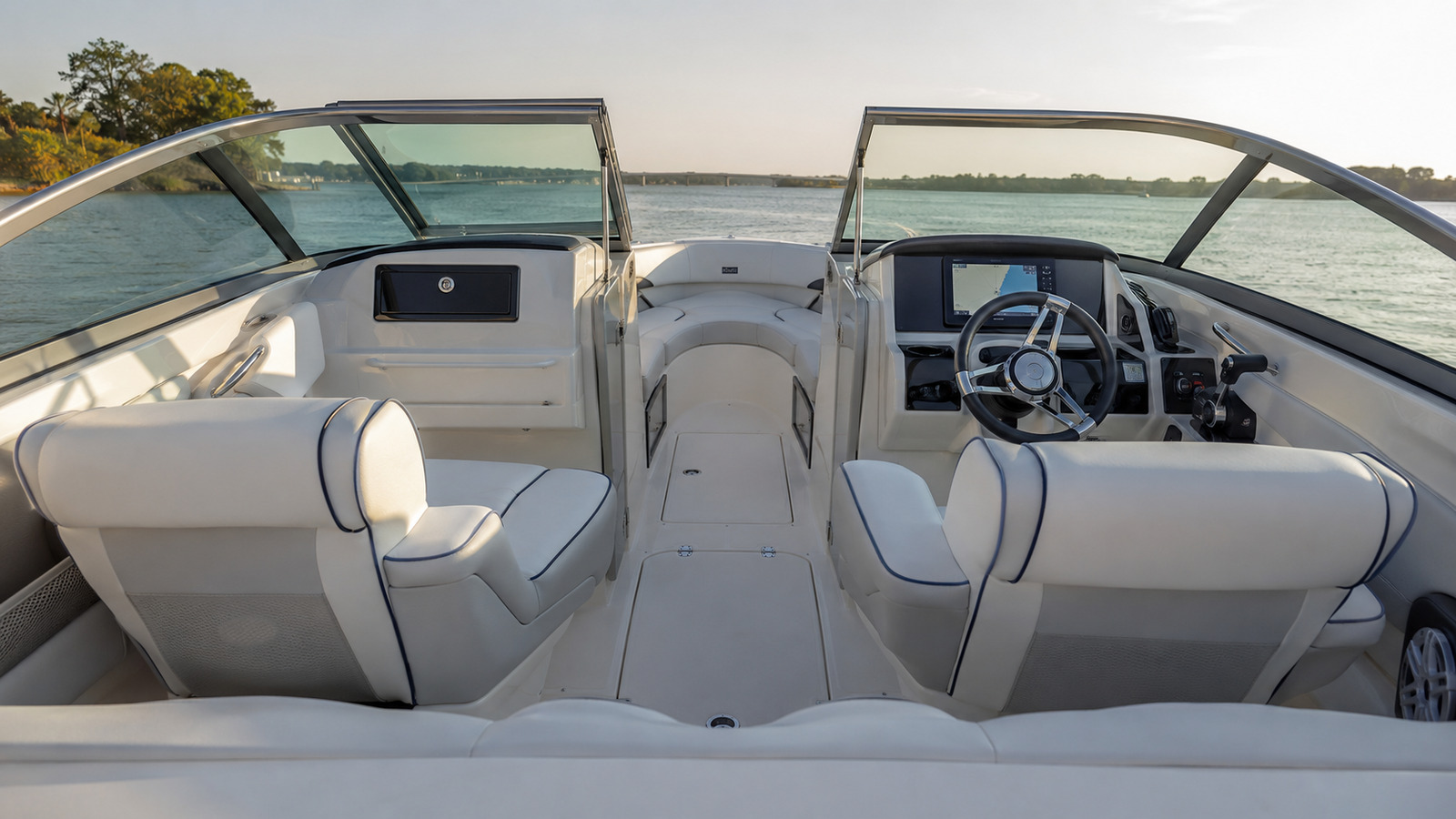
The 220 Dorado separates helm and passenger console while creating a protected center walk-through.
Forward cushions turn the 220 Dorado bow into family seating without giving up coastal-fishing utility.
The 220 Dorado keeps live bait capability available for fishing days.
Rod holders and under-gunwale storage preserve the fishing side of the Dorado mission.
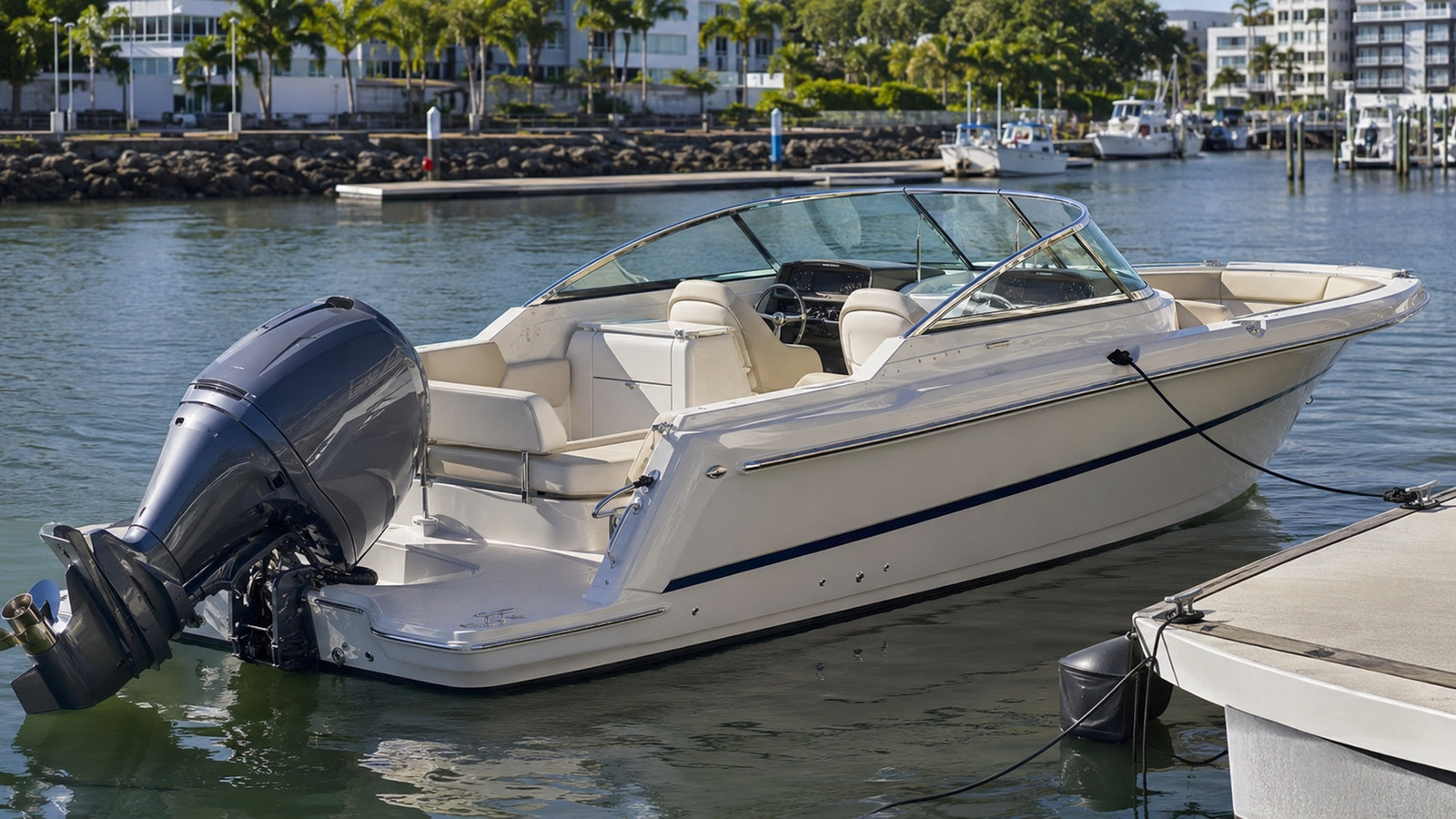
Water access is a core Dorado job, so the 220 Dorado stern needs to work around its outboard package.
Folding or converting stern seats let the 220 Dorado change from passenger mode to open cockpit.
Family-day electronics support cruising, sandbar and watersports use.
Outboard propulsion keeps the 220 Dorado mechanically straightforward compared with an inboard cruiser.
The systems inspection on a Scout 220 Dorado should concentrate on windshield and walk-through hardware, convertible seating, livewell plumbing, swim access and the way family gear competes with fishing space. These systems are part of the 220 Dorado’s real value and should be tested under use, not just switched on for a moment.
On the 220 Dorado, test the systems that create its identity under simultaneous load. On the 220 Dorado’s systems, run helm electronics, pumps, audio, refrigeration or climate where fitted, and any powered doors or seating. During a 220 Dorado systems check, watch voltage, pump cycling and control responsiveness for long enough to expose an intermittent fault.
For the 220 Dorado’s electrical and plumbing load, check batteries, charging, digital switching and networked electronics together. On the 220 Dorado’s systems, modern marine systems can look healthy with one display running and behave very differently once pumps, stereo, refrigeration, climate or powered deck hardware are operating at the same time.
During a 220 Dorado systems check, after the sea trial, reopen the bilge and utility areas. New water, an unexpectedly cycling pump, a warm connection or a fresh alarm on the 220 Dorado deserves investigation before the buyer treats the boat as ready.
The Scout 220 Dorado is best understood as a day-boat layout rather than a dedicated overnight cabin. For the 220 Dorado’s storage plan, that distinction matters because a buyer should not pay for cabin capability they will never use or expect a day boat to become a comfortable cruiser simply because a head or console compartment is available.
Storage planning begins with 22′ 4″ overall length and 8′ 6″ of beam. Confirm the actual trailer, rack, lift or slip rather than assuming a nearby boat will fit because the 220 Dorado numbers are close.
If the 220 Dorado has freshwater, sanitation, refrigeration, air conditioning or shore power, run those systems and inspect for leaks, pump cycling and moisture. When planning to keep a 220 Dorado, if it is day-boat oriented, focus instead on dry storage, shade and whether fishing gear can stay aboard without occupying passenger seating.
Use photography to verify the details that specifications do not show well on a Scout 220 Dorado: hull stance,
When valuing a 220 Dorado, actual value can move with model year, propulsion package, hours, electronics, stabilization, lithium equipment, hardtop options, upholstery and overall condition.
For a pre-owned 220 Dorado, options should be valued by function. In the 220 Dorado price comparison, a working Seakeeper, lithium system, powered seat, beach platform, livewell, joystick or electronics suite adds utility. When valuing a 220 Dorado, the same option in failed condition becomes a repair line even if it was expensive when new.
Propulsion history has outsized value on the 220 Dorado. For a pre-owned 220 Dorado, complete engine service records, clean lower units and healthy steering can justify more than cosmetic upgrades because deferred outboard work multiplies quickly on multi-engine boats.
In the 220 Dorado price comparison, keep the first-year correction budget separate from asking price. When valuing a 220 Dorado, batteries, pumps, upholstery, electronics, props, steering, canvas and climate equipment can erase an attractive discount if several systems are due together.
Illustration only and not an offer of credit.
Add the storage, insurance, fuel and service costs created by a 22′ 4″ boat with 84 gal of fuel capacity.
Illustration only and not an offer of credit. Your actual rate and term depend on credit profile, vessel age, loan amount and ownership structure.
In the 220 Dorado cross-shop, the 215 Dorado is the first useful cross-shop because it changes size, layout or series mission without leaving Scout. It measures 21′ 6″ with 8′ 6″ of beam and carries 82 gal of fuel, compared with 22′ 4″, 8′ 6″ and 84 gal on the 220 Dorado. When comparing the 220 Dorado, the point is not to crown a larger boat. It is to see which platform solves the 220 Dorado owner’s recurring use with the least unnecessary complexity. For the 220 Dorado short list, the 240 Dorado is the first useful cross-shop because it changes size, layout or series mission without leaving Scout. It measures 24′ 4″ with 8′ 6″ of beam and carries 100 gal of fuel, compared with 22′ 4″, 8′ 6″ and 84 gal on the 220 Dorado. In the 220 Dorado cross-shop, the point is not to crown a larger boat. It is to see which platform solves the 220 Dorado owner’s recurring use with the least unnecessary complexity.
The Scout 220 Dorado belongs on the short list when its own mission still makes sense after those comparisons: families who want more power and cockpit versatility than the 215 while staying within an 8-foot-6-inch beam. When comparing the 220 Dorado, the purchase should be based on repeated utility, not simply the largest hull or highest horsepower the budget can reach.
Confirm the exact Scout 220 Dorado before negotiating. Before buying a 220 Dorado, record the hull identification, model year, engine serial numbers and high-value factory or aftermarket equipment that is physically installed. In a 220 Dorado pre-purchase review, remember that Scout’s equipment and availability can change over time, so the actual boat is the source of truth for the transaction.
Ask how the 220 Dorado was stored, where it was used and whether engine and onboard-system service stayed on schedule. For the exact 220 Dorado being considered, a coherent service history is easier to value than low hours with long inactive periods and no maintenance record.
Inspect the 220 Dorado with extra attention to windshield and walk-through hardware, convertible seating, livewell plumbing, swim access and the way family gear competes with fishing space. Before buying a 220 Dorado, open accessible lockers and service panels. In a 220 Dorado pre-purchase review, water staining, corrosion trails, improvised wiring or pumps that never stop cycling can reveal a more useful ownership story than a fresh detail.
Run the 220 Dorado until propulsion and major systems are warm, then inspect the bilge, engines and utility spaces again. For the exact 220 Dorado being considered, heat and vibration often reveal issues that a cold dockside inspection does not.
Before buying a 220 Dorado, verify ownership documents, lien payoff where applicable, serial numbers and transaction structure independently of the mechanical inspection. In a 220 Dorado pre-purchase review, a sound boat and clean paperwork are separate requirements.
The 220 Dorado’s 8′ 6″ beam is a practical ownership number. It affects trailer rules, garage or rack storage, slip width and how much passenger room the 220 Dorado creates. For the exact 220 Dorado being considered, on a Dorado, beam often changes the day more than a small difference in overall length.
Once the Scout 220 Dorado has passed the fit, condition and sea-trial checks, evaluate financing for the actual boat. For the 220 Dorado purchase, float Finance can help consumers pursue financing for eligible dealer, brokerage and private-party marine purchases, subject to borrower, collateral and transaction requirements.
The Scout 220 Dorado is strongest for families who want more power and cockpit versatility than the 215 while staying within an 8-foot-6-inch beam. Its main compromise is The 220 remains a compact coastal boat; buyers wanting a private head, entertainment station and 100-gallon fuel load should look at the 240. For the Scout 220 Dorado, if that compromise shows up on most trips, compare another Scout before applying.
The reference figures are 22′ 4″ overall length, 8′ 6″ beam, 84 gal fuel capacity, 250 HP maximum horsepower and approximately 20″ draft. Dry weight is 2,879 lb and transom deadrise is 20°. On the exact 220 Dorado, verify the exact model year and installed equipment before purchase.
The Scout 220 Dorado carries 84 gal of fuel. Actual range depends on engine package, rpm, sea state, load and bottom condition, so use real fuel-flow data from the exact 220 Dorado rather than a universal range claim.
The current reference specification used here lists up to 250 HP. The exact engine count and package can vary by model and model year, so confirm serial numbers, rigging, propellers and service history on the 220 Dorado being purchased.
The Scout 220 Dorado is best described as a day-boat layout rather than a dedicated overnight cabin. When researching the 220 Dorado, buyers planning regular nights aboard should test berth size, storage, ventilation, climate, freshwater and head systems with the actual sleeping party.
For the Scout 220 Dorado, start with cold propulsion behavior and service records, then focus on windshield and walk-through hardware, convertible seating, livewell plumbing, swim access and the way family gear competes with fishing space. Operate dual-console windshield and rod storage, sea-trial the 220 Dorado until systems are warm, and inspect the bilge or machinery areas again after the run.
The 215 Dorado is a useful comparison because it changes the size or mission without leaving the Scout family. On the exact 220 Dorado, put the same crew, storage plan, fishing gear and water conditions against both boats. When researching the 220 Dorado, choose the one whose layout and ownership scale solve the normal trip.
Float Finance can help consumers pursue financing for eligible Scout 220 Dorado purchases through dealers, brokerages and private parties, subject to borrower, collateral and transaction requirements.
Tell us a little bit about yourself and the boat you are looking to finance.