
Call Us : 207-994-5109
Mon – Fri: 8 am to 9 pm & Sat – Sun: 10 am to 8 pm
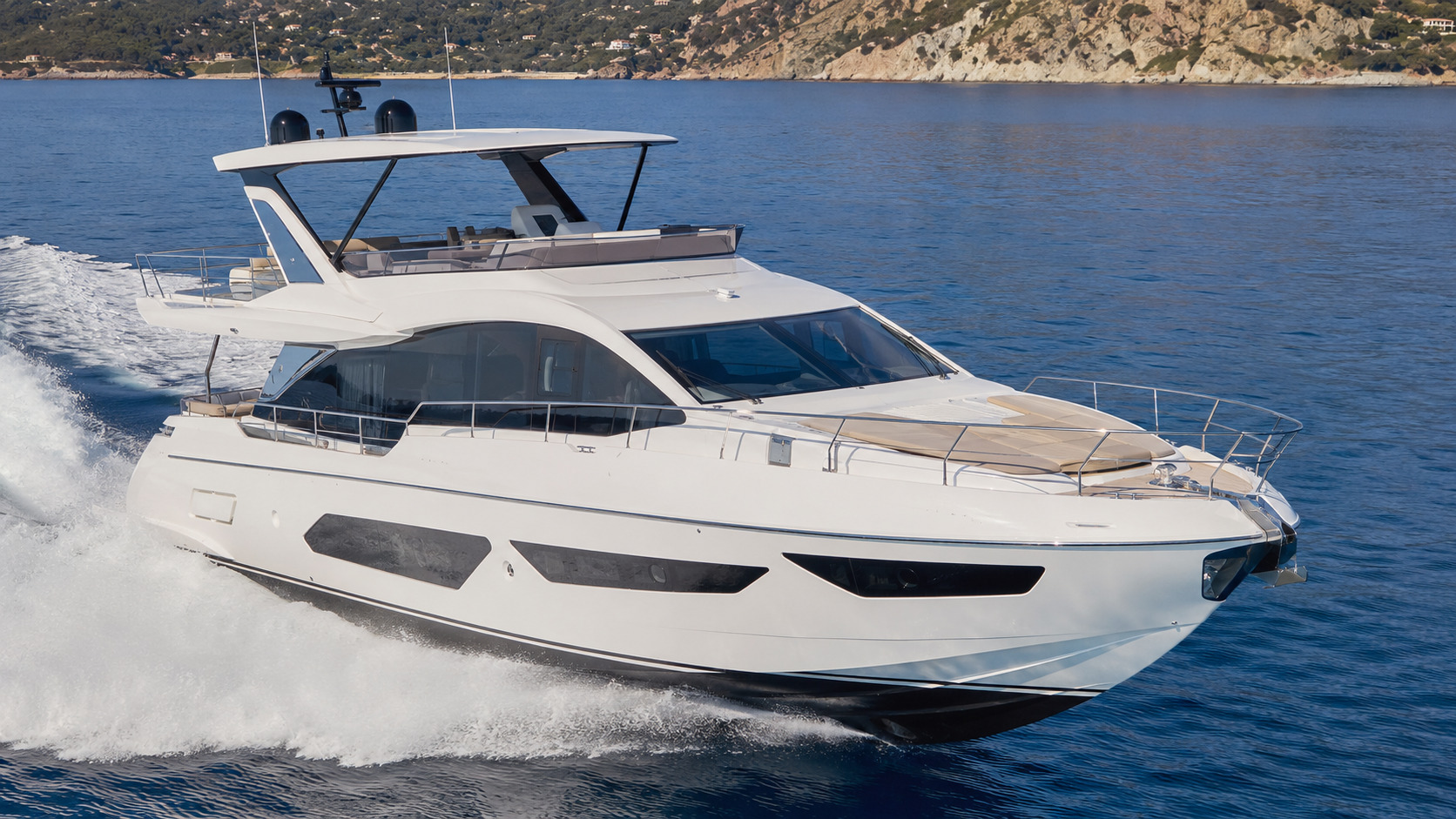
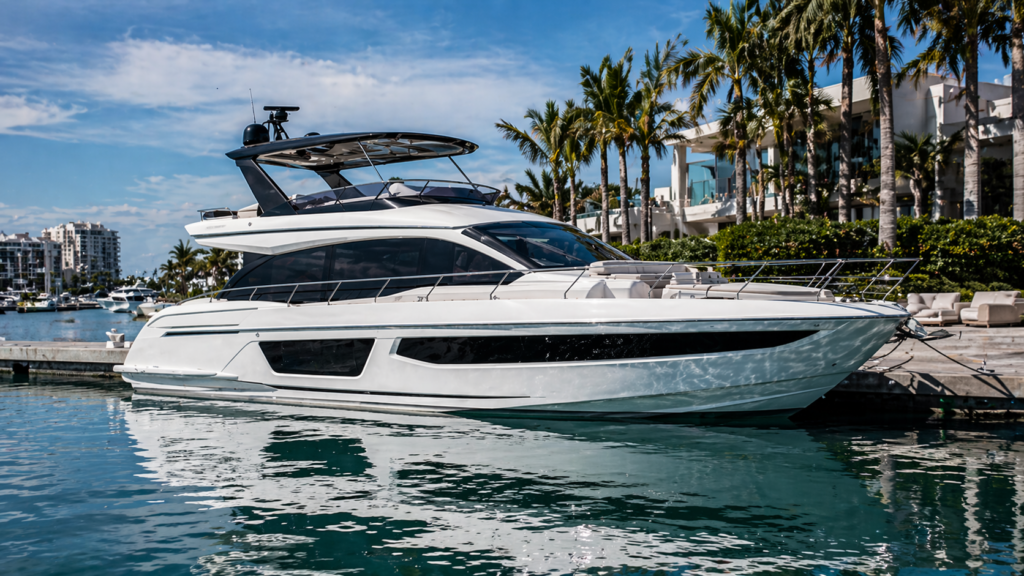
The Azimut Fly 53 puts three cabins, a full-beam owner’s suite and a true flybridge into the smallest current yacht in Azimut’s Fly range.
The Azimut Fly 53 is the entry point to Azimut’s current Fly Series, but “entry level” is misleading if it sounds like a stripped-down yacht. At 55′ 1″ overall with a 16′ 3″ beam, it still delivers three guest cabins, a full-beam owner’s stateroom, two guest heads and separate crew accommodation. What defines this model is not simply its length. Azimut designed the boat around getting legitimate flybridge-yacht accommodations into a footprint that remains more approachable for an experienced owner-operator than the larger models farther up the range.
Twin Volvo Penta D11 diesels drive IPS 950 pods, producing 725 hp each. That propulsion decision matters because packaging is a major part of how the Fly 53 creates its interior volume. Azimut uses the compact IPS installation together with an aft galley and relatively open main-deck floor plan to reduce wasted transitional space between the cockpit, galley and forward salon. Joystick control also makes close-quarters maneuvering less intimidating than conventional twin-shaft propulsion can be for an owner moving into a yacht of this size.
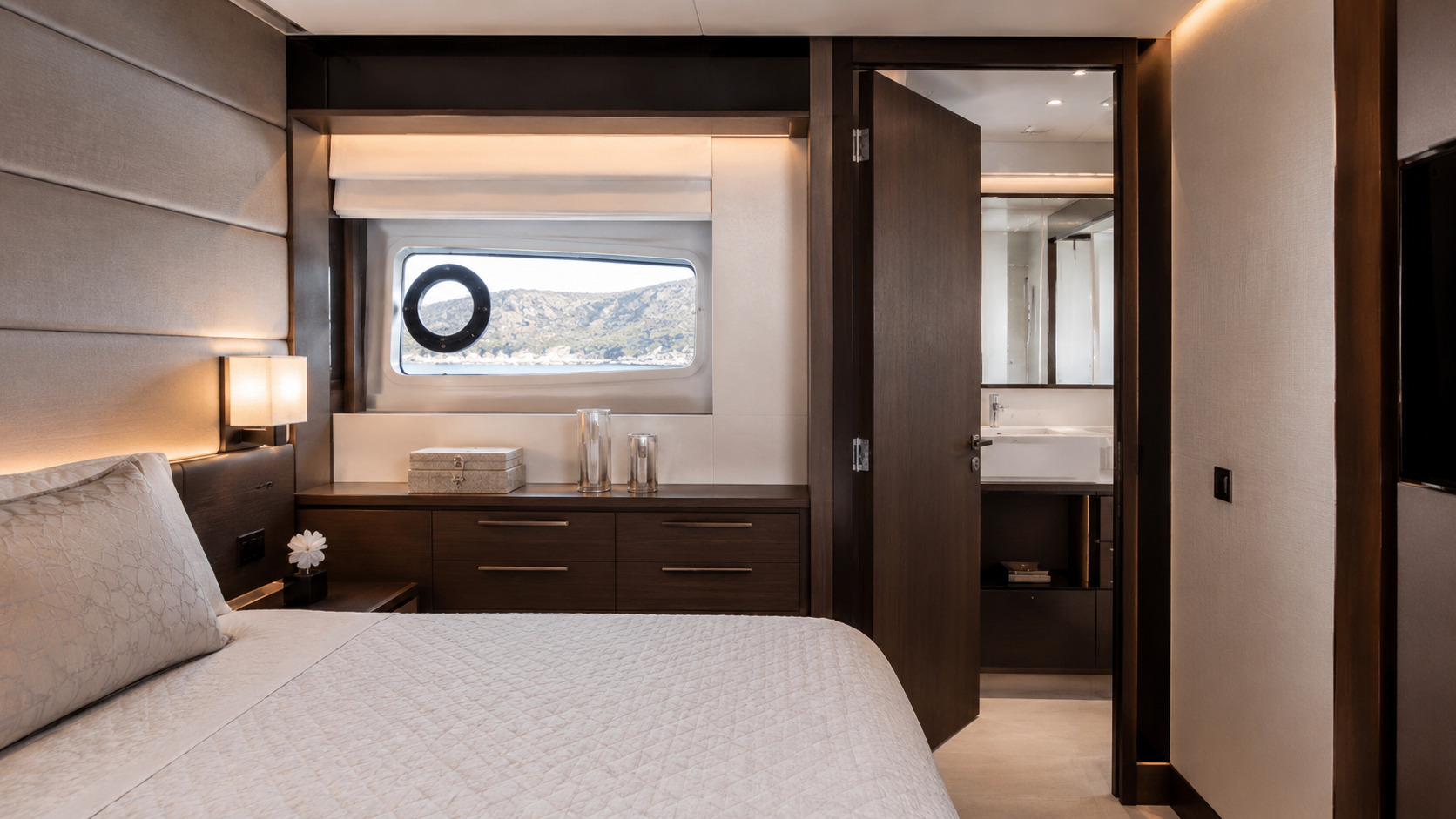
Below deck, six guests can sleep across three cabins. The owner’s suite spans the full beam and includes a queen berth, private head and walk-in storage. That is a meaningful accommodation package for a yacht this size, particularly for a couple who cruises with family or another couple but does not want to jump immediately into a 60- to 70-foot yacht. The separate transom crew cabin exists, but on many owner-operated boats it may be more useful as an occasional berth or additional storage than as a true full-time crew setup.
The compromise is worth stating plainly: the Fly 53 gives you three cabins and a real upper deck by using nearly every available foot efficiently. It does not give you the separation, crew quarters, extra heads or oversized exterior zones of a larger Fly. Three guest cabins share two guest heads, the flybridge is intentionally compact compared with the Fly 60 and above, and the crew space is modest. Buyers who routinely cruise with several couples, carry professional crew or want multiple large entertainment zones should compare the Fly 60, Fly 62 and Fly 68 before deciding that 53 feet is enough.
Published factory figures. Confirm every dimension against the individual yacht and its survey.
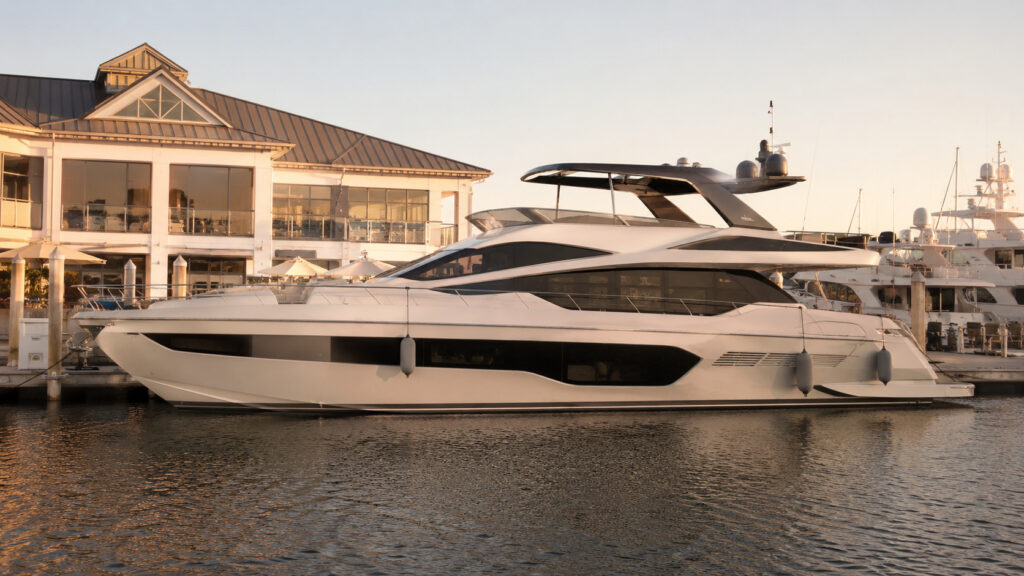
The Azimut Fly 53 uses a planing hull developed by Azimut’s R&D department with MICAD. Azimut publishes an aft deadrise of 13.6 degrees and a center-hull deadrise of 16.8 degrees. That geometry reflects the competing demands placed on a flybridge cruiser: enough V forward and amidships to deal with chop, while carrying more planing surface aft to support weight, efficiency and stability as the yacht comes onto plane. It is not attempting to behave like a narrow, deep-V offshore performance boat. The priority is comfortable fast cruising while supporting a substantial amount of accommodation above and below deck.
Current Azimut specifications list the Fly 53 as GRP construction. Buyers inspecting a used yacht should care less about the marketing description of the laminate than about the condition of the individual hull. A survey should look for prior impact repairs, moisture intrusion, condition around through-hulls and underwater fittings, structural movement where accessible, signs of grounding, and the condition of the IPS installations below the hull. Maintenance history matters considerably more on a multi-year used yacht than an abstract argument over construction terminology.
The 16′ 3″ beam is one of the numbers that explains the interior. There is enough width to create the full-beam owner’s cabin and meaningful main-deck volume without pushing overall length well beyond the mid-50-foot range. Draft and displacement require confirmation against the production registry because Azimut’s current online specifications differ from the company’s earlier technical sheet. Air draft should also be verified on the exact yacht, particularly if the boat will live behind fixed bridges. For a flybridge yacht, vertical clearance can determine where you keep and use the boat just as quickly as LOA or beam can.
Every current Azimut Fly 53 is built around a twin Volvo Penta D11 IPS 950 package producing 725 hp per engine, or 1,450 hp combined. Unlike a model that offers several radically different engine choices, the Fly 53’s hull, machinery space and performance targets were developed around this propulsion package. Azimut publishes a maximum speed of up to 31 knots and a fast cruising speed of up to 26 knots.
For an owner-operator, IPS is most noticeable at the dock. Azimut equips the Fly 53 with joystick controls that coordinate the propulsion system for lateral, rotational and fore-and-aft movement. The system can also integrate joystick driving and autopilot course corrections. That does not make a 55-foot yacht small, and windage from the flybridge remains real, but it lowers the workload when backing into a slip or making small corrections around a marina. The Fly 53 also uses automated trim control to adjust interceptor position as speed and loading change.
Servicing the drivetrain deserves the same attention as the engines themselves. On a used Fly 53, ask for records for the D11 diesels and IPS units rather than accepting a generic statement that the boat was “dealer maintained.” Verify engine hours, fluid changes, cooling-system service, pod service, seals, propeller condition, corrosion protection and any outstanding Volvo Penta service items. A pre-purchase engine inspection should supplement the general marine survey when the transaction value justifies it.
Azimut publishes a 634-US-gallon fuel capacity for the Fly 53. In the manufacturer’s current sea-trial data, the boat records 7.7 liters per nautical mile at 15.1 knots, with a stated range of 281 nautical miles. At the 26-knot fast-cruise point, Azimut reports 7.8 liters per nautical mile and a 279-nautical-mile range. Those trials were conducted under ISO 8666 conditions and witnessed by Lloyd’s Register, so they provide a useful standardized baseline rather than a promise of what every loaded yacht will achieve.
One useful detail is how little the published liters-per-mile figure changes between the slow and fast cruise points. The 53 is already planing at both settings, so a buyer is not necessarily rewarded with a dramatic range increase merely by backing down from 26 knots to the mid-teens. A separate independent test also found the boat’s fuel curve relatively flat once on plane. Real-world loading, bottom condition, wind, current, generator use and sea conditions will still move the numbers.
At the published 26-knot figure, 7.8 liters per nautical mile works out to roughly 54 US gallons per hour before generator consumption. A four-hour fast-cruise day can therefore consume roughly 214 gallons. Buyers planning a full season should calculate from actual cruising hours rather than multiplying by arbitrary “yacht ownership” percentages.
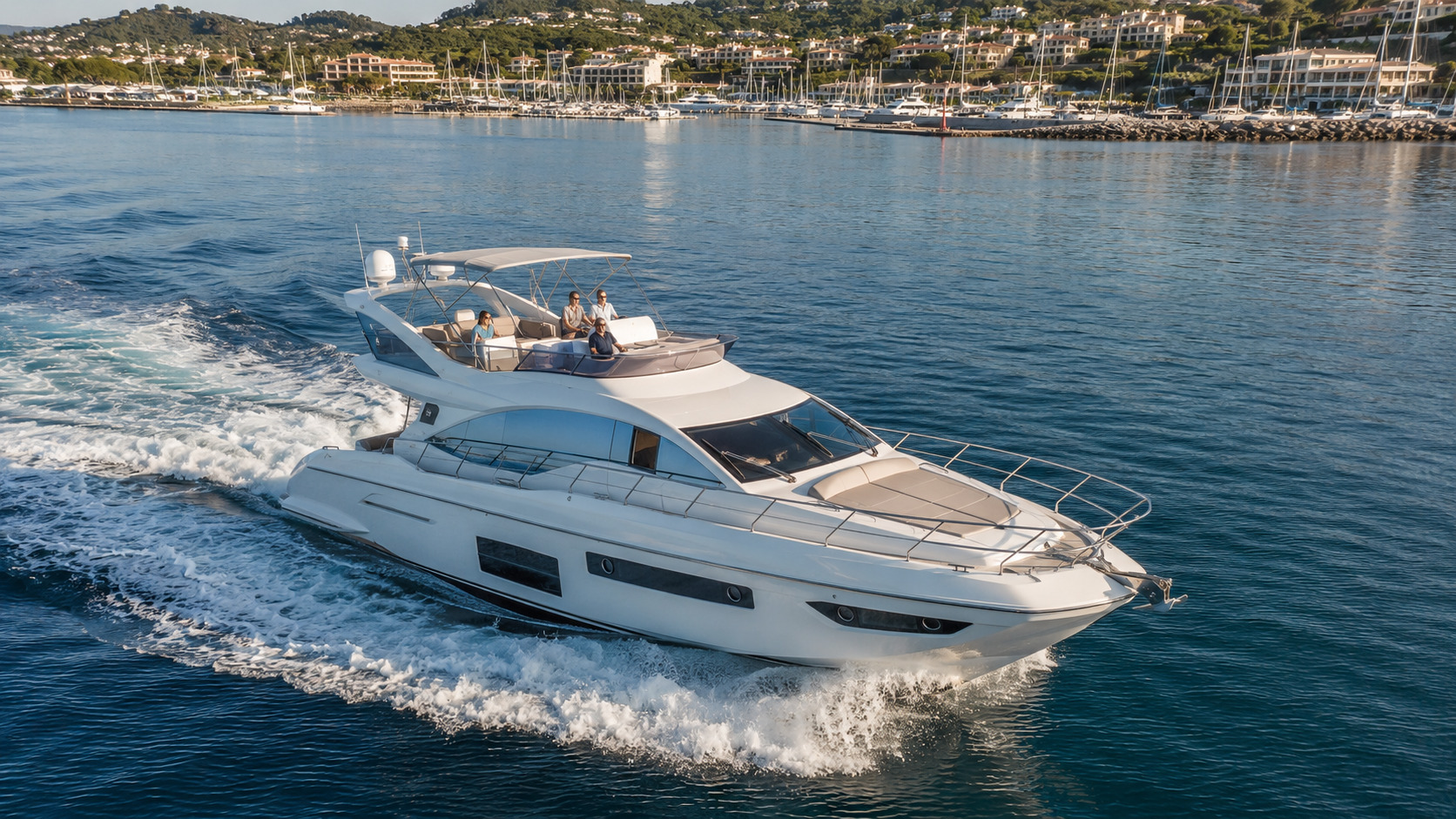
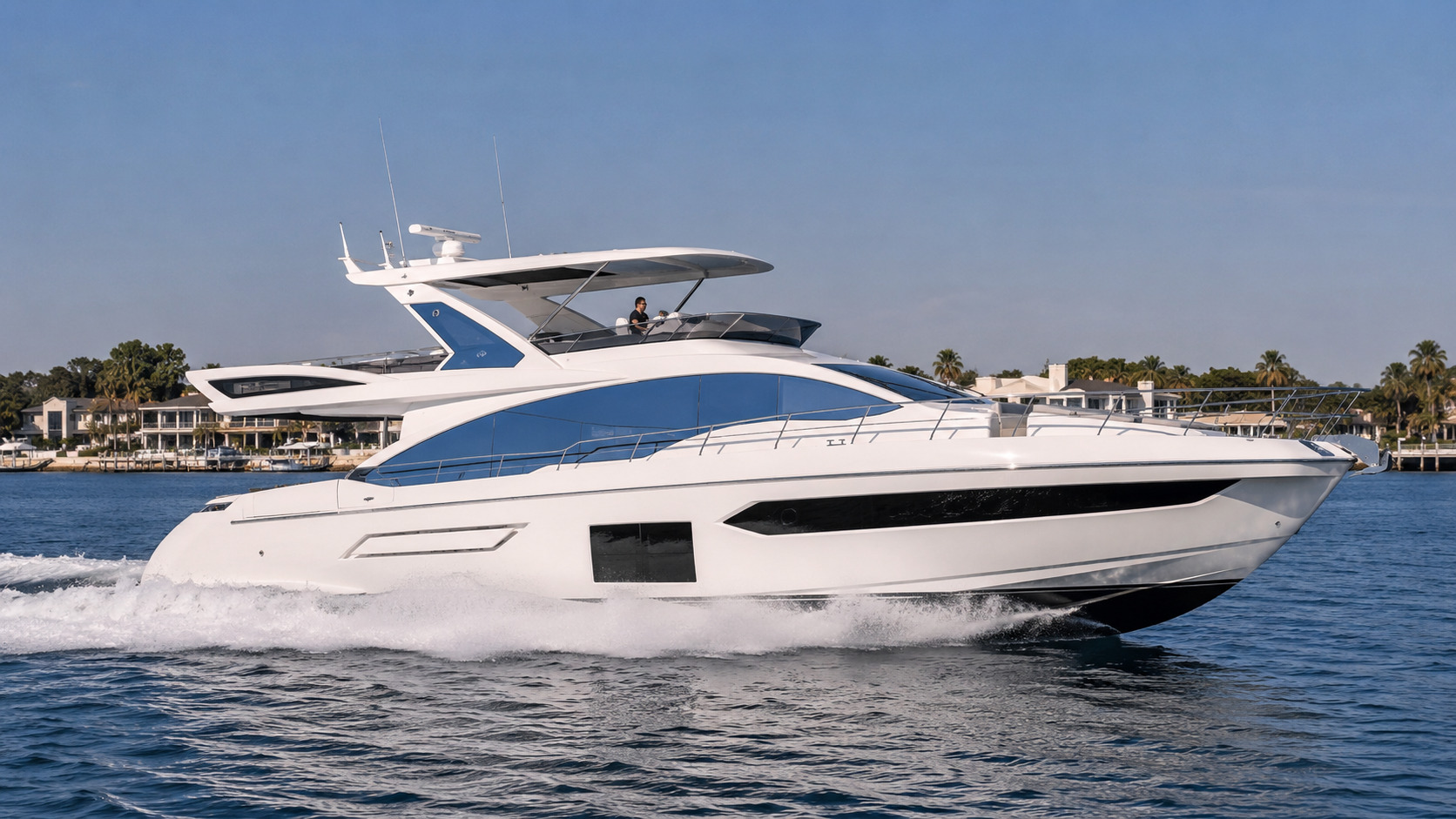
The Fly 53 is not a speed-first yacht, but its performance is fast enough that an owner can cover meaningful coastal distance without treating every move as an all-day passage. Azimut’s official numbers are up to 31 knots at maximum speed and up to 26 knots at cruise. Independent testing by YachtBuyer also reached approximately 31 knots and described the steering as light while retaining enough feedback for the driver to feel what the hull is doing.
A more demanding 2021 sea trial provides useful context beyond flat-water numbers. Barche Magazine tested the 53 in roughly one-meter waves and reported that at about 20 knots the boat remained composed, with total fuel consumption around 170 liters per hour. At 25 knots, the tester found that throttle adjustment was needed to avoid launching off the wave tops, but steering remained balanced and the boat did not exhibit excessive heel from the flybridge. That is a more useful picture of the hull than simply quoting 31 knots: the Fly 53 is designed to maintain comfortable progress in ordinary coastal chop, not to encourage the driver to ignore conditions.
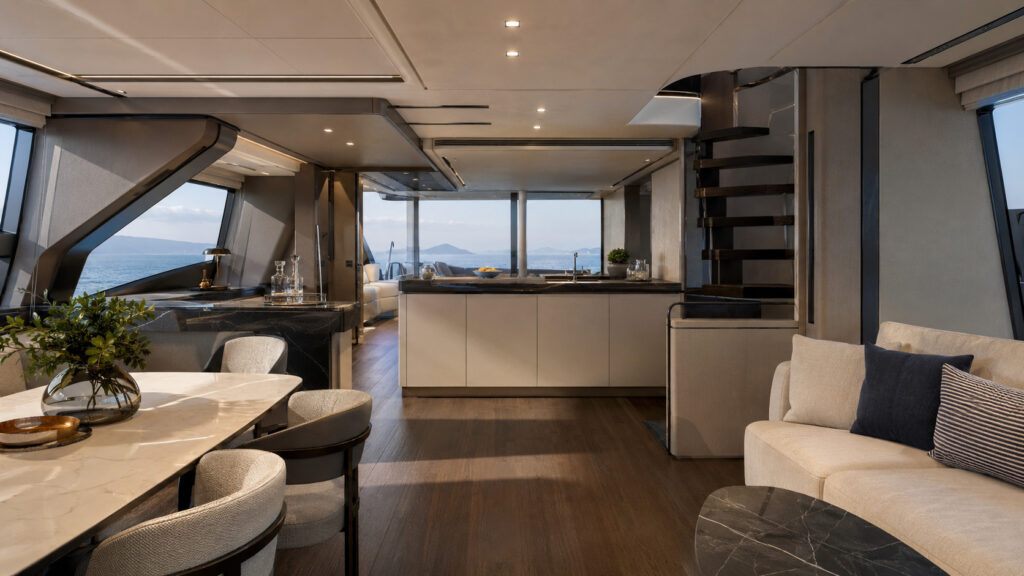
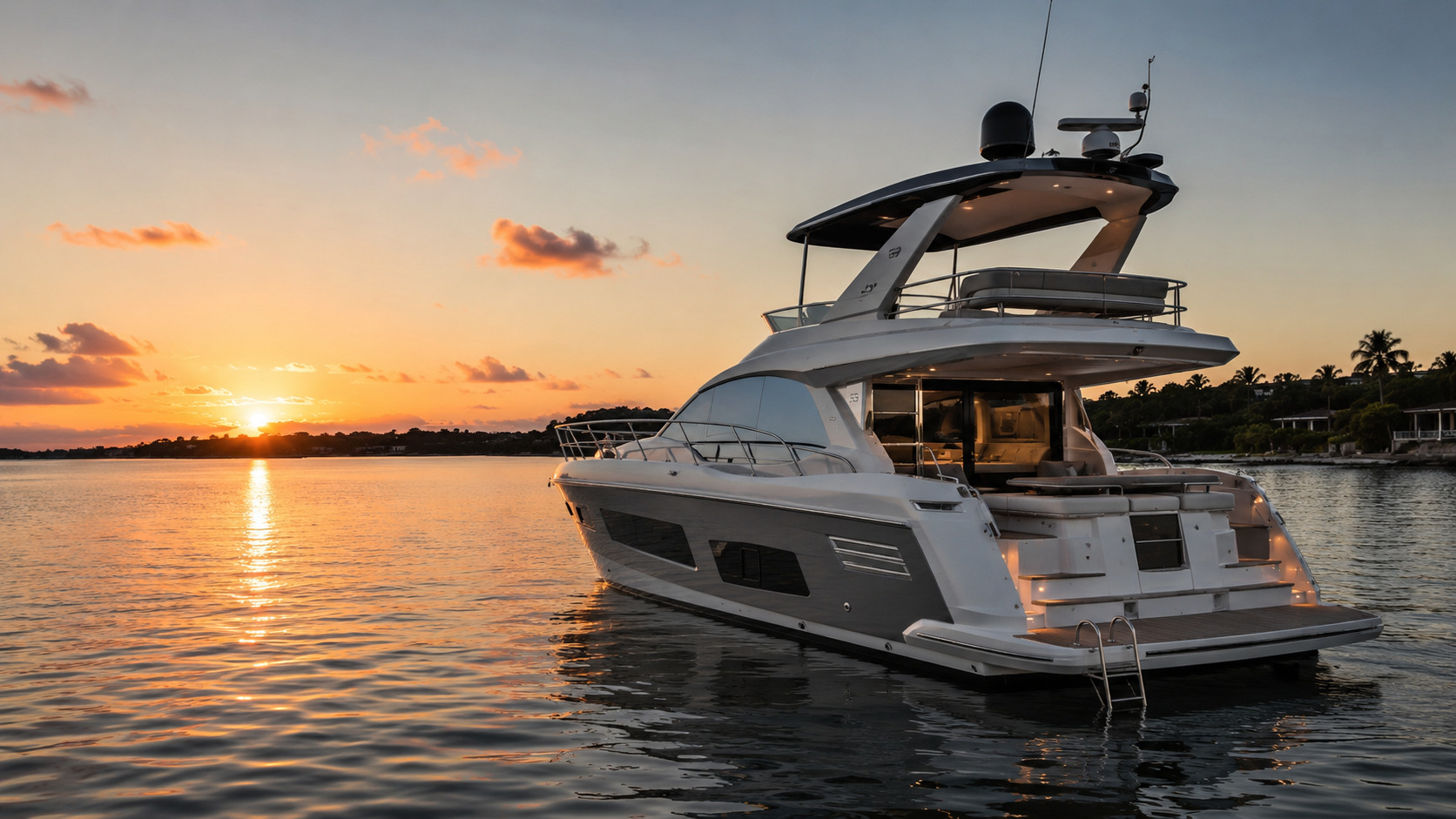
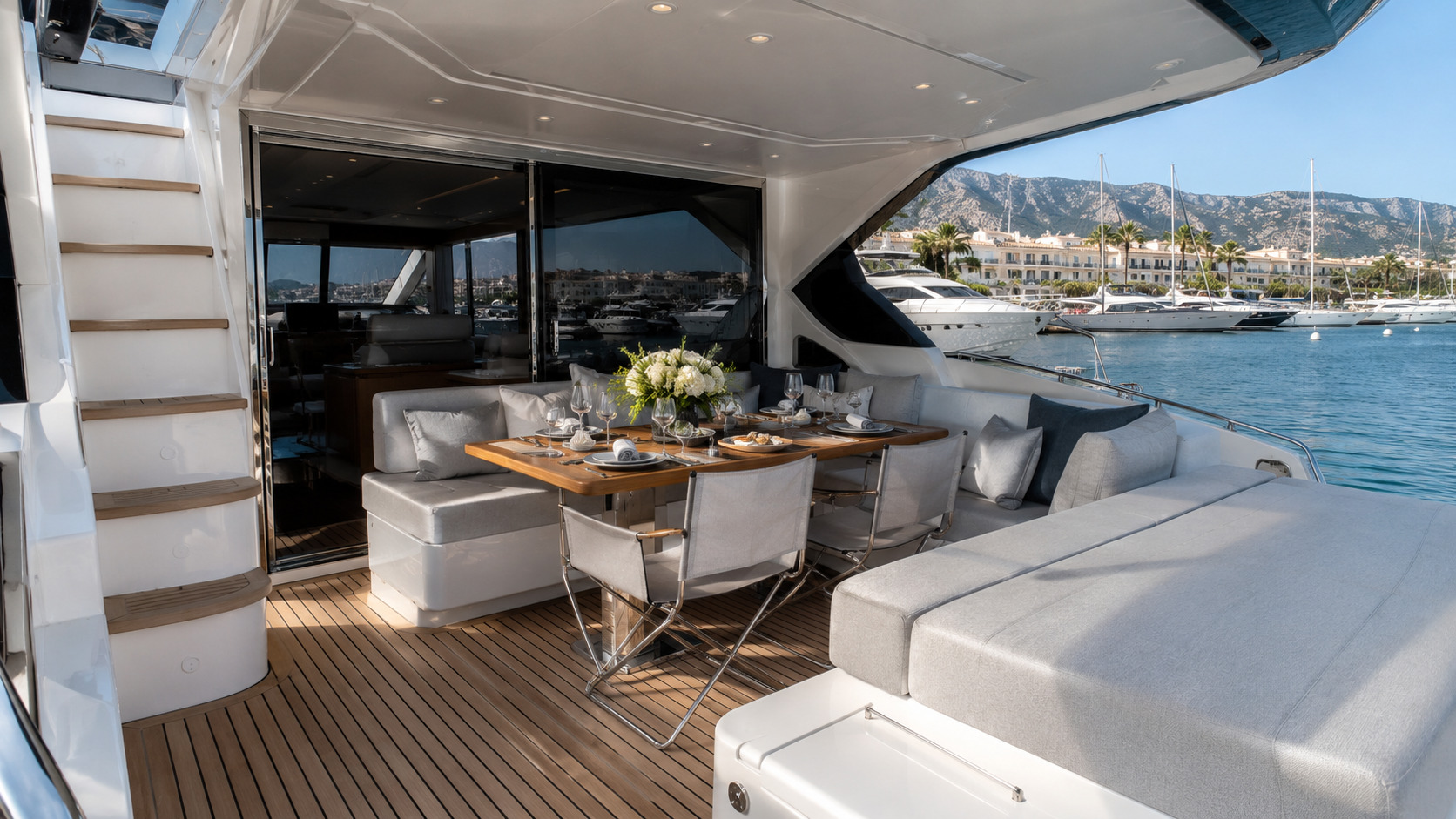
The aft cockpit uses an asymmetrical arrangement rather than forcing symmetry for its own sake. Azimut offsets the transom layout to preserve a usable passage while creating more room for the cockpit table and seating. The galley sits directly inside the main-deck entrance, allowing food and drinks to serve the cockpit without carrying everything through the salon. The crew-cabin entrance is kept separate in the transom.
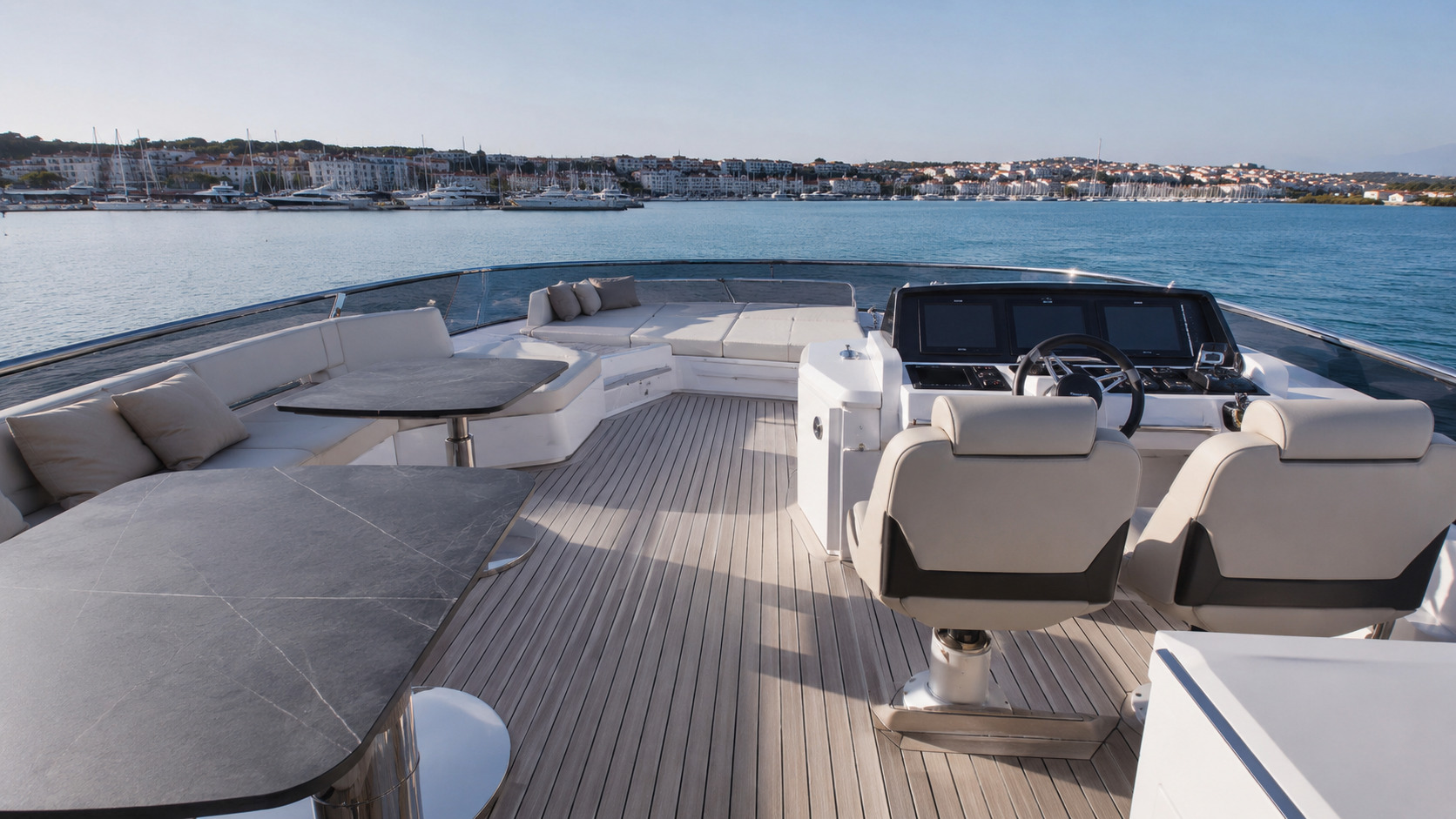
Forward, the Fly 53 has a dedicated bow lounge rather than treating the foredeck as unused working space. That matters on a 55-foot yacht because it gives guests a third exterior destination separate from the cockpit and flybridge. Up top, the flybridge combines the upper helm with sunning and lounge space around a convertible table. It is not the largest flybridge in the class, but it is large enough to function as a genuine social deck rather than merely an exposed second driving position.
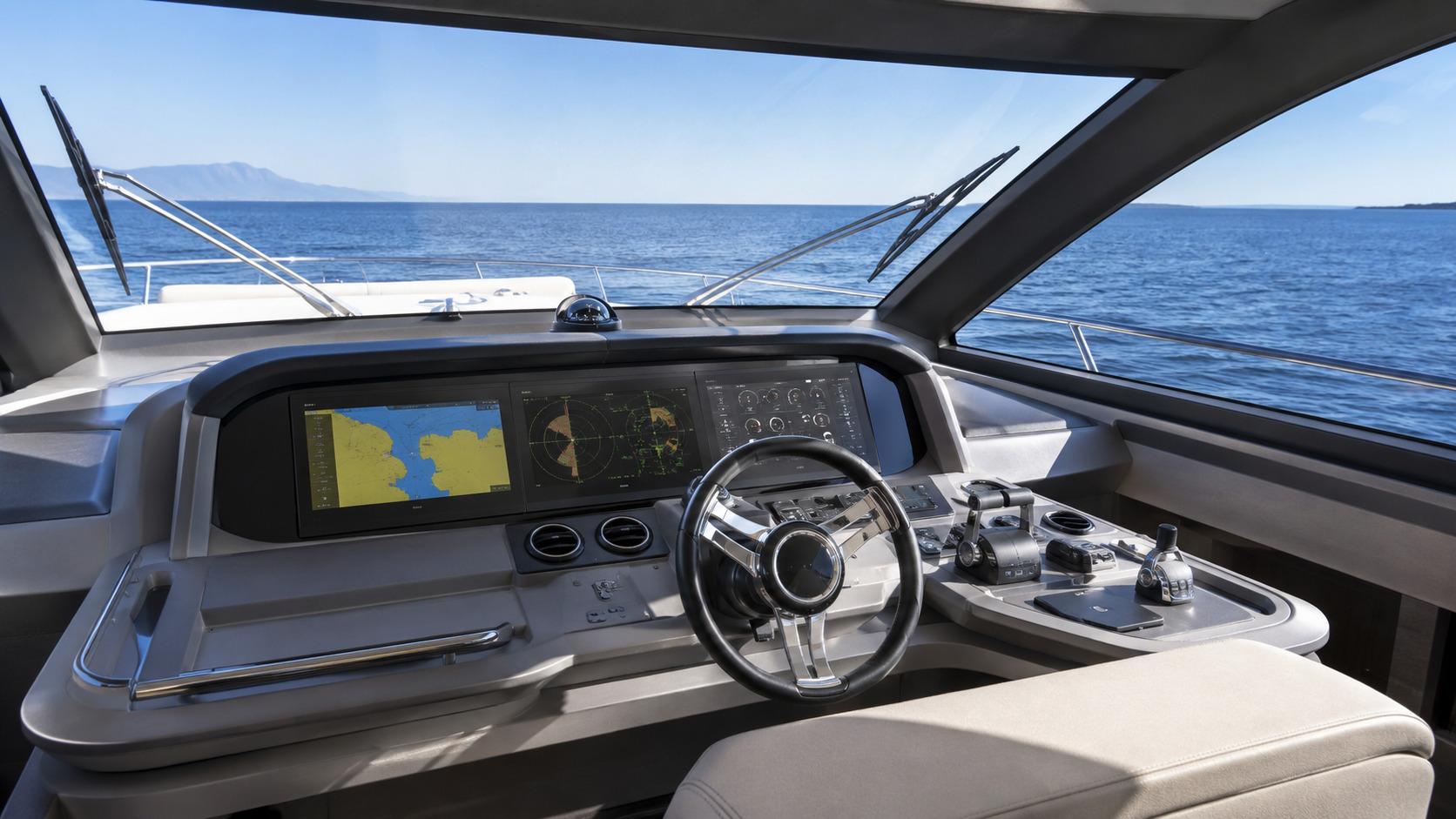
The helm story is mixed, which buyers should know. The upper station gives the driver good visibility and easy access to the major controls. Independent testing found the lower helm comfortable but noted that the windscreen brow and lack of an opening side window can make visibility and crew communication less convenient during close-quarters maneuvering. That makes the flybridge helm particularly useful when weather allows it.
Equipment can vary with model year and options, so verify the actual build sheet for any Fly 53 you are considering. The following features describe the design and systems that materially shape how the current-generation yacht is used.
The IPS joystick coordinates the propulsion system for low-speed maneuvering, making lateral moves and rotation easier to manage when docking a 55-foot yacht.
Automated interceptors adjust trim as speed and loading change, helping the boat maintain an efficient running attitude without requiring constant manual corrections.
The owner's stateroom spans the beam and includes a queen berth, private head, walk-in storage and full standing room around the bed.
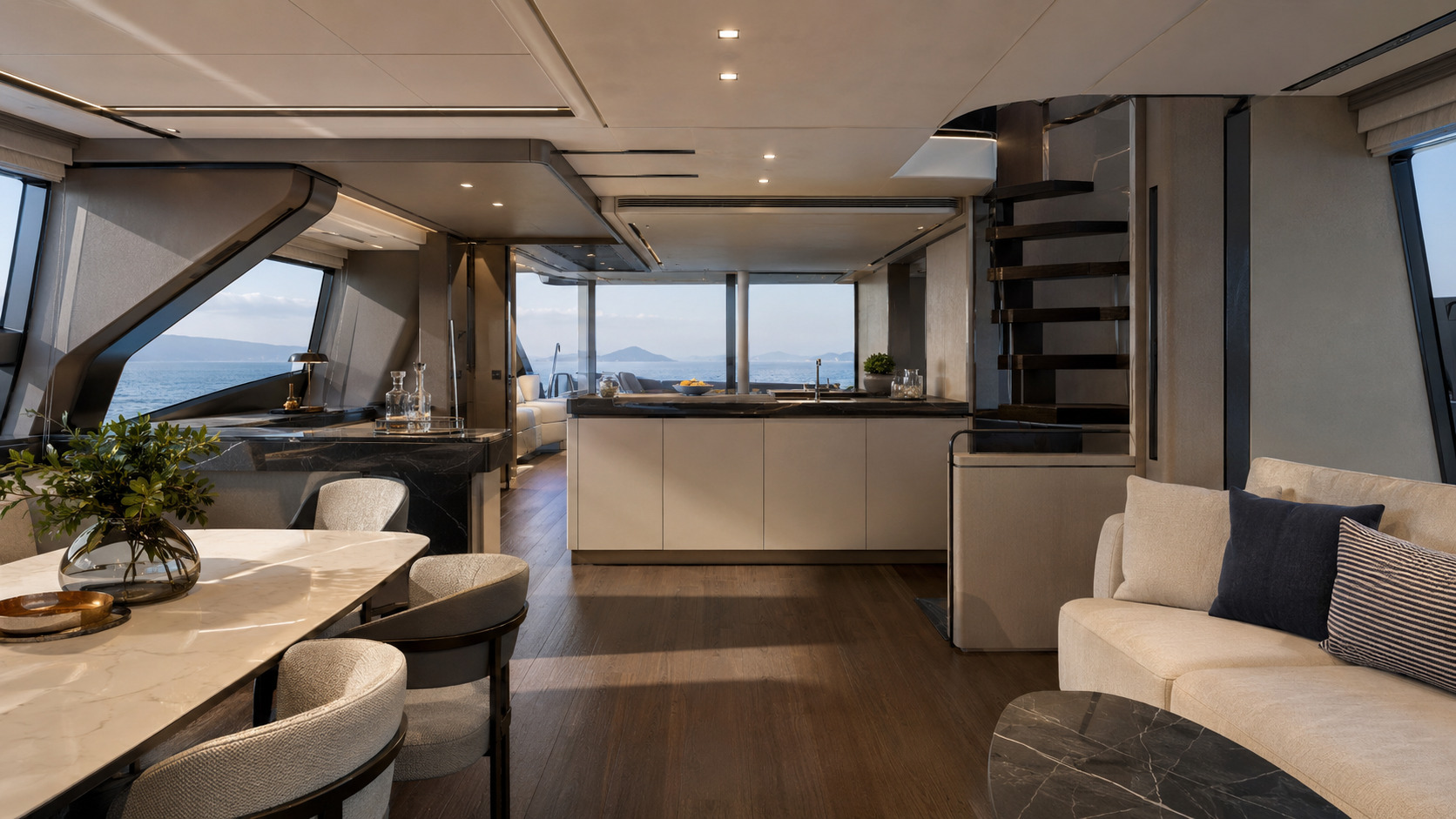
Positioning the galley at the cockpit entrance lets it serve both interior and exterior dining areas while keeping food traffic out of the forward salon.
The lower deck sleeps six guests across three cabins, creating a legitimate family-cruising layout without requiring a 60-foot-plus hull.
The upper deck combines the second helm with an aft lounge, sunning space and a convertible table for meals or social use.
Dedicated foredeck seating gives guests a separate outdoor zone away from the cockpit and flybridge when anchored or docked.
A separate transom cabin provides one additional berth and head, though owner-operated boats may use the space for occasional guests or additional storage.
The Fly 53’s most important systems are the ones that reduce the workload of operating a relatively large owner-run yacht. IPS joystick control assists around the dock, Active Trim Control manages running attitude, and the twin helm stations allow the captain to choose between protection downstairs and visibility from the flybridge. Electronics packages vary, so buyers should inspect the installed multifunction displays, radar, autopilot, communications equipment and software generation rather than assuming every Fly 53 left the factory with the same navigation suite.
Generator capacity, air-conditioning configuration, stabilizers, entertainment equipment and other hotel systems can vary by build and option list. On a used yacht, functionality matters more than whether an item was expensive when new. Run every major system during survey, including HVAC, generator, pumps, heads, freshwater, charging equipment, shore power, electronics and hydraulic equipment where fitted.
At 55′ 1″ overall and 16′ 3″ of beam, the Fly 53 is beyond the point where buyers should assume a marina can “find something that fits.” Confirm the slip’s published length and beam allowance, piling width, shore-power availability, water depth and maneuvering room before closing on the boat. Some facilities charge by actual LOA while others price by the slip category, so a few feet can materially change annual dockage.
Vertical clearance also matters because this is a flybridge yacht. Seasonal owners should also confirm whether their local yard can haul the Fly 53’s beam and full-load weight.
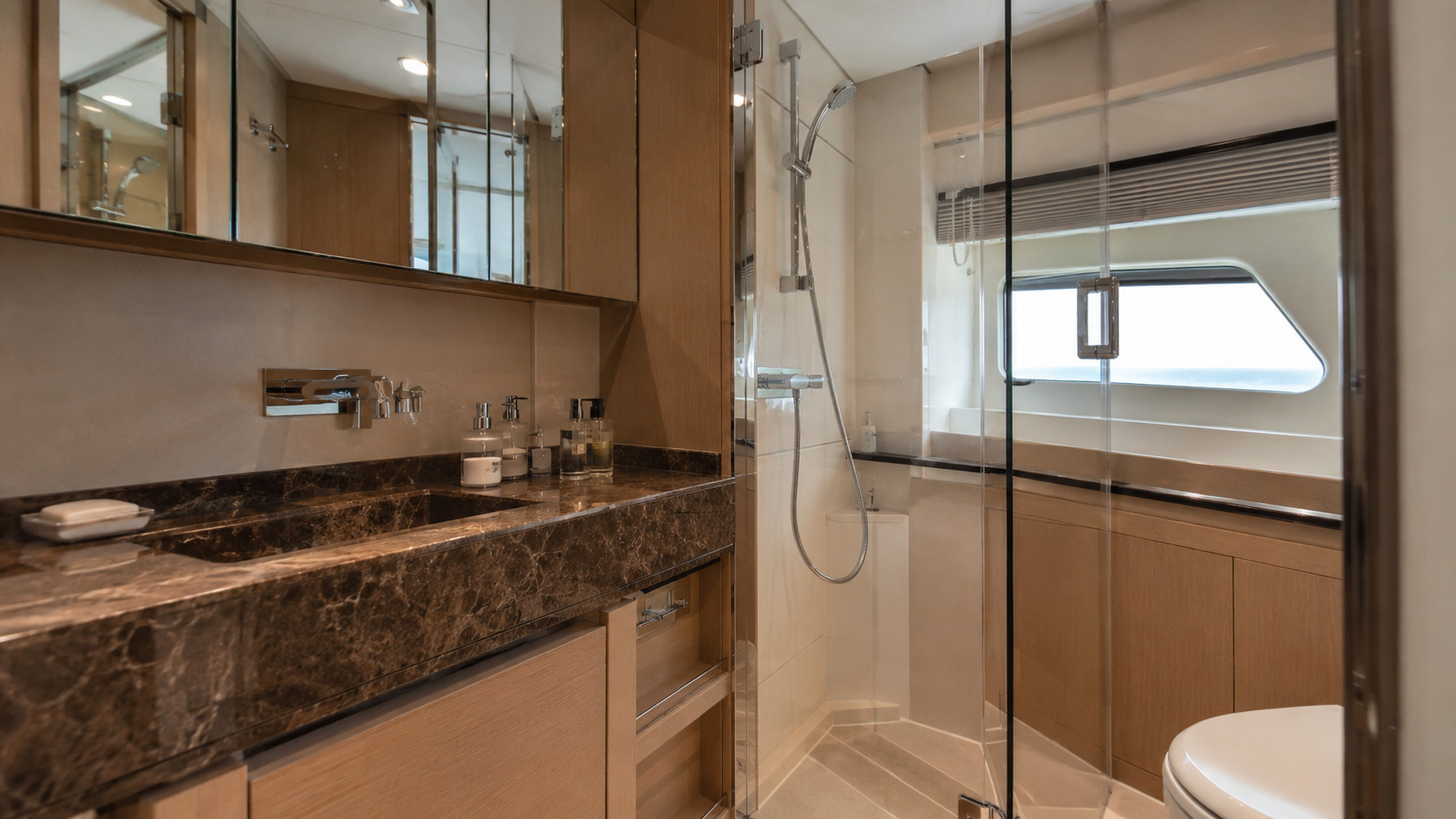
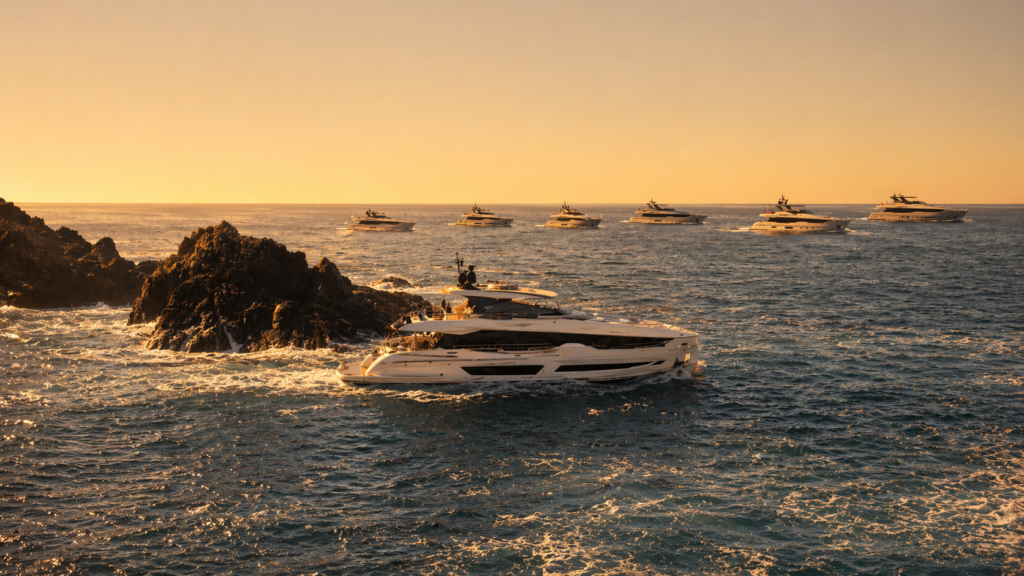
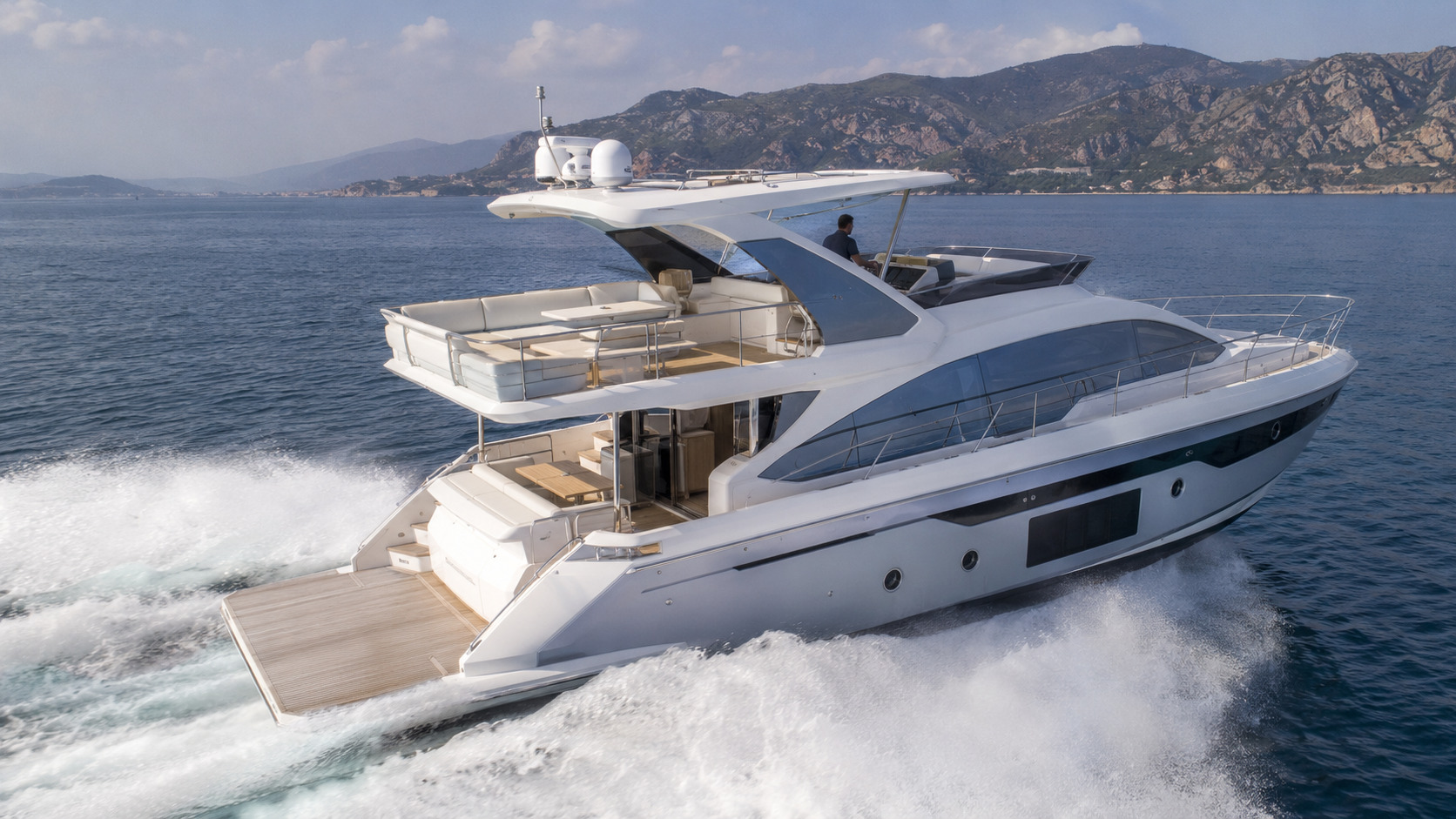
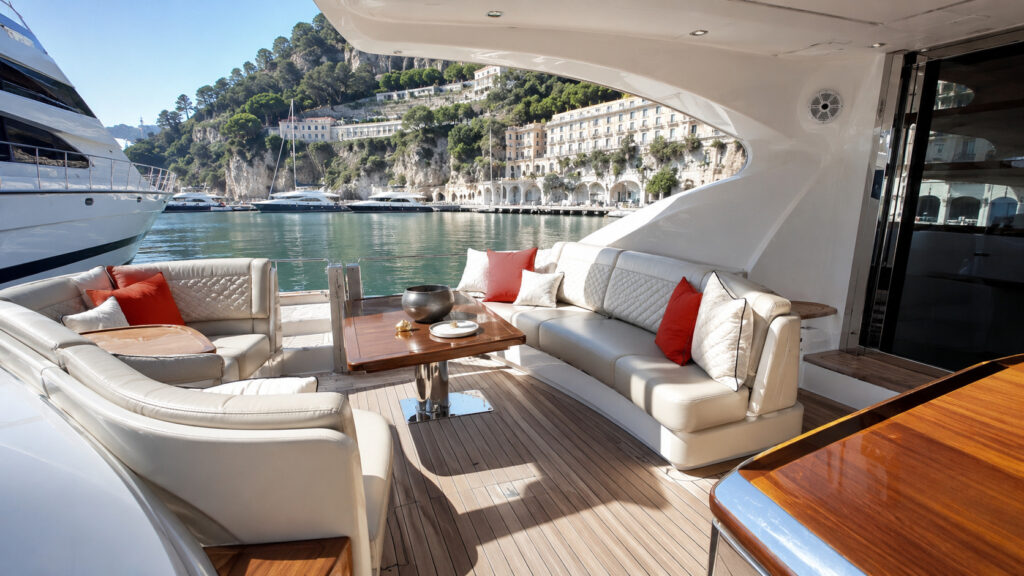
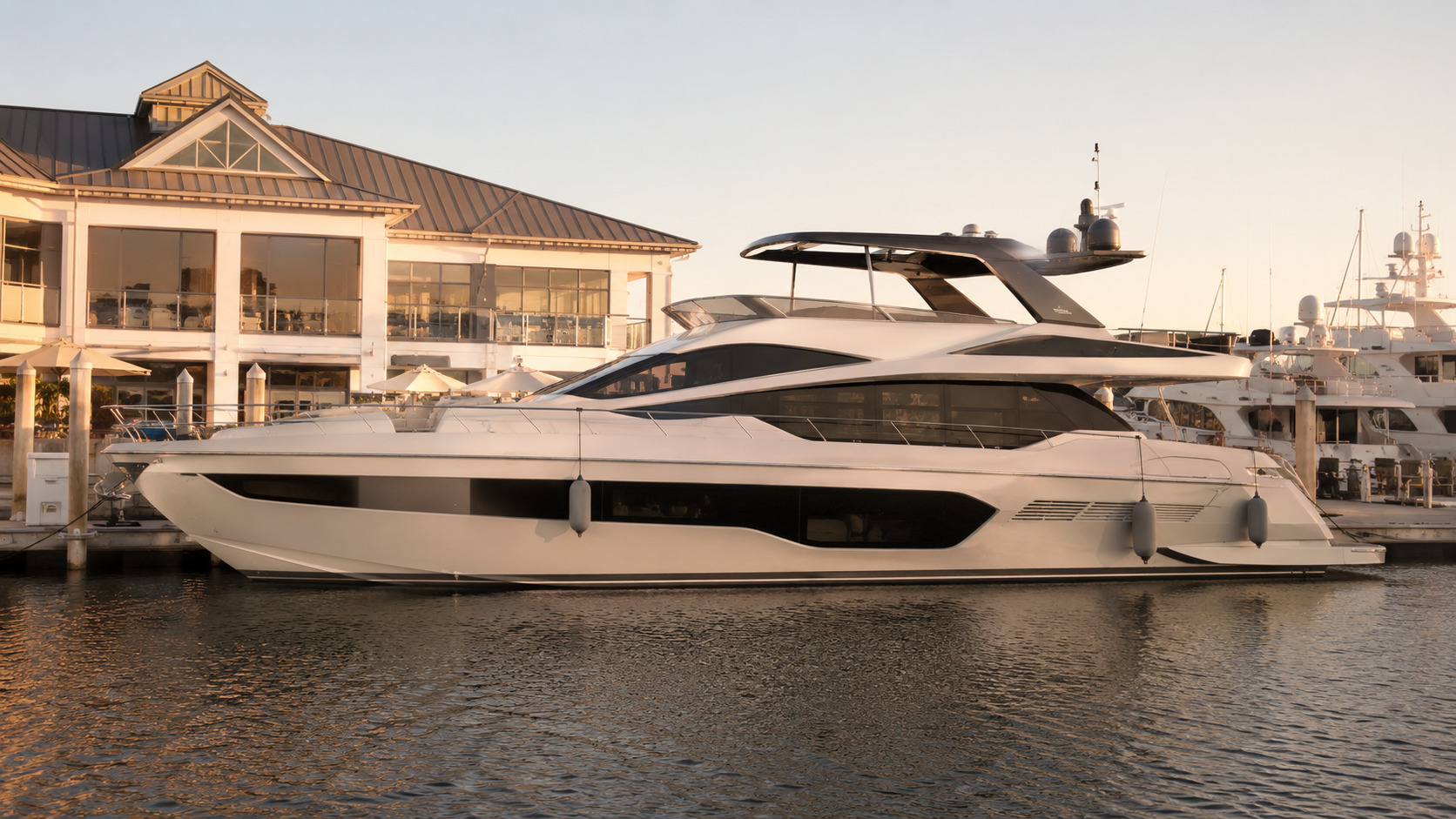
Use the gallery to inspect the parts of the Fly 53 that determine whether the layout works for you: the running profile, upper helm, flybridge lounge, aft cockpit, bow seating, galley-to-cockpit connection, main salon, full-beam owner’s suite and guest cabins. Pay particular attention to circulation space and how much separation exists between sleeping areas.
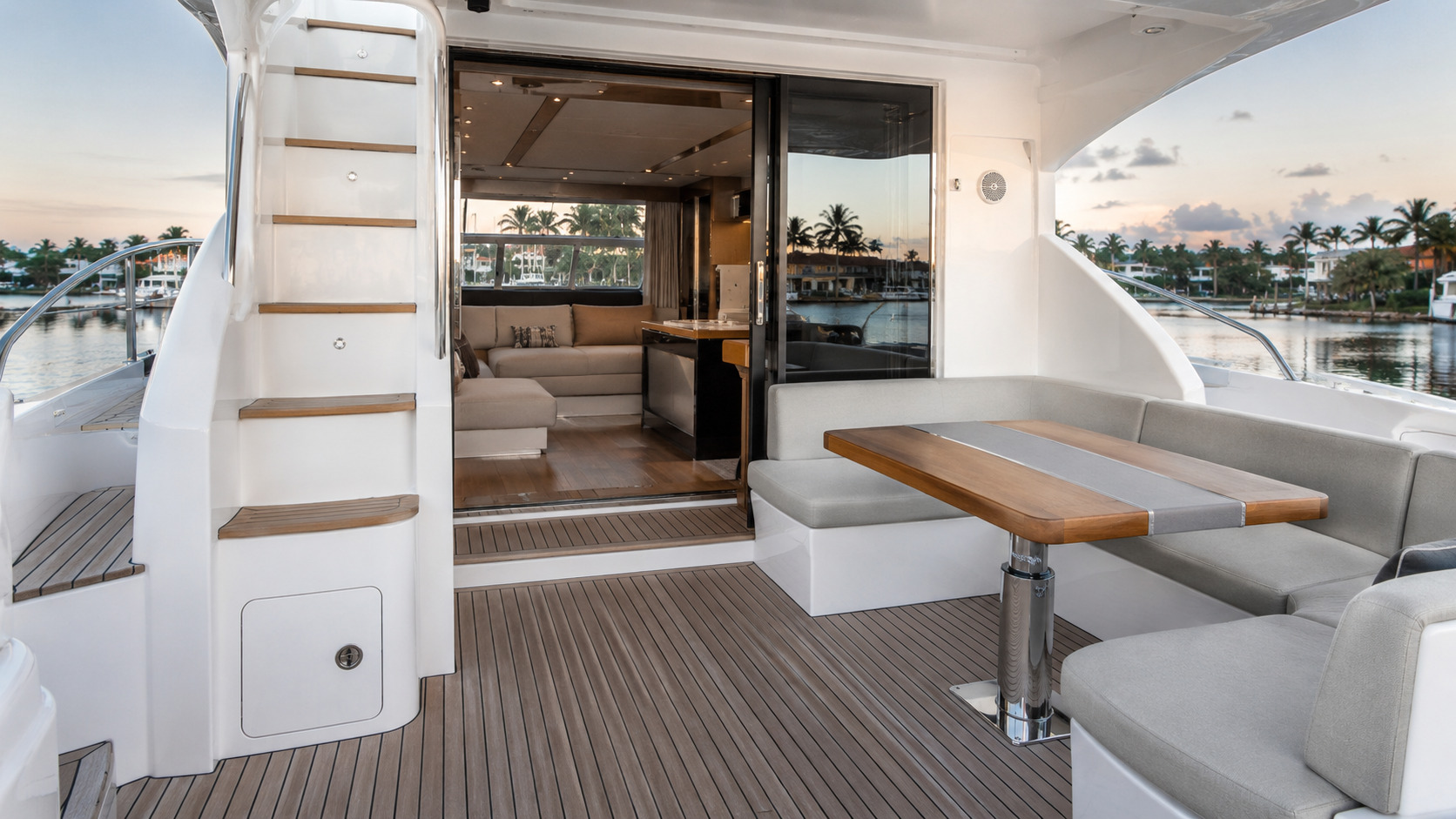
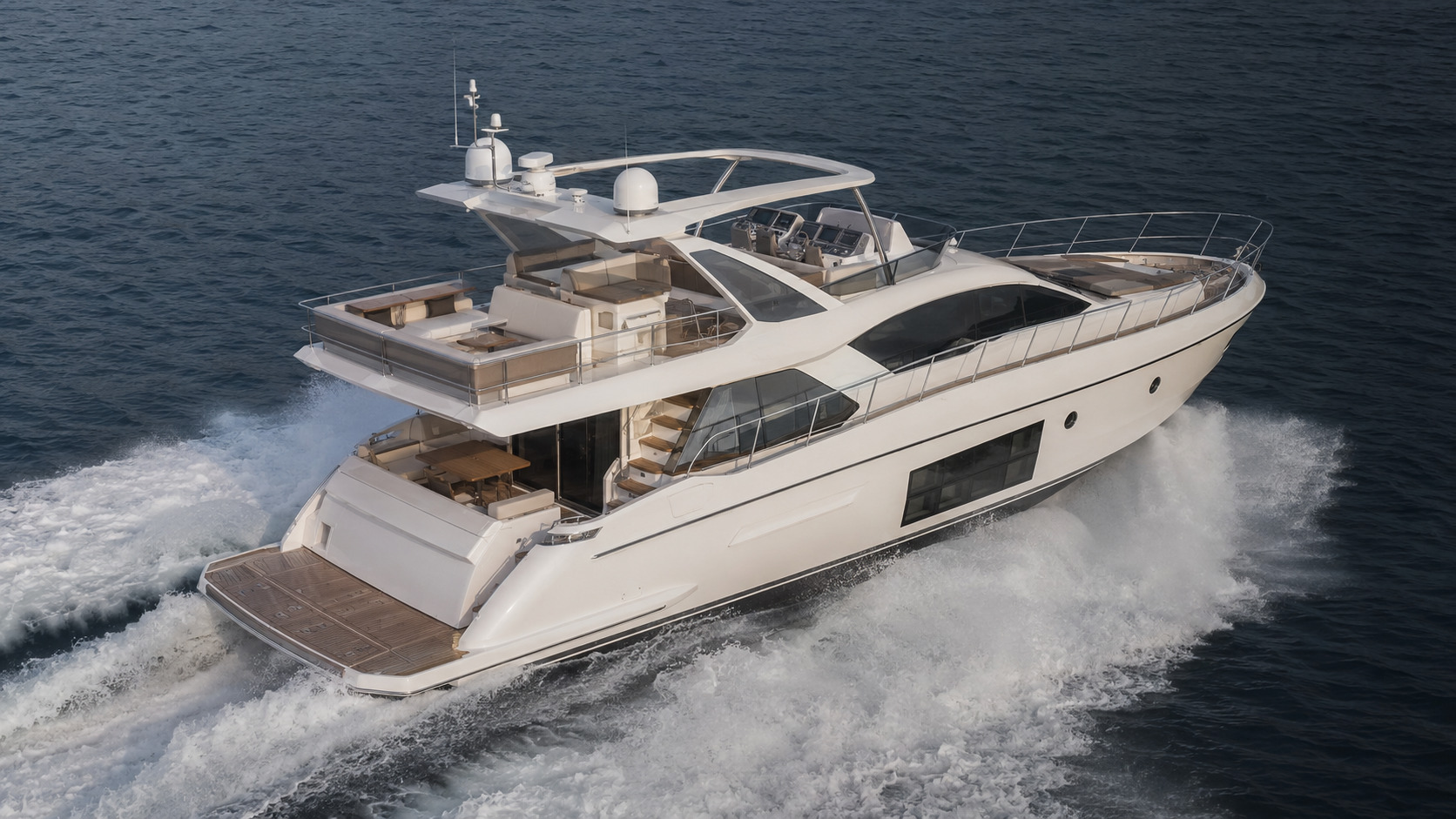
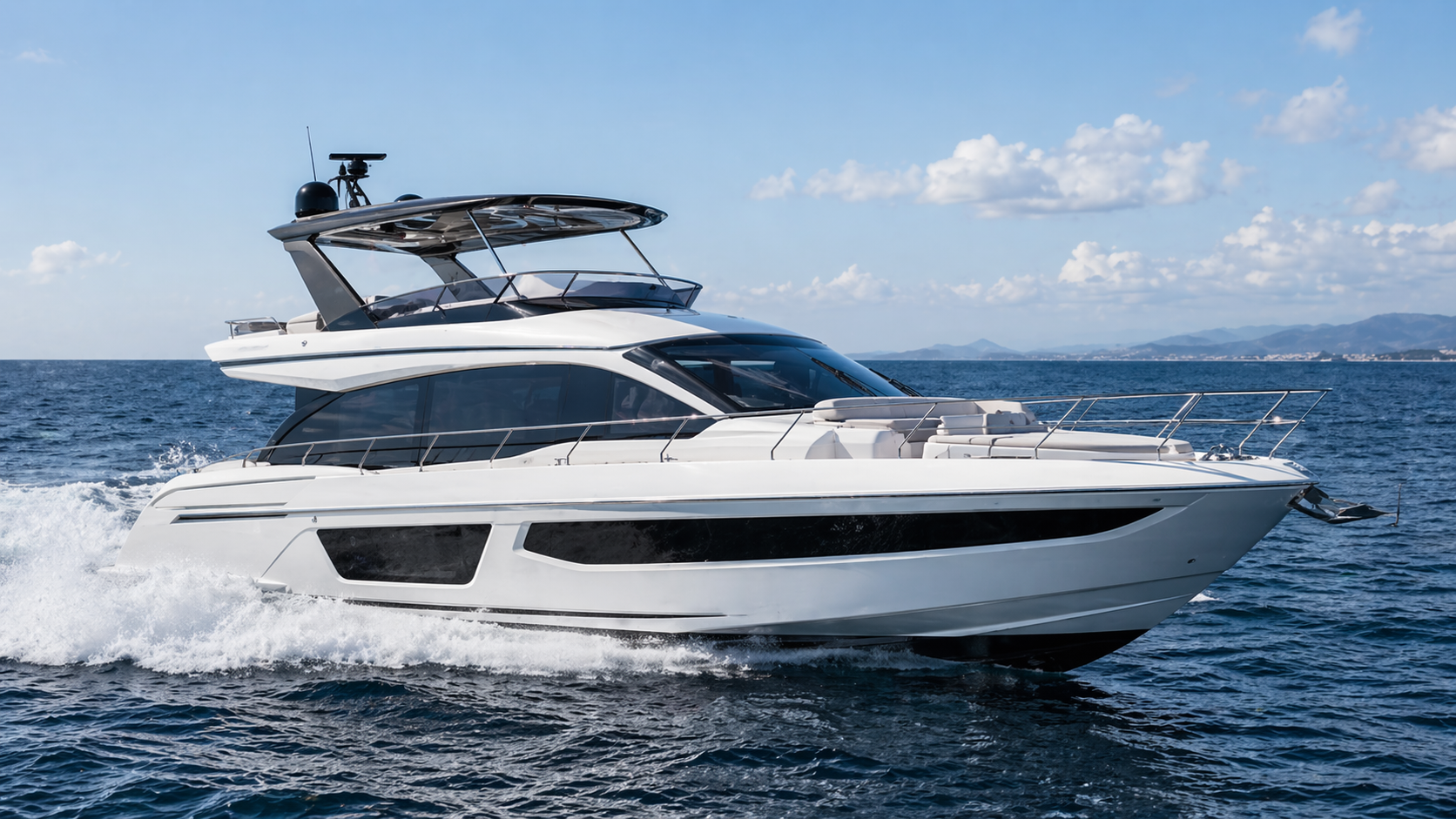
Azimut Fly 53 pricing varies sharply with generation, model year, engine hours, options, geography and maintenance history. There is another trap: online marketplaces sometimes group the older Azimut 53 Fly and the current-generation Fly 53 together even though they are different designs. The current model debuted in 2021, so an older 2011–2013 listing should not be treated as a direct comparable simply because the name contains “53 Fly.”
Annual ownership cost should be built from the actual yacht rather than a generic percentage of purchase price. Start with slip or mooring cost, insurance, scheduled engine and IPS service, haul-out and bottom work, detailing, generator and HVAC maintenance, winter storage where applicable, electronics and hydraulic repairs, then add fuel based on the hours you realistically expect to run. A heavily used coastal Fly 53 can have a very different annual budget from a seasonal freshwater yacht.
Figures come from this page’s Boat Details fields. Illustration only and not an offer of credit.
Use the yacht-loan calculator to compare purchase price, cash down, interest rate and term before making an offer. Run several scenarios rather than designing the purchase around one optimistic payment. Your actual rate and available term will depend on your credit profile, the yacht, its age and the structure of the transaction.
Illustration only and not an offer of credit. Your actual rate and term depend on credit profile, vessel age, loan amount and ownership structure.
Calculator results are estimates only. Actual approval, rate, term, down payment and monthly payment are subject to lender underwriting and vessel eligibility.
The most useful comparison is inside the Fly range. The Fly 53 gives you three cabins and IPS propulsion in the smallest current package. The Fly 60 adds length, beam and another guest head. The newer Fly 62 adds still more space and a different cockpit concept. Move up only if those changes solve a real ownership need.
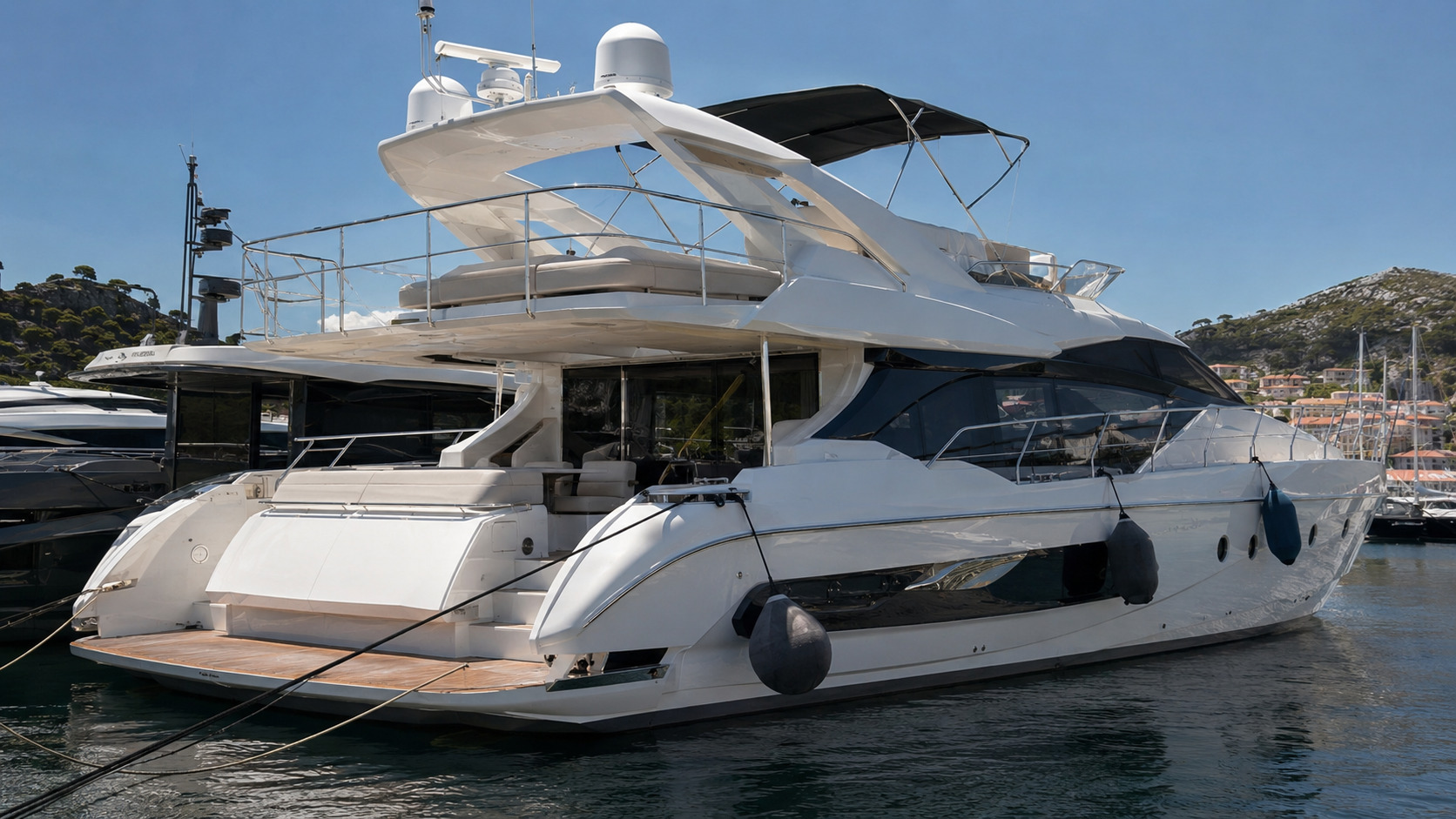
There are several ways to acquire a Fly 53, and the transaction changes depending on the seller. A new or dealer-stock boat usually has the cleanest documentation path. Brokerage boats introduce more variation in model year, options, engine hours and service history. Private-party transactions can offer attractive inventory but require additional coordination around ownership documents, lien payoff, survey and closing. Imported yachts may add documentation, tax, compliance and title questions that should be resolved before funding.
Each route changes the paperwork, not the diligence. The survey and the service history decide it either way.
verify final specification, options, warranty coverage, delivery costs and what is included in the contracted price.
compare service records, hours, survey findings and option packages instead of shopping by asking price alone.
establish title, lien status, survey requirements and financing process before sending a non-refundable deposit.
confirm documentation, taxes, certification and U.S. registration requirements before assuming the boat can close normally.
Already looking at a specific Fly 53? Send Float Finance the listing. Whether the yacht is at a dealership, represented by a broker or being sold directly by its owner, we can help you evaluate financing around the actual boat and transaction. The goal is not to sell you a yacht—we help you structure the financing once you have found the one you want.
Submitting your information does not obligate you to purchase a boat. Applicable credit and privacy terms will be provided before financing.
The correct answer depends heavily on model year and generation. Current-generation Fly 53 yachts began production in 2021, while older Azimut 53 Fly models may appear under similar marketplace searches. Recent current-generation listings can reach well into seven figures, while older 53 Fly yachts trade for substantially less.
The current Fly 53 has three guest cabins with berths for six people, plus a separate crew cabin with one additional berth. The lower deck includes a full-beam owner’s stateroom along with two guest cabins. There are two guest head compartments plus a separate crew head. That arrangement works particularly well for a cruising couple with children or another couple aboard, although buyers regularly carrying three couples may prefer the extra head and additional space available farther up the Fly range.
Azimut publishes two useful consumption points. At 15.1 knots, the Fly 53 uses 7.7 liters per nautical mile with a stated 281-nautical-mile range. At the 26-knot fast-cruise setting, consumption is 7.8 liters per nautical mile with a 279-nautical-mile range. The latter works out to roughly 54 US gallons per hour. Those figures come from standardized manufacturer testing; bottom condition, loading, sea state, generator use and weather can all change real-world fuel consumption.
The current Fly 53 uses two Volvo Penta D11 engines paired with IPS 950 pod drives. Each engine produces 725 hp for a combined 1,450 hp. Azimut publishes speeds of up to 31 knots maximum and 26 knots at cruise. The IPS package also supports joystick maneuvering, which is particularly relevant to buyers planning to operate the yacht themselves instead of relying on a professional captain for routine marina work.
There is no defensible universal annual number. The largest variables are where the yacht is kept, insurance, annual engine hours, fuel price, maintenance condition, scheduled Volvo and IPS service, haul-out requirements, winter storage and how much work an owner performs personally. A Fly 53 kept seasonally on a private dock can have a dramatically different budget from one in a full-service saltwater marina.
Beam is consistently published at 16′ 3″, but draft requires verification before the production page goes live because manufacturer materials conflict. Azimut’s current online specification lists 3′ 5″ including props at full load, while an older 2022 Azimut technical sheet and period sea trials list about 4′ 8″. Air draft should likewise be confirmed for the exact boat because hardtops, radar and antenna installations can affect bridge clearance.
Yes, subject to borrower, vessel and lender eligibility. Float Finance works with new and used boat purchases and supports dealership, brokerage and private-party transactions. On a yacht in this value range, expect the lender to care about model year, purchase price, down payment, condition, insurance and documentation. A marine survey or other vessel documentation may be required depending on the lender and transaction. Getting pre-approved before negotiating gives you a better understanding of the amount and payment structure you can actually pursue.
The Fly 53 is not a recreational trailer boat. At 55′ 1″ overall with a 16′ 3″ beam and a full-load displacement around the high-20-ton range, normal ownership means keeping it in an appropriately sized wet slip, on a private dock capable of accommodating the yacht, or using professional storage and haul facilities. Moving one over land is specialized yacht transport requiring route planning, permits and professional equipment. Buyers should secure realistic dockage before closing rather than assuming a marina will have suitable space available.
Send Float Finance the listing and see how the real purchase could be structured before you commit to the yacht or negotiate around the wrong payment.
Tell us a little bit about yourself and the boat you are looking to finance.