
Call Us : 207-994-5109
Mon – Fri: 8 am to 9 pm & Sat – Sun: 10 am to 8 pm
A three-cabin flybridge yacht that adds private guest heads, larger social zones and crew-ready accommodations without yet crossing into the four-cabin scale of the Fly 68.
The Azimut Fly 60 sits in an interesting part of the Fly range. At 59′ 10″ overall, it is only about five feet longer than the Fly 53, yet the extra length is used to change how six guests live aboard rather than simply making the same rooms larger. The Fly 60 keeps the three-cabin format, but it gives the guest accommodation three head compartments instead of two. For a family or three couples cruising together, that is one of the clearest reasons to move up from the 53: privacy improves before the yacht becomes dramatically larger to berth and manage.
The propulsion package is also fundamentally different. Azimut equips the Fly 60 with twin Volvo Penta D13 diesels rated at 900 hp each, driving conventional running gear rather than the IPS pod arrangement used on the Fly 53 and newer Fly 62. That decision preserves a traditional engine-and-shaft layout while Azimut uses Electronic Power Steering and Active Trim Control to reduce steering effort and manage running attitude. For a buyer comparing models inside the same series, propulsion architecture should be part of the decision, not an afterthought.
The accommodations make the 60 feel closer to a small yacht than a large weekender. Six guests sleep in three cabins, with two additional crew berths and a separate crew head. The owner gets a full-beam master amidships, while the VIP and twin guest cabin each have better bathroom privacy than on the 53. Up top, the flybridge is divided into distinct sunning, dining/bar and aft lounge zones. On the main deck, buyers can choose a more reserved forward-galley arrangement or an aft-galley layout that opens the social flow toward the cockpit.
The compromise is that the Fly 60 adds complexity without adding a fourth guest cabin. You gain private heads, more entertainment space, a bigger crew provision and Carbon-Tech structure, but the sleeping count remains six guests. If your real requirement is four private guest cabins, the Fly 68 is the more meaningful jump. If you rarely cruise with three couples and value the smaller footprint, the Fly 53 may remain the smarter ownership proposition.
Best for — buyers who want three genuinely private guest cabins, a larger flybridge and crew-capable accommodations while staying around 60 feet.
Not for — buyers who need four guest cabins or who prefer the smaller footprint and IPS docking behavior of the Fly 53.
Published factory figures. Confirm every dimension against the individual yacht and its survey.
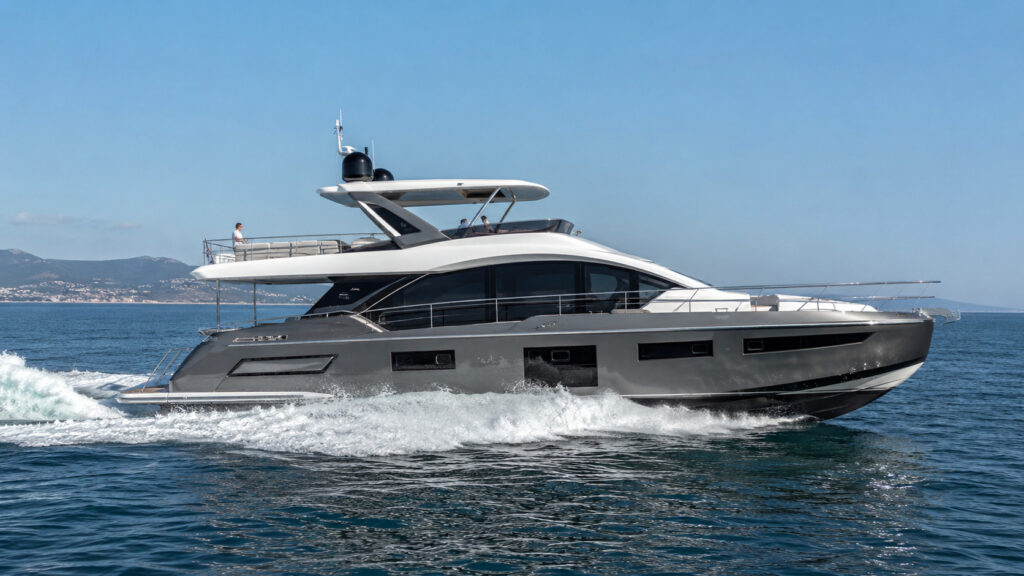
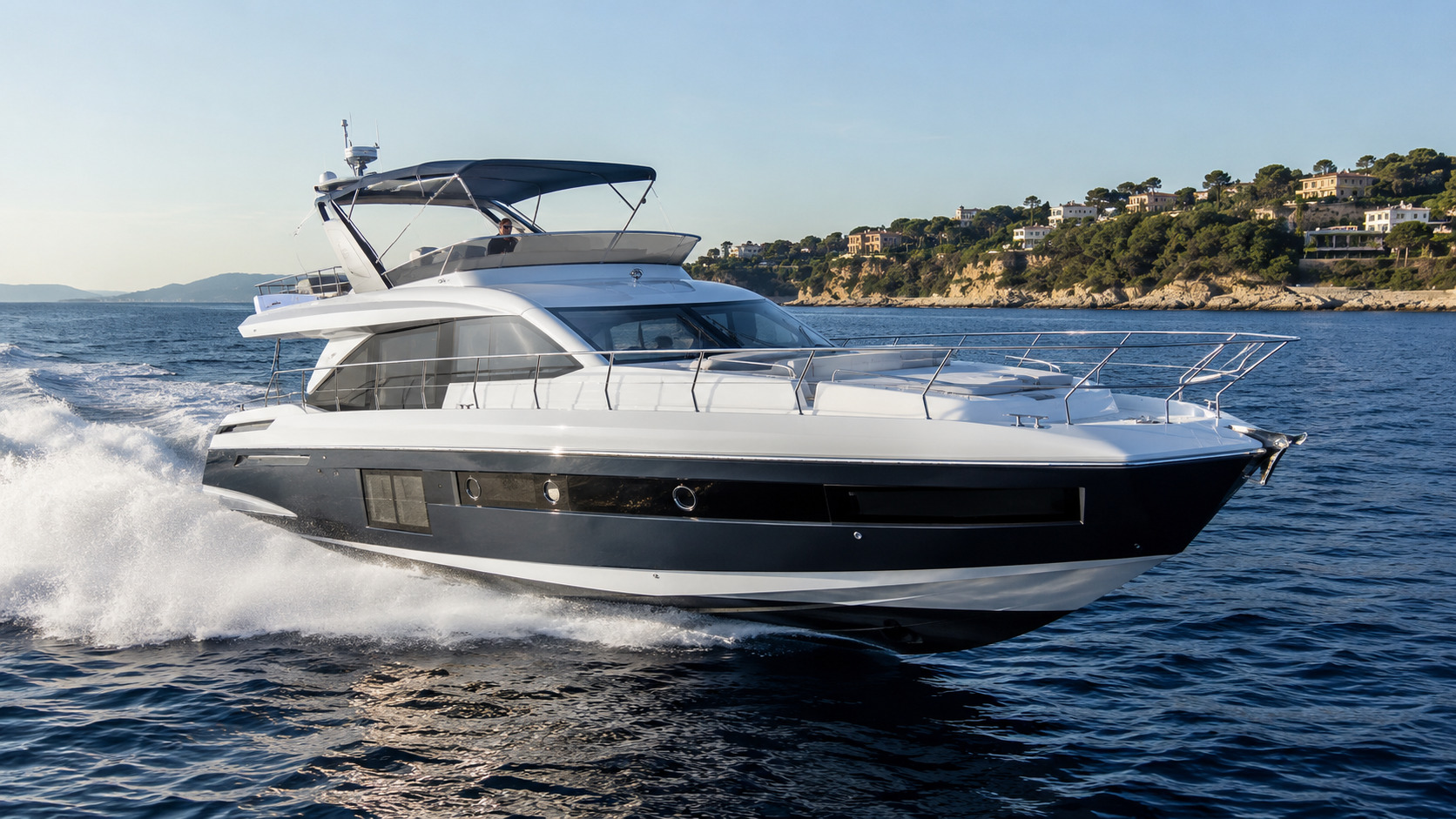
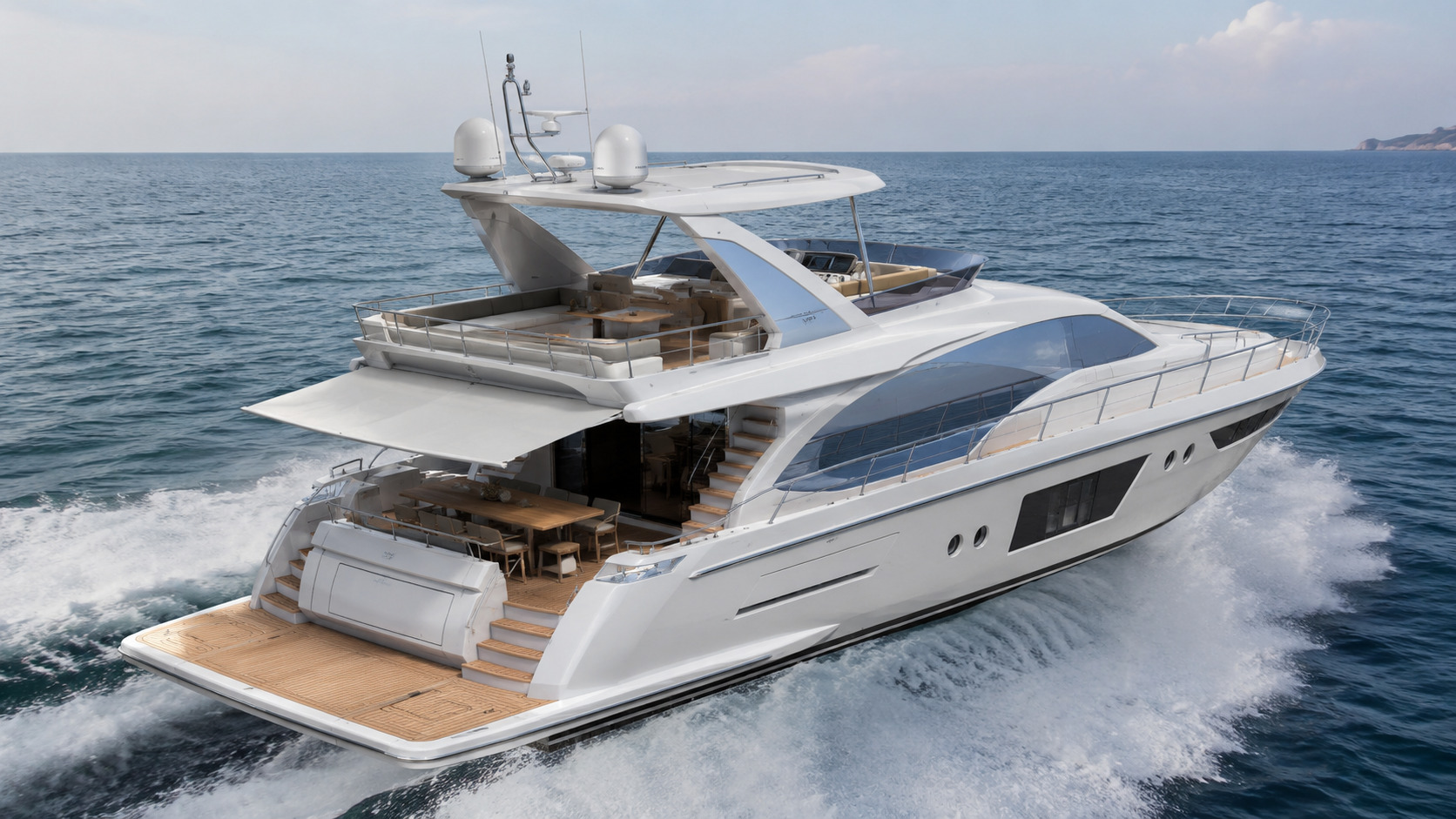
The Fly 60 uses a GRP planing hull with carbon fiber concentrated in upper structures. Azimut publishes 15.6 degrees of deadrise at the stern and 22 degrees amidships. That geometry tells you what the hull is trying to do: maintain enough V through the middle of the boat to soften the ride in chop while carrying a flatter aft section that can support the yacht efficiently on plane. It is a cruising hull tuned for a combination of comfort, volume and 20-plus-knot operation rather than an extreme deep-V offshore performance form.
The carbon fiber matters because a flybridge yacht naturally carries substantial structure above the waterline. Azimut says its Carbon-Tech approach can reduce the weight of selected laminated components by up to 30 percent and reduce natural roll momentum by up to 15 percent. The practical point is not that carbon fiber makes the Fly 60 a race boat. It allows Azimut to create more volume and a substantial upper deck without pushing as much mass high above the hull, which helps preserve the center of gravity and handling behavior expected from a planing yacht.
At 16′ 7″ of beam, the Fly 60 is four inches wider than the Fly 53 and carries a published full-load displacement of 79,378 pounds. Draft is 4′ 9″ including props at full load. Those numbers have direct ownership consequences. This is not a yacht to buy first and berth later.
The Fly 60 is powered by two Volvo Penta D13 diesels rated at 900 hp each, for 1,800 hp combined. Azimut publishes a maximum speed of up to 31 knots and a cruising speed of up to 26 knots. Those headline numbers are similar to the Fly 53, but the route to them is different: the 60 carries substantially more displacement and uses conventional propulsion rather than IPS pods. A buyer should therefore compare engine-room access, docking aids, service preferences and handling feel rather than assuming that identical top-speed figures mean the boats operate the same way.
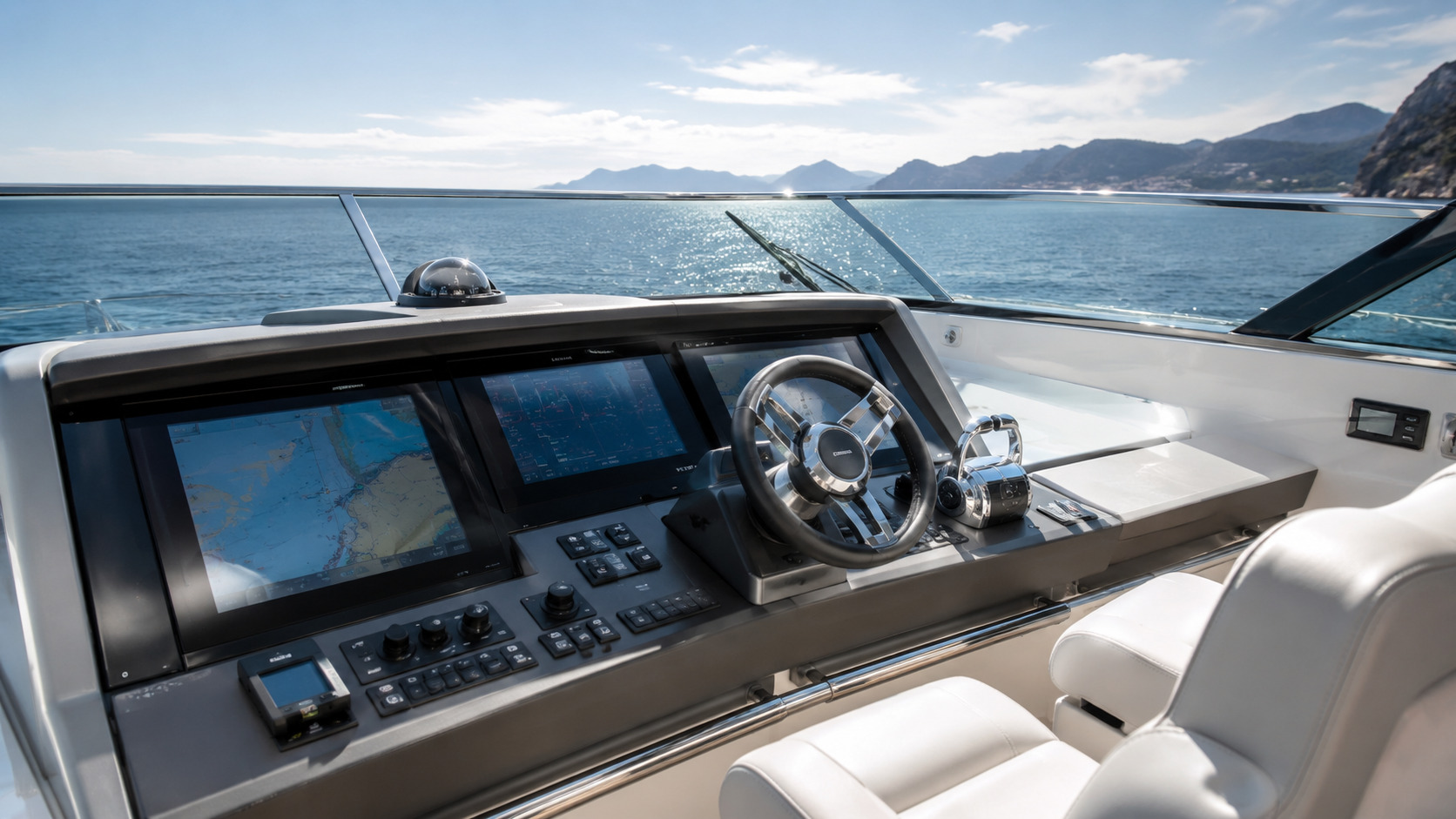
At the helm, Azimut uses Optimus Electronic Power Steering by SeaStar Solutions. Steering resistance and sensitivity can be linked to speed, and eliminating traditional hydraulic lines between helm and rudder compartment reduces one part of the conventional steering system. Active Trim Control uses automated interceptors to manage longitudinal trim and compensate for lateral imbalance from wind or uneven loading. These systems are particularly relevant on a taller flybridge yacht because the driver is managing both hull attitude and windage as conditions change.
On a used Fly 60, service history should be reviewed at the engine and systems level. Ask for D13 maintenance records, cooling-system work, oil and filter history, transmission service, shaft and cutless-bearing inspection, propeller condition, steering-system service and any generator or stabilizer records. A general marine survey is not a substitute for a dedicated engine inspection when the transaction value and age of the yacht justify one. The buyer is purchasing a collection of interconnected systems, not just a hull with two engines.
Azimut publishes a 740-US-gallon fuel capacity for the Fly 60, but the current manufacturer page does not publish the same standardized slow-cruise and fast-cruise fuel-consumption table shown for some newer Fly models. That matters for this page: fuel burn should not be borrowed from an older Azimut 60 generation or from a different 60-foot yacht simply because the dimensions look similar. K
What can be said responsibly is that the boat carries 740 gallons of diesel and is designed around a published cruise speed of up to 26 knots. Owners should model fuel cost from the actual rpm and burn data for the yacht they are considering, then add generator consumption separately. Bottom condition, propeller condition, loading, sea state, current, wind and how much hotel equipment is running can all move real-world numbers away from a clean factory trial.
For purchase planning, fuel is best treated as a usage cost rather than a fixed annual percentage. A buyer who moves the yacht 30 hours a season between nearby marinas will have a very different fuel budget from an owner running 150 hours of coastal trips.
Azimut rates the Fly 60 for up to 31 knots at maximum speed and up to 26 knots at cruise. The more interesting part of the design is how the yacht is intended to carry its size. At nearly 80,000 pounds full load, the 60 is meaningfully heavier than the Fly 53, yet Azimut keeps similar headline speeds by increasing total horsepower and managing upper-structure weight with Carbon-Tech construction. That makes the 60 a true fast-cruising flybridge rather than a boat that merely happens to reach planing speed.
Handling is also shaped by Electronic Power Steering and Active Trim Control. The steering system can vary assistance with speed, while the interceptors automatically adjust trim and help counter lateral imbalance from crosswinds or uneven passenger loading. Those aids do not remove the need for an experienced operator. The Fly 60 still has substantial windage, momentum and stopping distance. Their value is in making a larger conventional-shaft yacht feel more predictable and less labor-intensive from either helm.
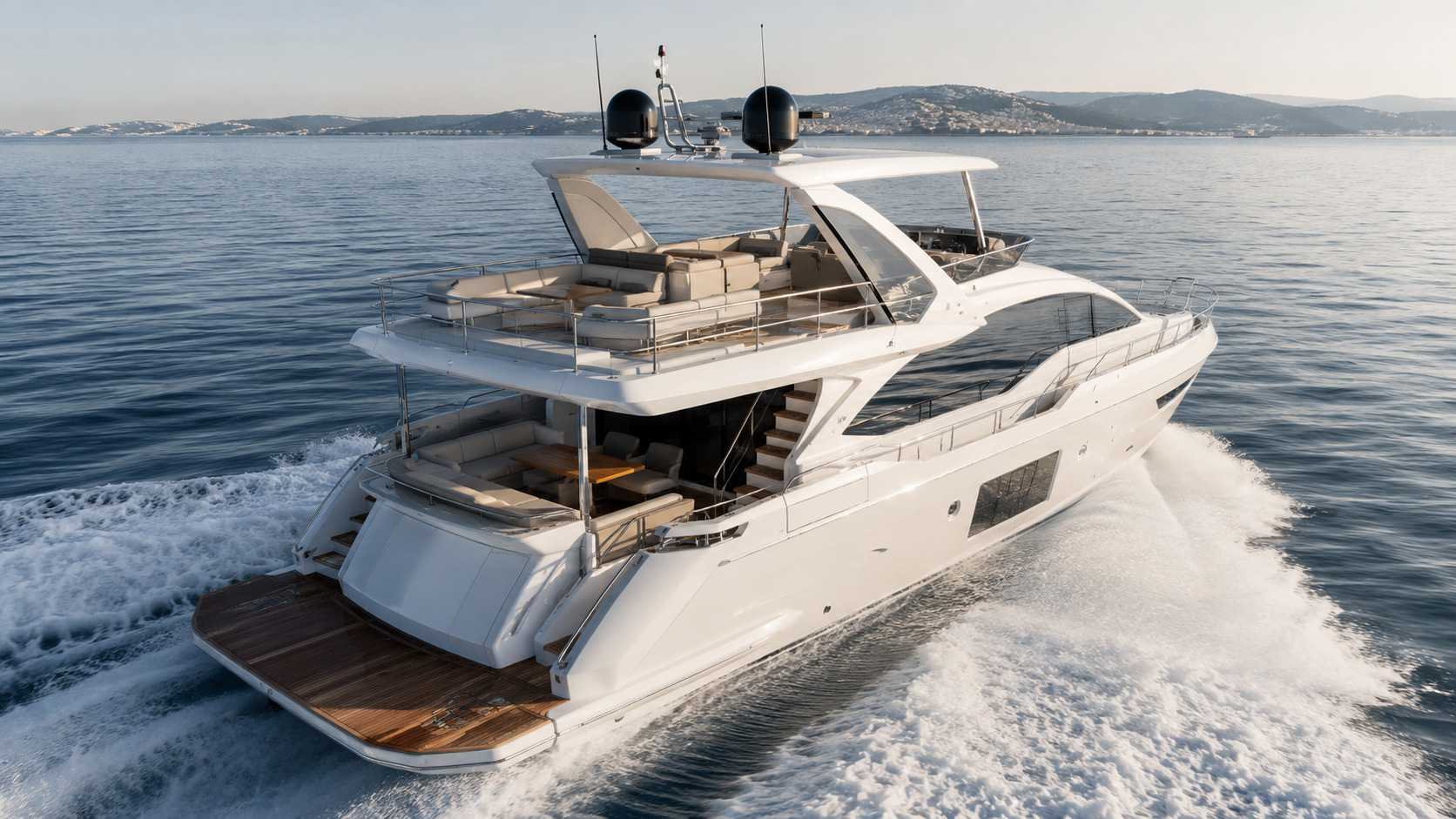
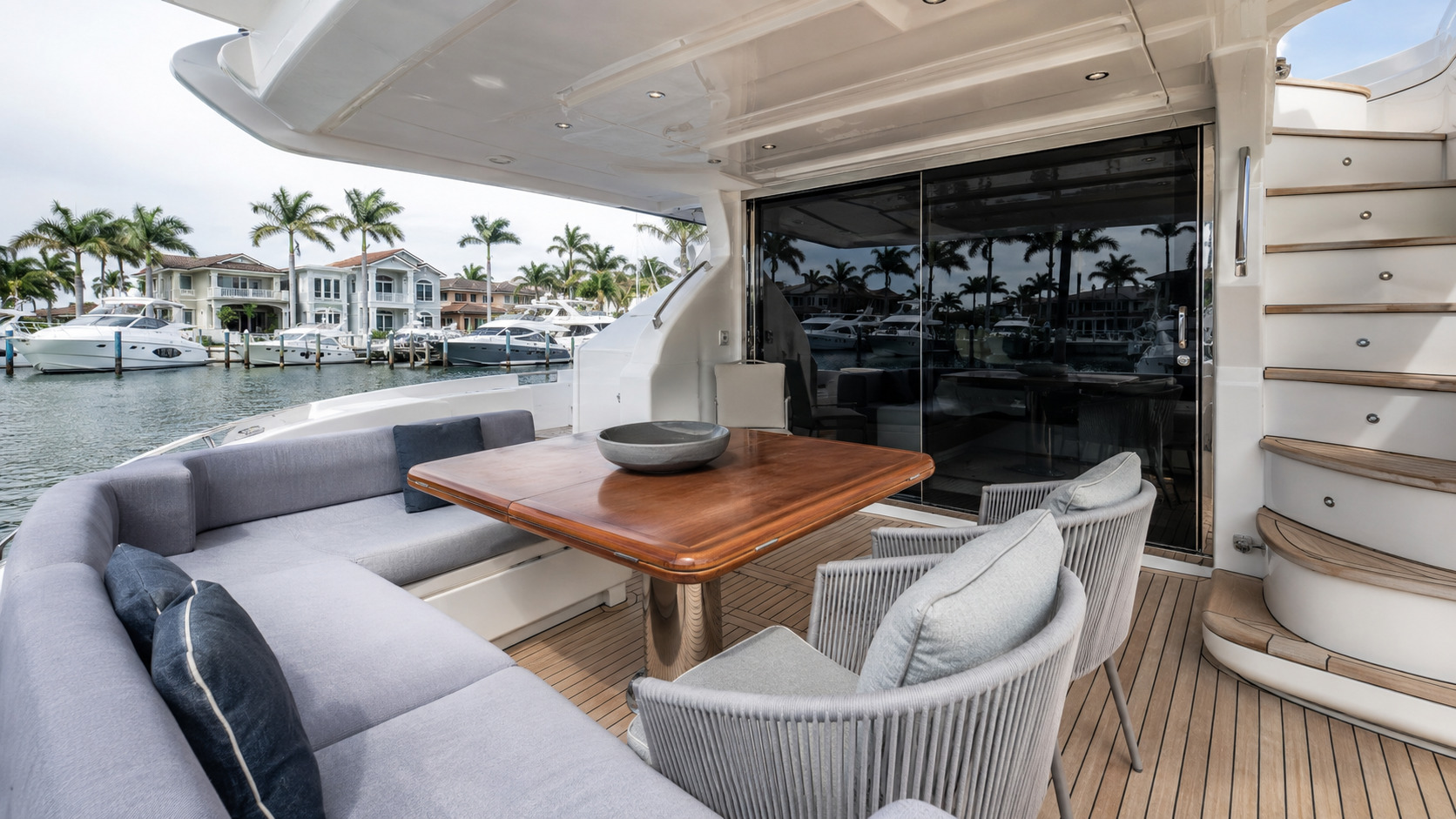
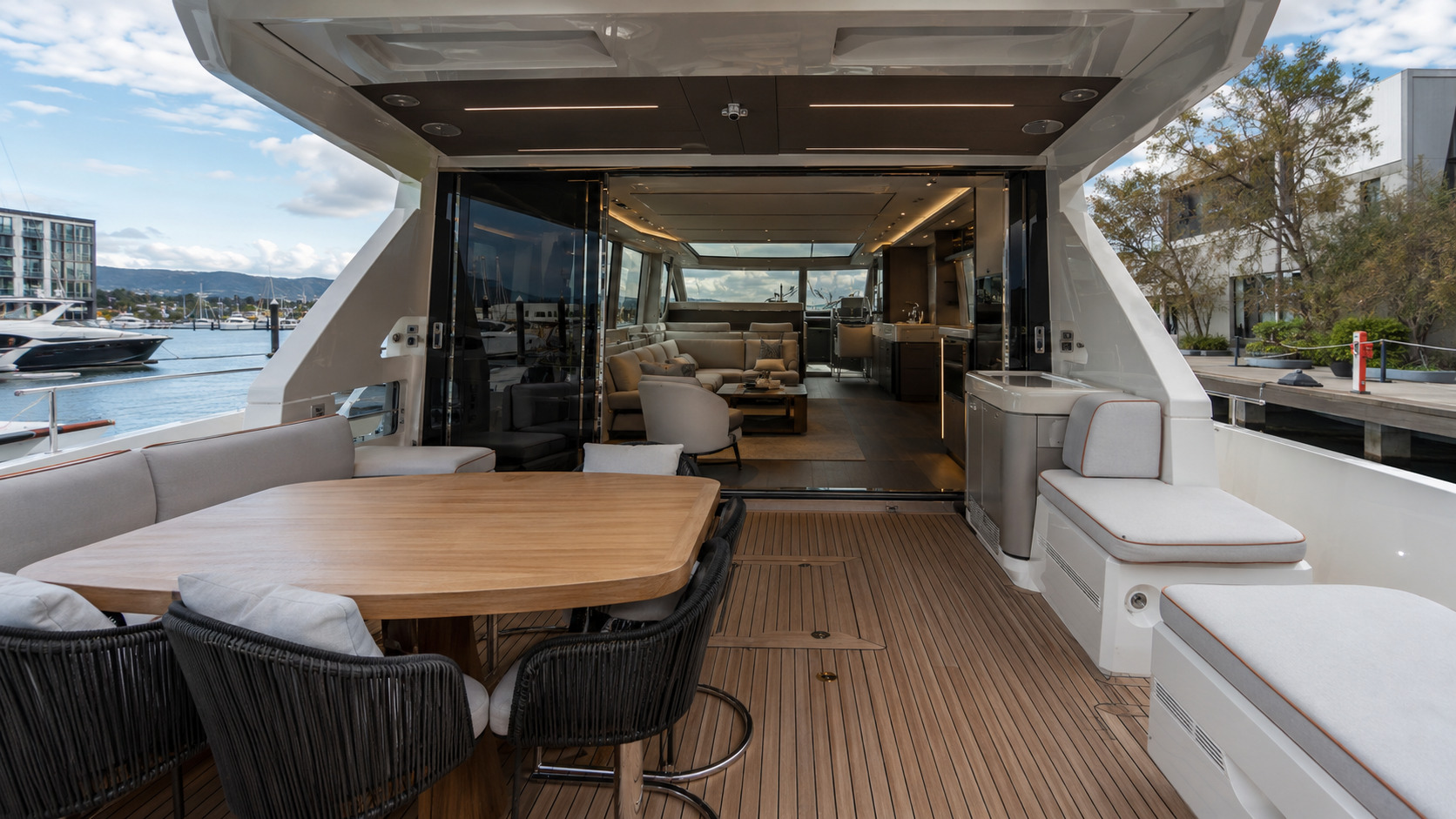
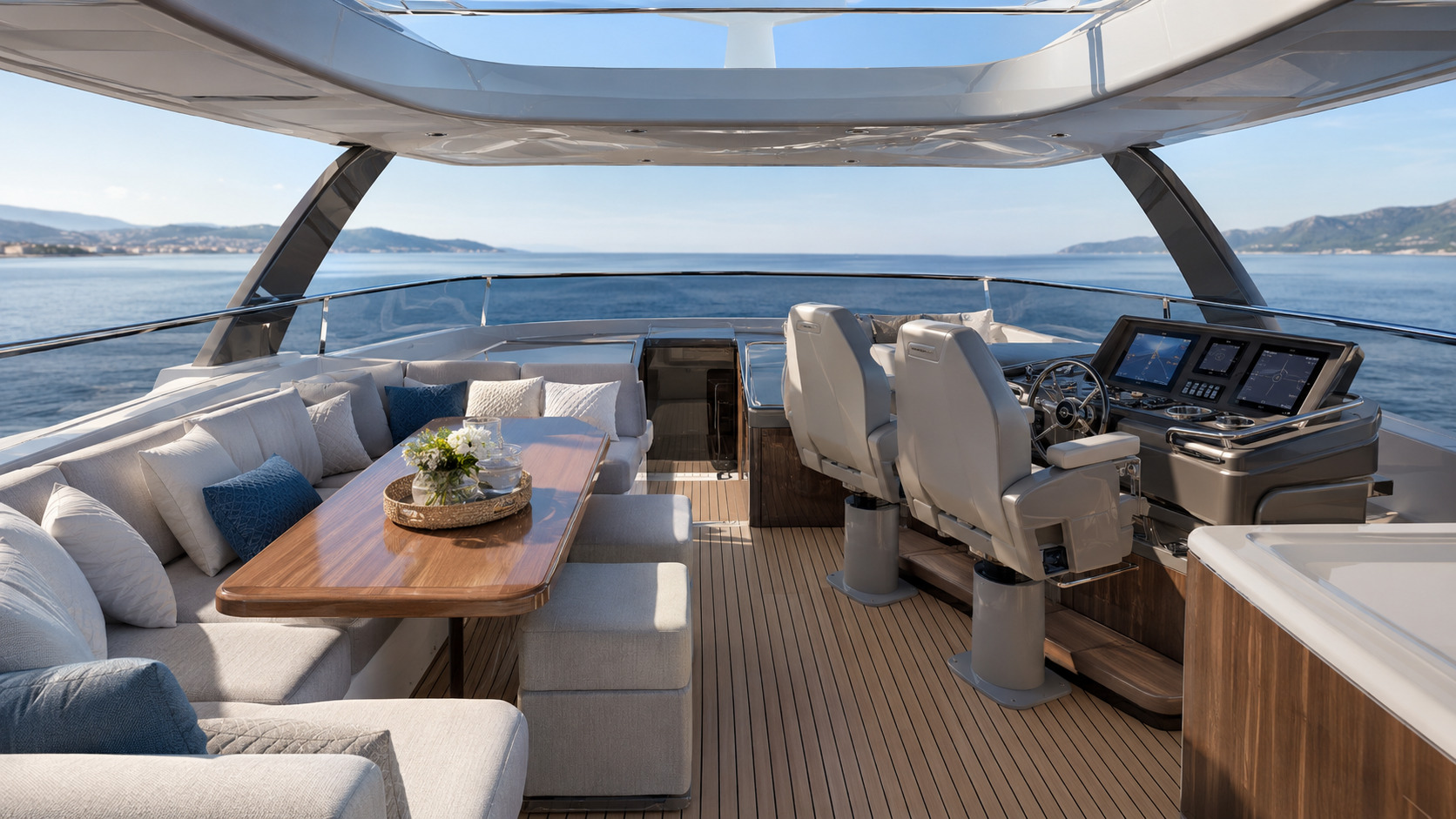
The Fly 60 earns its extra length most clearly outside. The flybridge is divided into three functional zones instead of becoming one large undifferentiated seating area. Forward is a sunbathing zone near the upper helm. Midships, the hardtop shelters a bar and dining table. Aft, freestanding social seating creates a separate lounge. That separation matters when several people are aboard because the driver, sunbathers and guests at the table do not all need the same space at the same time.
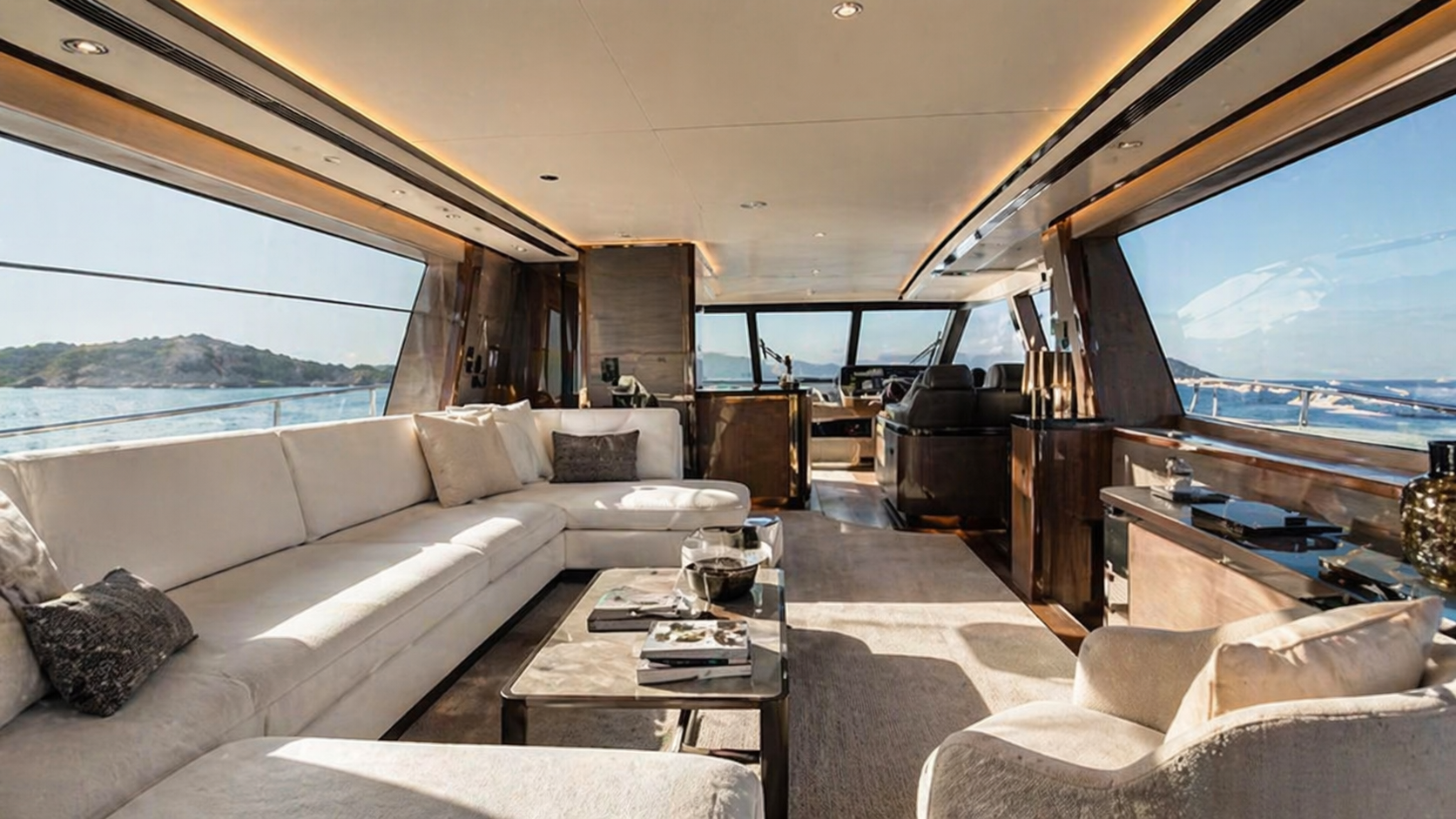
The bow lounge is equally deliberate. Azimut uses triple sunpads with a transforming headrest mechanism that can create counter-facing seating, so the foredeck can work as a conversation area instead of only a place to lie down. On the main deck, buyers may encounter different galley arrangements. A forward galley keeps food preparation more separated from the cockpit, while the aft-galley configuration connects galley, salon and cockpit more directly. That choice changes the way the yacht entertains and should be considered when comparing used listings.
At the helms, the Fly 60 combines the traditional advantage of a protected lower station with the visibility and outdoor experience of the upper helm. Buyers planning to run the yacht themselves should physically test sightlines from both positions, especially when backing, judging the stern quarters and working with crew during line handling. A beautiful helm is irrelevant if the owner cannot comfortably see and communicate during the most stressful five minutes of every trip.
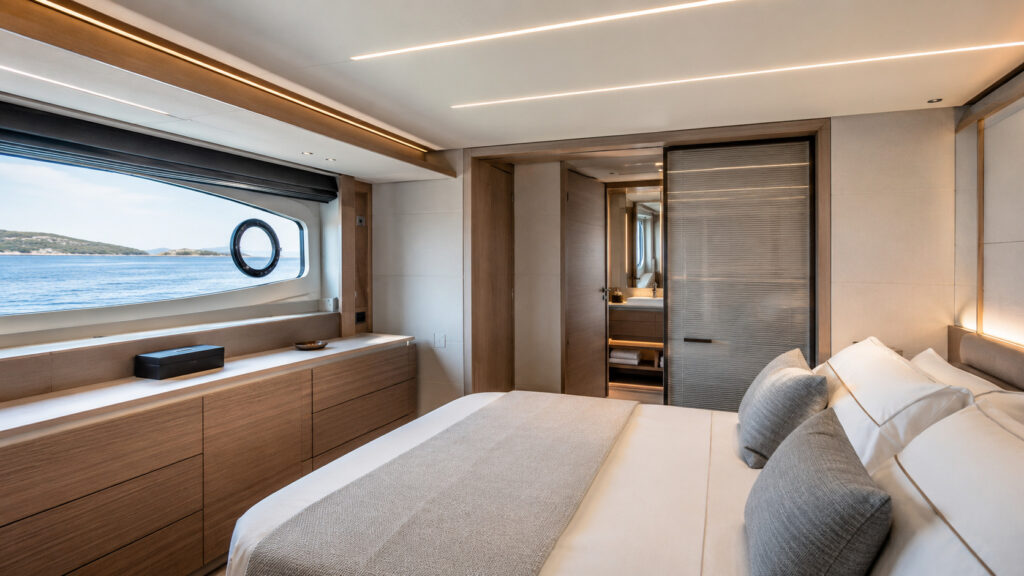
Three guest cabins are supported by three guest head compartments, giving each sleeping area substantially better privacy than the two-head arrangement on the Fly 53.
The owner’s suite spans the beam amidships, using the yacht’s 16-foot-7-inch width for separation, storage and a more residential sleeping area.
The upper deck separates sunning, sheltered dining and aft lounging so several groups can use the flybridge without competing for the same seating.
Transforming foredeck sunpads can create opposing seating, turning the bow into a usable social area rather than a single-purpose sunbed.
Forward- and aft-galley arrangements change whether food preparation is more private or directly connected to the cockpit and entertaining spaces.
Separate quarters provide two crew berths plus a dedicated head, making occasional professional help more practical than on the smaller Fly 53.
Automated interceptors manage running attitude and can compensate for sidewind or uneven loading without constant manual trim input.
Optimus Electronic Power Steering adjusts steering feel with speed and removes traditional hydraulic piping between the helm and rudder compartment.
The Fly 60 combines conventional propulsion with electronic control systems that reduce operator workload. Active Trim Control manages interceptors automatically, while Electronic Power Steering changes assistance according to speed. Navigation electronics, radar, autopilot, stabilizer, generator, HVAC, entertainment and monitoring systems can vary considerably between yachts because options and later owner upgrades are common in this price class.
During survey, operate every major hotel and navigation system rather than accepting a list of installed equipment. Check generator performance under load, air-conditioning output, shore-power transfer, battery charging, pumps, heads, freshwater, bilge systems, electronics, steering, trim controls and any stabilizer installed. Older premium electronics can still be expensive to replace even when the displays look impressive at the dock.
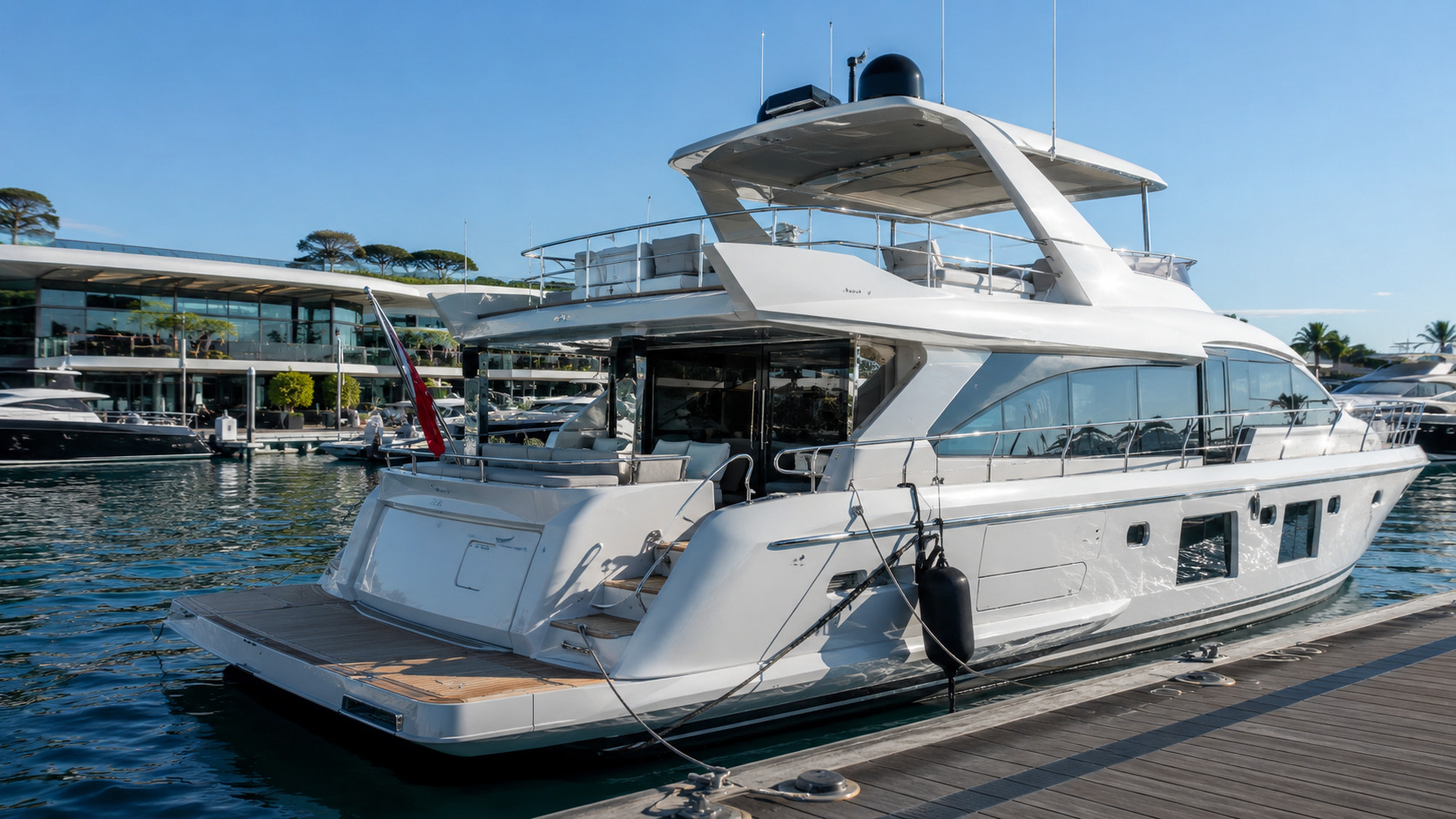
The Fly 60 measures 59′ 10″ overall with a 16′ 7″ beam and a published full-load draft of 4′ 9″. That puts it firmly into yacht-slip territory. Confirm whether a marina bills on actual LOA or assigned slip size, whether piling width accommodates the beam, whether the fairway offers enough room for a conventional-shaft boat, and whether shore-power service matches the yacht’s requirements. The difference between a 55-foot and 60-foot slip category can be larger than the difference in hull length suggests.
Hardtops, radar arrays, satellite domes and antenna changes can affect clearance, and a flybridge yacht can lose access to desirable inland or protected-water routes because of one fixed bridge. Seasonal owners should also verify local haul-out capacity for roughly 36 metric tons at full load and a beam over 16 feet before assuming their preferred yard can handle the boat.
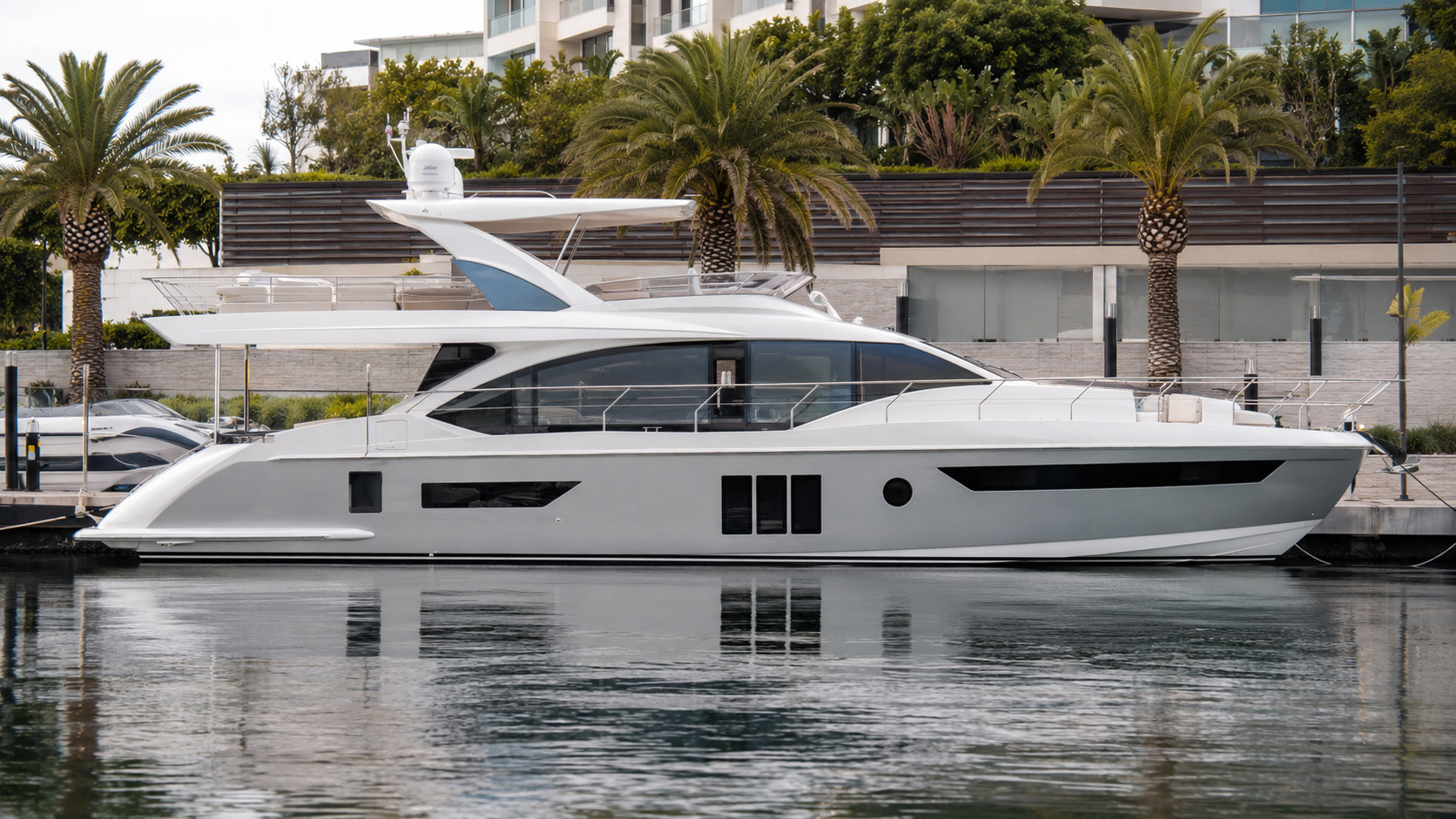
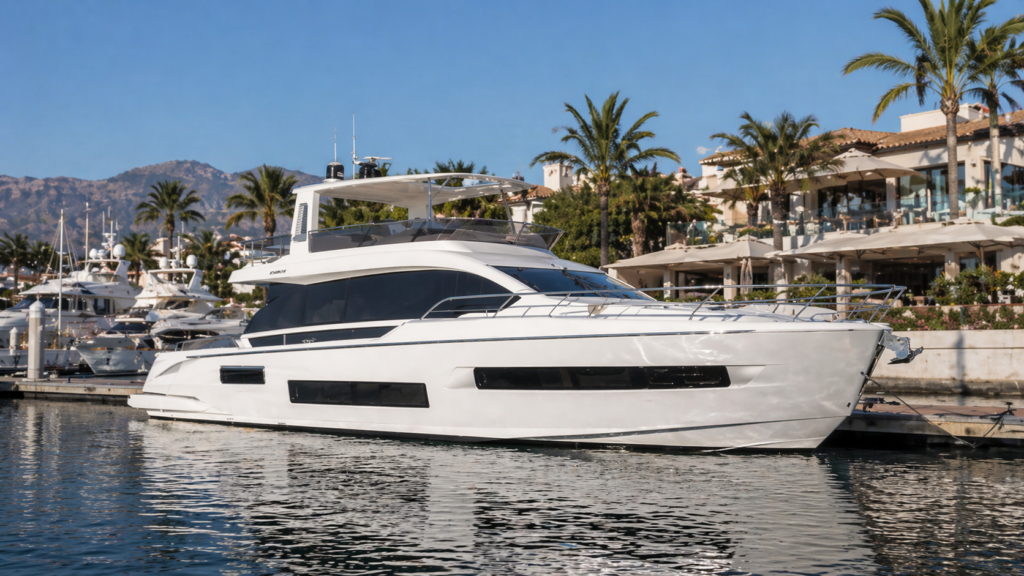
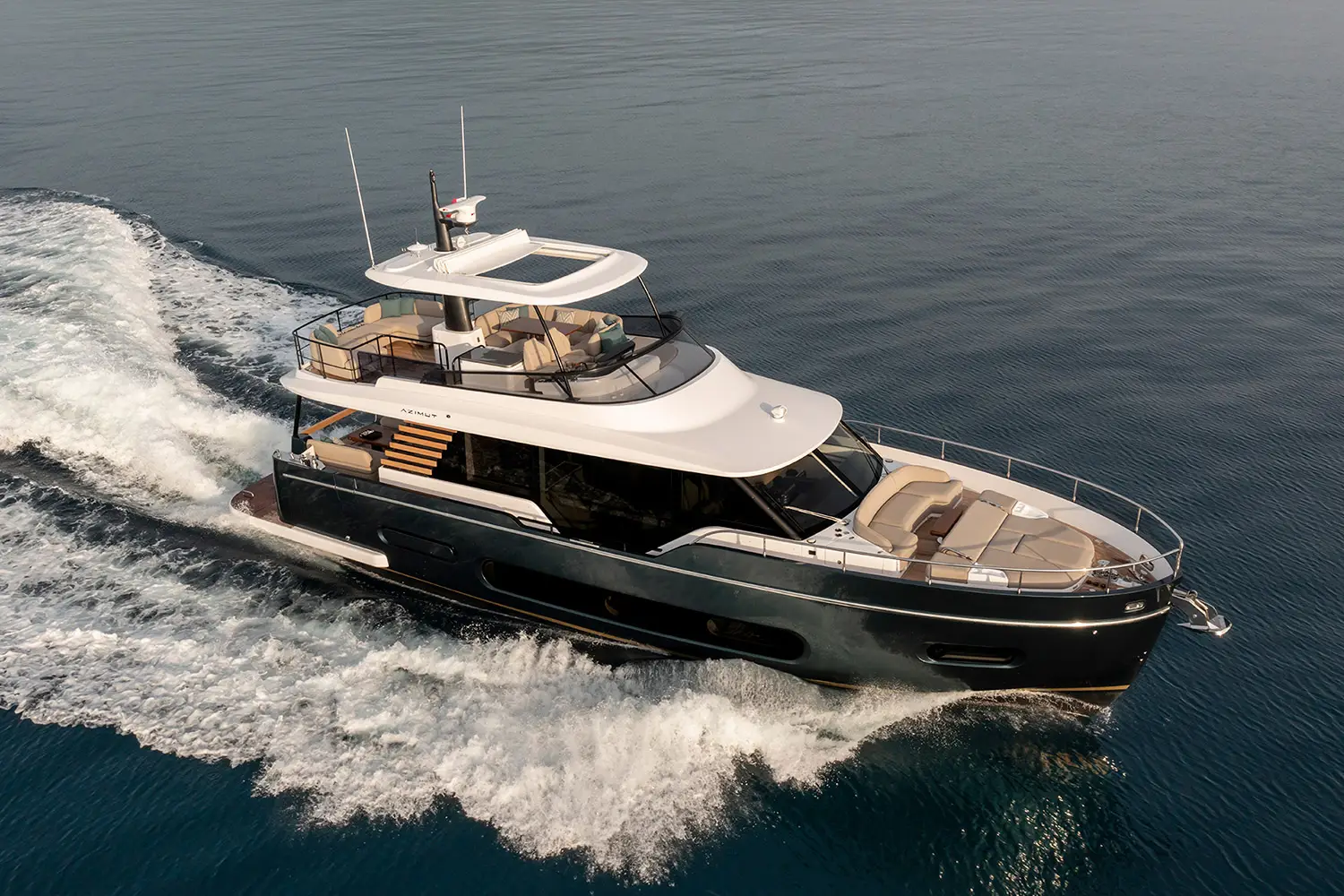
Use the gallery to judge the features that separate the Fly 60 from the smaller 53: the three-zone flybridge, transforming bow lounge, cockpit-to-salon connection, alternative galley positions, full-beam master, guest cabins and separate crew quarters. Exterior images should also show the hull profile and running attitude, not just marina beauty shots.
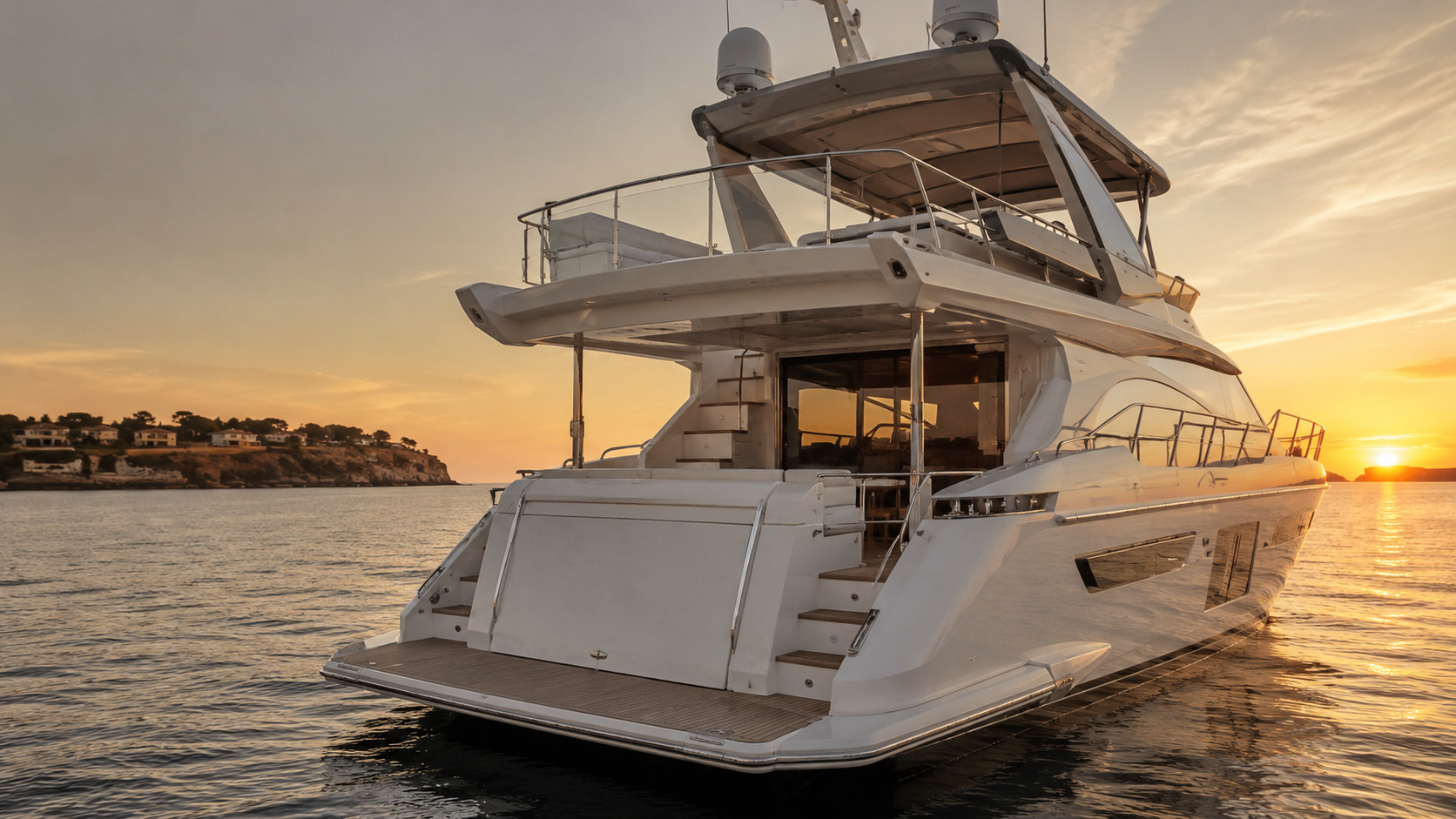
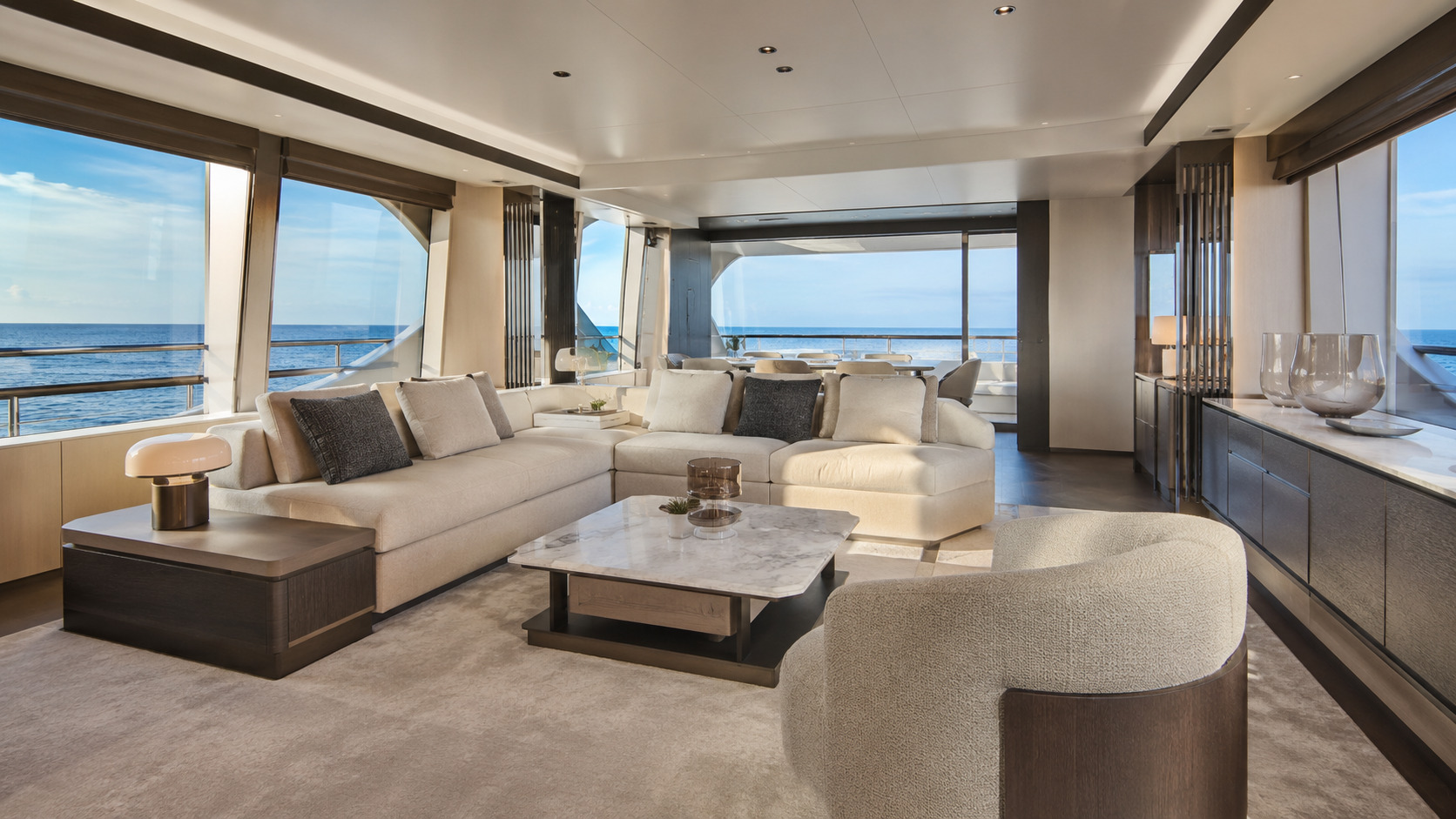
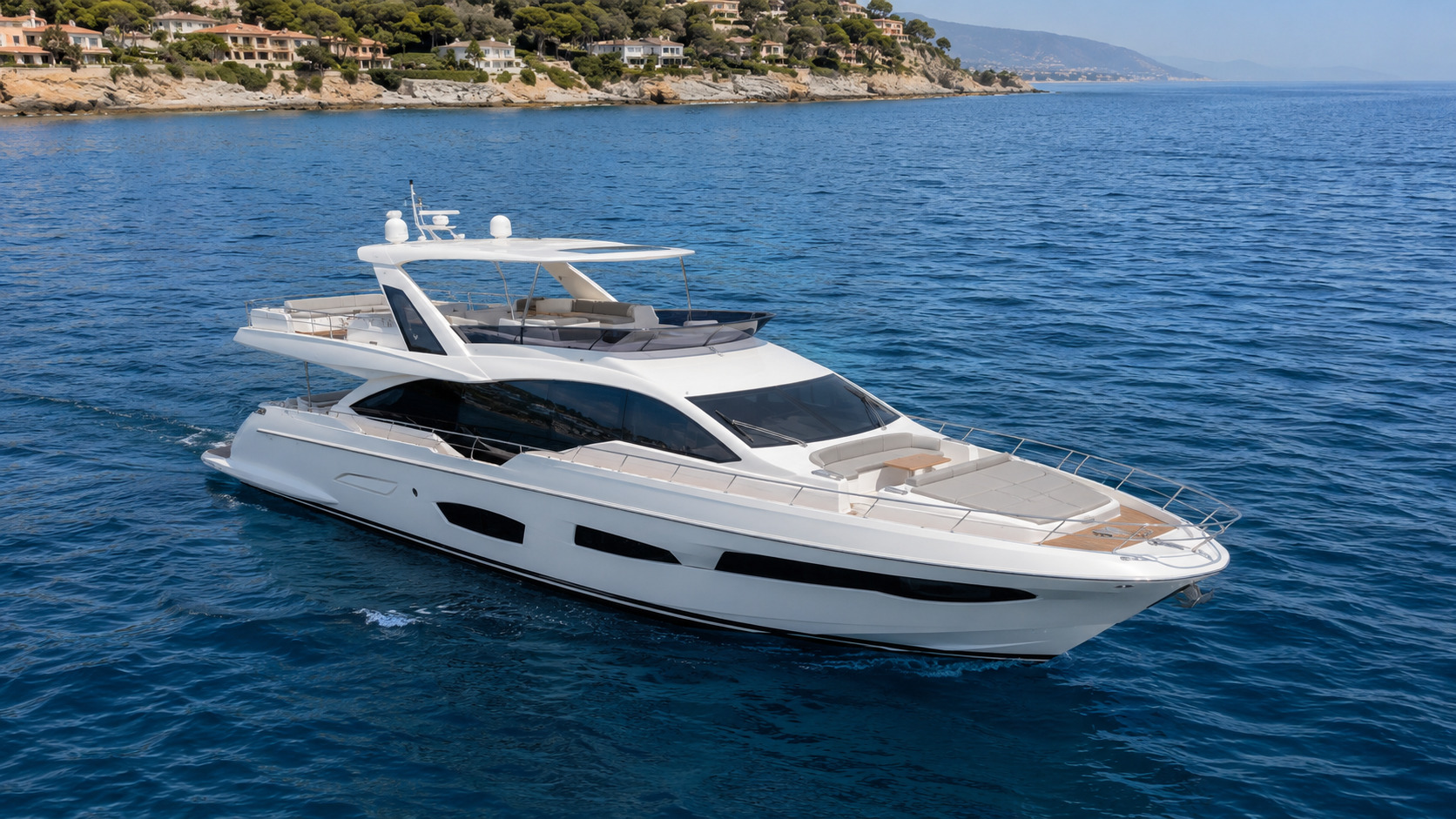
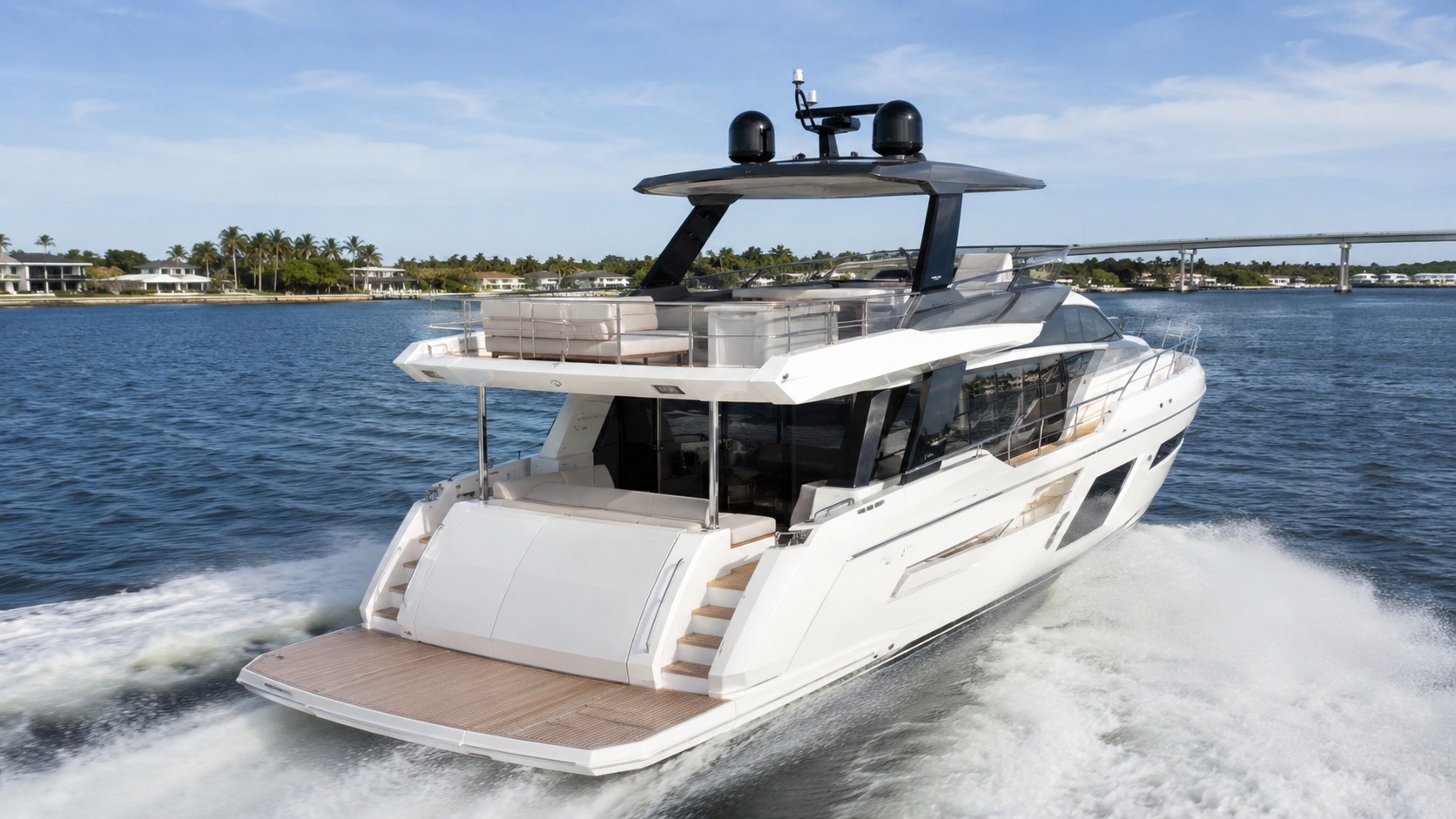
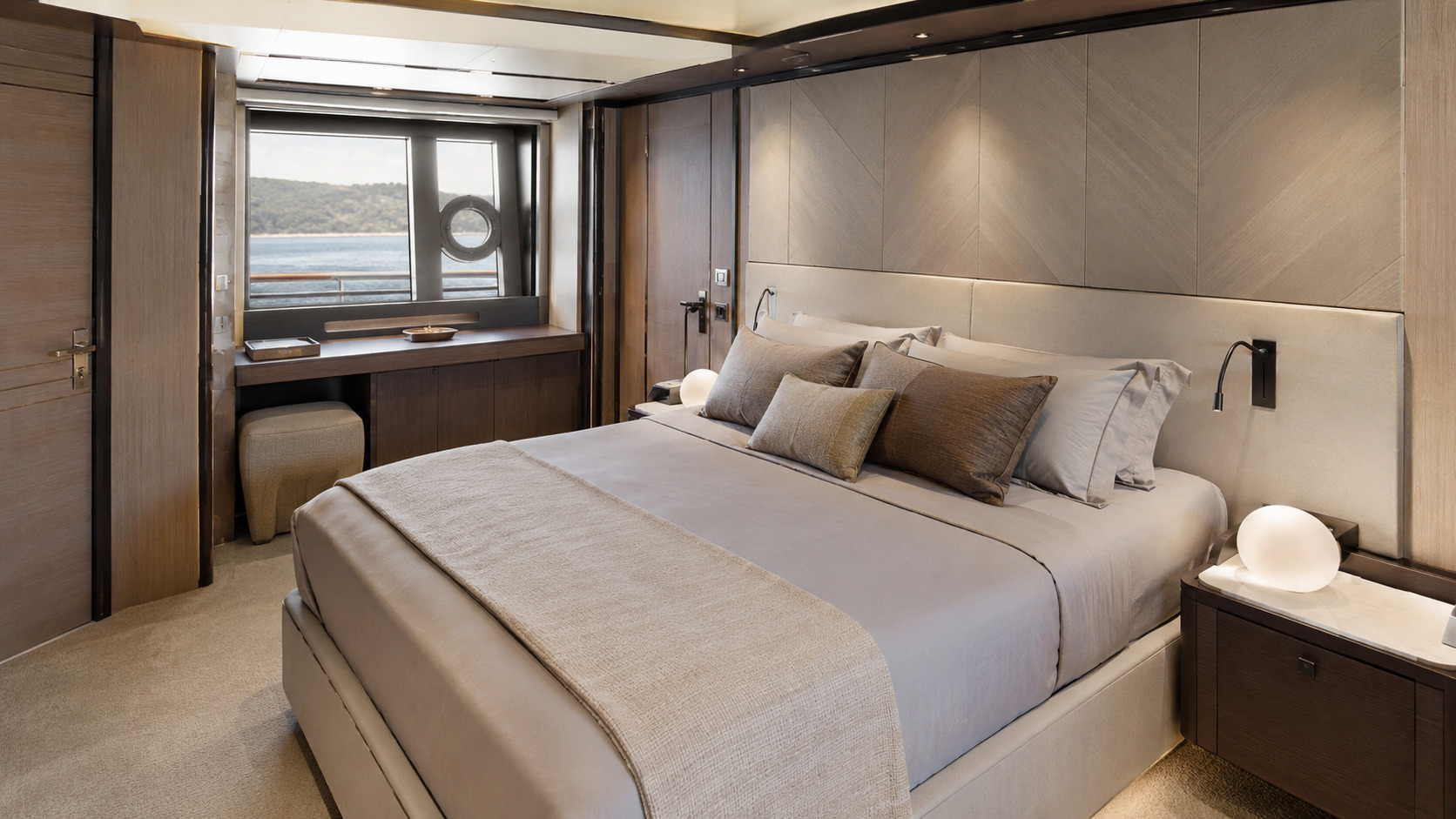
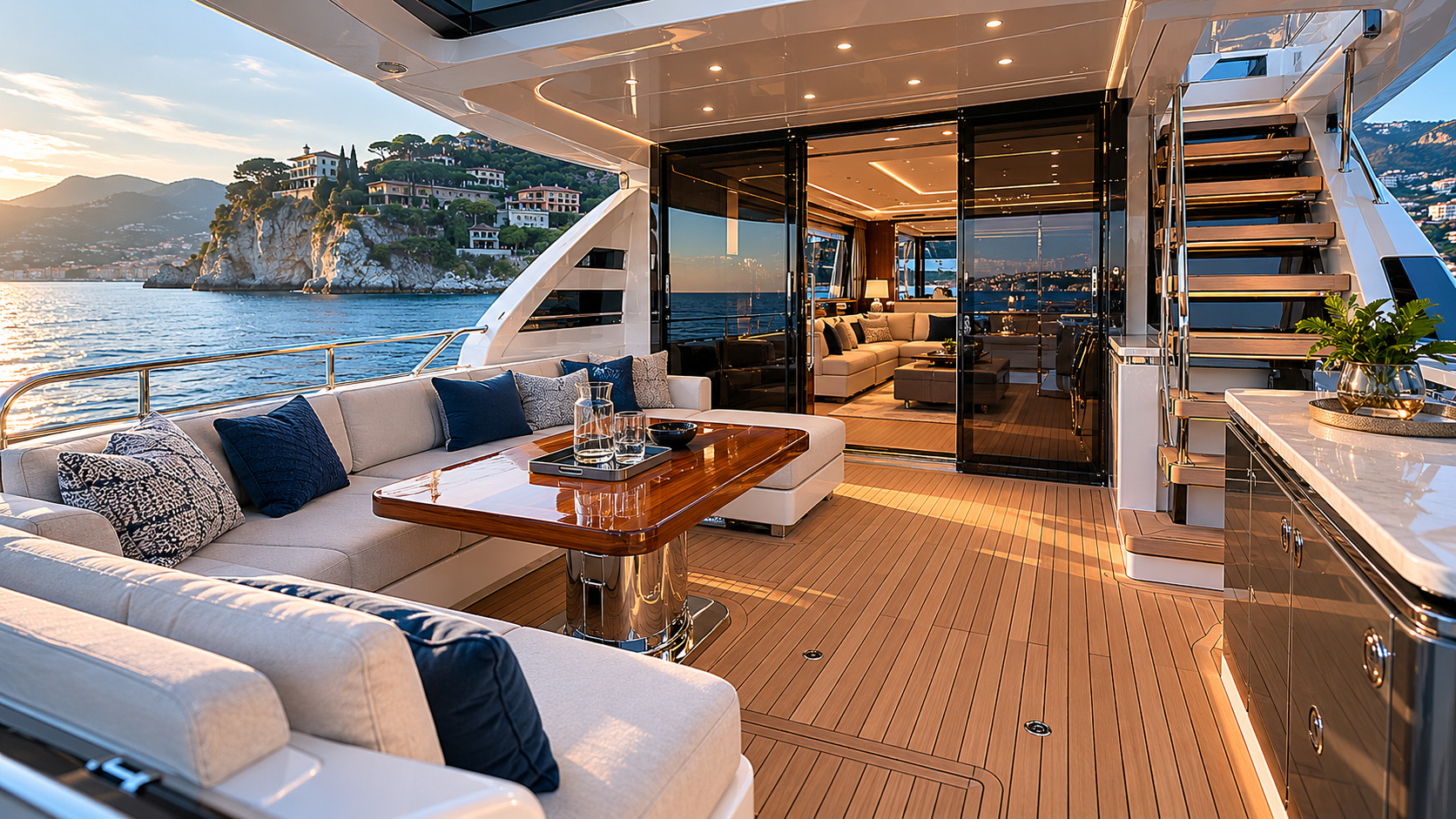
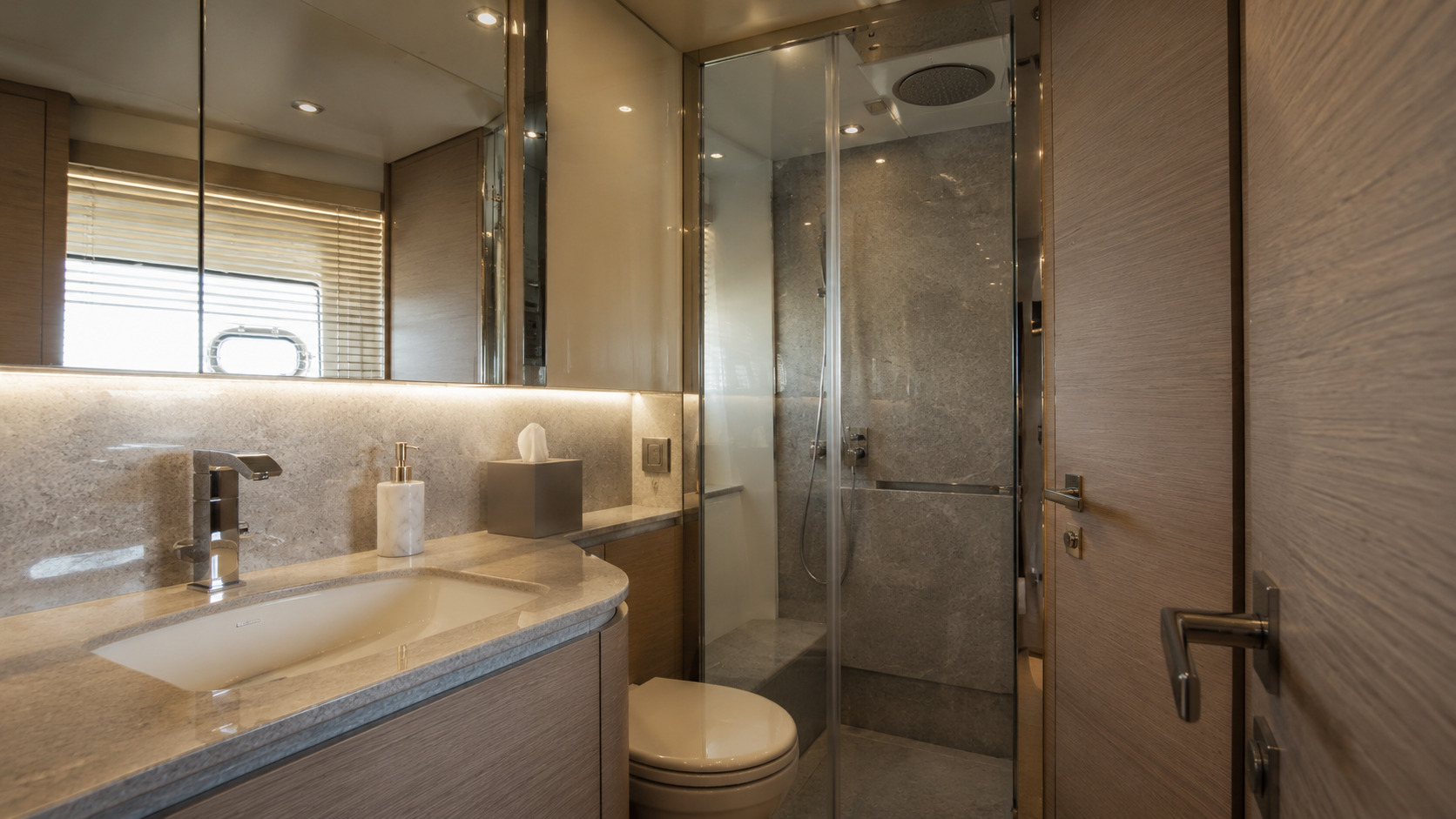
Azimut Fly 60 pricing depends on model year, engine hours, region, specification, electronics, stabilizer equipment and maintenance history. Because Azimut has used the “60” designation across different generations, make sure the comparable listings are the same Fly 60 design described here: 59 feet 10 inches overall, twin Volvo Penta D13 900s, Carbon-Tech upper structure and the three-cabin/three-head layout. An older Azimut 60 with different engines and architecture should not set the price for this generation simply because the model number matches.
Figures come from this page’s Boat Details fields. Illustration only and not an offer of credit.
Use the yacht-loan calculator to test purchase price, down payment, rate and term before committing to a Fly 60. Run more than one scenario. A slightly larger down payment or different term can materially change the monthly number on a yacht in this price band, while the real approval will still depend on borrower credit, vessel age, value, condition and lender guidelines.
Illustration only and not an offer of credit. Your actual rate and term depend on credit profile, vessel age, loan amount and ownership structure.
Calculator results are estimates only. Actual approval, rate, term, down payment and monthly payment are subject to lender underwriting and vessel eligibility.
The Fly 60 is not simply the middle number. Compared with the Fly 53, it keeps three guest cabins but adds a third guest head, larger crew quarters, Carbon-Tech upper construction and conventional D13 propulsion. The newer Fly 62 adds another three feet, returns to IPS propulsion and introduces Azimut’s Beach Cockpit concept. Choose based on how you live aboard and how you want the yacht to handle, not on LOA alone.
The transaction path changes with the seller. New or dealer-stock yachts tend to have the clearest build specification and warranty trail. Brokerage inventory creates more variation in options, electronics, service history and engine hours. Private-party purchases can be attractive but require tighter coordination around ownership documents, lien payoff, survey, insurance and funding. Imported yachts may add tax, documentation, certification and registration questions that should be resolved before money becomes non-refundable.
New from dealer — verify final specification, installed options, warranties, commissioning and delivery costs in writing.
Brokerage yacht — compare service records, hours, survey findings, electronics age and option packages instead of shopping by asking price alone.
Private party — establish ownership, lien status, survey requirements and lender process before sending a non-refundable deposit.
Imported yacht — confirm documentation, tax, certification and U.S. registration requirements before assuming a normal domestic closing.
Already looking at a specific Fly 60? Send Float Finance the listing. We can help evaluate financing whether the yacht is being sold by a dealer, represented by a broker or purchased from a qualified private seller. The financing conversation is built around the actual yacht, transaction and borrower profile, so you can understand the structure before making the purchase decision around a guessed monthly number.
Submitting your information does not obligate you to purchase a yacht. Applicable credit and privacy terms are provided during the financing process.
Market value varies with year, hours, location, options, electronics, stabilizers and maintenance history. Be careful with comparables because older Azimut 60 models are different boats with different engines and layouts. A listing with the same “60” model number is not automatically a valid comparable for the current Fly 60 generation.
The Fly 60 has three guest cabins with berths for six people, plus separate crew accommodation for two. It also has three guest head compartments and one crew head. The three-head arrangement is one of the strongest reasons to choose the 60 over the Fly 53 when three couples or multiple adult guests regularly cruise together, because bathroom privacy improves without moving into a four-cabin yacht.
Azimut publishes a 740-US-gallon fuel capacity and a cruising speed of up to 26 knots, but its current model page does not publish a standardized cruise-burn table for this generation. Do not reuse fuel numbers from the older 2012-era Azimut 60, which is a different design and propulsion package.
The current Fly 60 uses two Volvo Penta D13 diesels rated at 900 hp each, producing 1,800 hp combined. Azimut publishes a maximum speed of up to 31 knots and a cruising speed of up to 26 knots. The model uses conventional inboard propulsion, with Electronic Power Steering and Active Trim Control supporting the driving experience.
There is no single reliable percentage. Annual cost depends on where the yacht is kept, insurance, engine hours, fuel price, D13 and running-gear maintenance, generator and HVAC service, haul-out, bottom work, detailing and whether professional crew or management is used.
Azimut publishes a full-load draft of 4 feet 9 inches including props. Buyers keeping the yacht behind fixed bridges should verify the actual measured configuration before closing, not rely on a generic model specification.
Yes, subject to borrower, vessel and lender eligibility. Float Finance works with dealer, brokerage and private-party marine transactions. On a yacht in this class, underwriting can involve model year, purchase price, down payment, value, survey, insurance and documentation. Pre-approval is useful before negotiating because it gives you a clearer idea of the purchase range and structure lenders may support.
The Fly 60 is not a recreational trailer boat. At nearly 60 feet overall, 16 feet 7 inches of beam and roughly 79,000 pounds full load, normal ownership means a suitable wet slip, private dock or professional storage arrangement. Overland movement requires specialized yacht transport, route planning and permits. Secure realistic berthing and haul-out options before you close on the boat.
Tell us a little bit about yourself and the boat you are looking to finance.