
Call Us : 207-994-5109
Mon – Fri: 8 am to 9 pm & Sat – Sun: 10 am to 8 pm
A four-cabin flybridge yacht that pairs MAN V12 power with carbon-fiber construction and a layout built for owners who want more space without losing speed.
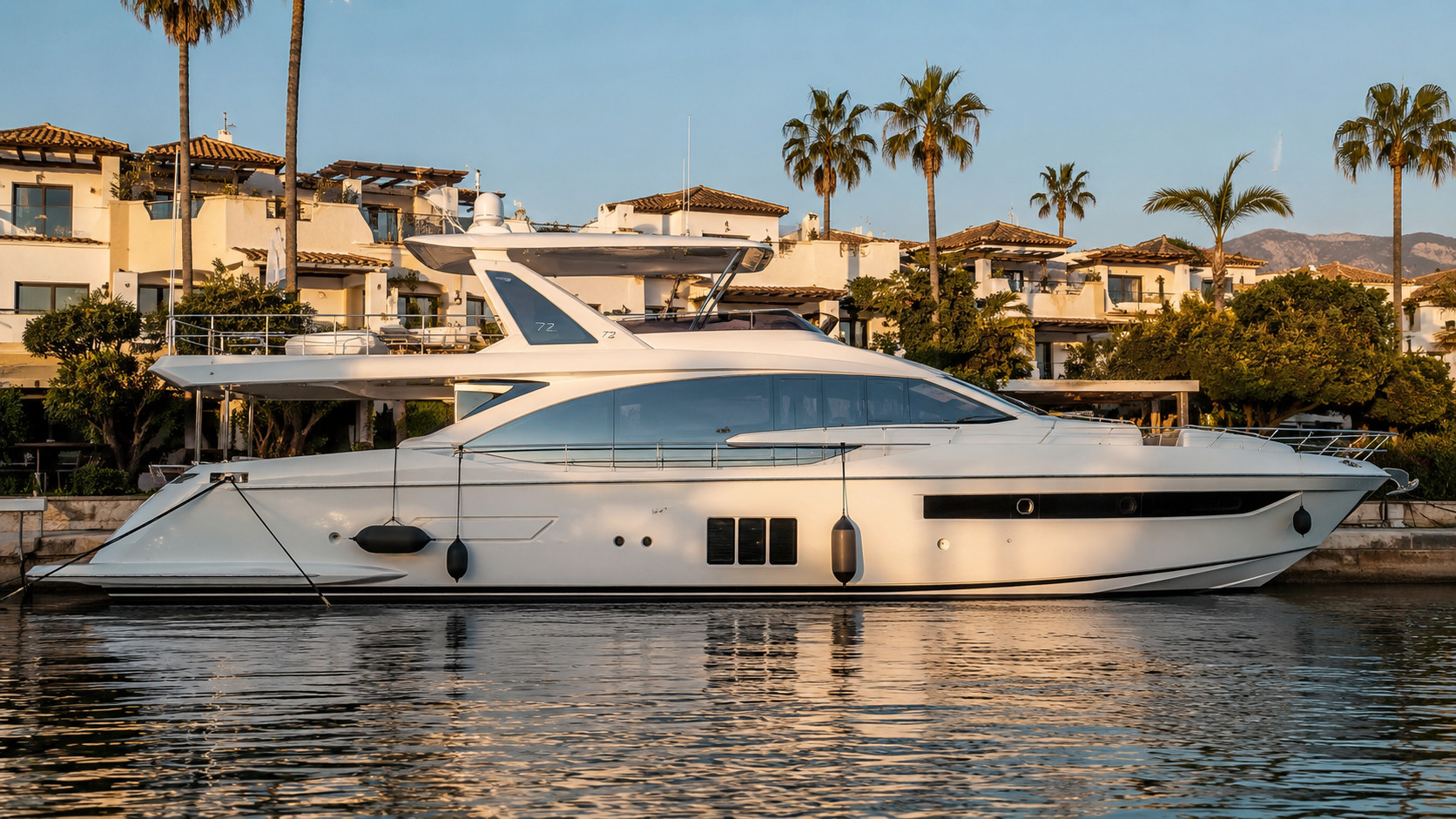
The Azimut Fly 72 sits above the Fly 68 and below the triple-IPS Fly 78, and its identity is not just a few extra feet of fiberglass. It is the point where the Fly range becomes a genuinely large four-cabin cruising yacht while still preserving a fairly direct relationship between owner, helm and machinery. At 74 feet 5 inches overall with an 18-foot-5-inch beam, it gives eight guests four dedicated cabins, four guest heads and separate two-berth crew quarters.
The propulsion choice is a major part of the story. Unlike the IPS-powered Fly 68 and Fly 78, the Fly 72 uses twin MAN CR V12 diesels rated at 1,400 hp each on conventional shaft lines. For some buyers that traditional drivetrain is a feature rather than a step backward: it is familiar to many captains and yards, keeps the machinery architecture straightforward, and still supports a manufacturer-published top speed of 32 knots.
The Fly 72 is also one of the stronger examples of Azimut using carbon fiber for a practical reason. Carbon fiber is concentrated high in the superstructure, where saved weight has the most leverage on center of gravity and roll. That gives the design team more freedom to create a substantial flybridge, hardtop and interior volume without simply stacking weight above the waterline.
The compromise is that this is no longer a casual step-up yacht. Dockage, haul-out capacity, crew expectations, insurance, fuel and service all move into a more professional tier. A buyer who really only needs three cabins may find the Fly 68 easier to own. A buyer who wants four cabins but prefers the privacy and service separation created by triple-IPS packaging should compare the Fly 78.
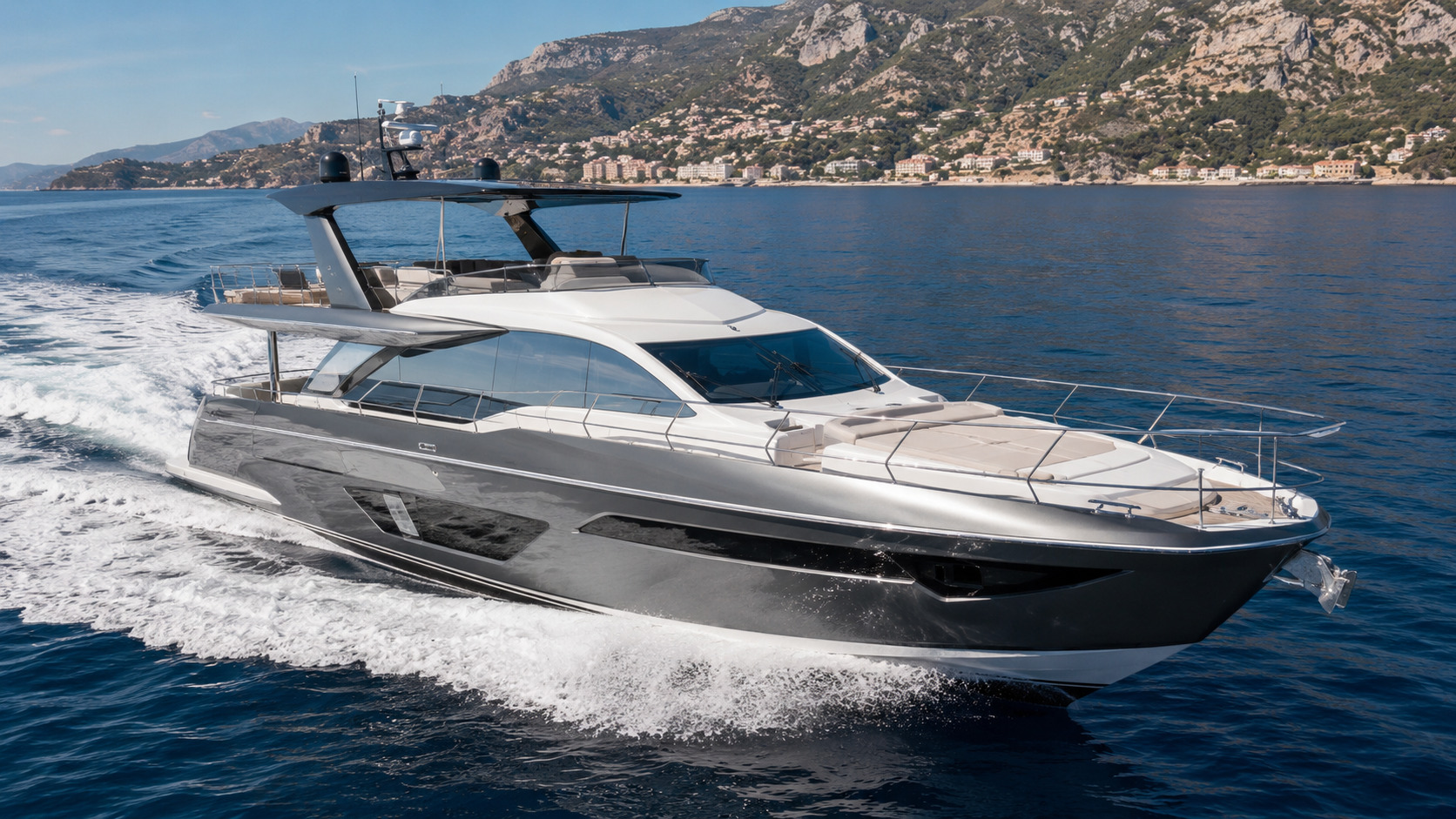
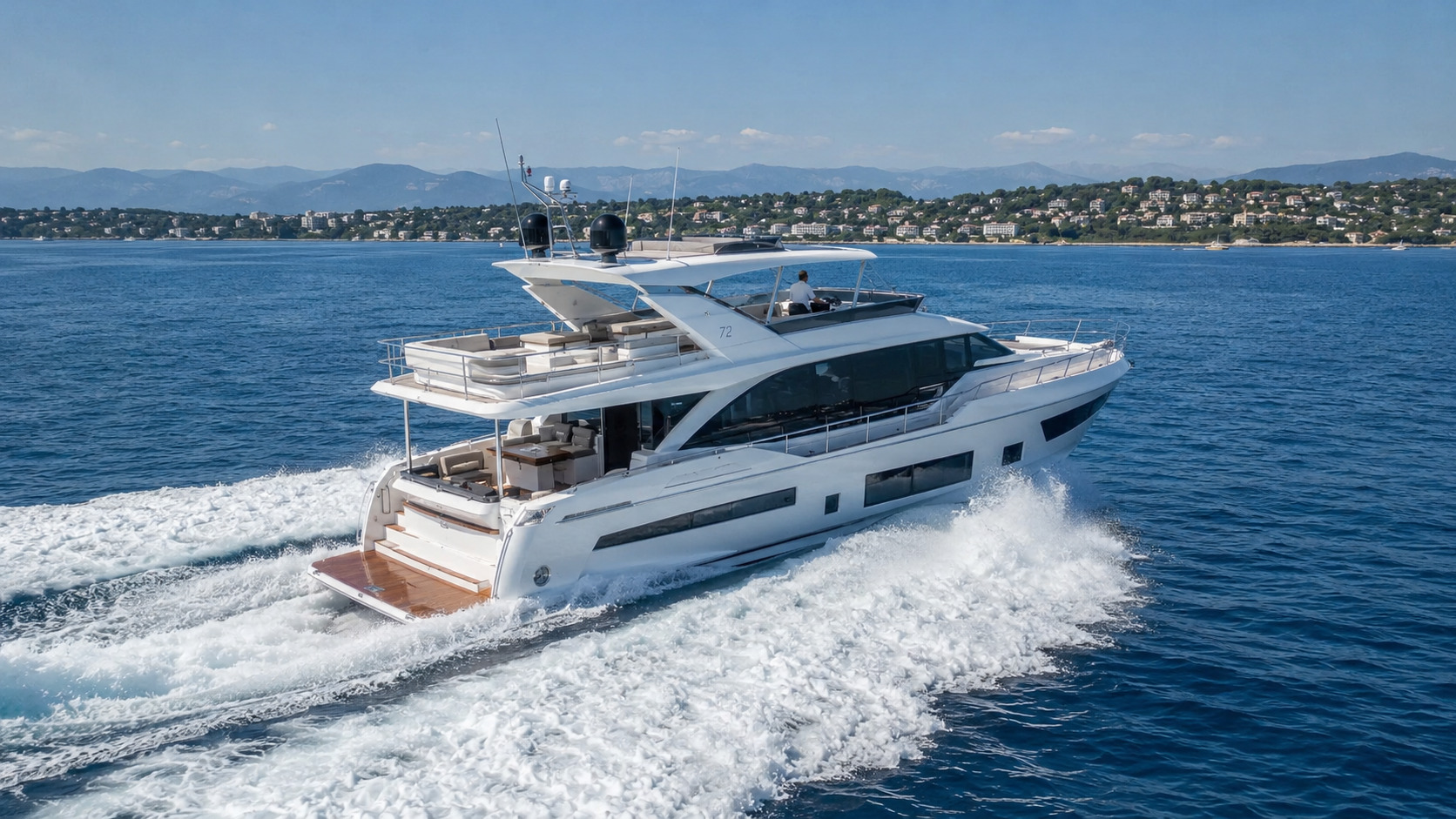
Azimut lists the Fly 72 at 74 feet 5 inches overall, 18 feet 5 inches of beam and 117,593 pounds at full load. The published planing hull carries 15 degrees of deadrise aft and 20 degrees amidships. That combination gives the hull more V through the middle of the boat for ride quality while flattening toward the transom to support planing efficiency and the weight of a large flybridge yacht.
Construction combines GRP with carbon fiber. Azimut says its Carbon Tech approach can lighten laminated upper components by as much as 30 percent and reduce natural roll momentum by up to 15 percent. The useful buyer takeaway is not the percentage by itself; it is that less weight aloft gives the yacht more freedom to carry a large hardtop, upper lounge and interior volume without paying the full stability penalty that a heavier conventional superstructure would create.
The published draft is 5 feet 12 inches including props at full load. That is effectively a six-foot draft and should be treated that way when choosing a marina or route. An 18-foot-5-inch beam also puts the Fly 72 outside many standard slips. Before closing, confirm piling width, dock length, shore power, turning room and local haul-out capacity rather than assuming a 70-foot slip will work.
Power comes from twin MAN CR V12 diesels rated at 1,400 hp each. Azimut publishes up to 32 knots at maximum speed and up to 26 knots at cruise. The conventional shaft arrangement is one of the defining technical differences between the Fly 72 and the pod-driven models around it in the range.
At the helm, the benefit of the 72 is less about pretending a 74-foot yacht is small and more about giving the driver predictable machinery and integrated control. Azimut combines the propulsion package with Active Trim Control, integrated Raymarine monitoring and an automatic fuel-transfer system intended to keep heel angle close to zero as fuel load changes.
A used Fly 72 should be inspected as a system, not as two engines. Ask for MAN service history, cooling-system work, shaft and cutless-bearing condition, propeller history, generator records, stabilizer history if fitted, and evidence that the integrated monitoring and trim systems operate correctly. Engine hours matter, but maintenance quality matters more.
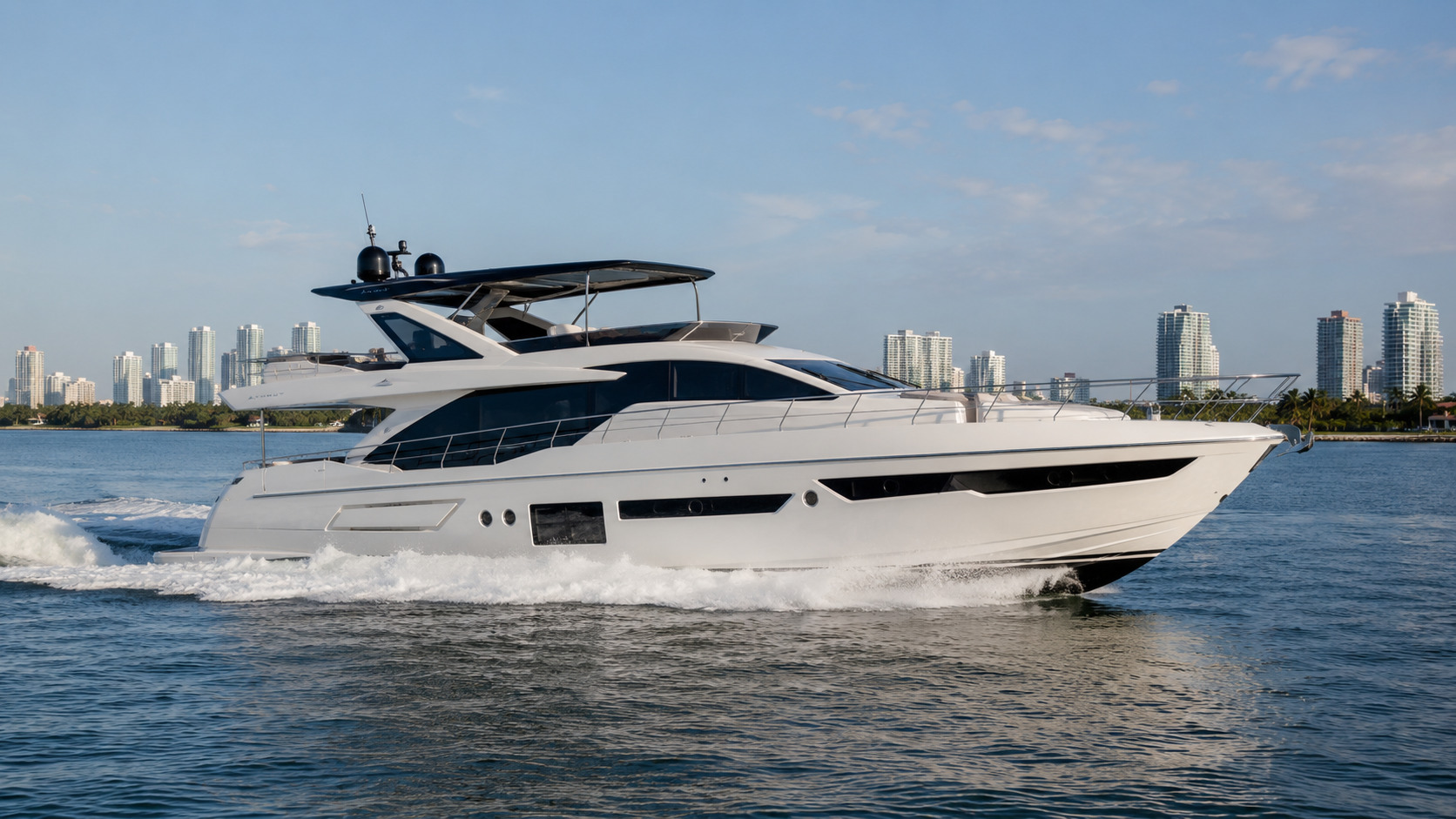
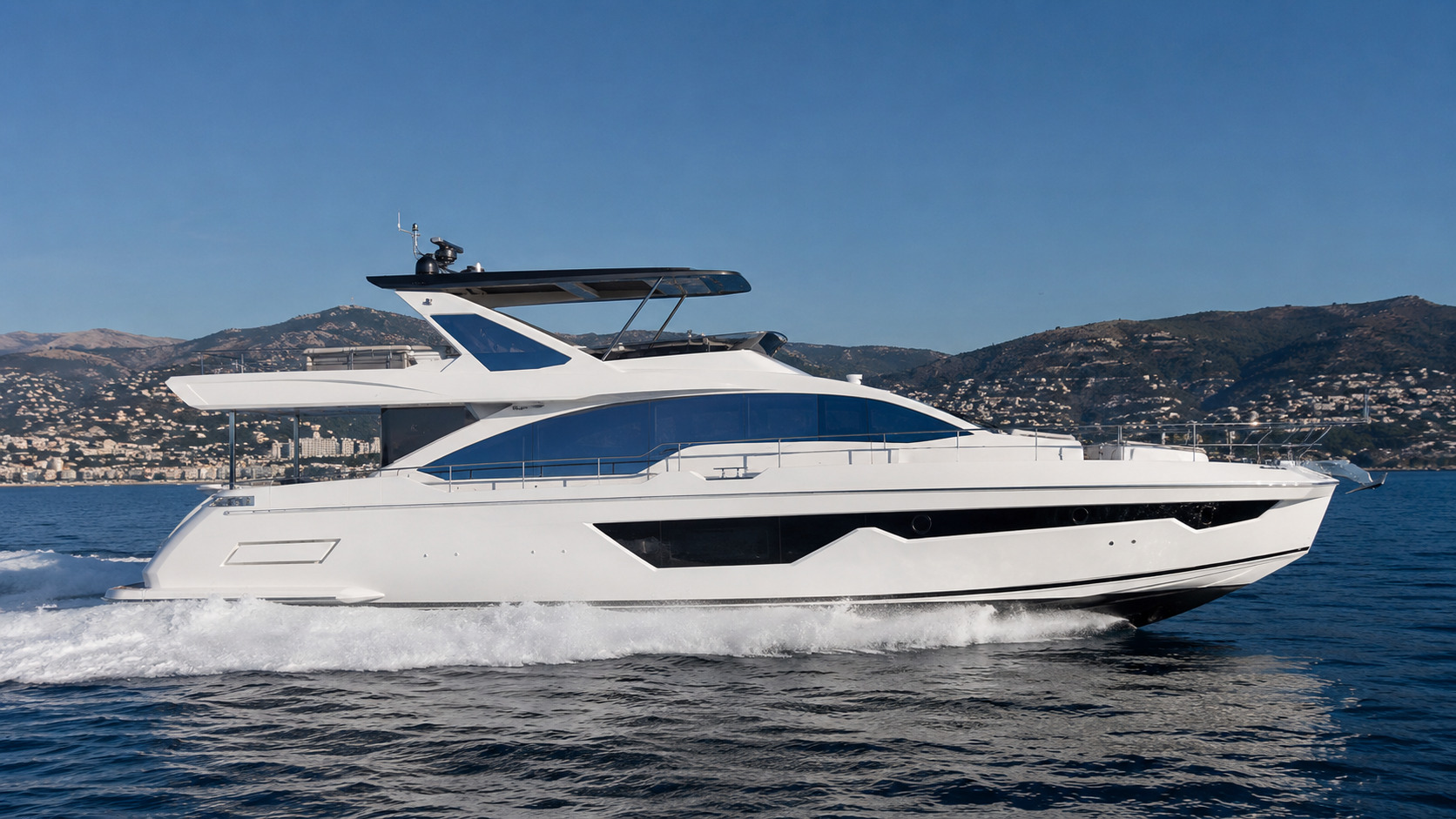
Azimut publishes a 1,373-US-gallon fuel capacity. At 14.8 knots, official consumption is 10.4 liters per nautical mile with a stated 451-nautical-mile range. At 26 knots, consumption rises to 14.5 liters per nautical mile and the stated range drops to 323 nautical miles. These figures were published under ISO 8666 conditions, so treat them as standardized comparison data rather than a promise for every loaded yacht.
Converted into an ownership decision, the Fly 72 rewards a buyer who is willing to vary speed according to the trip. The slow-cruise figure gives materially more range than the fast-cruise setting. That can matter on longer coastal legs, while the 26-knot cruise remains useful when schedule matters more than fuel economy.
Seasonal fuel cost should be modeled from actual engine hours and the type of cruising you plan to do. A yacht that spends most weekends moving between nearby anchorages will have a very different fuel budget from one making regular 200-mile coastal runs.
With 2,800 hp and a published 32-knot maximum, the Fly 72 retains meaningful planing performance despite carrying four guest cabins, crew quarters and a large upper deck. The important comparison is not only top speed. At 14.8 knots Azimut publishes a 451-nautical-mile range, while at 26 knots that figure falls to 323 nautical miles. That gives the owner a real choice between covering distance efficiently and running quickly. The 20-degree amidships deadrise also helps explain why Azimut can preserve a softer running geometry through the middle of the hull while maintaining a 15-degree transom section for planing support.
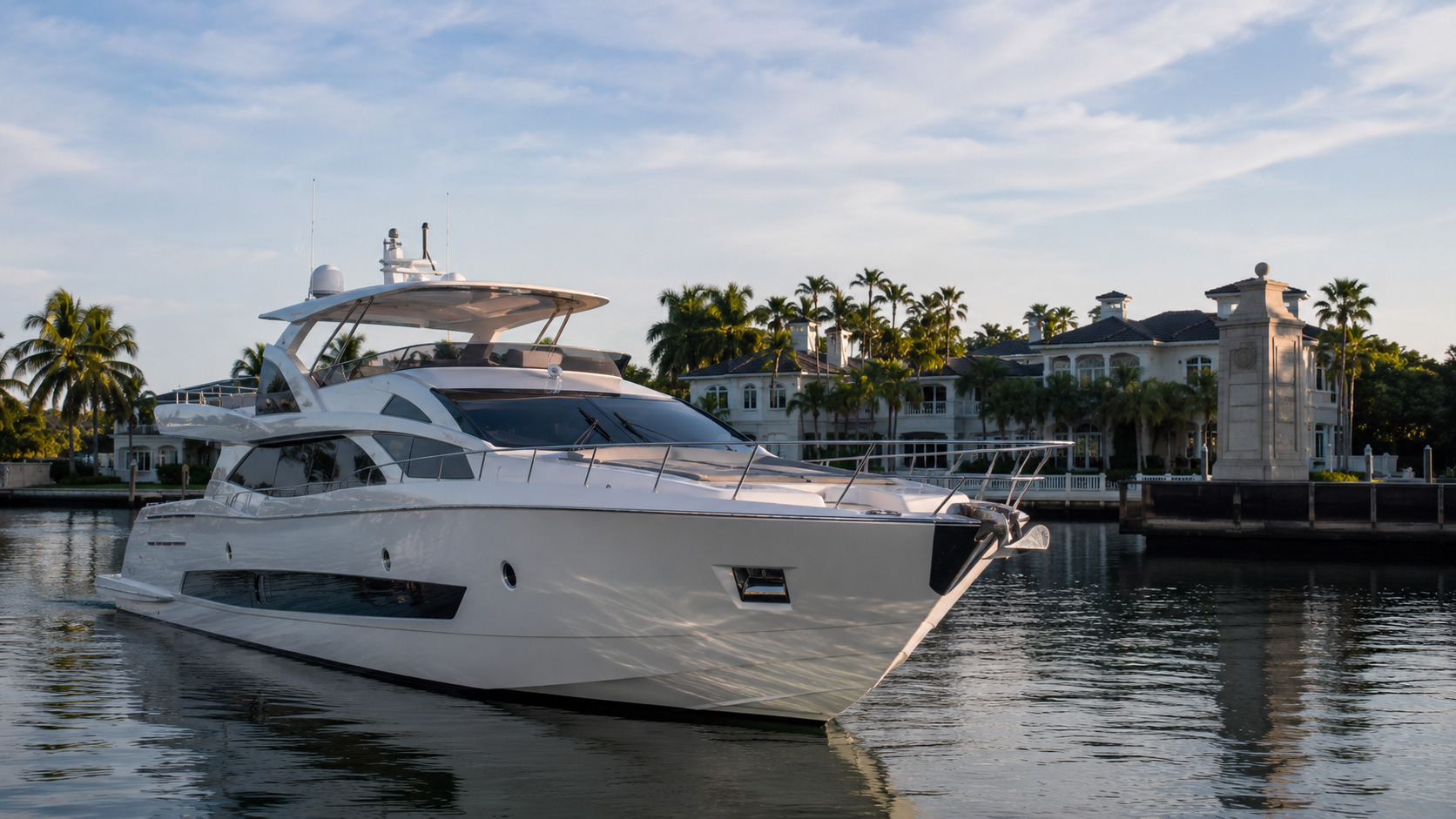
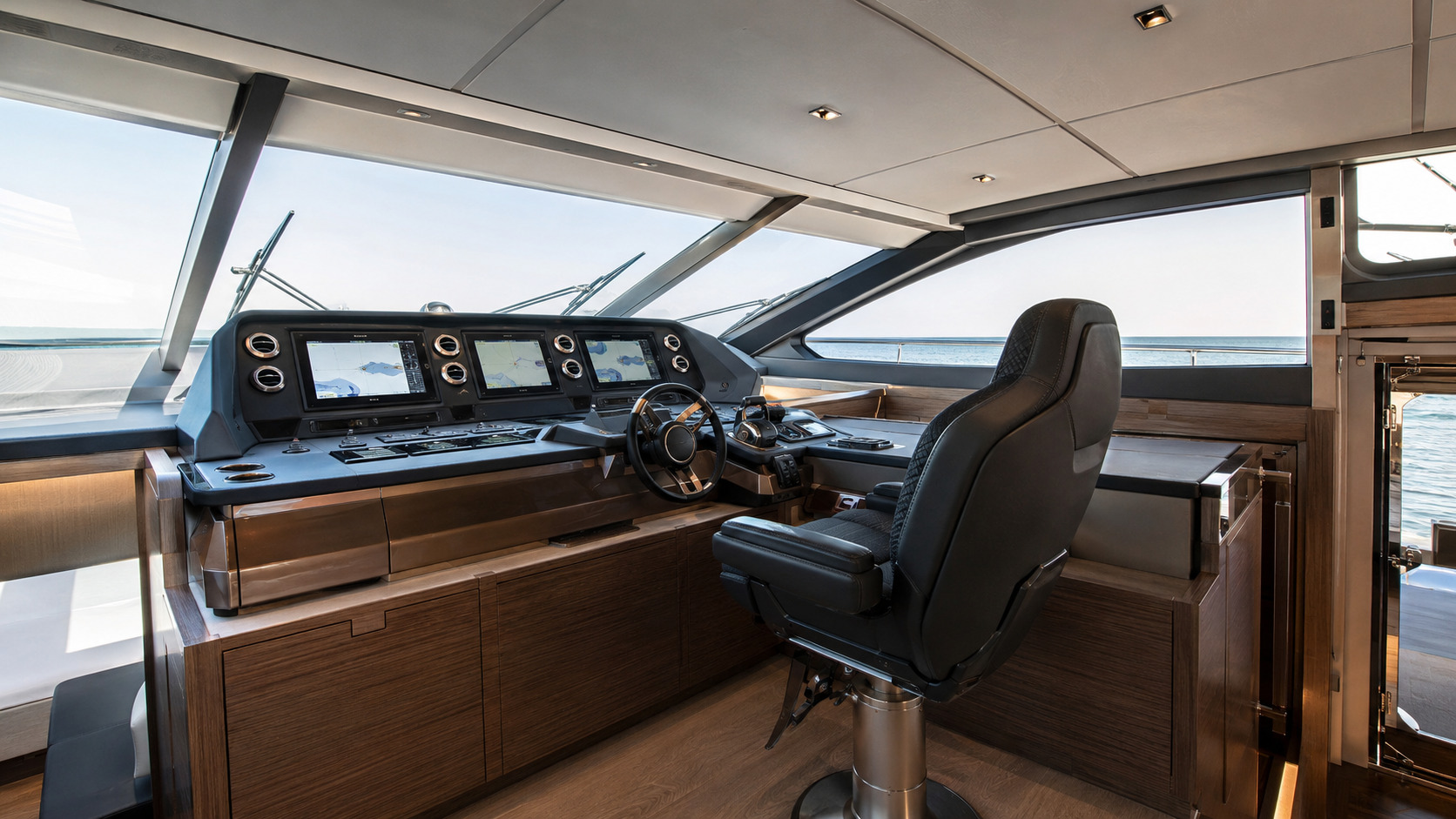
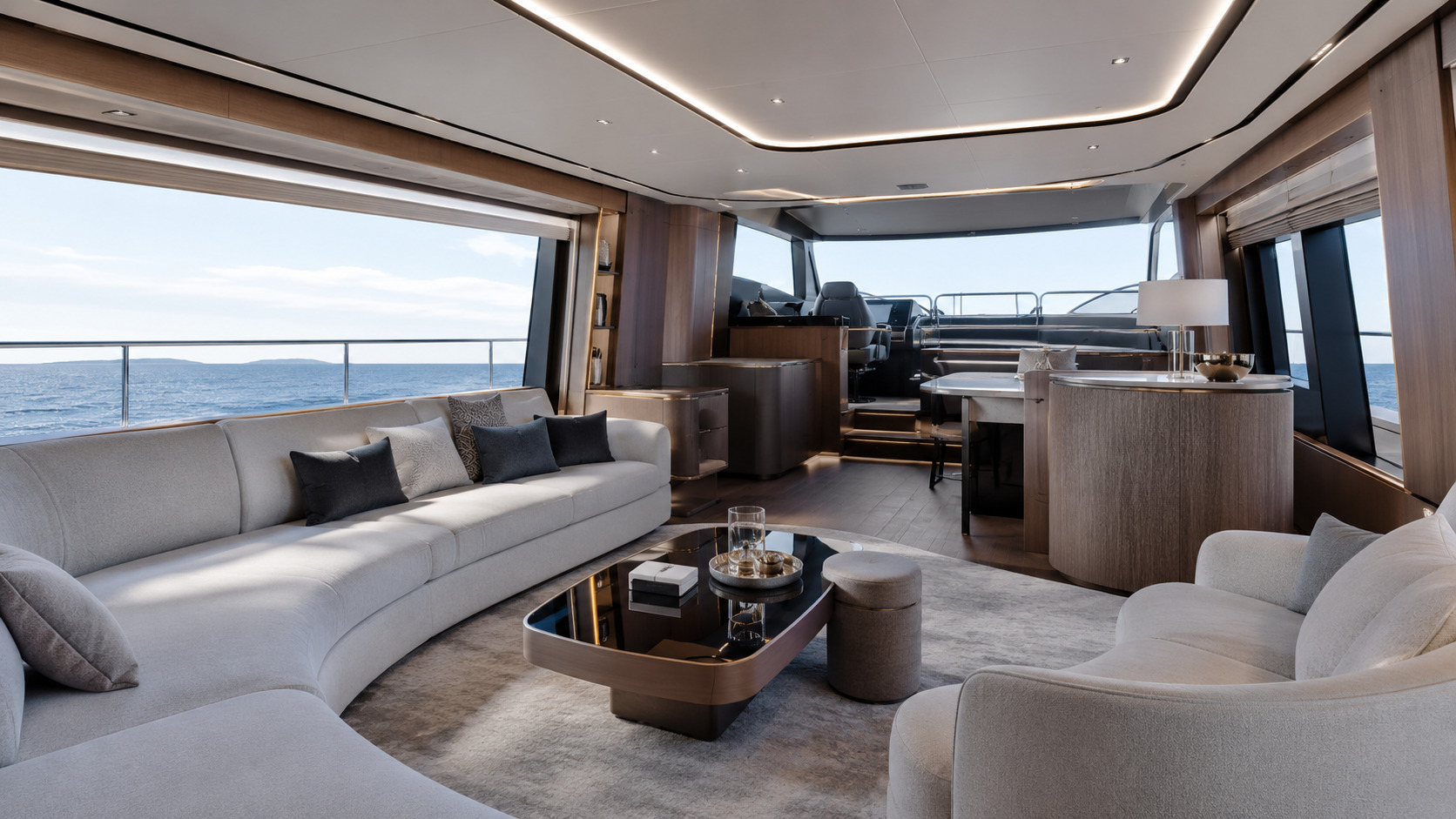
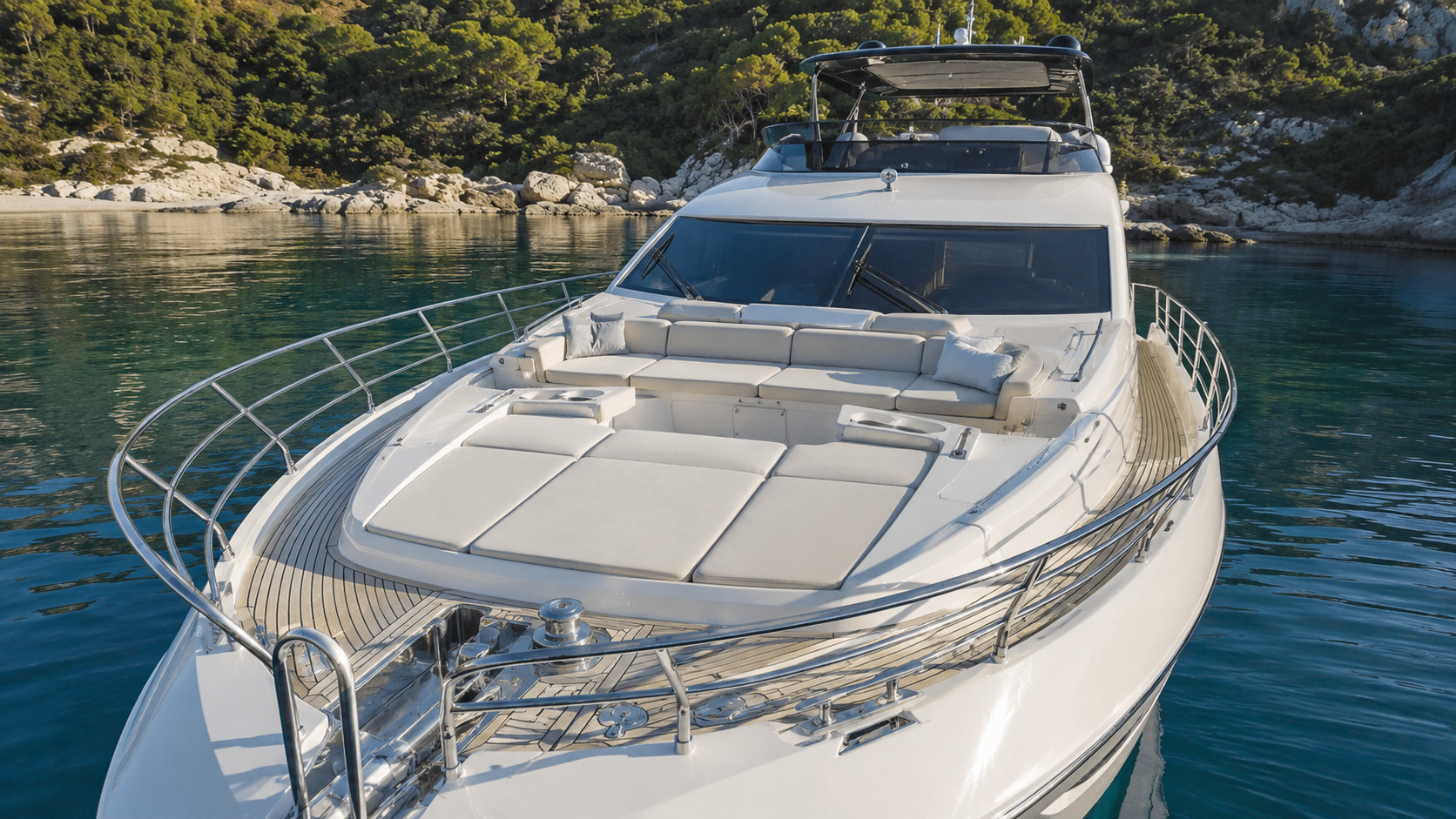
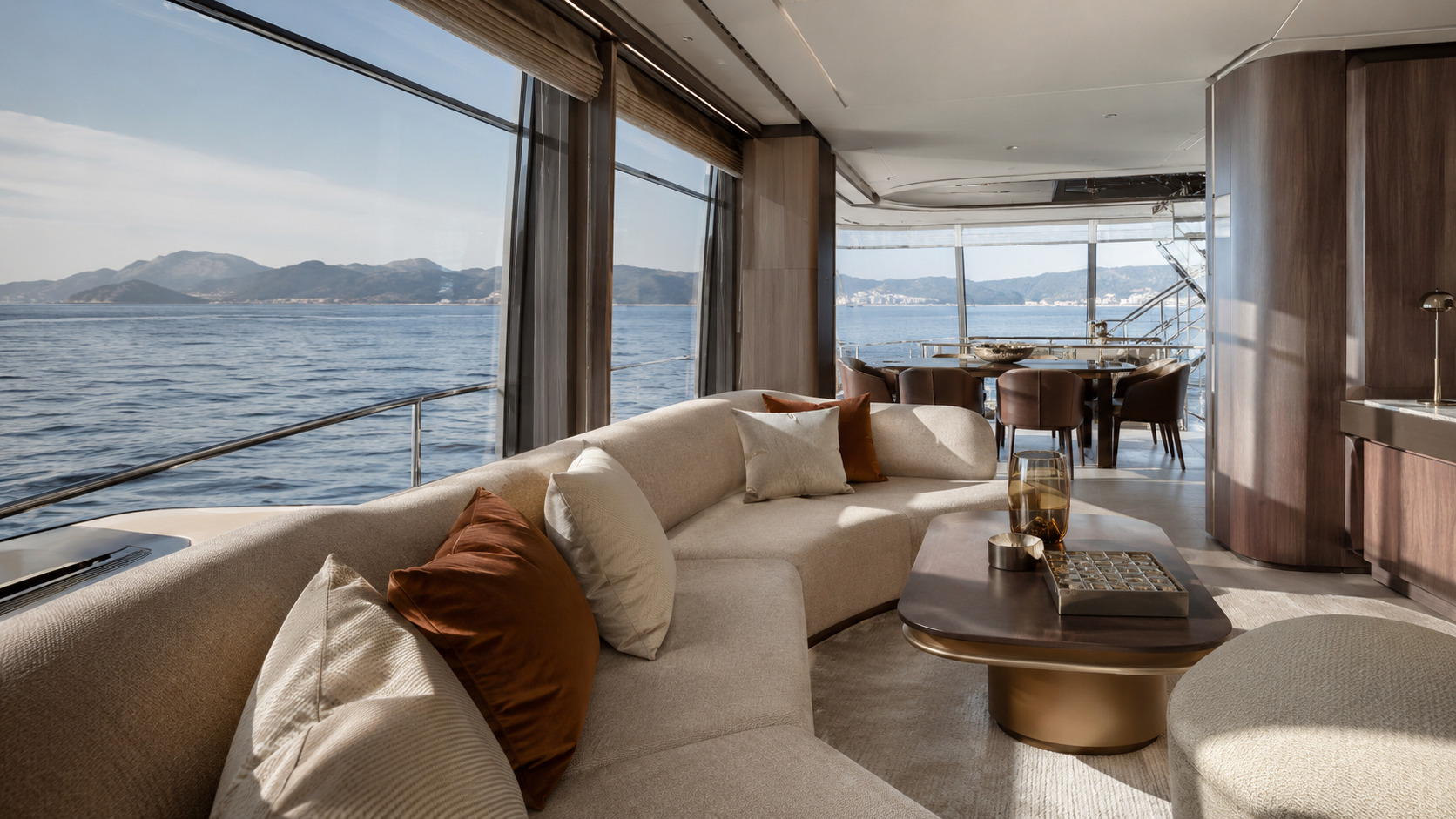
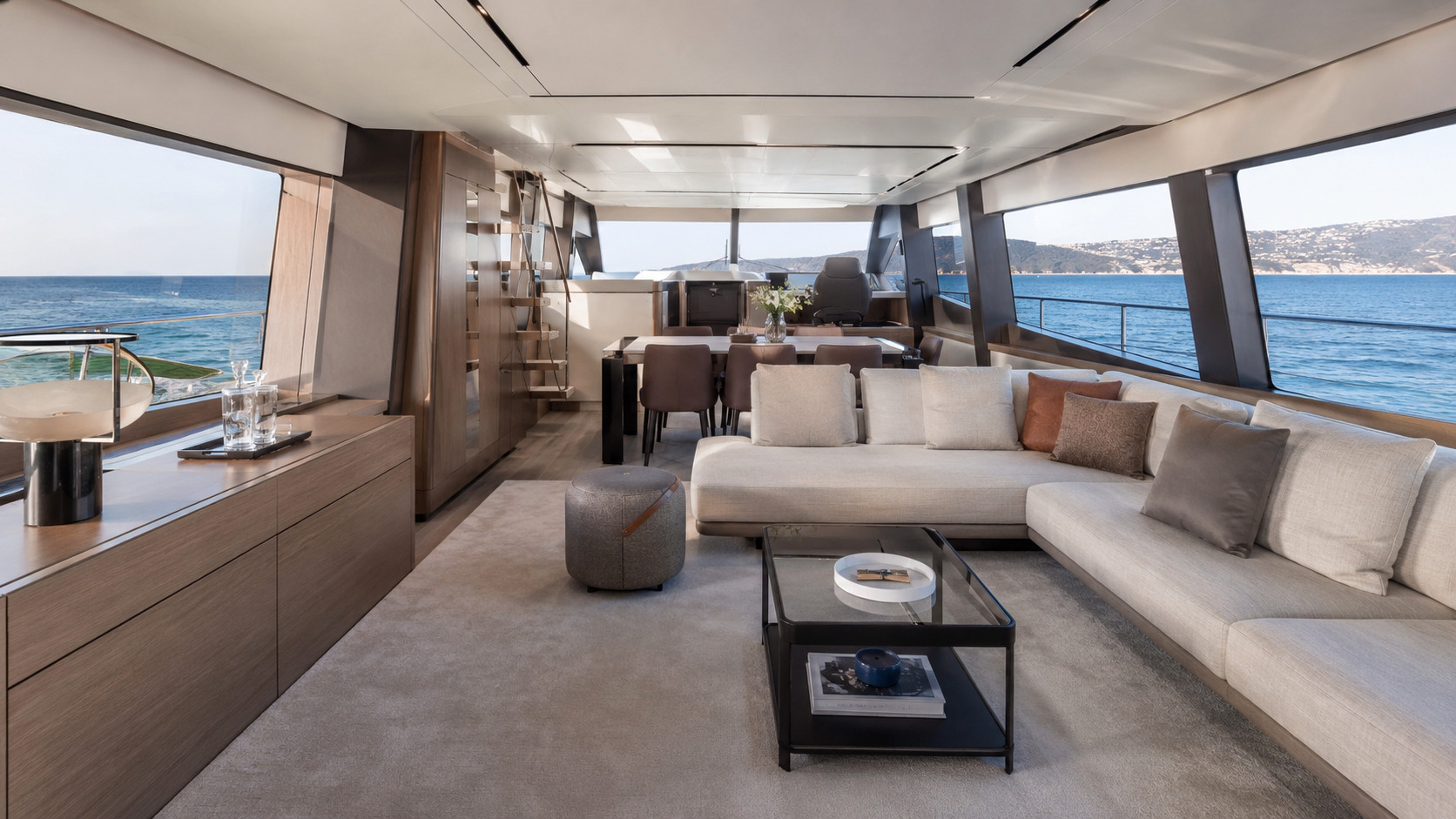
The Fly 72 uses the upper deck as a real living floor. The flybridge includes a forward sun lounge near the helm, a dining table opposite an American-style bar and an open aft section that can be configured around how the owner entertains. The foredeck lounge can shift between seating and sunbathing, with a carbon-supported shade system. On the main deck, a forward dinette sits between the galley and helm and can function as a breakfast spot or a crew mess, especially when the galley is enclosed. That separation is important on a yacht where professional crew may be aboard regularly rather than occasionally.
Specification varies by hull, market and option package. These are the features that materially shape how the yacht is used; verify the actual build sheet on the individual yacht before purchase.
Eight guests get dedicated sleeping accommodations rather than relying on convertible salon furniture.
Each guest cabin has better privacy than on smaller three-head layouts.
Separate crew accommodation makes a captain-and-mate operating model realistic for longer trips.
Sun lounge, dining, bar service and flexible aft space make the upper deck a genuine second social floor.
Carbon fiber high in the yacht reduces weight where it matters most for stability and interior-volume decisions.
Raymarine-based monitoring brings engines, alarms, pumps, tanks, ventilation and hotel systems into one interface.
Fuel can be shifted automatically to help keep heel angle under control as tank loads change.
Convertible seating and sunpad arrangements create another usable exterior destination away from the cockpit.
Systems complexity is where the Fly 72 begins to separate from smaller owner-operated yachts. In addition to twin MAN V12s, buyers may be managing generators, multiple HVAC zones, integrated monitoring, automatic fuel transfer, trim interceptors, navigation electronics, pumps, freshwater systems and crew-support equipment. The right survey should include functional testing of the hotel systems, not just a hull inspection and engine scan. For a yacht of this size, a detailed maintenance file can be almost as important as low hours.
At 74 feet 5 inches overall and 18 feet 5 inches of beam, the Fly 72 needs deliberate berth planning. Confirm actual marina limits, not just the nominal slip length. If the yacht will be kept in a seasonal market, confirm local travel-lift beam and weight capacity before assuming winter haul-out will be simple.
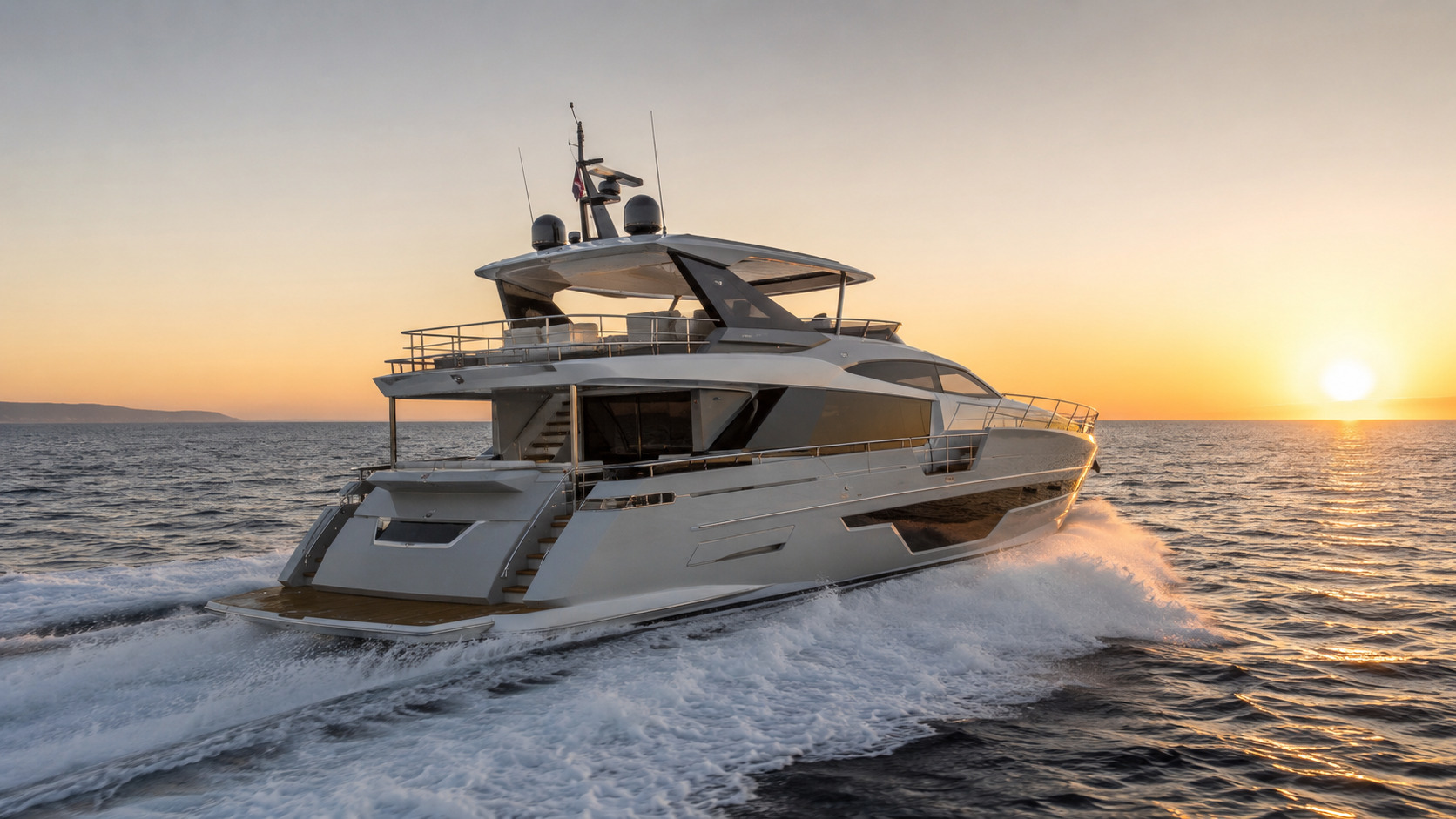
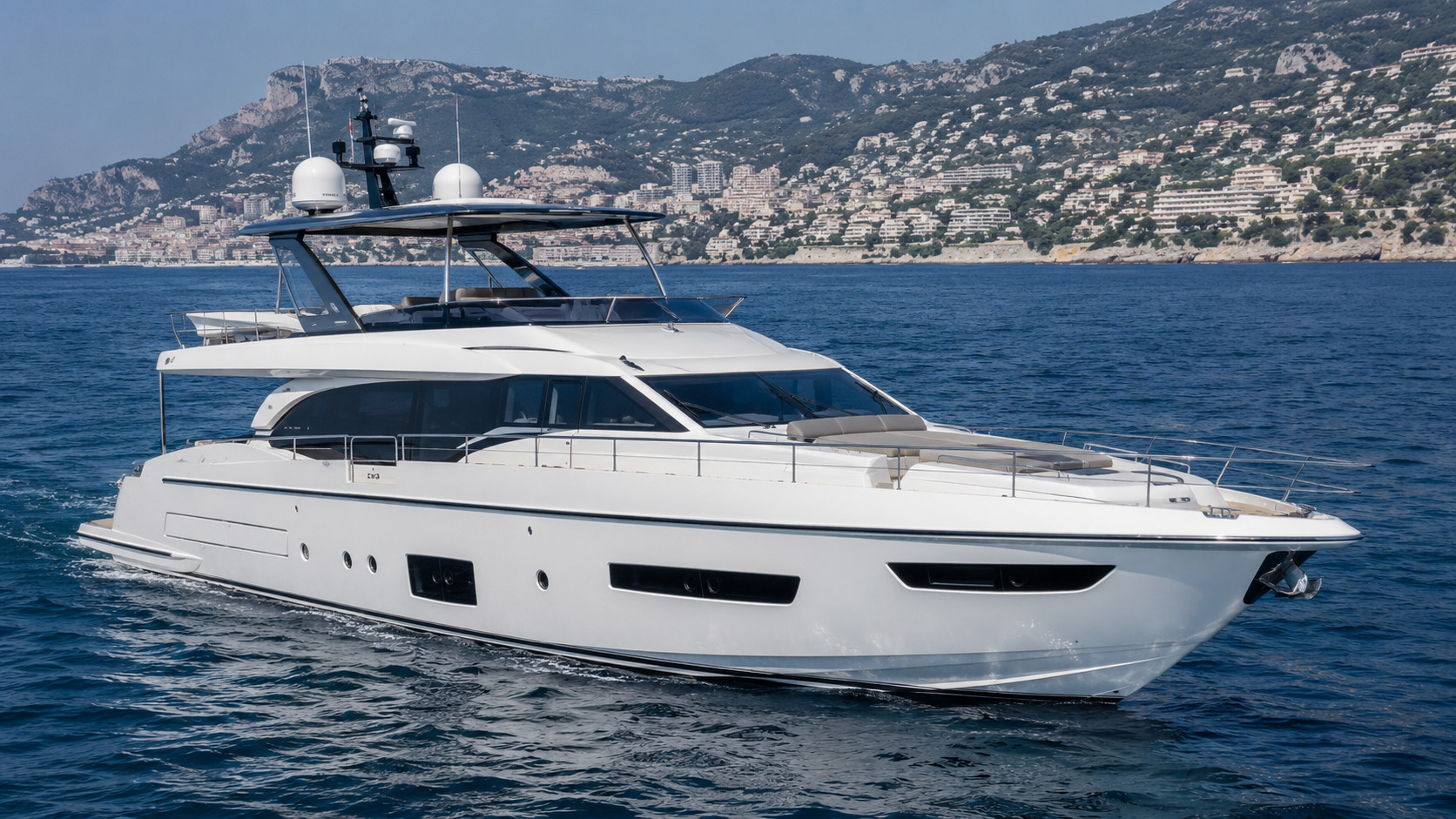
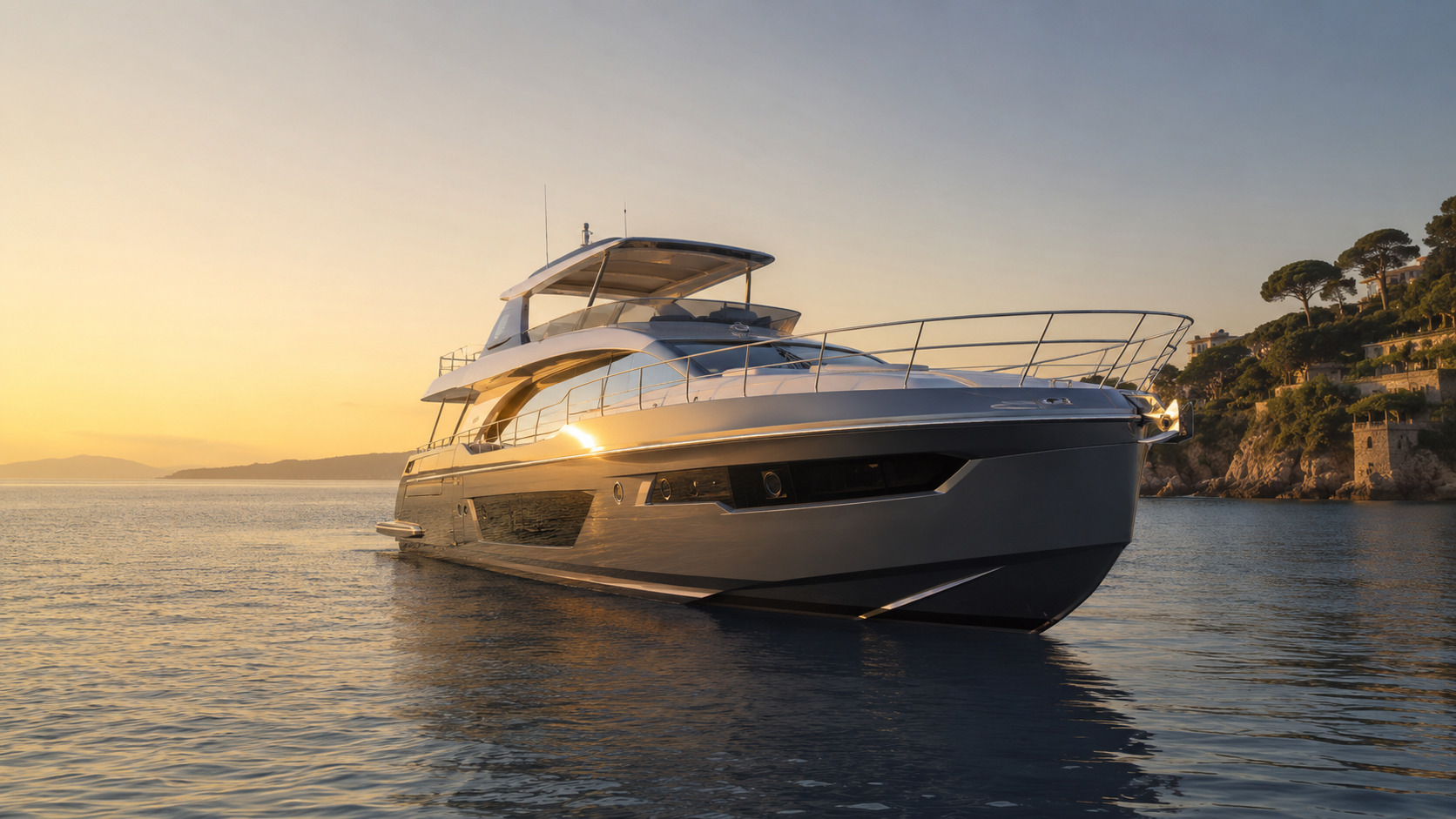
Use the gallery to inspect the running profile, flybridge, aft cockpit, bow seating, helm, salon, galley, owner suite, guest cabins, crew areas and transom. On a yacht at this scale, circulation and separation between guests, crew and machinery matter as much as décor.
Pricing for the Azimut Fly 72 varies with model year, engine package, hours, stabilizers, electronics, décor, service history and geography. Use the approved pricing registry for the live page rather than mixing dealer MSRP, brokerage asks and older-generation boats into one range.
Annual ownership should be built from the actual yacht. Start with dockage, insurance, scheduled engine and propulsion service, generator and HVAC maintenance, haul-outs, bottom work, detailing, storage where applicable, crew and fuel based on realistic annual hours.
Pricing, ownership-cost and payment examples are estimates for research purposes only and are not offers or commitments to extend credit.
Figures come from this page’s Boat Details fields. Illustration only and not an offer of credit.
Use the yacht-loan calculator to compare purchase price, down payment, rate and term. Run several scenarios rather than building the purchase around one optimistic payment. Actual approval, rate, term and down payment depend on underwriting and vessel eligibility.
Illustration only and not an offer of credit. Your actual rate and term depend on credit profile, vessel age, loan amount and ownership structure.
The most useful cross-shop is inside the Fly range. The Fly 68 keeps IPS maneuverability and four cabins in a smaller package. The Fly 72 adds beam, traditional MAN shaft power and a larger flybridge. The Fly 78 moves to triple IPS and much stronger separation between guest and service circulation. Buy the 72 because that middle position solves your use case, not because the number is larger.
Buying a Fly 72 is as much about the individual yacht as the model. New dealer inventory gives buyers the cleanest specification and warranty path. Brokerage examples can vary widely in electronics, stabilizers, décor, service history and engine hours. Private-party transactions may be financeable but demand tighter coordination around title, documentation, survey, lien payoff and insurance. Imported yachts require an additional check on documentation, taxes, certification and registration. At this size, do not negotiate from asking price alone; compare the service file, survey findings and option package.
New from dealer — verify final specification, options, warranty and delivery costs.
Brokerage yacht — compare service history, survey findings, hours and equipment, not asking price alone.
Private party — establish ownership documents, lien status, survey and closing requirements before a non-refundable deposit.
Imported yacht — confirm taxes, documentation, certification and registration before assuming the transaction can close normally.
Already looking at a specific Fly 72? Send Float Finance the listing. Whether the yacht is represented by a dealer, broker or qualified private seller, we can help you evaluate financing around the actual vessel and transaction rather than a generic payment estimate.
Pricing varies by model year, equipment, location, hours and condition. Stabilizers, electronics, décor packages and service history can move the value materially.
Azimut lists four guest cabins with eight guest berths, plus a separate crew cabin with two berths. The yacht also lists four guest head compartments plus a crew head, which makes it much better suited to multiple couples or longer stays than a three-cabin flybridge yacht.
Azimut publishes 10.4 liters per nautical mile at 14.8 knots for a 451-nautical-mile range, and 14.5 liters per nautical mile at 26 knots for a 323-nautical-mile range. Actual burn changes with loading, sea state, fouling, weather and generator use.
The Fly 72 uses two MAN CR V12 diesels rated at 1,400 hp each. Unlike nearby IPS-powered Fly models, the 72 uses conventional shaft propulsion.
There is no responsible universal percentage. Build the budget from dockage, insurance, MAN service, generators, haul-outs, bottom work, stabilizer service if fitted, detailing, crew, storage and actual fuel hours.
Azimut publishes 1.82 meters, shown as 5 feet 12 inches, including props at full load. For planning purposes, treat that as roughly a six-foot draft and verify the exact yacht before entering shallow marinas.
Potentially, yes, subject to borrower, vessel and lender eligibility. A lender may require survey, insurance, documentation and condition information, particularly on a higher-value used yacht.
No. It is a 74-foot yacht with an 18-foot-5-inch beam and more than 117,000 pounds of full-load displacement. Overland moves require specialized yacht transport, permits and route planning.
Tell us a little bit about yourself and the boat you are looking to finance.