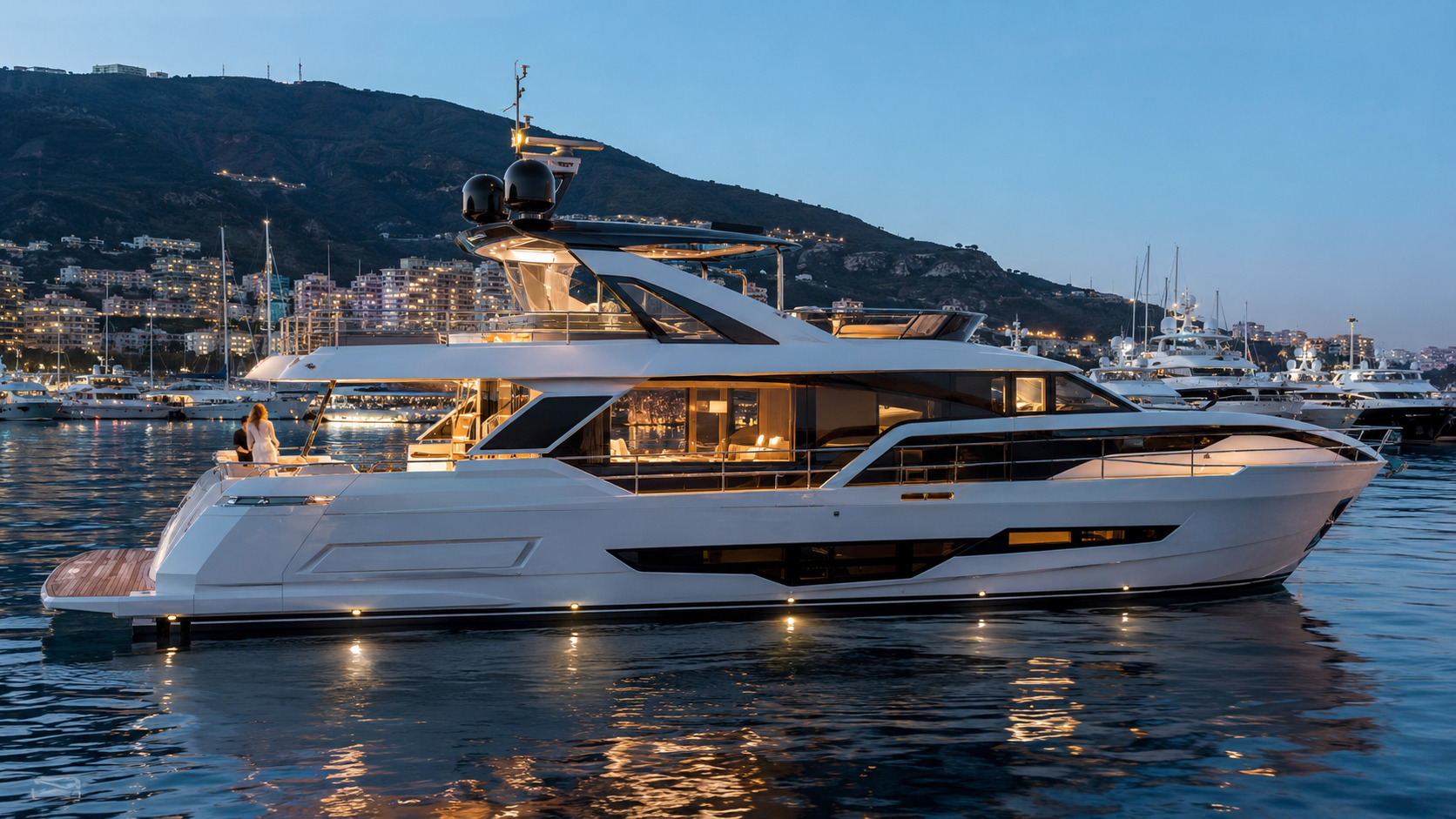
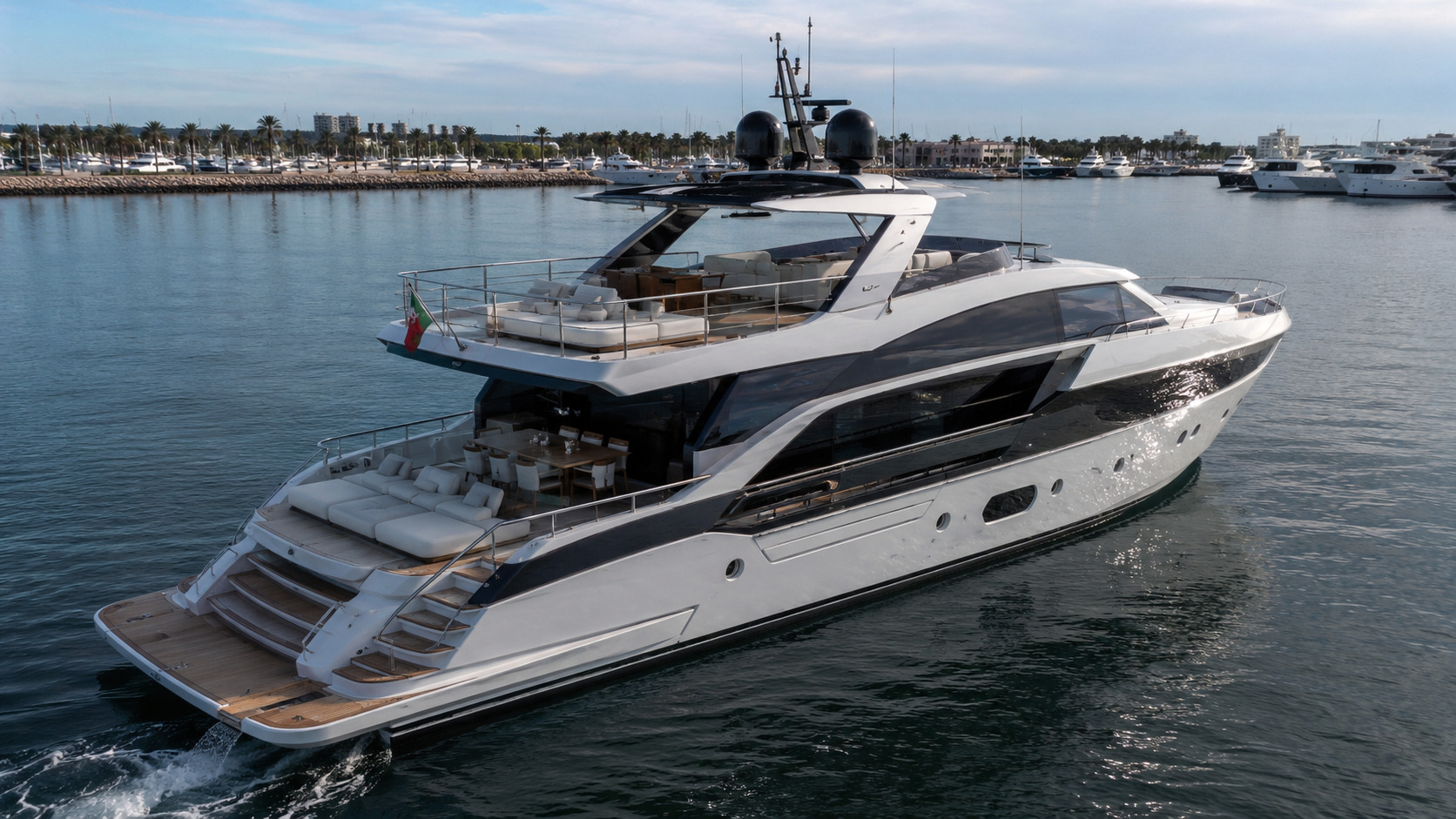
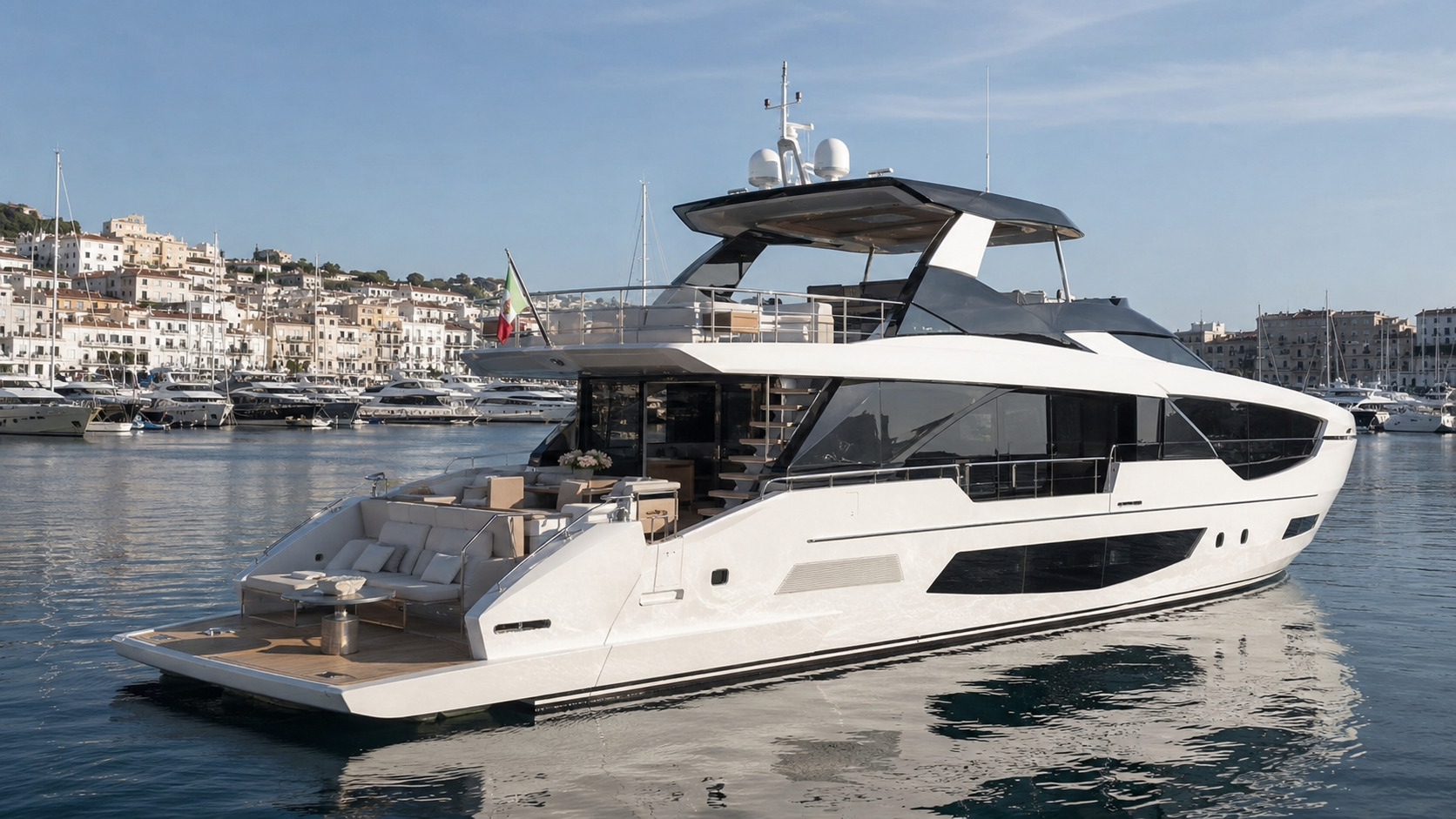
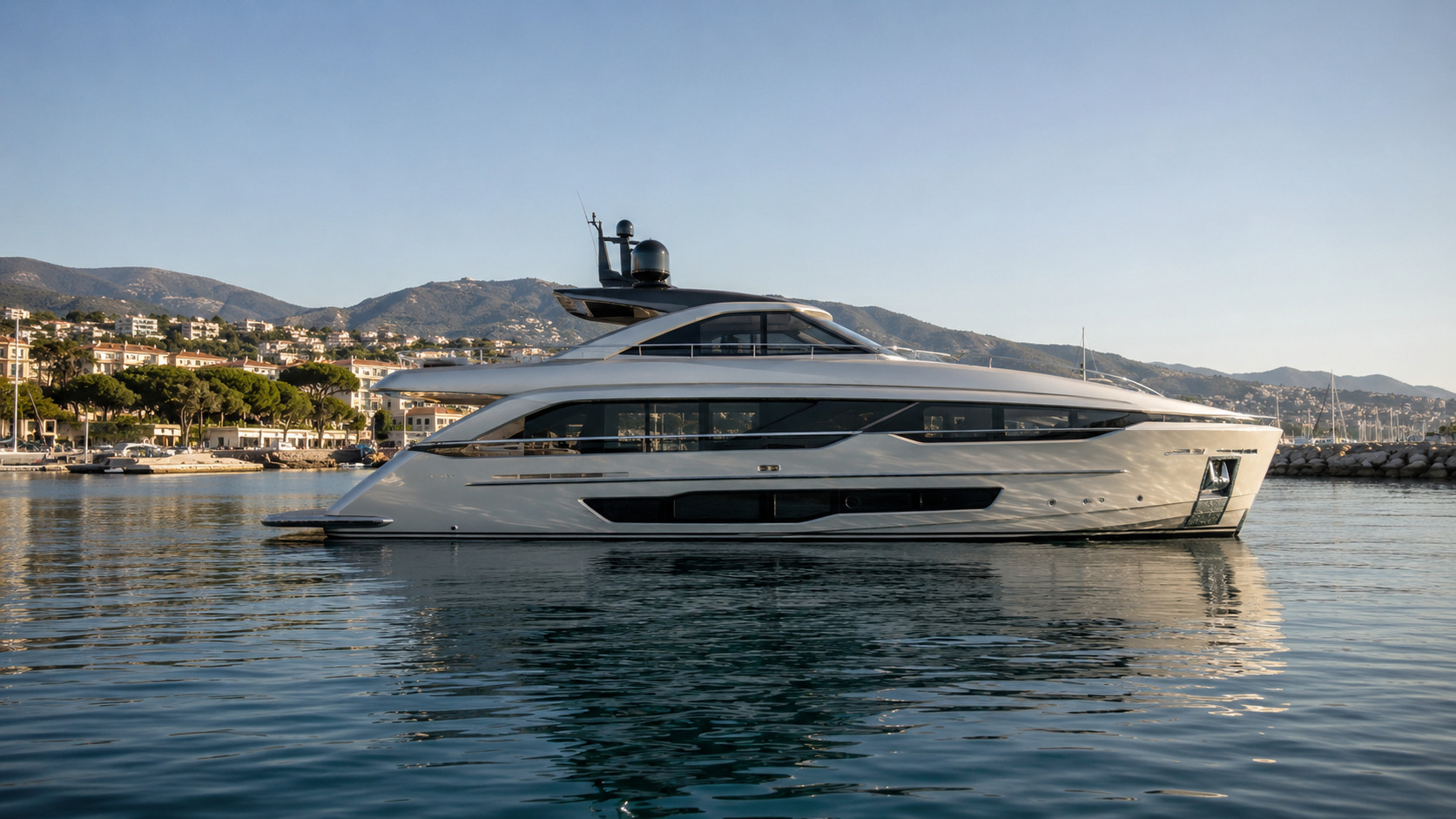
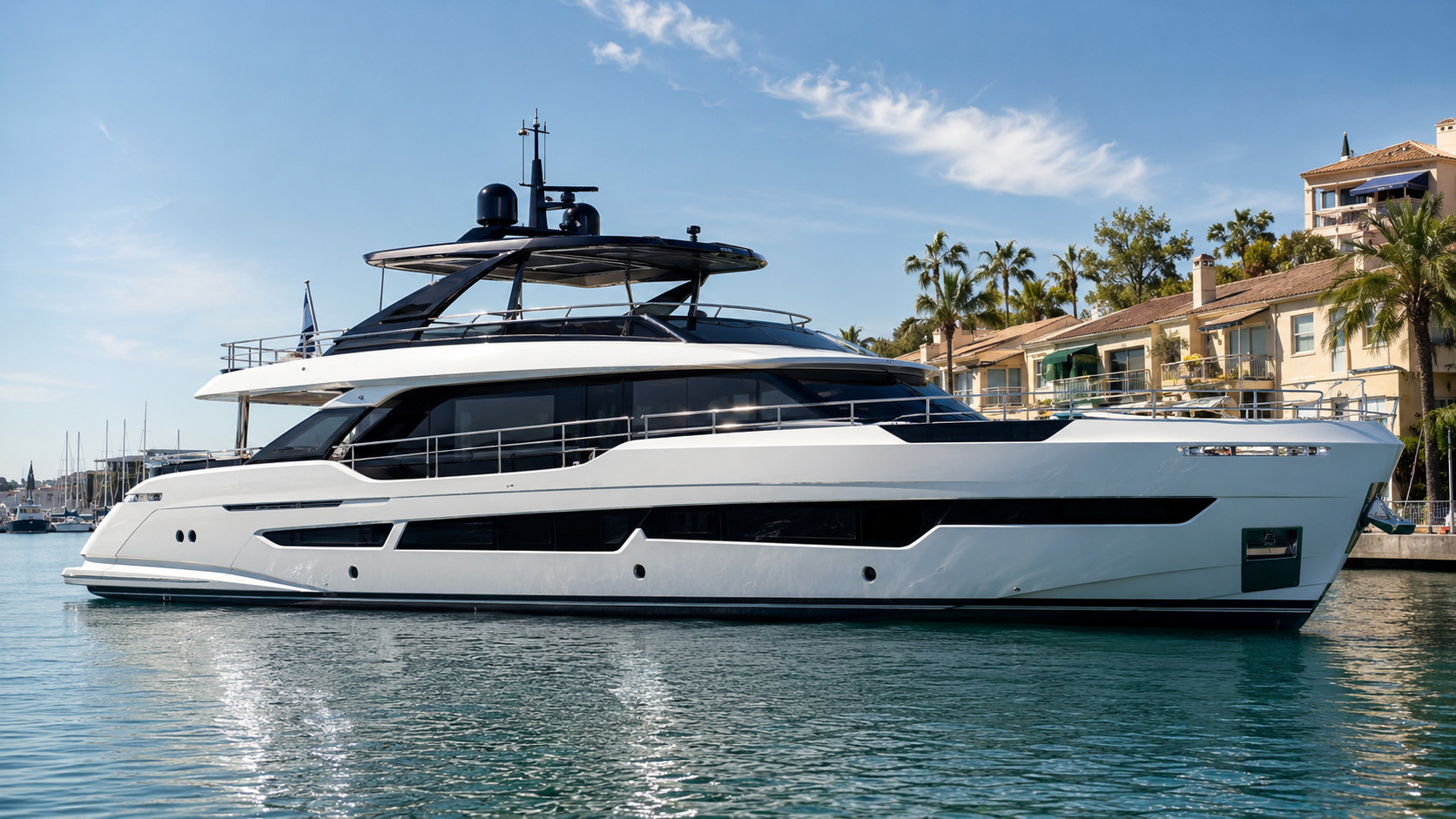
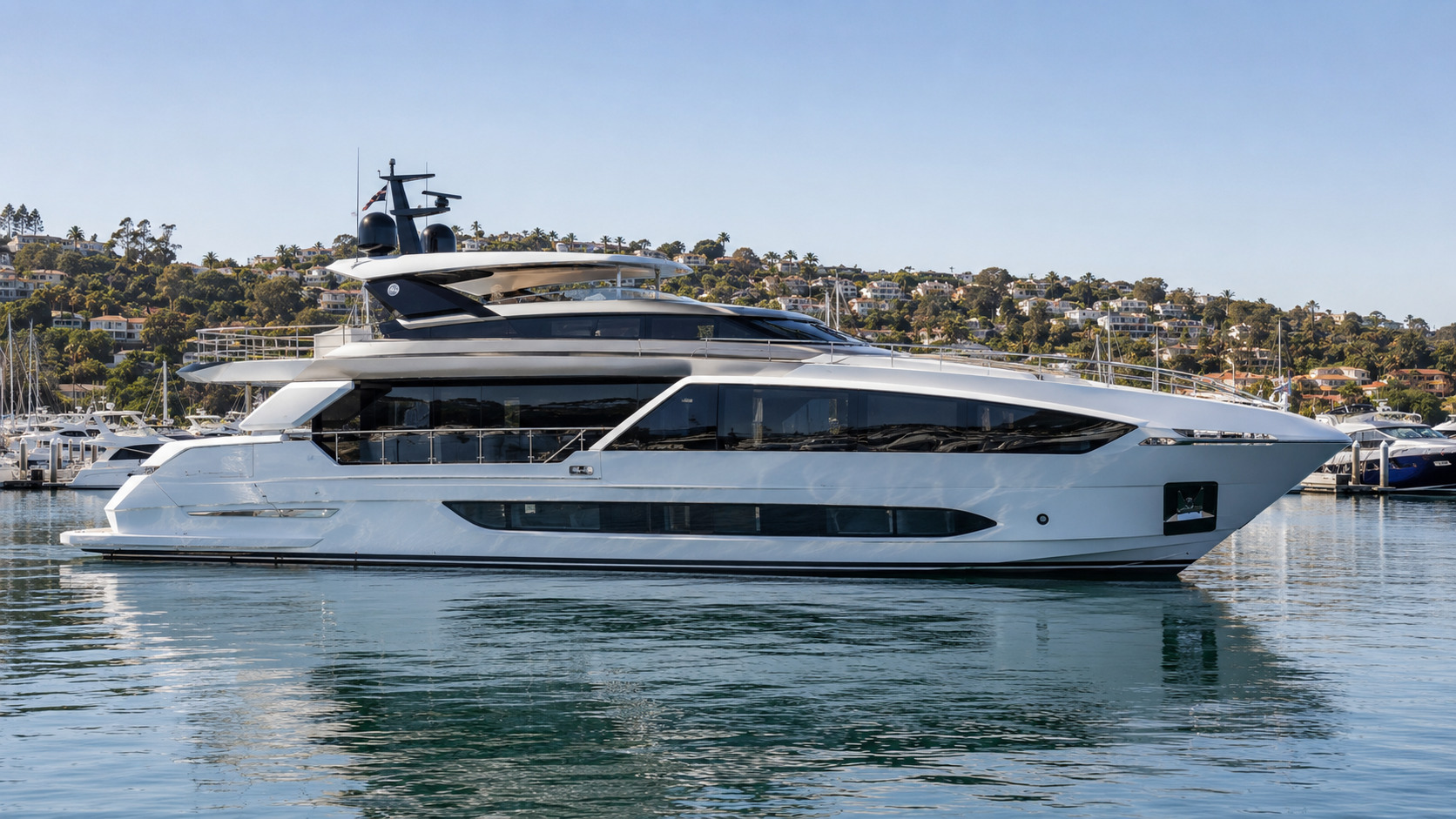
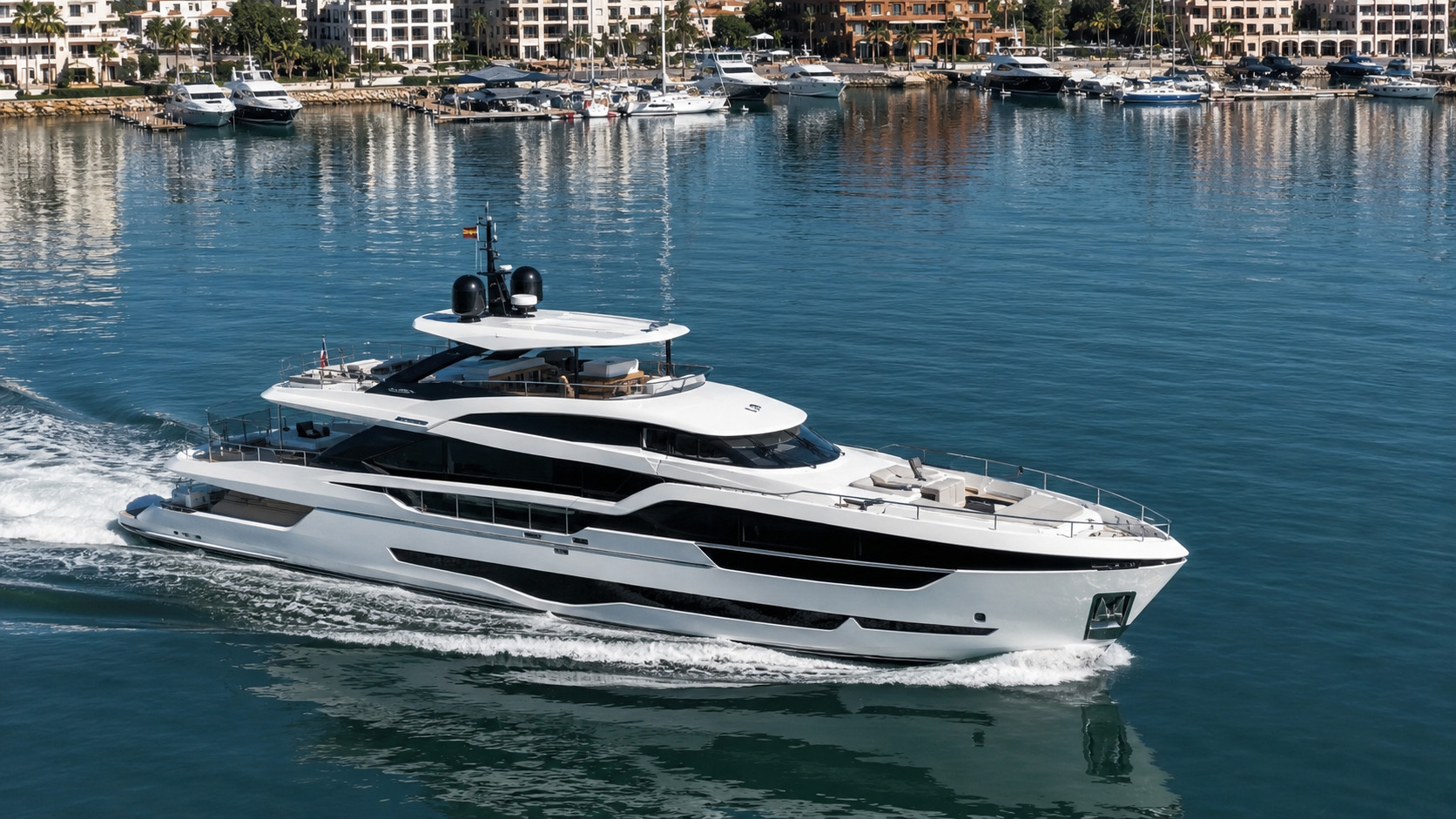
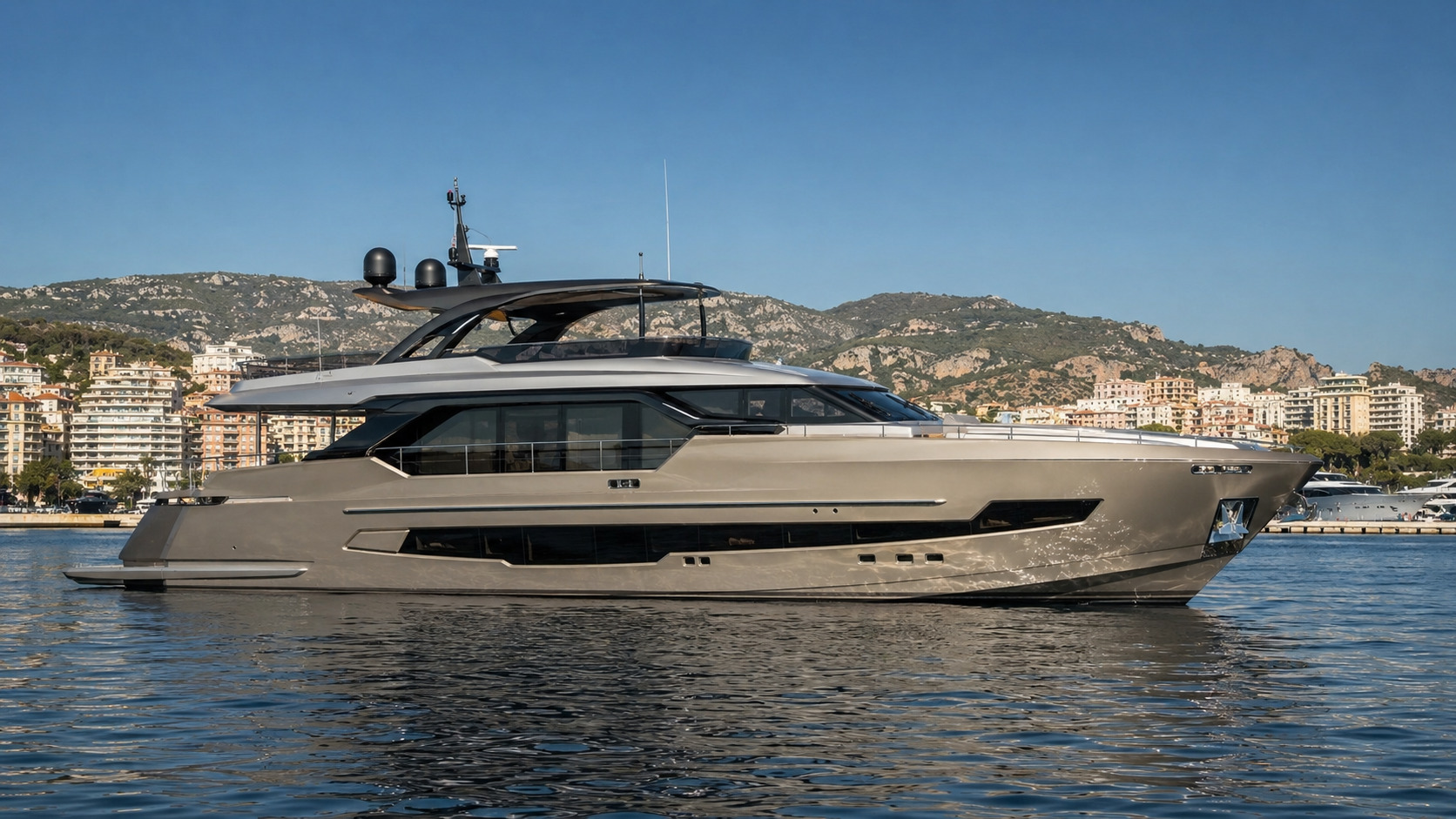
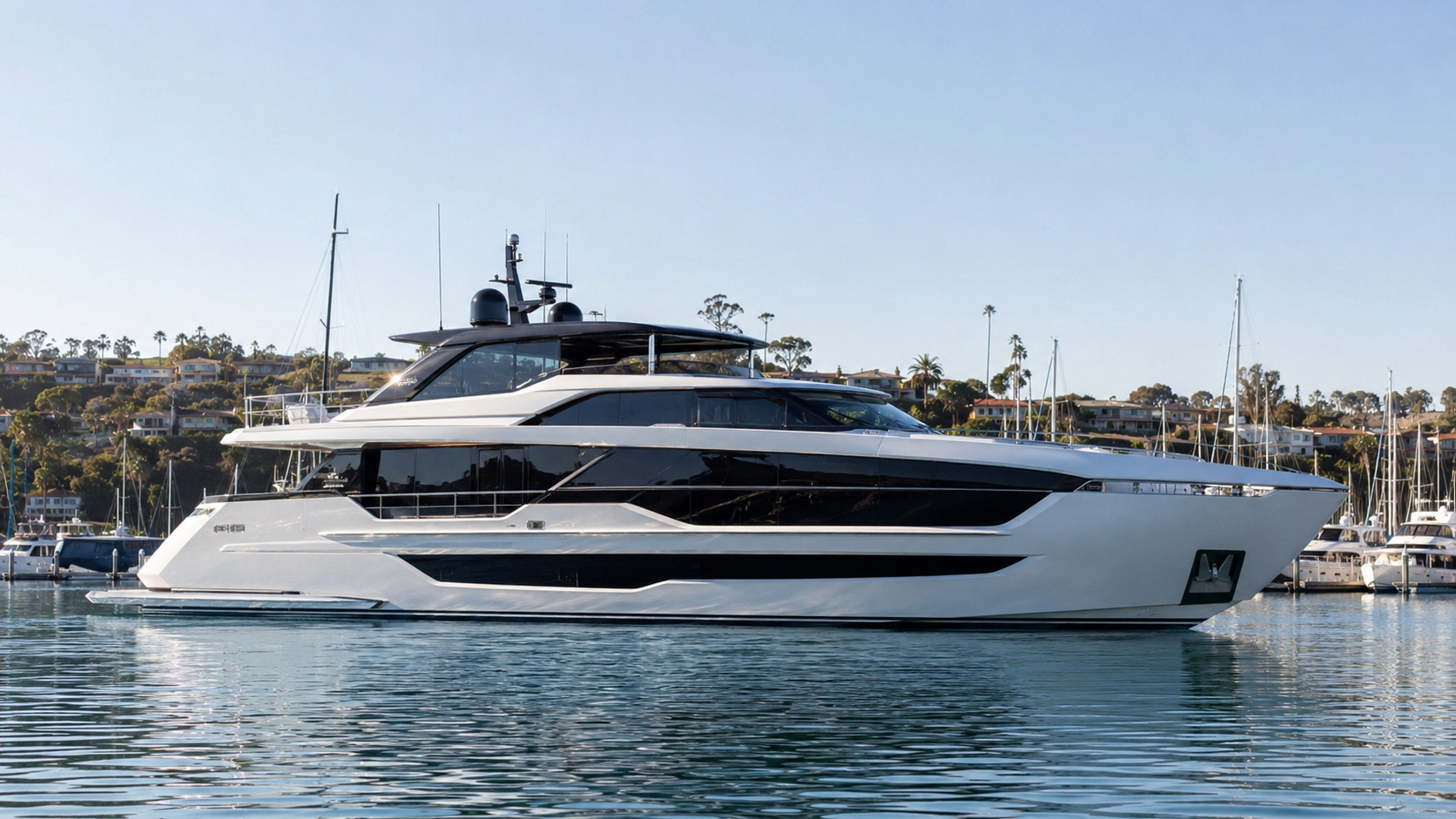
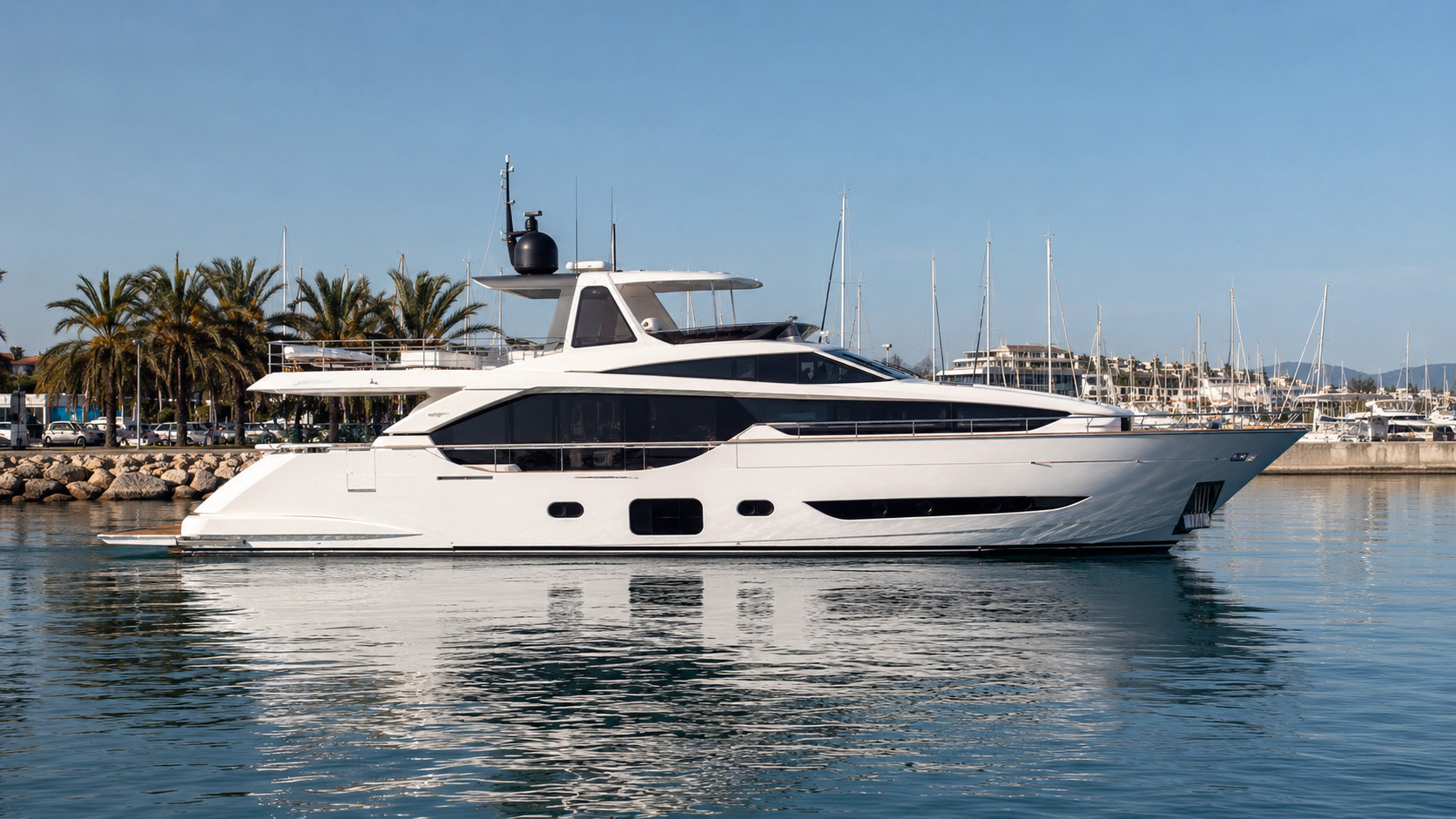
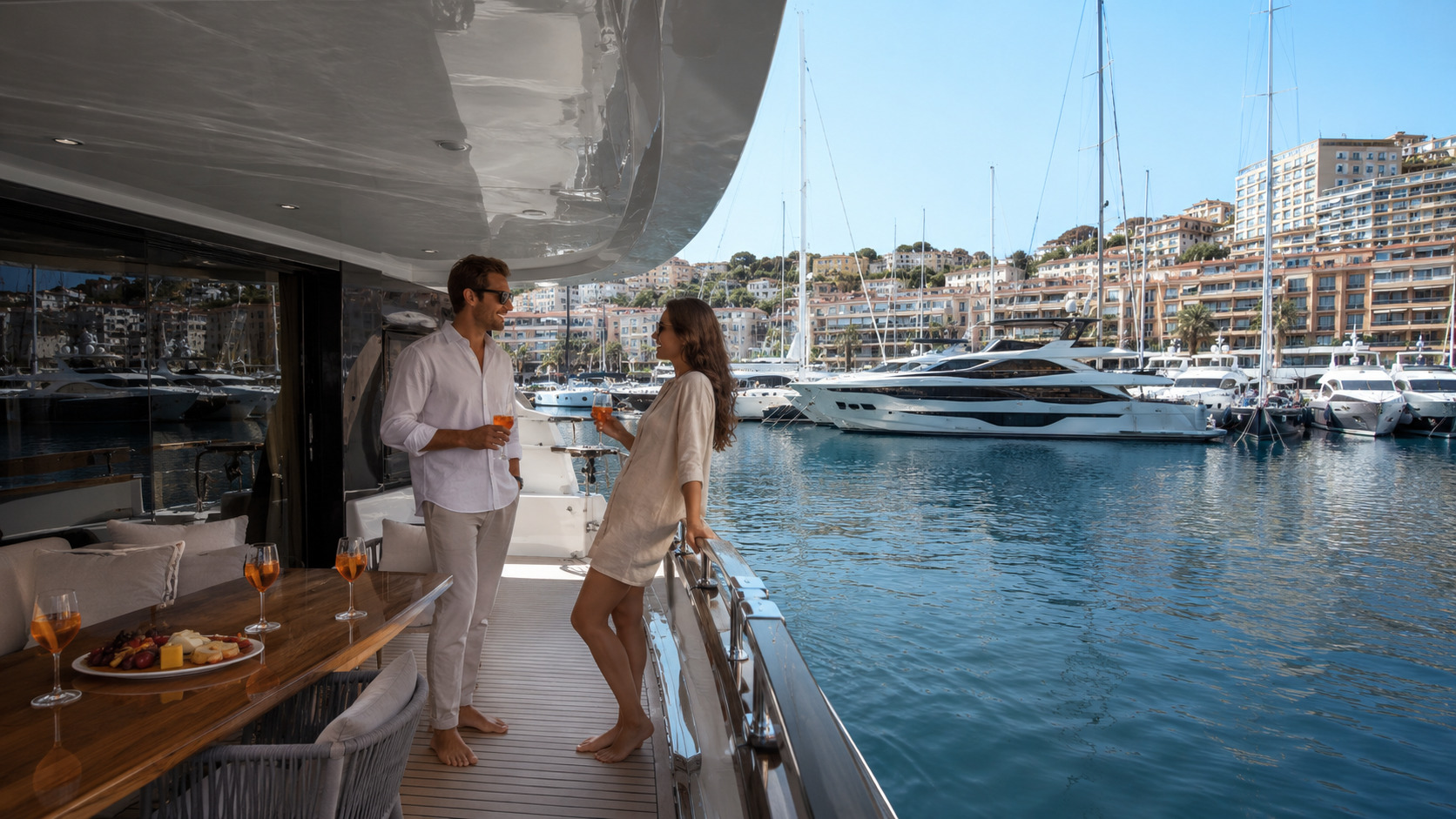
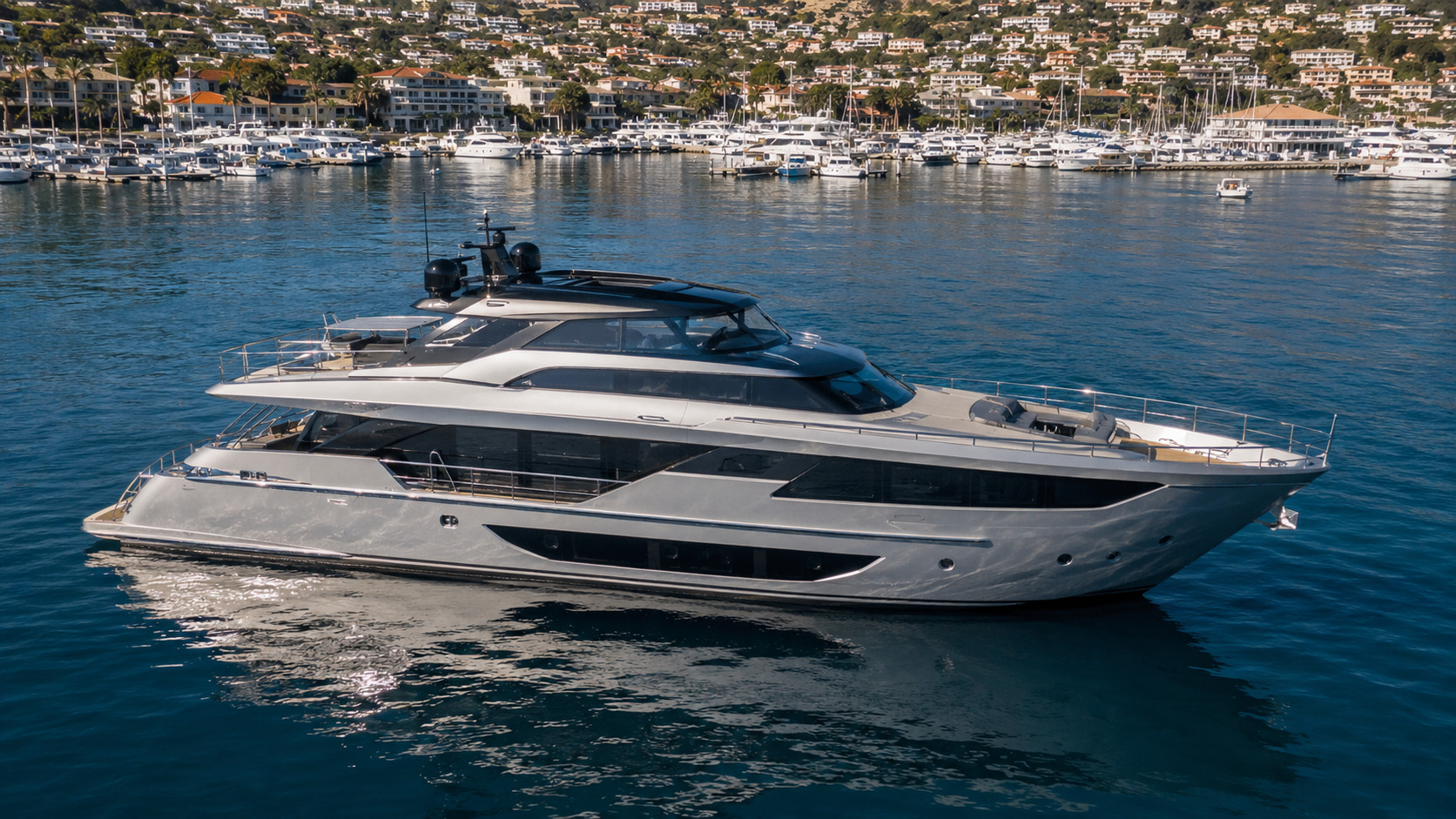
The Azimut Grande 27M occupies an interesting place in the Grande range because it is nearly the same length as the newer 26M yet approaches the layout and drivetrain very differently. Its signature feature is the raised pilothouse, which frees the forward main deck for an owner suite while allowing four additional guest cabins below in the five-cabin arrangement.
That layout creates a clear superyacht service pattern: navigation is separated from the salon, crew have dedicated accommodations, and guests do not need to share operating spaces with the captain. The 21′ 7″ beam is wider than the 26M, which contributes to interior volume and a substantial full-beam feel below.
The compromise is generation and complexity profile. The 27M uses conventional twin MAN V12 shaft propulsion and a more traditional planing-hull layout rather than the 26M’s pod-powered, Deck2Deck-focused architecture. Some buyers will prefer the service familiarity and directness of shafts; others will value the newer 26M’s packaging and efficiency.
Best For — buyers who want a compact raised-pilothouse superyacht with main-deck owner privacy and a conventional shaft-drive machinery layout.
Not For — buyers who prioritize the newest pod-driven efficiency systems, a transforming beach terrace or a slower long-range displacement brief.
The Grande 27M is built in GRP with carbon fiber used in the superstructure to reduce weight high in the yacht. Azimut publishes a planing hull with 13.6 degrees of deadrise at the stern and 16.8 degrees amidships.
Full-load displacement is approximately 93 tonnes, with a 21′ 7″ beam and 6′ 4″ draft. The relatively broad beam helps support the raised-pilothouse arrangement and main-deck owner suite without stretching LOA beyond 88 feet.
Survey priorities include hull moisture and prior repair, shaft and rudder alignment, stabilizers, running gear, carbon/GRP interfaces where accessible, and the condition of crew/service spaces that often reveal how intensively the yacht has been operated.
Twin MAN R V12 1900-hp engines drive conventional shafts. Azimut publishes up to 28 knots maximum and 24 knots at cruise, making the 27M one of the faster boats in the current Grande lineup.
The shaft arrangement is more mechanically familiar to many captains and service yards than pod propulsion. It also means close-quarters handling depends more heavily on bow/stern thrusters, captain technique and installed control systems.
On a used yacht, engine hours matter less than the completeness of service records. Review cooling systems, exhausts, mounts, alignment, shaft seals, gearboxes, oil analysis and stabilizer service alongside the MAN engine survey.
Fuel capacity is 9,500 liters, approximately 2,510 US gallons.
The 24-knot published cruise speed should not be treated as the only meaningful operating point. A captain will choose speed based on sea state, fuel plan, arrival time and guest comfort. The broad planing hull can be run more slowly, but the economics need to come from the actual performance curve rather than assumptions.
For annual planning, combine realistic engine hours with generator load and the yacht’s normal itinerary. A 2,510-gallon bunker makes fuel a major operating line item even when the purchase price dominates attention.
At up to 28 knots, the 27M delivers sport-yacht-like speed in a raised-pilothouse superyacht layout. That is its most distinctive dynamic trait inside the Grande family.
Sea trial the actual yacht through the speeds you expect to use. Watch for vibration, steering load, trim behavior, stabilizer performance and noise at both displacement and fast-cruise settings rather than judging it only at maximum speed.
The raised pilothouse is the key deck-planning decision. It keeps the navigation center out of the salon and allows the main-deck owner suite to occupy prime real estate forward.
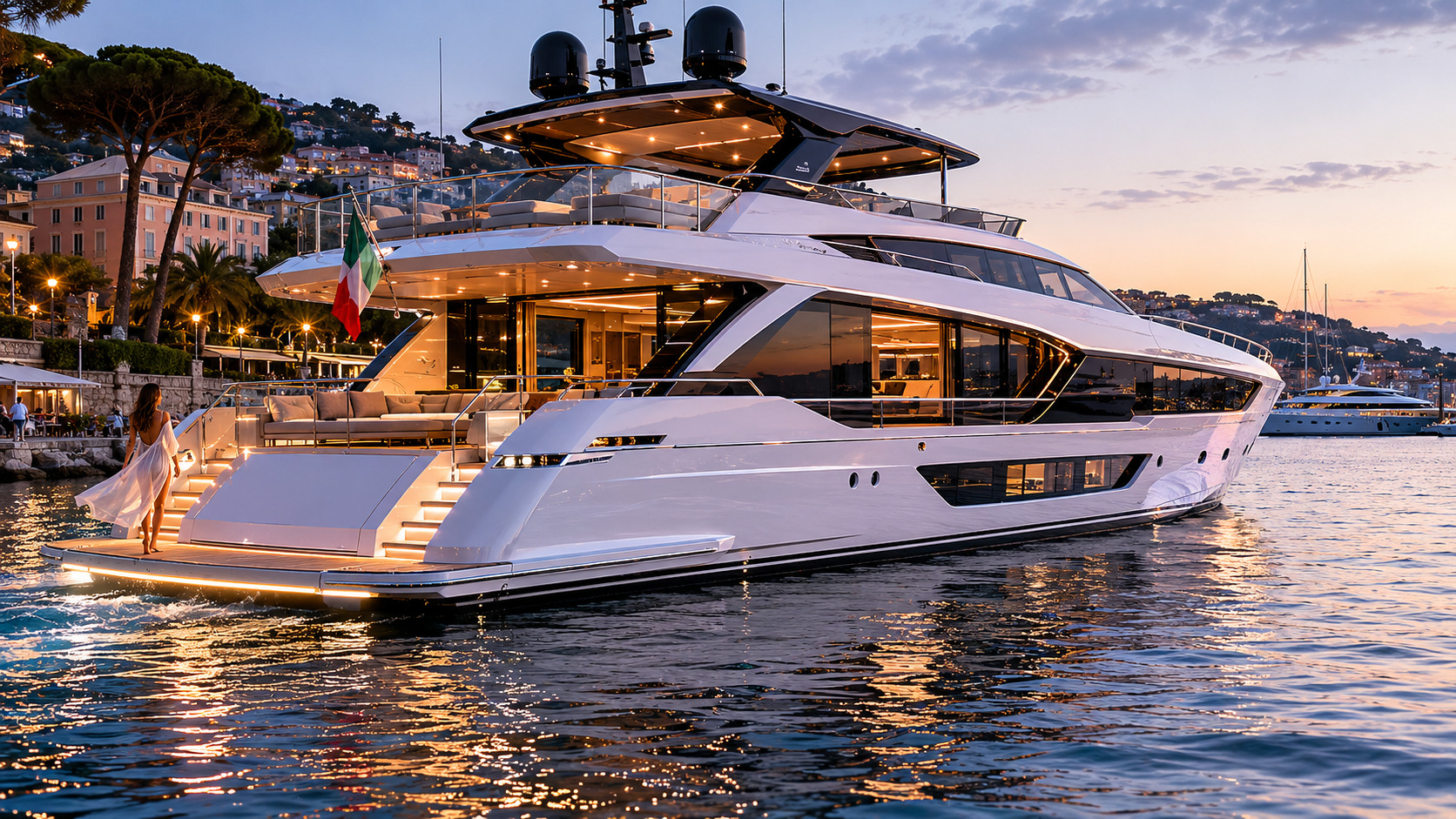
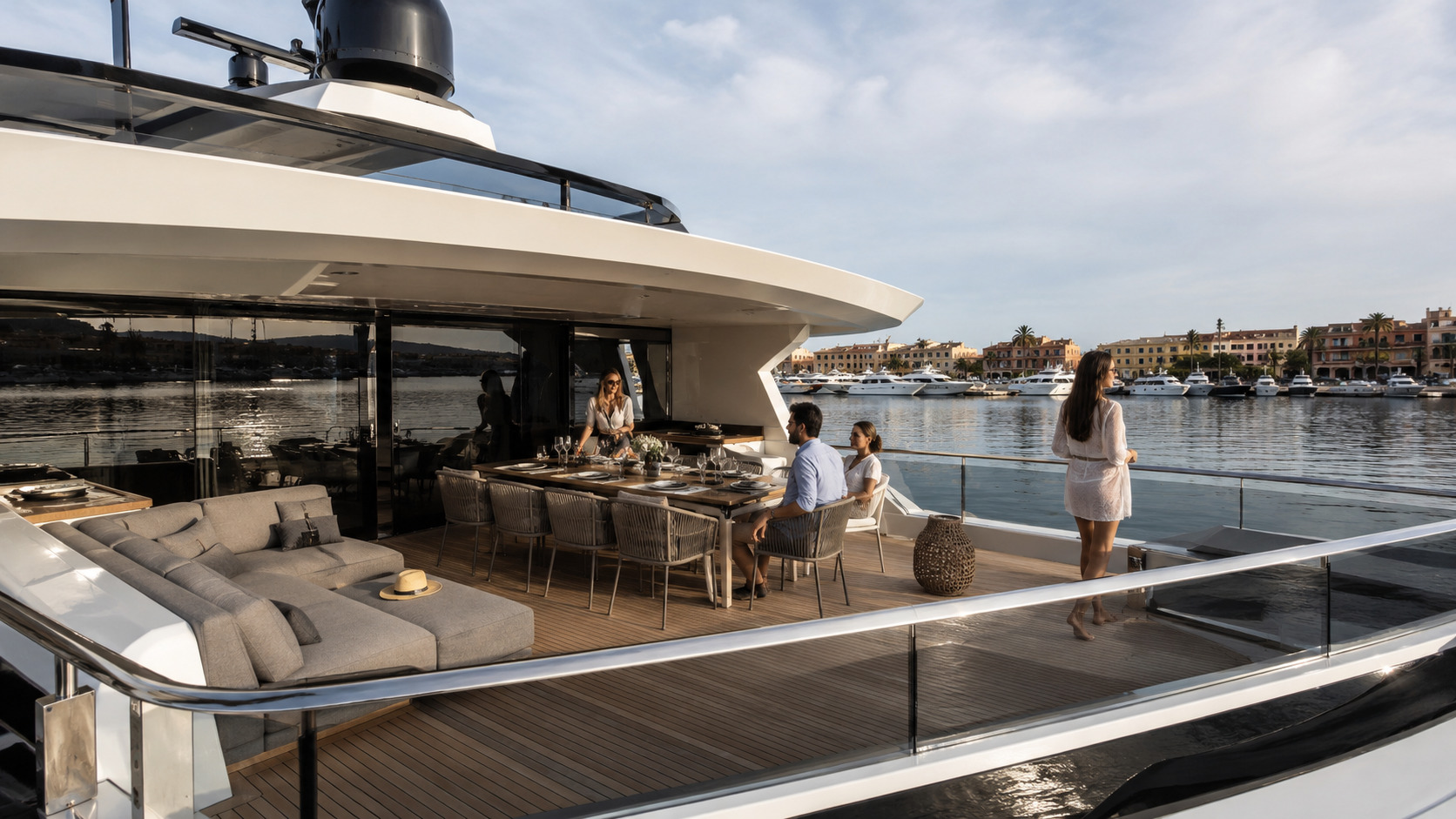
Aft and upper exterior spaces are designed as full social zones, while crew access can remain more discreet than on a conventional flybridge layout. The four- or five-cabin choice also changes circulation below, so buyers should compare general arrangements instead of assuming every 27M is identical.
Tender and water-access equipment varies by build. Test hydraulic platforms, cranes, passerelles and garage doors during survey because these systems can be expensive to restore.
The 27M should be surveyed like a professionally operated yacht. Run generators under load, test stabilization, HVAC, shore power, pumps, black/gray water systems, navigation electronics, passerelle and tender-handling systems.
Older examples may have undergone electronics or interior refits. Document what was replaced, who performed the work and whether electrical drawings were updated. A cosmetic refit does not substitute for mechanical history.
The 21′ 7″ beam is the number most likely to surprise buyers coming from smaller yachts. Confirm berth width, fendering, service access and turning room in addition to the 87′ 10″ LOA.
Show the raised pilothouse, main-deck owner suite, broad salon, guest cabins, crew areas, upper exterior spaces and conventional engine room. The gallery should help a buyer understand why the 27M feels different from the newer 26M despite nearly identical LOA.
Grande 27M values vary materially by build year, cabin arrangement, engine hours, stabilization, electronics, refit history, tax status and location.
Because the 27M has been in service longer than the 26M, condition and maintenance history can matter more than small differences in model year.
Build the annual ownership estimate from the actual yacht and home port.
Pricing, payment and ownership-cost figures are illustrations only and are not offers or commitments to extend credit.
Market price band
$4,400,000 – $10,250,000
Estimated monthly
From $30,105/mo
Figures come from this page’s Boat Details fields. Illustration only and not an offer of credit.
Estimate Your Grande 27M Payment
Use the yacht-loan calculator to test purchase price, cash down, rate and term before negotiating. On a superyacht-scale purchase, treat the calculator as a planning tool rather than a substitute for underwriting because vessel age, ownership entity, liquidity and transaction structure can materially affect the available terms.
Illustration only and not an offer of credit. Your actual rate and term depend on credit profile, vessel age, loan amount and ownership structure.
Compare the Grande 27M Before You Buy
The 27M is the conventional-shaft, raised-pilothouse choice between the newer 26M and larger 30M. Choose it for main-deck owner privacy and fast 28-knot performance; step to the 30M when the Infinity Skydeck, five fixed guest cabins and newer D2P/pod platform matter more.
Brokerage 27M examples should be compared on crew records, refit history and technical condition, not on interior presentation alone. A well-run older yacht can be a better purchase than a cosmetically fresh boat with deferred machinery work.
If buying across borders, clarify VAT/tax status, flag, title/documentation and insurance requirements before negotiating a final price.
Send the specific 27M listing to Float Finance early so financing, survey, insurance and ownership-entity planning can happen before the closing timeline tightens.
Potentially, subject to borrower, vessel and lender eligibility. Survey, insurance, ownership structure and documentation are likely to be central to underwriting.