
Call Us : 207-994-5109
Mon – Fri: 8 am to 9 pm & Sat – Sun: 10 am to 8 pm
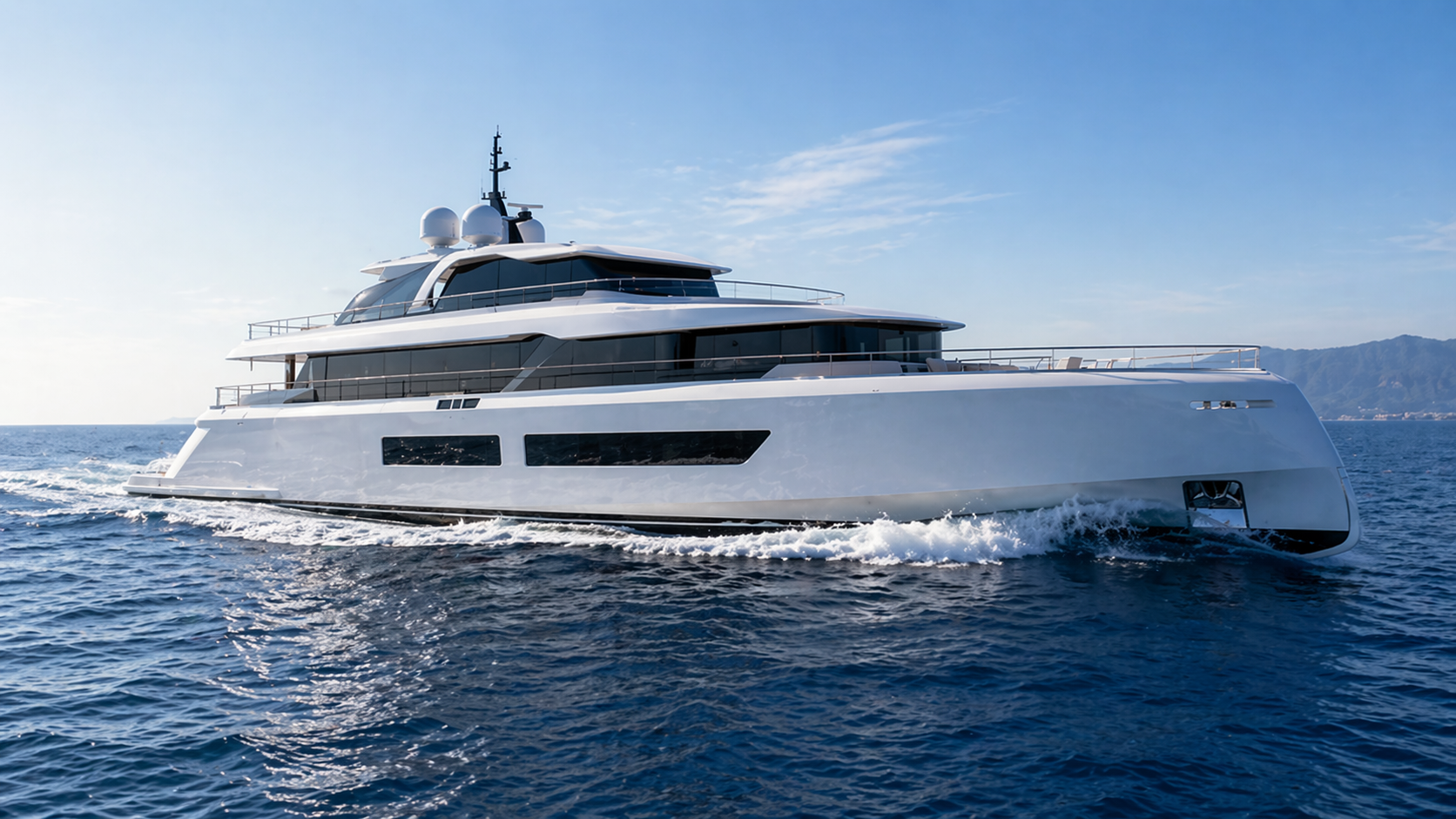
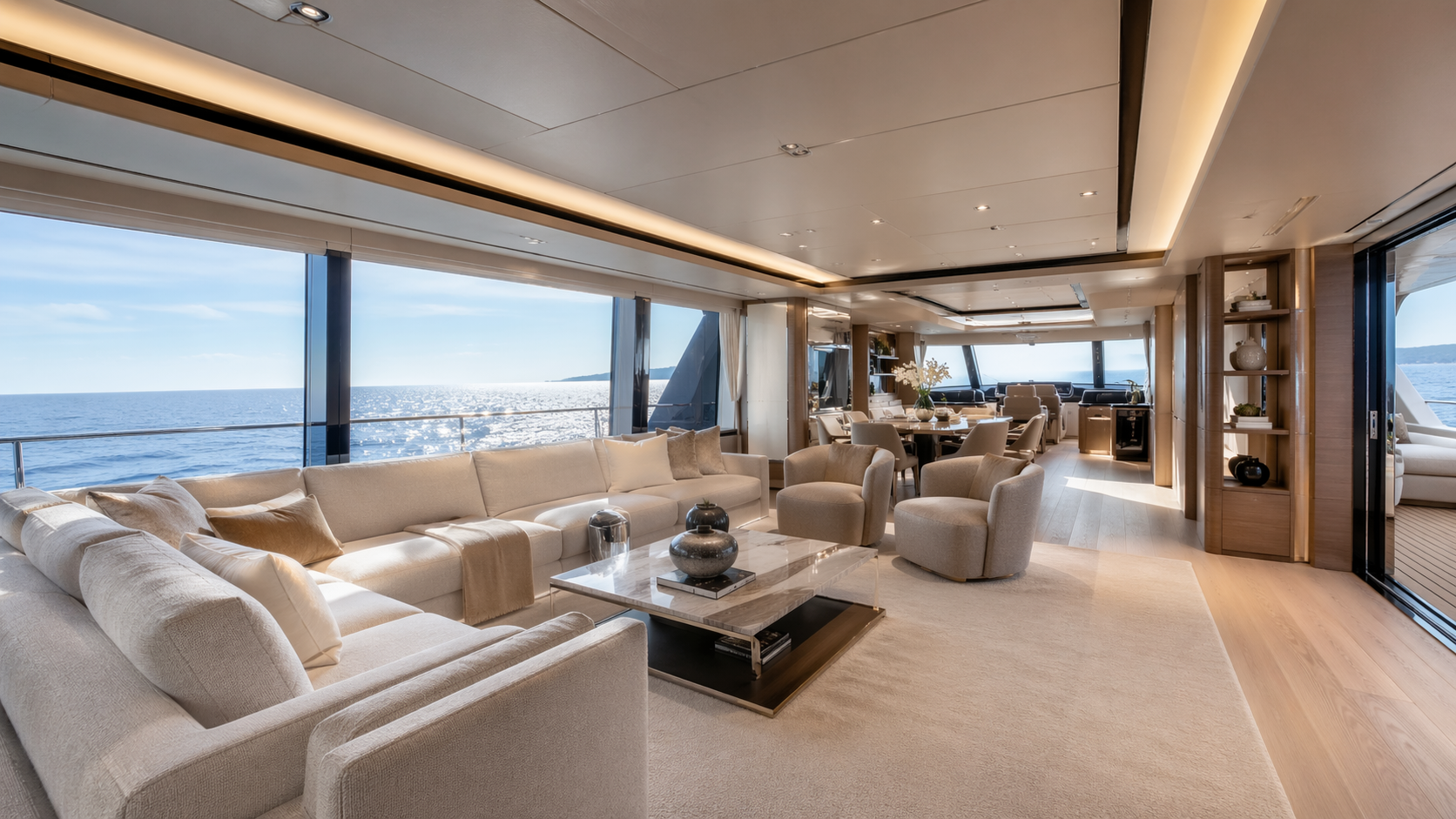
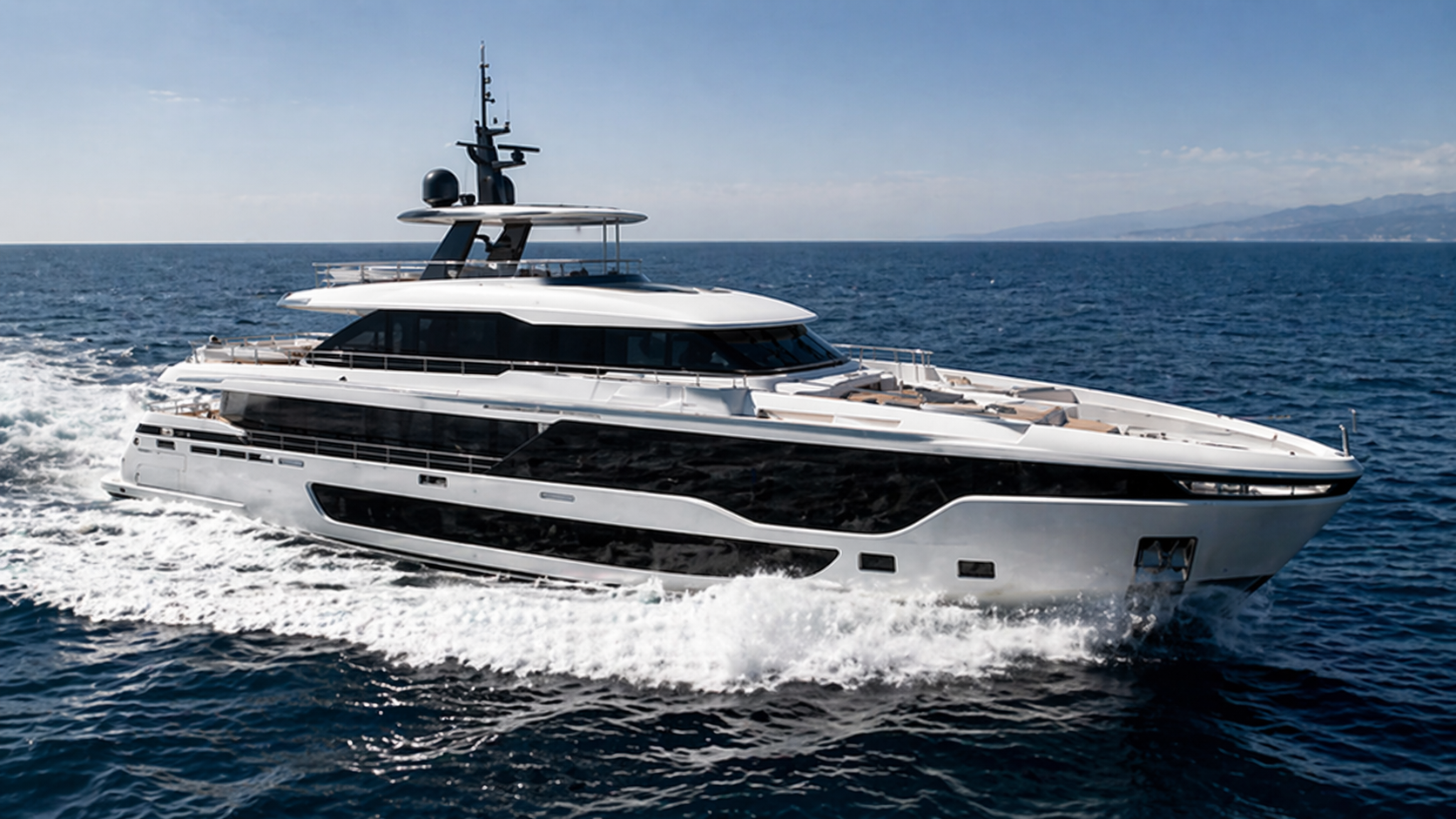
The Azimut Grande Series is where Azimut moves beyond large recreational yachts and into true superyacht ownership. The range begins in the mid-80-foot class and extends to the 143-foot Grande 44M flagship project. Across that span, the common brief is not simply more length. Grande yachts are designed around private owner spaces, professional crew circulation, multiple outdoor living zones and the ability to stay aboard for longer periods without asking guests to live around the machinery or service areas.
The trade is that scale changes everything around the purchase. A Grande may still reach planing or fast semi-displacement speeds, but these yachts carry more systems, crew, tankage, stabilization, hotel load and marina requirements than the Fly, S or Magellano boats most owner-operators encounter. The right Grande is therefore not the one with the biggest salon. It is the one whose crew model, guest count, cruising pattern and annual operating structure match the way the owner actually intends to use it.
Within the family, the 26M and 27M occupy the compact-superyacht end of the range. The 30M and 32M add volume, crew capacity and five-cabin layouts while preserving meaningful speed. The 36M and Grande Trideck move into multi-deck superyacht living with much larger service infrastructures. The 44M changes the mission again, trading headline speed for a four-deck flagship layout, large tankage and a far more deliberate long-range ownership proposition.
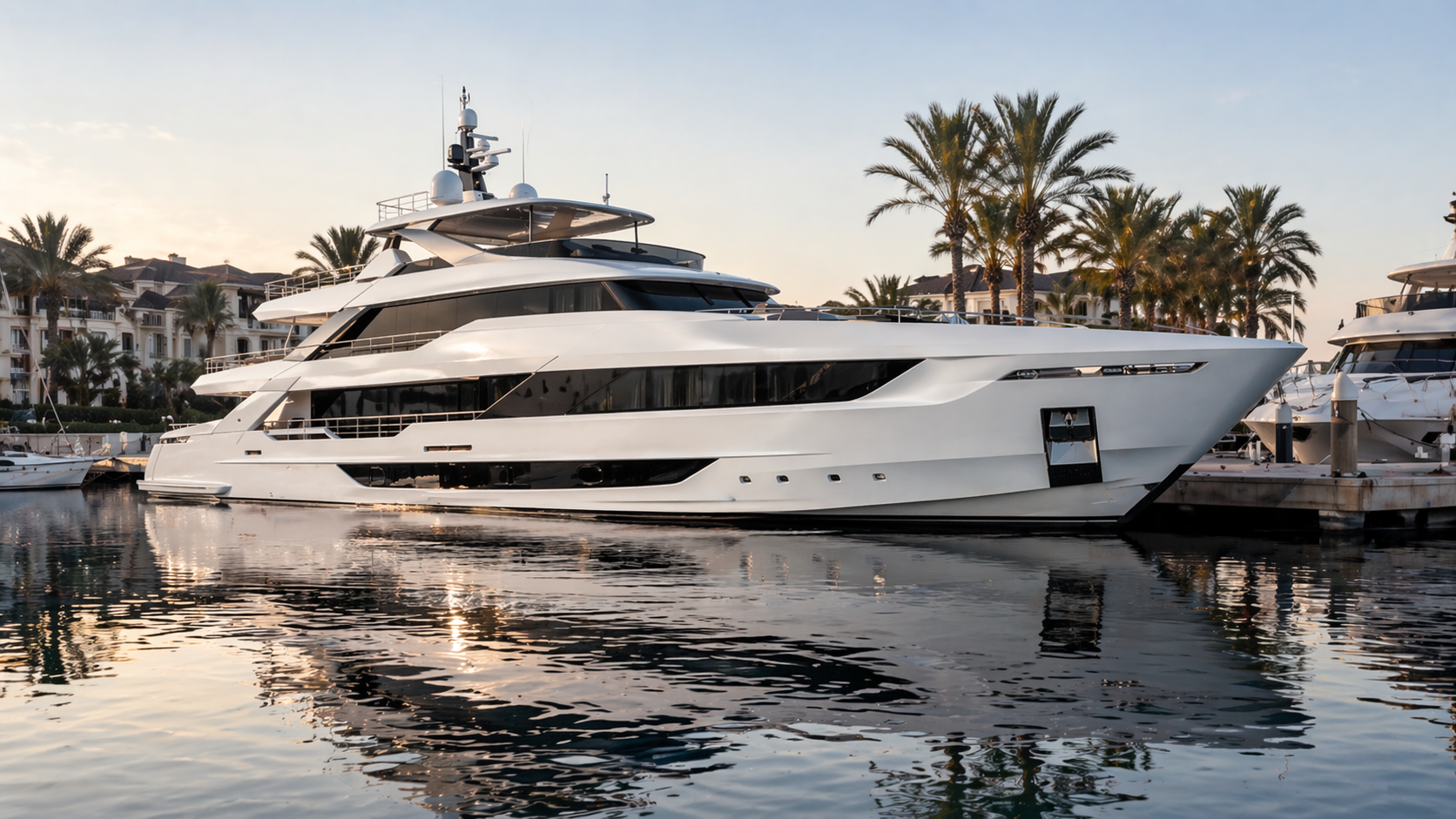
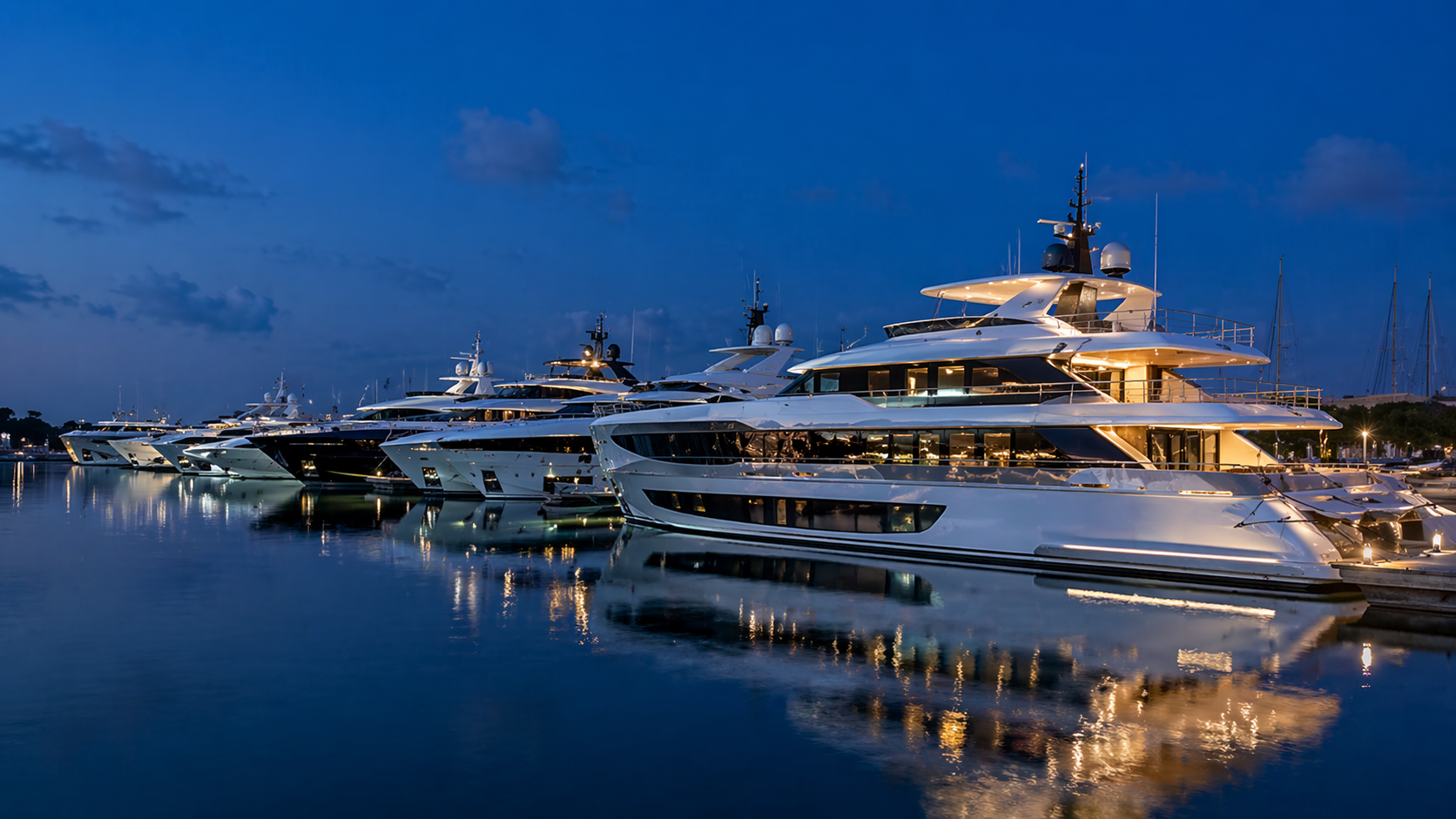
Grande models use a mix of GRP and carbon fiber, with carbon concentrated high in the structure where reducing weight can preserve interior volume while controlling center of gravity and roll moment. Azimut describes this Carbon-Tech approach as a way to lighten laminated upper components by as much as 30 percent on applicable yachts. That matters more as the yachts grow taller because every added deck brings both lifestyle value and weight above the waterline.
Hull and propulsion strategy varies across the range rather than following one formula. The Grande 26M combines a planing hull with pod propulsion and publishes a 613-nautical-mile slow-cruise range. The 27M uses twin 1,900-hp MAN V12s and a conventional planing form. The 30M and 36M use Azimut’s D2P displacement-to-planing approach, while the 44M moves to a Dual Mode hull and a 15-knot cruising brief. These are not interchangeable boats with different lengths; the engineering shifts with the ownership mission.
What remains consistent is the separation of guest life from vessel operation. Main-deck owner suites, raised pilothouses, enclosed galleys, dedicated crew quarters and multiple crew berths become expected rather than optional. Buyers should compare machinery access, crew routes, technical spaces and serviceability as seriously as they compare the beach club or upper deck.
Grande is the correct starting point when the purchase is a crewed superyacht. If the mission is different, another Azimut family may deliver more of what matters with less complexity.
long-range crossover yachts for buyers who value passage efficiency and lower-speed cruising more than maximum interior volume.
flybridge motor yachts that keep more owner-operated practicality at smaller sizes.
performance-focused sport yachts with a lower, sleeker profile.
efficiency-led yachts with a strong connection to the water and contemporary family layouts.
sport cruisers for buyers who want a simpler weekend-to-coastal ownership experience.
Start with how the yacht will be staffed and used. The difference between an 87-foot Grande and a 125-foot Trideck is not merely dockage. Crew count, hotel systems, survey scope, insurance, fuel logistics and management all expand as the range grows.
Float Finance can help evaluate the financing structure around the yacht you are actually considering, including the purchase price, borrower profile and transaction type.
The right Grande is a staffing and mission decision before it is a size decision. Ask these four questions before comparing interior finishes.
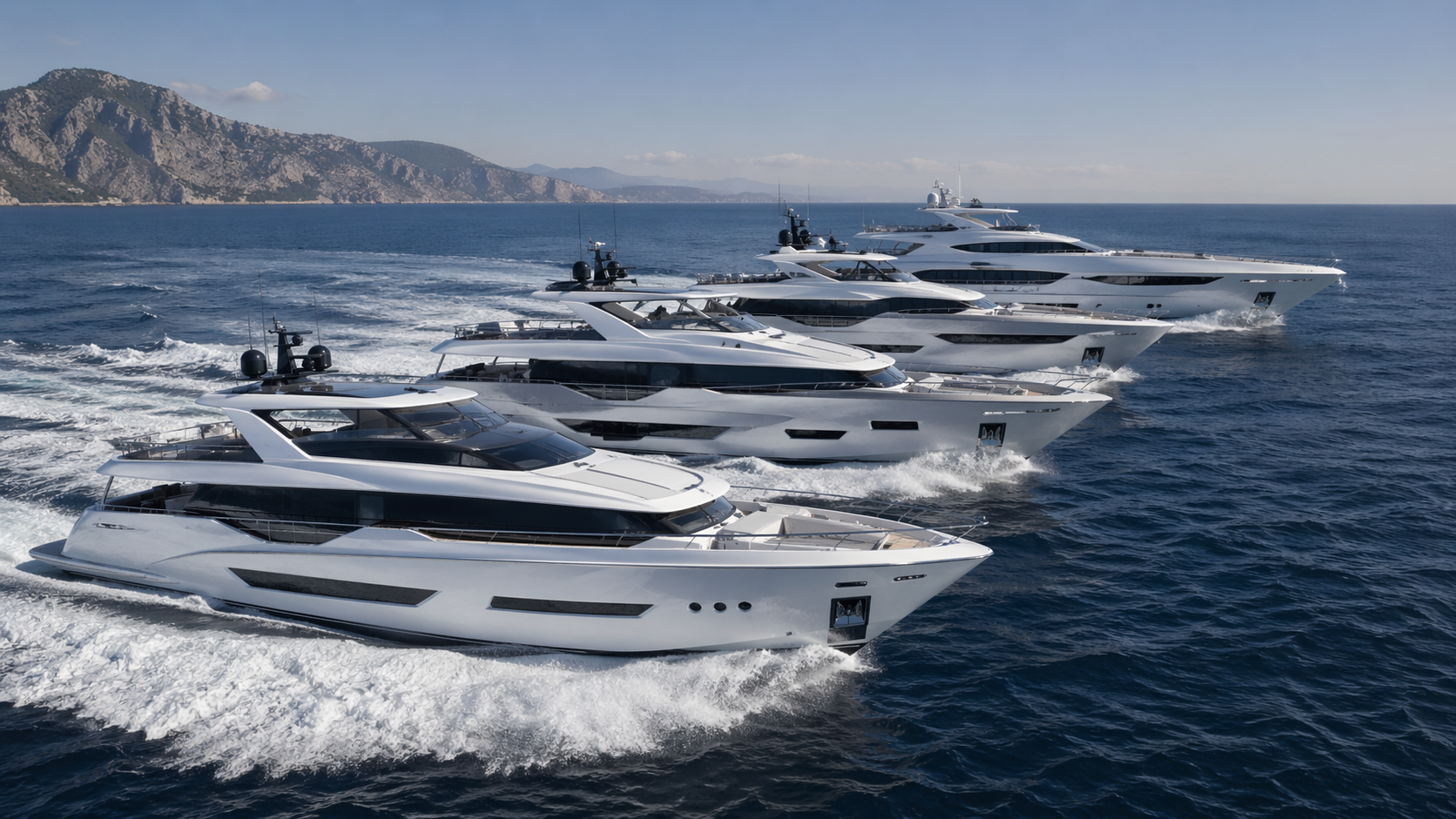
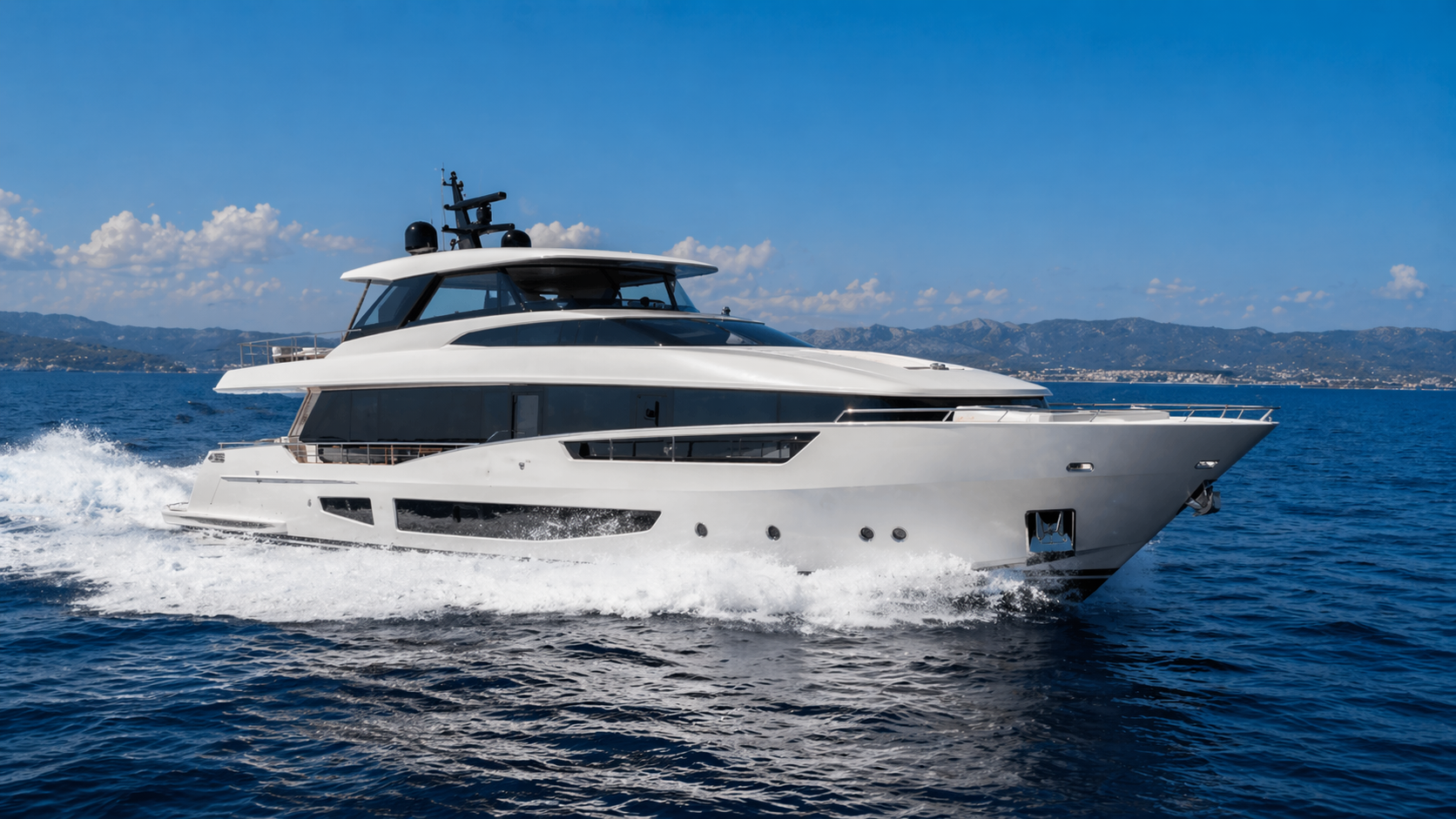
Grande ownership should be budgeted from the operating plan, not from a generic percentage of purchase price. Dockage, insurance, captain and crew payroll, scheduled engine work, generator service, stabilizers, HVAC, tender maintenance, haul-outs, class or survey work where applicable, provisioning and fuel all scale independently. Crew alone can become one of the largest recurring line items as the yacht moves past the compact-superyacht end of the range.
The jump is not linear. A 26M and 27M may be close in length yet differ in propulsion, layout, maintenance profile and purchase generation. Moving to a 36M or Trideck adds another level of hotel systems and crew infrastructure. The 44M, at more than 300 tonnes full load and over 10,500 gallons of fuel capacity, is a fundamentally different operating proposition from an 87-foot Grande.
Financing and underwriting also become more individualized at these values. Expect the lender, insurer and surveyor to care about model year, flag, ownership entity, purchase jurisdiction, survey findings, crew plan, insurance coverage and liquidity. Get the transaction structure clear before committing a large non-refundable deposit.
Send Float Finance the listing or purchase proposal early. Larger-yacht financing works best when the vessel, ownership structure and documentation are evaluated before closing pressure begins.
Use Float Finance resources to understand yacht lending, private-party transactions and pre-approval before you negotiate.
prepare for documentation when no dealer is controlling the closing.
Grande begins where the ownership model becomes much more crew-oriented. The yachts have larger crew quarters, greater guest separation, more hotel systems and superyacht-scale service areas. Fly models emphasize flybridge cruising and can remain more approachable to owner-operators at smaller sizes.
Magellano is designed around crossover cruising and efficiency across a wide speed band. Grande focuses more heavily on superyacht volume, private owner areas, crew separation and lifestyle spaces. Long-distance buyers should compare operating speed, fuel capacity and crew expectations rather than assuming the larger Grande is automatically the better passagemaker.
Current Grande models generally provide five guest cabins, with some 27M, Trideck and 44M layouts allowing four, five or six. Crew accommodations range from three crew berths in the smaller models to nine aboard the 44M.
Potentially, subject to lender, borrower, vessel and transaction eligibility. At these values, expect more individualized underwriting and more attention to survey, insurance, ownership entity, liquidity, vessel age and closing jurisdiction.
For most owners, yes. Even the 26M and 27M are designed with dedicated crew quarters. By the 30M-and-up models, professional operation or active yacht management should be treated as part of the ownership plan rather than an optional extra.
Start with the smallest model that delivers the guest cabins, owner privacy, outdoor space and crew capability you actually need. The 26M is the most compact current entry, the 30M introduces the new-generation Infinity Skydeck, the 36M expands that idea, and the Trideck/44M move into true multi-deck flagship territory.
Bring Float Finance the yacht, listing or purchase proposal and explore the financing structure before the transaction becomes time-sensitive.
Tell us a little bit about yourself and the boat you are looking to finance.