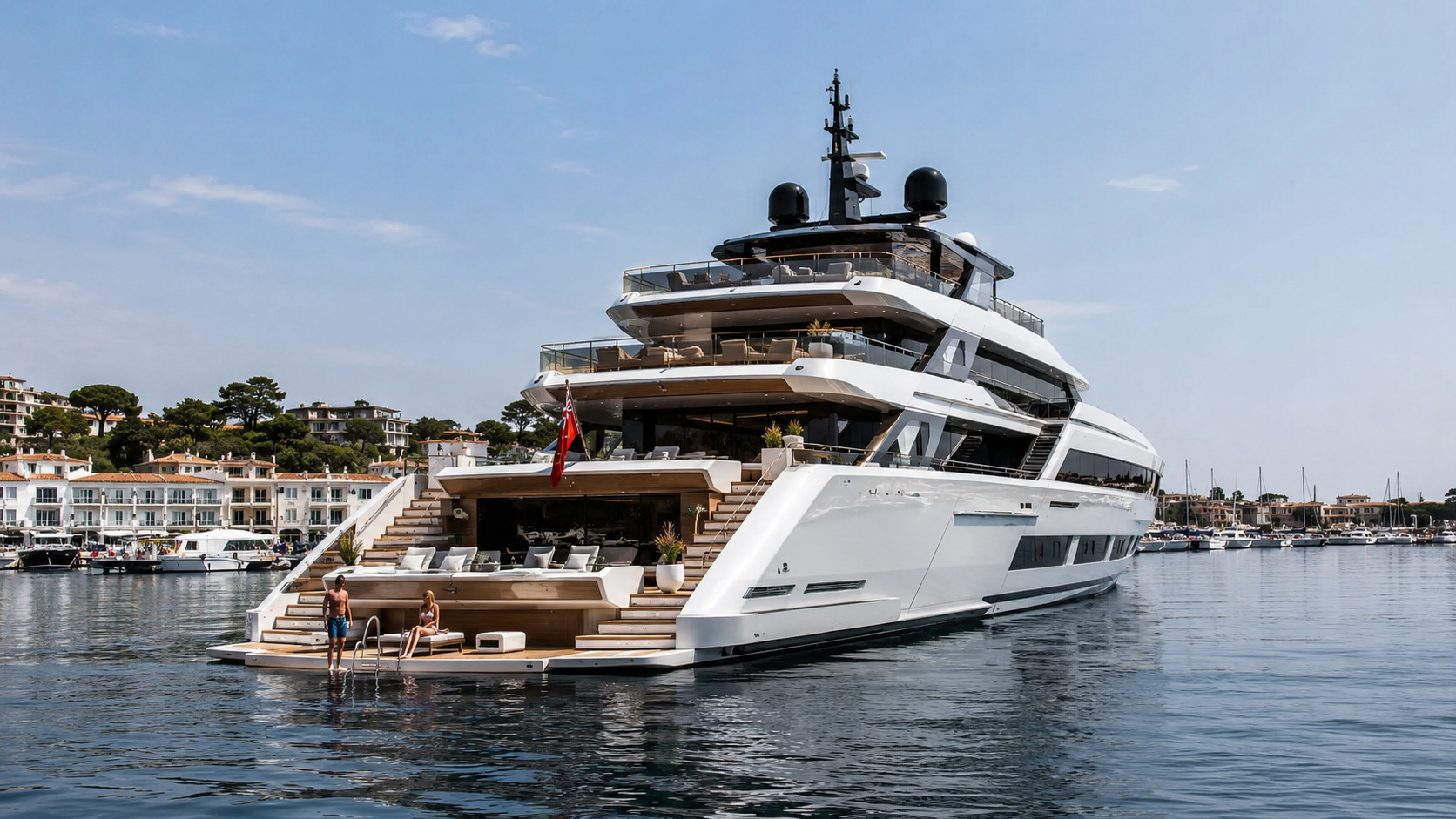
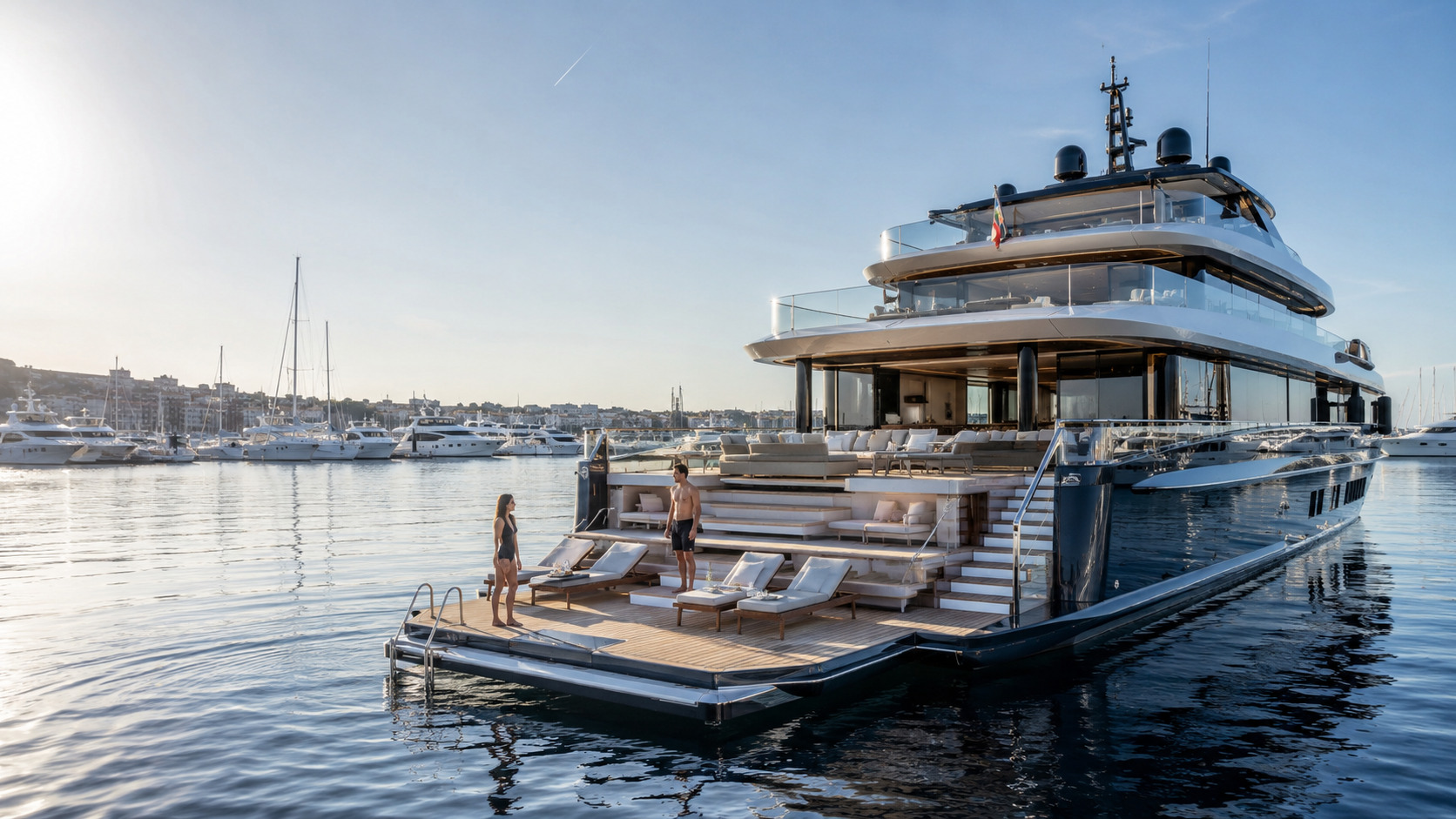
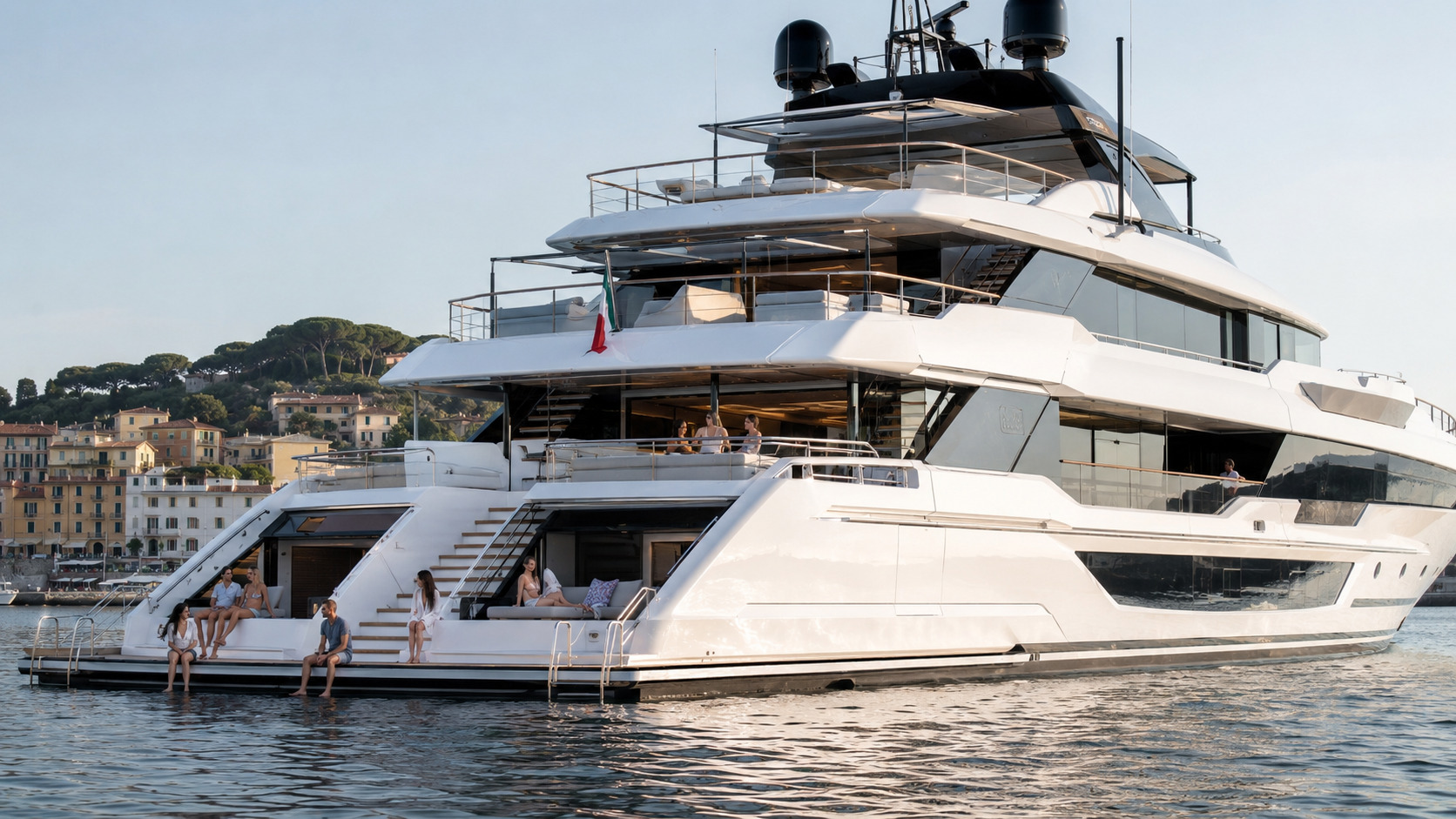
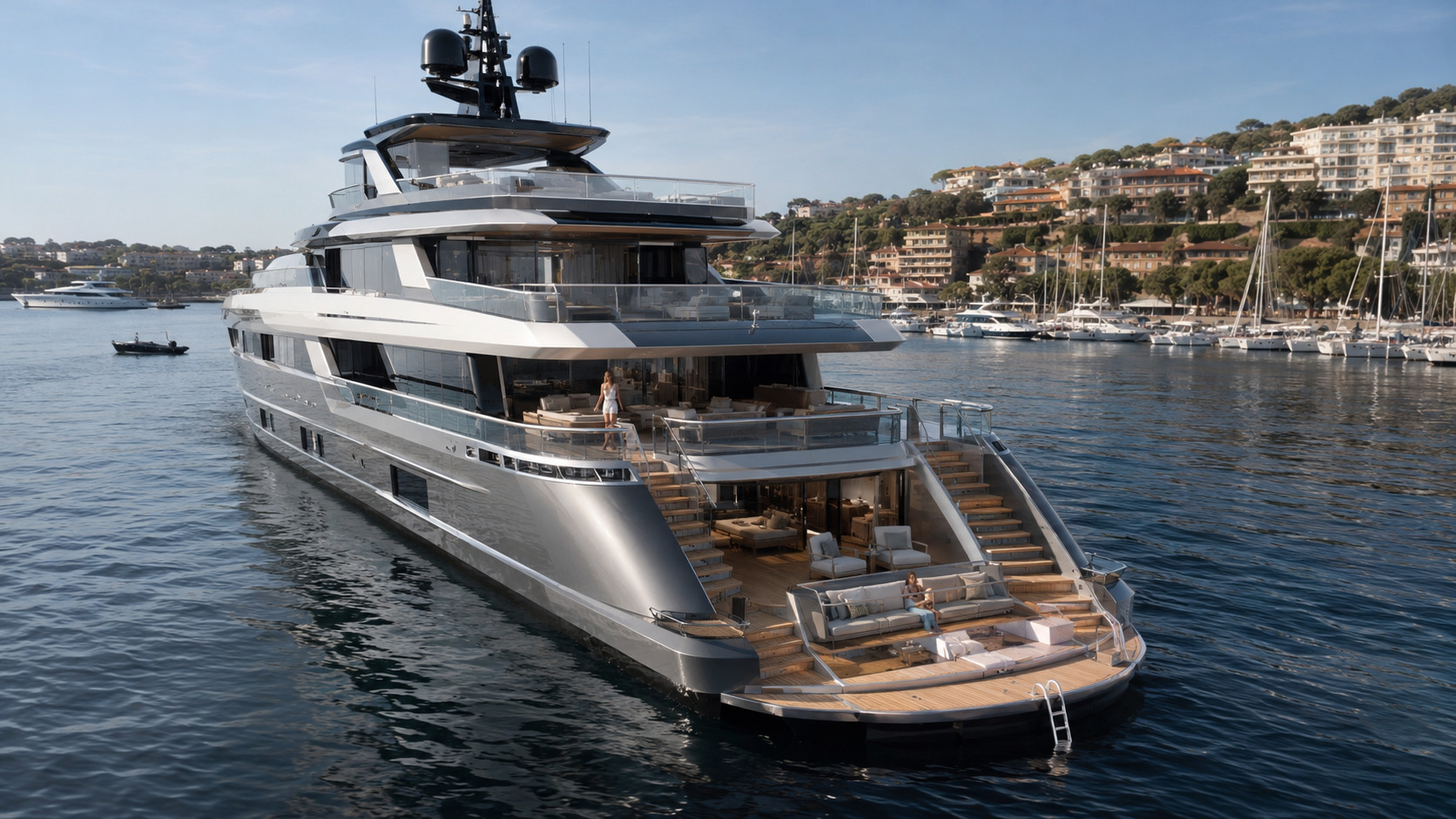
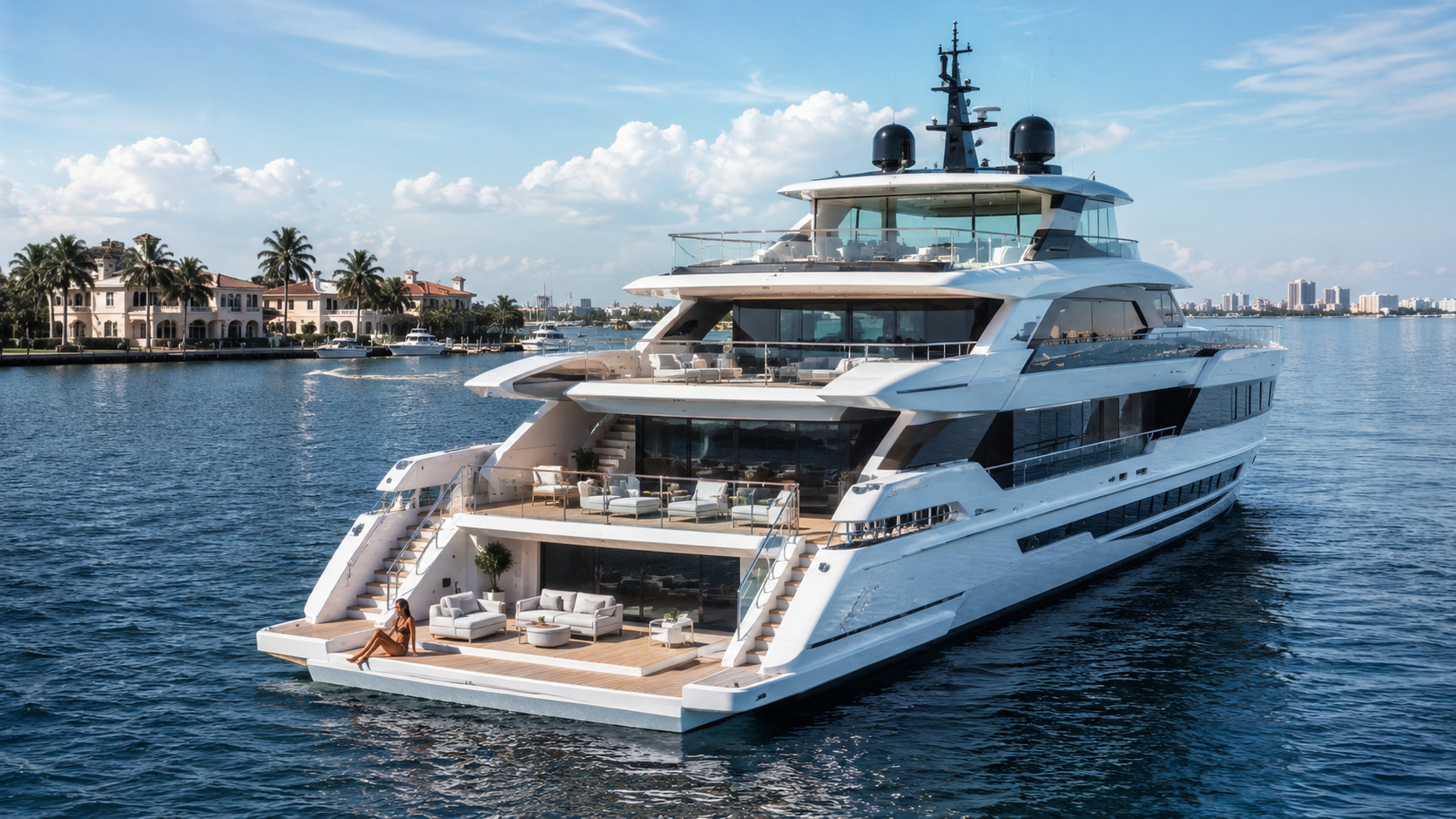
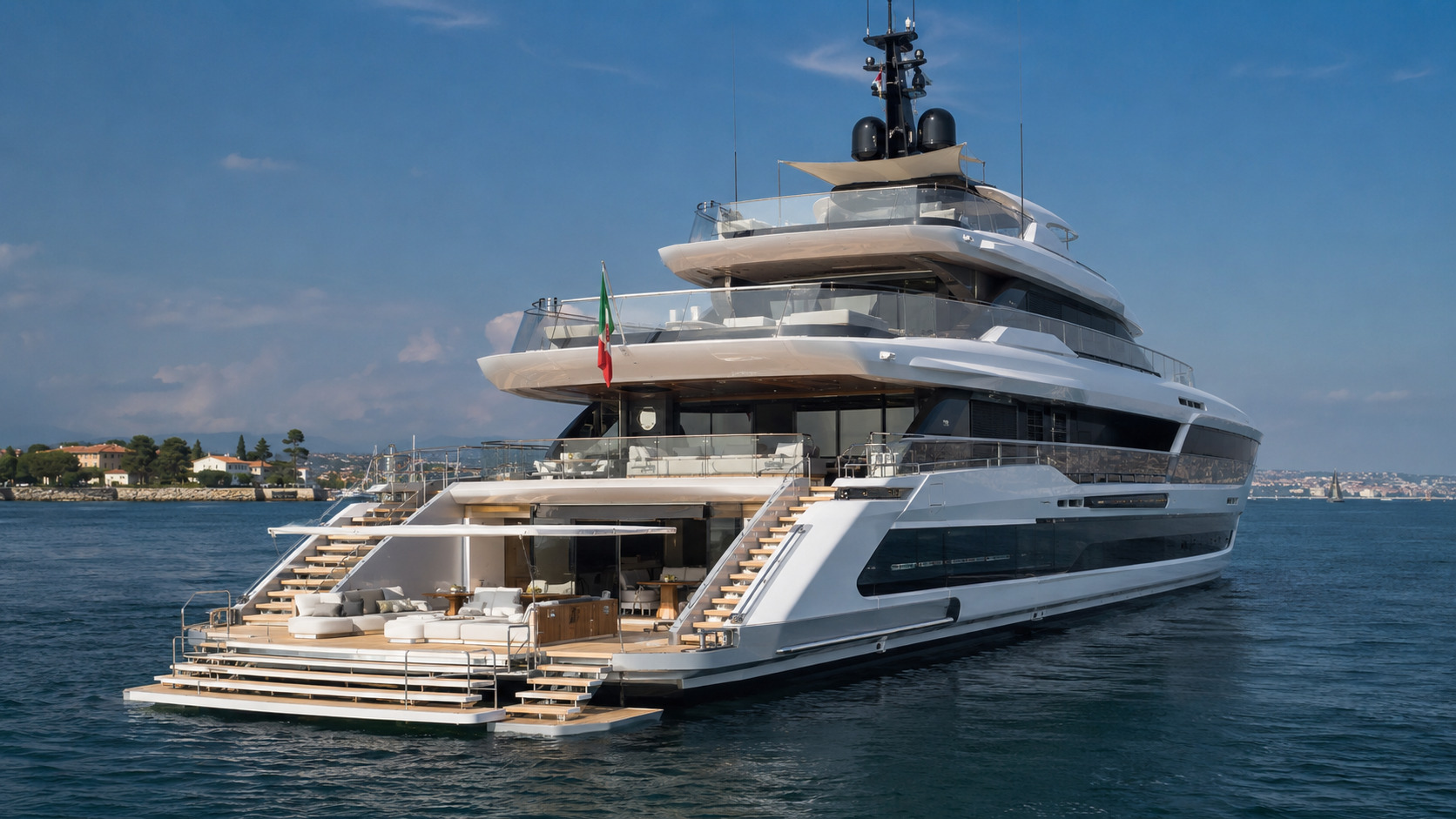
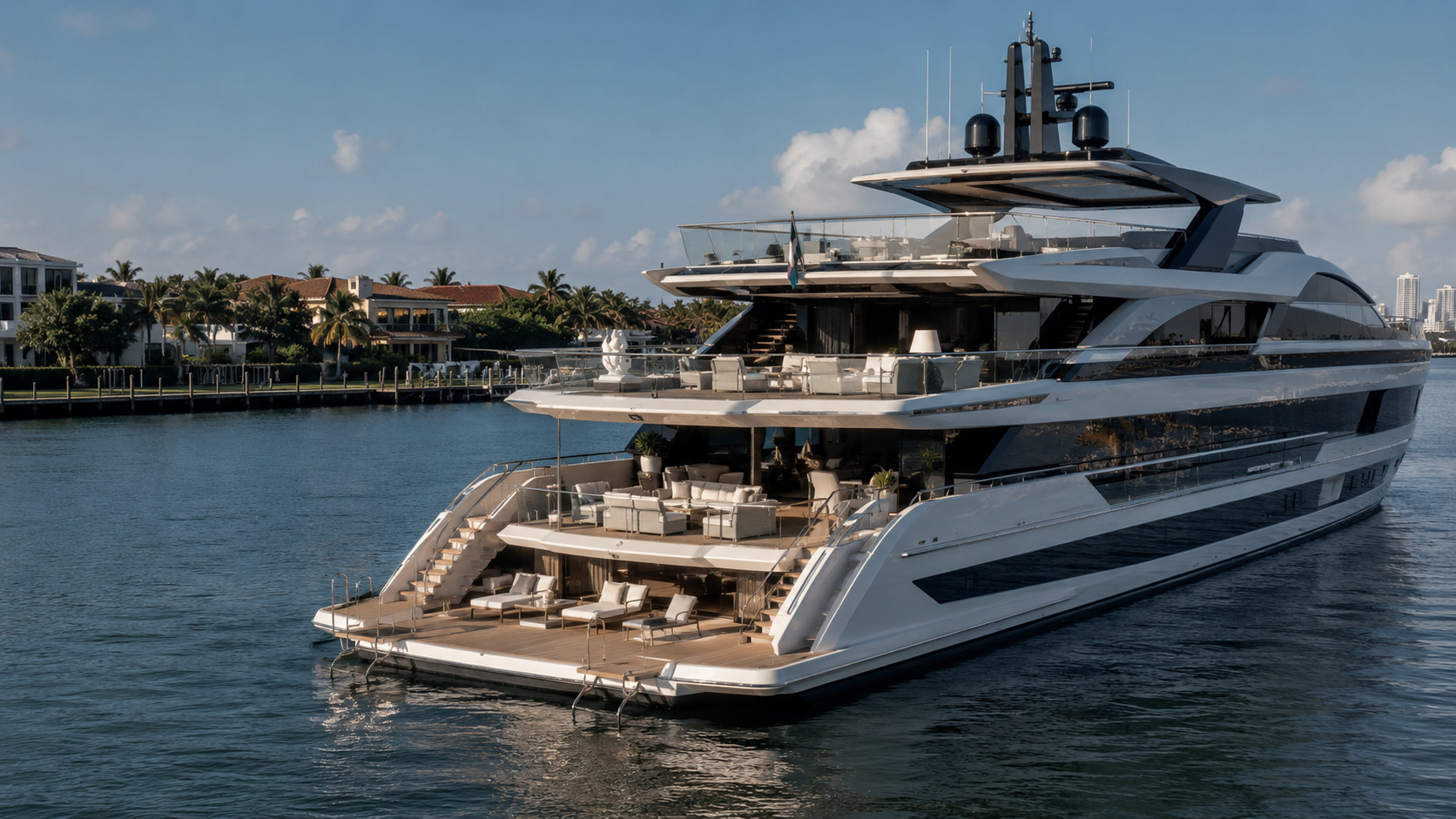
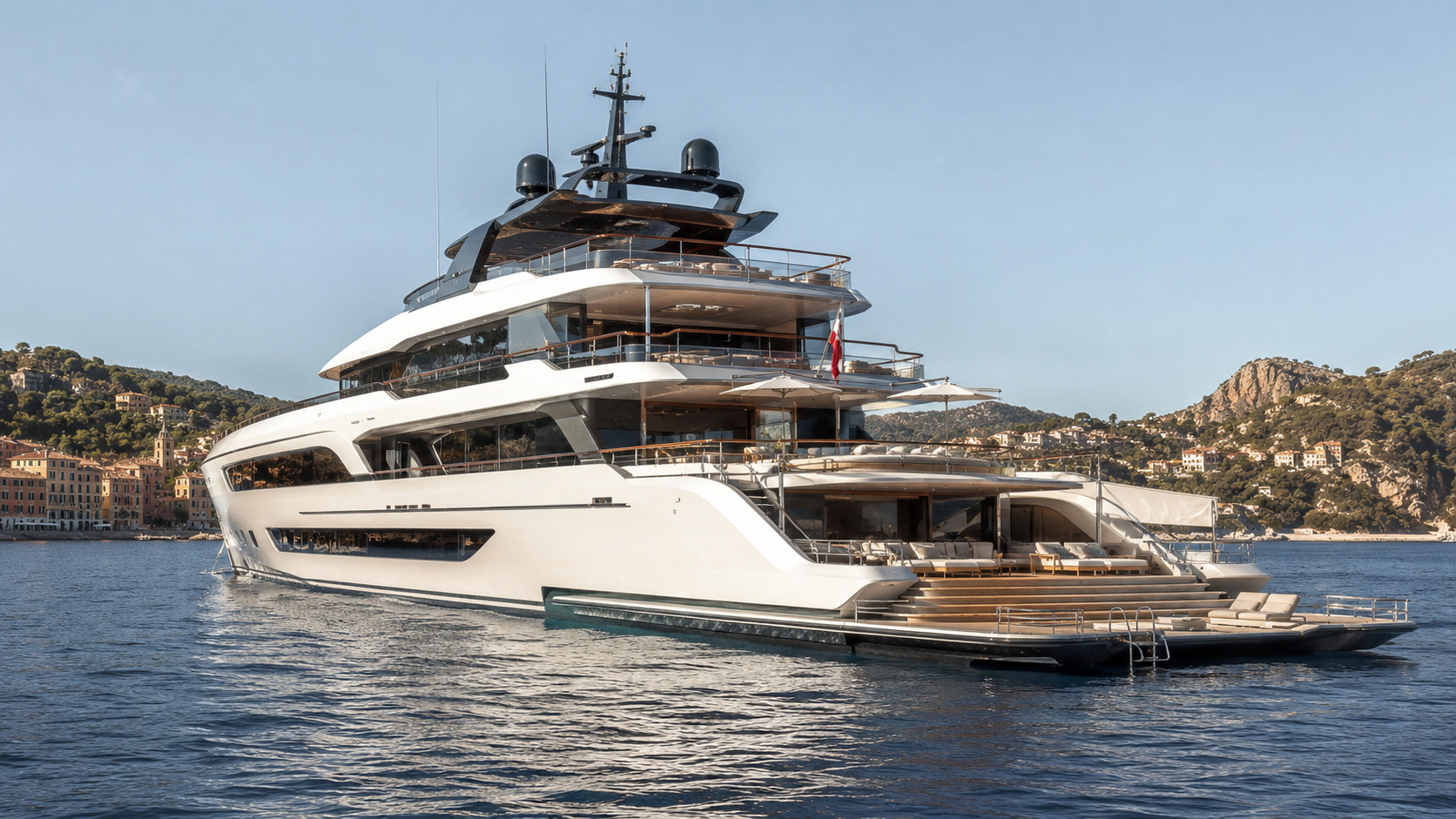
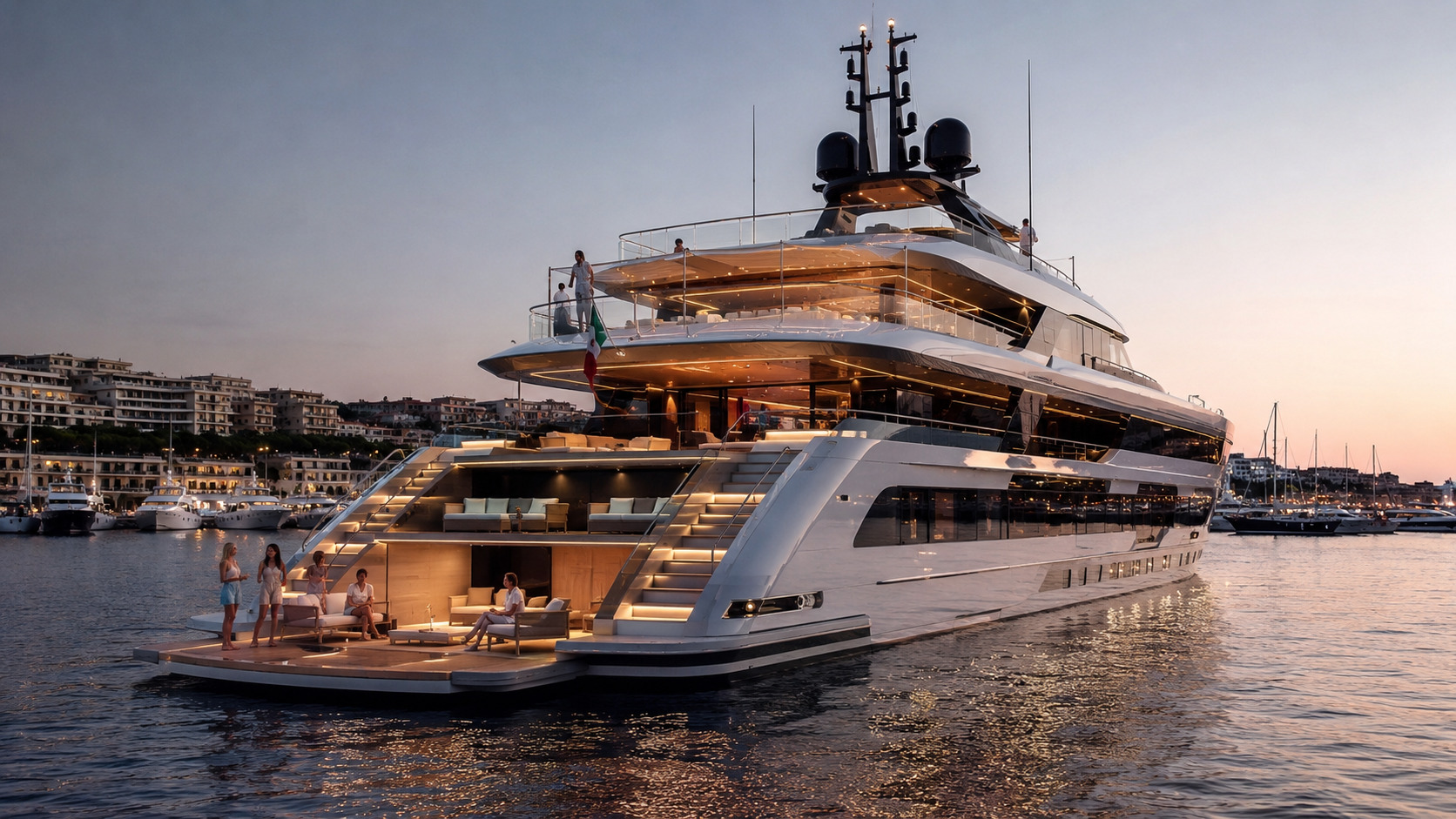
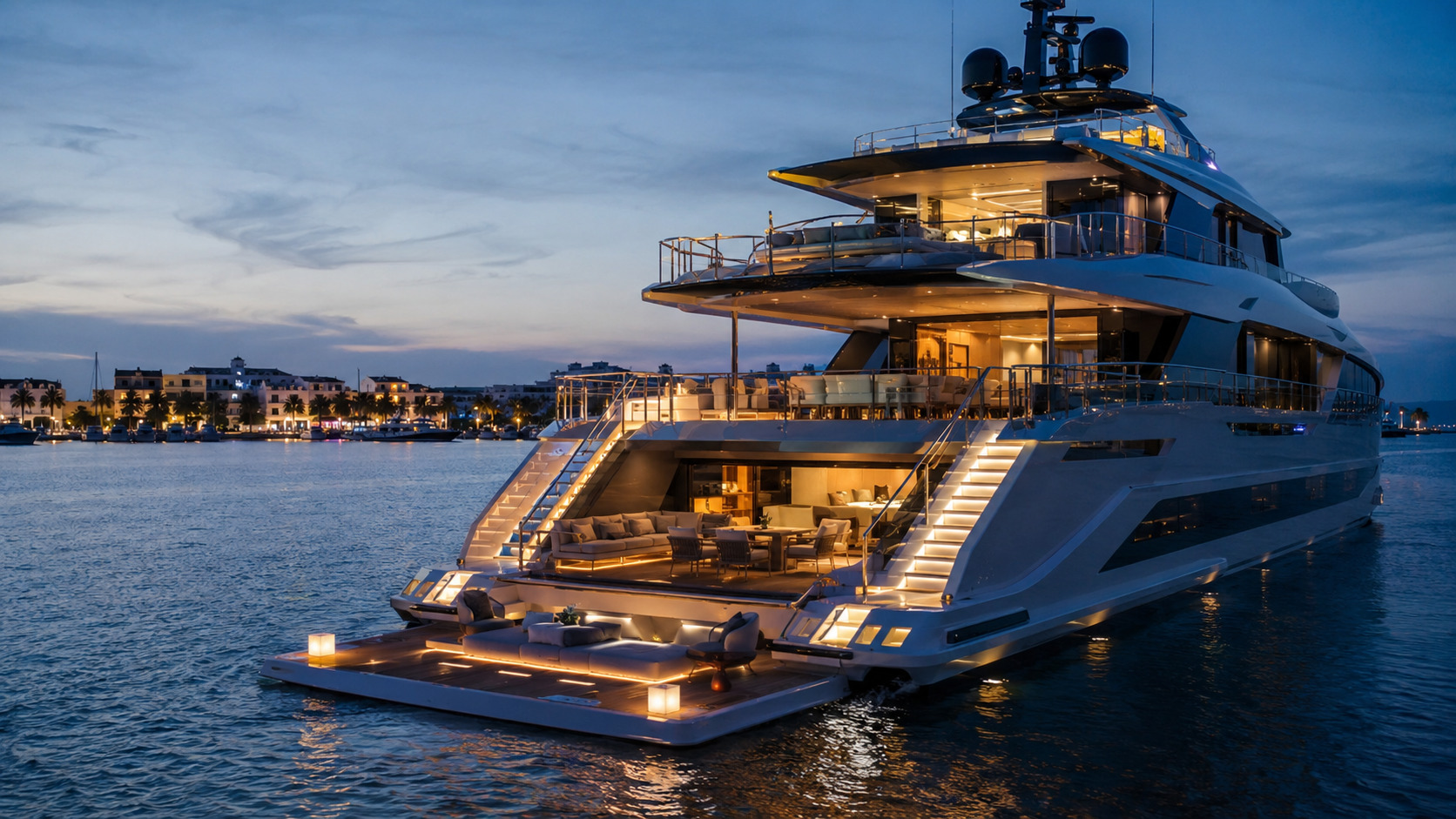
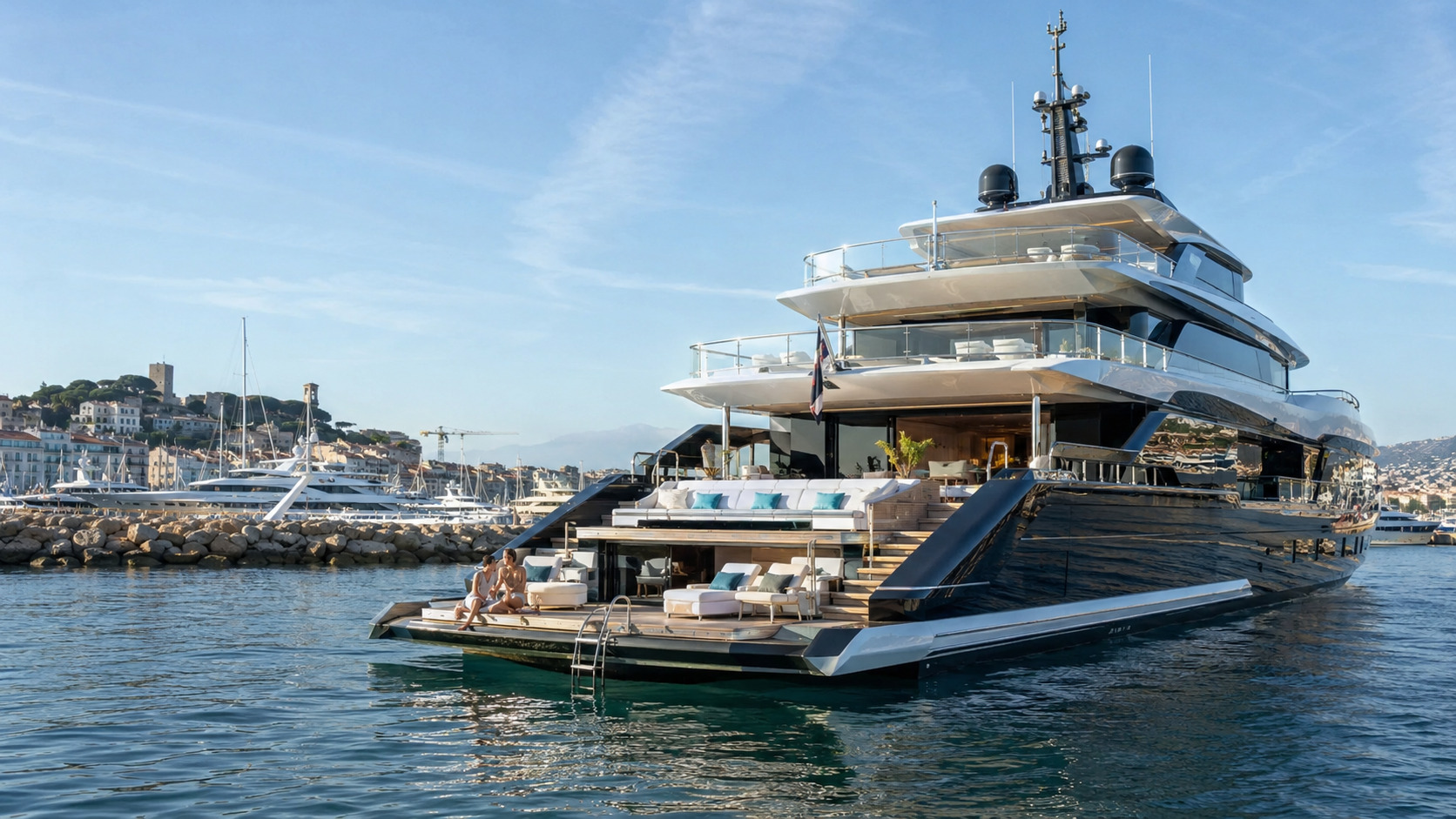
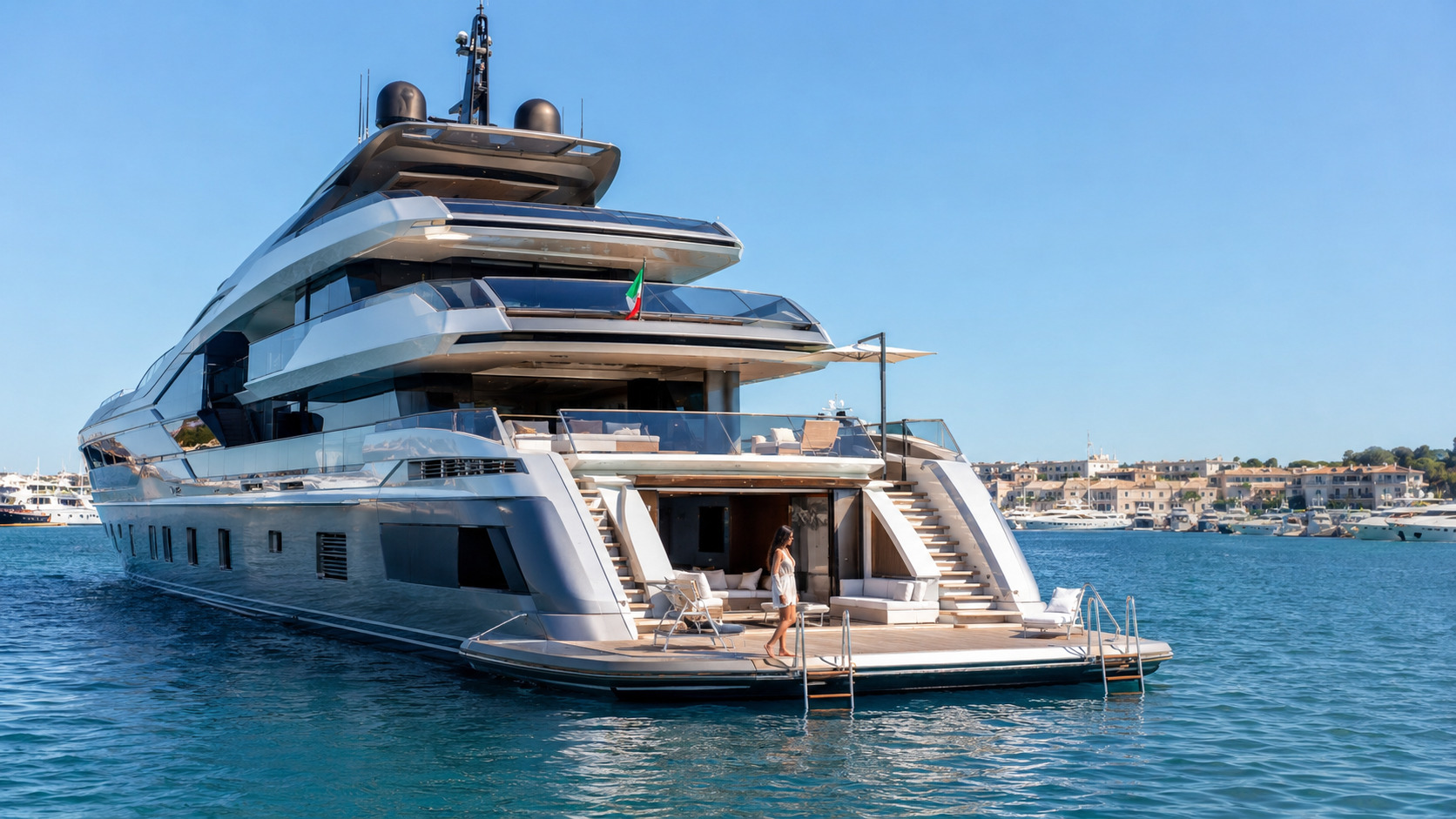
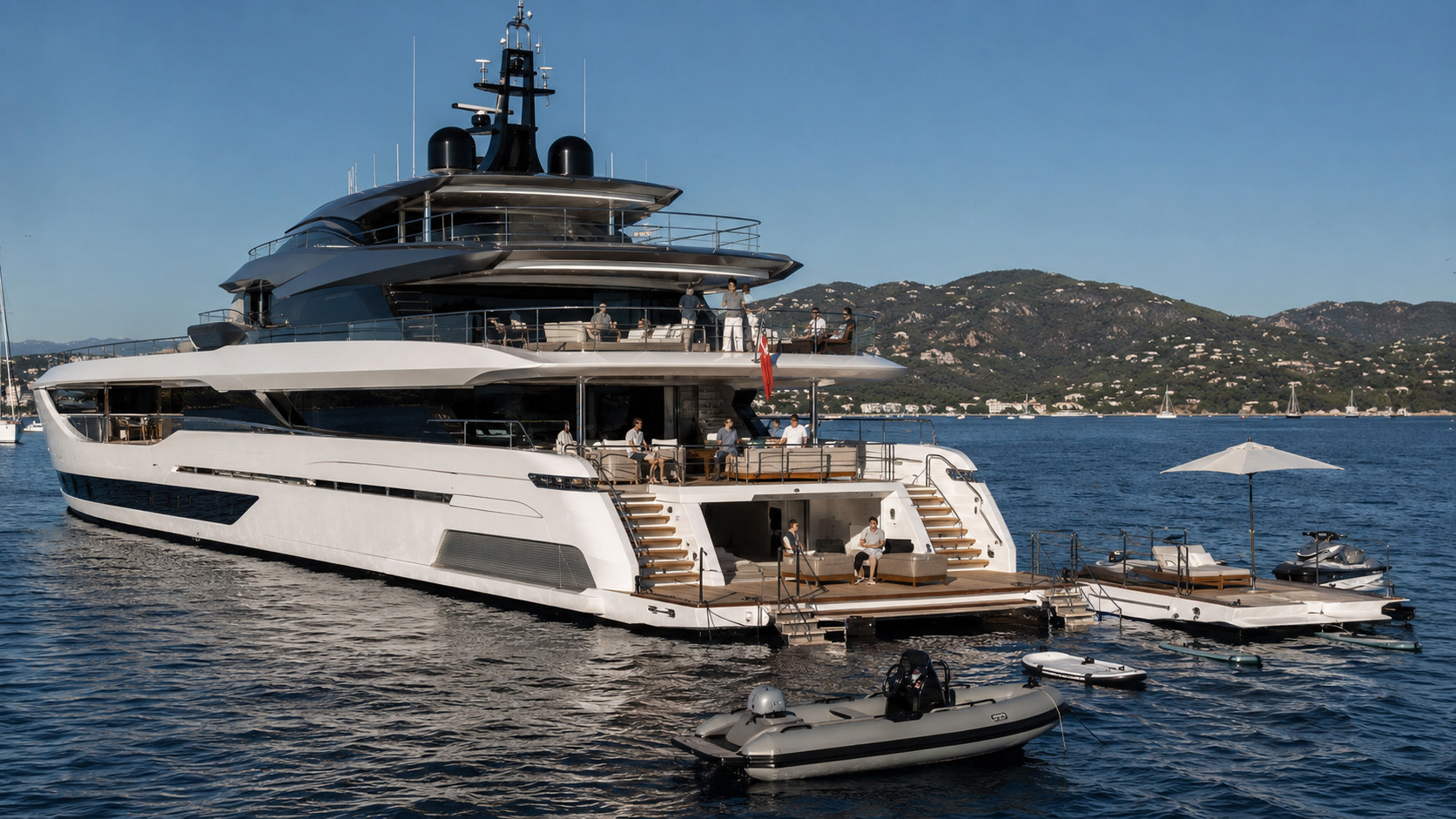
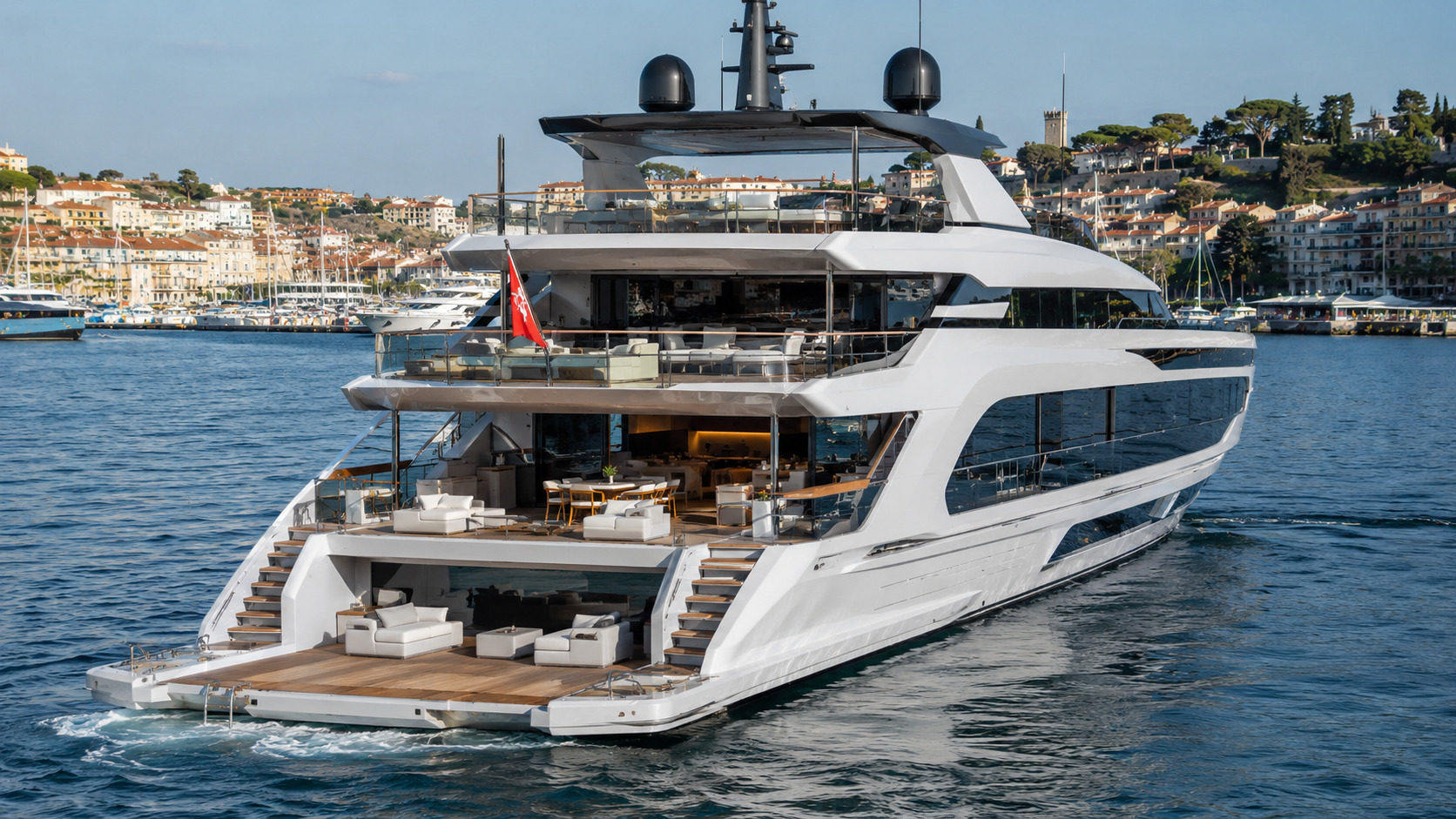
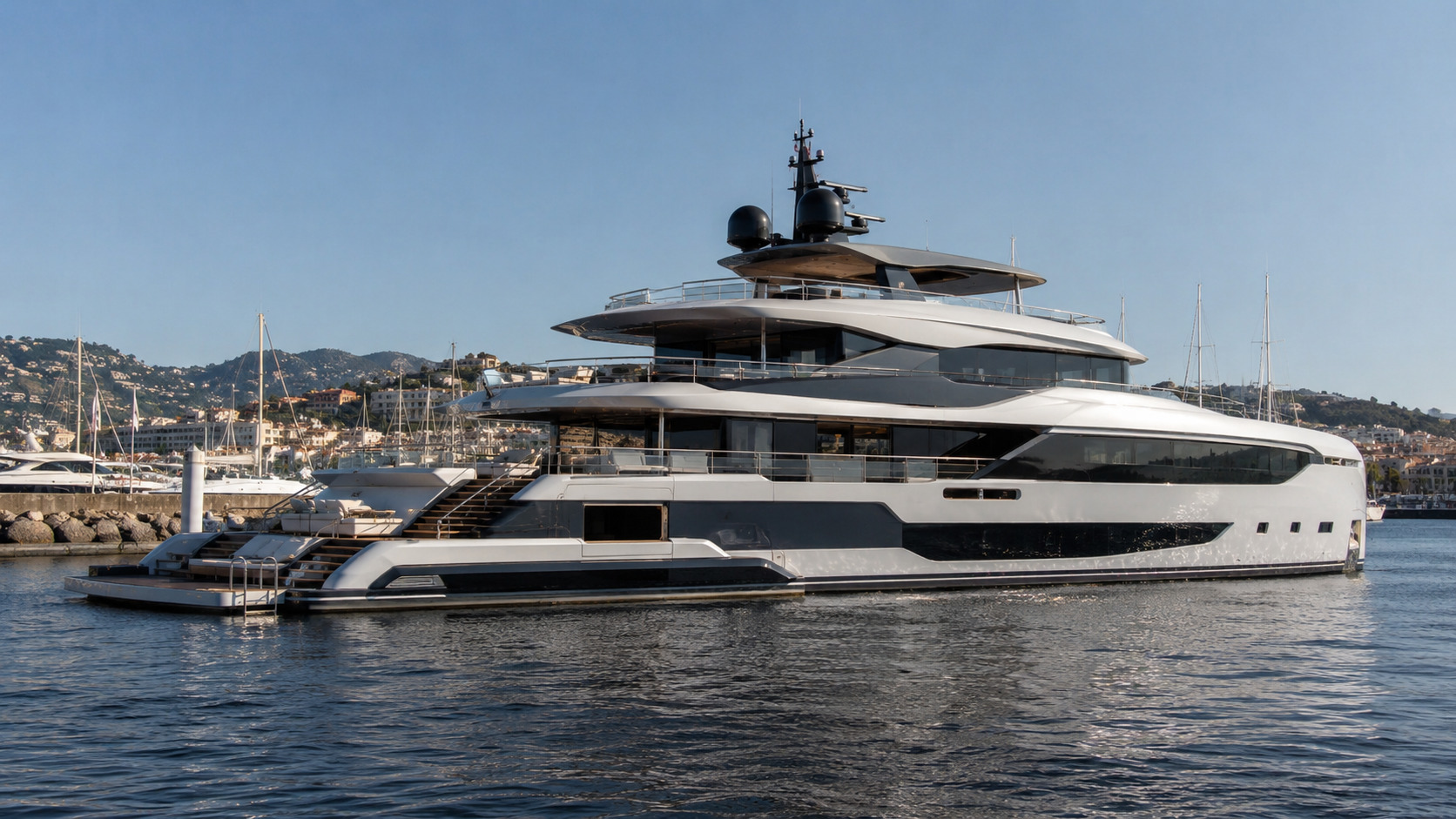
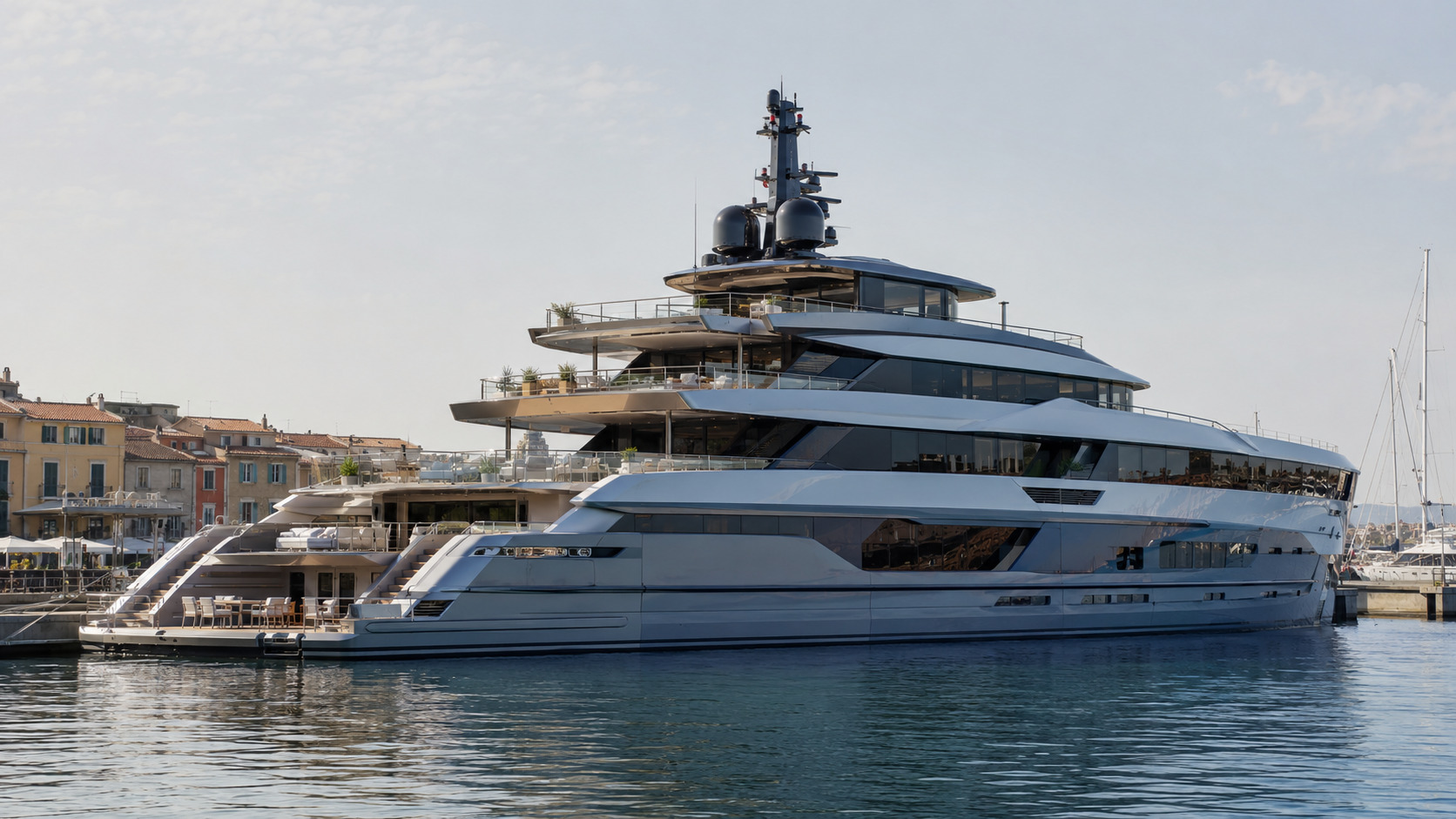
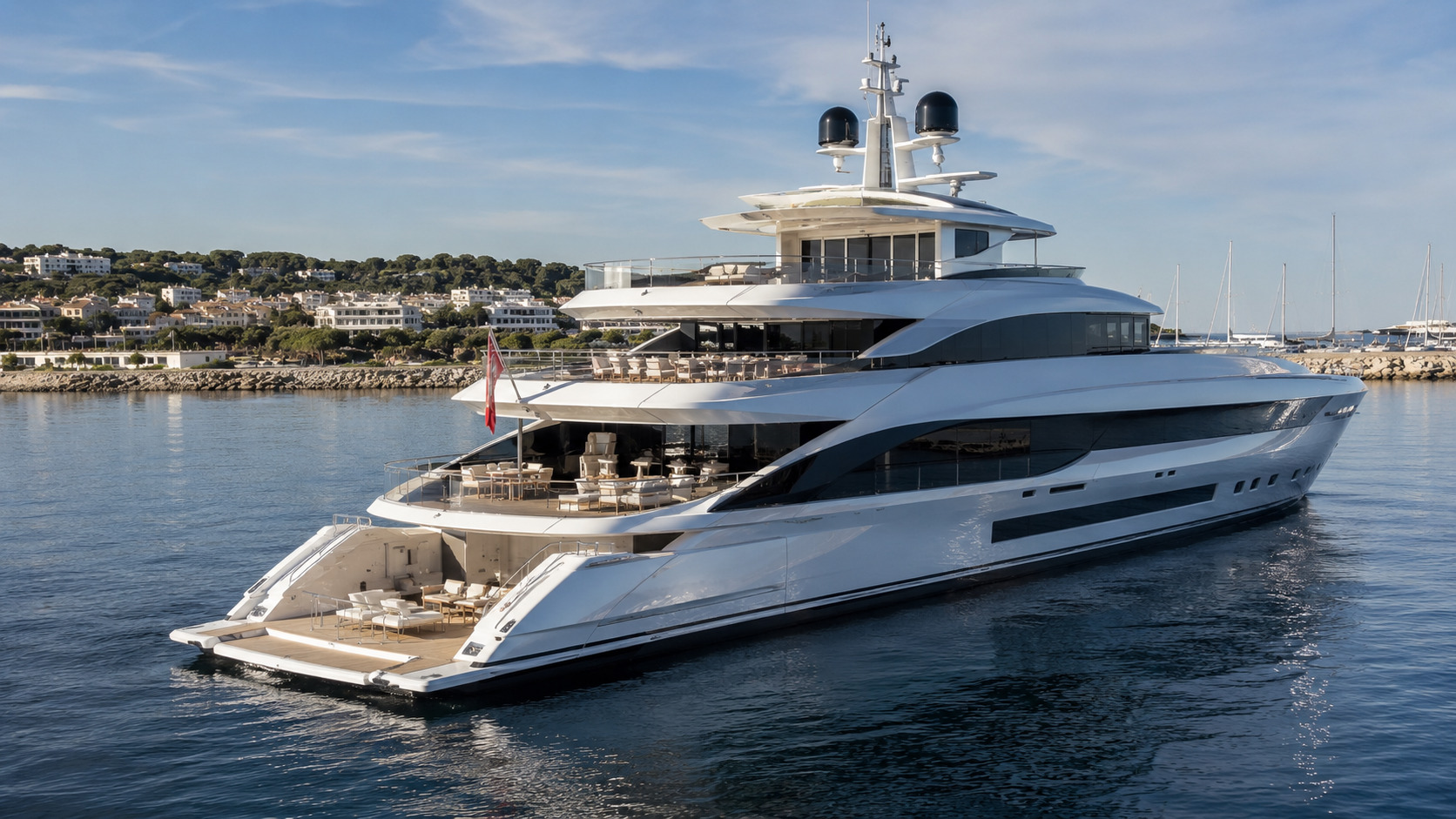
The Azimut Grande Trideck is named for its three full decks, but its defining idea is the additional half-raised aft level that Azimut describes as “three decks + one.” That creates a sequence of cascading terraces rather than a conventional stack of aft deck, upper deck and sundeck. At 125′ 5″, the yacht carries five or six guest cabins, six crew berths and 192 tonnes of full-load displacement.
This layout is designed around outdoor life. Instead of asking every guest to gather in one aft cockpit, the yacht creates multiple elevations with different degrees of privacy and connection to the water. The result is more like a small resort than a scaled-up flybridge.
The compromise is scale and staffing. Four crew cabins, nearly 6,000 gallons of fuel, multiple guest decks and large technical systems require professional operation. Buyers should compare the Trideck with the 36M and 44M based on how they want to live aboard, not on which one has the biggest number.
Best For — owners who want multiple outdoor terraces, five- or six-cabin flexibility and true 125-foot crewed-yacht space with 20-knot-plus cruising ability.
Not For — buyers who want the simpler compact-superyacht experience of the 26M/27M or the slower four-deck flagship mission of the 44M.
The Grande Trideck uses Azimut’s D2P displacement-to-planing hull with GRP and carbon-fiber construction. Full-load displacement is approximately 192 tonnes, beam is 26′ 2″ and draft is 6′ 8″.
The D2P form allows the yacht to reach up to 24 knots while preserving a broader efficient speed range than a conventional planing form. Carbon fiber is used high in the structure to reduce weight and roll moment despite the multiple decks.
Survey should involve specialists for hull, shafts, MTU engines, stabilizers, generators, electrical systems and all terrace/door/glass mechanisms. The number of guest decks increases both lifestyle value and weatherproofing complexity.
Azimut lists twin MTU 2,400-hp or 2,600-hp packages on conventional shafts. Published maximum speed is up to 24 knots and cruise up to 21 knots.
That power gives the 125-foot Trideck the ability to make fast coastal passages despite its 192-tonne displacement. Conventional shafts also provide a familiar service profile for captains and shipyards operating globally.
Engine survey should include load testing, oil analysis, cooling, exhausts, mounts, gearboxes, shaft alignment and vibration, plus a review of generator and stabilizer maintenance because the guest experience depends heavily on hotel-system reliability.
Fuel capacity is 22,500 liters, approximately 5,945 US gallons.
At up to 21 knots cruise, the Trideck can cover distance quickly, but slower operation will be central to any range-focused itinerary. The D2P hull is intended to make that broader speed band practical.
Fuel planning should include generator load, tender operations and reserve. On a yacht carrying six crew and multiple guest decks, hotel load can remain substantial even when the main engines are off.
The Trideck’s published 24-knot maximum and 21-knot cruise are notable for a 125-foot yacht with this amount of upper-deck structure. That gives owners the flexibility to move between destinations without accepting pure displacement-yacht schedules.
Sea trial should prioritize comfort at normal cruise, roll control at lower speeds and anchor behavior with the tall superstructure. Stabilizer effectiveness is central to how the yacht feels to guests.
The “three decks + one” arrangement creates four cascading aft terraces. The added half-raised deck breaks the traditional vertical separation and gives guests multiple places to sit close to the water or farther above it.
The yacht can be configured with five or six guest cabins, which affects how owner and guest spaces are distributed across the decks. Upper and sundeck areas provide further separation from main-deck social zones.
Inspect every sliding/retractable opening, drainage path, exterior stair and shade system carefully. More terraces mean more weather exposure and more hardware that needs to remain watertight and reliable.
The Trideck combines full superyacht machinery with an unusually complex exterior architecture. Test generators, HVAC, stabilization, shore-power systems, watermakers where fitted, bridge electronics, hydraulics, exterior doors and terrace systems.
Crew should be able to provide planned-maintenance records. On a yacht this complex, absence of organized records is itself a buying signal.
At 125′ 5″ by 26′ 2″, the Trideck needs dedicated superyacht dockage and a marina capable of supporting six crew, large power loads and frequent service access.
Show the cascading aft terraces from profile and onboard, then the owner suite, guest cabins, upper lounges, crew/service areas, bridge and engine room. The “three decks + one” idea should be obvious without reading the caption.
Grande Trideck pricing depends on year, five- versus six-cabin layout, interior specification, engine package, tender, refits, tax status and location.
At this level, crew condition reports and planned maintenance can materially affect value. A yacht that presents well but carries overdue technical work can require a seven-figure catch-up budget.
Build the annual ownership estimate from the actual yacht and home port.
Pricing, payment and ownership-cost figures are illustrations only and are not offers or commitments to extend credit.
Market price band
$17,275,000 – $21,500,000
Estimated monthly
From $118,200/mo
Figures come from this page’s Boat Details fields. Illustration only and not an offer of credit.
Estimate Your Grande Trideck Payment
Use the yacht-loan calculator to test purchase price, cash down, rate and term before negotiating. On a superyacht-scale purchase, treat the calculator as a planning tool rather than a substitute for underwriting because vessel age, ownership entity, liquidity and transaction structure can materially affect the available terms.
Illustration only and not an offer of credit. Your actual rate and term depend on credit profile, vessel age, loan amount and ownership structure.
Compare the Grande Trideck Before You Buy
The Trideck sits between the 36M and 44M in size but has its own mission. The 36M is a smaller Infinity Skydeck yacht; the Trideck prioritizes cascading outdoor terraces and 21-knot cruise; the 44M is larger, slower and more owner-private.
A Trideck purchase warrants specialist surveys across hull, machinery, electrical, stabilization and exterior systems. Review crew records and yard history before deciding how much value to assign to cosmetic condition.
If the yacht is foreign flagged or located abroad, resolve tax, customs, flag, ownership entity and insurance early. Large-yacht transactions can become expensive when those details are left until closing week.
Send Float Finance the Trideck listing or purchase proposal before the deposit and closing calendar are fixed. Financing should be coordinated with survey, insurance, ownership structure and documentation.
No. Azimut officially names the model Grande Trideck. The yacht is approximately 38.22 meters / 125′ 5″ overall; “25” is not part of the official model name.