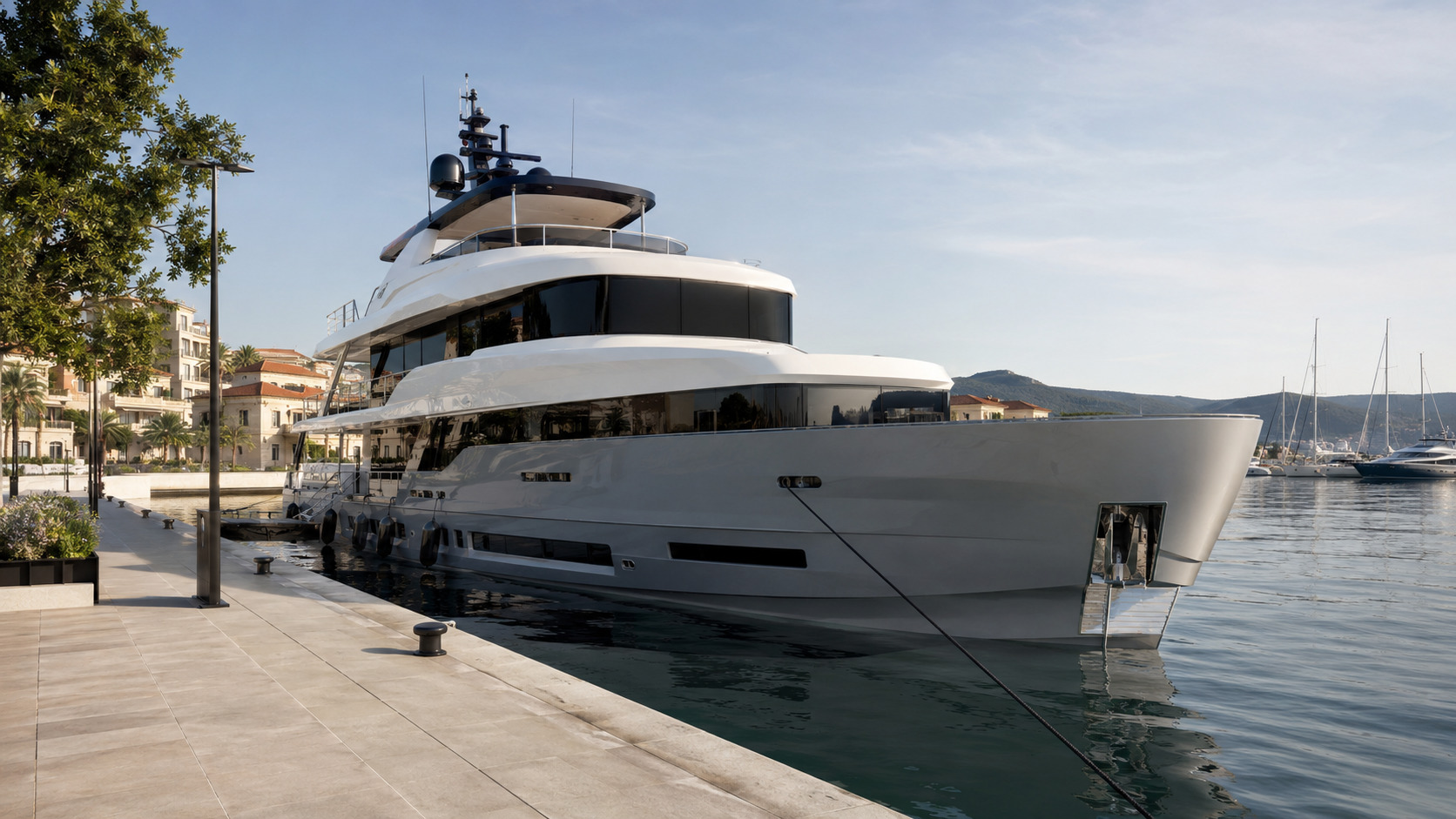
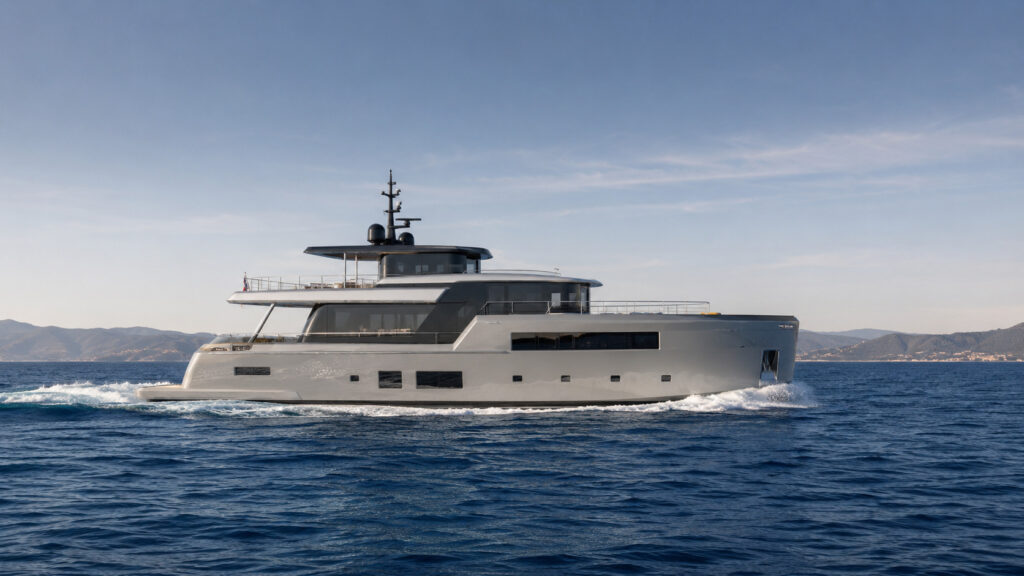
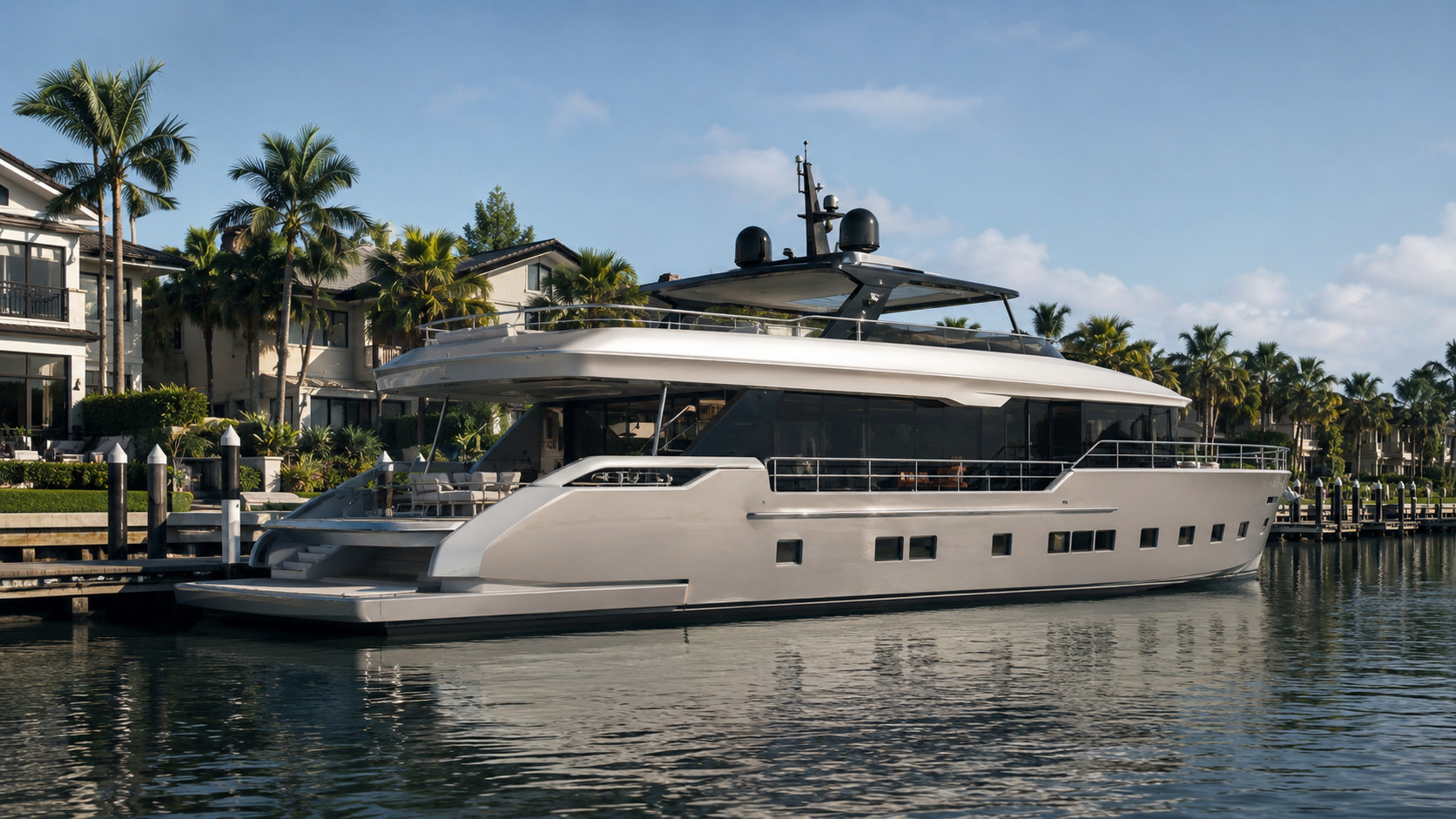
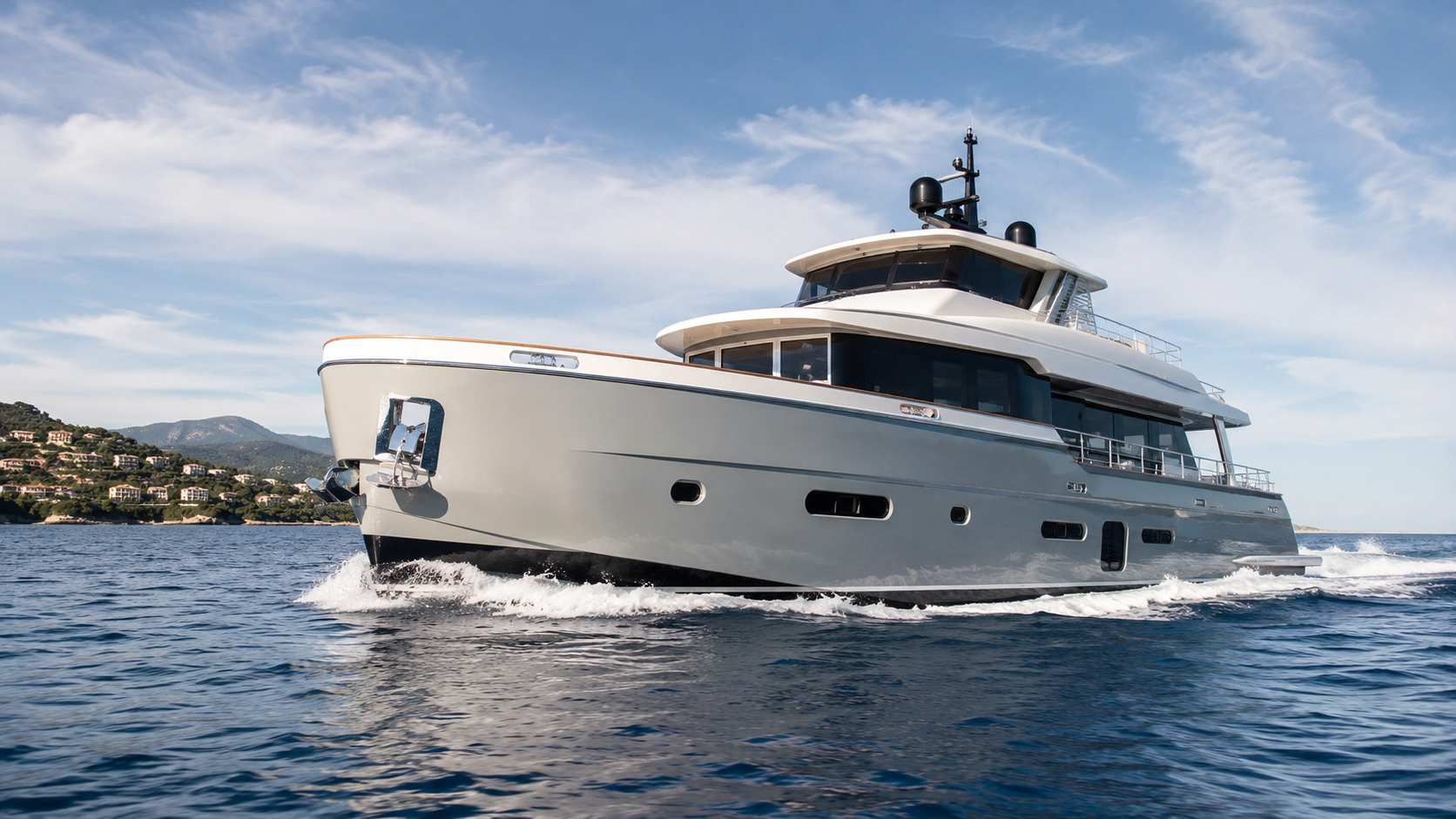
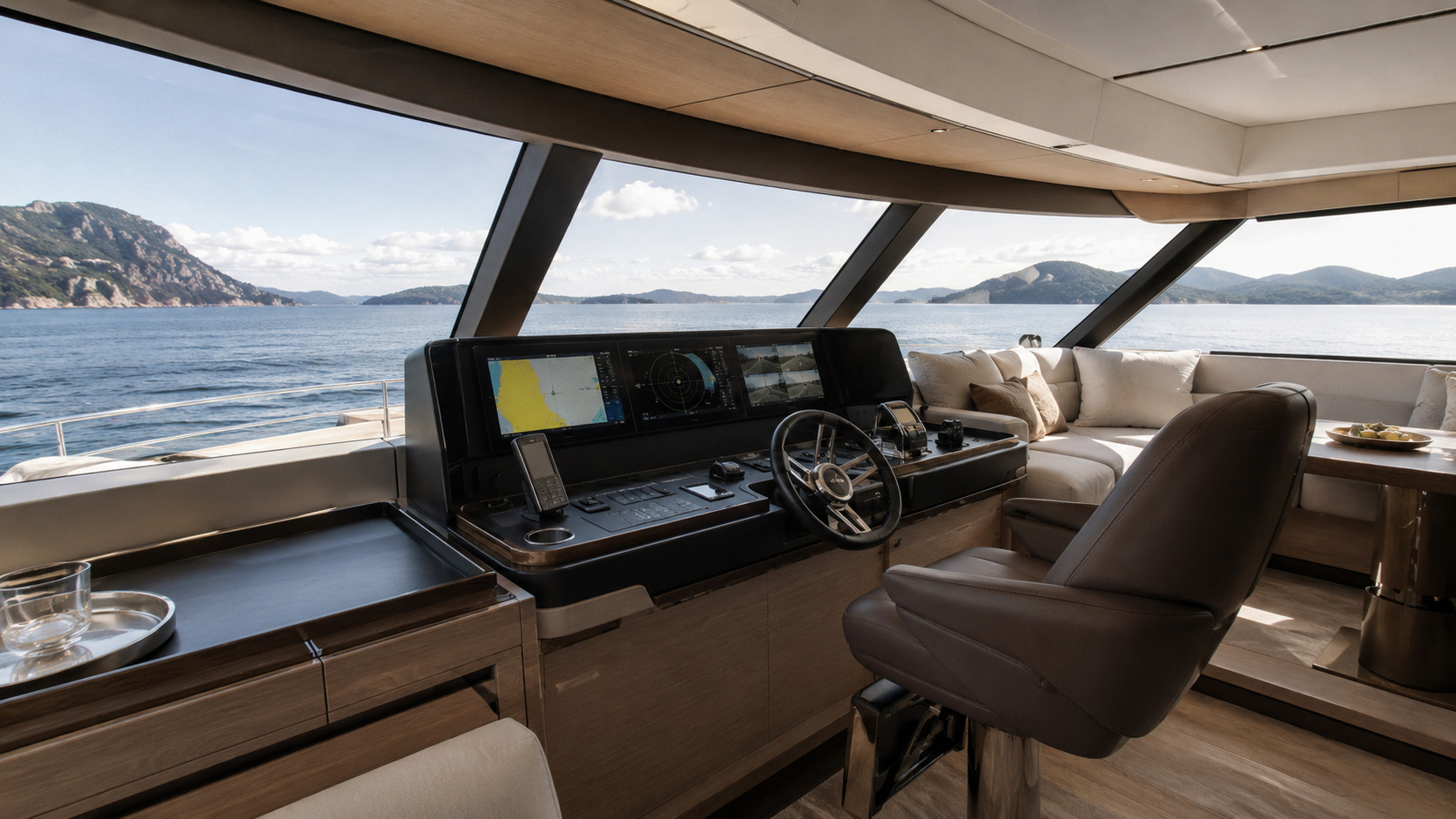
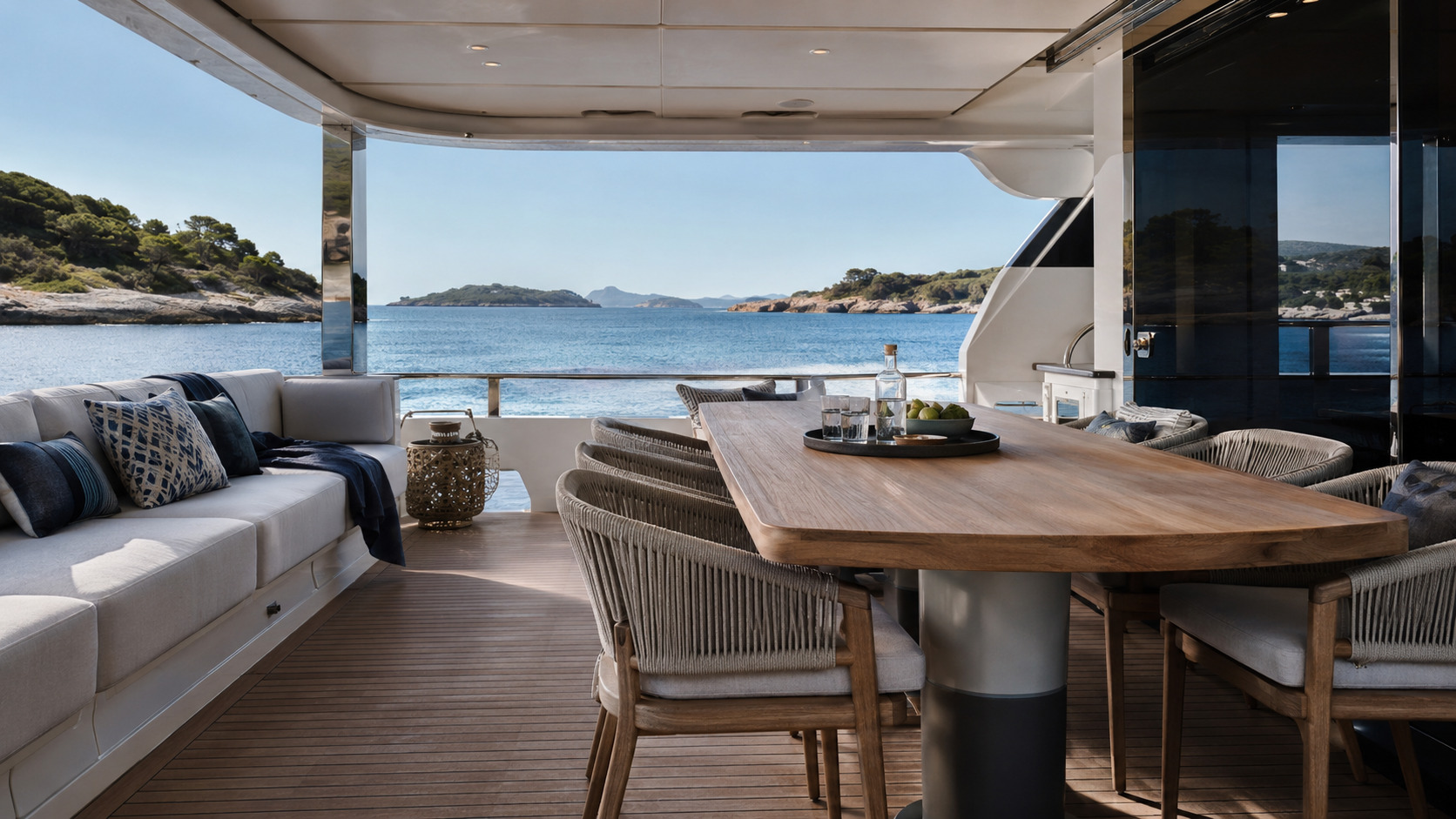
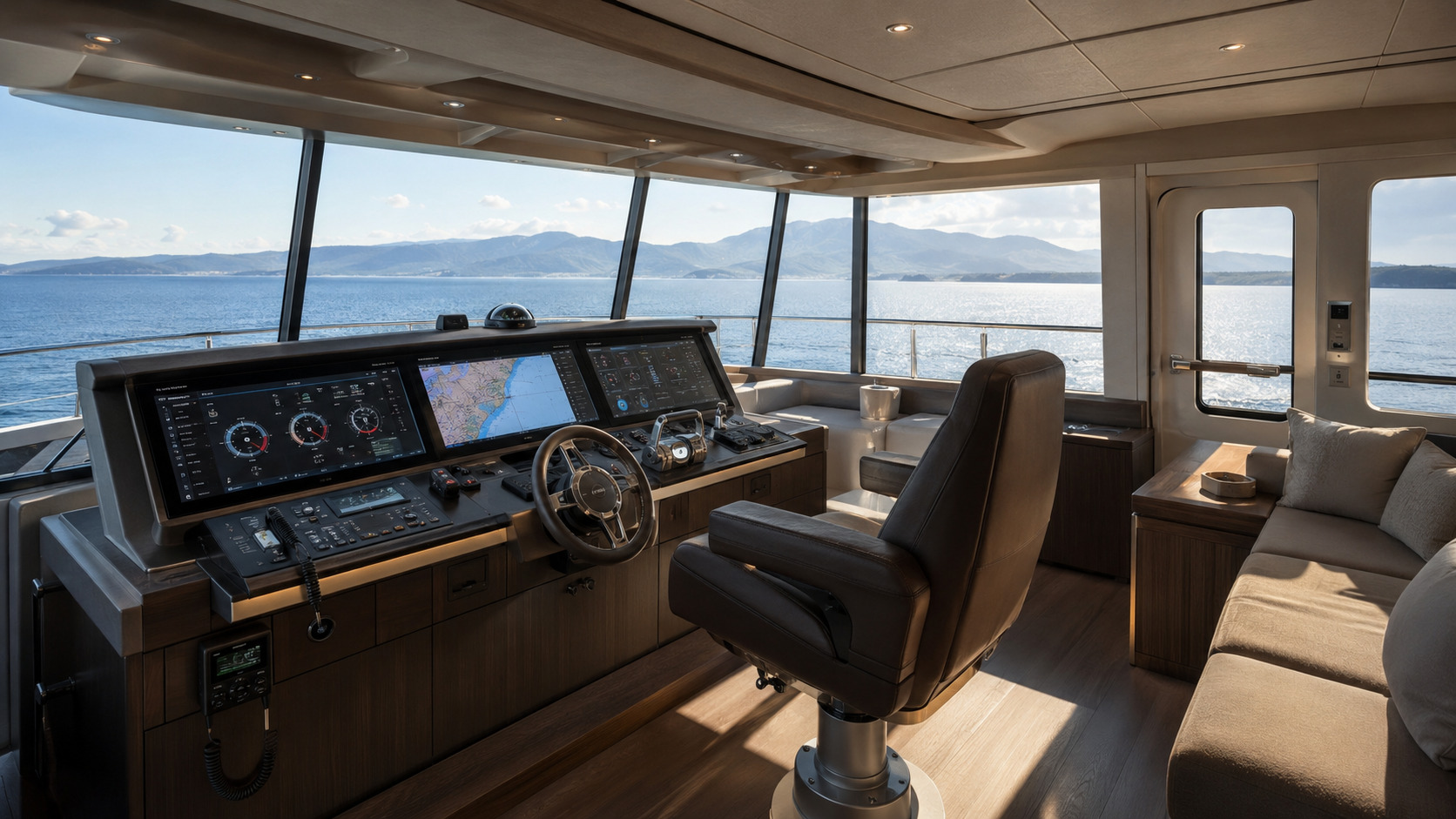
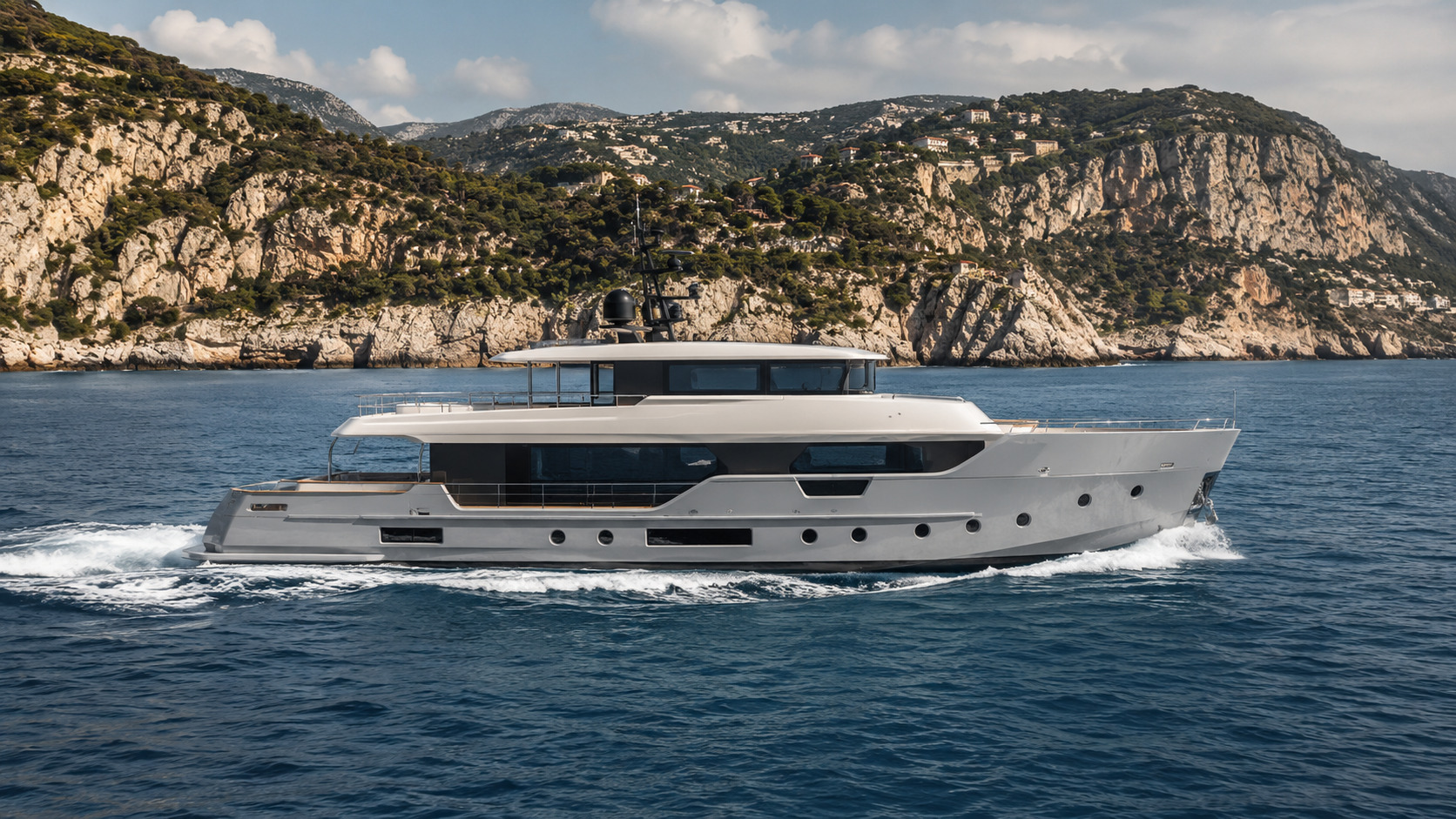
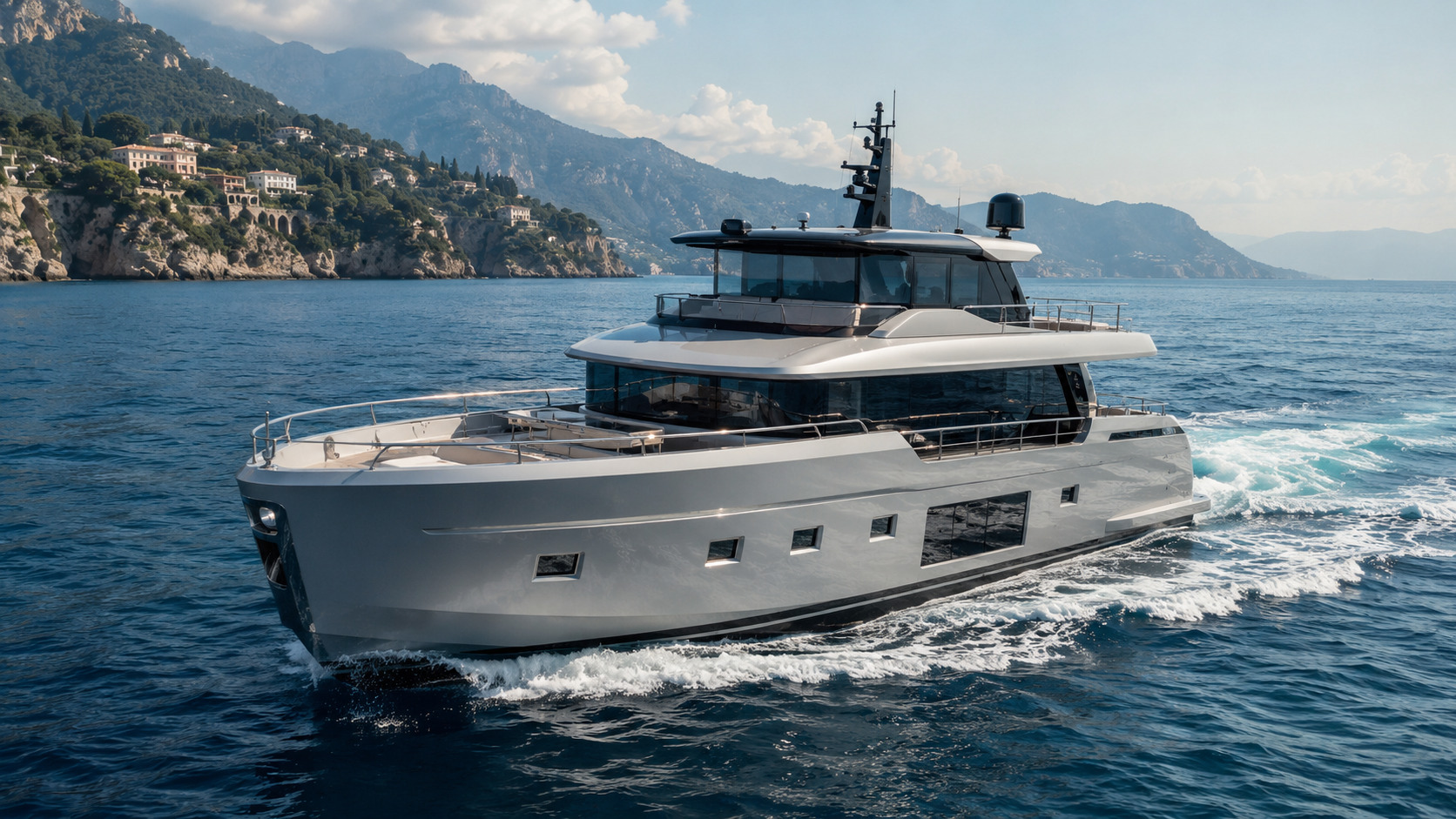
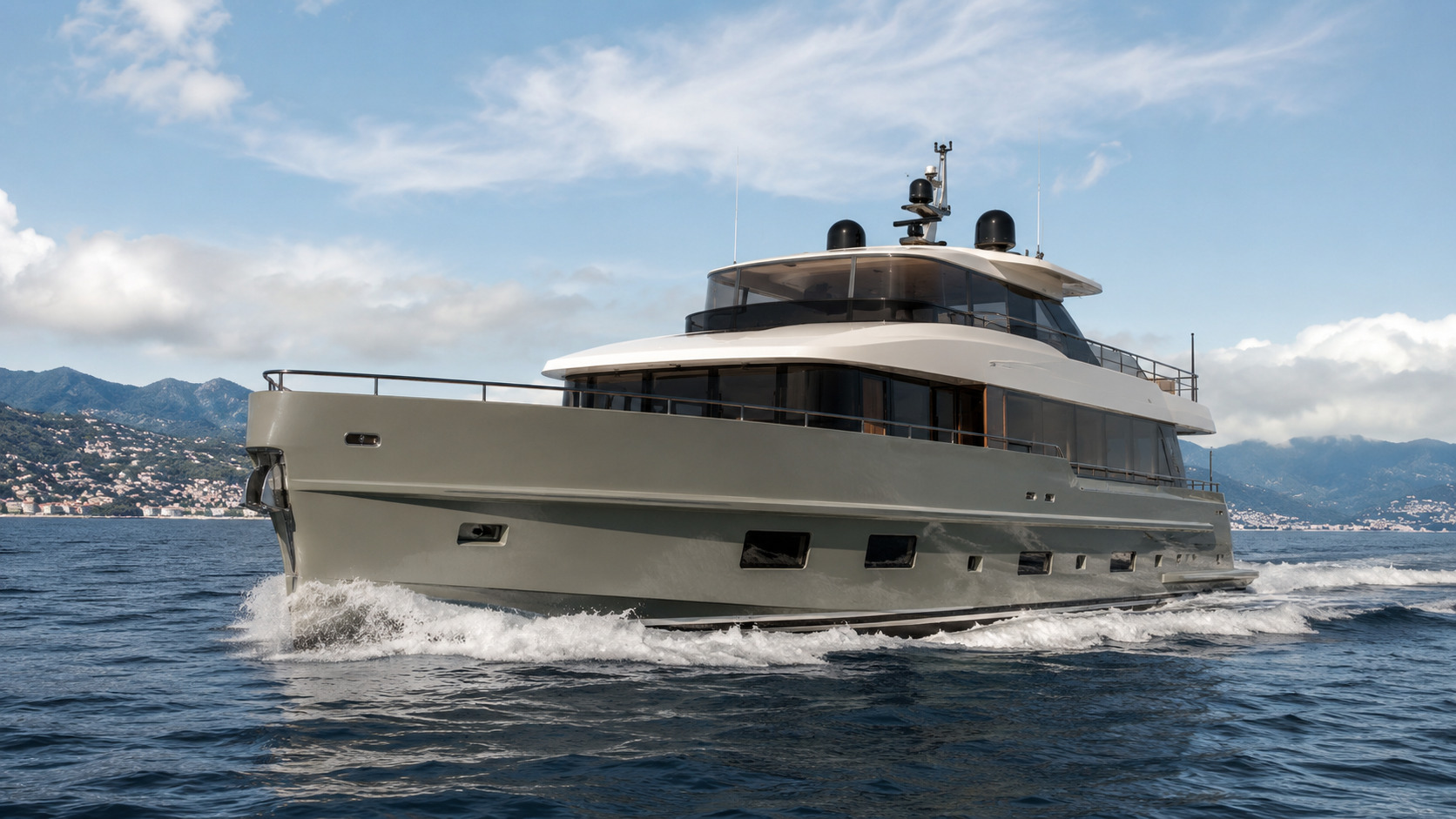
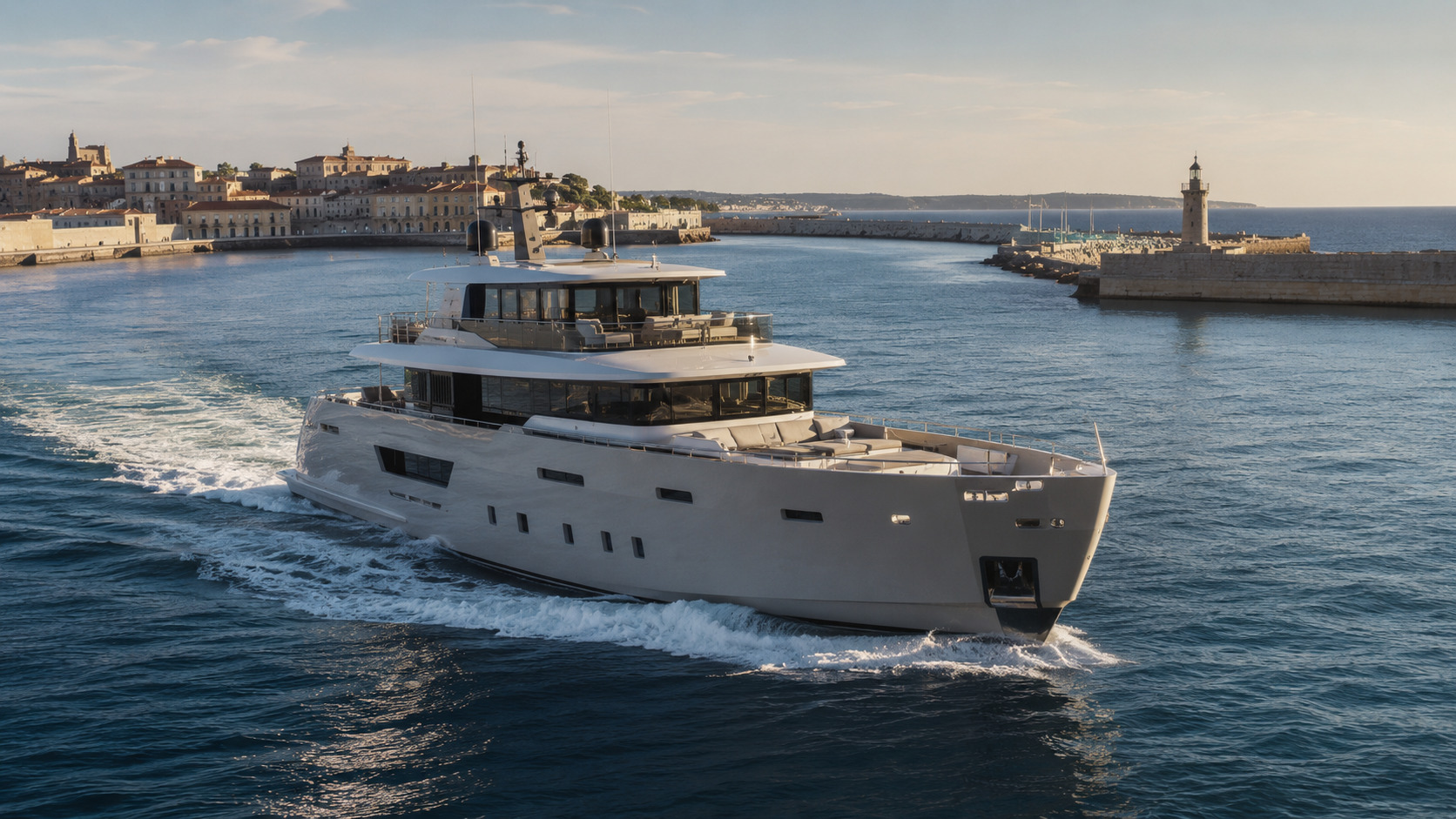
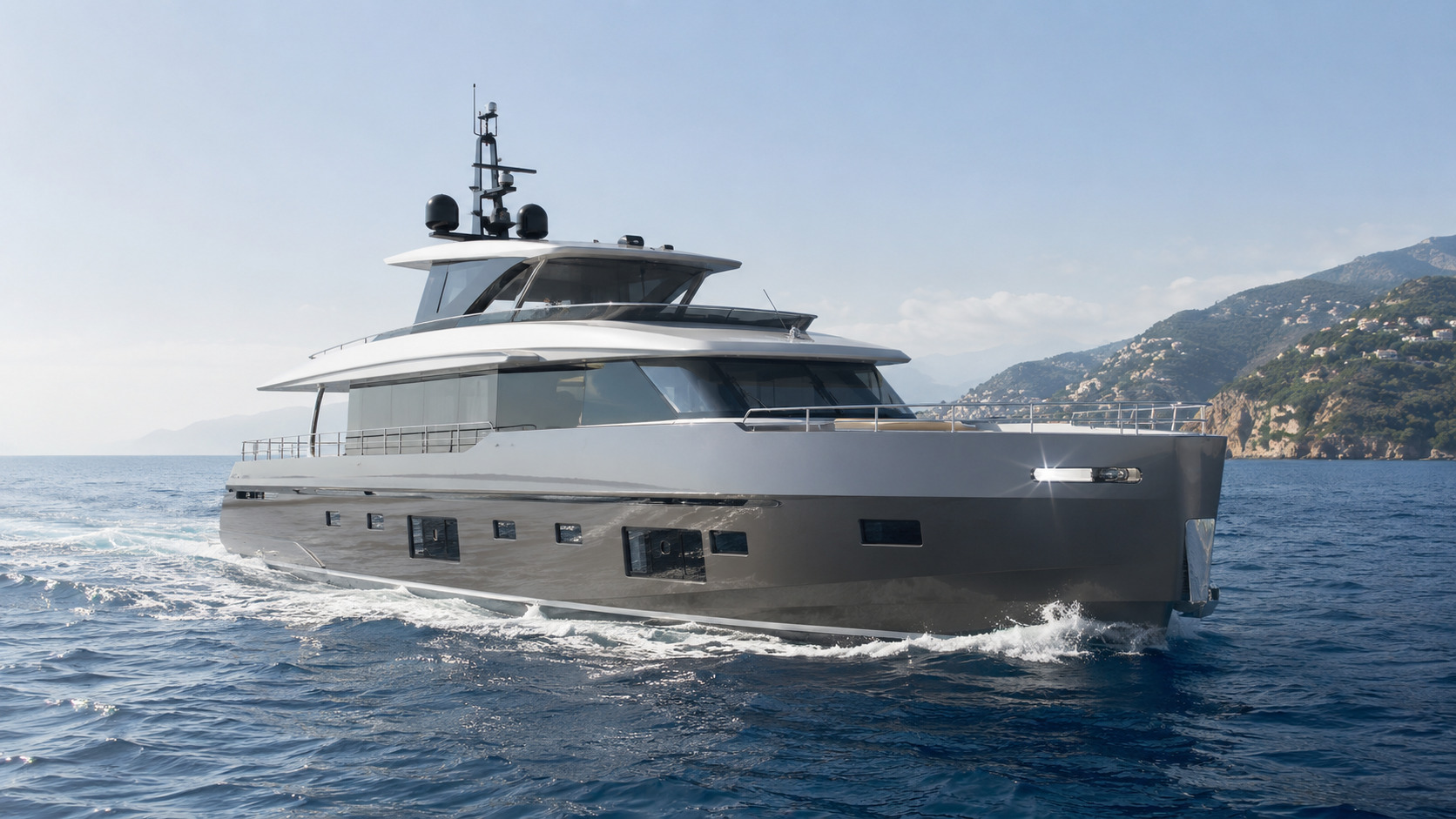
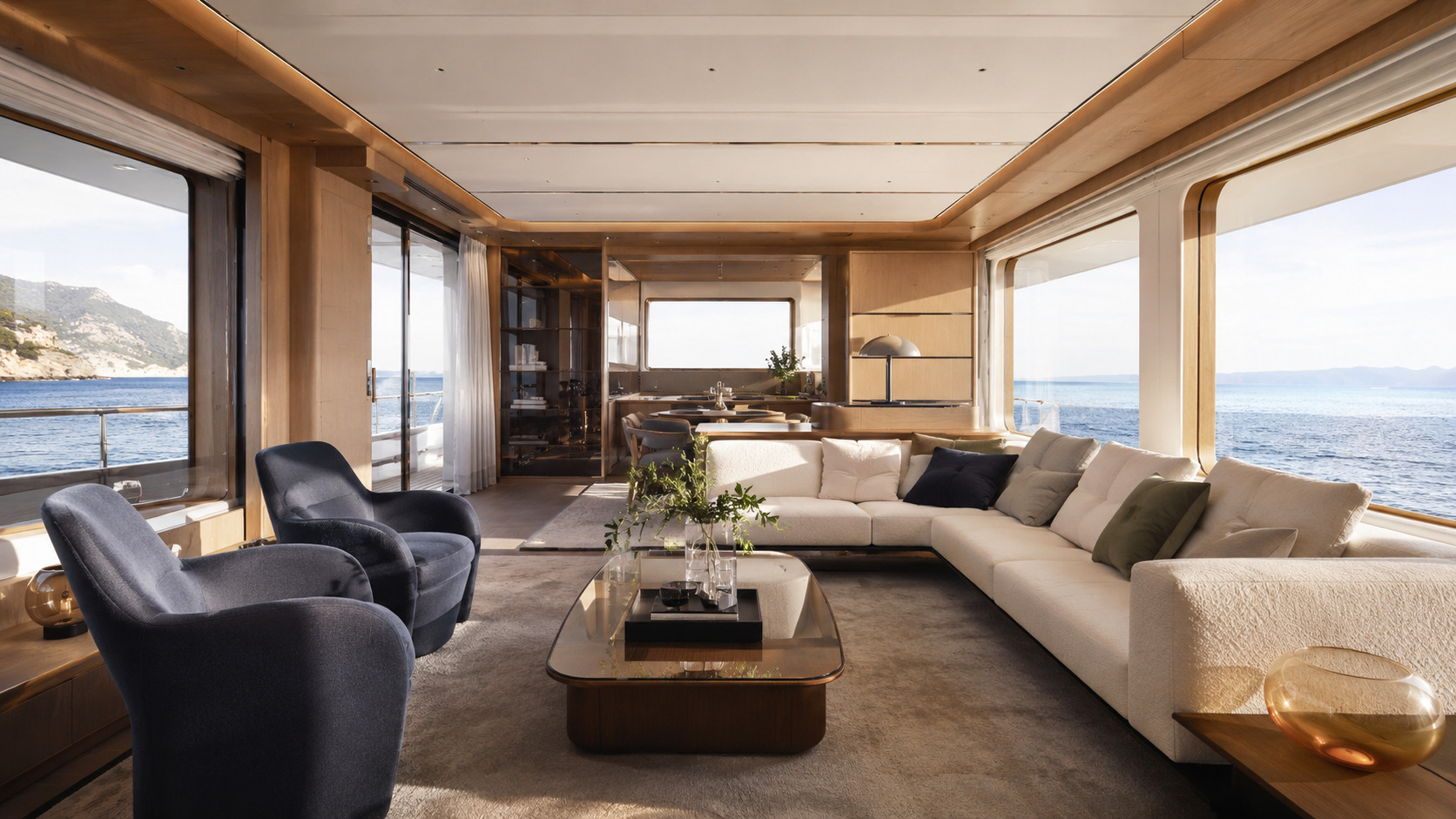
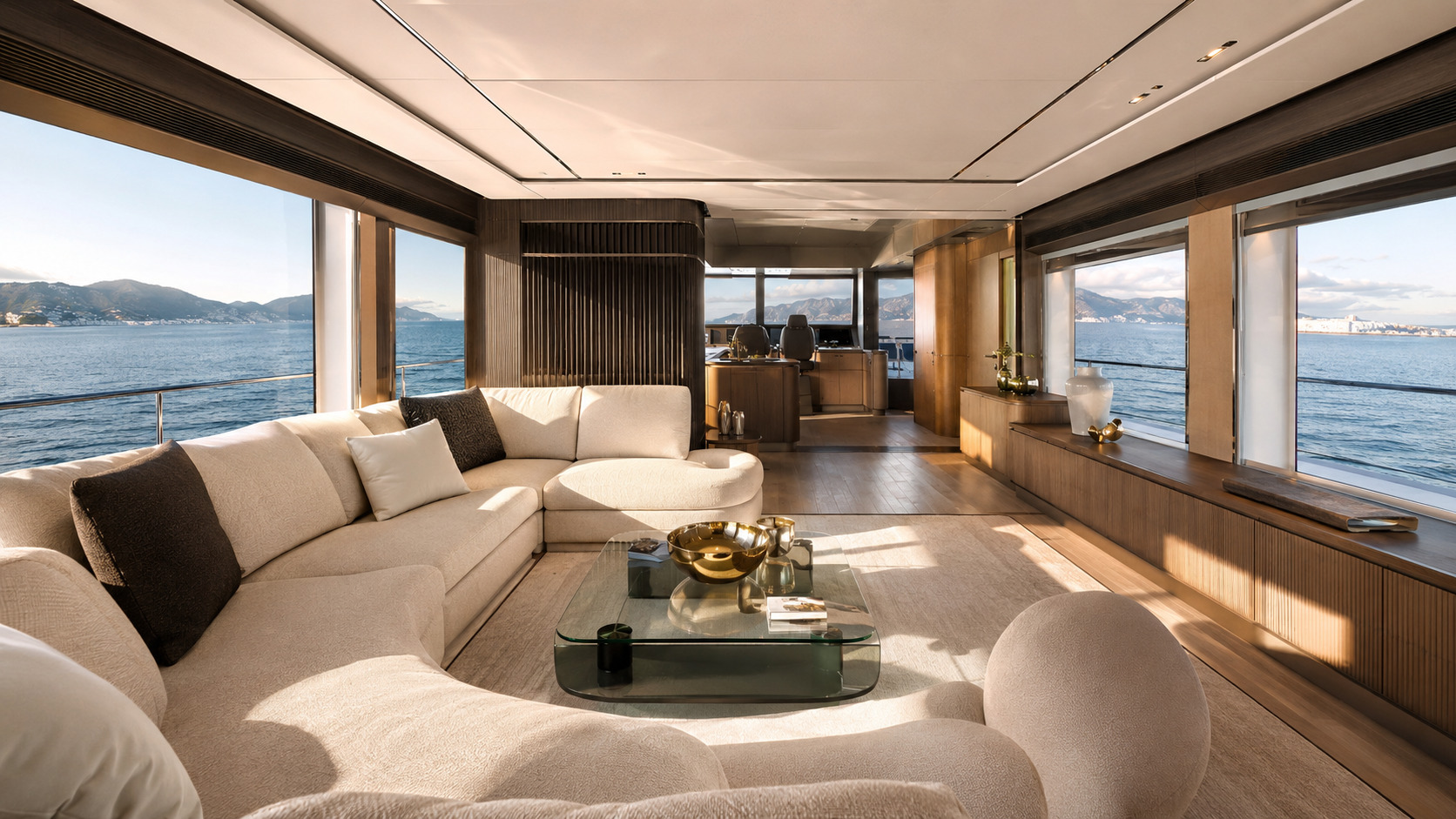
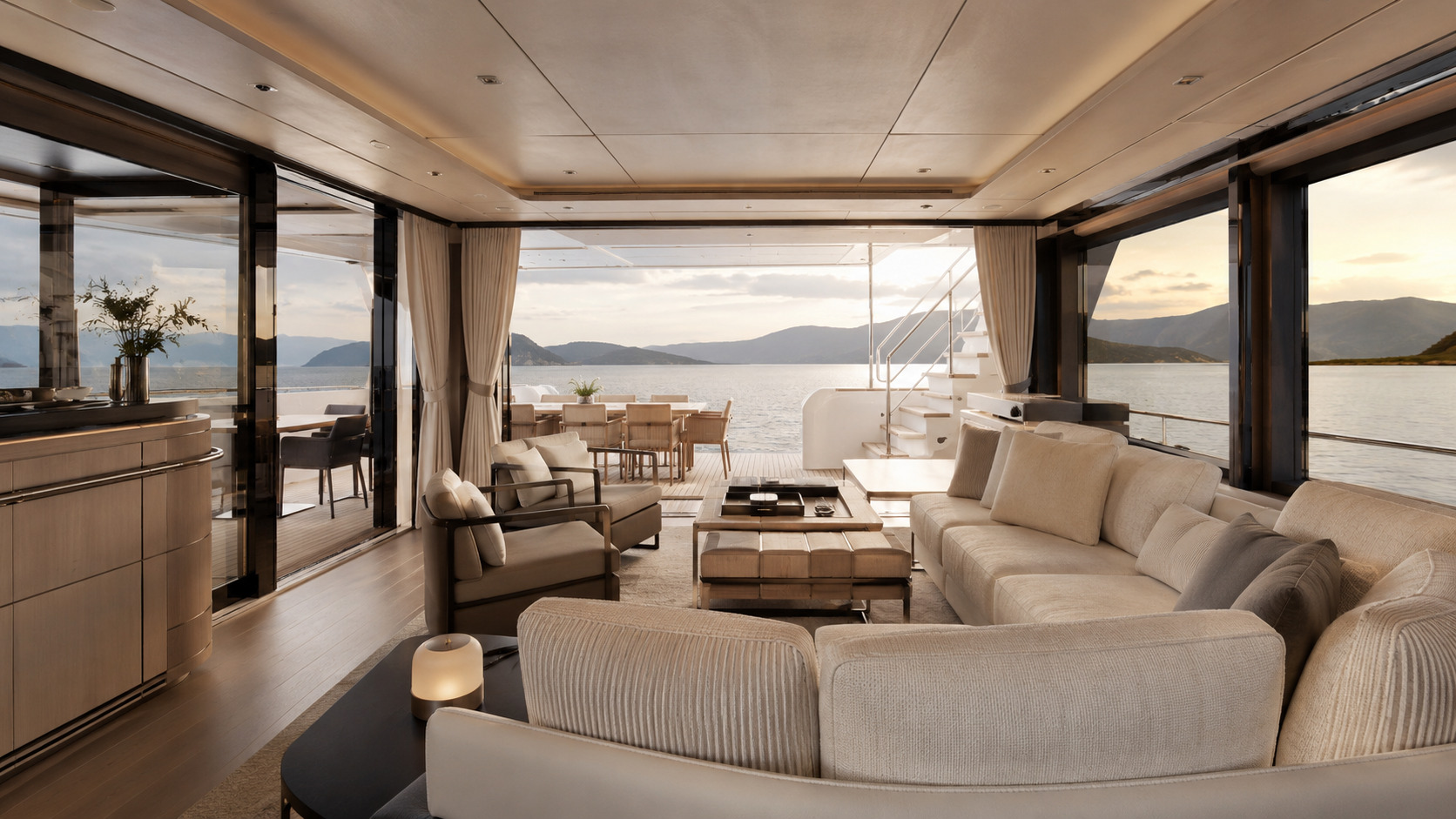
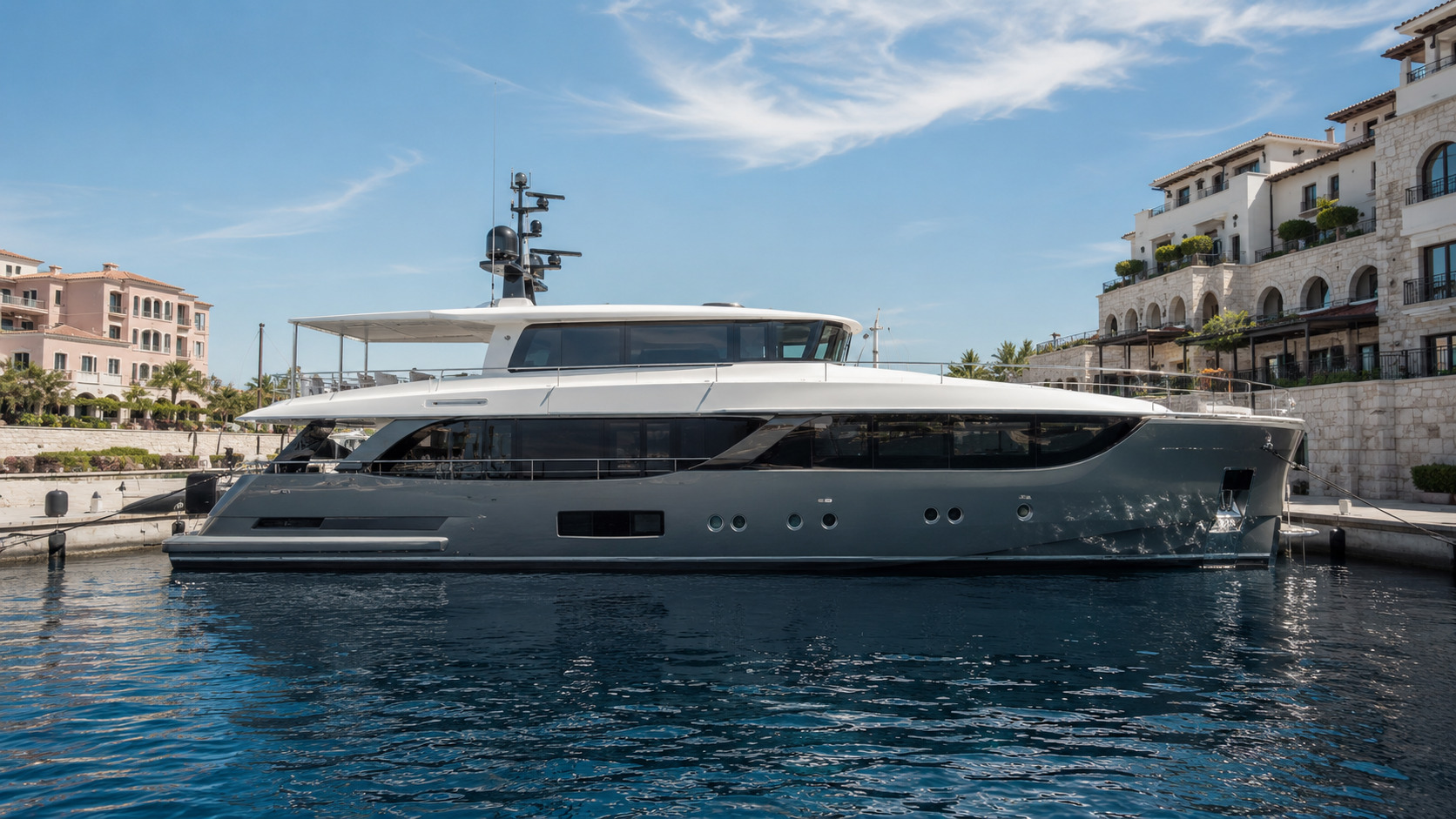
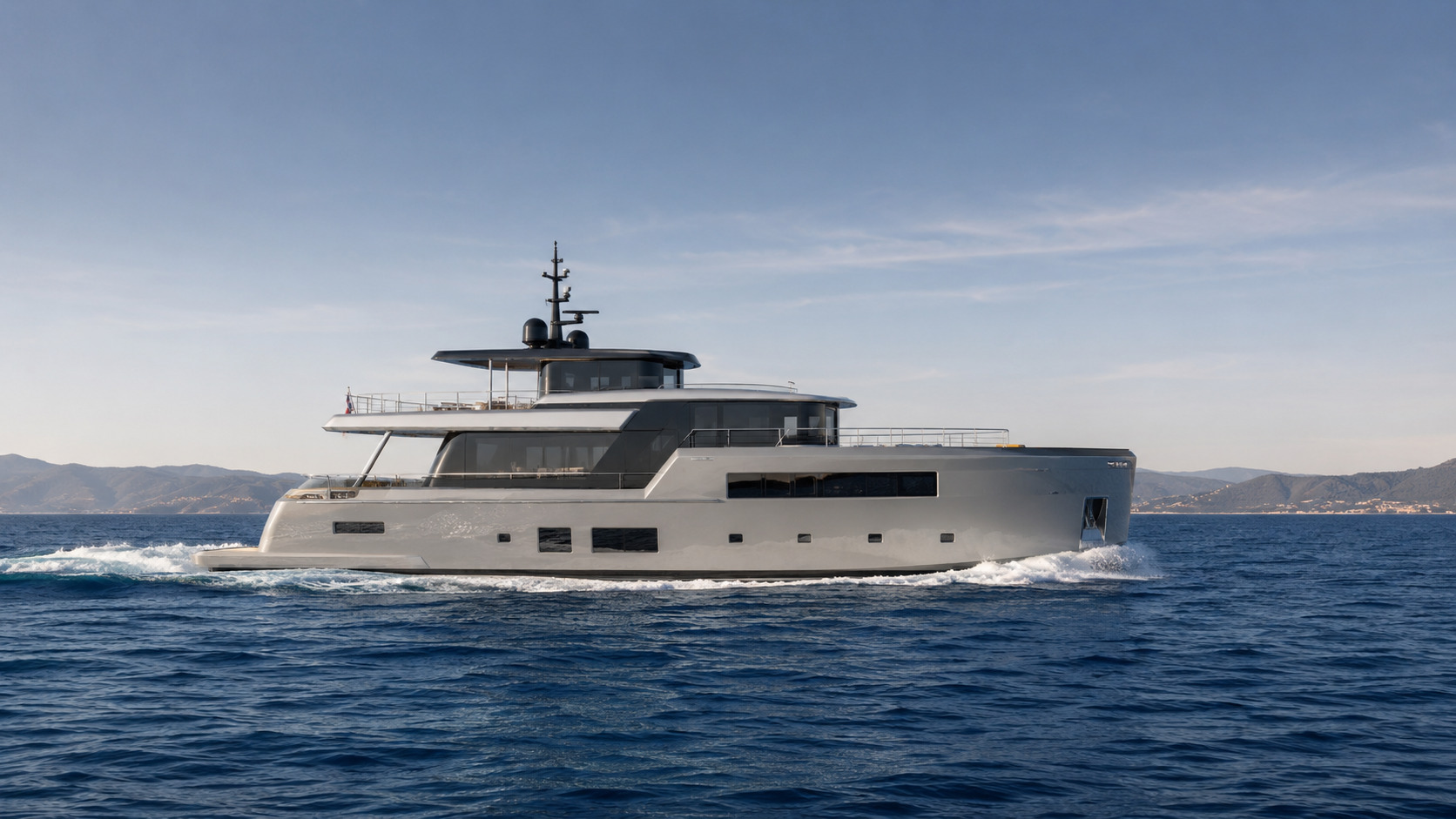
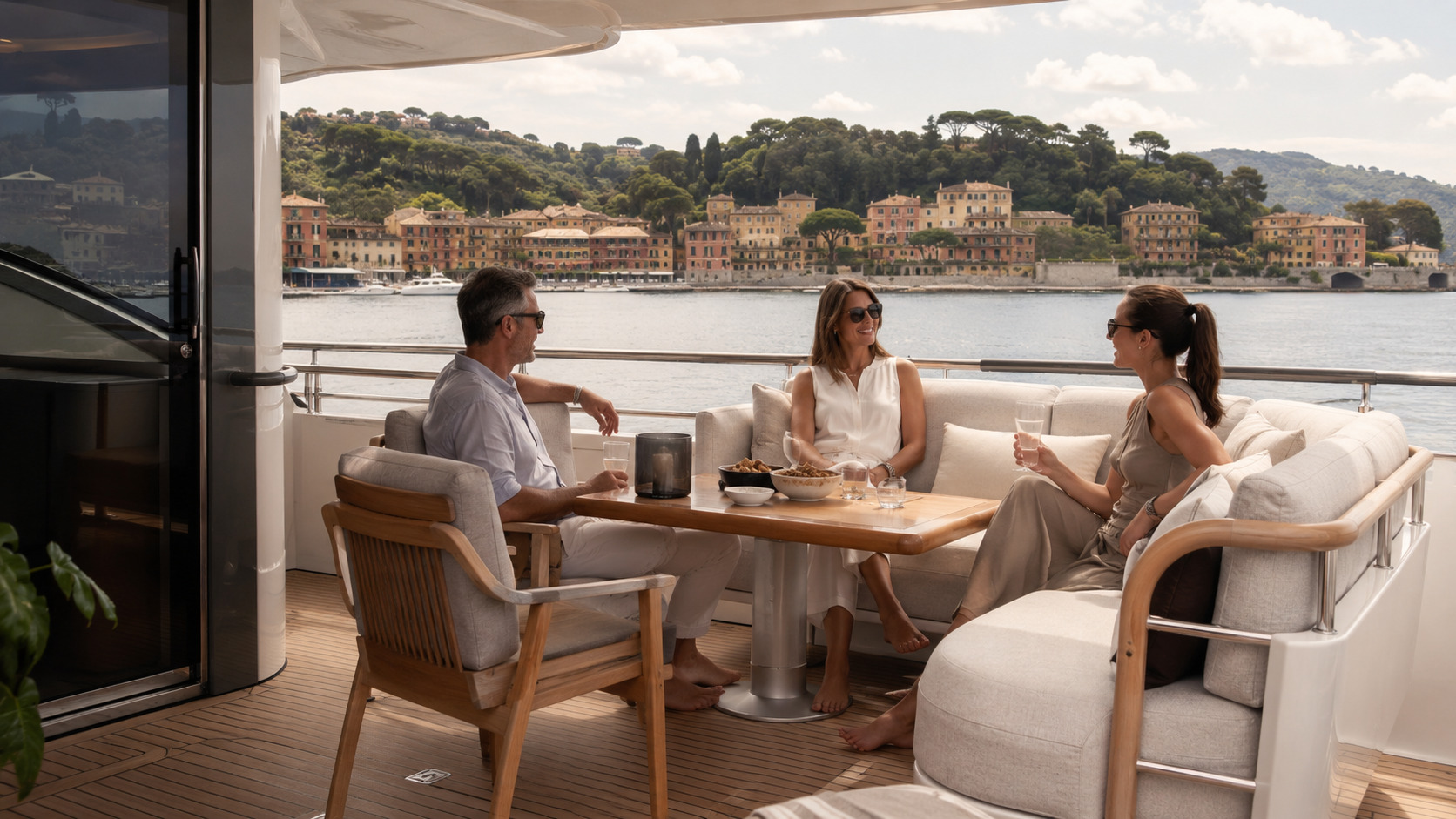
The Azimut Magellano 27M opens what Azimut calls the third generation of the Magellano family. It is not simply an 85-foot bridge between the 25M and 30M. The design brief changes: Jarkko Jämsén of Navia Design shapes the exterior, while Michele De Lucchi and AMDL Circle bring an architectural approach to the interior. The main deck is conceived as a broad glazed loggia, using full-height windows and timber architectural elements to make the salon feel more like a sheltered terrace than a conventional yacht interior.
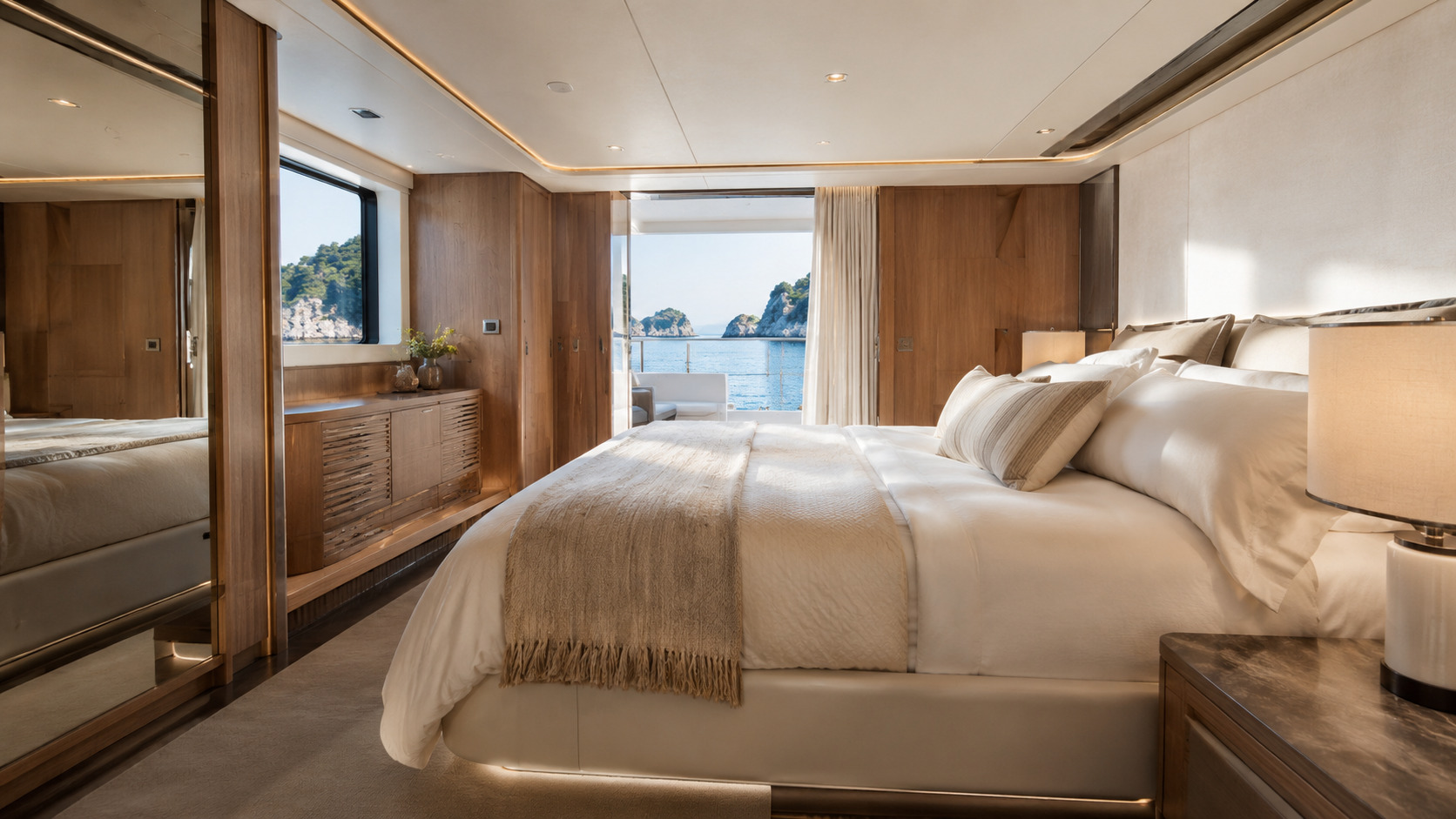
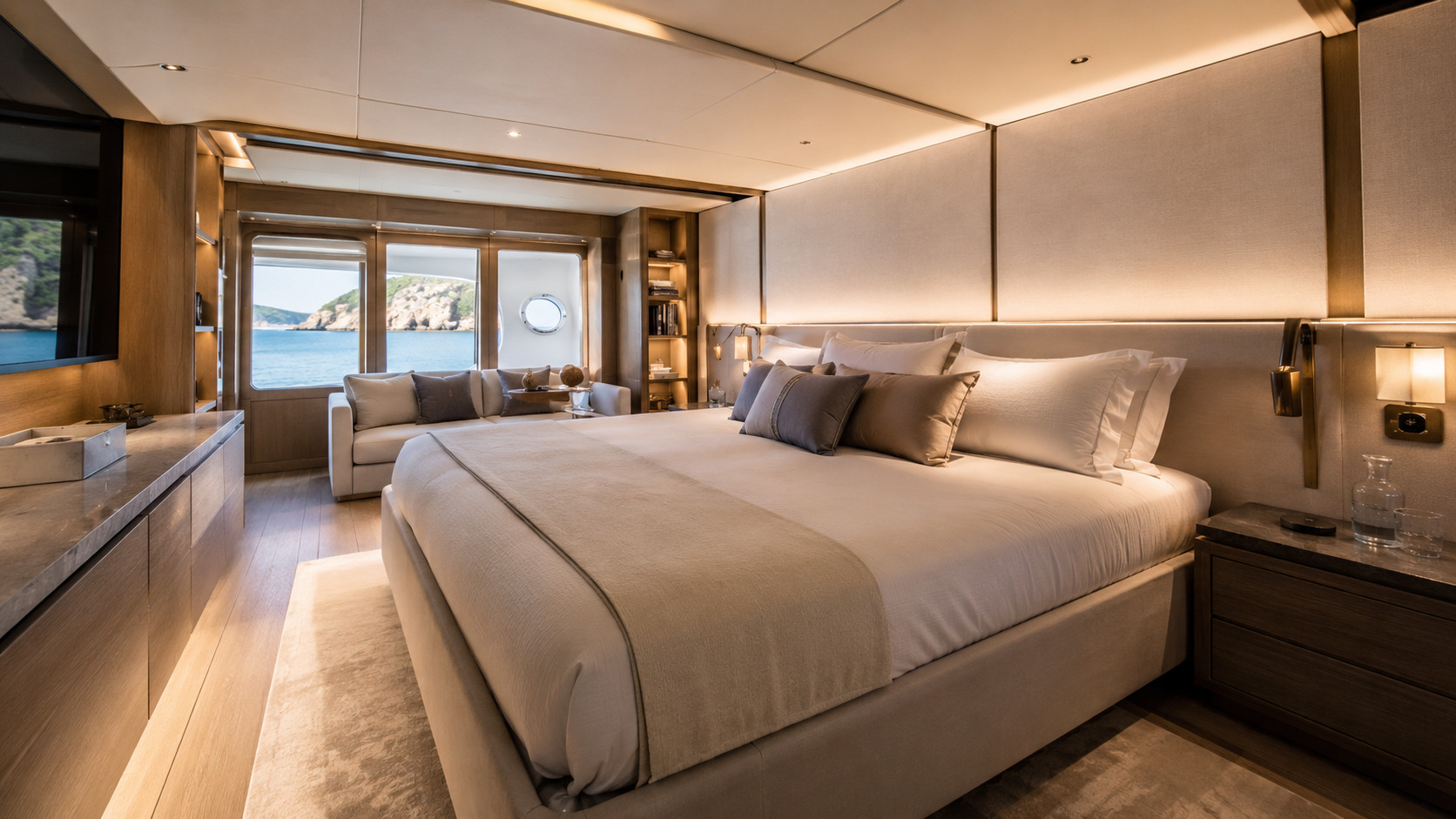
Five guest cabins sleep ten, supported by two crew cabins and three crew berths. That fifth cabin is the practical reason many buyers will look at the 27M instead of the 25M: it increases guest flexibility without the full length and crew requirement of the 30M.
The propulsion choices are twin MAN 1400 or 1650 MHP diesels, with Azimut projecting maximum speeds from about 21 knots with the lower package to 23–24 knots with the higher package. The Dual Mode semi-planing hull remains central, preserving the Magellano promise of efficient variable-speed cruising.
The compromise is maturity. The 27M is a newer project and Azimut’s current technical page still leaves draft and full-load displacement unpublished. Buyers should treat brochure-level performance and configuration data as provisional until the specific hull’s final build specification, sea-trial results and classification documents are available.
Best For — buyers who want five guest cabins, architectural main-deck living and professional-crew capability without moving all the way to a 30-meter yacht.
Not For — buyers who need fully settled production data today or who would be better served by the simpler operating footprint of the 25M or 66.
The 27M uses a GRP semi-planing Dual Mode hull designed by P.L. Ausonio Naval Architecture with Azimut R&D. The concept remains consistent with the rest of Magellano: reduce resistance and improve comfort at low and medium speeds without capping the yacht at displacement-only speeds.
At 22′ 6″ of beam, the 27M is proportionally broad enough to support the “loggia” main-deck concept and five-cabin accommodation. Azimut has not yet populated the current project page with draft or displacement, so both values should remain bracketed rather than borrowed from a third-party estimate.
For a new-build buyer, construction oversight and final documentation matter as much as the marketing specification. Confirm final tankage, lightship/full-load displacement, stabilizer package, draft, class notation and delivered equipment against the contract and sea-trial report.
Two MAN engine packages are listed: 1,400 MHP and 1,650 MHP per side. The lower package is paired with a published maximum speed around 21 knots; the higher package is expected to reach roughly 23–24 knots. Both use shaft-line propulsion.
The engine decision should be made around itinerary and loading, not only maximum speed. If the yacht will spend most of its life at low and medium passage speeds, the higher-horsepower package may not change the ownership experience enough to justify its purchase and fuel cost. If schedule flexibility and higher cruise matter, the larger engines may be appropriate.
Because the model is new, buyers should insist on final engine, gearbox and propeller specifications for the individual hull and confirm that service access is practical once all crew, hotel and stabilization equipment is installed.
Fuel capacity is published at 10,500 liters, or about 2,774 US gallons. Azimut has not yet published a model-specific fuel-consumption table or official range figure on the current 27M page.
The large tankage supports the model’s Voyager brief, but tank size alone is not range. Final range will depend on engine package, displacement, sea state, hotel load and chosen speed. The strongest reason to buy into the Dual Mode hull is the ability to slow down meaningfully when range matters.
For financing and ownership planning, use fuel as an itinerary cost rather than a fixed annual percentage. A 27M that spends weeks on passage can burn a radically different amount from one that serves as a seasonal floating home with short repositioning runs.
Azimut publishes up to 16–18 knots of cruising speed and 21 to 23–24 knots maximum depending on engine package. Those figures position the 27M as a fast crossover rather than a conventional displacement explorer.
Because production data is still developing, avoid writing subjective sea-state claims until an independent test of the specific model is available. The page should explain the intended performance envelope and clearly distinguish it from verified on-water results.
The defining design feature is the main deck “loggia”: a heavily glazed space articulated with wood elements that reference Mediterranean pergolas and patios. It is meant to blur the distinction between salon and exterior view without opening the entire deck to weather.
The wider 22′ 6″ beam allows generous circulation and guest areas while preserving dedicated crew service zones. Five guest cabins make the yacht viable for larger family groups or charter-style guest lists, while the crew spaces support the professional operation expected at this size.
As the model reaches delivered-hull maturity, the exact tender arrangement, upper-deck furniture and service routes should be described from the actual build rather than assumed from renderings.
The 27M should be surveyed and operated as a superyacht system, not a large recreational boat. Generators, HVAC, stabilizers, electrical distribution, watermakers where fitted, navigation, pumps and monitoring systems all become material to availability and resale value.
Because the model is new, buyers should preserve build records, commissioning reports, warranty documentation and software configuration from delivery. Those records are especially valuable when the first major service cycles arrive.
At nearly 86 feet with a 22′ 6″ beam, berth selection will be constrained by more than nominal LOA. Confirm width, approach, draft once finalized, shore power, fueling and service access.
Do not substitute estimates from an unrelated 27-meter yacht.
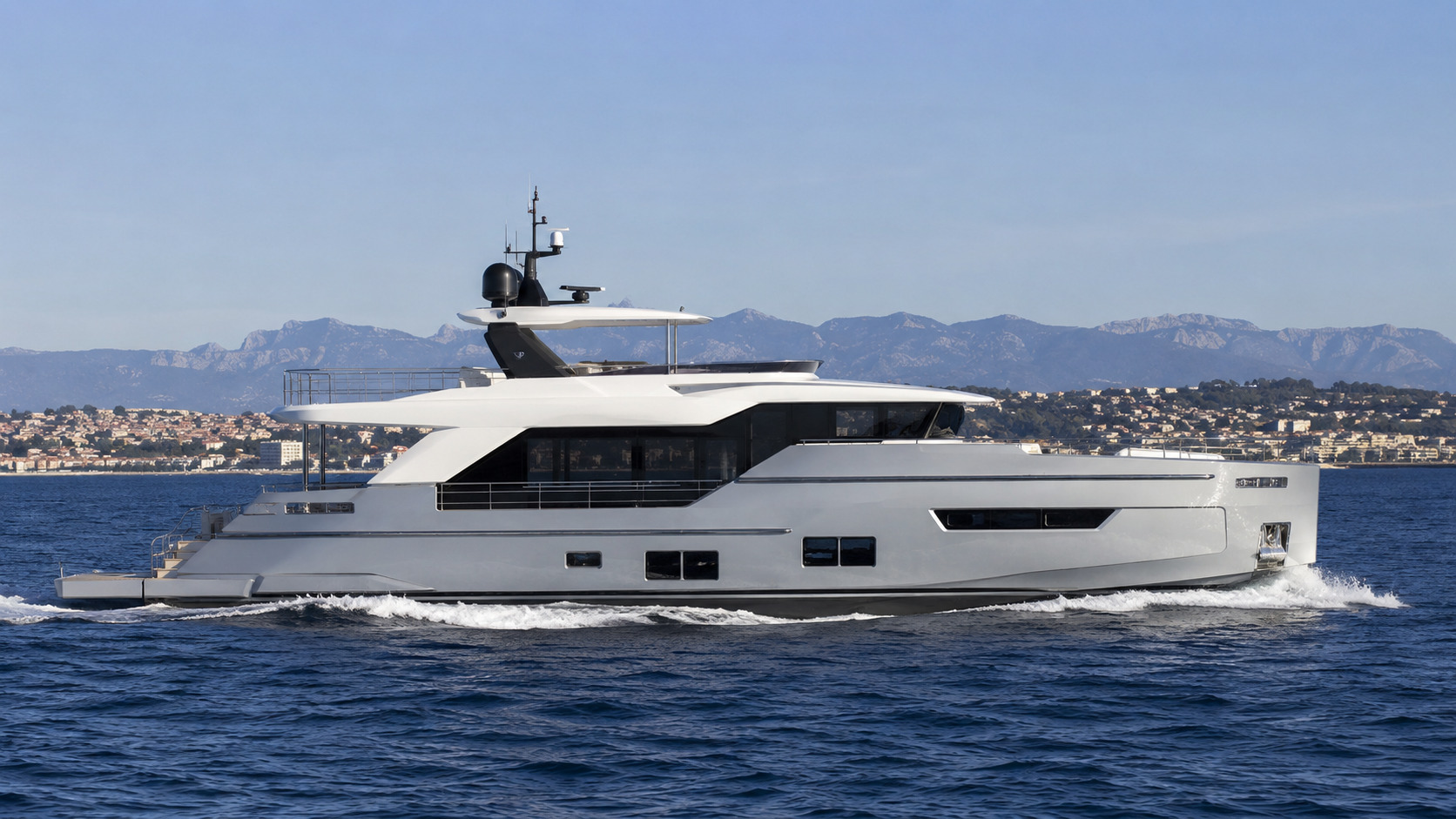
Use the gallery to make the new-generation design obvious: broad glazed main deck, loggia concept, five-cabin interior, protected decks, pilothouse/helm, crew circulation and the relationship between the transom and water. Avoid generic Magellano images.
azimut magellano 27m prj long range cruising profile 04
azimut magellano 27m prj long range cruising profile 01
Typical Pricing
As a new-generation model, current pricing is highly specification-dependent and may be quoted privately.
Engine choice, interior package, stabilization, electronics, tender systems, class options and delivery jurisdiction can materially affect final contract value.
Build the annual ownership estimate from the actual yacht and home port rather than a generic percentage of purchase price.
Pricing, payment and ownership-cost figures are illustrations only and are not offers or commitments to extend credit.
Market price band
Pricing on request
Estimated monthly
Ask us for a payment
Figures come from this page’s Boat Details fields. Illustration only and not an offer of credit.
Estimate Your Magellano 27M Payment
Use the yacht-loan calculator to test purchase price, cash down, rate and term before negotiating. For higher-value yachts, compare multiple down-payment and term scenarios rather than anchoring the decision to one optimistic monthly number.
Illustration only and not an offer of credit. Your actual rate and term depend on credit profile, vessel age, loan amount and ownership structure.
Compare the Magellano 27M Before You Buy
The 27M’s clearest distinction is five cabins in a newer architectural package. The 25M is more established and slightly smaller with four cabins; the 30M adds nearly 12 feet, five crew berths and a full 30-meter superyacht operating footprint.
A 27M buyer may be dealing with a build slot, newly delivered yacht or lightly used hull rather than a mature brokerage market. Contract details, warranty assignment, final specification and commissioning history therefore deserve more attention than simple asking-price comparisons.
If buying before all final technical data is published, insist that the purchase contract and technical annex—not marketing copy—control the delivered specification.
For a new-build or nearly new Magellano 27M, financing should be coordinated with the build/delivery timeline, documentation and insurance rather than treated as a last-step retail loan. Send Float Finance the proposal or listing early.
Potentially, subject to lender, borrower and vessel eligibility. New-build timing, ownership entity, documentation, insurance and survey/acceptance can be important at this value level.
The yacht includes dedicated crew accommodation and is designed as a professionally operated Voyager. Most owners should budget for crew or yacht management.
Not simply. The 27M introduces a third-generation design language, five guest cabins and a new architectural main-deck concept. Buyers should compare mission and layout rather than assume the newer model automatically replaces the 25M.