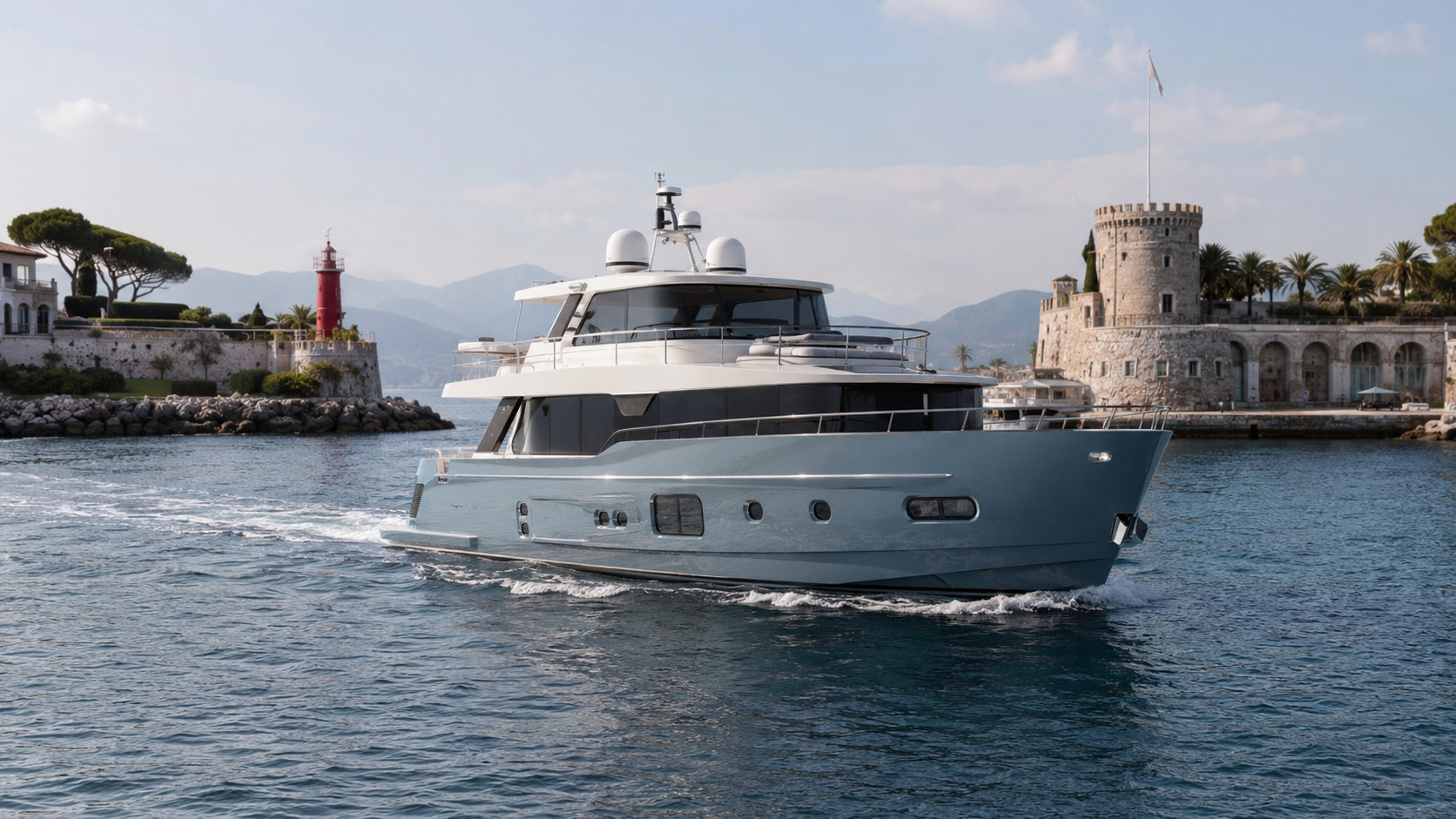
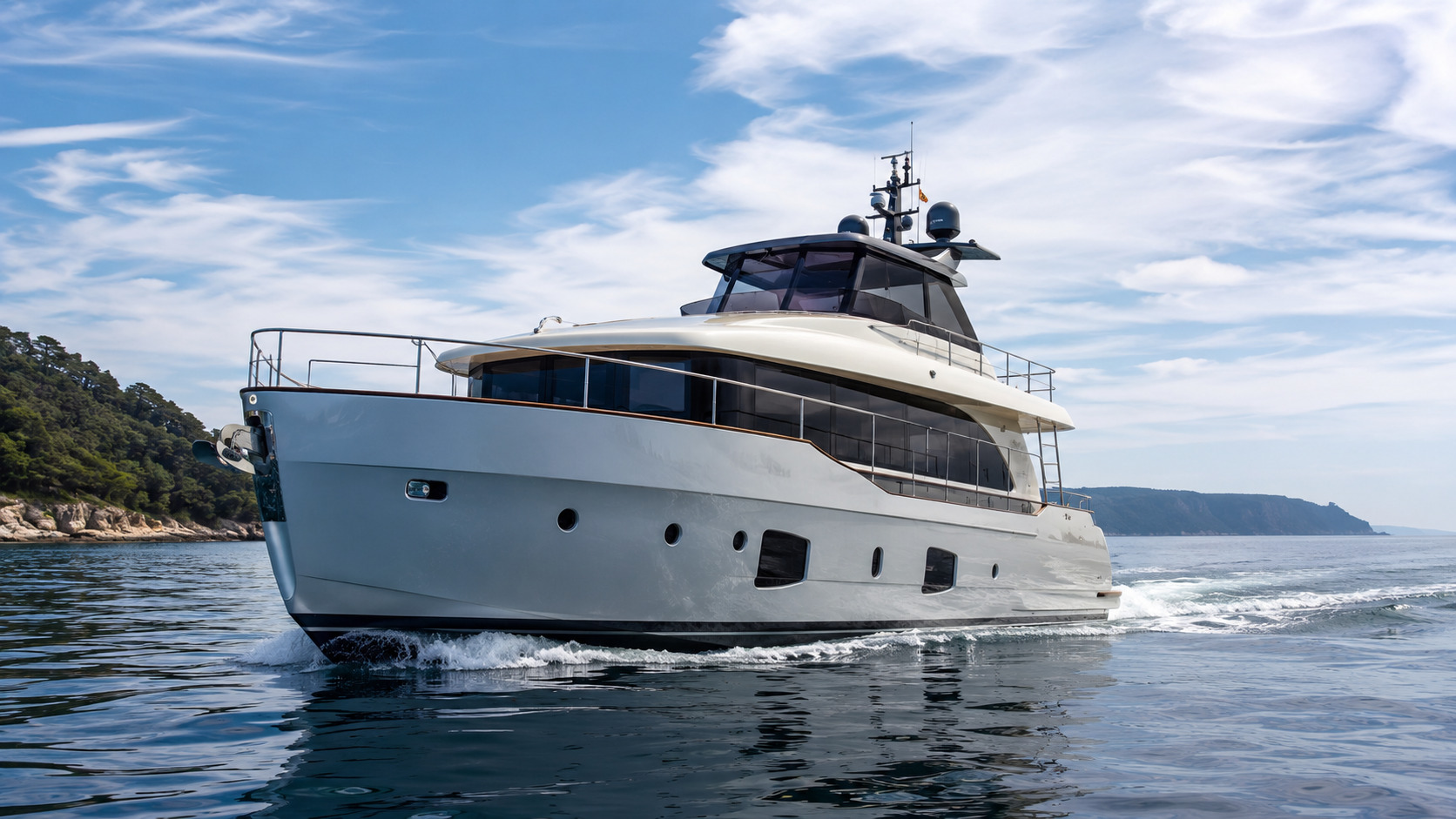
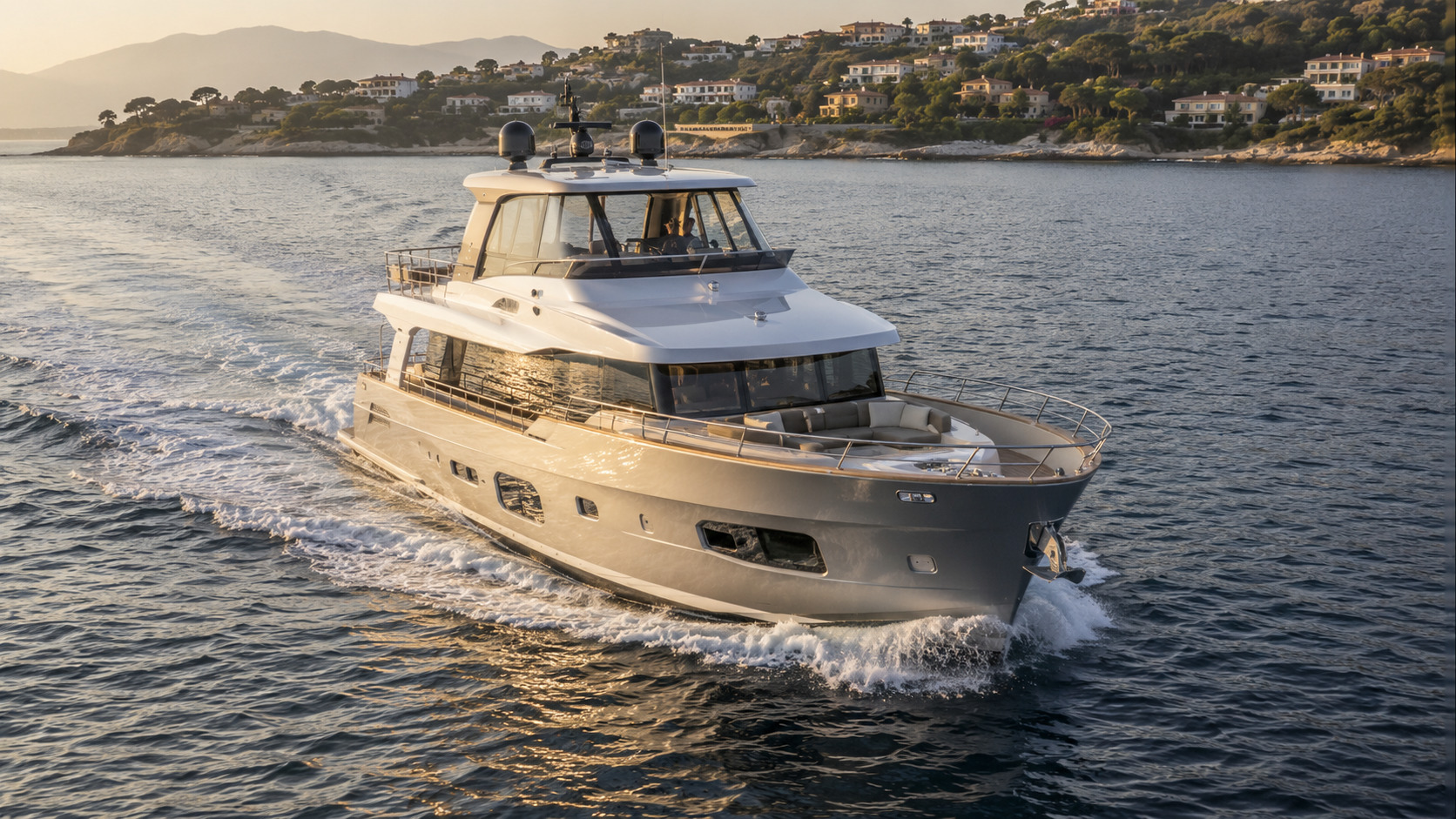
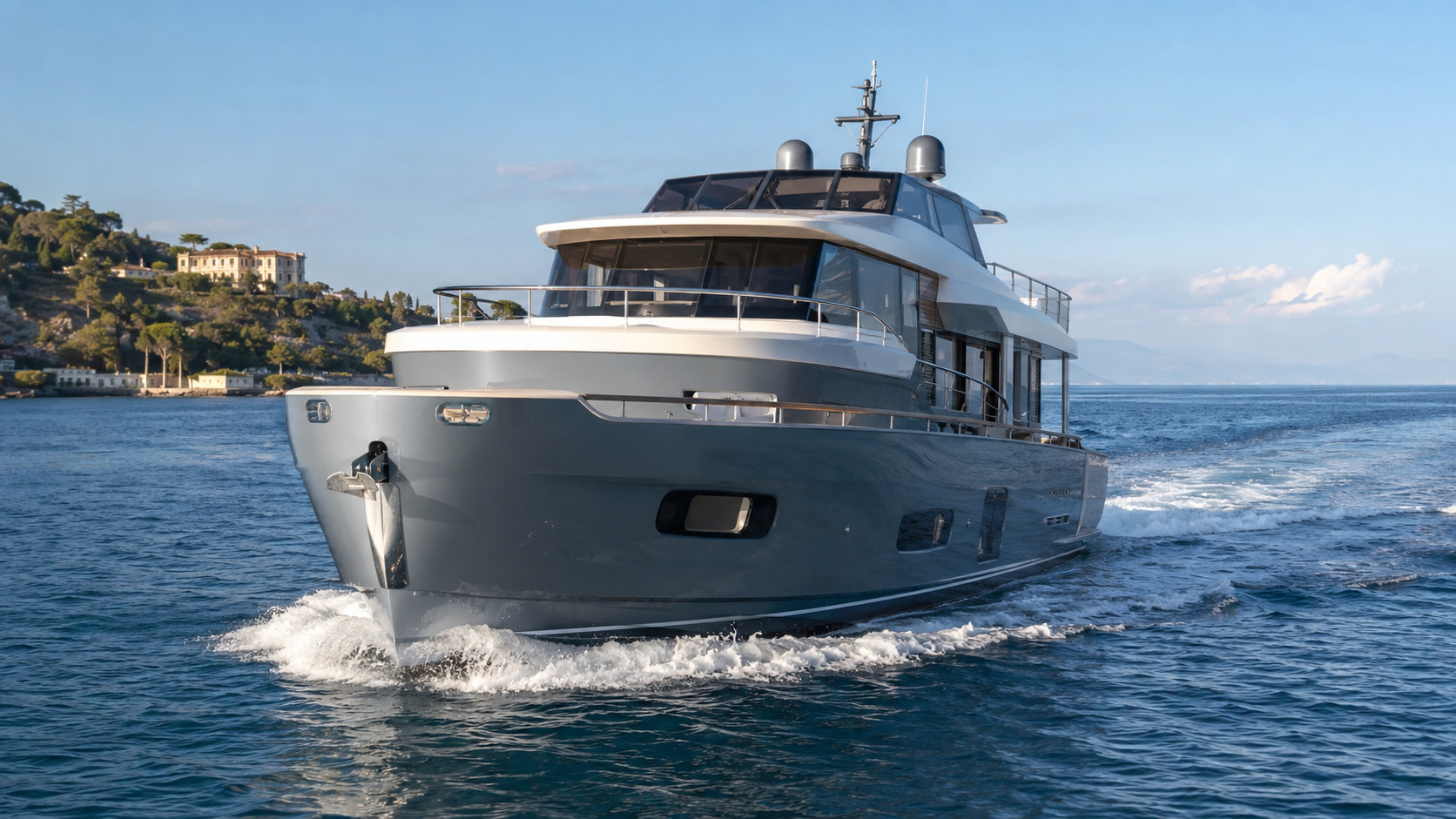
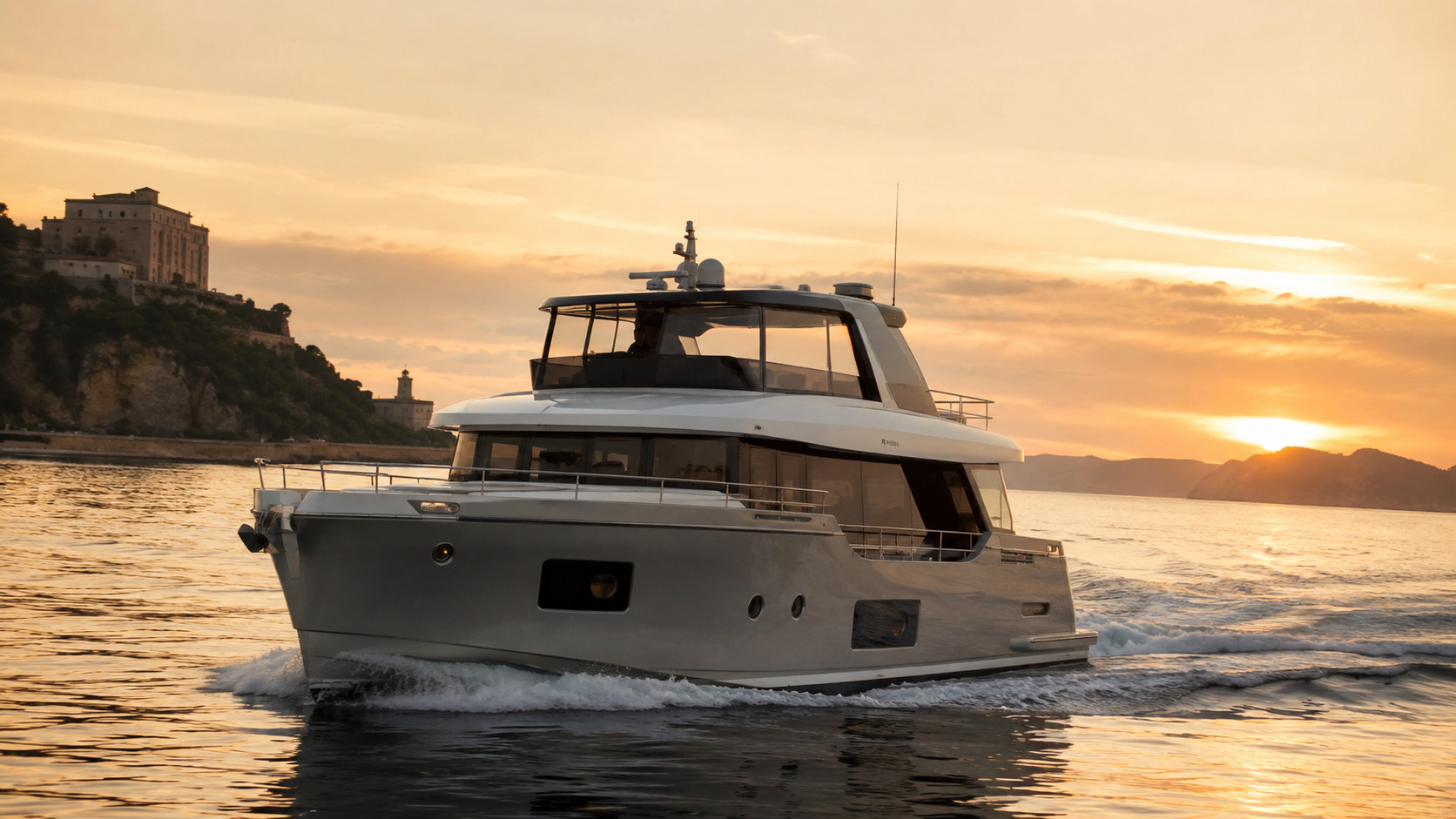
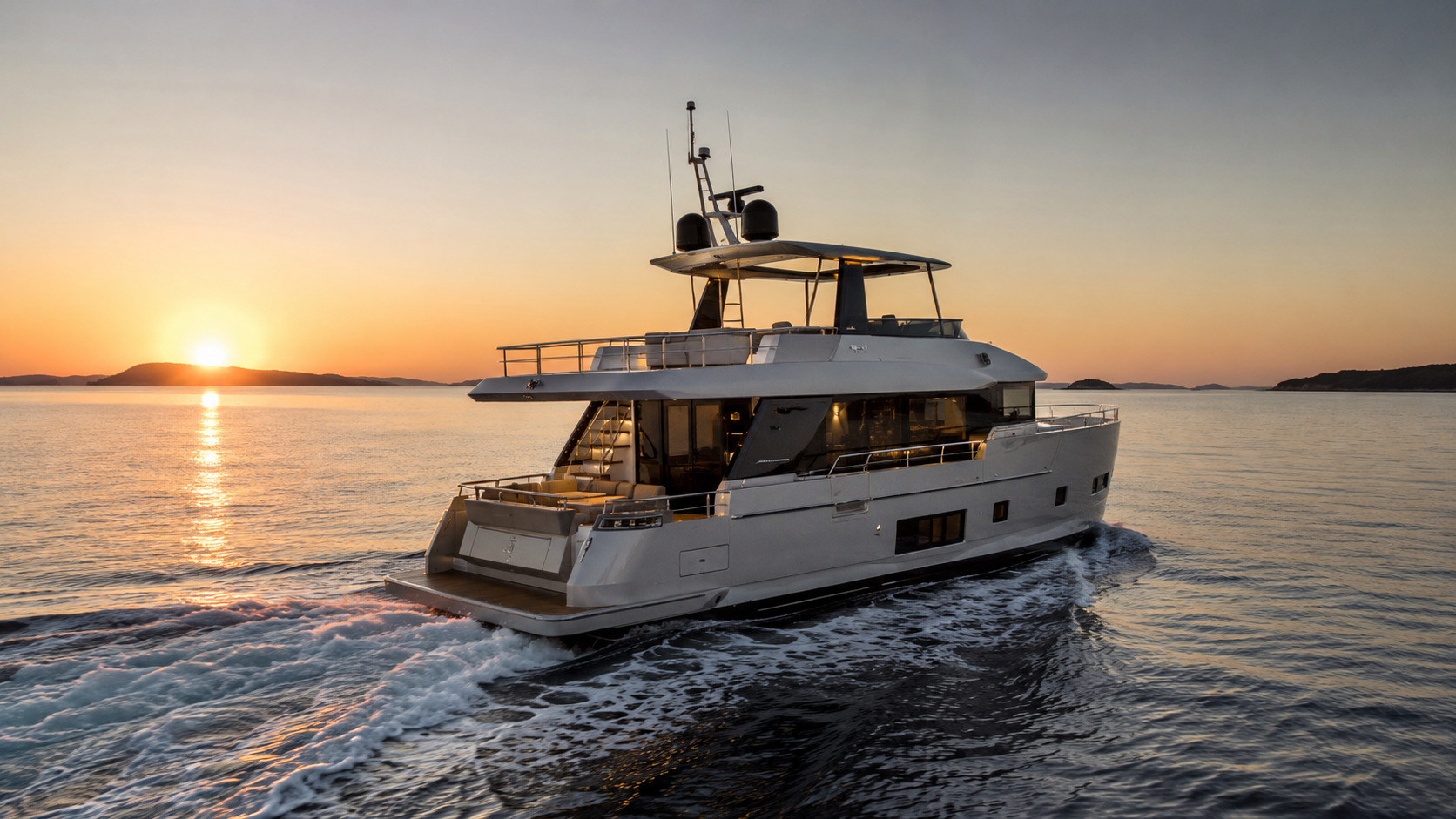
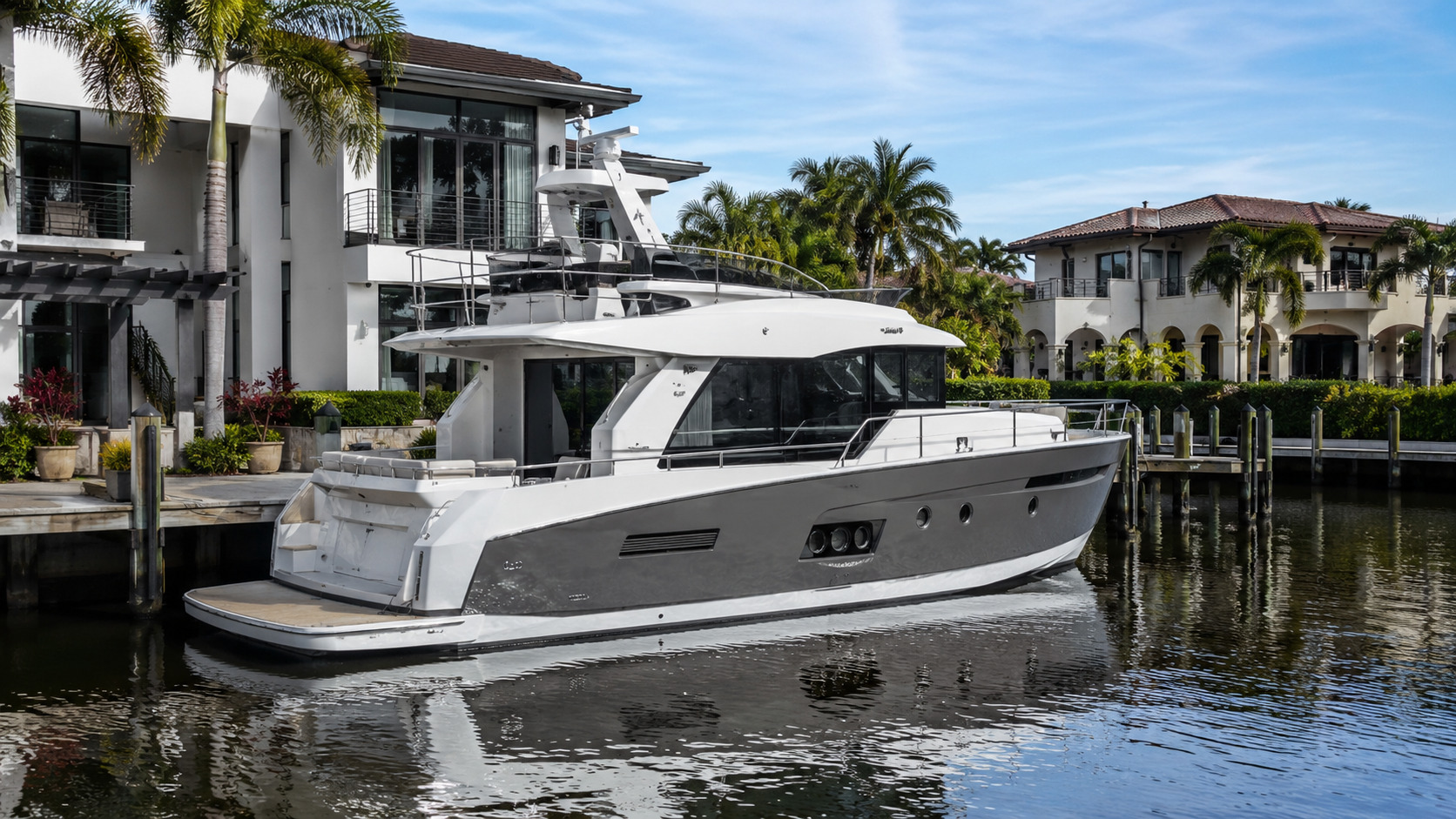
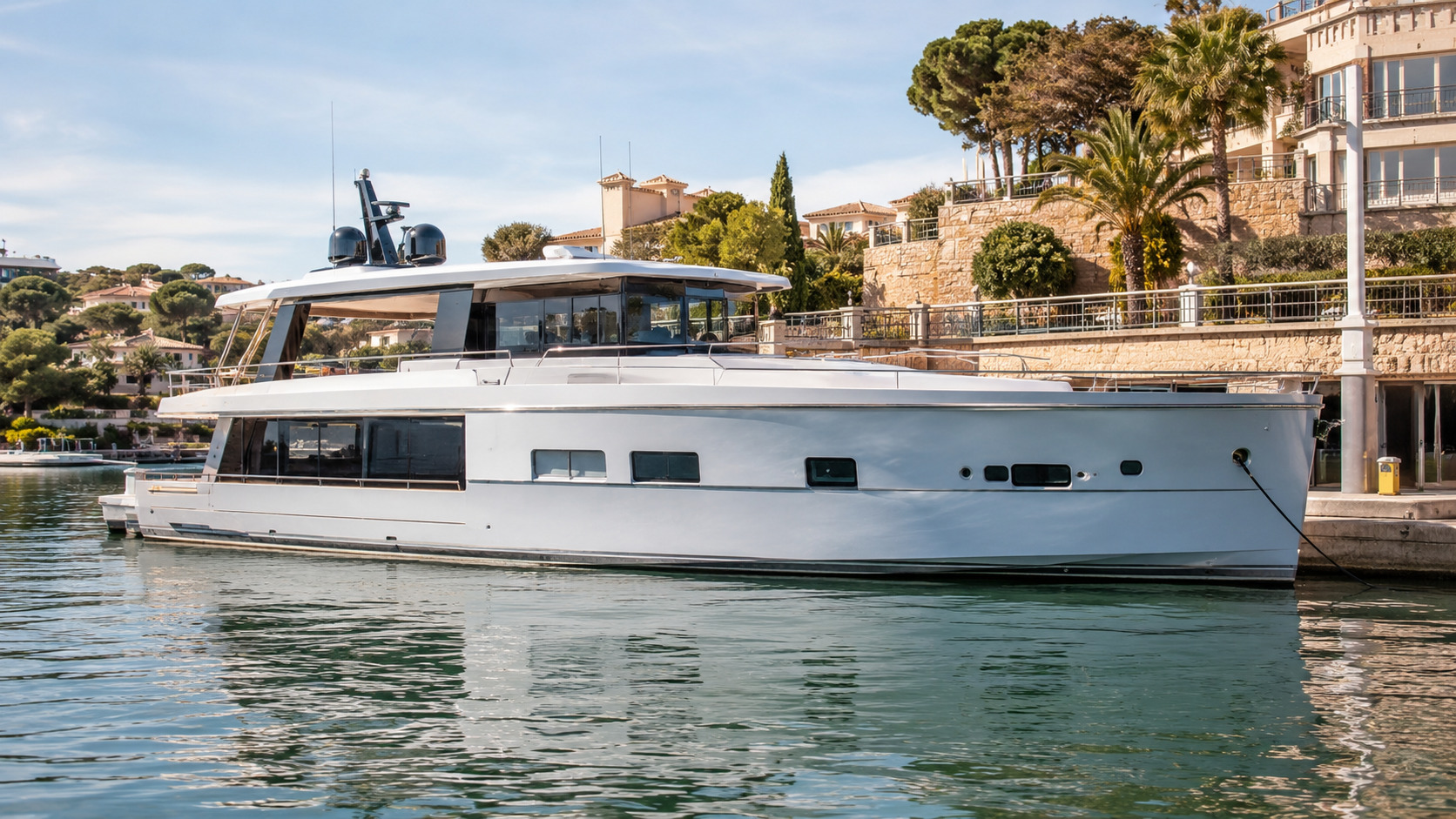
The Azimut Magellano 60 is the most approachable way into the current Magellano philosophy. At 60′ 7″ overall, it remains a substantial yacht, but its three-cabin, three-head arrangement and single crew berth can still fit an experienced owner-operator who wants to run most trips personally. The defining decision is the hull rather than the accommodation: Azimut uses a semi-planing Dual Mode form so the boat can cruise efficiently in the low teens, run comfortably around 18 knots and still reach roughly 26 knots when time matters.
Twin MAN i6 730-hp diesels drive through shaft lines. That is a deliberate contrast with many contemporary 60-foot yachts that rely on pod drives. Shaft propulsion favors a more traditional machinery layout and international service familiarity, while a joystick integrates the engines and proportional bow thruster to reduce low-speed workload. Independent testing notes that the joystick is effective but not as instantly responsive as a pod-drive setup.
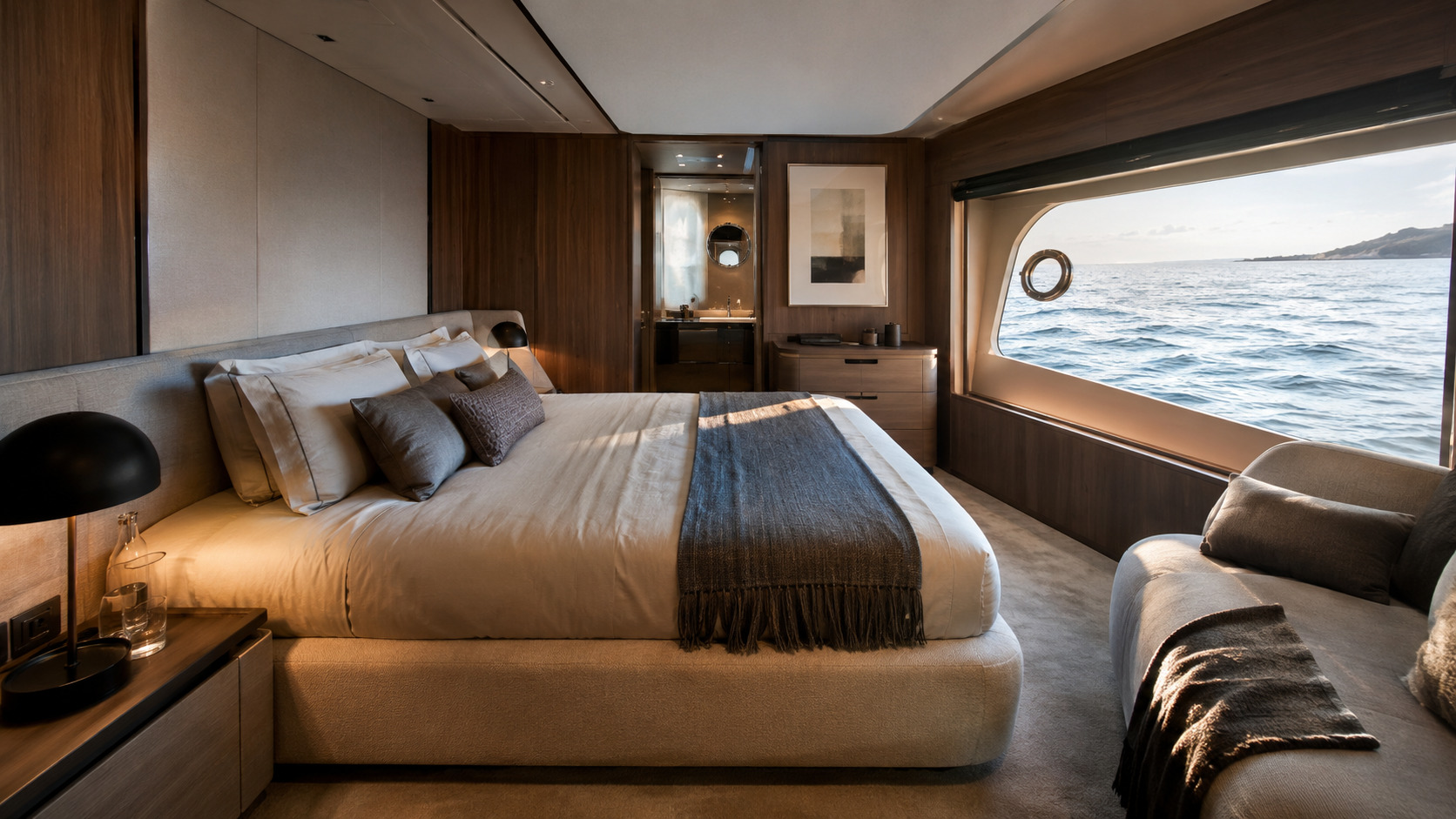
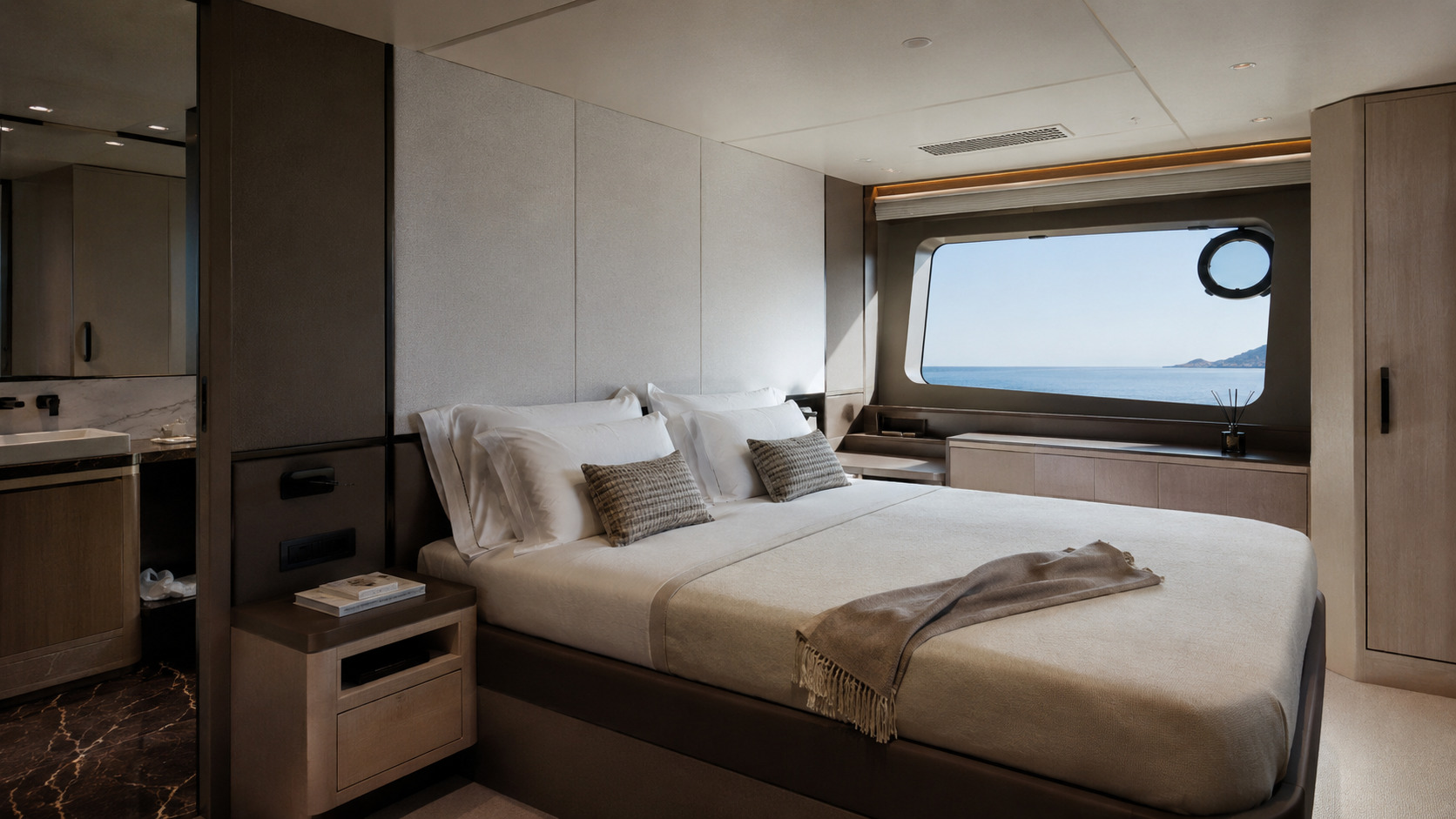
The lower deck gives each of the three guest cabins its own head, including a full-beam owner suite amidships. Aft galley placement serves the salon and cockpit, while the glass transom and facing cockpit sofas create one of the model’s strongest social zones.
The compromise is packaging. The engine room does not provide generous standing headroom for taller technicians, and the yacht’s shaft-drive/keel arrangement gives up some of the machinery-space efficiency of IPS. Buyers who want maximum interior volume or pod-drive handling should cross-shop accordingly. Buyers who care more about the wide cruising band, protected side decks and liveaboard practicality are closer to the 60’s actual mission.
Best For — experienced owners who want long-range flexibility, protected decks and three-cabin liveaboard comfort without moving into full-time crew territory.
Not For — buyers who prioritize pod-drive docking response, maximum interior volume for LOA or sport-yacht acceleration over cruising range and passage comfort.
464 nm at 11.2 kn / 326 nm at 22 kn in Azimut ISO sea trial
Cruising Speed
18 knots (22 knots used in Azimut fast-cruise fuel test)
Cruise Fuel Burn
7.1 L/nm at 11.2 kn / 10.1 L/nm at 22 kn
Hull and Construction
The Magellano 60 uses a GRP Dual Mode hull developed by Profjord with Azimut R&D. Azimut describes a marked deadrise forward and a semi-planing form intended to reduce fuel consumption and emissions at low and medium speeds while remaining comfortable in variable sea conditions.
At 16′ 11″ of beam and 4′ 6″ of draft, the 60 carries useful interior width without the berth restrictions of the larger 66 and 25M. Full-load displacement is 76,941 pounds. Independent sea trials describe the hull as smooth through lumpy conditions, particularly when the driver lets the boat hold a line instead of over-correcting through each wave.
Survey attention should focus on hull condition, shaft/rudder gear, keel/underwater appendages, through-hulls and the stabilizer installation if fitted. On a used yacht, maintenance history will matter more than brochure claims about hull efficiency.
There is one current engine package: twin 12.4-liter MAN i6 diesels rated at 730 hp each on V-drive shafts. Azimut publishes 26 knots maximum and 18 knots cruise.
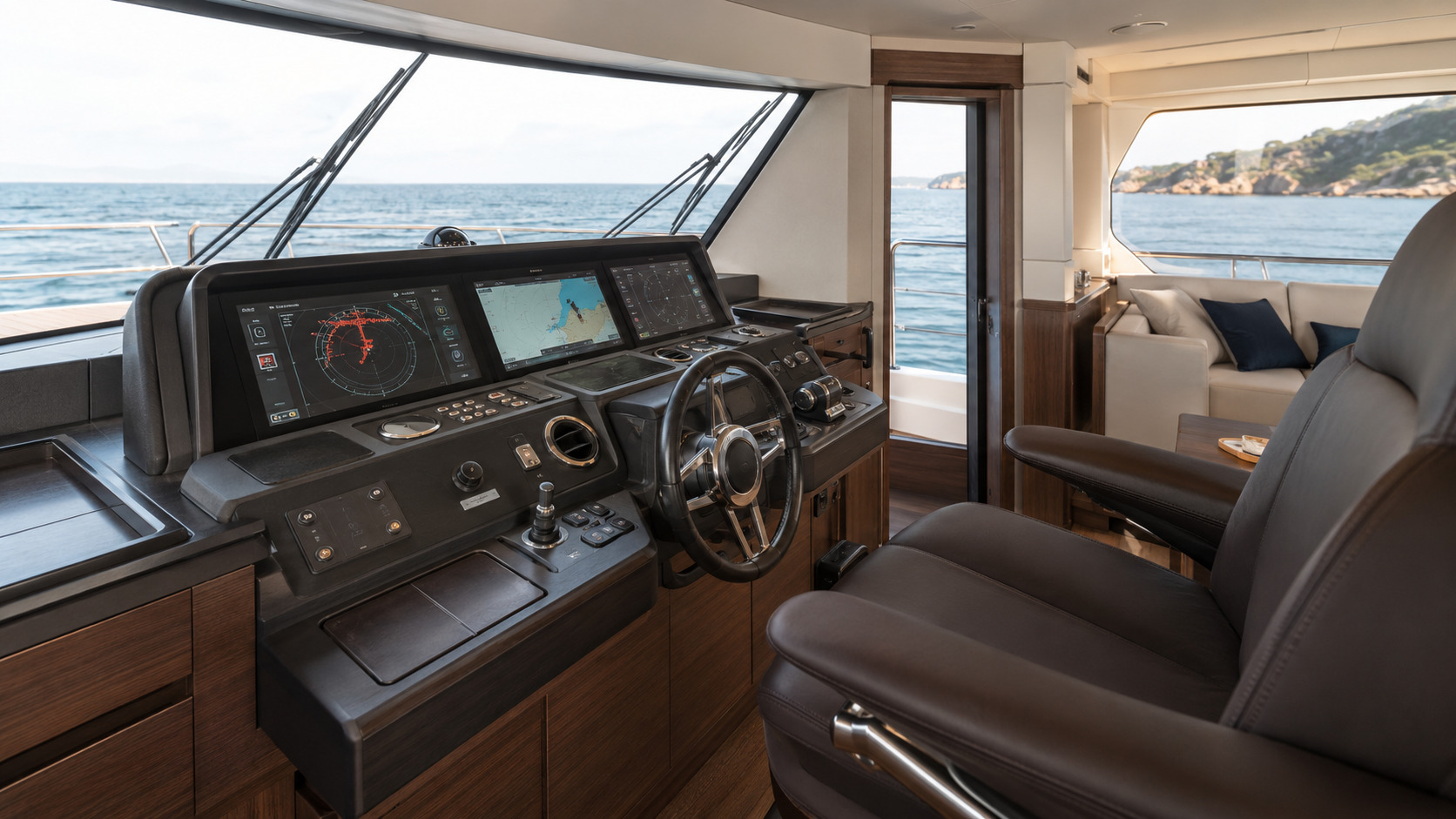
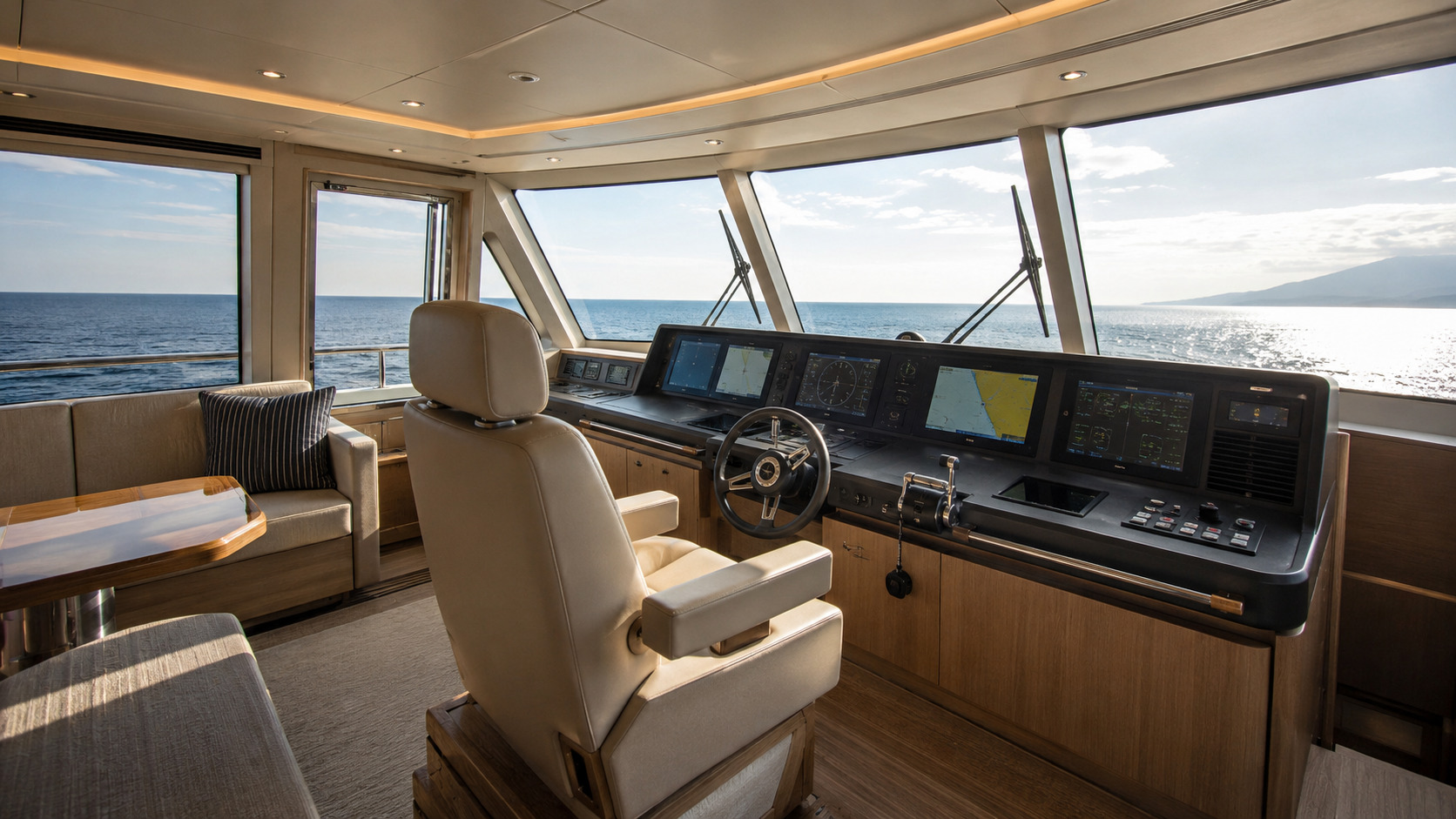
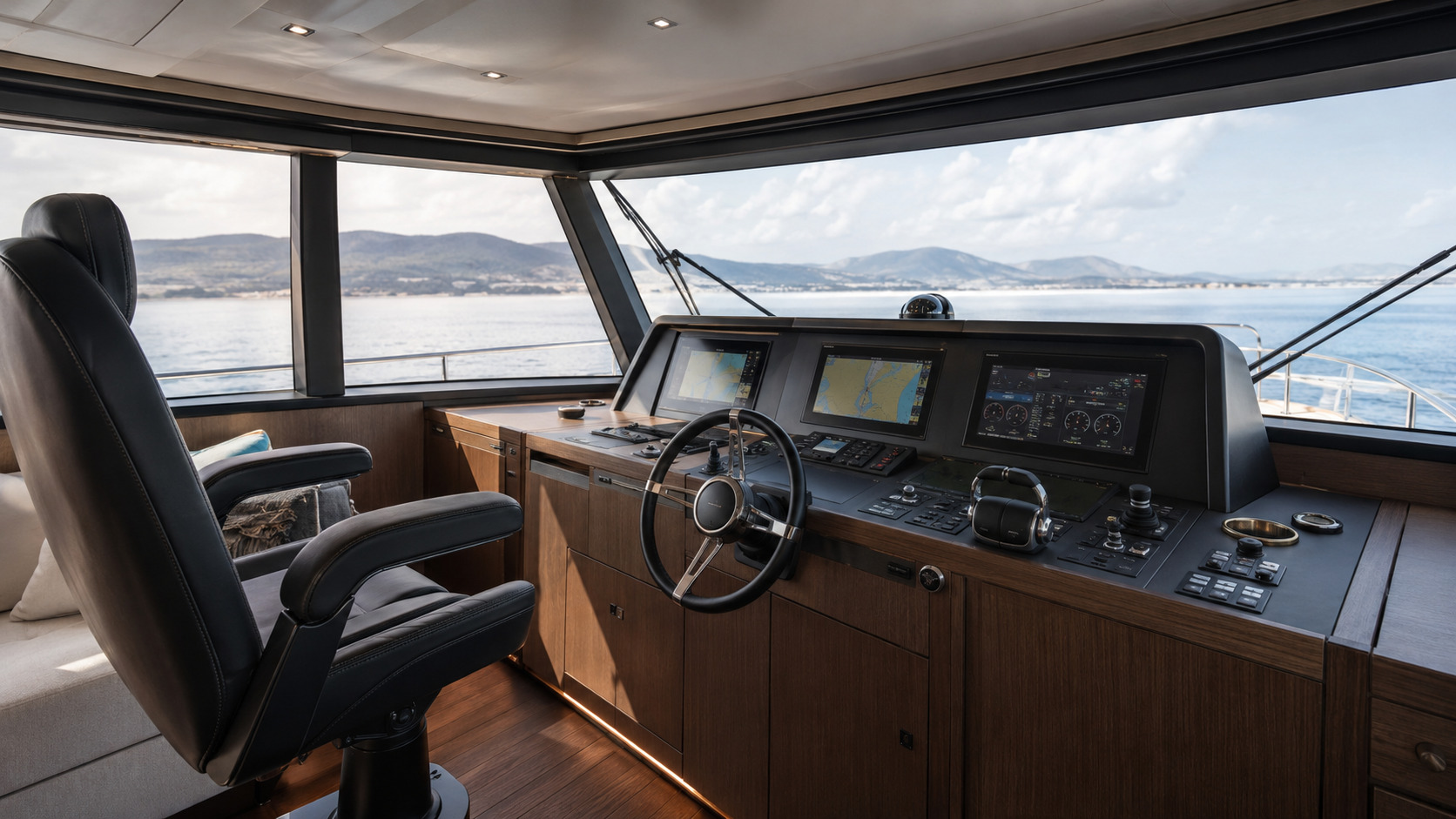
At the marina, Azimut combines the shafts with a proportional bow thruster and joystick. Independent YachtBuyer testing found the system smooth and useful, though slower to react than a pod-drive joystick. A cockpit docking station is available and can be worthwhile for owners who regularly berth stern-to.
Service planning should include MAN engine intervals, shaft seals, gearboxes, cooling systems, exhaust, generator and stabilizer service. A mechanical inspection and oil analysis are appropriate on a used 60.
Azimut publishes unusually useful fuel data for the Magellano 60. At 11.2 knots, consumption is 7.1 liters per nautical mile with a stated range of 464 nautical miles. At 22 knots, consumption rises to 10.1 liters per nautical mile and range falls to 326 nautical miles. The tests were performed under ISO 8666:2020 conditions and witnessed by Lloyd’s Register.
Independent testing also demonstrates how dramatic the slow-speed advantage can become. YachtBuyer reported nearly 1,000 nautical miles around 8 knots at approximately 1,000 rpm. That is not the same standardized test as Azimut’s figures, but it reinforces the Dual Mode point: this yacht rewards slowing down.
For day-cost planning, convert the approved liters-per-mile figure using the speed you actually expect to run and add generator consumption. Do not use a single GPH number as though the yacht burns the same amount from 8 to 22 knots.
The Magellano 60 is more interesting at 10–20 knots than it is at its 26-knot maximum. Independent sea trials found the boat composed in rougher conditions, with light steering and low noise at the lower helm. YachtBuyer measured about 68 dB at an 18-knot cruise on a lumpy day.
The hull transitions through its speed range without the obvious hump that can make semi-displacement boats feel awkward between modes. The practical advice from testing is to set the speed for the sea state, hold a clean line and let the hull work rather than chasing every wave with the wheel.
The cockpit is a defining part of the 60. Facing sofas and a glass transom create a waterside terrace rather than a conventional aft bench. The aft galley can serve the cockpit directly, and an optional opening/window arrangement can create a bar connection between inside and outside.
Protected side decks and a serious foredeck lounge make the boat easy to live with away from the dock. The hydraulic bathing platform can carry a useful tender, while the flybridge extends far enough aft to create a second terrace behind the central mast.
One small compromise is the step change in level on the flybridge, used to protect salon headroom below. It is manageable but should be noticed during a walkthrough rather than discovered after purchase.
The 60’s core systems include conventional shaft propulsion, joystick/thruster integration, generators, HVAC, navigation electronics and optional stabilization. A Seakeeper was fitted to independent test boats and materially improved comfort at anchor and in beam seas.
On a used example, run every major system under load and inspect the generator, HVAC condensers, pumps, chargers, battery banks, hydraulic platform and stabilizer rather than assuming low engine hours equal low overall wear.
At 60′ 7″ by 16′ 11″, the Magellano 60 still needs a serious yacht slip, but it is far easier to place than the 25M-plus models. Confirm slip category, beam allowance, shore power and 4′ 6″ draft.
Owners cruising canals or fixed-bridge routes should measure the actual boat.
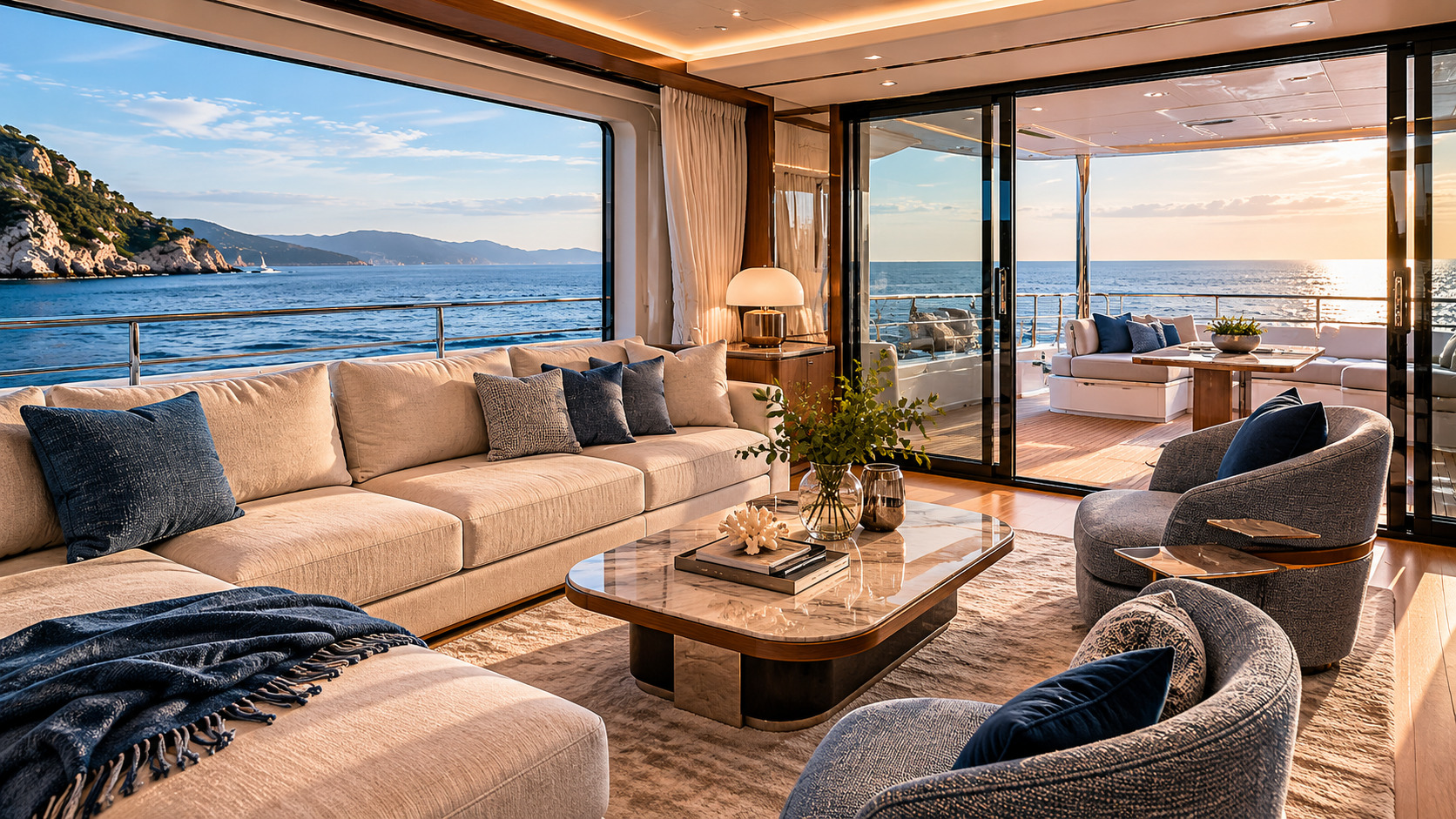
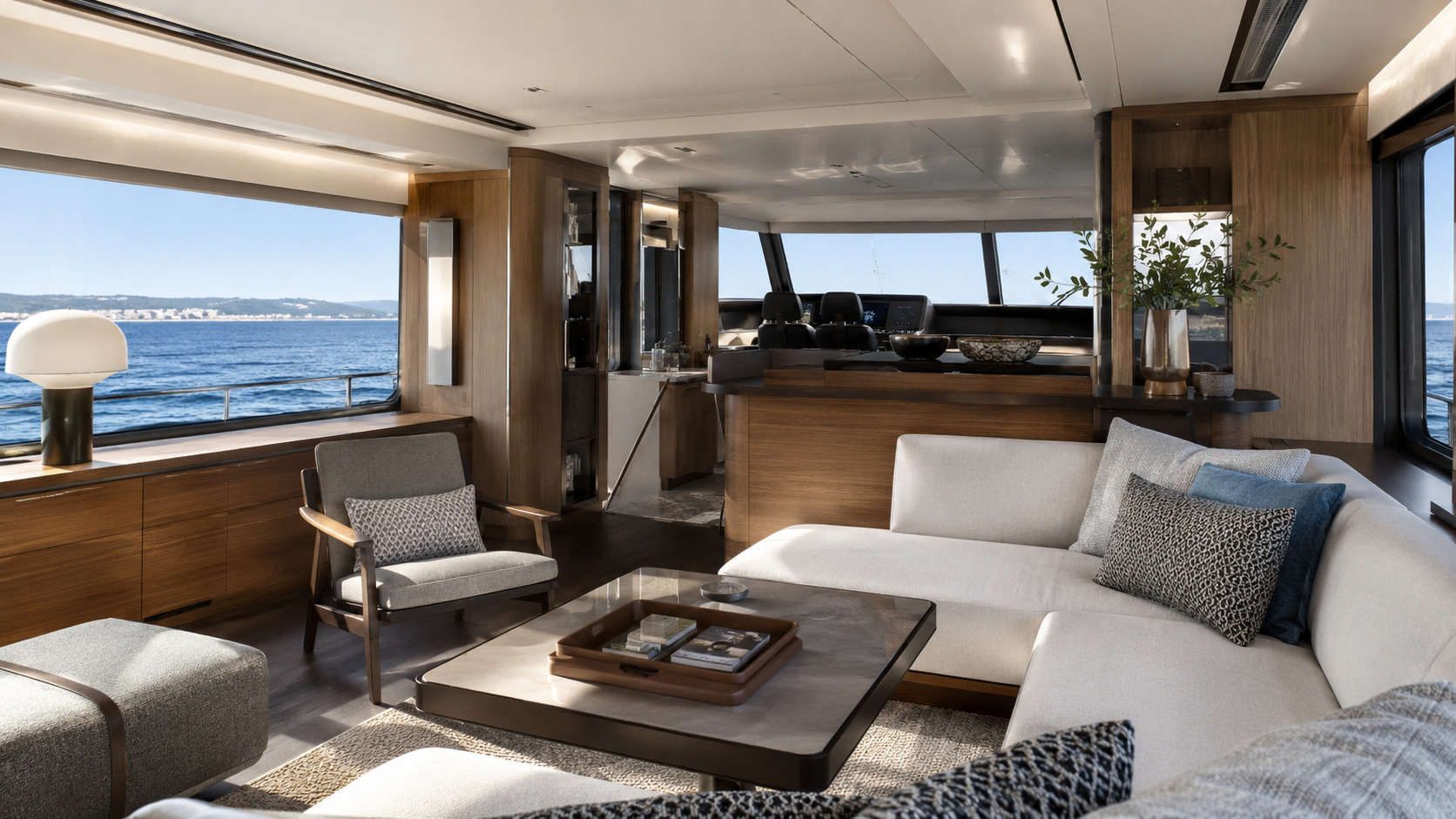
The gallery should emphasize the model’s usable cruising spaces: glass-transom cockpit, aft galley, salon dining by the full-height windows, flybridge terraces, protected side decks, foredeck lounge, full-beam owner suite and machinery access.
Independent 2023 review material listed a base price around €1.65 million ex VAT and suggested roughly €2 million on the water with options at that time. That figure is historical context, not current MSRP.
Stabilization, hardtop, electronics, docking station, tender equipment, upholstery and regional tax can materially alter delivered price.
Build the annual ownership estimate from the actual yacht and home port rather than a generic percentage of purchase price.
Pricing, payment and ownership-cost figures are illustrations only and are not offers or commitments to extend credit.
Market price band
$1,855,000 – $3,445,000
Estimated monthly
From $12,695/mo
Figures come from this page’s Boat Details fields. Illustration only and not an offer of credit.
Estimate Your Magellano 60 Payment
Use the yacht-loan calculator to test purchase price, cash down, rate and term before negotiating. For higher-value yachts, compare multiple down-payment and term scenarios rather than anchoring the decision to one optimistic monthly number.
Illustration only and not an offer of credit. Your actual rate and term depend on credit profile, vessel age, loan amount and ownership structure.
Compare the Magellano 60 Before You Buy
The 60 should be compared first with the 66. The 60 is simpler, lighter and more clearly owner-operated. The 66 adds beam, tankage, three/four-cabin flexibility and roughly 1,000-nautical-mile slow-speed range in independent testing.
The 60 is new enough that many brokerage examples will still be relatively modern, but options matter. Compare stabilizer, hardtop, electronics, docking station, tender package and service history instead of shopping by model year alone.
A buyer moving from a pod-drive yacht should sea-trial the shaft/joystick system personally. It is easy to use, but the feel is different and should be understood before purchase.
The Magellano 60 is a model where pre-approval can help an owner decide whether to buy newer with fewer deferred-maintenance risks or step into a used example with a lower acquisition price. Send Float Finance the actual listing so payment and transaction structure can be evaluated together.
A 2023 independent review cited approximately €1.65 million ex VAT base at the time, with a well-optioned on-the-water package near €2 million. Current pricing should come from the approved registry or current listings.
Azimut publishes 464 nm at 11.2 knots and 326 nm at 22 knots. Independent testing reported nearly 1,000 nm around 8 knots, showing the benefit of slowing down.
It is the clearest owner-operator model in the current Magellano range. Joystick/thruster assistance and good deck access reduce workload, although a 60-foot yacht still demands experience and disciplined maintenance.