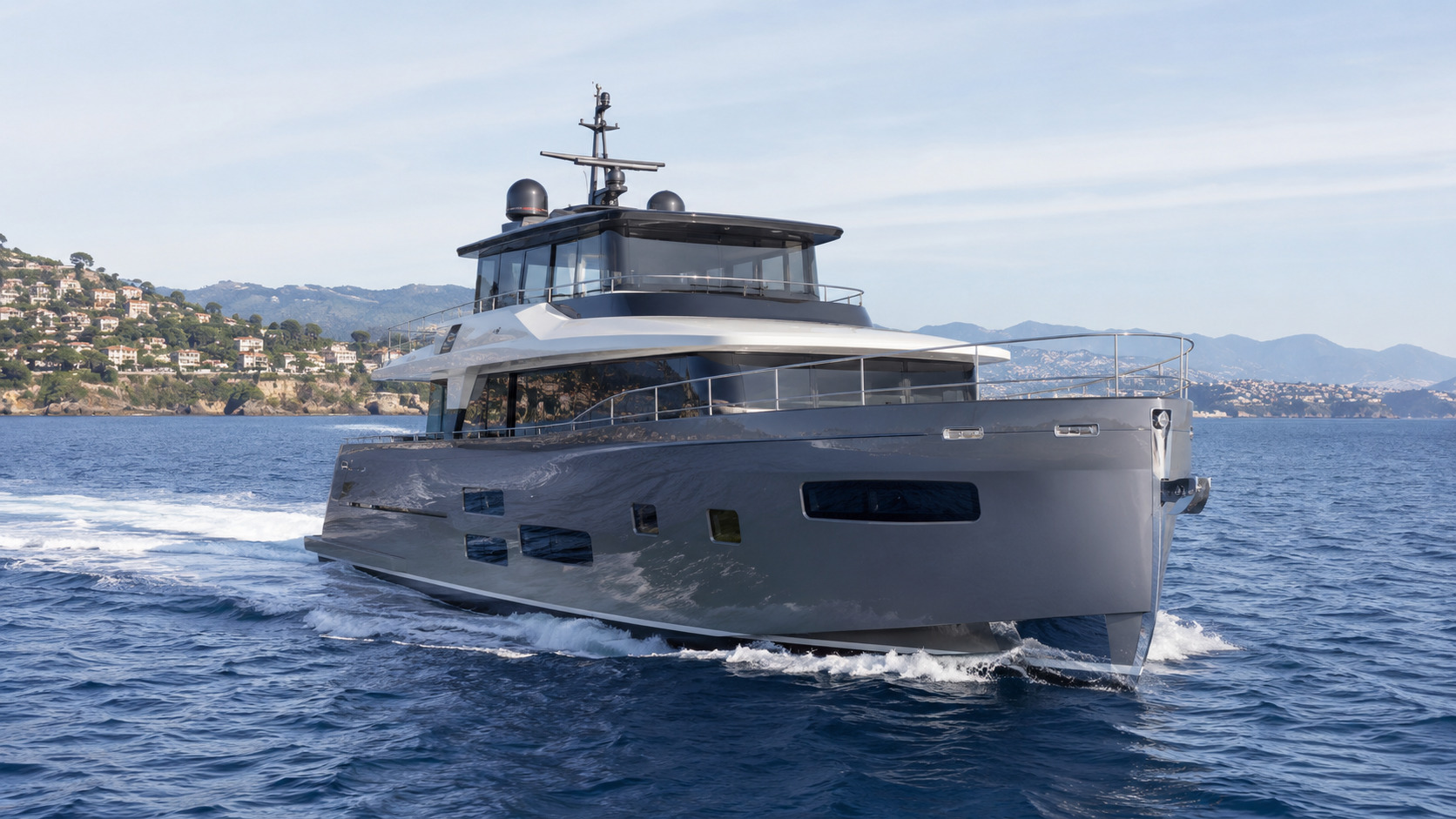
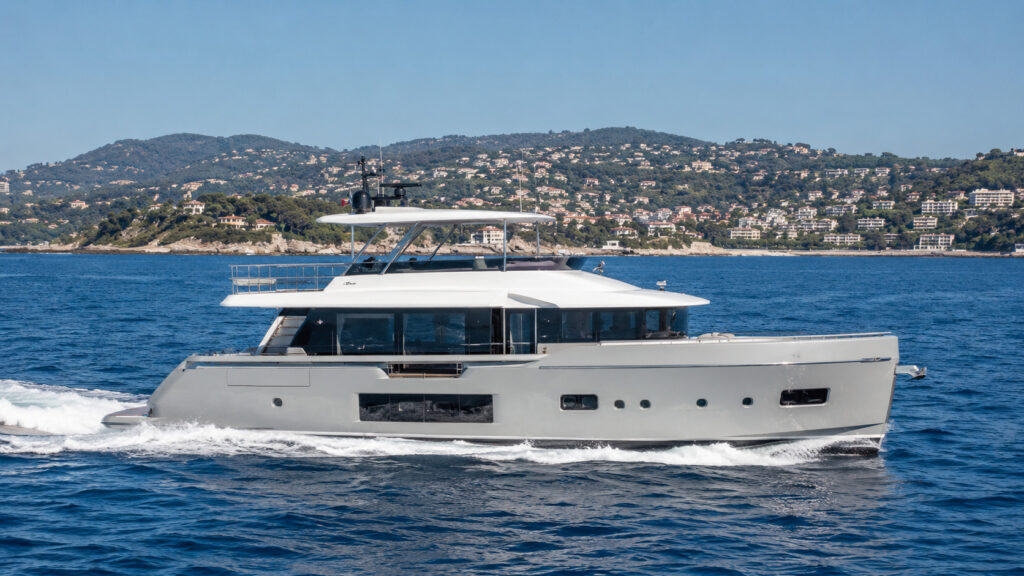
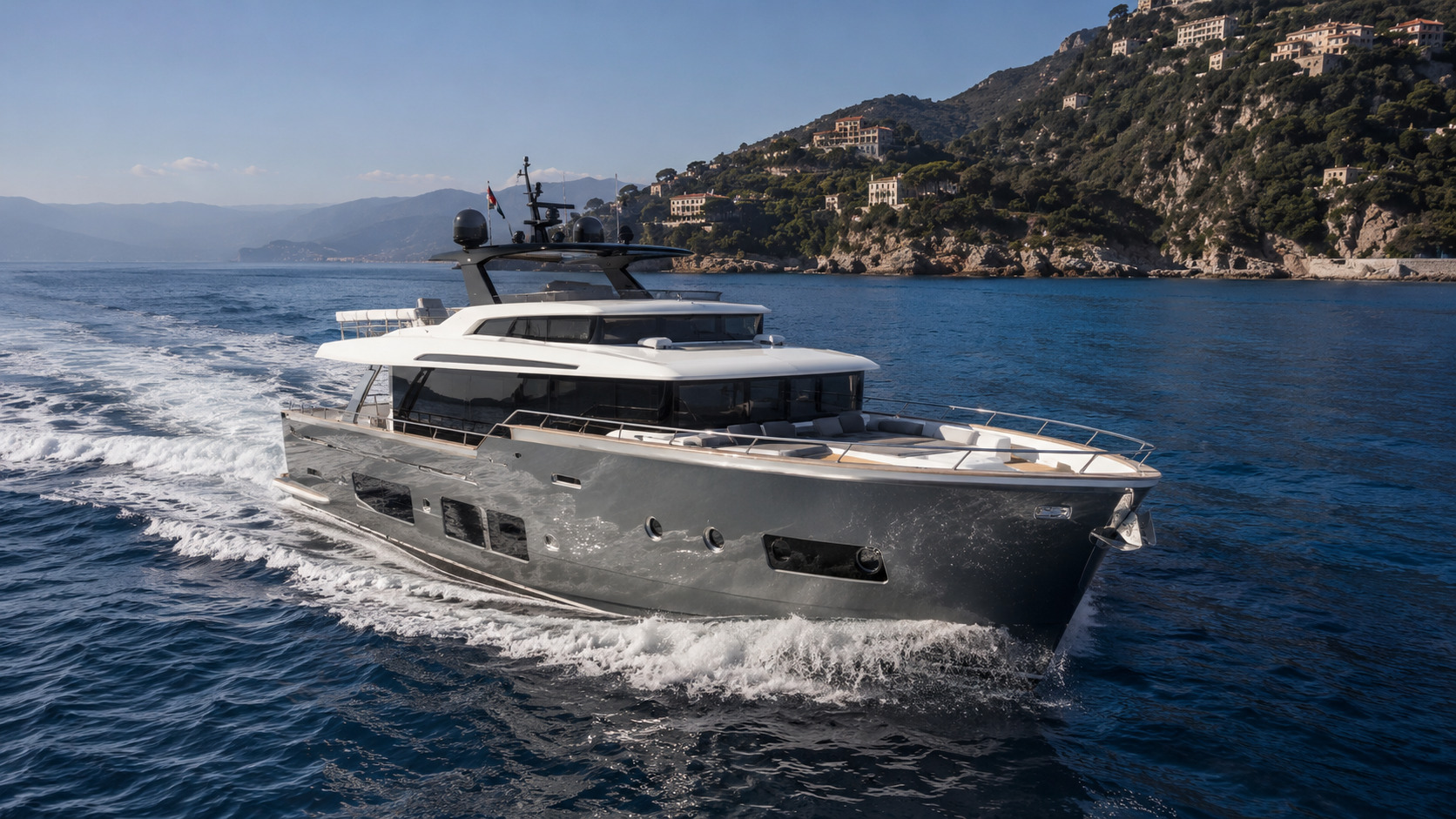
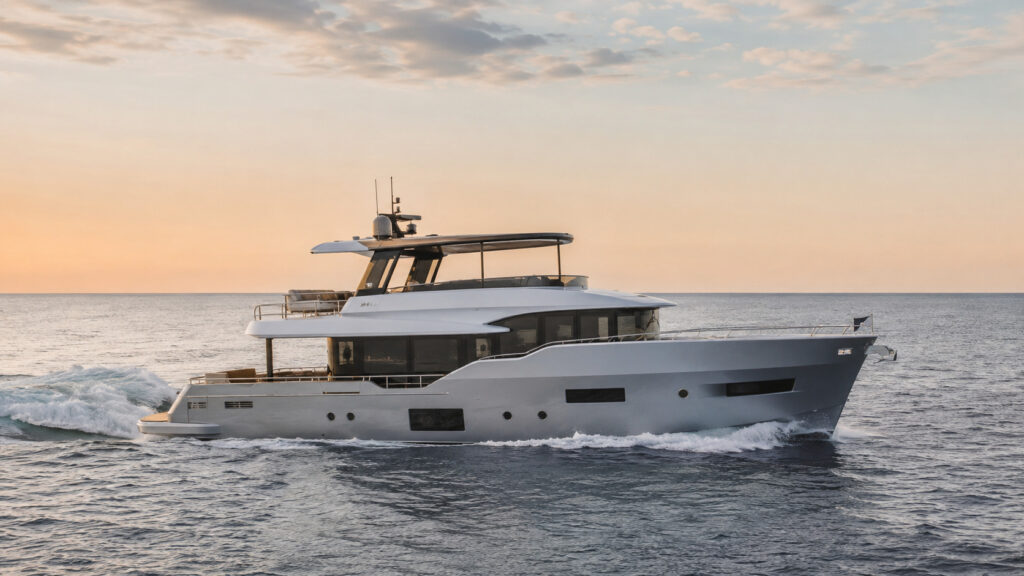
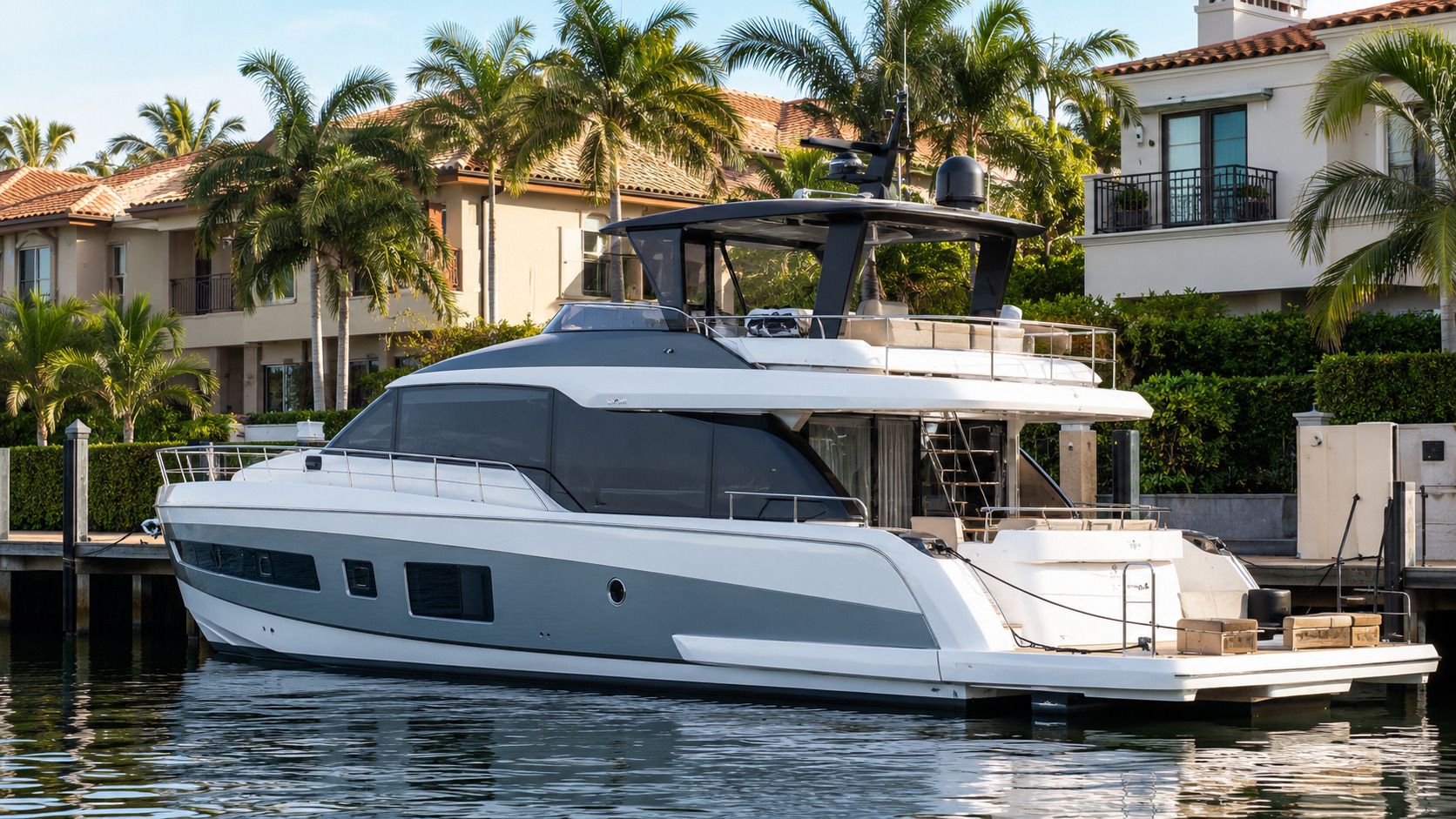
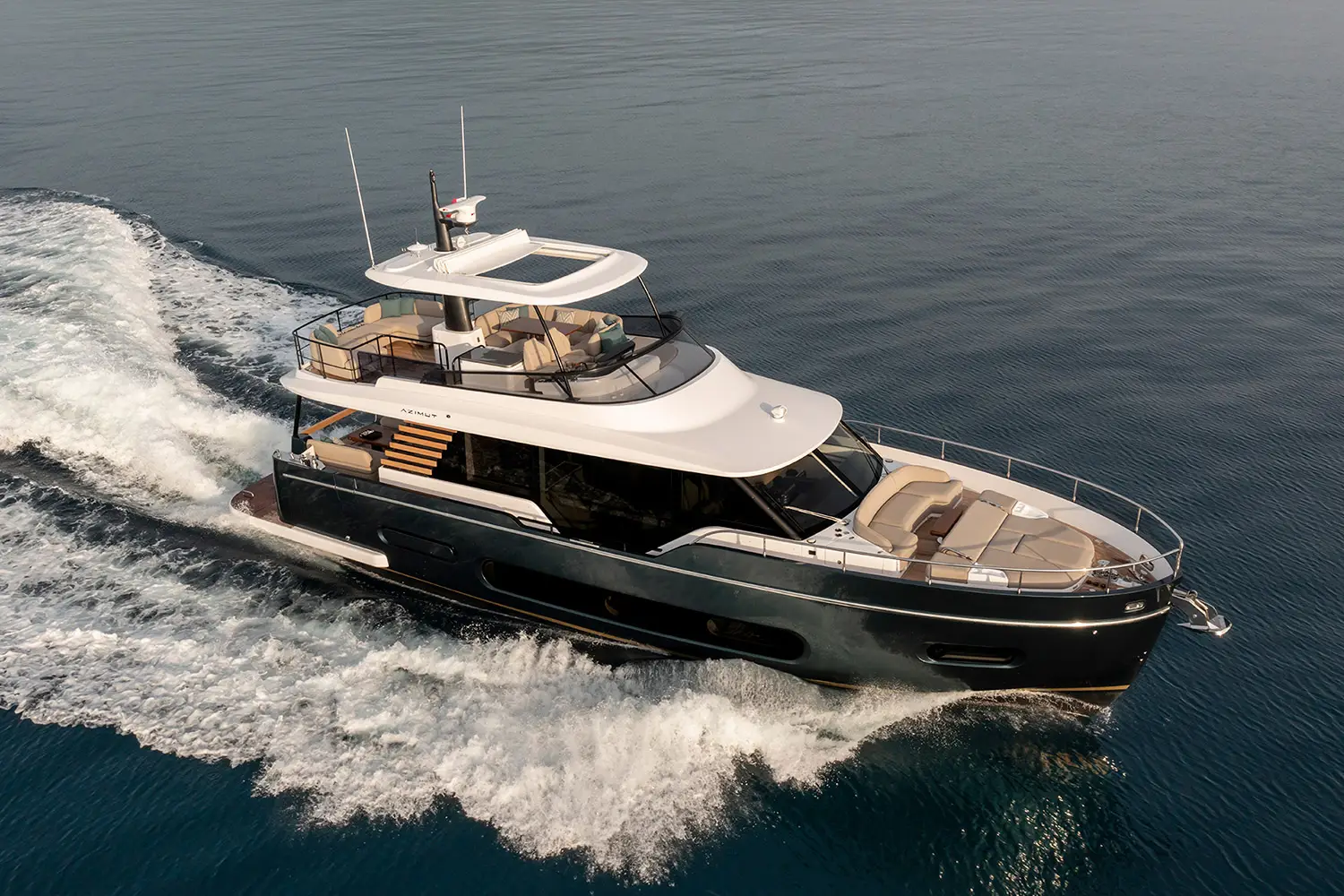
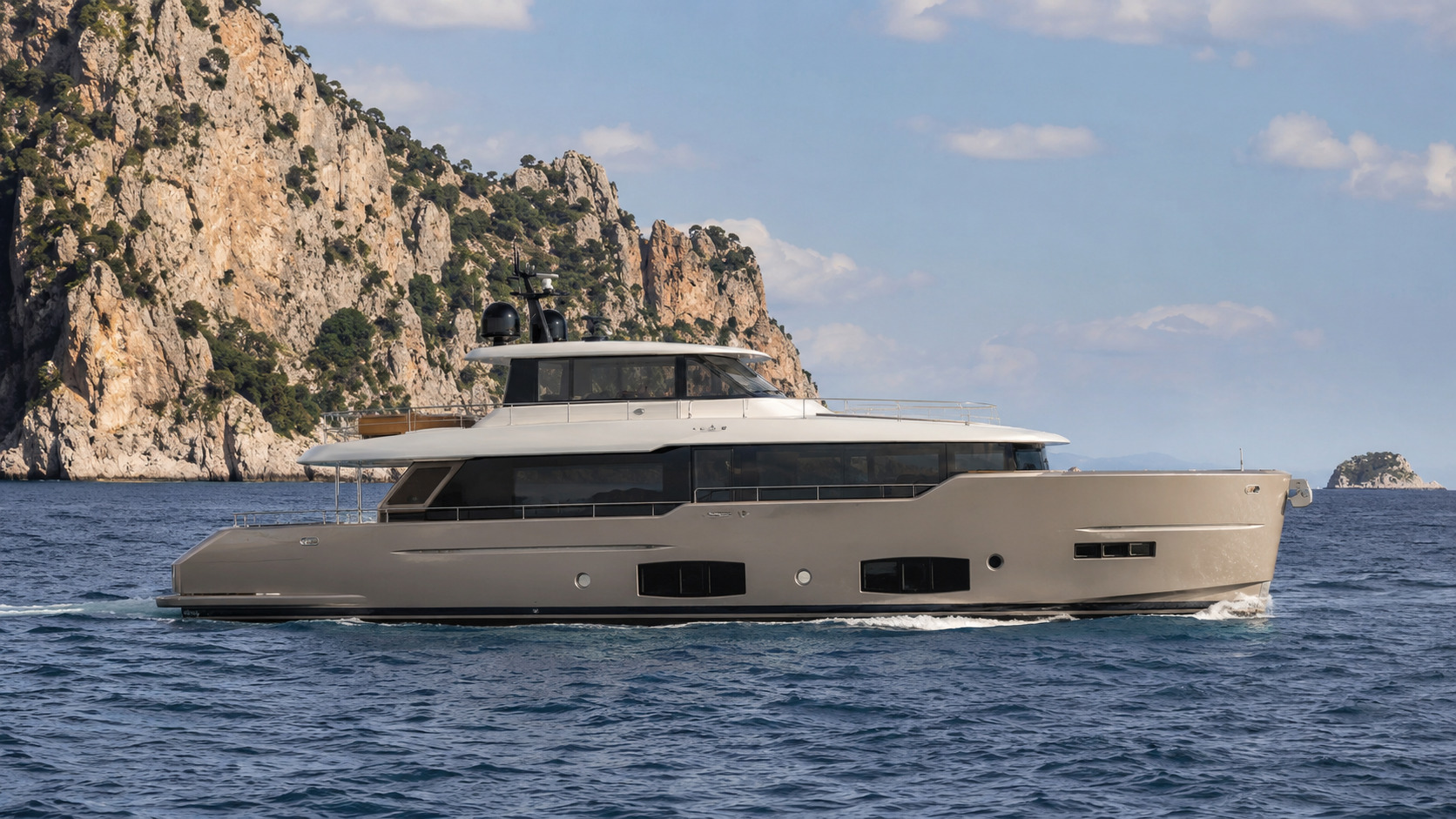
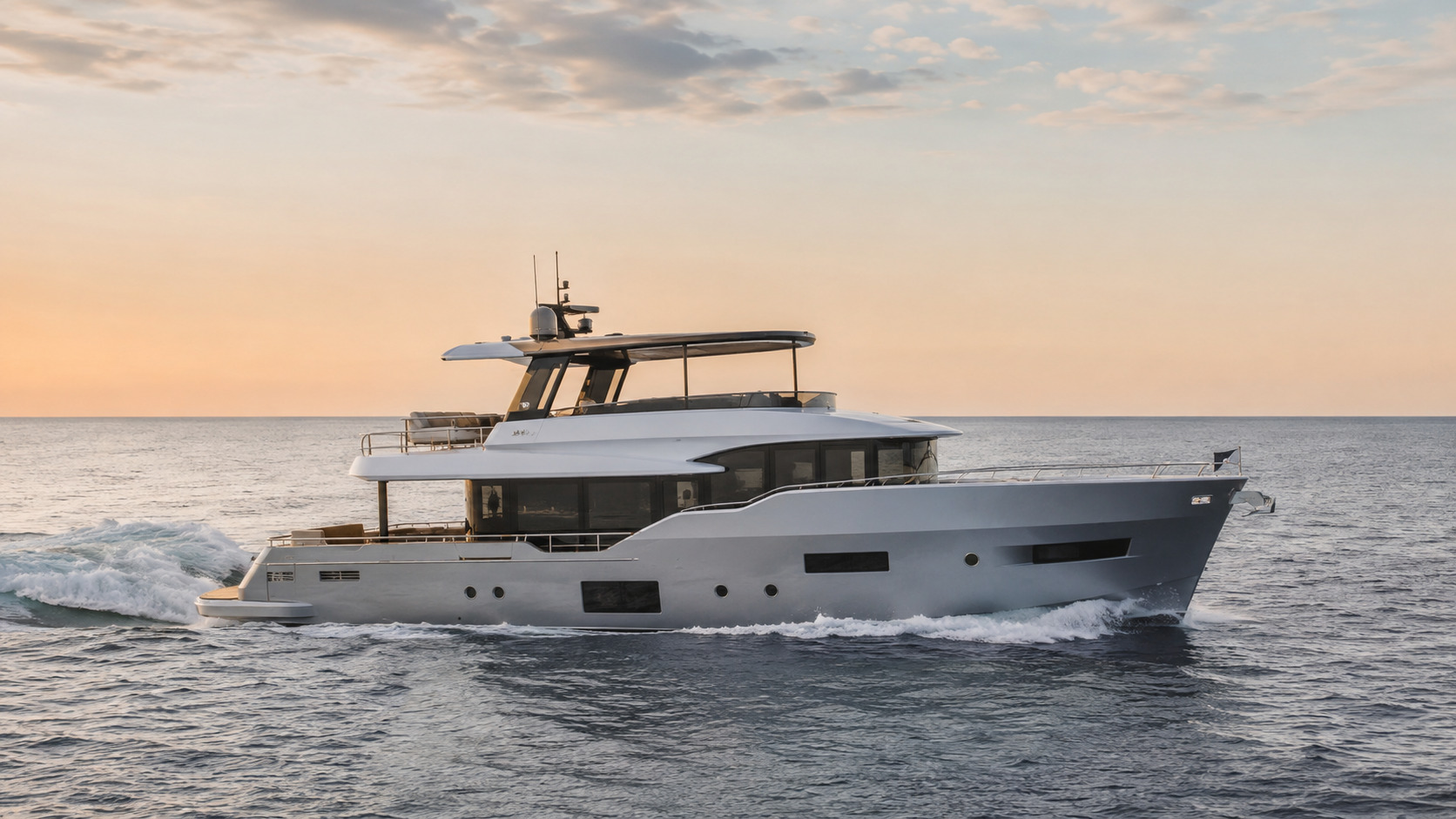
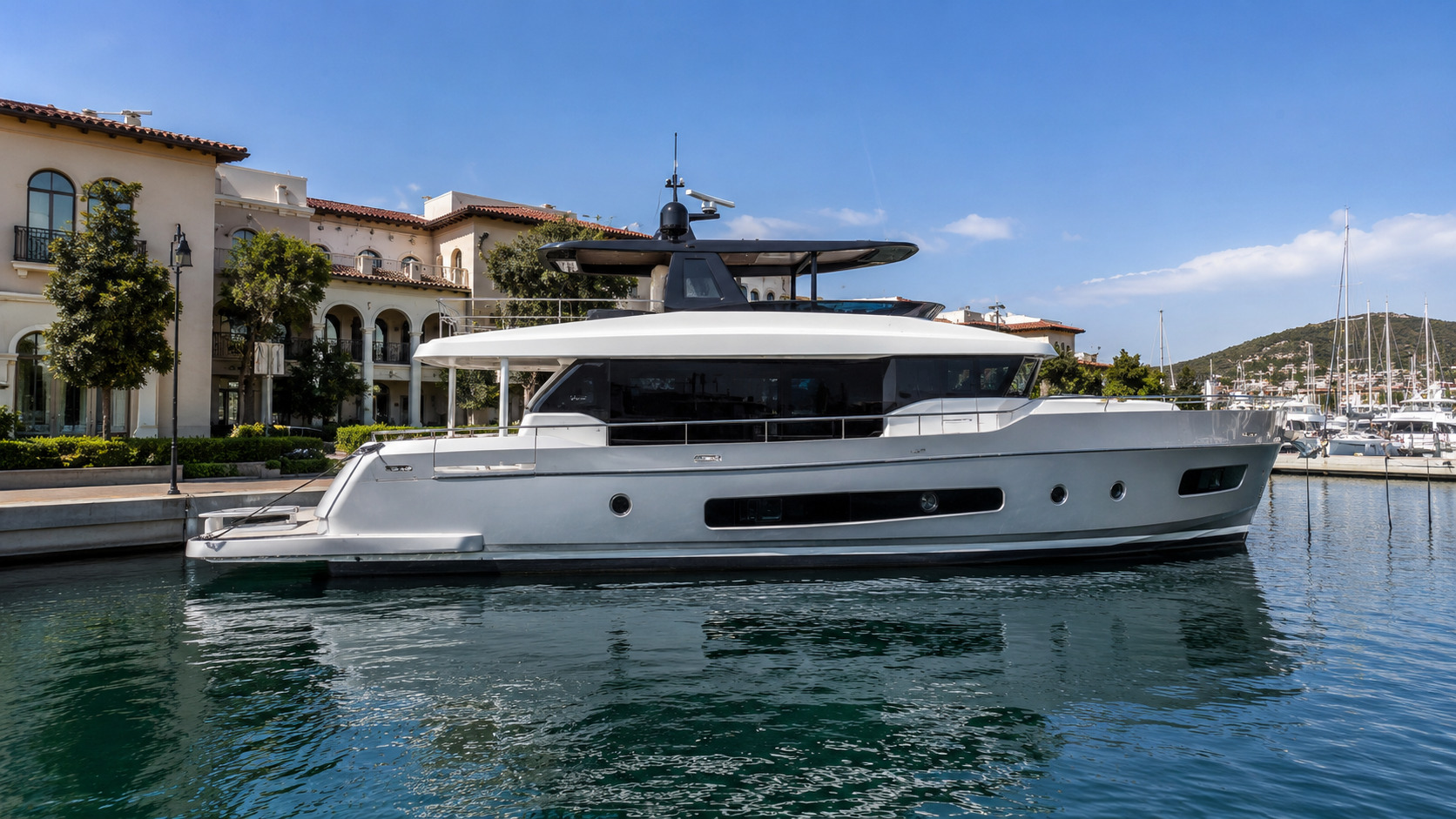
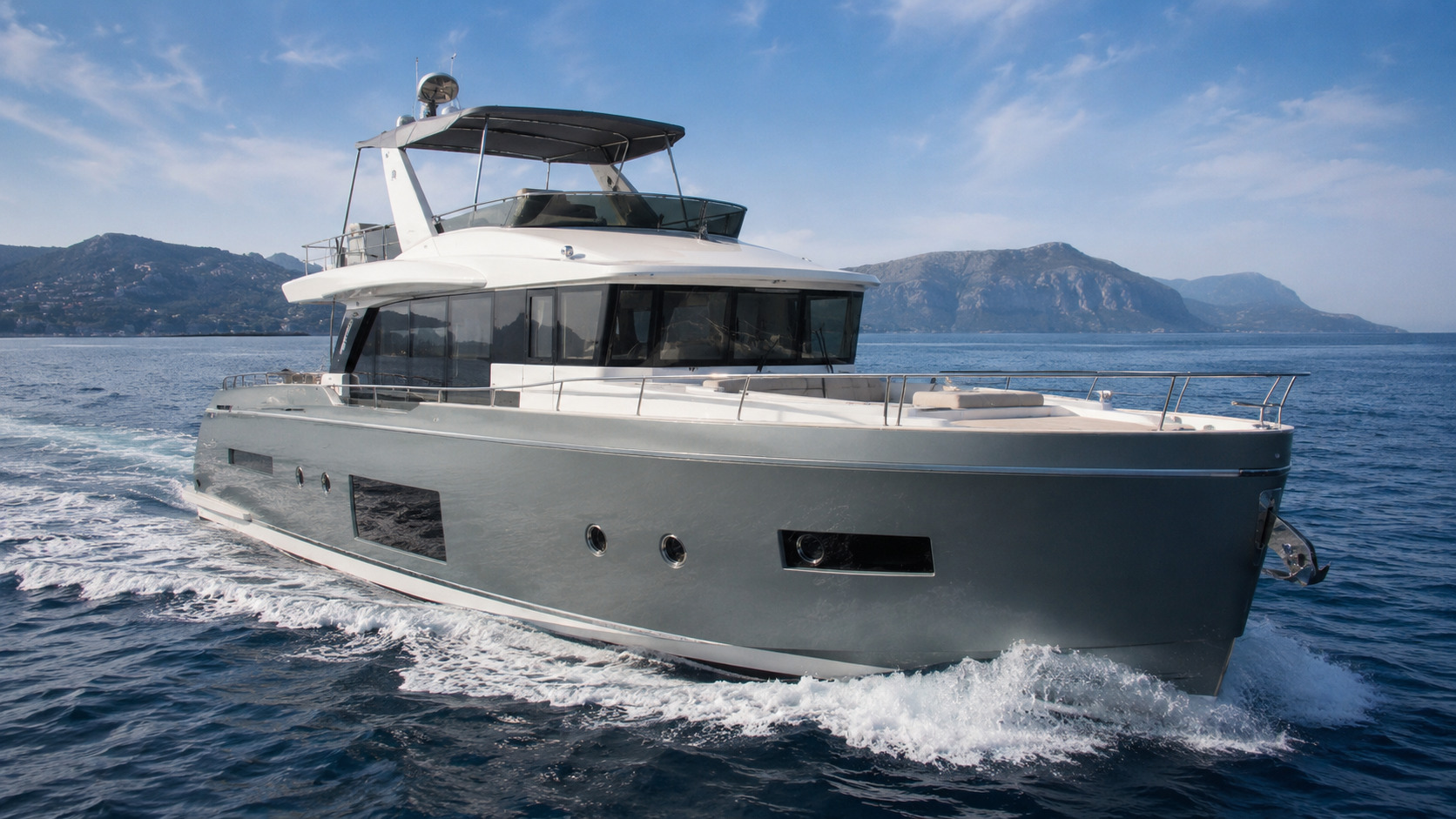
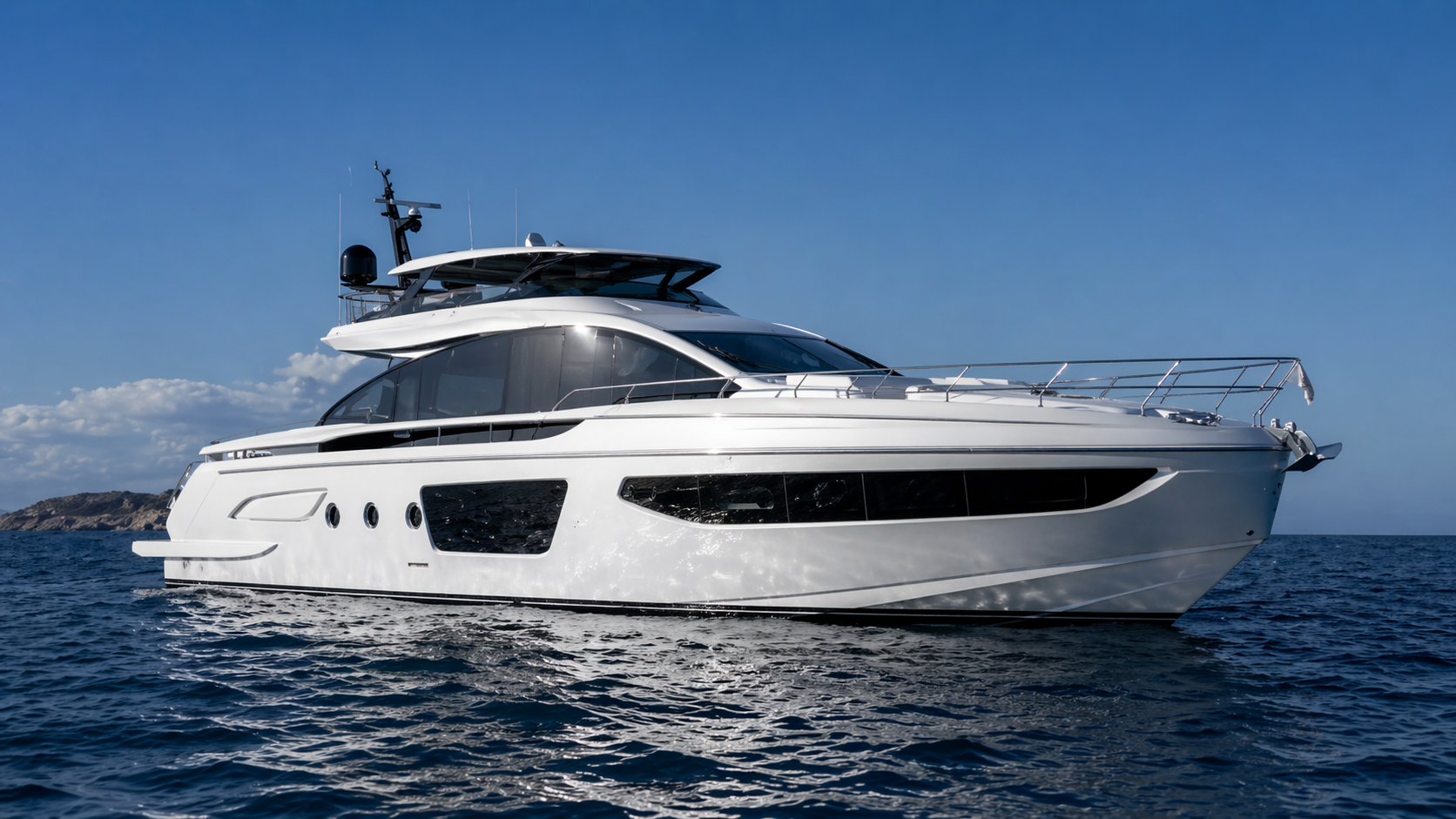
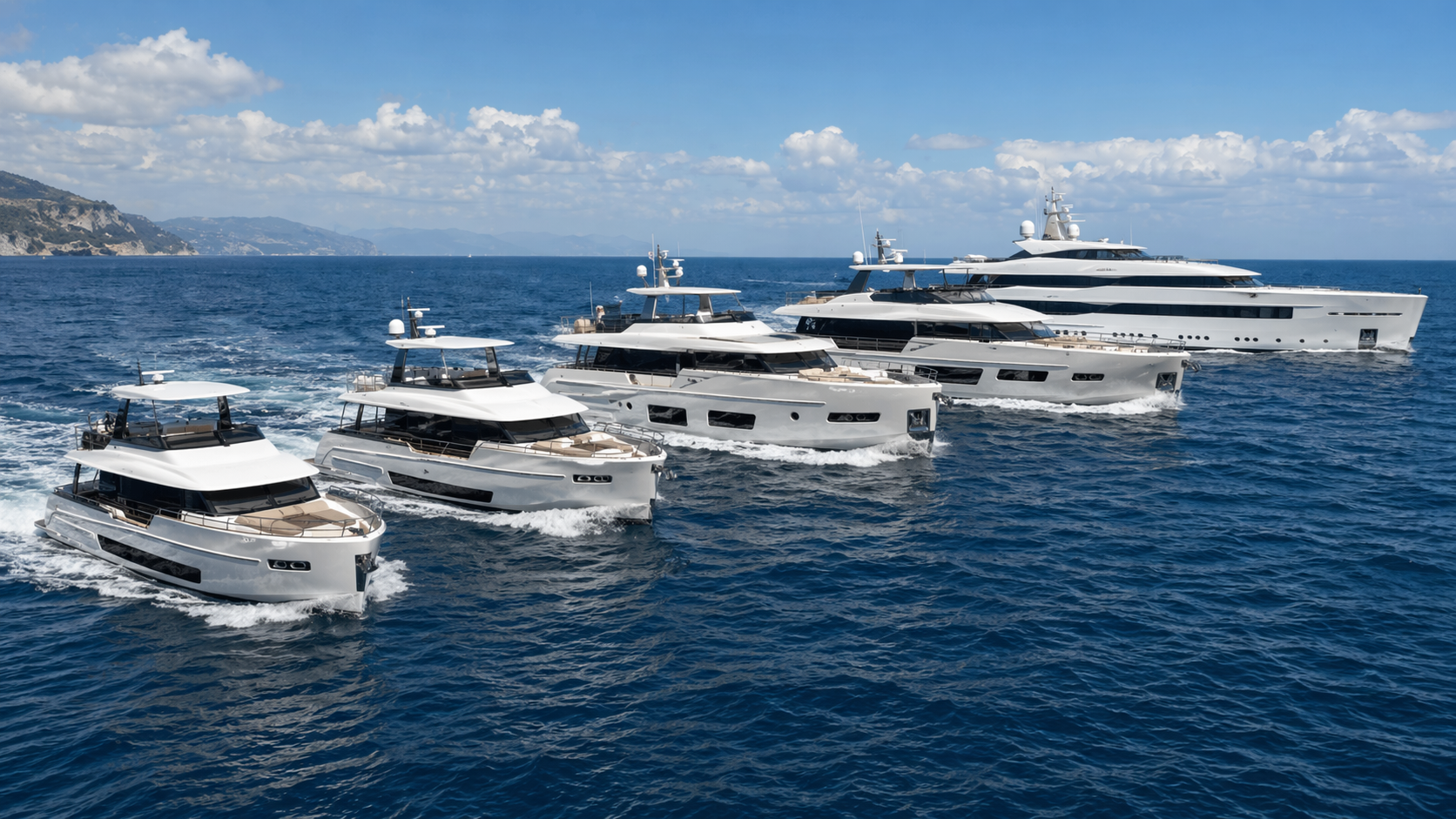
The Azimut Magellano 66 is where the range becomes a serious liveaboard yacht without yet crossing into compact-superyacht scale. Its 18′ 2″ beam, 1,189-gallon fuel capacity and three- or four-cabin layout give it substantially more autonomy than the Magellano 60, but twin 850-hp MAN inline-six diesels and joystick/thruster assistance keep owner-operation plausible for an experienced couple or family.
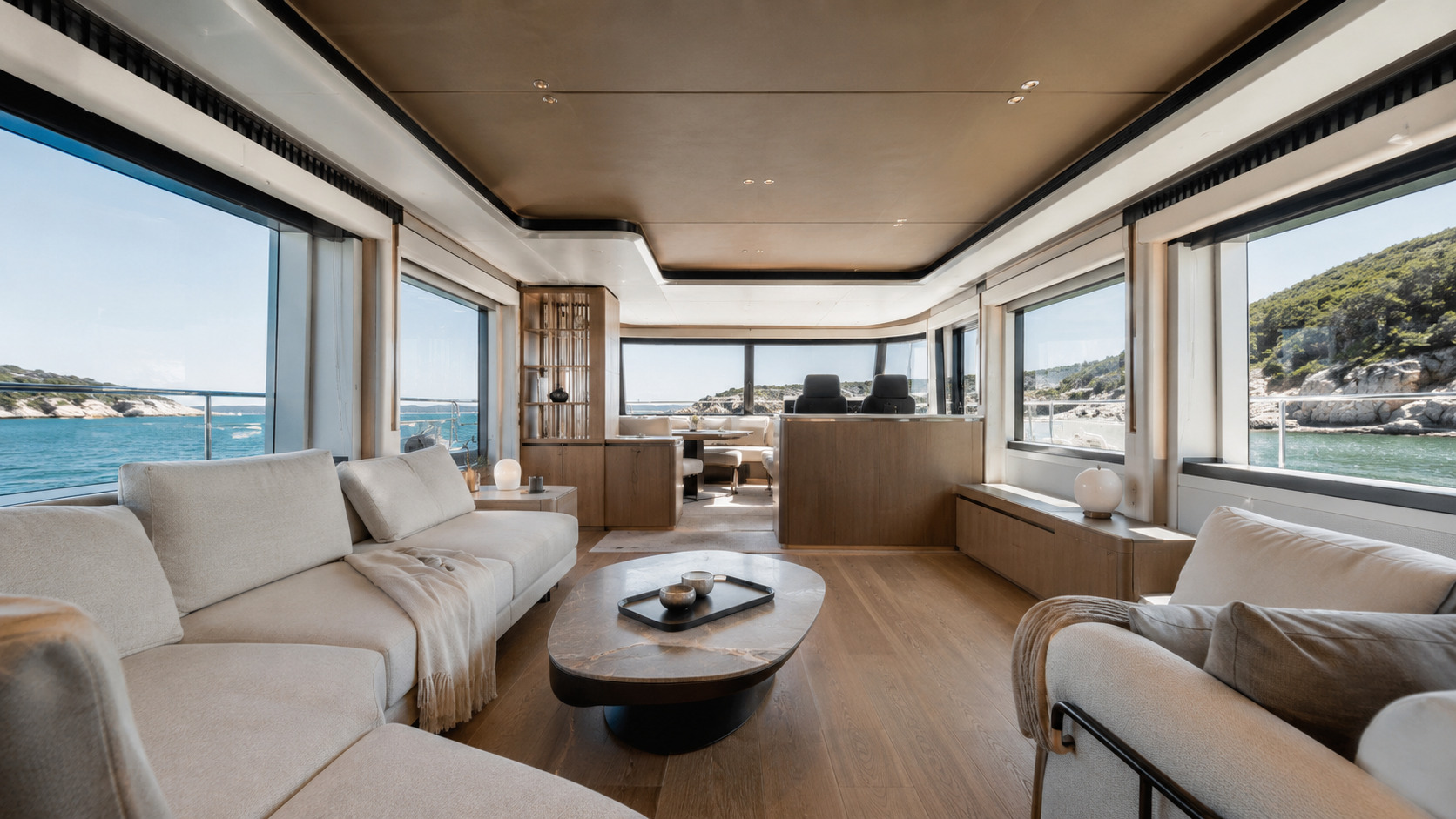
The strongest design choice is privacy. Azimut offers an open main-deck plan with semi-separated crew circulation or a “Navetta” arrangement that fully encloses the galley and wheelhouse so crew can work without entering the guest salon. That choice matters more than decorative finish because it changes how the yacht feels during a week aboard.
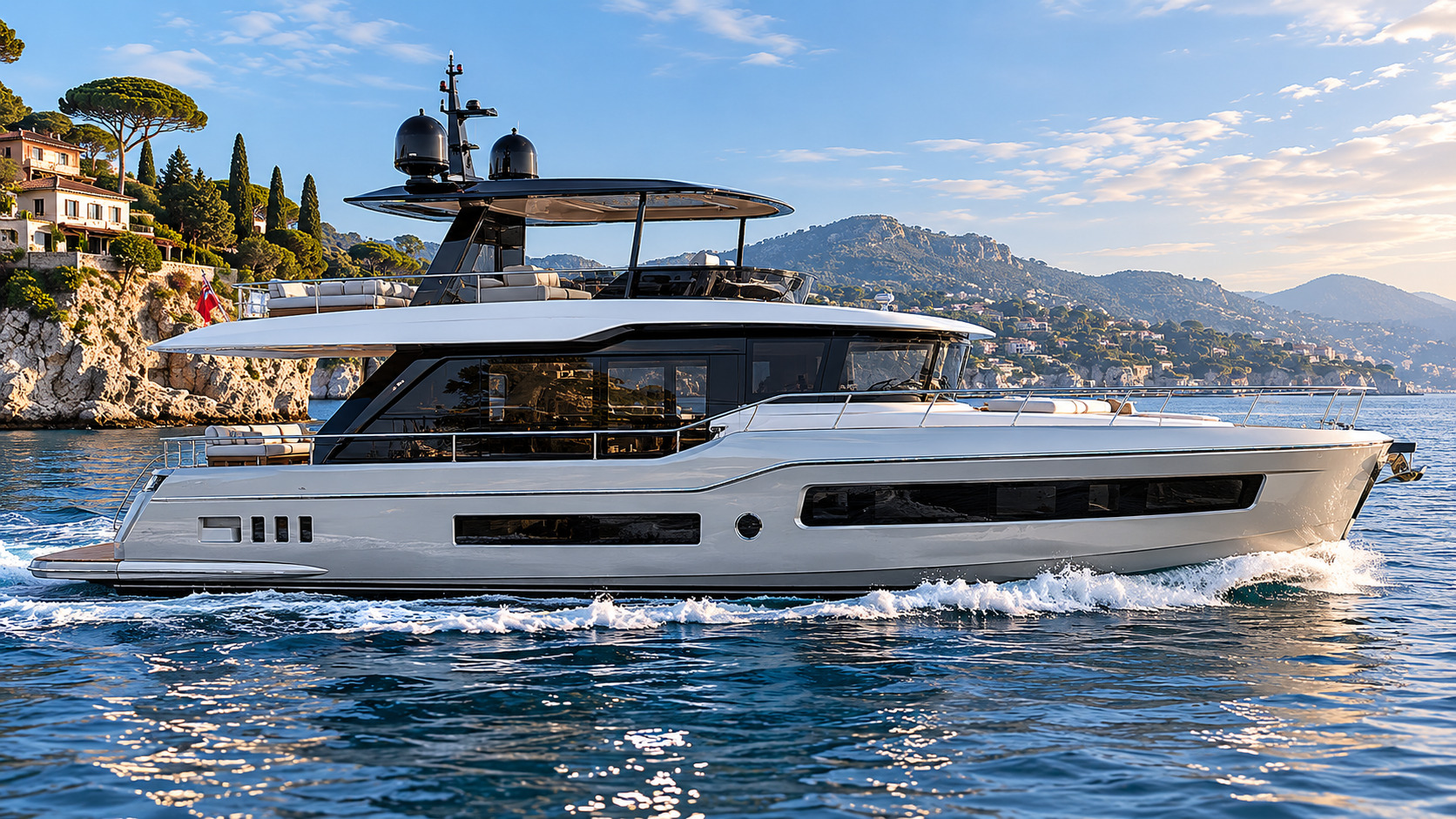
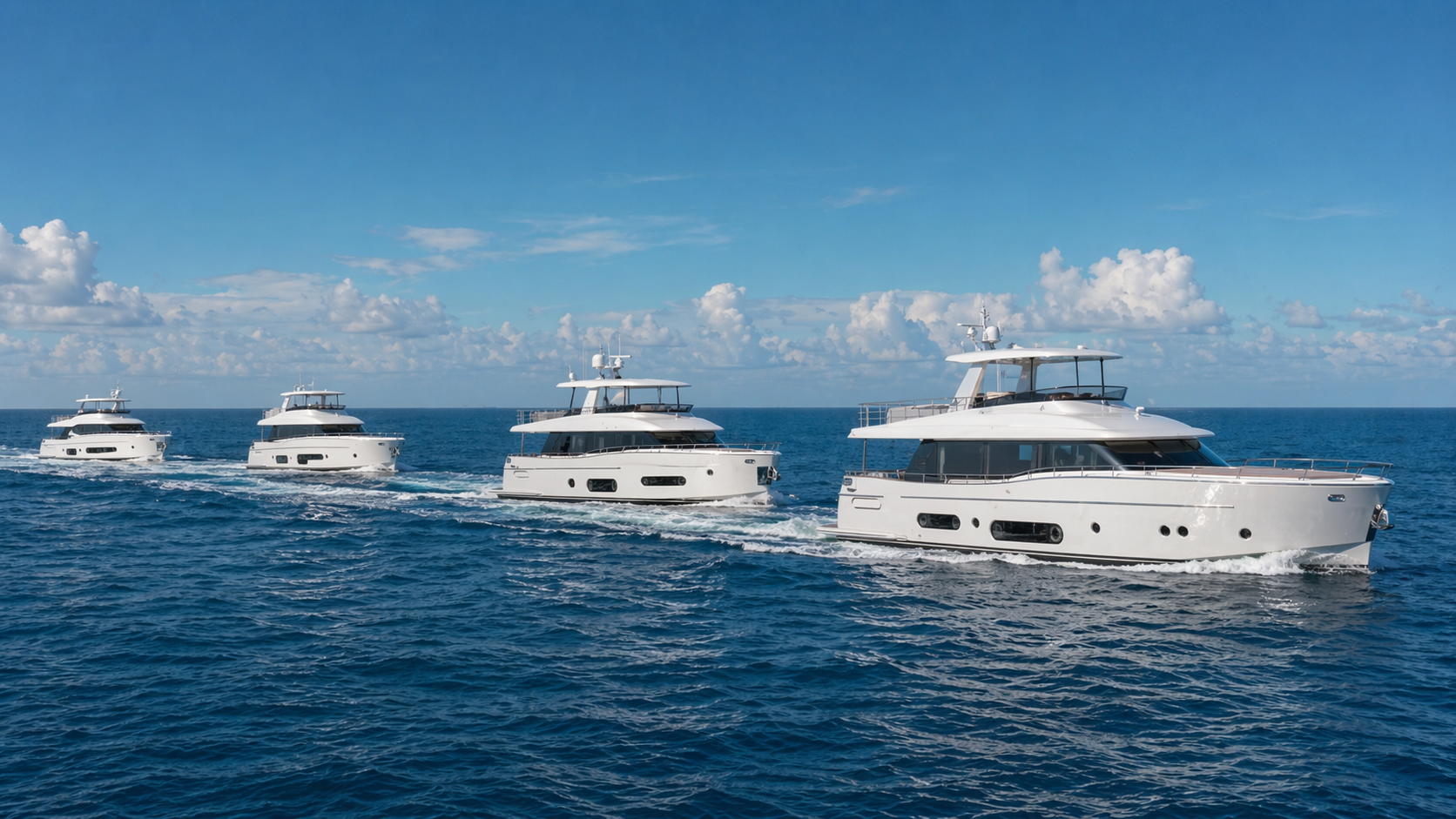
Independent review material reports approximately 500 nautical miles of range at 19 knots and around 1,000 nautical miles at 10 knots. Combined with deep side decks, a serious foredeck lounge and a large flybridge, the 66 is built for owners who expect to live on the yacht between ports instead of treating every trip as a short hop.
The compromise is size and width. The 66 remains manageable relative to an 80-foot yacht, but an 18′ 2″ beam, 102,000-pound displacement and larger hotel systems reduce the number of marinas and yards that can handle it casually. Buyers who only need three cabins and shorter coastal trips may find the Magellano 60 easier to own.
Best For — owners who want week-long cruising range, three- or four-cabin flexibility and stronger crew/guest separation without jumping to an 80-foot professionally crewed yacht.
Not For — buyers who want the smallest possible operating footprint, pod-drive behavior or the crew/service separation of the 25M and larger models.
Independent review: ~500 nm at 19 kn / ~1,000 nm at 10 kn
Cruising Speed
Up to 19 knots
Hull and Construction
The Magellano 66 uses Azimut’s semi-planing Dual Mode hull with GRP and carbon fiber in the structure. Azimut’s Carbon Tech approach removes weight high in the yacht, allowing greater volume while controlling center of gravity and natural roll moment.
The hull’s job is to remain useful across a broad speed range. Independent testing indicates roughly 1,000 nautical miles around 10 knots while the same boat can cruise near 19 knots and top out around 24. That flexibility is the reason to accept the fuller, more protective Magellano profile instead of choosing a lighter conventional flybridge yacht.
Beam is 18′ 2″ and full-load draft 5′ 7″. Survey should pay attention to hull, running gear, shaft alignment, stabilizer/hydraulic systems, tanks and the condition of carbon/GRP structure accessible for inspection.
Twin MAN i6 850-hp diesels on shafts are the standard package. Maximum speed is published up to 24 knots, with cruising speed up to 19 knots.
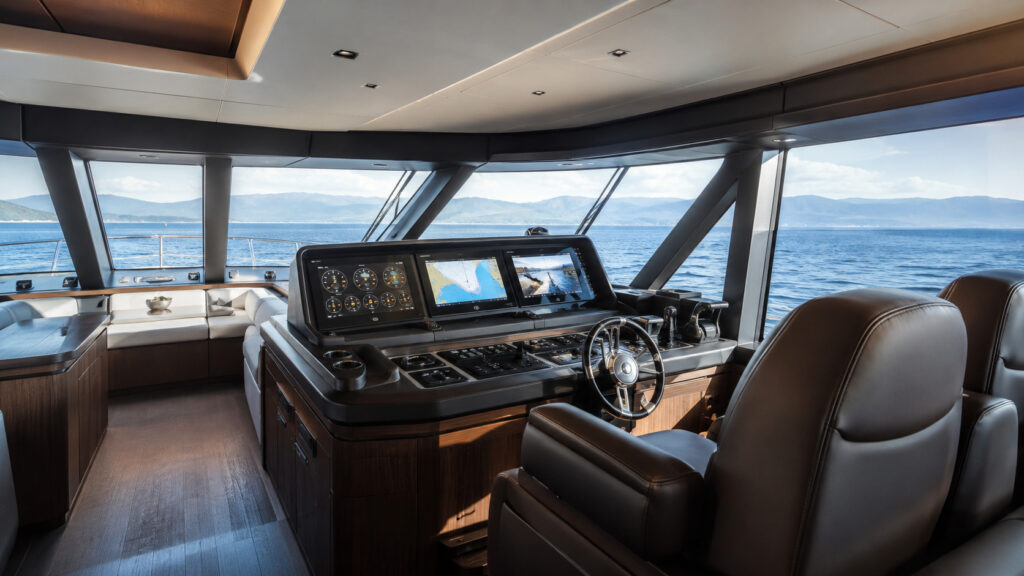
A joystick integrates the propulsion and thruster systems for marina work, but the 66 still has the inertia and windage of a 102,000-pound flybridge yacht. Owners considering self-operation should practice the actual boat in crosswind and stern-to situations rather than assuming joystick control removes the need for judgment.
The engine room is more service-friendly than some smaller yachts, with independent review noting standing headroom for many technicians and good access to key service points. That matters over years of ownership because machinery access influences labor cost and maintenance discipline.
Fuel capacity is 4,500 liters, about 1,189 US gallons.
Independent YachtBuyer review data describes about 500 nautical miles at a 19-knot cruise and roughly 1,000 nautical miles at 10 knots. Those numbers should be labeled as independent estimates/test context, not manufacturer guarantees.
The planning lesson is straightforward: the 66 can make fast coastal passages when needed, but slowing to about 10 knots roughly doubles the practical range in the cited testing. Owners who exploit that flexibility will have a very different fuel budget from those who run near 19 knots all season.
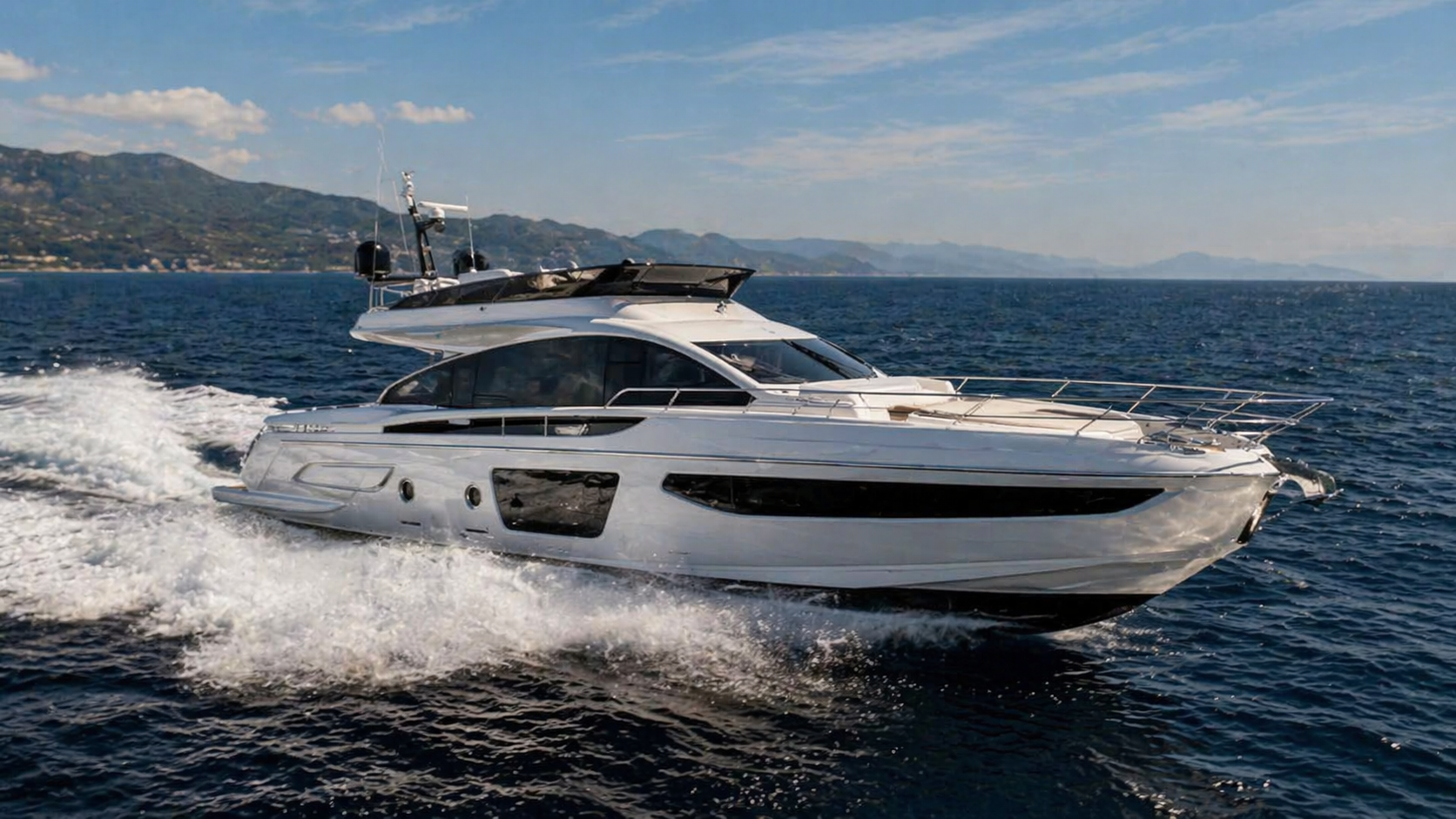
A 24-knot top speed and 19-knot cruise are enough to keep the 66 from feeling like a slow trawler, while the semi-planing hull remains comfortable at lower speeds. Independent review describes the boat as balanced and practical for liveaboard cruising rather than speed-first.
The hull and substantial keel section also help low-speed tracking and marina stability. On passage, the appeal is the ability to choose a speed for sea state and range without forcing the yacht onto a narrow planing sweet spot.
The 66 has deep, wide side decks with substantial bulwarks and guardrails, a major benefit for owners who actually work lines and move forward in poor conditions. The foredeck combines working space with a large U-shaped lounge that can convert into a sun pad.
The aft deck uses a large U-shaped dining area with access down to a hydraulic swim platform. On the flybridge, the central mast divides forward guest/helm space from the open aft deck, and a wet bar/grill supports long days outside.
The deck design is less theatrical than some modern rivals but highly functional. That is consistent with the Magellano brief: exterior spaces need to work on passage as well as at anchor.
The 66 combines conventional shaft propulsion with hydraulic and hotel systems appropriate to extended cruising. Stabilization, generator, HVAC, hydraulic platform and navigation electronics should all be included in survey and annual service planning.
The Navetta layout also changes service circulation and storage, so buyers should inspect both versions rather than assuming the interior difference is cosmetic.
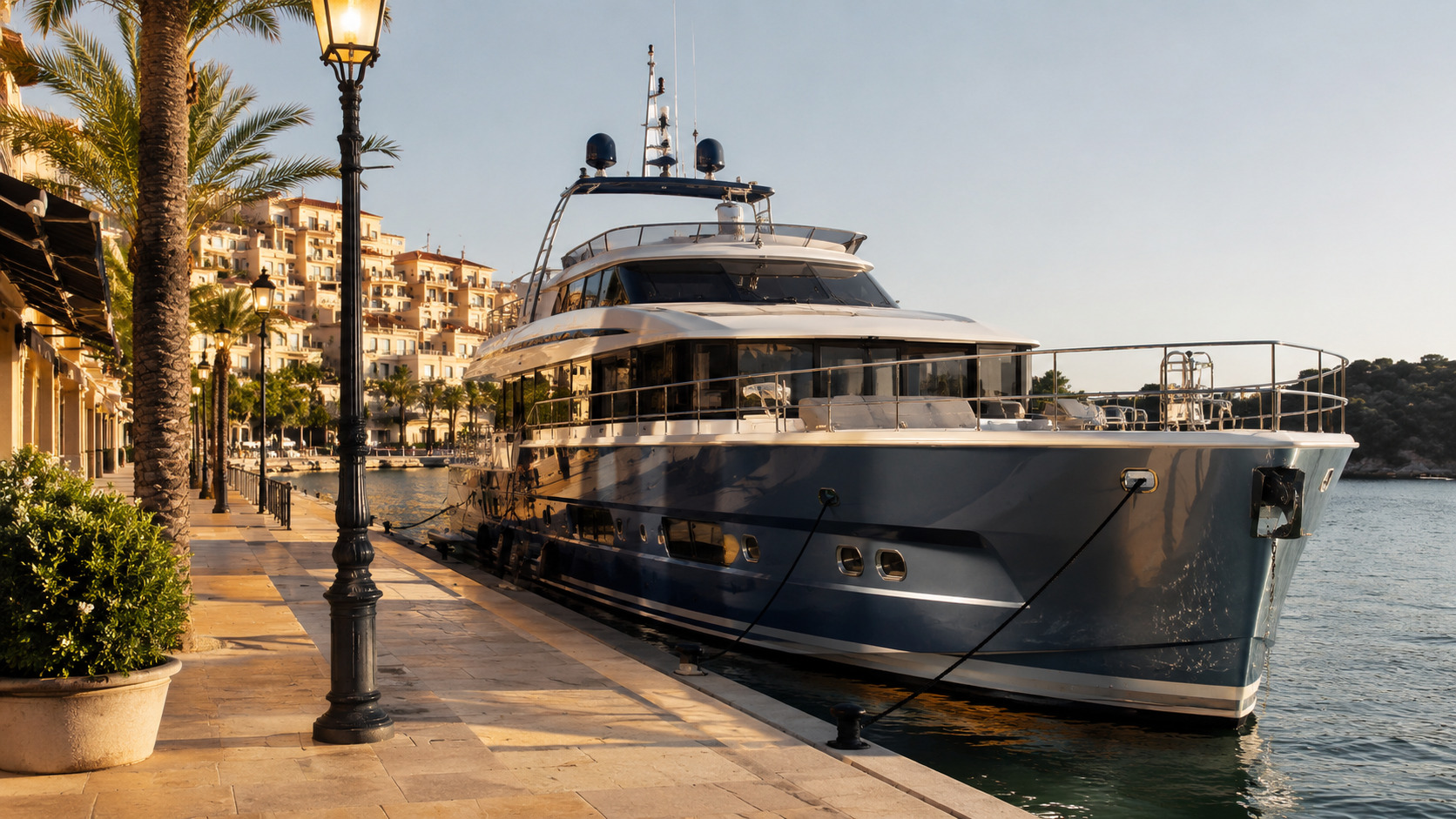
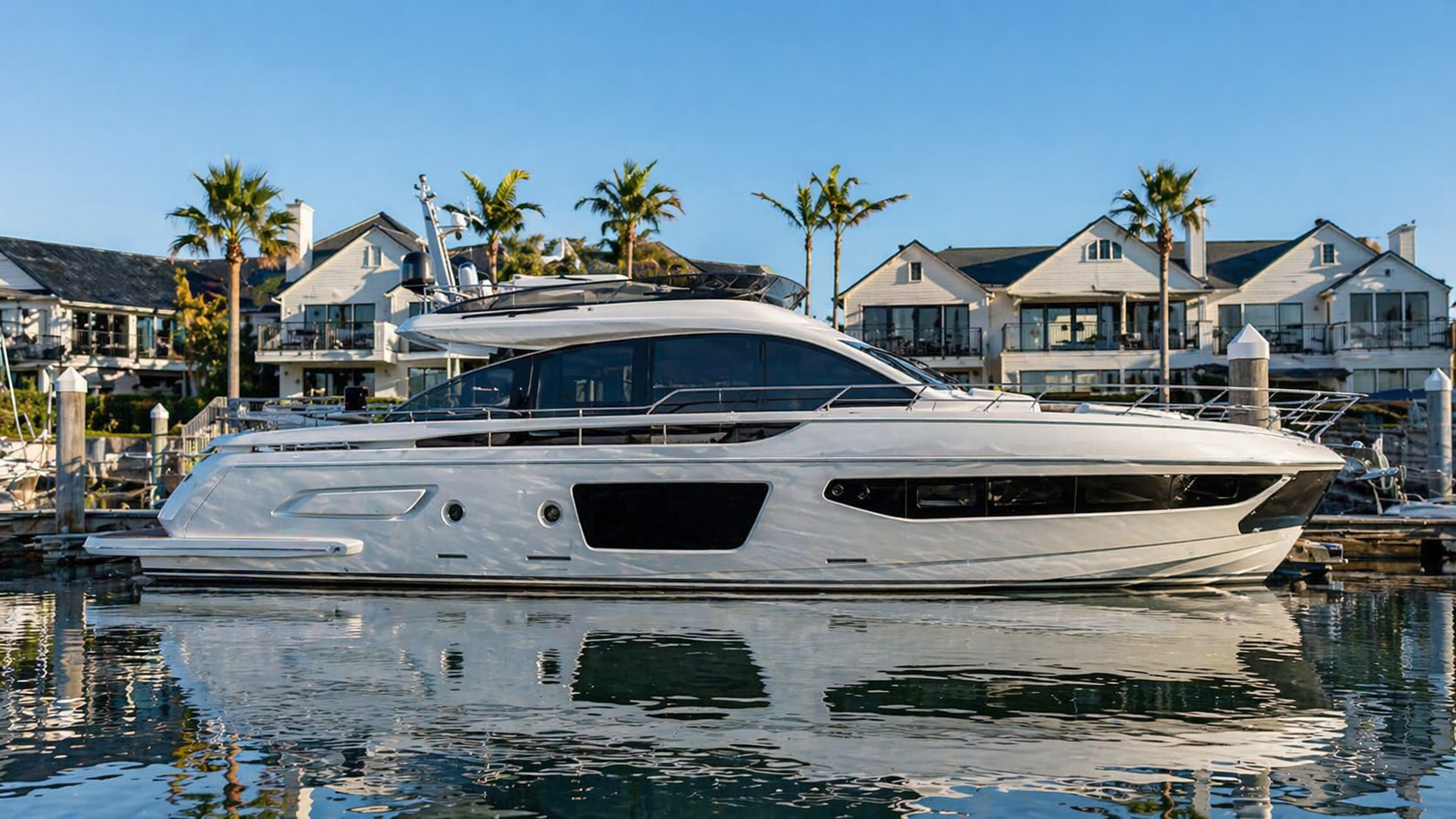
At 66′ 1″ overall and 18′ 2″ of beam, the 66 can exceed the practical width of many nominal 65- to 70-foot slips. Confirm actual berth dimensions and piling spacing before purchase.
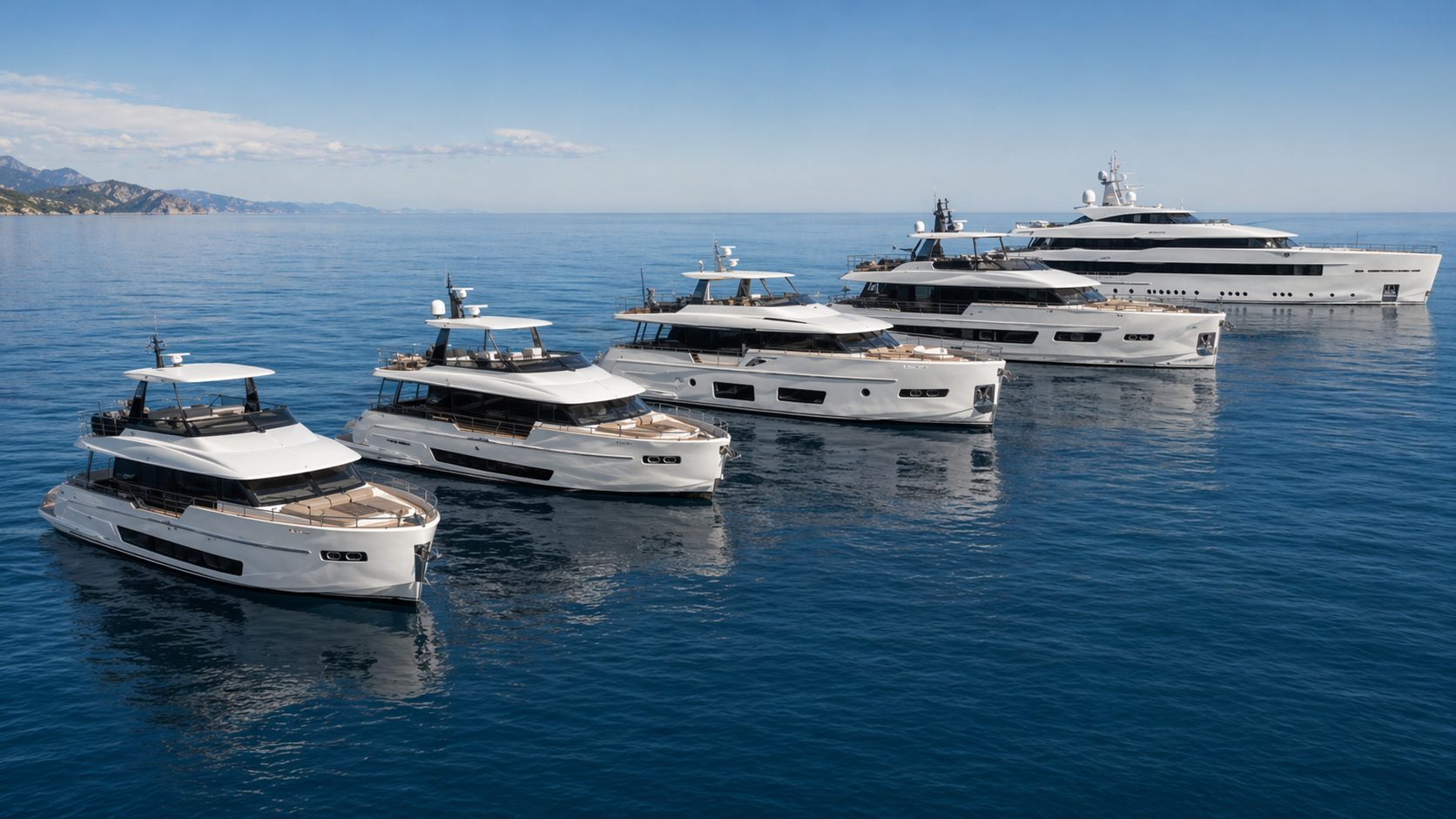
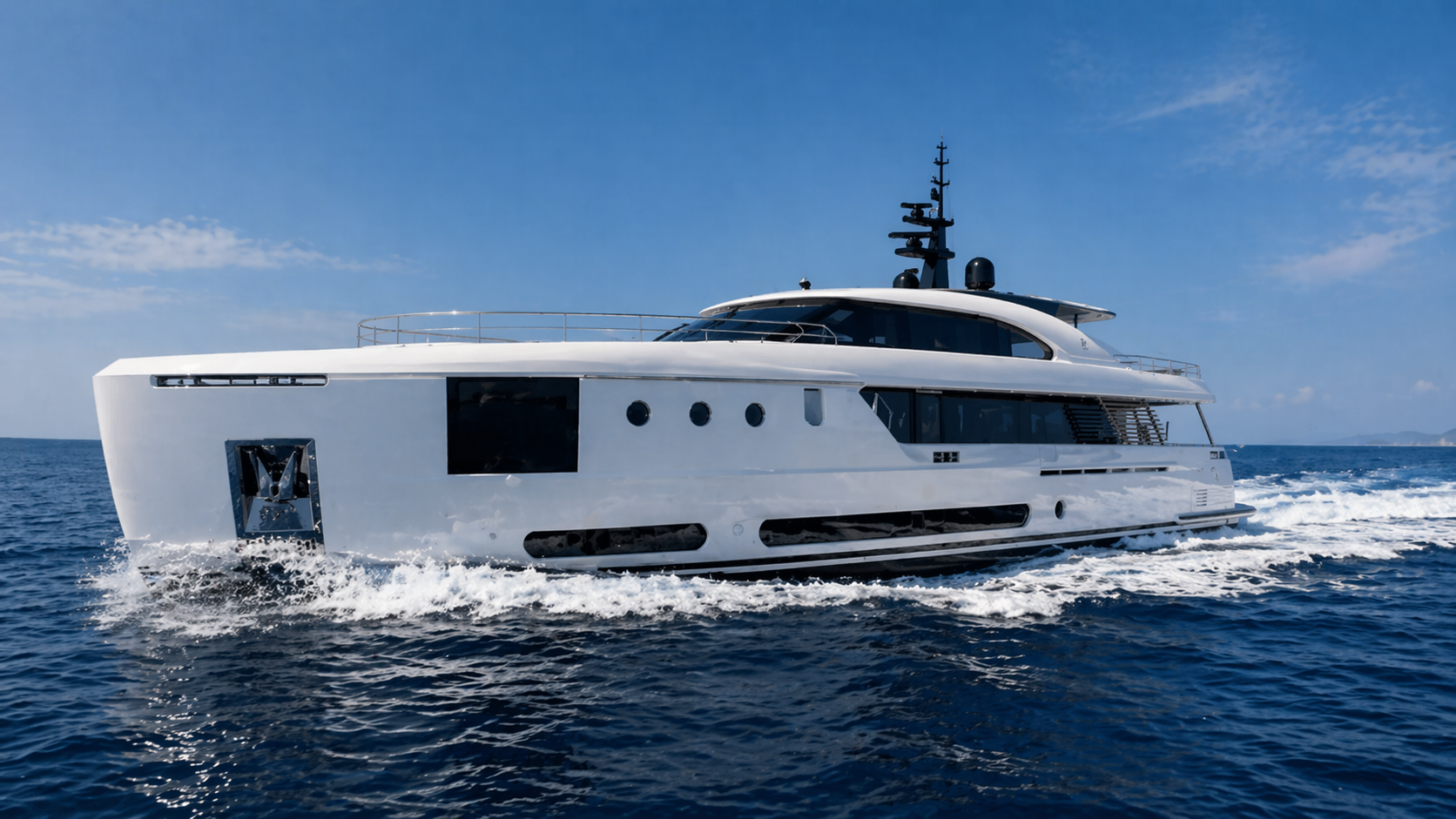
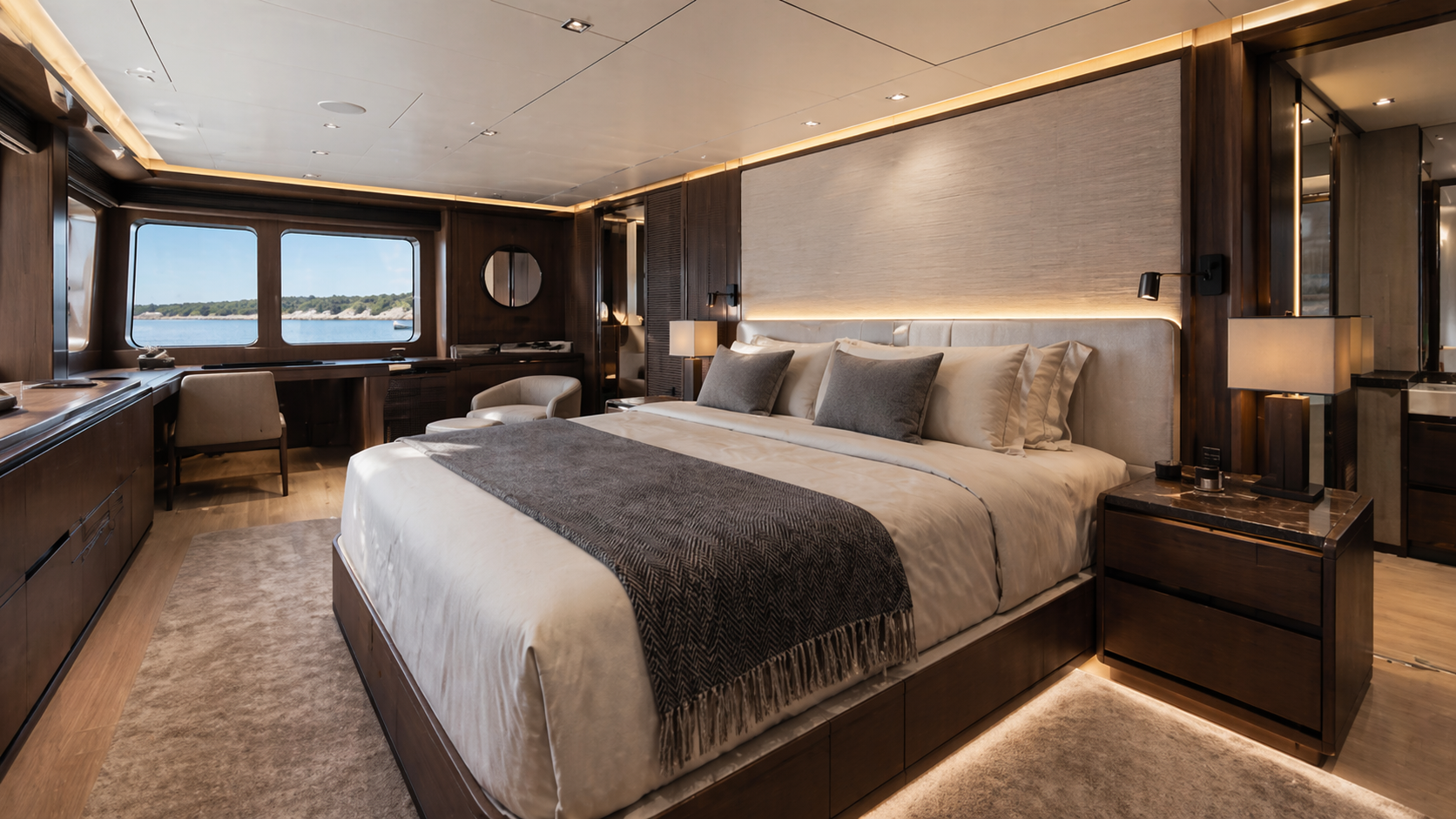
Use the gallery to show the features that make the 66 a liveaboard cruiser: protected side decks, foredeck lounge, flybridge, cockpit dining, main-deck layout options, full-beam owner cabin, guest cabins and service-access areas.
azimut magellano 66 long range cruising profile 02
azimut magellano 66 long range cruising profile 03
azimut magellano 66 long range cruising profile 04
azimut magellano 66 marina dockside profile 01
azimut magellano 66 marina dockside profile 02
azimut magellano 66 voyager hero 03
Azimut Magellano 66
Azimut Magellano 66 yachts
Azimut Magellano 66 boats
Typical Pricing
Current asking prices vary by year, layout and equipment. The three-versus-four-cabin layout, hardtop, stabilization, electronics and maintenance history can all change value.
A well-maintained owner-operated 66 with complete records may be more valuable than a lower-priced yacht carrying deferred mechanical and cosmetic work.
Build the annual ownership estimate from the actual yacht and home port rather than a generic percentage of purchase price.
Pricing, payment and ownership-cost figures are illustrations only and are not offers or commitments to extend credit.
Market price band
$1,490,000 – $3,235,000
Estimated monthly
From $10,195/mo
Figures come from this page’s Boat Details fields. Illustration only and not an offer of credit.
Estimate Your Magellano 66 Payment
Use the yacht-loan calculator to test purchase price, cash down, rate and term before negotiating. For higher-value yachts, compare multiple down-payment and term scenarios rather than anchoring the decision to one optimistic monthly number.
Illustration only and not an offer of credit. Your actual rate and term depend on credit profile, vessel age, loan amount and ownership structure.
Compare the Magellano 66 Before You Buy
The 66 is the bridge between the owner-operated Magellano 60 and the crewed 25M. It adds cabin/layout flexibility and much more slow-speed range without taking on the full 80-foot operating model.
For a used 66, inspect layout first: the Navetta version and more open arrangement serve different ownership styles. Then compare engine hours, stabilization, hardtop, tender system, electronics and service records.
A 66 is large enough that dockage and insurance availability should be verified before closing, especially for a first-time owner moving up from a much smaller boat.
The Magellano 66 often sits in the sweet spot where buyers are deciding between a larger owner-operated yacht and a smaller professionally crewed one. Send Float Finance the actual 66 listing so the payment, survey and ownership structure can be considered before you decide whether stepping up to 25M makes sense.
Independent YachtBuyer review data cites about 500 nm at 19 knots and about 1,000 nm at 10 knots. Actual range varies with load, sea state and reserves.
Potentially, subject to borrower, lender and vessel eligibility. Survey, insurance, model year, value and transaction type may all affect underwriting.
Yes, an experienced owner can operate one, and the deck layout plus joystick/thruster assistance support that use. Many owners will still hire help for longer trips, maintenance or difficult berthing.
It is the privacy-focused main-deck configuration that separates the galley and wheelhouse from the guest salon, creating more independent crew circulation and provisioning storage.