
Call Us : 207-994-5109
Mon – Fri: 8 am to 9 pm & Sat – Sun: 10 am to 8 pm
The S7 is the volume step in the S range: four guest cabins and 71 feet of living space without abandoning the triple-IPS, high-speed sport-yacht formula.
Official Azimut specifications put the S7 at 71′ 2″ overall with a 16′ 11″ beam. It carries 4 + 1 crew cabins and uses 3 × Volvo Penta D13 IPS 1050, 800 hp each. That combination tells you more about the ownership proposition than the model number alone: this is a sport yacht designed to cover distance quickly while still carrying legitimate overnight accommodations.
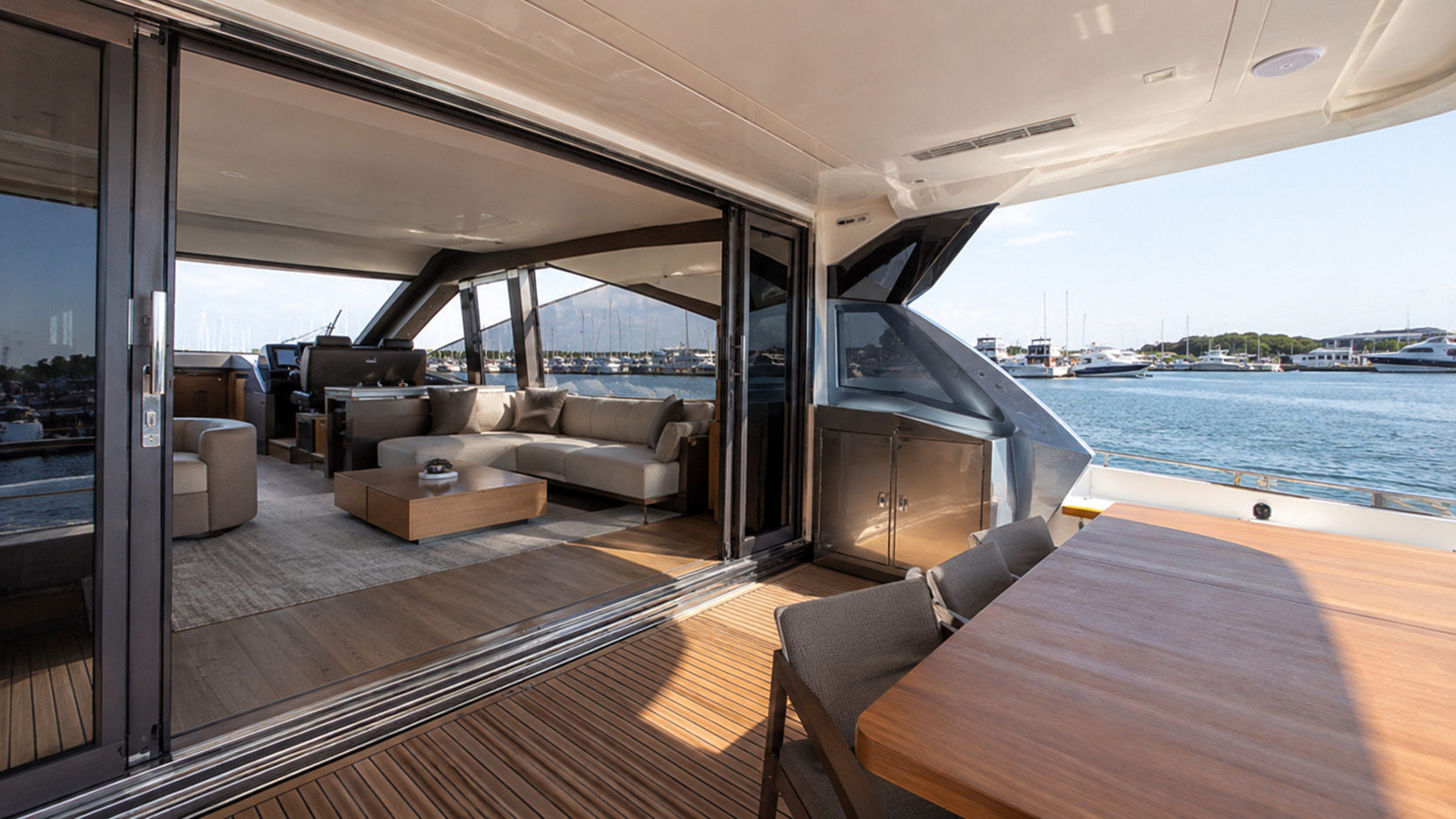
The layout is aimed at buyers who want the helm, cockpit and exterior spaces to remain central to the experience rather than treating speed as a specification that rarely matters in use. The S7 emphasizes continuity between the cockpit and interior salon rather than creating sharply separated indoor and outdoor zones. Carbon-fiber weight savings help preserve volume without turning the profile into a tall flybridge yacht. The result is a boat that can host more guests than the S6 while keeping the driving and social experience on a relatively low main-deck plane.
The fourth cabin and larger social spaces make the S7 more versatile than the S6, but 71 feet is a different marina, maintenance and crew-support proposition. Buyers chasing owner-operator simplicity should be honest about whether they need this much yacht.
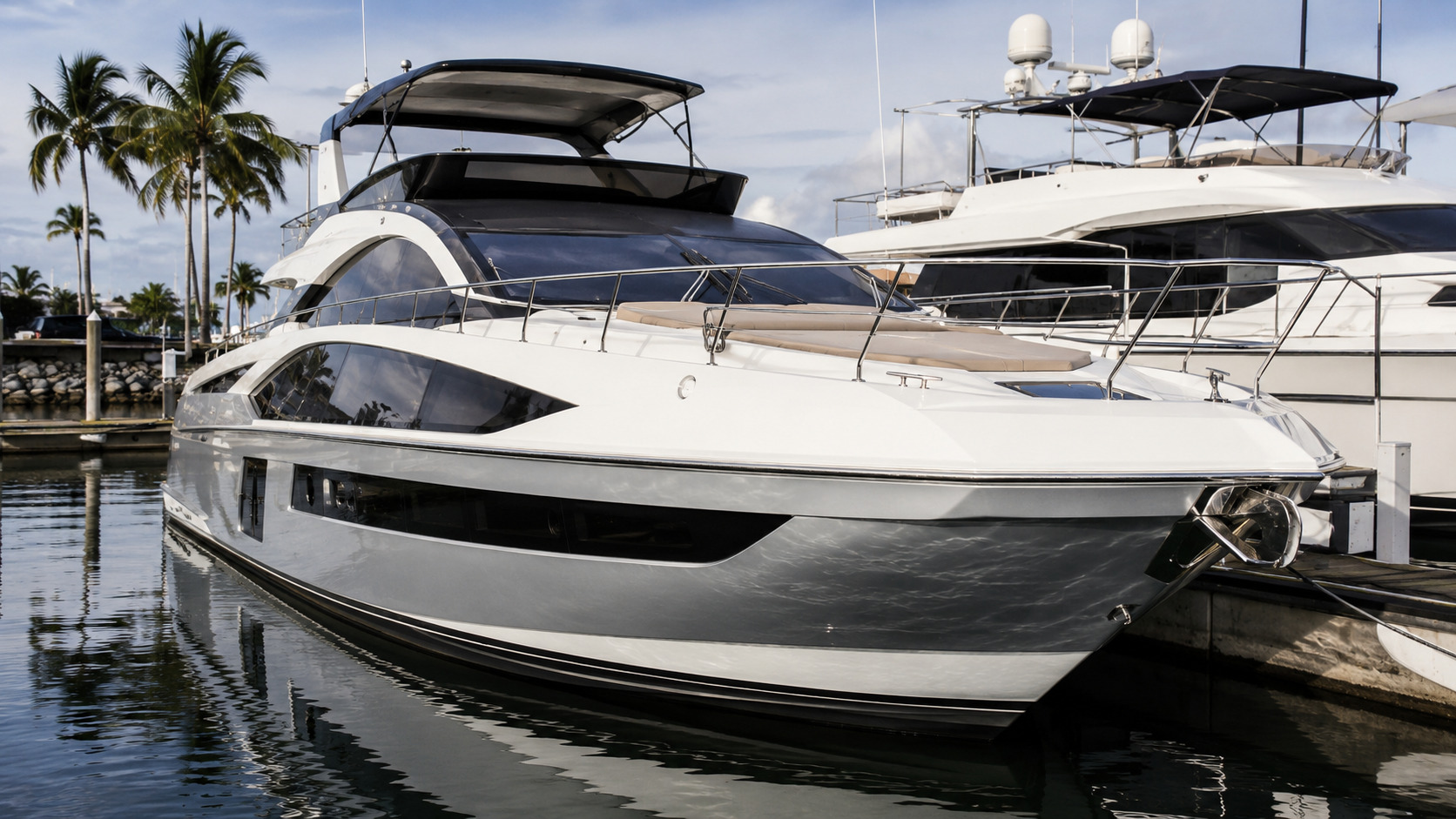
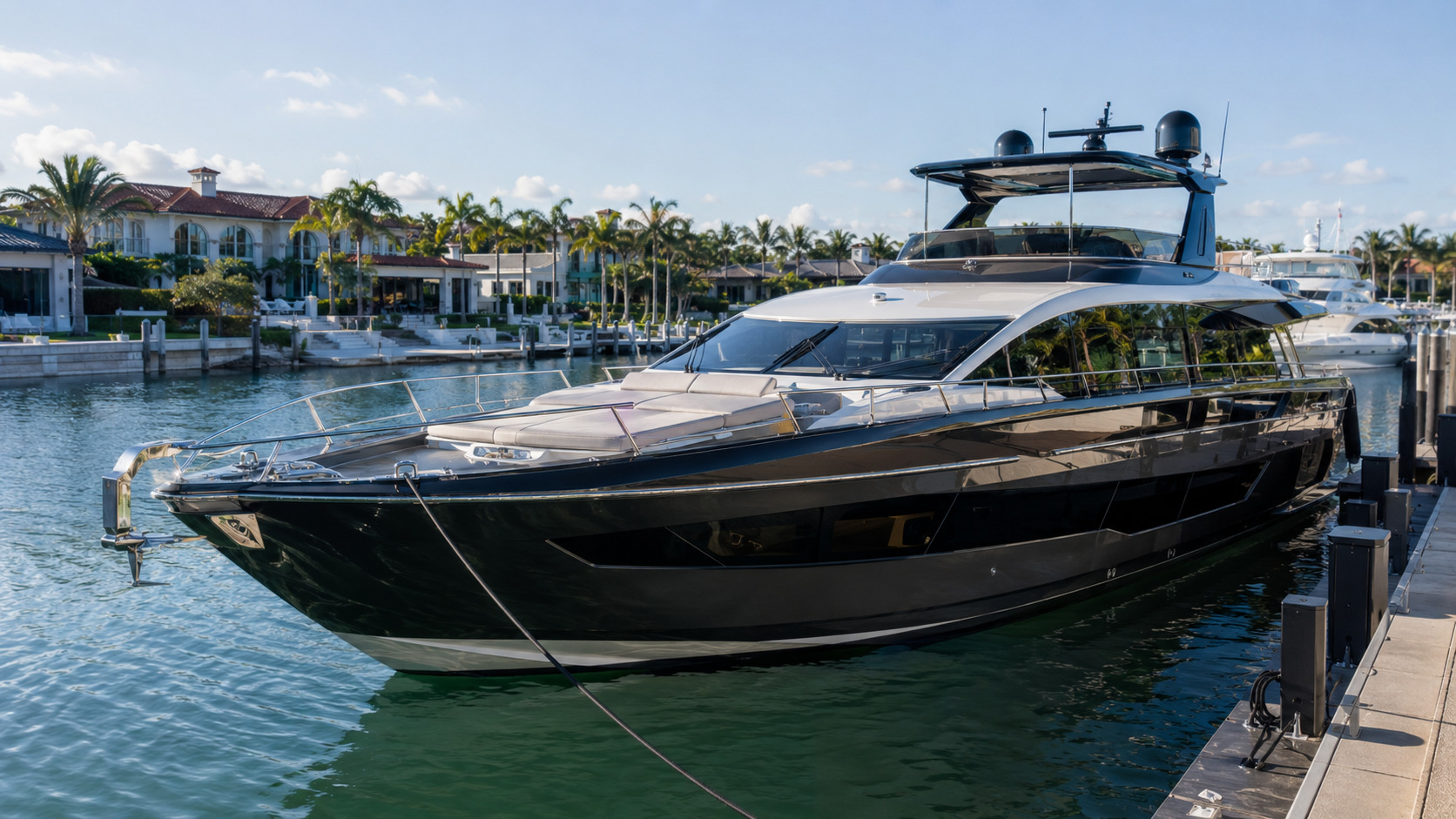
The S7 uses a planing hull with published deadrise of 13.8° stern / 18.4° amidships. That geometry is part of the S Series brief: maintain the running surfaces and weight distribution needed for 30-knot-plus performance while still supporting the interior mass of a fully equipped cruising yacht. A sharper hull could favor rough-water impact at the expense of planing efficiency and interior volume; a flatter hull could improve lift but change ride character. Azimut’s published geometry sits between those extremes.
Construction is GRP + Carbon Fibre. Azimut concentrates carbon fiber high in the structure because removing weight from the superstructure helps preserve a lower center of gravity and reduces roll momentum without forcing the yacht to give up interior volume. On a used example, the survey still needs to focus on the individual boat: prior repairs, moisture, through-hulls, machinery foundations, running gear or pod condition, and evidence of impact or grounding.
The practical dimensions matter at the marina. Beam is 16′ 11″, draft is 5′ 7″, and published full-load displacement is 101,412 lb.
Azimut powers the S7 with 3 × Volvo Penta D13 IPS 1050, 800 hp each, producing 2,400 hp total. That package is central to the way the yacht uses its interior volume and how it behaves around the dock. Buyers should evaluate the propulsion system as part of the yacht’s identity, not just as an engine-room specification.
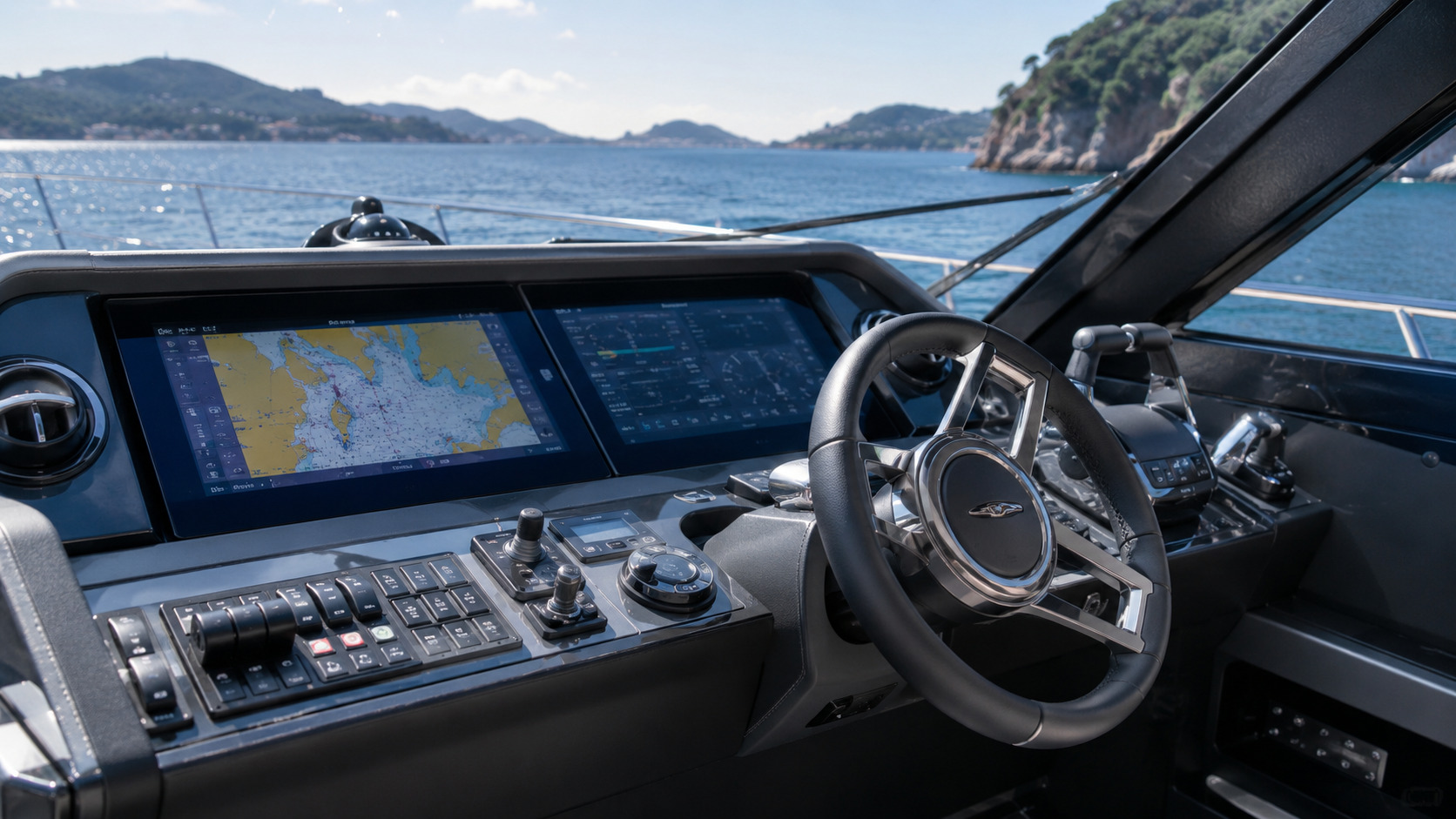
The S7 combines triple IPS with Advanced Joystick Control, Active Trim Control and a Garmin-based integrated control and monitoring system that covers engines, alarms, pumps, tank levels, ventilation, sound and air conditioning. Remote access from a tablet or smartphone adds another layer of practical systems management.
On a used yacht, service history is more valuable than a seller’s claim that everything is ‘up to date.’ Request engine-hour history, oil and coolant service, drive or pod service where applicable, corrosion-protection records, propeller or running-gear history and documentation of major scheduled work. A dedicated engine/propulsion inspection can be worth adding to the general marine survey on a yacht in this value range.
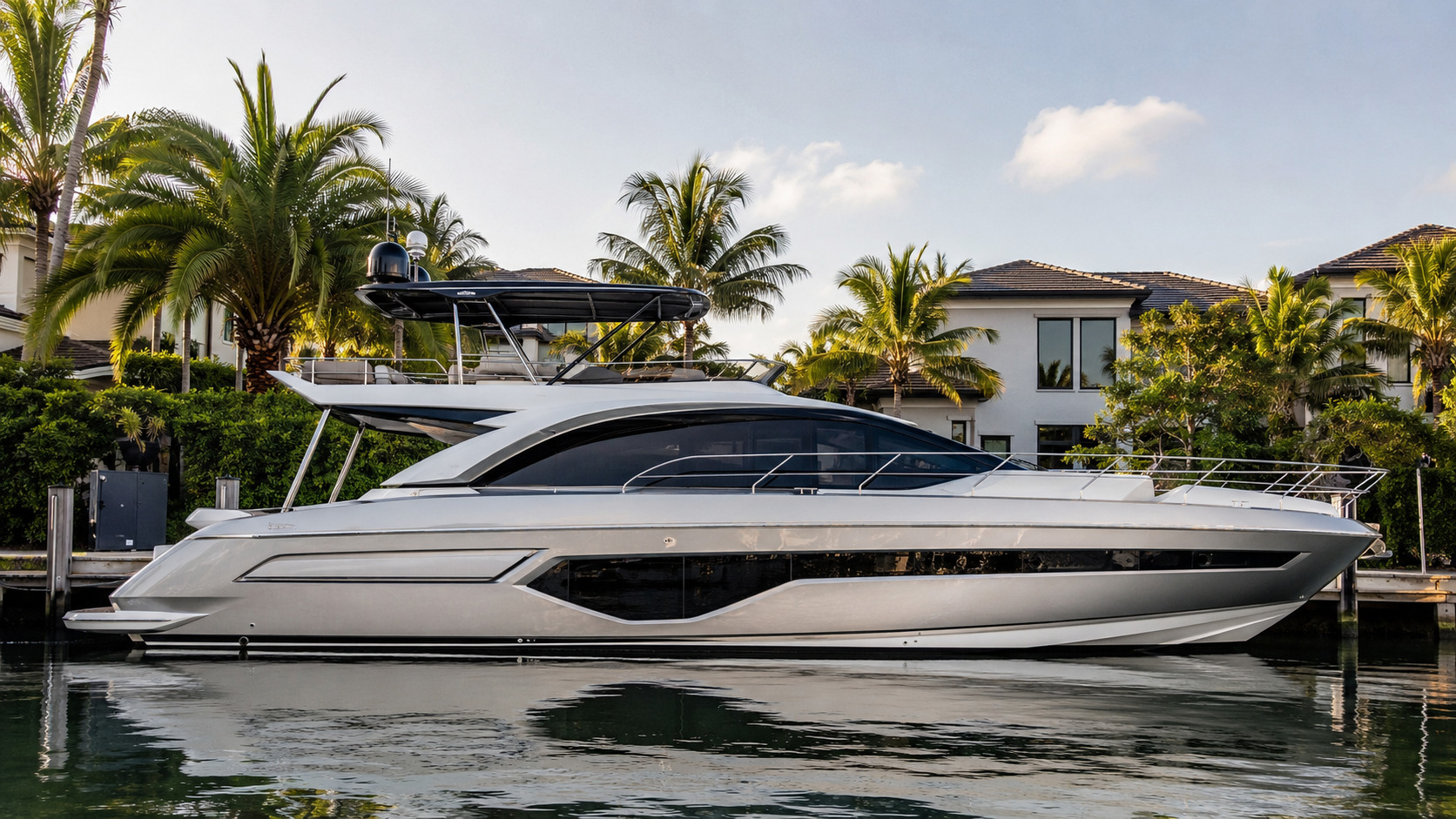
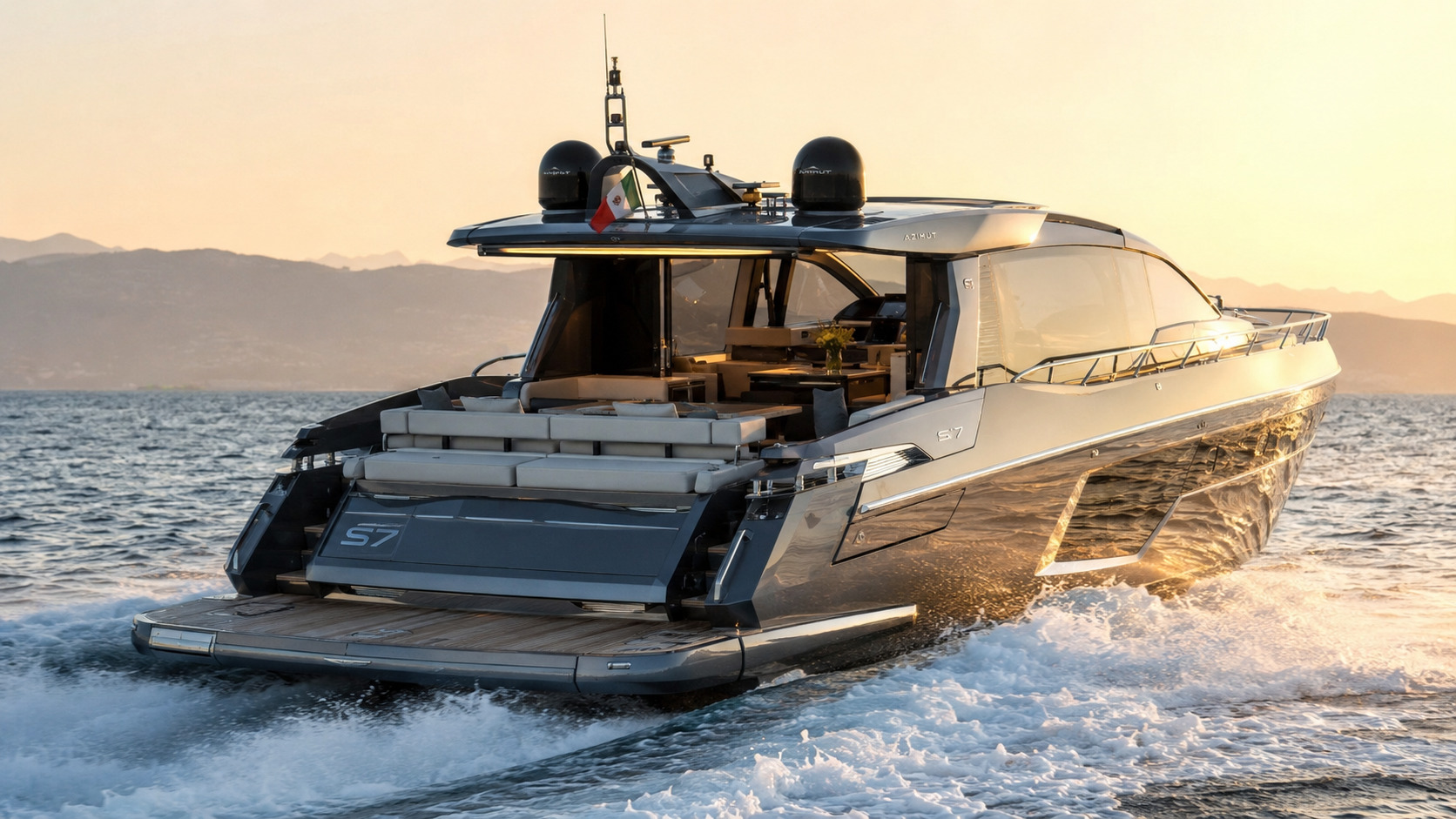
The S7 is the easiest S model to discuss responsibly because Azimut publishes witnessed ISO sea-trial data. At 18.6 knots, the manufacturer reports 8.8 liters per nautical mile and a 387-nautical-mile range. At 27 knots, consumption rises to 10.4 liters per nautical mile with a 328-nautical-mile range. Those numbers are a useful baseline, not a promise for every loaded yacht in every sea state.
The fuel tank holds 1,004 US gal. Build a realistic seasonal fuel budget from the speed you actually cruise, annual engine hours and the local diesel price. A four-hour day at fast cruise can be very different from a day spent moving slowly between nearby anchorages, and generator use adds another variable that is often ignored in simple online estimates.
For the production page, cost-per-day and cost-per-season figures should remain bracketed until the project registry supplies an approved consumption point and fuel-price assumption. That is better SEO and better buyer guidance than publishing a confident number that came from the wrong engine package or a different load condition.
Azimut publishes a maximum speed of Up to 35 kn and a cruising speed of Up to 27 kn for the S7. The point of those numbers is not to encourage owners to run at maximum throttle all day. It is that the yacht has enough reserve speed to shorten passages, work around weather windows and make a weekend itinerary cover more coastline than a slower displacement-oriented yacht.
Handling should be judged during sea trial with the yacht loaded as it will actually be used. Pay attention to planing transition, trim response, visibility from the helm, steering load, noise, vibration and how the boat behaves when the sea is not directly on the bow. A yacht that looks perfect at the dock can still be the wrong boat if the owner dislikes the driving position or motion underway.
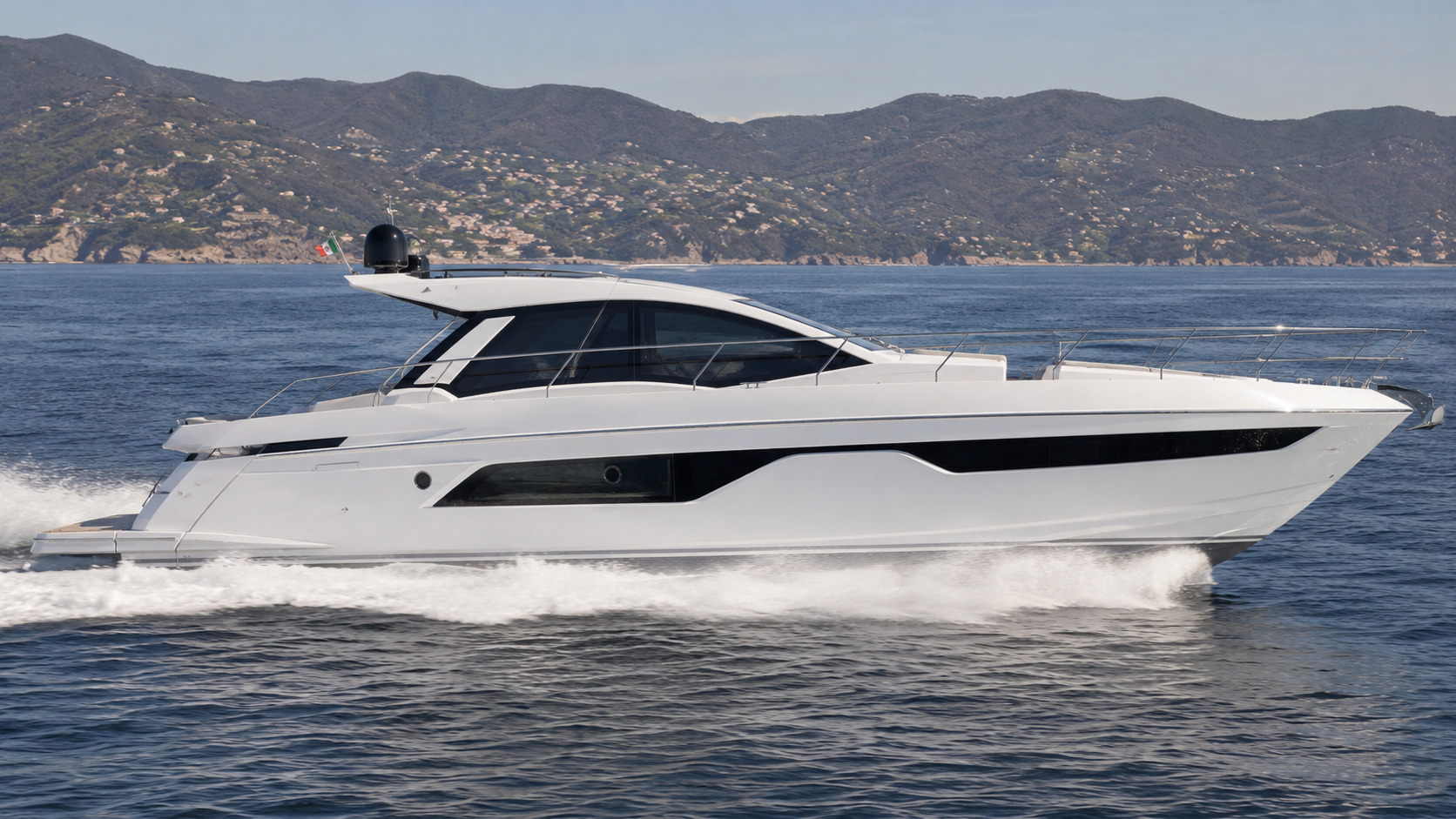
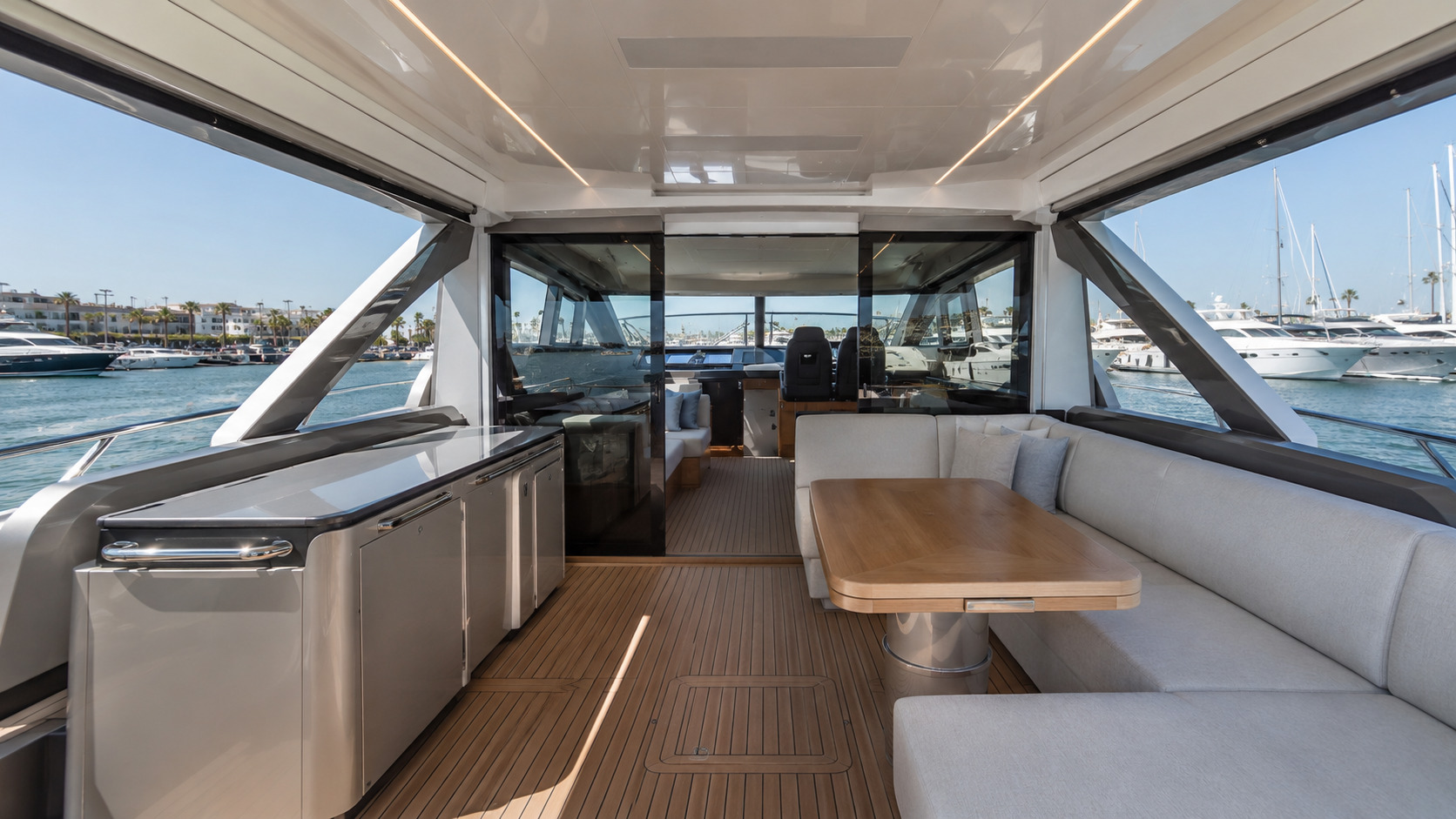
The S7 emphasizes continuity between the cockpit and interior salon rather than creating sharply separated indoor and outdoor zones. Carbon-fiber weight savings help preserve volume without turning the profile into a tall flybridge yacht. The result is a boat that can host more guests than the S6 while keeping the driving and social experience on a relatively low main-deck plane.
For buyers, the important question is whether the exterior spaces match the way the yacht will be used. Look at how many people can sit together without blocking circulation, how easily food and drinks move between galley and cockpit, whether the bow is a real destination or only a sunpad, and how protected the helm feels in the weather you actually encounter.
During an in-person inspection, walk the route from swim platform to cockpit, cockpit to helm and helm to the foredeck. Photos can make individual zones look large while hiding narrow transitions. The best layout is the one that still feels natural when several guests are moving through it at the same time.
The S7 combines triple IPS with Advanced Joystick Control, Active Trim Control and a Garmin-based integrated control and monitoring system that covers engines, alarms, pumps, tank levels, ventilation, sound and air conditioning. Remote access from a tablet or smartphone adds another layer of practical systems management.
The systems list should be verified boat by boat. Generator size, air conditioning, stabilization, electronics, entertainment hardware, cameras and auxiliary equipment may differ substantially between hulls. During survey, run every major hotel and navigation system rather than accepting a static list of options as proof that the equipment still works.
At 71′ 2″ overall with a 16′ 11″ beam, the S7 requires planned dockage. Confirm slip length, beam allowance, water depth, shore power and maneuvering room before closing. Marinas may bill by actual LOA or by a larger slip category, so the financial effect of stepping up a model can be larger than the length difference suggests.
Published draft is 5′ 7″. Buyers also need to verify haul-out capacity and storage options in the intended home port. A marina that can dock the yacht is not automatically a yard that can haul or service it.
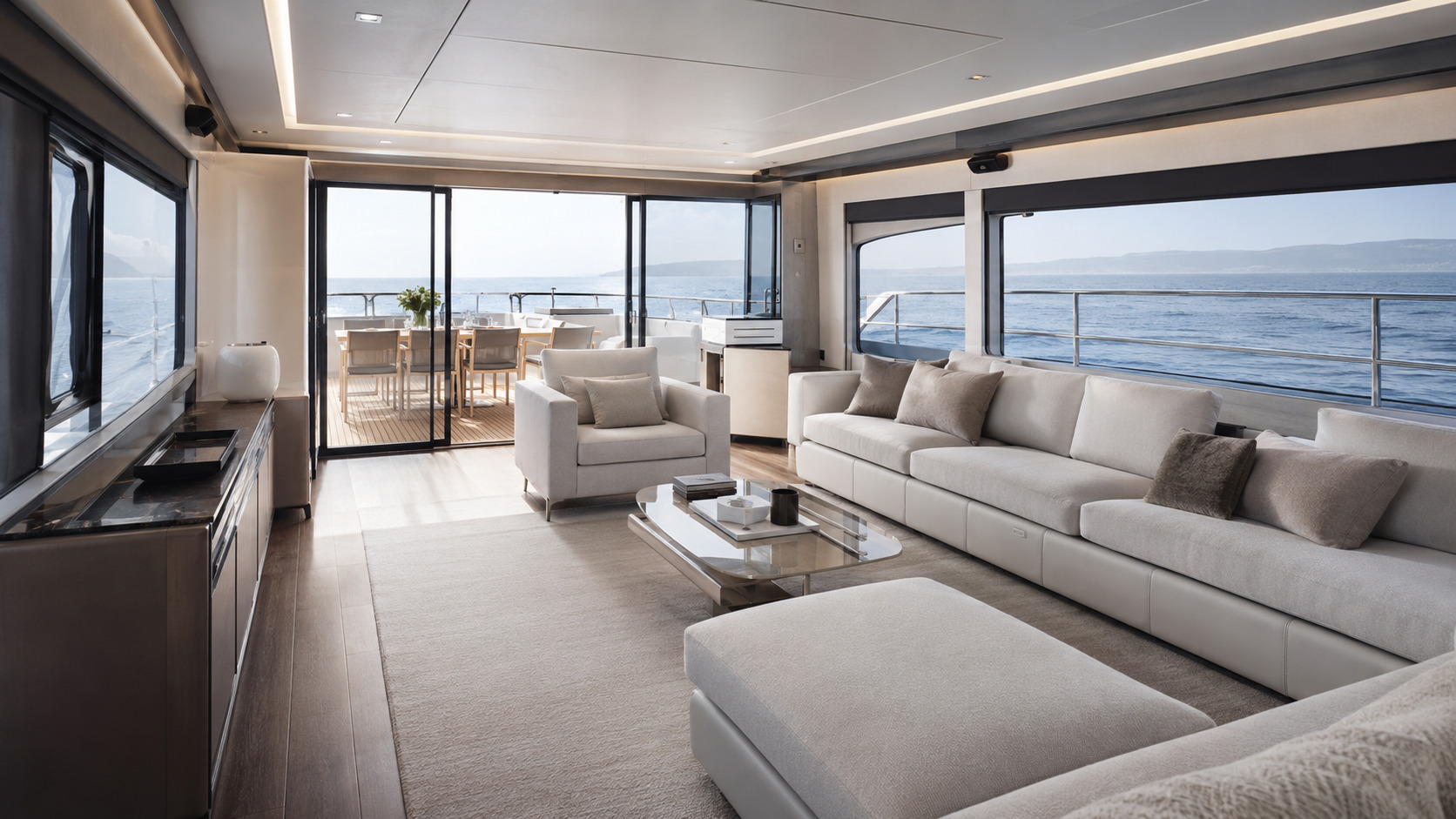
Use the gallery to judge the S7 as a real ownership space, not as a styling exercise. Compare the running profile, helm sightlines, cockpit circulation, salon, owner suite, guest cabins, stern access and machinery or toy-storage areas where shown.
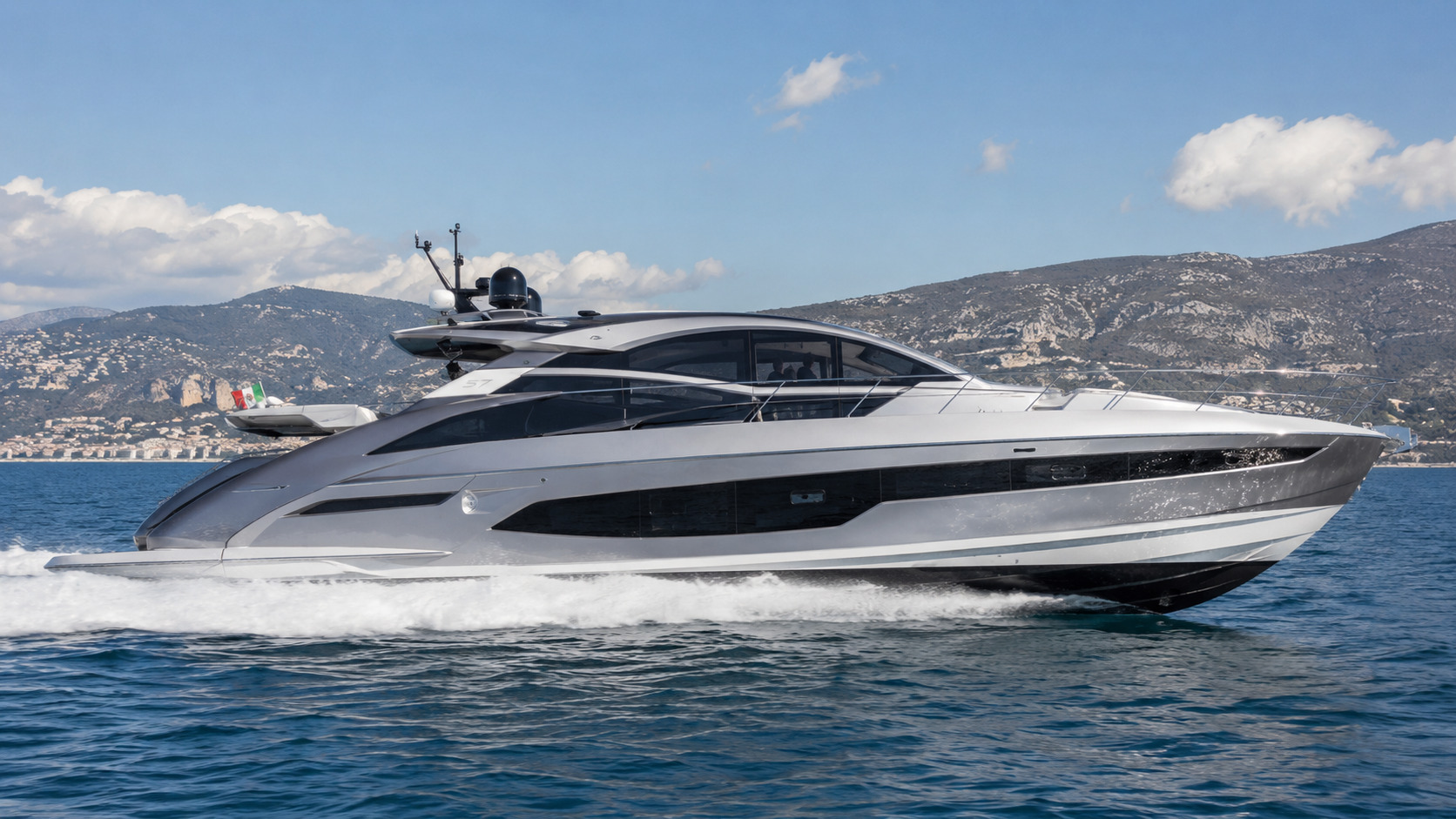
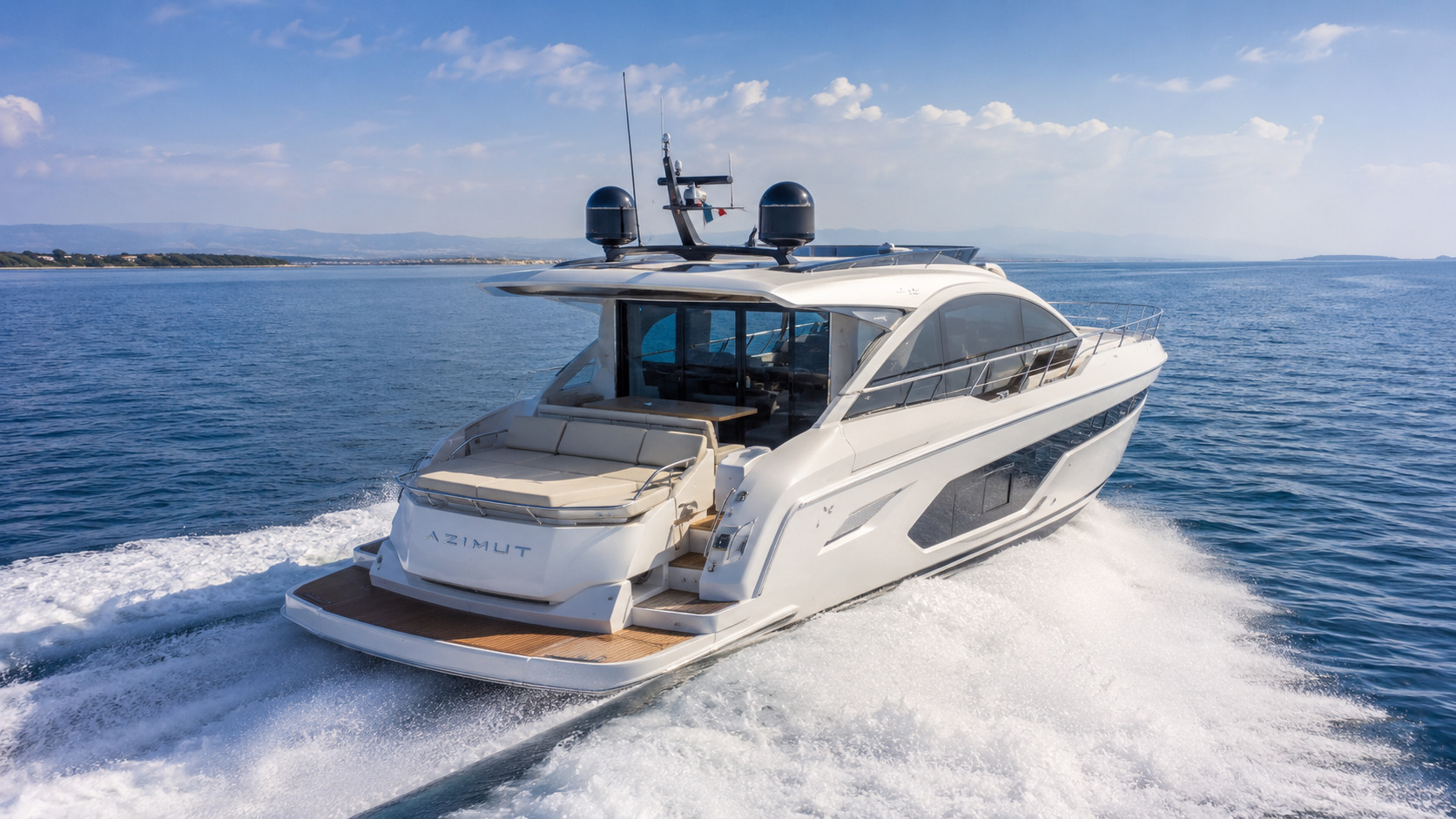
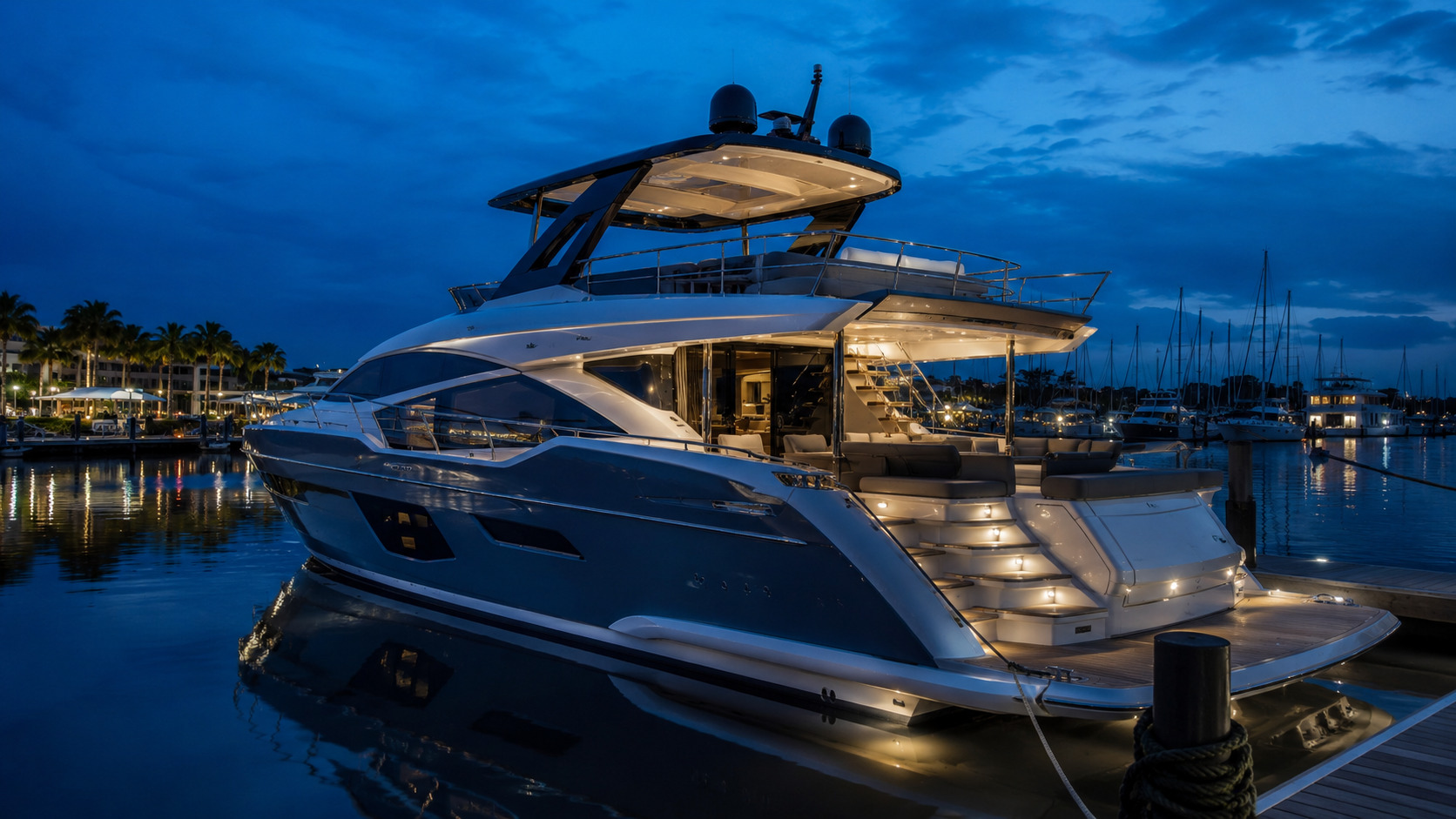
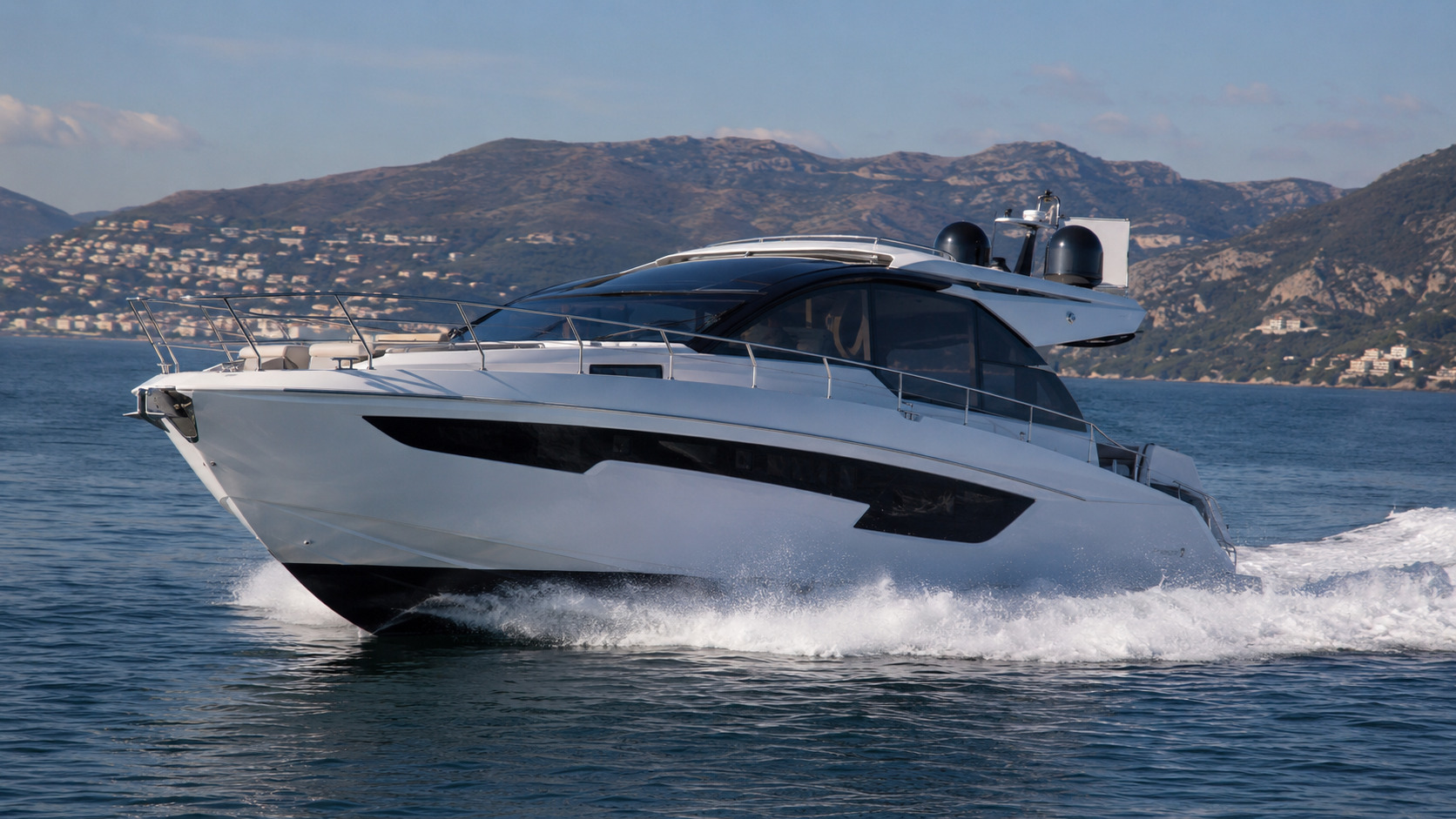
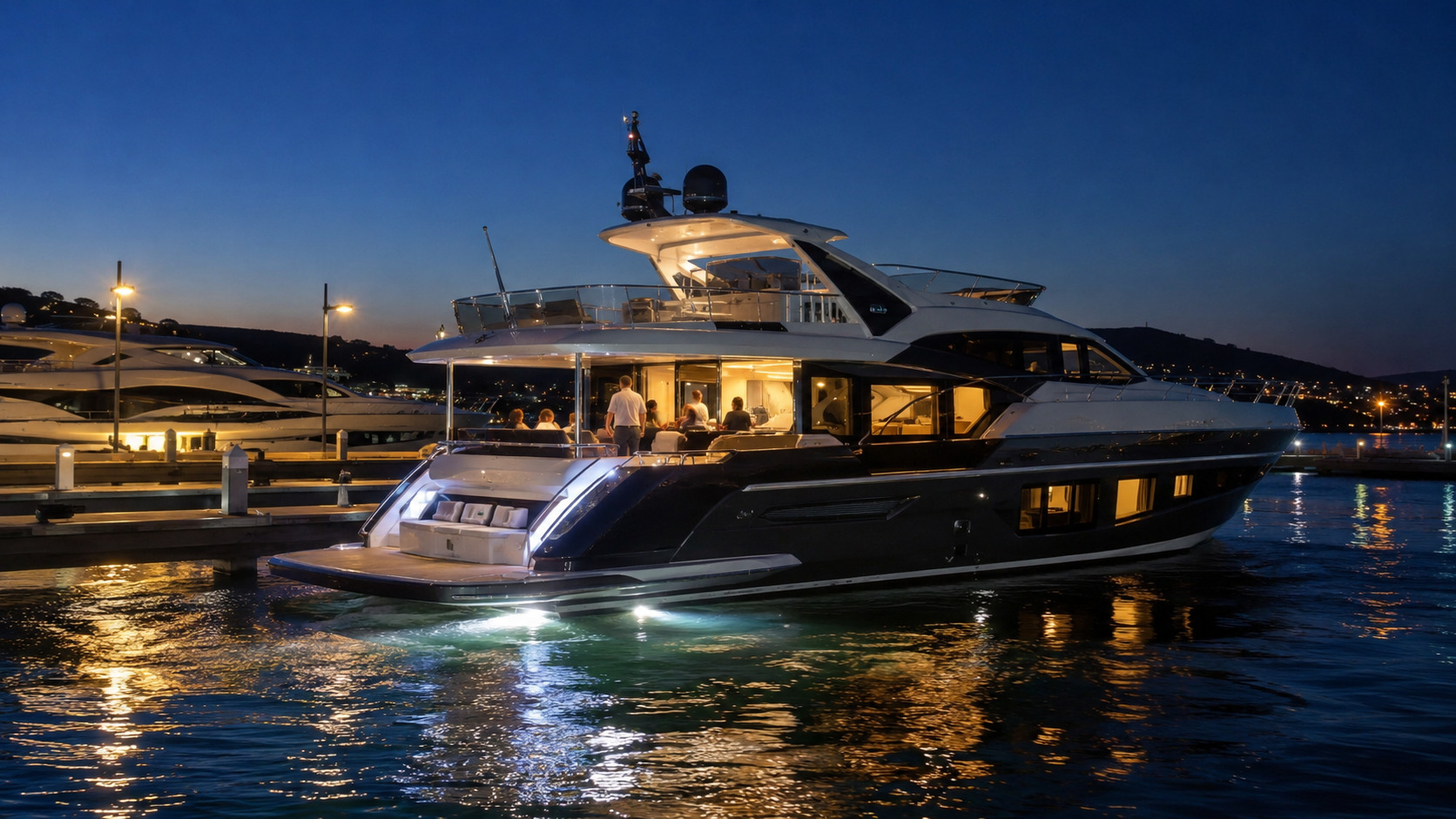
Azimut S7 pricing varies with model year, engine hours, option package, location, maintenance history and the quality of the individual yacht. Electronics, stabilization, tender equipment, service history and recent major maintenance can materially change what two apparently similar yachts are worth.
Annual ownership cost should be built from the boat and home port. Include dockage, insurance, scheduled propulsion service, generator/HVAC service, haul-out, bottom work, detailing, storage where applicable and fuel. Larger yachts can also justify paid crew, yacht management or regular professional wash-down and systems checks.
Pricing, cost and payment examples are for research only and are not offers or commitments to extend credit.
Figures come from this page’s Boat Details fields. Illustration only and not an offer of credit.
Use the yacht-loan calculator to compare purchase price, down payment, rate and term. Run more than one scenario. Actual approval and structure depend on borrower credit, vessel age, value, condition and lender guidelines, so the calculator is a planning tool rather than a quote.
Illustration only and not an offer of credit. Your actual rate and term depend on credit profile, vessel age, loan amount and ownership structure.
The most useful comparison is with the adjacent S Series models. Step up only when the larger boat solves a real cabin, crew, storage or operating need.
New dealer stock usually offers the cleanest documentation and warranty path. Brokerage yachts create more variation in hours, service history and options. Private-party purchases can work well but require coordination around ownership documents, liens, survey, insurance and closing. Imported yachts may add tax, certification, title or documentation questions.
Whatever the seller type, do not shop by asking price alone. Compare condition, maintenance documentation, propulsion history and upcoming major service. A lower-priced yacht with deferred maintenance can be more expensive than a stronger example with a higher asking price.
Already looking at a specific Azimut S7? Send Float Finance the listing. Dealer, brokerage and qualified private-party transactions can require different documentation, but the financing discussion should be based on the real yacht, real purchase price and real borrower profile—not a generic online payment widget.
Market value depends on year, hours, options and condition. A large option package or recent major service can justify a meaningful premium over a neglected example.
Azimut lists 4 + 1 crew cabins and 8 + 2 crew berths for the S7. Confirm the exact general arrangement because optional layouts and market specifications can vary. The important buyer question is not maximum occupancy for one night—it is whether the cabin and head arrangement still works comfortably for the people who will cruise with you repeatedly.
The S7 uses 3 × Volvo Penta D13 IPS 1050, 800 hp each, producing 2,400 hp total. Service history should cover the engines and the complete propulsion system. On a used yacht, verify hours, scheduled maintenance, cooling-system work, drive or pod service where applicable, and any major repairs before treating a low-hour listing as automatically superior.
Azimut publishes a maximum speed of Up to 35 kn and cruising speed of Up to 27 kn. Real speed changes with load, bottom condition, fuel, weather and sea state. A sea trial should confirm not only the maximum number but whether the yacht feels comfortable at the speed you will actually use most often.
The S7 is the easiest S model to discuss responsibly because Azimut publishes witnessed ISO sea-trial data. At 18.6 knots, the manufacturer reports 8.8 liters per nautical mile and a 387-nautical-mile range. At 27 knots, consumption rises to 10.4 liters per nautical mile with a 328-nautical-mile range. Those numbers are a useful baseline, not a promise for every loaded yacht in every sea state.
There is no responsible universal percentage. Dockage, insurance, fuel, scheduled service, haul-out, storage, detailing, systems work and crew support vary by location and use. Build the annual budget from the actual home port and expected engine hours rather than applying a generic yacht-cost rule.
Potentially, yes, subject to borrower, vessel and lender eligibility. Higher-value yachts can require survey, insurance, documentation and transaction review as part of underwriting. Getting prequalified before negotiating helps establish a realistic purchase range and can make the closing path clearer for a dealer, broker or private seller.
Yes. At 71′ 2″ overall and 16′ 11″ of beam, the S7 is a marina or professionally managed dockage yacht, not a recreational trailer boat. Secure suitable dockage and confirm water depth, shore power, beam clearance and service access before closing on the boat.
Tell us a little bit about yourself and the boat you are looking to finance.