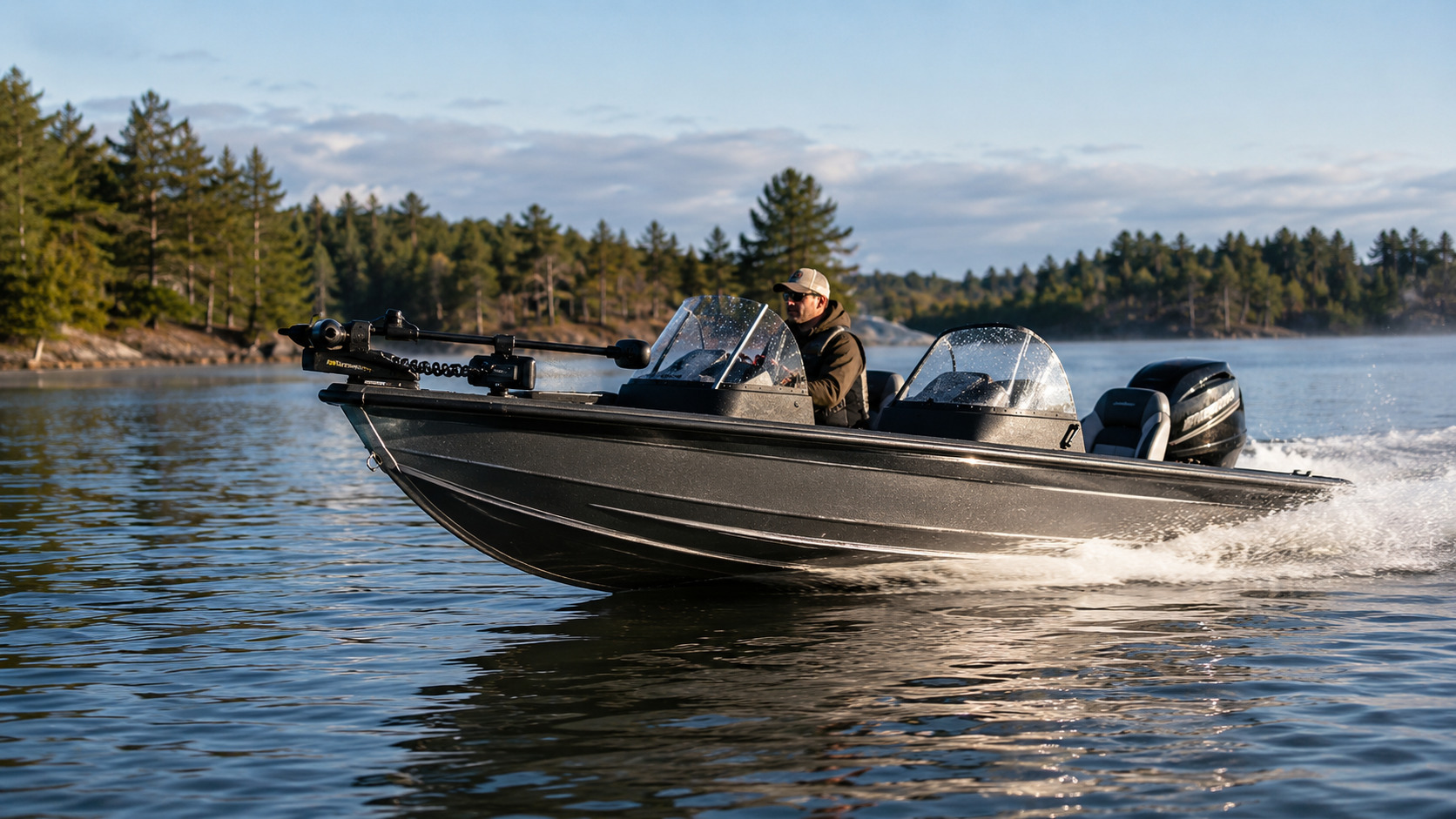
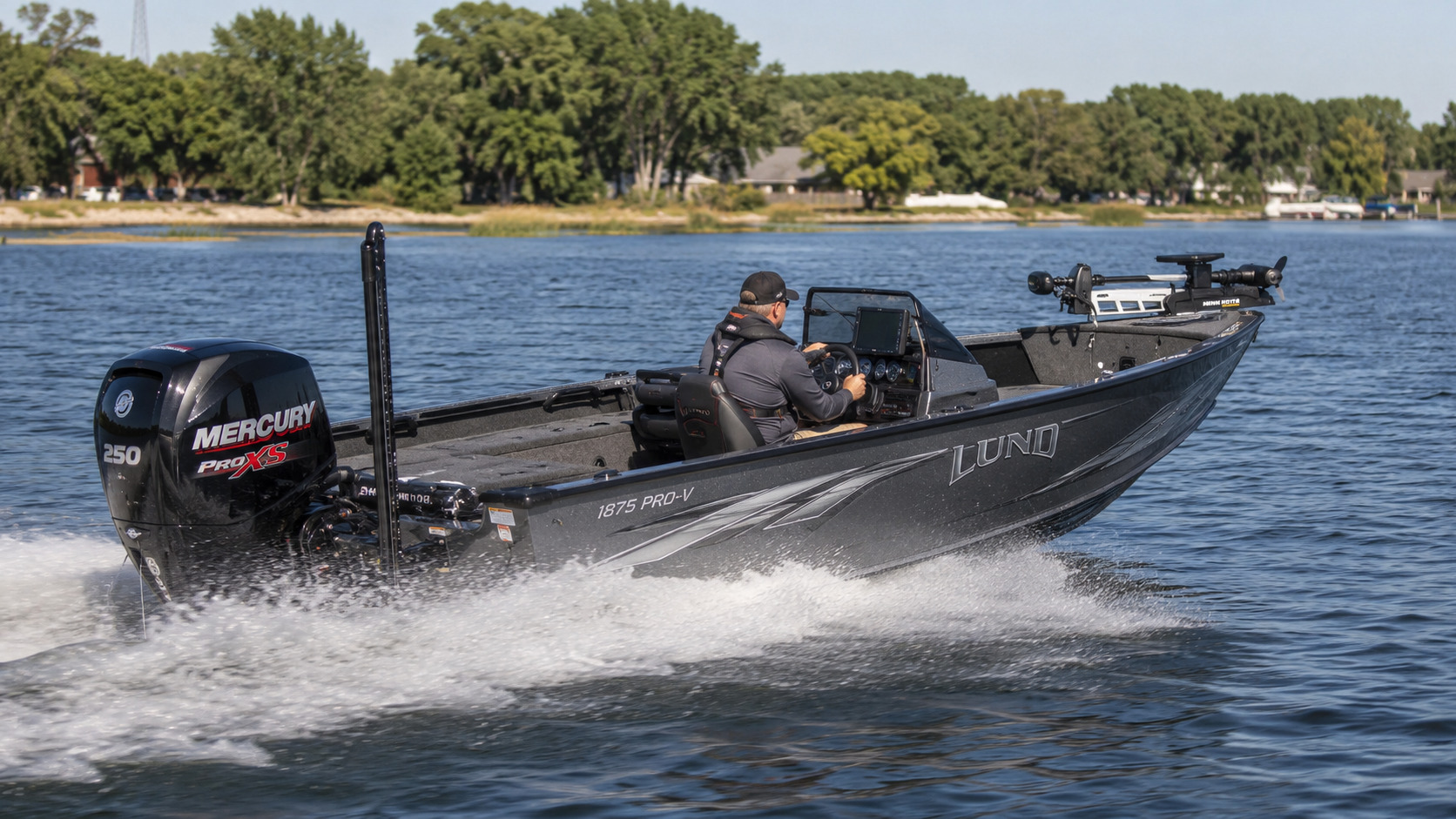
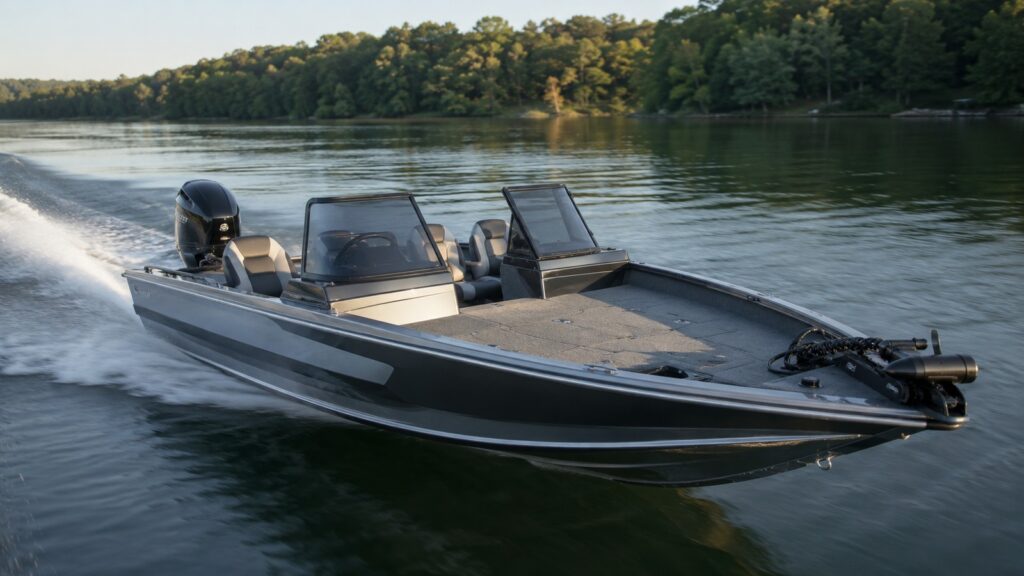
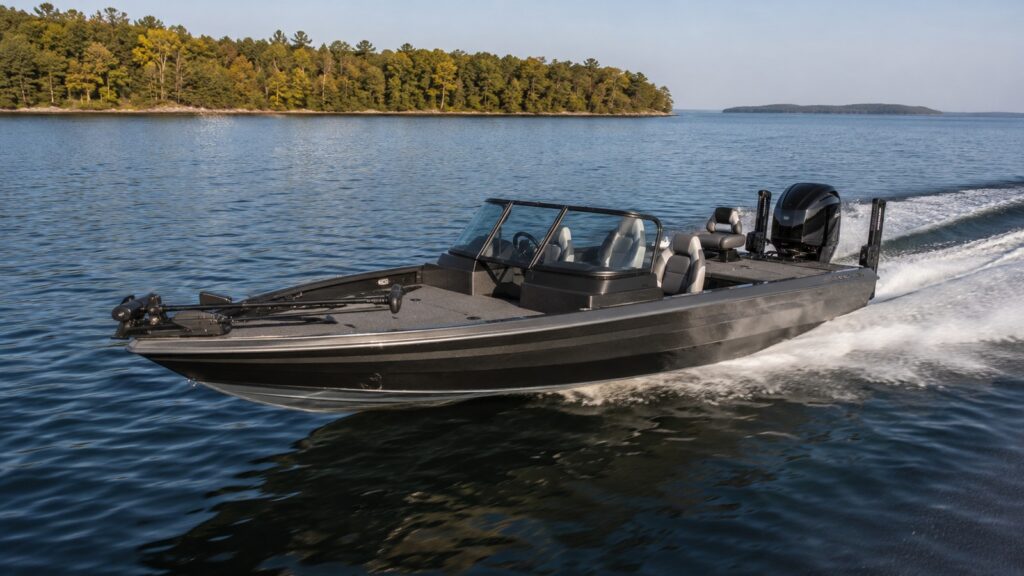
Low, fast and all business from the casting deck back. The bass boat exists to win the morning: first to the spot, highest on the deck, quietest on the trolling motor.
Bass boats are speed and platform in one shape: a pad hull that runs shallow and fast, twin casting decks that put anglers above the water, rod lockers measured in feet, and livewells built to keep a limit healthy until the scales.
Lund brought its aluminum pedigree to the format with the Pro-V Bass XS, trading a little top speed against glass rivals for durability, towing weight and the resale curve aluminum enjoys. The Renegade lines bring the layout down to club budgets.
Tow light, launch anywhere, fish all day on one tank: the format earns its devotion.
Illustration only and not an offer of credit. Your actual rate and term depend on credit profile, vessel age, loan amount and ownership structure.
Buying Smart
Buy the right bass boat the first time
Who It Fits
Who needs a bass boat
Buy a bass boat if tournaments, club nights or bass obsession structure your season. Nothing fishes a shoreline faster or more precisely.
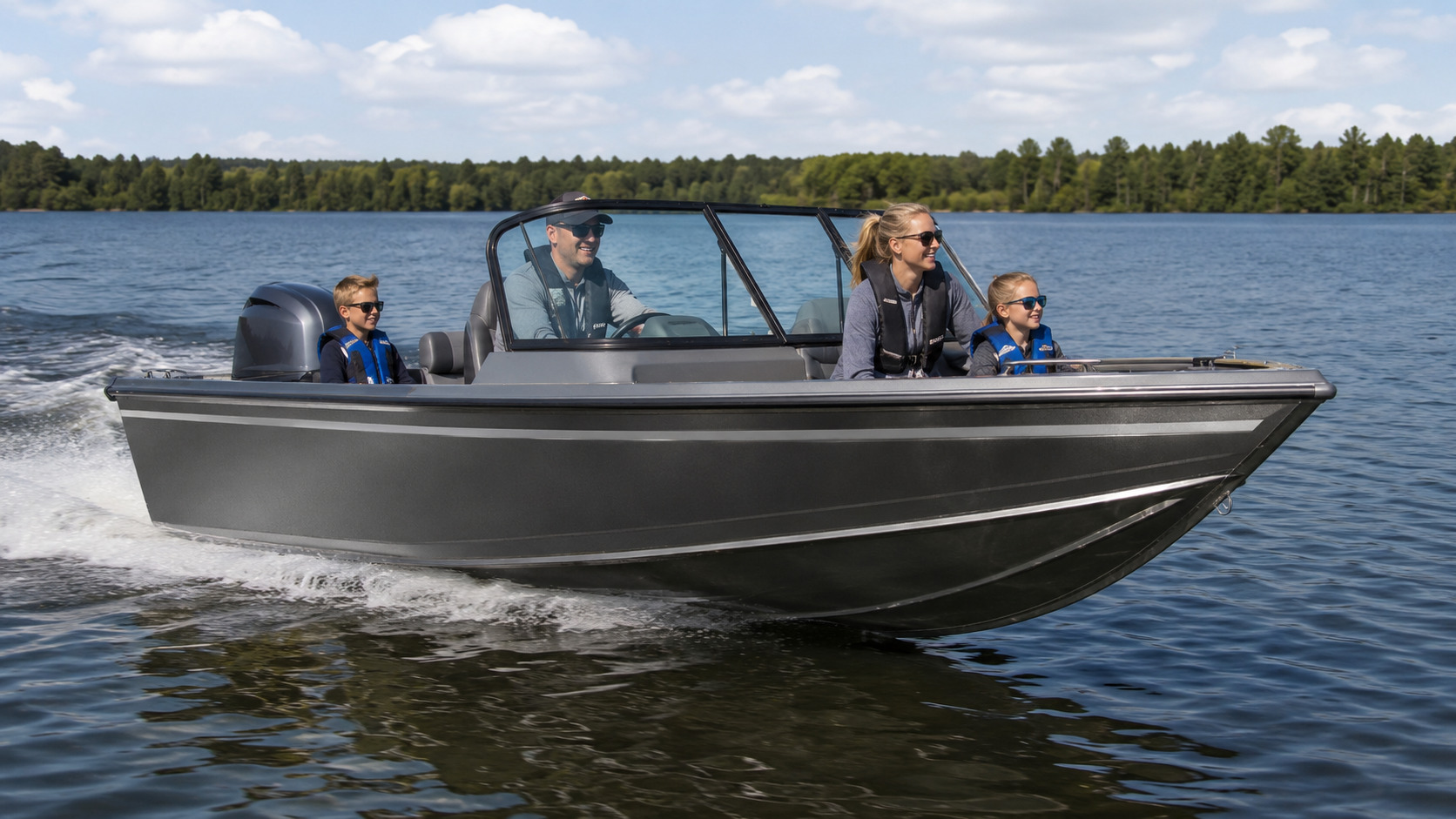
If the family boards every weekend, a fish and ski or crossover line keeps the peace. The casting decks here are gloriously selfish by design.
If the family keeps boarding, the fish and ski crossovers keep the casting decks and add the tube. Pure utility budgets start at the jon boats.
Price Reality
What bass boats really cost
Club ready aluminum starts in the twenties, and loaded Pro-V Bass XS rigs with big outboards, electronics walls and tandem trailers push toward ninety. Glass tournament money runs higher still, which keeps aluminum the value story.
Electronics packages move bass boat value like engines move console value. The model ranges here price rigs as fished, not as stripped.
Buying Used
Used rigs and electronics math
Used bass boats are electronics time capsules: last generation graphs discount a boat faster than hull hours do. That makes two season old rigs the smartest money in the format.
Check the pad for rock rash, the transom for flex, and the trolling motor mount for fatigue. Then let the model range set the ceiling.
Finance the right bass boat
Get pre-approved before you shop bass boats
Tell us the boat, or just the budget. A Float Finance specialist comes back with real numbers on new, dealer and private-party bass boats, so you walk into the sea trial knowing exactly what you can spend.
New, dealer and private-party boats
Free warranty coverage on qualifying boats
A budget in hand before the sea trial
No obligation, and checking your options does not affect your credit score.
Glass wins raw pace and big lake ride. Aluminum wins weight, durability, price and resale. For most anglers outside the touring ranks, the Pro-V Bass XS argument is hard to beat.
Loaded aluminum rigs run comfortably into the fifties and sixties. The format is about time on spots, not the speedometer, but the pad hull makes the run part enjoyable.
Buy the maximum rating or one step below it. Bass hulls are designed around their max power, and resale punishes underpowered examples disproportionately.