
Call Us : 207-994-5109
Mon – Fri: 8 am to 9 pm & Sat – Sun: 10 am to 8 pm
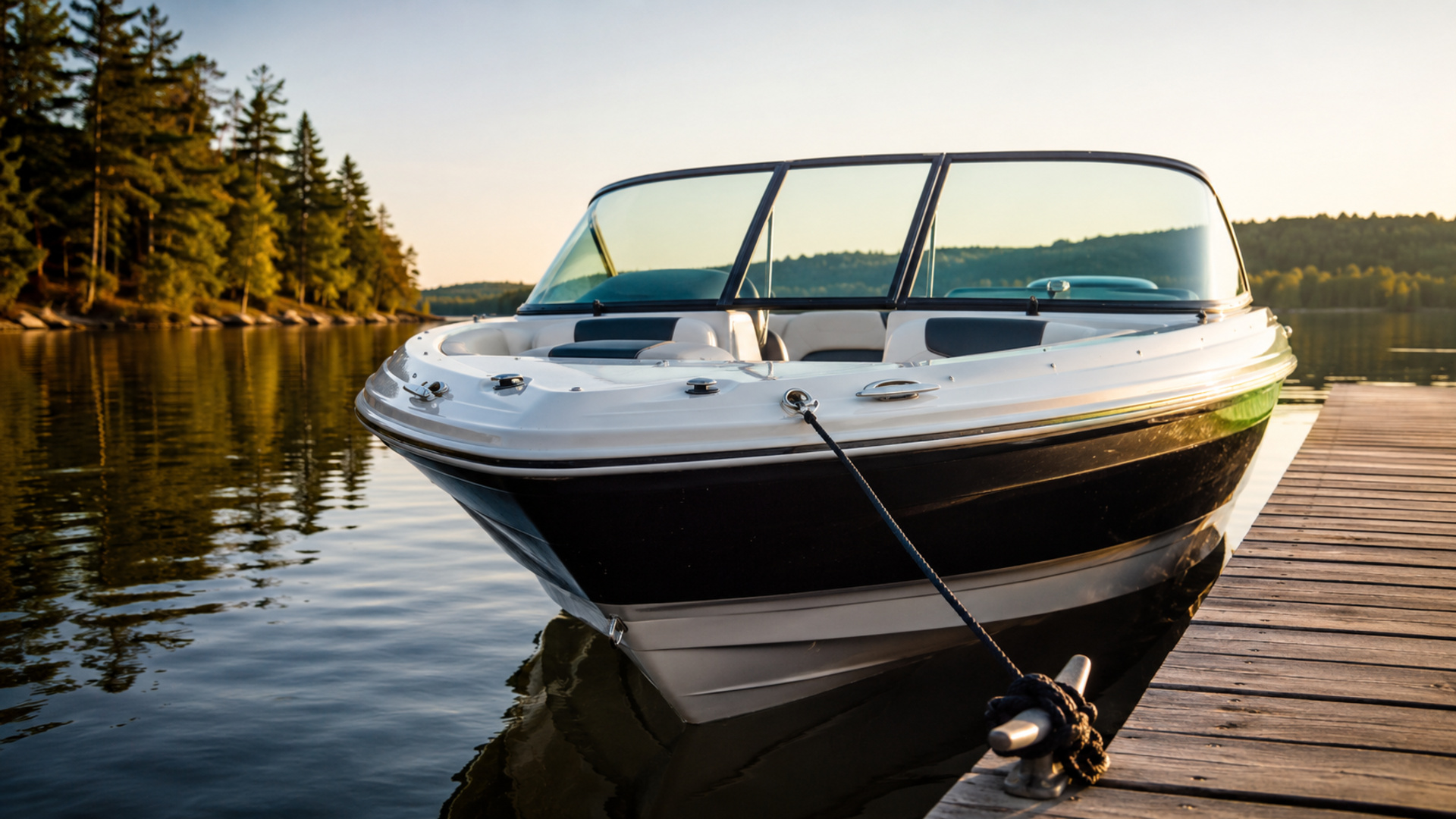
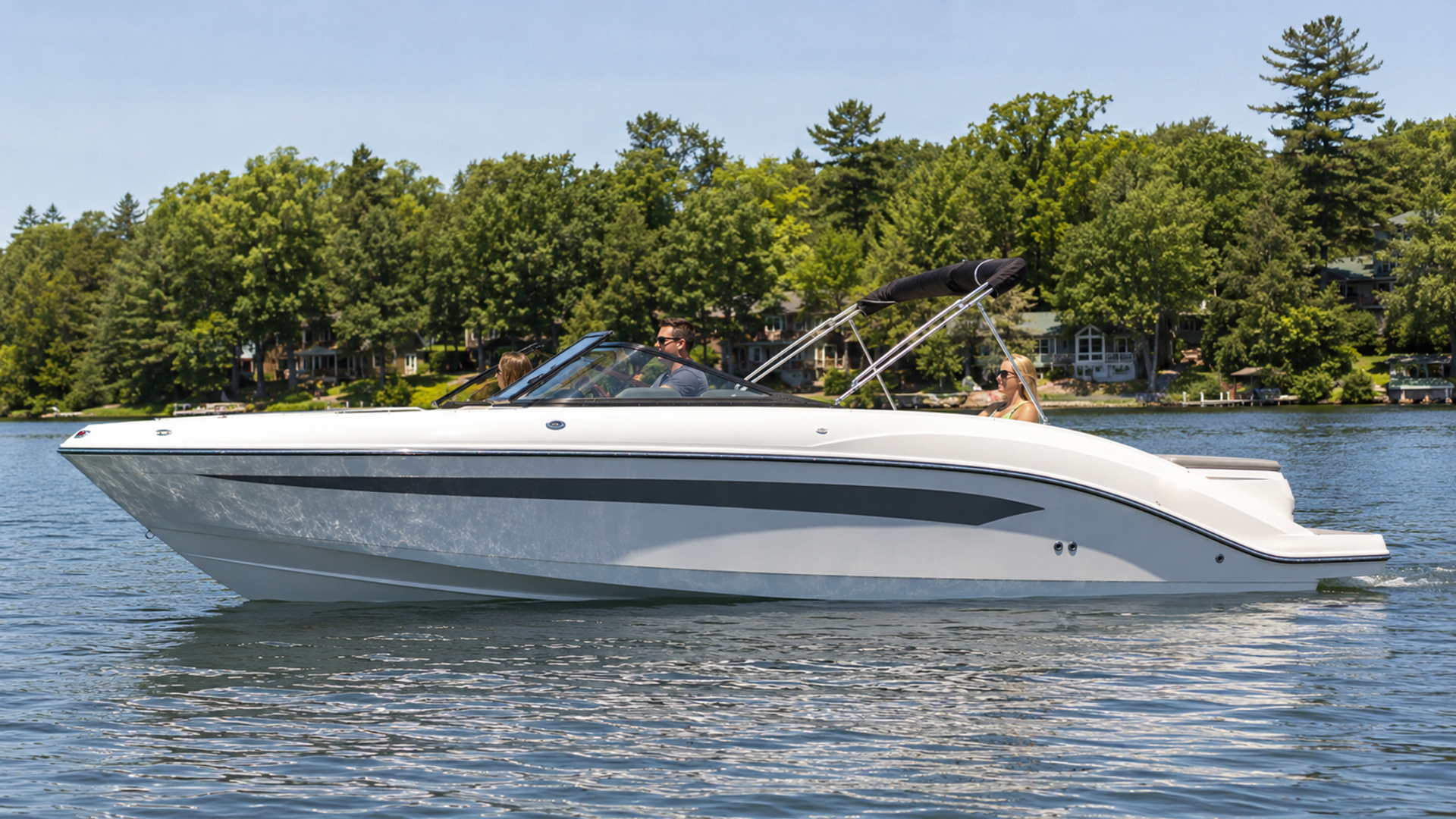
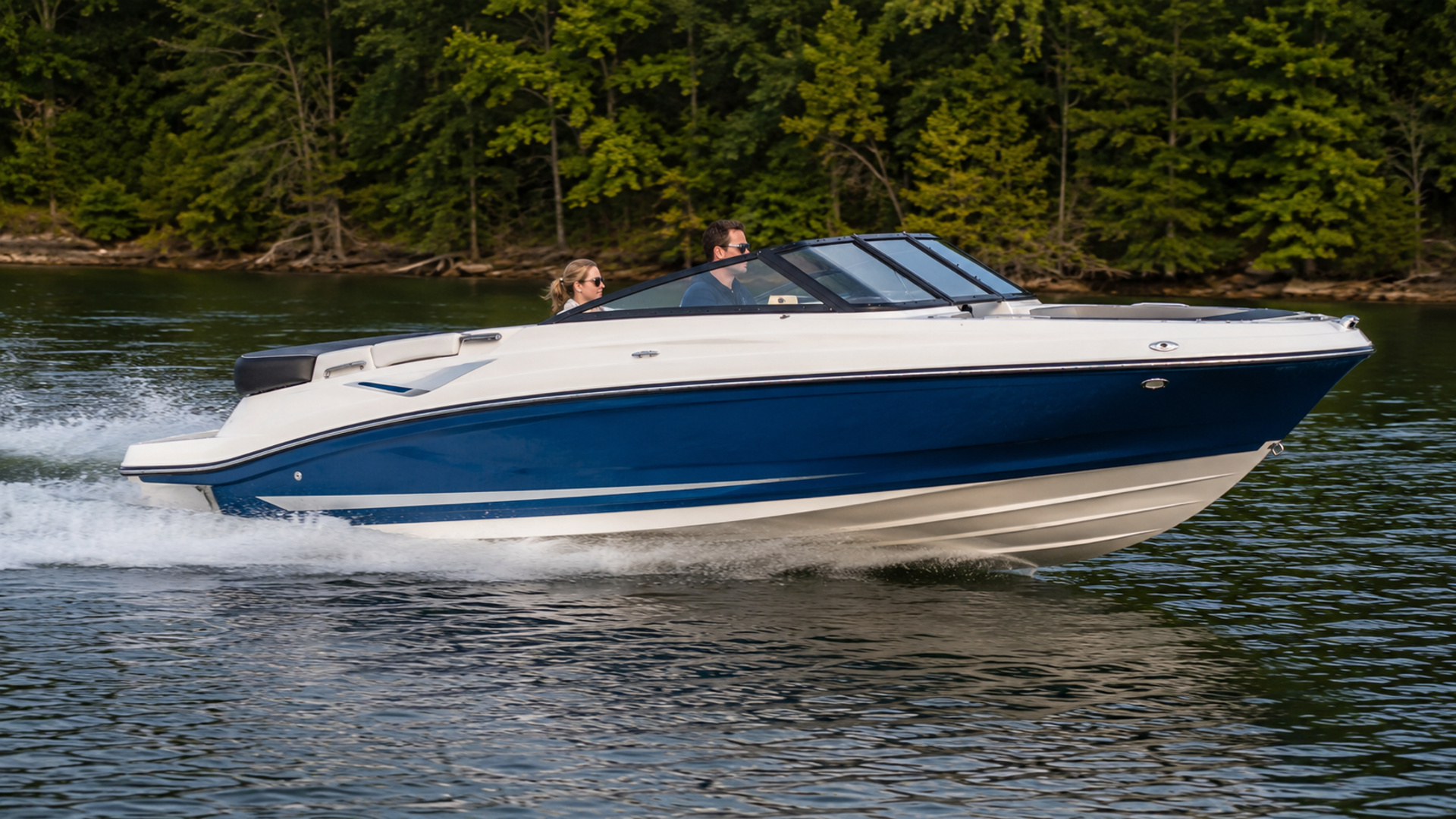
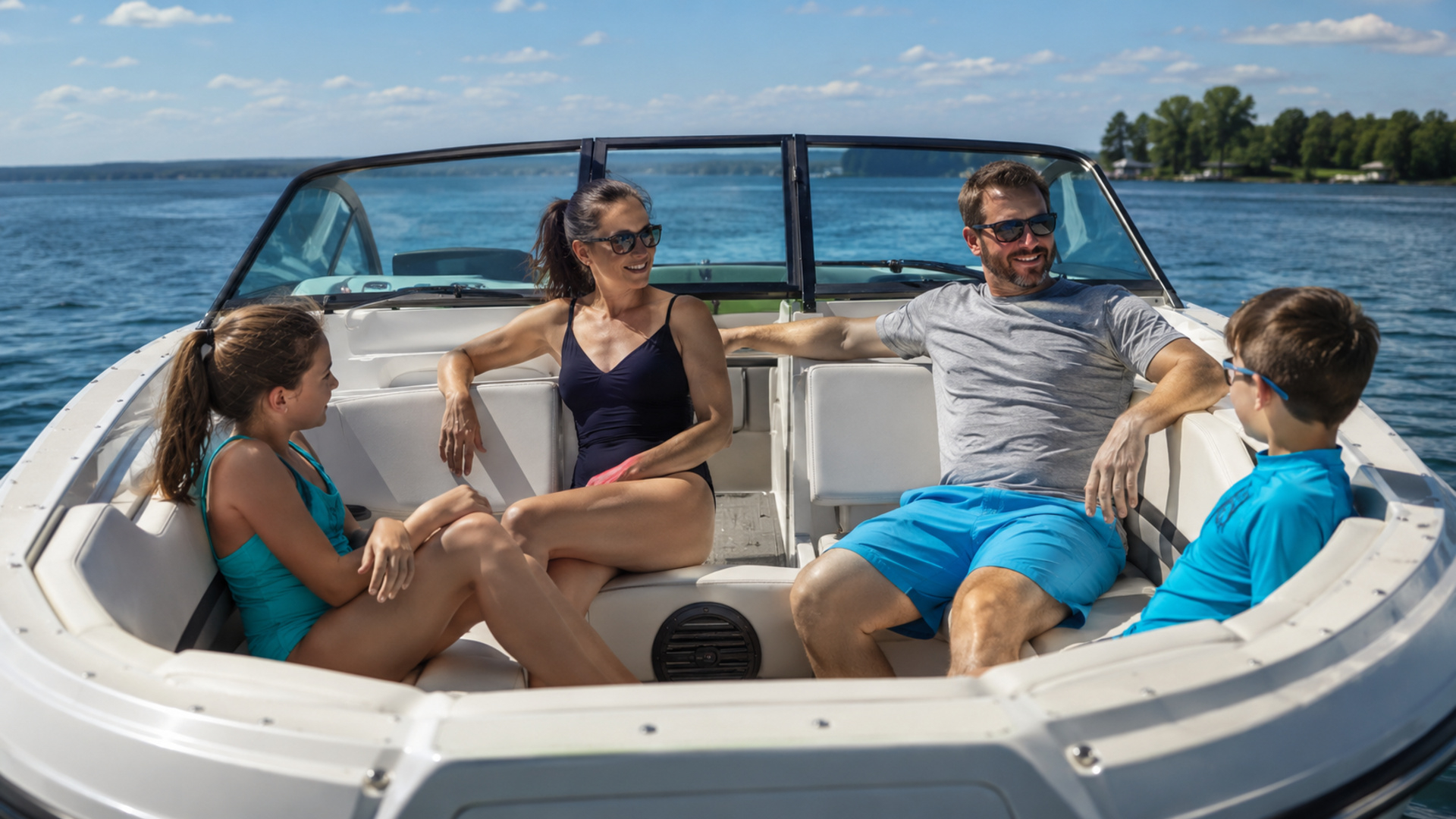
The Bayliner VR5 Bowrider is the mid-size sterndrive VR for buyers who want an eight-person cockpit, 200 to 250 HP MerCruiser power, and a clear integrated stern.
The VR5 Bowrider is the point where Bayliner’s sterndrive VR formula becomes large enough to handle a real family without automatically pushing the owner into VR6 towing and storage.
At 20 feet 7 inches, the boat sits between the compact VR4 and the 22-foot-7-inch VR6.
Bayliner gives the VR5 Bowrider an 8-foot beam, 20 degrees of deadrise, a 33-gallon tank, and capacity for eight people.
Standard power is 200 horsepower from a MerCruiser 4.5L MPI, with 250 horsepower available.
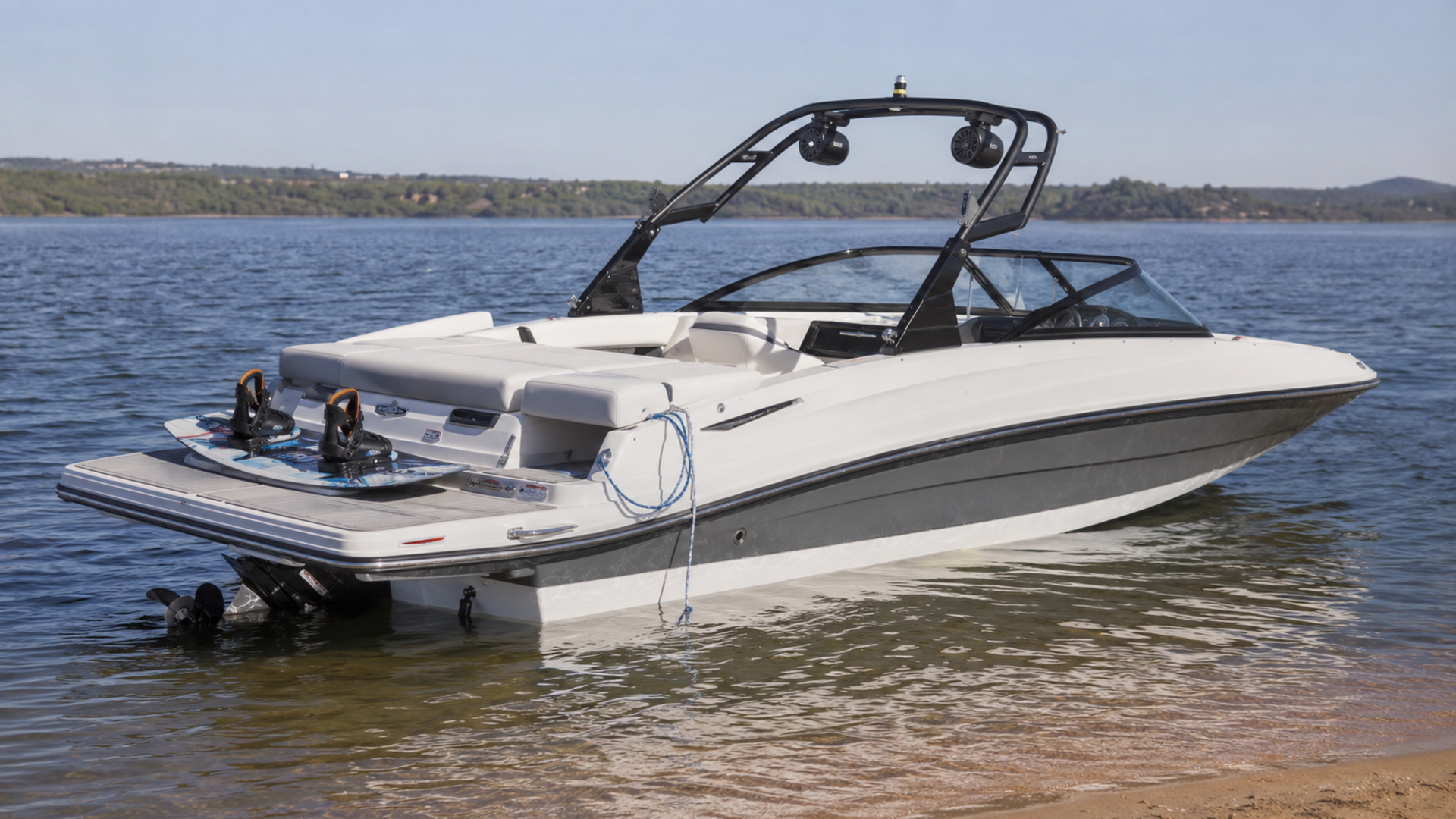
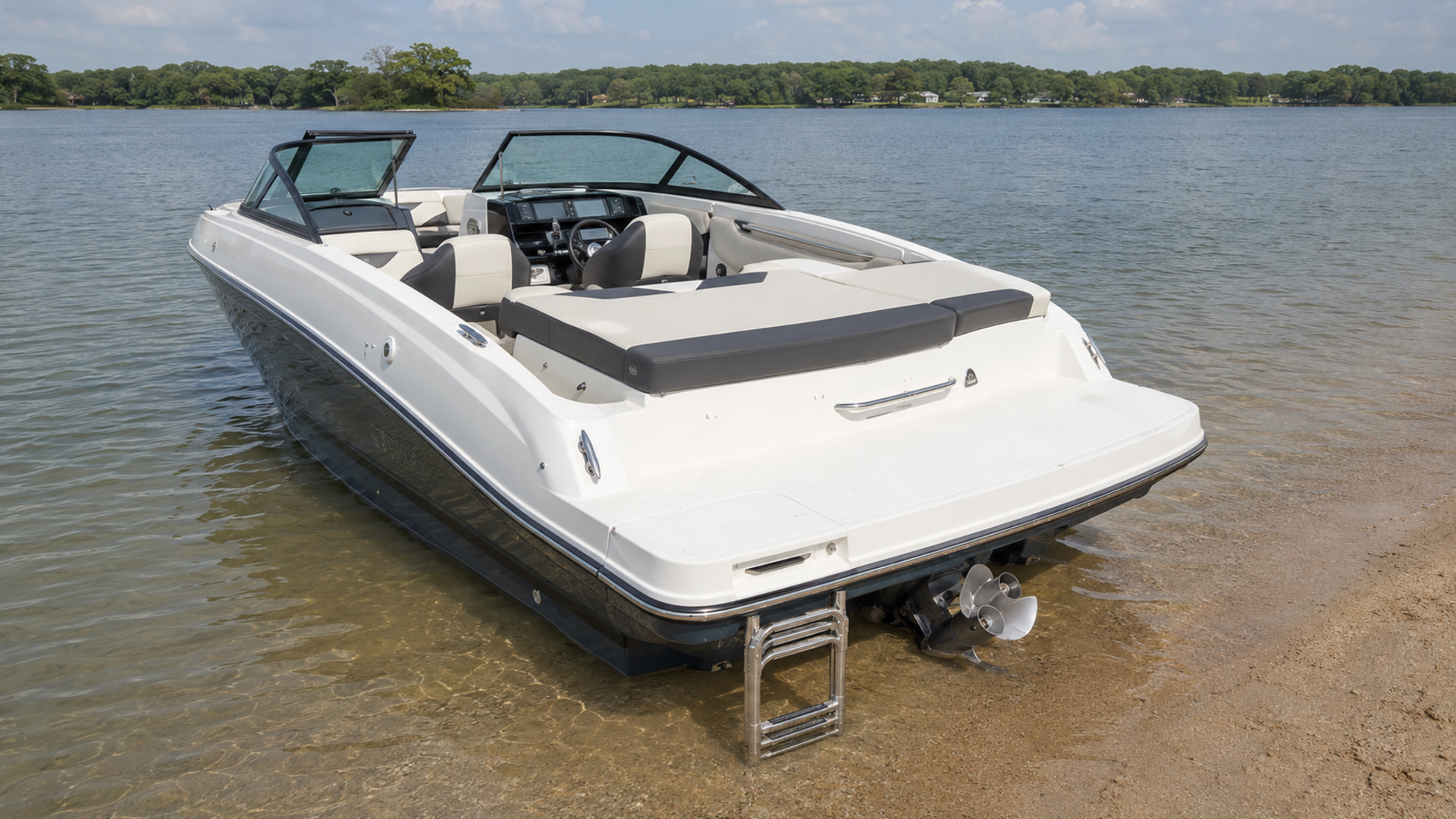
The propulsion choice defines the boat. Hiding the engine beneath the aft deck leaves the central swim platform open and lets the cockpit use AftAdvantage without building the rear seating around an outboard cowling.
That clean stern becomes more useful on the VR5 than on the VR4 because the larger cockpit can support a full family while still leaving dedicated swimming and watersports space.
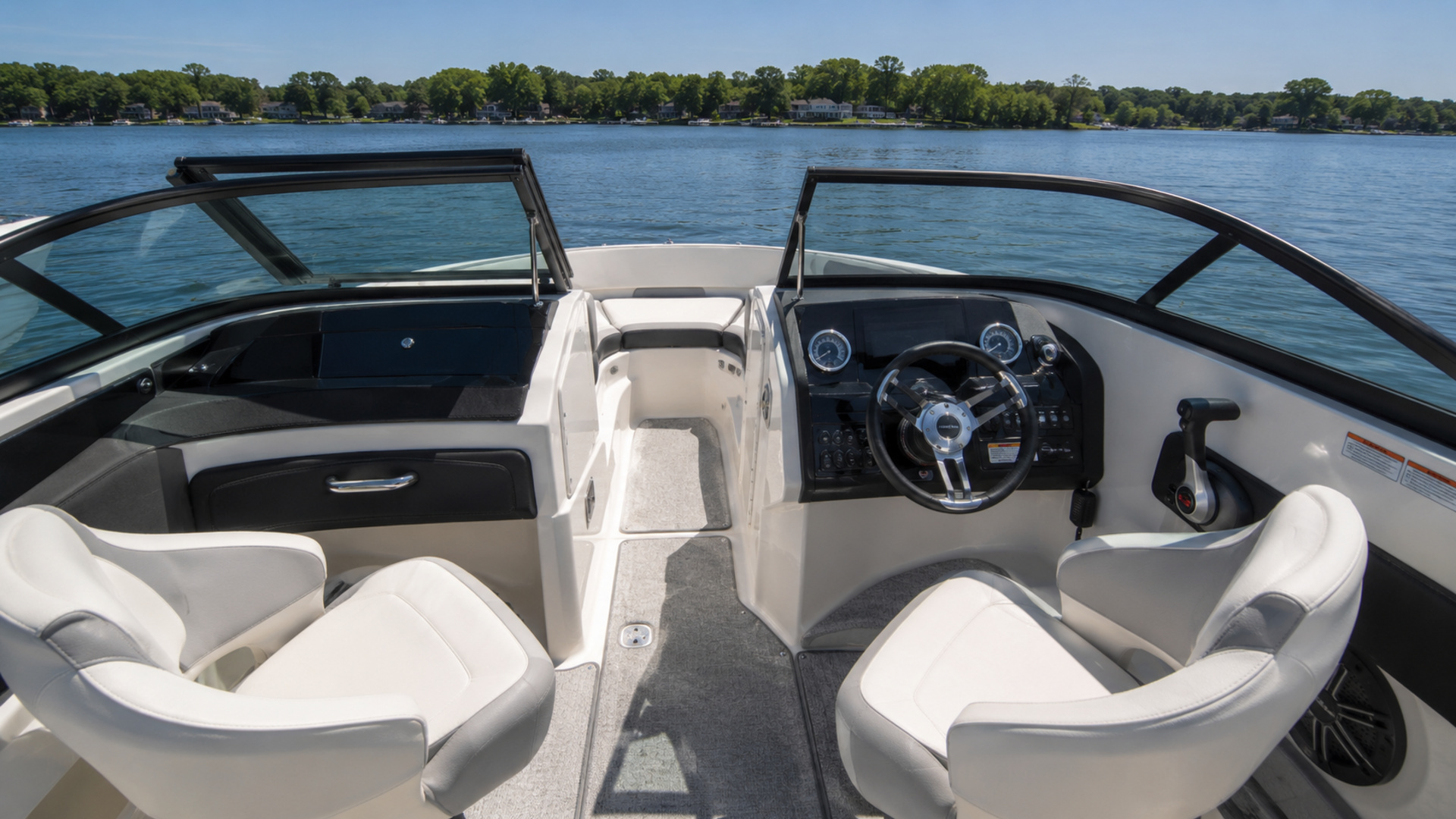
The helm chair swivels, the integrated cooler has a permanent location, and in-floor storage removes long tow gear from passenger circulation.
The boat also carries BeamForward into a hull with a full eight-foot beam. Adults can use the forward seating without the compressed feel of a narrower compact bowrider.
The used market is mature enough that age matters. Current listings span 2016 through 2025, so a buyer may be comparing a nearly decade-old sterndrive with a late-model boat.
That changes the buying conversation. Service history, winterization, upholstery, trailer condition, and previous storage become as important as engine size.
The VR5 Bowrider carries one fewer person than the referenced VR5 Outboard specification. If nine-person capacity is more important than a clear transom, the Outboard has an immediate practical advantage.
The Bowrider answers with available 250 horsepower. Families that tow frequently or run with a heavier crew may consider that performance reserve worth more than the extra passenger position.
The current Bowrider market also carries a higher average asking price than the Outboard on this hull. That does not mean every sterndrive is worth more. Year, engine, options, and condition still drive individual value.
Buy the VR5 Bowrider when the 20-foot hull is the right size and you want a traditional integrated stern strongly enough to maintain the I/O that creates it.
If you prefer a Mercury you can see and service from the transom, or if nine-person capacity matters more than 250 horsepower, leave this page and shop the VR5 Outboard.
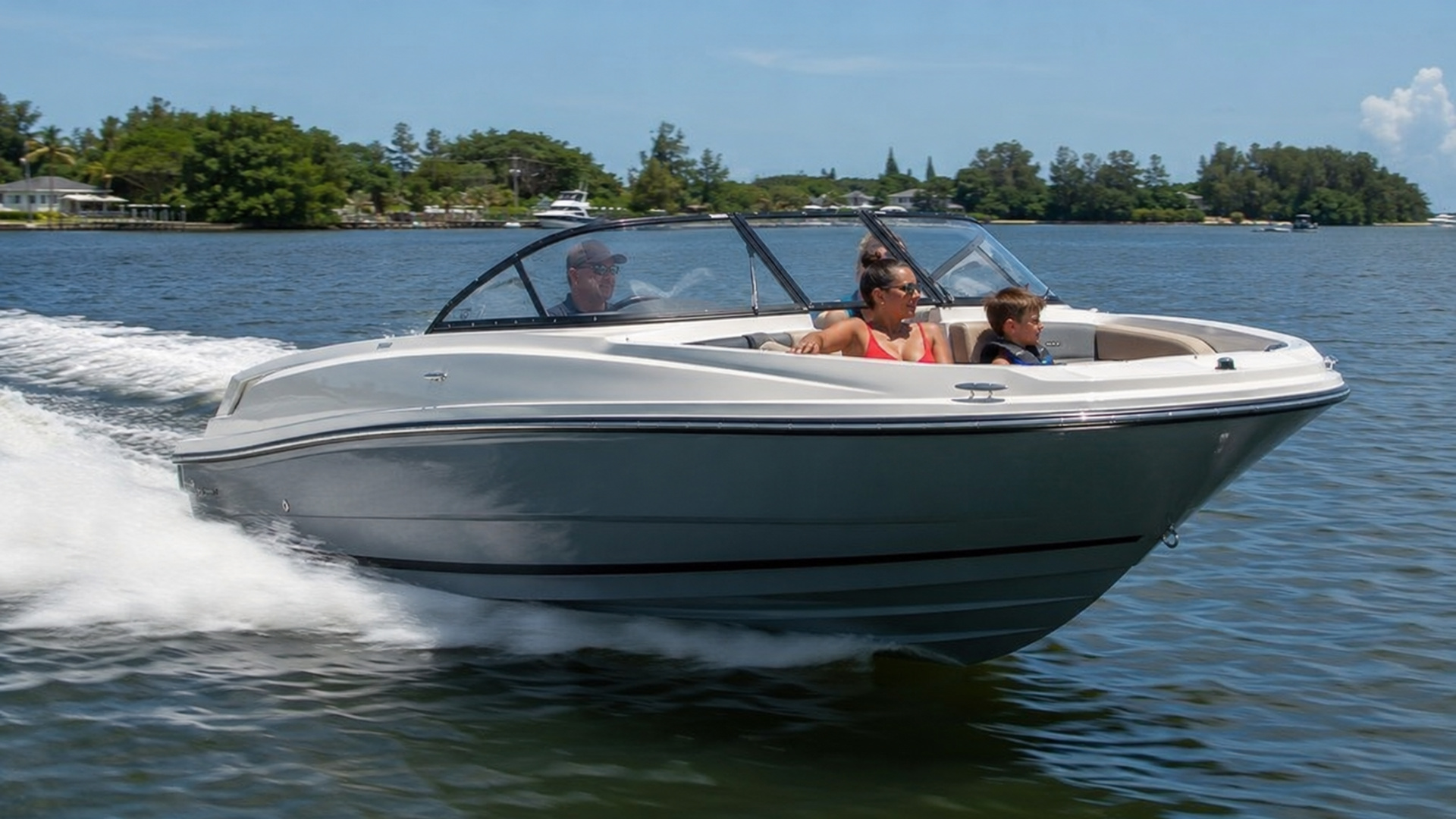
Published factory figures. Confirm every dimension against the individual boat before you commit.
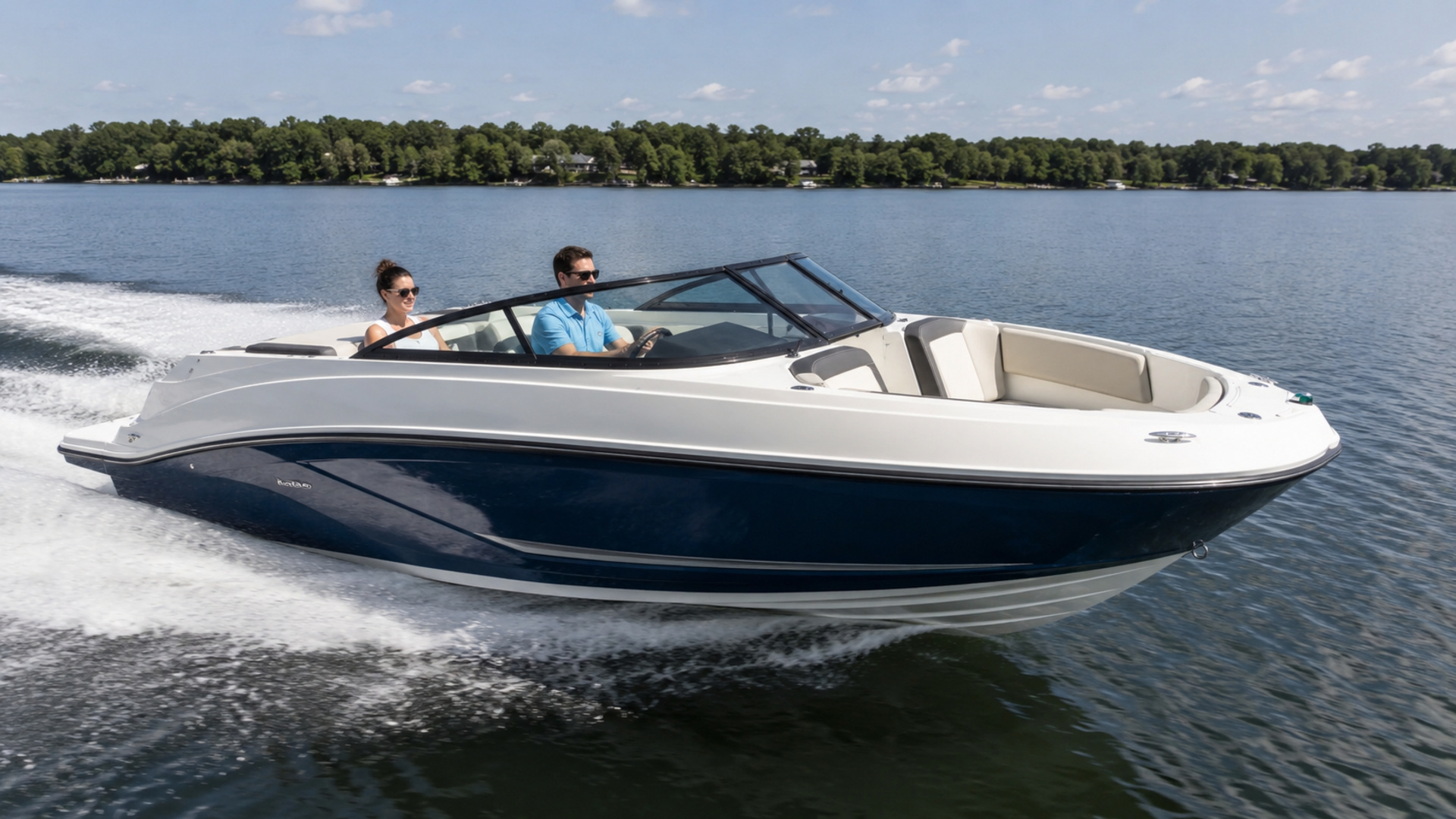
The VR5 Bowrider measures 20 feet 7 inches overall with an 8-foot beam and 20 degrees of deadrise.
Bayliner publishes an estimated draft of 2 feet 8 inches in the referenced U.S. material, but it does not separately identify a maximum draft.
Approximate weight with standard engine is 3,342 pounds. Bayliner also publishes roughly 4,095 pounds with trailer for the referenced VR5 configuration.
The eight-foot beam is a useful middle ground. It is wider than the VR4 without using the full 8-foot-6-inch beam found on many larger family boats.
BeamForward carries that width farther toward the bow. The result is more adult-capable forward seating and more useful under-seat storage.
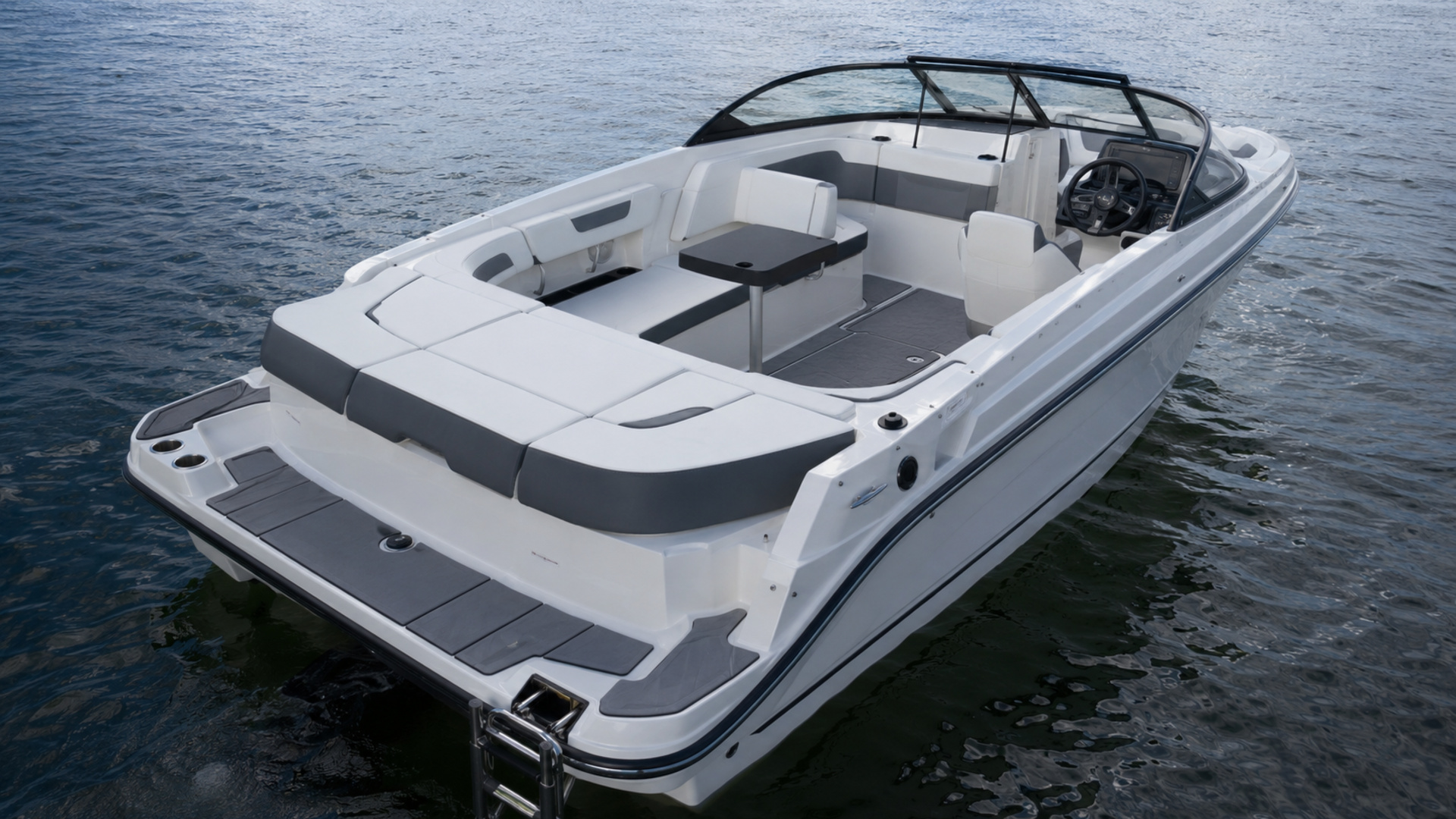
AftAdvantage does the opposite job at the stern. Bayliner moves seating to the aft edge of the running surface and positions the platform beyond it.
That geometry is especially effective on the Bowrider because the engine does not occupy the center of the transom.
Twenty degrees of deadrise gives the VR5 slightly more V than the VR4. The difference is small by itself, but the combination of additional length and steeper bottom can make the boat feel more settled across common lake wakes.
The 33-gallon tank is unchanged from the VR4. Buyers gain hull length, beam, passenger space, and available horsepower without gaining more fuel capacity.
Storage length is listed at 21 feet 2 inches. That is one of the model’s strongest practical numbers because it keeps the VR5 surprisingly compact at home.
The referenced trailer package has been published around 4,095 pounds before family gear and a full fuel load are included.
A buyer stepping up from a VR4 should therefore think about tow vehicle, brakes, and storage before being won over by cockpit room.
The hull earns its premium when the VR4 actually feels cramped. If five people fit comfortably in the smaller boat, the VR5’s additional size should have a job beyond looking better at the dock.
For many families, this is the sweet spot. It delivers enough physical separation between bow, helm, cockpit, and stern without the 25-foot storage length associated with the VR6.
The VR5 Bowrider uses the familiar MerCruiser 4.5L MPI and Alpha One sterndrive combination.
Standard power is 200 horsepower, and Bayliner offers 250.
Unlike the VR4 Bowrider, the VR5 gives the buyer a meaningful horsepower choice.
The 200 is appropriate for ordinary cruising with a moderate crew. It already gives the boat far more power than the 115-horsepower base engine used by the VR5 Outboard.
The 250 becomes more attractive when the boat will spend weekends loaded or pulling riders.
Eight people, 33 gallons of fuel, a cooler, and tow gear can ask much more of a 20-foot boat than an empty dealer demonstration suggests.
The Bowrider’s I/O packaging keeps that horsepower below the aft seating. The payoff is a clear transom.
The cost is access and maintenance. Every used-boat mechanical inspection begins in the engine compartment rather than at an exposed cowling.
Current listings reach back to 2016. Older boats may now have many years of bellows movement, gimbal wear, winterization cycles, and drive service behind them.
Ask when the bellows were inspected. Ask whether the gimbal bearing has required attention.
Review drive-lubricant service and cooling maintenance. Look for written records rather than relying on a seller remembering what happened six seasons ago.
Open the engine compartment before the trial. Check for corrosion, fluid residue, standing water, deteriorated hoses, and wiring that has been modified.
After the trial, open it again. Fresh leaks or water that were not visible beforehand can become obvious.
At the Alpha One, inspect the propeller and skeg. A family bowrider spends enough time around shallow ramps and sandbars that impact damage is common enough to look for directly.
The 250-horsepower configuration can command attention in the used market, but a documented 200 is a better purchase than a neglected 250.
The VR5 Outboard is the honest alternative if this maintenance profile feels excessive. It gives up 100 horsepower at the top of the range but keeps the Mercury in plain sight.
Choose the Bowrider because you want the clear stern and stronger performance enough to maintain the mechanical system properly.
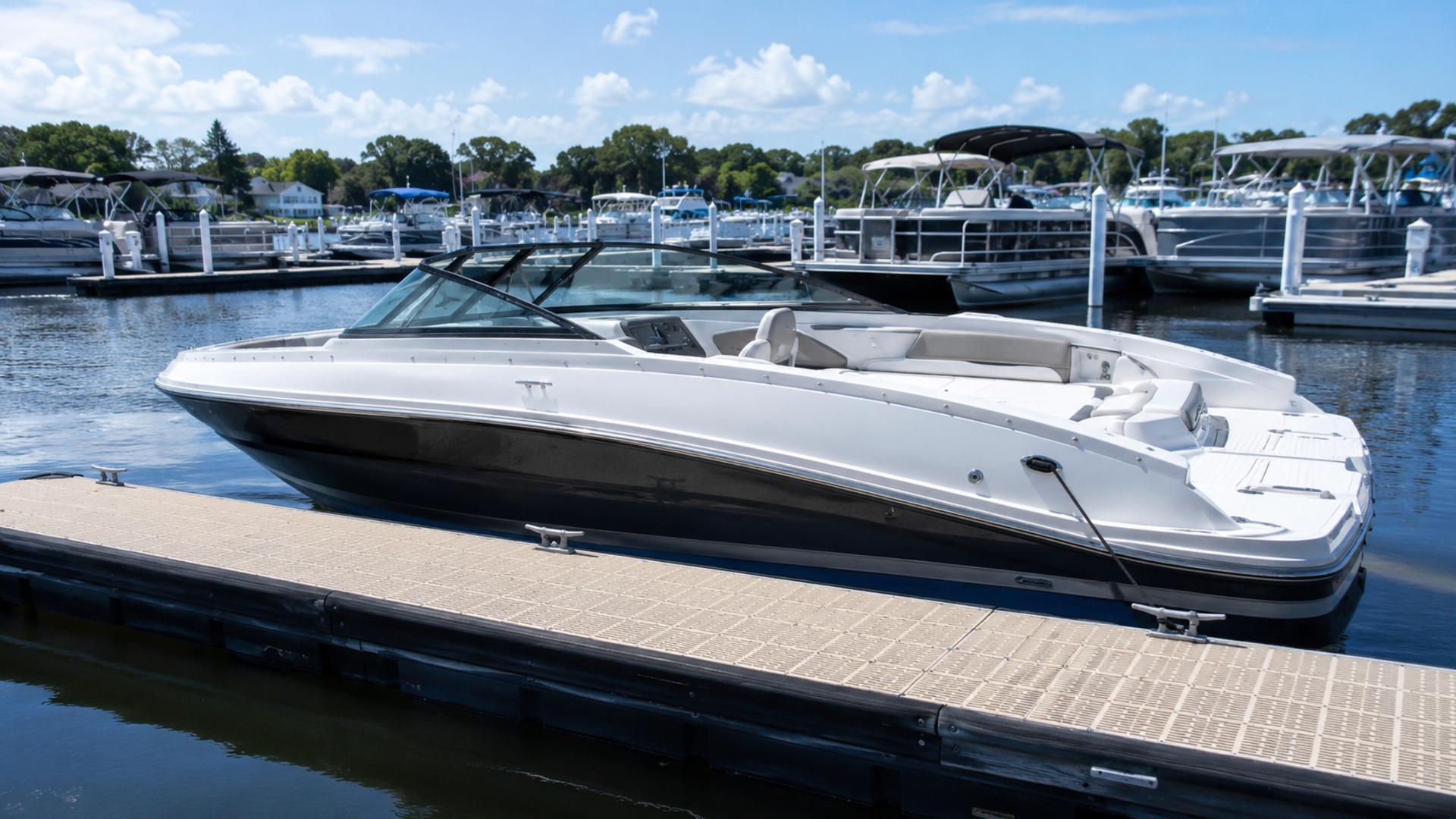
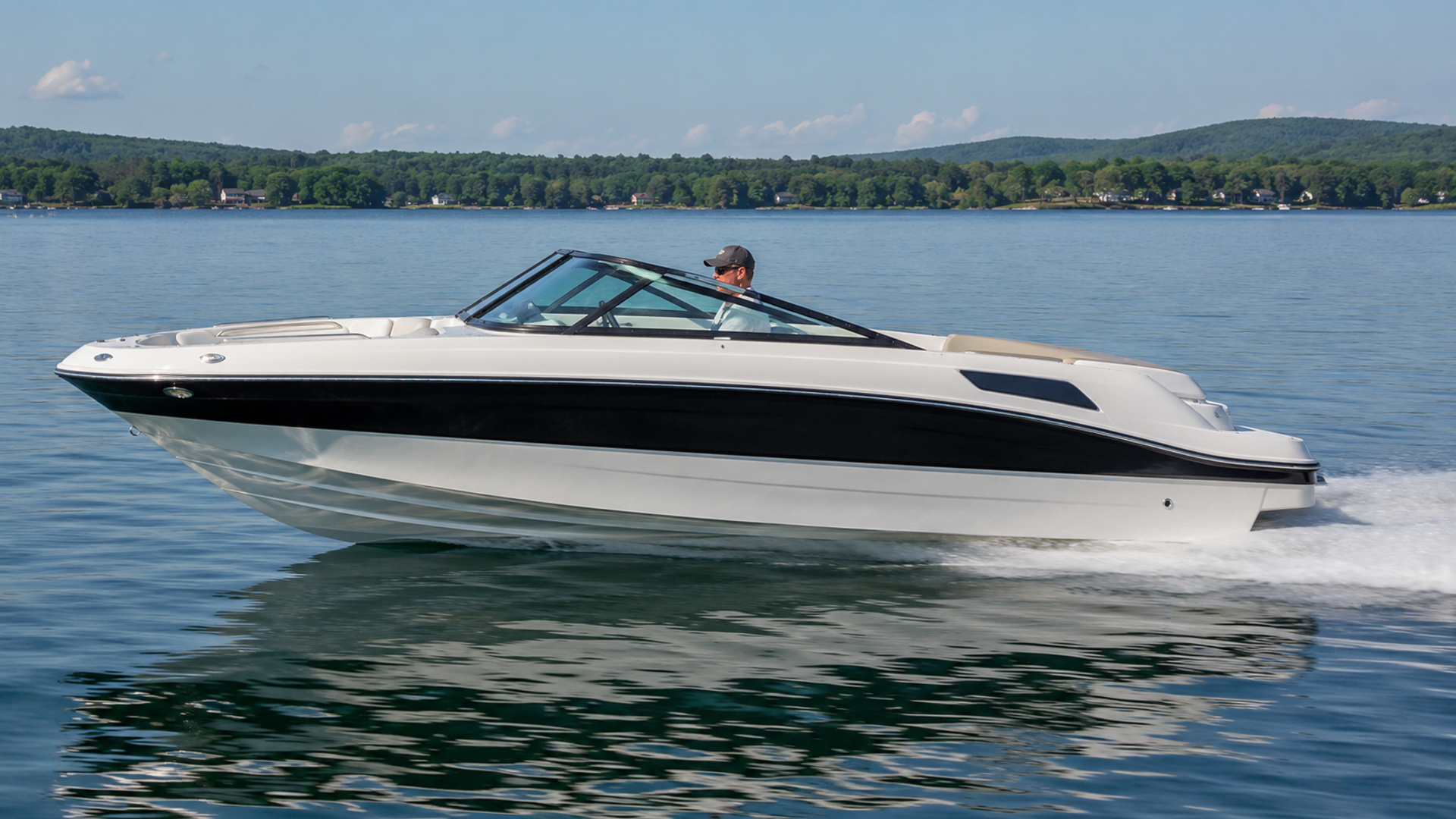
The VR5 Bowrider carries 33 gallons of fuel.
That is the same capacity Bayliner gives the smaller VR4, even though the VR5 is longer, wider, and available with 250 horsepower.
For most lake and protected-water families, the tank can still support a full recreational day because the engine is rarely running every minute.
A family may cruise twenty minutes, anchor for lunch, swim for two hours, tow for another hour, and return without treating the day like a range exercise.
Heavy watersports use changes consumption quickly. Repeated acceleration with several people aboard can make the same 33 gallons feel much smaller.
The 200-horsepower and 250-horsepower engines should not be assumed to burn the same amount at every operating point.
Bayliner does not publish one current universal gallons-per-hour figure for the VR5 Bowrider. Use verified engine-specific information or the boat’s instrumentation.
Used boats add another variable. Propeller changes, bottom condition, engine tune, and added tower equipment can move real-world efficiency away from original test data.
A full tank also adds roughly two hundred pounds to the trailer package. That belongs in towing calculations.
The VR5 Outboard carries the same 33 gallons, so tank size does not decide the drive choice.
The outboard may return different fuel behavior because it uses 115 or 150 horsepower and a different powertrain.
The Bowrider buyer should focus first on whether the integrated stern and stronger loaded performance are worth the ownership profile.
If long-distance cruising is a priority, the 33-gallon tank deserves more scrutiny because the VR5 is designed as an active day boat rather than a range-focused cruiser.
A buyer planning unfamiliar river routes should map fuel availability before assuming a 20-foot family boat has unlimited operating radius.
The VR5 Bowrider’s performance advantage is the ability to pair a mid-size hull with 250 horsepower.
That additional reserve is valuable when six or eight people are aboard, not simply when the driver wants to see a higher top-speed number.
A 200-horsepower VR5 can be an excellent fit for a family that mostly cruises and carries a lighter crew.
The sea trial should decide whether the 250 is necessary.
Ask the dealer or seller to avoid testing only with an empty boat. Passenger weight can materially change the transition onto plane.
Watch bow rise. The driver should retain a comfortable view ahead as speed builds.
Try the boat at the cruising pace you expect to use most. A strong family configuration should feel relaxed there, not like it is constantly asking for more throttle.
The 20-degree deadrise gives the hull a balanced recreational bottom. Cross ordinary wakes from several angles and note how the extra hull length compares with a VR4.
Listen to the Alpha One throughout the rpm range. Vibration can reveal a damaged propeller or drive concern before it becomes obvious visually.
Operate trim in small changes. The boat should respond predictably rather than requiring constant wheel correction.
At idle, practice reverse and neutral transitions. Sterndrive steering has its own low-speed behavior that new owners should understand.
If the 200 feels completely adequate under your real load, spend the difference elsewhere.
If the 250 changes the boat from merely adequate to effortless with your crew, the larger engine can be a smart long-term choice.
The VR5 Outboard should still be tested if 150 horsepower sounds sufficient. It preserves the same hull while simplifying propulsion ownership.
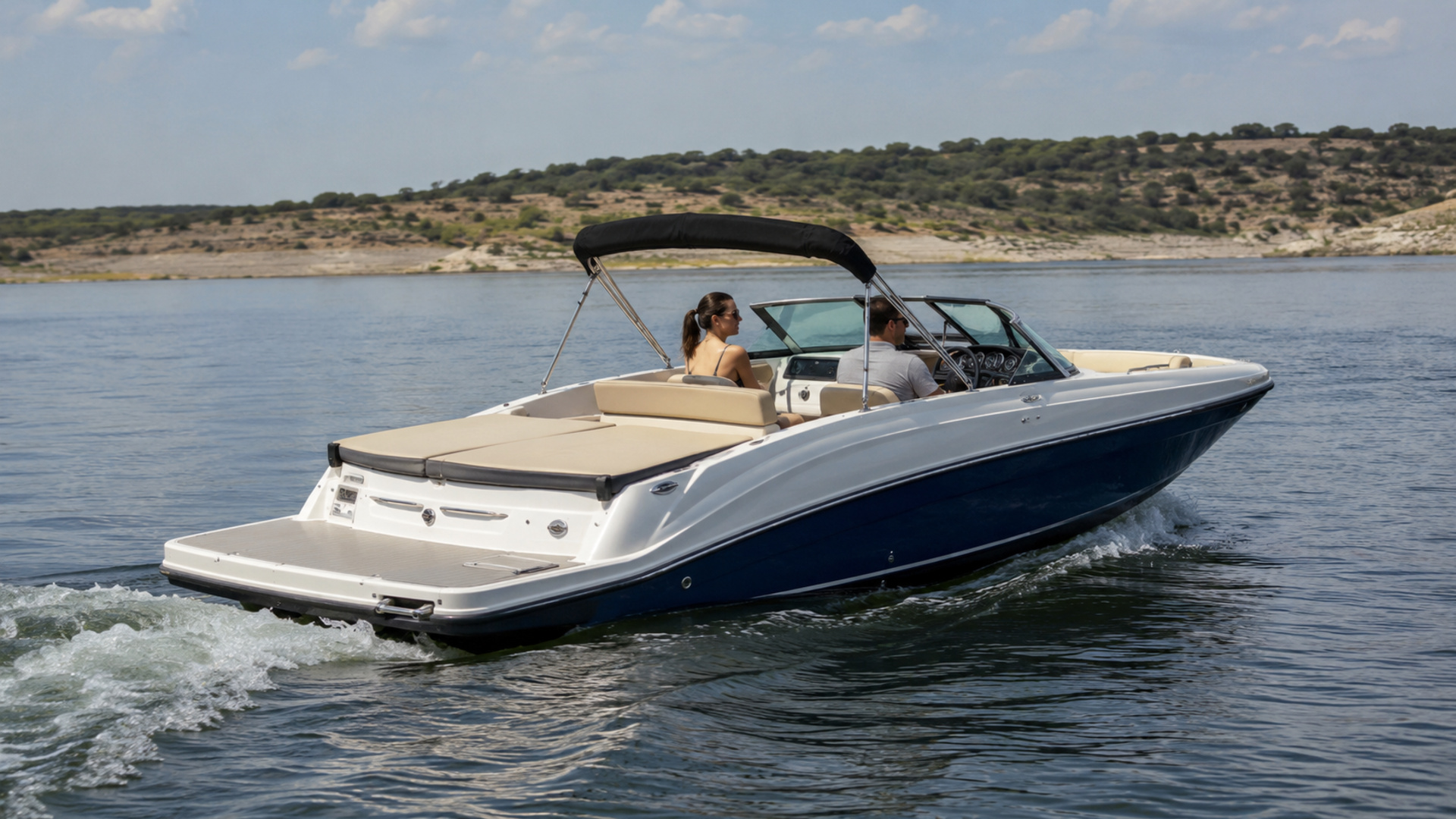
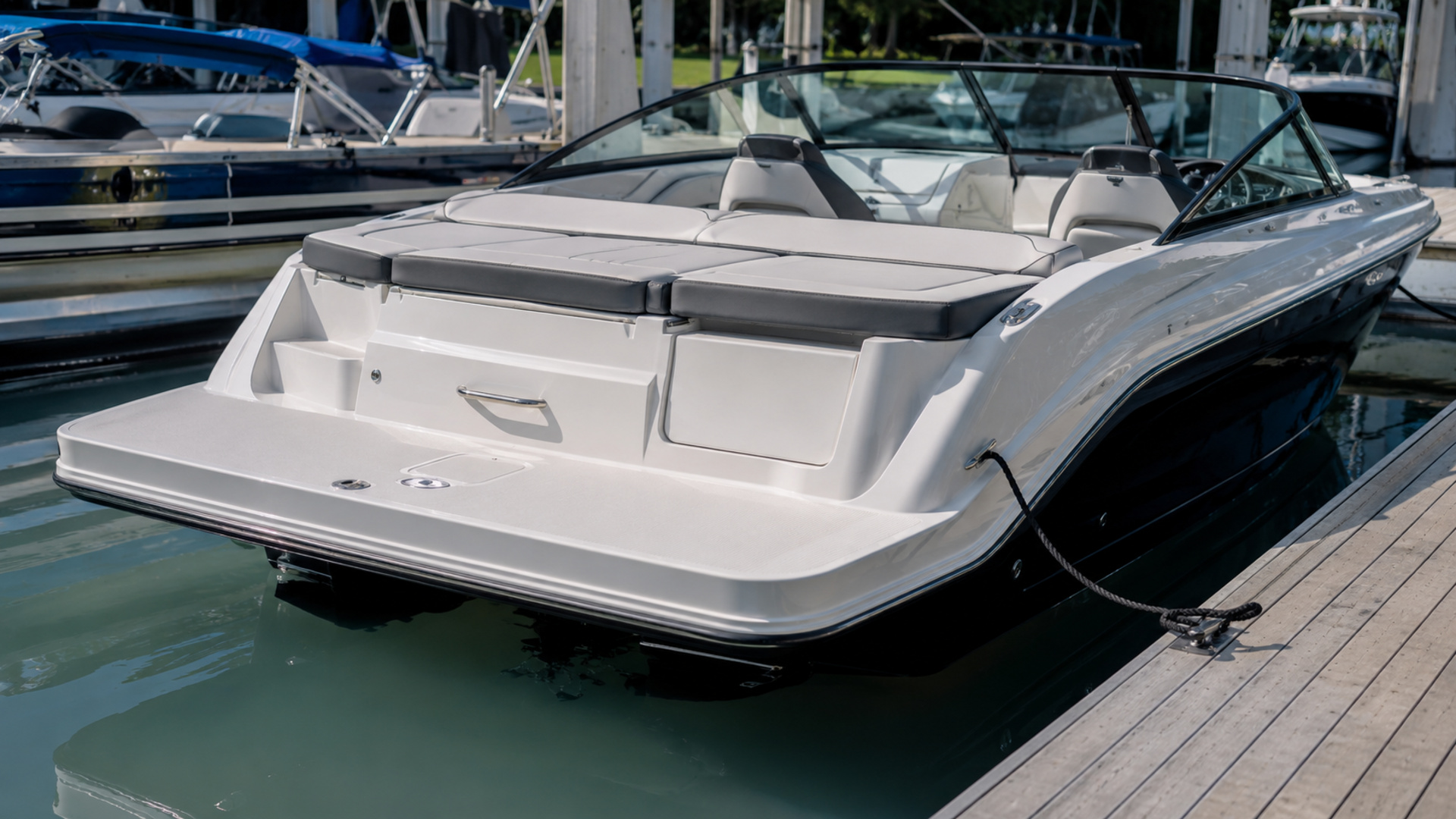
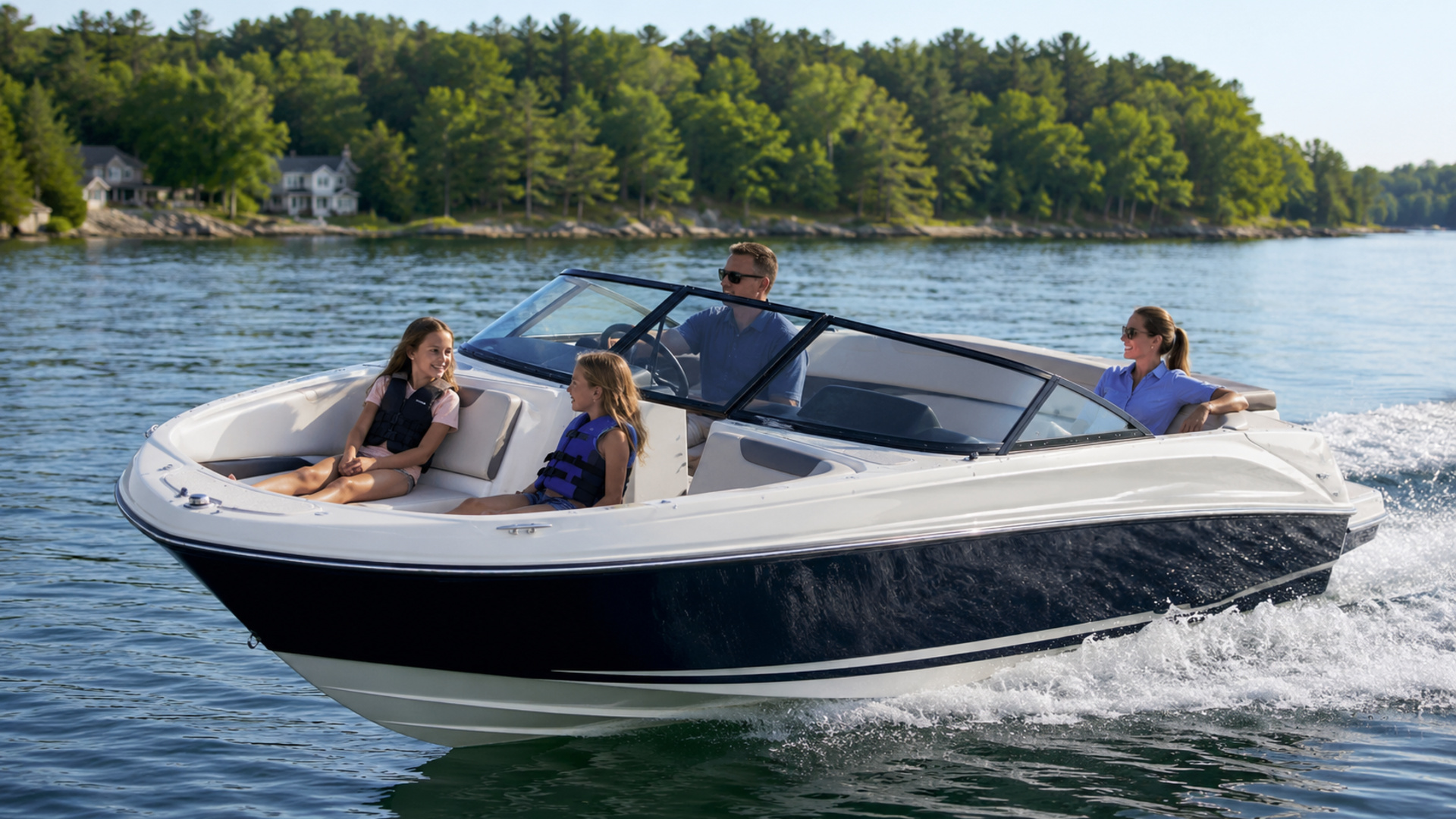
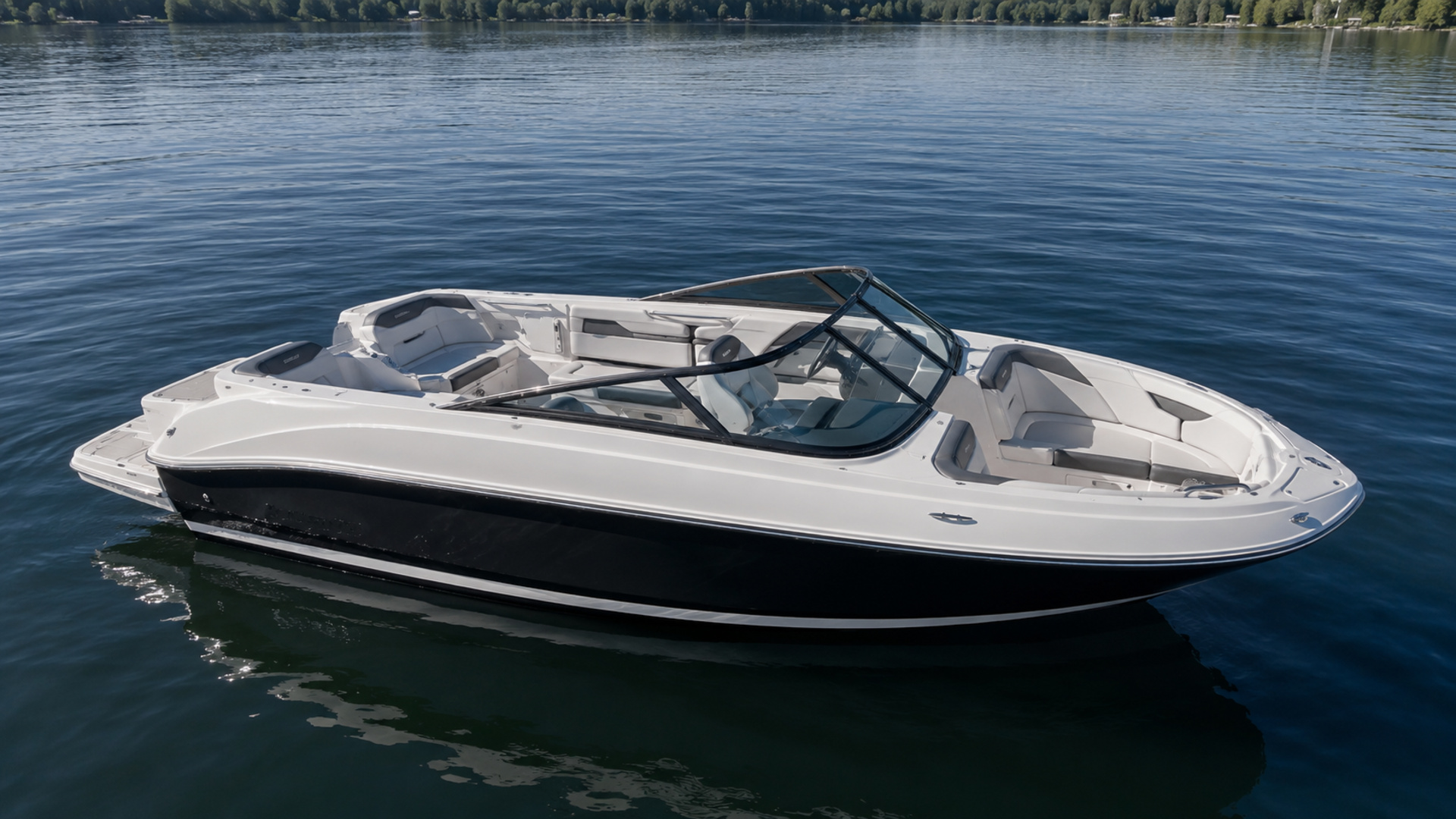
The VR5 Bowrider takes BeamForward and AftAdvantage into a hull long enough that bow, cockpit, and stern feel like separate usable zones.
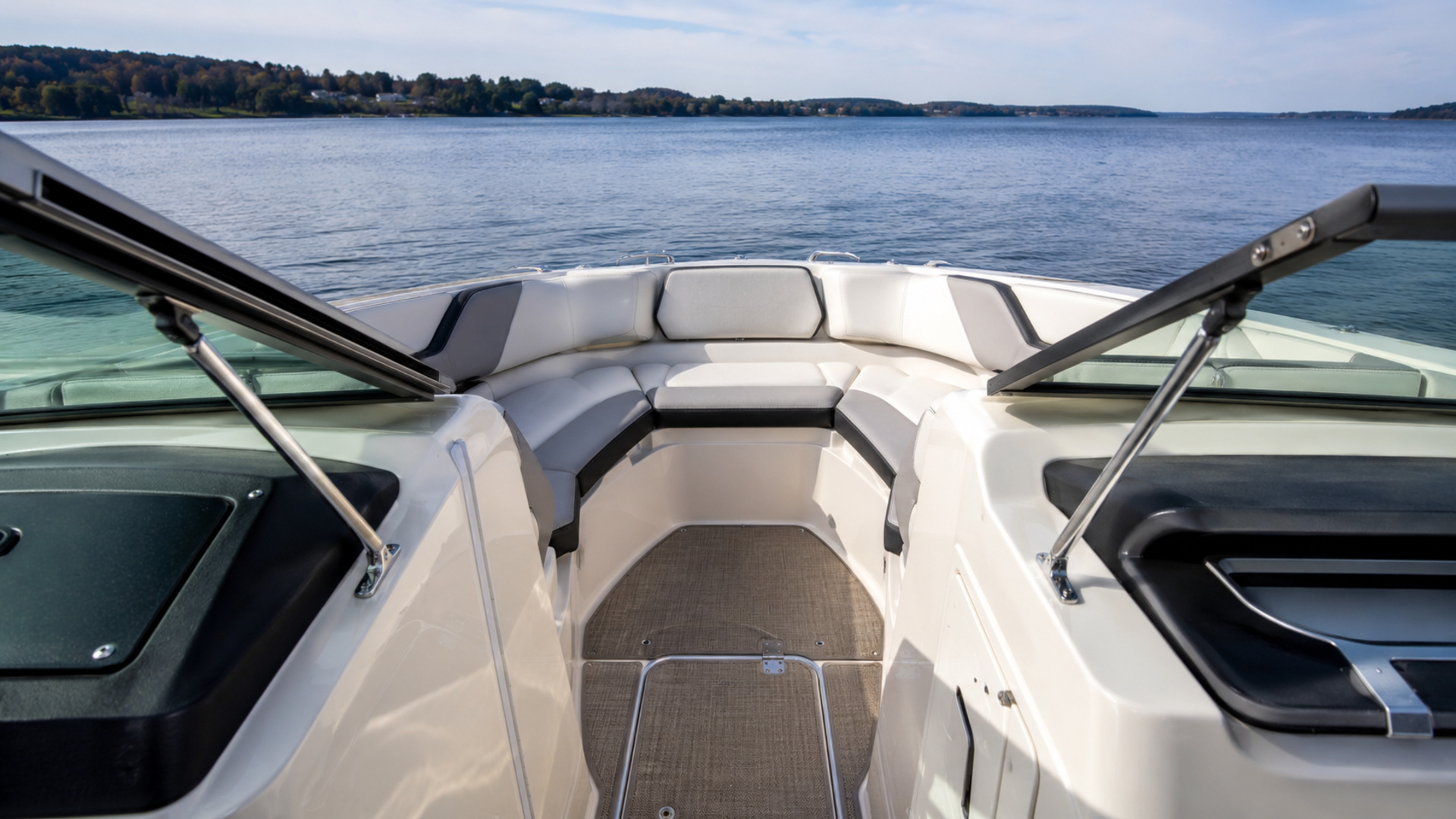
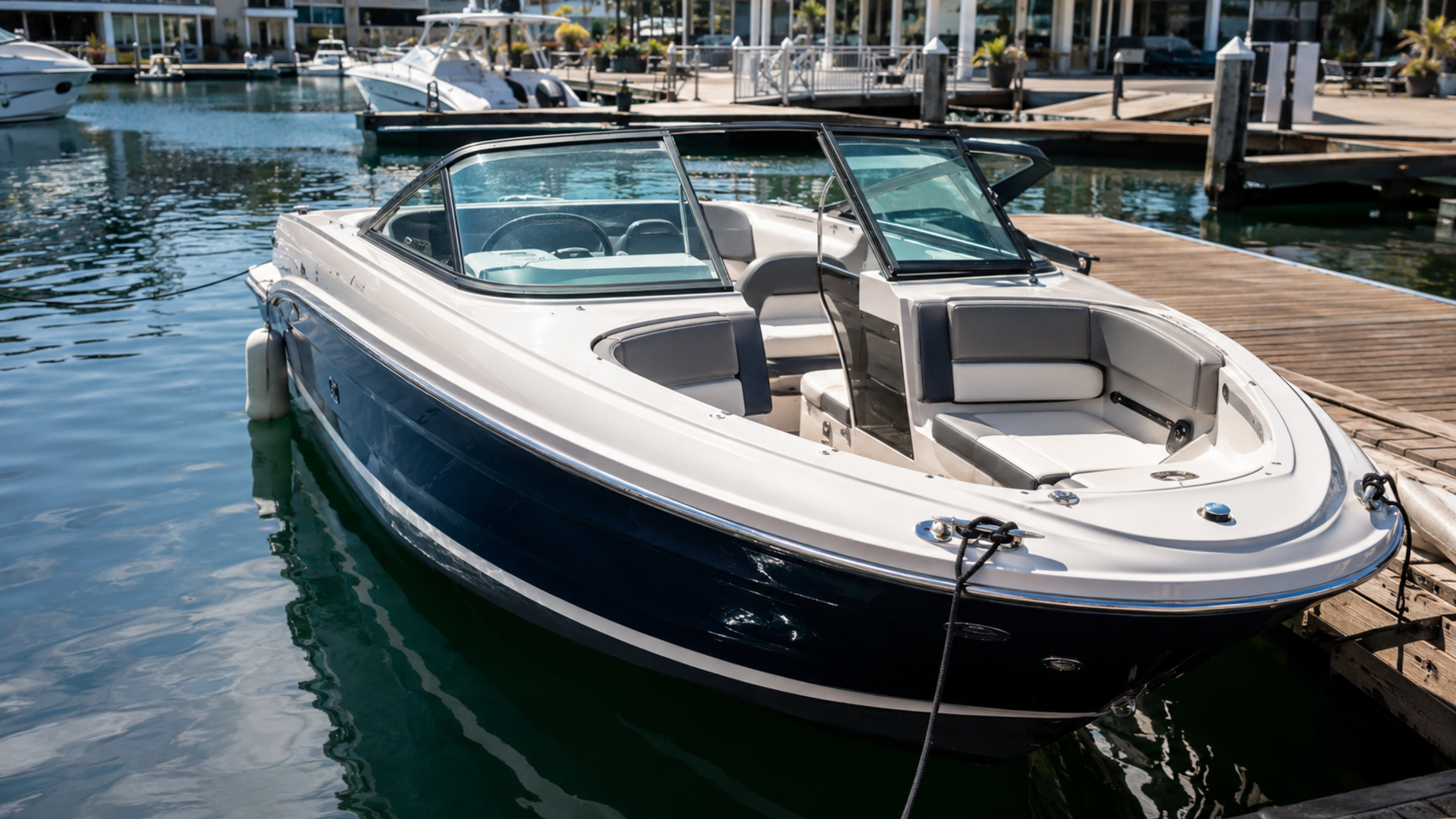
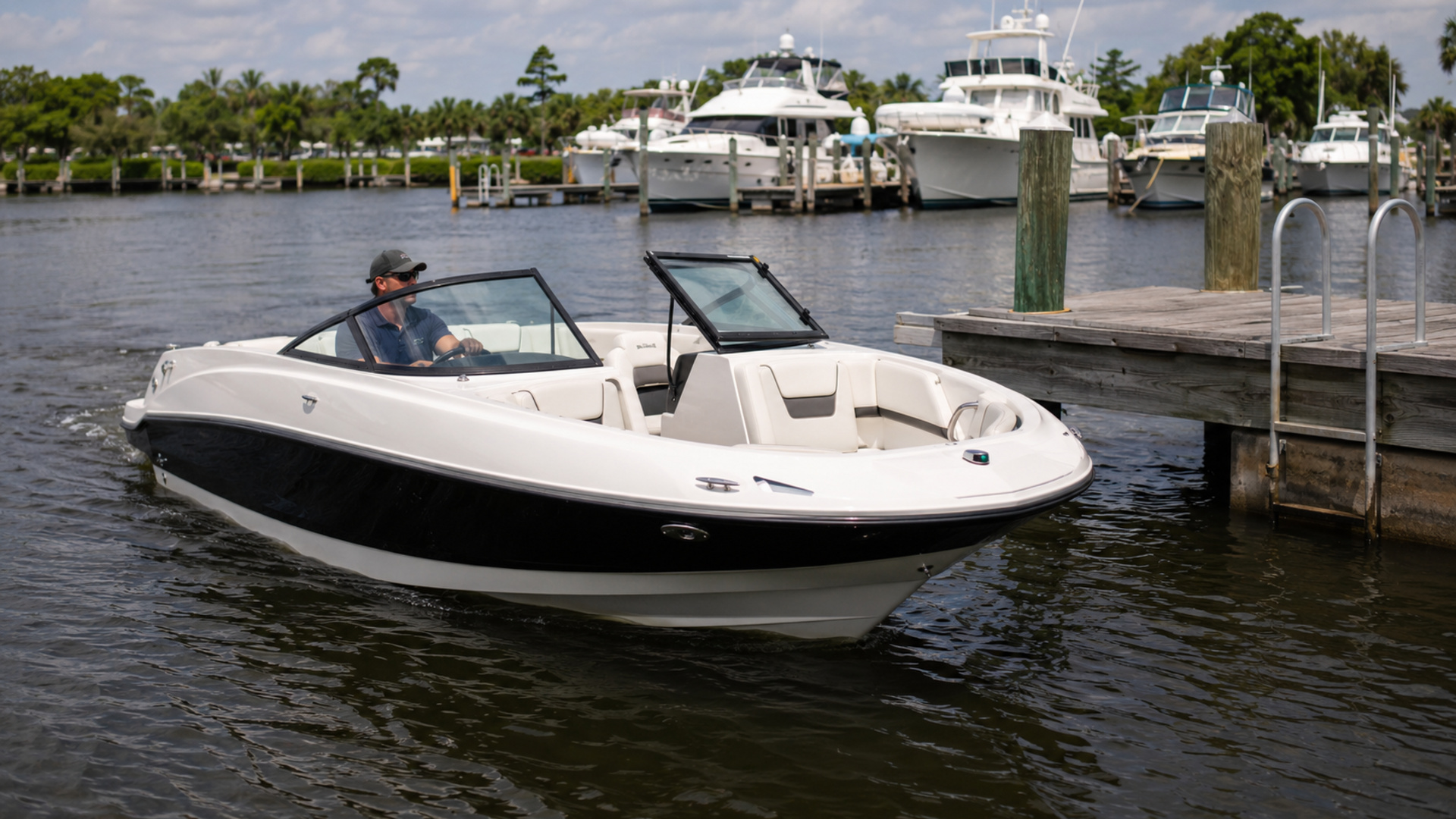
The bow carries the full eight-foot beam farther forward than a traditional pointed layout.
High gunnels add a secure feeling, while storage beneath the cushions helps move bags and life jackets out of sight.
The cockpit includes an integrated cooler and glove box, giving small items and drinks permanent locations.
In-floor ski and wakeboard storage keeps long equipment beneath the deck instead of stacked around passenger feet.
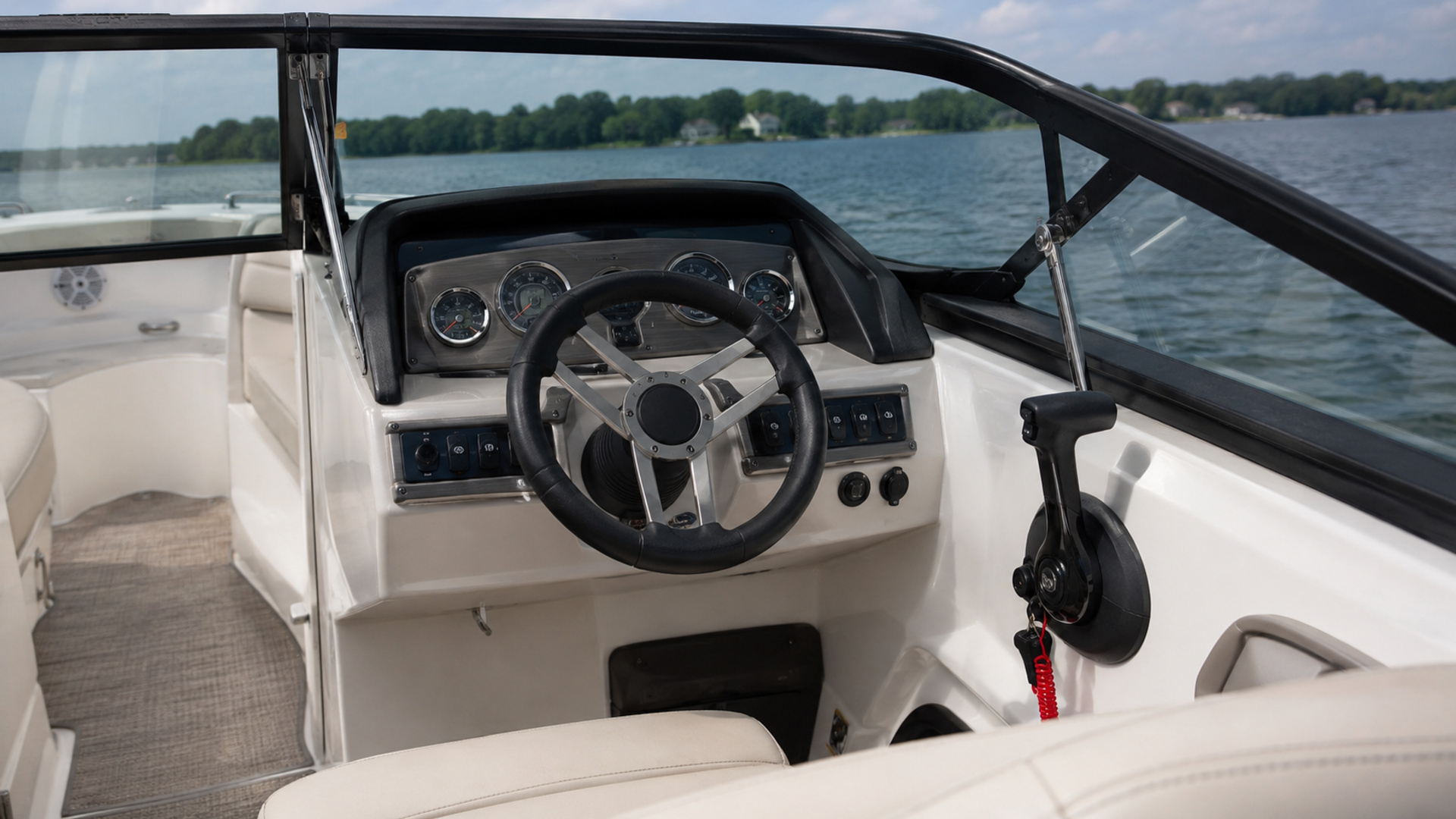
The helm seat rotates 180 degrees so the driver can face the cockpit at anchor.
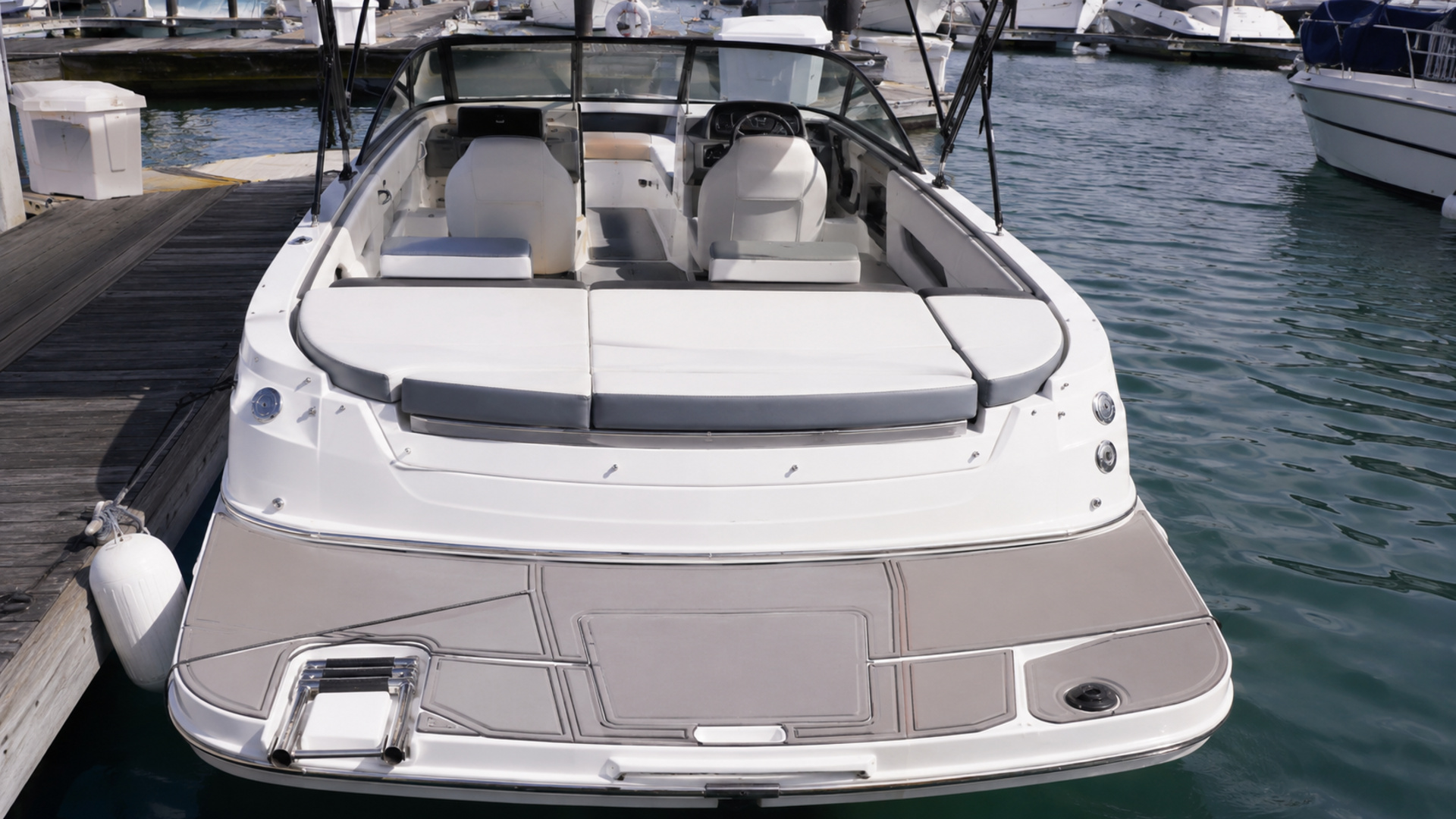
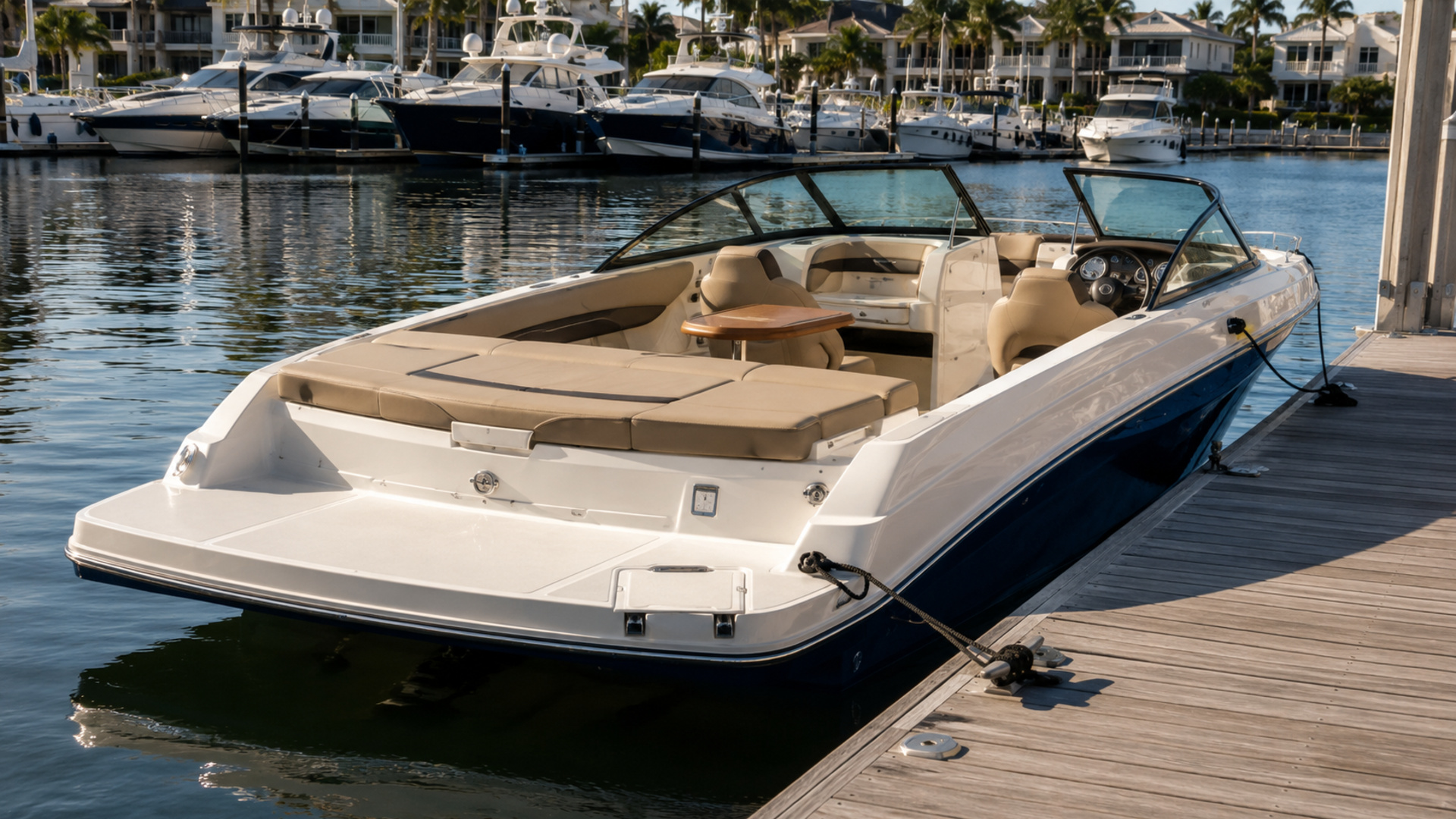
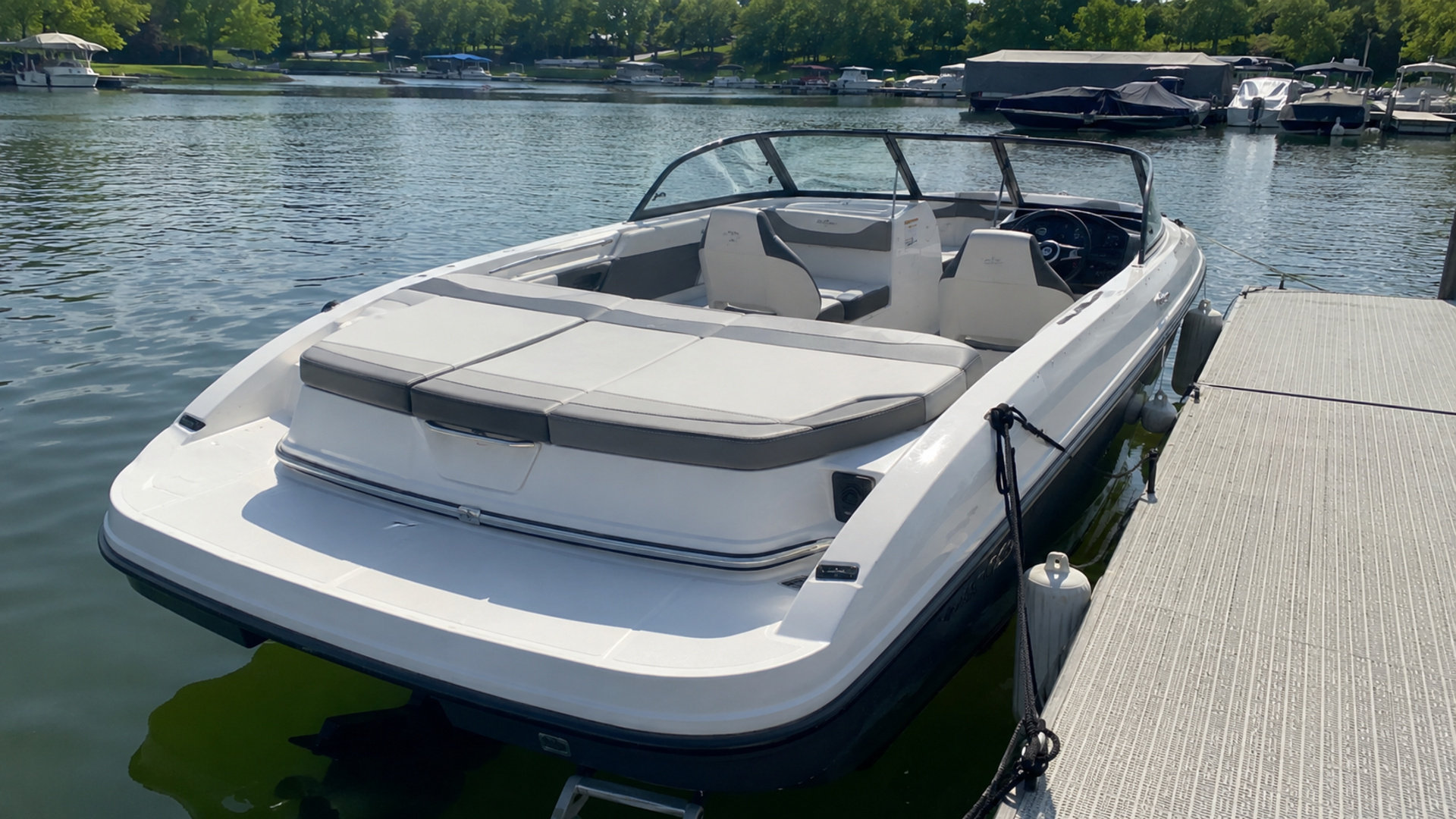
The sterndrive is what changes the rear of the boat. The engine stays below the aft deck, leaving the center of the swim platform clear.
Bayliner offers platform mats and multiple floor-covering choices that can make the stern more comfortable without changing its basic utility.
The opening-center sport windshield provides protection while maintaining direct access to the bow.
A wider windshield with center opening and side wings has also been offered for buyers wanting more shelter.
The bow filler cushion can create a forward lounge. A cockpit table adds another social function.
Watersports buyers can choose a ProArc or comparable tower package, wakeboard racks, speakers, and lighting depending on model year.
Families that fish can find VR5 Bowriders equipped with an aerated livewell, casting platform, fish finder, trolling-motor bracket, and 24-volt plug.
That mixed-use ability is significant because this is often the household’s only boat.
The buyer should still avoid treating every option as necessary. A tower is valuable if you tow. A livewell is valuable if you fish.
The clean stern is the only feature that should be central to every VR5 Bowrider decision.
If nobody in the family cares about it, the Outboard offers much of the same interior utility with less mechanical complexity.
200 to 250 HP MerCruiser Sterndrive – The VR5 Bowrider offers substantially more power than the Outboard and lets buyers choose between sensible standard output and stronger loaded reserve.
The engine remains beneath the aft deck, so the center of the stern stays open for swimmers and rider pickup.
The full beam carries farther toward the stem, creating more adult-capable seating and useful under-seat storage.
Seating reaches the aft edge of the running surface before the swim platform begins, preserving usable interior length.
Food and drinks have a dedicated location rather than consuming floor space in an eight-person cockpit.
Livewell, casting platform, fish finder, trolling-motor bracket, and 24-volt hardware can turn the VR5 into a mixed-use family boat.
Available 7-inch and 9-inch displays can add VesselView-linked engine data and navigation information at the helm.
A 2016 VR5 Bowrider and a 2025 boat should not receive the same inspection emphasis.
The older boat has had enough time for canvas, upholstery, wiring, drive components, and trailer hardware to age even if engine hours remain modest.
Begin with MerCruiser service records. Check annual maintenance, cooling work, winterization, and any drive repairs.
Inspect the Alpha One bellows and gimbal area.
Look for propeller damage, skeg repairs, corrosion, and evidence of fluid leakage.
Run the blower and automatic bilge pump.
Open the engine compartment after the sea trial and look for water or fresh fluid.
Test the integrated cooler drain, stereo, gauges, navigation lights, and every installed accessory.
Fishing-equipped boats require livewell, fish-finder, trolling-motor plug, and battery checks.
Tower-equipped boats need close inspection around mounting points.
Older upholstery can be expensive to replace across an entire VR5. Look at seams, seat bases, hinges, and areas that remain wet after swimmers board.
Check the windshield center opening and latch alignment.
Inspect in-floor storage for mildew or chronic dampness.
Trailer age can be just as important as hull age. A 2016 trailer may need tires, bearings, brakes, bunks, wiring, and coupler work.
The VR5 Bowrider can be strong used value, but only when the engine, drive, interior, and trailer have all been maintained as parts of the same package.
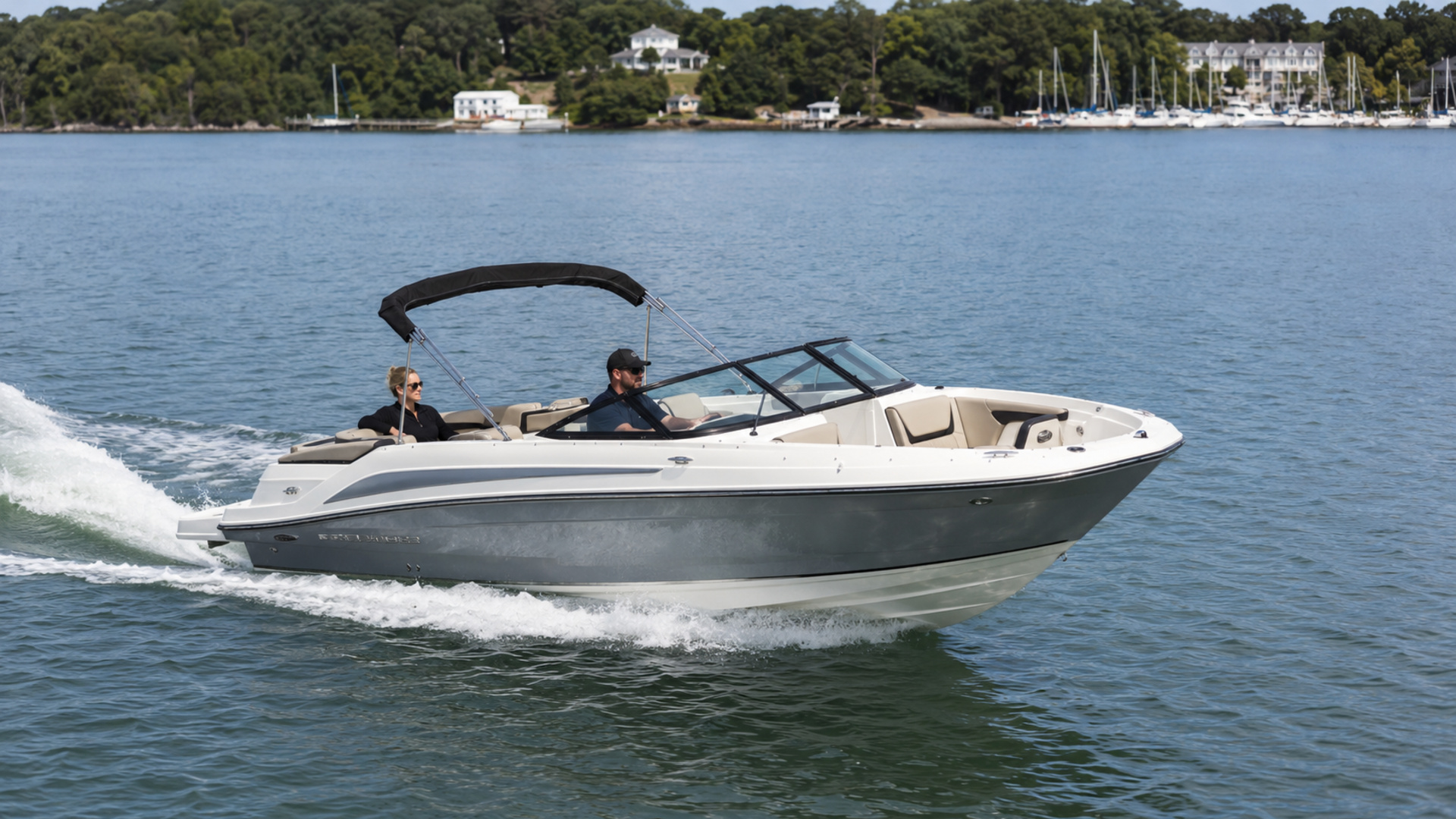
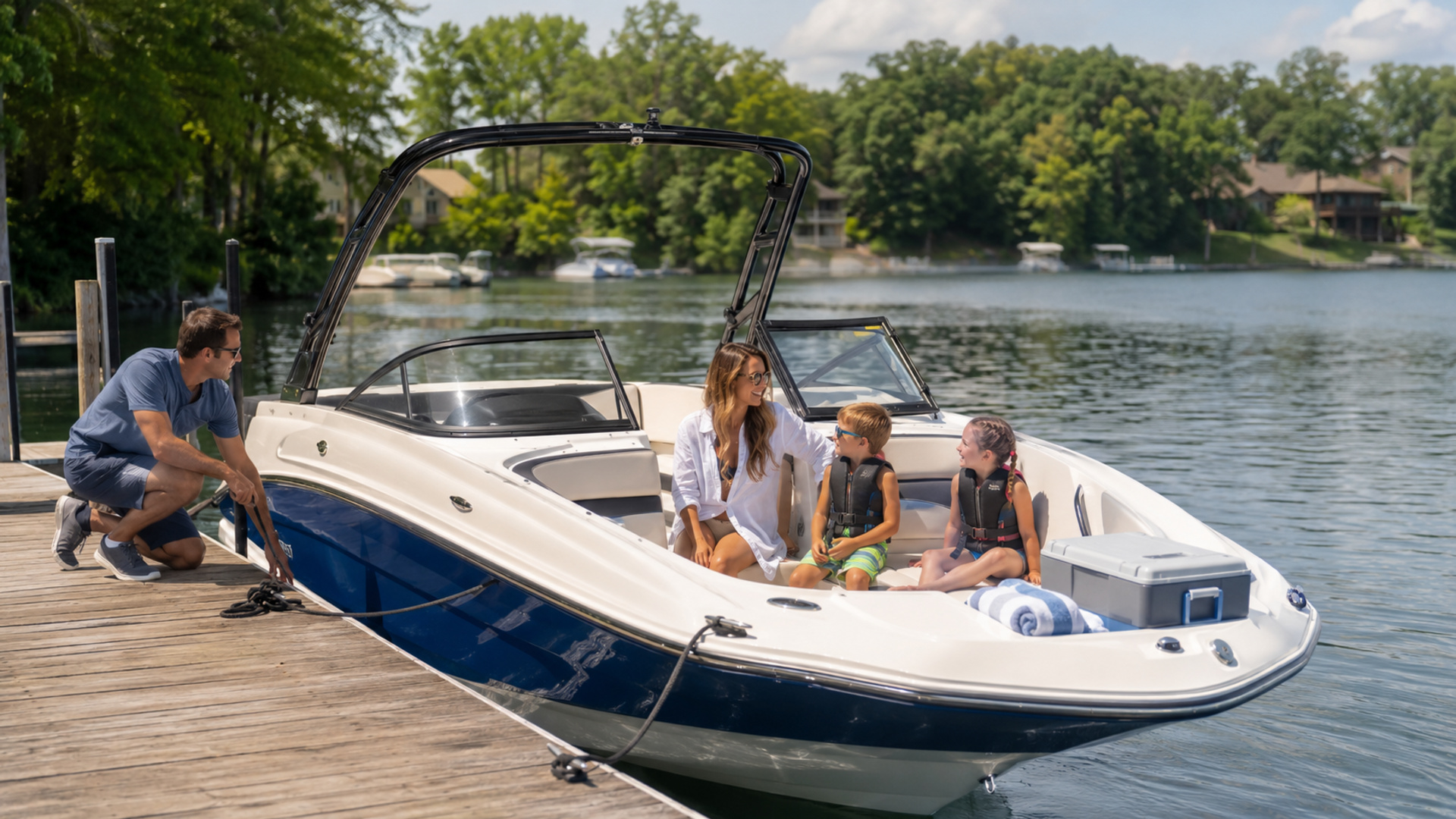
The referenced VR5 specifications list 21 feet 2 inches of storage length and approximately 4,095 pounds with trailer.
The eight-foot hull beam can translate to a wider trailer footprint, so buyers should measure the actual trailer rather than relying on boat beam.
The boat itself is approximately 3,342 pounds with standard engine.
Add 33 gallons of fuel, batteries, tower equipment, and family gear to understand travel weight.
Bayliner has offered both single-axle and tandem-axle trailer choices for VR5 configurations.
The exact trailer under a used boat affects storage, long-distance towing, and maintenance.
A single-axle rig may be easier to move around a driveway.
A tandem trailer adds tires, hubs, and brake components but may appeal to owners traveling farther.
Sterndrive wet storage introduces corrosion and fouling considerations around the Alpha One.
Trailer storage makes it easier to inspect the drive and keep it out of the water between outings.
The relatively short storage length is one of the reasons the VR5 can be more attractive than the VR6 for families that do not need ten-person capacity.
If the garage or tow vehicle already feels marginal, test the VR4 Bowrider before committing to the larger hull.
A boat that is easy enough to use every weekend usually delivers more value than a larger one that turns launch day into work.
Current VR5 Bowrider listings cover nearly a decade of production.
A 2016 or 2017 boat may already have absorbed a substantial portion of its early depreciation.
That can create excellent value when the drive and engine have documented care.
The same age can hide expensive catch-up work. Bellows, gimbal components, trailer brakes, upholstery, and canvas can all require attention.
A 250-horsepower boat can deserve a premium over a similar 200 when the buyer values loaded performance.
Current asking prices average higher for the Bowrider than the VR5 Outboard.
Treat that as specific to the current market mix, not as proof that sterndrive always commands more money.
Late-model boats should be compared with available newer alternatives.
If a used 2025 is priced close to current inventory, ask whether its engine, options, hours, and immediate availability justify accepting someone else’s configuration.
Tower equipment, digital dash, fishing accessories, flooring, and canvas can add utility.
Mechanical history remains the first pricing adjustment.
Do not pay a scarcity premium. The Bowrider market is thinner than the Outboard, but it is not so thin that a weak drive should be accepted.
The strongest used VR5 Bowrider is a boat where the clean stern and desired horsepower come with records good enough to make the I/O a benefit rather than a concern.
Pricing varies. Model year, engine package, options, trailer, condition and dealer all move the number, and listings change weekly. Send us the boat you are looking at and we will price that exact one.
Illustration only and not an offer of credit.
Use the negotiated price for the actual 200- or 250-horsepower boat.
Illustration only and not an offer of credit. Your actual rate and term depend on credit profile, vessel age, loan amount and ownership structure.
Both VR5 variants share 20 feet 7 inches of length, an 8-foot beam, 20 degrees of deadrise, a 33-gallon tank, and the same BeamForward and AftAdvantage foundation.
The Bowrider carries eight people and uses 200 to 250 HP MerCruiser sterndrive power.
The Outboard carries nine and uses 115 to 150 HP Mercury power.
The Bowrider wins on available horsepower and the clear central stern.
The Outboard wins on an extra published passenger position and much easier engine access.
Current listing supply favors the Outboard, though the difference is not as extreme as it is on the VR4.
The current Bowrider asking-price average is higher on this hull.
Choose the Bowrider when swimming, stern lounging, and loaded watersports performance are central.
Choose the Outboard when mechanical simplicity and nine-person flexibility matter more.
The VR5 Bowrider’s 2016 to 2025 inventory creates real age choices.
Decide whether the goal is lowest acquisition cost, late-model condition, or a specific 250-horsepower configuration before opening dozens of listings.
On older boats, request service records before traveling.
Bellows, gimbal components, drive lubricant, cooling maintenance, and winterization matter more than a polished hull side.
Check engine hours and ask how those hours were accumulated.
A boat used for constant tow sports can show different wear than one that mostly cruised.
Inspect upholstery and canvas for UV damage.
Look closely at seat seams, engine-hatch upholstery, and the areas swimmers contact after boarding.
Check tower mounting points for stress.
Test the opening-center windshield and all storage latches.
If fishing gear is installed, run the livewell and electronics.
Old fish finders add little value if the wiring is poor or the screen is obsolete.
Trailer condition should influence negotiation directly.
Compare 200 and 250 horsepower boats at similar ages rather than treating all VR5 Bowriders as interchangeable.
Then compare the Outboard.
If 150 horsepower is enough and the outboard stern does not bother the family, there is little reason to accept more mechanical complexity.
If the clear platform and 250 horsepower both matter, buy the cleanest documented Bowrider you can find rather than the cheapest.
Send Float Finance the actual VR5 Bowrider listing, including model year, horsepower, seller type, and asking price.
The VR5 Bowrider is 20 feet 7 inches long with an 8-foot beam and 20 degrees of deadrise. Bayliner lists an estimated draft of 2 feet 8 inches, approximately 3,342 pounds with standard engine, and 21 feet 2 inches of storage length. A separate maximum draft is not published on the referenced page.
The referenced U.S. model page lists capacity for eight people. The VR5 Outboard is rated for nine, so buyers who need every passenger position should not assume the higher-powered sterndrive carries more.
Standard power is a 200-horsepower MerCruiser 4.5L MPI sterndrive with Alpha One drive. Bayliner offers a 250-horsepower option for buyers who want stronger loaded acceleration or more watersports reserve.
The Bowrider gives you a clear integrated swim platform and up to 250 horsepower. The Outboard keeps the engine external, carries one more published passenger, and makes routine mechanical access simpler.
Age itself is not the issue. Current listings reach back to 2016, so maintenance history is critical. Inspect bellows, gimbal hardware, drive lubricant, cooling, engine compartment, upholstery, wiring, and trailer before assuming a lower price is a bargain.
Fuel capacity is 33 gallons. That is the same as the VR4 and VR5 Outboard. Exact range depends on engine choice, passenger load, trim, propeller, and operating speed.
Bayliner publishes approximately 4,095 pounds with trailer in referenced VR5 data and 21 feet 2 inches of storage length. Loaded weight is higher after fuel and gear, so vehicle ratings should be checked against the actual rig.
Choose the VR5 when eight-person capacity and the 20-foot-7-inch footprint already fit the family. Move to the VR6 for ten-person capacity, a larger social cockpit, a changing room, and the additional storage and towing footprint that come with it.
Tell us a little bit about yourself and the boat you are looking to finance.