
Call Us : 207-994-5109
Mon – Fri: 8 am to 9 pm & Sat – Sun: 10 am to 8 pm
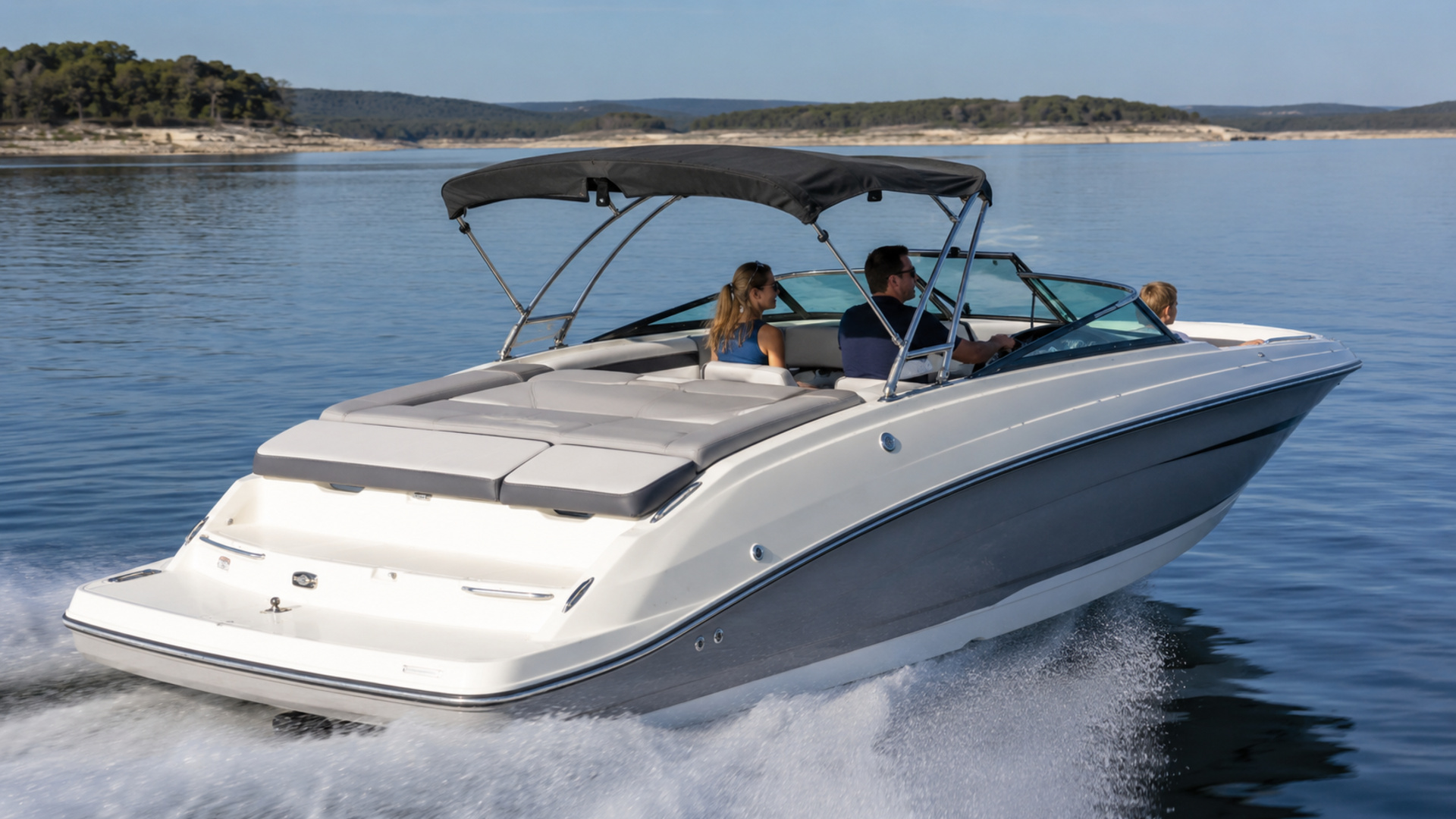
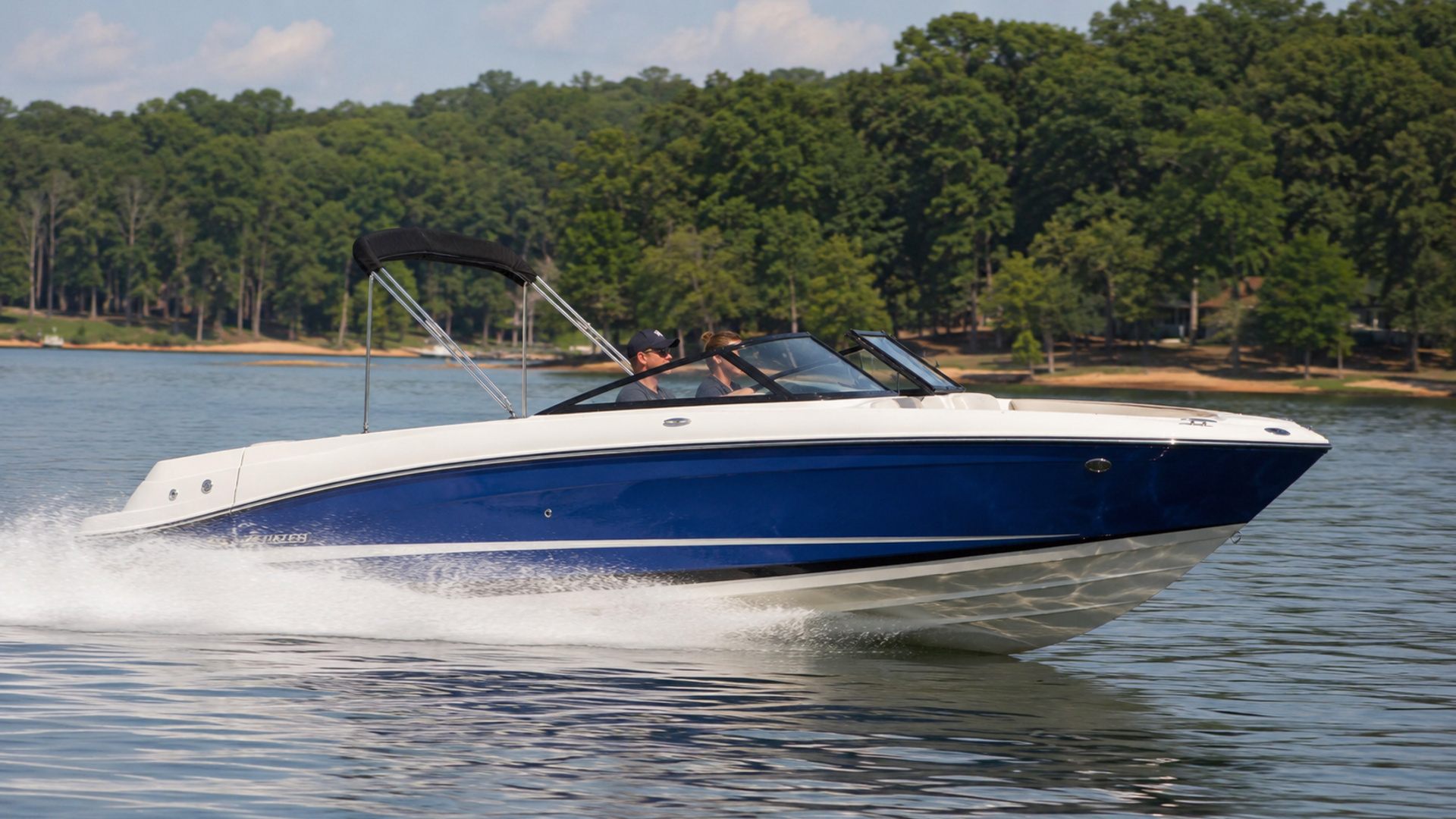
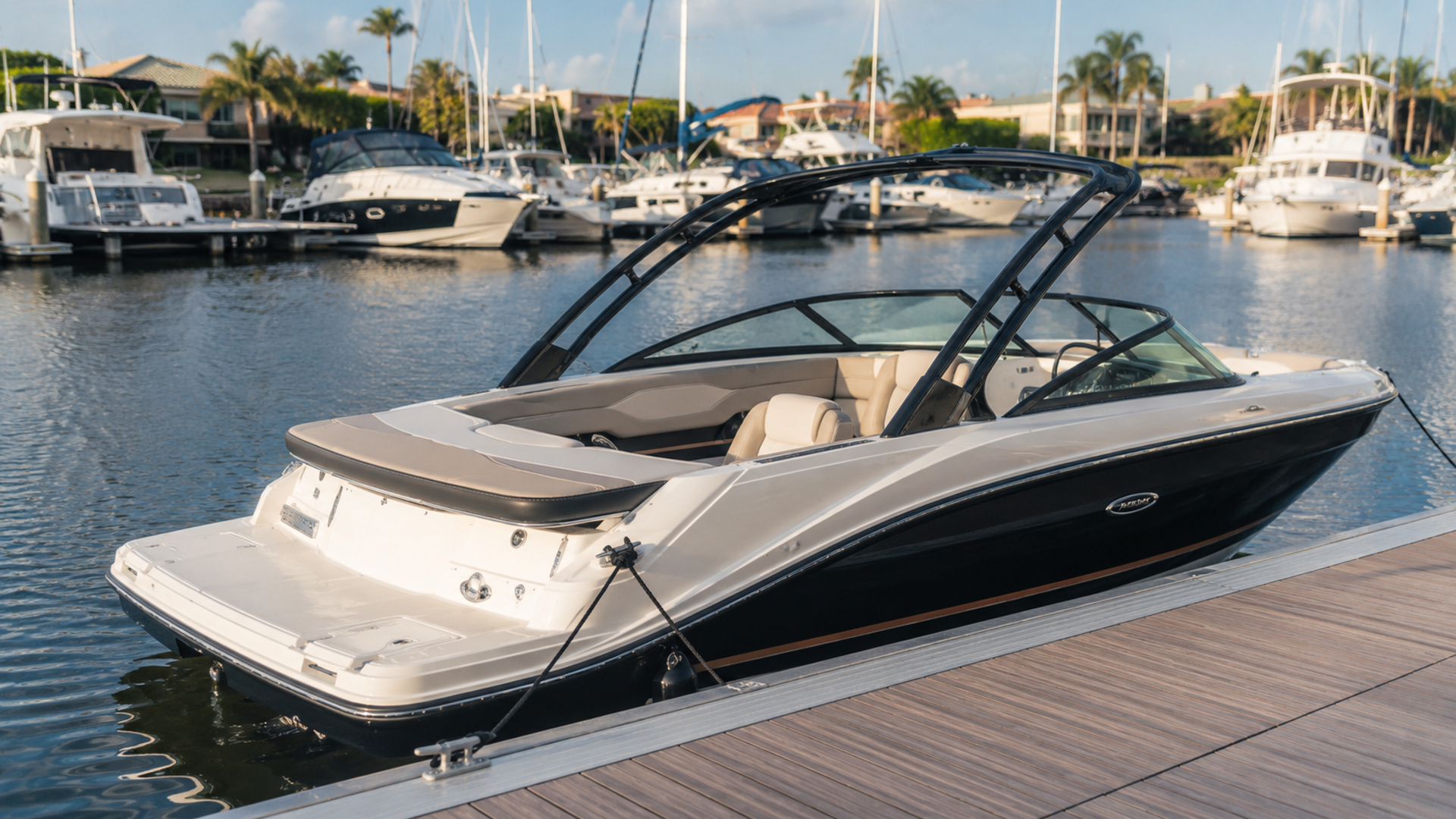
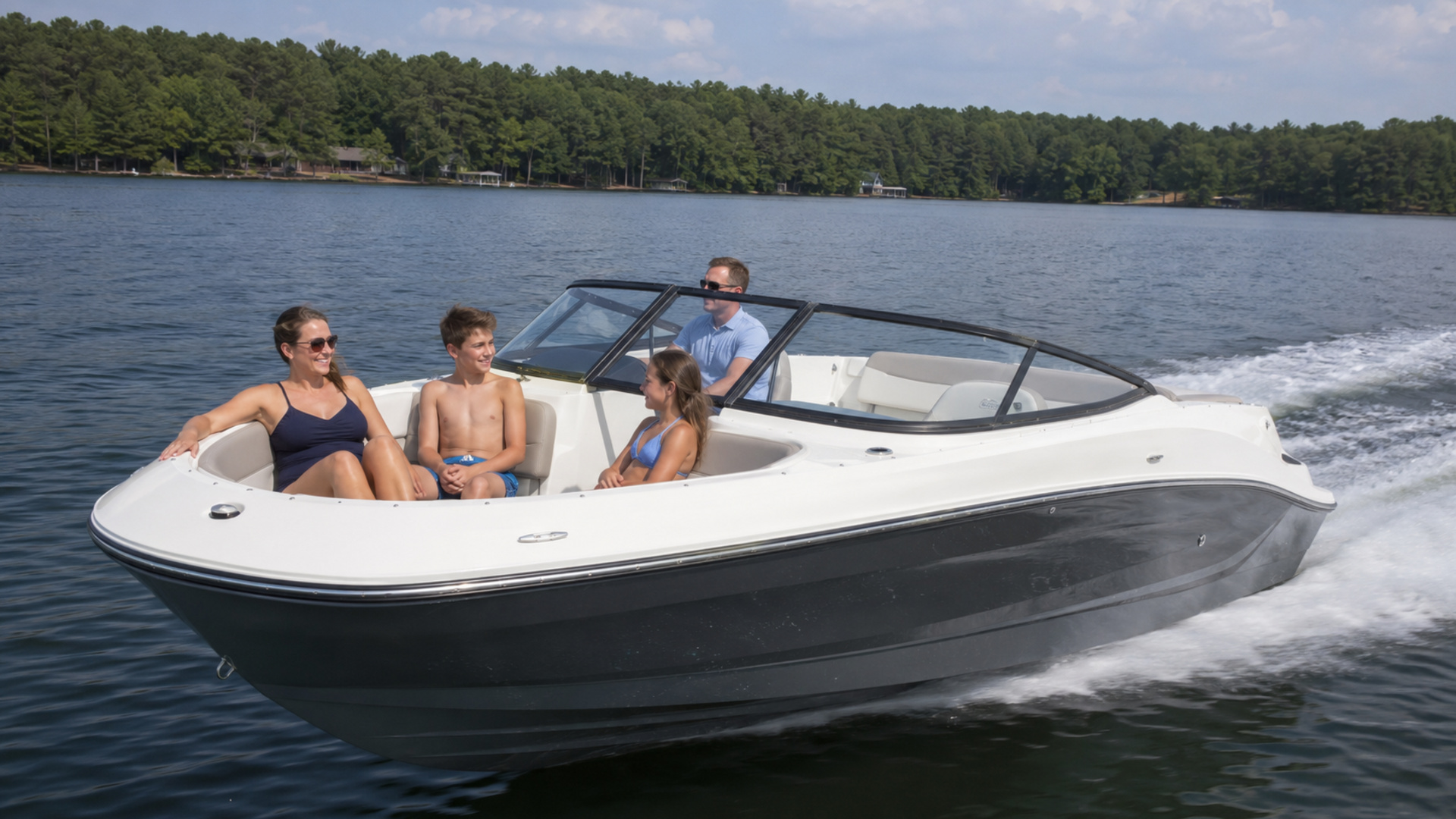
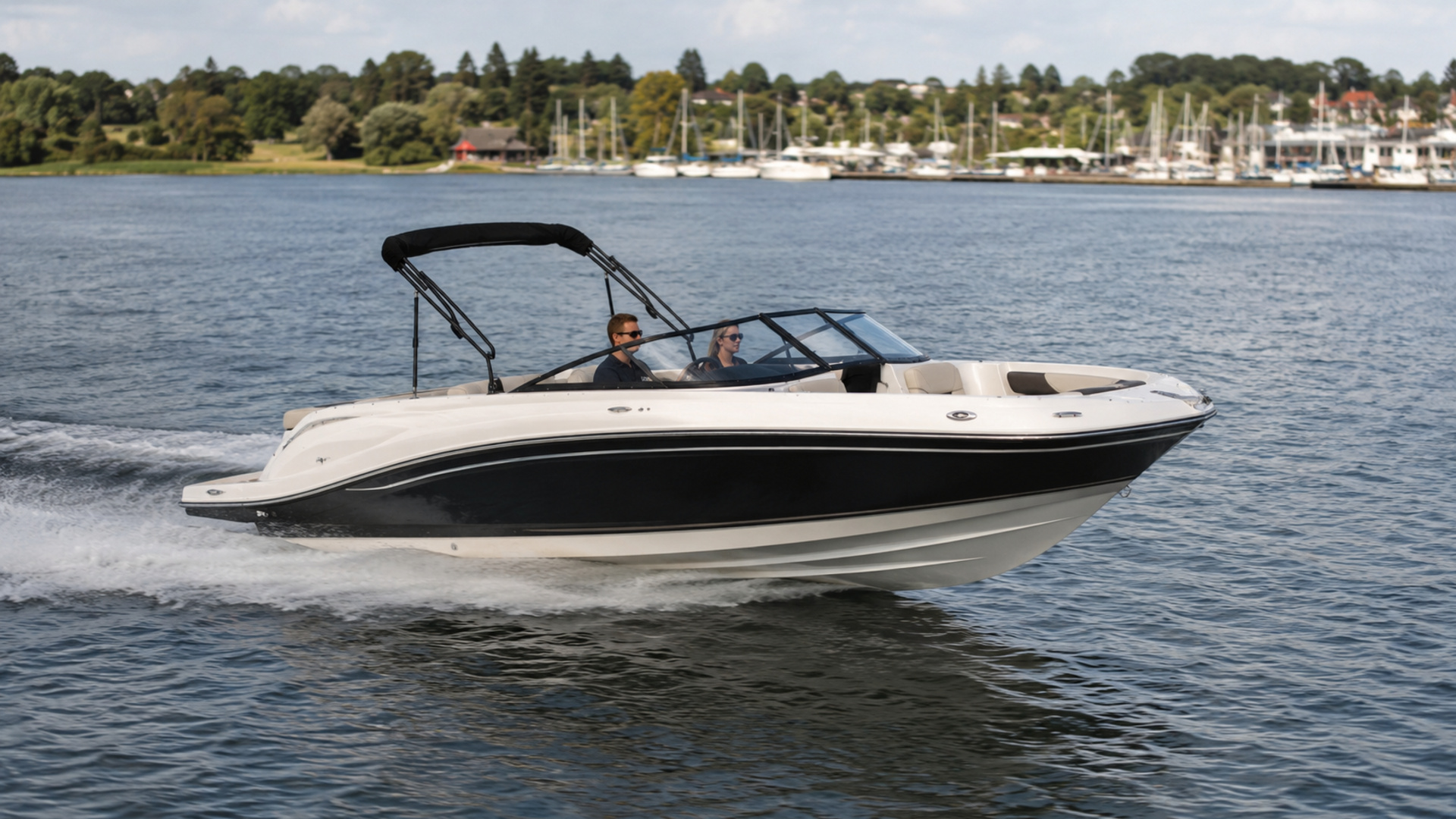
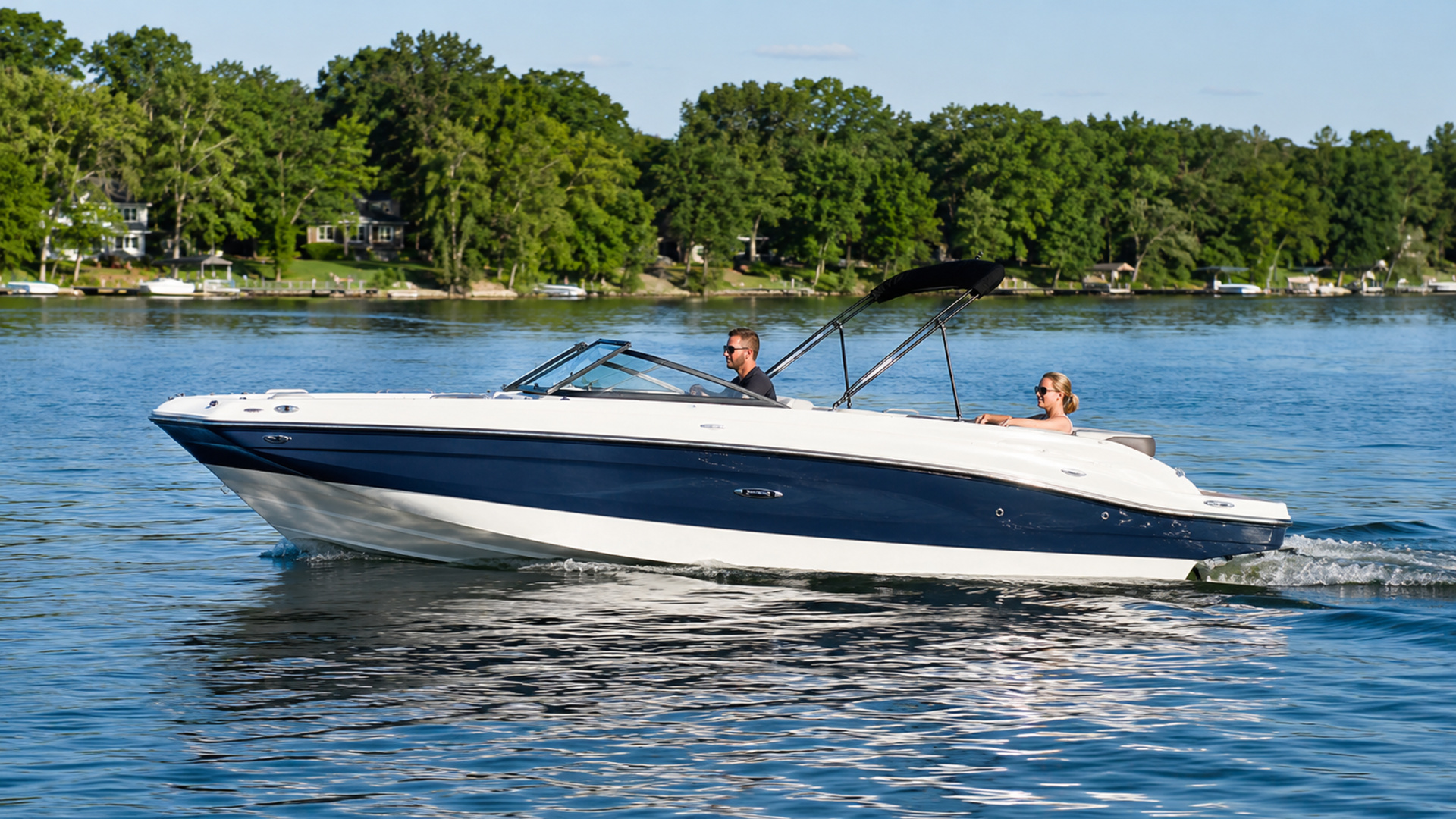
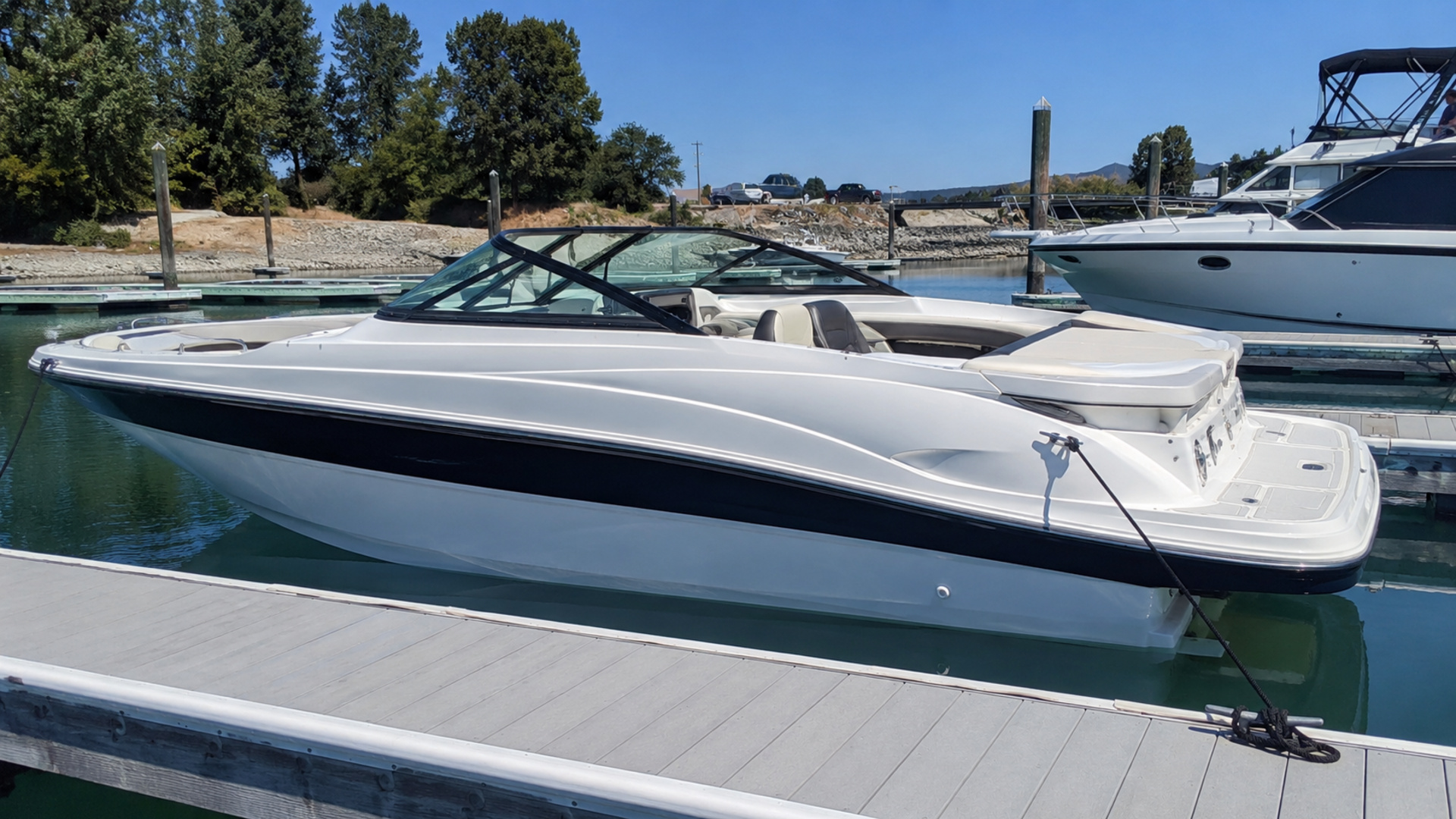
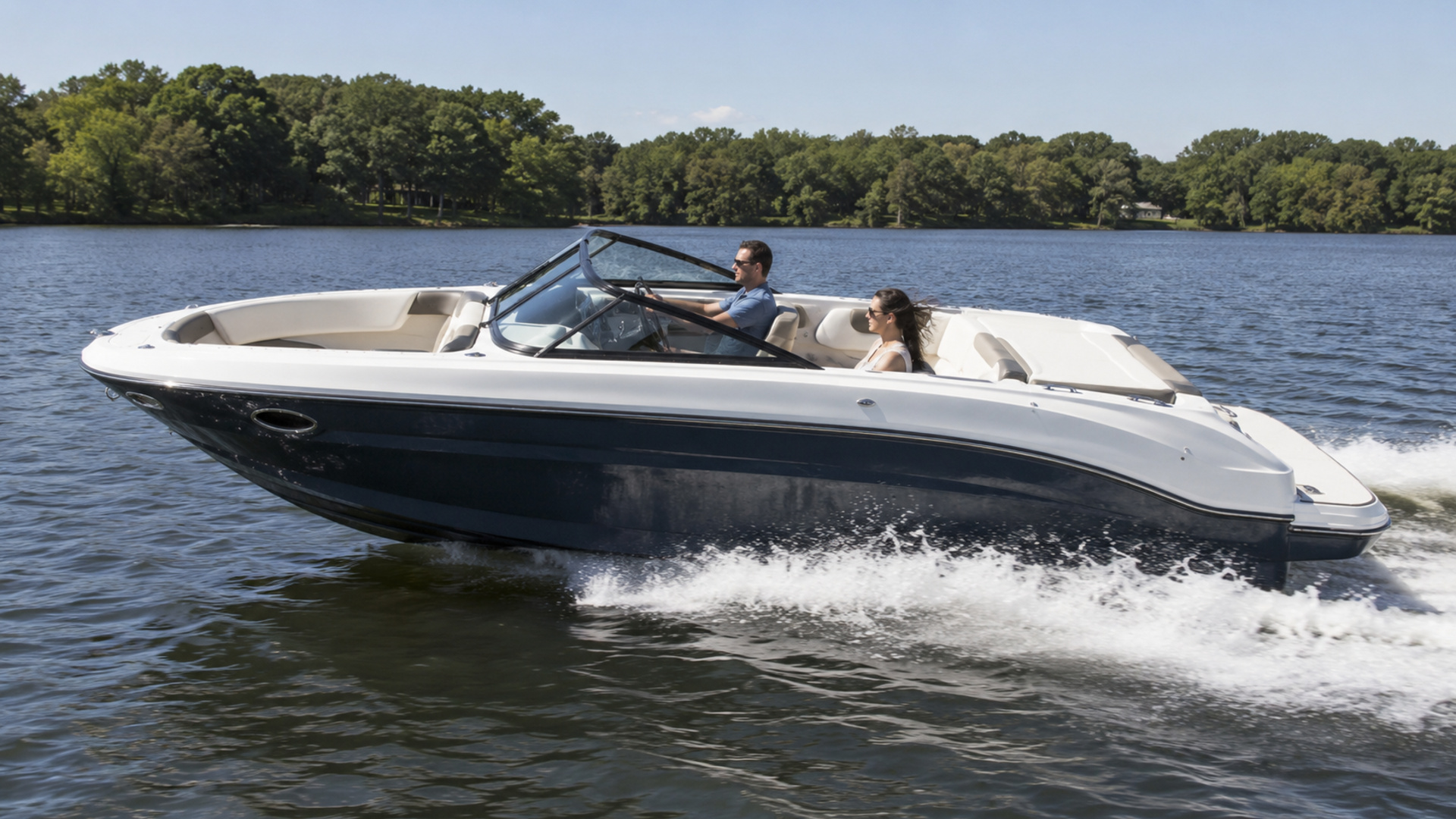
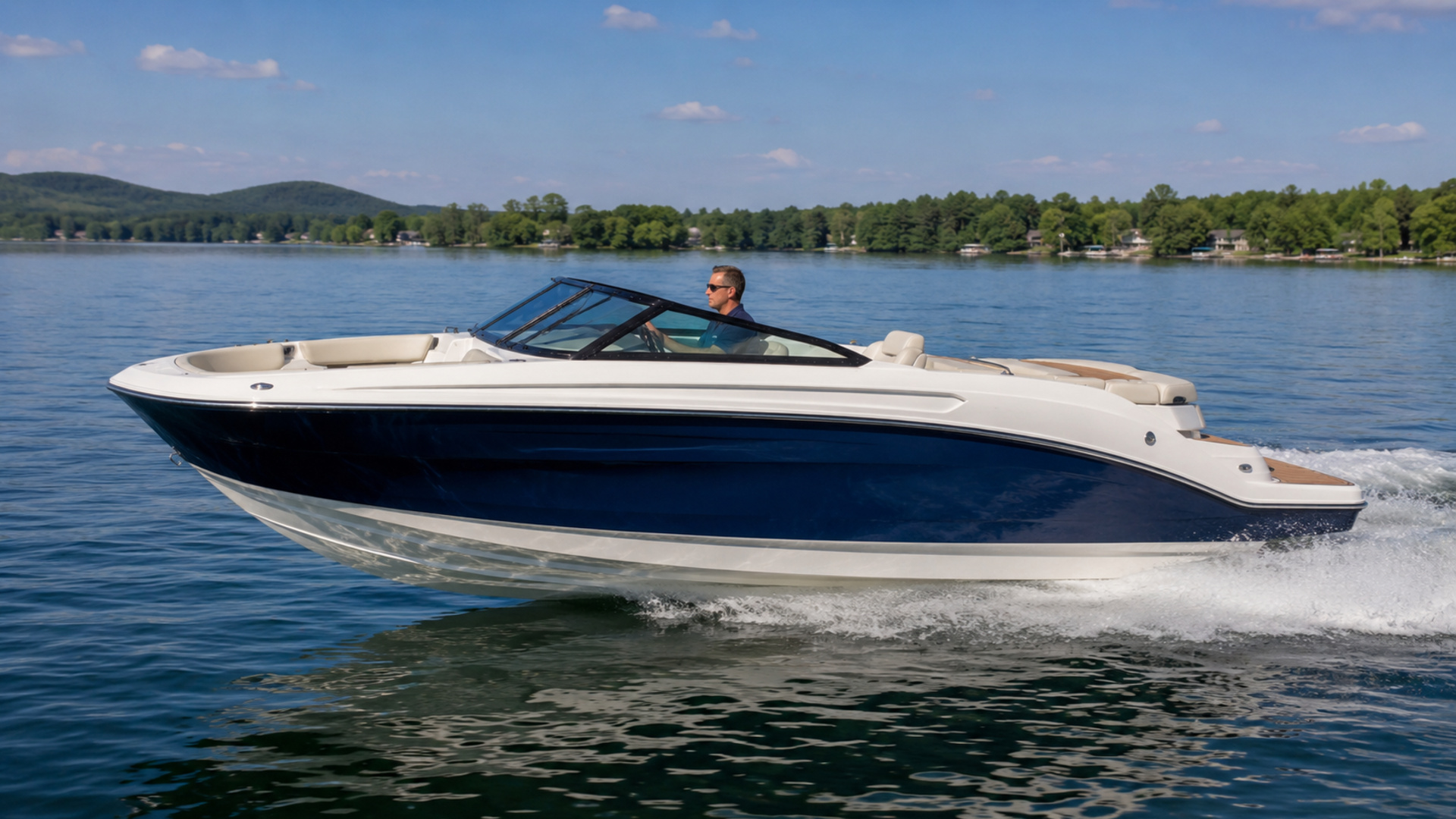
The Bayliner VR6 Bowrider is the largest sterndrive VR, pairing ten-person capacity, a changing room, convertible social seating, and up to 250 horsepower with a clear swim platform.
The VR6 Bowrider is the sterndrive choice for buyers who have a real reason to move beyond the VR5. At 22 feet 7 inches, the hull creates enough room for ten people, a lockable changing compartment, a larger social cockpit, and a stern that can function as a true swimming and lounging area.
The engine sits below the aft deck instead of on the transom. Bayliner pairs a 200-horsepower MerCruiser 4.5L MPI with an Alpha One drive as standard and offers up to 250 horsepower. That arrangement is what gives the Bowrider its clean central swim platform.
The same packaging creates the ownership trade. You gain the stern but accept an engine compartment, blower, bellows, gimbal hardware, sterndrive winterization, and drive-specific inspection that the VR6 Outboard does not require.
Passenger capacity does not decide between the two versions. Bayliner rates both current VR6 variants for ten people. The decision is about how the family uses the stern, how much power you want, and how much mechanical access matters over several seasons.
The Bowrider’s 250-horsepower ceiling gives it fifty more maximum horsepower than the current VR6 Outboard. That can matter when the boat leaves the dock carrying a full family, coolers, tow gear, and enough equipment for an entire day.
The larger hull also adds something smaller VR models cannot duplicate: a lockable port-side changing room and storage compartment. Bayliner offers a portable-head option, which can materially change how long a family is comfortable staying away from shore facilities.
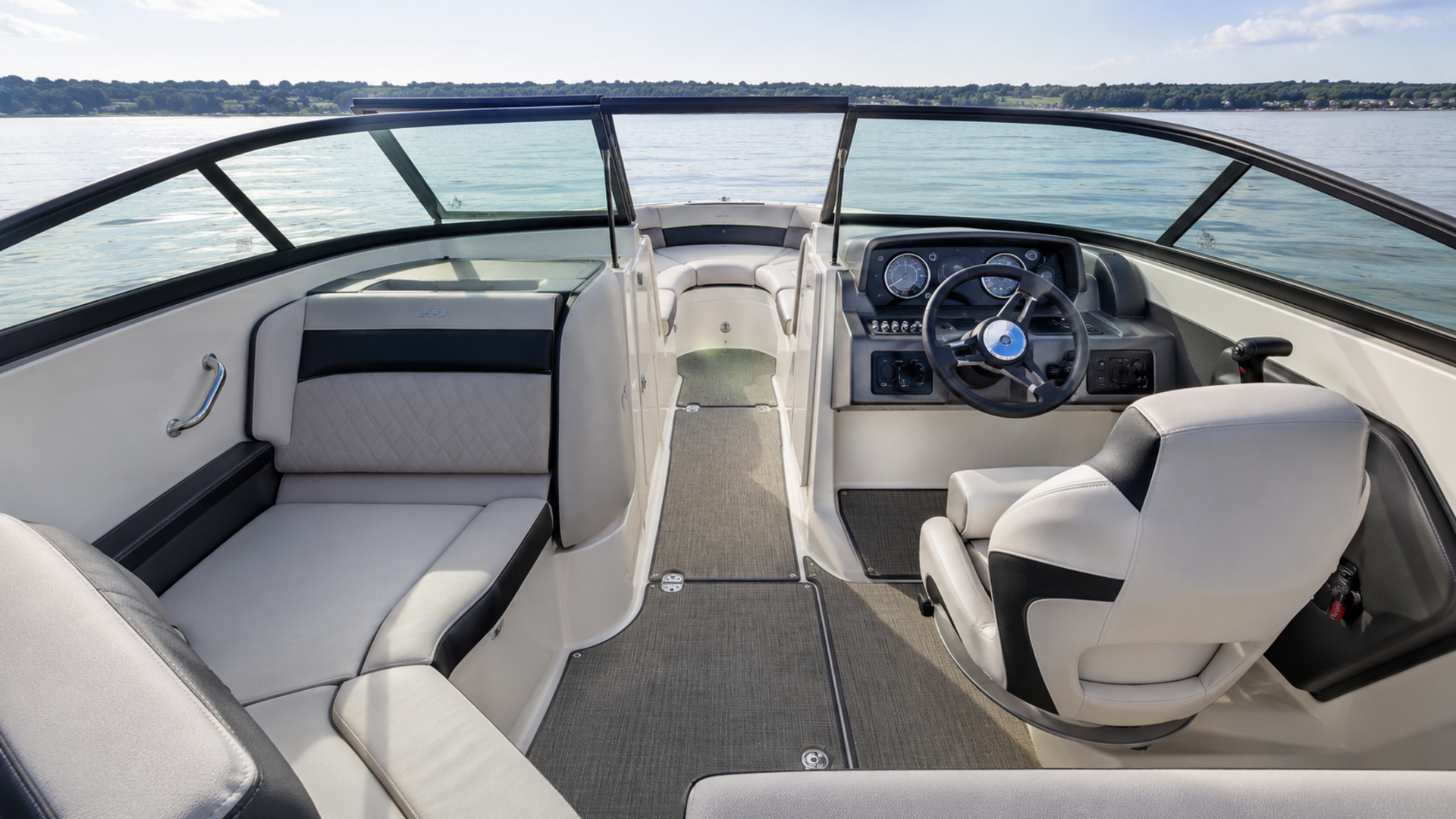
The cockpit can convert into a U-lounge with an available filler cushion. An aft-facing companion position is useful when watching a skier or tuber. Those details make the VR6 more than a stretched VR5.
Current Bowrider inventory spans roughly a decade, from 2016 through 2026. That creates meaningful used-price choices, but it also means shoppers may be comparing a nearly new sterndrive with a boat whose drive and trailer have already seen many seasons.
Current average asking prices run higher for the Bowrider than the VR6 Outboard. That does not mean sterndrive automatically commands a premium. Year mix, engine output, condition, trailer, and equipment all influence the market.
Buy the VR6 Bowrider when the clean stern, 250-horsepower option, changing room, and ten-person cockpit solve needs your family already has. If you mainly want the large VR6 interior and would rather keep propulsion simple, buy the VR6 Outboard instead.
Published factory figures. Confirm every dimension against the individual boat before you commit.
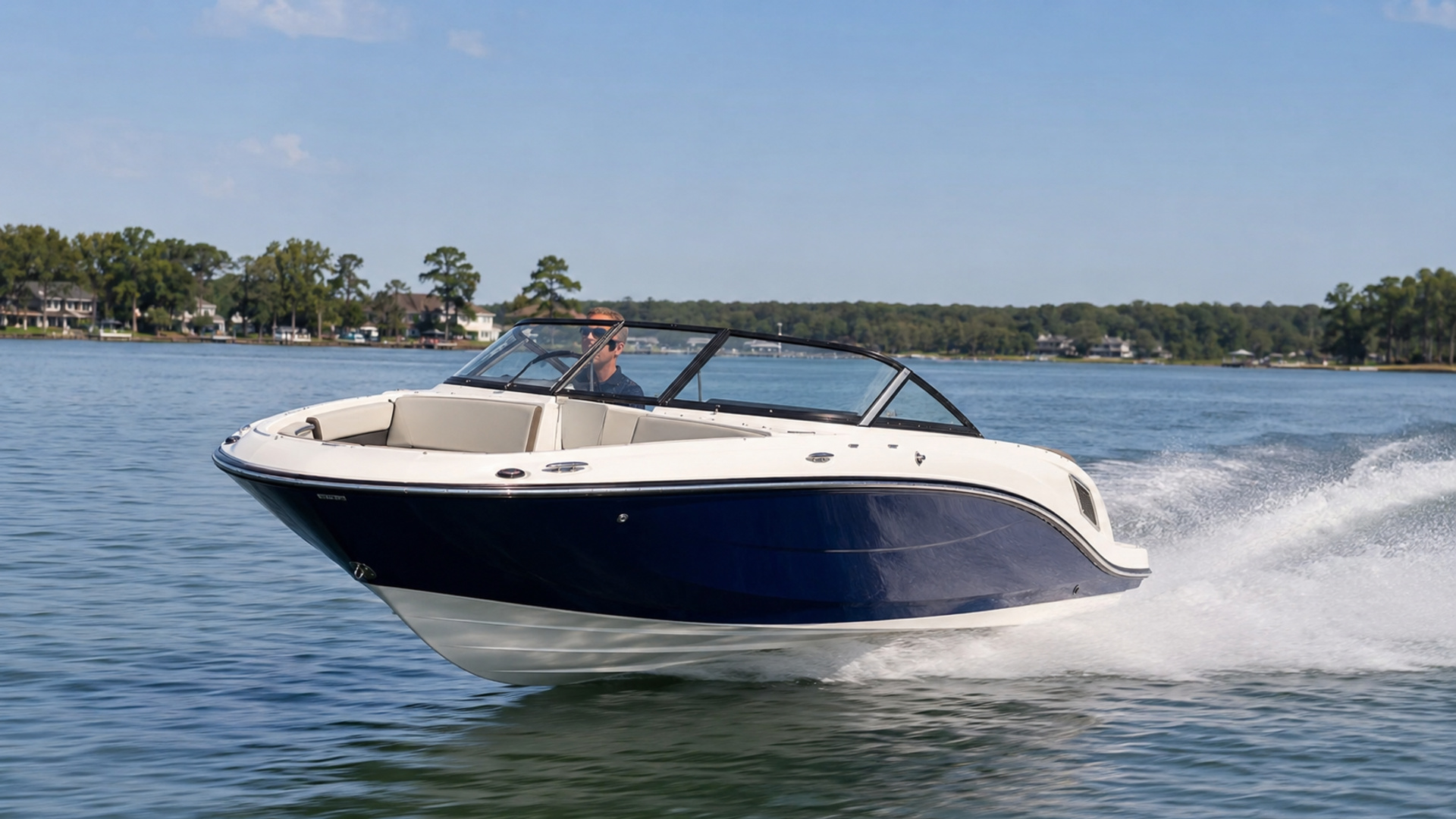
Bayliner publishes an estimated draft of 2 feet 10 inches for the current VR6 Bowrider, but it does not separately label a maximum draft. That distinction matters because the Alpha One drive position changes actual underwater clearance.
The 22-foot-7-inch hull is two feet longer than the VR5 while retaining the same 8-foot beam. Bayliner uses that added length to create more cockpit separation and the changing-room compartment rather than simply adding another bench.
BeamForward carries usable width farther into the bow. Adults have more shoulder and leg room than they would in a sharply tapered forward section, while under-seat storage helps the bow handle real family gear.
AftAdvantage works at the opposite end. Cockpit seating reaches toward the aft edge of the running surface, and the swim platform is placed behind it. That preserves interior length even though the stern remains a major part of the boat’s recreational mission.
Twenty degrees of deadrise is a recreational compromise. It gives the hull enough V for ordinary lake and protected-coastal chop without making the boat excessively deep, heavy, or power hungry.
The longer waterline should feel more settled across common boat wakes than a VR4, but the VR6 is still a broad family bowrider. Rough-water capability should not be inferred from size alone.
Approximate weight with standard engine is 3,797 pounds. Bayliner currently lists approximately 4,739 pounds with trailer. Add 33 gallons of fuel, batteries, tower equipment, safety gear, and everything the family stores aboard before comparing the package with a tow vehicle.
Storage length is 25 feet and height on trailer is 8 feet 6 inches. Those figures make home storage more demanding than on a VR4 or VR5, even though the hull remains within conventional trailer width.
The hull earns its additional footprint when ten-person capacity or the changing room gets used regularly. A family of four may enjoy the space, but they will still tow, store, fuel, and pay for a boat designed to host a larger group.
If the VR5 already handles most weekends comfortably, buying the VR6 purely for visual presence adds ownership burden without necessarily improving the experience.
The VR6 Bowrider starts with a 200-horsepower MerCruiser 4.5L MPI and Alpha One drive. Bayliner allows 250 horsepower, giving the sterndrive model more maximum power than the current VR6 Outboard.
The 250 is easiest to justify when the ten-person capability is actually used. A larger passenger load can make extra acceleration reserve far more valuable than it appears during a lightly loaded dealer demonstration.
The 200 should not be dismissed. A family that normally cruises with five or six people may find the standard engine completely adequate. Test the boat before assuming maximum horsepower is mandatory.
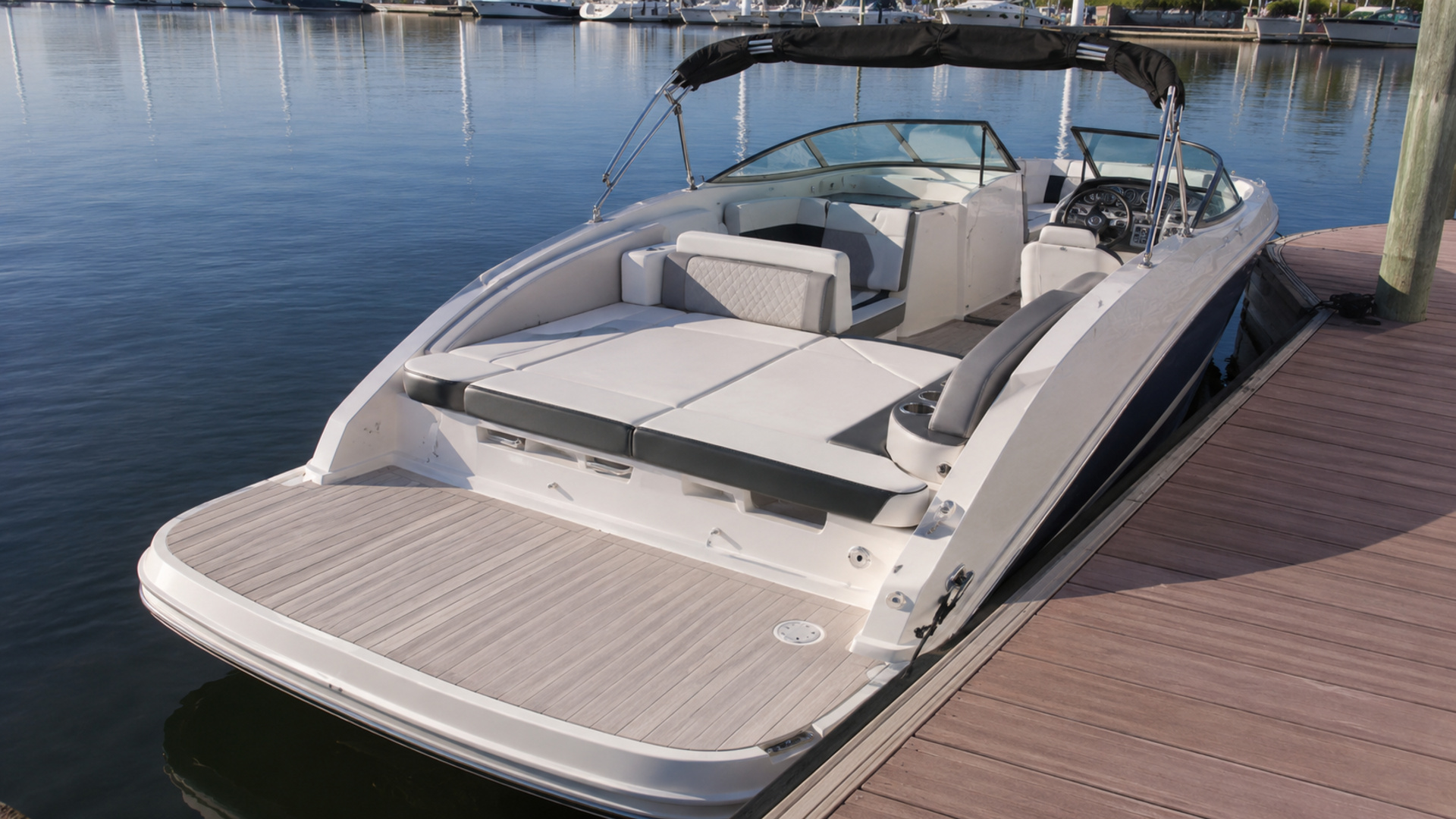
The engine location is the defining feature. It sits under the aft deck, which keeps the central transom free of an outboard powerhead and allows the swim platform to function as a more open social space.
That design also moves routine inspection inside the boat. Open the engine compartment and look for water staining, fluid residue, corrosion, deteriorated hoses, loose wiring, and signs that access has been neglected.
The blower is part of the normal pre-start routine. Confirm it operates. The automatic bilge pump matters too because the engine lives inside the hull rather than above the waterline at the stern.
The Alpha One drive adds service points. Bellows, gimbal hardware, drive lubricant, trim cylinders, propeller condition, skeg damage, and corrosion all belong in a used-boat inspection.
Current inventory reaches back to 2016. On older examples, ask when bellows and related drive components were last serviced. A vague answer should affect the deal.
Winterization records matter in freezing climates. Saltwater history matters in coastal markets. A ten-year-old drive can be healthy, but it should have a story supported by invoices rather than optimism.
Run the boat through several rpm ranges during the sea trial and listen for persistent vibration. Shift repeatedly between forward, neutral, and reverse. Steering should remain smooth while the drive is trimmed.
A clean 200-horsepower example with excellent records can be a better buy than a neglected 250. Mechanical condition comes before engine badge.
If you want the VR6 hull but dislike this maintenance list, that is useful information. The VR6 Outboard sacrifices some stern cleanliness and 50 horsepower of maximum output in exchange for an engine that is much easier to see, service, and eventually replace.
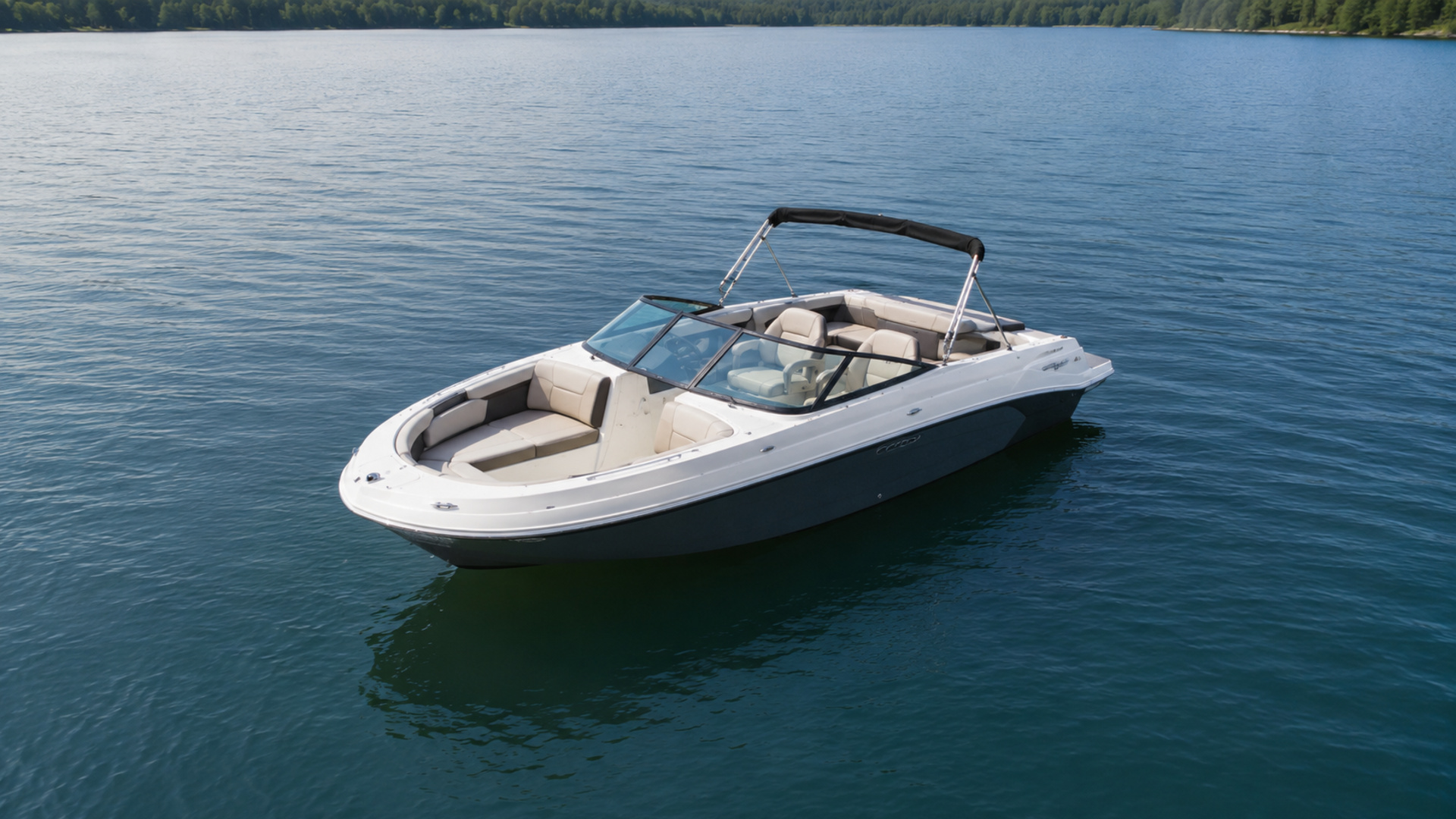
The VR6 Bowrider carries 33 gallons of fuel, the same published capacity as the smaller VR5. That is an important fact because the VR6 has more hull, more passenger capacity, and up to 250 horsepower.
Bayliner does not publish one universal current fuel-burn number that applies to every VR6 Bowrider. Consumption changes with the 200- or 250-horsepower engine, passenger load, propeller, trim, water conditions, and operating speed.
For local lake use, 33 gallons can be completely workable. Many family days include long periods at anchor, swimming, eating, or waiting for riders rather than running continuously.
The same tank feels different during several hours of towing. Repeated acceleration from idle to planing speed can move fuel use well above a steady cruise pattern.
A ten-person load also matters. More weight requires more throttle to achieve and hold the same speed, particularly if passengers and gear are not distributed well.
Use verified engine-specific data when planning longer routes. Keep a reserve instead of treating the full 33 gallons as available range.
Older used boats deserve fuel-system inspection in addition to engine inspection. Hoses, vent fittings, fill hardware, and evidence of stale-fuel problems can matter on 2016 or 2017 examples.
A full tank also adds meaningful towing weight. The published boat-and-trailer figure is not the same as a fully loaded departure weight.
The VR6 Outboard uses the same 33-gallon tank, so fuel capacity does not choose between variants. The drive system and how the boat is used are much more important.
If minimizing operating cost is the first priority, compare the VR5 before buying the larger hull. The VR6 should be chosen because its space and convenience improve normal outings enough to justify the added ownership footprint.
The VR6 Bowrider should be sea-trialed with realistic weight. A ten-person bowrider tested with only two adults does not answer the question the buyer is paying the larger hull to solve.
With the 200-horsepower engine, watch how quickly the boat reaches plane and how much throttle is required to maintain a comfortable cruise with several passengers aboard.
The 250 provides additional reserve. That reserve is most useful during tow sports, heavy loading, and repeated acceleration rather than during an occasional maximum-speed run.
The 22-foot-7-inch length should help the hull bridge ordinary wake spacing better than the shorter VR4. The 20-degree deadrise remains a family-boat angle, so speed still needs to match conditions.
Move passengers between the bow and cockpit during the test. The boat’s trim and acceleration should remain predictable rather than becoming excessively sensitive to seating position.
Watch visibility through the transition onto plane. A large social cockpit is not useful if shorter drivers cannot see comfortably at common acceleration angles.
The sterndrive should steer smoothly through its trim range. Persistent steering effort, vibration, or unusual noise deserves investigation before purchase.
Practice low-speed reverse and neutral transitions. The broader hull creates more windage than the smaller VR models, and a buyer should understand how the boat behaves around a crowded dock.
The performance question is not whether 250 horsepower sounds impressive. It is whether the chosen engine lets a heavily used family boat feel relaxed rather than marginal.
If 200 horsepower on the Outboard version already meets your needs, the simpler mechanical package may be more valuable than the Bowrider’s additional 50 horsepower.
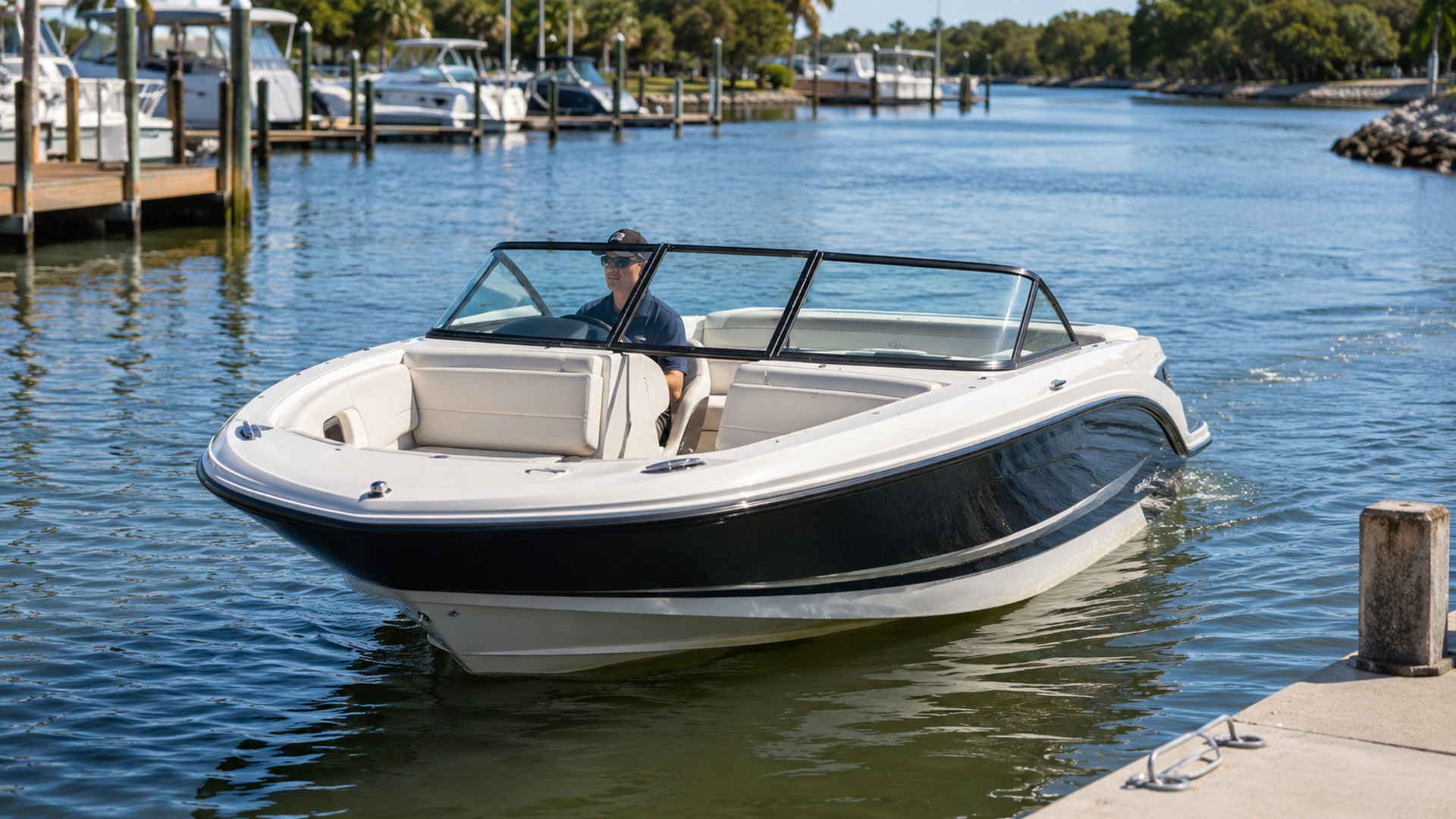
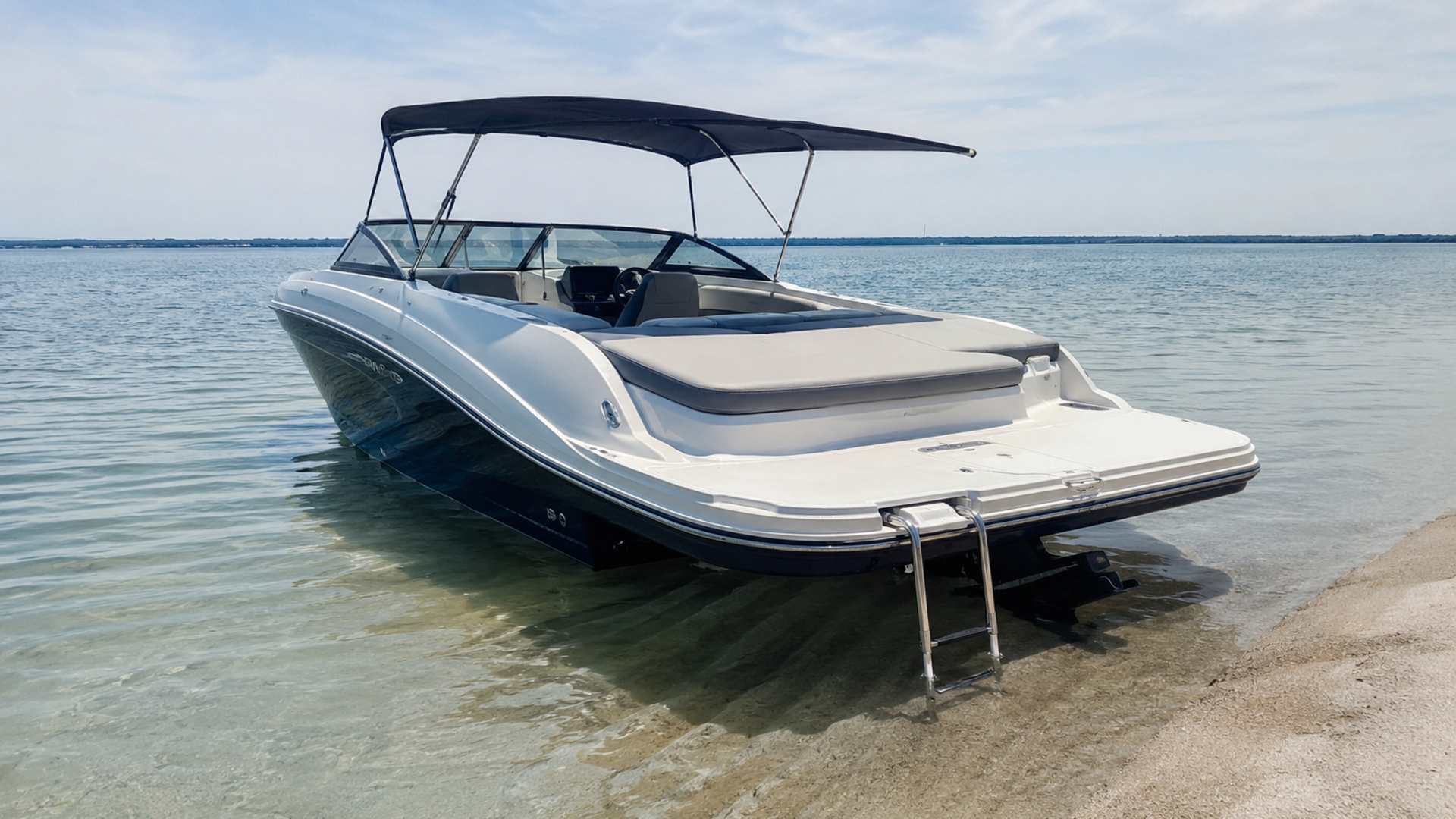
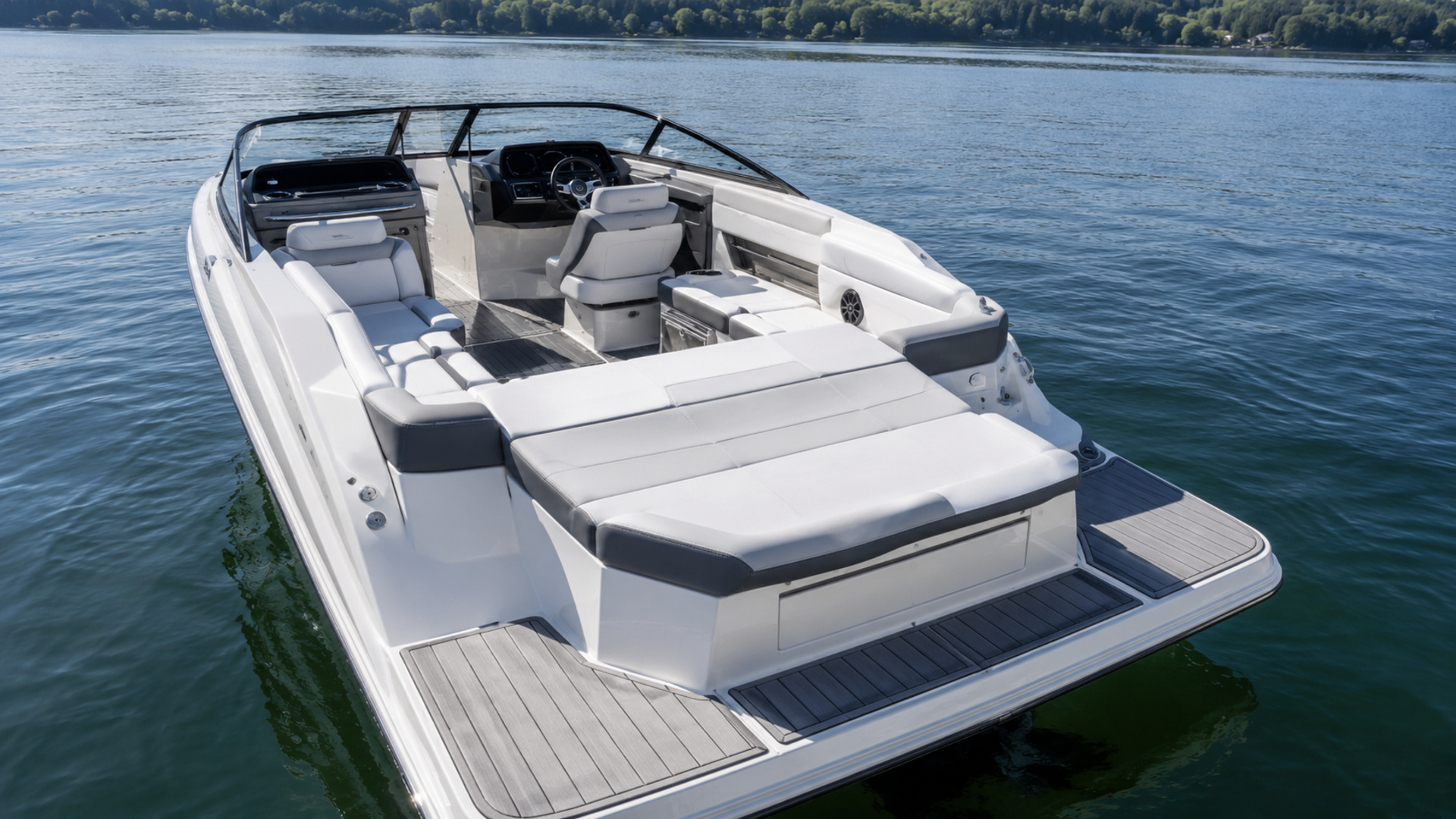
The VR6 Bowrider’s deck is the clearest reason to step up from the VR5. Additional hull length creates more separation between the bow, cockpit, changing compartment, and stern instead of simply making every bench slightly longer.
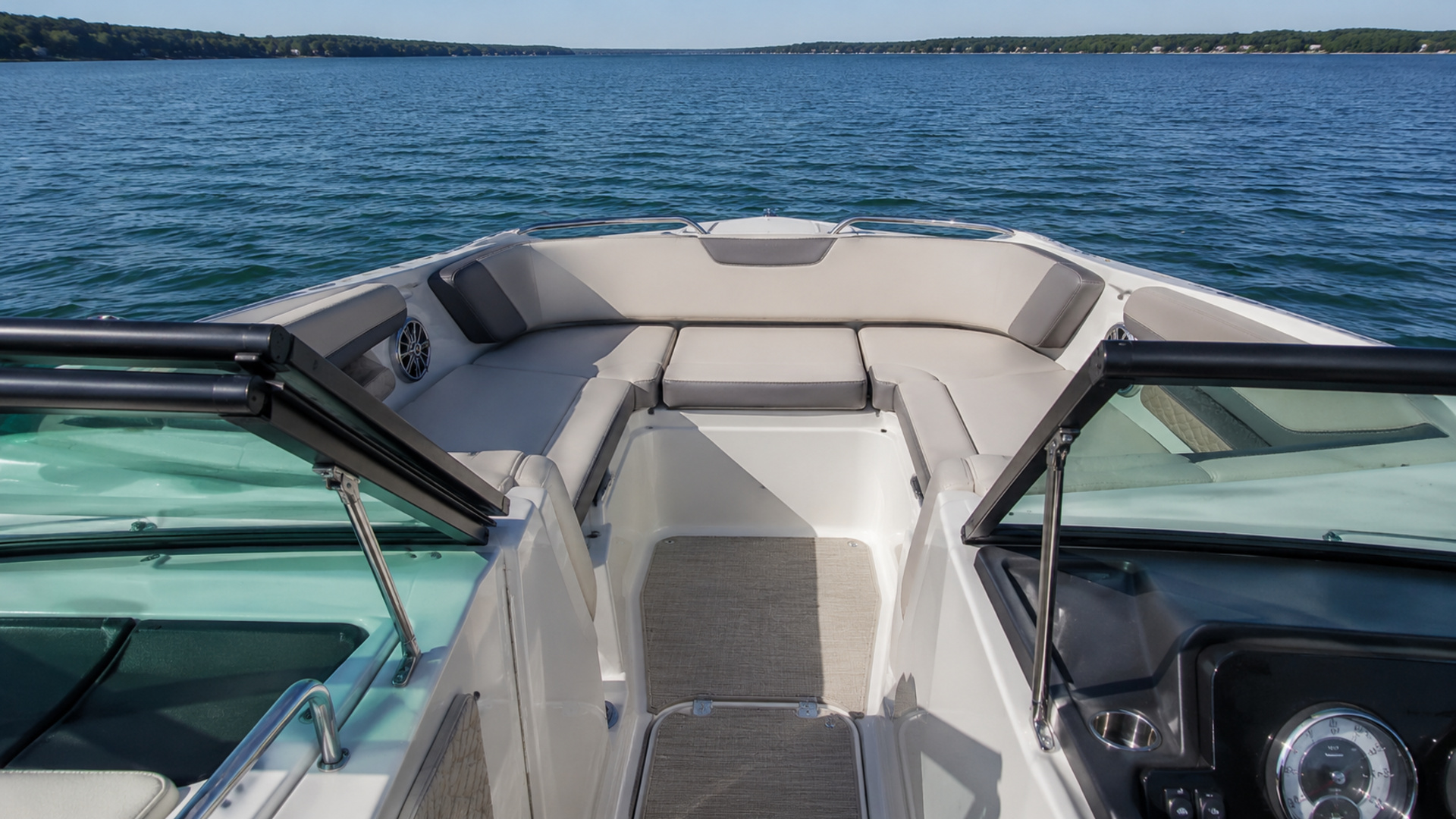
BeamForward carries the 8-foot beam well into the bow. Adults can use the forward seats without feeling relegated to a narrow point, and the higher gunnels help the area feel secure with younger passengers.
A large lockable port-side changing room gives the VR6 a practical feature smaller VR models cannot duplicate. Bayliner offers a portable-head option, which can make long family days much easier.
The portside companion seat can face different directions, including an aft-facing position that works well when watching a rider behind the boat.
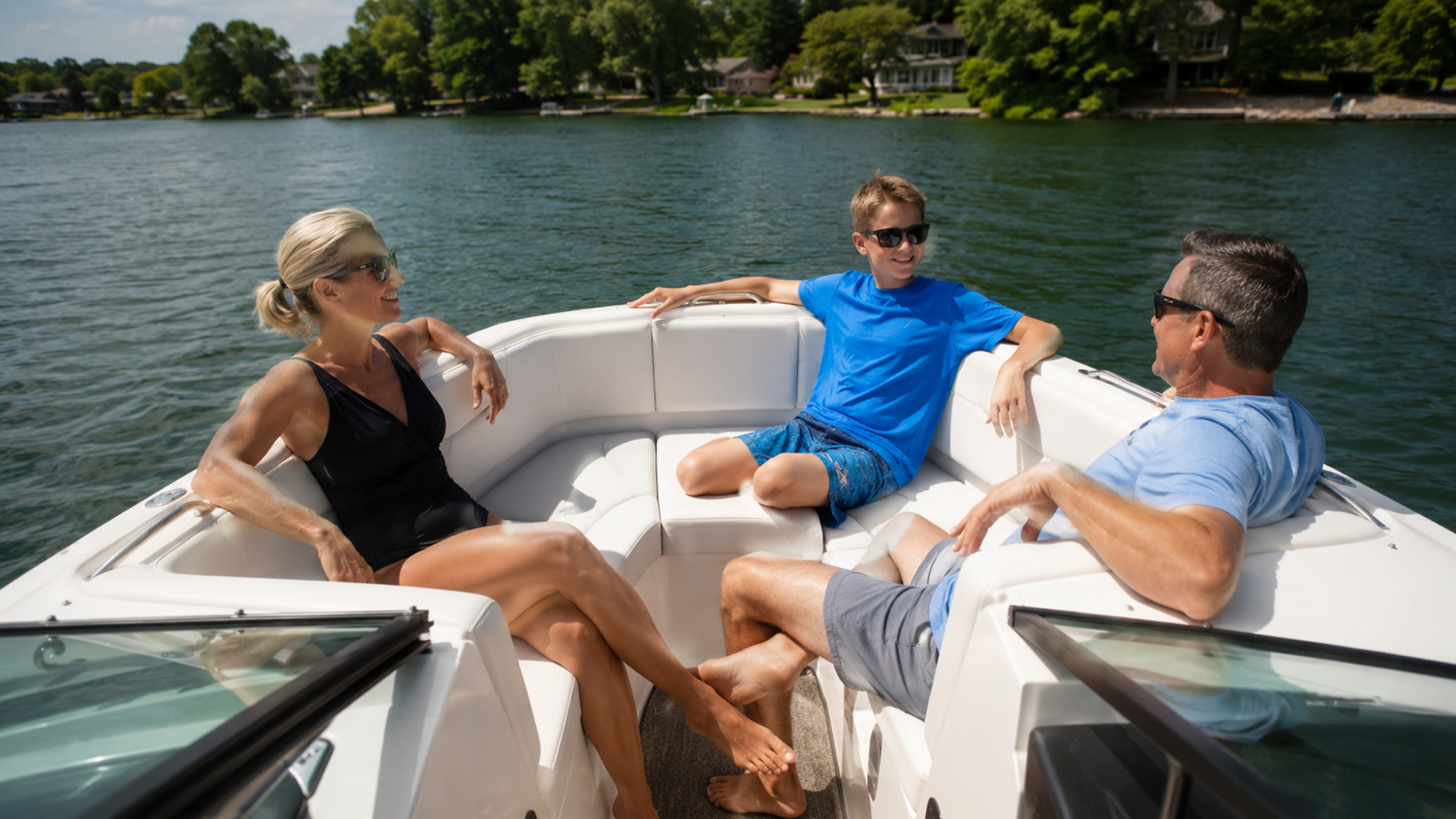
With an optional filler cushion, the aft seating converts into a U-lounge. That changes the cockpit from transportation seating into a large social zone after the anchor goes down.
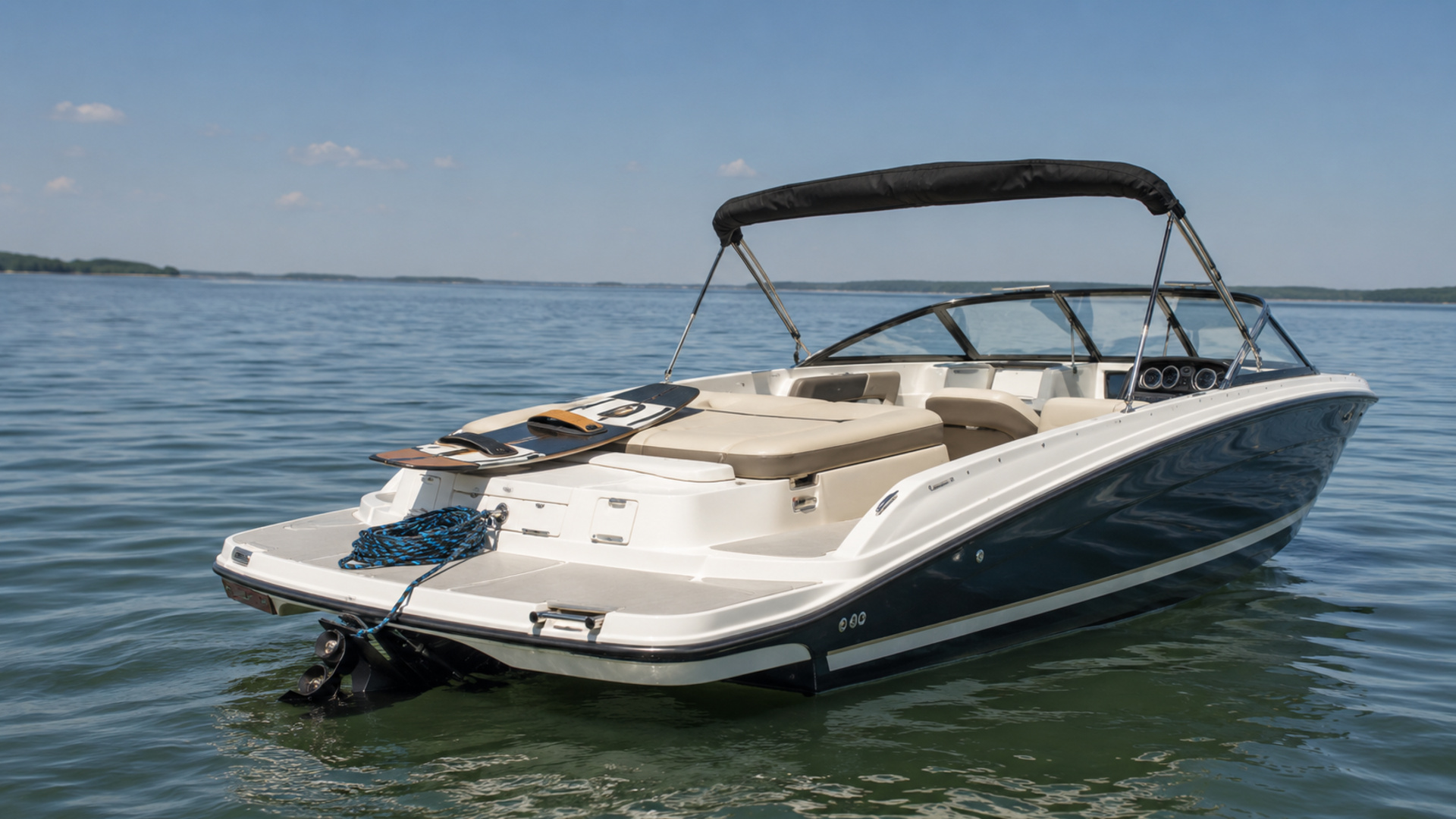
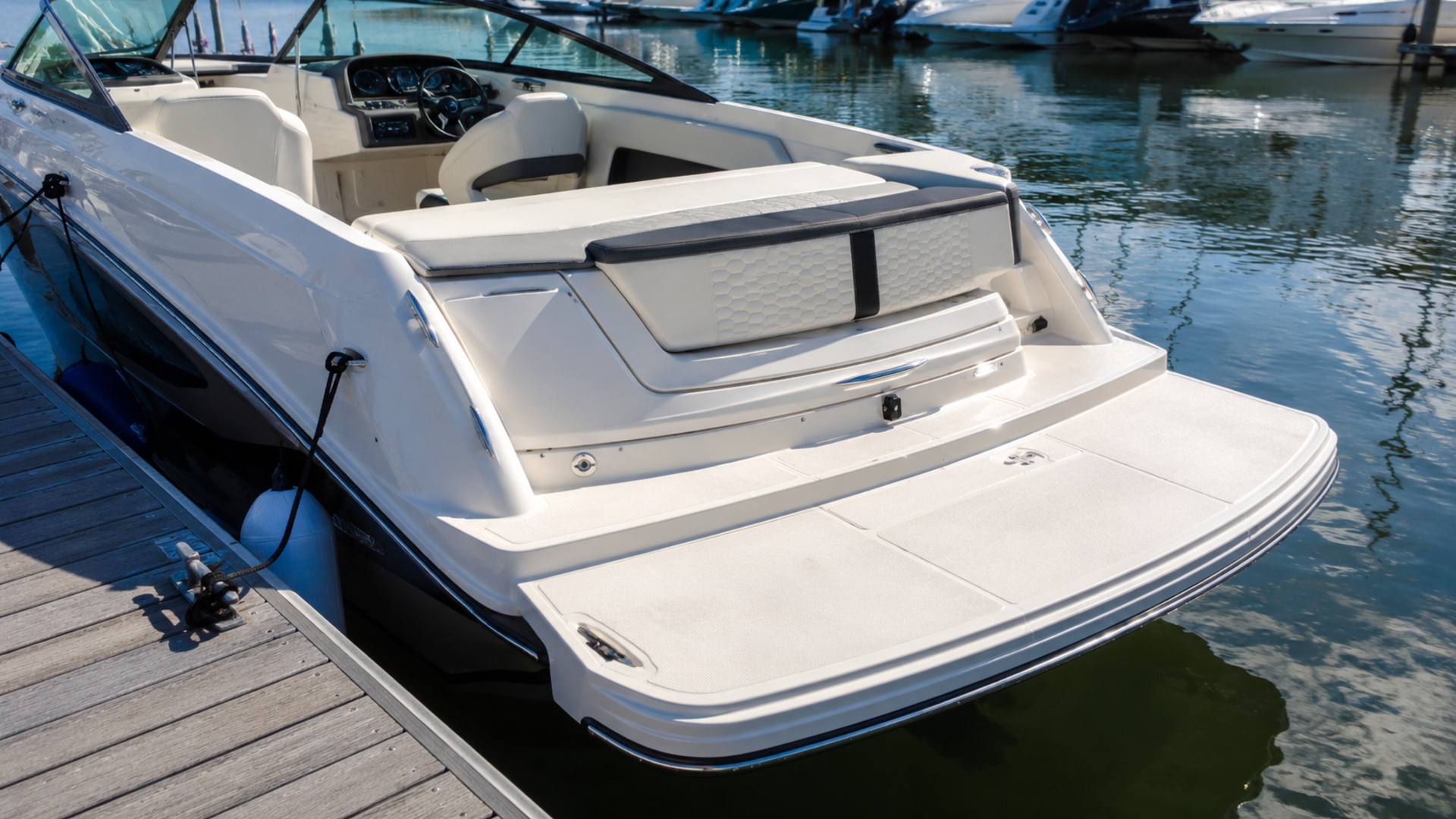
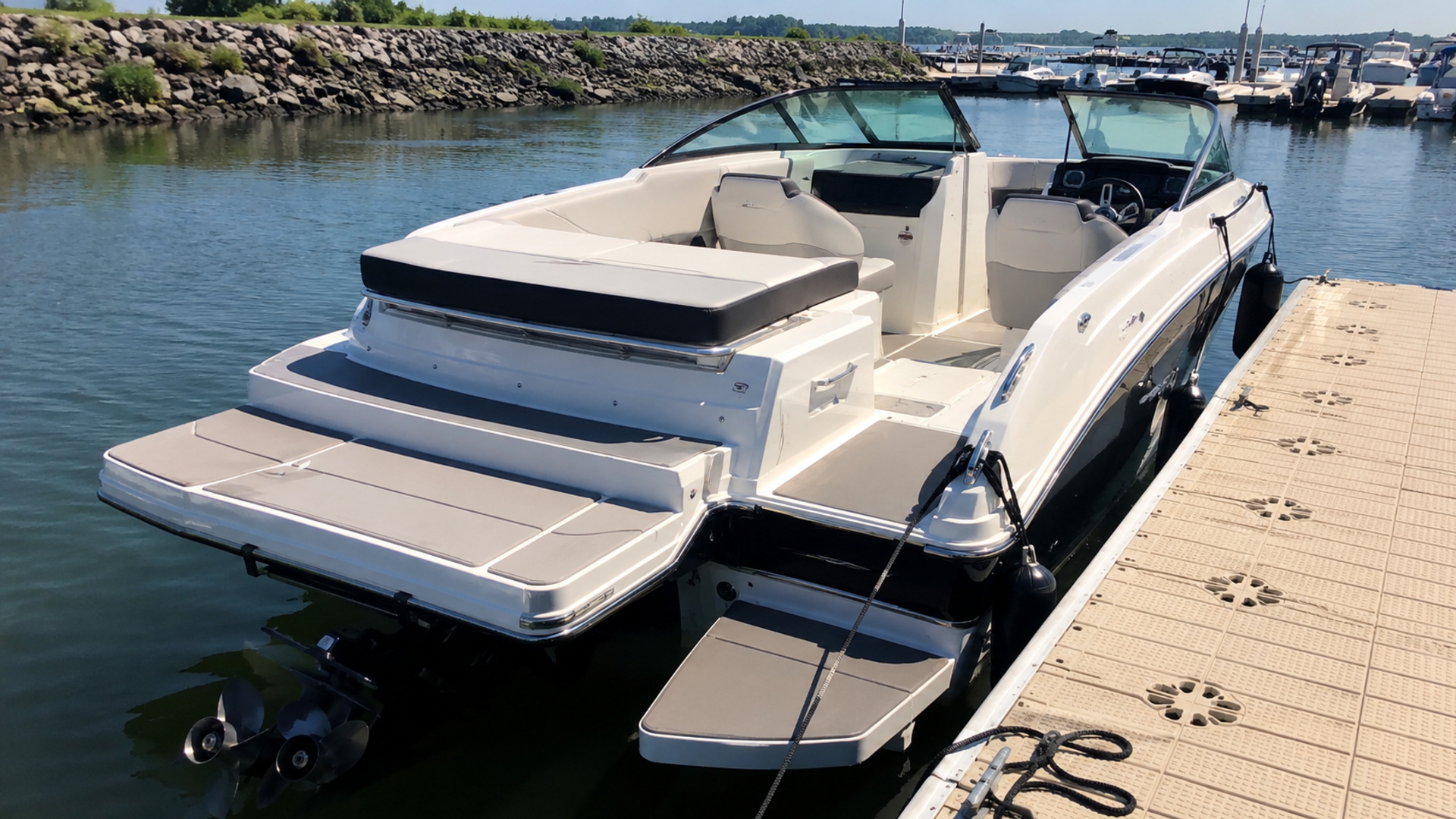
The sterndrive installation keeps the center of the swim platform clear. Swimmers can sit, board, and move across the stern without a large outboard powerhead dividing the space.
In-floor ski and wakeboard storage keeps long equipment below deck. That becomes more important on a ten-person boat because loose gear quickly consumes otherwise useful circulation space.
An integrated cooler gives food and drinks a designated location. Cup holders, glove-box storage, and under-seat volume handle smaller items that accumulate during a full day.
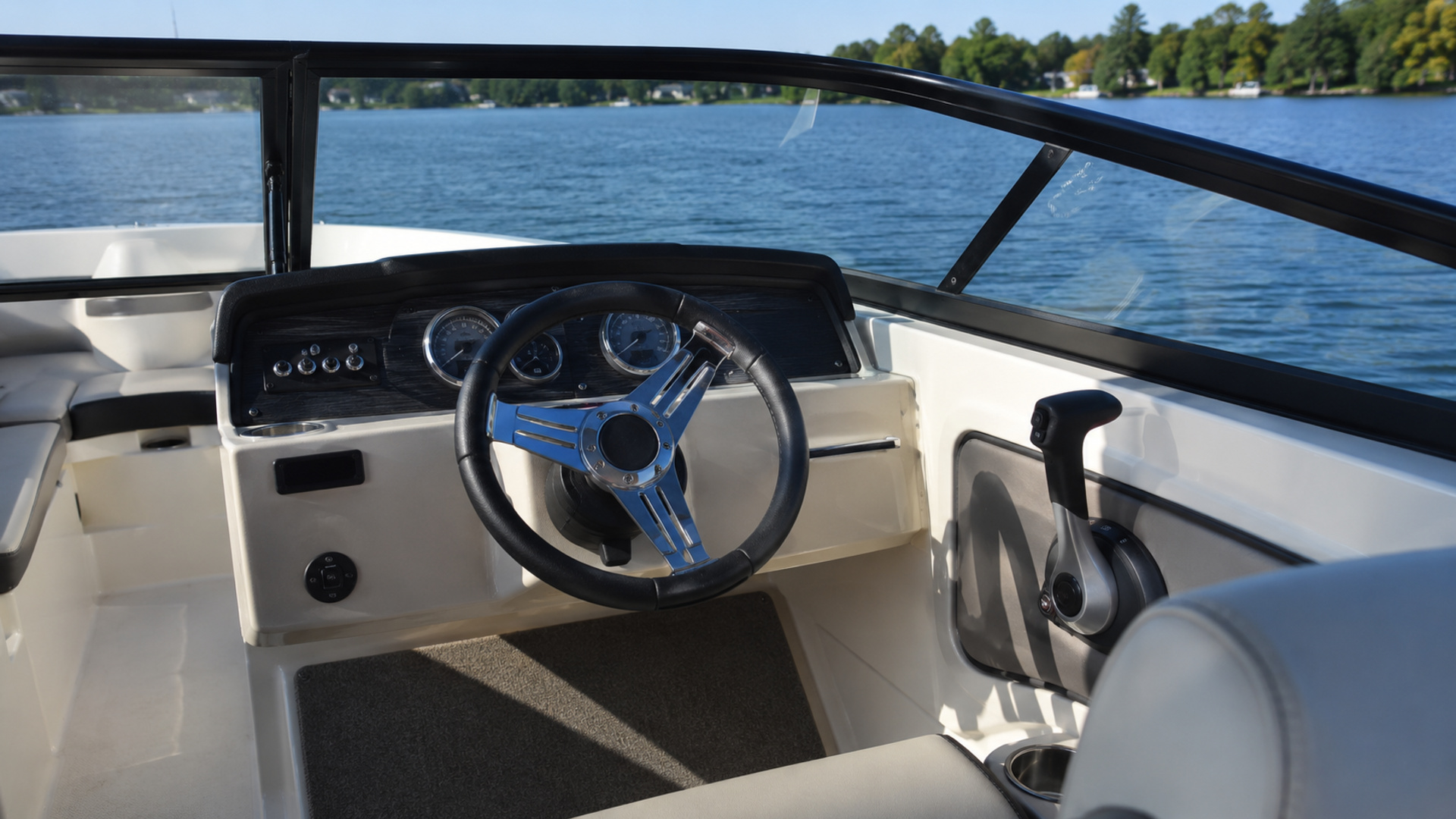
Available digital-dash options can modernize the helm, while tower and wakeboard-rack equipment can push the boat farther toward watersports use.
Buyers should be selective with options. A portable head can solve a recurring family problem. A tower makes sense when towing is frequent. Equipment that does not change how the boat is used may not deserve its price premium.
The stern remains the strongest reason to choose the Bowrider over the Outboard. Stand on both platforms before buying. If the outboard engine does not bother you, the easier service profile of the VR6 Outboard deserves serious consideration.
200 to 250 HP MerCruiser Power – The sterndrive VR6 offers the highest available power of the two current VR6 propulsion choices.
The VR6 adds a private port-side compartment that smaller VR models do not provide, giving families a place to change and store larger personal items.
The changing compartment can accept a portable head, making long days away from shore facilities much easier for families and guests.
An available filler cushion turns the rear seating into a broad social arrangement once the boat is anchored.
The multi-position portside seat can face a rider behind the boat, improving watersports observation without requiring someone to stand.
With the engine beneath the aft deck, the center of the transom remains open for boarding, sitting, and managing watersports equipment.
Long tow gear stays beneath the cockpit floor instead of filling the passenger walkway.
Available 7-inch and 9-inch displays can add VesselView-linked engine information and navigation capability at the helm.
The VR6 Bowrider has enough age spread that the inspection should change with model year. A 2026 boat mainly needs a clean delivery and service check. A 2016 boat needs aging systems evaluated throughout the package.
Start with the MerCruiser and Alpha One drive. Confirm hours, annual service, winterization history, cooling work, drive lubricant, bellows, and any gimbal-related maintenance.
Open the engine compartment before and after the sea trial. Look for water, fresh leaks, corrosion, overheated wiring, or evidence that previous owners treated the bilge as invisible space.
Run the blower and automatic bilge pump. Confirm the battery switch operates correctly and inspect any dual-battery installation for secure, clean cabling.
Inspect the changing room and optional portable-head area. Broken latches, worn hinges, moisture, or odor can reveal how heavily the compartment was used.
Convert the aft seating into the U-lounge. Make sure the correct filler cushions are present and that seat hardware works smoothly.
Test the Simrad display, stereo, tower speakers, lighting, and every installed accessory. Older aftermarket electronics should be judged by wiring quality as much as brand.
Inspect tower mounts and windshield hardware for stress or looseness. Large family crews put real loads on grab points and movable components.
The tandem trailer deserves a separate checklist. Tires, brakes, bearings, hubs, bunks, lights, coupler, winch, and swing tongue all affect whether the boat is truly ready to travel.
A cosmetically beautiful VR6 can still hide expensive drive or trailer work. Mechanical records and inspection should decide whether the asking price is deserved.
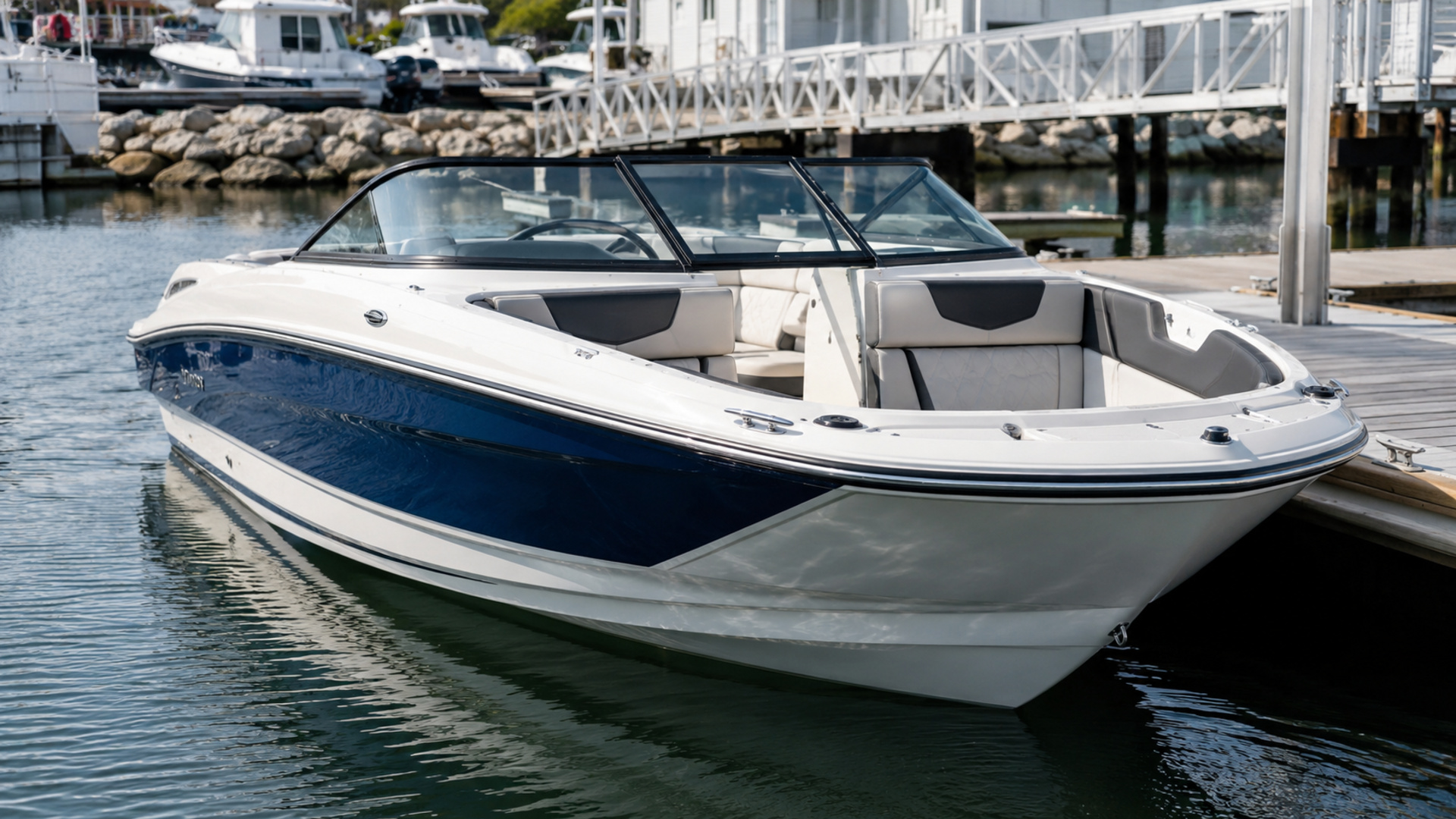
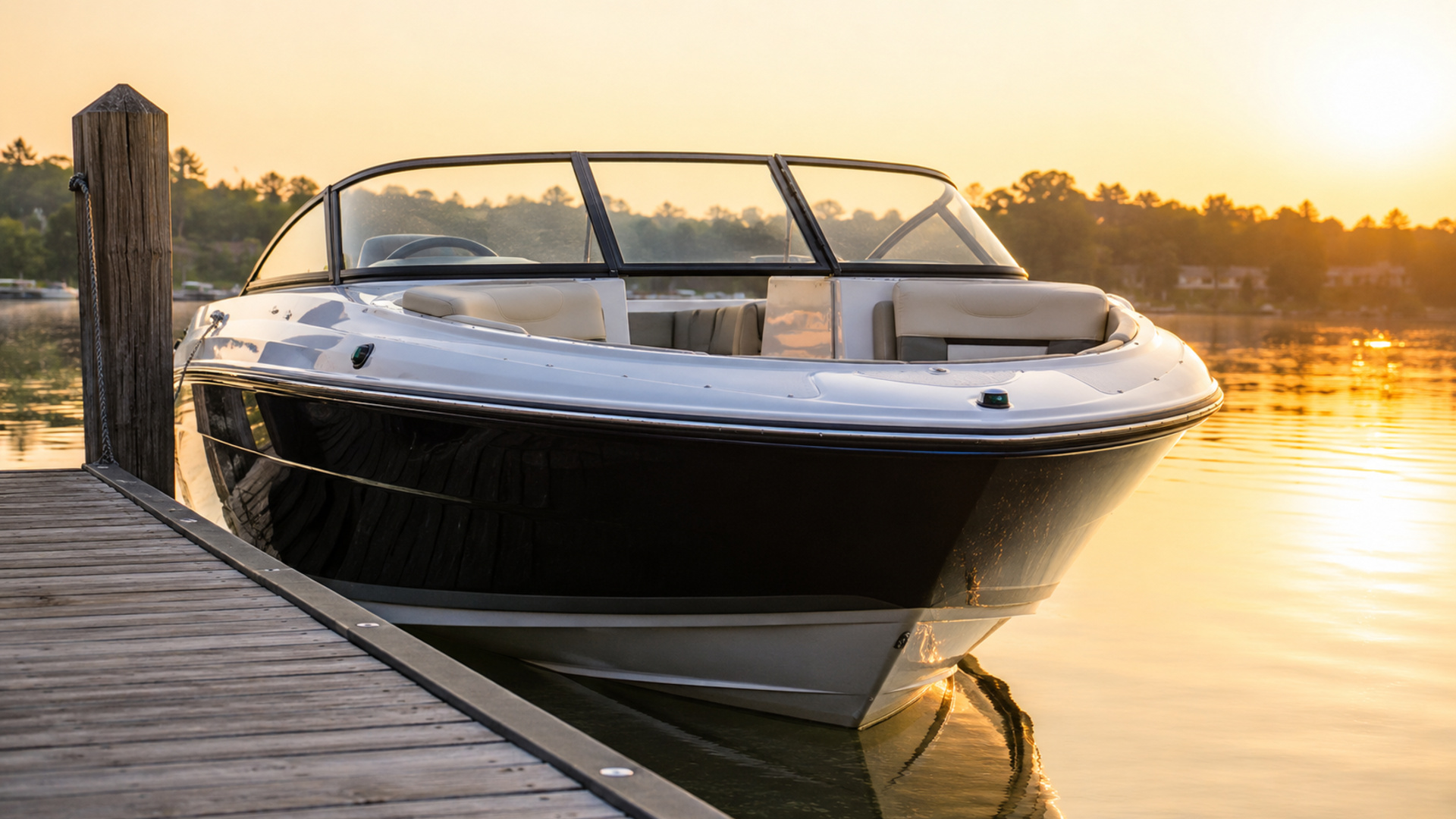
Bayliner currently lists approximately 4,739 pounds with trailer for the VR6 Bowrider. That figure still excludes the weight of a fully loaded family trip.
Add 33 gallons of gasoline, batteries, tower equipment, safety gear, coolers, and whatever remains aboard during towing.
Storage length is 25 feet. Height on trailer is 8 feet 6 inches, and beam on trailer is 8 feet 6 inches.
Many residential garages will fail on length before width. Tower equipment can create additional height concerns, so measure the actual configured boat rather than relying on nominal hull dimensions.
The tandem-axle trailer is appropriate for this size but adds maintenance points. Four tires and additional brake and bearing components need the same attention as the boat.
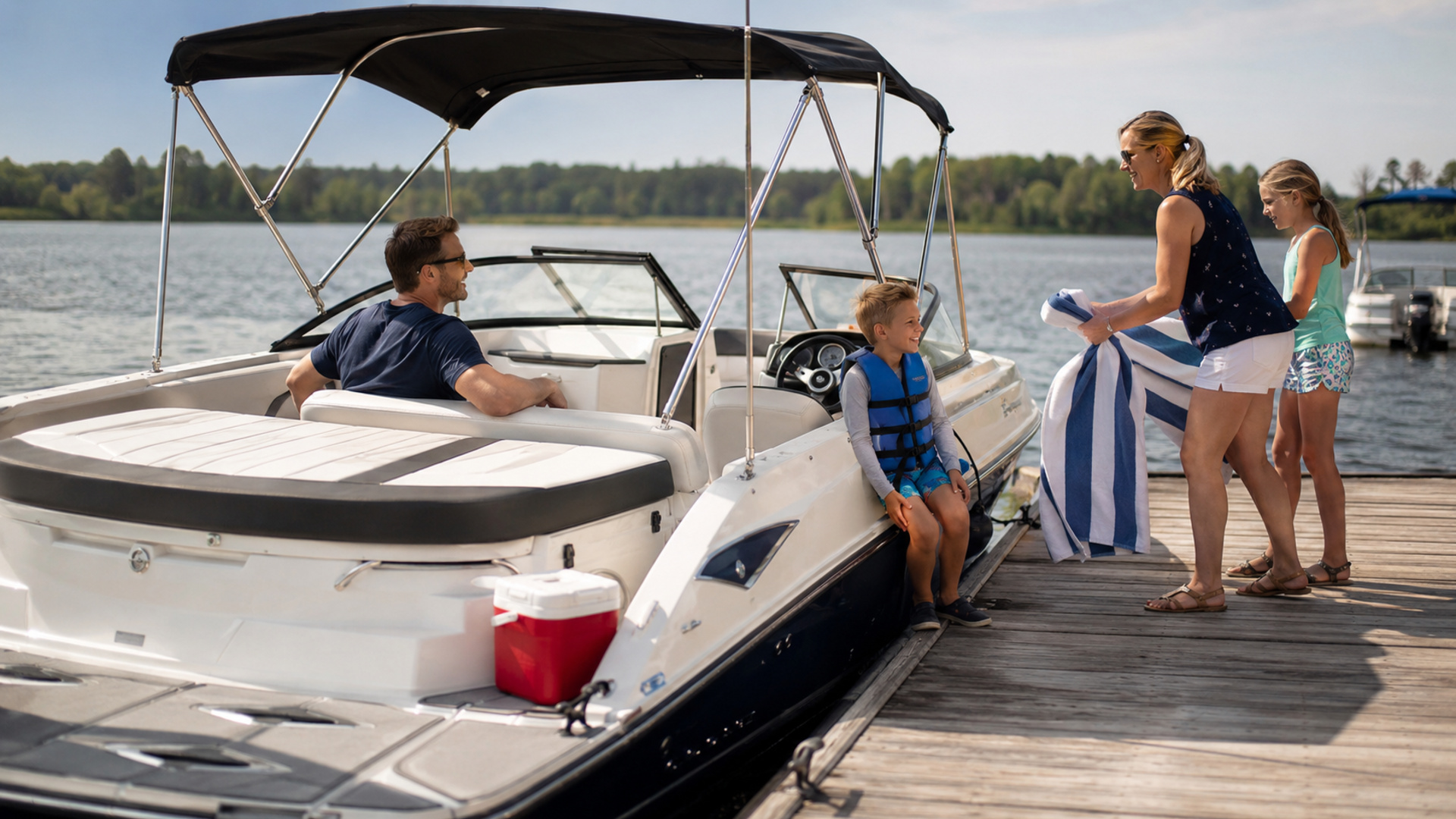
A seasonal slip may make the VR6 far easier to use with a large family. Removing launch and retrieval from every outing can be worth real money if it means the boat gets used more often.
Wet storage changes sterndrive maintenance. Growth, anodes, corrosion, and underwater-drive condition become more important when the Alpha One remains in the water.
Dry stack can be a useful alternative, but confirm facility weight and height limits before buying.
The VR6 is still trailerable, but it is not casual in the way a VR4 is. If the tow vehicle, storage, or launch routine already feels borderline, the smaller VR5 can produce a better ownership experience.
Older examples may have already absorbed substantial depreciation. That can make a 2016 to 2019 boat appealing if its MerCruiser, Alpha One drive, interior, and trailer have strong maintenance history.
A low asking price is not enough. Bellows, gimbal components, cooling work, upholstery replacement, trailer brakes, and electronics can erase the savings quickly.
Engine output matters too. A clean 250-horsepower boat can be more attractive to a family that regularly runs loaded than an otherwise similar 200-horsepower version.
The changing room and optional head should be inspected as actual equipment, not treated as a checkbox. Missing filler cushions or damaged privacy hardware affect usability.
Tower packages, digital displays, flooring, audio, and other options can add value when they match your use. Original retail cost does not automatically translate into current used value.
Current average asking prices run above the Outboard average on the VR6 hull. The difference should be interpreted with year, engine, condition, and supply in mind rather than treated as proof that all sterndrives command more.
Outboard inventory is much deeper. That gives a buyer another source of leverage. If a Bowrider seller wants premium money, the boat should provide the clean drive history, equipment, and condition needed to justify choosing the thinner market.
Late-model Bowriders should be compared against current dealer inventory. If a used boat is priced close to new, immediate availability or expensive installed options need to make the difference worthwhile.
The best VR6 Bowrider is not the cheapest one. It is the boat whose drive history and configuration allow you to enjoy the clear stern without turning the first ownership season into a mechanical catch-up project.
Pricing varies. Model year, engine package, options, trailer, condition and dealer all move the number, and listings change weekly. Send us the boat you are looking at and we will price that exact one.
Illustration only and not an offer of credit.
Run the calculator with the actual 200- or 250-horsepower boat you are considering. Include the negotiated selling price rather than a stripped base price.
Illustration only and not an offer of credit. Your actual rate and term depend on credit profile, vessel age, loan amount and ownership structure.
Both current VR6 variants are 22 feet 7 inches long, 8 feet wide, rated for ten people, and carry 33 gallons of fuel. Both use 20 degrees of deadrise and Bayliner’s BeamForward and AftAdvantage concepts.
The Bowrider uses 200 to 250 horsepower from a MerCruiser sterndrive. The Outboard uses 150 to 200 horsepower from a Mercury FourStroke.
Bayliner lists approximately 3,797 pounds with standard engine for the Bowrider and 3,659 pounds for the Outboard.
The Bowrider clears the center of the platform and creates a more integrated swimming area. It also gives the buyer another 50 horsepower at maximum output.
The Outboard keeps the engine outside the hull. Routine inspection, flushing, lower-unit service, propeller replacement, and future repowering are easier to understand and access.
Current inventory strongly favors the Outboard. Buyers looking for a specific year, engine, or location generally have more examples to choose from.
Choose the Bowrider when the clear stern and 250-horsepower ceiling materially improve your family’s use.
Choose the Outboard when you want the same ten-person hull with easier propulsion ownership and broader shopping choice.
Start with age and propulsion history, not upholstery color. Current inventory stretches across enough model years that two VR6 Bowriders can have radically different maintenance needs.
Ask for engine and drive service invoices before traveling to see an older boat. Winterization and bellows history are more important than a seller saying the boat was “well cared for.”
Confirm whether the engine is 200 or 250 horsepower. If a full crew and tow sports are central to the purchase, the larger engine may be worth narrowing the search.
Inspect the engine compartment cold. A freshly washed bilge can hide clues, so also inspect again immediately after the sea trial.
Look at the Alpha One propeller and skeg. Evidence of repeated impacts should lead to more questions about the drive and alignment.
Test the changing room door and optional portable head. On older boats, small hardware and privacy features can be expensive or annoying to replace.
Make sure the U-lounge filler pieces are present. Proprietary cushions are part of the model’s value because they unlock the layout you are buying the larger hull to get.
Inspect the swim platform for dock damage. The stern is heavily used on this version and deserves more than a quick walk-through.
Check tower mounts, windshield hardware, stereo, digital displays, lighting, and any added electronics. Large family boats often collect accessories over time.
Evaluate upholstery across every seating zone. The VR6 contains enough cushions that widespread UV damage can materially change the economics of an older bargain.
Inspect the tandem trailer with the same discipline. Old tires, weak brakes, neglected hubs, and corroded lights can turn a long-distance purchase into an immediate repair list.
Then compare a VR6 Outboard at similar money. If the external Mercury does not bother your family and 200 horsepower is enough, the simpler variant may be the smarter buy.
If the Bowrider still wins because the clear platform and stronger power package matter every weekend, buy the cleanest mechanical example you can find rather than the cheapest year.
Send Float Finance the specific VR6 Bowrider listing, model year, engine output, seller type, and asking price.
The current VR6 Bowrider is 22 feet 7 inches long with an 8-foot beam and 20 degrees of deadrise. Bayliner lists an estimated draft of 2 feet 10 inches, approximately 3,797 pounds with standard engine, about 4,739 pounds with trailer, and 25 feet of storage length. A separate maximum draft is not published by Bayliner.
Bayliner publishes capacity for ten people and a maximum weight capacity of 1,700 pounds. The Outboard version carries the same number, so passenger capacity does not decide the propulsion choice. Comfort still depends on the mix of adults, children, coolers, tow gear, and other equipment aboard.
Current U.S. specifications list a 200-horsepower MerCruiser 4.5L MPI sterndrive with Alpha One drive as standard, with 250 horsepower available. The 250 is most useful for heavier family loads and regular watersports rather than as a top-speed purchase alone.
Choose the Bowrider when a clean central swim platform and the 250-horsepower ceiling matter enough to justify sterndrive ownership. The Outboard gives you the same ten-person hull, lower published standard-engine weight, easier mechanical access, and substantially more used inventory.
Yes, compared with the Outboard. The Bowrider adds an engine compartment, blower, Alpha One drive, bellows, gimbal hardware, drive lubricant, and I/O winterization considerations. Those are manageable with proper service, but buyers should accept them as part of the clean-stern design.
Bayliner provides a large lockable port-side changing room and offers a portable-head option. Not every used boat will have it. Verify the actual equipment because the head can be a major convenience for families that spend long days away from marina facilities.
Fuel capacity is 33 gallons. That is the same tank size used by the VR5, so buyers planning longer routes should use verified fuel-burn information for the exact 200- or 250-horsepower configuration and keep a sensible reserve.
Buy the VR6 when ten-person capacity, the changing room, and the larger social cockpit solve needs that already appear on regular outings. Buy the VR5 when eight-person capacity and its shorter storage footprint are enough. Two extra feet only create value when the family uses them.
Tell us a little bit about yourself and the boat you are looking to finance.