
Call Us : 207-994-5109
Mon – Fri: 8 am to 9 pm & Sat – Sun: 10 am to 8 pm
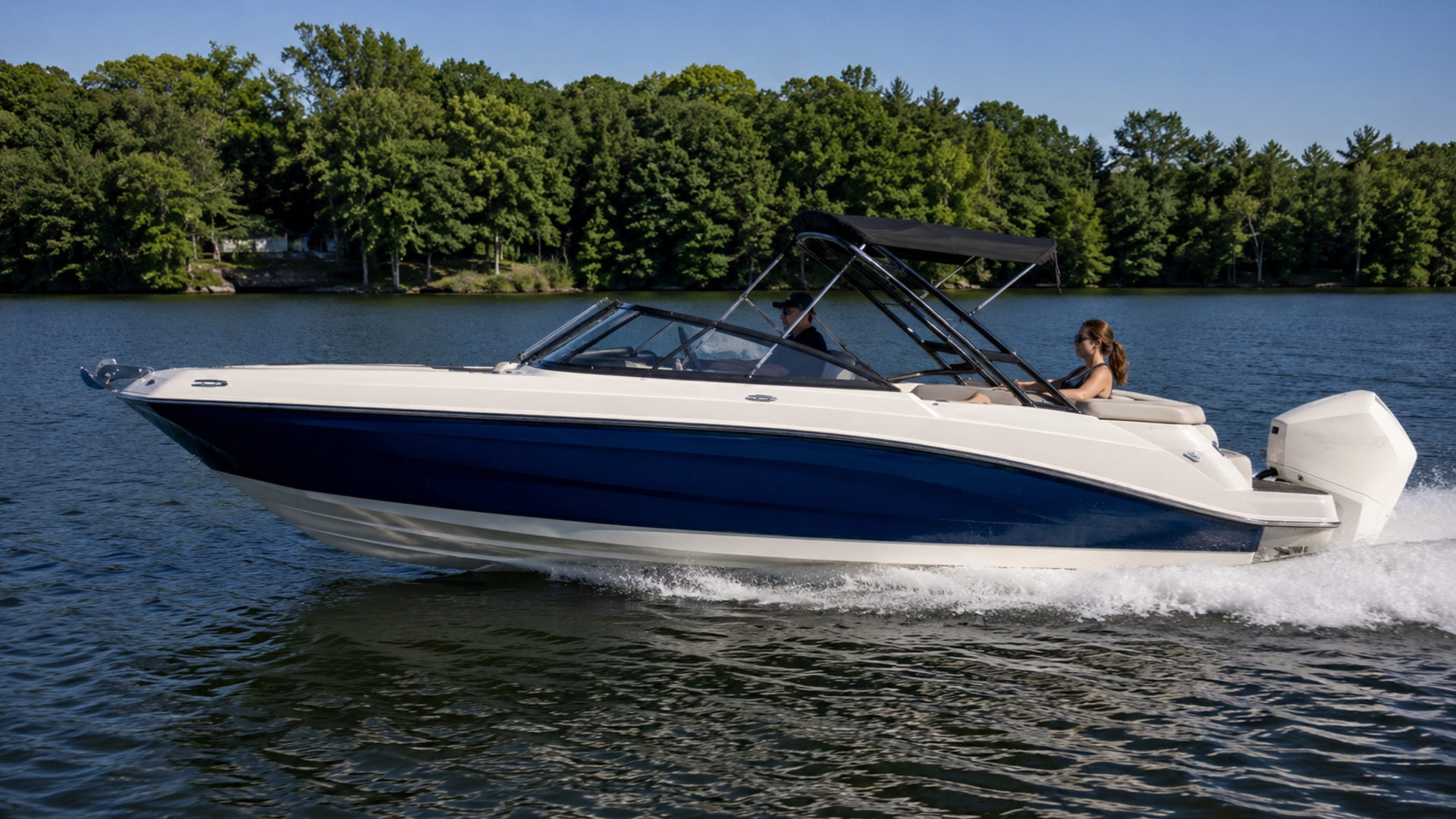
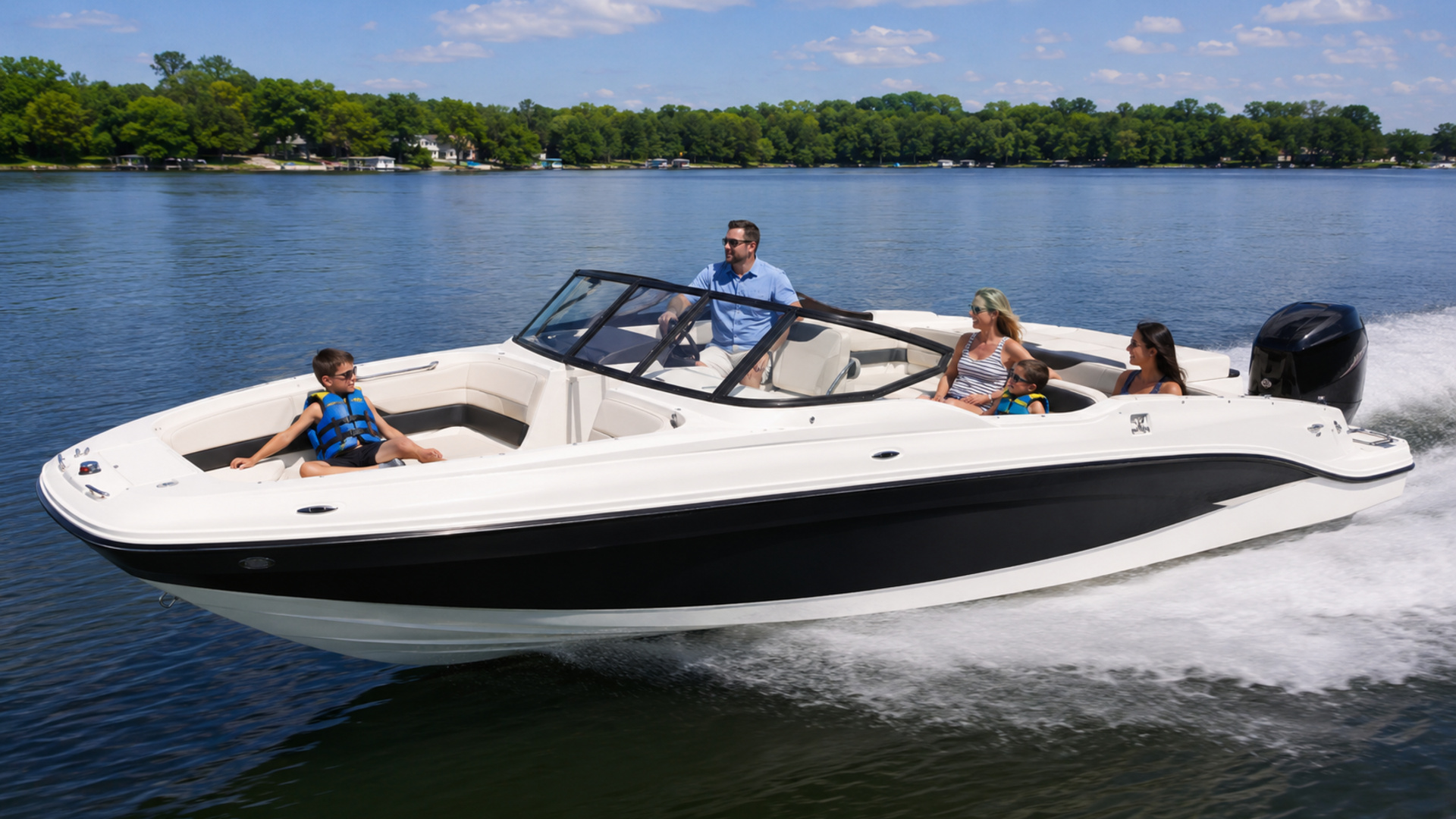
The Bayliner VR6 Outboard gives large families ten-person capacity, a changing room, and a 22’7″ social layout while keeping 150 to 200 horsepower of Mercury power fully accessible.
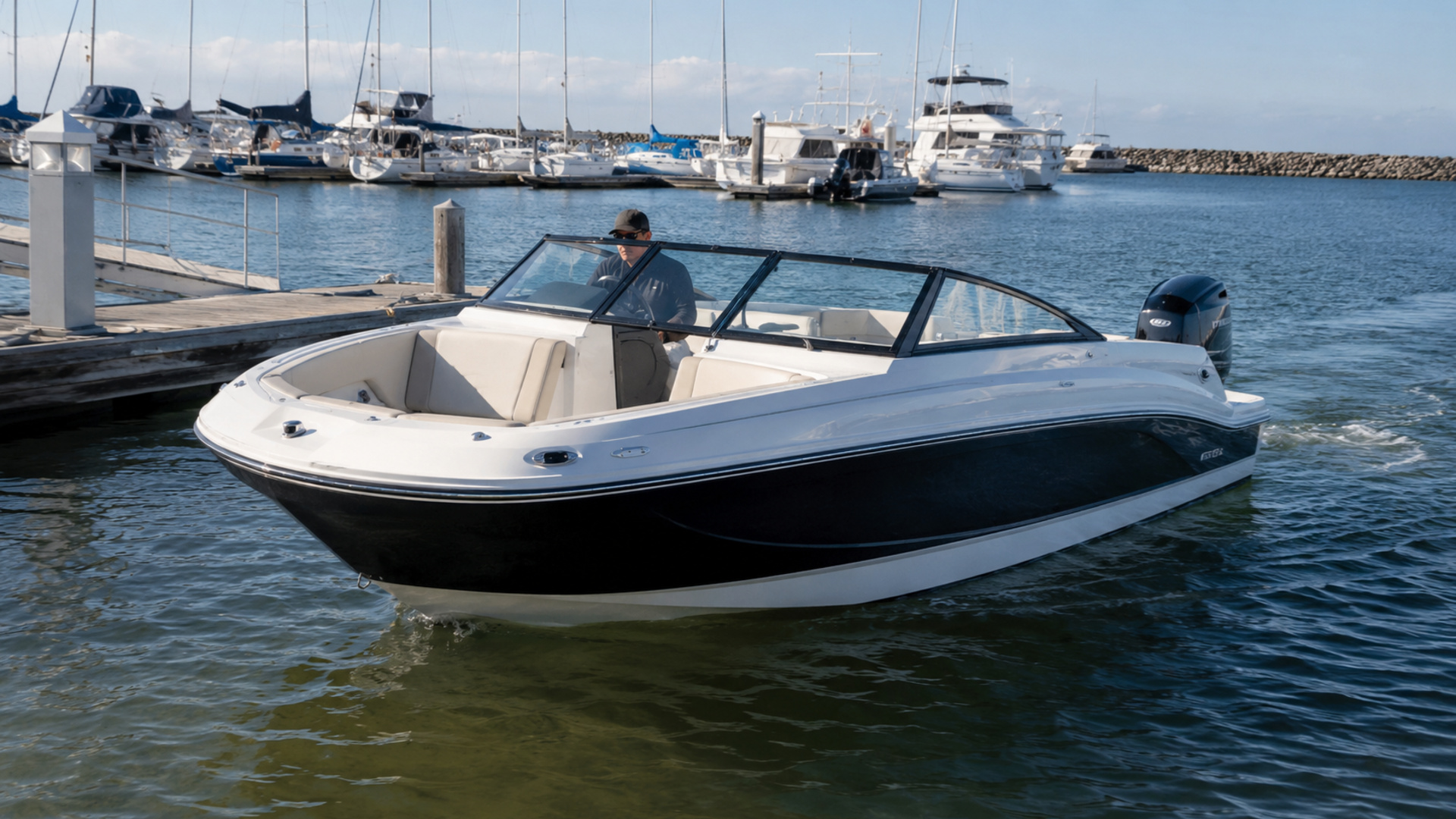
The VR6 Outboard is for the buyer who needs a large family bowrider but does not want the propulsion system to become the most complicated part of ownership. Bayliner gives you the 22-foot-7-inch VR6 hull, ten-person capacity, changing room, convertible rear seating, and broad BeamForward bow with a Mercury hanging in plain view at the transom.
Standard power is 150 horsepower and the current U.S. maximum is 200. That is less than the 250-horsepower ceiling of the VR6 Bowrider, but the engine remains outside the hull where routine inspection and service are straightforward.
For many owners, that matters more over five seasons than the missing fifty horsepower. There is no in-hull engine compartment to inspect, no blower routine before starting, and no Alpha One bellows or gimbal hardware to add to the maintenance list.
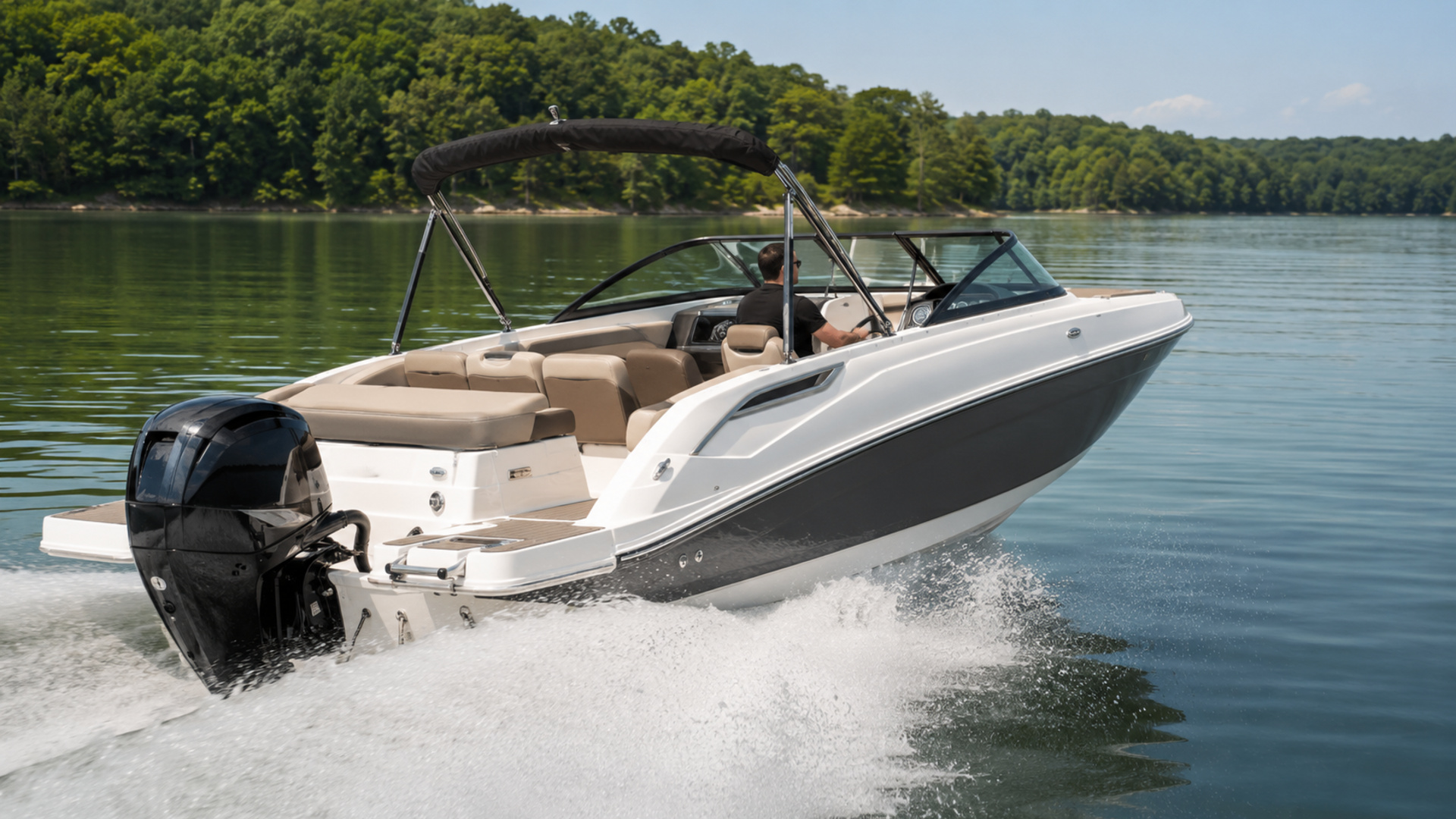
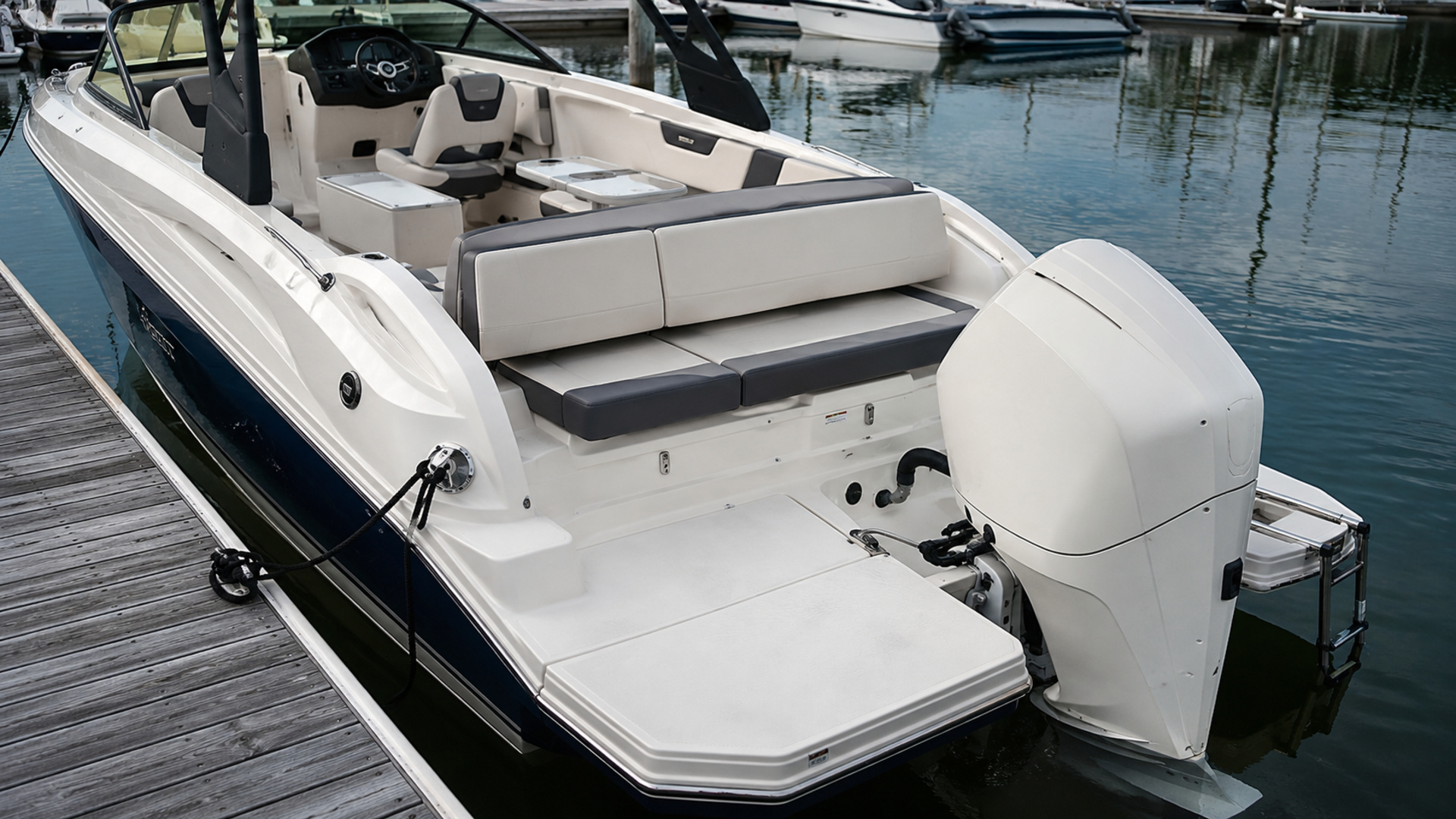
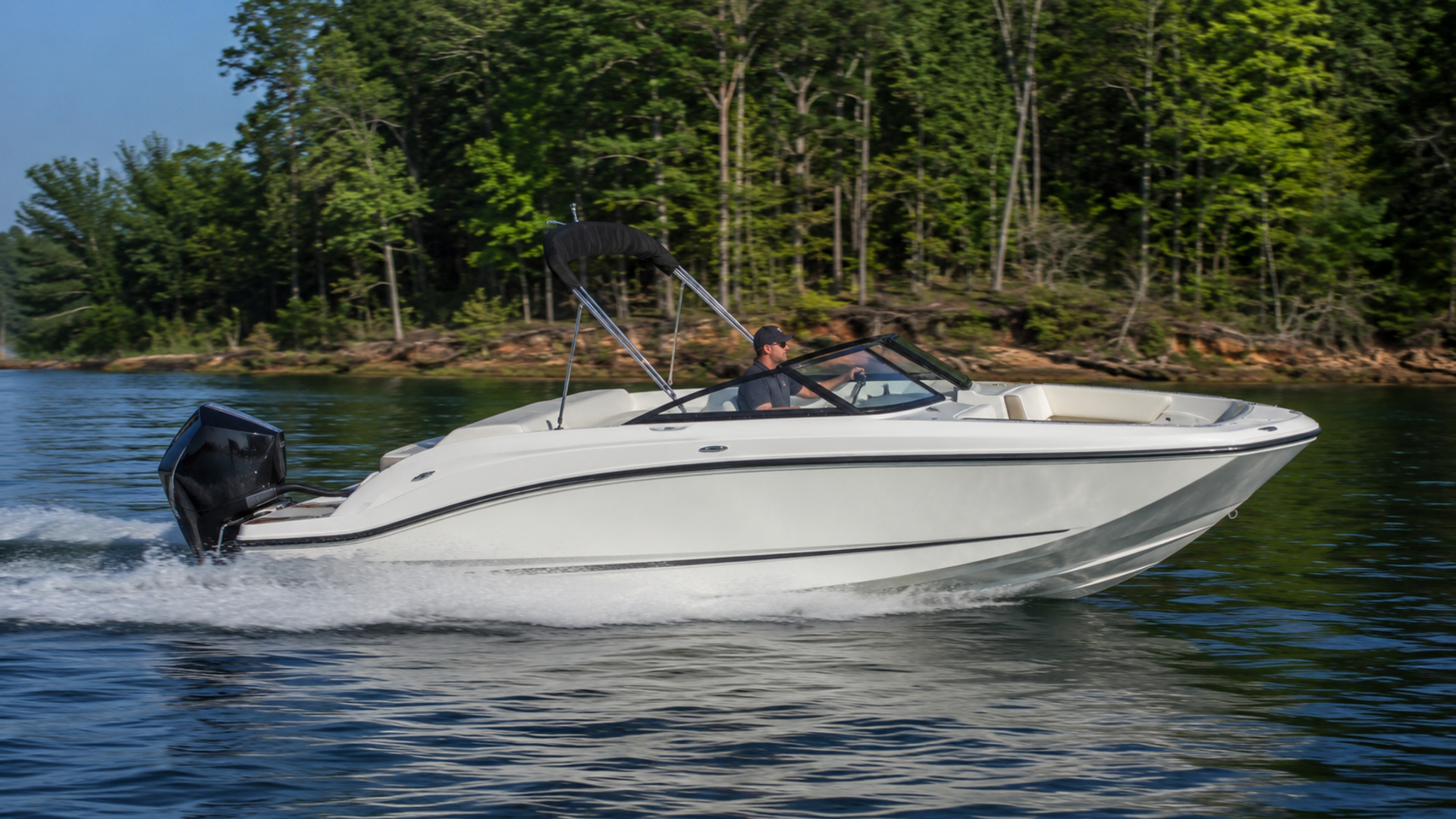
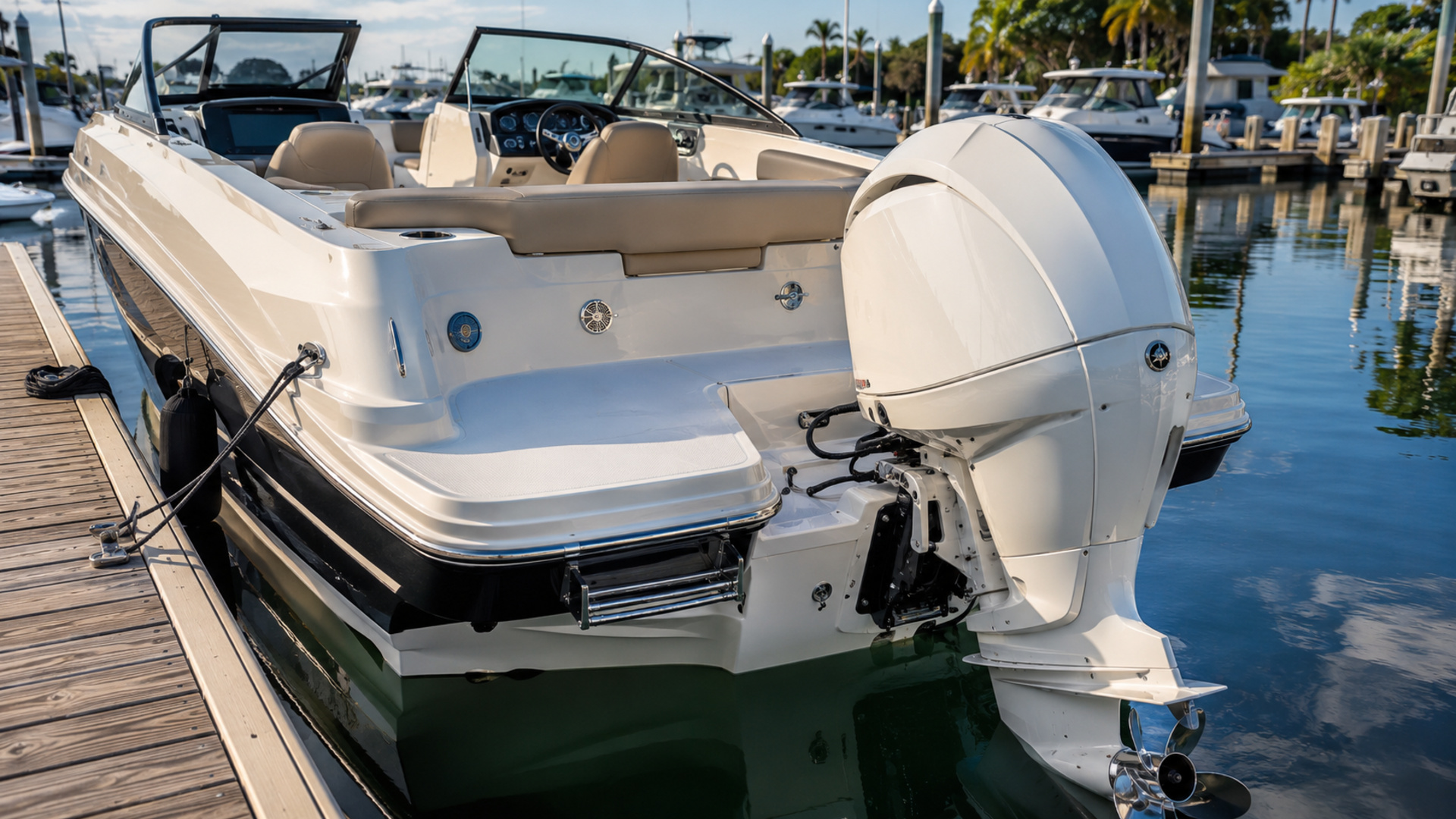
The compromise is visible at the stern. The outboard powerhead sits in the middle of the platform. Swimmers board and move around it rather than across the completely open center provided by the sterndrive version.
AftAdvantage helps prevent the engine from stealing the cockpit. Bayliner pushes seating toward the aft end of the running surface and places the swim platform beyond it, preserving interior length.
The large port-side changing room remains part of the Outboard, so buyers do not have to choose sterndrive power to gain the feature that most clearly separates the VR6 from smaller VR models. A portable head is available on equipped boats.
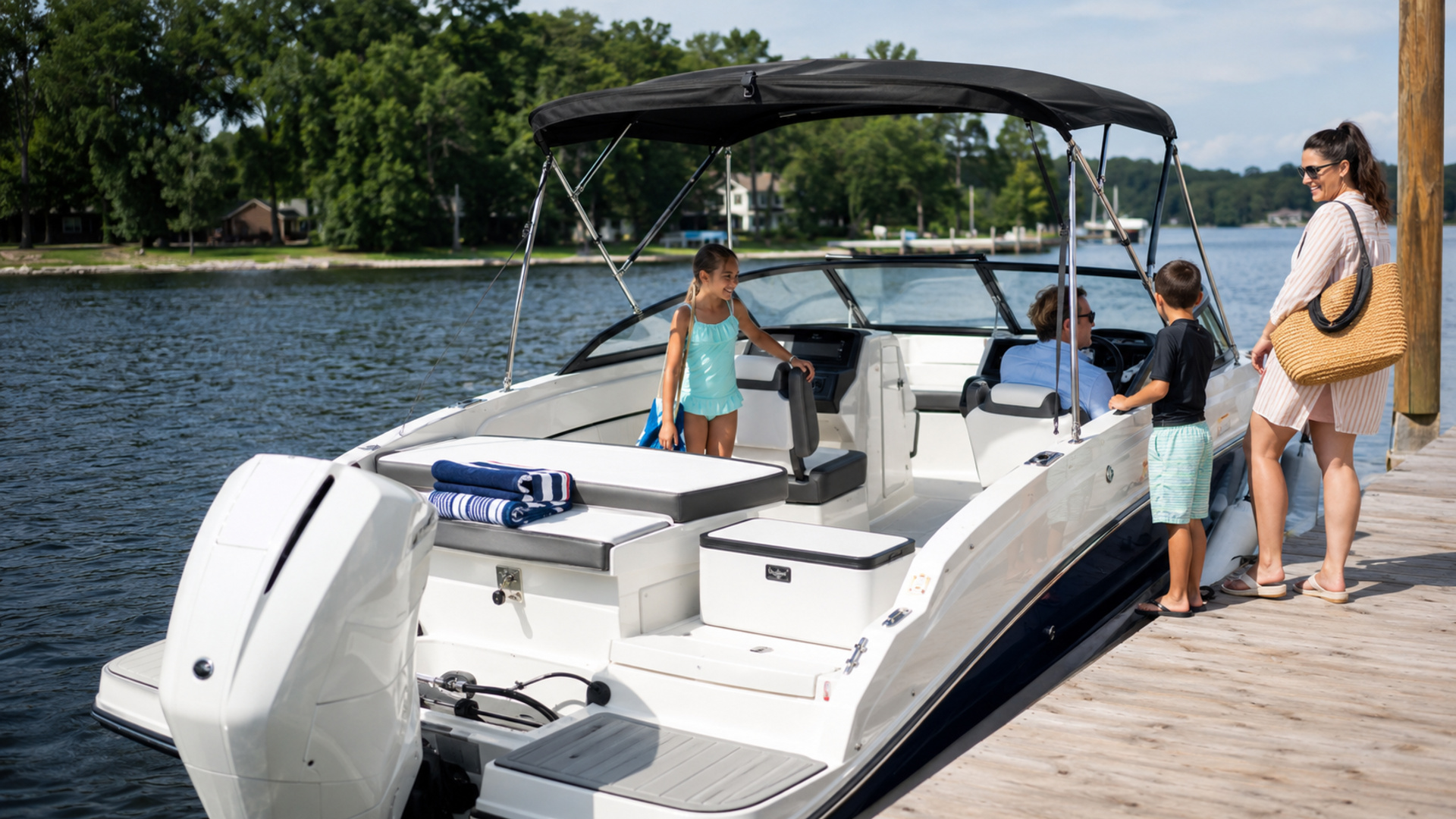
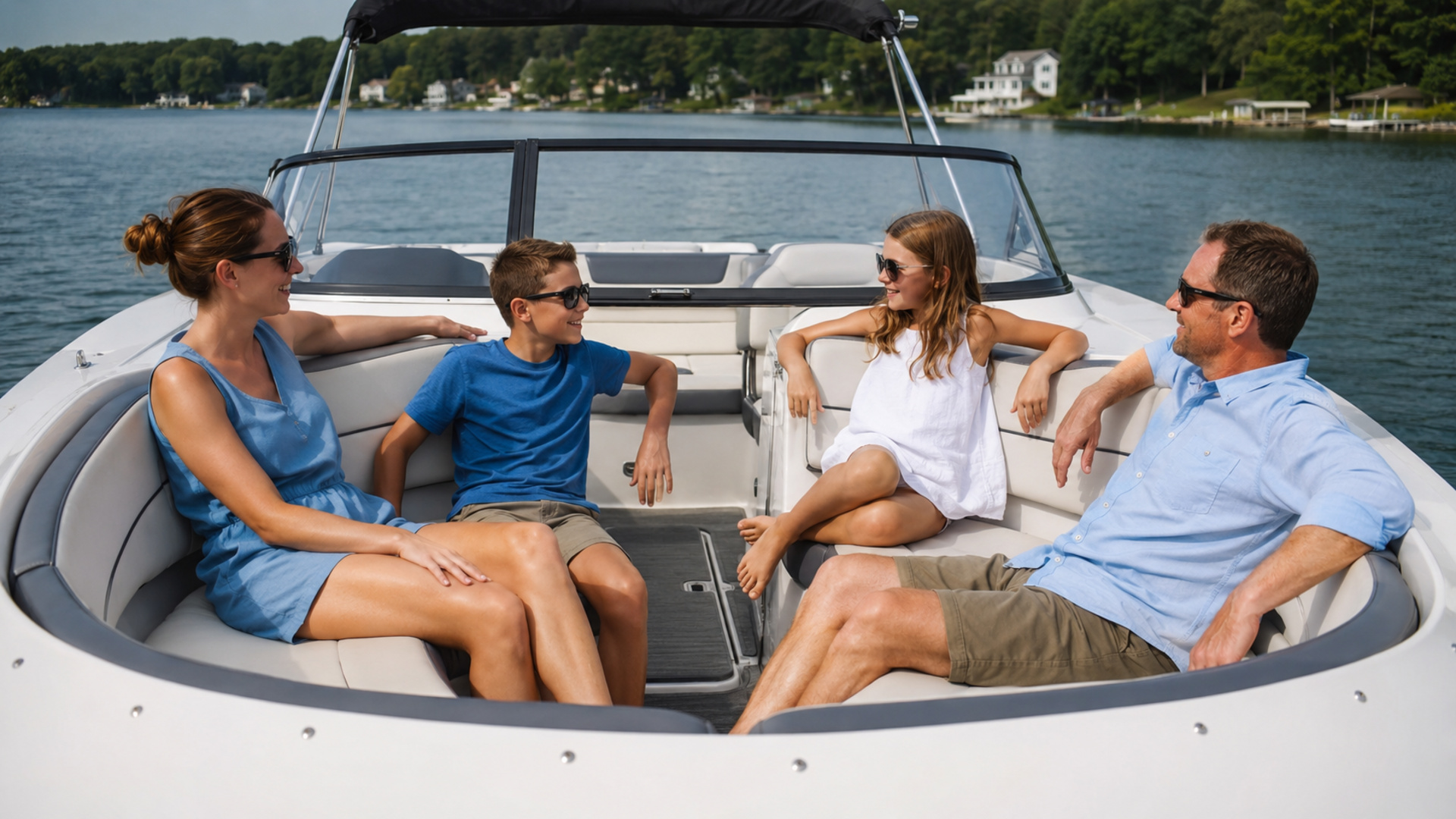
The aft cockpit can convert into a U-lounge with a filler cushion, while the multi-position companion seat can face aft to watch riders. That makes the VR6 a genuine social platform even though the engine occupies the transom.
Current inventory is much deeper than the Bowrider market. Fifty-six VR6 Outboard listings span 2019 through 2026. Buyers can shop year, horsepower, condition, tower equipment, fishing packages, and location without relying on one or two nearby boats.
That supply is a purchasing advantage. If a seller has poor service history or the wrong engine, move on. Another Outboard is far more likely to appear than another clean VR4 sterndrive.
Current average asking prices also run below the Bowrider average on this hull. The price difference should still be evaluated by year, options, and condition, but it strengthens the value argument for buyers who prefer external power anyway.
Buy the VR6 Outboard when the large interior is what you need and you would rather keep propulsion simple. If the engine in the middle of the stern bothers you every time you imagine swimming, buy the VR6 Bowrider and accept the I/O maintenance instead.
Published factory figures. Confirm every dimension against the individual boat before you commit.
Bayliner publishes an estimated draft of 2 feet 10 inches for the current VR6 Outboard but does not separately state a maximum. Buyers operating in shallow water should use the exact engine position and local conditions rather than converting the estimated figure into something Bayliner did not label.
The hull measures 22 feet 7 inches with an 8-foot beam. That relatively narrow beam is used efficiently through BeamForward, which carries useful width farther into the bow instead of tapering aggressively ahead of the windshield.
Ten-person capacity requires more than another seating label. The longer hull provides greater separation between bow passengers, the helm, aft social seating, and the changing room.
AftAdvantage protects cockpit length by moving seating toward the rear of the running surface. The platform then extends behind it, where the Mercury occupies the center.
Twenty degrees of deadrise matches the current Bowrider and VR5 specifications. The longer hull is therefore the larger source of ride improvement over a VR4, allowing the boat to bridge common wakes with more length in the water.
Approximate weight with standard engine is 3,659 pounds, about 138 pounds less than the current Bowrider figure. The gap is not huge, but the mechanical arrangement remains simpler and the powerhead stays outside the hull.
Bayliner currently lists approximately 4,739 pounds with trailer. A full 33-gallon tank, batteries, tower, fishing equipment, safety gear, and family supplies increase the actual tow weight beyond that published package figure.
Storage length is 25 feet and trailer height is 8 feet 6 inches. Residential storage can become more difficult even when the tow vehicle has ample capacity.
The VR6 hull makes sense when its space is used often. If the normal crew is five and the changing room rarely matters, a VR5 Outboard can save storage length, weight, and purchase cost without giving up the external-engine ownership model.
The VR6 Outboard starts with a 150-horsepower Mercury FourStroke EFI and currently allows up to 200 horsepower. On a boat rated for ten people, that engine decision deserves more thought than it does on the compact VR4.
The 150 can suit a moderate family that cruises, anchors, and uses the hull primarily for social space. It keeps acquisition cost lower and stays aligned with the Outboard’s simple-ownership argument.
The 200 is the more compelling engine when the boat regularly leaves the dock with several adults, a full cooler, and tow gear. Extra reserve can improve planing and reduce the sense that the engine is working near its limit.
The engine remains entirely external. Owners can check the cowling, mounts, steering, trim hardware, anodes, lower unit, propeller, and skeg while standing beside the trailer.
Flushing after saltwater use is straightforward. Lower-unit service does not require entering a bilge. Propeller replacement is simple to understand, and future repowering is conceptually easier than replacing an in-hull sterndrive package.
Current used inventory begins around 2019, so many boats now have several seasons of service behind them. Verify engine hours and request annual maintenance records rather than assuming a relatively young hull has been cared for.
Inspect the cooling stream, trim-and-tilt operation, steering play, lower-unit oil, propeller blades, skeg, anodes, and mounting hardware. Look for corrosion around brackets and fasteners on coastal boats.
A repowered VR6 can be attractive, but only when the installation is documented and controls, steering, rigging, and engine height were handled correctly.
The 200-horsepower ceiling is the central limitation beside the Bowrider. If a heavily loaded sea trial leaves you wishing for more acceleration, the 250-horsepower MerCruiser version is the honest alternative.
Do not attempt to solve a propulsion mismatch with optimism. If 200 horsepower meets your use, the Outboard’s serviceability becomes a major long-term advantage. If it does not, buy the Bowrider rather than spending years wishing this hull carried more engine.
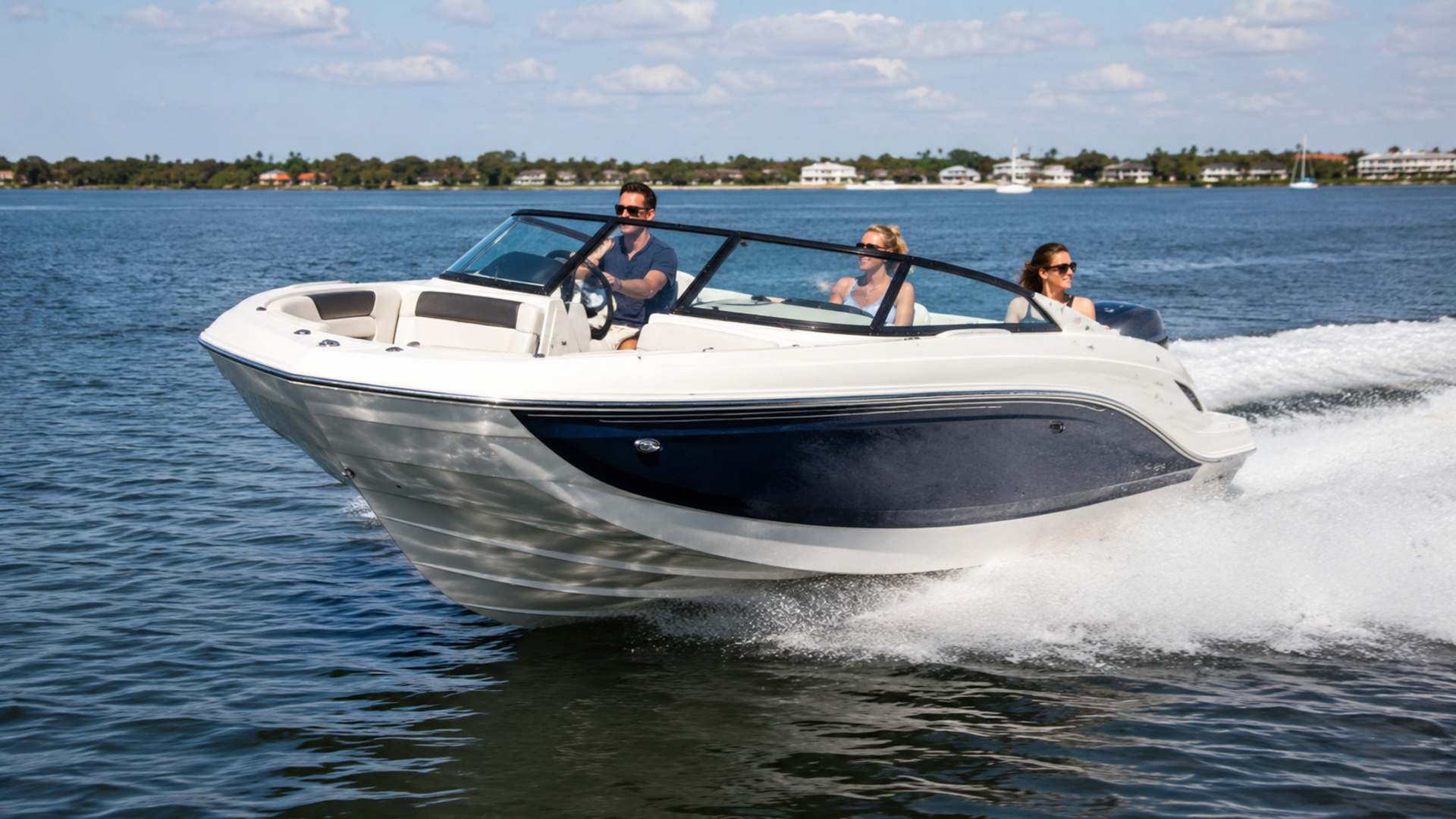
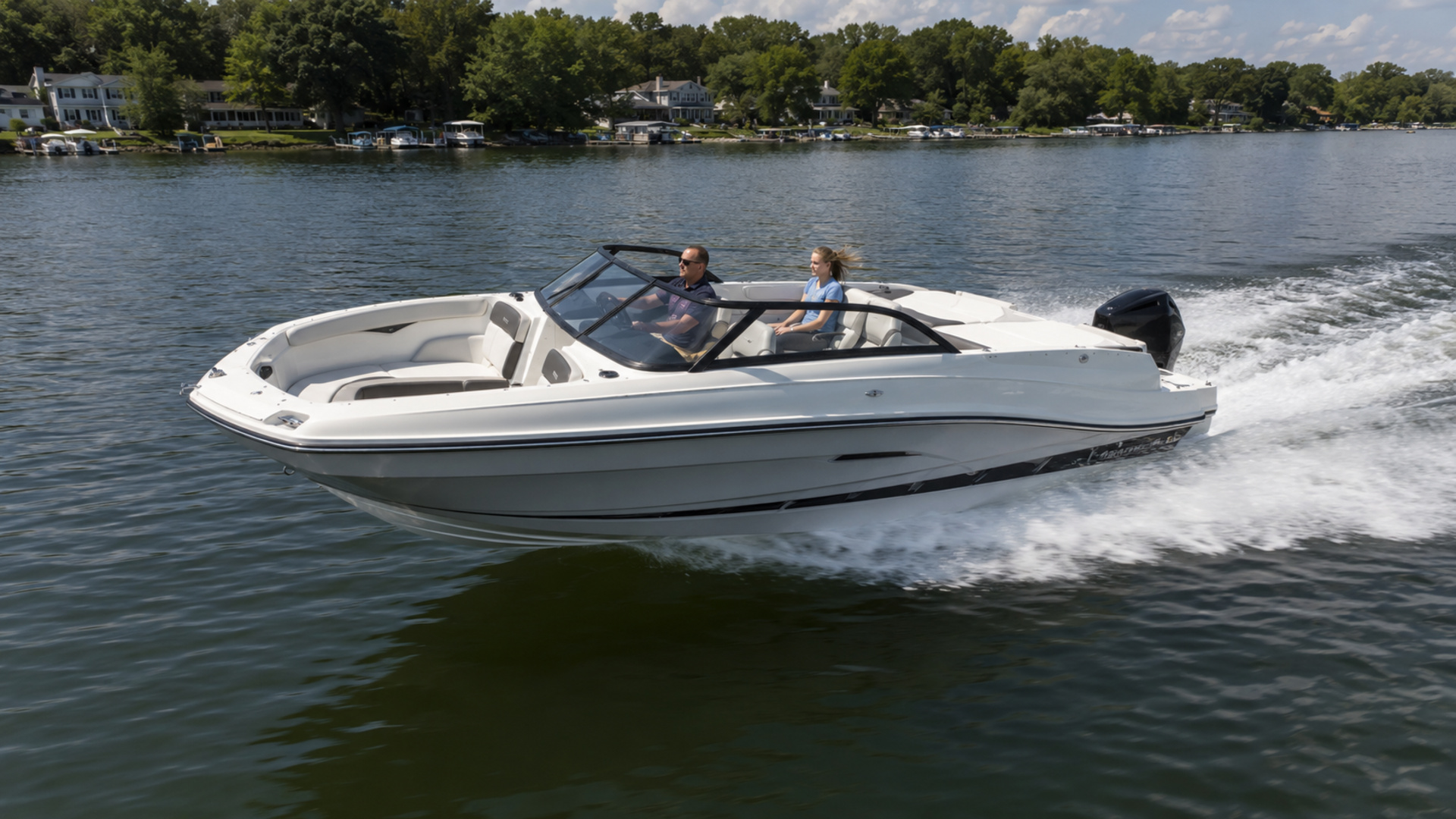
The VR6 Outboard carries 33 gallons of fuel, the same capacity as the VR6 Bowrider and the smaller VR5. That makes fuel planning more important than the hull size might suggest.
A 150-horsepower Mercury and a 200-horsepower Mercury can return different consumption, especially when one is carrying a heavy passenger load. Bayliner does not publish one universal current GPH figure for every configuration.
Use verified engine-specific performance data or observe fuel flow on the exact boat when instrumentation permits. Keep a reserve rather than using the full tank as the range calculation.
Ten people can add substantial weight before coolers, tubes, and bags are counted. Passenger loading changes the throttle required to plane and hold speed.
For many family days, 33 gallons is adequate because the engine spends long stretches off while everyone swims or sits at anchor.
Tow sports create the opposite pattern. Repeated acceleration and pickup cycles can move fuel consumption well above a steady cruise day.
Older used boats should have the fuel system inspected. Check fill and vent hardware, hoses, fittings, and evidence that stale fuel has been allowed to sit for long periods.
Outboard owners gain some practical flexibility because the boat can be refueled on land while trailering between destinations. That can reduce reliance on marina fuel.
A full tank adds meaningful weight to the trailer package. Include it when checking vehicle payload and tongue-weight limits.
The Bowrider uses the same tank, so fuel capacity should not decide the propulsion choice. Engine access, maximum power, stern layout, and market selection are more useful distinctions.
The VR6 Outboard should be tested as a large family boat rather than an empty demonstration hull. Ten-person capacity is one of its main reasons to exist, so loaded performance deserves direct attention.
A 150-horsepower boat with two adults may feel completely adequate. Add several passengers and watersports equipment, and planing response can change noticeably.
The 200 is easier to justify when the boat will routinely carry six or more people or pull riders. That does not mean every buyer needs the larger engine.
Watch how much bow rise occurs before the hull settles onto plane. Visibility from the helm should remain comfortable for the drivers who will actually operate the boat.
The 22-foot-7-inch hull gives the VR6 more length to span common wake patterns than a VR4 or VR5. Twenty degrees of deadrise still places the hull in family recreational territory rather than deep-V offshore use.
Practice low-speed maneuvering. The external Mercury makes thrust direction easy to understand, but the larger hull catches more wind than a compact VR4.
Make turns at several speeds and pay attention to steering effort. A properly rigged outboard should remain predictable as trim changes.
Listen for propeller ventilation, unusual vibration, or a failure to reach expected engine rpm. Prop selection matters on a large single-outboard bowrider.
If the 200-horsepower engine still feels marginal with your real crew, the solution may be the 250-horsepower VR6 Bowrider rather than a complicated attempt to make the Outboard exceed its intended power range.
The right Outboard engine should feel relaxed in normal use. Maximum speed is secondary to clean planing, controllable cruise, and confidence around the dock.
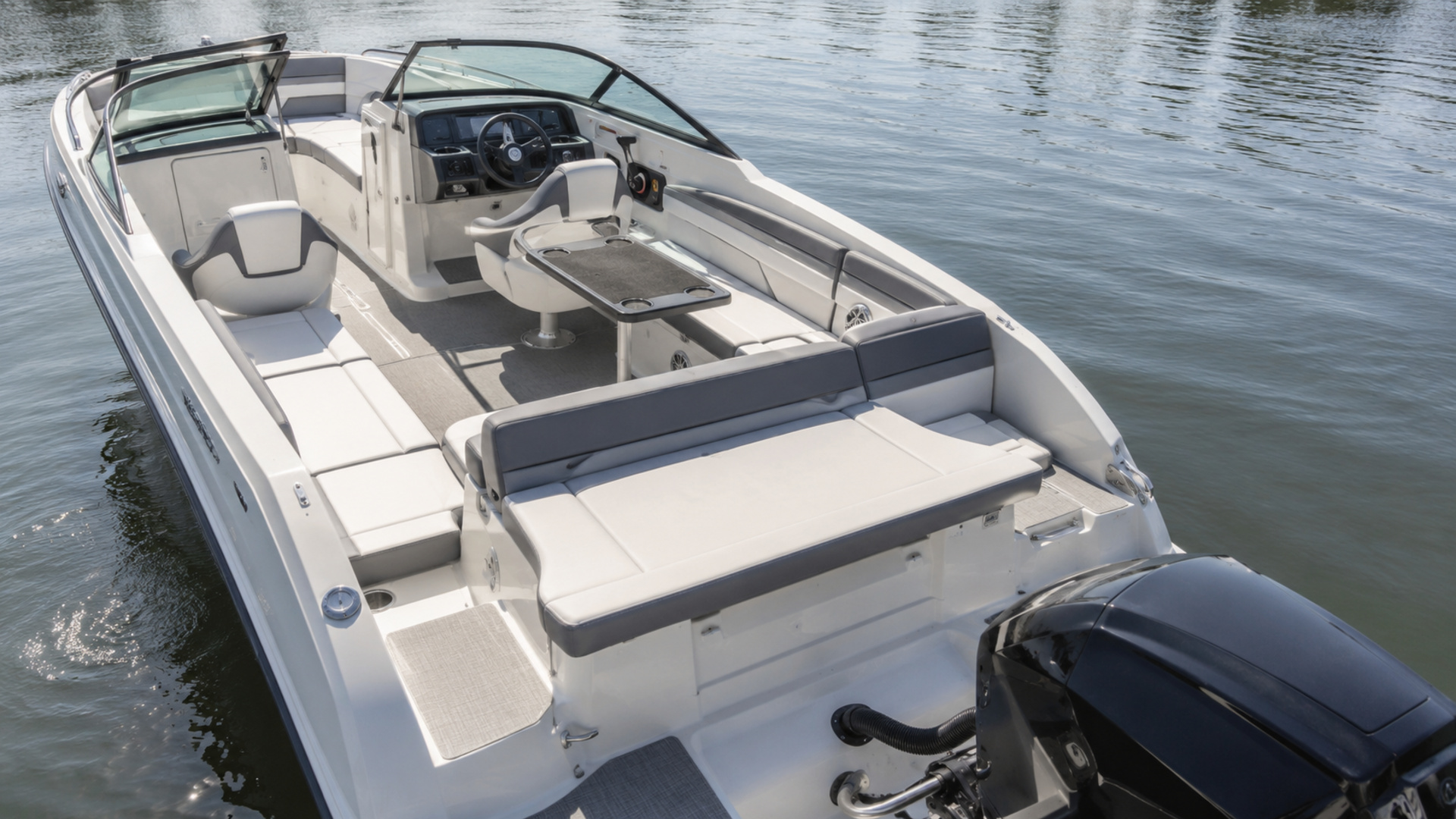
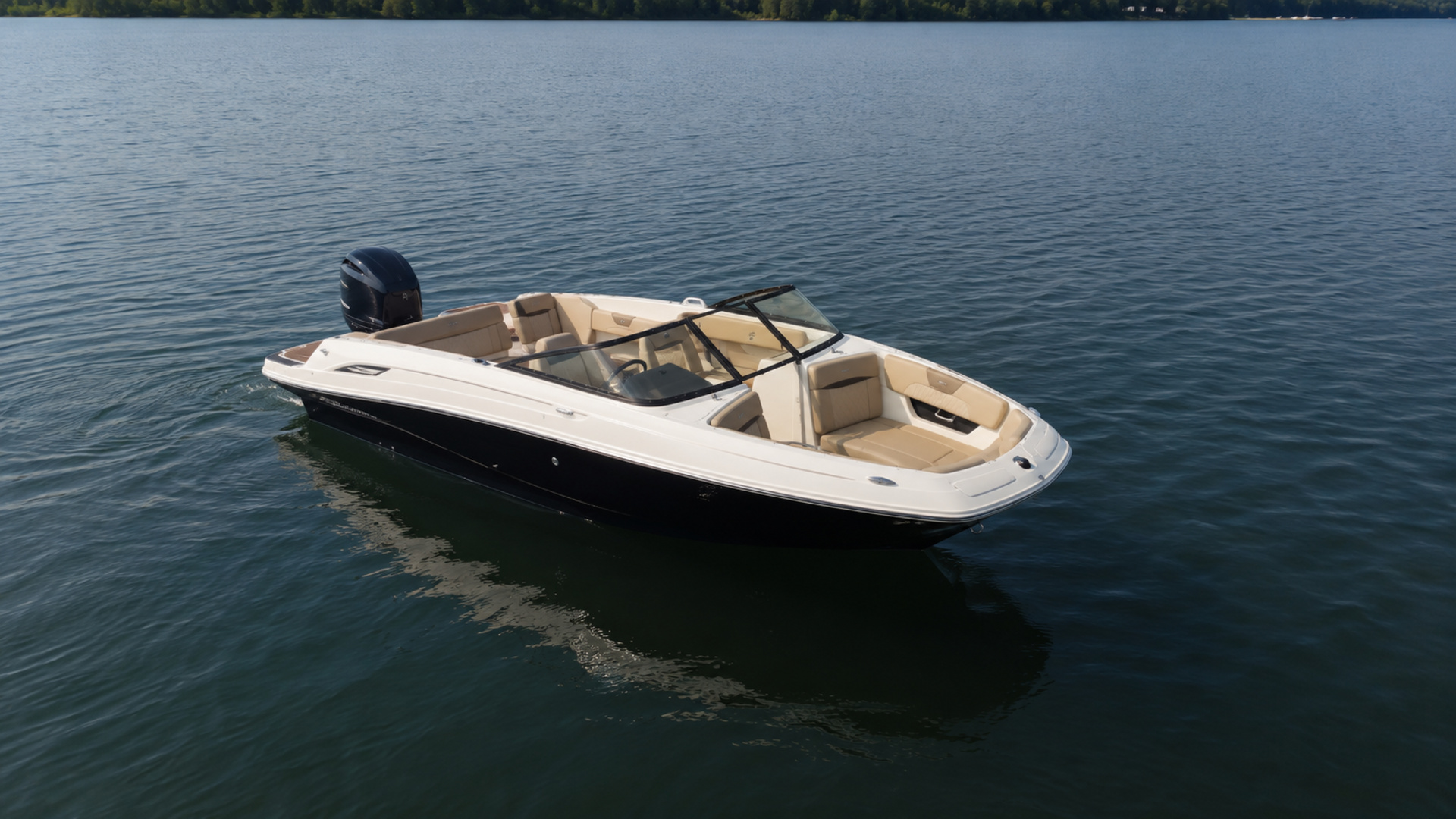
The VR6 Outboard gives buyers most of the same social layout as the Bowrider while making no attempt to hide the Mercury in the center of the stern.
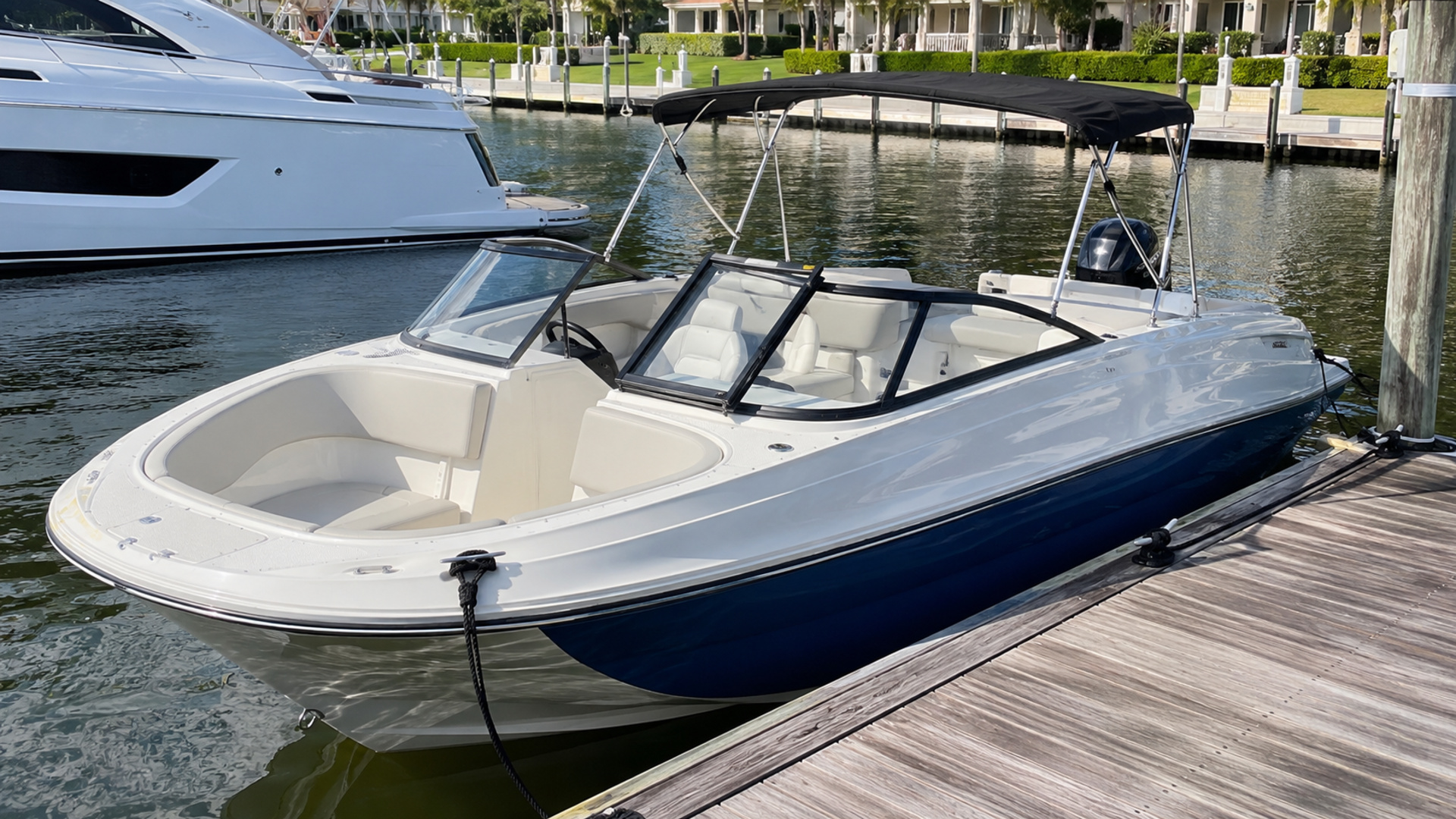
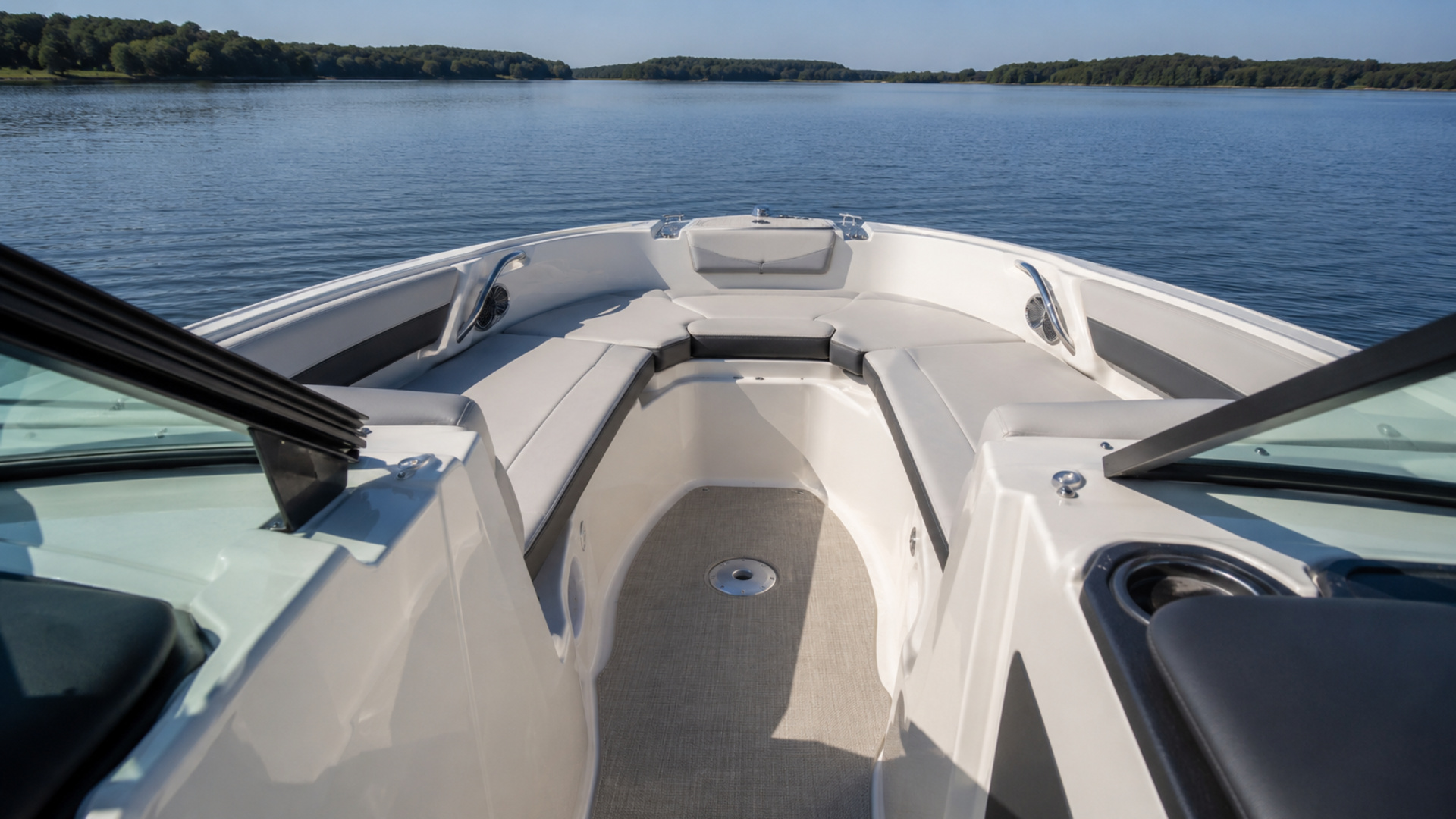
BeamForward carries the 8-foot hull width toward the bow, providing adult-capable seating and useful storage ahead of the windshield.
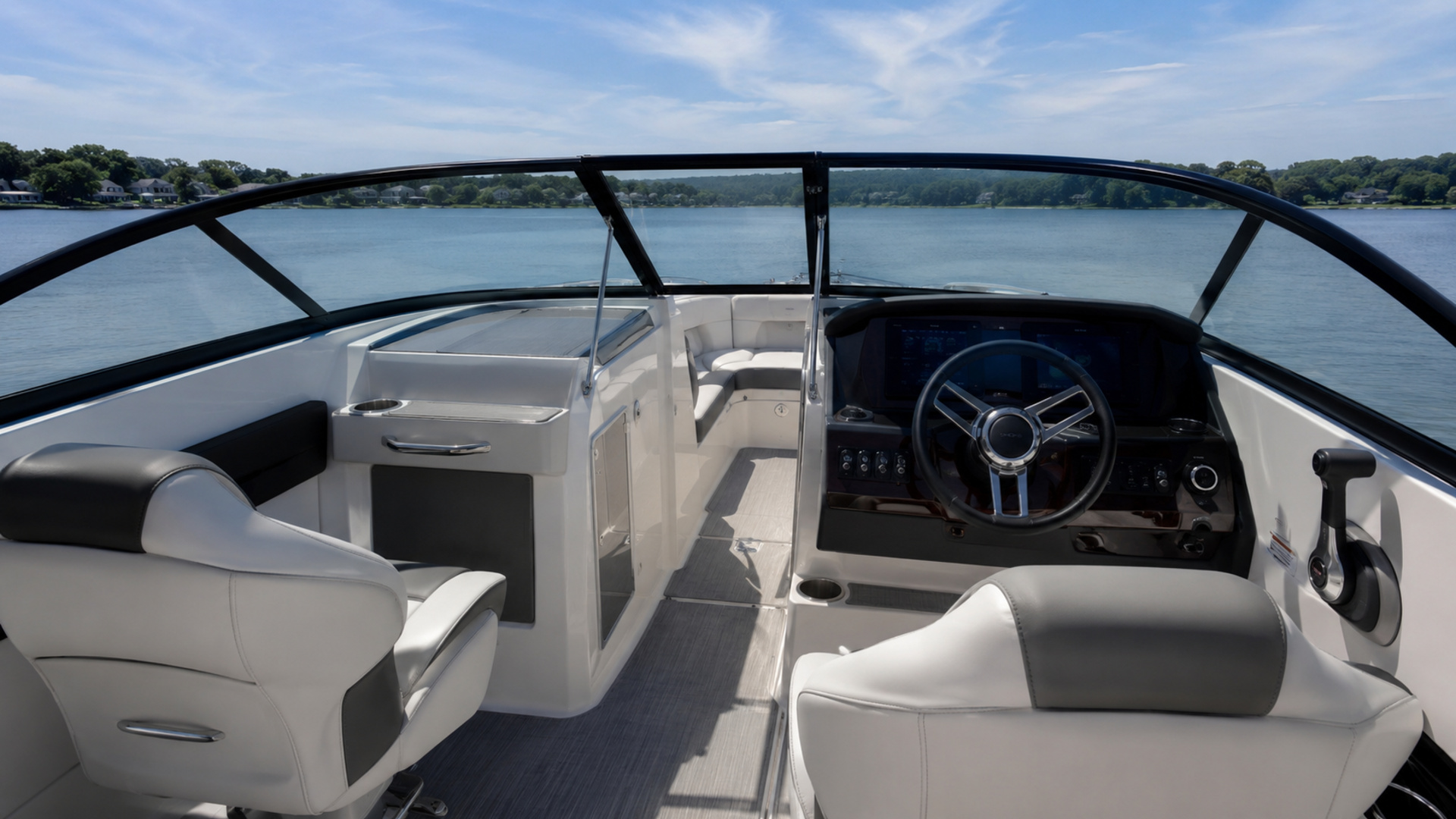
The cockpit is large enough for a three-position portside companion seat, which can face forward for running or aft for watching riders and joining the rear social zone.
An optional filler cushion turns the aft seating into a U-lounge. That conversion is one of the clearest reasons the VR6 feels different from a VR5 once the boat is anchored.
The lockable port-side changing room adds privacy and storage. An available portable head turns it into a practical all-day family feature rather than a large locker with a door.
In-floor ski and wakeboard storage keeps long equipment out of the main passenger path. The integrated cooler gives food and drinks a dedicated location.
The swim platform extends aft of the running surface, but the outboard occupies the center. Passengers board and sit around it rather than across a completely clear platform.
That compromise can be acceptable if the family values external power. It can be irritating if swimming is the reason everyone wants a boat.
Fishing options are especially relevant on the Outboard. Bayliner has offered an aerated livewell, bow casting platform, fish finder, trolling-motor bracket, and dual-battery 24-volt setup, giving the VR6 real mixed-use flexibility.
Watersports buyers can move the other direction with a tower, wakeboard racks, tow equipment, and upgraded audio.
The Outboard works best when the engine is viewed as part of the practicality rather than an aesthetic problem. If you keep wishing the platform were empty, the Bowrider should win the purchase.
150 to 200 HP Mercury FourStroke – Buyers can choose between value-oriented standard power and stronger loaded reserve without moving to an in-hull engine.
The VR6 provides a private port-side compartment that smaller VR models lack, giving families useful changing and storage space.
Equipped boats can turn the changing room into a real convenience for long outings away from marina facilities.
The Outboard carries the same published number of people as the sterndrive VR6 while keeping its Mercury outside the hull.
The seat can support forward travel, aft rider observation, or social use instead of remaining fixed in one direction.
Available filler cushions transform the rear cockpit into a broader gathering area when the boat is stopped.
Factory fishing equipment can make the Outboard a credible mixed-use boat for families that cruise and fish.
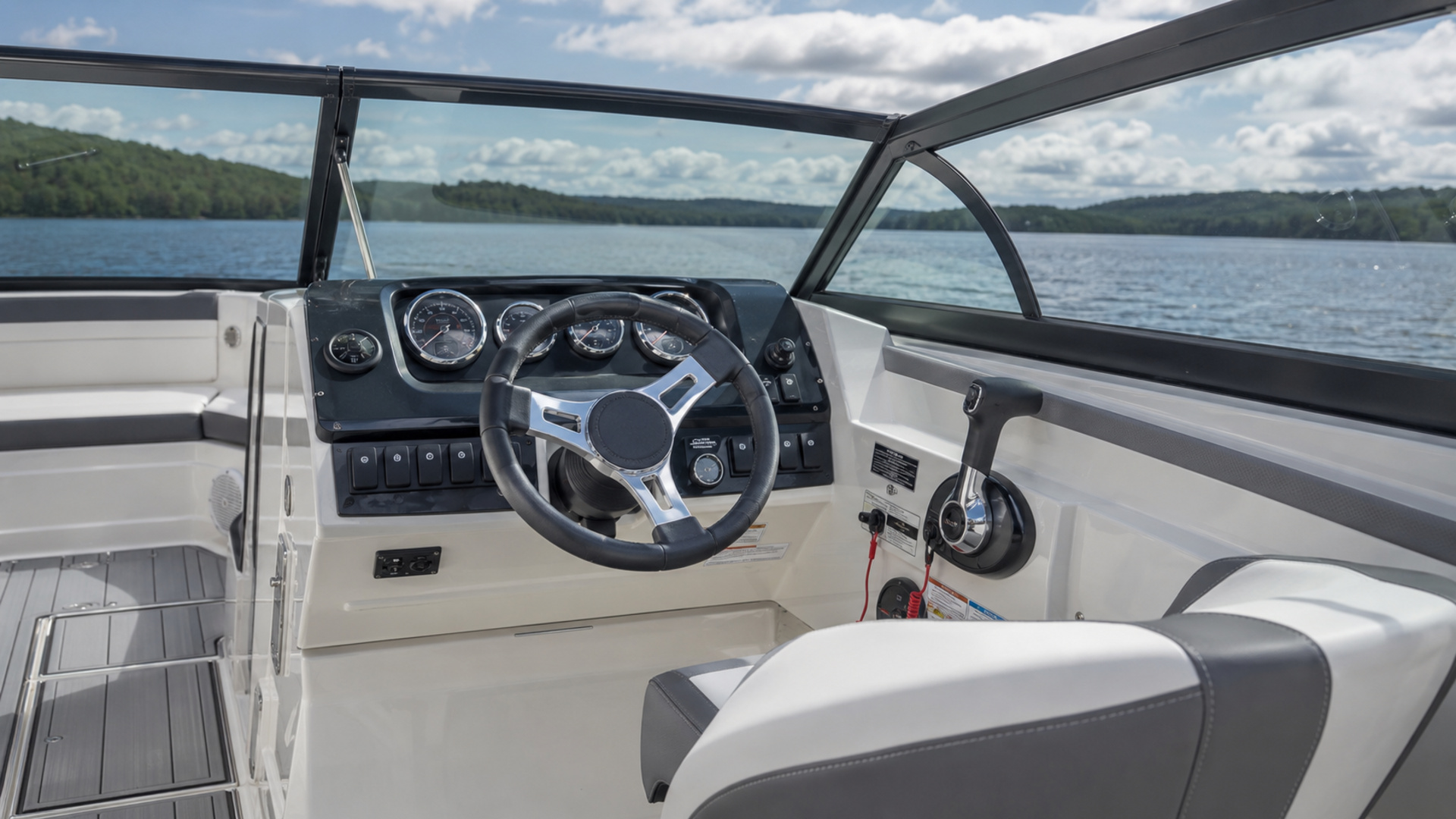
Available 7-inch and 9-inch screens can combine navigation and VesselView-linked engine information at the helm.
The outboard simplifies the most expensive mechanical system, but a 22-foot family boat still has plenty to inspect.
Start with the Mercury. Confirm whether it is the 150- or 200-horsepower engine, verify hours, and compare serial-number information with service records.
Check cold starting, cooling flow, trim, steering, lower-unit oil, propeller, skeg, anodes, and corrosion around engine mounts.
Inspect the transom around the mounting bolts. A repowered or heavily used boat should have clean rigging and no visible stress or questionable repairs.
Run the bilge pump and test the battery switch. If the boat has fishing equipment, inspect the additional battery and 24-volt trolling-motor wiring carefully.
Open the changing room and test the latch, hinges, lighting, and portable head if fitted. A compartment rarely shown in listing photos can reveal how the boat was actually treated.
Move the three-position companion seat through every setting and assemble the U-lounge filler. Missing cushions or damaged tracks directly reduce the value of the social layout.
Test the Simrad display, stereo, tower speakers, navigation lights, horn, and any underwater or courtesy lighting.
Fishing-equipped boats need livewell and electronics checks. Tower boats need mounting-point and wiring inspection.
The tandem trailer is part of the purchase. Four tires, bearings, brakes, hubs, bunks, lights, coupler, winch, and corrosion can create a substantial catch-up bill if neglected.
The deep Outboard market means buyers do not need to accept weak maintenance. Use the available inventory to demand a mechanically clean example.
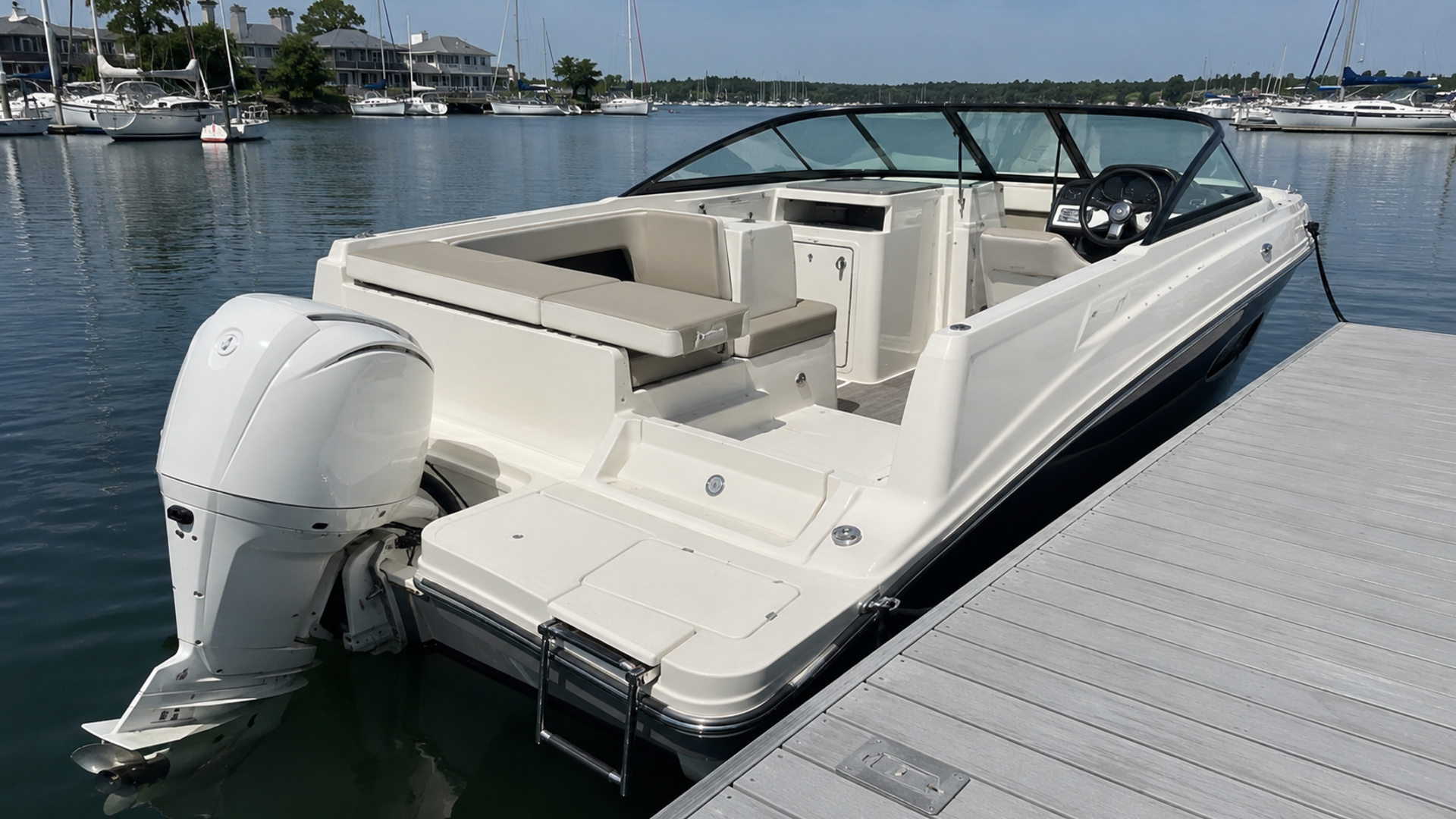
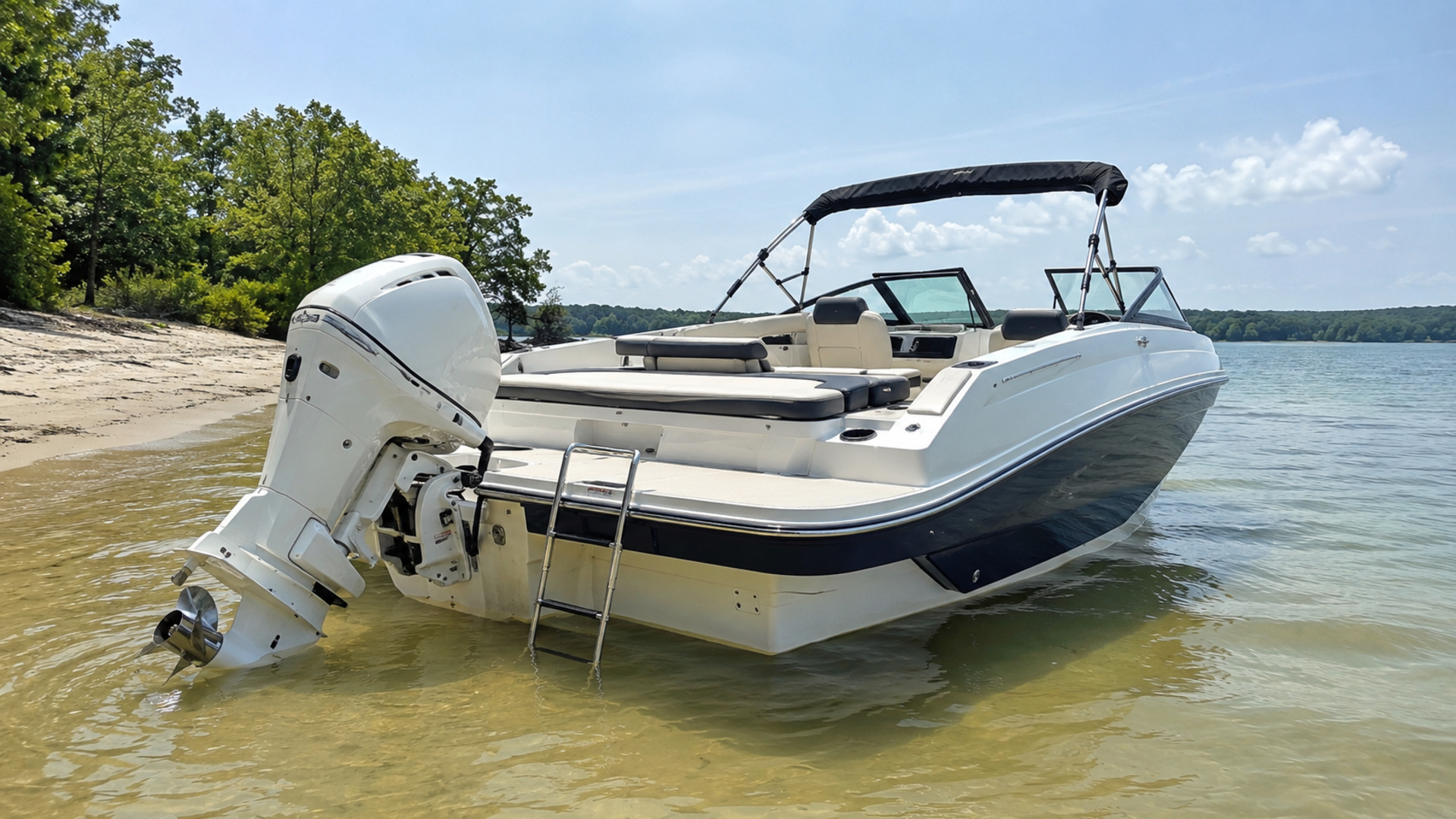
Bayliner currently publishes approximately 4,739 pounds with trailer for the VR6 Outboard. That is a useful starting number, not the final loaded weight.
Add 33 gallons of fuel, batteries, fishing or tower equipment, safety gear, coolers, and normal family supplies.
Storage length is 25 feet. Height on trailer is 8 feet 6 inches and trailer beam is 8 feet 6 inches.
Those dimensions can eliminate a standard residential garage before tow capacity becomes the problem. Measure the exact storage space before the contract is signed.
The tandem trailer adds stability for a larger hull but also adds maintenance. More tires, bearings, and brake hardware mean more components to service.
The external engine is convenient for home storage because it remains accessible for inspection and flushing after every trip.
Wet storage can be practical too. The outboard can be tilted, but the lower unit, bracket, and surrounding hardware still need corrosion and growth management.
Dry-stack facilities should be checked for length, height, and weight limits. The VR6 is large enough that assumptions can become expensive.
A seasonal slip may improve family use because ten people do not need to organize around a launch ramp every weekend.
If paid storage becomes mandatory, include it in the comparison with the VR5. The smaller boat’s shorter footprint can preserve one of the financial advantages of trailerable ownership.
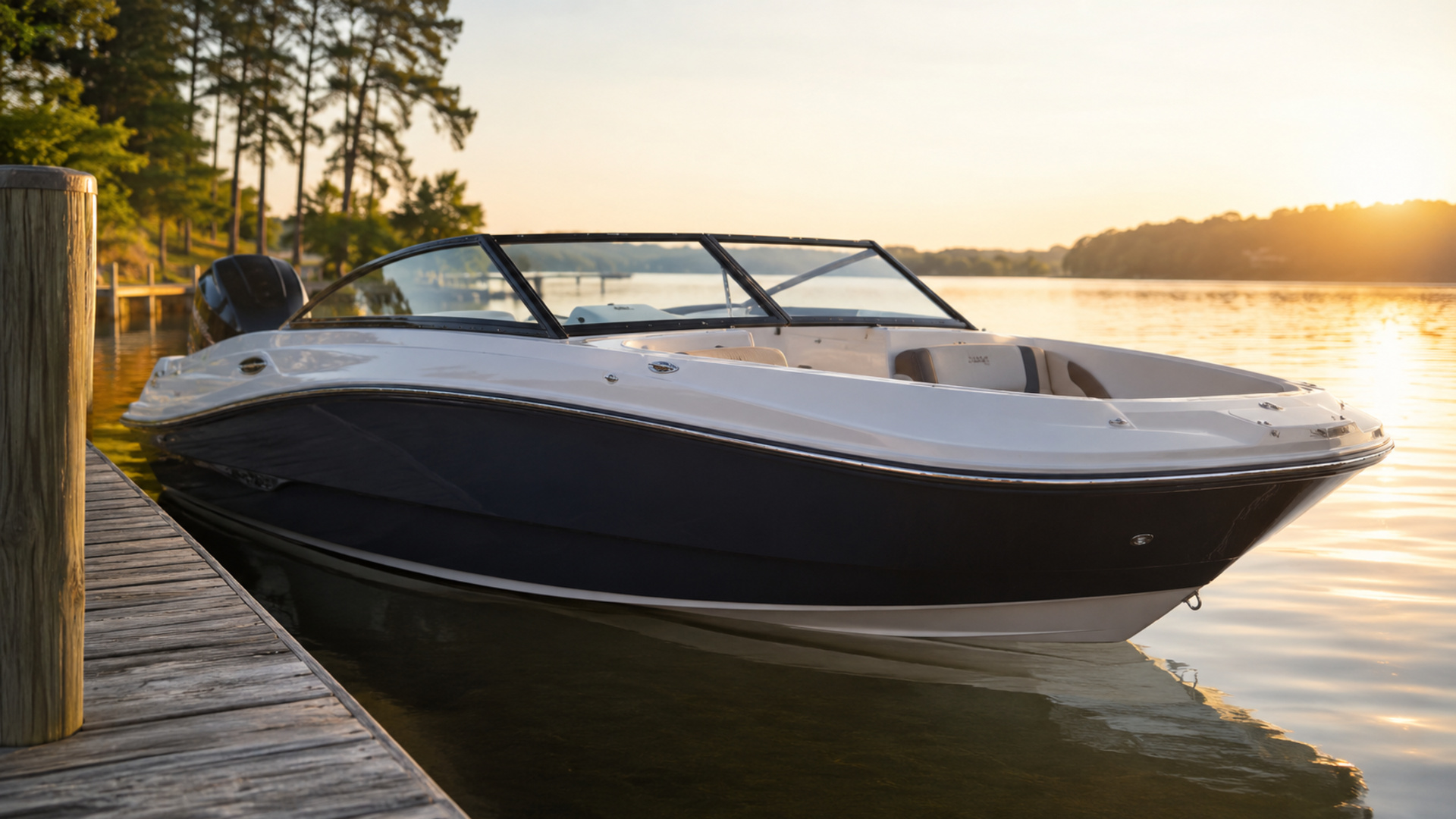
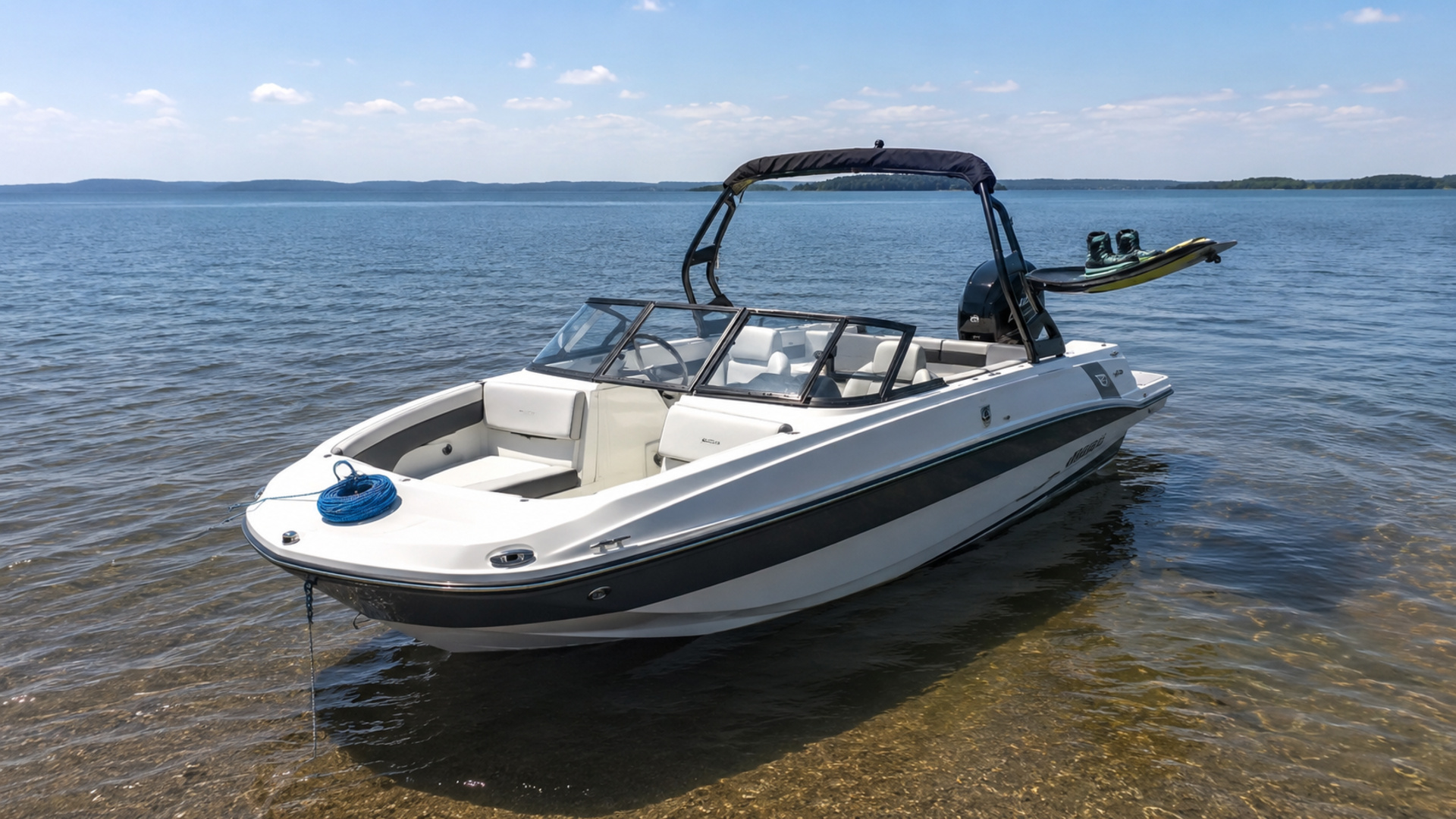
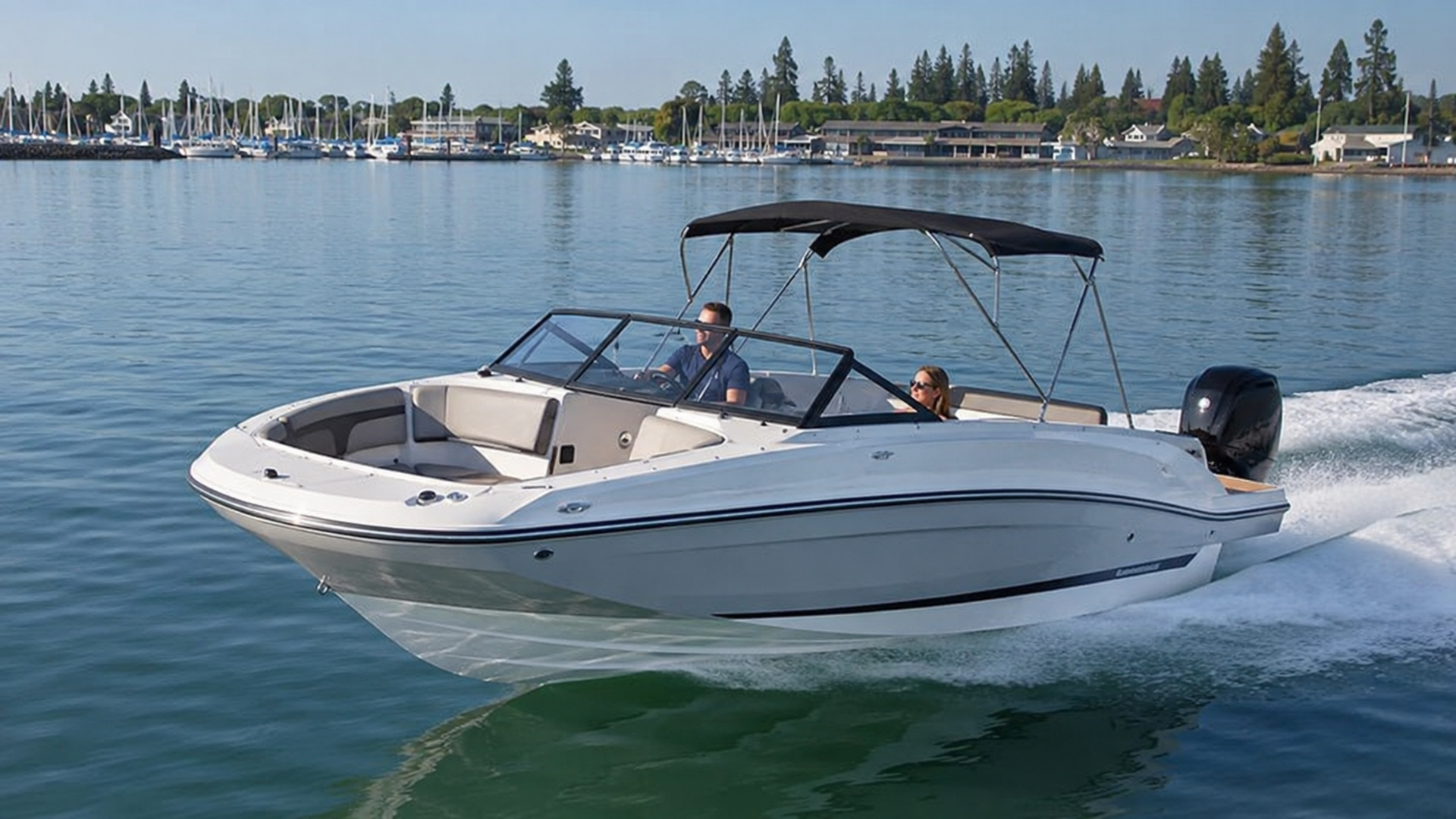
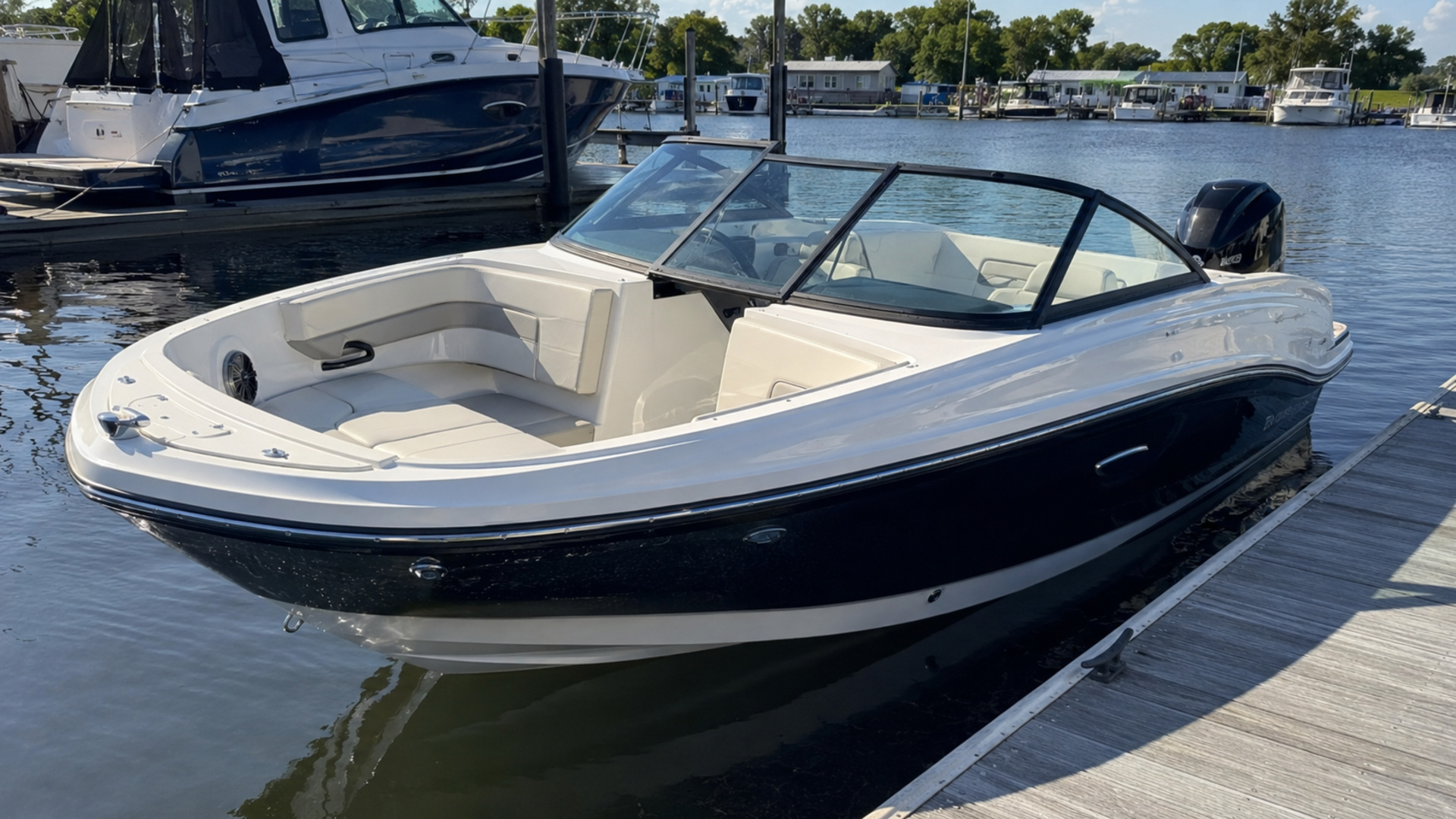
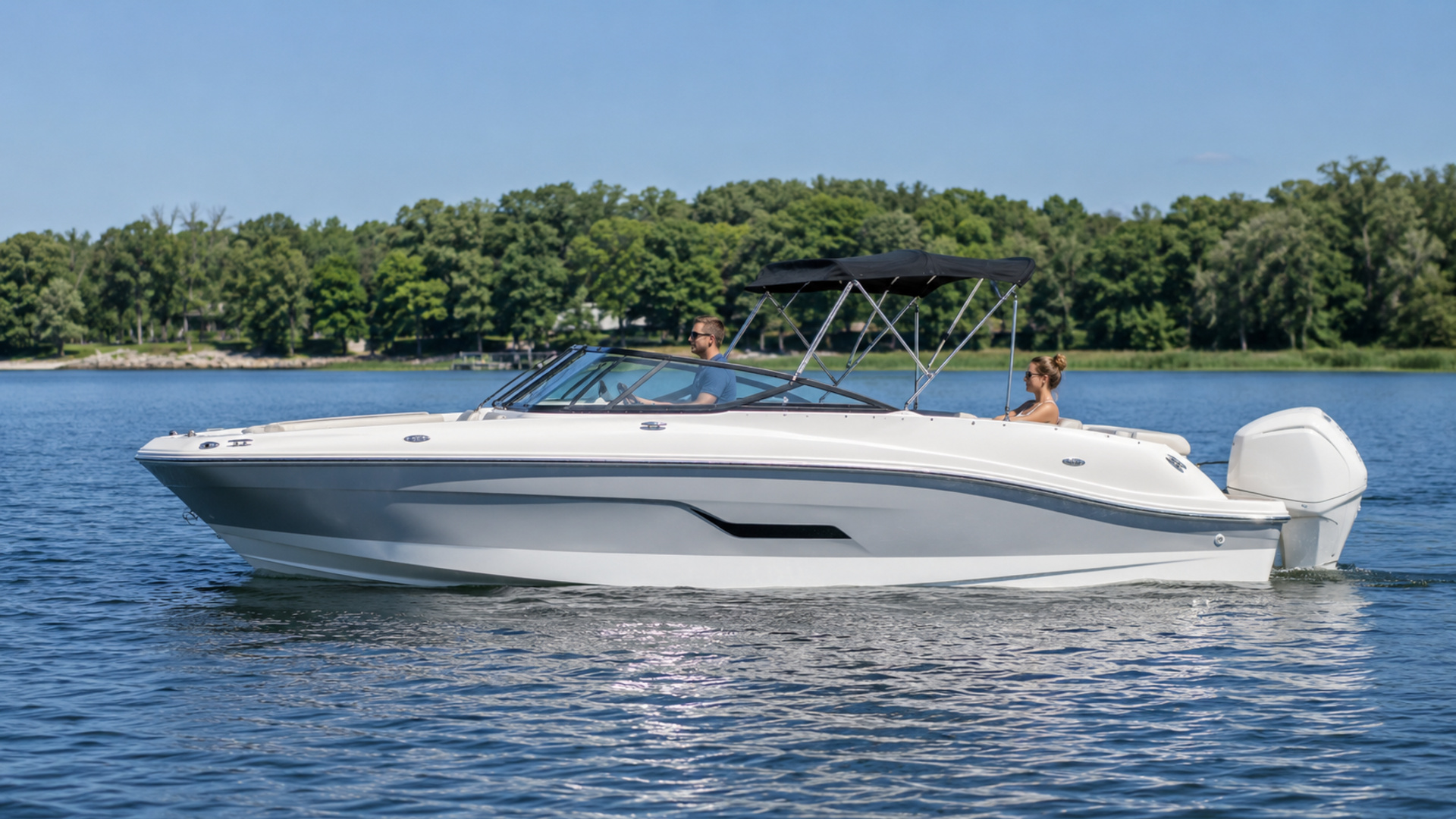
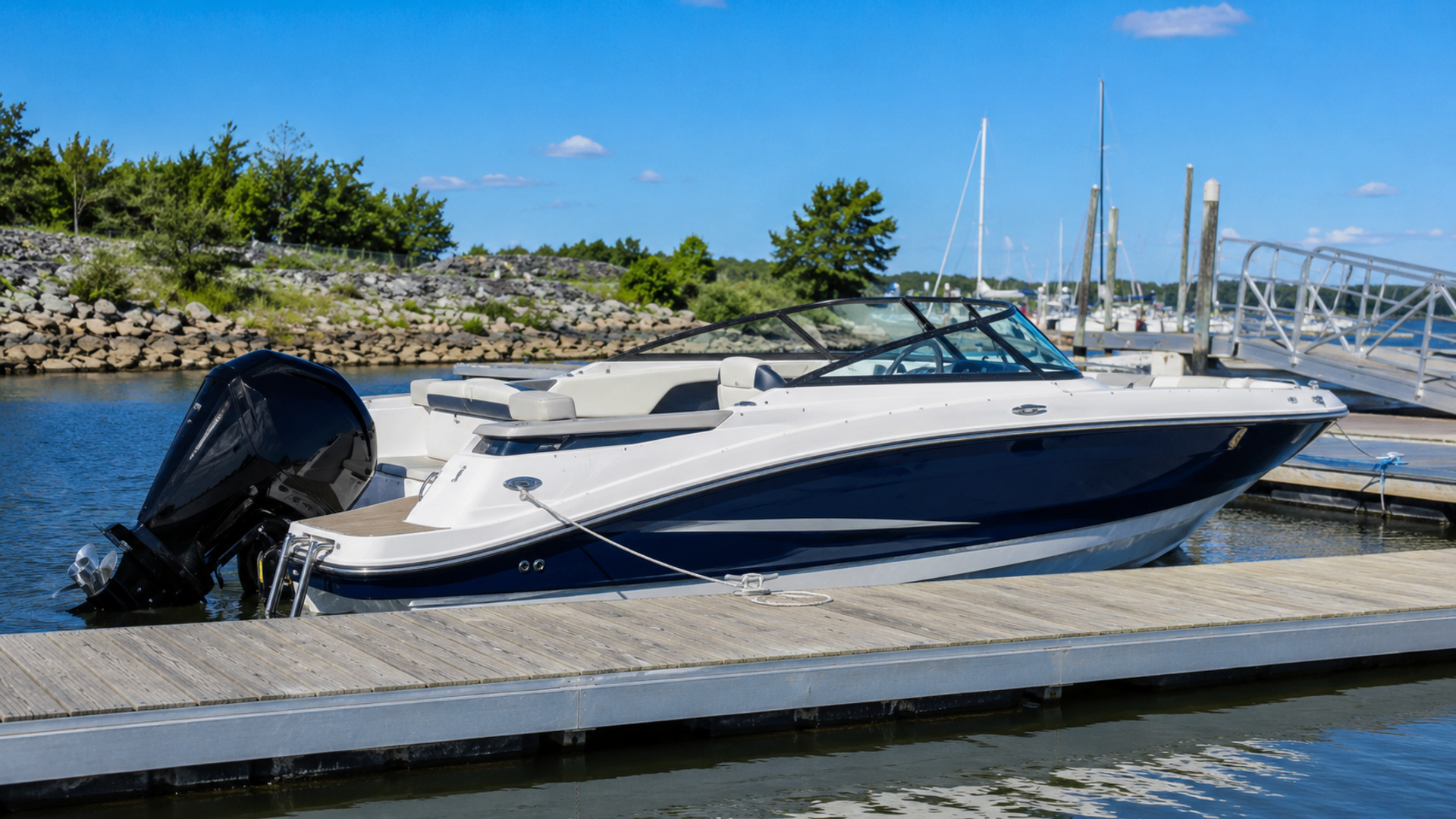
Current VR6 Outboard inventory is the deepest of these VR variants, with 56 listings spanning 2019 through 2026. That supply should change the way a buyer negotiates.
The stronger engine can be worth a real premium to families that regularly carry a heavy crew. Do not compare a base-power boat directly with a well-equipped 200 without accounting for that difference.
Age creates another layer. A 2019 boat should be priced with several seasons of trailer, upholstery, electronics, and engine use in mind. A 2026 boat should be compared with current dealer inventory.
Current average asking prices sit below the Bowrider average on the VR6 hull. That can strengthen the Outboard value case for buyers who prefer external power anyway.
Fishing packages can add meaningful utility when the buyer uses them. Old electronics and a trolling-motor bracket should not command a large premium by themselves.
Tower packages, audio, flooring, and digital dash equipment can improve the boat, but engine condition and trailer health remain more important than original option MSRP.
The tandem trailer can materially affect value. Tires, brakes, bearings, and corrosion are expensive enough that a neglected rig should influence the offer.
Deep inventory means you can walk away. A seller with missing service history or a damaged interior does not deserve the benefit of scarcity.
This is one of the rare pages where selection itself is a buyer advantage. Use the 56-boat market to find the right horsepower, condition, and equipment rather than making the first monthly payment fit the first boat you see.
Pricing varies. Model year, engine package, options, trailer, condition and dealer all move the number, and listings change weekly. Send us the boat you are looking at and we will price that exact one.
Illustration only and not an offer of credit.
Calculate the payment on the actual 150- or 200-horsepower boat rather than a generic base configuration.
Illustration only and not an offer of credit. Your actual rate and term depend on credit profile, vessel age, loan amount and ownership structure.
Both current VR6 variants measure 22 feet 7 inches, use an 8-foot beam and 20 degrees of deadrise, carry ten people, hold 33 gallons of fuel, and publish 25 feet of storage length.
The Outboard uses 150 to 200 horsepower from a Mercury FourStroke. The Bowrider uses 200 to 250 horsepower from a MerCruiser sterndrive.
Bayliner currently lists approximately 3,659 pounds with standard engine for the Outboard and 3,797 pounds for the Bowrider.
The Outboard keeps the engine external. Flushing, inspection, lower-unit service, propeller replacement, and future repowering are easier to access.
The Bowrider hides the engine beneath the aft deck. That clears the center of the swim platform and gives the stern a more integrated appearance and function.
The Outboard has a much deeper current used market. Buyers have more flexibility to shop year, engine, condition, equipment, and location.
The Bowrider provides another 50 horsepower at maximum output, which can matter with a full crew or frequent watersports.
Choose the Outboard when large-family space and simple power matter most.
Choose the Bowrider when the clear stern and stronger available performance justify more mechanical complexity.
The size of the current market is your first advantage. With dozens of boats available, there is little reason to compromise on engine history or basic condition.
Filter 150-horsepower and 200-horsepower listings separately. If a large regular crew makes the 200 important, do not waste time rationalizing a 150 solely because it is nearby.
Then compare age. A 2019 boat has accumulated enough seasons for trailer brakes, bearings, canvas, upholstery, and electronics to age even when engine hours remain modest.
Ask for Mercury service records. Verify lower-unit service, cooling maintenance, trim, steering, anodes, and propeller history.
Inspect the transom around engine mounting hardware. Look for stress, repair, or evidence of a repower performed without clean rigging.
Open the changing room and inspect it rather than treating it as a brochure feature. Check the latch, hinges, privacy equipment, and portable head if installed.
Make sure the U-lounge filler cushions are present. Missing model-specific cushions can be frustrating to source after purchase.
Test fishing equipment if fitted. Livewell pumps, trolling-motor wiring, batteries, and old electronics should work before they are assigned value.
Inspect tower mounts and stereo wiring on watersports boats. Years of towing can loosen hardware if it was not maintained.
Check every trailer tire by date code. Inspect brakes, bearings, hubs, lights, bunks, coupler, winch, and swing tongue.
Compare the Bowrider before signing. If the outboard in the middle of the stern feels like a compromise your family will complain about, the easier engine access will not fix that disappointment.
If the platform still works and 200 horsepower is enough, the Outboard’s supply and serviceability make it a strong long-term ownership choice.
Use the depth of the market to buy condition first. Another VR6 Outboard is likely available, so do not pay good money for a boat with a weak story.
Send Float Finance the specific VR6 Outboard listing, year, horsepower, seller type, and asking price.
The current VR6 Outboard is 22 feet 7 inches long with an 8-foot beam and 20 degrees of deadrise. Bayliner lists an estimated draft of 2 feet 10 inches, approximately 3,659 pounds with standard engine, about 4,739 pounds with trailer, and 25 feet of storage length. A separate maximum draft is not published by Bayliner.
Bayliner publishes capacity for ten people and a maximum weight capacity of 1,700 pounds. The Bowrider version carries the same number. Comfort still depends on how many adults are aboard and how much cooler, tow, fishing, and family gear comes with them.
The 150 can suit moderate crews and relaxed cruising. The 200 is easier to justify when the ten-person hull regularly carries several adults or pulls riders. Because current Outboard inventory is deep, buyers can usually shop for the stronger engine instead of accepting base power by default.
Choose the Outboard when easy engine access, straightforward flushing, simple lower-unit service, and broad used selection matter most. The Bowrider counters with a clear central swim platform and a 250-horsepower maximum, but it adds sterndrive-specific maintenance.
Yes. Bayliner includes a large lockable port-side changing room and storage compartment on the current VR6 Outboard. A portable-head option can make the compartment more useful for families spending long days away from shore facilities.
Fuel capacity is 33 gallons. That is the same tank size as the VR5, so buyers planning longer runs should use verified consumption data for the actual 150- or 200-horsepower configuration and keep reserve rather than estimating from hull size.
Relative to the other VR variants, yes. Current inventory includes 56 listings from 2019 through 2026. That gives buyers meaningful choice across year, horsepower, equipment, seller type, and location, which is useful leverage when a particular boat has weak maintenance history.
Buy the VR6 when ten-person capacity, the changing room, and the larger U-lounge cockpit solve regular needs. Buy the VR5 when nine-person capacity and its shorter 21-foot-2-inch storage footprint are enough. The smaller boat is easier to tow and store, so the VR6 should earn the added logistics.
Tell us a little bit about yourself and the boat you are looking to finance.