Call Us : 207-994-5109
Mon – Fri: 8 am to 9 pm & Sat – Sun: 10 am to 8 pm
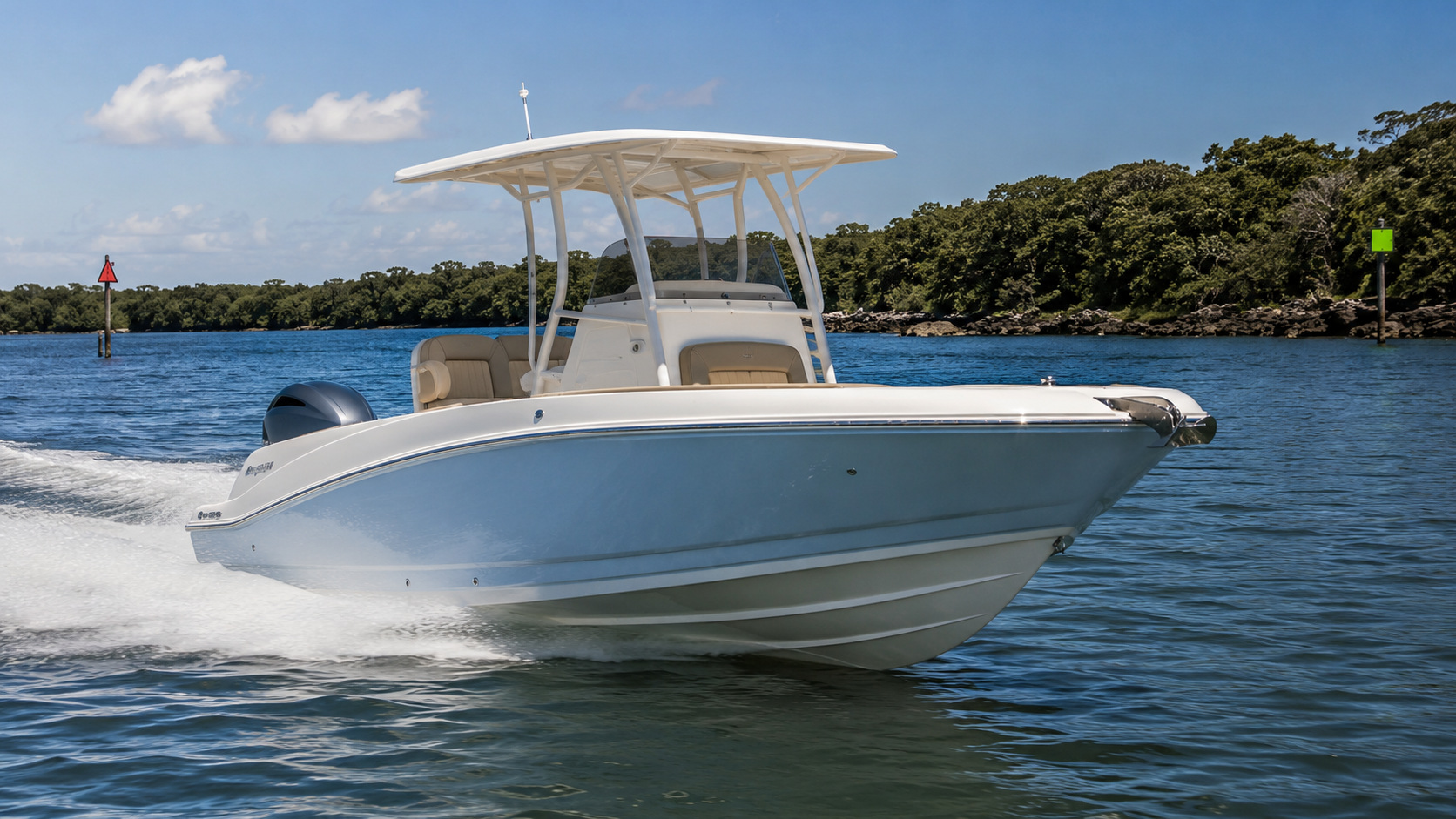
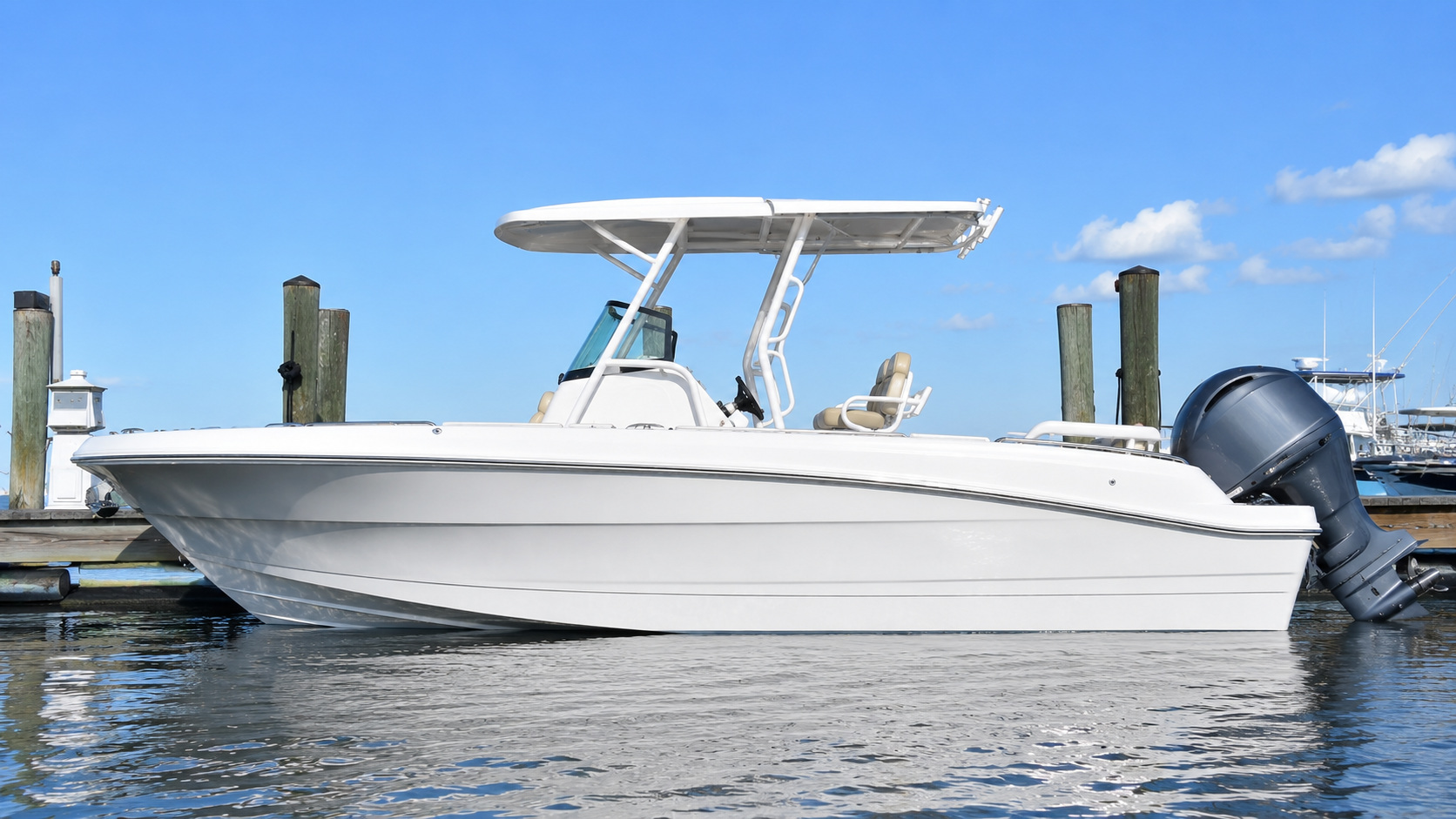
The Bayliner T22CC is the capability jump in the Trophy range, pairing a 22-foot-7-inch hull with ten-person capacity, 65 gallons of fuel, and up to 300 horsepower.
The T22CC is where Bayliner’s Trophy center-console range moves beyond compact family fishing and into a more substantial coastal platform. At 22 feet 7 inches with an 8-foot-6-inch beam, it gives anglers more working room, more passenger capacity, and far more available horsepower than the T20CC.
Bayliner rates the T22CC for ten people and up to 300 horsepower. Fuel capacity is 65 gallons, and published weight with standard engine is approximately 4,000 pounds. Those numbers make the boat meaningfully more capable, but they also change the ownership equation. You need more tow vehicle, more storage room, and a larger fuel budget than you do with a T18 or T20CC.
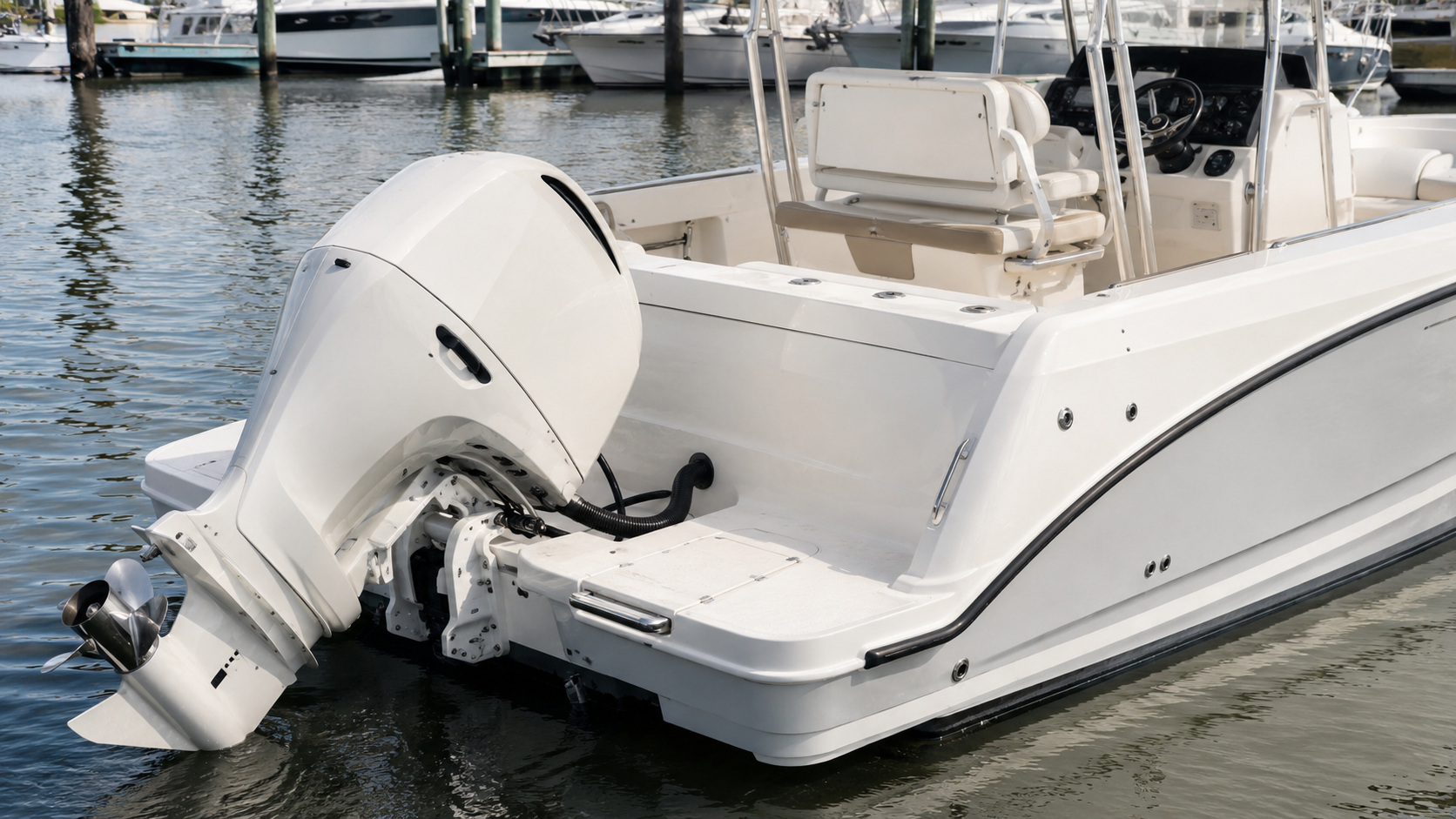
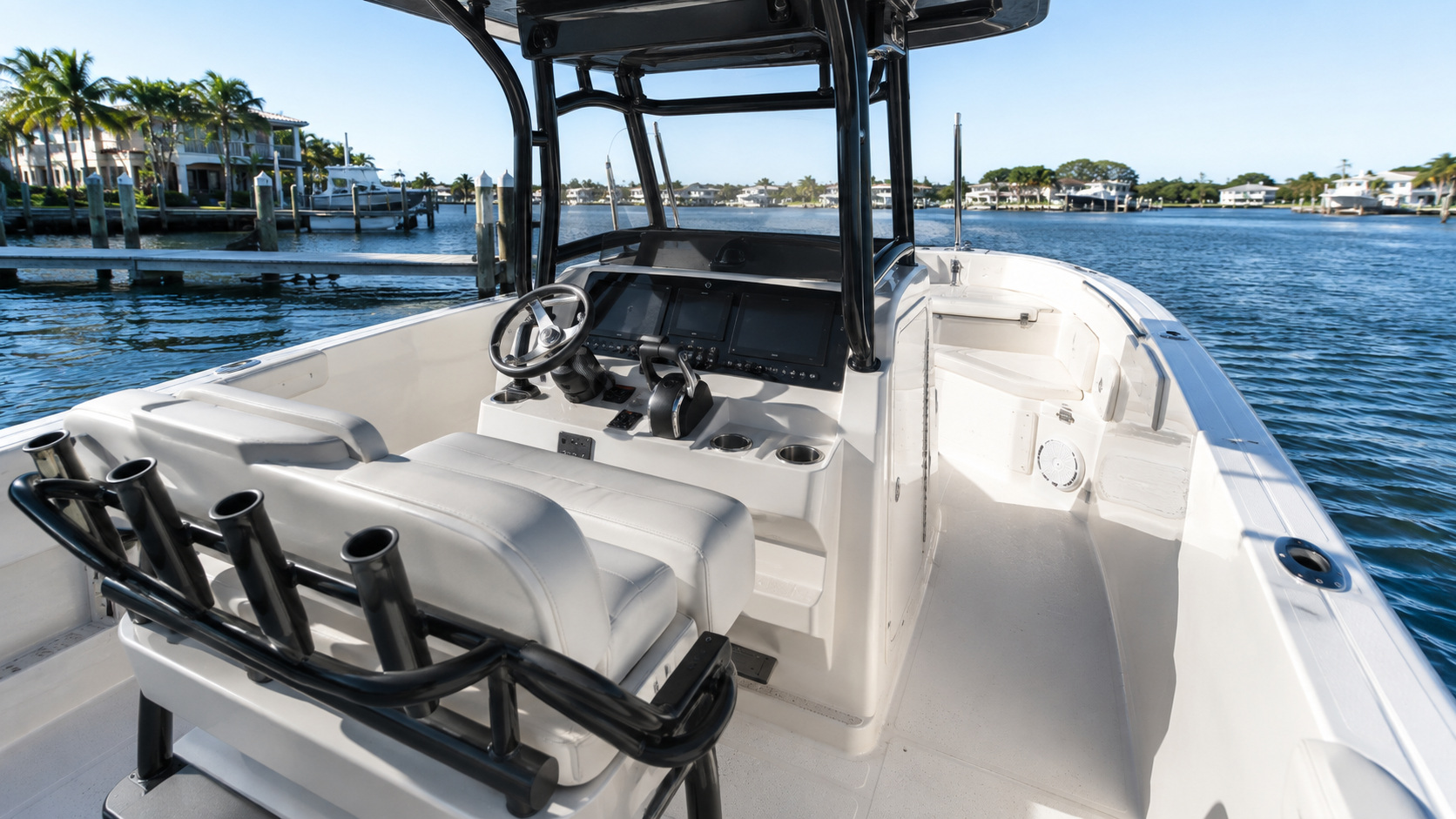
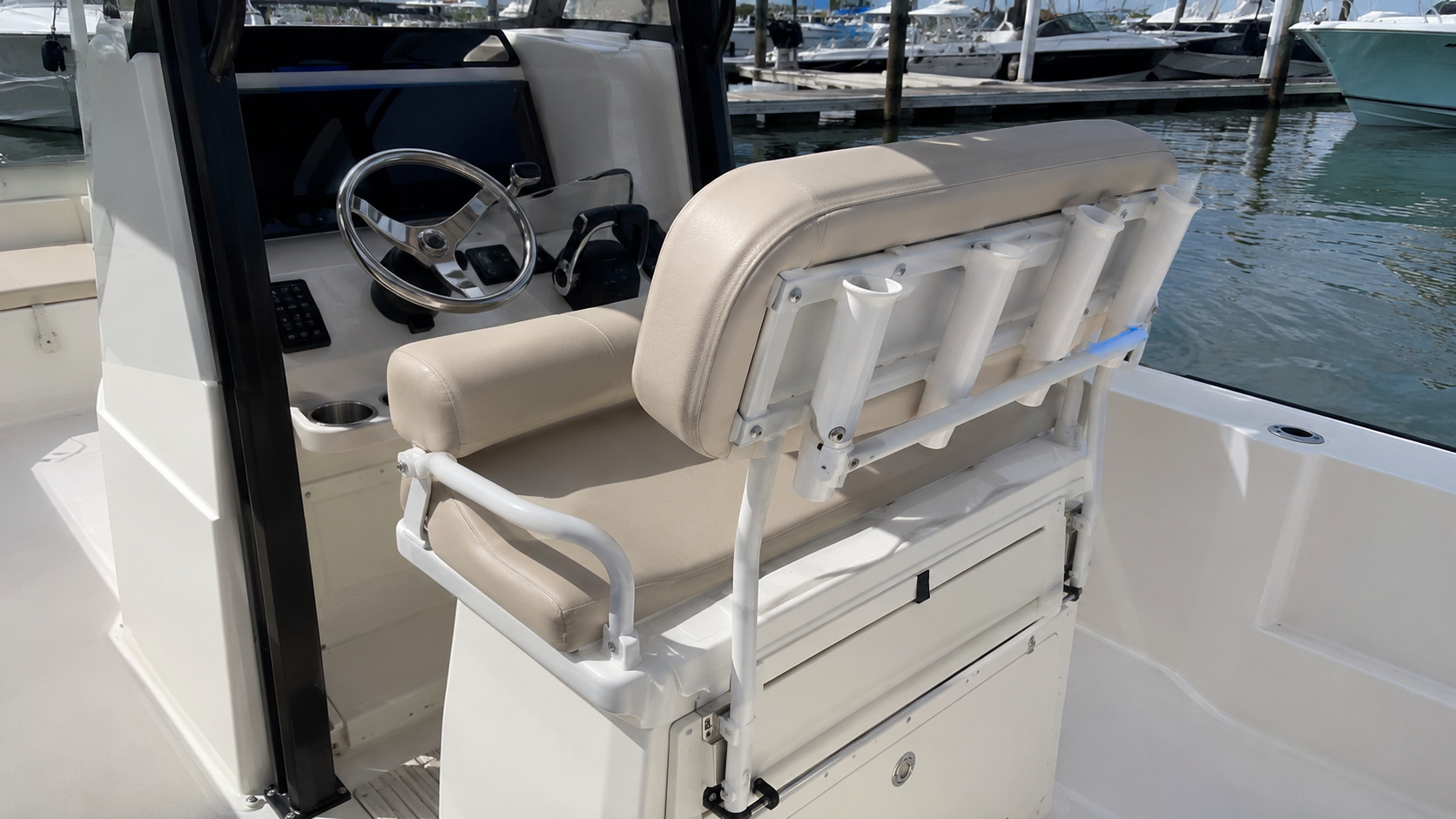
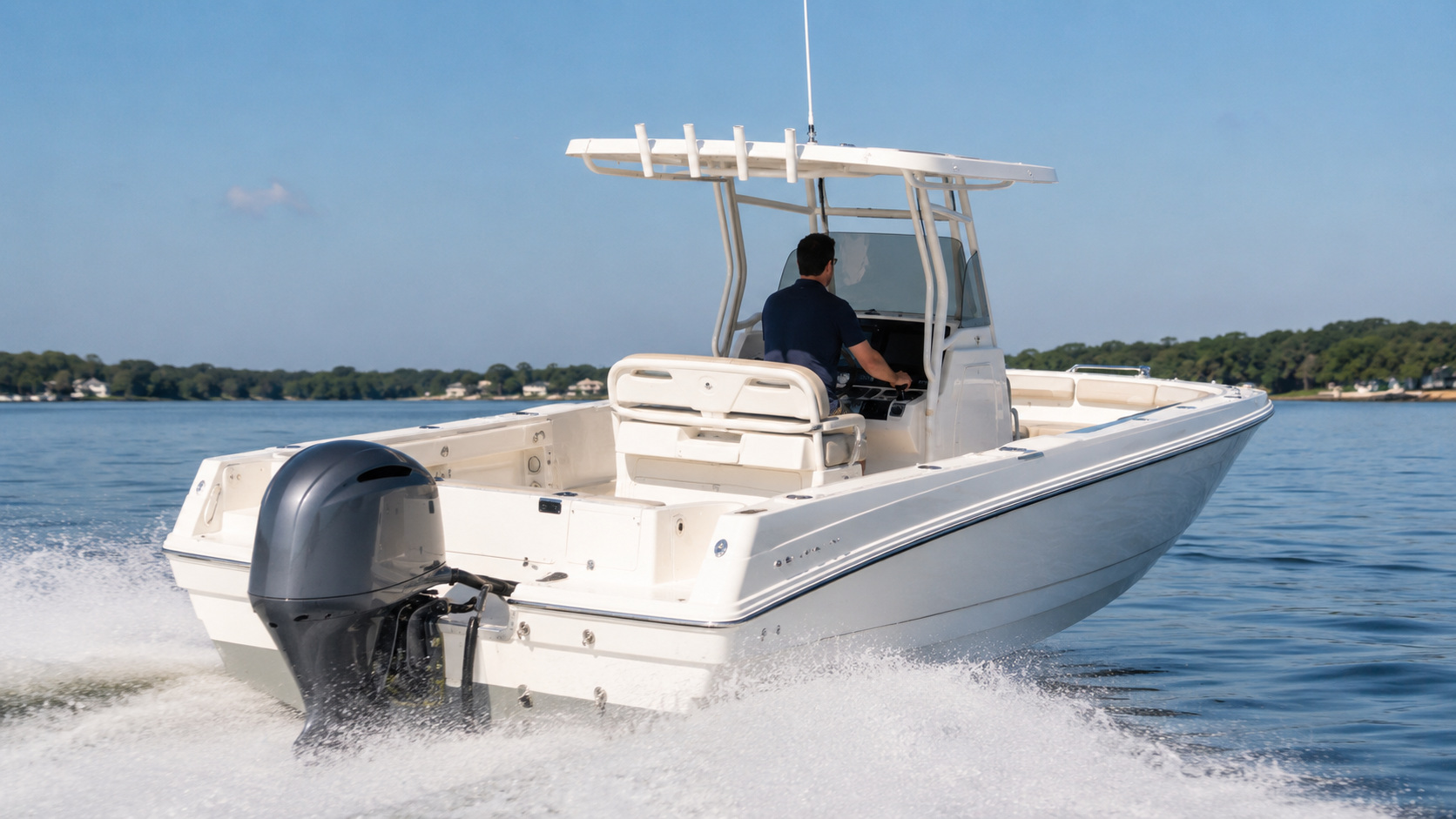
The deck remains flexible. The center-console layout, leaning post, self-bailing cockpit, removable cushions, flip-up transom seats, rod storage, and available fishing or watersports equipment allow the T22CC to serve both anglers and family passengers. The point of buying the 22 is not simply to own a bigger Trophy. It is to gain enough room and power that a full fishing load no longer makes the boat feel marginal.
For many buyers, the T22CC is the strongest balance in the range. It carries substantially more capability than the T20CC while stopping short of the T24CC’s 100-gallon tank, 22-degree deep-V, and roughly 4,466-pound standard-engine weight. If you fish nearshore and coastal water regularly but do not need the biggest Trophy every trip, the 22 deserves serious consideration.
Published factory figures. Confirm every dimension against the individual boat before you commit.
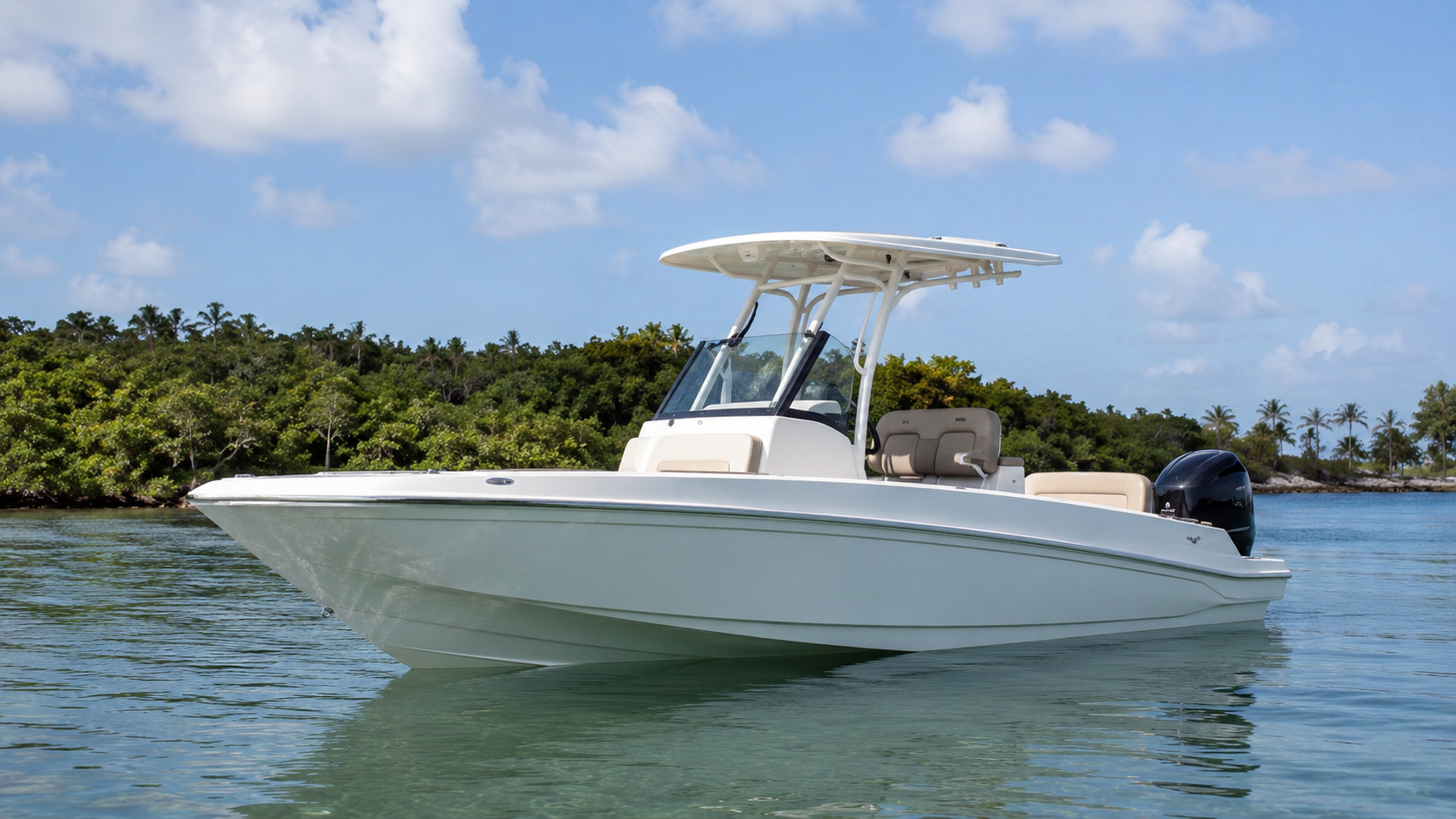
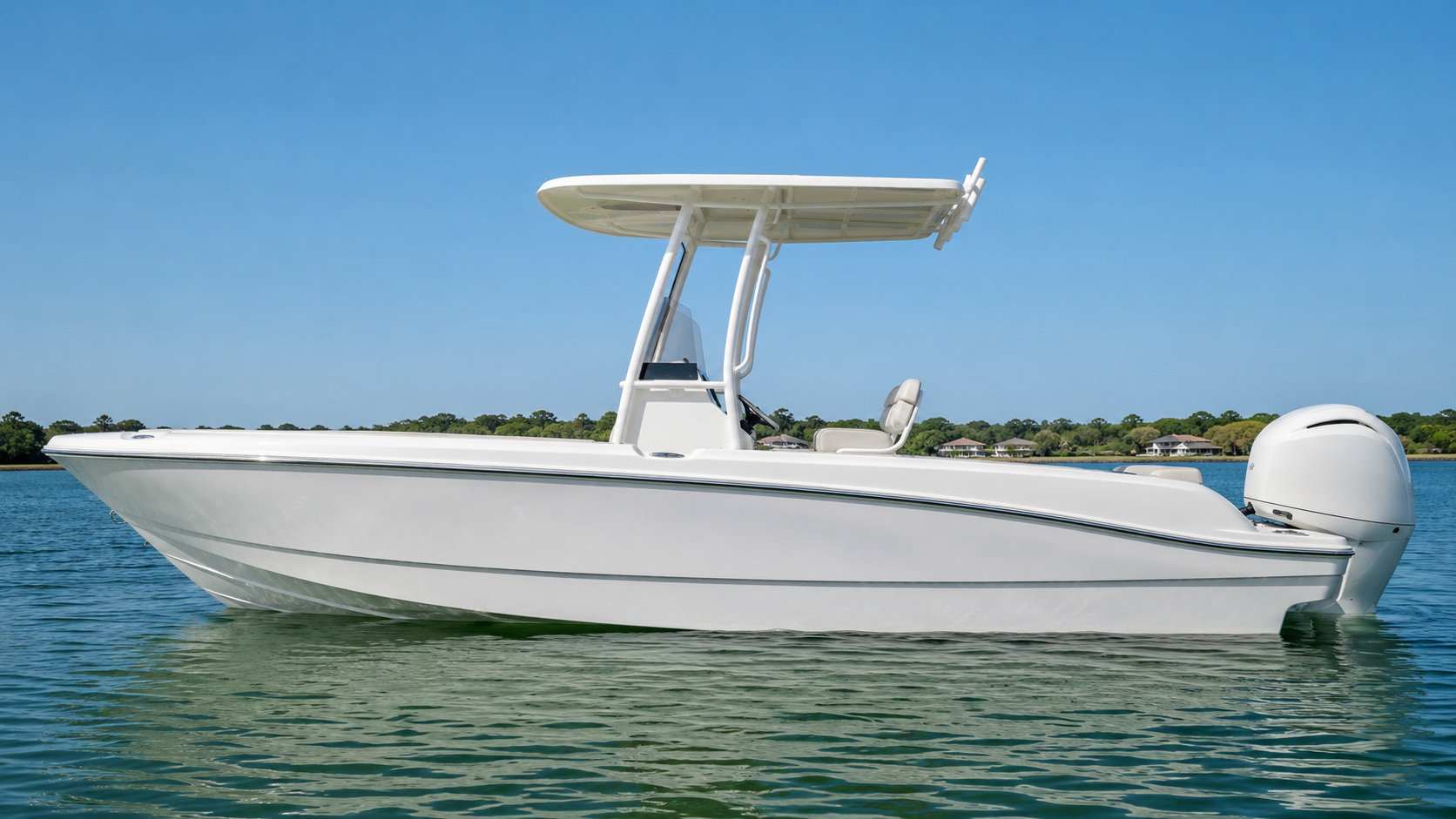
The T22CC measures 22 feet 7 inches overall with an 8-foot-6-inch beam and 18 degrees of deadrise. That beam gives the center-console layout more room around the helm and cockpit than the smaller Trophy models and creates a more comfortable working platform when several anglers are moving at once.
Bayliner lists an estimated maximum draft of 3 feet 1 inch and minimum draft around 1 foot 4 inches. Published weight is approximately 4,000 pounds with standard engine and roughly 4,942 pounds with trailer in current specifications.
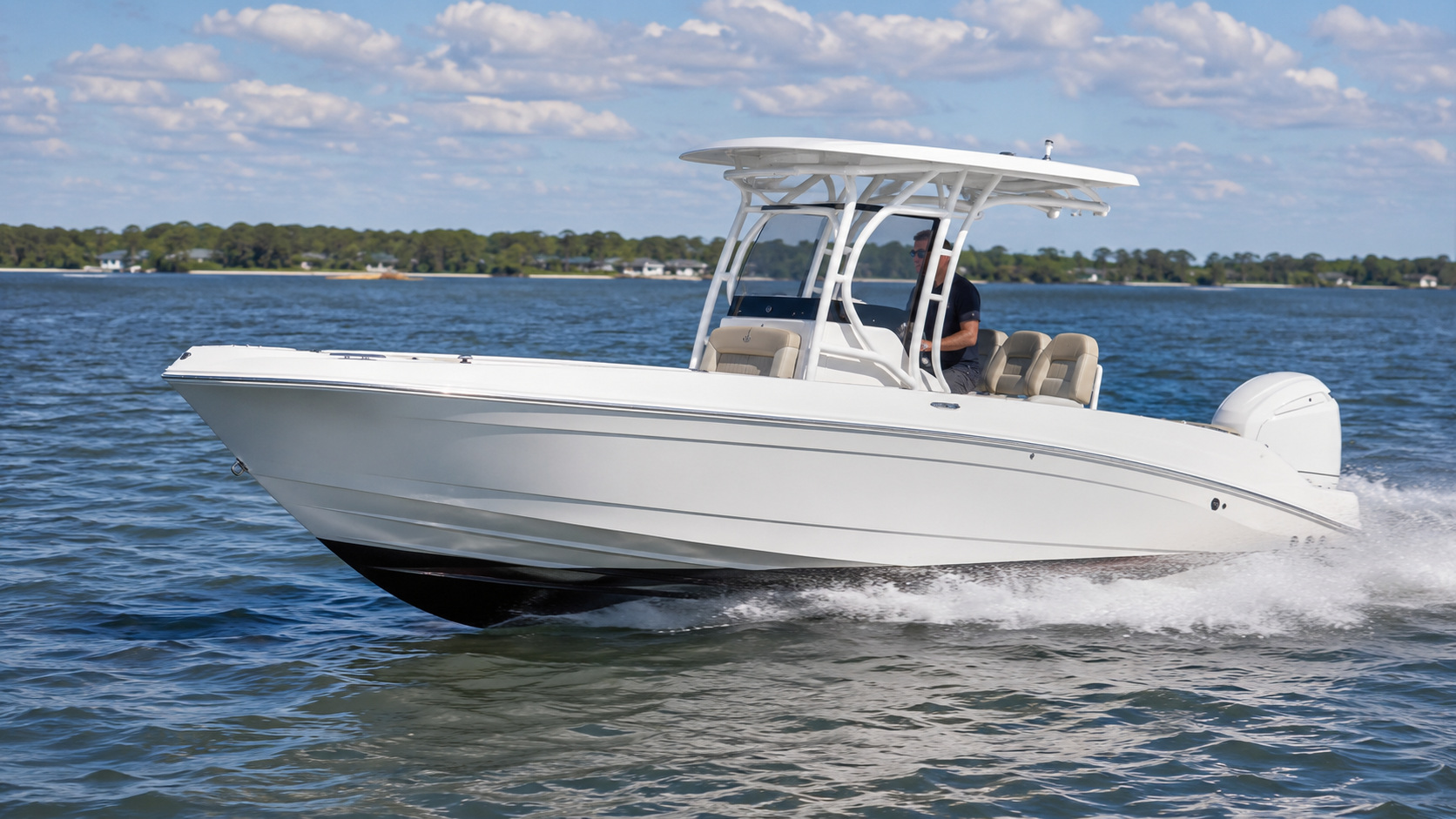
The 18-degree hull is still a moderate-V rather than an extreme offshore bottom. The additional length and mass, however, help the T22CC bridge chop more effectively than the smaller boats. Buyers expecting sustained rough-water offshore running should still compare the deeper-V T24CC and more specialized competitors rather than assuming horsepower alone solves sea conditions.
The T22CC’s 300-horsepower ceiling is a major step from the T20CC’s 175 horsepower. That additional output becomes valuable when the boat is carrying a heavy crew, full fuel, bait, tackle, coolers, and watersports gear.
Do not automatically select maximum horsepower without considering cost and use. A buyer who runs shorter distances with moderate loads may be happy with less power. A buyer who routinely fills the boat, runs coastal distances, or wants stronger acceleration should give the larger engine options more weight.
On a used T22CC, inspect hours, service records, lower-unit oil, propeller and skeg condition, steering, trim, cooling performance, mounting hardware, and corrosion. Electronics and batteries also deserve more attention because 22-foot fishing boats tend to collect more accessories over time.
Fuel capacity is 65 gallons. That gives the T22CC more useful range than the T20CC, but the larger hull and much higher available horsepower can also increase consumption significantly.
The right range calculation uses verified burn for the exact engine and a realistic cruise setting. Do not assume that a 300-horsepower boat should be run near maximum throttle just because the power is available. Most owners will find a more efficient cruise where the hull is cleanly on plane and the engine is not working excessively hard.
If longer coastal days are a major part of the plan, compare the 65-gallon tank directly with the T24CC’s 100 gallons. The difference may matter more to you than two feet of hull length.
The T22CC is the first Trophy model in this group where buyers can pair a relatively large single outboard with a 22-foot hull. That creates stronger acceleration potential and more authority with a full load.
During a test run, evaluate planing time, steering effort, visibility, trim response, and how the boat crosses wakes at your normal cruise. If considering a used boat with maximum power, inspect the transom and mounting hardware carefully and verify that the engine setup matches factory ratings.
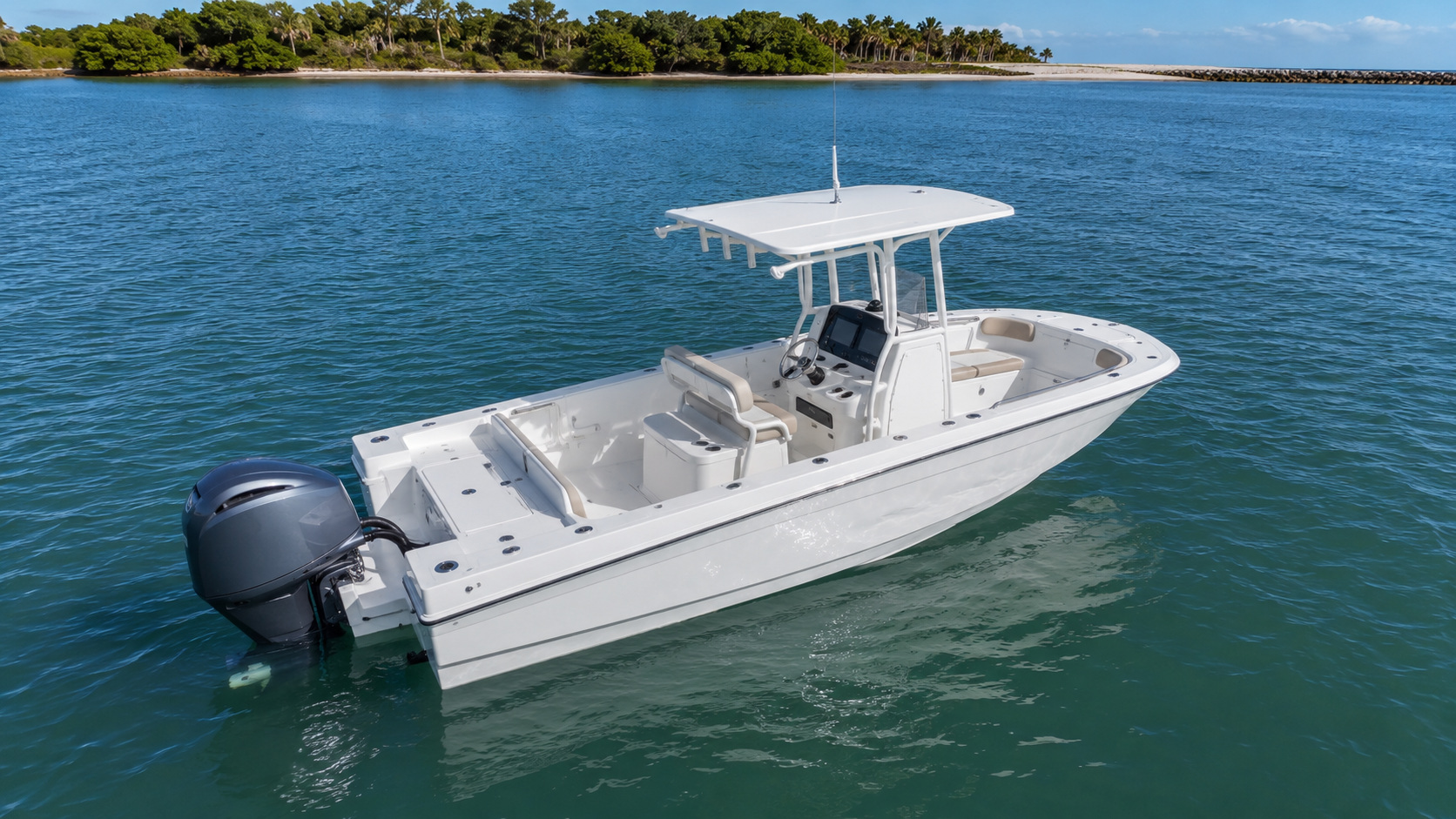
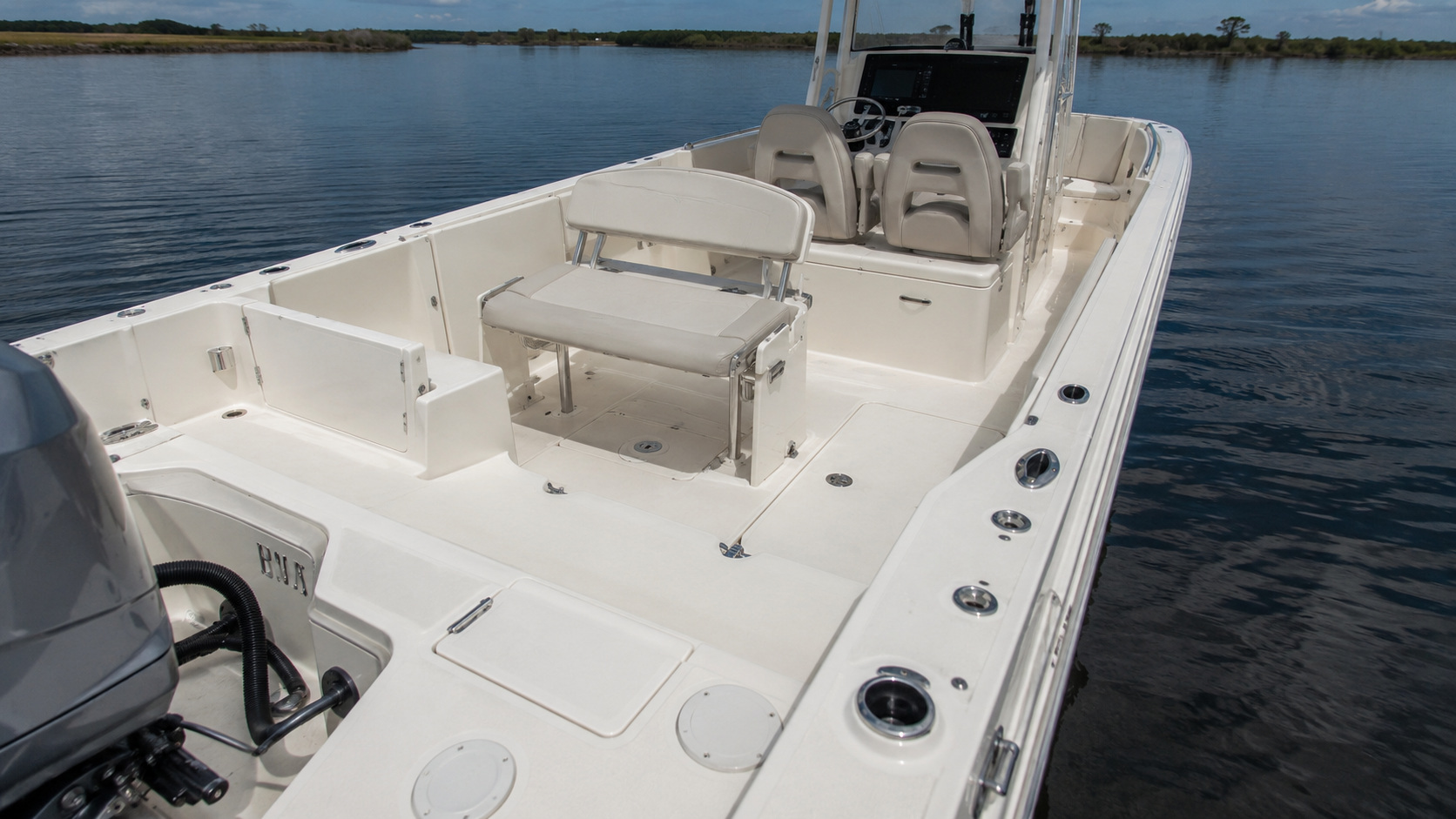
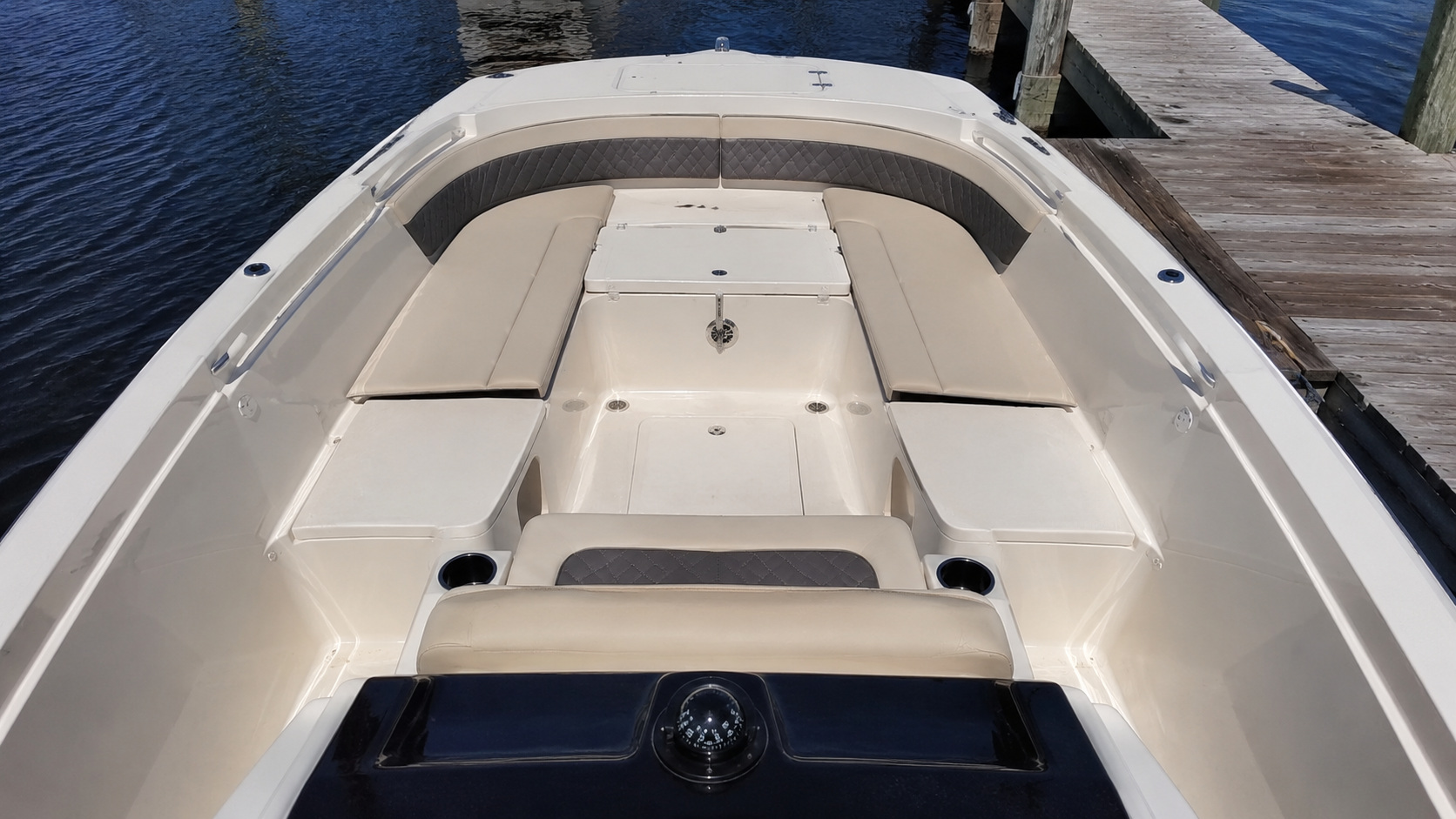
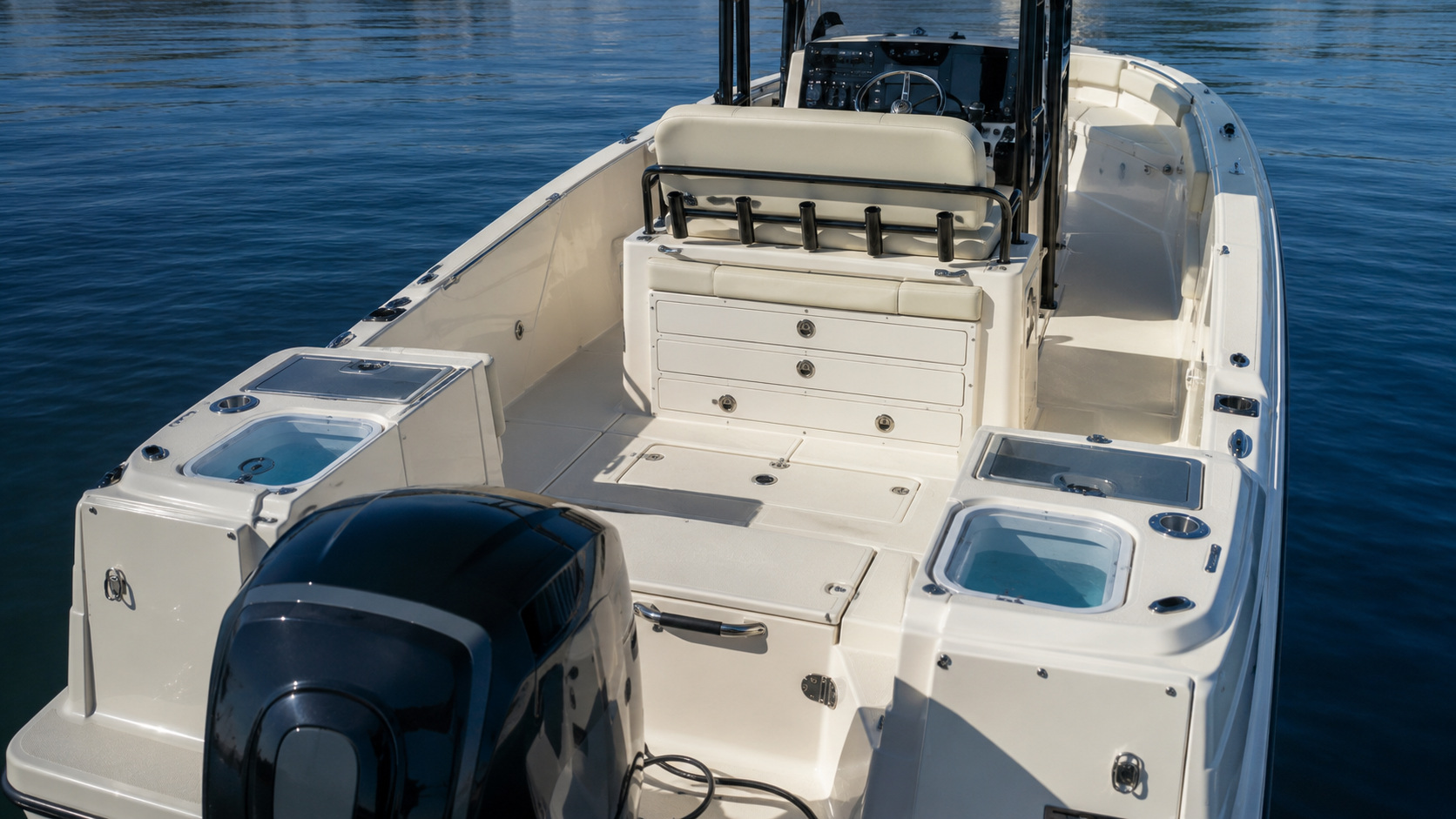
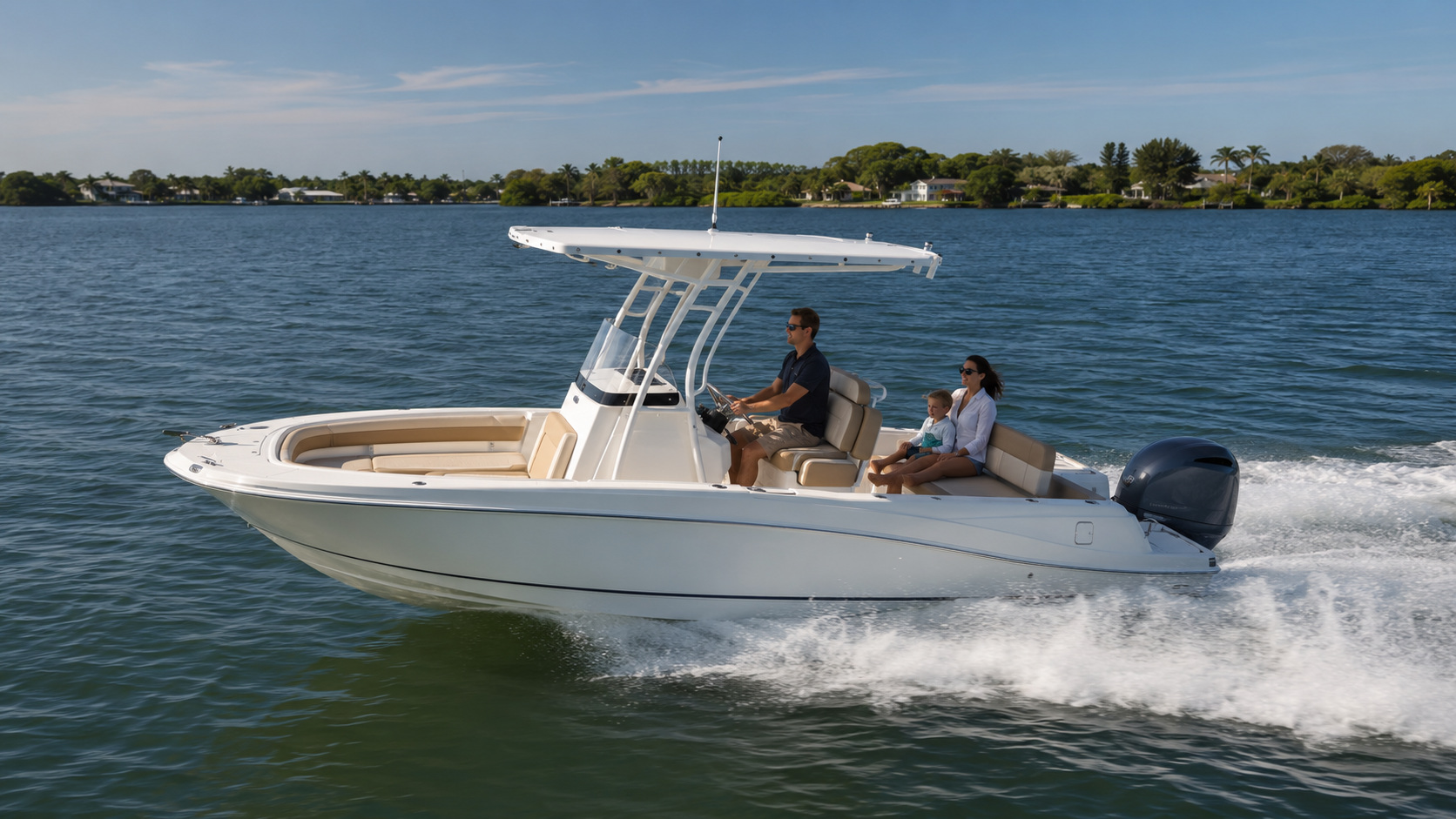
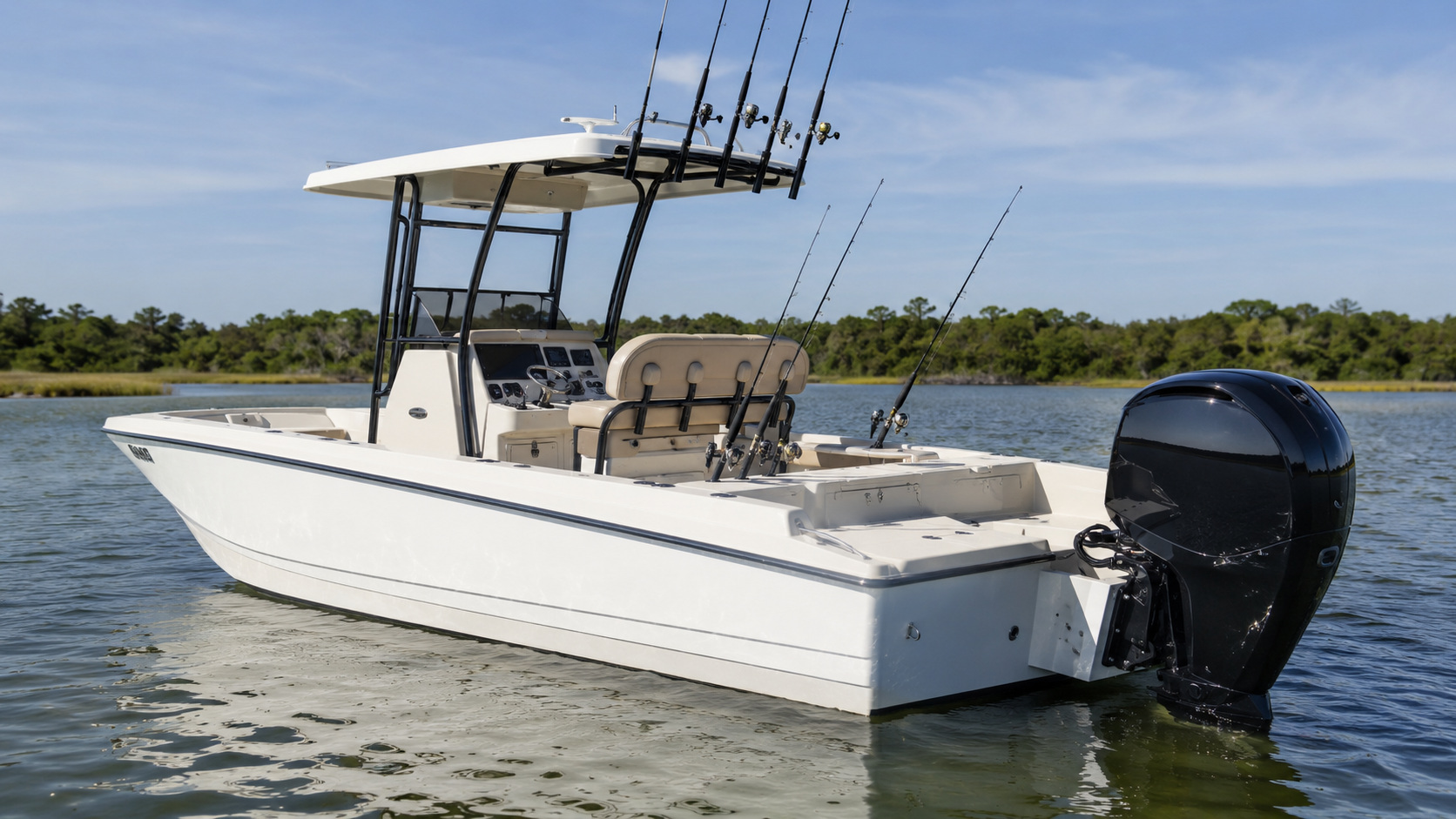
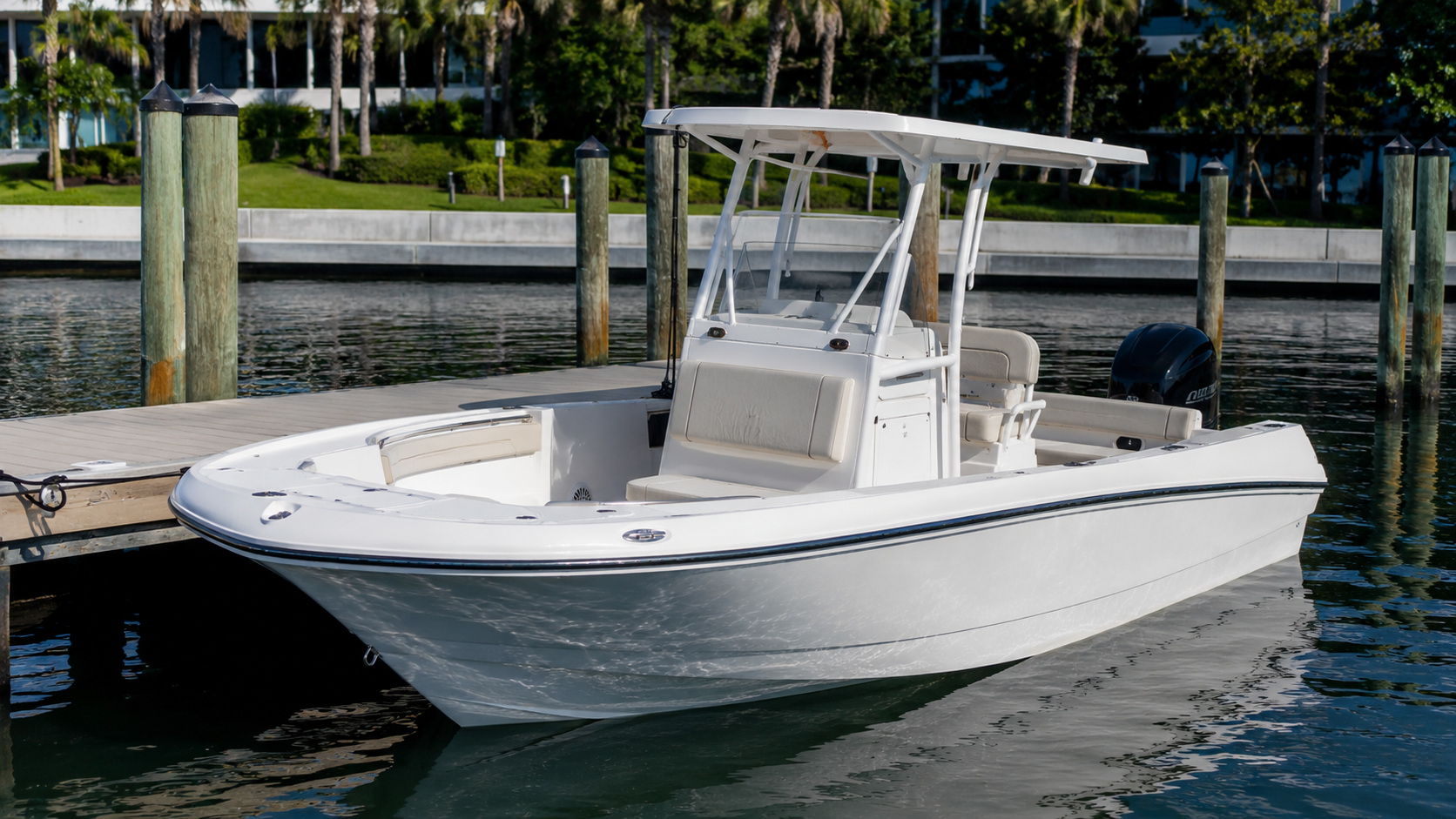
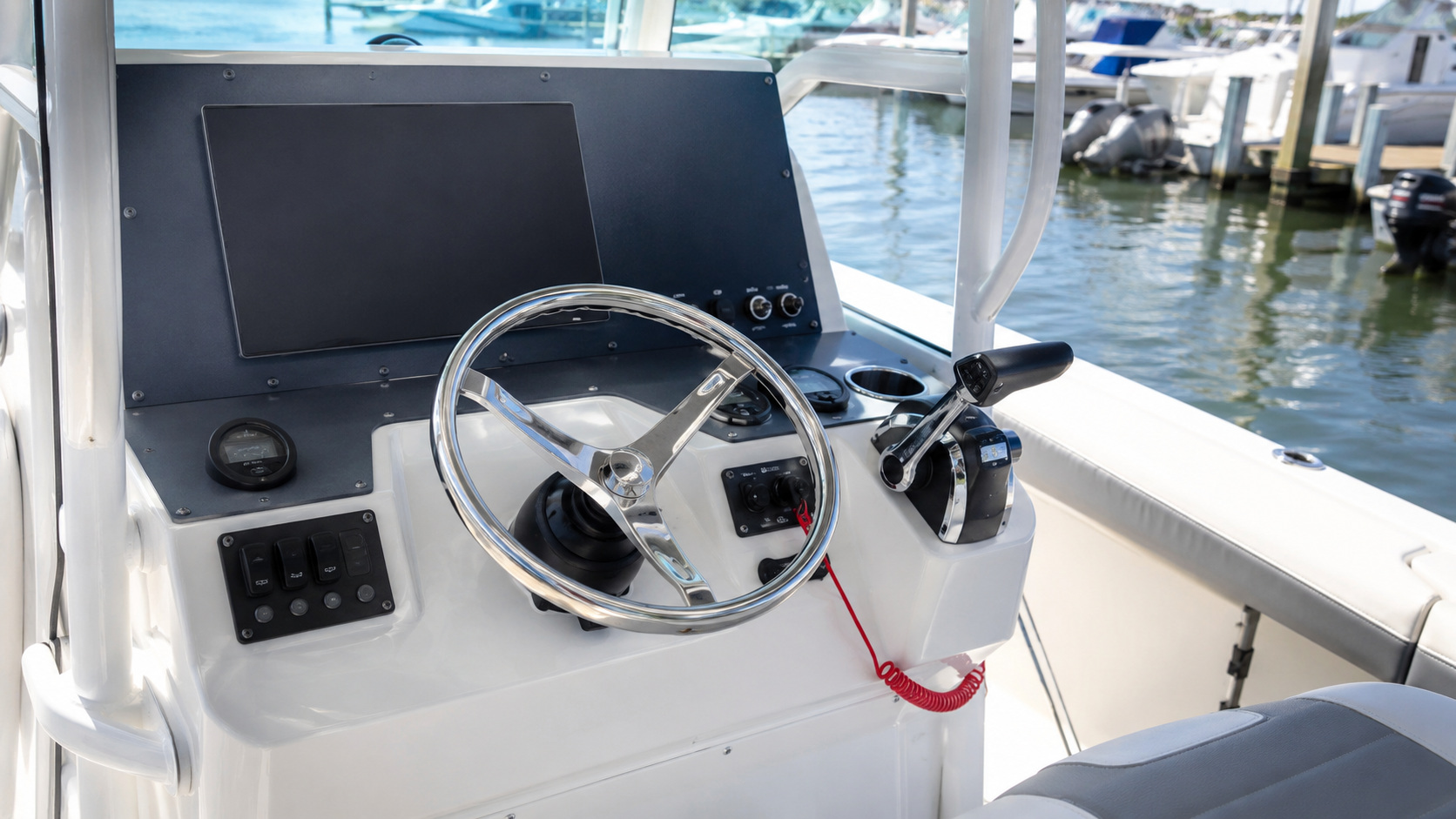
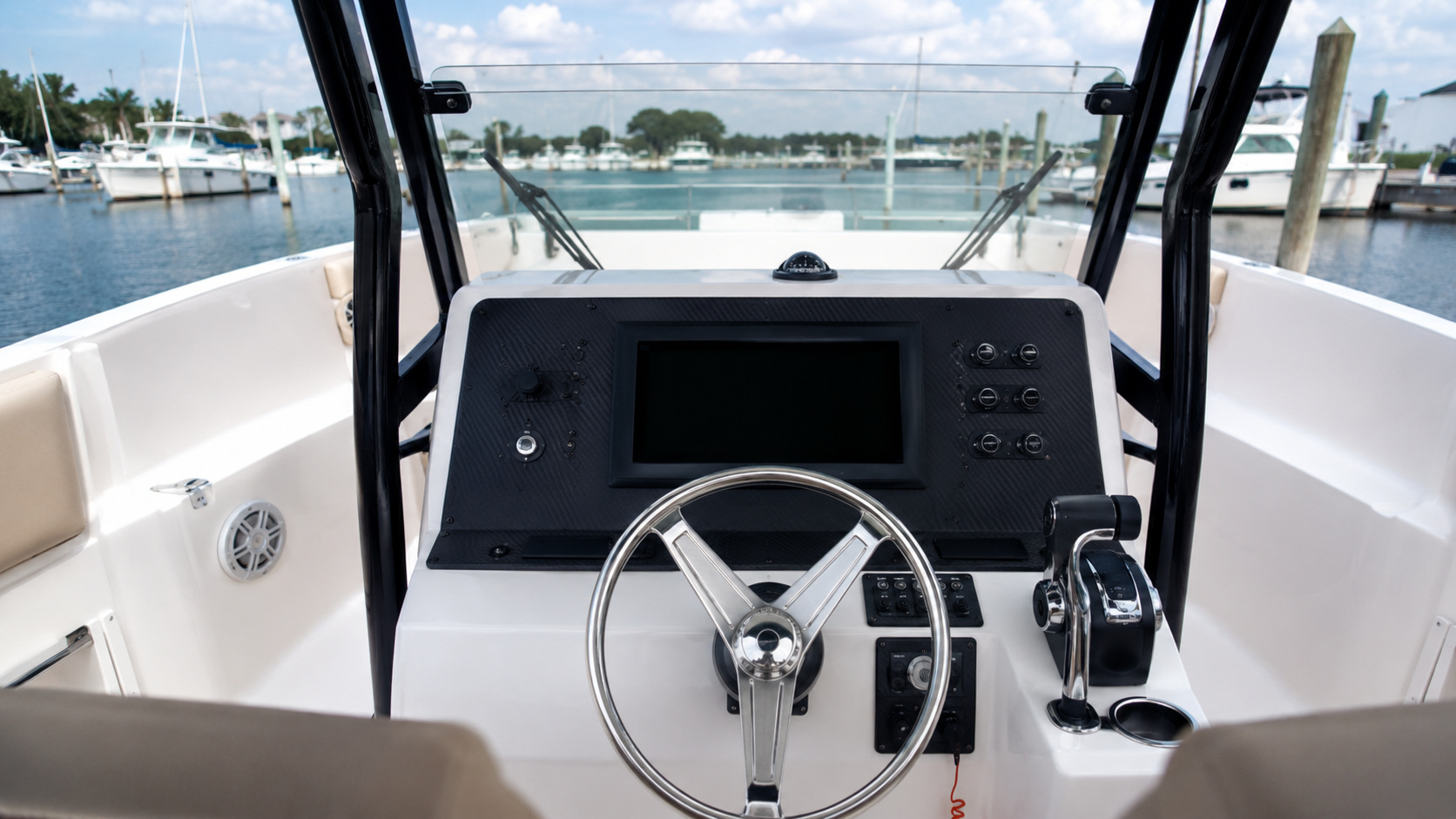
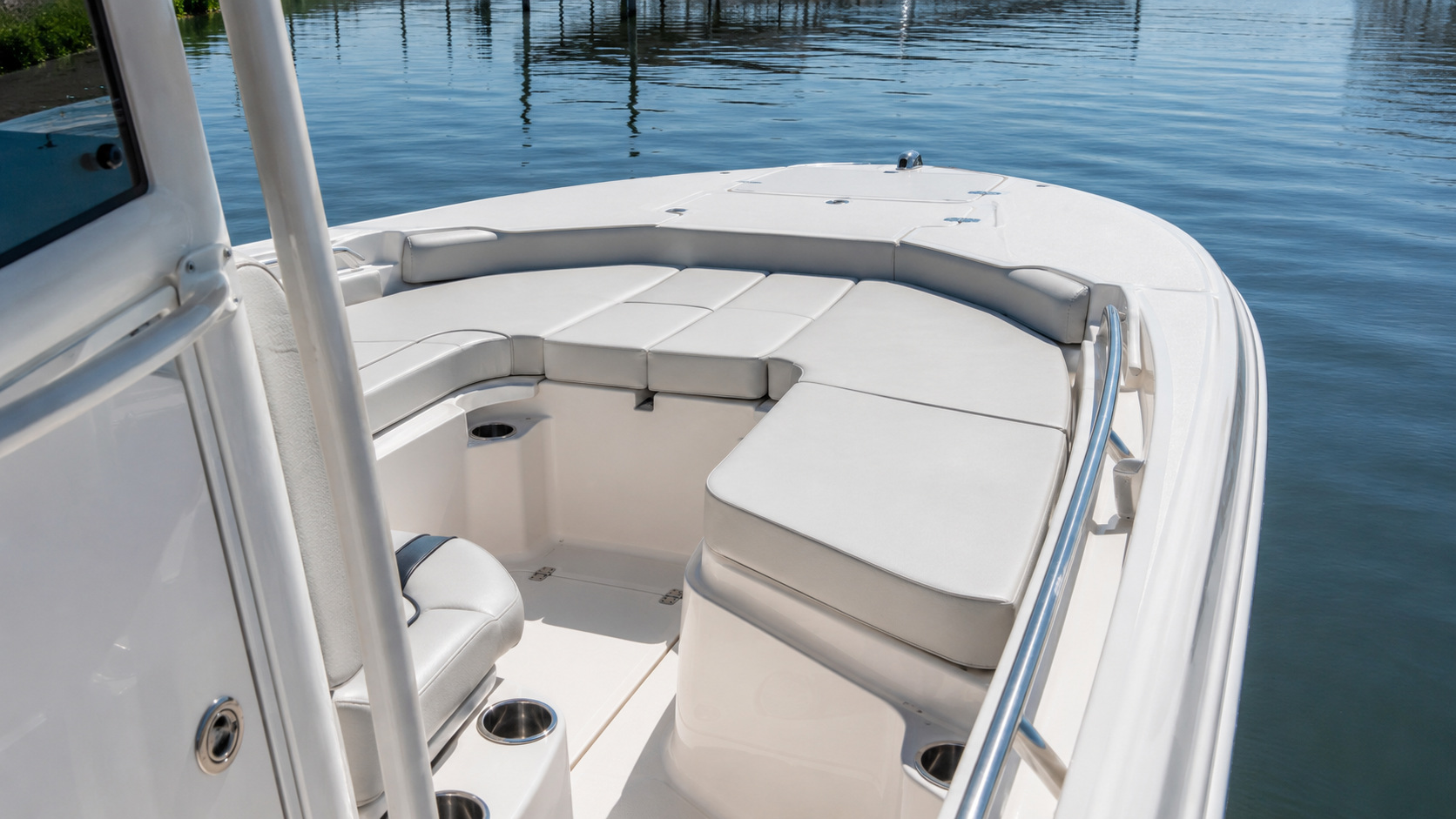
The 8-foot-6-inch beam gives the T22CC space to function as a true multi-purpose center console. Flip-up transom seating can disappear when anglers need the stern clear. Removable cushions let the bow move between family seating and casting space. The leaning-post arrangement keeps the helm compact while preserving fishing utility behind it.
The self-bailing cockpit simplifies washdown, and gunnel rod holders keep rods accessible without filling the floor. Available ski-tow equipment can broaden family use without changing the underlying fishing-first layout.
The T22CC is especially attractive to buyers who have already owned a smaller center console and know exactly where those boats start to feel tight.
65-Gallon Fuel Tank
Supports easier cleanup and water management on fishing days.
Adds passenger capacity without permanently sacrificing the stern fishing area.
Converts the forward deck between cruising comfort and casting space.
Keeps the helm area compact and functional for anglers.
Supports easier control with larger outboard power.
Allows the T22CC to serve family recreation without giving up its center-console layout.
Beyond the outboard, test bilge systems, battery switches, steering, navigation lights, stereo, gauges, livewell or washdown equipment where fitted, and all aftermarket electronics.
Pay particular attention to T-top mounts, transducer installations, trolling-motor wiring, and additional battery systems. Fishing boats in this size range often receive owner-installed equipment, and workmanship matters.
Trailer brakes, tires, hubs, winch, bunks, lights, and corrosion should be treated as part of the purchase rather than an afterthought.
Bayliner lists roughly 4,942 pounds with trailer before normal gear and fuel. A full 65-gallon tank adds substantial weight, and batteries, electronics, tackle, coolers, and accessories move the real package higher.
Storage length is listed around 25 feet 7 inches, with height around 11 feet on trailer. Confirm the tow vehicle, storage location, and launch ramp can handle the boat comfortably before buying.
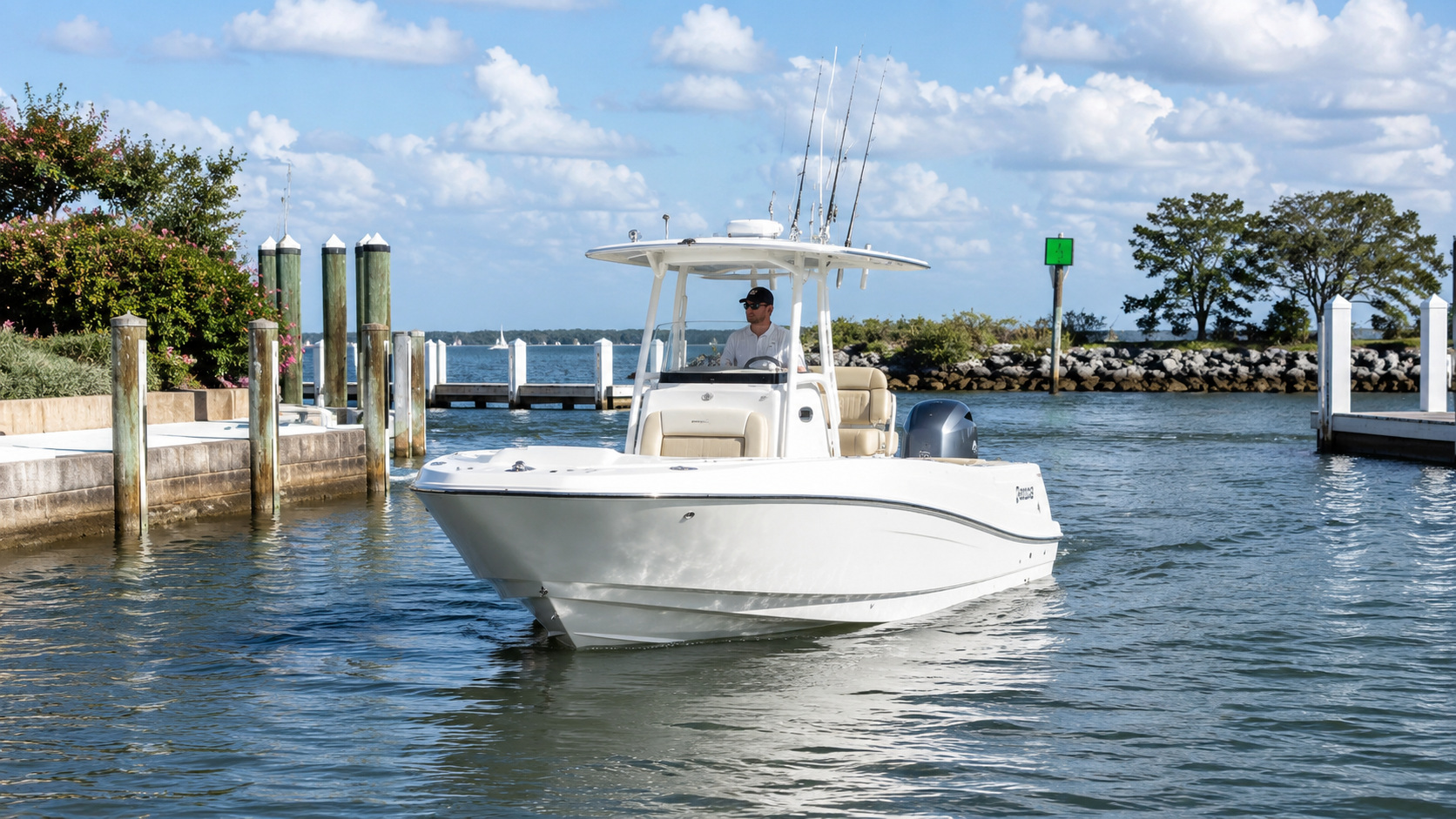
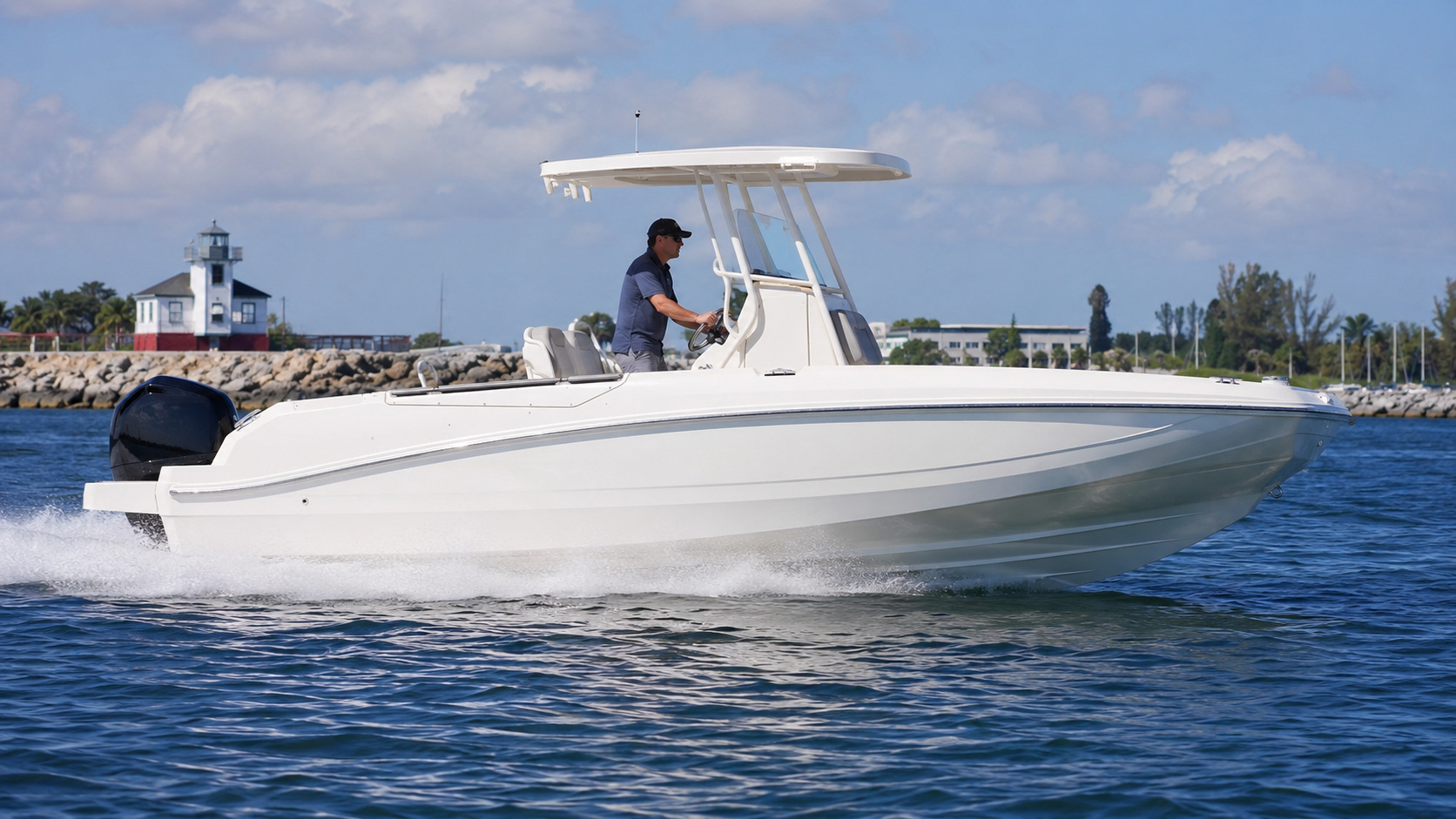
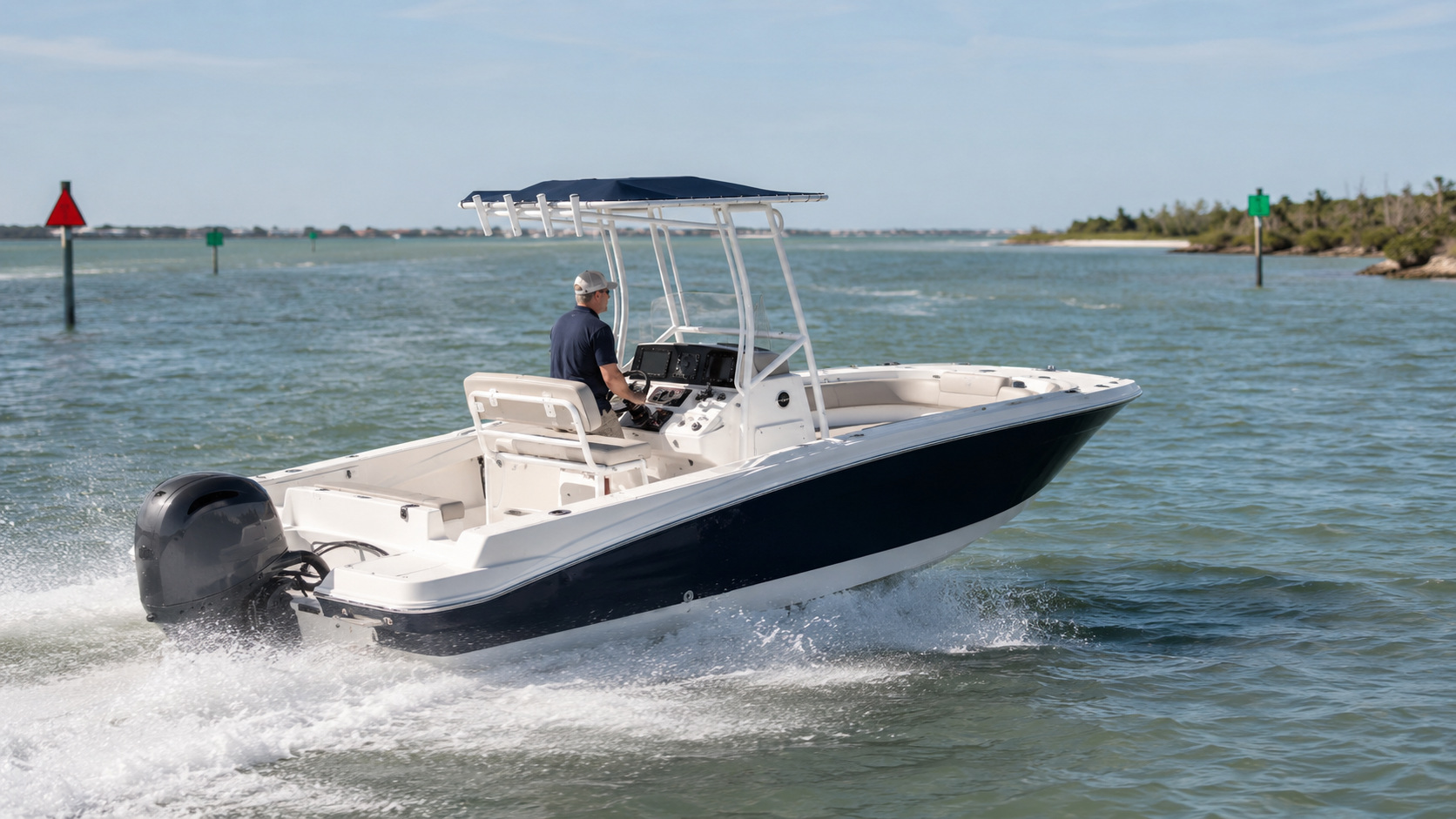
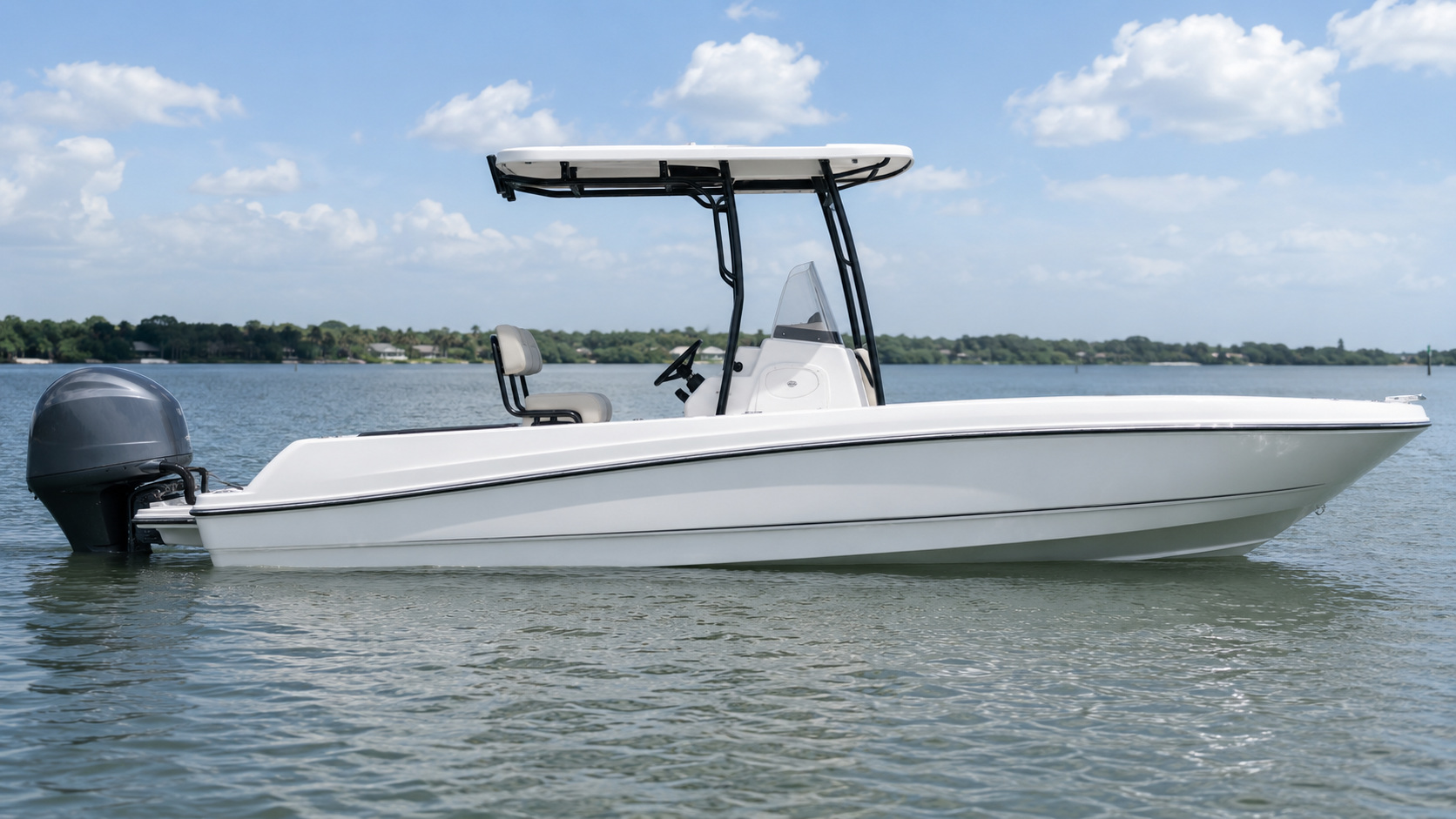
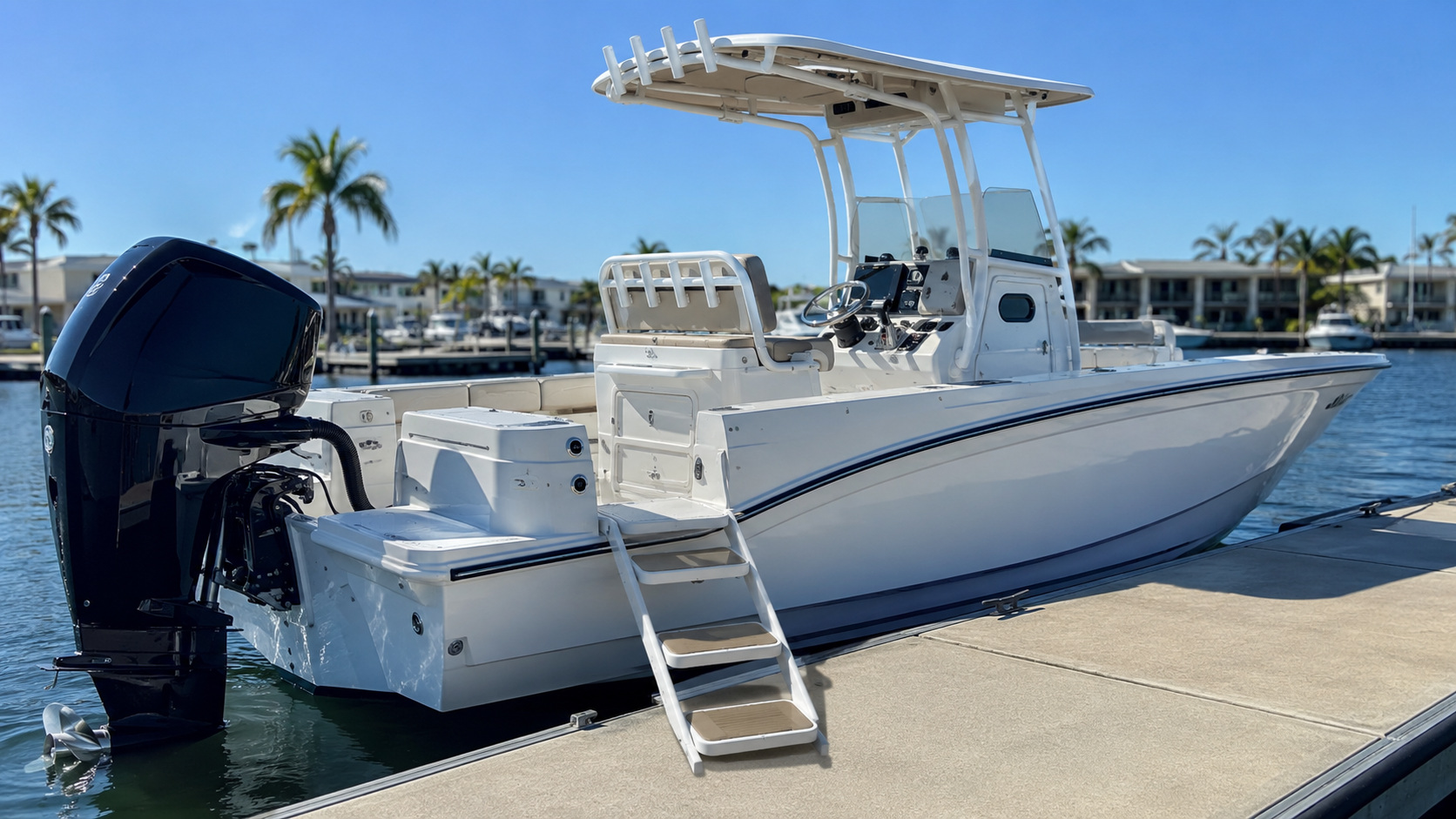
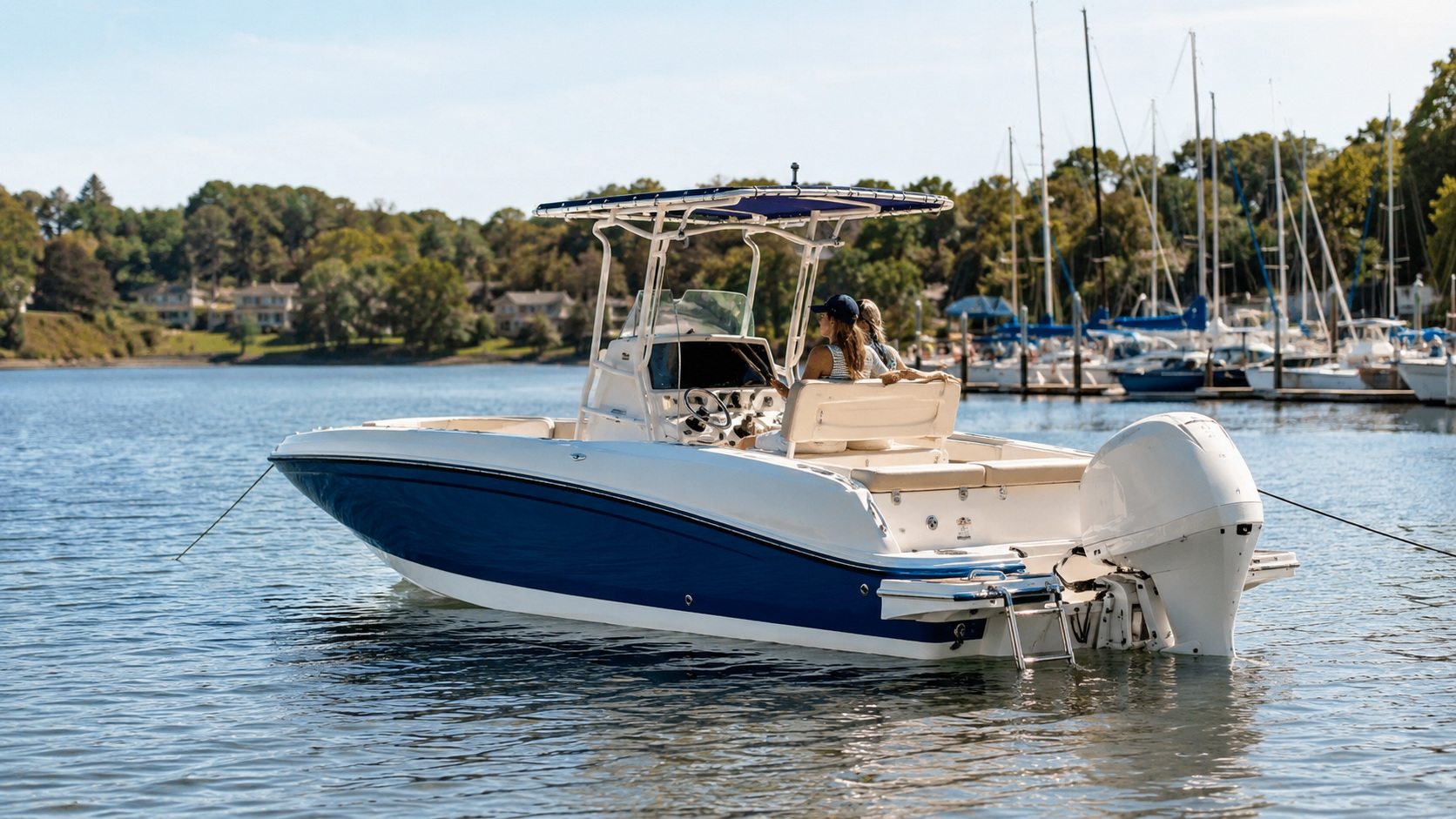
Use the gallery to judge the width around the console, stern fishing room, bow casting space, transom seating, helm visibility, T-top coverage, and trailer scale. The extra size should solve a real problem compared with the T20CC.
Bayliner currently advertises the T22CC starting in the mid-$50,000 range before selected power, options, freight, dealer preparation, taxes, and registration. A higher-output Mercury, T-top equipment, electronics, fishing packages, and trailer upgrades can push the delivered price considerably higher.
Used boats should be valued around engine hours, outboard service history, electronics, trailer condition, upholstery, pumps, and saltwater maintenance. At this size, a well-maintained engine and trailer can justify a meaningful price premium.
Figures come from this page’s Boat Details fields. Illustration only and not an offer of credit.
Run the actual purchase after power and fishing equipment are included. The difference between a T20CC and T22CC may look large in cash terms and much smaller monthly, but the larger boat also costs more to tow, fuel, and maintain.
Illustration only and not an offer of credit. Your actual rate and term depend on credit profile, vessel age, loan amount and ownership structure.
Buy the T22CC when its ten-person capacity, 65 gallons of fuel, and 300-horsepower ceiling already cover your fishing. Move to the T24CC when the 22-degree deep-V, 100-gallon tank, 12-person capacity, larger livewell and fish-box systems, and additional deck space materially improve the trips you take.
New buyers should choose engine power after thinking through full-load performance rather than dealer-floor appearance. Used buyers should prioritize outboard history, electronics, trailer, pumps, corrosion control, and owner modifications.
Private-party T22CCs can represent strong value, but title, lien, engine serial numbers, and trailer documentation need to be clean before closing.
If you found a T22CC with the power and equipment that fit your fishing, send Float Finance the listing. We can evaluate financing around that exact boat rather than forcing you to step down in horsepower or equipment before you know the payment.
Bayliner currently advertises the T22CC starting around $56,000 before engine-related configuration, options, freight, dealer preparation, taxes, and registration. The final number can move significantly with power and electronics. Used pricing depends on year, hours, service history, trailer, fishing equipment, and condition. Compare the boat as equipped rather than assuming two T22CC listings are equivalent because the hull year matches.

Bayliner lists capacity for ten people. The 8-foot-6-inch beam and 22-foot-7-inch hull provide substantially more working room than the T20CC. For fishing, comfort depends on how many anglers and how much gear are aboard. If ten people will routinely cruise together, the capacity is useful. If ten people will routinely fish together, the larger T24CC deserves a serious look.
Bayliner lists a 300-horsepower maximum. That is a major jump from the T20CC and gives the boat stronger loaded performance potential. Maximum power is most useful for buyers carrying heavier loads or running farther. A lightly loaded owner may not need the largest engine available, so compare performance needs with acquisition cost and fuel use.
Fuel capacity is 65 gallons. That provides more flexibility than the 55-gallon T20CC but remains well below the T24CC’s 100 gallons. Long-range buyers should calculate real usable range with the exact engine and a reserve before assuming the T22CC fits their normal route.
It can be suitable for coastal and nearshore use when conditions, operator experience, equipment, and local weather support the trip. The hull uses 18 degrees of deadrise, so it is not the deepest-V model in the range. Buyers prioritizing rougher coastal running should compare the T24CC’s 22-degree bottom rather than judging offshore capability from horsepower alone.
Yes, but it is a substantial trailer package. Bayliner lists about 4,942 pounds with trailer before fuel and gear. Storage length is roughly 25 feet 7 inches. Confirm tow-vehicle payload, brakes, tongue weight, hitch rating, and storage space before buying.
Potentially. Financing depends on the boat’s year, value, condition, purchase price, borrower, and seller type. If you found a specific T22CC, send Float Finance the listing and asking price so the financing can be discussed around the actual purchase.
Choose the T20CC if easier towing and lower cost matter more and its eight-person capacity and 175 horsepower are enough. Choose the T22CC when more beam, more passenger room, additional fuel, and up to 300 horsepower solve recurring needs. The T22CC is a meaningful step, not just a slightly longer version of the same boat.
Tell us a little bit about yourself and the boat you are looking to finance.