
Call Us : 207-994-5109
Mon – Fri: 8 am to 9 pm & Sat – Sun: 10 am to 8 pm
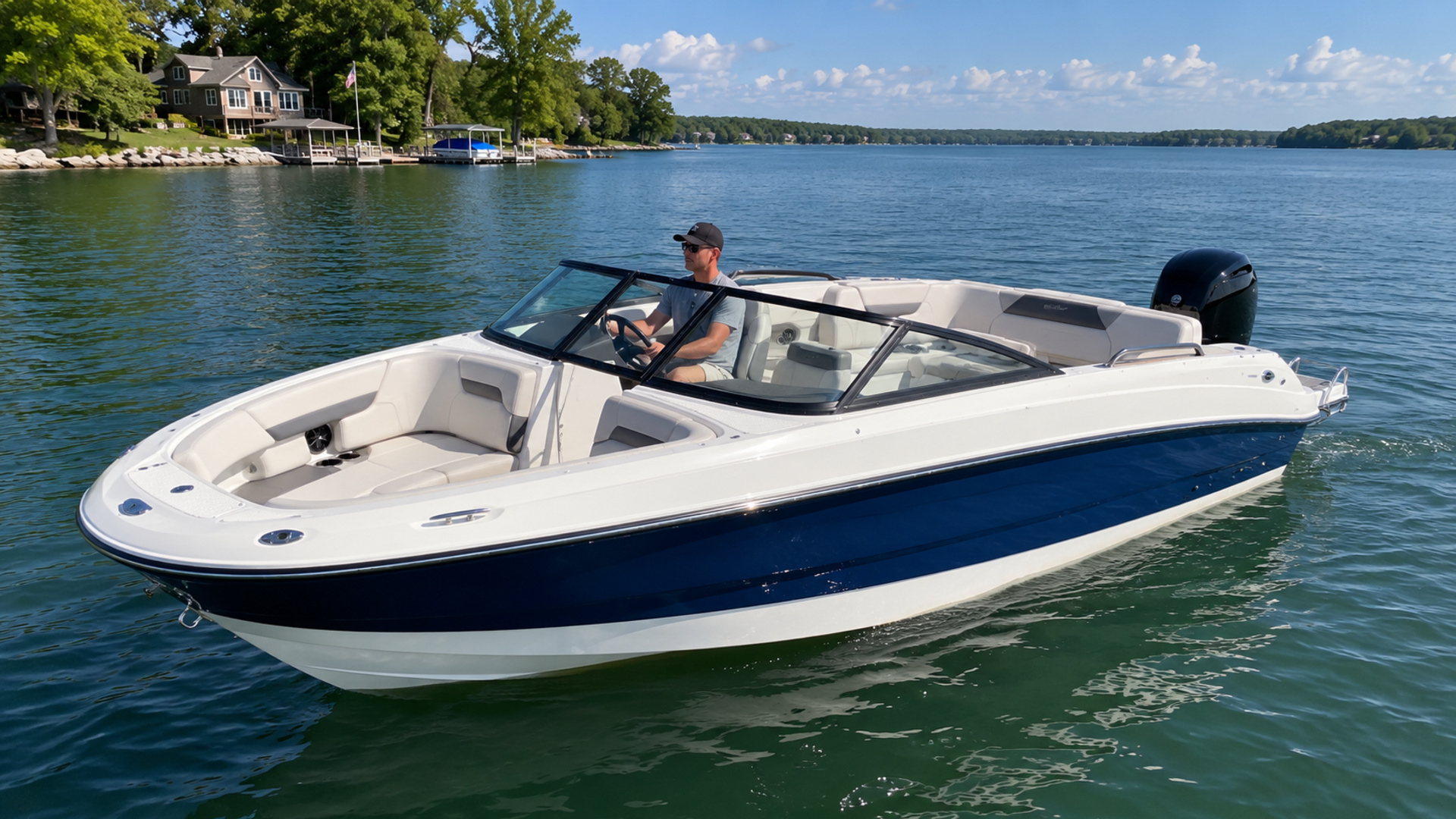
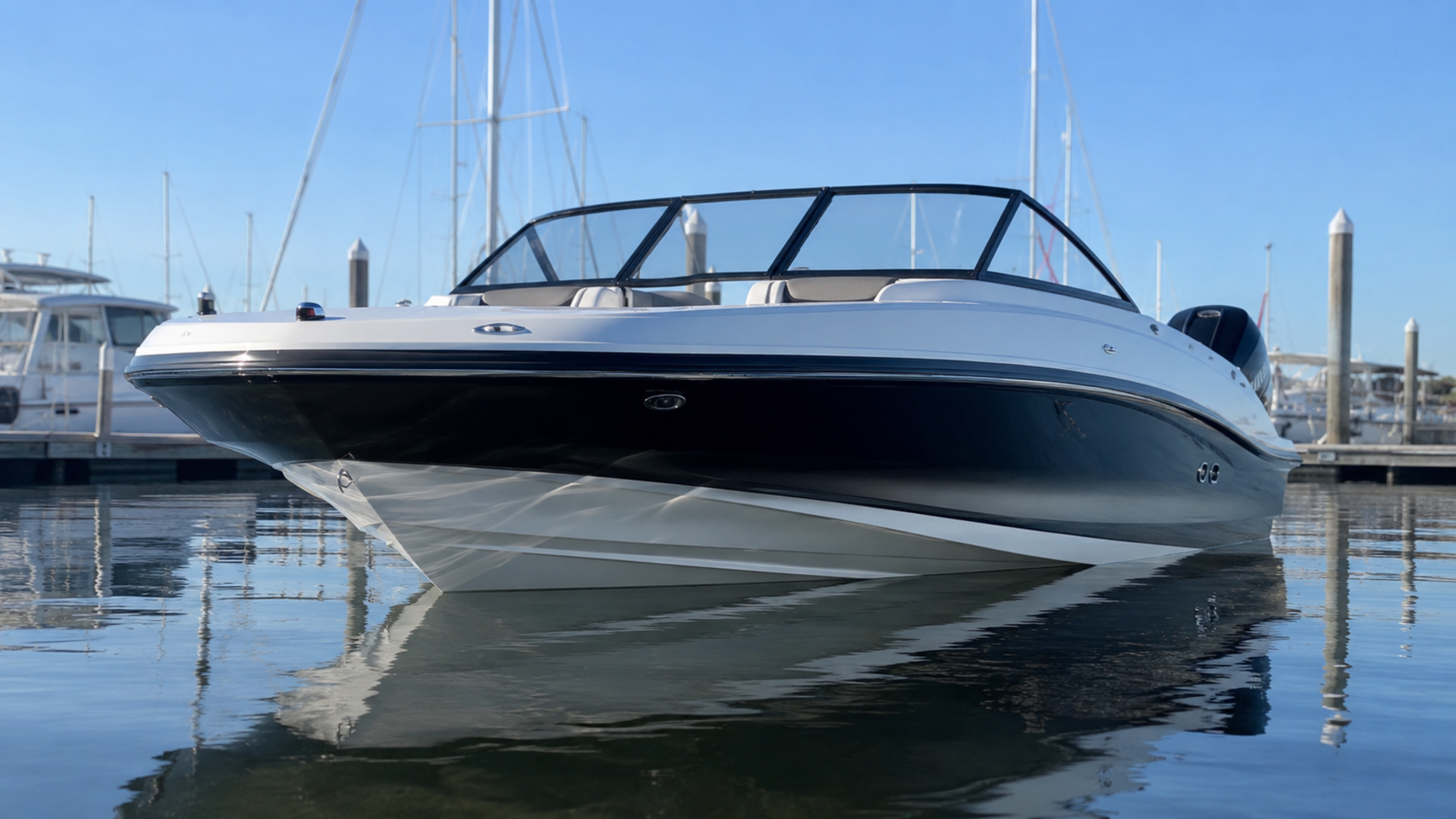
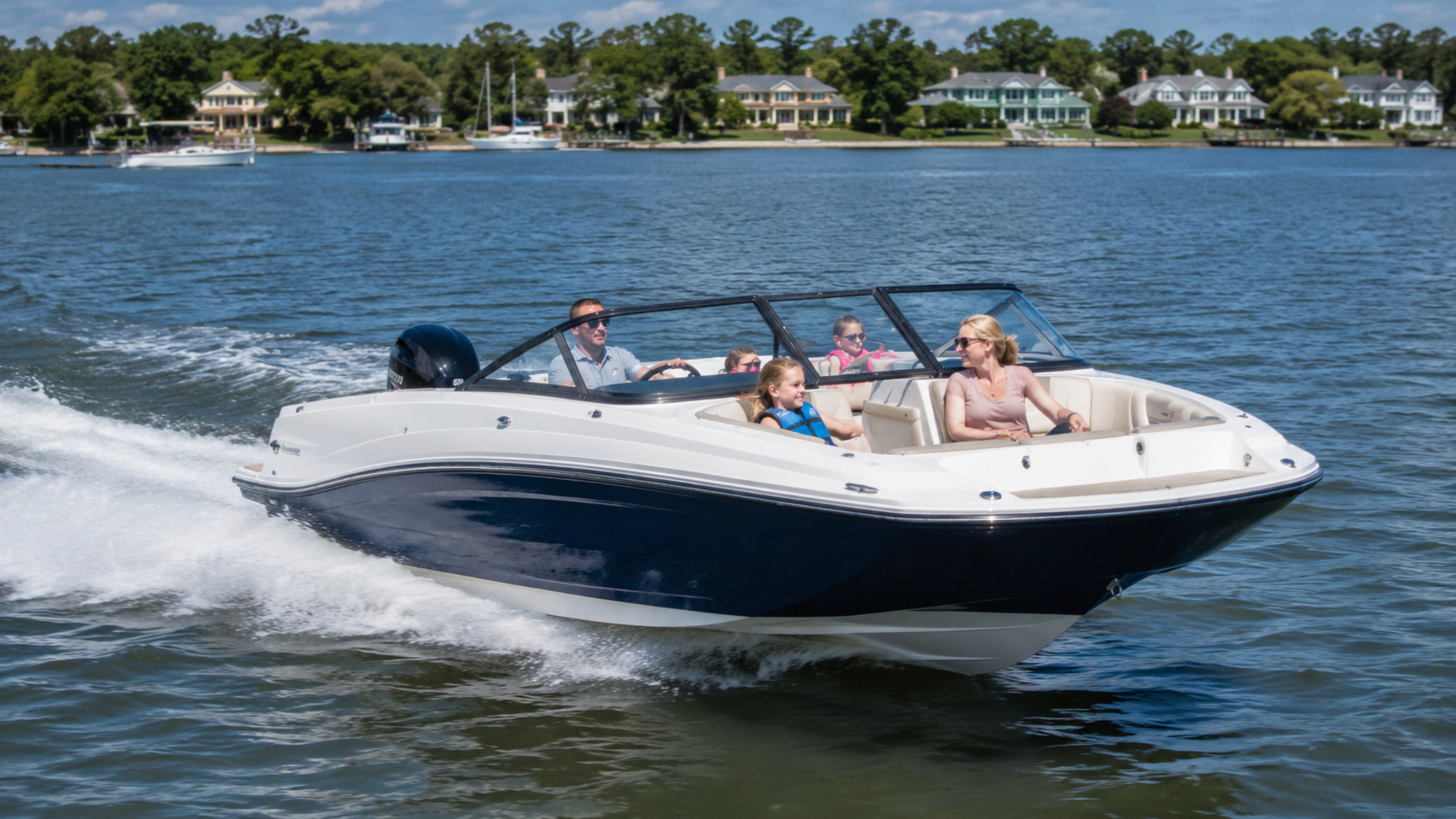
The Bayliner D20 is the current D-Series outboard for buyers who want ten-person capacity, two layout directions, and a 33-gallon tank without stepping into the 21’6″ D22.
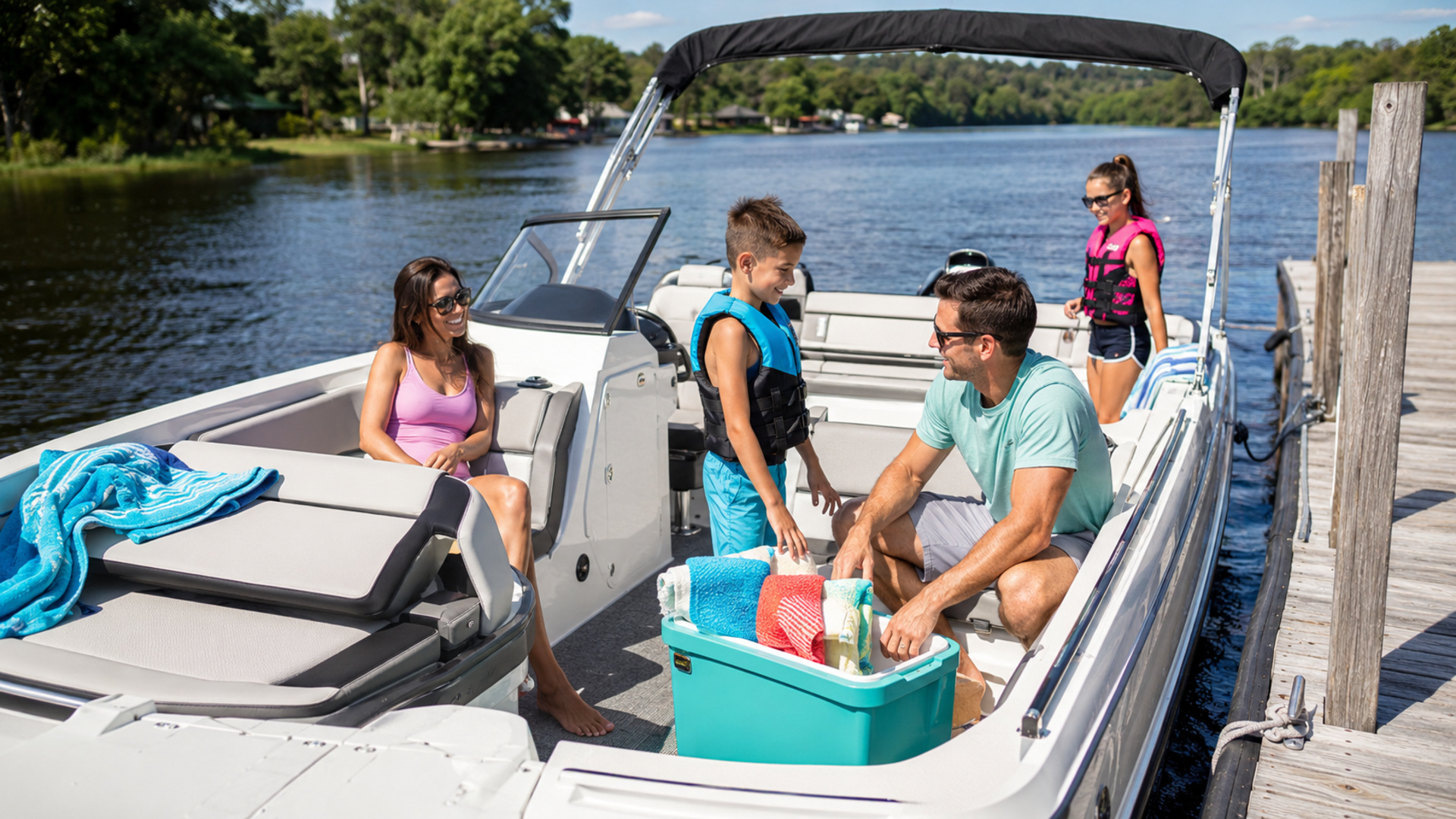
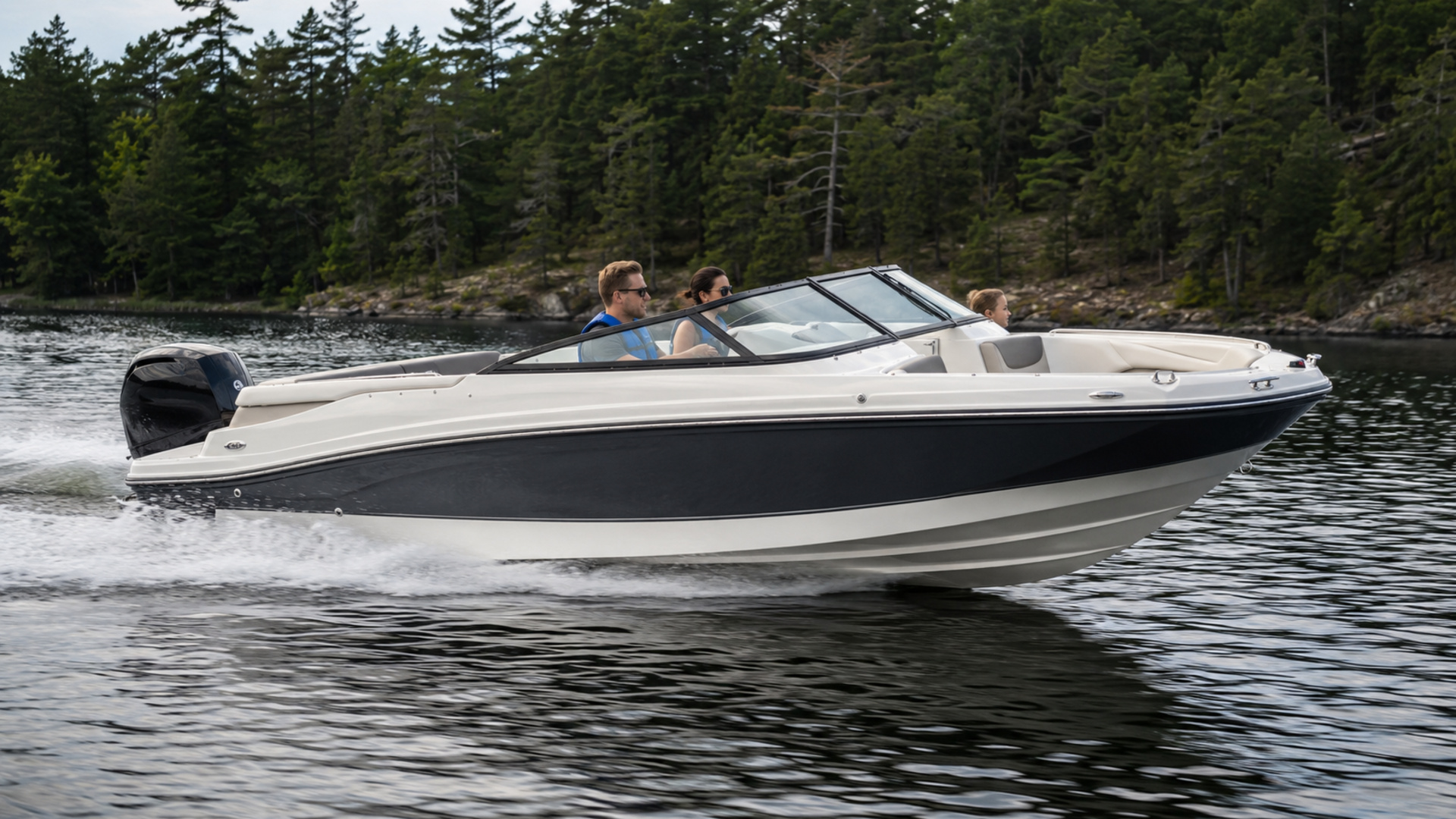
The D20 is where Bayliner’s deck-boat lineup stops feeling entry level and starts behaving like a configurable family platform. Its 19-foot-6-inch length is only part of the story. The 8-foot-1-inch beam, deep gunnels, ten-person rating, in-floor watersports storage, aerated livewell, bow ladder, and two layout bundles give buyers more ways to shape the boat around how it will actually be used.
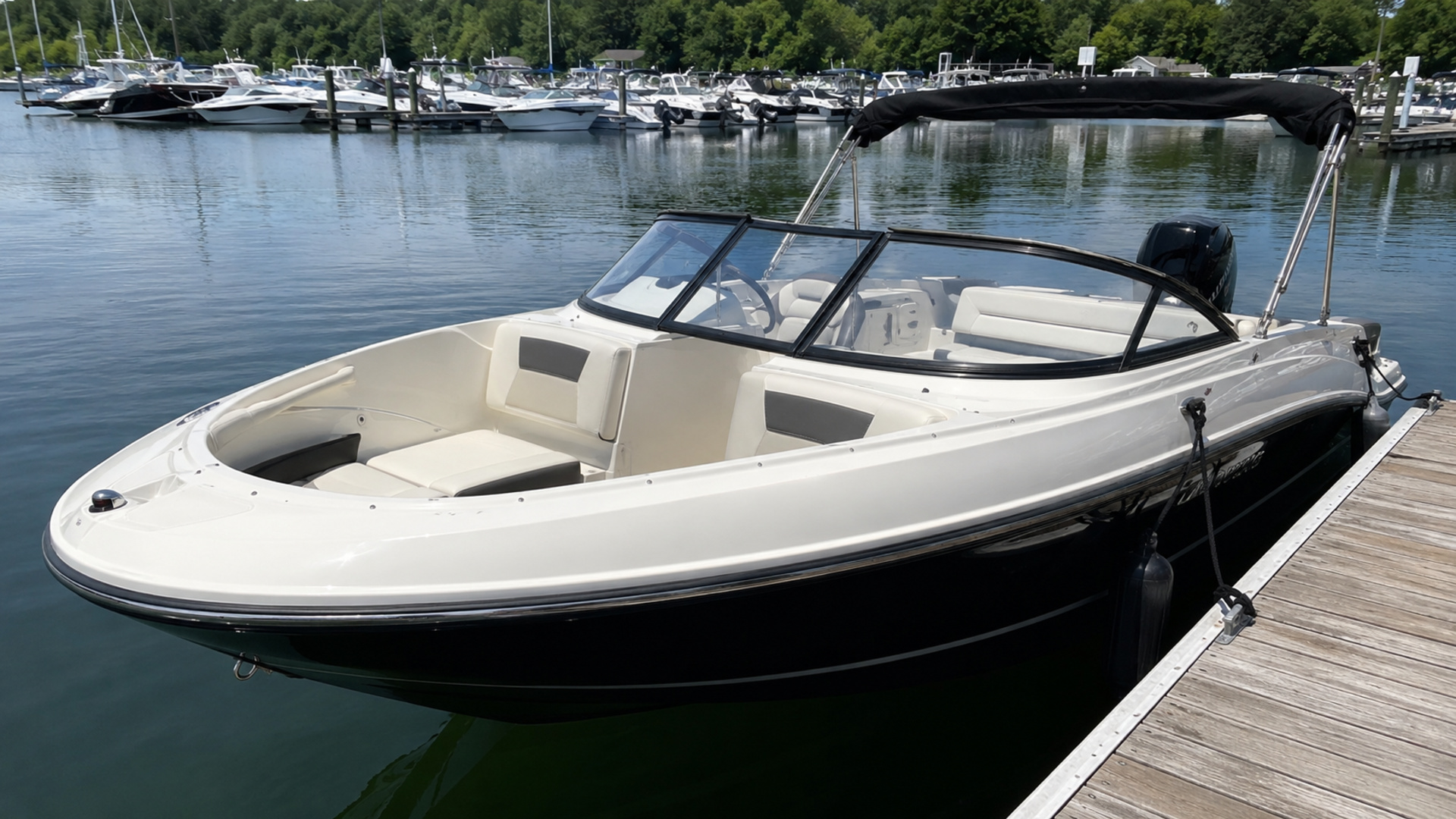
That is the reason to look at the D20 before assuming the D22 is automatically better. Bayliner offers a Max Layout Bundle and a Dual Console Bundle. One pushes the boat toward maximum seating and an open side-console feel; the other adds a more conventional dual-console cockpit with fuller windshield protection. A family that cruises in cooler mornings may value the dual-console arrangement. A buyer who wants open seating and easy movement may prefer the Max Layout.
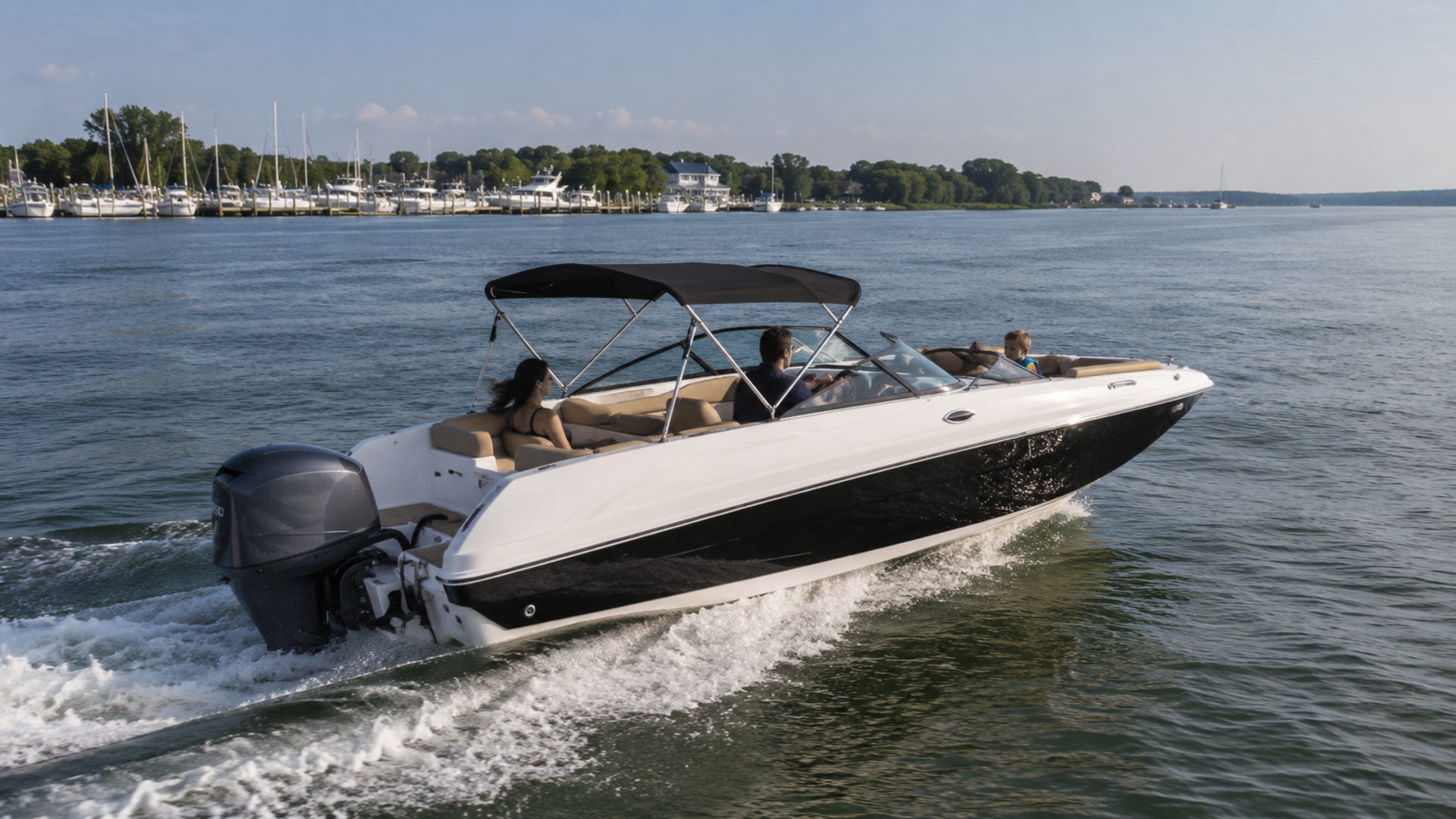
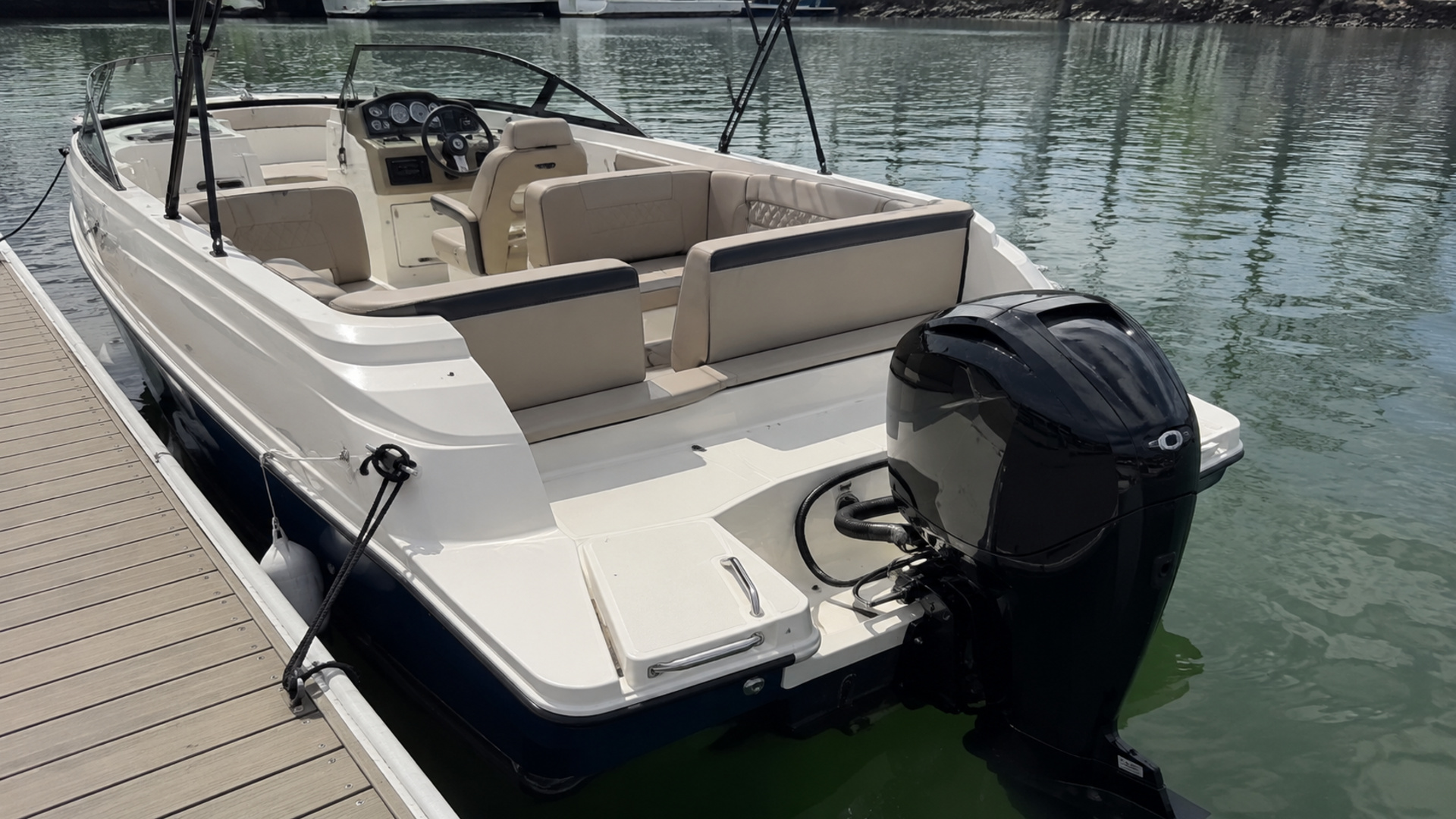
Power is deliberately modest compared with the D20I. Standard equipment is a 115-horsepower Mercury FourStroke XL EFI, and current U.S. options top out at 150 horsepower. That tells you what the D20 is meant to be: an outboard family boat that prioritizes usable space and approachable ownership rather than chasing sterndrive horsepower. If you expect to load the full ten-person capacity and pull riders frequently, the 150 deserves a serious look. If most outings involve four or five people and relaxed cruising, the standard engine may be entirely sensible.
The September 2026 market sample supplied for this project contains 17 D20 listings from 2025 through 2027. That is a current-production shopping environment, not a decade-deep used market. Buyers are mainly comparing dealer inventory, engine upgrades, layout bundles, option packages, and financing structure.
The strongest reason to buy the D20 is therefore specific: it gives a family D-Series room, a real choice of interior layout, a 33-gallon tank, and Mercury outboard ownership at a size that remains meaningfully easier to tow and store than the D22.
Published factory figures. Confirm every dimension against the individual boat before you commit.
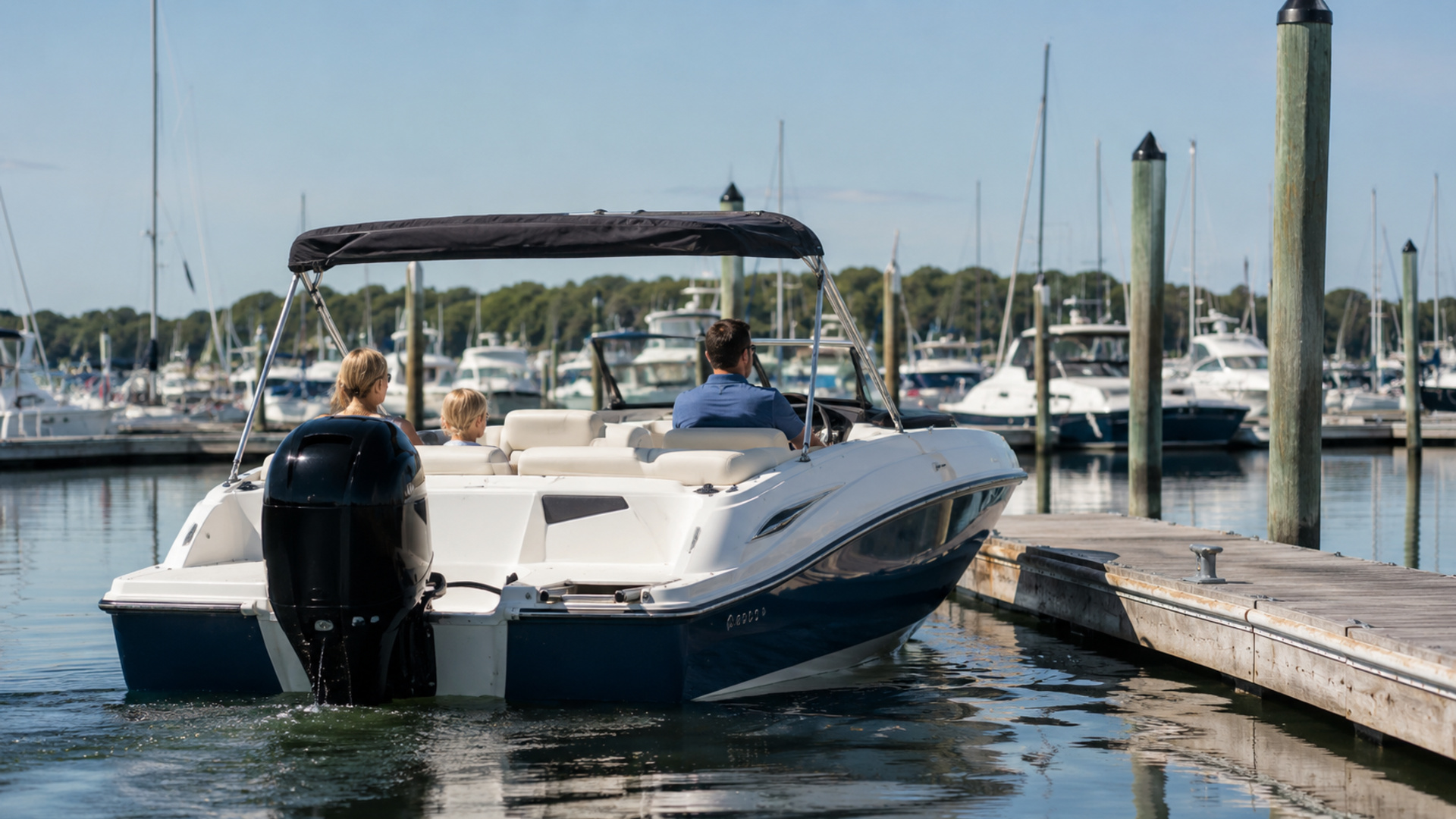
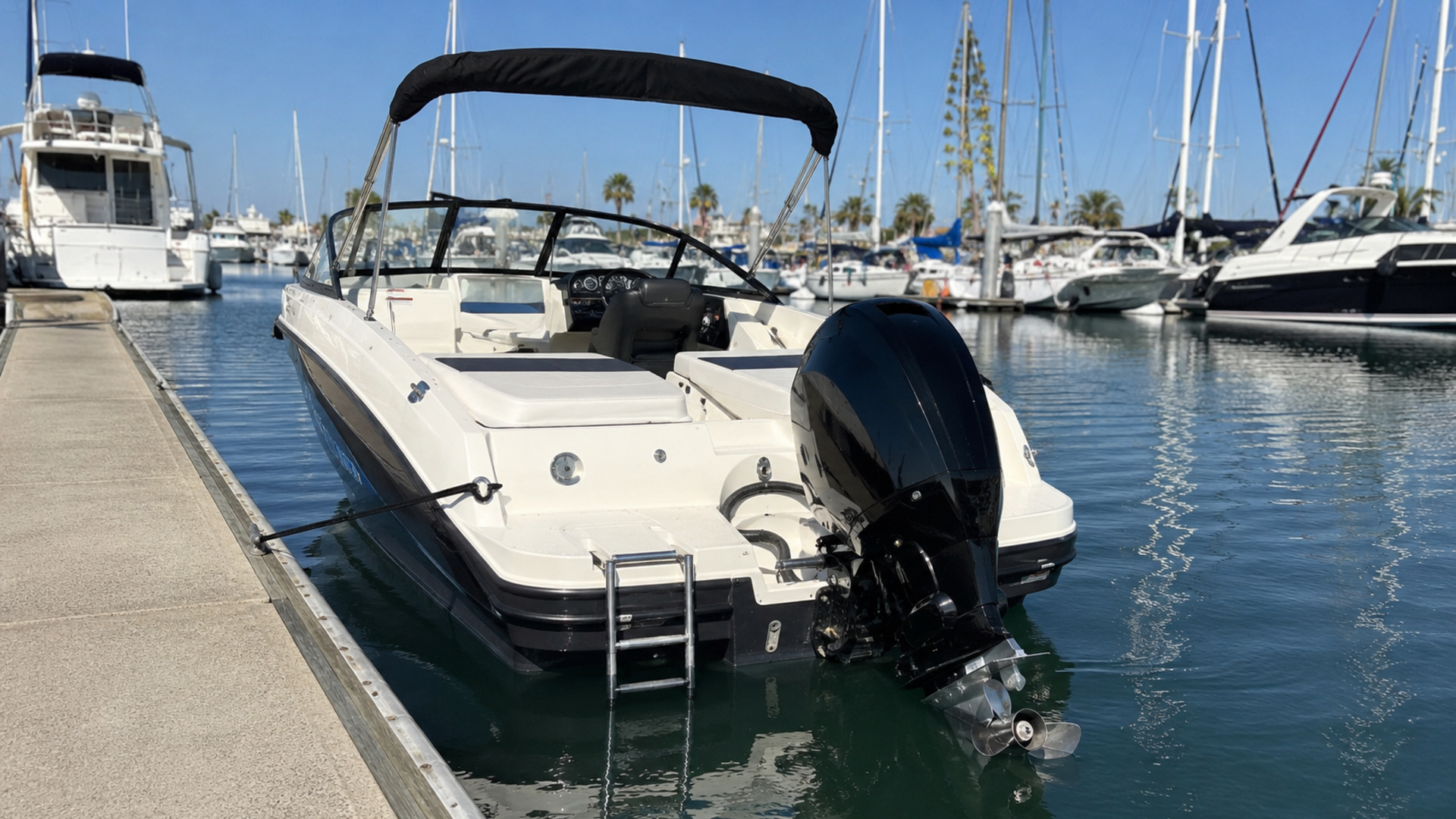
At 19 feet 6 inches overall, the D20 is large enough to create separation between the bow, helm, cockpit, and transom without becoming a 22-foot tow package. The 8-foot-1-inch beam is especially important because it is six inches wider than the Element E18. That extra width shows up in shoulder room, seat depth, passage space, and the ability to move through the cockpit when coolers or towables are aboard.
Bayliner publishes 18 degrees of deadrise and a 2-foot-7-inch maximum draft, with minimum draft listed at 1 foot 7 inches. An 18-degree bottom is a family-boat compromise rather than an offshore statement. It gives the hull enough V to meet ordinary lake and coastal chop without demanding the weight and power of a much deeper running surface.
Approximate weight with standard engine is 3,396 pounds. Compare that with the E18’s 2,000 pounds and the ownership step becomes obvious. The D20 gains more hull, more fuel, more capacity, and more equipment, but the tow vehicle has to move all of it. Add the trailer, up to 33 gallons of gasoline, batteries, tower hardware, coolers, safety equipment, and personal gear before judging tow suitability.
Bayliner lists a storage length of 26 feet 9 inches. That figure is a perfect reminder that “19-foot boat” does not mean “19-foot garage requirement.” Residential buyers should measure the actual space before signing paperwork.
For a buyer, the D20 hull makes sense when the E18 feels too compact but the D22 feels like unnecessary weight and length. It is the point where you receive genuinely larger-boat room without fully committing to the larger D-Series footprint.
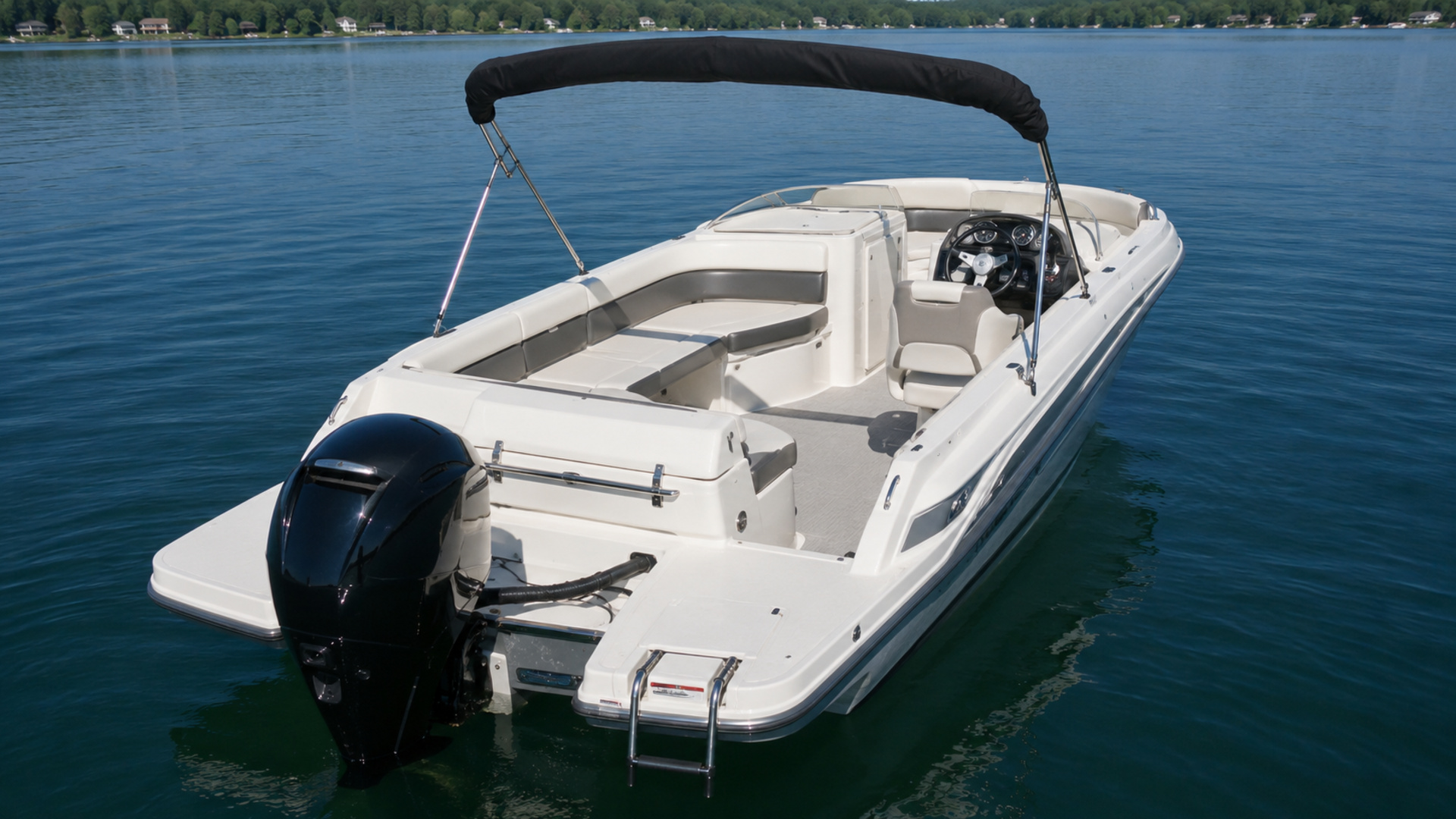
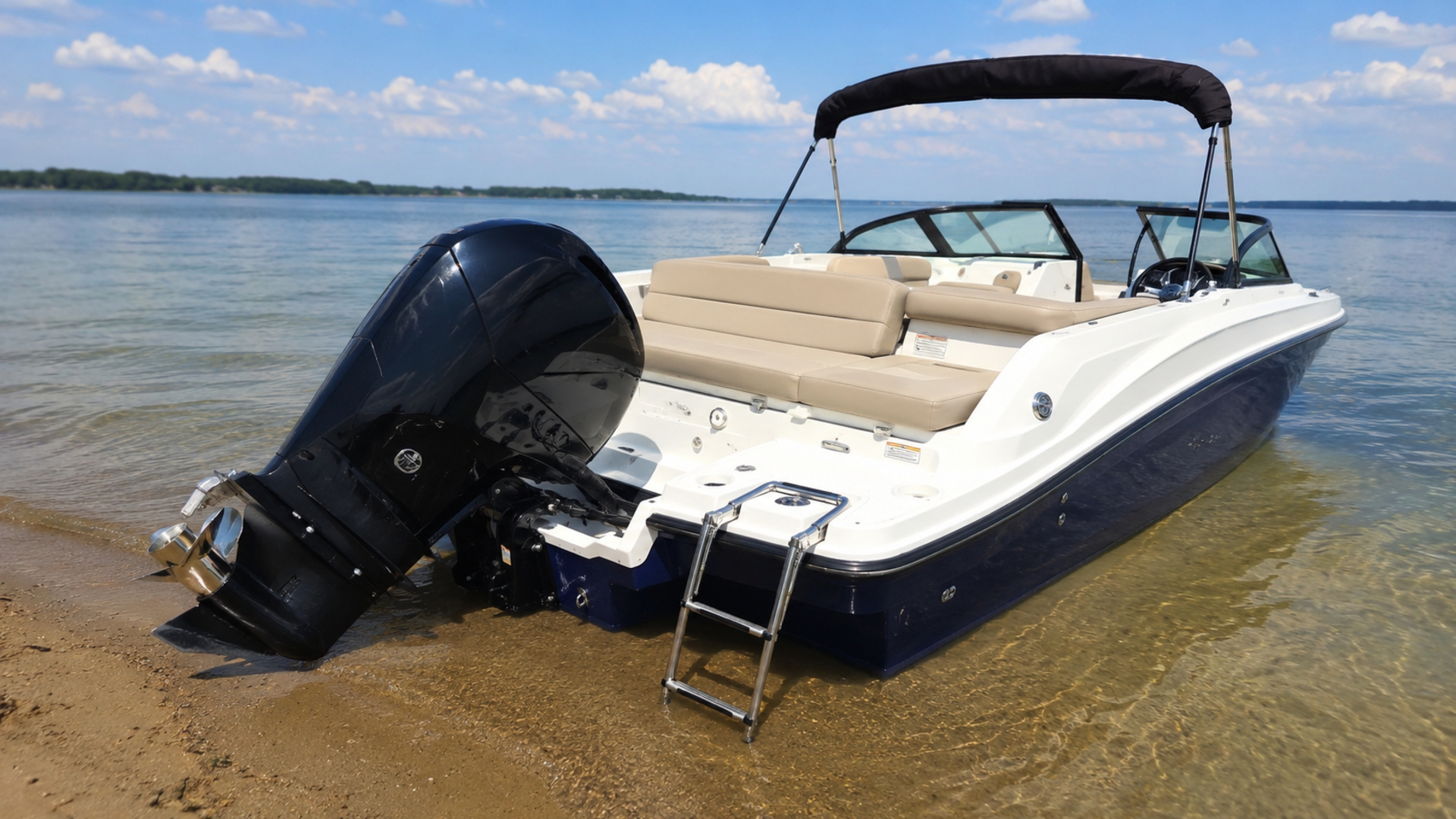
The D20 is an outboard boat first, and that is a purchasing advantage for a certain owner. The engine stays outside the cockpit structure, where routine visual inspection, flushing, lower-unit service, propeller replacement, and eventual repowering are straightforward.
The 115 should not automatically be dismissed as base power. For a lighter family using the boat primarily for cruising, swimming, and casual tubing, it can reduce acquisition cost and still suit the mission. The 150 becomes easier to justify as the crew grows. Ten-person capacity is a lot of human weight before bags, fuel, and gear are counted. More horsepower can reduce the feeling that the engine has to work hard to climb onto plane with a busy cockpit.
Current Bayliner options include hydraulic steering, while the standard feature list identifies mechanical cable steering on the outboard model. A buyer ordering the 150 should compare the feel and cost of the hydraulic system rather than treating steering as an afterthought.
Even on a 2025 or 2026 D20, inspection matters. Confirm engine hours directly, review the maintenance record, inspect the propeller and skeg for impact, verify trim-and-tilt operation, and look for corrosion if the boat has lived in salt water. A recent model year does not prove light use.
The D20 engine choice is simple when framed correctly: buy the 115 when price and relaxed cruising dominate, buy the 150 when loaded performance and watersports matter, and choose the D20I instead if what you really want is 200 to 250 horsepower and a sterndrive stern.
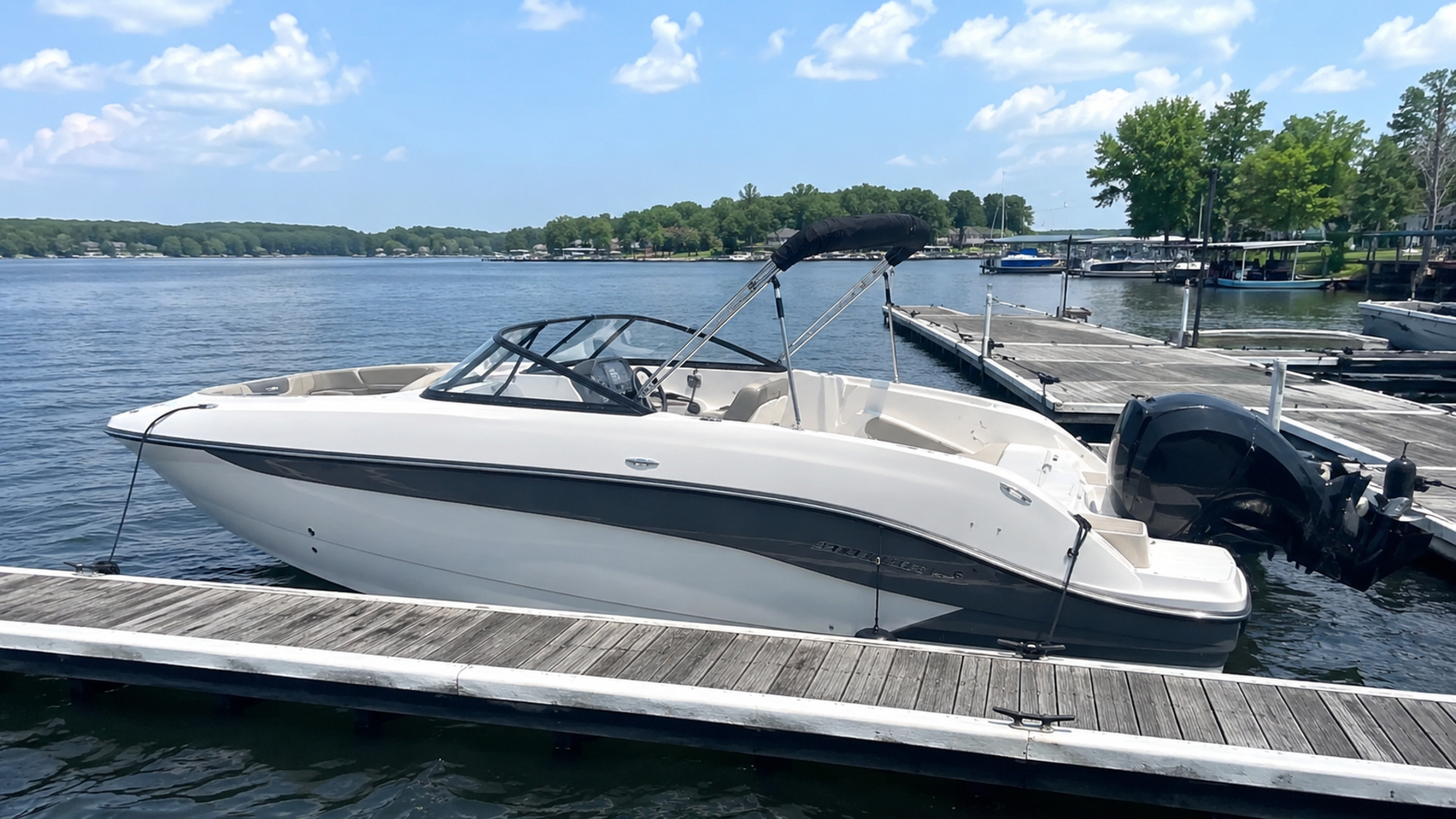
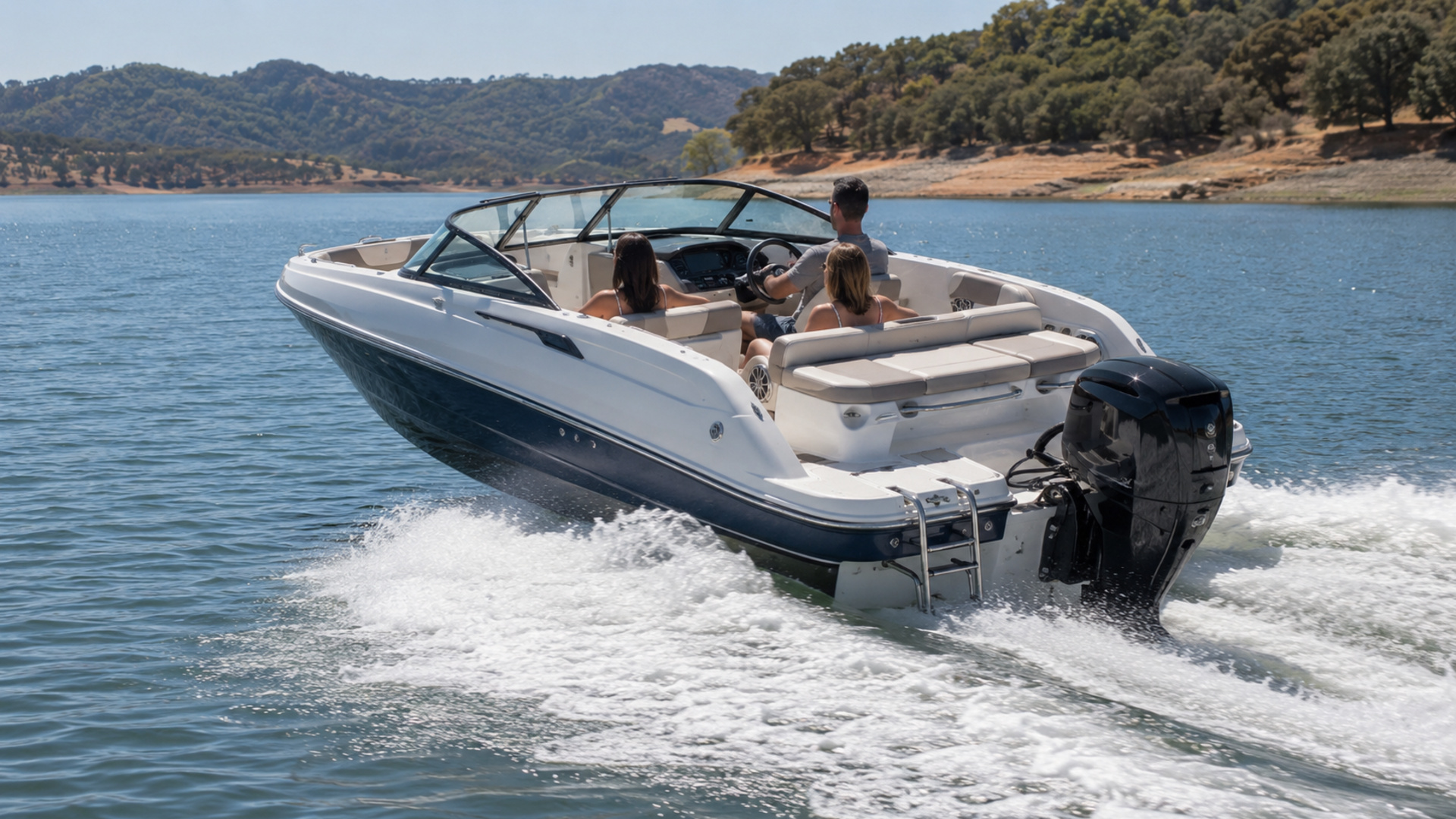
The D20 carries nearly three times the fuel of the Element E18. That larger tank fits the boat’s intended use because a ten-person D-Series model is more likely to spend full days moving between coves, restaurants, tow spots, and swimming areas.
Bayliner does not publish one universal gallons-per-hour figure for every D20 configuration. Consumption changes with the 115- versus 150-horsepower engine, propeller, bottom condition, passenger weight, trim, speed, and how often the boat accelerates with a rider in tow.
The useful buyer question is whether 33 gallons gives enough margin for the way you boat. For local lake use, it reduces the need to refuel constantly compared with the Element boats. For longer river or coastal runs, range should still be calculated from verified engine data with a reserve rather than treating every gallon as usable.
Fuel weight also matters when towing. A full tank adds roughly two hundred pounds before anyone loads the cooler. That is another reason to evaluate tow capacity using the real loaded rig instead of the 3,396-pound standard-engine figure.
The D20 should be tested as a loaded family boat, not an empty dealer demo. The 115-horsepower outboard may feel lively with two adults and half a tank. Add several passengers, a full cooler, watersports gear, and 33 gallons of fuel, and planing behavior can change noticeably.
With the 150-horsepower option, buyers gain additional reserve for acceleration and maintaining comfortable cruise under load. That does not make the 150 automatically correct. A buyer who rarely carries more than four people may be paying for performance that never gets used.
The 18-degree deadrise places the hull on the family-comfort side of the spectrum. During a sea trial, test ordinary wake crossings, trim response, visibility during planing transition, steering effort, and low-speed control around the dock. Performance is valuable when it makes family boating easier, not when it creates a top-speed number that is rarely used.
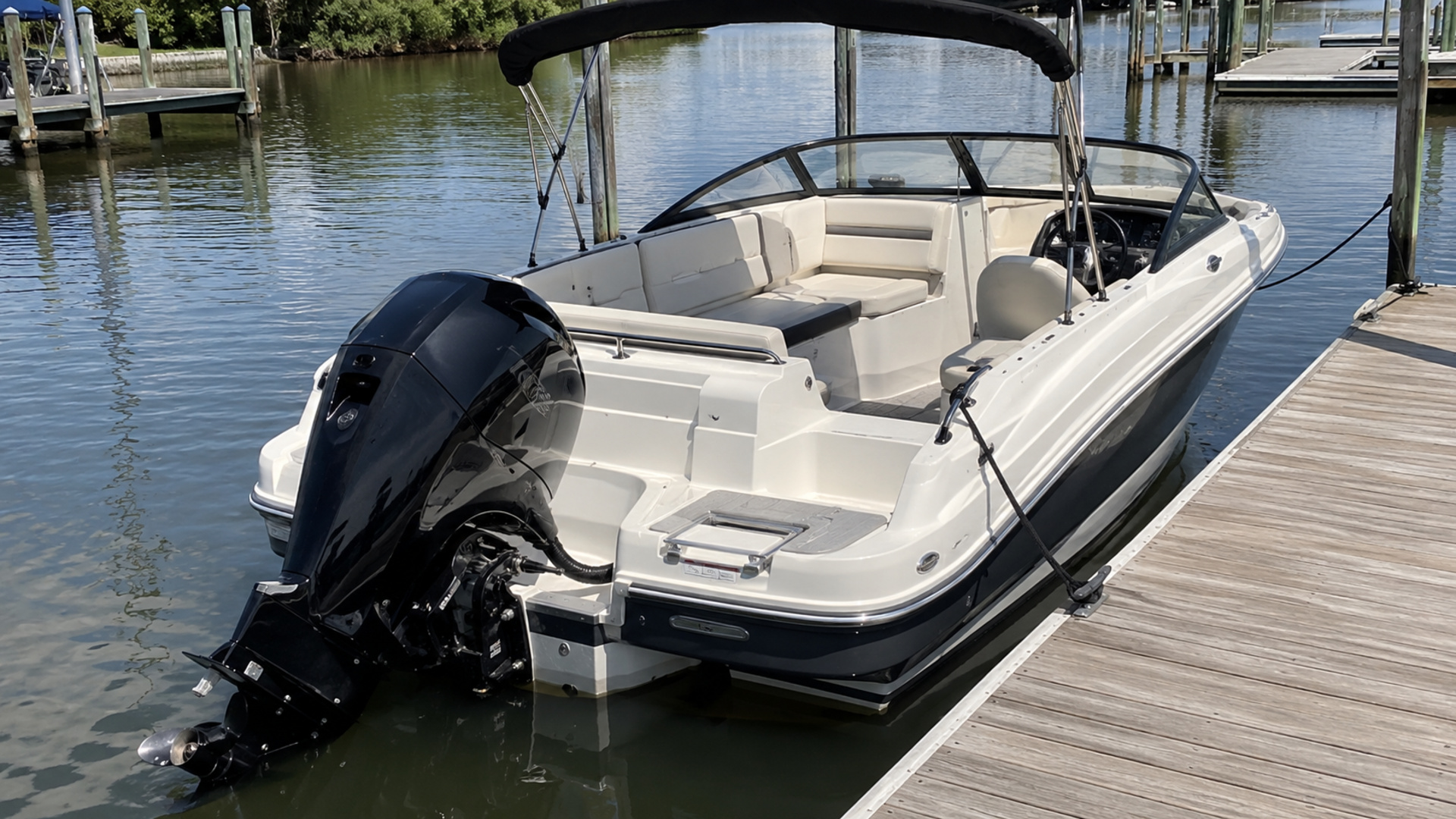
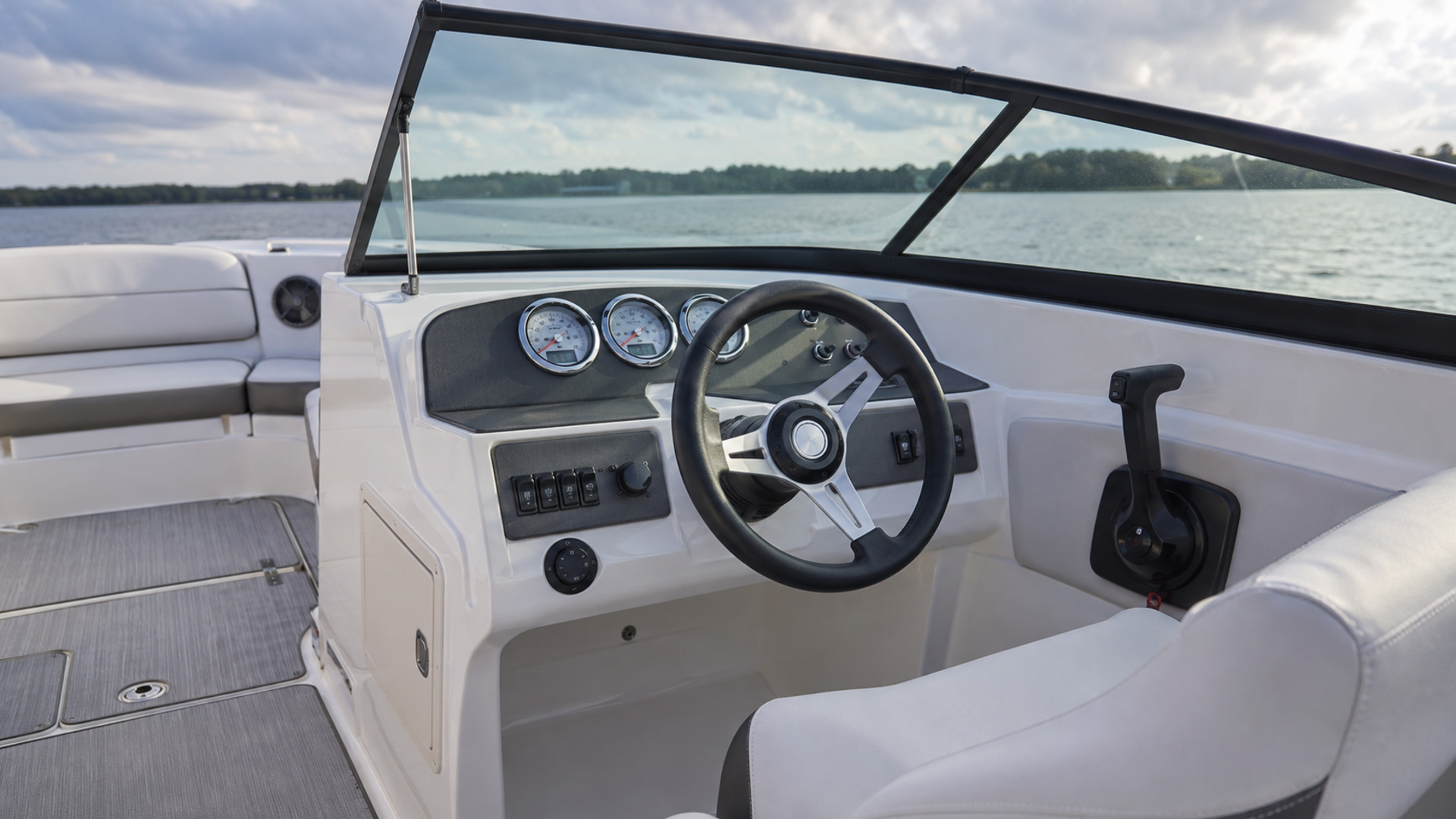
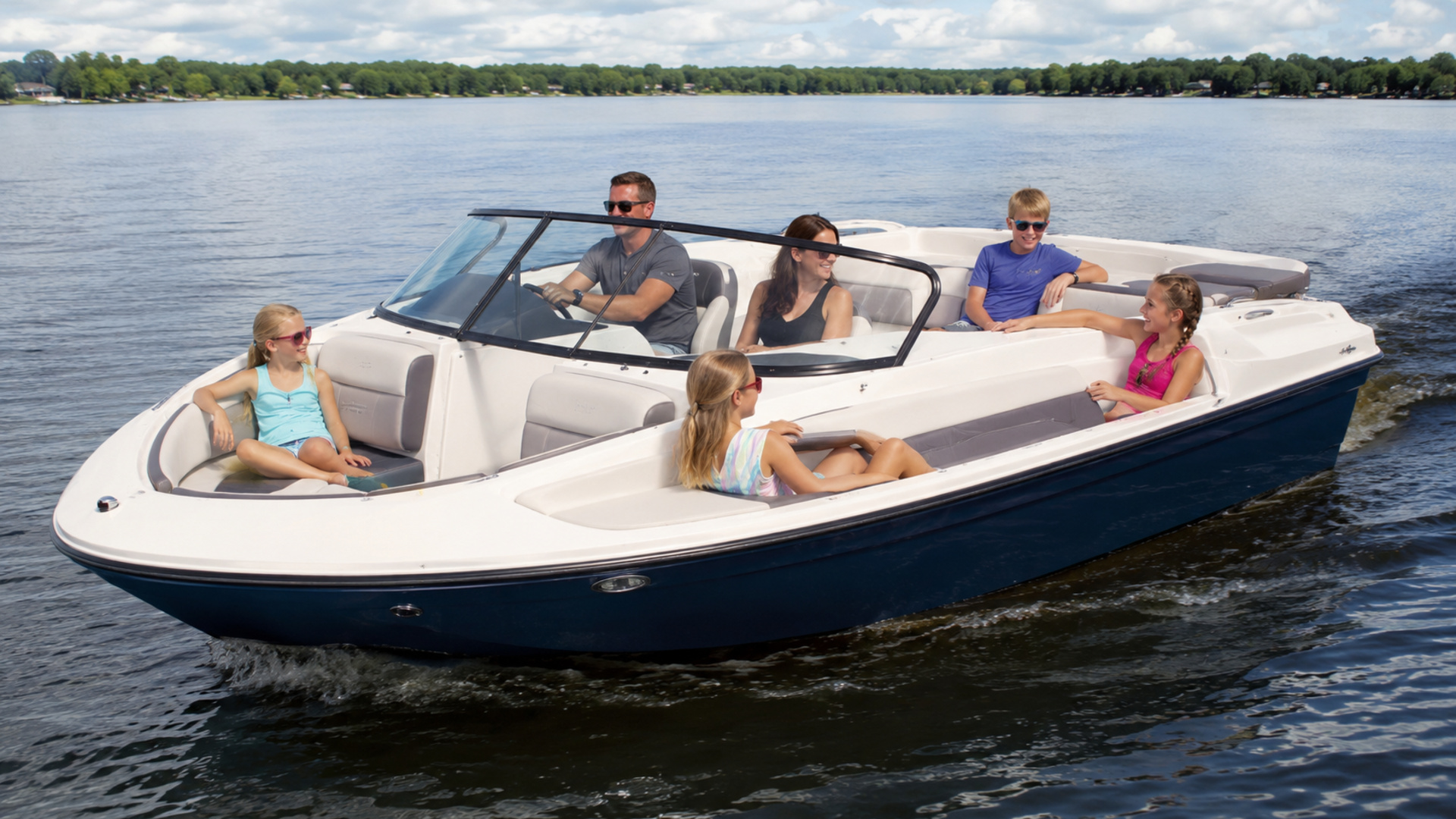
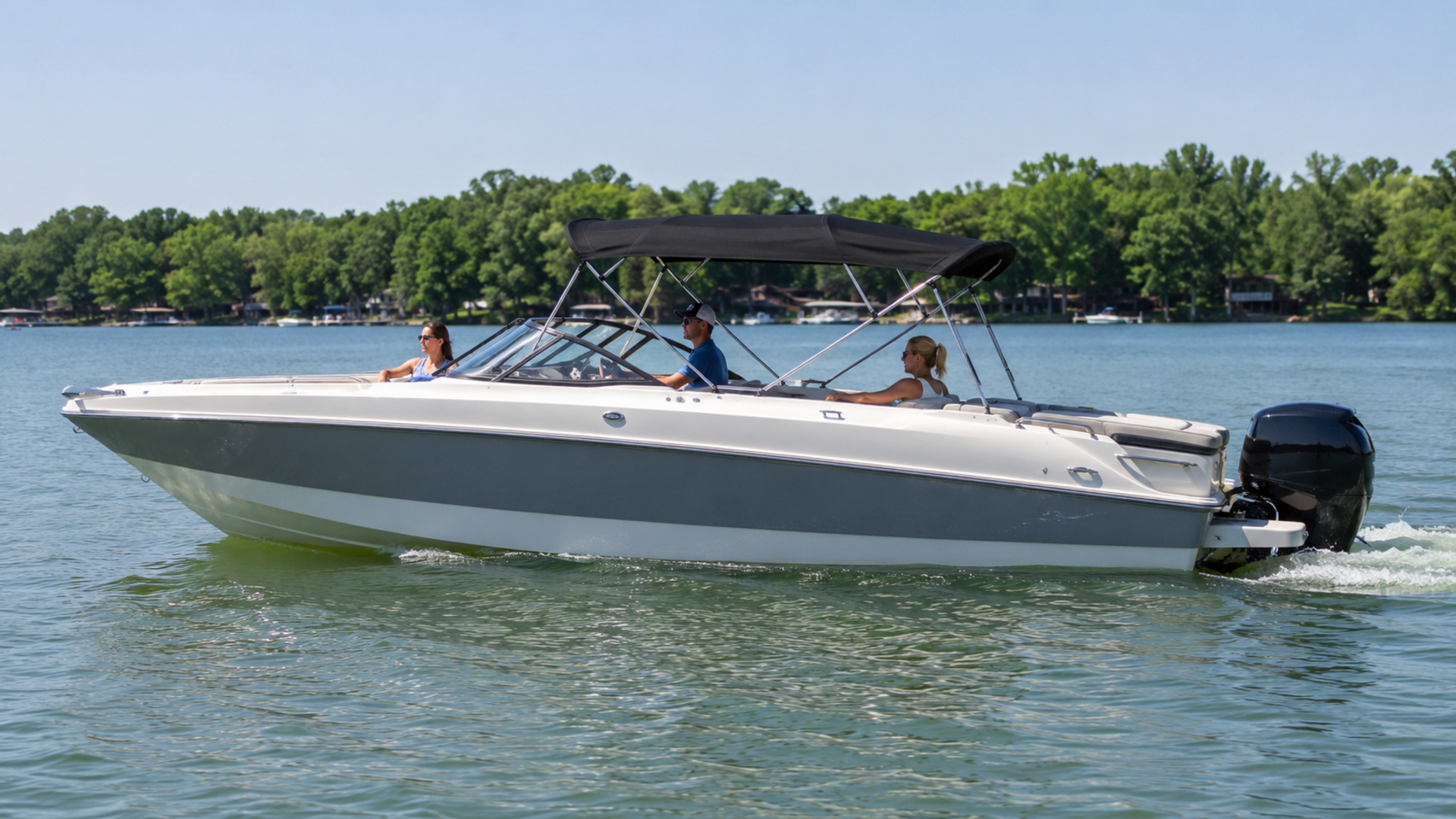
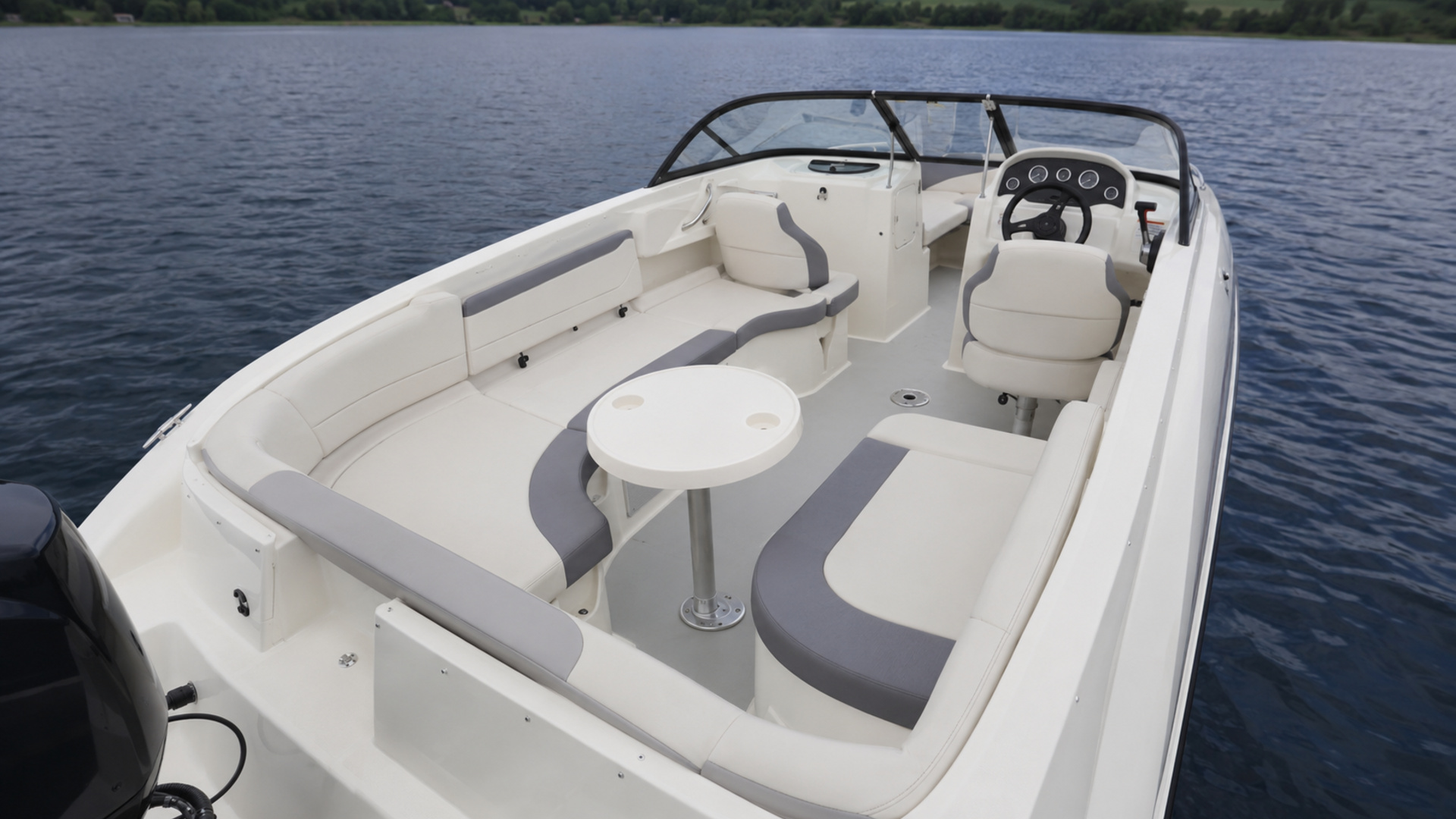
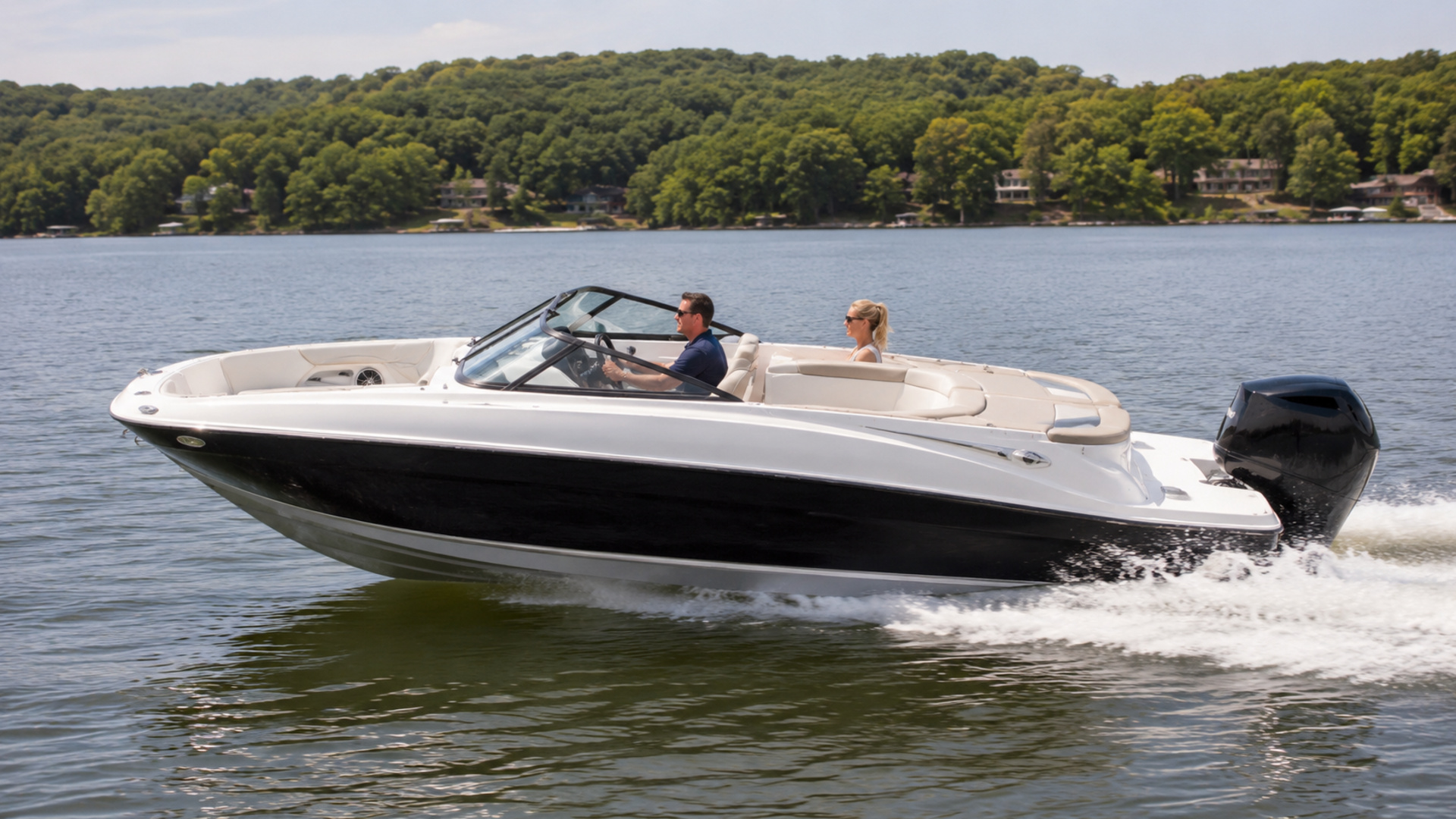
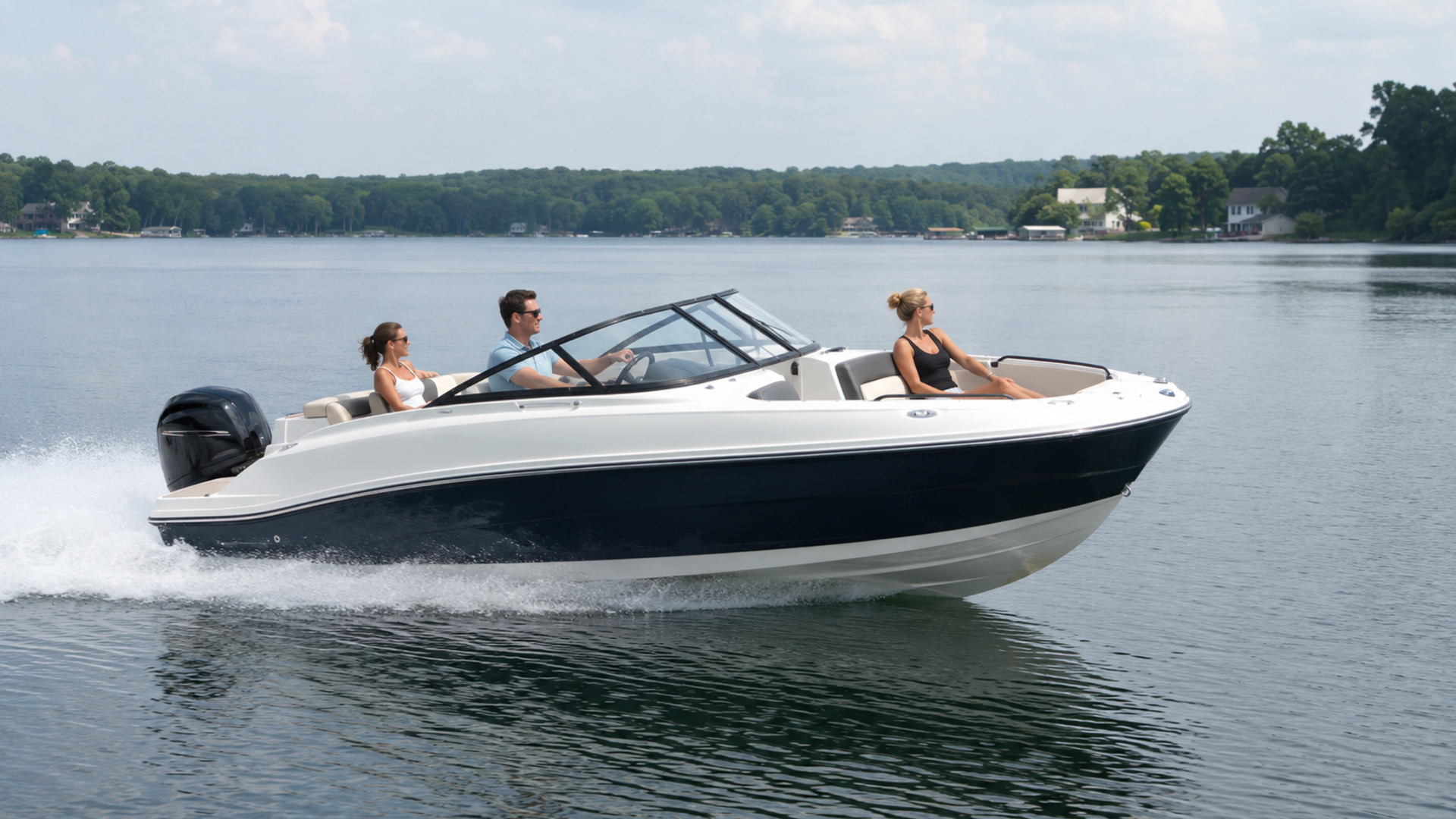
The D20’s deck is where it separates itself from both the Element boats and its sterndrive sibling. The Max Layout Bundle and Dual Console Bundle create two genuinely different ways to own the same hull. Buyers should compare both before treating dealer inventory as interchangeable.
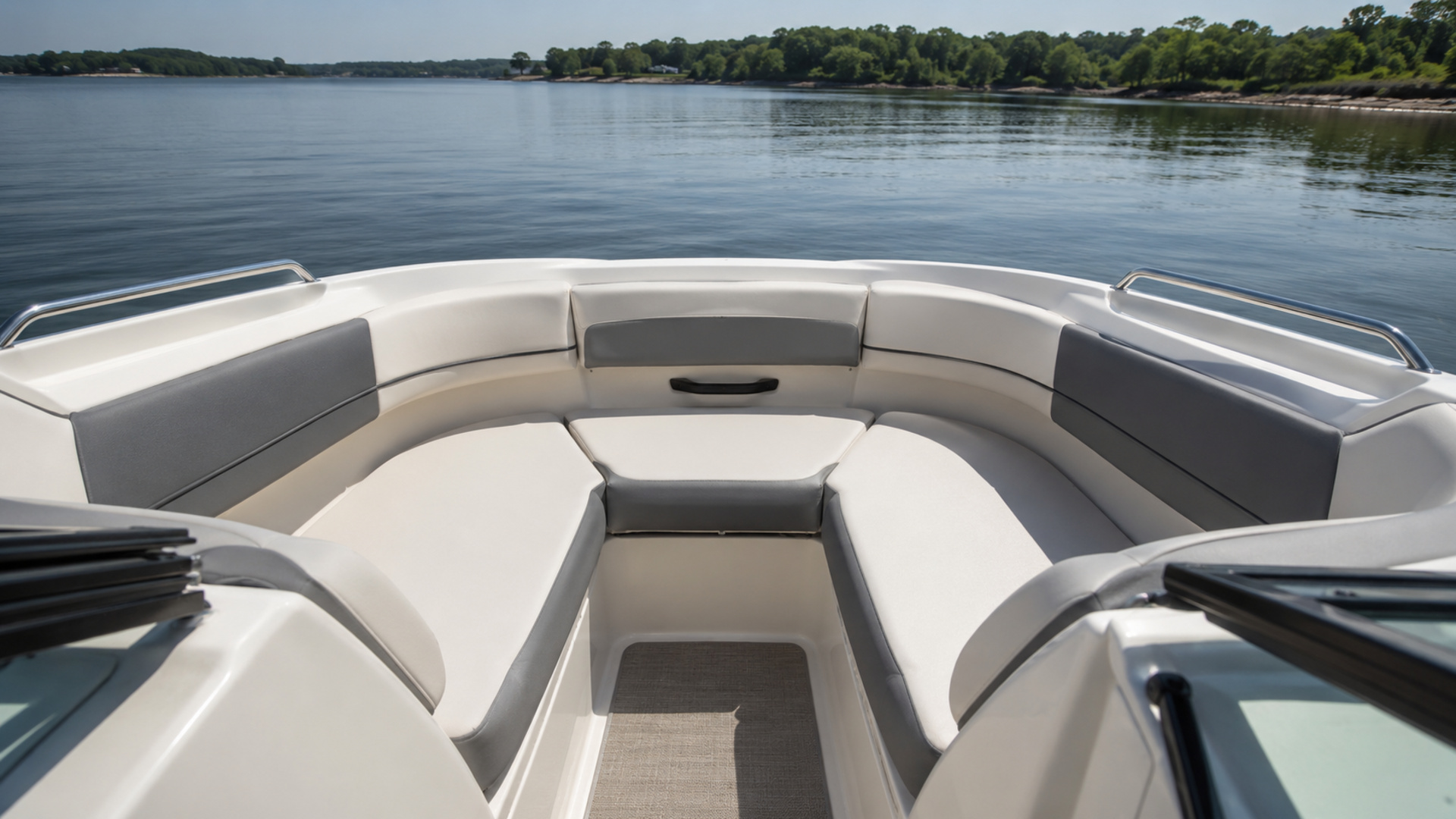
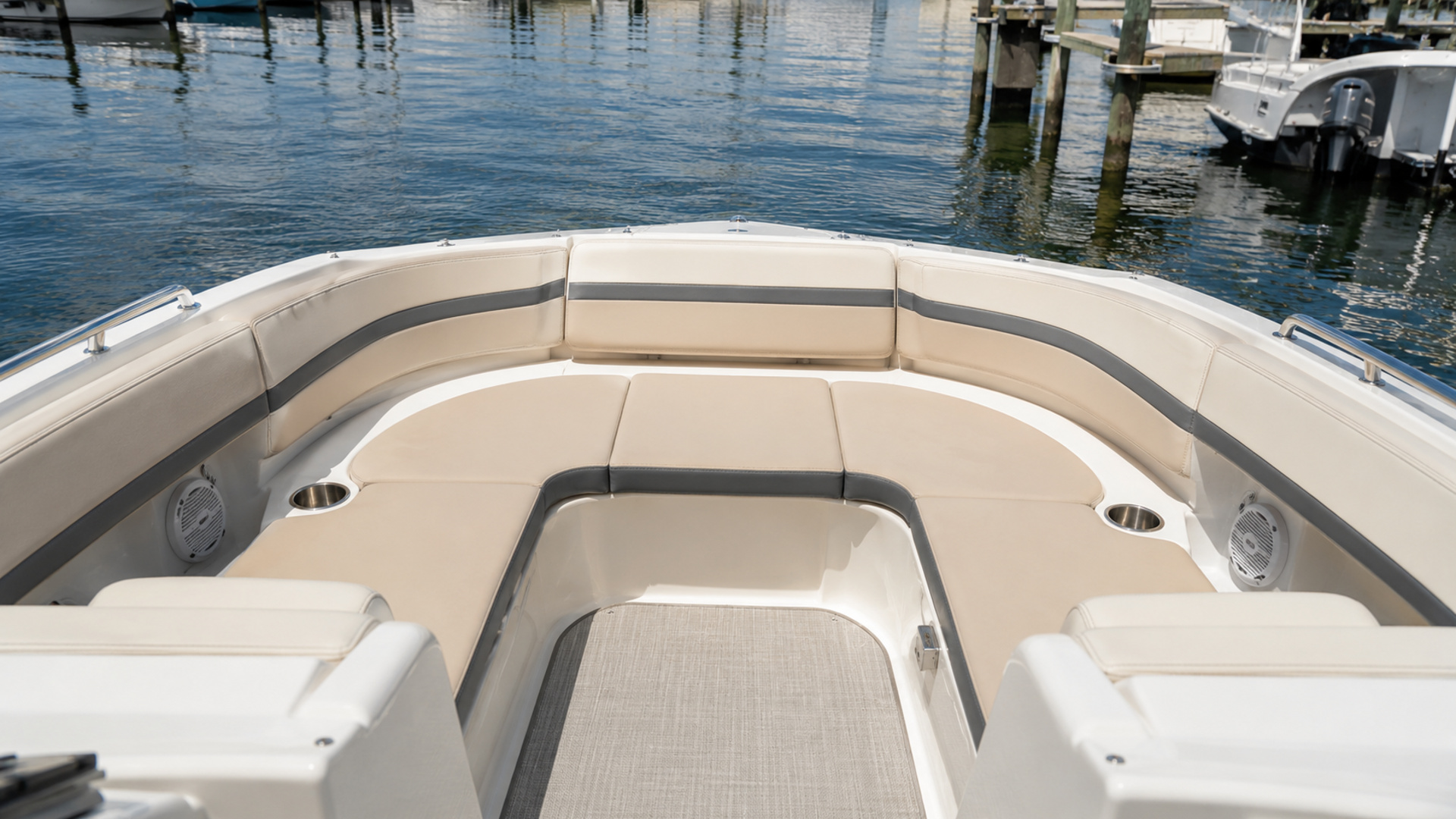
Deep gunnels make the cockpit feel more contained, a detail families with children often appreciate more after the first windy or busy day on the water. The bow ladder with hinged lid changes beach use too: passengers can board from the front when the boat is nosed into a sandbar instead of funneling everyone around the stern.
The aerated livewell broadens the boat beyond pure cruising. It will not turn the D20 into a Trophy center console, but it gives casual fishing families a proper place for bait or catch without putting another loose container on deck.
In-floor ski and wakeboard storage solves a different problem. Long gear is awkward in any 19-foot boat. Putting it beneath the deck keeps the cockpit open and lets the ten-person capacity remain usable.
Available convenience equipment includes a bow table, bow wind block with the required filler cushion, digital depth indicator, and freshwater shower. A Simrad 7-inch Digital Dash with engine data is also available. These are worth choosing based on actual use rather than resale anxiety.
One of two required layout paths, emphasizing open passenger seating and the side-console approach.
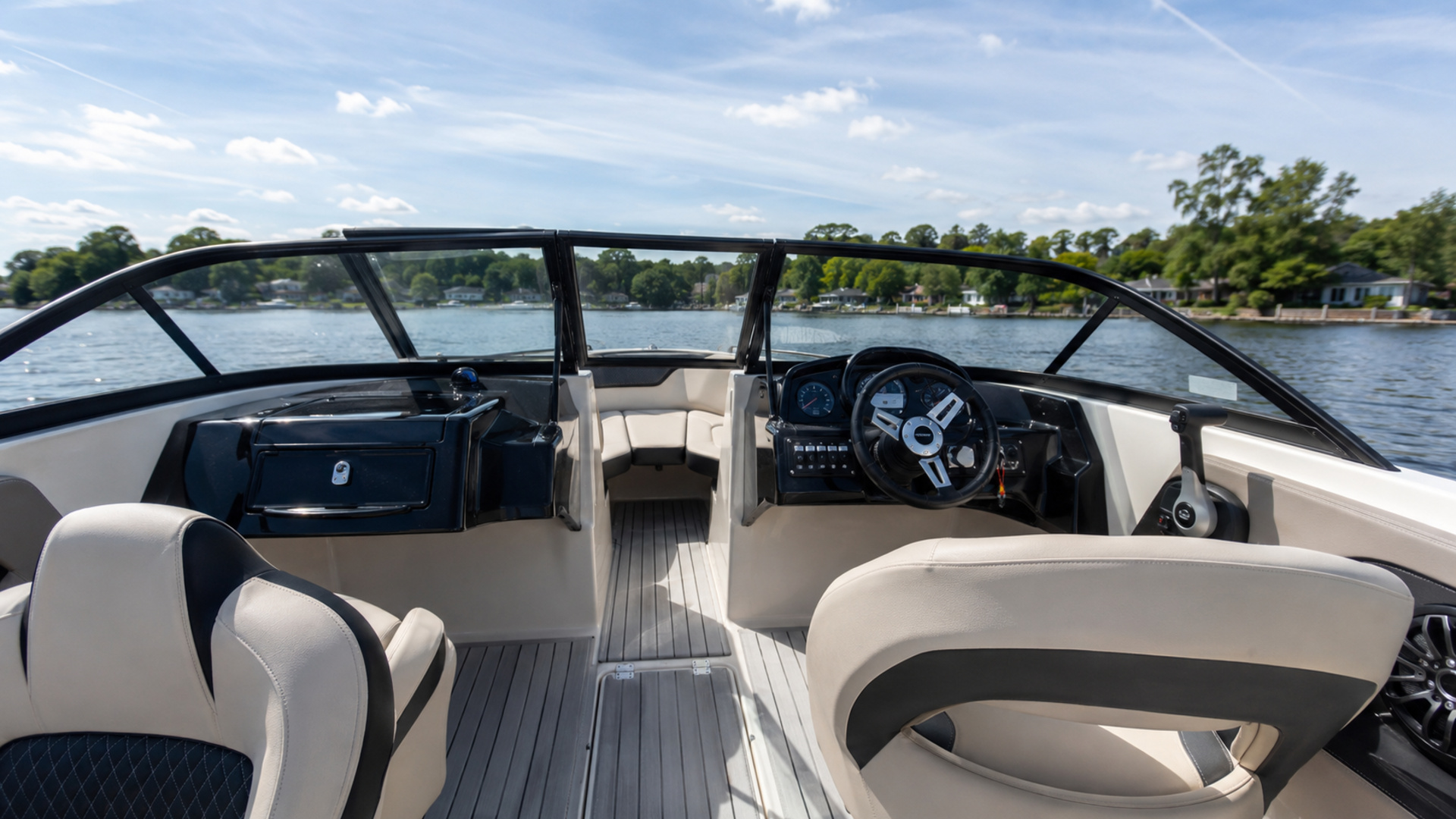
Adds a more conventional two-console cockpit and fuller windshield protection for buyers who want more shelter.
A standard key feature that gives casual fishing families a proper place for bait instead of relying on a portable container.
Makes bow-first beach and sandbar boarding practical when conditions allow.
Hides long watersports gear below deck so the cockpit is not sacrificed to boards and skis.
Adds a modern helm display with engine data for buyers who want more information than the standard analog gauges.
Useful after swimming, sandy beach stops, or saltwater use and directly supports the D20’s day-boat role.
Let the D20 lean toward casual angling or watersports without forcing every buyer to pay for both.
Because the D20 market is almost entirely 2025-and-newer inventory in the supplied sample, inspection should focus less on age and more on use, delivery quality, and option installation. Start with the Mercury outboard: verify serial number, engine hours, maintenance record, lower-unit condition, propeller, skeg, trim-and-tilt, cooling stream, and steering.
Then test the systems that distinguish one D20 from another. If it has the Simrad dash, confirm engine data populates correctly. Run the livewell and make sure it fills and drains. Test the automatic bilge pump, battery switch, stereo, navigation lights, horn, and 12-volt outlet.
On a Dual Console boat, verify windshield alignment and the center walkthrough. On tower-equipped boats, inspect mounting points for gelcoat stress. The trailer deserves a delivery inspection even on a nearly new boat: brake operation, coupler, tire date codes, hubs, bunk alignment, lights, and winch all matter.
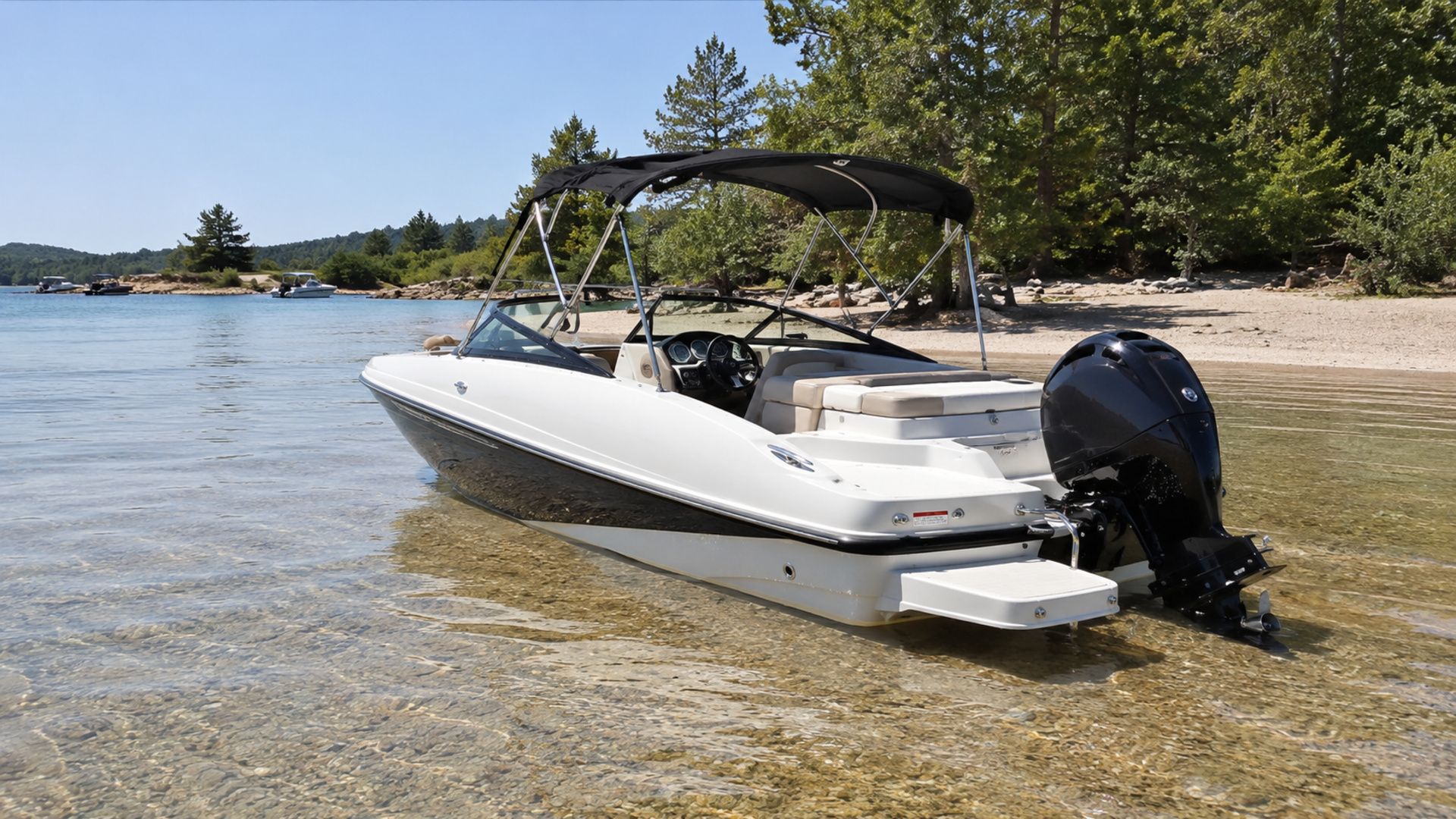
The D20 remains a trailer-oriented boat, but it should not be treated like a compact Element. Bayliner lists 26 feet 9 inches of storage length and an 8-foot-6-inch beam on trailer. Those numbers can eliminate a residential garage that appears adequate when the buyer only thinks about the 19-foot-6-inch hull.
The boat weighs approximately 3,396 pounds with standard engine. Bayliner’s current U.S. page does not separately publish boat-and-trailer weight, so the correct move is to use the actual trailer specification rather than inventing a total. Add fuel, battery, options, safety equipment, and gear.
Height on trailer is listed at 8 feet 2 inches. Tower-equipped boats may create additional clearance considerations. A seasonal slip is an optional ownership choice, not a requirement, but families who use the boat several evenings a week may decide the convenience is worth the added cost.
More important than the range is why two D20s can sit thousands apart. A 150-horsepower engine, hydraulic steering, Simrad dash, tower, comfort equipment, upgraded flooring, fishing package, trailer configuration, and dealer-installed accessories all affect the transaction.
Compare the final out-the-door price, not the teaser number at the top of a listing. Freight, preparation, tax, title, registration, and finance products can turn two apparently similar ads into different deals.
Because the market is so young, depreciation history is not mature. A used D20 priced near a discounted new one should offer a clear reason to give up the ability to choose the exact layout and options.
Figures come from this page’s Boat Details fields. Illustration only and not an offer of credit.
Use the actual negotiated price, not a base MSRP stripped of engine and options. Compare down payment and term while leaving room for insurance, fuel, annual service, trailer maintenance, storage, and the first round of gear.
Illustration only and not an offer of credit. Your actual rate and term depend on credit profile, vessel age, loan amount and ownership structure.
The D20 versus D20I decision is primarily propulsion. Both are 19’6″ long and 8’1″ wide, but the D20 carries ten people, weighs 3,396 pounds with standard engine, and uses 115–150 HP Mercury outboard power. The D20I carries nine, weighs 3,880 pounds, and uses 200–250 HP MerCruiser sterndrive power.
Only move to the D22 if space or range remains unresolved. The D22 adds two feet of hull, five inches of beam, two additional published passengers, and a 55-gallon tank. Those are meaningful gains, but they create more boat to tow and buy.
The D20 market is too new for the usual older-versus-newer debate. In September 2026, the supplied listings run from 2025 to 2027. The sharper questions are whether the boat has the layout you want, which engine is installed, whether the price premium for options is justified, and whether the dealer or seller can document early service.
Do not assume a one-year-old D20 is interchangeable with a new one. Ask why it is being sold. Check engine hours. Look for tower or dock damage. Inspect the trailer for signs of repeated saltwater launching. Confirm that optional equipment is factory or professionally installed.
For new dealer inventory, compare written out-the-door quotes. A lower advertised hull price can lose its advantage after freight, preparation, options, and add-ons. Make sure the engine in the ad is the engine included in the quoted price.
It also fits the buyer who wants one boat to do several jobs reasonably well. The livewell and Fishing Package can support casual angling in the morning, the in-floor storage can swallow watersports gear for the afternoon, and the two layout bundles let the same hull lean toward open seating or more windshield protection. Someone shopping a dedicated fishing boat or a high-performance tow boat should buy the specialized tool instead. The D20 is valuable because it stays versatile.
A final good-fit buyer is the owner who actively prefers outboard power. If you know you want to tilt the engine clear, inspect it from the driveway, flush it after saltwater use, and keep future repowering straightforward, there is little reason to pay for the D20I’s sterndrive merely because the horsepower number is larger.
If you already found the boat, send Float Finance the listing, seller type, and asking price. Evaluate financing around the actual transaction instead of choosing a D20 from an arbitrary monthly-payment target.
Prequalification may involve a soft credit inquiry where applicable. Your information is not sold as a lead list.
Use the live market fields because the D20 is still a new-boat-heavy market. Engine choice, layout bundle, tower, fishing equipment, Simrad display, flooring, trailer, and dealer charges explain much of the spread. Compare out-the-door numbers and verify whether the advertised price includes the 115- or 150-horsepower engine.
The D20 is 19 feet 6 inches long with an 8-foot-1-inch beam and 18 degrees of deadrise. Bayliner lists 2 feet 7 inches of maximum draft, 26 feet 9 inches of storage length, 8 feet 2 inches of height on trailer, and approximately 3,396 pounds with standard engine.
Bayliner publishes a ten-person capacity and a maximum weight capacity of 1,653 pounds. That is a certification limit, not a guarantee that ten adults and gear will feel roomy all day.
The 115 can make sense for lighter crews and relaxed cruising. The 150 is easier to justify when the boat regularly carries several passengers or tows riders. Loaded time to plane matters more than top speed.
Bayliner currently requires a Max Layout Bundle or Dual Console Bundle. The Max Layout prioritizes open seating and a side-console-style arrangement. The Dual Console route provides a more traditional two-console cockpit and fuller windshield protection.
It is not a dedicated center console, but Bayliner includes an aerated livewell and offers a Fishing Package. That gives mixed-use families meaningful fishing utility without giving up the cruising mission.
It is trailerable, but Bayliner publishes 26 feet 9 inches of storage length and approximately 3,396 pounds with standard engine before trailer, fuel, batteries, and gear. Measure storage and calculate the real rig.
Potentially. The current market includes dealer inventory and nearly new boats. Financing depends on borrower qualifications, purchase price, model year, condition, and seller type. Send Float Finance the actual listing for a deal-specific evaluation.
Tell us a little bit about yourself and the boat you are looking to finance.