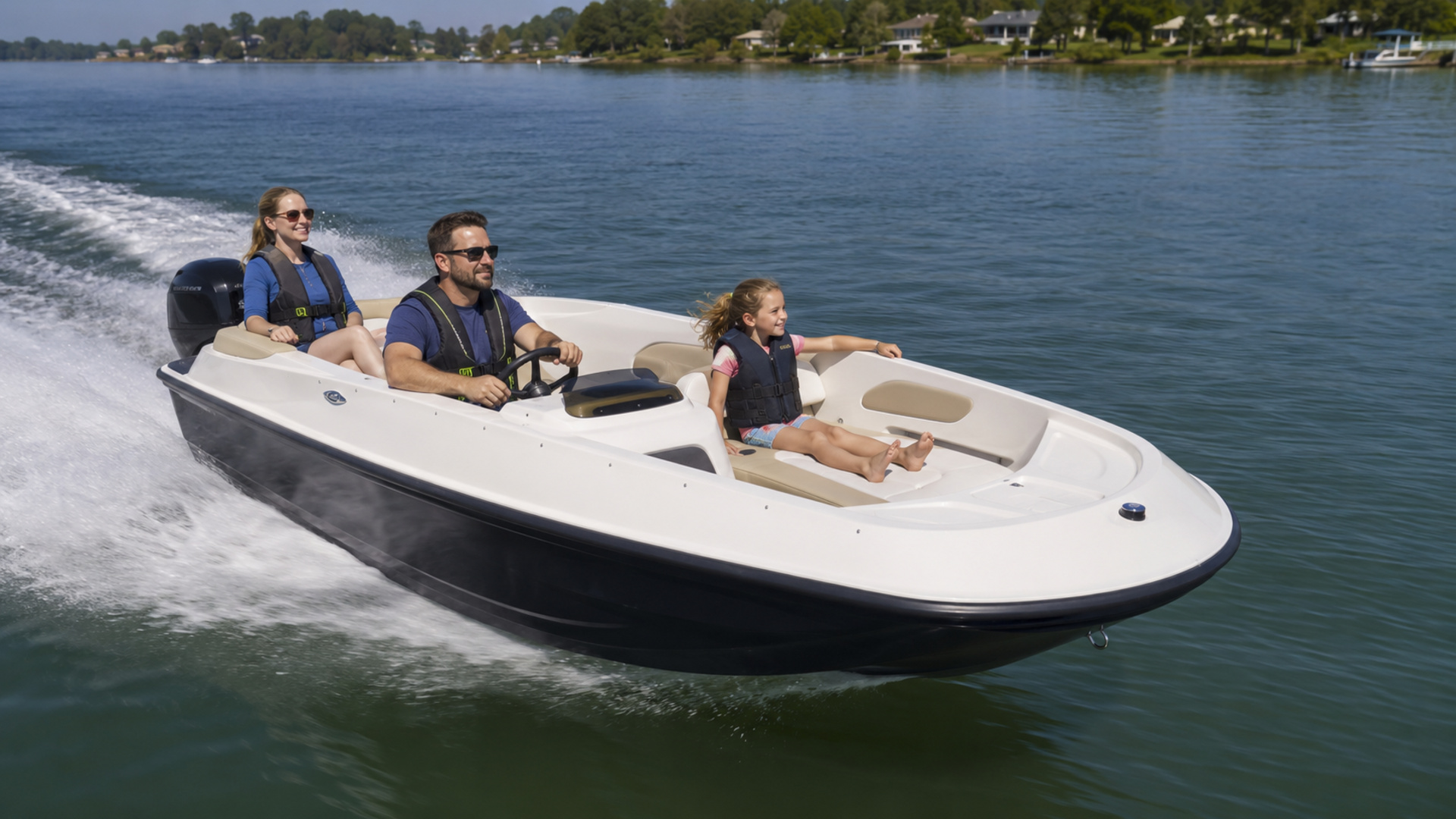
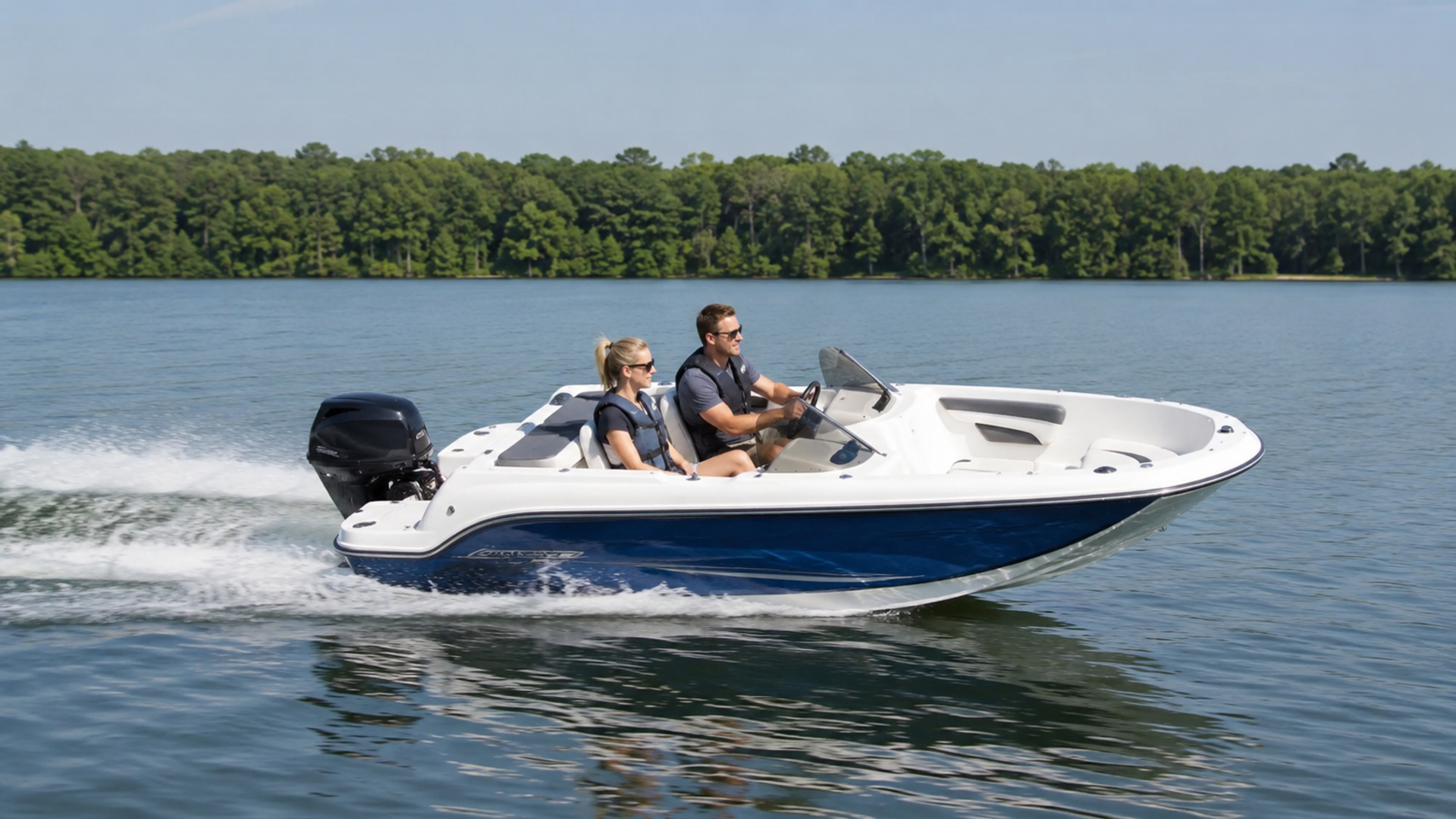
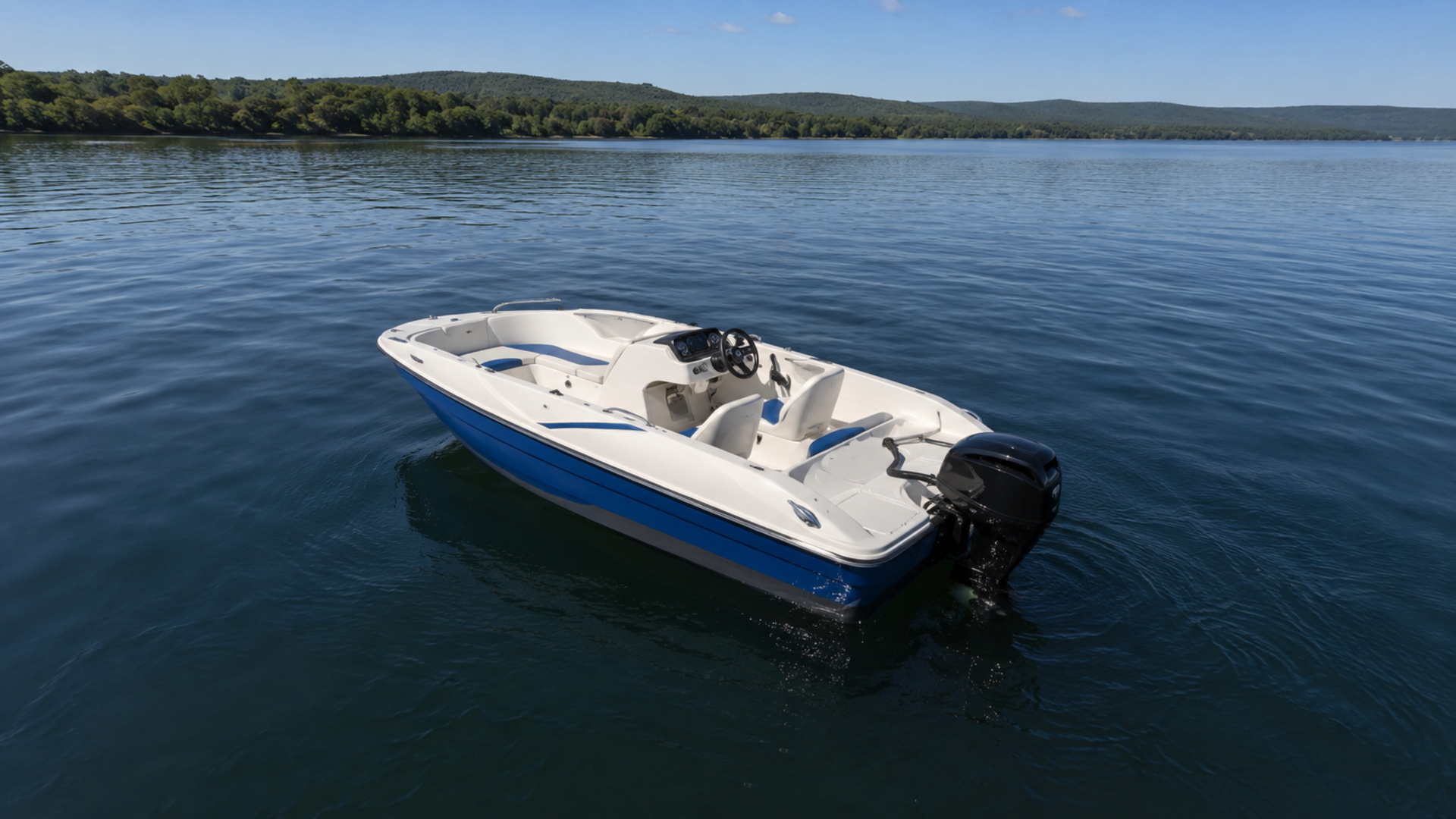
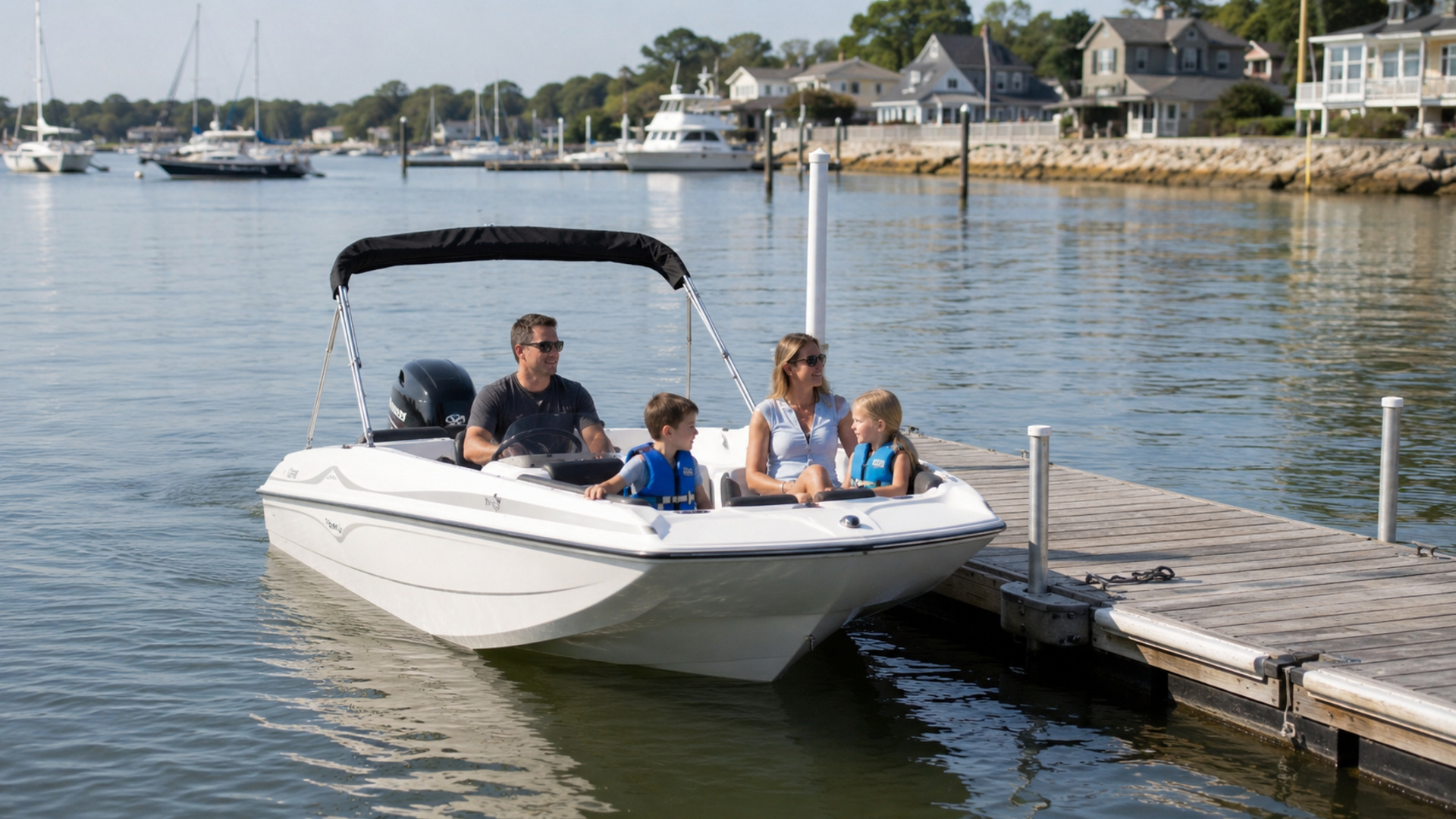
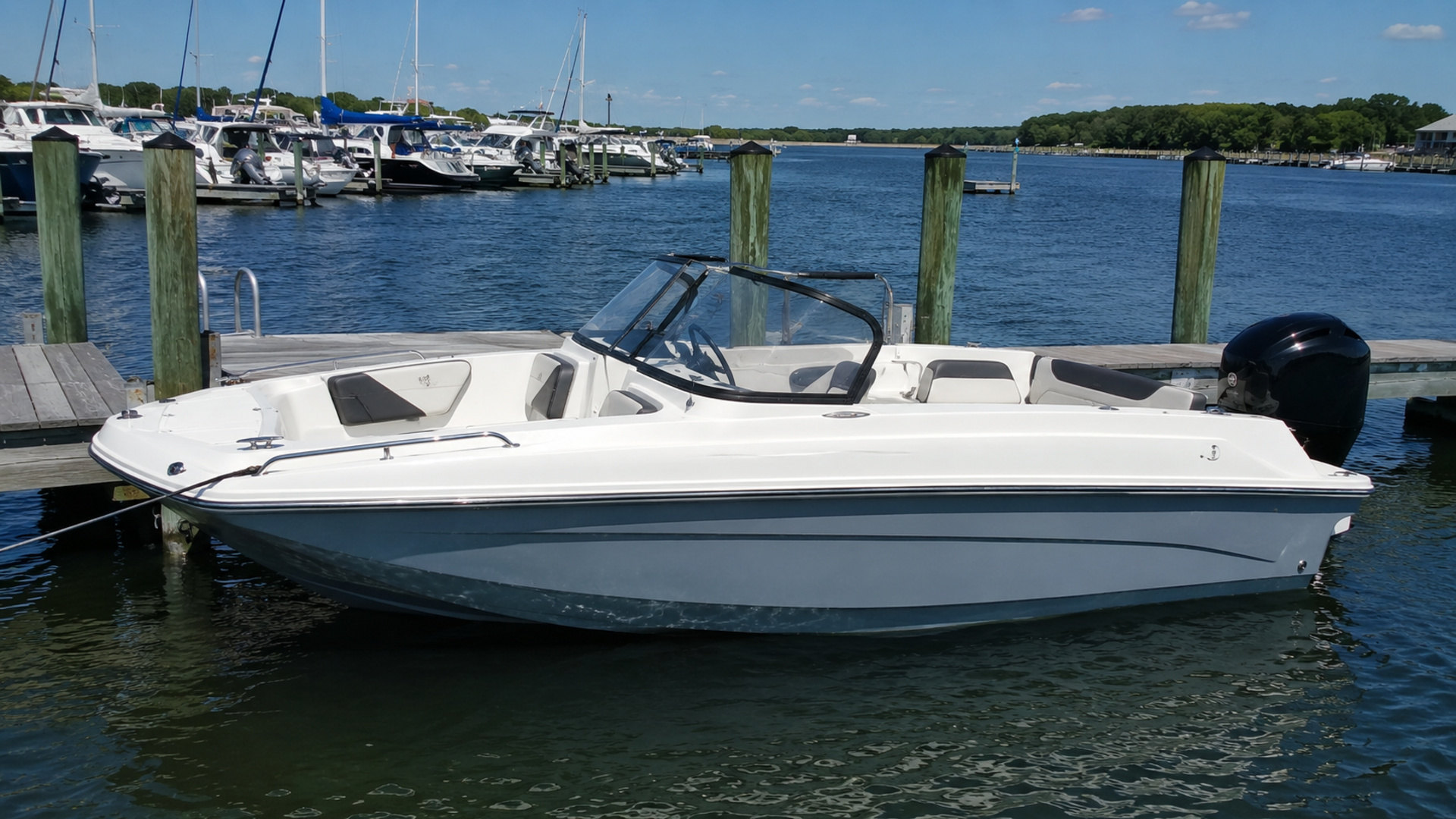
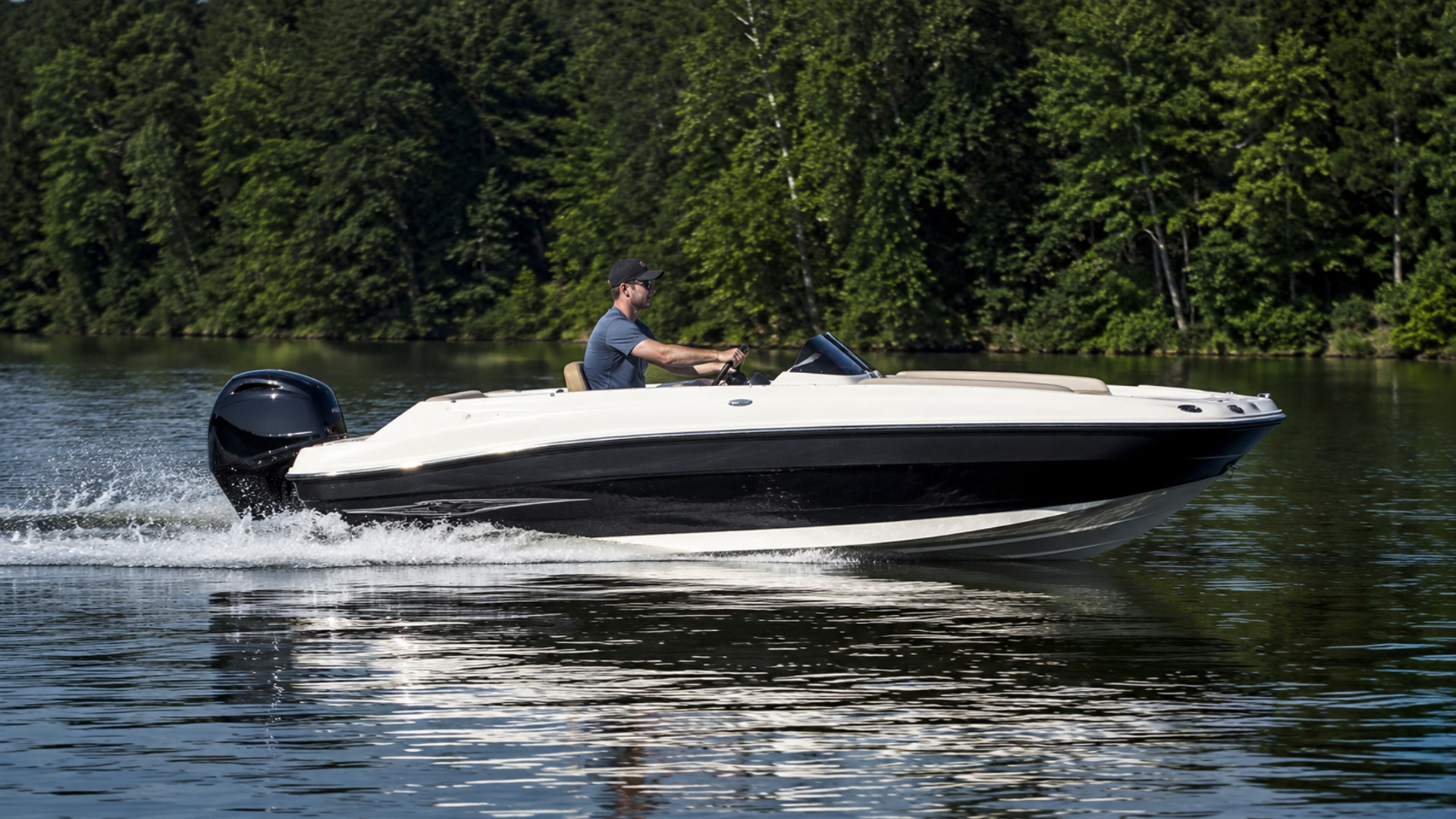
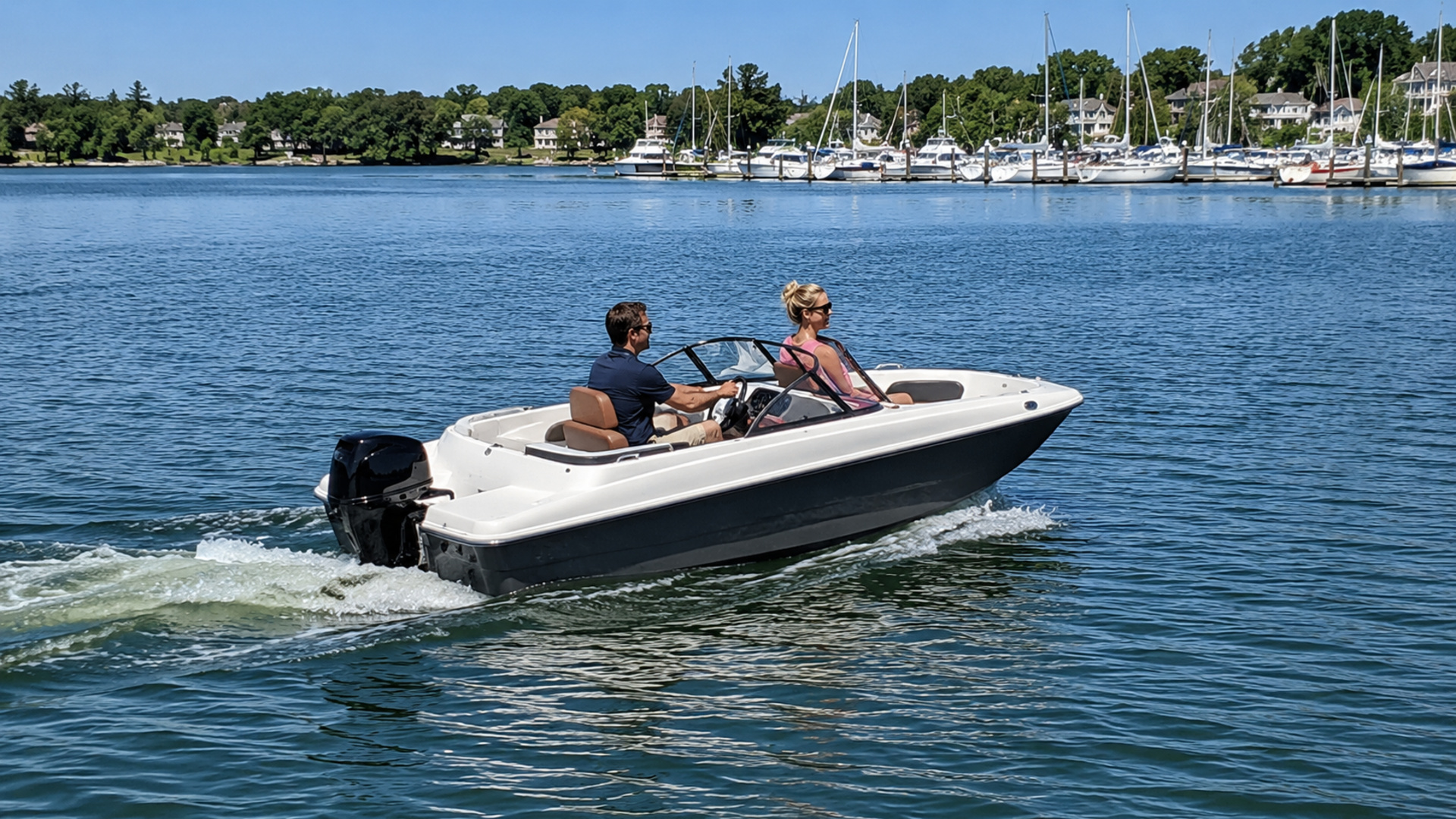
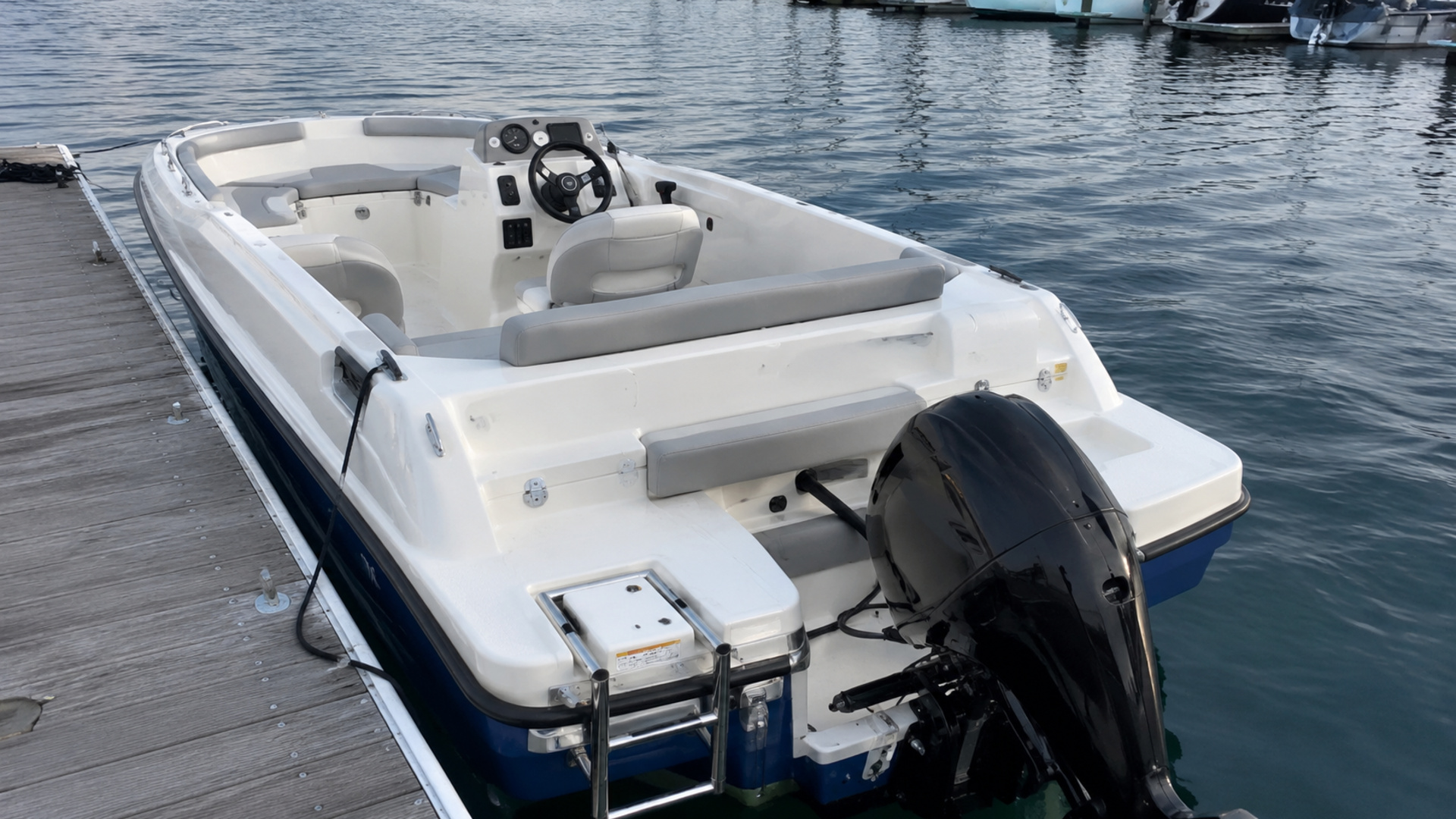
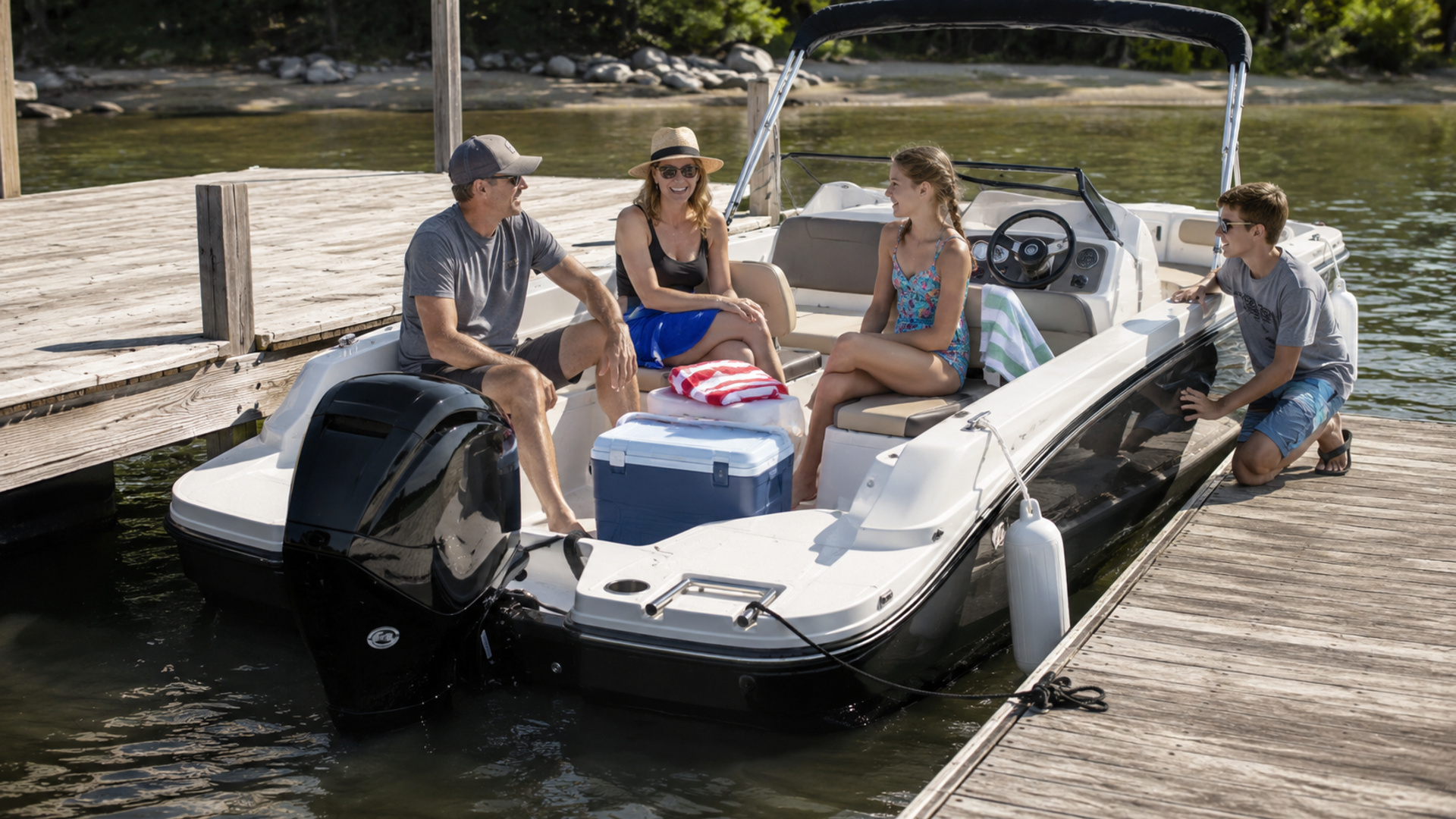
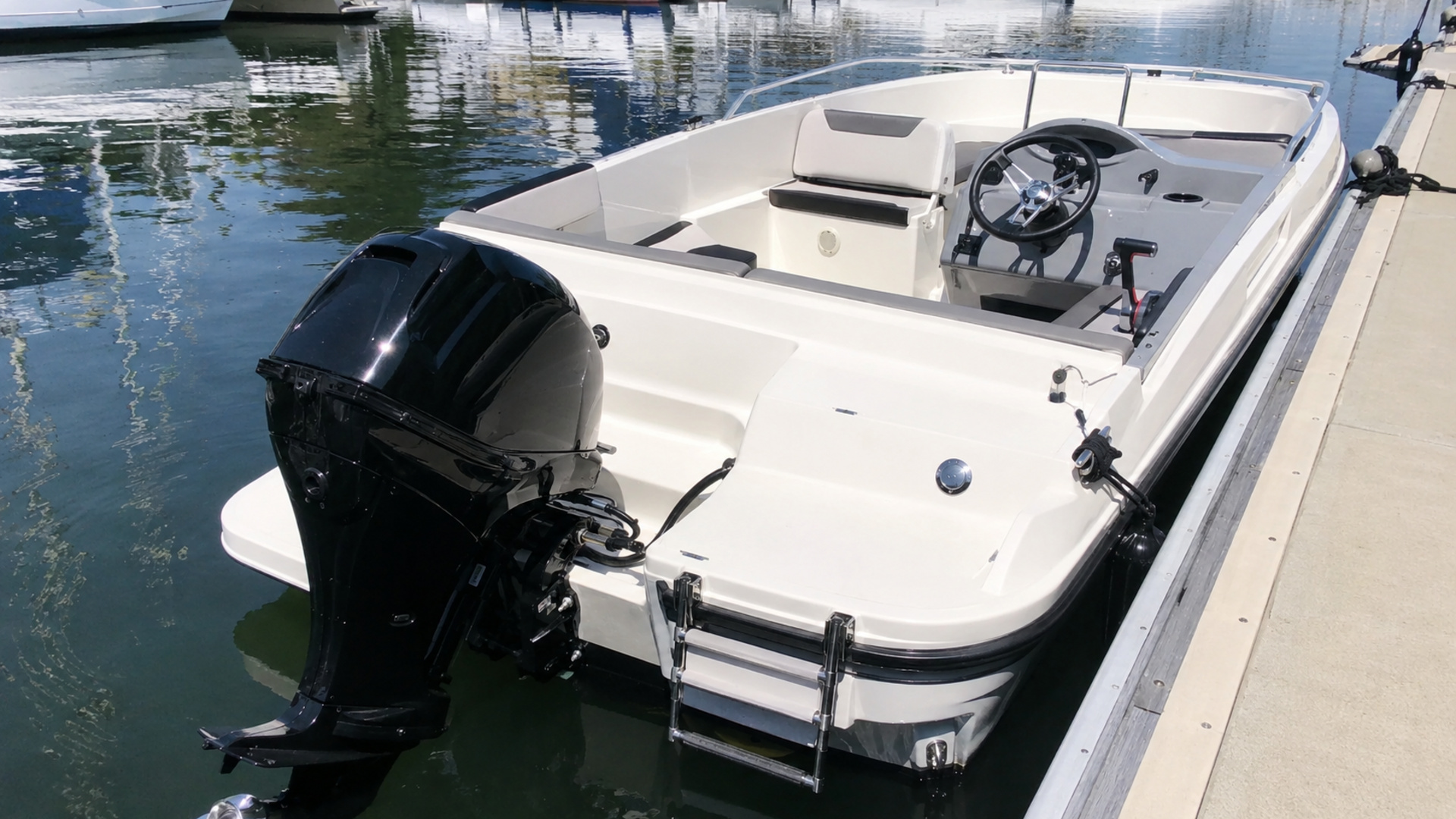
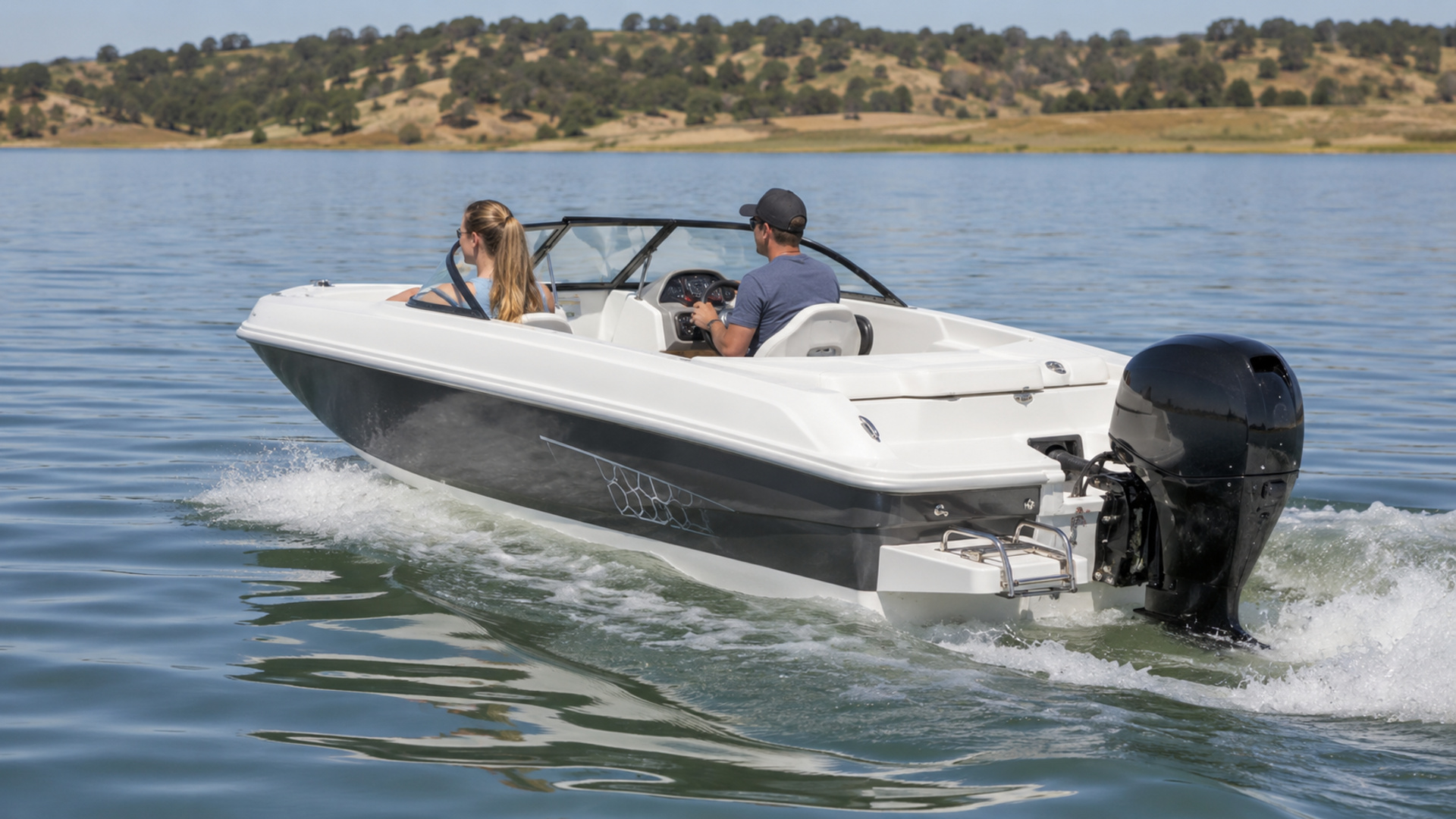
The Element E16 should be judged by what it deliberately leaves out. There is no engine ladder to analyze, no choice between outboard and sterndrive, no 55-gallon fuel system, and no heavy tandem-axle trailer. Bayliner currently sells the E16 pre-configured with a 75-horsepower Mercury and a convenience package, creating one of the simplest paths from “we want a boat” to actually using one.
The hull is 16 feet 2 inches long and 7 feet 6 inches wide. Published capacity is six. Approximate weight with standard engine is 1,570 pounds and Bayliner lists about 2,145 pounds with trailer. Those numbers make the E16 fundamentally different from the D models. A family may be able to tow it with a vehicle they already own, store it in a normal residential space, and launch it without turning every outing into a two-person operation.
That simplicity is also the limitation. The E16 is not the boat to buy for a family that already knows six people will be the minimum crew. Its 12-gallon fuel tank and 75-horsepower ceiling keep it centered on local day use. The E18 adds two feet, three more published passengers, and 115 horsepower. The M17 adds one foot, one passenger, an 18-gallon tank, and up to 90 horsepower.
Unlike the new D Series, the E16 has a genuine used market. The September 2026 sample supplied for this project includes 58 listings spanning 2016 through 2027. That gives buyers something D20 shoppers do not have: a decade of depreciation, older engines, older trailers, and a broad set of price points.
That makes the E16 one of the best places in this package to shop condition rather than year. A well-kept older boat stored indoors can be a smarter first purchase than a newer hull that spent years uncovered with a neglected trailer.
Draft, maximum: Bayliner currently lists 12 in estimated draft; no separate current maximum
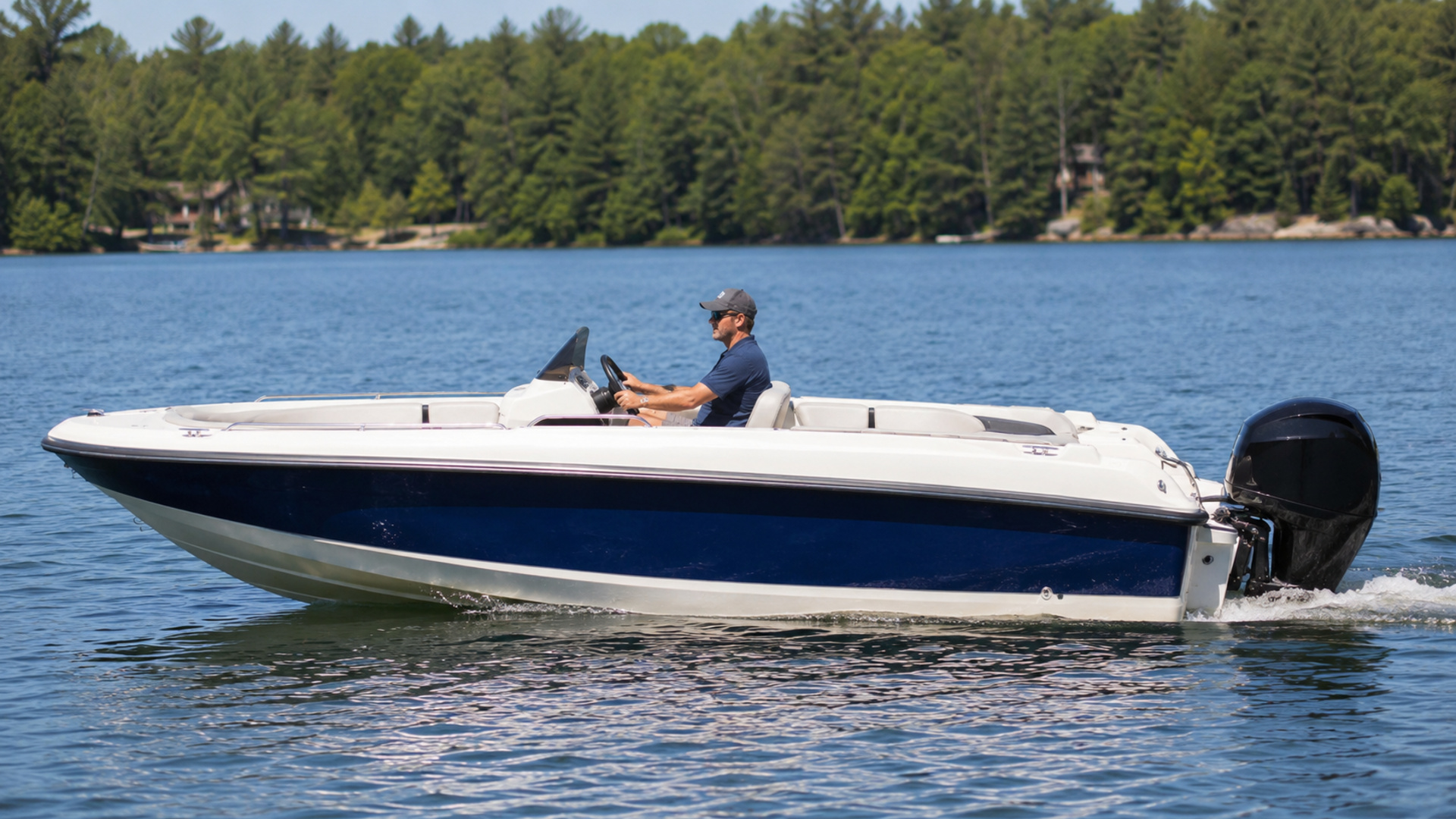
The E16 is broad relative to its short length, and that is central to the Element formula. A 7-foot-6-inch beam on a 16-foot-2-inch hull creates useful seating width and a stable platform without adding the mass of a larger boat.
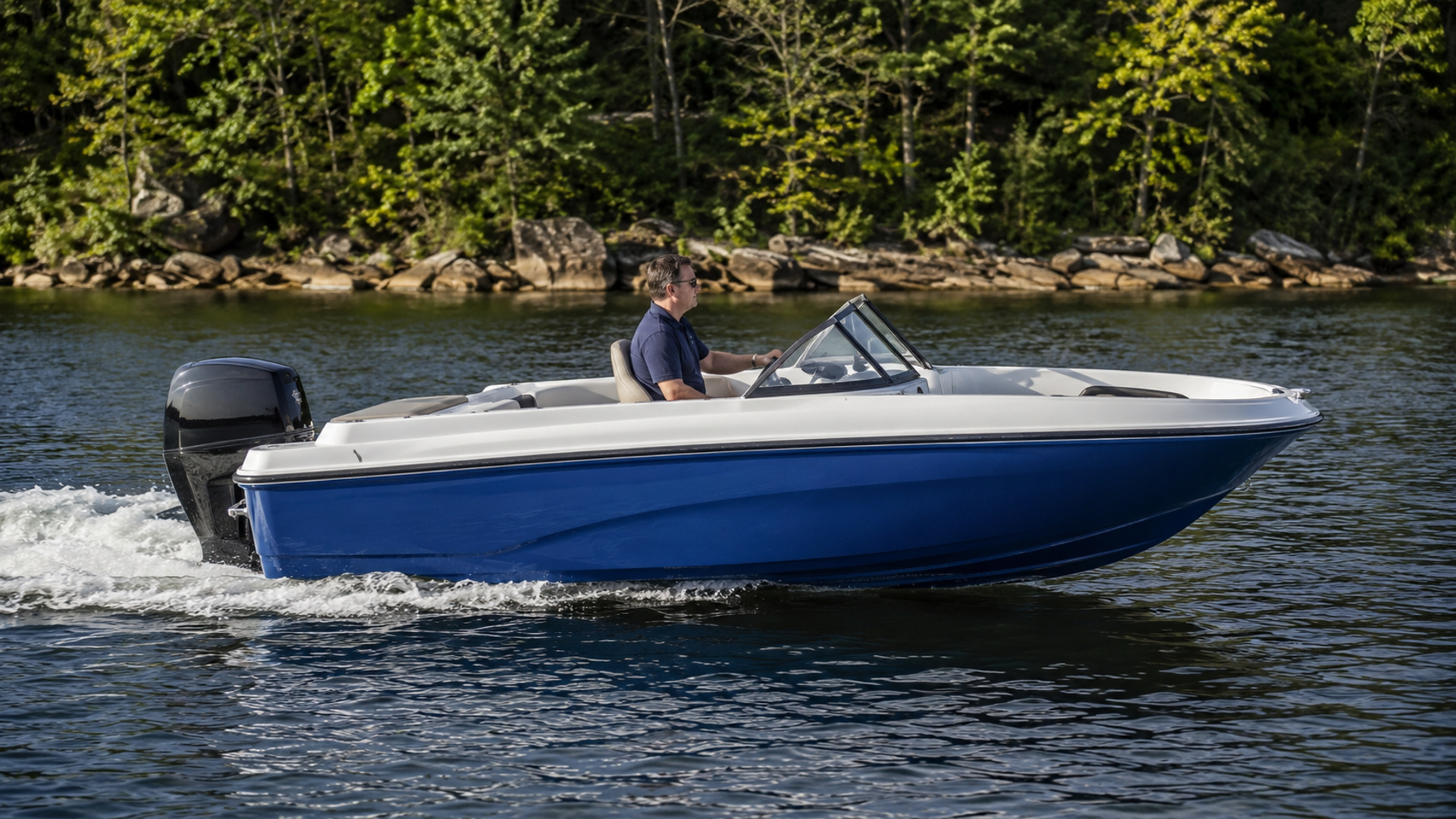
Seventeen degrees of deadrise is moderate. It supports the stable, approachable personality Bayliner sells to first-time boaters, especially at rest and at low speed. The tradeoff is that a light, short hull should not be driven through steep closely spaced chop like a heavier deep-V. Slowing down is part of operating the boat correctly.
The published 2,145-pound boat-and-trailer figure is one of the most useful numbers on this page because it gives buyers a real starting point for tow-vehicle planning. Fuel, battery, safety gear, cooler, and personal items still need to be added, but the package remains far lighter than any D Series boat.
Bayliner lists 19 feet 6 inches of storage length and 5 feet 6 inches of height on trailer. Those dimensions make a residential garage or side-yard setup realistic for many households.
The E16 hull is not impressive because it is technically exotic. It is impressive when the family can tow it, launch it, use it, clean it, and put it away without the boat taking over the entire weekend.
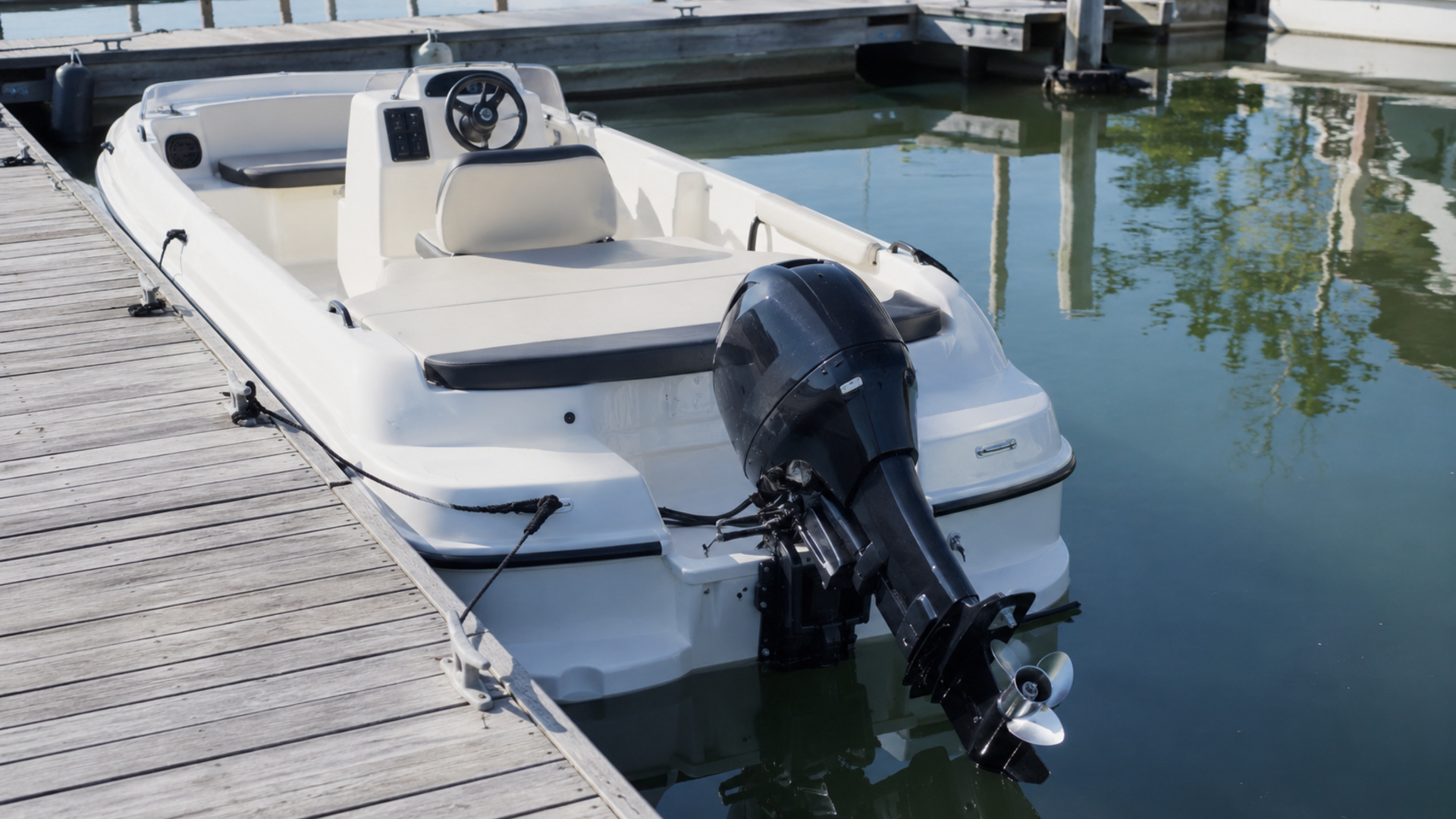
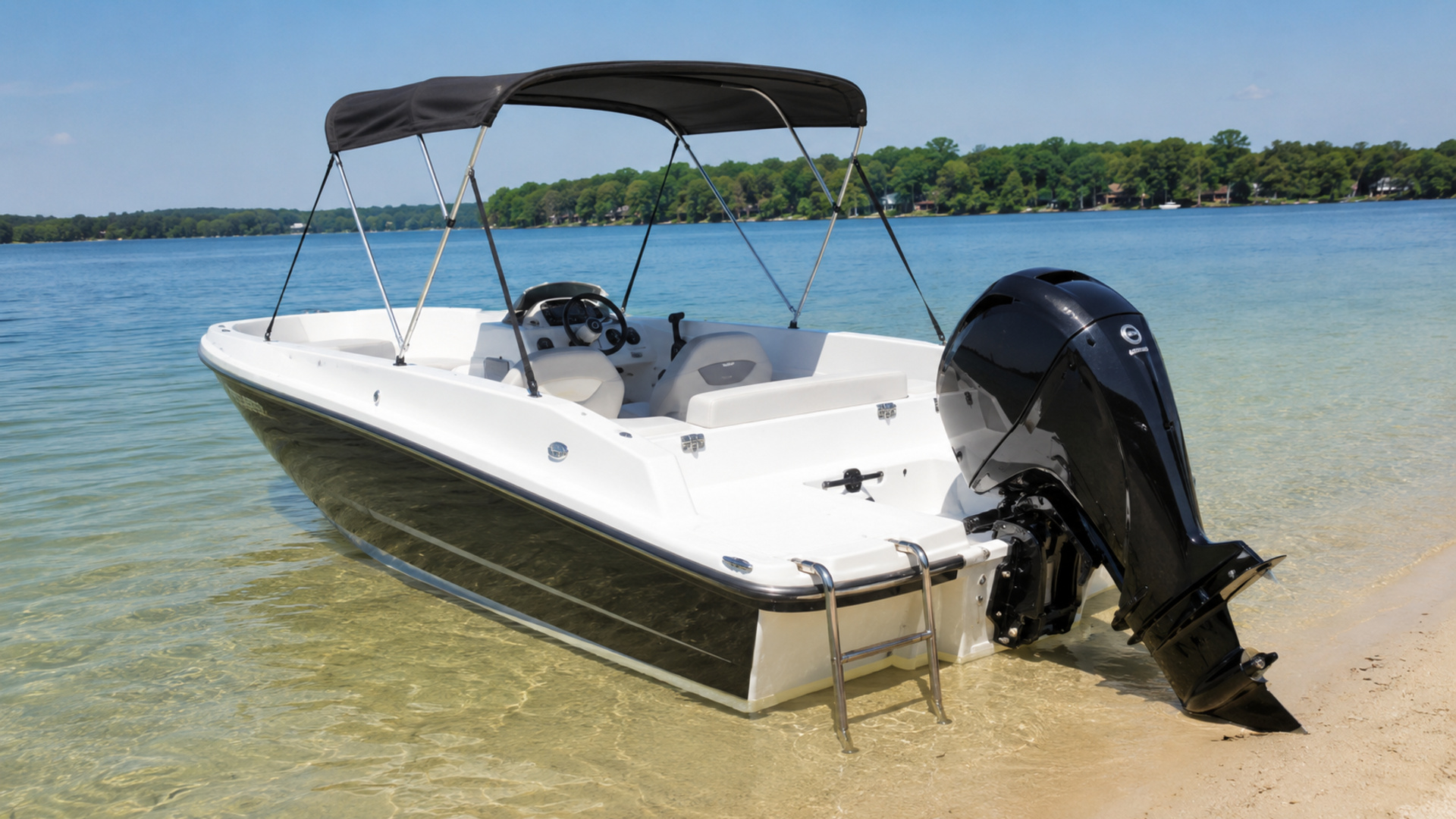
Current U.S. E16 inventory is pre-configured with a 75-horsepower Mercury FourStroke. There is no meaningful horsepower debate on a new boat: 75 is both the published standard and maximum.
That can be a relief for a first-time buyer. You are not deciding whether a larger engine will protect resale or whether base power will leave the hull struggling. Bayliner has already matched the current package around the intended mission.
Used E16s require more care because the market stretches back to 2016. Earlier model years may show different standard power in historic Bayliner literature, and some boats may have been repowered. Verify the actual engine serial number, horsepower, hours, and installation instead of assuming every E16 online matches the 2026 configuration.
On an older outboard, check cold start, idle, cooling stream, trim, lower-unit oil, skeg, propeller, steering, anodes, and corrosion. Ask whether the water pump and other routine service items have been handled on schedule.
Because the E16 is affordable, buyers sometimes accept deferred engine work they would reject on a more expensive boat. That is backwards. A several-thousand-dollar outboard repair represents a much larger percentage of an E16’s value. Mechanical condition matters more than shiny upholstery.
The E16 carries 12 gallons. That sounds small because it is small, but the boat also uses a single 75-horsepower outboard on a light hull and is designed around local day boating.
The tank tells you what the boat is for: lake days, river cruising, beach stops, swimming, and occasional towing close to a normal fuel source. Long unsupported runs deserve more planning.
Bayliner does not publish a universal current GPH number on the model page, so range should be calculated from verified engine data for the exact boat and with reserve. Older E16s may also have different historical engine configurations, making a fleet-wide number especially misleading.
For many E16 owners, fuel will be one of the smaller barriers to use. The bigger annual variables can be insurance, storage, trailer maintenance, and keeping the outboard serviced. That is part of the attraction: a full afternoon on the water does not require filling a 55-gallon tank.
Used buyers should also inspect the fuel system for age. On a 2016 or 2017 example, hoses, fittings, venting, and evidence of stale-fuel problems deserve more attention than on a new D Series.
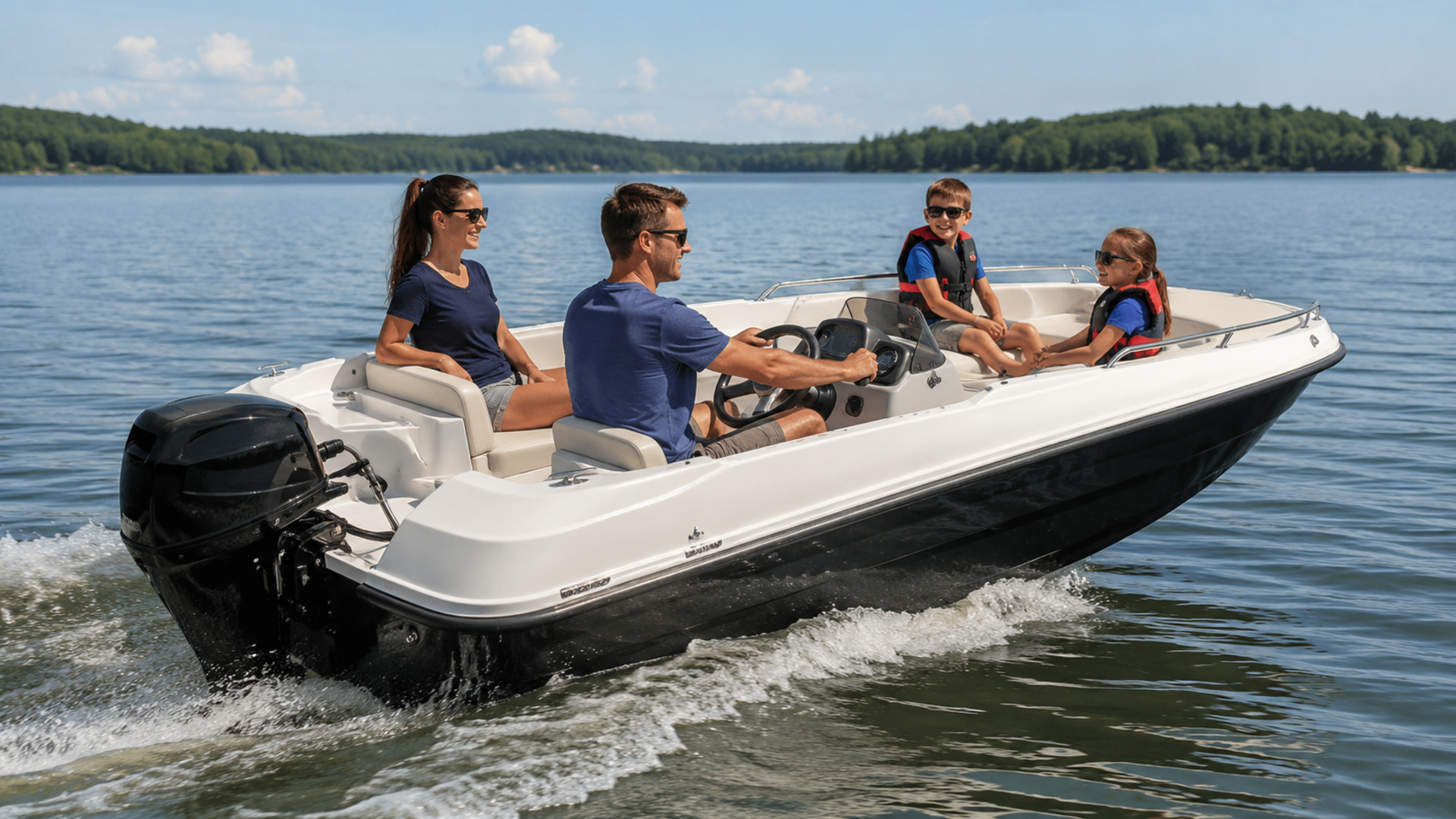
The E16’s 75 horsepower and short hull create a simple performance question: is it enough for the way your family boats? If the answer is cruising, swimming, and occasional light tow use with four people, the package is aimed directly at that use.
If the answer is six adults, a large tube, and aggressive watersports every weekend, the limitations become more relevant. The E18’s 115 horsepower or M17’s available 90 provide additional reserve.
The Element hull emphasizes stability and predictable handling. That is valuable for a new operator learning throttle response, trim, docking, and trailer retrieval. The boat should feel easy to understand at idle and moderate speed.
Because the hull is only 16 feet 2 inches, closely spaced wakes affect it more than a D22. That is not a defect; it is the consequence of the compact size that also makes the E16 easy to tow and store. Reduce speed and use trim rather than expecting larger-boat behavior.
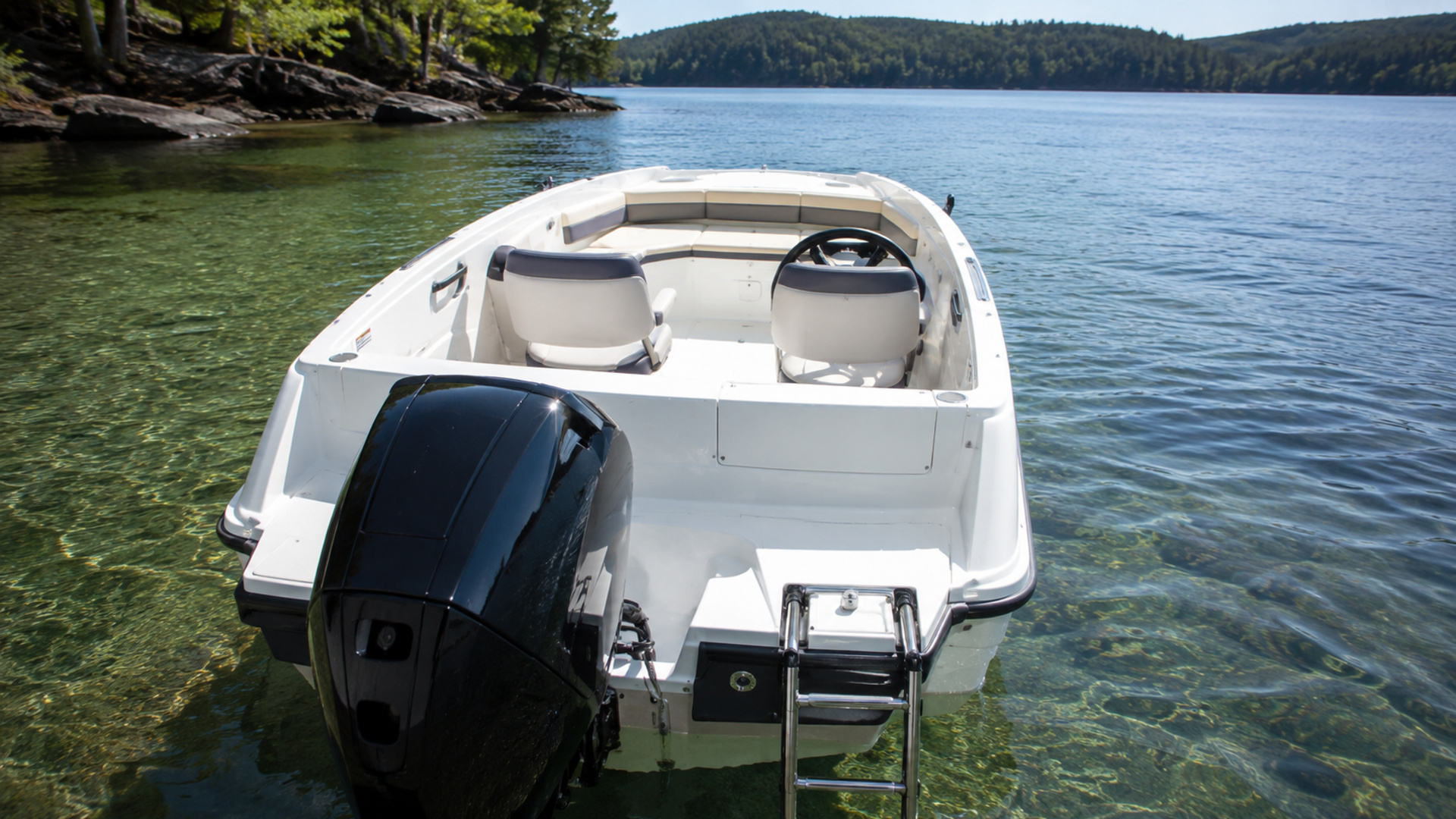
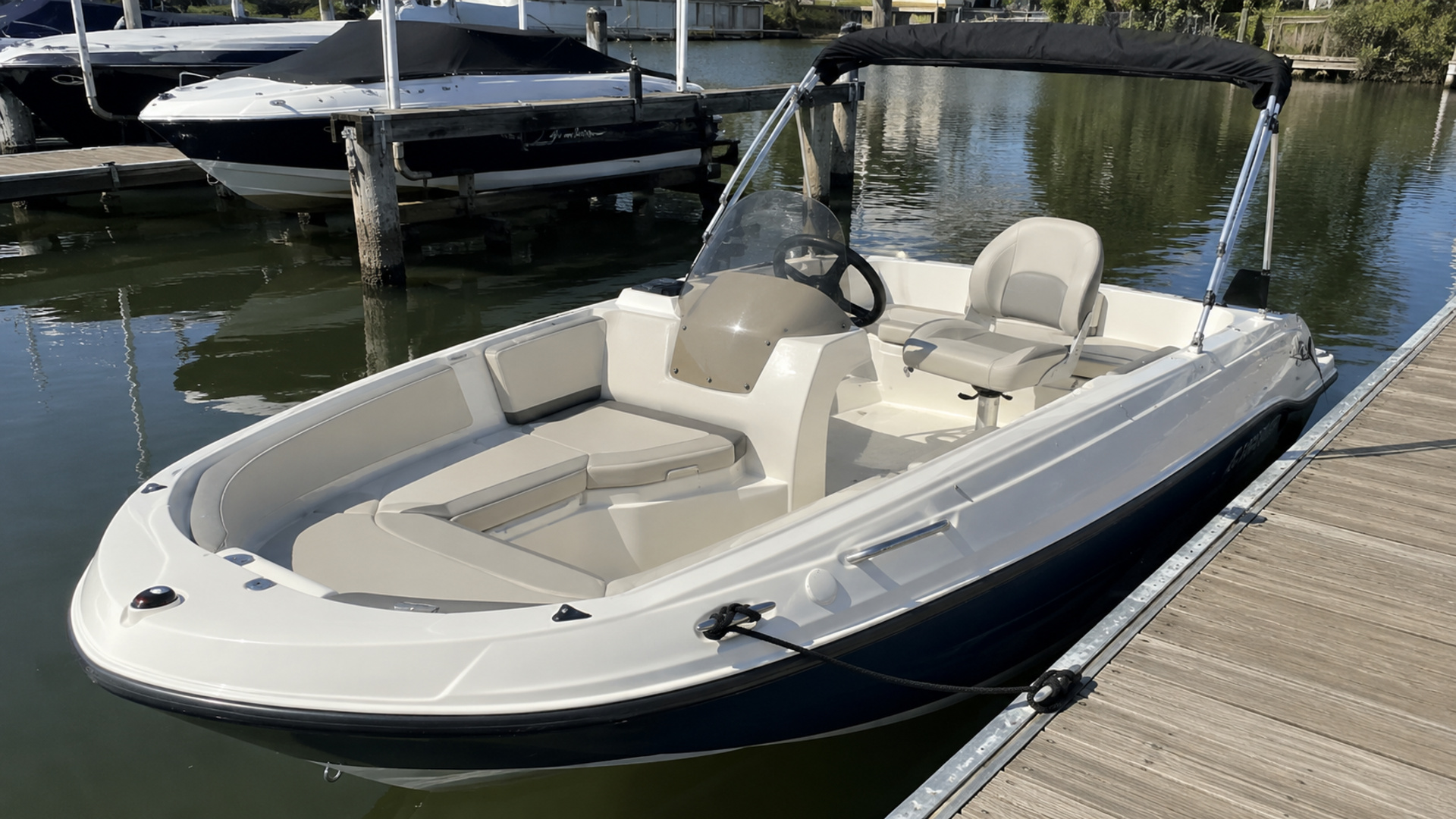
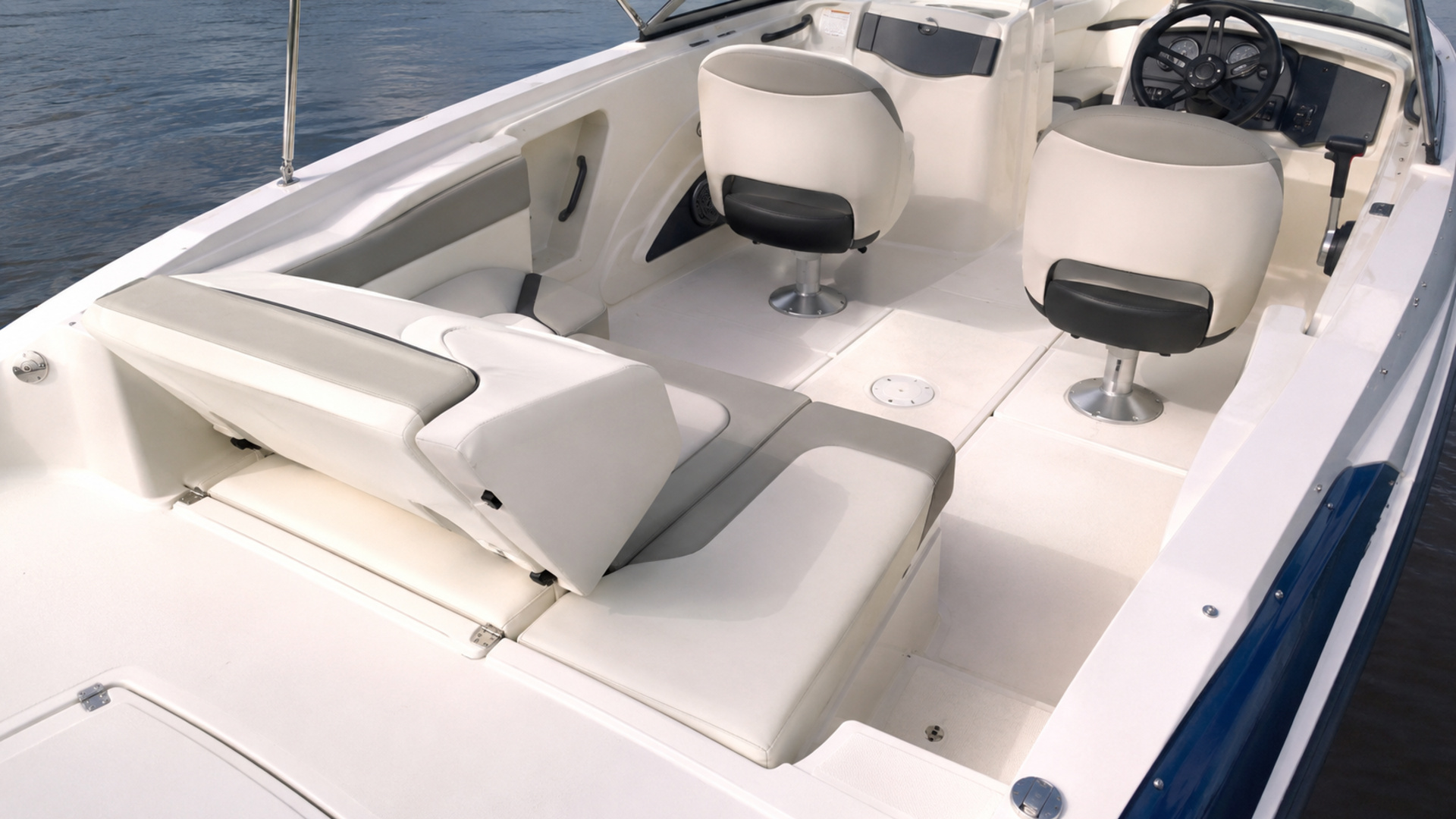
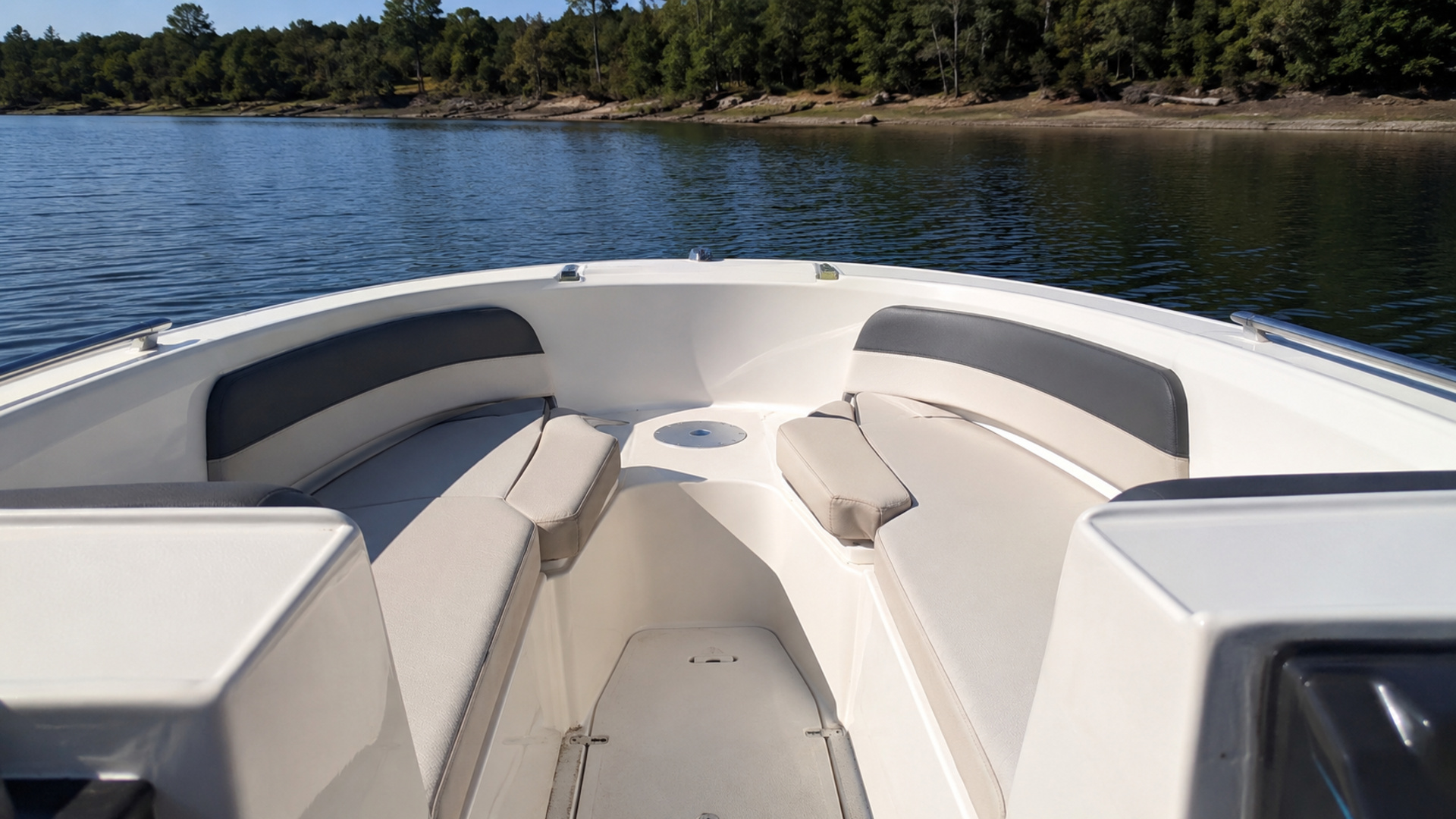
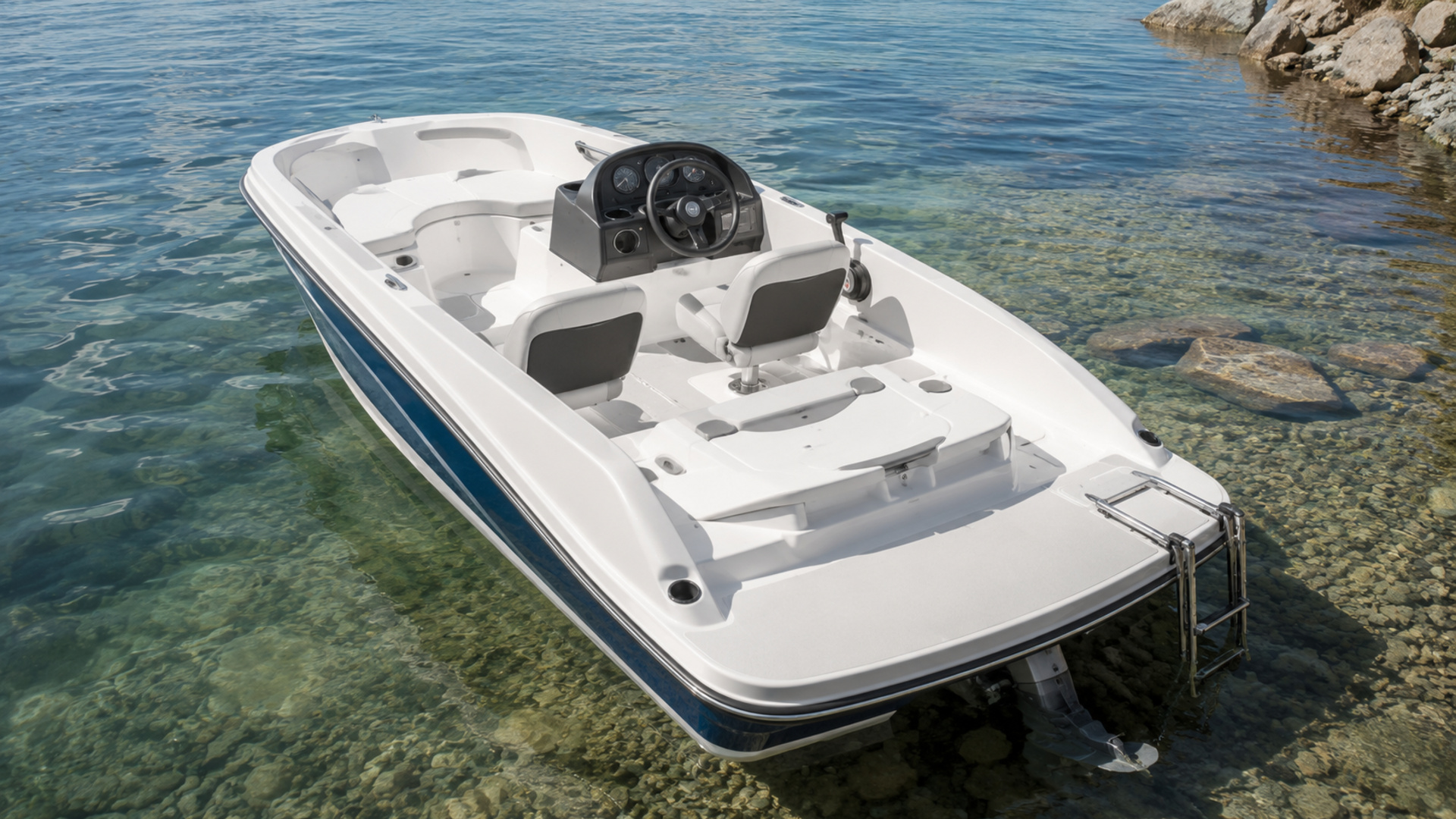
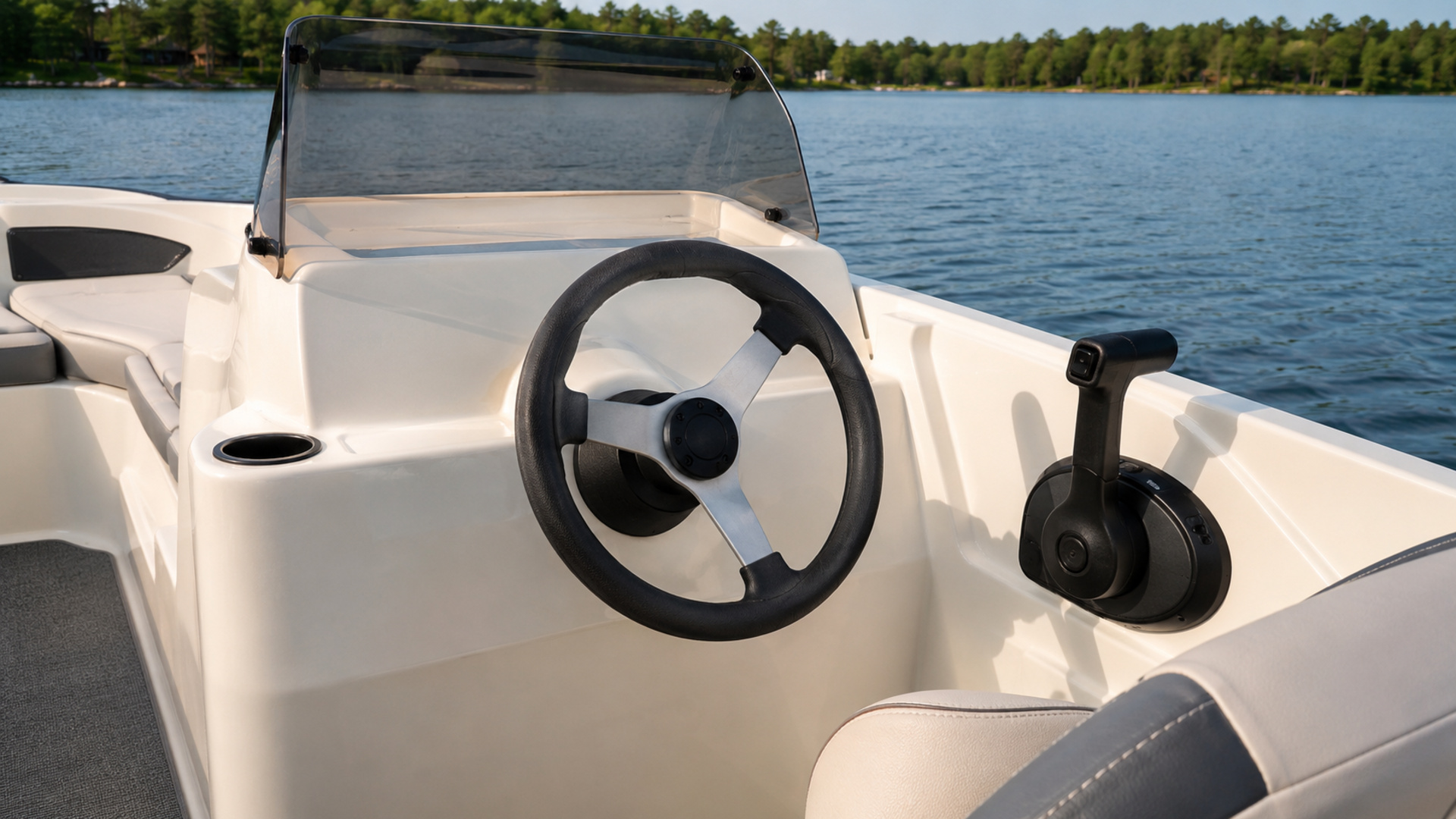
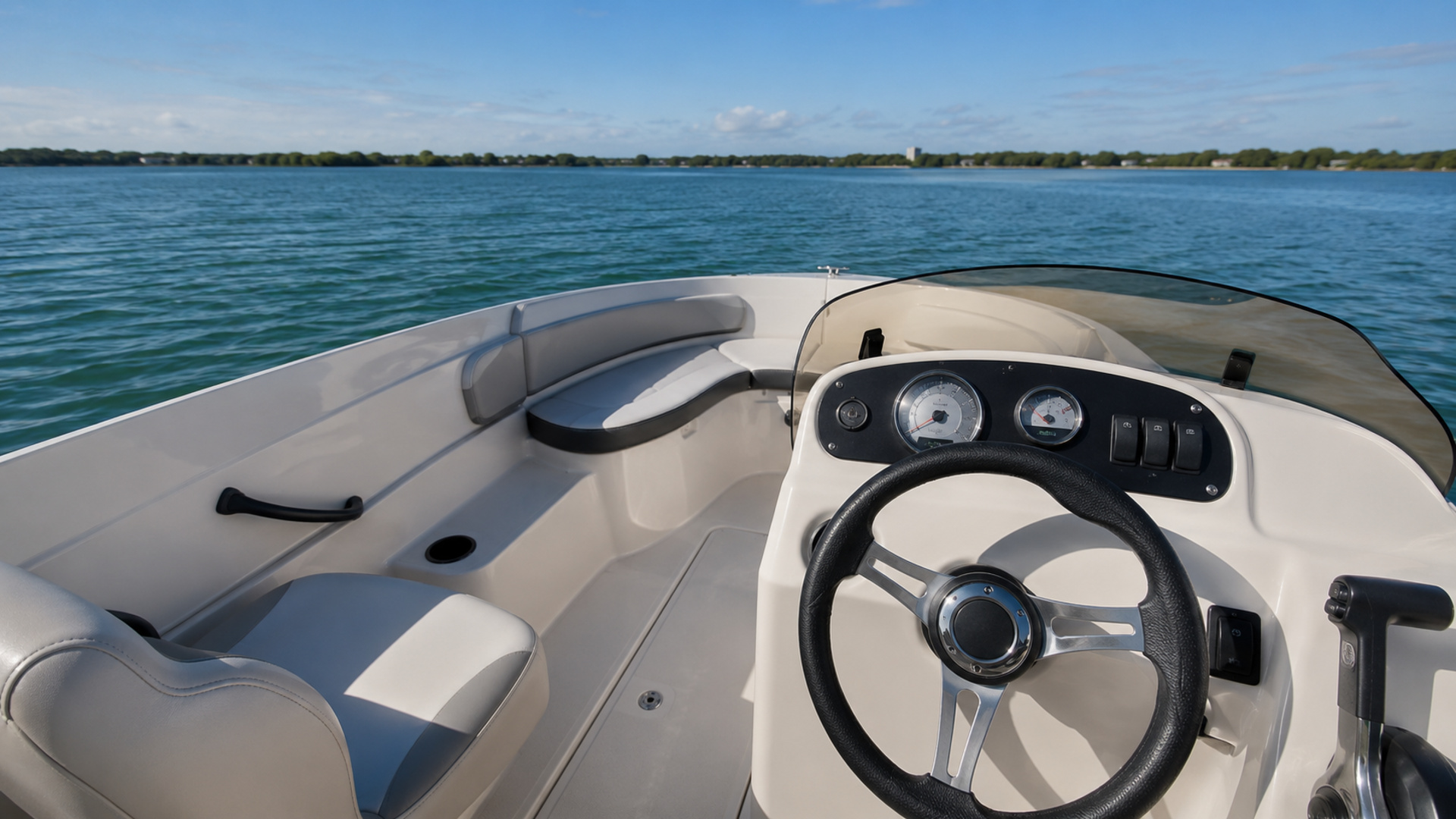
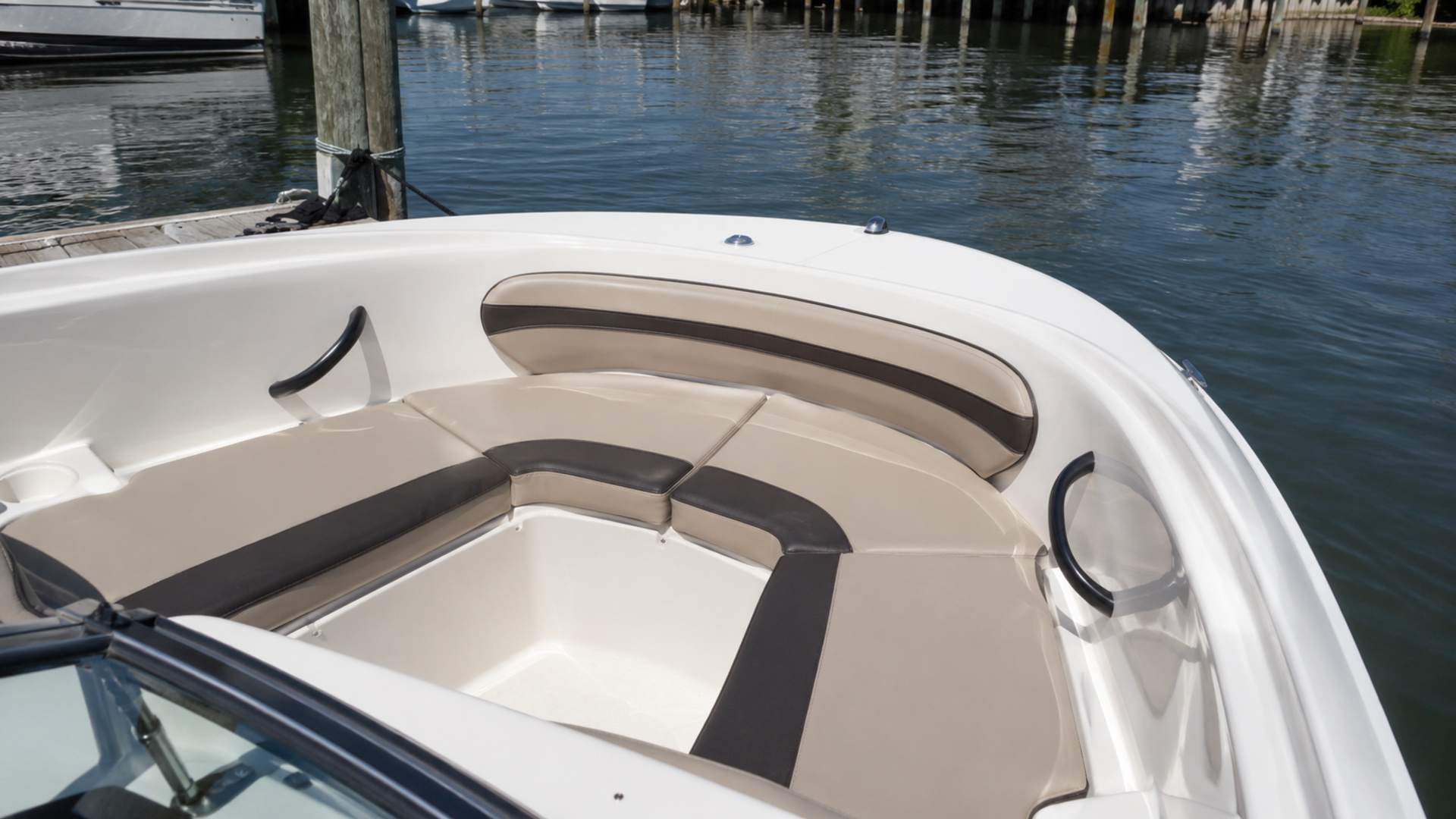
The E16 cockpit is intentionally uncomplicated. Cup holders, grab handles, mooring cleats, molded seating, a fiberglass floor liner, single helm windscreen, and telescoping swim ladder cover the basic day-boat needs without layering in wet bars, changing rooms, or multiple floorplans.
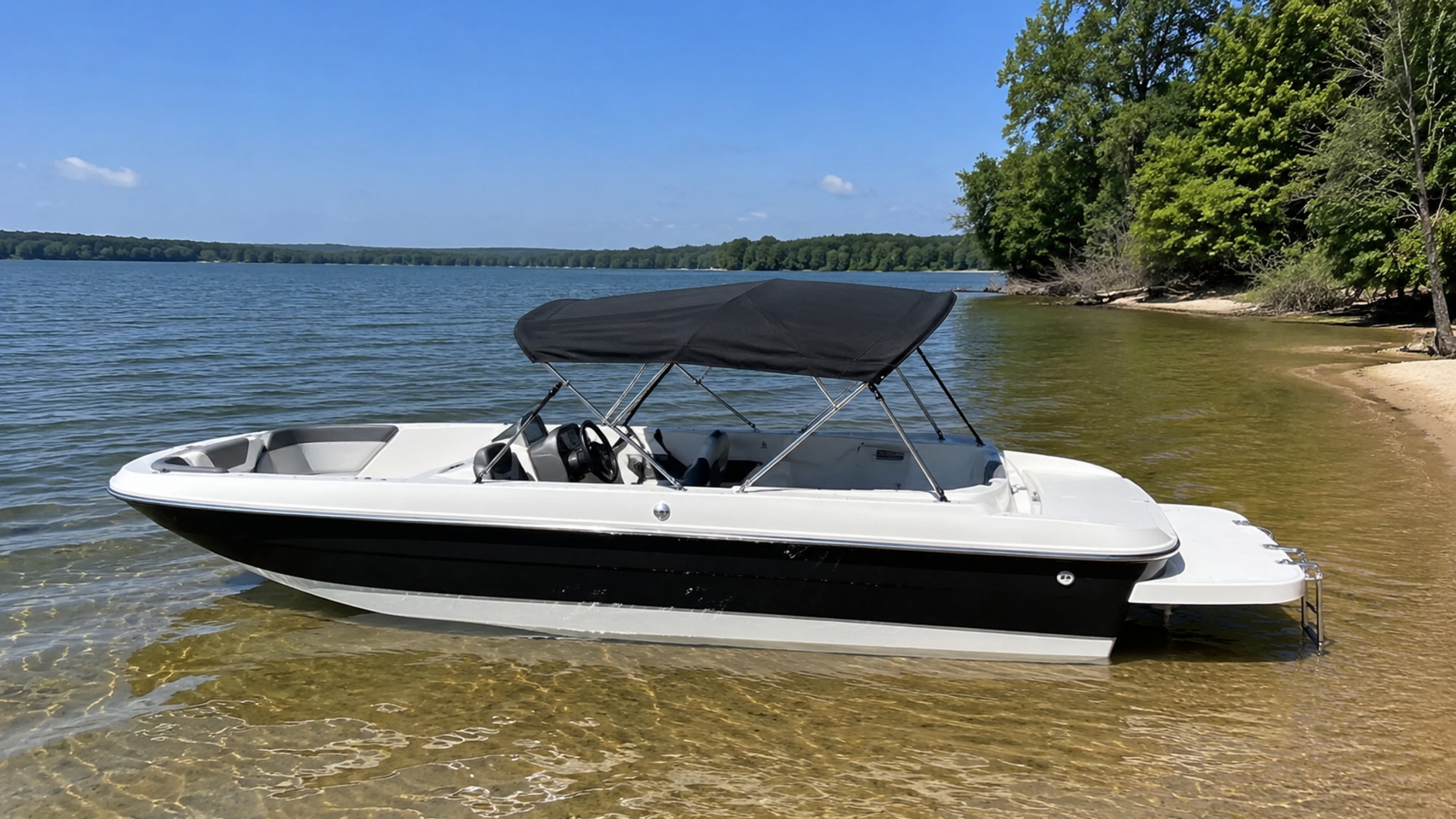
The current Convenience Package is more important than it sounds because it includes equipment an entry-level owner would otherwise buy immediately: a Bimini with six-foot top and boot, snap-on bow-well cover, cockpit cover, and waterproof 120-watt stereo. Shade and covers have real ownership value on a small boat stored at home.
Bayliner also offers a ski tow arch on current E16 material. That can make sense for a family planning occasional tubing or skiing, but it does not turn the boat into a dedicated watersports machine.
The swim platform and telescoping ladder make water access straightforward. The short hull keeps swimmers close to the cockpit, which can be useful for families with children.
The E16 does not try to hide its simplicity. Fewer systems mean fewer switches to diagnose, fewer pumps to winterize, and fewer powered components to fail. A buyer who wants a refrigerator, enclosed head, digital dash, and configurable cockpit should move up rather than trying to turn the E16 into a D Series.
Eight E16 Features That Matter When You Are Buying
75 HP Mercury FourStroke – Current E16s come pre-configured with the full published horsepower, eliminating the base-versus-upgrade engine decision.
Six-Foot Bimini With Boot
Part of the current Convenience Package and one of the most valuable comfort features for long summer days.
Snap-On Bow-Well Cover
Helps protect the forward seating when the boat is stored outdoors between outings.
Snap-On Cockpit Cover
Gives a home-stored E16 practical protection without requiring an immediate aftermarket canvas purchase.
Waterproof 120-Watt Stereo
Included in the current convenience equipment and sufficient for an uncomplicated family day boat.
Single-Axle Swing-Tongue Trailer
Keeps the package compact and supports residential storage.
Fiberglass Floor Liner
Simple to clean after swimming, sand, food, and normal family use.
Ski Tow Arch Option
Adds a factory-supported path toward casual watersports for buyers who want more than cruising and swimming.
What to Inspect on an Older E16
The E16’s age spread changes the inspection strategy. A new 2027 boat needs a delivery check. A 2016 boat needs an aging-systems inspection even though the equipment list is short.
On the outboard, verify hours and serial number, cold start, cooling stream, trim, steering, lower-unit oil, propeller and skeg condition, and corrosion. Look at engine mounts and the transom area for stress or previous repair.
Inside the hull, test the bilge pump, horn, 12-volt outlet, stereo, navigation lights, and gauges. On older boats, inspect wiring for amateur additions. Entry-level boats are often modified with stereos, lights, chargers, or fish finders by owners learning as they go.
Canvas condition matters because the Bimini and covers protect the interior. On a ten-year-old boat, replacement canvas can be meaningful relative to value.
The trailer may deserve the deepest look of all. Tire date codes, bearings, bunks, winch strap, coupler, safety chains, lights, and rust can reveal how the complete package was treated.
Why the E16 Is One of the Easiest Bayliners to Store
Bayliner lists 19 feet 6 inches of storage length, 5 feet 6 inches of height on trailer, and approximately 2,145 pounds with trailer before fuel and personal gear.
Those dimensions make a residential garage or side-yard solution realistic for many owners. The swing tongue is part of that advantage because it reduces the longitudinal footprint when stored.
Tow-vehicle selection should still use loaded numbers. Add the 12 gallons of fuel, battery, safety equipment, coolers, and anything that lives in the boat. Confirm payload and tongue-weight limits, not only advertised tow capacity.
Because the package is light and compact, the E16 can avoid marina fees entirely if the buyer has home storage. That lower fixed-cost structure can make it materially cheaper to own over several years than a larger boat with a similar monthly payment.
Why the E16 Used Market Changes the Buying Strategy
The spread reflects a decade of age and condition, not simply dealer discounting.
Older examples deserve a condition-first valuation. An inexpensive 2016 with a healthy outboard, clean transom, dry interior, and serviced trailer may be a smart first purchase. A newer boat with neglected maintenance can be worse value despite a younger hull.
New buyers are paying for predictability: current 75-horsepower package, current convenience equipment, fresh trailer, and fewer unknowns. Used buyers trade some of that certainty for lower acquisition cost.
The E16 is also a model where cash versus financing can become a real question at the lower end of the market. Let the actual transaction size and buyer goals drive that decision.
Market price band
$10,895 – $30,306
Estimated monthly
$75/mo – $205/mo
Figures come from this page’s Boat Details fields. Illustration only and not an offer of credit.
Estimate an E16 Payment Without Ignoring Ownership Cost
Use the actual purchase price. On an entry-level boat, a low payment only matters if there is still room for insurance, trailer service, annual outboard maintenance, storage, and safety gear.
Illustration only and not an offer of credit. Your actual rate and term depend on credit profile, vessel age, loan amount and ownership structure.
E16 vs. E18 vs. M17
The E18 adds two feet, three published passengers, 40 horsepower, and roughly 605 pounds of trailer-package weight while retaining a current 12-gallon fuel tank. If six people and 75 horsepower are enough, the E16 preserves the easiest ownership.
The M17 is one foot longer, carries seven, has an 18-gallon tank, uses 60 horsepower standard with 90 available, and weighs about 2,457 pounds with trailer. Buyers wanting more range flexibility may prefer it.
Against the D20, the E16 does not compete on room. It competes on cost, weight, simplicity, and the ability to fit boating into a household without changing the tow vehicle or storage plan.
Buying a Used E16 Without Buying Someone Else’s Neglect
A decade-wide used market makes the E16 a condition-shopping exercise. Start with the engine, then the trailer, then the hull and interior. Those are the components that can turn a low purchase price into a false bargain.
For older examples, ask how the boat was stored. UV exposure can age upholstery, plastics, covers, and gelcoat even when engine hours are low. Inspect the floor liner for cracks, look under seat bases, and check the transom and mounting hardware.
Trailer age is especially important. Tires can look good while being too old for highway confidence. Wheel bearings, lights, coupler, winch strap, bunks, and rust deserve inspection.
On newer boats, compare the delivered dealer price with late-model used inventory. The gap may be small enough that fresh equipment and fewer unknowns make new attractive. On older boats, prioritize a clean maintenance history over the newest year you can barely afford.
Your next step
Finance the E16 That Makes Sense for Your Budget
Send Float Finance the specific E16 you found. With used inventory spanning more than a decade, the actual year, price, seller, and condition matter to the financing conversation.
Prequalification may involve a soft credit inquiry where applicable. Your information is not sold as a lead list.
The current E16 is 16’2″ overall with a 7’6″ beam and 17 degrees of deadrise. Bayliner lists 12 inches as estimated draft, 19’6″ of storage length, 5’6″ of trailer height, about 1,570 pounds with standard engine, and about 2,145 pounds with trailer.
It can be. The September 2026 market sample stretches back to 2016. Engine condition, trailer health, storage history, upholstery, wiring, and canvas matter more than age alone.
Buy the E16 for the lowest weight and simplest ownership. Buy the E18 when nine-person capacity and 115 horsepower solve real family-growth or performance needs.
Potentially, depending on age, value, loan amount, condition, and borrower qualifications. Because older E16s can transact at much lower prices, send Float Finance the exact listing for a specific answer.
Want the Easiest Way Into Boating? Start With the Right E16.