
Call Us : 207-994-5109
Mon – Fri: 8 am to 9 pm & Sat – Sun: 10 am to 8 pm
Bayliner Trophy overnight boats are for buyers who want more than a day boat: enclosed weather protection, real fishing capability, berths, and enough onboard systems to stay out when everyone else heads back to the ramp.
A Bayliner overnight boats makes sense when your boating day has started to outgrow open-deck limitations. Maybe fishing trips begin before sunrise and end after dark. Maybe cold wind, rain, or shoulder-season weather keeps shortening otherwise good weekends. Maybe the family wants a cabin, a berth, a place to eat, and somewhere private enough to make longer days realistic. That is the gap Bayliner’s Trophy overnight lineup is built to fill.
The important thing is that Bayliner does not approach every overnight buyer the same way. The Pilothouse models are fishing-first boats with enclosed helm protection. The T23 Pilothouse and T25 Pilothouse put fish lockers, rod storage, livewell equipment, raw-water washdown, working cockpit space, and side pilothouse access ahead of lounge furniture. Their cabins are useful, but the boat’s identity begins with anglers who want to fish longer and stay protected when the weather changes.
The Explorer models shift the balance. The T23 Explorer, T25 Explorer, and T29 Explorer still keep rod holders and practical deck access, but they spend more of the hull on social seating, dinette use, galleys, berths, swim platforms, enclosed canvas, and overnight comfort. The larger Explorers add systems that begin to resemble a compact cruising boat: shore power, bow thrusters, climate options, heaters, radar, VHF, stoves, and on the T29 even generator-supported cabin air conditioning.
That split is the first purchase decision. If the cabin exists mainly so serious fishing can continue through bad weather and an occasional overnight, start with Pilothouse. If the boat needs to cruise, entertain, swim, dine, and sleep as naturally as it fishes, start with Explorer.
Size is the second decision. The compact T23 models keep the ownership footprint manageable while still adding enclosed spaces. The T25 models gain beam, capacity, fuel, cabin usefulness, and available power. The T29 Explorer is a different class entirely with twin 225-horsepower outboards, a 9-foot-9-inch beam, 126 gallons of fuel, five berths, and a systems list that can support genuine multi-day use.
The right overnight boat is not automatically the one with the most berths or the biggest cabin. Every extra foot, tank, appliance, battery, pump, and piece of canvas adds weight, purchase price, service, and storage demands. Buy the amount of overnight capability you will actually use.
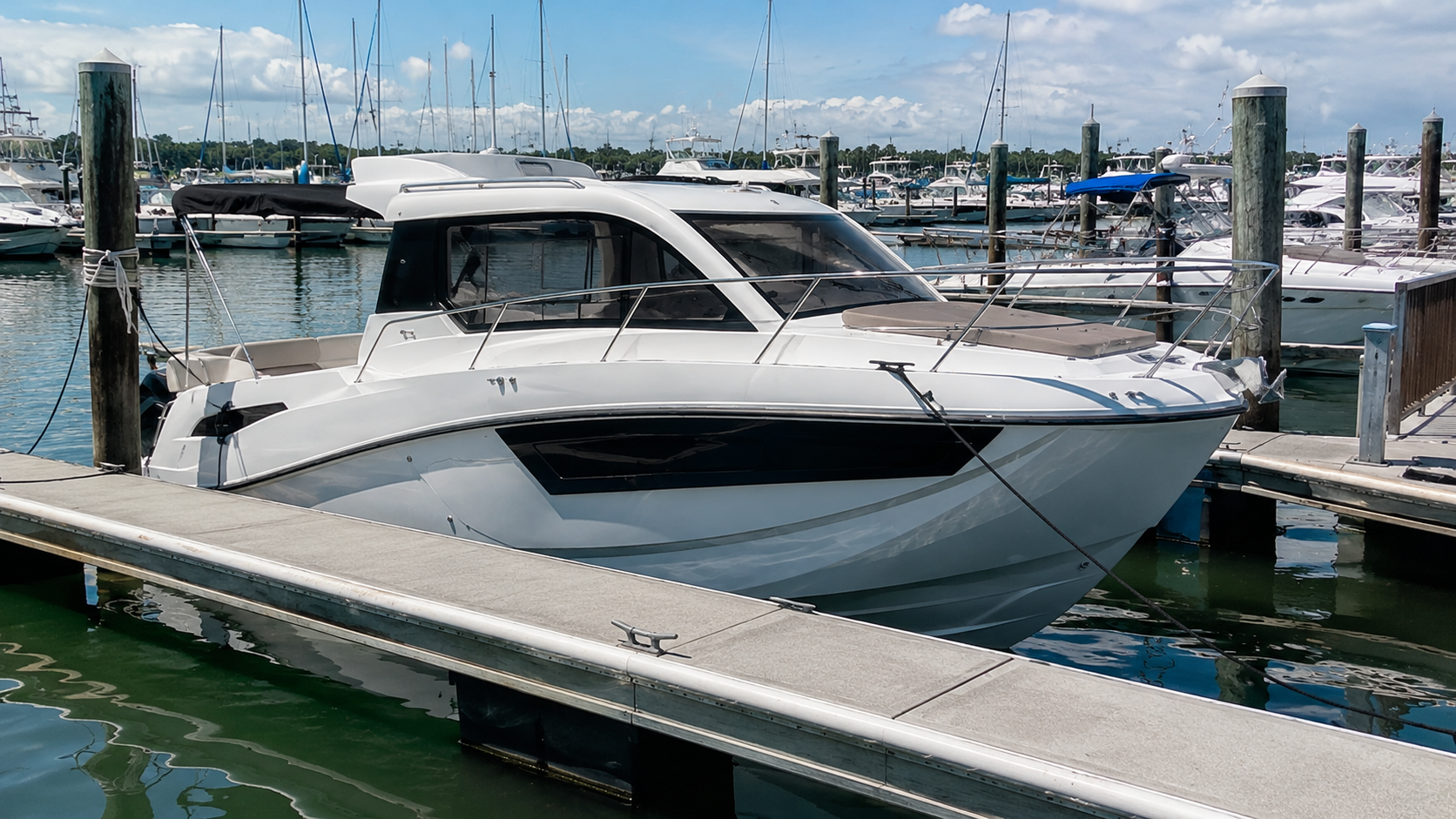
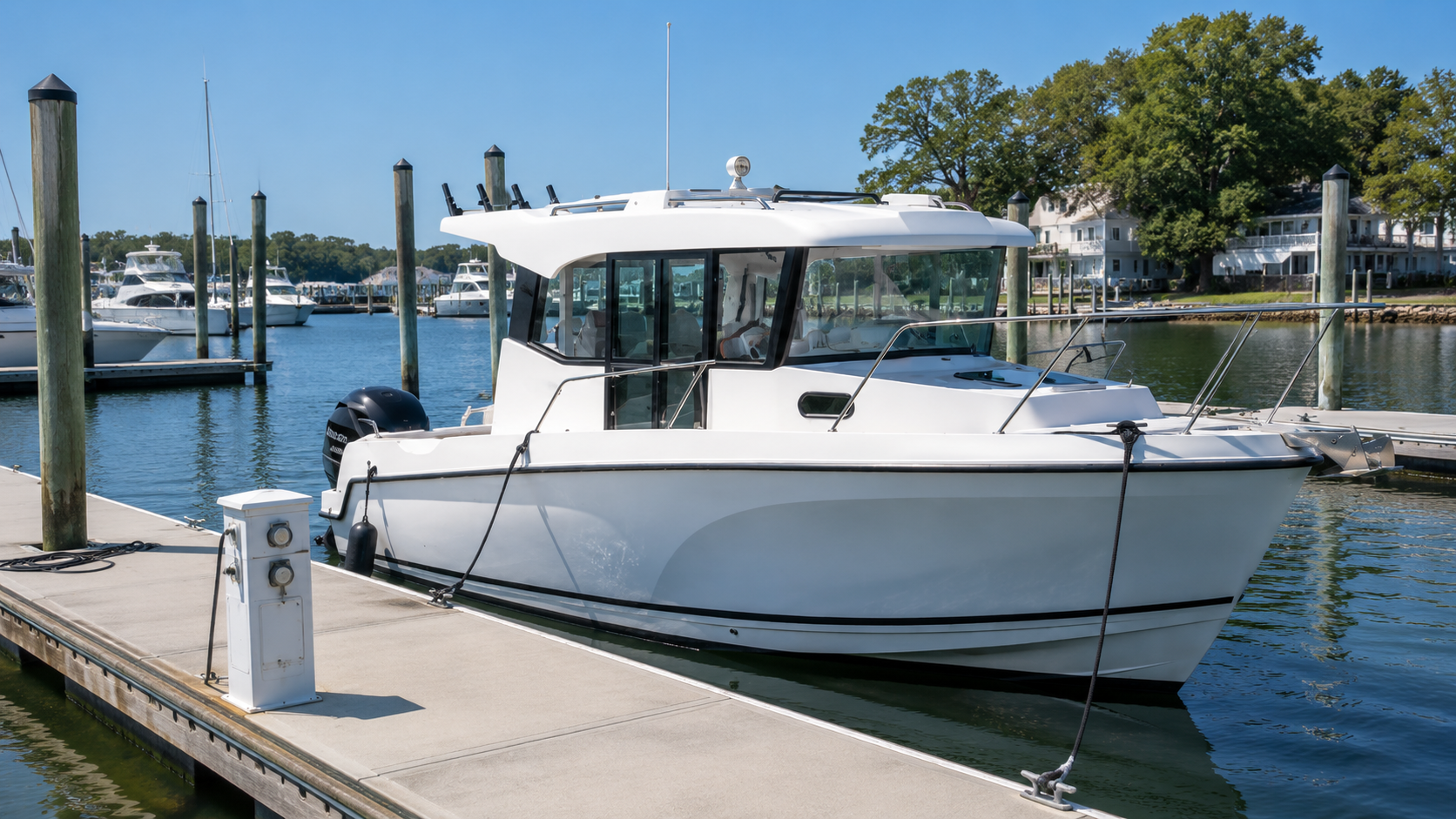
The Trophy Pilothouse series is purpose-built around fishing workflow. The T23 Pilothouse is 23 feet 7 inches long, 8 feet 6 inches wide, carries nine people, reaches 225 horsepower, and holds 51 gallons of fuel. Bayliner equips it with fish lockers, cockpit rod storage, a fishing station with livewell system, dual batteries, CO and smoke monitoring, a roof hatch, sink, and side pilothouse doors. It is a compact enclosed fishing boat first and an overnight boat second.
The T25 Pilothouse expands that formula. It measures 25 feet 4 inches with a notably broad 9-foot-6-inch beam, ten-person capacity, up to 300 horsepower, and an 86-gallon tank. Standard equipment includes port and starboard fish lockers with pumpout, interior rod racks, a fishing station and livewell, raw-water washdown, enclosed sea toilet, bow thruster, shore power, windlass, Simrad electronics, and dual side entry to the pilothouse. This is the buyer’s choice when the T23’s fishing-first idea is correct but crew size, range, deck space, and onboard systems need to grow.
The T23 Explorer is 24 feet 2 inches long with an 8-foot-4-inch beam, nine-person capacity, 53 gallons of fuel, and up to 225 horsepower. It uses its space differently. An aft bench, L-lounge, cockpit sun lounge, teak cockpit table, extended swim platforms, complete enclosed canvas, three berths, dinette, and galley sink make it far more social than the T23 Pilothouse. Options such as a sea toilet, diesel heater, Wallas stove, bow thruster, windlass, and Simrad display can push it toward genuine weekend cruising.
The T25 Explorer grows to 25 feet 6 inches with a 9-foot-4-inch beam, eleven-person capacity, 74 gallons of fuel, and 300-horsepower maximum power. Bayliner adds four berths, an enclosed head, shore power, bow thruster, trim tabs, six-speaker Fusion audio, dinette seating, cabin table, extended swim platforms, and available air conditioning or diesel heat. Compared with the T25 Pilothouse, it gives up some fishing specialization to gain more social and overnight flexibility.
The T29 Explorer sits above everything else in the group. It measures 29 feet 10 inches, is 9 feet 9 inches wide, carries a published nine-person capacity, holds 126 gallons, and uses twin 225-horsepower Mercury outboards for 450 horsepower total. Five berths, shore power, bow thruster, electric windlass, hardtop spotlight, Simrad navigation, expanded swim platforms, optional air conditioning, diesel generator, diesel heater, radar, VHF, and Wallas stove move it into a much more serious cruising commitment.
Choose Pilothouse when the cockpit is a workplace. Rod access, fish storage, washdown, live bait, side pilothouse entry, and the ability to fish in ugly weather matter more than having the most social cabin. The enclosed helm extends the fishing season without forcing the boat into a large cruiser footprint.
T23 Explorer: 24’2″, 8’4″ beam, 9 people, 225 HP maximum, 53 gallons, 3 berths. Best for buyers who want the smallest Explorer with a real social cockpit, dinette, galley sink, and weekend-capable cabin.
Do not choose the loan before you choose the boat. Send Float Finance the actual listing and evaluate the purchase around the model, engine package, seller, and real transaction.
Begin with the reason you need an enclosed boat. Weather protection and overnight capability sound similar on a spec sheet, but they solve different problems. A dedicated angler who wants to leave before dawn in cold rain may value a pilothouse door, windshield wipers, rod racks, livewell, washdown, and fish lockers every single trip. That buyer should not pay for extra lounge space merely because Explorer photography looks comfortable.
A family that fishes only part of the time may make the opposite decision. The T23 Explorer can seat people around a cockpit table, convert the cockpit toward lounging, and provide three berths without becoming a 30-foot boat. The T25 Explorer adds an enclosed head, four berths, shore power, bow thruster, and climate options. Those systems matter when non-anglers need reasons to stay aboard after the fishing slows down.
Next consider beam and storage. The T23 Explorer is only 8 feet 4 inches wide. The T23 Pilothouse is 8 feet 6 inches. The T25 boats move above 9 feet of beam, and the T29 reaches 9 feet 9 inches. Wider boats create more interior and cockpit volume, but they also change trailering, storage, marina slip options, and the practical freedom to move between lakes.
Fuel capacity is another real step. The T23 models carry 51 to 53 gallons. T25 Explorer increases to 74. T25 Pilothouse carries 86. T29 Explorer jumps to 126. More fuel supports longer trips, but it also adds hundreds of pounds when full and raises the stakes of towing and operating cost.
Finally, decide whether the cabin is for an occasional night or a real overnight routine. Three berths in a T23 Explorer can be enough for a couple and child. Four berths and an enclosed head on the T25 Explorer improve weekend practicality. Five berths plus optional generator-supported air conditioning on the T29 invite a different level of use and a different level of system maintenance.
Buy the smallest boat that handles the trips you plan repeatedly. Overnight boats become expensive when buyers purchase systems for trips they imagine but rarely take.
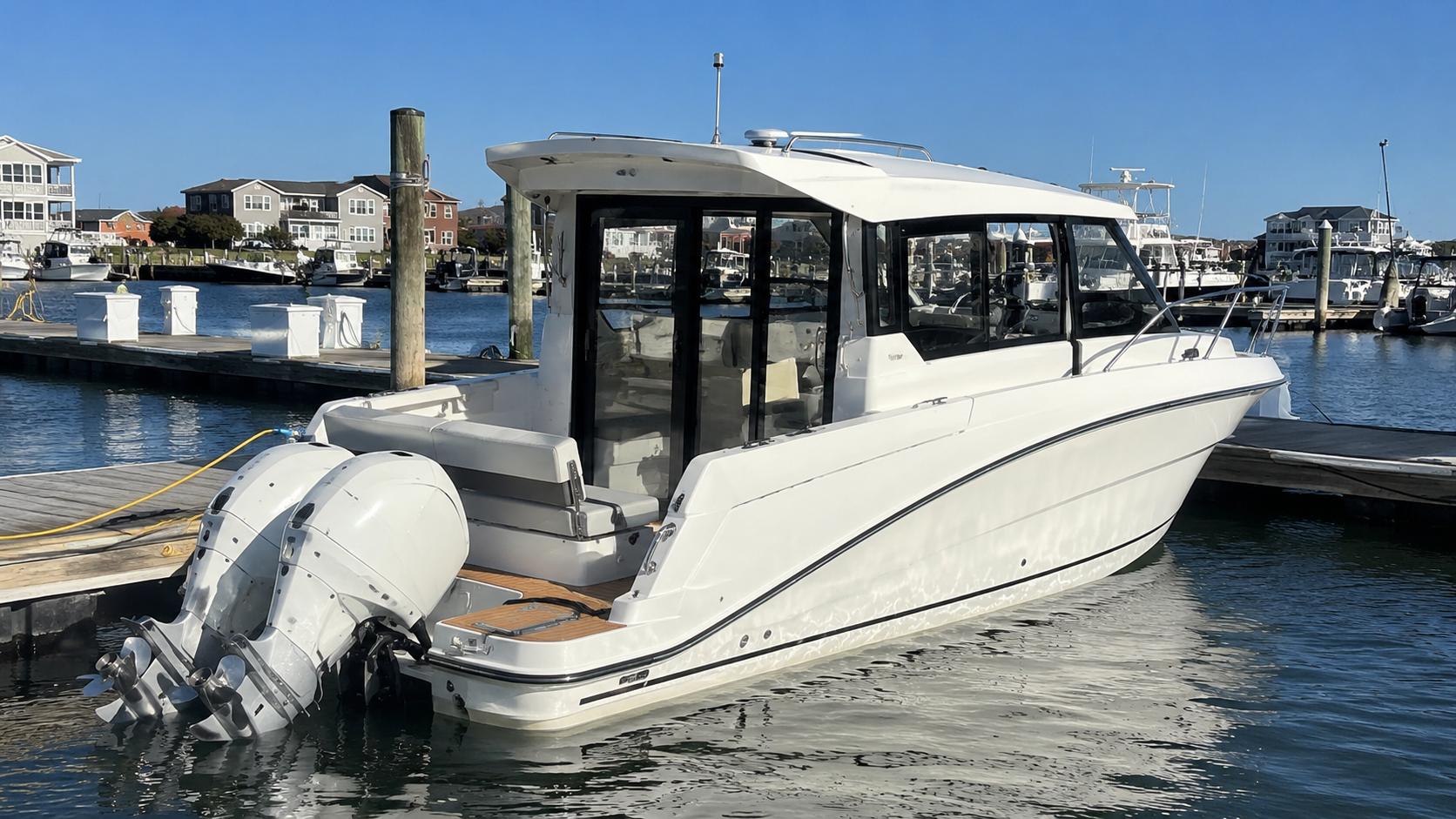
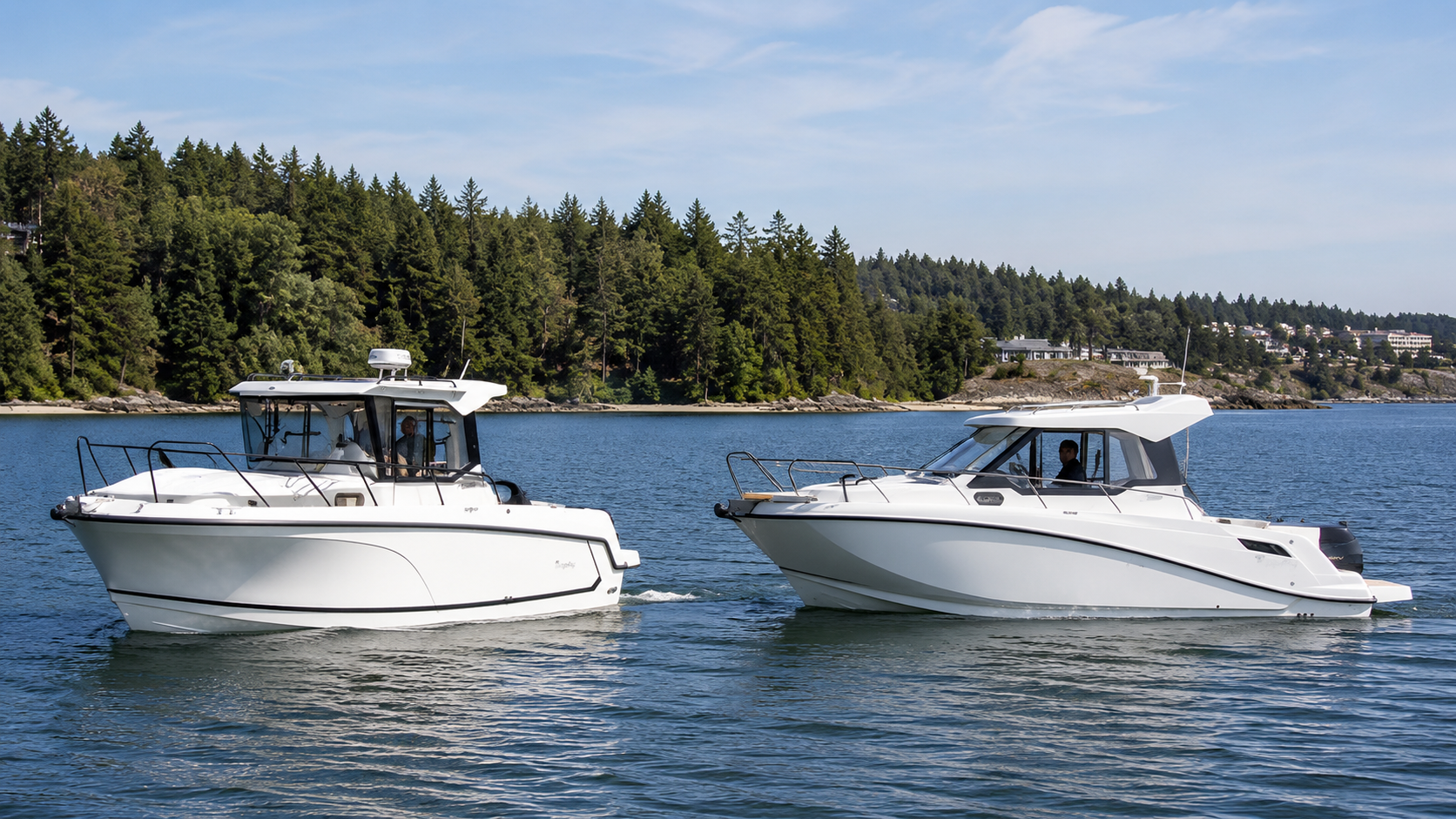
The biggest ownership change is not the cabin itself. It is the number of systems that cabin introduces. Shore power, toilets, freshwater plumbing, cabin lights, heaters, air conditioning, stoves, refrigerators, windlasses, bow thrusters, wipers, pumps, electronics, CO monitors, smoke detectors, and extra batteries all create convenience. They also create inspection and maintenance work that does not exist on a basic open boat.
Pilothouse buyers add fishing systems on top of that. Livewell pumps, raw-water washdown, fish-box pumpouts, rod-storage hardware, cockpit drains, and electronics need to function reliably because the boat is often being purchased specifically to fish longer and farther from the ramp.
Explorer buyers add more comfort systems. Complete canvas enclosures need to stay dry and zip correctly. Dinette hardware and berth fillers get moved repeatedly. Cabin fabrics and hull-side windows reveal leaks quickly. Heaters, air conditioners, refrigerators, generators, and stoves should be treated as individual pieces of equipment with their own service history.
Towing also changes. A 4,000-pound T23 hull is already a substantial step from a bowrider. The T25 boats move above 5,000 pounds with standard engine before trailer, fuel, and gear. T29 is 6,508 pounds with standard engines before the trailer and up to 126 gallons of fuel are considered. The largest model may make marina storage or a permanent slip more rational than repeated trailering.
Insurance should be priced before purchase, especially as navigation area, overnight use, electronics, and total value increase. A boat capable of sleeping aboard and traveling farther can be used differently from a local lake runabout, and coverage needs to match the actual operating plan.
Send the listing before you negotiate around a monthly payment. The exact engine, equipment, year, seller, and purchase price matter more than a generic “Bayliner overnight” estimate.
Boat Loan Calculator: Compare payment structures using the real purchase price, down payment, and term.
Pilothouse models are fishing-first. They prioritize protected helm space, rod storage, fish lockers, livewell systems, washdown, and working cockpit access. Explorer models devote more space to convertible seating, dining, berths, galley features, swim platforms, and overnight comfort. Both can fish and both can sleep aboard, but they solve different primary problems.
The T23 models are the logical starting point. T23 Pilothouse is shorter and purpose-built for anglers. T23 Explorer is slightly longer and more social, with three berths and convertible cockpit use. Both stay near the 24-foot range and use single outboards up to 225 horsepower. Buyers should still account for cabin systems, canvas, plumbing, electronics, and heavier towing than an open bowrider.
Choose T25 Explorer when family cruising, four berths, enclosed head, dinette use, social cockpit seating, and climate options matter most. Choose T25 Pilothouse when serious fishing workflow is the priority. It has the wider 9-foot-6-inch beam, 86-gallon tank, livewell fishing station, fish lockers with pumpout, raw-water washdown, interior rod racks, and dual-side pilothouse access.
The boat itself is 29 feet 10 inches long and 9 feet 9 inches wide, which places it beyond standard 8-foot-6-inch legal trailer width in many jurisdictions without special considerations. It also weighs approximately 6,508 pounds with standard engines before trailer, fuel, and equipment. Buyers should plan storage and transport carefully rather than treating it like a normal 23-foot trailer boat.
Yes, but comfort depends on model and crew size. Bayliner publishes three berths on T23 Explorer, four on T25 Explorer, and five on T29 Explorer. The Pilothouse boats use convertible cabin arrangements suitable for resting or occasional overnights. Buyers planning frequent overnight use should judge berth dimensions, ventilation, head arrangement, climate control, shore power, and storage in person.
Current Explorer inventory is heavily concentrated in 2025 and 2026 models, so many buyers are comparing new against nearly new. T25 Pilothouse has somewhat more used depth, reaching back to 2023 in current national listings. With enclosed boats, used condition includes more than engine hours: canvas, windows, pumps, toilets, shore power, electronics, heater or air-conditioning equipment, and trailer condition all matter.
Fishing-first or family-first, one night or three, single outboard or twins: choose the capability you will actually use, then structure the financing around that exact boat.
Tell us a little bit about yourself and the boat you are looking to finance.