Call Us : 207-994-5109

Mon – Fri: 8 am to 9 pm & Sat – Sun: 10 am to 8 pm

Bayliner · Trophy Overnight

Bayliner T23 Pilothouse

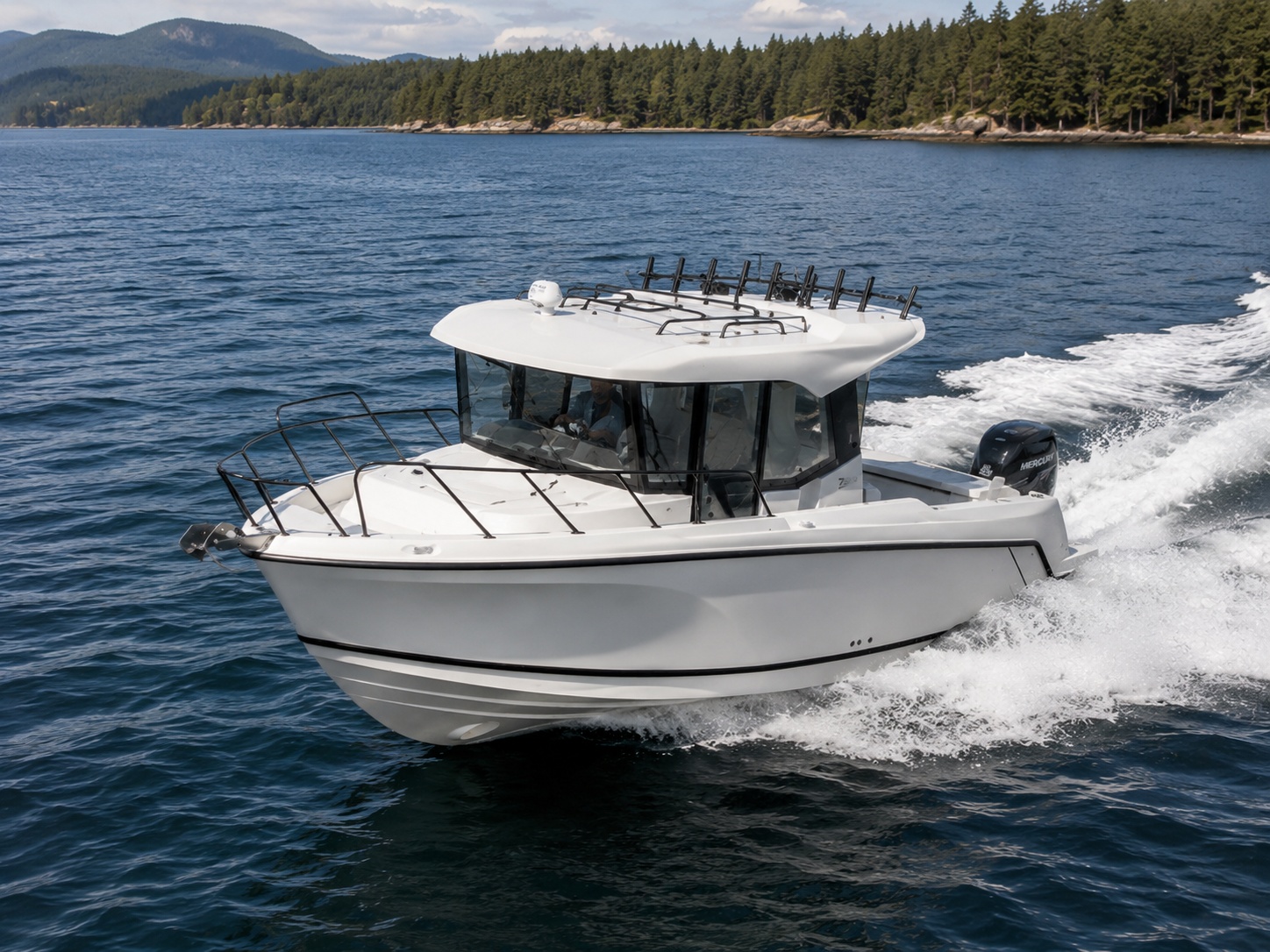
The Bayliner T23 Pilothouse is the compact fishing-first overnight boat for buyers who want enclosed helm protection, dedicated fish storage, livewell capability, and a single 225 HP outboard ceiling.

Typical Market Range
$89,999 – $117,981
Estimated Payment
From $615/mo
Length Overall
23'7"
Maximum Horsepower
225 HP

Should You Buy the Bayliner T23 Pilothouse?

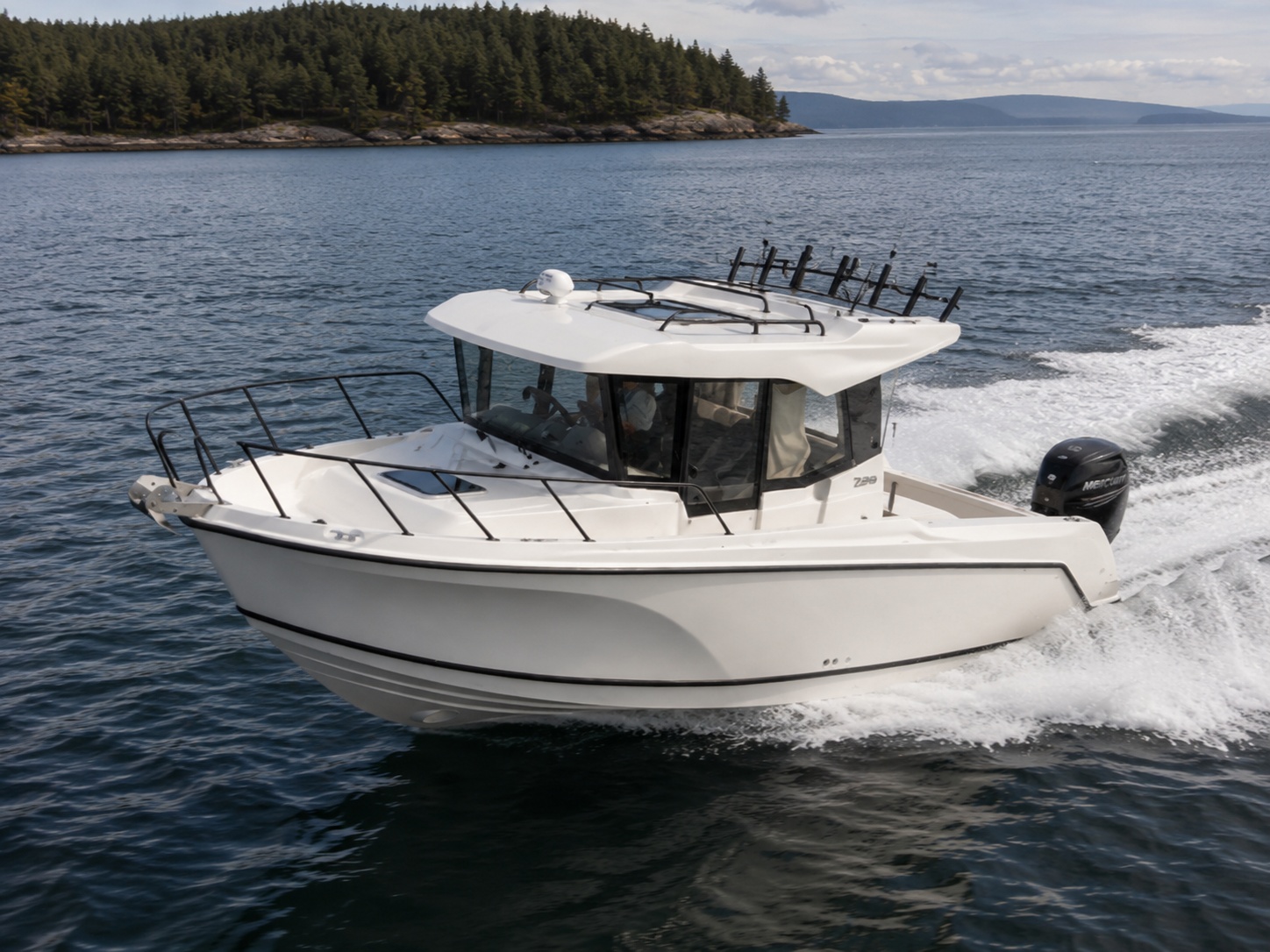
The T23 Pilothouse exists for the angler who is tired of letting weather decide when the fishing day ends. Bayliner wraps the helm in a proper cabin, gives the driver and co-pilot dedicated seating, adds side pilothouse entry, and keeps the cockpit arranged around rod storage, fish handling, live bait, washdown, and an open working deck.

That is a different mission from the T23 Explorer even though both boats can sleep aboard. Explorer is built to make cruising and social time easier. Pilothouse is built to make fishing in wind, rain, cold mornings, and long shoulder-season days less punishing.

The hull is 23 feet 7 inches long and 8 feet 6 inches wide, which is five inches shorter and two inches wider than the T23 Explorer. Bayliner publishes 17 degrees of deadrise, 3 feet of maximum draft, 51 gallons of fuel, and approximately 4,071 pounds with standard engine.

Fishing hardware is not an afterthought. The cockpit includes fish lockers, rod holders, dedicated cockpit rod storage, a cockpit shower, transom door, and self-bailing deck. Bayliner also lists a fish station, gunnel pad, fishing station with livewell system, raw-water washdown, interior rod racks, and port and starboard fish lockers with pumpout in the current T25 Pilothouse, while T23-specific materials emphasize fish lockers, rod holders, and available Fishing Package equipment.

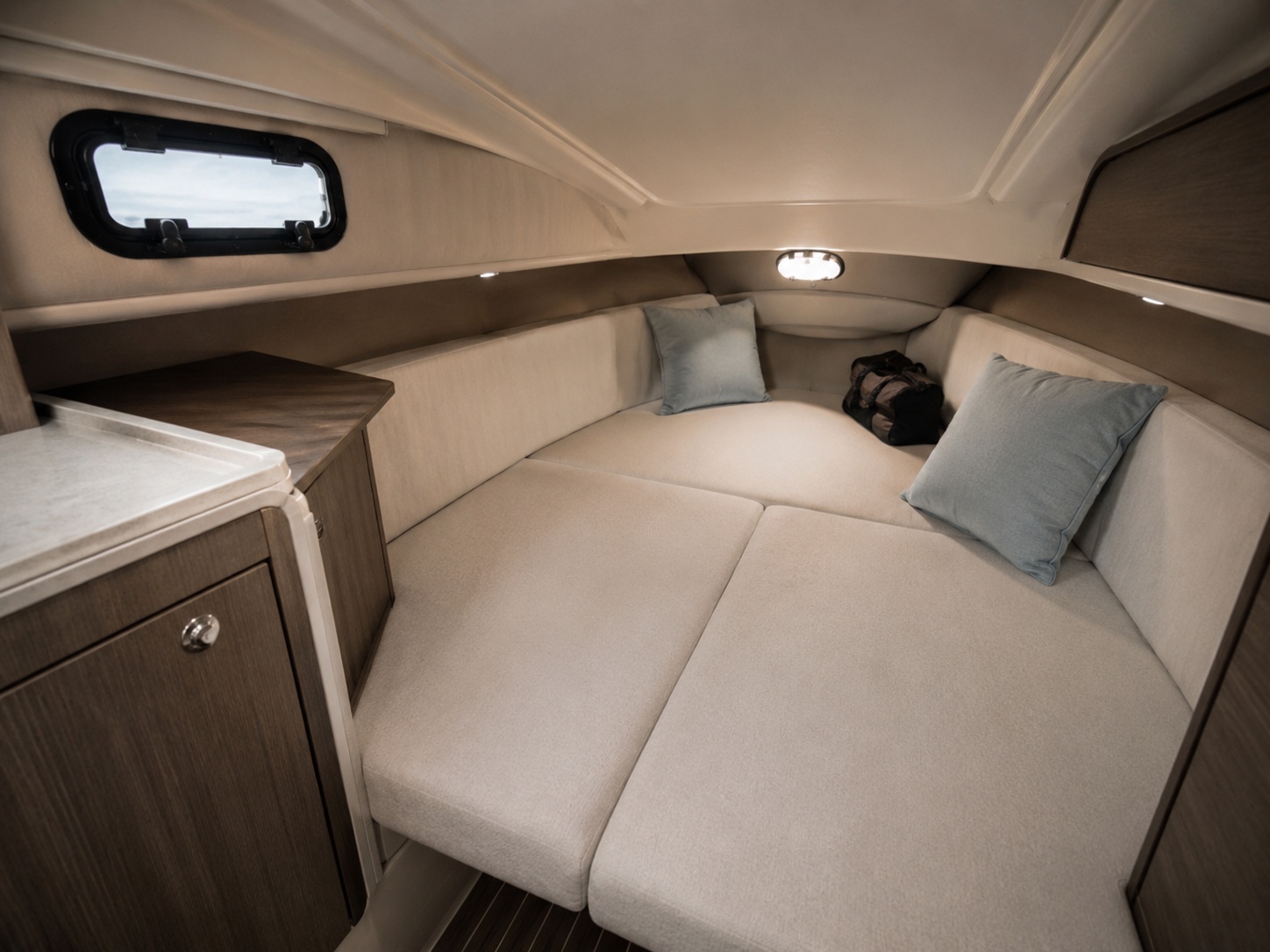
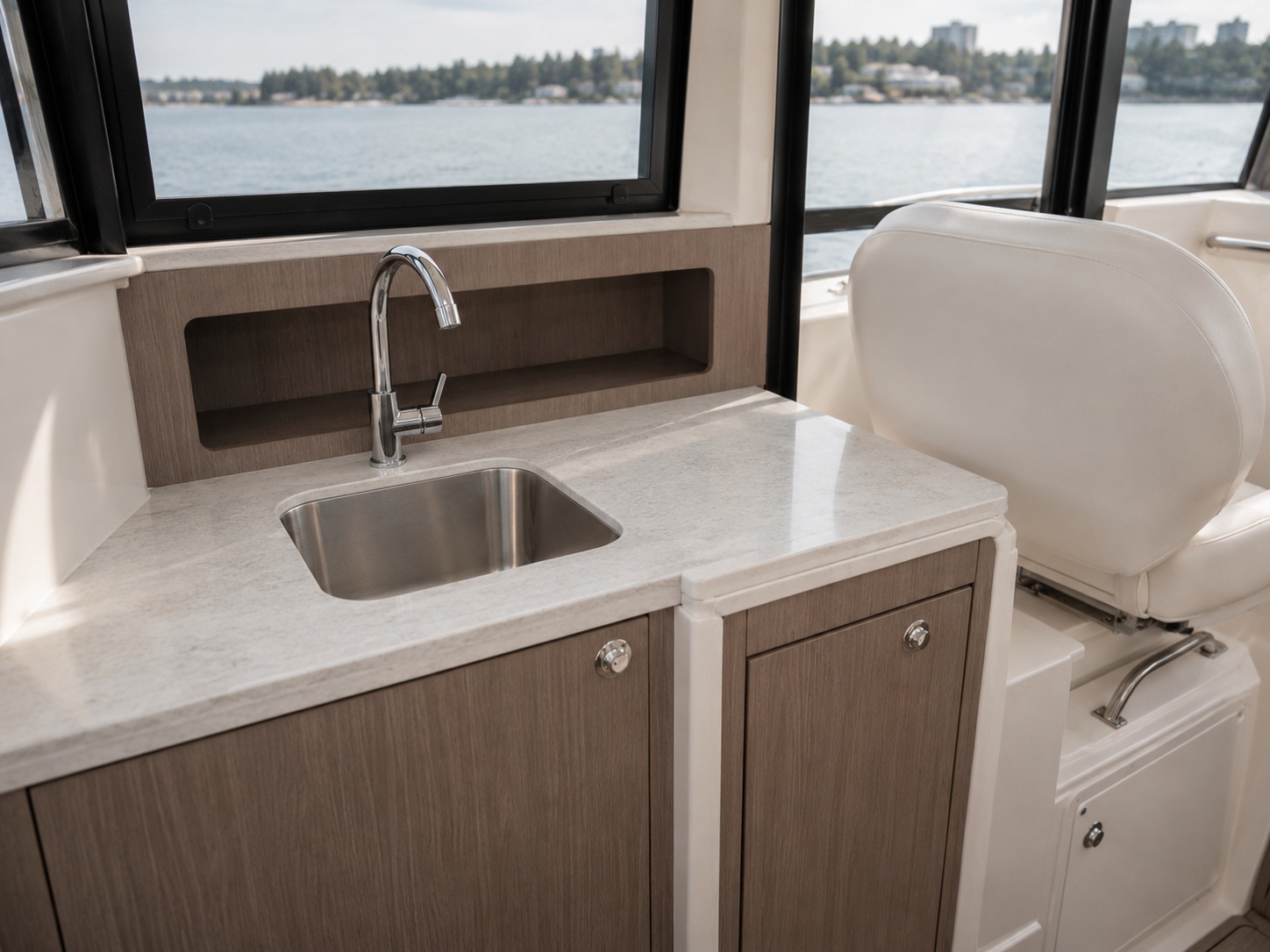
The cabin still matters. There is storage below the berth, cabin lighting, a sink with tap, roof hatch, and optional refrigerator or sea toilet. The seating can support resting between fishing windows or an occasional overnight without asking the buyer to step into a much larger cruiser.

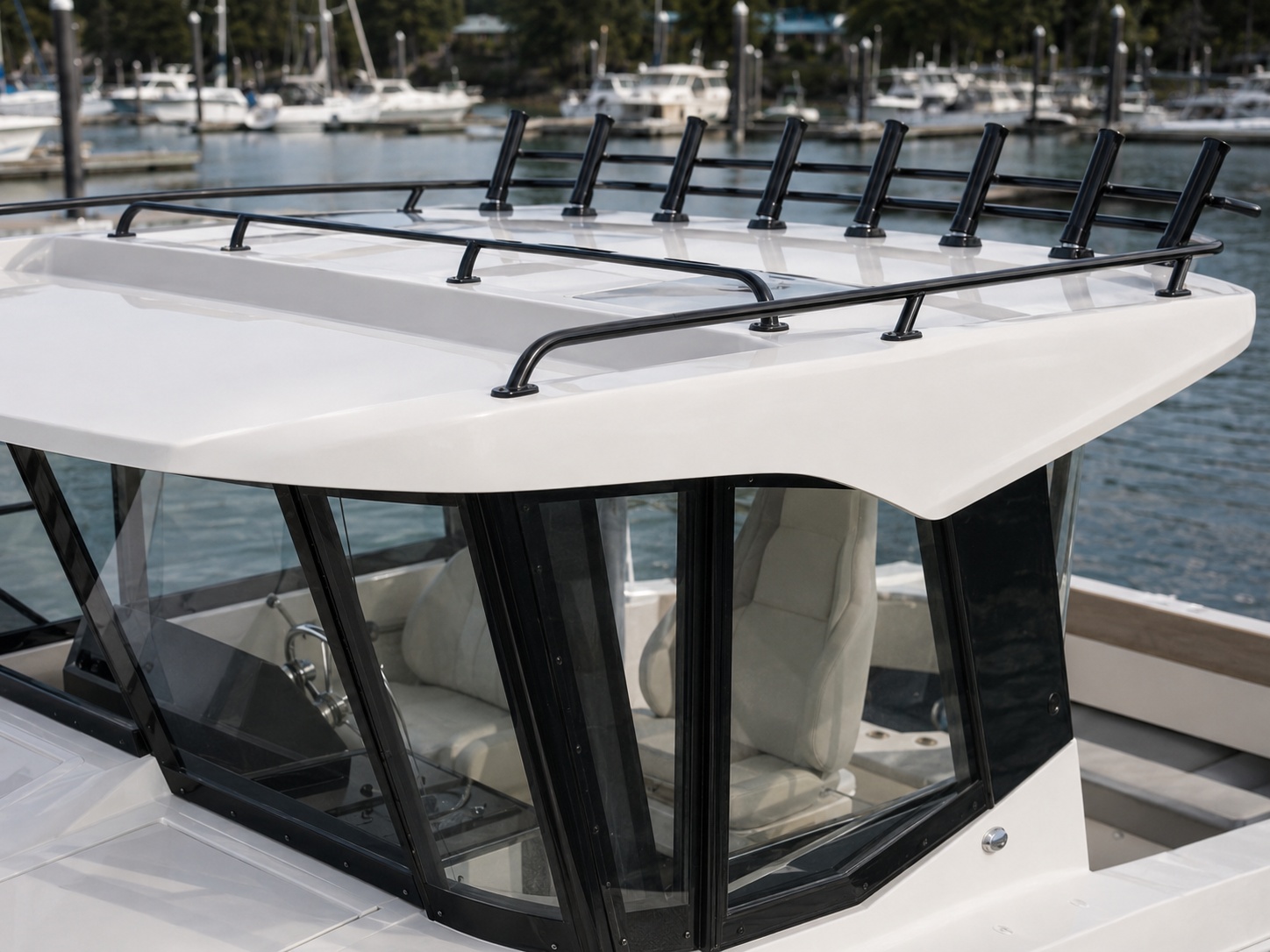
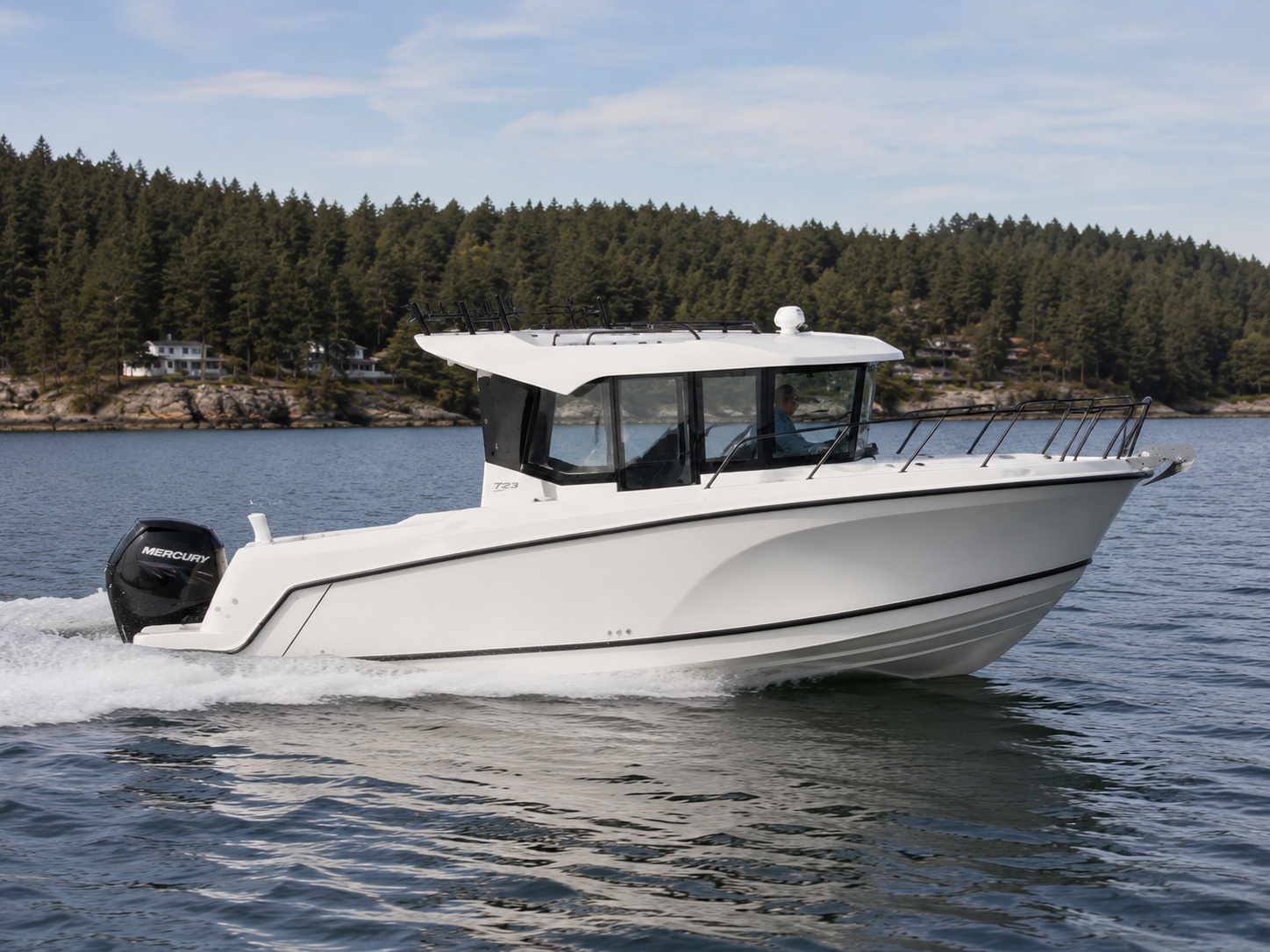
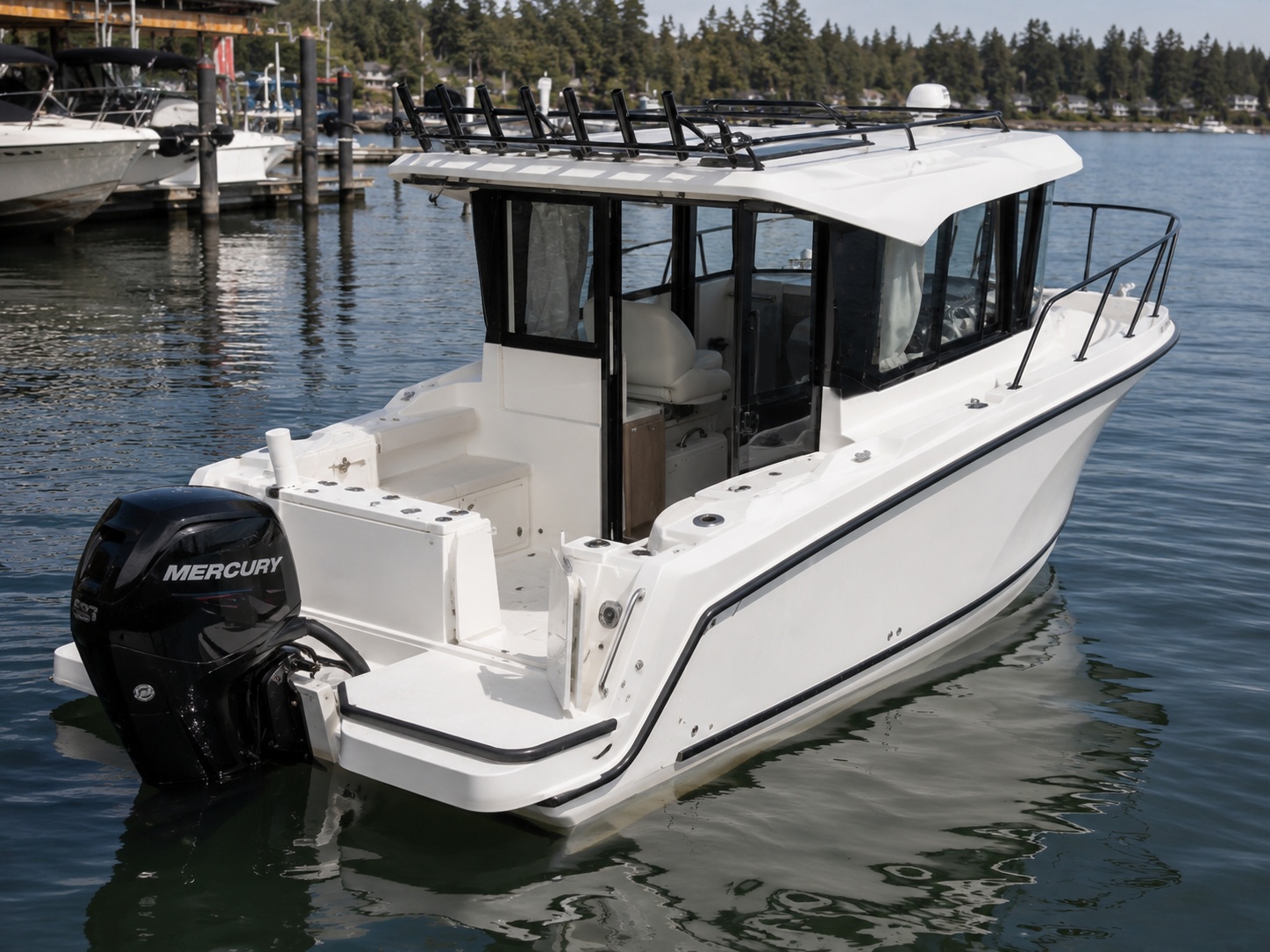
A bow rail with fender holders, roof rack, rocket-launcher rod holders, swim-platform extension, and side pilothouse doors all reinforce the boat’s working personality. Equipment is positioned to help an angler move, rig, store, and protect gear rather than merely create more places to lounge.

Current national inventory is thin and concentrated in 2025 and 2026. That makes the T23 Pilothouse a scarce current-model shopping problem. Buyers may need to travel for the right engine and option combination rather than expecting several nearly identical boats within an hour of home.

The T23 Explorer is the wrong comparison if you only ask which cabin is nicer. The real question is what the cockpit does between sunrise and sunset. If rods, bait, washdown, fish storage, and weather protection define the day, buy Pilothouse. If the boat spends equal time dining, lounging, swimming, and cruising, Explorer will usually satisfy more people.

bayliner t23 pilothouse bow quarter at anchor 09

T23 Pilothouse Specifications

Published factory figures. Confirm every dimension against the individual boat before you commit.

Dimensions and build
Length Overall
23'7"
Beam
8'6"
Deadrise
17°
Draft, maximum
3'0"
Weight, standard engine
4,071 lbs
Maximum Capacity
9 people
Propulsion
Configuration
Mercury single outboard
Standard Power
175 HP Mercury V6 in current listed configurations
Maximum Horsepower
225 HP
Fuel and range
Fuel Capacity
51 GAL
Sleeping Capacity
Convertible cabin berth
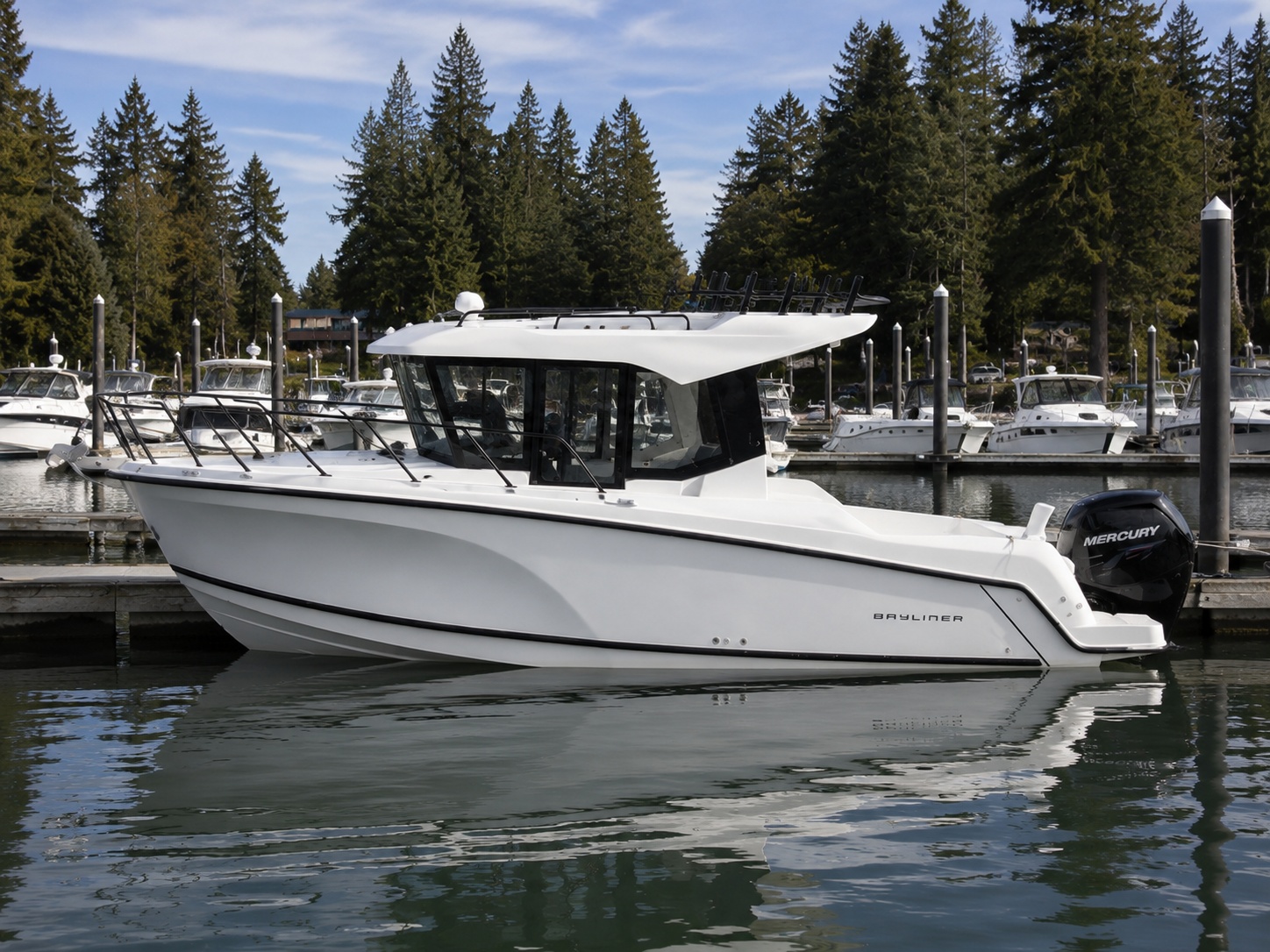
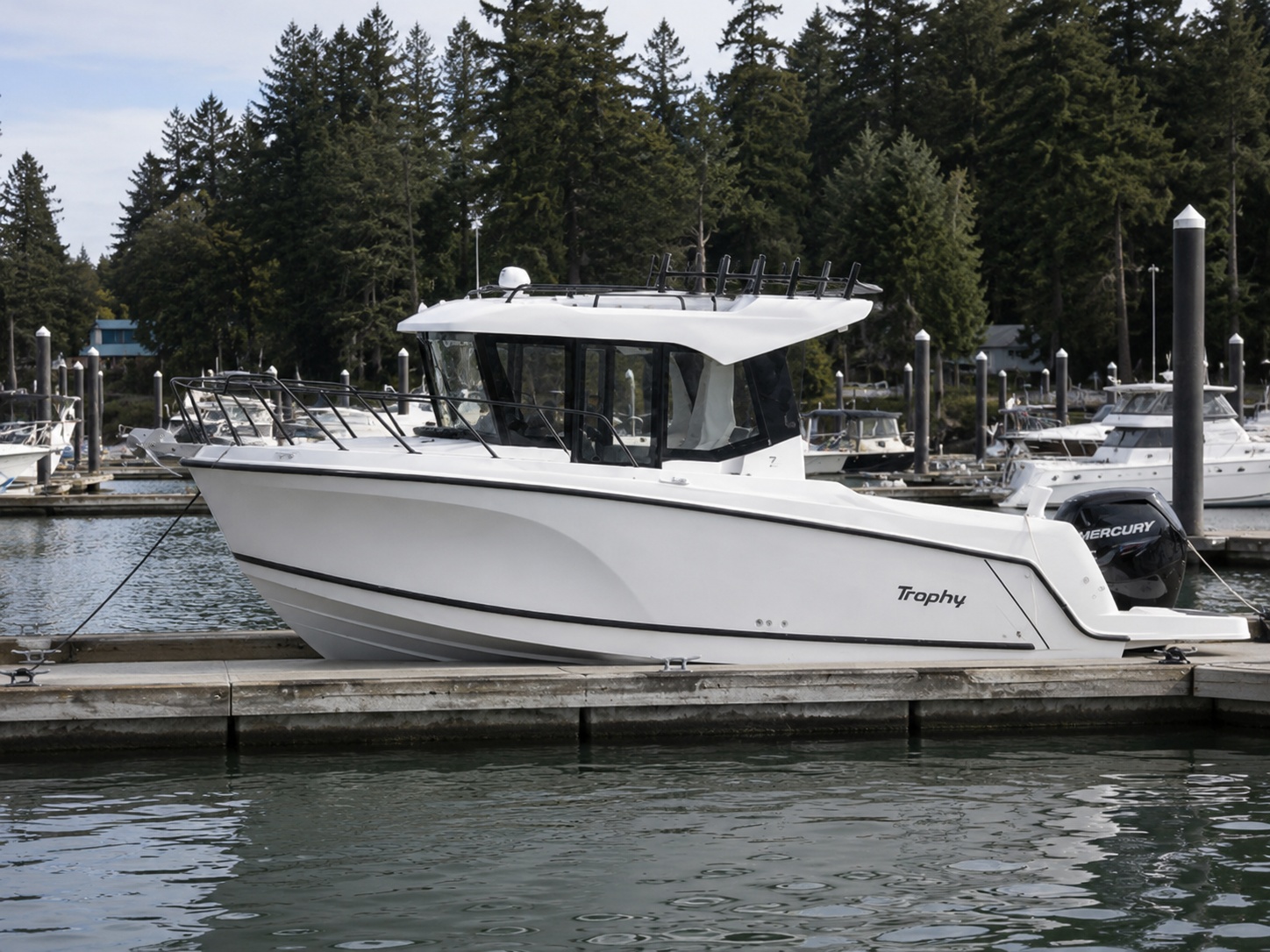
bayliner t23 pilothouse dockside full profile 21

Hull, Dimensions and Buyer Fit

The T23 Pilothouse measures 23 feet 7 inches with an 8-foot-6-inch beam, placing it at the common conventional trailer-width threshold. That is useful because the boat creates a surprisingly broad working cockpit without moving into the 9-foot-plus beam of the T25 models.

Bayliner publishes 17 degrees of deadrise, 1 foot 9 inches of minimum draft, and 3 feet of maximum draft. The hull has one additional degree of deadrise compared with the T23 Explorer, a small but directionally consistent choice for a boat whose mission leans harder toward open-water fishing.

Approximate weight with standard engine is 4,071 pounds. That is essentially identical to the T23 Explorer’s published weight, so buyers are choosing how the boat uses its mass and volume rather than choosing light versus heavy.

The 8-foot-6-inch beam matters around the cockpit. Anglers need room to pass behind one another, open fish lockers, work a fish station, and move toward the transom without knocking knees into lounge furniture.

Maximum people capacity is nine with a published 1,500-pound people-weight limit. Fishing crews often bring more gear per person than cruising families, so the practical load can grow quickly through tackle, ice, bait, foul-weather clothing, and coolers.

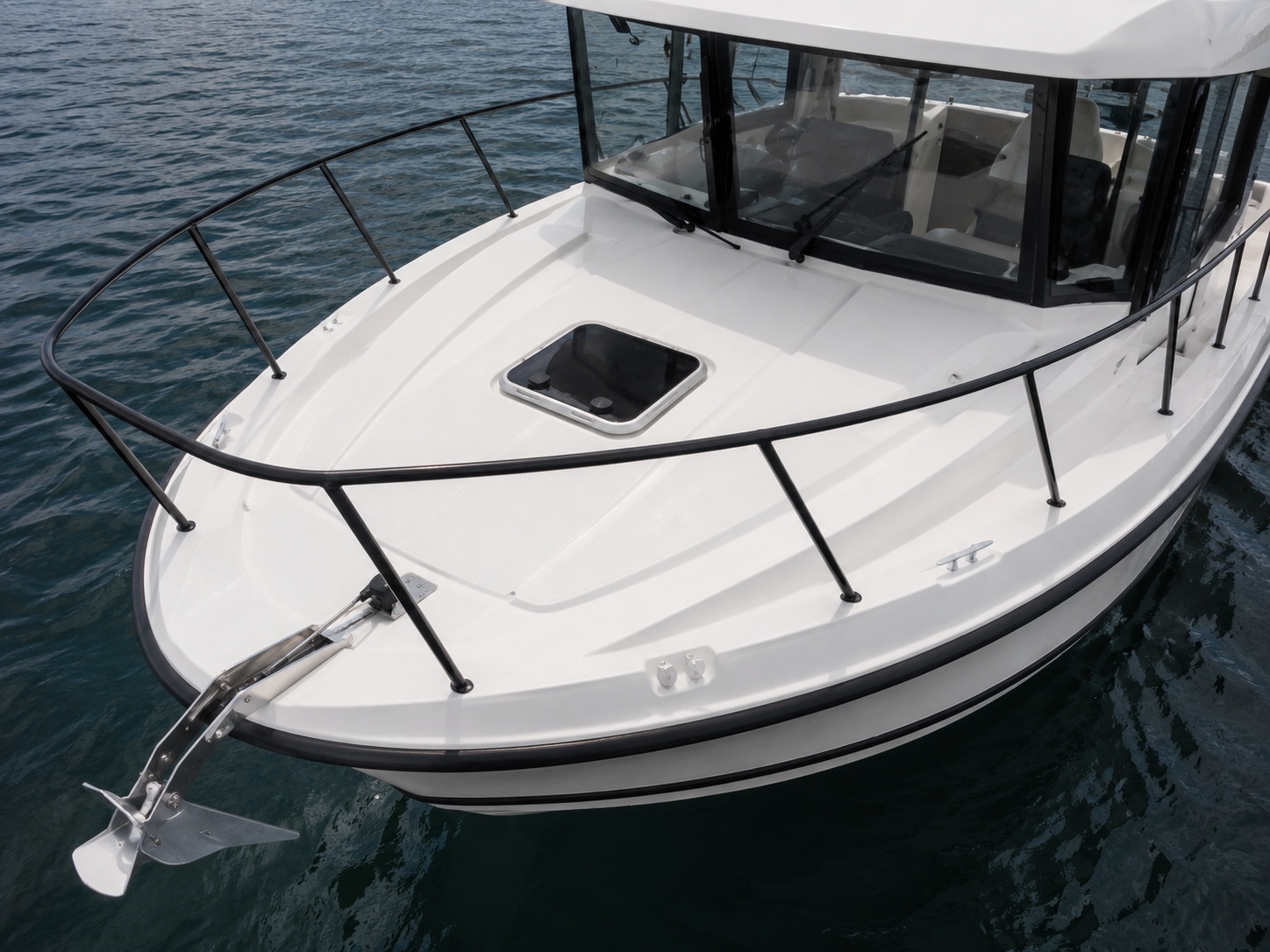
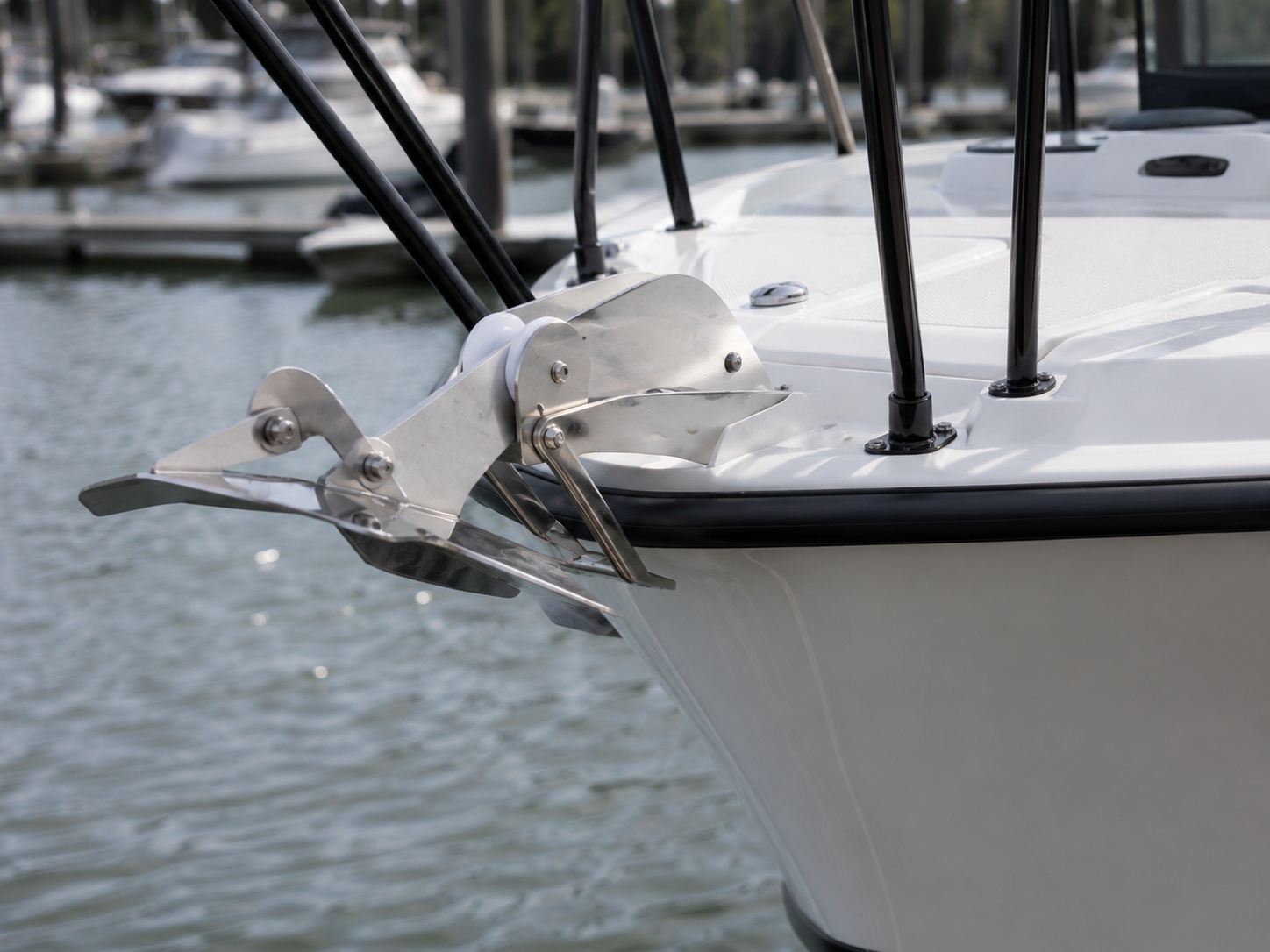
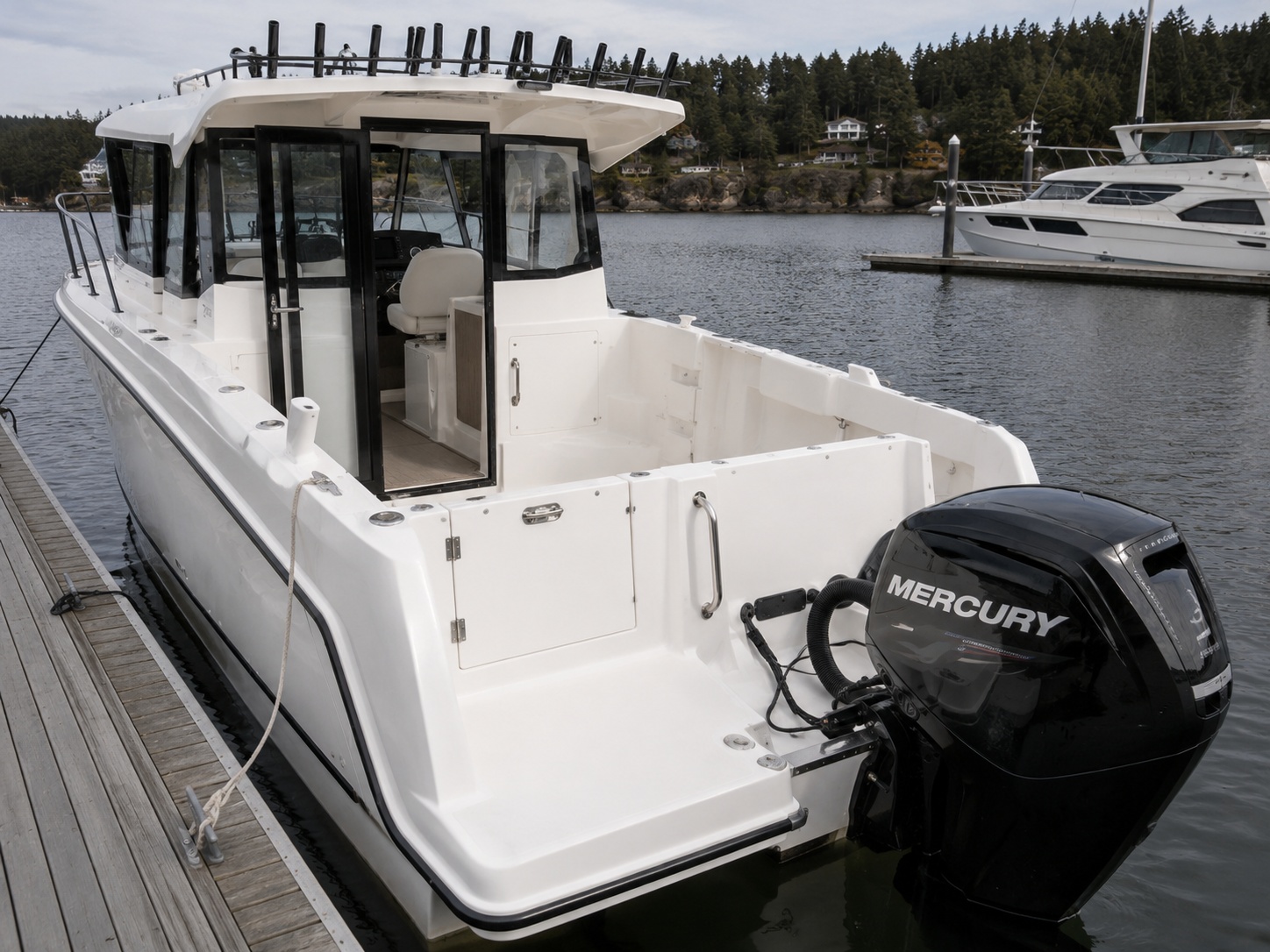
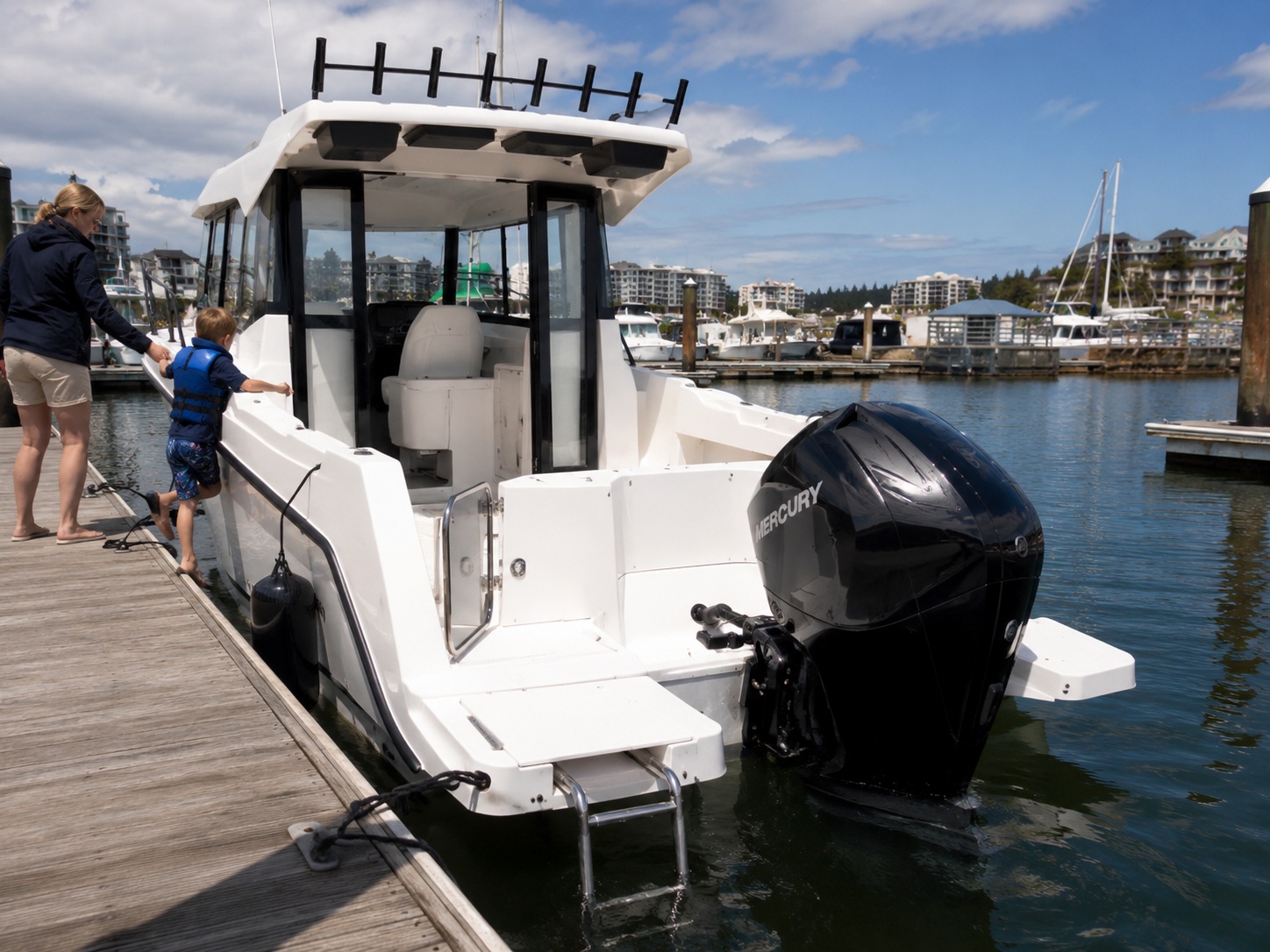
A black bow rail with fender holders and roof rack adds utility above the basic hull. Rocket-launcher rod holders keep rods out of the cockpit, while the swim-platform extension and transom door support boarding and fish handling at the stern.

The T23’s size is one of its strongest arguments. It is large enough to enclose the helm and add a usable cabin, but it stays far more manageable than a 25-foot, 9-foot-6-inch-beam T25 Pilothouse.

If the buyer already knows ten people, 300 horsepower, an 86-gallon tank, and a wider fishing cockpit are required, the T25 is not an indulgence. It is the more appropriate hull. The T23 wins when compact ownership is still part of the goal.

Power, Propulsion and the Ownership Tradeoff

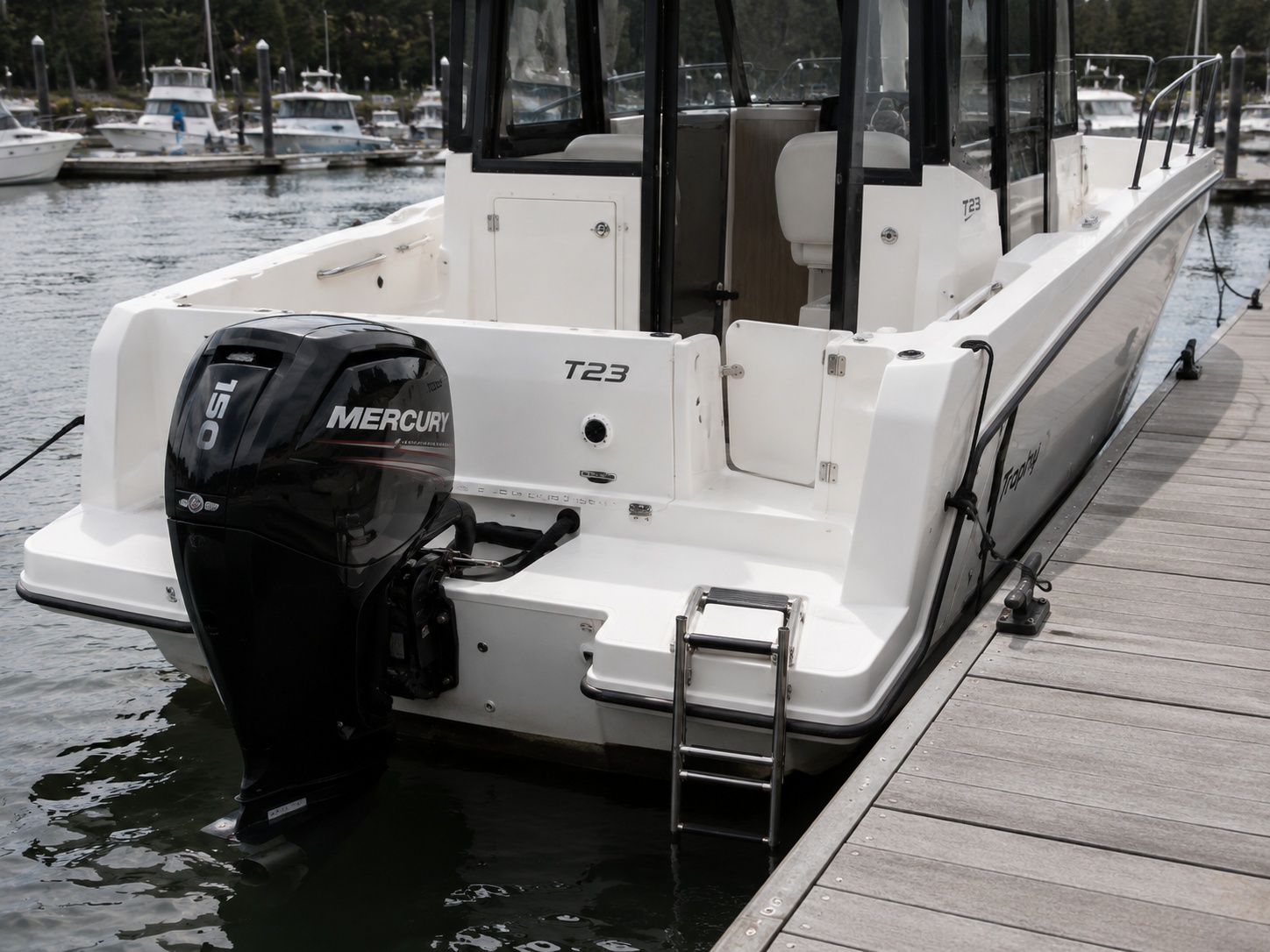
Current T23 Pilothouse engine choices include 175-horsepower and 225-horsepower Mercury V6 outboards. Bayliner publishes 225 horsepower as the maximum.

The 175 can make sense for anglers who fish with two to four people and value acquisition cost, fuel use, and a lighter mechanical commitment over maximum acceleration.

The 225 is easier to justify when the boat will carry a full fishing load, several adults, ice, bait, tackle, and overnight equipment. The enclosed cabin adds useful volume, but everything brought aboard still has to be moved by one engine.

Single-outboard ownership keeps the T23 Pilothouse relatively simple compared with twin-powered boats. Routine maintenance remains concentrated in one lower unit, one cooling system, one set of spark plugs, and one propeller.

The external engine is also easy to inspect. Check the bracket, mounting hardware, steering, trim, skeg, propeller, anodes, lower-unit oil, and corrosion without entering an engine compartment.

Some current option material references VesselView Mobile and SmartCraft instrumentation. Use those tools to understand real engine hours and performance when available, but verify service records rather than assuming digital data proves maintenance quality.

A fishing boat may accumulate hours differently from a family cruiser. Long trolling periods, repeated cold starts, extended idling, and saltwater use can create a different service history from a boat that runs twenty minutes to a beach and shuts down.

During the sea trial, test the boat at a realistic fishing load. A 225 should deliver stronger reserve, but it should still run smoothly at slow speed and shift cleanly around a dock.

If you find yourself wanting 300 horsepower, do not force the T23 into a role Bayliner does not rate it for. Move to the T25 Pilothouse, where 300 horsepower and a much wider beam are part of the design.

bayliner t23 pilothouse dockside marina profile 02
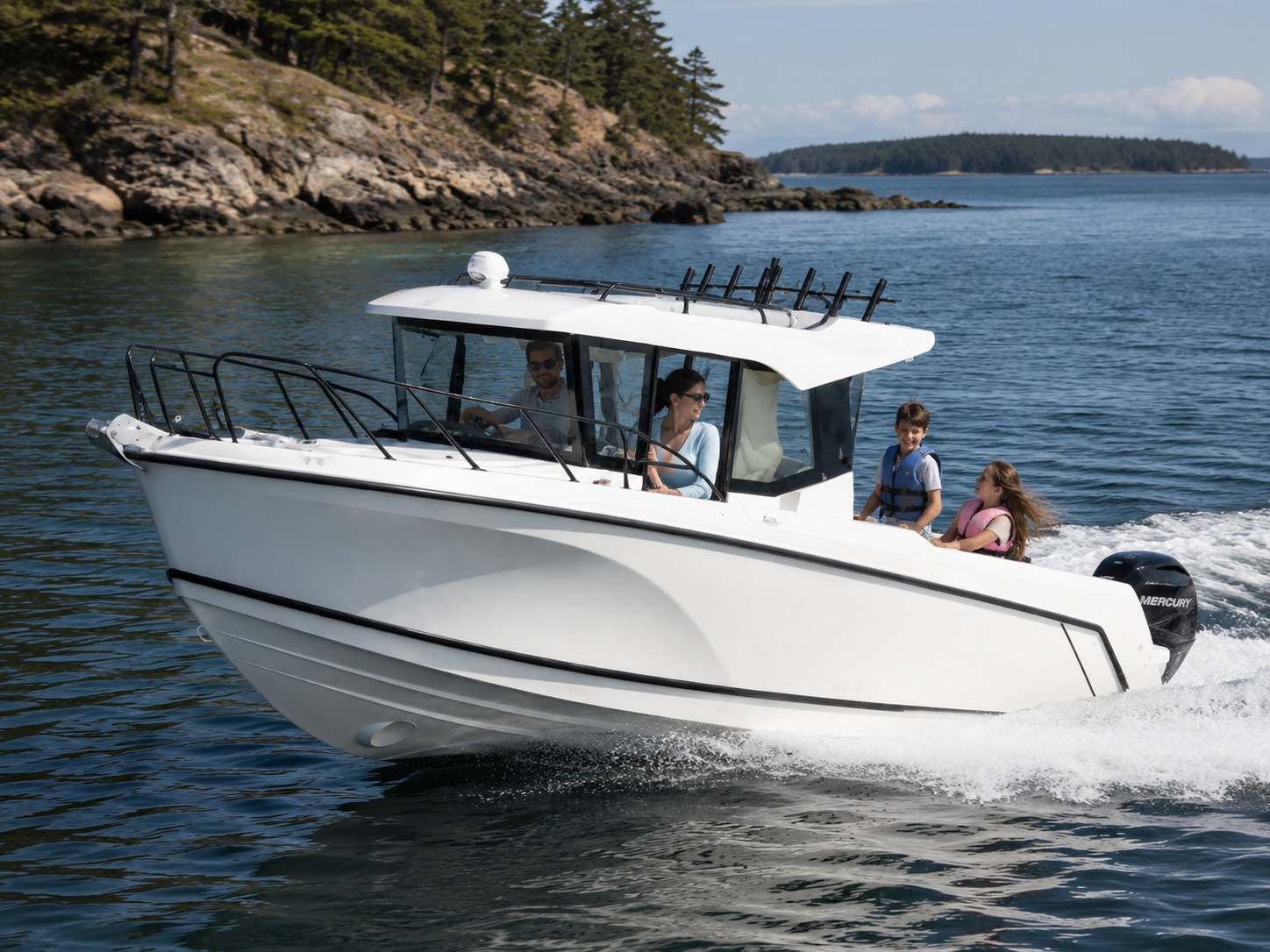
bayliner t23 pilothouse family coastal cruising 06

Fuel Capacity and Range Planning

The T23 Pilothouse carries 51 gallons of fuel. That is two gallons less than the T23 Explorer and substantially below the T25 Pilothouse’s 86-gallon capacity.

The 51-gallon tank fits the compact fishing mission. It gives a single-outboard boat meaningful operating flexibility without adding the weight and range commitment of a larger offshore platform.

Fishing use makes fuel planning more complex than a simple cruise calculation. A day can combine a high-speed run to the grounds, hours of trolling or repositioning, and a run home against wind or current.

Bayliner does not publish one fuel-burn figure for every engine, load, and condition. Buyers should use verified Mercury data for the actual 175 or 225 horsepower configuration and keep a reserve.

A full tank adds more than three hundred pounds. Add ice, bait, tackle, fish, passengers, batteries, and overnight supplies and the real operating load can climb quickly.

The smaller tank is also part of the reason the T23 remains easier to tow and operate than the T25. More fuel is not free capacity. It is weight that has to be accelerated, stopped, and carried on the trailer.

If the boat will routinely make long offshore or coastal runs where fuel availability is limited, calculate those trips before buying. The T25 Pilothouse’s 86 gallons may solve an actual range problem rather than simply look better on paper.

For nearshore, Great Lakes, river, and regional fishing, 51 gallons can be entirely appropriate when the route and reserve are planned around the single Mercury engine.

Performance Where It Matters

The T23 Pilothouse should be evaluated as an all-weather fishing platform, which means performance includes visibility, deck movement, windage, and low-speed control as much as speed.

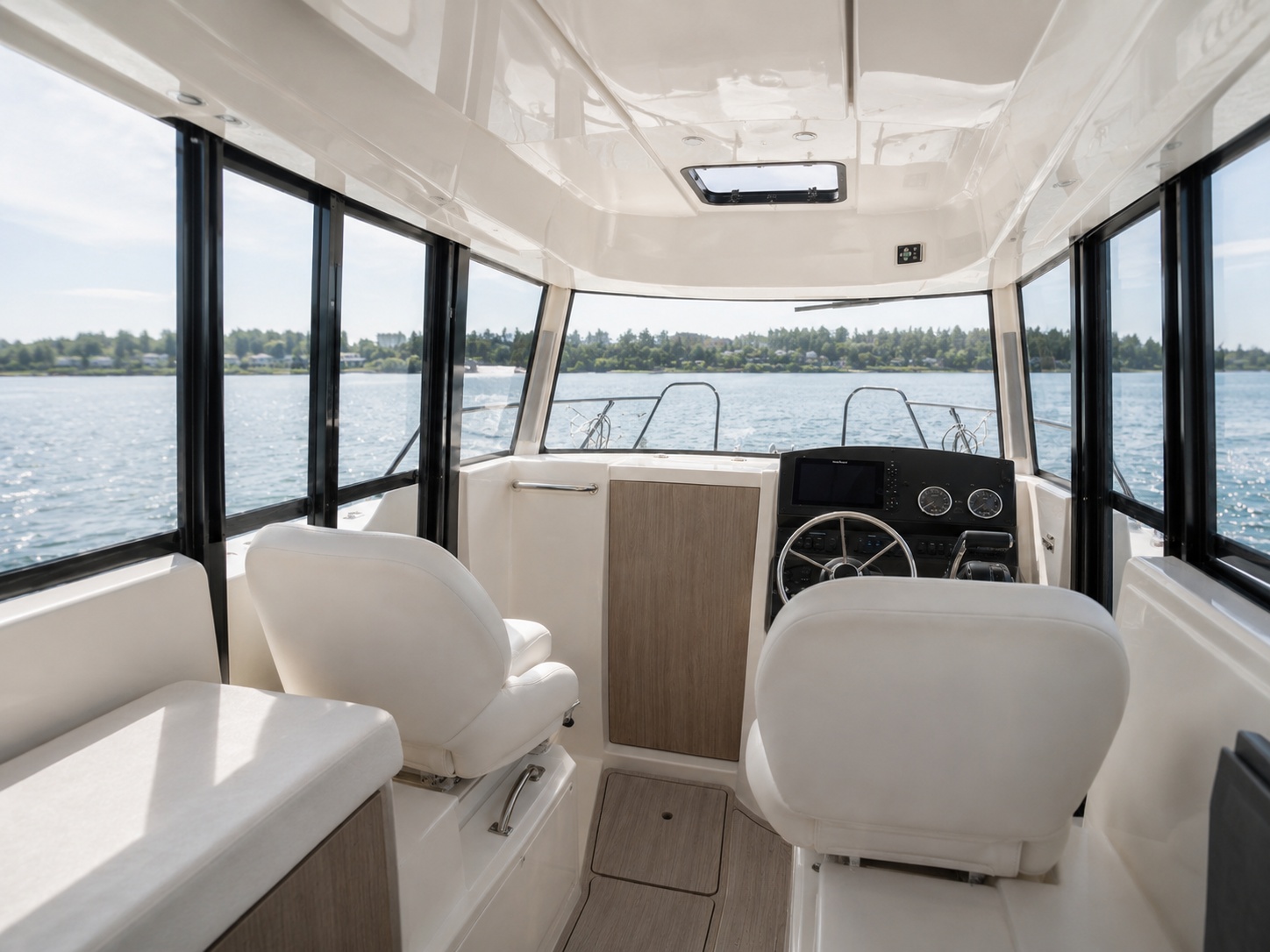
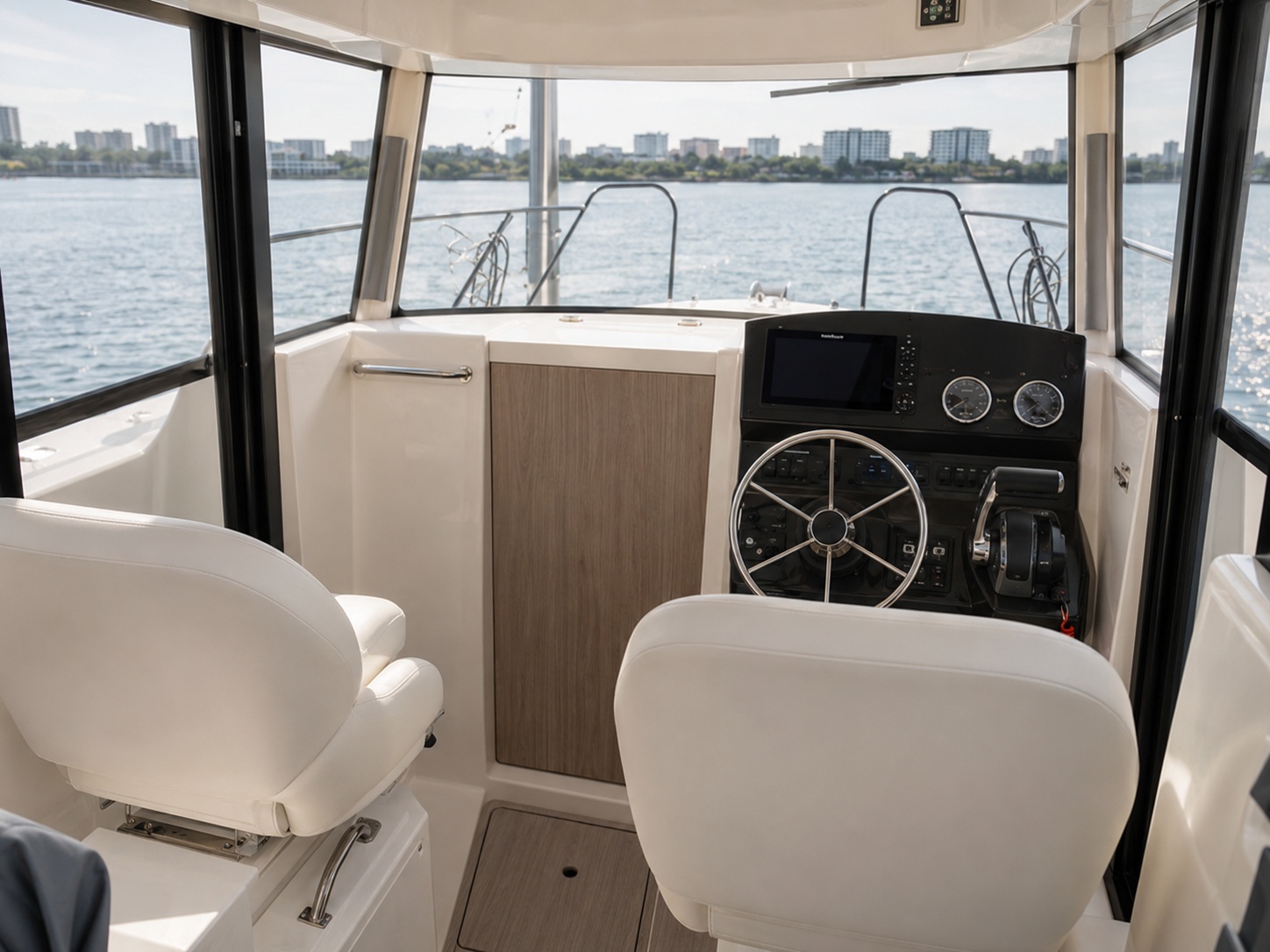
From the enclosed helm, test visibility through the windshield and side openings. Bayliner provides a starboard windshield wiper, and buyers should verify the wiped area covers the driver’s actual sight line.

The 17-degree deadrise and 23-foot-7-inch hull should handle ordinary open-water chop more confidently than a small runabout, but this is not a heavy offshore battlewagon. Speed still needs to match conditions.

With the 175, note how the boat reaches plane with crew and fishing gear aboard. With the 225, determine whether the extra reserve meaningfully improves the trips you take.

Test trim response and steering effort at cruise. Make several turns to see how the hull loads when people and gear are distributed asymmetrically.

At slow speed, the enclosed cabin adds windage. A bow thruster is available and can be valuable for buyers who regularly dock in tight slips or crosswinds.

Practice backing toward a dock or fish-handling position. The single outboard gives intuitive thrust direction, but a cabin boat reacts differently to wind than an open center console.

The best T23 Pilothouse performance package is the one that lets you fish longer without making the boat harder to handle. A little less top speed can be a reasonable trade for a configuration that is easier to operate, service, and fuel.

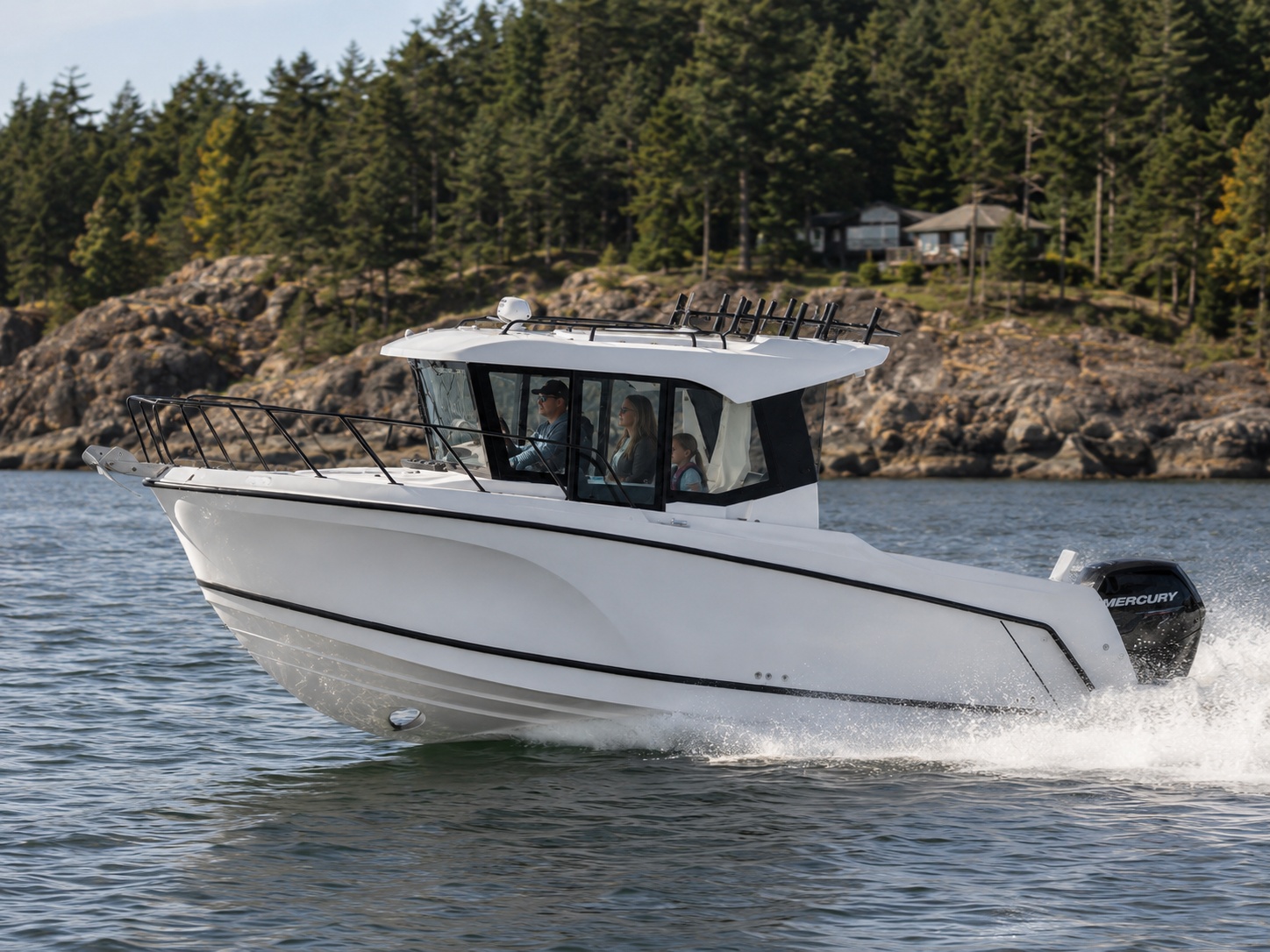
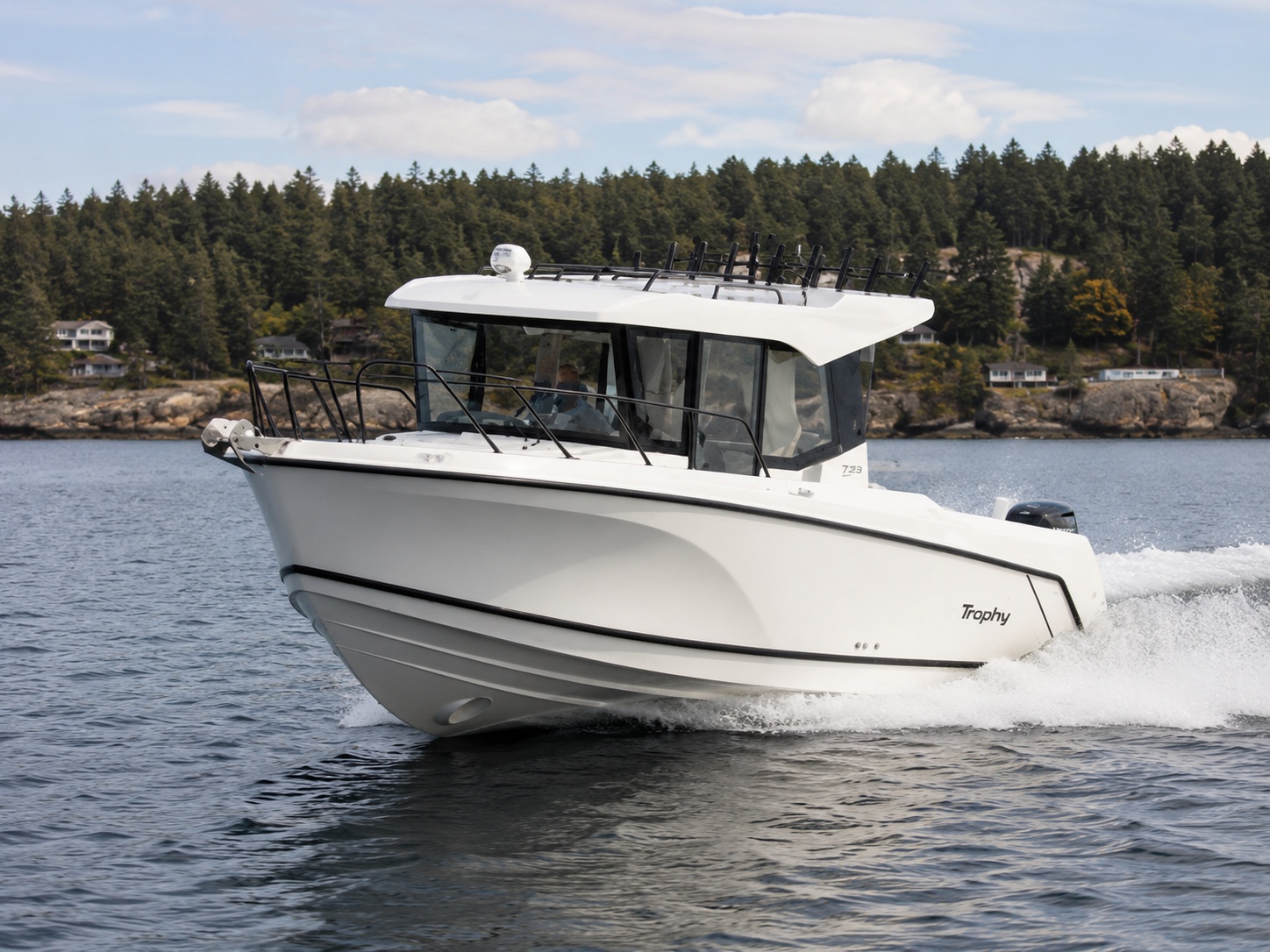
bayliner t23 pilothouse family underway profile 23
bayliner t23 pilothouse foredeck detail 14

Cockpit, Cabin and Overnight Use

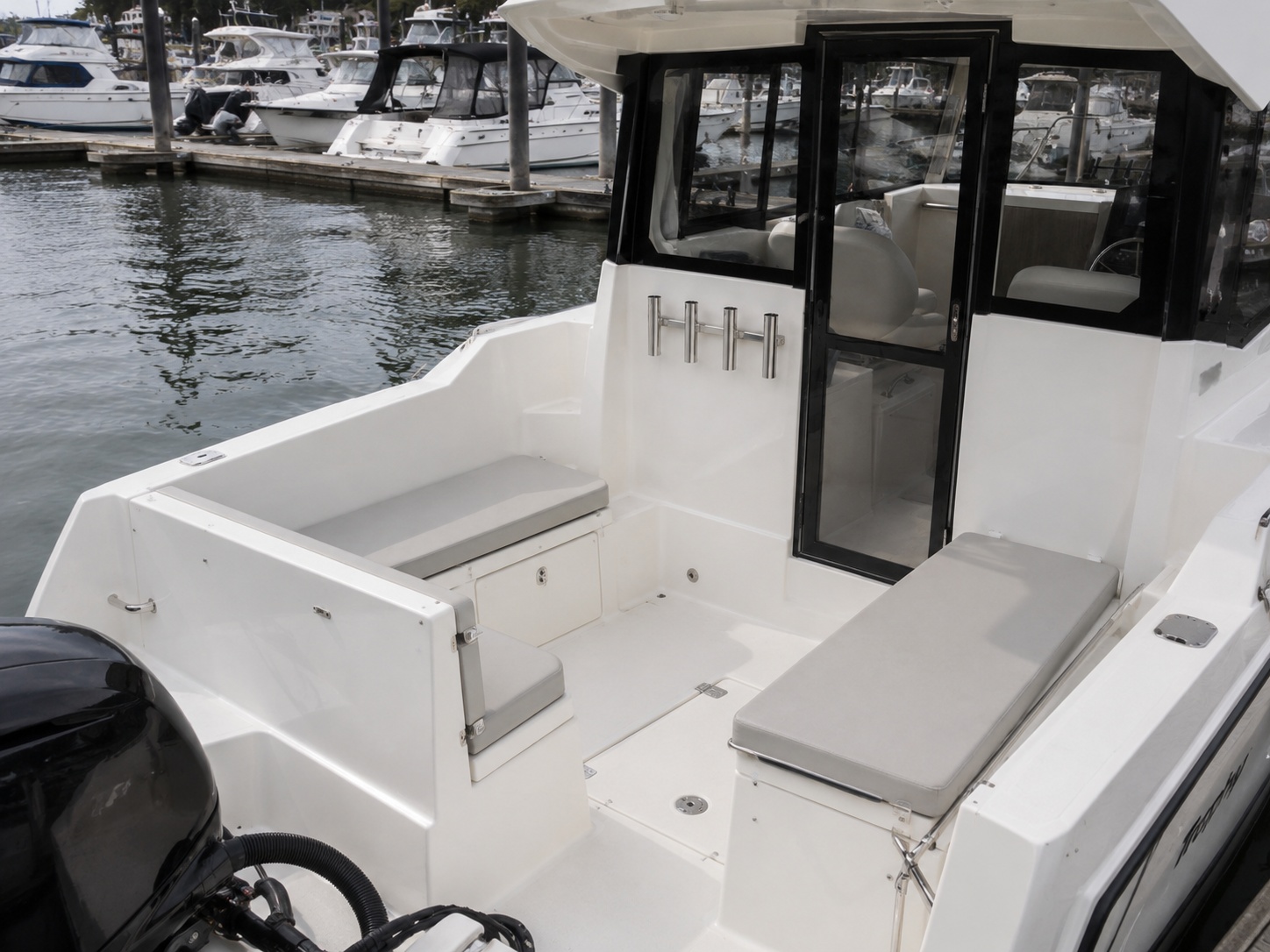
The T23 Pilothouse cockpit should be read as a working deck. Fish lockers and rod holders are present because storage has to remain organized while people move around with hooks, nets, bait, and wet gear.

Cockpit rod storage keeps rigged rods close without forcing them into the cabin. Rocket-launcher holders on the roof structure provide another place to move rods out of the way during travel or while changing techniques.

The transom door creates direct stern access, useful both for boarding and for handling a fish beside the platform. A swim-platform extension makes the stern more usable without pretending the boat is primarily a swim lounge.

The cockpit shower and available washdown equipment support cleanup after bait and fish. A self-bailing cockpit keeps routine water moving out of the working area.

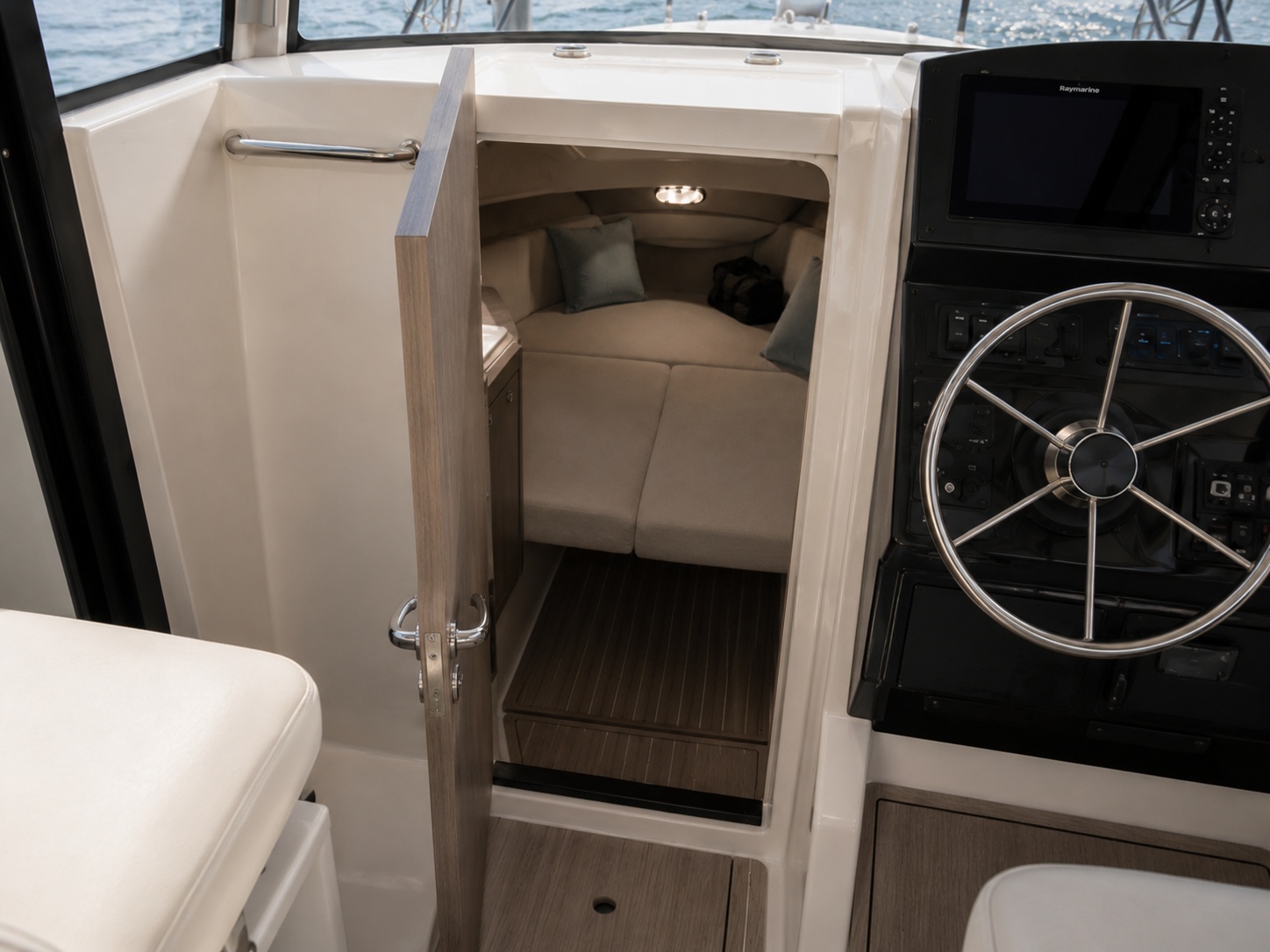
Inside the pilothouse, dedicated pilot and co-pilot seats put both occupants under weather protection. Port and starboard entry doors let crew move to the cockpit without routing every trip through one narrow opening.

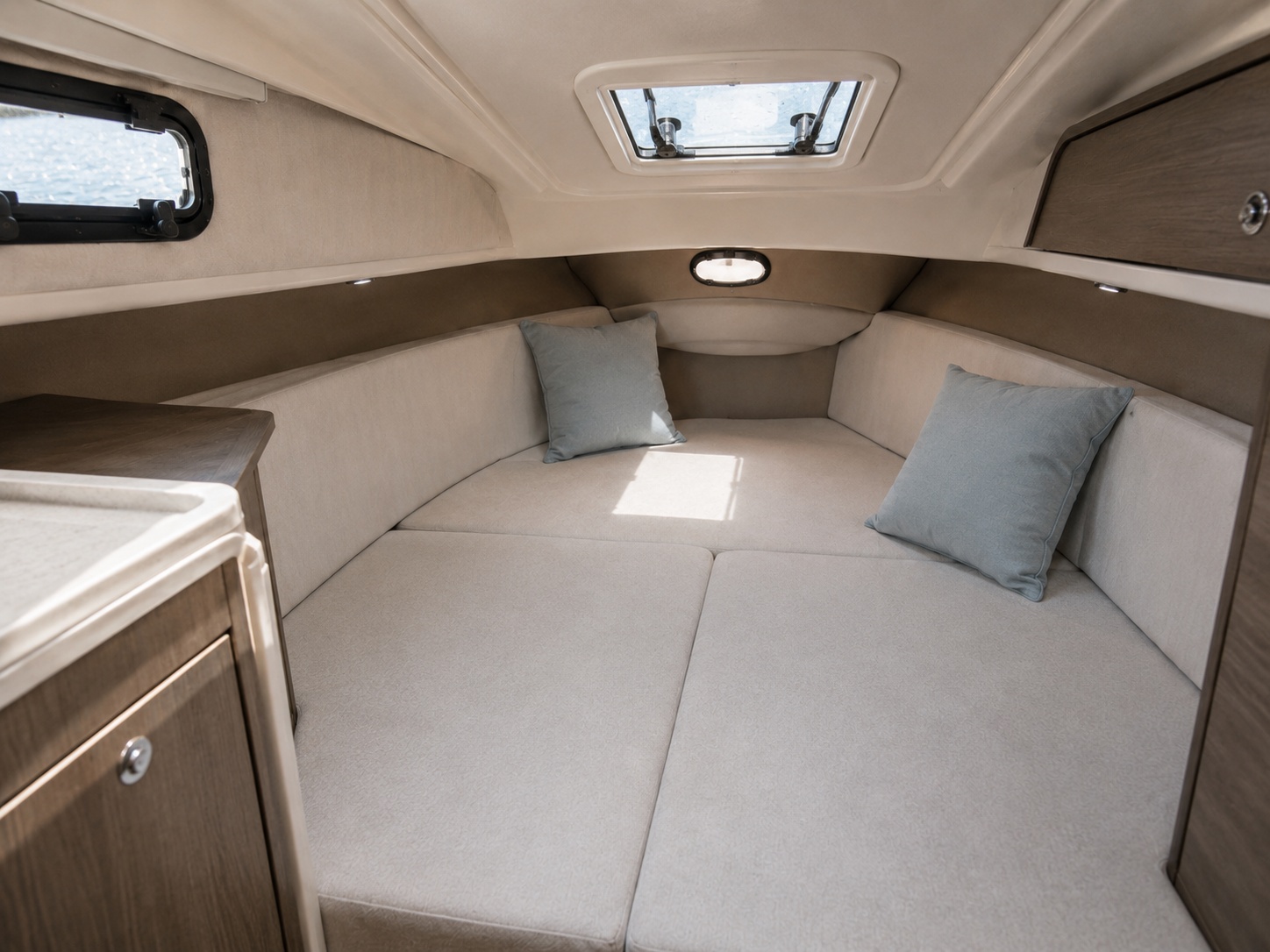
The cabin has storage below the berth, cabin lighting, roof hatch, and sink with tap. Optional refrigerator and sea toilet can improve overnight practicality, but the space remains organized around fishing utility rather than luxury cruising.

Available starboard aft flip seats and a cockpit table can add social use when the rods are stowed. That flexibility is useful for family anglers who do not want every square inch permanently committed to fishing.

A Fishing Package and Premium or Cabin Comfort packages allow the buyer to lean further into the mission. The key is to avoid optioning the T23 Pilothouse until it imitates an Explorer. Its value is that the cockpit remains purpose-built for anglers.

Eight T23 Pilothouse Features That Matter When Buying

Fish Lockers and Dedicated Cockpit Rod Storage – Keeps tackle and catch-management functions in the cockpit instead of forcing fishing gear into the cabin.

Roof-Mounted Rocket Launcher Rod Holders

Moves additional rods overhead and clears working deck space during runs or technique changes.

Port and Starboard Pilothouse Entry Doors

Lets crew move between helm and deck from either side, useful during docking and active fishing.

Optional 50L Refrigerator

Gives anglers and overnight crews cold storage beyond loose coolers while preserving cockpit floor space.

Bow Thruster Option

Useful on an enclosed 23-foot boat whose cabin creates more windage than an open center console.

Simrad 9-Inch NSS EVO3S Option

Adds GPS and Mercury VesselView integration for anglers who need navigation and engine data in the protected helm.

What to Inspect Before You Buy

A T23 Pilothouse inspection begins with the fishing systems. Open the fish lockers and check drains or pumpout hardware where fitted. Run the livewell system if equipped and verify the raw-water or cockpit wash components.

Inspect rod racks and rocket-launcher mounts for looseness. Fishing hardware sees more repeated loading than decorative cabin trim.

Test both pilothouse doors. They should slide or latch cleanly and keep weather out. Inspect door seals, roof hatch, windows, and any portlights for leaks.

Run the starboard windshield wiper and washer if equipped. Poor visibility defeats one of the main reasons to buy a pilothouse.

Test the dual-battery system, electrical and manual bilge pumps, CO monitor, smoke detector, Fusion stereo, SmartCraft gauges, and 12-volt socket.

If the boat has the Simrad display, verify chart plotting, depth data, transducer operation, and VesselView information.

Bow-thruster-equipped boats should be tested under load. Refrigerator and toilet options should also be operated rather than visually inspected.

The outboard remains the most expensive single system. Verify hours, service, cooling, trim, steering, propeller, lower-unit oil, and corrosion.

Because current listings are young, the expectation should be that all of these systems function. A 2025 boat with multiple dead pumps or electronics is a maintenance warning, not normal aging.

bayliner t23 pilothouse hero exterior 01
bayliner t23 pilothouse marina cruising profile 10

Trailering, Storage and Where the Boat Lives

The T23 Pilothouse is 8 feet 6 inches wide, which keeps the hull at the common conventional trailer-width limit. That makes it much easier to move between fishing destinations than the wider T25 models.

Approximate weight with standard engine is 4,071 pounds before trailer, 51 gallons of fuel, batteries, fishing gear, and overnight equipment.

A serious fishing load adds weight quickly. Ice, bait tanks, tackle, spare rods, downriggers or other equipment, fish in the lockers, and foul-weather gear all count.

The cabin also encourages owners to leave bedding, food, shore items, and personal equipment aboard. Use the real loaded trailer weight when choosing the tow vehicle.

A roof rack can add storage but may affect overall height. Measure garage or covered storage with the actual accessories installed.

A seasonal slip extends the usefulness of the pilothouse because early morning departures become easier. It also means the boat may spend more time exposed to marine growth and corrosion.

Trailer storage makes outboard flushing and hull inspection straightforward. For anglers who fish multiple lakes, that mobility is part of the T23’s advantage.

The T25 Pilothouse’s 9-foot-6-inch beam changes the transport conversation significantly. If easy legal-width towing matters, the T23 should receive extra credit beyond its lower purchase price.

How to Shop the Bayliner T23 Pilothouse Market

Market Character: Current national inventory is very thin and concentrated in 2025-2026 boats.

Current national T23 Pilothouse inventory is very thin and concentrated in 2025 and 2026.

A buyer may not have five nearly identical boats within driving distance. Engine choice, Fishing Package, Simrad display, refrigerator, toilet, bow thruster, windlass, and other equipment can make the available boats genuinely different.

Thin inventory is not permission to overlook condition. If the nearest boat has weak service history or missing equipment, travel can be cheaper than inheriting the wrong boat.

The young age mix means depreciation history is limited. A 2025 example should be compared directly with 2026 dealer inventory after equipment and transaction costs are normalized.

A 225-horsepower boat with the fishing and navigation equipment you need can be more valuable than a cheaper 175 if the smaller engine would leave you upgrading or compromising later.

Conversely, do not pay for a refrigerator, toilet, or bow thruster simply because the seller ordered them. Options only retain value for the next owner when they solve a real use case.

Use the live price fields and make the page explain the reasons behind the spread. T23 Pilothouse buyers are purchasing a specialized tool, so condition and mission-fit are stronger value signals than color.

Market price band
$89,999 – $117,981
Estimated monthly
$615/mo – $805/mo

Pricing varies. Model year, engine package, options, trailer, condition and dealer all move the number, and listings change weekly. Send us the boat you are looking at and we will price that exact one.

Illustration only and not an offer of credit.

Estimate the Payment Before You Commit

Leave room in the ownership budget for insurance, propulsion service, storage or dockage, cabin systems, pumps, electronics, and the first round of repairs or maintenance that can accompany any used overnight boat.

Estimated monthly $615 Get prequalified

Illustration only and not an offer of credit. Your actual rate and term depend on credit profile, vessel age, loan amount and ownership structure.

What Should You Compare With the T23 Pilothouse?

T23 Pilothouse versus T23 Explorer is a mission comparison, not a simple cabin comparison.

Pilothouse is 23 feet 7 inches long, 8 feet 6 inches wide, carries 51 gallons, and is built around fishing storage, rod management, livewell capability, washdown, and protected helm use.

Explorer is 24 feet 2 inches long, 8 feet 4 inches wide, carries 53 gallons, publishes three berths, and devotes more cockpit space to the L-lounge, sun lounge, table, and extended swim platforms.

Both carry nine people and reach 225 horsepower.

Choose Pilothouse if the boat exists to fish in more weather and for more hours.

Choose Explorer if the boat exists to balance fishing with cruising, swimming, dining, and overnight family use.

Move to T25 Pilothouse when 300 horsepower, 86 gallons, ten-person capacity, wider fishing space, enclosed sea toilet, and more extensive fish-box systems solve problems the T23 cannot.

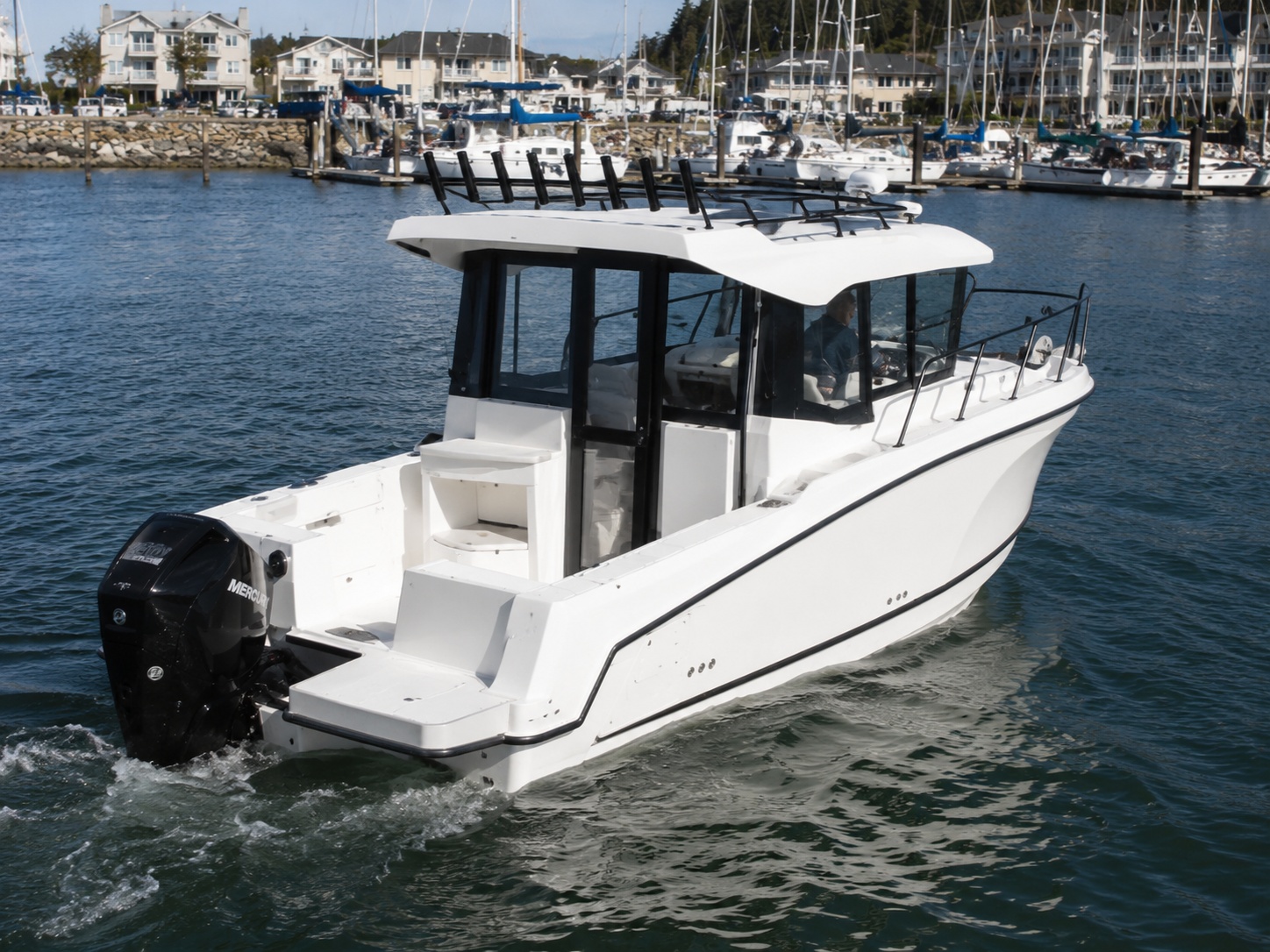
bayliner t23 pilothouse starboard stern quarter 20
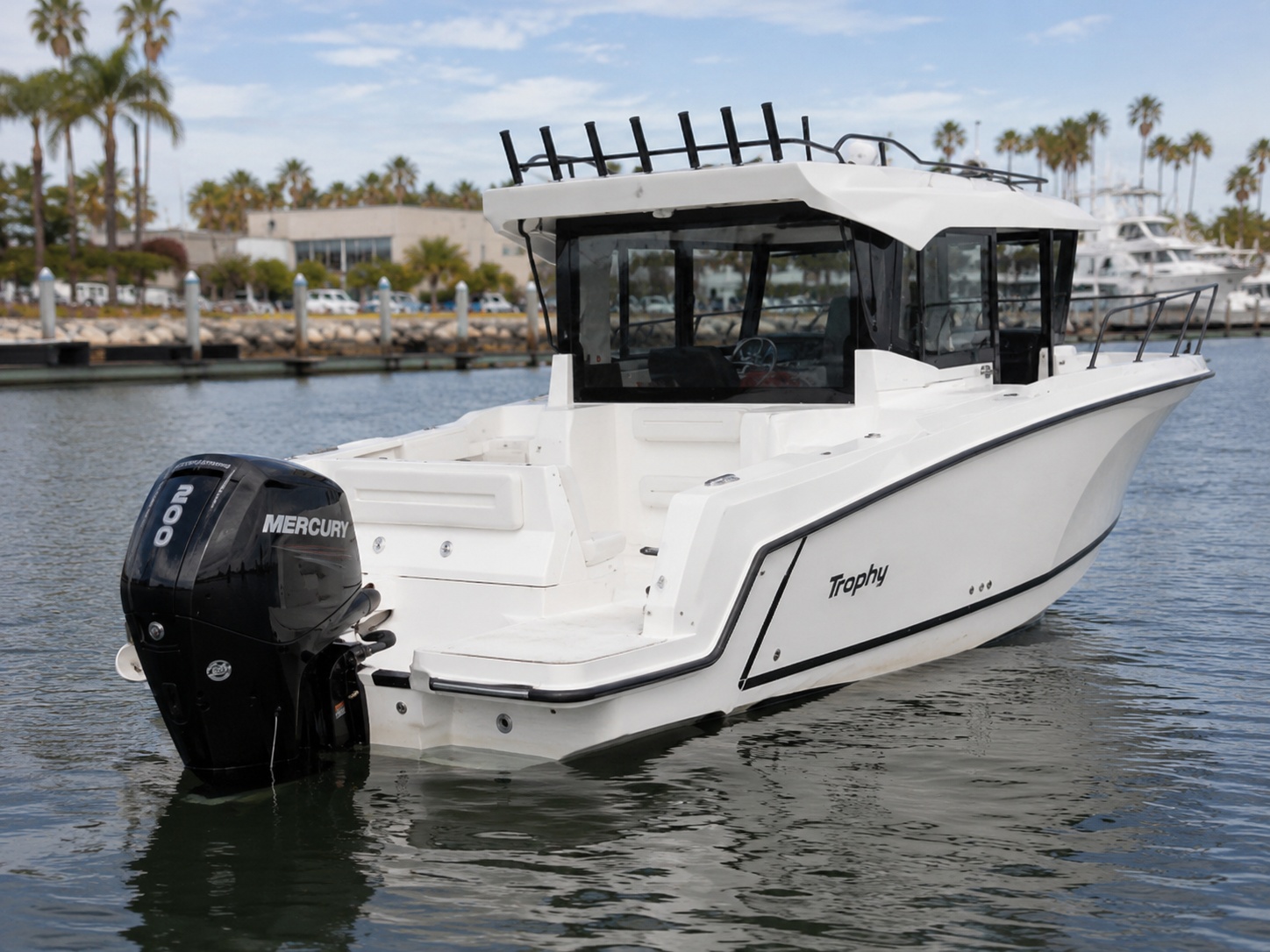
bayliner t23 pilothouse stern swim ladder detail 17

Buying the Right Bayliner T23 Pilothouse

The T23 Pilothouse is currently a scarce, young used market. Start by deciding whether the 175 or 225 horsepower engine fits your load before you spend time on color or electronics.

Ask for engine hours and service records. Fishing boats can accumulate more hours than their model year suggests because owners may run dawn-to-dusk days repeatedly.

Inspect every fish locker. Odor, standing water, or failed pumpout equipment can reveal maintenance that cosmetic detailing hides.

Run the livewell and washdown. Do not accept “it worked last season” on a boat being purchased for fishing.

Check both pilothouse doors, roof hatch, windows, and wiper. Water intrusion or poor visibility directly defeats the protected-helm advantage.

Test the Simrad, VesselView, VHF if equipped, bow thruster, windlass, refrigerator, and toilet. Specialized equipment needs to work on the day you buy it.

Inspect rod racks, roof rack, bow rail, and fishing hardware for loose fasteners or gelcoat stress.

Check the trailer with the same seriousness as the outboard. A buyer may travel farther to find one of the few available boats, which makes roadworthiness immediately important.

Compare T23 Explorer before signing, but do not let a nicer lounge pull you away from the reason you started shopping a Pilothouse. If fishing workflow is the priority, buy the boat that protects that workflow.

Your next step

Secure the T23 Pilothouse You Actually Want

If you already found a Bayliner T23 Pilothouse, send Float Finance the exact listing, asking price, model year, engine configuration, seller type, and major installed equipment. An overnight boat’s financing should be built around the real transaction, not a stripped base price that ignores the systems you plan to use.

Bayliner T23 Pilothouse Questions Buyers Actually Ask

The T23 Pilothouse is 23 feet 7 inches long with an 8-foot-6-inch beam and 17 degrees of deadrise. Bayliner publishes 1 foot 9 inches of minimum draft, 3 feet of maximum draft, and approximately 4,071 pounds with standard engine.

Bayliner lists capacity for nine people and a maximum people-weight figure of 1,500 pounds. Fishing gear, ice, bait, and overnight equipment should be counted separately when thinking about real operating load.

Current Bayliner options include 175 and 225 horsepower Mercury V6 outboards, with 225 horsepower listed as the maximum.

Yes, but the cabin is designed around fishing utility and occasional overnight use rather than a cruising-first interior. It includes berth storage and cabin equipment, with refrigerator and sea-toilet options available.

Bayliner positions the model around fishing and offers fishing-package equipment including livewell capability. Verify the actual boat because equipment can vary by package and year.

Choose T23 for easier towing, smaller ownership footprint, nine-person capacity, and 225-horsepower maximum. Choose T25 when you need 300 horsepower, a 9-foot-6-inch beam, ten-person capacity, 86 gallons of fuel, larger fish-locker systems, and more onboard equipment.

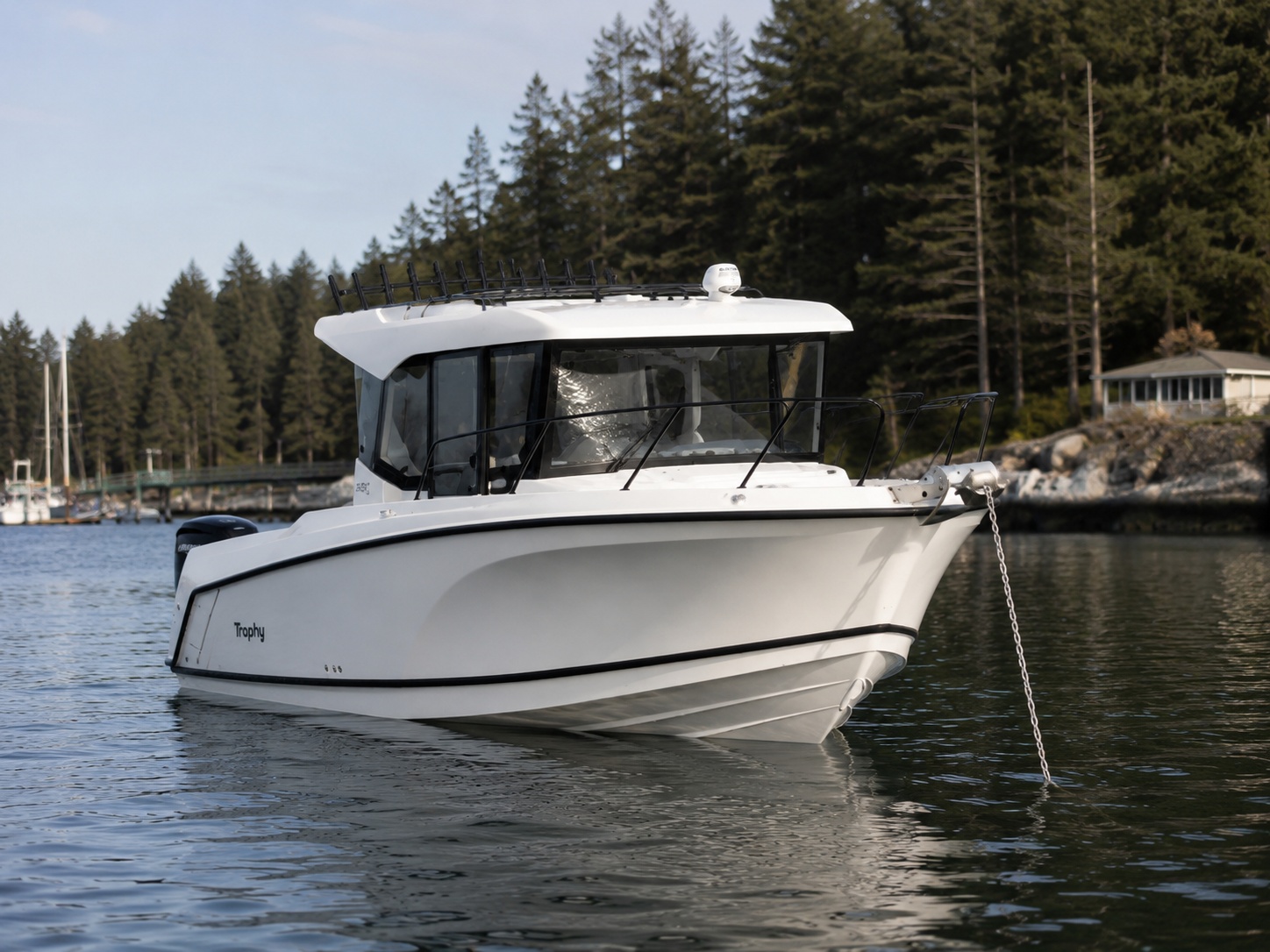
Pilothouse is the fishing-first choice. Explorer is the mixed cruising and overnight choice. Both use single outboards and can protect passengers from weather, but their deck priorities are very different.

Potentially. Current inventory is mostly 2025 and 2026, so buyers may be financing either new dealer stock or nearly new boats. The exact year, price, seller, and borrower profile determine the financing conversation.

If Fishing Is the Reason for the Cabin, Buy the T23 Pilothouse

Let's Make This Easy

Tell us a little bit about yourself and the boat you are looking to finance.

Skip to content