
Call Us : 207-994-5109
Mon – Fri: 8 am to 9 pm & Sat – Sun: 10 am to 8 pm
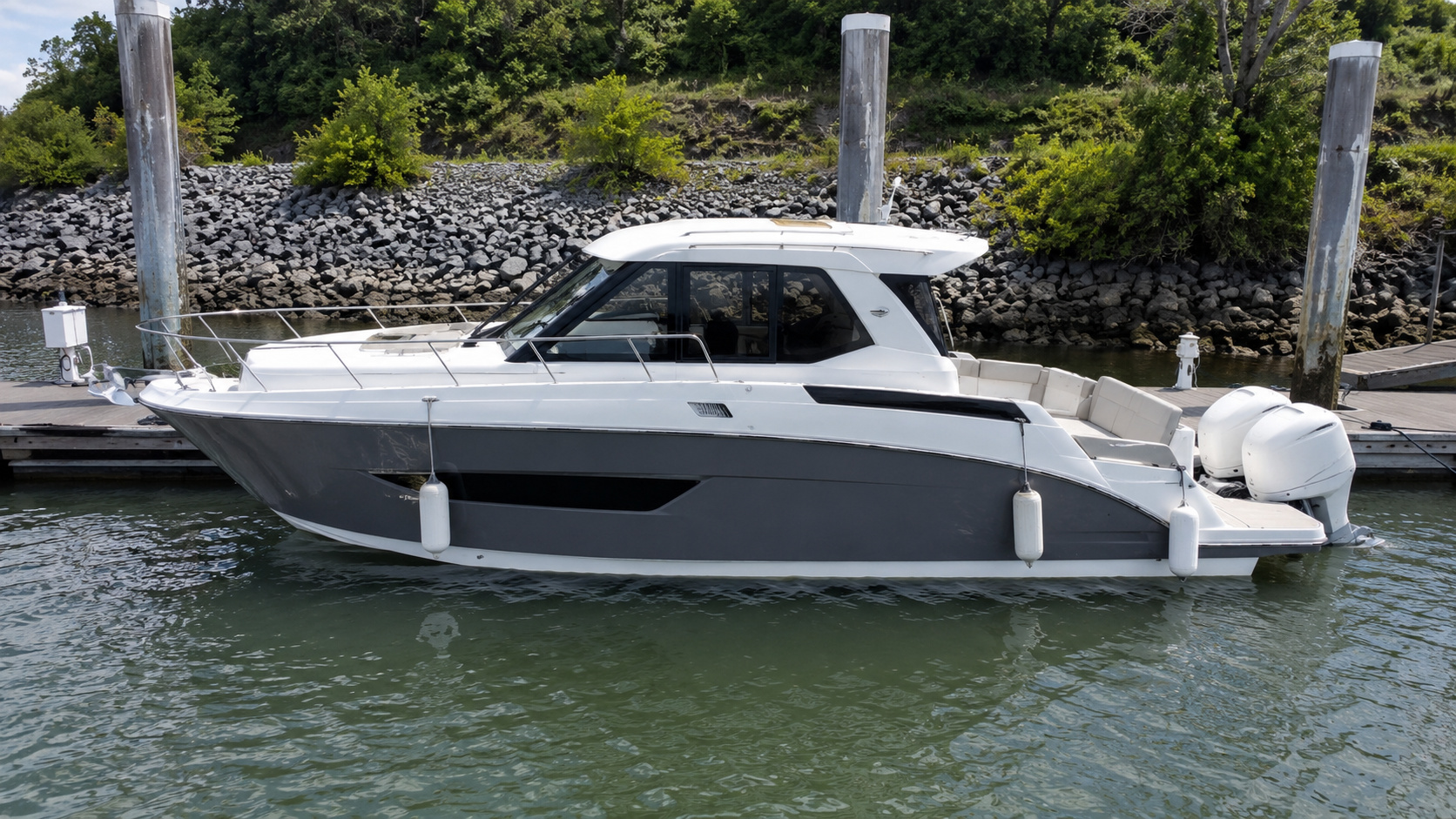
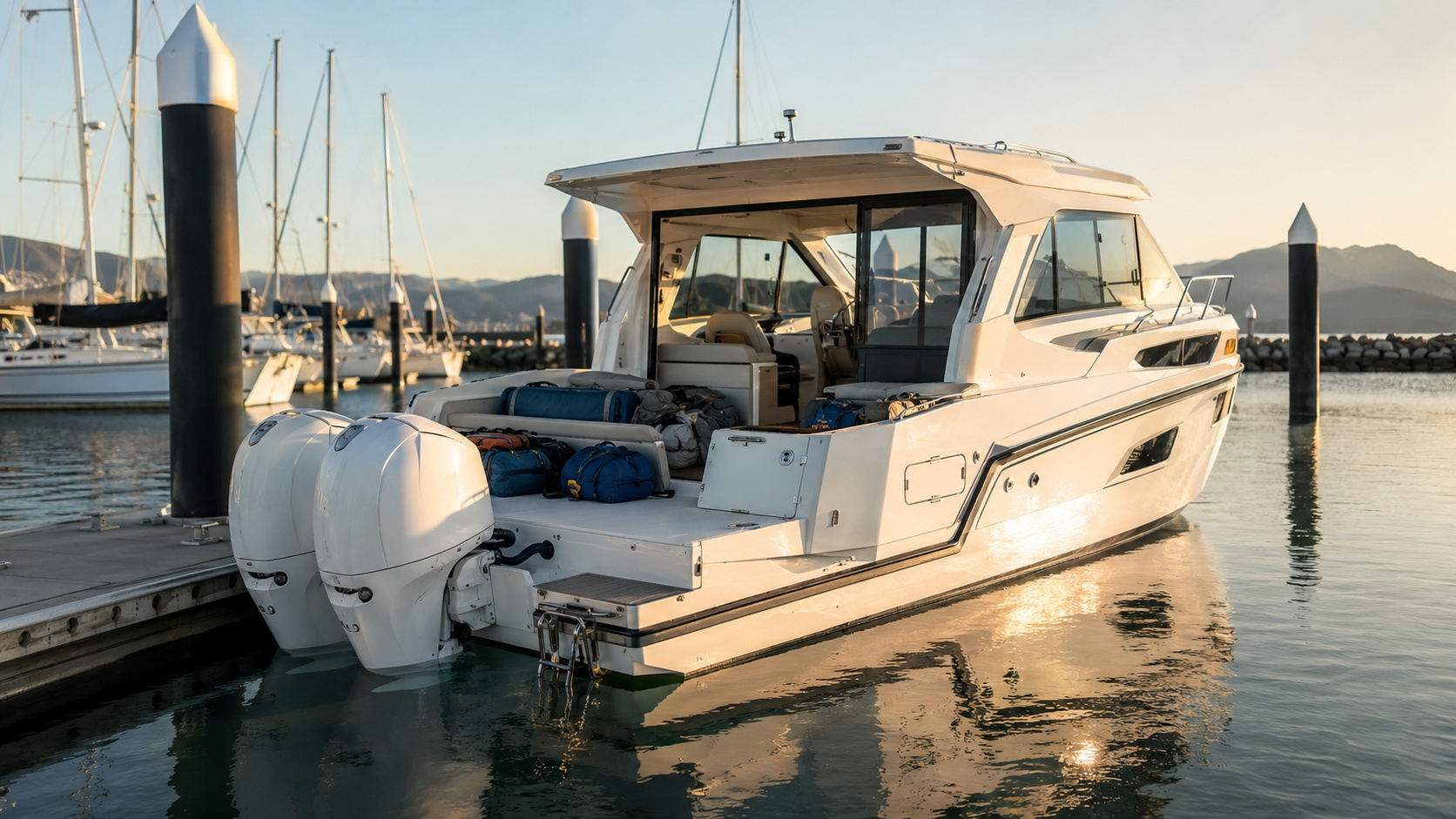
The Bayliner T29 Explorer is the flagship Trophy overnight boat, pairing twin 225 HP outboards, 126 gallons of fuel, five berths, a 9-foot-9-inch beam, and cruiser-level systems for buyers ready to move beyond occasional overnighting.
The T29 Explorer is not a larger T25 in the casual sense. It changes the ownership class of the entire Bayliner overnight conversation. At 29 feet 10 inches with a 9-foot-9-inch beam, twin 225-horsepower Mercury outboards, 126 gallons of fuel, five published berths, shore power, bow thruster, windlass, and a substantial enclosed cabin, it asks the buyer to think like a small cruiser owner rather than a trailer-boat owner who happens to have a berth.
That distinction matters because the T29 can support trips the smaller Explorers only hint at. Five berths create more sleeping flexibility. Twin engines add both performance and propulsion redundancy. The cabin can be equipped with 12-volt air conditioning, a diesel generator paired with cabin air conditioning, diesel heat, Wallas stove, radar, VHF, and a television bracket. Those are systems meant for owners who expect to spend meaningful time aboard.
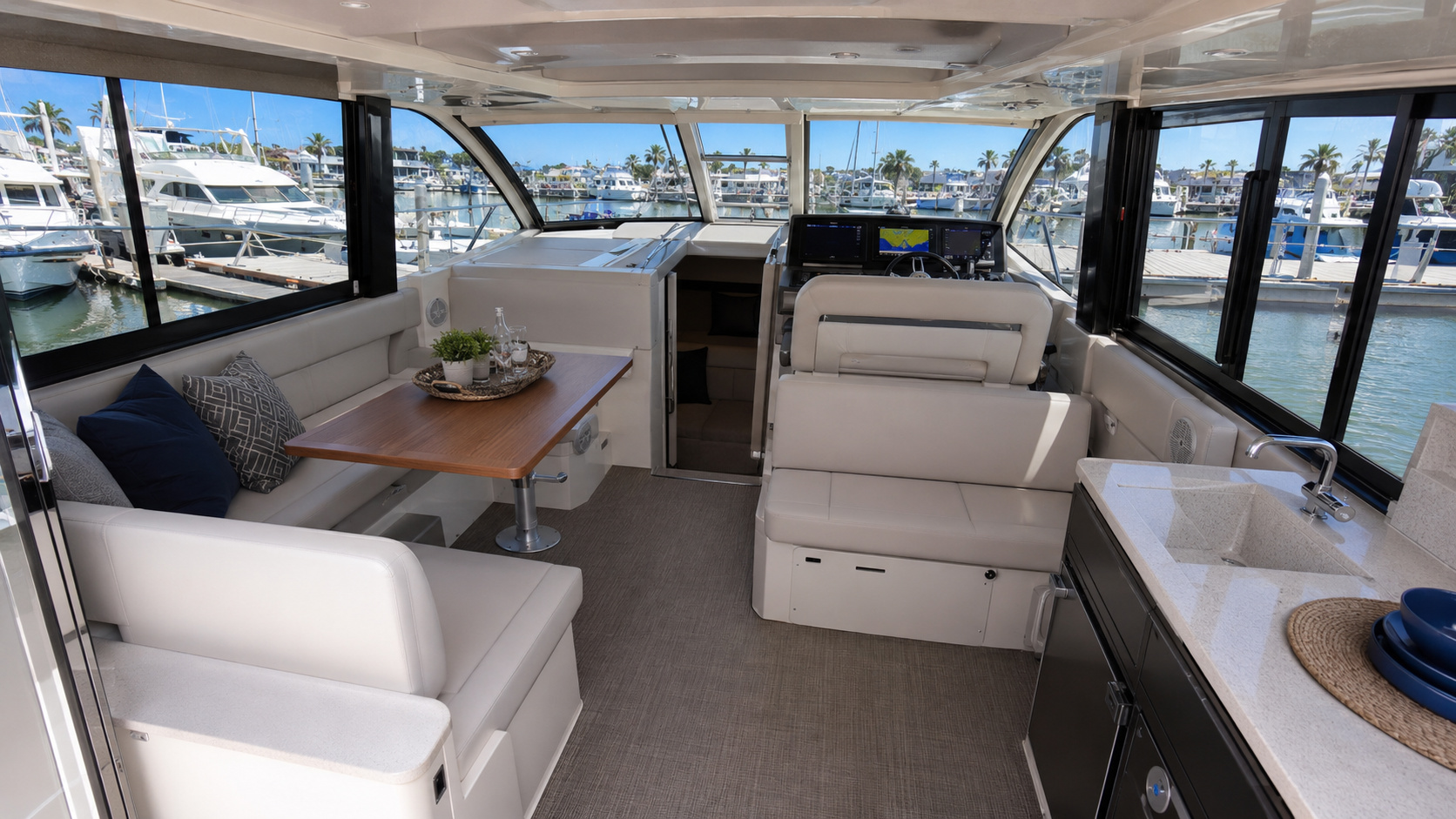
The cockpit remains social. Bayliner lists an aft bench, folding backrest, L-lounge, sun lounge, cockpit table, sink with tap, self-bailing deck, transom door, and pilot seats with flip bolsters and swivel. The boat can still fish through rod holders and open deck access, but the priority is not an uncluttered tournament cockpit.
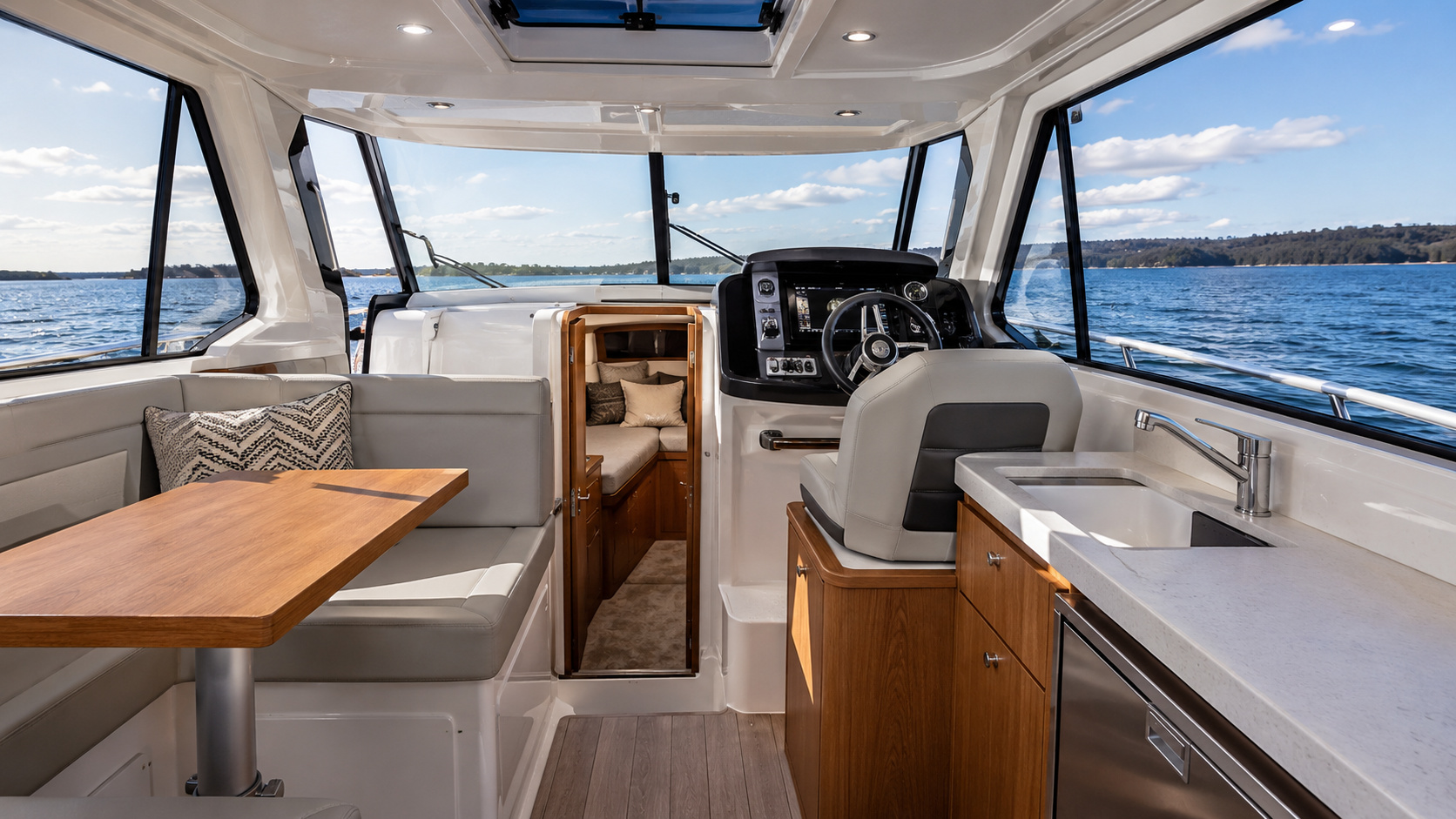
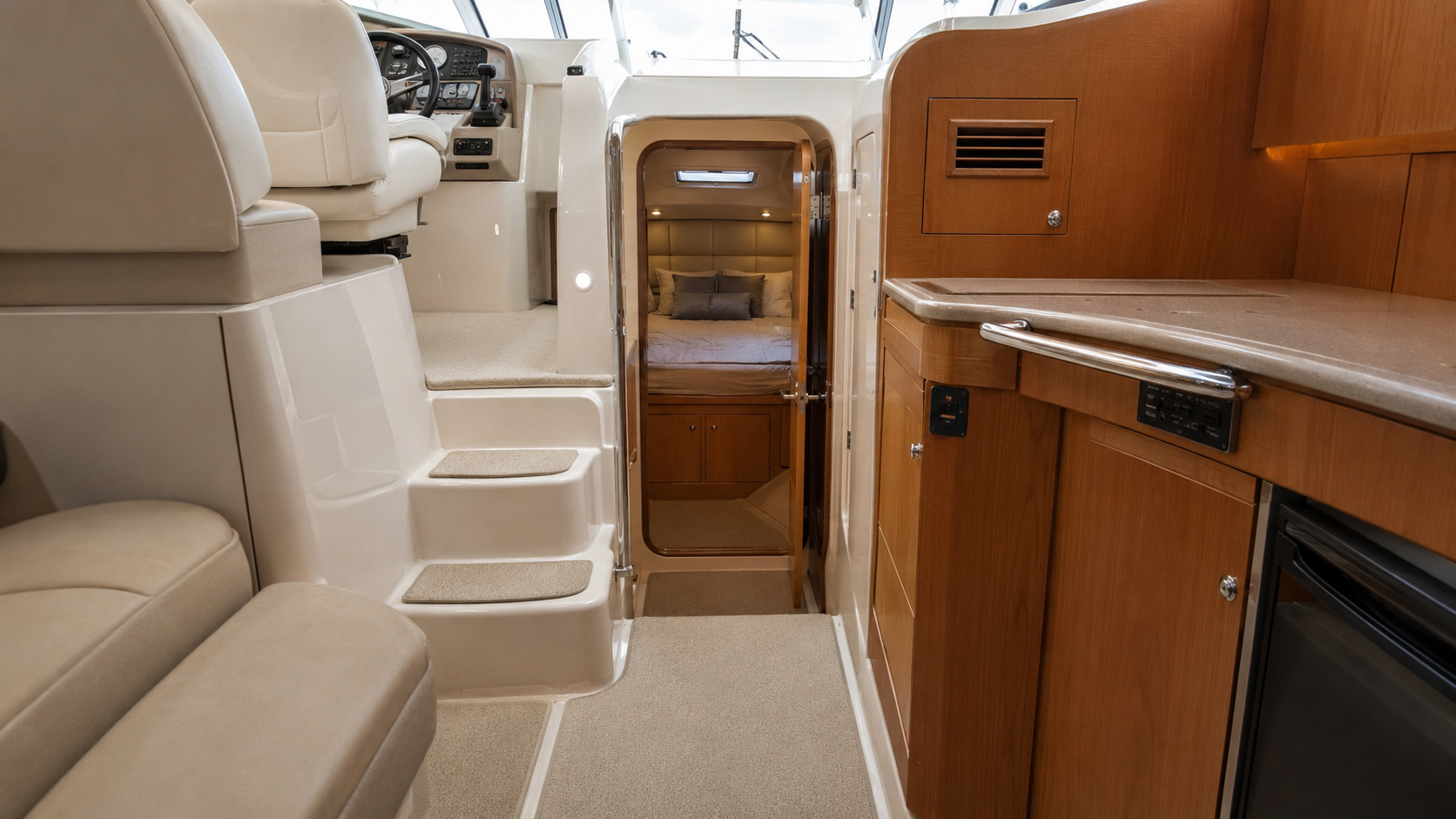
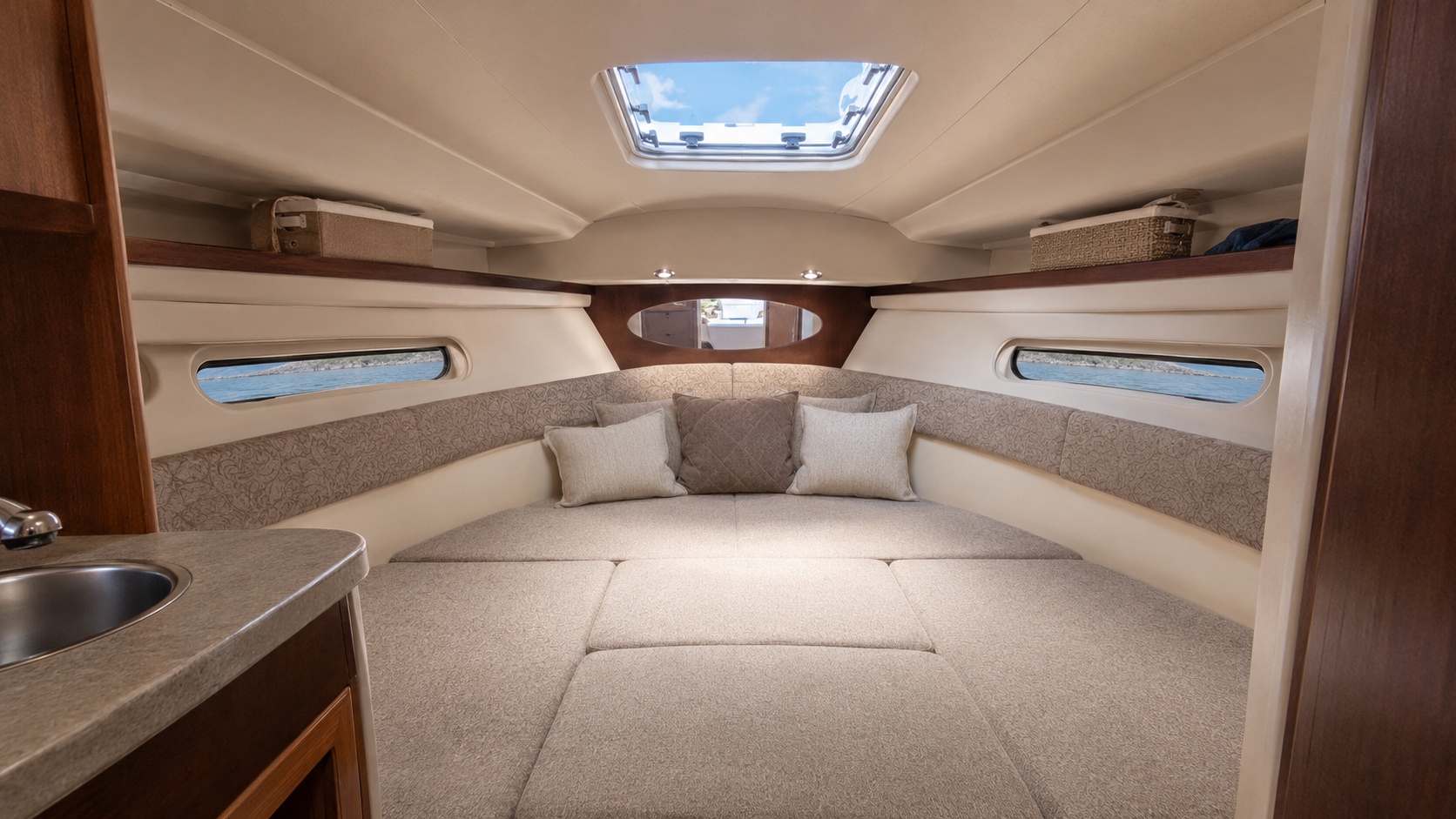
The cabin is where the model separates itself. Five berths, cabin table, berth storage, opening portlights, hull-side windows, roof hatch, microwave pre-rig, and available climate equipment make the interior capable of supporting more than one improvised night.
The T29 also uses a much larger fuel system. One hundred twenty-six gallons is 52 gallons more than the T25 Explorer. A full tank adds hundreds of pounds, and twin engines double many routine propulsion service items.
The beam removes any pretense of simple unrestricted highway trailering. At 9 feet 9 inches, transport is a planned event in many jurisdictions, not a casual Saturday-morning choice. Many buyers will keep the boat in a slip, dry stack, or professional storage environment.
Current national inventory is extremely thin and concentrated in 2025 and 2026 boats. That scarcity means shoppers may need to travel for the correct configuration, especially if generator, air conditioning, radar, or other high-value options are non-negotiable.
A thin market can tempt buyers to accept the first available boat. That is a mistake at this price and complexity level. The T29 needs to fit the way you intend to use climate systems, navigation equipment, sleeping arrangements, and twin power.
The T25 Explorer is the rational alternative when a single engine, four berths, 74 gallons, and less beam already support the family’s trips. The T29 should be purchased because the extra capability will be used, not because the flagship badge makes the payment look like a small monthly step.
Buy the T29 Explorer when you are ready for a boat that can genuinely become part of the weekend, not just part of the afternoon.
Published factory figures. Confirm every dimension against the individual boat before you commit.
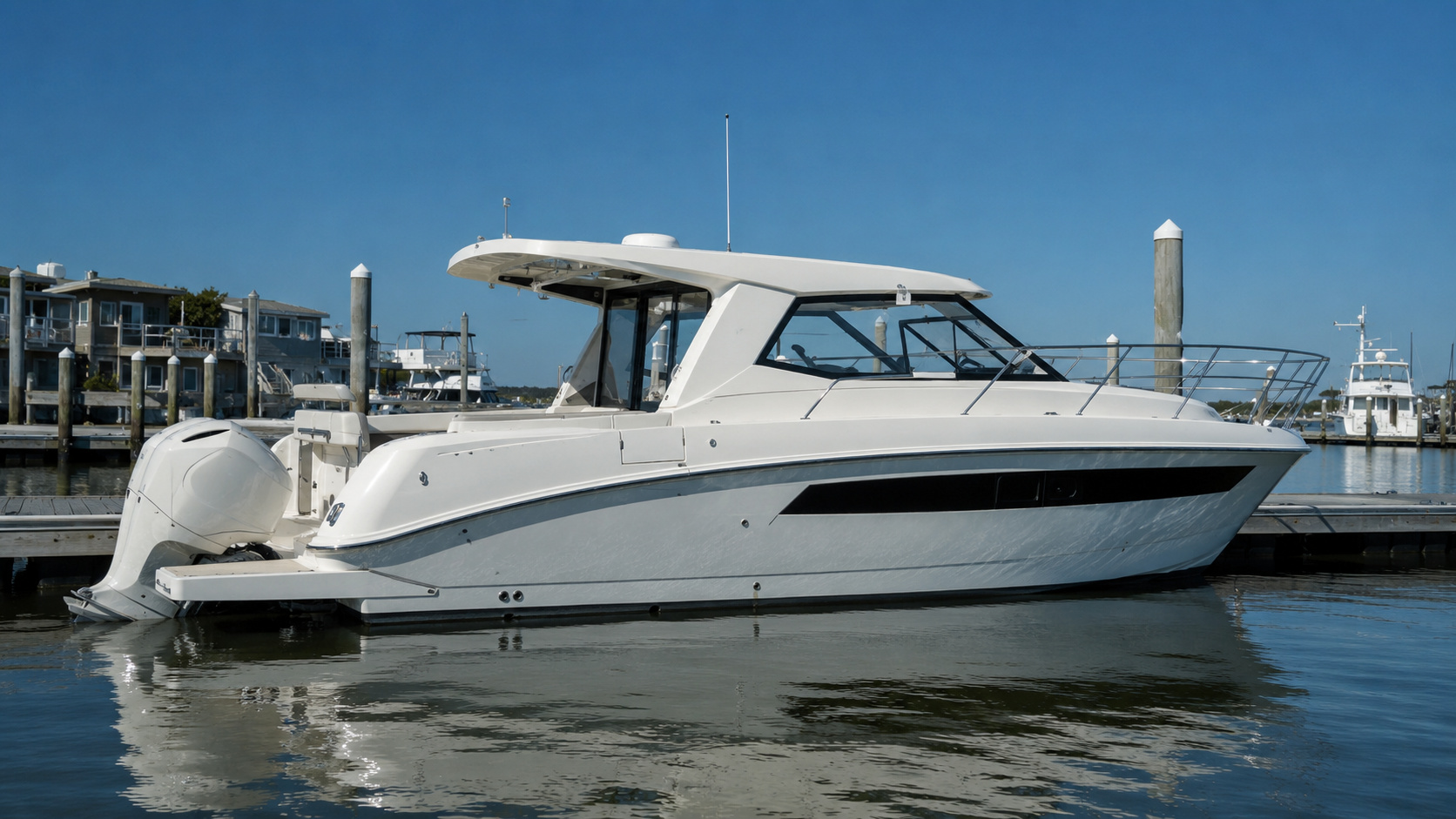
The T29 Explorer measures 29 feet 10 inches overall with a 9-foot-9-inch beam and 17 degrees of deadrise. Bayliner publishes 2 feet 1 inch of minimum draft and 3 feet 7 inches of maximum draft. Approximate weight with standard engines is 6,508 pounds.
The beam is the first number that changes ownership. At 9 feet 9 inches, the T29 exceeds the common 8-foot-6-inch unrestricted trailer-width limit in the United States by more than a foot. Transport remains possible, but buyers should think in terms of permits, professional hauling, marina storage, and route planning.
The 29-foot-10-inch length gives Bayliner room to separate cockpit, pilothouse, cabin, galley, and berth functions more clearly than on the T23 and T25 models. Passengers do not need every seating surface to perform three jobs at once.
Seventeen degrees of deadrise matches both T25 overnight hulls. The larger T29 gains running comfort through length, beam, and mass rather than a dramatically steeper V-bottom.
Bayliner lists nine people in the official specification table. Some promotional copy elsewhere on the site references room for ten, but the model specification is the value that should govern buyer-facing capacity data.
The specification table also identifies maximum weight capacity as yacht certified rather than giving the same numeric people-weight format used on smaller models. Buyers should still load the boat conservatively and account for fuel, water, provisions, gear, and installed options.
A 126-gallon tank can add more than seven hundred pounds of gasoline when full. Add twin outboards, batteries, generator, air conditioning, canvas, food, bedding, and cruising supplies and the operational mass becomes very different from the 6,508-pound factory figure.
Swim platforms and platform extensions make the broad stern useful even with twin outboards. The transom door provides controlled movement from cockpit to the water-access area.
For the buyer, the T29 hull is not about maximum passenger count. The T25 Explorer actually publishes a higher people capacity. The T29 is about creating enough physical volume for five berths, twin power, larger fuel, climate systems, and more credible multi-day comfort.
The T29 Explorer uses twin 225-horsepower Mercury V6 outboards for 450 horsepower total. Bayliner lists both conventional and DTS configurations with hydraulic or electric power-steering support depending on rigging.
Twin engines change the boat mechanically and operationally. The most obvious benefit is total power. A nearly 30-foot cabin boat carrying 126 gallons of fuel and overnight gear needs substantially more propulsion than the single-engine T25 models.
The second benefit is redundancy. Losing one engine may leave the boat with reduced propulsion rather than no propulsion at all. That can be valuable to owners traveling farther from the home marina, although twins are not a substitute for preventive maintenance or a proper safety plan.
The cost is duplicated service. Two engines mean two lower units, two propellers, two sets of engine fluids, two cooling systems, two sets of anodes, and twice as many opportunities for corrosion or impact damage.
Engine synchronization and steering deserve attention during a sea trial. The boat should track cleanly with both engines producing consistent thrust. Uneven rpm, steering effort, or trim behavior needs investigation.
DTS-equipped boats should shift cleanly and respond predictably around the dock. Twin outboards can give the operator useful low-speed control through opposing gear selections, but that technique should be learned rather than assumed.
Inspect both propellers and skegs independently. One engine may show evidence of a strike even when the other looks perfect.
Review service records by serial number. Do not accept a statement that “the engines were serviced” without documentation showing what was done to each one.
The T29’s young current market means age-related engine wear should be limited, but hours can still accumulate quickly on a boat designed for longer trips. A 2025 boat used extensively may have more meaningful service history than a lightly used older day boat.
Twin 225s are not an optional performance indulgence here. They are fundamental to the model. Buyers who want to avoid twin-engine service should not search for a cheaper way to own the T29. They should consider whether the single-engine T25 Explorer meets the mission instead.
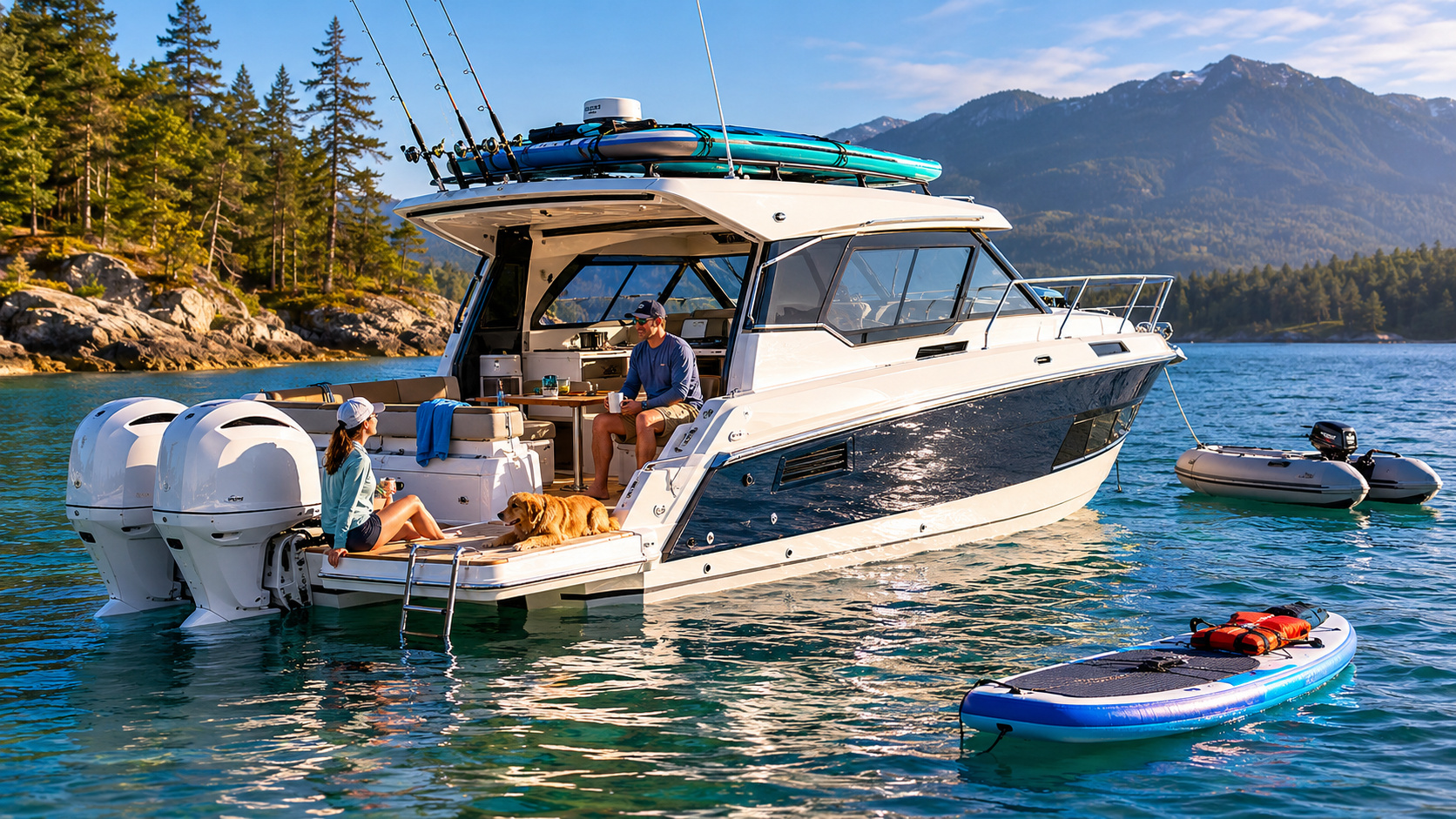
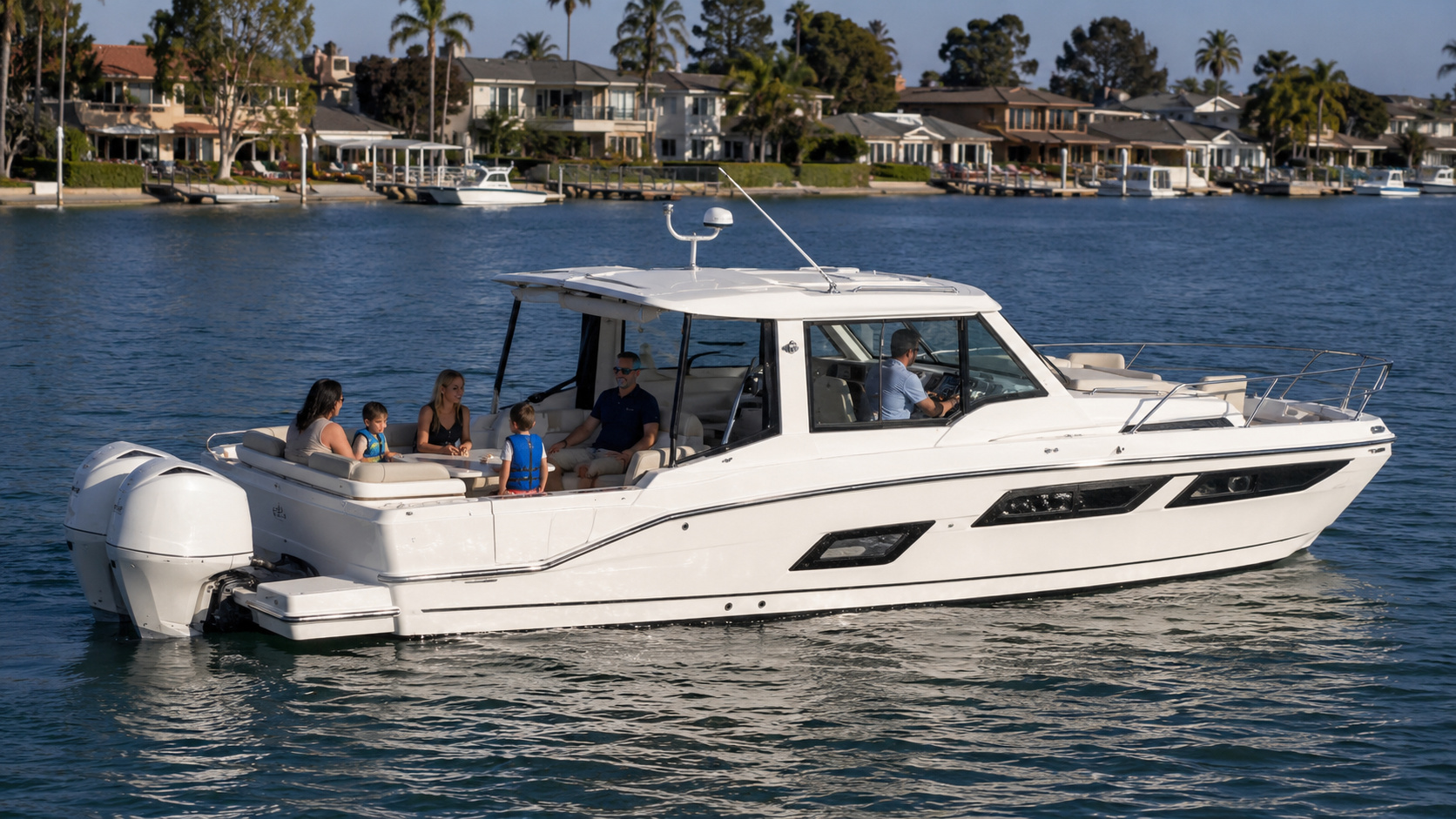
The T29 Explorer carries 126 gallons of fuel, by far the largest tank in Bayliner’s current overnight lineup. The T25 Explorer carries 74 gallons, so the flagship adds more than fifty gallons of capacity along with twin engines and greater hull volume.
That capacity supports longer cruising legs and reduces the frequency of refueling during multi-day use. It also changes the financial and weight profile of every full tank.
Gasoline weighs roughly six pounds per gallon, so 126 gallons can represent well over seven hundred pounds when full. Buyers evaluating transport, performance, and slip loading should not treat fuel as a negligible variable.
Twin 225-horsepower outboards can consume fuel much faster than a single 225 or 300 on a T25. Exact burn depends on rpm, propellers, trim, sea state, loading, and how well the engines are synchronized.
Bayliner does not publish one universal fuel-burn figure in the standard specification block. Range should be calculated from verified performance data for the exact boat and with an appropriate reserve.
The T29 can tempt owners to plan farther trips because the cabin and climate systems make them comfortable. That makes disciplined fuel planning more important, not less.
Fuel availability at the destination should be considered alongside overnight marina availability. A family trip can fail operationally even when the berths and generator are perfect if refueling logistics were ignored.
Owners who keep the boat in a marina may also encounter higher waterfront fuel pricing than buyers who fill a trailer boat on land. That difference belongs in real annual operating cost.
The large tank is useful when the boat’s intended routes require it. If typical weekends remain close to the home dock, 126 gallons may spend much of the season as unused weight. That does not make the T29 wrong, but it means range is not the reason to buy it.
The fuel system should support the trip plan, just as the five berths and climate systems should. Buy the T29 because those capabilities work together for the way you travel.
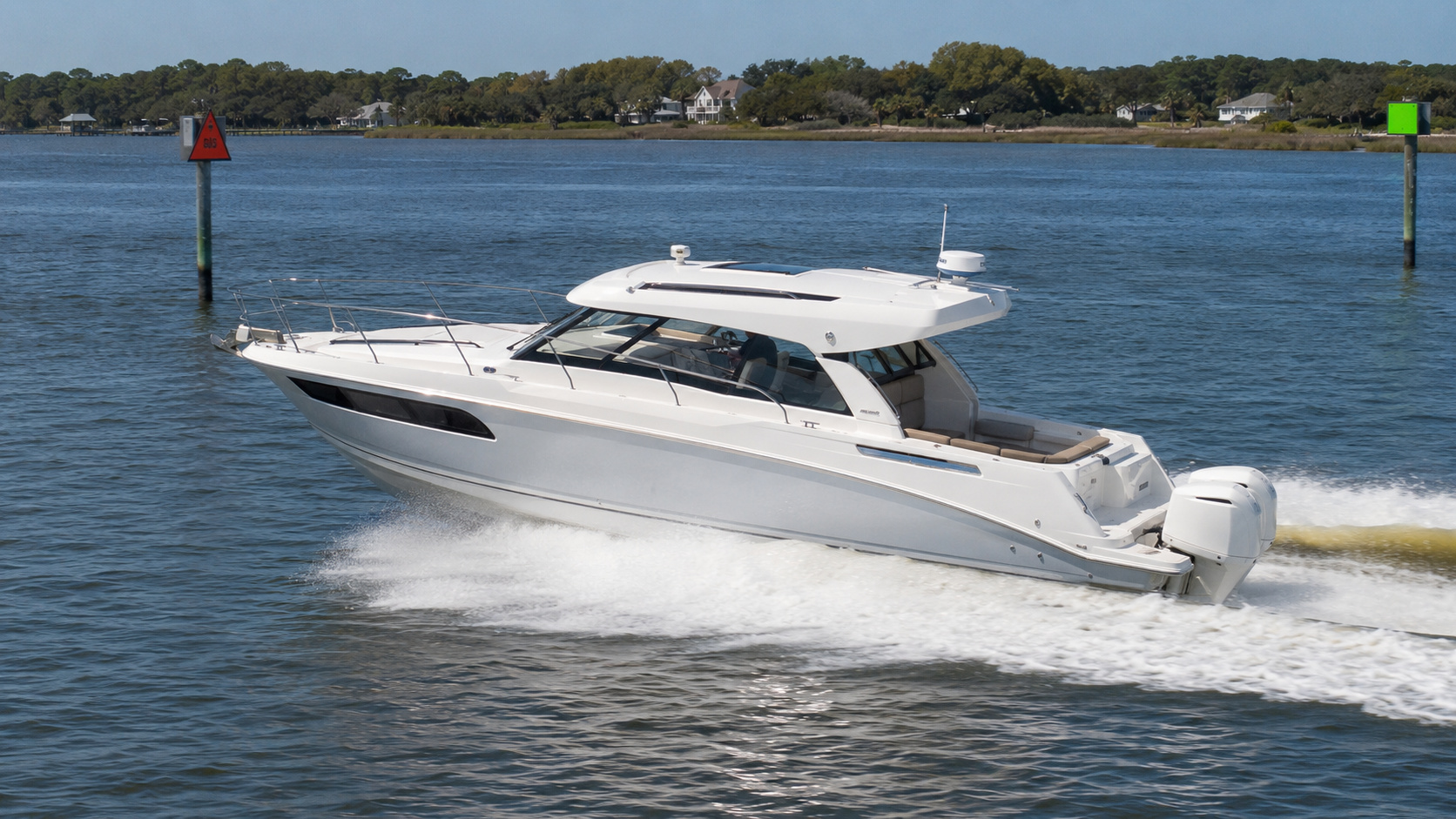
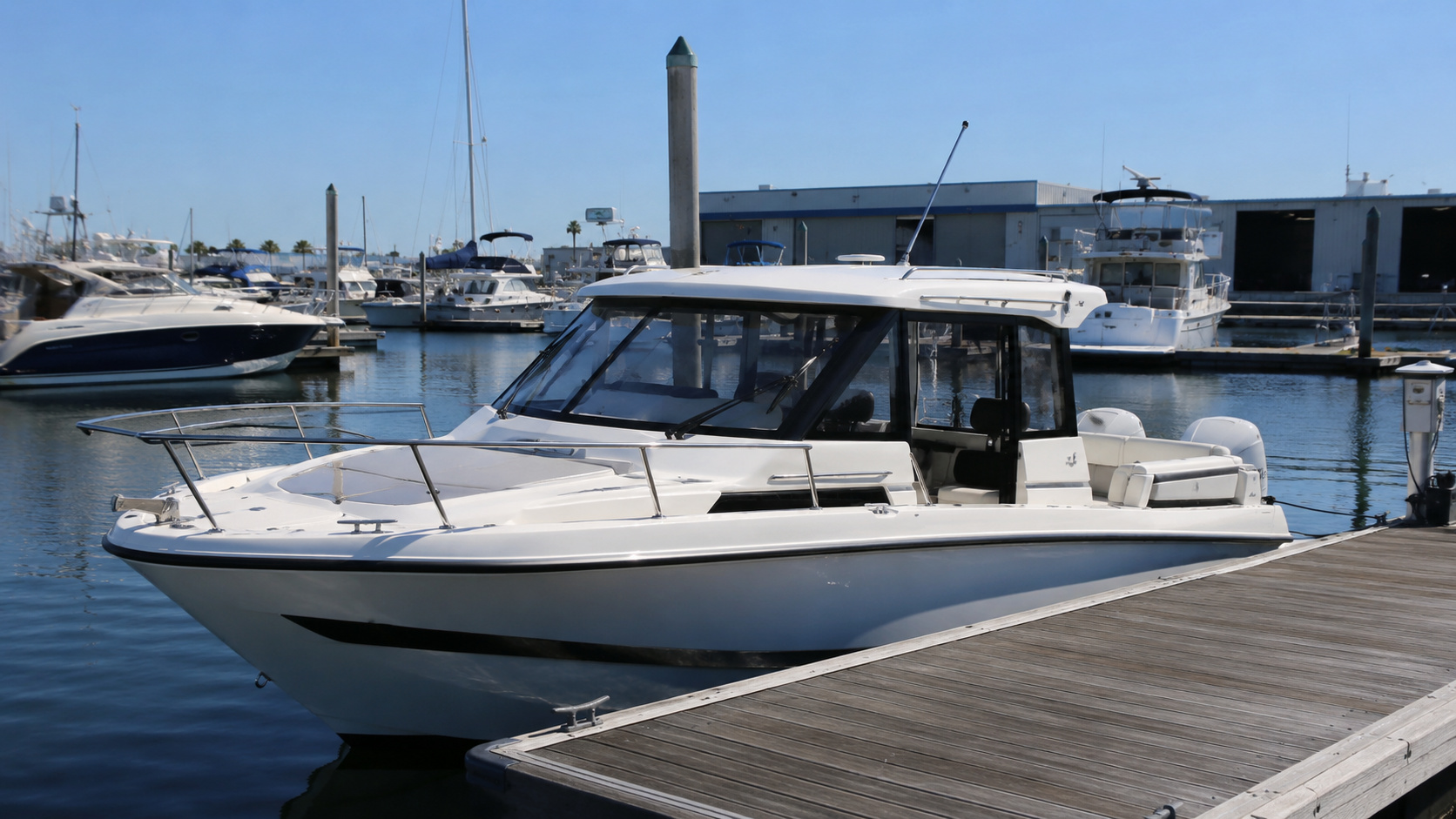
The T29 Explorer should be evaluated as a twin-engine cruiser with a family-friendly cockpit, not as a giant bowrider. The performance test begins with control and visibility before speed.
From the enclosed helm, check sight lines forward, aft, and through turns. A boat nearly 30 feet long creates more visual separation between the driver and the stern than any smaller Bayliner in this package.
The standard 9-inch Simrad NSS EVO3S with Mercury VesselView Link should be part of that test. Confirm engine data from both outboards, GPS position, and navigation functions.
Twin 225s give the hull 450 horsepower total. Bring the boat onto plane with a realistic fuel and passenger load and watch how quickly the bow settles.
Trim tabs help correct running attitude. The broad beam can respond noticeably to uneven passenger placement, so test tab authority instead of waiting for the first loaded trip.
The bow thruster is valuable around docks because the cabin and hardtop create significant windage. Use it in combination with twin-engine gear control rather than relying on it alone.
Run the boat on one engine at reduced speed during a supervised sea trial if appropriate and safe. The goal is not to prove normal operation on one engine but to understand steering and control if redundancy is ever needed.
Cross wakes at several angles. The 17-degree hull and nearly 30-foot length should feel substantially more composed than the T23, but speed still needs to match conditions.
Listen inside the cabin for loose cabinetry, berth fillers, table hardware, and galley rattles. A larger overnight boat should not sound like a toolbox every time it meets a wake.
The T29 performs well when the operator can move a large family cruiser confidently from open water into a tight marina. Top speed is far less important than twin-engine control, loaded cruise, visibility, and predictable handling.
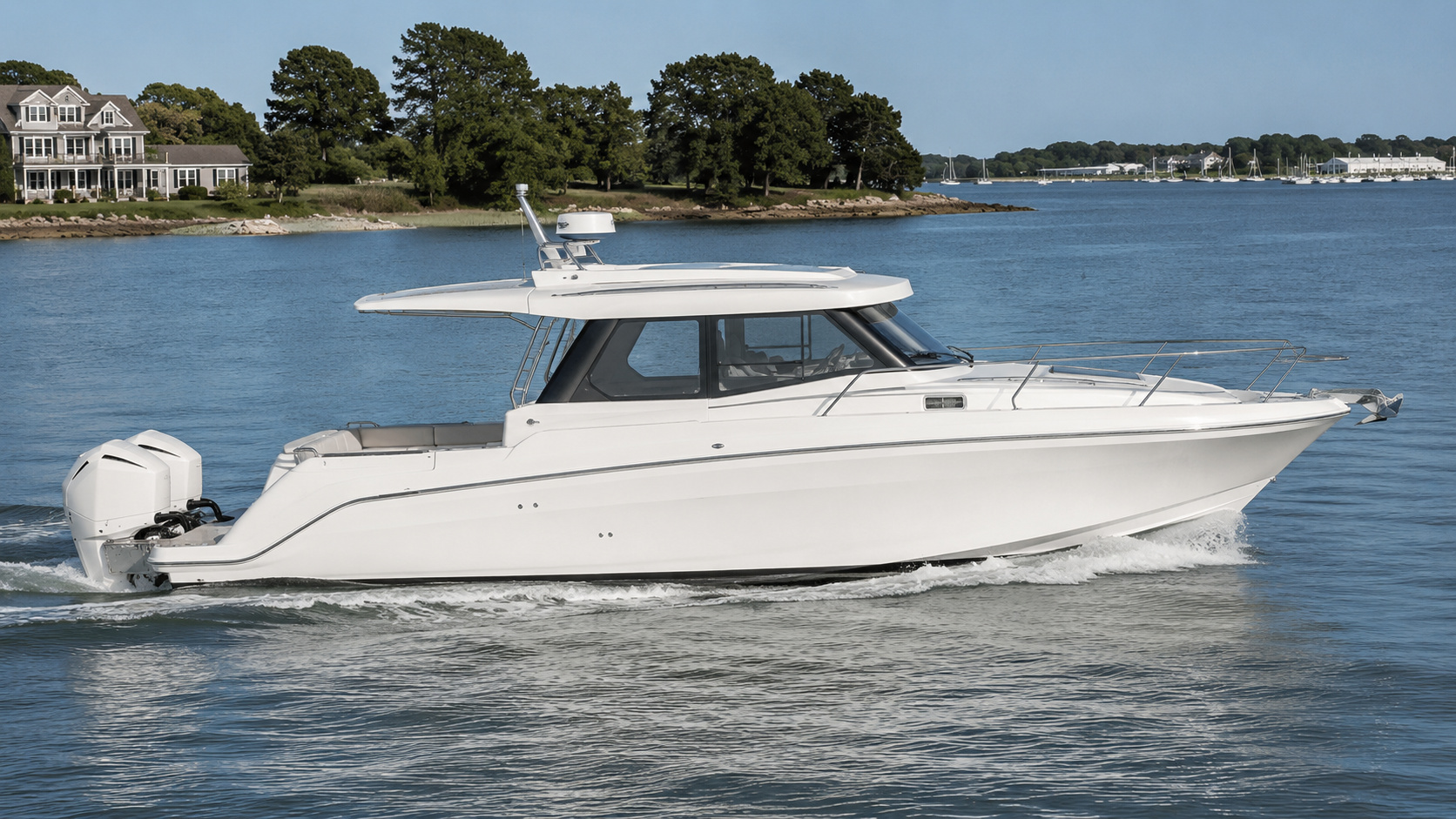
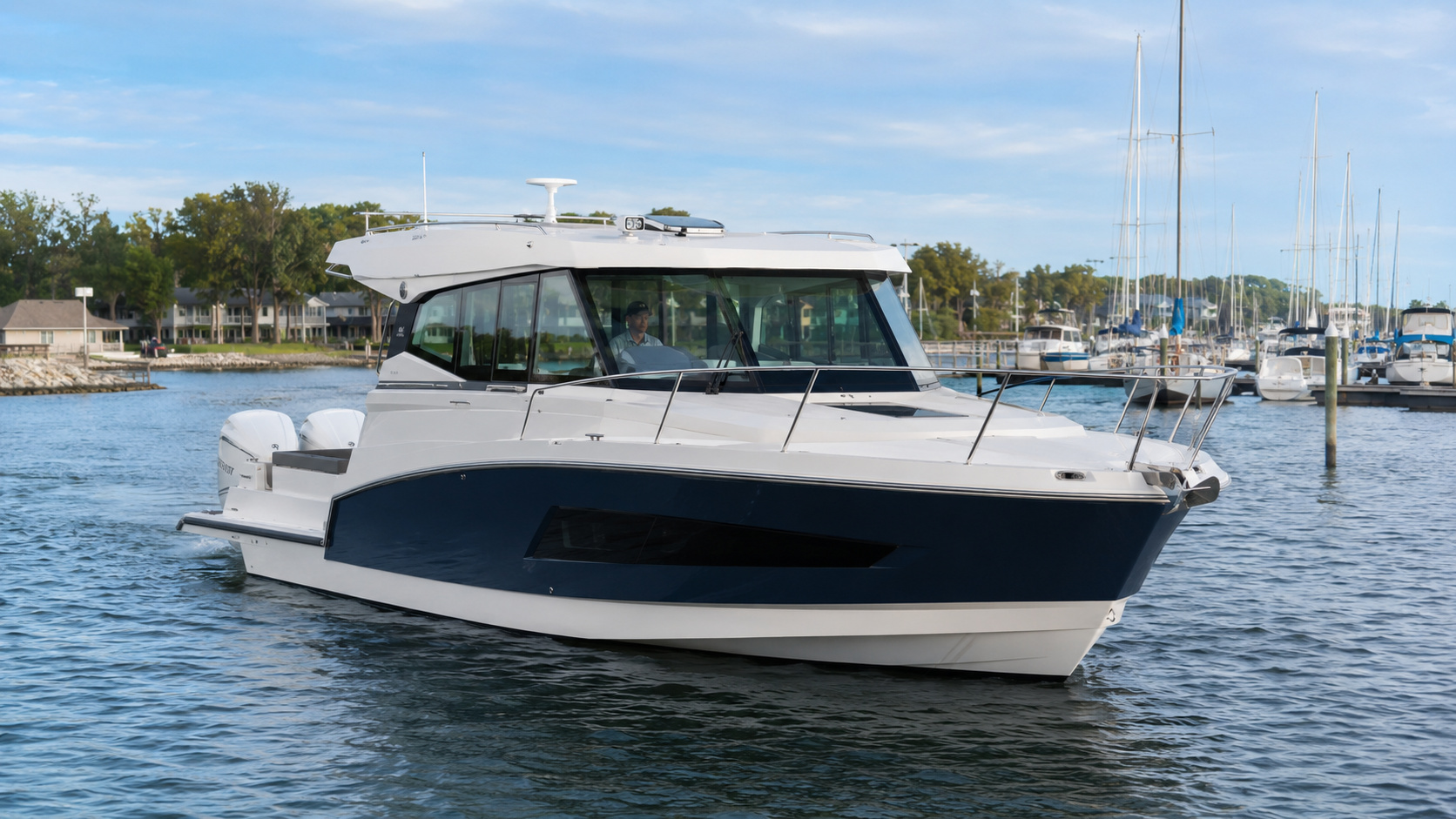
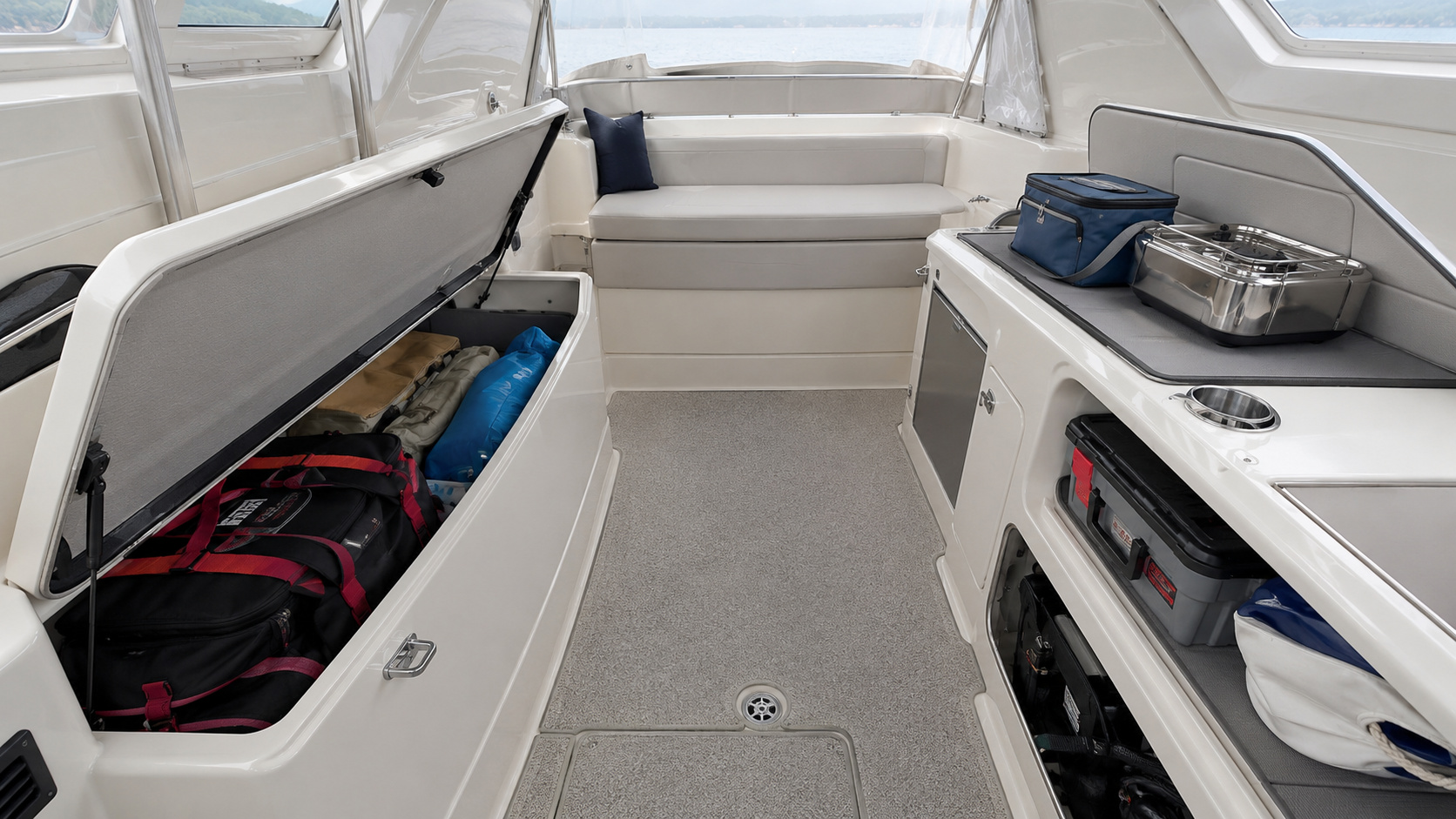
The T29 Explorer cockpit is large enough to support separate social functions without constant conversion. Bayliner lists an aft bench, L-lounge, cockpit sun lounge, table, sink with tap, storage below the aft seat, and folding backrest.
That means passengers can sit, eat, and move around without requiring the entire aft deck to become one fixed configuration.
The self-bailing cockpit and transom door support wet use. Swim platforms and platform extensions create broad water-access areas around the twin outboards.
The twin engines still occupy the transom, but the overall beam and platform width give Bayliner more room to create usable stern access than on a smaller single-outboard boat.
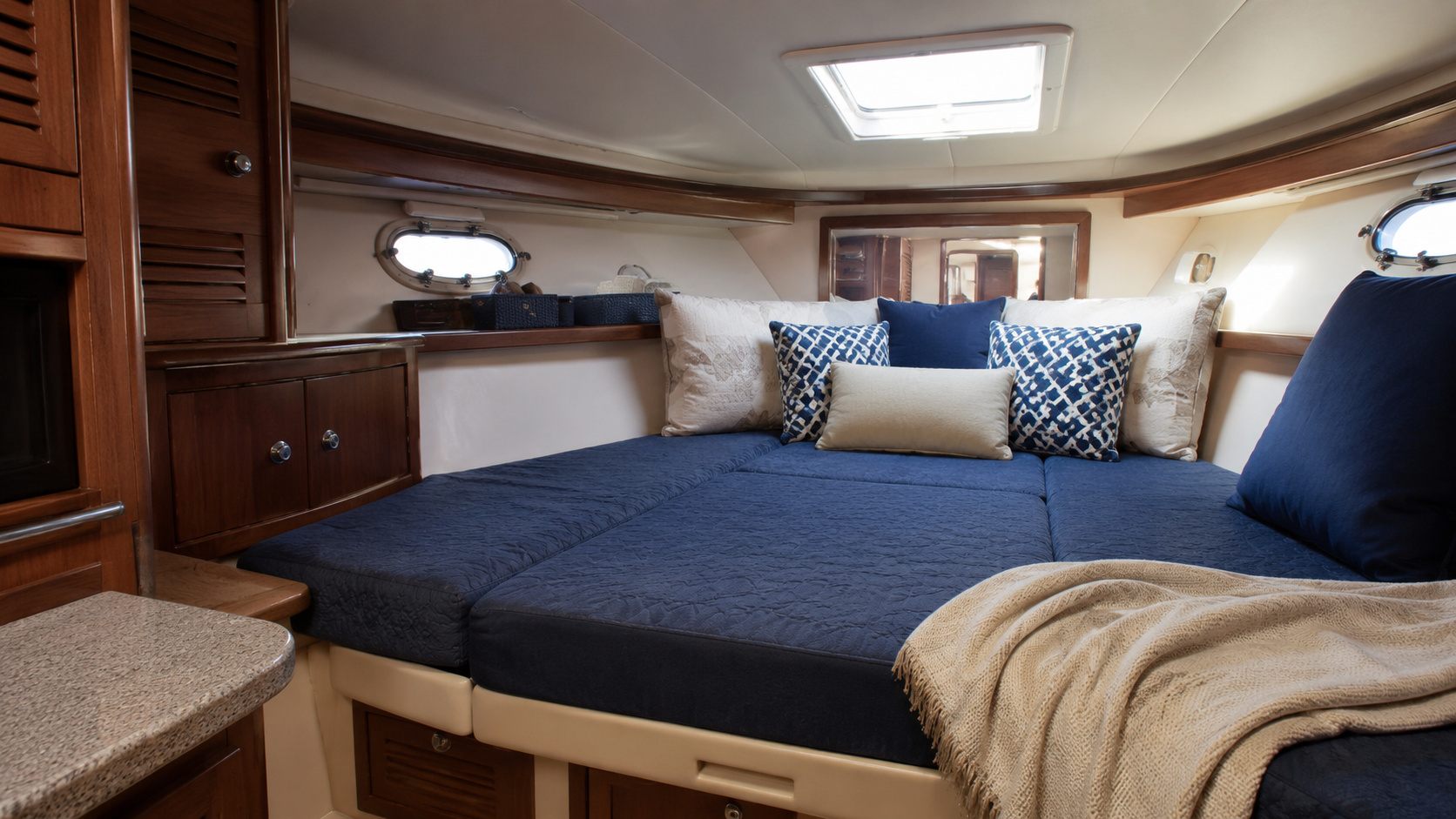
Inside, five berths make the cabin a genuine sleeping space rather than a place one person can nap. Storage below berths helps keep bags and bedding out of the main passage.
The cabin table provides dining or work space. Opening portlights and the hardtop roof hatch support ventilation, while blackout and flyscreen functionality on hatch coverings helps the space work after dark.
Bayliner pre-rigs for a microwave and includes an interior TV bracket. Those details show the model is intended for owners who expect to spend real hours inside rather than simply shelter from a passing shower.
Optional Wallas stove expands food preparation. Air conditioning or diesel heat changes the usable season and climate comfort.
A complete enclosed canvas can protect more cockpit area when weather deteriorates. Foredeck cushions create another lounge space away from the main cockpit.
Rod holders keep fishing in the boat’s repertoire, but the T29 is not a fishing-first Pilothouse. The cockpit furniture, galley equipment, and berth count make mixed family cruising the dominant identity.
The deck is worth paying for when several people can occupy different parts of the boat comfortably for an entire weekend. If most trips still involve two adults for an afternoon, the T25 Explorer may provide more than enough boat with far fewer systems.
126-Gallon Fuel Tank – Supports longer cruising legs and multi-day itineraries, with the ownership trade of much greater fuel weight and cost per fill.
Gives the T29 enough sleeping flexibility for a family or small group to treat overnight use as a normal part of ownership.
Provides 450 horsepower total and propulsion redundancy that the single-engine Explorer models do not offer.
Helps the operator control a broad, high-sided cruiser around docks and manage running attitude under uneven load.
Moves routine dock and anchoring operations closer to small-cruiser expectations than day-boat simplicity.
Gives buyers a factory-supported path toward better navigation and communication for longer or weather-variable trips.
Adds cooking and cool-weather capability for owners who intend to use the T29 beyond warm summer afternoons.
A T29 Explorer inspection should be approached system by system because the boat can contain more equipment than all of the smaller models combined.
Begin with both Mercury outboards. Match serial numbers to service records, verify hours on each engine, inspect propellers and skegs independently, and check steering, trim, cooling, anodes, lower-unit oil, and corrosion.
At the helm, verify the Simrad NSS EVO3S reads both engines correctly. Test GPS, VesselView, trim tabs, bow thruster, spotlight, navigation lights, and windlass.
Connect shore power. Inspect the inlet, cord, breakers, and any outlets or cabin circuits supplied from shore.
If a generator is installed, start it cold and place it under load. Run the cabin air conditioning at the same time if that is how the system is intended to be used.
Test 12-volt air conditioning independently where fitted. Run the diesel heater and Wallas stove. Check fuel or exhaust installation for any signs of leakage or improper service.
Inspect cabin windows, opening portlights, roof hatch, and canvas for water intrusion. Check under all five berth areas for moisture or mildew.
Test cabin lights, table hardware, microwave pre-rig area, TV bracket, cockpit lighting, shower, sink, and every freshwater pump.
Run the Fusion or installed audio system and any optional radar or VHF. Confirm radar rotates and displays targets rather than merely powering on.
Inspect the bilge and battery areas carefully. A larger overnight boat depends on electrical and pumping systems while occupants sleep and while the boat sits unattended.
The T29’s current inventory is young, so buyers should expect systems to function. Multiple small failures on a 2025 or 2026 boat can signal poor commissioning, storage, or owner care.
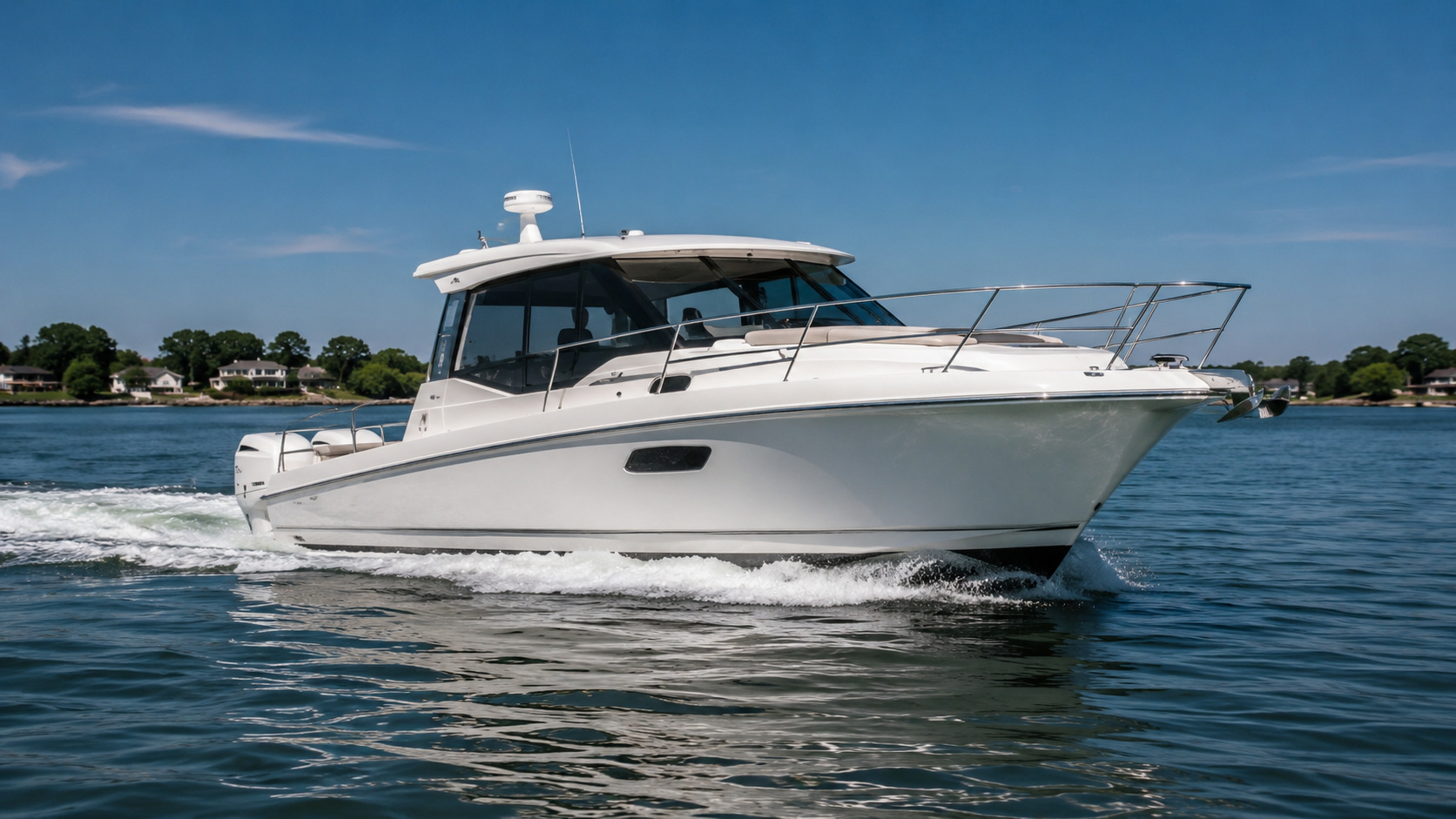
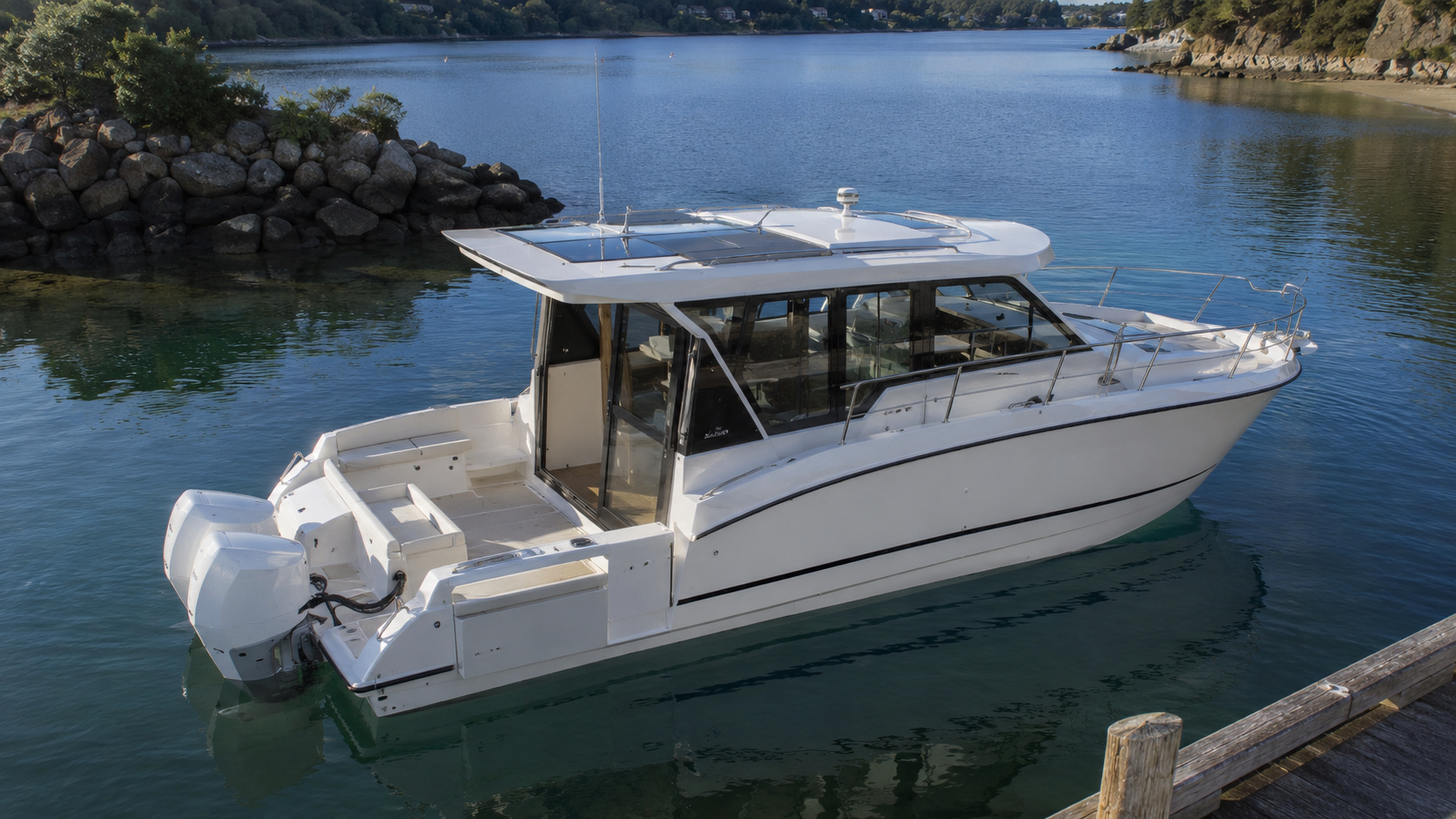
The T29 Explorer is transportable, but it should not be bought under the assumption that it will behave like a conventional trailer boat. The 9-foot-9-inch beam is well beyond the common 8-foot-6-inch unrestricted width used in many U.S. jurisdictions.
Professional transport, oversize permits, route restrictions, and storage yard access may all matter. Buyers should price those realities before deciding they will simply tow the boat wherever they want.
Approximate weight with standard engines is 6,508 pounds before trailer, 126 gallons of fuel, batteries, generator, climate equipment, water, provisions, and personal gear.
A loaded T29 can therefore become a serious tow package requiring a suitably capable vehicle and trailer if the owner intends to move it privately.
For many buyers, a marina slip is the natural home. That keeps the boat ready for weekend departure and makes shore power easy to use.
Slip ownership adds recurring costs for dockage, bottom cleaning or coating where applicable, marina electricity, pumpout, and winter storage in seasonal climates.
Dry-stack may be possible in some facilities, but beam, height, weight, and twin-outboard length need confirmation.
The cabin must also stay ventilated while the boat is stored. Five berth cushions, enclosed canvas, and climate systems create many surfaces that can hold moisture.
The T29 is the first boat in this package where storage and transport can influence the purchase almost as much as engine choice. A buyer who wants maximum mobility between distant lakes may find the T25 Explorer easier to live with even if the T29 is more comfortable once it arrives.
Buy the flagship only when the home for the boat is already part of the plan.
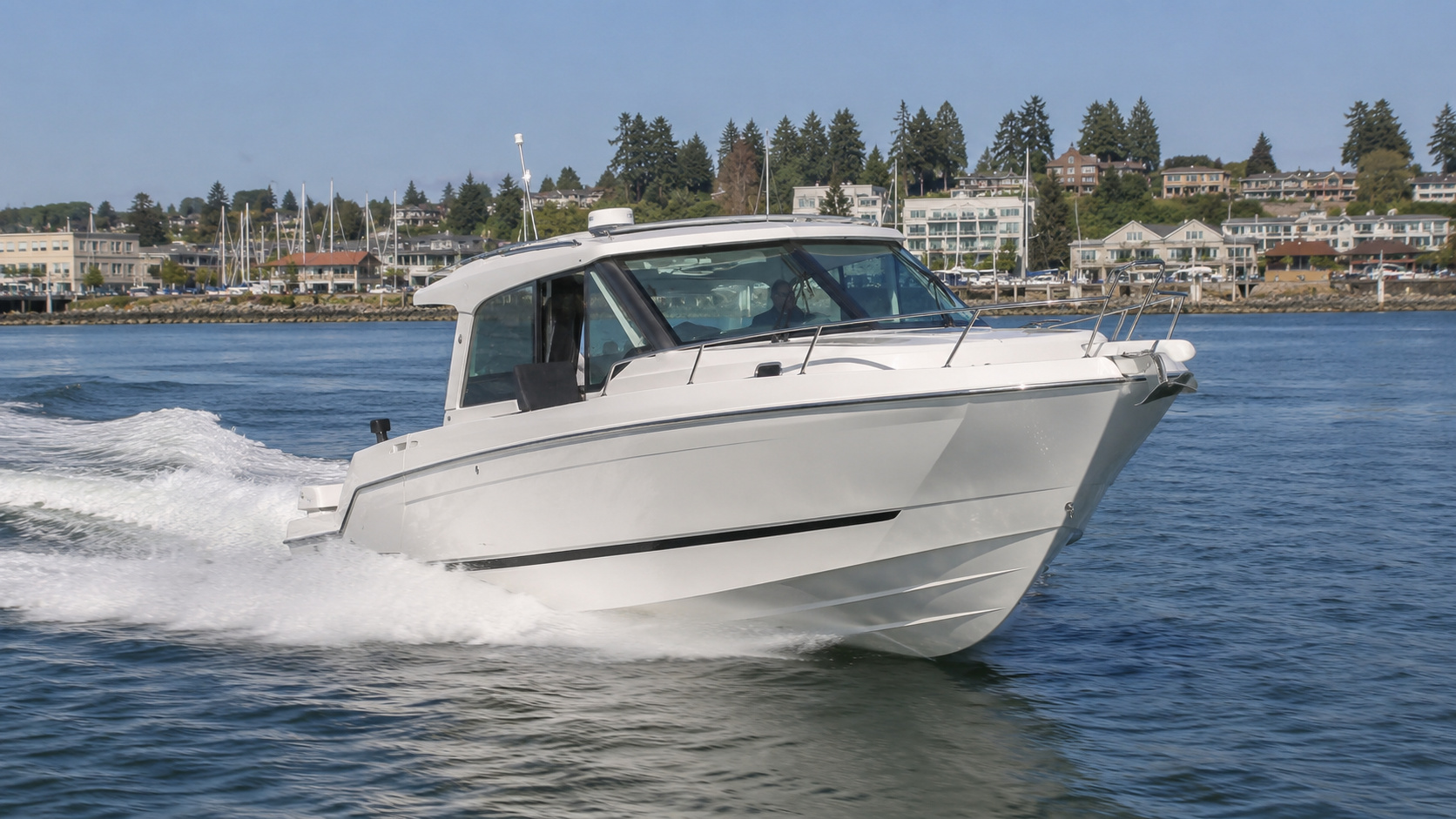
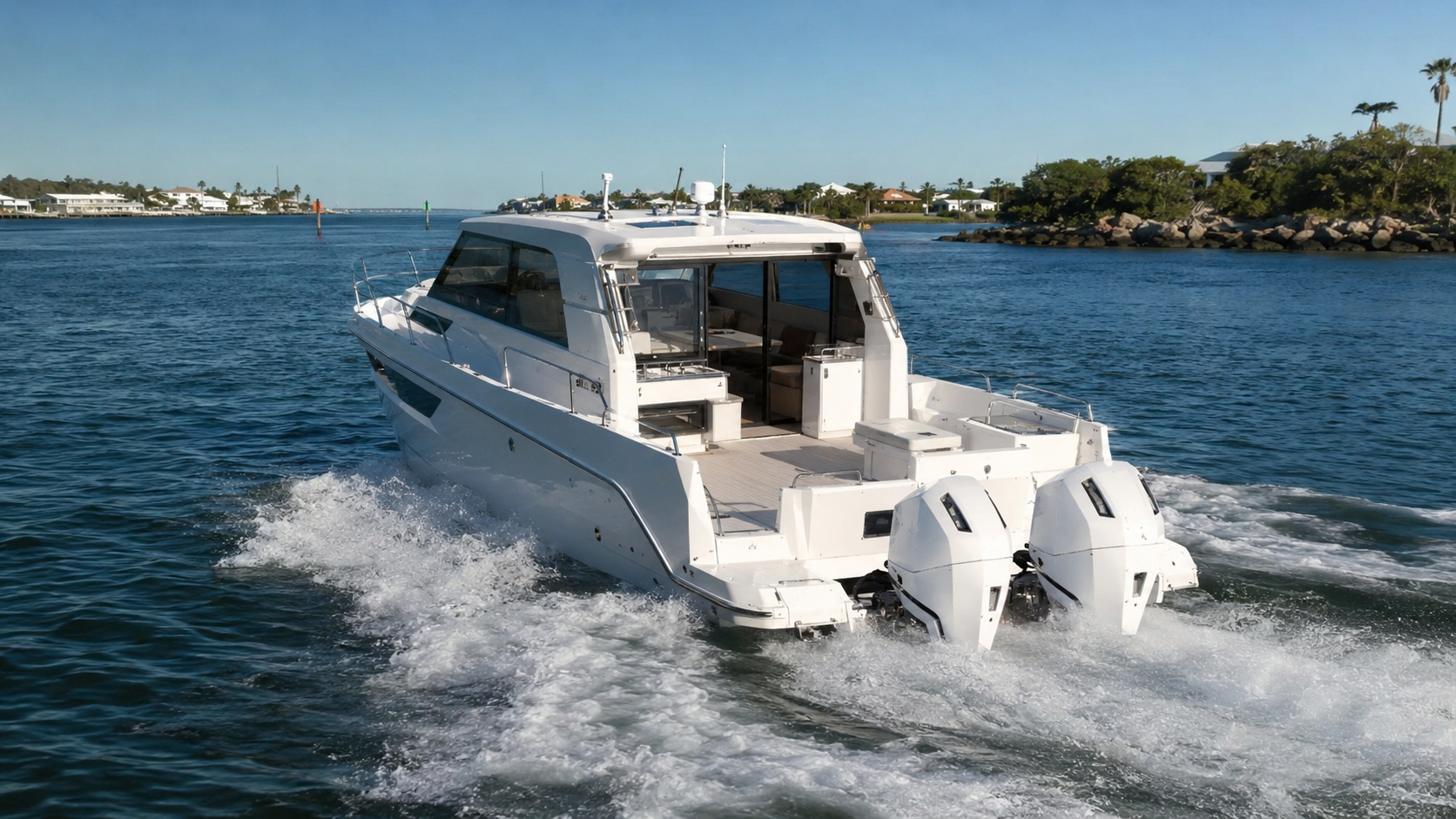
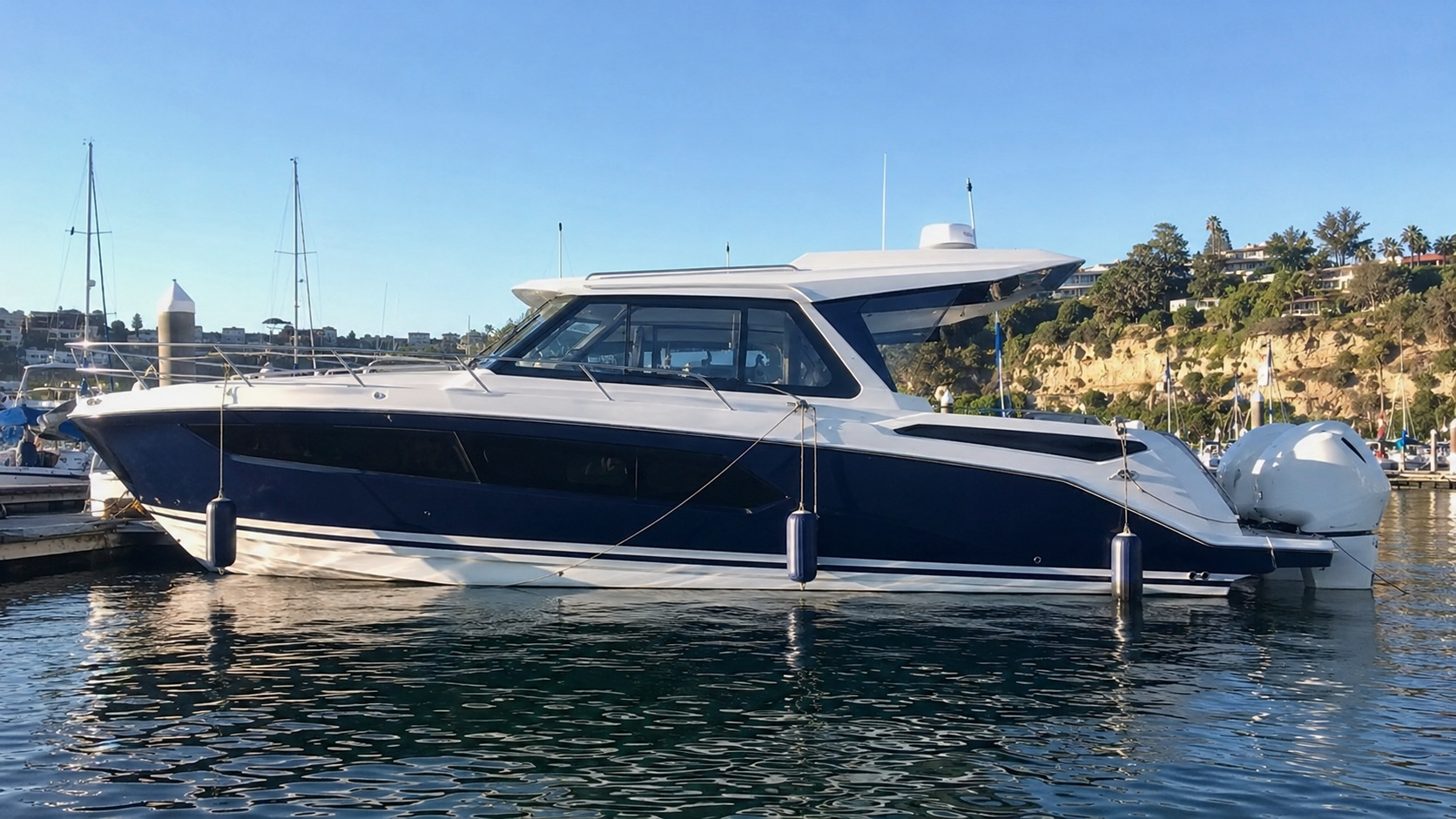
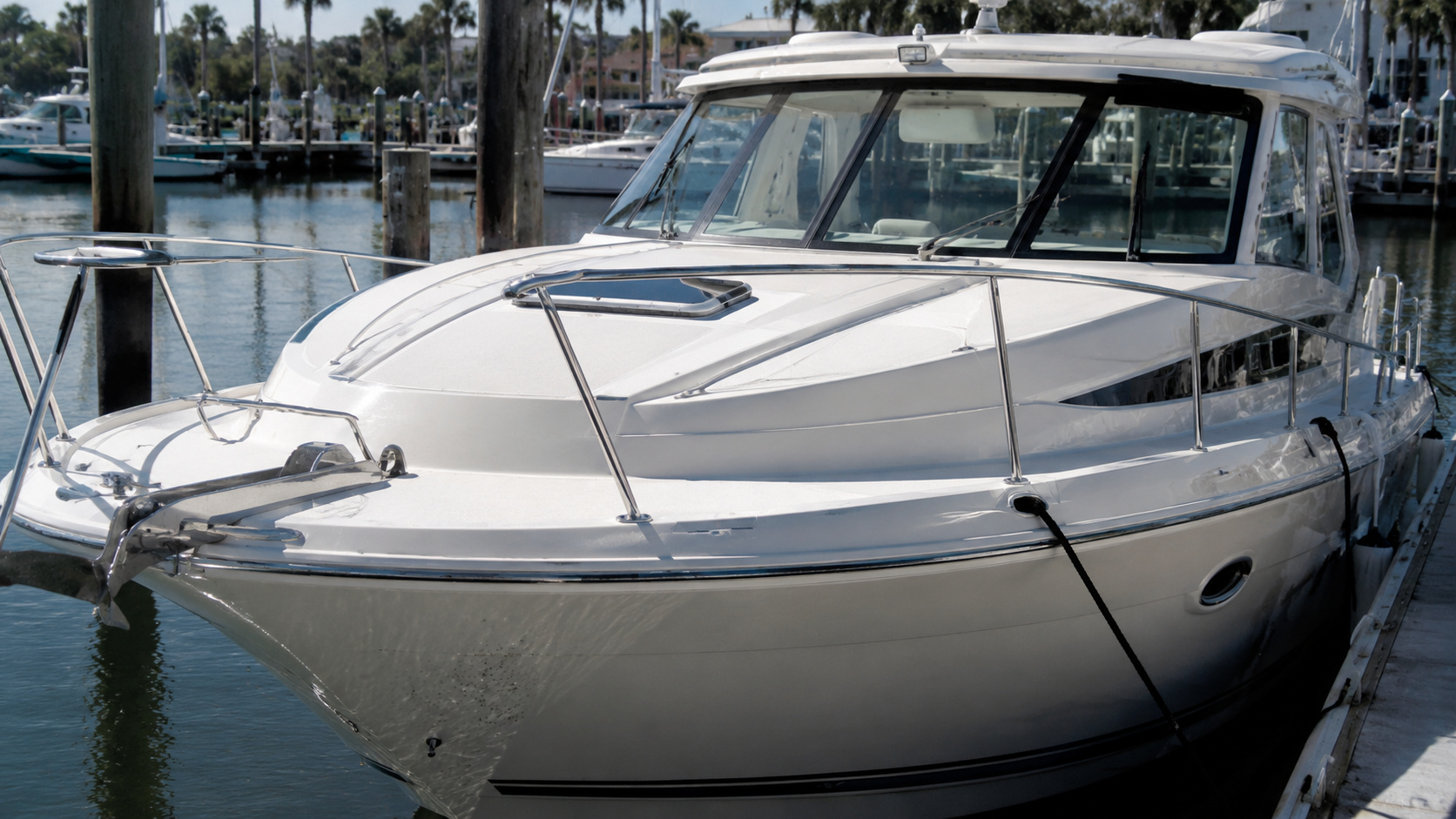
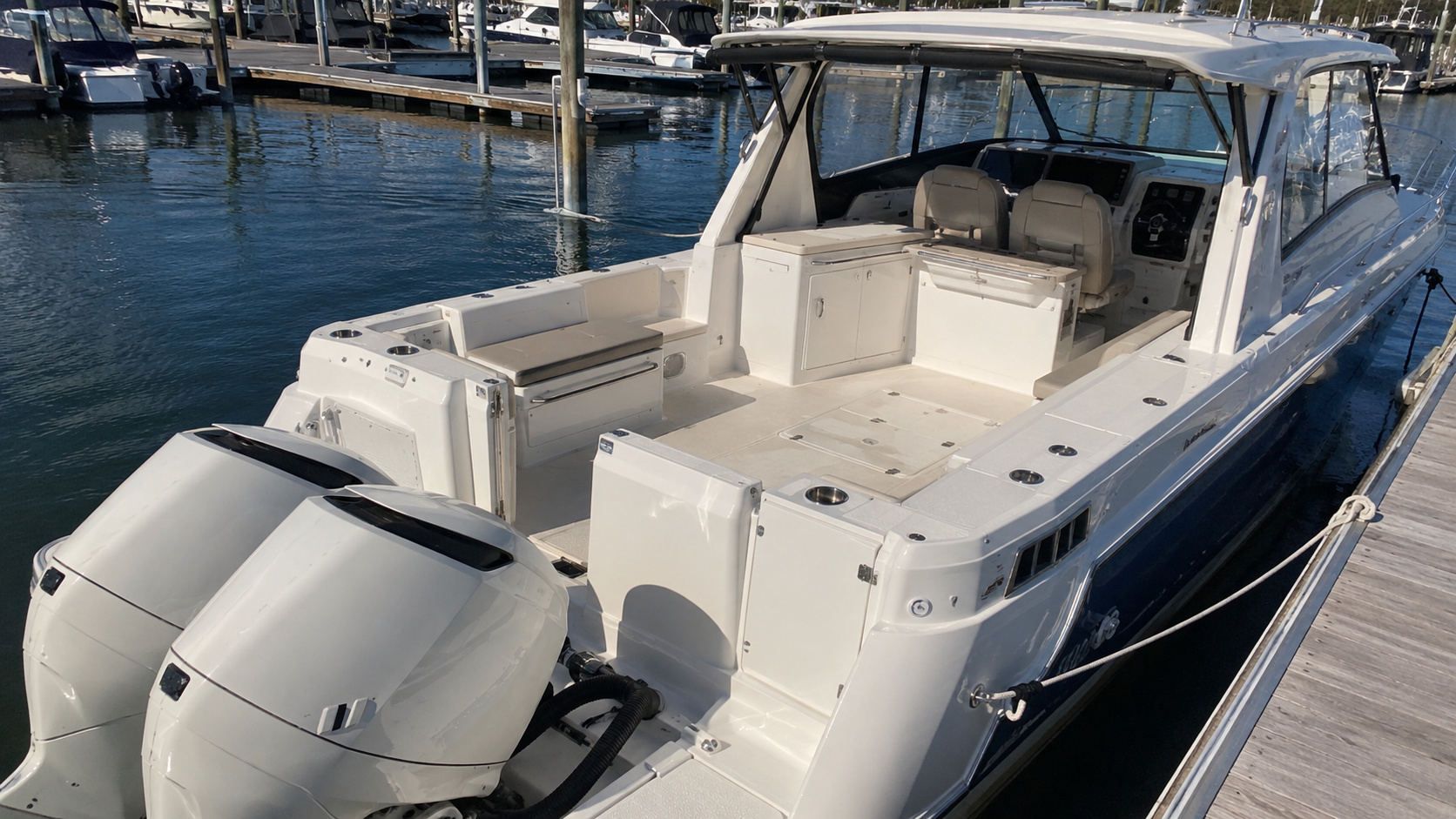
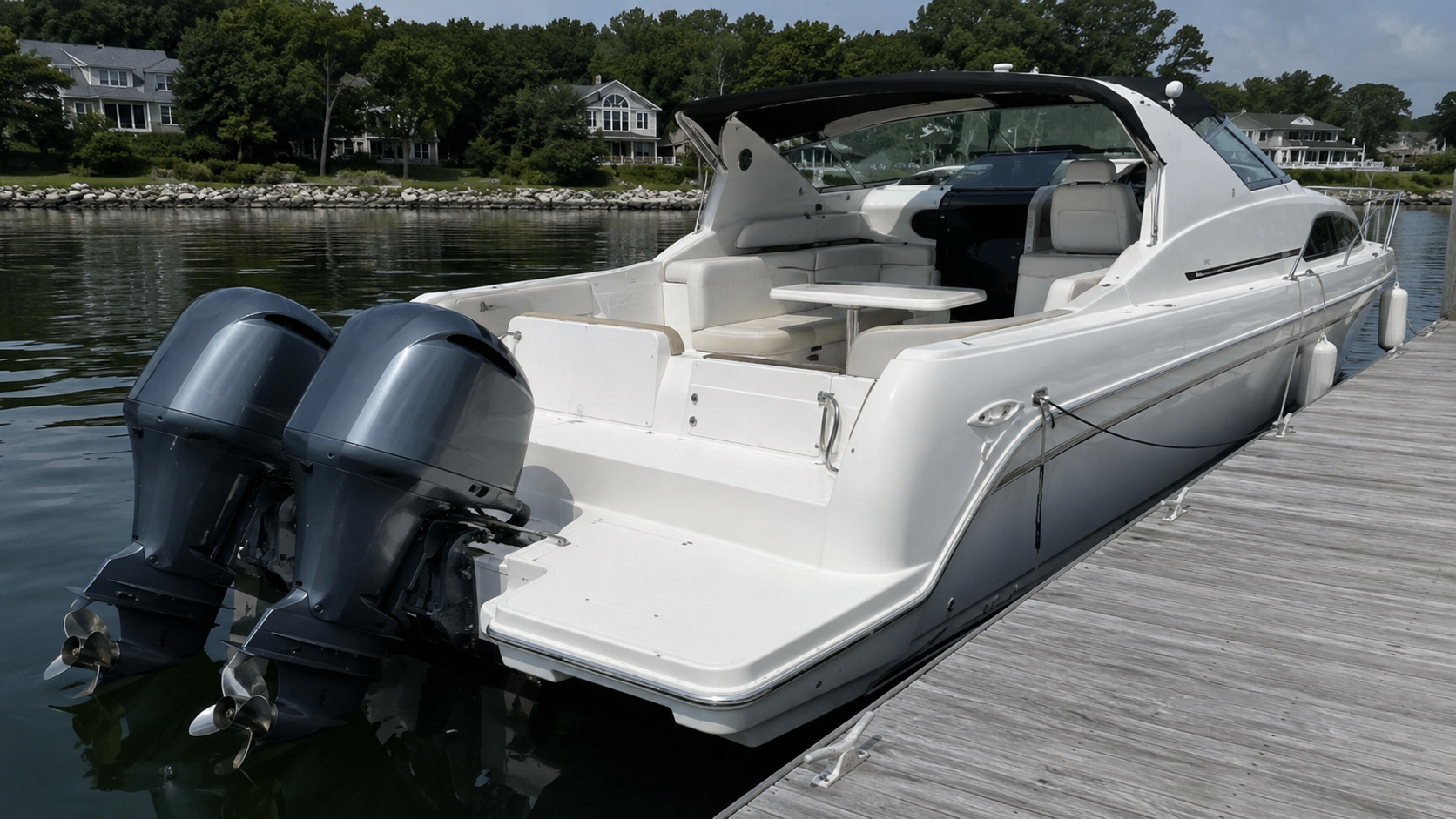
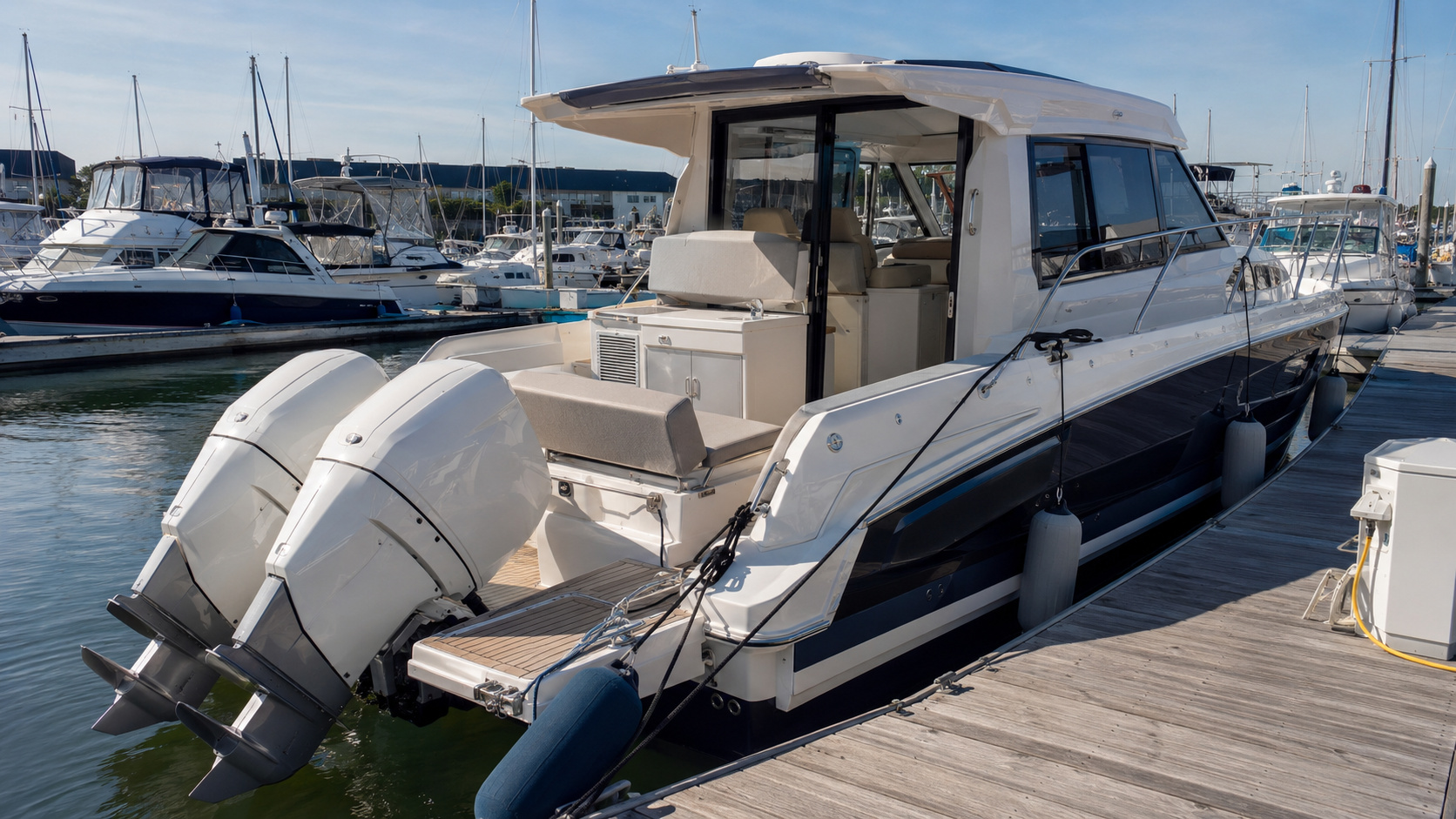
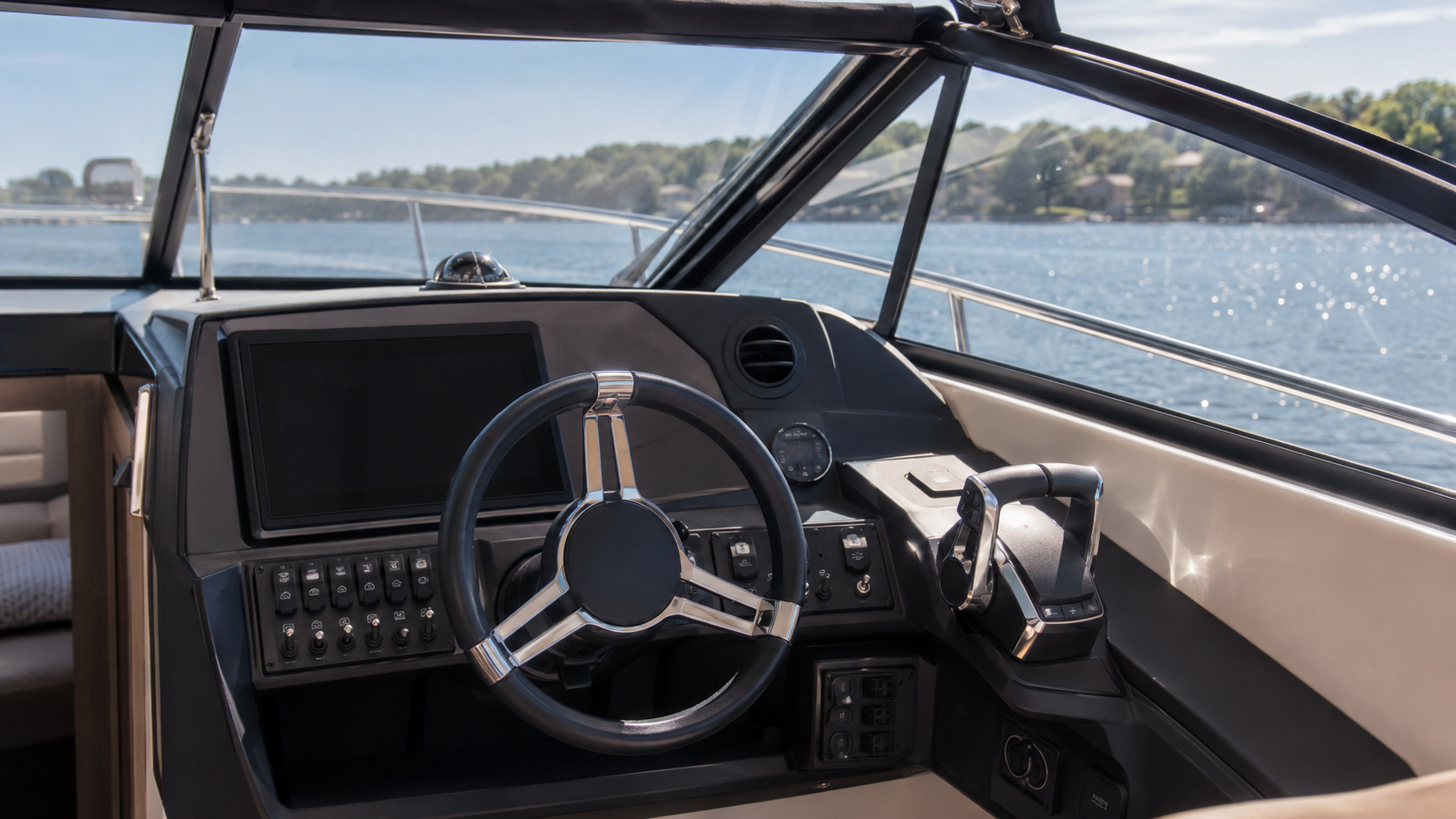
Market Character: Current national inventory is very thin and concentrated in 2025-2026 boats.
Current T29 Explorer inventory is extremely thin and concentrated in 2025 and 2026 boats.
Every current T29 uses twin 225-horsepower Mercury power, but rigging and option content can still create meaningful value differences.
Generator-supported cabin air conditioning is one of the biggest option distinctions. A buyer who intends to sleep aboard in hot climates may assign substantial value to a properly functioning generator and climate package.
Radar, VHF, Wallas stove, diesel heater, Flexiteek, foredeck cushions, additional cockpit lighting, and premium packages also change how prepared the boat is for longer trips.
Because inventory is scarce, geography may influence price. Traveling for the right configuration can be more rational than buying the closest boat and adding major systems later.
Scarcity is not a reason to skip inspection. At this price level, a poorly commissioned generator, water leak, electronics issue, or twin-engine maintenance problem can outweigh the cost of traveling to a cleaner boat.
Nearly new used examples should be compared directly against current dealer inventory and factory-equipped alternatives. A small discount is not automatically enough if the boat lacks the exact climate or navigation systems you want.
Use live price fields rather than freezing today’s market. The enduring buyer value is understanding that T29 price is driven by a complete cruising system, not simply hull length.
Pricing varies. Model year, engine package, options, trailer, condition and dealer all move the number, and listings change weekly. Send us the boat you are looking at and we will price that exact one.
Illustration only and not an offer of credit.
Leave room in the ownership budget for insurance, propulsion service, storage or dockage, cabin systems, pumps, electronics, and the first round of repairs or maintenance that can accompany any used overnight boat.
Illustration only and not an offer of credit. Your actual rate and term depend on credit profile, vessel age, loan amount and ownership structure.
The T29 Explorer’s closest internal comparison is the T25 Explorer, but the two are not interchangeable sizes of the same ownership experience.
T29 is 29 feet 10 inches long, 9 feet 9 inches wide, carries nine people in the official specification table, publishes five berths, holds 126 gallons, and uses twin 225s for 450 horsepower total.
T25 Explorer is 25 feet 6 inches long, 9 feet 4 inches wide, carries eleven people, publishes four berths, holds 74 gallons, and uses one outboard up to 300 horsepower.
The T25 wins on simpler propulsion, lower weight, smaller beam, and higher published day capacity.
The T29 wins on berth count, fuel, twin-engine redundancy, cabin volume, and the ability to support generator-based air conditioning and more cruiser-like systems.
Do not move to T29 because two additional berths sound useful once a year. Move to it when the family is genuinely planning longer trips that justify the twin-engine and marina-level ownership commitment.
There is no current T29 Pilothouse sibling. Buyers who need the largest fishing-first cockpit should compare the T25 Pilothouse rather than expecting the T29 Explorer to become a tournament platform through options.
Buying a T29 Explorer should begin with the boat’s home. Before negotiating, decide whether it will live in a slip, dry stack, storage yard, or travel on an oversize trailer.
Next, confirm the exact option package. Generator, air conditioning, radar, VHF, heater, stove, Flexiteek, foredeck cushions, and premium equipment materially change both use and value.
Review service on both outboards separately. Match hours and serial numbers. A difference between engines can indicate replacement, diagnostic history, or usage that deserves explanation.
Start the generator cold if fitted. Run air conditioning from the intended power source. A generator that works unloaded but faults when the compressor starts is not ready for an overnight trip.
Inspect every cabin opening for leaks. Look around hull-side windows, portlights, roof hatch, windshield, and canvas. Check beneath berth cushions for moisture.
Test shore power, bow thruster, windlass, trim tabs, spotlight, Simrad, radar, VHF, cabin lights, cockpit lights, water pumps, sink, shower, and any cooking equipment.
Look at the five berth arrangements with the actual sleeping crew in mind. A listed berth count does not tell you whether adults of your size will sleep comfortably.
Inspect the twin-engine steering and control system during a sea trial. Practice docking using both engines and the bow thruster.
If the boat has been marina-kept, inspect bottom condition and corrosion. If it has been trailered, inspect the transport equipment and ask how wide-load moves were handled.
Compare a T25 Explorer before buying. If the smaller boat already handles the actual trip plan, the T29’s additional systems can become cost without benefit.
If the T25 clearly feels like a compromise, the T29 is doing its job. Buy the cleanest, best-equipped boat for the routes you genuinely intend to run.
If you already found a Bayliner T29 Explorer, send Float Finance the exact listing, asking price, model year, engine configuration, seller type, and major installed equipment. An overnight boat’s financing should be built around the real transaction, not a stripped base price that ignores the systems you plan to use.
The T29 Explorer is 29 feet 10 inches long with a 9-foot-9-inch beam and 17 degrees of deadrise. Bayliner publishes 2 feet 1 inch of minimum draft, 3 feet 7 inches of maximum draft, and approximately 6,508 pounds with standard engines.
Bayliner’s official model specification table lists nine people. Some promotional wording on the site references room for ten, but the specification table is the safer capacity figure to use when comparing the boat.
Bayliner publishes five berths. The cabin also includes berth storage, table, opening portlights, roof hatch, microwave pre-rig, and an interior TV bracket.
The current T29 uses twin 225-horsepower Mercury V6 outboards for 450 horsepower total. Bayliner lists DTS and power-steering configurations depending on rigging.
Fuel capacity is 126 gallons. That is 52 gallons more than the T25 Explorer and supports longer cruising, though it also adds substantial weight when full.
Yes. Bayliner lists 12-volt air conditioning and a diesel generator with cabin air conditioning among available options. Buyers should verify the exact boat because those systems are not present on every listing.
No, not in the same unrestricted way as a conventional-width trailer boat. Its 9-foot-9-inch beam exceeds common 8-foot-6-inch unrestricted width limits in many places, and the boat weighs about 6,508 pounds before trailer, fuel, and equipment. Transport planning is part of ownership.
Choose T29 for twin engines, five berths, 126 gallons, larger cabin volume, and more serious climate and cruising systems. Choose T25 for simpler single-engine ownership, smaller beam, lower weight, four berths, and less complex storage and transport.
Tell us a little bit about yourself and the boat you are looking to finance.