
Call Us : 207-994-5109
Mon – Fri: 8 am to 9 pm & Sat – Sun: 10 am to 8 pm
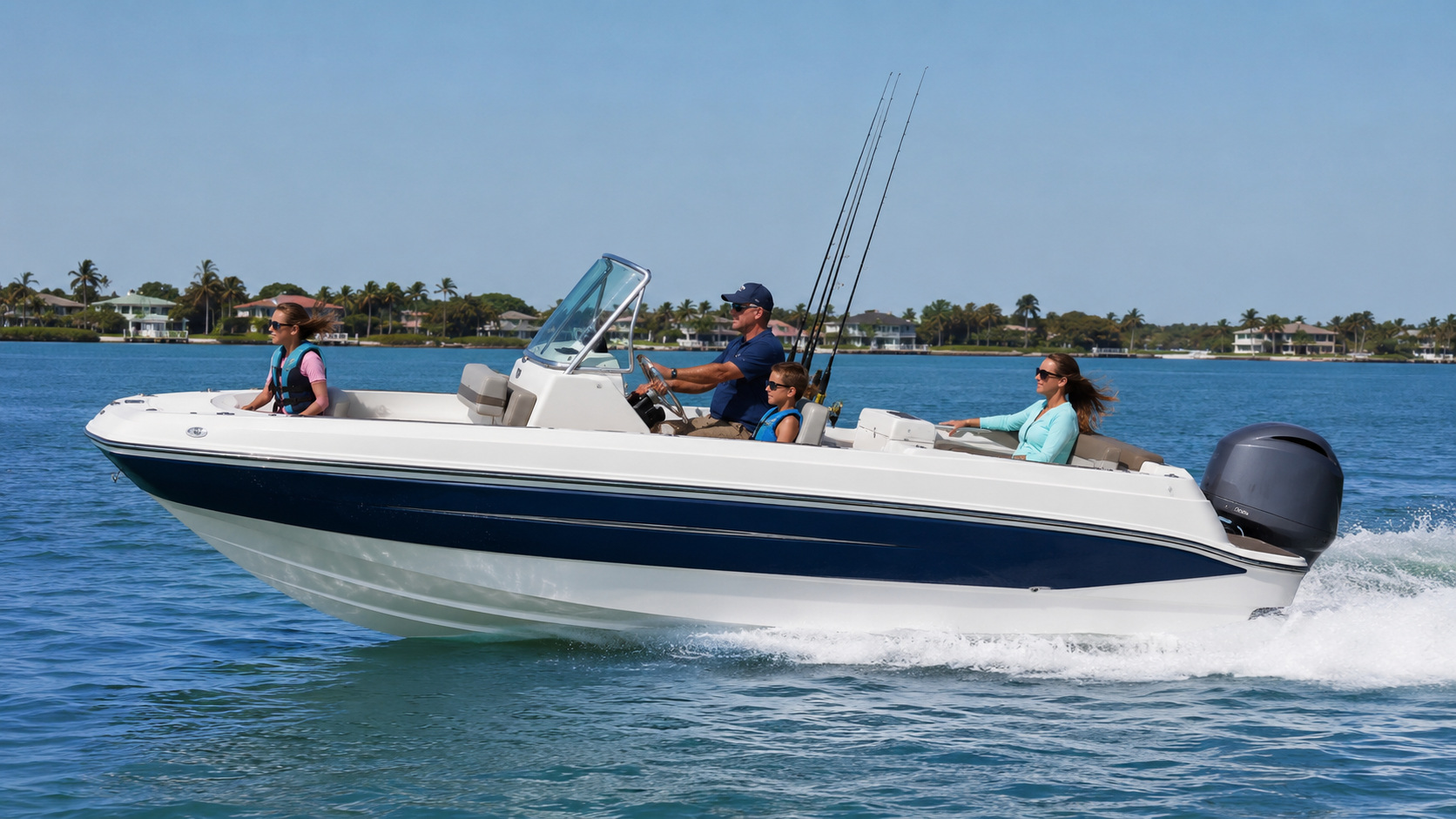
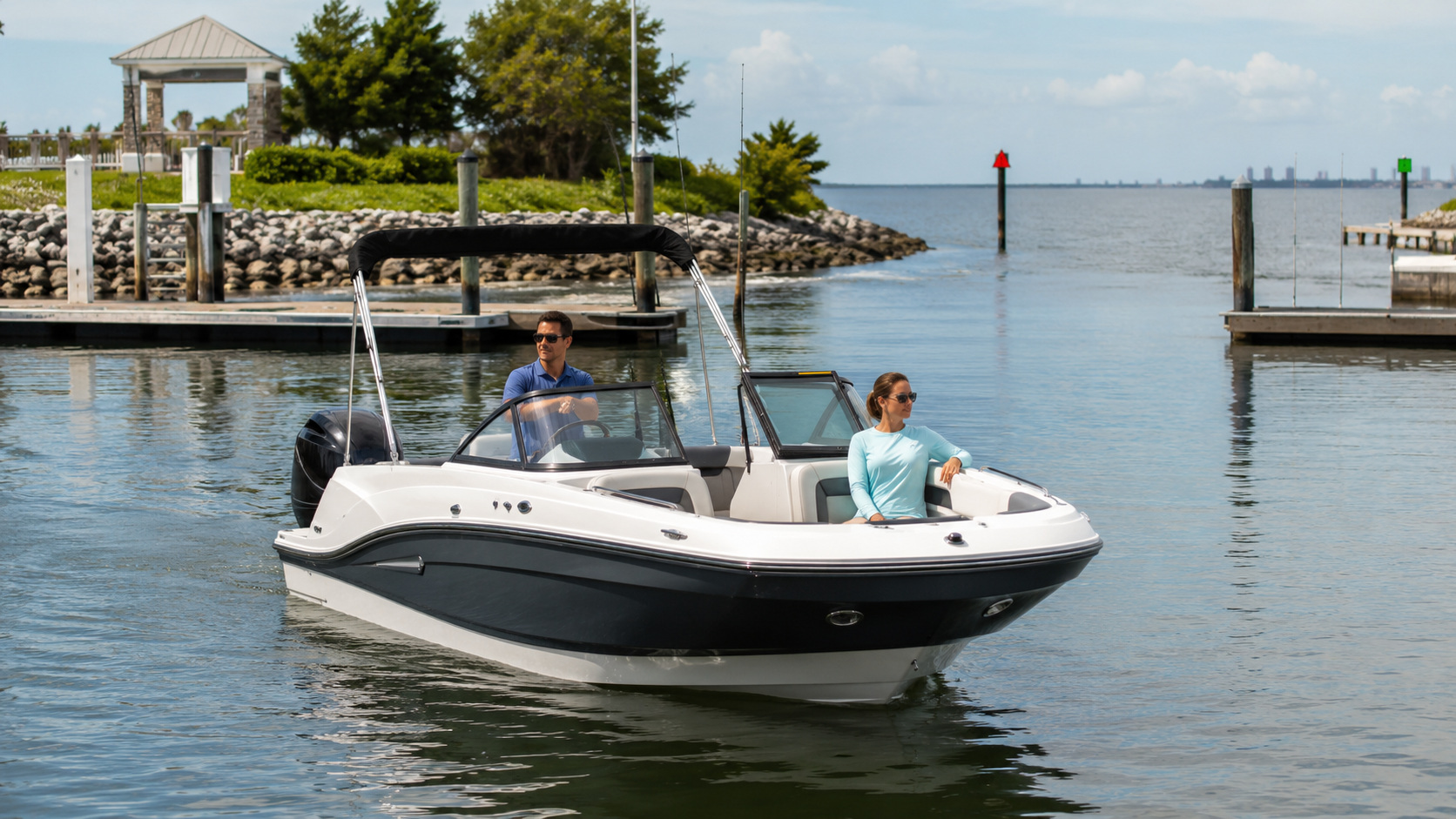
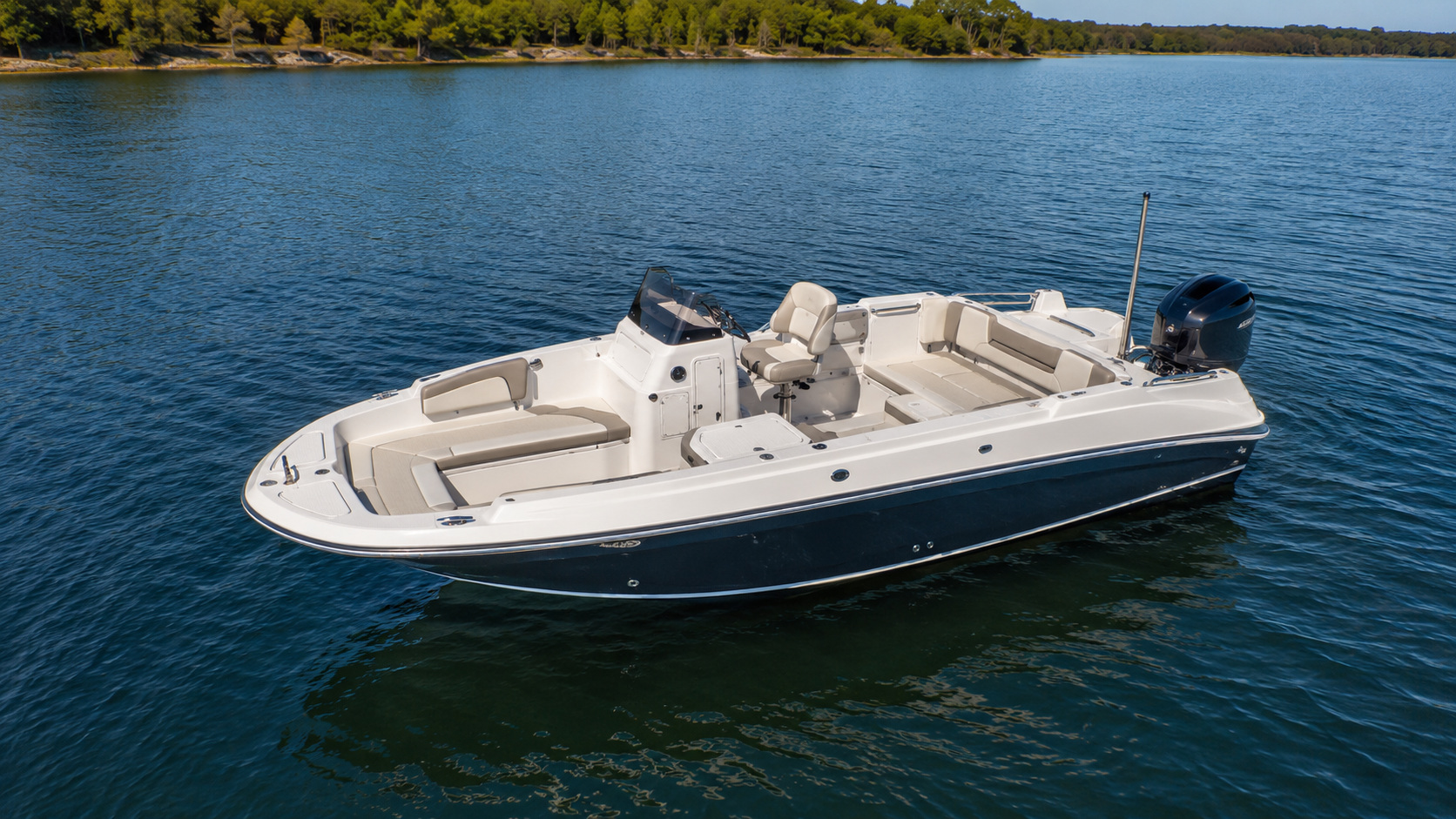
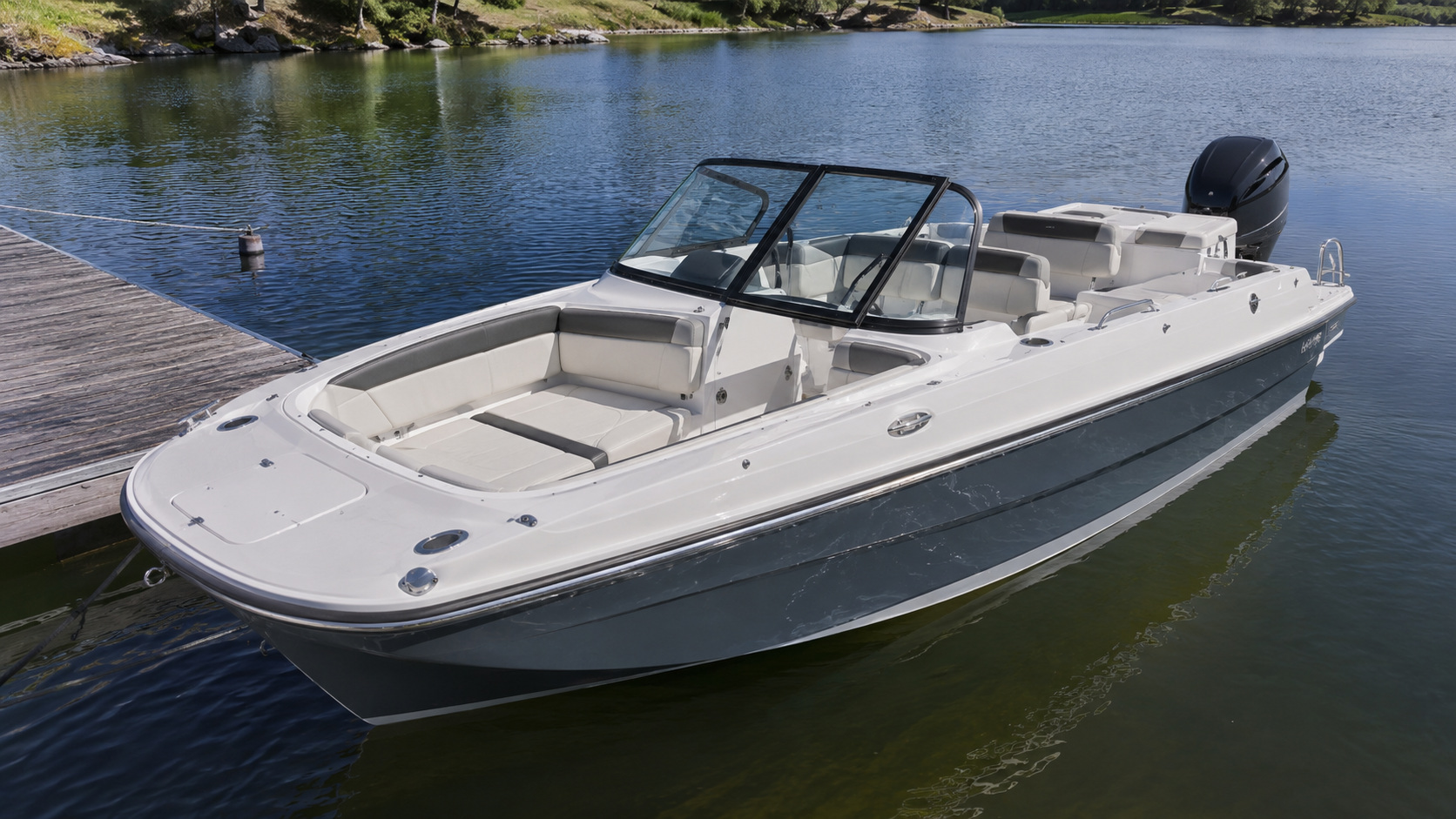
The Bayliner T22SC is a 22’7″ side-console fishing boat for buyers who want real fishability, 10-person capacity, and family-friendly seating without giving up Mercury outboard simplicity.
The T22SC is for the buyer who wants fishing to remain the reason for owning the boat but does not want every inch of the layout dictated by a center console. Bayliner gives the boat a livewell, gunnel rod storage, insulated fish box, self-bailing cockpit, and an 80-gallon tank, then adds a side-console seating arrangement that is easier to share with family members who are not actively fishing.
Standard power is a 150-horsepower Mercury EFI FourStroke, and Bayliner allows up to 250 horsepower. That gives buyers a broad power decision. The standard engine can make sense for lighter crews and value-focused ownership. The 250 is the configuration to consider when several adults, a full 80-gallon tank, tackle, coolers, and longer runs are normal.
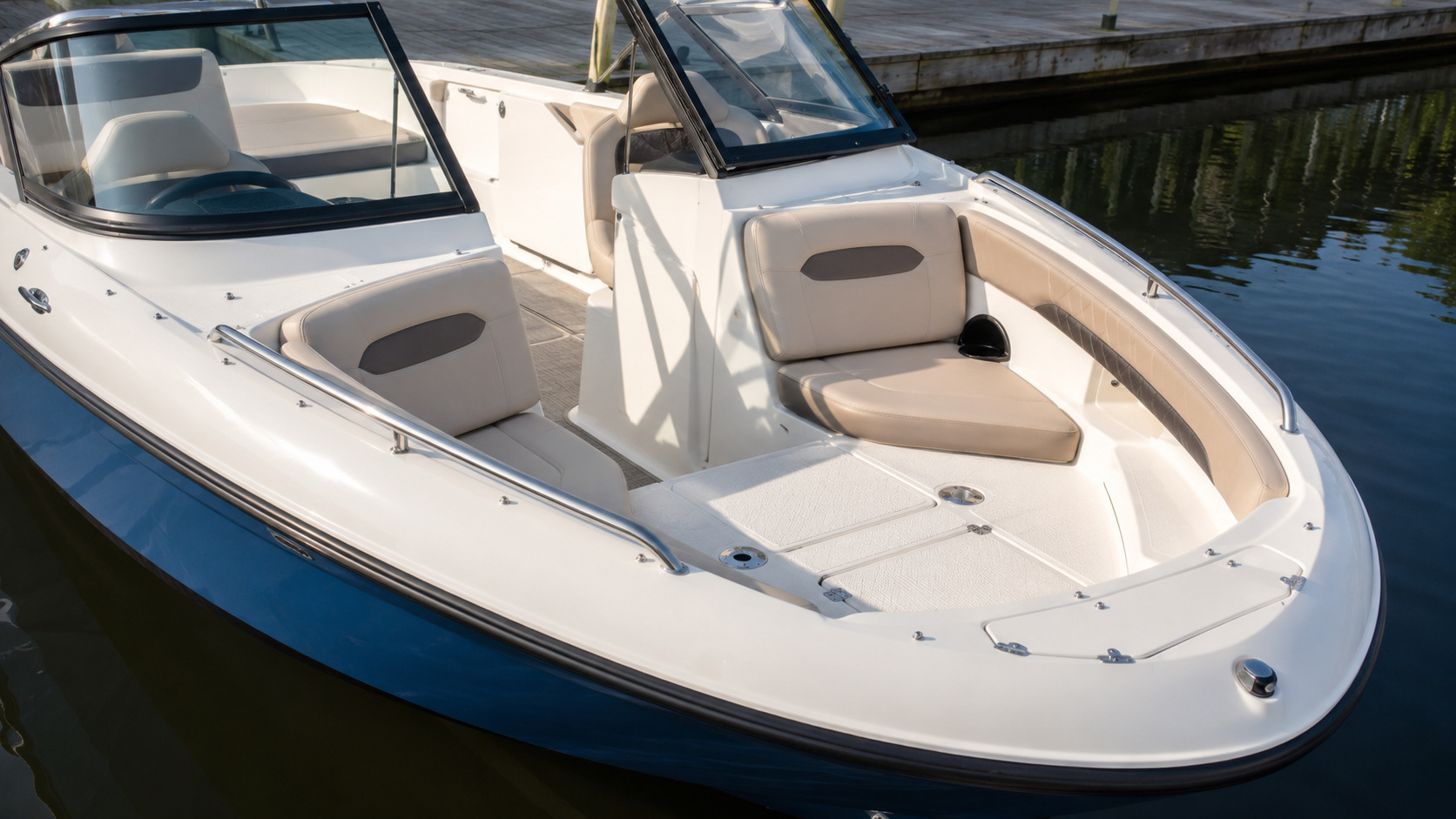
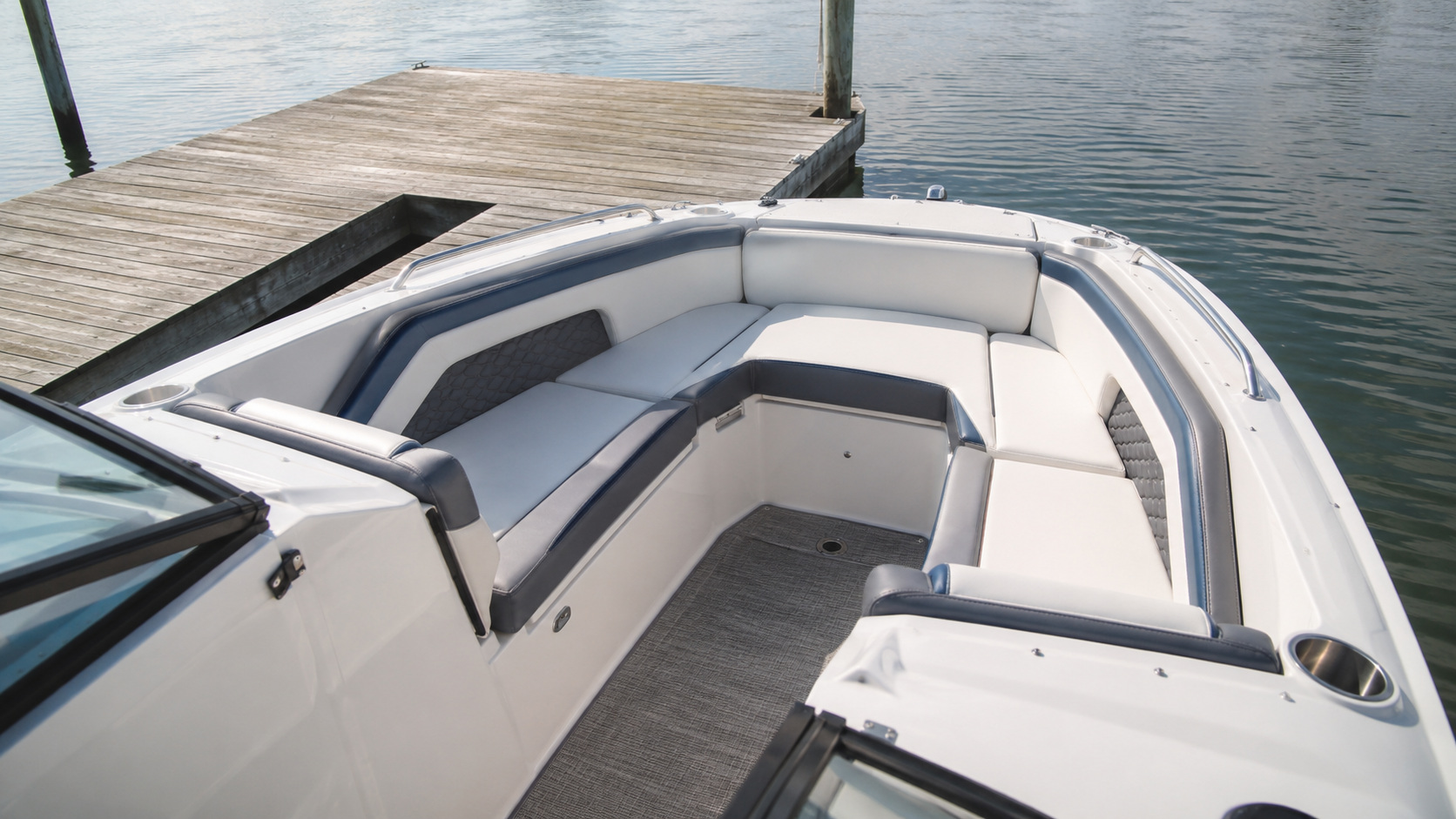
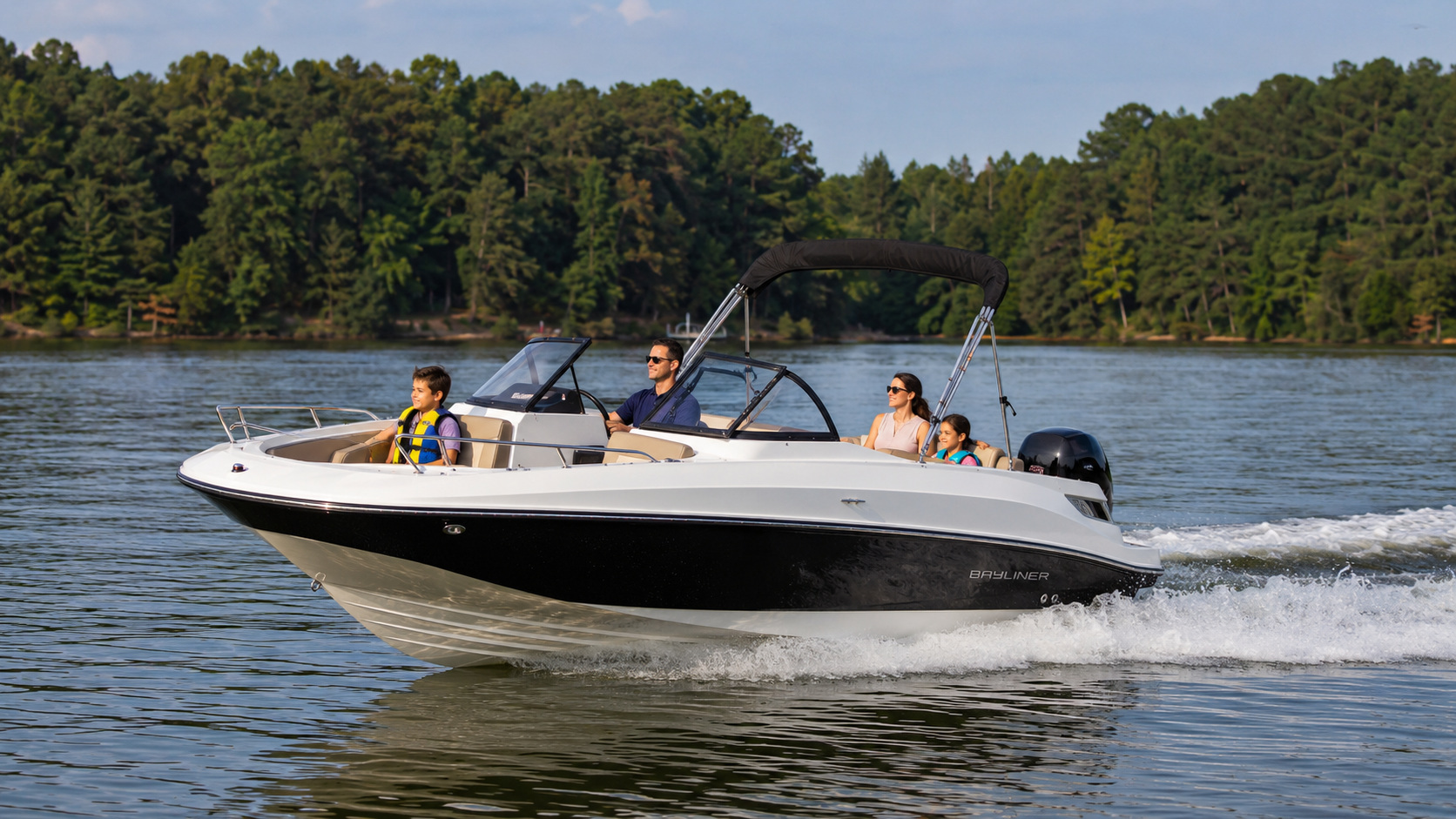
The side-console layout is the reason to choose the model. Bayliner describes the boat as a family-friendly alternative to a traditional center console, and the hardware supports that claim. Premium forward console bench seating gives passengers a place to sit behind more structure, while the helm windshield adds protection from wind and spray.
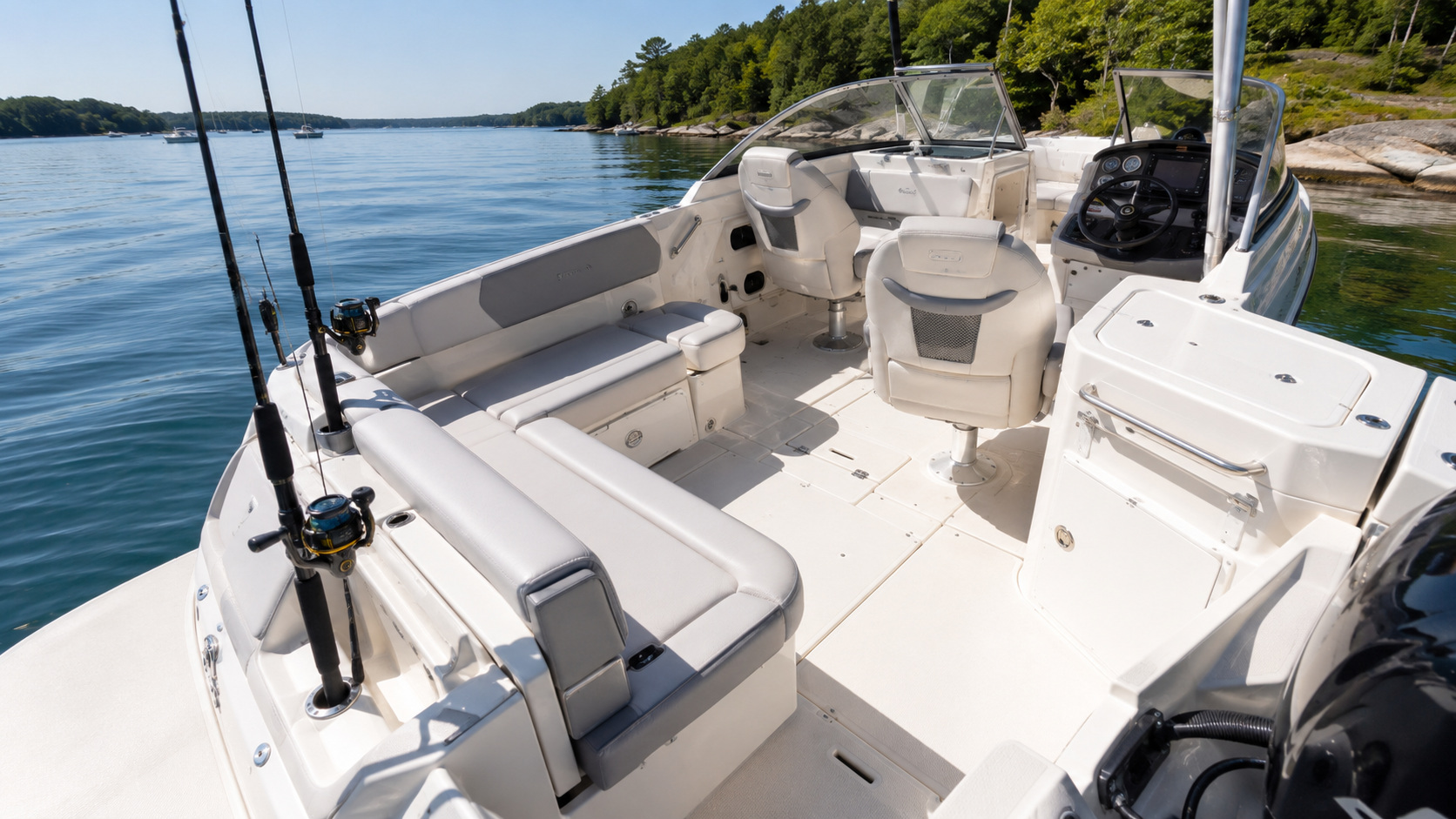
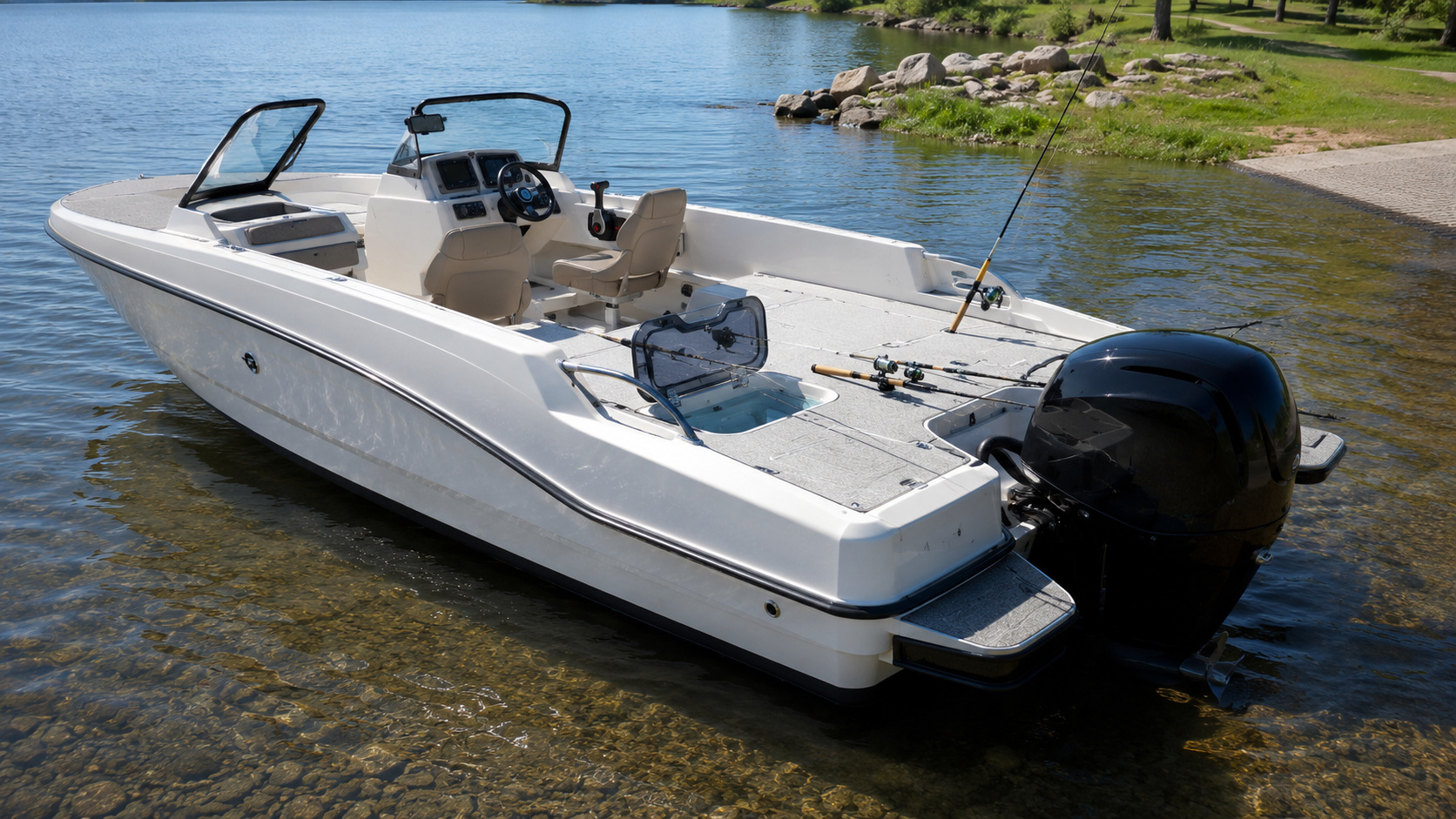
That comfort does not erase the fishing mission. Removable cushions let the owner clear seating when more working deck space is needed. Rod storage is built into the gunnels. The insulated fish box keeps a catch out of loose coolers. The livewell gives bait a proper system instead of requiring another portable container.
The closest comparison is Bayliner’s T22CC. It shares the same 22-foot-7-inch overall length and ten-person rating, but its center-console layout provides more symmetrical walkaround movement and accepts up to 300 horsepower. The T22SC gives up some of that center-console purity in exchange for a passenger arrangement that can be more appealing to a mixed crew.
That distinction matters more than a specification sheet. If four anglers need to work all sides of the console constantly, the T22CC may be the cleaner tool. If two or three people fish while children, a spouse, or guests spend part of the day sitting, swimming, eating, or cruising, the T22SC can fit the household better.
Current inventory is still almost entirely new or nearly new. National listings are concentrated in 2025 and 2026 boats, so buyers are not shopping a mature ten-year used market. Price differences are more likely to reflect engine selection, factory packages, electronics, trailer, dealer fees, and equipment than broad age-related depreciation.
Buy the T22SC when the side-console layout makes the boat more useful to your actual household without giving up the fishing systems you care about. If the family comfort features feel unnecessary, compare the T22CC before committing.
Published factory figures. Confirm every dimension against the individual boat before you commit.
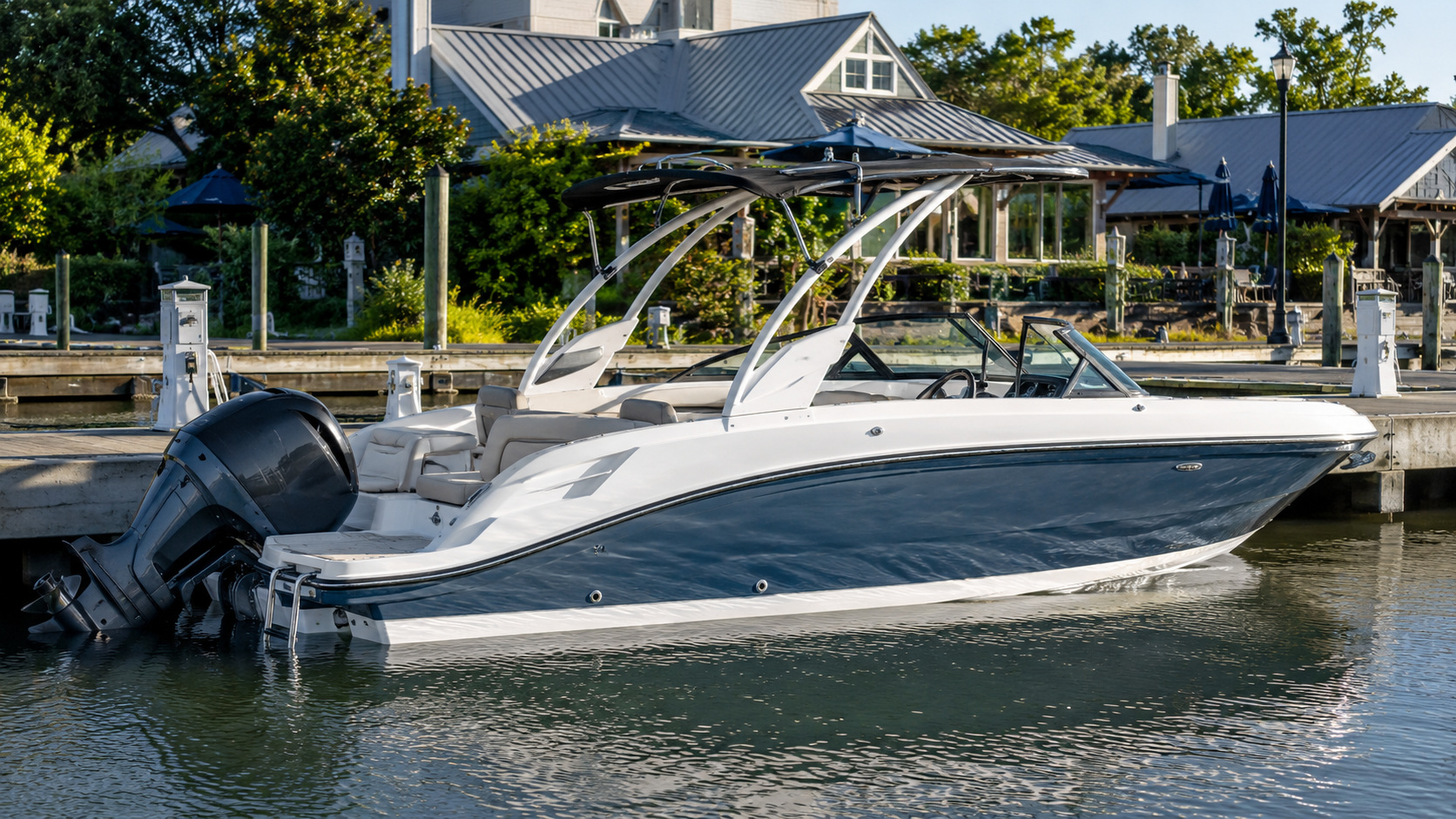
Bayliner gives the T22SC a 22-foot-7-inch hull with the full 8-foot-6-inch trailerable beam. That width is central to the design because a side console has to create usable fishing lanes, passenger seating, and storage without the symmetry of a center-console walkway on both sides.
The 18-degree deadrise is a moderate recreational deep-V angle. It gives the hull enough V to handle ordinary nearshore chop and open-water wakes without requiring the power and weight of a much steeper offshore hull.
Buyers should interpret that honestly. The T22SC is capable of coastal fishing and open-water use in appropriate conditions, but 18 degrees and a single-engine 22-foot hull do not turn it into a heavy offshore battlewagon. When the water stacks up, slowing down is part of operating the boat correctly.
Approximate weight with the standard engine is 4,500 pounds. That is a substantial figure for a 22-foot-7-inch single-engine boat and reflects the broad hull, fishing systems, seating, and fuel capacity.
The weight becomes more meaningful when the 80-gallon tank is considered. A full load of gasoline adds hundreds of pounds before passengers, tackle, ice, coolers, batteries, anchors, and safety equipment are aboard.
Passenger capacity is ten, with a maximum published people weight of 1,650 pounds. Those numbers provide family flexibility, but they should not be mistaken for a recommendation to fish ten adults at once.
Ten passengers and four active anglers create different spatial requirements. A buyer should board the boat with the normal crew in mind and physically walk from bow to stern while imagining rods, tackle bags, and cooler lids open.
The self-bailing cockpit is a useful hull-level feature because water brought aboard can drain without relying entirely on the bilge pump. That matters on a fishing boat that sees spray, bait, washdown, and swimmers.
For the buyer, the T22SC hull strikes a clear balance. It is wide and substantial enough to feel like a serious fishing platform, yet it stays within a conventional beam and single-outboard ownership model.
The T22SC gives buyers one of the widest horsepower decisions in this size range. Standard power is 150 horsepower, while Bayliner allows as much as 250.
That difference should not be treated as a simple “bigger is better” choice. The correct engine depends on crew, fuel load, fishing equipment, watersports use, and how far the boat needs to run.
A 150-horsepower T22SC can make sense for a family that keeps loads moderate, fishes local water, and values lower acquisition cost. It also keeps the single-engine ownership model simple.
A 250-horsepower boat is much easier to justify when the T22SC will regularly carry several adults, a full 80-gallon tank, loaded coolers, batteries, tackle, and extra equipment. More horsepower can improve acceleration and reduce the sense that the engine is working hard to bring a heavy boat onto plane.
Sea-trial the engine that is actually installed. Do not assume the maximum rating from the Bayliner page describes every boat for sale.
Outboard ownership is one of the T22SC’s practical strengths. The engine is visible and easy to inspect from the stern. Routine flushing, lower-unit service, propeller work, anode inspection, and future repowering are more straightforward than on an in-hull sterndrive.
For saltwater buyers, inspect corrosion closely. Look around mounting hardware, steering components, trim cylinders, anodes, and the lower unit. Surface detailing can hide a boat that was not rinsed consistently.
Check the cooling stream on start-up. Listen for clean idle. Shift into forward and reverse. Run trim through the operating range and feel for steering play.
Inspect the propeller and skeg for evidence of shallow-water contact. A fishing boat is more likely than a marina-only cruiser to spend time near flats, beaches, ramps, and submerged structure.
Ask for engine hours and service history even on a 2025 or 2026 boat. A two-season fishing boat can accumulate serious hours quickly if it belongs to an owner who fishes several mornings a week.
If the 150 feels adequate with your normal load, there is no prize for paying for 250. If the 150 feels labored with a full crew, buy enough engine the first time instead of hoping the boat will somehow become lighter after delivery.
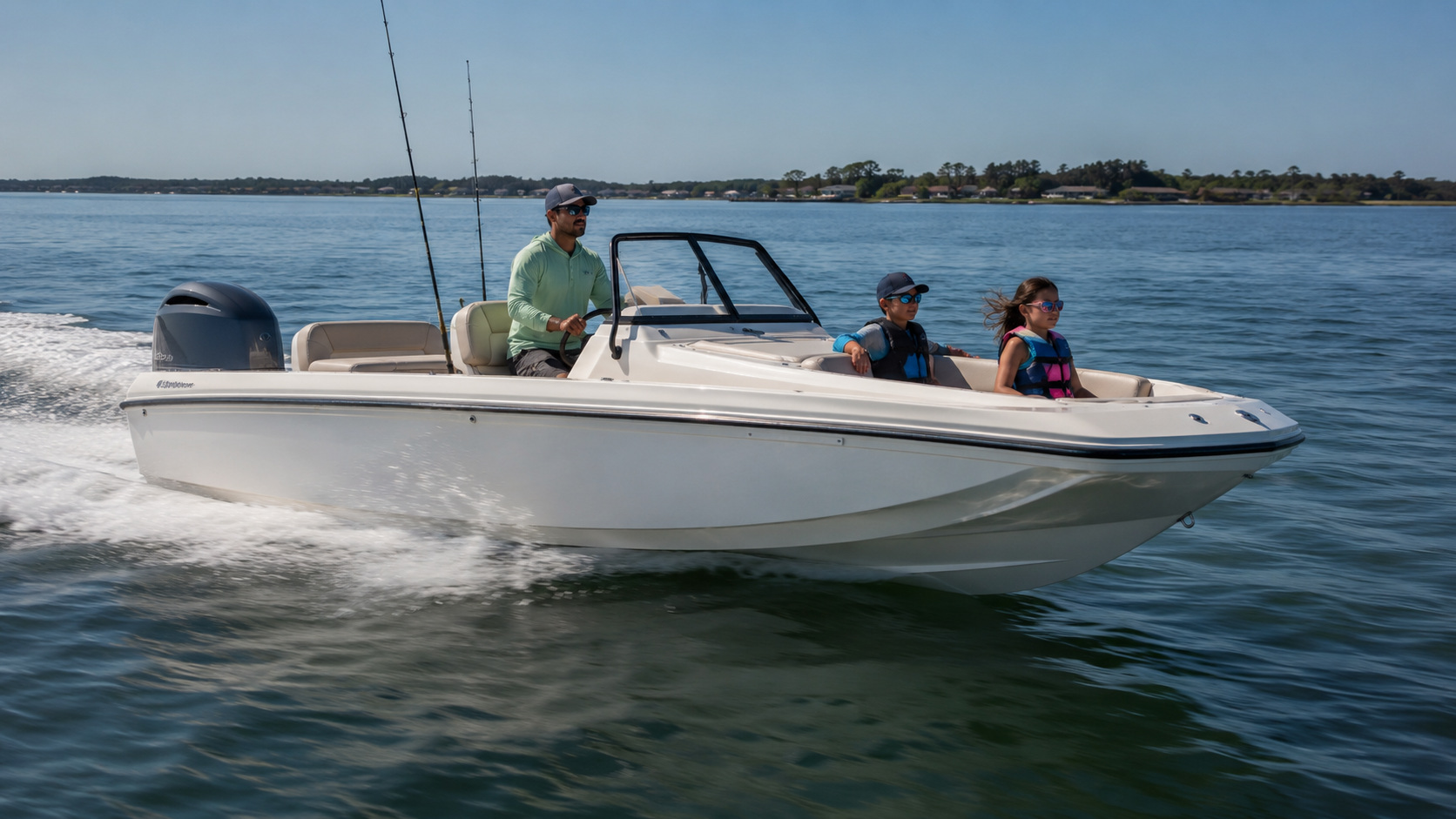
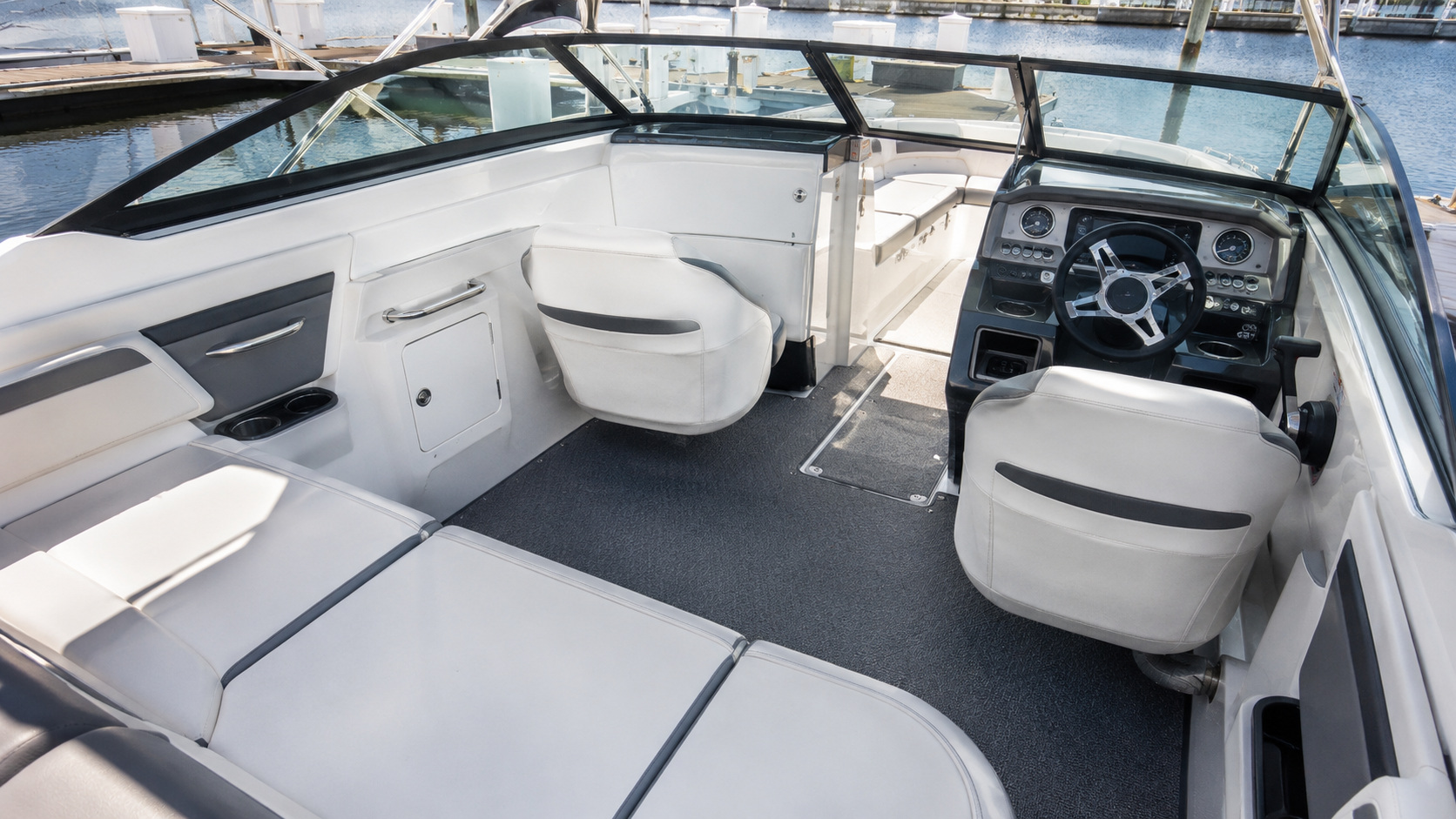
The T22SC carries 80 gallons of fuel. That figure immediately separates it from many family runabouts and smaller fishing boats because the tank is sized for long fishing days and meaningful travel between spots.
An 80-gallon tank does not mean the boat has a fixed range. The 150, 200, and 250-horsepower engine configurations can consume fuel at very different rates, and load changes the result.
Bayliner does not publish one universal gallons-per-hour figure for the T22SC. A buyer should use verified performance data for the exact engine or observe fuel-flow information during a sea trial when available.
The advantage of the larger tank is flexibility. A family can leave early, make several fishing moves, run to a restaurant or sandbar, and return without structuring the entire day around the next fuel dock.
The disadvantage is weight. Gasoline is heavy, and 80 gallons adds hundreds of pounds when the tank is full.
That matters on the water because loaded planing performance changes. It also matters on the highway because the trailer and tow vehicle have to carry the fuel whether the engine burns it that day or not.
Fishing style affects consumption dramatically. Trolling can put hours on the engine without the same burn as repeated high-speed runs. Running thirty miles between spots creates the opposite profile.
A 250-horsepower engine is not automatically wasteful at every cruise setting, and a 150-horsepower engine is not automatically economical if it has to work harder under heavy load. Real data matters.
The 80-gallon tank also deserves inspection on a used boat. Check the fill, vent, fuel smell, hoses, fittings, and any signs of leakage or water contamination.
The buyer should view the tank as one of the T22SC’s fishing assets. It allows more freedom to fish farther from the ramp without forcing the boat into a twin-engine or overnight class.
The T22SC’s performance needs to be judged at realistic fishing weight. A 4,500-pound boat with two people, a quarter tank, and no gear can make almost any engine look impressive.
Load the mental picture correctly. Add several adults, 80 gallons of fuel, ice, tackle, rods, safety gear, batteries, and whatever equipment stays aboard.
With the 150-horsepower engine, pay attention to time to plane and how much throttle the boat needs to stay comfortably on top with that load.
A 200 or 250-horsepower configuration should provide more reserve. That reserve is useful for accelerating cleanly, running with heavier loads, and maintaining comfortable cruise without feeling as though the engine is at the edge of its workload.
The 18-degree deadrise should provide stable, predictable recreational handling. The boat is designed for fishing near coastlines and open water, but buyers should still match speed to conditions.
Cross wakes from several angles. Listen for hull or console rattles. Watch how the side-console structure affects visibility and passenger movement when the boat is underway.
At low speed, the single outboard makes thrust direction intuitive. Practice reverse and turning behavior before deciding the boat is effortless around a dock.
Wind on the 8-foot-6-inch beam can move the bow during slow maneuvering. That is normal for a relatively broad open boat and something the driver learns quickly with practice.
Steering effort should remain smooth from lock to lock. If a higher-horsepower boat has upgraded steering, make sure the system is operating cleanly.
The best T22SC engine is the one that makes the boat feel relaxed with your actual crew. Maximum speed is less important than loaded acceleration, comfortable cruise, and control around fishing structure.
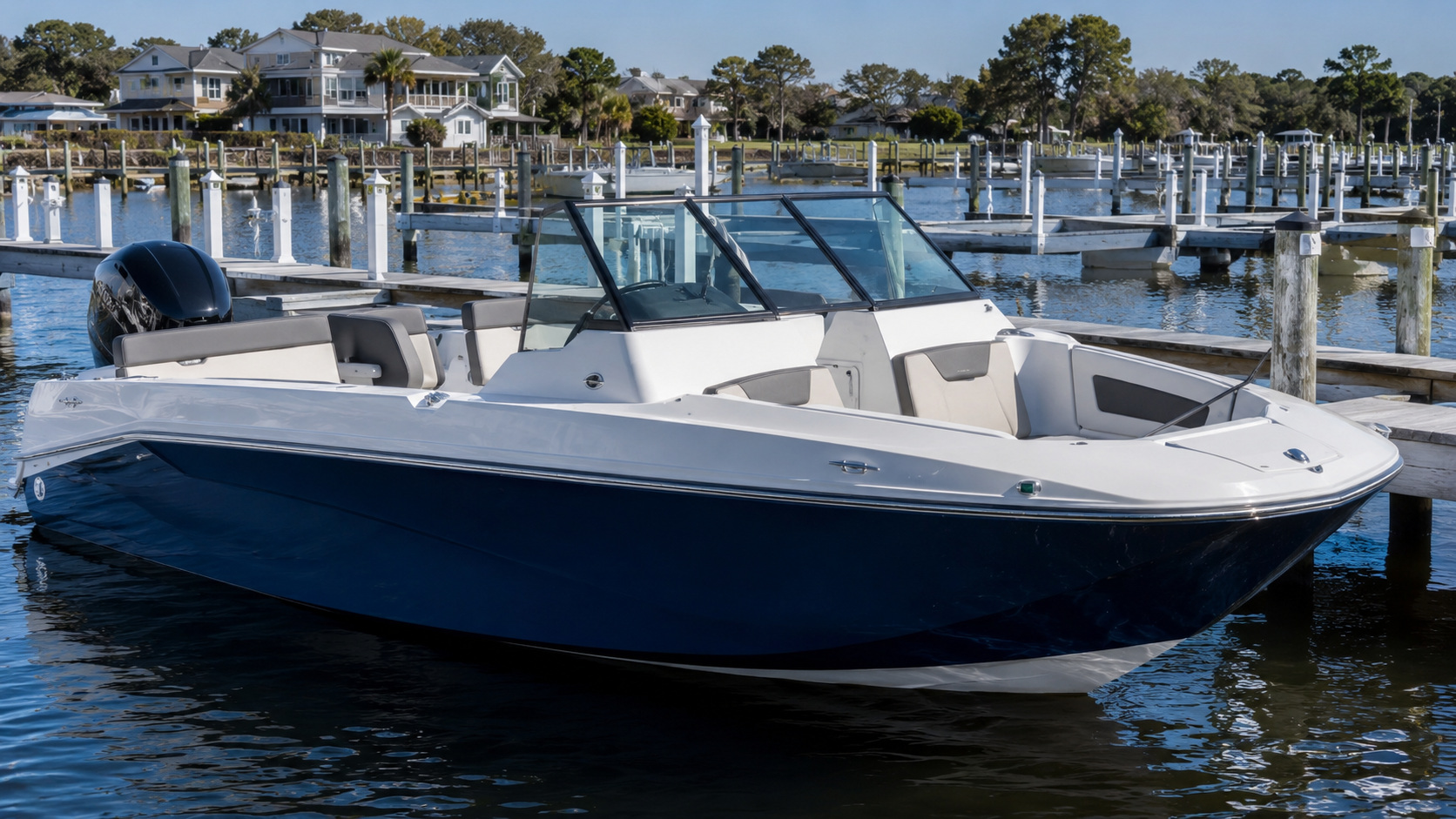
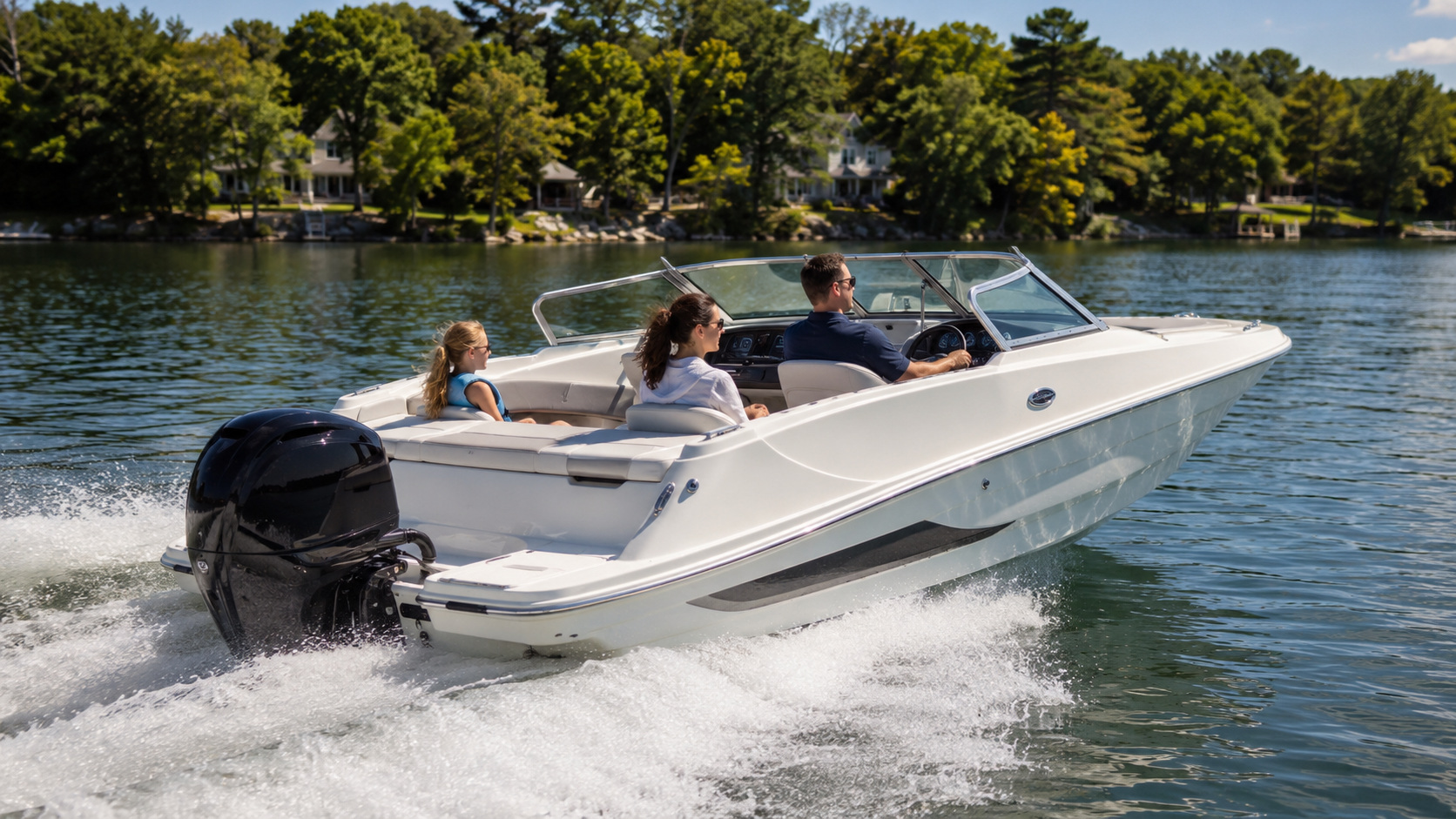
The deck layout is the reason to buy a T22SC instead of defaulting to a T22CC. The helm and console are shifted to create a different relationship between fishing space and passenger seating.
Bayliner gives the boat premium forward console bench seating. That creates a protected passenger position forward of the main cockpit and gives non-anglers a place to sit without occupying a casting position.
The helm windshield adds additional wind protection. On cooler mornings or longer runs, a passenger-oriented side-console arrangement can feel more comfortable than standing or sitting around an exposed center console.
Fishing still controls the functional equipment. Gunnel rod storage keeps rods along the sides rather than underfoot.
The livewell gives bait a dedicated system. Buyers should inspect its size and location in person to make sure it fits the way they fish.
The insulated fish box keeps catch separate from the family cooler and reduces the amount of loose storage the owner needs to bring aboard.
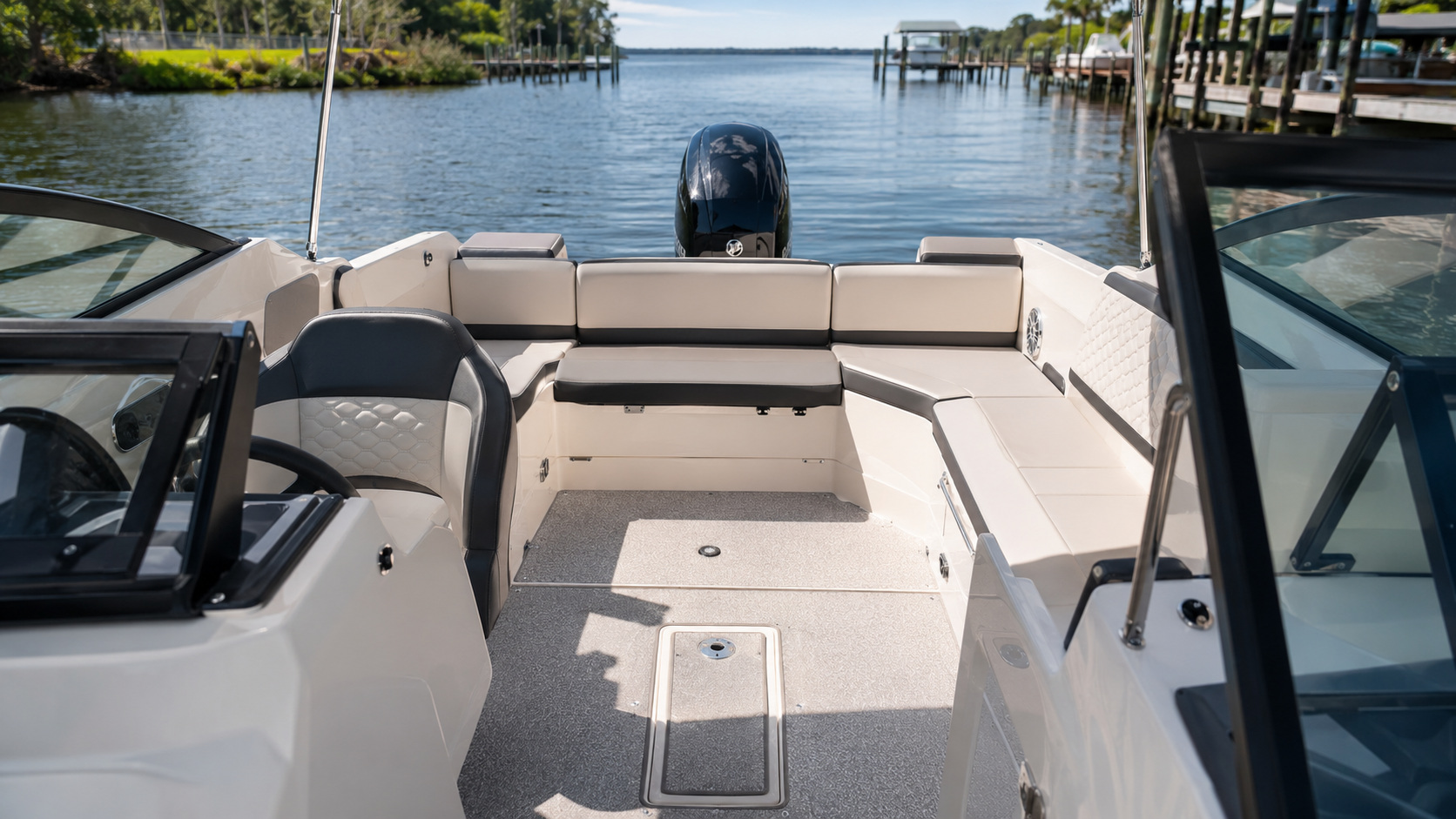
Removable cushions are important because the same boat may be asked to behave very differently on Saturday and Sunday. Cushions can stay in for a family cruise and come out when wet fishing gear is the priority.
Large console storage provides room for equipment that would otherwise live on deck. That matters because open fishing space disappears quickly when bags and jackets have nowhere to go.
The self-bailing cockpit simplifies cleanup after fish, spray, and swimmers. The fiberglass floor liner supports the same easy-rinse mission.
A swim platform with telescoping ladder gives the family a reason to use the boat after the rods go away. That makes the T22SC more flexible than a pure workboat layout.
The side-console compromise is circulation. The T22CC gives anglers more equal access around both sides of the centerline helm. T22SC buyers should make sure the passenger comfort is worth that change in movement.
For many families, it will be. The T22SC is designed around the reality that the person buying the fishing boat may not be the only person deciding whether the household wants to spend all Saturday aboard.
Standard bait capacity means the T22SC arrives with a core fishing system rather than asking the owner to improvise one after delivery.
Rods can be secured along the sides and kept off the deck, preserving walking and casting space.
A dedicated fish box keeps catch separate from drinks, food, and family storage while reducing dependence on loose coolers.
Water can drain from the cockpit during normal use and cleanup, an important feature on a boat expected to handle fish, spray, and swimmers.
The side-console layout creates a family-friendly passenger position that helps distinguish the T22SC from a traditional center console.
Seating can be kept comfortable for cruising days or stripped back when wet fishing use and cleanup take priority.
The console provides dedicated enclosed volume for bags, safety gear, and equipment that would otherwise occupy deck space.
Gives the T22SC legitimate family-swimming utility instead of forcing the boat to remain fishing-only once the rods are put away.
Current T22SC inventory is mostly 2025 and 2026, but a nearly new fishing boat still deserves a full inspection.
Begin with the Mercury outboard. Verify horsepower and serial number because listings may carry different engine configurations.
Check engine hours and service history. A boat used for regular fishing can accumulate more hours in two seasons than a lightly used family cruiser accumulates in five.
Inspect the lower unit, skeg, propeller, trim system, steering, anodes, and corrosion. Ask whether the boat was used in salt water and how consistently it was flushed.
Test the automatic bilge pump and battery switch. Look into the bilge for standing water, wiring quality, and signs that pumps or hoses have been modified.
Run the livewell. Make sure the pump fills correctly and that the system drains without leaking into storage compartments.
Inspect the insulated fish box and its drains. Fish residue and standing water can create odor and mildew quickly.
Check the self-bailing cockpit drains. A fishing boat that has spent time under trees, near bait, or carrying leaves and debris can have partially restricted scuppers.
Test the multifunction gauges with fog-resistant lenses. Speedometer, tachometer, fuel gauge, and voltmeter should all respond normally.
If the boat has optional Simrad equipment, check screen condition, power stability, transducer data, and VesselView integration where fitted.
Look closely at removable cushions and forward bench upholstery. Fishing hooks, sunscreen, fish blood, and salt can age seating faster than the hull.
Finally, inspect the galvanized trailer with brakes. Check tire dates, hubs, brake hardware, lights, winch, bunks, coupler, safety chains, and corrosion.
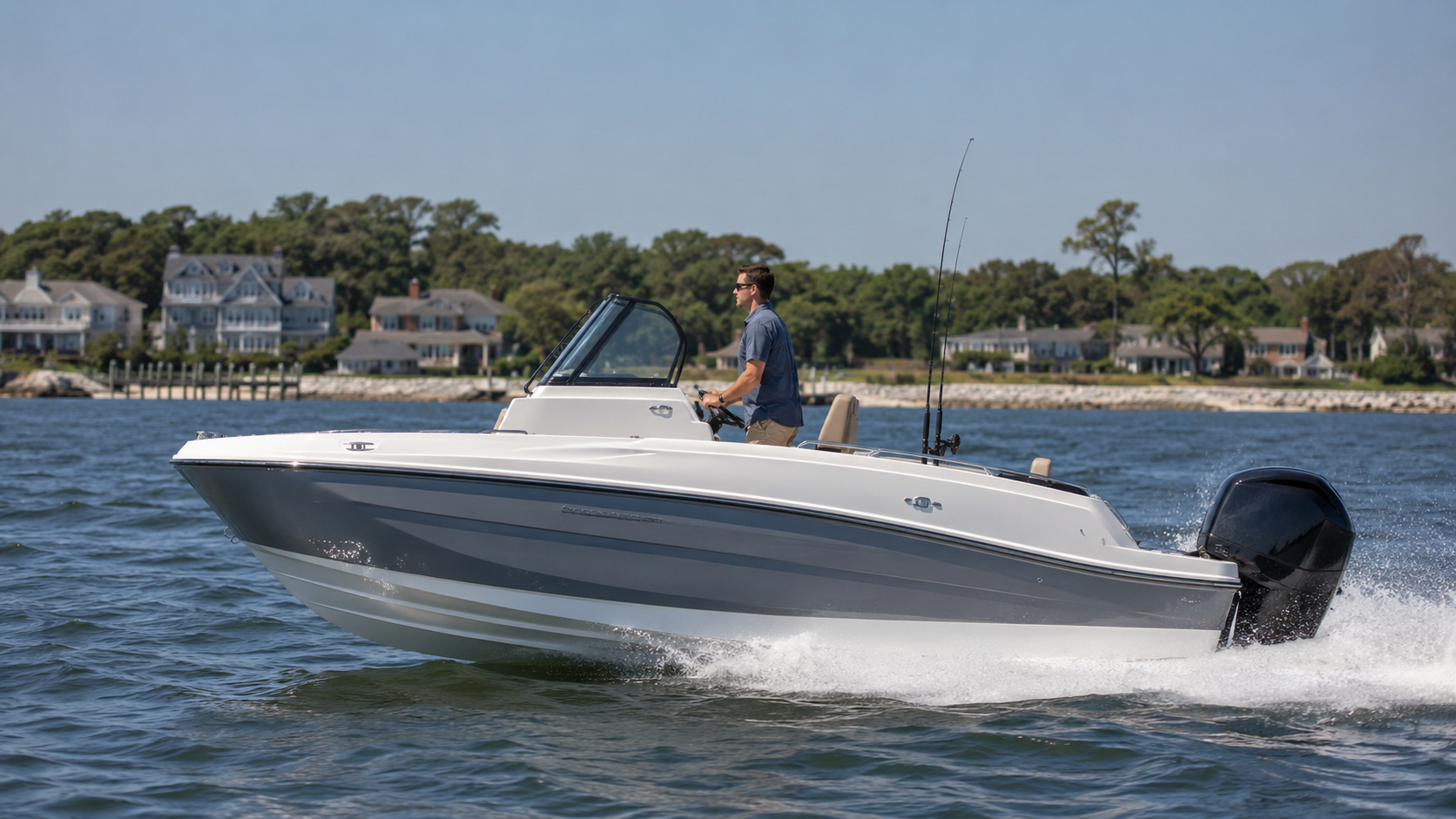
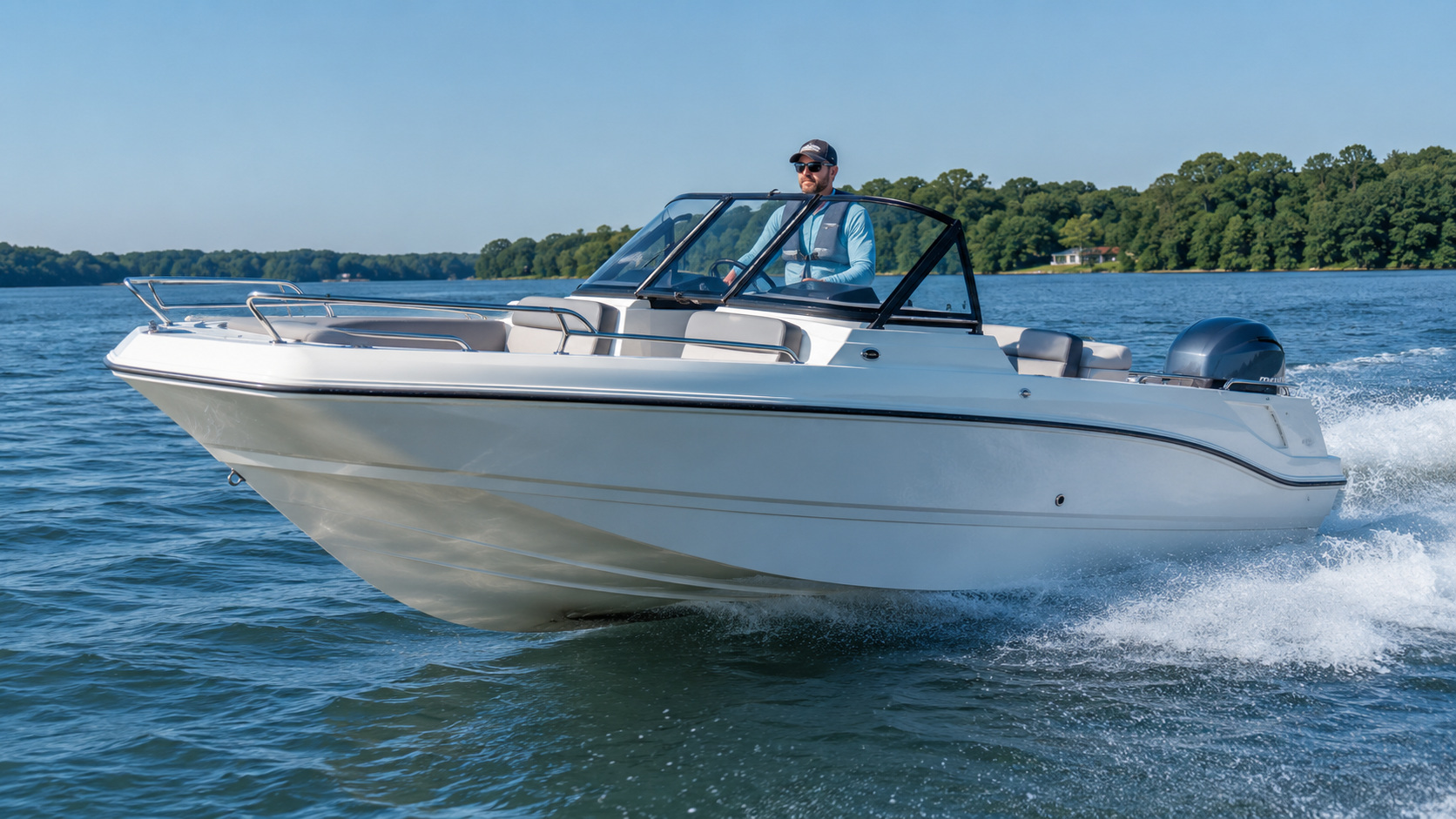
The T22SC is a conventional trailerable boat by beam, but it is not a lightweight package.
Bayliner publishes approximately 4,500 pounds with the standard engine before the trailer, full fuel, batteries, options, tackle, safety equipment, and family gear are counted.
The 80-gallon tank is one of the largest sources of variable travel weight. A full tank adds hundreds of pounds.
The current standard-equipment list includes a galvanized trailer with brakes, which is appropriate for a fishing boat that may see saltwater ramps.
Use the actual trailer data rather than guessing combined weight from the boat specification. Tongue weight, axle rating, brakes, and vehicle payload all matter.
A tow vehicle’s advertised maximum rating is not the only number to check. Passengers and cargo inside the vehicle consume payload before trailer tongue weight is added.
The 8-foot-6-inch hull beam keeps road legality straightforward in most ordinary trailering situations, but garage and side-yard clearance should still be measured.
The outboard adds length behind the transom depending on trim position. Measure the actual rig if residential storage is tight.
Saltwater trailer owners should rinse brakes, hubs, springs, and frame components after use. Galvanizing helps with corrosion but does not eliminate maintenance.
A seasonal slip can make frequent fishing easier, especially when early-morning launch ramps are busy. Wet storage also means the outboard, bottom, hardware, and anodes need an appropriate maintenance plan.
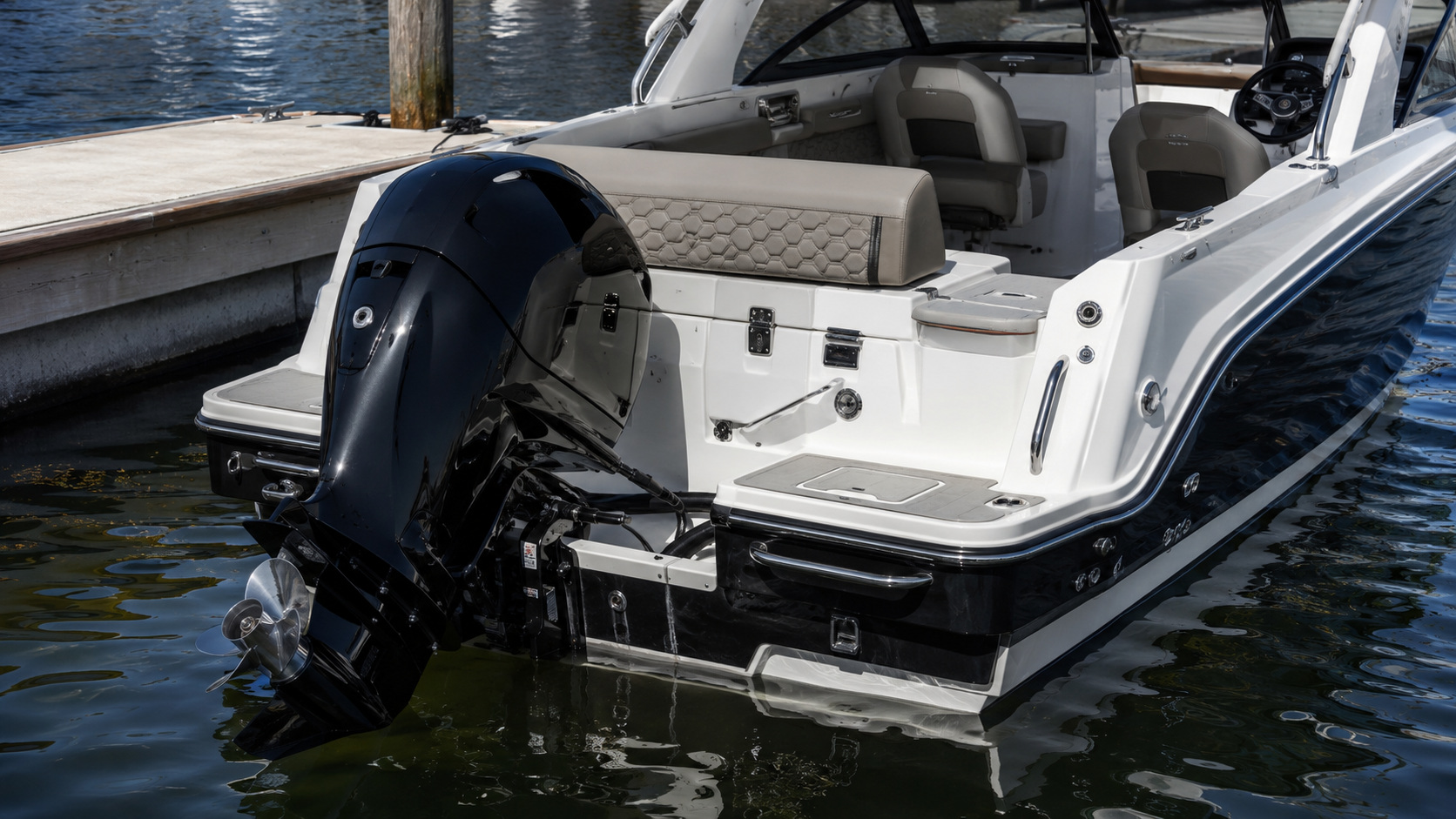
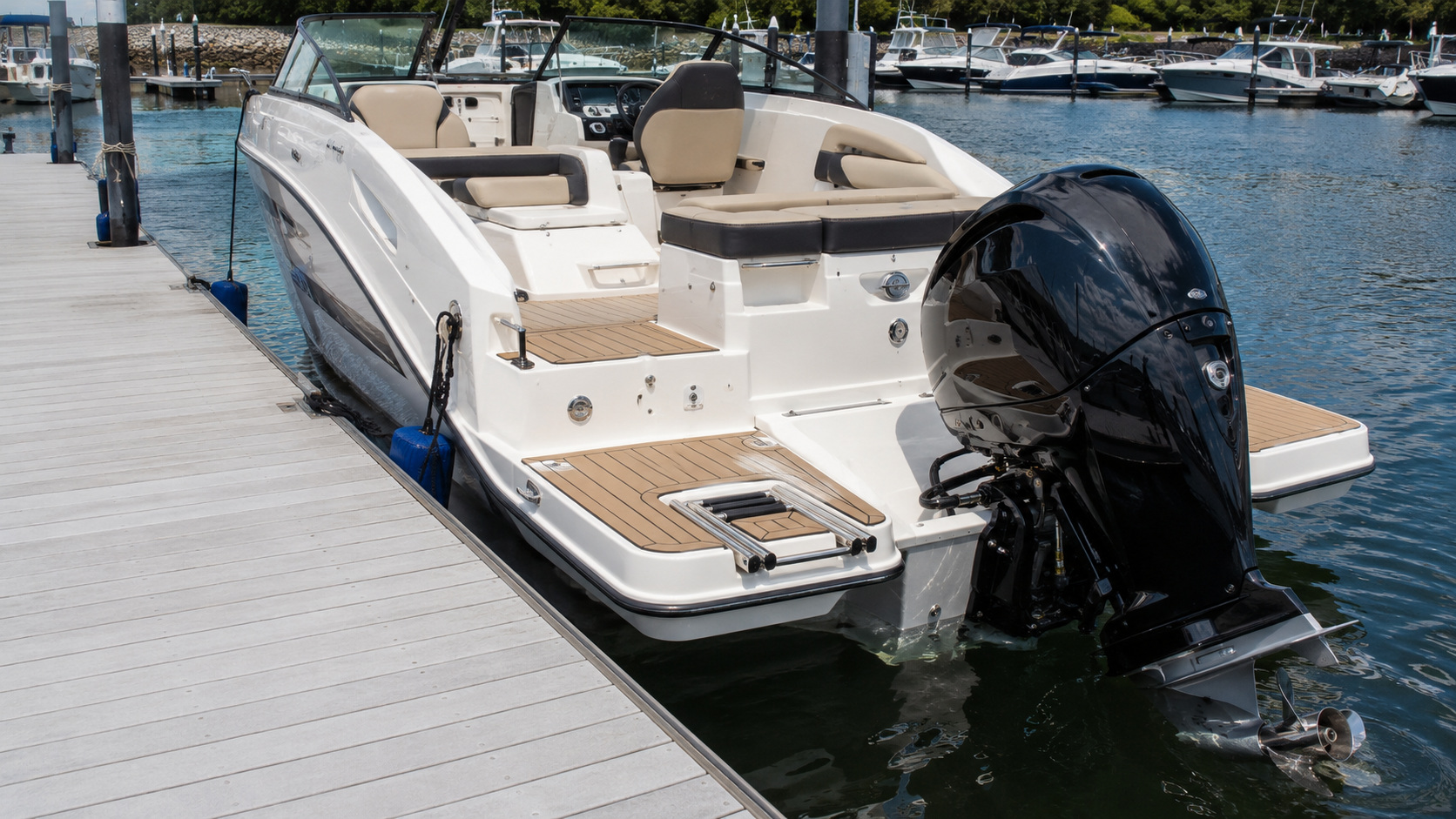
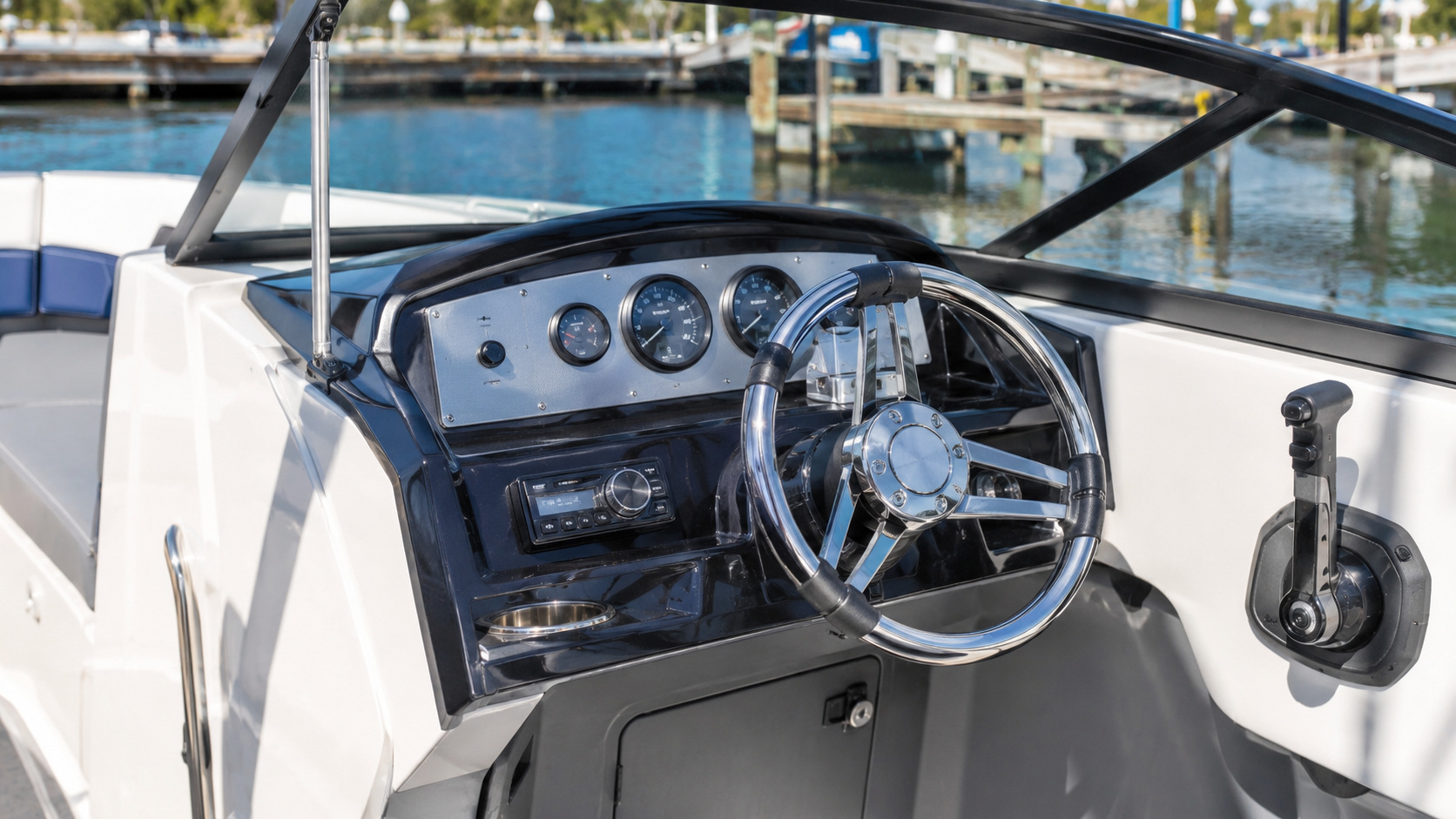
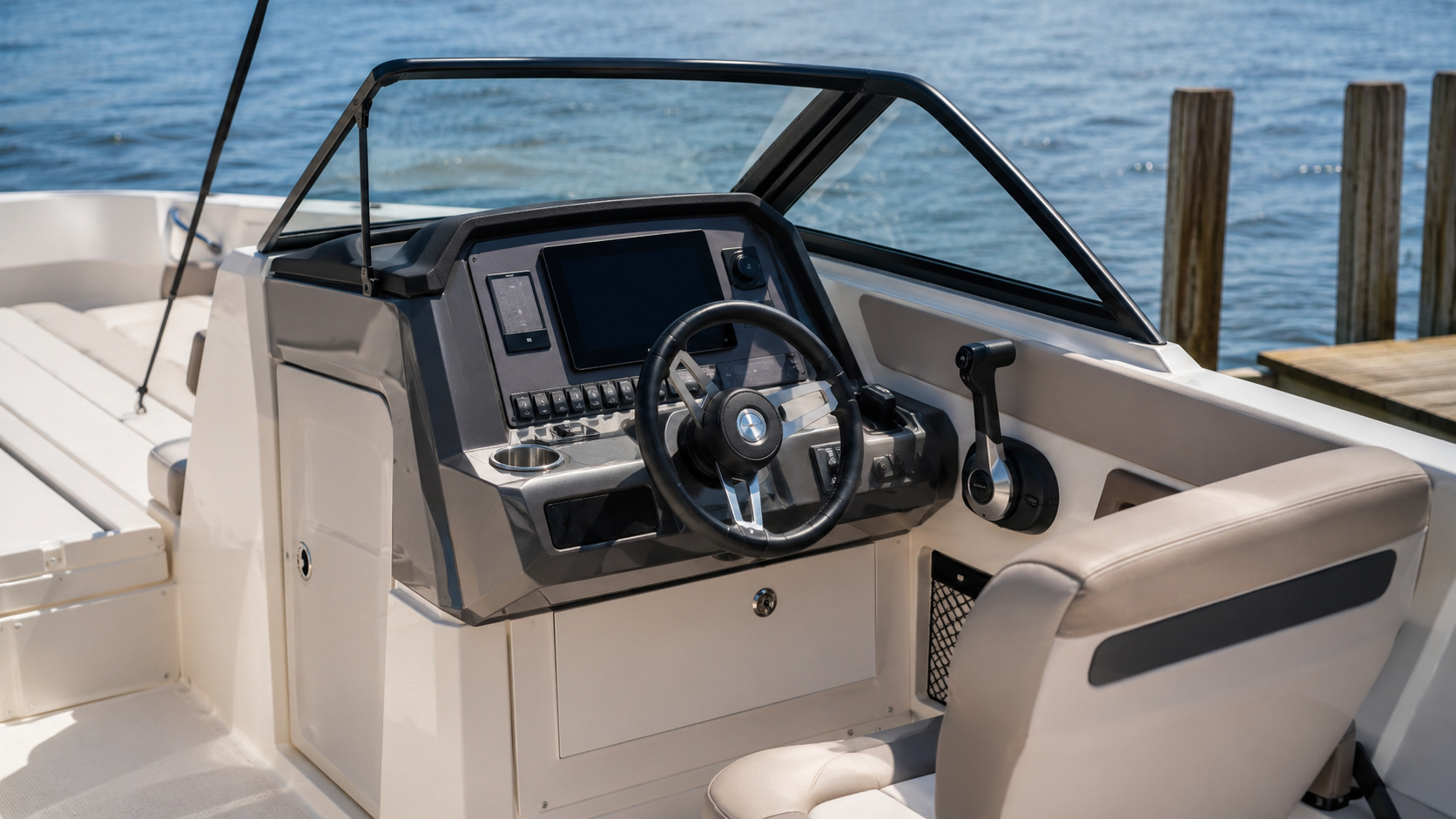
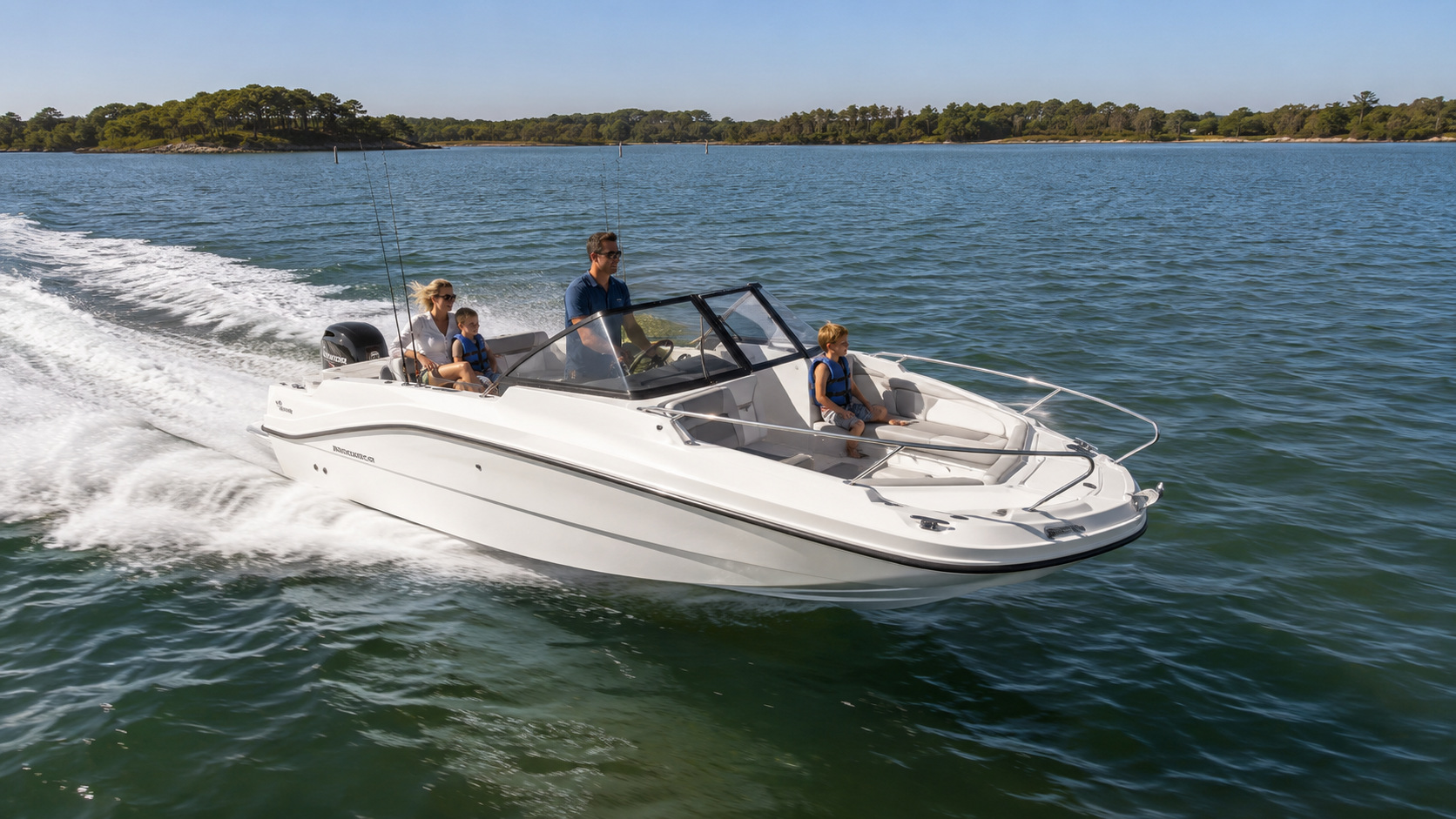
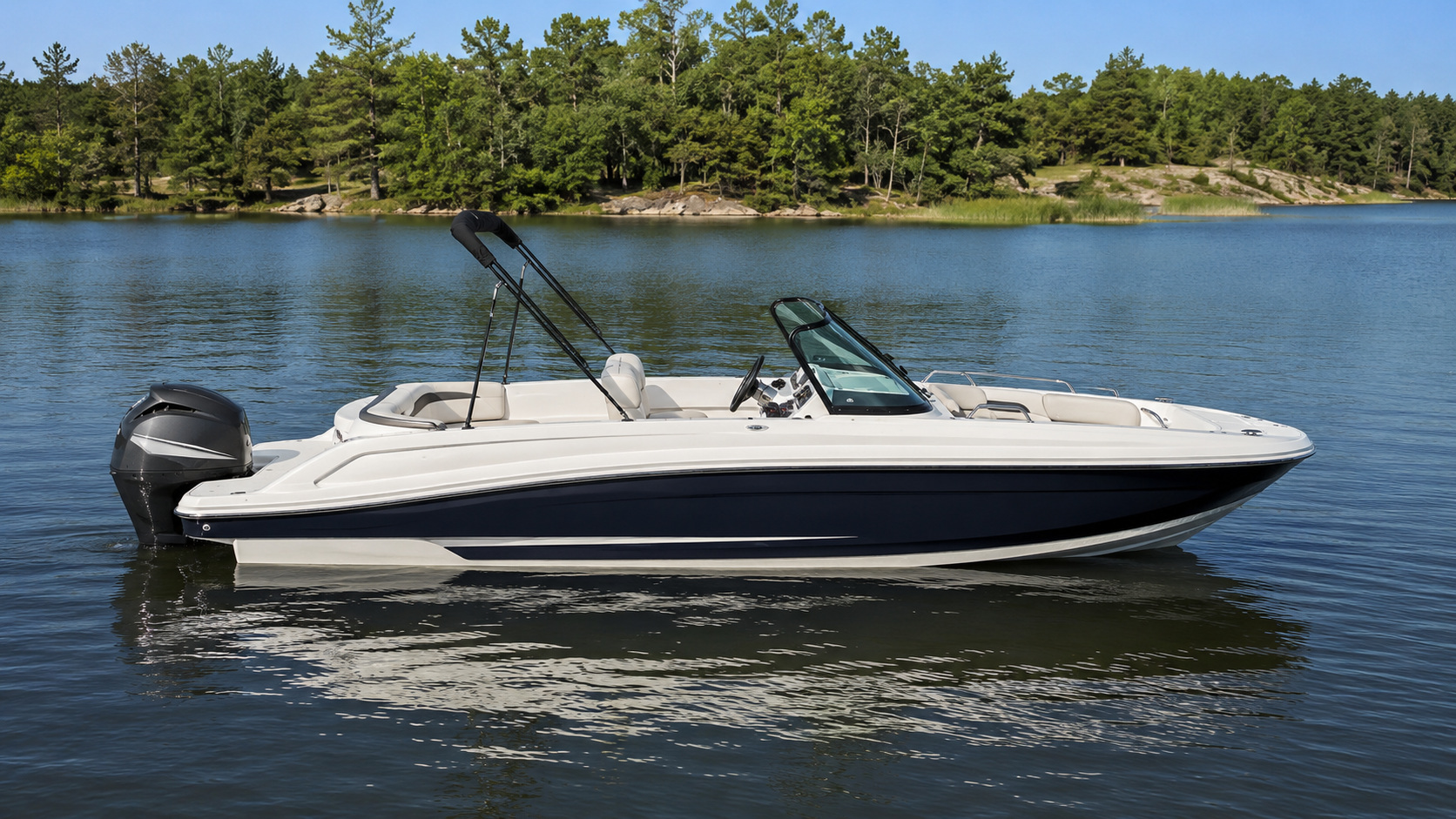
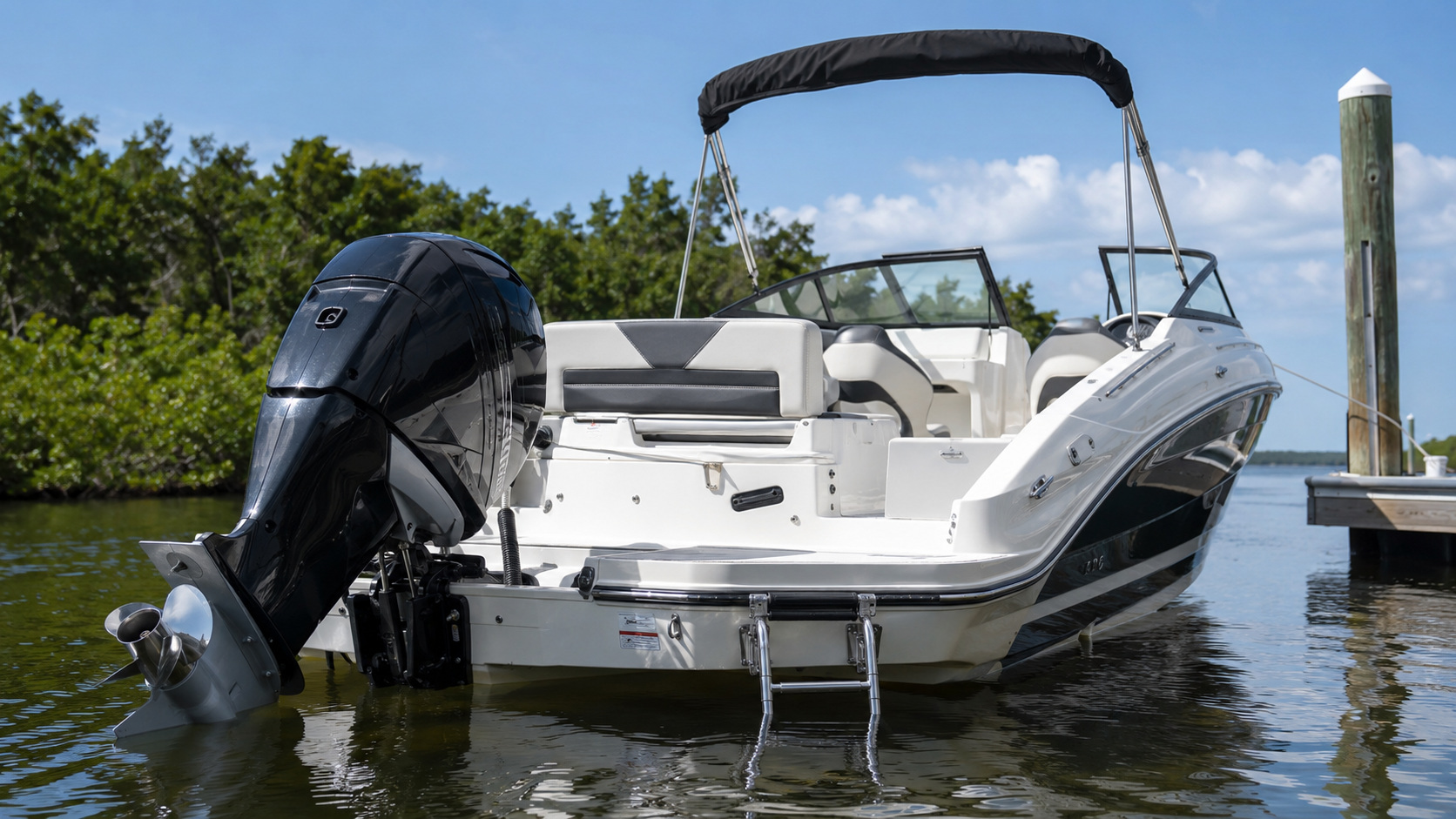
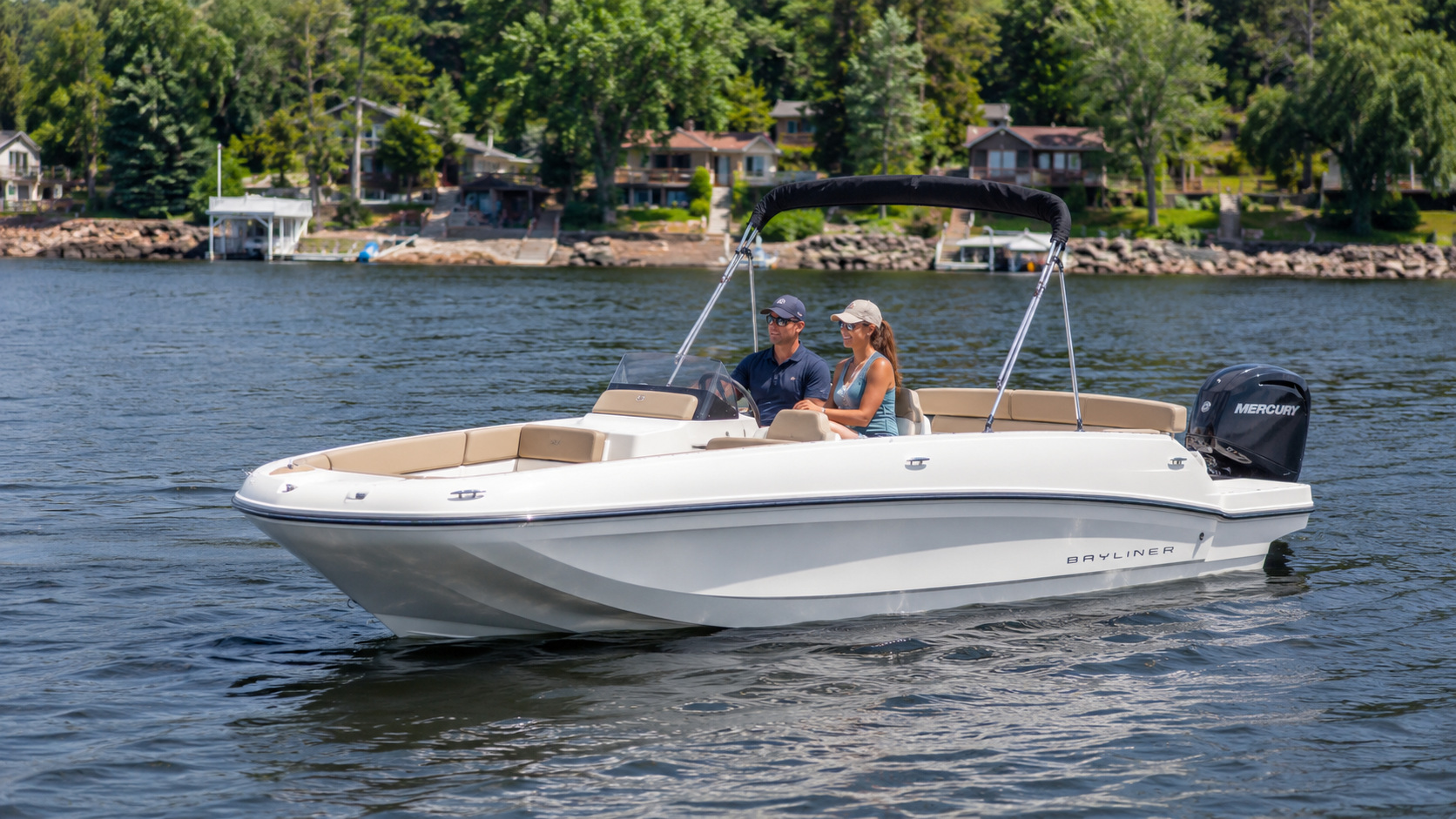
That matters because buyers are often comparing dealer boats with nearly new inventory instead of choosing between ten different model years.
Engine horsepower can explain a large part of the price difference. A 150-horsepower T22SC should not be compared directly with a heavily equipped 250-horsepower boat without adjusting for power.
Current listings also include 200-horsepower examples, which can be attractive to buyers who want more loaded performance than the standard engine without paying for maximum power.
Electronics can also move the price. A boat with a current Simrad display and clean transducer installation may deserve more to the right buyer than a stripped helm.
Fishing hardware should be inspected rather than simply counted. A livewell pump that does not work, damaged rod storage, or a poorly installed accessory is not added value.
Trailer condition matters even on a 2025 boat. Fishing trailers can see saltwater frequently, and corrosion can develop much faster than age alone suggests.
Because the market is young, a used boat should be compared directly with an out-the-door new quote. The used discount needs to compensate the buyer for accepting the previous owner’s engine, color, packages, hours, and warranty position.
The best T22SC deal is not necessarily the lowest asking price. It is the boat with the power you need, clean fishing systems, documented outboard care, a healthy trailer, and options your family will actually use.
Illustration only and not an offer of credit.
Start with the negotiated price after the Mercury engine and installed packages are identified.
Illustration only and not an offer of credit. Your actual rate and term depend on credit profile, vessel age, loan amount and ownership structure.
The T22SC and T22CC are the most important comparison because both are 22 feet 7 inches long and both carry ten people.
The T22SC uses a side-console layout. Bayliner emphasizes premium forward console bench seating, windshield protection, removable cushions, and a family-friendly relationship between fishing space and passenger comfort.
The T22CC puts the console on the centerline. That gives anglers walkaround access on both sides and creates a more traditional fishing circulation pattern.
Power differs too. The T22SC reaches 250 horsepower, while the current T22CC reaches 300.
Both are Trophy fishing boats, so the comparison is not fishing versus recreation. It is two different ways to arrange a fishing-first deck.
Choose the T22SC when the passenger bench, windshield protection, and side-console social layout improve how the household will use the boat.
Choose the T22CC when symmetrical fishing access around the helm and higher available horsepower matter more.
If your family spends half the day seated and the other half fishing, the T22SC can be the more balanced answer.
If nearly everyone aboard is there to cast, rig, and move continuously around the console, the center console is difficult to beat.
A T22SC shopper is mostly buying a current boat. National inventory is centered on 2025 and 2026, so the normal ten-year used-boat strategy does not apply yet.
Begin with horsepower. Confirm whether the listing carries 150, 200, or 250 horsepower. The engine changes performance, value, and potentially insurance.
Next identify the package content. Do not assume two T22SC listings are equivalent because the hull color and model year match.
Inspect fishing equipment closely. Run the livewell, inspect gunnel rod storage, open the fish box, and check drains.
Ask how the boat was stored. Saltwater use is not a problem by itself, but flushing and corrosion control should be visible in the maintenance history.
Verify engine hours and service documentation. A dealer demo or heavily used fishing boat can accumulate hours much faster than a private family boat.
Check the hull bottom and skeg for shallow-water contact. Side-console buyers often use coastal, bay, river, and nearshore areas where grounding or propeller strikes are possible.
Inspect the trailer even when the boat looks new. Galvanized construction resists corrosion but does not make brakes, hubs, tires, and wiring immortal.
Compare used asking prices with complete new quotes. Include freight, preparation, tax, documentation charges, trailer, engine, and factory packages.
If a used boat has the 250-horsepower engine and Tech or Fishing equipment you would have ordered anyway, the first owner’s depreciation may create meaningful value.
Do not buy the T22SC simply because it is unusual. Buy it because the side-console layout solves the exact conflict between fishing and family use that brought you to the model.
If you have already found a T22SC, send Float Finance the listing, engine horsepower, seller type, and asking price.
The T22SC is 22 feet 7 inches long with an 8-foot-6-inch beam and 18 degrees of deadrise. Bayliner publishes minimum draft of 1 foot 10 inches and maximum draft of 2 feet 9 inches. Approximate weight with the standard engine is 4,500 pounds.
Bayliner rates the T22SC for ten people with a maximum people weight of 1,650 pounds. That rating provides useful family flexibility, but ten passengers will not create the same fishing space as four or five anglers. Board the boat with your normal crew size in mind.
Bayliner lists a 150-horsepower Mercury EFI FourStroke as standard and allows up to 250 horsepower. Current inventory can include intermediate engine choices such as 200 horsepower, so verify the exact motor on the boat you are considering.
Fuel capacity is 80 gallons. That is a substantial tank for a 22-foot-7-inch single-engine boat and supports longer fishing days. A full tank also adds hundreds of pounds, so towing and loaded performance should be evaluated accordingly.
Bayliner positions the Trophy Side Console series for fishing near coastlines and open water, and the T22SC includes a self-bailing cockpit, livewell, gunnel rod storage, insulated fish box, and Mercury outboard power. Saltwater owners still need disciplined flushing, corrosion control, trailer rinsing, and appropriate maintenance.
The T22SC is better for buyers who value side-console seating, windshield protection, and a family-friendly passenger arrangement. The T22CC is better for buyers who want traditional center-console walkaround circulation and up to 300 horsepower. Both are fishing-first boats.
The 8-foot-6-inch beam keeps it within conventional trailerable width, and Bayliner includes a galvanized trailer with brakes in the current standard-equipment list. The boat itself weighs about 4,500 pounds with standard engine, so the complete rig requires an appropriately rated tow vehicle after trailer, fuel, batteries, and gear are considered.
Current inventory is mostly 2025 and 2026, so the choice is primarily new versus nearly new. A used boat can be attractive when it includes the engine and packages you want at a meaningful discount. If the price is close to new, compare warranty position, hours, trailer condition, dealer fees, and exact equipment before deciding.
Tell us a little bit about yourself and the boat you are looking to finance.