
Call Us : 207-994-5109
Mon – Fri: 8 am to 9 pm & Sat – Sun: 10 am to 8 pm
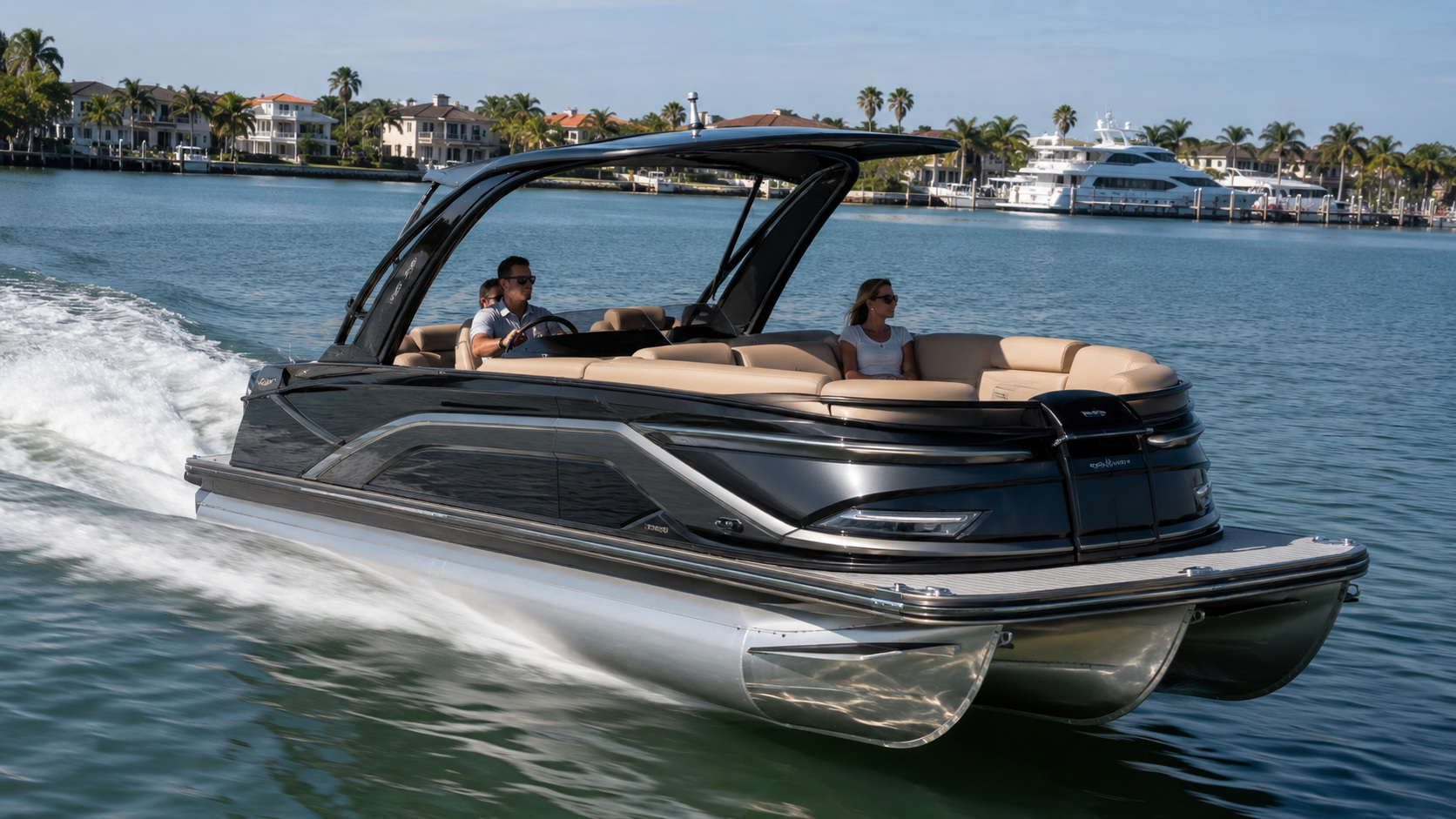
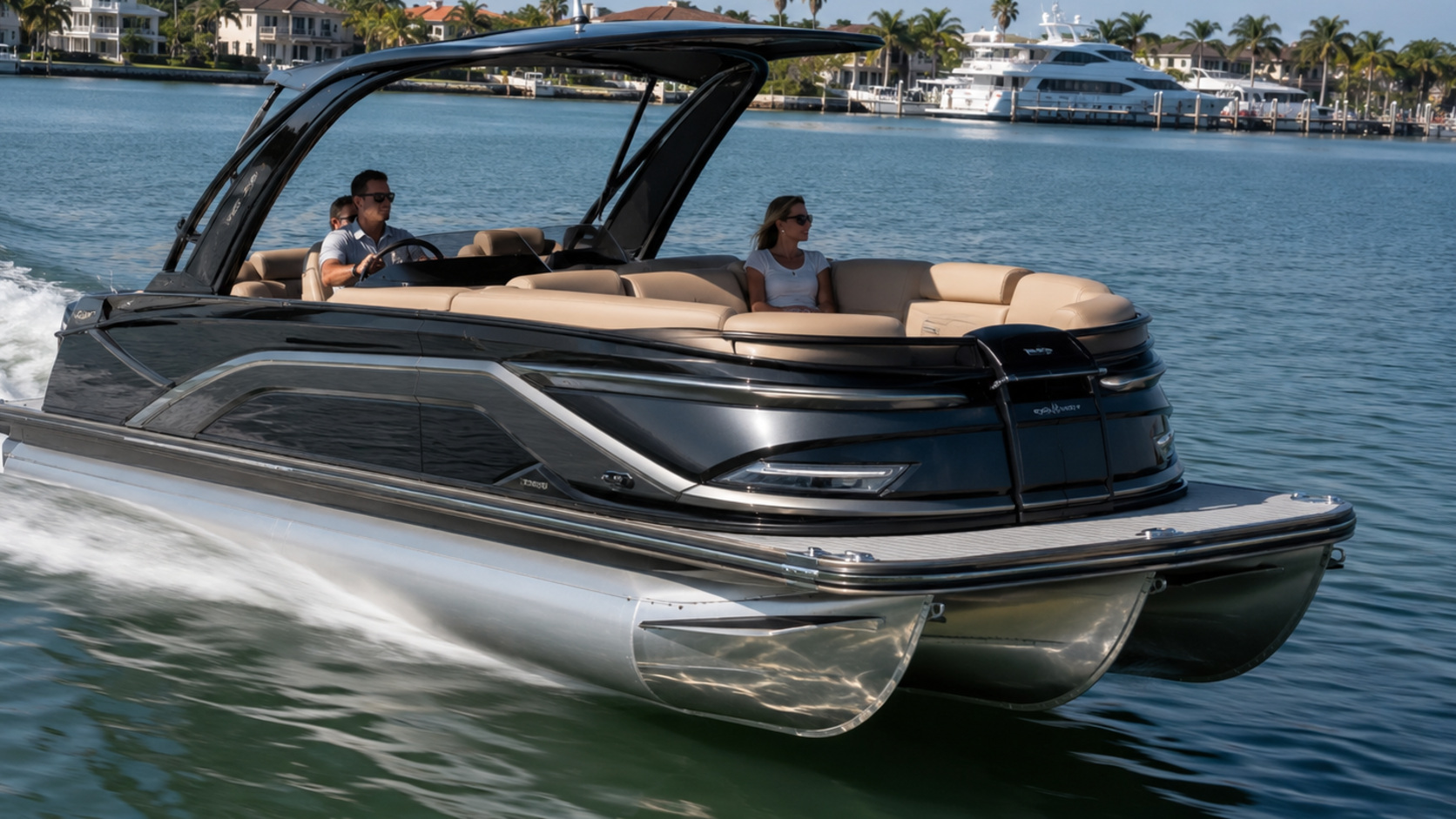
The Bennington 23 QX is the smallest QX size for buyers who want the sculpted fiberglass-cladded flagship exterior and Commander helm without moving immediately into a 28-foot-plus package.
Bennington 23 QX is the smallest QX size for buyers who want the sculpted fiberglass-cladded flagship exterior and Commander helm without moving immediately into a 28-foot-plus package. The 23 QX uses Bennington’s QX treatment with smooth fiberglass cladding, automotive-style paint and the Commander 2.0 design language. At the 23 QX helm, the 12-inch Vivid UX display and 7-inch vessel-control touchscreen are part of a flagship environment rather than isolated electronics.
The 23 QX is the smallest nominal Q-family size in this group, but 26’3″ of published length means it already occupies a serious slip. A 23 QX buyer gets flagship materials without automatically accepting the twin-engine and ten-foot-wide ownership profile of the largest boats.
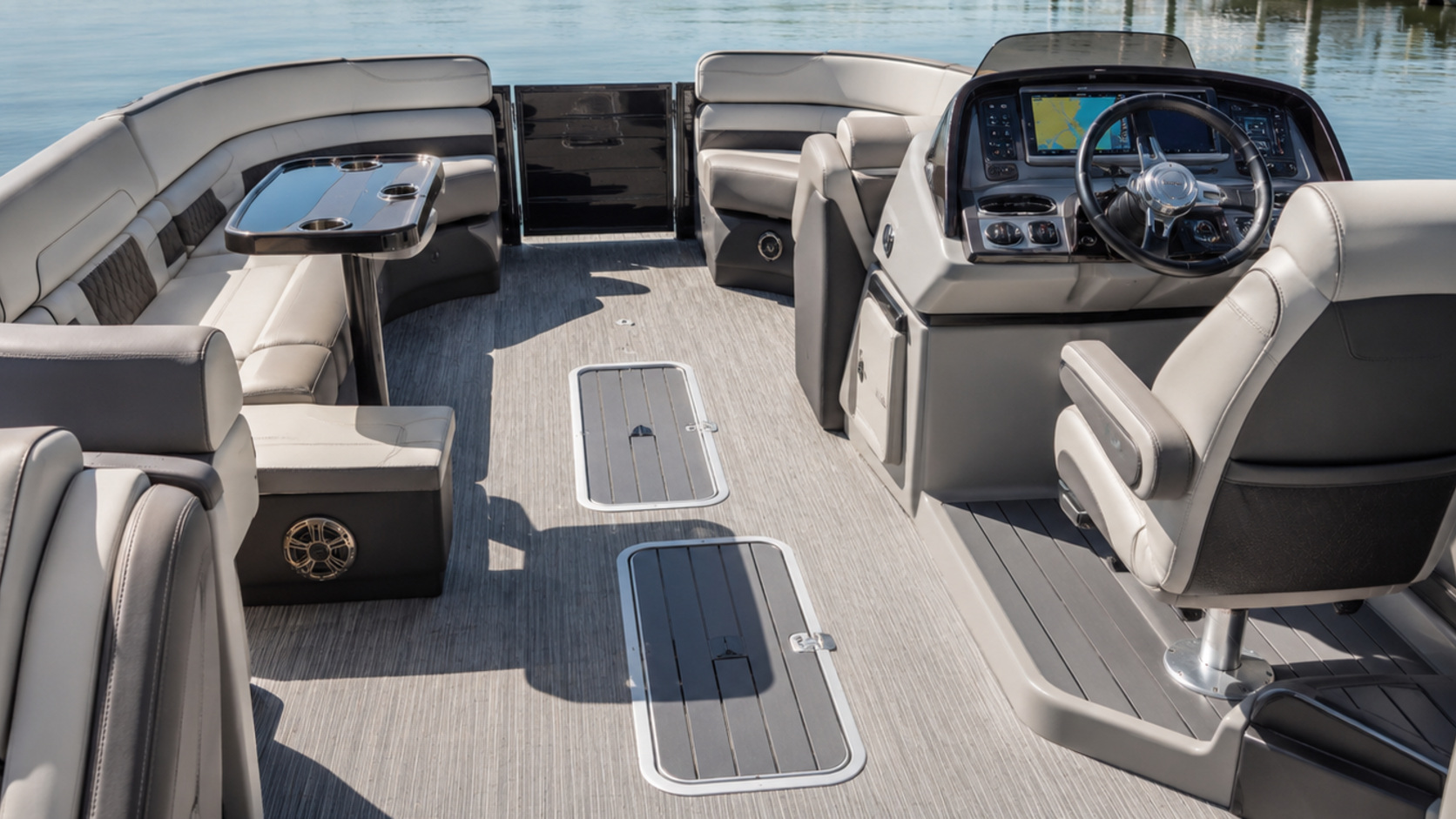
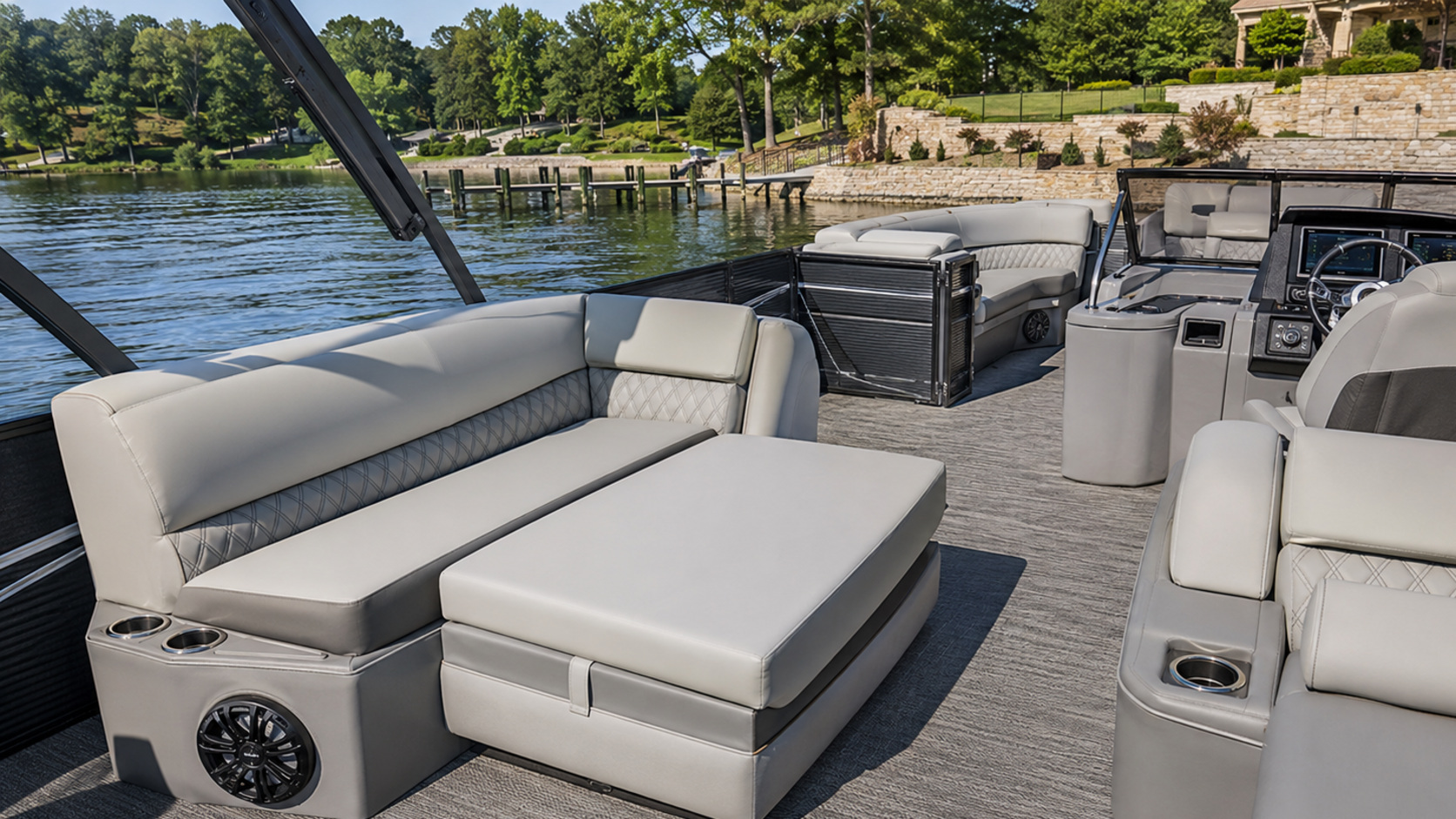
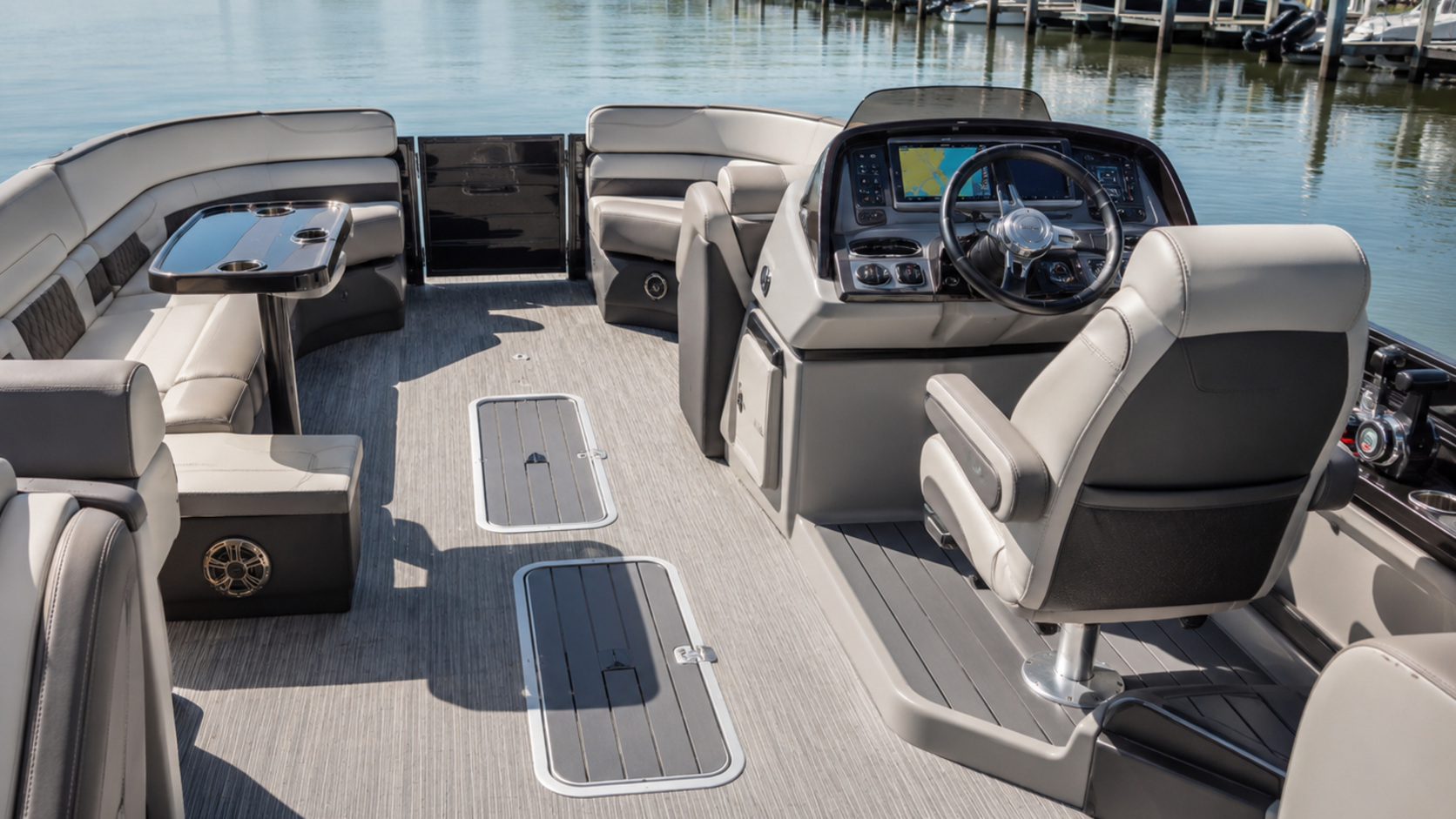
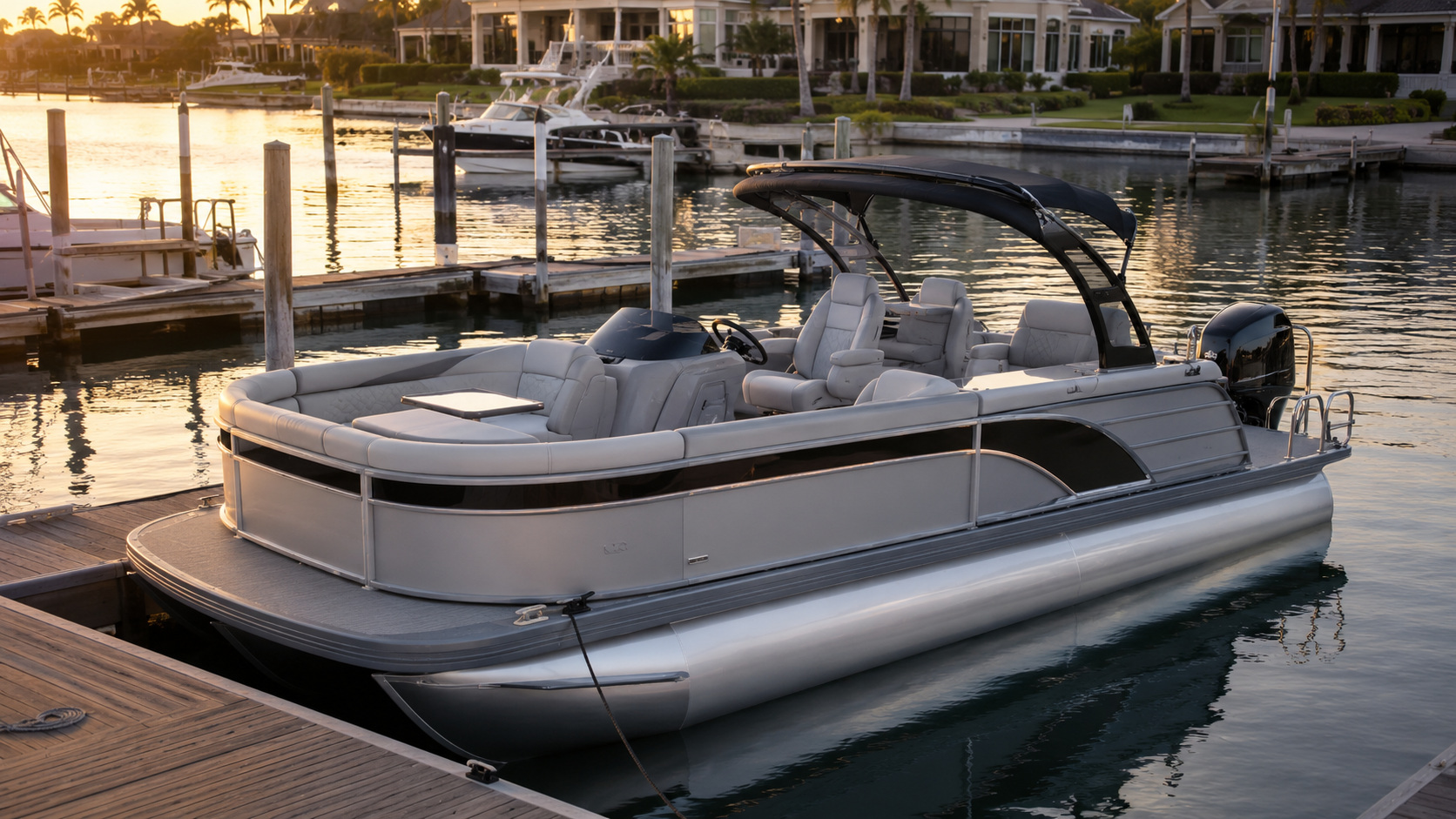
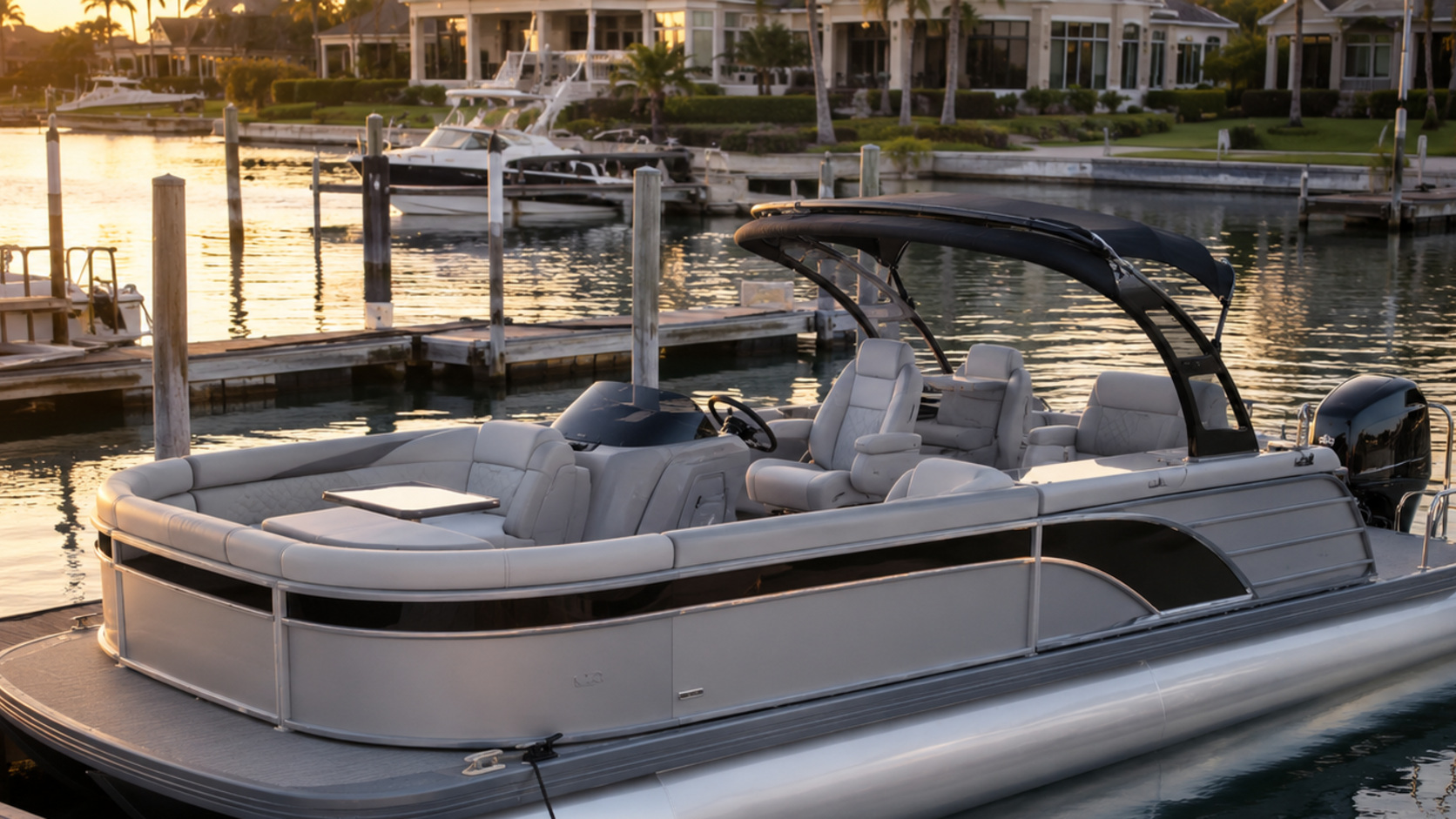
Current 23 QX configurations are organized around Fastback Quad Bench and Swingback configurations. Quad Bench versions of the 23 QX use four fixed chaise zones, which makes the passenger plan easy to understand before anyone steps aboard. On a 23 QX Quad Bench, the stern stays ready for seated passengers and under-seat storage rather than converting into a reversible sun pad.
Bennington publishes 26 feet 3 inches overall for current 23 QX Fastback and Swingback layouts, and both carry the 12-inch Vivid UX display with a 7-inch vessel-control screen.
A 23 QX buyer should verify the complete factory code because beam, stern furniture, windshield, arch and engine count can change within the same broad model family.
The ownership tradeoff is straightforward: the 23 QX carries much of the same high-end technology as larger QX boats, but buyers who routinely host big adult crews may find the 25 QX gives more usable separation for a relatively small jump in nominal size.
For the right household, the 23 QX earns its price by combining the layout people actually use with Q-family technology and performance.
Published factory figures. Confirm every dimension against the individual boat before you commit.
Maximum Capacity: 8 to 20 people across the QX line; verify the capacity plate on the actual 23 QX
The 23 QX rides on pontoon or tritoon structure, so a fiberglass-style deadrise figure would not describe the boat correctly. On a 23 QX, the meaningful running-structure questions are tube geometry, center-tube design, lifting hardware, transom structure and the selected performance package.
Bennington publishes 26’3″ as the relevant current length range for the 23 QX. A 23 QX owner should use that number, not the nominal badge, when pricing a slip or lift.
Beam on the 23 QX is Standard QX beam; verify exact build. Where a ten-foot-wide version exists, the extra width changes passenger space, lift hardware, trailer planning and dock fit enough to treat it as a materially different purchase.
High-output 23 QX configurations can add more buoyancy, stronger steering hardware and transom structure for large engines.
A used 23 QX deserves an underside inspection before the upholstery dominates the conversation. On this model, check the tubes, welds, lifting hardware and center structure for impact, corrosion or lift damage.
The QX exterior on the 23 QX also deserves careful inspection. With smooth fiberglass cladding and automotive-style paint, repaired dock damage or mismatched finish can affect resale even when the running structure is healthy.
Passenger and horsepower limits on a 23 QX should come from the capacity plate attached to the actual boat.
Maximum Horsepower: up to 1,000 total horsepower across compatible QX configurations
Powering a 23 QX starts with the chassis rather than the largest engine Bennington advertises.
A single-outboard 23 QX keeps service, rigging and low-speed operation simpler. Where twin power is offered, a 23 QX gains stronger acceleration, redundancy and more thrust authority around a dock at the cost of another complete engine to maintain.
A twin-engine 23 QX means two gearcases, two propellers, two sets of engine fluids and a more demanding battery and steering system.
The 23 QX also needs enough power for its normal passenger load. A wide-beam 23 QX filled with adults, coolers and watersports gear can ask far more from the propulsion package than a lightly loaded dealer demonstration.
Digital throttle and shift, power steering and performance propellers may appear on high-output 23 QX builds. During a sea trial, test engagement, synchronization, trim response and steering feel at idle and at cruise.
On a used 23 QX, record every engine serial number and hour count. Uneven hours on twin power are not automatically disqualifying, but the history should make sense and both service records should be available.
Inspect the 23 QX propellers, skegs, gearcases, trim cylinders, steering components and engine mounts. A fast tritoon can encounter underwater damage while its premium interior still looks nearly new.
The best 23 QX engine package feels unstrained with the real crew aboard. If the family will rarely use maximum speed, a more moderate configuration can preserve money for the layout, marina and ownership costs that matter every outing.
Fuel planning on the 23 QX changes with engine count, horsepower, beam and performance package. Assigning one tank or gallons-per-hour number to every 23 QX build would mislead buyers.
Some high-output Q-family boats use very large fuel systems, but a 23 QX shopper should take tank capacity from the build sheet or physical specification for the boat being considered.
A single-engine 23 QX cruising at moderate speed and a twin-engine 23 QX running hard are completely different fuel propositions.
Range on the 23 QX should be estimated from verified fuel-flow information at the speed the owner expects to use most often.
A ten-foot-wide 23 QX can carry more people and create more hydrodynamic load than a narrower sibling. That additional utility is valuable, but it needs to be reflected in the fuel budget.
On a used 23 QX, inspect fills, vents, hoses, senders and the tank area for leaks or persistent fuel odor. Reliable fuel delivery matters even more when the boat is supporting expensive high-output engines.
A 23 QX sea trial should answer whether the hull package feels controlled with the normal crew, not simply whether the boat can post an impressive speed.
The 23 QX is the smallest nominal Q-family size in this group, but 26’3″ of published length means it already occupies a serious slip. A 23 QX buyer gets flagship materials without automatically accepting the twin-engine and ten-foot-wide ownership profile of the largest boats.
Low-speed behavior is particularly important on the 23 QX.
If the 23 QX has twin engines, practice reverse and tight maneuvering before the high-speed run. Independent thrust can make a large Q-family boat easier to place once the driver understands the response.
Run the 23 QX through normal wake traffic and several broad turns. A premium tritoon should remain composed without constant steering correction, excessive flex or distracting underdeck noise.
Windshield and arch equipment should also be evaluated while the 23 QX is moving. The driver needs clear sightlines, useful protection and a stored-height plan that makes sense for the marina or lift.
A performance package is worthwhile on the 23 QX when loaded acceleration, watersports or higher-speed cruising are recurring needs.
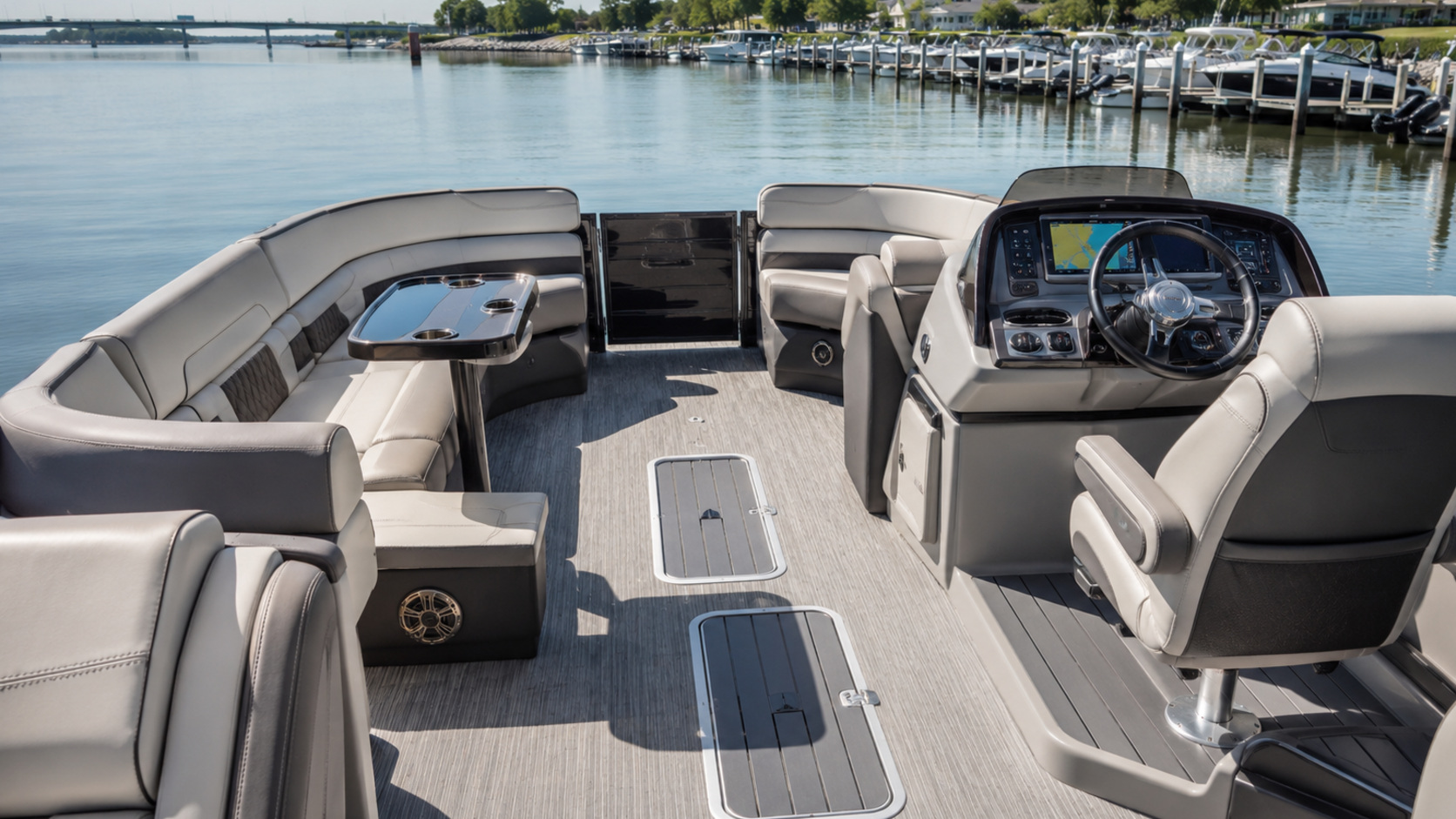
Quad Bench versions of the 23 QX use four fixed chaise zones, which makes the passenger plan easy to understand before anyone steps aboard. On a 23 QX Quad Bench, the stern stays ready for seated passengers and under-seat storage rather than converting into a reversible sun pad.
Current 23 QX seating uses premium Veneto Soft Touch materials, and the deck should feel organized enough that towels, safety gear and day bags can disappear into storage rather than fill the aisle.
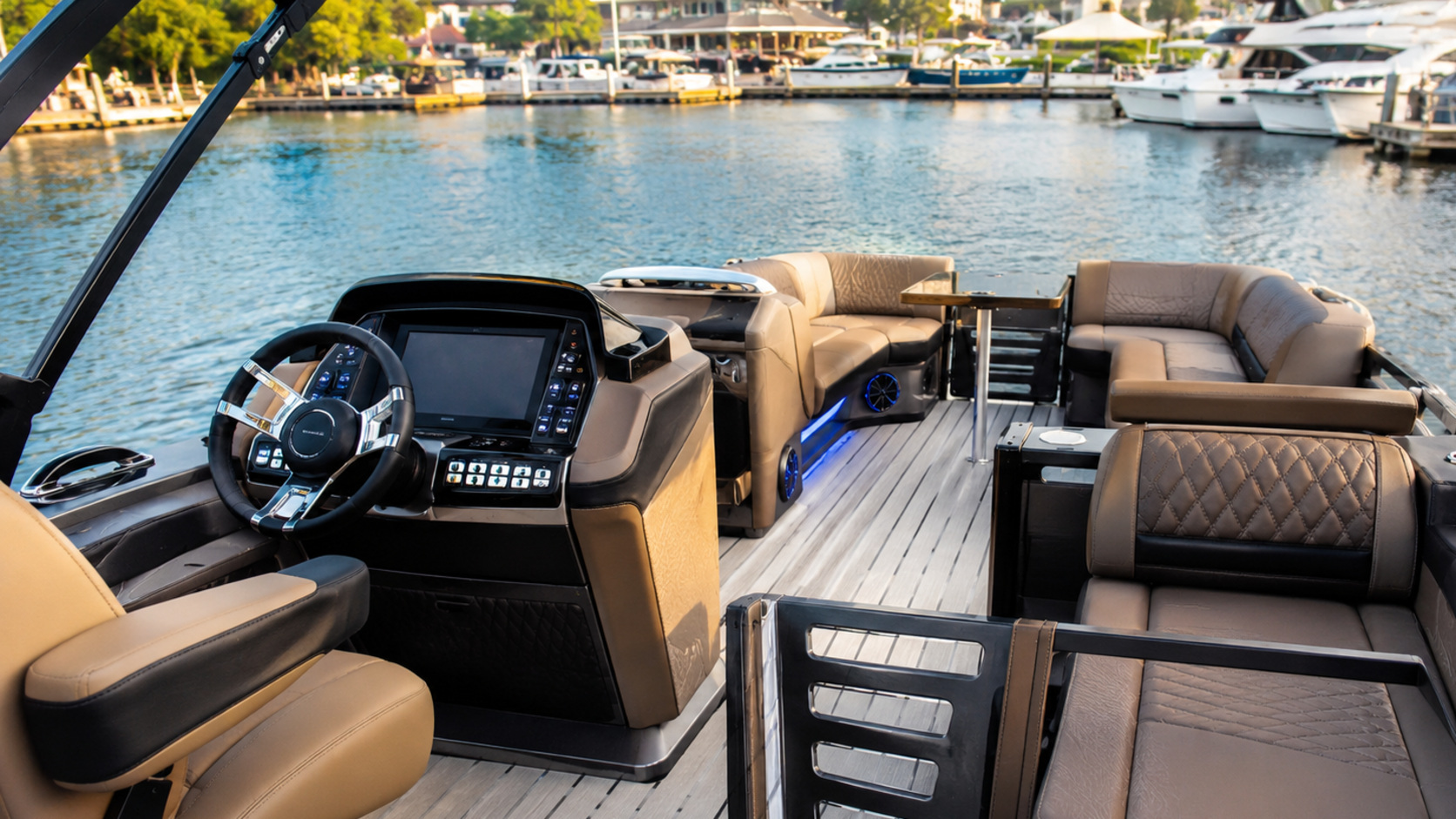
The 23 QX helm uses Commander 2.0 helm with a 12-inch Vivid UX main display and 7-inch vessel-control touchscreen.
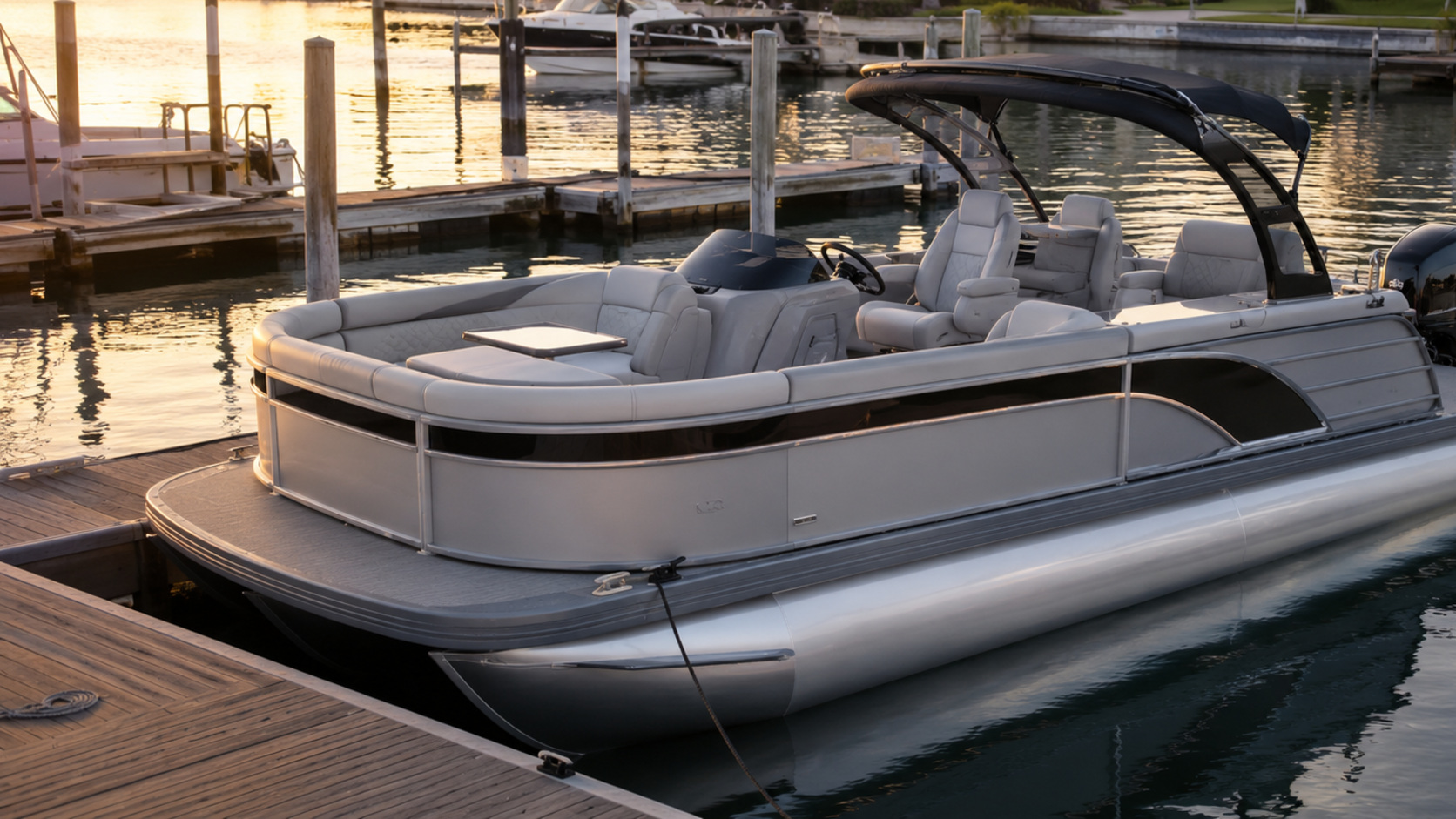
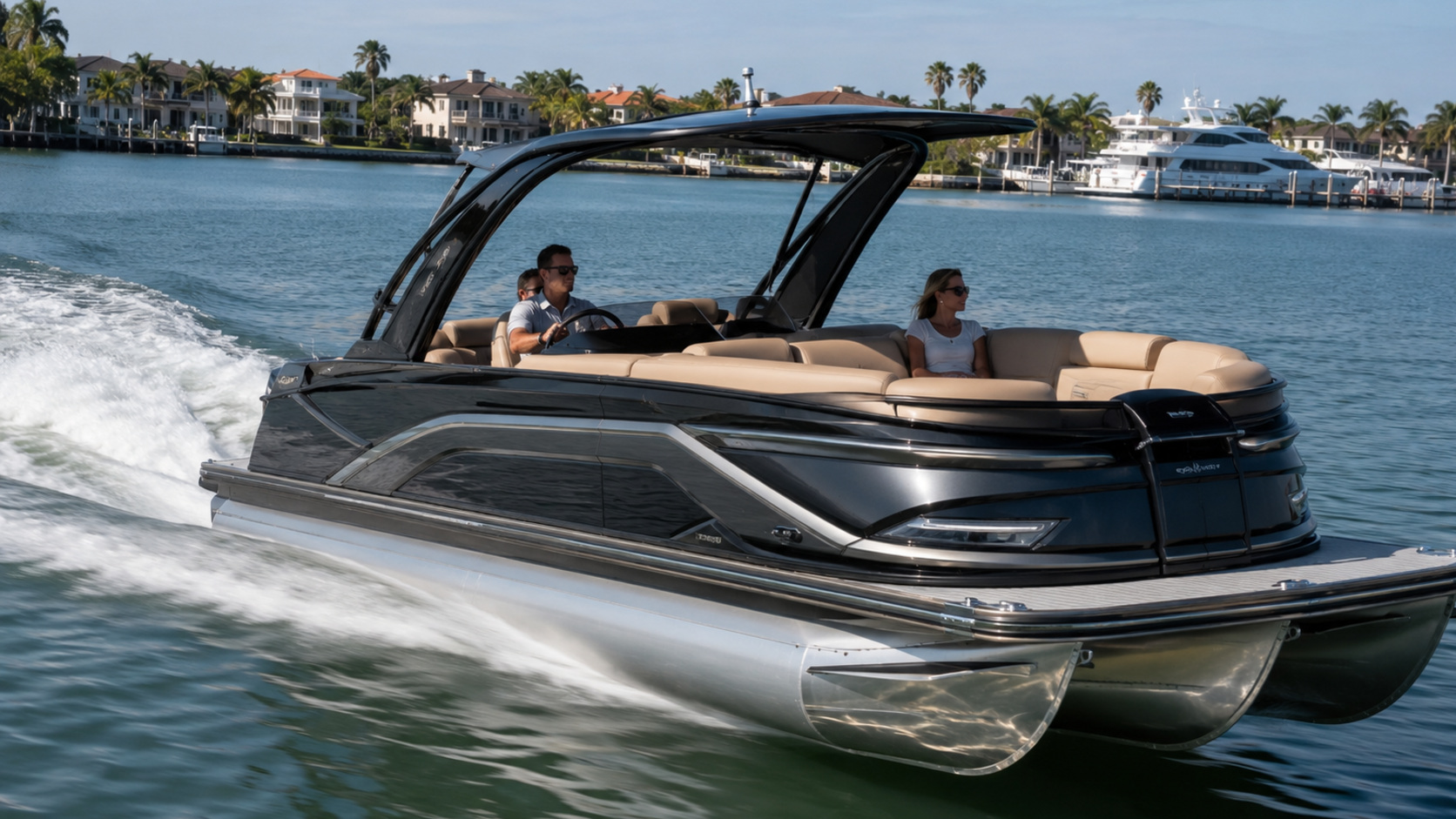
Exterior treatment on the 23 QX uses smooth fiberglass cladding with automotive-style paint.
On the 23 QX, bow pods and chaise bases should be opened during the buying visit.
If the 23 QX has a windshield, use it from the helm rather than judging it from photographs. If it has a power arch, operate it and confirm its stored position will clear the intended lift or building.
The stern furniture on the 23 QX should also be tested in the way the family will use it. Quad Bench buyers should fill all four lounge zones, Stern Lounge buyers should sit aft for an extended period, and Swingback buyers should reverse the seat several times.
Boarding from the water matters on the 23 QX because swimmers and watersports users often share the aft deck with passengers. Check ladder reach, engine clearance and the path between the water and main seating area.
A 23 QX floorplan is successful when nobody needs to reorganize the boat for ordinary activities. If access to a gate or storage area repeatedly requires people to stand up, another layout deserves a look.
12-Inch Vivid UX Display – 23 QX configurations use Bennington’s large Vivid UX interface for vessel data, navigation and integrated boat controls.
Lighted premium audio is part of the QX flagship environment and matters because these boats are often purchased for long social days.
Bennington uses Veneto seating in current 23 QX configurations rather than treating upholstery as an entry-level component.
Current 23 QX layouts use integrated bow storage to keep bags and loose gear out of the primary passenger walkways.
The 23 QX uses smooth fiberglass cladding with automotive-style paint, a defining visual and ownership distinction from the Q Line.
Exterior, speaker, toe-kick and cupholder lighting can be controlled through Vivid UX on current QX configurations.
The 23 QX carries enough integrated technology that a pre-purchase inspection should treat electronics like real systems rather than decoration.
Start with the 23 QX Vivid UX display and vessel-control screen. Engine data, navigation, lighting and entertainment functions should load cleanly without rebooting or losing touch response.
On a QX 23 QX, cycle the available RGB lighting zones and any powered helm-seat features.
Audio on the 23 QX should be tested at several volume levels. Listen for a weak channel, amplifier shutdown or vibration that indicates a mounting or voltage problem.
Quad Bench versions of the 23 QX use four fixed chaise zones, which makes the passenger plan easy to understand before anyone steps aboard. On a 23 QX Quad Bench, the stern stays ready for seated passengers and under-seat storage rather than converting into a reversible sun pad.
Operate the 23 QX windshield, power arch and Bimini equipment where fitted. Check mounting points for movement or stress and run powered hardware more than once.
Battery health is especially important on a technology-heavy 23 QX. Twin engines, large audio systems and extensive lighting can create several battery banks that need load testing.
Finish underneath the 23 QX by inspecting steering, pumps, transducers and added wiring.
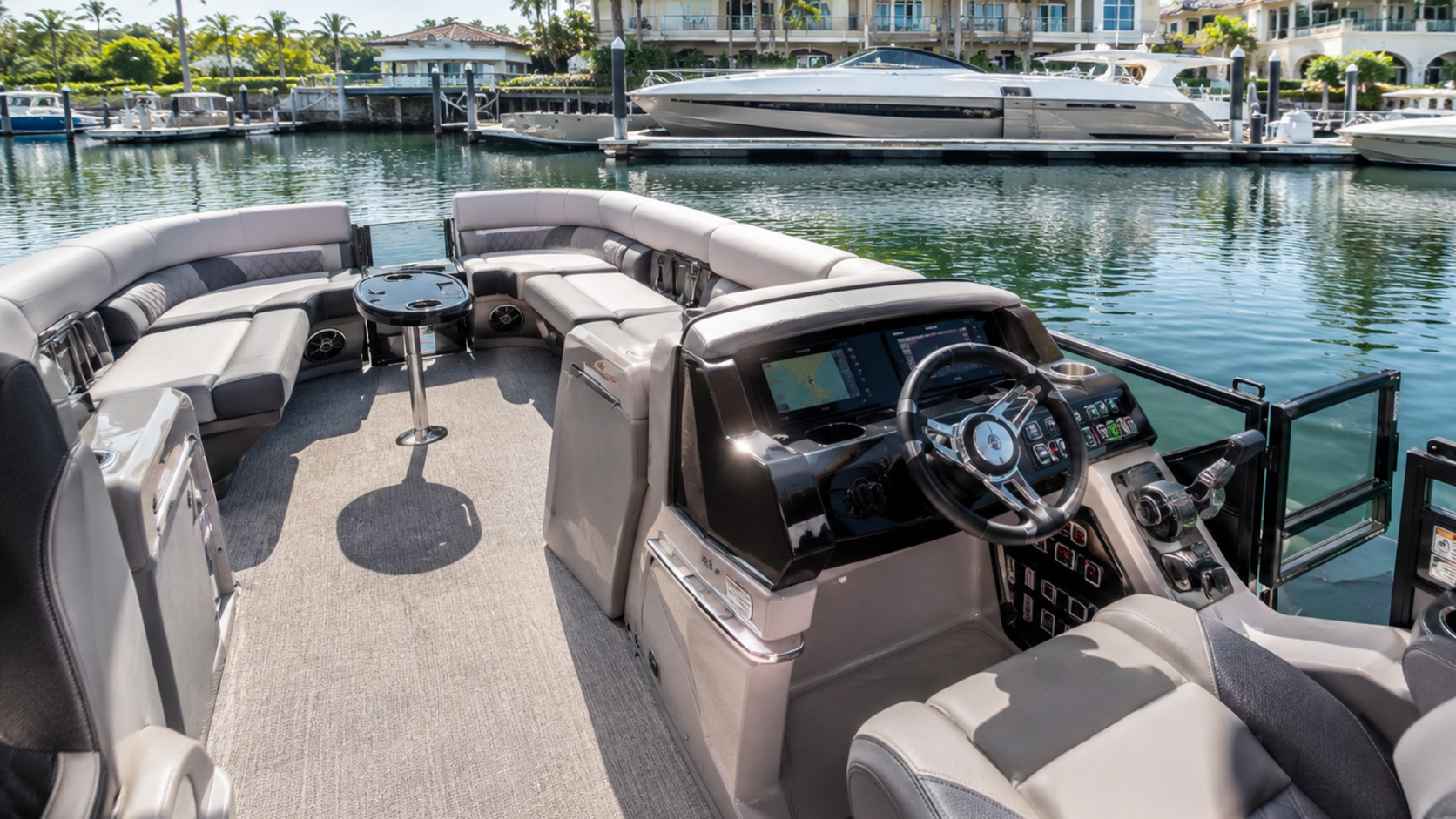
The 23 QX should have its marina plan settled before delivery. Published length is 26’3″, and beam is Standard QX beam; verify exact build.
The 23 QX is the smallest nominal Q-family size in this group, but 26’3″ of published length means it already occupies a serious slip. A 23 QX buyer gets flagship materials without automatically accepting the twin-engine and ten-foot-wide ownership profile of the largest boats.
A ten-foot-wide 23 QX is a different transport problem from an 8-foot-6-inch pontoon. Depending on jurisdiction and route, road movement may require permits or professional transport.
Lift capacity for a 23 QX must include engines, fuel, batteries and installed options. A twin-engine 23 QX can demand substantially more lift than a single-outboard sibling with similar seating.
The cradle or bunks supporting the 23 QX must match its tubes and lifting hardware. Center-tube structure and strakes should not be loaded by an improvised lift setup.
A marina-based 23 QX owner should confirm slip width, gate alignment, fueling access and local service for the exact engine brand. The larger Q boats can outgrow facilities built around ordinary recreational pontoons.
The 23 QX storage decision is part of affordability.
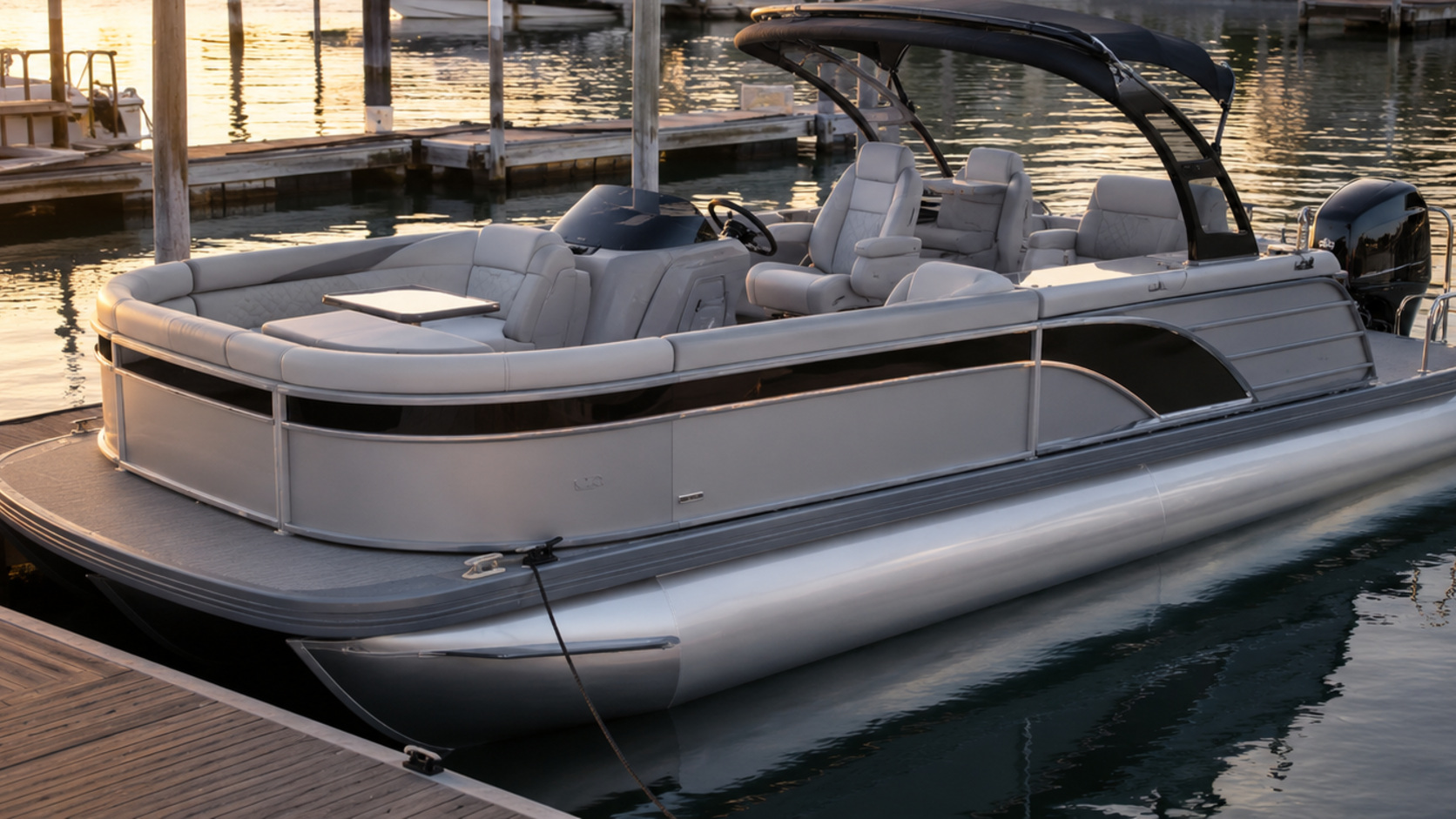
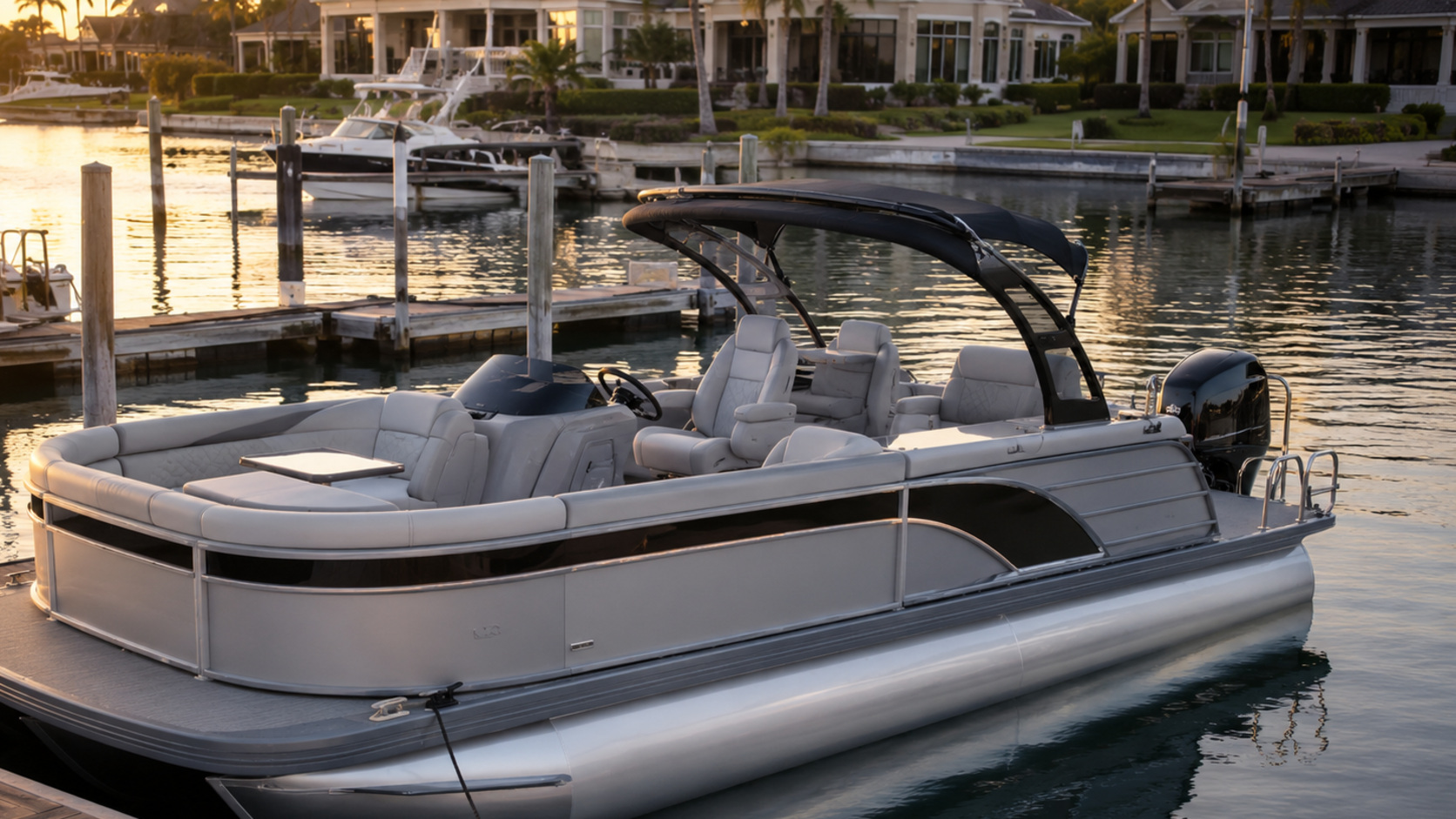
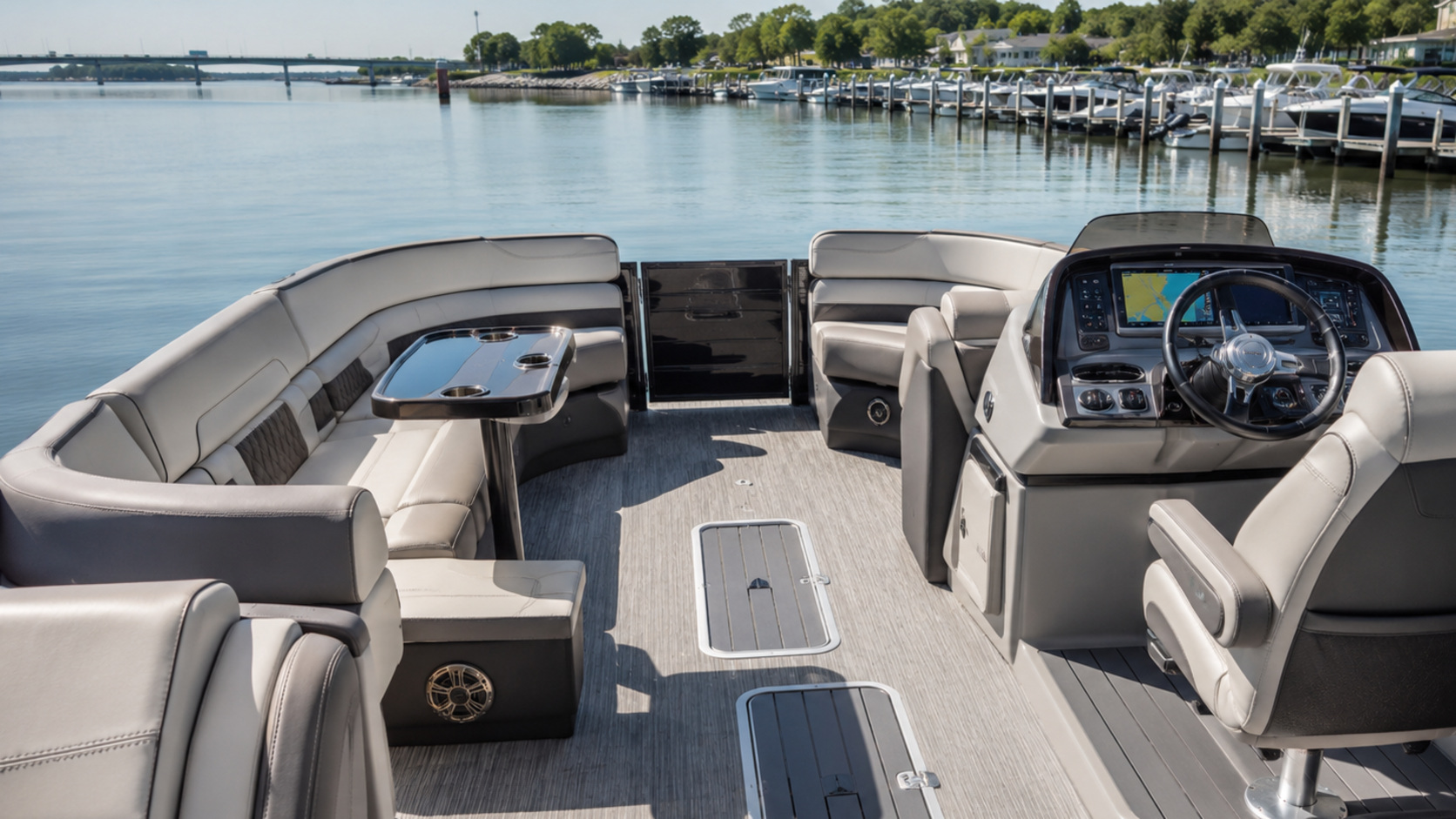
The 23 QX appears in both current and recent used inventory, including 2024 Fastback boats. Supply is not as deep as the 25 QX, so a specific arch, windshield, color, or performance package may require a wider search.
The first 23 QX pricing adjustment is the chassis. Standard beam versus ten-foot beam, single versus twin power and the underlying performance package can change value before furniture or color is considered.
For the 23 QX, layout is the next major variable. Current configurations include Fastback Quad Bench and Swingback configurations. A buyer should not pay more for a stern design that does not improve the way the family uses the boat.
The QX treatment on the 23 QX carries the fuller fiberglass-cladded exterior and Commander 2.0 environment, while the comparable Q can deliver more value to a buyer who cares more about performance than cladding.
Arch, windshield, audio and lighting packages should be valued after the correct 23 QX chassis and floorplan are identified.
Used 23 QX examples can offer meaningful depreciation savings, but older electronics, upholstery age and engine hours need to be priced honestly.
Condition can erase a bargain on the 23 QX. Two engines needing service, repaired cladding or a weak trailer can consume the apparent discount quickly.
The strongest 23 QX value is therefore the boat whose beam, layout and propulsion already fit the household.
Illustration only and not an offer of credit.
A standard-beam single-engine 23 QX and a wide-beam twin-engine build can occupy very different price brackets despite sharing a familiar model name.
Illustration only and not an offer of credit. Your actual rate and term depend on credit profile, vessel age, loan amount and ownership structure.
The first comparison for the 23 QX is 23 Q or 25 QX.
Bennington publishes 26 feet 3 inches overall for current 23 QX Fastback and Swingback layouts, and both carry the 12-inch Vivid UX display with a 7-inch vessel-control screen.
A 23 QX buyer should compare true LOA, beam, stern layout and engine count before comparing monthly payments.
The deciding tradeoff is this: the 23 QX carries much of the same high-end technology as larger QX boats, but buyers who routinely host big adult crews may find the 25 QX gives more usable separation for a relatively small jump in nominal size.
If the alternative fixes that problem without giving up the feature that drew the buyer to the 23 QX, changing models is usually cheaper than living with the wrong flagship configuration.
Begin a 23 QX purchase by confirming the full factory code. Fastback, Swingback, windshield, arch, wide-beam and twin-engine identifiers can all change what the broad 23 QX name actually represents.
Verify 23 QX length and beam on the build sheet. Bennington publishes 26 feet 3 inches overall for current 23 QX Fastback and Swingback layouts, and both carry the 12-inch Vivid UX display with a 7-inch vessel-control screen.
Photograph the 23 QX capacity plate and compare it with the installed engines.
Inspect the 23 QX exterior in strong natural light. Q buyers should examine the fiberglass-bow and rail transitions, while QX buyers should check the larger painted cladding for repair mismatch or edge damage.
Operate the 23 QX Vivid UX screens, vessel controls, audio, lighting, windshield, arch and powered seating features. Flagship equipment should work during the inspection rather than after a promise to repair it.
Use the 23 QX furniture exactly as intended. Quad Bench storage should open cleanly, Stern Lounge seats should feel solid under adults, and a Swingback should move and latch without binding.
Twin-engine 23 QX builds need two service histories. Compare engine hours, propellers, gearcases, steering cylinders and mounting hardware rather than assuming both sides have aged identically.
Inspect the 23 QX running structure from underneath. Tube dents, changed welds, damaged strakes and poor lift support are more consequential than a small cosmetic mark on a seat.
The 23 QX appears in both current and recent used inventory, including 2024 Fastback boats. Supply is not as deep as the 25 QX, so a specific arch, windshield, color, or performance package may require a wider search.
Finish by pricing where the 23 QX will live. Slip, lift, insurance, service access and transport can become substantial at the top of Bennington’s range.
If the 23 QX still fits after those checks, start your application with the details and evaluate financing around the real transaction.
Start your application with the exact 23 QX details rather than asking for a generic Q-Series loan amount.
A 23 QX price can change sharply with Q versus QX treatment, beam, seating layout, engine count, horsepower, arch, windshield, model year and condition, so complete builds should be compared instead of broad badges.
Bennington currently publishes 26’3″ as the relevant 23 QX length reference. Some wide-beam or floorplan variants differ, so a 23 QX buyer should use the exact build sheet when choosing a slip, lift or storage arrangement.
The exact 23 QX rating depends on its configuration. Bennington markets Q models for 8 to 18 people and QX models for 8 to 20 across their respective lines, but the capacity plate on the specific 23 QX is the legal number.
The 23 QX can sit in the part of the Q family where single-engine configurations remain relevant, while larger 27- and 30-foot models clearly move into twin-power territory. Check the full 23 QX factory code and capacity plate before assuming an engine count or horsepower ceiling.
A Q version of the 23 QX emphasizes its fiberglass bow, aluminum rail architecture, Veneto seating and Vivid UX. A QX version adds smooth fiberglass cladding, automotive-style paint, Commander 2.0 design and deeper premium lighting and helm features.
Transporting a 23 QX depends on beam and loaded weight. Standard-beam versions can be more manageable with the correct trailer and tow vehicle, while a ten-foot-wide 23 QX may require permits or professional transport.
A used 23 QX needs tube and strake inspection, exterior-finish review, outboard service records, steering checks, Vivid UX testing, audio and lighting tests, furniture operation, battery inspection and trailer or lift history.
Potentially. Financing a used 23 QX depends on model year, value, condition, purchase amount, seller type and borrower qualifications. Start your application with the actual 23 QX details so the financing reflects the boat being purchased.
Tell us a little bit about yourself and the boat you are looking to finance.