
Call Us : 207-994-5109
Mon – Fri: 8 am to 9 pm & Sat – Sun: 10 am to 8 pm
The Bennington R25 is the R-Line crossroads, offering the widest practical mix of floorplans, used inventory, standard or 10-foot beam and high-output performance.
The Bennington R25 is the R-Line crossroads, offering the widest practical mix of floorplans, used inventory, standard or 10-foot beam and high-output performance.
The R25 sits in Bennington’s most configurable R branch, where Fastback, Stern Radius, Swingback and Stern Lounge layouts can be combined with premium electronics and a wide performance range.
Bennington’s current R layout data shows standard-beam 25 R configurations around 28 feet 3 inches overall, while some 10-foot-wide 25 R variants publish about 26 feet 3 inches. That specification gives the R25 a clearer identity than its nominal size alone.
The R25 is where choice becomes the advantage and the danger. Standard or wide beam, several stern layouts and high-output packages can create completely different boats under one badge.
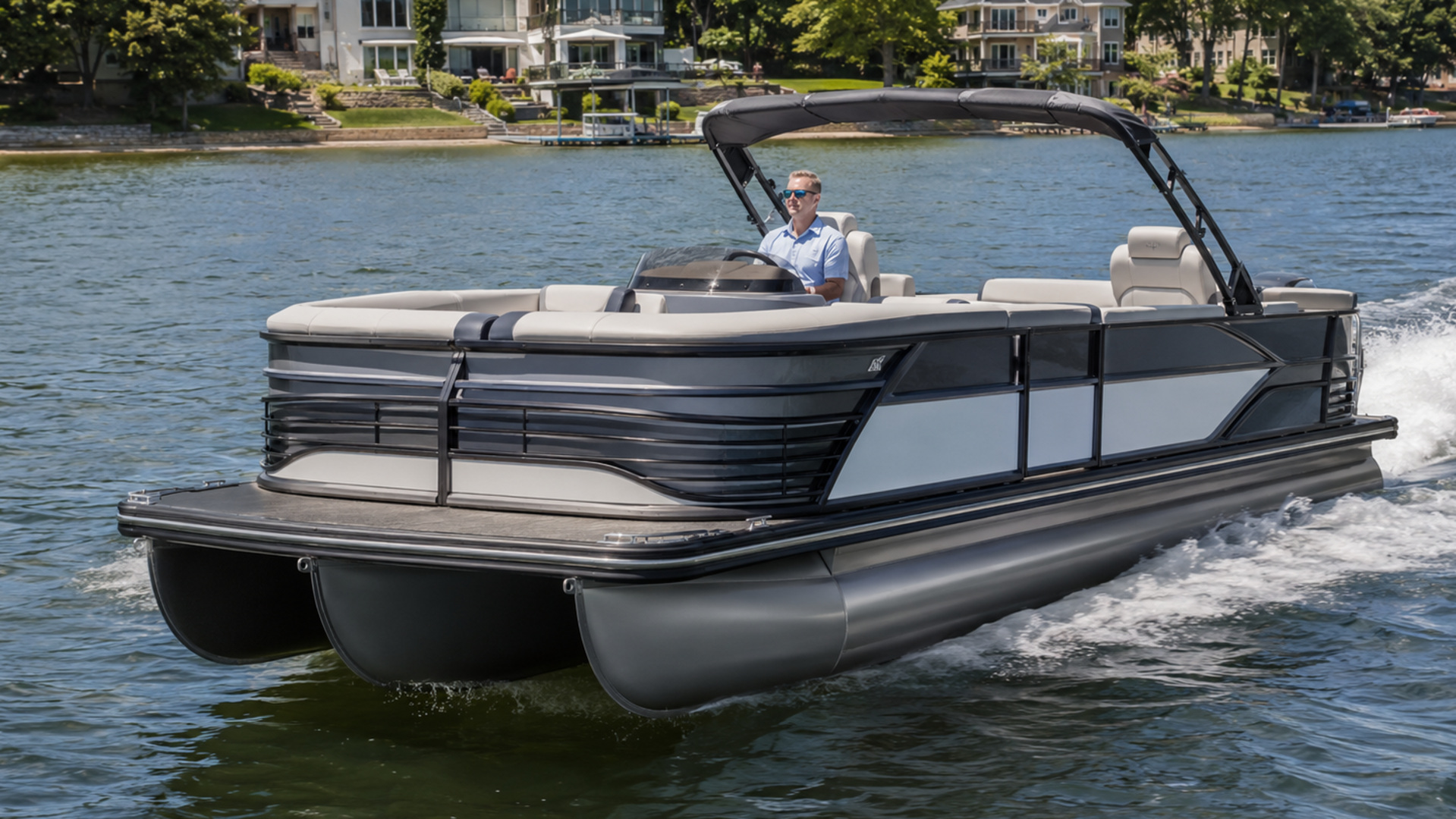
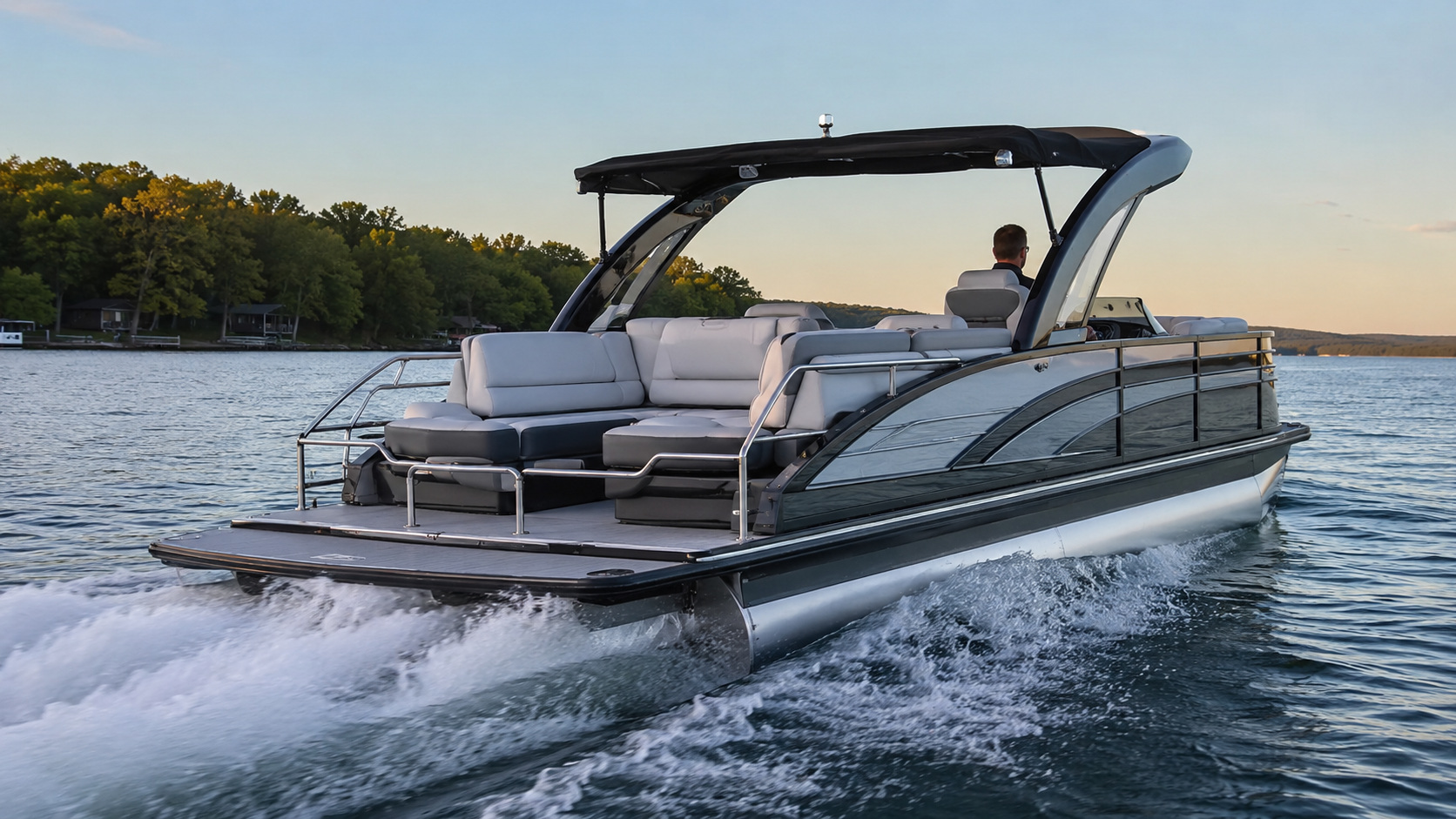
Current R25 choices center on Fastback Quad Bench, Stern Radius Quad Bench, Swingback and Stern Lounge, including wide-beam and windshield/arch variants. The R25 can be found in both Fastback Quad Bench and Swingback forms. Fastback keeps four chaise zones ready all day; Swingback gives the stern a reversible backrest for forward or aft-facing use.
The buyer should confirm the complete factory code before treating two R25 listings as comparable. The complete R25 suffix can reveal furniture, arch, windshield, beam or propulsion details that materially change ownership.
The biggest compromise is straightforward: The R25 can be overbuilt faster than almost any Bennington. Wide beam, arch, windshield and aggressive power can turn a versatile 25 into a much more expensive marina-only boat.
If that drawback matters more than the feature that brought the shopper to the R25, compare R23, R27 or RX Sport 25 before price or monthly payment becomes the deciding factor.
Published factory figures. Confirm every dimension against the individual boat before you commit.
Length Overall: 28’3″ on standard-beam layouts; some 10′ wide variants publish about 26’3″
Maximum Capacity: R Line: 8-20 people across configurations; verify the exact capacity plate
The R25 is a pontoon or tritoon platform, and its running behavior depends on the exact tube, beam, steering and engine package selected for the build.
For the R25, Bennington publishes 28’3″ on standard-beam layouts; some 10′ wide variants publish about 26’3″ as the relevant current LOA reference. The R25’s published LOA is the useful figure for marina and lift planning.
The R25 beam is 8’6″ or 10′ depending on configuration. If a particular R-Line build uses a 10-foot beam, it needs to be treated as a different transport and marina problem from an 8-foot-6-inch boat.
The running structure beneath the R25 can change materially with its performance configuration. More tube volume, lifting hardware, steering and transom support can increase the R25’s ability to carry power and passenger load, but those additions also raise weight and complexity.
A used R25 should be inspected around the tubes, lifting hardware, transom structure and any wide-beam or twin-engine equipment. On a used R25, tube damage, altered welds, corrosion or poor lift support can matter more than minor upholstery wear.
The extended aft deck is another structural area worth checking on the R25. Because the R25 aft deck sees constant swimmer traffic, ladder mounts and stern hardware deserve a close look.
Capacity and horsepower should come from the actual R25 plate.
Configuration: configuration-specific; the R Line supports very high output on compatible chassis
R25 horsepower depends on the exact standard- or wide-beam chassis and capacity plate. Do not apply the R Line’s 1,000-total-HP ceiling automatically to every R25.
The R25 buyer should resist importing horsepower expectations from Bennington’s larger twin-engine R models. A correctly matched single outboard or model-specific propulsion package can be the better ownership choice when the crew cruises more than it races.
During a R25 sea trial, test acceleration with the normal number of passengers aboard. The engine should move the highly configurable R25 without forcing everyone aft or requiring wide-open throttle for ordinary family use.
On the R25, controls should engage cleanly, trim should operate consistently and the steering should remain predictable through a broad turn.
For a used R25, record every engine serial number and hour count.
Inspect the R25 propeller or propellers, skegs, lower units, trim hardware and engine mounts for impact or corrosion.
The right power package for the highly configurable R25 is the one that carries the family’s real load comfortably while leaving room in the ownership budget for fuel, service and storage.
A standard-beam R25 and a wider high-output R25 can return very different fuel costs, so engine and chassis should be normalized before range or operating expense is compared.
The tank size on a R25 should come from its build sheet or a physical inspection.
Estimate R25 range at the cruise speed the family actually expects to use.
Watersports increase consumption because the R25 repeatedly accelerates back onto plane.
If the R25 cannot reach the engine manufacturer’s expected operating range or feels unusually reluctant to accelerate, propeller selection or damage deserves investigation.
A used R25 should be checked around the fill, vent, hoses, sender and tank mounts.
The R25 should be sea-trialed for control and load-carrying ability, not only top speed.
The R25 is where choice becomes the advantage and the danger. Standard or wide beam, several stern layouts and high-output packages can create completely different boats under one badge.
Use idle-speed time on the R25 to practice reverse, a tight turn and a realistic dock approach. The broad side of the R25 catches wind, while twin engines or joystick steering can add useful authority on compatible configurations.
At normal R25 cruise, cross ordinary wakes and make broad turns to judge tracking and steering load. A well-matched R25 should remain composed without constant steering correction or distracting underdeck noise.
A R25 buyer should operate the Swingback if fitted and separately inspect Fastback seat bases and storage on a Quad Bench example before deciding which stern feels more natural.
If towing matters, test the R25 with realistic passenger weight and observe how quickly it settles into a comfortable running attitude. The R25 performance package should solve a real need such as load, watersports or rougher-water control rather than exist only as an option-sheet upgrade.
The R25 can be ordered around Fastback Quad Bench, Stern Radius Quad Bench, Swingback and Stern Lounge, including wide-beam and windshield/arch variants. Furniture should be chosen before horsepower because the seating is used for hours while maximum speed may be used only briefly.
Fastback and Stern Radius layouts emphasize fixed chaise space. Swingback creates a convertible rear lounge. Stern Lounge dedicates the aft end to two rear-facing seats.
That floorplan range is the reason a R25 shopper should use the complete R code rather than a generic model name.
The R25 helm centers on a 12-inch Vivid UX main display and 7-inch vessel-control touchscreen in current layouts. From the R25 helm, check display visibility with adults occupying the forward seats.
Open the R25 storage with real gear in mind. A well-arranged R25 should swallow towels, bags and safety gear without turning the center aisle into storage.
During a R25 inspection, approach each boarding gate from the same side the family will normally use at the dock. On the R25, furniture length and everyday gear can change how usable a boarding gate feels compared with the floorplan drawing.
At the R25 stern, test the extended aft deck and LilliPad ladder while the seating area is occupied. On the R25, the route to the water should remain usable even when the social seating is full.
The right R25 deck should solve normal cruising, swimming and entertaining without asking passengers to reorganize themselves every few minutes.
12-Inch Vivid UX Main Display – Current R25 configurations use Bennington’s large Vivid UX display for engine information, navigation and integrated boat data.
Current R Line configurations pair the social deck with premium lighted Rockford Fosgate speakers.
The R25 uses an extended stern platform on current factory layouts, creating more room for boarding and watersports setup.
Current R-family layouts pair the aft deck with a LilliPad ladder for easier access from the water.
R-Line interior and exterior accent lighting can be controlled in multiple colors to change the social environment after sunset.
Current R25 layouts use premium chaise or lounge furniture matched to Fastback, Swingback, Stern Radius or Stern Lounge missions.
Selected R25 builds add low-profile windshields and power sport arches, changing protection, storage height and watersports utility.
Because the R25 can be built so many ways, its systems inspection starts with identifying the exact beam, stern layout, Vivid UX generation and installed performance equipment.
Start at the R25 helm. The 12-inch Vivid UX main display and 7-inch vessel-control touchscreen should show engine data and operate navigation, lighting and entertainment functions without resets or dead touch areas.
Run the Rockford Fosgate audio on the R25 at ordinary and higher volume.
Inspect the R25 batteries, switches and charging hardware with the engine package in mind.
Operate every powered or moving option fitted to the highly configurable R25.
Look underneath the R25 helm and seat bases for aftermarket wiring.
R25 ownership changes dramatically with beam: an 8-foot-6-inch boat is a different transport and slip proposition from a 10-foot-wide R25.
The completed R25 is longer than its published deck once trailer tongue and outboard position are included.
A lift for the R25 must be rated for the boat, engine package, fuel, batteries and installed options.
At a marina, walk the intended R25 slip before purchase.
If the R25 will travel regularly by road, calculate loaded trailer weight from the completed boat.
Storage is part of the R25 affordability decision.
The R25 has one of the broadest used/new markets in the R family. Current listings span older 2019-era R models through 2027 boats, giving buyers real depreciation choices and making engine hours, electronics generation and chassis package important.
For the R25, chassis and propulsion should be normalized before two prices are compared. On the R25, the chassis and propulsion details behind the badge explain a large share of the pricing spread.
The layout matters next. The R25 can be found in both Fastback Quad Bench and Swingback forms. Fastback keeps four chaise zones ready all day; Swingback gives the stern a reversible backrest for forward or aft-facing use.
Branch-specific equipment also affects value. The R25 should be priced around the equipment that defines its R Line branch rather than around the R badge alone.
Arch, windshield, premium audio and electronics should be treated as secondary adjustments after the correct R25 chassis and furniture are identified.
On a used R25, engine hours, electronics generation, upholstery condition and running-structure repairs deserve more weight than a small model-year difference.
The real cost of a R25 also includes the lift, slip, trailer or transport setup needed to own it. A R25 that needs a larger lift, professional transport or a different marina can be more expensive than a higher-priced boat that already fits the owner’s infrastructure.
The strongest R25 value is the boat whose size, propulsion and furniture already match the family.
Illustration only and not an offer of credit.
A base or lightly optioned R25 can sit far below a high-output, arch-equipped or specialized-floorplan example. Calculate from the real transaction and keep room for insurance, fuel, service and the storage plan this specific boat requires.
Illustration only and not an offer of credit. Your actual rate and term depend on credit profile, vessel age, loan amount and ownership structure.
The first cross-shop for the R25 is R23, R27 or RX Sport 25.
Bennington’s current R layout data shows standard-beam 25 R configurations around 28 feet 3 inches overall, while some 10-foot-wide 25 R variants publish about 26 feet 3 inches.
The R25 should win because its specific branch, layout or size solves a real need. Two R25 layouts are not interchangeable merely because they share an engine and exterior color. A R25 household should decide whether fixed lounge space or a convertible stern will be used more often.
Compare the R25’s true LOA, beam, propulsion and stern layout before letting monthly payment separate the options.
An R25 purchase should begin with the factory code and beam. Those two details explain more of the ownership difference than the nominal 25 alone.
On the R25, that code can reveal the exact stern furniture, arch or windshield package, beam and propulsion configuration that a shortened dealer title leaves out.
Verify the published 28’3″ on standard-beam layouts; some 10′ wide variants publish about 26’3″ length reference and 8’6″ or 10′ depending on configuration beam information against the boat being purchased. These measurements determine whether the R25 works with the intended marina, lift and transport setup.
Inspect the standard- or wide-beam R structure with Fastback, Stern Radius, Swingback and Stern Lounge choices.
A R25 with a sport arch, Swingback, windshield, RGB system or joystick should demonstrate those features during the inspection rather than after delivery.
Where the R25 carries twin power, compare both engines separately; where it uses a single outboard, make sure the motor is appropriate for the exact capacity plate.
Walk the R25 deck with the normal crew in mind. A layout that is awkward at the dock will not become more practical after financing.
R25 has one of the broadest used/new markets in the R family, giving shoppers enough inventory to compare older depreciation against current technology and chassis choices.
If the R25 has lived on a lift, look for support marks or damage that suggest the lift geometry was wrong.
Budget the first year for standard- or wide-beam r structure with fastback, stern radius, swingback and stern lounge choices, propulsion service, insurance and storage.
Before closing, compare R23, R27 or RX Sport 25. The R25 should win because its size, branch or layout solves a specific family need, not because the first available boat happens to fit the payment.
Start your application with the actual R25 details with its model year, full factory code, propulsion, seller type and asking price.
The meaningful price drivers are its exact factory code, propulsion, floorplan, options, model year and condition, so buyers should compare completed boats rather than assuming every R25 is equivalent.
The current published length reference for the R25 is 28’3″ on standard-beam layouts; some 10′ wide variants publish about 26’3″. Use the exact build sheet for the final slip and lift decision because Bennington model numbers are nominal rather than guaranteed overall-length measurements.
Passenger capacity is configuration-specific on the R25. The legal figure is the capacity plate on the boat, which accounts for the chassis and installed configuration rather than a broad R-Series marketing range.
R25 horsepower depends on the exact standard- or wide-beam chassis and capacity plate. Do not apply the R Line’s 1,000-total-HP ceiling automatically to every R25.
The R25 is best understood through its standard- or wide-beam R structure with Fastback, Stern Radius, Swingback and Stern Lounge choices. That combination is why a shopper should compare R23, R27 or RX Sport 25 rather than choosing only by nominal length.
R25 ownership changes dramatically with beam: an 8-foot-6-inch boat is a different transport and slip proposition from a 10-foot-wide R25.
Focus on the standard- or wide-beam R structure with Fastback, Stern Radius, Swingback and Stern Lounge choices, propulsion, steering, Vivid UX, premium audio, moving furniture, batteries and trailer or lift history.
Potentially. A used R25 financing decision can depend on its model year, value, condition, purchase amount, seller type and borrower qualifications.
Tell us a little bit about yourself and the boat you are looking to finance.