
Call Us : 207-994-5109
Mon – Fri: 8 am to 9 pm & Sat – Sun: 10 am to 8 pm
The Boston Whaler 250 Outrage is the current entry point to Outrage with serious offshore fishability in a 25-foot-class platform.
On the 250 Outrage, within Boston Whaler’s Outrage family, the strongest reason to choose this size is how it balances physical footprint with the family’s mission. Its 9-foot beam already makes routine road transport more specialized than an 8-foot-6-inch center console
The 250 Outrage should be cross-shopped with 230 Outrage or 280 Outrage. Within the Outrage family, that comparison helps separate a genuine use-case advantage from the temptation to choose a larger or more expensive Whaler simply because it is available.
At 25′ 5″ overall, Boston Whaler’s foam-filled fiberglass construction is a major brand attribute, but a used boat still deserves a normal structural inspection. At 25′ 5″ overall, unsinkable construction does not make impact damage, poor repairs or neglected systems irrelevant.
At 25′ 5″ overall, the Outrage mission is serious fishing, diving, cruising and open-water running. A 250 Outrage buyer whose normal weekend does not resemble that mission may be better served by another Whaler family.
At the dock, sit the expected crew in the 250 Outrage. The 250 Outrage capacity plate tells how many people are allowed; the real question is whether those people can move, store gear and use the boat comfortably.
The main compromise is clear: its 9-foot beam already makes routine road transport more specialized than an 8-foot-6-inch center console
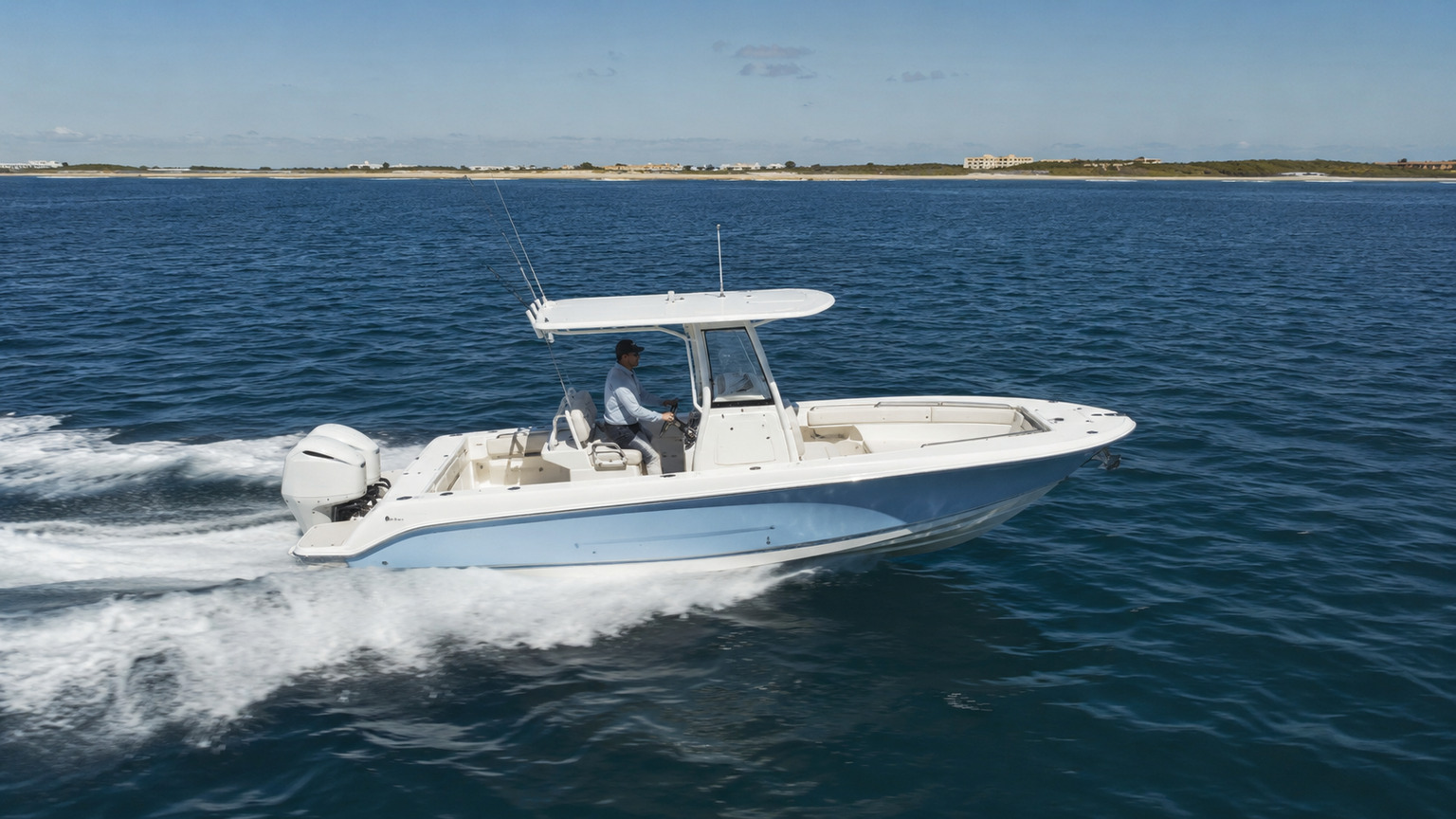
Published factory figures. Confirm every dimension against the individual boat before you commit.
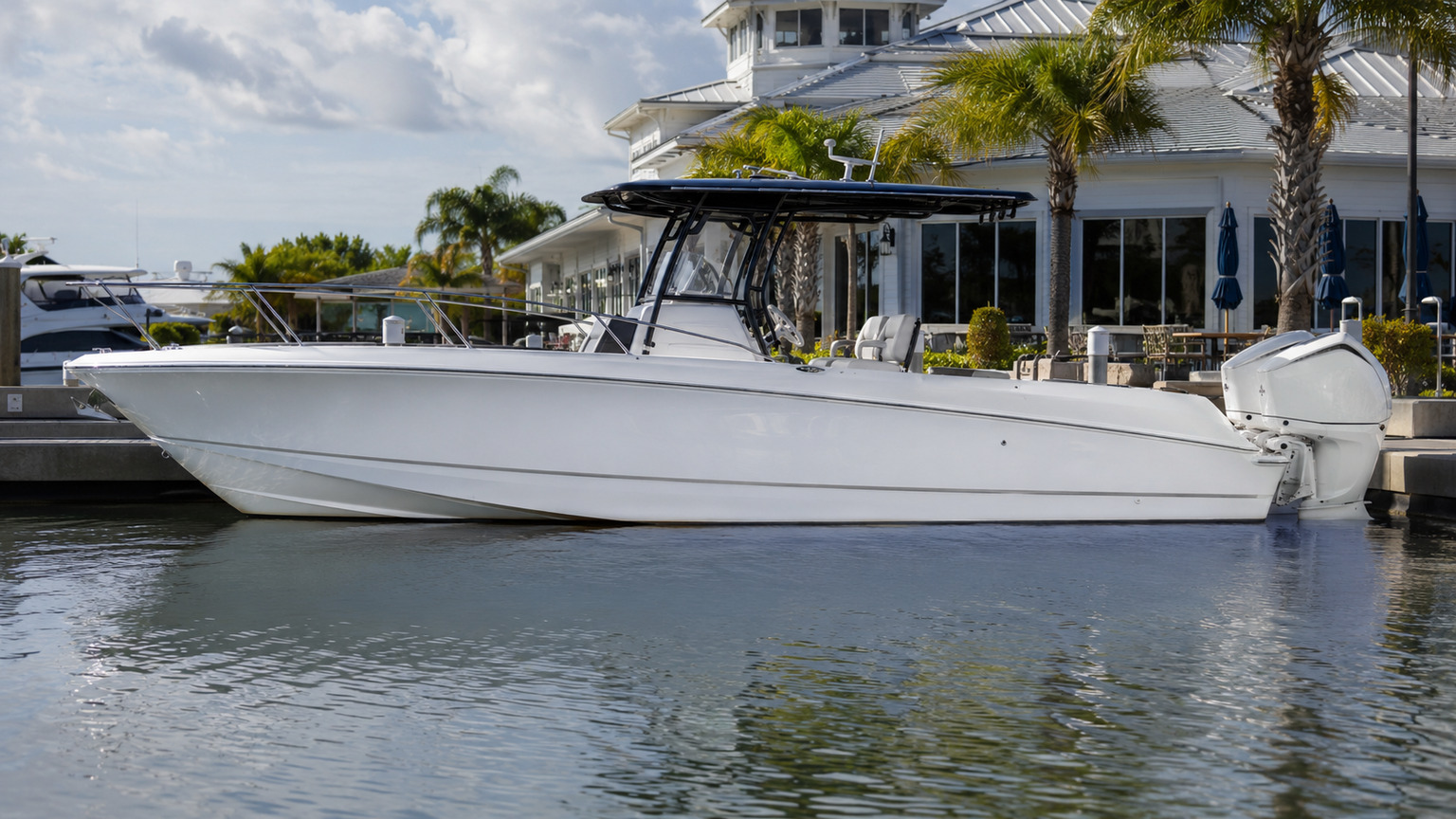
At 25′ 5″ overall, outrage uses deeper offshore geometry, substantial freeboard and more fuel capacity than Whaler families aimed primarily at protected water.
On the 250 Outrage, 22 degrees of deadrise and 20″ of draft help explain where the hull sits between shallow-water access and offshore comfort. Within the Outrage family, those dimensions should be interpreted with load and sea state in mind.
Beam is 9′ 0″. On the 250 Outrage, that affects passenger space, dock fit and road transport. Within the Outrage family, boats wider than 8 feet 6 inches can require permit or professional-hauling considerations depending on jurisdiction.
Dry hull weight is 5,350 lbs. At 25′ 5″ overall, lift and trailer decisions should add propulsion, fuel, batteries, freshwater, gear and installed options instead of sizing equipment from dry weight alone.
Inspect the 250 Outrage from stem to transom in bright light. When evaluating the 250 Outrage, look along chines, strakes, keel and transom corners for repair evidence, gelcoat mismatch or impact.
At 25′ 5″ overall, foam-filled construction makes professional repair quality especially important. Within the Outrage family, a documented repair can be acceptable, while an unexplained patch or distorted running surface deserves more investigation.
When evaluating the 250 Outrage, check engine mounting points, trim hardware, transducers and through-hulls. Within the Outrage family, high-output outboards place real load on the transom and poorly sealed accessory penetrations can create avoidable problems.
On the 250 Outrage, rails, cleats and rub rail can reveal docking history. At 25′ 5″ overall, heavy cosmetic damage around one corner often points to repeated contact rather than one harmless scratch.
When evaluating the 250 Outrage, use the capacity plate and correct model-year factory specification to resolve conflicts with seller copy. At 25′ 5″ overall, online listings frequently inherit numbers from another year.
The 250 Outrage propulsion package is central to ownership. Within the Outrage family, engine count determines service cost, redundancy, steering complexity, battery requirements and much of the boat’s fuel budget.
Published maximum horsepower is 450 HP. For a 250 Outrage shopper, that ceiling should not automatically become the target on a smaller Whaler if a more moderate package carries the normal crew comfortably.
Sea-trial the 250 Outrage with realistic load in mind. On the 250 Outrage, adults, full fuel, fishing equipment and overnight gear can expose weak acceleration or poor propeller selection that an empty dealer run hides.
At 25′ 5″ overall, on multi-engine versions, record every serial number and hour count. For a 250 Outrage shopper, engines with different histories are not automatically a problem, but the difference should be understood and documented.
Test Mercury digital throttle, steering, joystick or SmartCraft functions fitted to the 250 Outrage. For a 250 Outrage shopper, a clean engine start is not enough if networked controls or engine data are intermittent.
When evaluating the 250 Outrage, inspect propellers, skegs, gearcases, trim cylinders, steering hardware and mounts. Within the Outrage family, underwater damage can create vibration and lost performance without leaving obvious cosmetic evidence above deck.
Ask for scheduled service records. For a 250 Outrage shopper, gear oil, impellers, plugs, fluids, anodes and corrosion protection tell more about long-term care than a freshly detailed cowling.
For a 250 Outrage shopper, during the sea trial, include idle maneuvering, acceleration, normal cruise and a broad loaded turn. For a 250 Outrage shopper, engine rpm and steering feel should remain consistent.
On the 250 Outrage, if future repower is part of the ownership plan, verify maximum engine weight and transom rating before assuming the newest outboard is a direct replacement.
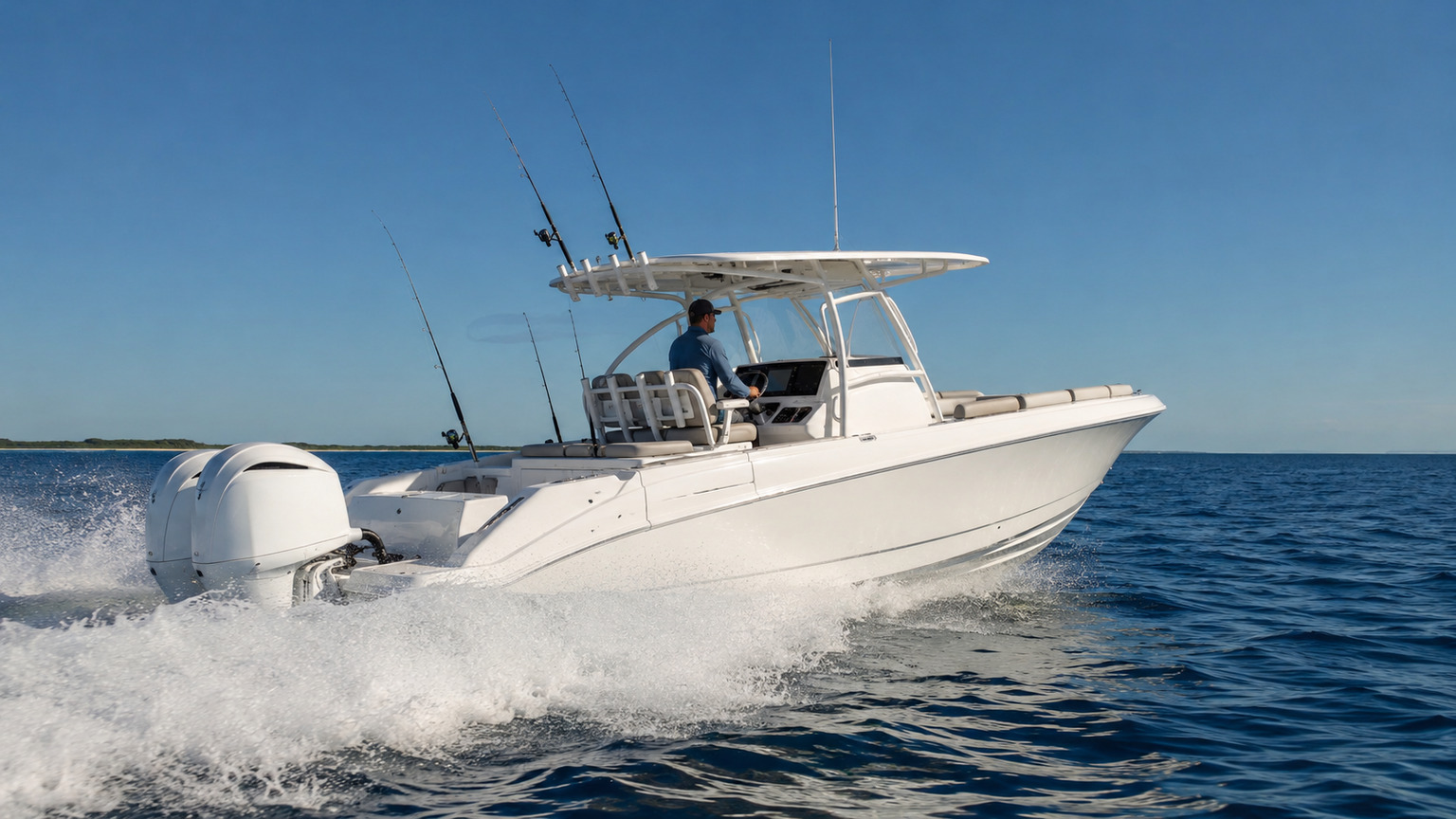
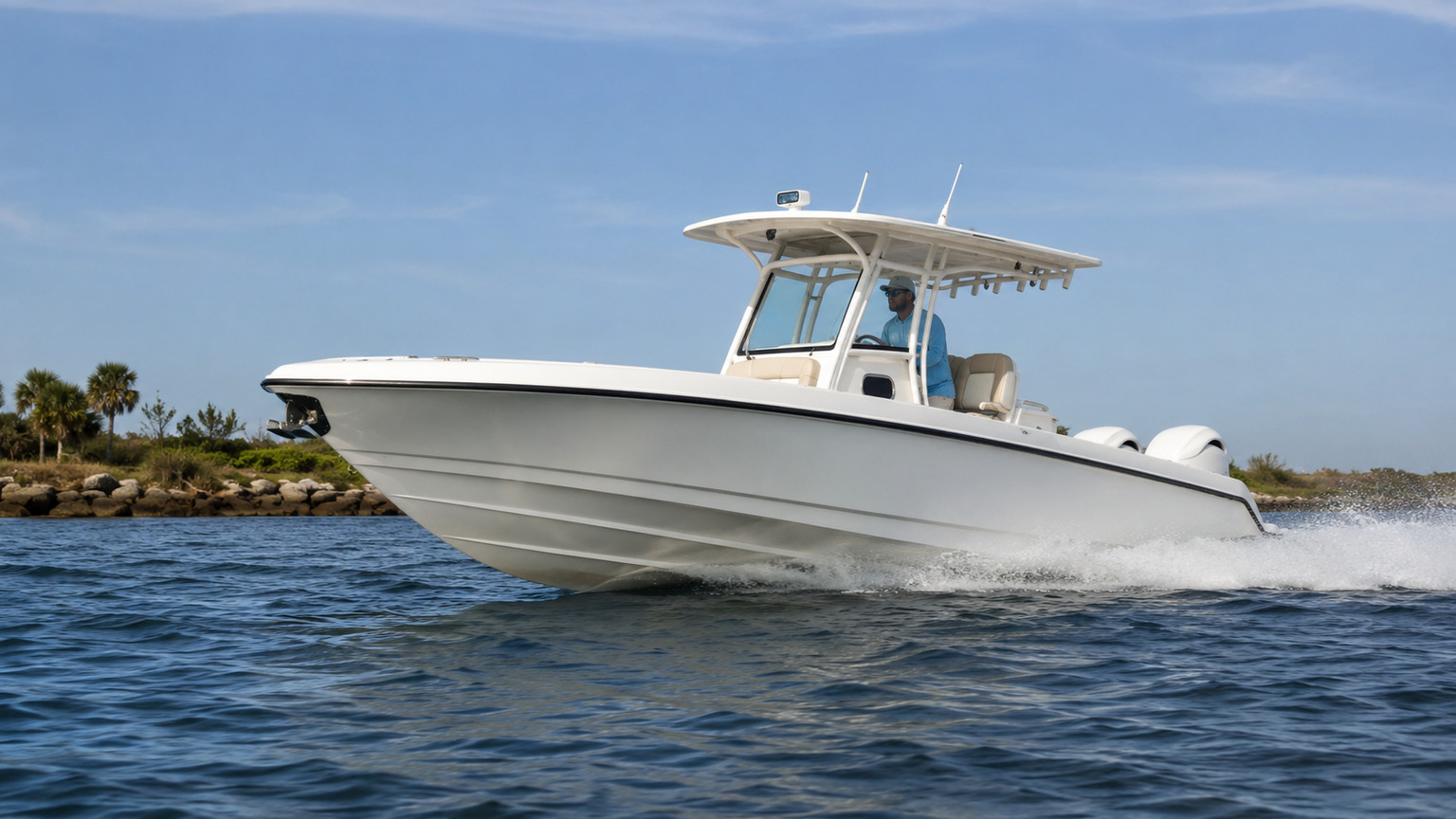
The 250 Outrage carries a published fuel reference of 172 gallons. When evaluating the 250 Outrage, verify the exact year because redesigned models can change tank volume while keeping the familiar name.
250 Outrage fuel burn changes with engine package, sea state, trim, bottom condition and passenger load. For a 250 Outrage shopper, a published performance test should be treated as one controlled configuration rather than a guarantee.
For the 250 Outrage, identify a comfortable cruise and watch actual fuel flow on the engine display. On the 250 Outrage, build range around that speed and retain a meaningful reserve.
At 25′ 5″ overall, full fuel adds significant weight, especially on Conquest, Realm, Outrage and large Vantage boats. At 25′ 5″ overall, that can move acceleration and the most efficient cruise rpm.
Inspect fuel fills, vents, hoses, separators and accessible tank areas on a used 250 Outrage. On the 250 Outrage, persistent odor should be investigated before closing.
Within the Outrage family, a boat that has been stored for months may also need old fuel addressed. When evaluating the 250 Outrage, ask how the seller handled stabilization and ethanol exposure.
Within the Outrage family, annual fuel budget matters more than one test day. If the family cannot comfortably afford to run the 250 Outrage as intended, the purchase will not deliver its promised use.
The 250 Outrage should be judged at the speeds the owner expects to use most often. At 25′ 5″ overall, top speed is less important than clean planing, predictable steering, visibility and a comfortable cruise.
For a 250 Outrage shopper, outrage uses deeper offshore geometry, substantial freeboard and more fuel capacity than Whaler families aimed primarily at protected water.
Practice an actual dock approach. Within the Outrage family, windage, beam and engine count can make two Whalers of similar length behave very differently at idle.
Within the Outrage family, at cruise, cross ordinary wakes and note pounding, spray, steering correction and windshield protection. The 250 Outrage hull should inspire confidence without requiring constant correction.
When evaluating the 250 Outrage, test acceleration with normal passenger weight in mind. For a 250 Outrage shopper, coolers, rods, full fuel and cabin gear can expose an underpowered or poorly propped setup.
Use several trim settings. The 250 Outrage should respond predictably without persistent porpoising, excessive bow rise or heavy steering.
When evaluating the 250 Outrage, operate trim tabs or automated trim systems where fitted. Within the Outrage family, intermittent control should be repaired before delivery.
At 25′ 5″ overall, listen for hardtop rattles, loose panels or propeller resonance. Within the Outrage family, noise can reveal installation problems that a speed number never shows.
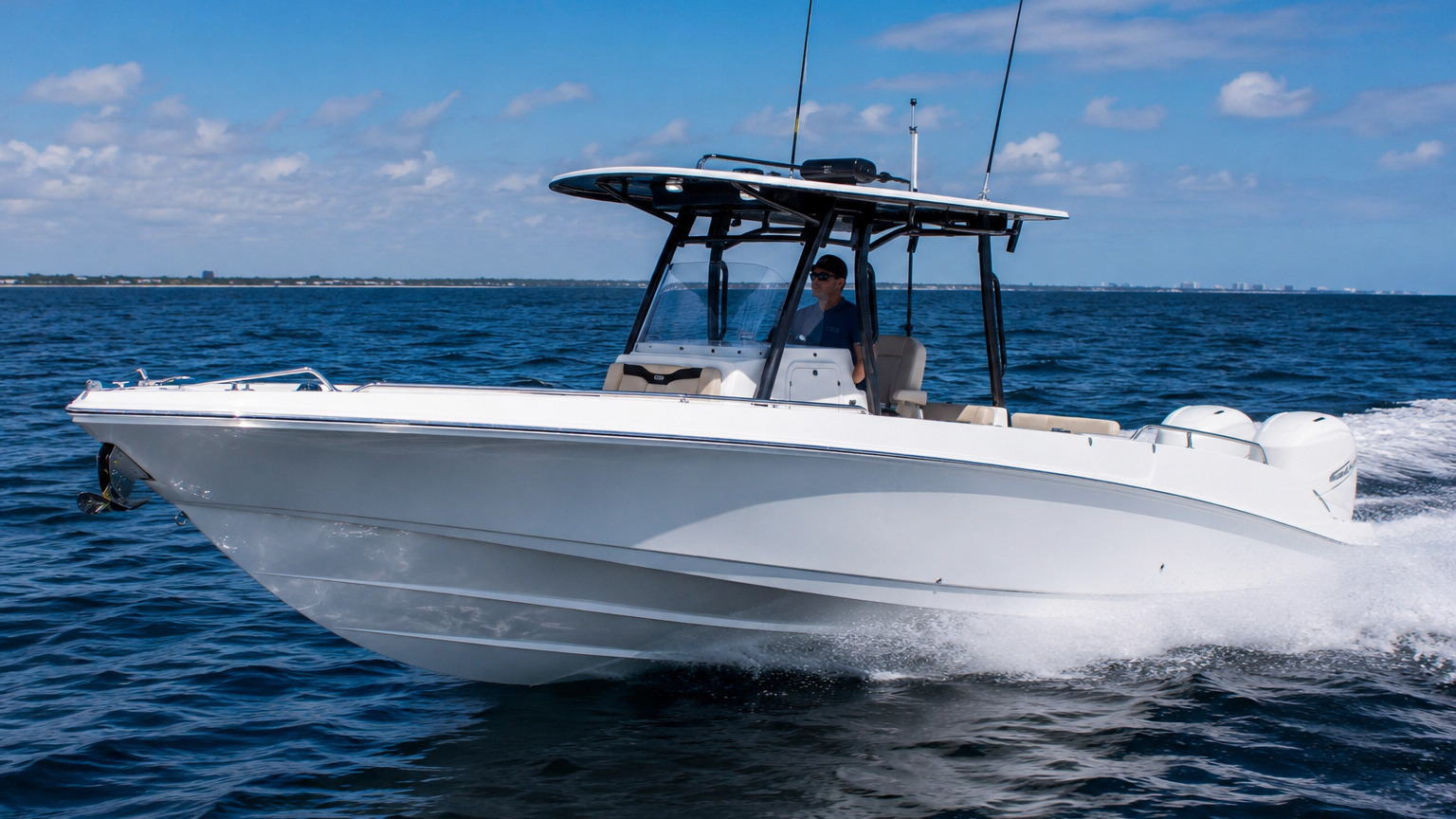
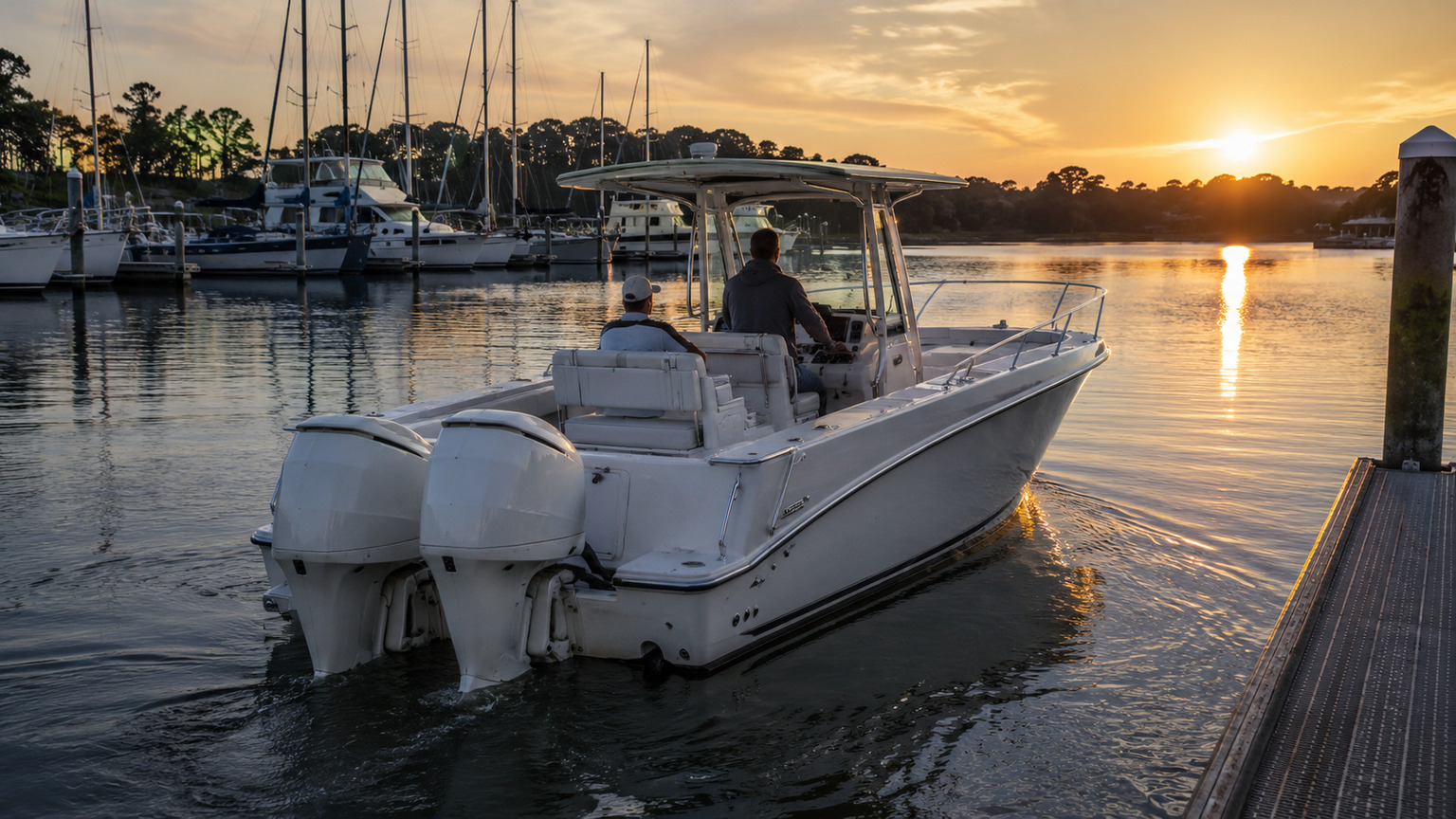
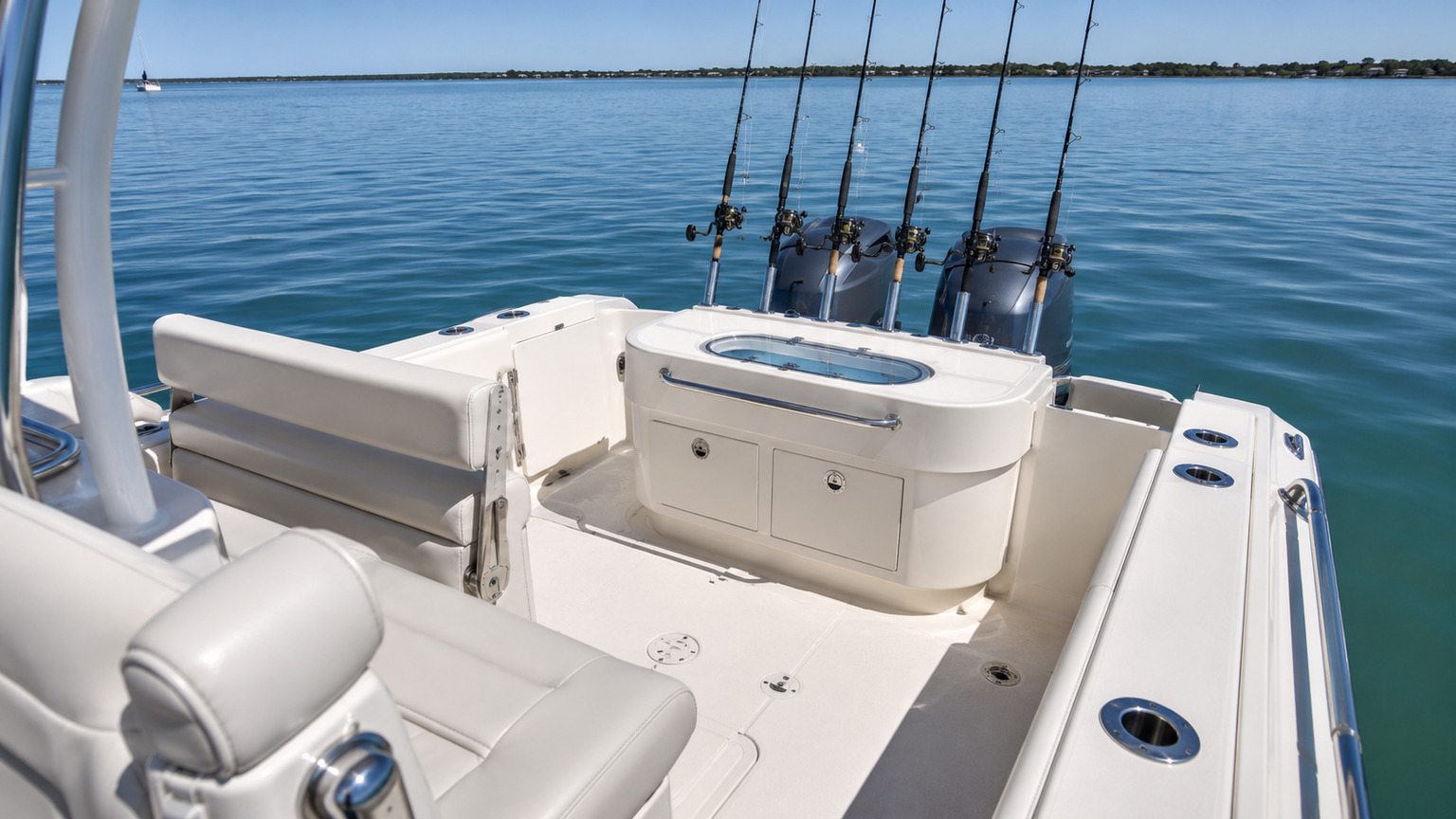
The 250 Outrage is a offshore center console designed around deep-V ride, livewells, fishboxes and high freeboard. For a 250 Outrage shopper, the deck should make that mission obvious before the buyer starts counting options.
For a 250 Outrage shopper, walk the deck with the normal crew aboard. Within the Outrage family, seat people forward and aft, then open the storage, fishboxes, livewells or cabin access they would use during a normal day.
Fishing equipment should be operated. When evaluating the 250 Outrage, run livewell pumps, lift fishbox lids, inspect rod holders and verify drains rather than assuming clean equipment is functional.
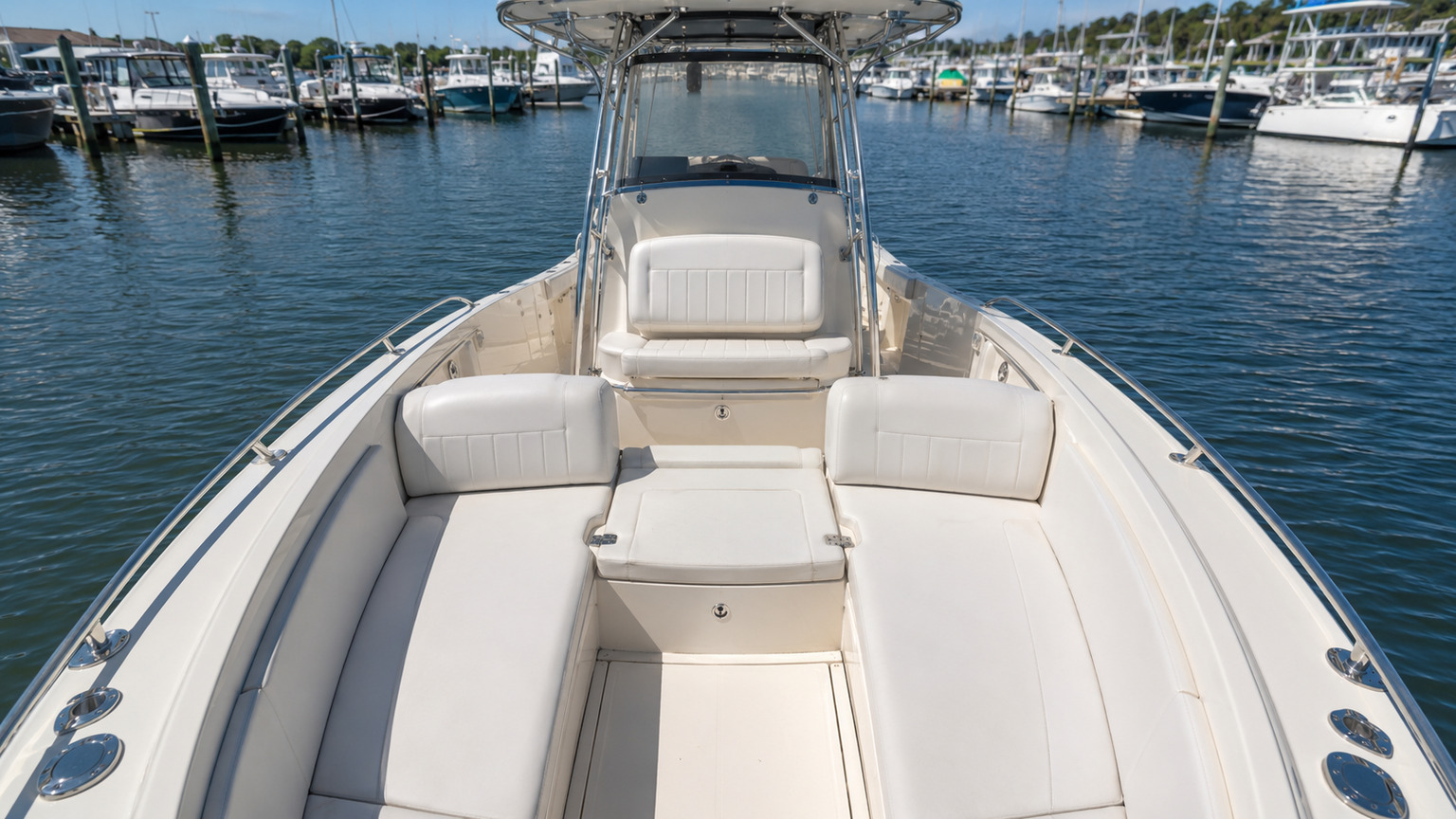
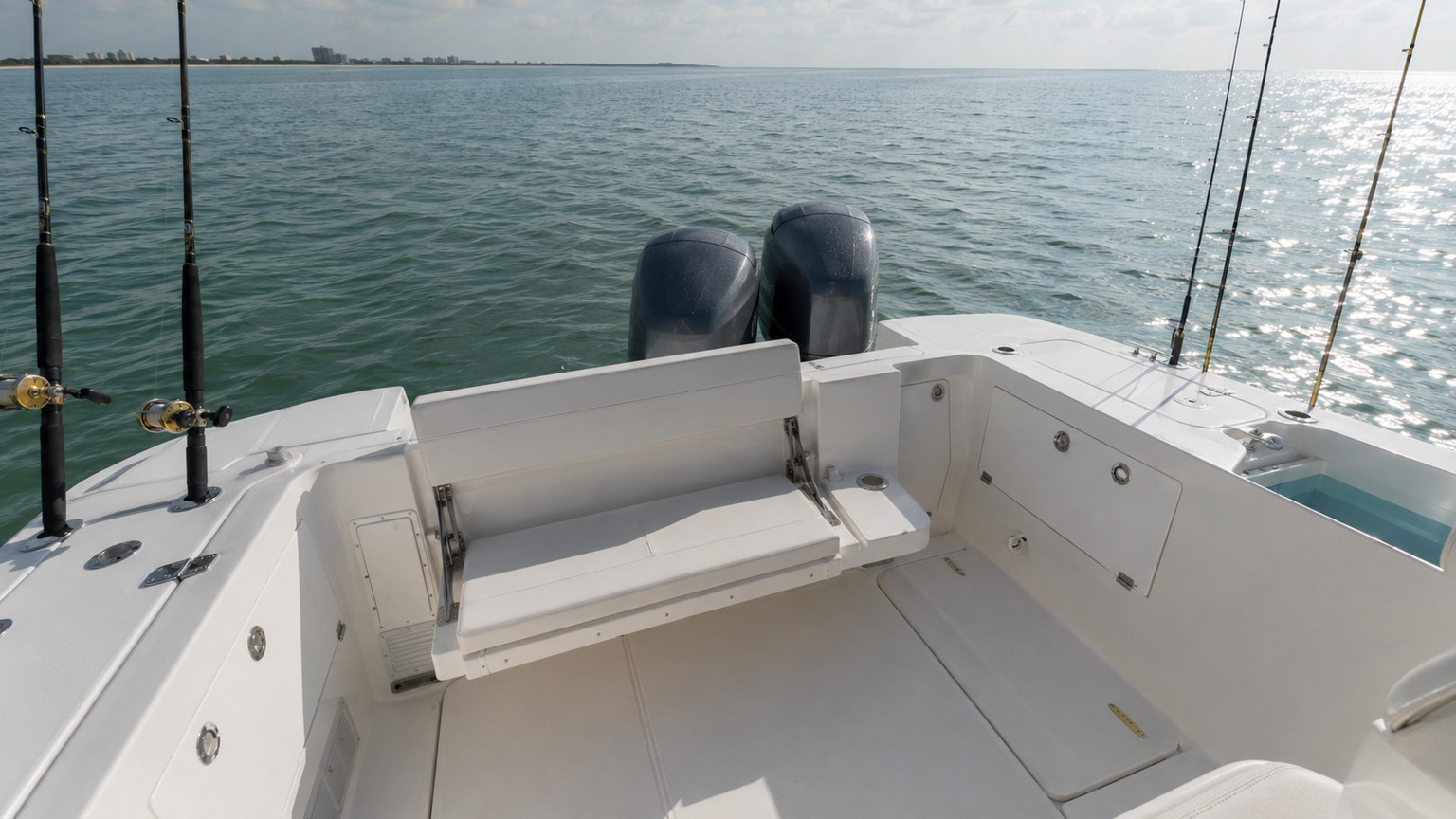
On the 250 Outrage, family seating deserves the same attention. For a 250 Outrage shopper, convertible backrests, removable cushions and tables should move easily enough that the family will actually use them.
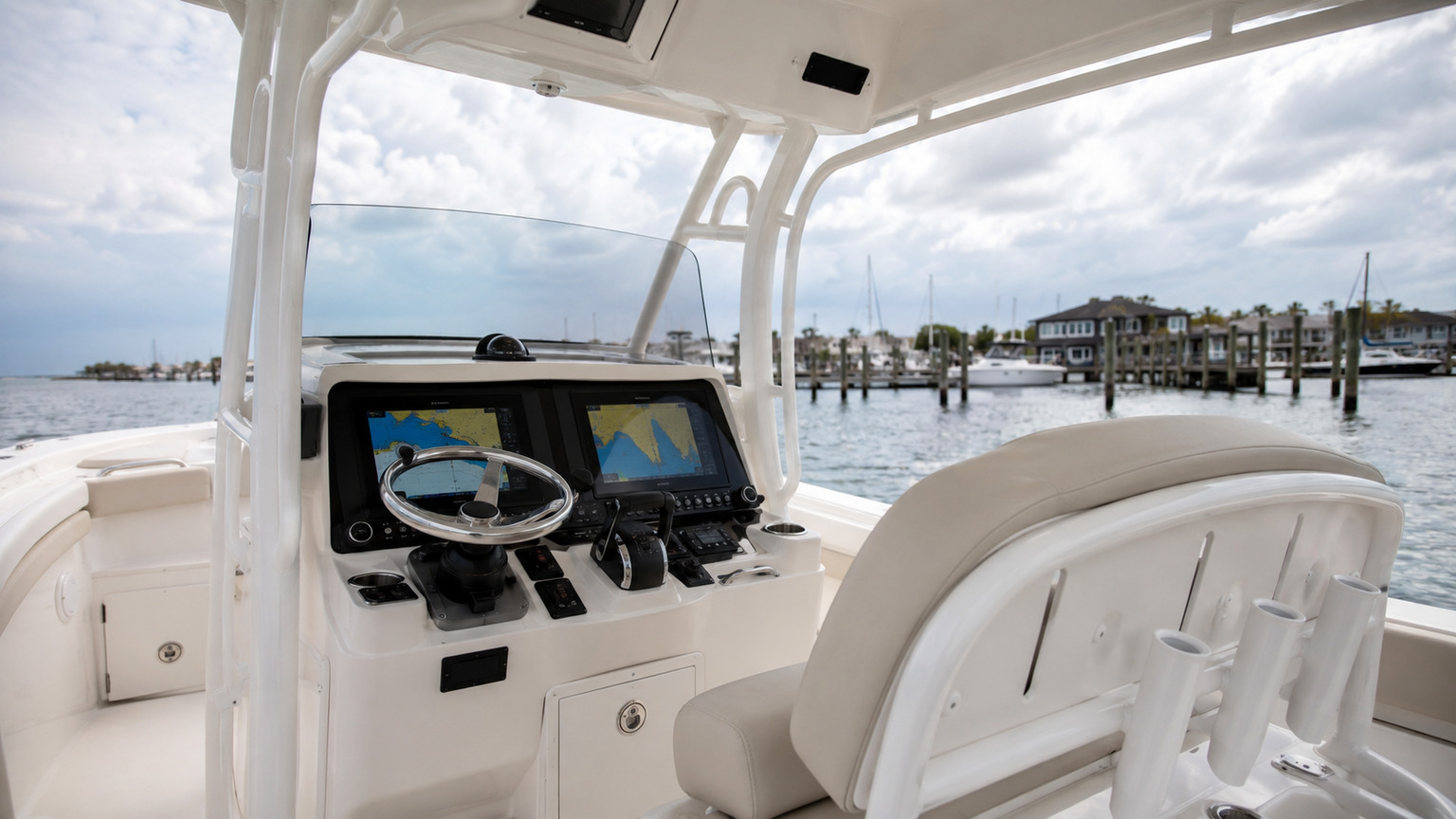
The 250 Outrage helm needs clear sightlines with passengers seated forward. On the 250 Outrage, windshields and hardtops should add weather protection without creating awkward blind spots.
For a 250 Outrage shopper, swim access is part of nearly every Whaler mission. When evaluating the 250 Outrage, test ladders, transom doors, dive doors and engine clearance with the real propulsion package.
On the 250 Outrage, storage should be dry and reachable. Within the Outrage family, a large total storage volume is less useful if every locker is trapped beneath occupied seating.
At 25′ 5″ overall, on Conquest and Realm, walk the transition below deck with the cockpit occupied. At 25′ 5″ overall, cabin access is more convincing when it does not interrupt everyone else.
If the 250 Outrage layout feels awkward during a dockside test, compare 230 Outrage or 280 Outrage instead of assuming ownership will make the compromise disappear.
30-gallon livewell – On the 250 Outrage, 30-gallon livewell should be checked for condition and operation because it is part of the reason this configuration carries value over a simpler sistership.
On the 250 Outrage, enclosed console head or storage should be checked for condition and operation because it is part of the reason this configuration carries value over a simpler sistership.
On the 250 Outrage, hardtop or t-top options should be checked for condition and operation because it is part of the reason this configuration carries value over a simpler sistership.
On the 250 Outrage, forward lounge should be checked for condition and operation because it is part of the reason this configuration carries value over a simpler sistership.
On the 250 Outrage, large electronics mounting surface should be checked for condition and operation because it is part of the reason this configuration carries value over a simpler sistership.
On the 250 Outrage, self-bailing cockpit should be checked for condition and operation because it is part of the reason this configuration carries value over a simpler sistership.
The 250 Outrage systems profile centers on offshore pumps, hardtop electronics, raw-water and high-output propulsion. Within the Outrage family, the inspection should reflect that mission rather than using one checklist for every Whaler.
Start with batteries and charging. On the 250 Outrage, engine banks, house banks and large audio or cabin loads should be identified and load-tested where practical.
When evaluating the 250 Outrage, test installed Simrad, SmartCraft, VesselView or other electronics. When evaluating the 250 Outrage, confirm GPS, sonar, engine data and network communication rather than simply verifying the screen powers on.
When evaluating the 250 Outrage, run freshwater and raw-water systems for several minutes. On the 250 Outrage, pumps should build pressure and fittings should remain dry.
On the 250 Outrage, on boats with heads, test freshwater, waste pumps, tank gauges and ventilation. On the 250 Outrage, odor or slow pumps can signal deferred maintenance.
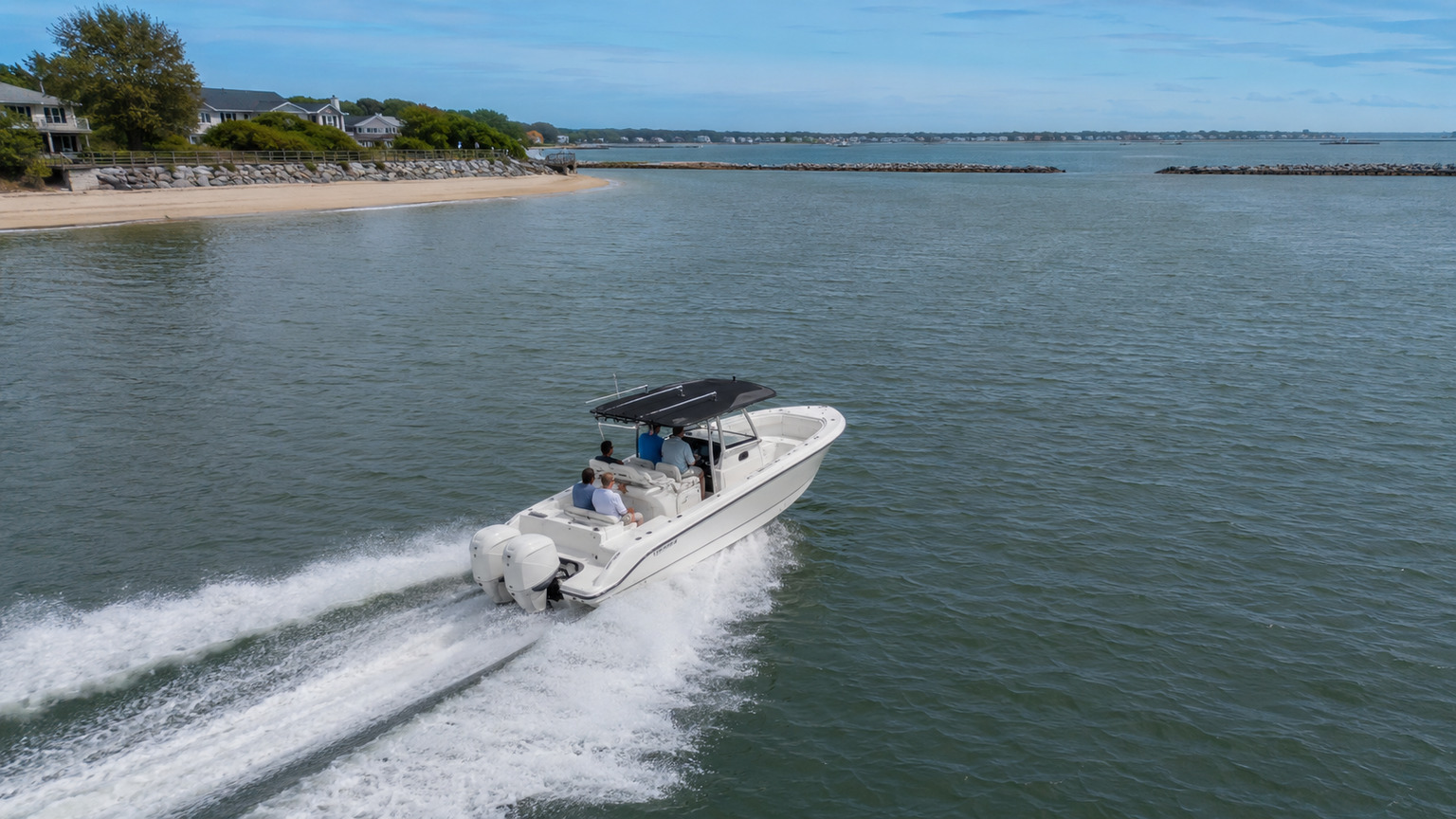
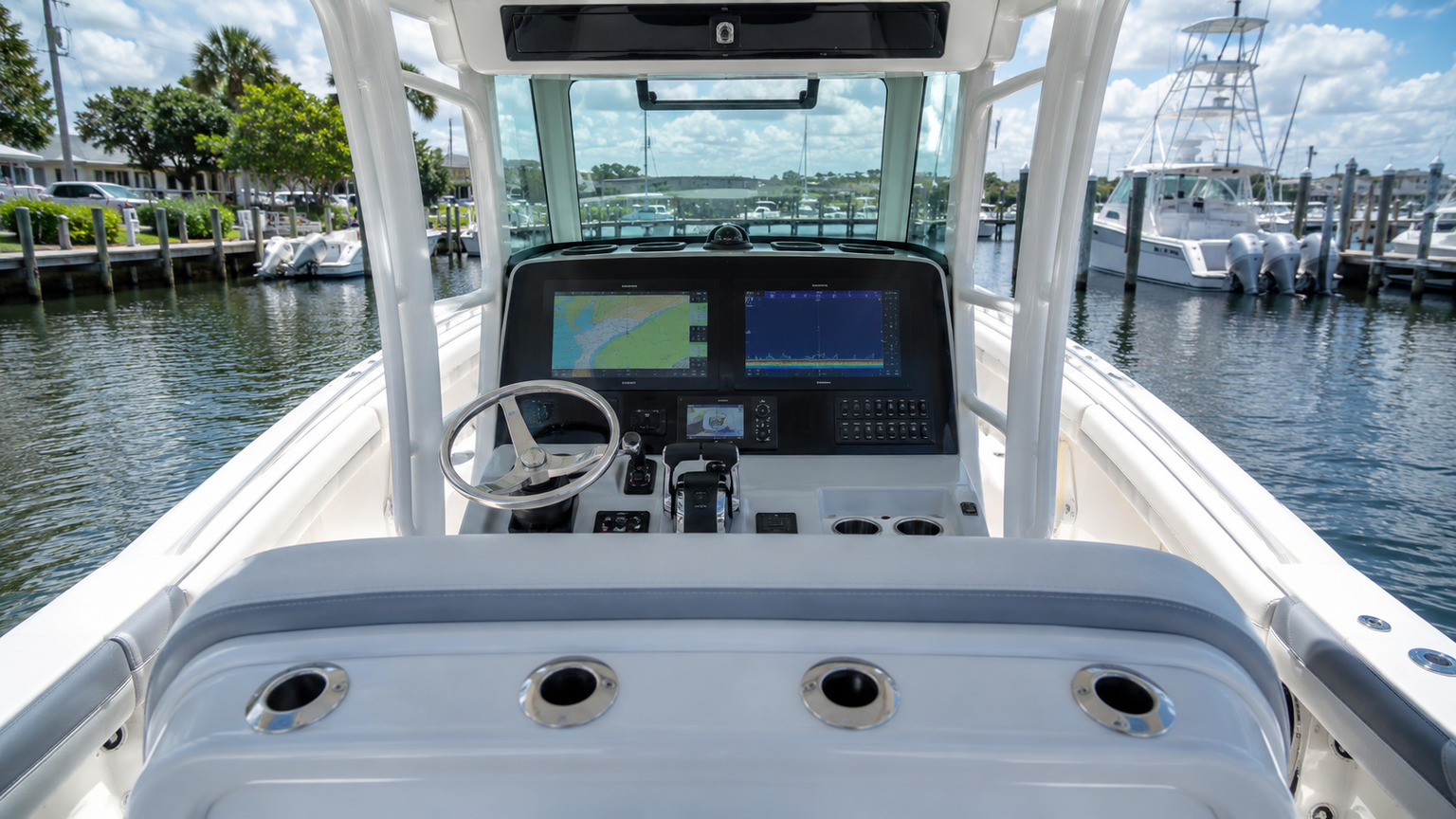
The 250 Outrage belongs to offshore range with more specialized transport. Its 25′ 5″ length, 9′ 0″ beam and 5,350 lbs dry hull weight should shape the storage plan before delivery.
Add engines, 172 gallons of fuel capacity, batteries, freshwater where equipped, gear and trailer weight before choosing a tow vehicle or lift.
For a 250 Outrage shopper, at a marina, verify slip width, shore power where relevant, finger-pier access and local Mercury service. Within the Outrage family, large cabin boats need additional attention to freshwater and waste services.
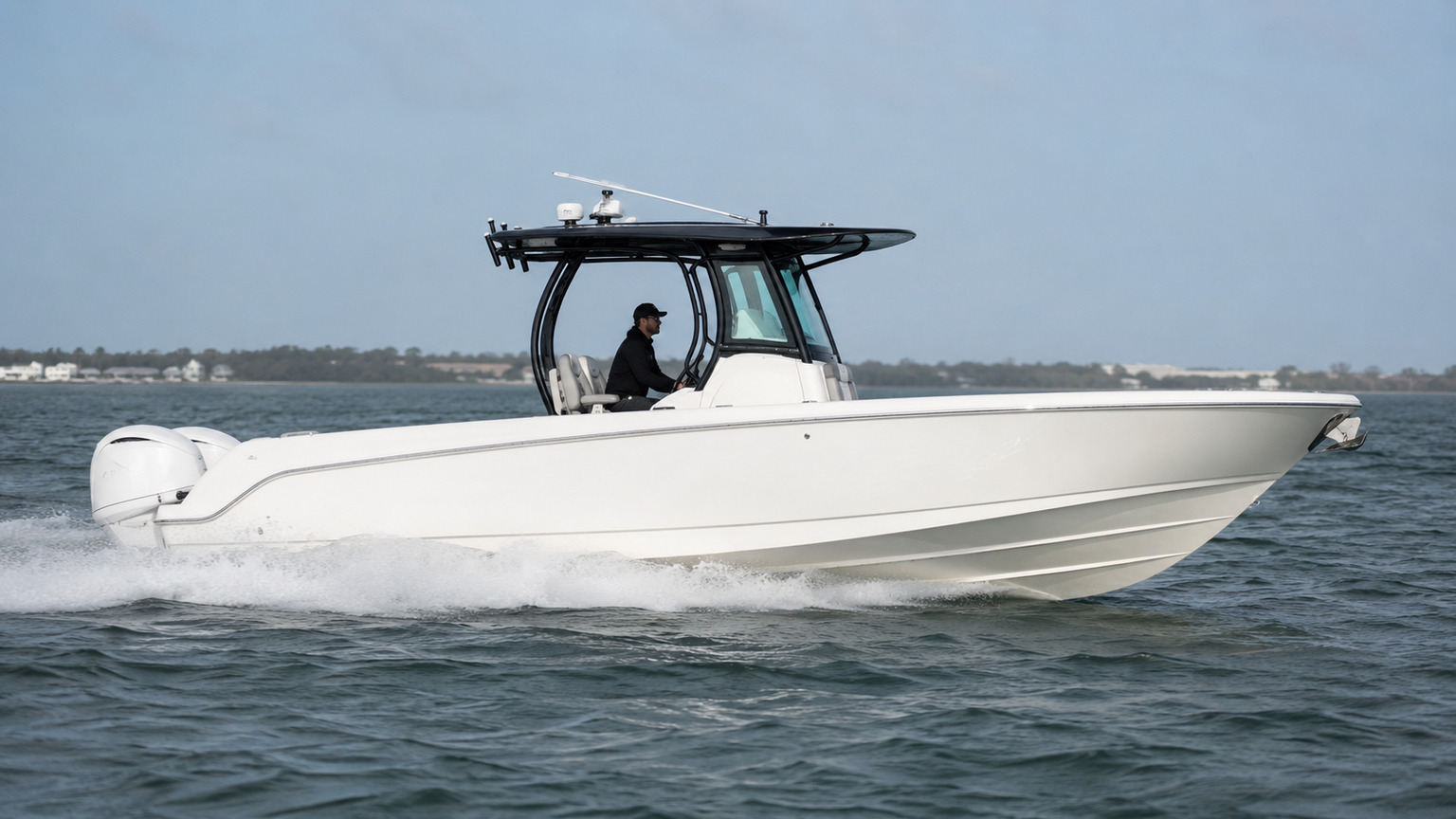
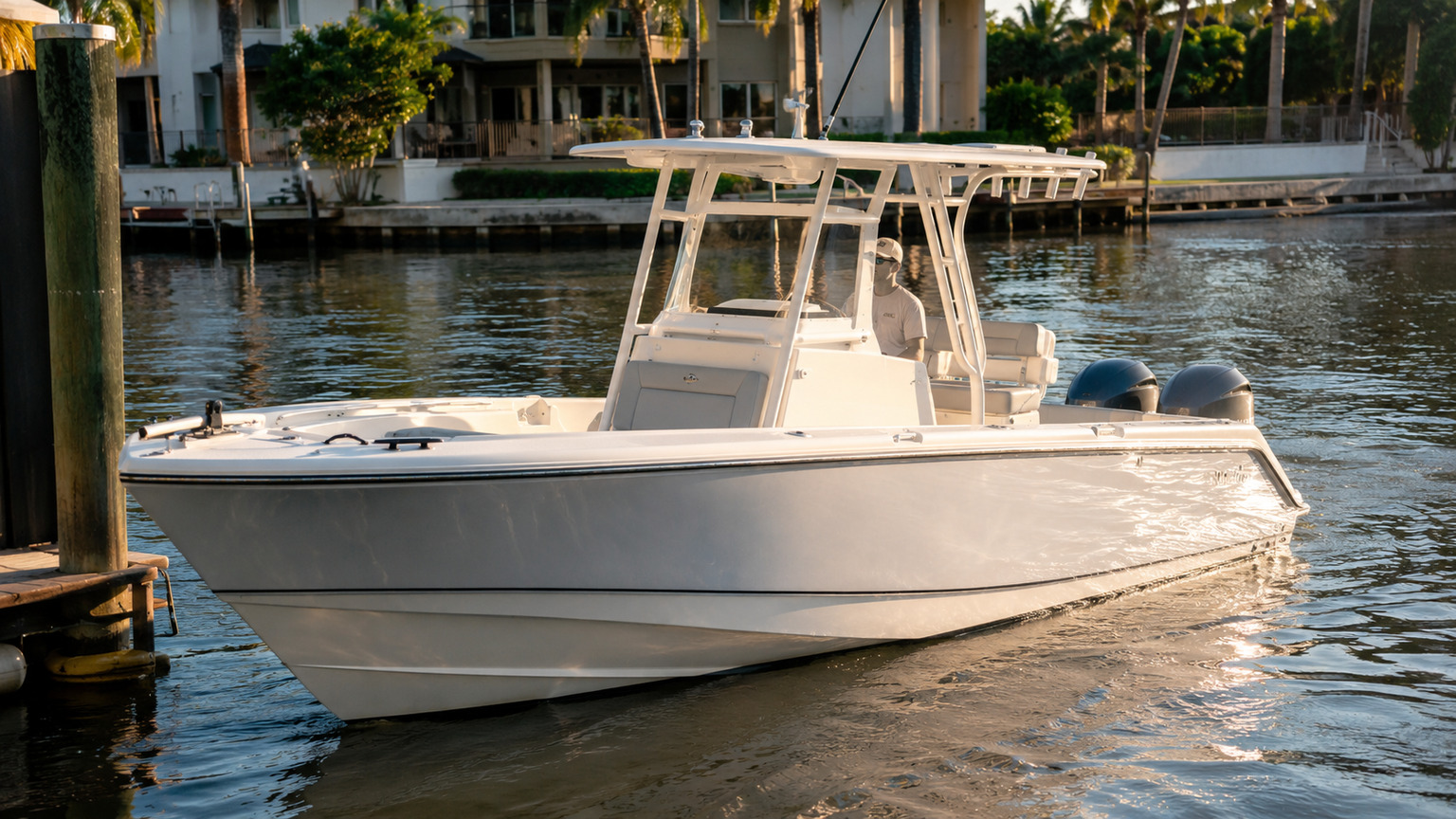
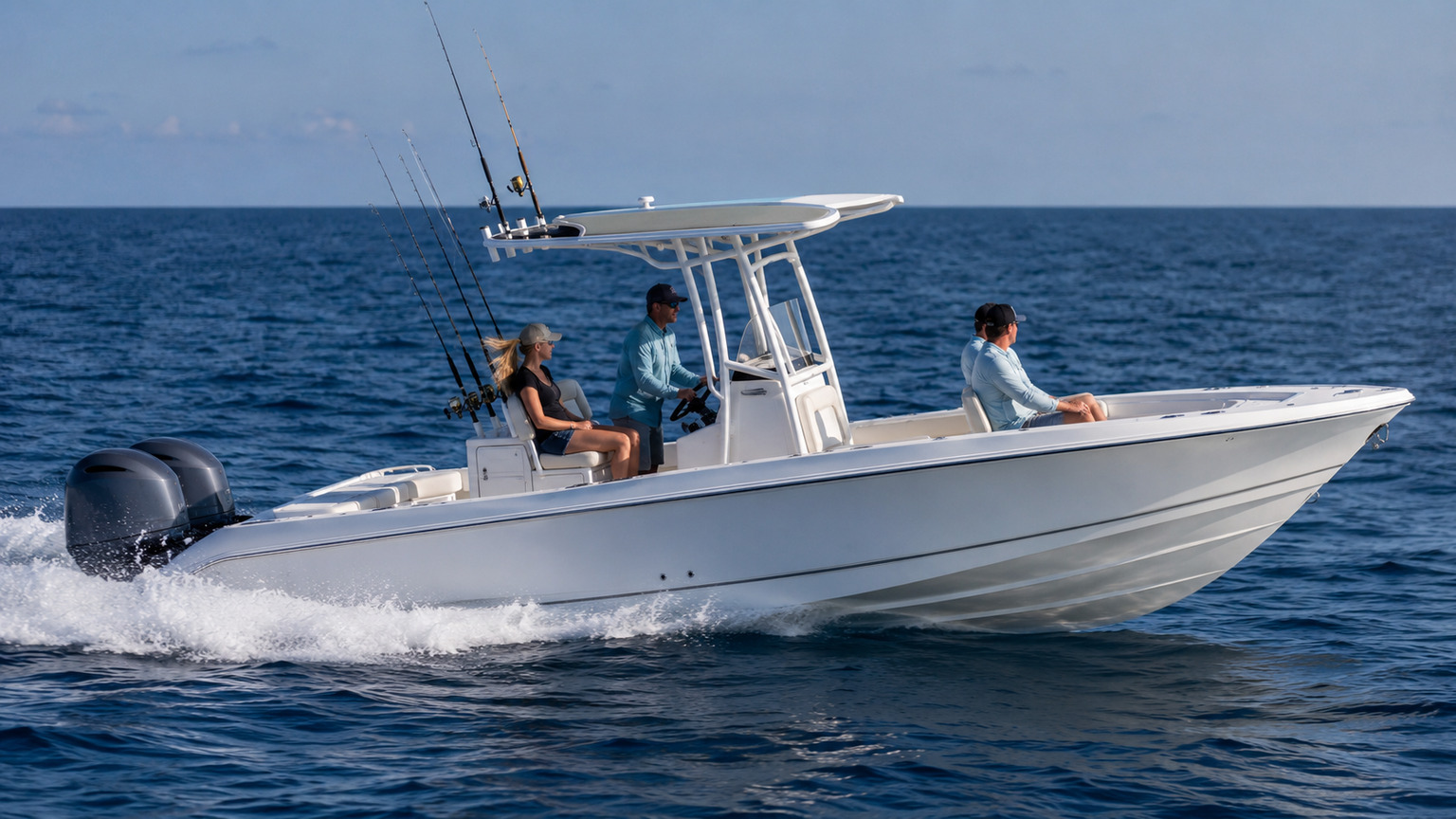
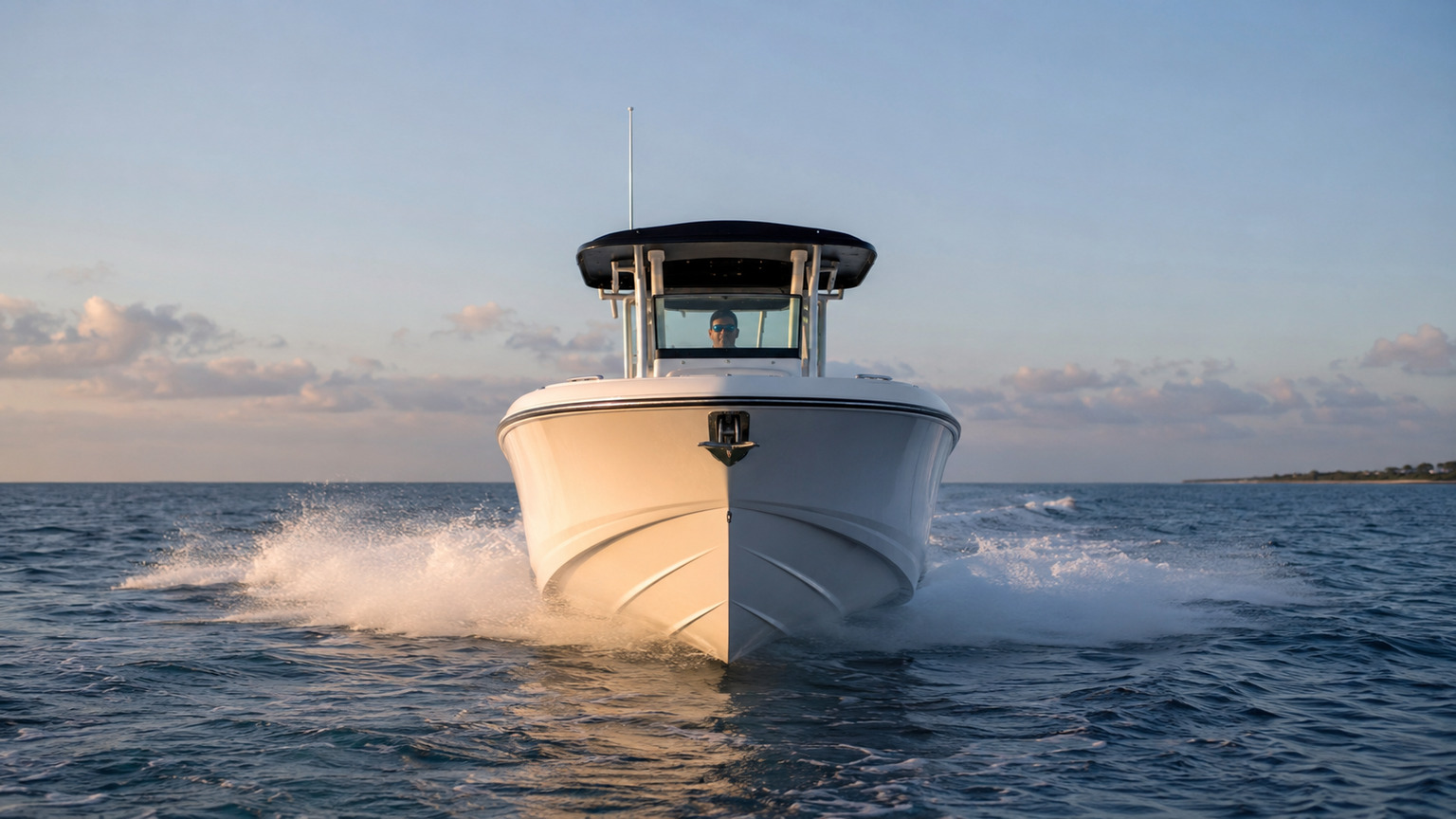
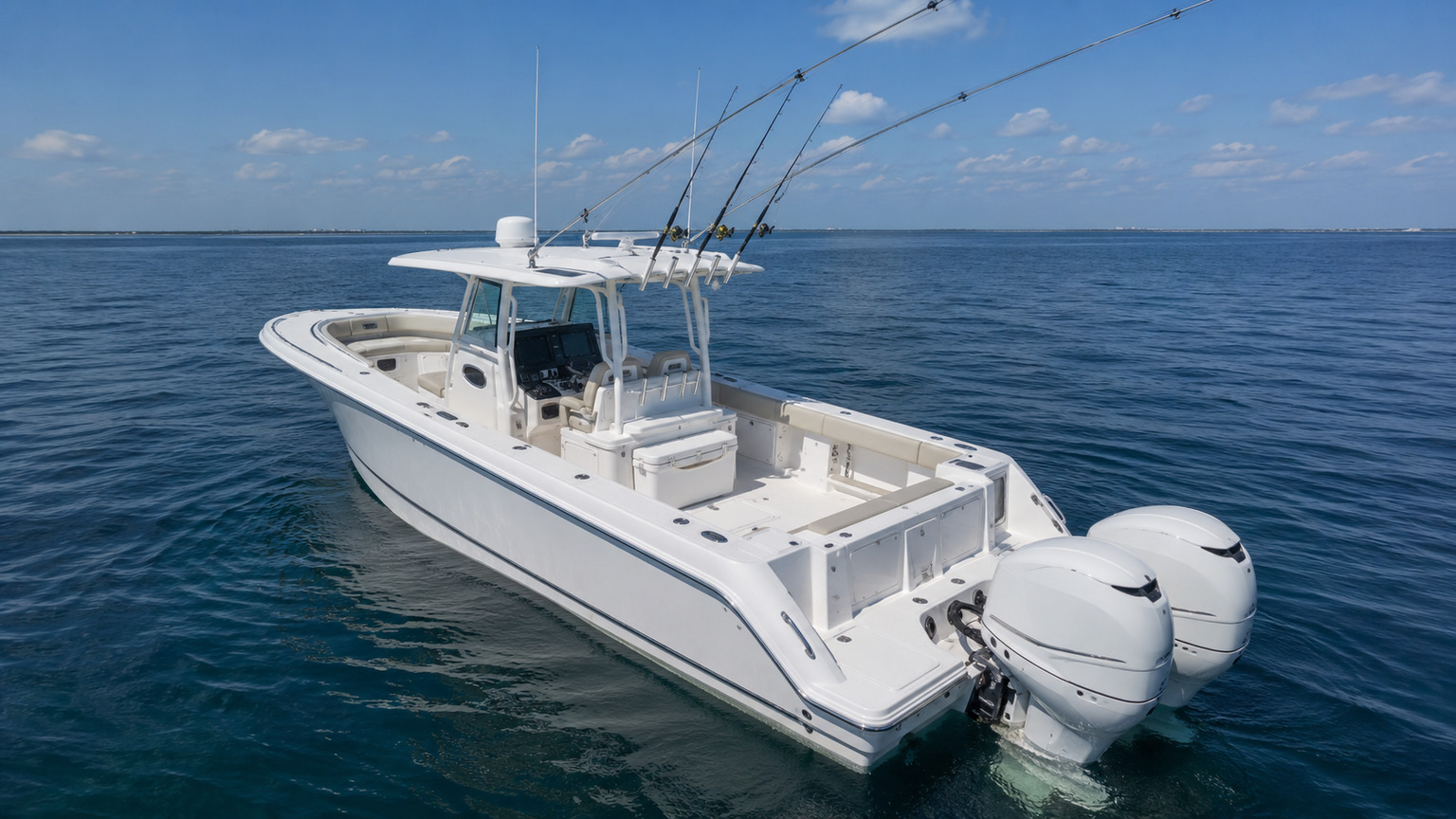
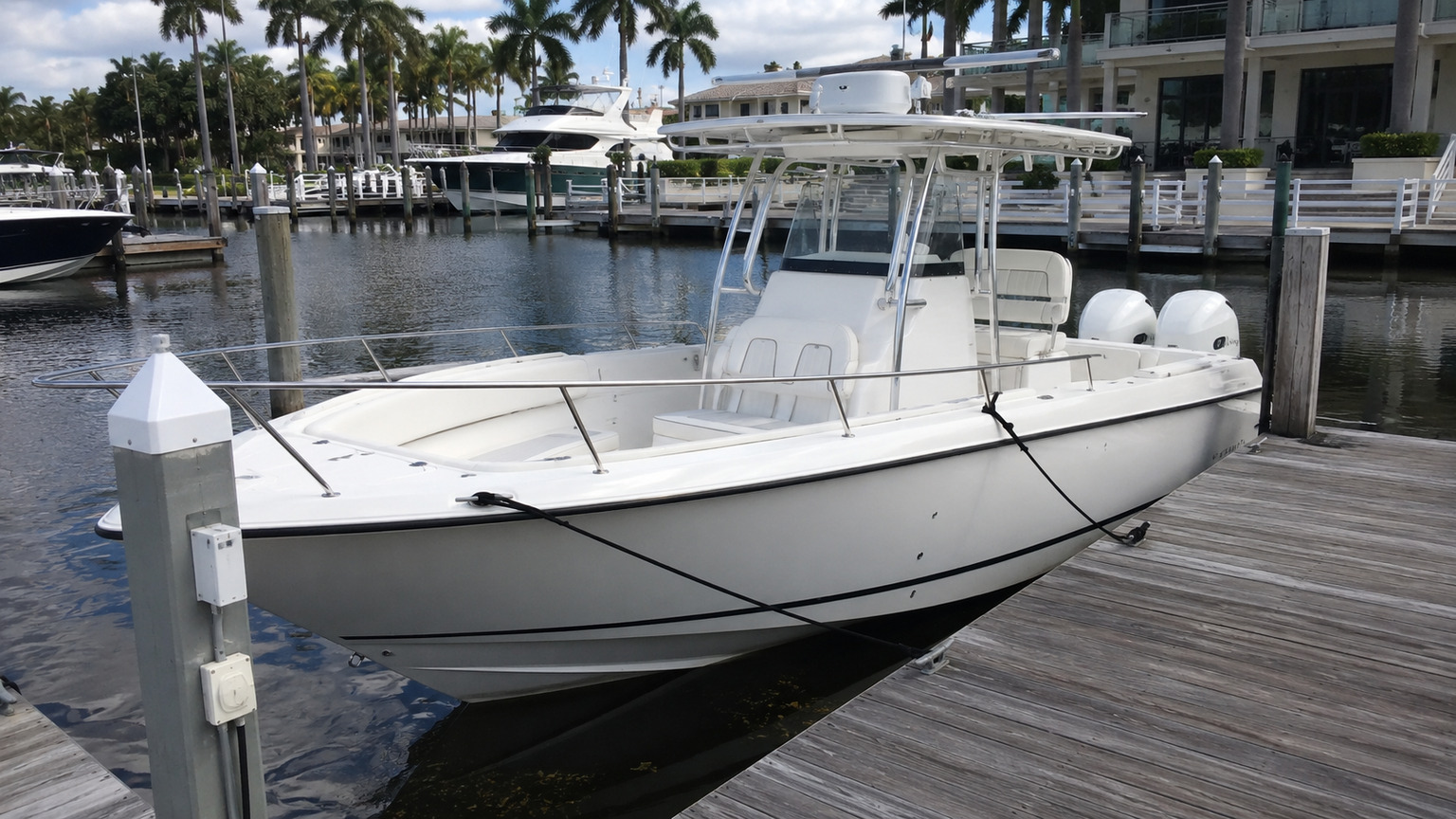
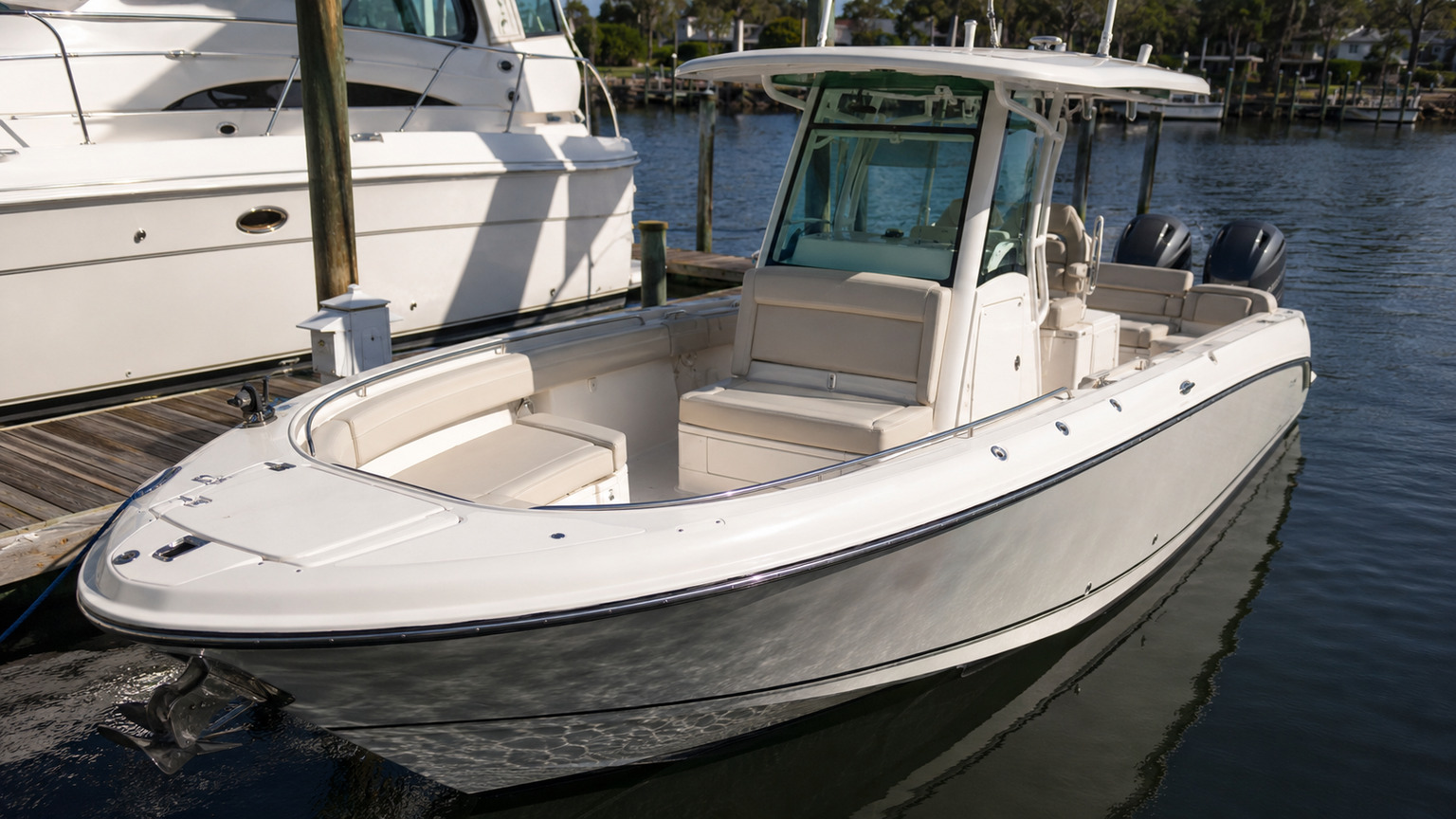
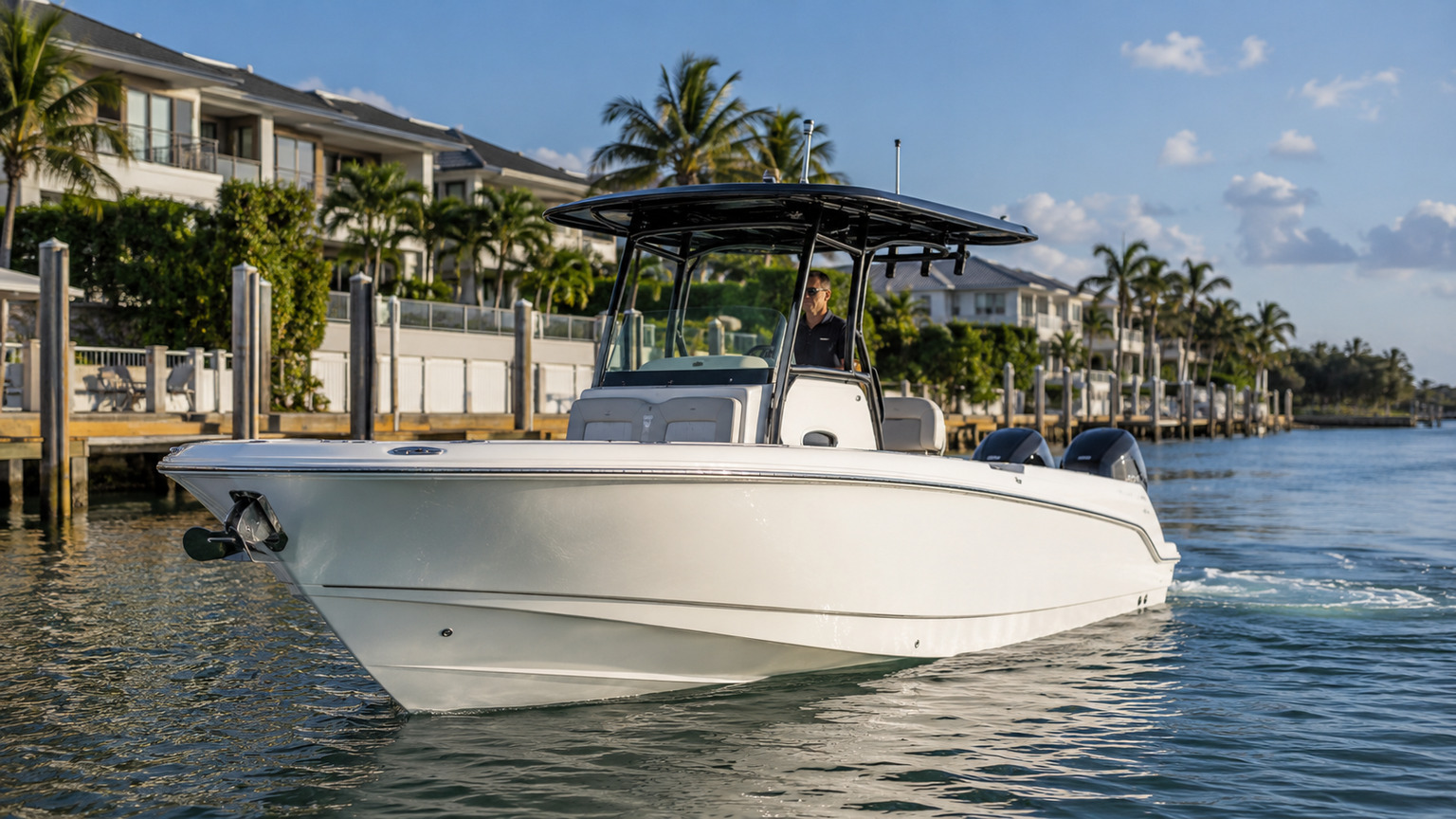
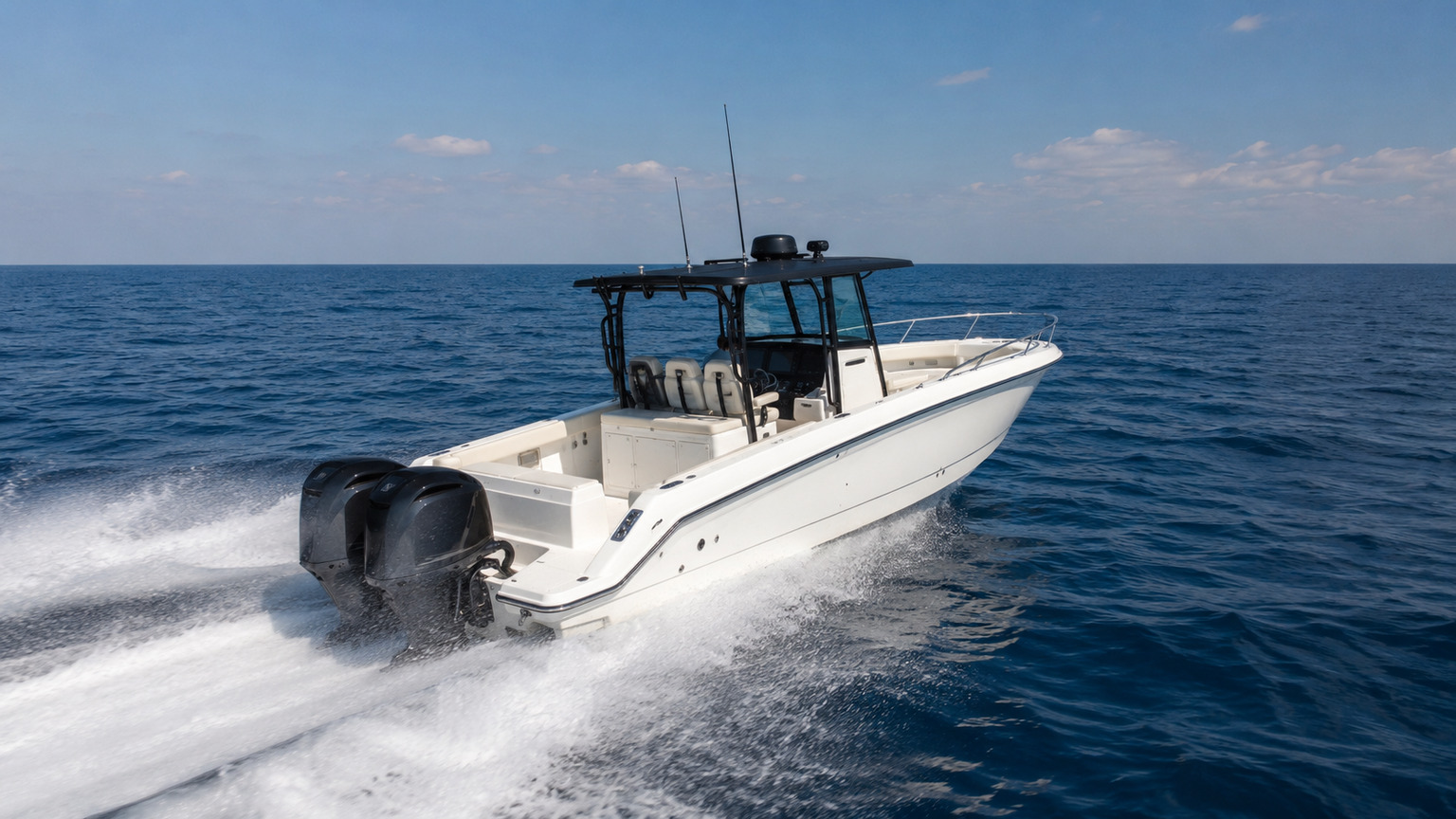
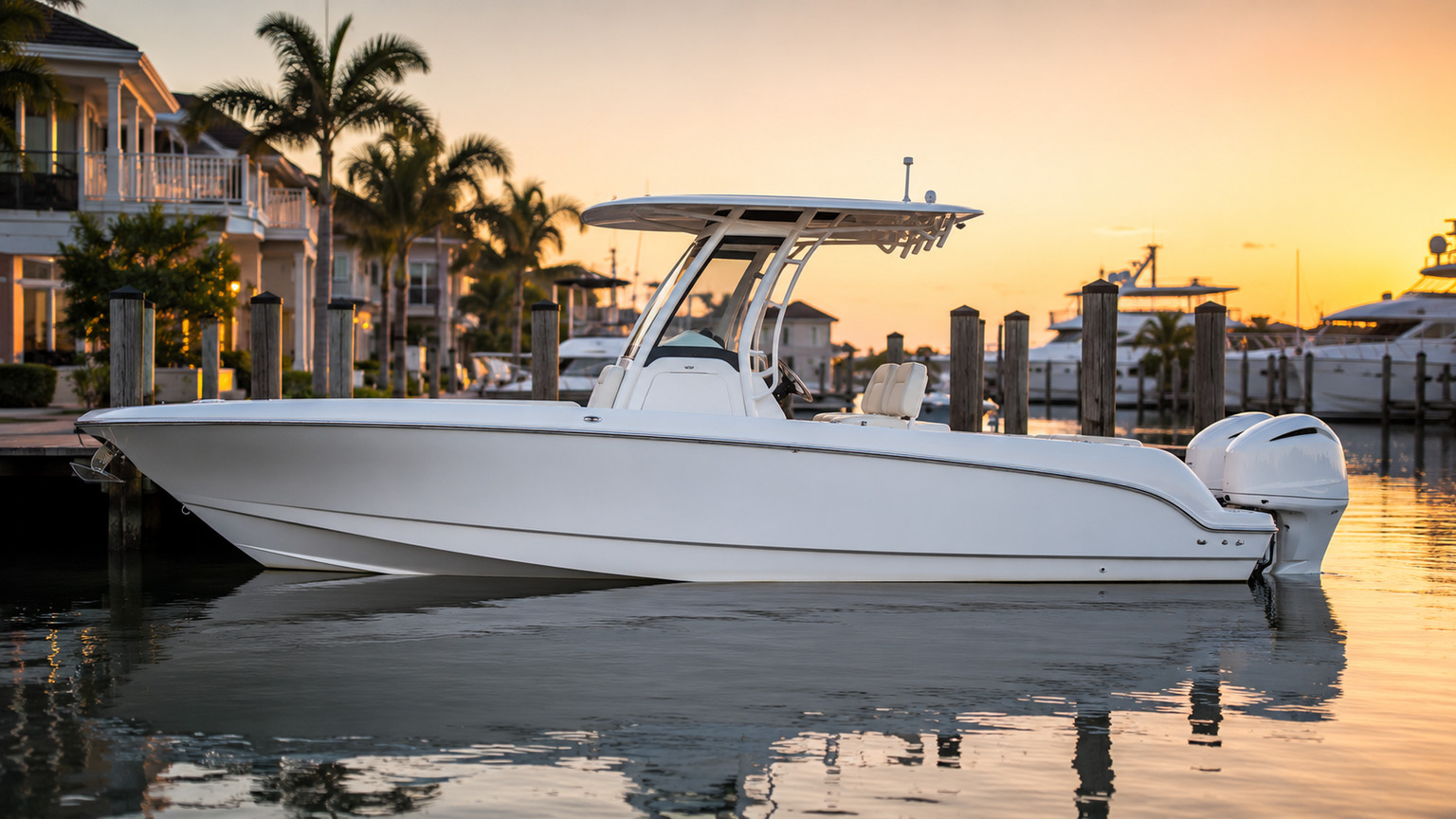
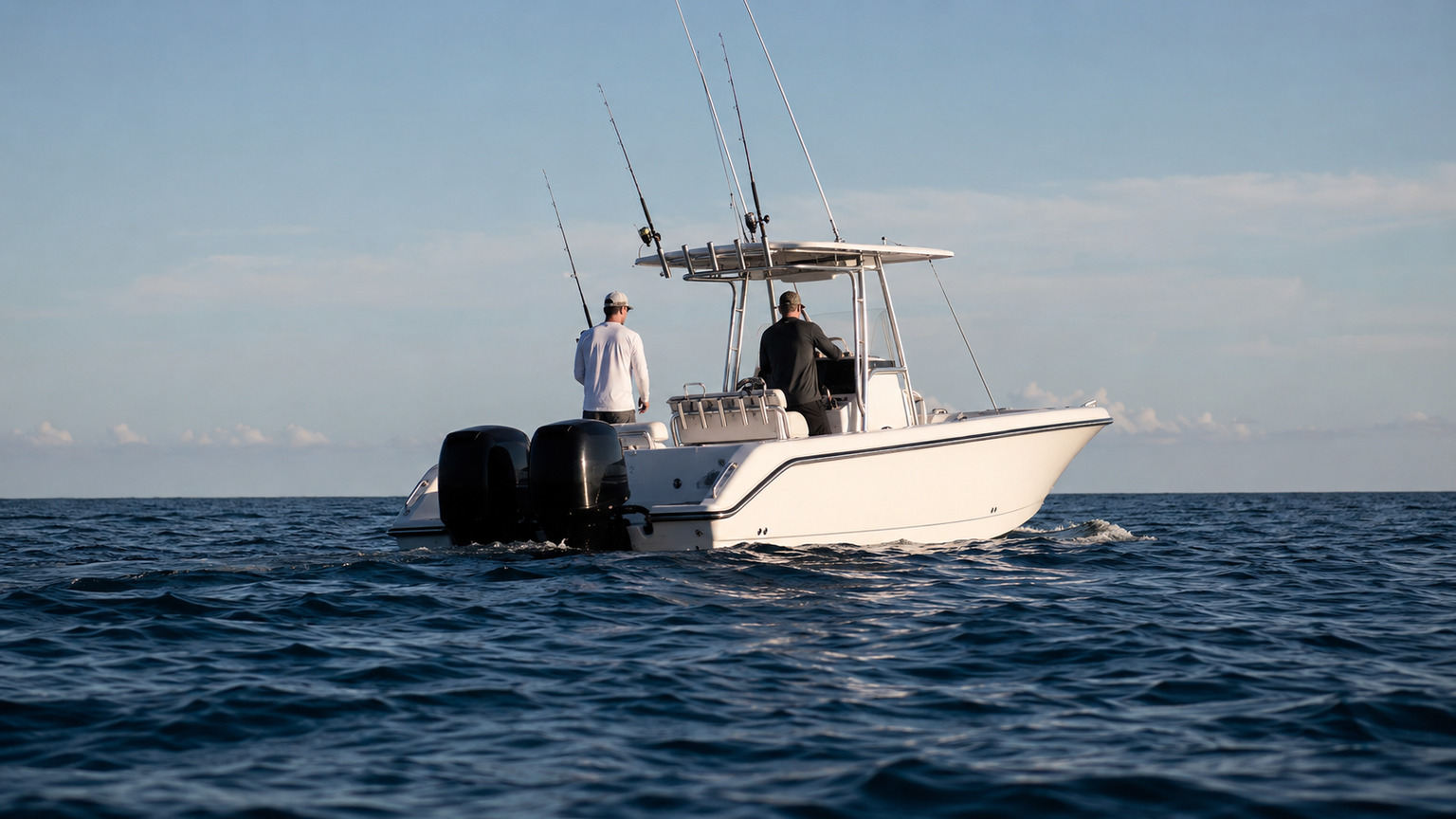
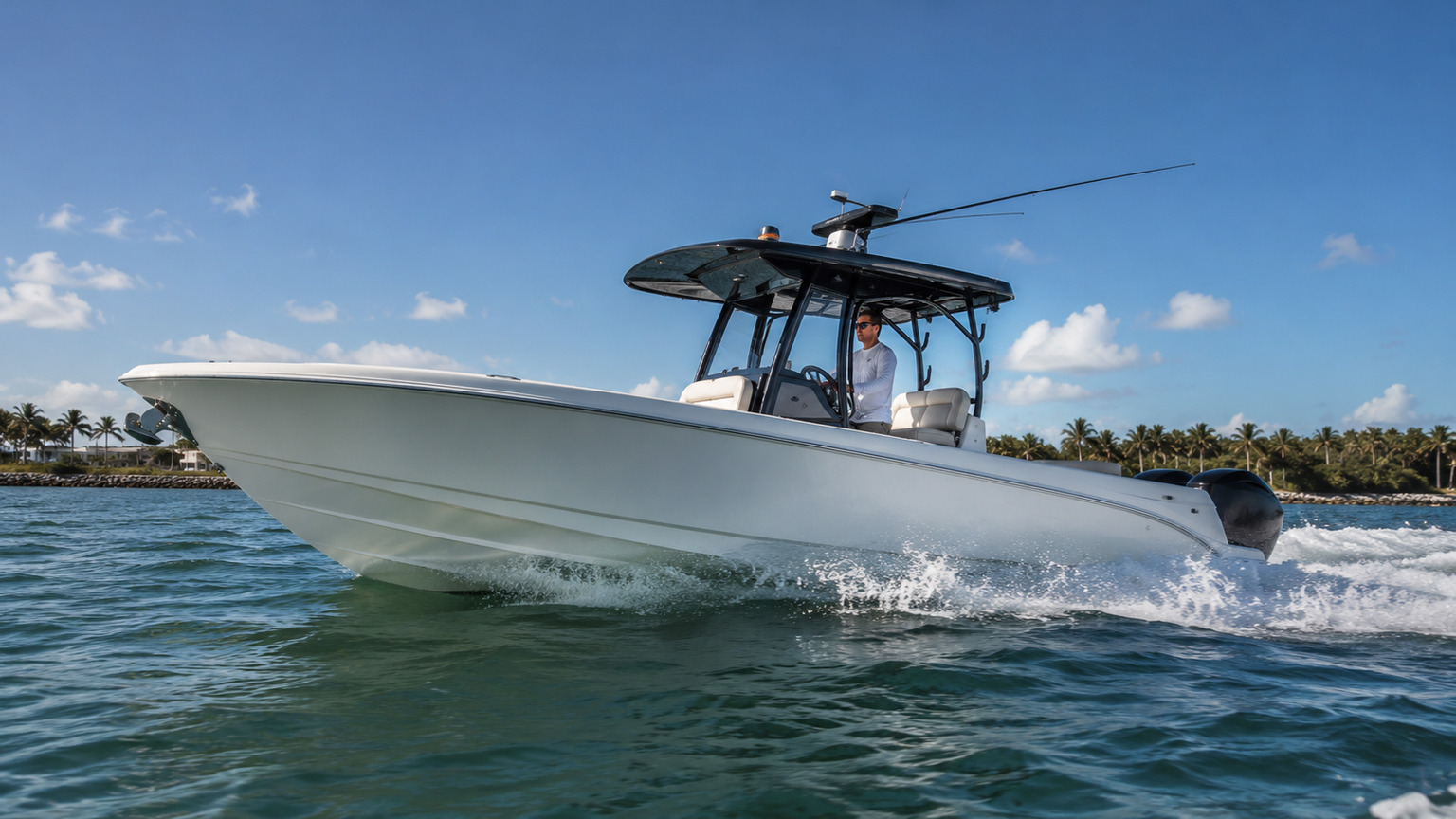
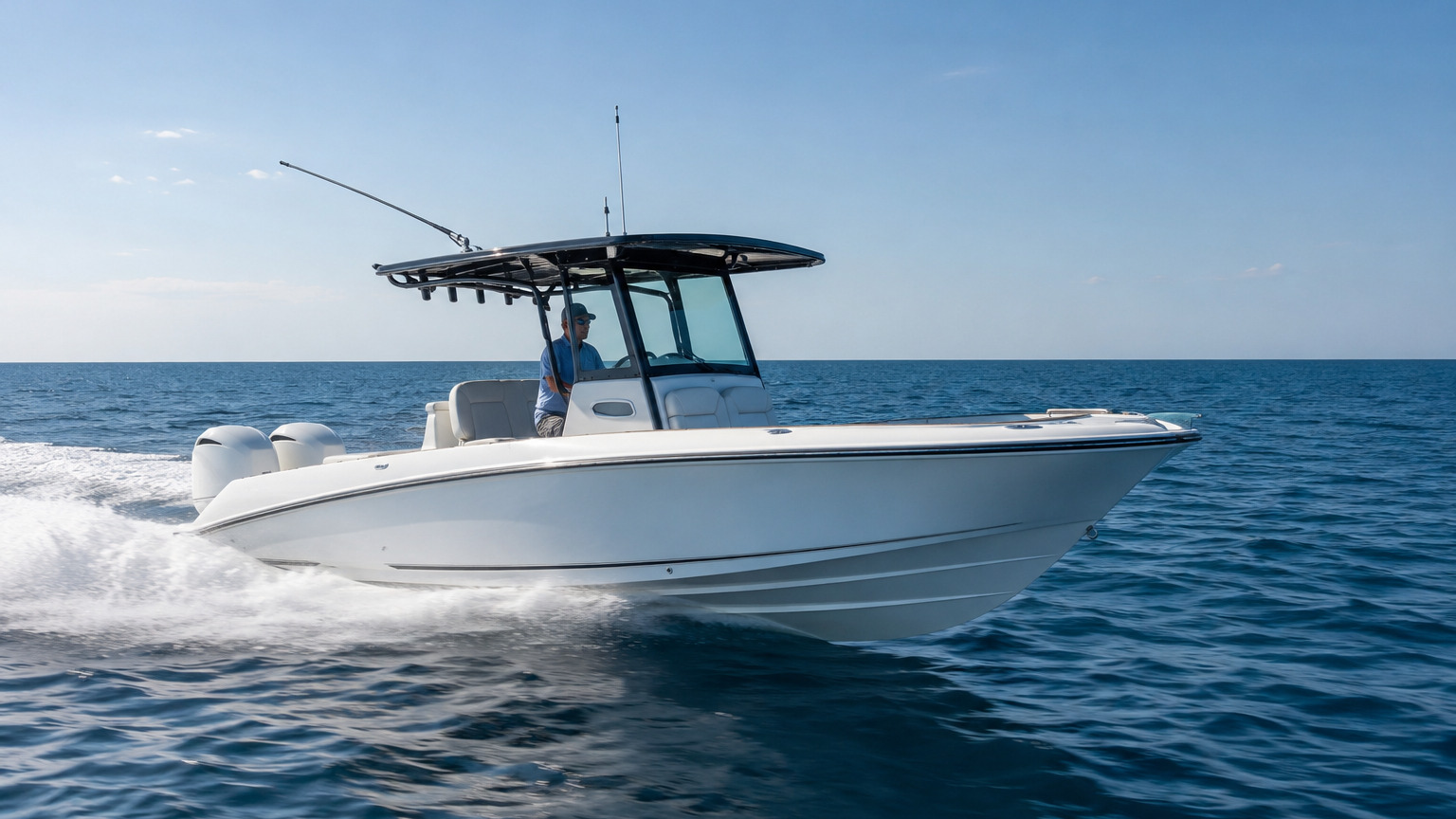
Current dealer supply and used boats coexist, so engine count, hardtop, electronics and fishing equipment must be normalized.
Within the Outrage family, propulsion is the first major adjustment. At 25′ 5″ overall, engine count, horsepower, hours and service history can change value more than cosmetic color.
Electronics are next. Within the Outrage family, newer integrated Simrad or Mercury systems can reduce refit cost, but older displays should not be valued at their original retail price.
At 25′ 5″ overall, fishing options, tops, outriggers, trolling-motor systems and livewells matter most when the buyer will use them. Within the Outrage family, expensive equipment that does not fit the mission is not automatically valuable.
At 25′ 5″ overall, cabin condition deserves a separate adjustment on Conquest and Realm. Within the Outrage family, air conditioning, refrigeration, heads, shore power and freshwater systems can create meaningful deferred maintenance.
At 25′ 5″ overall, trailer condition matters heavily on Super Sport, Montauk and smaller Dauntless models because the trailer is part of the normal ownership workflow.
For a 250 Outrage shopper, cosmetic condition should be separated from mechanical condition. Within the Outrage family, clean cushions cannot compensate for neglected engines or damaged running surfaces.
A documented 250 Outrage can justify a premium over a cheaper sistership with uncertain history. For a 250 Outrage shopper, strong total value matters more than the lowest advertised price.
Illustration only and not an offer of credit.
When evaluating the 250 Outrage, run the payment on the real transaction and leave room for insurance, fuel, annual engine service, storage and the systems specific to this Outrage model.
Illustration only and not an offer of credit. Your actual rate and term depend on credit profile, vessel age, loan amount and ownership structure.
The first cross-shop is 230 Outrage or 280 Outrage.
The 250 Outrage should win because the current entry point to Outrage with serious offshore fishability in a 25-foot-class platform fits the buyer better, not because one payment is lower.
When evaluating the 250 Outrage, compare true size, hull mission, propulsion, passenger layout and storage before financing.
If that compromise would make the 250 Outrage frustrating to own, the alternative deserves a closer look.
Start with hull identification and model year. For a 250 Outrage shopper, Boston Whaler changes engines, fuel systems, electronics and options over time, so the exact year matters even when the model name stays familiar.
When evaluating the 250 Outrage, verify seller specifications against the capacity plate and correct factory data. For this configuration, Boston Whaler publishes 25′ 5″ LOA, 9′ 0″ beam, 450 HP maximum horsepower and 172 gallons fuel capacity for the referenced configuration.
When evaluating the 250 Outrage, inspect the hull in natural light. On the 250 Outrage, focus on chines, keel, transom corners and rub rail, then view the running surface from underneath.
When evaluating the 250 Outrage, review engine hours and service history. Within the Outrage family, on multiple-engine boats, evaluate each engine separately and ask about any replacement or unusual hour difference.
When evaluating the 250 Outrage, operate steering, trim and throttle under load. A short idle demonstration is not enough for a high-output 250 Outrage.
When evaluating the 250 Outrage, test pumps, livewells, fishbox drains, freshwater fittings and head systems fitted to the boat. At 25′ 5″ overall, small failures are easier to negotiate before purchase.
When evaluating the 250 Outrage, inspect electronics and networked engine data. On the 250 Outrage, a bright display does not prove radar, sonar, GPS, autopilot or engine gateways are all healthy.
When evaluating the 250 Outrage, use every convertible seat, table, sunshade and hardtop feature. On the 250 Outrage, an expensive option only adds value when it works and the family actually wants it.
Boston Whaler currently lists the model in its active U.S. family.
Current dealer supply and used boats coexist, so engine count, hardtop, electronics and fishing equipment must be normalized.
At 25′ 5″ overall, if a trailer is included, inspect it as a separate asset. Within the Outrage family, on marina boats, review lift history and bottom condition instead.
Finally, compare 230 Outrage or 280 Outrage. The 250 Outrage should remain the better fit after the technical inspection and ownership budget are understood.
250 Outrage buyers should price insurance before delivery because value, horsepower, navigation area and storage location can change the premium more than the hull length suggests.
A clean 250 Outrage service file should include engine maintenance plus receipts for pumps, batteries, electronics and trailer or marina work. Documentation is especially valuable when two similar boats are close in asking price.
Start your application with the actual 250 Outrage details with model year, seller type, propulsion, engine hours where available and asking price.
At 25′ 5″ overall, year, propulsion, electronics, options, seller type and condition can move the transaction enough that complete boats should be compared instead of broad averages.
Boston Whaler publishes 25′ 5″ as the length reference used here. When evaluating the 250 Outrage, verify the exact model year and completed rig when choosing a slip, trailer or storage building.
Boston Whaler publishes a persons capacity of 12 for the 250 Outrage. The capacity plate on the actual 250 Outrage remains the final authority.
The published maximum is 450 HP. On the 250 Outrage, match the engine package to the exact model year and capacity plate before treating horsepower as a value upgrade.
The published fuel reference is 172 gallons. Within the Outrage family, range should be estimated from the installed engine configuration, normal passenger load and a conservative reserve.
Trailering depends on the 9′ 0″ beam, 5,350 lbs dry hull weight and completed trailer package. For a 250 Outrage shopper, wide models may need specialized transport, while smaller Montauk and Super Sport boats are designed around routine trailering.
When evaluating the 250 Outrage, inspect the hull, transom, engine or engines, steering, pumps, electronics, upholstery, deep-V ride, livewells, fishboxes and high freeboard, and the trailer or lift history. At 25′ 5″ overall, pay extra attention to equipment that defines this family.
Potentially. Within the Outrage family, model year, value, condition, purchase amount, seller type and borrower qualifications matter. Within the Outrage family, start your application with the actual details so financing reflects the exact boat.
Tell us a little bit about yourself and the boat you are looking to finance.