Call Us : 207-994-5109
Mon – Fri: 8 am to 9 pm & Sat – Sun: 10 am to 8 pm
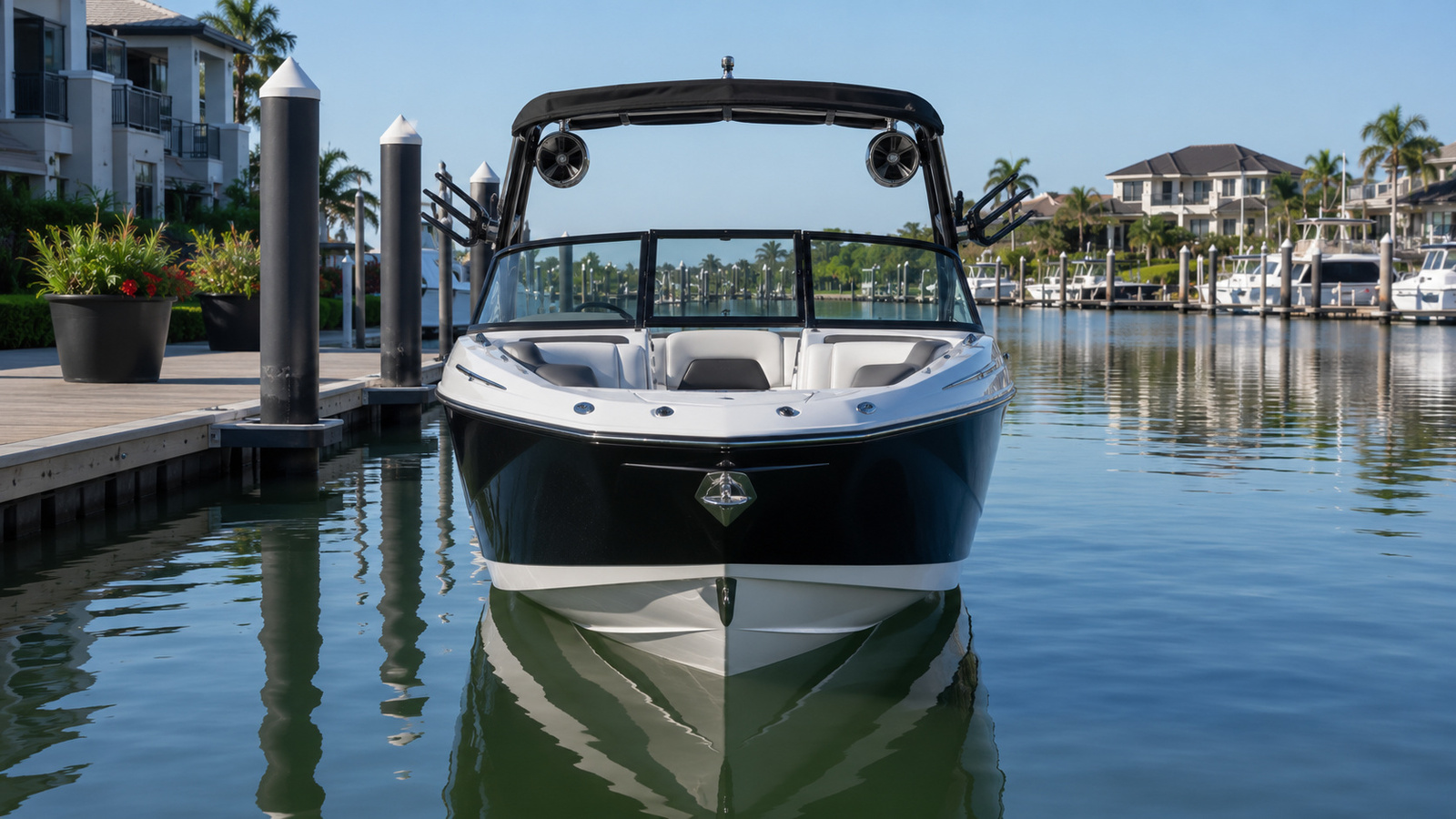
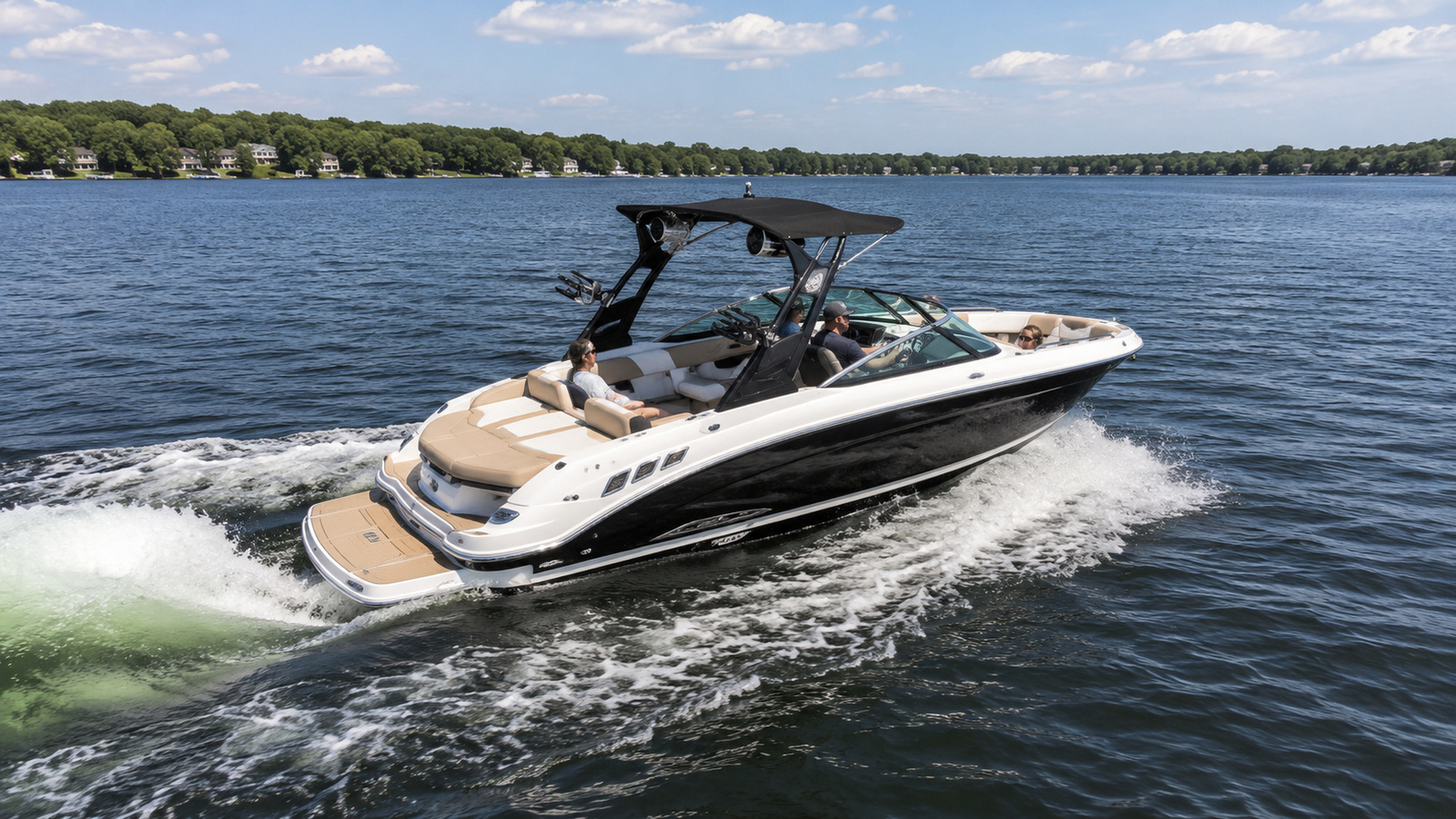
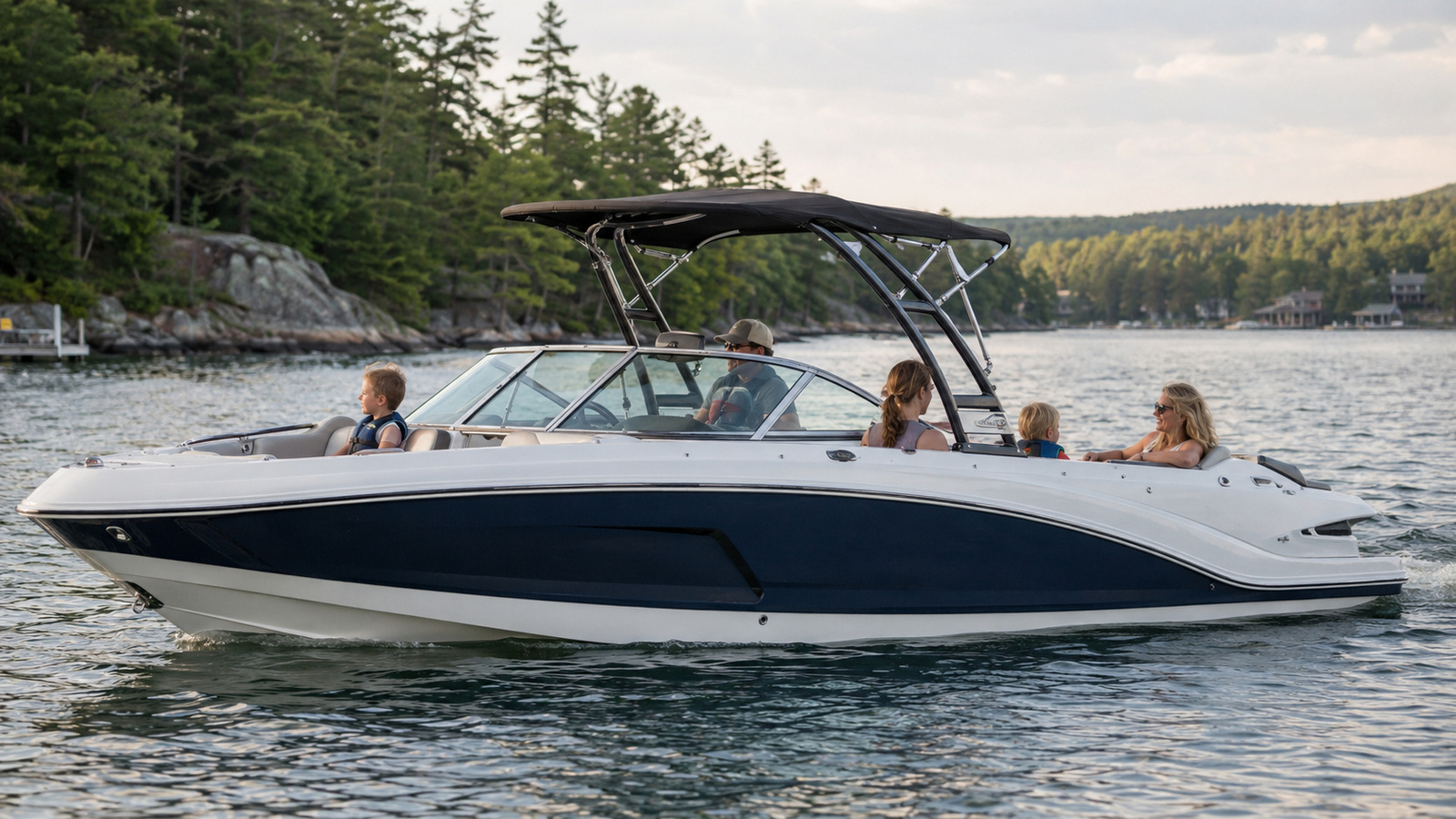
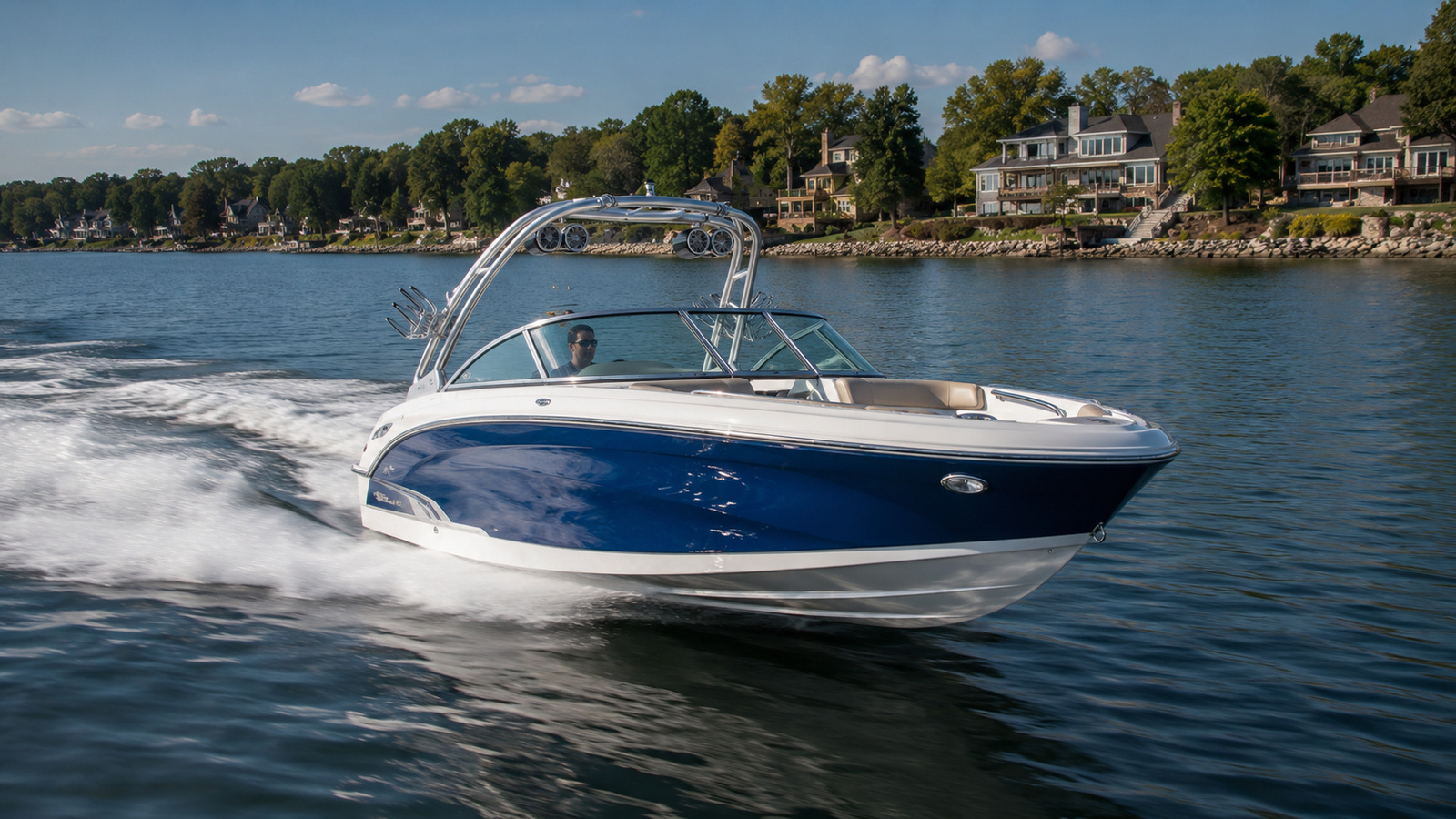
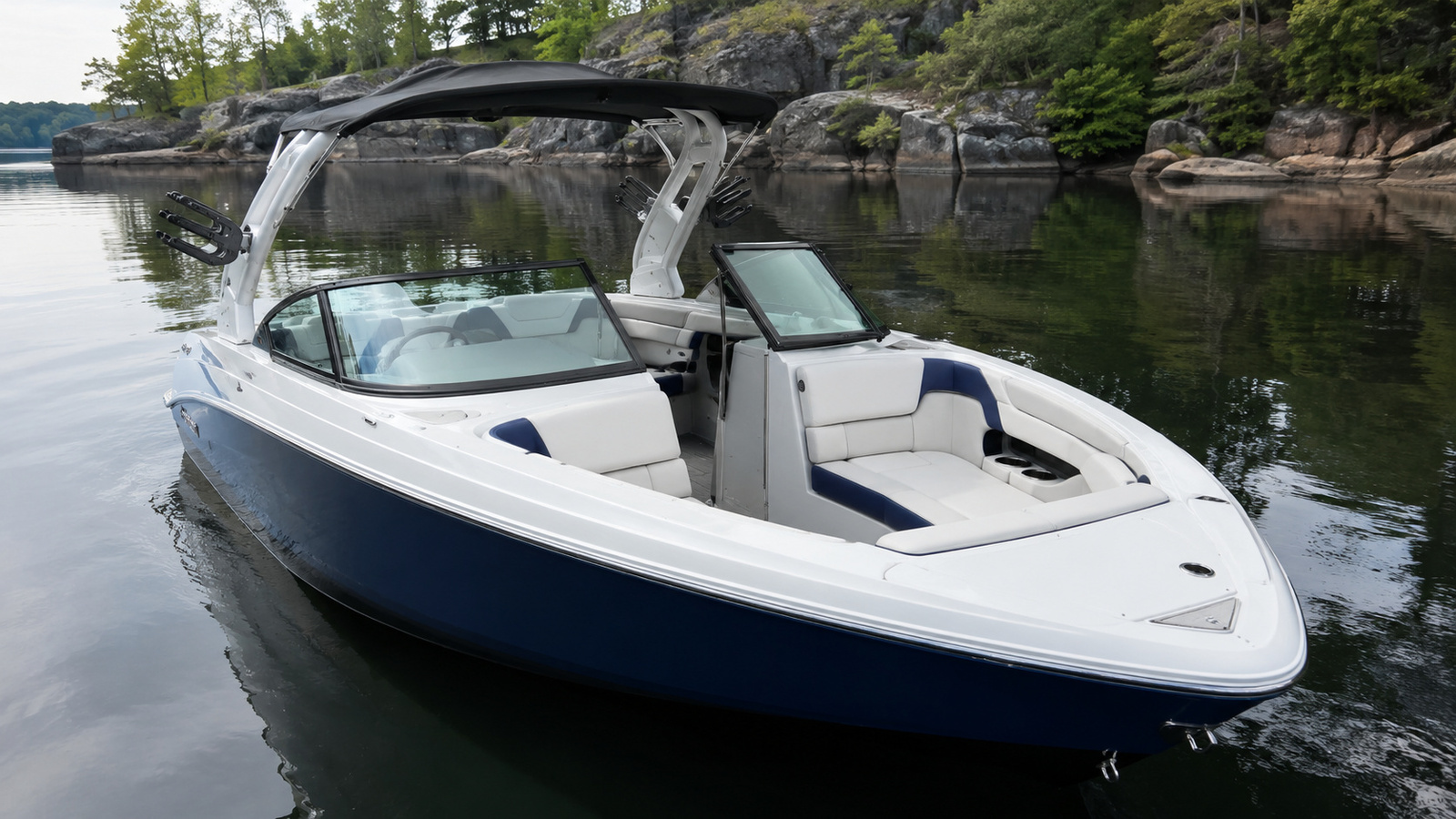
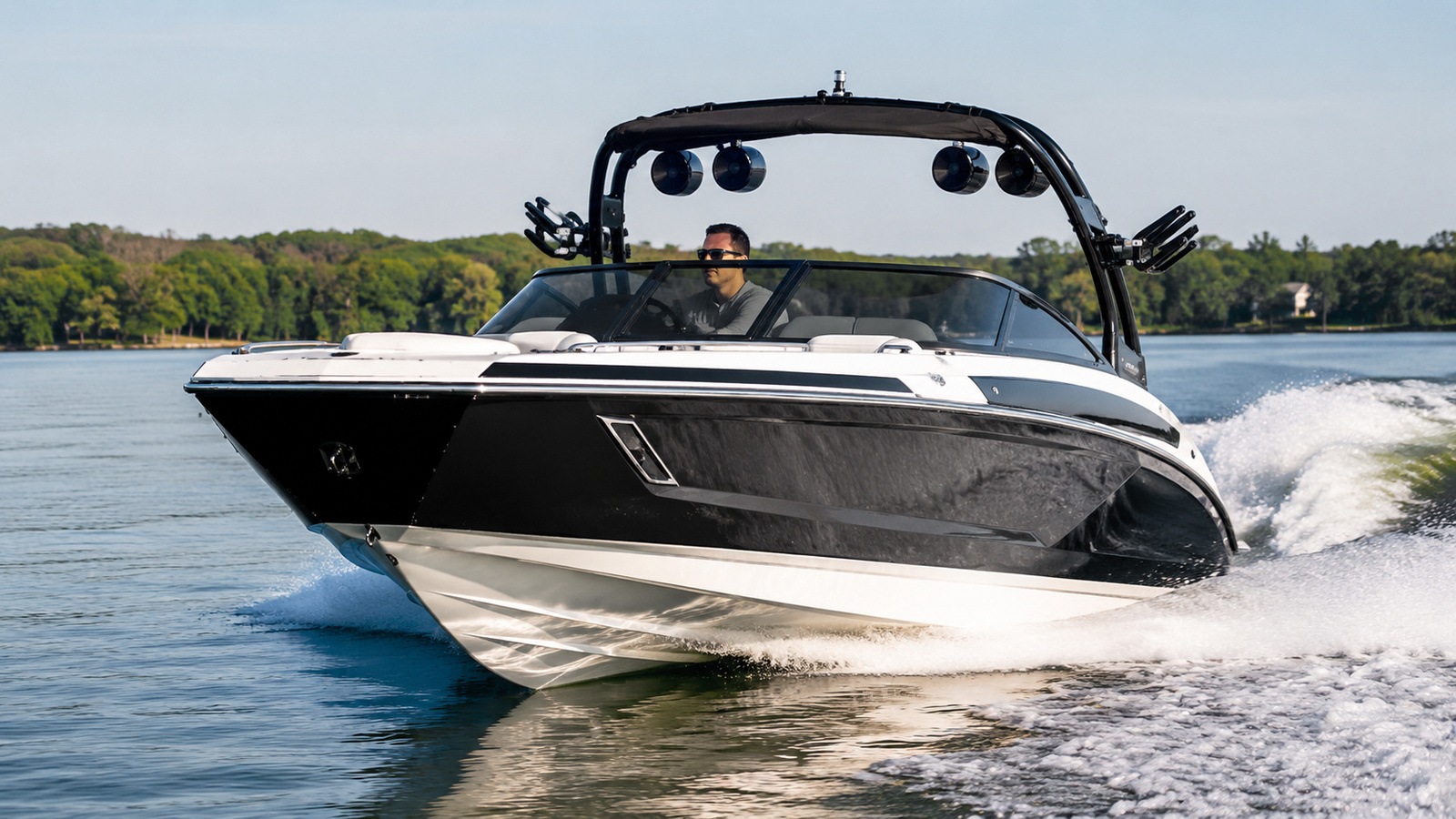
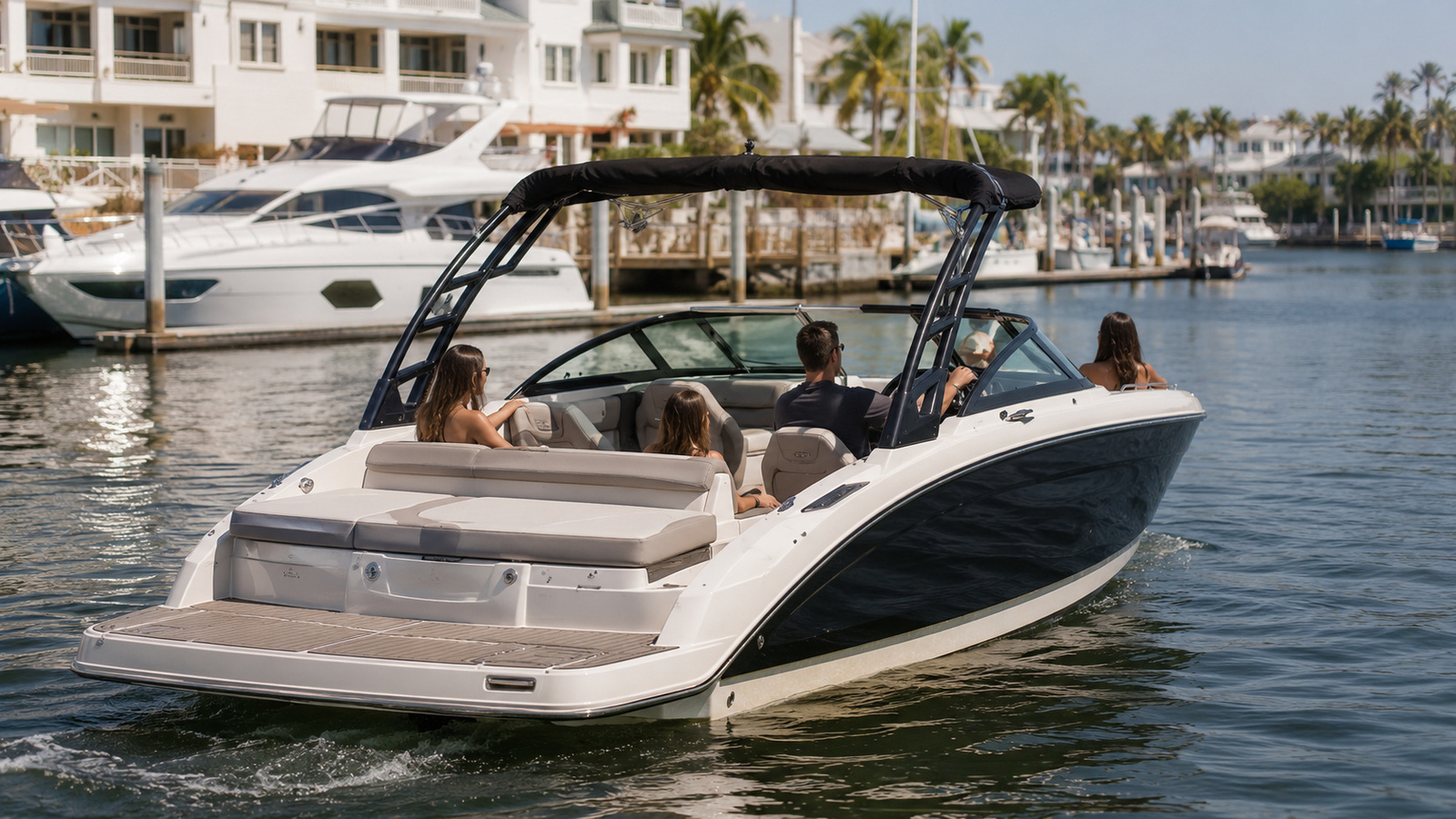
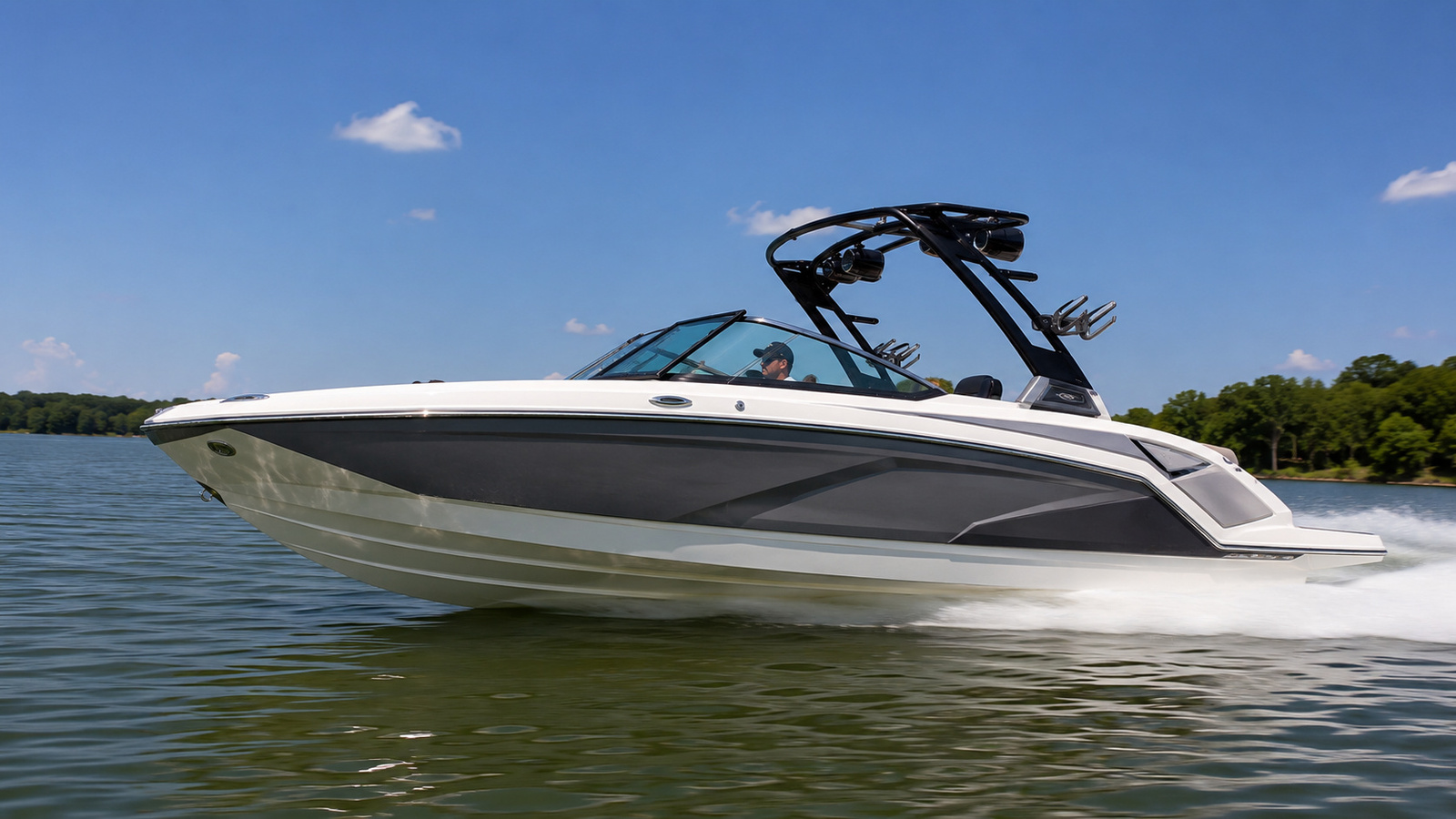
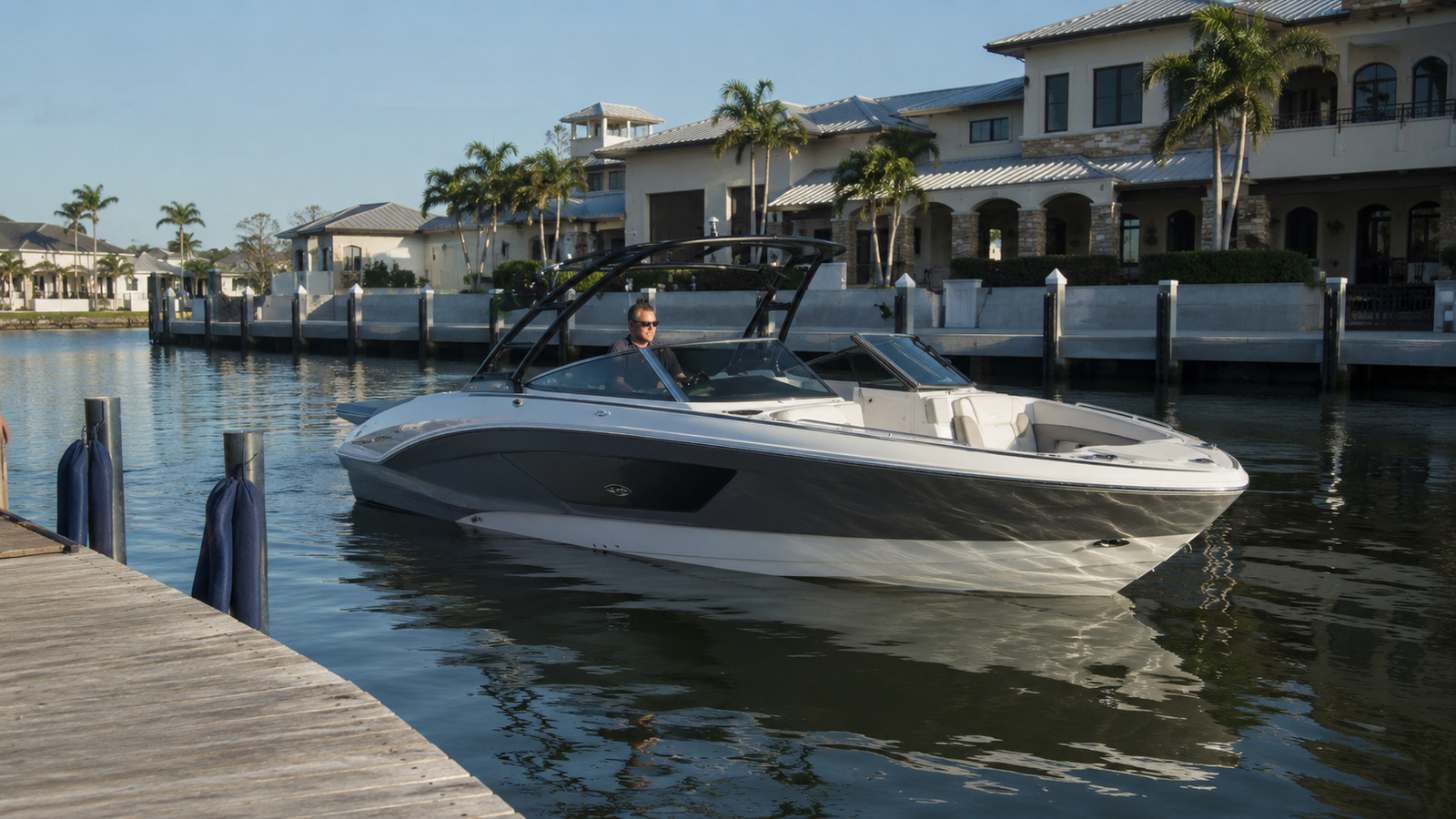
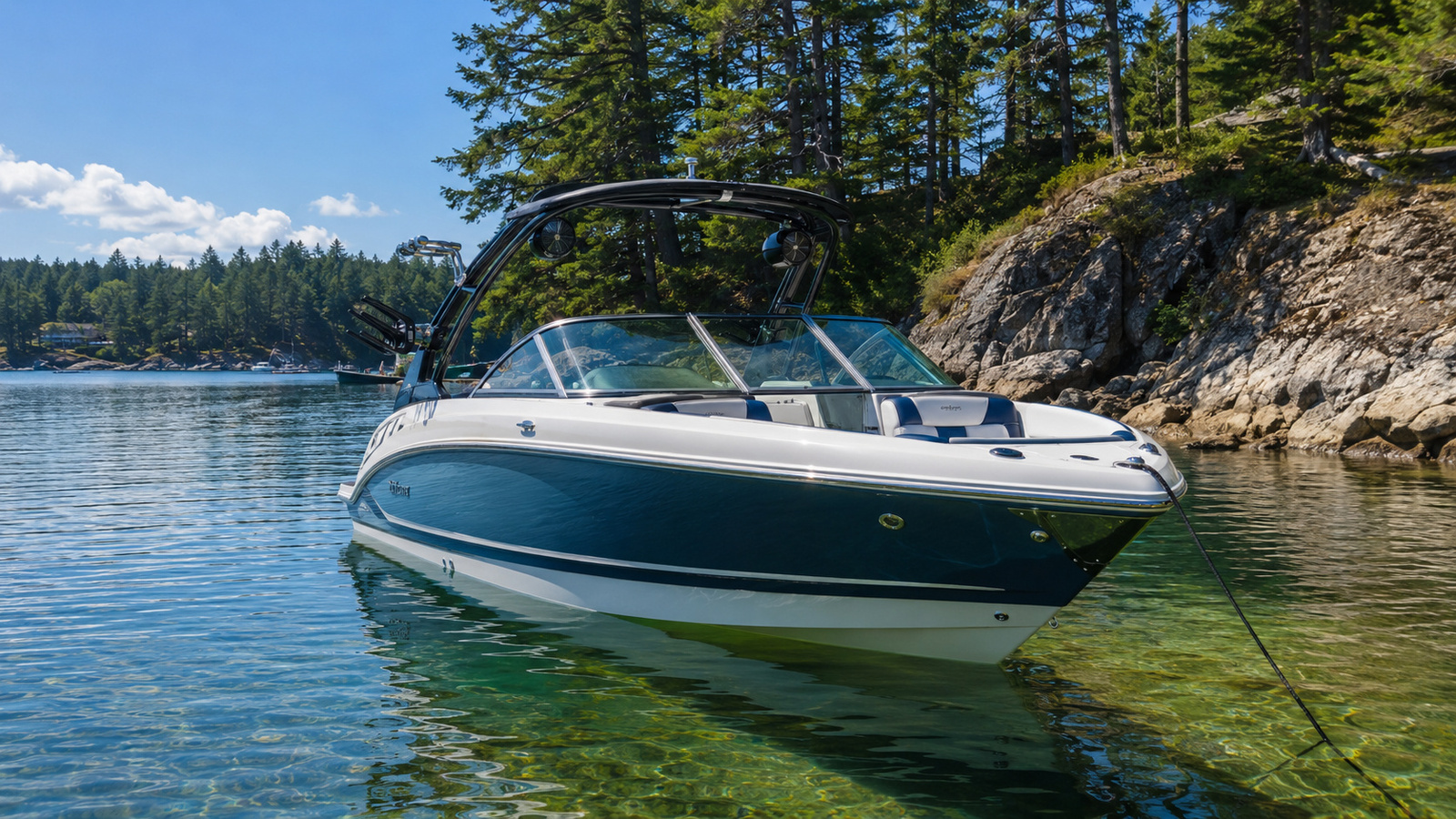
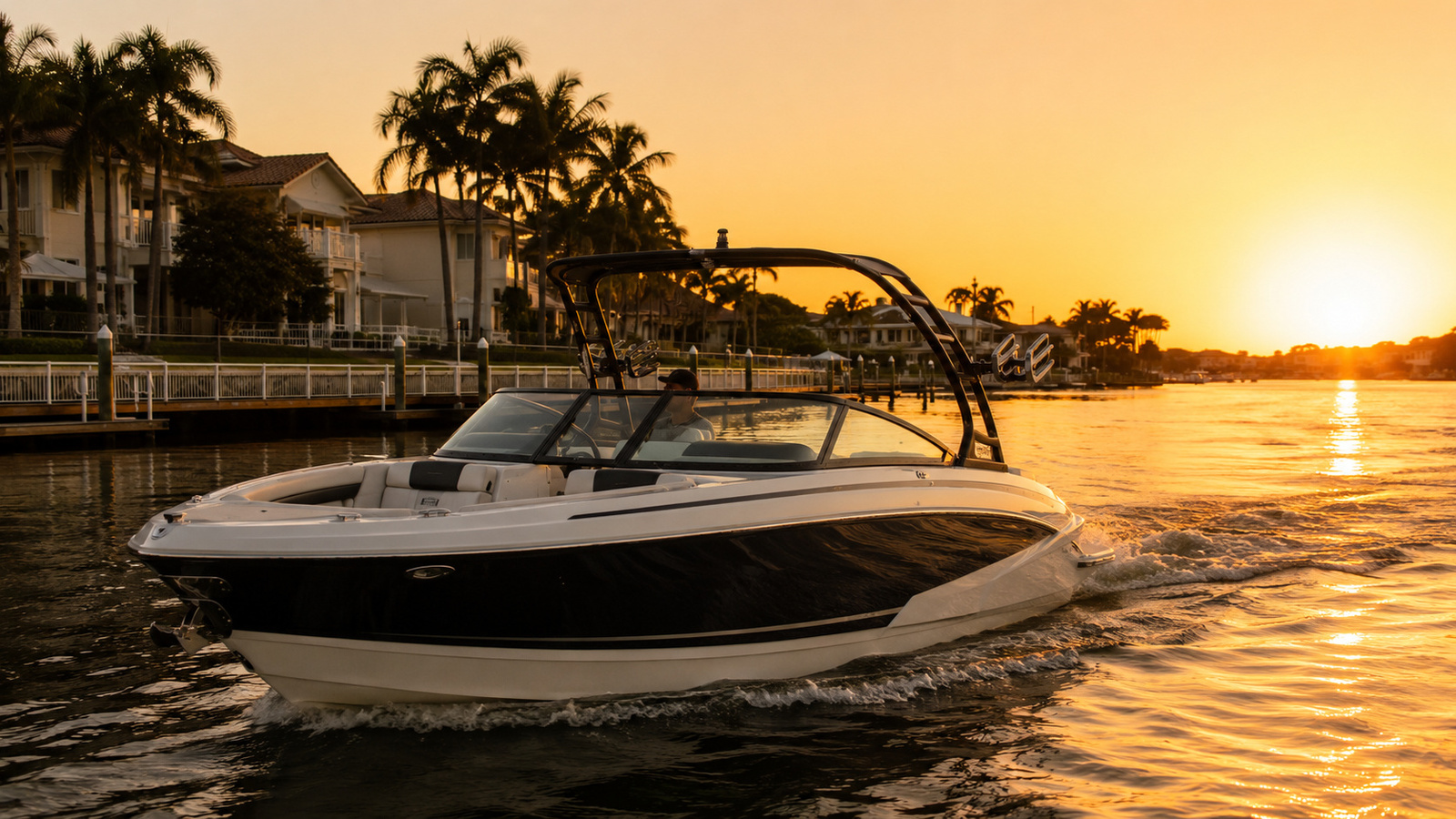
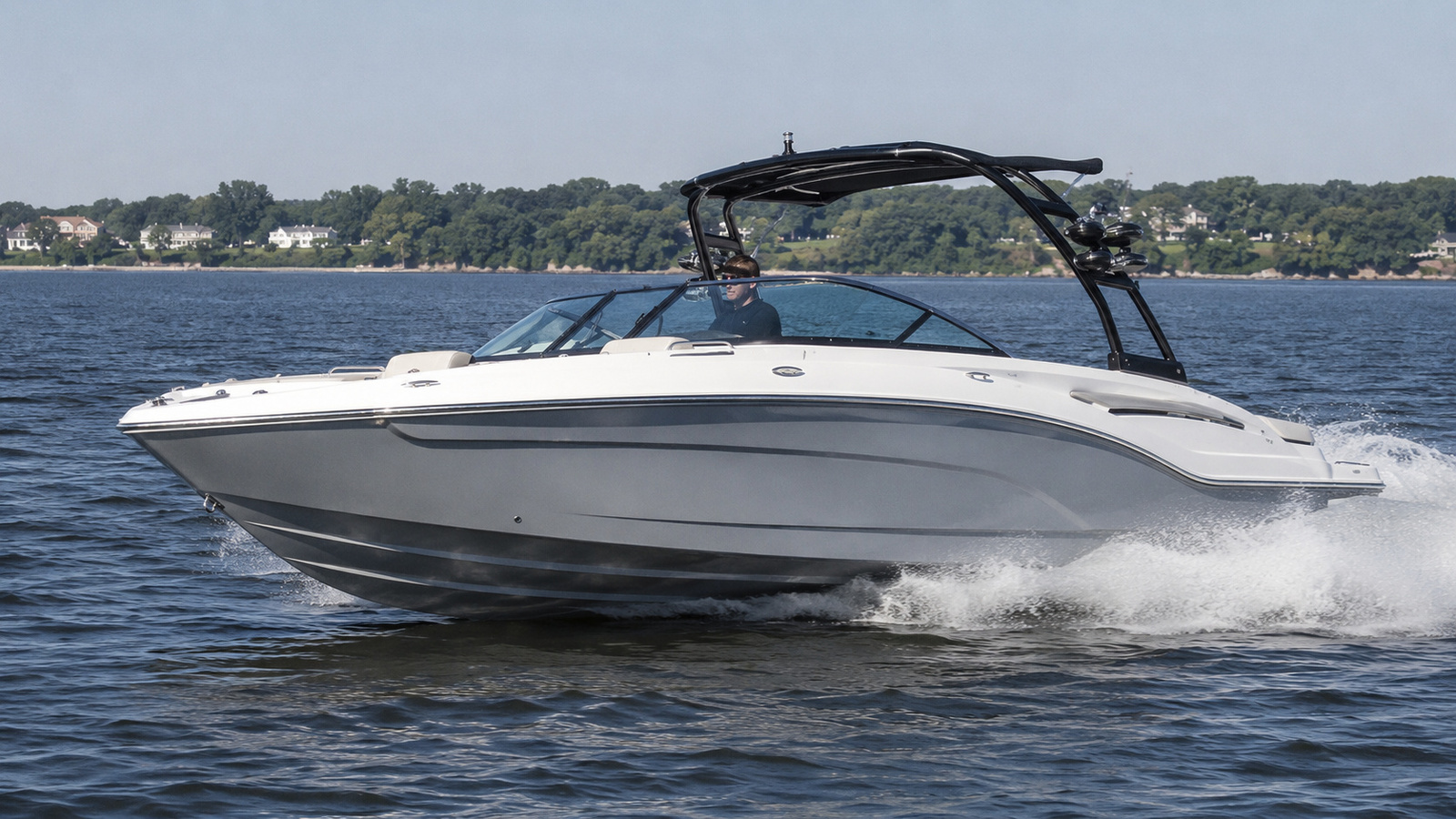
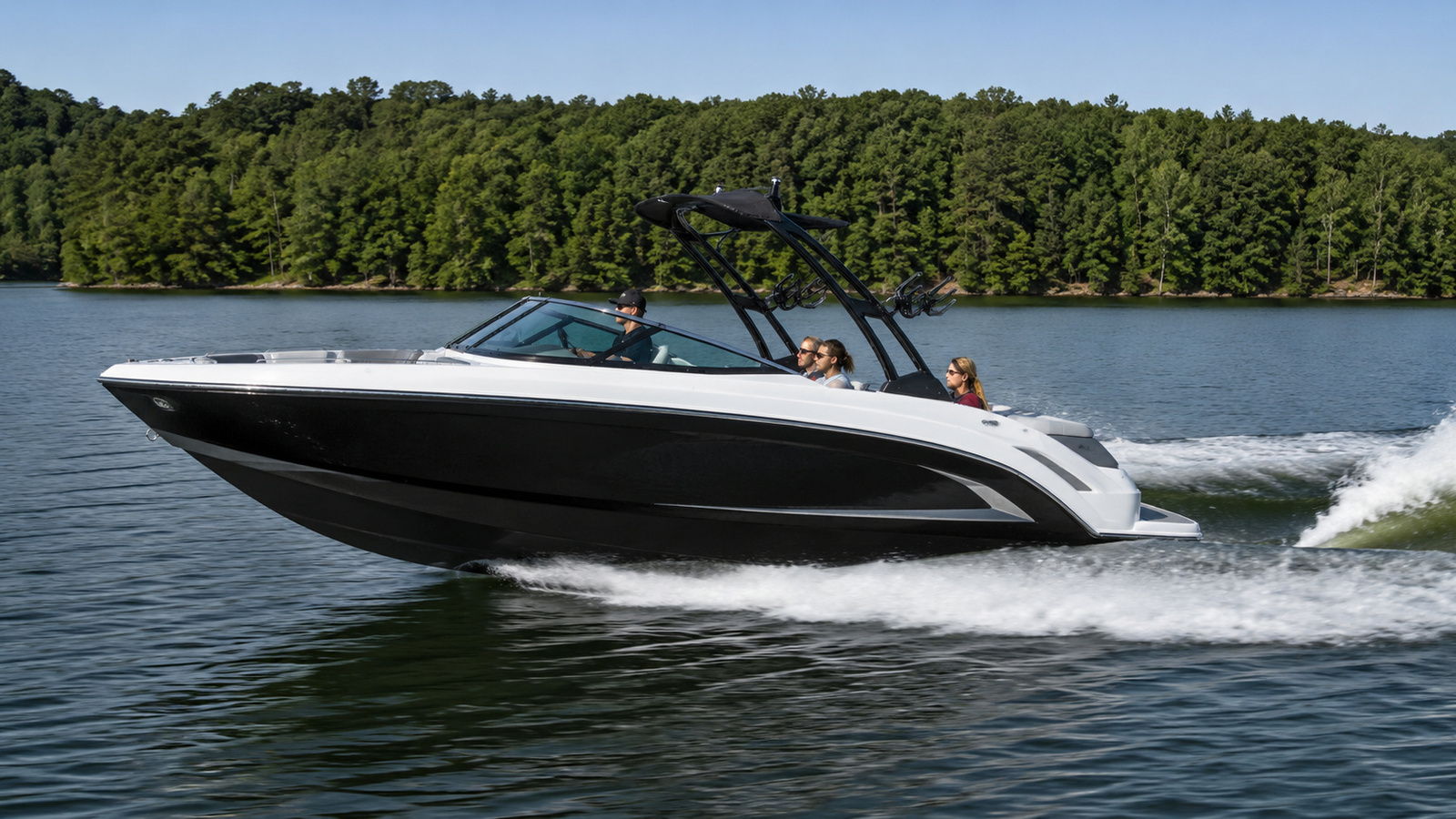
The Chaparral 28 Surf is the 28-foot Surf model for buyers who want a yacht-certified family bowrider with serious wake-shaping hardware, a full head compartment, and enough cockpit volume for long social days.
The Chaparral GTS 28 Surf is the 28-foot Surf model for buyers who want a yacht-certified family bowrider with serious wake-shaping hardware, a full head compartment, and enough cockpit volume for long social days. The 28 Surf is a current 2026 Chaparral model.
The 28 Surf is where Chaparral’s surf hardware meets a larger luxury-bowrider platform without moving to the 30 Surf’s 9-foot beam.
For the 28 Surf, the published ballast figure is 1,080 lbs.
The 28 Surf carries 80 gallons of fuel and is rated for Yacht Certified.
The 28 Surf is large enough that rider preparation can happen without taking over the entire cockpit. Boards, ropes, coolers, and passengers still need a storage plan, but the crew is not working inside the compact footprint of a 21-foot boat.
The 28 Surf keeps an 8-foot-6-inch beam, but its 6,100-pound dry weight, arch height, 80-gallon fuel load, and sterndrive package make the total trailer and tow setup far more substantial than the GTS 1 or GTS 3.
A buyer should also compare GTS 6 or 30 Surf before committing.
The 28 Surf is the point where Chaparral’s surf offering becomes a large luxury bowrider rather than a trailer-first sport boat. Yacht certification, 80 gallons of fuel, a full head, twin surf displays, and a 6,100-pound dry weight make the ownership experience much closer to a marina-based premium runabout.
Keeping the beam at 8 feet 6 inches is important. The 28 Surf is long and heavy, but it avoids the 30 Surf’s 9-foot width. For buyers who still need conventional-width road transport, that can be the single strongest reason to stop at 28 feet rather than move up.
Published factory figures. Confirm every dimension against the individual boat before you commit.
The 28 Surf uses Chaparral’s Extended V-Plane running-surface concept with a surf-specific hull and Kevlar-reinforced laminate in the current equipment set.
At 28′ 0″ long and 8′ 6″ wide, the 28 Surf occupies a very different storage footprint from its nearest sibling.
Chaparral publishes a 22° transom deadrise.
Published dry weight with engine is 6,100 lbs.
Draft with the drive up is 31″.
Inspect a used 28 Surf along the keel, chines, strakes, transom, and swim-platform structure.
Finally, compare the capacity label with Chaparral’s published Yacht Certified reference.
The 28 Surf combines a 22-degree transom deadrise with the Extended V-Plane concept, which positions it differently from the 20-degree GTS 1 and GTS 3. The larger hull should feel more settled in open lake chop, but the extra mass also means trailer brakes, tow rating, and lift capacity need more margin.
Configuration: Forward-drive sterndrive; Mercury or Volvo configurations by build
Current 28 Surf examples use forward-drive sterndrives because wakesurfing places the rider directly behind the transom.
The 28 Surf is not an outboard surf boat.
Maximum published power is 430 HP. That number should be viewed in the context of 6,100 lbs of dry weight, 80 gallons of fuel, and the normal passenger load rather than treated as a bragging-rights specification.
On a used 28 Surf, document engine hours and service history.
The 28 Surf combines a 80 gallons fuel system with 1,080 lbs of published ballast.
The 28 Surf has 15 gallons of published freshwater capacity. The 28 Surf carries published freshwater and holding-system specifications, so the head compartment and plumbing are part of the ownership inspection.
Eighty gallons gives the 28 Surf considerably more range flexibility than the GTS 6, but a full tank also adds close to 500 pounds. When ballast is full, the variable liquid load alone approaches 1,600 pounds before passengers. That is why acceleration and trim should be tested with realistic weight rather than extrapolated from an empty dealer ride.
The 28 Surf has two performance personalities: ordinary Chaparral bowrider behavior and ballast-loaded surf behavior.
The 28 Surf publishes 1,080 lbs of ballast.
After the surf test, empty ballast and run the 28 Surf at normal family cruise.
The 28 Surf is the right performance choice when its ballast, power, passenger room, and storage requirements match the riders who will actually use it.
With 1,080 pounds of ballast and yacht-certified passenger loading, the 28 Surf can become a very heavy boat during a surf session. The 430-horsepower ceiling should therefore be judged under realistic load rather than from an empty acceleration run. A well-propped boat should hold rider speed without constant throttle work.
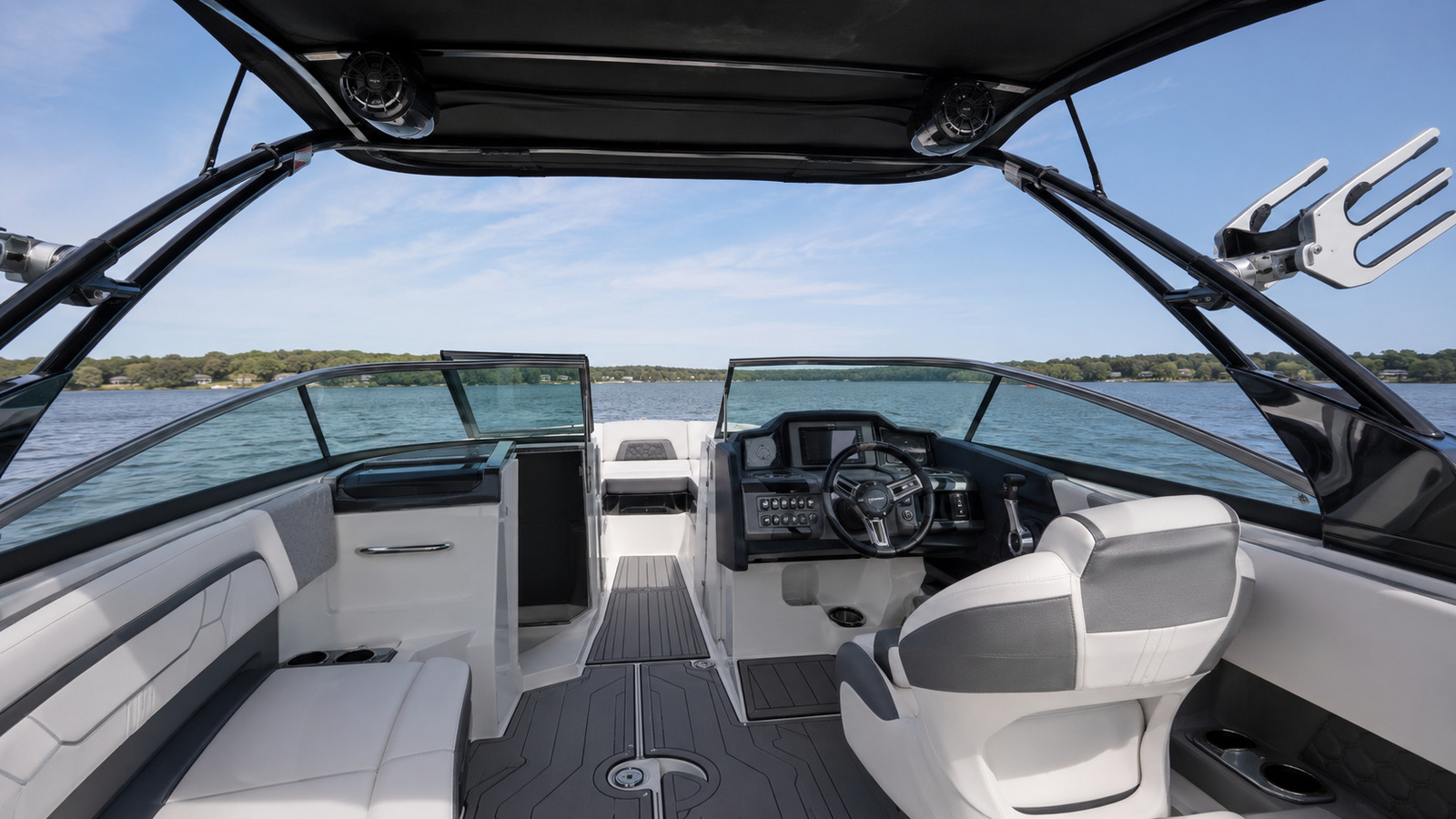
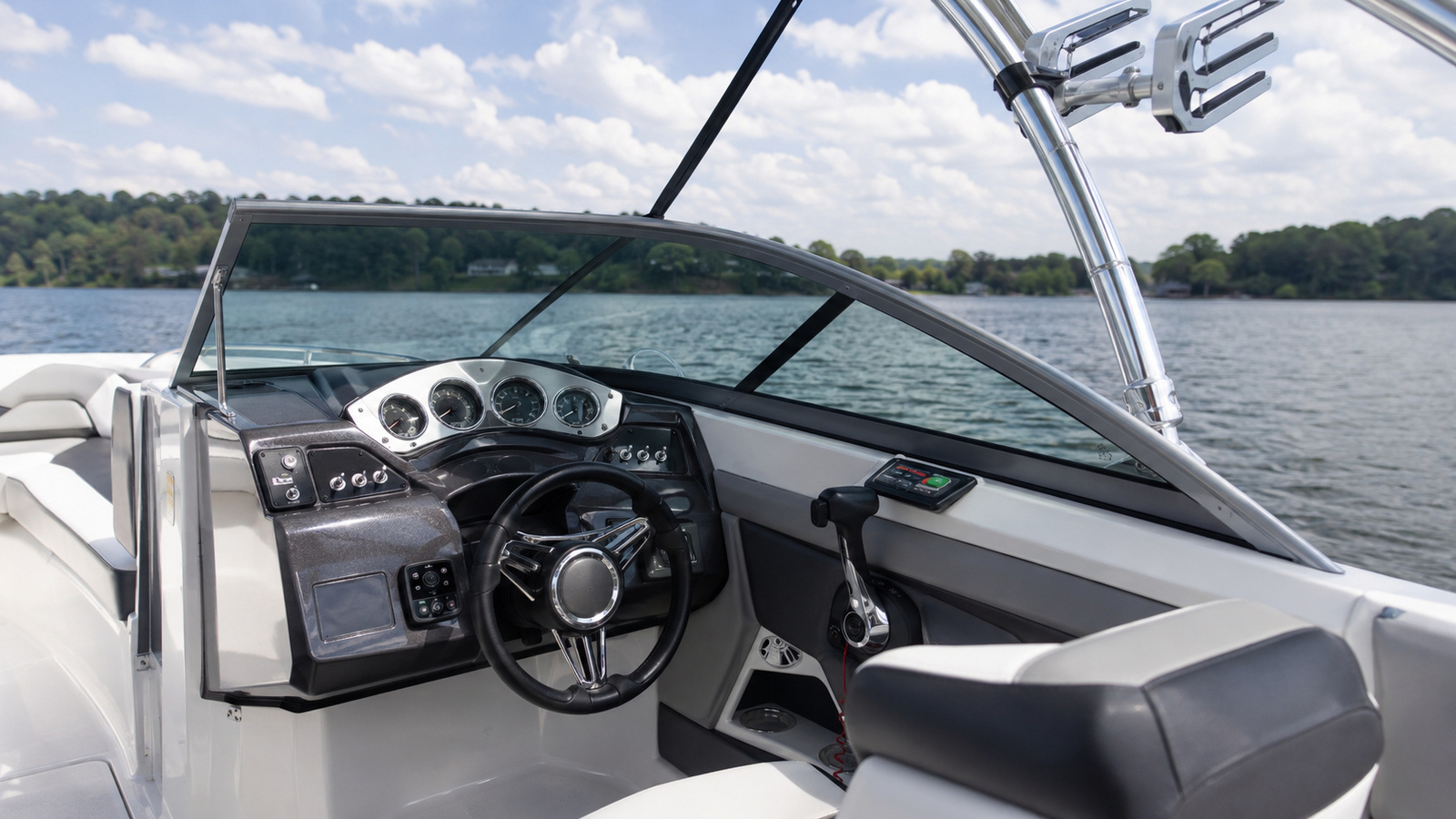
Twin Simrad NSX9 EVO3 displays give the 28 Surf a more sophisticated surf helm than the smaller GTS boats. One benefit is the ability to keep navigation or engine information visible while surf controls remain accessible. Test the interface in bright sun because screen readability matters when the driver is also watching a rider.
The 28 Surf is still a Chaparral bowrider first, which matters because the family may spend more time cruising, swimming, and sitting at anchor than actively surfing.
On the 28 Surf, storage discipline matters because boards are long, ballast equipment takes space, and a loose cooler can block the walk-through transom.
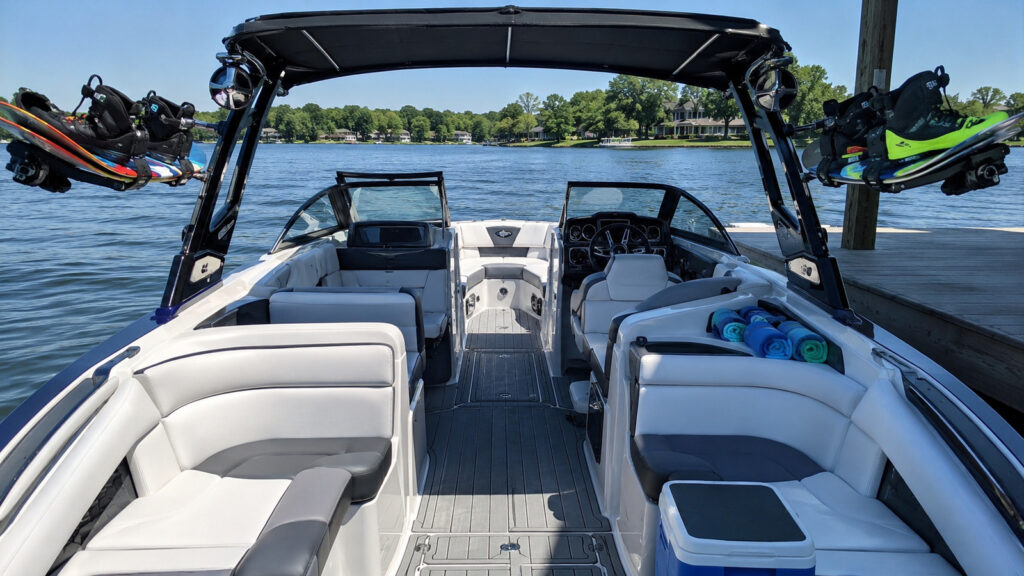
At the helm, Twin Simrad NSX9 EVO3 multifunction displays with surf controls.
The EFX electric folding arch tower should be viewed as both watersports equipment and a storage-height decision.
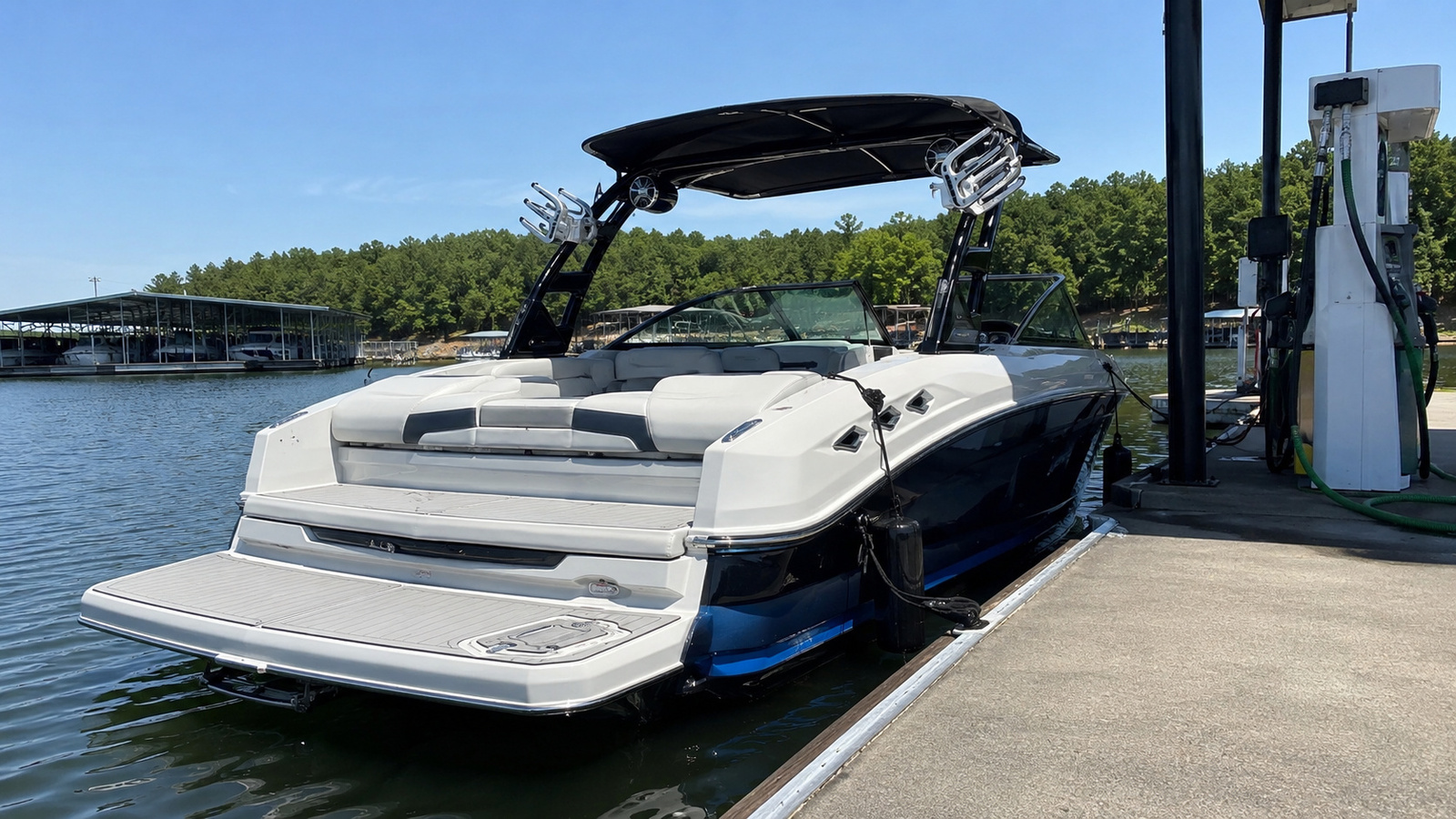
Infinity Power Step swim platform gives riders a staging area, and the forward-drive layout keeps propellers away from the extreme aft edge.
For families comparing the 28 Surf with an outboard-powered bowrider, the forward-drive sterndrive is the defining mechanical trade. It keeps propellers forward under the hull for surf use, but it also brings sterndrive service, winterization, and engine-compartment access into the ownership plan.
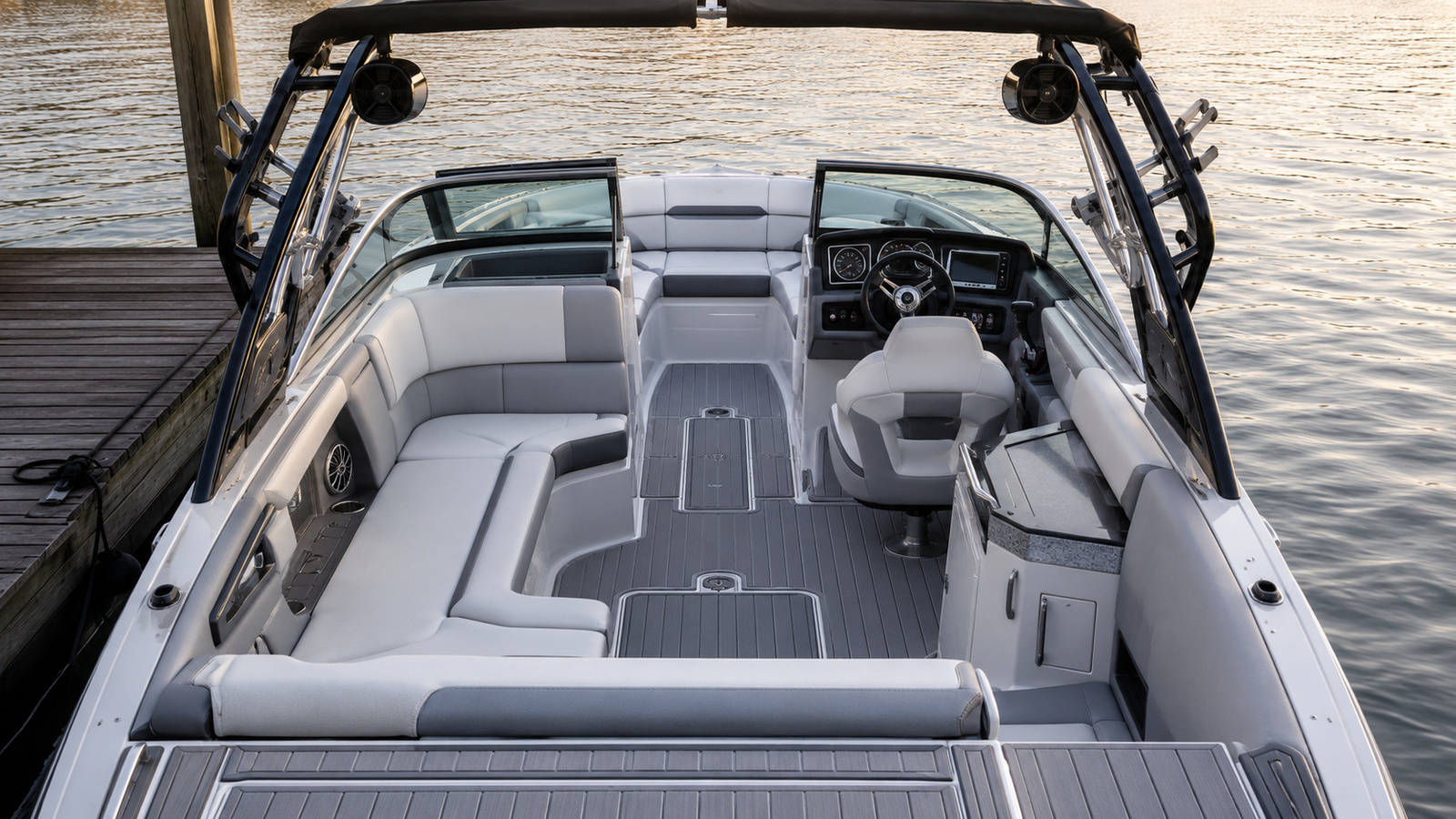
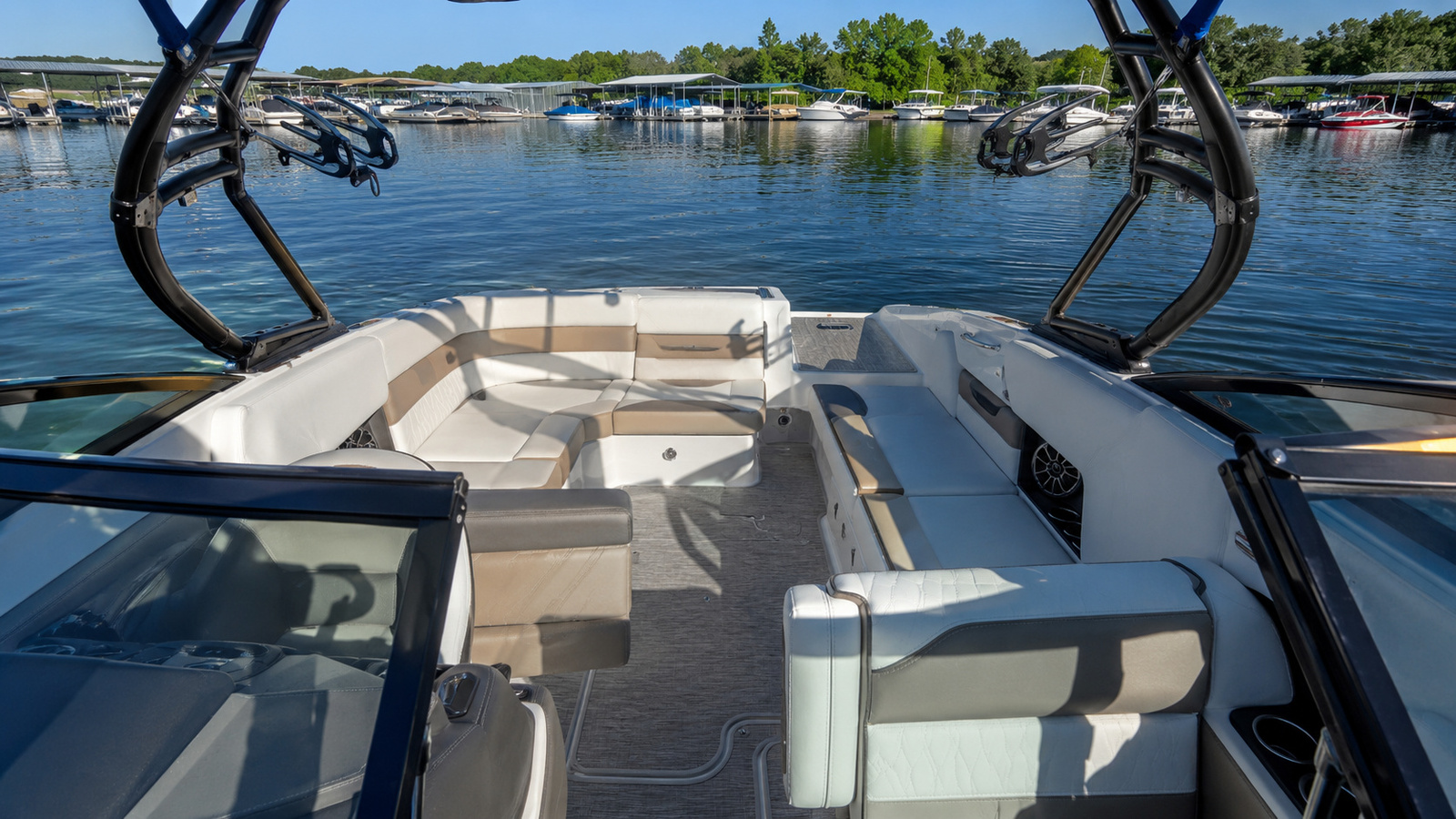
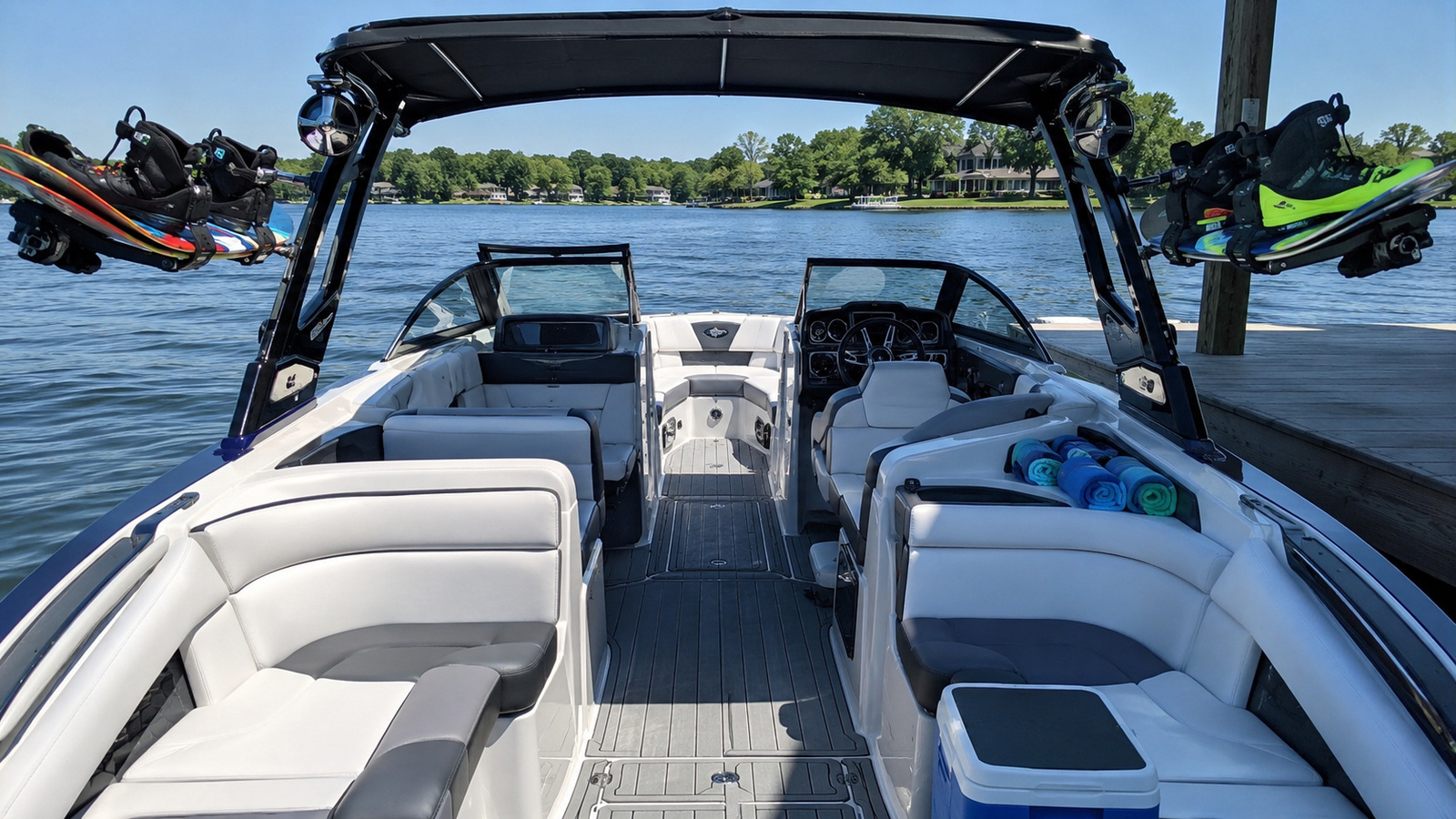
The 28-foot cockpit gives the crew space to separate surf preparation from normal seating. One rider can handle a board near the stern while passengers remain forward or along the U-shaped cockpit. That is a meaningful advantage over a compact GTS when multiple riders are cycling through sets.
A full fiberglass head with a 15-gallon freshwater system makes the 28 Surf more useful for guests who do not want to structure the day around marina stops. Inspect vanity plumbing, transom shower, holding-tank hardware, and ventilation because the systems are valuable only when they remain easy to use.
1,080-Lb Ballast System – The published ballast system gives the 28 Surf enough additional displacement to make surf setup a real part of the boat rather than a light-duty add-on.
Chaparral uses Malibu Surf Gates to shape the wake without asking the crew to move from side to side.
Twin Simrad NSX9 EVO3 screens centralize engine, navigation, and surf controls at a helm designed for repeated rider changes.
The powered swim-platform step makes reboarding easier after surfing and gives the stern more utility when the boat is stopped.
A dedicated head compartment with vanity and sink gives the 28 Surf better all-day family usability than the smaller GTS models.
The aft bench converts toward a sun-lounge arrangement, making the stern useful between rider sets.
The EFX arch carries shade and watersports hardware while folding to reduce stored height.
Chaparral's 2026 Envision SiO silicone seating is intended to handle repeated wet use with less upkeep than conventional marine vinyl.
The 28 Surf has more systems than an ordinary runabout because surf control adds ballast pumps, gates, electronic rider presets, and a forward-drive power package to the normal bowrider equipment.
Start with Twin Simrad NSX9 EVO3 multifunction displays with surf controls.
Inspect batteries and charging.
On the larger 28 Surf, freshwater and head equipment should be run long enough to reveal leaks.
Twin Simrad displays create redundancy at the helm only if the network behind them is healthy. Verify that both screens see engine data, GPS, depth, and surf-control information, then restart the system after the engine has been running. Intermittent network faults can hide during a short showroom demonstration and reappear once the batteries are under load.
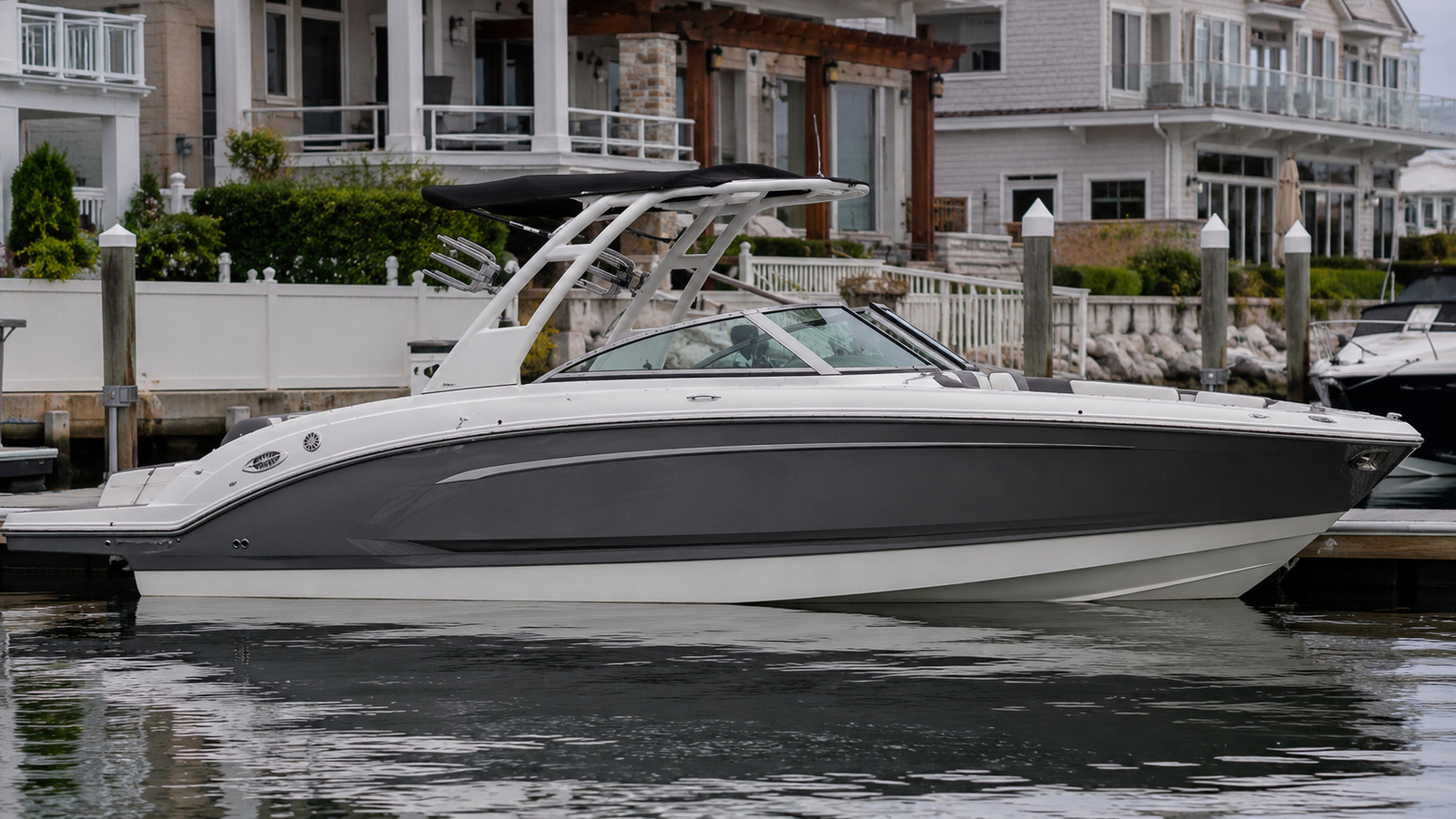
The 28 Surf publishes 28′ 0″ of overall length, 8′ 6″ of beam, and 6,100 lbs of dry weight with engine.
The 28 Surf’s 8′ 6″ beam stays within conventional 8-foot-6-inch road width, but the complete loaded rig still needs an appropriately rated tow vehicle and trailer.
Bridge clearance is 9′ with arch / 6′ 10″ folded.
Ramp depth matters because the 28 Surf has a published drive-up draft of 31″.
The 28 Surf is the largest model in this group that still keeps the conventional 8-foot-6-inch beam. That makes it the logical ceiling for owners who want a big Chaparral surf boat without deliberately entering oversize-width trailering. The challenge shifts to weight and length, which still demand a substantial trailer, tow vehicle, and ramp.
Current 28 Surf shopping is dominated by recent dealer inventory and late-model used boats. Engine choice, Black Edition cosmetics, arch equipment, electronics, and trailer condition can move value substantially.
The 28 Surf should have working Malibu Surf Gates, functional ballast, surf controls, and a drive configuration that matches the model year.
The best 28 Surf value is not automatically the cheapest boat.
The 28 Surf is where cosmetic packages can become expensive enough to distract from mechanical value. Black Edition hull treatment, Cayenne or other silicone interiors, arch finish, audio, underwater lighting, and flooring look dramatic, but a buyer should first verify the 430-horsepower-class forward drive, ballast, Surf Gates, and electronics.
Illustration only and not an offer of credit.
Illustration only and not an offer of credit. Your actual rate and term depend on credit profile, vessel age, loan amount and ownership structure.
The first cross-shop for the 28 Surf is GTS 6 or 30 Surf.
The 28 Surf is where Chaparral’s surf hardware meets a larger luxury-bowrider platform without moving to the 30 Surf’s 9-foot beam.
The 28 Surf publishes 1,080 lbs of ballast and 80 gallons of fuel capacity.
The main tradeoff remains: The 28 Surf keeps an 8-foot-6-inch beam, but its 6,100-pound dry weight, arch height, 80-gallon fuel load, and sterndrive package make the total trailer and tow setup far more substantial than the GTS 1 or GTS 3.
A buyer comparing the 28 Surf with the GTS 6 should decide whether the extra fuel, hull length, twin-screen helm, and larger social deck will be used every weekend. If the answer is yes, the 28 earns its step up. If the boat will usually carry four or five people, the GTS 6 can deliver the same published ballast and maximum horsepower in a smaller package.
Start a 28 Surf purchase with the exact model year and engine package.
Verify the hull identification and compare the seller’s dimensions with the current published 28′ 0″ LOA, 8′ 6″ beam, 6,100 lbs dry weight, 80 gallons fuel capacity, and 430 HP maximum horsepower reference.
Fill the 1,080 lbs ballast system and drain it.
The Twin Simrad NSX9 EVO3 multifunction displays with surf controls should make rider setup repeatable without fault messages.
Walk every storage compartment.
On yacht-certified 28 Surf models, use common sense rather than treating certification as unlimited passenger capacity.
The 28 Surf can be a heavy loaded package, and tandem-axle brakes, tires, bearings, bunks, guides, winch, and tongue hardware deserve a separate inspection.
Current 28 Surf shopping is dominated by recent dealer inventory and late-model used boats. Engine choice, Black Edition cosmetics, arch equipment, electronics, and trailer condition can move value substantially.
Price annual storage and winterization.
Finally, compare GTS 6 or 30 Surf. The 28 Surf should remain the better answer after the tow, storage, passenger, and service plan are all understood.
A 28 Surf buyer who plans to trailer should calculate the complete rig weight rather than relying on the 6,100-pound dry figure. Eighty gallons of fuel alone can add roughly 480 pounds before batteries, gear, trailer, and options are counted. A comfortable tow margin matters more than using the vehicle’s published maximum.
Compare the 28 directly with the 30 Surf at a dock. The 30’s extra beam creates more social space but also introduces oversize-width transport. If the family does not immediately feel a meaningful comfort gain, the 28 can preserve most of the premium surf experience with fewer road complications.
The Infinity Power Step should be tested with the same attention as the Surf Gates. It operates in a high-moisture, high-traffic area and is one of the features owners may use every time someone swims. Look for smooth travel, secure mounting, damaged SeaDek, and signs that the mechanism has been forced against a dock or trailer guide.
A financing-ready 28 Surf listing should identify the exact forward-drive engine, tower or arch package, trailer, and major surf options. That matters because a lightly equipped 28 Surf and a premium build can share the same model name while creating very different purchase prices and replacement costs.
The clearer the configuration is before financing, the easier it is to compare the boat with a real sibling rather than a generic MSRP.
Resale on the 28 Surf will depend heavily on whether the surf hardware still works as a complete system. A future buyer can see gelcoat and upholstery immediately, but ballast pumps, Surf Gate actuators, Simrad controls, drive service, and tower hardware determine whether the boat still performs like a factory surf model. Keeping records for those systems protects more value than cosmetic detailing alone.
The final ownership question is frequency of use. A 28 Surf makes financial sense when the household uses both sides of its personality: ordinary Chaparral cruising and the surf system. If the family rarely fills ballast or deploys Surf Gates, a conventional Chaparral sport boat may offer less maintenance and a lower purchase price.
If riders surf often, the integrated factory package is exactly what separates the 28 Surf from an improvised tow boat.
A 28 Surf buyer should also decide where the boat will be serviced before choosing between Mercury and Volvo power. Forward-drive expertise is not identical at every sterndrive shop, and convenient local support can be worth more than a small purchase-price difference. Ask which dealer handles drive diagnostics, propeller setup, winterization, and surf-system troubleshooting near the lake where the boat will actually live.
For dock-kept owners, the 28 Surf also deserves a close look at the stern after several minutes in the water. Check the Infinity Power Step, Surf Gate hardware, platform seams, and engine-compartment bilge for leaks or movement. The stern carries riders, ballast-related load, and the forward-drive package, so a clean static inspection should be followed by a second look after the sea trial.

Send Float Finance the actual 28 Surf listing with model year, engine package, seller type, and asking price.
Engine package, model year, tower or hardtop, Black Edition treatment, electronics, audio, flooring, trailer, and condition can move the 28 Surf transaction substantially.
Chaparral publishes 28′ 0″ LOA with the swim-platform reference used on the 2026 specification.
Chaparral publishes 1,080 lbs of ballast for the current 28 Surf.
Chaparral publishes 430 HP as the current maximum for the 28 Surf.
Yes. The current 28 Surf is designed around Chaparral’s GT Surf / Surf system with Malibu Surf Gates, ballast, touchscreen surf control, and forward-drive sterndrive propulsion.
It depends on size. The 28 Surf is 8′ 6″ wide and weighs 6,100 lbs dry with engine before fuel, trailer, gear, and options.
Can I finance a used 28 Surf?
Tell us a little bit about yourself and the boat you are looking to finance.