
Call Us : 207-994-5109
Mon – Fri: 8 am to 9 pm & Sat – Sun: 10 am to 8 pm
Grady-White Express 370 is sliding-sunroof Express flagship with yacht-level cabin systems, built for offshore cruisers who need a larger cabin, galley, head, aft berth, expansive beam, and 1,350-horsepower ceiling.
The important question is not whether the boat is impressive; it is whether its systems match the owner; that distinction is central to the sunroof-equipped express flagship role. The Grady-White Express 370 is sliding-sunroof Express flagship with yacht-level cabin systems. Its purpose is offshore cruisers who need a larger cabin, galley, head, aft berth, expansive beam, and 1,350-horsepower ceiling.
The strongest reason to shop this exact model is AV² hardtop with sliding sunroof, multiple berths, full galley, separate head, and 372-gallon fuel capacity. That combination places it differently from Express 340 or Freedom 375 even when the neighboring boats share SeaV² construction and Yamaha power; the large-cabin sunroof express cruiser mission makes that tradeoff model-specific.
At 36’6″ long with a 13’2″ beam, the Express 370 creates an ownership footprint that should be matched to the tow vehicle, lift, marina, home dock, and normal passenger count before options become the focus; that point carries more weight in a sunroof-equipped express flagship.
The published 1,350 HP maximum and 372 gal fuel capacity describe real capability, but they also increase loaded weight, service exposure, and operating cost as the buyer climbs the Grady-White range; that is part of what separates a large-cabin sunroof express cruiser from adjacent models.
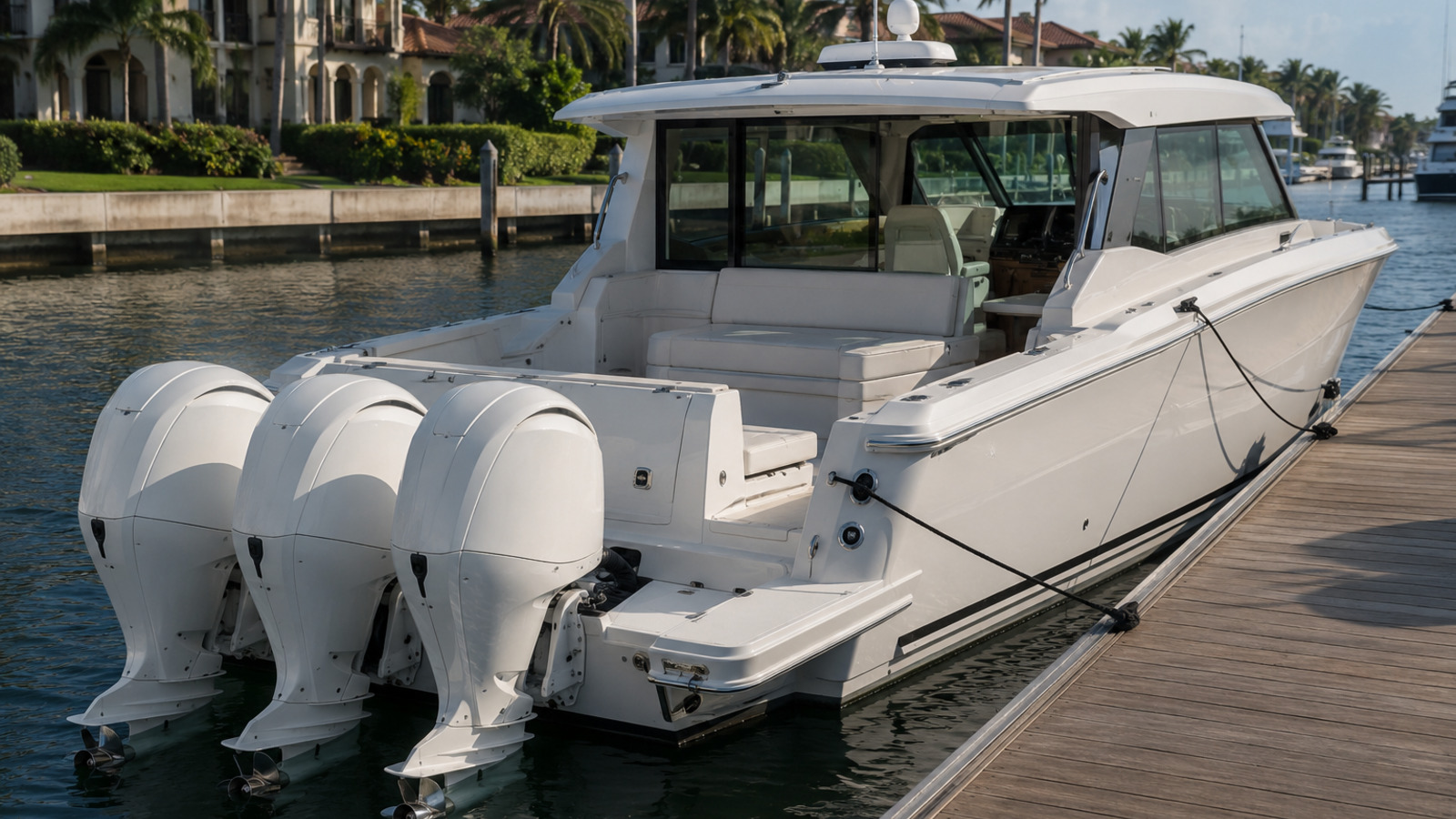
Published factory figures. Confirm every dimension against the individual boat before you commit.
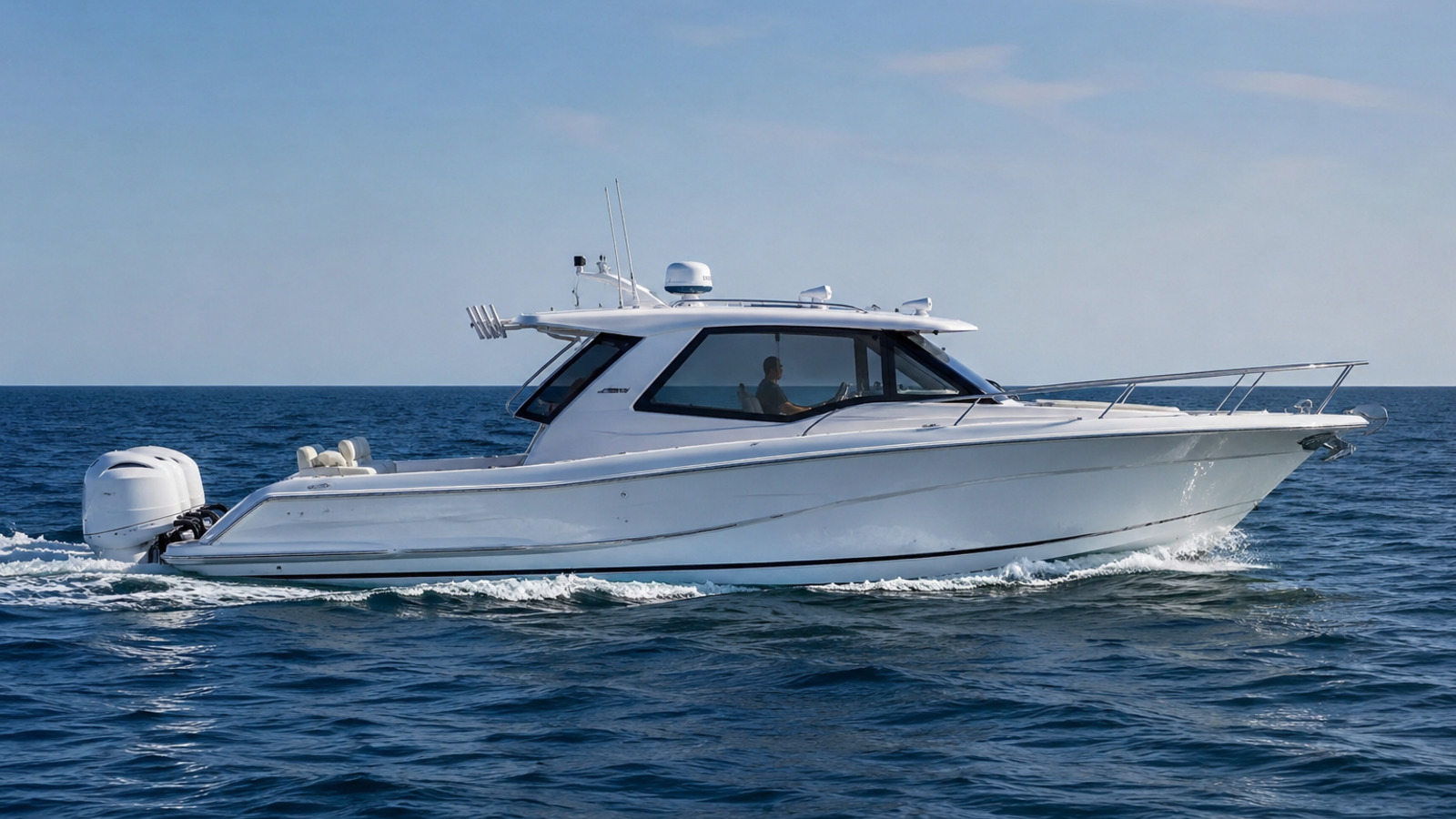
Grady-White’s SeaV² hull uses a continuously variable deadrise concept rather than one constant angle from bow to transom; that deserves extra attention on a sunroof-equipped express flagship. On the Express 370, the published transom figure is 20°, which should be interpreted alongside beam, weight, and intended water rather than as a single ride-quality score; the large-cabin sunroof express cruiser mission makes that a structural rather than cosmetic issue.
The Express 370 weighs approximately 15,224 lb before engines, fuel, freshwater, gear, batteries, hardtop equipment, and people; that directly affects the hull decision for a sunroof-equipped express flagship. That makes a loaded lift or trailer calculation materially different from the dry specification; that measurement is especially relevant to a large-cabin sunroof express cruiser.
Hull draft is 29 in. For a sliding-sunroof Express flagship with yacht-level cabin systems, that figure should be checked against the owner’s local ramp, inlet, sandbar, or shallow-water route before assuming another Grady-White uses the same access.
Inspect chines, strakes, keel, transom corners, through-hulls, rubrail, bow hardware, and all high-load deck fittings in natural light; that belongs in the structural review of a sunroof-equipped express flagship. Grady-White’s reputation for construction quality does not make prior impact or poor repair irrelevant; the large-cabin sunroof express cruiser use case makes that hull detail more consequential.
Configuration: Yamaha outboard power; exact engine count and package vary by build
The Express 370 is an outboard-powered Grady-White, so propulsion inspection belongs at the transom: mounting, steering, trim, lower units, propellers, anodes, rigging, and flushing history; that belongs in the Yamaha due diligence for a sunroof-equipped express flagship. Its 1,350 HP maximum tells the buyer the power envelope, not the condition of the engines actually installed; the large-cabin sunroof express cruiser mission makes that engine check more important.
The correct Express 370 engine package should be evaluated under the same load the owner expects to carry; that matters to the propulsion plan for a sunroof-equipped express flagship.
Full fuel, several adults, ice, tackle, water toys, cabin supplies, or offshore safety gear can expose an underpowered or poorly propped setup that feels fine on an empty demonstration; that should be documented carefully on a large-cabin sunroof express cruiser.
Record every Yamaha serial number and engine hour figure; that is a meaningful mechanical check for a sunroof-equipped express flagship. Multi-engine Grady-Whites should have service histories reviewed separately because matched cowling colors do not prove matched maintenance; the large-cabin sunroof express cruiser ownership plan depends on getting that right.
Local Yamaha support matters. A boat with a strong service network near its home marina can be a better long-term purchase than an otherwise similar example located far from qualified diagnostics and warranty support; that belongs in the Yamaha due diligence for a sunroof-equipped express flagship.
The Express 370 power decision should leave room in the ownership budget for fuel, scheduled service, lower-unit work, batteries, insurance, and eventual propeller or steering repairs; the large-cabin sunroof express cruiser mission makes that engine check more important.
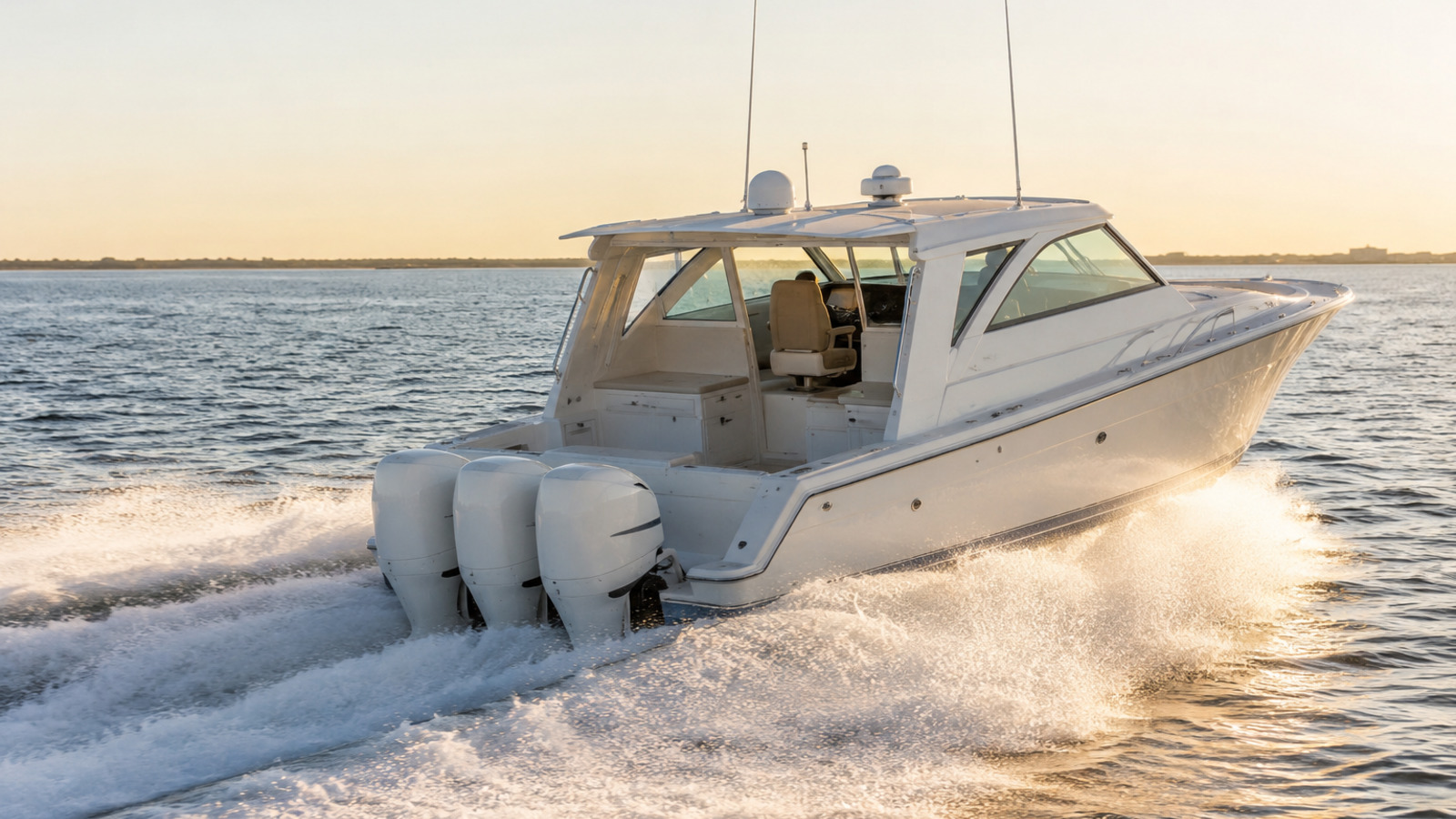
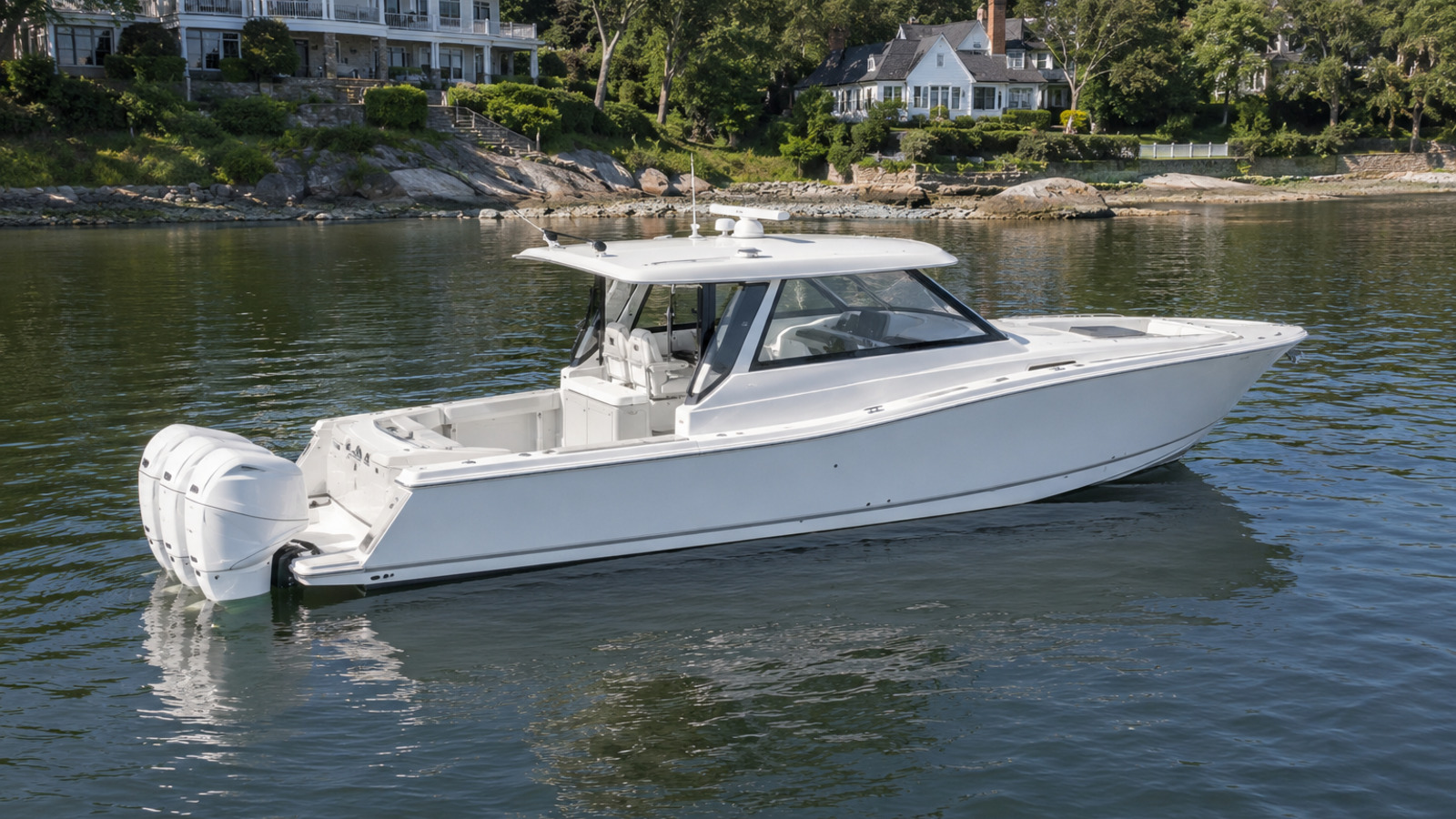
The Express 370 carries 372 gal of standard fuel capacity; that belongs in the range plan for a sunroof-equipped express flagship. That number belongs in a range calculation and a weight calculation, because full fuel can add hundreds or thousands of pounds depending on model size; the large-cabin sunroof express cruiser role makes that load calculation more important.
Range should be estimated from the actual Yamaha engine package at a comfortable cruise, with a reserve; that matters when planning real trips in a sunroof-equipped express flagship. A performance test conducted with different engines, load, bottom paint, or weather should not be copied blindly into a trip plan; that should be part of fuel planning for a large-cabin sunroof express cruiser.
For this sliding-sunroof Express flagship with yacht-level cabin systems, fuel use also depends on mission. Repeated offshore acceleration, trolling, sandbar idling, watersports, and long steady cruises create very different seasonal consumption; the sunroof-equipped express flagship mission gives that number practical context.
A sliding-sunroof Express flagship with yacht-level cabin systems should feel composed at the speeds its owner will actually use. The sea trial should therefore include dock maneuvering, acceleration with a realistic crew, ordinary cruise, turns, trim changes, and the conditions the boat will regularly see; that is part of the sea-trial story for a sunroof-equipped express flagship.
The 20° transom figure is one part of the SeaV² story; the large-cabin sunroof express cruiser mission changes how that behavior should be judged. Entry angle changes forward, so the hull should be judged by how it meets chop, lands after crossing wakes, and maintains control instead of by one brochure number; that matters under the normal load of a sunroof-equipped express flagship.
During acceleration, watch bow rise and visibility; that should be verified on the water in a large-cabin sunroof express cruiser. The boat should settle onto plane without forcing passengers to relocate or the driver to use excessive trim correction; the sunroof-equipped express flagship role makes that handling trait more important.
At cruise, listen for hardtop movement, hatch rattles, steering effort, unusual propeller vibration, and anything that appears only after the hull is loaded; that belongs in a proper sea trial for a large-cabin sunroof express cruiser. A large Grady can hide minor systems problems at idle; that is part of the sea-trial story for a sunroof-equipped express flagship.
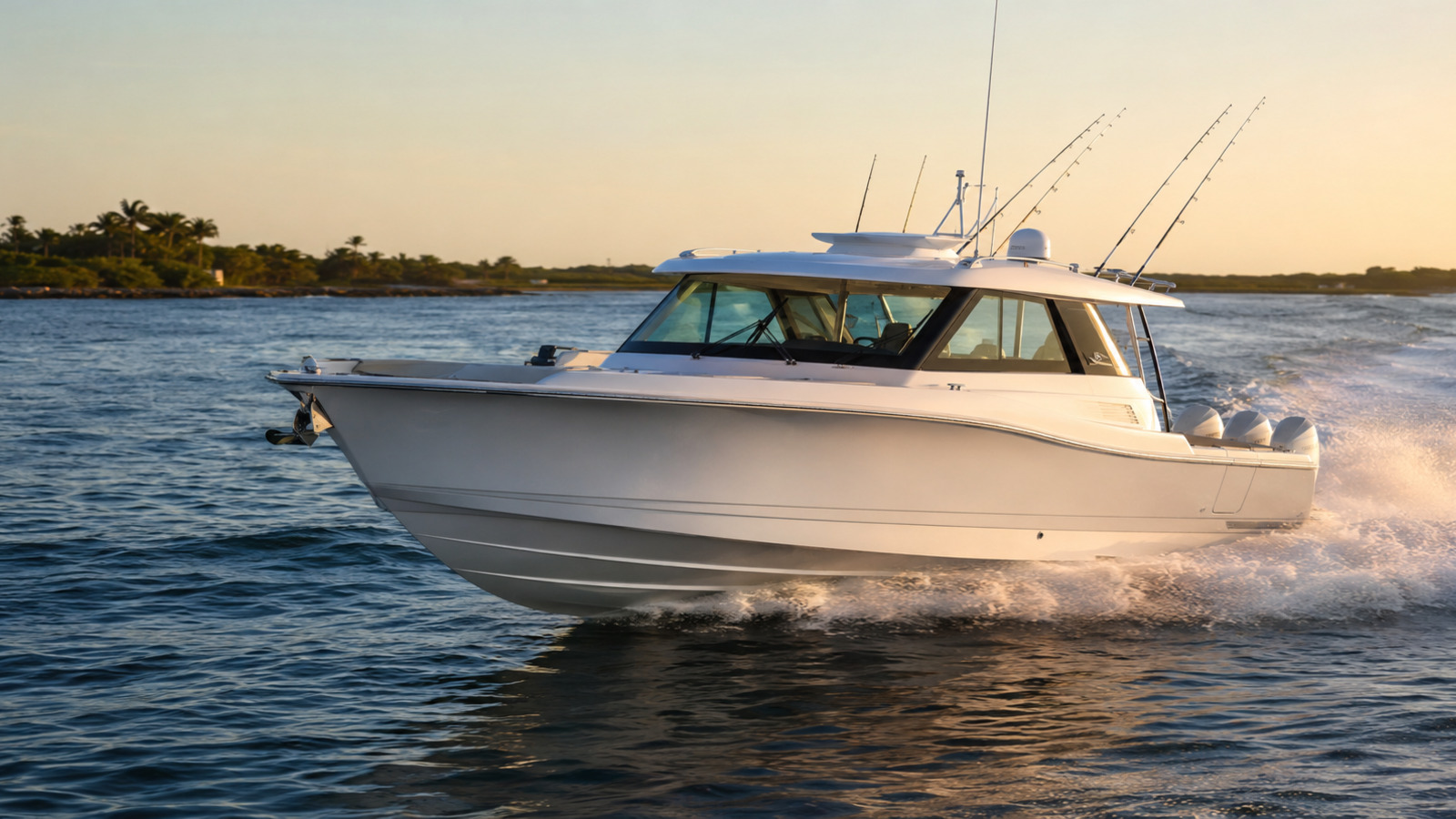
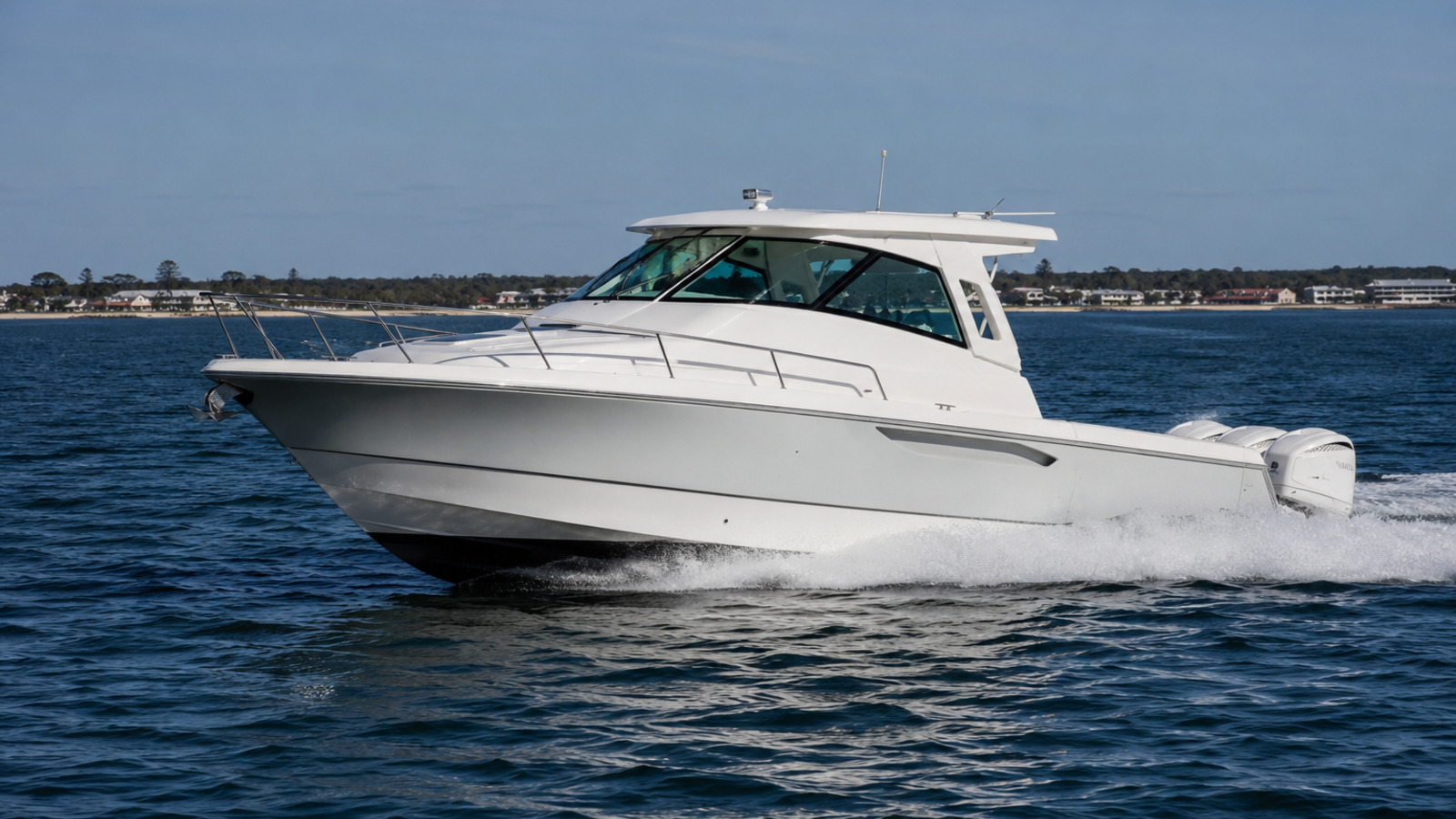
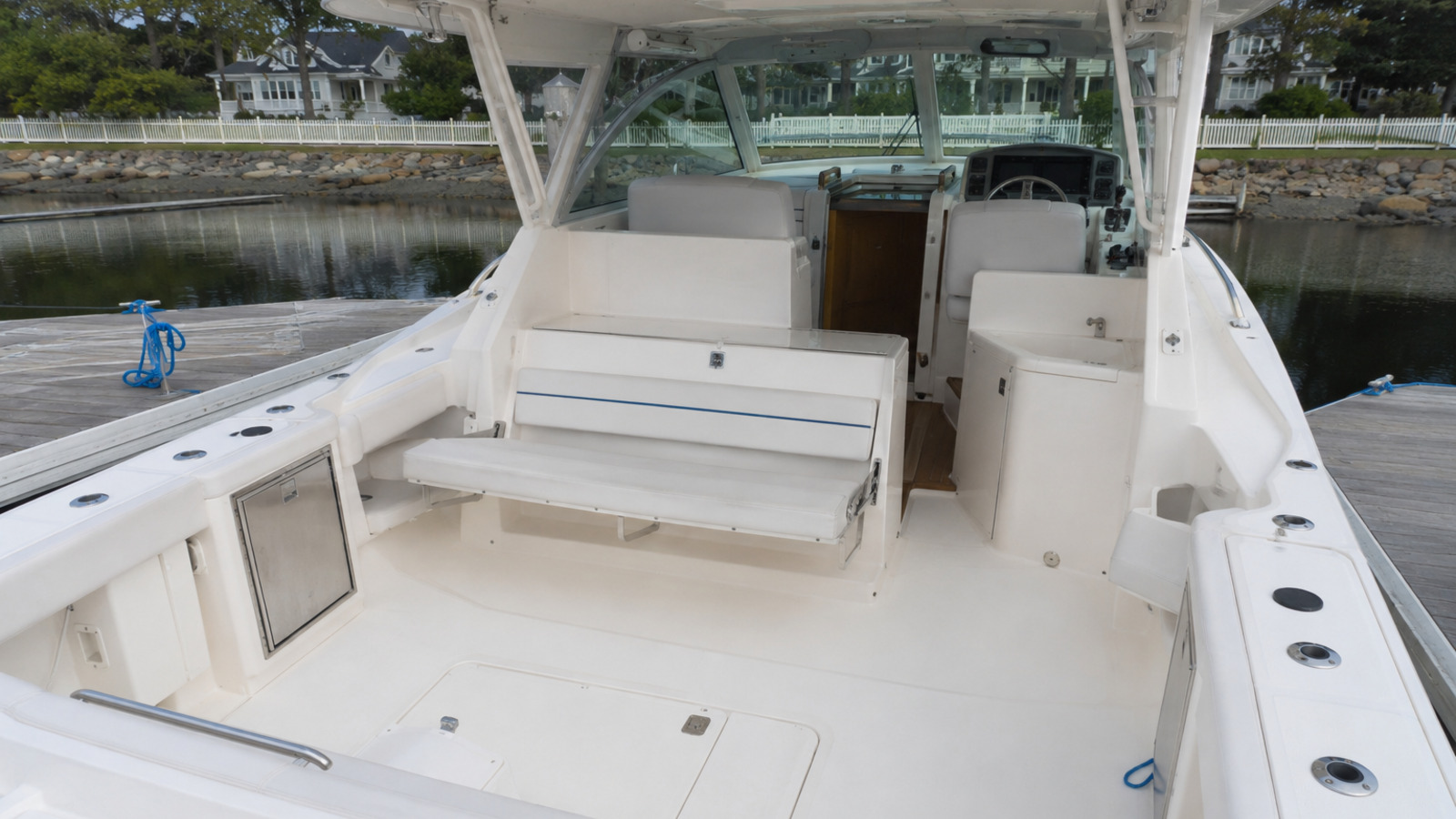
The Express 370 deck is built around AV² hardtop with sliding sunroof, multiple berths, full galley, separate head, and 372-gallon fuel capacity. That feature set should be tested with people aboard rather than admired in an empty showroom; that directly affects daily use on a sunroof-equipped express flagship.
Walk the bow, helm, cockpit, and stern with the normal crew seated; the large-cabin sunroof express cruiser role makes that a cockpit issue rather than a brochure detail. A sliding-sunroof Express flagship with yacht-level cabin systems needs clear paths for rods, coolers, dock lines, boarding, and family movement without constant seat rearrangement.
Open every fish box, storage locker, console compartment, cabin hatch, or under-seat bin; that matters when a sunroof-equipped express flagship carries its normal crew. Drainage, hinges, latches, insulation, and odor reveal more about ownership than polished cushions; the large-cabin sunroof express cruiser layout makes that worth testing with people aboard.
The stern should be evaluated around the installed engine package; that is central to how a sunroof-equipped express flagship works at the dock or fishing grounds. Swim platforms, ladders, side doors, fold-down decks, and outboard spacing determine whether boarding feels easy or crowded; the large-cabin sunroof express cruiser mission gives that deck detail practical value.
The Express 370 wins its comparison with Express 340 or Freedom 375 when this deck arrangement removes friction from the owner’s most common activity rather than merely providing more square footage; that directly affects daily use on a sunroof-equipped express flagship.
AV² Hardtop Enclosure – On the Express 370, av² hardtop enclosure supports the sliding-sunroof Express flagship with yacht-level cabin systems mission rather than existing as a decorative option.
The Express 370 uses offshore cabin berth as part of its AV² hardtop with sliding sunroof, multiple berths, full galley, separate head, and 372-gallon fuel capacity ownership story.
Full galley should be inspected for condition, drainage, hardware integrity, and real day-to-day usefulness.
Enclosed Head matters on the Express 370 because the model is aimed at offshore cruisers who need a larger cabin, galley, head, aft berth, expansive beam, and 1,350-horsepower ceiling.
On the Express 370, generator and shore power supports the sliding-sunroof Express flagship with yacht-level cabin systems mission rather than existing as a decorative option.
The Express 370 uses livewell as part of its AV² hardtop with sliding sunroof, multiple berths, full galley, separate head, and 372-gallon fuel capacity ownership story.
Insulated fish boxes should be inspected for condition, drainage, hardware integrity, and real day-to-day usefulness.
Cockpit Boarding Access matters on the Express 370 because the model is aimed at offshore cruisers who need a larger cabin, galley, head, aft berth, expansive beam, and 1,350-horsepower ceiling.
The Express 370 systems check is cruiser-level: generator, shore power, battery banks, cabin air conditioning where fitted, freshwater, head, galley equipment, livewell pumps, helm electronics, hardtop mechanisms, and outboard charging all need separate verification; that protects the equipment expected on a sunroof-equipped express flagship.
Start with batteries and charging because modern Grady-Whites can run large electronics suites, pumps, steering systems, stereo, refrigeration, lighting, cabin equipment, and stabilization while the engines are not producing full charging output; the large-cabin sunroof express cruiser role gives that systems check real ownership value.
Run livewell and washdown pumps long enough to expose leaks; that matters to the operating reliability of a sunroof-equipped express flagship. Fish-box macerators, freezer conversions, freshwater pumps, heads, showers, and galley systems should be tested individually on boats equipped with them; the large-cabin sunroof express cruiser mission makes that hardware worth testing carefully.
Operate hardtop vents, sunroofs, electric shades, sport decks, tables, stabilization systems, windlasses, and side-door hardware where applicable; that belongs on the systems checklist for a sunroof-equipped express flagship. Premium moving equipment should work repeatedly, not once for a demonstration; the large-cabin sunroof express cruiser ownership plan depends on those components working together.
Inspect aftermarket wiring and accessory installs; that protects the equipment expected on a sunroof-equipped express flagship. A clean Grady-White deserves marine-grade fusing, supported conductors, sealed connections, and service access that has not been blocked by owner modifications; the large-cabin sunroof express cruiser role gives that systems check real ownership value.
The Express 370 should finish the systems inspection with no unexplained alarms, standing water, low-voltage behavior, or pumps that the seller promises to fix after closing; that matters to the operating reliability of a sunroof-equipped express flagship.
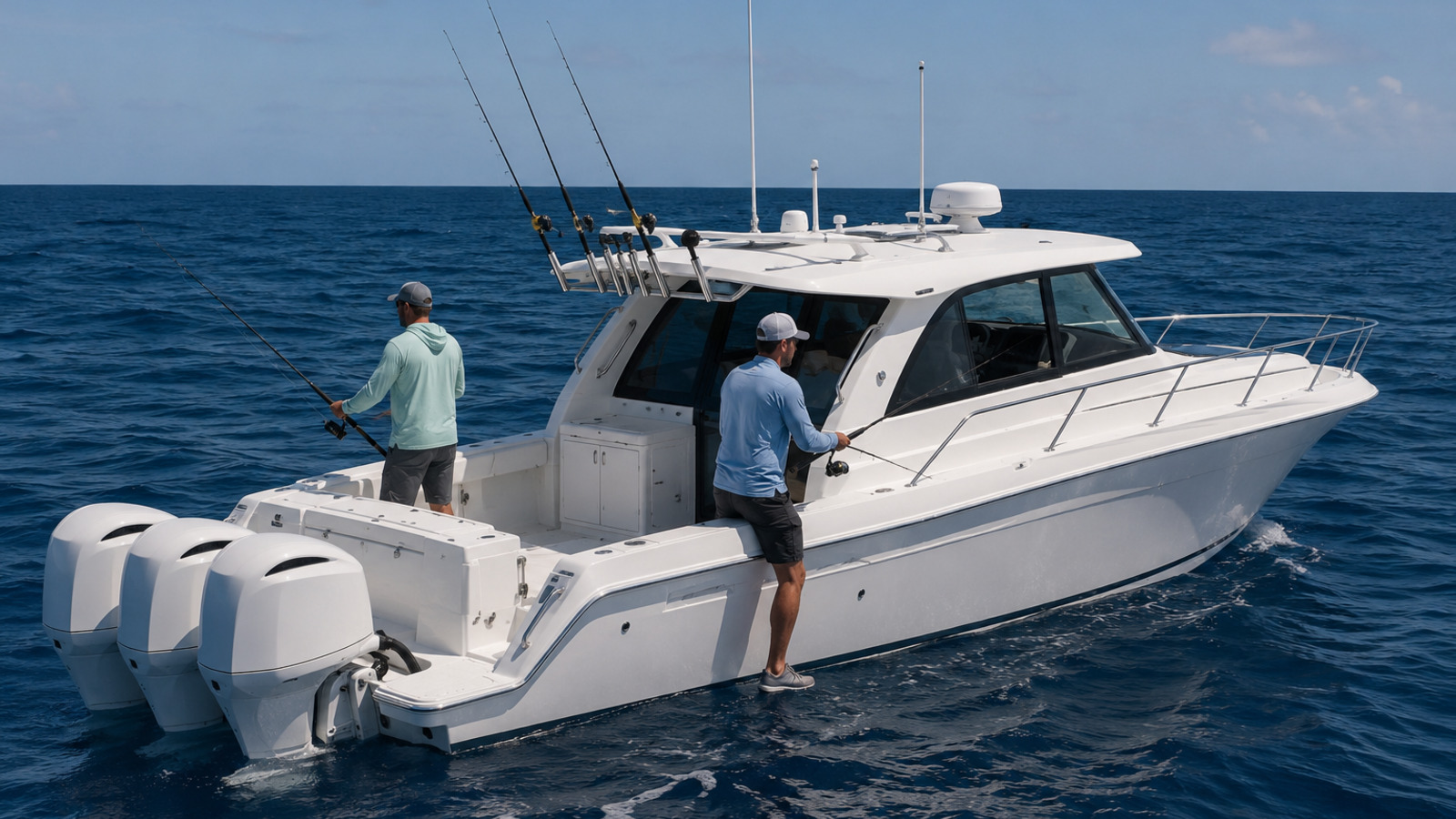
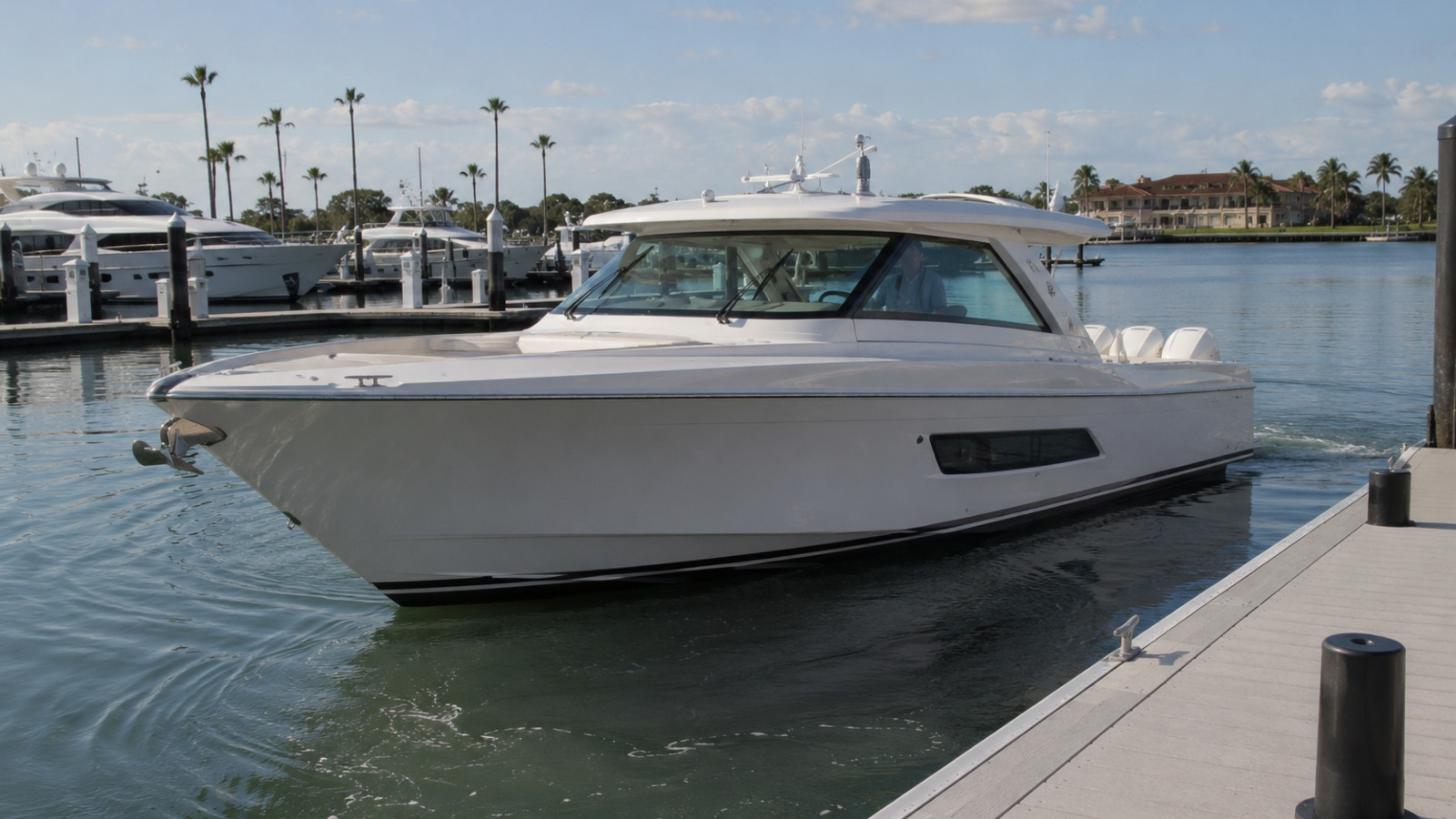
The Express 370 measures 36’6″ by 13’2″ and weighs about 15,224 lb without engines; that infrastructure has to support a sunroof-equipped express flagship. That combination defines whether the model is realistically trailer-first, lift-first, or marina-first; the large-cabin sunroof express cruiser mission makes that storage detail more important.
Anything wider than 8 feet 6 inches deserves a road-transport check before purchase; that belongs in the home-base plan for a sunroof-equipped express flagship. Large Canyon, Freedom, Express, and CE models may be technically trailerable yet economically better treated as marina boats; the large-cabin sunroof express cruiser footprint makes that an ownership cost rather than an afterthought.
A lift calculation should include engines, 372 gal of possible fuel, batteries, freshwater, gear, hardtop equipment, and anything normally left aboard; that should be settled before choosing where a sunroof-equipped express flagship will live. Published hull weight is not the loaded lift number; the large-cabin sunroof express cruiser use case makes that transport detail worth pricing early.
Storage cost belongs beside the payment estimate; that infrastructure has to support a sunroof-equipped express flagship. A larger slip, stronger lift, or specialized transport plan can change the monthly ownership picture more than a small financing-rate difference; the large-cabin sunroof express cruiser mission makes that storage detail more important.
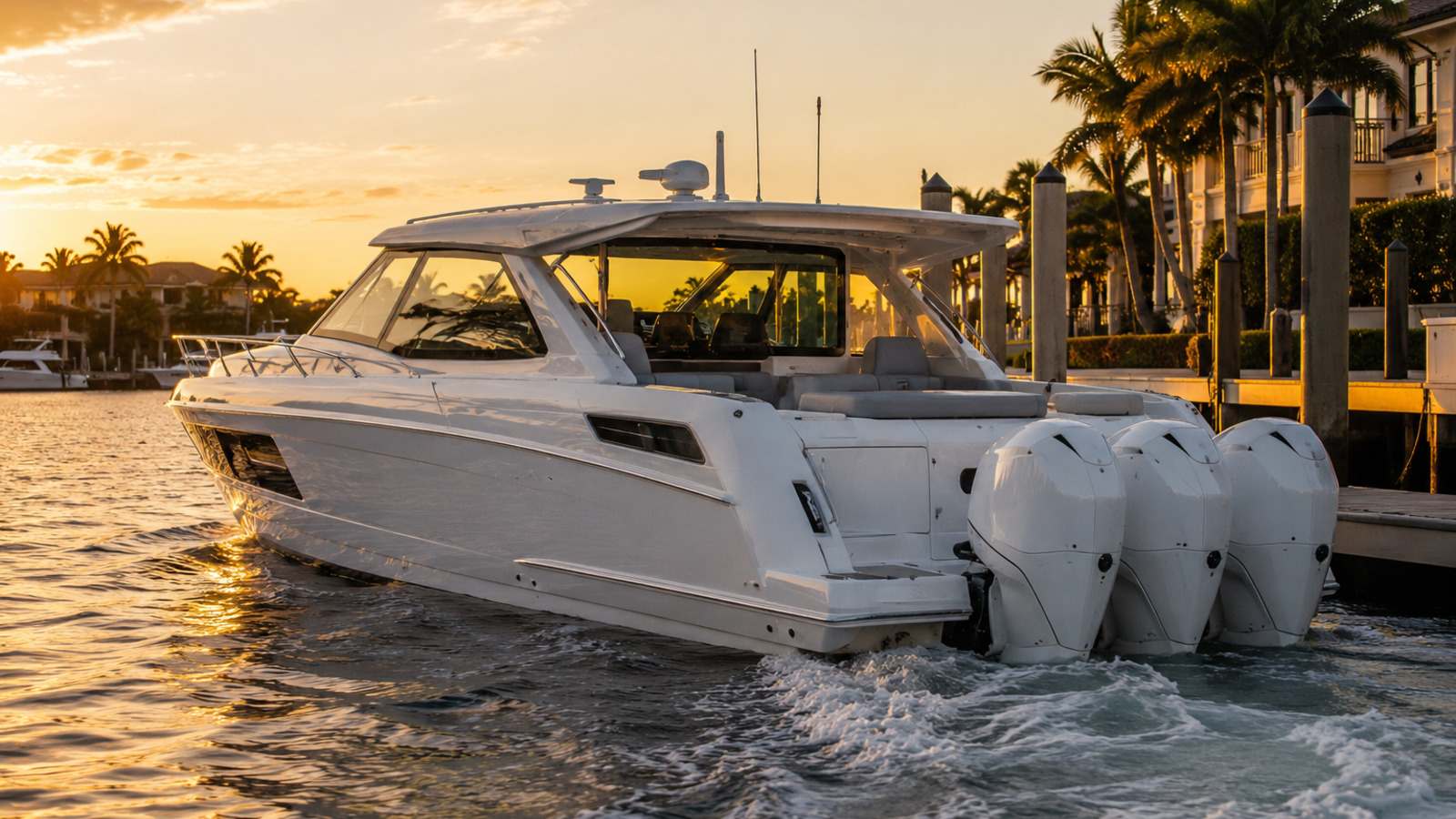
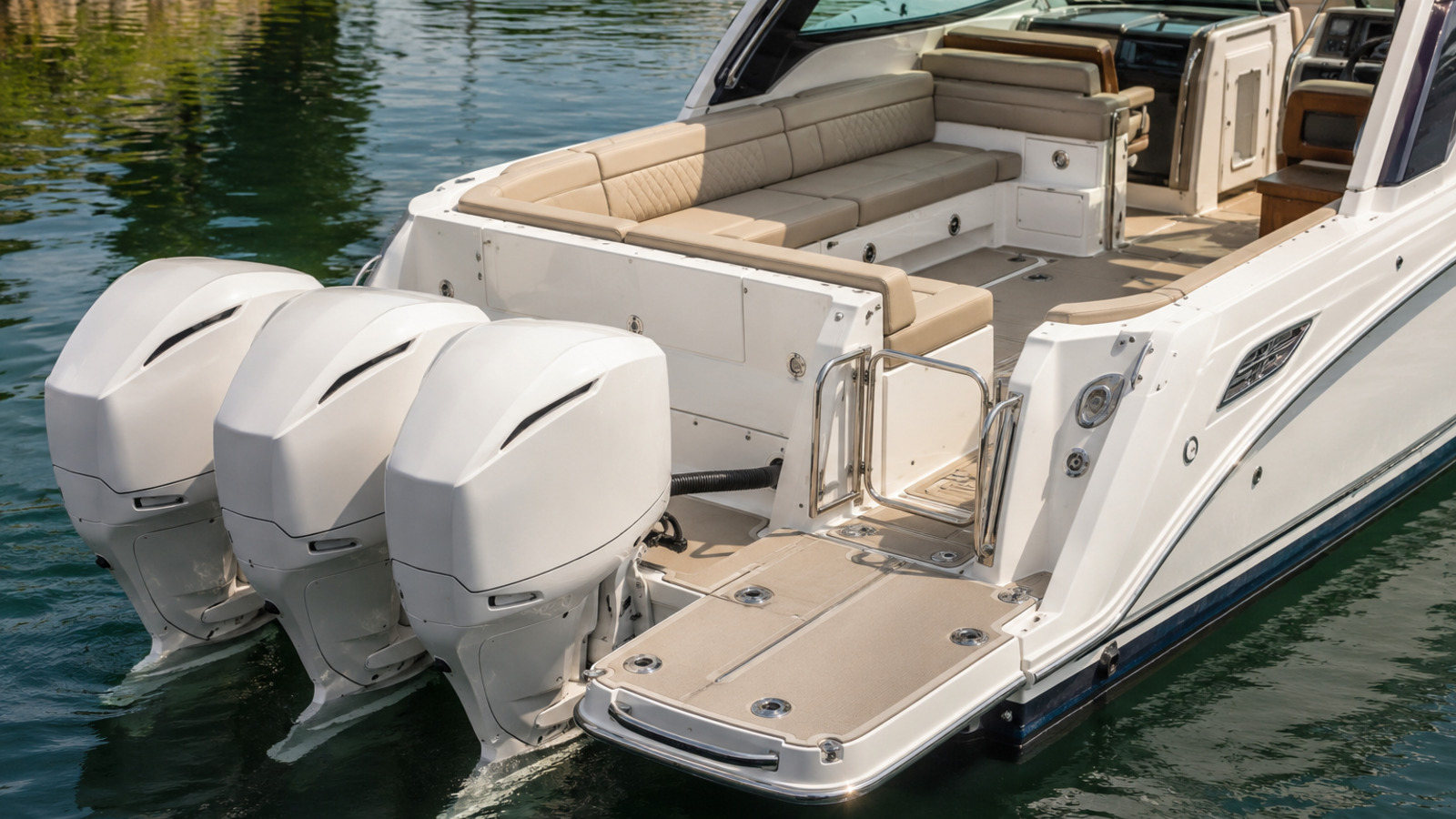
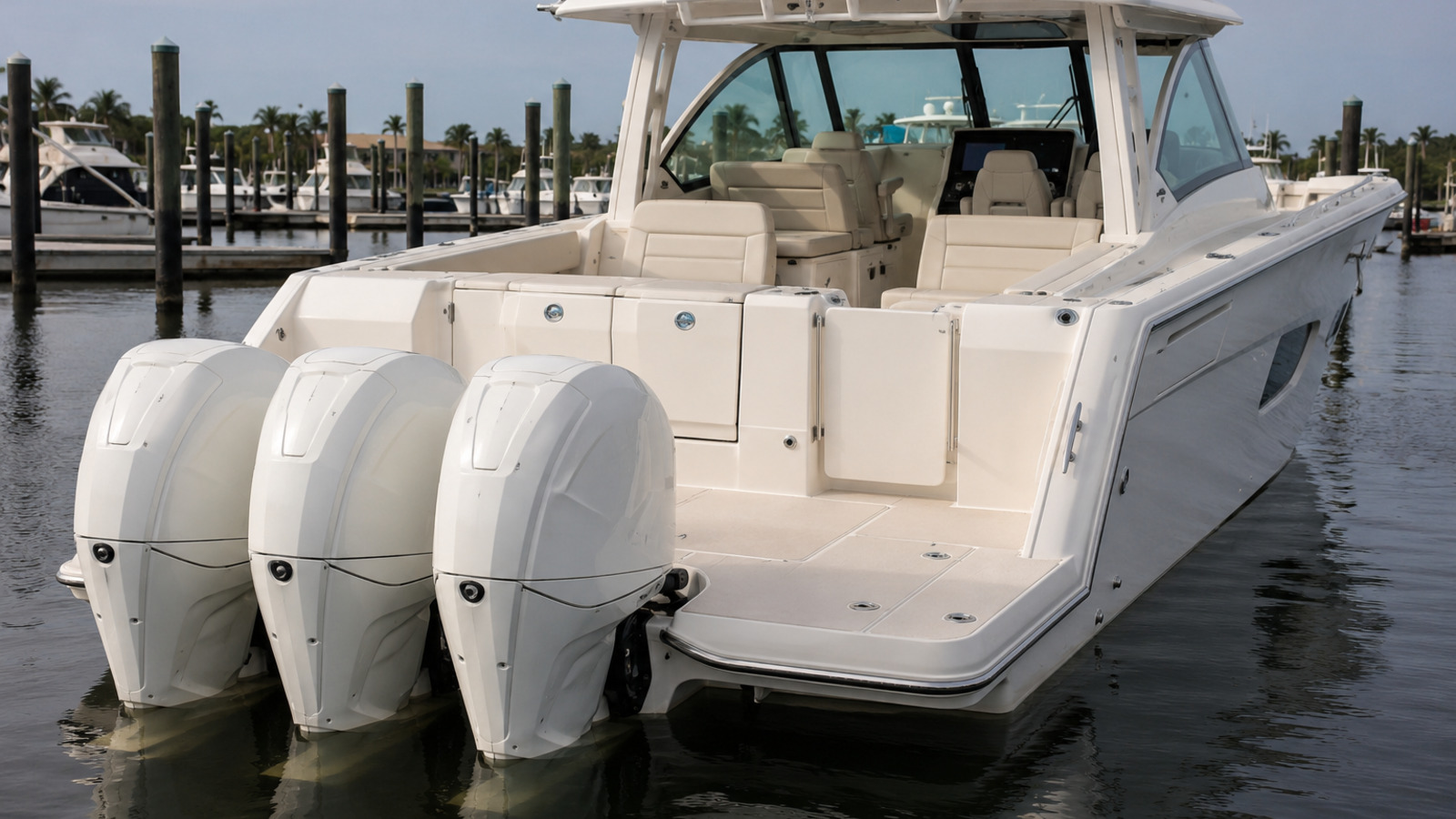
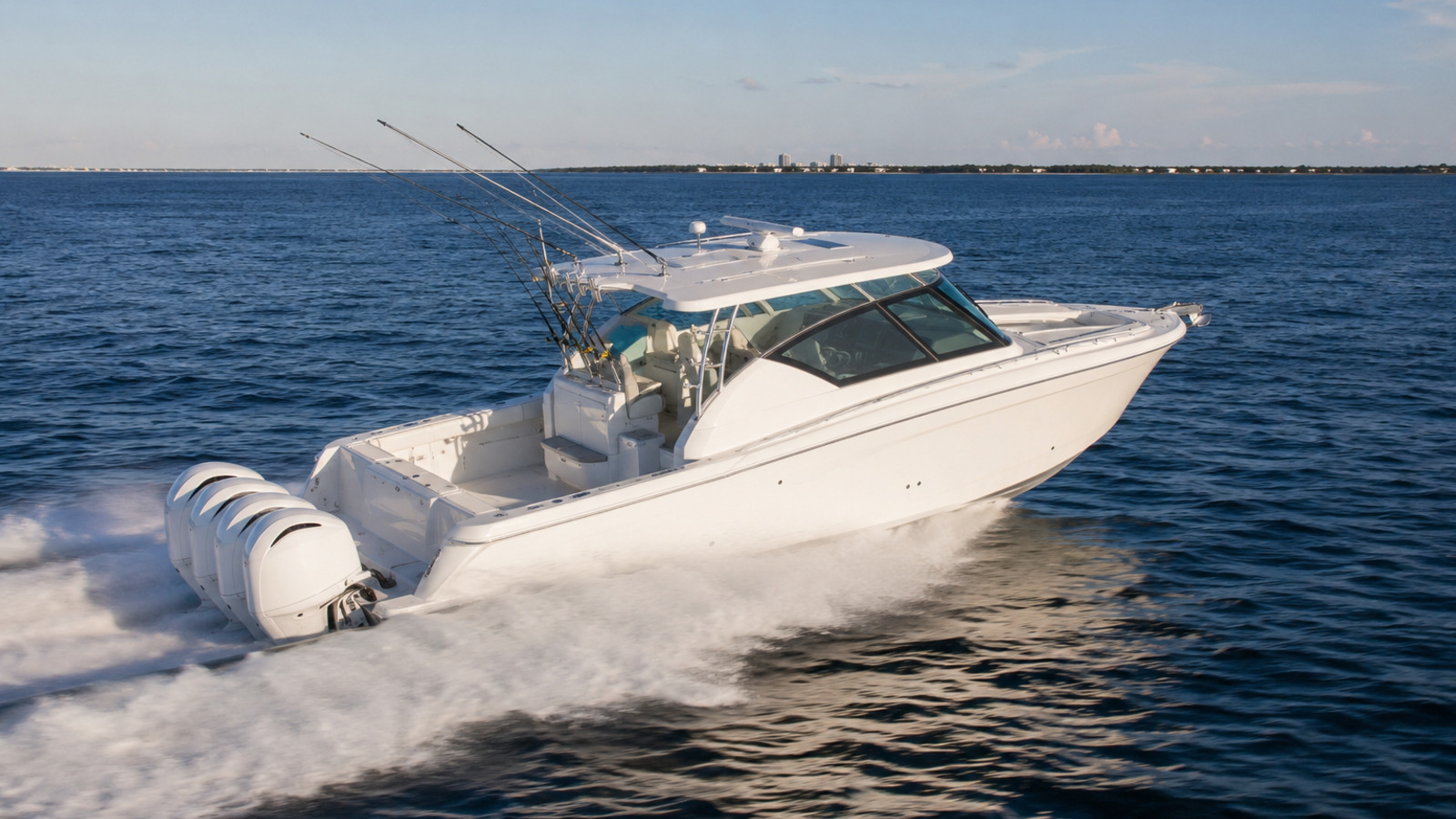
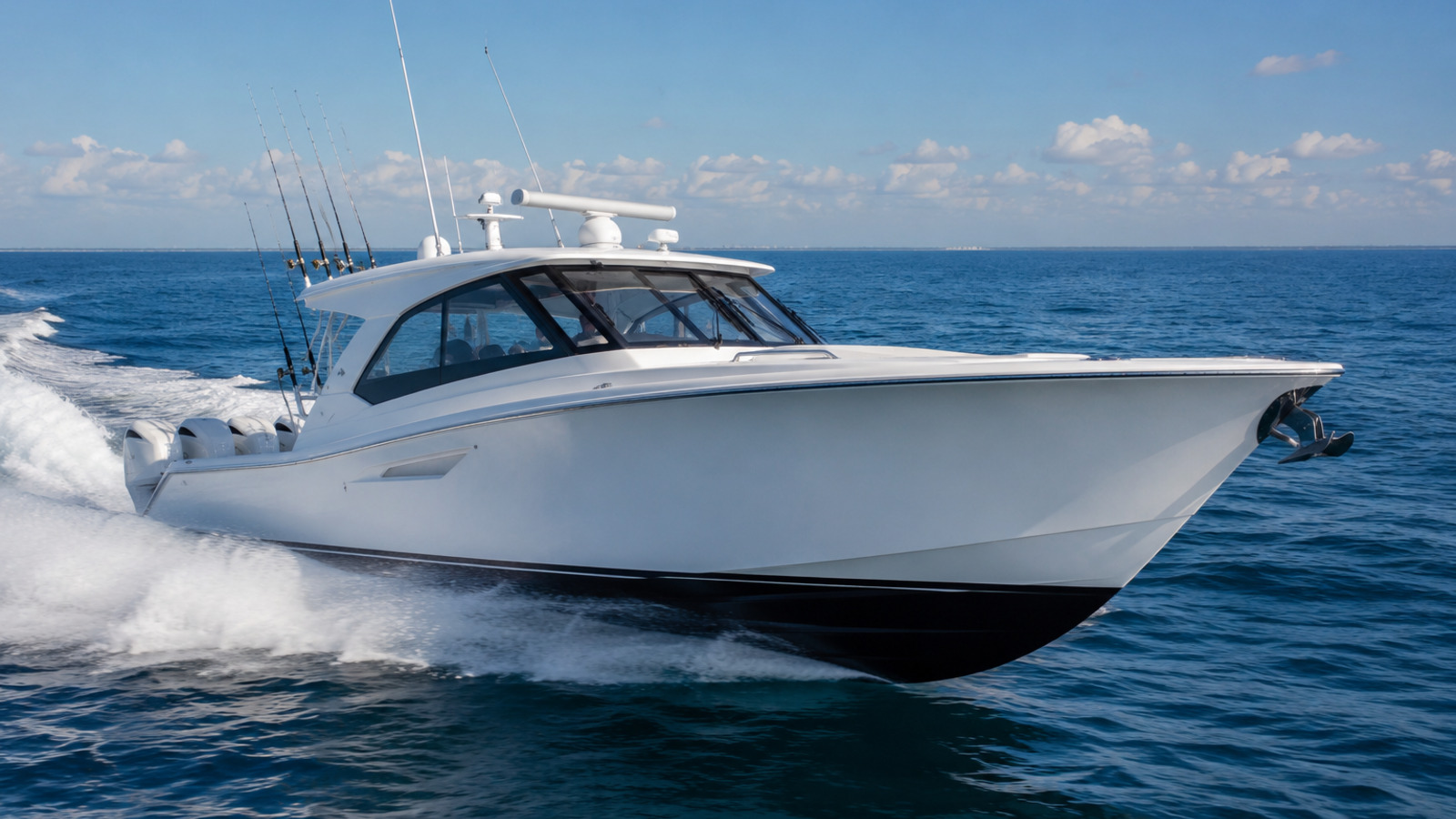
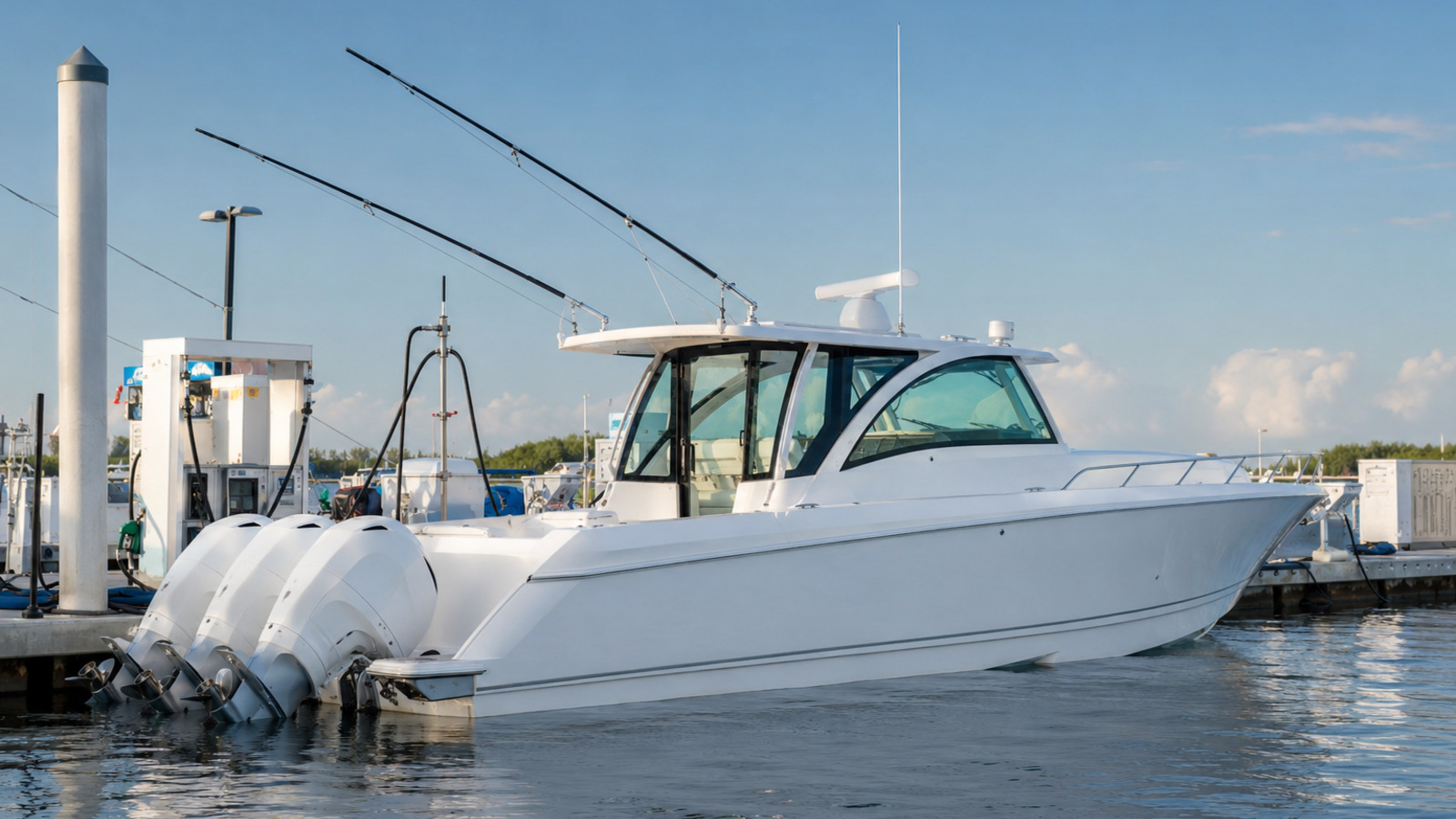
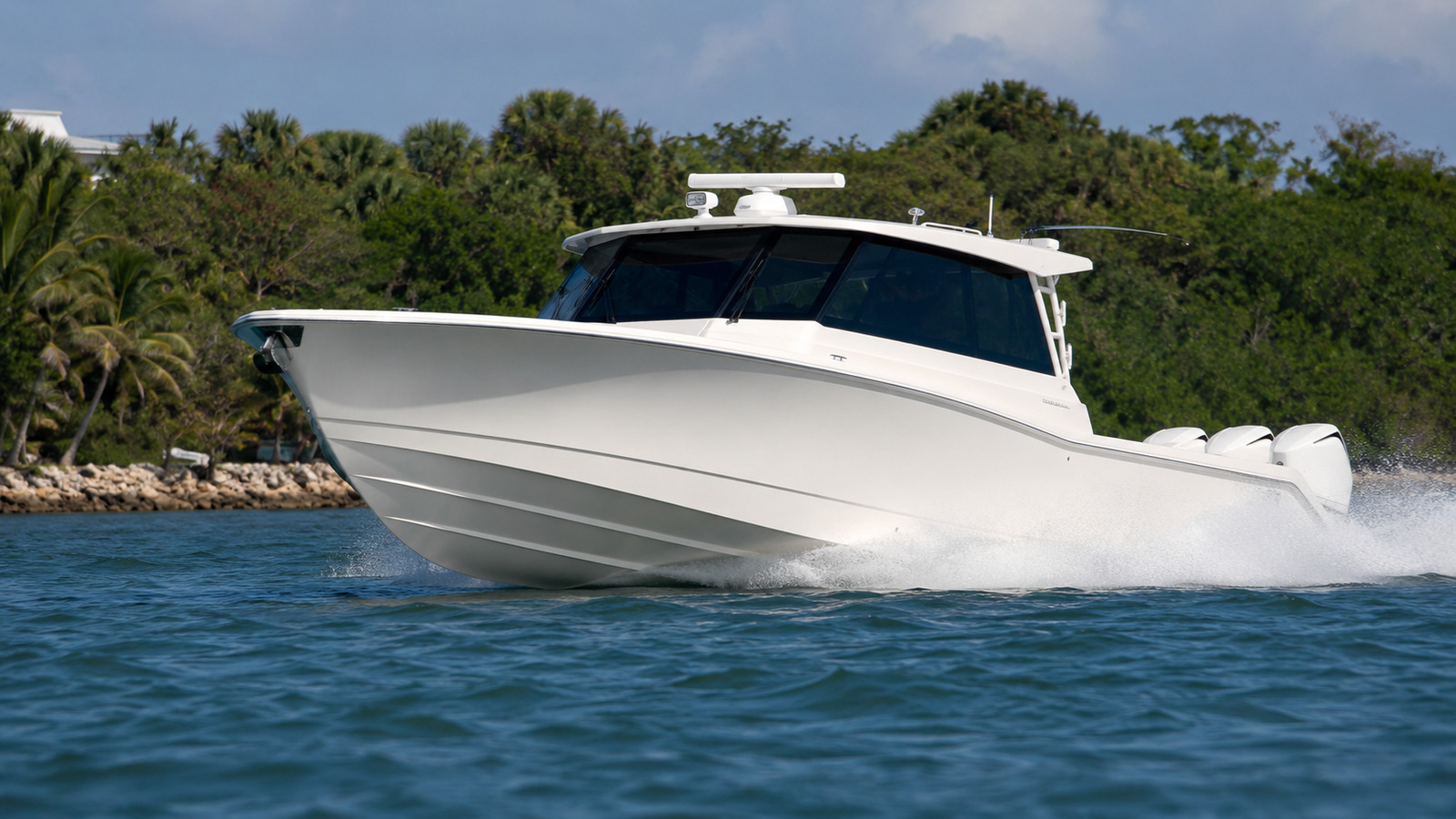
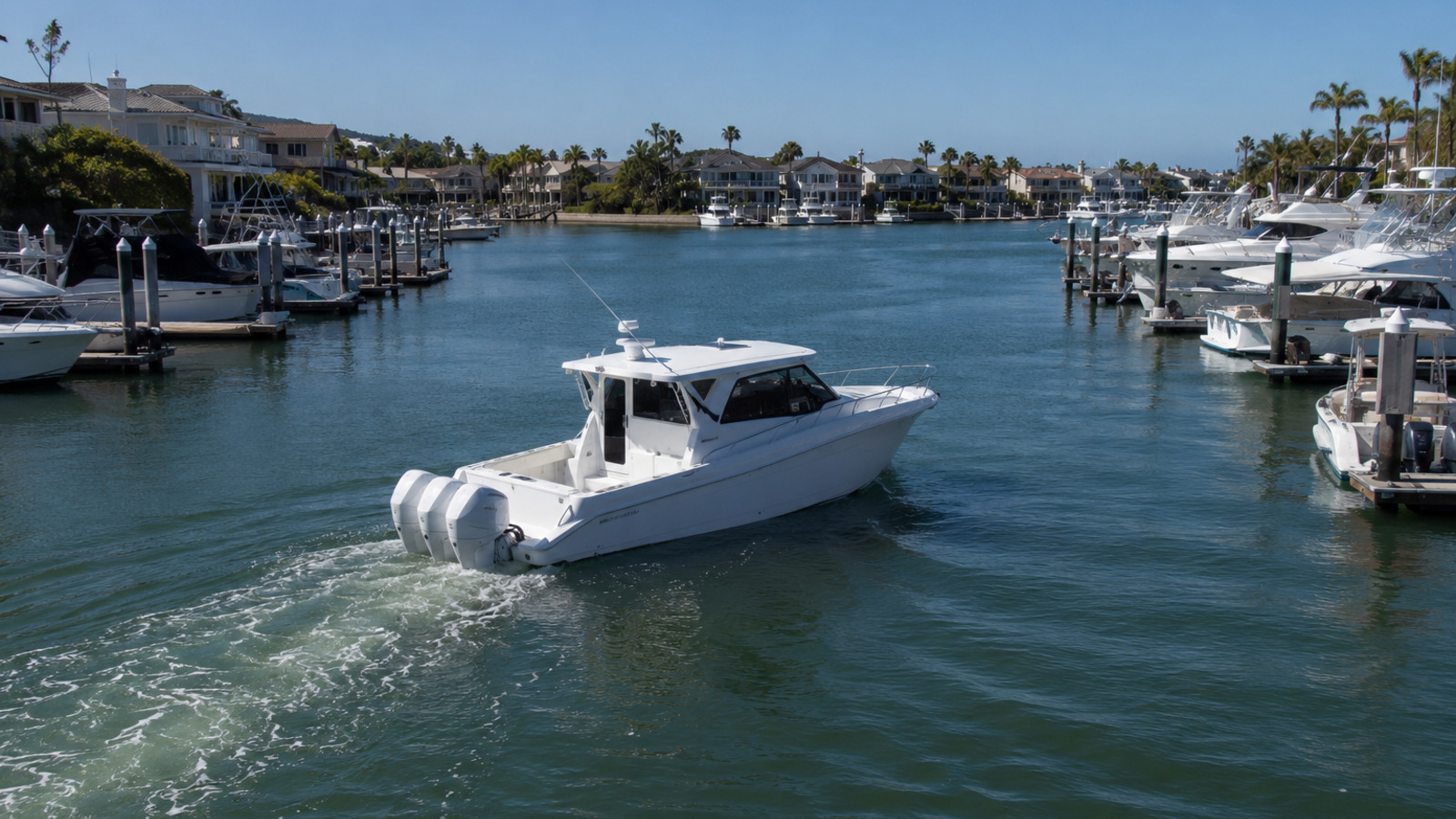
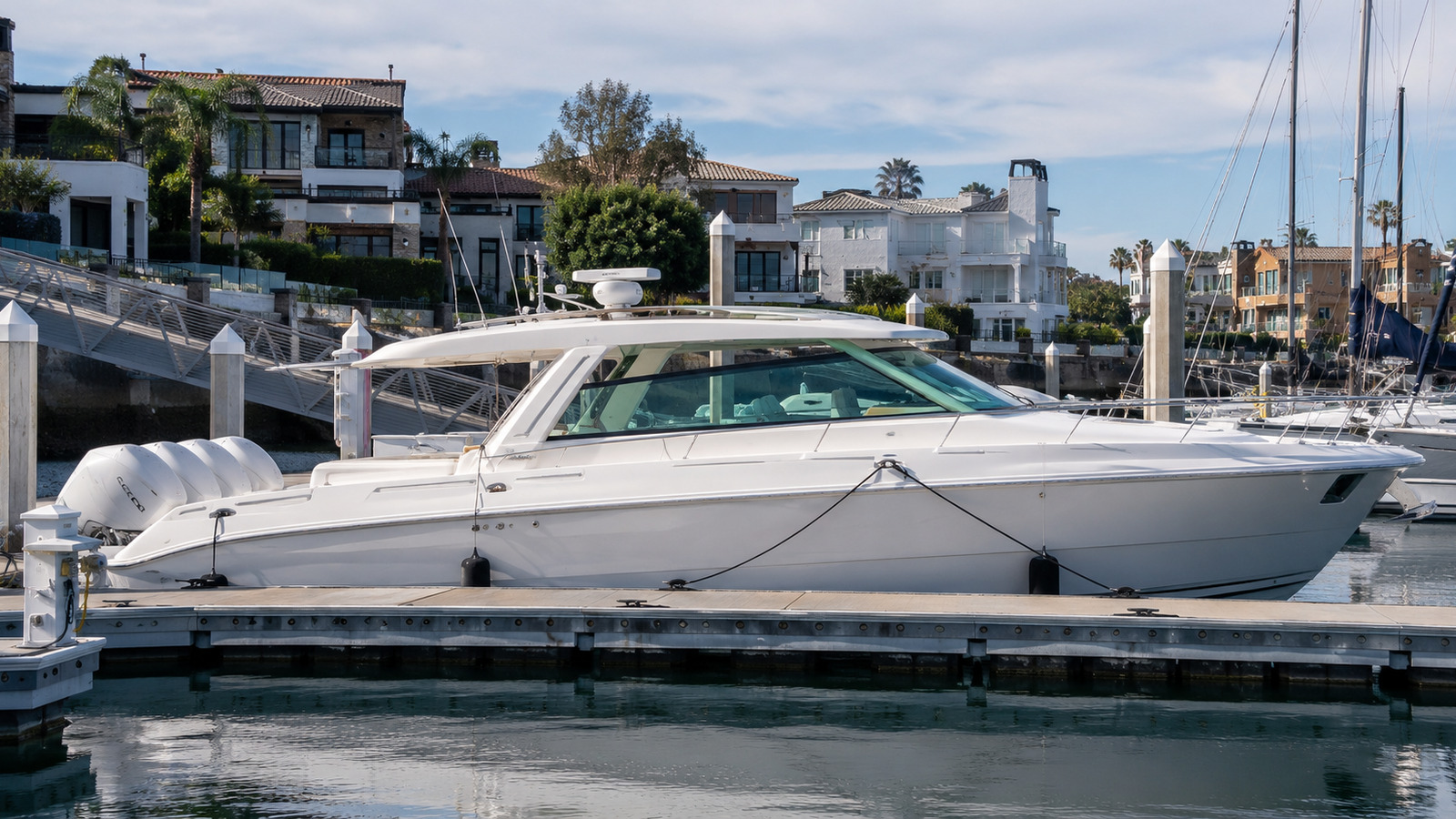
Grady-White values move with model year, Yamaha package, electronics, hardtop equipment, condition, and regional demand; the large-cabin sunroof express cruiser role makes that a real valuation point.
The engine package is the first price adjustment; that matters in a fair-market comparison for a sunroof-equipped express flagship. Hours, service history, engine count, Helm Master equipment, propeller condition, and remaining warranty can create a large spread between boats that share the same hull badge; the large-cabin sunroof express cruiser mission should influence how that option is priced.
Next value the hardware that makes the Express 370 a sliding-sunroof Express flagship with yacht-level cabin systems. Av² hardtop with sliding sunroof, multiple berths, full galley, separate head, and 372-gallon fuel capacity should be functional and documented before it earns a premium.
Cruising equipment needs the same discipline; that belongs in the asking-price analysis for a sunroof-equipped express flagship. Heads, generators, shore power, refrigeration, air conditioning, cabin upholstery, sport decks, stabilization, and hardtop mechanisms should be priced around present condition; the large-cabin sunroof express cruiser market rewards documented condition in that area.
The strongest Express 370 value is the boat whose engine history and model-defining equipment already match the buyer; that adjustment should be reflected when valuing a sunroof-equipped express flagship. A cheaper sistership that needs immediate propulsion or systems work can erase the savings quickly; the large-cabin sunroof express cruiser role makes that a real valuation point.
Illustration only and not an offer of credit.
Leave room for Yamaha service, fuel, insurance, storage, electronics, and the model-specific systems that make the Express 370 useful; the large-cabin sunroof express cruiser equipment belongs in the full ownership budget.
Illustration only and not an offer of credit. Your actual rate and term depend on credit profile, vessel age, loan amount and ownership structure.
The first cross-shop is Express 340 or Freedom 375. The question is not which boat looks more impressive; it is which hull, beam, power level, and deck workflow fit the owner’s actual water; that is the key distinction in the sunroof-equipped express flagship cross-shop.
The Express 370 makes the stronger case when AV² hardtop with sliding sunroof, multiple berths, full galley, separate head, and 372-gallon fuel capacity is central to the mission. If that advantage is rarely used, the sibling may deliver the same Grady-White ride with less fuel, beam, storage cost, or systems burden; the large-cabin sunroof express cruiser mission should decide that sibling comparison.
A sliding-sunroof Express flagship with yacht-level cabin systems buyer should compare the exact engine package, not only maximum horsepower. The installed Yamaha configuration changes performance, fuel, service, insurance, and resale; that matters when the shortlist includes a sunroof-equipped express flagship.
The right model should still look right after payment, insurance, fuel, storage, and annual service are all placed on the same ownership worksheet; the large-cabin sunroof express cruiser should win or lose the comparison on that point.
Start with the hull identification and exact model year; that is a due-diligence item on a sunroof-equipped express flagship. Grady-White continuously updates equipment, engine packages, electronics, and options, so a current specification should not be applied blindly to an older boat; the large-cabin sunroof express cruiser role makes that check worth completing before closing.
Verify the core numbers for the boat being inspected: about 36’6″ of centerline length, 13’2″ beam, 29 in hull draft, 1,350 HP maximum horsepower, 372 gal standard fuel capacity, and 15,224 lb without engines for the current reference; that protects the value of a sunroof-equipped express flagship.
Review every Yamaha engine separately. Ask for hours, annual-service records, water-pump history, lower-unit work, steering service, warranty status, and evidence of regular flushing when the boat has lived in saltwater; the large-cabin sunroof express cruiser purchase should not move forward until that is clear.
Test the systems that define this sliding-sunroof Express flagship with yacht-level cabin systems. Av² hardtop with sliding sunroof, multiple berths, full galley, separate head, and 372-gallon fuel capacity should work under normal load and should not depend on a seller promising a repair after closing.
Inspect fishing systems wet, not dry; that belongs on the pre-purchase checklist for a sunroof-equipped express flagship. Livewells, washdowns, drains, freezer boxes, pumps, and cockpit plumbing can appear perfect until water is moving; the large-cabin sunroof express cruiser mission makes that a practical closing condition.
Quote insurance and storage before closing; that is a due-diligence item on a sunroof-equipped express flagship. The jump from one Grady-White size to the next can change those costs sharply even when the purchase prices look close; the large-cabin sunroof express cruiser role makes that check worth completing before closing.
Finally, compare Express 340 or Freedom 375. The Express 370 should remain the better answer after power, beam, systems, storage, and daily use are understood; that protects the value of a sunroof-equipped express flagship.
If it does, start your application with the exact details so the financing conversation reflects the real transaction; the large-cabin sunroof express cruiser purchase should not move forward until that is clear.
A final Express 370 dockside check should focus on how the sliding-sunroof Express flagship with yacht-level cabin systems layout behaves with the family’s normal gear aboard. Coolers, tackle, fenders, bags, safety equipment, and passengers should still leave clear access to the helm, boarding points, and working cockpit; that belongs on the pre-purchase checklist for a sunroof-equipped express flagship.
Long-term value on the Express 370 also depends on documentation; the large-cabin sunroof express cruiser mission makes that a practical closing condition. Yamaha service records, electronics invoices, pump replacements, hardtop or cabin repairs, and storage history help a future buyer distinguish a carefully maintained Grady-White from one that merely presents well in photographs; that is a due-diligence item on a sunroof-equipped express flagship.
Start your application with the actual Express 370 details with model year, Yamaha engine package, engine hours where available, seller type, major options, and asking price; that keeps financing aligned with the sunroof-equipped express flagship use case.
The Express 370 is aimed at offshore cruisers who need a larger cabin, galley, head, aft berth, expansive beam, and 1,350-horsepower ceiling. Its most important differentiator is AV² hardtop with sliding sunroof, multiple berths, full galley, separate head, and 372-gallon fuel capacity.
The current factory reference is about 36’6″ of centerline length with a 13’2″ beam; that answer should be read through the sunroof-equipped express flagship use case. Measure the full engine-on and trailer-on footprint before choosing storage; the large-cabin sunroof express cruiser mission is why that answer matters.
Grady-White publishes 1,350 HP as the maximum for the current Express 370; that is especially relevant to a sunroof-equipped express flagship owner. The exact Yamaha package and capacity labels on the boat remain authoritative; the large-cabin sunroof express cruiser role gives that answer useful context.
Standard fuel capacity is 372 gal. Actual usable range depends on the installed engines, load, trim, bottom condition, weather, and cruising speed; that point should be interpreted in the context of a sunroof-equipped express flagship.
The current reference is approximately 15,224 lb without engines; the large-cabin sunroof express cruiser buying case depends partly on that answer. A loaded boat with engines, fuel, batteries, water, gear, and options will be substantially heavier; that answer should be read through the sunroof-equipped express flagship use case.
Start with hull and transom condition, then Yamaha engine history, steering, electronics, bilge, livewell or plumbing systems, hardtop hardware, and the feature set that makes this sliding-sunroof Express flagship with yacht-level cabin systems.
Start with Express 340 or Freedom 375. Compare mission, beam, engine count, fuel, storage infrastructure, and the systems the family will actually use; the large-cabin sunroof express cruiser mission is why that answer matters.
Potentially. Model year, value, condition, seller type, purchase amount, and borrower qualifications matter; that is especially relevant to a sunroof-equipped express flagship owner. Start your application with the actual details so the loan discussion reflects the boat being purchased; the large-cabin sunroof express cruiser role gives that answer useful context.
Tell us a little bit about yourself and the boat you are looking to finance.