
Call Us : 207-994-5109
Mon – Fri: 8 am to 9 pm & Sat – Sun: 10 am to 8 pm
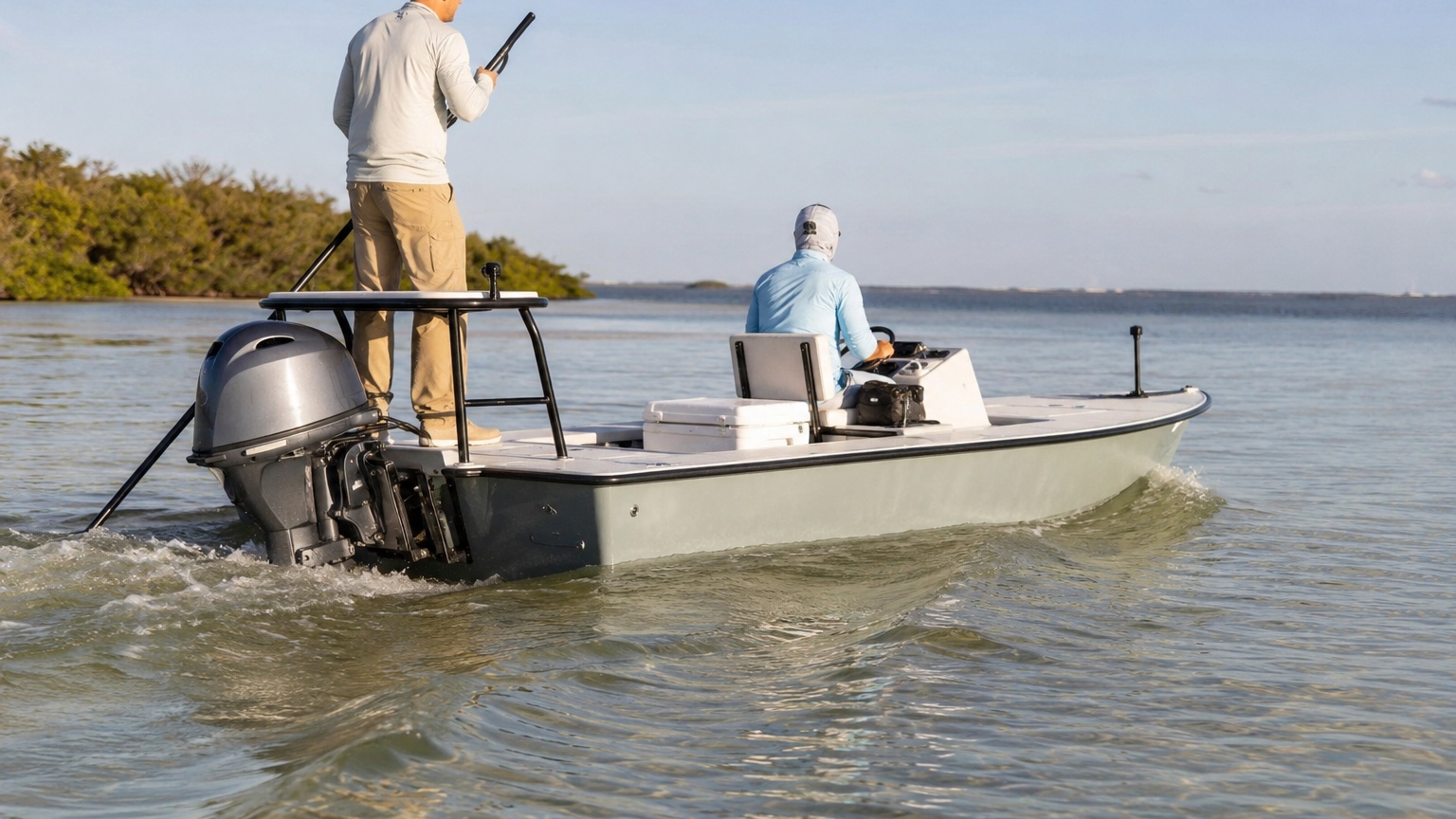
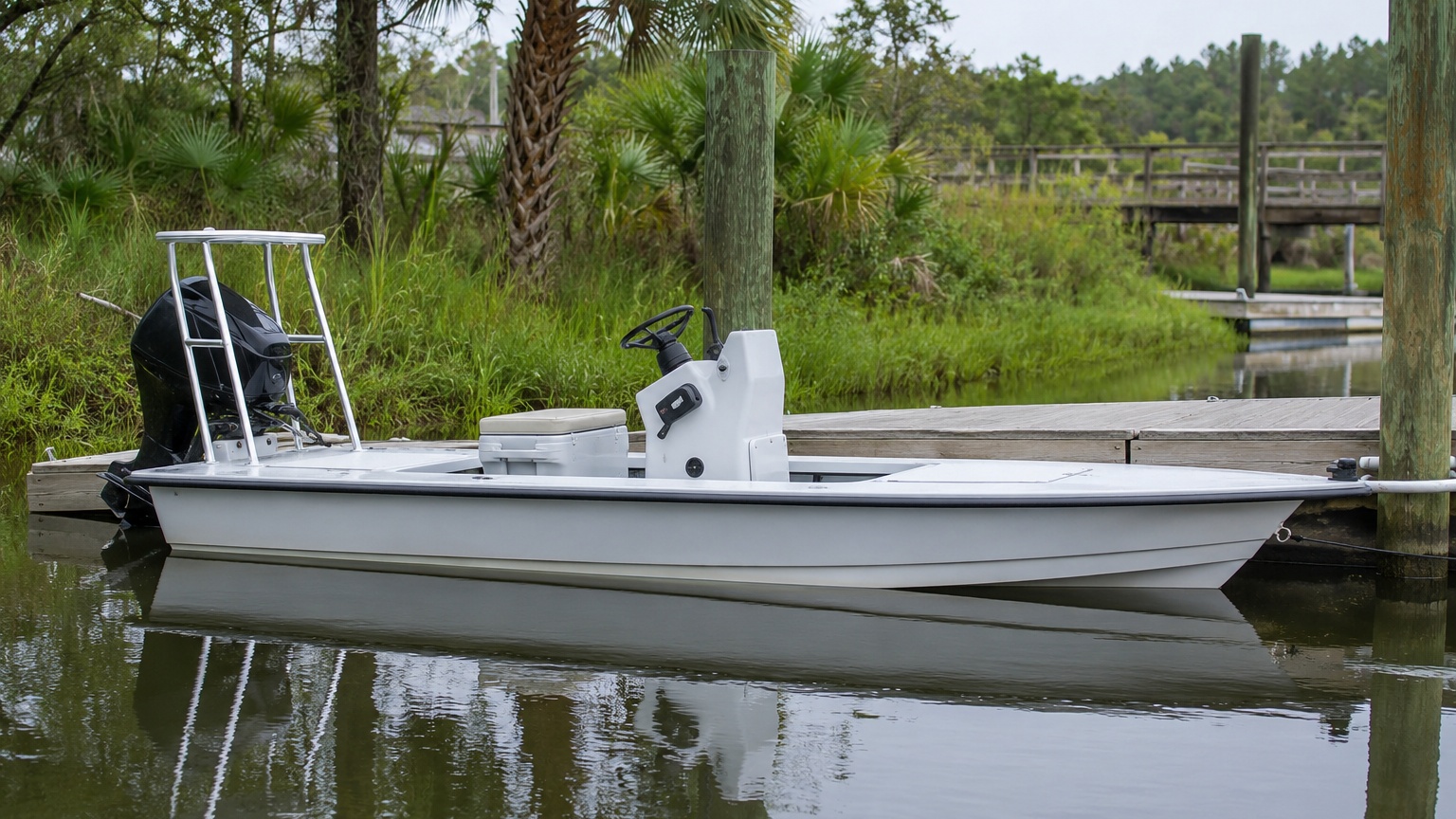
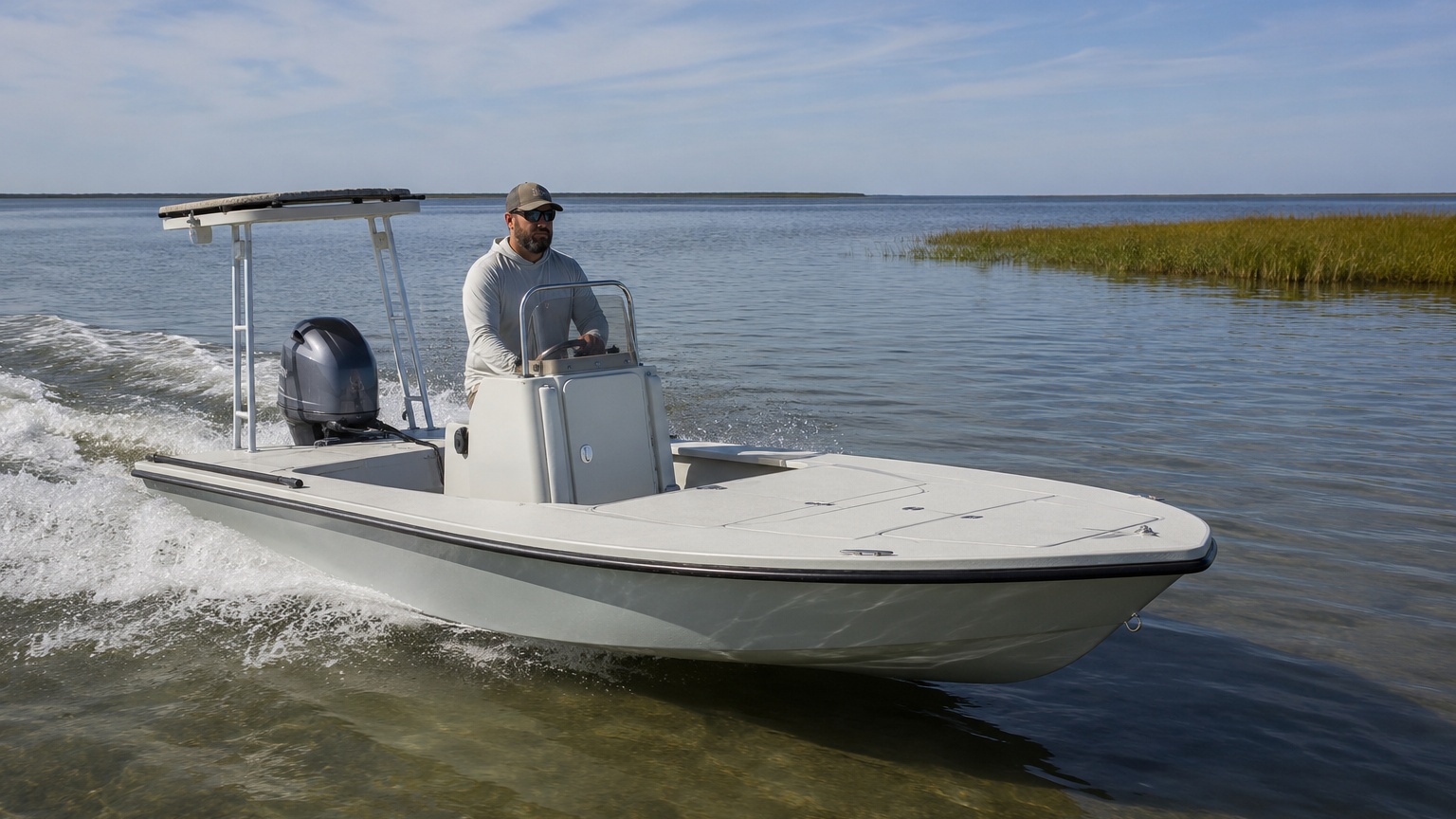
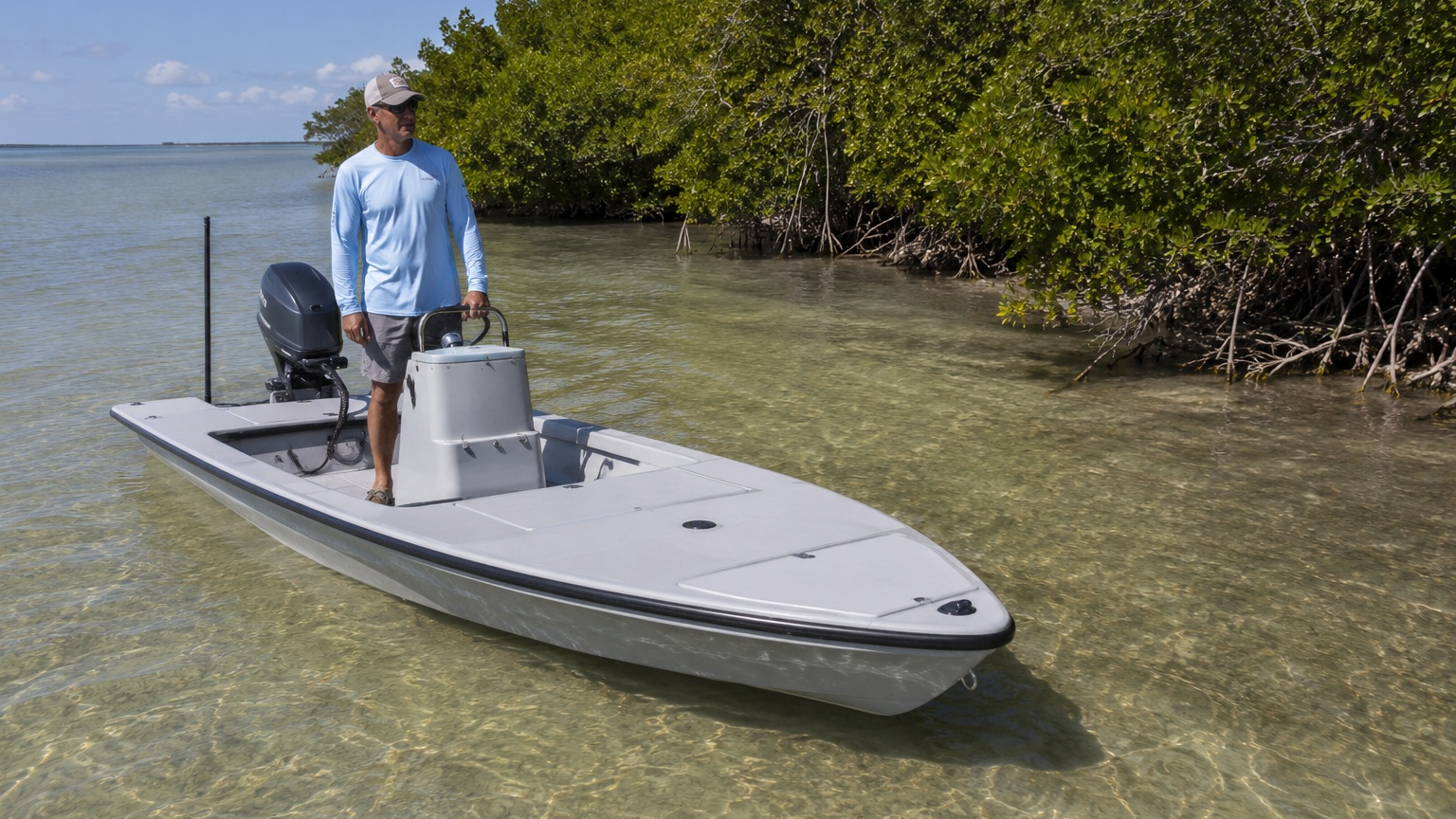
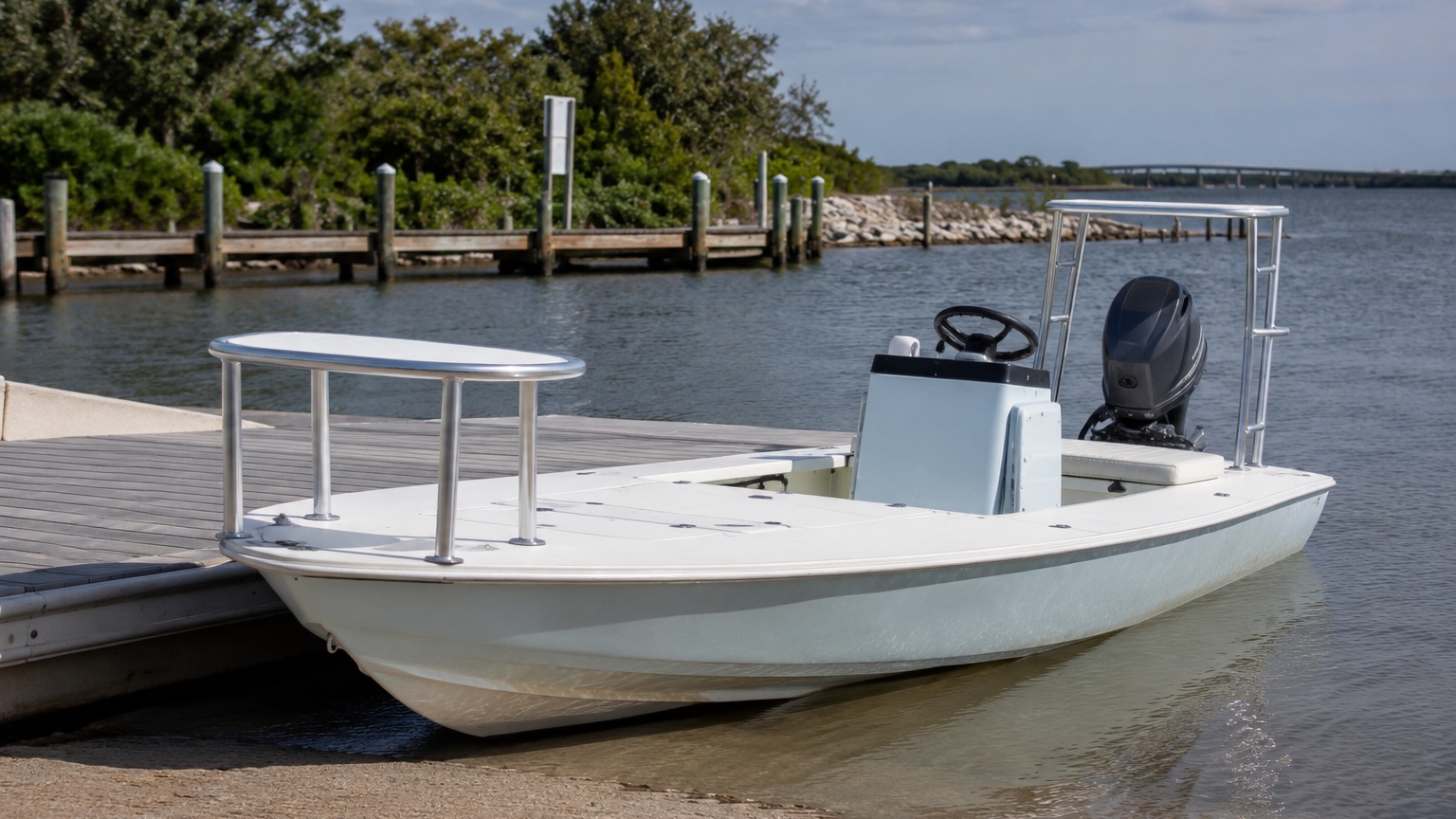
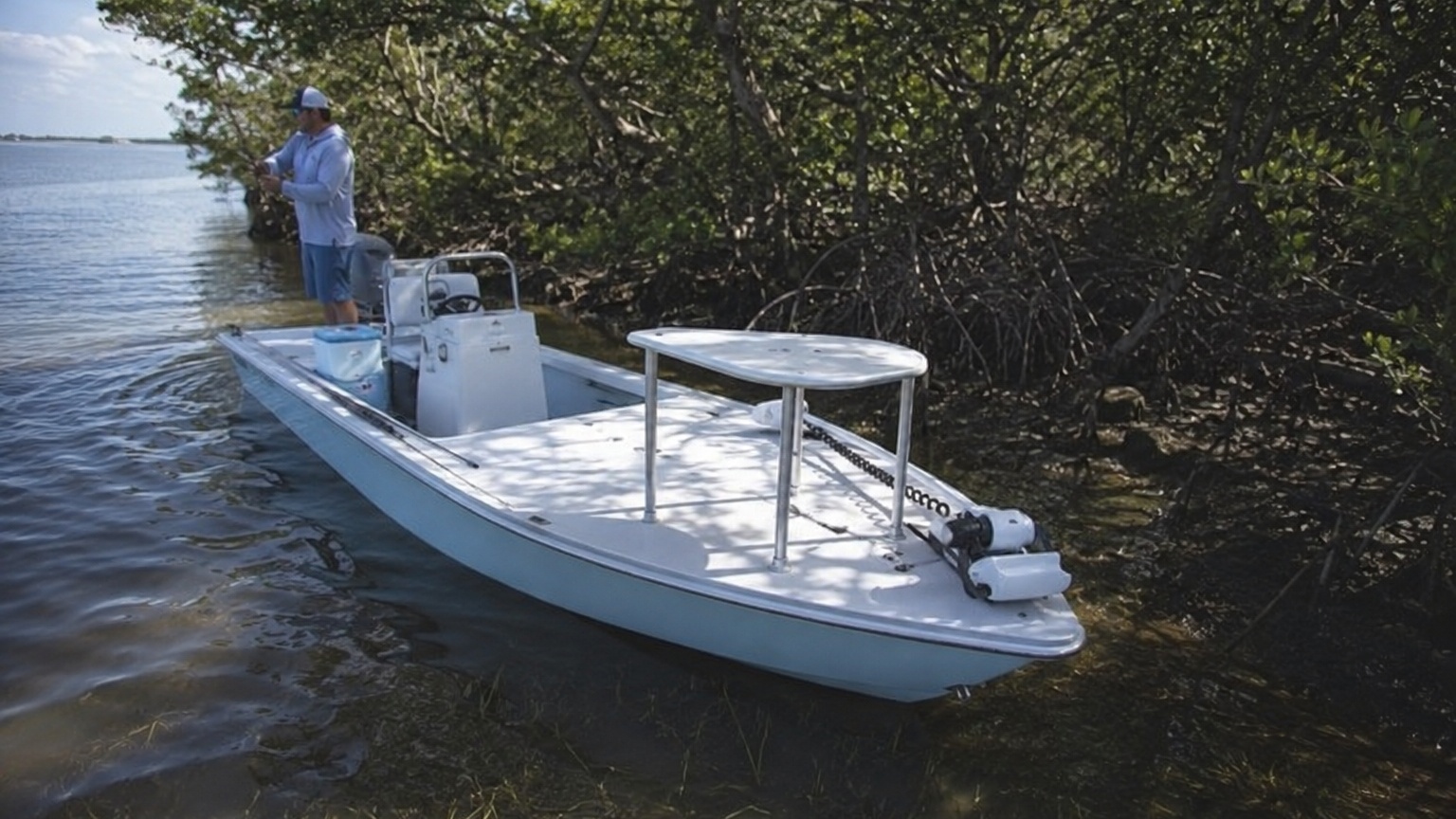
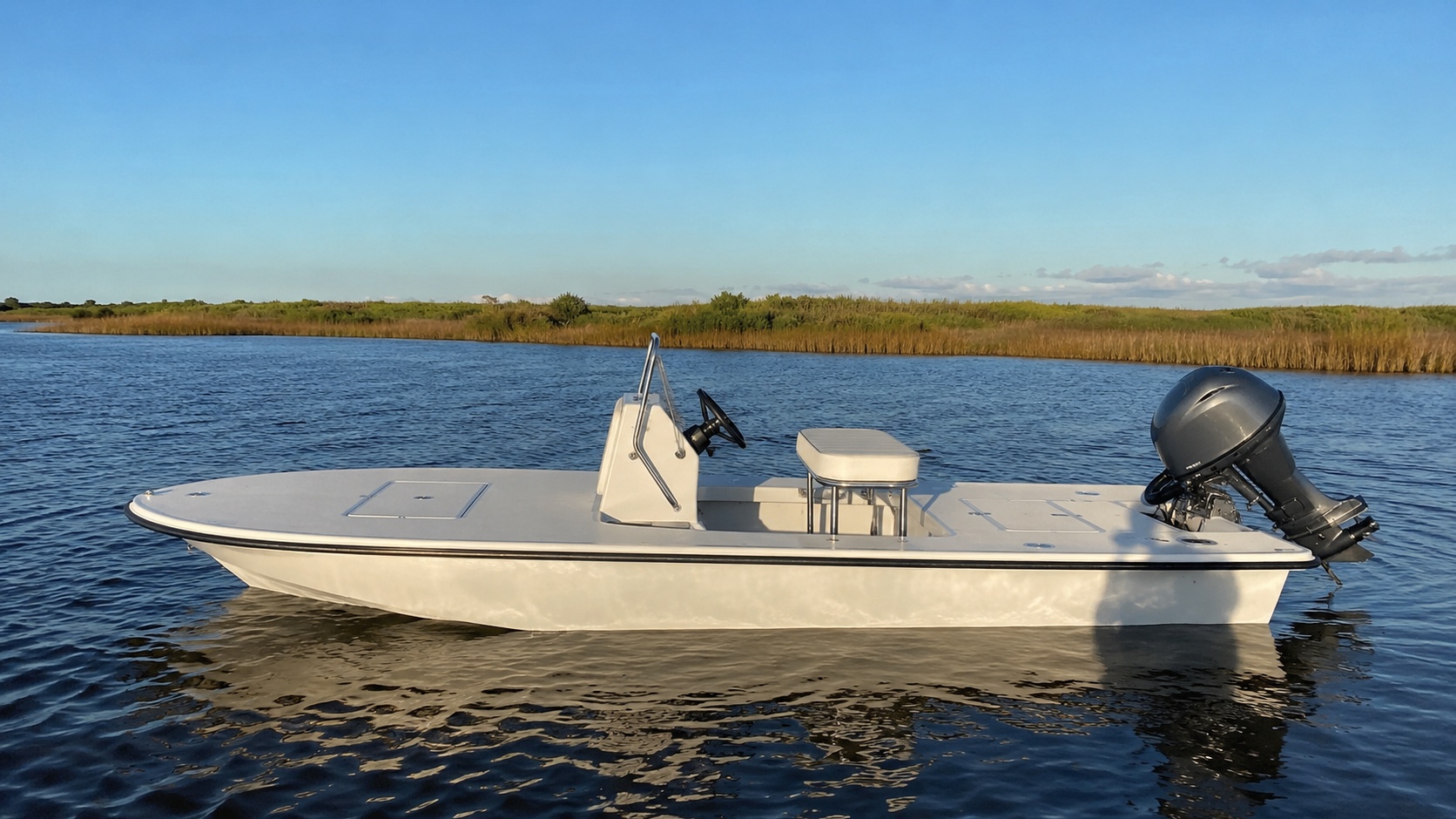
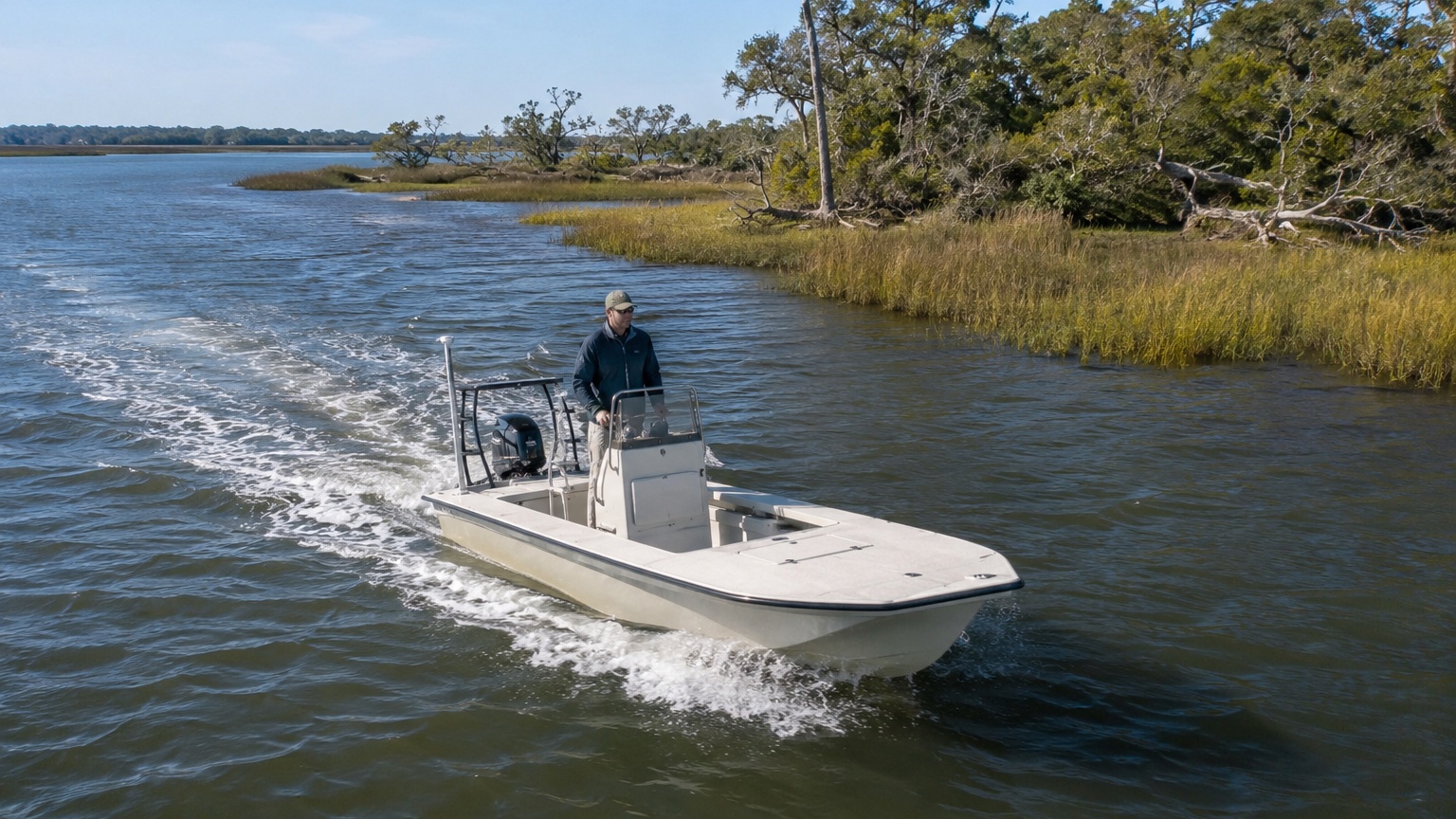
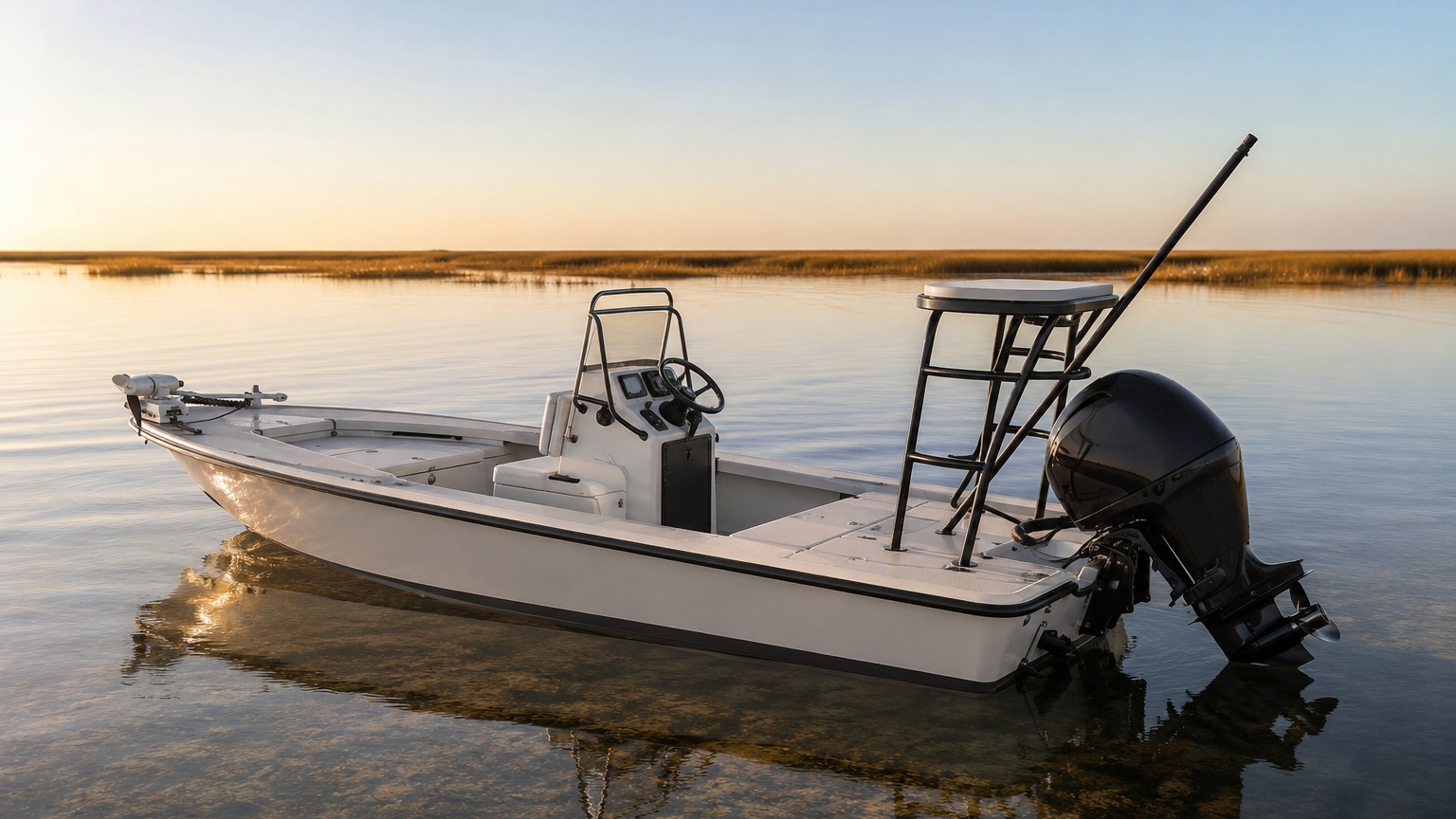
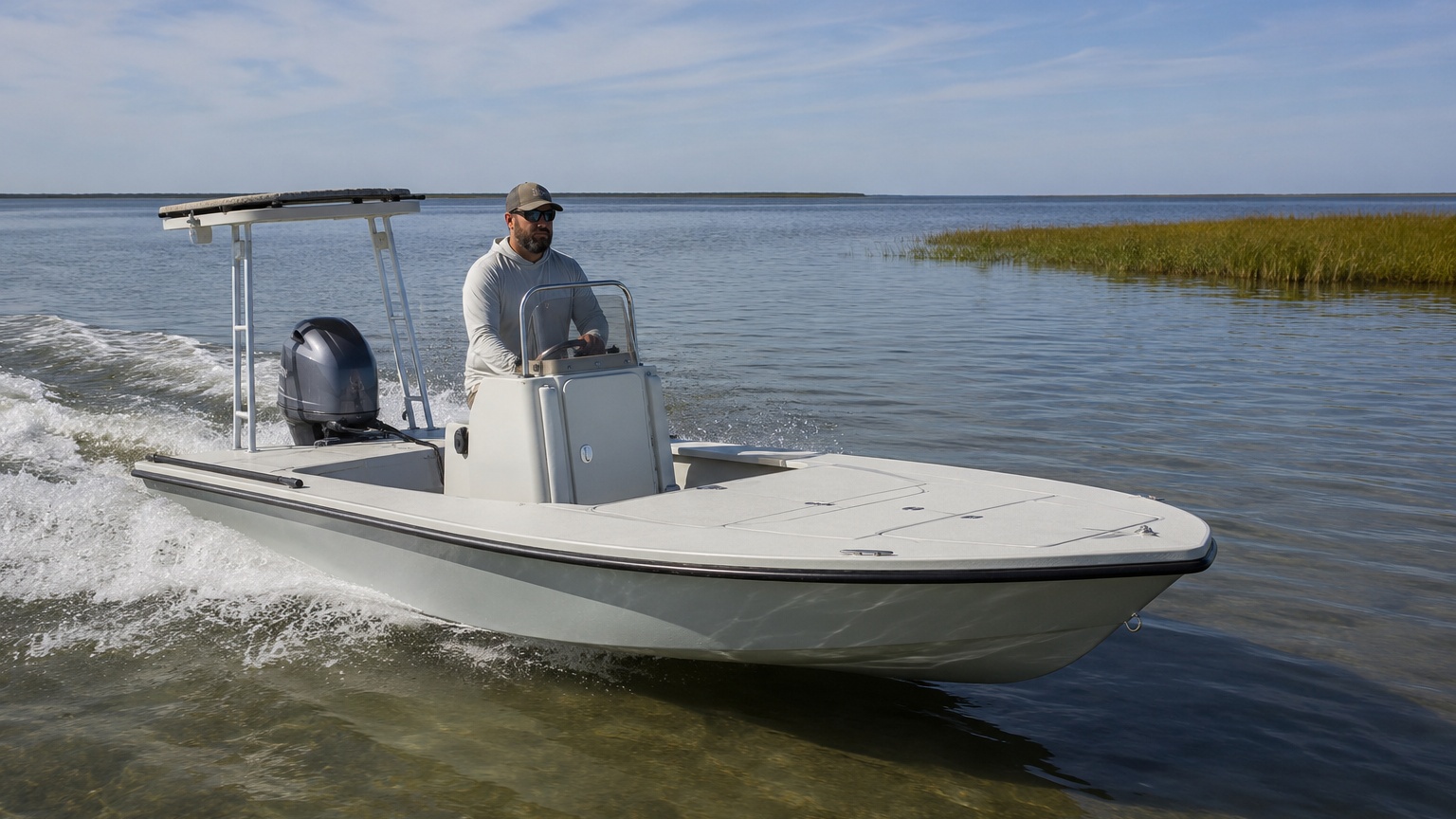
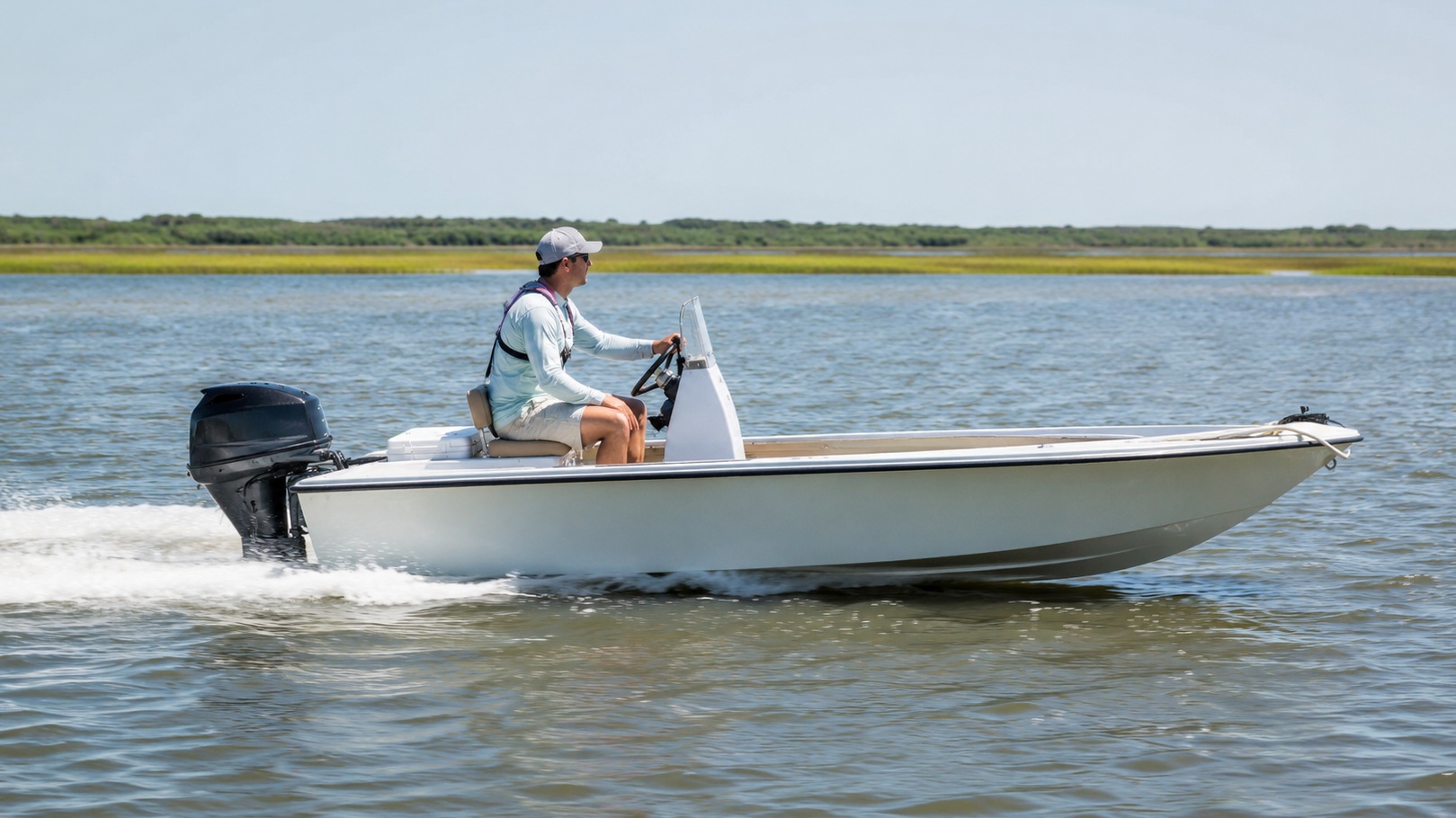
The Hewes Redfisher 16 is a garage-friendly, highly manageable flats boat that still has the draft, walk-around gunwales, and range to fish beyond tiny protected creeks.
The Redfisher 16 is the model for anglers who want the smallest current Hewes without reducing the boat to a fragile technical-poling specialist. At 16 feet 6 inches with a 7-foot-3-inch beam, the 16 is narrow enough to fit storage situations that immediately rule out many modern bay and flats boats.
Its 11-inch published draft is only part of the appeal. The larger ownership story is how little boat the angler has to manage at the ramp, in a garage, behind a midsize tow vehicle, and on a push pole. Hewes still gives the 16 walk-around gunwales, protected rod storage, a 20-gallon livewell, serious dry storage, hydraulic steering, trim tabs, and room for a 12-inch-class electronics package.
The 16 supports Yamaha 90 or 115 horsepower packages. That range is intentionally modest. An owner can build a fast, capable skiff without creating the fuel, insurance, propeller, and trailer obligations that come with the Redfisher 21.
The buyer should compare the 16 with the Redfisher 18. The 18 actually publishes one inch less draft and offers substantially more length and beam. The 16 wins when garage fit, light tow weight, small-water maneuverability, and solo or two-person fishing are worth more than the extra working room.
The model’s biggest compromise is crew and gear volume. Four-person capacity does not mean four adults, four coolers, tackle bags, live bait, and a full day of gear will feel equally comfortable. The 16 is strongest when the normal crew is small.
Published factory figures. Confirm every dimension against the individual boat before you commit.
The Redfisher 16 combines a narrow 7-foot-3-inch beam with 15 degrees of transom deadrise and an 11-inch published draft. That geometry helps explain why the boat can still pole shallow water while handling bay crossings that would feel ambitious in a narrower technical skiff.
Hewes builds the current 16 using VARIS vacuum infusion. The value to a buyer is not a marketing acronym by itself. The process is intended to create a stiff structure without loading the hull with unnecessary resin, which matters on a boat that needs both shallow draft and enough strength for rougher runs.
The 1,700-pound figure is approximately with engine, not a ready-to-tow number. Add 32 gallons of fuel, trolling-motor batteries, live bait, Power-Poles, gear, cooler, safety equipment, and trailer before comparing the complete rig with a tow vehicle or garage floor rating.
The narrow beam can be a real advantage around older garages and compact lifts. Measure trailer fenders, guide posts, Power-Pole hardware, and poling-platform height because the hull beam alone does not describe the stored footprint.
Inspect the keel, chines, transom, jackplate mounting area if equipped, trolling-motor fasteners, poling-platform bases, and all lift or trailer contact points. Flats boats live in shallow environments where grounding and trailer loading are normal parts of life.
The Redfisher 16 should sit level and fair on the trailer. Uneven bunks, heavily polished gelcoat at one support point, or stress around transom hardware deserves attention before purchase.
The 16’s current power story is deliberately simple: Yamaha 90 or 115 horsepower. The 90 keeps weight, fuel use, and purchase cost down. The 115 is the more natural choice for anglers who carry extra gear, fish larger bays, or want stronger acceleration with two or three people aboard.
Unlike the Redfisher 21, the 16 does not need huge horsepower to make the hull come alive. Propeller selection, engine height, load distribution, and jackplate setup can matter as much as the difference between rated horsepower numbers.
A 4-inch jackplate is optional rather than standard. That matters to the used buyer because a boat with a jackplate should be inspected for clean transom mounting, hydraulic or mechanical operation, wiring, switch function, and an engine height that makes sense for the hull.
Inspect the outboard’s service records, lower unit, skeg, propeller, trim system, steering, engine mounts, corrosion, cooling flow, and flushing history. The compact skiff may be simple, but neglect on a high-output SHO package can still create expensive repairs.
The sea trial should include idle work, hard acceleration, normal cruise, tight turns, shallow-water trim changes, and a run with the normal crew aboard. A lightly loaded 16 can hide setup problems that become obvious after bait, batteries, and a second angler are added.
Repower flexibility is one of the 16’s long-term advantages. The boat does not require a giant engine, but any replacement still needs to match weight, shaft length, controls, steering, transom rating, and the way the owner uses a jackplate.
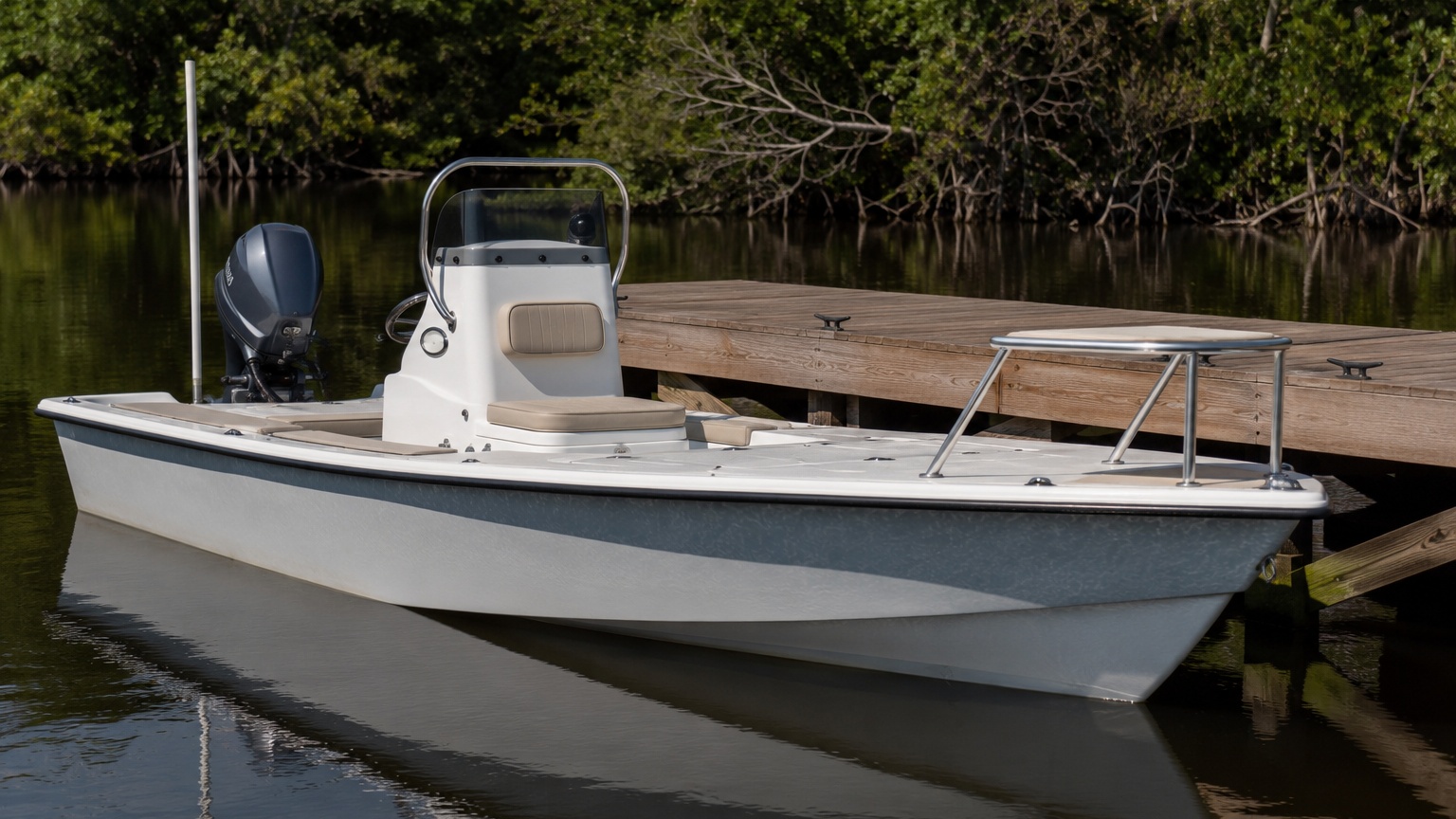
Thirty-two gallons is generous for a 16-foot flats boat, especially when paired with 90 or 115 horsepower. The useful question is not maximum theoretical range. It is whether the owner can run to the fishing grounds, move between areas, return with a reserve, and still avoid carrying unnecessary fuel weight on short days.
A full fuel load adds substantial weight to a 1,700-pound boat. Add a 24V trolling-motor system, two or three batteries, live bait, cooler, Power-Poles, and tackle, and the working boat becomes very different from the published reference.
The 20-gallon livewell is part of that load picture. Test fill, drain, pump, light, and any recirculation or releasewell equipment on a used boat. A livewell that holds water but cannot keep bait healthy is not functioning as intended.
Battery placement matters on a compact skiff. A heavy trolling-motor battery bank changes bow weight and planing attitude, especially when the aft livewell is full and another angler is standing on the rear deck.
For trailer calculations, estimate the boat with the fuel and gear normally carried home. A garage-friendly hull can still become a poor tow match if the owner ignores trailer, battery, fuel, and accessory weight.
The Redfisher 16 should feel light without feeling nervous. Its 15-degree hull gives more deadrise than many pure technical skiffs, while the narrow beam and 11-inch draft preserve the ability to work truly shallow water.
On plane, the boat should respond cleanly to trim without excessive porpoising or steering correction. Run across ordinary chop at several angles and listen for structure noise, hatch movement, or a ride that feels harsher than the hull’s reputation suggests.
With 90 horsepower, the 16 should be judged for efficiency and adequate load-carrying. With 115, check whether propeller and engine height are correctly matched rather than assuming extra horsepower guarantees the better setup.
At idle, practice a shallow shoreline approach and a tight turn. Hydraulic steering should move smoothly without leaks or excess play. Trim tabs should respond evenly and return predictably.
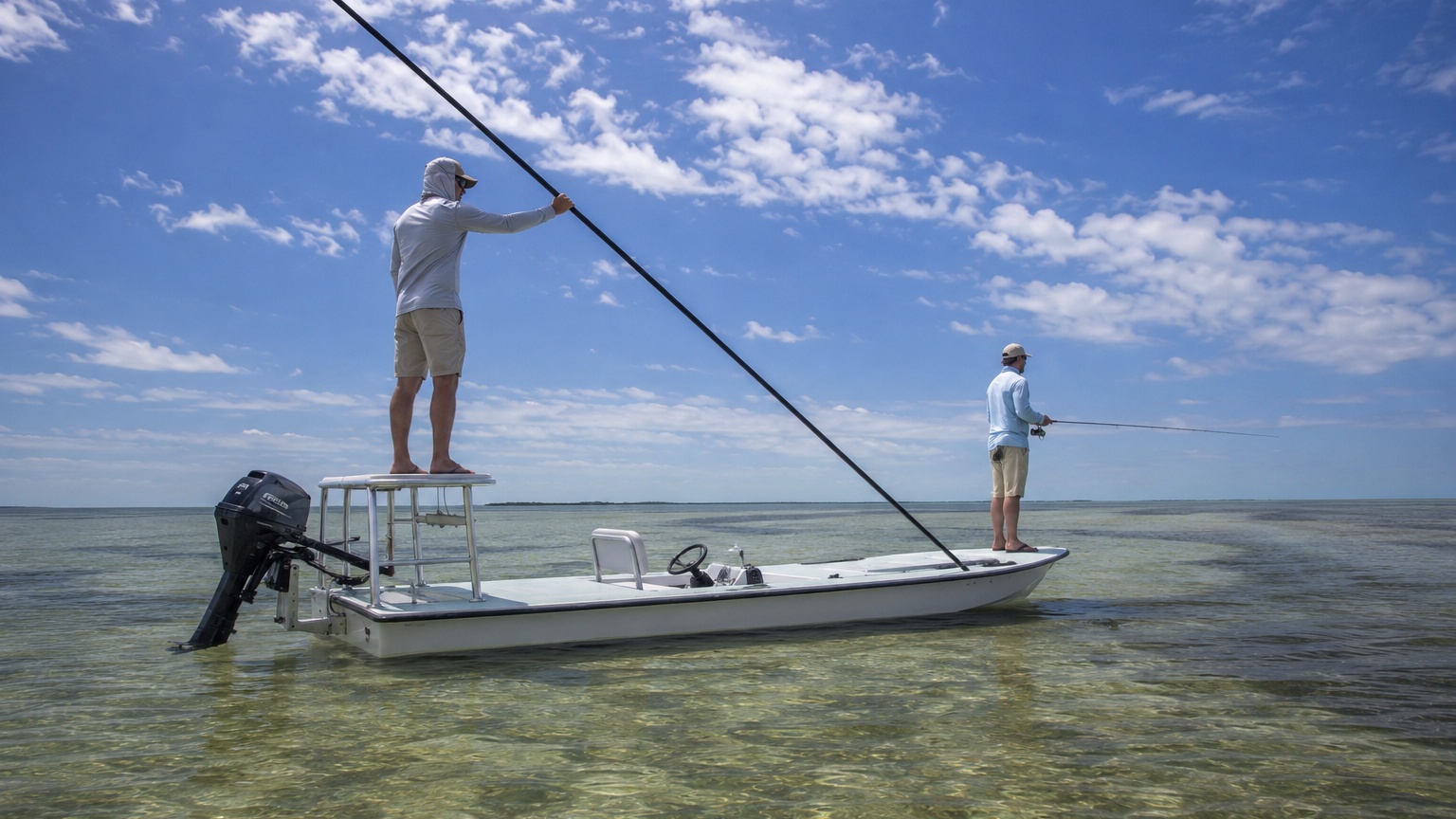
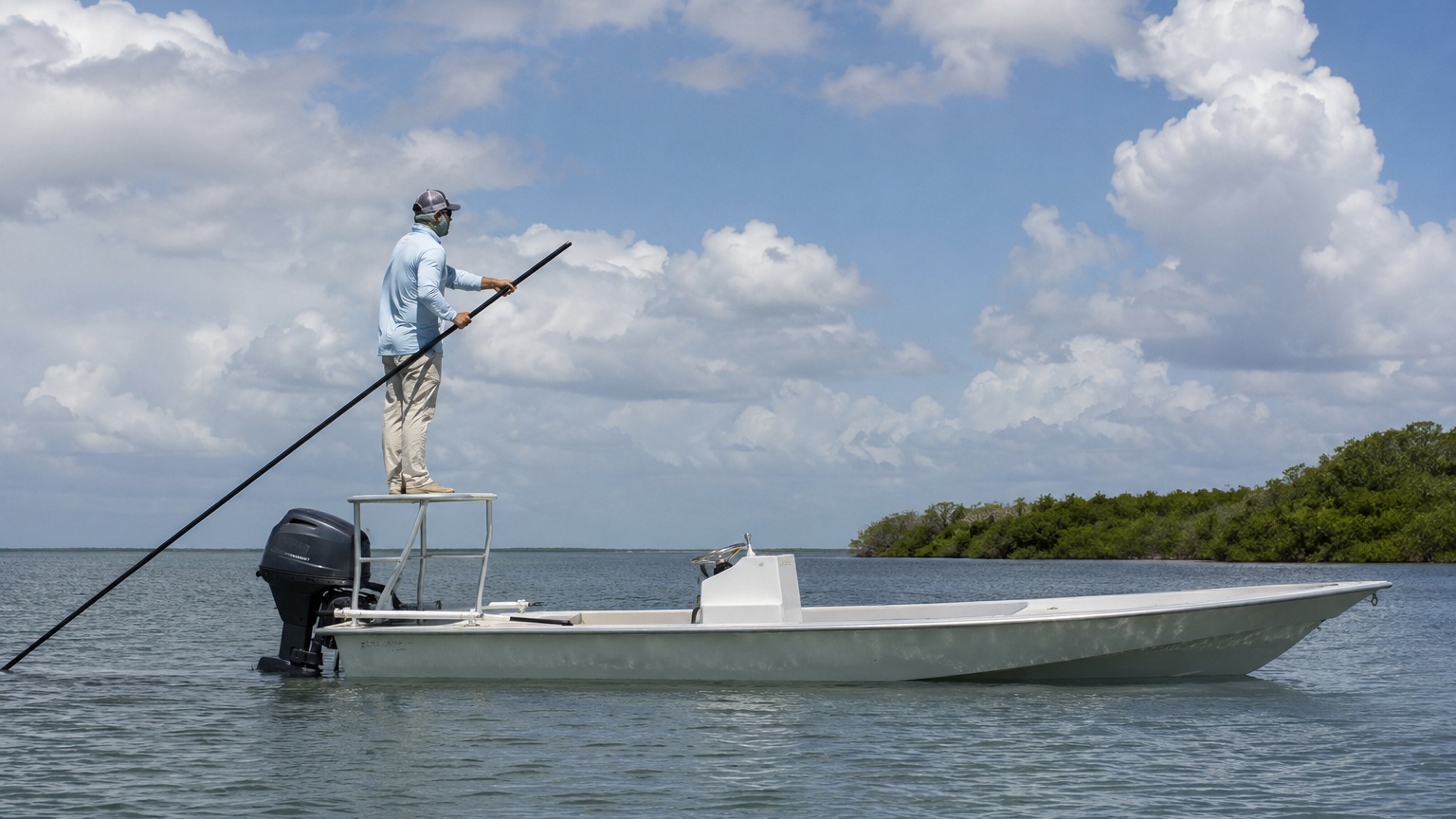
On the push pole, the buyer should pay attention to windage and balance. The 7-foot-3-inch beam is narrow enough to help the boat feel manageable, but a tall poling platform, full livewell, Power-Poles, and a stern-heavy engine setup can still change how easily it tracks.
If the boat has a trolling motor, test low-speed position control and battery endurance. The 16 is attractive partly because one person can manage it efficiently, so the electrical setup should support that kind of fishing rather than make it complicated.
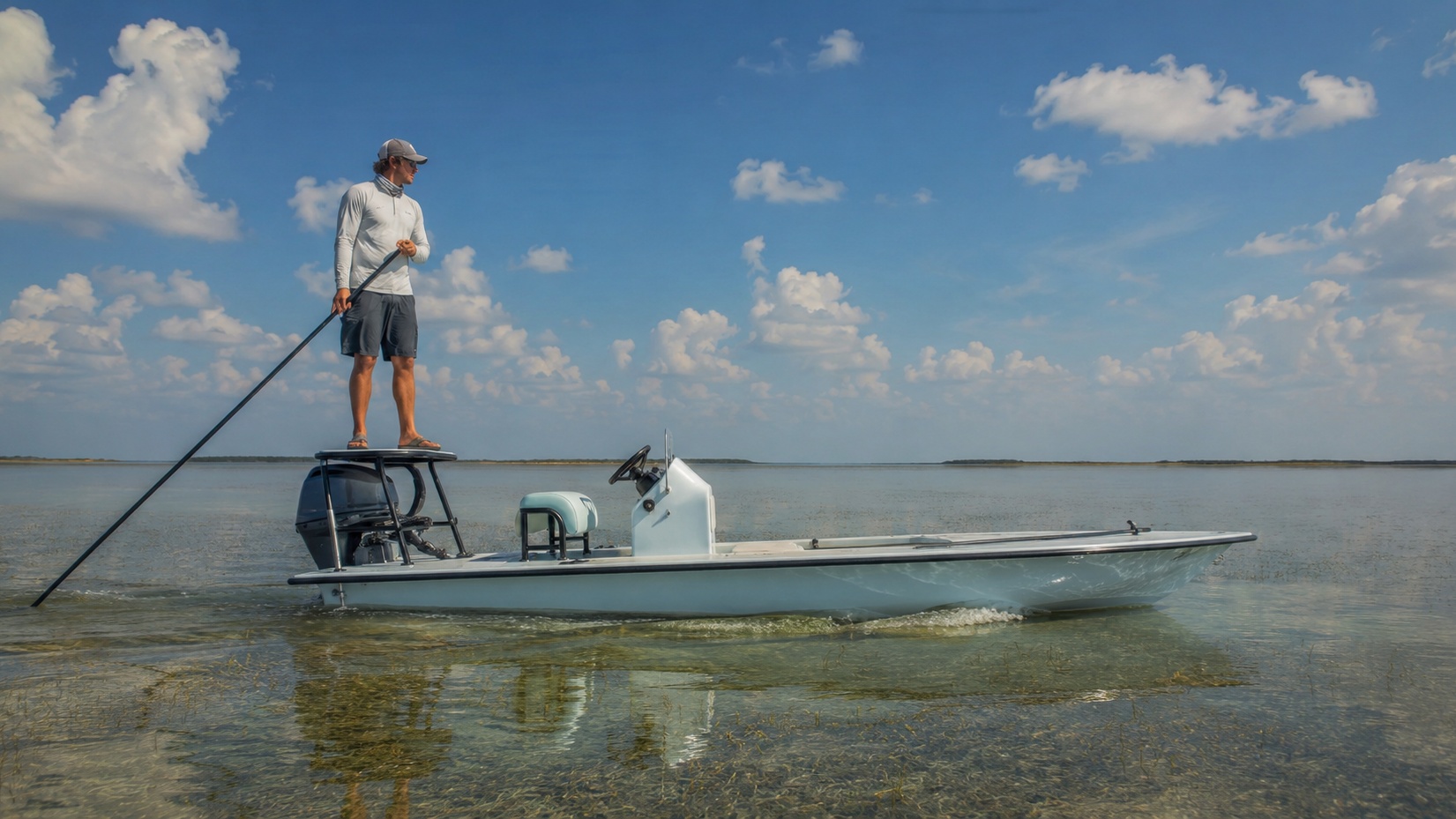
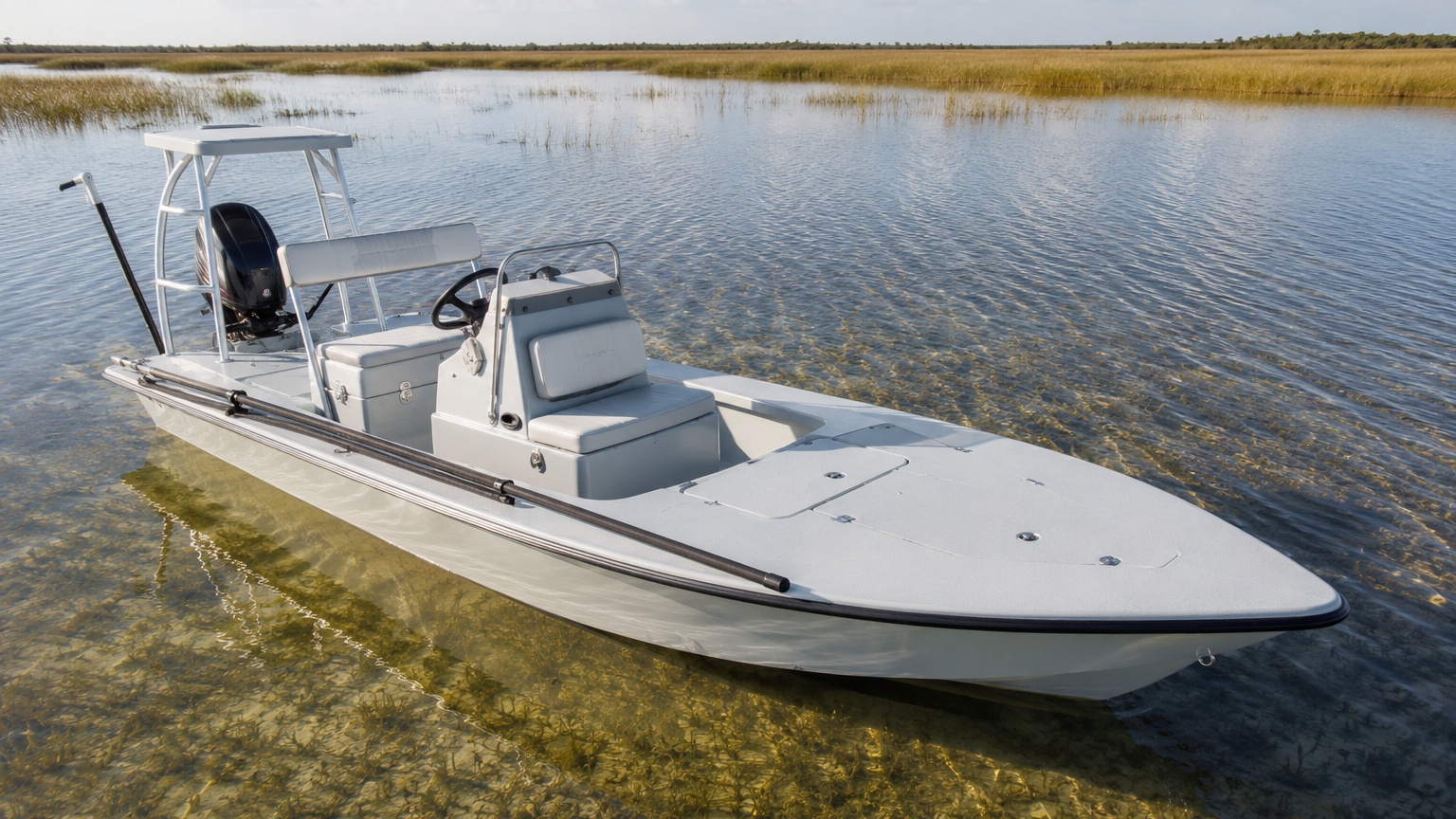
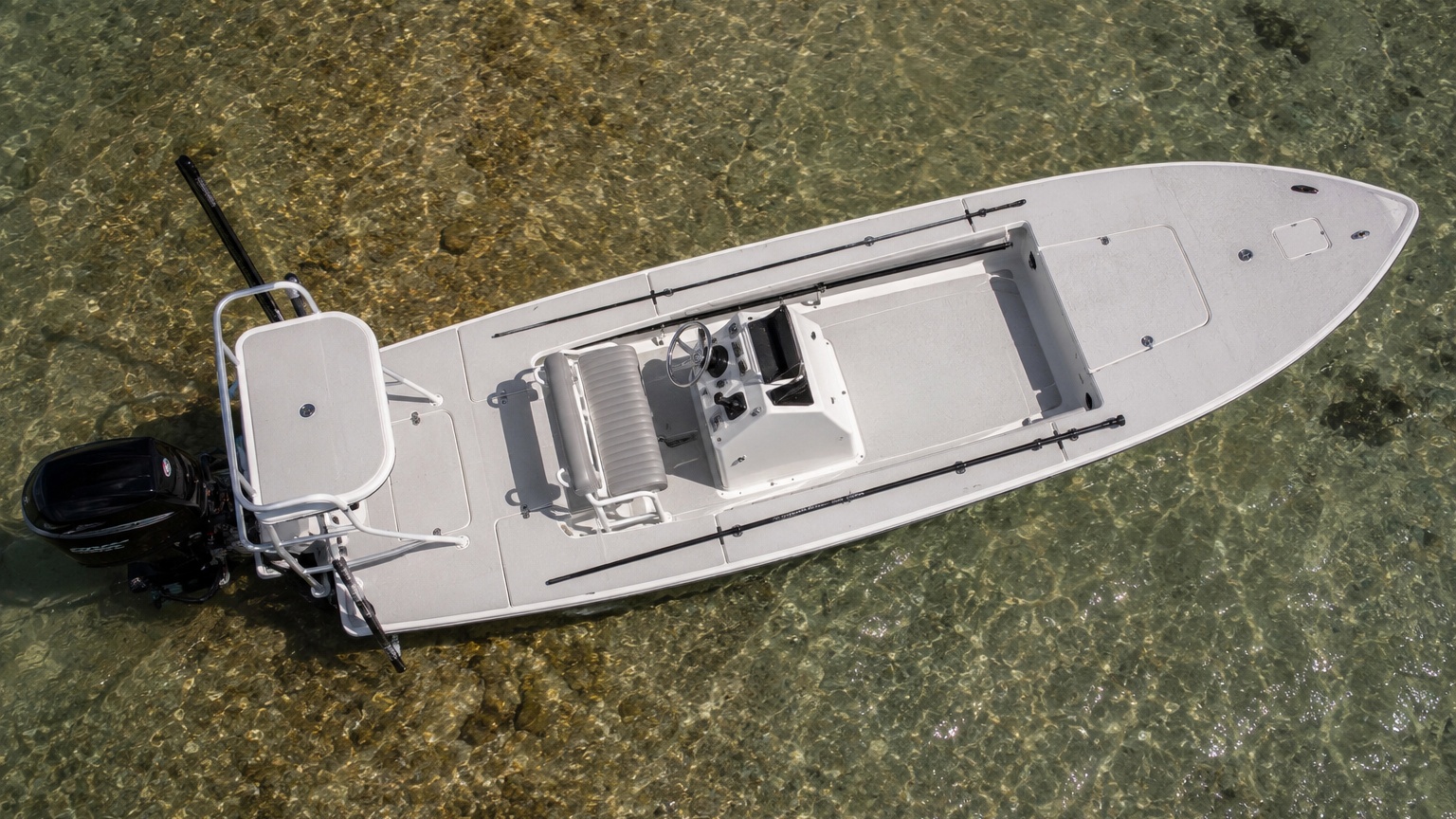
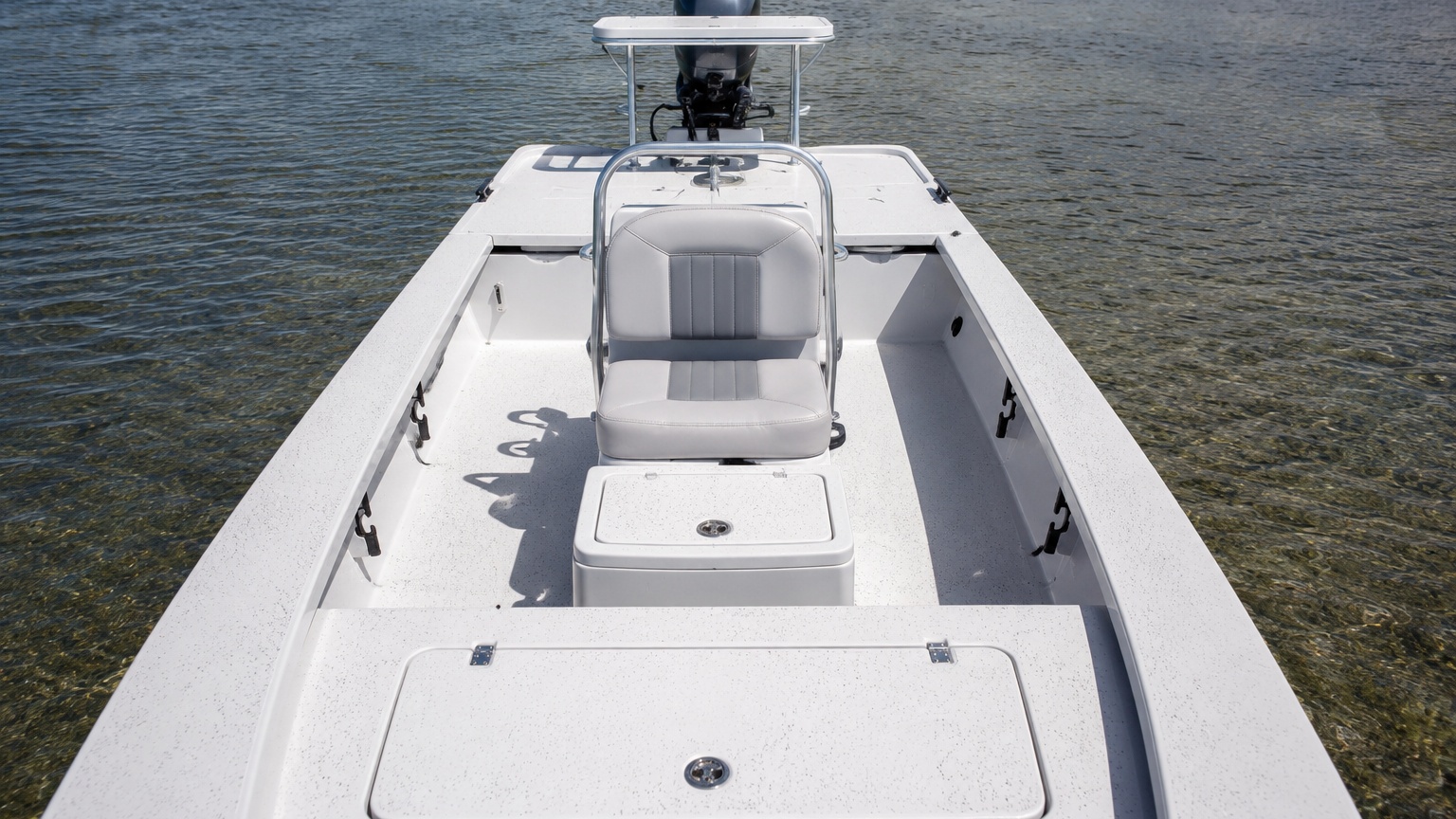
The Redfisher 16 is at its best when the deck stays clear. Walk-around gunwales, undergunnel rod tubes, console rod racks, large dry compartments, and the aft-center livewell are all there to keep tackle off the floor and anglers moving.
Open every hatch with someone standing nearby. A compact flats boat can have impressive storage on paper yet become awkward if a hatch cannot open while another angler is positioned where they normally fish.
Use the forward deck as a casting platform and then move quickly to the stern. The buyer should be able to follow a redfish around the boat without stepping over loose rods, cooler handles, or exposed battery gear.
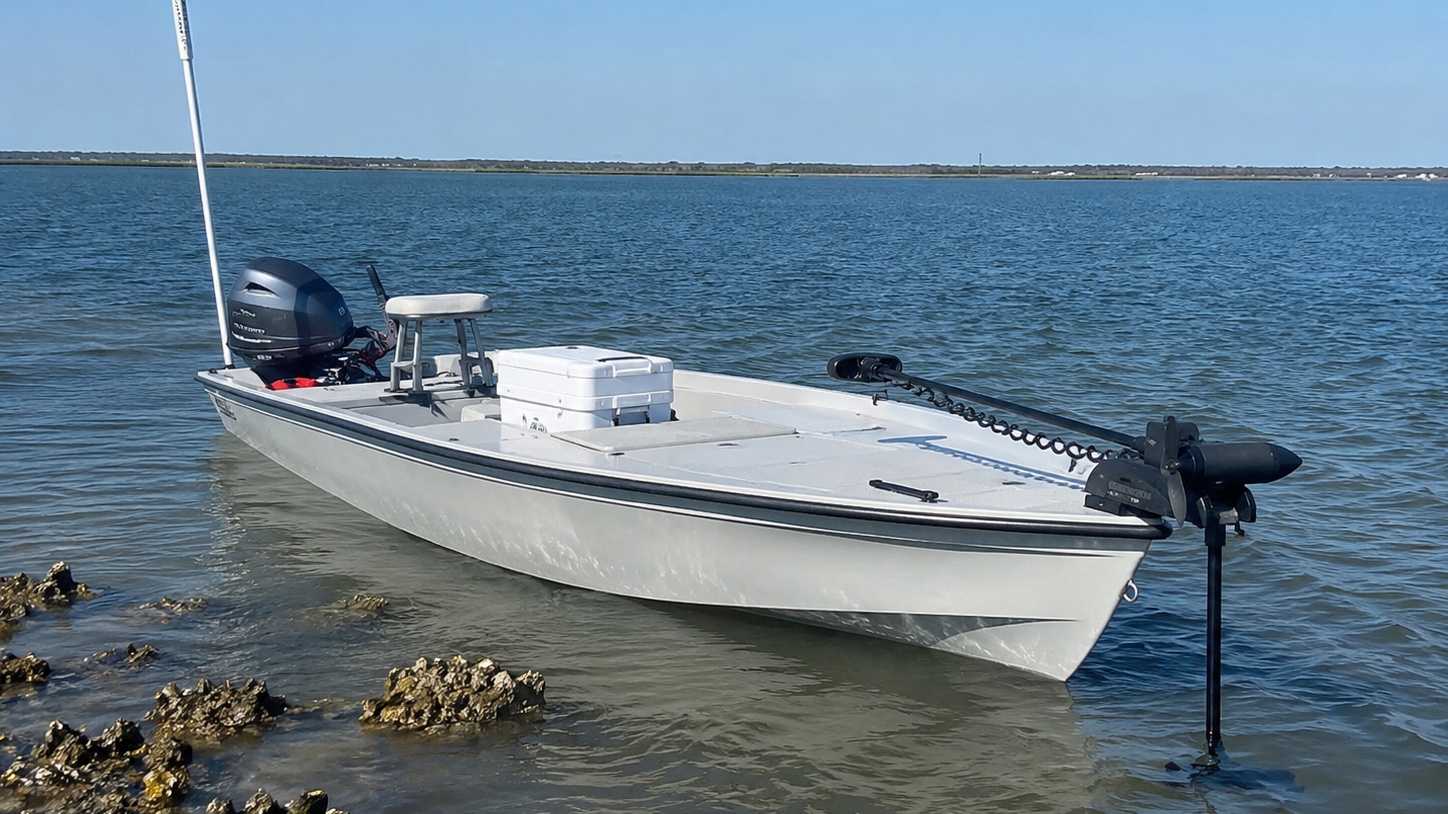
The cooler mounted in front of the console can double as a seat, which is useful on family or sandbar days. It should not block access to the console, rod racks, or forward deck when the boat is rigged for fishing.
If the optional bow casting platform or bass-seat plate is installed, inspect the attachment points and make sure the hardware does not interfere with trolling-motor deployment.
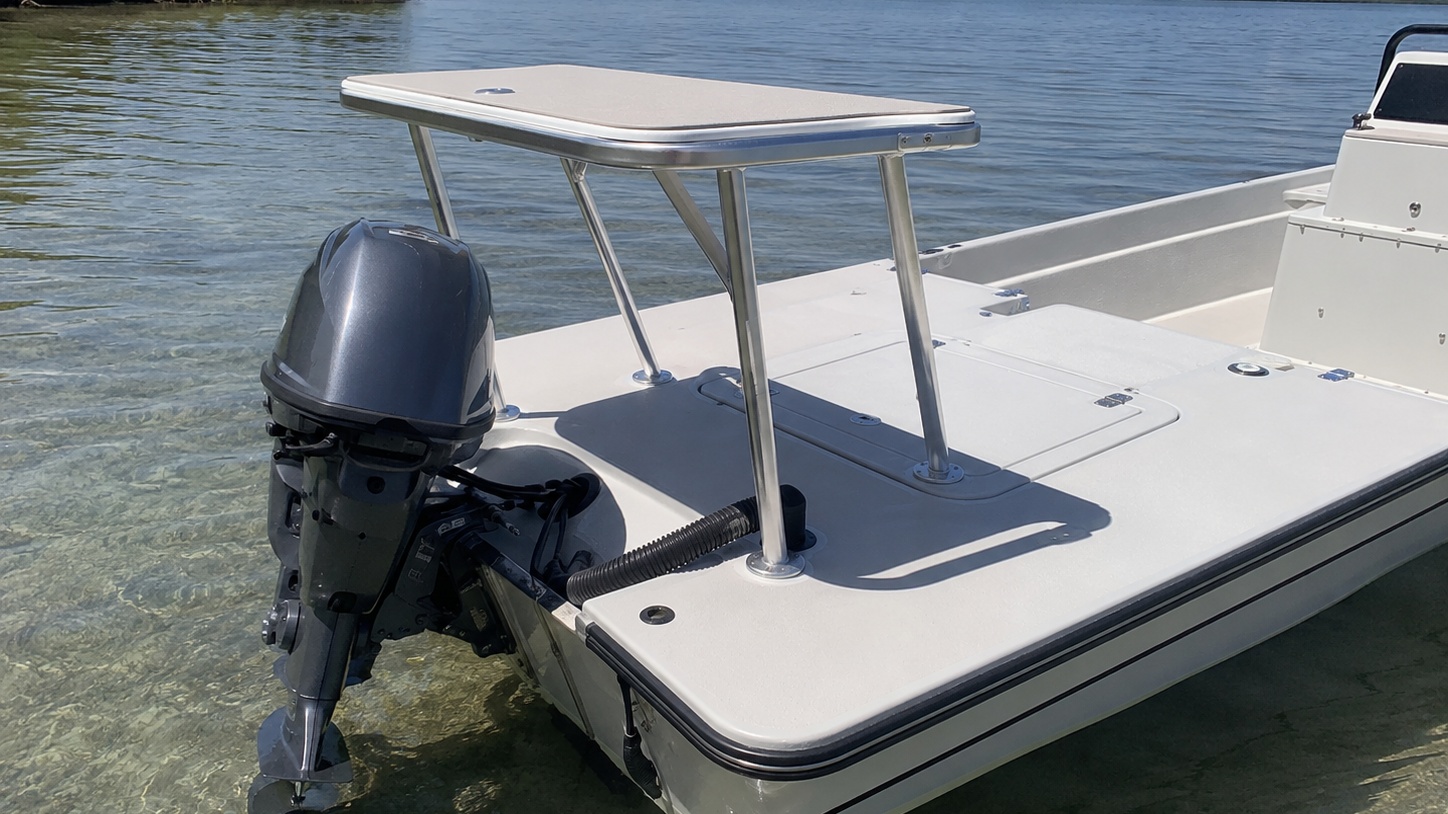
The optional poling platform deserves a full test. Climb it, use the step or backrest if equipped, and inspect all welds and deck mounts. On a 16-foot boat, platform ergonomics matter because the operator may spend long periods standing above a compact stern.
The best Redfisher 16 layout is the one that lets a two-person crew fish almost everything without rearranging the cockpit between spots.
11-inch published draft – The shallowest practical ownership story in the line is paired with a compact hull that remains easy to pole and place around mangrove edges.
Rod tips stay protected while the cockpit remains uncluttered enough to move around a hooked fish.
Tower height changes with jackplate configuration, so the exact platform should be inspected for welds, mounting, backrest, step, and rod-holder options.
The jackplate broadens shallow-water setup flexibility but adds another hydraulic or mechanical system that needs clean operation.
The 16 makes the strongest case in the line for tow-and-go ownership, especially when the swing tongue and dry-launch package fit the garage plan.
Start with the trolling-motor circuit because a shallow-water skiff often depends on it as much as the outboard once fishing begins. Check the battery tray, charger if fitted, breaker, plug or thru-deck connection, and cable routing.
Cycle trim tabs independently. A small boat can feel dramatically different when one tab is slow or stuck, and owners often use tabs actively to control running attitude in quartering wind.
Test the 4-position battery switch, 12-volt accessory outlet, navigation lights, blue cockpit lights, bilge pump, livewell pump, and every switch on the fused panel.
If the boat carries a Power-Pole MOVE trolling motor or shallow-water anchors, inspect mounts, hydraulic or electrical lines, remotes, and wireless controls. Accessories mounted at the edges of the boat can take more abuse than the console electronics.
A Garmin 1243XSV package should boot quickly, read GPS, display transducer data, and show clean power with the engine running and stopped. Voltage problems often reveal themselves when multiple pumps and electronics operate together.
Look carefully at aftermarket wiring. The Redfisher 16 does not need a complicated electrical system, so a nest of unsupported add-on wiring should reduce confidence rather than increase perceived value.
Finish with trailer lights and the swing tongue if equipped. The storage advantage of the 16 only works when the trailer’s electrical and folding hardware are dependable.
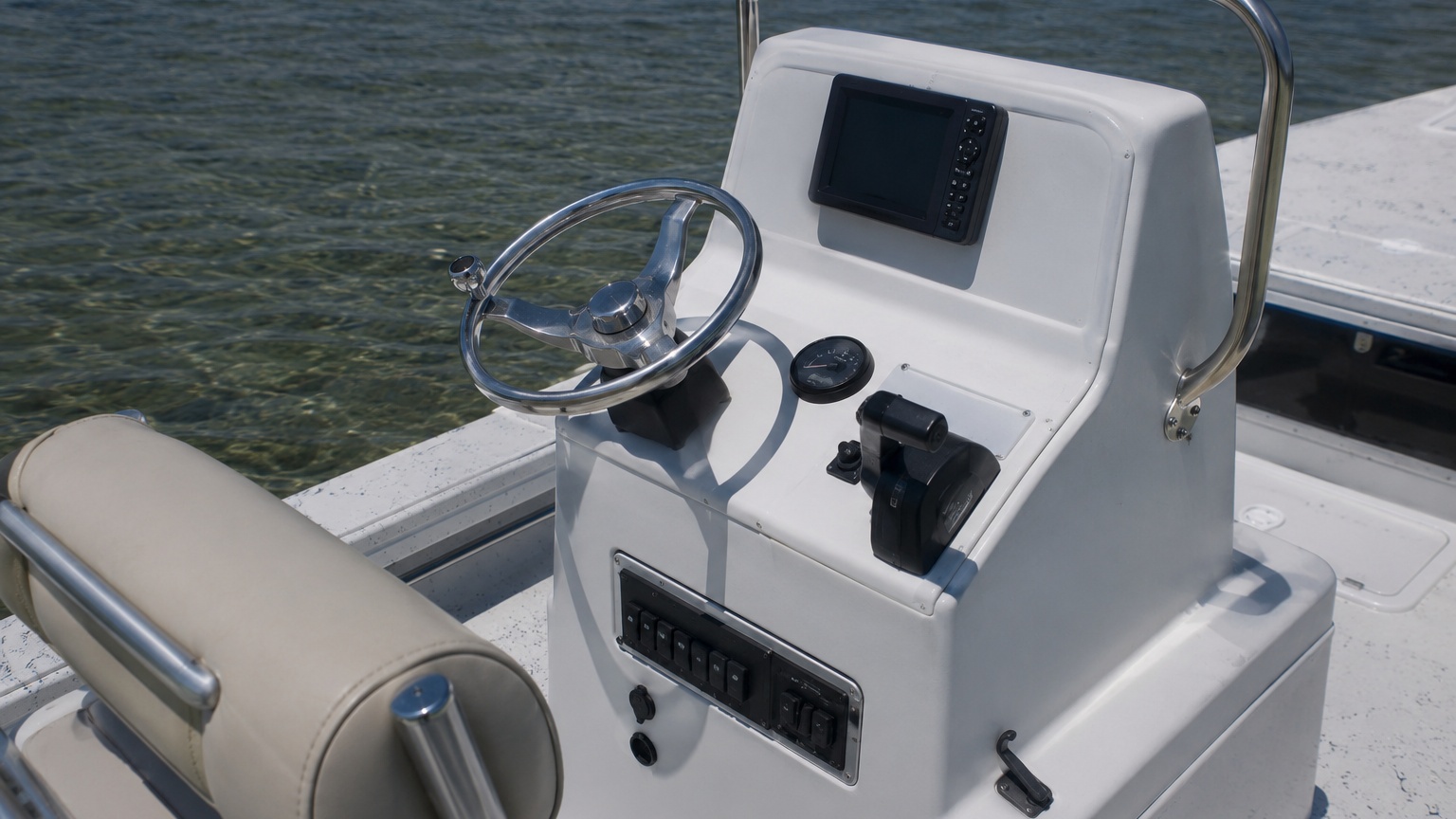
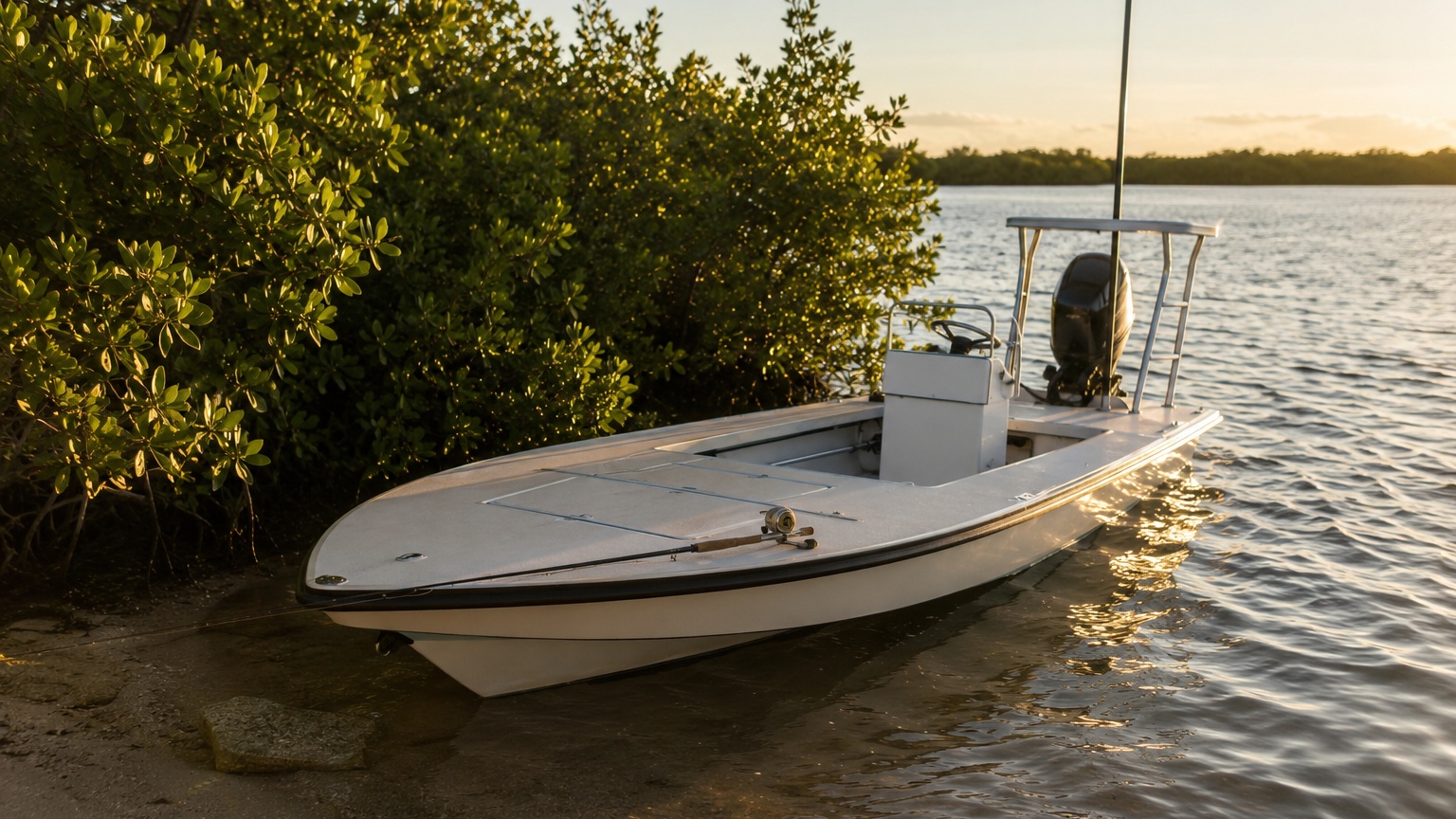
The Redfisher 16 makes the strongest storage argument in the current Hewes lineup. A 16-foot-6-inch hull and 7-foot-3-inch beam can fit garages, side yards, and smaller lifts that are unrealistic for the 21.
Do not measure only the hull. The outboard, trailer tongue, swing-tongue hardware, guide posts, Power-Poles, poling tower, and trolling motor control the real stored dimensions.
A trailer buyer should inspect tires, bearings, hubs, bunks, winch, safety chains, coupler, lights, frame, and corrosion. The Hewes HE trailer is part of the value because the 16 is commonly owned as a tow-and-launch package.
If the boat is lift-kept, calculate the loaded weight with engine, 32 gallons of fuel, batteries, trolling motor, Power-Poles, and gear. A lift chosen around a bare-hull estimate can be undersized quickly.
Saltwater owners should also plan a rinse and flush routine that can happen easily at home. The 16’s simple package is an advantage only when the owner can actually access the trailer, engine, and hardware after every trip.
For buyers comparing the 16 with the 18, storage is one of the strongest reasons to stay smaller. If the 18 requires a new tow vehicle, different garage, or larger lift, the extra working room can carry a much larger ownership cost than the purchase-price difference suggests.
The value of a 16 changes materially with engine, model year, trailer, jackplate, poling platform, electronics, trolling motor, shallow-water anchors, and cosmetic condition.
A 90-horsepower boat and a 115-horsepower boat should not be treated as identical comps. The stronger engine may carry more value, but a documented 90 with clean hours can still be the better purchase for an owner focused on economy.
Jackplate and poling-platform equipment matter because both affect how the boat is fished. Poorly installed aftermarket hardware should be discounted even when the component itself is expensive.
Electronics and trolling motors depreciate differently from the hull. Price them for present usefulness and remaining life instead of their original retail cost.
Trailer condition can move the effective transaction by thousands of dollars once tires, hubs, lights, winch, bunks, and corrosion are considered.
The best 16 is usually the one with a clean transom, healthy outboard, organized wiring, working pumps, and a trailer that is ready to travel rather than the one with the longest accessories list.
Illustration only and not an offer of credit.
Leave room for outboard service, trailer maintenance, insurance, fuel, trolling-motor batteries, livewell pumps, shallow-water anchors, and the electronics that make this fishing platform useful.
Illustration only and not an offer of credit. Your actual rate and term depend on credit profile, vessel age, loan amount and ownership structure.
The Redfisher 18 is the obvious sibling comparison. It adds 2 feet 4 inches of hull and 8 inches of beam, while surprisingly publishing a 10-inch draft compared with the 16’s 11 inches.
The 18 also supports 150 horsepower and gives the crew more room to fish around the console and casting decks. That helps when three or four people are common.
The 16 answers with a much narrower footprint, lower published weight, simpler garage fit, smaller trailer, and lower power requirement. Those are not minor savings if the boat is moved every weekend.
Choose the 16 when the normal crew is one or two anglers and the boat must be easy to store and launch. Choose the 18 when the owner wants the same shallow-water heritage with more working room and stronger long-run comfort.
Confirm the exact model year and hull identification first. Then verify the 16-foot-6-inch length, 7-foot-3-inch beam, 32-gallon fuel system, 115-horsepower maximum, and the capacity plate on the actual boat.
Inspect the hull for shallow-water scars, poor trailer support, transom repairs, and stress around any jackplate, Power-Pole, trolling-motor, or poling-platform mounting.
Review the outboard service history and hours. On a Yamaha SHO package, look for documented oil, gearcase, water-pump, spark-plug, fuel, and cooling-system service rather than a vague claim that maintenance was done.
Test the hydraulic steering and trim tabs at the dock and underway. Both are central to how a compact flats boat behaves in wind and chop.
Fill the livewell and run the pump long enough to check leaks and drain behavior. If a releasewell or recirculation system is fitted, test that separately.
Deploy the trolling motor and Power-Poles. Listen for weak batteries, noisy mounts, hydraulic leaks, or intermittent remotes.
Climb the poling platform if equipped. Hardware that flexes or deck mounting that shows cracking should be understood before purchase.
Inspect all dry-storage gaskets and latches. A flats boat can look clean after detailing while still hiding wet compartments or damaged guttering.
Drive the boat with the normal crew. The right propeller and engine height should let the 16 plane cleanly and cruise without constant correction.
Finally, measure the complete trailer in the actual storage space. Garage fit is one of the model’s strongest advantages, so it should be proven rather than assumed from the hull length.
Start your application with the actual Hewes Redfisher 16 details with model year, engine, engine hours where available, trailer, electronics, trolling motor, Power-Pole equipment, poling platform, and asking price.
Hewes publishes an 11-inch draft. Real operating depth depends on load, engine position, bottom conditions, and whether the boat is idling, poling, or on plane.
The current Redfisher 16 is rated to 115 horsepower and is offered with Yamaha 90 or 115 horsepower packages.
It is the most garage-friendly current Hewes and is specifically promoted around that advantage, but the owner still needs to measure the full trailer, outboard, poling platform, and accessories.
The published maximum capacity is 4 persons or 600 pounds. The capacity plate on the exact boat is the final authority.
No jackplate is standard, while a 4-inch jackplate with blinker switch is available.
Hewes lists a 20-gallon aft-center livewell as standard equipment.
Buy the 16 for garage fit, light towing, small crews, and manageability. Buy the 18 when the extra beam, deck room, and 150-horsepower capability will be used regularly.
Potentially. Financing can depend on model year, value, condition, seller type, purchase amount, and borrower qualifications. Start your application with the exact details.
Tell us a little bit about yourself and the boat you are looking to finance.